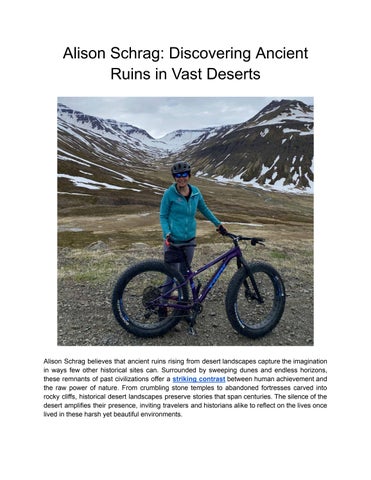
Alison Schrag: Discovering Ancient Ruins in Vast Deserts

Page 1


Alison Schrag believes that ancient ruins rising from desert landscapes capture the imagination in ways few other historical sites can Surrounded by sweeping dunes and endless horizons, these remnants of past civilizations offer a striking contrast between human achievement and the raw power of nature From crumbling stone temples to abandoned fortresses carved into rocky cliffs, historical desert landscapes preserve stories that span centuries The silence of the desert amplifies their presence, inviting travelers and historians alike to reflect on the lives once lived in these harsh yet beautiful environments

Desert civilizations thrived in places that seem unforgiving today Scarce water supplies, intense heat, and shifting sands shaped the architecture and culture of these societies. Ancient ruins in desert regions often reveal advanced knowledge of engineering and resource management Intricate irrigation systems, underground water channels, and thick stone walls helped communities survive and flourish. These structures demonstrate not only creativity but also resilience They stand as evidence that innovation often emerges from necessity, even in the most extreme climates.

One of the most compelling aspects of historical desert landscapes is the way they preserve time Dry air and limited rainfall slow the decay of stone and clay, allowing ancient ruins to remain remarkably intact Walls etched with carvings, faded murals, and weathered inscriptions continue to tell stories of trade routes, spiritual beliefs, and daily routines. Walking among these ruins can feel like stepping into another era The desert’s stillness creates a sense of closeness to history, making each footprint in the sand feel connected to those who walked there long ago

Trade played a major role in the growth of desert civilizations, and many ancient ruins mark the paths of once vibrant trade networks. Caravans carrying spices, textiles, precious metals, and ideas crossed vast stretches of sand, linking distant cultures Strategic settlements emerged along these routes, offering travelers rest and protection. Today, the remains of caravanserais, watchtowers, and market centers highlight the economic importance of these desert hubs. These sites reveal that deserts were not barriers but bridges that connected continents and fostered cultural exchange.

The visual beauty of ancient ruins in desert landscapes adds another layer to their appeal. Golden sunlight reflecting off sandstone walls creates dramatic shadows at dawn and dusk Wind-shaped dunes form natural frames around temples and towers, enhancing their grandeur Photographers and writers often describe a powerful emotional response when visiting these sites There is a quiet sense of awe that comes from seeing human craftsmanship endure against shifting sands and relentless heat The stark environment emphasizes the delicate balance between permanence and change.

Preserving historical desert landscapes presents ongoing challenges. Tourism brings attention and economic support, but can also contribute to wear and erosion Climate change introduces new threats, including stronger storms and more extreme temperatures that accelerate deterioration. Conservation efforts focus on stabilizing fragile structures and educating visitors about responsible travel Local communities play a crucial role in protecting these ancient ruins, blending traditional knowledge with modern preservation techniques Their involvement ensures that these cultural treasures remain accessible for future generations.

Exploring ancient ruins in desert landscapes offers more than a history lesson. It encourages reflection on human ambition, adaptation, and creativity These sites remind modern audiences that civilizations can rise and fall, yet their stories endure through stone and sand By valuing and protecting historical desert landscapes, society honors the ingenuity of the past while gaining insight into sustainable living in challenging environments The desert, often seen as empty, is in fact rich with memory, meaning, and lessons that continue to resonate today.

Turn static files into dynamic content formats.

Create a flipbook