

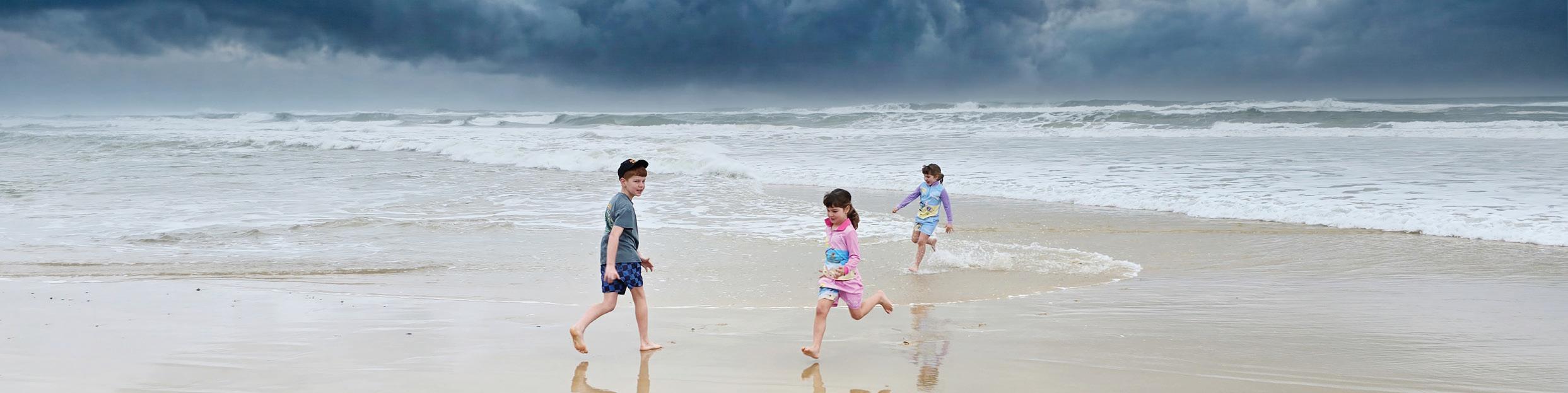
Hunter, Paige & Reaghan. Normally, they are inland ‘River Kids,’ but they enjoyed jumping the waves at the beach in Qld. Often, it’s the simple and cheap things that remain the longest memories.
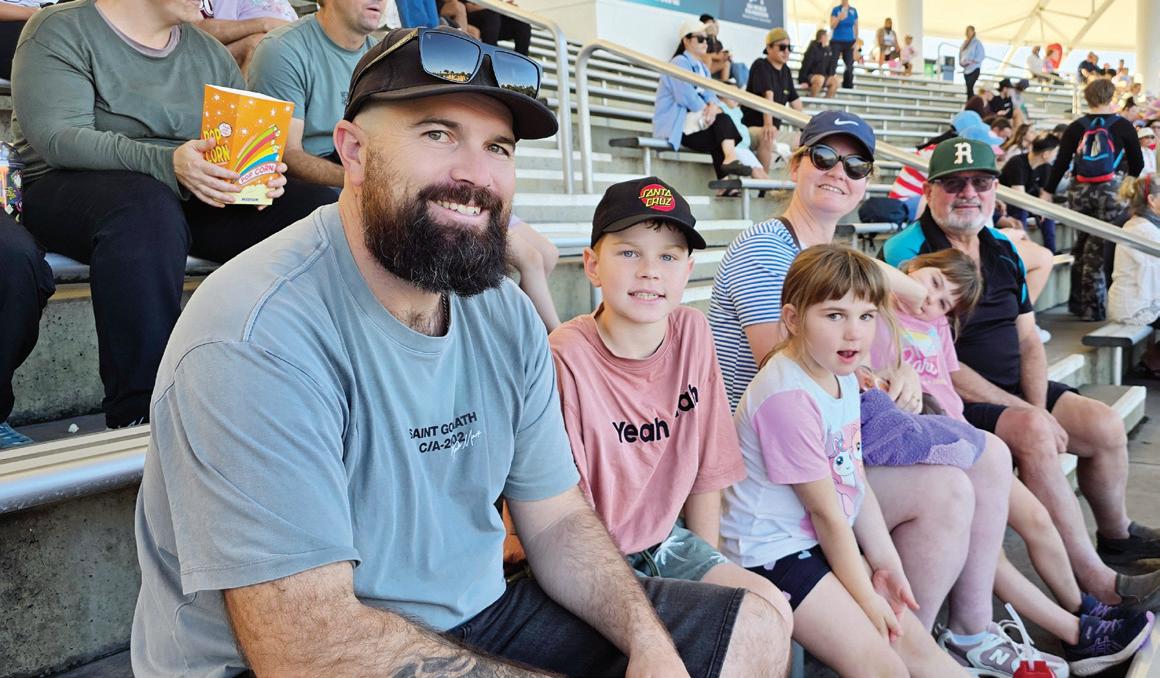
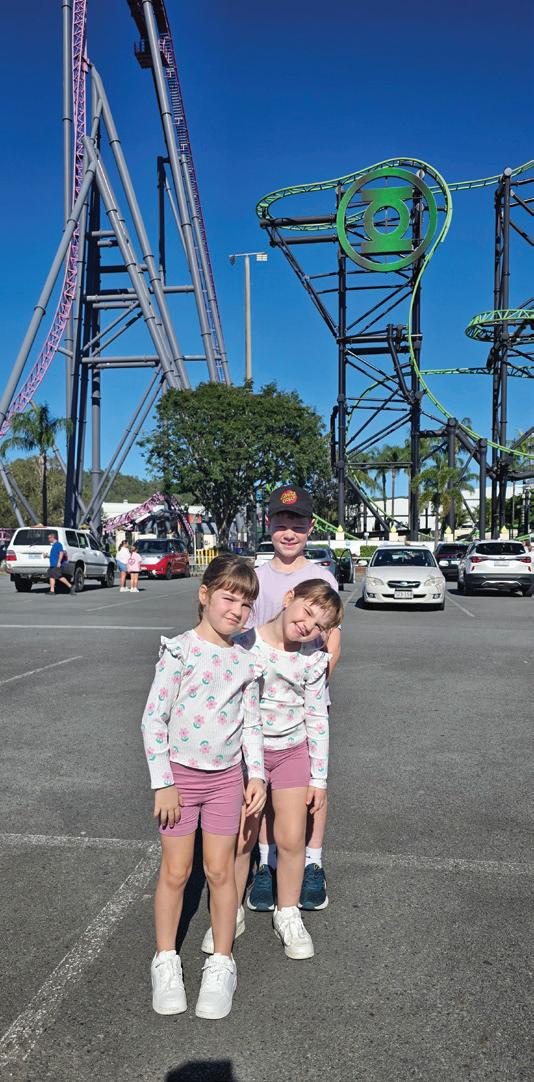
So, we went of on another short adventure recently. On their invitation, we joined our youngest son, his wife and family on a 10 day trip to the theme parks on the Gold Coast. We had a great time with them. There’s something very special about staying in one unit together when that is such a rare occasion once your kids grow up. We have the grandies visit or sleep over often, but never the adults.
Having breakfast together, making sandwiches for the day out to reduce costs and lower the amount of junk food eaten, cooking tea together and giving the parents of the little kids a chance for at least a little time out are all valuable things.
Ali has said, ever since we took our own kids there, that she’d be happy to be the minder of the backpacks and spare clothes. She had a horrid experience 20 years ago when she felt crook on the Wild Wild West roller-coaster. It was ok until it went into the blackness inside the ‘mountain’ and suddenly went backwards as well! After that she didn’t go on anymore rides until the end of the day, when our kids convinced her to go on the Batman simulator … that doesn’t actually go anywhere. But the experience left her
with extreme motion sickness that was like a bad migraine and took a few hours to recover from. Never again!
Back then, Danny was an adrenaline junkie, loving every ride he went on. This time ...not so much. He too felt queasy on the rides. Things change over time! Mind you, one roller coaster had an 89 degree drop with a twist at the bottom, leading into a loop the loop. He didn’t want to do that one twice!!
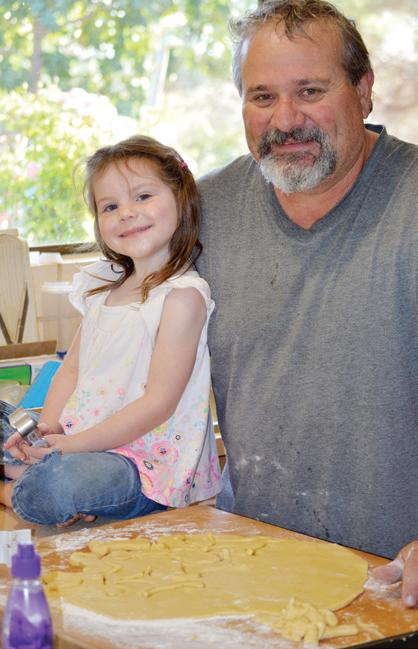
I was reflecting on some back-issues of Farm Gate News and came across this short article worth sharing again from 2014. Granddaughter Kallie, who turned 16 in June this year, was only 3 when she was helping Danny make biscuits. She’s sitting on the kitchen bench, looks up at him and says, “Opa, how come you have cracks on your face?”
Stunned by the question, but quickly realizing what she means, Danny says, “They’re wrinkles darling. You get those as you get older.”
Talk about deflating his egobut hilarious none the less.
Another time, she asked Danny’s then 78 year old mum, “Why do you have stripes on your arms like a zebra?” Turns out they were wrinkles too.

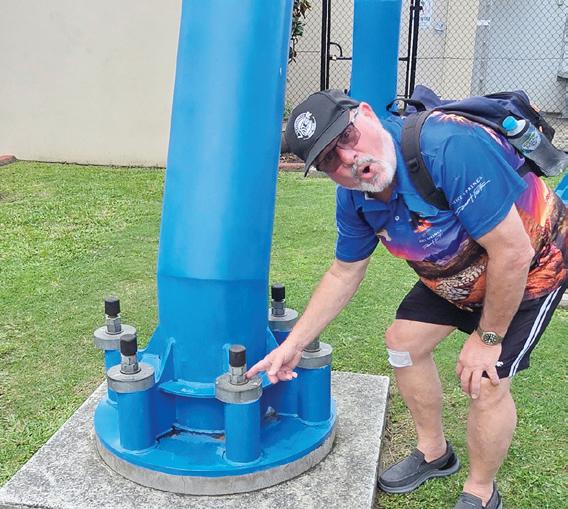
Once again, even on holiday, Danny finds structural engineering things of interest. Here, it’s the footings bolts holding down the columns of one of the Movieworld roller coasters. Of course, you hope they don’t fail while you’re on the ride!
We’re receiving more returned mail from Australia Post where old RMD or RSD addresses are still being used.
If your Farm Gate News arrived with an RMD or RSD address on the envelope, please call us and let us know the updated address where you now receive your mail. That’s us done for this edition. Enjoy the read, and if you have a story idea, we’d love to hear from you.
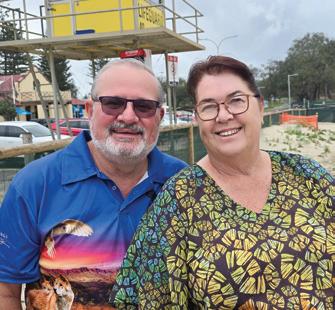
Ali & Danny Halupka
OwnersGrant Sheds ...On the beach...
When the first farming families arrived around Crystal Brook, they faced drought, isolation and uncertainty. Yet according to local records and family diaries, many of those pioneers focused first on building a community. Churches were established. Community groups formed.
Agricultural societies were created. In some cases, families were still adding rooms to their own homes, years later. It was a different way of thinking.
Today we often talk about infrastructure, services and community spirit as though they are things that simply exist. But every country town began because ordinary people decided to work together and create them. Crystal Brook is a wonderful example.
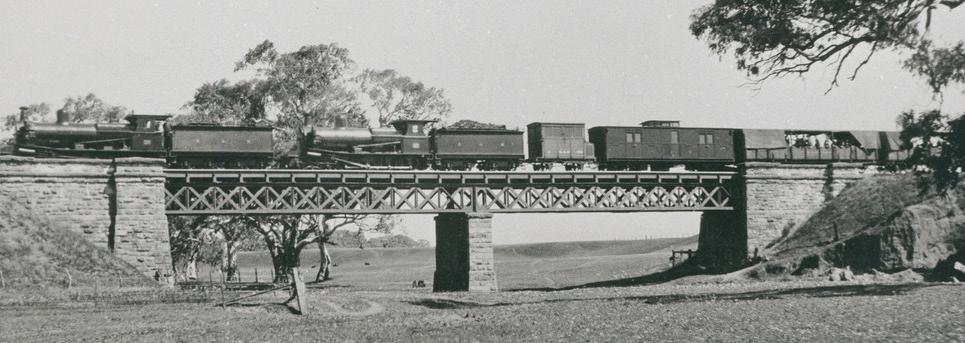
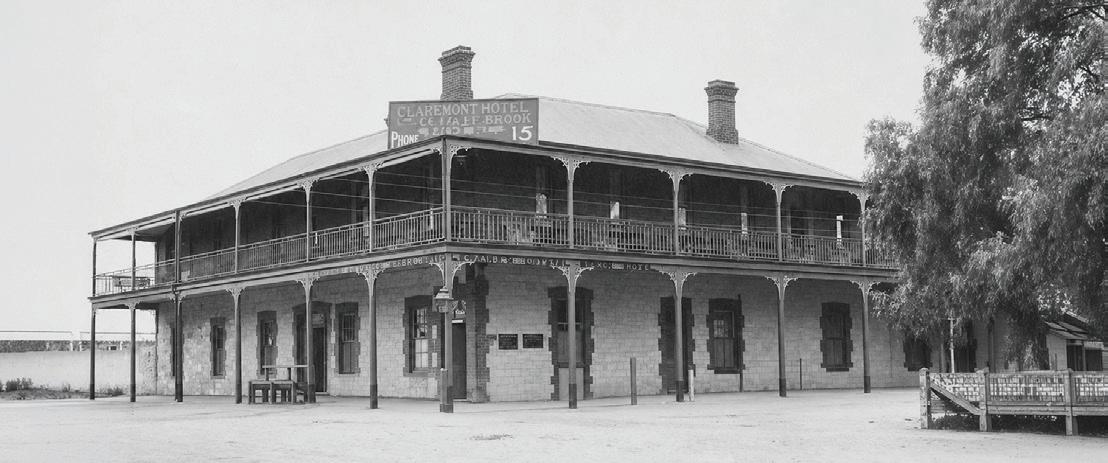
Named by explorer Edward John Eyre after the clear water flowing through the district, the area opened for agricultural settlement in the 1870s. Families arrived with little more than determination, horses, basic equipment and a belief that hard work would build a future. One of those families was the Venning family.
William Jasper Venning arrived in the district during those early years and quickly became involved in community life. Historical records show he served as secretary for the first ploughing match and show held at Crystal Brook. That event later grew into the district’s agricultural show, becoming a focal point for local families and farming businesses. He was also active in farmers’ organisations and public affairs, helping advocate for the interests of rural communities.
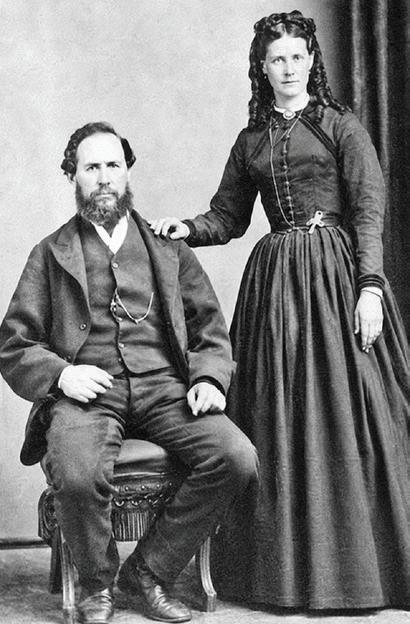
What stands out isn’t just what he achieved. It’s the order in which people approached life.
As Richard Venning explained, his family’s records tell of early generations helping build churches and community organisations



long before their own homes were fully completed. Even simple improvements such as fencing around a house often required years of planning and saving.
Those values helped shape districts like Crystal Brook. Over the decades, local people built schools, churches, sporting clubs, show societies and businesses. They volunteered, joined committees, raised funds and supported neighbours through droughts, floods and difficult seasons.
The names have changed and the machinery certainly has. Today’s farmers work with GPS guidance, huge air seeders and technology that early settlers could never have imagined. But some things remain remarkably familiar.
Country communies still rely on people who are willing to lend a hand, contribute their time and invest in something bigger than themselves.
It is fitting to acknowledge the generations who helped build not only successful farms, but successful communies. The sheds, silos and houses we see today didn’t appear by accident. They were built by people who believed that if a community was strong, everything else would follow.
Now that’s a true local Aussie legend.
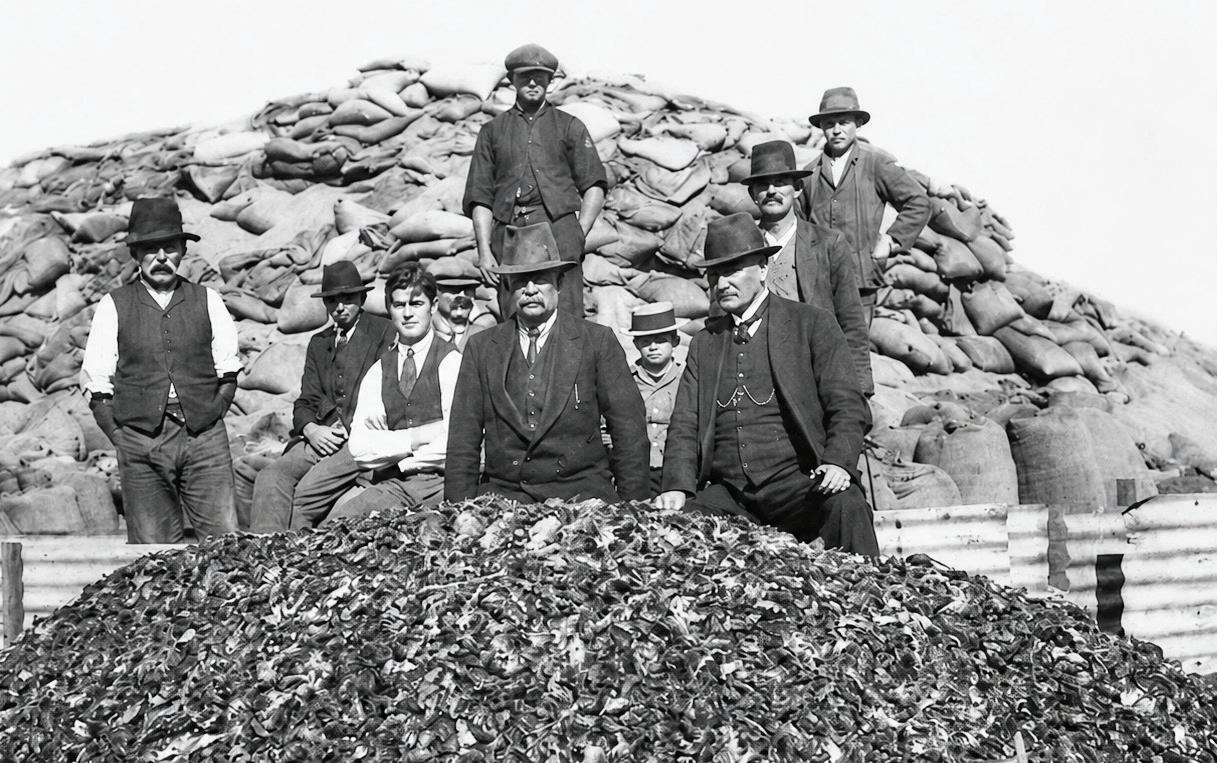
“1917-Three nights catch at Crystal Brook. 126,400 mice (2 tons) with yard only partly double fenced.” I’m guessing it’s a totally ruined wheat bag stack behind these men. With concerns of a possible mouse plague this year, we see our farmers did it tough back in 1917 too. (Photo source: State Library of SA PRG-5-15-50-5)
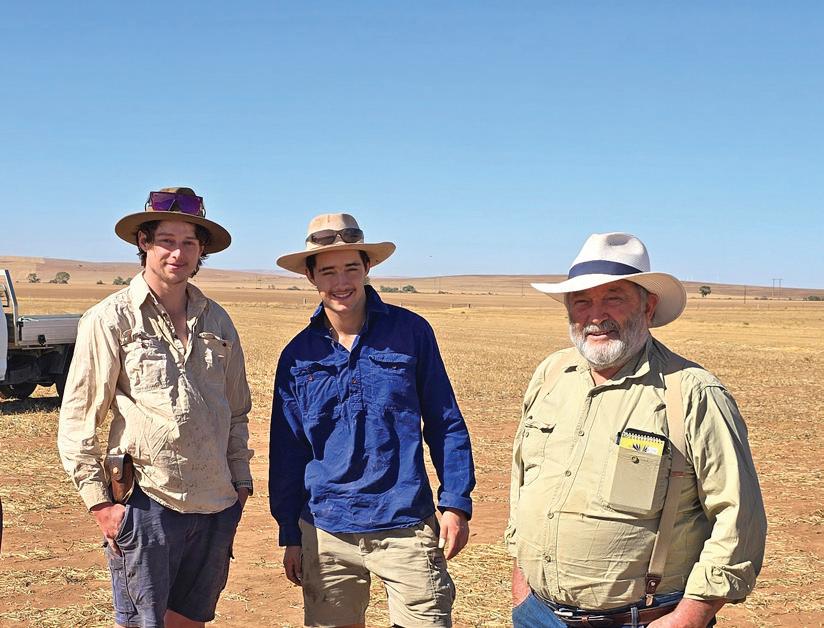
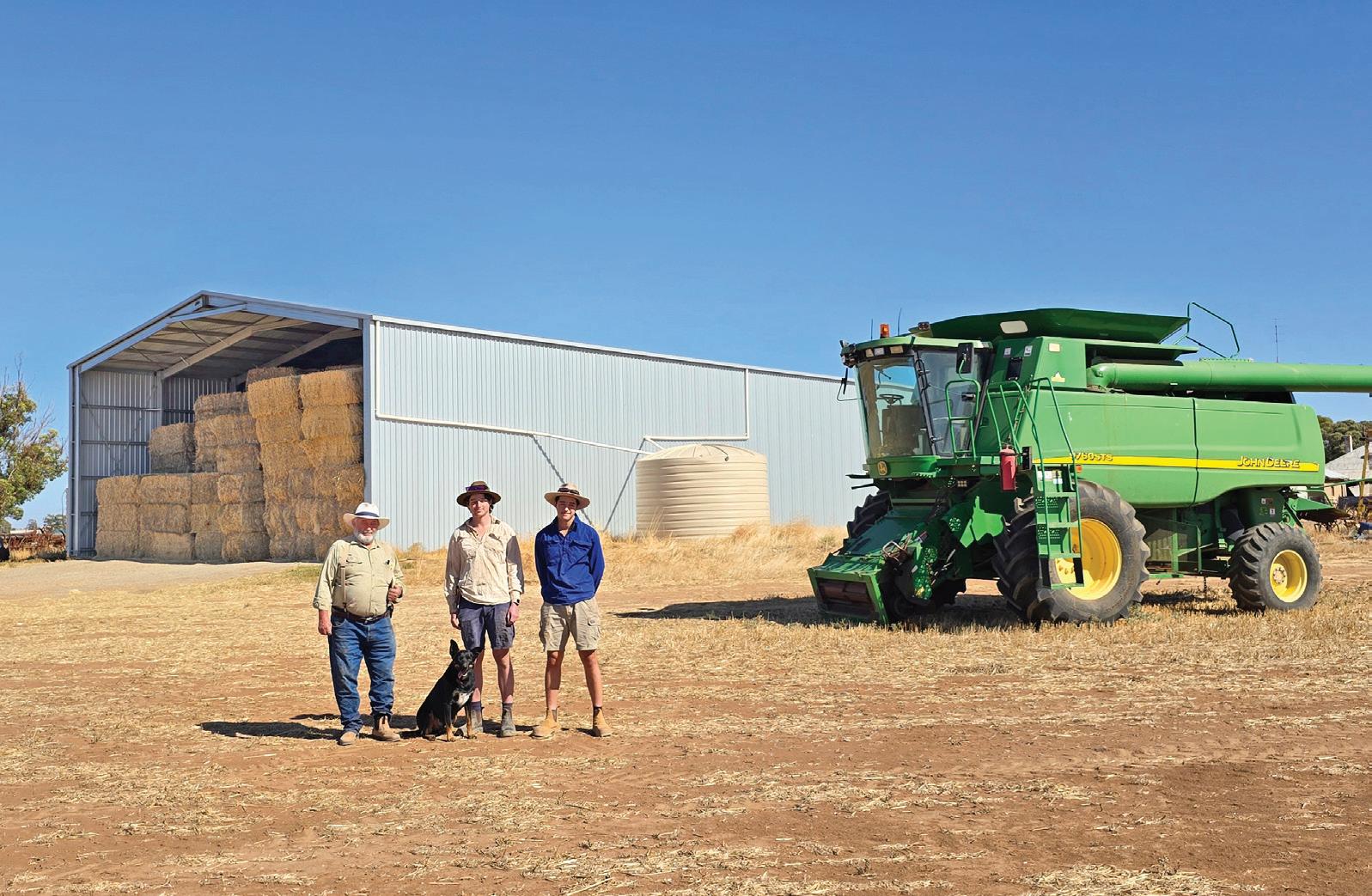
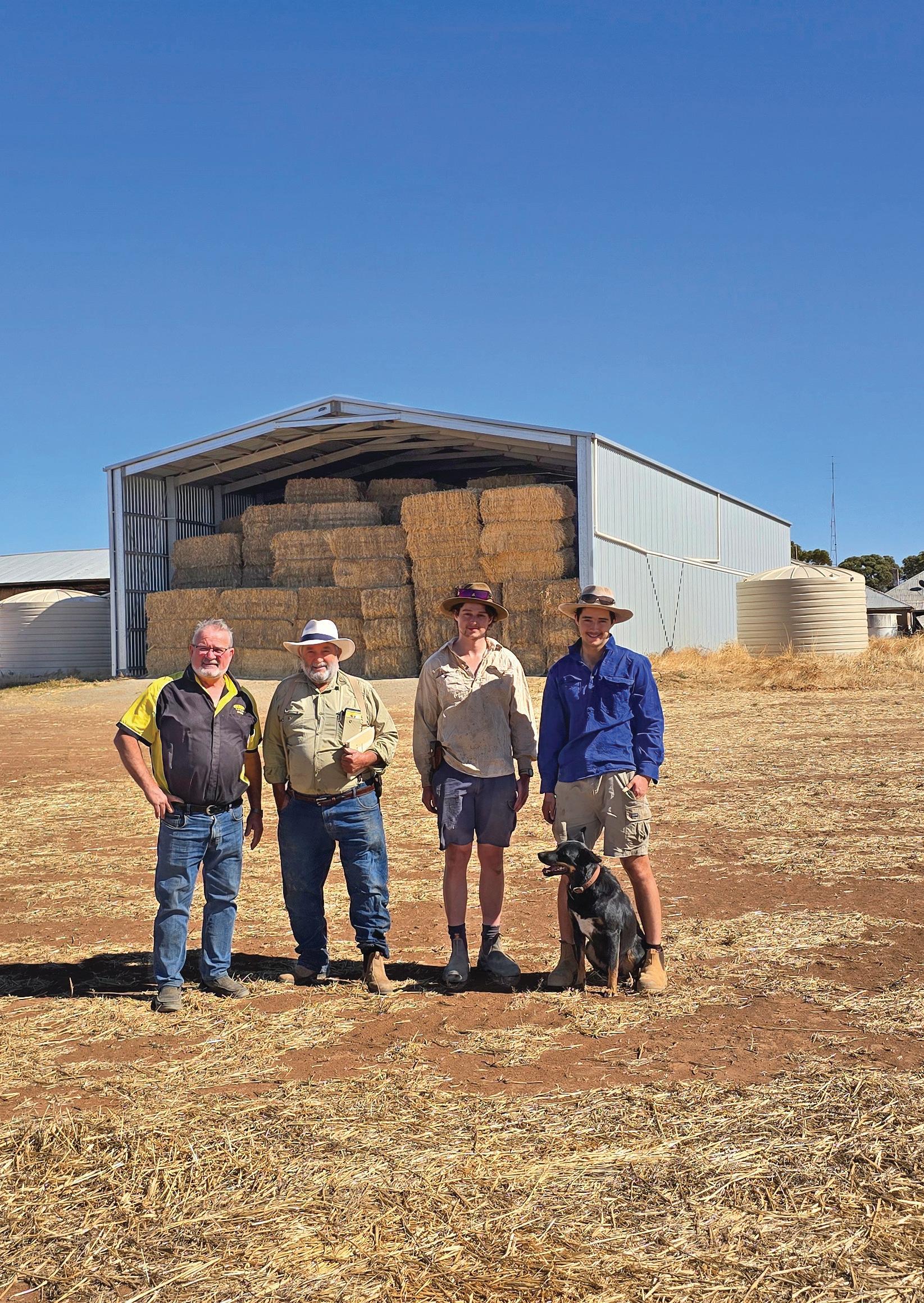
Richard, Alistair & Francis Venning, Crystal Brook and their 15m x 36m x 6.3m Hay shed. This one is open on both ends (see photo top right of P7 for other end). It makes it a great shed for storing different hay types each end. It also has the flexibility to be a drive-through machinery shed for large combinations like air-seeders or truck and trailer combinations.
When the Crystal Brook butcher shop looked set to close, Richard Venning and his family were faced with a quandary: lose the retailer the town supplied meat to or buy the shop and help retain a local business.
In the end Richard says the decision was simple.
“When you close a shop in the town, especially a butcher shop, there’s about five staff there and the abattoir, so you’re losing five families in the town,” he says.
“So, we bought the thing to keep it open, basically. And we knew it wasn’t going to be easy, but we didn’t know it was going to be this hard.”
The Venning’s are no strangers to knuckling down when things get hard. For over a century the family have been stalwarts in the region, having arrived with the early settlers. They’ve seen good years and bad, and been
forced to adapt along the way. These days Richard, his wife Jocelyn and their four children - Julian, Alistair, Francis, and Ameliaown about 1200ha of cropping country.
The family produces wheat, barley, hay and, more recently, lentils, while also running a small herd of Hereford cross Angus cattle for the temperament of the Hereford and the meat quality of the Angus.
Running a butcher shop alongside a farm has not been straight forward. Regulations, staffing and costs have all added pressure. The feedback from regular customers and travelling tourists about the quality of their meat makes it worthwhile.
Like most small businesses, it has also become a family effort. Jocelyn looks after the butcher shop with the assistance of Amelia, who is currently in Year 12. Richard, Alistair (23), and Francis (19) take care of the farm, and Julian is currently studying at university While the main farm sits near Crystal Brook, the Venning operation also stretches much further. The family holds two plots of land in New South Wales, and recently the family moved a small herd of cattle and their calves there due to better conditions and higher prices.
“I was over there at a sale and there were 6000 head of cattle, and the buyers were fighting each other,” Richard says.
“I’ve been farming 50 years, and I’ve never seen buyers fighting each other to get to the yard or get to the livestock.”
Having stock in another state helps the Venning’s manage risks including seasonal variability, which remains one of their biggest challenges.
Alistair notes last season (2025)began with enormous promise. The family cropped almost every acre of the farm for the first time in years but then the rain stopped.
“It was a thick crop, it looked fantastic,” Richard recalls.
“The whole trouble is that when you’ve got a thick crop and then you don’t get any rain, it all shrinks, and so, we had to clean the grain that we sold to reduce screenings.”
“The only thing that kept us afloat in ‘24 is the cows, because we had no harvest at all,” Alistair says.
“We didn’t harvest grain and we just had the cows. We had all the hay in the shed, about 1500 -2000 bales.”
Hay has become an increasingly important buffer for the Venning’s and was the driving force behind the family’s most recent investment in infrastructure.
Richard recently purchased a new Grant Shed to store a significant portion of their annual hay production under cover.
He notes they chose Grant’s after seeing other Grant Sheds in the district and hearing positive feedback.
“They’re well known around here and people speak highly of them,” he says.
The quality of construction and the ability to have the shed professionally installed were major factors in the decision, and the shed has quickly proven its worth.
It provides ample clearance for machinery, allowing tractors and loaders to move in and out easily during feeding and stacking, while also offering the capacity to store large volumes of hay in one secure space.
Having that feed protected is especially important in seasons when the farm relies heavily on stored fodder to get livestock through dry periods.
Both boys see livestock as an essential part of the farm’s operation. Alistair notes it’s an additional income stream and something to do in the off-season, while Francis hopes to focus on livestock more in the future.
“I like what we do, I like doing hay, I like doing grain. But I’d like to go into livestock a bit more, and invest in some grazing blocks,” he says.
“The problem we have now is we don’t have anywhere for livestock to graze during the cropping season.”
And with land prices climbing sharply across the region, expanding locally isn’t easy. Richard remembers when land cost less than $100 an acre. Today nearby blocks can reach $10,000.
For younger farmers hoping to build a future, those numbers make every decision count. It also makes it important to have a solid grasp of the farming industr y as a whole.
In recent years, both Alistair and Francis have spent time away from home learning about agriculture in different environments.
Francis spent last season working on a farm in England while Alistair headed to Western Australia soon after he completed school, driving air seeders and sprayers on a large grain farm in the WA wheat belt.
“I was there for nearly six months, and it was a great experience,” Alistair says. “I worked with Argentinians, French and German people, from all over the world.”
As for whether the boys will take over the family farm in the future, the family is yet to complete a succession plan. When they do, they will be continuing a family tradition that dates back multiple generations
The Venning’s initially arrived in the district in the early 1900s and the farm dates back to Richard’s grandfather, who was among the first graziers.
The family has also had a close involvement with the local Community church, while Richard’s father, Howard, was instrumental in establishing the grain silos in Port Pirie and Wallaroo.
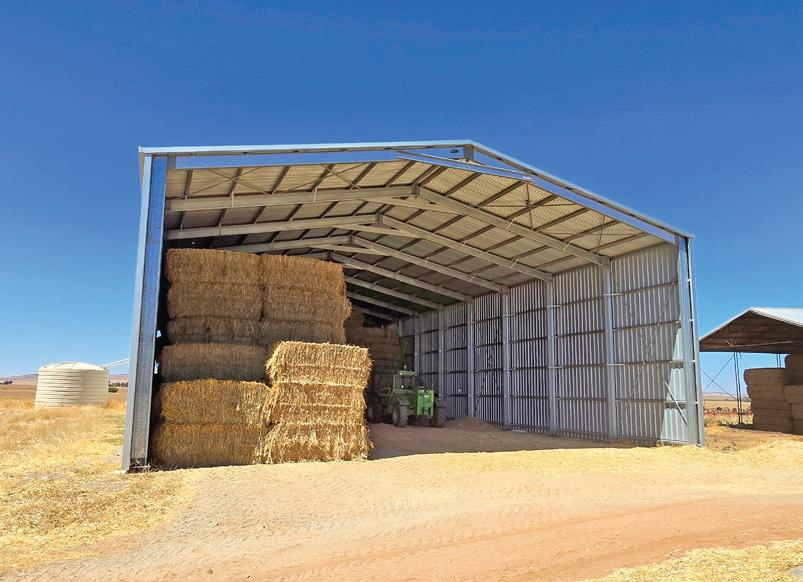
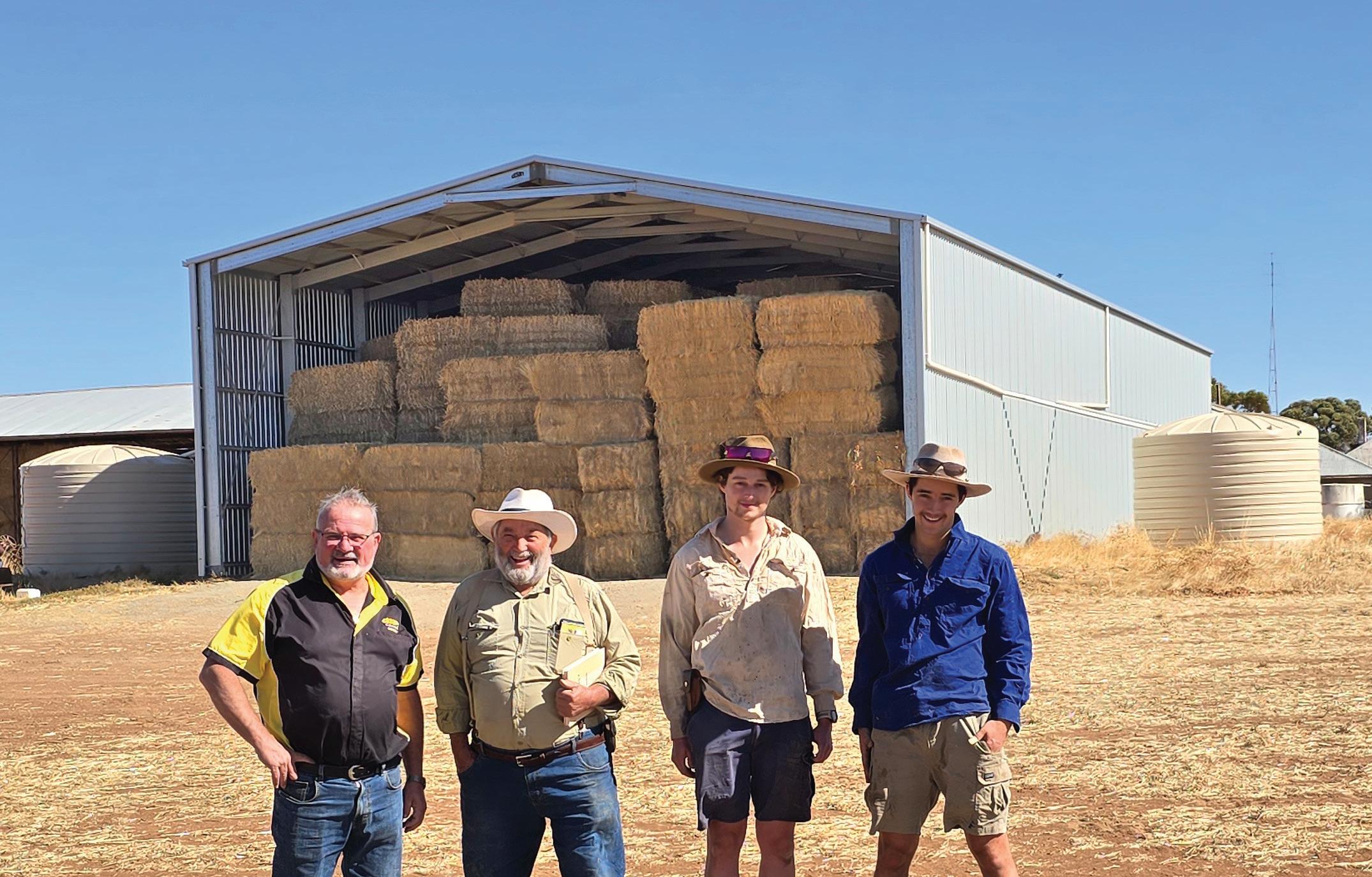
A shed full of hay is a great asset whether feeding it to your own stock or on-selling to others. Either way, it’s a profit-centre when produce quality is retained. This shed is 15m x 36m x 6.3m. Richard chose Grant Sheds after seeing others in the district and hearing positive feedback. “People speak highly of Grant Sheds,” he says.
It’s a local legacy built not only on farming, but on community. And sometimes, that commitment to community means buying a butcher shop simply because the town needs one.
While our photos capture the reality of the recent drought years, Mother Nature has since turned another page. The dust has settled, the tanks are full and the 2026 outlook is bright. As Richard says.. “We’ve gone from our worst years on the farm to what is now our best start in 30 years.”
What made you buy this shed from Grant Sheds rather than any other company you could have bought from?
We’d heard good things about Grant Sheds. We went and looked at some other sheds but they just didn’t stack up by comparison to Grant Sheds.
Also we had a couple of sheds bought years ago from an Adelaide shed company that eventually went broke and that was a frustrating experience because it was built too light and the doors kept falling off. The doors were far too light. So we didn’t want that bad experience again.
Grant Sheds were easy to work with. We just rang up and you emailed us a clear written quote with no hidden costs.
Grant’s also offered the building service too so we didn’t have to find builders separately. They did a great job and were always happy to stop for a minute and explain what was happening.
Overall, we’re very pleased that we invested in a hay shed from Grant Sheds.
With everything happening around the world right now, we’re almost surprised a major steel price rise hasn’t happened sooner.
Will this be the only increase?
Nobody knows. Let’s hope it is. But we do know this…
The last time steel prices started moving, it wasn’t just one increase. It was multiple rises over a relatively short period.
And after every rise, we’d hear the same thing: “Bugger... I wish I’d ordered before that one.”
There was always a good reason for waiting.
• Seeding
• Harvest
• Input costs
• Crop prices
• Life & Family commitments
All perfectly understandable.
The problem was that many people assumed each increase would be the last. Then another one arrived… And another!
Looking back, some farmers realised they hadn’t missed buying before one price rise... they’d missed buying before the second, third or even fifth increase.
Depending on the size of the shed, that could mean thousands - sometimes tens of thousands - of dollars difference.
We’re not trying to predict the future. We’re simply sharing what we’ve seen before.
If a new shed is already on your future infrastructure list, now could be one of the best opportunities in years to get it underway before higher steel prices flow through.
And remember, a well-designed farm shed isn’t just a cost. It can help save money, make jobs safer, reduce effort and improve farm efficiency. It may help protect the quality of grain, hay or fertiliser. It may allow you to store produce longer and sell when prices suit you. And in some cases, it can create entirely new income opportunities.
So, if you’ve been thinking about a new shed, workshop, machinery shed, hay shed, grain shed or fertiliser shed, now is a good time to have the conversation. No obligation or sales
B.S. Just practical advice, proven ideas and a chance to explore what might work best for your farm.
But don’t leave it too long.
As deadlines get closer, demand inevitably increases and we’d hate to see you miss the opportunity to save.
That’s why we are offering an Early Bird Bonus for smart farmers who order early. See yellow boxes below.
You’ve probably heard the saying: “When’s the best time to plant a tree for shade? Twenty years ago. When’s the next best time? Today.”
Buying before a price rise is much the same. The best time to buy is before it happens.
let’s explore your options
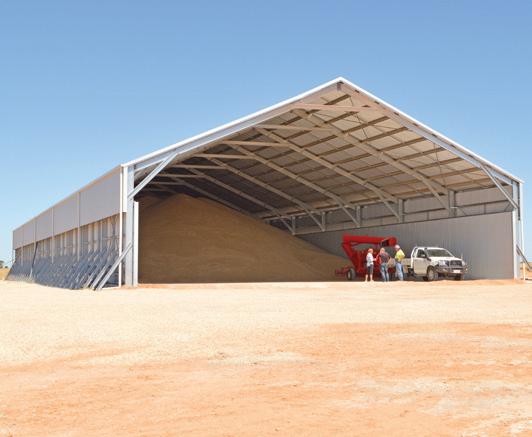
GRAIN-MACHINERY SHED
20m x 60m x 5.1m. Officially 700-1000t capacity.
Andrew Cass, ex Loxton SA
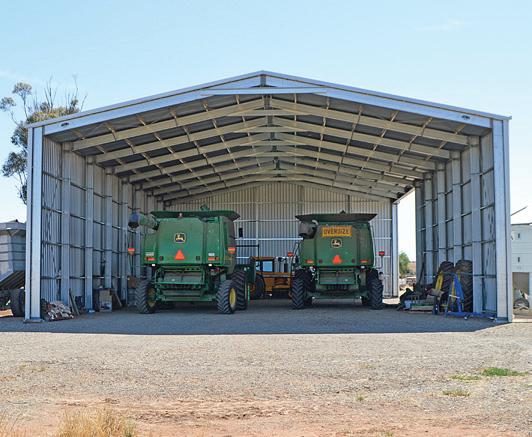
MACHINERY SHED
15m x 24m x 6.3m, Open one end, 9m open beam in back corner.
Greg Lowe, Hamley Bridge SA
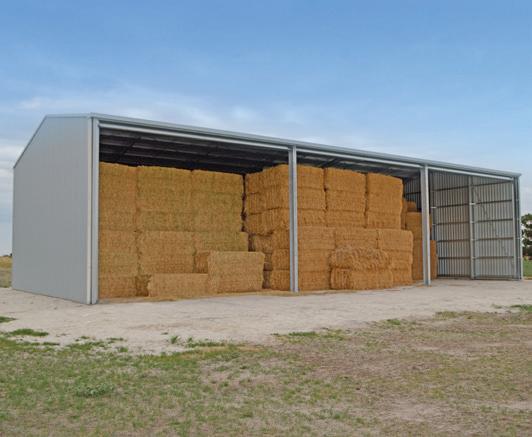
HAY SHED 12m x 24.3m x 6m, 3x8.1m beams, bale bumper rails, UB front columns.
Rodney Lush, Keith SA
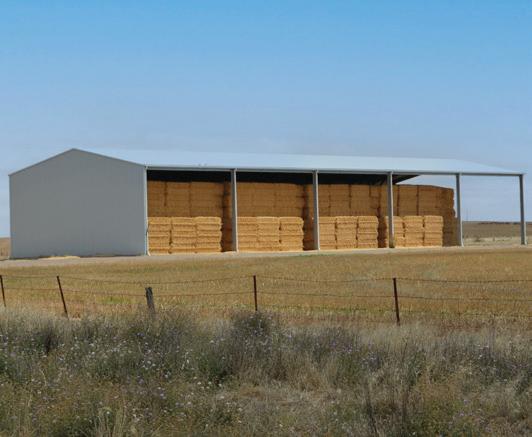
HAY OR MACHINERY SHED 15m x 45m x 6.3m, open 1 end and 1 side, 5x9m beams.
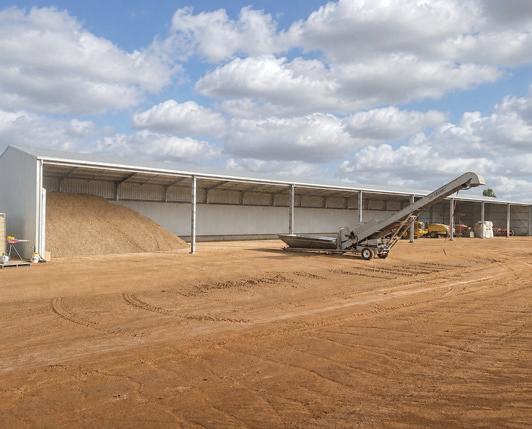
GRAIN-ALMOND-MACHINERY
12m x 72m x 5.1m, 9m wide bays Lining for grain or almonds.
Louis Curtis, Pike River SA
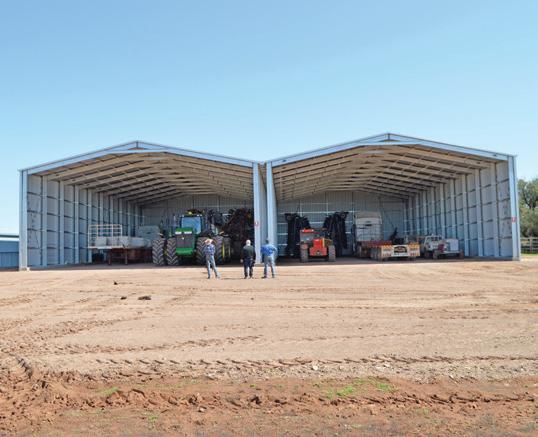
GRAIN-MACHINERY SHED
Two 15m x 30m x 6.3m joined sheds with central box gutter.
Scott Fraser, Quorn SA
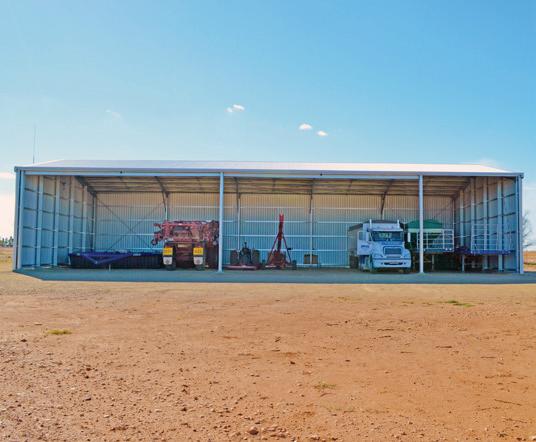
MACHINERY SHED 15m x 30m x 6m, 2 massive 12m wide & 1x6m beam, UB front colums.
Wayne Helps, Mallala SA
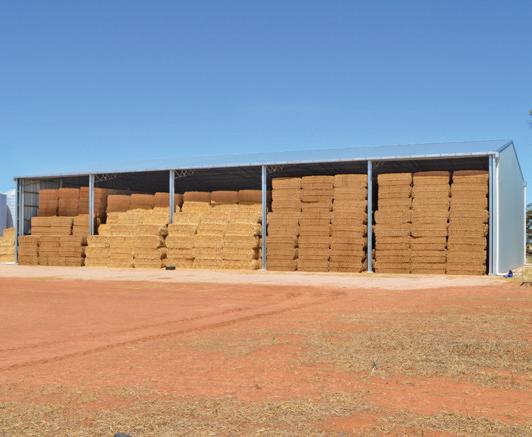
21m x 40.5m x 7.8m. 8.1m
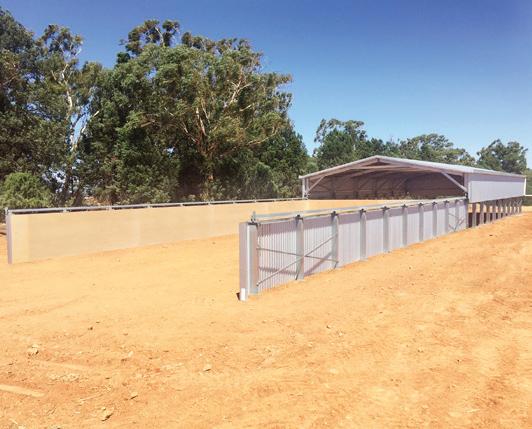
SLIDING ROOF FERTILISER SHED
7.5m x 15m x 2.4m, 150t capacity. Swing doors and other sizes avail.
Roy Moncrieff, Coolamon NSW
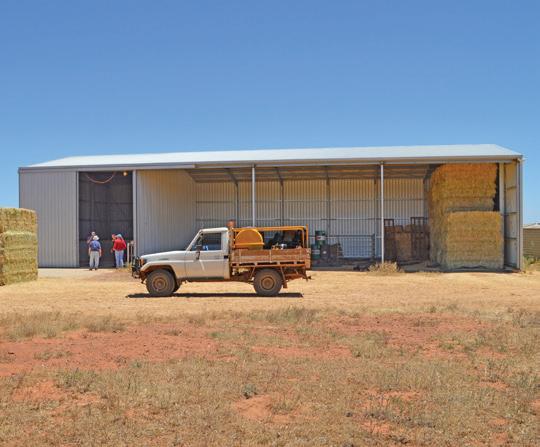
WORKSHOP & MACHINERY SHED
12m x 24m x 5.1m, 6m beams & lock-up section with sliding doors.
Neil Byerlee, Orroroo SA
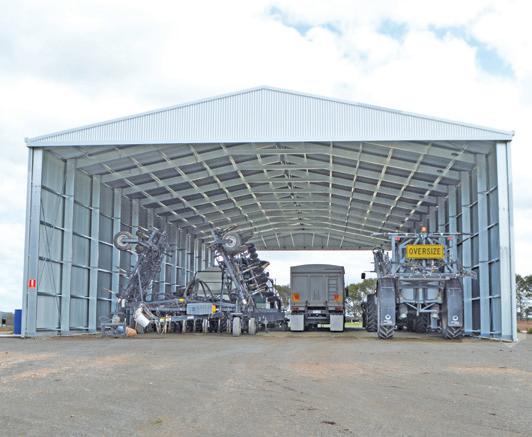
DRIVE-THROUGH MACHINERY
15m x 36m x 6.3m, open both ends. Option: Doors each end.
Tom Weckert, Brinkworth SA
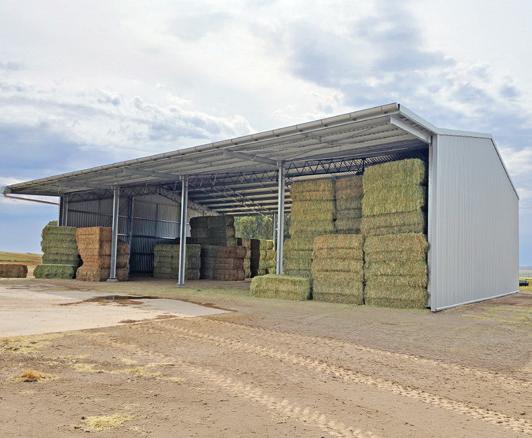
MEGA HAY SHED 18m x 30m x 6m + 4m canlever canopy. 7.5m bays, open both sides.
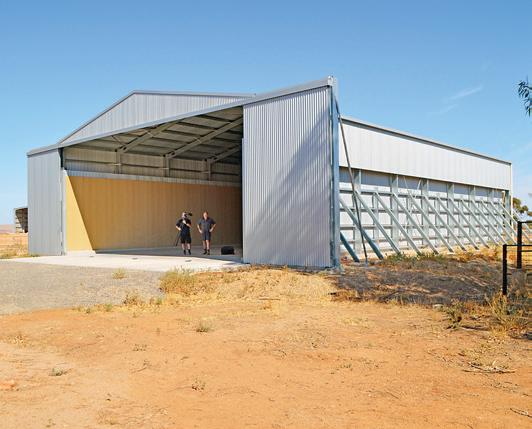
GRAIN-FERT-MACHINERY SHED 12m x 24m x 5.1m with lining, sliding doors & outriggers.
Phil Combe, Crystal Brook SA
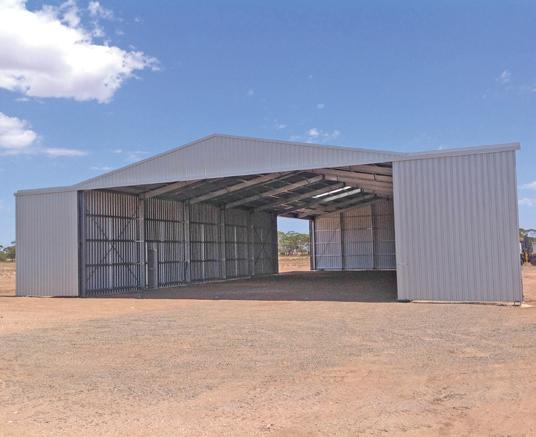
MACHINERY SHED 15m x 31.5m x 5.1m, doors & outriggers + 9m beam & doors back corner.
Andrew Bruce, Kadina SA
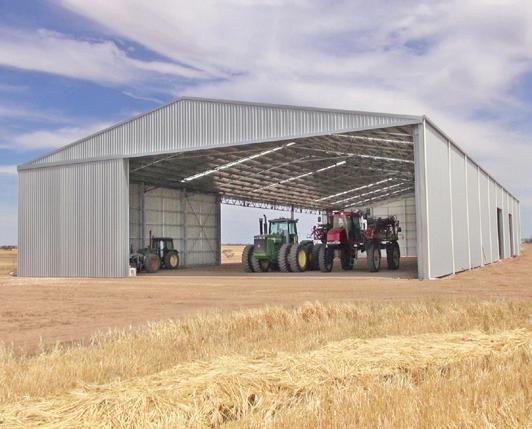
MEGA MACHINERY-WORKSHOP 27m x 60m x 7.5m with sliding doors & wide bay beams. Rundle Farming, Kulpara SA
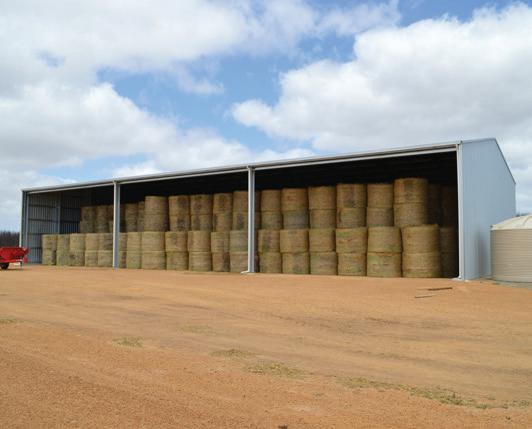
HAY SHED 15m x 32.4m x 5.7m, 3x10.8m wide-bay beams, UB front columns.
Steel Price Rise Notice for Respected Farmers... Here’s your chance to...
Suppliers have just announced a HUGE steel price rise for 2026 FREECALL 1800 088 528 NOW & BEAT THE STEEL PRICE RISE
To help farmers, we have TWO GREAT WAYS TO BEAT THE LOOMING RISES & SAVE BIG $$$
Option 1: Early Bird Order by 31/7/26 BEAT THE PRICE RISE + added BONUS
Option 2: Standard Order by 31/8/26 BEAT THE PRICE RISE only
For shed ideas & full details, see page 6 & 7 of this Farm Gate News.
*Conditions Apply
“Itwillneverbecheapertoorderyourmarket-leading AussietoughGrantShedthan NOW.”

A hacker called me and said he had all my passwords, I got a pen and paper and said ‘Thank God for that, what are they?’
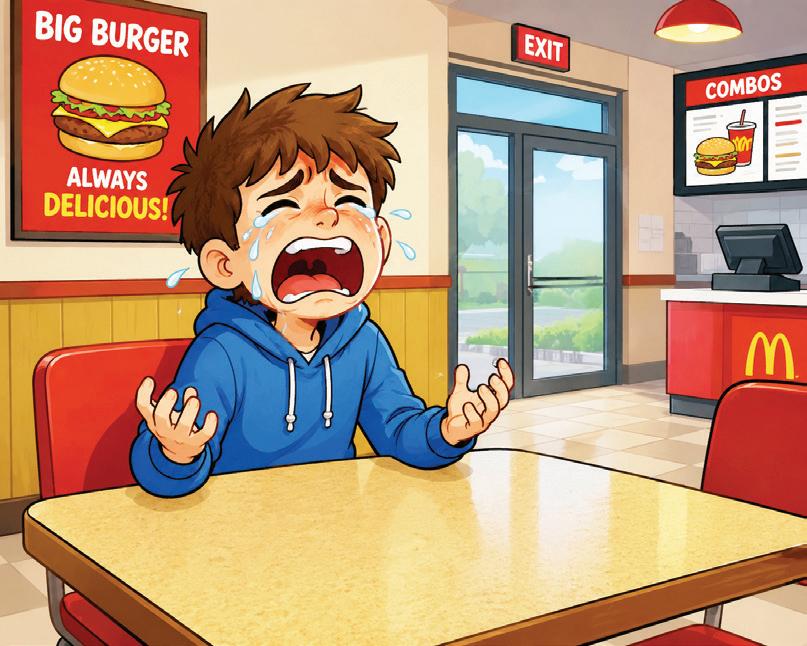
I went to McDonald’s today and ate a Kid’s Meal. It was good, but his mom was furious...
Where classic Aussie sayings meet questionable life advice If you’ve ever stood around a ute tray, workshop bench or pub bar long enough, you’ll know we Aussies have a language all our own. Some sayings make sense. Some absolutely don’t. All of them deserve preserving. Here’s this month’s paddock approved banter.
“As useful as a screen door on a submarine.”
Context: Completely useless
Example: “That old auger? Mate, it’s as useful as a screen door on a submarine.”
“Mad as a cut snake.”
Context: Properly angry.
Example: “The wife was as mad as a cut snake when I forgot our anniversary... again!”


“Dry as a dingo’s donger.”
Context: Extremely dry.

I just asked me 9 year old son what he learned in school today. He said, “Apparently not enough because I have to go back tomorrow!”


Example: “These paddocks are drier than a dead dingo’s donger”
Got a cracker Aussie saying yourself? Email it through If it makes us laugh, it might make the next edition.
Email: info@grantsheds.com.au