Looking beyond the restraint of physical desire
Ramadan is often described as the month of fasting – a time when Muslims restrain their physical desires from dawn to sunset. Yet, if Ramadan is reduced to mere hunger and thirst, its true spirit is lost. Ramadan is not just about abstaining from food, but about becoming a better human being.
The Holy Prophet Muhammadsa said that during Ramadan, Allah draws nearer to His servants and listens to their prayers (Al-Jami‘ li Shu‘ab al-Iman, Hadith 3334 and 3394), chains the forces of evil (Sahih Muslim, Hadith 1079a) and Himself becomes the reward of the one who fasts (Sahih al-Bukhari, Hadith 7492). These beautiful sayings of Allah’s Messengersa are not mere promises – they are open invitations and powerful motivations for permanent transformation.
But the crucial question is this: what promises have we made in return?
Have we resolved to abandon our past shortcomings? Have we committed to living according to God’s commands beyond these 30 days? Have we made permanent changes within ourselves?
Ramadan is meant to awaken such selfexamination. It pushes us to ask whether we are seeking temporary emotional change or lasting reformation.
Ramadan as a training camp
Ramadan is a spiritual training camp. Instead of just seeing it as the destination, it can be reframed as the preparation for the journey ahead. The good habits we adopt during this month are not meant to expire
once the month, and the hunger, passes. Hazrat Mirza Masroor Ahmad, Khalifatul Masih Vaa said:
“Ramadan arrives as a spiritual training camp. It has been prescribed by Allah so that the virtues you are already practising may advance and deepen. Each successive Ramadan should conclude by elevating us to new heights in worship and goodness, enabling us to establish ever higher standards of devotion and righteous deeds. Indeed, Allah demands from us steadfastness and consistency in adhering to these virtues.”
(Friday Sermon, 23 June 2017)
If we offer our five daily prayers regularly only because it is Ramadan, and then gradually become negligent afterwards, we have misunderstood the purpose. If we attend Friday prayers faithfully during
Ramadan but neglect them later, we have not truly obeyed God’s command. If we recite the Holy Quran diligently this month but place it back on the shelf once Ramadan ends, we have confined divine guidance to a season.
Allah commands, “Observe prayer” (Surah al-Baqarah, Ch.2: V.44). He instructs believers to safeguard all prayers, especially the middle prayer (Ch.2: V.239). Every prayer is important, but some are harder than others. For one person, Fajr at dawn demands sacrifice. For another, Zuhr or Asr comes during business and work. When a believer struggles against personal comfort or worldly desire to stand before God, that effort is valued immensely.
God knows human nature. He knows
Continued on page 3

The gate of ar-Rayyan for those who fast Hazrat Sahlra narrated: “The Prophetsa said, ‘In Paradise there is a gate called ar-Rayyan. On the Day of Resurrection, those who used to fast will enter through it and none besides them will enter through it. It will be announced, ‘Where are those who used to fast?’ and they will rise and none besides them will enter through it. Then when they have entered, it will be closed and no one will enter through it.’”
(Sahih al-Bukhari, Kitab as-sawm, Bab arrayyanu li s-sa’imin, Hadith 1896)
Appropriate Faculties
The Promised Messiahas states:
“Whenever God Almighty has raised a person for a certain task, He has granted them with the appropriate faculties in order to prepare them and make available to them the necessary ingredients that enable the fulfilment of the goal or task at hand. Those people who do not truly possess the necessary qualities inherently by nature and then indulge in religious exercises, ultimately turn mad and lose their senses.”
(Malfuzat [English], Vol. 2, pp.172-173)
Hazrat Mirza Ghulam Ahmadas, In His Own Words
6 March
6 March 1953: While delivering his Friday sermon on this day, Hazrat Musleh-e-Maudra shared that a wave of anti-Ahmadiyya agitation is ongoing in Pakistan. A frightening and merciless wave of anti-Ahmadiyya agitations, lootings, arsons, murders and brutal attacks on the lives and properties of Ahmadis had spread across Pakistan. It was reported that in Lahore alone, three Ahmadis embraced martyrdom: Muhammad Shafi Sahib, Jamal Ahmad Sahib and Mirza Karim Baig Sahib. Later, the government’s inquiry commission labelled this day similar to the Saint Bartholomew’s Day Massacre of France in 1572. Due to the failure of civil authorities, a curfew was imposed on this day at 1:30 pm in an attempt to prevent the ongoing systematic killings of Ahmadi Muslims in Pakistan. This martial law was lifted on 15 May.

This Week in History
Mirza Karim Baig Sahib was martyred after being stabbed on Fleming Road, Lahore, Pakistan. A fire was started by the opposition. They began by looting furniture from shops belonging to Ahmadis. Mirza Karim Baig Sahib’s body was thrown into the fire by the cruel perpetrators. (Tarikh-e-Ahmadiyyat, Vol. 15, p. 153-154)
7 March
7 March 1921: On this day, Hazrat Musleh-e-Maudra travelled to Malir Kotla, India, to testify in a legal case. Hazrat Nawab Muhammad Ali Khanra, Hazrat Nawab Muhammad Abdullah Khanra and some other members were present at Malir Kotla railway station to meet Huzoorra. (Tarikh-eAhmadiyyat, Vol. 4, p. 277)

Muhammad Shafi Sahib of Burma was martyred in Mughalpura. Mian Jamal Ahmad was an FSC student at the time of his martyrdom and was 17 years old. The mob that attacked gave him a chance to denounce his faith and declare himself a nonAhmadi; however, this brave young man remained firm in his faith.
7 March 1980: On this day, Hazrat Khalifatul Masih IIIrh, while delivering the Friday sermon in Karachi, Pakistan, directed that every Ahmadi household should have a copy of the tafsir compiled from the writings of the Promised Messiahas and a copy of Tafsir-e-Saghir. (Khutbat-e-Nasir, Vol. 8, p. 565)
8 March
Sanatan Dharam
8 March 1903: On this day, the Promised Messiah’s Urdu book, (The Sanatan Faith) was published from Zia-ul-Islam

expulsion orders for Hazrat Maulana Jalaluddin Shamsra, the missionary appointed there. On this day, he was told to leave Damascus within 24 hours. Upon the instructions of the Markaz, he moved to Haifa in the Holy Land and resumed his missionary duties there. (Tarikh-eAhmadiyyat, Vol. 4, p. 525)

9 March 1990: On this day, Hazrat Khalifatul Masih IVrh was in Portugal, where he delivered his Friday sermon, which was the first ever Friday sermon of a Khalifatul Masih, on this land. During this tour, Huzoorrh also formally inaugurated the Ahmadiyya Mission House in Portugal and addressed some press gatherings. After this visit to Portugal. (Khutbat-e-Tahir, Vol. 9, p. 127)
10 - 11 March
11 March 2011: During his Friday sermon on this day, Hazrat Khalifatul Masih Vaa mentioned Syed Dawood Muzaffar Shah Sahib, who had recently passed away. He was the paternal grandson of Hazrat Syed Dr Abdus Sattar Shahra and the maternal grandson of Hazrat Syed Sarwar Shahra. He was married to Syeda Amatul Hakim Begum Sahiba, daughter of Hazrat Musleh-eMaudra. He was the father-in-law of Hazrat Khalifatul Masih Vaa. In 1944, after receiving his BA degree, he dedicated his life to the service of Islam Ahmadiyyat.
12 March
12 March 1953: During the horrific anti-Ahmadiyya riots of 1953 in Pakistan, due to the forced closure of Al Fazl, a series of letters was issued to contact members of the Jamaat. In a letter dated 12 March, among other things, it was written that a local jamaat in Pakistan had stated that by the grace of Allah there was no panic in their area; however, they said that they were concerned about people living in the Markaz. Another Jamaat reported that mischief caused by opponents was increasing in their area every day. Upon this, Hazrat Musleh-e-Maudra said:

Press, Qadian.
8 March 2013:


During his Friday Sermon on this day, Hazrat Khalifatul mentioned Mubashar Ahmad Abbasi Sahib of Karachi, Pakistan, who had been martyred on 3 March.

Administrators of the French Mandate in Syria issued


10 March 1944: On this day, Hazrat Musleh-e-Maudra introduced a novel scheme to serve the cause of Islam, named Waqf-e-Jaidad. Upon the call of their beloved Khalifa, within hours, Jamaat members pledged their properties worth four million rupees. In fact, in just over a month, the number of people pledging to devote their properties for the sake of Islam reached 2,271. Moreover, Huzoorra encouraged the family members of the Promised Messiahas to devote their lives to the cause of Islam. Upon this call, Hazrat Mirza Nasir Ahmadrh was the first person to submit to this noble cause. (Al Fazl, 14 March 1944)
11 March 1910: On this day, Hazrat Khalifatul Masih Ira called for Jamaat members to volunteer and assist in the work for the extension of the Aqsa Mosque, Qadian. Huzoorra also took part in the labour by shifting mud during the construction. (Tarikh-eAhmadiyyat, Vol. 3, p. 314)

“There is a Living God in heaven Who shall seize these mischievous people.” (Tarikh-e-Ahmadiyyat, Vol. 15, p. 221)
12 March 2004: During his Friday sermon on this day, Hazrat Khalifatul Masih Vaa informed the Jamaat that he was going on a tour of some African countries, and some of those countries were such that they would be graced for the first time with the presence of a Khalifatul Masih. Huzooraa instructed the members to pray for the success of the tour.

Continued from page 1
that worldly commitments pull us away. Therefore, He rewards the one who breaks the idols of ego and desire and turns back to Him. His generosity has no limit.
A continuous system of reform
The Holy Prophetsa explained the powerful system of spiritual purification and reform embedded within the worship of Allah the Almighty. He said:
“The five daily prayers, from one Friday prayer to the next and from one Ramadan to the next serve as expiation for the sins committed between them, so long as a person abstains from major sins.” (Sahih Muslim, Hadith 552)
Notice the order: Five daily prayers, then the weekly Friday prayer and then the annual Ramadan. This sequence shows that forgiveness is not tied to a single month. Rather, Ramadan crowns a continuous structure of discipline. Daily worship leads to weekly renewal, which leads to annual transformation.
Importance of Jumuah prayer and consistency
It would be a grave misunderstanding to think that we can neglect our duties all year and rely on Ramadan alone for redemption. Instead, Ramadan reinforces what we should already be practising.
Prophet Muhammadsa warned that deliberately missing three consecutive Jumuah prayers results in the sealing of one’s heart (Tirmidhi, Hadith 500). This is not merely a legal injunction; rather, it is a warning against gradual spiritual deterioration. When a heart distances itself repeatedly from communal worship, it begins to darken.
The Holy Quran commands believers: When the call for Friday prayer is made, leave trade and hasten to the remembrance of Allah the Exalted (Surah al-Jumuah, Ch.62: V.10). A true believer never sacrifices worship for worldly gain. In fact, obedience to Allah brings blessings to worldly affairs.
Ramadan teaches punctuality and devotion. Its success lies in maintaining that discipline throughout the year.
Beyond ritual – towards character reform
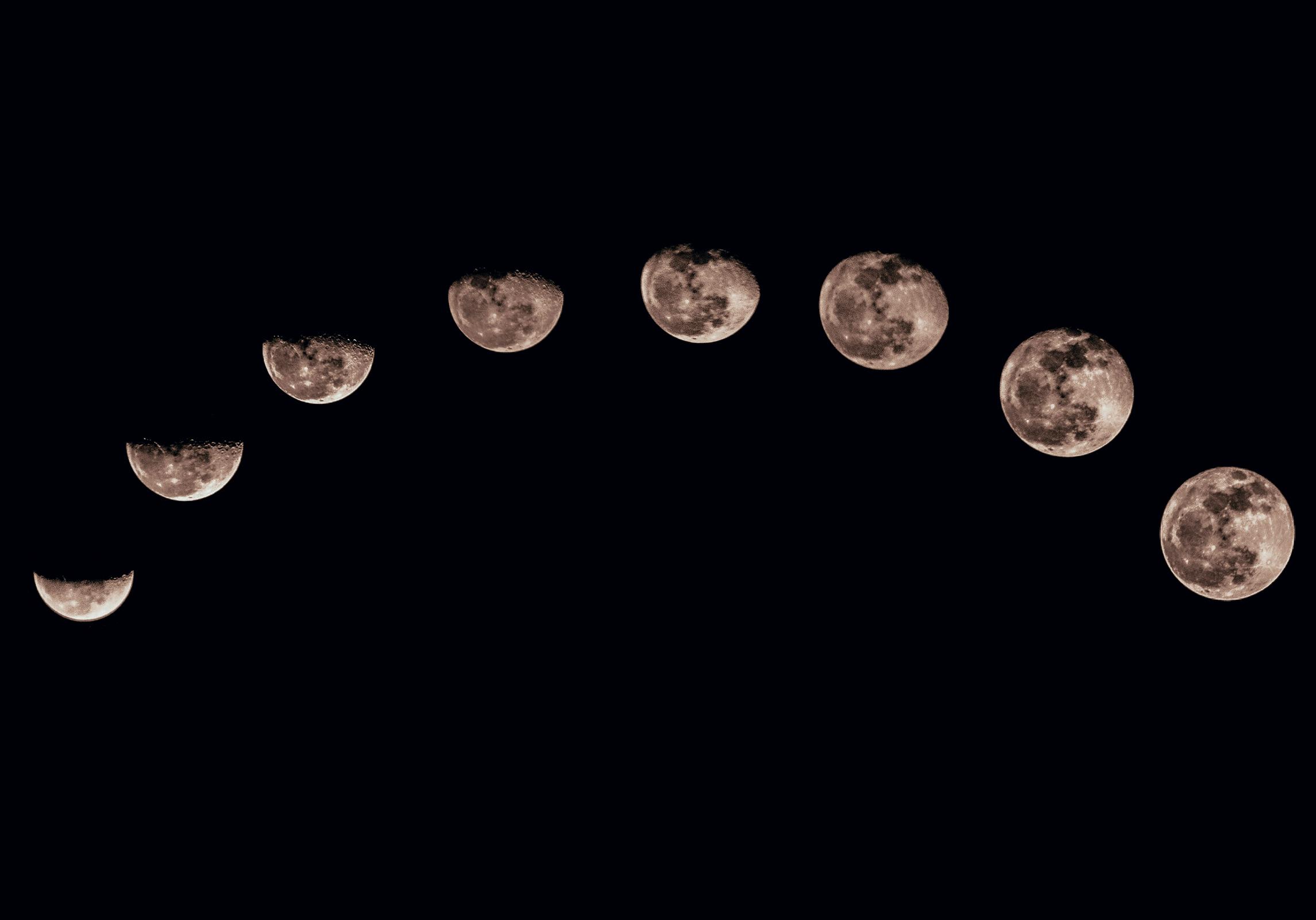
Ramadan trains us to say, “I am fasting,” when provoked, so that we avoid arguments (Sahih al-Bukhari, Hadith 1894). But this self-restraint must not disappear with the crescent moon of Shawwal. The discipline of Ramadan should reshape our character permanently.
The Promised Messiah and Mahdi, Hazrat Mirza Ghulam Ahmadas, repeatedly emphasised that true allegiance to faith requires inner transformation. He taught that a person cannot receive divine support until they close all unlawful doors and turn to God with sincerity. He said:
“God Almighty looks down from above into the hidden recesses of a person’s heart; and if He finds in any corner even a trace of darkness, shirk (associating partners with Him), or bad innovation, He rejects that individual’s prayers and acts of worship, casting them back upon him.
“However, if God sees that the heart
is purified of all selfish motives and inner darkness, He opens for such a person the doors of His mercy, draws him under His shade and Himself undertakes his [spiritual] nurture.” (Malfuzat [1984], Vol. 5, p. 397)
Hence, God looks into the hidden corners of the heart. If arrogance, duplicity or dishonesty remain, rituals alone cannot save us. In an announcement, the Promised Messiahas outlined practical standards for moral reform:
• Pray five times a day in congregation.
• Don’t tell lies.
• Cause no harm with the tongue.
• Avoid immorality and injustice.
• Forgive frequently.
• Show compassion to the weak.
• Be patient.
• Serve the poor without pride.
• Reconcile quickly and abandon grudges.
These teachings move Ramadan beyond abstinence into ethical excellence. The Promised Messiahas warned:
“You, therefore, cannot be accepted by God unless you are the same inside and out. If you are above others, have mercy on the lowly and do not look down upon them. If you are learned, counsel the ignorant and do not degrade them with disdain. If you are wealthy, serve the poor, and do not treat them with arrogance and self-conceit.
“Dread the ways of ruin and always be fearful of God. Adopt righteousness and worship not His creation. Cut asunder from everything to turn to your Master. Turn your hearts away from the world and become wholly His; live for Him alone and, for His sake, hate every impiety and sin, for He is Holy.
“Let every morning bear witness that you have spent the night in righteousness, and let every evening bear witness that you
have spent the day with the fear of God.” (Noah’s Ark, pp. 19-20)
The Holy Quran – a living companion
During Ramadan, many Muslims strive to complete at least one full recitation of the Holy Quran. This is a beautiful sunnah, but we must ensure we do not abandon the Quran after Ramadan.
The Quran itself highlights the recitation at dawn (Surah Bani Isra’il, Ch.17: V.79) as an acknowledged time witnessed by angels. This shows that engagement with divine revelation is not seasonal; it is daily nourishment. Understanding its translation, reflecting on its commands and implementing its teachings are essential.
The Promised Messiahas declared that those who honour the Holy Quran will be honoured in heaven (Noah’s Ark, p. 22).
The Quran is not merely to be read – it is to be lived. It must shape our decisions, our speech, our relationships and our ambitions.
Sincerity over show
God sees beyond outward form. External fasting without inner purification is incomplete. One may refrain from food yet indulge in arrogance. One may stand in prayer yet harbour resentment. One may recite beautifully yet neglect justice. True success lies in sincerity.
The Promised Messiahas advised that God cannot be deceived by appearances (ibid.). If our hearts are impure, rituals become hollow. If we seek praise from people, our worship loses its essence.
He urged believers to become gentle, humble, forgiving and truthful. He encouraged unity, like two brothers from one womb. He emphasised reconciliation over conflict and humility over ego (ibid., pp. 20-21). The one who insists on pride distances himself from Divine mercy.
Becoming better – the real victory
Ramadan teaches us that true success is not about how much hunger we endure, but about how much we improve our habits and character.
• Did we become more patient?
• Did we control our anger?
• Did we forgive someone?
• Did we give charity quietly?
• Did we rise for prayer despite fatigue?
• Did we reduce gossip?
• Did we purify our intentions?
If the answer is yes – and if these qualities continue beyond Ramadan – then we have truly benefitted.
Ramadan opens the doors of mercy. It chains negative influences. It draws us closer to Allah the Almighty. But walking through those doors requires effort and lifelong commitment.
If we come forth from Ramadan spiritually cleansed and morally refined, we will remain under the shade of Divine mercy throughout the year.
Ramadan is not the end of spiritual effort; it is the beginning of a better self. Hazrat Khalifatul Masih Vaa said:
“Thus, each of us ought to emerge from Ramadan with a firm pledge: that the teachings conveyed by Allah and His Messengersa, and the guidance expounded so clearly by the Promised Messiahas, shall remain constantly before us, and that we shall strive to shape our lives in accordance with them.
“Only then can we truly claim to have observed Ramadan in the manner ordained by Allah and His Messengersa. May Allah grant us the ability to do so.” (Friday Sermon, 23 June 2017)
(M Adam Ahmad, Al Hakam)
Divine mathematics: Secrets of the ‘odd’ number in Islam
Syed Ahmed Owais USA
As we experience the blessed month of Ramadan once again, the majority of us will be offering the witr prayer at the mosque in congregation. During this holy month of heightened worship, many might harbour a natural curiosity or confusion as to why we conclude our night with this specific threerak’ah prayer. Why not two or four? What is the significance of this uneven number?
Through detailed research into Islamic jurisprudence, the Holy Quran and the profound spiritual insights provided by the Holy Prophetsa, the Promised Messiahas and the Khulafa, a magnificent philosophy emerges. Islam is a religion of absolute wisdom where nothing is left to chance. Every posture, every word and indeed every number holds a deep divine secret.
A significant insight
Recently, I saw a video of Hazrat Khalifatul Masih Vaa, who was drawing our attention to a fascinating jurisprudential and spiritual reality regarding our daily prayers. Huzooraa noted that the total number of farz (obligatory) rak’ah in a day – two for Fajr, four for Zuhr, four for Asr, three for Maghrib and four for Isha – totals exactly 17. (“This Week with Huzoor – Jalsa Salana UK 2025 Special,” MTA News, www.youtube.com)
Seventeen is an odd number. Furthermore, Huzooraa explained that Allah introduced the witr prayer (which literally translates to “odd”) at the end of the night. The wisdom behind this is that after offering all our sunnah and nawafil (voluntary) prayers, which are generally offered in sets of two (even numbers), we cap them off with an odd number. This makes the grand total of our voluntary worship odd, perfectly mirroring the odd number of our obligatory prayers.
The emphasis on odd numbers
But this brings us to a profound, overarching question: Why is there such a divine emphasis on the “odd” number?
The Holy Prophetsa explicitly provided the answer to this question:
“Verily, Allah is witr (Odd/Single), and He loves the witr (the Odd).” (Sahih alBukhari, Kitab ad-da‘awat, Hadith 6410)
When we examine our Islamic customs, this mathematical pattern is omnipresent. During Hajj or Umrah, we perform tawaf (circumambulation) around the Ka‘bah exactly seven times. We perform sa‘i between Safa and Marwa seven times. When we throw pebbles at the jamarat, we throw seven pebbles. When we raise our hands for extra takbiraat in the Eid prayers, we do so an odd number of times.

To understand the unifying philosophy behind this numerical jurisprudence, we must turn to the Holy Quran. In Surah alFajr, Allah the Almighty takes a magnificent oath:
“And the Even and the Odd.” (Surah alFajr, Ch.89: V.4)
To extract the nectar of this verse, we look towards the spiritual insights of the Promised Messiahas and the classical scholars of Islam. The common denominator behind all these injunctions is the grand concept of tawhid – the absolute, indivisible Oneness of God.
A divine distinction
In Islamic philosophy, the “even” (shaf‘) represents the creation. Allah states in the Holy Quran:
“And of everything have We created pairs, that you may reflect.” (Surah adhDhariyat, Ch.51: V.50)
Everything in this universe is dependent on a counterpart. We observe day and night, male and female, positive and negative, life and death, body and soul. Mathematically, an “even” number can be perfectly divided into two halves. It represents duality and dependency. It is the hallmark of the creation, which cannot exist without its partner or its Creator.
The “odd” (witr), however, represents the Creator. God does not have a pair. He does not have a partner. He is Ahad – indivisible and unique. If you try to divide an odd number equally, you cannot do it without breaking it into fractions. It refuses to be split into two equal, independent halves. It possesses a solid, indivisible core.
Therefore, when the Holy Prophetsa states that Allah is witr and He loves the witr, he is teaching us a profound theological reality. Allah is the Indivisible One and He loves for our actions to reflect His Oneness.
Let us connect the dots of our
jurisprudence. Why do we pray 17 farz rak’ah? Because 17 is not just an odd number; it is a prime number – indivisible, standing alone, much like the decree of Allah.
Why did the Holy Prophetsa command us to end our night prayers with witr?
The Promised Messiahas explains in his writings that Islam desires the zahir (outer physical form) to perfectly reflect the batin (inner spiritual reality). (Noah’s Ark [Kashtie-Nuh], 2018, pp. 19-20)
Throughout the day, we live in the “even” world. We interact with our families, manage our businesses and navigate the dualities of joy and sorrow. However, when the night falls and a believer stands on their prayer mat, they leave the world of pairs behind. They pray their nawafil in twos, but at the very end, they must offer the witr
By adding that odd number, the believer
places the seal of divine oneness upon their entire night’s worship. They physically and mathematically declare to their Lord that while they live in a world of pairs, their ultimate return and devotion is entirely to the One.
This is the exact same logic behind the rituals of Hajj. As a pilgrim revolves around the House of God, their physical body traces a circle. The number seven ensures that they do not end in a number of duality. They end their rotation on an odd number to declare that at the centre of the universe, there is only One God.
This is the magnificent beauty of Islamic jurisprudence. It is not merely a set of arbitrary rules but a harmonious spiritual symphony. The philosophy uniting the 17 farz prayers, the witr of the night, the seven circuits of tawaf and the verse “And the Even and the Odd,” is tawhid
Conclusion
Allah has structured our worship in odd numbers so that our physical bodies, our tongues and the very mathematics of our daily lives are constantly singing the song of His Oneness.
He desires to pull our minds away from the shaf‘ – the distracting multiplicities and pairs of this temporary world – and anchor our souls to the witr: the Single, Unique and Everlasting Lord of the worlds.
As we stand in the mosque this Ramadan to offer our witr prayers, may we internalise this profound reality. May we not just pray the witr, but may our hearts become singularly devoted to the One True God, completely free from all worldly partners.
Regional Jalsa Yaum-e-Musleh-e-Maud held by Jamaat-e-Ahmadiyya Cotonou, Benin
Mirza Farhan Ahmad Baig
Benin Correspondent
Jamaat-e-Ahmadiyya Cotonou, Benin, held Jalsa Yaum-e-Musleh-e-Maud at the Baitut-Tauhid Mosque on 22 February 2026.
The event commenced with a recitation from the Holy Quran, followed by an Urdu poem and a reading out of the prophecy of Musleh-e-Maud.
The first speech was delivered by the missionary Assani Yaya Sahib on “Services of Hazrat Musleh-e-Maudra for the Holy Quran” in French. Following this, the children of Darul Ikram Orphanage of Porto-Novo recited a qasidah. Afterwards,
Hafiz Abdoul Ghani Sahib, who came from Nigeria, delivered a speech on the prophecy of Musleh-e-Maud, highlighting its miraculous nature and relevance for our time.
At the conclusion of the programme, Amir Sahib Jamaat Benin addressed the gathering on the subject of the Promised Son and Reformer, elaborating on his attributes, the extraordinary nature of the prophecy and how we must strive to follow him in all aspects of life.
The programme ended with a silent prayer, followed by a question-and-answer session. More than 180 Ahmadis attended this event.
Answers to Everyday Issues
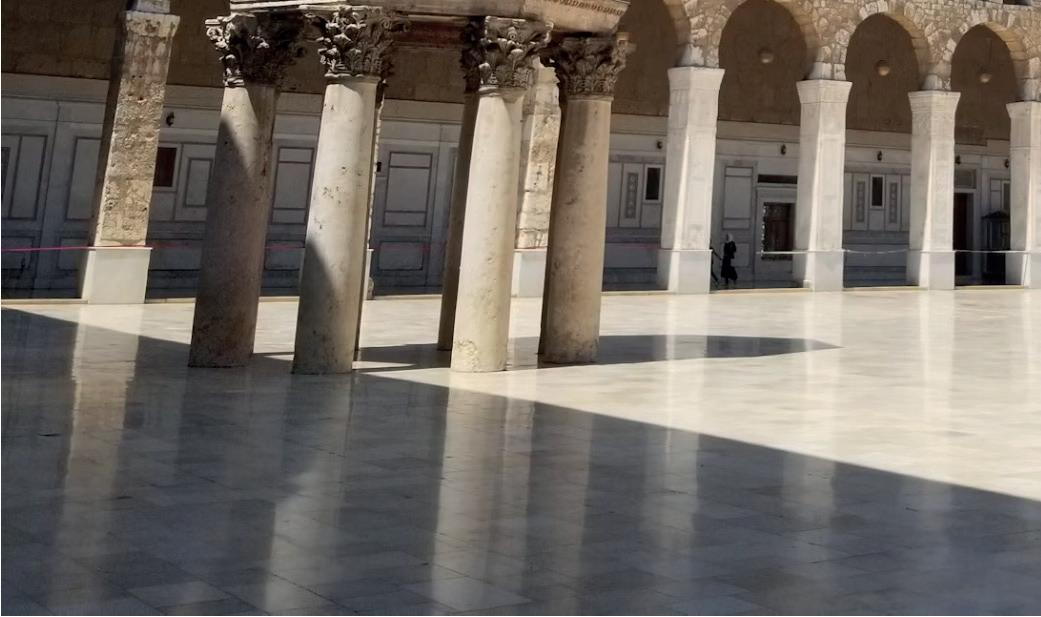
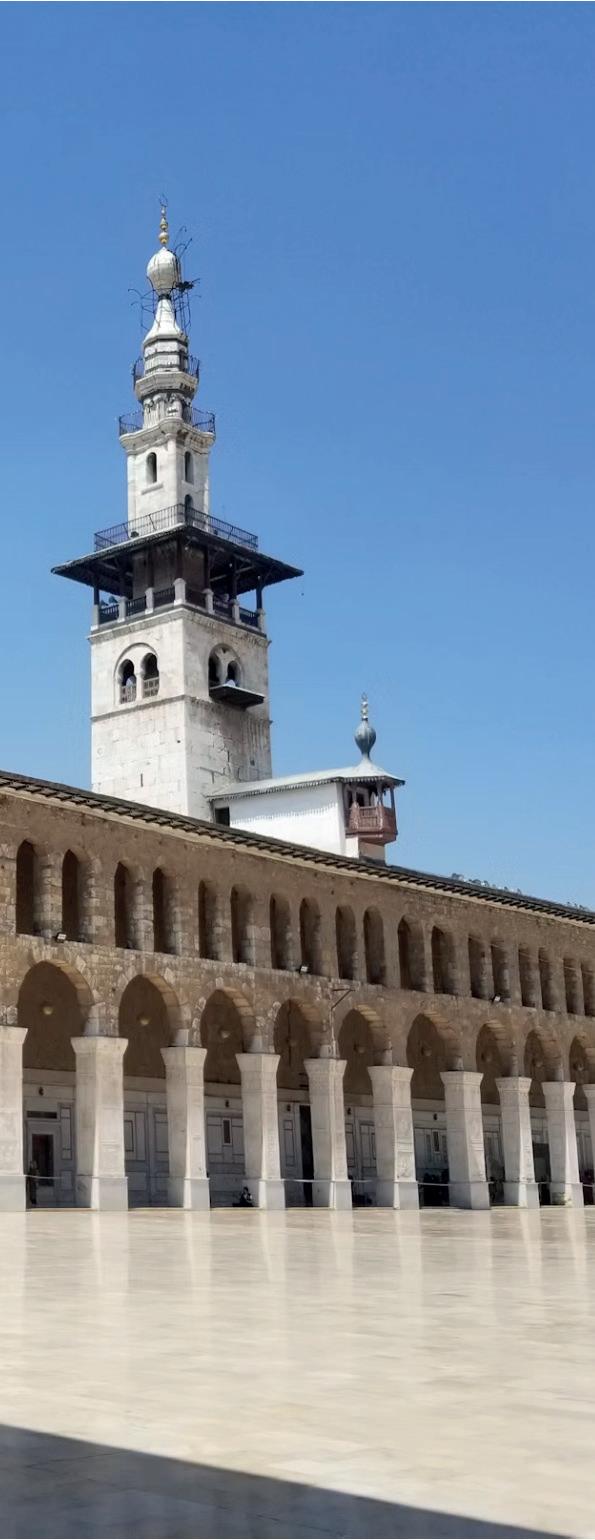
Prayer, patience, tawassul, religious debates, understanding Hadith, Hadith al-Qirtas, White Minaret of Damascus and satr for men
Guidance regarding basic Islamic issues that Hazrat Amirul Momineen, Khalifatul Masih Vaa, has given on various occasions in his written correspondence and during MTA programmes is being published officially below for everyone’s benefit.
When will my prayers be answered?
Someone wrote to Hazrat Amirul Momineen, Khalifatul Masih Vaa:
“1. Is my relationship with God not good, that the doors of the world have been closed upon me, even though I am highly diligent in offering obligatory and voluntary prayers?
“2. I have read that for prayers to be accepted, one must remain attached to Khilafat. Similarly, some people say that one should ask Hazrat Amirul Momineenaa for prayers. This is a very good thing and I do not deny it. But is God Almighty not closer to man than his jugular vein or have I failed to understand the matter of prayer?
“3. Does religion not teach us to use our intellect in religious and worldly matters? Is it permissible for some Ahmadi brothers to be stubborn about their opinions? Sometimes, when the argument becomes excessive, I abandon the debate to maintain mutual love. Such arguments are mostly about the authenticity of certain ahadith We know that apart from the Holy Quran, no book is free from interpolation, is it not?
“4. In the Sahihain [the two authentic books of Hadith, Bukhari and Muslim], there are some ahadith regarding marital relations. Is it correct to say that these are not authentic? Or did Hazrat Aishara narrate them in her own way, having learned them through observing the Allah’s Messengersa?
“5. There is a hadith that during his final illness, Allah’s Messengersa asked for something to write on so that Muslims would not go astray after him, but some Companions objected to this. What is the authenticity of this hadith and what was the role of Hazrat Umar bin al-Khattabra in it?”
Huzoor-e-Anwaraa, in his letter dated 4 November 2023, provided the following guidance:
“The answer to your first question is that Allah the Almighty is the Sovereign; if He wills, He may hear the prayer of a servant and if He wills, He may not and whenever He wills, He may accept all prayers at once.
The duty of the servant is simply to continue asking. The Promised Messiahas states:
“‘Those people who are impatient fall into the clutches of Satan. A righteous person must battle with impatience as well. In Bustan, there is a mention of a worshipper. Whenever this individual stood for worship, he would hear an angel’s voice from the unseen saying: ‘You have been rejected and forsaken.’ On a certain occasion, one of his disciples heard this voice from the unseen and said: ‘Now the verdict has been passed. What then is the use of futile action?’
The man wept profusely and said, ‘If I am to leave God, where else should I go? If accursed I am, then so be it. At least I am fortunate enough to be called accursed.’
These discussions were still underway with his disciple when a voice was heard saying, ‘You have been accepted.’ So all this was the result of sincerity and patience, which is a condition for one who is righteous.’ (Malfuzat, 2022, Vol. 1, p. 21)
Similarly, at another place, he stated:
“‘Prayers possess an efficacy and they undoubtedly manifest themselves. In one instance, Hazrat Abul Hasan Kharqanira states, ‘For 30 years I offered certain prayers which had no effect whatsoever and the thought crossed my mind that they had not been accepted. Finally, after 30 years, all those objectives were achieved and it became evident that all the prayers had been accepted.’ When a prayer is accepted after a delay, one’s life is prolonged.’ (Maktubat-eAhmad, Vol. 2, Letter No. 35 addressed to Hazrat Nawab Muhammad Ali Khan Sahib, 2008, p. 234)”
Do I have to request the Khalifa-eWaqt for prayers?
“In answer to your second question, please note that for the acceptance of prayers, you should abundantly invoke blessings upon the Holy Prophet Muhammadsa. This, too, is necessary, but with understanding. Allah the Almighty states in the Holy Quran:
“‘And seek out ways of approach unto Him.’ (Surah al-Ma’idah, Ch.5: V.36)
“For attaining the nearness of Allah the Exalted, there can be nothing greater than the holy personage of the Holy Prophetsa Expounding upon this subject, the Promised Messiahas states:
“‘On one occasion, it so happened that I remained very much occupied with calling down blessings on the Holy Prophet, may peace and blessings of Allah be upon him, for a long time, for I believed that the ways leading to God are very fine and cannot be discovered except through the agency of the Holy Prophet, as Allah says too:
“‘[‘And seek the way of approach unto Him.’ (Surah al-Ma’idah, Ch.5: V.36)].
“‘After a time, I saw, in a vision, that two water carriers came and entered into my house, one by the outer entrance and the other by the inner entrance, carrying on their shoulders water-skins full of divine light, and they said:
“‘[‘This is on account of the blessings you invoked upon Muhammad’].’ (HaqiqatulWahi, Ruhani Khazain, Vol. 22, p. 131, footnote)
“As for wanting to involve the Khalifa of the Time to pray for you, that is your own prerogative. After all, a person also asks their close relatives to pray for them. The Holy Prophetsa himself said to the Companions, ‘Help me with your prayers.’ (Sahih Muslim, Kitab as-salah, Bab fadhli s-sujudi wa l-haththi ‘alayhi) Even though he was in no need of this, as he himself is the ultimate means of approach [wasilah] to God.”
Is it permissible to argue over religion in Islam?
“The answer to your third question is that, to a certain extent, there is no harm in engaging in scholarly discussion accompanied by arguments and devoid of personal ego. However, one should
not argue merely for the sake of arguing, because instead of resolving matters, this complicates them further. You do the right thing by leaving a gathering where such a situation arises.”
Are the ahadith regarding marital relations authentic?
“In answer to your fourth question, it is written that the Holy Prophetsa provided guidance to his followers in every matter of life, whether minor or major. He informed us of necessary matters, even concerning eating and drinking, sleeping and waking, relieving oneself and matters of purification and cleanliness. Similarly, he also guided us regarding marital relations. Some of these ahadith are based on the sayings of the Holy Prophetsa and some are based on the observations of his pure wives, who noted them in the holy personage of the Holy Prophetsa and narrated them for our knowledge so that we too may adopt the example of the Holy Prophetsa in these matters. Accordingly, in his commentary on [Sahih al-Bukhari’s Kitab al-ghusl,] Bab alghusli bi s-sa‘i wa nahwih, Hazrat Syed Zainul-Abidin Waliullah Shah Sahibra writes:
“‘Here, the purpose of this chapter is not this specific issue but rather the subject matter contained in the first two narrations of this chapter, which is that the Companionsra had a profound desire to follow the Holy Prophetsa. The fundamental basis for this was the following verse:
“‘‘Say, ‘If you love Allah, follow me: then will Allah love you.’’ (Surah Aal-e-Imran, Ch.3: V.32)
“‘Therefore, the Companions, may Allah be pleased with them, firmly believed the Prophetsa to be the exemplar and leader in every matter and they were always mindful that their every action should accord with the excellent model of the Holy Prophetsa This is why they would investigate matters.’ (Sahih al-Bukhari: Tarjamah wa Sharh, Vol. 1, p. 340)”
What is the significance of the ‘Hadith of the Pen and Paper’ or Hadith al-Qirtas?
“As far as the Hadith al-Qirtas [Hadith of the Pen and Paper] is concerned, Imam Bukharirh has recorded this hadith in his

Sahih under various chapters and this hadith has long been a subject of debate and dispute between the Sunnis and the Shias. The Shias claim that this will related to the right of Khilafat of Hazrat Alira, which Hazrat Umarra prevented the Noble Prophetsa from writing by saying, ‘Is the Book of Allah not sufficient for us?’ However, this is merely a hypothetical notion and has no connection to reality.
“The actual matter is that even in his final moments, the Holy Prophetsa was concerned lest his Ummah forget and go astray from the path of truth after him. Therefore, he wished to further exhort them to remain firmly established upon the Book of Allah. But when Hazrat Umarra, observing the pain of the Holy Prophet’ssa illness, submitted, ‘O Messengersa, we have the Book of Allah, which is sufficient for us,’ since the Holy Prophetsa knew that the Holy Quran is the Final Scripture revealed by God Almighty with the promise, ‘We have left out nothing in the Book’ (Surah al-An‘am, Ch.6: V.39) and that it explains everything clearly (Surah an-Nahl, Ch.16: V.90), the Prophetsa was satisfied by the words of Hazrat Umarra. This was because he only wished to advise them to hold the Book of Allah dear as their very life. Thus, after hearing the words of Hazrat
Umarra, he did not repeat his request for paper and pen. Moreover, as is evident from certain other ahadith, he lived for a few days after this incident and during those days, he accomplished several other necessary tasks, but he did not reiterate the matter of the paper and pen. Thus, it becomes clear that since the commandments he deemed necessary to be written down were already present in the Book of Allah and he only wanted to emphasise clinging to the Book of Allah, observing that both these objectives were fulfilled by Hazrat Umar’sra statement, he was satisfied and, in endorsement of Hazrat Umarra, chose to remain silent.
“Since a difference of opinion had arisen among the Companions on that occasion and a state of clamour had ensued, the Holy Prophetsa expressed his displeasure at this and ordered the people to leave, saying, ‘Do not make noise in my presence.’ (I have already narrated this incident with reference to Hazrat Umarra in the series of sermons on the Badri Companions.)
“Hazrat Abdullah bin Abbasra, who was of a young age at that time, would later say when narrating this incident that it was a great loss that the Holy Prophetsa was prevented from writing. However, even he never said that the Holy Prophetsa wanted to dictate a will regarding the Khilafat of Hazrat Alira; rather, his regret was simply that whatever the Holy Prophetsa wished to dictate should have been written down.”
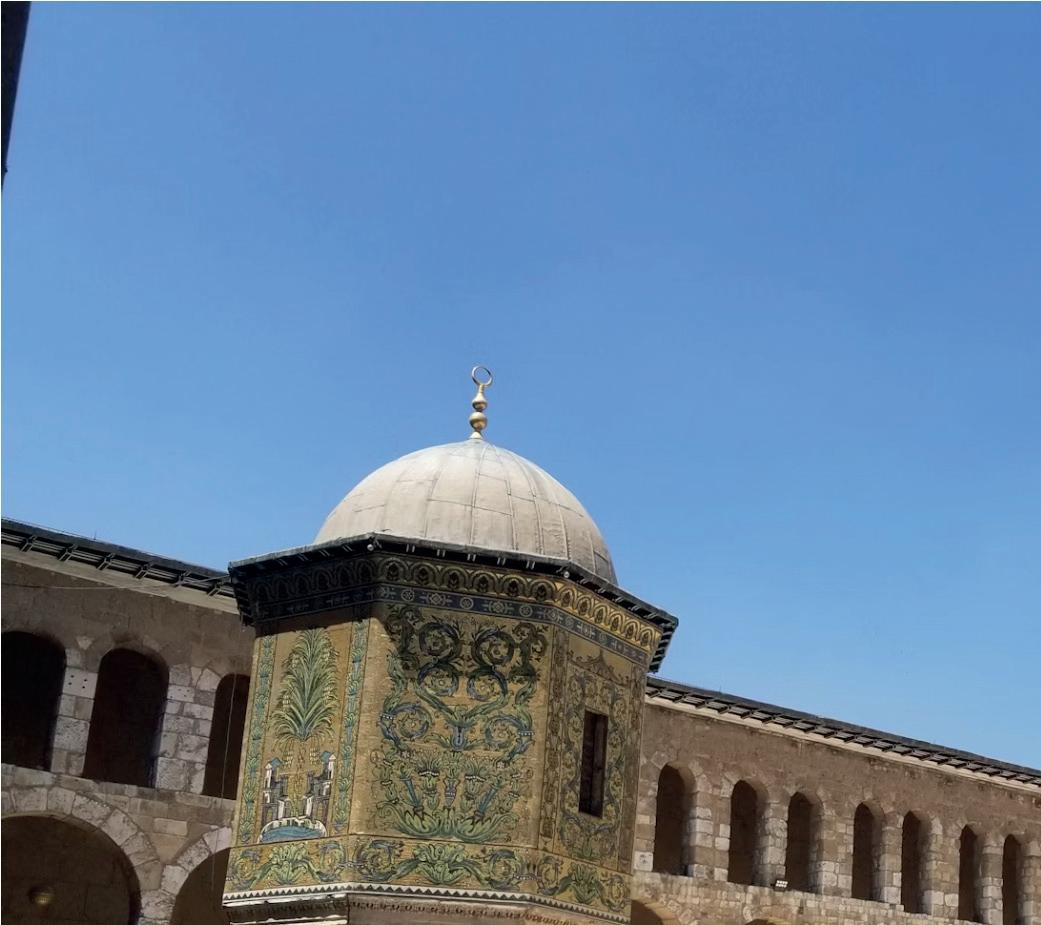
What does the White Minaret of Damascus represent in Islam?
Someone from Canada asked Hazrat Amirul Momineen, Khalifatul Masih Vaa, what the white minaret in Damascus signifies.
Huzoor-e-Anwaraa, in his letter dated 4 November 2023, provided the following guidance regarding this:
“This is part of a lengthy hadith recorded in Sahih Muslim, narrated by Hazrat Nawwas bin Sam‘anra. In this hadith, the Holy Prophetsa mentioned the Dajjal [Antichrist], his signs and the place of his emergence and also explained the method of protection against him. Similarly, he mentioned the

descent of Jesusas, Son of Mary, his signs and the killing of the Dajjal at his hands. Furthermore, he also mentioned Gog and Magog and their destruction. During this, the Holy Prophetsa mentioned the advent of Jesusas, Son of Mary, as descending near the white minaret to the east of Damascus, wearing two yellow sheets and resting his hands on the wings of two angels, in the words:
“Thus, this hadith, in a metaphorical manner, provides many prophecies regarding the latter days. Among these are specifically the prophecies of the emergence of Satan’s agents – the Dajjal and Gog and Magog – and the advent of the Muhammadan Messiah, with the support and succour of Allah the Almighty, to combat these afflictions. Clarifying this hadith, the Promised Messiahas states:
“‘This wording of the hadith in Muslim, that the Messiah will descend near the eastern minaret of Damascus, does not signify that it will be the Promised Messiah’s place of residence; rather, at the very most, it appears to signify that at some point his activities will reach Damascus. And this too is on the condition that the word Dimashq is taken to mean the literal Damascus. And even if it is understood as such, what is the harm in it? Now a railway line is also being constructed from Damascus to the Holy Mecca and any person can reach Damascus within 20 days. Furthermore, in Arabic, a traveller is called nazil [one who descends]. However, it is a settled matter that the true meaning of this hadith is that the Promised Messiah was to appear to the east of Damascus and Qadian is situated to the east of Damascus. The intent of the hadith is that just as the Dajjal was to appear in the East, similarly, the Promised Messiah was also to appear in the East.’ (Tohfah-e-Golarhviyyah, Ruhani Khazain, Vol. 17, p. 165, footnote)
“He further states:
“‘It is established from Hadith that the
Dajjal was to emerge from the East and Nawab Maulvi Siddiq Hasan Khan Sahib has already conceded in Hujaj-ul-Karamah that the East appointed for the tribulation of the Dajjal is India. Therefore, one is compelled to accept that the East destined for the manifestation of the Messianic lights is also India, for the physician must go to where the sick are.’ (Tohfah-e-Golarhviyyah, Ruhani Khazain, Vol. 17, pp. 166-167)”
What is the satr for men in Islam?
Someone from the UK enquired from Hazrat Amirul Momineen, Khalifatul Masih Vaa, stating that Islamic instructions regarding the bounds of modesty [satr] for women are clear, but what is the commandment regarding the satr for men? He wrote:
“I have seen that men display their bodies and muscles, even though they claim to have covered the area between the navel and the knees. Nevertheless, this is against the Islamic commandment of modesty because women look at them with improper gazes. I request guidance in this regard.”
Huzoor-e-Anwaraa, in his letter dated
6 November 2023, provided the following guidance regarding this question:
“Prior to the commandment of the veil [purdah], Islam gave the commandment of lowering the gaze [ghadd-e-basar] and this commandment is identical for both men and women, as it is stated:
“‘Say to the believing men that they restrain their eyes and guard their private parts [...] And say to the believing women that they restrain their eyes and guard their private parts.’ (Surah an-Nur, Ch.24: V.3132)
“Thus, the commandment to lower the gaze is for both men and women. When both do not look at each other, impure thoughts will not arise either. Interpreting this verse, Hazrat Khalifatul Masih Ira states:
“‘When it is not permissible to cast the physical eye, how can it be permissible to investigate their circumstances with the inner eye [...] We have seen many such people who are ruined by a single glance. Allah the Almighty says to tell the believers to keep their gazes lowered. I am an enemy of the [shuttlecock] burqa for this very reason, because the eyes of the one wearing
it cannot be lowered. Maulvi Muhammad Ismail Sahib Shaheed, may Allah have mercy on him, says, ‘If your first glance falls upon a beautiful person, you must never cast a second glance at them. This will create a light in your heart.’’ (Haqaiq-ul-Furqan, Vol. 3, p. 213)
“Thus, when it is not permissible for men and women to look at each other with physical eyes, how can it be permissible to bring impure thoughts about one another into the mind? Therefore, the commandment to lower the gaze is for both men and women.
“As for the rest, if clothes are not available, the minimum satr for a man is the area between the navel and the knees, which must be covered.
“Pure and righteous women should refrain from watching various sports and programmes that showcase the physique and muscles wherein men’s bodies are partially exposed. This is exactly in the same manner that righteous men must avoid watching such programmes featuring women which give rise to impure thoughts in the heart.
“The Promised Messiahas states:
100 years ago...
“‘The purpose of these [purdah] regulations is to restrain men and women from letting their eyes to rove freely and from displaying their good looks and beauties, for therein lies the good both of men and of women. It should be remembered that to restrain one’s looks and to direct them only towards observing that which is permissible is described in Arabic by the expression ghadd-e-basar, which is the expression employed in the Holy Quran in this context. It does not behove a pious person who desires to keep his heart pure that he should lift his eyes freely in every direction like an animal. It is necessary that such a one should cultivate the habit of ghadd-e-basar in his social life. This is a blessed habit through which his natural impulses would be converted into a high moral quality without interfering with his social needs. This is the quality which is called chastity in Islam.’ (Islami Usul Ki Falasafi, Ruhani Khazain, Vol. 10, p. 344)”
(Compiled by Zaheer Ahmad Khan, Head of Records Department, Private Secretariat, London and translated by Al Hakam)
Fasting and Ramadan: A new convert’s perspective (1926)
Miss Hidayat Budd of Amsterdam
The Netherlands
Fasting in religions
It can be said that in the history of all religions, fasting has played an important part. As far as the other religions are concerned, the real purpose of fasting is to appease an incensed god or to indicate mourning and distress; in Islam, to the contrary, the real purpose and true meaning of fasting is spiritual growth.
Quranic command
The second Surah of the Holy Quran contains an injunction to this effect, whilst, at the same time, as usual in the Quran, there is explained to the Muslims why this duty is obligatory upon them, as will appear from the following verse:
“O you who believe, fasting has been prescribed for you, as it was prescribed for those before you, so that you may become righteous.” (Surah al-Baqarah, Ch.2: V.184)
For a man who wishes to develop himself spiritually, fasting is an absolute necessity.
The spiritual and physical benefits
The quantity and the kind of food a man takes influence, to a great degree, his mental system. We all know what becomes of the
man who addicts himself to drinking: all his good qualities make place for all that is brute and criminal, until this at last takes possession of his entire nature. Overfeeding, too, leads to physical breakdown and mental stupor. A man is in a position to develop himself spiritually only when the corporeal needs are satisfied by a moderate use of simple food. The overfed man, wishing to concentrate his will upon a certain thing, only ends by falling asleep.
With a sober mode of living, but especially in a period of fasting, the thoughts are clearer, the will is stronger, the man himself purer and consequently his soul is in a better position to soar in the higher regions.
Prophetic practice
That this, indeed, is the purpose of fasting, we can see from the lives of the prophets. Apart from submitting themselves to a very sober way of living, they also imposed upon themselves long fasting periods: Mosesas fasted for forty days and nights (Exodus 24:18), preceding the revelation received by him. Jesusas also fasted for forty days before he received the call for his task; the Holy Prophet Muhammadsa fasted regularly during his whole life; Prophet Ahmadas of Qadian fasted for about six months. It is, in fact, the only way to silence the carnal cravings of the baser self and to let the spirit speak and soar.
Fasting in Ramadan
For this reason, fasting is enjoined upon every Muslim in the Holy Quran, without distinction of sex or standing, because God wishes that every man should come near to Him as far as possible.
The month of Ramadan is the fasting month; it is also the time when the remembrance and worship of Allah reach their zenith. During this month, the Muslim may not take food or drink from sunrise to sunset. The Muslim year being a lunar year, Ramadan falls successively in each season; yet the Muslim will, no matter how the sun may burn or how sharp the cold may be, never hesitate to act on this injunction, the carrying out of which, like all the other commandments of God, is his great joy.
Moral discipline
In the month of Ramadan, a Muslim not only must abstain all day long from eating and drinking, but he should also not give himself over to worldly joys. This month makes a Muslim realise that when he is able to lead a pure life during one month of the year, it will also be possible for him during the whole year and during his whole life.
Charity
When reading the Holy Quran, one will see that almost everywhere the injunction to fast is followed immediately by the injunction to give alms, because the second is a natural consequence of the first. The Muslim will
therefore observe charity, especially in the fasting month, because only he who himself knows the pangs of hunger truly can sympathise with the poor. This compassion consequently urges him to be charitable with regard to his fellow creatures who have nothing.
A prince may be generous and good, but never can he really know the sufferings of the hungry and the needy. The ordinary Westerner does not know what hunger is; at the most, he has “a good appetite.” But in Islam, during one month of the year, even the richest Muslim prince is like his poorest subject. He undergoes for one month what many of his subjects have to undergo during a great part of their lives. To this is due the proverbial generosity of the Muslim princes.
The social and spiritual blessings
When we consider this injunction further in its beneficial effects, we observe that this is a blessing to all. First of all, it is a blessing to the person himself; it opens for him the door of spiritual progress, teaches him to be sober at all times and hardens him against all misfortunes. It is a great blessing for the needy; they enjoy during this month greater comfort in every direction and this leads to deeper sympathy and closer friendship between the rich and the poor. Would it be so in the so-called civilised countries?
(Transcribed and edited by Al Hakam from the original English, published in the March 1926 issue of The Review of Religions)







P oneer Missionaries
How Ahmadiyya Mission was established in Scandinavia
A series looking at pioneer missionaries and devotees of the Ahmadiyya Muslim Jamaat who gave precedence to faith over the world.
The Ahmadiyya Muslim Community has long been engaged in spreading the message of Islam in Scandinavia – Denmark, Sweden, Norway and Iceland. The establishment of Islam in this region, home to snow-covered mountains and vast icebergs, is a faithinspiring phenomenon, particularly in light of certain prophecies of the Holy Prophet Muhammadsa
Regarding the era of Dajjal (Antichrist), the Holy Prophetsa foretold:
“In that time, one day will be equivalent to a year, somewhere one day will be equal to a month and somewhere one day will be equal to a week.” He also provided guidance on prayer and fasting in such regions, stating:
“You should work by estimation.” (Sunan Tirmidhi, Kitab al-fitan ‘an rasulillah, Bab ma ja’a fi fitnati d-dajjal. Hadith 2240)
This indicates that during the time of the Promised Messiah and Mahdi, people living in areas where days and nights extend for weeks and months would accept Islam and establish their worship accordingly.
Munir al-Din Ahmad Sahib, a
missionary in Sweden and Norway, once stated: “Our Ahmadi brother Nur Ahmad Bolstad is a local resident of this region. After accepting Ahmadiyyat, he spent several years here and continued to observe prayers and fasting by estimation.” (Monthly Khalid, December 1977, p. 18)
Additionally, the Holy Prophetsa instructed: “When the opportunity comes to see the Promised Messiah, one should take the oath of allegiance (Bai‘at), even if it means sliding on the snow on one’s knees to reach him.” (Sunan Ibn Majah, Hadith 4084)
Given that in some parts of Scandinavia, snow covers the land for most of the year and people move by sliding, this hadith is seen as a powerful indication of Islam’s destined spread in these regions.
The Beginnings of the Ahmadiyya Mission
During his stay in London in 1955, Hazrat Musleh-e-Maudra developed a comprehensive scheme for Islamic preaching, which included establishing a mission in Scandinavia. A letter from him reveals that in 1932, he was inspired by Allah that people in Norway, Sweden and Finland were waiting for a missionary.
The mission was formally initiated in 1956, when Hazrat Musleh-e-Maudra appointed Syed Kamal Yusuf Sahib as the first missionary to Scandinavia, accompanied by Chaudhry Abdul Latif Sahib, BA. Their work began in Gothenburg, Sweden. Under their guidance, Ahmadiyya Jamaats were soon established in Oslo (Norway), Stockholm and Malmö (Sweden) and Copenhagen (Denmark). Over time, many individuals embraced Islam and translation and interpretation of the Holy Quran commenced.
Early converts and progress
Among the first converts in Scandinavia were:
- Saifullah Mahmud (Stockholm, Sweden)
- Abdul Salam Madsen (Denmark)
- Al-Ustadh Nur Ahmad Bolstad (Norway)
- Bay Mortakdi Tolsen (Denmark)
- Madhat Ibrahim Begurochh (Malmö, Sweden)
- Abdul Wahab Hansen (Denmark)
- Abdul Wahid Rolsen (Denmark)
- Noah Svend Hansan (Denmark) Under the guidance of Khilafat, the Scandinavian mission flourished. Notably, three Scandinavian converts took on honorary missionary roles: Abdul Salam Madsen Sahib in Denmark, Hajj Saifullah Mahmud Arksen in Sweden and Nur Ahmad Bolstad Sahib in Norway. Additionally, the first European donors to Tahrik-e-Jadid emerged from Scandinavia.
The 3 ashras of Ramadan and their significance
The mission’s impact extended beyond individual conversions. The monthly Aktive Islam was published in three languages under the editorship of Hajj Mahmud Arksen Sahib and the foundation stone for the Copenhagen Mosque was laid. Senior Jamaat officials, including Wakil-ut-Tabligh Sahib, visited the region multiple times to oversee and expand the mission’s efforts. The establishment of annual Scandinavian Ahmadi gatherings and European Missions conferences further strengthened the mission’s presence.
Lasting impact
The mission was further blessed when Hazrat Nawab Amatul Hafiz Begum Sahibara visited this region and many Scandinavian Ahmadis had the honour of meeting Hazrat Musleh-e-Maudra. Through various tabligh methods – including press engagements, public gatherings and personal outreach –the central missionaries worked tirelessly to propagate the message of Islam.
Today, the well-established mosques and Jamaat centres in Scandinavia stand as a testament to the sincerity, dedication and sacrifices of those pioneering missionaries and early converts. Their efforts laid the foundation for Ahmadiyyat’s enduring presence in these northern lands.
(This article has been prepared using references from Tarikh-e-Ahmadiyyat and the December 1977 issue of Monthly Khalid.)

Awwab Saad Hayat
Al Hakam
The stains left by Epstein: Why people sin
Jalees Ahmad Al Hakam
“Out, damned spot!” cries Lady Macbeth nervously and fearfully as she washes her hands, attempting to rid herself of the imagined bloodstains and, of course, the overwhelming guilt of murdering the king.
In life, unimaginable actions like murder and rape give rise to guilt. Guilt, in its purest form, is what makes humans just that: human. It is among the best deterrents to committing evil. Yet, what happens when one falls so deeply into sin, into acts so heinous, that even the idea makes one wonder how such people can continue to live in this world?
Murder, rape, and other terrible sins are among the most cruel actions a person can commit, and they have existed since the beginning of humanity. When Adam’s son, Cain, slew his brother, Abel, even then the murderer felt guilt. Guilt, indeed, serves as a reminder of our human nature. No matter how far humans wander into sin, guilt is what pulls people back to humanity, back to their human selves.
However, what happens when one lacks righteousness and a moral compass? What happens when sin and heinous deeds become a habit? Does it still pull us back to our human selves? Does guilt still leave a stain on our conscience?
The stains left by Jeffrey Epstein in the world have and will continue to have a lasting ripple effect. With much that has come to light and some matters still unrevealed, it has left a deep stain on the fabric of society, one so profound that what was once dismissed as conspiracy theories no longer seems theoretical.
This is not an article meant to argue over Epstein’s actions or rationalise them. Rather, it is a brief examination of why people sin. Since the latest release of the files, many might be wondering: “What makes one sink into a sinful life so that it no longer seems like a sin for them?” Here is an Islamic overview and five reasons why humans sin.
The nafs and its nature
Plato said that the soul is like a charioteer with two horses, one noble and the other ignoble. Before we talk about why humans sin or, for that matter, do anything, we must understand that we are not bodies with souls but rather souls occupying a body.
So, to truly understand the self, along with humans’ internal struggles and desires, we are compelled to look at the soul. In the Holy Quran, we are told of three types, or stages, of the soul. The first stage is called nafs al-ammarah. (Surah Yusuf, Ch.12: V.54)
Humans have a nafs, a soul, often understood as the self or ego, which, if left
unbalanced, unchecked, and unregulated, can make one lean toward sin. The nafs alammarah is defined in the Quran as the self that incites to evil. It provokes and nudges a person to simply satisfy their immediate cravings without moral restraint.
This, in itself, is dangerous to keep unchecked. The Quran quotes Hazrat Josephas: “‘And I do not hold my own self to be free from weakness; for, the soul is surely prone to enjoin evil.’” (Surah Yusuf, Ch.12: V.54) This demonstrates that if the soul is not disciplined through faith, through selfreflection, and through righteous deeds, it can push a person toward evil.
From this, it would not be incorrect to conclude that one of the primary reasons humans sin is their lack of control over, or failure to properly regulate, the soul. So, the soul must be tamed, as it naturally leans toward desire and passion. If it is overlooked and not disciplined, it certainly dominates the heart. This is why spiritual acts and purification are required to restrain it.
When Prophet Mosesas was commanded to go to Pharaoh, he invited him first and foremost toward purification. The Holy Quran states: “Go thou to Pharaoh; he has rebelled. And say [to him], ‘Wouldst thou [like to] be purified?’” (Surah An-Nazi‘at, Ch.79: V.18-19)
Here, it must be kept in mind that if doing religious obligations were always easy, they wouldn’t truly change us. The effort and struggle applied is actually the point. Having to push yourself to do what’s right in turn trains your self-control, shapes your character, and makes you stronger inside.
So the struggle itself is a gift from God, because through it, your soul, your nafs, becomes more disciplined, you grow as a person, and you slowly become better than you were before.
If all acts of worship were easy, they would not, in any way, help to exercise restraint. Take fasting, for example; the very act of abstaining from food exercises self-control, and one begins to realise that if they can abstain from what is lawful and necessary, then they can certainly abstain from that which is sinful and immoral.
Lack of taqwa (righteousness)
A heart that is mindful of God does not follow its desires of the lower and base self. In contrast, the heart that fails to be mindful and forgets God allows it to wander and commit sins. The lack of righteousness is another factor that leads humans to sin.
When we do not fear our Creator, or even the results of our actions, we begin to transgress. It is in this habit of transgression that man leaps forward in sin to such an extent that they no longer see their actions as damaging to their society. God states in
the Holy Quran:
“Nay! man does indeed transgress, because he thinks himself to be independent.” (Surah al-‘Alaq, Ch.96: V.7-8)
When one truly follows Islam and has a moral compass, they develop taqwa. The absence of taqwa is, in essence, the absence of awareness of Allah. When a person lacks consciousness of God, when they forget or ignore that Allah is watching and that all will be held accountable, they are left to act solely according to their desires.
As explained above, they will act through the soul that incites towards evil, since the soul is naturally inclined toward evil, the default direction a person will gravitate toward is sinful behaviour and corrupt vices.
The lack of taqwa is fundamentally a state in which a person forgets God. It’s like when one is driving on the highway and knows that there is no camera to catch them speeding; they feel more confident to speed, even if it might be reckless. Thus, we find why having a moral compass, be it religion or morals and ethics, is necessary.
Satan’s influence
The influence of Satan finds mention in all holy scriptures. Satan desires for man to fall. He tempts and lures humans, beautifying the lusts of this world and committing evil deeds. The whispers of Satan only take effect when the first two reasons, the unregulated nafs and lack of taqwa, are left unchecked.
“[As to] those who are righteous, when a suggestion from Satan assails them, they remember [God]: and behold! they begin to see [things rightly].” (Surah al-A‘raf, Ch.7: V.202)
The Quran also says that Satan stands in the path between man and God, always striving to misguide people. This is why we seek refuge in Allah from Satan when reciting the Quran. (Surah an-Nahl, Ch.16: V.99) Those who lack faith and awareness of God are like individuals with no experience who step into a boxing ring against a heavyweight fighter. Satan himself has voiced that he will do everything in his power to lead human beings away from the straight path. (Surah al-A‘raf, Ch.7: V.18) Thus, evil actions often begin when a person gives in to the whispers that make sin appear attractive and harmless.
Desire for power
The lust for power has always been a driving force that allows the lower self (i.e. the nafs al-ammarah) and the lack of taqwa to go unchecked, leading to the outbreak of sinful deeds. Whether it is power or greed, ultimately prudence fails to stay afloat, and what remains are simply urges that cloud reason, divert man away from God and lead to pride.

“And when it is said to him, ‘Fear Allah,’ pride incites him to [further] sin.” (Surah alBaqarah Ch.2: V.207)
Everyone eventually learns that the desire for wealth, status, or control can blind a person’s moral sense. Arrogance, referred to in the Quran as kibr, is a disease that eats away at the soul.
The example of Pharaoh and those like him illustrates how arrogance can lead a person to demand worship and view themselves as divine. His pride blinded him to the truth, to the point that he rejected the very messenger who was raised in his own household.
This reveals that arrogance can totally
block one from perceiving guidance, much like bats that cannot tolerate light. Such people, like Pharaoh, behave as though they are above ethical principles and even divine law.
Habitual sinner
Habits make us who we are. When we continue to trek a path of good or evil, we ultimately marinate in our doings. Even if a person is not intrinsically evil, their deeds shape them. This is why small, consistent acts of righteousness are often encouraged more than rare grand gestures; continuity matters. We become what we do, just as we become what we eat. And when one continues to
commit evil, their heart becomes rusted, as God says:
“Nay, but that which they have earned has rusted their hearts.” (Surah at-Tatfif, Ch.83: V.15)
When an individual constantly engages in an action, it can gradually lose its moral weight, whether that action is good or evil. The constant committing of evil over time brings about a feeling of normalised evil behaviour.
An example of this is evident even in today’s age of social media, where memes and online content often downplay serious offences. For example, racist memes often
create the image that such attitudes are acceptable, leading to their “normalisation.” When the rights of others are ignored, evil takes root and grows.
Indeed, wrongdoing often flourishes when it is socially tolerated or even encouraged.
It seems that sin becomes almost unavoidable when faith is neglected and God is ignored. It is no wonder, then, that the first point of belief in Islam is the recognition of one Almighty God. The above five reasons for the depravity of certain people can serve as a warning to us all. We must tread the paths of righteousness and avoid the paths of sin, no matter how small they seem.
Why do Muslims pray tarawih during Ramadan?
Muhammad Abdul Hayee Nasir Student, Jamia Ahmadiyya International Ghana
Muslims across the globe await the blessed month of Ramadan throughout the year with deep longing and excitement. As the fast is broken and the day gently fades, the hearts of believers turn towards the mosque, drawn by a special act of worship that has become one of the beloved symbols of this blessed month: the tarawih prayer.
What is tarawih?
Tarawih is a special voluntary prayer performed during the nights of the month of Ramadan after the Isha obligatory prayer. The tarawih prayer consists of eight rak’aat followed by three rak’aat of witr. Conversely, some also follow the practice of performing 20 rak’aat for the tarawih prayer, while others follow the practice of 36 rak’aat
The word tarawih comes from the Arabic root word r-w-h (حور). This root carries meanings related to rest, relaxation and comfort.
Hazrat Khalifatul Masih Vaa states:
“Explaining the etymology of the word tarawih, the commentator of Sahih alBukhari, Hazrat Ibn Hajar al-Asqalanirh, writes that tarawih is the plural of tarwihah, and tarwihah is a single instance of taking rest. The reason for naming the prayer offered in congregation on the nights of Ramadan ‘tarawih’ is that when the noble Companions first gathered to offer this prayer, they would pause for a ‘tarwihah’, that is, a period of rest, after every two sets of salaams (four rak’aat).” (“Answers to Everyday Issues – Part 85”, alhakam.org, 2 September 2025)
Historical foundation of tarawih
The origin of the tarawih prayer dates back to the blessed time of the Holy Prophetsa, and we know this from authentic narrations in the ahadith. Initially, the Holy Prophetsa performed tarawih in congregation only for a few nights. On the first night, the Holy Prophetsa went out one night at midnight and offered prayer in the mosque, and some men also prayed following him. When people awoke in the morning, they
informed one another of it.
So, on the second night, more people gathered and Huzoorsa offered the prayer, and they prayed with him. When the people awoke in the morning, the news spread further among the people. On the third night, those who gathered in the mosque became very numerous and the Holy Prophetsa came out and offered the prayer, and they prayed following him.
When the fourth night came, the crowd became so large that the worshippers could not be accommodated in the mosque. However, on that night, he did not come out for the tarawih prayer until morning came. When he came out for the Fajr prayer and completed the Fajr prayer, he turned toward the people and recited the tashahhud. Then, he said:
“Your presence was not hidden from me, but I feared that this prayer might be made obligatory upon you and that you would become unable to perform it.”
(Sahih al-Bukhari, Kitab salat at-tarawih, Hadith 2012)
Thus, the regular congregational arrangement of tarawih did not continue during the time of the Holy Prophetsa However, Muslims continued praying tarawih in congregation among themselves and in their own groups, while others offered it individually. It was during the time of Hazrat Umarra that he gathered the Muslims to pray tarawih in congregation in the mosque, establishing it as a communal practice.
This is proven from the following narration:
“One night in Ramadan, I went out toward the mosque with Hazrat Umarra ibn al-Khattab, and we saw that people were divided into separate groups. One person was praying individually and another person was praying in such a manner that a few people were following him in prayer.
“So, Hazrat Umarra said: ‘I think that if I gather them together under the leadership of a single reciter, it would be better.’ Then he made a firm decision and gathered them behind Hazrat Ubayy ibn Ka’abra. Then, on another night, I went out with him, and the people were praying behind their reciter.
“Hazrat Umarra said: ‘What a good innovation this is. And that part of the
night in which these people sleep is better than the part in which they pray.’ Meaning that the latter part of the night is better, and people used to pray tarawih at the beginning of the night.” (Sahih al-Bukhari, Kitab salat at-tarawih, Hadith 2010)
Hazrat Musleh-e-Maudra while explaining how the tarawih prayer was instituted, states:
“When Islam spread widely and many weak people also began to enter it, Hazrat Umarra realised that many would not be able to perform tahajjud. Therefore, he adopted the method of offering tarawih at the earlier part of the night so that people could hear the Holy Quran in the mosques. Thus, this method was instituted by the Companions, whereas the way of tahajjud is the practice of the Holy Prophetsa.” (Khutbat-e-Mahmood, Vol. 20, pp. 450)
Thus, while the practice began with the Holy Prophetsa individually or in small groups, it became a widespread, systematic congregational tradition during the time of Hazrat Umarra
Virtues of tarawih prayer
The tarawih prayer holds immense spiritual significance and comes with several virtues. The main ones are as follows:
1. Forgiveness of sins: The Holy Prophetsa said, “Whoever prayed at night in the whole month of Ramadan out of sincere faith and hoping for a reward from Allah, then all his previous sins will be forgiven.”
(Sahih al-Bukhari, Kitab salat at-tarawih,
Hadith 2009)
2. Recitation and reflection of the Holy Quran: Allah commands Muslims: “Stand up [in prayer] at night except a small portion thereof – half of it, or make it a little less than that or make it a little more than that – and recite the Quran slowly and thoughtfully.” (Surah al-Muzzammil, Ch.73: V.3-5)
Tarawih is usually performed with long recitations of the Holy Quran. Listening to or reciting the Quran during these prayers strengthens one’s understanding, reflection and connection with the words of Allah. This is precisely the reason Hazrat Musleh-eMaudra attributes the arrangement of tarawih during Ramadan to helping members listen to the Holy Quran. (Khutbat-e-Mahmood, Vol. 20, pp. 450)
3. Spiritual purification: One of the main objectives of Ramadan is to attain spiritual purification and piety (taqwa). Allah the Almighty states in the Holy Quran: “O ye who believe! fasting is prescribed for you, as it was prescribed for those before you, so that you may become righteous.”
(Surah al-Baqarah, Ch. 2: V. 184)
The tarawih prayer helps develop taqwa and self-discipline, as it encourages a focus on worship, patience and humility.
Are tarawih and tahajjud two separate prayers?
In essence, they are the same type of prayer, although tahajjud carries a greater
significance. The Promised Messiahas once said:
“Tarawih prayer is not a separate prayer. In reality, to offer the eight rak’aat of tahajjud prayer in its earlier time is called tarawih. Both forms mentioned in the question are permissible. The Holy Prophetsa has done it both ways. But most of the time, the practice of the Holy Prophetsa was to offer this prayer in the latter part of the night at home, alone.” (Malfuzat [English], Vol. 10, pp. 24-25)
The Promised Messiahas also stated:
“Tarawih is also Sunnah. Observe it, and sometimes offer it at home by yourself because tarawih, in reality, is tahajjud and not a new prayer.” (Ibid., p. 30)
Similarly, Hazrat Musleh-e-Maudra states:
“Tarawih and tahajjud are the same thing. Some people consider them to be two separate acts of worship and perform both [with this mindset]; this is a mistake.”
(Farmudat-e-Musleh-e-Maud, p. 170)
In one of his Friday sermons, Hazrat Musleh-e-Maudra said:
“By tarawih is meant the very tarawih that is established from the practice of the Holy Prophetsa, which in reality is the tahajjud prayer itself.” (Khutbat-e-Mahmud, Vol. 22, p. 476)
How many rak’aat are there in tarawih?
Someone once asked the Promised Messiahas about the tarawih prayer. Specifically, he asked that if tarawih is tahajjud, then what is the Promised Messiah’sas view about twenty rak’aat because tahajjud is only eleven or thirteen rak’aat including witr. The Promised Messiahas said:
“The everlasting Sunnah [practice] of the Holy Prophetsa is only the eight rak’aat and he used to offer them at the time of tahajjud, and this is the preferred method. However, it is also allowed in the earlier part of the night as well. In one narration, it is stated that the Holy Prophetsa offered them at the earlier part of the night. Twenty rak’aat were introduced later, but the Sunnah of the Holy Prophetsa was indeed that which has been stated earlier.” (Malfuzat [English], Vol. 10, p. 143)
With regards to the rak’aat of tarawih, Hazrat Khalifatul Masih Ira states:
“Among the Companions, three practices regarding establishing Ramadan [Qiyam-e-Ramadan] were prevalent: some used to offer twenty rak’aat in congregation, some eight rak’aat and some would perform only tahajjud at home.” (Irshadat-e-Noor, Vol. 1, p. 345)
At another place, Hazrat Khalifatul Masih Ira said:
“Offering tarawih in the blessed month of Ramadan is necessary and it should be performed in congregation because the fear that it might become obligatory no longer remains. There is considerable disagreement among the scholars of Hadith and the jurists regarding tarawih. According to the Malikis, it is thirty-six rak’aat, while among the Hanafis, it is twenty rak’aat
“Among the scholars of Hadith, more than eleven rak’aat is not established. I myself also prefer eleven rak‘aat, but I do not oppose anyone [who follows another view].” (Irshadat-e-Noor, Vol. 2, p. 489)
Is tarawih a bid’ah (innovation)?
Someone asked Hazrat Khalifatul Masih Ira that it is not proven from the practice of the Holy Prophetsa that he offered the tarawih prayer for more than four days; therefore, some people call it an “innovation” started by Hazrat Umarra
Huzoorra replied: “Even if the Holy Prophetsa offered the tarawih prayer for only one day, it still became a Sunnah. By not observing it continuously, a Sunnah does not cease to be a Sunnah. Yes, its obligation is not proven, but a Sunnah should still be acted upon.
“And as for calling it an innovation of Umarra, what harm is there in that? Let it be the innovation of Umarra. Allah the Exalted says: ‘And [as for] the foremost [among the believers], the first of the Emigrants and the Helpers, and those who followed them in the best possible manner, Allah is well pleased with them and they are well pleased with Him.’ (Surah at-Taubah, Ch. 9: V. 100)
“From this verse, the command to follow Umarra is also derived. The Companions used to follow hundreds of his directives simply because of the command of Allah [...].’” (Irshadat-e-Noor, Vol. 1, pp. 345-346)
Tarawih: Voluntary, but important
Explaining the importance of voluntary sacrifices that are done collectively, Hazrat Musleh-e-Maudra states:
“It is voluntary sacrifices that bring a person close to God the Exalted. As I have already explained, these sacrifices are of two kinds: individual and collective. An example of the individual one is tahajjud – some people rise for it while others do not.
“And an example of collective voluntary sacrifices is tarawih in Ramadan. Everyone knows the enthusiasm that exists for tarawih. In fact, people observe it so regularly that although they do not rise for tahajjud, they still go for tarawih.
“Indeed, we have never seen anyone distribute sweets after offering tahajjud, but at the completion of tarawih, I have seen people even distribute sweets. This is just like the case where a person who offers daily prayers is not called ‘namazi’ (the one who prays), but if someone performs Hajj once, he begins to be called a ‘haji.’
“Similarly, the one who fasts and offers tarawih in the mosque for a month begins to consider himself deserving of some recognition, feeling that since he has accomplished such a great act, his mouth should be sweetened. In short, voluntary sacrifices which also have a collective aspect create a magnificent [spiritual] awakening within the community.” (Anwar-ul-Ulum, Vol. 14, pp. 105-106)
Hazrat Khalifatul Masih Ira while explaining the excellence of tahajjud over tarawih prayer, said:
“A person who regularly offers twelve rak’aat of tahajjud should continue to offer the same twelve rak’aat in the latter part of the night during the blessed month of Ramadan; he does not need tarawih. The reward of tahajjud is greater and its excellence is higher. The reward of congregational prayer applies to obligatory or necessary prayers. One who observes the five daily prayers in congregation is not considered to be neglectful of the congregation.” (Irshadat-eNoor, Vol. 2, p. 56)
In his recent Friday Sermon, Hazrat Khalifatul Masih Vaa advised us that,
3rd Jalsa Salana held in Pohnpei, Federated States of Micronesia
Aansa Naseer Mirza
Federated States of Micronesia
Jamaat-e-Ahmadiyya Pohnpei, Federated States of Micronesia (FSM), held its 3rd Jalsa Salana on 18 January 2026, under the theme “One Humanity, One Purpose – Striving for Global Peace.”
This year’s Jalsa was held at the College of Micronesia Gymnasium and was attended by guests from across the island. The convention was further enriched by the presence of a delegation from the Republic of Kiribati and the Marshall Islands.
Prior to the Jalsa, members of the visiting delegation visited various villages across Pohnpei. During these visits, they conveyed Islam’s message of peace, mutual respect and coexistence while personally inviting members of the local community to attend the Jalsa.
In preparation for the Jalsa, a social media outreach campaign was launched to invite the wider community, which reached a large portion of the island’s population and played a key role in raising awareness about the peaceful teachings of Islam.
The formal proceedings of the Jalsa commenced with its first session, which focused on the Islamic way of life. A speech was delivered by Qasim Chaudhry Sahib, the missionary serving in the Marshall Islands, who explained how Islamic teachings provide comprehensive guidance for moral conduct, social responsibility and peaceful coexistence.
This was followed by another speech on the topic of inner peace and outer peace, delivered by Waqas Khurshid Sahib, the missionary serving in Kiribati. He emphasised that sustainable peace in society can only be achieved through individual spiritual reform, as inner transformation
“Nowadays, we are passing through Ramadan, and some opportunity for tahajjud does come. Even if it does not, one should still try. No doubt, tarawih is offered in the mosque and it serves as an alternative for the weak, the sick or those who cannot wake up in the morning on time or cannot give more time, but it is not a substitute that can fully fulfil the right.
“The practice of the Holy Prophetsa and of his most ardent servant [i.e. the Promised Messiahas] is that one should rise at night and offer tahajjud. Therefore, even if one has offered tarawih, one should still try to pray tahajjud, even if it is only two or four voluntary rak’aat.” (Friday Sermon, 20 February 2026)
leads to harmony at the societal and global levels.
During the guest session, the Jalsa was attended by several distinguished guests and representatives from a wide range of institutions. They shared reflections on fostering mutual understanding and cooperation in today’s world. Some prominent guests included the Australian Ambassador, the Deputy Chief of Mission of the United States, the Legislative Council for the Federated States of Micronesia Congress, the United Nations Human Rights Office Representative and leaders from the Seventh-day Adventist Church and The Church of Jesus Christ of Latterday Saints.
Faheem Arshad Sahib, President of Jamaat-e-Ahmadiyya, Federated States of Micronesia, delivered the concluding speech and highlighted Islam’s universal message of peace. He emphasised the guidance of Hazrat Khalifatul Masih Vaa on establishing lasting world peace through justice, moral reform and sincere dialogue. A video presentation featuring excerpts from Huzoor’saa addresses at various peace conferences was also shared with attendees.
A special feature of the Jalsa was a guided exhibition on the Holy Quran, where guests were introduced to its teachings on peace, justice and compassion. Following the formal sessions, dinner was served and guests were invited to participate in the Unity Wall and visit the Peace Café. These areas encouraged thoughtful discussion and reflection on how individuals and communities can contribute toward establishing peace. In the days following the Jalsa, the Jamaat was further blessed with the inauguration of the first Langar Khana in Pohnpei.
Conclusion
Thus, tarawih is a blessed means through which the nights of Ramadan come alive with the remembrance of Allah and the recitation of the Holy Quran. While it provides ease and a collective opportunity for worship, the true spirit of this practice is to lead a believer towards the deeper, more rewarding prayer of tahajjud. By following the beautiful example of the Holy Prophetsa and the guidance of the Promised Messiahas and his Khulafa, we should strive to make these nights a source of lasting spiritual transformation. May this Ramadan enable us not only to stand in prayer, but to rise in nearness to Allah and carry this light beyond the month itself.
Amin!
Friday Sermon
Mubarak Mosque, Islamabad, Tilford, UK
6 February 2026
The harmony of love and worship: The Prophet’ssa model
After reciting the tashahhud, ta‘awwuz and Surah al-Fatihah, Hazrat Khalifatul Masih Vaa stated:
Allah the Almighty has declared that the Holy Prophetsa is an excellent model for us in every regard. In the previous sermons, the love of the Holy Prophetsa for Allah was being mentioned. In relation to his love for Allah, the standard of his worship was also mentioned. Initially, I intended to mention his worship as a separate subject after having completed the topic of his love for Allah. However, when I started relating accounts about his love for Allah, many incidents of his worship were also mentioned.
Although I wanted to, I was unable to separate these two topics, as both are intertwined. Worship is not possible without the love of Allah, and to love Allah is not possible without worship. If one does not love Allah, they cannot truly worship Him either. Nevertheless, I will elaborate further on this topic today, but from the perspective of worship. However, as I mentioned in the previous sermon, the pinnacle of this is the love of Allah the Almighty. In reference to a verse, I have already elaborated in the previous sermon how Allah the Almighty has mentioned the status of the worship of the Holy Prophetsa in the Holy Quran, in the following verse:
“Say, ‘My Prayer and my sacrifice and my life and my death are [all] for Allah, the Lord of the worlds.’”
As I mentioned, I have already expounded on this verse in the previous sermon. As such, there is no need to repeat it again. Following this, Allah the Almighty commanded the Holy Prophetsa to proclaim:
[“Follow me: (then) will Allah love you.”]
Thus, commanding us to acquire those standards as well. Allah the Almighty says that tell people that if you follow me, then Allah will love you as well, and you will be able to acquire the love of Allah. Thus, by commanding the Holy Prophetsa to make this announcement, Allah the Almighty
also commanded us to make sincere efforts to attain these standards.
With regard to worship, Allah the Almighty has given us countless commandments in the Holy Quran through the Holy Prophetsa. At one place, He says the following:
“And I have not created the Jinn and the men but that they may worship Me.”
As such, the Holy Prophetsa clearly said that if you wish to follow me, then just as I have understood the purpose of the creation of man, you too should understand it and try to discharge its due right. Only then will you be able to fulfil the purpose of your creation, and only then will you be able to acquire the love of Allah the Almighty.
Then, drawing our attention towards prayer, Allah the Almighty has stated at another place:
“O ye men, worship your Lord Who created you and those who were before you, that you may become righteous.”
Thus, in order to gain the nearness of Allah the Almighty and to become righteous, it is essential to worship Allah the Almighty and to elevate the standard of worshipping Him to the highest degree.
Following this, Allah the Almighty says:
“O ye who believe! bow down and prostrate yourselves in Prayer, and worship your Lord, and do good deeds that you may prosper.”
Thus, when the Holy Prophetsa gave us these commandments, he demonstrated their highest standard through his own practice and then drew our attention to the fact that true obedience and following him would only be complete when you strive to bring yourselves to that standard.
The prayers he offered for his Ummah will only encompass us and benefit us when we constantly keep his example and his commandments in view and try to act upon them. Mere outward display or verbal claims cannot bring true benefit. In any case, I have already presented many examples from the standards he established, and there are others which I shall now present.
He never allowed any opportunity for the worship of Allah Almighty to slip by. Rather, even while sleeping, he was engaged in worship, as he himself stated: “My eyes sleep, but my heart is never heedless of the remembrance and worship of Allah Almighty.” (Sahih al-Bukhari, Kitab almanaqib, Hadith 3569)
He also instructed his followers that this should be their standard – that Allah Almighty should always remain before them, as it were.
In matters of worship, he would analyse himself with absolute precision. In this regard, there is a narration in which Hazrat Aishara stated that the Holy Prophetsa once offered prayer wearing a cloak that had patterns on it. He glanced at its patterns once, and when he had finished the prayer, he said, “Take this cloak of mine to Abu Jahm and bring me Abu Jahm’s Anbijani cloak (i.e., a plain cloak without patterns) because it has just distracted me from my prayer.” In other words, even a slight glance towards it was unacceptable to him, lest his attention be diverted from Allah Almighty.
Hazrat Aishara further stated that the Holy Prophetsa said, “I kept seeing its patterns while I was in prayer, and I feared that it might take place in trial.” (Sahih alBukhari, Kitab as-salat, Hadith 373)
Explaining this, Syed Zain-ul-Abidin Waliullah Shah Sahib writes, “The theme of this chapter is that clothing should be simple and free from such adornment that diverts attention. With intellectual development, a person is naturally inclined towards simplicity.”
Even today, we observe that people of refined taste prefer simple colours when
choosing clothing, whereas some people are constantly looking at their clothes and focusing on keeping their creases straight. In prayer, however, one’s entire attention should be directed towards Allah and not towards clothing. He further writes, “Prayer requires complete concentration. (That is, prayer can only truly be counted as a prayer when a person is wholly absorbed in it and offers it with full concentration.) Therefore, the customs and teachings of Islam have disapproved of the presence of anything in the worshipper’s environment that draws his attention towards itself. From this, it becomes clear how deeply and attentively the Holy Prophetsa wished to worship Allah Almighty – to the extent that even the slightest glance at anything that could divert attention from Allah was not tolerated. Accordingly, various ahadith mention that there should be no pictures, no clothing with images in front of a person, and no curtains bearing images, because all such things can become a cause of distraction in prayer. For this reason, they have been prohibited. While offering prayer, there should be no curtains or images in front of a person that divert attention by facing them, and such things should not be in the direction of the Qiblah.” (Sahih al-Bukhari [Urdu translation], Vol. 1, Nizarat Ishaat, p. 479)
Similarly, another narration mentions his exemplary standard. Hazrat Ja‘far bin Muhammad narrates from his father that Hazrat Aishara was asked: “In your house, how was the bed of the Messengersa of Allah?” She replied, “It was made of leather, and date-palm fibres were filled inside it.” Hazrat Hafsahra was asked, “What was the condition of the bed of the Holy Prophetsa in your house?” She replied, “It was made of wool, (meaning it was made from the soft hair of animals). I used to place two layers of it, and it would become a little soft, and the Holy Prophetsa would sleep on it. One night, I thought, why should I not place four layers so that it becomes softer and more
comfortable and becomes a greater source of comfort for him. So, I placed four layers of it. In the morning, the Holy Prophetsa said: ‘What did you spread for me last night?’” Hazrat Hafsahra says: “I submitted, ‘It was your own bed; but I only placed four layers so that it might become more comfortable for you.’ The Holy Prophetsa said, ‘Leave it as it was before, because its extra softness was becoming an obstacle for me in the night prayer.’” (Shamail-ul-Nabi, Hadith 314, Noor Foundation, p. 134)
Even though the softness of the bed could not actually become a barrier in his worship, even then the Holy Prophetsa could not tolerate the idea that because the bed was soft, he might lie down on it for a little while and not awaken for the worship of Allah the Almighty. He had noticed its softness. So, this was his exemplary standard.
The condition of his worship has been described by the Mother of the Believers, Hazrat Saudahra, in the following way: she states, “Once I prayed behind the Holy Prophetsa, and he went into the bowing position, to the extent that I eventually had to hold onto my nose.” Meaning the bowing was so long that I feared blood might start flowing from my nose. (Al-Isabah Fi Tamyiz Al-Sahabah, Kitab-ul-Nisa, Vol. 8, Dar AlKotob Al-Ilmiyah, 1995, pp. 196-197)
Nonetheless, this condition is only possible when such love exists that a person does not wish to leave the doorstep of the Beloved. In whichever posture he goes, in whichever condition he goes, he becomes completely absorbed in it. Similarly, regarding the standard of worship, another narration is related by Mutarraf from his father. He says: “I saw the Messengersa of Allah offering prayer in such a condition that because of weeping, a sound like the grinding of a mill was coming from his chest” (Sunan Abi Dawud, Kitab as-salat, Hadith 904)
It means that just as a mill operates and a grinder turns, a similar sound was emanating from him. In another narration, the example of a pot boiling has also been given. (Sunan an-Nasa‘i, Kitab as-sahw, Hadith 1214)
Then, in another narration, it is mentioned that Hazrat Mu‘adh bin Jabalra relates, “I was seated behind the Holy Prophetsa on a mount, and between him and me was the back part of the saddle. He said, ‘O Mu‘adh bin Jabal.’ I said, ‘I am present, O Messengersa of Allah, and this is my honour.’ Then he travelled for a short while and said, ‘O Mu‘adh bin Jabal.’ I again said: ‘I am present, O Messengersa of Allah, this is my honour ’ Then he travelled for a short while and said: ‘O Mu‘adh bin Jabal.’ I said, ‘I am present, O Messengersa of Allah, and this is my honour.’ The Holy Prophetsa said, ‘Do you know what rights Allah has over His servants?’ I said, ‘Allah and His Messengersa know best.’ He said, ‘The right of Allah over His servants is that they worship Him and do not associate anyone with Him.’ Then he travelled for a short while and said, ‘O Mu‘adh bin Jabal.’ I said, ‘I am present, O Messengersa of Allah, and this is my honour.’ He said, ‘Do you know what rights the servants have over Allah? (First, it was Allah’s right; now, it’s the right of the servants, once they perform worship, what are their due rights?) I said, ‘Allah and His Messengersa know best.’ He said, ‘That He should not punish them, (meaning Allah the
Almighty should not punish His servants).’” (Sahih Muslim, Kitab al-iman, Hadith 35)
Thus, the Holy Prophetsa not only established his own standards, but also advised others to attain those standards, that if you also act in this way, you will gain the love of Allah the Almighty and will be saved from Allah the Almighty’s punishment.
Whilst praising the Holy Prophetsa, the Promised Messiahas states in one place:
“The Holy Prophetsa was commissioned for the propagation of the Holy Quran, and likewise he was commissioned to establish the sunnah. Therefore, just as the Holy Quran is certain and incontrovertible, so too is his established sunnah (that is, an established practice which reaches back to the Holy Prophetsa, and which has been transmitted continuously through an unbroken chain of practical observance).
Both of these services were personally fulfilled by the Holy Prophetsa and he regarded both as his duty. When the commandment concerning Prayer was revealed, the Holy Prophetsa explained the Word of Allah the Almighty through his own practice and demonstrated it in a practical form. Thus, he demonstrated that these are the units (rak‘at) of the Fajr prayer, those of the Maghrib prayer, and likewise specified the rak‘ats for the remaining prayers. In the same manner, he demonstrated the performance of Hajj through his own example, and thereafter, by personally obligating thousands of Companions to adhere to this practice, he firmly established a powerful and enduring system of practical continuity. He demonstrated these acts himself and then ensured their observance by others.
Thus, that practical model which continues to be witnessed and experienced within the Ummah as an established practice is what is called the sunnah.”
The Promised Messiahas further states:
“Ahadith were not written down in the presence of the Holy Prophetsa nor was there any formal arrangement made at that time for their compilation.”
The Promised Messiahas was drawing a comparison between sunnah and Hadith, seeking to clarify the distinction between the two. He stated that the sunnah precedes Hadith in rank, and that the position of Hadith comes thereafter. Moreover, any Hadith that does not conflict with the Holy Quran or with the sunnah of the Holy Prophetsa is to be regarded as authentic.
(Review Bar Mubahatha Batalwi Wa Chakralwi, Ruhani Khazain, Vol. 19, pp. 210-212)
Hence, while praising the lofty standards of worship established by the Holy Prophetsa he also made it clear that he demonstrated all of these acts through his own practice, exhorted his followers to act upon them, and ensured that they did so. This, then, is the sunnah that has continued to reach us until this day. The exemplary models of the noble Companions that have been transmitted to us are the direct result of the training imparted by the Holy Prophetsa
The Holy Prophetsa trained his Companions in such a manner that the standards of their worship continued to rise ever higher, and their degree of love for Allah the Almighty likewise continued to increase. This is the noble model established by the Holy Prophetsa – one that his Companions adopted and which remains
the same injunction for us as well.
The Holy Prophetsa greatly emphasised the importance of the Tahajjud prayer and exhorted that it should be regularly observed. Elaborating upon this in one place, Hazrat Musleh-e-Maudra has written:
“The Holy Prophetsa, attached such importance to these voluntary prayers that, despite their being voluntary, he would personally go out at night to observe who among the Companions was offering them. (That is, he would walk through the streets and pathways of the city, and from the sounds of prayer, it would become apparent where people had risen for worship at the time of Tahajjud and who had not.) In this manner, he would also take note of who was observing the Tahajjud prayer and who was not.”
In contrast, today, if someone is asked about their prayers, or is merely advised that one should offer prayers in the mosque – or if one is asked how many daily prayers one attends in congregation – people immediately begin to object, saying that this is a personal matter, what right does anyone have to object or what right does the Jamaat have to ask, as this is a personal matter between themselves and God! Yet the Holy Prophetsa, himself used to take account even of the Tahajjud prayer.
“On one occasion, mention was made in his gathering of Hazrat Abdullah bin Umarra that he was a very good person and possessed many admirable qualities. The Holy Prophetsa remarked, ‘Yes, he is indeed a very good man – provided he observes the Tahajjud prayer,’ for he was young and did not observe regularity in offering Tahajjud, and thus the Holy Prophetsa drew his attention to it in this manner.
“The Holy Prophetsa further stated that Allah the Exalted shows mercy to that husband and wife such that when the husband awakens at night, he rises to offer Tahajjud and also awakens his wife, encouraging her to do the same; and if she does not awaken, he sprinkles water upon her face to awaken her. Likewise, if the wife awakens first, she should offer Tahajjud herself and awaken her husband, and if he does not awaken, she should sprinkle water upon his face.
“Observe how, on the one hand, the Holy Prophetsa declared the observance of due respect by the wife towards her husband to be of great importance, and yet, on the other hand, he deemed it permissible – even to the extent of sprinkling water upon the face – for the purpose of awakening one another for the Tahajjud prayer. This clearly demonstrates the degree to which the Holy Prophetsa regarded the Tahajjud prayer as essential.
“The Holy Quran states that rising at night disciplines the soul, and that is why the Holy Prophetsa would say to his Companions, ‘Even if you can offer only two rak‘at [units of prayer] of Tahajjud, do not neglect it.’
“Narrations from the ahadith also affirm that in the last part of the night, Allah draws near and accepts many prayers. Thus, Tahajjud is of great importance and immense benefit.” (Sirat-un-Nabi, Vol. 1, pp. 416-417)
There is no doubt that salvation comes only through Divine grace; no person can claim deliverance on account of his deeds. The one most perfect in deeds and most
obedient to God is Prophet Muhammadsa, yet even he placed no reliance upon his deeds.
As narrated in the hadith, which I have mentioned in a previous sermon, the Holy Prophetsa told Hazrat Aishara and others when they asked, “Will you not enter Paradise because of your deeds?” He replied, “No, Aisha, I shall enter Paradise only through the grace of Allah.”
When a person such as Prophet Muhammadsa, whose every breath, every movement and action was worship, whose sleep and wakefulness were acts of devotion, whose every act, even attending to personal needs or approaching his wives, was counted as worship – when such a devoted worshipper declares that he depends not on his deeds but upon God’s grace, then who among us can claim they will enter Paradise through deeds alone?
Do not fixate on how every action of the Holy Prophetsa became worship. It is because Allah the Almighty Himself declared that his every state was worship. A person who is unaware may question how every action of the Holy Prophetsa could be counted as worship, but we must remember that it is entirely true that every deed of Prophet Muhammadsa was worship. This is not applicable to any person besides him. He alone is the perfect exemplar, and all his deeds were performed solely for the pleasure of God.
Any act carried out purely for God’s pleasure becomes an act of worship. This is not true for any other person, that their every single action is, in fact, worship. Regarding the Holy Prophetsa, God has said:
That is, in every action of the Prophetsa of Allah is an example for you.
Does this not mean that through his actions the Holy Prophetsa should demonstrate which deeds are lawful and which are unlawful, which are praiseworthy and which are reprehensible, which are permissible and which are forbidden? Every act of his was a teaching and a description.
For instance, his prayers were not merely obedience to a divine command; they were a declaration: “These are the obligatory prayers, these are the sunnah prayers, and these are the voluntary – distinct from obligatory prayers – which are necessary in bringing one nearer to God.”
His eating was likewise an open declaration about what he ate being lawful and whatever he refrained from eating not being fit for consumption.
Since every action of the Holy Prophetsa was an example for mankind, whatever he permitted or practised became a form of worship, and whatever he forbade or abstained from also fell within the bounds of worship.
Thus, all his actions were acts of worship, for each was in accordance with the command of God Almighty.
For example, a man once asked about the time of the Asr prayer. Normally, offering a prayer at its earliest time is most preferred, but the Holy Prophetsa delayed the Asr prayer until the time had become very constrained. That delay too was worship, because he was teaching that if one, for some reason, cannot pray at the earliest time, then even if one offers it before the end of its prescribed time, the prayer remains valid.
Hence, in his duties and in his obligatory acts, and in the voluntary devotions and established practices, all were a proclamation that these are forms of worshipping God.
Despite all of this, the Holy Prophetsa still said that he would enter Paradise only by God’s grace. Although Allah the Almighty had declared that all his actions were acts of worship, he still said, “I shall enter Paradise by the grace of Allah.”
So how can we, whose deeds are meagre, claim that we shall enter Paradise because of our deeds? This makes it clear just how indispensable divine grace is. It is an essential component. Yet that grace is not attained by mere words or claims of faith, for it also demands something. Merely claiming to have faith carries no weight. What does it demand? It requires striving in deeds. It is to act upon the practices of the Holy Prophetsa, to strive to raise one’s standard of worship, and to seek the love of Allah the Almighty. As I said in the beginning, worship cannot exist without the love of God, nor can the love of God exist without worship. (Khutbate-Mahmud, Vol. 7, pp. 111-112)
Concerning the Holy Prophet’ssa manner of supplication, Hazrat Musleh-e-Maudra writes in his commentary – some of which I will mention in my own words; however, this is taken from his excerpt – that many people pray, yet their eyes, hearts, minds and souls do not support their prayer. They pray, yet their eyes wander, their hearts are disconnected, their minds are distracted, and their chests contain no fervour of divine love.
The result is that, since their hearts and minds do not support their supplication, their prayer remains a hollow formality. Their eyes do not moisten; their hearts do not melt. In true prayer, one’s eyes should brim with tears, the heart should melt out of tenderness, and the mind should turn wholly toward God.
When the chest does not surge with passion, the prayer disperses like dust in the wind.
The Holy Prophetsa, who was the most self-reliant and honourable among men, but during supplications, sounds would emanate from his blessed chest like the boiling of a pot, and he would weep so profusely that his beard would become soaked with tears. Yet many people, out of pride and habit, even before God, disdain weeping in prayer.
(Sirat-un-Nabi, Vol. 2, p. 149)
Developing fervour in prayer is also extremely important. One must make a conscious effort to achieve this. In order to do so, the Promised Messiahas has provided a practical solution: one should compose their facial expression to resemble crying, for the external state has an effect upon the heart, and then tears naturally begin to flow. (Malfuzat, 2022, Vol. 7, p. 79)
Thus, where the Holy Prophetsa taught us that the standards of his worship were that he remained ever grateful and recognised that Allah’s grace would safeguard him and he worshipped and expressed gratitude for Allah’s blessings in order to receive this grace, he also demonstrated that as Allah the Almighty is Self-Sufficient, he felt that if he would not be grateful then there was no telling how Allah the Almighty might treat him. Therefore, when the likes of the Holy Prophetsa, the chief of all the righteous, did not consider himself to be free from undertaking righteous deeds, how can
anyone else claim to be free from them? How can people say that they are now free of the need to act, that they have no need for undertaking good deeds, and that, in any case, Allah the Almighty will forgive them? Such statements can only be made by disbelievers, not believers. (Sirat-un-Nabi, Vol. 2, p. 183)
The Holy Prophet’ssa remembrance of Allah is part of his sunnah [practice]. He regularly engaged in the remembrance of Allah. In this regard, Hazrat Musleh-eMaudra once explained in a sermon that one form of remembrance is that which is performed at the time of sleeping. When going to sleep, the Holy Prophetsa would recite Ayat al-Kursi, Surah al-Ikhlas, Surah al-Falaq and Surah an-Nas – the last three chapters of the Holy Quran – three times, then blow into his hands and pass his hands over his body. He would begin from the head and pass his hands over his body as far as they could reach. This is a sunnah of the Holy Prophetsa. Any act which he consistently and regularly observed as a religious practice is termed sunnah. Since he always observed this form of remembrance – reciting Ayat al-Kursi and the last three chapters of the Holy Quran – every Muslim should adhere to this sunnah and, indeed, make it an essential part of their life.
Thus, remembrance of Allah should not be abandoned with the thought that it is not entirely essential and that overlooking it would not lead one to Hell; nor should one think that remembrance of Allah alone is sufficient to lead one to Paradise, with no need for carrying out any deeds. The obligatory duties must also be fulfilled. Some people write to me asking for a small supplication or a form of remembrance which they can practise so that they may develop virtue, so that their sins may be removed, their affairs may be resolved, and they may attain nearness to Allah the Almighty. The foremost practice is worship; that is, the obligatory prayers. In addition to the obligatory prayers, the Holy Prophetsa also offered voluntary prayers. Therefore, a person must first attain the standards of presenting oneself before Allah the Almighty in prayer. Then come the voluntary prayers, and then the remembrance of Allah.
Remembrance of Allah leads a person towards virtue, but one must simultaneously adopt other moral qualities as well. A person must adopt a high moral character. To attain nearness to Allah the Almighty, to resolve one’s problems, and to secure the acceptance of one’s prayers, it is essential to act upon every command of Allah the Almighty and to do so in the manner demonstrated by the Holy Prophetsa. One must strive towards this and adhere to the complete sunnah
In any case, one should not think that abandoning remembrance of Allah leads to Hell, nor that remembrance of Allah alone will lead to Paradise or resolve all problems. Deeds are essential, and fulfilling the obligatory duties is essential. When someone like the Holy Prophetsa employed the remembrance of Allah for his [spiritual] progress, how can we claim that we have no need for the remembrance of Allah? It was the sunnah of the Holy Prophetsa that whenever he went to sleep, he would recite Ayat al-Kursi and the last three chapters of the Holy Quran three times, as mentioned, then blow into his hands and pass them over his body. (Khutbat-e-Mahmud, Vol. 11, pp.
19-21)
Hazrat Musleh-e-Maudra has also drawn attention to other matters in great detail. At one instance, he writes that those who become religious leaders often feel that their worship and remembrance of God must exceed that of others. Some religious leaders who regard themselves as scholars or heads of religious organisations believe that their worship should surpass that of ordinary people, and for this purpose, they deliberately adopt artificial behaviour so that others may regard them as pious. Major leaders and politicians have now also begun to adopt such practices whereby prayer beads are seen in their hands. Imams of mosques or office-holders of organisations present themselves as role models for the world or attempt to create the impression that they are exemplars. Believing themselves to be models, they resort to pretence and outward display.
Such tendencies are found among Muslim and non-Muslim leaders alike, and even within the traditions of certain tribes. In any case, among Muslims, this outward display is manifested through things like ablution, which they do with excessive care, washing their limbs for prolonged periods, even claiming that the drops of water falling during ablution should not touch the body as they would cause impurity. They prolong their prostrations and bowing in prayer, displaying an outward form of humility and submissiveness purely for show. If this were done to attain the love of Allah the Almighty, it would be another matter, but it is done merely to impress the world. They recite lengthy incantations in public, keep prayer beads in their hands, and outwardly appear to be engaged in the remembrance of God. However, despite being the most God-fearing and the most righteous, and despite the fact that no human being could match him in the fear of Allah, the Holy Prophetsa maintained simplicity in all these matters. His life was entirely free from such pretensions.
It is narrated by Hazrat Abu Qatadahra that the Holy Prophetsa said: “At times, I stand in prayer intending to prolong it, but when I hear the crying of a child, I shorten my prayer out of concern that I may cause hardship for the child’s mother.” Such was the Holy Prophet’ssa simplicity that upon hearing a child’s crying, he would hasten his prayer. The Sufis of today might consider such a statement beneath their dignity. They take pride in proclaiming that they become so absorbed in prayer that they lose all awareness, and even if drums were beaten beside them, they would remain unaffected. But the Holy Prophetsa was free from such pretensions. His greatness was bestowed by God Almighty, not conferred by human beings. He sought nothing from people; he sought greatness only from God Almighty. Hence, he was free from these affectations. Such notions can only be held by those who believe that honour is granted by people.
Such ostentation can only be found among those who consider the source of honour to be man. Those who regard Allah the Almighty as the true Bestower of honour – following the practice established by the Holy Prophetsa and demonstrated through his own example – can never entertain such notions. Simplicity is found among them, and indeed it ought to be the case.
Hazrat Anasra relates that on one
occasion, he was asked whether the Holy Prophetsa ever offered prayer while wearing his shoes. On the one hand, there are acts of worship and the striving for lofty spiritual standards; yet, where ease is required, Islam provides ease as well. Just as I have explained with regard to the time of the Asr prayer, every aspect was taken into consideration by the Holy Prophetsa. Nevertheless, the true reality is that the worship of Allah and attaining His pleasure should be foremost in view.
When Hazrat Anasra was asked whether the Holy Prophetsa offered prayer while wearing his shoes, he replied that indeed he did. From this incident, it becomes evident how the Holy Prophetsa avoided unnecessary formalities and undue constraints.
There are Muslims [today] who are unfamiliar not only with the true essence of faith and Islam but even with its teachings. If they were to see someone offering a prayer while wearing shoes, they would raise an uproar. Unless a person fulfils every condition according to their own assumptions, they are unable even to tolerate the sight of him. Yet the Holy Prophetsa is the perfect model for us. His practice was to consider the reality of circumstances rather than bind himself to unnecessary formalities.
Such attitudes persist even today. An Ahmadi has written to me, narrating that someone objected to him, saying, “You have said such-and-such words, or you have recited the Kalimah.” To this, he responded, “You do not even offer prayers; you neither know how to pray nor have you read the Holy Quran. What connection do you have with these matters?” He went on to say that whether one knows how to pray or not, since “you are an Ahmadi, a Mirzai, a Qadiani, you should neither offer prayers nor know how to do so.” Such is the condition of people even in our own times. They oppose us, yet themselves do not act upon these teachings.
In any case, purity and cleanliness are prerequisites for the worship of Allah the Almighty, and this is established by the Holy Quran and the ahadith. Therefore, if one’s shoes are clean and have not been worn in places where there is a likelihood of impurity, there is no harm, when the need arises, in offering prayer while wearing them. By practising this, the Holy Prophetsa conferred a great favour upon his Ummah by delivering them from unnecessary formalities and artificialities for the future. Those who indulge in disputes over such matters today and are enamoured of rigid formalism should derive benefit from this noble example.
An action that does not detract from the majesty of Allah the Almighty or from righteousness cannot diminish a person’s spiritual rank. (Aan-Hazratsa Ki Sadah Zindagi, Anwar-ul-Ulum, Vol. 12, pp. 517519)
The establishment of salat is of the utmost importance. It includes offering prayer oneself, encouraging others to do so, and offering it with sincerity and fervour –performing it in a state of ablution, calmly and attentively, in congregation, and in full observance of its conditions. The ahadith state that salat serves as a means of communion between God and His servant. Through it, that Divine quality which Allah the Almighty seeks to instil in believers
through the Prophet descends upon them, and they become imbued with the colour of Allah.
The Holy Prophetsa attached such great importance to congregational salat that on one occasion a blind man came to him and submitted, “O Messengersa of Allah, my home is very far from the mosque, and I experience great difficulty in reaching it. Therefore, if you permit me, I would like to offer my prayers at home on the days it rains.”
In Medina, the houses were constructed of mud, and during rainfall, water would accumulate in the streets, making it necessary to walk along the sides of the houses. Therefore, to protect the walls from rainwater, stones were placed along their bases so that the water would strike the stones rather than damage the mud walls. The blind Companion explained that because of the water, he could not walk in the middle of the path, and if he walked along the sides, he could not see, and the stones would hurt his feet, creating a risk of injury or falling. He therefore asked whether he might offer his prayers at home.
The Holy Prophetsa replied, “Very well, you may do so; there is no harm if you experience such difficulty.” When the man had departed, the Holy Prophetsa, after a short while, said to the Companions, “Call him back.” When he returned, the Holy Prophetsa asked, “Does the call to prayer [Azan] reach your home?” He replied, “Yes, O Messengersa of Allah, the call to prayer does reach my home.” Thereupon, the Holy Prophetsa said, “If the call to prayer reaches your home, then you must come to the mosque, even if you stumble or are injured on the way.” (Tafsir-e-Kabir, 2022, Vol. 10, pp. 23-25)
The Promised Messiahas states:
“I say again that such are the people in whom the trees of the love of Allah the Almighty are planted and nurtured, and upon them grow those sweet and pure fruits which are everlasting. Remember that this is the very station at which the spiritual journey of the Sufis reaches its culmination. When the seeker arrives at this point, he beholds nothing but the manifestation of God.” The Promised Messiahas states: “When one reaches the state of Ta‘abbud (i.e., offering prayer in its correct form, deemed to be prayer in its true essence) it is in this state that one only remembers Allah the Almighty and while worshipping Him, only Allah remains his focus; this is termed as true worship.”
The Promised Messiahas states:
“I am to you a Warner, and a bearer of glad tidings from Him”.
The Promised Messiahas states: “Since this ‘Ta‘abbud Tam’ that is – complete and absolute devotion rendered purely and exclusively for Allah the Exalted – is a matter of the highest significance, a human being cannot fulfil it without a noble example and a perfect model. Nor can one accomplish this without the full effect of a holy and divine power. For this very reason, the Holy Prophetsa stated that he had been sent by that very God as a Warner and a
Bearer of glad tidings: if you obey me and accept me, then there are great glad tidings for you, for I am a Bearer of glad tidings; but if you reject me, then remember that I have come as a Warner, and you will then have to face great punishments and afflictions.” (Malfuzat, 2022, Vol. 1, pp. 472-473)
Thus, this is a matter which we must ponder over deeply. Having accepted the Holy Prophetsa by following his perfect example, we have accepted him as one who gives glad tidings. Yet, we can attain these glad tidings only when we fulfil the due rights of our worship and endeavour to attain that standard which is required to follow his noble example. It should be remembered that such an endeavour demands sacrifice; it requires striving. Upon asking, some people easily say that they try to offer the five daily prayers. This is akin to deceiving one’s own self. If one’s effort were genuine, it would be accompanied by deep concern and restlessness. Therefore, we need to analyse ourselves and see whether our efforts are truly sincere efforts or not.
The Promised Messiahas stated: “Observe the condition of the Holy Prophet’ssa worship.
He would go to the Cave of Hira, a cave where there was fear of all kinds of wild animals, snakes, leopards, etc. (It has already been mentioned earlier that he would go there to supplicate and pray. Having mentioned this, the Promised Messiahas stated:)
“It is a general rule that when the attraction of one side increases significantly, the fear of the other side is removed from the heart. (When the attraction of the love of Allah the Almighty increases and one’s attention is drawn towards His worship, then the fear of other worldly things vanishes. The Promised Messiahas then gives an example:)
“Some women who are easily frightened have been observed going to places out of necessity in the dark of night when a child is sick, where it would be difficult for them to go even during the day.”
The Promised Messiahas states: “When fear of God and love prevail, all other fears and types of love disappear. Isolation is necessary for making such a supplication. It is through such a complete relationship that Divine splendour becomes manifest, and every relationship requires such privacy,” i.e., it is manifested only when one forges a connection with God in isolation. (Malfuzat, 2022, Vol. 7, p. 186)
He further states:
“Worship should be solely for Allah the Almighty and not out of pretentiousness. If, in obedience, worship, and service, one proceeds with patience, Allah will never allow it to be wasted. In Islam, there have been thousands whom people recognised solely through their spiritual light. They did not need saffron-coloured garments, long cloaks, or special attire to distinguish them, nor have the righteous servants of God worn such clothing whereby, adorning such cloaks, they might be considered great ascetics, Sufis, or exceptionally pious. The Holy Prophetsa did not wear any distinctive garment by which he could be recognised among the people. Rather, on one occasion, a man mistook Hazrat Abu Bakrra for the
Prophet and shook hands with him, showing him reverence and respect. Subsequently, Hazrat Abu Bakrra stood up and began to fan the Prophetsa of God, thereby demonstrating not through words but through action that this is the Holy Prophetsa, and that I am merely a servant.
“When a person worships God, what need do they have to wear such colourful garments, adopt a special appearance, or walk about adorned with rosaries and garlands? (That is, some people hang garlands of beads around their necks and carry long rosaries in their hands.) Such people belong to the world; they are not of God. Those who seek the path of God do not spend time making special arrangements for a particular dress or uniform. They wish to remain hidden from the gaze of creation. However, in accordance with His wisdom, Allah the Almighty causes some to go out into the open so that He may furnish proof
of His Divinity. The Holy Prophetsa had no desire whatsoever that people should call him a Prophet and obey him. It was for this reason that he would go and worship in a cave which was narrower than a grave, and he had no intention at all of emerging therefrom. Ultimately, Allah the Almighty, in accordance with His wisdom, brought him out and through him, manifested His light to the world.” (Malfuzat, 2022, Vol. 6, pp. 125-126)
May Allah the Almighty enable us to derive the blessings of this light. May we be granted the ability to fulfil the due rights of the worship of Allah the Almighty and to adopt the noble example of the Holy Prophetsa and may Allah the Almighty grant us the ability to strive to follow his noble example in its true spirit.
(Official Urdu transcript published in the Daily Al Fazl International, 27 February 2026, pp. 2-8. Translated by The Review of Religions.)
Editor-in-Chief: