Raising spiritual and moral standards through taqwa
Hazrat Khalifatul Masih V delivers Eid-ul-Adha 2026 sermon
Wednesday, 27 May 2026, Islamabad, UK: Hazrat Mirza Masroor Ahmad, Khalifatul Masih V (aa) arrived at the Mubarak Mosque in Islamabad, UK to lead the congregation in the Eid-ul-Adha prayer.
Following the Eid prayer, Hazrat Amirul Momineen, may Allah be his Helper, addressed the congregation and the viewers of MTA International with his Eid-ul-Adha sermon.
After tashahhud, ta‘awwuz and Surah al-Fatihah, Hazrat Amirul Momineen (aa) recited the following verse of the Holy Quran and proceeded with the Eid-ul-Adha sermon.
true and complete recognition of God. Whoever is granted the fear and love of Allah the Almighty is also delivered from every sin that arises from recklessness and irreverence.
The need for inner sacrifice
There are many seemingly minor mistakes and sins which, if a person becomes careless and persists in them, gradually increase and ultimately incur the punishment of Allah the Almighty. Therefore, for salvation we are neither dependent upon any blood sacrifice, nor in need of any cross, nor do we require any form of atonement. Rather, we are in need of only one sacrifice: the sacrifice of the inner self (nafs). Human nature itself recognises the necessity of such a sacrifice. In other words, the very name of this sacrifice is Islam.
“Their flesh reaches not Allah, nor does their blood, but it is your righteousness that reaches Him. Thus has He subjected them to you, that you may glorify Allah for His guiding you. And give glad tidings to those who do good.” (Surah al-Hajj, Ch.22: V.38)
True righteousness through Divine recognition
The Promised Messiah (as) stated that all these spiritual excellences are attained only after acquiring perfect recognition (ma‘rifat) of Allah the Almighty. In other words, the highest standard of righteousness (taqwa) is granted only after a person attains
The true meaning of Islam
Islam means to place one’s neck forward willingly to be sacrificed – that is, to lay down one’s soul completely at the threshold of Allah the Almighty with perfect submission and contentment. All of this requires perfect love and complete devotion. Such love is attained only when one acquires true recognition of Allah the Almighty.
The true meaning of righteousness
The Promised Messiah (as) stated that no one holds a monopoly over Allah the
Almighty. Allah desires righteousness and whoever adopts taqwa will attain nearness to Him. Taqwa means acting in accordance with the commandments of Allah the Almighty.
Some people assume that because their forefathers were righteous, they too will automatically receive the reward of their ancestors’ virtues. The Promised Messiah (as) explained that no one will be rewarded
Holy Prophet’s (sa) parting counsel to his Ummah
Hazrat Ibn ‘Abbas (ra) narrated that Allah’s Messenger (sa) addressed the people on the Day of Nahr [the day of sacrifice] and said, “O people, what day is this?” They replied, “A sacred day.” He said, “What city is this?” They replied, “A sacred city.” He said, “What month is this?” They replied, “A sacred month.” He said, “Indeed, your blood, your wealth and your honour are inviolable among you, just as this day of yours is sacred, in this town of yours, in this month of yours.” He repeated this several times. Then he raised his head and said, “O Allah, have I conveyed? O Allah, have I conveyed?”
Hazrat Ibn ‘Abbas (ra) said, “By the One in Whose hand is my life, this was indeed his parting counsel to his Ummah: ‘Let the one who is present convey it to the one who is absent. Do not turn back after me as disbelievers, striking one another’s necks.’”
(
Sahih al-Bukhari, Kitab al-hajj, Bab al-khutbati ayyama mina, Hadith 1739)
This Week in History
29 May
29 May 1898: On 29 May 1898, the Promised Messiah (as) issued an announcement admonishing members of his Jamaat to uphold the true purpose of bai‘at: righteousness, regular prayer, moral purity and sincere goodwill towards others. He said he had received complaints that some individuals were neglecting the five daily prayers and spending time in frivolous gatherings, idle talk and hookah-smoking. He therefore warned that such conduct was contrary to the standard expected of his followers. The announcement is found in Majmuah-e-Ishtiharat, Vol. 2, pp. 433436.
29 May 1974: On this day, at the railway station in Rabwah, the headquarters of the Ahmadiyya Muslim Jamaat in Pakistan, students from Nishtar Medical College, Multan, orchestrated a riot as part of a planned conspiracy. This incident then served as a pretext for unleashing a series of violent pogroms against unarmed and innocent Ahmadis across Pakistan. This wave of violence, which lasted for nearly a year, forced the Ahmadis to endure severe sacrifices, both in terms of lives and property. (Silsila Ahmadiyya, Vol. 3, p. 279)
30 May
30 May 1908: After the sad demise of the Promised Messiah (as), the first-ever meeting of Sadr Anjuman Ahmadiyya took place on this day, in the blessed era of Khilafat. Hazrat Mirza Bashir-ud-Din Mahmud Ahmad (ra) presided over the meeting. (Tarikh-e-Ahmadiyyat, Vol. 3, pp. 207-208)
30 May 1931: On this day, an Afghan tourist had the blessed opportunity to meet Hazrat Musleh-eMaud (ra) in Qadian. (Al Fazl, 2 June 1931, p. 1)
31 May
The place of Arabic in languages – at the request of the Punjab Literary League. The session was presided over by Dr Barkat Ali Qureshi, Principal of Islamia College, Lahore.
For more details, see “Magnificence of Arabic and need for religion: Hazrat Musleh-e-Maud’s (ra) lectures in Lahore on request of Punjab Literary League, 1934” at alhakam.org (1 March 2024, p. 12).
31 May 1991: On this day, Hazrat Khalifatul Masih IV (rh) delivered his Friday sermon at the Nasir Mosque in Paramaribo, Suriname and called the attention of the jamaats to make arrangements so that members could listen to the Friday sermons of the Khalifatul Masih. (Khutbate-Tahir, Vol. 10, p. 457)
1 June
1 June 1957: On this day, the magazine Tashheez-ul-Azhan started its publication as an organ of Majlis Atfal-ul-Ahmadiyya Markaziyya in Pakistan. Previously, it was a rich research journal on oriental and religious topics, founded by Hazrat Mirza Bashir-ud-Din Mahmud Ahmad (ra) from Qadian, India.
For more details about the history of this magazine, see: “Hazrat Mirza Bashir-ud-Din Mahmud Ahmad: The young editor of Tashheezul-Azhan” at alhakam.org (16 February 2024, pp. 8-9).
1 June 1970: On this day, Hazrat Khalifatul Masih III (rh) returned to England from his tour of Spain. Huzoor (rh) went to Spain on 25 May 1970. Reporting on this journey, Bashir Ahmad Rafiq Sahib stated that the journey on the plane took two hours. As they approached Madrid, they sensed a sort of anxiousness in Huzoor (rh). When Madrid’s airport became visible, Huzoor (rh) said, “I can hear the stomping hooves of Tariq’s horses. Can you also hear them?” Huzoor (rh) repeated this sentence two or three times.
During this journey, Huzoor (rh) stayed in Madrid for two days. He then went to the historic centre of Islamic culture, Al-Andalus and then reached Cordoba on 27 May. He stayed in a hotel and visited the grand mosque of Cordoba. The following day, Huzoor (rh) went to Granada and
visited the Alhambra Palace. During this journey, he went to Toledo as well, which was the capital of Spain until 1560. (Tarikh-e-Ahmadiyyat, Vol. 26, p. 83)
2-4 June
2 June 1974: During the series of coordinated attacks on the lives and properties of Ahmadis, on this day, the following four Ahmadis embraced martyrdom in Gurjanwala: Bashir Ahmad Sahib, Munir Ahmad Sahib, Muhammad Ramzan Sahib, Ghulam Qadir Sahib, Inayat-Ullah Sahib and Muhammad Iqbal Sahib. On the same day, the Ahmadiyya mosque in Lala Musa was ransacked; moreover, the houses and livelihood of Ahmadis in Burewala, District Vihari, were also looted by a charged anti-Ahmadiyya mob. (Silsila Ahmadiyya, Vol. 3, p. 293; Khutbat-e-Tahir, Babat Shuhada, pp. 145-148)
3 June 2006: On this day, Hazrat Khalifatul Masih V (aa) left the UK for three European countries: Belgium, Germany and the Netherlands. His journey started with his departure from the Fazl Mosque, London, followed by crossing the English Channel by ferry, passing through France and arriving at the Belgian mission house, where he was received with a warm welcome. As this day was the second day of the 14th Jalsa Salana of Belgium, Huzooraa inspected the arrangements made for the guests of Jalsa. (Al Fazl International, 23 June 2006, p. 8)
4 June 1978: On this day, Hazrat Khalifatul Masih III (rh) delivered the concluding address at the Deliverance From the Cross Conference in London. Earlier on 2 June, this conference with an extraordinary topic for the Christian world was inaugurated by Hazrat Chaudhry Sir Muhammad Zafrulla Khan (ra). (Silsila Ahmadiyya, Vol. 3, p. 607)
31 May 1934: On this day, Hazrat Musleh-eMaud (ra) delivered a lecture at the Young Men’s Christian Association (YMCA) Hall in Lahore titled “Arabi Zuban ka Maqaam Alsina-e-Aalam mein” –
4 June 2014: Hazrat Khalifatul Masih V (aa) laid the foundation stone for the first Ahmadiyya Muslim Mosque in Wiesbaden, Germany, which was named the Mubarak Mosque. More than 400 guests attended the ceremony, including various dignitaries. Huzooraa inaugurated this mosque on 14 October 2019. (“Foundation Stone for New Mosque laid by Head of Ahmadiyya Muslim Community” www.pressahmadiyya.com) A glimpse into the rich history of the Ahmadiyya Muslim Jamaat
Continued from page 1
on account of the deeds of their forefathers. In fact, the one who claims greater closeness to Allah will also be held to greater account by Him.
The need for self-reformation
Therefore, we must pledge that since we have accepted the Promised Messiah (as), acknowledged the truth of the prophecies of the Holy Prophet Muhammad (sa) and firmly believe that he was indeed the Promised Messiah sent for the reformation of the world, we must also strive to reform ourselves.
We must elevate the standards of our worship. To achieve this, we must put worldly concerns behind us and, with a spirit of sacrifice and by giving precedence to faith over worldly matters, endeavour to improve the quality of our worship. Similarly, we must also improve our moral standards, for worship and morality are inseparable.
The importance of the Holy Quran
The Promised Messiah (as) stated that if one desires lasting reformation, seeks the pleasure of Allah the Almighty, wishes for progress and desires true guidance, then one must read the Holy Quran, act upon it and follow its commandments. Merely sacrificing an animal on Eid days will not by itself bring the desired results of one’s deeds.
True sacrifice and practical righteousness
If we wish to spread the message of faith, then we must develop righteous actions within ourselves. There are many who merely speak and even make sacrifices, but the question remains whether their sacrifices are accepted.
It has been said that on one occasion the pilgrimage of many people was not accepted, while the pilgrimage of all was accepted because of the sincerity and righteousness of one individual. Thus, if purity does not exist within hearts, then there is no benefit in such a life or in merely celebrating Eid.
Moral excellence and the rights of others
The essence of true piety is taqwa. The principle of taqwa is that one should cultivate high moral qualities within oneself, improve one’s standard of speech, and fulfil the rights owed to fellow human beings. Taqwa means that if someone behaves harshly, one should respond with gentleness. A person should continuously examine himself to determine to what extent he is following the commandments of Allah. This is what the Promised Messiah (as) expected from us.
Some people complain that their prayers are not accepted. The Promised Messiah (as) explained that until a person treads the path of taqwa, he will not witness the acceptance of his prayers. Taqwa means fulfilling the rights of Allah the Almighty as well as the rights of His creation. Moral excellence is essential for attaining taqwa, because without good morals neither can one achieve righteousness nor fulfil the rights of others.
Building a pure and harmonious society
If good morals become established among us, then a beautiful and virtuous society can emerge. The Promised Messiah (as) explained that when it is said that taqwa reaches Allah the Almighty, it means that taqwa reaches Him when a person’s conduct towards his neighbours is righteous and upright. Such conduct not only elevates a person’s standard of righteousness, but also enables him to fulfil the pledge of his bai‘at (initiation).
True taqwa therefore requires controlling one’s anger, treating people with high moral conduct, refraining from violating the rights of others and avoiding disputes and quarrels. Even if resolving conflicts requires bearing a minor loss or relinquishing some personal rights, one should be willing to do so.
The distinction of a true believer
The Promised Messiah (as) stated that merely claiming an outward relationship with him is not sufficient. A person must bring about a clear and visible transformation within himself so that the world may witness that his standards of worship and morality are elevated. Only then can one become a true Ahmadi.
He further explained that taqwa means purifying one’s heart and soul from every form of open and hidden idol. One should acquire righteousness and spread it among others. This too is a part of taqwa
Worship, prayer and fear of Allah
As far as the fear of Allah the Almighty is concerned, one should not only safeguard the obligatory prayers but also offer voluntary prayers (nawafil). Therefore, if we desire spiritual progress, we must become righteous, safeguard our prayers, preserve our morals and mutual relationships and cultivate the fear of Allah within our hearts. Particularly those individuals who are subjected to oppression should turn even more fervently towards Allah the Almighty.
Responding to opposition with righteousness
One must cultivate righteousness (taqwa) within oneself and also respond to the objections raised by opponents. However, it should always be remembered that while responding, one must never descend into immoral or abusive conduct. Such behaviour causes harm rather than benefit.
The Promised Messiah (as) stated that it is contrary to taqwa for a person to respond merely out of personal pride or ego. Rather, the intention should be that the glory of Allah the Almighty may become manifest. Divine help accompanies a community only when it is righteous. He further stated that Allah the Almighty repeatedly revealed to him that the members of his Jamaat should become righteous and tread upon the subtle paths of taqwa; only then would Allah be with them.
The constant need for taqwa
At that time there were many Companions (ra) who were highly righteous, yet the Promised Messiah (as) still expressed concern that true taqwa should be developed within the Jamaat. Huzoor (aa) said that
if, despite the presence of such righteous individuals, the Promised Messiah (as) still felt concern, then how much greater should our own concern be today.
If we are to fulfil the pledge of bai‘at to the Promised Messiah (as), then we must remove this deficiency. That deficiency is the absence of the true fear and love of Allah the Almighty within our hearts. If this is lacking, then we should regard it as a spiritual illness and strive to cure it.
Just as one takes medicine when suffering from physical pain, similarly the remedy for this spiritual ailment is to cultivate taqwa. Only then will our sacrifices become beneficial; otherwise, they remain fruitless.
The reality of sacrifice
The Promised Messiah (as) stated that one should not become arrogant merely because one offers prayers, observes fasting and refrains from adultery and theft. Even some idolaters possess such qualities and there are people lacking high moral standards who also exhibit these traits. The truly important matter is to understand the reality of taqwa and to become ready for every sacrifice for the sake of Allah the Almighty.
When people sacrifice goats and cows, they should also reflect upon whether they are prepared to sacrifice their own selfish desires for the sake of Allah. For this, it is essential to cast worldly attachments behind one’s back and make the pleasure of Allah one’s true objective. A person should always remain prepared for great sacrifices in pursuit of His pleasure.
Giving precedence to faith over the world
In our pledge, we also declare that we shall give precedence to faith over worldly matters. Therefore, if we are truly to place faith above worldly interests, sacrifices will inevitably be required. This is the true philosophy of sacrifice. If we understand this reality, only then are we worthy of truly celebrating Eid-ul-Adha; otherwise, our claims remain mere words.
Trials faced by the righteous
The Promised Messiah (as) explained that a righteous person is granted a special manifestation of divine grace. The suffering endured by the beloved servants of Allah comes through divine wisdom. Otherwise, even if the whole world were to unite, it could not inflict the slightest harm upon them. Such individuals are sent into the world to establish exemplary models. These trials also come because Allah the Almighty wishes to test whether the spirit of sacrifice truly exists within them. This indeed is taqwa
Therefore, it is necessary to endure hardship in the way of Allah and to set practical examples. Allah does not desire that His chosen servants should suffer unnecessarily; rather, such trials reveal whether they are prepared for every sacrifice for His sake.
Moral excellence through sacrifice
True moral excellence is demonstrated precisely at the time of sacrifice and trial. An example was given from the life of the Holy Prophet Muhammad (sa), who
A few prayers of the Promised Messiah (as)
The Promised Messiah (as) said: “I have made it compulsory upon myself to make certain prayers on a daily basis. Firstly, I pray for my own soul that the Merciful Lord may use me for such work by which His honour and glory is manifested, and may He enable me to act in a manner that fully pleases Him. Secondly, I pray for the members of my household that may Allah the Exalted grant me the delight of my eyes through them and that they may tread the path of His pleasure. Thirdly, I pray for my children that they may all become servants of the Faith. Fourthly, I then pray for my sincere friends by name. Then, fifthly, I pray for all those who are a part of this community, whether I know them personally or not.”
during the Battle of Uhud stood almost alone. The wisdom behind this was that the bravery of the Holy Prophet (sa) might become manifest. He stood alone before thousands and no other prophet was granted the opportunity to demonstrate such extraordinary courage.
Sincerity and freedom from ostentation
The Promised Messiah (as) stated that if even the slightest trace of ostentation enters a person’s deeds, Allah the Almighty rejects those deeds and does not accept them. Becoming truly righteous is difficult. For example, if a slight accusation is made against someone and he immediately becomes angry, this is far removed from taqwa Becoming enraged over trivial matters, engaging in quarrels or indulging in needless arguments and disputes are all qualities that distance a person from righteousness. The conduct of a truly righteous person is that he endures every hardship solely for the sake of Allah, displaying patience, courage and great forbearance. Vastness of heart and endurance are found abundantly within him.
Until a person undergoes repeated spiritual struggles and sacrifices, he cannot become truly righteous. Some people assume that seeing dreams or receiving revelations automatically makes them highly righteous. However, the true criterion is taqwa and this becomes evident through a person’s outward actions and conduct.
The lesson of Eid-ul-Adha
These are a few principles that we should always keep before us. This is the very lesson taught by Eid-ul-Adha. If we fail to develop these qualities within ourselves, then the sacrifices of cows, goats and camels will bring no real benefit.
As mentioned earlier, there were occasions when the pilgrimage of many people was rejected, but because one individual possessed righteousness and
Hazrat Mirza Ghulam Ahmadas, In His Own Words
(Malfuzat [English], Vol. 2, p.177)
true piety, Allah the Almighty accepted the pilgrimage of all. Alongside these outward sacrifices, we must also develop the spirit that makes us ever ready to sacrifice our lives, wealth, time and honour for the sake of Allah.
Raising moral and spiritual standards
We must elevate the standards of our speech and our morals. We must improve our relationships with others and win over even our opponents through noble conduct. In the field of preaching as well, divine guidance teaches that if one displays true moral excellence and treats even enemies with kindness, they too may become friends. Therefore, we must pay attention to these matters and should not merely feel content that we have offered a sacrifice.
May Allah the Almighty enable us to celebrate Eid in its true spirit and grant us the understanding of the real essence of sacrifice.
May Allah the Almighty enable us to become the kind of people whom the Promised Messiah (as) desired us to become in the light of Islam.
Prayers for Ahmadis facing persecution
Remember the Ahmadis of Pakistan in your special prayers, who, due to oppressive laws, continue to face restrictions despite sacrificing their lives and wealth. Restrictions have been imposed upon their worship, their offering of sacrifice and even their prayers within the confines of their own walls.
Even those who possess the means to offer sacrifice are deprived of this opportunity. The authorities become active in suppressing them and initiate arrests, while the true perpetrators who spread disorder within the country remain untouched and continue acting freely.
May Allah the Almighty improve the conditions of the Ahmadis in Pakistan, deliver them from these oppressions and accept their sacrifices.
Similarly, prayers should also be offered for those imprisoned in the way of God, that Allah the Almighty may soon create the means for their release and enable them to honour the sacrifices of their forefathers.
Prayers should also be offered for Ahmadis throughout the world, that Allah the Almighty may strengthen their faith and elevate their standards of righteousness.
Eid greetings
At the end, Huzoor (aa) extended “Eid Mubarak” to everyone.
There are many places in the world facing difficult circumstances. Therefore, since we celebrate Eid-ul-Adha in the spirit of sacrifice for the sake of Allah the Almighty, we too should be prepared to make sacrifices in these conditions. Even if some people have been compelled to offer Eid prayers in secrecy, may Allah the Almighty accept these sacrifices.
Hazrat Amirul Momineen (aa) then led everyone in silent prayer.
(Summary prepared by Al Hakam)
From the markaz
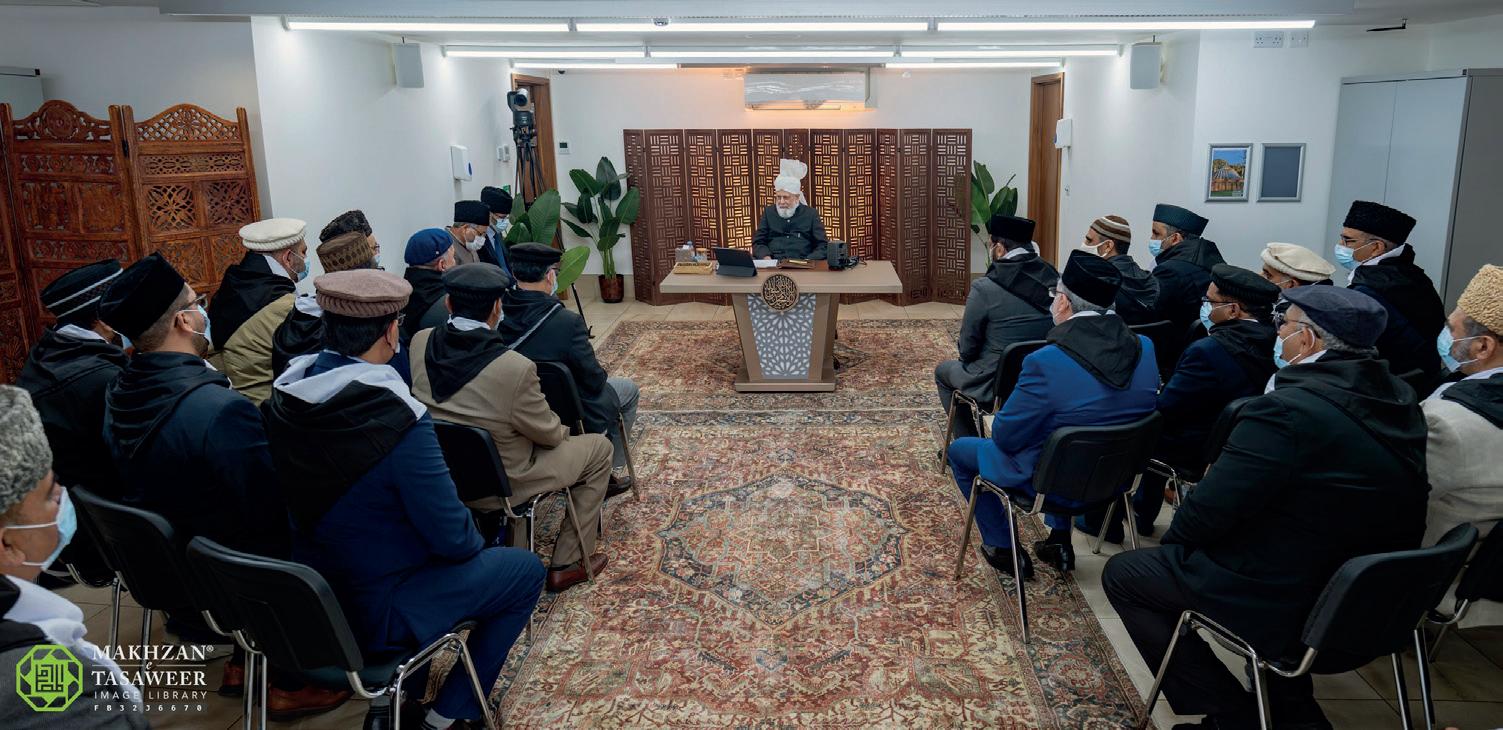
The promised progress of Ahmadiyyat requires patience and steadfastness: Ansar from USA’s Gulf States and Muqami Majlis meet Huzoor
Islamabad, Tilford, UK, 9 May 2026: Ansar from the Muqami Majlis and Gulf States Region of the United States were blessed with a mulaqat with Hazrat Mirza Masroor Ahmad, Khalifatul Masih V (aa).
During the mulaqat, the ansar introduced themselves and then had the opportunity to seek guidance from Huzoor (aa) on matters relating to lifelong learning, the nature of questioning, the evil eye, reflecting upon Allah’s creation, strengthening ties between office-bearers and members and the promised progress of Islam Ahmadiyyat.
Lifelong learning and keeping the mind active
A question was asked about the decline in the ability to learn and retain knowledge as one grows older, whether in worldly or religious matters. Guidance was sought for those ansar who, despite advancing age, wish to continue increasing in knowledge so they may better serve the Jamaat.
Huzoor (aa) smiled and said that he did not consider himself old. He acknowledged that the ability to memorise and retain information may reduce with age and referred to the writings of the Promised Messiah (as), who stated that what is memorised in youth tends to remain in the mind, whereas in later age a person may forget what they once knew. (Malfuzat [English], Vol. 1, p. 68)
However, Huzoor (aa) explained that if a person continues striving and repeatedly revises and refreshes what they have learned, knowledge can remain with them. He referred to the teaching of the Holy Prophet (sa) that one should seek knowledge from the cradle to the grave, explaining that this means a person must continue increasing in knowledge throughout life. (Jami‘ atTirmidhi, Hadith 2686) If one continues to make effort, Allah the Almighty creates and
sharpens the relevant faculties; but if one abandons the effort, those faculties begin to decline.
Huzoor (aa) said that in many parts of the world, people retire around the age of 60, after which they may consider their active life to be over. Yet professionals, including doctors and engineers, often remain effective in later years because they combine experience with new learning and new technology. He observed that in America, many doctors continue working into later age because they keep their knowledge fresh.
Huzoor (aa) said that although memory may weaken with age, if one leaves the mind unused, it becomes rusty. Therefore, one should not allow the mind to rust, but should continue increasing knowledge, developing oneself and making progress. A person should not become tired of learning. When one’s thinking becomes tired, decline begins. Ultimately, he said, the real matter is Allah’s grace.
Asking questions with wisdom and knowledge
A member referred to the common saying in Western societies that there is no such thing as a foolish question. He contrasted this with the Quranic account of Prophet Noah (as), who prayed concerning his son, after which Allah informed him of the true nature of the matter. (Surah Hud, Ch.11: V.42-48) The member asked which kinds of questions are displeasing to Allah and should be avoided.
Huzoor (aa) explained that Prophet Noah (as) did not know the unseen condition of his son’s heart. When the flood came, his son was sitting at a high place and refused to join Prophet Noah (as), saying that he would climb a mountain and be saved. Prophet Noah (as) warned him that nothing would save him that day and then
a wave overtook him and he was drowned. When Prophet Noah (as) asked Allah about His promise to save his family [ahl], Allah explained that true family, in this context, meant those who were obedient to him and followed his teaching. His son was rebellious and, therefore, was not counted among his true spiritual family.
Huzoor (aa) explained that Allah did not prohibit all questions. Rather, He corrected Prophet Noah (as) regarding a matter whose reality he did not know. Huzoor (aa) further explained that the Holy Quran also warns believers not to ask certain questions during the revelation of Sharia, because if detailed answers were given and additional obligations imposed, people might then fail to fulfil them and become liable to punishment. (Surah alMa’idah, Ch.5: V.102-103) In such religious matters, believers should act upon what Allah and His Messenger (sa) have clearly commanded, for therein lies spiritual safety. At the same time, Huzoor (aa) made clear that this principle should not be wrongly extended to worldly learning. In worldly matters, one should seek knowledge and continue increasing in it. He said that today, children often ask why something is so and if they are not given reasoned answers, they may begin to think that religion lacks evidence. Therefore, children’s questions should be answered with knowledge and reasoning.
Huzoor (aa) said that parents and ansar in particular should increase their religious knowledge so they can answer the questions of the younger generation. He said it would be wrong simply to tell children not to ask. Many people write questions to him, including difficult or critical questions and suitable answers are given according to what is appropriate. The caution is against questions that create spiritual stumbling or lead one away from faith, not against sincere efforts to understand religion or acquire knowledge.
The evil eye, envy and false claims of magic
A question was asked about people who believe in the evil eye, amulets, magic and related practices. Guidance was sought on how to explain these matters in light of the Holy Quran and how to deal with a person who believes they are affected by such things.
Huzoor (aa) said that the evil eye can have an effect and that this reality is reflected even in common expressions used to ward off harmful looks. He explained that when a person looks at something good, whether their crop, child or possession, they should
remember Allah, say Masha-Allah and seek Allah’s protection. A person’s own gaze can also have an effect if they begin attributing blessings to themselves rather than to Allah.
Huzoor (aa) said that the effect of the evil eye is also mentioned in relation to parents and children. A mother may begin thinking that she herself has raised the child in such and such a manner and this can have an effect on the child. Therefore, one should always seek Allah’s protection from every evil.
Huzoor (aa) also explained that some envious people do not merely cast an evil glance, but may also try to harm others through certain actions. For this reason, Allah has taught prayers in the concluding chapters of the Holy Quran for protection from the mischief of the envious.
Regarding magic and ta‘wiz-related claims, Huzoor (aa) explained that many such practices are used to frighten lesseducated people. He referred to the writings of Hazrat Khalifatul Masih I (ra), who explained that some so-called pirs would have agents hide objects in people’s homes and later claim that those objects were the cause of a spell. The person would then be told to go to the pir, who would identify the hidden item and claim to remove the effect of magic. In this way, people were deceived. (Haqaiq-ul-Furqan, Vol. 4, p. 571)
Huzoor (aa) also mentioned accounts relating to Hazrat Maulvi Ghulam Rasul Rajeki (ra), where people believed someone was affected by jinn or magic and the matter was addressed through prayer. (Hayat-eQudsi, pp. 617-618) Huzoor (aa) said that he had written a detailed response on this subject, explaining the reality and limits of such matters, what the Holy Quran says and what is permissible or impermissible. He advised that this detailed response should be studied from Al Hakam when it is published. (Also see: Answers to Everyday Issues, Part XVII, www.alhakam.org)
Travelling the earth to reflect upon Allah’s creation and the fate of past nations
A member referred to Quranic verses that command people to travel through the earth, observe the fate of those who rejected Allah’s word and reflect on how creation began. (Surah an-Naml, Ch.27: V.70; Surah al-‘Ankabut, Ch.29: V.21) He asked how these commandments could be fulfilled during routine travel, appreciating the wonders of Allah’s creation.
Huzoor (aa) explained that when Allah says to travel through the earth, it means that one should look at the blessings Allah has placed in the world: mountains, forests, seasons, oceans and rivers. One should reflect upon Allah’s creation and recognise the Creator through what He has created. In this context, Huzoor (aa) referred to Allama Iqbal’s well-known appeal in Bange-Dara, “
“O long-awaited Reality, appear in the garment of metaphor” – and then cited the response written by Hazrat Syeda Nawab Mubaraka Begum (ra):
“Behold Me in the heights of the mountains; behold Me in the depths of the valleys.” (Durr-e-Adan, 2008, p. 62) Through this, Huzoor (aa) explained that Allah’s signs are manifest throughout His creation and that by reflecting on mountains, valleys, forests,
rivers and the vastness of the universe, one comes to recognise the power and majesty of Allah.
He then addressed the Quranic instruction to travel and see the fate of the guilty. He said:
“Here, Allah the Almighty is speaking about the wrongdoers; that is, travel through the land and observe those who stood against Allah the Almighty. Look at the history of the Prophets. You see ancient ruins, do you not? Observe how nations were destroyed by God. And nowadays, Israel is acting with great intensity. In Surah Bani Isra’il and Surah al-Anbiya, Allah the Almighty has already described their condition that these people were destroyed twice before because of their oppression and if they commit oppression a third time, they will be utterly destroyed by God. And this history lies before us. Learn lessons from it and see what the end of such people becomes. Therefore, fear Allah the Almighty, associate nothing with Him and do not become a Pharaoh, as it were, yourself. Pharaoh was destroyed. Moses (as) arose against Pharaoh, but when his people committed excesses, they were destroyed by God. Likewise, the Muslims too can meet the same fate. Therefore, one ought to derive lessons from everything; this is what Allah the Almighty says. He states: ‘Travel and observe wherever you see signs of destruction.’ It is mentioned in the hadith that the Holy Prophet (sa) said that when you recite the Holy Quran and come across verses containing glad tidings from Allah the Almighty, pray to Allah that He may make you among those who inherit those blessings and grant you those favours as well. And where punishment is mentioned, recite istighfar and pray to Allah the Almighty to protect you from such things. [Sunan anNasa’i, Kitab al-iftitah, Bab mas’alati l-qari idha marra bi ayati rahmah, Hadith 1009] Thus, these matters are there in order to impart lessons. This is their purpose and meaning. It does not simply mean travelling for sightseeing and enjoyment alone.”
Huzoor (aa) explained that travel should not be merely for enjoyment or sightseeing. If one visits places of beauty and wonder, one should not simply enjoy the scenery. Rather, one should reflect on how Allah created these places, how earlier settlements may have existed there, how populations rose and fell and how earthquakes, floods, rains and other natural processes shaped or destroyed human habitation.
He referred to the explanation of Hazrat Musleh-e-Maud (ra) that the verse about seeing how Allah originates creation and then brings it again does not mean that the dead physically rise again in this world before one’s eyes. Rather, it points also to the rise and fall of nations: how peoples and powers emerge, flourish, decline and are replaced. In this way, the believer learns from history, fears Allah and turns towards Him. Huzoor (aa) said:
“[Those nations] attained great renown and possessed a mighty kingdom. Pharaoh would say, ‘Look, all these systems are operating under me. Tell me, is there anyone above this?’ So Allah the Almighty destroyed them. He destroyed them by drowning them in water.
“In the same way, there are other nations too. As for what Mr Trump thinks, that ‘I am everything’ and [his claims regarding] the Second Advent and Jesus Christ (as), as he
says at times – though I do not know to what extent this is accurate – Allah the Almighty will likewise break the pride of such people.
“You live in these countries, so what should you do? By living in these very places, you are yourselves witnessing the meaning of
[‘travel through the earth’]. Hence, fear Allah the Almighty and be mindful of Him and warn the people as well. He even says, does he not, that ‘I have come from God.’ By invoking the name of God while engaging in wrongful conduct, he is himself inviting his own ruin.
“In the Holy Quran, Allah the Almighty has stated in various other places: ‘There were people more powerful than you. I destroyed them, so what are you?’ (Surah al-Mu’min, Ch.40: V.22)
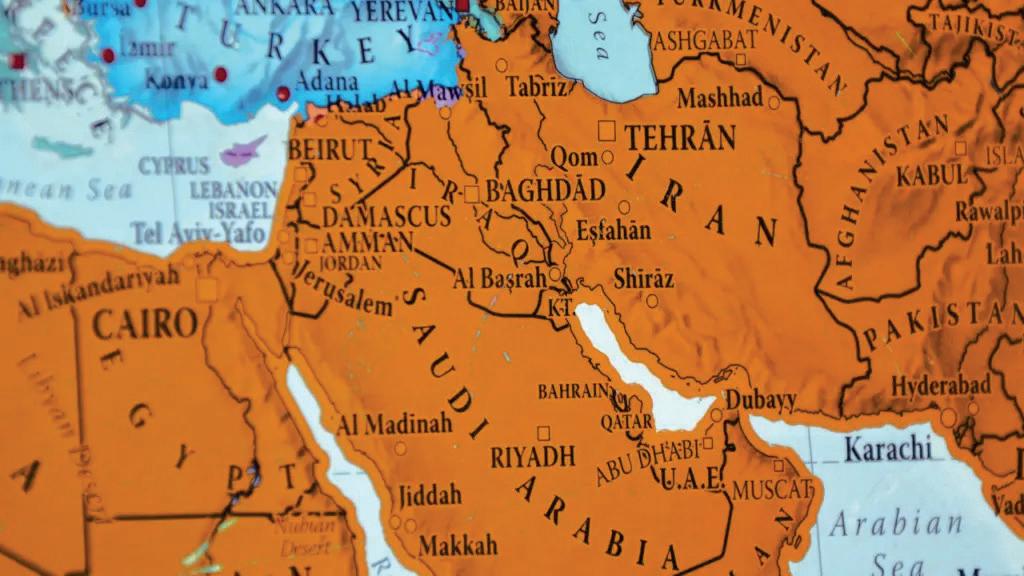
“So the purport [of the verses] is this: look at how great their kingdoms were, how immense their power was, how long they ruled and how much strength they possessed. Despite all of this, they came to an end. There, only ruins are now seen. If you go to many countries in the Middle East, you find ruins – in Syria, in Iraq and in other places. Or if you look elsewhere in the world, too, ancient ruins are found. They are found for this very reason, are they not? The ruins that you are searching for – geologists [or archaeologists] know how those who study such things uncover them. So this is what it means.”
Office-bearers must build relationships before making demands
A question was asked about a lack of alignment between office-bearers and Jamaat members, which can sometimes push members away from the Jamaat. Guidance was sought on how this relationship can be improved.
Huzoor (aa) asked why such a lack of alignment exists. He said that if officebearers are fulfilling their responsibilities properly, speak with gentleness and explain matters with love, then such problems should not arise. He said he had repeatedly advised office-bearers to become more compassionate and build relationships.
Huzoor (aa) explained that many officebearers only visit or contact members when they need something: when there is a jalsa, ijlas or meeting; when they want someone to attend an event; when chanda has to be collected; or when funds are needed for a plot or land for a jalsa or an ijtema or some other project. Instead, office-bearers should maintain ordinary personal contact with members even when they have no administrative demand to make.
Huzoor (aa) said that if there is closeness, a friendly atmosphere, brotherhood and sincere concern, then such distances do not arise. He gave the example of family relationships, where people generally maintain regard for one another despite differences and relationships are not easily broken except in rare cases. Similarly, if members know that their office-bearers are sincere well-wishers, they will maintain a relationship with them and listen to what they say.
Huzoor (aa) referred to the Quranic account in which Prophet Abraham (as) was taught how the dead are brought to life and the birds came back to him when called after being trained. (Surah al-Baqarah,
Ch.2: V.261) Huzoor (aa) explained that training should be carried out with love and affection. If members are trained from the beginning in this way, they will respond positively. However, if office-bearers merely display authority, members will distance themselves and tell them to keep their status within their own homes. Thus, officebearers must work with love, sympathy and humility.
The promised progress of Islam Ahmadiyyat and the lesson of patience
The final question referred to the writings of the Promised Messiah (as), in which he stated that Islam Ahmadiyyat would become dominant within 300 years. The member asked how it could be ensured that the spread of Islam Ahmadiyyat would remain based on true doctrine and the real teachings of Islam, unlike Christianity, which spread widely but became mixed with false doctrines.
Huzoor (aa) explained that the Promised Messiah (as) gave the example of the first Messiah (as) and his followers, who passed through severe trials. The People of the Cave also endured a long period before conditions changed and later the Roman Empire accepted Christianity in whatever form it then existed. The Promised Messiah (as) said that Ahmadis would not have to wait that long and that before 300 years passed, Ahmadiyyat would achieve dominance. (Tazkirat-ush-Shahadatain, Ruhani Khazain, Vol. 20, pp. 66-67) Huzoor (aa) clarified that an analogy does not mean that every detail of the earlier example must repeat itself exactly. He gave the example of the Khilafat of the Promised Messiah (as) and said that Hazrat Musleh-e-Maud (ra) wrote that just as attacks took place upon Hazrat Umar (ra), Hazrat Uthman (ra) and Hazrat Ali (ra), similar trials could occur in the Khilafat after the Promised Messiah (as). However, similarities in events do not mean the same results must follow in every respect.
In the same way, Huzoor (aa) explained that the example of Christianity was given to show that the Jamaat would progress, not to suggest that a corrupted form of Islam would be spread. The image of true Islam had already been distorted and the Promised Messiah (as) came for its restoration and rejuvenation. Therefore, during the prophesied era of progress, the Jamaat will not be spreading a distorted form of Islam; rather, it will be progressing upon the true teachings.
Huzoor (aa) said that the example was primarily to encourage patience. The People of the Cave endured for a long period, spanning many generations. Ahmadis, however, have been told that they will not have to wait that long before seeing good results. The point of the example is not that Ahmadiyyat will become like corrupted Christianity, but that believers should show patience and remain steadfast, for success will come before such a long period passes.
Conclusion
As the mulaqat concluded, the ansar had the opportunity to have photographs taken with Huzoor (aa). They also received pens as gifts.
(Summary prepared by Al Hakam)
Answers to Everyday Issues
Soul (ruh), gender dysphoria, Amir ibn Fuhayra and miscarriage
Guidance regarding basic Islamic issues that Hazrat Amirul Momineen, Khalifatul Masih Vaa, has given on various occasions in his written correspondence and during MTA programmes is being published officially below for everyone’s benefit.
Does Islam teach that the Holy Prophet Muhammad (sa) lacked knowledge of the soul (ruh)?
Someone from Pakistan wrote to Hazrat Amirul Momineen, Khalifatul Masih V (aa), stating that, while replying to an opponent, the Promised Messiah (as) had said that the Holy Quran mentions that man has been granted but little knowledge concerning the soul [ruh]. The questioner requested clarification as to why man has been given only limited knowledge and when further knowledge of the soul would be bestowed.
Huzoor-e-Anwar (aa), in his letter dated 28 December 2023, gave the following reply to this question:
“It appears that you have not read the statement of the Promised Messiah (as) with due care. Had you read it attentively, you would not have raised this question, for the statement you are attributing to the Promised Messiah (as) is not, in fact, his own words; rather, it is the objection of one of his opponents, to which Huzoor (as) gave a detailed reply in his treatise Surma-eChashm-e-Arya.
“It was, in fact, an Arya leader, Drawing Master Lala Murlidhar Sahib, who raised the following objection:
“‘Mirza Sahib and all Muslims hold precisely this belief and the Quran itself states that when people asked the Prophet (Muhammad) what the soul [ruh] was, he was unable to explain it at all. At that moment, the verse was revealed: ‘O Muhammad, say: the soul is a matter of my Lord’s command.’ So, what understanding of the soul could Muslims possibly have acquired, when God did not disclose even to their guide the true nature of the soul? And what a splendid answer God has furnished indeed – that the soul is ‘a matter of my Lord’s command’! Are other things not also ‘matters of my Lord’s command’?’ (Surmae-Chashm-e-Arya, Ruhani Khazain, Vol. 2, pp. 171-176)
“In reply to this objection, the Promised Messiah (as) said:
“‘Lala Sahib, how long must I go on correcting your errors? From whom did you hear that it is the belief of Muslims that the Holy Prophet (sa) was not granted knowledge of the soul by God the Exalted? And where in the Holy Quran did you ever see that the Blessed Prophet (sa) was
unaware of the reality of the soul? I know full well that, owing to the deficiency of your understanding, you have been led into error in interpreting this verse of the Holy Quran, which reads as follows:
“‘That is to say, the disbelievers ask thee, (O Muhammad [sa]), what the soul is, from what it has come forth and how it came into being. Tell them that the soul belongs to the command of my Lord and that you, O disbelievers, have not been granted knowledge of the soul, nor of the divine mysteries, save a little. (Part 15; Surah Bani Isra’il, 86)
“‘So here, Master Sahib, owing to your defective understanding, you fell into the error of supposing that the addressee in the phrase “you have been given but little knowledge” was the Holy Prophet (sa), whereas the expression
meaning “you have not been given” – is in the secondperson plural and this plainly shows that the addressees in the verse are the disbelievers, for nowhere in these verses is the Holy Prophet (sa) addressed in the plural; rather, throughout he is addressed in the singular, while the body of disbelievers is referred to in the plural as those who put forward such a question.
“‘Thus, unless a man be altogether blind, he can see that two plural forms occur in these verses. First, نوﻠ
– meaning, “they ask”; second,
meaning, “you have not been given”. And just as it is evident that the plural form
refers to the disbelievers who asked concerning the nature of the soul, so too it is evident that the plural form
refers to those same disbelievers. As for the Holy Prophet (sa), nowhere is he addressed in the plural. Rather, he is first addressed by means of the singular pronominal suffix kaf, which denotes the singular; in other words, it is said, “the disbelievers ask thee”, not “they ask you” in the plural. Thereafter, once again the singular form is used and it is said, “say to them”, not “say ye to them”. In contrast, when the state of the disbelievers is described, they are referred to both times in the plural.
“‘Hence, the plain and obvious meaning of the verse – as determined by the context and sequence of the discourse and as the
wording itself clearly yields – is this: O Muhammad (sa), the disbelievers ask thee concerning the nature of the soul, what it is and from what it has been brought forth. So tell them that the soul is a matter pertaining to my Lord’s command [amr rabbi], that is, it belongs to the realm of command [‘alam alamr]; and you, O disbelievers, what can you know of what the soul truly is, for to acquire knowledge of the soul, it is necessary to be a believer and one possessing true knowledge of Allah [‘arif billah ]; and not one of these qualities is to be found among you.
“‘Now any fair-minded person can understand what humiliations ignorance, when joined to haste, brings in its wake. One ought to reflect on how plain and transparent the meaning of the above-mentioned noble verses really was: that a group of disbelievers asked the Holy Prophet (sa) concerning the soul – what the soul was – and so, in keeping with the situation, that group was addressed in the plural and given the answer that the soul belongs to the realm of command; that is to say, it is a word of Allah [kalimatullah] or a reflection of the word zill al-kalimah, which, through divine wisdom and power, has come into being in the form of a soul. It has no share whatsoever in divinity; rather, it is in truth a created being and a servant of God. And this is a subtle mystery of divine power which you, O disbelievers, cannot comprehend, save only a little – enough to make faith incumbent upon you.
“‘Even your own intellects are capable of discerning this. Yet in grasping so obvious a meaning, Master Sahib has made a most serious blunder and has imagined that this address, speaking of ignorance concerning the nature of the soul, is directed towards the Holy Prophet (sa). La hawla wa la quwwata illa billah. Perish such understanding! If only Master Sahib had studied a little
Arabic or had at least glanced through some elementary rules of syntax and morphology! Sir, open your eyes and see who it was that asked about the nature of the soul. They were your own fraternity – the deniers of Islam. It was they who were told that the soul belongs to the realm of command and that you, O disbelievers, what can you know of these divine mysteries? Embrace faith and then the nature of the soul and the sciences pertaining to it shall be disclosed to you.
“‘And this statement of God the Exalted – that the soul belongs to the realm of command – upon which Master Sahib, in his self-satisfied haste, immediately fastened with an objection, is in fact the declaration of a profound truth. Its explanation is as follows: divine providence brings nonexistent things into being in two distinct ways and the products of these two modes of origination are given different names. When God the Exalted brings something into being in such a manner that previously it had no existence whatsoever, the Quranic term for that mode of origination is amr [command]. But when He brings something into being in such a manner that it already existed beforehand in some other form, then that mode of origination is called khalq [creation]. In short, bringing a simple entity into existence out of sheer non-being belongs to the realm of amr; whereas fashioning a composite entity into a particular form or configuration belongs to the realm of khalq.’ (Ibid.)
“If you wish to learn more about the soul, then carefully study the writings of the Hakam ‘Adl [the Just Arbiter] of this age, Hazrat Mirza Ghulam Ahmad, the Promised Messiah (as), especially Surmae-Chashm-e-Arya, The Philosophy of the Teachings of Islam and Chashma-e-Ma‘rifat.”
What is the Islamic viewpoint on gender dysphoria?
Someone wrote to Hazrat Amirul Momineen, Khalifatul Masih V (aa), stating that he had been a boy at birth, but later began to feel that he might in fact be a girl. His parents told him that he was a boy and his doctor also said that he was mistaken. However, he himself had come to the conclusion that he was not actually a boy, but a girl and he wished to hear from Huzoor (aa) whether he was a girl or a boy.
Huzoor-e-Anwar (aa), in his letter dated 15 January 2024, gave the following guidance in reply to this question:
“If your bodily organs are those of a male and your reproductive system is male, then you are a boy. And if your bodily organs and your reproductive system are female, then you are a girl. A boy does not become a girl merely by saying so, nor does a girl become a boy.
“Because of the prevailing secular environment, such thoughts and ideas may sometimes arise in one’s mind. This is a psychological condition that ought to be treated. Therefore, you should seek treatment from a doctor.
“The fact of the matter is that, from the creation of Adam until the Day of Judgement, Satan has taken upon himself the task of leading the children of Adam astray and turning them away from the path of God Almighty. To this end, Satan seeks to misguide human beings in various ways.
“In these Latter Days, Satan has assumed the guise of Dajjali forces and adopted the method of leading people astray through various channels. This is precisely the age against which every Prophet warned his followers and concerning which the Holy Prophet (sa) also gave grave warnings. (Sahih al-Bukhari, Kitab al-fitan, Bab dhikri d-dajjal) And for the purpose of confronting these satanic and Dajjali forces, he gave the glad tidings of the advent of his spiritual son and most ardent devotee, the Promised Messiah and Mahdi (as). (Sahih al-Bukhari, Kitab tafsiri l-qur’an, Bab qawlihi: ‘wa akharina minhum lamma yalhaqu bihim’)
“Thus, in order to confront satanic and Dajjali forces, we must arm ourselves with the weapons of prayer and the peaceful jihad of the pen that the Promised Messiah (as) has bestowed upon us and act upon the true teachings of Islam to which he has guided us, so that by resisting these satanic and Dajjali forces we may protect ourselves and our future generations from their attacks.
“May Allah the Exalted grant you wisdom and understanding, protect you from every kind of Dajjali assault, enable you to understand and follow Islamic teachings and continue always to shower you with His favours. Amin.”
Was Hazrat Amir bin Fuhayrah (ra) raised towards the heavens after his martyrdom?
A missionary from Canada wrote to Hazrat Amirul Momineen, Khalifatul Masih V (aa), regarding the martyrdom of Hazrat Amir bin Fuhayrah (ra). Referring to the incident related by the enemy of Islam, Amir bin Tufail – that after Hazrat Amir bin Fuhayrah (ra) had been martyred, he was raised towards the sky and then brought back down to the earth – he asked whether
this was a visionary disclosure [kashf]. He further submitted that there appears to be no chain of narration establishing who heard this account from Amir bin Tufail and requested guidance in this matter.
In his letter dated 18 January 2024, Huzoor-e-Anwar (aa) provided the following answer to this query:
“The incident to which you have referred has been narrated by Hazrat Imam Bukhari (rh) in his Sahih as follows: In the tragedy of Bi’r Ma‘unah, Hazrat Amir bin Fuhayrah (ra) was also martyred. It is narrated from Abu Usamah that Hisham bin ‘Urwah said that his father (‘Urwah bin Zubair [ra]) told him that when the Companions known as the qurra’ were martyred in the tragedy of Bi’r Ma‘unah and Hazrat ‘Amr bin Umayyah al-Damri (ra) was taken captive, Amir bin Tufail pointed to a body and asked him, ‘Who is this?’ Hazrat ‘Amr bin Umayyah (ra) replied that it was Hazrat Amir bin Fuhayrah (ra). Thereupon, Amir bin Tufail said, ‘I saw that after he had been killed, his body was raised towards the sky, to the extent that I could see it between heaven and earth. Then it was set back down upon the ground.’ (Sahih al-Bukhari, Kitab almaghazi, Bab ghazwati r-raji‘ wa ri‘l wa dhakwan wa bi’r ma‘unah)
“As far as your view that this was a kashf is concerned, you are correct. By means of this kashf, Allah the Exalted intended to show the enemy of Islam, Amir bin Tufail – who was the ringleader behind the Bi’r Ma‘unah plot against Islam – that those whom you had treacherously caused to be slain were no ordinary men; rather, they were people close to Allah and of spiritual rank. Accordingly, Allah the Exalted granted immediate acceptance to the prayers of those martyrs and informed the Holy Prophet (sa) of their martyrdom. The Holy Prophet (sa) then informed the Companions of the martyrdom of those beloved ones in these words: ‘Your brothers have been martyred and after their martyrdom they submitted before their Lord: ‘O our Lord, inform our brothers that, having reached Thee, we are full of joy and that Thou too art pleased with us.’ (Ibid.)
“As for the chain of narration of this incident, Sahih al-Bukhari itself states that, out of those 70 Companions, one Companion, Hazrat ‘Amr bin Umayyah al-Damri (ra), was taken captive. Later, in fulfilment of his mother’s vow and in accordance with the custom of that time, Amir bin Tufail cut the hair from the front of Hazrat ‘Amr bin Umayyah al-Damri’s (ra) head and manumitted him. Thus, this report reached the Companions through Hazrat ‘Amr bin Umayyah al-Damri (ra) and they then narrated it onwards. Hence, as has already been mentioned above, Sahih alBukhari records the chain of this report as follows: Abu Usamah heard it from Hisham bin ‘Urwah and Hisham heard it from his father, ‘Urwah bin Zubair (ra).
“Therefore, to say that this incident has no chain of narration is incorrect.”
Is a funeral prayer (janazah) offered for a miscarried baby in Islam?
Someone from India wrote to Hazrat Amirul Momineen, Khalifatul Masih V (aa), stating: “My wife suffered a miscarriage at
18 weeks and 5 days. In one of his questionand-answer sessions, Hazrat Khalifatul Masih IV (rh) had stated that the soul is breathed into the foetus at around four or five months. My wife’s miscarriage also occurred at approximately that stage. Is the funeral prayer offered for such a child? Had the soul entered it? And will we be able to meet this child in the Hereafter?”
Huzoor-e-Anwar (aa), in his letter dated 22 January 2024, gave the following guidance in response to this question:
“The ahadith state that after 120 days, which amounts to approximately four months, the soul is breathed into the foetus. (Sahih al-Bukhari, Kitab ahadithi l-anbiyaʾ , [Bab khalqi adama wa dhurriyyatih])
“The breathing of the soul does not at all mean that, prior to this, the foetus has no connection whatsoever with the soul and that after four months a soul is suddenly placed into it from somewhere outside. Rather, from the very beginning, the soul is a hidden essence of the foetus, which Allah the Exalted causes to become manifest within it, at its appointed time, by His leave.
“While explaining this point, the Promised Messiah (as) states:
“‘The soul is a fine light developed inside the body and which is nurtured in the womb. To begin with, it is hidden and imperceptible and later it is made manifest. From the very beginning, its essence is present in the sperm. It is related to the sperm in a mysterious manner by the design, command and will of God. It is a bright and illumined quality of the sperm. It cannot be said that it is a part of the sperm as matter is part of matter, nor can it be said that it comes from outside or falls upon the earth and gets mixed with the matter of the sperm. It is latent in the sperm as fire is latent in the flint. The Book of God does not mean that the soul descends from heaven as a separate entity or falls upon the earth from the atmosphere and then, by chance, gets mixed with the sperm and enters the womb with it. There is no basis for such a notion. The law of nature rejects it.’ (Islami Usul Ki Falasafi, Ruhani Khazain, Vol. 10, pp. 322-323)
“Explaining the philosophy of the coming into being of the soul within the human body, Huzoor (as) further states:
“‘God Almighty’s law of nature for the coming into being of the human soul is that, after the union of the two seminal elements, when the bodily frame gradually takes shape, then, just as the combining of several medicines gives rise within that compound to a particular quality which is not found in each of those medicines taken separately, in like manner, within that frame – which is the composite of blood
and the two seminal elements – a special essence comes into being, which is, as it were, like phosphorus [that is, luminous and readily kindled]. Then, when the breeze of divine manifestation passes over it with the command “Be”, it is suddenly kindled and diffuses its influence throughout all the parts of that frame; at that point, the foetus becomes alive. Thus, that very kindled reality which comes into being within the foetus through divine manifestation is called the soul [ruh].’ (Chashma-e-Ma‘rifat, Ruhani Khazain, Vol. 23, p. 159)
“Thus, from the very beginning, the soul belongs to the foetus and, at its appointed time, it becomes manifest within it by the leave of Allah the Exalted. And once the soul has become manifest, the foetus continues to develop until, upon completion of its development, it emerges from the mother’s womb in the form of a child.
“As for a child who dies in the womb and is not born alive, though all its limbs have been formed, the majority of scholars and jurists agree that a formal janazah prayer is not to be offered for such a child. The evidence for this is the following saying of the Holy Prophet (sa):
“‘The child is not to be prayed over, nor does it inherit, nor is it inherited from, until it cries out at birth [i.e., is born alive].’ (Sunan at-Tirmidhi, Kitab al-janaʾiz, Bab fi tarki s-salati ‘ala l-janini hatta yastahill)
“However, some scholars are also of the view that the janazah prayer may be offered for a stillborn child. Their evidence is the saying of the Holy Prophet (sa) that the janazah prayer should be offered for a miscarried child and that supplications for forgiveness and mercy should be made for its parents. (Sunan Abi Dawud, Kitab aljanaʾiz, Bab al-mashyi amama l-janazah)
“Therefore, if parents wish to offer the janazah prayer for such a child for their own solace and reassurance, there is no harm in doing so.
“As to whether parents will meet such children in the Hereafter, Allah the Exalted knows best whether He will bring about such a reunion or not. However, concerning children who pass away at a tender age, the Holy Prophet (sa) said that Allah the Exalted, out of His mercy towards such children, will also admit their parents into Paradise along with them. (Sahih al-Bukhari, Kitab aljanaʾiz, Bab fadli mun mata lahu waladun fahtasab)”
(Compiled by Zaheer Ahmad Khan, Head of Records Department, Private Secretariat, London and translated by Al Hakam)
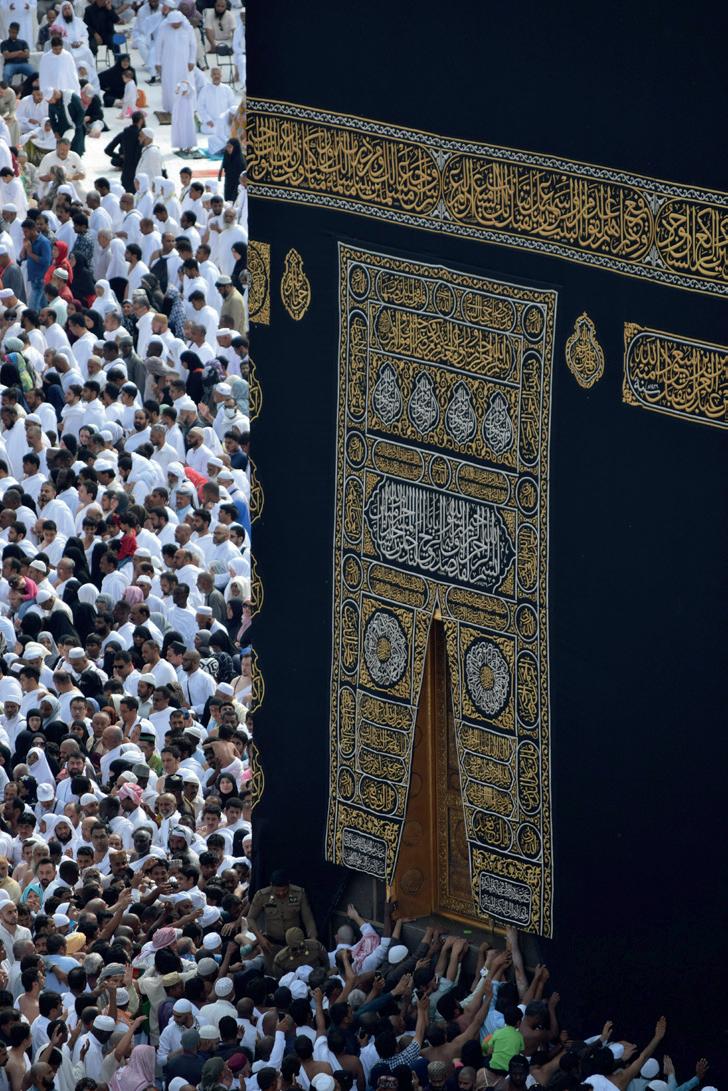
Image: konevi/Unsplash
“
Whoever o ers his sacri ce with a true understanding of the meaning of sacri ce, and does so with a sincere heart and pure intention, has verily thereby o ered the sacri ce of his self, his children and his grandchildren. And for him is a great reward, like the reward which was for Ibrahim [Abraham], from his Benevolent Lord.
HAZRAT MIRZA GHULAM AHMAD (AS)
The Promised Messiah and Mahdi
Fourteen centuries later
Is the Sharia still applicable?
Noor-ud-Din
Chaudry Student, Jamia Ahmadiyya Canada
Imagine a man steals some bread to feed his starving family. A small act of kindness, which is nevertheless still a crime. Should he still deserve punishment? What about a thief who meticulously and carefully schemes to rob a person as revenge? Is he deserving of punishment? In the Holy Quran, God states,
“And as for the man who steals and the woman who steals, cut off their hands in retribution of their offence as an exemplary punishment from Allah. And Allah is Mighty, Wise.” (Surah al-Mai’dah, Ch.5: V.39)
One question is whether the punishment fits the crime. Moreso, the question arises: Is Islam not a peaceful religion with the perfect teaching? Does the Holy Quran encourage violence and aggression in all circumstances of a crime? Amidst the chaos in the world, can the world truly benefit from the millennia-old laws introduced by the Holy Quran?
Often misunderstood, the Sharia is not a violent Muslim law which permits killing, violence, bloodshed and fighting. The word Sharia is taken from Arabic, which has a list of meanings, including “the straight path,” “the religion” or “the path to the watering place.” Water in the Arabic language denotes life, survival & purity (Lisan al-
‘Arab, Ibn Manzur, root: [� � �]). The Sharia is a balanced way of life for people to attain the worldly and spiritual provisions in a balanced and pure manner.
Understanding whether it is applicable today requires an insight into its core teachings. It ought to be remembered that the Sharia is a timeless law and teaching which serves to the benefit of both believers and non-believers in all realms, including social, economic and spiritual aspects. Moreover, the Quran states that it is din alfitrah (Surah ar-Rum, Ch.30: V.31) Meaning such a law which has been designed by God, according to the nature of humans and their psyche. Consequently, how then can such a
law fail to be permanent and universal?
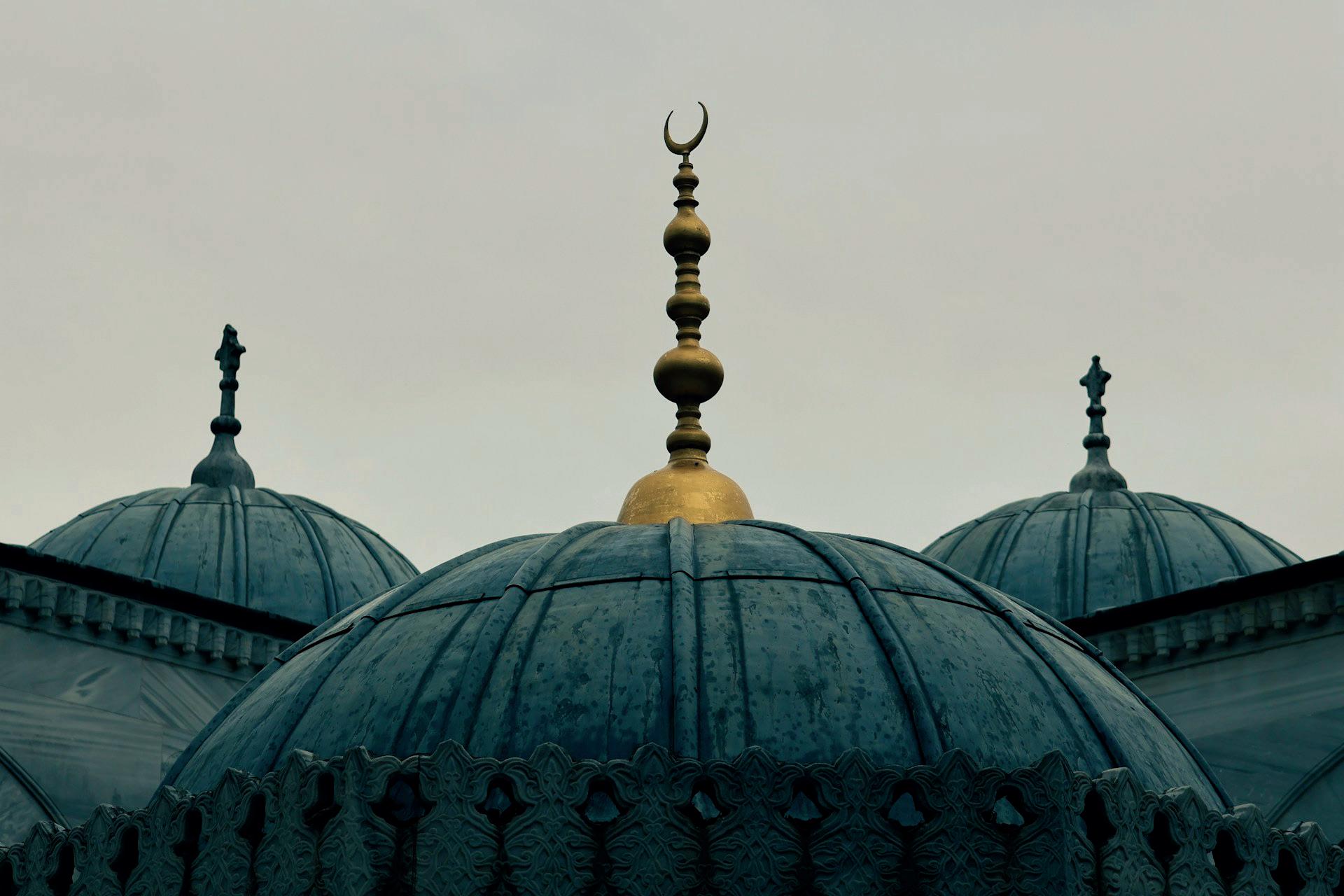
[Insert Image ‘DomeCrescent’]
The Promised Messiah (as) states in regards to Surah ar-Rum, verse 31 that “[...] the religion which provides understanding of God and prescribes His true worship is Islam. Islam is inherent in man’s nature and man has been created in accord with Islam. That is the everlasting faith. This means that God has desired that man should devote himself to His worship and obedience and love with all his faculties. That is why He has bestowed on man all the faculties that are appropriate for Islam.” (Philosophy of the Teachings of Islam, p. 159)
The entire foundation of this law rests
upon the essential teachings of huquq-Allah (the rights owed to God) and huquq al-ibad (the rights owed to His creation), taught in the Holy Quran and perfectly implemented and exemplified by our beloved Master, the Holy Prophet (sa), who presented, taught and established the Sharia in Mecca over 1400 years ago. Turning the people of Arabia from beasts into godly men.
One such example is found in the life of the Holy Prophet (sa) when he migrated to Medina. The muhajireen [migrants] from Mecca had a difficult time adapting to the new way of life in Medina. The Medinites were farmers and were excellent at work in the field. Whereas the Meccans were famously known for trading and having business relations with excellent negotiation skills. For a trader, it was hard to suddenly adopt the lifestyle of a farmer to achieve ends meet for their family. Therefore, the Holy Prophet (sa) created a system of brotherhood, a brotherly bond between the ansar and muhajireen, which they all agreed to, by which it was decided to divide the land the ansar had in Medina, between the muhajir amongst the pair, in order to earn a basic living. Thus, the ansar would work on the fields and the Muhajireen would work in selling livestock as they were businessmen. An example of this brotherly relationship was between Hazrat Abdur Rahman Sa‘d bin Auf (ra) and Hazrat Sa‘d bin Rabi’ (ra). (Sirat Khatam-un-Nabiyyeen, p. 308)
Another example is found with the establishment of zakat. Such a system
allowed the poor, orphans, debtors and travellers to be uplifted and aided financially in order to bring them up to the standards of the society. The sole purpose of zakat was to ensure that the progression of society was based on equality, opportunity and fairness, wherein all citizens possess equal rights to rise and live as standard citizens. Rather than the rich hoarding wealth, the wealth could be distributed and properly utilised in order to uplift the entire society from a lower state to a more progressive and developed state.
The Sharia is not only meant to uplift and support Muslims, but rather all citizens of a society. Though in order to fully enact the teachings of the Sharia, that is, finding the perfect balance in achieving the best of worldly and spiritual provisions, it is essential that one adopts the perfect religion in order to guide their principles, actions and mindset towards a perfect society. To enact the Sharia perfectly, the majority of the population should not only be Muslims, but also be ideal Muslims. The example is present before us, when looking at the blessed model of the Holy Prophet (sa) when he enacted the Sharia in Mecca and Medina. The change did not come about in one day. Rather, over the course of 23 years. The Holy Prophet (sa) moulded and introduced laws which, as the society and its citizens were ready, they would adopt them, and thus it would further perfect the society.
When determining whether the Sharia is applicable in the modern age, Hazrat Mirza Tahir Ahmad (rh) notes:
“Every prophet – not only Prophet Muhammad (sa) – first created that healthy climate for the law of God to be imposed, willingly not compulsorily. And when the society was ready, then the laws were introduced and stiffened further and further, until the whole code was revealed. That society was capable of carrying the burden of the law of religion, whether you call it Sharia law or any other law.” (The Relationship between Religion & Politics in Islam, 2017, pp. 13-14)
[Insert Image ‘Book Cover’]
He further states, “The entire world would become a world of not only political conflict but also of a politico-religious conflict, whereby all the laws would be attributed to God, yet they would contradict each other diametrically. There would be such a confusion that people would begin to lose faith in a God who speaks one thing to one people and another thing to another people, and who tells them to enforce this law on the people or ‘they will be untrue to Me.’” (Ibid., p. 6)
“[...] India for instance, if the law of the Hindu majority is imposed on the Muslim minority […]. What would happen to the Muslims and other minorities of India? Moreover, this is not a question of India alone. What if Israel enacts the law of Judaism – the law of the Talmud? I have read it and I know it will be impossible for any other non-Jew to live there normally and decently.” (Ibid.)
Islamic law is that, “anyone born in a state has a right to participate in its legislation […]. Everybody’s wish is not fulfilled or carried out, but, in principle, everybody has a fair chance and an equal chance to make his say heard – at least by the opposition –on matters of common principle” (Ibid., p. 7)
In order for the Sharia to be enacted, it requires a special atmosphere. Just as the tree does not bear fruit lest they are under the right circumstances. A society where theft is common, for instance, cannot have Sharia law. It is only when a pious society has been created that the Sharia can be introduced over a period of time. The extremist religious organizations who claim to follow the Sharia, follow nothing but their own conjecture. Because the Quran clearly states, “There should be no compulsion in religion.” (Surah al-Baqarah, Ch.2: V.257) Even the Holy Prophet (sa) was told by God Almighty that “Admonish, therefore, for thou art but an admonisher; Thou hast no authority to compel them.” (Surah alGhashyiah, Ch.88: V.22-23) It is evident that according to the Holy Quran the true objective of Muslims is to admonish, or give advice of goodness, and peacefully preach. They are not allowed to use force on anyone. This principle applies to a Muslim government as well. Living under Sharia law does not mean that the government possesses the right to force a person to follow a certain religion or act a certain way. This is contradictory to what the Quran teaches us.
The Quran promotes a secular society on the sole basis of absolute justice. When it states, “Verily, Allah enjoins justice.” (Surah an-Nahl, 16:91) “Be Always Just that is nearer to righteousness.” (Surah al-Mai’dah Ch.5: V.9) Islam establishes the basis of the Sharia solely on justice, not creed, caste, race, religion or gender.
And when hearing that the Quran deals out punishments of death, amputation, stoning beheading, the question arises as to whether the Quran permits harsh punishments? As discussed earlier, this Law and these punishments can only be enacted in a society which has moulded into an ideal society, not one which is corrupt.
In the situation where one steals and his hands have been ordered to be cut off, it is considered a valid punishment in an ideal society where such a crime is looked down upon. Because the moral values and ethical heights of the people are so high that to commit such a lowly and petty crime is out of the norm. The entire philosophy of the law is to protect the innocent.
In the scenario presented in the beginning. This exact event takes place in a book by Victor Hugo – Les Misérables. In which the man stealing the bread for his family happens to be a fellow named Jean
Valjean. He is imprisoned for 19 years as a result of his crime, and after his release, he is hardened – until a bishop shows him mercy instead of punishment. That singular act transforms him into a compassionate man who spends his life helping others, despite the hardship he faced in the earlier part of his life.
[Insert Image ‘Les Misérables’]
The Quran presents a similar teaching to this, stating that “And the recompense of an injury is an injury the like thereof; but whoso forgives and his act brings about reformation, his reward is with Allah. Surely, He loves not the wrongdoers.”
(Surah ash-Shura: Ch.42: V.41) It states that forgiveness in the right situation –where the other party also shows change, reformation and remorse for their actions –is closer to righteousness rather than meting out cruel punishments. It does not diminish the wrongful act committed. Rather sets an example that the Sharia encourages reformation, repentance and forgiveness among believers, wherein they help their weak brethren rise from a lower status to a higher one. Rather than condemning them to a lifetime of prison or any other cruel punishment. Thus, in a society where a hungry man steals to quench his appetite, Islam does not allow any punishment for him. (Audio Answer, Hazrat Mirza Tahir Ahmad (rh), Is amputation of a thief’s hand the Islamic punishment for theft?, 28 May 1984)
Hazrat Musleh-e-Maud (ra) regarding meting out the punishment of cutting the thief’s hand states that this punishment is an extreme punishment and is not meant for every thief. Rather, it has eight conditions. In short:
The theft must be important
He steals without necessity, and it is a habitual theft
He is caught before he repents
Steals someone’s property
His theft should not be suspected
A person should not be a minor
A person should have common sense and understanding, not be foolish
The term “thief” can be applied to him (Anwarul Ulum, Vol. 19, p. 428)
Hazrat Mirza Tahir Ahmad (rh) was once asked whether Sharia law can be implemented in the Western world today, to which he responded that the current world cannot adopt the Sharia. He states, “What we are discussing is whether it is possible to adopt religious law as the law of the country
by any state, or any other religion for that matter. I believe it is not possible. It is not possible even if you genuinely and fervently so desire; in the name of God, even then it’s not possible. We have gone so far away from religion. We have become hypocrites. The whole human society has become hypocritical. There is hypocrisy in politics and society everywhere. And hypocrisy does not permit honesty to flourish. It does not permit the word of God to take root. That is the main problem.” (The Relationship between Religion & Politics in Islam, 2017, pp.17-18)
The reason the Sharia law is seen negatively in the Western world is that erroneous examples and false notions have crept into the countries that have attempted to call themselves “a Muslim country” and enact the Sharia. Take the example of Pakistan, for instance. They take pride in referring to themselves as a Muslim country; in fact, the core reason for the 1947 partition of India was due to the growing enmity between the Hindus and Muslims, where Muslims were calling for a separate state. Their attempt to enact even a fraction of the Sharia after its creation was poorly done. The vast majority of its population is Muslim; aside from this, there are still minorities of Hindu, Christian and other religious communities in Pakistan, who during the partition decided not to leave their ancestral land. But despite the Sharia allowing all backgrounds of people to live in peace and abide by their own respective teachings, Pakistan, till today, is still not religiously tolerant and does not grant rights to minorities. This, in fact, is against the teaching of the Holy Prophet (sa), who magnificently showed that Islam is not a ruthless, violent and discriminatory religion.
When the Holy Prophet (sa) was declared the King of Medina, there were still Jewish residents from the tribes of Banu Nazir, Banu Qainqa‘ and Banu Qurayza present in Medina. The Holy Prophet (sa) did not usurp their rights, exile them, mistreat them or intentionally tear down any synagogue or place of worship they had. Rather, he let them live in peace and established a treaty with them for maintaining that peace. Even when an individual from among the Jews committed crimes, he did not act insolently against the whole Jewish community in Medina. Rather, he saw it as a crime of a single individual and punished him according to the Torah, not the Quran. This is the Sharia. A government so refined and intricate that they understand the moral and spiritual role it must uphold. A government whose principles are ones that create the perfect breeding ground for a perfect citizen and a perfect civilisation. A populace which contains exemplary high faculties which looks down upon perpetrators who seek to diminish a society. The Sharia aims to achieve and grant its citizens the very best society by keeping justice and equality at the centre of its framework. When selfishness, ego, jealousy, desires and an agenda don’t become the objectives of a nation or government, great things can be achieved. This is the perfect law which the world itself is neglectful and ignorant of. The real question is not whether the Sharia is relevant in today’s age, but whether we are ready to rise to its standard.
Preaching Ahmadiyyat to the ends of the world (1926) 100 years ago...
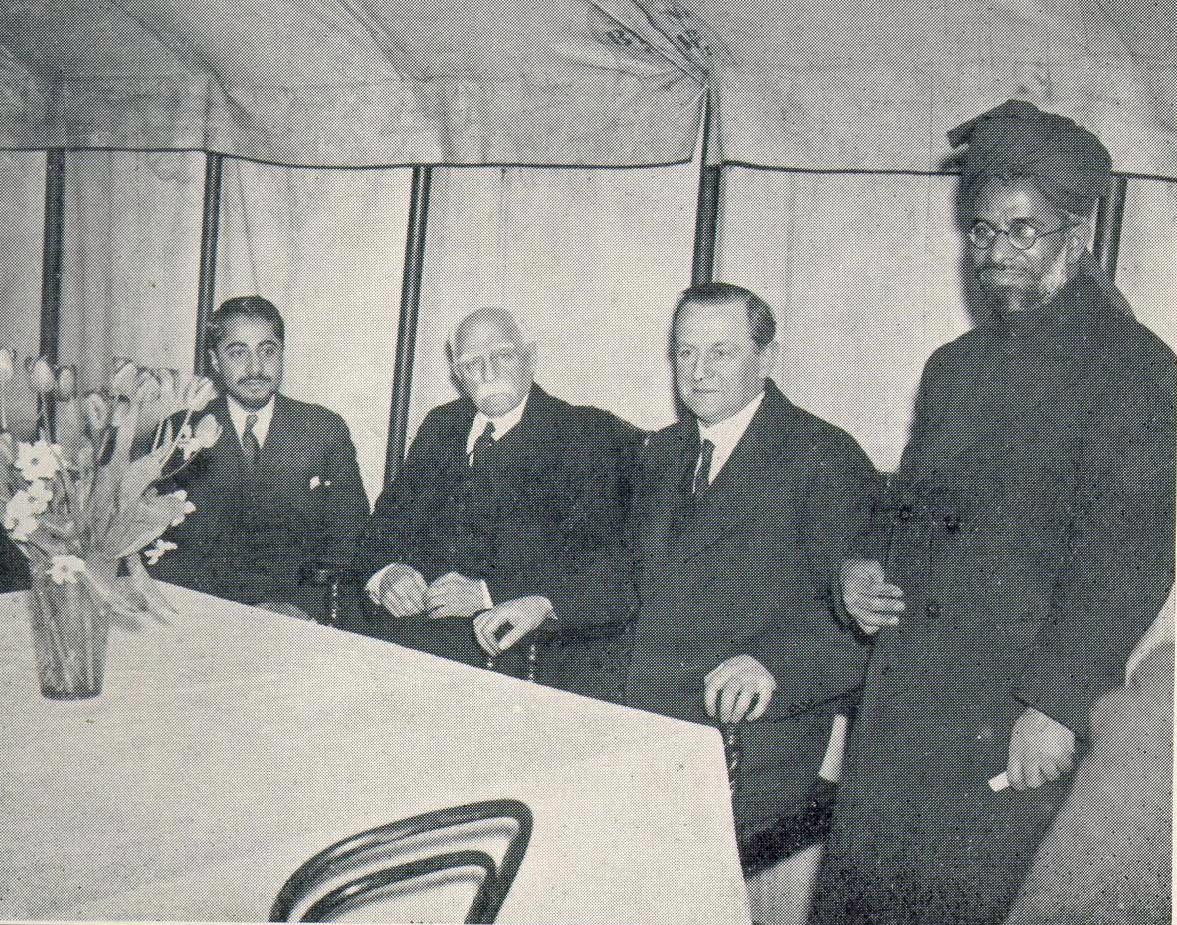
Hazrat Maulvi Abdur Rahim Nayyar (ra) (1883-1948)
Australia
Among those who are regular in their correspondence and in sending tabligh reports and who possess a profound yearning to deliver the fresh heavenly message to God’s creation, is our frail and weak-bodied but young-at-heart friend Khan Hasan Musa Khan Sahib, a resident of Australia. Our respected and honoured brother dedicates his entire time to preaching the truth and the protection and propagation of Islam. On every occasion, he finds an opportunity to protect the rights of the Muslims of Australia and to preach.
When Reverend [Samuel] Zwemer, the editor of the Muslim World, travelled to Australia, the Ahmadi missionary challenged him and presented him with literature. He then travelled to America. The Australian Ahmadi pursued him and maintained the correspondence. Currently, the correspondence between our missionary and the reverend is before me. Khan Musa Khan Sahib, highlighting the ignorance of the Christian world, writes:
“A commercial factory in Australia, while issuing its advertisement, had written: ‘If the mountain does not come to Muhammad [sa], then Muhammad [sa] will go to the mountain.’ Upon this, this humble one drew the merchant’s attention to the poisonous effect of this phrase and objected to this Christian invention. The merchant was a fair-minded person; he apologised and removed the phrase from the advertisement.”
Reverend Zwemer was also influenced by the truth and stated:
“I read your letter with interest. I will also write a note in the Muslim World. Previously, too, we completely refuted this old myth in our journal that the coffin of Muhammad [sa] is suspended.”
In response to this letter, our friend thanked the reverend on behalf of the Muslims of Australia and wrote such an article for the Muslim World that the reverend would hardly publish.
In any case, in the continent of Oceania, one hand is holding the Ahmadi standard aloft. May Allah the Almighty bless his courage. Amin
Lagos
On the western coast of the continent of Africa, there are 14 large European-style cities and towns. Starting from Dakar in the French territory to Matadi in the Belgian territory, among all these settlements, there is only one city where Muslims are in
the majority. That city is Lagos, which is an important centre of Ahmadiyyat in Nigeria. From such a city, in the words of some Christian writers, the work of propagating Islam takes place in far-flung areas. This city possesses the following characteristics:
1. In 1784, Islam first reached the West African coast here through a Black slave of the Portuguese. The first teacher of Islam had travelled to India and Brazil with his master and his attention towards Islam was drawn in India itself.
2. In terms of commercial, cultural, educational and material progress, this city is called the “London of West Africa”.
3. Due to Lagos being situated on an island and connected to the mainland via a bridge, the perilous waves of the dark ocean have been restrained by breakwaters, creating a beautiful harbour in this city and ships dock right at the shore.
4. Ahmadiyyat also first reached this place through correspondence. A godly African experienced a vision here that a white man would come from the sea, bringing the Holy Quran.
In short, the city of Lagos is the capital of the country of Nigeria and the Ahmadi Jamaat there is administratively divided into three circles. Circle number 3 has published its fresh annual report. I present a few sentences from it. Mentioning a newly-constructed mosque, the compiler of the report writes:
“On Good Friday, 14 April 1922, the servant of the Promised Messiah (as) and Mahdi, Maulvi Abdur Rahim Nayyar, Bachelor of Philology, laid the foundation stone of this mosque. He stated that, ‘Many mosques will eventually be built, even with silver and jewels. However, this is the first mosque in Nigeria, the foundation of which is being laid by the hands of a foreign Islamic missionary and a companion of the prophet of this age.’”
Then, mentioning the missionary class at their location, it is written:
“It has been nearly a year since a preaching class was opened for local missionaries so that they may not only acquire the knowledge of the Holy Quran and Hadith but also so that they can become the sowers of the seed of the glad tidings of the advent of the Promised Messiah (as) and Mahdi.”
At the end of the report, it is written:
“Before concluding this report, it is incumbent upon us to mention the profound connection we share with our absent spiritual father, Maulvi Abdur Rahim Nayyar. You not only verbally declared yourself a member of this circle but practically proved it. When you were here, you used to give your monthly dues to this circle and when-
ever you had time, you would also attend our meetings. Your personality had a great impact on the hearts of our elders. Even now, whenever they converse, they definitely mention the example of the Maulvi Sahib. We are therefore very thankful to him for his magnanimity.”
Saltpond
Amidst Black students and labourers on the coast, overlooking the dark waters and surrounded by the terrifying roar of ocean waves beneath the intense sun, our young white missionary, Maulvi Hakeem [Fazl-ur-Rahman], is overseeing the construction of the Talim-ul-Islam school for the Fanti Ahmadis. The scorching African winds have weathered the face of this youth, but the hearts here are illuminated and pure, transcending mere outward appearances. Faith and obedience to the Lord of Majesty keep him steadfast in performing his official duties despite his indisposition. He writes with humble submission to his Imam [ra]:
“The construction work of the school building is not yet finished. The walls are complete. Laying the roof remains. Wood is brought from 63 miles away.”
He further states:
“Recently, 22 idolaters and Christians entered the service of His Holiness. Accepting the pledge of allegiance of all of them, please pray for them. A piece of land has been granted to us by the government for a graveyard.”
Islands of the West Indies
Our respected friend Sheikh Ibrahim [Munziri], the Muslim missionary of Penal on Trinidad Island, reports:
“Since 1 January 1926, I have relocated to Penal. Ahmadiyyat is progressing here among the Blacks and Indians. Fifteen members of the Universal Negro Brotherhood [Improvement Association] have entered the Movement. Among them, the president is also included.”
He adds:
“Please send a few copies of the prayer book, which will be beneficial for the new converts.”
Syria
Our dear friend Hazrat Jalal-ud-Din Shams, Abu-al-Sana (ra), in the country of Syria, where many Jallianwala Baghs are being formed, is conveying the message of the Promised Messiah (as) to the Amritsari clerics of Damascus and their sympathisers. He writes:
“In the present circumstances, the best possible method of preaching is via the post.
I am doing precisely that. First, I sent tracts and after that, I dispatched letters printed on a hand press.”
Fulfilling the duty of preaching in cities where looting, bloodshed, shelling and gunfire are commonplace requires immense courage. We are greatly pleased. Our beloved brother is valiantly raising the flag of Tawhid in times of danger, standing firm in a land steeped in the Pauline trinity.
Complete freedom to preach the truth in Iraq
His Majesty King Faisal’s government, upon the arrival of Hazrat Syed Zain-ul-Abidin Waliullah Shah (ra) and after ascertaining the reality of the situation, has granted complete freedom for the preaching of Ahmadiyyat. The summary of the official order regarding this is as follows:
1. Our memorandum number 15062 regarding the prohibition of preaching Ahmadiyyat, dated 11 October 1922, is now abrogated.
2. You have the freedom to preach Ahmadiyyat in the land of Iraq and you are permitted to propagate your religion.
Ceylon
The Ceylon Jamaat, taking advantage of preaching freedom, has commenced work with great zeal. Brother [Manthra] Sahib writes:
“The propagation of Islam and Ahmadiyyat through the Malay language is the purpose of my life. I am delighted that you recited an excerpt of my letter to Hazrat Khalifatul Masih [II (ra)]. It is as though you are securing prayers from His Holiness for my success. The members of the Ahmadiyya Jamaat and their families who have planted the sapling of Ahmadiyyat in Ceylon are firm in their faith. Now the government has officially recognised the communities of Colombo, Gampola and Negombo.”
He continues:
“Insha-Allah, this Jamaat can never be eradicated from Lanka. In Colombo, the Jamaat has its own mosque and its own graveyard in Negombo. Similarly, in Gampola, too, the government has allocated us a separate graveyard. I sincerely hope that you will definitely visit splendid Lanka. The Ceylon Jamaat is collecting funds for the travel expenses of a missionary and is requesting an English-speaking missionary.”
(Translated by Al Hakam from the original Urdu published in the 21 May 1926 issue of Al Fazl)
The promised land: Reinterpreting Abraham’s covenant for peace in the modern world
In a recent interview with Tucker Carlson, US Ambassador to Israel Mike Huckabee stirred international debate by invoking biblical scripture to justify expansive territorial claims. Referencing Genesis 15:18, Huckabee asserted that the land “from the river of Egypt to the great river, the Euphrates” was divinely promised to the descendants of Hazrat Ibrahim (as), a vast region encompassing parts of modern Egypt, Israel, Palestine, Jordan, Lebanon, Syria, Iraq and even Saudi Arabia. His casual remark: “It will be fine if they took it all”, has been interpreted by critics as endorsing aggressive expansionism under the banner of Christian Zionism, a theological framework that links Jewish control of these lands to the second coming of Christ.
This perspective, while rooted in sincere faith for some, risks exacerbating geopolitical tensions in an already volatile Middle East. As followers of the Ahmadiyya Muslim Community, we are called to foster interfaith understanding and peace, as emphasised by Hazrat Mirza Ghulam Ahmad (as), the Promised Messiah and Mahdi. Rather than
viewing the covenant of Hazrat Ibrahim (as) as a mandate for exclusive occupation by one group, a broader and more spiritually grounded interpretation reveals it as a promise of divine blessings fulfilled through the spiritual descendants of Hazrat Ibrahim (as), i.e. those who uphold monotheism and his prophetic legacy across Judaism, Christianity and Islam. Hazrat Ibrahim (as) is not the father of one specific ethnic or religious group but of the faith in the One God, a unifying force that blesses all nations. Today, this fulfilment is evident: the promised lands are inhabited predominantly by believers in the One God, with Muslims forming the overwhelming majority, and ancient paganism eradicated. This article explores this inclusive reading, drawing on Biblical texts from both the Old and New Testaments, historical context and Islamic insights to promote harmony among Jews, Christians and Muslims.
Biblical foundations
The promises to Hazrat Ibrahim (as) form the cornerstone of this discussion, appearing prominently in the Book of Genesis. These verses, part of the Abrahamic
covenant, underscore themes of blessing, multiplication and inheritance, promises that extend far beyond one people to encompass all who share in faith.
Genesis 12:3 declares: “And I will bless them that bless thee, and curse him that curseth thee: and in thee shall all families of the earth be blessed.” (KJV) This is a universal pledge, extending God’s favour to “all families of the earth” through Hazrat Ibrahim (as).
Genesis 15:5 addresses the proliferation of descendants: “And he brought him forth abroad, and said, Look now toward heaven, and tell the stars, if thou be able to number them: and he said unto him, So shall thy seed be.” (KJV) At the time, Hazrat Ibrahim (as) was childless and nomadic, surrounded by polytheistic societies.
The territorial aspect appears in Genesis 15:18: “In the same day the Lord made a covenant with Abram, saying, Unto thy seed have I given this land, from the river of Egypt unto the great river, the river Euphrates.” (KJV) Genesis 17:4-5 renames him Abraham, “father of many nations”, and Genesis 17:20 blesses Ishmael (as) as well: “And as for Ishmael, I have heard thee: Behold, I have blessed him, and will
make him fruitful, and will multiply him exceedingly; twelve princes shall he beget, and I will make him a great nation.” (KJV) Genesis 22:18 reaffirms: “And in thy seed shall all the nations of the earth be blessed; because thou hast obeyed my voice.” (KJV) Joshua 24:2-3 recalls the origins of Hazrat Ibrahim (as): “Your fathers dwelt on the other side of the flood in old time, even Terah, the father of Abraham, and the father of Nachor: and they served other gods.” (KJV) This highlights Hazrat Ibrahim’s (as) call out of idolatry to pioneer monotheism.
A broader interpretation of ‘descendants’
The Hebrew term zera‘ (“seed” or “offspring”) need not be confined to biological heirs. The legacy of Hazrat Ibrahim (as) is spiritual: he rejected idolatry and submitted to the One God. His true heirs are those who emulate this faith: believers who recognise Hazrat Ibrahim (as) as a great prophet and adhere to his teachings of Tawhid (the Oneness of God). This encompasses Jews, Christians and Muslims, all of whom trace their spiritual roots to the belief of Hazrat Ibrahim (as).
Fakhar Khalifa California, USA
New Testament affirmations
The New Testament elevates this spiritual dimension. Romans 4:11-12 calls Hazrat Ibrahim (as) “the father of all them that believe,” whether circumcised or not. Romans 4:16-17 affirms: “but to that also which is of the faith of Abraham; who is the father of us all”, (KJV) Galatians 3:7-9 states: “Know ye therefore that they which are of faith, the same are the children of Abraham.” (KJV) Galatians 3:29 adds: “And if ye be Christ’s, then are ye Abraham’s seed, and heirs according to the promise.” (KJV) Hebrews 11:8-10 praises the faith of Hazrat Ibrahim (as), and James 2:21-23 connects righteousness to faith and deeds.
These passages portray Hazrat Ibrahim (as) as the father of faith for all believers, promoting unity in monotheism.
Historical fulfilment: From pagan lands to a monotheistic majority
Around 2000 BCE, the region from the Nile to the Euphrates was dominated by polytheism. Today (based on 2020 Pew Research Center estimates, with stable trends into 2025–2026), it is overwhelmingly monotheistic: Muslims form approximately 92% of the population, Christians around 4%, and Jews around 3% (almost entirely in Israel). Organised paganism or polytheism is negligible (<0.1%). This transformation, from polytheistic dominance to Abrahamic faiths, reflects the promise’s realisation: the
spiritual descendants of Hazrat Ibrahim (as) now inhabit the land as the majority, united in belief in the One God.
The spiritual essence of the promise: Righteousness over territory
While the covenant mentions land, its core is spiritual and ethical. The true inheritance is tied to righteousness, faith and good deeds, not exclusive political control.
Deuteronomy 9:4-6 warns the Israelites: the land is given “Not for thy righteousness, or for the uprightness of thine heart, dost thou go to possess their land: but for the wickedness of these nations [...] for thou art a stiff-necked people.” (KJV) Romans 4:13 explains: Hazrat Ibrahim (as) became “heir of the world […] through the righteousness that comes by faith.” (KJV) Matthew 3:9 challenges ethnic presumption: “and think not to say within yourselves, We have Abraham to our father: for I say unto you, that God is able of these stones to raise up children unto Abraham.” (KJV) Hebrews 11:9-10 shows Hazrat Ibrahim (as) viewed the land as temporary, yearning for a heavenly inheritance.
The promise calls us to emulate the righteousness of Hazrat Ibrahim (as): rejecting idolatry, trusting God, and performing good deeds. Political land claims divorced from this ethical foundation risk distorting the covenant’s intent.
Challenging exclusive land claims
Christian Zionism often interprets the covenant through end-times prophecy, prioritising territorial sovereignty. While respecting the faith behind this view, we invite reevaluation in light of the Bible’s emphasis on righteousness. The land is stewardship tied to moral conduct (Leviticus 18:28), not unconditional entitlement. True descendants are defined by spiritual fidelity, not geography. Exclusive claims can fuel division, whereas focusing on shared faith and good deeds builds bridges among Abrahamic communities.
An Islamic and Ahmadiyya perspective
The Quran describes Hazrat Ibrahim (as) as “Abraham was neither a Jew nor a Christian, but he was ever inclined to God and obedient to Him, and he was not of those who associate gods with God.” (Surah Aal-e-‘Imran, Ch.3: V.68) His followers are “Surely, the nearest of men to Abraham are those who followed him, and this Prophet and those who believe; and Allah is the friend of believers.” (Surah Aal-e-‘Imran, Ch.3: V.69) The Quran also conditions the covenant: “And remember when his Lord tried Abraham with certain commands which he fulfilled. He said, ‘I will make thee a Leader of men.’ Abraham asked, ‘And from among my offspring?’ He said, ‘My covenant does not embrace the transgressors.’” (Surah
NEWS
Farah Khan
Secretary Ishaat, Lajna Imaillah Australia
The 40th national ijtema of Lajna Imaillah and Nasirat-ul-Ahmadiyya Australia was held at the Baitul Huda Mosque in Sydney, on 8-11 May 2026, with the theme “Love of Allah”.
Abdul Hadi Masood Missionary, Norway
Jamaat-e-Ahmadiyya Norway held its annual peace symposium on 14 April 2026 at the Baitun Nasr Mosque in Oslo. The event brought together distinguished guests, academics, humanitarian leaders, diplomats and members of various faiths and backgrounds to discuss the urgent need for peace and justice in today’s increasingly fragile world.
The ijtema encompassed various academic competitions and insightful educational sessions. A dedicated Lajna Hub hosted presentations and discussions on “Healthy Ageing”, “Understanding and developing trust in Allah”, “Spiritual Readiness for Marriage” and “Raising Divinely anchored children in a Digital World.”
Meanwhile, the “Nasirat Hub” offered hands-on activities such as cap and tote bag painting. The nasirat also had the opportunity to learn about meaningful topics, including the role of angels in our lives, good friendships and healthy habits for the mind and body.
al-Baqarah, Ch.2: V.125)
Finally, the Quran promises: “And already have We written in the Book of David, after the exhortation, that My righteous servants shall inherit the land.” (Surah al-Anbiya, Ch.21: V.106)
Implications for peace
Reinterpreting the covenant through righteousness fosters reconciliation. Collaborative efforts among Jews, Christians and Muslims, for justice, compassion and peace, honour the legacy of Hazrat Ibrahim (as). This aligns with Micah 6:8 “but to do justly, and to love mercy”, and the Quran’s call to “Vie, then, with one another in good works.” (Surah al-Ma’idah, Ch.5: V.49)
Conclusion
The covenant of Hazrat Ibrahim (as) is a divine call to monotheism, righteousness and blessing for all nations. Its fulfilment is seen in the spiritual transformation of the promised lands and in lives devoted to faith and good deeds. By embracing this inclusive vision, Jews, Christians and Muslims can unite as the true progeny of Hazrat Ibrahim (as), building peace rather than division. May we all strive to be among the righteous servants who inherit the earth through submission to the One God.
Australia
Attendees participated in sports competitions, fostering teamwork and sisterhood, and enjoyed browsing the Sanato-Dastkari, bookstalls and food stalls during breaks.
The ijtema concluded with an awards ceremony, recognising the achievements of participants. A total of 1050 members attended the ijtema.
Annual peace symposium held in Norway
The formal proceedings began with a recitation from the Holy Quran. Among the distinguished guest speakers at the event were Dina Hovland, Chair of the Board, Médecins Sans Frontières Norway; Gentian Zyberi, Professor of International Law and Human Rights and Director of the Norwegian Centre for Human Rights; Ragnhild Bergheim, Member of the Norwegian Parliament; Attia Mirza, Member of Oslo City Council; Morten Sandanger, Member of the Norwegian
Parliament; and Abdullah Uwe Wagishauser Sahib, Amir Jamaat-e-Ahmadiyya Germany.
In his opening address, Amir Jamaat Norway, Zahoor Ahmad Chaudhary Sahib, welcomed the guests, highlighting the Jamaat’s global commitment to promoting peace, justice, interfaith dialogue and humanitarian service.
After the speeches by Dina Hovland and Gentian Zyberi, Abdullah Uwe Wagishauser Sahib delivered a speech, reflecting on the growing global risk of conflict and nuclear
escalation. He stressed that lasting peace requires more than systems and institutions, but moral responsibility and human integrity. He highlighted the concept of peace in Islam.
The speeches collectively highlighted the urgent need for peaceful coexistence, respect for human rights and international cooperation in an increasingly uncertain world.
After the speeches, guests were served dinner, followed by a guided tour of the Baitun Nasr Mosque.
40th Ijtema held by Lajna Imaillah and Nasirat-ul-Ahmadiyya
Friday Sermon
Mubarak Mosque, Islamabad, Tilford, UK
1 May 2026
Mirroring the beloved (sa): Truthfulness in the life of the Promised Messiah (as)
After reciting the tashahhud, ta‘awwuz and Surah al-Fatihah, Hazrat Khalifatul Masih V (aa) stated:
Today, I will present some accounts from the life and character of the True Servant of the Holy Prophet (sa) – the Promised Messiah (as) – which demonstrate how he upheld truth at all costs, remained firmly upon the truth and even challenged his opponents in this regard.
First, I will present the response of the Promised Messiah (as) to one of his major opponents, Muhammad Hussain Batalvi Sahib, who accused him of being a disbeliever and a liar. The reply to this allegation given by the Promised Messiah (as) was such a clear and open answer and challenge that anyone judging with fairness could never accept such allegations. However, when one’s eyes are veiled, light cannot be seen – and this is the condition of the clerics today as well.
On one occasion, Muhammad Hussain Batalvi Sahib wrote a letter to the Promised Messiah (as), in which he described him as an opponent of Islam, a disbeliever and a liar, God forbid. In response, the Promised Messiah (as) wrote a detailed reply, stating that:
“If you cast a glance upon my life with the mindset of a seeker after truth, you will find conclusive evidence that Almighty God has always safeguarded me from the filth of falsehood to the point that sometimes, in the British courts, my life and honour were subjected to such perilous risk; no lawyer gave me any advice except lying. (All of them said that if he lied, the case would naturally be resolved in his favour.) But Allah, glorified be His eminence, granted me the ability to disregard my life and
honour for the sake of truth. Hence, by the grace of Allah the Almighty, I chose truth over my life and honour. I often suffered hefty losses in pecuniary suits merely for the sake of truth. And many a time, I deposed against the interests of my father and brother, simply out of the fear of Almighty God, but I did not abandon the truth.”
He continues, “I have lived a lifetime in this village and also in Batala (i.e., in Qadian and Batala), but who can prove that a lie was ever spoken out of my mouth? So, when I have refrained from lying about people since the very beginning merely for the sake of Allah, and I have repeatedly sacrificed my life and property for the sake of truth, then why would I lie about God Almighty?”
Batalvi Sahib had also written in that letter that lying and deception had become such an ingrained trait in him that it was as if it were part of his very nature, God forbid. Whereas in reality, this was clearly a falsehood and a fabrication on the part of Maulvi Sahib himself, an allegation for which he had no evidence whatsoever.
Accordingly, the Promised Messiah (as), in responding to him, wrote:
“Sheikh Sahib! Anyone who is Godfearing and of pure birth would not, in the first place, dare accuse his brother of any transgression and disbelief without full investigation. But if he were to make any such accusation, he would furnish such perfect proofs about it that would make the day dawn upon those looking on. So, if you possess both of these above-mentioned qualities, I adjure you in the name of the Powerful God Who is the Lord of Glory,
the invocation of Whose oath elicited a considered reply even from the Holy Prophet (sa) to prove that I have these two types of evils in me that you think I possess; that firstly, I am hostile to the religion of Islam and am a kafir, and secondly, that I am given to lying.”
He levelled two allegations: first, that he is a disbeliever and not a Muslim – very well, he must prove that. Second, if he claims that he was a liar – then he must prove that as well. The Promised Messiah (as) continues:
“The Holy Prophet (sa) has said that: ‘Most truthful indeed are the dreams of the one who is most truthful in all that he says.’ In this hadith, the Holy Prophet (sa) has appointed this as a sign of the truthful; that truth should be dominant in their dreams.
“You have just made the claim that you (i.e., Maulvi Sahib) believe in the Holy Prophet (sa). Thus, if you have not said this by way of hypocrisy, and you really, truly believe in the Holy Prophet (sa), knowing that the Holy Prophet (sa) is true in his sayings, then come, let us examine each other on the basis of this standard, and see who is proven to be truthful and who is innately given to lying. Similarly, Allah, glorified be His eminence, says in the Holy Quran:
“‘For them are glad tidings in the present life.’
“Meaning that, it is a special quality of the believers that, as compared with others, their dreams turn out to be true. You have also just claimed that you, too, believe in the
Holy Quran. Very well! Let us also test from the perspective of the Noble Quran as to who possesses the sign of a believer.
“Both these examinations can be conducted as follows: A gathering can be held at Batala, Lahore, or Amritsar, to be attended by witnesses of the dreams of both parties, and then whoever between the two of us is proven to be most true in his dreams on the basis of conclusive and convincing evidence, his opponent shall right there and then be given to wear the ‘medal’ of the epithets kadhdhab [arch-liar], dajjal [deceiver], kafir [disbeliever], akfar [the greatest of disbelievers], and mal‘un [the accursed], or whatever names are deemed appropriate. And if you are unable to prove the truthfulness of your past [dreams], I agree and allow you up to six months to publish in a few papers such dreams of yours which may embody news of the unseen. As for myself, I shall not only furnish proof [from my dreams] of the past but shall also, insha-Allah, publish present dreams of mine against yours.
“And just as you profess to have faith in the Quran and the Prophet (sa), so do I believe with all my heart and soul in that beloved Prophet (sa) and in that beloved Book, the Noble Quran. Now these tests, therefore, would determine who is true and who is false in his claim.
“In case I lose according to the test appointed by the Holy Prophet (sa) and the Noble Quran, you would be the truthful one; and I, according to you, would be considered to be a kafir [disbeliever], a dajjal [deceiver], an infidel, Satan, kadhdhab [the
greatest liar], and a fabricator. Moreover, in that case, all your mischievous doubts would become true and justified (that is, whatever evil doubts you have about me will all be justified), namely, that I defrauded the people through Barahin-e-Ahmadiyya, cheated them of their money by holding out promises of acceptance of prayers, and lived on ill-gotten wealth. However, if the munificence of God Almighty, which accompanies the believers and the truly righteous, establishes my truthfulness, then tell me yourself whether all these epithets would apply to your claimed pretentious priestly stature or whether there would still be a way of escape left for you. (This was his challenge.)
“You have caused me great pain and distress; I continued to exercise patience, but you did not show an iota of fear of that All-Powerful Being Who is aware of your very essence. He has informed me by way of a prophecy regarding you and those of your bent of mind that:
“‘I shall humiliate him who designs to humiliate you.’
“So rest fully assured that the time is now close at hand when Almighty God will prove that you have lied in making all these accusations. He will send down upon you all those humiliating punishments that slanderers and liars face by way of disgrace and shame. You claim to profess belief in the Quran and the Prophet, may the peace and blessings of Allah be upon him. (i.e., Maulvi Sahib). Thus, if you are true in this claim of yours, come into the battlefield for a test, so that Almighty God may Himself judge between you and me and so that he who is a liar and a dajjal may be disgraced. At this moment, something in support of the truth arises from my heart. I cannot suppress it, for it does not proceed from myself. It is an overwhelming inspiration from my Lord. It is that as you consider me to be a disbeliever and declare lying to be a special trait of my character, I adjure you in the name of Allah, glorified be His eminence, to immediately come and compete with me in the above-mentioned manner so that it be seen who is proven to be the liar, dajjal, and a disbeliever according to the Noble Quran and the sayings of the Prophet, may peace and blessings of Allah be upon him.” (Ainae-Kamalat-e-Islam, Ruhani Khazain, Vol. 5, pp. 289-295; Mirror of the Excellences of Islam, pp. 332-338)
In this regard, the Promised Messiah (as) states:
“There is another thing also with this by means of which the truthful ones can be tested, and which God Almighty Himself brings into existence. Namely, that sometimes a man is involved in such a calamity from which no way of escape or success can be seen by him except that he should tell a lie. It is at such a time that he is tested as to whether there is truth or falsehood in his nature. (Maulvi Sahib had written that it was in the Promised Messiah’s (as) nature to lie. The Promised Messiah (as) wrote that during a trial, one finds out whether one’s nature is infused with truth or falsehood.) One finds out whether, at such a delicate time, his tongue utters the word of truth or whether, fearing for his life, honour, and wealth, he starts uttering falsehood.
“My humble self has had to face many
such experiences, the details of which will only lengthen this account. However, I proceed to relate three such examples, and I do so with this objective: if you have ever had similar occasions to test your love of truth, I hereby adjure you in the name of Allah, His eminence be glorified, to publish them along with their proof, so that it might be known that you are not making an empty claim and that even in the grip of trials and tribulations you have not violated the truth.”
That is, if he claims that he has never uttered a lie, then he should accept the challenge. The Promised Messiah (as) has presented his own examples and stated that he would present three. He states:
“One of these is that after the death of my father, my brother, the late Mirza Ghulam Qadir and I were sued in the District Court by the joint proprietors of the Qadian estate at the instance of Mirza Azam Baig of Lahore, for proprietary possession of the estate. I knew that these co-proprietors had apparently nothing to do with the ownership of the estate, for it had been lost to the family and had ceased to exist in the time of the Sikhs. In an effort to retrieve it along with other estates, my father had alone borne an expense and loss of approximately 8,000 rupees, which these people had not shared so much as a single penny. In the course of this litigation, on praying for the success of the suit, I had the revelation:
“‘I shall accept all your prayers but not in the matter of your collaterals.’ (i.e., this prayer will not be accepted.)
“After this revelation, I invited my brother, along with all the men and women of the family, some of whom are still alive, to gather at a place, and I clearly explained to them not to defend the joint proprietors’ suit as it was against God’s will to do so, (Allah did not wish for them to pursue this case) but they did not accept my suggestion and were ultimately unsuccessful. As for myself, I bore the loss of thousands of rupees with courage. (The Promised Messiah [as] remained steadfast as God decreed for it to stop, and he did not pursue the case.) All those who are now my enemies are witnesses to this. As all affairs of the estate were in the hands of my brother, I counselled him again and again, but he refused and ultimately bore the loss.”
The second example he gave was as follows: “Approximately fifteen or sixteen years ago, or perhaps a little more, my humble self dispatched an article for printing in a press owned by a Christian by the name of Rallia Ram, who was also a lawyer and lived in Amritsar. He was also the owner and editor of a newspaper. This article was in support of Islam and was a response to the Aryas. The article was sent in a postal packet open on both sides, and I also placed a letter in the packet along with the article. Because this letter contained statements in support of Islam and in refutation of other faiths and insisted that the article might be printed, the Christian [editor] became upset on account of religious differences. And quite by chance, he got this opportunity to make a hostile attack because the placing of such a separate letter in a postal packet was an offence under the law, which my humble self was not aware of at all. And such a crime was punishable under the postal laws with a fine of up to 500 rupees or imprisonment for
up to six months. Accordingly, he became an informant and got the postal authorities to file a case against me.
“Even before I received intimation of this case, Allah the Exalted showed me in a vision that Rallia Ram, the lawyer, had sent a serpent to me so that I might be bitten by it, but I fried the serpent as one fries a fish and sent it back to him. I know that this was an indication that the decision in that case, by virtue of the way it came about, might set a precedent that would prove helpful to lawyers [in such cases]. In short, I was summoned to the headquarters of the District of Gurdaspur for this crime and all the lawyers, with whom I consulted regarding the case, advised that there was no other way than to employ falsehood and counselled that I should make a statement to the effect that I had not put the letter in the packet and that Rallia Ram himself might have put the letter in the packet. Moreover, the lawyers said to me by way of assurance that by giving such a statement, the case would be decided upon by witnesses and that I would be acquitted by producing two false witnesses. Other than this, the case was very difficult, and there was no hope of my deliverance, but I told all of them that I did not want to abandon truth under any circumstances, so let whatever happens, happen.
“Thus, that very day, or the next, I was made to appear in the court of an English magistrate, and the Superintendent of Post Offices appeared as the complainant on behalf of the Government against me. The magistrate of the court proceeded to record my statement with his own hand and, before anything else, asked me this very question: ‘Did you put this letter in the packet and is this letter and this packet yours?’ I answered without any hesitation: ‘This is indeed my letter, and this is indeed my packet, and I had dispatched this letter by placing it in the packet, but I did not put the letter in the packet with any ill-intent to cause loss of revenue to the Government. (I did not seek to harm the government by avoiding paying for postage.) I did not consider the letter as being distinct and separate from the article enclosed in the packet, nor did the letter contain any personal matter.’
Immediately upon hearing this statement, Allah the Almighty inclined the heart of this magistrate (who was an Englishman) in my favour.
“My opponent, the Superintendent of Post Offices, created a great uproar and made very lengthy statements in English, which I could not follow except that each time the Superintendent made a point, the magistrate would reject it, saying: ‘No, no,’ (in the English language). Thus, finally, when the plaintiff Superintendent had concluded his submission and finished venting his anger, the magistrate wrote his order in a couple of lines and said to me:
“‘You may leave.’
“Upon hearing this, I came out of the courtroom deeply grateful to my Real Benevolent Lord (that is Allah the Almighty), Who had bestowed victory upon me even in opposition to a European officer. (The complainant was an Englishman.) And I know full well that God Almighty delivered me at that time from that misfortune on account of my adhering to the truth. Before this case, I had also seen a dream that a man had stretched forth his hand to take away my cap, whereupon I said: ‘What are you up
to?’ On this, he left the cap on my head and said, ‘That is all right, that is all right.’”
Then, the Promised Messiah (as) presents a third example as follows:
“Another one of these incidents transpired as follows: My son, Sultan Ahmad, brought an action against a Hindu for the demolition of a building which the latter had built on land belonging to our family. In the plaint, a fact had been inaccurately stated, and the proof of this rendered the action liable to dismissal, in which case not only Sultan Ahmad, but I as well, would have to suffer the loss of proprietary rights. The defendant, seizing the opportunity, cited me as a witness. (They said that the Promised Messiah (as) would be a witness, and what he stated would be accepted.) I went to Batala and stayed at the residence of Babu Fateh Din, Sub-Postmaster, which was situated close to the Batala courts. The case was in the court of a Hindu judge whose name I no longer recall, but who was afflicted in one of his legs. Sultan Ahmad’s lawyer came to me and said, ‘The case is about to be called; what statement are you going to make?’ I said my statement would be in accordance with the facts and the truth, whereupon he said, ‘Then there is no need for you to go; I will go myself to withdraw the case.’ (There was no point in going to court, because if he told the truth, then the case would end.) So, I ruined that case myself, with my own hands, merely for the sake of truth; I preferred truth to gain God’s pleasure and did not mind the material loss at all. (The Promised Messiah [as] desired only God’s pleasure.)
“These last two examples are not without proof either; witnesses to the first are Shaikh Ali Ahmad, Lawyer, Gurdaspur, and Sardar Muhammad Hayat Khan, C.S.I. Moreover, the file must be preserved in the Gurdaspur District records. Witnesses to the second incident are Babu Fateh Din and the lawyer himself, whose name I do not remember at this time, and also the judge whom I have already mentioned and who has now perhaps been transferred to Ludhiana. The suit was brought about seven years ago. Also, I recall that Nabi Bakhsh, Patwari [Village Land Revenue Accountant] at Batala, was also a witness to what happened in this case.”
Now, whilst addressing the cleric, the Promised Messiah (as) states:
“Now, Hadrat Shaikh Sahib! If you also have any instance of a trial of this degree of seriousness, in which you had seen your life, honour, and property at risk in the event that you had spoken the truth, yet you stuck to the truth caring not for your property or life, I would beseech you in the name of Allah to come forward with that incident along with the full proof thereof. It is, however, my belief that most of the mullahs or maulawis of this age are just talk; they are ready to sell their faith for a single penny, for our Noble Prophet, may peace and blessings of Allah be upon him, had declared the maulawis of this Latter Age as the worst of creation.
“Moreover, the late Nawwab Siddiq Hasan Khan, whom even you believe to be a Mujaddid [Reformer], has acknowledged in Hijaj-ul-Kiramah that that Latter Age is this very period of time. Thus, to acknowledge the piety and righteousness of such maulawis without proof would mean falsifying the saying of the Holy Prophet, may peace and blessings of Allah be upon him. Therefore, let us have instances of your
experience, but if you fail to present any, it will be established that you only possess a claim to piety, but no claim is worthy of acceptance without evaluation.
“The state of your inner being is known only to God Almighty as to whether you ever soiled yourself with the filth of lies and fabrication (I do not know; only Allah would know Who possesses knowledge of the unseen), or it might be known to those who are acquainted with your affairs. The man who emerges as truthful at a time of trial and does not abandon the truth earns the seal of truthfulness. If you possess this seal, come forward and show it. Otherwise, fear God Almighty lest He may expose your flaws.” (Aina-e-Kamalat-e-Islam, Ruhani Khazain, Vol. 5, pp. 296-301; Mirror of the Excellences of Islam, pp. 339-344)
Regarding the case that was mentioned – the suit filed by Mirza Sultan Ahmad concerning the demolition of a property – it is recorded in its details that a Hindu deputy by the name of Shankar Das had held a government post in the state of Jammu. In Qadian, he seized a vacant plot of land on the eastern side of Masjid Aqsa and constructed a house upon it, which later came to house the offices of the Sadr Anjuman Ahmadiyya. Mirza Sultan Ahmad had filed a suit for the demolition of this house; however, there was within the framing of the case a certain assertion contrary to fact, and it was on account of this that the case stood to be dismissed – causing harm not only to Mirza Sultan Ahmad himself, but to the Promised Messiah (as) as well, for the proprietary rights over that land would thereby have been lost. The land did not belong to the opposing party – that is, to Shankar Das – yet his physical possession of it was an established reality. He was not its owner, but he had taken possession of the land nonetheless. It was precisely this possession that his adversaries, whether through legal means or outright opposition, sought to exploit to their advantage. They accordingly had the Promised Messiah (as) summoned to give testimony – for despite being fierce opponents, they knew full well that the Promised Messiah (as) would not speak falsehood and that he would declare before the court that possession of the property did indeed belong to the opposing party and that this possession was of long standing. And so it came to pass that when Sahibzada Mirza Sultan Ahmad learned that the opposing party had arranged for the testimony of the Promised Messiah (as) to be called, he too knew that the Promised Messiah (as) would never utter a lie – and so he withdrew the case altogether. (Hayat-eAhmad, Vol. 2, Part 1, pp. 102-103; Ashab-eAhmad, Vol. 6, p. 42, [footnote])
In any case, the history of that tall and high mansion is this: it was known as the mansion of Deputy Shankar Das, who, as I have mentioned, was a man of extreme bigotry and hostility. From the height of his towering residence, the private quarters of the Promised Messiah’s (as) household were left exposed and open to view. This, too, was among the reasons for the legal battle fought over it. As a further expression of his enmity, it was his practice to sit at the entrance of his house and hurl abuse at those passing to and fro on their way to offer prayers at Masjid Aqsa. He adopted every manner of
Editor-in-Chief:
means to cause distress and torment. When those afflicted by his persecution would come before their master, the Promised Messiah (as), to lodge their complaints, he would reassure them with great resolve and a dignified firmness, saying:
“Have patience; no one can stand up to a royal camp. He has established his own base, his own encampment – but our camp too is a royal camp; it is the camp of Allah the Almighty. None shall be able to stand against it.” Then those who were destined to witness it indeed saw, and those who were meant to hear it indeed heard, that the flourishing and prosperous household of that Deputy Sahib began to fall into ruin. In the end, he too departed from there, whether due to illness or some other cause. Thereafter, this very property was purchased by Hazrat Sheikh Yaqub Ali Irfani Sahib, and in 1932, the offices of Sadr Anjuman Ahmadiyya were established in that building, which was inaugurated by Hazrat Musleh-e-Maud (ra). This is among the manifestations of Divine power: that the name of the very individual who, in his arrogance, would not even permit a worshipper to pass before his house on the way to the mosque has now, by the decree of God, been completely erased, and that entire house, that entire area, has been transformed into a mosque, as it has become part of Masjid Aqsa. (Tarikh-e-Ahmadiyyat, Vol. 2, p. 215, Vol. 5, pp. 298-299; Hayat-eAhmad, Vol. 5, Part 2, p. 230; Al Fazl Qadian, 3 May 1932, p. 5; Mujaddade-e-A’zam, Part 1, p. 38 [footnote])
Such were the esteemed blessings of the testimony borne by the Promised Messiah (as), founded upon truthfulness and integrity: that he did not abandon the truth, nor did he care for familial honour and status, nor for the loss of land and property. It was as though he sacrificed all these things with his own hands. Yet God accepted this sacrifice in such a manner and granted it such grandeur and blessing that today, directly beneath Minarat-ul-Masih, it stands populated as a place of worship devoted to the One and Only God.
Hazrat Musleh-e-Maud (ra), speaking about the lawyer who was pursuing this case, states:
“In those days, Sheikh Ali Ahmad Sahib, advocate of Gurdaspur, would often represent the Promised Messiah (as) in legal matters. Observing his pure life, even after the claim, though he himself was not an Ahmadi, he held the Promised Messiah (as) in great esteem. He once said to him that there was no other witness and that the letter in question pertained to the same topic (relating to the earlier-mentioned postal case) and thus could be considered part of the published announcement (Hazrat Musleh-e-Maud [ra] is detailing the proceedings of the postal case). Thus, without resorting to falsehood, he could say that he had only sent an announcement and not a letter. However, the Promised Messiah (as) refused to adopt such a course and said, ‘This cannot be done. This subtle distinction would violate the truth. I had indeed placed a letter within it; although it was part of the original publication, it was nevertheless a letter. Therefore, I will state that I sent a letter. How can I deny what I have done?’ Accordingly, when he appeared before the court and was asked whether he had
included any letter in the packet, he replied, ‘Yes.’ This truthfulness naturally had an effect upon others, but it further had such a profound effect upon the court itself that he was acquitted. The judge remarked that for a mere technical offence, such a truthful man could not be punished. (Khutbat-eMahmud, Vol. 17, p. 543)
Regarding this same postal case and its lawyer, Hazrat Sheikh Yaqub Ali Irfani Sahib (ra) writes:
“Sheikh Ali Ahmad Sahib himself narrated these events to me. (This is the lawyer’s own statement, which he gave to Hazrat Sheikh Yaqub Ali Irfani Sahib [ra]). He said: ‘The case was last heard in the court at Dina Nagar. I made every effort to persuade Mirza Sahib to deny that he had placed the letter inside the packet. In my view, there was no proof that the letter had been recovered from that very packet, nor was there any testimony to that effect. Owing to religious differences, even the testimony of Lala Ralya Ram would not have been considered reliable. Yet, the more I insisted, the more Mirza Sahib refused.
“‘I repeatedly cautioned him that the outcome would not be favourable and that, for no reason, the stigma of conviction in a criminal case would attach to a respectable family. I told him that everything was turning against him. However,’ he continues, ‘The Promised Messiah (as) did not accept my advice.’
“He further relates: ‘I was apprehensive that if the case were lost while I remained his counsel, it would bring great disrepute upon the family. Therefore, when Mirza Sahib firmly declared that he shall not deny it, I decided to take advantage of this and thus resolved to withdraw. I said, “If you do not accept my counsel, then I cannot continue to represent you.” My expectation was that a conviction would ensue, and the blame would fall upon him for acting contrary to his lawyer’s advice.’
“The lawyer was convinced that the Promised Messiah (as) would be given a punishment for this. Moreover, if such a verdict were passed, people would say that the counsel had failed to present the case properly. Thus, out of fear for his own reputation, he absented himself after expressing displeasure, and the case proceeded in his absence.
“The lawyer concludes: ‘To my utter astonishment, the case was dismissed. It was then that I was filled with regret, for I realised that I might have shared in the credit of this success, but by then the opportunity had passed.’
“While recounting this incident, Sheikh Ali Ahmad Sahib would greatly praise the steadfastness and truthfulness of the Promised Messiah (as). His relations with this family endured until his last breath. The Promised Messiah (as) generally preferred to seek his counsel in legal matters and treated him with great respect. (Hayat-eAhmad, Vol. 1, Part 2, pp. 363-364)
Referring to various such cases, Hazrat Sheikh Nur Ahmad Sahib (ra) relates that his father and uncle would often say that their village fell under the estate of Mirza Sahib. For a period, the Promised Messiah (as) served as his father’s representative, and they accompanied him to court on several occasions. He would invariably adopt the
course of truth, even if it entailed some disadvantage in the case. Indeed, he would never relinquish truthfulness, nor allow falsehood even to approach him. (Sirat-eAhmad, Qudratullah Sanuri Sahib, p. 63)
Hazrat Mian Allah Yar Sahib narrates that when the Promised Messiah (as) was about 25 to 30 years of age, his respected father became involved in a dispute with those who were employed to live and work on the land over the cutting of trees. His father held the view that, as proprietors of the land, the trees also belonged to them. Accordingly, he instituted legal proceedings and sent the Promised Messiah (as) to Gurdaspur to pursue the case, accompanied by two witnesses.
On the way, after crossing a canal and reaching a nearby village called Patnawala, he paused briefly to rest and addressed his companions, saying: “My father insists unnecessarily. Trees are like crops. These are poor people; if they have cut them, what harm is there? In any case, I cannot state in court that they belong entirely to us. At most, we may have a share in them.”
The tenants of the land had complete confidence in him. Thus, when the magistrate enquired of them (i.e., those who had been living there for many generations) regarding the actual matter, they replied without hesitation: “You may ask Mirza Sahib himself.” Those who worked and lived on the land, they said that he should ask the Promised Messiah (as) himself, for we know that he does not speak a lie. And so, when the magistrate posed this question to the Promised Messiah (as), he stated: “In my view, trees are like crops; just as we have a mutually agreed share in the crops, so too we have a mutually agreed share in the trees.” Upon this statement, the magistrate decided the case in favour of those who were employed to live and work on the land.
When the Promised Messiah (as) returned to Qadian, Hazrat Mirza Ghulam Murtaza Sahib enquired of one of the individuals who accompanied him to court about the outcome. He replied that he was outside [of the court], and Mirza Sahib went inside, so he would only know. When the Promised Messiah (as) was called, he related the entire incident as it was. Upon hearing this, his father became greatly displeased. (Tarikh-e-Ahmadiyyat, Vol. 1, pp. 72-73 and 78)
In any case, these are but a few incidents illustrating the truthfulness of the Promised Messiah (as). One particular case has been described at length in response to an allegation made by an errant cleric. In all circumstances, the Promised Messiah (as) gave precedence to truth and never approached falsehood. He consistently enjoined his followers to adhere to truthfulness; in fact, among the conditions of Bai‘at is the pledge to abhor falsehood and to remain firmly established upon truth. (Majmu‘ah-e-Ishtiharat, 2019, Vol. 1, p. 206) Therefore, it is incumbent upon us to adopt truthfulness as a distinguishing hallmark of our character. May Allah the Almighty grant us the ability to do so.
(Official Urdu transcript published in the Daily Al Fazl International, 22 May 2026, pp. 2-6. Translated by The Review of Religions.)