Metacognition and ‘muhasabah’: Why thinking about your thoughts matters
The Lahori Jamaat and Khilafat: Revisiting the century-old debate Page 6

Metacognition and ‘muhasabah’: Why thinking about your thoughts matters
The Lahori Jamaat and Khilafat: Revisiting the century-old debate Page 6

As the 2026 World Cup nears its climax, we can all agree that the standard of football on display has been breathtaking. Yet off the pitch, a series of incidents involving players, officials, journalists and supporters has cast a shadow over this year’s tournament.
Getting déjà vu? This is not the first time controversy has surrounded this global tournament.
When Qatar hosted the World Cup four years ago, there were concerns raised around freedom of expression and the appalling exploitation of workers, some of whom had died while building the tournament’s infrastructure. The Times dubbed it “the most controversial World Cup ever.”1 Front pages and social media feeds were flooded with discussions about Qatar’s hosting of such a prestigious event. The German national team made global headlines by covering their mouths before their opening match in protest.
The message seemed clear and cogent enough. Host nations should expect to be held to the highest standards. Alas, this year has not lived up to those standards.
Intriguingly though, it has failed to garner comparable or arguably sufficient outrage. In fact, I would hazard a guess that many of those watching the games would not be aware of the succession of troubling incidents that have unfolded.
The incidents
Uncomfortable reports have emerged regarding the treatment of certain nations and officials. The Iraqi national team, returning to the World Cup for the first time in four decades, arrived in Chicago, only for star striker Aymen Hussein to be detained and questioned for almost seven hours at O’Hare Airport. The team’s photographer, Talal Salah, was also held for more than ten hours before ultimately being refused entry,
with no comprehensive explanation.2
The Iranian delegation suffered even greater disruption. More than a dozen members of the team’s support staff, including senior football officials, were denied US visas, forcing the squad to base itself in neighbouring Mexico and creating the logistical absurdity of commuting into the US on matchdays.3 Iranian players were reportedly not permitted to remain in the country overnight.
Even FIFA officials have not been absolved. Omar Artan, the Somali referee selected by FIFA after being named Africa’s Referee of the Year in 2025, was denied entry into the United States despite holding a valid visa and official tournament accreditation.4
On the topic of visas, prior to the tournament the International Sports Press Association reported5 that accredited African journalists were unable to secure visas to cover the tournament.6 This was despite a record 10 African nations qualifying this year.
Meanwhile, US State Department data shows that tourist and business visa refusal rates exceeded 40% for citizens of several World Cup-qualified nations, including Senegal, Ghana, Iran, Uzbekistan and Egypt, raising concerns that many supporters would struggle to attend.7
FIFA’s response
Taken individually, each of these incidents might be explained away by the optimists among us. Viewed together, however, it is difficult to be so sanguine, as they seem to reveal a pattern.
Let it be clear. Apprehension stems not
Hadith-e-Rasul – Sayings of the Holy
Charity with the greatest reward
Hazrat Abu Hurairah (ra) narrated that a man came to Allah’s Messenger (sa) and asked, “O Allah’s Messenger (sa), which charity brings the greatest reward?”
He replied, “That you give in charity while you are healthy, reluctant to part with your wealth, fearing poverty and hoping to become wealthy. Do not delay until your soul reaches your throat and then say, ‘So much is for such-and-such a person and so much is for such-and-such a person,’ when it has already become the property of such-and-such a person [through inheritance].”
(Sahih al-Bukhari, Kitab az-zakat, Bab fadli sadaqati sh-shahihi s-sahih, Hadith 1419)
Hazrat Mirza Ghulam Ahmadas, In His Own Words
Only Servants of the Faith Are Truly Deserving of Our Prayers
If anyone took up the pen to support the cause of Allah or made any other effort

17 - 23 july
17 July 1885: The Promised Messiah (as) dispatched a decisive letter for Pandit Lekhram on this day. Lekhram was born in Chakwal, District Jhelum. He joined the police force in 1876 and established the Arya Samaj at Peshawar in 1881. Later on, he resigned from this post and went to Lahore in 1884. He was appointed as editor of the Arya Gazette in Firozpur. In this letter, Hazrat Ahmad invited prominent representatives of different faiths to come and stay in Qadian for at least one year and witness heavenly signs in favour of Islam, as a result of Hazrat Ahmad’s (as) prayers. Huzoor (as) added one term for Pandit Sahib in response to his demand of depositing 2,400 rupees and Huzoor (as) gave fine details of it. (Maktubat-e-Ahmad, Vol. 1, p. 72)
17 July 1924: Hazrat Musleh-e-Maud (ra) appointed two missionaries to Syria: Hazrat Syed Zainul Abideen Waliullah Shah (ra) and Hazrat Maulana Jalal-ud-Din Shams (ra). They left for Damascus, Syria, on 27 June 1925 and arrived at their destination on this day.
For more details of their fruitful activities, see: “Pioneer Missionaries: Part 4 – Taking Ahmadiyyat’s message to the highest echelons of society” at alhakam.org (11 November 2022, p. 10-11).
18 July 1935: On this day, Al Fazl published an article by Hazrat Musleh-e-Maud (ra), written in response to Sir Muhammad Iqbal’s call for Ahmadis to be declared a non-Muslim minority sect. His powerful and logical rebuttal conveyed a clear message across religious and political circles. (Al Fazl, Qadian, 18 July 1935, pp. 3-4)
18 July 1974: On this day, Hazrat Khalifatul Masih III’s (rh) statement was recorded by the investigation tribunal set up under Justice Samdani to probe the 1974 Rabwah railway station incident. (Silsila Ahmadiyya, Vol. 3, p. 337)
19 July 1935: On 31 May 1935, a deadly earthquake hit Quetta, British India. This earthquake was not only the worst in the Balochistan province, but the whole of the Indian subcontinent at the time.
On this day, Hazrat Musleh-e-Maud (ra) wrote
a booklet on this subject and presented this earthquake as a grand sign in fulfilment of the Promised Messiah’s (as) truth.
To read the English rendering of this book, see “The Quetta Earthquake – A Mighty Divine Sign”, www.alislam.org.
19 July 2012: On this day, an Ahmadi, Chaudhry Naeem Ahmad Gondal Sahib, born in 1961, was martyred in Orangi Town, Karachi. He held an MA in Economics and an MBA (Master of Business Administration) and was working as an assistant director in the State Bank of Pakistan. The incident of martyrdom took place on the morning of 19 July at 8:30 am, when two youngsters fired at him while he was going to his office. He had been serving as the local president of the Orangi Town Jamaat for 11 years. Hazrat Khalifatul Masih V (aa) mentioned him in his Friday sermon the next day.
20 July 1891: The Promised Messiah’s (as) written debate with Maulvi Muhammad Hussain of Batala commenced on this day in Ludhiana. It continued for the next 10 days. It was later published in book form under the title Al Haqq: Mubahisa Ludhiana, from Sialkot. It was through Hazrat Maulvi Abdul Karim Sialkoti’s (ra) efforts that it saw publication through his magazine Al Haqq of Sialkot.
20 July 2003: On this day, Hazrat Khalifatul Masih V (aa) inspected the arrangements of Jalsa Salana UK 2003 and addressed the volunteers of Jalsa. It was the first Jalsa Salana UK of Khlifat-eKhamisa. (Al Fazl, 29 July 2003, p. 2)
21 July 1967: On this day, Hazrat Khalifatul Masih III (rh) inaugurated Masjid Nusrat Jahan in Copenhagen, Denmark, which was the first mosque of Denmark. The inaugural ceremony was not only aired on Danish television, but also on television in other European countries and some Islamic countries showed great interest in this ceremony, especially Saudi Arabia, where the visuals of this ceremony were shown on television twice. They showed the building of the mosque, the inaugural address and the first Friday sermon. The ceremony was also shown on television channels of West Germany, which was viewed by hundreds of thousands of people. Moreover, Morocco’s radio broadcast the news of this event in its news bulletins three times. (Tarikh-eAhmadiyyat, Vol. 24, p. 118)
21 July 2006: During his Friday sermon on this day, Hazrat Khalifatul Masih V (aa) said that the then President of Sierra Leone, Dr Ahmad Tejan Kabbah, had come to offer the Friday prayer at the Bait-ul-Futuh Mosque on that day. Huzoor (aa) introduced the distinguished guest and said that he had expressed his desire to offer the Friday prayer here. Huzoor (aa) prayed that Allah the Almighty may fulfil his pious wishes, reward him and establish lasting peace and security in his country. Huzoor (aa) also graced a reception held in honour of the distinguished guest.
22 July 1955: On this day, the first-ever international conference of the Ahmadi missionaries commenced in London, presided over by Hazrat Musleh-e-Maud (ra). On 23 July, the Civil and Military Gazette reported on this, titled “Conference of Muslim Mission of Europe and America Begins.”
For more details, see “First-ever international conference of Ahmadiyya missionaries, London, 1955”, at alhakam.org (21 July 2023, p. 16).
22 July 1974: During a parliamentary inquiry into the religious and constitutional status of the Ahmadiyya Muslim Jamaat, Hazrat Khalifatul Masih III (rh) read the Jamaat’s statement before Pakistan’s National Assembly on this day. He was then formally questioned about the Jamaat’s beliefs and position for nearly 52 hours, with the proceedings continuing until 24 August. (Silsila Ahmadiyya, Vol. 3, p. 339)
23 July 1898: The plague was claiming lives in most parts of the Indian subcontinent. This was a matchless heavenly sign shown in favour of the Promised Messiah (as). But out of sheer love and compassion for humankind, he announced on this day that everyone should repent to God and that a precautionary medicine had been prepared for plague patients. It was named “Tiryaq-i-Ilahi” (Divine cure) as the main ingredients of this medicine were inspired to Huzoor (as) by God Almighty. This indigenous medicine costs 2,500 rupees. Hazrat Hakeem Maulvi Noor-ud-Din (ra) bore a major part and donated around 2,000 rupees. (Tarikh-e-Ahmadiyyat, Vol. 2, p. 8)
23 July 1933: On this day, Hazrat Musleh-eMaud (ra) drew the attention of members of the Jamaat towards learning the Urdu language. Huzoor (ra) said that deriving benefit from the books written by the Promised Messiahas was the best and most efficient way to learn Urdu.
Hazrat Khalifatul Masih II (ra) stated that, on the one hand, the Promised Messiah (as) reformed religious matters; at the same time, he also reformed the Urdu language. (Tarikh-eAhmadiyyat, Vol. 6, p.117)
Continued from page 1
for this purpose, the Promised Messiah (as) would look at this in high regard. In this relation, the Promised Messiahas said: “If an individual gives us even a single word in support of the Faith, I find it to be more valuable than a pouch of pearls and gold coins. A person who desires that I should love them, and that my humble and fervent prayers reach the heaven in their favour, must assure me that they are able to serve the Faith.”
The Promised Messiah (as) has said on oath many times: “I love everything for the sake of God Almighty, whether it is my wife, my children, or my friends. My relationship with everyone is for the sake of Allah Almighty.”
(Malfuzat [English], Vol. 2, pp.184)
Continued from page 1
from the existence of criticism of Qatar in 2022, but from the apparent lack of outrage this year, despite the aforementioned incidents. Ostensibly, this dichotomy suggests an astonishing double standard.
The President of FIFA, Gianni Infantino, has claimed there is nothing he can do because all of this comes within US legal jurisdiction. For example, in the case of Iran, frequent appeals to FIFA were ignored.
But before any country is allowed to host a World Cup, FIFA requires the host government to guarantee freedom of movement for players, officials, media and everyone involved in organising the tournament. After all, why host a big global sporting event if you’re not ready to welcome the world?
FIFA has a no-tolerance promise to combat racism in football, known as Global Stand Against Racism.8 So why does it appear unwilling to confront situations where some countries are being treated differently to others? Even to the layman, it is clear that FIFA’s weakness is not a lack of legal jurisdiction, but rather a lack of impetus to stand up for its principles. The very same principles it claims to champion.
The optics are difficult to ignore, especially for an organisation that has repeatedly insisted that football is a vehicle for inclusion and equality. FIFA cannot have it both ways.
As a football fan, I do not want the World Cup to become another geopolitical battleground for those with vested interests on either side. I want it to remain what it has always aspired to be: a celebration of sporting excellence, an exhibition of the beautiful game.
The World Cup is one of the few truly global events that has the capability to unite billions of people, cutting across political and cultural divides. But FIFA allowing the hosts to act in such an unchecked manner risks weakening this power.
I hope other avid football fans will share my hope that football serves, as it has done in the past, as a catalyst for change and improvement. Perhaps this year’s experience will prompt FIFA to rediscover the courage to enforce its own principles consistently, regardless of who happens to be hosting.
Endnotes
1 (“Qatar 2022: inside the most controversial World Cup ever”, www.thetimes. com)
2 (Iraq World Cup striker Hussein questioned for hours at Chicago airport, source says”, www.reuters.com, 6 June 2026)
3 (“World Cup 2026 visa chaos: from referee Omar Artan to Iranian officials – who is affected?”, www.theguardian. com, 9 June 2026)
4 (“Who is the Somali referee barred from entering the US for the World Cup?”, www.bbc.co.uk, 9 June 2026)
5 https://x.com/AdamCrafton_/status/2063245472643355085?s=20
6 (“World Cup 2026: Journalists must be able to report unhindered”, www.ifj. org, 11 June 2026)
7 https://www.instagram.com/p/ DZVEVGhIHRn/?img_index=3&igsh=MWQ1cGRtYXZ6M3RtMQ%3D%3D
8 (“No Racism”, www.inside.fifa.com)
Imran Ahsan Karim-Mirza Australia
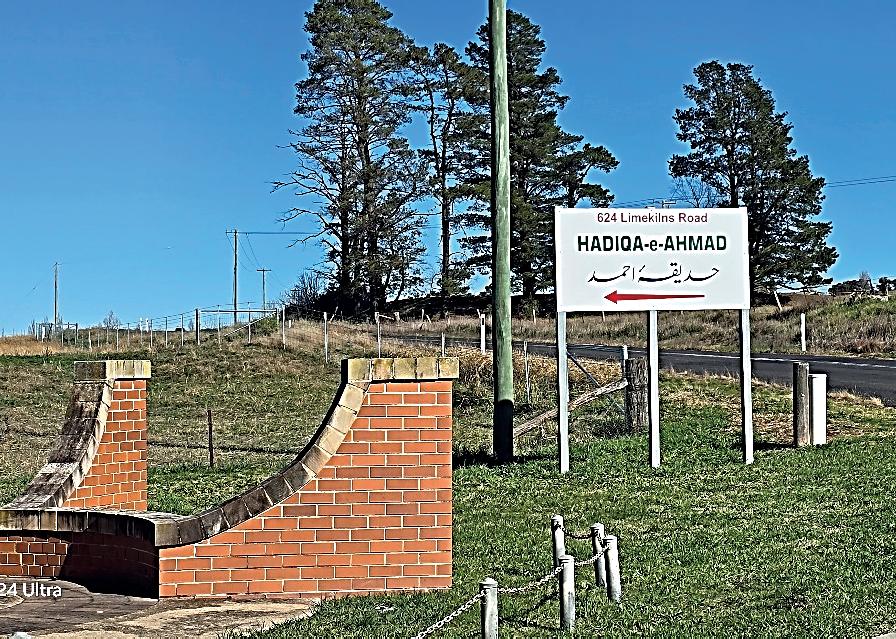
This year, our Shura was convened at Hadiqa-e-Ahmad, a sprawling 341-acre estate nestled in the heart of New South Wales, approximately a two-and-a-halfhour drive from Sydney on 5-7 June 2026. The setting, while serene and expansive, greeted us with a markedly colder climate than the gentle, temperate conditions we are accustomed to in our coastal cities around Australia. Nearby, Bathurst revealed itself as a charming and picturesque township, adding to the quiet dignity of the overall experience. I took the opportunity to explore Bathurst’s gentle charm, completing a 22-kilometre bike ride near the Macquarie river and nearly 25 kilometres more through walking and running during those three days. However, the brisk mornings, dropping to a sharp -2°C – quickly reminded me that a typical Sydney wardrobe is quite unprepared for such invigorating cold.
As I participated in the proceedings in my capacity as a Shura delegate, I found myself reflecting deeply, not only on the deliberations themselves, but also on the significance of the gathering and the unique character of the location. These moments of contemplation were both humbling and enriching, prompting me to pause and appreciate the broader purpose and spirit of the Shura
I felt compelled to share some of these reflections in the hope that they may resonate with others and capture, in some measure, the essence of this meaningful experience.
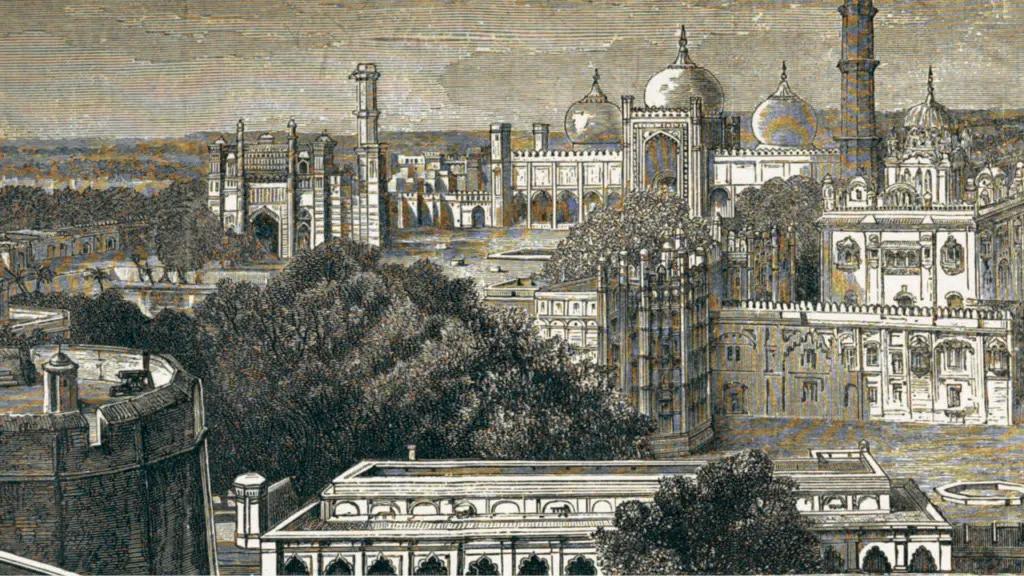
The British political system stands as a remarkable testament to the enduring power of continuity, having evolved organically over more than a millennium of governance. Its strength lies not merely in statutes or formal institutions, but in its profound and unwavering respect for established customs and conventions. Over centuries, practices once shaped by royal decree or enshrined in Acts of Parliament have matured into deeply rooted customs and traditions, forming the living fabric of governance.
What distinguishes this system most notably is the cultural and institutional reverence afforded to these conventions. Once proven effective and accepted, such customs are upheld with remarkable fidelity by governments, decade after decade, even across centuries, alongside their institutions and the citizenry alike. Departure from these established norms is therefore not viewed merely as a procedural matter but is often met with reservation, if not regarded as outright taboo, reflecting a collective commitment to continuity and stability.
This steadfast adherence fosters a unique form of resilience within the British polity. It engenders durability in governance, ensuring that change, when it occurs, is both measured and respectful of historical
precedent. In turn, this continuity nurtures a deep sense of national identity and pride among the people of the United Kingdom and its realms. Thus, the British system exemplifies how the careful preservation of tradition, balanced with gradual evolution, can yield a governance framework that is both robust and enduring across centuries.
The profound wisdom of Shura
When one reflects upon the institution of Shura within the Ahmadiyya Muslim Jamaat, one cannot help but recognise the profound wisdom and foresight of the blessed leadership that, more than a century ago, laid its foundations. It is evident that this was not merely the creation of an administrative body, but the establishment of a living, enduring system rooted in spiritual depth and collective responsibility.
Yet, the true strength of Shura does not lie in its existence alone. Rather, it resides in the carefully cultivated ecosystem that surrounds it. The method of election, upheld with sincerity and consistency, ensures that those entrusted with this responsibility are individuals deeply committed to the values of Islam. The continuous and unrelenting emphasis on these electoral principles safeguards the integrity of the institution, ensuring it remains a reflection of righteousness rather than mere representation.
“And those who hearken to their Lord, and observe Prayer, and whose affairs are decided by mutual consultation, and who spend out of what We have provided for them.” (Surah ash-Shura, Ch.42: V.39)
At its heart, Shura is guided by timeless principles, drawn from the Holy Quran, embodied in the noble traditions of the Holy Prophet (sa) and further illuminated by the guidance of the Promised Messiah (as) and his Khulafa, particularly the visionary leadership of Hazrat Musleh-e-Maud (ra). These sources are not invoked symbolically; rather, their teachings are woven into every facet of deliberation and decision-making.
“And it is by the [great] mercy of Allah
that thou art kind towards them, and if thou hadst been rough [and] hard-hearted, they would surely have dispersed from around thee. So pardon them and ask forgiveness for them, and consult them in matters of [administration]; and when thou art determined, then put thy trust in Allah. Surely, Allah loves those who put their trust in [Him].” (Surah Aal-e-Imran, Ch.3: V.160)
Thus, when members gather, they do so not as individuals driven by personal inclination or ambition, but as servants of a higher purpose. Their discussions are shaped by humility, their perspectives informed by faith and their conclusions free from worldly politics or self-interest. Each contribution reflects a sincere effort to understand local realities while offering thoughtful guidance on matters that affect the future of the Jamaat. Ultimately, these deliberations are presented with reverence to Hazrat Khalifatul Masih (aa), whose blessed leadership binds the collective effort into unity and direction.
“And hold fast, all together, by the rope of Allah and be not divided.” (Surah Aal-eImran, Ch.3: V.104)
In this way, one witnesses a living manifestation of the Quranic injunction to “hold fast, all together, to the rope of Allah”. The Shura becomes that rope in motion, where young and old, experienced and emerging voices alike, come together like intertwined strands, each reinforcing the other. Bound in devotion and strengthened through unity around Khilafat, they form a structure both resilient and harmonious.
Over the course of its proceedings, every address, every banner, every prayer serves as a powerful reminder of the sanctity and significance of this gathering. It instils in each participant a deep awareness of the responsibility they bear and the honour they are entrusted with. This shared consciousness has, over time, evolved into a cherished and enduring tradition within the Jamaat.
Formally established in 1922, this institution has now continued, unbroken, for over a century, thriving across nations
wherever the Ahmadiyya Muslim Jamaat is present. Its methods, its principles and its noble customs have collectively endowed it with remarkable strength and longevity. They ensure that Shura not only remains relevant but continues to serve as a vital pillar supporting the institution of Khilafat, reinforcing unity, fostering wisdom and embodying a model of administration rooted in faith, humility, collective purpose and well-tested customs drawn from Islamic values.
In both cases of the British political system and the Ahmadiyya Muslim Jamaat’s institution of Shura, longevity is not accidental, but the product of an unwavering commitment to values that transcend individuals and generations. The British system demonstrates how customs, once proven and respected, become the invisible threads that hold the fabric of governance together. Similarly, within the Ahmadiyya Muslim Jamaat, the consistent emphasis on righteous conduct, principled consultation and spiritual accountability has transformed Shura into more than a procedural mechanism; it has become a living tradition, deeply embedded in the collective consciousness of the Jamaat. What elevates the institution of Shura even further is its anchoring in divine guidance and its unbreakable connection to Khilafat. Hazrat Musleh-e-Maud (ra) had outlined the divine status of the Ahmadiyya consultative system (Nizam-e-Mushawarat), contrasting its long-term spiritual destiny with contemporary worldly governments. He emphasised that while the Shura might appear small or lack political leverage in the material world today, its authority is anchored in the sight of God. He said at the meeting of this body in 1928, “Although at present our Shura does not enjoy any importance in the world, a time comes when the members of the greatest Parliaments of the world shall not have the status which the delegates of this Shura shall have, for all Parliaments shall be under it. Membership of Shura is a great honour, and time comes when kings shall be proud of its membership.” (The System of Mushawarat in Jamaat-e-Ahmadiyya, p. 103, 2007)
During the concluding address delivered before the 43rd Shura of Jamaat UK, Hazrat Khalifatul Masih V (aa) had said, “I hope and pray that whatever you have deliberated upon and whatever recommendations you send to me are those that have been formulated with the true objectives of Shura kept in mind at all times and with the deep desire that the bond of unity within our Jamaat reaches new levels and that the message of true Islam reaches all parts of the world. With these words, I pray that may Allah the Almighty bless the institution of Shura as it enters its second century and may our Jama’at forever witness the divine blessings and rewards of Allah the Almighty.”
allegation of the opponents, saying:
Prophets of God do not live forever. Like all human beings, they are born, they live, and they die. Yet the mission entrusted to them, to convey God’s message and fill the earth with divine grace and blessings, extends far beyond the span of their earthly lives.
It is in light of this that the most Benevolent God elongates the lives and missions of his messengers through the institution of Khilafat, “so that the world may never be deprived of the blessings of Messengership in any age.” (Testimony of the Holy Quran, p. 91)
The Holy Prophet (sa) was reported to have said:
“There has never been a prophethood which was not succeeded by Khilafat.” (AlJami‘ as-Saghir by Jalal al-Din al-Suyuti, alJuz’ II, Egypt: 1306 AH, p. 126)
By definition, the Promised Messiah (as) was a prophet of God. This was his claim and this was the title bestowed upon him by the Almighty God in various very specific revelations vouchsafed unto him. For example, Allah refers to him saying:
“Oh Ahmad, you have been made a Messenger.” (Tadhkirah [Eng], 2018, p. 662)
At another place, Allah clears the
“The enemy will say: ‘You are not from God’. We shall seize him from his snout, that is, will close all his avenues with conclusive arguments.” (Ibid., p. 530)
Now, if the prophethood of the Promised Messiah (as) is established, then following the continuous practice of God, what should naturally come after his prophethood is the institution of Khilafat. However, the disagreement surrounding this question became central to the events following the demise of the Promised Messiah (as).
The testimony of a century
The Ahmadiyya Anjuman Ishaat-e-Islam Lahore (known as the Lahori Jamaat) broke off from the Ahmadiyya Muslim Community on the basis of Khilafat, among other reasons. According to them, the Anjuman founded by the Promised Messiah (as) in 1905 is his rightful successor and the community should be run by this board in a democratic manner – rather than concentrating the entire decision-making power in the hands of a single person i.e. the Khalifa.
As already said above, prophethood is to be followed by Khilafat. This has been the practice of God since the beginning. Therefore, in order to undermine the very need for Khilafat, these people tried to strip the Promised Messiah (as) of his
mosque of the Lahori Jamaat, much less met one of its members. On the other hand, the Ahmadiyya Khilafat stands strong with the support of Allah the Almighty to this day.
Aside from the issue of Khilafat, one of the most distinguishing features of the Lahori dissidents is their strong advocacy for integration with the non-Ahmadis. They maintain that by praying alongside them, engaging in matrimony with them, and refraining from hurting their feelings by describing the Promised Messiah (as) as a prophet, non-Ahmadis would be more receptive to the pristine teachings of the Promised Messiah (as). In their view, this approach would open a broader frontier for the more rapid dissemination of his message.
The problem with this position, however, is that acknowledging the Promised Messiah’s (as) teachings as beneficial is not the same as actually believing in him. Moreover, if the Promised Messiah (as) is not regarded as a prophet, then what is the need to believe in him? If he were merely a waliyy (saint) and reformer, like every other waliyy across the world, why does it become necessary for the entire world to believe in him?
We know that belief in all prophets sent by Allah is an integral, indispensable pillar of faith, but belief in reformers and saints is not. Whereas belief or disbelief in saints is not a prerequisite of faith whatsoever, one who disbelieves in even a single prophet stands at risk of losing his faith. And this is where most people get it wrong.
Maximising the blessings of Khilafat: A fresh reading of ayat-eistikhlaf
prophethood. That is, once proven that the Promised Messiah (as) was not a prophet, the need for him to be succeeded by Khilafat also falls automatically. That is exactly what they did… or at least, tried to do.
Also, since those who spearheaded this ideology are the major stakeholders of the said Anjuman, their dissension automatically meant a very “huge blow” upon the face of the newly developing Jamaat. Thus, they left Qadian with almost every valuable asset of the Jamaat with the most taunting words ever:
“Now, owls will [occupy and] hoot in this place.” (Tarikh-e-Ahmadiyyat, Vol. 4, p. 125)
They meant by these words that Qadian would become desolate, and no new faces would join the Jamaat. In fact, those who are already there will soon go to join the Lahori faction.
As if that wasn’t enough, one of them even boldly said:
“You will see that in ten years’ time, these places will be occupied by Christians and all these properties will be taken from the hands of Ahmadis.” (Mein hi Musleh-eMaud ki Peshgoi ka Misdaaq hun, Anwar-ulUlum, Vol. 17, pp. 206)
That was 1914. More than a century has passed since then, and the respective conditions of both the Qadian and the Lahori Jamaat are evident for all to observe. Indeed, many readers may never have seen a
Ayat-e-Istikhlaf (Ch.24: V.56) is generally understood to deal with the subject of Khilafat – the prophecy, the promise, the conditions and the importance. However, the story starts five verses prior, at the beginning of the ruku’ and continues a verse after.
The first verse of the ruku’ begins with a testimony in favour of true believers that their only response to divine and prophetic guidance is “We hear and we obey”, and the verse ends with a promise of prosperity for such people.
In the second verse, Allah promises success for those who obey Him and His Messenger. The third verse warns against unnecessary swearing and draws attention towards obedience, while also reminding believers that Allah is well aware of everyone’s deeds.
The verse which immediately precedes ayat-e-istikhlaf mentions clearly the benefit of obedience to the prophet – “you will be rightly guided”. And it also relieves the prophet of the burden of responsibility if people choose disobedience.
Having laid down this foundation of complete and undisputed obedience to prophethood, Allah the Almighty then brings in the subject of Khilafat, reminding us that Khilafat is nought but an inseparable continuation of prophethood.
The message in these verses is clear. By repeating the word “obedience” throughout the ruku’, Allah the Almighty informs us that if you are sincere in your obedience to the prophet sent to you, then you are given
the glad tidings of the continuation of his blessings in the form of Khilafat.
In other words, the true followers of a prophet are those who remain attached to Khilafat; those who refuse to do so will be cut off and historically they have been.
The Promised Messiah’s will
The Promised Messiah (as) himself made it clear in his book, The Will, that just like the Holy Prophet (sa) was succeeded by Hazrat Abu Bakr (ra) and other Khulafa, he would also be succeeded by Khilafat, which he refers to as the “second manifestation” of divine power.
He further clarifies:
“[…] And that second Manifestation cannot come unless I depart. But when I depart, God will send that second Manifestation for you which shall always stay with you just as promised by God in Barahin-e-Ahmadiyya.” (The Will, pp. 7-8)
Throughout the hundred-year history of the Jamaat, Allah the Almighty has continued to extend His mighty hands in support of the Jamaat, fulfilling to the letter the prophecy of His prophet, the Promised Messiah (as), while simultaneously manifesting to the world which of the two factions is the true follower of His messenger.
The Lahori faction still exists to this day, albeit barely. While the Ahmadiyya Muslim Community, under the leadership of Khilafat – established by Allah the Almighty himself – continues to present and spread the pristine message of Islam to all the corners of the earth, showing to the entire world what the “second manifestation” looks like.
It does not go without saying that the Sadr Anjuman, which the Lahori Jamaat presents as the true understanding of “second manifestation” was established during the very lifetime of the Promised Messiah (as) in 1905 and its establishment has also been clearly noted in the very book, The Will. The institution of Khilafat, however, was only established after the demise of the Promised Messiah (as).
The current Khalifa of the Ahmadiyya Muslim Community, Hazrat Mirza Masroor Ahmad (aa) once said:
“There is no country in the world where my imagination does not take me; praying for the Ahmadis living there while awake or even when asleep.” (Friday Sermon, 6 June 2014)
This sums up the entire discourse. Which other leader in the world is morally bound to keep a personal connection with each member of his community? This is the “secret sauce” of the success of the Ahmadiyya Muslim Community for those who are curious. Allah the Almighty says at the end of ayat-e-stikhlaf:
“Then whoso is ungrateful after that, they will be the rebellious.” (Surah an-Nur, Ch.24: V. 56)
In the end, “Allah has decreed: ‘Most surely I will prevail, I and My Messengers.’ Verily, Allah is Powerful, Mighty. [...] Hearken ye O people! It is Allah’s party who will be successful.” (Surah al-Mujadalah, Ch.58: V. 22-23)

“A person who thinks all the time has nothing to think about except thoughts.”
This can strike you as either humorous or motivational, as there’s a high chance that this quote appeared on your social media feed with a meme or motivational quote-style video. But there’s a deeper meaning behind this quote – traditionally attributed to famous British philosopher Alan Watts – with some potential insight into the neuroscience of metacognition. (“Meditation Essential Lectures, Program 3”, www.organism.earth)
The common interpretation portrays this as a warning about overthinking and its ill effects, which is supported by the rest of the quote: “So he loses touch with reality, and lives in a world of illusion.”
But what if the problem is not thinking too much, but thinking without reflection or accountability? Depending on one’s perspective, it can be seen differently with a more beneficial, positive element to it.
Before going into the details of that, a story may help lay the foundation for this different perspective.
The original sin
When Adam (as) committed his “original sin”, as the Christians refer to it, he faced
certain consequences. The Quran mentions that he turned towards God and took responsibility for his mistake and due to the absence of disobedience in him, God Almighty forgave him and honoured him further. (Surah Taha, Ch.20: V.116)
This was a noble example of taking accountability, as Rumi beautifully encapsulates:
“‘We’ve wronged ourselves’: when Adam thus confessed
“He still knew acts are God’s – he spoke the best:
“Out of respect he said it was his sin,
“Through bearing this, more favour he would win;
“He then repented . God said, ‘Didn’t I
“‘Create that crime in you – Why did you lie?
“‘Wasn’t it all because of my decree?
“‘Why did you take responsibility?’
“He said, ‘Through fear I kept respect for you.’
“God said, ‘I’ve kept in mind your actions too.’
“Whoever shows respect, respect will meet:
“Bring halva and you’ll eat an almond sweet.” (The Masnavi [English], Book 1, Oxford University Press, 2004, pp. 93-94)
Adam (as) was able to take a step back and evaluate his actions, ultimately coming to the conclusion that he ought to take
responsibility. This remorse that he felt acted as a kind of internal justice, which can be understood from Kahlil Gibran’s eloquent statement:
“And how shall you punish those whose remorse is greater than their misdeeds?
“Is not remorse the justice which is administered by that very law which you would fain serve?” (The Prophet, 2002, p. 49)
Beyond its spiritual significance, there is also some biological benefit associated with taking accountability, as modern neuroscience confirms.
The ability to think about one’s thoughts, evaluate them and take responsibility is known as “metacognition”, a form of intelligence which has many benefits according to studies in the field of neuroscience. (“The neural basis of metacognitive ability”, pmc.ncbi.nlm.nih. gov, 19 May 2012)
A key element of this neurobiologically grounded concept is that through its strong association with the anterior prefrontal cortex (PFC), those with greater metacognitive ability are able to make better, more accurate self-assessments, adjust their behaviour after making mistakes and show greater cognitive control and accountability.
This highlights the distinction between primary cognition, which is linked to simply doing a task and metacognition, which allows a person to monitor, evaluate and correct oneself.
By stepping outside one’s thoughts to observe how the mind works, one can notice thinking patterns, question assumptions and recognise when their thoughts might be biased, emotional or misaligned. This weakens automatic loops in the limbic system and improves focus, clarity and longterm thinking – which essentially means that a person can shift from reflexive, emotional reactions into intentional, thought-through responses. Through this ability, a person can improve their psychological capabilities.
The Quranic perspective on selfaccountability
The ability to self-assess and evaluate oneself is a noble pursuit, as it is encouraged by the Holy Quran. It encourages Muslims to do muhasabah (self-examine their actions): “O ye who believe! fear Allah; and let [every] soul look to what it sends forth for
the morrow. And fear Allah; verily Allah is Well-Aware of what you do.” (Surah alHashr, Ch.59: V.19)
Inner moral awareness is given significance through self-reproach: “And I do call to witness the self-accusing soul, [that the Day of Judgment is a certainty].”
(Surah al-Qiyamah, Ch.75: V.3)
Nafs al-lawwamah (the self-accusing soul) is the conscience-driven self that questions, reproaches and evaluates itself. Hence, this mindset is a divinely acknowledged psychological state rather than weakness. Then the theme of personal responsibility and moral ownership is also highlighted:
“He who follows the right way follows
it only [for the good] of his [own] soul: and he who goes astray, goes astray only to his [own] loss.” (Surah Bani Isra’il, Ch.17: V.16)
Personal moral agency is established here. No other person can take responsibility for anything good or bad you do – which is a stark contrast to the Christian belief of salvation through which Jesus (as) supposedly takes on humanity’s inherent sin and absolves mankind from any responsibility.
Islam’s guidance on moral selfreflection
These Quranic sentiments are echoed by the Holy Prophet (sa) as well. At one instance
he states: “The clever person is the one who holds himself accountable and works for what is after death. And the incapable is the one who follows his desires and merely hopes in Allah.” (Jami’ at-Tirmidhi, Kitab sifatul qiyamah, Hadith 2459)
The Promised Messiah (as) has commented on this state on many occasions. Once, when a person with experiencing spiritual ailments approached him, he advised:
“[...] nafs-e-lawwamah [the reproving self] which perpetrates evil but constantly remains distressed, ashamed of the evil, and keeps on repenting. Such a person is not enslaved by the self, and – to a certain extent
Saiha Maaz UK
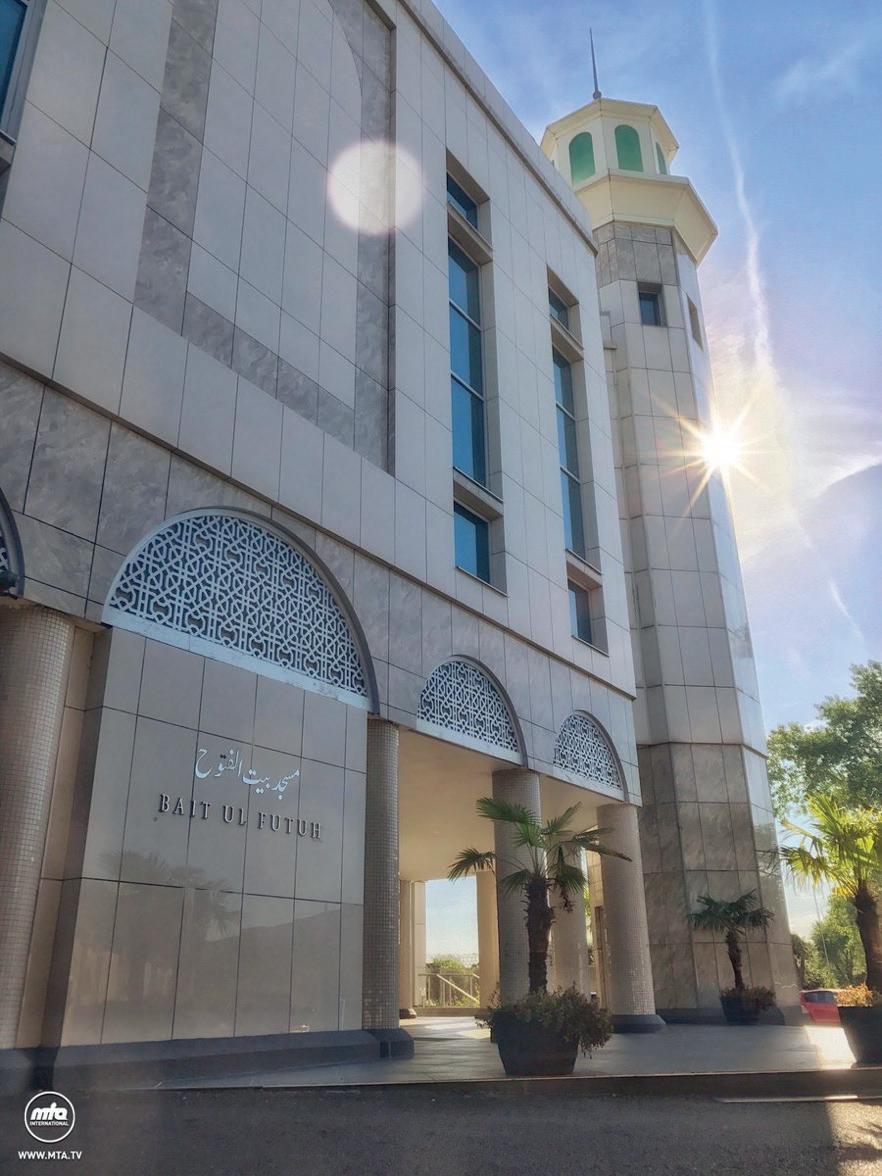
Lajna Imaillah UK’s annual Peace Symposium was held on 13 June 2026 at the Baitul Futuh Mosque Complex and welcomed around 570 women, including 150 guests from a wide range of faiths, cultures and backgrounds. Under the theme “Justice, Tolerance and Compassion – Women Uniting for Peace”, the event provided a platform for dialogue, interfaith engagement and reflection on the values that unite humanity.
From interactive exhibitions and guided mosque tours to inspiring keynote speeches and charitable initiatives, the symposium demonstrated how peace is strengthened through understanding, service and meaningful human connection. A local resident, Anna Lyn Catral, described feeling “very excited and privileged to be invited”, while returning guest Suzy Webb reflected, “I don’t like people falling out over religion. If we all loved our neighbour, it would be a beautiful world.”
The exhibition hall encouraged learning and participation. Informative displays explored themes including “The Status of Women in Islam and Peace Through Unity and Compassion.” The Islamic calligraphy exhibition proved particularly popular, allowing guests to trace Arabic phrases using traditional calligraphy tools. Nearby, visitors learned about the significance of the Islamic veil, with many choosing to try on a hijab and take home a souvenir photograph. Other exhibits highlighted translations of the Holy Quran into numerous languages, educational resources that promote greater understanding of Islam and the work of Humanity First.
Reflecting on her experience, Danish visitor Malwina Jechna remarked, “Many people came from different religions and races. […] I like how inclusive the event is and it made me feel welcome.”
One of the highlights of the symposium was a series of guided tours introducing
– it is vital to be in this state. One should not be disheartened at this because there are great spiritual rewards to be earned from it, and eventually Allah the Exalted Himself sends down spiritual light and tranquillity.” (Malfuzat [English], 2024, Vol. 7, p. 184) In light of this, the reproving self becomes something that signals moral awareness rather than moral decay. Hence, Muslims have plenty of encouragement to employ habits of self-reflection which will naturally lead to self-improvement. Thus, there is clear emphasis in Islamic teachings on self-accountability and modern science finds itself in accordance with divine injunctions once again.
guests to the Baitul Futuh Mosque. They were also introduced to the history of the Ahmadiyya Muslim Jamaat, the institution of Khilafat and the Jamaat’s worldwide humanitarian efforts. Stops included the MTA studios and Voice of Islam Radio, offering a glimpse into the media outreach. Within the main prayer hall, guests learned about Islamic worship and the mosque’s environmentally sustainable design.
Jannie Stanford described the tour as one of her favourite parts of the day, while Jihane Duchen praised both the welcoming atmosphere and the clarity of the explanations provided.
The formal programme opened in Tahir Hall with a recitation from the Holy Quran, followed by a welcome address by Farzana Yusuf, National Secretary Tabligh. After this, a short film highlighted the organisation’s longstanding commitment to education, charitable work and community service. Reflecting the Islamic principle of serving humanity, the symposium also presented charitable donations of £2,000 each to three organisations: Baytree Centre, Little Lives UK and the Rural Refugee Network. Representatives from the Baytree Centre spoke movingly about their mission to tackle inequality, observing that despite the challenges facing society, events such as the Peace Symposium demonstrate that “the fabric of compassion and humanity can always be rewoven.”
Dr Irene Morlino, Visiting Fellow in the Department of International Relations at the London School of Economics, addressed the growing humanitarian crises facing the world. She emphasised that humanitarianism is not simply the delivery of aid, but a moral responsibility grounded in humanity, impartiality and respect for human dignity.
The concluding address was delivered by Dr Qurratul-Ain Anni Rehman Sahiba, Sadr Lajna Imaillah UK. Reflecting on the symposium theme, she spoke about the urgent need for justice, tolerance and compassion in an increasingly divided world. Drawing on Islamic teachings, she explained that lasting peace can only be achieved when justice is extended to all people, regardless of faith, nationality or background and when compassion takes precedence over self-interest. Quoting the Promised Messiah (as), she reminded the audience that a religion that does not inculcate universal compassion is no religion at all. Similarly, a human being without the faculty of compassion is no human at all. Highlighting the unique role of women as educators, mothers, leaders and community builders, she spoke of their ability to strengthen families, nurture resilience and inspire positive change. She urged guests to pursue the rights of others with the same commitment with which they pursue their own and concluded by stressing the collective responsibility of all to create a more peaceful future for generations to come.
Following the formal programme, guests shared a meal together, continuing conversations that had begun during the exhibitions and tours.
Various guests delivered speeches during the event.
Professor Joanna Newman MBE FRSA, Provost of SOAS University of London, focused on the vital role of women in promoting justice, tolerance and compassion. Following the event, Professor Newman described it as “wonderful” to see so many women united around such a strong message of interfaith harmony and peace.
First-time visitor, Theresa Stokes, reflected, “Everyone is so friendly here. I love the motto ‘Love for All, Hatred for None’. We should have more of that.” Linda Brown said the event had transformed her perceptions, while returning guest Ieva Zemgulyte praised the thoughtful and wellresearched presentations. Sarah Racham described the day as “extraordinary and emotional.” Another guest, Christina Cattaneo, observed that women of different ages, faiths and backgrounds had come together because “we all agree on similar things, such as peace.”
Mubarak Mosque, Islamabad, Tilford, UK
26 June 2026
After reciting the tashahhud, ta’awwuz and Surah al-Fatihah, Hazrat Khalifatul Masih V (aa) stated:
Complying with the commands of Allah the Almighty and following the example of the Holy Prophet (sa), we find many accounts in the life of the Promised Messiah (as) of caring for the poor and of his generosity and munificence. These are found not only after his claim. Rather, even during the early years of his life and in his youth, we find incidents of his excellent moral qualities.
Furthermore, even when we look at the life of the mother, under whose care Allah the Almighty nurtured him, we find incidents of caring for the poor and of her generosity and munificence. In other words, he was raised by a mother who also taught
him excellent morals. As such, whereas Allah the Almighty Himself instilled virtue in the nature of the Promised Messiah (as), he was also provided with a pious environment by his mother. As such, mentioning the generosity and munificence of the mother of the Promised Messiah (as), Hazrat Sheikh Yaqub Ali Sahib Irfani (ra) writes:
“Hazrat Mai Chiragh Bibi Sahiba (that is the revered mother of the Promised Messiah [as]) belonged to a distinguished and noble Mughal family from the village of Aima in the district of Hoshiarpur. Generosity, munificence and hospitality were deeply ingrained in her nature. She possessed all
the lofty moral qualities that a woman of modesty and virtue should possess. She always remained cheerful and steadfast. She was extremely passionate about being hospitable and was extremely kind-hearted. Some of those who have witnessed her excellent moral qualities and hospitality are still alive.”
At the time when Hazrat Maulvi Yaqub Ali Sahib Irfani was writing this, some of them were still alive. He further writes:
“If she were informed that guests were arriving and that four people required food, she would send out food for more than eight individuals so that if more people had come
and joined them, they could eat as well. She would be extremely delighted at the arrival of guests.”
He further writes, “She showed particular care for the poor and the weak in her town. One of her regular practices was to provide burial cloth for the impoverished who had passed away. (Whenever a poor person passed away, she would arrange for their burial cloth and burial.) In short, due to her compassion and assistance towards the poor, she became a caring mother for everyone.
“These qualities and virtues of the revered mother had a profound influence
on the upbringing of the Promised Messiah (as). Since he was to become the head of a great [spiritual] family, Allah the Almighty made provision from the very outset for the development of these lofty qualities through her. That is, he was nourished under the care of such a loving and caring mother, who was an exemplary embodiment of compassion for mankind, hospitality and generosity.
“Thus, it may be said that he was nourished with these qualities along with the milk of his mother. Qualities of selfsufficiency, courage, bravery, and candidness were inherited from his respected father, while qualities of hospitality, generosity, and compassion for mankind were inherited by him through his revered mother.” (Hayat-eAhmad, Vol. 1, Part 2, pp. 217-218)
With regards to incidents relating to the generosity of the Promised Messiah (as) in his youth, Hazrat Mian Allah Yar Sahib relates that, when the Promised Messiah (as) was employed in Sialkot, his mother once sent him two sets of clothes along with some pinniyan [traditional homemade sweets] through an individual named Mangal Hajam.
Hazrat Mian Allah Yar Sahib relates that on his journey back, Mangal passed through their village and said to them: “When I delivered these items to Sialkot and presented them before the Promised Messiah (as), he said to me, ‘Take whatever share belongs to you and give me [only] my share.’ I replied, ‘Huzoor, these are for you. Your mother, Amma Jaan, has sent these for you.’ He said, ‘You have carried all these things such a long distance. As such, you must take half of it as your share!’ Accordingly, he gave me one set of clothes and some of the homemade sweets and said, ‘Convey this message to my mother that she should call me back home soon. My heart does not find peace here. People spend their lives engaged in wrongful practices, and my heart becomes distressed when I see them.’”
(Riwayat Ashab-e-Ahmad, Vol. 2, p. 230)
Hazrat Mirza Bashir Ahmad Sahib (ra) narrates, on the authority of Hazrat Syed Zain-ul-Abidin Waliullah Shah Sahib (ra), that when I was in Sialkot, I had the opportunity to meet Mai Hayat Bibi Sahiba, daughter of Fazal Din Sahib, who was the respected mother of Hazrat Hafiz Muhammad Shafi Sahib Qari. Mai Sahiba explained that in earlier days, Mirza Sahib used to live in an upper room in the same neighbourhood adjoining our present house in Mahalla Jhanda Wala. When that house collapsed, Mirza Sahib moved to my father’s house in Mahalla Kashmiri.
She said that when he came to live in our house, I observed that he did not mix much with people in the household. She also mentioned that whatever salary Mirza Sahib received, he would distribute it among the widows and needy people of the neighbourhood. He would have clothes made for them or give them money directly, keeping only enough for his own food expenses. (Sirat-ul-Mahdi, Vol. 1, Part 3, Narration 625, pp. 594-595)
Hazrat Yaqub Ali Sahib Irfani (ra) writes that when we look at the life of the Promised Messiah (as) regarding generosity and charity, and reflect upon the incidents and circumstances we personally witnessed, it becomes clear that he had been granted an abundant share of this noble virtue. This
manner of conduct was present in his life from the time he gained awareness (from his very childhood and youth).
It was not that after being appointed by Allah, such noble qualities appeared in him through effort or affectation. Rather, they were an inherent part of his nature.
At times, such qualities remained completely hidden, while at other times they manifested naturally in a way that others became aware of them. His general inclination, however, was that his good deeds should remain concealed. He desired for his good works to remain hidden. In the early period of his life, incidents of his generosity were usually hidden because he lived a secluded life and quietly showed kindness to certain individuals according to their circumstances.
But when Allah brought him before the public, appointed him, and people began coming to him in large numbers, his circumstances became public, and there emerged witnesses and narrators of these incidents.
He writes that he never turned away anyone who asked him for help. His life was a practical embodiment of the Quranic command:
“And as for the one who asks, do not rebuke him.”
Hazrat Maulana Abdul Karim Sahib (ra) relates that one day, after the Asr prayer, the Promised Messiah (as) stood up as usual and placed his foot at the window of the mosque to go inside. Just then, a beggar quietly said, “I am a needy person.” At that moment, Hazrat Sahib (as) had an important matter to attend to, and the man’s voice had blended into the voices of others who had risen after prayer and were talking amongst themselves as people often did after the prayer.
In short, Hazrat Sahib (ra) went inside. That is, he went in unaware of this and without paying attention. Even if the faint sound had reached his ears, his mind was occupied with the other matter, so he did not take notice, went in and didn’t turn around.
However, once he had gone downstairs, that same soft voice he had heard began to leave a deep impression on his heart. After going inside, he suddenly realised that he had heard someone say, “I am a needy person.” It affected him greatly. He quickly returned and called out to Khalifa Nooruddin Sahib, saying, “There was a needy person here –go and look for him.” There was a needy person; where has he gone?
But after Hazrat Sahib (as) had gone inside, the man had already left. Khalifa Nooruddin Sahib searched extensively but could not find him. Khalifa Nooruddin Sahib was a person from Kashmir.
In any case, he says that that evening, after the prayer, as was customary, the same needy man returned and asked again. Hazrat Sahib (as) immediately reached into his pocket, took something out and placed it into his hand. It appeared as though Hazrat Sahib (as) became relieved and happy – as if a burden had been lifted from him.
A few days later, he mentioned that on that day, when the needy man could not be found, his heart had felt such a burden that it caused him great restlessness. He feared that he had committed a failing by not
paying attention to the needy person and by going inside too quickly. He said:
“I thank Allah that he returned in the evening. Otherwise, Allah knows in what state of anxiety I would have remained. I had also prayed that Allah the Almighty bring him back.” (Sirat Hazrat Masih-eMaud [as], Part 2, pp. 285-286)
Similarly, Hazrat Sheikh Yaqub Ali Sahib Irfani (ra) writes in his biography that “near Qadian there was a small village called Sathiali, around six miles away. A Jatt faqir used to come from there, and many people are still alive who had seen him.
“He would sit beneath the roof of Masjid Mubarak near the window in the western wall of Bait-ul-Fikr and call out:
“‘Ghulam Ahmad, I want one rupee!’
“Then he would sit there.
“Sometimes the Promised Messiah (as) would be occupied with some work and deeply focused, so he would not hear him. The man would then keep calling out at intervals. Many people disliked this and thought, ‘Why is he sitting here troubling the Promised Messiah (as)?’
“If someone objected to him, he would reply, ‘Did I come to ask of you? I am asking Ghulam Ahmad (as).’
“If the Promised Messiah (as) came to know that someone had spoken harshly to him, he would dislike that. Smiling, he would give the man a rupee. It was also his practice not to keep a needy person waiting for long.” (Sirat Hazrat Masih-e-Maud [as], Part 2, p. 292)
Hazrat Chaudhry Abdullah Khan Sahib (ra) relates that once, while returning from a walk and entering the house, a dervish clothed only in a loincloth – Some faqirs wore such clothing as part of their spiritual discipline and way of life – called out:
“O Giver, O Giver! Give me something!”
Upon hearing this, the Promised Messiah (as) replied, “Allah is the Giver.” And with that, he went inside. He said “O giver”, but only Allah is the one Who grants.
The man called out again:
“Yes, Allah is indeed the Giver – but please give me something.”
At this, the Promised Messiah (as) sent something for him.
In any case, perhaps that man himself was not going to learn much from that exchange, but through this response, the Promised Messiah (as) taught his followers a lesson: that there should not be even the slightest trace of shirk [associating partners with Allah] in the way we speak. (Riwayat Ashab-e-Ahmad, Vol. 5, p. 298)
Hazrat Yaqub Ali Sahib Irfani (ra) writes that on one occasion, a beggar came to Qadian. He would make a round through the town every morning, reciting a poem by Hazrat Mir Hamid Shah Sahib (ra) whilst walking through the streets. Making a round means that he would walk around the village and its streets, reciting the couplet:
“I exhausted all my efforts in pondering deeply in all directions …”
He would recite this poem of the Promised Messiah (as). He would walk all around Qadian reciting this. Whenever he recited this second poem of the Promised Messiah (as), the respected Hazrat Maulana Abdul Karim Sahib (ra) was extremely displeased. He used to say, “This man is not worthy of this poem, because this poem expresses a reality and a condition (it is profoundly deep) which existed only in the person of the Promised Messiah (as). (The truth explained in this poem cannot be found in an ordinary person.) Whatever has been described in this poem, he would say that he could not bear to hear these verses from the mouth of anyone else, due to his sense of honour for the Promised Messiah (as), let alone an ordinary beggar wandering about reciting them. The fact that such a common beggar would recite these poems would make Maulvi Abdul Karim Sahib (ra) extremely upset.
Nonetheless, Sheikh Yaqub Ali Irfani Sahib (ra) says that this reflected the intensity of this honoured one’s love and devotion for the Promised Messiah (as). In any case, this beggar made a round within Qadian. It was the month of Ramadan, and during this period, the Promised Messiah (as) gave him a lot of charity on numerous occasions. Yet the beggar would continue saying, “Fill my bowl.” Thus, on the day of Eid, he came carrying a very large bowl. He spread a sheet near the entrance of the mosque and sat there. When the Promised Messiah (as) arrived, the beggar asked, “Fill my bowl.” The Promised Messiah (as) placed one rupee into it. As soon as that rupee was placed inside, it was as though a shower of rupees began to fall, and his bowl was filled with various coins. When the Promised Messiah (as) heard his request, he smiled gently and placed the rupee into the bowl. Following his example, those who believed in him also contributed whatever coins they could, and in this manner, the beggar’s bowl was completely filled. (Sirat Hazrat Masih-eMaud [as], Part 2, pp. 292-293)
Hazrat Sheikh Yaqub Ali Sahib Irfani (ra) writes that when the Promised Messiah (as) travelled to Delhi for the final time in 1905, one day he intended to visit some of the shrines there. Someone remarked that, “Huzoor, along this particular route, there are so many beggars that it is difficult even to pass through”. The Promised Messiah (as) replied, “Today we shall go. We will give to everyone. (We will give charity to all those who are begging).” This was no ordinary promise and determination. He was actually prepared to give to everyone who asked. In reality, the number of beggars proved to be somewhat fewer than had been described, but whoever was encountered received an answer to his request in practical form. (He helped every single person he met). (Sirat Hazrat Masih-e-Maud [as], Part 2, p. 308)
“God is your Helper, O inhabitant of Qadian.
“You have granted us peace, O inhabitant of the citadel of peace.”
He would recite this, and with it he would also recite the poetic verse:
Hazrat Hafiz Ahmadullah Sahib Nagpuri relates that, “One day the Promised Messiah (as) was seated in the round room, where approximately 20 to 25 people were present. He was delivering an address when a beggar arrived and loudly asked for charity.” He says, “I was very displeased, because he was interrupting the voice of the Promised Messiah (as), (Huzoor was speaking, and he
interjected), so I got up and closed the door.
“The Promised Messiah (as) saw this. He stopped delivering his address and said to me, ‘Go, knock on the inside door and have something brought for this beggar.’ In other words, he asked, ‘Why did you close the door? Go inside, ask the household, bring something from there, and give it to this beggar.’ He brought something from the house and gave it to him [the beggar]. The Promised Messiah (as) remarked, ‘It was not good to close the door upon someone asking for help’ (this is very wrong, that the beggar asks from you and you close the door).” (Sirat-e-Ahmad, Qudratullah Sanuri Sahib, pp. 87-88)
Hazrat Babu Ghulam Muhammad Sahib (ra) relates that a minstrel who played the sarangi [Indian fiddle] came to the residence of the Promised Messiah (as) as a beggar. The Promised Messiah (as) gave him a fouranna coin. Just then, Mir Nasir Nawab Sahib (ra) arrived from upstairs. The Promised Messiah (as) had already gone inside. Seeing the man with the sarangi, Mir Sahib scolded him severely because he played a musical instrument and said to him, “Do not ever come here again.”
The following day, the same man returned. The Promised Messiah (as) came outside to give him something, but saw that the beggar had disappeared. He had apparently caught sight of Mir Sahib and remembered the scolding from the previous day, so he had run away. The Promised Messiah (as) instructed someone, “Go and look for that sarangi-playing beggar. Where is he?” Someone replied, “Huzoor, he has run away.” The Promised Messiah (as) said, “Then you also run after him and call him back.” Nonetheless, he returned. Seeing Mir Sahib, he became frightened. The Promised Messiah (as) then said to Mir Sahib, “Mir Sahib, what else can this poor man do? He does not know any other skill or occupation. (He doesn’t know anything else. What can he do? He plays the sarangi.) If you can teach him another skill or teach him a profession, then he will no longer play the sarangi.” (Arrange a job for him).
Later, in private, the Promised Messiah (as) said to the minstrel, “As long as you remain here, do not play the sarangi. Mir Sahib may strike you.” (He gets angry; he might hit you or may end up giving you a slap or two.) “Nonetheless, do not play your instrument here. Instead, quietly shake the chain, i.e., the door latch, and I will give you something.” Thus, for as long as he remained in Qadian, he received four annas every day from the Promised Messiah (as). (Riwayat Ashab-e-Ahmad, Vol. 4, p. 247)
Hazrat Syed Fazal Shah Sahib relates: A faqir [mendicant] had the habit of going to the Promised Messiah (as) and asking for money. At times, he would say, “Give me one anna,” at other times, “Give me two annas,” and sometimes, “Give me eight annas.” In short, he would always ask for a specific amount. If the Promised Messiah (as) happened to be occupied with some work or conversation, the man would continue to repeat his request until he received what he had asked for. He would continue to persist in his request.
Over time, the Promised Messiah (as) became well acquainted with his habit. Whenever the man came and requested a certain amount, the Promised Messiah (as) would immediately give him something and
would say:
“He simply will not leave without receiving this amount. Give him exactly what he is asking for.” (Sirat-e-Ahmad, Qudratullah Sanuri Sahib, p. 152)
Hazrat Sheikh Yaqub Ali Sahib Irfani (ra) writes:
“I came into the permanent service of the Promised Messiah (as) in 1898, although I had been visiting Qadian since 1892. During this period, I witnessed many people come to ask for financial assistance. I never once saw the Promised Messiah (as) give a beggar a copper coin (a paisa). He would always give a silver coin to anyone who asked for something.
According to the currency in use at that time, copper coins comprised one paisa, two paisas, and up to half an anna, whereas silver coins included one anna, two annas, and larger denominations, such as the fouranna coin. Although even one or two paisas possessed purchasing value in those days, the Promised Messiah (as) would ordinarily give one or two annas, or even more, in charity – amounts that were considered substantial. Indeed, it was not uncommon for him to give even an ordinary beggar one whole rupee.” (Sirat Hazrat Masih-e-Maud [as], Part 3, p. 308)
On one occasion, a non-Ahmadi faqir came before the Promised Messiah (as) and submitted that he wished to construct a well in a forest so that travellers might benefit from it and have water to drink. It is related that the Promised Messiah (as) gave him 200 rupees for this purpose, saying:
“Since you intend to undertake this work for the service of mankind, go ahead and have the well constructed. I shall provide you with the funds.” (Sirat Hazrat Masih-eMaud [as], Part 3, p. 308)
Thus, while the Promised Messiah (as) exhorted the members of the Jamaat to serve humanity, he himself set the finest practical example of that teaching.
Hazrat Abdus Sami (ra), a companion of the Promised Messiah (as), relates:
“It was the occasion of Mian Sharif Ahmad Sahib’s Aqiqah, and all the guests were eating in the guest house. He was his third son among those who remained alive. Later, other children were also born who passed away in infancy, but Hazrat Mirza Sharif Ahmad Sahib (ra) lived a long life.
“On this occasion of his Aqiqah, the guests were gathered and eating their meal. The Promised Messiah (as) was also present among them.
“During the meal, a beggar entered the guesthouse seeking food. Some of those present attempted to drive him away. However, the Promised Messiah (as) personally served food to the beggar and instructed the others not to rebuke or turn him away. (Riwayat Ashab-e-Ahmad, Vol. 3, p. 239)
The Promised Messiah (as) said:
“If he has come to eat, do not scold him.”
He himself placed food on a plate and gave it to the beggar.
Hazrat Munshi Zafar Ahmad Sahib Kapurthalvi relates:
Once, a Maulvi came to Qadian and began to engage in a debate with the Promised Messiah (as). The Promised Messiah (as) began replying to him, and the Maulvi fell silent. The discussion was on the topic of whether Jesus (as) was alive or had passed away. This incident is from the early
period [of the claim of the Promised Messiah [as]]. Whilst the Promised Messiah (as) was explaining to him the matter, he remained silent. Thereafter, the Promised Messiah (as) enquired, “Have you fully understood the arguments I have presented?” to which he replied, “Yes, I have understood them.” But then spoke in an extremely discourteous manner and said, “I have understood that you are the Dajjal [antichrist], (God forbid), because among the characteristics of the Dajjal is that he will silence others in his arguments.” That is, he will render them speechless. The Promised Messiah (as) again did not say anything and the Maulvi left.
Upon reaching Amritsar, the Maulvi published a public announcement and, citing this incident, stated: “Despite using such words, when he [i.e., the Promised Messiah [as]] went inside, I sent in a small note stating that I was in need. (Here he is admitting his lack of self-honour, and, at the same time, the kind treatment afforded to him by the Promised Messiah [as]). I sent in a small note stating I was in need and desired to be given something. Though I had used foul words against him, nonetheless, I was in need and requested to be treated with kindness.”
He further wrote that the Promised Messiah (as) immediately sent him 15 rupees. He said that the Promised Messiah (as) was extremely generous and even if a harsh word was said to him, he did not harbour any grievances against anyone. The Promised Messiah (as) did not mention to anyone that he had given him 15 rupees and it was only through this public announcement that people learnt that he had given him 15 rupees despite the harsh words he spoke. (Riwayat Ashab-e-Ahmad, Vol. 4, p. 216)
Hazrat Qazi Abdul Ghafur Sahib relates:
“In 1906, I travelled from Rawalpindi to Qadian with my elder brother, Hazrat Hafiz Murad Bakhsh Sahib. As the Promised Messiah (as) was descending the steps of the Mubarak Mosque, a gentleman – most probably Hazrat Hakim Shah Nawaz Sahib of Rawalpindi – presented him with a monetary offering of 17 pounds contained in a small pouch.
“The Promised Messiah (as) accepted the pouch and placed it in his pocket. At the foot of the steps stood a beggar, who asked for charity. The Promised Messiah (as) immediately took the same pouch out of his pocket and placed it into the beggar’s hands.
“When Hazrat Hakim Sahib witnessed this, he respectfully submitted, ‘Huzoor, that pouch contained 17 pounds.’
“The Promised Messiah (as) replied:
“‘They belonged to him, and they have now reached their rightful owner.’
“Having said this, Huzoor remained silent.”
At that time, 17 pounds represented a very substantial sum. One pound was approximately equivalent to 15 Indian rupees, making the total value around 255 rupees, in those days, when a meal could be purchased for only a few paisas. (Riwayat Ashab-e-Ahmad, Vol. 4, p. 290)
Hazrat Sheikh Yaqub Ali Sahib Irfani (ra) writes that giving charity and alms was deeply ingrained in the habits of the Promised Messiah (as), and generally it was his practice to set aside one-10th of his income for charity.
Regarding this, a narration from Hazrat
Ummul Momineen (ra) has been recorded by Hazrat Sahibzada Mirza Bashir Ahmad Sahib (ra). He writes:
“My respected mother related to me that the Promised Messiah (as) used to give a great deal in charity, and he would usually do so in such a hidden manner that even we did not know about it.
“I asked her, ‘How much charity did he usually give?’
“My mother replied, ‘He gave a great deal. In his later years, whatever money came in, he would set aside one-10th of it specifically for charity and continue giving from that portion.’
“My mother further explained that this did not mean he never gave more than one10th. Rather, he used to say:
“‘Sometimes expenses increase – guests come, there are expenses of the langar, and many other costs – so a person may become negligent regarding charity. But if the money for charity is separated beforehand, then negligence does not occur because that money cannot be diverted elsewhere.’
“My mother said that this was why he would separate one-tenth of all income in advance; otherwise, in actual giving, he often gave even more than that.”
Hazrat Mirza Bashir Ahmad Sahib (ra) further writes that he asked:
“Did he consider whether someone was Ahmadi or non-Ahmadi when giving charity?”
His mother replied:
“No. He never considered who was Ahmadi and who was not. If someone was in need, then he would give to them.” (Sirat Hazrat Masih-e-Maud [as], Sheikh Yaqub Ali Irfani Sahib, Part 2, p. 291)
Hazrat Sheikh Yaqub Ali Sahib Irfani (ra) writes that just as it was his habit never to turn away a person who asked, and just as he would often help those in need even without them asking, it was also part of his noble character that he understood even the subtlest forms of asking. In such situations, too, he would respond with generosity.
Sahibzada Siraj-ul-Haq Sahib relates that once someone sent a beautiful cap to the Promised Messiah (as). When the parcel arrived, coincidentally, a Hindu man was also present.
The Promised Messiah (as) opened the parcel, and the cap was there. The Hindu man greatly admired the cap.
As soon as the Promised Messiah (as) heard him praising it, he immediately gave the cap to him. (Sirat Hazrat Masih-e-Maud [as], Part 2, p. 290)
Hazrat Munshi Zafar Ahmad Sahib of Kapurthala relates that there was an Ahmadi named Haji Husain who returned from Hajj and brought with him a tasbih [rotary beads] made of genuine pearls. He presented it as a gift to the Promised Messiah (as). It was a tasbih of real pearls.
The narrator says:
“At that time, I and a friend from Sialkot were present in the company of the Promised Messiah (as). Haji Husain Sahib presented the tasbih before Huzoor. Huzoor said, ‘JazakAllah.’ The tasbih was very beautiful. I thought to myself that after Haji Husain Sahib left, I would ask for the tasbih. My friend from Sialkot had the same intention.
“When Haji Husain Sahib departed, the friend from Sialkot submitted, ‘Huzoor, this tasbih is very beautiful.’
“The Promised Messiah (as) replied, ‘If you like it, then you may have it,’ and handed it to him.
“I then submitted, ‘Huzoor, I had also intended to ask for it.’
“Huzoor smiled and said, ‘Then the two of you should divide it equally between yourselves – take one half each.’
“Later, the friend from Sialkot said to me, ‘Let me keep the tasbih. It has 100 beads anyway.’ I replied, ‘Very well, you may keep it,’” and so he gave it to him. (Ashabe-Ahmad, Vol. 4, p. 215; Urdu Lughat, Vol. 11, p. 545)
Hazrat Hakim Allah Ditta Sahib relates that Sarfaraz Khan narrated:
“We came to attend the Jalsa and someone presented a horse to Huzoor (as). I thought to myself, ‘How wonderful it would be if that horse were given to me. I would take it home and tell people that I had brought back a horse belonging to the Messiah.’ It was a horse of a fine breed.
“When the Jalsa ended, I submitted, ‘Huzoor, I would like to return home.’
“Huzoor replied, ‘Wait.’
“On the third day, I made the same request again. This time, Huzoor (as) said, ‘Chaudhry Sahib, take this horse with you.’
“I submitted, ‘Huzoor, what is its price?’
financial losses in his cloth business, to the point that it was nearly ruined. As a result, he decided to move elsewhere and start a different business in order to rebuild his financial situation.
Throughout the life of the Promised Messiah (as), he remained in regular correspondence with him and served the Jamaat financially beyond his means and capacity.
He would say:
“As far as the generosity, giving, and benevolence of the Promised Messiah (as) are concerned, I can sum it up in one sentence: he simply did not know how to give a small amount.”
Relating a personal incident, he said:
“When my business collapsed, and I decided to travel elsewhere to start again, I requested some money from the Promised Messiah (as) as a loan so that I could establish a new business.
“Huzoor (as) brought out a cash box in which he kept money and placed it before me, saying, ‘Take as much as you need.’
“Huzoor (as) was pleased to give him this amount.
“I took only what was necessary for my needs, though Huzoor continued to say, ‘Take all of it.’
approach his father, or indeed with even greater ease than that – simply saying: ‘Such-and-such an amount has been spent,’ and the Promised Messiah (as) would settle it at once. This was the kind of majestic and fatherly generosity that was his way. (Sirat Hazrat Masih-e-Maud [as], Part 3, pp. 310311)
The expenses would certainly have included both personal costs and those of the Langar [community kitchen].
Hazrat Sheikh Yaqub Ali Sahib Irfani (ra) writes: “Hazrat Syed Fazl Shah Sahib was among the most devoted servants of the Promised Messiah (as). Shah Sahib was the elder brother of the respected Syed Nasir Shah Sahib. He had a deep love for the Promised Messiah (as) and eventually migrated to Qadian, where he lived in the Dar-ul-Dhu’afa.
rest himself.
In one letter to Hazrat Munshi Abdullah Sahib Sanori, written on the occasion of his wedding, the Promised Messiah (as) wrote: “Congratulations on your marriage. On Friday, in accordance with your letter, a walima feast was hosted in your name for the guests – for there were a great many of them, and Seth Sahib – that is, Abdul Rahman Sahib Madrasi – and Sheikh Rahmatullah Sahib and many other distinguished guests were present, numbering upwards of 80. You had sent 10 rupees, which was not sufficient. Thus, in honour of this happy occasion, I added 10 rupees from my own side, and had a proper meal prepared for 20 rupees – good food, pulao, zarda, korma and naan and so on.”
He went on to write that the guests were thoroughly pleased and, having eaten, offered prayers and good wishes on his behalf. The guests were told only that it was a feast from him – he did not mention that he himself had contributed. (Maktubate-Ahmad, Vol. 3, [Letter 60 addressed to Munshi Abdullah Sanori Sahib], p. 230)
“Huzoor replied, ‘Feed it grass and grain and ride it. That is its price.’ In other words, there was no price. ‘Take it and make use of it.’”
(Riwayat Ashab-e-Ahmad, Vol. 1, p. 110)
Hazrat Malik Ghulam Husain Sahib (ra) relates that when Maulvi Abdul Rahman Sahib, who was later martyred in Afghanistan, came to visit the Promised Messiah (as), he brought many gifts with him, including a warm sheepskin coat.
After being informed of his arrival, the Promised Messiah (as) called him inside. He presented the gifts and the sheepskin coat. The Promised Messiah (as) expressed great pleasure and said:
“Maulvi Sahib, you have gone to a great deal of trouble.”
Maulvi Abdul Rahman Sahib replied:
“Huzoor, I have brought this sheepskin coat especially for you, and I would dearly like to see you wear it in my presence.”
The Promised Messiah (as) immediately stood up and put it on. It was a long fleece or coat, or whatever it was called, reaching down to the ankles. It was a long coat.
Later that evening, during a meal, Khwaja Kamal-ud-Din Sahib submitted:
“Huzoor, Maulvi Abdul Rahman Sahib has brought a sheepskin coat which is extremely valuable, warm and of excellent quality.”
Khwaja Sahib had already seen it.
The Promised Messiah (as) responded, “Khwaja Sahib, if you like it so much, then you should take it.”
Khwaja Sahib replied, “Huzoor, that is a great kindness.”
The Promised Messiah (as) then gave the sheepskin coat to Khwaja Kamal-ud-Din Sahib. (Riwayat Ashab-e-Ahmad, Vol. 4, pp. 14-15)
Hazrat Sheikh Yaqub Ali Sahib Irfani (ra) states that Hafiz Nur Ahmad Sahib, a pashmina merchant from Ludhiana – a pashmina is a type of woollen cloth – was among the Promised Messiah’s (as) old and devoted servants. He was a trader in woollen cloth and was among the sincere and devoted servants of the Promised Messiah (as). He once suffered severe
“The truth is that his attitude towards his friends was entirely different. In practice, he regarded his wealth as their wealth. In such matters, it would actually trouble him if a devoted follower showed any sense of hesitation.” (Sirat Hazrat Masih-e-Maud [as], Part 3, pp. 306-307; Feroz-ul-Lughat, p. 298; Lughat-ul-Farsi, p. 363, Dar Umar Farooq)
Hazrat Sheikh Yaqub Ali Sahib (ra) says: “Sheikh Muhammad Ismail Sahib Sarsawi has been my sincere friend and brother for 32 years, and is one of the longstanding servants of the Promised Messiah (as). From the very beginning, his temperament has been of a spiritual and saintly nature, and he has always been drawn to the company of the righteous. He has been a teacher at Madrasa Talim-ul-Islam from its earliest days to the present.
“In the early period, he was also the one who would feed and look after the guests – he might rightly be called the Nazir Ziafat [In-charge of Hospitality]. From the time he arrived in Qadian, the Promised Messiah (as) took particular care of him and personally assumed responsibility for all his needs – standing as guarantor, so to speak, for everything he required.
“On one occasion, Hazrat Nana Jan, the late Hazrat Mir Nasir Nawab Sahib, became very displeased with Sheikh Sahib – deeply displeased. He drew up a list of his debts, which included amounts owed to sweetsellers, unaware that these had already been settled. The matter was brought to the Promised Messiah (as) – that Sheikh Sahib had run up such debts with the confectioners in order to keep the Langar Khana [community kitchen] running.
“On hearing this, the Promised Messiah (as) smiled and said: ‘I am well aware of this, and that debt has been cleared. Mir Sahib, please do not worry – whatever debt there is, it is settled every week without fail.’ The Promised Messiah (as) would clear Sheikh Sahib’s expenses on a weekly basis, or whenever required, and Sheikh Sahib would bring these matters to him with complete ease and familiarity – the way a son might
The incident in question dates to July 1900, when he was in Qadian. On 6 July 1900, he sought permission from the Promised Messiah (as) to depart, and also requested that he write a few words of counsel. He further asked for some medicine and a shirt. At the time, the Promised Messiah (as) was suffering from a severe attack of vertigo and had been unable to attend the prayer – yet despite the intense pain in his head, he wrote a letter of counsel in reply to Shah Sahib’s note, and gave him both the medicine and the shirt.
This incident stands as testimony to the fact that even in the most acute states of illness, he remained ready to fulfil the legitimate requests of his servants, and thought nothing of his own discomfort when it came to the benefit and well-being of others.” (Sirat Hazrat Masih-e-Maud [as], Part 3, pp. 307-308)
Hazrat Sheikh Yaqub Ali Sahib Irfani (ra) writes: “From the Promised Messiah’s (as) way of conduct, it is also evident that he would at times participate generously in the joys and celebrations of his friends – and this was a reflection of his love, his openheartedness, and his kindness. The letters he wrote from time to time to Hazrat Munshi Abdullah Sahib Sanori, as well as Munshi Sahib’s own account, bear witness to this: on one occasion, at Munshi Sahib’s walima [marriage dinner], and on another, at the Aqiqah of his son, the Promised Messiah (as) contributed from his own pocket – and in doing so, he felt genuine joy and delight.
“There were times when people would send a sum of money for such occasions, writing to request that a gathering be hosted at Qadian on their behalf – not realising, in the moment of writing, that a gathering at Qadian was never a small affair. The Promised Messiah (as) was always surrounded by a great many people, and the sum sent was invariably too little to cover the cost. Yet he never wrote back about the shortfall. Instead, he would quietly add from his own means to make up the difference and fulfil his friend’s wish. Such situations arose time and again, yet he never mentioned it – not by hint, not by implication – and on every such occasion he would simply say: ‘This is a feast on behalf of such-andsuch a friend,’ without once letting on that he himself had contributed.” (Sirat Hazrat Masih-e-Maud [as], Part 3, p. 310)
There were occasions, however, when he would express it – he would tell those who were close to him that the money sent had fallen short, and that he had made up the
In another letter to Hazrat Munshi Abdullah Sahib Sanori, written on the occasion of his son’s Aqiqah, the Promised Messiah (as) wrote: “Two rams were slaughtered – the meat was excellent. One large pot of meat pulao was cooked and one pot of sweet zarda rice with saffron and other ingredients. Bread and meat were also prepared. There were close to seventy guests and all were well looked after. By your good intentions, both the pulao and the zarda turned out beautifully. The total came to 24 rupees. Since I know you will not be in a position to send the full amount, if you wish to send half – 12 rupees – at some point, then you may.” The Promised Messiah (as) expressed great happiness over the celebration and conveyed warm congratulations. (Maktubat-e-Ahmad, Vol. 3, [Letter 65 addressed to Munshi Abdullah Sanori Sahib], p. 234)
Hazrat Ahmad Nur Kabuli Sahib narrates: “When I came to Qadian in 1902, the Promised Messiah (as) accepted my pledge of allegiance at the time of the Maghrib prayer that very evening. Of his own accord, and without any request from me, he gave me land for a home and arranged my marriage – also without any prompting on my part. Without my even being aware of it, he sent me off to my wedding reception along with a few companions. He also arranged for a sack of flour from his own community kitchen to be allocated for me on an ongoing basis, and gave instructions – to Maulvi Muhammad Ali Sahib – saying: “For as long as Ahmad Nur is alive, give him this flour at my expense. The cost of Ahmad Nur’s flour is mine to bear.” (Riwayat Ashabe-Ahmad, Vol. 2, p. 307)
Mian Abdul Rahim Sahib relates: “Once, I became gravely ill, to the extent that there was no hope of my survival, and I lay unconscious. At that time, while the Promised Messiah (as) was returning from a walk towards the village of Buttar, my paternal uncle, the late Mian Bakhsh Sahib, submitted in the Chowk of Mori Gate, ‘Your Holiness! Please come and see Abdul Rahim, for he is critically ill.’ Hazrat Khalifatul Masih I (ra), as well as several other companions, were accompanying the Promised Messiah (as).
“Out of sheer grace, His Holiness (as)
came to our humble abode. Seeing me lying upon the charpoy, he gently shook my shoulder with his right hand and said, ‘Why are you afraid? You will not die.’ At these words, I opened my eyes. His Holiness then looked towards the roof of the house and said, ‘Abdul Rahim, you will not die from this illness. However, this old and dilapidated house is likely to be the cause of your death. The ceiling is in a very dangerous condition. When you recover, have it repaired.’ He then said to my mother, ‘Come with me and collect some medicine. Give it to him, and we shall also pray. God willing, he will recover.’
“My mother accompanied His Holiness (as) to his house, where he gave her three [small] packets of medicine wrapped in paper. I took the first dose that very morning, at about nine or 10 o’clock, and the second in the evening. After taking these two doses, I was able to sit up on the charpoy. I took the third dose the following morning, and merely by taking these three doses, my illness completely disappeared.
“In any case, after five or six days, I had fully recovered, apart from slight weakness. About a week later, I presented myself before His Holiness. I was still weak, and so I was helped upstairs. When I came before
His Holiness, he asked, ‘Have you now recovered?’
“I submitted, ‘By the prayers and medicine of His Holiness, I have not had any fever or illness whatsoever since that day.’
“His Holiness then asked, ‘What has become of the house?’
“I submitted, ‘I remained ill for a month or six weeks, and I do not have a single penny with me. How can I repair the house? How can I replace the roof?’
“His Holiness replied, ‘We shall have it repaired.’
“He immediately summoned Maulvi Muhammad Ali Sahib and instructed him, ‘When you order timber for the rooms of the madrasah, also arrange timber for the roof of Abdul Rahim’s house and have it repaired. Whatever the cost may be, we shall pay it.’
“Accordingly, Maulvi Muhammad Ali Sahib sent the mason, Rukka Ram, to inspect my house and estimate the amount of timber required. He returned and informed Maulvi Sahib that 10 beams would be needed. Maulvi Muhammad Ali Sahib then submitted to His Holiness that the timber would cost 30 rupees. His Holiness immediately gave him 30 rupees, and my house was repaired.”
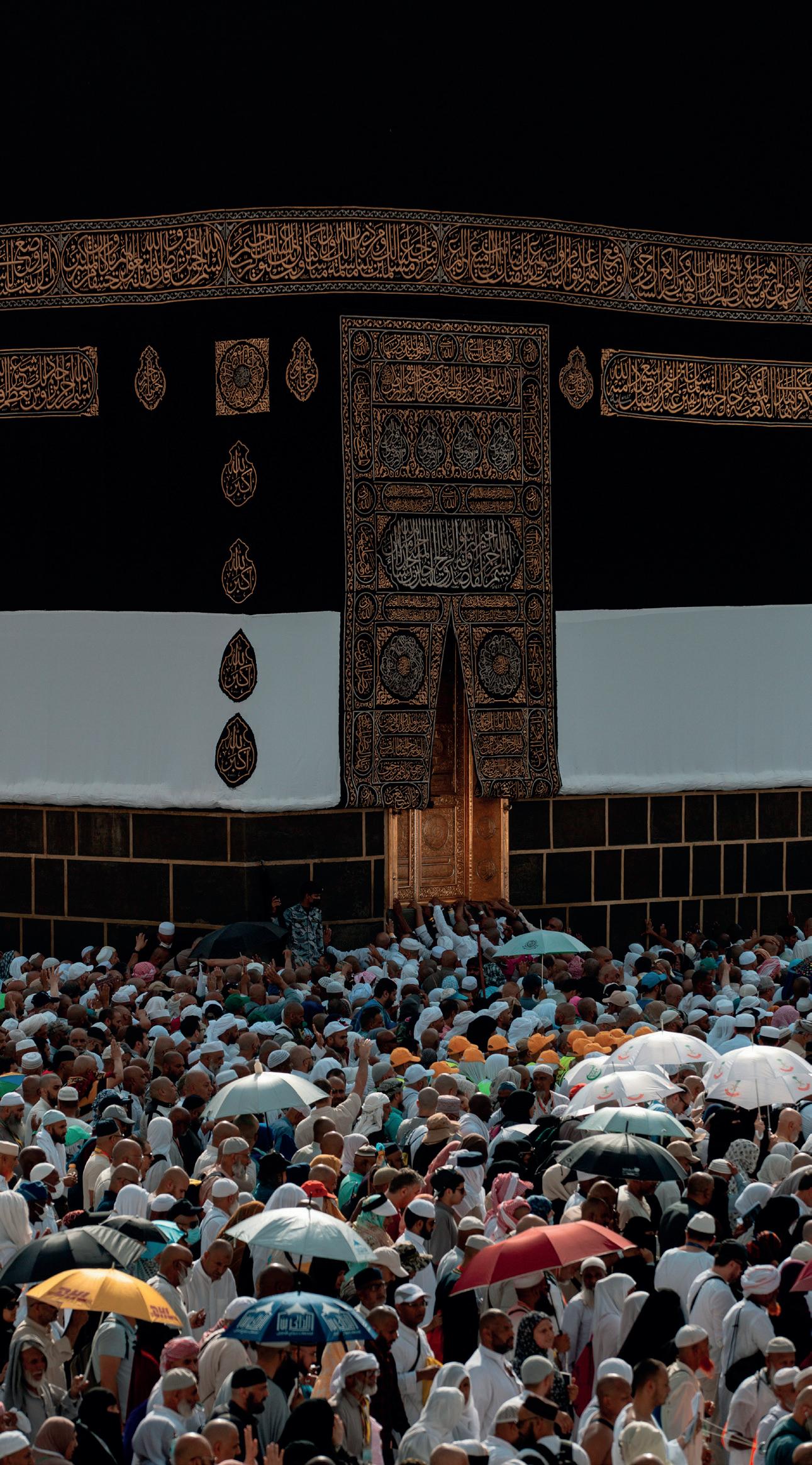
“He further says, “As for the additional expenses incurred on labour and other work, I do not know how much they amounted to. Those too were borne by the Promised Messiah (as).” (Riwayat Ashab-eAhmad, Vol. 4, pp. 174-175)
While presenting a general summary of the blessed character of the Promised Messiah (as) in Sirat Tayyibah, Hazrat Mirza Bashir Ahmad Sahib (ra) writes:
“Our respected elder maternal uncle, Hazrat Dr Mir Muhammad Ismail Sahib (ra), at my request, once wrote an article concerning the moral qualities and virtues of the Promised Messiah (as). In that article, he stated: ‘The Promised Messiah (as) was exceedingly compassionate and merciful. He was generous and hospitable. He was ‘Ashja’ al-Nas’ – the bravest among men. At times of trial, when the hearts of others would sink in fear, he advanced like a fearless lion. Forgiveness, overlooking the faults of others, generosity, humility, loyalty, simplicity, love of God Almighty, love for the Holy Prophet (sa), respect for the elders of the faith, fulfilment of promises, gracious social conduct, dignity, honour, courage, steadfast resolve, cheerfulness and a radiant countenance were among his outstanding moral qualities.’
“
“He further writes, ‘I first saw the Promised Messiah (as) when I was a child of two years, and he passed from my sight – that is, he passed away – when I was a young man of 27. Yet I swear by God that I have never seen anyone better than him, more noble in character, more righteous, more affectionate with the compassion of an elder, or more deeply immersed in the love of Allah and His Messenger (sa). He was a light that appeared upon the earth for the benefit of mankind and a shower of mercy that descended upon this world after a prolonged drought of faith, bringing it once again to life and verdure.’”
Hazrat Mirza Bashir Ahmad Sahib (ra) then adds his own testimony:
“This is also my own eyewitness testimony, exactly as Mir Sahib has described it.” (Sirat-e-Tayyibah, pp. 66-67) May Allah the Almighty enable us also to embody those lofty moral qualities for the establishment of which Allah the Almighty sent him in perfect obedience to the Holy Prophet (sa).
(Official Urdu transcript published in the Daily Al Fazl International, 17 July 2026, pp. 2-8. Translated by The Review of Religions.)
Verily, the case of those who believe in the Prophets of Allah is akin to a pure tree on a fertile sand hill; it is they who are taken to be the helpers of this puri ed religion. ey move like an ablebodied youth in the ways of Allah because their [spiritual] eyes are opened and their cloaks of human [weakness] are peeled o , and divine light causes the blossom of their faith to bear fruit. Indeed, they are like lions yet they are never guilty of any misconduct. Having renounced the world, they are not burdened; therefore, they y towards Allah and are not among those who drag their feet.
HAZRAT MIRZA GHULAM AHMAD (AS)
The Promised Messiah and Mahdi