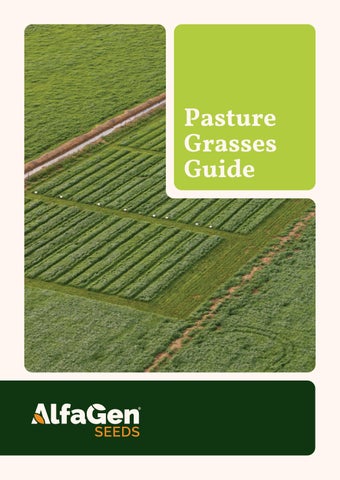
Pasture Grasses Guide
Establishment Guarantee At AlfaGen Seeds, we stand behind the quality of our proprietary seed and always aim for the best outcome for our farmers. Our Establishment Guarantee is straightforward: if your seed doesn’t establish successfully within 30 days, we’ll replace it at half the original price. It’s a commitment that helps you save on replanting costs and plant with confidence, knowing we’re here to support you. Plant with confidence, backed by the support of AlfaGen Seeds. Terms and conditions apply
2 Pasture grasses guide
Why choose AlfaGen Seeds? At AlfaGen Seeds, our roots run deep into the land we love. No jargon, just real talk about how we can make a real difference. We understand the soil under your fingernails, the early morning starts, and the sheer determination it takes to make things grow. With decades of hands-on experience and local know-how, we’re here to share what we’ve learned. Australian grown, our knowledge comes straight from the field, farm-tested for Aussie conditions. Our aim is simple - to support Aussie farmers with the best seeds, the right information, and a helping hand. We’ll provide you with not only top-notch seeds but also the knowledge and tools to help you grow. It all starts with a seed.
Pasture grasses guide 3
Why choose ryegrass as a forage option? Ryegrass is a highly versatile forage option, popular amongst Australian farmers for its adaptability, nutritional benefits, and exceptional growth performance. Let’s explore why it could be the ideal choice for your pasture needs.
1.
Climate adaptability Ryegrass is well suited to Australia’s diverse climates, with varieties ranging from annual to biannual and perennial options. Its resilience to cold winters and adaptability to different soil types make it a reliable choice for regions where other forages may struggle. Warm vs. cool climates:
I n cooler regions, ryegrass is valued for its high productivity during autumn and winter, prolific growth in spring, and even extended productivity into summer. In regions with hot summers, annual and Italian ryegrass provide productive forage from winter through to spring.
Seasonal flexibility:
ith annual, biannual, and perennial options, farmers can choose the type of ryegrass W that best aligns with their pasture planning and farming operations.
Soil type suitability:
yegrass performs well in a range of soil types and conditions, including light or heavy R soils and those with lower pH ranges.
Heading dates:
erennial ryegrass cultivars offer a range of heading dates (when >50% of seed heads P emerge), allowing farmers to optimise productivity for their region. For areas with an early end to spring and limited summer rainfall, earlier maturing types are recommended. Conversely, in irrigated regions like southern dairy zones, late-maturing options maintain vegetative growth later in the season, supporting prolonged productivity in grazing systems.
2.
High nutritional value for livestock Ryegrass is known for its digestible energy and protein content which supports weight gain and milk production, making it an excellent choice for cattle, sheep, and dairy farming. Protein levels: Ryegrass typically contains 15–25% protein, promoting growth and production in livestock. Digestibility:
4 Pasture grasses guide
I ts high digestibility ensures efficient energy conversion, leading to better livestock health and productivity compared to some other forage types.
3.
Soil improvement potential Beyond its benefits for livestock, ryegrass contributes to soil health in several ways: Weed suppression:
I ts dense, fast-establishing nature outcompetes weeds for sunlight and nutrients, naturally reducing weed pressure.
Soil structure improvement: R yegrass roots improve soil aeration and reduce compaction over time, enhancing longterm soil health. Additionally, the high production output from ryegrass supports quicker stock turn-off, minimising the impact of livestock on soils by reducing compaction.
4.
Fast growth and quick return on investment For farmers seeking rapid pasture establishment, ryegrass offers impressive growth rates. Its quick germination makes it ideal for filling gaps left by other forage varieties and provides flexibility in sowing times and methods. Cost-effectiveness:
ompared to some perennial grasses that may require higher initial inputs, annual and C Italian ryegrass offer an excellent return on investment due to their rapid establishment and reliable growth cycles.
Fodder bank:
yegrass retains its nutrients well after cutting, making it a great option for hay and R silage. This allows farmers to “bank” feed reserves for periods of lower production.
5.
Enhanced persistence with novel endophytes Endophytes, naturally occurring fungi in grasses like ryegrass and tall fescue, protect the plants from insect pests and overgrazing. The introduction of novel endophytes, such as CM142, carefully selected for improved persistence and animal safety, has further enhanced the productivity and lifespan of modern perennial and hybrid ryegrass cultivars. Learn more about endophytes on page 8. For Australian farmers looking to boost pasture productivity, ryegrass stands out as a reliable and flexible forage solution. Its adaptability to diverse climates, nutritional value, and costeffectiveness make it an excellent choice for dairy, cattle, or mixed livestock farming. Ryegrass offers a robust, sustainable option for meeting the diverse needs of farmers across the country.
Pasture grasses guide 5
Diploids and tetraploids Ryegrass cultivars are available in two forms: diploid and tetraploid. A diploid cultivar contains two sets of chromosomes per cell, totalling 14 chromosomes. A tetraploid cultivar has four sets of chromosomes (28 total), created by treating seeds in a solution before breeding begins.
Why use tetraploids? Ryegrass is naturally a diploid species, but breeders developed tetraploids to improve production and feed value.
Advantages
Disadvantages
⊕
⊕
⊕ ⊕
arger cells boost sugars, reduce fiber, and L improve livestock intake Trials show ~10% gains in animal performance igger stems and leaves may increase pasture B growth
⊕
ower tiller density reduces grazing L tolerance in dry or wet conditions ess persistent in suboptimal environments L or pastures needing 3+ years
To address lower tiller density, breeders have developed tetraploid cultivars with improved grazing tolerance and persistence, making them comparable to diploids.
Other differences Appearance:
Tetraploids have darker, more glossy leaves.
Seed size: Tetraploid seeds are larger, requiring adjustments to sowing rates (e.g. if diploids are sown at 20kg/ha, tetraploids should be at least 25-28kg/ha).
Summary of choices Annual ryegrass: Tetraploids are commonly chosen for their production advantages, as persistence is less relevant. Italian ryegrass:
Use tetraploids for short-term pastures. Choose diploids for multi-year pastures.
Hybrid & perennial ryegrass: For maximum performance in optimal environments, tetraploids are preferred. In challenging conditions, where pastures are likely to be stressed from dry summers and/or wet winters, diploids offer greater reliability and persistence.
Tetraploid advancements continue to bridge the gap with diploids, giving farmers more flexibility based on their goals and environment.
6 Pasture grasses guide
The importance of tiller density The tiller density of ryegrass pastures has a significant impact on their persistence and tolerance to grazing. A tiller is a part of the ryegrass plant that includes a stem and up to four leaves. A pasture with high tiller density is one that has relatively more stems within the same unit of area. In perennial ryegrass plants, new tillers are formed every year to promote persistence. In Australian conditions, these new tillers develop predominantly from autumn to spring. However, from mid-spring to autumn, very few new tillers are formed. During summer, tiller death increases due to heat and drought stress. This results in tiller density and ground cover reaching the lowest point by the “autumn break” — the time when sufficient rainfall and cooler conditions allow plants to recover. Low ground cover at this point reduces winter productivity and makes pastures more susceptible to invasion by winter weeds such as winter grass and capeweed, which can compromise persistence. Consequently, plant breeders have observed that ryegrass breeding lines with higher tiller density tend to be more persistent. Like other breeders, our plant breeders have selected lines that exhibit high total and cool-season growth while also prioritising higher tiller density and ground cover to ensure new varieties are both productive and persistent.
A high tiller density plant has more tillers, finer stems, and leaves and greater ground cover
High tiller density also benefits annual and Italian ryegrasses. These species are highly productive during winter and early spring, enabling frequent grazing. This frequent grazing often occurs when soils are wet, which can damage pastures. Ryegrass pastures with higher tiller density are more resilient to grazing damage and recover more quickly by forming new tillers, ensuring sustained production later in the season. Greater ground cover also has environmental benefits. By reducing surface runoff during rainfall, it helps minimise soil erosion and the loss of topsoil and nutrients into waterways. This improves the response of pastures to subsequent rain and supports better growth. With our focus on tiller density and ground cover, we are confident that our ryegrass varieties will not only meet farmers’ production expectations but also maximise persistence and reduce long-term costs.
A low tiller density plant has less ground cover, larger stems and leaves
Almonta CM142 demonstrating its high tiller density – Ebor trial site, October 2024
Pasture grasses guide 7
What are endophytes? Endophytes are fungi that live inside some ryegrass plants, influencing insect tolerance, pasture persistence and production, animal health, and stock performance. Over many years, endophytes and ryegrass plants have co-evolved in nature, forming a mutually beneficial relationship. Endophytes move into the ryegrass seed before harvest, and when the seed germinates, the endophyte grows within the plant for its entire life span. Together, the endophyte and the plant produce alkaloid compounds that are distributed throughout the plant. These alkaloids serve various purposes such as deterring insect pests, reducing damage and improving the plant’s longevity and productivity. However, some alkaloids can affect the nervous system and blood circulation of animals that consume the plant.
Image: 5 different commercial endophytes on agar plates in the lab, including CM142 endophyte.
What are the benefits? YIELD BOOST
without endophyte
with endophyte
PROTECTION AGAINST VARIOUS PESTS AND DISEASES
without endophyte
with endophyte
CLIMATE ADAPTABILITY
without endophyte
with endophyte
What endophytes are available? Naturally occurring endophytes (also called “standard,” “wild,” or “toxic” endophytes) enhance insect tolerance and pasture persistence in perennial ryegrass but can also cause ryegrass staggers, heat stress, and reduced animal growth and reproduction. Standard endophyte is not recommended because of its significant negative impact on animal health. In recent decades, scientists have developed strains of endophytes with fewer harmful alkaloids while retaining the beneficial ones. These are called novel endophytes and have been incorporated into various new hybrid, perennial, and Italian ryegrass cultivars. There is a range of novel endophyte types available. Some are very safe for animals but offer less insect tolerance than standard endophytes. Others provide strong insect tolerance but can still cause ryegrass staggers. More recently, endophytes have been developed that maximise insect tolerance while eliminating negative impacts on animals.
Farmers have several options when selecting ryegrass cultivars Perennial and hybrid cultivars with standard endophyte (SE): These improve insect tolerance and pasture persistence but come with risks such as ryegrass staggers and reduced animal performance. Low endophyte (LE) perennial ryegrass seed: This option minimises harm to animals but makes pastures more susceptible to insect damage and less persistent in regions where those insects are prevalent. Perennial, hybrid, and Italian ryegrass cultivars with novel endophytes: These cultivars provide improved insect protection while minimising harmful effects on animals. Farmers should select novel endophytes that best balance insect tolerance with animal safety. Note: Endophyte options are not relevant when choosing annual ryegrass cultivars.
8 Pasture grasses guide
CM142 CM142 is a novel endophyte discovered and researched by scientists from Cropmark Seeds. After screening thousands of ryegrass samples from around the world, they discovered this exciting new endophyte from a dry, infertile semi-alpine region of Greece. It was during early research that their science team quickly recognised that CM142 provided excellent protection from insect pests. Importantly, CM142 also reduces the risk of ryegrass staggers and improves animal performance when compared with standard endophyte.
Thoroughly researched and tested on farm Once discovered, the team of scientists embarked on years of research and on-farm trials to test the efficacy of this new novel endophyte – named by Cropmark as CM142. CM142 showed the ability to be successfully transmitted into seed, allowing vigorous testing to continue. It was included in the Cropmark breeding programme to check its long-term compatibility and stability in ryegrass. Grasses with CM142 have been tested by independent entomologists in New Zealand and Australia, with results confirming it provides strong insect tolerance for ryegrass plants. Animal safety and performance are paramount when it comes to novel endophytes. Five years of rigorous animal safety testing have confirmed that CM142 offers enhanced animal safety compared to standard endophytes. It has received the Plant Breeding and Research Association’s highest animal safety rating (++++), outperforming other epoxy-janthitrem-producing novel endophytes such as AR37 and NEA12.
Benefits of CM142 endophyte With a different genetic background to other endophytes and optimal levels of epoxy-janthitrem alkaloids, CM142 delivers performance and persistence for Australian farmers. Rigorous entomology experiments have shown that CM142 provides tolerance against a range of destructive pasture pests, including Argentine stem weevil, black beetle adults, porina caterpillar and root aphid.
Safer for animals, hard on pests Clinical and sub-clinical animal toxicosis can come with a hefty price tag for farmers, therefore finding a balance between animal safety and alkaloid production for insect deterrence is key. With CM142, there’s an optimal concentration of the epoxy-janthitrem alkaloid, shown in trials to significantly reduce the frequency and severity of ryegrass staggers from animals consuming grass with CM142 compared with standard endophyte. All trials with CM142 in AlfaGen Seeds ryegrass varieties have found there is no reduction in the growth of sheep when compared with nil endophyte. As CM142 has not been tested on deer or horses, it is not recommended for these animals.
We are excited to have CM142 available in our high-performance ryegrass varieties. An effective endophyte improves the persistence of ryegrass pastures in many regions of Australia. We have selected varieties to have very good grazing tolerance and ability to recover from wet winters and dry summers. Having CM142 in our varieties ensures farmers will get the best possible pest protection and persistence in their environment.
Technical Services Manager AlfaGen Seeds
“
Gavin Milne
“
The new CM142 endophyte, matched with the latest ryegrass genetics, offers producers a unique combination of ryegrass productivity and improved animal health. CM142 alkaloid production is balanced for effective insect protection and minimal risk of negative animal health or production effects.
Dr. Matthew Deighton Technical Manager Cropmark Seeds
“
“
Pasture grasses guide 9
Which ryegrass is right for me? When selecting a ryegrass cultivar for your farm, consider the following key factors How long do I want it to survive for?
What are my ploidy options?
Up to 1 year
Annual
Tetraploid
1-2 years
Italian
Tetraploid
Diploid
2-5 years
Hybrid
Tetraploid
5+ years
Perennial
Tetraploid Diploid
10 Pasture grasses guide
The AlfaGen Seeds cultivar that suits my needs is
early
Tetrone
mid
Koga Kiama TH
K
late
SEED O EW
N
N
When do I need the quality most?
E B LO C
Mazzoletti TH
K
late
SEED O EW
N
N
Loader
E B LO C
TH
SEED O EW
N
Greenmount CM142
E B LO C
The AlfaGen Seeds cultivar that suits my needs is
Coorong CM142
yes
Middini CM142 TH
Moana
yes no
SEED O EW
N
late
E B LO C
E B LO C
N
no
TH
N
mid
SEED O EW
K
yes
N
late
SEED O EW
N
N
Do you require an endophyte to assist in persitence in your region?
K
TH
Almonta CM142 TH
K
late
E B LO C
Sorrento N
late
K
Bermagui
K
mid
SEED O EW
N
N
Maheno
E B LO C
San Remo
Pasture grasses guide 11
Kiama
K
N
TH
N
SEED O EW
E B LO C
TETRAPLOID ANNUAL RYEGRASS : Lolium multiflorum/Westerwolds
e e e e ee e e
Lifespan
Short-term pasture
Ploidy
Tetraploid
Heading date Late (+20 days)
Recommended sowing rate 25-30kg/ha
Suitability Grazing Hay Silage
Seed treatment
None/ XLR8® optional
⊕ Outstanding production Provides large amounts of high-quality feed to maximise profitability
⊕ Rapid establishment and growth
Quick to first grazing and fast regrowth after subsequent grazing
⊕ Late heading date
Maintains feed quality later into spring Allows for greater flexibility when cutting for hay or silage without compromising on quality
⊕ High tiller density and fine leaf
Improves tolerance to grazing when soils are wet, and enhances recovery Extends production in late spring High feed density, enabling higher animal intake Ebor Annual Ryegrass Trial 2023 The 2023 annual ryegrass trial at Ebor demonstrated the excellent winter feed production Kiama can deliver. 12000
11074 10237
9708
9695
Adrenalin Hogan 2
Fuze
10000
9438
9326
8000 6000 4000 2000 0
Kiama
Speedyl Ascend
CV=15% n.s. Sown: 13th April 2023 Harvest method: Plots harvested and weighed; sub
samples taken from each plot for DM% Irrigation: No irrigation applied
12 Pasture grasses guide
“
There were already several highly productive varieties of annual ryegrass available when the breeding for Kiama began. So, a lot of time and effort was invested in developing something at least as good as the existing varieties, but with additional benefits. We have tested Kiama in many trials across Victoria, Tasmania, and New South Wales, and it has performed as well as we expected,” Gavin explains. “Compared to other varieties, it offers leading production during autumn and winter, along with extended growth and quality in spring. It should be a top choice for farmers needing more feed during the cooler months.
Gavin Milne
Technical Services Manager
“
Quick Seed Facts
Kiama tetraploid annual ryegrass is an outstanding new variety for maximising production and profitability. It has an unusually high tiller density and fine leaf for a tetraploid ryegrass, and this enables Kiama to recover better after grazing and extend production throughout spring. The late heading date of Kiama allows it to maintain high value feed into late spring, for better stock performance and quality of silage.
TH
K
N
N
Middini CM142
SEED O EW
E B LO C
DIPLOID PERENNIAL RYEGRASS : Lolium perenne
Middini CM142 perennial ryegrass is an early-maturing diploid ryegrass featuring the CM142 novel endophyte. Bred for strong persistence in sheep, beef and dairy environments, in regions where the season finishes early. Improved winter and early spring growth provides feed when it is needed and then leads into an excellent hay production period.
Quick Seed Facts
rainfall zones
Excellent winter and spring growth leading to greater liveweight production gains in cooler months
⊕ High tiller density and plant persistence in drier environments
Ploidy
Improved grazing tolerance and recovery, leading to a more persistent pasture
Diploid
Heading date
⊕ CM142 endophyte
Early (+1 days)
Recommended sowing rate
For improved insect protection and reduced animal health risks over standard endophyte options
‣ Not recommended for horses
20-25kg/ha
Suitability
2021 Diploid Perennial Ryegrass Trial - Warragul, VIC
Grazing
The 2021 trial at Warragul demonstrates that Middini CM142 not only offers strong persistence but also delivers excellent production.
Hay Silage
Seed treatment
14000
None/ XLR8® optional
a
12000
ab
ab
ac
ad
ae
be
ce
df
ef
10000
f
8000 6000 4000 2000
Re as
yn
N EA 4 on Al m AR on 37 ta C M M id 14 di 2 ni C Pl M at 14 fo rm 2 AR Le 37 gi on AR 37 So m er Pr se os t pe c t Im AR pa 37 ct II N EA M 2 at rix O SE ne 50 AR 37
0
ax s
kg DM/ha
e e e ee e e
erennial P Long-term pasture in environments suitable for perennial ryegrass
⊕ Early-maturing type suited to early-finishing
M
e
Lifespan
Middini
Sig. = 0.000 LSD (5%) = 539 %CV = 2.9 Mean annual yield over 3 years
Pasture grasses guide 13
TH
K
N
N
Almonta CM142
SEED O EW
E B LO C
DIPLOID PERENNIAL RYEGRASS : Lolium perenne
20-25kg/ha
Suitability Grazing Hay Silage
Seed treatment
None/ XLR8® optional
⊕ CM142 endophyte
For improved insect protection and reduced animal health risks over standard endophyte options
‣ Not recommended for horses
2021 Diploid Perennial Ryegrass Trial - Warragul, VIC The trial at Warragul shows the excellent winter performance of Almonta CM142 compared to other leading ryegrass cultivars.
kg DM/ha
1500
a
ab
ab
ab
b
b
b
b
EA
Recommended sowing rate
Resulting in good pasture growth throughout winter, spring and into summer = feed when you need it most
37
Late (+15 days)
⊕ Excellent dry matter production
AR
Heading date
Maintains a vegetative state for a longer period allowing for better pasture utilisation to provide high-quality late-season feed
7
Diploid
⊕ Late heading date with low aftermath heading
AR 37
Ploidy
Delivering strong persistence and recovery from grazing
AR 3
e e e ee e e
erennial P Long-term pasture in environments suitable for perennial ryegrass
⊕ High tiller density
37
e
Lifespan
AR 37
Quick Seed Facts
Almonta CM142 perennial ryegrass is a high performance, lateheading, diploid variety bred to maximise seasonal pasture growth and quality. It has been bred to have high tiller density and tiller production, resulting in very good tolerance to grazing in dry or wet conditions. Almonta contains CM142 endophyte to improve tolerance to pasture insects, therefore maximising persistence.
bc
c
1000 500
14 2 M
SE
2
M id
di
ni
C
rix at M
ct II N
or m tf
pa
Im
gi
on
Pl a
ct
Le
50
AR
n
ne O
so Re a
ax M
Pr os pe
Al
m
on
ta
sy
n
C
M
14
2
NE A4
0
Sig= 0.000 LSD(5%) = 101 %CV = 4.6 Mean winter yield over 3 years
14 Pasture grasses guide
TH
K
N
N
Coorong CM142
SEED O EW
E B LO C
TETRAPLOID PERENNIAL RYEGRASS : Lolium perenne
Coorong CM142 is a late-maturing tetraploid perennial ryegrass featuring the CM142 novel endophyte for tolerance to pasture insects and maximised persistence. It’s designed for high-performance farming systems, offering high tiller density and excellent grazing tolerance without sacrificing palatability or productivity. It has a late heading date for enhanced stock performance.
Quick Seed Facts
Ploidy
Tetraploid
Heading date Late (+20 days)
Recommended sowing rate 25-30kg/ha
Suitability Grazing Hay Silage
Maintains feed quality late into the season
⊕ Tetraploid provides a pasture option more readily accepted by stock
Helps to improve feed intake and stock performance leading to improved liveweight gains
⊕ High tiller density
Improves grazing tolerance and recovery, leading to more persistent pastures
⊕ Cool-season growth
Providing more feed when it’s most valuable
⊕ CM142 endophyte
For improved insect protection and reduced animal health risks over standard endophyte options
‣ Not recommended for horses
2021 Tetraploid Perennial Ryegrass Trial - Warragul, VIC
Seed treatment
The trial results show comparative dry matter production to the market leading competitor varieties, providing you with an alternative that you can rely on.
None/ XLR8® optional
14000 12000 kg DM/ha
e e e ee e e
erennial P Long-term pasture in environments suitable for perennial ryegrass
⊕ Late-maturing perennial ryegrass
a
a
a
a
Base AR37
Reward ENDO5
Coorong CM142
Viscount NEA4
10000
b
8000 6000 4000 2000 0
Bealey NEA2
Sig= 0.001 LSD(5%) = 524 %CV = 2.7 Mean annual yield over 3 years
“
While the paddocks are in their establishment year, they have established well in both environments. One paddock was directly drilled into an existing pasture, and the other paddock was fully cultivated. The tiller density is what has impressed me the most.
“
e
Lifespan
Brad Vanderland Dennison Region Victoria
Pasture grasses guide 15
E B LO C
K
N
TH
K
N
N
TH
SEED O EW
N
SEED O EW
E B LO C
Mazzoletti
Bermagui
Mazzoletti is a new, highly productive tetraploid Italian ryegrass which establishes rapidly and recovers quickly after grazing. The palatability and feed quality of Mazzoletti enables very good stock performance. Mazzoletti maintains this feed quality late into spring and early summer, allowing for extra grazing and flexible cutting dates for silage or hay.
Bermagui is a high-yielding, persistent Italian diploid ryegrass with increased tillering. It provides excellent winter production and maintains high-quality feed into late spring. The high tiller density of Bermagui increases survivability and optimises the potential to produce for more than one year.
TETRAPLOID ITALIAN RYEGRASS : Lolium multiflorum
DIPLOID ITALIAN RYEGRASS : Lolium multiflorum
The trial shows Bermagui has excellent first-year performance compared with other varieties
Recommended sowing rate
25-30kg/ha
Recommended sowing rate
20-25kg/ha
Heading date
Late (+17 days)
Heading date
Mid (+10 days)
Suitability
Grazing, hay, silage
Suitability
Grazing, hay, silage
Seed treatment
None/XLR8®optional
Seed treatment
None/XLR8®optional
⊕ Highly productive medium-term ryegrass to maximise feed production over winter and spring
⊕ High feed value optimises stock performance and
⊕ High tiller density for increased survivability and yield
potential as well as improved recovery from grazing in wet conditions
animal production
⊕ Mid-heading date for strong winter and spring
improved grazing tolerance and recovery after grazing in wet conditions
⊕ Rapid establishment into existing pastures ‣ Not recommended for horses
⊕ High tiller density for a tetraploid Italian ryegrass for ‣ Not recommended for horses
production
Aberdeen Italian Ryegrass Trial - Total Yield The trial shows Bermagui has excellent first-year performance compared with other varieties.
The 2023 trial at Ebor, northern NSW, demonstrated the excellent feed production of Mazzoletti. a
ab
bd
be
ce
de
ac
de
ef
Al lu re
8000
10297 10108 10035 9844 9819 9773 9669 9613 9510
rn o
b
10000
r
ab
16461
as tI
ab
17290
al
ab
17675
nv e
a
18193
pe
19305
9240
f
6000 4000 2000
Mazzoletti
Tempo
Nourish
Arise
Accelerate CV=8.47
Sown: 13 April 2023 Harvest method: Plots harvested and weighed; sub samples taken from each plot for DM%
Irrigation: No irrigation applied.
Results with overlapping letter ranges are not significantly different from each other.
16 Pasture grasses guide
I
s as Am
ve
In
Fe
De
Ap
po
m Ya
i
m Te
ag u
rm Be
on
co r
d
II
0
C
20000 18000 16000 14000 12000 10000 8000 6000 4000 2000 0
bu ck
Ebor Italian Ryegrass Trial 2023
Sig.= 0.000 LSD (5%) = 327.8 %CV = 2.3
Sown: 6th April 2023 Harvest method: Whole plots harvested & weighed,
sub samples taken from each plot for DM%
Irrigation: Dry conditions - 2 irrigations were applied post
sowing to aid establishment. A total of 35mm was applied.
Results with overlapping letter ranges are not significantly different from each other.
K
N
TH
N
Greenmount CM142
SEED O EW
E B LO C
TETRAPLOID HYBRID RYEGRASS : Lolium multiflorum x L. boucheanum
Quick Seed Facts
e e e e ee e e
Lifespan
edium to long-term M pasture in environments suitable for long-term ryegrass
Ploidy
Tetraploid
Heading date Late (+18 days)
Recommended sowing rate 25-30kg/ha
Suitability Grazing Hay Silage
Seed treatment XLR8® (insecticide) recommended, also available as untreated seed
Greenmount CM142 is a late-maturing tetraploid hybrid ryegrass featuring the CM142 novel endophyte for maximised persistence and tolerance to pasture insects. The Italian genetics in Greenmount CM142 result in early vigour and feed production similar to an Italian ryegrass, while the breeding for high tiller density has created a variety with persistence comparable to perennial ryegrass.
⊕ Fast establishment vigour Making it an excellent option for sowing into older pastures to boost production Quick to first grazing
⊕ Very strong autumn and winter growth Increases feed intake in cooler months when you need it most
⊕ Palatable, high-quality feed
Delivering excellent animal performance through increased daily feed intake
⊕ Heading date +18 days
Providing valuable production later into the season
⊕ CM142 endophyte
For improved insect protection and reduced animal health risks over standard endophyte options
‣ Not recommended for horses
NFVT 2020 Hybrid Ryegrass USI Trialled over three winters, Greenmount CM142 consistently delivered the highest dry matter yields compared to key competitor hybrids. 20000 17500
a
a
ab
15000
b
b
Mohaka AR37
Shogun NEA
12500 10000 7500 5000 2500 0
Greenmount Frenzy NEA CM142
Ohau AR37
Sig= 0.000 LSD(5%) = 1513 %CV = 5.9 Mean winter yield over 3 years
Pasture grasses guide 17
Tetrone
Koga
An early-maturing variety with strong vigour, suited to medium & lower rainfall environments
Provides valuable feed in cooler periods of the year
TETRAPLOID ANNUAL RYEGRASS : Lolium multiflorum/Westerwolds
TETRAPLOID ANNUAL RYEGRASS : Lolium multiflorum/Westerwolds
Recommended sowing rate
25-30kg/ha
Recommended sowing rate
25-30kg/ha
Seed treatment
None/XLR8® optional
Seed treatment
None/XLR8® optional
⊕ Strong seedling & establishment vigour ⊕ High winter production ⊕ Good establishment in cooler soils ⊕ Heading date +5 days
⊕ Rapid establishment and growth ⊕ High winter dry matter yields ⊕ Excellent option for silage/hay production ⊕ Heading date +10 days
Loader
Maheno
A consistently high and profitable performer
Rapid establishing, economical option for a wide range of enterprises
TETRAPLOID ANNUAL RYEGRASS : Lolium multiflorum/Westerwolds
TETRAPLOID ITALIAN RYEGRASS : Lolium multiflorum
Recommended sowing rate
25-30kg/ha
Recommended sowing rate
25-30kg/ha
Seed treatment
None/XLR8® optional
Seed treatment
None/XLR8® optional
⊕ Quick establishment and growth ⊕ Excellent production ⊕ Extended spring growth ⊕ Heading date +16 days
18 Pasture grasses guide
⊕ Good production late into the season ⊕ Strong seedling vigour ⊕ Late-maturing Italian ryegrass ⊕ Heading date +18 days
Sorrento
Moana
Bred for high winter and spring production
Bred for high production & tiller density; ideal for dairy, beef & sheep in temperate, high-rainfall zones
DIPLOID ITALIAN RYEGRASS : Lolium multiflorum
DIPLOID PERENNIAL RYEGRASS : Lolium perenne
Recommended sowing rate
20-25kg/ha
Recommended sowing rate
20-25kg/ha
Seed treatment
None/XLR8® optional
Seed treatment
None/XLR8® optional
⊕ Quick establishment ⊕ Late heading date (+20 days) for extended growth period
⊕ Good tiller density means it recovers well from grazing/cutting
⊕ Rapid regrowth and high feed production in all
seasons, providing more economical homegrown feed
⊕ Good late winter and early spring growth ⊕ Heading date +14 days ‣ Not recommended for horses
San Remo
DIPLOID PERENNIAL RYEGRASS : Lolium perenne A late-producing variety that extends the period of high-energy and protein-rich pasture into late spring Recommended sowing rate
20-25kg/ha
Seed treatment
None/XLR8® optional
⊕ Very late maturing perennial ryegrass ⊕ High tiller density ⊕ Good winter production ⊕ Heading date +24 days ‣ Not recommended for horses Pasture grasses guide 19
E B LO C
Tathra
Coogee
Developed for durability, strong winter growth, and top animal performance across Australian conditions
Australian-bred for resilience, winter growth, and dependable animal performance
TALL FESCUE : Festuca arundinacea
E B LO C
COCKSFOOT : Dactylis glomerata
Recommended sowing rate
20-25kg/ha
Recommended sowing rate
6-10kg/ha
Heading date
Mid
Heading date
Mid
Suitability
Grazing, hay, silage
Suitability
Grazing, hay, silage
Seed treatment
None/XLR8®optional
Seed treatment
None/XLR8®optional
⊕ Long-lasting persistence
⊕ Built for drought
⊕ Drought-ready
⊕ Long-term persistence
⊕ Nutritious and palatable
⊕ Palatable and productive
⊕ Reliable cool-season growth
⊕ Reliable cool-season feed
⊕ Locally bred
⊕ Locally adapted
Dense tillers and low growing points make it tolerant to grazing Derived from plants that have survived through severe Australian droughts Soft leaves encourage feed intake, supporting healthy animal growth Produces more feed than conventional tall fescues when pasture is most needed Selected in Australia to handle the typical drought and insect challenges on-farm
20 Pasture grasses guide
K
N
TH
K
N
N
TH
SEED O EW
N
SEED O EW
Features unique genetics designed to thrive in dry conditions Selected from plants with a proven track record on Australian farms Soft leaves and rust resistance support strong feed intake and healthy animal growth Rapid growth through colder months when pasture is most needed Bred in Australia to withstand the typical drought, pests, and environmental pressures farmers face
Sunrise
Origin
Deep-rooted perennial with high-quality winter production
Excellent persistence in regions with hot and dry summers, good winter production and animal performance
PHALARIS : Phalaris aquatica
WINTER ACTIVE TALL FESCUE : Festuca arundinacea
Recommended sowing rate
25-30kg/ha
Recommended sowing rate
12-20kg/ha
Seed treatment
None/XLR8® optional
Seed treatment
None/XLR8® optional
⊕ Early-mid maturity ⊕ Low alkaloids ⊕ Increased seedling vigour for
⊕ Exceptional cool-season growth ⊕ Truly summer dormant, enabling strong autumn recovery and drought tolerance
⊕ Tolerant of hot, dry climates
successful establishment
2022 Phalaris trial 10000 9000 8000 7000 6000 5000 4000 3000 2000 1000
st ra
lia n
II
( C on PW ) fe de r at Ho e ld fa st G PW T Pa PW 12 9 Pa 20 00 5 SF M at St oc e km an
lia
n
e
ra
st
nr is
Au Au
Su
Ad va nc ed
AT
0
Yield 21/10/22
Yield 21/12/22
Yield 11/07/23
Pasture grasses guide 21
22 Pasture grasses guide
The new bags on the block
New
Lucerne Advisor Discover our complete lucerne range, specifically developed for Australia’s diverse environments.
Scan the QR code to download your copy
Scan the QR code to download your copy
Start strong with our seed guide Pasture grasses guide 23
We’re here to help you grow For technical advice, please contact your local Territory Manager
Wide Bay Burnett, South East, Central, Far North QLD & NT
Michael Christensen
Territory Manager michael.christensen@alfagenseeds.com.au 0430 821 029 Northern Rivers NSW, Southern & Central QLD
Chris Hoad
Territory Manager chris.hoad@alfagenseeds.com.au 0407 549 354 Hunter, North West & Mid North Coast NSW
Dan Sweeney
Territory Manager dan.sweeney@alfagenseeds.com.au 0429 146 817 New England NSW
Gavin Milne
Technical Services Territory Manager gavin.milne@alfagenseeds.com.au 0447 966 704 Central NSW
Jack Edwards
Northern Regional Manager jack.edwards@alfagenseeds.com.au 0419 995 418
Central & Northern VIC
Jo Tanner
Territory Manager jo.tanner@alfagenseeds.com.au 0493 043 669 SA, WA & Sunraysia VIC
James Cook
Territory Manager james.cook@alfagenseeds.com.au 0430 353 006 Western VIC, S.E SA, Mallee & Wimmera
Sam Linggood
Territory Manager sam.linggood@alfagenseeds.com.au 0428 854 391 Tasmania & Gippsland
David Squibb
Production & Territory Manager david.squibb@alfagenseeds.com.au 0429 999 155
Dean Lombardozzi
Australian Sales Manager dean.lombardozzi@alfagenseeds.com.au 0497 499 087
Southern NSW
Hugh Graham
Southern Regional Manager hugh.graham@alfagenseeds.com.au 0427 255 292
ee e
08 8445 1111 info@alfagenseeds.com.au alfagenseeds.com.au
iAGS11947
Plant with confidence
Anything else? Get in touch