
Our vision
Is a world where children are healthy and happy.
Our mission
We do this by funding projects, programmes and people that enhance the care and support given by our incredible colleagues in the NHS.
We work in partnership with the UHSussex NHS Trust and other local charities to fund projects, programmes and people as well as helping young patients and their families.
We fund cutting edge equipment and facilities, support medical staff, innovative research and pioneering treatments, that make a difference to patients and their loved ones.
We support developments that go above and beyond what the NHS can provide at present.
Whilst Rockinghorse is the official fundraising arm of the Royal Alexandra Children’s Hospital in
This year’s highlights
Supporting Wellbeing
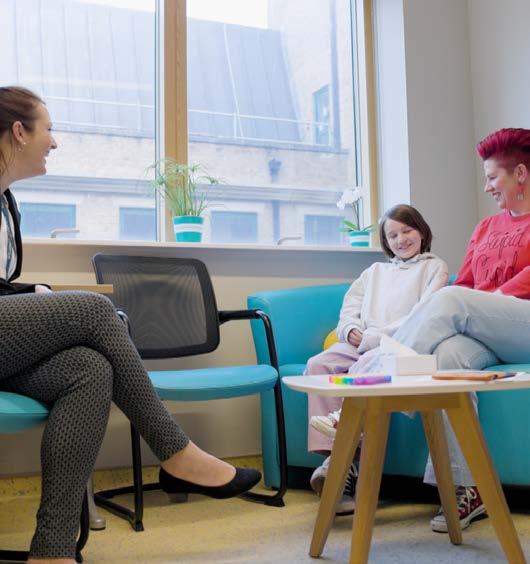
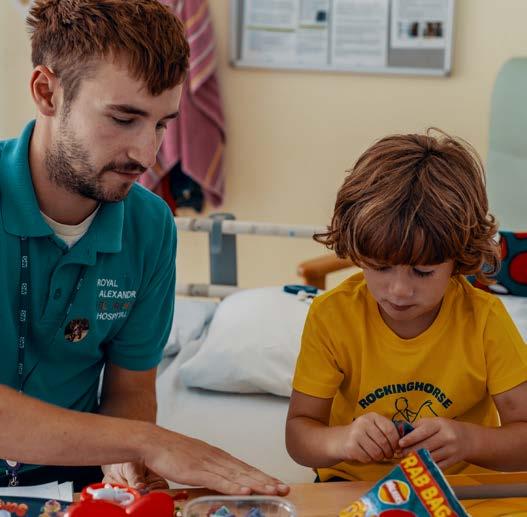
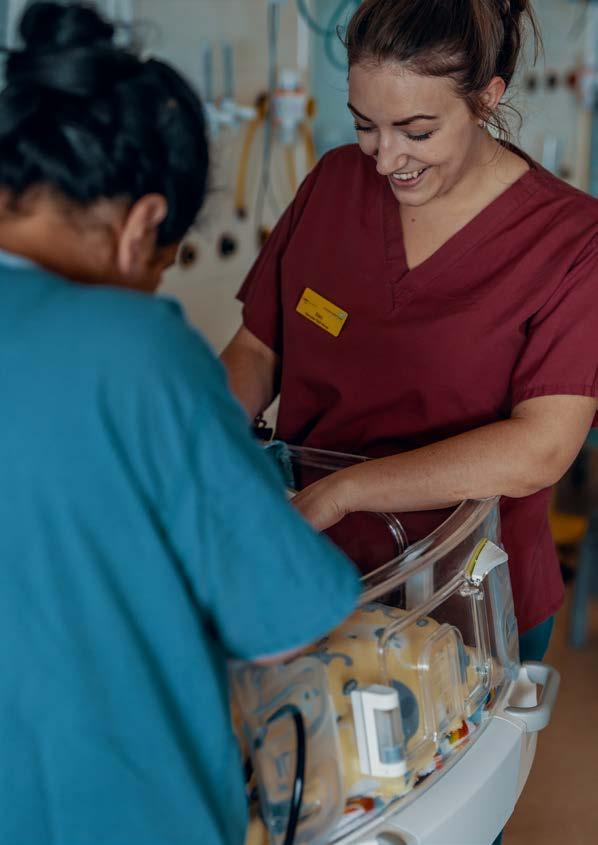
This year we launched our brand-new Wellbeing Service at the Royal Alexandra Children’s Hospital. This amazing new service, supported by The Cullum Family Trust, is aimed at helping support the health and wellbeing of young patients,
their families and NHS staff by utilising a range of activities and events throughout the hospital.
Supporting a patient’s wellbeing is an incredibly important part of healthcare and actively impacts on the health outcomes of children and young people.
Cancer support
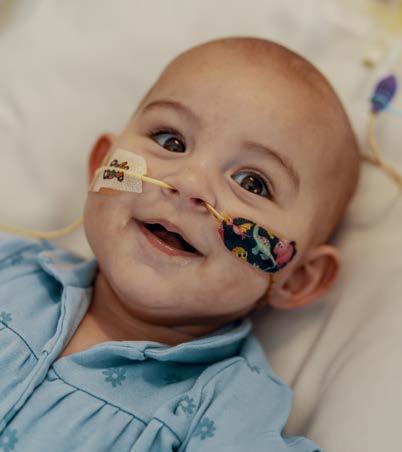
During this year we have continued to provide a vital service for children and families going through a cancer diagnosis and subsequent treatment. This family support service provides specialist psychological support to help manage the huge impact that
a diagnosis like this can have. The service supports hundreds of families to manage what can be the hardest experience of their lives and it’s thanks to a generous donation from the Openwork Foundation that we have been able to continue this life-changing support.

Rockinghorse Relay
This year we launched our very first 12-hour overnight swim event, the Rockinghorse Relay. Taking place at the beautiful Sea Lanes pool on Brighton seafront, the event saw more than 70 swimmers raise more than
£10,000 by swimming for an hour or more throughout the night. With local schools, businesses and even a channel swimmer taking part, it was a great new event that brings the whole community together.
Charity football match
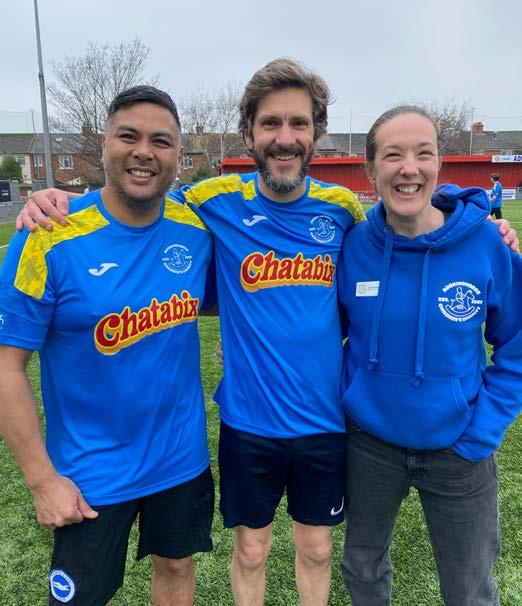
One of our fantastic supporters, Brett Mendoza, organised a celebrity vs ex-professionals football match in March at the Worthing Football Stadium. With famous faces including comedians Joe Wilkinson and
Jon Richardson, actors Matt Baynton and Kiell Smith-Bynoe and former professional rugby league player Joe Marler, it was a super-competitive, but great fun match that raised more than £17,000.
Message from our CEO
This year marked the final year of our first ever three-year strategy - a journey that has given us focus, ambition, and results we can all be proud of. Together, in the past three years we have delivered hundreds of projects, funded pioneering research, launched groundbreaking new hospital services and transformed children’s hospitals and wards across Sussex. The impact has been profound: lives saved, care improved, and thousands of children and families supported in their most difficult moments.
As we look ahead, we know the work is far from over. The challenges facing children and young people are changing, and so too must we. Our new strategy ‘For Every Child’ builds on everything we have achieved so far, with even greater determination to support more children, respond faster to urgent needs, and continue shaping a future where every child in Sussex receives the very best care when they are unwell.
And it’s because of you, our incredible community of supporters that we can provide
this for children and their families. You help us to provide stateof-the-art medical equipment that saves lives, toys and play resources that bring comfort, spaces that feel safe and homely inside the walls of a hospital, and pioneering research that pushes forward the boundaries of paediatric medicine. In 2025 alone we delivered 65 projects and directly supported 191,616 children and families.
But behind those numbers are real stories: children fighting cancer, babies who cannot breathe on their own, teenagers facing mental health crises. Our work is for them. We work alongside doctors, nurses and healthcare teams in Sussex, creating projects and services that respond to the most urgent needs. Together, we bring light into the darkest of moments.
I am endlessly proud of the incredible team of staff and volunteers whose passion and energy make all of this possible. To the healthcare professionals we work alongside. Thank you. Your skill and dedication inspire us daily and we are deeply grateful for your expertise,
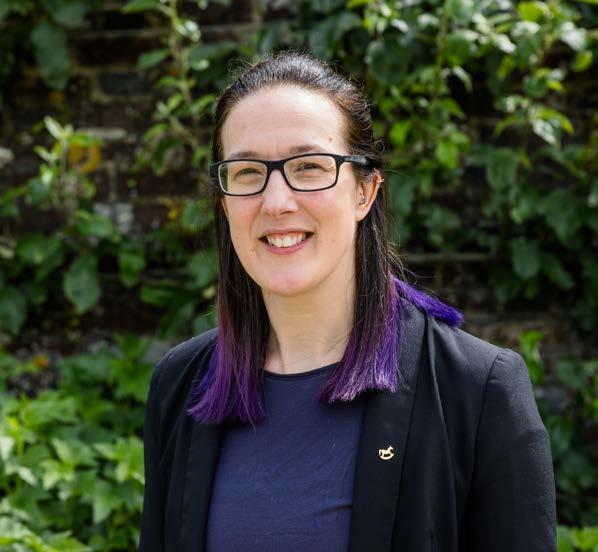
Donna Holland Chief Executive, Rockinghorse Children’s Charity
proud to work alongside you, and will always support you in every way we can.
And to our community of supporters, you are the beating heart of this charity. The runners and jumpers, the walkers and trekkers, the bakers and makers, the businesses who sponsor and partner with us, the Trusts and Foundations who believe in our
mission, the community groups who stand beside us, and every single person who turns up at our events. Thank you. Your generosity transforms lives.
Because of you, we can continue to change lives, improve lives, and save lives.
We simply couldn’t do it without you. Thank you.
The current climate
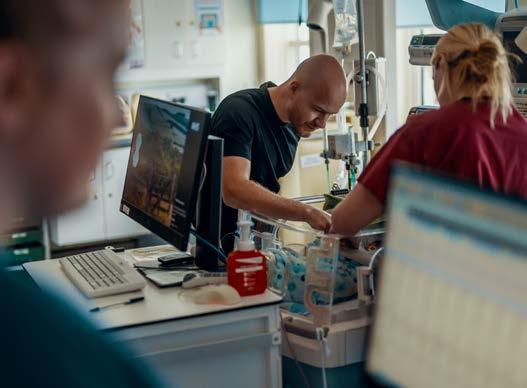
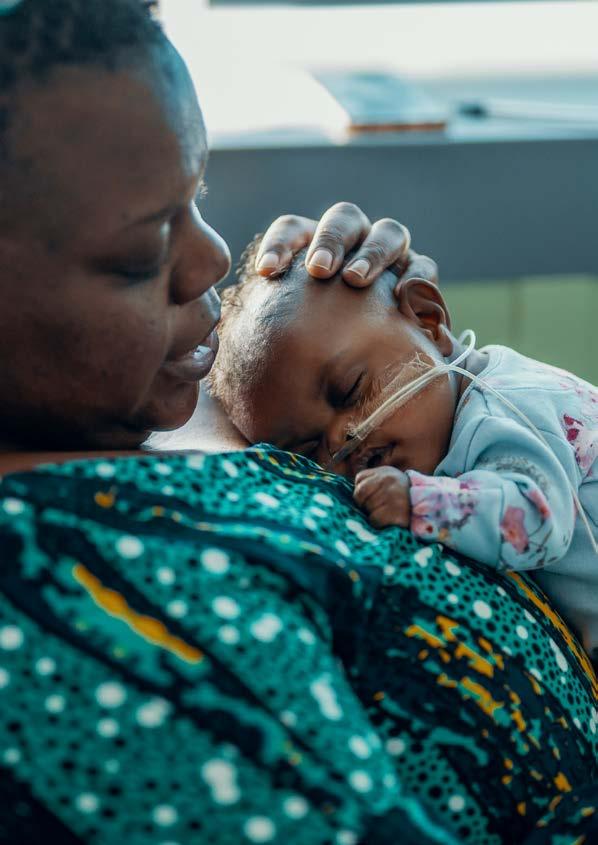
At Rockinghorse we work alongside doctors, nurses and other healthcare professionals working in children’s wards and baby units across Sussex to develop and deliver projects and services that address the issues children in Sussex are facing. We are on the ground, at the coal face and there with children and their families as they face a difficult diagnosis, life-changing news and all of the tough stuff.
1 in 5 children are currently experiencing some level of mental ill-health.
Only 8% of NHS expenditure mental health spending is allocated to provision for children and young people, despite them making up 30% of the demand. *
Referrals to mental health services for anxiety have more than doubled since before the Covid-19 pandemic. *
In Brighton rates of self-harm in those aged 10 to 24 are almost 50 per cent higher than in the rest of England and are increasing.
Half of mental health conditions arise by the age of 14, and many start to develop in the first years of life.
5% of two to fouryear-olds struggle with anxiety, behavioural disorders and neurodevelopmental conditions including ADHD.
There are 40,000 children waiting for mental health support for more than two years. *
Children represent 24% of the population, but account for only 11% of the Government’s NHS expenditure. *
Our impact
During the past year we have continued to grow the support that we offer, expanding the number of doctors, nurses and other HCPs who help us identify the projects that will make the
most impact, supporting more children and families, and delivering even more projects and services in local paediatric healthcare settings across Sussex.
191,616
Children supported
75,085
Children seen in A&E
724
Premature babies
65 Projects
210 Cancer pathways
50 NHS Champions
13
Services supported
How we raised our funds
The types of projects we deliver
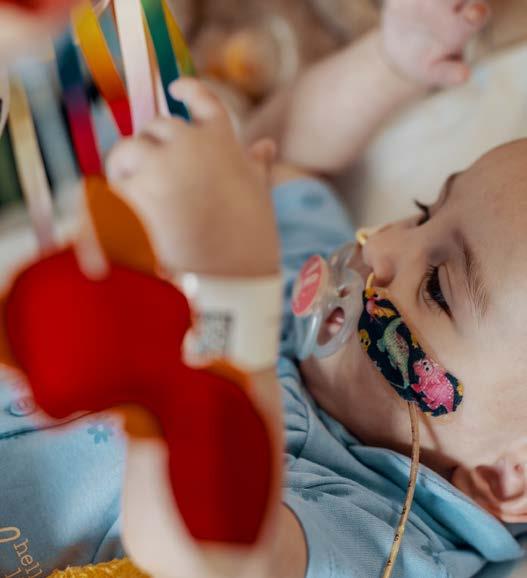
We provide a huge range of services and projects to children and their families all over Sussex, ensuring kids get the best possible care when they are unwell. 25
Who we support

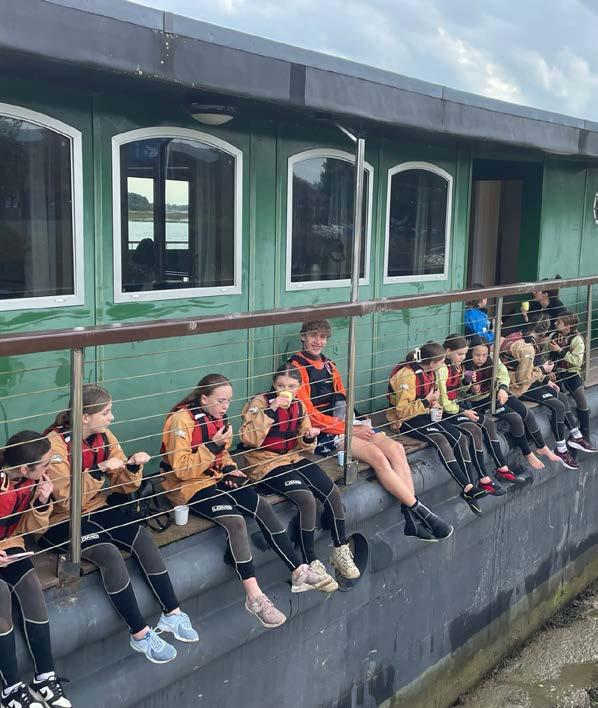
“It’s absolutely amazing and fun, I love the sea, and I will be there next year too!”
Children
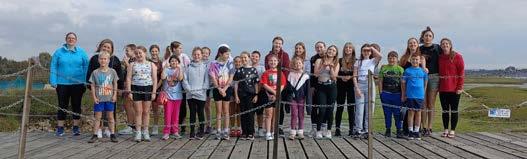
Young people learning to manage a life-changing health diagnosis can sometimes feel isolated; not knowing anyone else with the condition to talk to about their experiences.
So having a chance to meet up with other young people in the same situation for a weekend of activities and fun can really help to build confidence, make new friends and learn that they aren’t alone in their situation.
This year we funded a weekend residential trip for 30 young people managing a new diabetes diagnosis. Working with the Diabetes Team at Worthing and Chichester Hospitals, the event really helps these young people learn how to manage their condition both now, and for the future.
Paul Peacock, the Youth Worker at Worthing Hospital who helped organise the weekend explained
why it was such an important event. He said, “The weekend offered young people the chance to grow in their diabetes management abilities, under the guidance of a multidisciplinary team.”
“It also helps the participants to manage their condition with greater confidence and autonomy and helps build trust with healthcare professionals, making future interactions less intimidating.
“And of course, the whole weekend was absolutely brilliant fun!
“Without funding from Rockinghorse, we just couldn’t have provided this event for the young people we work with. It made such a huge difference to their ability to manage a difficult health diagnosis, which will support them for years to come.”
Paul Peacock
Youth Worker, Worthing and St. Richard’s Hospitals
Families
Otis, Yohan, Austin, Kenzo
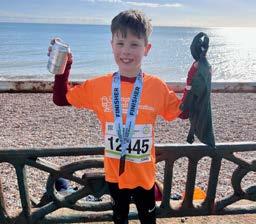
Having a sibling receiving medical care can be a worry for the children left at home, but sometimes it’s a great motivator to do something to help support the care they receive.
Kenzo, aged 2, has cystic fibrosis and regularly receives treatment for the condition at Royal Alexandra Children’s Hospital.
His brothers – Otis, 9, Yohan, 7 and Austin, 5 - sometimes go with him to appointments and have seen the support that Rockinghorse provide for children at the hospital. Which is they decided to take part in the Brighton Half Marathon Youth Races to help raise money for Rockinghorse so we can help even more children like Kenzo.
“Rockinghorse makes Kenzo’s stays in hospital more fun for him and us by providing toys for children to play with. They also provide equipment to help manage children’s conditions whilst they are in hospital. They have even given toys to Kenzo to make his treatments more fun.
“And they also provide items for bigger kids that visit, like when we stayed at Christmas, they gave us toys to play with whilst we were around. We ran in the Brighton Youth Race to raise money and help make sure that stays in hospital are fun! Thanks to everyone who sponsored us.”
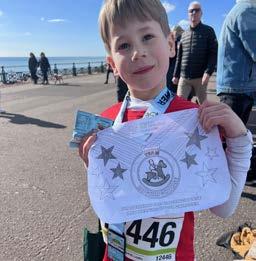
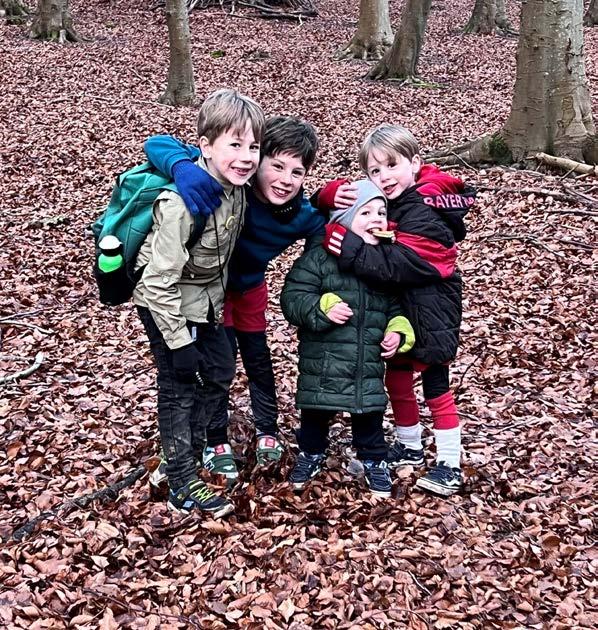
“The boys chose to support Rockinghorse because their littlest brother has spent a lot of time in hospital, one year over Christmas, and your charity did a lot to make each stay more enjoyable for everyone.”
Otis and Yohan Fairhurst
Rachel Fairhurst Otis, Yohan, Austin and Kenzo’s mum
“It’s providing a bit of sunshine thanks to Rockinghorse!”
NHS staff
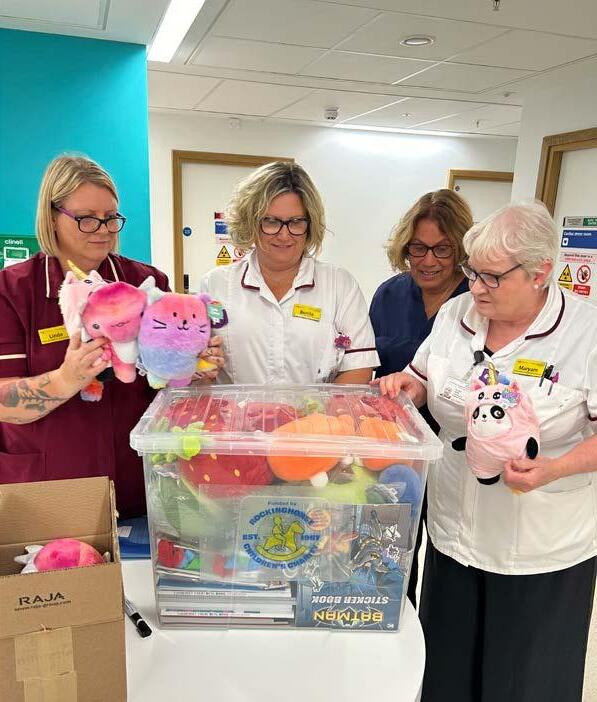
“Having the extra support from Rockinghorse really does make all the difference to the work we can do with children when they visit the hospital.
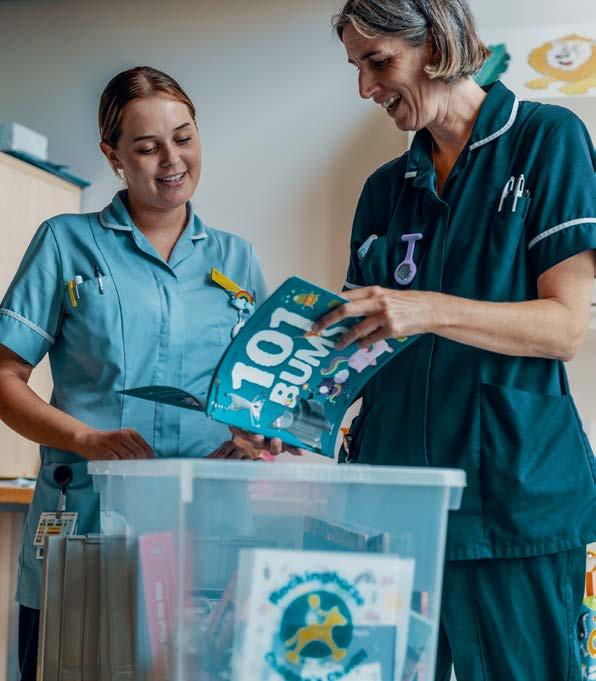
“A great example of this is the treat boxes that Rockinghorse fund for every level of Royal Alexandra Children’s Hospital. Every child that comes in for an appointment or procedure can choose a treat before they leave, which just makes their experience a little bit better.
“And this helps in so many ways, from reducing their fear, to helping them feel braver or more confident to come back, it means so much more than just a little toy.
“It’s a chance for us to say well done for being brave. It’s a great incentive and it really goes a long way to help manage their trauma. The likelihood is that whatever they’ve experienced wasn’t very nice and was probably uncomfortable or painful, but this helps them to look back on it a bit less negatively.
“Plus, it also helps them feel better if they have to come back to the hospital for further treatment.”
Harry Simmons Playworker at the Royal Alexandra Children’s Hospital.
Harry Simmons Playworker at the Royal Alexandra Children’s Hospital.
Our champions
The Physiotherapy Team at the Royal Alex do amazing work with a wide variety of young patients. From those who need physio every day to manage lung conditions like cystic fibrosis or chest infections, to those recovering from a broken bone or surgery, the team have a huge remit.
So having the right equipment is vital to providing the best possible service.
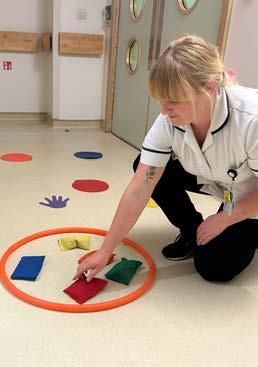
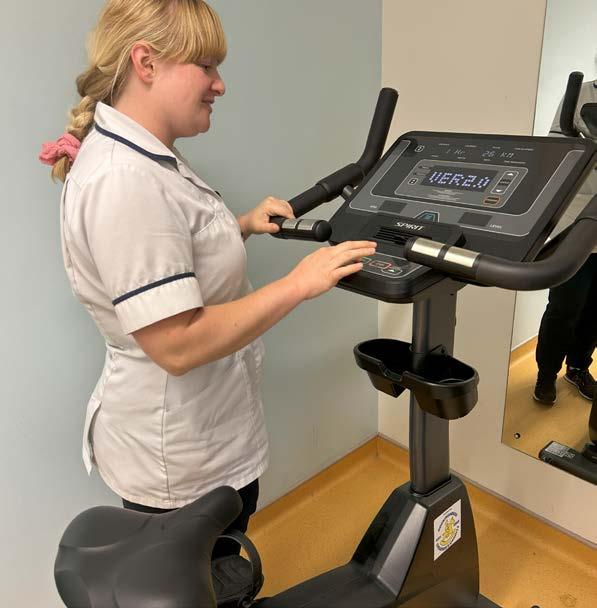
This year, thanks to the Cullum Family Trust, we funded a range of new equipment, including a new static exercise bike and an assault course for the team to support this vital work.
“Older children often like to do something a bit more gym based as part of their treatment, but our old exercise bike was broken. With the new one, you can set up different programs and change the intensity so it’s much more tailored to what they would normally be doing in the gym.
“And we use the assault course for younger children to help vary the exercises we can do with them and where we can work as it’s so portable. It makes it so much more fun and makes them so much more willing to do their physio.
“We’re
just really, really grateful to have these new pieces of equipment. Whether it’s something that needed replacing, or something that’s brand new, it’s just made it a lot easier to motivate our patients to do their exercise.”
Rebecca Steel Paediatric Physiotherapy Inpatient Team Lead
“We’re
just really, really grateful to have these new pieces of equipment. Whether it’s something that needed replacing, or something that’s brand new, it’s just made it a lot easier to motivate our patients to do their exercise.”
Rebecca Steel Paediatric Physiotherapy Inpatient Team Lead
Our supporters
Our supporters are the backbone of our work. Without their tireless efforts we simply would not be able to provide the level of support we do. Every single year we are blown away by all the things they do for us.
Community groups, businesses, schools, families and individuals; our support really does come from throughout the whole community. And their motivation comes from many different experiences.
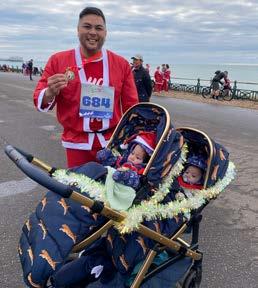
“When our twins Theo and Tillie were born, they received amazing care for the first two months of their lives in the Trevor Mann Baby Unit and following that with special care they continue to need at the Royal Alexandra Children’s Hospital.
“This experience has made us feel strongly that we want to give someone back for all this support, and to help other families that find themselves in a similar situation. Whether it’s running half marathons, organising fundraising events at our pub, the Caxton Arms, or planning a big charity football match, it’s all aimed at making sure that the excellent care we received is there for other families.
“Having raised more than £17,000 this year for Rockinghorse makes us incredibly proud. We can’t thank them enough for everything they have done for us so to be able to give back, even just a little, bit is incredible.”
Brett and Helen Mendoza Rockinghorse supporters
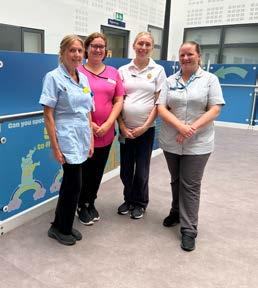
“We proudly supported Rockinghorse Children’s Charity as our Charity of the Year for the incredible impact they have on children and families in our local hospitals.
“As part of our support, we contributed by installing vibrant graphics in the waiting area of the outpatient’s department at The Royal Alexandra Children’s Hospital, helping to transform the environment into a brighter, more welcoming space for young patients and their families. The joy and comfort these changes bring are immeasurable.
“Beyond this, we are inspired by the way Rockinghorse funds so many vital projects, supporting children and families across a wide range of needs. Partnering with such a dedicated charity aligns perfectly with our values of community, care, and making a positive difference.”
Maisie Miller General Manager, Sussex Signs
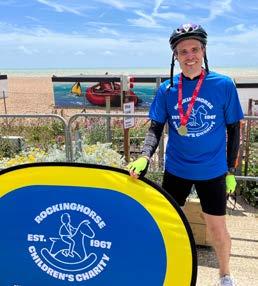
“Following my hip replacement in 2022, I set a personal challenge: to complete the London to Brighton bike ride on my new hip. It was more than a physical milestone; it was a chance to give back.
“I fundraised for Rockinghorse Children’s Charity, and with their agreement, all donations were directed to the Paediatric Physiotherapy team at the Royal Alexandra Children’s Hospital.
“This team supported our daughter from six weeks old, helping her overcome Unilateral Talipes (Club Foot) through the Ponseti method and tendon transfer surgery.
“Thanks to their care, she now cycles, swims, skis, and runs with confidence. Riding as a selffunded participant, I was proud to support the team that made her recovery possible.”
Matt Hodson London to Brighton cyclist and Rockinghorse supporter
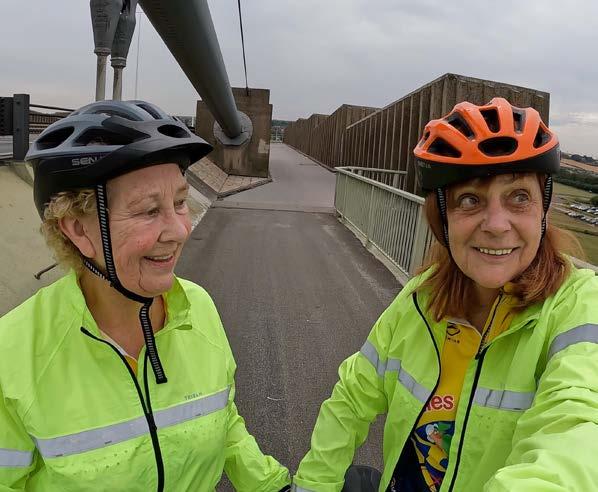
“The Ashfield Trust is pleased to support a charity that gives so much to not only poorly children in their hour of need but also support to young adolescents struggling with mental health issues. Support to families is also a crucial element of their work that we value so much.
“For us the work done by Rockinghorse is exemplary, but so is the feedback and communication we have from the charity. We have complete clarity in seeing where our support goes and the difference it makes to young lives.“
Jenni Brown Trustee, Ashfield Trust
Our projects

Toys
A visit to hospital for a child can be really difficult. It can feel scary, and sometimes boring, not to mention painful.
But being able to soften the blow with a toy, book or a little treat to say well done can really help and makes the hospital environment a much less stressful place.
Toys also work for everyone; all children can communicate through play, even if they’re unable to speak. They help to normalize the environment, reduce anxiety, and help
children and families to cope with treatment, procedures and admissions.
This year, like every year, we funded and delivered a huge range of toys, books, games and craft materials to lots of different children’s settings in Sussex.
“There’s not always a lot else to do while you’re in hospital, other than sit and think about your illness. So, toys are massive distraction. They’re also a really useful way for families to bond, build attachment and keep their development going, which can fall behind during a long stay.
“Without the help from Rockinghorse, and all the amazing work that they do, we wouldn’t be able to offer as many resources to our patients. The support they provide is invaluable, enhances the service we provide and massively improves the patient experience.”
Katy Rowe Learning Disability Play Nurse Specialist at the Royal Alexandra Children’s Hospital.
Developing Through Play
For children with complex needs, the benefit of play in a safe, stimulating environment, with the right kind of equipment, can be life changing.
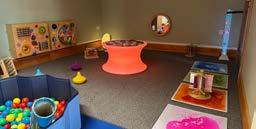
This year we provided a range of specialist toys and sensory equipment for specialist play sessions at the Tarner Centre in Brighton. These sessions, run by specialist early years practitioner Tracy Brown, help children up to 3½ years of age, born prematurely or with delays in their development, to enjoy and learn new skills through play.
“The toys and equipment are just incredible; there are just no words. It’s been phenomenal. The funding that we’ve received has
enabled us to replace large pieces of sensory equipment that we wouldn’t have been able to, and what we can do for the children now is just incredible.
“It has also created a safe space for some older children who are struggling with their mental health. I would say that so far more than 50 families have benefited from the use of the room since the resources have been purchased.”
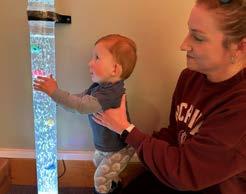
“Seb has Arthrogryposis and when he was younger was in a cast from his armpits down to his toes and couldn’t move, but he could come and enjoy the sensory lights and the bits and the toys and particularly the fish bubble tube which is still his firm favourite - he will furiously sign fish to get himself over there. It’s a highlight of our week coming here.”
Tracy Brown Specialist Early Years Practitioner.
Nicky Seb’s mum
Equipment
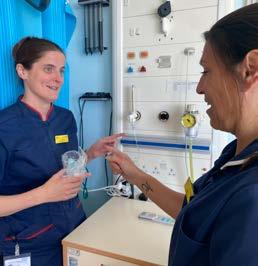
Being able to help our colleagues within the NHS to get the best equipment for them to do their jobs is a big part of our work.
Often within paediatric care the type of equipment needed is different from their adult equivalent. Working with smaller bodies means that equipment that’s suitable for an adult is often too large for a child. So being able to fund and deliver kit that’s specially created for younger patients is really important.
Not only is it better suited to a child’s anatomy, but it can also help speed up treatment and reduce pain by being more
“Having the support from Rockinghorse to get these additional bits of equipment help us provide even better support for our patients. It means we have kit that is specifically designed for smaller anatomy, making treatment and recovery that much better. It also means we are at the forefront of paediatric care, benefitting so many children and families within our community.”
Lynne Mould Matron, Royal Alexandra Children’s Hospital
precise, meaning that doctors and nurses can get their work done quicker and easier.
Whether it’s a big piece of complicated machinery, or smaller, hand-held equipment to help quickly diagnose and treat patients, every piece makes a difference.
Meet Chester Being treated for cancer is scary and confusing. It can involve all sorts of different treatments from injections to central lines, ports to cannulas – a lot of which most people simply wouldn’t understand at the best of times, let alone while having to deal with the worry and fear about the illness.
So, for staff to have ways to simply show what’s going to happen means that they can help their patients understand the procedures, which helps ease the worry and makes treatment easier.
This year we funded an amazing bit of kit; Chester Chest. This life-like manikin is designed for staff in
the oncology department to demonstrate where and how they would put in a canula or central line to administer medication.
It provides a really accurate representation of what they can expect, even down to it bleeding, so there are no surprises when it comes to the real thing.
“Chester has been amazing. Children are very visual learners, and this helps us to show them exactly what they can expect from the treatment and what we will do in a stepby-step process. We can get patients and parents involved too, learning how to look after the different central lines.
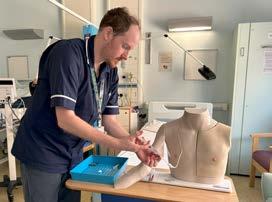
“This means that when we come to the treatment for real, they know exactly what to expect, which helps reduce anxiety and makes it an overall more positive experience.”
Rob O’Sullivan Oncology Charge Nurse
Spaces
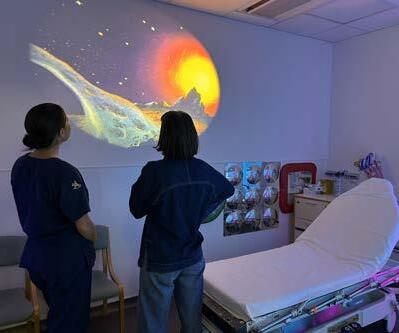
“Our need for these sensory rooms is massive. We would love all our rooms to be like this, obviously, because any person with any level of communication or any needs come in and feel instantly calm and reassured.”
Sophie Patching Deputy Sister in the Children’s Emergency Department. Working closely with healthcare professionals, we make sure we fully understand what’s needed for each specific space for treatment, relaxation or play. This can make an enormous difference to a child, or young person’s experience of visiting or staying in hospital, helping them feel calmer and less anxious, positively impacting on treatment and outcomes.
Thanks to generous support from The Property Race Day, we have been able to deliver two amazing
‘Tech Treatment rooms’ within the Emergency Department at the Royal Alex, using innovative technology to provide immersive distractions and a calming environment. The rooms include a range of interactive, sensory equipment to provide visual stimulation and a calming environment for every child who uses them.
Safe to Share
For children and families receiving care at Royal Alexandra Children’s Hospital, the impact on their mental health from the treatment they receive can be significant. But the paediatric psychology team are there to help.
The team provide psychological support to patients to help them through difficult diagnosis, treatment, and the long-term impact of dealing with a serious physical health condition at a young age.
But two of the clinic spaces within the hospital were in a really poor state of repair and
not somewhere that people felt safe to share their thoughts or feelings. However, we provided funding to renovate these rooms, making them somewhere that people feel much more comfortable using.
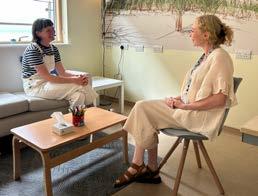
“It’s made a huge difference to families and children’s sense of safety and comfort in these sessions, which really helps their outcomes in therapy, because people need to feel safe.
“When people have had quite traumatic medical experiences, sometimes even just coming into the building itself can be quite triggering. So having a space that signals that this is a safe space, is really important; and we’ve had parents and children comment on how much better it feels.”
Meg Montgomery Oncology Psychologist at the Royal Alexandra Children’s Hospital
Research
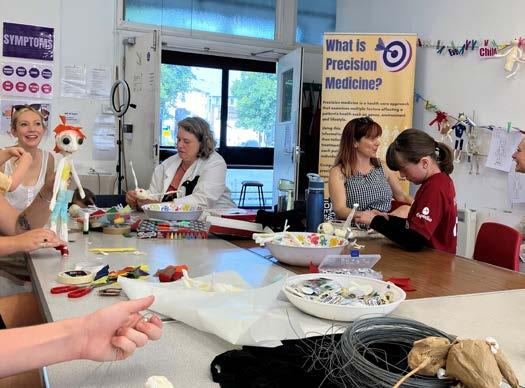
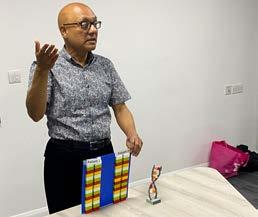
Last year, thanks to a fantastic donation from the Cullum Family Trust, we were able to expand on a specialist pilot clinic we had funded that uses a personalised approach to the treatment of paediatric asthma based on the genotype of the individual child.
Being able to determine the genetic make-up of a child can reveal what medications won’t work for them, and crucially,
the ones that will, meaning that each child has a better chance of receiving the most effective treatments for their condition.
This year, the project has been spreading the word about this new way to treat an incredibly common issue, raising public awareness and encouraging patient engagement so that more children and families can benefit from this transformative research.
One Size Fits One
This year Professor Somnath Mukhopadhyay, Chair of Paediatrics at Brighton and Sussex Medical School, Dr Tom Ruffles, Paediatric Respiratory Consultant, and Olivia Cottington Honorary Clinical Public Engagement Coordinator, have been continuing to share information about their groundbreaking work.
From presenting this research at conferences in London, Glasgow and India, to organising local events that help children and families learn about asthma and its impact.
They have also collaborated with patients and families to create digital stories showing how personalised medicine
has improved asthma care. Shared across digital channels, these stories build a supportive community and widen access to information on managing asthma.
“The past year has been a great step forward in building a supportive community for patients and families managing childhood allergic conditions. The feedback we have received has been hugely encouraging.
“I am especially proud of how we have been able to communicate the value of personalised medicine, and I look forward to expanding these initiatives so that more families can benefit from care that is truly tailored to their child’s individual needs.”
Olivia Cottington Honorary Clinical Public Engagement Coordinator
Activities
Being able to get involved in fun activities is important for most children; it’s a great way to meet other people, have some fun and learn new skills. But if you’re stuck in hospital or have a longterm health condition, this can be much easier said than done.
Often those with challenging health conditions can feel left out of the normal things that their peers enjoy due to their health limitations, or don’t have the confidence to mix with other
young people who have no idea of the things they are dealing with.
Every year we help different teams within the NHS organise and deliver activities specifically for a range of different conditions such as diabetes, cystic fibrosis and chronic fatigue syndrome.
“As a parent of a young person who has spent the majority of the last three years in bed due to disabling fatigue, it’s wonderful to see my daughter motivated to go out and produce something beautiful.
“The social contact with other young people that the sessions afforded has also been great as she had been really socially isolated. Thank you for providing this opportunity.”
Parent of a young person who attended the pottery painting session.
Painting Pots
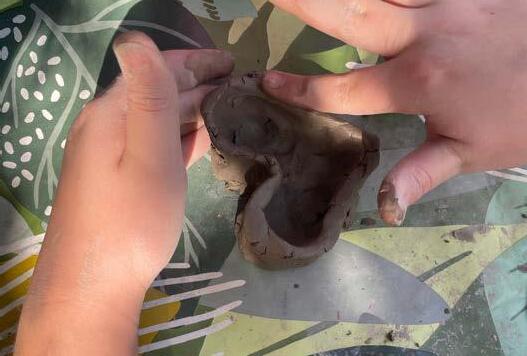
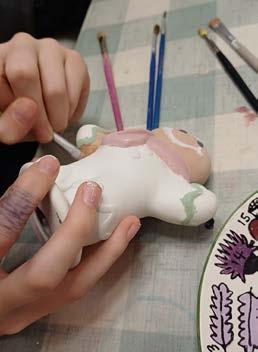
This year, the team from the paediatric ME and Cystic Fibrosis team at Seaside View Child Development Centre, asked us to help them put on some pottery painting sessions for the children they support.
This group often miss a lot of school, impacting their social connections and relationships. So, the team wanted to give them a chance to enjoy a creative activity, away from hospital, with other people of the same age and diagnosis. Their aim was to promote new friendships and connections along with supporting their wellbeing.
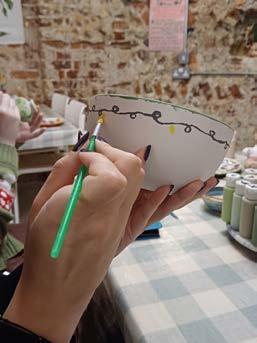
“This funding really helps provide that extra level of support; the opportunity for our young people to join up with others with the same diagnosis can help reduce the stigma they might feel, giving them a chance to talk to others who understand what they’re going through, and have a chance to relax and have fun without having to worry about their health.
“The young people and families gave some great feedback, and we saw some amazing painting skills!”
Julia Krikman Senior Specialist Occupational Therapist.
People
This year we launched our new Wellbeing Service.
This service, the first of its kind in the southeast, aims to support patients’ wellbeing as part of their overall health journey.
Going through a painful medical procedure, spending a long time in hospital, or learning how to manage the impact of a long-term health diagnosis can be really difficult for a child or young person, not just on their physical health but also their mental health and wellbeing.
Based at the Royal Alexandra Children’s Hospital, the service provides a wide range of support throughout the hospital and beyond to really address the issues that young people face during treatment.
This includes:
Activities and workshops in the hospital – things like art and creative workshops, book readings, wellbeing worksheet activities, movie nights and pampering sessions.
— Activities in the community – such as woodland wellbeing sessions, sea swimming courses, fun social activities and yoga courses.
Parent and carer support – offering support sessions, free food and care packs.
— Staff support – regular staff wellbeing days with massage sessions and free lunch.
“Wellbeing projects play a crucial role in fostering a sense of normality for our hospitalised children. By engaging in fun and interactive activities, they are able to regain a sense of control over their lives, despite the impact of their underlying illness.”
Dr Oli Rahman Consultant Paediatrician and Rockinghorse Chair of Trustees
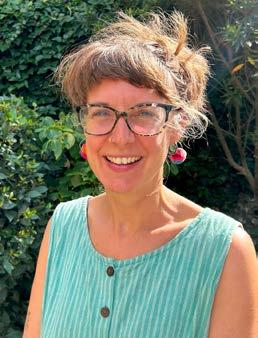
Our wellbeing manager Jess Linton, a registered art therapist with more than 20 years’ experience working with children and young people, has a wealth of knowledge and the skills to understand how best to deliver a specialist service like this.
Jess works alongside staff at Royal Alexandra Children’s Hospital to ensure the activities being offered fit alongside the medical support being provided. She also meets with community services to plan additional support and engages with young people to make sure we’re listening to what’s right for them.
“Being able to offer this holistic service to children, families and staff at the hospital makes a huge difference to their lives. It helps them navigate their experiences of being in hospital, but also to recognise the impact that looking after mental health and wellbeing can have on many aspects of their lives, including managing challenging health conditions. It’s been fantastic to work with children, families and staff on developing the wellbeing service.”
Jess Linton Wellbeing Service Manager, Rockinghorse
Wellbeing Rocks!
Our strategy
In 2022, we launched our three-year strategy ‘Better Together’ aimed at improving our support for children, increasing the impact of our work and expanding the number of children and families we support.
Our strategy is our commitment to go above and beyond for babies, children and teenagers.
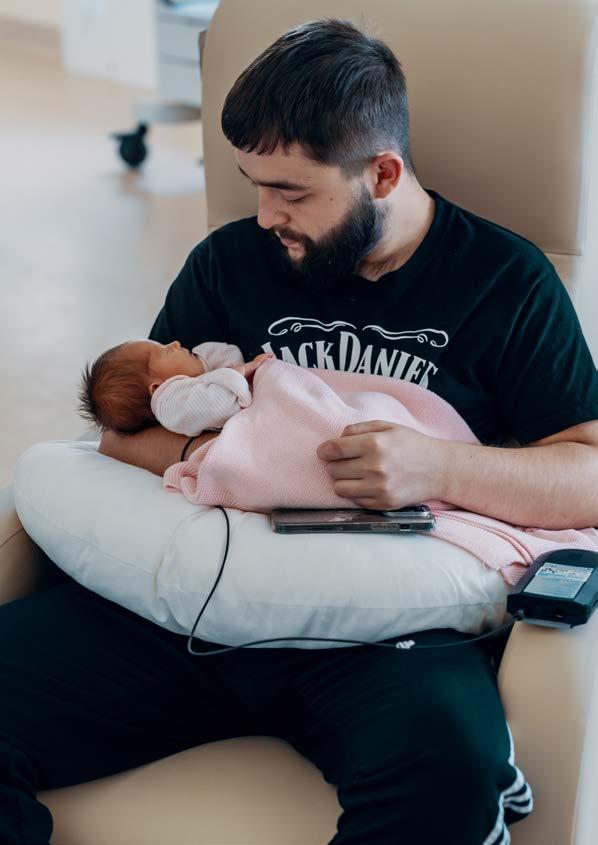
In our final year of this strategy, we have:
1. Reach, Impact, Evidence & Access – launched our new Wellbeing Service at the Royal Alexandra Children’s Hospital, delivered and funded more projects supporting children and their families, continue to expand and improve our evaluation mechanisms, continued to expand our Children’s Hospitals Charities Network and utilise data sources to inform project delivery.
2. Engagement – continued to expand our ambassador and events programme, expanded our digital engagement programme and expanded our consultation work with children and young people.
3. Partnership – forged closer relationships with our stakeholders in the community and within the NHS, expanded our advocacy and policy work to support more children and young people, and expanded our corporate volunteering programme to bring in more skills to the charity.
4. Profile & Influence – expanded our digital marketing and communication activities to raise money and awareness for the issues children and young people are facing, utilised our insights, consultation and data for project development and ensured we speak out on issues that are affecting children in Sussex.
5. Finance – developed new fundraising activities to ensure our community has fun and engaging ways to support our children’s hospital, expanded our fundraising programme so that we can continue to deliver brilliant projects that support children and their families we they need it most.
6. Resources – reviewed our benefits and staff support programme, reviewed our office requirements and expanded our volunteering offer to bring in additional skills, experience, knowledge and capacity.
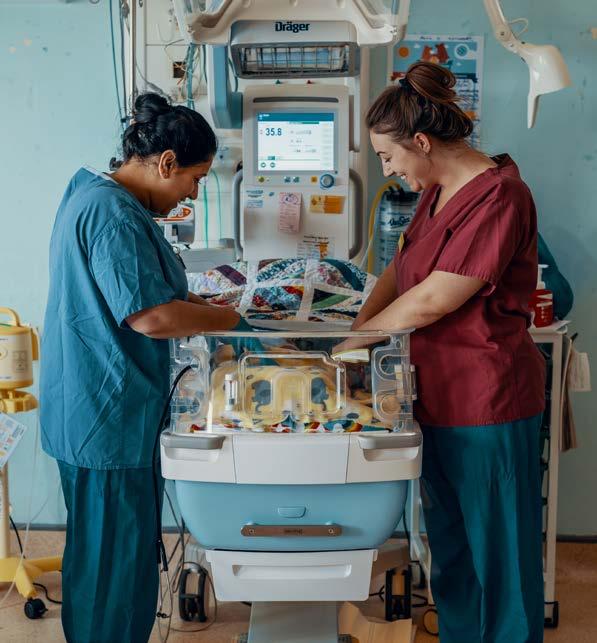
“I want to thank everyone who has been part of the past three years – my brilliant staff team, our committed Trustees, our incredible colleagues in the NHS, our dedicated volunteers and all of our wonderful supporters and donors.”
Donna Holland Chief Executive, Rockinghorse Children’s Charity
The future
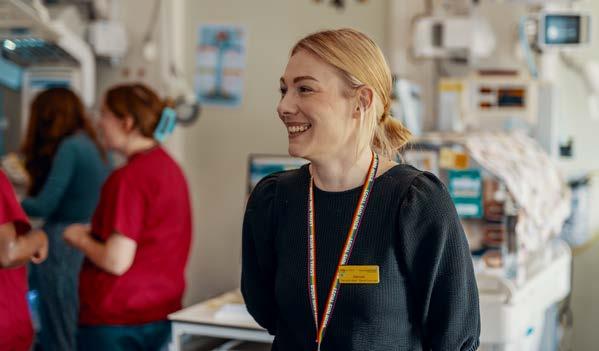
In March 2025 we launched our new five-year strategy ‘For Every Child’.
In the next five years (2025–2030), Rockinghorse Children’s Charity will pursue a bold strategy grounded in four pillars: 1. Supporting children and their families 3. Being the go-to charity 2. Engaging our community 4. Being a resilient organisation
This new strategy will ramp up our ability to respond swiftly to needs across Sussex by strengthening our champion network, enhancing project design, leveraging digital tools, and using data more effectively. We will deepen connections with communities, families, supporters and health-care partners to build trust, visibility
and collaboration. Through this, we aim to save lives, support well-being, and transform the children’s hospital, TMBU and children’s wards and special care baby units all over Sussex. Our hospitals and our charity need to be resilient and fit for the future, so we can continue delivering vital support where it matters most.
“Together with our supporters, funders, partners, community, children and their families we will continue to put children and their families at the heart of our work and putting the charity at the heart of paediatric healthcare in Sussex.”
Donna Holland, Chief Executive, Rockinghorse Children’s Charity
Supporting children and their families
Thank you
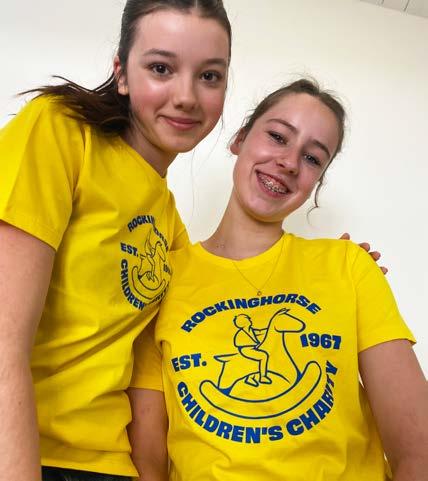
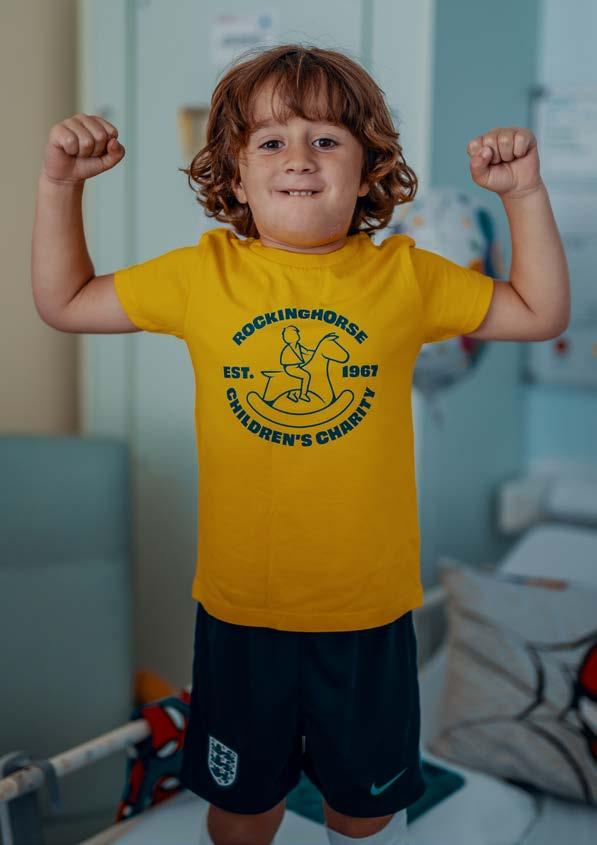
The team at Rockinghorse Children’s Charity work incredibly hard all year to make sure we are doing all we can to support babies and children in our community. But we simply couldn’t do what we do without the help of every single one of our wonderful supporters. Whether it’s £1 dropped in a bucket, £10 on a raffle ticket or £10,000 from a local business, every single donation makes a difference.
So, thank you for making our work possible.
Rockinghorse Children’s Charity
Chair’s message
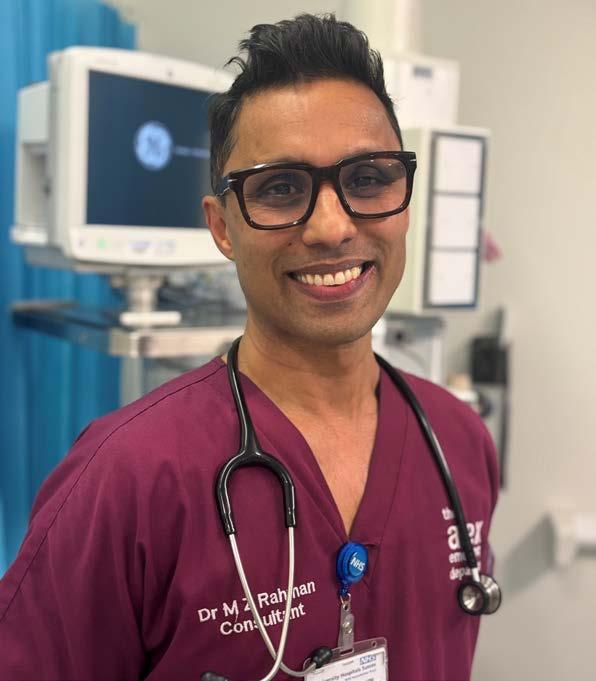
As a Paediatric Consultant at the Royal Alexandra Children’s Hospital for more than ten years, I’ve witnessed first-hand the growing challenges facing children’s healthcare in Sussex. The number of children and young people needing hospital care continues to rise, and with it, the pressure on children’s services. Yet, through all of this, I’ve also seen the extraordinary difference that Rockinghorse Children’s Charity continues to make transforming experiences, improving care, and delivering hope to families when they need it most.
What makes Rockinghorse so special is its ability to act quickly and effectively, creating real and lasting change for children and young people across our region. As Chair of the charity, I’m immensely proud that our work supports everyone involved in a child’s care journey: from babies, children and teenagers, to their families, friends, and the dedicated NHS staff who care for them every day.
In the past year, Rockinghorse has continued to go above and beyond. We’ve created welcoming, child-friendly hospital spaces that feel less clinical and more comforting. We’ve funded vital, lifesaving equipment to ensure children receive faster, safer, and more effective treatment. We’ve supported additional specialist staff - from those supporting children with cancer to a youth worker in A&E helping young people experiencing mental health crises. We’ve backed pioneering research, including the world’s first personalised asthma clinic, and launched a brand-new Wellbeing Service in the children’s hospital that helps children and their families manage anxiety, understand their conditions, and recover more quickly.
None of this would be possible without the generosity and enthusiasm of our incredible supporters. To the incredible companies such as Trident, Sussex Signs, Higgidy Pies, the Grand Hotel, Brighton & Hove Buses, Churchill Square, JG and
JR Langridge, DMH Stallard, Galloways, Morgan Sindall, Search Seven, Acumen Law, Creative Pod, All Recycle, Paxton Access, Britton & Time and Platinum Media. To the amazing individuals, challenge event participants and community groups who do brilliant, brave and often unbelievable things to raise money for the children and families we support, such as Alex Harding, Gareth Woolven, Brett Mendoza, Hannah Standing, the Sussex Law Society and the Rotary Club of Cuckfield, Lindfield and Haywards Heath. Thanks to the many Trusts and Foundations who support our big projects like the Openwork Foundation, Ashfield Trust, Property Race Day and the Cullum Family Trust. And to all those we can’t name – you all are part of the work we do. Thank you.
I also want to thank the Rockinghorse staff team, whose hard work and passion enable hospitals like mine to do so much more for children and families.
And finally, my thanks also go to my colleagues in the NHS for their tireless dedication, and to my fellow Trustees, who generously give their time, expertise, and support to help guide this wonderful charity.
To everyone who has contributed to our work this year - thank you. You are the reason Rockinghorse continues to make such a lasting difference to children’s lives across Sussex.
Dr Oli Rahman
Consultant Paediatrician and Lead for the Paediatric Critical Care Unit at The Royal Alexandra Children’s Hospital, Brighton. Chair of Rockinghorse Children’s Charity.
Trustees’ annual report
Objectives
At Rockinghorse Children’s Charity our vision is for a world where children are healthy and happy. While we work towards this world, we will continue to fund projects, programmes and people that enhance the care and support given by our incredible colleagues in the NHS and beyond.
We do this by funding and delivering projects, programmes and people that enhance the care and support given by our incredible colleagues in the NHS.
We fund cutting edge equipment and facilities, support medical staff, innovative research and pioneering treatments, that make a difference to patients and their loved ones. We support
developments that go above and beyond what the NHS can provide at present.
We can confirm that we have complied with the duty in section 17 (5) of the Charities Act 2011 to have due regard to the guidance published by the Charities Commission on public benefit when reviewing the Charity’s main aims and objectives, and in planning future activities and setting grant making policy for the year.
Structure, Governance and Management
Constitution
The Charity was originally founded in 1967. The company was incorporated on 17 February 1993 and is governed by its Memorandum and Articles of Association dated 29 January 1993.
Grant Making Policy
Working in partnership with our local hospitals, respite centres and specialist services, we fund projects which focus on improving children’s physical and emotional wellbeing, while providing additional support services for parents and carers.
The projects we deliver all fit into one of six categories:
Toys – Toys help to pass the time, distract from a painful procedure or help with diagnosis.
Equipment – From large bits of life saving medical kit to smaller equipment to help with everyday care.
Spaces – Revamping or creating new environments and spaces in hospitals.
Research – Cutting edge research to help move children’s healthcare into the future.
Activities – Services and activities to help children and young people manage and understand their condition.
People – Additional staff to help support patients and families get the best possible care.
Code of Ethics
Rockinghorse upholds the highest standards of integrity, transparency, and accountability. We conduct our work with honesty and openness, treating all individuals with respect and fostering an inclusive environment. We are transparent in our decision-making, accountable to our stakeholders, and committed to continuous improvement and innovation. We respect confidentiality and privacy, complying with all relevant laws. We avoid conflicts of interest and ensure personal interests do not interfere with our mission.
We uphold ethical standards in fundraising and manage our resources responsibly to further our mission. We are committed to social responsibility and environmental stewardship. We encourage
the reporting of unethical behaviour, providing a safe mechanism for whistleblowers. Our commitment to these principles ensures we achieve our goals with integrity and maintain the trust of our stakeholders.
Organisational Structure
The Board of Directors consists of nine Trustees and chaired by Oli Rahman, who was elected in November 2022.
Every member of the Board, including the Chair, is elected for three years and stands for re-election at the next Annual General Meeting.
New Trustees are nominated by existing Trustees and selected by majority vote.
All new Trustees are inducted which includes a meeting with the Chair, a meeting with the Chief Executive, a tour of the Royal Alexandra Hospital as well as completion of Companies House and Charity Commission documentation.
During the year we welcomed Penina Shepherd and Liz Beck as new Rockinghorse Trustees.
The Trustees have delegated the day-to-day management to the senior management team who report on the performance against budget, which are approved each year by the Trustees.
All Trustees give their time freely and no remuneration was paid in the year.
The Board meets at least six times a year and this is supplemented by two additional meetings for three new sub-committees:
HR & Operations Subcommittee
The overall remit of the Subcommittee is to oversee all aspects of policy and procedure for the charity and to advise, guide and support the charity in any aspect of operations relating to operations and governance.
Finance, Audit & Risk Subcommittee
The overall remit of the Subcommittee is to ensure the integrity of Rockinghorse Children’s Charity’s Annual Report & Financial Statements, to oversee risk within the organisation and oversee the relationship with external auditors.
Fundraising & Engagement Subcommittee
The overall remit of the Subcommittee is to support and expand the work of fundraising, income generation, events, engagement, marketing and communications undertaken by the charity.
Royal Patron
We are delighted to continue to receive invaluable support from our Royal Patron, HRH Princess Alexandra.
Remuneration for charities key personnel
The HR & Operations Subcommittee review, approve and make a recommendation to the Board of any annual inflationary pay or changes to the financial and non-finance renumeration for all staff.
How we measure success
The Charity sets an annual budget, balancing ambition and reality for all our income and expenditure. Trustees and senior management then monitor this through the year and in comparison to previous years. Monthly management accounts and updates on fundraising activities and our projects are presented at each Board meeting.
The Charity ensures that fundraising and other income generating activities are well planned to provide a good return on investment and growth for the future to enable us to fund and deliver more projects for children and their families.
We take care to ensure that we use our resources in a way that has the maximum impact, focusing on priority areas lead by doctors, nurses, children and their families. We actively seek feedback on the projects we fund and deliver to understand the impact our support has had on our young patients and staff, to ensure that we are delivering on our mission.
Financial Review
We would like to express our heartfelt thanks to every trust, company, community group, event participant, individual, and volunteer who supported us during the year.
Rockinghorse receives no statutory funding, and we see minimal income from legacies. Consequently, our fundraising relies heavily on individual donors, corporates, and events, resulting in a higher associated cost/income ratio than other types of fundraising.
During the financial year, Rockinghorse raised a total of £1,298,917 (2024: £1,025,249), marking a 26.7% increase over the previous year.
Costs, excluding grants, increased by 2.7% to £662,198 (2024: £644,382). This rise is attributed to increased staff and support costs.
For 2024/2025, the total spend on projects was £772,663 (2024: £733,835), with £458,870 (2024: £400,710) on Service Delivery and £313,793 (2024: £333,125) of Grant Spend.
Trusts and Foundations
We successfully received funds from 41 trust applications, generating £315,906 of income (2024: £177,663), a 78% increase.
Challenge Events
Challenge event income remained consistent at £95,288 (2024: £96,641).
Corporate Support
Local businesses remain a vital component of our fundraising efforts, representing our largest source of income. Through donations, beneficiary events, and employee-led fundraising activities, our corporate partners collectively contributed £160,593 during the year (2024: £106,458), an increase of 50.9%.
Individual Support
We are grateful for our loyal and new regular givers and those who supported us through special occasion giving, such as birthdays and weddings. We also appreciate all the in-memory donations received during the year. In total individual fundraisers generated £40,837 (2024: £54,328, a 24.8% decrease).
Community Support
We are thankful to the community groups, schools, religious groups, and supermarkets that collectively raised £67,253 (2024: £92,054, a 26.9% decrease).
Events
Event income for the year totalled £5,959 (2024: £169,812), representing a significant decrease, primarily due to the reduced number of fundraising events held compared with the prior year.
Legacies
Legacy income is not ordinarily a material source of revenue for the charity; however, £354,188 was received during the year (2024: £115,376), representing an increase of 207%.
Gifts in Kind
We received £28,382 worth of gifts in kind (2024: £92,290, a 69.3% decrease).
Services in Kind
During the year, the organisation received services in kind valued at £74,157 (2024: £75,820), representing a decrease of 2.2%.
Key Risks and Uncertainties
The Charity maintains a robust risk management process with a regularly updated risk register. The CEO assesses risks for severity and likelihood, with mitigating actions identified to minimise their impact. These risks and progress on mitigating actions are reviewed regularly by the Trustees.
The principal risk to the Charity is the rising cost of living and general economic uncertainty. Meeting our income targets is crucial for continuing our charitable activities. Economic challenges may impact our ability to meet these targets.
Our strategy to mitigate this risk focuses on diversifying income streams, investing in fundraising capacity and digital platforms, and minimising costs while maximising efficiencies.
Reserves Policy
Restricted Funds are those subject to specific trusts specified by the donor and can only be used for the purposes for which they were given. At the year-end, restricted reserves total £334,018.
Designated Funds are unrestricted funds that are available for the general purposes of the charity but have been earmarked by the trustees for projects or commitments. At the year-end, total commitments are £694,884, with £179,421 held in restricted reserves and the remaining £515,463 in designated reserves.
Unrestricted Funds stand at £282,501. These funds are not subject to any specific donor-imposed restrictions and can be utilised at the discretion of the trustees for any of the charity’s general purposes.
The trustees have established a reserves policy to honour our commitments and deliver our strategy while protecting the continuity of our work in the event of a shortfall in income.
The charity aims to hold un-designated reserves sufficient to cover six months of operational costs, with an aspiration to hold more when it does not impact immediate funding requirements.
Based on this policy, the estimated requirement for six months of operational expenditure, including wages and core running costs, is £267,690.
At the year-end, unrestricted reserves have met this target, which we aim to maintain in the coming year.
The charity’s reserves policy is reviewed annually to ensure it is fit for purpose, up-to-date, and reflects legislative requirements.
Going Concern
The Trustees believe that the Charity’s reserve levels, strong cash holdings, and disciplined budgeting ensure the immediate future of the Charity over the next 12 to 18 months is secure, affirming that the Charity is a going concern.
Investment Policy
In line with a limited risk appetite, reserves are currently held in cash due to a volatile and unpredictable investment market. The board will continue to review this position as appropriate, based on expert advice.
Plans for future
At Rockinghorse our vision is for a world where children are healthy and happy. In the final year of our strategy, we continued to work towards this world – committed to delivering and funding projects, programmes and people that enhance the care and support given by our incredible colleagues in the NHS and beyond.
In March 2025 we launched our new strategy 2025-2030 (For Every Child) which aims to ensure the children’s hospital and TMBU in Brighton and children’s wards all over Sussex can support every child and family that visits. Together with our supporters, funders, partners, community, children and their families we will continue to put children and their families at the heart of our work and putting the charity at the heart of paediatric healthcare in Sussex.
Statement of Trustees’ responsibilities
The trustees (who are also the directors of Rockinghorse Children’s Charity for the purposes of company law) are responsible for preparing the Report of the Trustees and the financial statements in accordance with applicable law and United Kingdom Accounting Standards (United Kingdom Generally Accepted Accounting Practice).
Company law requires the trustees to prepare financial statements for each financial year which give a true and fair view of the state of affairs of the charitable company and of the incoming resources and application of resources, including the income and expenditure, of the charitable company for that period. In preparing those financial statements, the trustees are required to:
select suitable accounting policies and then apply them consistently; observe the methods and principles in the Charity SORP; make judgements and estimates that are reasonable and prudent; prepare the financial statements on the going concern basis unless it is inappropriate to presume that the charitable company will continue in business.
Auditors
The auditors, Chariot House Limited, will be proposed for re-appointment at the forthcoming Annual General Meeting.
Report of the trustees, incorporating a strategic report, approved by order of the Board of Trustees, as the company directors, on 26 November 2025 and signed on the board’s behalf by:
Dr Oli Rahman Chair of Trustees
Reference And Administrative Details
Name of Charity: Rockinghorse Children’s Charity
Charity Registration No: 1018759
Company No: 2791054
Registered Office/Address: 13 Prince Albert Street
Brighton East Sussex BN1 1HE
Royal Patron: HRH Princess Alexandra
Trustees/Directors: Andrew Mosley (Resigned 4 November 2025)
Barry Carden
Dr Oli Rahman (Chair)
Dr Ryan Watkins
Gavin Willis
Liz Beck (Appointed 29 July 2025)
Lynne Mould
Penina Sheppard (Appointed 31 July 2024)
Rose Read (resigned 31 July 2024)
Sam Thomas (Resigned 24 September 2024)
Scott Marshall
Chief Executive and Company Secretary: Donna Holland
Bankers: Metro Bank 82 North Street
Brighton BN1 1ZA
The trustees are responsible for keeping proper accounting records which disclose with reasonable accuracy at any time the financial position of the charitable company and to enable them to ensure that the financial statements comply with the Companies Act 2006. They are also responsible for safeguarding the assets of the charitable company and hence for taking reasonable steps for the prevention and detection of fraud and other irregularities.
In so far as the trustees are aware:
there is no relevant audit information of which the charitable company’s auditors are unaware; and the trustees have taken all steps that they ought to have taken to make themselves aware of any relevant audit information and to establish that the auditors are aware of that information.
Independent Auditors: Chariot House Limited 44 Grand Parade
Brighton East Sussex BN2 9QA
Legal Advisors: Acumen Business Law
Regent House Hove Street Hove BN3 2DW
Independent auditor’s report to the members of Rockinghorse Children’s Charity.
Opinion
We have audited the financial statements of Rockinghorse Children’s Charity (the ‘charitable company’) for the year ended 31 March 2025 which comprise the Statement of Financial Activities, the Balance Sheet, the Cash Flow Statement and notes to the financial statements, including significant accounting policies.
The financial reporting framework that has been applied in their preparation is applicable law and United Kingdom Accounting Standards, including FRS 102 The Financial Reporting Standard applicable in the UK and Republic of Ireland (United Kingdom Generally Accepted Accounting Practice).
In our opinion, the financial statements:
give a true and fair view of the state of the charitable company’s affairs as at 31 March 2025 and of its incoming resources and application of resources, including income and expenditure, for the year then ended; have been properly prepared in accordance with United Kingdom Generally Accepted Accounting Practice; have been prepared in accordance with the requirements of the Companies Act 2006.
Basis for opinion
We conducted our audit in accordance with International Standards on Auditing (UK) (ISAs (UK)) and applicable law. Our responsibilities under those standards are further described in the Auditor’s responsibilities for the audit of the financial statements section of our report.
We are independent of the charitable company in accordance with the ethical requirements that are relevant to our audit of the financial statements in the UK, including the FRC’s Ethical Standard, and we have fulfilled our other ethical responsibilities in accordance with these requirements.
We believe that the audit evidence we have obtained is sufficient and appropriate to provide a basis for our opinion.
Conclusions relating to going concern
In auditing the financial statements, we have concluded that the trustees’ use of the going concern basis of accounting in the preparation of the financial statements is appropriate.
Based on the work we have performed, we have not identified any material uncertainties relating to events or conditions that, individually or collectively, may cast significant doubt on the charitable company’s ability to continue as a going concern for a period of at least twelve months from when the financial statements are authorised for issue.
Our responsibilities and the responsibilities of the trustees with respect to going concern are described in the relevant sections of this report.
Other information
The other information comprises the information included in the annual report other than the financial statements and our auditor’s report thereon. The trustees are responsible for the other information contained within the annual report.
Our opinion on the financial statements does not cover the other information and, except to the extent otherwise explicitly stated in our report, we do not express any form of assurance conclusion thereon.
Our responsibility is to read the other information and, in doing so, consider whether the other information is materially inconsistent with the financial statements or our knowledge obtained in the course of the audit, or otherwise appears to be materially misstated.
If we identify such material inconsistencies or apparent material misstatements, we are required to determine whether this gives rise to a material misstatement in the financial statements themselves.
If, based on the work we have performed, we conclude that there is a material misstatement of this other information, we are required to report that fact.
We have nothing to report in this regard.
Opinions on other matters prescribed by the Companies Act 2006
In our opinion, based on the work undertaken in the course of the audit:
the information given in the Report of the Trustees for the financial year for which the financial statements are prepared is consistent with the financial statements; and the Report of the Trustees has been prepared in accordance with applicable legal requirements.
Matters
on which we are required to report by
exception
In the light of the knowledge and understanding of the charitable company and its environment obtained in the course of the audit, we have not identified material misstatements in the Report of the Trustees. We have nothing to report in respect of the following matters in relation to which the Companies Act 2006 requires us to report to you if, in our opinion:
adequate accounting records have not been kept, or returns adequate for our audit have not been received from branches not visited by us; or the financial statements are not in agreement with the accounting records and returns; or certain disclosures of trustees’ remuneration specified by law are not made; or
we have not received all the information and explanations we require for our audit; or the trustees were not entitled to prepare the financial statements in accordance with the small companies regime and take advantage of the small companies’ exemptions in preparing the Report of the Trustees and from the requirement to prepare a Strategic Report.
Responsibilities of trustees
As explained more fully in the Statement of Trustees’ Responsibilities, the trustees are responsible for the preparation of the financial statements and for being satisfied that they give a true and fair view, and for such internal control as the trustees determine is necessary to enable the preparation of financial statements that are free from material misstatement, whether due to fraud or error.
In preparing the financial statements, the trustees are responsible for assessing the charitable company’s ability to continue as a going concern, disclosing, as applicable, matters related to going concern and using the going concern basis of accounting unless the trustees either intend to liquidate the charitable company or to cease operations, or have no realistic alternative but to do so.
Auditor’s responsibilities for the audit of the financial statements
Our objectives are to obtain reasonable assurance about whether the financial statements as a whole are free from material misstatement, whether due to fraud or error, and to issue an auditor’s report that includes our opinion.
Reasonable assurance is a high level of assurance but is not a guarantee that an audit conducted in accordance with ISAs (UK) will always detect a material misstatement when it exists. Misstatements can arise from fraud or error and are considered material if, individually or in the aggregate, they could reasonably be expected to influence the economic decisions of users taken on the basis of these financial statements. Irregularities, including fraud, are instances of noncompliance with laws and regulations. We design procedures in line with our responsibilities, outlined above, to detect material misstatements in respect of irregularities, including fraud. The extent to which our procedures are capable of detecting irregularities, including fraud is detailed below:
We gained an understanding of the legal and regulatory framework applicable to the charitable company and the sector in which it operates, and considered the risk of acts by the charitable company that were contrary to applicable laws and regulations, including fraud.
We designed audit procedures to respond to the risk, recognising that the risk of not detecting a material misstatement due to fraud is higher than the risk of not detecting one resulting from error, as fraud may involve deliberate concealment by, for example, forgery or intentional misrepresentations, or through collusion.
We focussed on laws and regulations which could give rise to a material misstatement in the financial statements, including, but not limited to, the Companies Act 2006, Charities Act 2011 and UK tax legislation.
Our tests included agreeing the financial statement disclosures to underlying supporting documentation, enquiries with management and enquiries of legal counsel when considered necessary.
There are inherent limitations in the audit procedures described above and, the further removed non-compliance with laws and regulations is from the events and transactions reflected in the financial statements, the less likely we would become aware of it.
We did not identify any key audit matters relating to irregularities, including fraud. As in all our audits, we also addressed the risk of management override of internal controls, including testing journals and evaluating whether there was evidence of management bias by the trustees that represented a risk of material misstatement due to fraud.
A further description of our responsibilities is available on the Financial Reporting Council’s website at: www.frc.org.uk/auditorsresponsibilities. This description forms part of our auditor’s report.
Use of our report
This report is made solely to the charitable company’s members, as a body, in accordance with Chapter 3 of Part 16 of the Companies Act 2006. Our audit work has been undertaken so that we might state to the charitable company’s members those matters we are required to state to them in an auditors’ report and for no other purpose.
To the fullest extent permitted by law, we do not accept or assume responsibility to anyone other than the charitable company and the charitable company’s members as a body, for our audit work, for this report, or for the opinions we have formed.
Shona Wardrop CA for and on behalf of Chariot House Limited Chartered Accountants
44 Grand Parade Brighton East Sussex BN2 9QA
Date: 26 November 2025


Statement Of Financial Activities for the
year ended 31 March 2025
The statement of financial activities incorporates the income and expenditure account, the results for the year derive from continuing activities and there are no gains or losses other than those shown above. The notes of pages 84 to 93 form part of these Accounts.
Sheet for the year ended 31 March 2025
These financial statements were approved by the Trustees on 26 November 2025 and signed on their behalf by:

Dr Oli Rahman Chair of Trustees
The notes of pages 84 to 93 form part of these Accounts.
Statement Of Cash Flow
The notes of pages 84 to 93 form part of these Accounts.
The following accounting policies have been applied consistently in dealing with items which are considered material in relation to the financial statements.
(a) Basis of Preparation
The financial statements have been prepared in accordance with the Charities SORP (FRS102), the Companies Act 2006, the Charities Act 2011 and applicable UK accounting standards, including Financial Reporting Standard 102 (FRS 102).
The Charity meets the definition of a public benefit entity under FRS102.
(b) Going concern
The accounts are prepared on a going concern basis after consideration by the trustees that there are no material uncertainties about the Charity’s ability to continue as a going concern. Such consideration includes a review of committed income and expenditures, cash flows and reserves. The trustees do not consider that there are any sources of estimation uncertainty at the reporting date that have a significant risk of causing a material adjustments to the carrying amount of assets and liabilities within the next reporting period.
(c) Funds Accounting
The Charity has various types of funds for which it is responsible and which require separate disclosure:
Restricted Funds
These are funds, which are subject to special trusts specified by the donor. They can only be used for the purposes for which they are given.
Unrestricted Funds
These are funds available for the purposes of the charity to be spent as the trustees sees fit within the stated objectives of the charity.
Designated Funds
These are unrestricted funds available for the general purposes of the organisation, but which the trustees have chosen to earmark for a particular purpose i.e where the charity has a project commitment.
(d) Incoming Resources
Donations - on the receipt of cash or under the terms of contract as appropriate, together with any income tax recoverable. Donations in the form of donated time have not been quantified as this is not possible and therefore are neither recorded as donated income nor as an expense in the financial statements. Donations in the form of goods are valued by the Trustees at the date of receipt and are included as income.
Legacies – recognised on a receivable basis when capable of financial measurement.
Grants receivable – on a receivable basis on notification.
Investment income – on a receivable basis, together with any income tax recoverable.
Gifts and services in kind – on a receivable basis. Their gross value is estimated to be the price it is estimated we would have to pay in the open market.
(e) Resources Expended
Resources expended are accounted for on an accruals basis.
(i) Allocation of overhead and support costs
Overhead and support costs have been allocated between costs of generating funds, charitable activities and governance. Costs which are not wholly attributable to an expenditure category have been apportioned. Where costs are shared by two or more charitable activities, for example support costs, these costs have been apportioned between categories on the basis of time spent by staff as a proportion and this is analysed in note 7.
(ii) Raising funds
The costs of raising funds are those costs attributable to generating income for the Charity, other than those costs incurred in undertaking charitable activities or the costs incurred in undertaking trading activities in furtherance of the Charity’s objects. The costs of generating funds represent fundraising costs together with investment management fees (see note 5).
(iii) Charitable activities
Costs of charitable activities comprise all costs incurred in the pursuit of the charitable objects of the Charity. These costs, where not wholly attributable, are apportioned between the categories of charitable expenditure in addition to the direct costs. The total costs of each category of charitable expenditure therefore include support costs and an apportionment of overheads, as shown in note 6.
(iv) Grants payable
Grants payable are payments made to third parties in the furtherance of the charitable objectives of Rockinghorse. Single or multi-year grants are accounted for when either the recipient has a reasonable expectation that they will receive a grant and the Trustees have agreed to pay the grant without condition, or the recipient has a reasonable expectation that they will receive a grant and any condition attaching to the grant is outside of the control of the Charity.
Provisions for grants are made when the intention to make a grant has been communicated to the recipient but there is uncertainty about the timing of the grant.
Hospital equipment purchased for the Royal Alexandra Children’s Hospital and other NHS Trusts is donated outright to the hospital and is therefore accounted for as grants.
Rockinghorse receive proof of purchase and regular reports on the equipment.
(f) Capitalisation and depreciation of fixed assets
Tangible fixed assets are recorded at cost. Depreciation is calculated on a straight line basis at rates appropriate to write off the costs of the assets over their expected useful economic lives as follows:
Leasehold Improvements - 3 years
Other equipment - 3 years Furniture / Fixtures - 3 years
It is the Charity’s policy that items below £500 are not capitalised and are instead expensed in the year of purchase.
The charity regularly carries out impairment reviews of fixed assets.
(g) Commitments
Commitments which are legally binding are included as liabilities.
(h) Research expenditure
Research expenditure is written off in the year it is incurred.
(i) Operating leases
Rentals payable under operating leases are charged on a straight-line basis over the term of the lease.
(j) Taxation
The charity is considered to pass the tests set out in Paragraph 1 Schedule 6 of the Finance Act 2010 and therefore it meets the definition of a charitable company for UK corporation tax purposes. Accordingly the charity is potentially exempt from taxation in respect of income or capital gains received within categories covered by Chapter 3 Part 11 of the Corporation Tax Act 2010 or Section 256 of the Taxation of Chargeable Gains Act 1992, to the extent that such income or gains are applied exclusively to charitable purposes.
(k) Defined contribution plan
The charity operates a defined contribution pension scheme. Contributions payable to the charities pension scheme are charged to the
Statement of Financial Activities in the period to which they relate. The contributions are apportioned to relevant activities based upon the proportion of time spent on that activity by the employee to which they relate.
(l) Financial instruments
The charity only has financial assets and financial liabilities of a kind that qualify as basic financial instruments. Basic financial instruments are initially recognized at transaction value and subsequently measured at amortised cost.
(m) Judgements and key sources of estimation uncertainty
In the application of the charity’s accounting policies, the charity is required to make judgments, estimates and assumptions about the carrying value of assets and liabilities that are not readily apparent from other sources. The estimates and associated assumptions are based on historical experience and other factors considered to be relevant. Actual results may differ from these estimates.
There are no estimates and assumptions that are considered to have a significant risk of causing a material adjustments to the financial statements in a future period.
10. STAFF NUMBERS AND COSTS
The average number of persons employed by the company during the year was 10 (2024: 9). The aggregate payroll costs were:
The number of employees whose employee benefits (excluding pension costs) exceeded £60,000 was:
-
Total remuneration of key management personnel in the year was £147,983 (2024: £141,783).
The Charity remains grateful for the work of its volunteers. The role and scope of work undertaken varies and the time donated by volunteers is not recognised in the financial statements as this cannot be reliably or consistently valued.
Restricted funds are funds which are earmarked by the donor for a specific centre, department or project and have been summarised by centre supported. A transfer of £1,685 has been made from restricted reserves, reflecting the completion of projects that resulted in a minor surplus of restricted funds.
16. SHARE CAPITAL
The company has no share capital. The liability guarenteed by each member is £10. The authorised membership of the company is 15. At 31 March 2025 the membership was 8 (2024: 9)
Andrew Mosley
Barry Carden
Dr Oli Rahman (Chair)
Dr Ryan Watkins
Gavin Willis
Lynne Mould
Penina Shepard Appointed 31/07/2024
Rose Read Resigned 31/07/2024
Sam Thomas Resigned 24/09/2024
Scott Marshall
17. RELATED PARTY TRANSACTIONS
Three Trustees are employed by The University Hospitals Sussex NHS Trust. In compliance with the conflicts of interest policy, although these Trustees have influence over grants awarded to their department, Trustee decisions for all grants are made by majority votes.
During the year a total of £13,673 was received in donations and donated services from two businesses connected to two trustees. £1,900 was paid to a business owned by a trustee for legal services.
Designated funds are unrestricted funds available for the general purposes of the organisation, but which the trustees have chosen to earmark for a particular purpose i.e where the charity has a project commitment. At year end there are total commitments of £694,884. Of this £179,421 is held in restricted reserves, with the balance of £515,463 being held as designated reserves.
The Rockinghorse Team
Alex Marshall
Head of Marketing and Communications
Amanda Hetherington
Head of Partnerships
Donna Holland
Chief Executive
Emma Henderson
Supporter Engagement Manager
Fran Masey-O’Neill
Projects Manager
Jess Linton
Wellbeing Service Manager
Laura Curtis
Fundraising Manager
Nicki King
Head of Finance and Operations
Rachel Roseblade
Philanthropy Manager
Sharon Gearing
Head of Philanthropy and Development
Steph Hague-Evans
Volunteer Coordinator