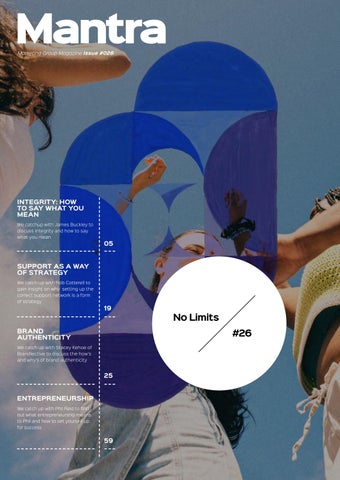
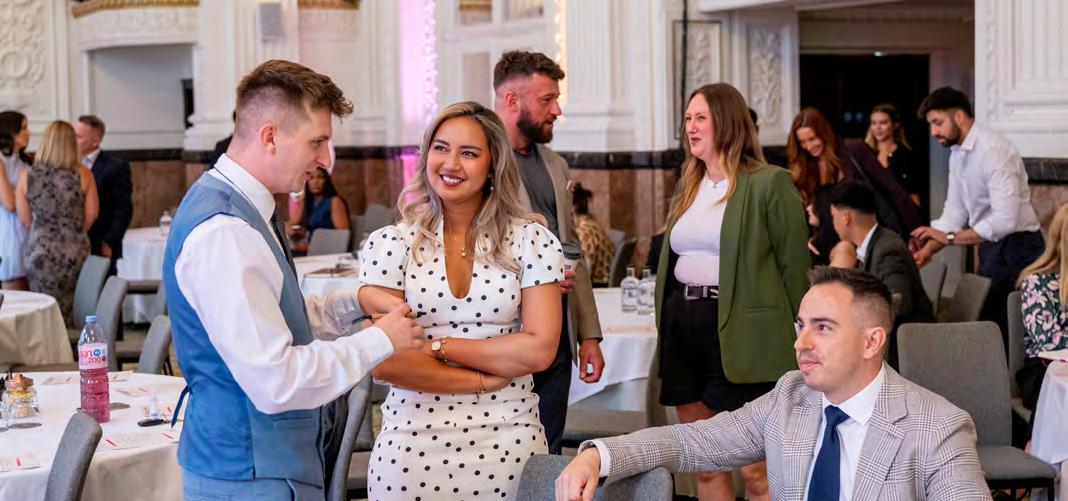
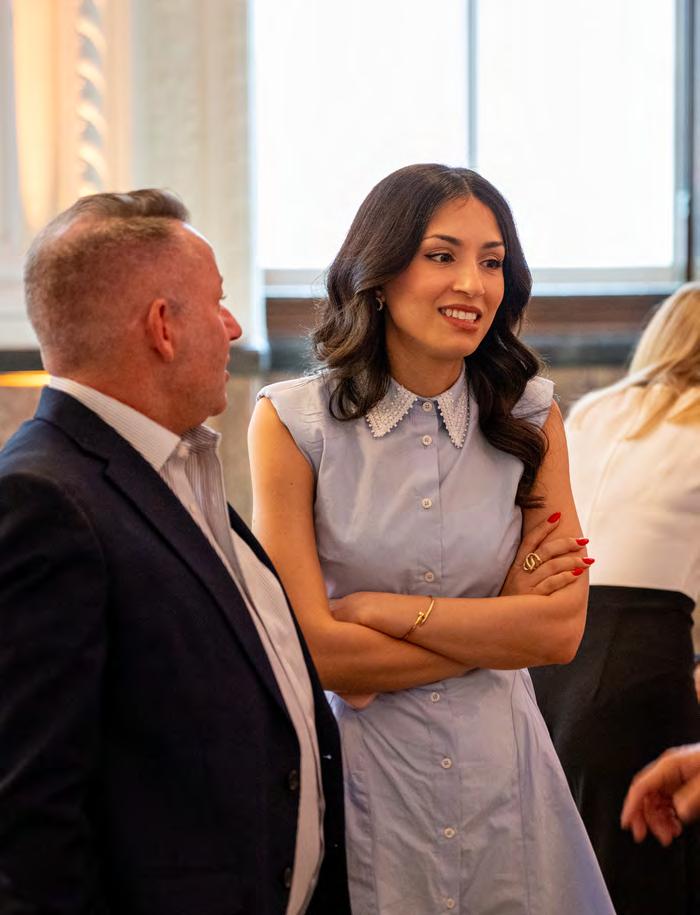
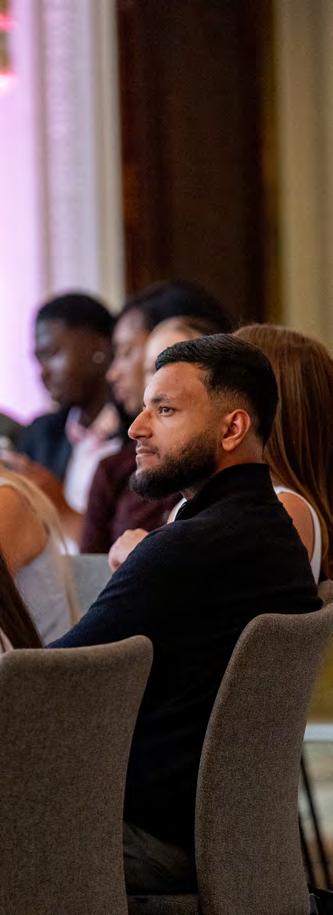
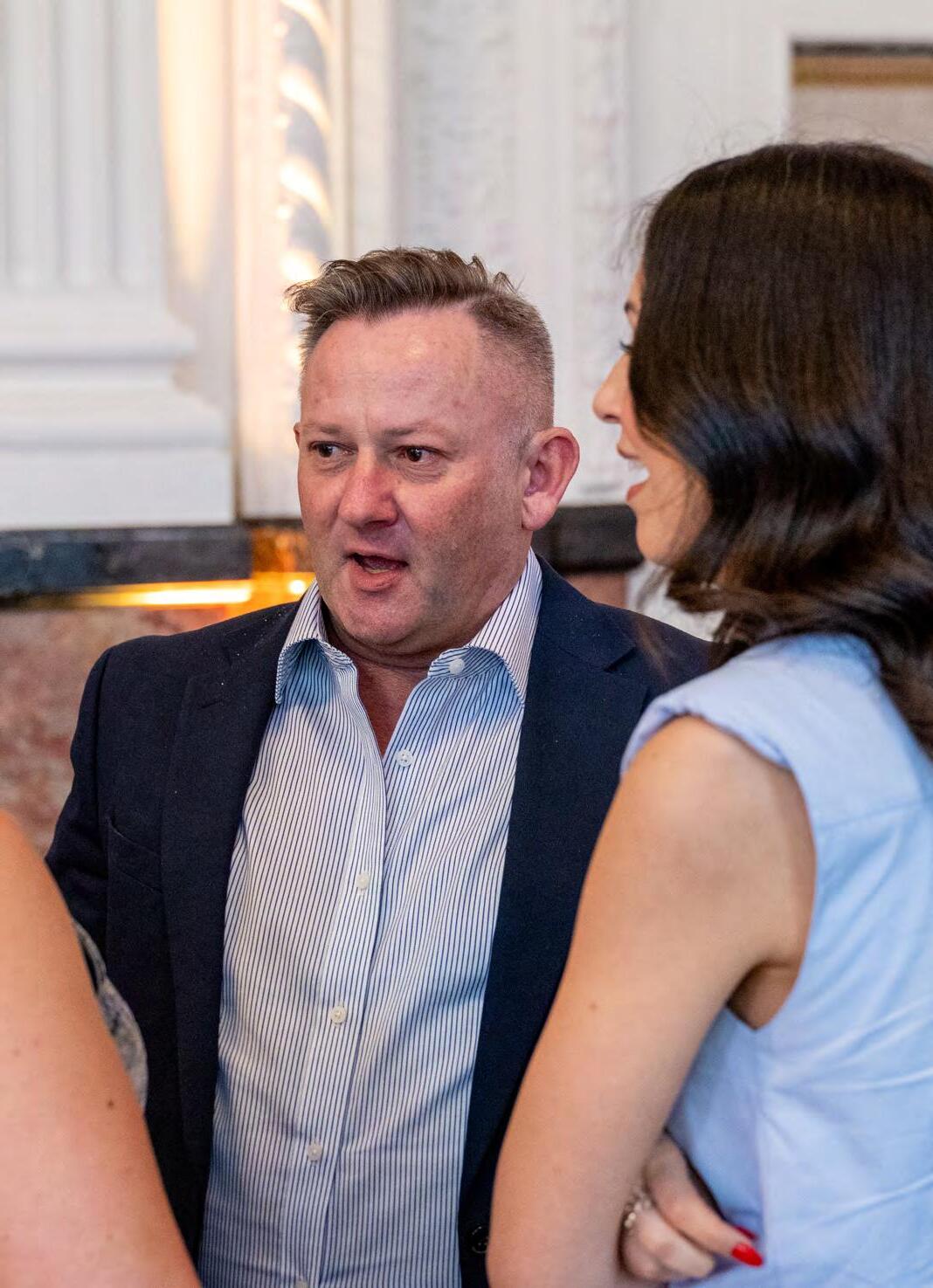
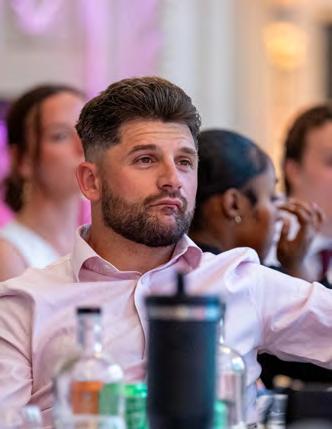
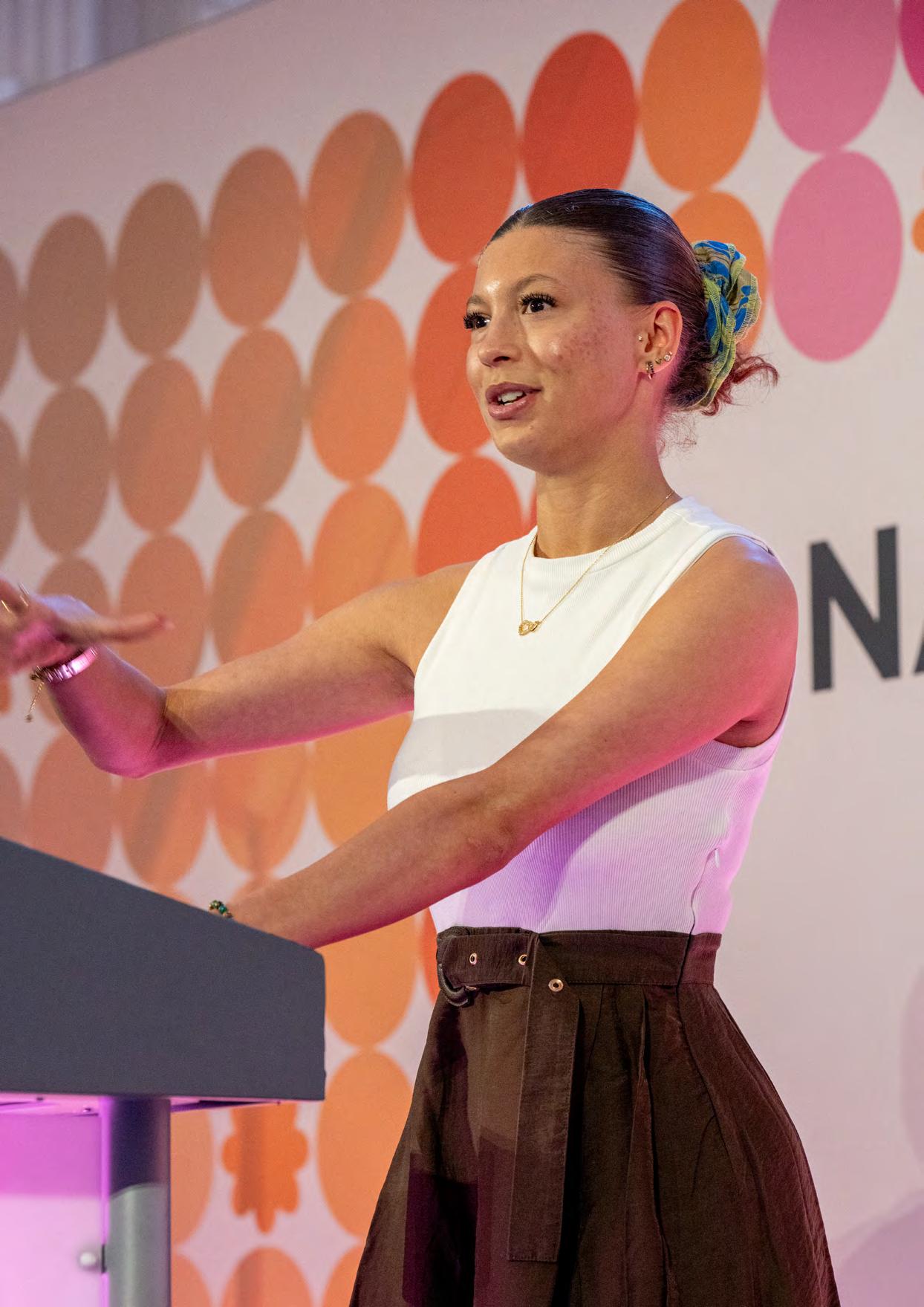
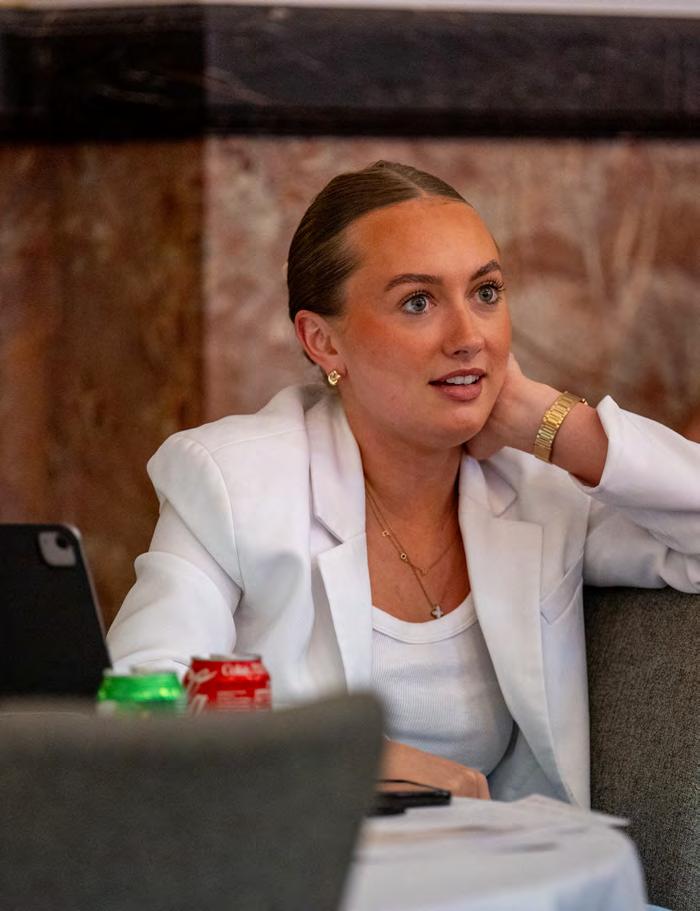
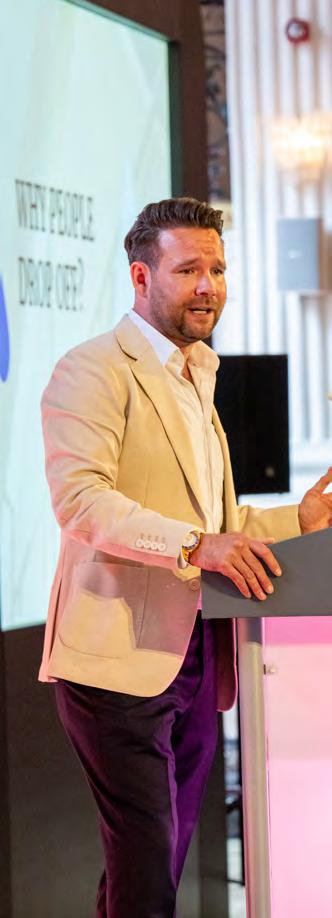
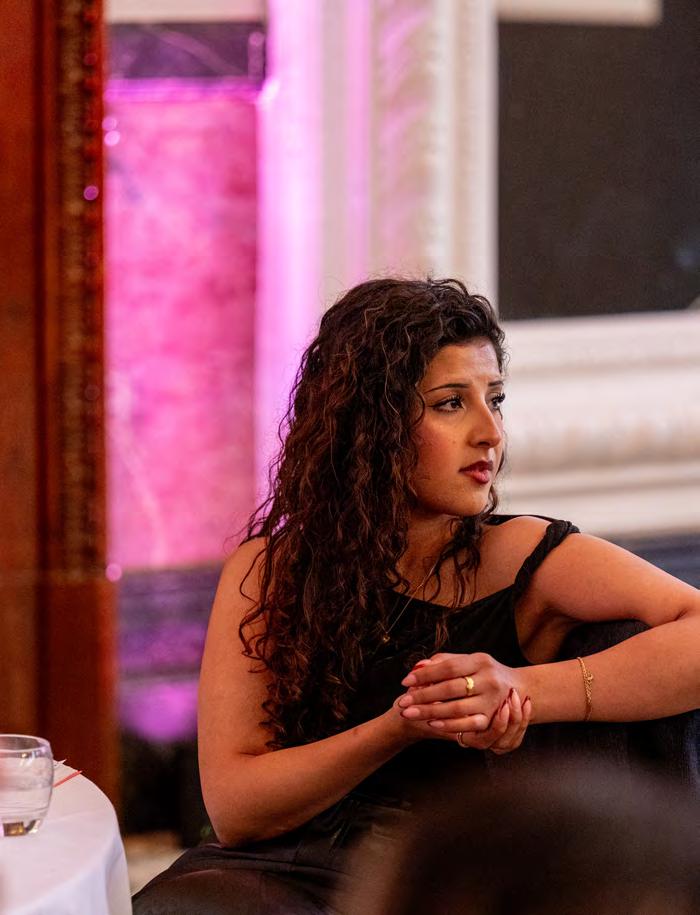
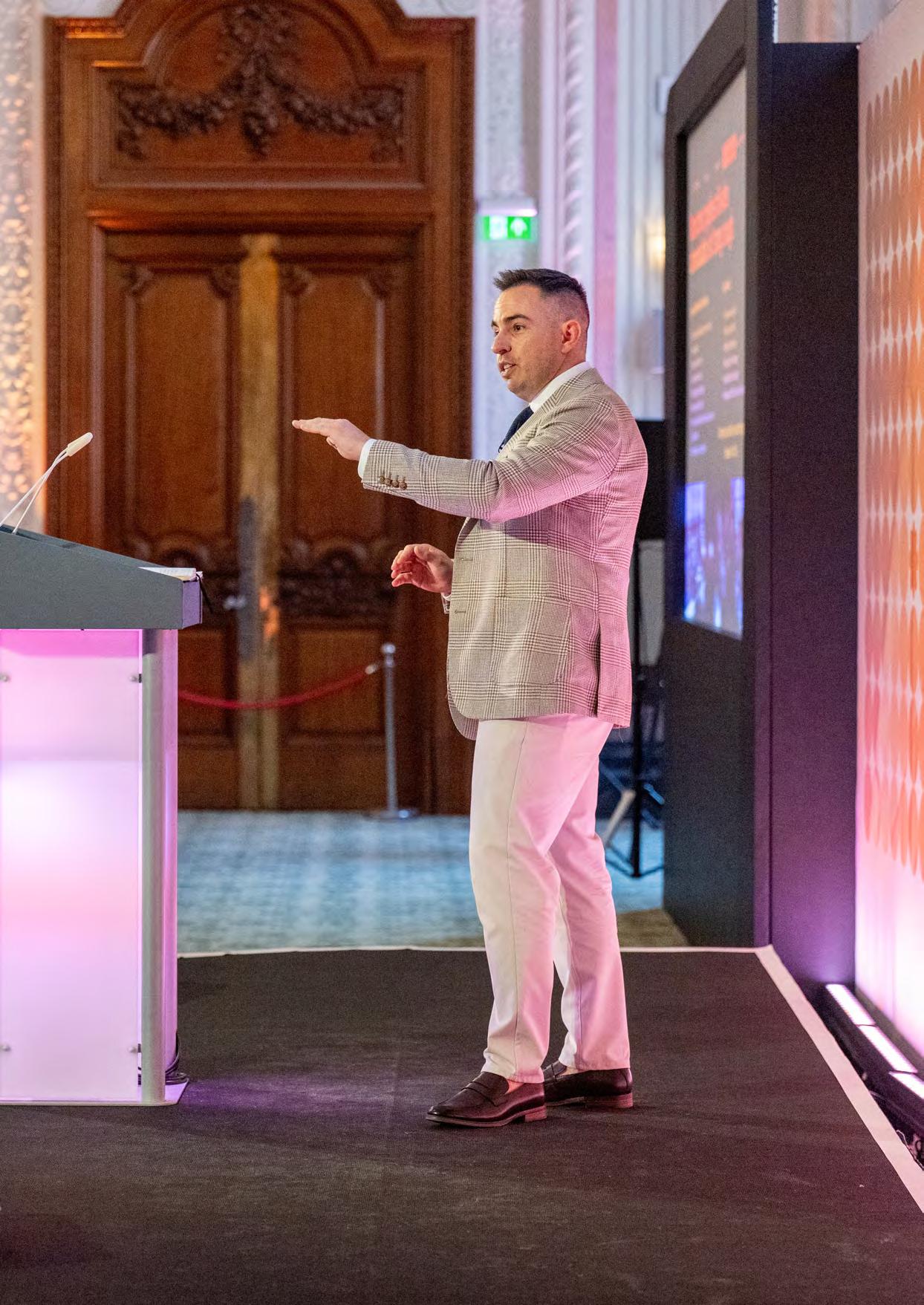
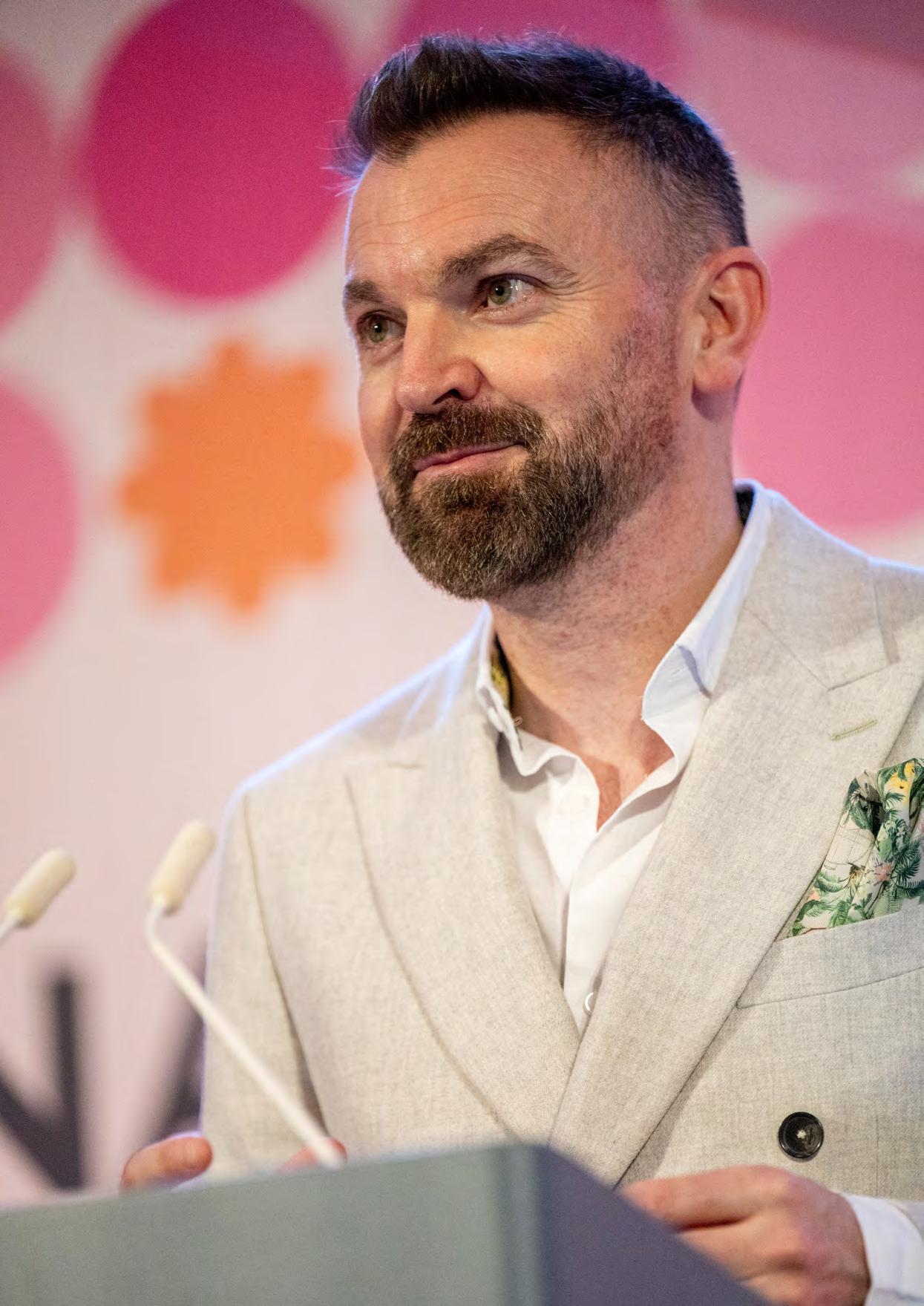
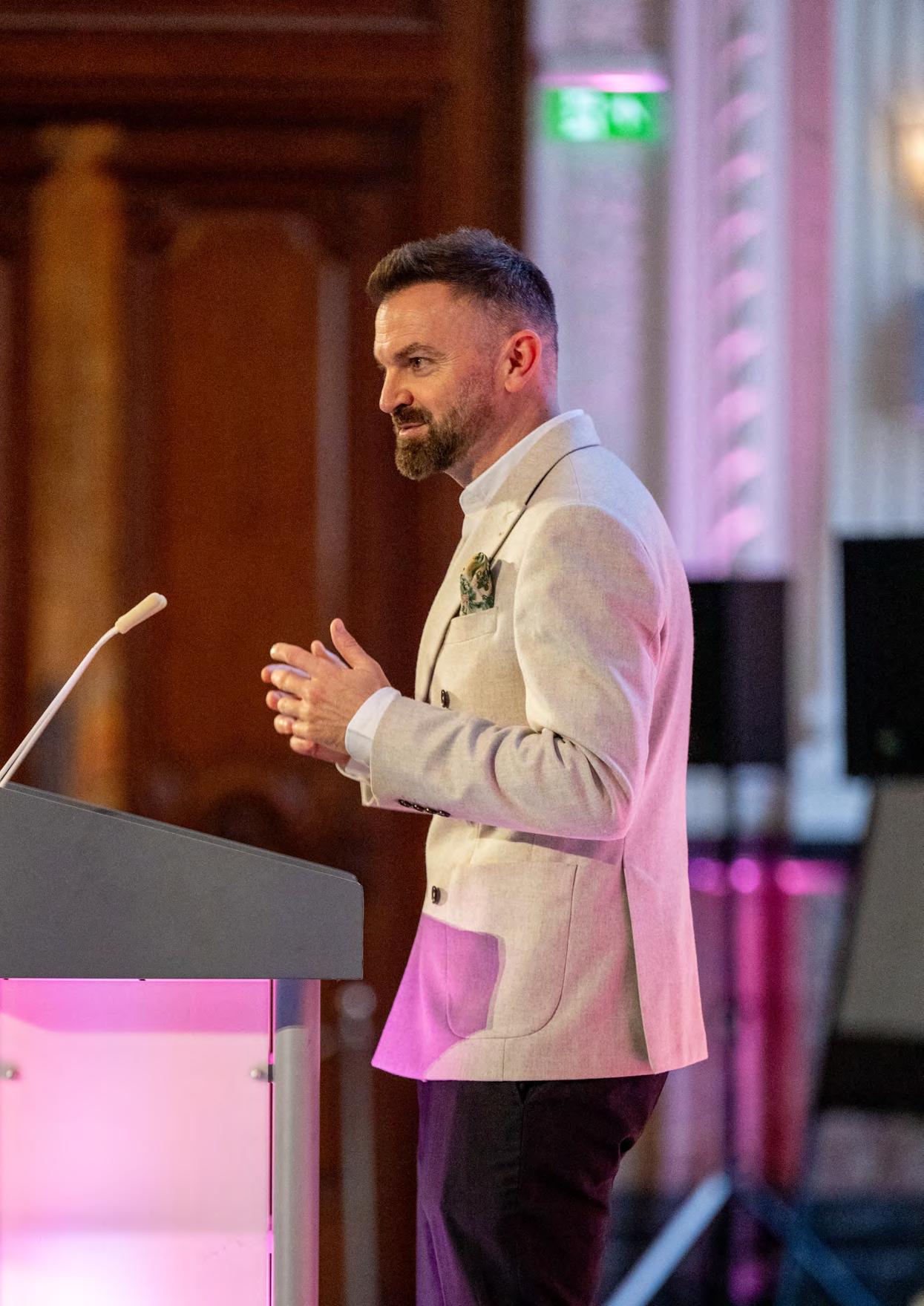
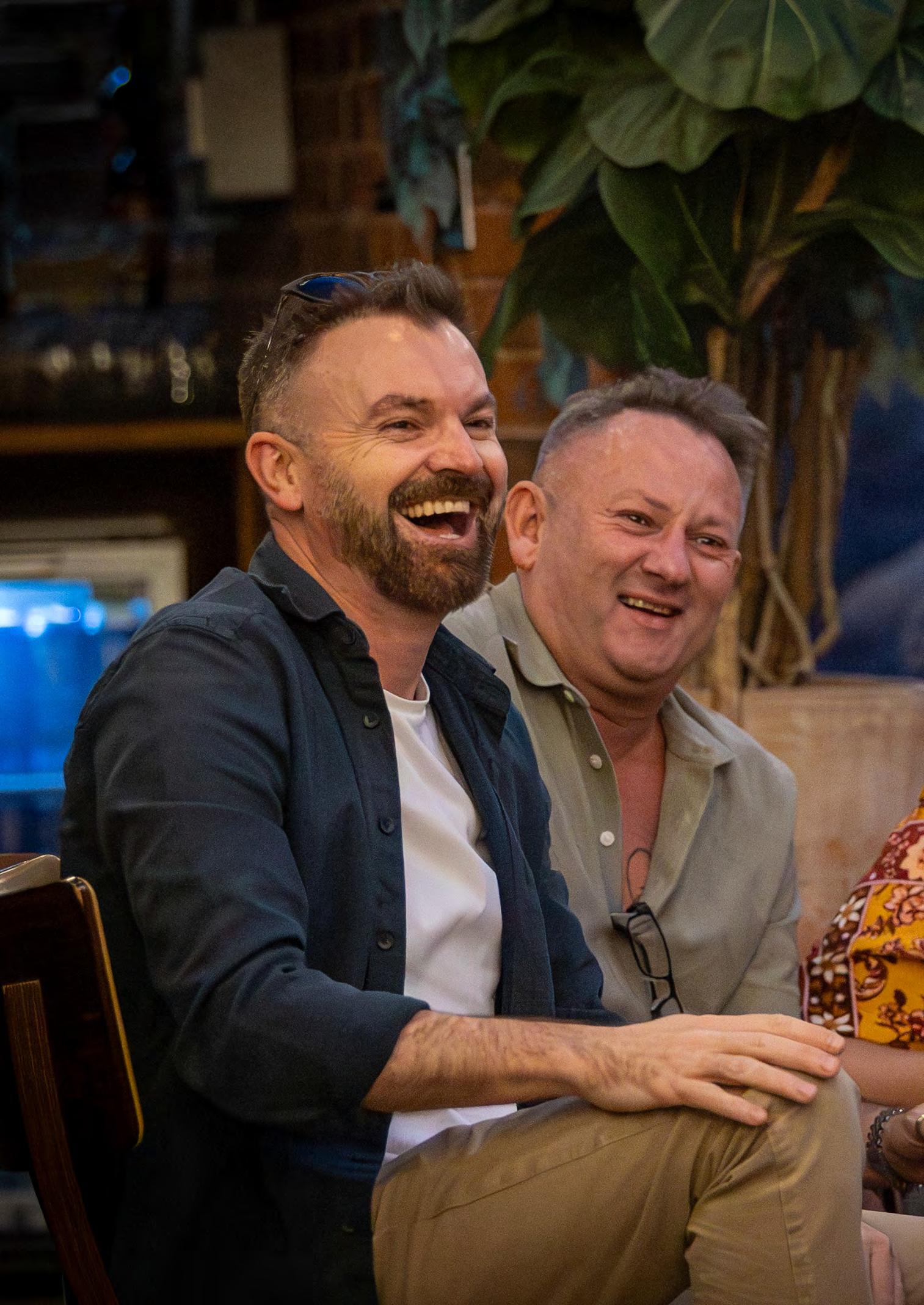
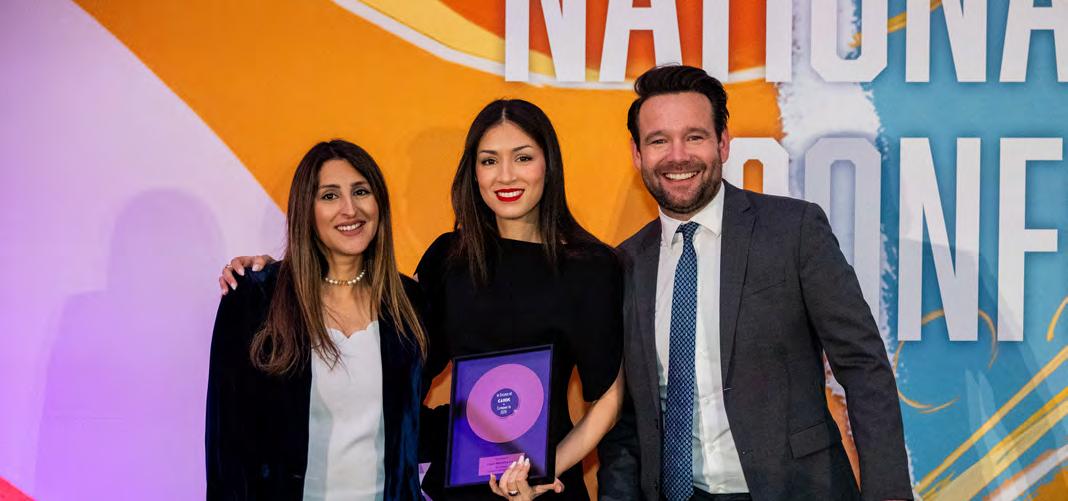
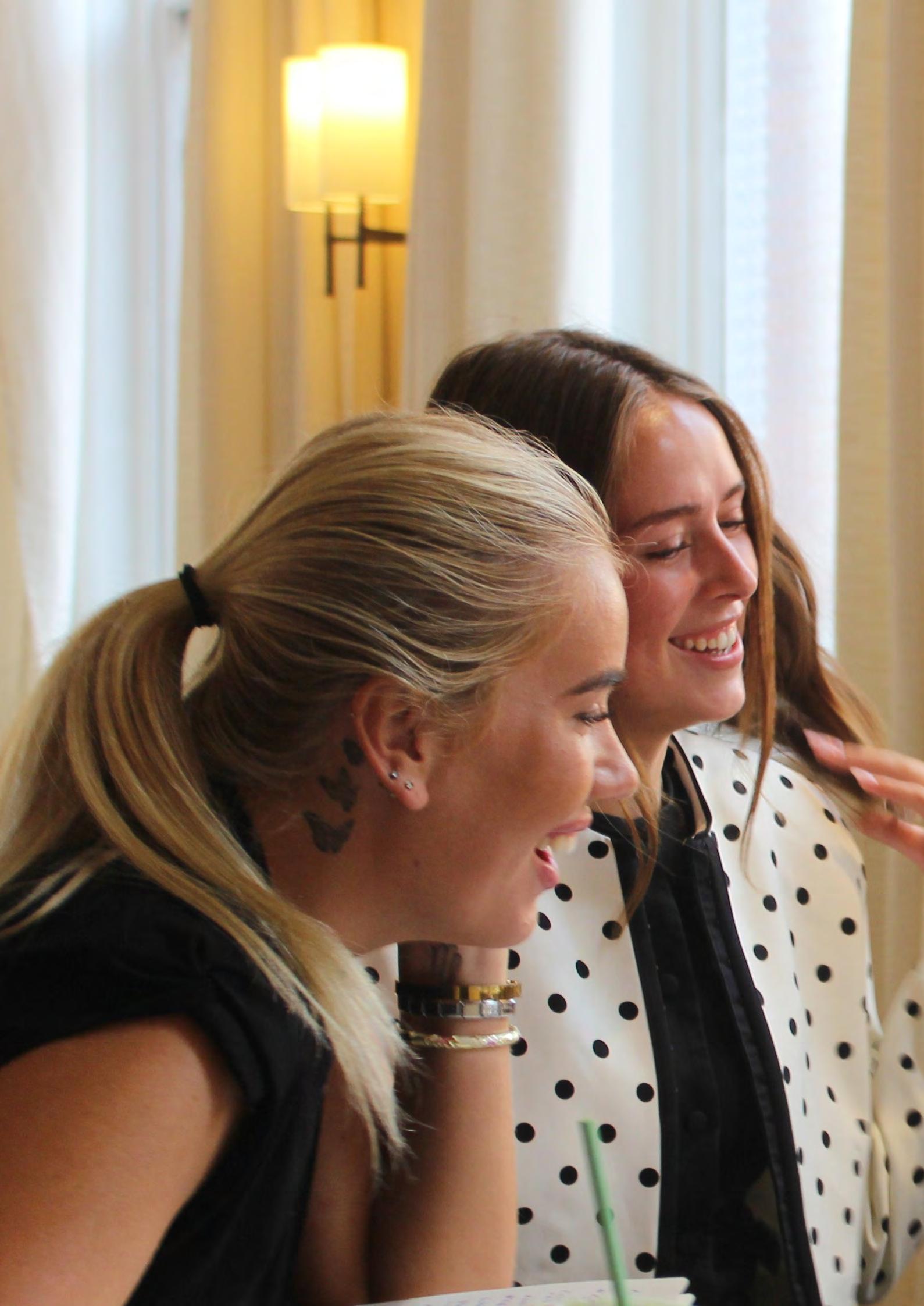
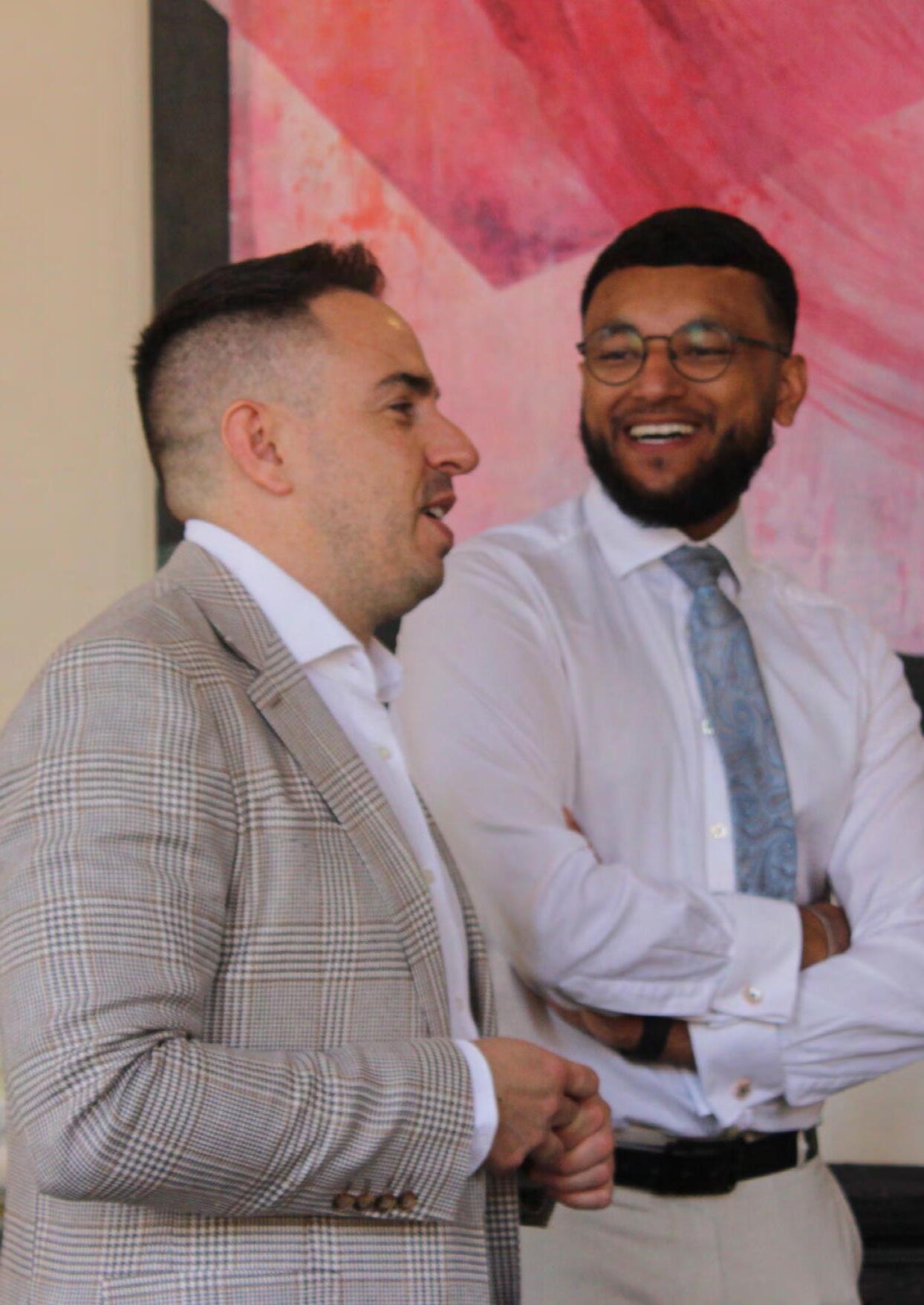
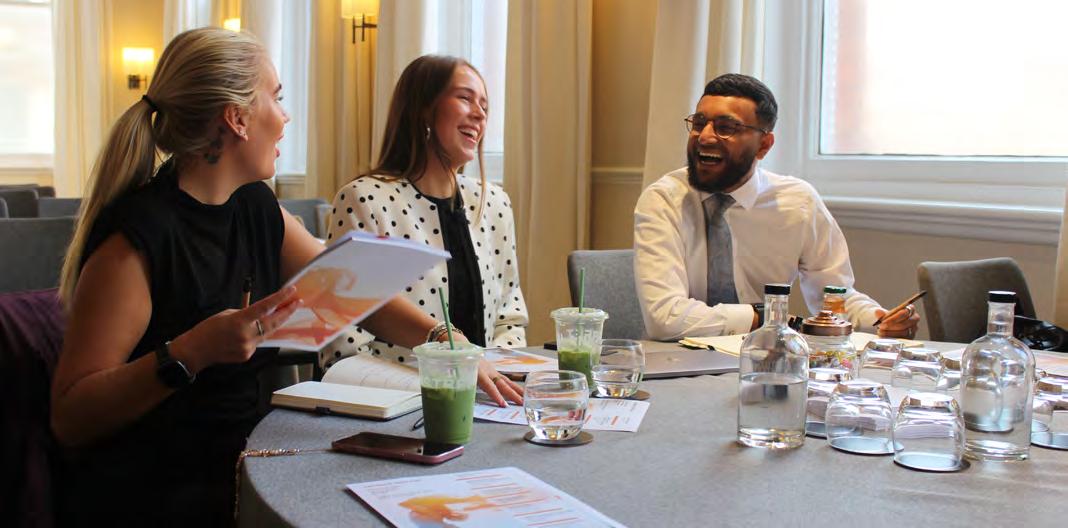
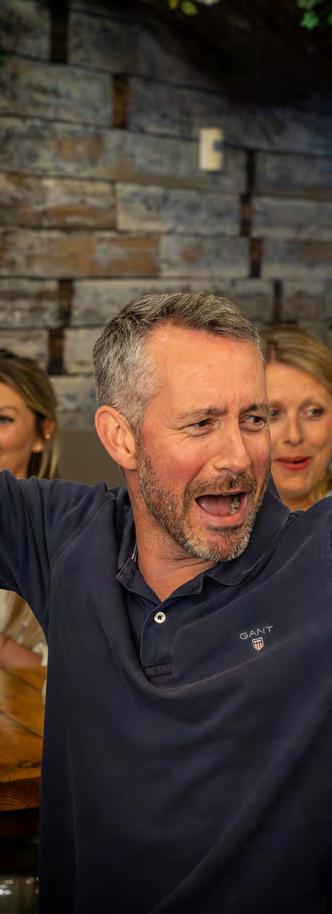
We catchup with James Buckley to discuss integrity and how to say what you mean
SUPPORT AS A WAY OF STRATEGY
We catch up with Rob Cotterell to gain insight on why setting up the correct support network is a form of strategy
BRAND AUTHENTICITY
We catch up with Stacey Kehoe of Brandlective to discuss the how's and why's of brand authenticity
ENTREPRENEURSHIP
We catch up with Phil Reid to find out what entrepreneurship means to Phil and how to set yourself up for success
Our contributors
Francis Davies Chief Editor
Fran is Chief Operations Officer for Mantra Marketing working wtith people and companies to help the business become more efficient and profitable.
Kevin Nash
Sub-editor
Kevin is the General Manager at the Promotions Company ,working with colleagues and their teams to help them achieve their goals
Ellie Ford Editor / Author
Ellie runs Flossy Notes from her Cornish base in Bude. She works with small businesses on their marketing objectives, covering services such as social media management, content creation, and a host of copywrting projects
Alex Rae
Art Director / Designer
Alex is an accomplished designer, and visual artist specialising in brand communications.
In this issue
Welcome
TO ISSUE #26
2026
Well, hello and welcome to Edition #26! Our platform, dedicated to sharing insights, celebrating achievements, and fostering collaboration across the country, and beyond.
The first half of the year has seen the team delve deep into what makes us great, focusing on the quality of our interactions, relationships and the longevity of our sales connections. Sales for us is never just a numbers game. To make sales you have to work with people so our priority is fostering genuine, mutually beneficial relationships. From that, the numbers flow.
Rob Cotterell, Managing Director of RedSeven Marketing has taken charge of quality with conference calls, in-depth analysis and qualityfocused break-out rooms at meetings. He’s also fronting the development of a new online training platform, providing coaches and new members of the team with an easy-to-use, standardised, collaborative educational tool to boost skill development and capabilities.
Special mentions go to those who have taken their career to the next level. Sam Haberfield is off to a flying start in Liverpool with his Administrator, Elle Moulton and Event Coordinator, Liv Peers. Cameron Kirkpatrick got himself promoted to Assistant Owner and will be expanding his team into Leeds. Preet Singh has moved down to Plymouth and is taking the reins of the Monarchy team with great things to come. Alex Pearce is back from Australia and opening up in Sheffield with the help of Phil Reid and the ProCo Organisation. It’s all go-go-go!
A big ‘thank you’ goes to our incredible
administrative teams across the country who have worked tirelessly to assist business owners in their respective endeavours. It’s because of the likes of Lewis Munro and Olivia Webster of RedSeven Marketing, who have taken the events division under their wing, that it’s rocketed into the exciting and extremely successful department it is. Their innovation and can-do attitudes have spearheaded the division for others to jump on board and see what’s possible. So, what’s next for event marketing?
Welcome back Jemma Randall! She has been doing a fantastic job in Leicester working with Muhammad Ahmed and the AllStar Acquisitions team covering their field development, sales and quality needs, and has now joined The Promotions Company in Bristol as their Head of Recruitment. Always a welcome addition to our team!
A huge well done to Macey Breaks who has really led the way in recruitment this season, implementing the basics brilliantly and helping get Redseven Marketing to the top! Watch this space!
This edition is packed full of unique insight from those who are living and breathing successful businesses. The themes that run throughout are Integrity, Communication and Entrepreneurship. We hope you enjoy it!
INTEGRITY
How to Say What You Mean
Sounds simple on the face of it, doesn’t it? Just say what you mean.
Expressing ourselves authentically has perhaps never been so tricky, though. Having an honest conversation in the workplace can bring with it emotion, an awkward atmosphere, negative perception, potential backlash and could you be ‘cancelled’?
Done right, ‘saying what you mean’ will bring great results, but only as long as you’re considered in your approach. So, how is it done? Someone not known for beating around the bush is James Buckley, CEO of The Mantra Marketing Organisation. His conversation style is direct yet never hurtful. When James is speaking to you, or to a room full of people, there will be no frills, and you will leave feeling understood, supported and equipped to make moves going forward.
It’s a skill we should all be aspiring to, whether
you lead a team or not. The art of honest conversation is more valuable than ever, in a time where we’re asking ChatGPT to run our lives, and draft emails on our behalf.
Here’s James!
There’s a difference between saying what you mean and being brutal, isn’t there? How do you skirt the line so well?
You can’t go wrong by just being honest. Being straightforward isn’t complicated, and it’s my solution to everything. You can be direct without being brutally honest; there’s no need to put spins on things, just get to the point. Sometimes people don’t like it, and they might not want to hear it, but once they’ve digested what you’ve said, they tend to agree with you. It’s the way to go.
“You can’t get it wrong if you’re honest with people, but you can if you’re trying to be clever”
How do you manage to do that without hurting someone’s feelings or is that just the way it’s got to be sometimes?
It’s all done previously. You can be direct if you’ve built great relationships with people in the first place. Spend time building those strong relationships so your team knows how you operate and what your intent is, then these conversations will be easier for everyone.
Your intentions are what make the difference between an effective conversation and defiance.
If someone’s underperforming, and you need to have a conversation with them about it, (which will no doubt feel uncomfortable for them), how do you structure it?
What I’d do is lead with the things they are doing well. Even though they are underperforming, there will be elements they are doing right. Make them feel good about themselves first, let them know their efforts have been appreciated, then move on to what they need to improve on. Don’t just weigh in with the negatives; their walls will go straight up, and they’ll leave feeling defeated.
These conversations are often with people who have been on the team for a while and are experiencing a lull in performance. It’s so important to remind them of what they’ve achieved previously, what they did well in the past and the trajectory they could have again. People forget that they’re actually
good at what they do! They wouldn’t be there in the first place if they weren’t. The goal of the conversation is to say, “Let’s get you back to where you were, and even better!”
Has there ever been a time you’ve gotten it wrong and had to back track?
Totally. If you get it wrong, just put your hands up and own it. No one’s perfect, and no one’s expecting you to be.
If you’re brand new to leading honest conversations with team members, what would be your guidance for getting it right?
Just do your best.
As a newer team member, your actions are always louder than what you have to say, so lead by example. If you can sit down for a conversation and know that you yourself are working hard, have an affirming attitude and are putting in those extra 1%ers, then what you’re saying will land better.
Make sure you’re prepping for these instances, too. Get with the right people and watch them perform their own one-on-ones. You’ll get to know the techniques that match your leadership style, and observing how other people conduct themselves will only ever be helpful and add strings to your bow. Each conversation is different; equip yourself by adding to your conversational toolkit
Why is it so important to show integrity within your conversations?
It’s the backbone of everything you do. If you don’t show integrity, no one will believe, trust or follow you. It’s a bit like honesty in relationships; if you can’t trust someone, you can’t love them, and the relationship won't work long-term.
Hot Take!
Get the difficult conversation done first. You can have easy ones at any time, in any mood. Challenging conversations are the ones that end up producing the most growth for the individual, the business and yourself. People don't learn from a pat on the back or a high five; they learn from critical, constructive conversations, so don’t shy away from them. Get on with it.
It’s as simple as that! Get on with it, be the example and sandwich the critique. Got it. Thanks, James!
You can’t get it wrong if you’re honest with people, but you can if you’re trying to be clever
"Get the difficult conversation done first. You can have easy ones at any time, in any mood. Challenging conversations are the ones that end up producing the most growth for the individual, the business and yourself"
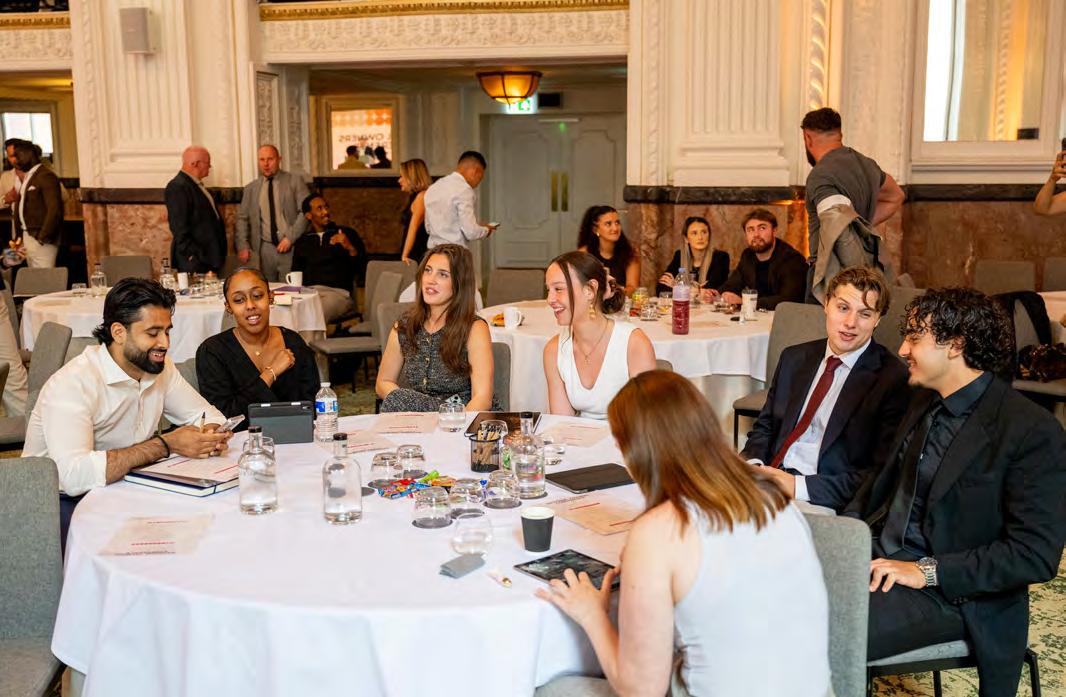
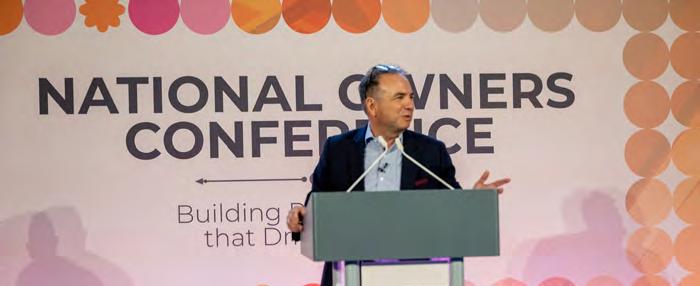
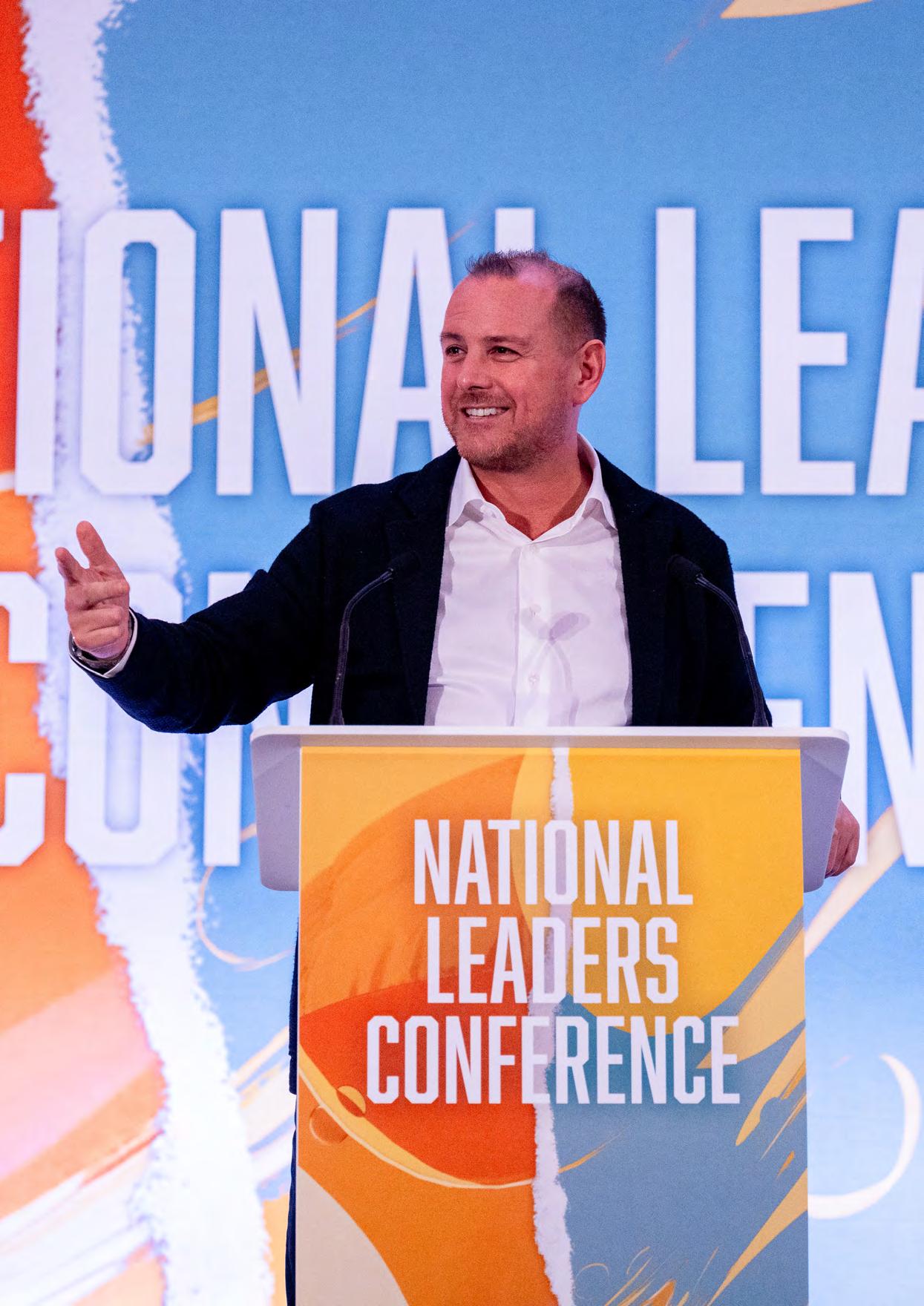
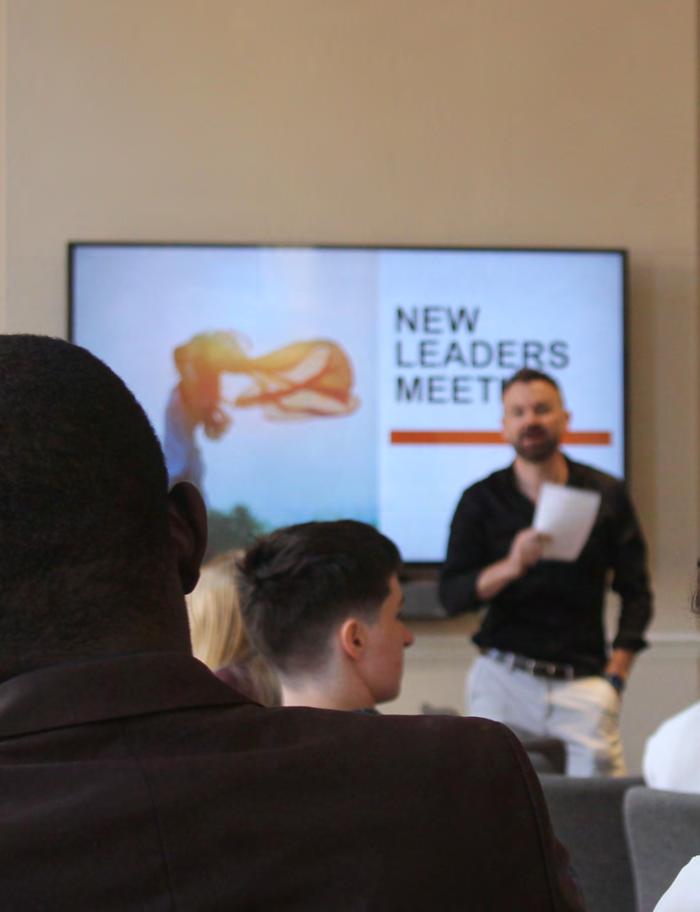
NATIONAL LEADERS & OWNERS CONFERENCE:
E May 2026
The Grand Hotel, Birmingham
veryone, and we mean everyone, in the industry rocks up to this meeting with purpose. We want to hear from the big names of the moment; we
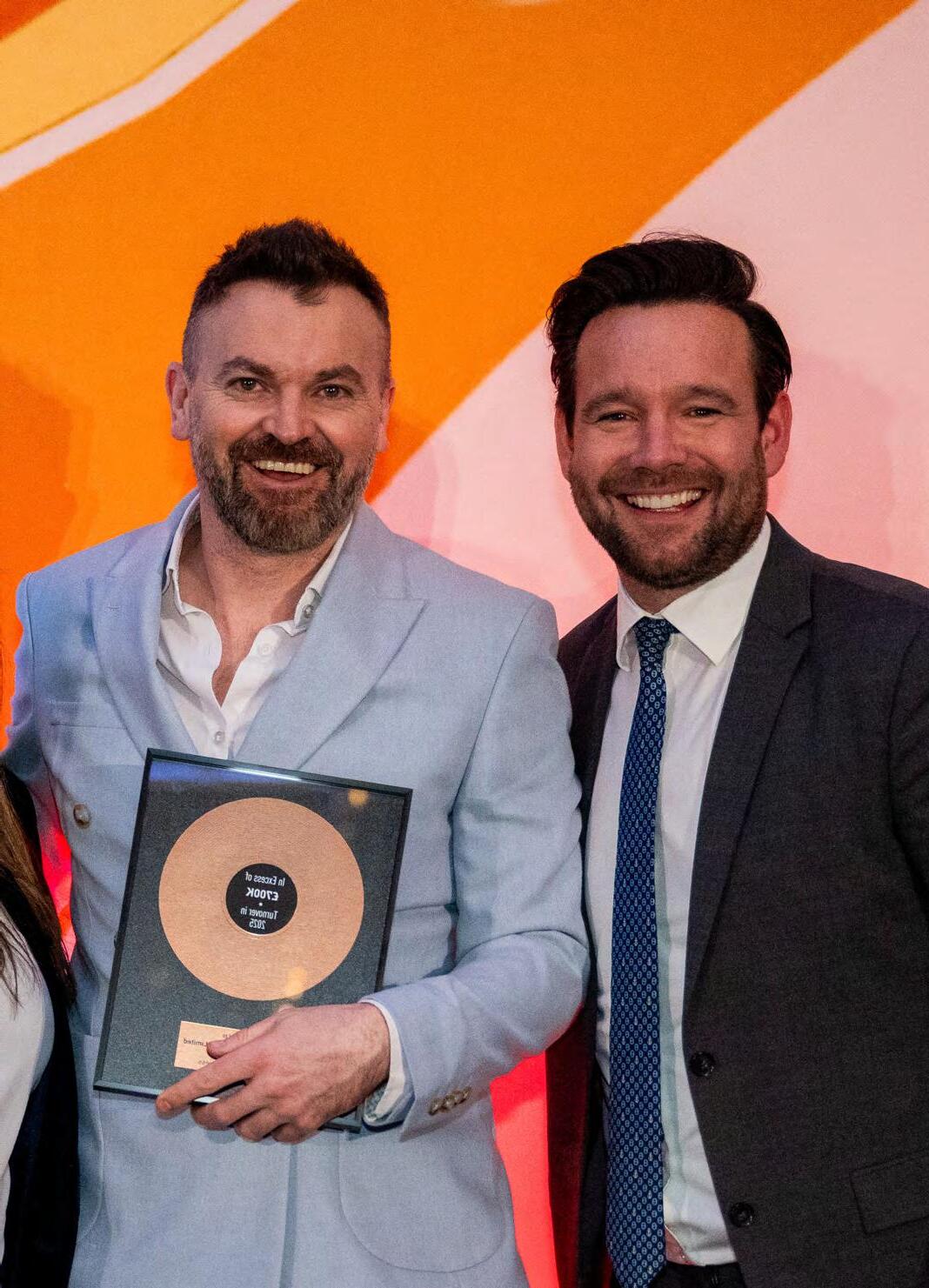
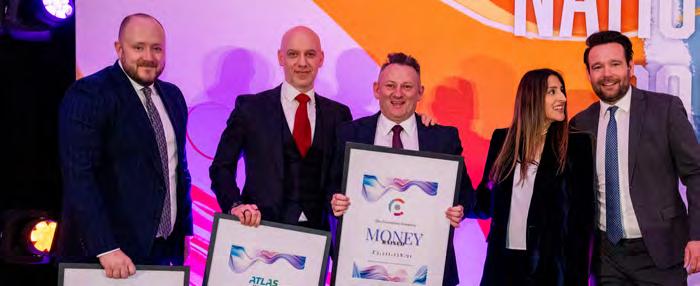
want to see for ourselves what’s working, and boy oh boy do we want to be acknowledged ourselves. If you’ve had a great quarter, you will be mentioned and your achievements celebrated. Kudos? Yes, please! We work in sales after all.
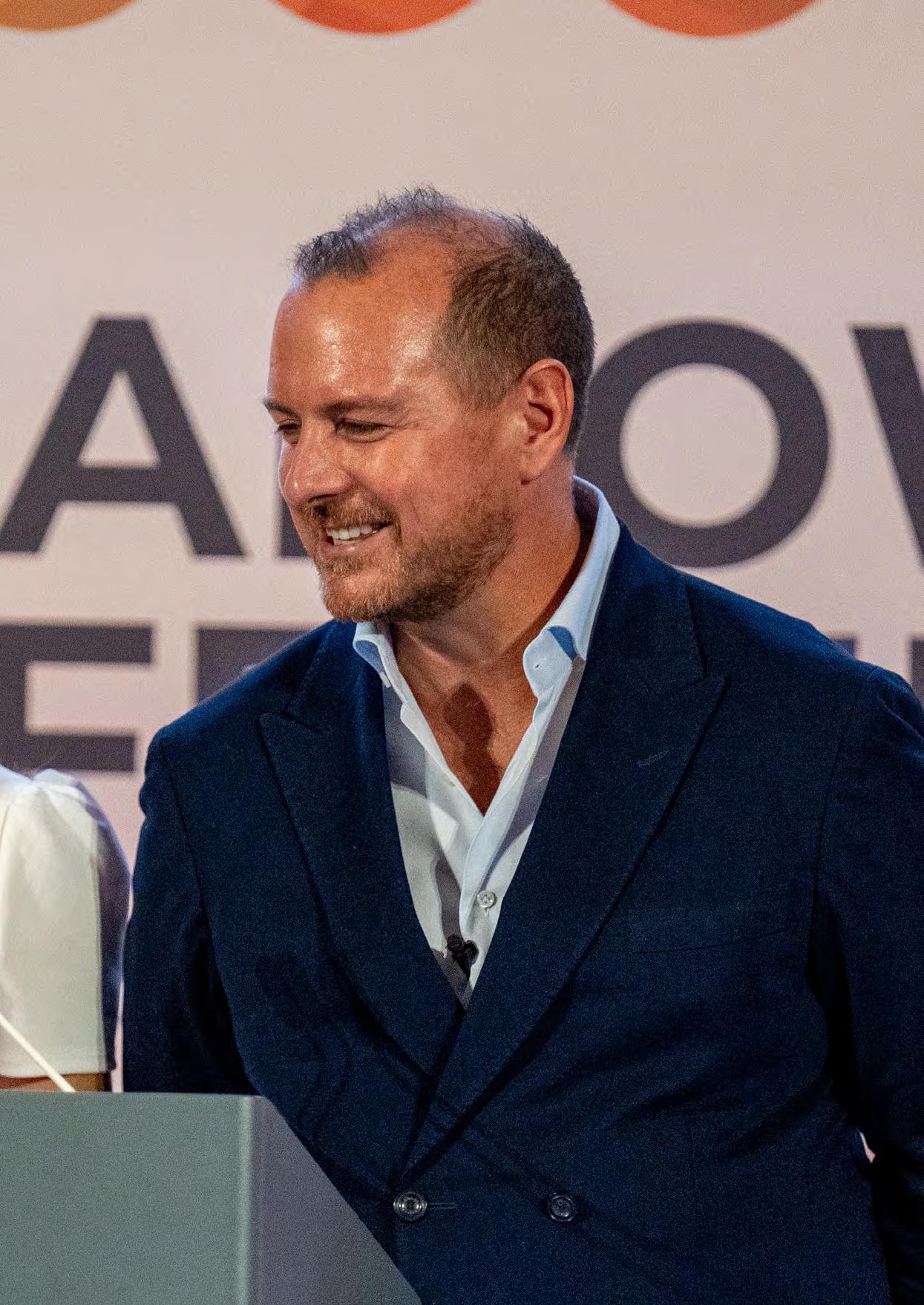
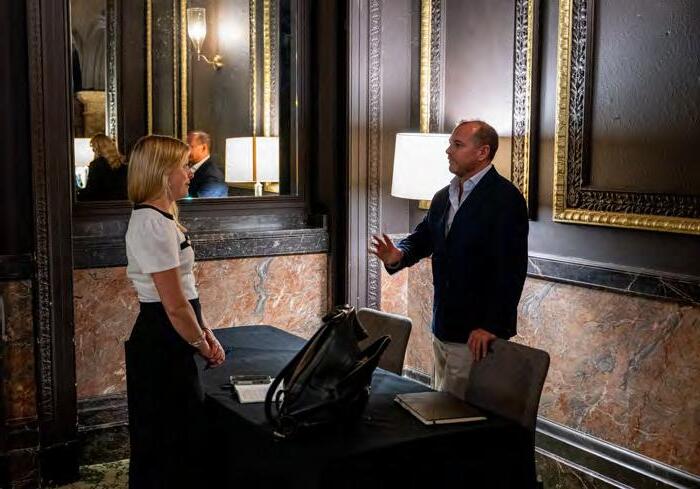
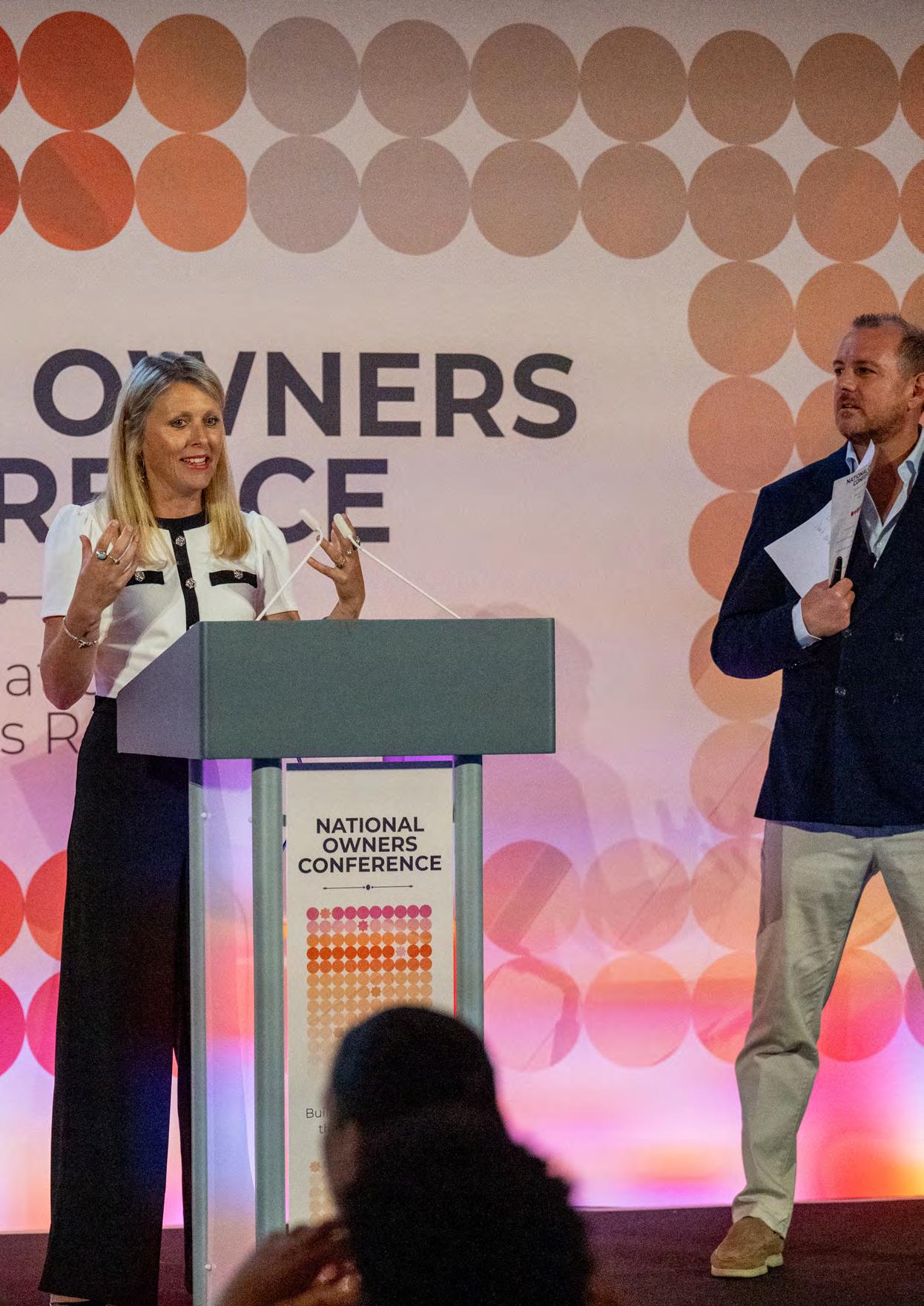
Thank you to our keynote speakers, Fran Davies and James Buckley, who both spoke about the
necessary mindset towards recruitment and the mechanics of attracting and retaining great people to your business.
As a fast-paced industry, there’s a plethora of news to discuss each time we get together, so every meeting is diverse and insightful. Thank you to The Grand Hotel in Birmingham for hosting us!
“What an amazing day of education and networking… so good to refresh all things recruitment, and even after all the years I’ve been doing this, I came back to the office reinvigorated with lots of new ideas to apply!”Kevin Nash
Cotterell
SUPPORT AS A WAY OF Strategy
Rob
“Setting and hitting goals, feeling good in yourself, building skillsets and confidence; it’s not just about turning up.”
Support staff are the backbone of our organisation. We’ll say it again for those at the back. Our support staff are awesome! With thousands of brand ambassadors around the world, and tens of offices across the UK alone, we’re certain we wouldn’t be where we are today without the dedication, tenacity and brilliance of our administrative teams. The clue is in the title, without their support we’d be going about our day with blinkers on.
These team members, often the unsung heroes within direct sales companies, feel the pressure to perform just as much as anyone else with targets; it’s their bookings, organisation, recruitment and foresight that enable the rest of the office to do well in their roles. You can’t sell at events without the site being booked, just like you can’t build a team without recruitment coming in. Everyone needs support, so how can we best support our support staff?
The Mentorprise Method
Someone who has always placed such significance on the team around him is Rob Cotterell, CEO of The Mentorprise Organisation and Marketing Director of RedSeven Marketing. With a recent and ongoing growth in depth for the team, the administration room is flourishing, and offices from around the country are visiting to see exactly why they’re doing so well.
The crux of it is to support wherever possible. Rob believes in giving people the tools they need to succeed and reach their maximum potential. Making sure each person is thoroughly competent and confident to do their job at the highest level, not only so that they perform well, but they enjoy what they do.
“Setting and hitting goals, feeling good in
yourself, building skillsets and confidence; it’s not just about turning up.”
Most people who come to work with us want to do well for themselves, we see it in our recruitment process more and more. These are the types of candidates we attract, those that want to develop professionally and personally, build transferable skillsets, take on responsibility and grow with the company. RedSeven Marketing have made sure they’re giving everyone who works within the team the tools to do that, and it begins with onboarding.
Who are you?
When you come to work with RedSeven, you’re not filling a role, you’re collaborating with the entire team. For business owners, you spend your working week side by side with your team, the very people who are committed every day to make your entrepreneurial endeavours a success. You’re going to want these people to be good at doing just that, aren’t you? The first thing Rob looks for when recruiting for his team, however, is likeability. Will he enjoy their company every day? Are they somebody he’ll want to have in the office?
Onboarding someone to the team takes time, effort, patience and consideration. As the business evolves, the training continues; there are new clients, systems, goals to work towards and professional responsibilities to handle. Rob wants to make sure he’s not only fond of those he is investing in, but building genuine connections with them.
As support staff they are there to support you (well duh). You need them to be there, but make sure you want them there too. Recruiting the right people for you and your business means you’re less likely to have to undergo the entire process all over again later down the line.
When you come to work with RedSeven, you’re not filling a role, you’re collaborating with the entire team. For business owners, you spend your working week side by side with your team, the very people who are committed every day to make your entrepreneurial endeavours a success
Green Flags at RedSeven
We asked Rob what characteristics he looks for within support staff, and as well as likeability, he believes the following are a winning combination.
Innovative - If we can trust our team to think for themselves, question best practice and be curious within their roles, we’re going to want to listen to what they have to say. Be the person who brings ideas and notices gaps, instead of the person sitting idle, waiting to be told what to do.
Proactive - Having ideas is fabulous, but what are you doing about them? Get the ball rolling, take initiative, even if it doesn’t end up a roaring success we’ll all have learned what doesn’t work, right!?
Focus - Dilly-dallying doesn’t really fly in sales. If you want to hit your targets, you need to be committed to working on them.
Care - It goes two ways. If you’re going to pour time, training, resources and investment into team members, you’re going to want to choose people who care about what they’re doing, and who they’re doing it with.
“Everyone here genuinely cares, they’re not just looking for what they can get out of the business, they go above and beyond for the team”
How to support your Support Staff
Building a fabulous team around you can’t be done without mutual benefits. It is paramount that you treat your team well, better than well.
“Everyone here genuinely cares, they’re not just looking for what they can get out of the business, they go above and beyond for the team”
Collaboration is encouraged through accountability, often leading to a collective effort to identify problems and develop solutions instead of allocating blame onto one person or action.
It starts with the working relationship; communicating, listening, aligning values and involving them in as much as possible. With clear expectations and a thorough understanding of where the business is going, they can act accordingly knowing that they’re valued, trusted and a part of the journey.
Trust is earned. You may well be respected for what you’ve achieved to date, but that’s a surface level connection. When asked who we trust most in the world, the majority of people would offer up a parent or two, ergo, the person we’ve known the longest. Trust takes time, so be sure to not only be present but invested in your team’s training, feedback, and day to day activities.
“I plonk myself wherever my team is, so if they need me, they can ask questions easily. It’s never intimidating or formal, I can chime into conversations easily and offer up advice freely.”
By spending time with people, they can see how you operate first hand: How do you communicate under pressure? Does your attitude fluctuate drastically? Are you reliable? Investing your time into people early on in their career doesn’t go unnoticed and more often than not sets the precedent for the ways in which they should present themselves going forward.
Structure
Having been in business for many years now, Rob understands what works for him and
his team. They’re a methodical bunch. With systems and structure, they’re able to plan ahead and communicate effectively, an administrator's dream combination.
Not content with once a week, the Redseven team meets for a huddle three times a week, with each individual bringing their plans, agenda, projects and updates. The opportunity to ask questions, gain insight from other departments and collaborate on their efforts has been a game changer.
“Everyone’s on the same page, communicating with each department of the business to work towards collective goals.”
If the recruitment team is bringing in new team members, the events division needs to know to book more sites in time, and the team leaders need to prepare their coaching efforts. Without continual communication, they’d all be chasing each other's tails.
Without the support, assistance, organisation and forethought of our administrative teams, let’s face it, we’d be lost. When you’ve got great people in your business, it’s imperative to give them the opportunities, and encouragement they deserve, in an environment that allows them to shine.
Thanks Rob, and well done to the RedSeven team!
Stacey Kehoe, Brandlective
W Brand AUTHENTICITY
hen asked to explain branding, where does your mind go? A pretty logo with matching fonts on all corporate merchandise and signage?
Sure, you’re not wrong, but branding is in the way we look, behave, and make others feel, and that’s going to take more than an Instagram profile to get it right.
As an organisation spanning Europe, branding is a constant thread through our diverse strategy. As you can imagine, there are a plethora of personalities and geographical cultures to showcase, and we’re definitely not keen on blanket, corporate spiel.
It can be difficult to navigate company policy with unique entrepreneurship, but with consideration, indepth forethought and collaborative branding partnerships, we’re pleased to say it’s something we invest a lot of time and resources into. We encourage every business owner to do the same if longevity in business is what they’re after.
We spoke with Stacey Kehoe, the Communications Di-
rector of Brandlective, our chosen marketing specialists. As business owners, it’s impossible to do all of the things, all of the time, perfectly well, or well at all, really. So pairing up with experts in necessary fields is needed if you want to keep things moving.
We chose to work with Stacey for a few reasons: she used to work in direct sales herself, so she knows our exact industry very well, she sees marketing as more than just a social media strategy, she’s diversified her business to assist in multiple departments including recruitment, coaching and marketing, and she tells us straight if something’s not up to scratch.
“They know what they’re trying to achieve, we know how to get them there.” - Stacey Kehoe
A day in the life of a marketing specialist can start with website updates, drafting a company recruitment guide by lunch, and ending the day with some review management and a client debrief. Branding is a far-reaching and ever-evolving concept that needs constant attention; launching a website and leaving it to sit idle will do you no favours.
Let’s run you through some of the branding elements your business needs to tackle.
Your website
Your online HQ. Where your audience should be able to source any and all information about your business. From contact details to company updates. Done right, your website will inform, advertise, inspire, redirect, validate and showcase the best of what you do. Done wrong, it’ll annoy, confuse, and bore its visitors.
According to Stacey, you want your website to support your endeavours, acting as a tool within recruitment, sales and in-house development. Use it to your absolute benefit.
Here’s an example:
• You’re placing a recruitment advert stating that you’re “seeking a sportsminded mentality”, but you don’t currently work with any sports brands. That can be misleading. What your branding specialist might do is write a piece of content that relates to the business owner’s background in sports and how that translates to the role. Why are they seeking that sort of mentality?
• As a recruiter, you’re then contacting successful candidates and sharing it“Before we get on a call, I’d like to share this blog with you so you can understand a little bit more about why we’re interested in your background.”
• The candidate then sees how their skills can be used and feels more confident walking into their appointment
Leaving your website untouched isn’t just bad form; it will harm your reputation with
Google and those who are trying to use it.
Your Socials
The perfect opportunity to show off your company culture.
Direct sales isn’t for everyone, we know that, that’s why those who really go for it tend to do extremely well. The work itself can be tough, but do you know what else it is? Fun! Your social media channels are a brilliant place to showcase all the ways in which our business is brilliant: the laughs, the travel, the personal achievements, the relationships, the camaraderie, the joy. These elements are particularly appealing to candidates at the moment as more roles become solely remote, leaving workers limited in their working environment and lacking any social connection.
On top of that, we offer incredible opportunities to develop skillsets, build networks, explore the world and start businesses. There’s a ton to talk about and social media is where people are listening.
AI Appeal
Everything you put out is content, from LinkedIn articles to recruitment adverts, it’s a chance to speak to your audience, including AI...
Have you heard of AEO? Answer Engine Optimisation - Ensuring that a brand is accurately represented in AI-generated responses. Candidates are using the likes of ChatGPT to research the companies they’re applying to. All they need to do is ask to find out more, and everything you’ve ever put online will be pulled together and served to them neatly on a plate.
If you’re not putting in the time and effort to create brand-focused content, it’ll be found elsewhere. So those negative reviews you were ignoring? They’re now front and centre (we know how ChatGPT likes to balance out an overview!) And that blog from 2023 that explains a client you don’t even work with any more? That’s misleading your candidates.
Making content an active part of your brand strategy will help you no end. Assisting AI, boosting SEO and matching your in-house activity to your online output keeps your audience truly updated. Ensure you reach the right audience for your business with each piece of content you publish. Who is it you’re talking to and what questions are they asking?
“They know what they’re trying to achieve, we know how to get them there.” -
Stacey Kehoe
Leaving your website untouched isn’t just bad form; it will harm your reputation with Google and those who are trying to use it
“We don’t want to just be outsourced and do the work for you. We want it to be easy for you, but if we don’t partner on it with you, it’s not going to be authentic. We like to be a part of the business; we’re invested.” - Stacey Kehoe
Hot Take!
Candidates are asking ChatGPT to update their CV, and whilst it’s doing that, it’s also recommending jobs that would suit their skillsets and experience, AND directing them to current openings! “Here are 3 jobs that would suit you - Would you like to apply?!” Put out content with your ideal team members in mind.
Why you should work with a Brand Specialist
You know, in essence, what you need to do. Great. Having a) the time to do it, b) the insight to put it into practice, and c) the enthusiasm to do it well is a very different story.
Working with a brand specialist means you’re investing in how your company is perceived, remembered, and trusted. They will help you define your brand identity so it’s clear what to do and what not to do online. They’ll clarify where you want to position yourselves within the industry. They’ll strategise, create and publish consistent content with on-brand messaging across multiple channels. They’ll do the up-to-date research to understand your target audience. And they’ll do it all alongside you and your team.
For Brandlective in particular, they’re involved in our entire pipeline, from the recruitment adverts through to coaching brand awareness.
“We don’t want to just be outsourced and do the work for you. We want it to be easy for you, but if we don’t partner on it with you, it’s not going to be authentic. We like to be a part of the business; we’re invested.” - Stacey Kehoe
Here’s how it works:
• They’ll start with a Pipeline Audit of your current brand and recruitment process. What’s getting in the way? For example, if your retention is poor, are your online reviews affecting it? Are your recruiters rushed for time? Is your online branding
lacking any ‘je nais se quoi’?
• They’ll then get to work creating a strategy that works in your favour, implementing systems, creating content to complement your brand, and coaching where necessary.
• Your strategy is in motion, the team is on board, it’s been three months, so it’s time for a review.
• Have you held up your end of the bargain? Results are analysed, and conversations are had to redefine what’s needed next.
• And repeat The branding to-dos are limitless, but let’s focus on what we should all be avoiding for a moment. We asked Stacey what the most common mistakes companies make are. Here are a couple of things to keep in mind.
Mistake #1 - There’s basic, then there’s bleak.
Stacey notes how many new businesses will launch a website to tick the box, then leave it and never look at it again. That’s a big no-no. It’s fine to launch with a small site, but make sure you build upon it, bit by bit, with fresh information and content. Search engines and AI want to see growth and activity from a business in order to promote it. The more you can build your offering the more trustworthy and worth talking about you become. So, don’t abandon your new website, it’s a window shop that needs updating with the seasons.
Mistake #2 - Content is key
Be smart with your content. If you’re not providing enough online for candidates to work with, they’re never going to walk into your office feeling prepared and confident, they may even cancel for fear of doing themselves a disjustice. For recruiters, having content that’s specific to skillsets acts as a tool for relationship building.
So there you have it, branding is here to support your goals and bolster efforts. It simply can’t be ignored anymore. We haven’t even touched upon what your personal brand can do for you; that’s for another time.
Communication
Honest Conversations & How to have impactful 1-on-1's w/ Phil Reid
O
ne-on-ones, or appraisals as they’re otherwise known, are a regular feature in our business. We like to check in with members of our team to hear their opinions, ideas, and perspective on where their careers are heading. An essential part of our week, these check-ins aid authentic relationships with those we work with, allowing us to understand them and how best to work together. We’re also able to be frank with one another whilst processing goals and inspiring nextlevel success. Without these get-togethers, both parties are none the wiser, attempting to build a business or career alongside those who don’t have a full picture.
Someone we know to be great at the art of conversation is Phil Reid. Having worked with hundreds, and probably thousands, of individuals, Phil knows how to pair curiosity with honesty in order to give useful feedback, deepen working relationships and develop careers. We had to ask him how he does it, didn’t we!
Hi Phil! One-on-ones, where do you see the value in them?
They are an essential tool for building trust, supporting your team and helping your people feel valued, motivated and connected to the business they work so hard for. I believe they are vital to running a successful business.
Is there a structure you follow, albeit loosely?
Not a structure per se, but the setting is considered beforehand. The big thing is to give you and that person a good amount of time to delve in, in an environment that is conducive to progress. Offices are busy places, so you need to make sure you hold space for an honest and intentional conversation. Ensure you aren’t going to be interrupted too, as that can really prevent that person feeling comfortable enough to open up to you.
There’s a reason you’re speaking with that person, so prepare accordingly with insightful questions to get to the real centre of the issue you’re trying to address. Don’t just turn up and have a chat, you could do that anywhere.
'You can’t expect people to open up to you right away. Trust is built with time, respect and proving your intentions are pure, so be patient with people.'
'To have an effective conversation, they should feel heard and valued, then actively supported with a plan and/or follow-up. You should both be clear on the purpose of the conversation, lay it out from the outset, then in order to understand any challenges or issues they’re facing, you need to listen, ask thoughtful and leading questions, and show interest in them as an individual, not just the outcome.'
What would you say are the most important things to do/acknowledge?
A one-on-one is essentially for their benefit; their career, development, skillset, confidence, etc. To have an effective conversation, they should feel heard and valued, then actively supported with a plan and/or follow-up. You should both be clear on the purpose of the conversation, lay it out from the outset, then in order to understand any challenges or issues they’re facing, you need to listen, ask thoughtful and leading questions, and show interest in them as an individual, not just the outcome.
The person should walk away from the one-on-one with a clear action plan, feeling supported, motivated and confident about what they need to be doing moving forward.
Is there anything you’d recommend avoiding?
Don’t turn it into a lecture. One-on-ones are intentional conversations with mutually beneficial outcomes. If you dominate the conversation, don’t listen properly or neglect to offer support, it can leave the other person feeling demotivated and have the adverse
effect.
Don’t rush either. Give them the time they deserve. No one's going to open up to you if you’re halfway out the door.
Hot Take!
You can’t expect people to open up to you right away. Trust is built with time, respect and proving your intentions are pure, so be patient with people.
When your working day is high intensity, the thought of sitting down with one person for an in-depth conversation may seem unlikely, but the act of pausing to give your time intentionally to another is never a waste. A truly honest, considered and solutionoriented one-on-one will have a positive impact each and every time.
Thanks, Phil, for your guidance on this one. We know you’ve had some lifechanging conversations whilst building your organisation, from both sides of the table!
BREAKING BARRIERS In Events Marketing
As a direct sales company, you might instinctively assume we’re dealing in event marketing, but in actual fact, as an organisation, we’ve historically focused on other avenues, i.e. residential sales. In recent years, however, we have taken event marketing by the horns and charged into all it can bring.
“I was new to event marketing, so I was going in blind. We had to figure it out together, knowing it would be fun but tricky too.” - Rob Cotterell
We currently have over 20 event marketing offices around the country, but there’s one in particular that’s fast becoming the one to watch. RedSeven Marketing in Bristol is seeing fantastic results from
the sales field, with incredible causes including Dementia UK and Breast Cancer Now being represented in big-name locations such as David Lloyd gyms and Sainsbury's.
Having seen the direction their business was heading, Rob Cotterell and the team knew they needed to be ready for such a pivot. In January 2025, from a pool of hundreds, Lewis Munro was recruited to lead the strategy for event marketing in and around Bristol. He was soon followed by Olivia Webster in May and they’ve since become quite the formidable duo.
We wanted to find out more about the transition so far, hearing where risks have been taken, if any lessons have been learned, and what they’re aiming for now.
Lewis Munro, Olivia Webster & Rob Cotterell
“We knew that in order to succeed long-term, we had to have great standalone events, but also relationships with stores that were going to last for years.”
Hot Take!
If something’s not cutting it anymore, you can change it. You don’t have to accept something just because that’s what others are doing. The RedSeven team had trialled working with a third-party business who were coordinating their events, but cracks were forming with their reliability and communication. The team were turning up to sites that hadn’t been booked properly, and that’s never going to be good for business. They made the decision to remove any liaison and take event coordination in-house.
In comes Lewis!
The challenge was set: recruit, train, equip and soar. Entering a new division takes a lot of research, trial and error, and analysis. One thing they were sure of was that they wanted to become experts in the field, and therefore, sustainability needed to be a core principle.
“We knew that in order to succeed long-term, we had to have great standalone events, but also relationships with stores that were going to last for years.” - Rob Cotterell
The plan was never to just do a good job. They were developing a role that they could replicate time and time again to match their growing organisation. This new team member needed to be someone special, someone who was a joy to spend time with, someone who showed resilience and a curious mindset. There was going to be a lot of learning ahead; they would be figuring it all out together, the little wins, the mega errors and all of the milestones.
Rob recalls the day Lewis came into the office for his trial day and how impressed he was
with his mentality. Having been unable to book any sites over the phone, his character shone.
“His attitude was spot on. He was getting nowhere, but showed great character again and again. I was looking for that grit, that emotional intelligence. Lewis could see the bigger picture, so he wasn’t going to let an hour, or a day, even, frustrate him. I could see him learning, getting through challenges and keeping a level head.” - Rob Cotterell
Lewis began with a blank slate and has built an exciting department within the organisation that sees event coordinators from around the country visit for mentorship and guidance. Something he has to work against every day is the disparity between our customer service standards and those of our competitors. He explains that it’s imperative to have a true understanding of what’s gone wrong previously for the stores they’re trying to work with. He’s not afraid to ask the tough questions, offering trial days with our team then asking for their genuine feedback. These can then lead to progressive conversations and hopefully a budding relationship that withstands the test of time.
On another level with Olivia
With systems and results proving promising, Lewis was ready for a teammate. Olivia Webster joined the team in May 2025 with no previous experience in either recruitment or sales, but she wanted to do well, was excited to learn and ready to push herself. Feeling the pressure, as a self-proclaimed highachiever, she thoroughly appreciated the mentorship, patience and investment she received from both Rob and Lewis.
'Working with the David Lloyd team has brought a fantastic creativity to collaborative fundraising, implementing astounding statistics with activities to hammer home the impact of such diseases on people’s lives, and why their efforts are so vital'
“We have the same role, but Lewis started before me, so he mentored me essentially, which massively boosted my confidence. He helped to develop my skillset, and now I’m at a place where I’m confident in my ability. I don’t have the ups and downs I did in those first few months, and I’m a lot more comfortable within the wider network too” - Olivia Webster
She’s not wrong there! Once settled into her role, Olivia began asking questions. She wanted to test methods and try new things for the company, even though they were outside of her comfort zone. Traditionally, the majority of relationships with venues began and were managed over the phone, but as a face-to-face sales company, could we evolve this?
One of her major achievements to date is the relationship she’s built with the premium wellness brand, David Lloyd. An initial phone call detailing how they could work together led to a face-to-face meeting with the Activities Manager and Blaze Supervisor at the Emmerson’s Green site. Cut to a few weeks later and Olivia is on her way, portfolio in hand, ready to make this partnership work for everybody.
They’ve since held two weekend-long events. One for The British Heart Foundation and one for Dementia UK. The first of which involved some of our events team fundraising for monthly donations while informing David Lloyd members of the brilliant work they do, the research they’ve done and how we should all be taking care of our hearts. Onsite, the David Lloyd team had arranged a bake sale, CPR workshops, and a Gruffalo mascot for the kids, while off-site there was a sponsored hike up Penyfan in Wales!
With such success from their first collaborative event, bouncing ideas off one another on how to incorporate statistics with physical activity, the next event in May for Dementia UK took it up a notch with:
• A sponsored 48.3km row, which represented the 483 Admiral Nurses currently working in the UK, drawing attention to the very necessary goal of 1000 nurses by 2030
• A gym floor challenge whereby members were dared to see how many burpees they could do in three minutes (someone is diagnosed with Dementia every 3 seconds worldwide…) and the winner won a free month’s membership
• A ‘Spin the Wheel’ activity for prizes such as free coffee, smoothies and David Lloyd merchandise
A ‘Blaze & Bubbles’ session, a popular signature HIIT class with a social "Bubbly Bar" where members can enjoy a post-workout drink
• Everyone on site wearing blue, so everywhere you went, you were reminded of the brilliance of Dementia UK
As with all sales roles, success is in the relationship. Throughout the journey from initial phone call to planning event number two, Olivia made sure to connect, inform, inspire and show gratitude. Post-event, she visited the site bearing flowers and chocolates for the team to say thanks for such a brilliant weekend, offering insight into the money they’d raised, asking for genuine feedback and showing initiative for what could come next.
Working with the David Lloyd team has brought a fantastic creativity to collaborative fundraising, implementing astounding statistics with activities to hammer home the impact of such diseases on people’s lives, and why their efforts are so vital. Lewis, Olivia and the RedSeven Marketing team continue to foster the relationship, adding to their portfolio and using it to build relationships with not only other David Lloyd sites, but enterprises elsewhere.
If you want something done well…
Well, there you have it. The investment was worth it. Realising your business needs change can have you staring at a crossroads: Do I flip everything on its head or do I keep plodding on and hope for the best? We think you know the answer to that. With Rob’s dedication to quality, he chose to invest time, money and a ton of effort to make event marketing at RedSeven outstanding. It wasn’t easy and it wasn’t quick, but it was sure as hell worth it.
Leading From the Front
Asma Brahimi
It sounds great, it feels empowering, but how do we “lead from the front”? What are we meant to be doing, exactly?
It’s in the way we hold ourselves, the way we speak when emotions are high, and how we react when things aren’t going to plan. Someone who manages to find resolve, always putting their best foot forward, is Asma Brahimi, Managing Director of the Legion Marketing Group in London.
“Leading from the front” is often easier said than done. Some have the innate ability to know what the best course of action is, some need more experience in team-facing roles; both are fantastic ways to reach impactful leadership. So, where does Asma see herself within that range?
Hi Asma!
What does “leading from the front” actually mean to you in practice?
Leading from the front to me means setting the standard through my actions, not just my words. I can’t expect people to do something that I’m not prepared to do myself, whether that’s upholding my core values, maintaining high standards, or giving maximum effort.
In practice, it means taking responsibility, working hard even when things get difficult, supporting the people around me, and showing consistency in both my performance and attitude. I believe respect is earned when people see that you lead by example and stay true to your values under pressure.
‘Leading from the front’ could be confused with micromanagement. How do you see the difference?
That’s a good question, I can see where there may be an overlap. For me, leading from the front means you visibly set the standards for your team, while also trusting them to do their jobs without you there. Especially within
a self-employment model, it’s important to give people ownership and independence rather than micromanaging them. It’s theirs to take the reins with.
Good leadership is about support, accountability, and leading by example, not controlling every detail.
How do you lead from the front without becoming the bottleneck in your business and limiting others' career growth?
Instead of involving yourself in every decision your team makes, you should encourage a culture where trust and respect are a twoway street. Focus on what you are doing, do it well, give it your discipline, respect and best efforts, and let those around you do the same. Those you want on your team for a long time will thrive with that privilege, and appreciate the working relationship more.
To avoid becoming the bottleneck, I think it’s important to give people a chance, delegate responsibility, and offer them the opportunity to grow. Especially within our industry, people perform best when they feel empowered and supported rather than controlled.
What’s the hardest part about leadership that people don’t talk about?
The hardest part for me is making difficult decisions while staying fair. As a leader, you have to balance what’s right for the business with supporting people while holding them accountable. Sometimes, in fact often, that means making decisions that won’t please them.
It’s tempting to step in when issues arise. Can you share a time when stepping in actually made things worse?
There have been situations where I’ve taken over because I wanted to help or speed things up; if you know the solution to a problem, it is extremely difficult not to say something. But in reality, it creates dependency and limits others from taking ownership, and thus takes up more of your time in the future.
Sometimes stepping in too quickly stops people from problem-solving themselves, which means they’ve been robbed of the chance to develop those skills, as well as the confidence to tackle issues in the future.
'Great leaders understand that asking for support is not weakness; it’s maturity, accountability, and a commitment to finding solutions instead of staying stuck in ego.'
Sometimes stepping in too quickly stops people from problem-solving themselves, which means they’ve been robbed of the chance to develop those skills, as well as the confidence to tackle issues in the future.
What signals do you look out for to know when your team needs you to step in, or step back?
It’s important to stay aware of both performance and morale. If communication starts breaking down, standards drop, or someone is clearly struggling, that’s usually a sign I need to step in and provide guidance.
Alternatively, if someone is exuding confidence, showing consistency and appears curious for more, stepping back to allow them to step up might well be a great move.
What does “leading from the front” look like at your next level of business?
The best way for me to lead from the front when I’m investing in my team to open their own offices is to have a clear blueprint of exactly what I did myself in that situation. They’ve seen me create a strong foundation built on clear expectations, replicable
systems and consistent standards. They’ve watched me operate in high-stress situations, communicate with every member of the team and devote my time to their development, and they’ve witnessed firsthand how hard I work.
By ensuring my example as a leader is a good one, I can then confidently empower people to take ownership of their own offices. I can give them the freedom to create their own structure, culture, and identity within that foundation.
What do you think other business owners may misunderstand about leading from the front?
I think many people believe you should be involved in every single detail or need to be the one carrying everything alone in the business. In reality, strong leadership is not about micromanaging, but setting the tone, creating the standard, being the example yourself, and building systems that support your team to operate successfully without constant oversight.
'Leading from the front to me means setting the standard through my actions, not just my words. I can’t expect people to do something that I’m not prepared to do myself, whether that’s upholding my core values, maintaining high standards, or giving maximum effort'
If someone is currently hiding behind their business, or struggling to visibly step up, what’s one action they can take to show up more as a leader?
Stop isolating themselves when things get difficult and start being honest about where they themselves need support. A lot of business owners feel like they have to figure everything out on their own, and when business isn’t going well, they tend to hide because asking for help can feel like failure. But in reality, strong leadership isn’t pretending to have all the answers , but having the awareness to assess the situation, accept when help is needed, and seek guidance to move forward. Great leaders understand that asking for support is not weakness; it’s maturity, accountability, and a commitment to finding solutions instead of staying stuck in ego.
What’s one thing you’ve stopped doing that you believe made you a better leader?
I’ve previously reacted to situations from
a purely emotional point of view, but it wasn’t helping anyone. As a leader, not every challenge or disagreement needs an immediate, and therefore reactive and perhaps emotional, response.
I’ve learned the importance of taking a breather, assessing the situation, and responding with logic and patience. That shift helped me make better decisions, communicate more effectively, and create a calmer, more stable environment for the people around me. It does take time to master though.
As Asma has so eloquently described, leadership is a skill that needs developing; it’s worth practicing and making some mistakes to learn from in real time too! You can be a “born leader’, but that doesn’t mean you were born a good one. Good leadership takes time. Give yourself the grace to get there.
Thank you, Asma.
TALKING BIG
with Phil Reid
In business, we’re not known for playing it safe. Risks are for taking and pressure makes diamonds, right?
Phil Reid and The Promotions Company Organisation, in particular are known for their big strategic moves across the country; conscious decisions to ‘move big’ that have proven profitable in recent years. This mentality isn’t reserved for the boardroom either, we’re pleased to announce. The team ‘talk big’ in all areas of their lives.
If you’re talking big, you’re thinking big and obtaining bigger results. Thinking big encourages you to act boldly and frame problems as opportunities. Thinking small, however, has the adverse effect. If you think small, you act cautiously and the results will be smaller.
Self talk influences confidence just as external talk influences how others see you. Even if it doesn’t feel natural, no-one else can hear you, so give it a go and see how you get on. Practice makes perfect, so the more you do it the more naturally it will come, and soon enough it’ll be your preferred semantic. Start with these behaviours:
• Replace “I can’t” with “How can I?”
• Avoid complaining
• Be intentional with your body language and tone - There’s confidence in your posture
“If you think big you raise your expectations. Small thinking people think “I probably can’t do that”, whereas big thinkers ask “why not me?”, and “what will it take to get it done?”.
- Phil Reid
Phil believes in the power of intention. He encourages you to act as if you belong, wherever you are; within rooms, conversations, meetings, everywhere. He claims that by improving your appearance with professionalism in mind, a strong posture and boosted energy levels, you’re presenting the position you want without having to say a word.
Blue Sky Days
Talking big makes for fantastic strategy, but without accurate data and an honest review to work with, you’ll potentially be shouting from the wrong rooftops. Phil and the ProCo team choose to implement what they call ‘Blue Sky Days’ into their schedule every 6-8 weeks. A chance for the team to head off-site and sit with their business review, ideas, and potential solutions without the distractions of the bustling office.
Beforehand, a thorough breakdown and analysis is needed, including the statistics for sales pipelines, recruitment, promotions, team growth, customer service, fixed costs and ‘creeping’ costs (those that surprise you). Once you have these, it’s easy to spot any holes. Is there a sales problem? Are we spending money and/or time in the wrong areas? Is there an opportunity here?
“Sometimes we’re in danger of being so busy with the doing, always considering what’s next, that there’s not a lot of critical thinking being done”
The goal of a ‘Blue Sky day’ is to map out the next 6-8 weeks, dedicating effort and time to the right areas for their specific goals. There’s no point working tirelessly but looking back and realising it was pointless because you were focusing on the wrong elements.
Hot Take!
“Sometimes we’re in danger of being so busy with the doing, always considering what’s next, that there’s not a lot of critical thinking being done”
“We all work really hard, and I know that, personally, I can only work in 6-8 week stints before I need to take some time off. Any longer and I feel myself getting frustrated and even short with people. So, now, I have a decent break, I appreciate it, I’m refreshed, then I can’t wait to get back into the office and go again”
What’s the harm?
We asked Phil what’s currently on his Business Bingo Card. Phil being Phil, doesn’t do small, so his items are significantly larger than others might consider, but when you’ve got an organisation spanning the country and 20 plus years invested in the industry, it’s all relative! He’s a big talker after all, and it pays off.
Would you like to know some of his choices?
1. A villa in Portugal
2. His children enlisted in private schools
3. 200 sales per day across the ProCo Organisation
4. Open 10 first generation offices
5. Loft conversion in his Bristol home
Shift Work
Phil has found a way to structure his business calendar to suit his style of working, referring to it as running a 800m race, five times a year. He and the team map out the next 6-8 weeks; the goals, meetings, focus, projects, recruitment and networking, ensuring everyone knows what they’re individual calendars and targets look like. All personal commitments are included so as to not come as a surprise and scupper the timeline, then they set about getting it done. The reward for ‘putting in a solid shift’? Whatever the person is motivated by. A holiday, personal purchase, weekend retreat, whatever it is it has to be something that lights a fire within.
It’s a win-win! You work hard, your efforts are validated, you attain great results, then you get to celebrate in ways that fill your cup, regularly.
FINDING YOUR True Voice Again
Ryan Beebee & Jeanne Pangilinan
Defining your brand should hold a sense of anticipation, excitement, and emotional connection throughout the process, and especially upon launch. It’s often described as getting "butterflies"; you’re letting it fly! In today's highly dense market, the brands that find legitimate success do more than sell products or services, they create meaningful emotional experiences that resonate with their audience.
Running a business can feel like a non-stop race; racing to launch, racing to build custom, racing to develop new strategies. It’s not often we’re granted the time and space to sit and reflect. A chance to ponder? Forget it!
Ryan Beebee and Jarlyn-Anne Pangilinan (Jeanne) of Brandora Sales Group understand the importance of sitting with your brand and dedicating the time and consideration it deserves. Having previously perhaps neglected to do so, it became obvious that their branding needed fresh eyes and an aligned perspective.
“The visual identity and messaging were important, but the real transformation came from creating clarity from within” - Jeanne Pangilinan
A logo and website are useful for brand recognition, sure, but branding encompasses far more than visual entities. The brand realignment for the team was an internal one; before altering how the business was presented externally, they needed to ensure everyone was aligned on purpose, values and vision. Once clear on their direction, they continued to develop their knowledge base, learning from external sources around them, such as other direct sales offices, and embarking on new experiences.
When asked what changed with their messaging, Ryan explained a shift in mentality more so than semantics.
“We shifted from talking primarily about what we do, to focusing on why we do it.
Our messaging became more human, more confident and more focused on outcomes.”
The focus was to develop and educate, providing the right standards and culture for an environment that appreciates growth, albeit for the business, individual skillsets, leadership or otherwise. Progress over perfection, always.
To fully benefit from your brand, it must be felt, as opposed to plonked in front of people. Authentically expressing who you are and why you are here, what your purpose is and for who. You can’t communicate that through livery alone. You should be telling an immersive story while painting a picture with feeling.
Collective Effort
There will be key players in the branding process, of course, the managing director and senior administration team at least, but to truly understand what their business stands for, Ryan and Jeanne involved the entire team. They encouraged open conversations, gathered feedback and invited people into conversations around company values, culture and future direction. It was important to them that the rebrand wasn’t just something that happened to them, but something they built together.
It wasn’t smooth sailing either. They faced setbacks and learned valuable lessons, even experiencing the challenge of losing and having to rebuild the team. In retrospect, Ryan sees those experiences as helping them to shape a stronger, more aligned business.
“Sometimes, rebuilding from the ground up creates something even better than before”
They were forced to be honest about where they had gone wrong previously, acknowledging areas that needed improvement whether they wanted to believe it or not. Those honest reflections became a key part of the branding process and ultimately enabled them to build a stronger foundation for the future of Brandora.
“We shifted from talking primarily about what we do, to focusing on why we do it. Our messaging became more human, more confident and more focused on outcomes.”
This balance is what they believe sets them apart from others. They’ve managed to create a partnership where their strengths compliment each other, and have enabled them to build one of the strongest teams in the country, delivering outstanding results for their clients.
“Rather than trying to be everything to everyone, we focused on what makes us unique; our approach and our relationships” - Ryan Beebee
Hot Take!
A strong brand starts with self-awareness. The process of branding reinforces the importance of being honest about who you are, where you’re going and what you want your brand to say about you. That clarity creates the confidence you need to proceed authentically.
Is it worth it?
Just because you’ve chosen to rebrand your business, it doesn’t mean it will be a raving success. We asked Ryan how they would know if it was all worth it, and what success means to them. Although revenue, recognition and traditional milestones are all important, for Ryan and Jeanne, the real measure of success will be the growth and development of the people around them.
“It’s easy to define success by external achievements, i.e. a bigger house, financial freedom or material possessions. But for us, success is seeing our team discover what they are truly capable of. It’s watching
individuals grow in confidence, develop new skills, overcome challenges and achieve things they once doubted were possible”
Are you next?
From someone who has been through the branding process twice now, once as a new business owner about to launch their first location, and once as a more experienced, considered rebranding, of course there are tips up for grabs!
Here’s what Ryan and Jeanne believe make all the difference when rebranding:
#1 Start with purpose, not visuals. If the foundations aren’t clear, your logo will count for nothing. Take the time to understand who you are, involve the people around you and don’t be afraid to make bold decisions that feel right.
#2 Enjoy it! Too many people rush success and compare their progress to others, but every business and every business owner has their own wavy timeline. Focus on building something meaningful, stay true to your vision and trust the process.
Well, if that doesn’t make you want to sit with a pen and paper and figure out who you are, then what will!? It’s never too late to embrace authenticity; can you truthfully say you’re already there?
Thanks Ryan and Jeanne, congratulations on your bold decision to rebrand, we wish you and the Brandora Sales Group all the best on your next endeavours.
Ones to Watch
Feat Sam Haberfield & Cameron Kirkpatrick
We love getting to know individuals within our business; there’s always something to learn and gain from listening to their stories. Success within direct sales isn’t determined by a degree, class system or who you know, so everyone’s story is different.
Here’s who’s been showing up on our radar recently!
Sam Haberfield
For this issue, we managed to grab a sitdown with Sam Haberfield, one of our newest business owners, taking the organisation to Liverpool. Since opening the office in March 2026 personal bests have been a recurrent theme for the A-List Promotions team, so we were keen to hear more!
Where it all began
A varied background is kind of our favourite, and for Sam, it’s been colourful. From gymnastics to pro football at Bristol City, to injury and then kitchen fitting, Sam is nothing if not flexible. Having been on that athletic trajectory, the knockback to Sam’s confidence was obvious, leaving him with more than just physical injury.
“When I first started here, I was actually quite introverted and unsure of where I was going, but I always knew I’d be thankful one day for such an up and down journey”
Sam credits his achievements to resilience; staying clear on his goals, working through challenges and not allowing negatives to sway him off course. In retrospect, he sees every predicament or issue he’s worked through as making sense for his journey to business ownership. In five years time, will you look back and understand how challenges have since supported your development? The answer is always yes.
“It’s down to me to get it right. Stick it out or lose out”
Hindsight, Hey
Of course, there have been mistakes along the way, the most notable of which, according to Sam, was failing to give newly promoted leaders enough support after their promotion.
When building a team, it’s easy to coach a new team member on the sales skills so
“When I first started here, I was actually quite introverted and unsure of where I was going, but I always knew I’d be thankful one day for such an up and down journey”
they can hit their targets, promote them to leadership, and then consider the job as done. The job is nowhere near done. In actual fact, they now need to learn how to coach others, teach sales skills themselves, time manage a team, while still hitting targets and setting standards personally. This is one of the steepest learning curves there is in direct sales. It’s similar to learning to drive. You learn the skills in order to pass the test, but the real driving comes when you’re out on the roads on your own, with passengers, distractions, and in new scenarios you hadn’t practised.
Hot Take!
Sam has seen teams, including his own, fluctuate from close and intimate to growing exponentially and out of control. Growth is brilliant, but it’s important to provide leadership with the same care and consideration as when it was just you and your first team member.
How to build a team
Of course there’s a tips section for you! Sam’s got a number of pointers for any new leaders looking to build their own team.
1. Be intentional: Have a goal and vision plan for your business, but also live each day with intention personally, too. Health, fitness, filling your cup, nourishing relationships, etc. The why is as important as the what.
2. Create Blue Printed Plans: Give yourself the right instruction for your goals; you need to know how you’re going to get there, exactly. No ‘wishy washy’ ‘could-dos’!
3. Focus on execution: Standards and integrity are non-negotiables.
Great advice from someone who’s now run sales teams in Bristol, Swindon and an office in Liverpool. Great things to come from Sam Haberfield! Thanks, Sam, we wish you and the A-List team all the best.
“It’s down to me to get it right. Stick it out or lose out”
'Give yourself the right instruction for your goals; you need to know how you’re going to get there, exactly. No ‘wishy washy’ ‘could-dos’!'
'I’d say my biggest challenge has been managing my patience; I always want to be at the next stage, now. It’s good in a way for motivation, but it does mean I can let setbacks get to me which doesn’t help the situation. '
Cameron Kirkpatrick
Eighteen months within a business is no time at all to settle in, let alone find yourself earning multiple career jumps up the ladder and about to open your own office in a new city. For Cameron Kirkpatrick, that’s exactly where he’s at.
Having worked in a pub in his home town near Taunton after college, the hospitality industry wasn’t floating any of Cameron’s boats anymore. The monotony of serving the same people day in, day out, hearing the same stories and going through the motions of the daily to-do list did nothing to inspire him.
He wanted something new, something that would evolve and have him living a life he was excited by. One, two, skip a few and Cameron landed in Bristol in January 2025 needing a new job and home; new year, new me, hey! And what a brilliant city to reinvent yourself in!
“Satifaction point? The sky’s the limit”
With the summer of 2026 ahead of us, Cameron has found his feet in direct sales and built a team that has hit the number one spot on the weekly Sales Bulletin for more than 50% of the year so far.
So how has he done it? How has he taken a CV with zero sales experience to one that can boast team leadership, outstanding sales achievements and business ownership as a result? Cameron is keen to promote the importance of persistence and resilience to those who are listening (or reading in this instance!) Those around him understand that nothing worth having comes easy, it takes drive, tenacity and commitment to the life you’re working towards. If it were easy, everyone would have it.
We asked Cameron for any advice he’d like to share, to which he noted resilience, keeping that drive and momentum, but most
importantly enjoying the journey. If you fail to focus on the process and the incredible journey you’re on, it’ll become tedious and the impatience will get you in the end.
“He who enjoys the journey travels further than he who enjoys the destination.”
Hmm, do you know what helps to keep things interesting? Upgrading yourself. Learning fresh insight, developing new skillsets, breaking comfort zones as a hobby and getting curious with those around you who are stepping up themselves. We’re not here to sit idle, crossing each day off as it passes us by. Keep things moving and improving just a little each day.
“Never stop learning. As soon as you get comfortable you stop progressing”
Giving us some insight into his teachable moments so far, Cameron also made sure to encourage everyone to use the network around them as much as possible. In the first five months within the company, he only managed to promote one leader to his team, but once he reached out and asked for help, that trajectory changed. You’re only ever in competition with yourself, so ask all of the questions and put your ego to the side.
“If you need help, ask for it, if you don’t, prove it”
Once established in Leeds, Cameron and the Pulse team want to expand within a year, so right now everyone is locked in to ensuring the business is in a fantastic position to do so.
Personally, Cameron’s professional development is focused on the back end of his business; fine tuning systems and processes as well as enhancing his public speaking abilities. You may well want to sit in on one of his Induction Days or Business Development Meetings soon - We have a feeling he’ll have it nailed down!
ENTREPRENEURSHIP Giving Yourself the Best Odds
WITH PHIL REID
For a direct sales business like ours, everything can appear fastpaced. It’s organised chaos in the best way possible in our opinion!
Opening an office of your own is an entrepreneurial jump that’s exciting, but risky. There will be elements you have to learn in real-time, but it never hurts to hear from those who have done it well, and made some mistakes along the way too.
Here are our recommendations on how to give yourself the best odds for entrepreneurial success, from someone who’s opened plenty of offices across the country, having seen mega success, but also tougher times. He’s learned from years of experience. It’s Phil Reid of The ProCo Organisation.
Get ready
As a soon-to-be business owner, it is your responsibility to provide consistent income opportunities to the people who work within your business. For us, within direct sales, this means having the sites and sales territories necessary to work from, quality coaching to develop skillsets, and recruitment to build your team. If you jump into ownership without having learned these aspects comprehensively,
you’re essentially winging it.
Whilst building your team, before you head out to run your own office, make it your mission to learn, observe, and practice the skills you’ll need soon enough.
Utilise what’s in front of you
If you’re building your team, you’re doing so in an office with a living breathing example of what you’re about to go and do. The business owner running the office you’re working from understands their recruitment pipelines, knows how to manage their sales territory, has run countless sales coaching days and is on top of their business finances. Use their knowledge and expertise!
They will soon be investing in you to go and run your own office, so it is in their best interest to prepare you for your next chapter.
• Ask to observe how they conduct one-onones
• Sit in sales coaching sessions to watch how they explain and deliver the information
• Arrange a meeting with their accountant so you understand what’s to come, and what to avoid
• Whenever possible, be right there next to them. You’ll soak up business insight you didn’t even know existed
'It’s easy and comfortable to be in a rhythm, but that doesn’t necessarily mean it’s good for business. We try to shake things up when we can and that’s what I’ve become accustomed to.'
To make sure your skillset is utilised in areas that will hold the most value, recruit your staff in good time. Find the right people for you, take the time to get to know them and be 100% sure they’re a good fit for your business. Then, and this is crucial, give them the time to get good at their new job. For recruiters, the learning curve is steep with ups, downs, trial and error; you can’t fasttrack excellence.
Where v Why
Location is important. Although we travel, utilising road trips to take products to customers that align with our clients' values, we all need a base, a HQ of operations, if you will.
When opening a new physical business, the location can’t be an afterthought; it needs to be considered. For those who have longed for entrepreneurship in a certain place, it would be difficult to stray from that vision. They’ve dreamt of their morning coffee from that establishment, their office view onto that vista, and heading to team night at that hot spot. The location of their business is as important to its success as the finances.
For some, however, where they launch their business is just a matter of practicality. Research into potential locations has rendered a particular place suitable, so that’s where they’re headed! The act of running a business is what’s more important to them. The professional development, the opportunities, and the budding lifestyle are what matter.
Whichever camp you sit in, the next two years are going to be the best opportunity to learn how to run a business. It’s not going to be plain sailing from day one; you need to be prepared to put a shift in!
Launching your first ever business is something you won’t forget, whether it’s a big success or an absolute flop. The choices you make might appear genius years down the line or regretful in hindsight; you won’t be able to get them all right, but you can try.
Thanks for your insight, Phil, brilliant as always.
Toby Linford
Tools Free Tools Every Entrepreneur Should Be Using
An entrepreneurial journey can be a lonely place for those throwing themselves into the deep end. You may have great ideas, all the excitement and an eagerness to get going, but there’s also an awful lot of second-guessing!
Have you heard the phrase “Done is better than perfect”? And it absolutely is, we’d always encourage you to put your feet into motion and just get going;
little steps make big things happen eventually. Whether it’s marketing yourself online, putting out the ‘feelers’ via phone calls, or getting your finances in order, that first little step is the most important, so just get on with it.
We spoke with Toby Linford, someone who’s started their business from scratch, had challenging periods and flourishing ones, worked with business owners across multiple cities, and an interesting mix of clients. If there’s someone who’d know how to equip an entrepreneur for their upcoming adventure, it’s Toby. So what does he recommend doing, having and living life by?
First up… The Tangible Tools
Get yourself a Google account that grants you access to its ‘workspace’: Sheets, Documents, Calendar, Drive - everything you need for a collaborative, streamlined administration system. You’re going to want your business to have a profile on Google anyway, so it’s a no-brainer to become accustomed to all the other business tools it provides. Synchronicity is an entrepreneur’s best friend.
Conference calls are part and parcel of most businesses in a post-covid world, so pick your poison and get confident using it. It just so happens that Google workspace, as mentioned above, has their own ‘Meet’, which will link to your calendar,
invite all participants and even take notes for you. Yes, please!
Practice using it:
• How long does it take to log all the way in? You don’t want a first impression of you to be a late one
• What does my background look like to a viewer? No rubbish, clutter or inappropriate backdrops.
• Does my microphone and video work automatically? “Sorry, can you repeat that? I can’t hear you” is not the response you want after making a valid point.
• What do all the features do? If I need to ‘share screen’ with the entire call, do I know how to do that? Competency is key.
Get familiar and remove the errors that could leave a negative impression.
WhatsApp, what a fantastic tool for our business, and a free one at that. The ease of communication, including group chats, content sharing, location sharing, audio and video calling, voice messaging, there are even ‘Communities’ to be utilised for localised teams. ‘Pin’ messages to the top of chats for ease of information grabbing, respond instantly with ‘reactions’, create ‘Channels’ for company announcements and updates; the value of this app is infinite.
Not having a website, or a user-friendly one, will affect your business reputation, whether it’s a valid perception or not. Your customers, clients, and suppliers all need a place to go to understand you, what you provide, how you operate, what to expect, and therefore whether you’re worth investing their time into. Recruitment candidates don’t have a lot to go on when preparing for appointments and interviews, so having a poor website could really damage your likeability as a career option for them
“It makes you feel so much more equipped to handle the day ahead and thrive in it. Some days you’ll want to be more casual in your appearance but it’s never the right choice”
too. With the likes of SquareSpace and WordPress, making your own website is an affordable option, so there’s really no excuse.
From the Physical to the Philosophical Group of 5
Who are the five people you spend the most time with by choice? Go on, count them on your fingers. Now, consider each person. How do they make you feel? What are their main characteristics? Chances are, you can be described similarly…
If that’s a good thing, then great! But if that leaves you feeling uncomfortable, you may need to make some changes. For entrepreneurs, the ‘Group of 5’ notion can mean you’re situated in an inspiring, encouraging and successful collective with a positive outlook. Or, your ‘Group of 5’ can have you doubting yourself, uninspired and stagnant in your goals. Start listening to the conversations you’re surrounded by and notice how you contribute.
The Magic of Thinking Big
It’s a book by David J. Schwartz but it’s also a mindset. Toby took the recommendation from Phil Reid, who happens to have also contributed to this issue with an article about having big goals, ‘Talking Big’.
The core idea is that thinking bigger leads to achieving bigger, it’s as simple as that. Your mindset will shape your success, career, relationships and life overall. When your expectations are higher your standards naturally rise, which builds confidence and belief as a consequence. Immerse yourself in this book, visually or audibly, and watch how your thought processes evolve.
Dress For The Position You Want
You’ve heard it before, but the results truly are palpable. For Toby, he recalls a networking trip early on in his career that changed the way he prepared for each day ahead. He and some of the team travelled to Edinburgh as a group who never wore jackets or ties, just shirts. They were there to spend time with a person they’d never met before, Milan Cosgrove, but as soon as this sharp, professional man walked in wearing a 3-piece suit, holding himself with such confidence and stature, they knew it must be him. As soon as they returned home, they all went out and bought themselves 3-piece suits too.
“It makes you feel so much more equipped to handle the day ahead and thrive in it. Some days you’ll want to be more casual in your appearance but it’s never the right choice”
Hot Take!
Each one of these tools make a great topic for a Leaders or Team Meeting. Do a social experiment by having two people walk into the office wearing different outfits and see how the audience responds.
• Sit all your leaders down and have them set up their ‘Google my Business’ profiles there and then; decide how to describe their businesses in the profile bio, have an email address ready to use, and set up the calendar on all their devices.
• Show the group how to set themselves up for a professional conference call as opposed to a haphazard one.
Thanks, Toby. A fantastic set of tools to kick start a business.
A BINGO CARD FOR YOUR
H Business
ave you heard of a Bingo Card for your Business?
Essentially, you choose a bunch of things you want to do, see, achieve, and experience in the coming period. Generally speaking, it’s a year, but six weeks, months, and five years all work brilliantly too.
Now, it’s important to note that the items on your card don’t need to be massive goals. The idea is to have mini moments throughout the time period to keep you excited, moving forward and enjoying the journey even when you could be preoccupied. How often do we check the calendar and say “I can’t believe it’s **insert month** already! Where did that time go?” You may have felt busy, but what’ve you got to show for it? Unless you take the time to appreciate milestones along the way, it’s going to
feel like a long old slog.
Where business goals are concerned, there tends to be a main goal, then KPI’s to work towards and track progress. A Bingo Card is different. Its purpose is to inject some fun into an otherwise serious plan. Consider networking trips, team nights you’ve been wanting to try, books to read, travel opportunities, non-sales-related Personal Bests to smash, personal development steps or new tools to get to grips with. Whatever can be implemented into your business that you’re excited about or proud of, note it down.
Hot Take!
Get yourself a square canvas, map out your Bingo Card with 16 squares, fill them in with your Bingo items, make it colourful and command strip it somewhere your eyes are drawn to. Making it physical and visible will boost its effectiveness and inject some fun at the same time.
How about…
Here are some examples of Bingo Card items that add to your business portfolio in interesting ways.
• Read 12 books
• Update my LinkedIn profile
• Attend a networking event
• Learn 10 new Instagram features
• Arrange and utilise five conference calls
• Visit an office in another country
• Have new headshots done
• Try a new style for your ‘work wardrobe’
Do any of those take your fancy? Help yourself! Do let us know when you’ve made your own Bingo Card, and we’d love to check back in once you’ve got a full house.
BINGO!
#1 Weapon in your Toolkit Your Attitude
Attitude is key in any industry, whether your determination is helping to solve problems, your curious spirit is getting to the truth behind a story, or your discipline is the difference between a gold medal and not even reaching qualification. In direct sales, having a positive attitude will serve you well for not only your sales results, but team morale, networking skills and the doors that willingly open for you.
Positive attitudes are abundant in our business, no more so than with Sahr Nanoh of 433 Marketing in Birmingham.
“He adds sparkle wherever he goes” - Kevin Nash
What a fantastic way to be described; not just sunshine, but sparkle. Sahr has also been described as a bundle of energy, so not someone you can easily ignore as they enter a room; his presence is felt, his absence missed. Are you blushing yet, Sahr?
With the world apparently unable to get it together for the sake of others at the moment, or ever, it’s too easy to walk around with a sense of dread, subconsciously taking on the hopelessness of one news segment to the next. Sahr was on our hitlist for this issue as he manages to exude positivity in a sea of yuk.
Here’s what he had to say about the value of your attitude.
Hi Sahr! Can you speak to us a bit about your thoughts on attitude within the workplace?
I think I’ve switched my perspective on my role here. I’m here to inspire the people around me, leaving them feeling better than they did before, both customers and my team. I have such a positive attitude because I look at this job as an opportunity; I get to work with fantastic clients and see what we’re able to achieve for them. It gives me such confidence to go about my day with joy.
We’re all human, how do you handle those days where you’re not feeling on top of the world?
It’s about surrounding yourself with the right people. Fortunately, I’m surrounded by upbeat people here at work; it’s difficult to stay in a grump when you’ve got the likes of Toby, Teagan, Aaron and Jess bouncing around the office!
On days when I’m not feeling the most positive I’m still grateful for the little things in my life, it completely changes my outlook. I networked with Jordan Ferguson from Millennial Elite in London on this exact notion; he reminded me of a fantastic quote from Wayne Dyer: “If you change the way you look at things, the things you look at change.”
With Sahr Nanoh
'I think I’ve switched my perspective on my role here. I’m here to inspire the people around me, leaving them feeling better than they did before, both customers and my team'
And what happens when you inevitably come across hurdles, or road blocks even?
I’ve not always been this positive. Previously I would have come across a problem and been sent straight into a negative mood. In this industry though, we embrace mistakes and reframe them as opportunities to learn something, it’s a fantastic way to grow. I’m now willing to make mistakes in order to move forward. Thanks to my background as a semi-pro footballer, I’m able to tap into that team mentality and see the bigger picture when things feel tough.
What would be your top tips for getting out of an attitude funk?
1) A funky day
The most important thing is your ‘Group of 5’. If you want to get out of that dip in mood, surround yourself with the right people. Those that influence you positively, they’re doing well themselves, they’re in high spirits, and they leave you feeling better, not drained. Energy is contagious.
Hot Take!
Understand what you’re good at and focus on what you do well. Have reference points for the days you had great results, figure out what worked well so you can replicate and repeat it. Do the work ahead of the game so you’re prepared. Off days are inevitable but they don’t have to be detrimental if you’re ready for them.
2) A funky rut
Utilise your network immediately. You aren’t limited to those in your office, the industry is huge so visit other offices, arrange conference calls, and create mentorships for yourself.
What are other Brand Ambassadors doing and how? Put your pride to the side and embrace an elite student mentality.
Whether you have a naturally optimistic disposition or you lean more towards pessimism, having a positive attitude is a muscle that can be flexed. Train it, build it and watch the outcomes change. Thanks, Sahr!
NATIONAL LEADERS & OWNERS CONFERENCE:
6th and 7th February
The Belfy, Birmingham
2026
An incredible weekend of learning, networking, and nonstop conversations. For business owners, January flies by; you’re picking up where you left off, rebooting systems and conversations, and getting your head back in the game. So, for us, we choose to make February a great opportunity to get together, educate, and reinforce ambition.
The Owners Meeting on Friday the 6th gave business owners updates within the direct sales industry, real-time case studies to analyse, and fresh thinking for the upcoming period.
The National Leaders Conference on Saturday the 7th was specifically coordinated for those honouring leadership roles within the organisation. They got to hear from senior team members who offered advice, gave entrepreneurial suggestions and divulged their unique insight from personal experiences.
A fabulous set of meetings to kick off 2026!
EVENTS MEETING
May 2026
TThe Grand Hotel, Birmingham
he events division has continued to evolve over the last couple of years, with more brand ambassadors than we’ve ever had and offices expanding in all directions.
(Check out ‘Breaking Barriers in Events’ earlier in this edition to see the how and the who of its success to date.)
A growing division needs its own top-notch meeting, right? Those within our event marketing teams - brand ambassadors, business owners and administration teams - made their way to
The Grand Hotel in Birmingham in May to relish in their achievements, hear from those who are standing out, and strut away with a sense of ’go get em, tiger!’
Thank you to our keynote speakers, Mike Blane, James Buckley and Mark Cox, for speaking with a focus on strategy: how we plan to develop and grow the entire event marketing sector over the next period.
A great day for the division; we can’t wait for the next one!
Engineers House, Bristol
FUTURE OWNERS ACADEMY May 2026
Future Owners Academy Meeting May 2026 - Engineers House, Bristol
What a location to make moves for your future, overlooking the Clifton Suspension Bridge in Bristol. All that history, all that hard work.
This meeting, the Future Owners Academy Meeting, is pinpointed in the diary as the one where ideas, dreams and goals start becoming reality. The day includes intimate sit-down seminars for those within the ProCo Organisation who are one step away from opening their own direct sales office.
Business owners and Organisational Heads come to present specific topics relevant to the team’s current development. For this one, we had the pleasure of hearing from the likes of Abdul Baig, Ryan Beebee and Sam Haberfield. Speaking about building
and managing a team of people, and the importance of setting the pace in the sales field.
Everyone who has, or is soon to be, expanding their business this year will have attended these meetings and benefited from the unique insight they offer.
“It’s such a great opportunity to see the different styles people implement to achieve everything, and really helpful to be able to put faces to names” - Brett Smith
Calista Resort
THE CALENDARTurkish R&R
Turkish R&R
September 2026 - Calista Luxury Resort, Turkey
The R&R: highlighted, asterisked and circled in the diary for 2026.
This year we’re heading to Turkey to the 5* Callisto Luxury Resort, and we’re doing it a little differently. There will be small sitdowns to hone in on tailored development and education, as opposed to an ‘altogether meeting’ covering a range of topics. After that, our time is our own to enjoy, relax, recuperate or explore!
We all work hard to get to where we are in our careers, so it’s important to us that everyone gets to switch off and enjoy themselves
however they see fit.
Trips like these are where incredible memories are made; we’re very much looking forward to it.
NationalOctoberConvention 2026
The National Convention 23 & 24th October 2026 - National Convention Centre, Manchester
The big one. The National Convention. Where we come together to celebrate, praise, appreciate and party in Manchester.
The music will be booming from Manchester’s finest, everyone will be dressed to impress, and awards will be given for a ton of accolades such as:
• New Business Owner of the Year
• Marketing Company of the Year
• Recruiter of the Year
• Events Office of the Year
Now, of course we’re going to take the
opportunity to put on an educational meeting beforehand whilst everyone is in one place. It would be silly not to, right? So, on Friday 23rd of October we’ll be suited and booted with notebooks in hand, ready to listen to keynote speakers and implement accordingly.
Looking forward to it, guys!
Resources for your 2026 Toolkit
Reading is more than a hobby, it’s a way of making sense of a situation, challenging previous assumptions and evolving as individuals. If you’re not utilising the chance to do so, maybe it’s time reading took up space on your goal plan.
Here are some recommendations to get you started.
Books
How to Win Friends & Influence People
Dale Carnegie
Quite the sales bible. If you work with people, build relationships and create business connections, this book is for you.
**Recommended by Sam Haberfield
Relentless
Tim Grover
Oooh we like that. Why wouldn’t you be relentless for yourself? Here’s how Tim Grover, the trainer to some of the most elite, iconic athletes in the world, utilises determination.
**Recommended by Sam Haberfield
Start With Yourself
Emma Grede
A famous saying within our business is, “If it goes well, it’s because of you. If it doesn’t, it’s down to you too”. Taking accountability for your results is the only way to get to where you want to be. Emma Grede, a British businesswoman, entrepreneur and fashion designer is recognised for her business ventures involving members of the Kardashian family such as Good American and Skims. You’re going to want to hear what she has to say.
**Recommended by Asma Brahimi
The Magic of Thinking Big
David J. Schwartz
Forbes has called it one of the greatest self-help books. In every chapter you will find dozens of hardheaded, practical ideas, techniques, and principles that will enable you to harness the power of thinking big. Worth a read, right?
**Recommended by Toby Linford
Podcasts
The Psychology of Your Twenties
Jemma Sbeg
One for those in their twenties. Covering the potential anxieties, struggles, career transitions and lots more. All in the wonderful Australian voice of Jemma Sbeg She’s also released a book “Person in Progress”; a roadmap to navigating the personal and professional transitions of your twenties, with practical insights and reassurance that you're not alone.
**Recommended by Olivia Webster
Barclays Brief
Barclays Investment Bank
Got 10 minutes? Invest it into your conversational toolkit. The Barclays Brief is a bitesize, weekly podcast that covers current trends and societal topics through sharp dialogue and scenario-based analysis. It helps you navigate complex issues and equips you with insightful, meaningful conversations.
MONEY RAISED FOR CHARITIES
2026
Office List
UK
Mantra Marketing Group
James Buckley / Francis Davies www.mantramarketinggroup.com
RedSeven Marketing
Robert Cotterell
Bristol www.redsevenmarketing.co.uk
Monument Promotions
Matt Nicholson
Swindon www.monumentpromotions.co.uk
Monument Promotions
Preet Singh Plymouth website coming soon
Redline Promotions
Chance Cowie Manchester www.redlinepromotions.co.uk
The Promotions Company
Phil Reid Bristol www.promotions-company.co.uk
433 Marketing
Sahr Nanoh Birmingham website coming soon
Brandora Sales Group
Ryan Beebee / Jarlyn Pangilinan Chelmsford www.brandorasalesgroup.co.uk
Choice Marketing
Abdul Baig Colchester www.choice-marketinggroup.com