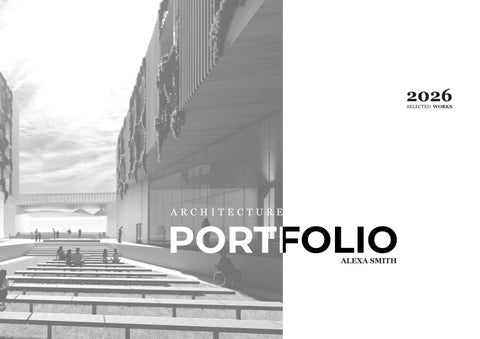
ARCHITECTURE
ALEXA SMITH
Phone: (913) 626-2561
Email: alexasmith1030@gmail.com
Social Network: www.linkedin.com/in/smithmalexa

Alexa Smith
I am drawn to architecture that balances intention with material depth, where spatial clarity and detail work together to shape lived experience. My design process begins with research and exploration, allowing projects to evolve through iteration and thoughtful refinement. I am motivated by creating work that is intentional, enduring, and grounded in both craft and collaboration.
Technical Skills
Rhino AutoCAD, Revit (Continuing Proficiency)
AI Knowledge: ChatGPT, MidJourney, X-Figura
Laser Cutting
Adobe Photoshop
Adobe InDesign
Modeling
Physical
THERM
Adobe Illustrator 3D Printer
Climate Studio
Microsoft Suite Grasshopper
Rendering Tools: Enscape, Twinmotion
Village of the Atolls
A design rooted in cultural integrity. The Harlem Nexus
A design rooted in education and urban forest integration. The Loop
A design rooted in affordable housing and community.

Village of the Atolls
Springdale, Arkansas | 2025
Partner Project
Taylor Heath
Project Type
Food Resource Center
Software used
Rhino
Adobe Suite
Twinmotion
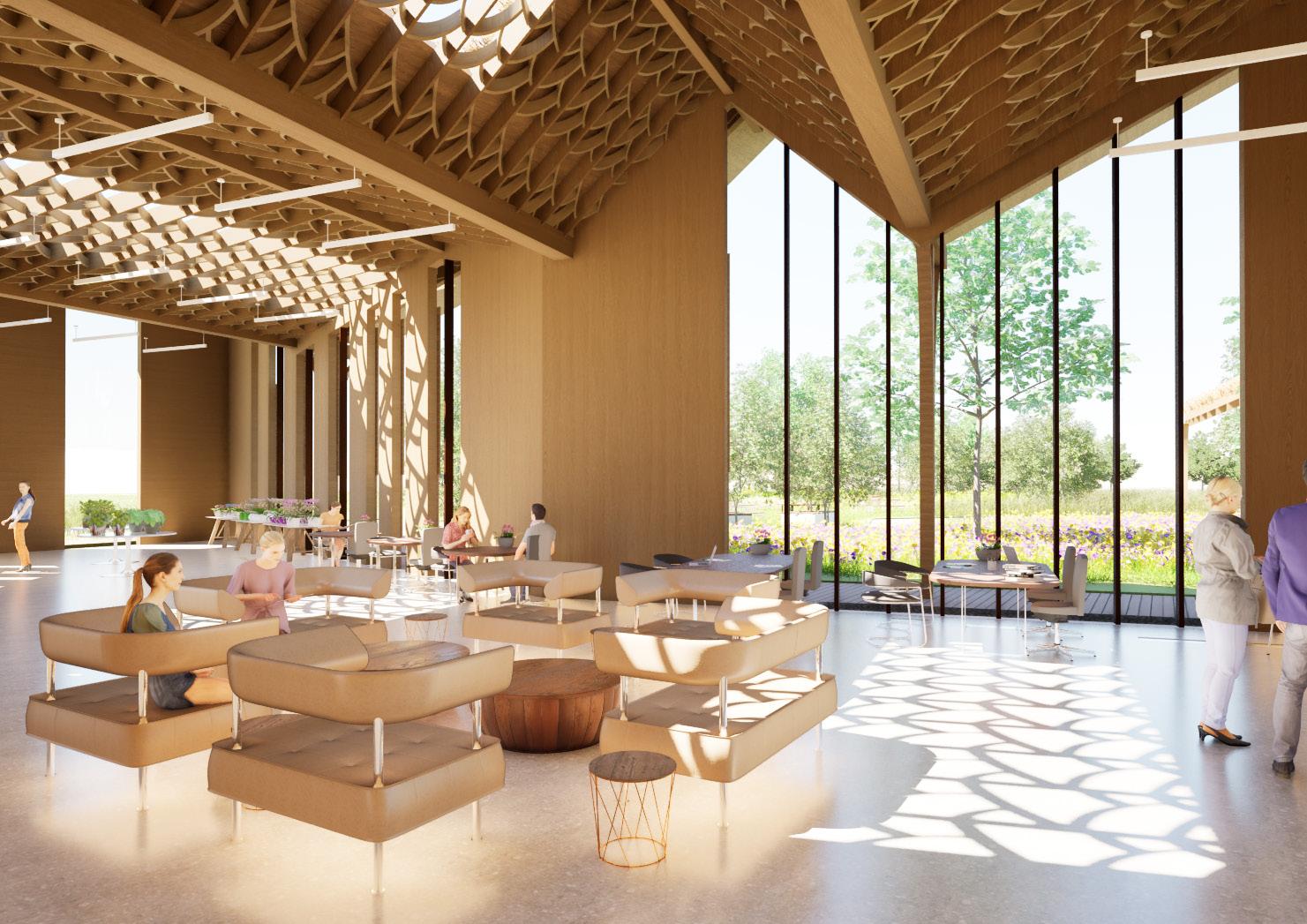
Springdale carries a quiet reality: many within its community live with food insecurity. This project responds as an open invitation, a place where people of all ages can gather to learn, cultivate, and share food. At its heart is an acknowledgment of Springdale’s Marshallese community, whose presence is deeply woven into the city yet too often goes unseen. The design seeks to counter that absence by expressing warmth, familiarity, and belonging, creating an environment that feels like home for those who have long searched for recognition within the spaces around them.
concept
The roofline abstracts vernacular Marshallese forms into a rhythmic sequence called BAAC, translating cultural vernacular memory into a unnique take on traditional architecturalgeometry.
Traditional Marshallese bamboo braiding informed the joinery language of the project, shaping the columns and rafter details. This translation of historic craft into structure carries cultural memory into the architectural expression.
Situated in Springdale, the building’s form draws from the geography of the Marshall Islands, pairing island references with program. The architecture becomes a quiet map of memory, translating homeland into place and purpose.
BIKINI ATOLL
LIKIEP ATOLL
AILINGLAPLAP ATOLL
JALUIT ATOLL
WOTHO ATOLL
MEJIT ATOLL
site plan concept














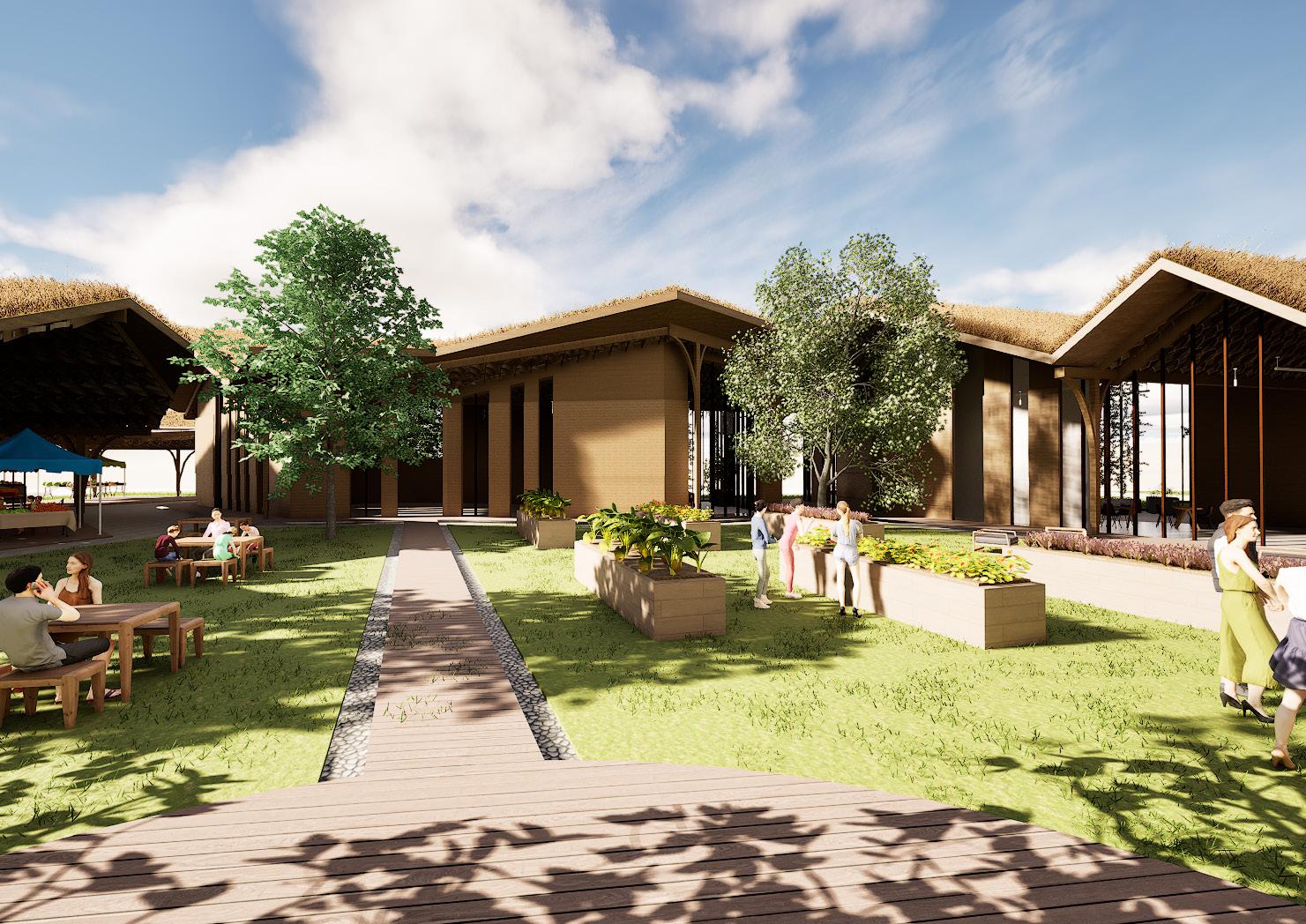
The building’s form generates its own structural logic, with columns organized by the BAAC rhythm. Gaps in the sequence mark the high points of the gabled roof, allowing structure and form to resolve into a single spatial system.
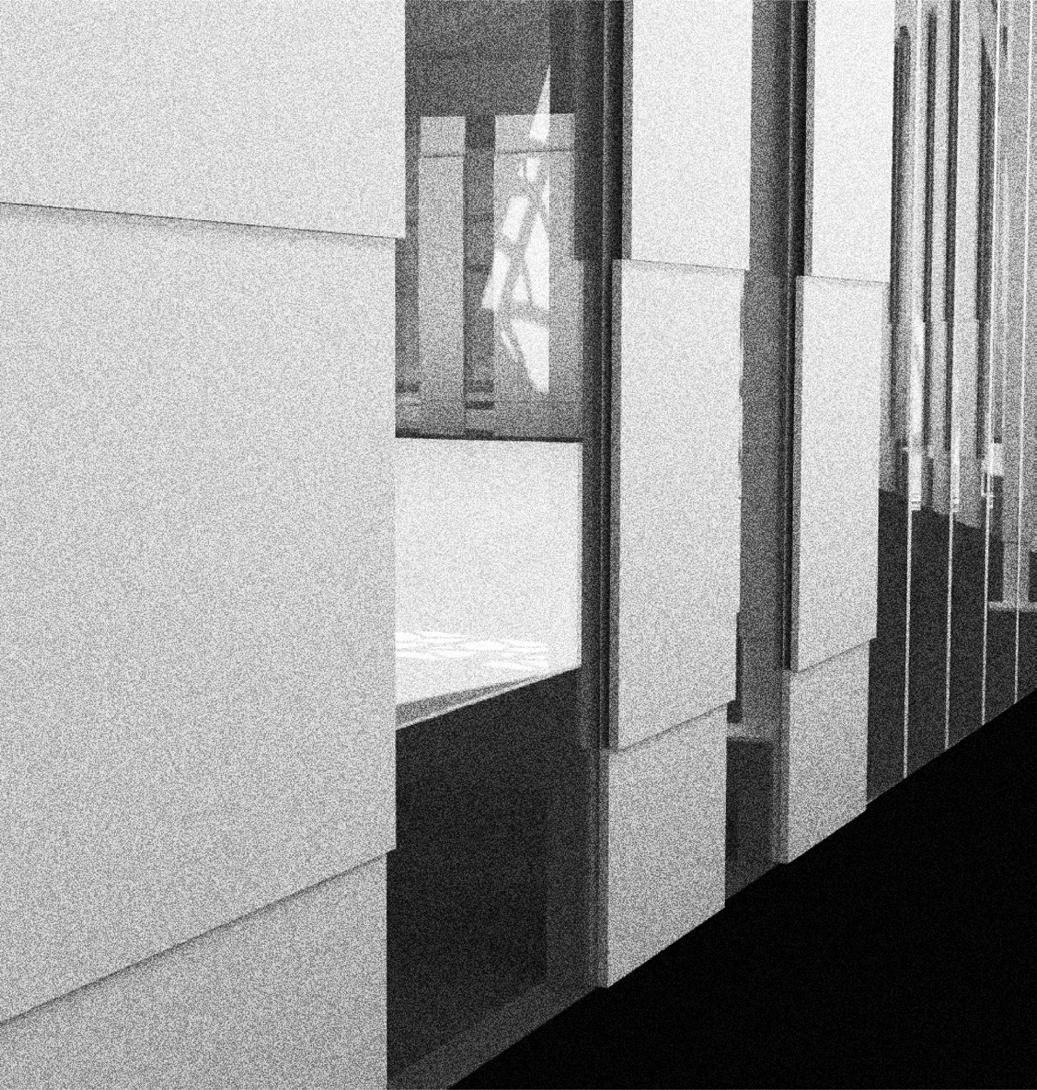
Voids become apertures that draw light inward, while solid elements define the building’s thresholds, shaping moments of passage.










































































































































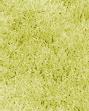




























































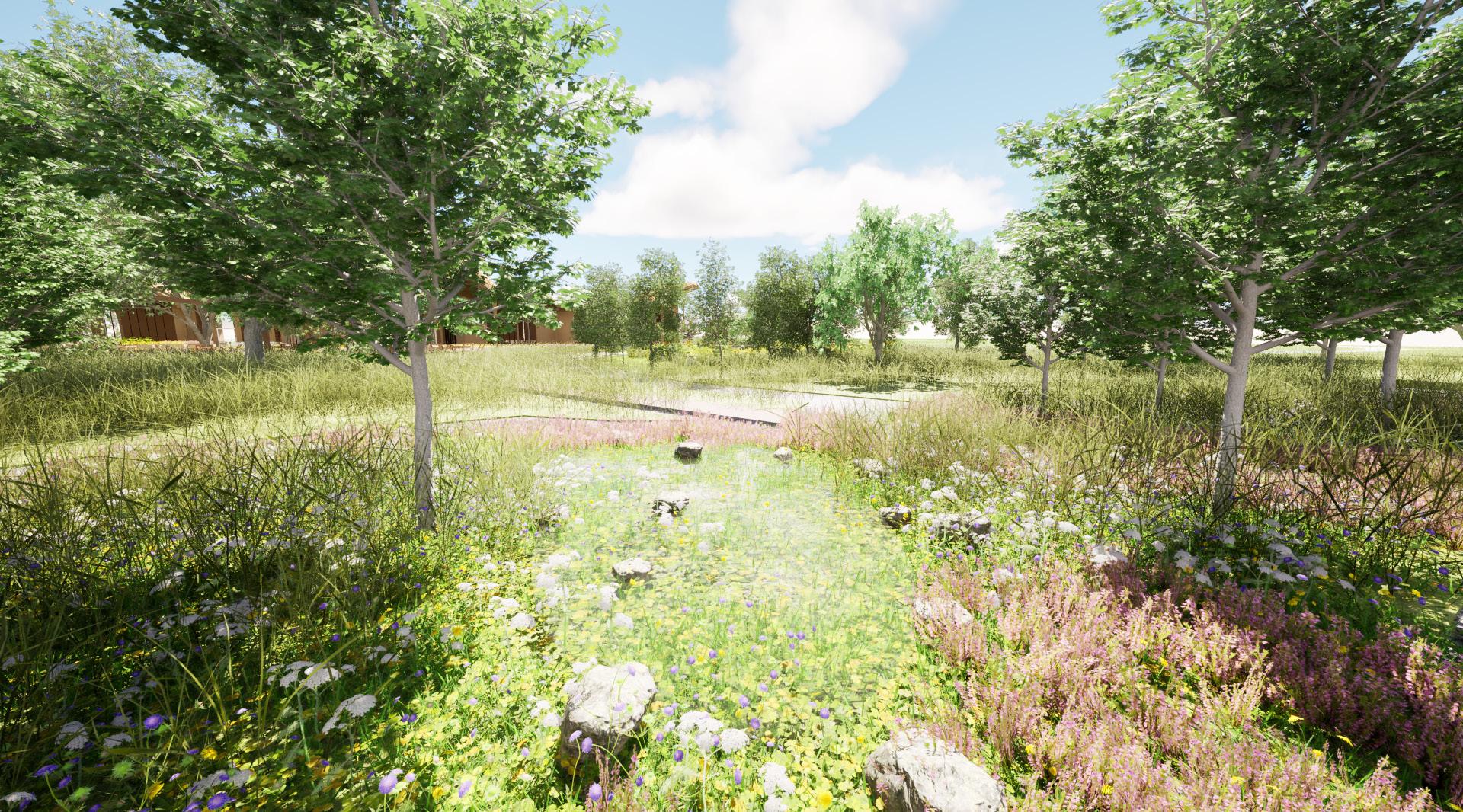
Grass transitions from manicured to managed to overgrowth as the landscape moves away from its focal point. Cultivated areas invite gathering, while the gradual return to wild growth restores the site’s natural character, a gesture of giving land back to itself.
5 PLY CLT 2” x 6” WD Stud Structural WD Screw Air Grille 24” x 24” CONC. Tile WRB
1” Continuous INSUL. Gravel
1. 2” x 12“ Wood Stud R-15
2. 4-1/2” Thatch R-12.2
3. 1” x 1” Blocking
4. 4” Continuous Rigid Insulation R-20
5. 1-1/2” Plywood R-1.90
6. 6” x 12” Glulam Transfer Beam
7. 2” x 6” Plywood Decoration
8. 2” x 12” Plywood Rafter R-0.94
9. Metal Flashing
10. 12” x 12” Glulam Beam
11. 1” Plywood Panels
12. 4” Continuous Rigid Insulation R-20
13. 5 PLY CLT R-6.25
14. Curtain
15. WRB
16. 1’-4” Hollow Section
17. Structural Concrete Pad R-1
18. 36” x 12” Concrete Footing R-1.40
19. 1-1/2” Continuous Rigid Insulation R-7.5
20. 2’-9” Pedestal
21. Air Supply Grille
22. 12” DIA. Duct
23. VAV Box
24. 6“ DIA Perforated Pipe
25. Gravel
26. 3” Concrete Topper R-0.24





DETAIL B
A
DETAIL C
1. 12 12 12 2. 3. 4. 5. 6. 7. 8. 9. 10. 11. 12. 13. 14. 15. 16. 17. 18. 19. 20. 21. 22. 26. 25. 24. 23.
DETAIL D
36” x 12” CONC. Footing 1-1/2” Continuous INSUL. 4” x 2’-9” WD Stud R-4 2’- 9” Pedestal
Vent 12” DIA. Duct
6” DIA Perforated Pipe
2” Screw
3” CONC. Topper
4-1/2” Thatch Thatch Crook
1” x 1” Blocking 4” CONT. INUSL. Structural WD Scew WRB 1-1/2” PLYD 2” x 12” Rafter 2” x 6” WD Stud R-21 Structural WD Screw 2” x 6” PLYD Decoration 5 PLY CLT 4” CONT. INSUL.
2” x 6” PLYD Decoration
2” x 20” PLYD
4-1/2” Thatch Thatch Crook
1” x 1” Blocking 1/2” PC
5 PLY CLT WD Fastener
4” Continuous INSUL. 1” OSB Sheathing WRB
Smart Ci Delta Bracket Bracket to Rail Screw 1” PLYD Panel site section a























































The Harlem Nexus
Harlem, New York | 2025
Partner Project
Rebekah Ulasewich
Project type
Educational
Software used
Rhino
Adobe Suite
Twinmotion
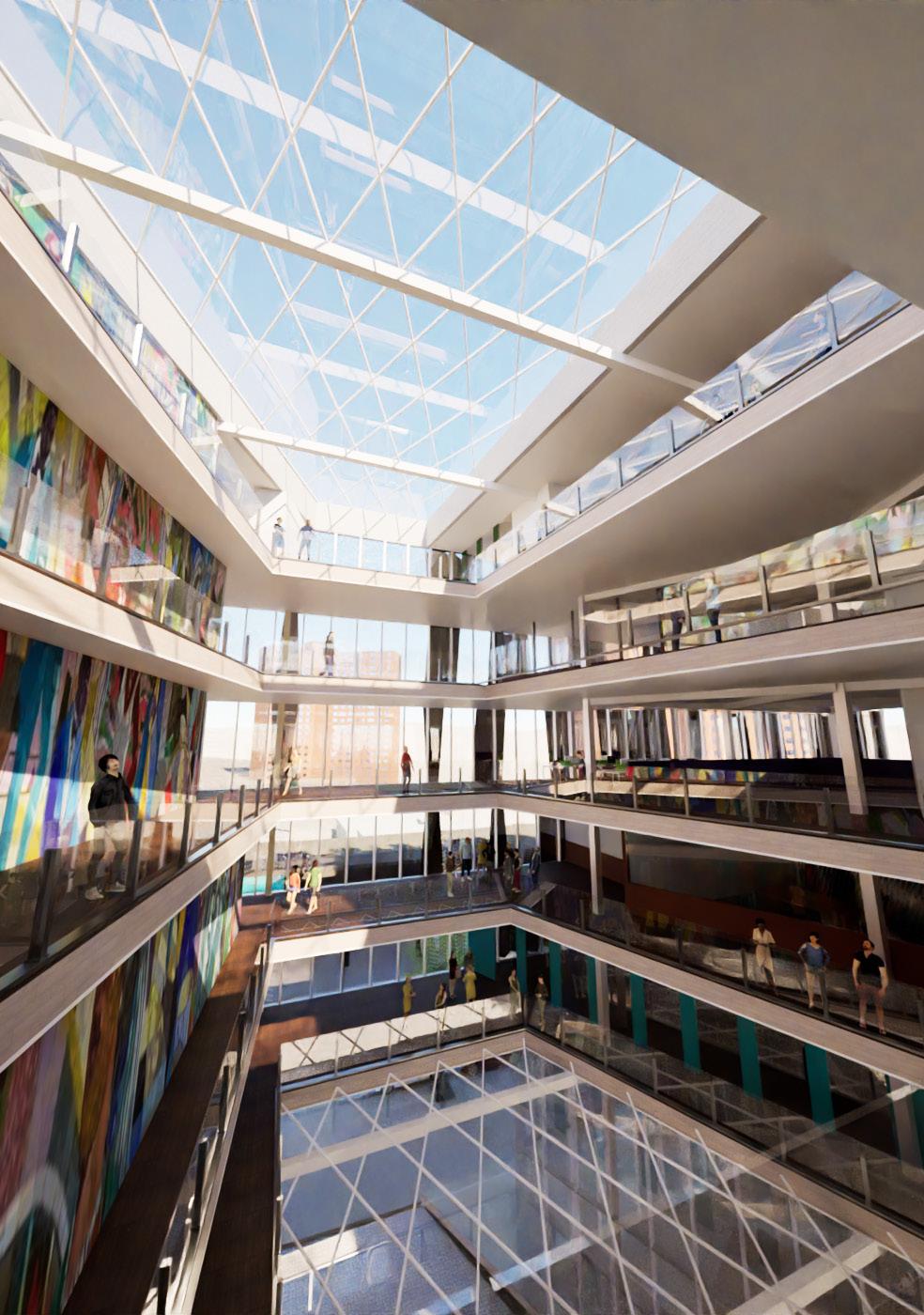
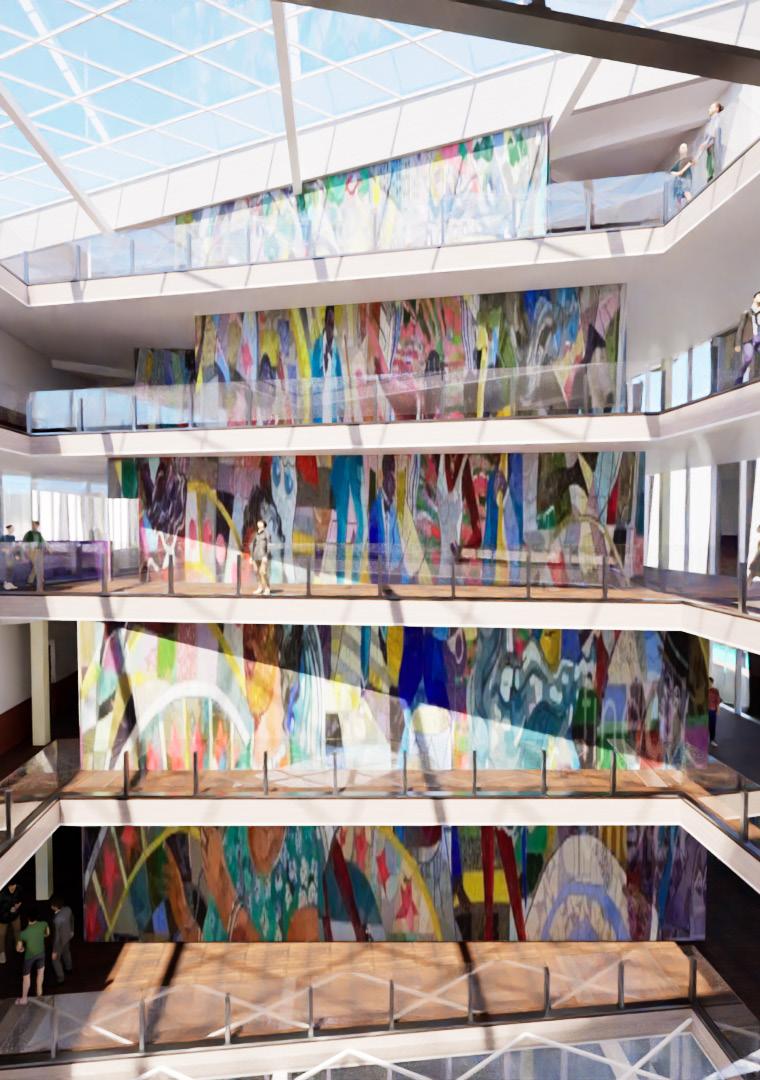
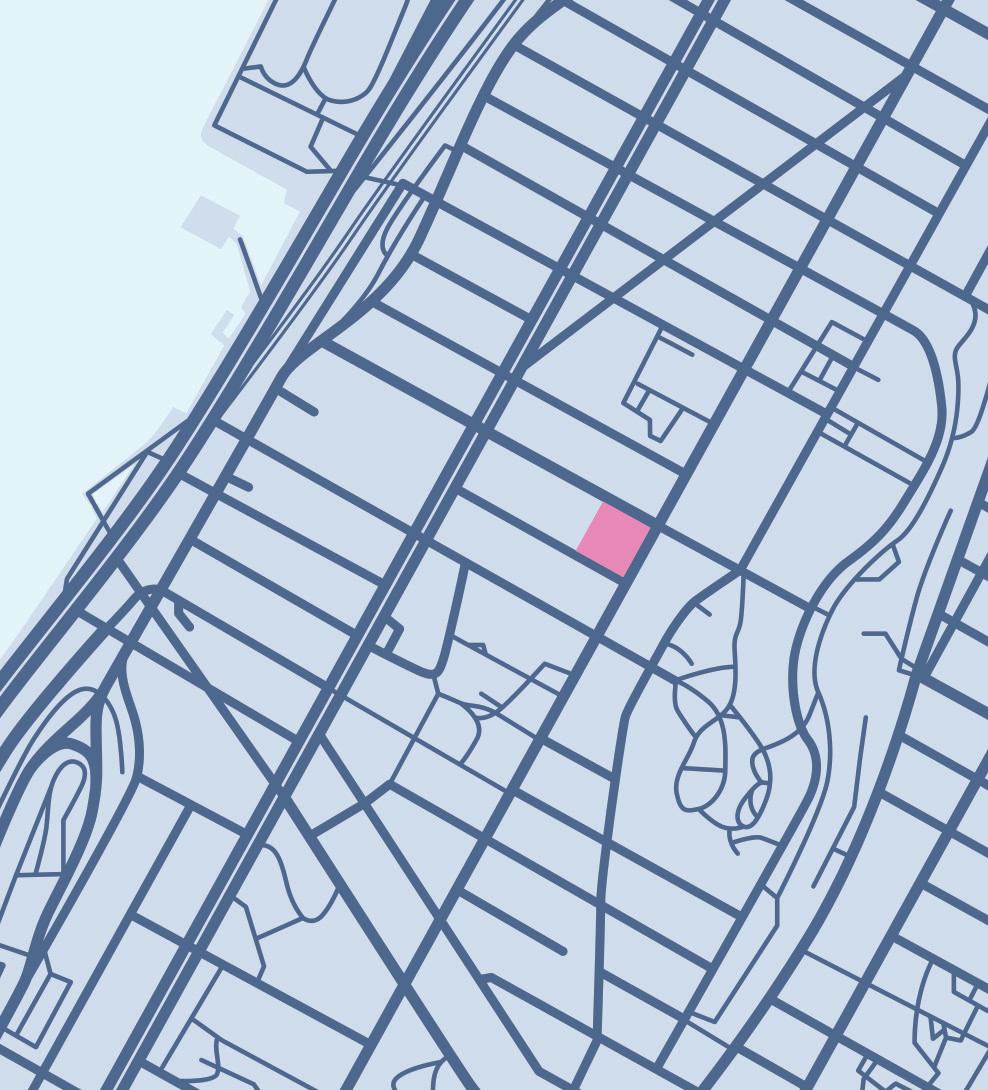
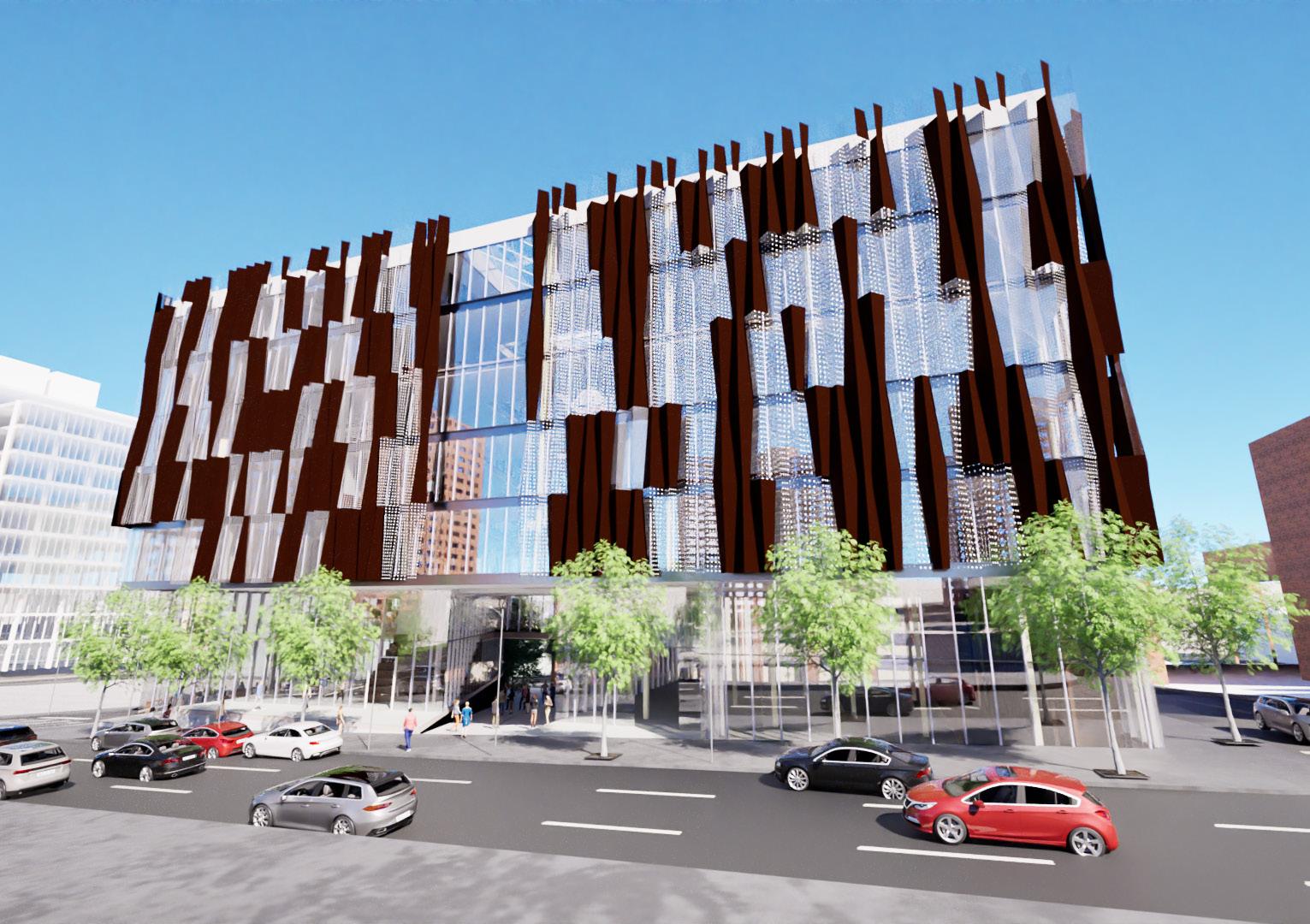
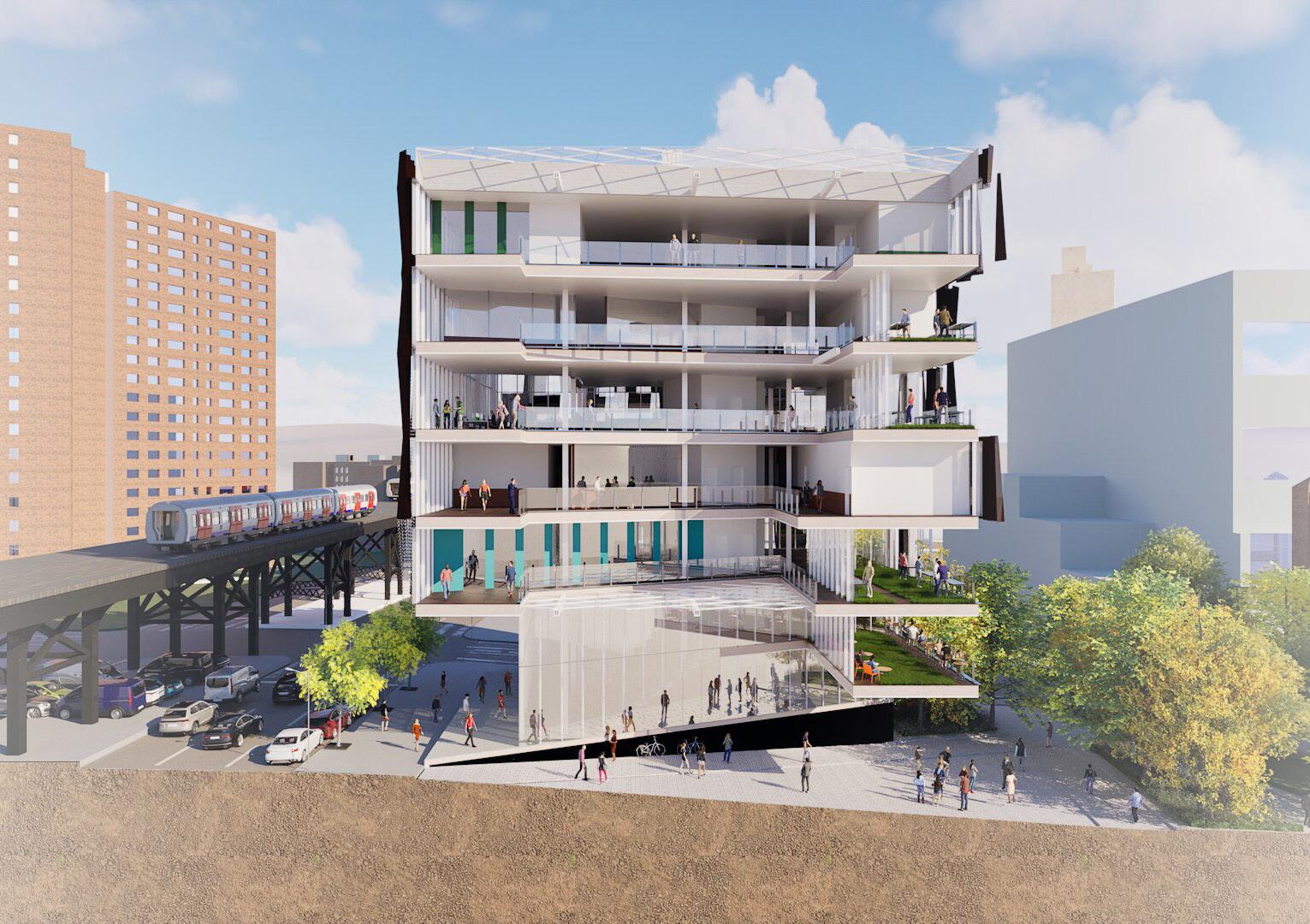
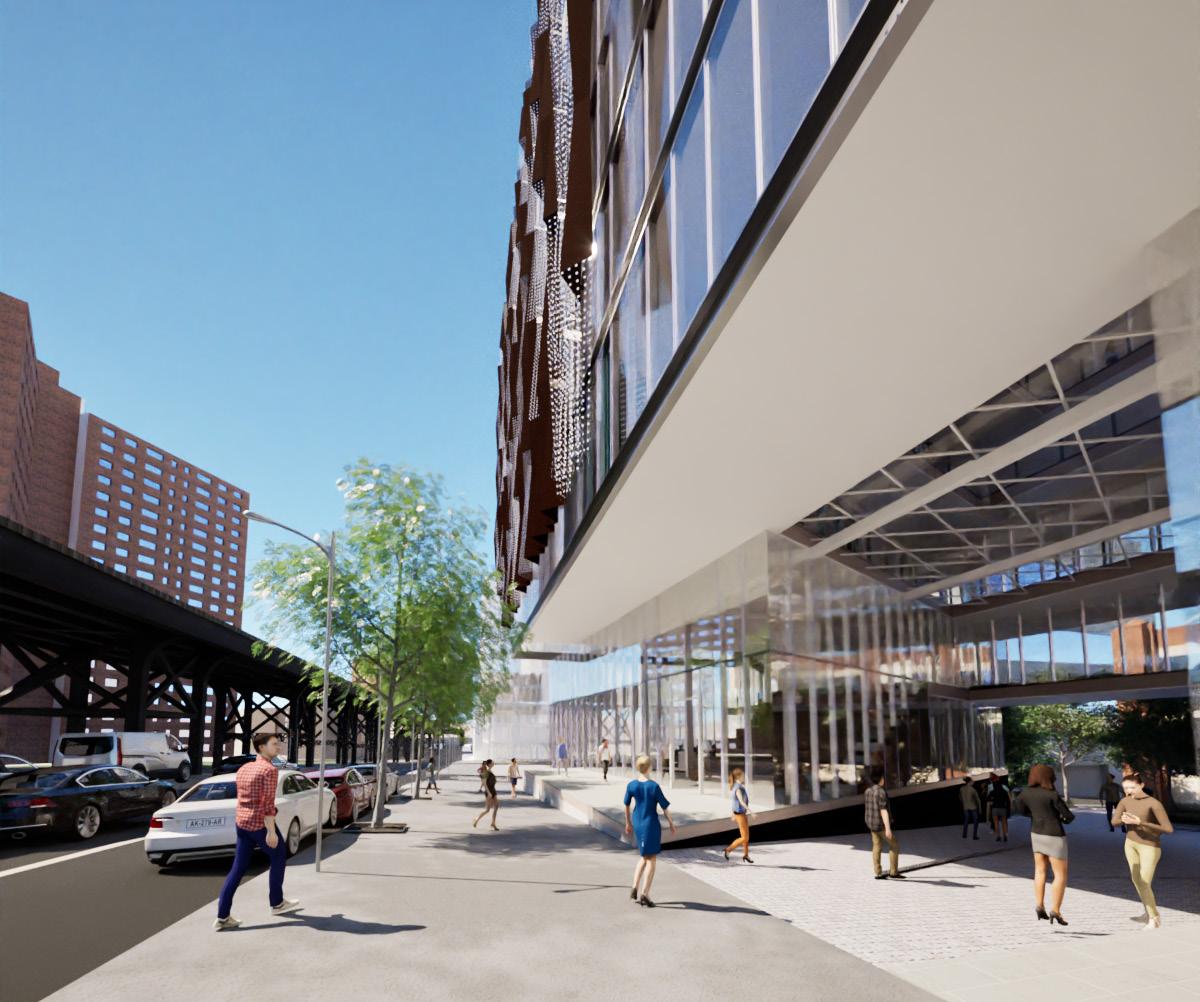
Located within Columbia University’s Manhattanville campus, this project brings together an Environmental and Learning Resource Center with an Architecture Department, treating sustainability as both practice and purpose. An urban forest brings nature back into the city, offering space for rest and awareness of the environment. Though designed separately, the building works in step with its partner, creating a shared academic and environmental connection. Together, they suggest a way of learning that supports both people and the planet.
02
location site plan
mezzanine floor
second floor
fourth floor
b
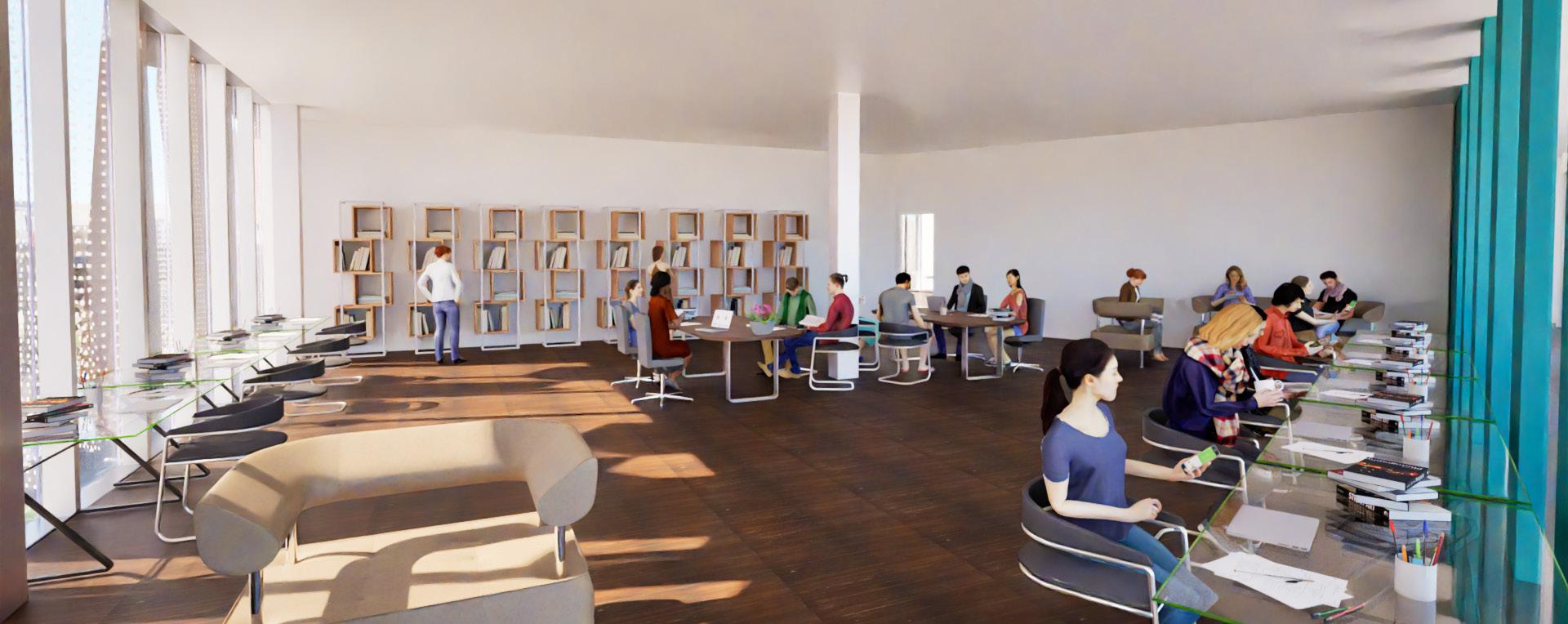
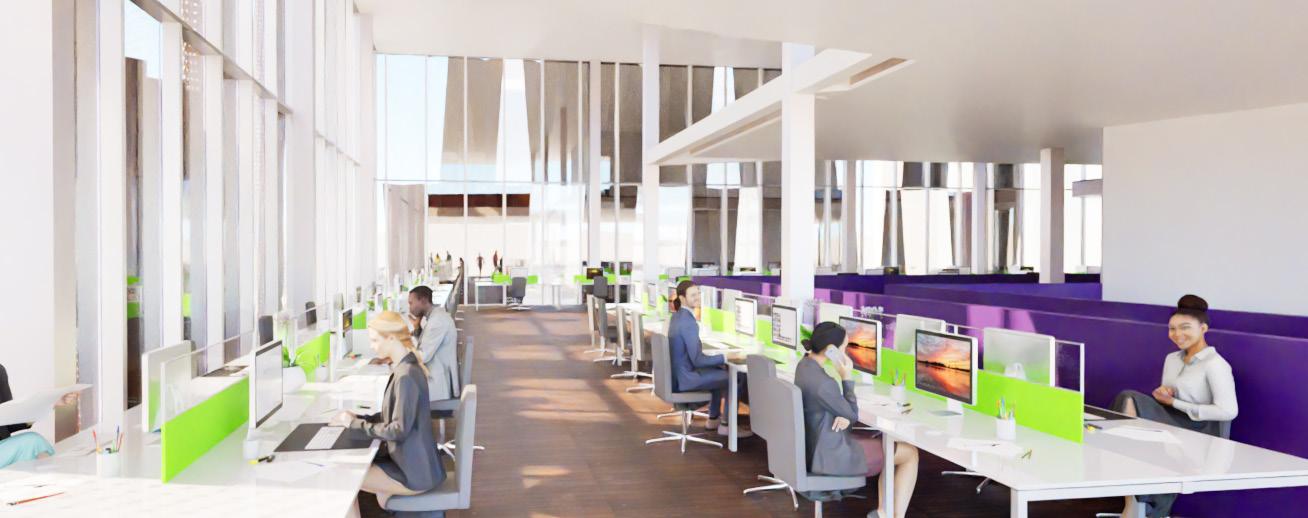
Library and studio spaces provide focused settings for research and making, supporting different modes of learning within the academic environment.
A subtle opening in the ground reveals the entrance to the urban forest, drawing visitors through a quiet threshold where the city fades away and a sheltered landscape unfolds.
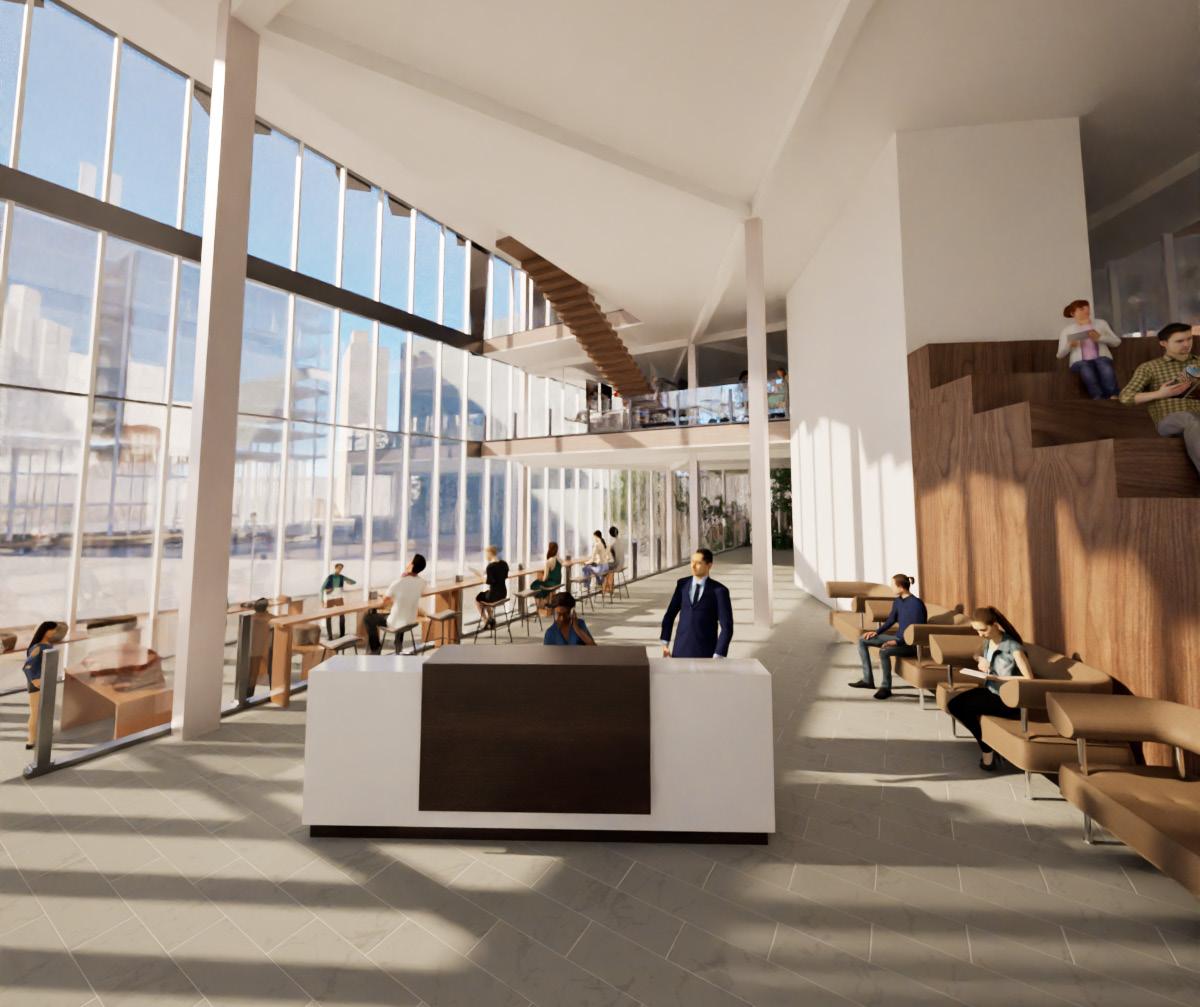
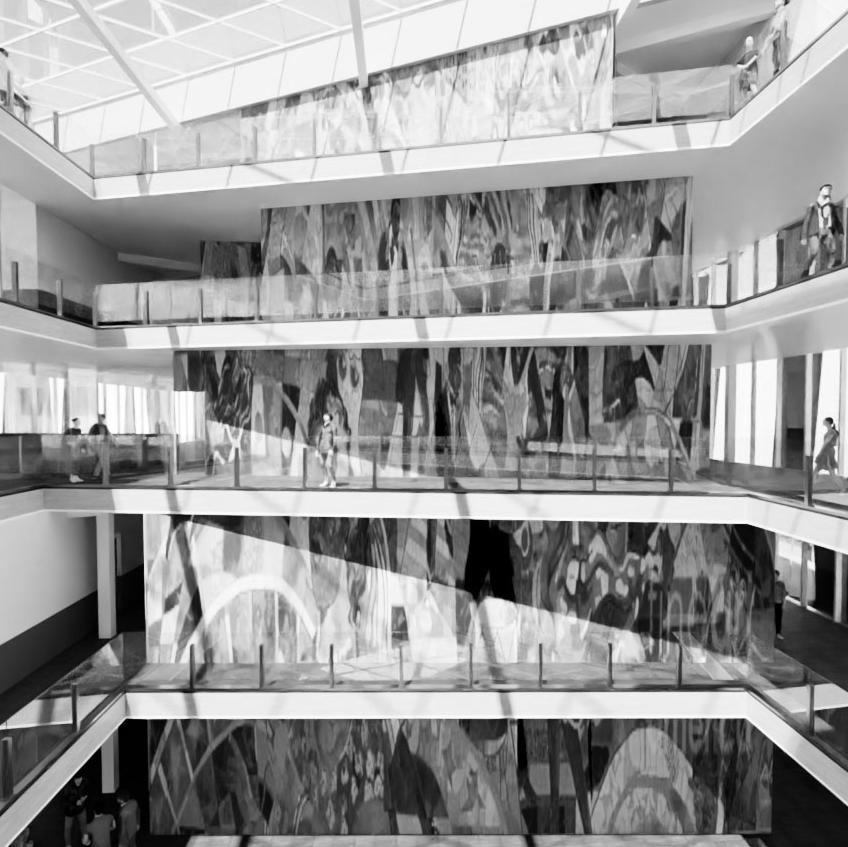
The main lobby opens as a welcoming threshold, where a learning stair and gallery space frame views outward, inviting occupants to engage with both the building and its surrounding context.
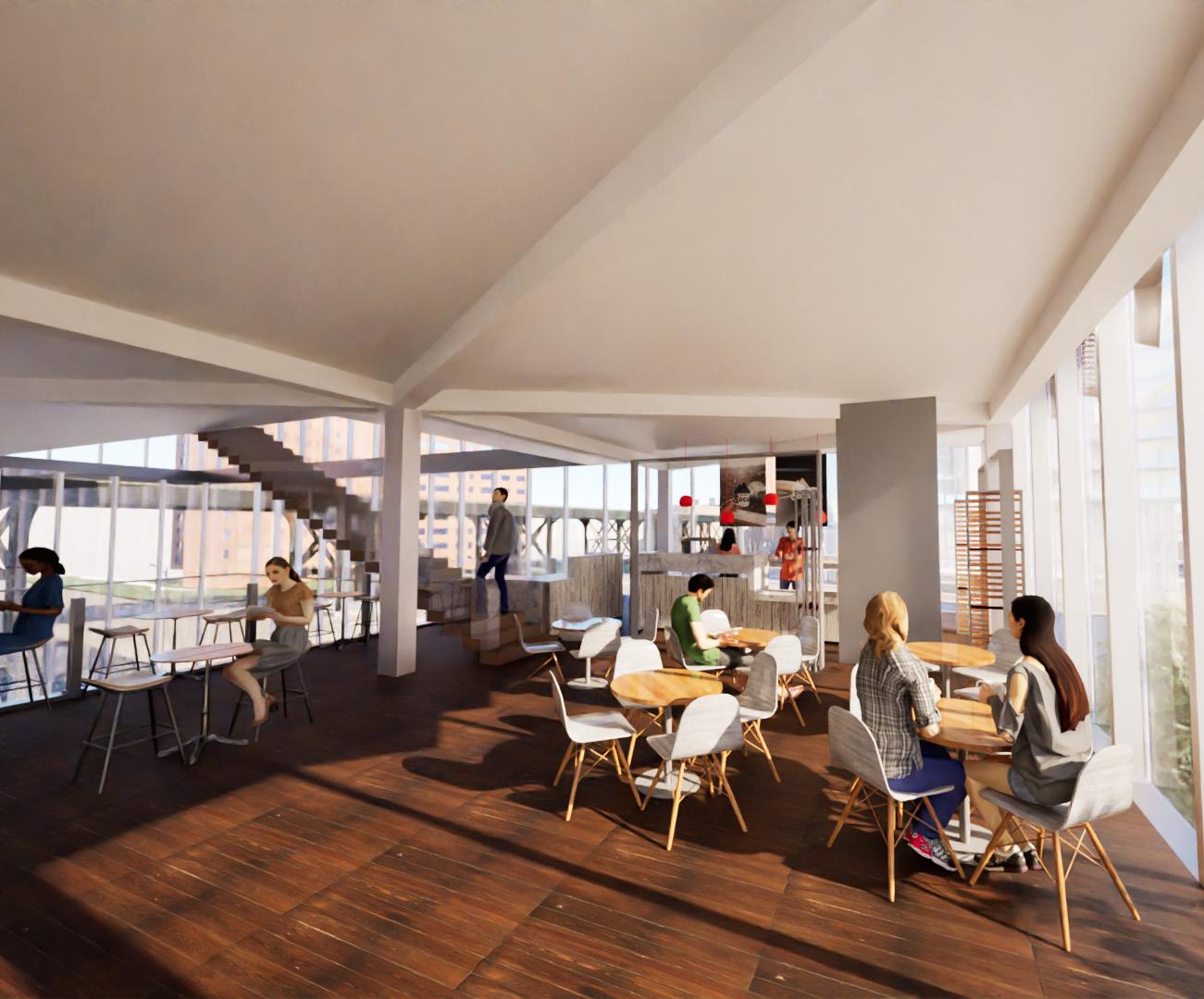
An interior café offers a relaxed setting for pause and gathering, supporting everyday moments of exchange between occupants and the surrounding community.
The Loop
Los Angeles, California | 2024
Partner Project
Project type
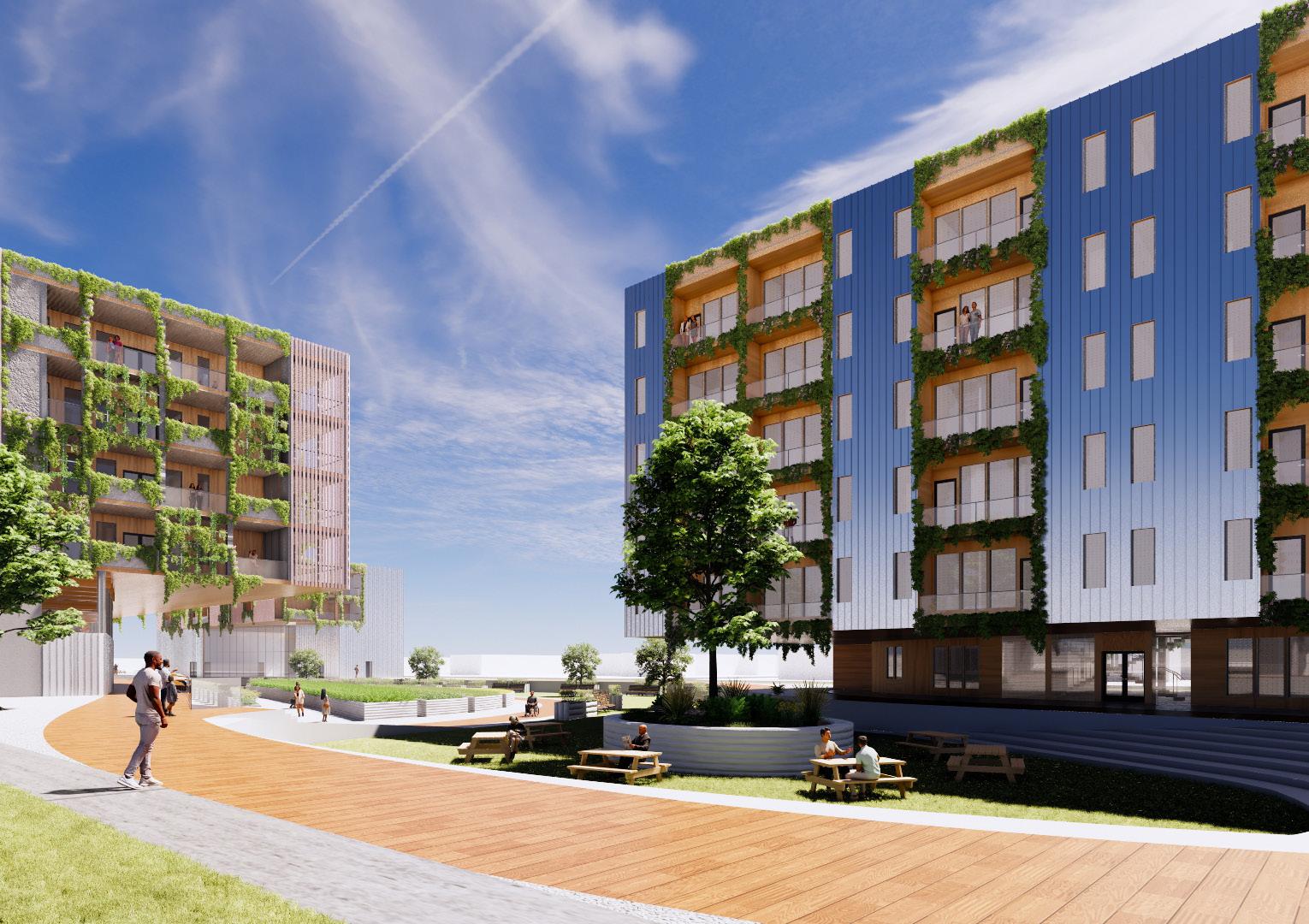
Born from Los Angeles’ housing crisis, this project frames dwelling and community as inseparable. A looping edge holds the residences, shaped and interrupted by movement, while the interior becomes a shared green commons. As the city grows denser and open space disappears, the design asserts housing and landscape as parallel priorities — creating not just places to live, but room to gather, breathe, and belong. In doing so, the architecture positions collective life and environmental relief as essential components of urban housing rather than secondary amenities.
concept
STREETCAR
The Loop Original Building Masses
The Loop Informing Building Form
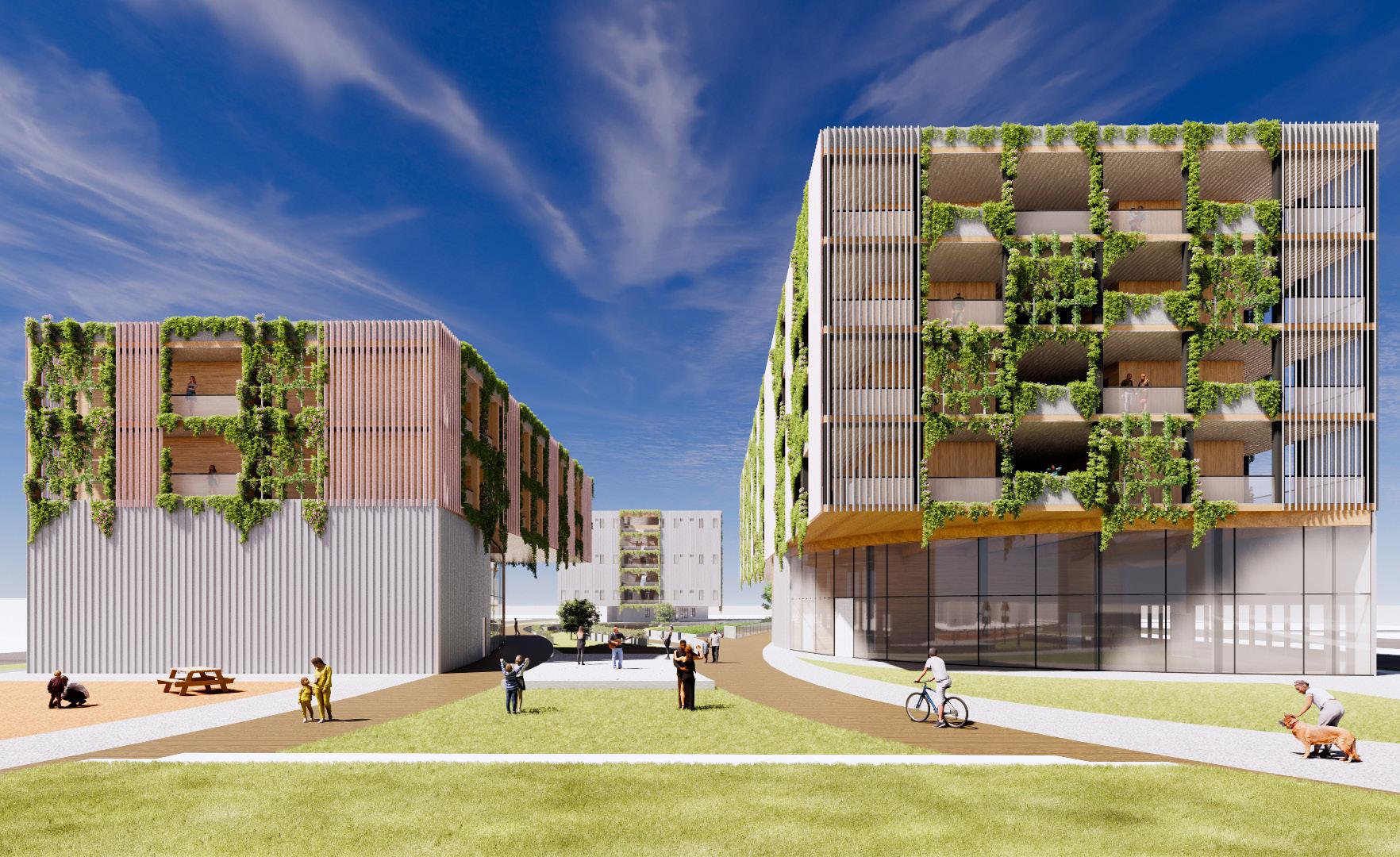
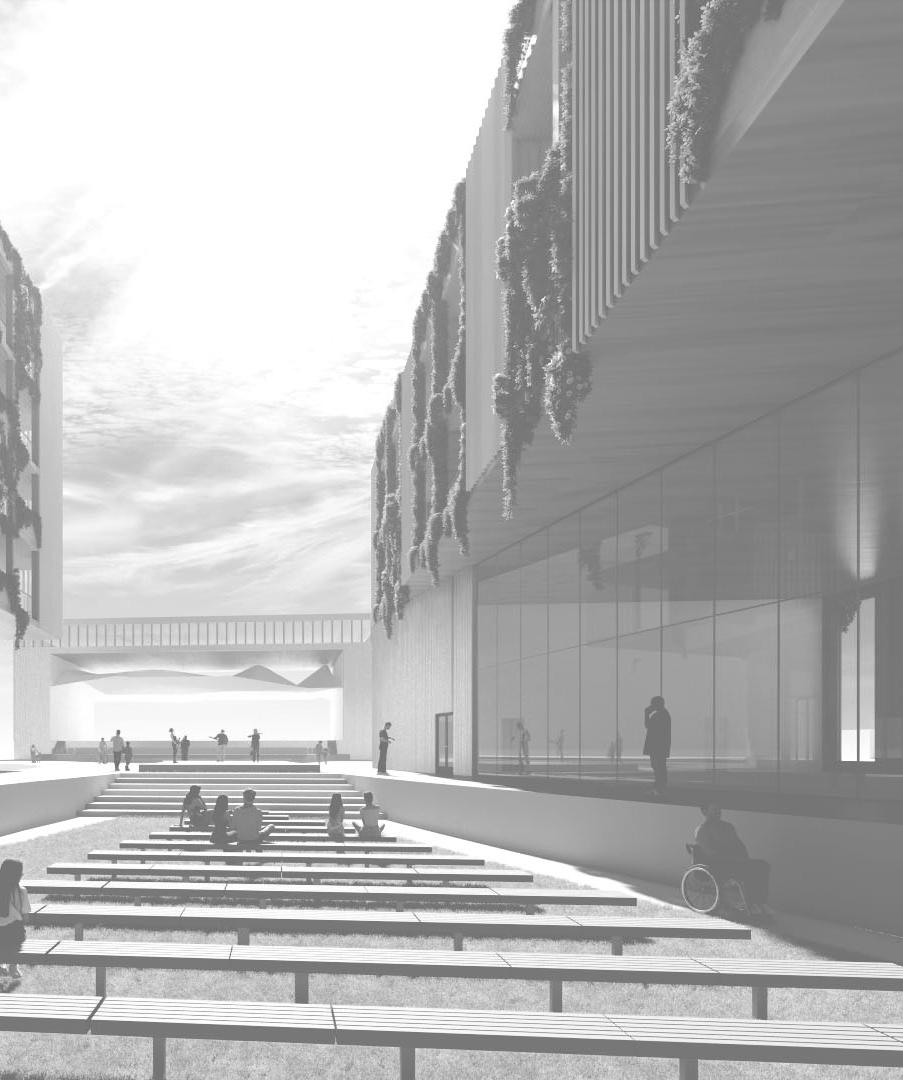
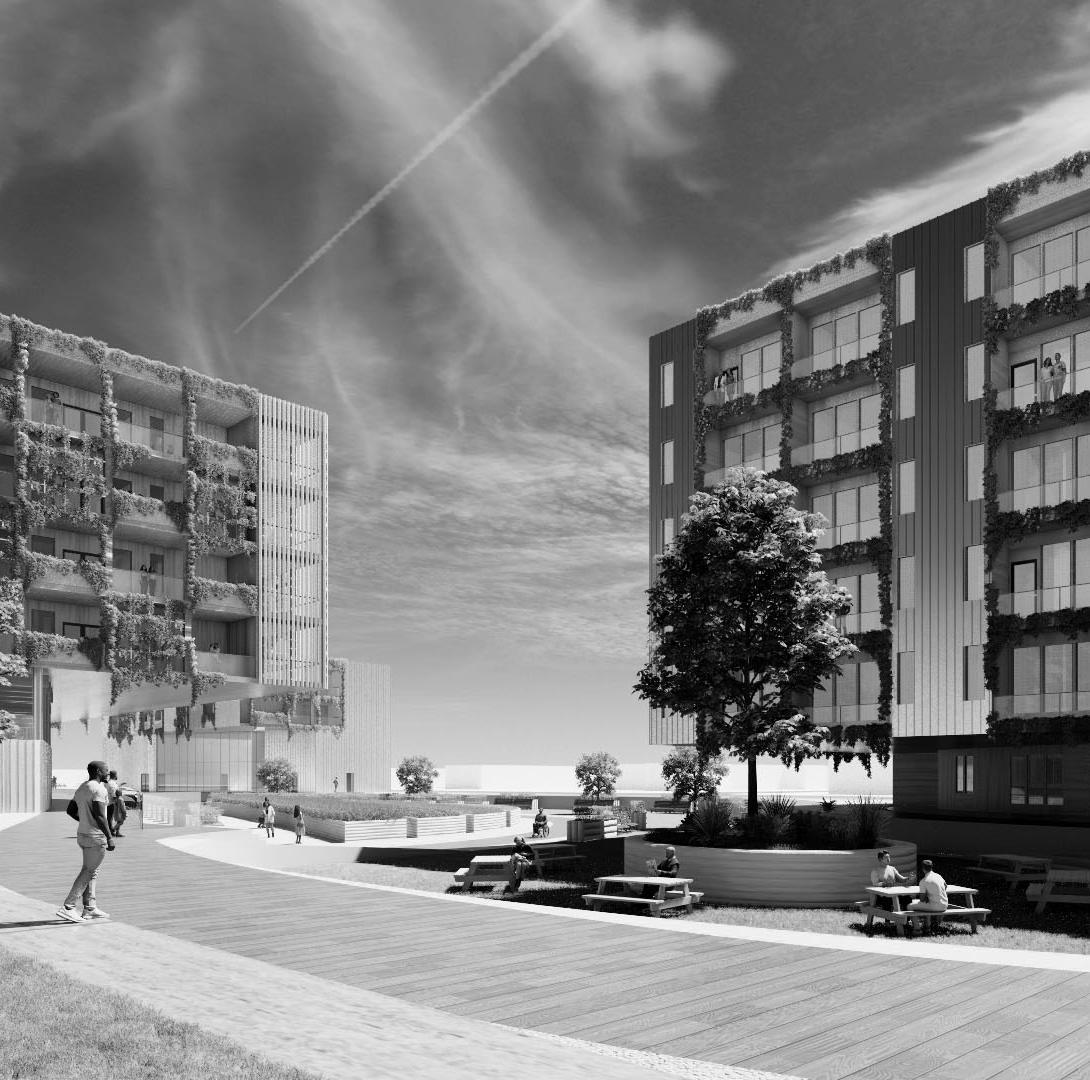
Experienced from the amphitheater, the design frames an inclusive open space for all ages. The facade and structural system reflect a sustainable ethos, aligning the architecture with long-term environmental responsibility.
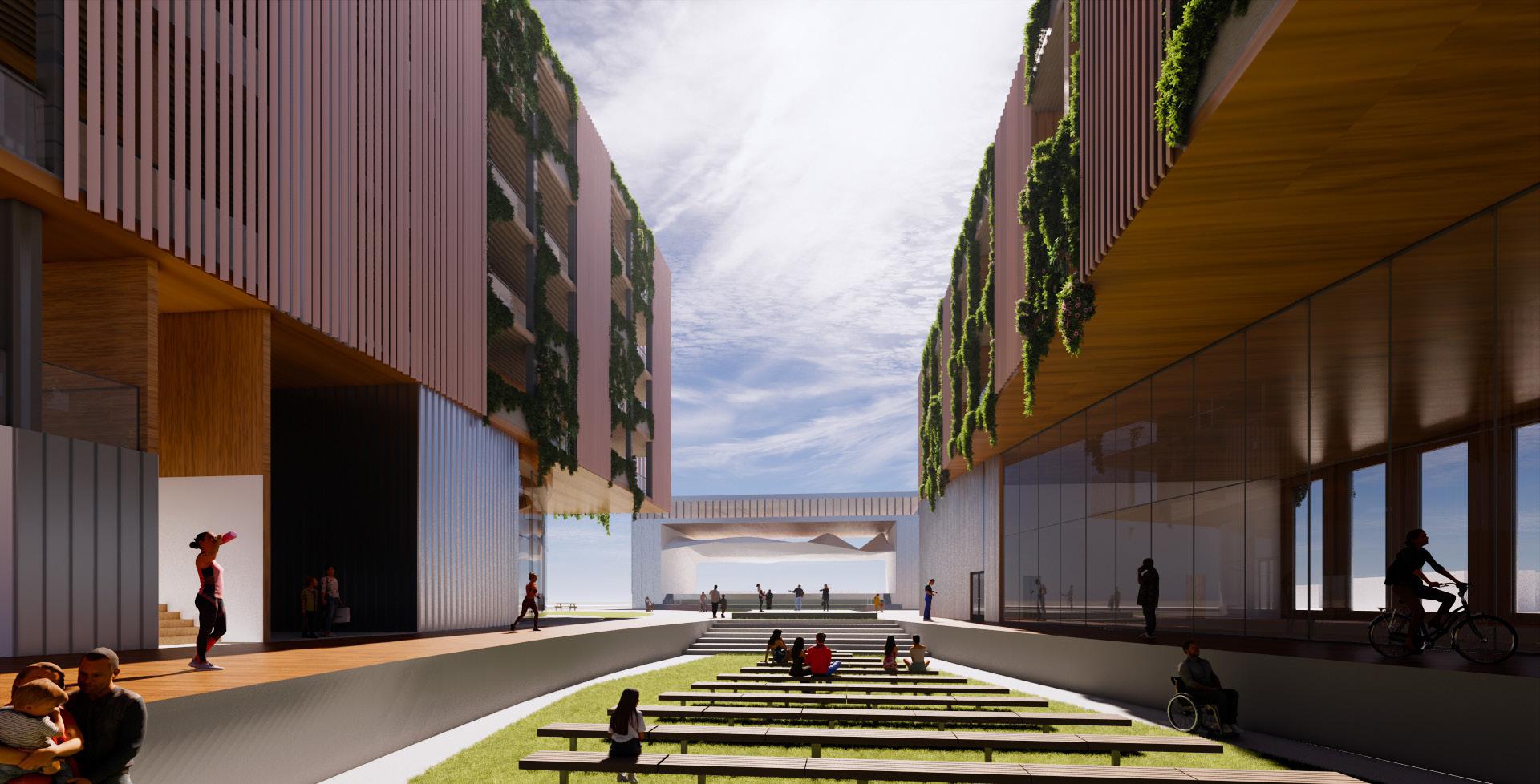
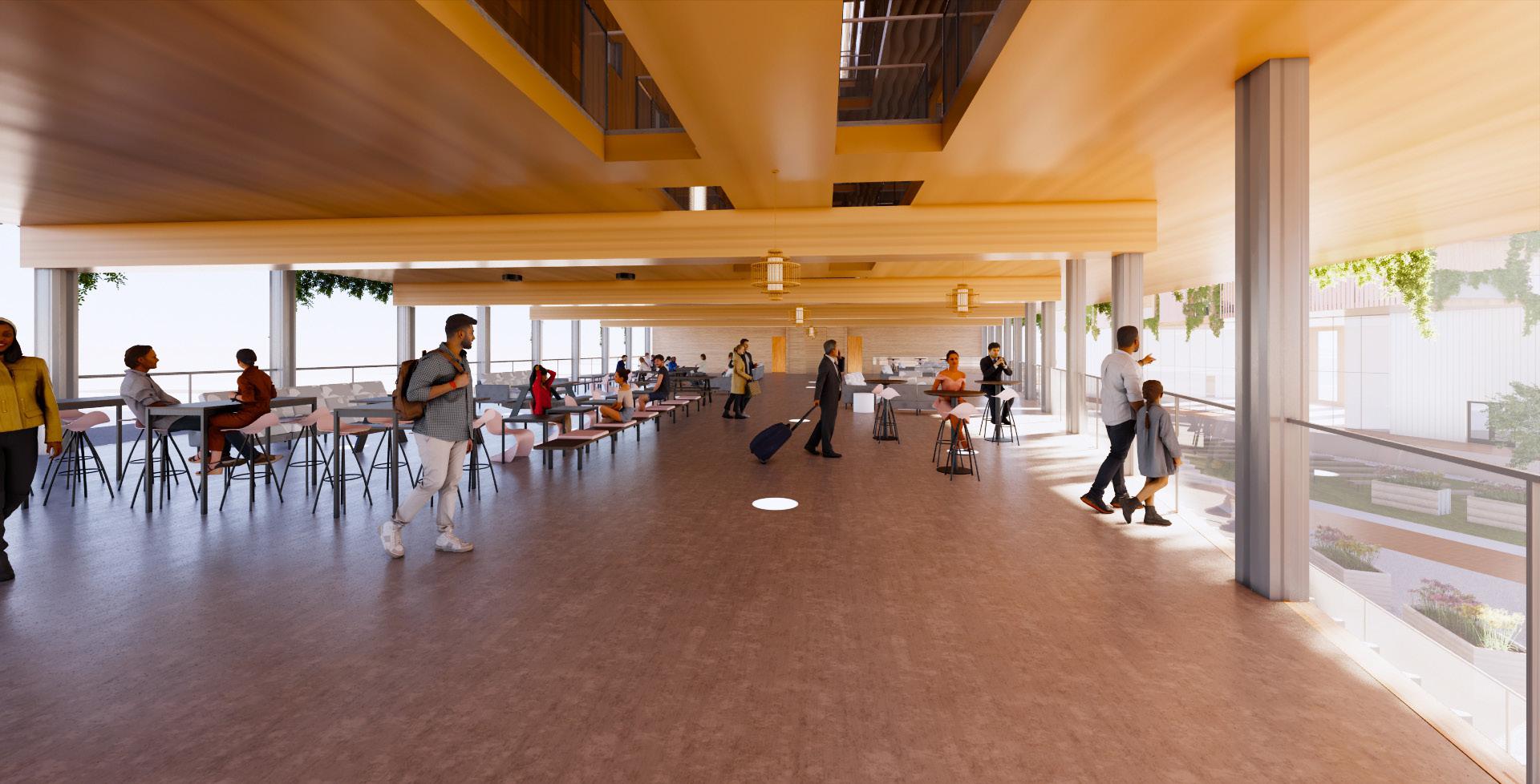
At the midpoint of the loop’s interior green, the space settles into a shared gathering ground, where layered seating and amphitheater views invite pause, connection, and participation, fully accessible to all.
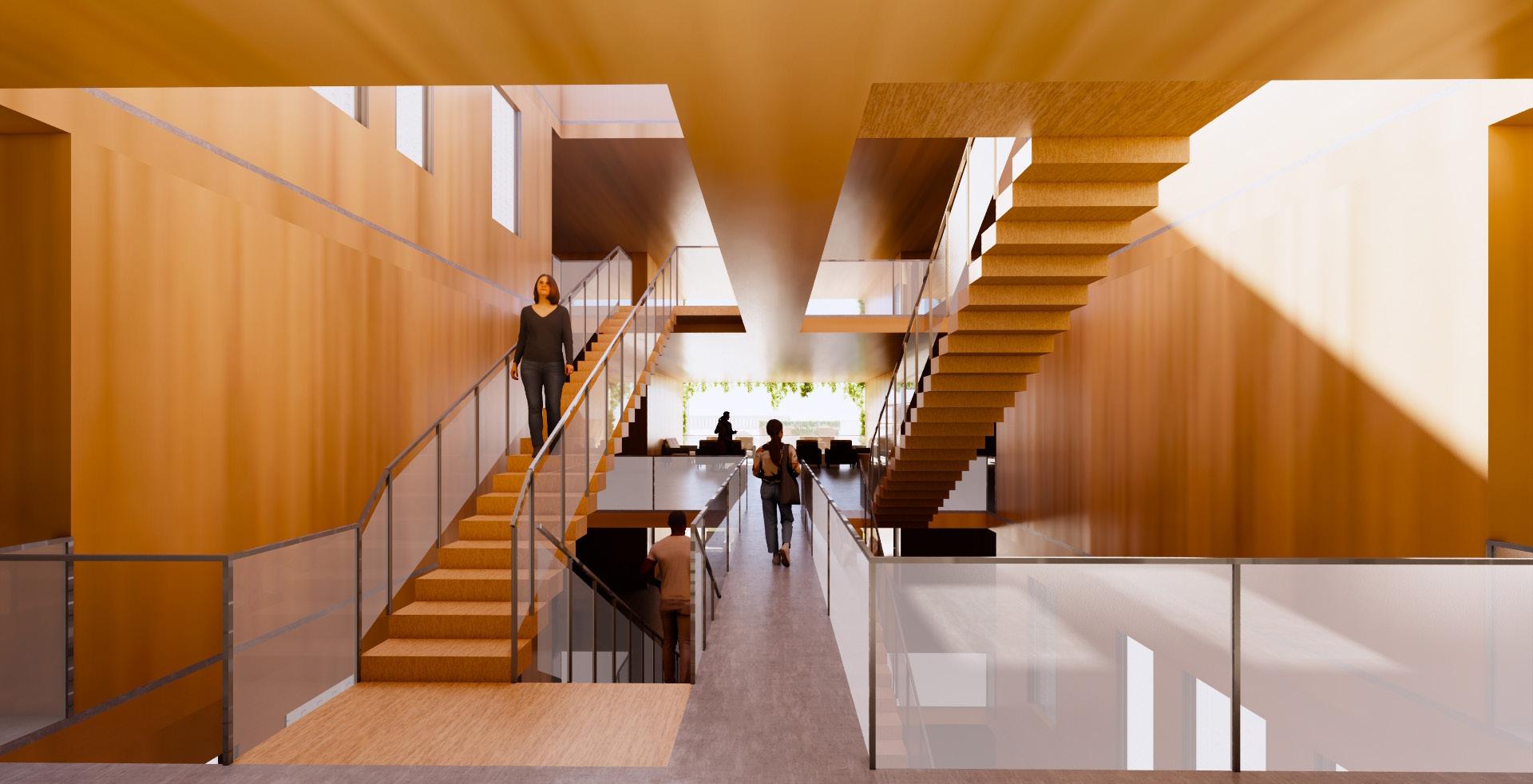
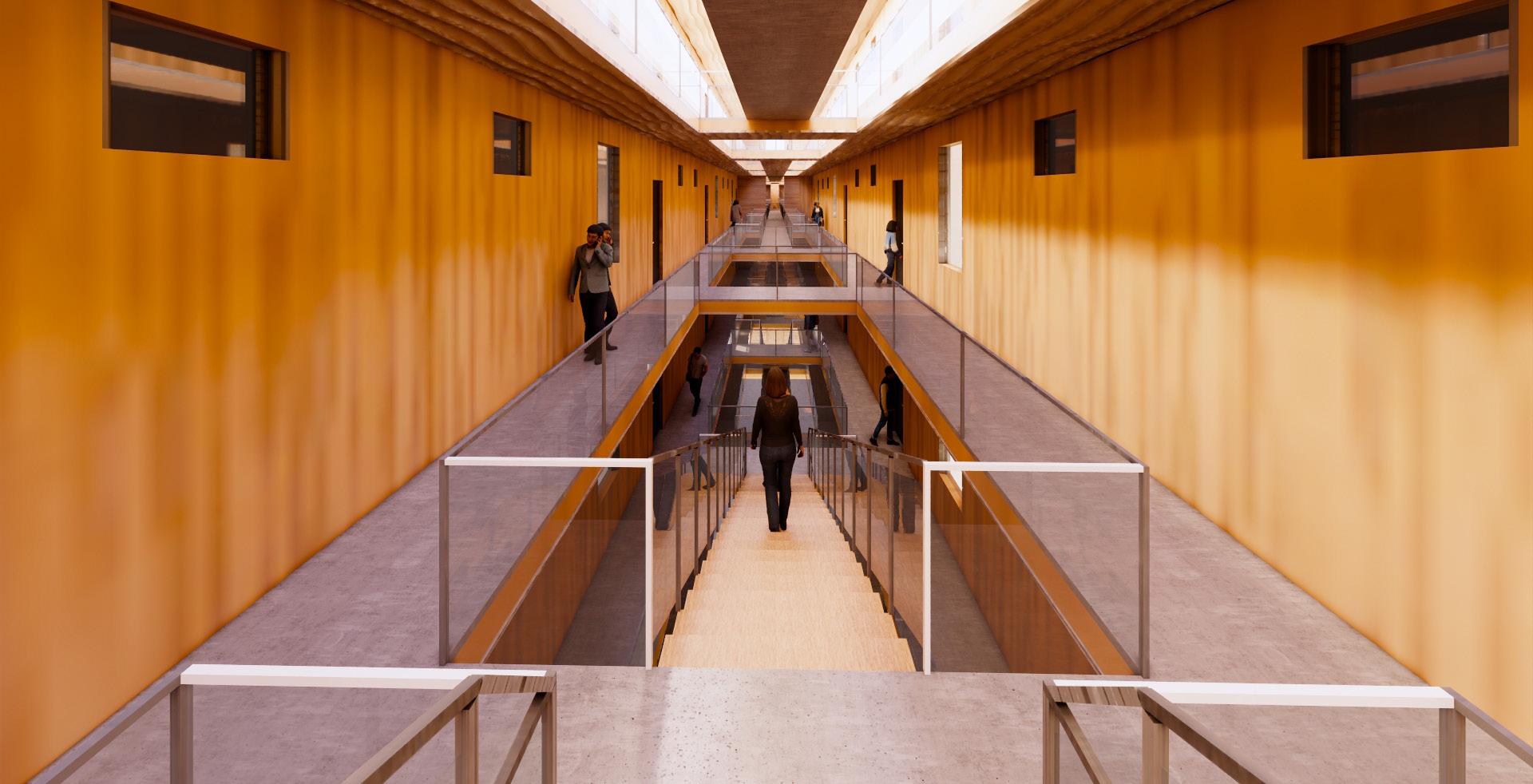
“X” Staircase
A vertical stair connection links the upper level to the shared indoor-outdoor area.
A private indoor-outdoor zone provides residents with a seamless extension of living space.