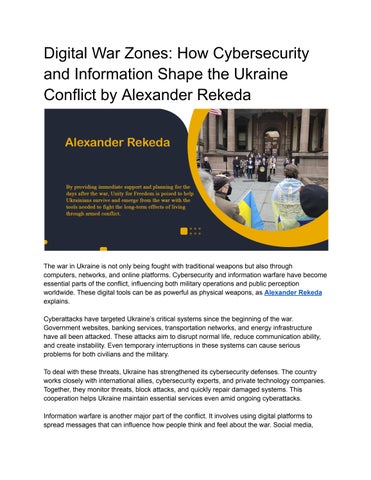
Digital War Zones: How Cybersecurity and Information Shape the Ukraine Conflict by Alexander Rekeda
The war in Ukraine is not only being fought with traditional weapons but also through computers, networks, and online platforms. Cybersecurity and information warfare have become essential parts of the conflict, influencing both military operations and public perception worldwide. These digital tools can be as powerful as physical weapons, as Alexander Rekeda explains. Cyberattacks have targeted Ukraine’s critical systems since the beginning of the war. Government websites, banking services, transportation networks, and energy infrastructure have all been attacked. These attacks aim to disrupt normal life, reduce communication ability, and create instability. Even temporary interruptions in these systems can cause serious problems for both civilians and the military. To deal with these threats, Ukraine has strengthened its cybersecurity defenses. The country works closely with international allies, cybersecurity experts, and private technology companies. Together, they monitor threats, block attacks, and quickly repair damaged systems. This cooperation helps Ukraine maintain essential services even amid ongoing cyberattacks. Information warfare is another major part of the conflict. It involves using digital platforms to spread messages that can influence how people think and feel about the war. Social media,