THE CAVE 3000: AN ARCHIVE FOR THE NEXT MILLENIUM
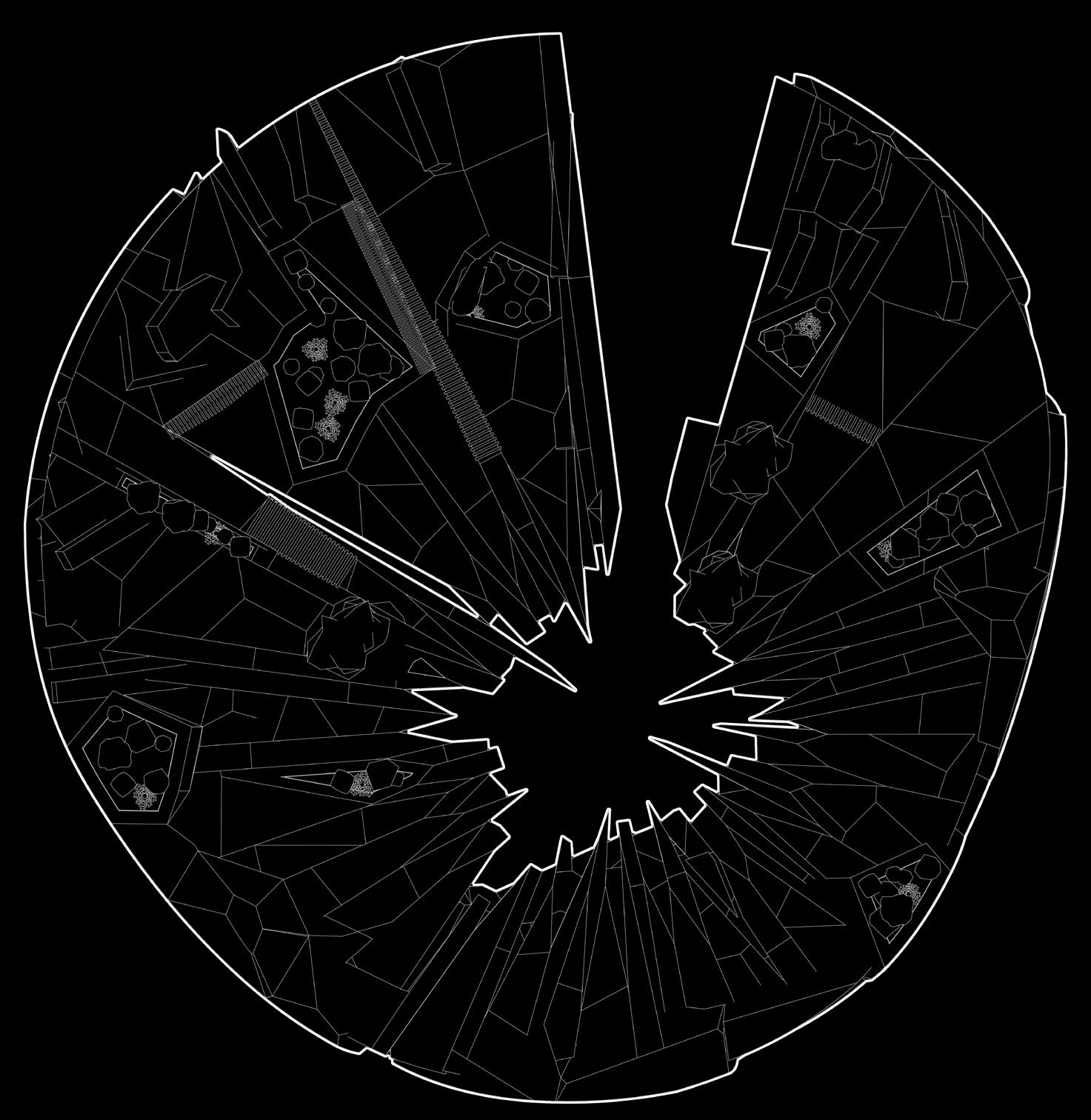
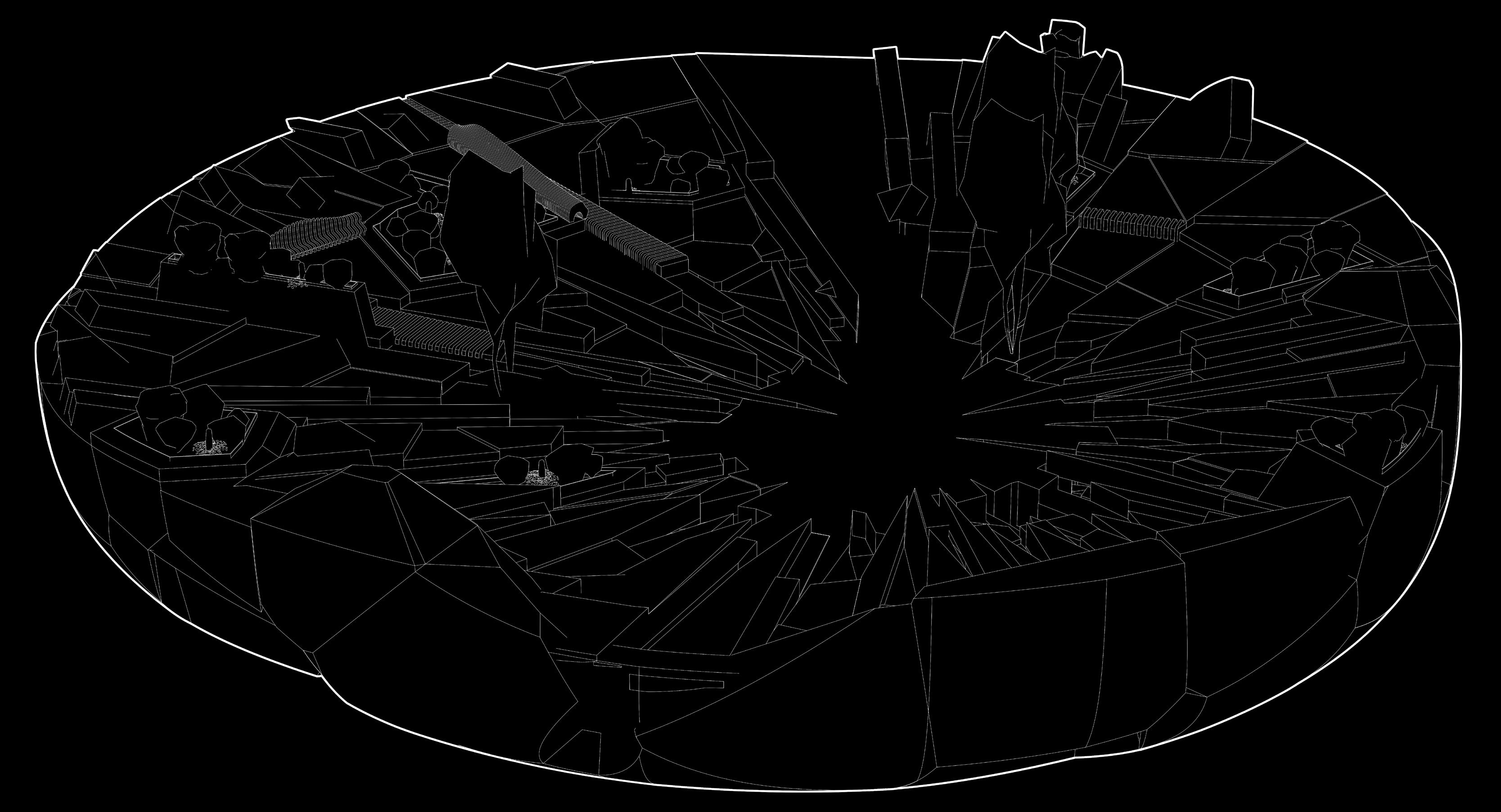
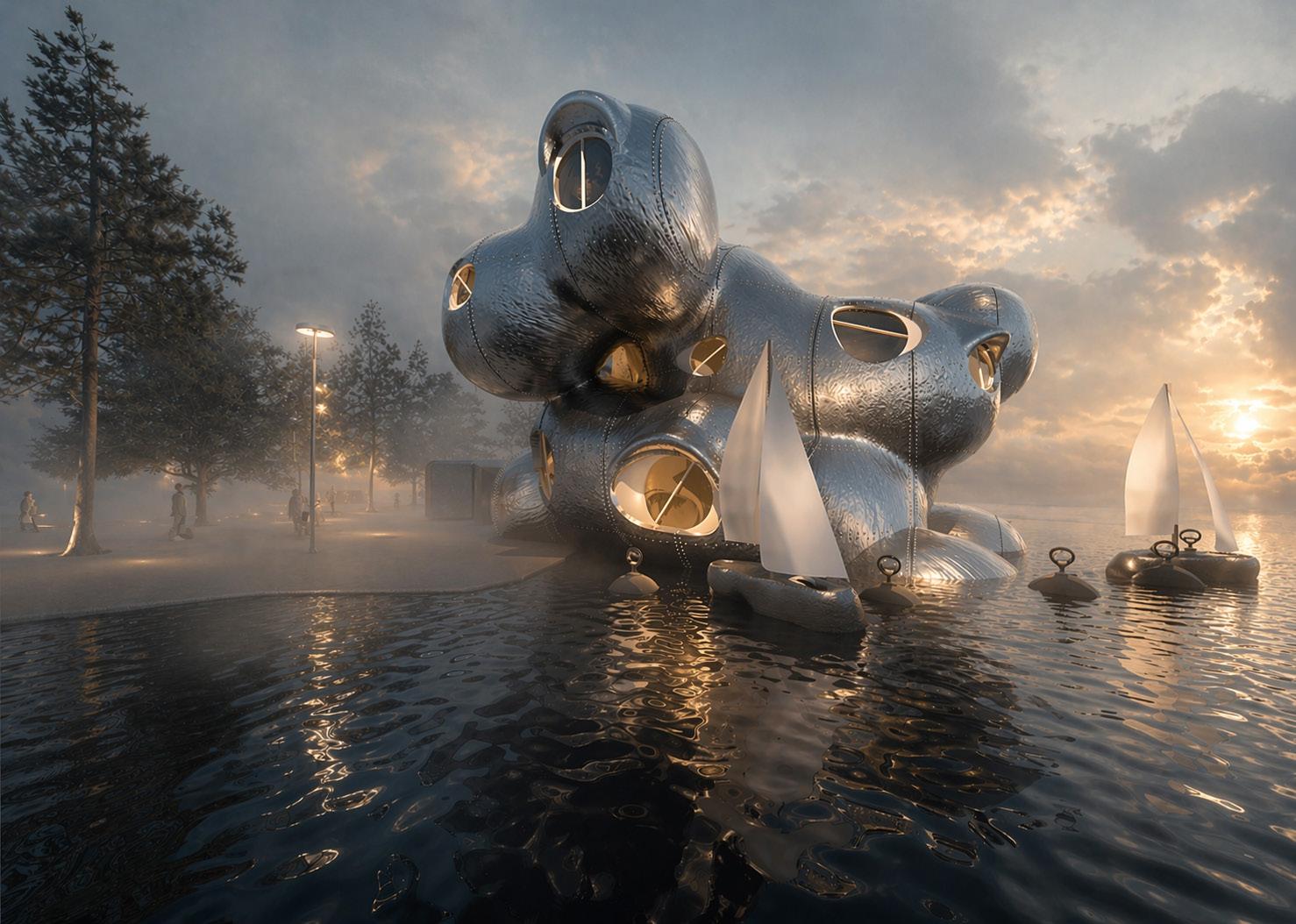
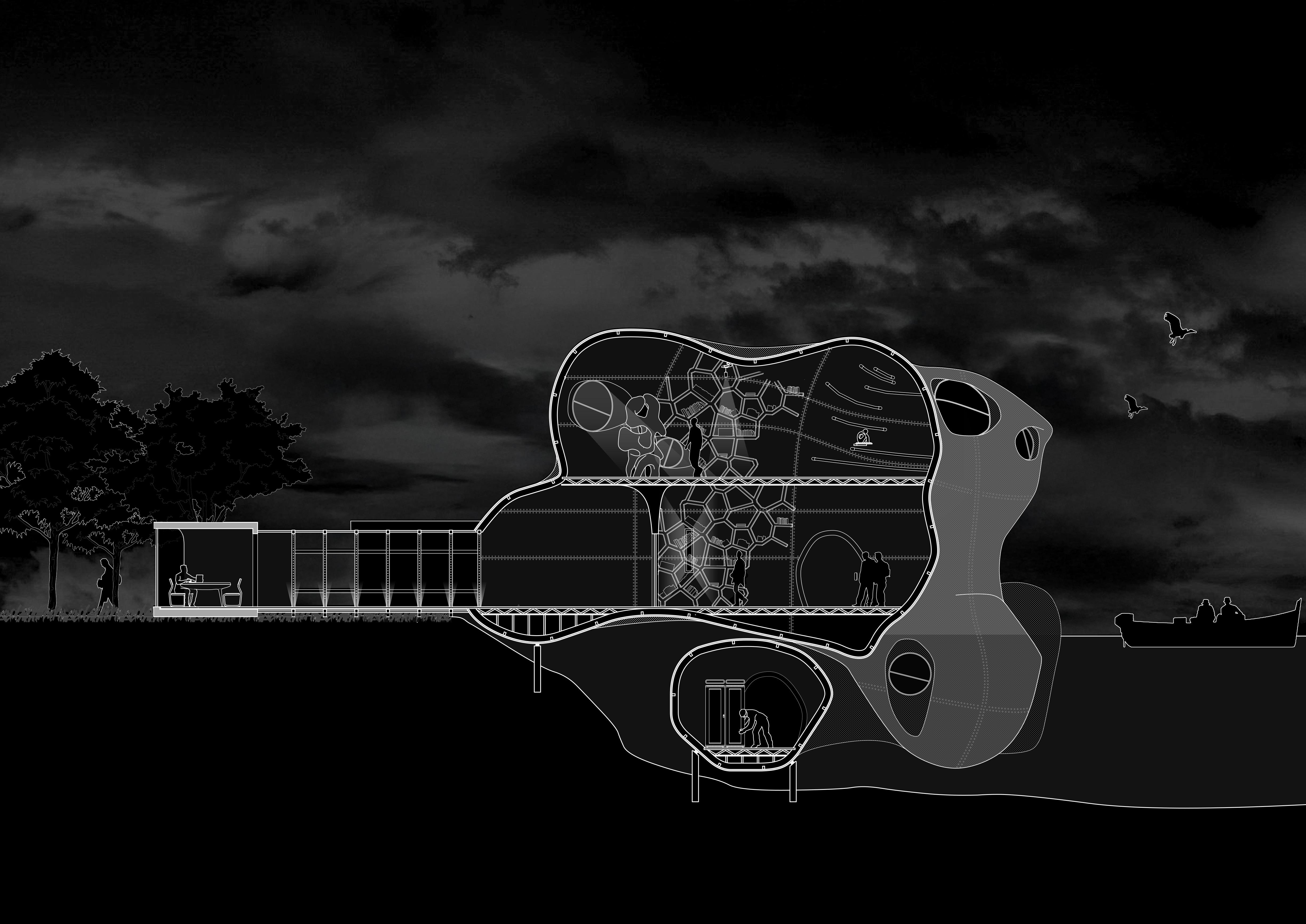
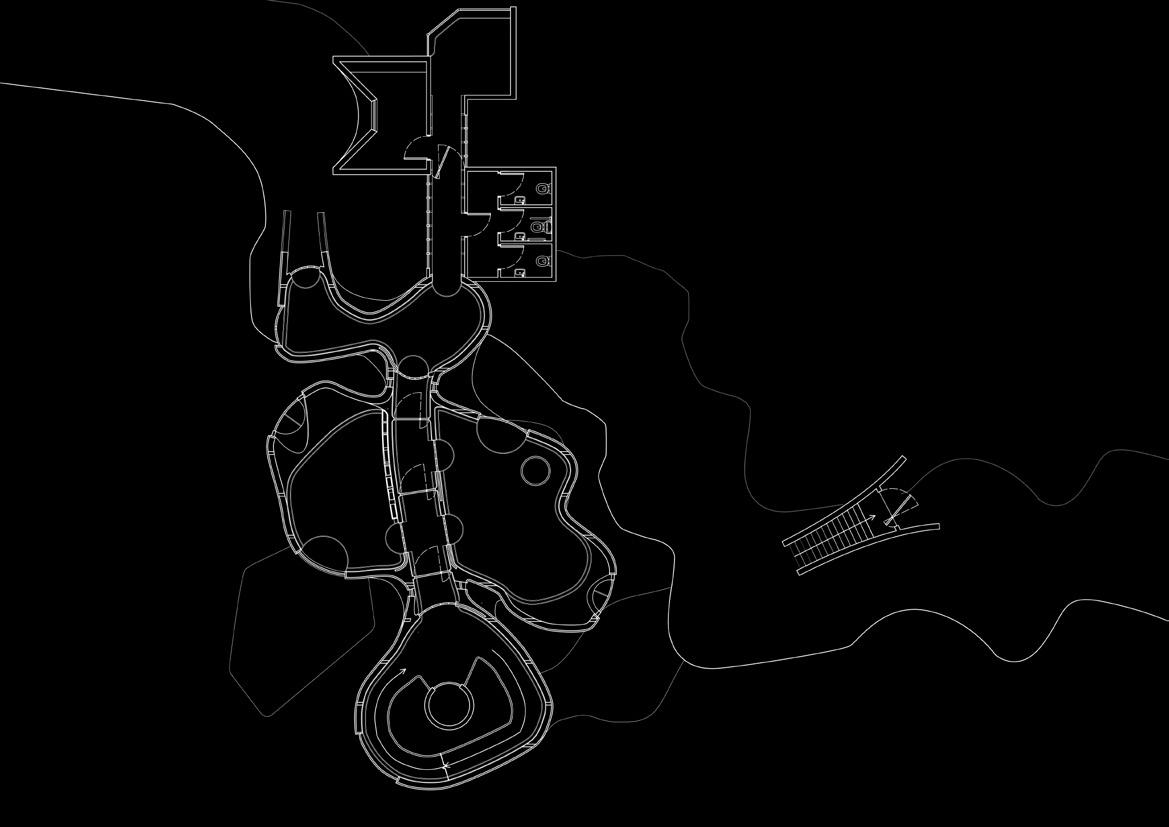
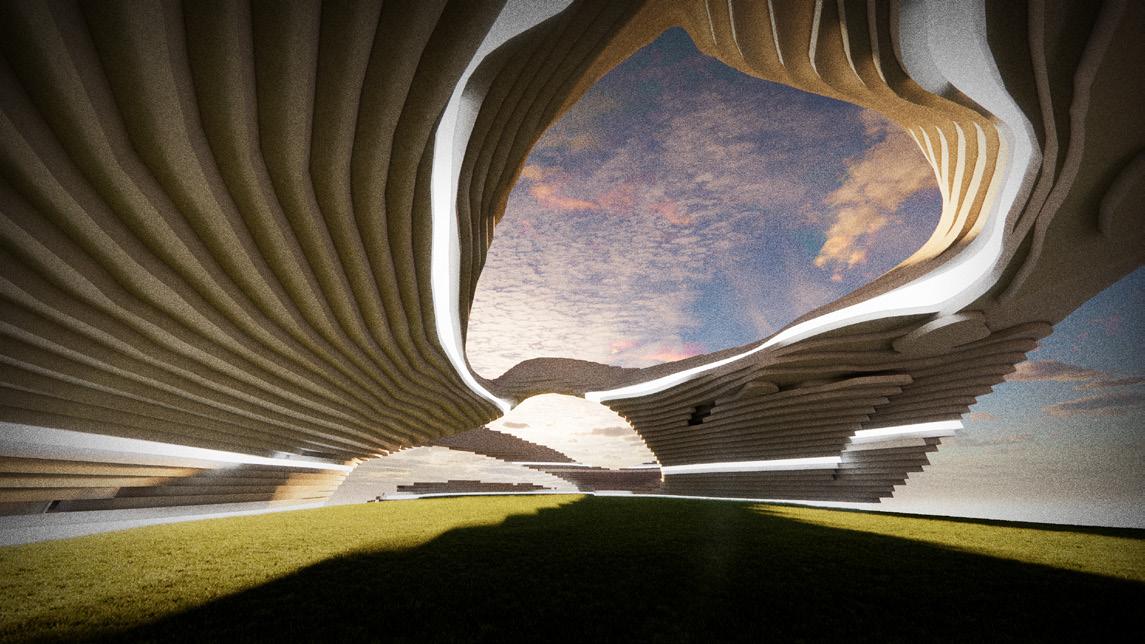
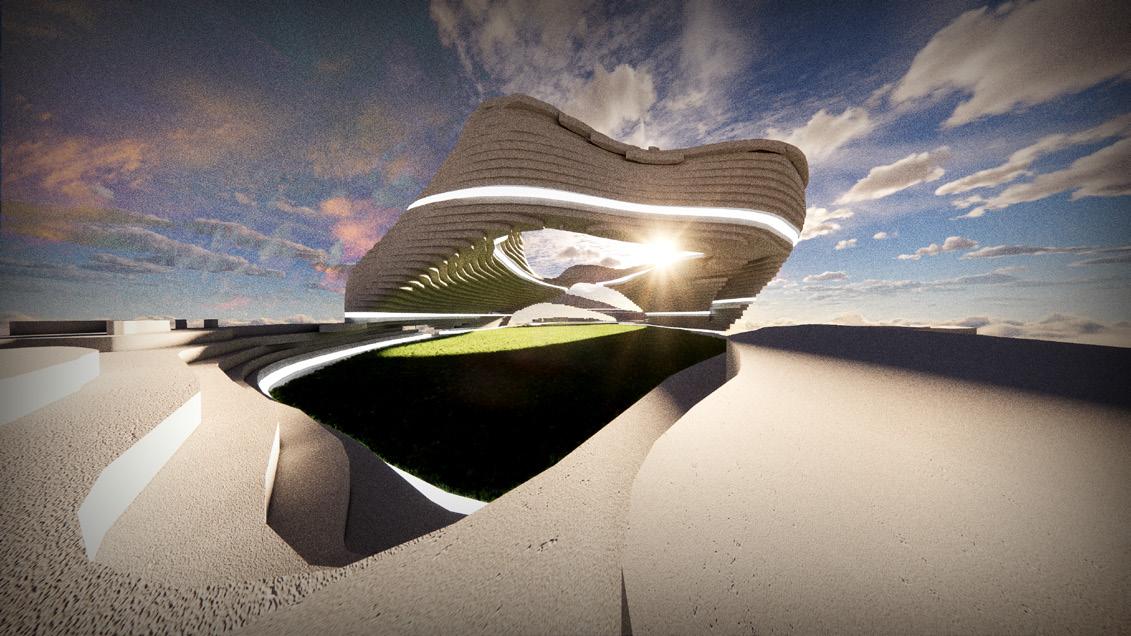
This project served as my final design for my third year at the Bartlett, as part of UG03. Located within the "La Confluence" district of Lyon, the project revolves around the concept of a modular archive that chronicles the evolution of artificial intelligence (AI), serving as the modern reinterpretation of “The Cave”. The notion of “The Cave” is one that is rooted within our evolutionary process, associated with primal knowledge and the origin of human consciousness. Much like how mankind originally used cave walls as a means to contemplate, record and imagine, the project’s design follows a similar trajectory, charting the evolution of AI from its rudimentary origin to its speculative future.
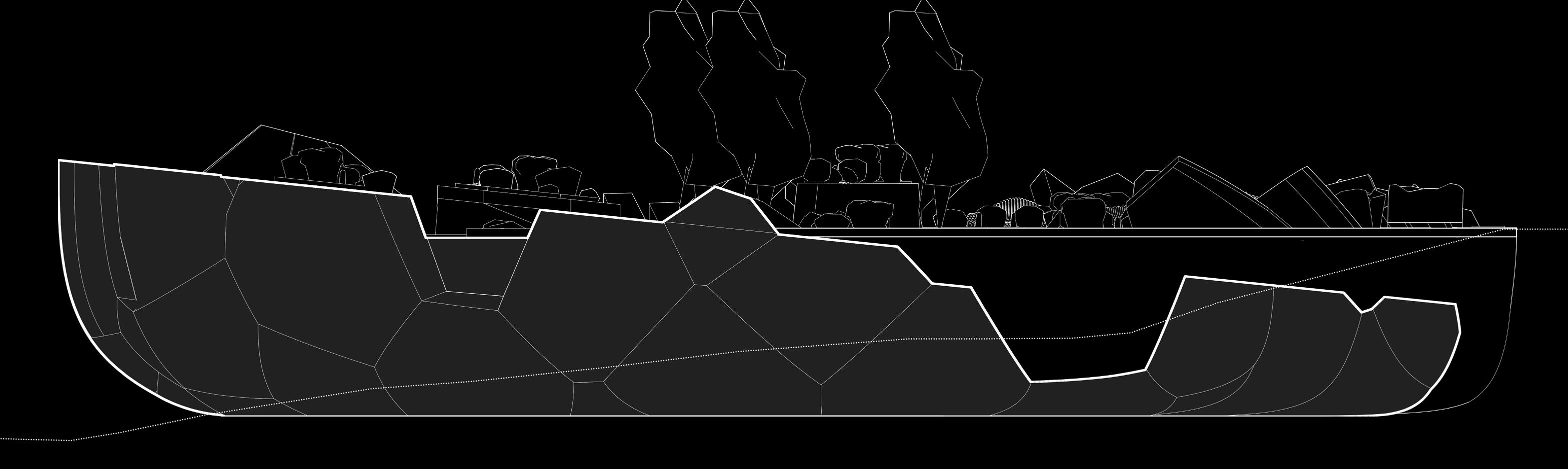
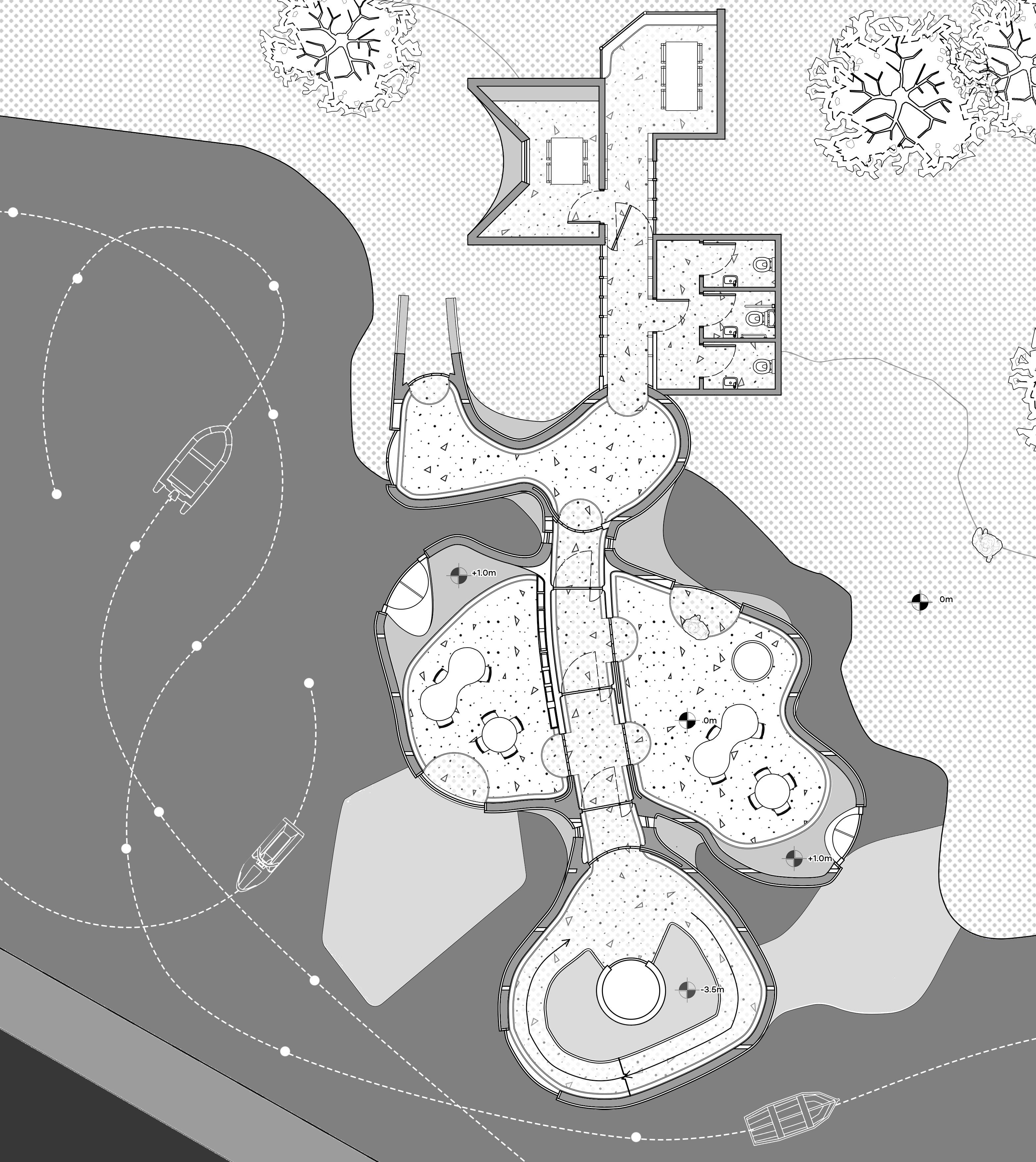
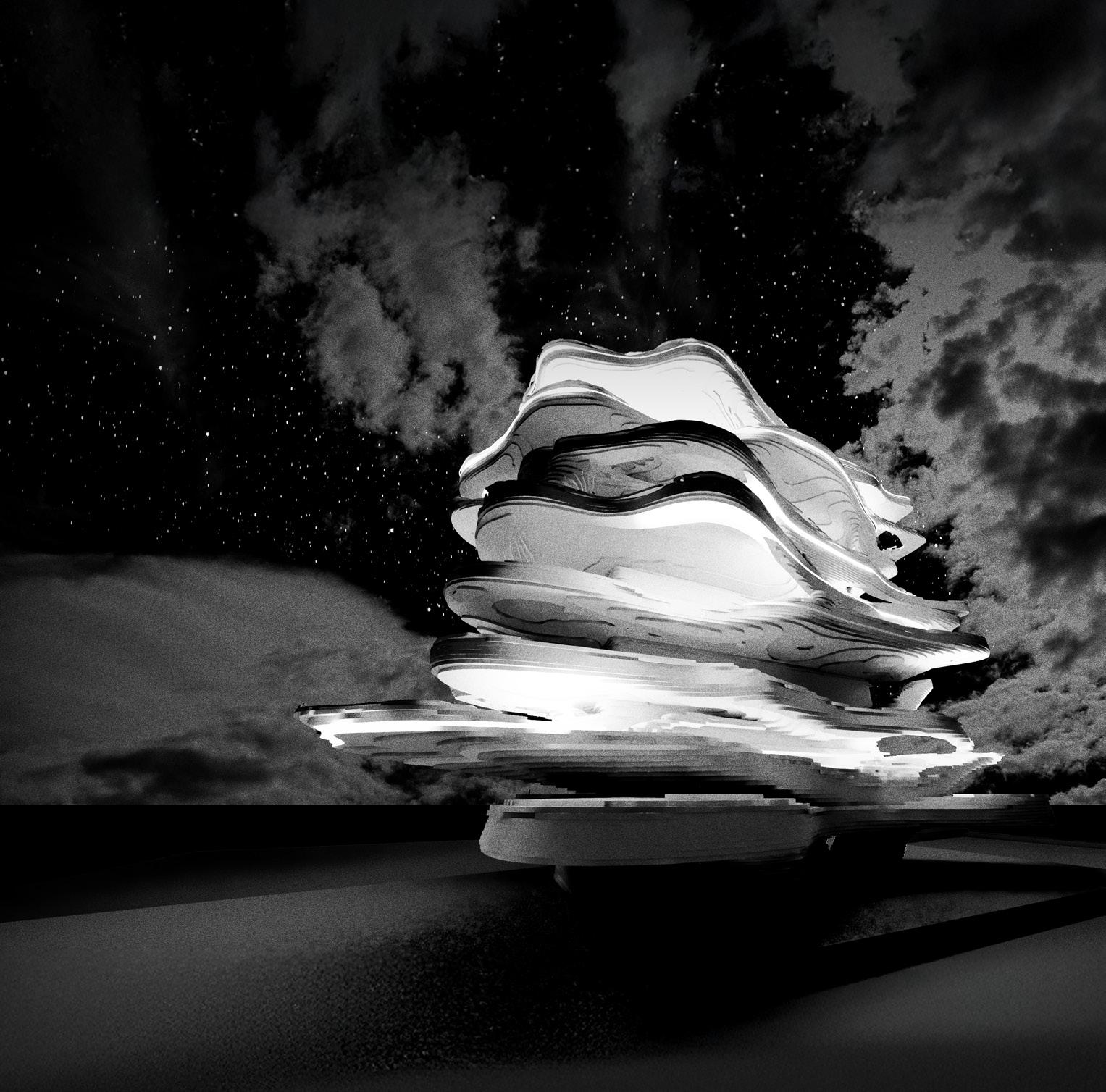
These modular spaces combine to create a fluid organic form that juxtaposes the artificial, mechanical based nature of the program itself. In doing so this contrast reflects the nature of the site itself, which is split between land and water. This connection is furthered by the form's fluidity which mirrors the shoreline, creating a balance between the natural and artificial. The project embodies the notion of evolution, beginning underwater before growing and adapting upwards into the sky. In doing so each level represents a key period of AI’s timeline with underwater spaces chronicling AI’s early history and ground level spaces representing the unfolding present. Above ground, the elevated modules represent the speculative future of AI, designed to grow and evolve over time, creating new levels as AI advances. These levels will be designed through a generative process, using AI to evaluate built form. This allows the spaces to become a physical manifestation of AI’s timeline that will grow and evolve alongside it.
Through this progression from underwater to the sky, the structure operates not only as an archive but as an active, spatial narrative of humanity's evolution into the unknown, echoing the way consciousness emerged from the depths of "The Cave".
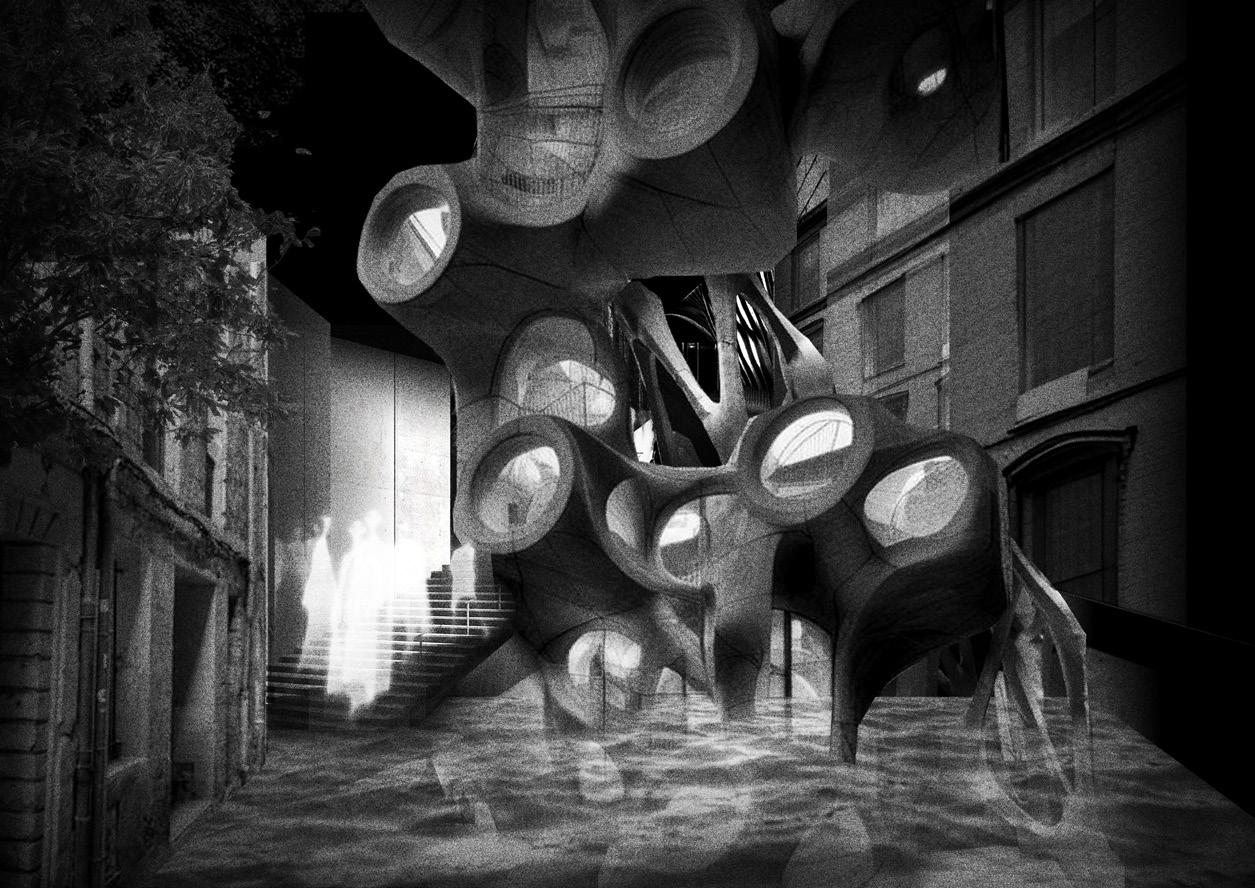
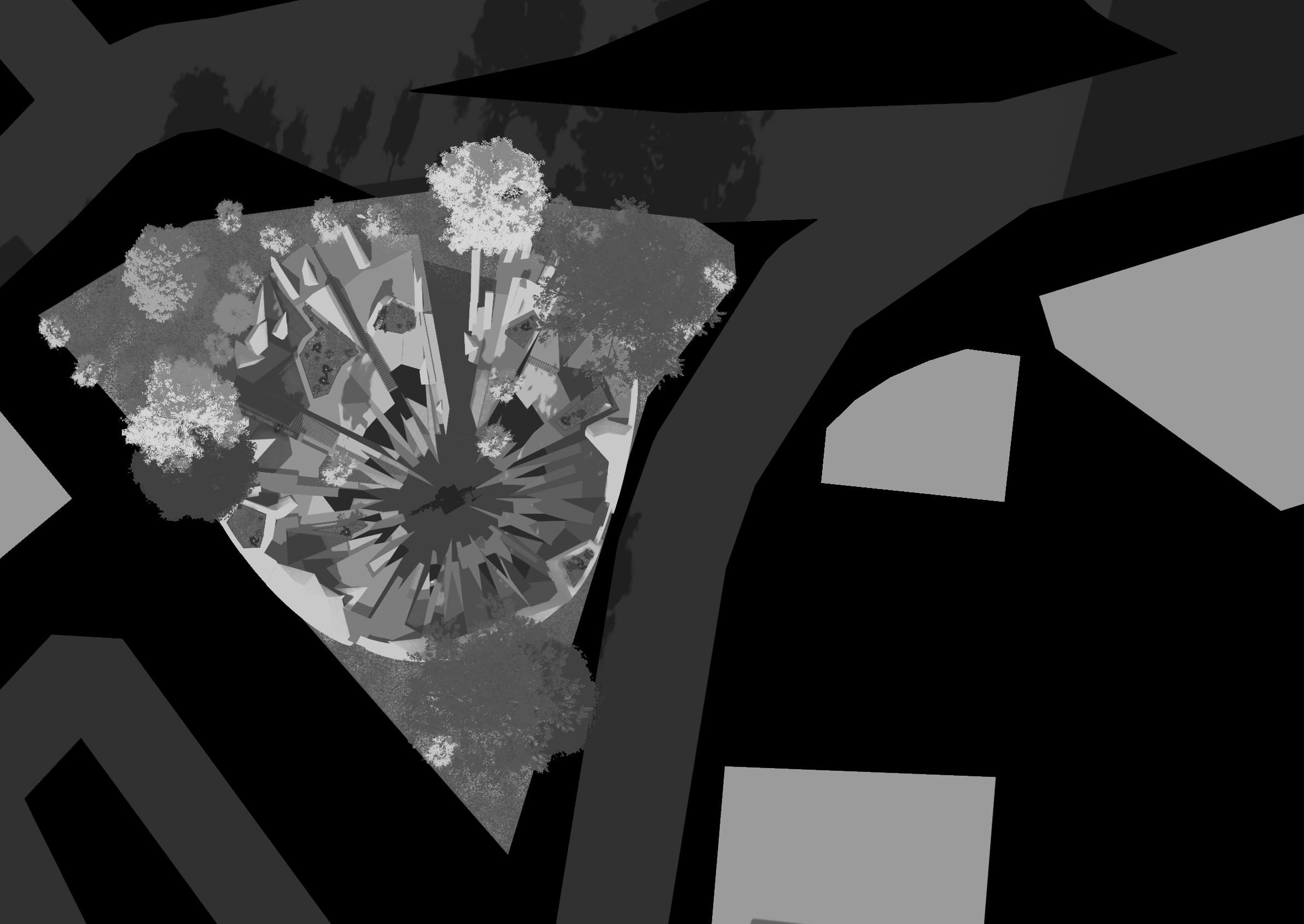
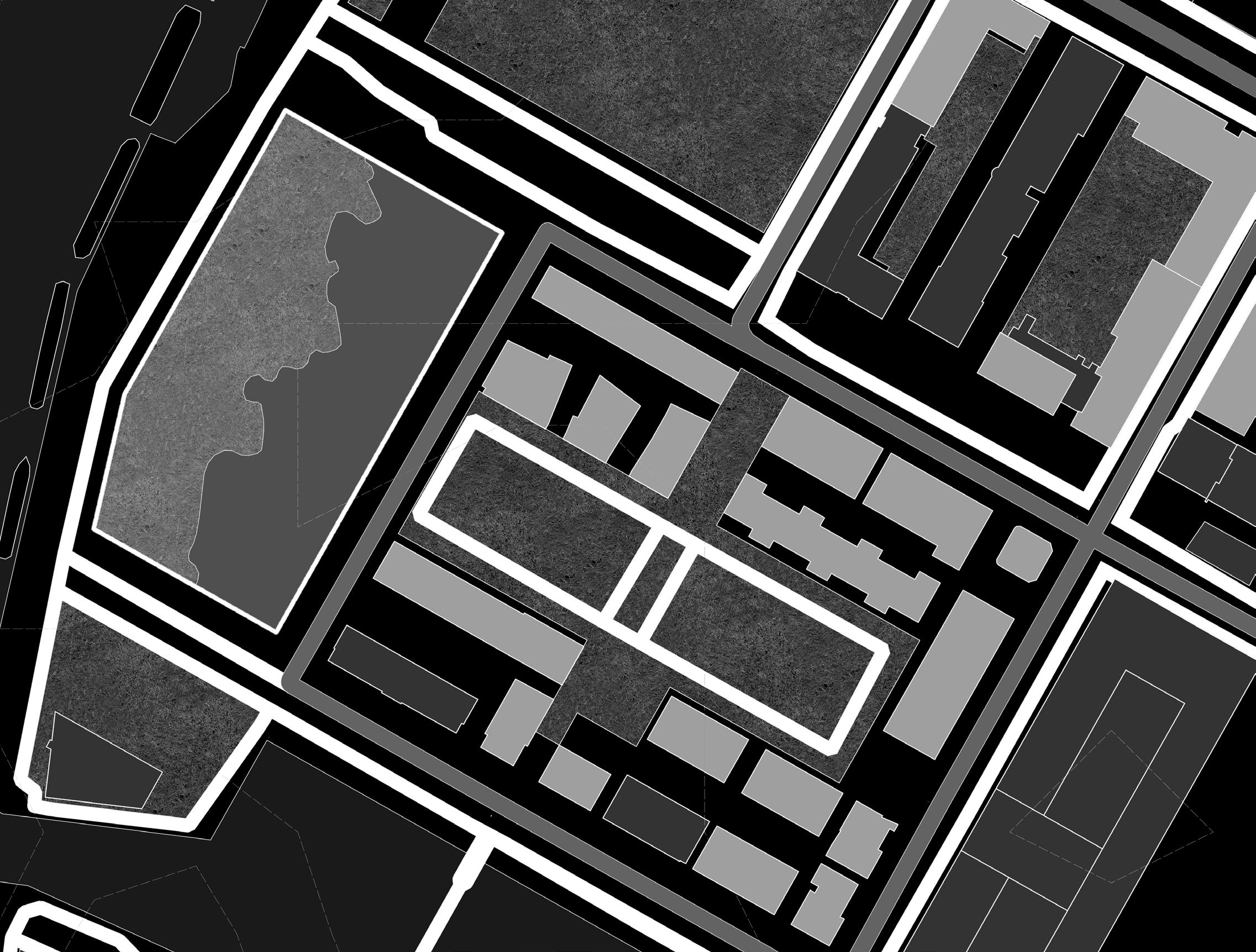
The "La Confluence" district of Lyon provides a contextual connection with the building's program. As an area that is defined by the confluence of two rivers and a unique connection between land and water, it embodies the notions of duality and contrast that play a fundamental role with the building's concept. This is furthered by the area's industrial history, which has been challenged by the more recent ubran redevelopment of the area.
Through this, the district stands as a beacon of modern architecture that embraces the future. In this way the area itself embodies the evolving nature of AI. As such, the evolving modular spaces that represent the future of AI, will grow and develop in an area that is both continuously expanding and redefining its identity.

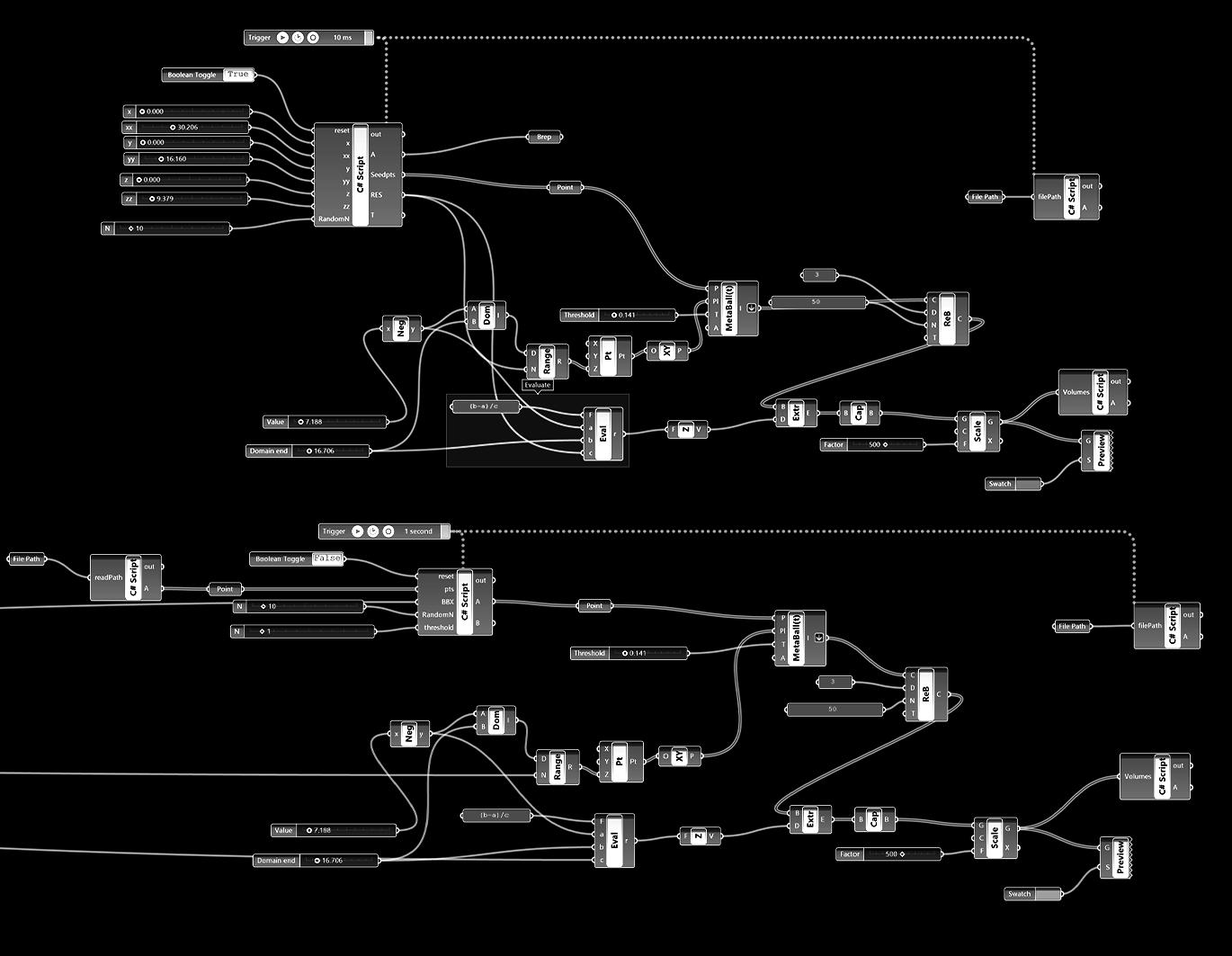
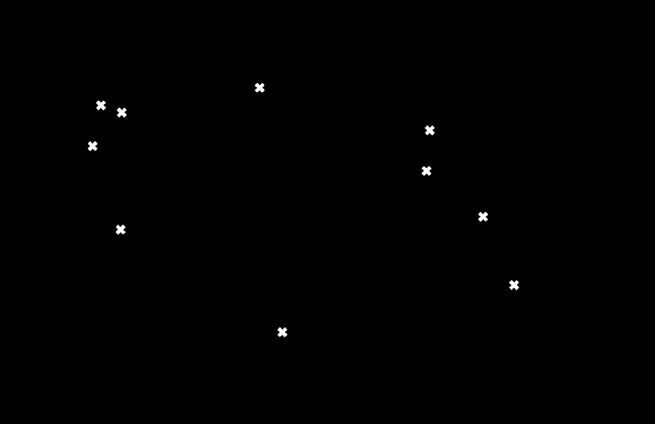
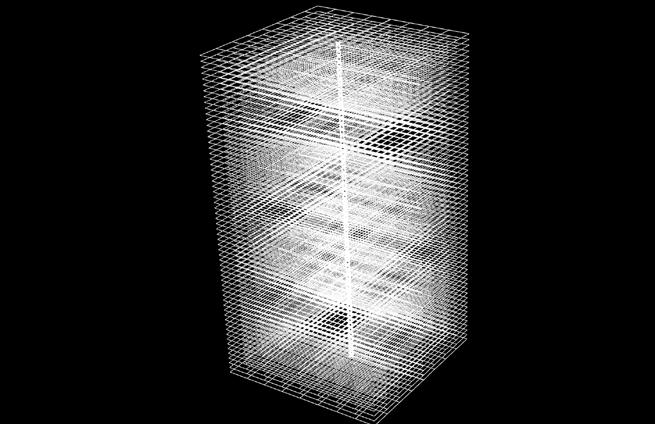
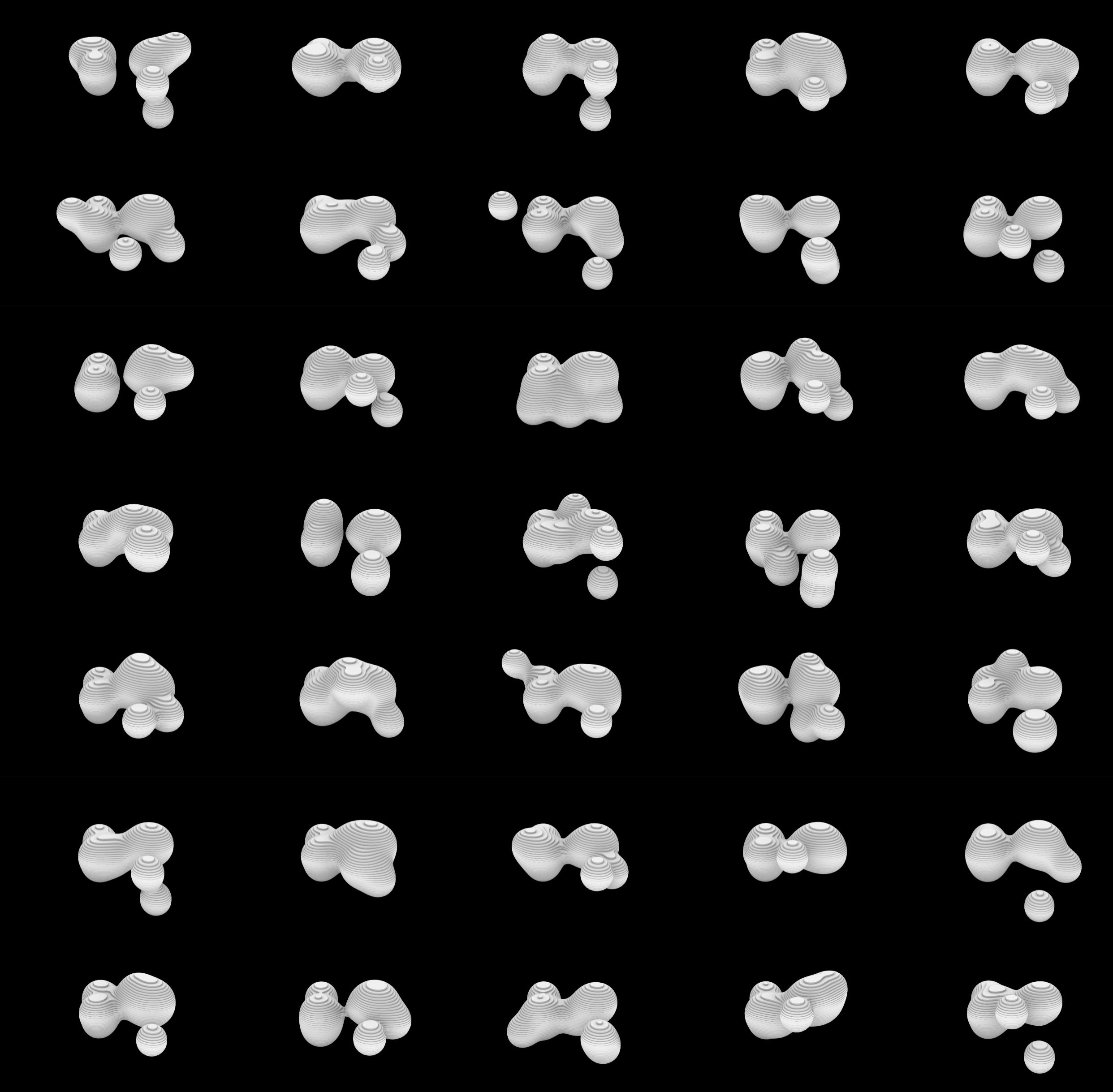
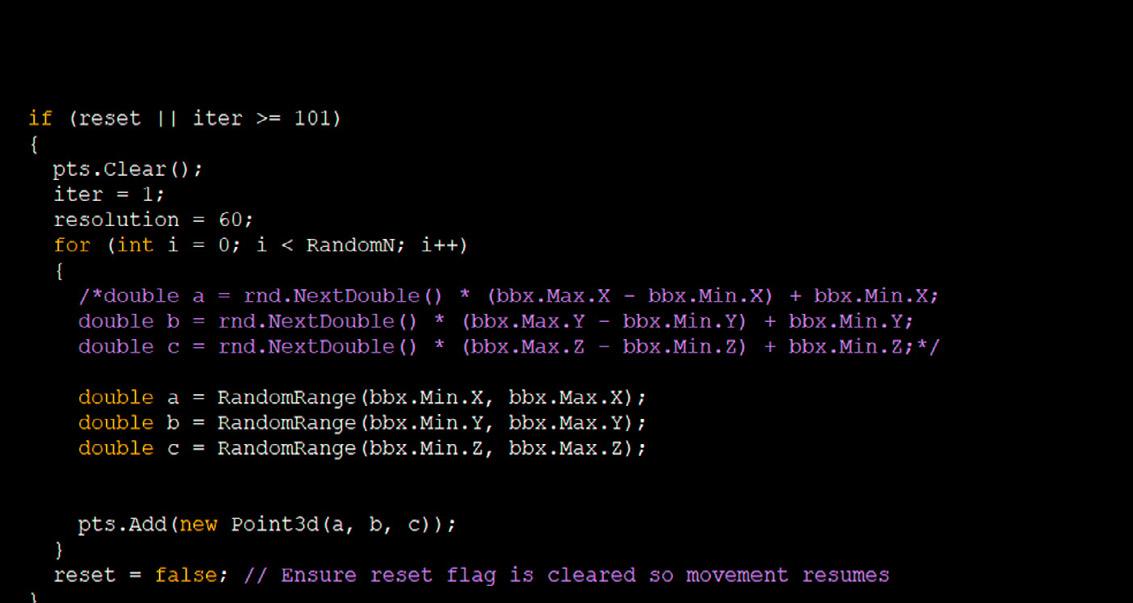
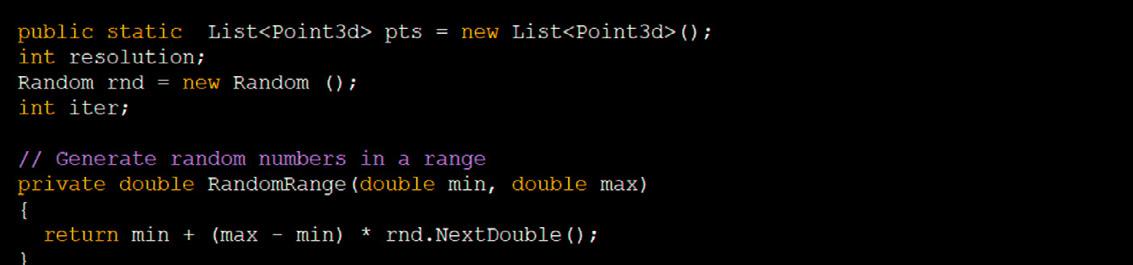
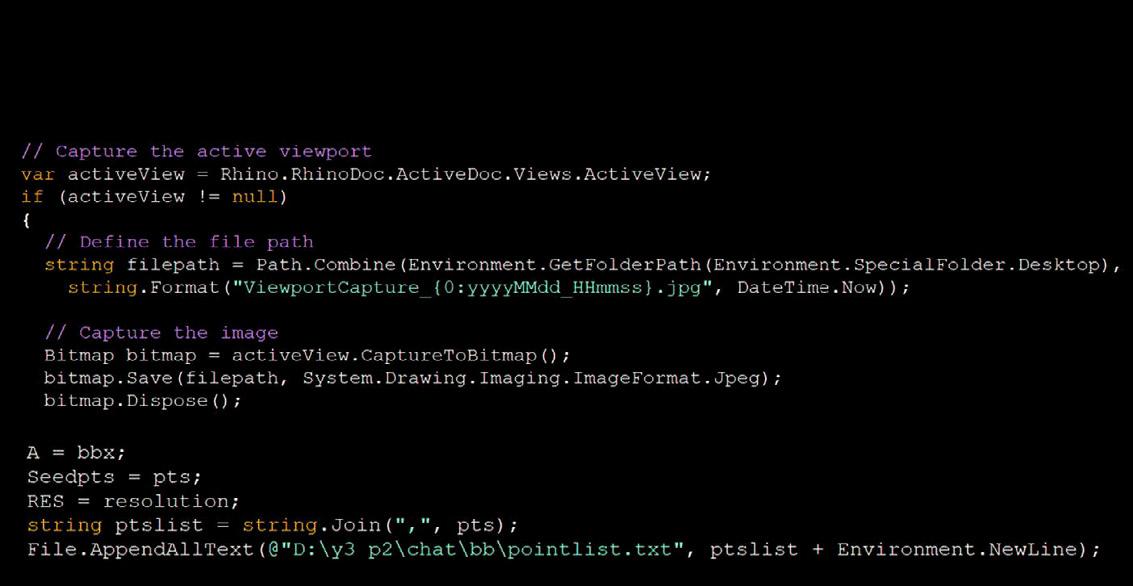
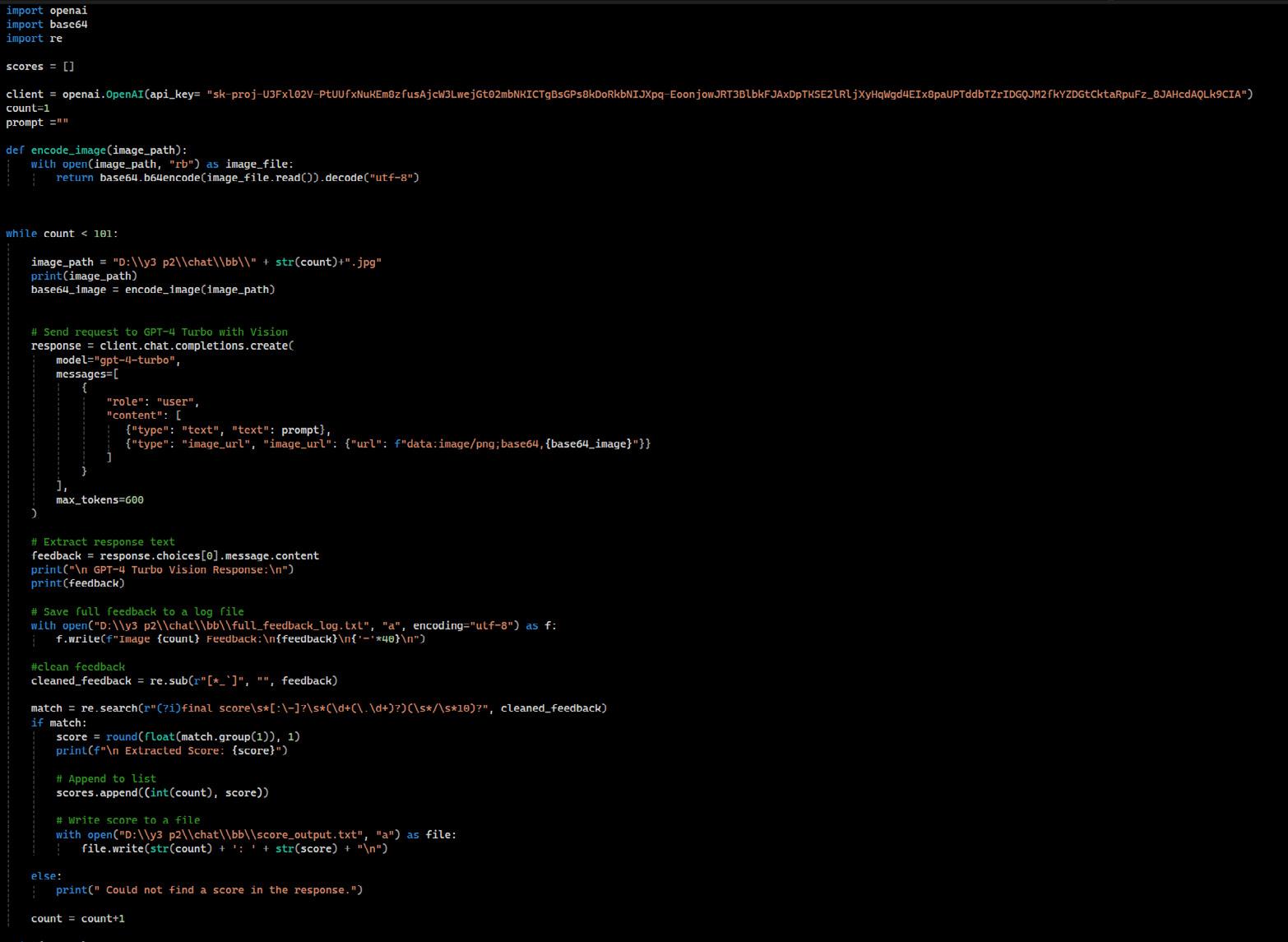
In order to allow the building to grow and evolve alongside AI a generative evolution process was created, where architectural forms were created and evaluated through an iterative process. First a program was created that can randomly distribute points within an area. These points then serve as a basis for three dimensional massing models, that are then analysed through ChatGPT which will score each mass based on a set of parameters. The parameters used fall into three core categories, namely design based, experiential, and contextual. First the forms were rated based on their appearance, with ChatGPT developing a personality based on previous work within the Bartlett, before then being analysed based on the marking criteria of the design module. After this the AI was asked to analyse experiential parameters, namely its relevance to the building's program as well as the human experience. Lastly the system evaluated the forms based on contextual parameters, reviewing the forms relationship with the site itself and analyzing them based on the environmental conditions of Lyon.
After each parameter the highest rated form is saved, serving as a foundation for the next set of generations. Through this the final design results in AI-assisted modularity, where adaptive, scalable design solutions emerge through the fusion of both generative and architectural design principles.

EVALUATING
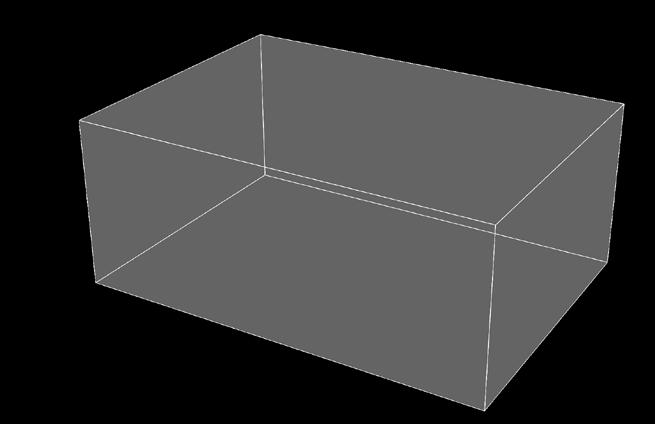
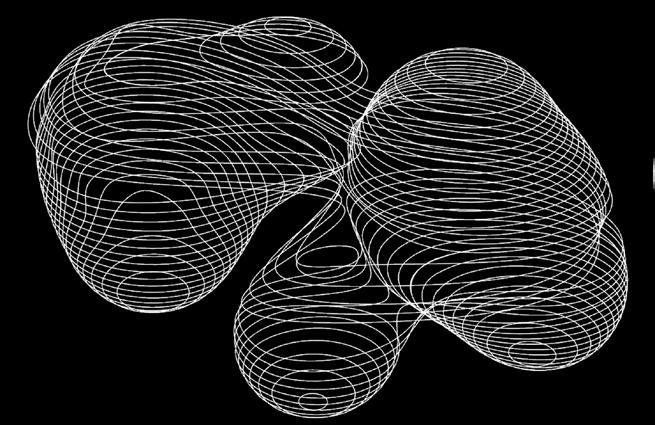
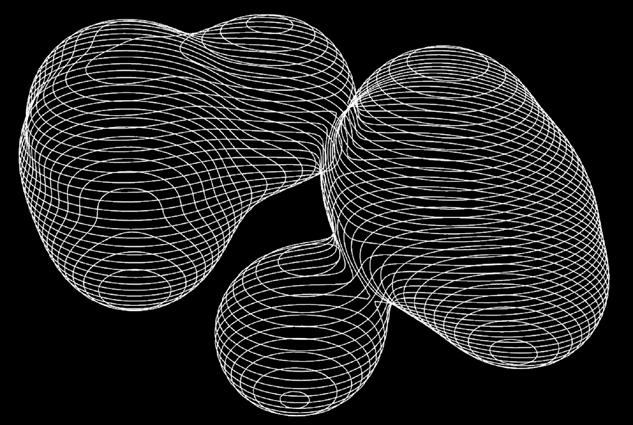
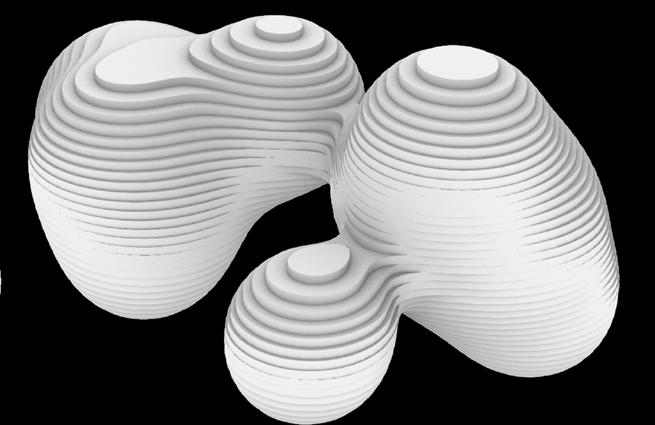
The architectural design shown in the Rhino model reveals an intriguing, organic structure that integrates smoothly rounded forms. Let's delve into its environmental performance attributes based on the Lyon climate specifics provided.
The round, smooth morphology of the building can offer a strategic advantage in terms of aerodynamics, potentially reducing wind loads effectively owing to its ability to allow north winds from Lyon to bypass smoothly. This shape helps in limiting the wind-driven abrasion and pressure on the structure's facade, which can be significant given the almost year-round northern winds with average speeds of 12mph. However, various bulges and curves in the design could create turbulent microclimates around the building, affecting comfort in outdoor spaces. The effectiveness of this design in wind mitigation is moderately high, but there could be nuances in wind behavior that aren't addressed.
Score: 7.2/10
Solar Orientation
The top layers of the structure, consisting of the rounded domes with varying orientations, might be a rather delicate approach to harnessing solar gains. Given the 5.3 to 5.6 hours of sunlight in the summer, this dispersal of surfaces can catch sunlight efficiently to some extent. Nevertheless, the uniformity in external texture and lack of specific angling or shading devices can lead to suboptimal control over solar gains and losses. This could result in increased heating or cooling demands, depending on the internal usage of each segment of the structure.
Score: 6.1/10
The rounded and multi-leveled surfaces of the design are promising for effective rainwater management. They seem to facilitate the collection and possibly the redirection of rainwater towards designated storage or drainage systems. This could be exceptionally beneficial in managing the high annual precipitation of 1043mm. Nonetheless, the actual detailing of gutter systems, drain placements, and water handling efficiency cannot be derived from the model alone, which means the theoretical advantage might not fully translate into practical efficiency without additional infrastructure.
Score: 8.4/10
Final score: 7.7/10
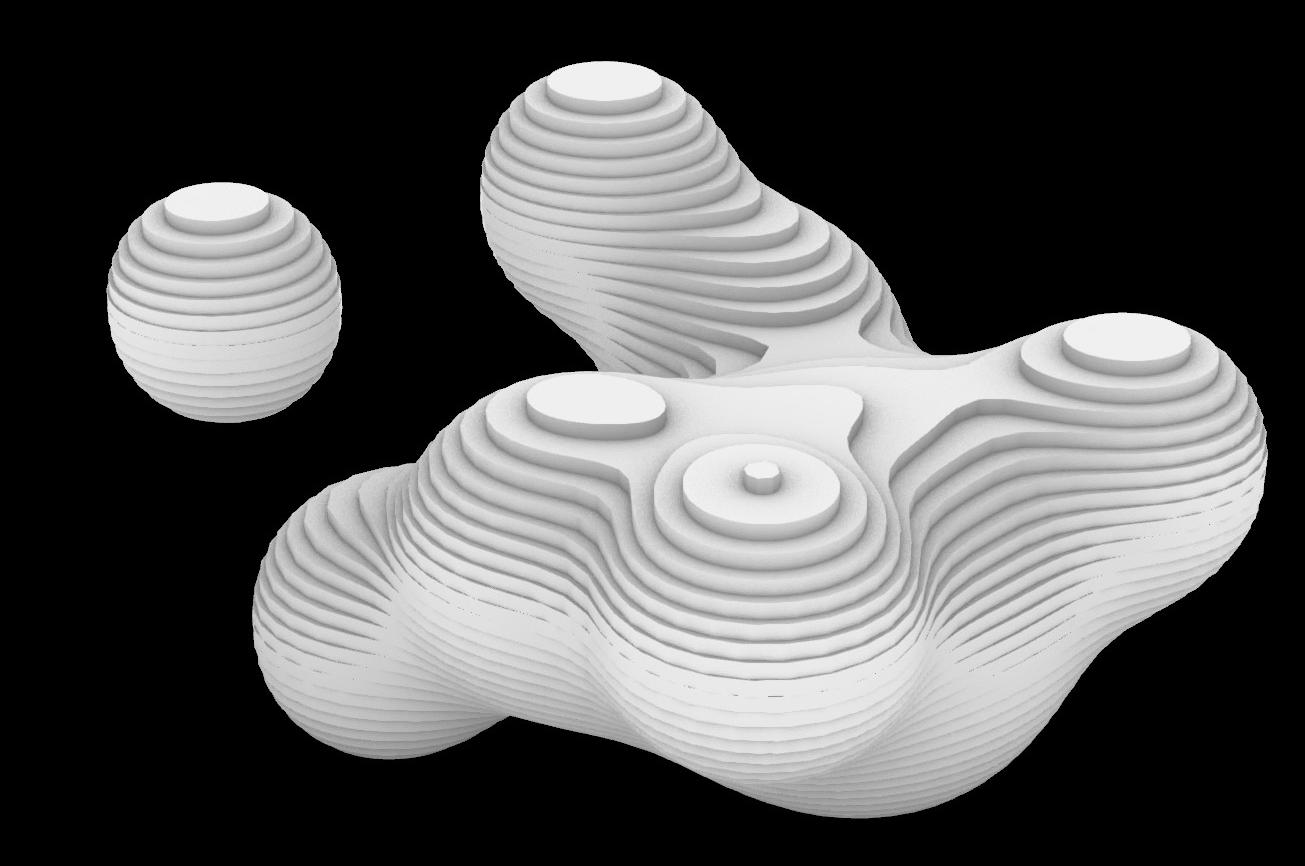
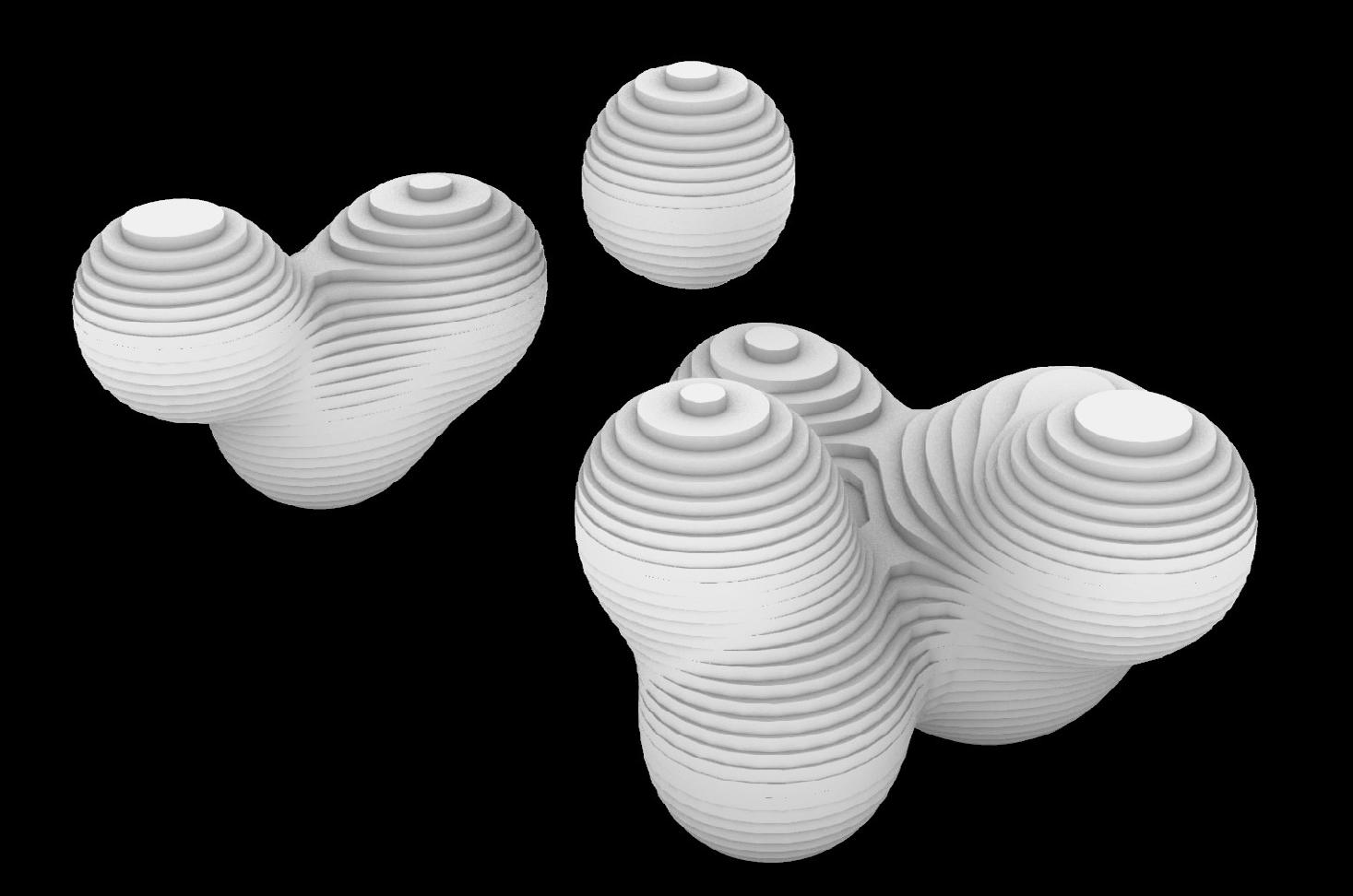
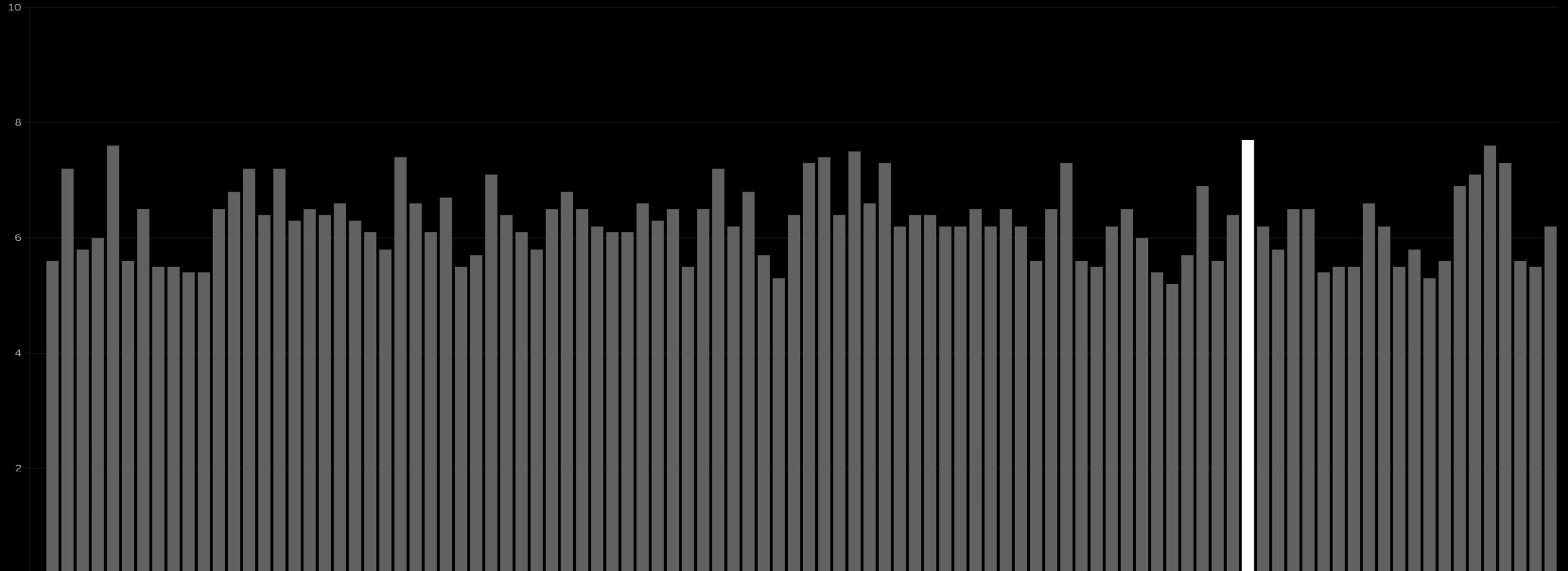
In order for the evaluations to directly affect the next iteration of generations, a second version of the generation framework was created. This variation first checks the distance of each of the points of the preferred generation. Through this, points that are in close proximity to others are kept static meaning that they are altered within the iterations, mainting a solid core to the generated forms. This distance is modified by a threshold variable, which provides opportunity for the code to find nearby points. After this, the same process as earlier is applied, with the form being generated and an image and list of points being saved
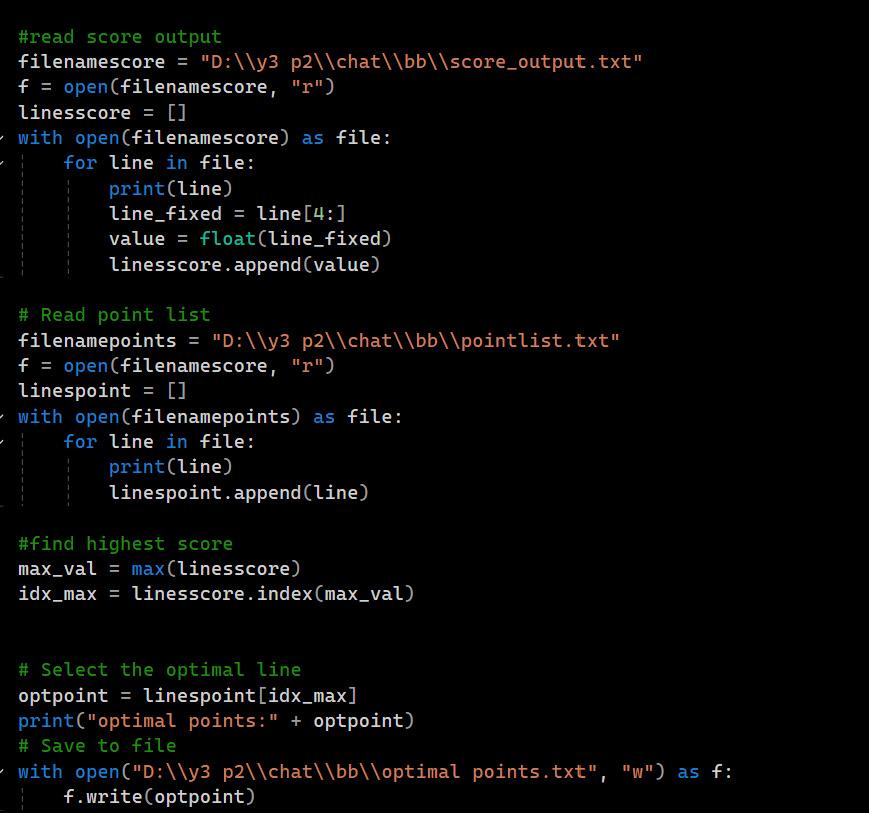
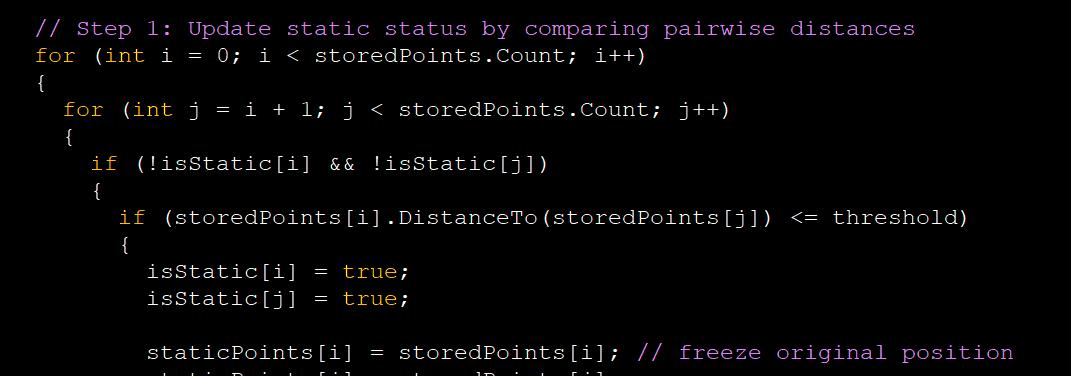
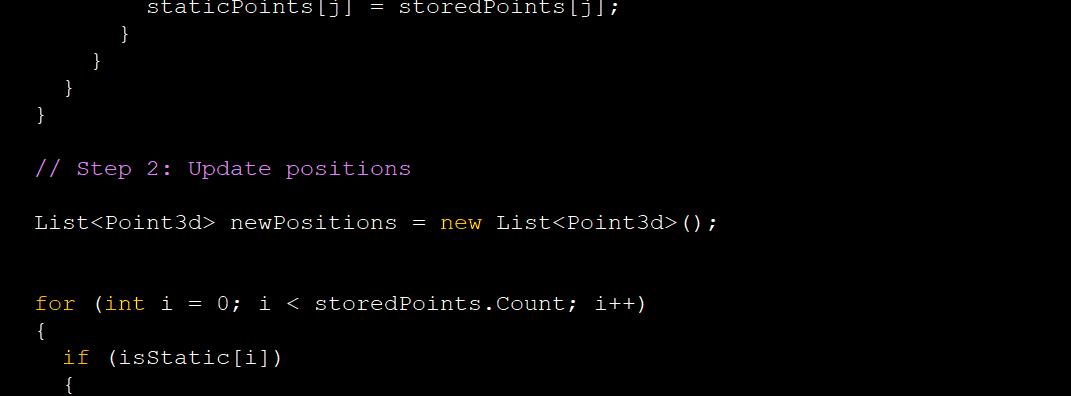
After this a new list of all the read points is created. Then if the point was previously declared static, shown by 'if (isStatic[i])', it is retained and is not randomly distributed. Otherwise the same random distribution from the initial generation framework is applied.
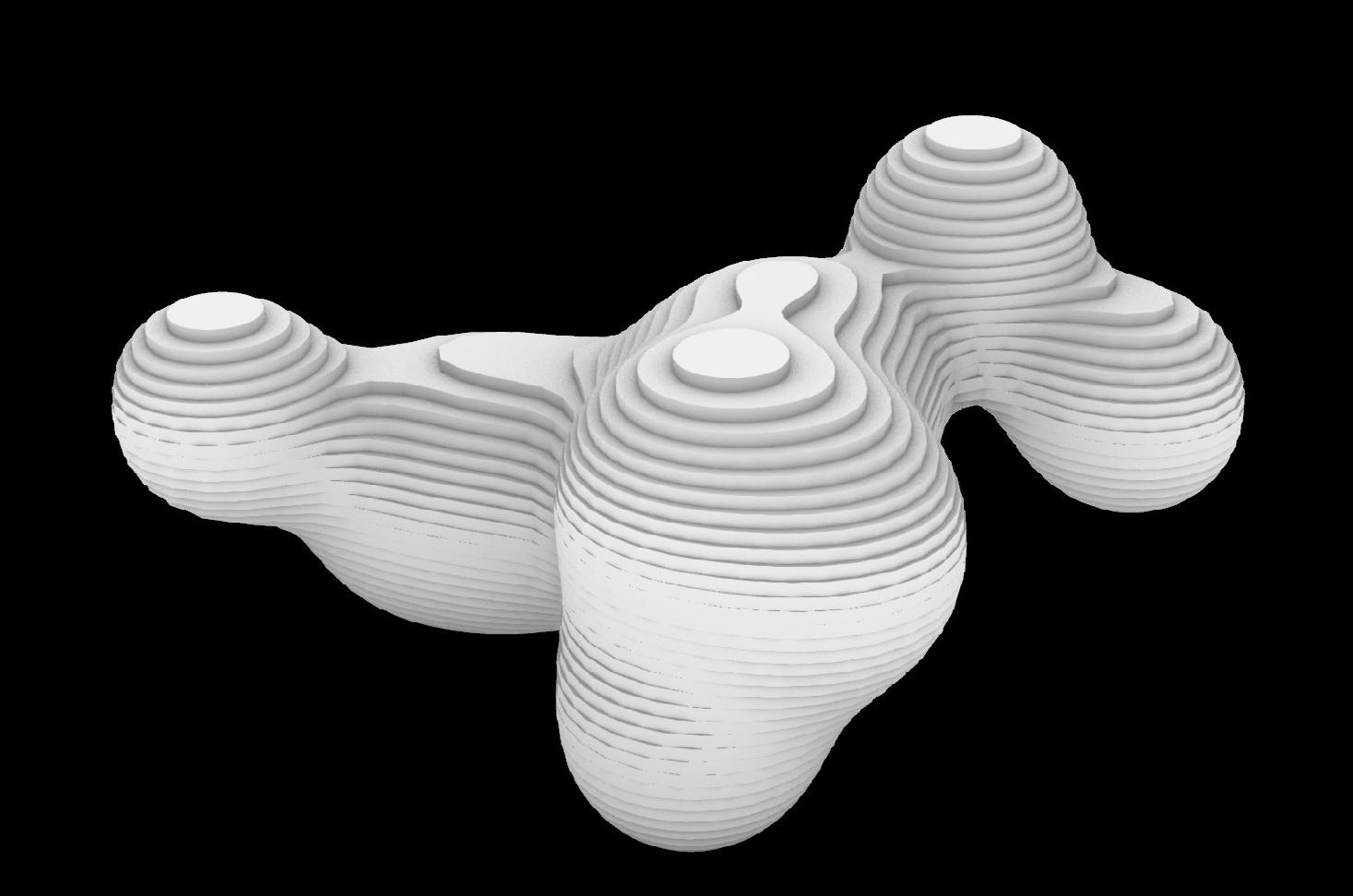
Initial generation
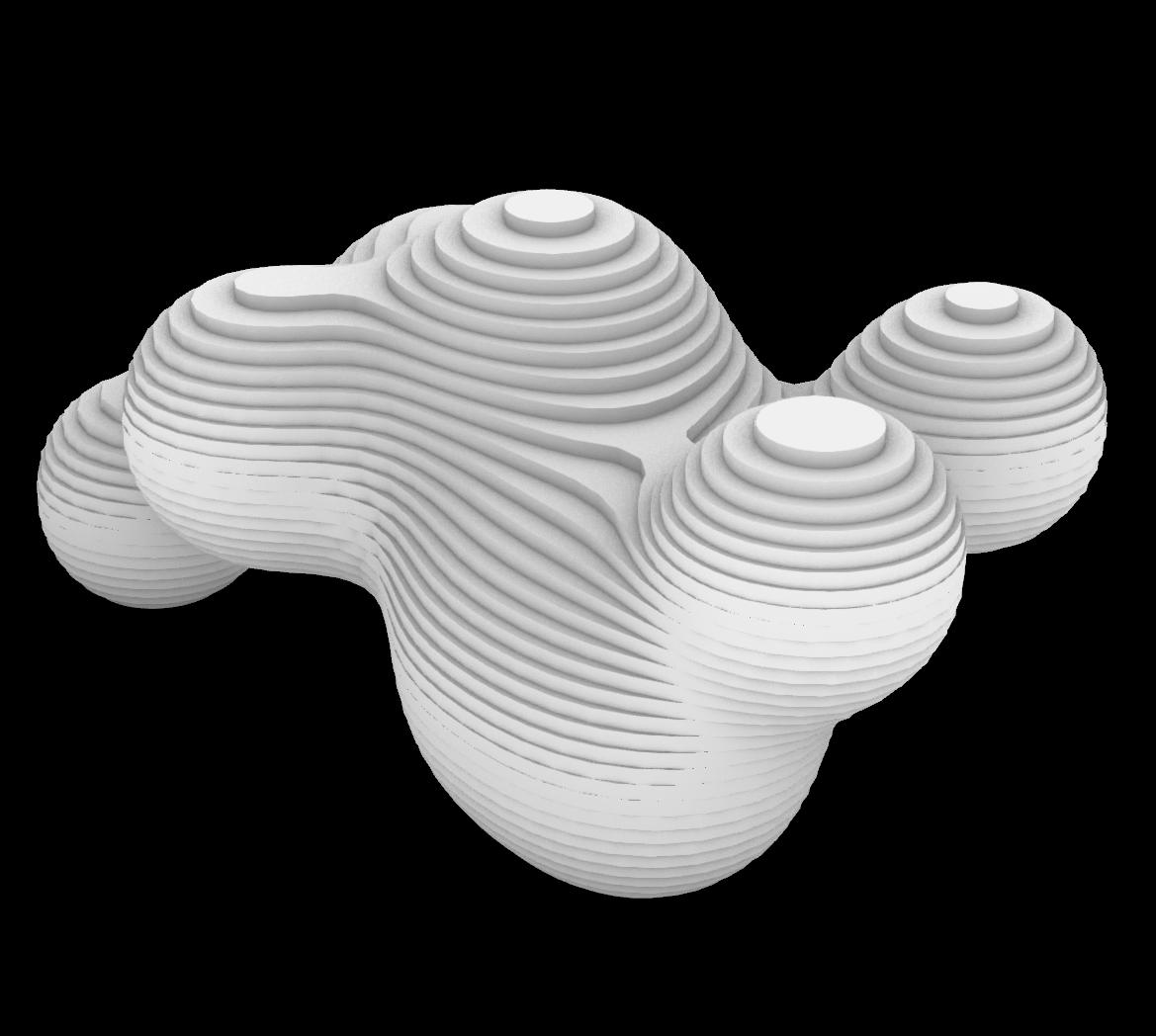
Medium Threshold
When a threshold of 5 is used 4 points are saved. This shows that a threshold of around 5 will result in a form that maintains core elements of the initial generation while also allowing for variance.
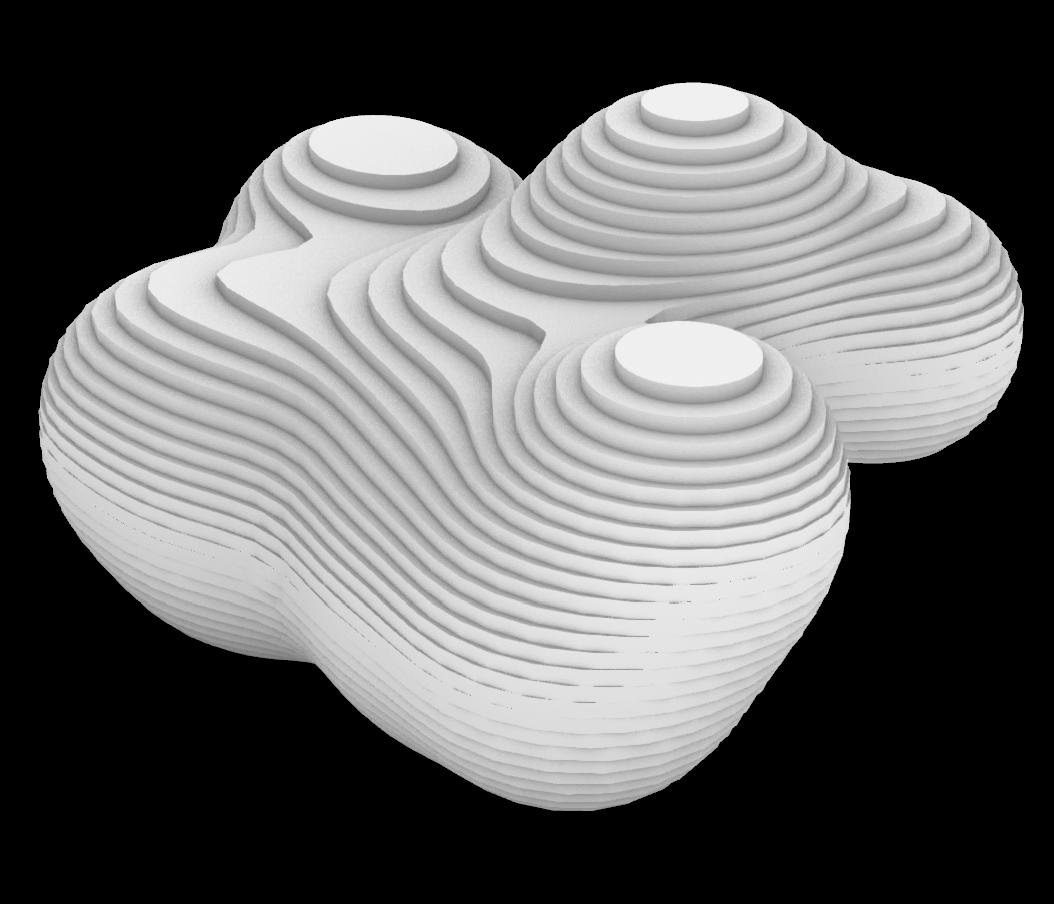
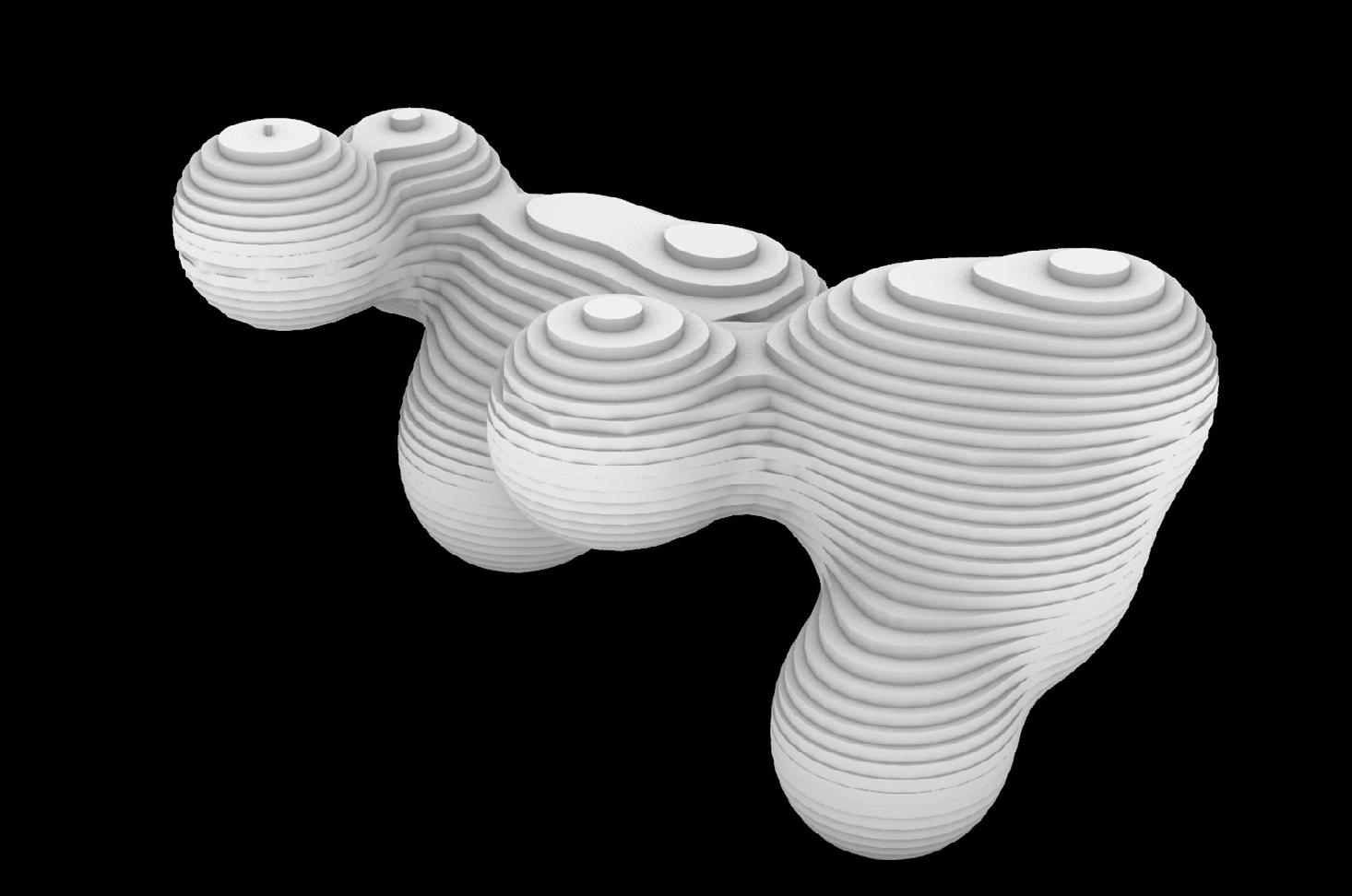
Minimum Threshold
When a threshold of 0 is used, no points are static resulting in generations that have no reference to the initial evaluated form. This is also true for thresholds 1 and 2
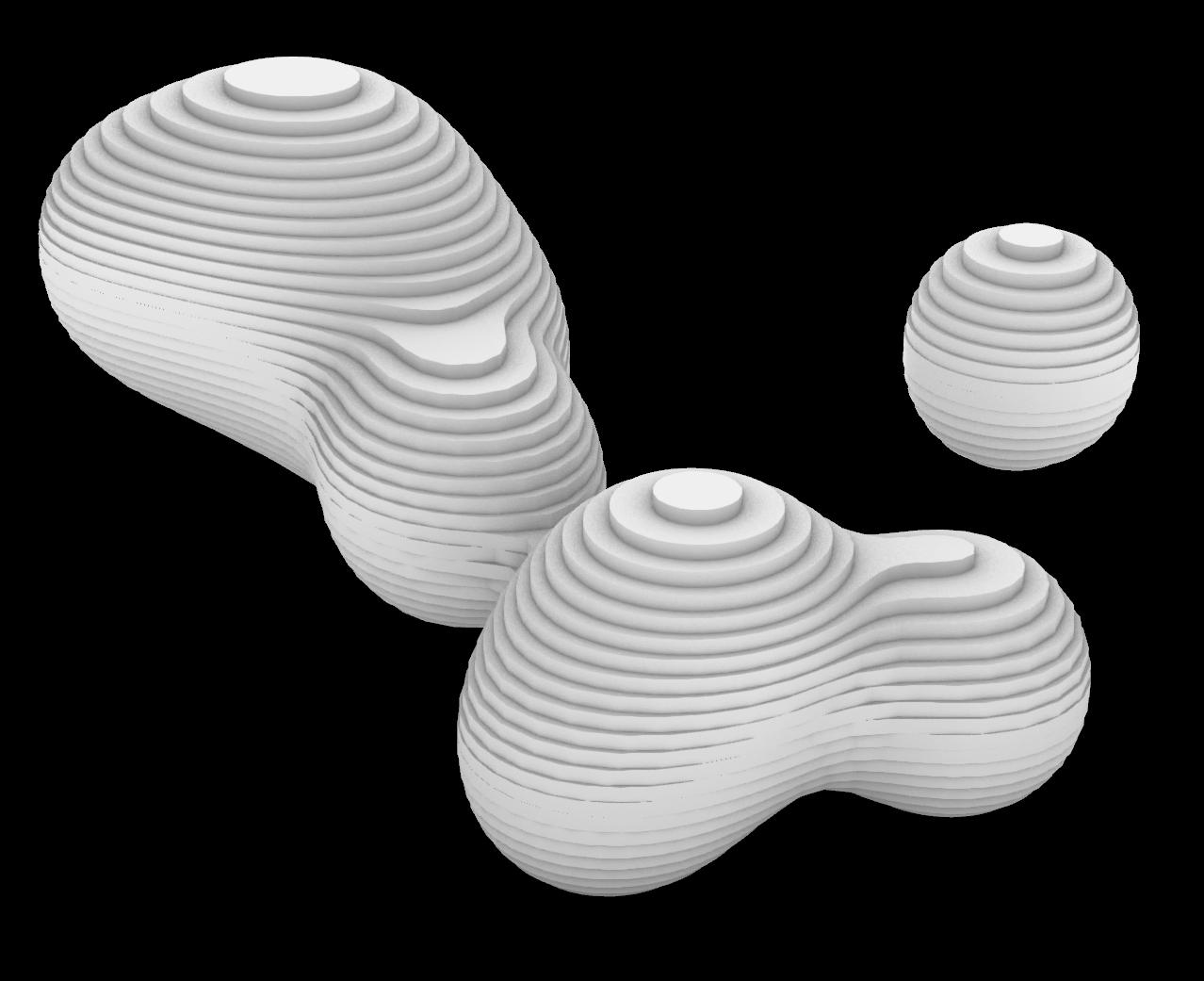
Maxmimum Threshold
When a threshold of 10 is used. 8 points a saved. This results in a form that is far too similar to the initial generation, allowing for very little variation.
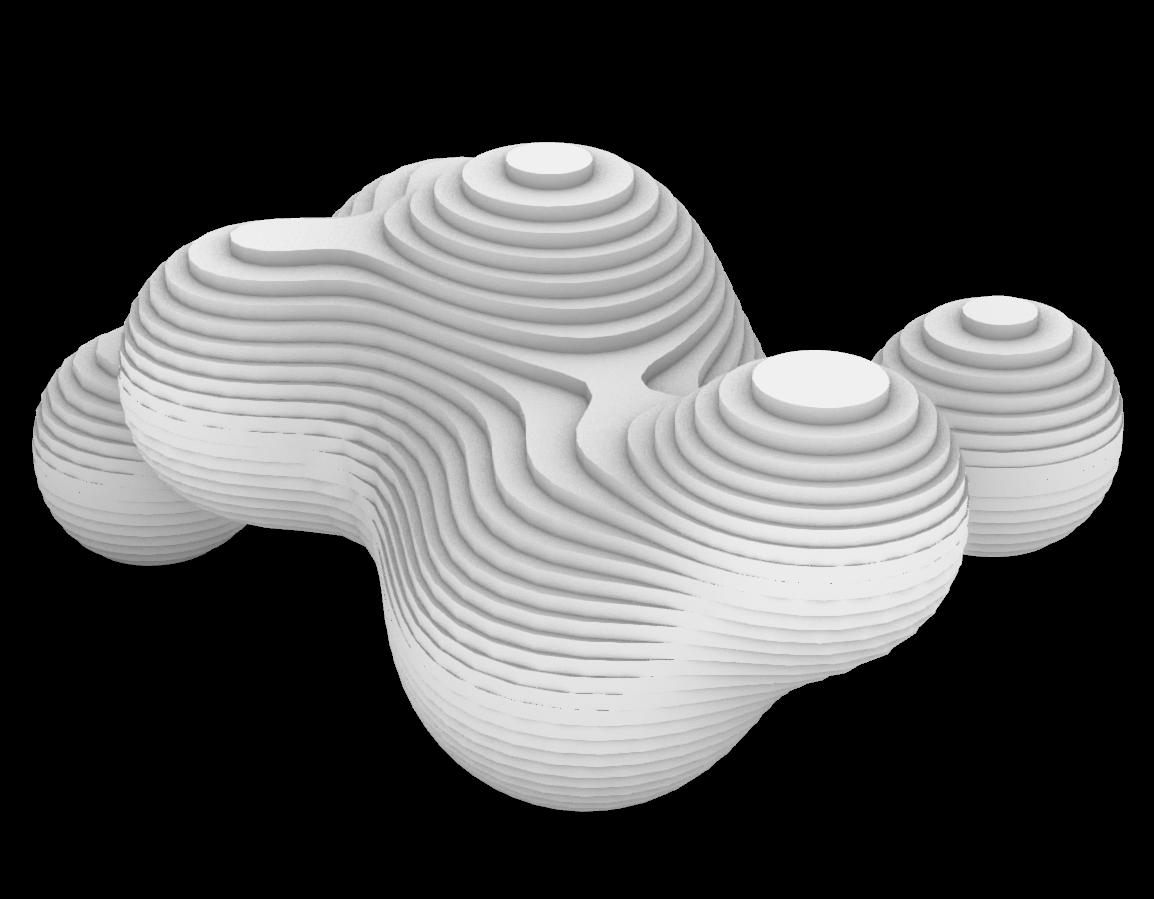
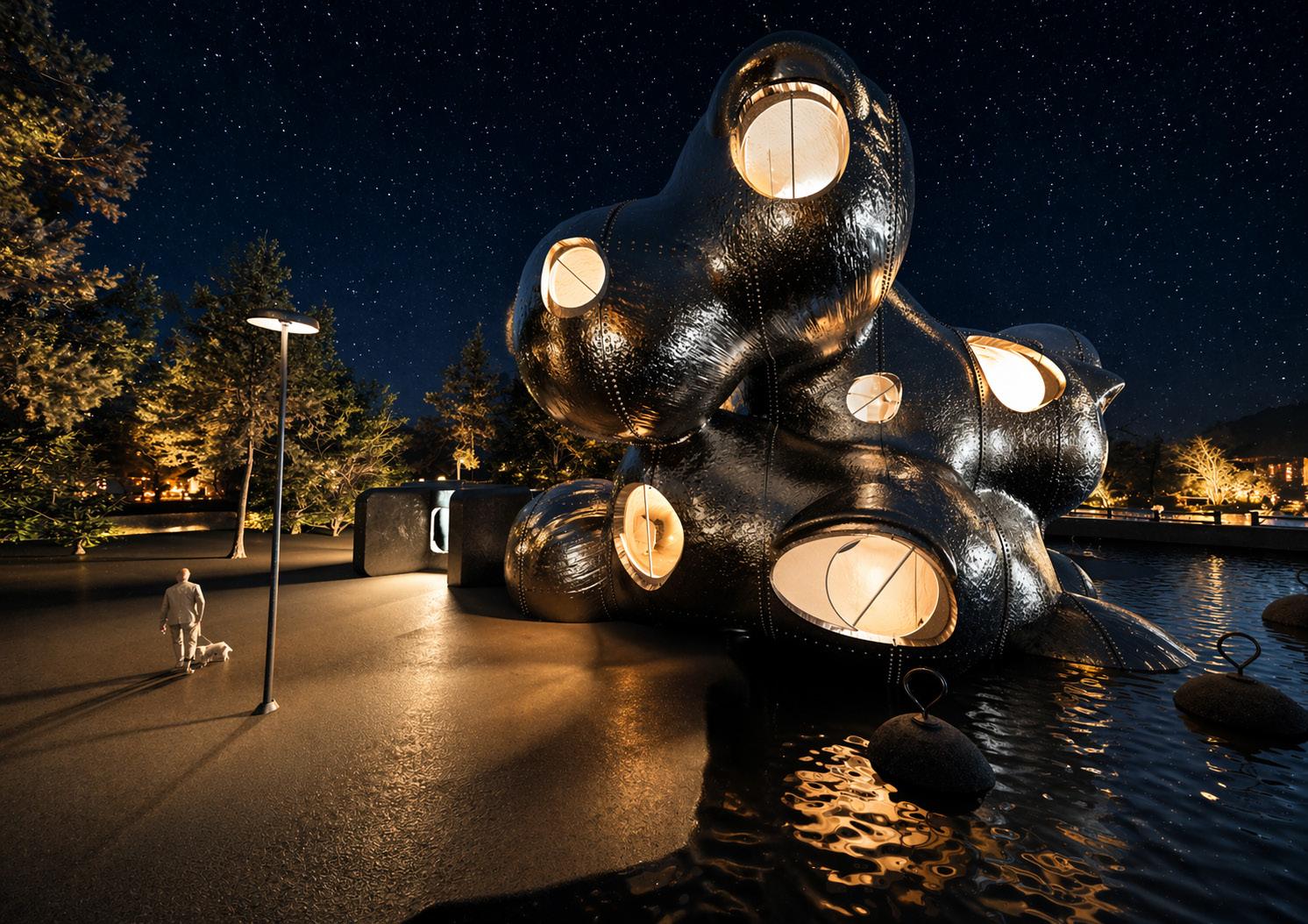
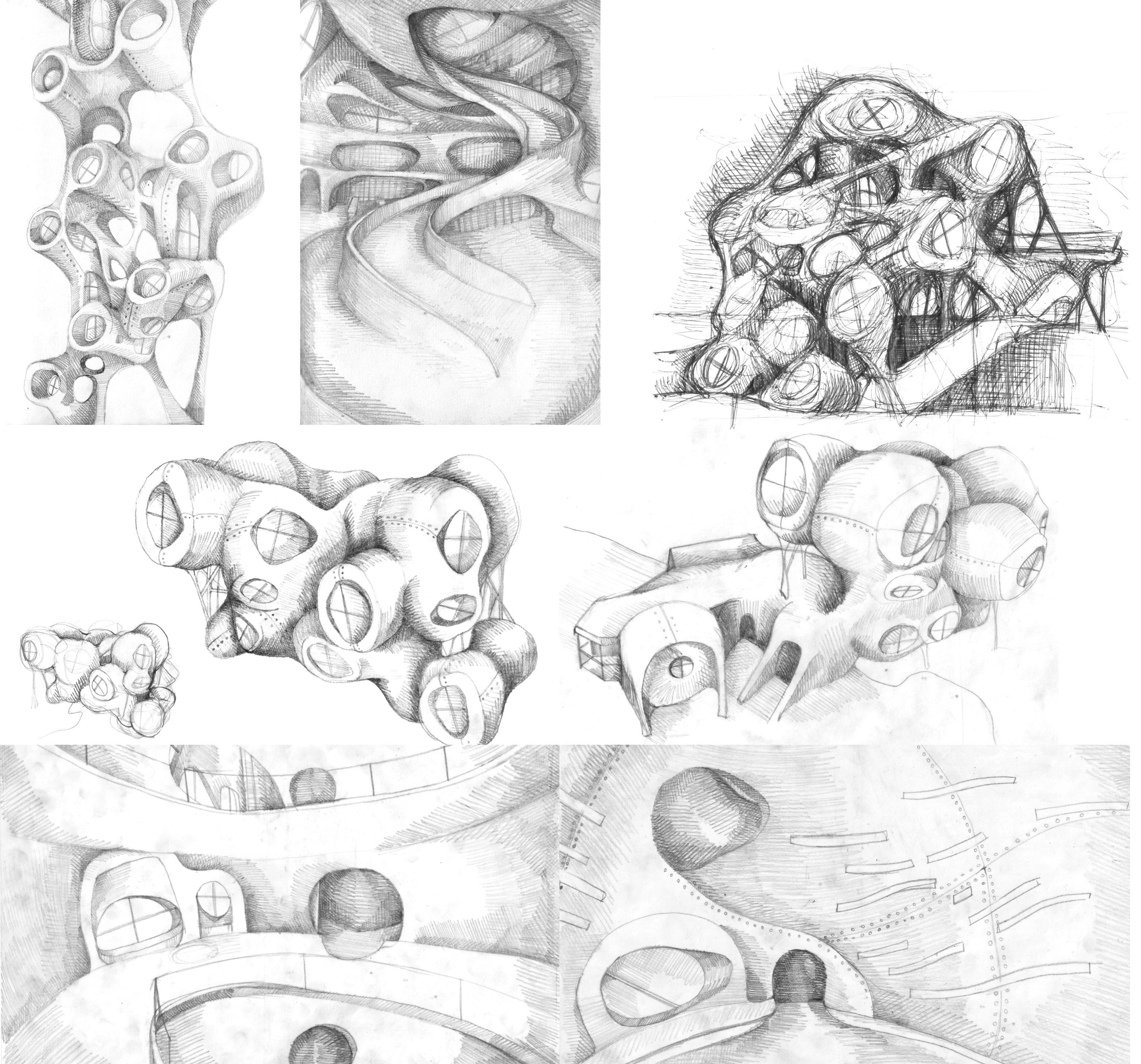
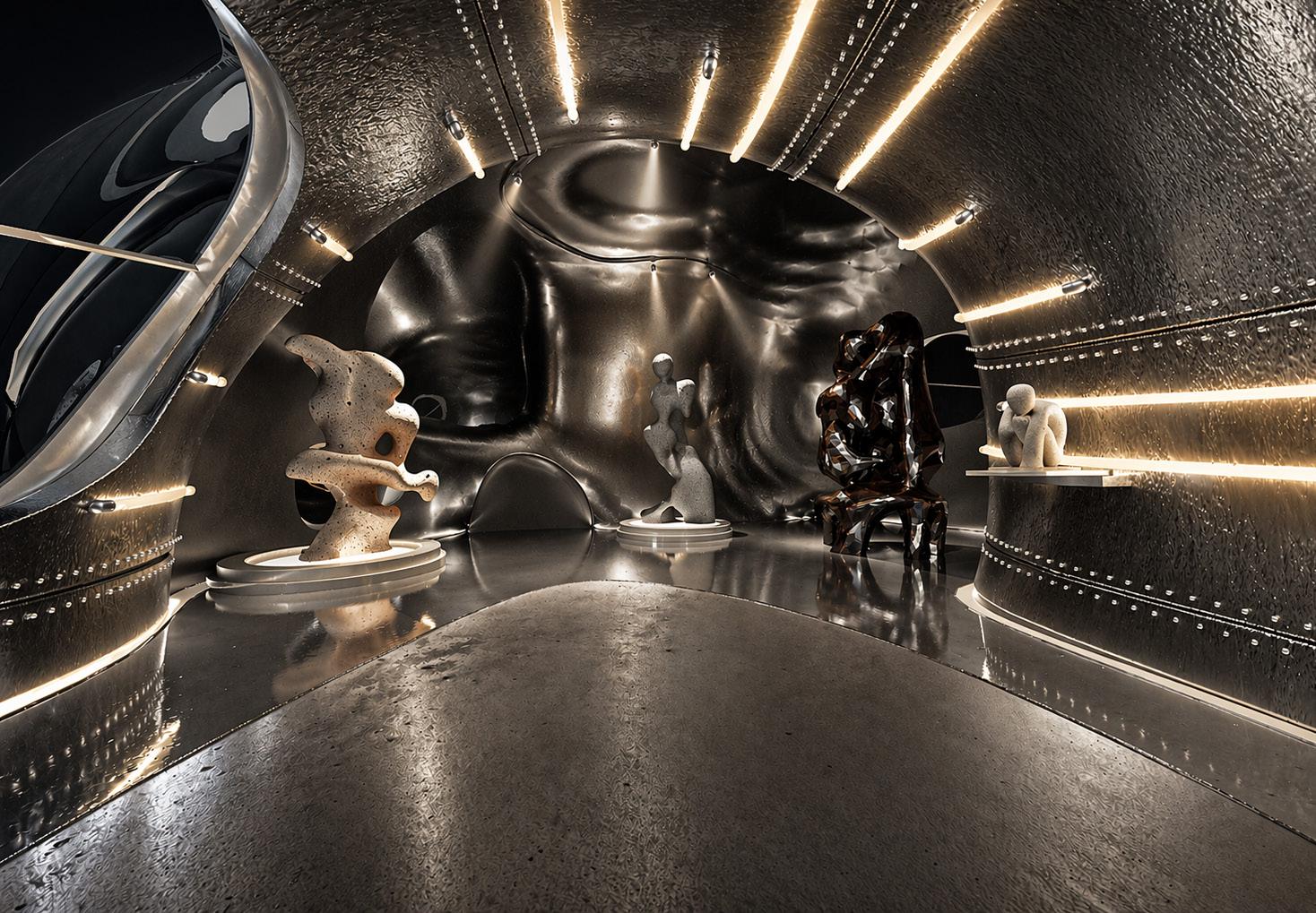
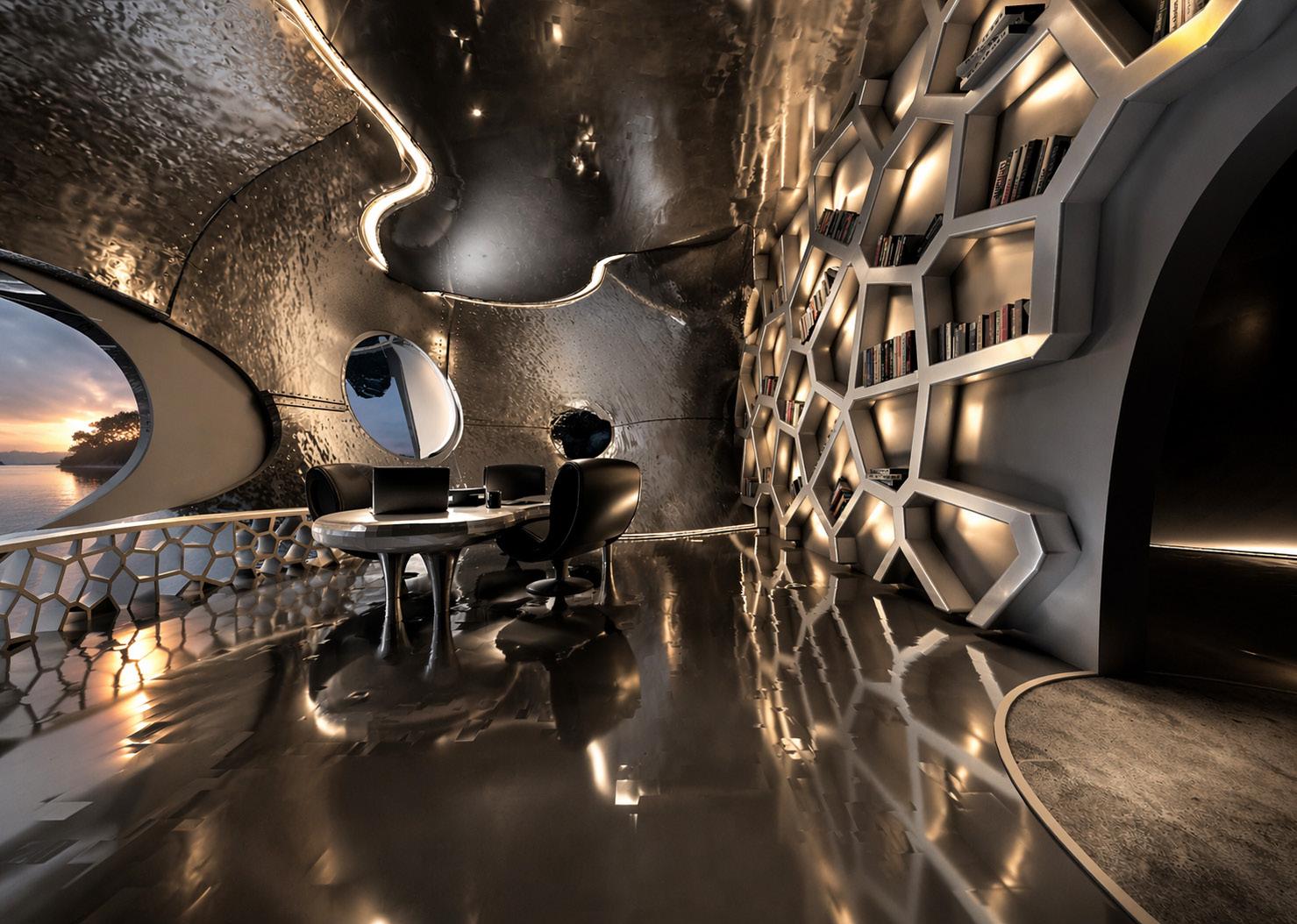
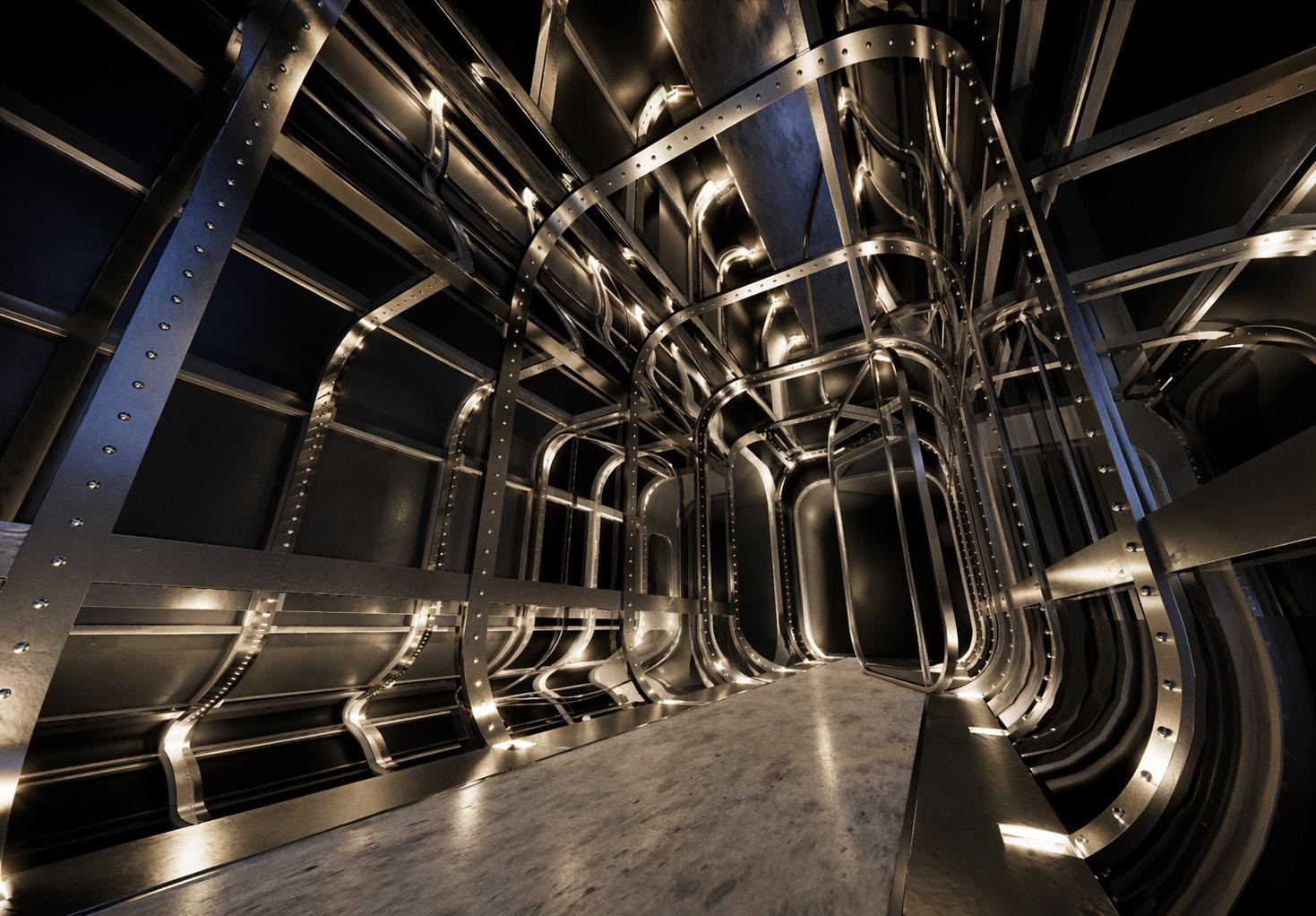
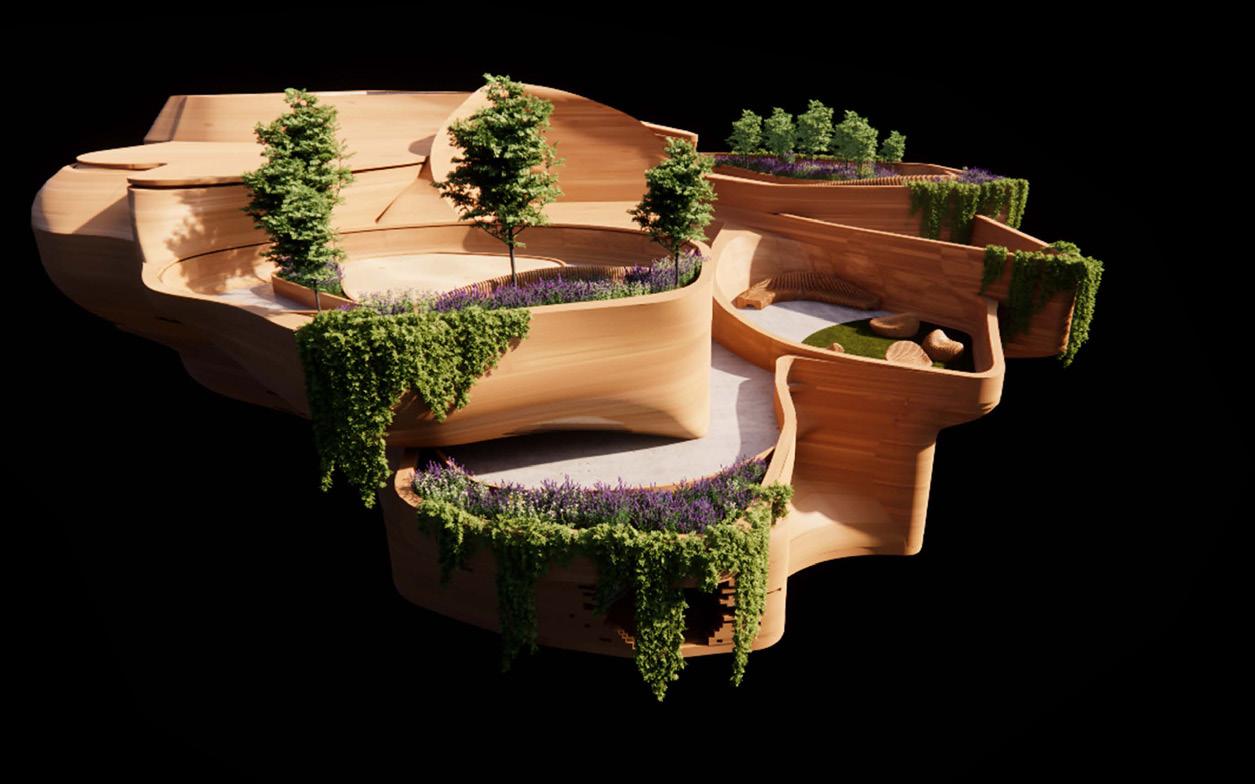
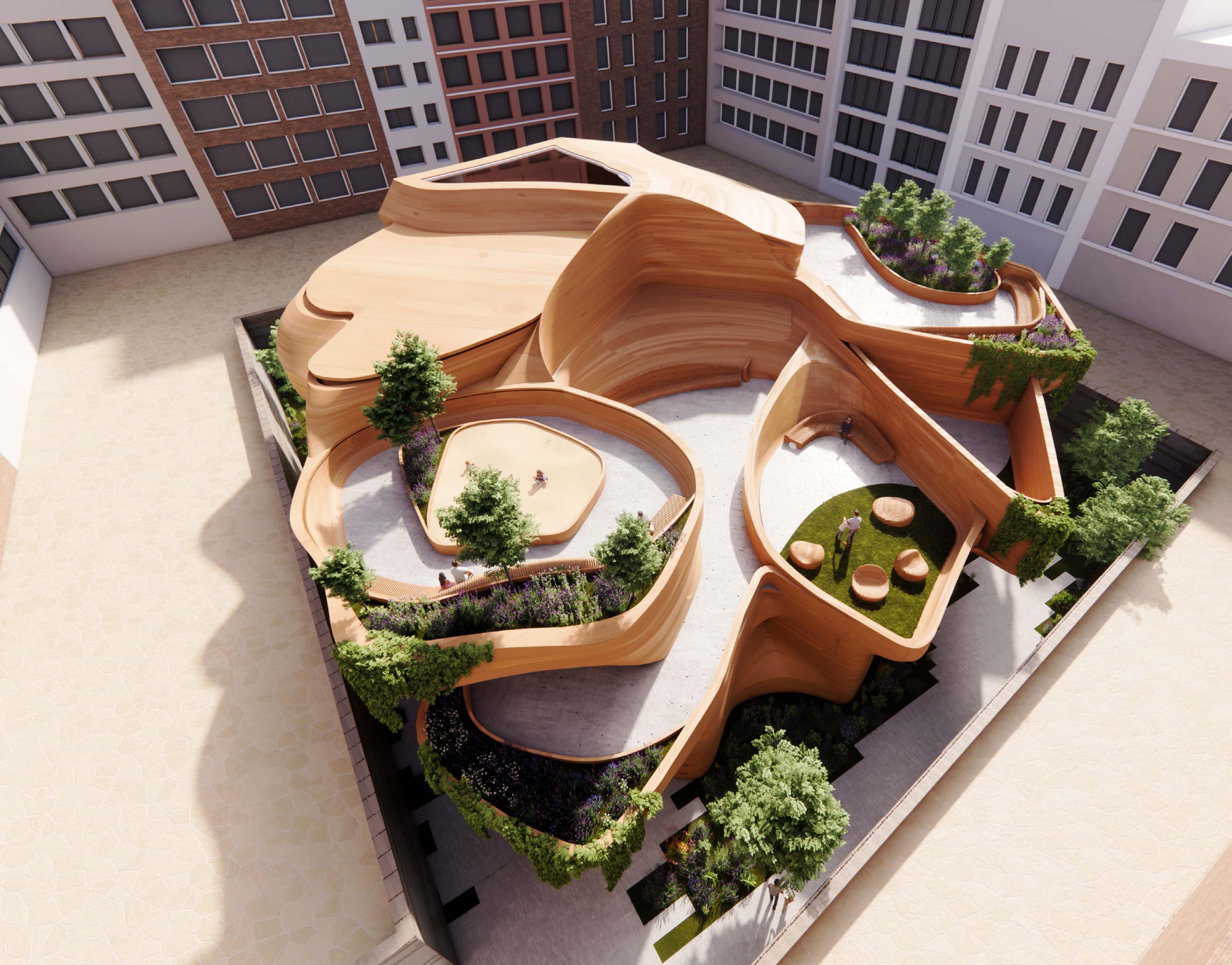
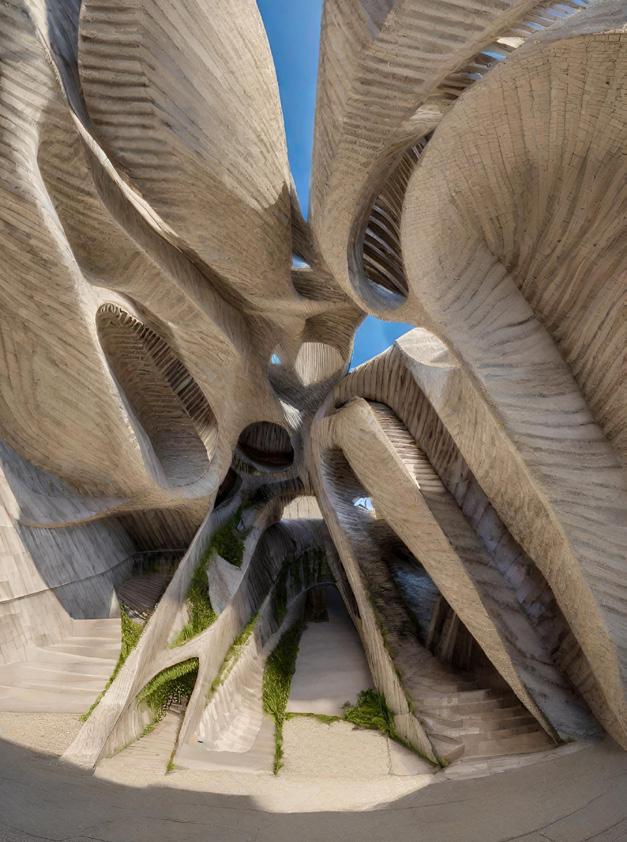
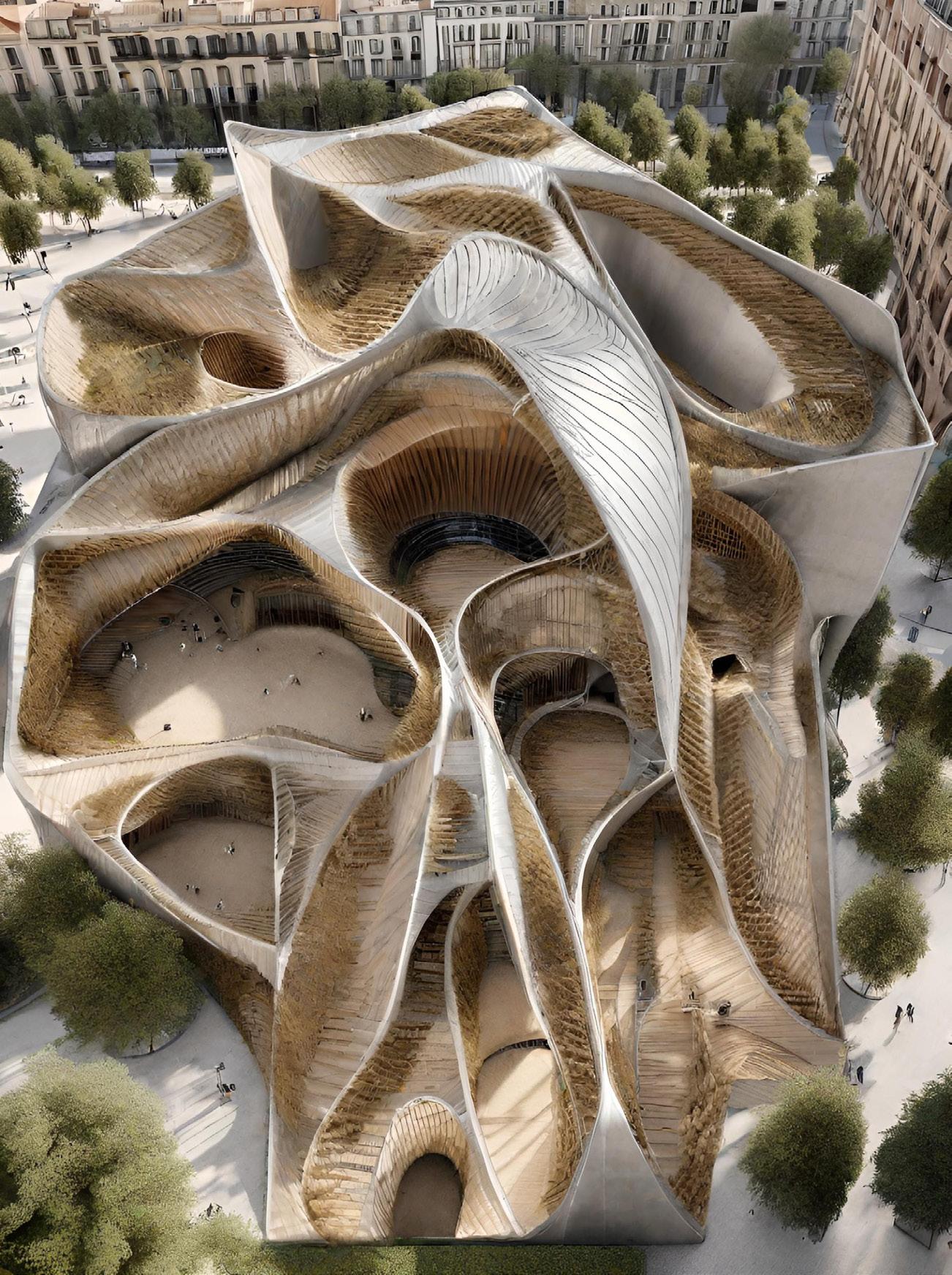
This project served as my final design for my second year at the Bartlett, as part of UG21. Located on the “Aguas Park”, in the sequentially created Eixample district of Barcelona, this project proposes a novel approach to a community centre, in which the programme revolves around the creation of a community centre which supports and facilitates the cohabitation and interaction of children and the elderly. By utilizing a series of modular spaces, the proposal seeks to facilitate a variety of intergenerational events, which in turn will nurture and provide support to both age groups. In this way the building serves as a blank canvas to be painted and coloured through the interaction of different lifestyles and experiences. Furthermore, the building itself proposes a new approach to design, with it being intended to be constructed from a series of stacked wooden contours that would be cut and formed utilizing drones.
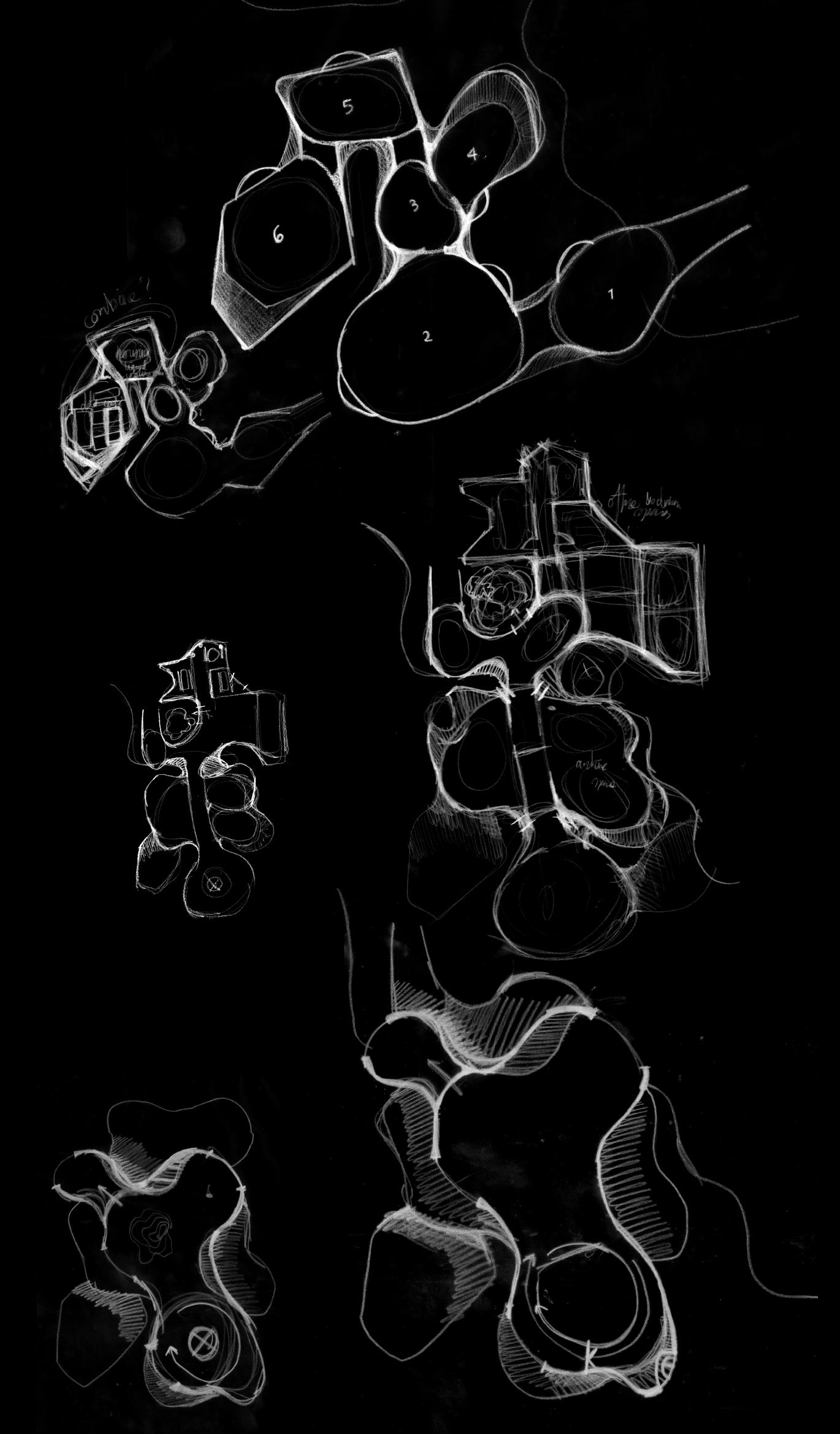
The design process for this project has revolved around the creation of a dialogue between man and AI, proposing a new future for architectural design methodologies. Through this iterative process, a feedback loop between my own drawings and AI generated abstractions has been created, resulting in the formation of a design that bridges the natural and artificial, as well as the past and future. In this way this design serves as a case study for a new way to conceptualize, design and experience a building.
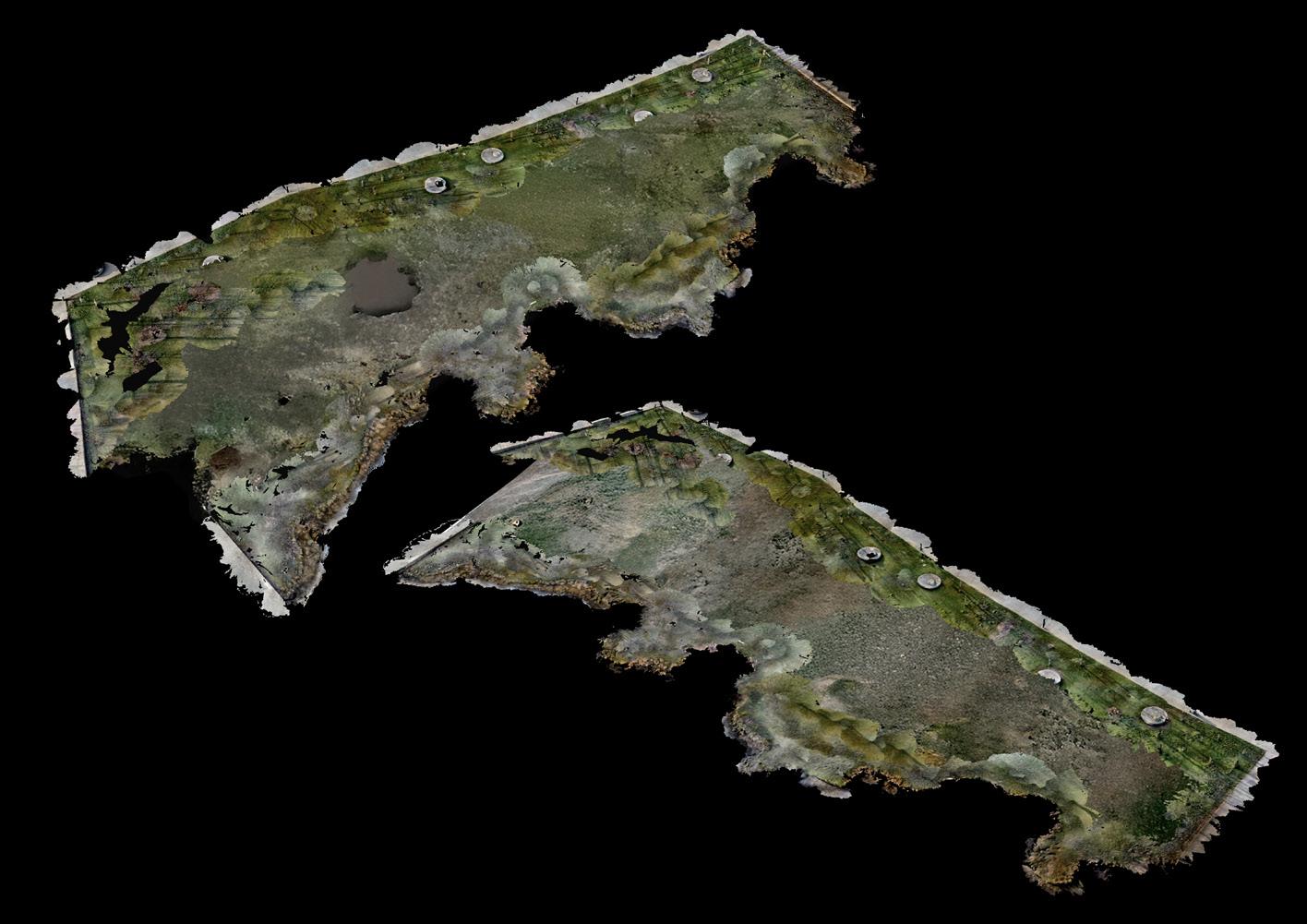
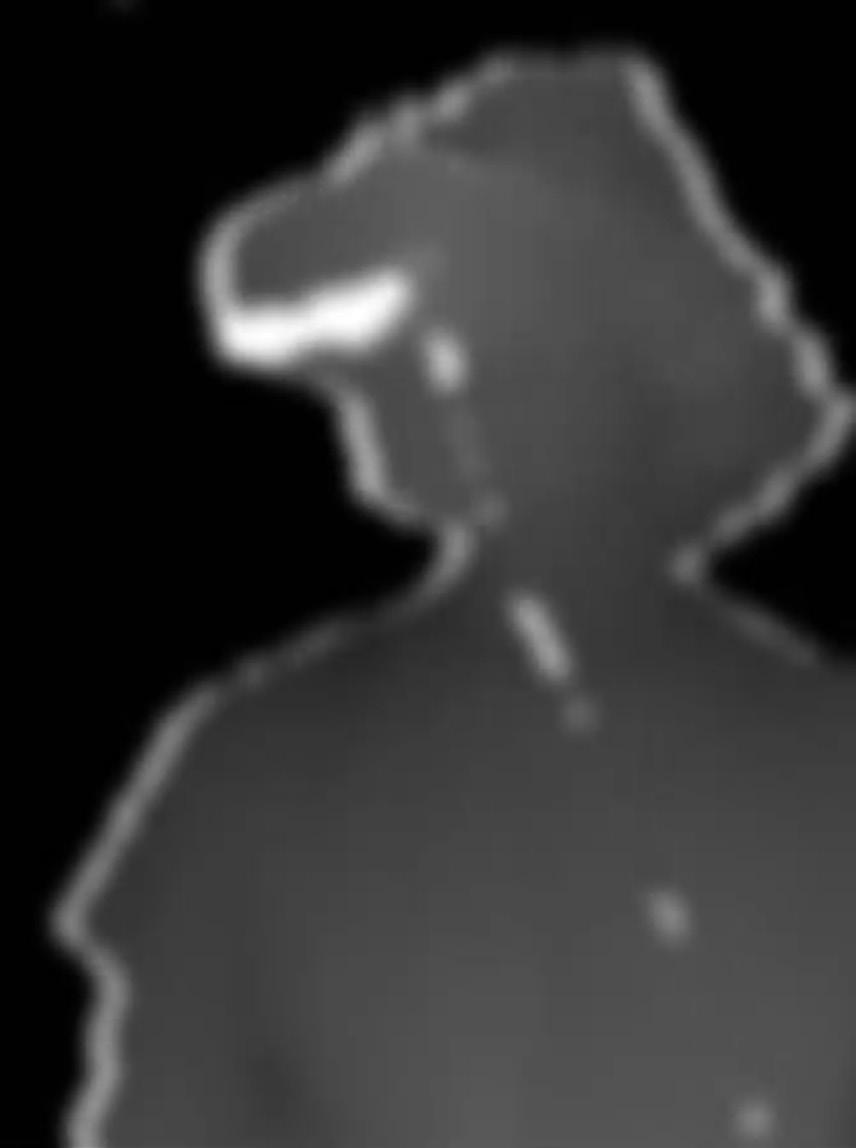
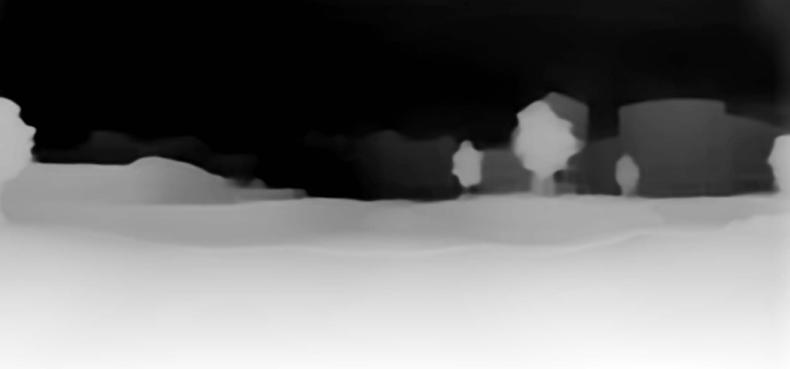
This dialogue centered around a bespokely created Pix2Pix AI model, that was trained to be able to create rendered outputs based on a depth map. This was first used to created abstractions of the initial site, utilizing depth maps taken through a LIDAR camera. From this the tool was used to support the design dialogue, allowing for further AI-based abstractions throught the process.
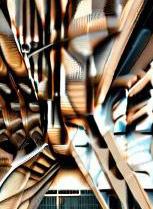
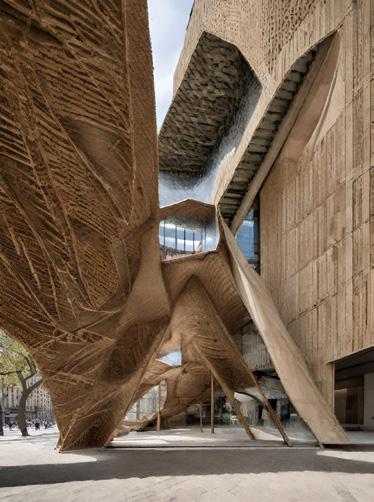
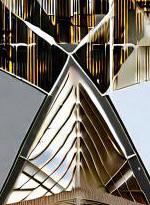
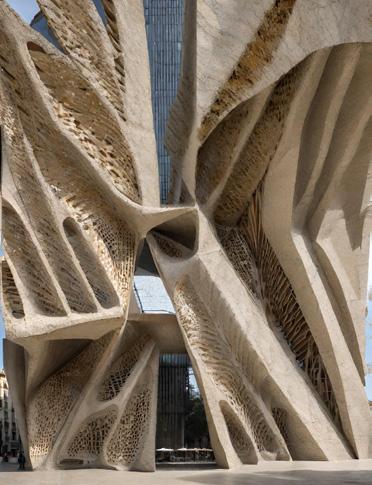
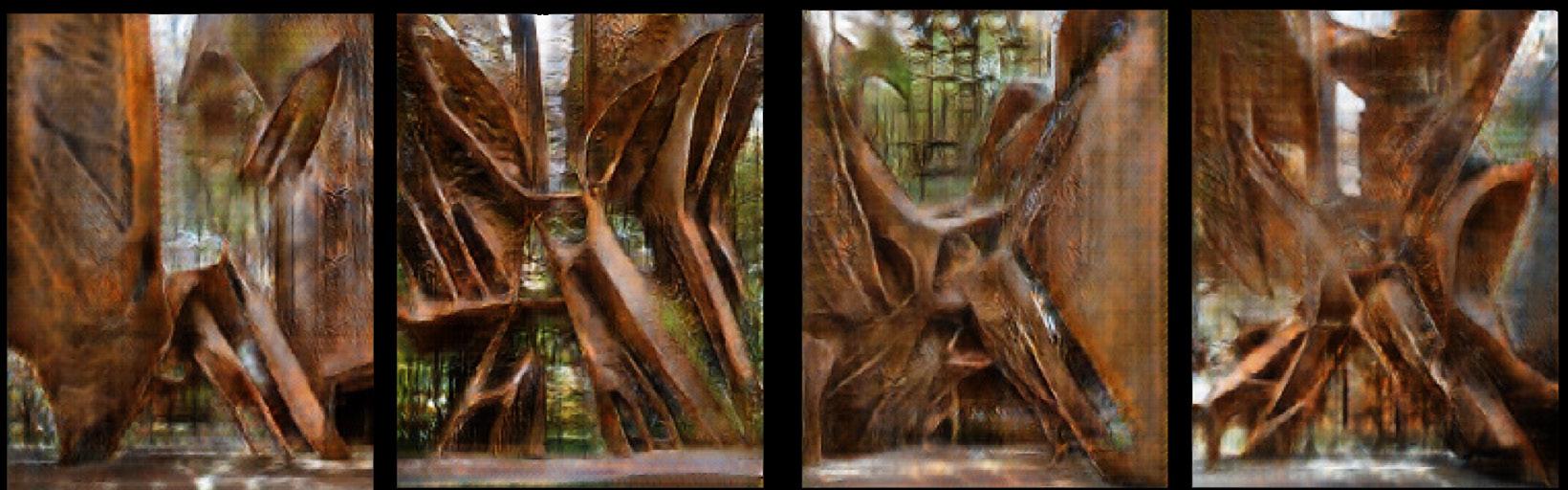
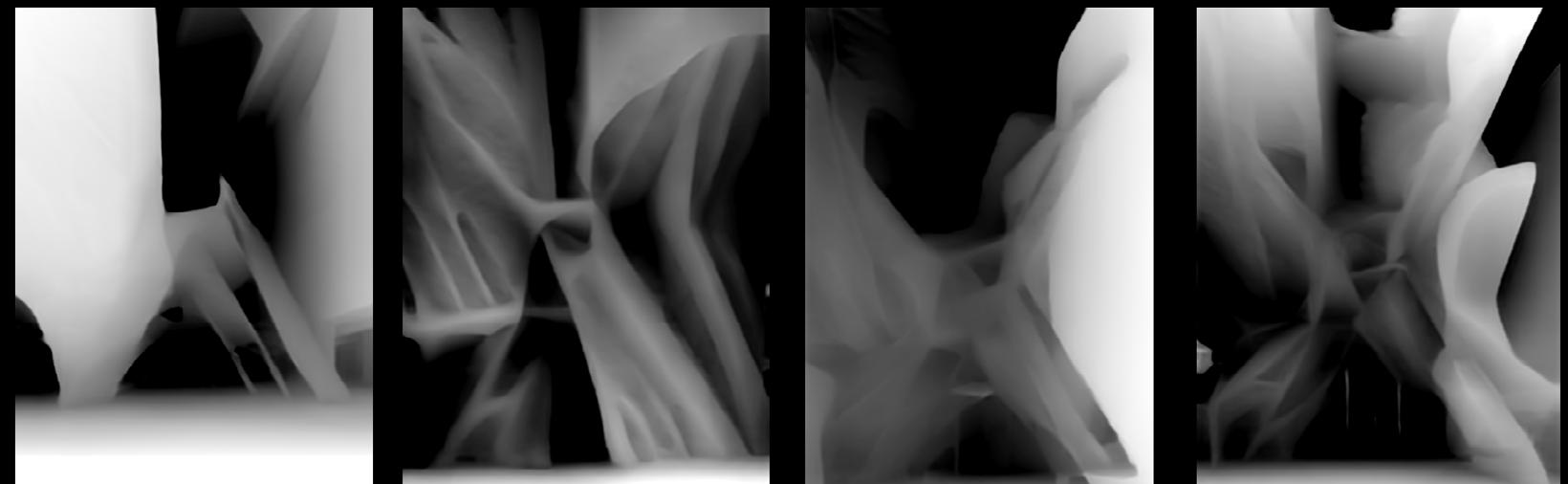
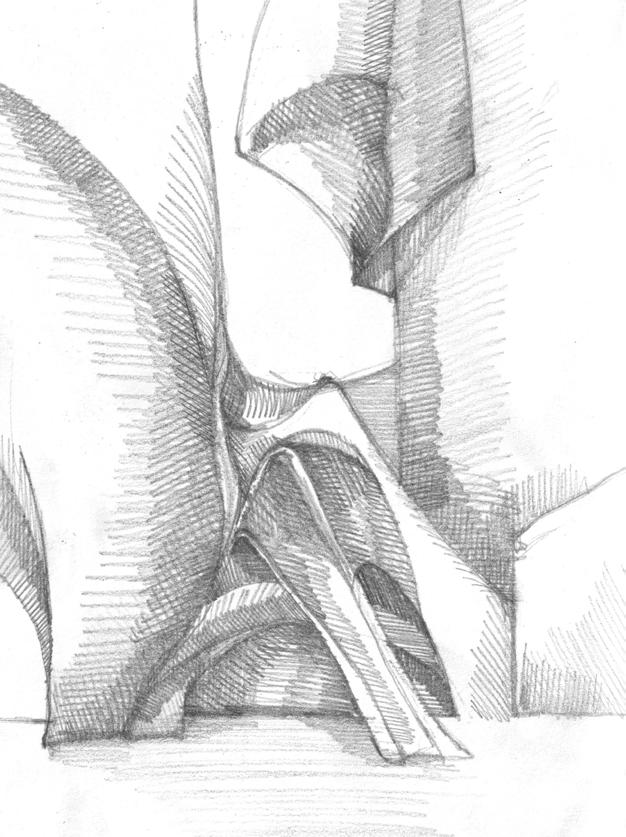
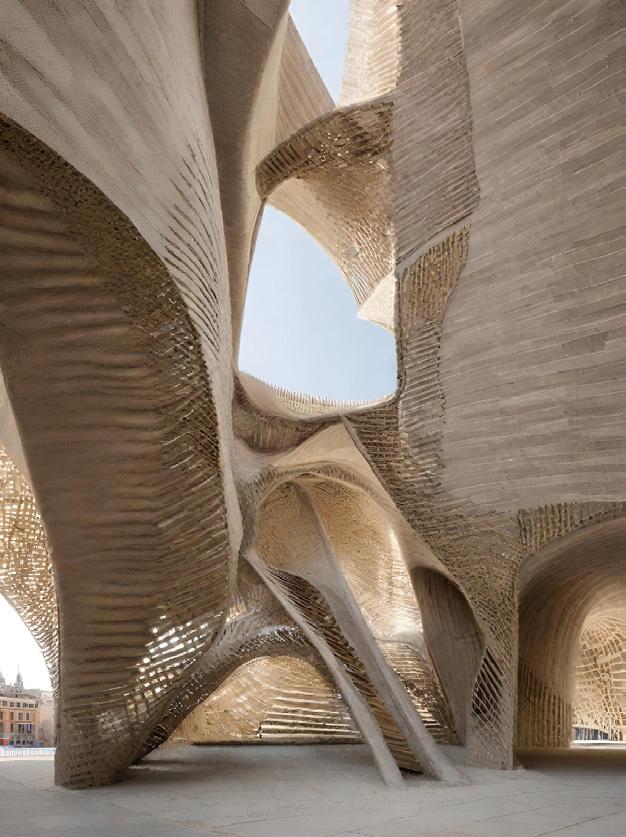
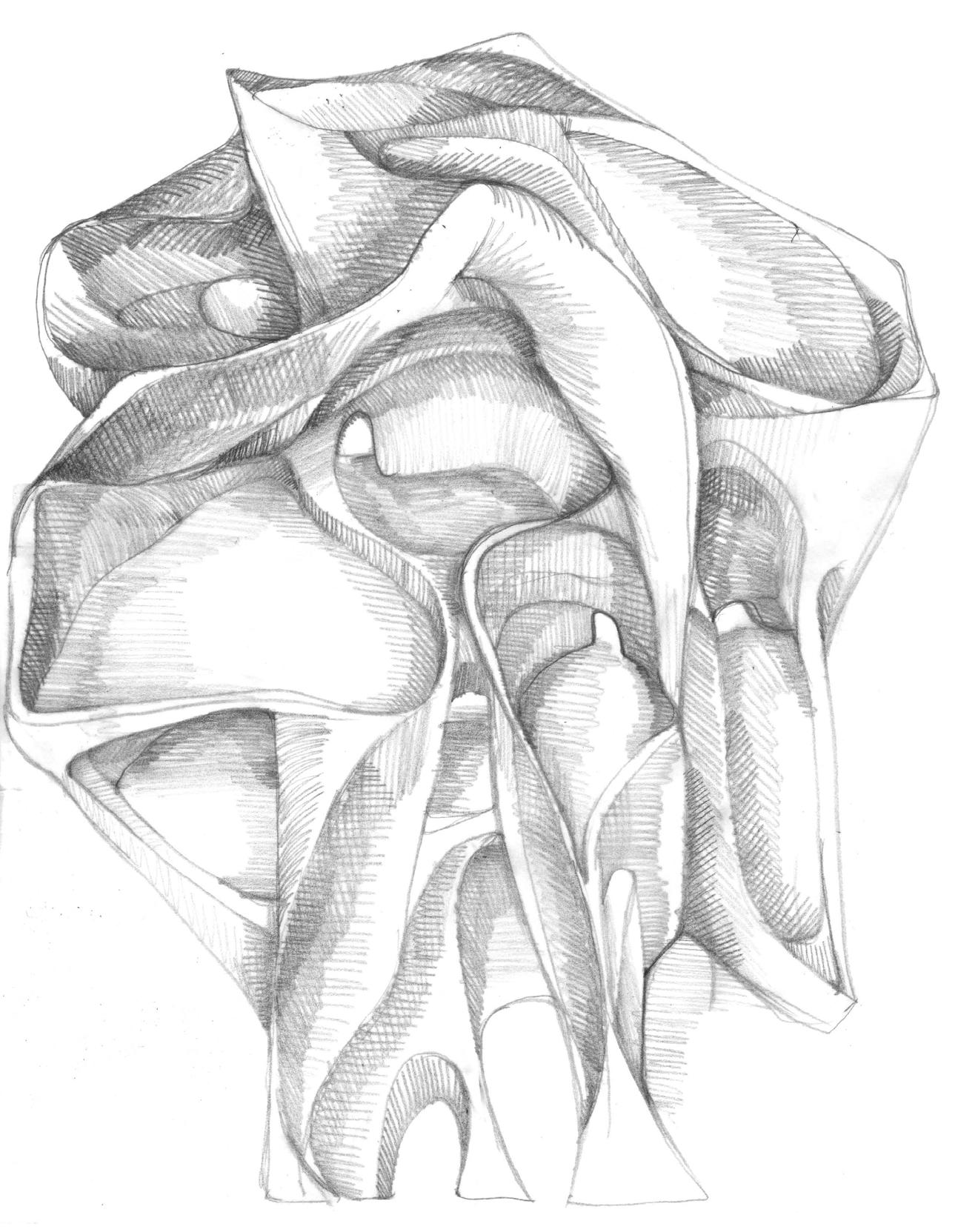
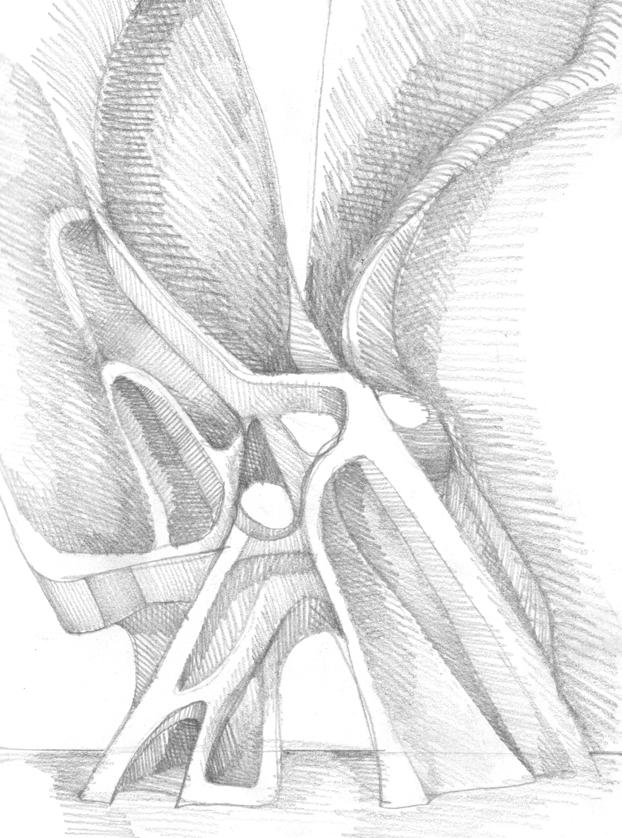
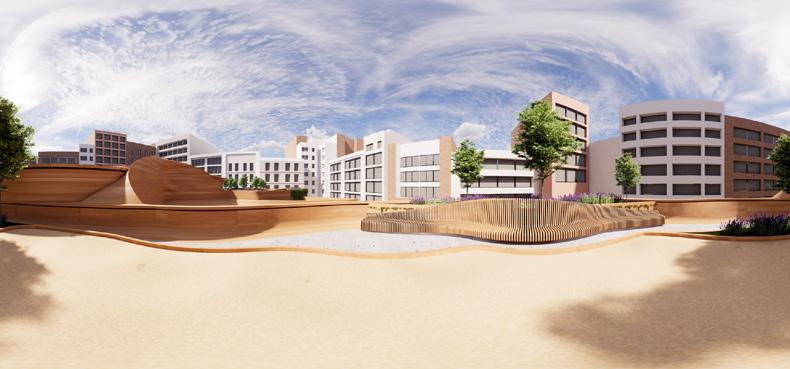
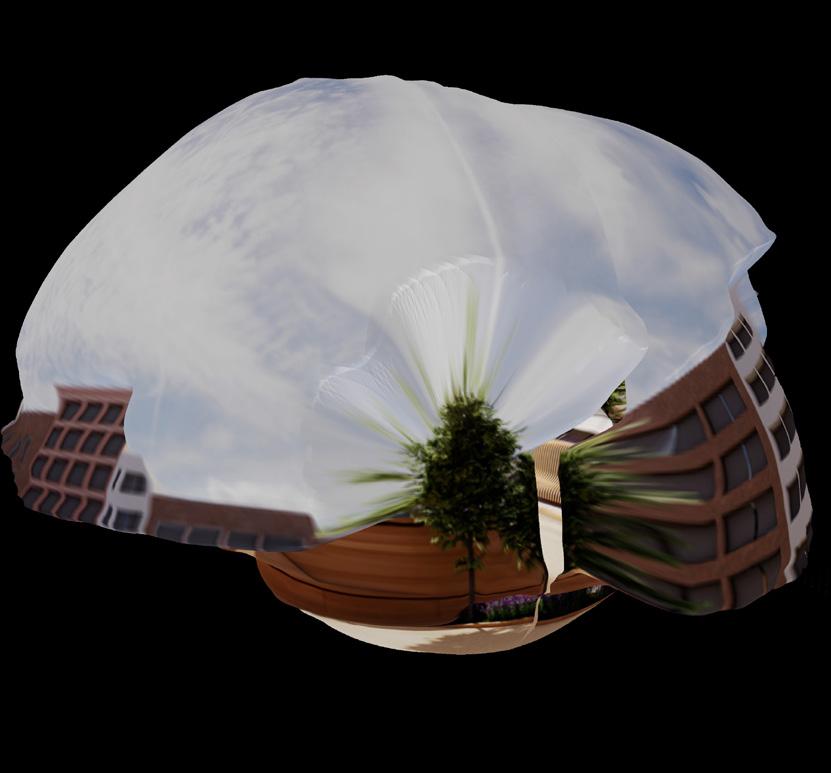
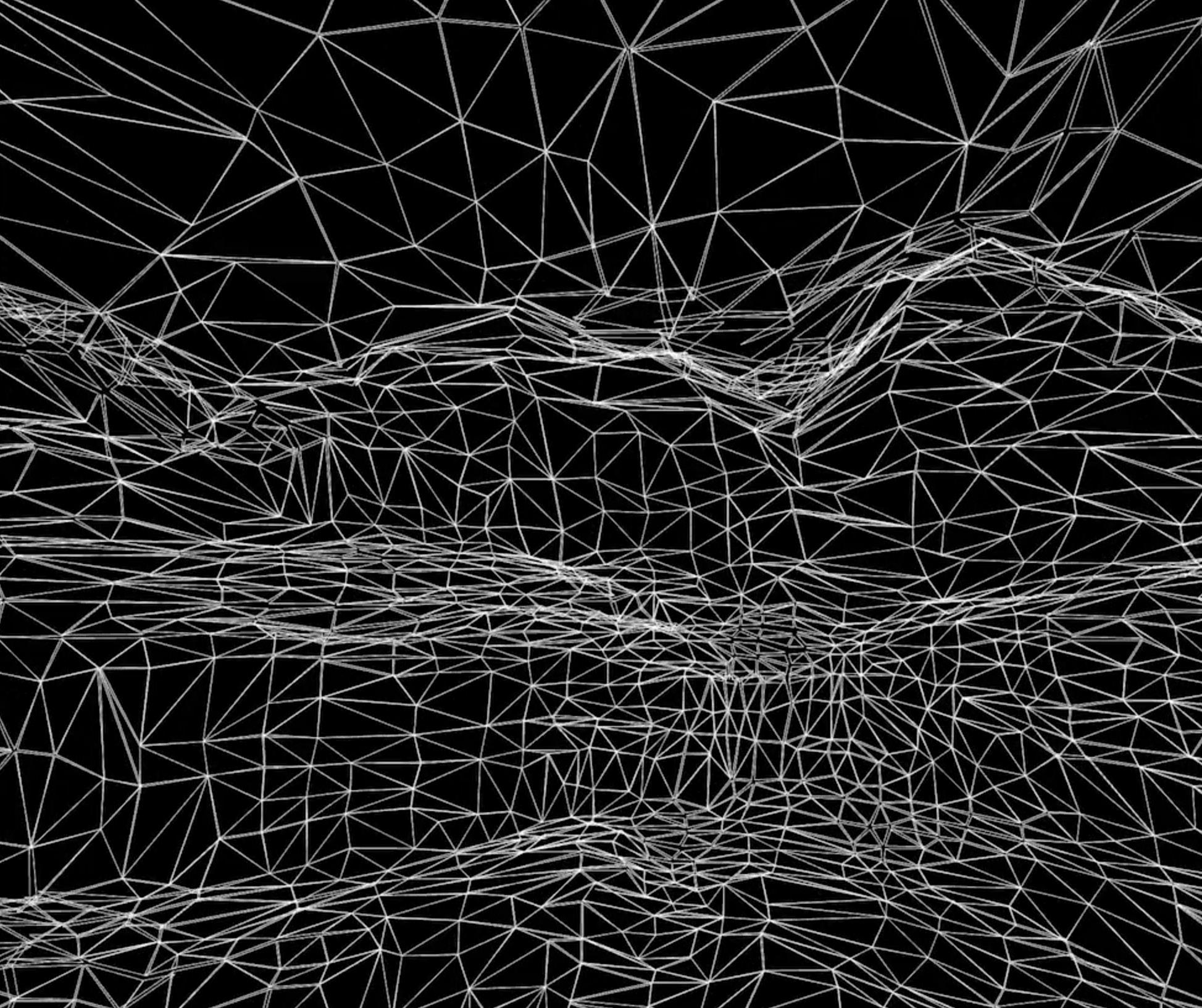
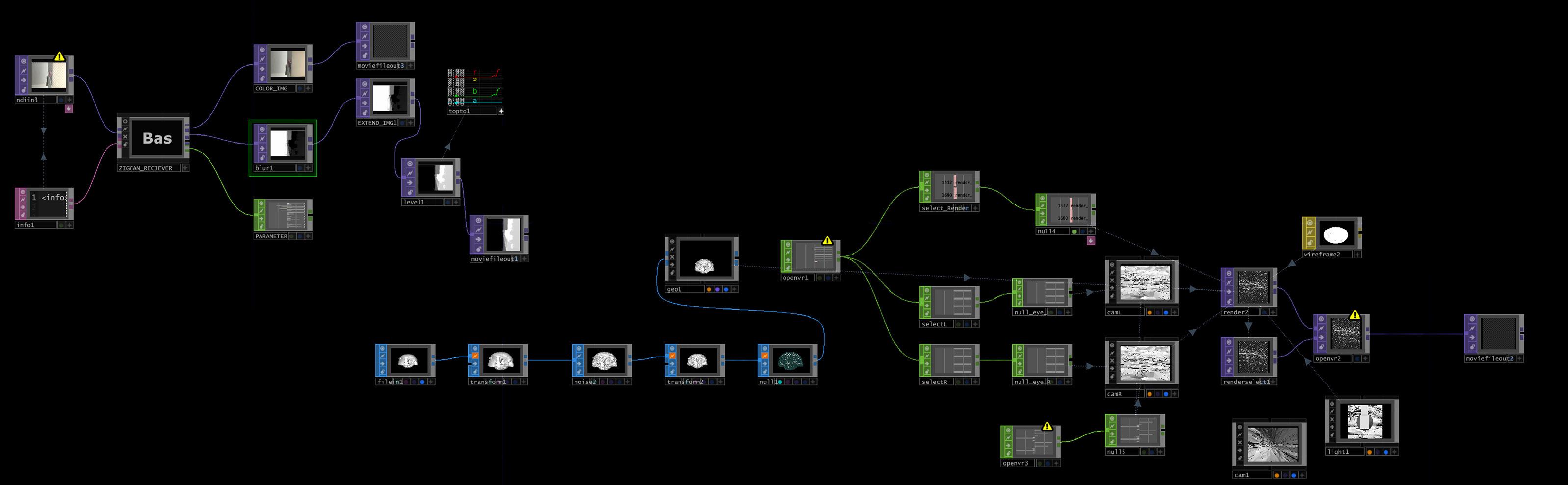
As a final exploration, a series of Virtual Reality experience were crated. First 360o panoramic renders were created which were then passed through zoe-depth, an AI tool that can aproximate depth maps based on an image input. Utilising the same tool, a 360o projection model was created, which was then imported into touchdesigner to create a realtime vr environment.
From here noise was added to the model, allowing it to randomly distort and abstract itself. In order to reinforce the importance of depth, which ultimately the defined the design dialogue through the Pix2Pix model, the distortion was instead defined by a live depth map. This was achieved through connecting the live depth map footage from my iPad to touchdesigner. From here the depth map was continuously read by the programme and the black, white values were extracted. These were then used to alter the magnitude and frequency of the model's distortion. In this way, as the space is moved through and experienced, it will continuously shift and abstract itself, based on the viewers own movement.
AI DESIGN DIALOGUE
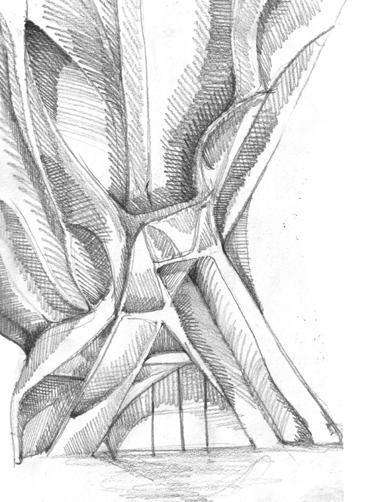
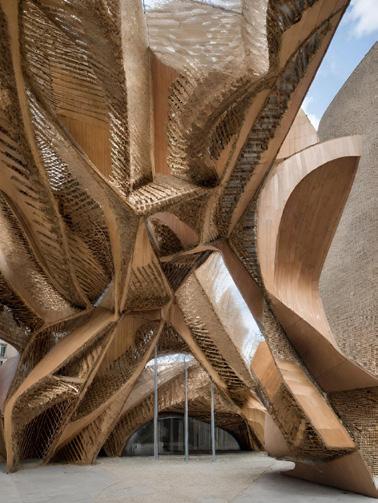
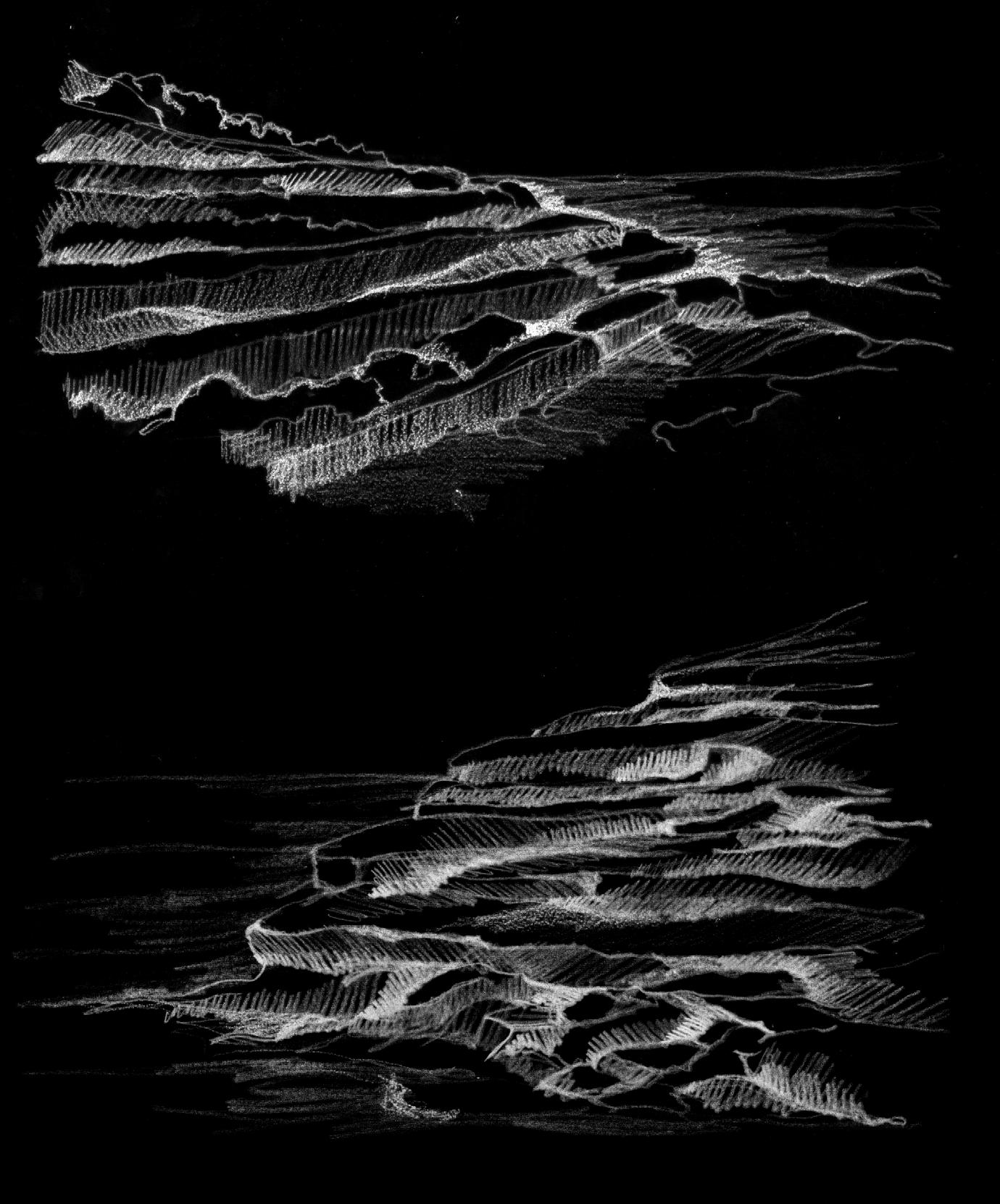
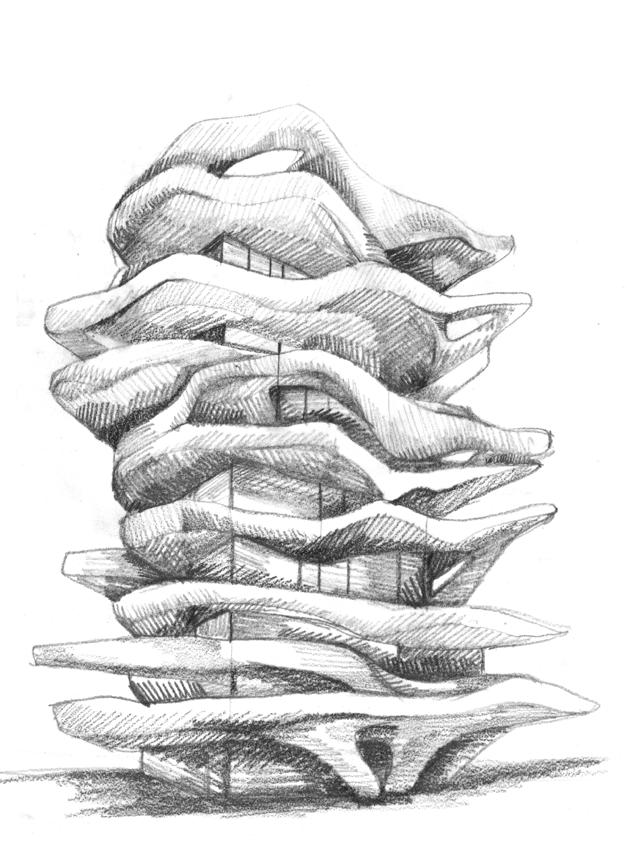
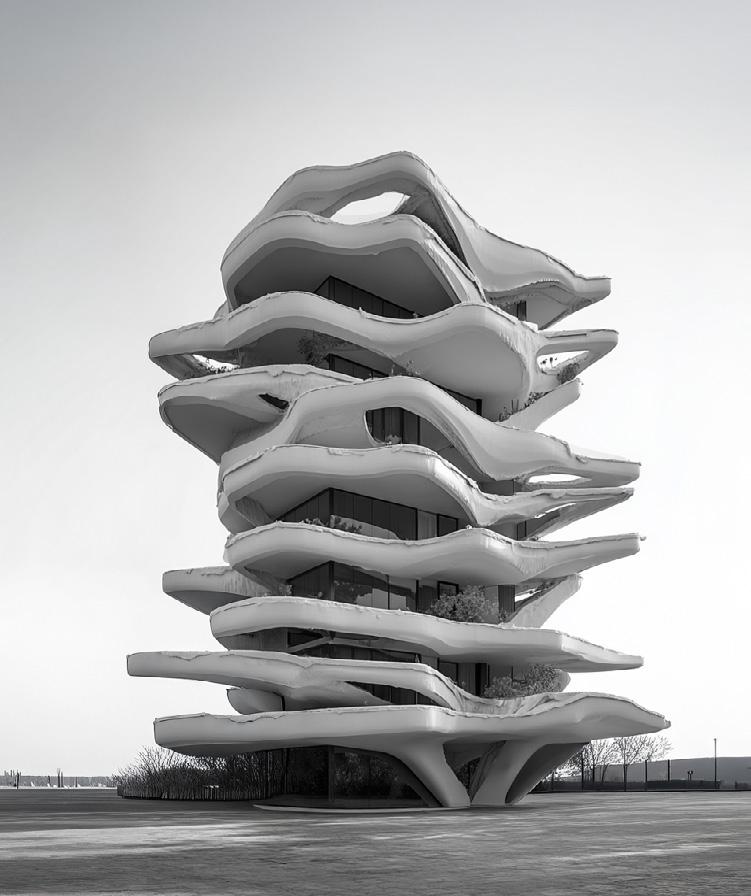
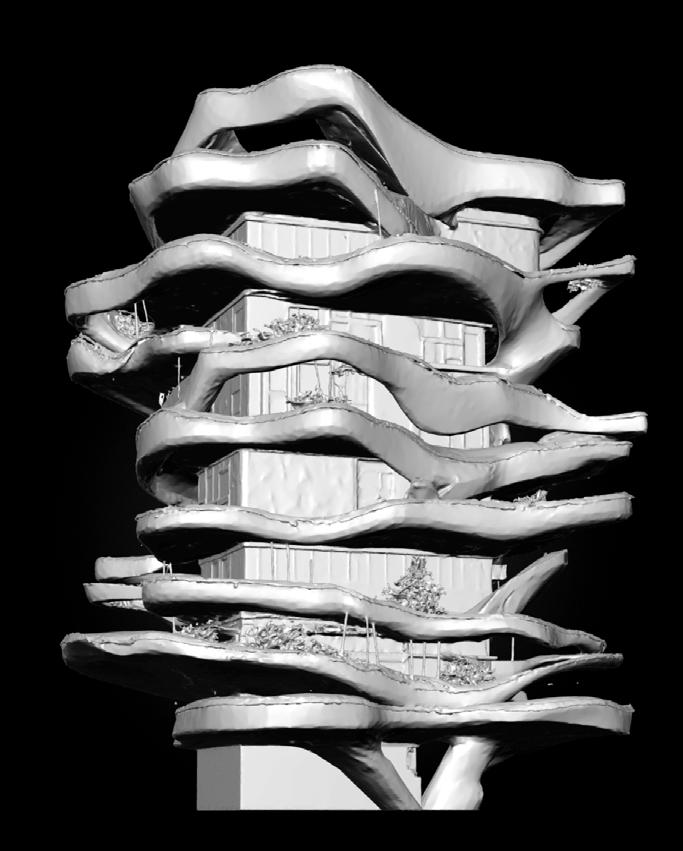
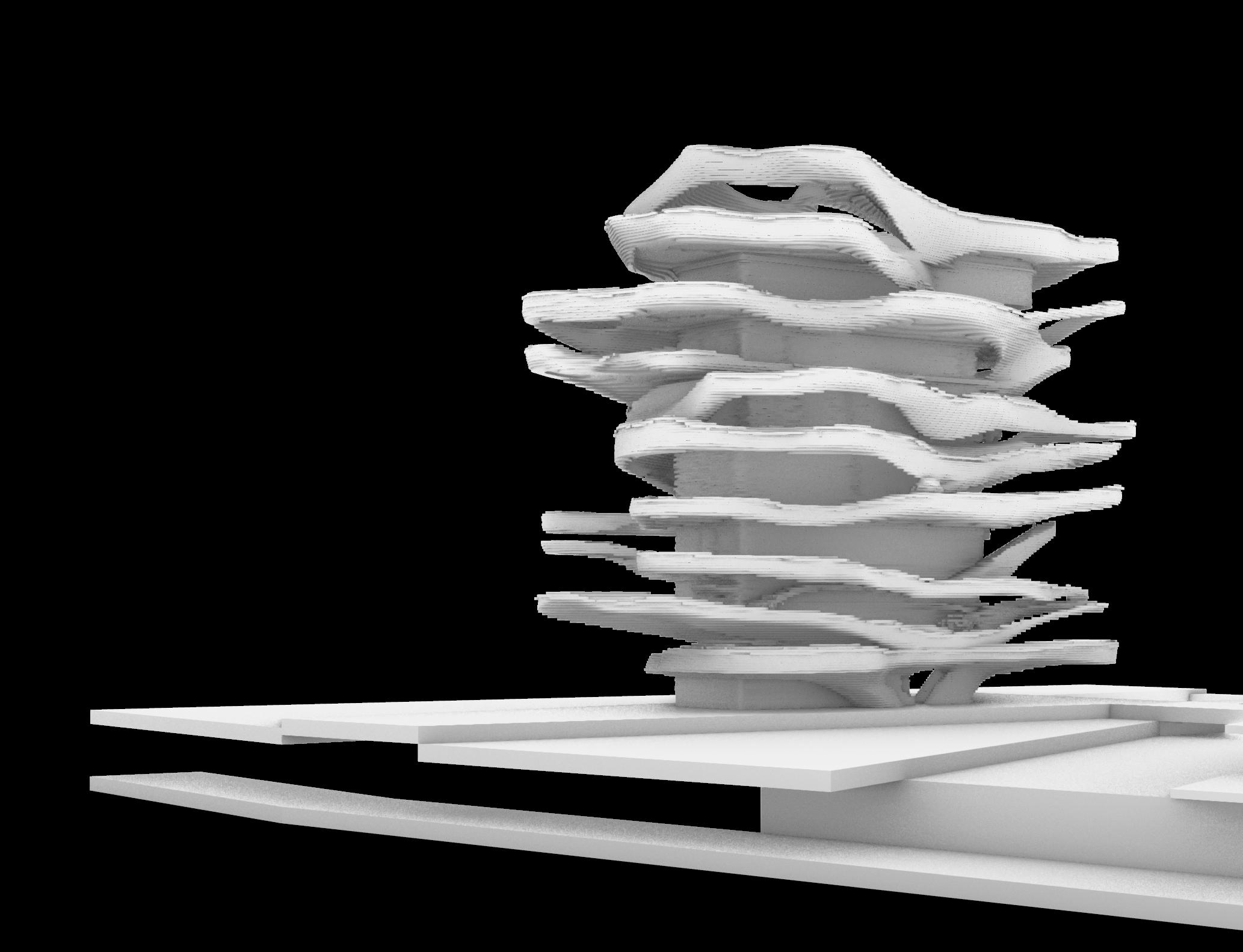
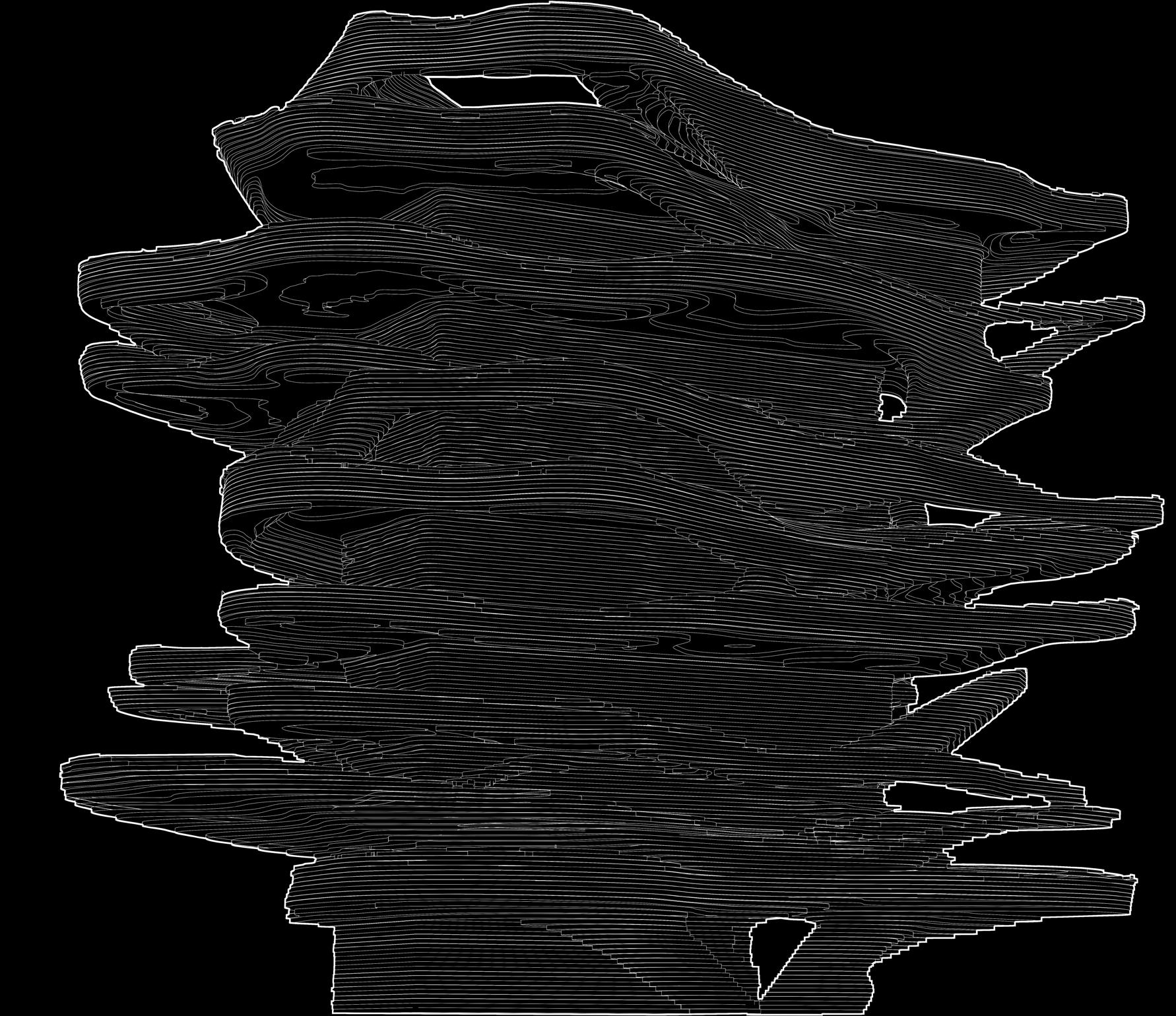
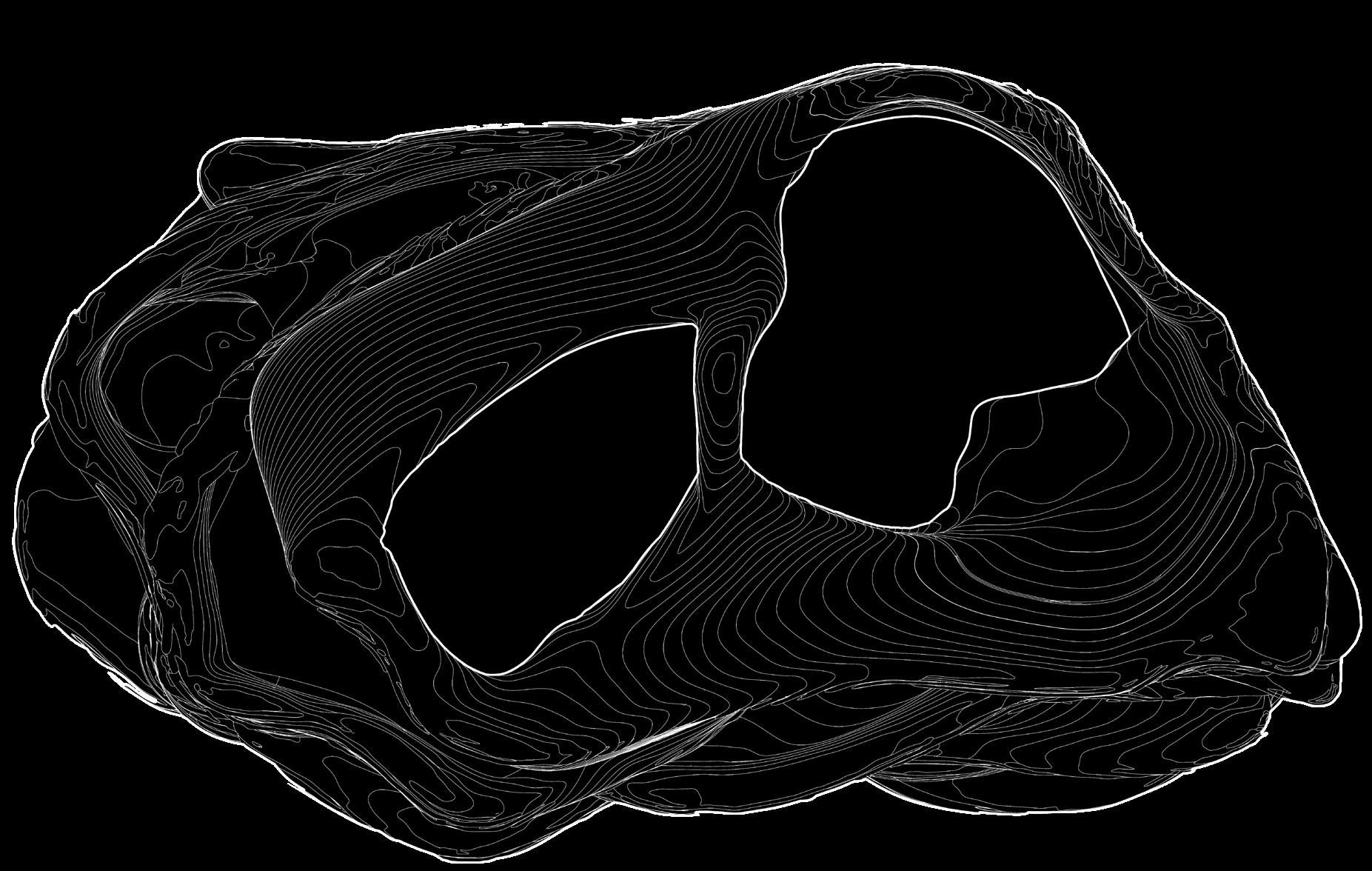
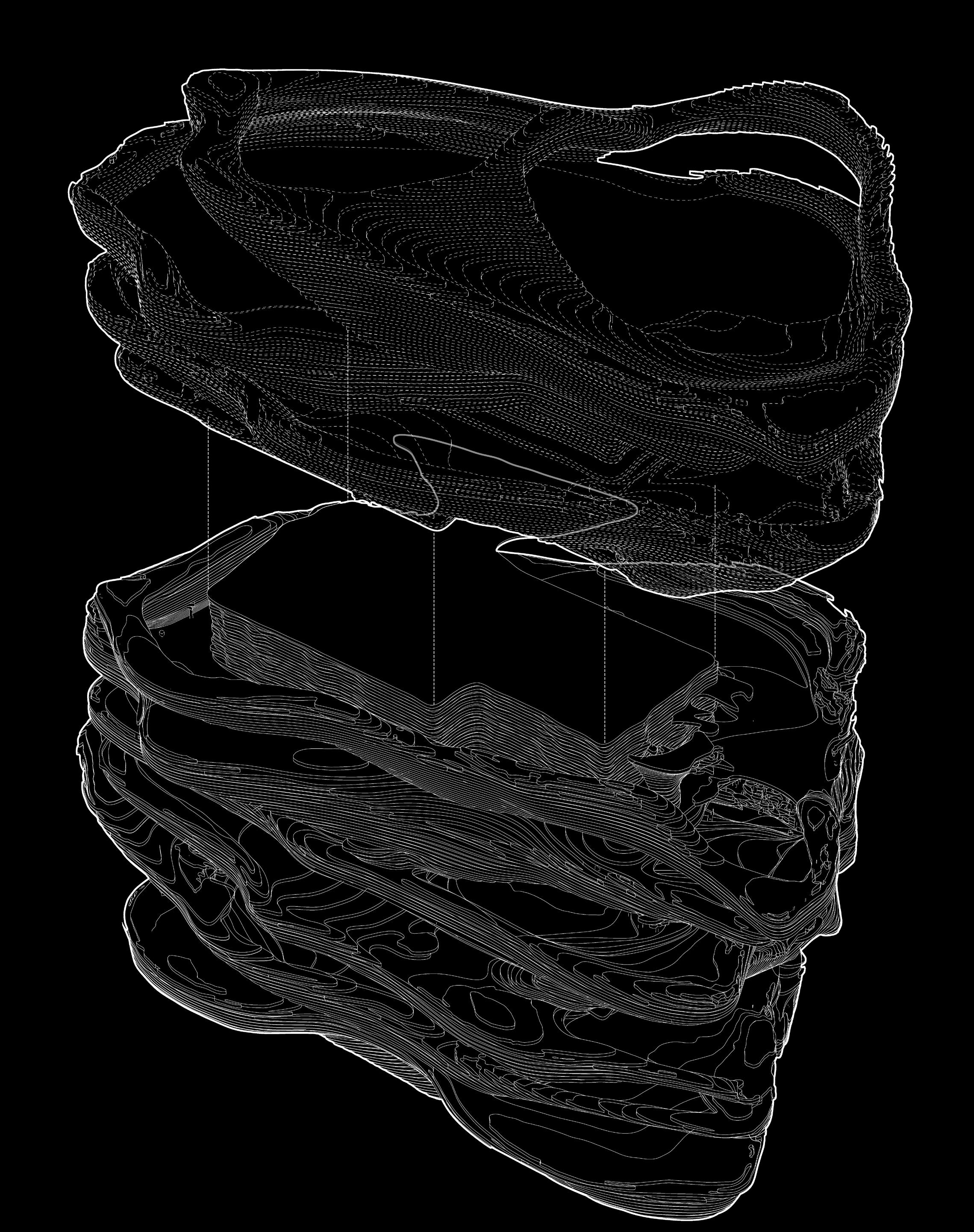
Before beginning my practice as a part 1 architectural assistant, I sought to further my design process. I began by sketching rock formations on the Cypriot coastline which served as a reference for the building's form. This form was then passed through midjourney, an AI image generation tool, to create an AI conceptual render. I then experimented with a new tool, called meshyAI, which allowed me to take the previously created render and create a 3D model. While I have previously utilized similar tools to create 3D projections of renders, this allowed me to generate a three dimensional reference to further develop into a built form. In doing so the human AI feedback loop that I have utilized throughout my work is developed allowing for more iterations within the dialogue.
ARMENIAN GENOCIDE MEMORIAL
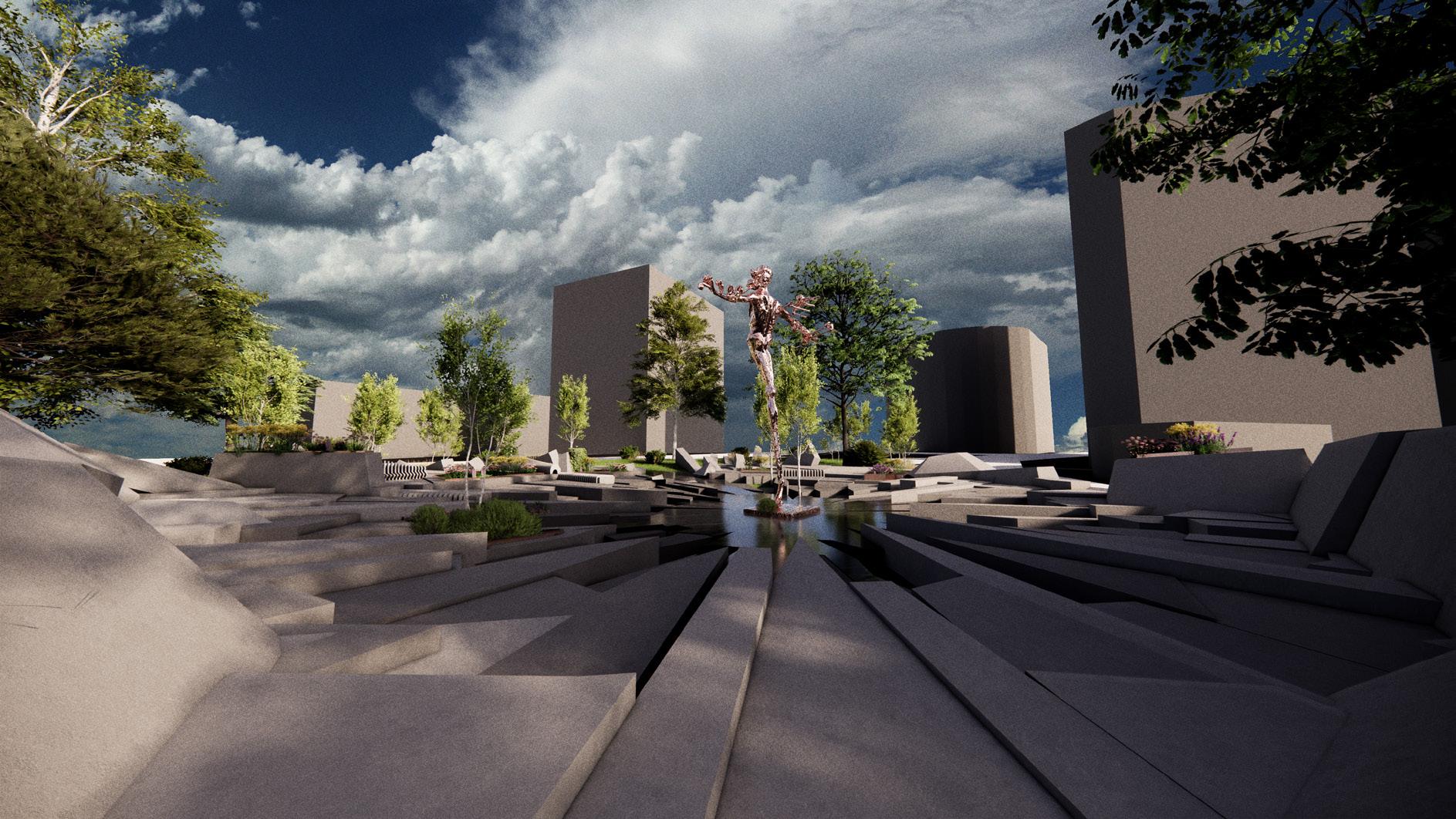
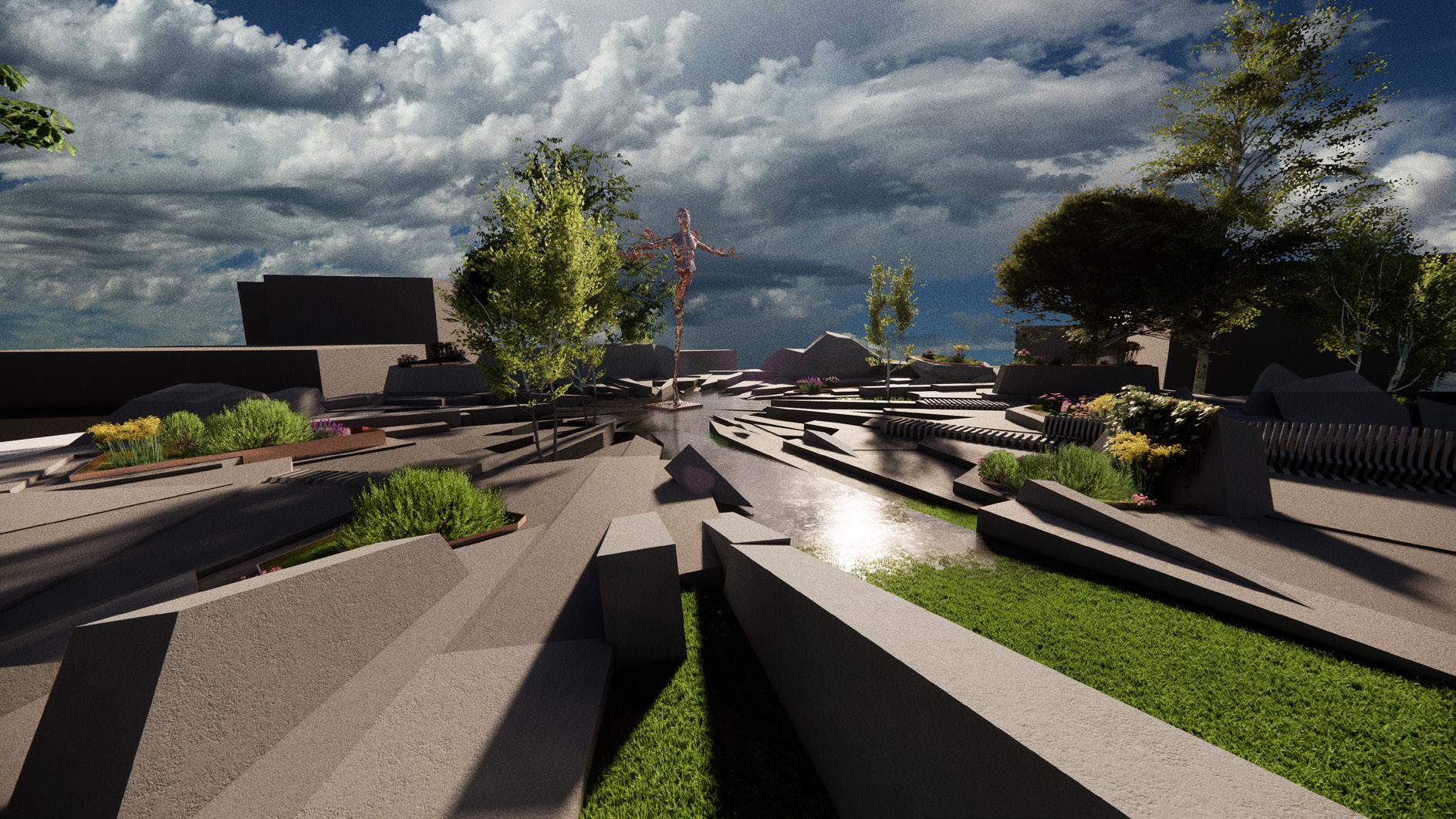
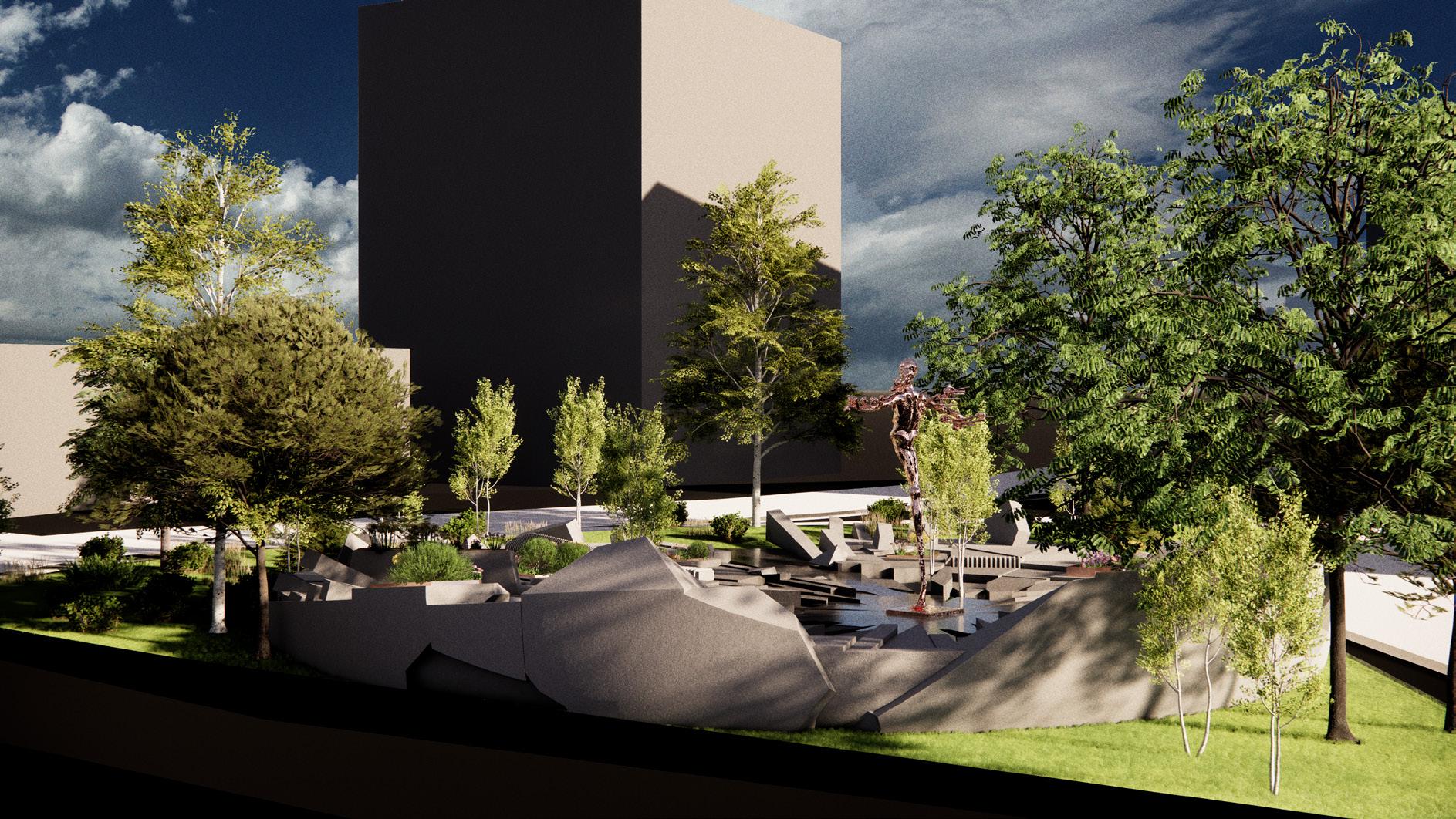
Having started work in September, I first worked independantly on the concept and design of an Armenian Genocide Memorial in Limassol, Cyprus. Commisioned by the local Armenian community, the memeorial was a collaborative effort with the Armenian Sculptor Raffi Tokatlian who designed the central scuplture in the memorial.
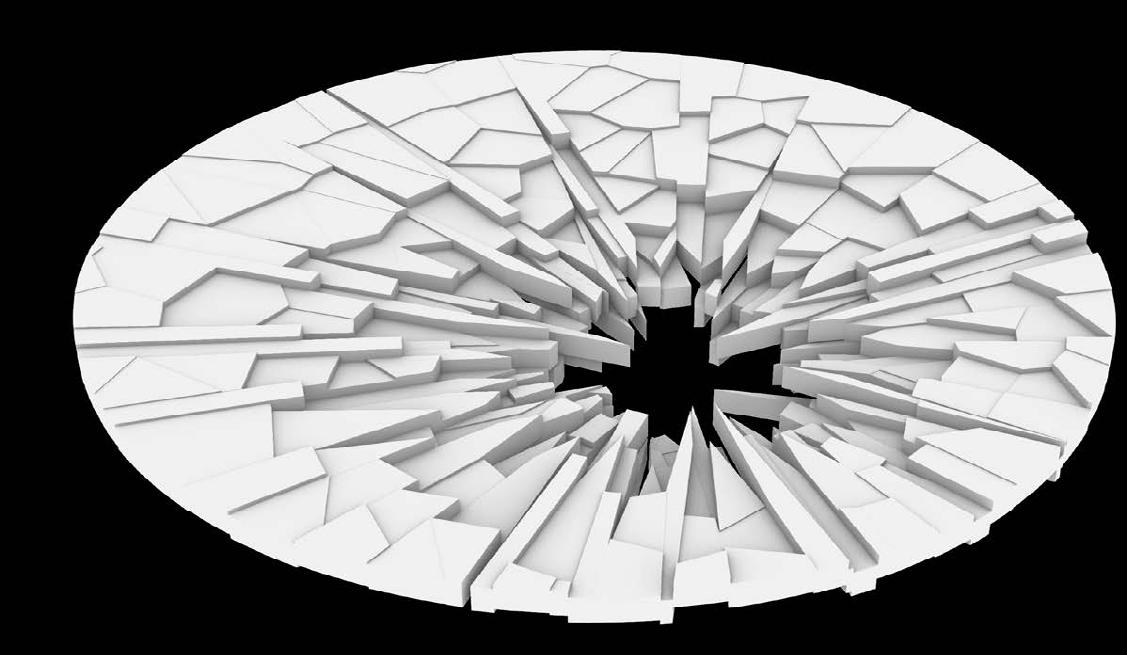
The memorial's form is based on cracked glass; with its fractured geometry reflecting the intent of the Armenian Genocide to erase a people.
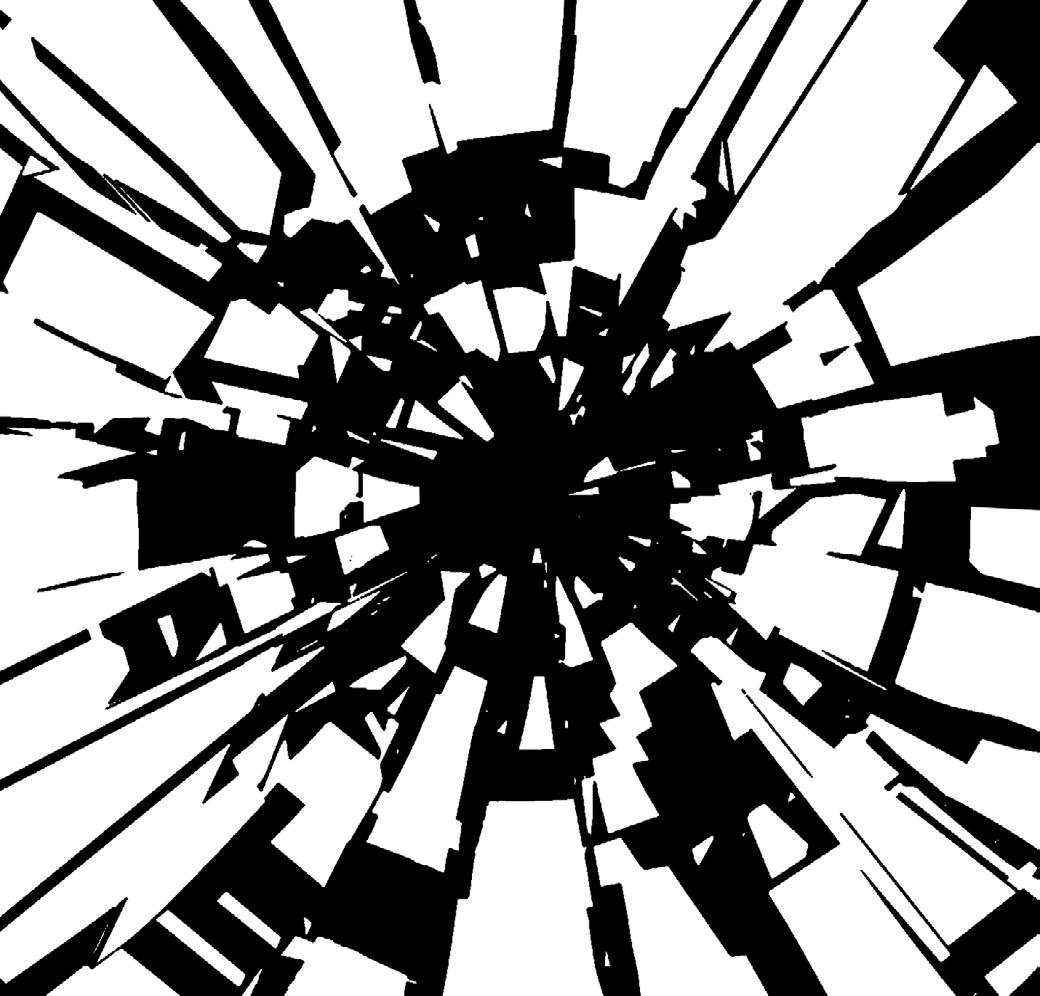
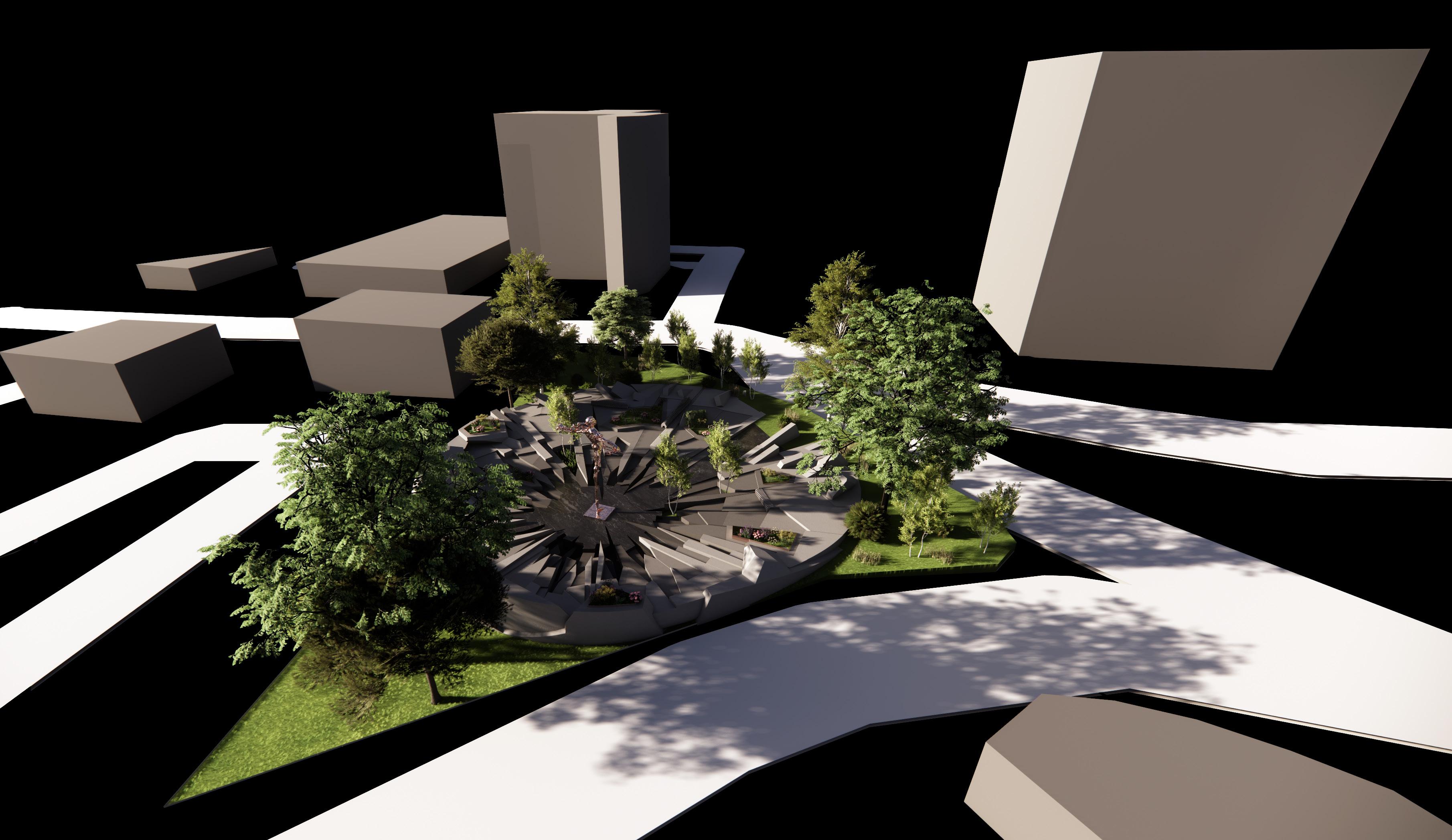
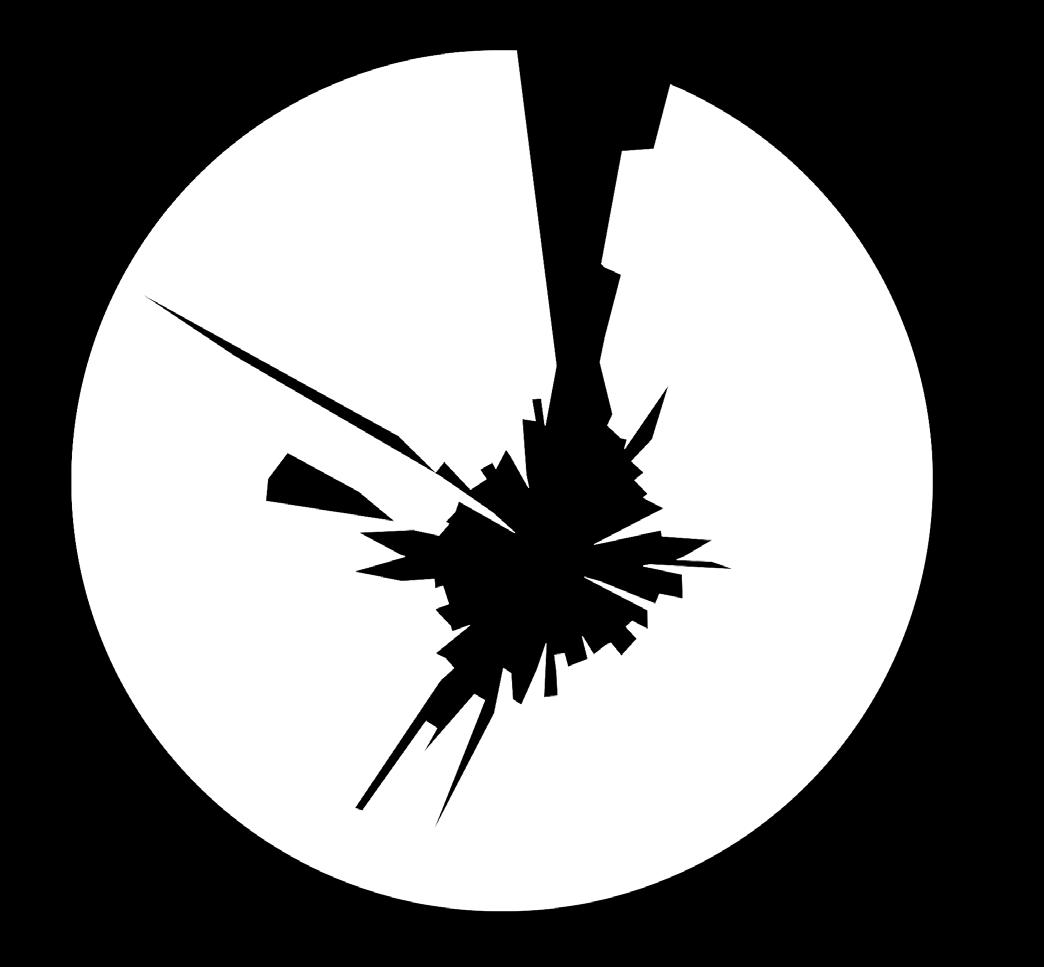
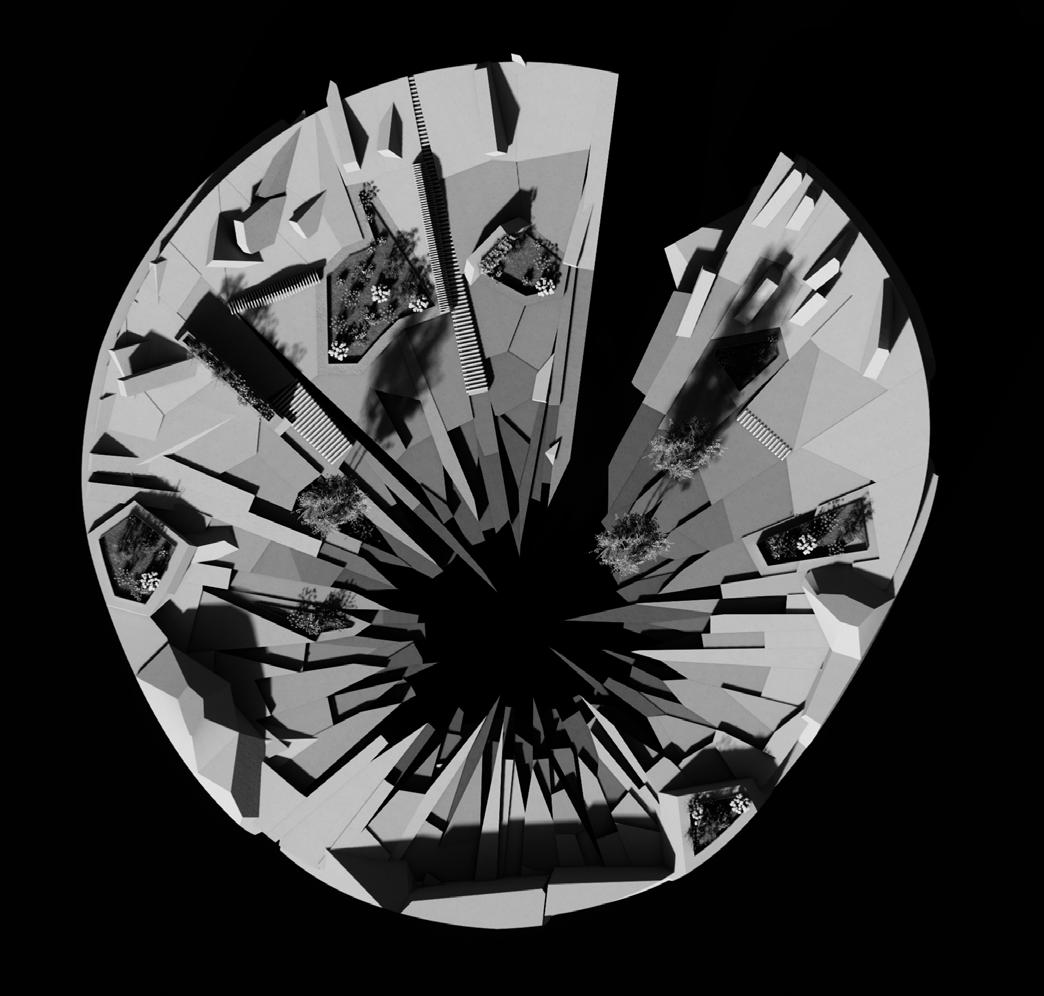
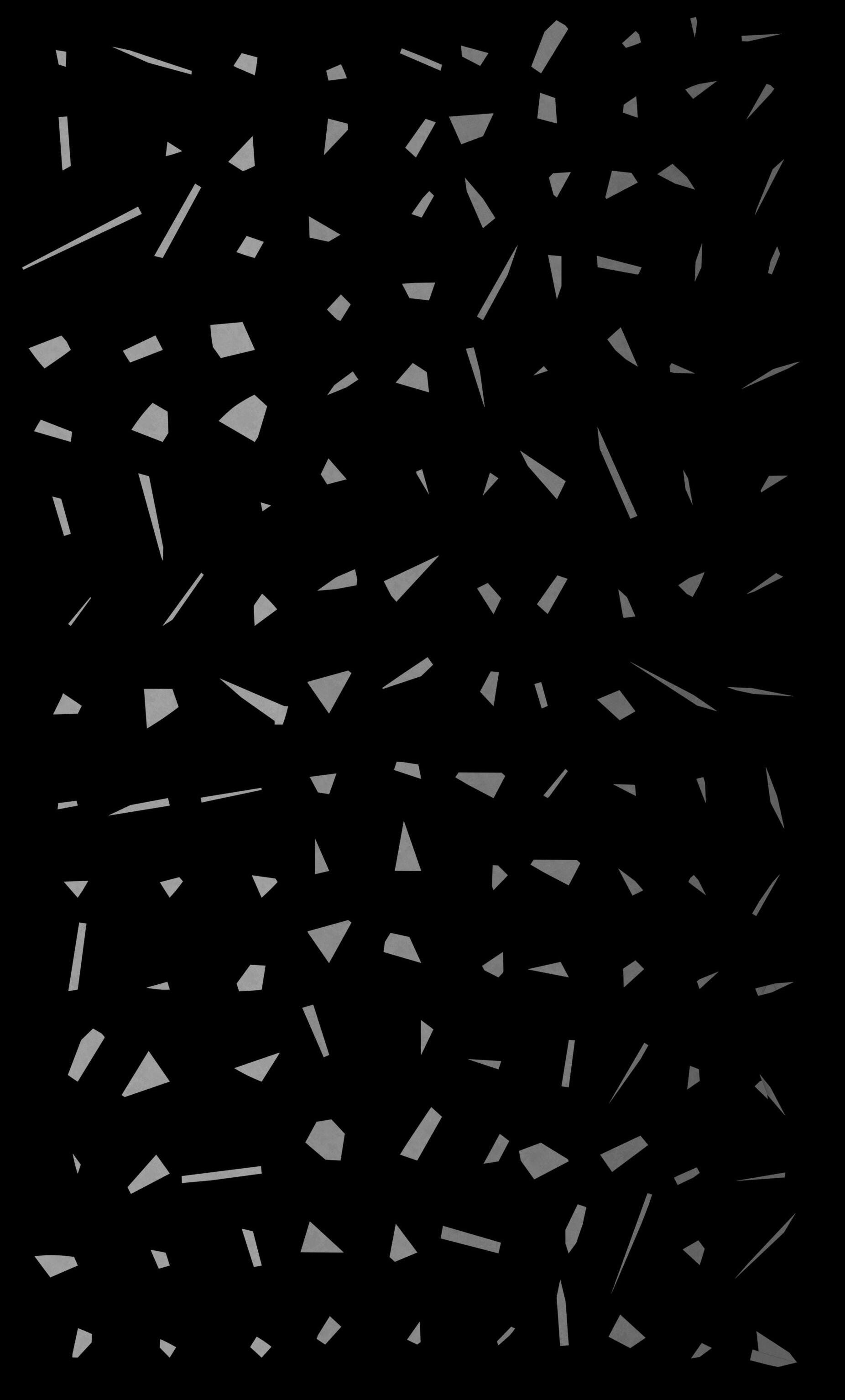
The memorial is composed of 150 shards arranged in a circular field, shifting through a gradient of six grey tones. The shards grow darker as they move toward the center, where the aformentioned sculpture will stand. As the grey tones darken toward the center, the memorial guides visitors into a deeper, heavier atmosphere. The shift in color mirrors the emotional descent into the core of the tragedy, preparing the viewer for the sculpture that represents the genocide itself.
The numbers are deliberate: the 150 shards echo the 1.5 million Armenians who were killed, and the six tones mark the lower estimate of 600,000 lives lost. Together, they frame the full scale of the genocide’s impact, turning the form itself into a quiet act of counting and remembrance.
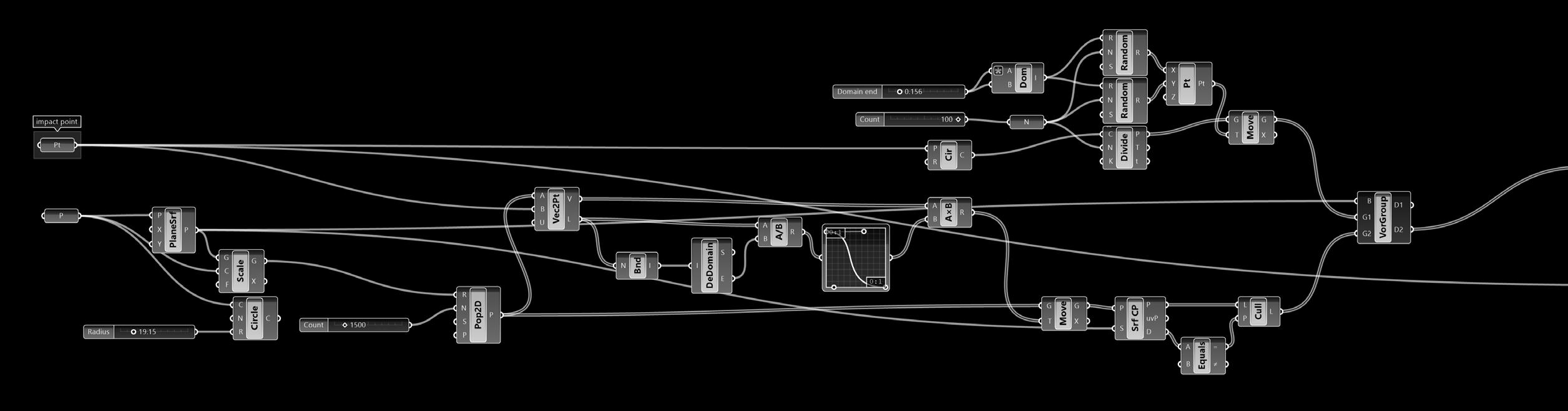
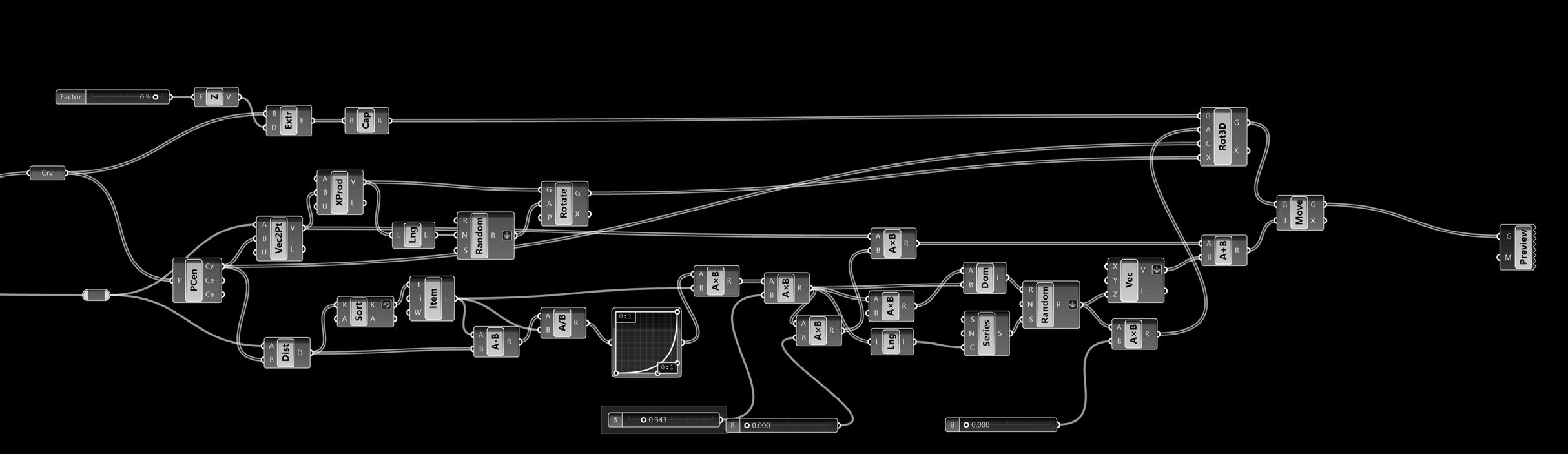
This was achieved by first creating a scipt in grasshopper to simulate cracked glass, allowing me to create a fragmented surface that could serve as a basis for the memorial.
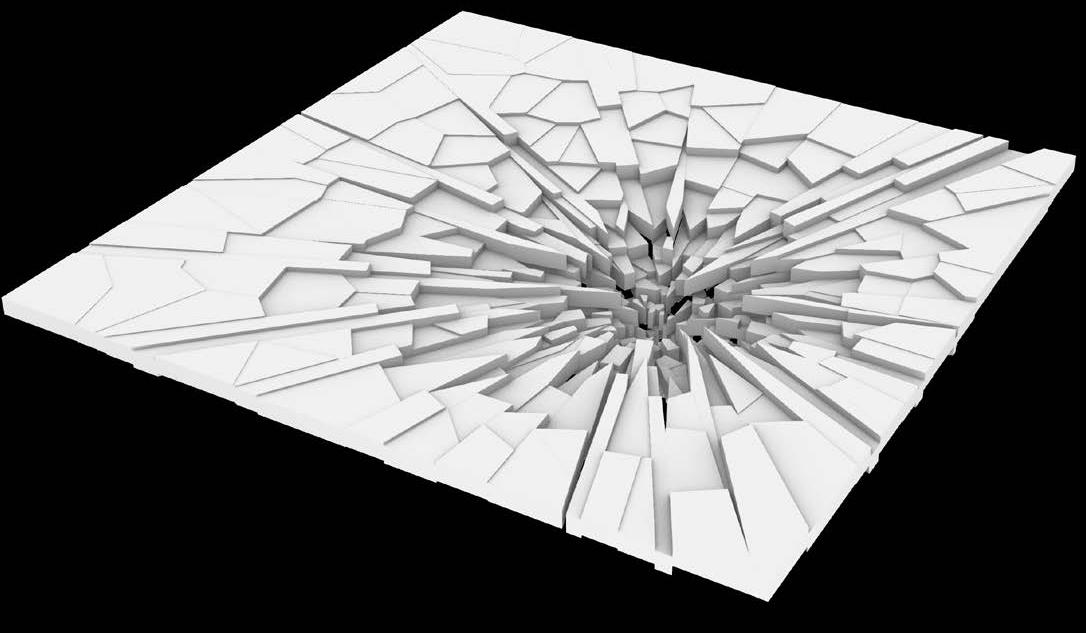
All dimensions of the memorial are derived from the date of the Armenian Genocide—April 24, 1915—embedding the tragic moment directly into the structure. As is shown within the diagram this date is used within the memorial’s three core dimensions. Firstly the memorial’s outer diameter (a) is 24m, representing the day the genocide began. with the inner circle (b), which will house the sculpture by Raffi Tokatlian, having a diameter of 4m to represent the month. Lastly the lower diameter of the form (c) is 19.15m, reflecting the year.