THE


Tensions grew after members and representatives from different unions took the floor to voice their discontent with SIUE’s handling of the ongoing union contract negotiations.
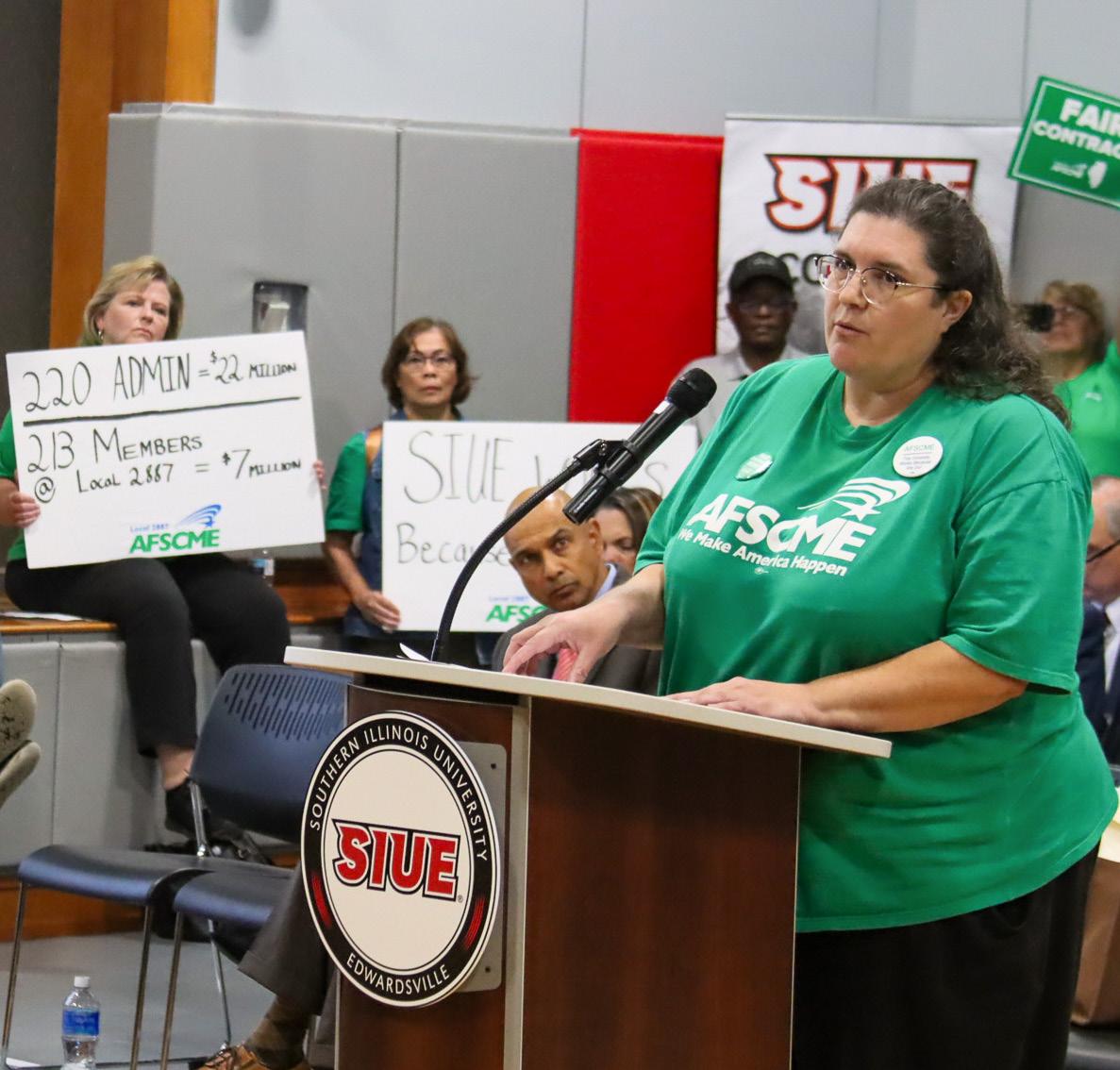
Once the doors opened to the public, Chancellor James Minor followed two representatives from the SIU Medical School in giving his report on SIUE.

Minor spoke about SIUE’s Bronze Boot win, a large donation to the Honors Program and the beginning of construction for the new Health Sciences building.
After Minor, Chancellor Austin Lane gave his report on SIUC. Once the reports were finished, the floor opened to speakers.
Amy Bodenstab, office manager in
the Department of Teaching and Learning and vice president of AFSCME Local 2887, was the first to take the podium.
“In order to decide what anything is worth, one must first know what is being discussed,” Bodenstab said. “Yet those across the table from us are unable to explain what duties and responsibilities we carry for the university. 448 days without a contract, and they still haven’t bothered to find out.”
Bodenstab said the union has requested an itemized budget for the past few months, but hasn’t been provided one from the university.
“When a university is supposedly in debt, yet wastes money on things like rebranding, paying consultants and paying out bonuses to an already substantially compensated few, is that incompetence or corruption?” Bodenstab asked.
Bodenstab said that while six-figure
bonuses are given out to well-compensated individuals with foundation funds, departments are unable to use $200 to benefit students with those same funds.
She then made note of a problem with getting federal information to the union.
“When a Freedom of Information Act request is met with, ‘We gave the information to someone else,’ which I have now figured out is an illegal response, is that incompetence or corruption?”
 | Bruce Darnell
Bodenstab went on to note that the Board meetings are held during hours when people are either working or teaching.
“Claiming a meeting is public, yet holding it when few can attend, is that incompetence or is that corruption?” Bodenstab asked.
The chancellor’s 283 initiative intends to retain freshmen by increasing their sense of belonging on campus, but some students are leaving due to negative experiences with the academic advising department.
Former SIUE nursing student Van Cory said she left the university for many reasons — one being the lack of support and guidance from the advising department which resulted in her losing her scholarship.
“Because of the advising issues I faced, it ended up costing me not only my scholarships, but also over $10,000 out of pocket, and, really, my love for the university,” Cory said. “I felt like I wasn’t important enough to even be paid attention to, and that in
itself was a big factor in me leaving the university.”
According to Cory, she was sent in circles attempting to find who in advising could help her meet her specific needs.
“I was in the Summer Success Program and I had already knocked out some of my prerequisites. With that, I needed the curriculum I was taking tailored because I had already passed those classes,” Cory said. “I talked to a couple of different advisors and I got sent in circles. Email circles, Zoom circles, ‘show up at this office at this time’ circles, but nothing would ever be resolved.”
Professor and Chair of the History Department Allison Thomason said professors and department chairs have seen the struggles students have experienced with advising and are working with these students the
best they can.
“It can take awhile to get an appointment and students can’t get their code, so they can’t always get into the classes that fill up really quickly,” Thomason said. “We are supposed to be mentors to help students, but we can’t actually give them the code to register because it’s actually the union that controls that code. Hopefully the chairs of other departments have reached out to their students to offer help as much as they can.”
Thomason said that, at the end of the day, it is up to students to figure out what courses they need to take and that advisors should only be used as a check to ensure they are on the right track.
“I always tell students that advisors are just that, and that it is on the initiative of the student to read the catalog, know the re-
quirements and know what’s being offered,” Thomason said.

“That way when they walk into their advising appointment they finally get, they have a list of what they need to take and then the advisor is a sounding board and so can a faculty mentor.”
According to Thomason, the shortage and high turnover of advisors the university has experienced in previous semesters has been somewhat alleviated this fall.
“Oftentimes, a requirement for becoming an advisor is a master’s degree, and many advisors have left after getting a higher paying job,” Thomason said. “Meanwhile, there were so many positions left that we were in crisis mode to try to hire people, [which was] especially the case in the College of Arts and Sciences.”
CAS advisor Justin Huff,
who has returned to SIUE after briefly working at St. Louis University, said that having more advisors has significantly helped existing advisors decrease their workloads.
“My caseload has decreased since my return to the university partly because we were able to hire new advisors. Before I left, caseloads were outrageous and were hard to keep up with,” Huff said. “It still can be stressful at times, but it is now a little easier on advisors. As long as we can hang onto advisors, I foresee that it will help students a lot.”
According to Huff, part of the university’s new 283 initiative should focus on helping the advising department to offer the best advising experience possible to all students, especially freshmen.
see ADVISING on page 2
With a slew of new senators, the proposed bylaw changing the attendance requirements of the executive board at senate meetings failed to pass again with 10 yeas, six abstentions, and eight nays.
The changes to the bylaws failed to pass earlier in the month. The changes would no longer require the executive board, which are paid positions and not voting members, to attend the senate meetings.
President Mackenzie Richards said executive members are
only allowed to work and be paid for nine hours a week. She said, between senate meetings and pre-meetings on Monday night, the executive board can be on duty for four hours — nearly half of their time for the week.
One of the concerns brought by senators who voted nay was the fact that the student government would no longer be one cohesive unit, as they would no longer all meet bimonthly.
Another concern by several senators was that the executive board would not be as up to date on information shared by the senate if they are not at the meeting.
CHLOE WOLFE opinion editorSIUE senior Connor Bazzell, 24, was charged with six counts of child pornography by the Madison County State’s Attorney’s Office earlier this month.
According to a press release from the City of Edwardsville, Bazzell turned himself into custody Sept. 13 and he was released Sept. 14 after posting bond.
Bazzell was charged with four counts of a Class X felony and two counts of a Class 2 felony and his bond was set at $500,000.
A bond is a promise that the accused will be in attendance at all their court dates. In order to be released, the accused must pay 10 percent, which was $50,000 in Bazzell’s case.
When contacted for a comment, Nicole Franklin, the university’s new communications director, said via email that Bazzell did not live on campus and that the university would not be able to share further information in accordance with the Family Educational Rights and Privacy Act (FERPA).
Franklin said for more information, visit the Madison County Courthouse public records.
ADVISING | COVER
“The university helping out advisors in whatever capacity they can will correlate to helping students and keeping them here at SIUE,” Huff said.
Cory said the 283 initiative is a good idea, the university needs to focus on improving academic experiences including advising over anything else.
“I left right after my freshman year because of all the things that went wrong,” Cory said. “I understand where their quota is coming from, but they also have to make the change to actually keep advisors and all of their staff in line to be able to keep those freshmen.”
Cory said she left ultimately
due to the culmination of issues she experienced with SIUE.
“I felt almost like the university had turned against me and it was not going to be beneficial for me to stay at a university that was not going to pay attention to me and my needs,” Cory said.
According to Cory, she is not alone in the issues she faced with advising and feels that administration needs to do more to address SIUE’s advising crisis.
“I know I’m not the only one who has a story like this,” Cory said. “Saying that advising messed something up and now people are behind a semester or someone is not getting financial aid because of failure to meet credits. I feel like since there is such a high turnover rate that should be a huge red flag that the administration is not doing something right.”

Senate Democratic and Republican leaders agreed Tuesday on a plan to keep the government open through mid-November and provide $6 billion in assistance to Ukraine.
The Senate’s stopgap measure to avert an Oct. 1 shutdown still would have to overcome gridlock in the Republican-controlled House and a federal funding lapse remains likely.
Speaker Kevin McCarthy (R-Calif.) could face ouster by conservative hard-liners if he allows a bipartisan plan to come to a vote.
The Senate may not be able to vote its approval for the temporary measure before the Saturday midnight shutdown deadline because Sen. Rand Paul, a Kentucky Republican, is threatening to slow it with procedural obstacles over the inclusion of Ukraine aid.
Moderate House Republicans are prepared to join with Democrats to invoke a rarely used procedure to force a vote on some type of bipartisan temporary funding plan. Yet it’s a time-consuming tactic and they won’t be able to do so before the shutdown deadline.
The Senate plan, which would extend funding until Nov. 17, falls short of the $24 billion in Ukraine aid requested by President Joe Biden. It includes $6 billion of the $16 billion in emer-
gency disaster relief the White House sought.
Senate Majority Leader Chuck Schumer (D-N.Y.) said the bill was “a bridge, not a final destination,” and that more will needed to be done later to address Ukraine and the recovery from a series of hurricanes and wildfires.
The Senate cleared the first procedural vote Tuesday evening on the bill leaders intend to amend with the bipartisan deal.
The Senate plans a shortfall in the Women, Infants and Children nutrition program and temporarily extend some expiring farm bill programs. It would also allow the Pentagon to build a second Columbia Class submarine.
The House is focused on trying to pass full-year funding bills for the State, Agriculture, Homeland Security and Defense departments that would not in themselves end the shutdown threat.
McCarthy has said that after spending most of the week on these bills, he plans to bring up a stopgap bill that contains a deep cut to domestic spending and immigration law changes that are anathema to Senate Democrats and the White House.
So far, at least 11 members of his party have indicated they would resist allowing a vote on that measure, preventing consideration unless McCarthy can win over some House Democrats.
Moderate House Republi-
cans are preparing to join with Democrats on a discharge petition to force a vote on a bipartisan effort. The procedure was adopted by the House in 1910 as a check on the speaker’s power and would force a vote on a bill without his approval. Discharge petitions have been successfully deployed just twice this century. Given their narrow majority, only five Republicans must join with Democrats to bring it about. Thirty-two Republicans have already signed onto a bipartisan bill to finance the government through Jan. 11 and pro-
vide military aid to Ukraine. The petition could be used to force a vote on the Senate bipartisan bill.
Reps. Mike Lawler and Marc Molinaro, both New York Republicans who represent areas Democrat Joe Biden carried in the last presidential election, already have publicly threatened to join Democrats in such a petition, and other GOP moderates are ready to do so.
The discharge petition, last deployed successfully in 2015, can be used to force a vote within nine “legislative days” when Congress is actually in session.
09.21.23
A person was reportedly looking at inappropriate content in Lovejoy Library. Later, it was learned the person wasn’t even allowed on campus.
09.22.23

An officer responded to a report that people were playing a game of baseball in a Cougar Village tennis court, but the people were gone when the officer arrived.
09.23.23
An officer responded to a report of a person knocking at someone’s door in Cougar Village. The officer said that the ones knocking were the inhabitants friends.

SUDAN
About 5 million people have been displaced since the start of the civil war in Sudan. Nearly 1 million have left entirely, while 4.1 million are staying despite rising costs.
AZERBAIJAN
Around 50,000 people have left Nagorno-Karabakh after Azerbaijan invaded on Sept. 19. Prime Minister Ruben Vardanyan was arrested after trying to flee.
IRAN
A military satellite named Noor 3 has been launched by Iran. The U.S. has said this may indicate longrange weapon capability for Iran, which Iran has denied.
SPAIN
The court investigating former women’s soccer coach Luis Rubiales’s non-consenual kiss has expanded their probe to include the team’s previous coach Jorge Vilda.
A reported $166 million of cocaine was seized by Irish agents off the country’s southeastern coast. The vessel was registered in Panama and had a crew of 25 people.
Information courtesy of Reuters / CNN
“
I left right after my freshman year because of all the things that went wrong ... I felt almost like the university had turned against me, and it was not going to be beneficial for me to stay.”
Van Cory, Former SIUE nursing student
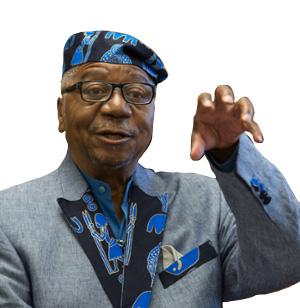
Eugene Redmond attended SIUE in its infancy — as well as a time of great political and social upheaval across the country.
Redmond, who is currently 85 years old, graduated from SIUE in 1964 with two majors and two minors. Redmond said his studies in English, political science, philosophy and journalism aided him as he and many other young students at the time paved the way for social change.
“Black and white students were involved,” Redmond said. “Some of my best friends’ classmates got involved, there were bars … that we ‘integrated’ by going in together. Younger faculty, students, all backgrounds — we went in together. I was old enough to drink because I
was in the Marines, [so] I could go in the bar age-wise, but not color-wise.”
Redmond said there were many “firsts” at the time for Black college students.
“If you went to college and you were Black, you probably were the first Black person to do something,” Redmond said. “People would go up and down the street in the Black neighborhoods telling them, ‘Turn on your televisions,’ for those who had TV. ‘There’s a Black person on TV!’”
One of Redmond’s own “firsts” came when he was selected to be editor-in-chief of The Alestle for the 1963-64 academic year, making him the first Black editor-in-chief of the paper. Right around that time, Redmond said he took part in one of the most influential moments of the Civil Rights
Movement through the paper.
“I went to the March on Washington in 1963, covering for The Alestle,” Redmond said. “[I] heard and saw Dr. King, I met James Baldwin there in DC, many of the other icons, Black and white. [It was] quite an era. You couldn’t wait to wake up and get back to the capital, get back on the streets, do your sitins [and] do your marching in between classes, after classes, before classes.”
Redmond said he also claimed the title of first Black student to win the poetry contest at Washington University, where he went to get his master’s in English.
“No Black poet had ever won that award, so [students] came over and I would be standing on the green with friends,” Redmond said. “People would come up and just
stare, [both] white students and Black students.”
Redmond said his connection with poetry permeated deep into his childhood, when he was involved in church pageants and plays.
“I got into poetry as a boy … but I really got serious in the Marines,” Redmond said. “I had the time and I was attached to a unit of helicopters. Most of the pilots … majored in English in college, so they would read my stuff. I was in a place to hone my skills.”
Much of Redmond’s work in poetry and journalism centered around the city of East St. Louis, Illinois, where he said he worked for a few newspapers in his post-college years.
“I wrote for the East St. Louis Daily Journal, which was on Missouri Avenue,” Redmond said. “I was the first Black East
St. Louis [Daily Journal] reporter, and I remember getting a feature story on the front page.”
Redmond was named the Poet Laureate of East St. Louis in 1976. In the same year, he published “Drumvoices: The Mission of Afro-American Poetry, A Critical History.”
His work on the history of Black poetry in the U.S. led to the founding of Drumvoices Revue, a literary journal published in part by SIUE’s English Department from 1991 to 2008.
Redmond said he taught English at SIUE from 1990 to 2017, and he is now an emeritus professor with the university. There is currently a space named “the Eugene B. Redmond Learning Center” in Lovejoy Library in his honor after Redmond donated a collection of items documenting his role in the Black Arts Movement.
Bodenstab said this is the third time AFSCME Local 2887 told the Board of Trustees that unfair practices were present, and also mentioned a document that disallows making statements to the press.
“If you force us to strike, that document becomes invalid,” Bodenstab said. “I will take the truth about all of you to the press, and, if that happens, you will see your individual names right next to the words ‘incompetent’ or ‘corrupt.’”
After Bodenstab, Kimberly McClellan, president of the SIUE Professional Staff Association, stepped up to the podium.
“As a third-generation graduate of SIUE, I take pride in the services and programs we offer at this university,” McClellan said. “Our personal connection with students sets us apart from other institutions in the area. It also saddens me when I see similarly dedicated employees leave our institution because they are unable to support their families at SIUE.”
In August, Terry Clark, a receptionist at SIUE, wrote to The Alestle stating they were leaving SIUE for a better future.
“The retention issues we have amongst our professional staff and civil service employees threatens to erode away the hands-on, personal connection that sets us apart from other institutions,” McClellan said. “You cannot separate staff retention issues from your goal of increasing student retention and recruitment.”
McClellan said she wanted the Board and Minor to consider staff retention issues in their planning for increasing enrollment, student engagement and visibility.
“Our staff are often the first and most consistent contact with students and parents, and cannot be an afterthought in institutional planning, especially financial planning,” McClellan said. “We are doing some great things, but we can do so much more to improve the working conditions of our staff and learning conditions of our students.”
After McClellan, president of AFSCME Local 2232 and building service worker Anthony Fearon began to speak.
“Building service workers keep your campus buildings clean,” Fearon said.
“We’re here because the administration has refused to make any realistic offers in our still-ongoing negotiation.”
Fearon said the lowest hiring pay rate is $2 less than what is paid at Taco Bell, while the highest annual rate is thousands of dollars less than what it is at Southwestern Illinois College.
“We’ve lost 40 percent of our people and we can’t hire anybody,” Fearon said.
“They’re covering two or three jobs and we have no one to assign the Vadalabene Center, which needs six people. It’s being covered for events with mandatory overtime.”
Fearon said that inflation had cut their wages by 20 percent and reiterated that they were having trouble keeping and rehiring people.
“People need to accept the reality of what current wages are. Your values are not our values,” Fearon said.
Next up was Rachel Tollett, UniServ director for IEA-affiliated locals at SIUE, who spoke on behalf of the faculty association.
“The faculty president, Dr. Megan Robb, could not be here today to speak to you herself
because she is teaching a class,” Tollett said. “One of the lessons my father taught me when I was young was, ‘Every time I have to meet a donor, the first thing I do is see how they treat the waitstaff at the restaurant.’”
Tollett said her father, who owned non-profits, would only work with people who treated waiters, cooks, building service workers and clerical staff with the utmost respect.
“He said, ‘The way that you treat people who help you do your job well speaks volumes,’” Tollett said. “No amount of advertising will make up for the fact that these people live in this community, and they don’t feel comfortable recommending people to work here.”
Tollett said nothing the university does will matter if people can say that you could make more money working at Taco Bell or Walmart. She said nobody should feel like they can choose to care about the workers that hold up the whole system.
“On behalf of the instructional faculty and the other staff at your campus, I am asking you to put a fair and equitable offer on the table that accounts for inflation, cost of living and shows
| Bruce Darnell / The Alestlerespect to the clerical and building service workers of the Edwardsville campus,” Tollett said.
After the speeches, Board Vice Chair Ed Hightower began speaking to the union members.
“I want to personally reassure you that, while we’re not at those negotiation meetings, we are following and tracking what is occurring,” Hightower said. “I want to also state that we appreciate and respect what you did, and I know that during these difficult times that doesn’t appear to be the case, but let me reiterate that we do — we understand.”
Hightower said that at the last protest in Springfield, the Board was also listening closely to the statements that were being made. He also said the Board shouldn’t be getting into the actual across-the-table negotiation process.
“I understand, and, without being redundant, the success of contract negotiations hinge on open dialogue — that’s number one,” Hightower said. “Good faith bargaining is number two; establishing clear ground rules and sticking to those rules throughout the process gets us to the end resolution. That’s
where we have to be.”
The Board began asking questions to the union members present. Hightower asked if there was a senior representative and if there was a financial proposal.
Chairman J. Phil Gilbert asked how many sessions happened after the meeting on July 20 in Springfield and whether they had been productive.
“I want to express my appreciation of the members of the clerical association union, for their dedicated work on behalf of our students, parents and employees, and the Board is very committed to get this behind us,” Gilbert said.
Gilbert noted that the union was not present at one of the bargaining sessions.
Eddie Caumiant, regional director with AFSCME Council 31, responded to the questions posed by the Board. Caumiant has observed multiple unions’ bargaining processes at SIUE.

“To give you a very quick answer to your two questions … We’ve had some sessions since July 20 and I think the union is very serious about a fair, respectable and reasonable settlement,” Caumiant said. “We’ve tried to telegraph that and we’re trying many different things to get that type of commitment and respect.”
Caumiant said the university has replied with financial answers, but that none have been reasonable in relation to other problems, such as inflation and retention.
Caumiant also said, in response to the union not being present, that sometimes it is best to not show if they feel it won’t be productive.
“We don’t think there’s been enough recognition for the building service workers or clerical employees, who have gotten scraps [of money] from the university’s efforts in a whole bunch of other areas,” Caumiant said. “We’re very excited about [Sept.] 25. We want to get serious at the table, but we all need to be there to resolve this contract.”
The next Board of Trustees meeting is scheduled for Dec. 7 at SIU’s Carbondale campus. The last negotiation meeting for the union was on Sept. 25.
“
[My father] said, ‘The way you treat people who help you do your job well speaks volumes.’”
Rachel Tollett, IEA UniServ Director for SIUE members
A fun dinner with friends or a significant other is a good way to take a break. We reviewed sushi in this edition of Metro East Eats, a recurring feature on cuisine of the Metro East and St. Louis. Sushi can now be found in a wide variety, with both raw and cooked seafood or fish options. Luckily for you, we tried them all.
 THEA WELTZIN
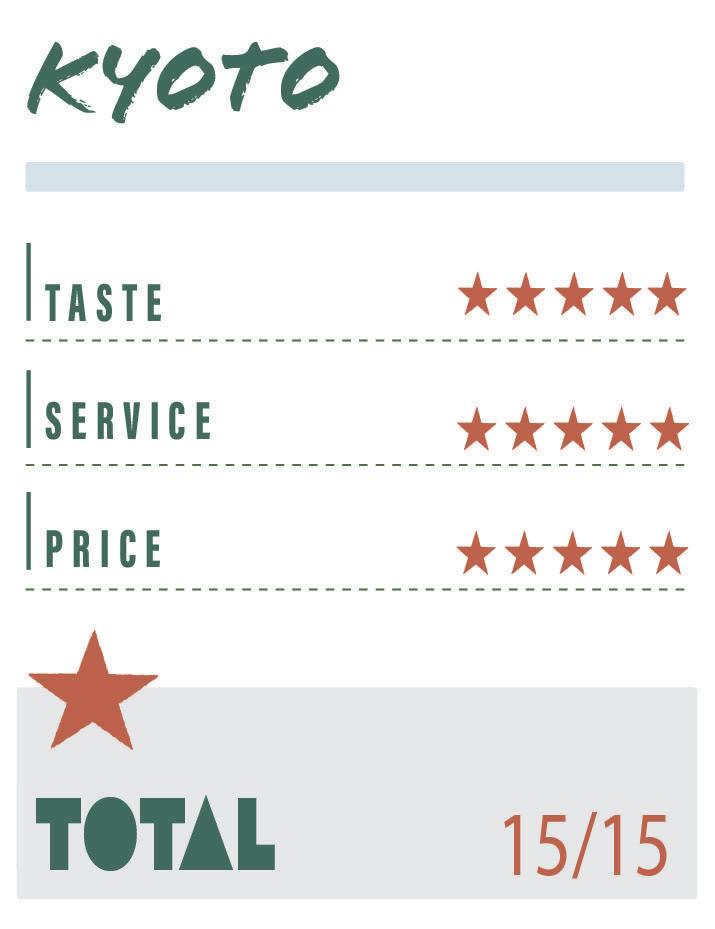
If any of the places on this list deserve to say that sushi is their specialty, Kyoto is the place. When those who like sushi think of it, they usually think of delicious seafood served in a delightful atmosphere.
Even from the road, Kyoto’s atmosphere is hard to miss. It stands out against the Edwardsville backdrop of trees and other small businesses with aesthetically pleasing architecture and a bright moon-like sign featuring something akin to an abstract koi fish.
Inside Kyoto, you are immediately greeted by a beautiful raised sculpture of a tree and a fish tank not far behind it. While Kyoto doesn’t have koi fish, they have very healthy-looking goldfish.
Aside from their aquatic tank, the seating has low light that adds to the atmosphere. Their booths are separated with dark patterned screens, providing a more private dining experience. If one is more inclined towards open seating, Kyoto has various tables set up like a traditional restaurant along with a hibachi grill.
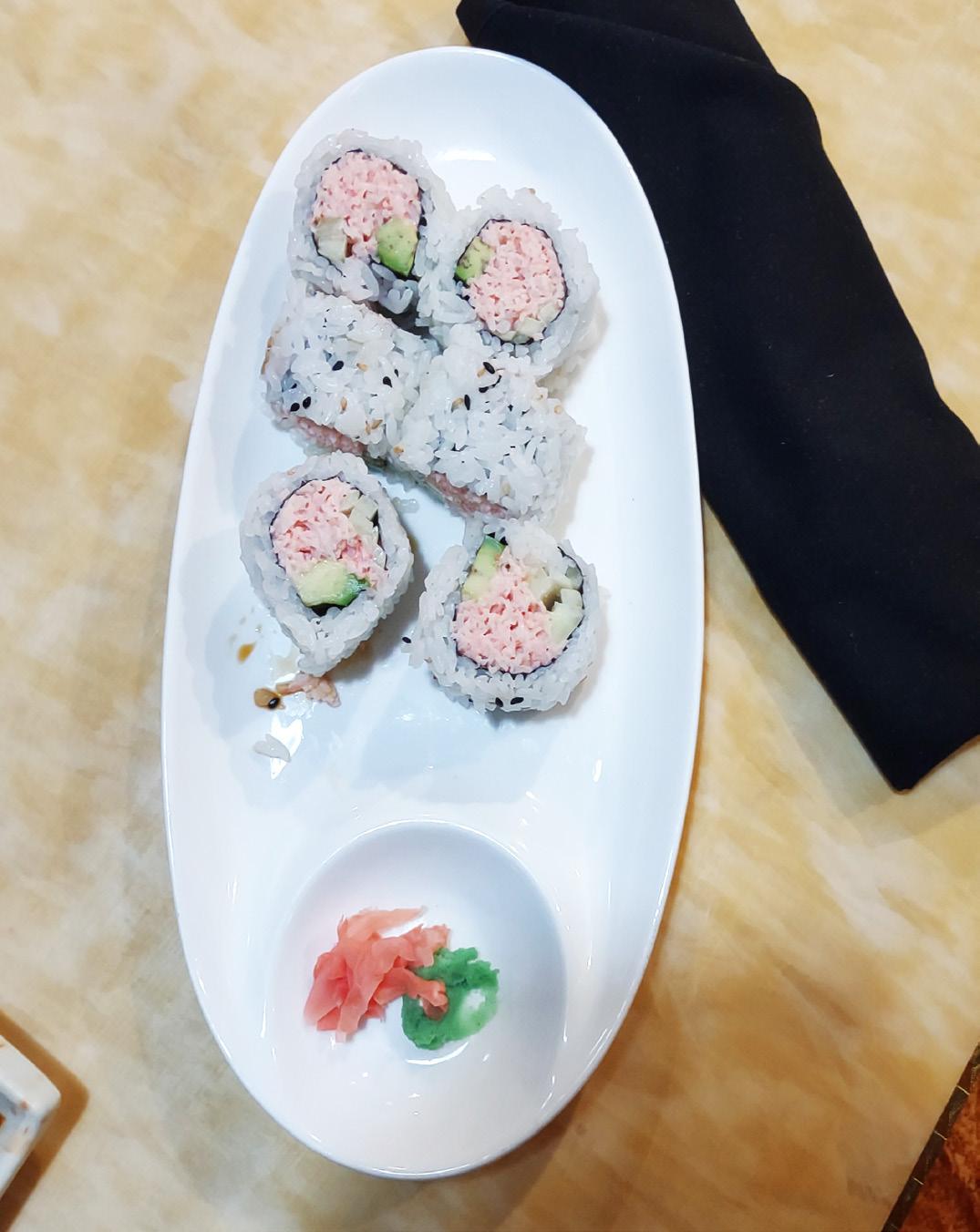
All in all, I spent maybe 30 minutes in Kyoto. The waiter was very attentive and the food itself tasted fresh. I ordered the classic California roll, but they had many other options, including specialty rolls and a sushi bar. The California roll has a combination taste of sweet and salty, complete with the refreshing crunch of cucumber and the scrumptious addition of crab meat. For a price of only $8 per roll, not counting the SIUE student discount, I will definitely be going back.
With big portions and decent prices, Kasabi Japanese Food and Sushi in Hazelwood, Missouri, is a quiet spot to enjoy a filling, tasty meal.

A friend and I went on a weeknight, and the restaurant was quiet but got busier as the evening went on. The service was efficient, with the waiter taking our order quickly and checking back throughout the meal to see if we needed anything.
We ordered three rolls and an order of nigiri, with both raw and cooked seafood options. The cooked seafood rolls were good, the fried tempura roll had a delicious
light crust, and the spicy crab roll had a touch of heat.
We also got a tuna roll and tuna nigiri, and while the tuna roll wasn’t my favorite on the table, the tuna nigiri was fresh and delicious. The sushi rice on all the pieces was fresh and not dry.
We also got a plate of hibachi vegetable noodles, which, while greasy, were delicious and a perfect addition to the meal.
We ended the meal with Thai tea boba, which was just alright. The boba was a bit plasticky and the tea was overly sweet.
I paid just over $60 for the meal, tip included. While it seems a bit pricey, we got a lot of food and left the restaurant with plenty of leftovers for another meal.
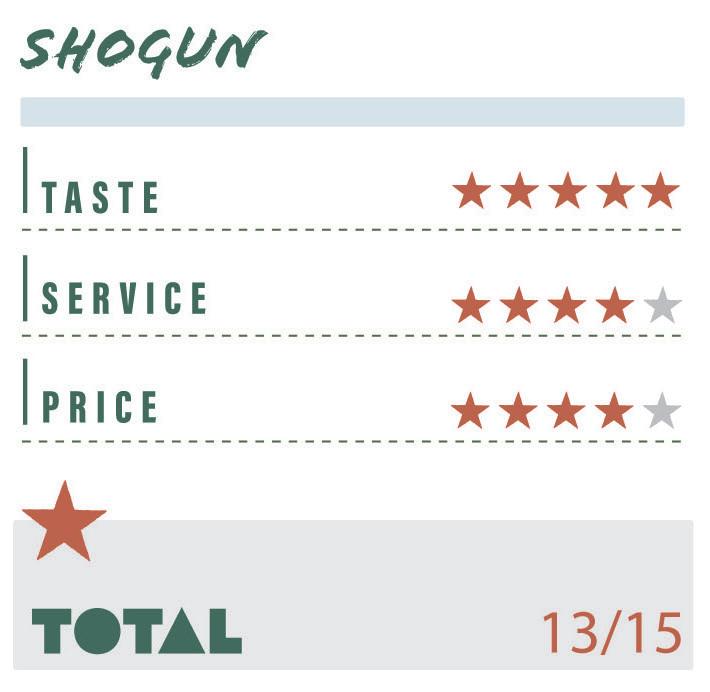
When it comes to a culinary experience, Shogun Steakhouse of Japan in Fairview Heights allows for an experience not only for your taste buds but all your senses to be captivated like no other.


If you are looking for an upbeat and exciting environment for date night or a birthday party, then Shogun is the sushi place for you.
Pricing will be more expensive, with sushi being anywhere from $11.99 to $15.99 while hibachi options range from
$18.99 or more. I had both the sushi and the hibachi and both were worth the pricing. The sushi was fresh and there was a tangy sauce I had never had before but ended up loving.
If you choose the hibachi side, the environment and performance aspect is well worth the high prices.
All in all, I highly recommend Shogun, while the service was a little slow at times, I and my group of friends all had great meals and thoroughly enjoyed our experience. It really is enjoyable for the whole group and worth the experience if you have never tried it before.
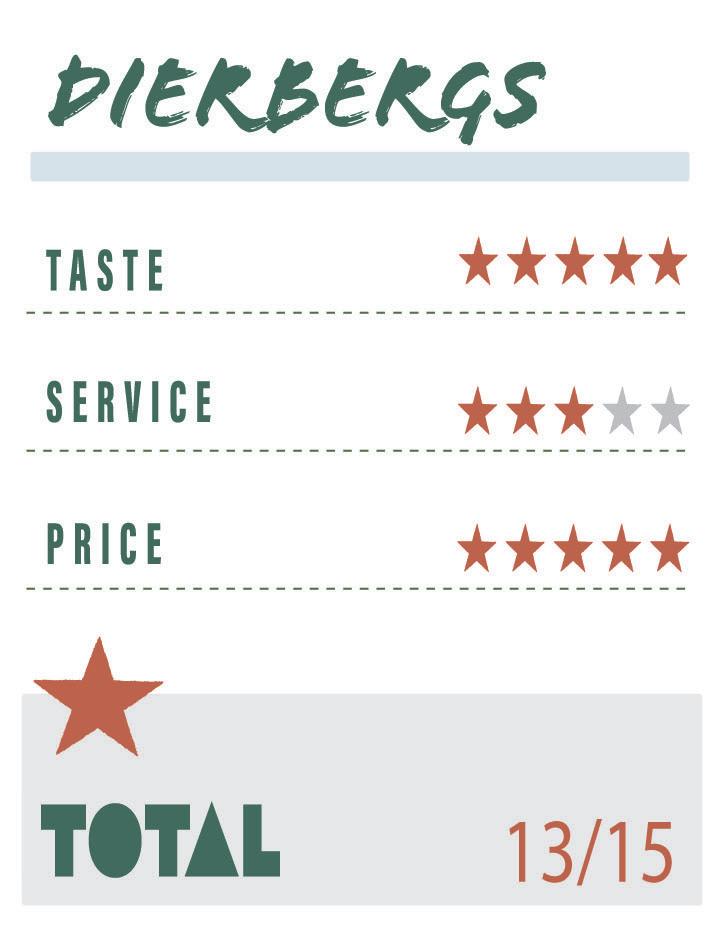
Affordable doesn’t always mean low quality, and Dierbergs’ sushi is proof that even those working with a smaller budget can still enjoy a delicious Japanese dinner.


If you’re like me and craving quick and easy sushi on a weeknight but you don’t have a fortune to spend, you might find yourself, like I did, walking into the grocery store late on a Thursday night to grab a bite to eat.
I watched as the chef at the sushi counter prepared rolls right in front of me while I selected a combination platter of 12 spicy rolls consisting of four tuna, salmon, and shrimp each. I was shocked that it only cost me $9.
After I got home, I tucked into the
spicy rolls that consisted of a piece of raw fish, a chunk of avocado and slivers of cucumber wrapped in nori and white rice rolled in sesame seeds, all finished off with a drizzle of creamy spicy mayo.
Overall, I couldn’t really tell the difference between the Dierbergs spicy rolls and spicy rolls I have had from restaurants. I would say the biggest difference is perhaps the quality of the fish, but if you’re like me and don’t notice the nuances of raw fish flavor, the only difference you’ll spot is the lower price.
All in all, I found Dierbergs’ sushi to be surprisingly high quality and pleasantly delicious all at a reasonable price. The next time you’re shopping at Dierbergs or are just in the mood for a fast and messfree dinner, grab some Dierbergs sushi and I’m sure you won’t be disappointed.
Seven Belleville offers more than a tasty menu with its exceptional service and weekly events that highlight the talent of local musicians.
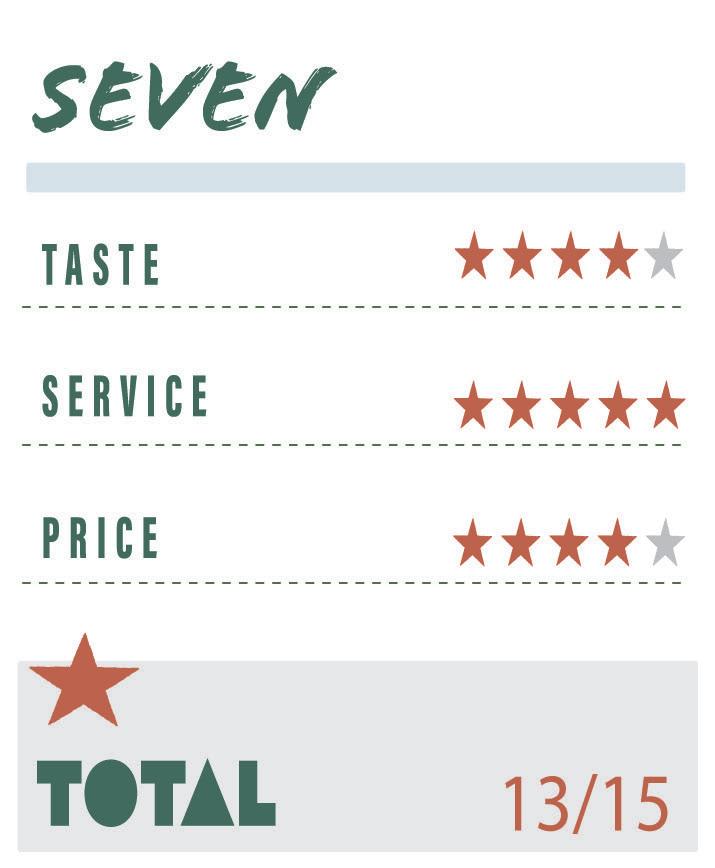
Upon arrival, we were immediately welcomed by most of the staff. Seven has a variety of seating options: the bar, restaurant and outdoors. With the nice weather, we decided to sit outside.
Our server was extremely kind, friendly and bubbly, which made me feel like I was at a family dinner rather than a restaurant. She was accommodating and helped with any questions we had.
I am not a fan of sushi or seafood, so I went out of my comfort zone and or-
dered the crab rangoon roll for $8.95. Inside is a snow crab mix and cream cheese that’s rolled with seaweed and rice — all deep-fried and topped with eel sauce and scallions.

I never liked sushi until I took my first bite. It tasted just like crab rangoon, with a creamy chewy inside and a harder crunchy shell. The eel sauce was sweet and contrasted well with the savory inside.
Aside from an authentic sushi menu, Seven features a delicious and constantly-developing American cuisine menu. Additionally, Seven has an expansive and ever-changing drink menu, with over 50 interesting bottled beers and craft beers, a wide variety of wines, handcrafted cocktails and martinis.
When you eat seafood, at a restaurant you’re not just paying for the seafood. You pay for the atmosphere, and few seafood restaurants I have been to nail the environment like Blue Ocean.
Blue Ocean is located on St. Louis’s Loop, and it’s easy to miss. Small on the outside, Blue Ocean makes tremendous use of the space it has to create a comfy and inviting atmosphere inside.
With 40 roll options on the menu, I had a hard time choosing which fishy food I wanted to order. I settled on the spicy octopus roll as I had eaten octopus before and remembered liking the chewy cuisine.
While my friends and I waited for our food, we talked and joked around with the bartender, who invited us to sit at the bar. Our food came out fairly quickly, and the presentation was immaculate. I had eight octopus rolls, each with a little orange dollop of sauce.
I was a little apprehensive — as raw seafood is very much an acquired taste — but I absolutely loved my dish. No ingredient overpowered the others, all blending well into a unique taste. My only complaint was with the spicy sauce, but I won’t dock any points for that because I’m not a fan of spicy condiments to begin with.
Blue Ocean was a wonderful experience and a place I would go back to in a heartbeat.
Serving high-quality sushi at a steep price, Drunken Fish provides a great outing — so long as you plan your budget ahead of time.
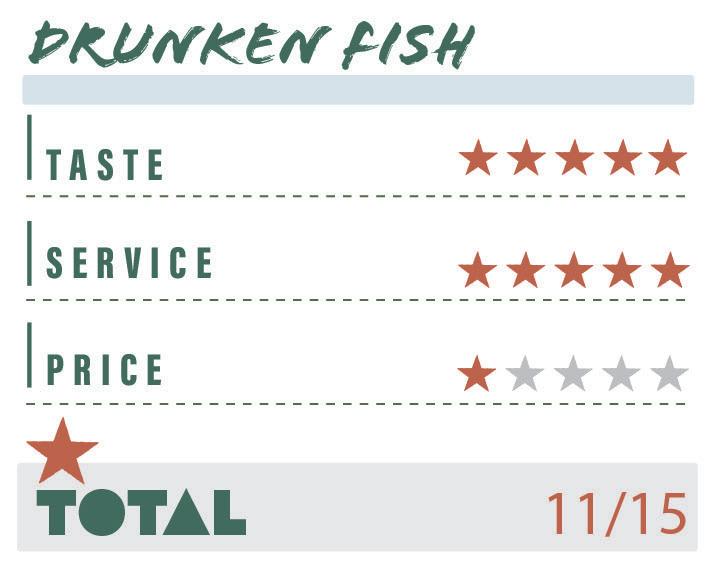

The restaurant has a modern, sleek aesthetic inside. Outside, there is a simple patio where you can eat in the cool breeze.
I went with my girlfriend, and she chose to eat on the outside patio. I picked out the spicy crab roll, which consisted of
crab, cream cheese, cucumber, garlic mayo and was topped with sliced jalapeño and tobiko, a caviar-like topping..

The roll had eight pieces and was delicious. The price of it was around $22 which, if I were alone, wouldn’t have been too bad, but since it was two people eating, it cost double. A party of four could easily reach into the hundreds of dollars.
The food was great and the service was very kind, though if you’re struggling with money, there are better alternatives where you can get much cheaper sushi.

DYLAN HEMBROUGH
Editor-in-Chief
BRUCE DARNELL
Managing Editor
FRANCESCA BOSTON
Lifestyles Editor


AUDREY O’RENIC
Sports Editor
CHLOE WOLFE Opinion Editor
MADISON SAMPLE
Online Editor

Grace Gentemann
Tyson Hicks
Michal Kate Castleman
Sam Muren Reporters
Matthew Wolden

Brandi Spann Copy Editors
Hannah Ledford Podcast Producer



Maximilian Lenhart
Pedro Henrique G-M Photographer
Thea Weltzin Illustrator
Rameshwar Gundem Circulation Manager

Meghan Fosnock
Damon Fowler Front Desk Clerks
Tammy Merrett Program Director

Angie Trout Office Manager
HAVE A COMMENT?
Let us know! opinion@alestlelive.com
Campus Box 1167
Edwardsville, Illinois 62026-1167
LETTERS TO THE EDITOR POLICY:
The editors, staff and publishers of




The Alestle believe in the free exchange of ideas, concerns and opinions and will publish as many letters as possible.
Letters may be submitted to:
The Alestle Morris University Center, Room 0311
e-mail: opinion@alestlelive.com
All hard copy letters should be typed and double-spaced. Letters should be no longer than 500 words. Include phone number, signature, class rank and major.

We reserve the right to edit letter for grammar and content. Care will be taken to ensure that the letter’s message is not lost or altered.
Letters to the editor will not be printed anonymously except under extreme circum-




In our ever-changing world, one constant that many rely on in the back of their mind is that there will always be a force that exists to serve and protect the weak. However, that is not the case.
It feels as though a day can’t go by without terrible news involving police officers misusing their power.
The Seattle Police Department recently released body cam footage of Officer Daniel Auderer commenting on 23-year-old Jaahnavi Kandula being struck and killed by another police officer’s vehicle at the beginning of the year.

It was reported by the Seattle Police Department that this vehicle was responding to a “priority one call.” Kandula was using a crosswalk when she
was killed. The footage revealed Auderer laughed while saying she had limited value and was only worth $11,000.
This is not the first time in recent years that we have both seen and heard police officers showing unprofessional behavior, a lack of basic human empathy and misuse of authority and power.
Why is police brutality so common?
Oftentimes, some police officers revel in their ability to assert authority over others whenever they get the chance. The uniform, status and social standing they get can warp their perception of what is right and wrong. If they are wearing the uniform, they feel as though they can get away with anything.
And they often do. It is too common in these situations where the officers in question get a slap on the wrist, time off,
go into some sort of protection program and then silently return once the press has died down.
A way that these situations can be stopped at the core is very simple: more thorough hiring and training of new officers.
While there is already a form of psychological testing when being hired, it is clearly not thorough enough. Too many unfit people slip through the cracks, causing nothing but pain for civilians.
We need more than multiple-choice tests and self-evaluations to pass an officer psychology test. There needs to be a much deeper dive into the psyche of these individuals beforehand.
Even after moving past said evaluations, the training received is another matter entirely.
Across the country, police officers get a little over 500 hours of training on average. While
that may sound like a lot, the average plumber or cosmetologist receives upwards of 3,500 hours of training.
Those 500 hours sparsely include training for mental health crises. Many officers do not know how to de-escalate situations, and thus make scenarios worse by responding with violence
What we can do at this time is make our voices heard. Reach out to your local politicians — be it letters, social media posts or phone calls. It may sound trivial, but that is the most vital step in any process.
Law enforcement is not something that should be feared.
The idea of a force that protects those who cannot protect themselves and upholds what is fair and just sounds amazing on paper. But without a strong foundation, it very quickly crumbles, smothering the innocent people looking up.
Art is an expression of the human spirit. As an artist, to see it trashed and forgotten is to die.
To see your art be blatantly disrespected is to be wronged.
The name Alestle is an acronym derived from the names of the three campus locations of Southern Illinois University Edwardsville: Alton, East St. Louis and Edwardsville.
The Alestle is published on Thursdays in print and on Tuesdays online during the fall and spring semesters. A print edition is available every other Wednesday during summer semesters.
For more information, call 618-650-3528
For advertising, email advertising@alestlelive.com
As many students have noticed, art around campus is being re-circulated once again. This year it’s different though, as most of the art is being removed — just thrown away. Art, specifically created by students here at SIUE, should be treated with respect by the community.
Even if art is donated to campus, that does not mean it is
unwanted. Many artists donate their work as a means to show it off and support their chosen causes. To throw it in the trash once “done with it” is disrespectful, not only to the artist but to the community. If one person cannot be heard, then how can the administration say that they listen to what the entire student body wants?
Art is the voice of the people. It allows those who cannot outwardly speak or even move to be heard loudly and seen clearly. Many famous artists such as Frida Kahlo and Chuck Close are some of the few painters who continued to advocate for their
causes despite being bedridden or paralyzed.
The university wouldn’t take Frida Kahlo’s painting and throw it away. The only difference between throwing away one of her portraits and the lowly art student’s sculpture that you see around campus is the amount of fame associated with the artist. A lack of renown doesn’t justify a lack of respect. The art student is still a human being, and their voice still has importance.
The more money one has, the more fame one garners. The more fame one garners, the more “important” one’s voice is. At least, that is what America’s late-
stage capitalism would want you to believe. To savor one powerful voice is to forget all of the small artists who still need to be heard. Art transcends all language and culture, which is why it is so powerful. When all who look at it can understand what it portrays and supports, it rivals the strict rules that people in power try to put on it. Art leads to revolution and opportunities for those unheard to be heard: it gives strength to those without power.
While taking down art can be considered to be
Cecilia Huels, 2, paints paper mache at the Edwardsville Art Fair as Elise Rombach holds her up. 2023 was the ninth year of the fair, which is hosted by the Edwardsville Arts Center. According to Andrew Butts, president of the EAC Board, the fair raises funds for the center for the following year. It also goes toward free children’s art classes the Center hosts each week.

The fair featured over 100 vendors selling items such as jewelry, paintings, ceramics, photography, wood, digital works, textiles, sculptures and glass. SIUE alumnus Richard Wehrs won Best In Show with his ceramic pieces.
ART | PAGE 6 then by loving fans.

restricting the voice of the people behind it, there can be all sorts of reasons why art can be taken down. Older art can be prone to falling apart. It can get damaged, the artist might want it returned and so on. However, old art should not just be thrown away — it should be given new life, if not by the artist,
Upcycling old artwork is always an option. Many art pieces will be in the dump after being donated and unsold at thrift stores like Goodwill. However, if someone sees a painting they love and want to add to it, that is better than the painting going straight to waste. For example, in a recent “Halloween town” TikTok trend, people upcycle old prints they
found in thrift stores and painted ghosts and spooky Halloween figures into the paintings.
Even with pottery and sculptures, upcycling is still an option. Repurposing antique store finds to fit your own aesthetic saves the work from rotting away. While the original artist may not be happy with your style, they will likely be happier to see someone enjoying their work rather than seeing it trashed.
Art is supposed to be just like the human soul: ever-changing. No art should be left stagnant. Whether that is simply donating student art to another display place or painting over a print to
suit your own tastes, it is important to allow the ever-changing voice of artists to continue to be heard.


No art student wants to go to a college that will throw their sculpture in the trash. SIUE administration should create a place for all of the old campus art to be appreciated further — such as a walking garden of art, where art is placed along empty places on sidewalks. This would give all art a new home where students could continue to admire artwork done by their peers.
A walking garden of art would be easy to maintain, as well as keep the campus a unique place.
In the first home game of the season, the SIUE club hockey team took their first victory against the Milwaukee Panthers with a final score of 3-1.

Captain Simon Maxfield and Forward Jakob Schreiber said nothing intimidated them coming onto the ice for the first time this season.
The first score of the night was by Drew LaRose in the first period, met shortly after by the second goal of the night by Connor Hinterser in the second period.
Goalie Brendan Rasch put up a fight with several shots on goal, being met with one complete goal in the second half.
With three seconds left in the third period, Schreiber managed to nail a buzzer-beating empty net goal to seal the 3-1 score against Milwaukee.
It was an aggressive game with multiple fights that resulted in halts of play and many players on both sides getting sent to the penalty box.

Maxfield said he was very proud of the efforts made by the team.
“[We are hoping to] build off what we did tonight and bring the same effort tomorrow,” Maxfield said.
Schreiber also said that working well as a team was a big factor in the success.
“This was the first game we collectively moved the puck as a team and possessed it,” Schreiber said.
Head Coach Tyler Elbrecht said he was thoroughly impressed with the performance the team put out in this game.
“Our guys played really well tonight. [For next game,] play the same way, stay out of the box a little bit, but bring the same effort,” Elbrecht said.
Elbrecht said he hoped the energy brought by the team this game would continue to carry them for the rest of the season.
“We are working as a group, taking it day by day and hoping to win a championship at the end of the year,” Elbrecht said.
The team will play next Oct. 6 at Illinois State University.
Men’s soccer remains undefeated after their 3-1 win over Webster University this past weekend. With five wins, two ties and zero losses, the Cougars are in their longest unbeaten streak in 25 years.
In the final game before the Ohio Valley Conference games, Team Captain Alsadiq Hasan scored two goals, his second twogoal game of the season. His first goal came after a penalty kick was awarded to the Cougars following a Webster handball in the box in the first half. His second goal, the Cougars’ third, came 79 minutes in of the game, pulling the Cougars into a clear win in their first ever game against Webster University.
The second Cougar goal was scored less than 30 seconds after Webster’s goal in the second half, with freshman de-
fender Bobby Pauly passing the ball to junior forward and midfielder Stephan Moreira to push the Cougars back into the lead and Cougars fifth win of the season.
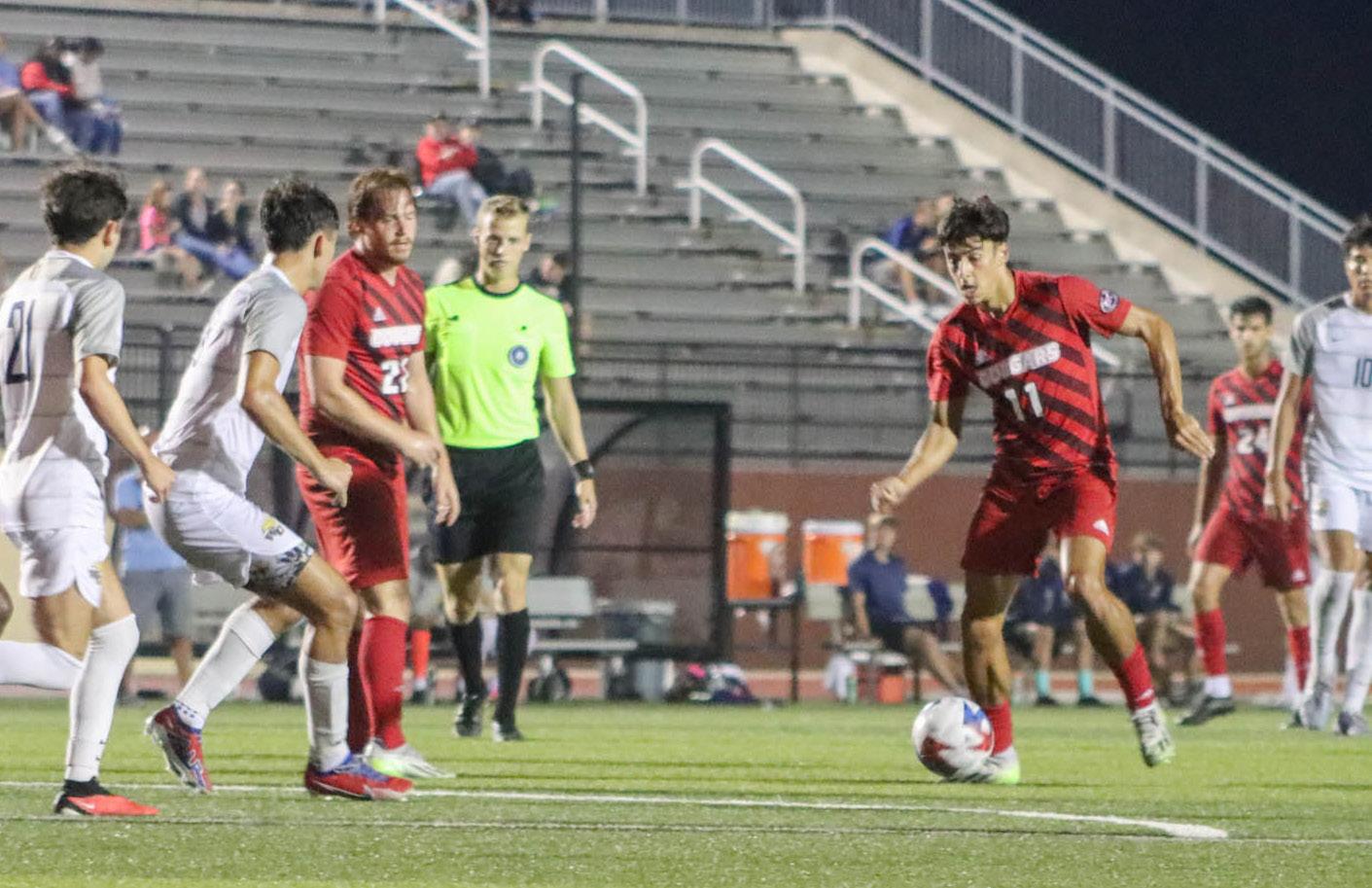
Redshirt junior Wes Gibson was named OVC men’s soccer Defensive Player of the Week following his performance during the Webster game.
SIUE has had seven OVC players of the week already this season.
Gibson played a key part in the SIUE defense, playing all but seven minutes against Webster. He helped the Cougars remain undefeated to start the season by limiting the Gorloks to only two shots on goal.
The Cougars will play their next game at 7 p.m. Sept. 28 in Evansville, Indiana, against the Southern Indiana Eagles. The Cougars currently have a six-game win streak against the Eagles.
AUDREY O’RENIC sports editor
SIUE women’s tennis dominated the SIUE Invite with a 25-2 overall record last weekend against Lindenwood University, University of Missouri-St. Louis and University of
Southern Indiana.
The Cougars had a strong opening with a clean sweep in both singles and doubles Friday.
With a single loss to Missouri-St. Louis in singles and a single loss to Lindenwood in doubles, the Cougars finished Saturday with an overall record
of 25-2.
Graduate student Jill Lambrechts, senior Jordan Schifano and sophomore Amelia Gorman came out on top with an overall score of 6-0 in their respective singles and doubles matches.
SIUE continues their
winning streak after their 20-7 overall record at the Cougar Invite against competitors from Bradley University, Eastern Illinois University and Saint Louis University. Gorman started the season off strong with a perfect 12-0 record after the two
tournaments. She was named Ohio Valley Conference Freshman of the Year last season after recording a 22-7 record in singles. The Cougars will play Sept. 29 at the Redhawks Invitational at Southeast Missouri State University.