alestle THE
Illinois University Edwardsville
4-5 Sudden sinkhole in Alton soccer field prompts questions

the heat this summer with Metro East snow cones


Illinois University Edwardsville
4-5 Sudden sinkhole in Alton soccer field prompts questions
the heat this summer with Metro East snow cones

The Mississippi River, the second-longest river in the United States, has always been subject to seasonal fluctuations. However, recent weather patterns have been anything but ordinary. Scientists attribute these changes to a combination of global warming and natural climatic variability.
The Gulf of Mexico has seen “isolated marine heat wave conditions,” according to the National Oceanic and Atmospheric Administration.
Marine heat waves are typically defined as ocean temperatures that reach above the 90th percentile for a specified period of time.
“This means that the temperatures are warmer than 90 percent of the previous observations for a given time of
year. Marine heat waves can last for weeks, months or years,”
NOAA said.
“Given that we are in the thick of the Atlantic hurricane season and the tropical North Atlantic is already warm, extremely warm ocean temperatures in the Caribbean and the Gulf of Mexico are concerning. Developing tropical storms that pass into the region may strengthen as a result of these conditions,”
NOAA said.
This year, Hurricane Beryl made landfall, bringing torrential rains and strong winds. As it moved inland, it dumped massive amounts of water into the lower Mississippi basin, swelling the river and its tributaries.
Simultaneously, the northern states, including Minnesota and Wisconsin, have experienced unprecedented rainfall.
“As the climate has warmed over recent decades, the most

reporter
SIUE offers a nonprofit sub-club organization called the Mustard Seed Peace Project, where founder Teresa Cranmer and students are in their efforts to make a difference for less fortunate communities.
Cranmer, the current president of the nonprofit side of the Mustard Seed Peace Project, said the Mustard Seed Peace Project does work that is mostly based in Guatemala and Zambia.
Their organization has built classrooms and latrines, drilled water wells, fostered school lunch programs and much more. Cranmer said that as of now, their goals are more centered around securing the educational systems in places.
“[We like to ask ourselves] how we can help these students, and how we can enhance their educational experience,” Cranmer said. “Not that we’ve put [our other projects] aside, but our main focus is the educational aspect. We’ve been doing some educational workshops for the teachers of these communities [as well].”
SIUE Clinic Nurse Miranda Sellars is vice president of the nonprofit side of the Mustard Seed Peace Project and chair of the Fundraising Committee. Though the original organization and
extreme precipitation days have become more intense across the U.S. As precipitation extremes intensify, the wettest days each year bring increasing flood hazards. And this intensification trend has been widespread,” Climate Central said.
This has led to rivers and streams feeding into the Mississippi to overflow, intensifying the situation downstream.
Understanding the core causes of these climate shifts requires a look at larger climatic trends.
In 2023, the global temperature rose 2.5 degrees Fahrenheit warmer than the late 19th-century average, according to the National Aeronautics and Space Administration.
“The exceptional warming that we’re experiencing is not something we’ve seen before in human history,” Director of the Goddard Institute for Space
Studies Gavin Schmidt said. “It’s driven primarily by our fossil fuel emissions, and we’re seeing the impacts in heat waves, intense rainfall and coastal flooding.”
“Studies also have linked a warming Arctic with more severe winter weather in the United States, even though other reports note that on average, winter cold snaps are actually getting warmer because of climate change,” National Geographic said.
Human activities, such as deforestation and urbanization, have only aided in altering the natural landscape. This can affect local climates and contribute to extreme weather events, according to the Environmental Protection Agency.
“Climate changes, including more frequent and intense storms and more extreme flooding events, can increase stormwater runoff. An increase in stormwater runoff can exac-
erbate existing, or introduce new, pollution problems,” the EPA said.
The Metro East and St. Louis areas are particularly vulnerable to flooding from the Mississippi River. The region’s geography, with low-lying areas and aging levee systems, makes it susceptible to high water levels, according to the St. Louis District US Army Corps of Engineers.
Floodwaters can cause significant damage to roads, bridges and buildings. In the Metro East, key transportation routes could be disrupted, affecting both river commercial travel and roadway commerce.
The St. Louis area, with its historic neighborhoods and commercial centers, also faces the risk of extensive damage. Cities such as Alton are
Organization’s commitment to education makes a difference in communities abroad
the student subgroup don’t often get the chance to collaborate, they stay connected through Sellars.
Sellars said that one of their big goals involves the teaching workshops they will be providing and being as helpful as possible without being overbearing.
“We always make sure that we are invited into the communities, and we’re not just going in and changing things that they might not feel need to be changed. They do a wonderful job of asking whenever they do need help,” Sellars said.
Sellars said getting better internet connection to these communities will be extremely helpful for them as they work on creating a better education system for the schools.
“One goal with implementing these projects is getting Wi-Fi to those communities,” Sellars said. “It’s easy for us to get Wi-Fi here in America, and especially here in the Midwest. A lot of those communities do not have Wi-Fi, and unfortunately, a lot of these workshops require some type of internet access or Wi-Fi in general.”
Cranmer had the idea for the club in 2004 after a trip to Guatemala. After her first visit, she became passionate about the country and the culture. As she continued to visit, she began to ask the people residing more questions about their community.
“I sat with them and asked them, ‘If
money were no object, what would be your most urgent need?’ They said ‘better health for their children’ and ‘better education for their children.’ So, I took those two things and began developing [the Mustard Seed Peace Project].”
Sophomore electrical engineering major Marissa Grix was secretary of the student Mustard Seed Peace Project last year and hopes to run for vice president this upcoming year.
Grix said that the student organization is also focusing on improving the education system for communities in Guatemala by creating educational games, planning equipment drives for sports equipment and school equipment and planning fundraisers to send students to Guatemala.
Cranmer said that the change to focusing on education is very different from what she’s focused on in the last 20 years of her work, but she’s taking the challenge head-on.
Cranmer said they are striving to bring communities together to support the ones that need it the most.

“This is a big, huge shift from what I’ve been doing for 20 years. I’m learning again as I go and it’s fun, exciting and it’s also a little bit scary. But that’s also the exciting part.
“Our focus is to empower the communities that we work with as well as to develop cross-cultural sharing by bringing groups or people from the United States down to assist and to meet with the people that we work with,” Cranmer said.
Women empowerment is an important topic the project would like to focus on.
“One of our goals is to make sure that [the communities] feel as empowered as they can be — especially the women — as they sometimes don’t have the ability to start the businesses they’d like to,” Sellars said.
“I saw the sustainable impact [the project] was having on very small communities in Guatemala,” Sellars said. “I really was drawn to the clean water initiatives that they have promoted, and as a nursing student who was very interested in public health, I loved the idea of being able to help communities in that way.”
AVA GALBAN reporter versity finances effectively.
The SIUE Bursar’s Office has officially transitioned to an upgraded online student account billing and payment portal in partnership with Nelnet.
Current SIUE students will continue to use their existing login credentials to access the new portal. However, they must re-establish authorized payers within this updated system.
To aid in this transition, the Bursar’s Office has provided a series of video guides on their website. These videos cover essential topics such as logging in, establishing authorized payers, navigating the student account and adding payment methods to profiles.
Detailed guides for both students and parents are available online, offering practical advice and quick tips for managing uni-
Over the next few weeks, students will receive additional communications to reinforce the need to access and manage their online student accounts before the payment deadline on August 9.
The Bursar’s Office aims to ensure that students stay on top of crucial financial deadlines, refunds and financial aid issues, contributing to their overall success in college.
“We’re here to help you navigate and understand the university’s billing and payment process. Whether you are a new or current college student, the SIUE Office of the Bursar is here to help guide your financial success at SIUE,” the Bursar’s Office said on their website.
For more information and access to the how-to videos, visit the website of the SIUE Bursar’s Office.
SAM MUREN managing editor
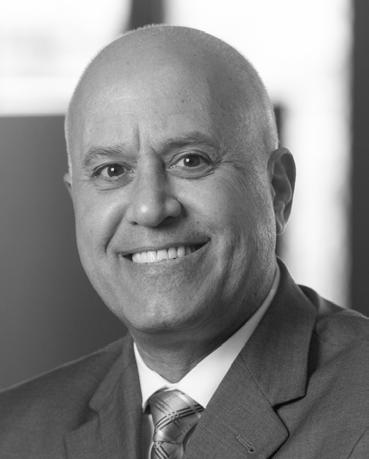
School of Business Dean Mario Hayek and Mass Communication Chair Suman Mishra are the two most recent changes in top department roles.
Both Hayek and Mishra join newly-appointed Dean of Lovejoy Library Marlee Graser in assuming their new roles on July 1.
Mishra replaced Professor of Mass Communications Musonda Kapatamoyo after Kapatamoyo’s second term concluded.
According to the Collective Bargaining Agreement, chairs can serve two threeyear terms as chair. With Kapatamoyo’s second term com-
ing to an end, the Department of Mass Communications conducted an election to appoint Mishra as the next chair.
Kapatamoyo will continue his role as a professor in the department Mishra holds a doctorate in mass media and communication from Temple University.
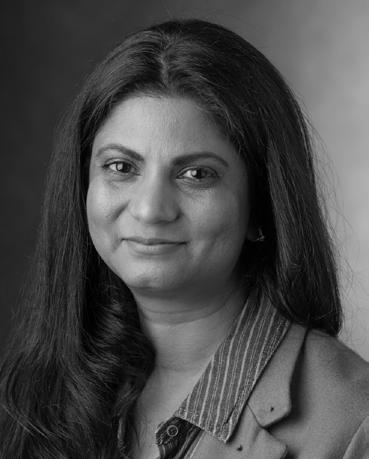
role held by Interim Dean Janice Joplin.
She previously served as the mass communications director of graduate studies and has been employed at SIUE for 15 years.
Hayek will fill the void of dean of the School of Business. He will take the
He was previously employed at Texas A&M University-Commerce in various roles at their College of Business, including dean of the department. Hayek holds a doctorate in marketing from the University of Mississippi. His resume extends outside of the U.S. and shows international entrepreneurial background. Specifically in Ecuador, Hayek worked as a consultant and taught at Universidad San Francisco de Quito.
Hayek, Mishra and Graser are the three most recent appointments over the summer for top department roles.
SEEMA MEHTA
LOS ANGELES — The day that catapulted Kamala Harris to within striking distance of becoming the Democratic nominee for president of the United States was marked by a flurry of phone calls.
Harris had multiple phone conversations with President Biden prior to his announcement Sunday morning that he was ending his reelection bid, according to a person familiar with Harris’ activities on Sunday. The announcement, which he released on X, rocked the political world and came after growing calls that he not seek a second term after a disastrous debate performance against Donald Trump.
From there, Harris spoke to more than 100 Democrats, including members of Congress, governors and labor and civil rights leaders, the source said.
“On each of those calls, the vice president made clear that she was extremely grateful for
the president’s endorsement but plans to work hard to earn the Democratic nomination in her own right,” the source said.
Monday is Harris’ first full day campaigning for president, and she is expected to continue trying to unify the party around her.
As Biden’s news spread, Harris quickly began to win the backing of many of the top people in her party.
Though Democrats have said they will have an open contest to select their nominee, many of the party’s leaders have endorsed Harris, including Govs. Gavin Newsom of California, Roy Cooper of North Carolina, Kathy Hochul of New York, Janet Mills of Maine, Phil Murphy of New Jersey, Jared Polis of Colorado and Josh Shapiro of Pennsylvania, as well as Sens. Laphonza Butler and Alex Padilla of California, Tammy Baldwin of Wisconsin, Bob Casey of Pennsylvania, Catherine Cortez Masto of Nevada, Chris Coons of Delaware, Mark Kelly of Ari-

zona, Kirsten Gillibrand of New York and John Hickenlooper of Colorado.
There are also indications of spikes in fundraising since the announcement.
Biden’s announcement ends weeks of hand-wringing among party leaders who urged him to leave the race after a disastrous debate performance last month left many Democrats fearing he was too old for office and unable to defeat former President Trump.
“I believe it is in the best interest of my party and the country for me to stand down and to focus solely on fulfilling my duties as president for the remainder of my term,” Biden said in a statement.
Biden also said he will address the nation later this week.
In his initial statement, Biden did not endorse Harris but later threw his support behind her in a post on X.
“My very first decision as the party nominee in 2020 was to pick Kamala Harris as my vice
president. And it’s been the best decision I’ve made. Today I want to offer my full support and endorsement for Kamala to be the nominee of our party this year. Democrats — it’s time to come together and beat Trump. Let’s do this,” Biden wrote.
In her own statement, Harris thanked Biden for his “extraordinary leadership.”
“I am honored to have the President’s endorsement and my intention is to earn and win this nomination,” she said. “I will do everything in my power to unite the Democratic Party — and unite our nation — to defeat Donald Trump and his extreme Project 2025 agenda.”
Through his wins in Democratic primaries and caucuses in U.S. states and territories, Biden amassed nearly 4,000 party delegates who were pledged to vote for him to be the party nominee at the Democratic National Convention, which is scheduled to begin Aug. 19 in Chicago.
His departure from the race means those delegates are
now free to pick another candidate. They are not automatically pledged to Harris.
Choosing a new nominee will be their primary task at the convention.
Jaime Harrison, the party’s chair, said in a statement Sunday that “the work that we must do now, while unprecedented, is clear.”
On Sunday, Harris was working non-stop to build her case, the source said.
Clad in a Howard University hoodie, Harris served salad, sandwiches and anchovy-topped pizzas to her aides as she spent roughly 10 hours on phone calls to Democratic leaders on Sunday at her residence at the United States Naval Observatory, the source said.
Among the people she spoke with was her pastor, Amos Brown III, who prayed with her.
Times staff writers Kevin Rector and Faith E. Phino contributed to this report.
FLOODING | COVER
taking measures against flooding by reinforcing local bodies of water. On July 8, the Alton Committee of the Whole approved nearly $1 million dollars towards improvements to the Alton Marina.
The Mississippi River is a key artery for commerce, with barges transporting goods such as grain, coal and chemicals.
“Flooding can cause immediate damage to properties, equipment and inventory. Waterlogged premises, submerged machinery and ruined stock lead to significant financial losses that can cripple operations,” AccuWeather For Business said.
Flooding can lead to soil erosion, loss of habitat and contamination of water supplies.
The Metro East, with its rich agricultural lands, may face soil degradation affecting crop yields. In St. Louis, floodwaters
could overwhelm sewer systems, leading to water quality issues according to studies by the University of Missouri.
Communities along the river may face displacement, particularly those in low-income neighborhoods. Emergency services will need to be on high alert to provide aid and ensure the safety of residents.
Public health could also be at risk. Floodwater may contain sharp objects, sewage and diseases that can hurt you or result in the spread of illness.
Officials in the Metro East and St. Louis areas are taking proactive measures to combat flooding. Emergency management teams have continued coordinating with local governments to ensure that levees and floodwalls are inspected and reinforced.
“There are 89 levees in the St. Louis District that fall into two categories, with 47 feder-
al and 42 non-federal. Together, they protect 578,365 acres.” the St. Louis District US Army Corps of Engineers said. These levees are managed by private, public and federal organizations, all of which play a significant role in the protection and prevention of large scale damage to local infrastructure and agriculture.
Evacuation plans are being updated, public awareness campaigns were established to inform residents of potential risks and necessary precautions and four Multi-Agency Resource Centers were organized in Missouri communities.
In the long term, addressing the root causes of these climate concerns includes reducing greenhouse gas emissions, implementing sustainable land use practices and investing in resilient infrastructure.
DYLAN HEMBROUGH editor-in-chief
Student Trustee Kaia Ford attended her first official Board of Trustees meeting on July 11 in Springfield, where she was welcomed by the other trustees into her one-year term.
Ford said she thought the meeting was fun and was surprised at how relevant all the information presented at the meeting was to students at both campuses in the SIU System. She also said any anxious feelings she had going into the meeting were quickly alleviated.
during her term as student trustee is to make the position more visible and transparent to Student Government and the student body as a whole.
“The student trustee role … is not really talked about in Student Government,” Ford said. “Our executive members spend the majority of their time in the office, and although the trustee is an executive member, their main role is with the Board of Trustees.”
office explaining the responsibilities of the student trustee and introducing the other board members. Ford said she has contacted her predecessors — Lauren Harris, Hailee O’Dell and Jacob Graham — to tap into their knowledge base.
running out of time to tend to her duties both as a student and trustee.

07.12.24
Kaia Ford, Student Trustee “
One of Ford’s top priorities is communication with the Student Senate and student body.
The Board of Trustees is great. I think I’m going to enjoy working with them.”
“[The trustees] seemed really intimidating, but they’re not. Everybody was very welcoming to both the other [student] trustee and myself,” Ford said.
Her overarching goal
“The past couple years, it’s been an issue, and I don’t want that to be an issue,” Ford said. “Hopefully we’re going the right direction and bringing more transparency to what the Board of Trustees does.”
One of Ford’s plans is to create a poster to hang up outside the Student Government
“I sent them a huge [Microsoft] Word doc of questions. ‘How can we make this position better? How can we make it so the students know what’s going on?’” Ford said. “It took me a while. I had to think of everything that possibly could happen. The information I get from that I want to take and try to make the position better and more well-known.”

“I’m in my last year of grad school, [and] what I’ve heard from past students in my program [is that] the second year is so much easier than the first year,” Ford said. “I’ve always been pretty good with time management, and the student trustee role only requires three office hours in a week. Our Board of Trustees meetings are only once every two months. I don’t foresee [myself] being super stressed, but if I am, I will definitely handle it.”
Part of this effort is also to become more aware of potential issues Ford may face as student trustee, such as last year’s union contract negotiations and protests.
Even though she is in the midst of graduate school, she said she isn’t concerned about
A few presentations were given at the meeting, including one from a medical student about a patient interaction simulation and another from the Dean of the SIU School of Medicine on women’s leadership in the School of Medicine.
“The Board of Trustees is great,” Ford said. “I think I’m going to really enjoy working with them.”
Officer met with a former SIUE employee to collect SIUE keys and laptop and subject picked up personal belongings.
07.15.24
Officer responded to a report of an active fire alarm. The officer advised alarm was activated due to cooking. There was light smoke, no fire no damage.
07.21.24
Tyler Durr, 35-year-old from Florida, was arrested for attempting to elude officer. Durr was transported to SIUE PD, where he was processed and released with a notice to appear.
MATTHEW WOLDEN copy editor
Phishing incidents continue to affect SIUE students’ emails as Information Technology Services works to inform students and create protective measures.
Scam emails, such as phishing, try to obtain your private information to access your data.
“Phishing is a nuisance and a danger. That’s a very common source where information is divulged,” Joseph Vithayathil, a computer management and information systems professor, said. “Phishing attacks are no different to students, faculty, staff or anybody; it doesn’t matter. If you respond to a phishing attack by opening a file and responding with some sort of critical information, they might be
able to access your files.”
Some phishing emails appear to offer you a job, enticing you to complete a provided form in hopes of attaining new opportunities.
“What one will see a lot is something about summer work for walking a dog or something like that. And someone may trick you into filling out an application where you give your username or password,” Mark Dorris, associate director for learning spaces, said.
Dorris said some things to look out for in a phishing email are if it’s a strange email address, spelling and grammar mistakes or anything that uses a sense of urgency to stop you from thinking rationally.
Dorris said SIUE emails are available on the web so that
anyone affiliated with SIUE can get access to each other’s emails quickly. Those same lists can also be accessed by phishers which gives them a list of emails to look through.
ITS enabled multi-factor authentication late in March 2023 to help protect against internal threats.
“Multi-factor [authentication] helps protect access to accounts,” Daniel Chace, ITS director of network and system infrastructure, said. “Problems where students or other people’s accounts would get compromised and get used to send phishing or spam get amplified when internal.”
Whenever new threats emerge, ITS identifies patterns, recognizes targets and stops messages whenever possible with
the help of Microsoft. “It’s kind of an active game. If we notice a trend that something new has started, we will keep an eye on that and have our security team look at blocking [scam messages] if there is kind of a common theme there,” Dorris said. “Microsoft is able to catch a lot with their tools, but if something does get through, we have to be reactive to it.”
If your SIUE account is breached, you can contact ITS to reset your password.
“Typically, a password change is the first thing, so that if someone is still trying to use that account, it prevents them from using that account,” Dorris said. “Depending on the circumstances, the police might want to be involved as well if anything malicious happened.”
There are many active security threats to SIUE emails. ITS works diligently to establish protective measures for vulnerable email accounts but can not always prevent the scam emails. They advise reporting any suspicious activity to help them better combat these threats.
“[Microsoft Outlook has] a couple of buttons, report as “junk” and report as “phishing”, and it really helps if you know you have a phishing email or if you know you have junk. Just go ahead and mark it as that because that helps feed Microsoft’s tools,” Chase said.
If you need any help from ITS, reach out to them at help@ siue.edu. If you believe to have received any suspicious emails, forward it to phishing@siue.edu.
T. WELTZIN illustrator
Local politicians sprung into action after an Alton soccer field in Gordon F. Moore Community Park was swallowed by a massive sinkhole.
While the sinkhole opened up over two weeks ago, a recent press conference with the mayor of Alton, accompanied by various members of other affiliated organizations, such as New Frontier Materials and the Mine Safety and Health Administration, gathered to address questions.
One of the first questions answered was regarding the cause of the sinkhole.
“We recently received information from Congresswoman Nikki Budzinski’s office concerning MSHA’s preliminary findings concerning the mine subsidence. MSHA determined the subsidence was due to buildup of mud and other sediment in an ancient cave in the mine which eventually collected, creating the sinkhole. A final report will be
issued at a later time, as this is still a fluid investigation,” Alton Mayor David Goins said.
While an “ancient cave” was said to be the cause of the sudden collapse, Goins and New Frontier Materials CEO Mike Clarke said later in the conference that they do not know what that report means by “ancient cave,” as the park area is new.
“That report was preliminary. So, that’s just where it stands right now. Obviously that will lead to more detailed information that we will provide as soon as possible,” Goins said.
In order to gain clearer information, the ground is currently being tested by New Frontier Materials.
“New Frontier Materials has been conduct-
ing drill testing procedures to determine what other areas adjacent to the sinkhole are prone to collapsing. MSHA approved this drill testing procedure. MSHA determined that this mine subsidence was an anomaly event and it was difficult for New Frontier Materials to have predicted a sinkhole like this,” Goins said.
So far, the drill testing procedures have come back normal with nothing out of the ordinary.
“We’re drilling to see what’s there … We want to understand what is there. We haven’t seen it anywhere else, even now as we drill … We gotta get closer to that sinkhole to see what caused it. Was it a void? Was it the lack of depth of the limestone? That’s what we’re looking for,” Clarke said.
The sinkhole has had subsequent effects on the local community, impacting kids’ sporting events and adult recreational activities. Local weddings planned in the park and other pavilion rentals have halted due to Alton’s
park closure.
“We’ve been in touch with all of the different user groups [that use our park] ... Neighboring communities have been amazing at helping, reaching out [and] offering their facilities [to guests in need]. For example, adult softball has been able to play all their games at Wood River [Park] since this began, and Godfrey, Edwardsville have been taking on some of these other [park services]. We’re trying to do the best we can without skipping a beat, help everyone get their activities done,” Director of Parks and Recreation Michael Haynes said. With reservations and revenue having to be redirected, reopening the park is still

second priority to citizen safety.
“[The park] is going to reopen, but we have to think about reservations that take place all the way through October or November,” Haynes said. “The city isn’t going to jump the gun at putting anyone out there at risk.”
As for making sure the community is kept safe during this time, the park itself is currently staffed 24/7.
“We have someone at the front gates all the time — and the Alton Police Department has been working night shifts at the front gate and leaving the lights on so we can see that no one is sneaking in … The turf fields are fenced in with gates and locks and are reinforced with caution tape,” Haynes said.
Overall, safety is being prioritized as the desire to open the park grows. Despite growing calls to fully reopen the park, the community will be forced to wait for updated information required
Artwork by T. Weltzin
In the summer heat, it’s important to stay cool. Our favorite way to do that is with some icy treats. We reviewed all types of icy treats at local spots from Edwardsville to St. Louis. While the treat is the most important component, the perfect treat comes with friendly service and a good price. We rank based on price, taste and service.


TORI WATERS copy editor
Under the Sun Sno Shack is located on Holly Hills Blvd. in St. Louis.
Under the Sun is on the side of a highway and right by an auto shop. If you’re in need of a tire and a snow cone, you’re in the right place but the ambiance for this location does not provide the most spectacular summer vibe.
Looking past the awkward location of Under the Sun, the snow cone flavors were seemingly never-ending and very tasty.
There were over 20 flavors to try from, but I settled on a staple flavor: cherry. My cherry snow cone exuded flavor.
Every bite continued to exceed my
expectations with a powerful punch. The cherry flavor was sweet, with a slight sour tang, and it was topped off with a satisfying cooling crunch.
Usually, a problem that occurs with snow cones is the loss of flavoring, but that is certainly not the case here.
The flavors were not the only smash hit of the day. The prices were quite reasonable and service was speedy. I ordered a medium and was only charged $5. Along with that, I only waited two minutes for my snow cone, which made for a super quick and easy trip for anyone to enjoy.
The next time you visit the Zoo, or any other outdoorsy activities in St. Louis, I recommend visiting Under the Sun Sno Shack for a mouth-watering and reviving experience.
TC’s Treats in Fareview Heights is home to the only Philly water ice in the Metro East, making it a must-visit this summer.
I visited TC’s Treats on a Saturday evening, and to my surprise, the place was so busy that no parking spots were available upon arrival. I parked around the side of the building and waited in the long line in front of the outdoor ordering window.
Despite the busyness, the staff was kind and patient. I ended up ordering a small strawberry water ice for around $4.
Often referred to as Italian ice, water ice is a dairy-free, fat-free, gluten-free,
soy-free and nut-free frozen treat. Water ice, not to be confused with a snow cone, is enhanced with fresh fruit, natural flavors and natural extracts. Similarly to sorbet, the texture was soft, light and refreshing. I could taste the delicious strawberries, which reminded me of a real-fruit popsicle.
In addition to water ice, TC’s Treats also offers a variety of ice cream flavors and authentic Philadelphia-style food.
TC’s Treats has an aesthetic outdoor garage-like seating area next to the pickup window, making my 15-minute wait rather enjoyable.
TC’s Treats’ water ice exceeded my expectations, and I will be returning throughout the summer.


SAM MUREN managing editor
Sno-to-Go is a small snow cone shack in South County. The shack is right off Interstate 55 on Reavis Barracks Road.
The small shack is located in the parking lot of a plaza. Despite its small size, the stand is very colorful and well-decorated.
There are many snow cone flavors to choose from — almost so many that it can be slightly difficult to choose from. There are many classic flavors that regular snow cone lovers will recognize. However, there are also many unique flavors that pay tribute to well-known pop culture and St. Louis.
I chose to go with a St. Louis-style snow cone. There were flavors named after the major sports teams here, and, being a
hockey superfan, I had to go with the Blues flavor snow cone.
My snow cone was yellow cake batter and blueberry. The flavors tasted great together and made for a very cool color. Great taste and good price for the amount you get makes for a wonderful sweet summer treat.
The snow cones range from sizes of regular to mega sizes. These sizes definitely live up to their names, too! The mega was the size of an extra-large gas station soda cup. I chose to go with the jumbo size, which was the second-largest size and was $5.
Snow cones are my favorite summer treat, and I am very picky about their quality. These snow cones are amazing. The flavor lasted all the way to the bottom of the cup and was very rich.

AVA GALBAN reporter
Ice Cave is a small Taiwanese shaved ice shop nestled into the Central West End neighborhood of St. Louis.
On the outside, the building itself has a fairly minimalistic look, and the inside elevates this with a greenery wall and subtle wood accents. Inside, there are tables, a couch and window seats for guests looking to enjoy their treat indoors.
Alongside shaved ice, their menu has recently expanded, as they merged with Bubblecup Tea. Their joint menu holds over 110 drinks, and small desserts served as garnishes with the shaved ice.
All of their shaved ice is handmade and are made without trans-fats or preservatives.
While there, I tried their seasonal orange and passionfruit shaved ice. I ordered a regular size, which in total was $7.99.
At first, I was a bit apprehensive about the cost, but when I got my order, it made sense. Each cup is overfilled with a small mountain of shaved ice.
The texture was amazing, with lots of soft ribbons that melt perfectly in your mouth. The flavor was fresh and sweet — the perfect summer option.
Overall, my experience at Ice Cave was amazing!
Their menu hosts a wide variety of flavors, many of them being gluten-free, dairy-free and vegan.
My only complaint lays within the cups and the sheer amount of shaved ice you’re given. I lost a good quarter of my shaved ice while trying to eat it, as it was filled so high up.
However, considering the fact that the only issue was I was given too much shaved ice for my cup, I more than highly recommend this place to anyone in the St. Louis area.

DYLAN HEMBROUGH editor-in-chief
Most people go to Granite City’s Dairy Bar for an ice cream treat, but I’d recommend getting a snow cone as well.
I’d been to Lisa’s Dairy Bar before with my fiancée, who grew up in Granite City. So, I was familiar with the location and atmosphere. There is no indoor seating, and it’s right off a main road in the middle of the city.
However, the faded sign and small, old parking lot with few defined parking spots only adds to the location’s charm.
There were several snow cone flavors to choose from the giant menu on the wall. You can never go wrong with orange
flavoring, so that’s what I chose. I went big with a 20-ounce container. The service was prompt and cordial. My fiancée and I had our orders in under two minutes, all for about $7 total.
Honestly, there isn’t much nuance in how good a snow cone tastes, but it still exceeded my expectations. With Dairy Bar being much better known for its ice cream, I wasn’t sure how well they could pull off a snow cone, but I was pleasantly surprised.
The orange flavoring was pretty potent, especially towards the bottom of the cup. It reminded me of eating half-melted popsicles in the middle of July back in 2008. The nostalgia trip and tasty orange ice made for a very nice, very cheap date.












The debate over tip courtesy fades as a new controversy emerges around aggressive tipping expectations.
As time passes, our culture is transitioning to a point where you cannot leave your home without being asked to leave a tip on any purchase.
What is appropriate to tip has been discussed for what feels like forever. The idea of service quality, timeliness and many other factors were considered when giving a tip.
HAVE A COMMENT?
Let us know by scanning here: Campus Box 1167 Edwardsville, Illinois 62026-1167
LETTERS TO THE EDITOR POLICY: The editors, staff and publishers of The Alestle believe in the free exchange of ideas, concerns and opinions and will publish as many letters as possible.
Letters may be submitted to: The Alestle Morris University

Now though, the discussion is less focused on what to tip, but rather when to tip. You would typically expect to tip at a restaurant, but as the American market reforms its service economy, the
expectation to tip has increased.
The U.S. is steering towards a fast-paced service economy and is referred to as a gig economy. New services tend to pop up everyday. Along with the new services, it appears that current ones expect tipping too.
According to a Pew Research Center survey from 2023, 72 percent of Americans say tipping is expected in more places compared to five years ago.
Tipping is centered around adding a bonus to well-deserved service. Tips are partially based on the consumers’ feelings and the employees’ efforts. This once-common courtesy has seemingly turned into a new profit machine for businesses.
Businesses are empowered by the new tip culture to pay below minimum wage. The service

DYLAN HEMBROUGH editor-in-chief
Republican Speaker of the House Mike Johnson was right when he called on the country to “turn the rhetoric down” after former President Donald Trump’s assassination attempt. Despite the hypocrisy from the right, both sides of the aisle could learn from the events of this past week.
I’m not a huge fan of the “both sides are the same” argument, but Republicans and Democrats alike showed their ugly sides before and after the assassination attempt.
Trump’s violent rhetoric goes back almost a decade at this point. As reported in 2016 by ABC News, Trump suggested that “nothing” could be done to stop Hillary Clinton from nominating Supreme Court justices — with the exception of “2nd Amendment people.” The Clinton campaign immediately denounced this remark and the implications of violence that ca me with it.
Trump can’t be blamed for
industry then depends on tips as a source of income instead of reward for above-average efforts. Service workers already struggle to live comfortably in an increasingly higher cost of living.
When at a restaurant, you can hand the server a cash tip, and the same goes for tipping a driver after taking a cab. Self-serving kiosks don’t really provide a consumer much service. Sure, a service is still being done, but why would a consumer tip if they weren’t even served by a human?
These kiosks take away opportunities from actual human service workers, and they still expect a tip. Not only is it a question of who gets that money, but it is also the thought that it takes away a job from someone else.
Also, there are times when
Violent rhetoric is
being prompted to tip is ridiculous. When you’re at a concession stand and you order a pre-made pretzel, all the attendant has to do is hand it to you. Is that really worth a tip?
What is missing are clear guidelines for when to tip, similar to the unspoken rules on how to tip. It is generally agreed upon that 15 percent to 20 percent is a fair baseline tip, but can vary depending on the quality of service.
As consumers, we need to set a similar guideline for when to tip. Should we tip only if we see the person doing a good service or tip every time we know there is a service provided?
Whatever guidelines we establish, they need to be decided quickly so we can keep up with this tip-obsessed economy.
all of his party’s lies and violent rhetoric, but he certainly can be credited with normalizing it. The Heritage Foundation, one of the voices behind the highly controversial plan to restructure the government known as Project 2025, was in the spotlight recently for pushing accountability for politically-caused injury and death on the left.
“We are in the process of the second American Revolution, which will remain bloodless if the left allows it to be,” Kevin Roberts, president of the Heritage Foundation, said in a podcast.
Language like this allows listeners to abandon any sense of accountability for their own actions, as seen in the aftermath of January 6. Many of the insurrectionists said they believed they were under direct “marching orders” from Trump, such as Ed Badalian, who said his purpose was to “arrest traitors,” according to NBC News.
The Republican call to “turn down the rhetoric” after the shooting was nothing short of hypocritical.
However, harmful rhetoric
is not limited to the Republican party, especially after the assassination attempt on Trump. There is an argument to be made that the GOP is still primarily culpable for political violence, but that argument faltered after the shooting. In the hours afterward, as journalist Evan Vucci’s iconic photograph of the former president pumping his fist in the air spread across the internet, many who identify with the Democratic party took to social media saying the assassination attempt was “staged.”
The assassination attempt was not staged. Two people were seriously injured, and another attendee died.
Those who believe this conspiracy theory point to the Secret Service’s gross security oversights and the seemingly-too-perfect photographs of Trump immediately after his ear was grazed.
The Secret Service is already under intense scrutiny for their failures that day. That photograph was simply a photojournalist doing his job — it’s an objectively good picture. Even if those points aren’t convincing, part of
this conspiracy theory hinges on a 20-year-old with no formal gun training grazing someone’s ear with an AR-15 from far away. And again, people died. Regardless of which side they are on, reasoning with conspiracy theorists is difficult. In today’s political climate, what may begin as honest discussions can quickly devolve into rabid arguments, furthering the divide between us all.
As seen with the myth of mass voter fraud in the wake of the 2020 election, conspiracies have the potential to be just as harmful and violent as direct speech. The people who stormed the U.S. Capitol building on January 6 believed they were righting a wrong the rest of the country couldn’t see. That mentality is not unique to the Republican party.
Media literacy and critical thinking are crucial defenses against conspiracies and violent rhetoric. The next time you read an inflammatory story, take the time to do some background research outside of your usual echo chamber.
TORI WATERS copy editor
Skincare trends, beauty standards and negative stigmas of elders contribute to society’s obsession with staying youthful.
Aging is a natural occurrence no one can avoid. While celebrating becoming older and the wisdom it brings is common among younger people, once one begins noticing visible signs of aging, their thoughts on beauty may diminish, and they may have a hard time embracing these physical changes. However, that should not be the case.
Society often fears aging, because it tends to associate beauty with young people or youth. Beauty comes in many forms and should not be pinpointed or limited to a specific age group.
Betty White, most known for her role in the television series “The Golden Girls,” was a beautiful woman. While she was beautiful in her youth, I think she was even more beautiful as an older woman. On the outside she rocked her white hair, dimples, smile marks and eccentric red lipstick, but she was most known for her contagious smile, wit and comedic value, which allured the audience to fall in love with her — and not because of her looks.
Wrinkles and smile marks are a type of beauty society is not willing to recognize.
Skincare campaigns profit from selling products that provide a youthful glow or an anti-aging look. In Times Square, a billboard advertisement from Murad showcased a retinol cream labeling it as “a mini facelift in a bottle.”
Some individuals become so fixated on maintaining a youthful appearance that they undergo cosmetic procedures.
Botox is a drug that doctors have used for years to treat wrinkles and facial creases. Botox can cause side effects such as neck spasms, lazy eye, sweating, migraines or bladder problems.
Botox can be useful to treat some medical conditions such as neurological, eye and bladder conditions, but botox should not be a solution for a younger look. Although marketed as offering “natural-looking results,” there is nothing natural about altering perfectly healthy aging skin.
Botox is extremely common — over 7.4 million people in the U.S. are receiving botox treatments. It is not only middle-aged individuals, either. Young, healthy people are the ones who tend to get botox injections.
According to James Christian Cosmetics, “Most people start getting Botox in their 30s and early 40s, but it’s becoming increasingly common for people to start in their 20s as a
T. WELTZIN illustrator
Everyone on Earth would likely be happy if they suddenly won the lottery, but that slim chance shouldn’t account for 100 percent of your happiness.
Relationships, personal achievements and a sense of purpose are factors that should heavily contribute to happiness. These things enrich our lives in ways that money will never be able to. For instance, while money may impact the amount of time you’re able to spend with your family, the time itself is what holds value.
Not only should your time with others be cherished instead of forcibly continued by means of payment, but cherishing the moment is something that everyone can do. Sadly, not everyone in our country can have the same amount of money, and so we must make do with what we can and enjoy life as it is given to us.
Take online personality Michael Ridge as an example. He has been living nomadically for the past 10 years with only his two horses and a donkey.
He uses his outdoor skills to survive and travels bare ly-domesticated America through all four seasons. He has little to no money, yet he is happy. He chose to save money to buy starting equipment such as tarps, saddles and generators, 10 years ago, and still currently lives without a permanent home nor a stable income.
Traditional Amer ican society insists that monetary gains and ma terial possessions equal true happiness.
Advertising and me dia promote the idea that gaining specific products or achiev-
ing financial success guarantees happiness. While financial stability certainly gets rid of many stressors, the impact that money has on the general quality of life plateaus once basic needs are met.
Research shows that once these basic needs are met, additional income has a lower impact on happiness. The phenomenon, known as a “hedonic treadmill,” suggests that we quickly adapt to improved financial conditions and return to a baseline level of happiness over time. As a result, the appeal of material wealth as a source of contentment becomes increasingly difficult to achieve.
The steadfast pursuit of wealth at the expense of other aspects of life, such as health, relationships and personal development, can lead to a deficiency in happiness. The relentless pursuit of financial gain will likely result in nothing but pain and the overall loss of time that may otherwise grant you genuine happiness.

Redefining our path in the pursuit of happiness is the key to truly finding genuine enjoyment. Prioritizing immediate, finite things like family members and pets will lead to true fulfillment — just as embracing life’s journey with gratitude instead of greed should.
If simply grounding yourself and focusing on the now instead of a not-promised future isn’t enough, then join movements that support a balanced and equitable society where everyone can thrive.
preventative measure.”
It is utter insanity to start getting botox procedures in your 20s, as wrinkles do not appear at that age. It is a pure fear of aging that makes individuals opt to have this procedure.
Cosmetic procedures do not stop there. Buccal fat removal is also another common anti-aging tactic.
Buccal fat removal is a surgical procedure that some people undergo in hopes of achieving a more youthful appearance by removing fat from the lower cheeks, which gives the face a narrower shape and emphasizes the cheekbones and jawline. Often, the results can look unnatural and unsettling.
boat back to shore. Additionally, Harriette Thompson, a cancer survivor, ran her first marathon at 76, and at 91 completed her 15th marathon, becoming the second-oldest marathon runner in U.S. history.
To ensure a happy and fulfilling life for older adults, it is also our duty as family members to support our loved ones.

Nursing homes are a common spot for older individuals when they require long-term assistance. When physical support isn’t possible, providing emotional support becomes crucial. It is recommended to visit loved ones at least once or twice a month.
Spending time with loved ones in nursing homes, especially as their days become limited, is vital. It’s important to make each day count and provide as much support as possible.
This obsession with youthfulness wrongfully defines what aging is all about. Growing older is a privilege that everyone should embrace, rather than trying to minimize its appearance.
One YouTube channel, Kris Chana, showcased 78-year-old Lee, who went parasailing with ease and even drove the
Although society encourages individuals to feel ashamed of aging, it is perfectly normal and inevitable. Aging should be cherished and praised, as there is only so much time on the planet. The next time you see an older adult, smile and wave, and remember that one day, you will be their age.
BRANDI SPANN opinion editor
Happiness in the digital age is something we attribute to material accumulation. However, true happiness is found off-screen, and it is a result of accessibility and leisure — things that we must, unfortunately, pay for.
Money doesn’t make a person happy, but it alleviates stress, making happiness more achievable. The human capacity for joy and misery are dependent upon our basic needs being met, healthy relationships, a sense of purpose, safety and an outlet for exploring passions. The desire to have money is rooted in the reality that ease and fun are more accessible when a person has financial autonomy.
Oftentimes, the idea that poor people are happier or more morally correct than wealthy people is used to justify the oppressive structure in which the poor get poorer and the rich get richer.
Psychology Today published an article by social psychologist Veronika Tait. She said that we often try to “rationalize” our systems to convince ourselves the world is just and that our value in work is not misplaced.
“Believing that the poor are happy may help us feel better about current economic conditions. It may help us justify the vast differences between the haves and the have-nots, but this belief is a delusion used to excuse a system that harms marginalized communities,” Tait said.
As of June, the U.S. Bureau of Labor Statistics reported that unemployment is at 4.1 percent. The 2022 Census found that 37.9 million people were in poverty.
A Forbes article said, “The United States is the only advanced economy in the world that does not guarantee its workers paid vacation days and paid holidays. This means that employees can work for months or even years without any break, lacking the work-life balance that is important for their physical and mental well-being.”
The U.S. also does not guarantee
parental leave.
The Forbes article said that 31 percent of American jobs do not provide paid time off. Our culture is designed to value work in a way that negatively impacts our happiness.
Late stage capitalism has made resources like food, quality health care and furthering education inaccessible for Americans. This is not to say that poverty directly makes someone unhappy, but to withhold needs and joys from someone makes their day-to-day life difficult.
Living in a money-centered country, having an insufficient amount of money can negatively influence a person’s selfworth. That stress pulls the mind away from leisurely activities that might bring the human spirit happiness.
Human emotion cannot be condensed into a monetary value, but to turn up your nose at financial freedom is an unrealistic worldview.
The “hedonic treadmill” implies a stable, baseline level of happiness. That baseline is malleable, and a person’s satisfaction can be altered by their environmental influences.
To have your needs met is one thing. After that, being capable of indulging every once in a while is a worthwhile pursuit.
When people have a free moment, they tend to seek out creative releases or passion projects like gardening, playing a sport, journaling or cooking. Fulfillment through these outlets is what makes us human.
Money helps to buy a person worldly pleasures and a sense of security. When you have enough money, you have the luxury to take time off of work and invest in yourself. You can spend your money on exposure to new cultures, your favorite meal, traveling to see family members, a ticket to see a performance by an artist you love or financing your hobbies.
Money is something we all rely on to be able to experience our lives to the fullest.
contact the editor: sports@alestlelive.com (618) 650-3528 Wednesday, 07.24.24
alestlelive.com
PAGE 8
CAMELA SHARP reporter
Gonzalo “Gonz” Jove, a 1979 SIUE graduate who studied sculpture and painting and earned a degree in fine arts, has built a career and reputation with his artwork.
Recently, Jove created a mural for St. Louis City SC showcasing the team and its accomplishments.
Jove said that he was given the option out of two sites he could use for the mural.
“I chose the one right across [from] the stadium,” Jove said.
The mural is located at the building that is home to the St. Louis Sports Commission, across from CITY PARK at Olive Street.
Jove has also been a lifelong soccer fan and spent his high school, college and post-college days playing the sport. He played intramural soccer during his time at the University of Missouri and played for a Latin American team in St. Louis a few years after college.
Jove wanted to highlight St. Louis’ long-standing reputation as a soccer capital through the details of his mural.
“When I presented my proposal on what I wanted to paint on that wall, I wanted to ensure that everybody knew that St. Louis has been a soccer capital since the ‘60s,” Jove said.
Jove was asked to focus his mural on the city, its and the fans.
“We … wanted to show what St. Louis City is doing for the city itself and how
soccer plays a part in it, but not focus on the team itself,” Jove said.
Jove always does plenty of research on his projects and said it was important that he did this for this mural to make sure he was being accurately inclusive.
Jove said the silhouettes and the ball are black and white within the mural to reflect the history of soccer in St. Louis.
Jove had little time to complete the mural at the request of Director of Public Engagement Courtney Mueller, but he and his team got it done in
Jove said.
Jove worked diligently to do justice to his dream project, with the most challenging aspects being the weather conditions and physical labor.
“Whenever we took on the project, we had to utilize big machinery that we had not used

“We needed to add all the groups and all the different subgroups that exist that [go to these games] to make sure that every one of them is mentioned in the mural,” Jove said.
three months.
“It was in the fall of 2023, and they told me I didn’t have a lot of time to get it painted, because we were trying to get it done before the playoffs started,”
before, and some of those machines played a toll on my older body. There was a bit of a setback in terms of my health, but everything is back to normal,” Jove said. “It was during
the fall, so there was a lot of rain and some snow, so the challenge was mostly Mother Nature.”
Jove said making time to commit to art, like this mural, takes intention and dedication.
“Whenever it came to painting the murals, we were able to find time where there was no time. So, whatever we had to do, we just did. It was just a matter of how much pressure we [were] under [and] how much stress [we were] under — but it just had to get done,” Jove said. “It was a lot of work, and we’re really not afraid of work. If you wanna pursue all these things, if you wanna get there, that’s what it takes.”
Jove said that people should never give up on their dreams. He didn’t begin seriously pursuing art until the early 2000s and didn’t start producing murals until 2004.
“Don’t ever give up. Don’t ever cut yourself short. If you have a dream, you need to pursue it till the end,” Jove said. “No matter how many ‘no’s’ you’re gonna get, at the end of the tunnel, there’s always the more important ‘yes,’ especially if you believe in yourself as an individual.”
Jove believes everyone has the power to push through their doubts and pursue their dreams.
“We all have dreams and have things that we wanna do, but we tend to give up and just stand up for what’s second-best. I believe that all of us have a very innate ability to succeed at whatever we want,” Jove said. “The words ‘I can’t’ do not exist in my vocabulary.”
SAM MUREN managing editor
It doesn’t matter how good or bad a team is — the first thing that catches a fan’s eye is the uniform a team is wearing.
Uniforms are an underlying focal point within sports that only get attention when they are blinding to the eye or the intricately designed thing you’ve ever seen.
No matter the level of sport, the team — with the best uniform draws a crowd to it. Marketing alone is a key in developing a captivating jersey and style. If you want fans to buy your
merchandise, you better hope they are willing to go out in public with it on.
Not only is it important to make sure your fans love the team’s jersey, but you want your athletes to be proud to put it on. When teammates take pride in the team they represent, it encourages them to play with everything they have to win.
In the famous movie “Miracle” Men’s Olympic Head Ice Hockey Coach Herbert Brooks played by Kurt Russell says, “When you pull on that jersey, you represent yourself and your teammates. And the name on the front is a hell of a lot
more important than the one on the back.”
SIUE has been focusing efforts on implementing a design that fits the sports world. While the designs show potential, they could still use more work.
The school’s soccer programs are fine as is, but have potential to be better. A role model for amazing uniforms is right across the river. St. Louis City SC has fantastic taste for designing their jerseys, using St. Louis references within their designs.
SIUE should resort to similar tactics to create a unique jersey for one of their top
sports. College uniforms are all about standing out and being unique. The University of Notre Dame is known for gold helmets.
Having a standout design that draws the eye would go a long way to building a university wide uniform. Just relying on the cougar logo or SIUE font isn’t a viable option and seems lazy. They need a pattern or design mechanic that people will see and think, “Oh, that’s SIUE’s thing!”
One team that always shows up in style is SIUE’s baseball team. They have the best uniforms out of all the school’s teams. Not only do they have
a variety of jerseys, but each of their jerseys have a vintage baseball look to them.
Most notably is the white jersey with black striping. It’s similar to the New York Yankees, but with a SIUE twist.
I think SIUE should try that strategy with all their sports by looking for inspiration from professional teams while adding SIUE’s own unique details.
Having a dazzling look would encourage fans to buy and wear that merchandise out and about, which only further promotes the school and its programs.