alestle THE
Southern Illinois University Edwardsville
Miss Southern Illinois dedicates time, influence to animal shelters
2

Diverse origins of country music reveal layers of history
4

SIUE Hockey Club appoints new coach with NHL experience


Miss Southern Illinois dedicates time, influence to animal shelters
2
Diverse origins of country music reveal layers of history
4
SIUE Hockey Club appoints new coach with NHL experience
MICHAL KATE CASTLEMAN
editor
On June 26, SIUE Housing announced in an email that laundry would be free for all on-campus residents starting this fall.
“Starting this fall, washing and drying laundry is included with living on campus,” the email said. “Residents no longer have to pay to wash or dry your laundry while living on campus.”
Previously, wash and dry cycles were $1.25 per cycle. This amounted to $2.50 for each load of laundry.
Students could pay for their laundry using quarters or Cougar Bucks. Cougar Bucks are transferred to students through the GET app, coming directly from the student’s bank account.
Transferring and saving funds for laundry can be stressful for students, especially since the cost of housing varies depending on where students decide to live on campus.
The email said, “Our goal is for this change to keep living on campus both stress-free and convenient.”
SIUE has recently required incoming freshmen to live on campus for their first year of college, so free laundry will ultimately be helpful to students adjusting to living on campus.
Laundry facilities are found on the main level of each residence hall. Cougar Village has multiple laundry rooms for residents — one on the 500 side in the Commons Building, and two on the 400 side in Buildings 405 and 429. According to University Housing’s website, laundry rooms are open 24/7 for all residents. Their website also states that laundry soap is available for students to purchase.
SPANN opinion editor
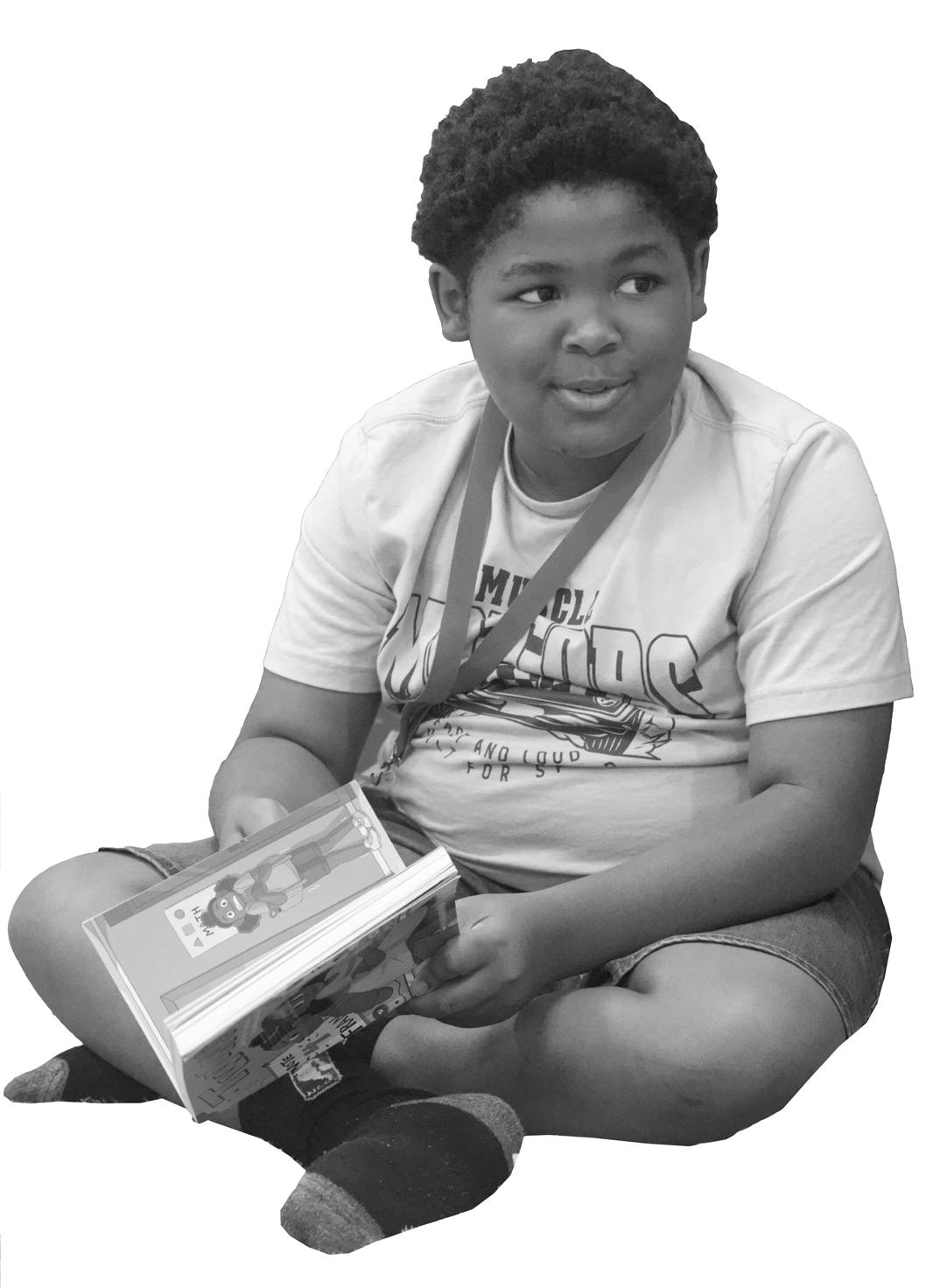
SIUE has been hosting its first-ever Children’s Defense Fund Freedom School for 50 local middle school students. The six-week experience is a summer literacy camp that supports traditionally under-resourced communities and encourages students to learn to love reading.
The experience is currently in its fifth week. Scholars have gone on field trips, participated in family nights, come up with organizations and businesses to tackle community issues, learned songs and chants and engaged in conversations about social justice and history.
“We talk about a lot of things that happened in our past. St. Louis has a lot of Black history,” eighth grade scholar Mykenzie McCollier said. “[Especially] modern day problems … things [that] could be a problem if people aren’t understanding each other.”
She said that learning about real life situations makes scholars better people and gives her and her peers a broader perspective on the world.
Harambee — a Kiswahili word meaning “let’s pull together” — is a daily morning activity hour spent singing and reading to energize scholars. Site Coordinator Courtney Walker asked scholars to think of a positive word to put into an
“I am…” phrase and carry it with them throughout the day.
“I said ‘corny,’ because I think it’s funny,” McCollier said. “I like seeing people’s reactions. My friends are always like, ‘Oh my gosh, stop.’ I like to be corny.”
Fifth grade scholar Kelsey Malone said his phrase was “I am kind.” His favorite part of Freedom School is Harambee, because he likes learning the chants.

“Hold up, wait a minute, let me put some freedom in it! Hoo-ha, I love my Freedom School!” Malone said.
Before lunch, scholars participate in a 15-minute segment of the daily schedule called “Drop Everything and Read.” Malone and McCollier both said that they enjoyed reading “Twins” by Varian Johnson — a graphic novel about friendships and sibling relationships.
Tandra Taylor is the interim director of SIUE’s Institute for Community Justice and Racial Equity and the executive director for the inaugural Freedom School. She started the Freedom School at SIUE this sum-
mer, and the university plans to continue the program and expand it in future years.
Taylor said that the integrative reading curriculum the Children’s Defense Fund provides is divided up by culturally appropriate grade levels. They engage scholars by promoting curiosity about the cover art of the books, intentionally pausing during the reading to ask scholars questions or breaking up readings with STEM and visual arts activities.
“They’re not just sitting around reading books everyday without breaking to think, to process, to analyze, to reflect on how something resonates with them, or how they can take whatever tools or social and emotional strategies from what’s happening in the book [and] apply that in their own lives,” Taylor said.
Last summer, Taylor worked as the site coordinator for a Freedom School in North County, St. Louis.
“I noticed that the community structures and struggles in North County were very similar to some of our communities in the Metro East, but we didn’t have a Freedom School program in this part of the state to help intervene into some of
those struggles that communities face,” Taylor said.
“The first week, the scholars were not as engaged as we’d like them to be. They were looking at us almost like, ‘Oh my goodness, they’re so excited. Why are they thinking so loud? Why are they so happy?’ But now, they have joined in and started to lead some of the components of Harambee without being asked,” Taylor said. “I see the model working.”
Junior Joaquin Alexander is a servant leader intern at the Freedom School — a
TORI WATERS copy editor
Crowned as Miss Southern Illinois Queen last fall, sophomore business major Adriana Pavón has made unforgettable memories and learned lessons while being queen. She demonstrates compassion by volunteering at numerous animal shelters across the state.
Pavón is the current Miss Southern Illinois. Before earning this title, she competed in the Little Miss Quincy as a young child and participated in Miss Quincy’s Outstanding Teen pageant at 17, where her love for pageants ignited.
Despite only having competed in two pageants, she entered and won the Miss Southern Illinois pageant. With this title, Pavón also had the opportunity to compete in Miss Illinois, a pageant that leads to Miss America.
Pavón said that this experience was unlike anything she had encountered previously.
“The Miss Illinois pageant was different and [more] rigorous than the pageants I’d done before,” Pavón said. “We were always up early, back late and always practicing.”
Being relatively new to pageants, Pavón gained firsthand experience with the workload. She took away lessons on what it takes to succeed in the pageant industry.
“Learning to be graceful and walk a certain way, rehearsing fitness and doing a different walking style for that and practicing for the interview
portion —- which is the biggest part of your score,” Pavón said. “I’ve also learned that public speaking is the biggest part of pageantry, because you do it so much as a local, state and national titleholder.”
Participating in such competitions can be intimidating, but Pavón said she was fortunate to have help along the way.
“Someone who has supported me throughout my pageant journey is a woman named Lindsey Hess, the director of the Miss Quincy pageant in my hometown,” Pavón said. “When she heard I was coming back to compete for Miss Quincy’s Teen, she supported me all the way. Even when she heard I was going for Miss Southern Illinois, she cheered me on and even helped me prepare for Miss Illinois by arranging mock interviews for me, even though I was competition to her own girls.”
Pavón said. “We would constantly foster kittens, and they would stay specifically in my room, where I would take care of them before I left for school and after I got home.”
Junior Kelsey Leerhoff said that Pavón is who she is because of animals.
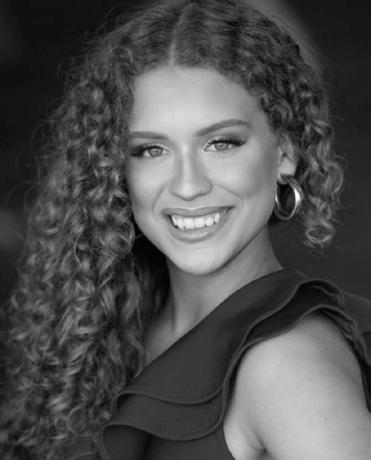
“You cannot have Adriana without animals. She is naturally drawn to any animal, and they almost always trust her immediately,” Leerhoff said. “I’ve seen her just out walking, run into a stray cat, and by the end of the day, the cat is at the shelter, bathed and fed. It reminds me of how a Disney princess interacts with animals, and it’s magical to watch.”
Leerhoff also said that Pavón’s enthusiasm for volunteering is inspiring.
Pavón said that she admires how devoted Hess is towards women’s success.
“I could brag about her all day,” Pavón said. “I’m so grateful I’ve had her to look up to throughout my pageant experience, and I cannot be more proud of the environment she creates for young women.”
In addition to holding a pageant title, Pavón has a long history of volunteering.
“I began volunteering at the age of seven with the Quincy Animal Shelter with my mom,”
“When we would hang out, she would go on and on about her work at the shelter, and I was intrigued by it,” Leerhoff said. “One day, I asked if I could come and help out for a day, and she happily agreed. I volunteered for the day, and it was wonderful.”
“The next week at my work, I started a fundraiser for [Homeward Bound Waggin] and raised almost $600 for them over two months,” Leerhoff said. “That was all Adriana’s idea, and it is still one of my proudest moments.”
Homeward Bound Waggin
is not the only place where Pavón volunteers and encourages fundraisers. Partners For Pets Development Manager Patty Barney says Pavón is dedicated to volunteering and always goes above and beyond.
“[Adriana] is committed to animal well-being and always tries hard to create fundraisers and other opportunities to save lives,” Barney said. She said that what sets Pavón apart from other volunteers is how she brings special attention to Partners For Pets.
“I like that Adriana has chosen animal wellness and rescue, and that she brings special attention to Partners for Pets’ mission as Miss Southern Illinois,” Barney said. “I don’t see many pageant participants turning a critical eye to the welfare of community pets and their owners.”
Volunteering and participating in pageant activities can be tense and serious, but Leerhoff said Pavón’s personality grants a sense of comedic relief.
“Adriana’s person ality is truly unique and unlike anyone else I’ve ever met,” Leerhoff said. “She is the funniest person I know, al ways cracking jokes and making everyone laugh.”
Apart from volunteering, Pavón also looks out for people close to her.
“She is also very thoughtful and listens closely to every detail, no matter how small,” Leerhoff said. “Her confidence is endearing, along with her incredible dedication to always being honest and compassionate.”
Pavón said she was unsure if she would continue her path in pageantry.
“Pageantry is a lot of time, energy, money and stress, and I haven’t decided if I just want to focus on school yet,” Pavón said. “Though my pageant experience was extremely rewarding, I’m unsure on my future
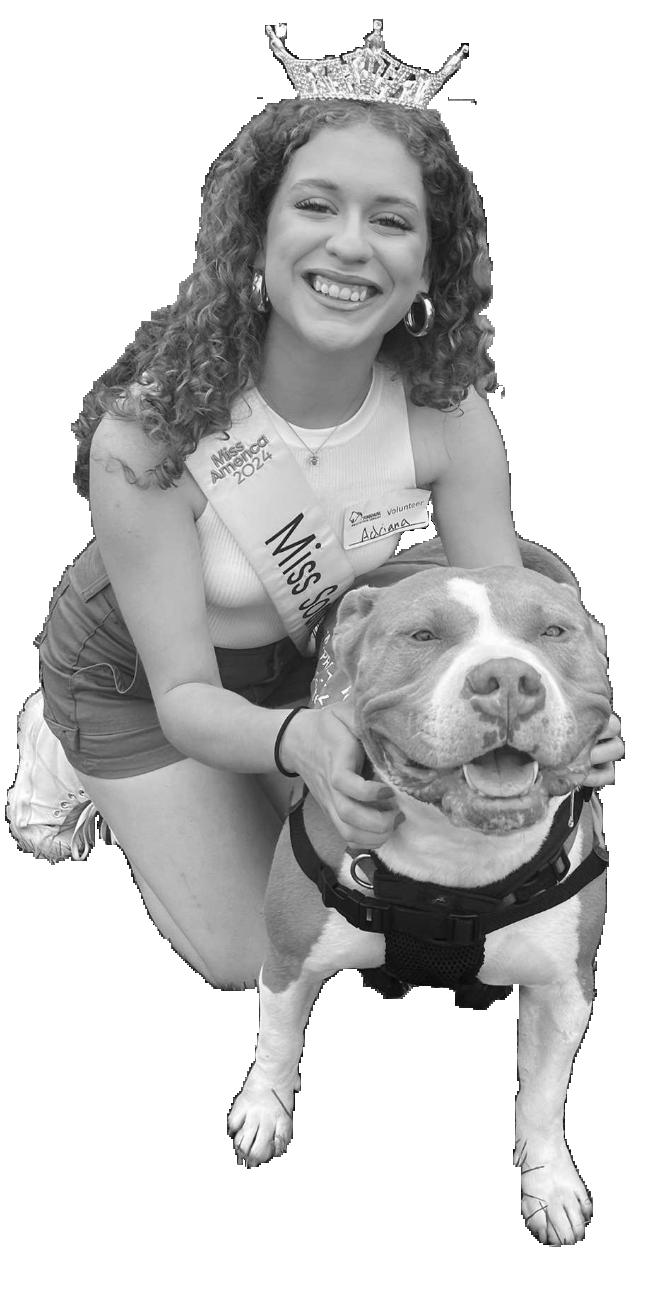
“I’ve never met someone else who can completely captivate a room with only a few words. Not only that, but her words carry such weight,” Leerhoff said. “People listen when she speaks, and it’s so admirable to watch a young woman be admired in such an honorable way.”
CAMELA SHARP reporter
SIUE Veterans Upward Bound, the Kaufman Fund and the City of Florissant have united to make a difference in the lives of St. Louis veterans.
An issue frequently discussed in the United States is the challenges faced by veterans who return home and face difficulties after serving their country. These groups have taken action to support veterans, highlighting their struggles and advocating for their needs, which sometimes go overlooked or are considered topics too sensitive for public discourse.
U.S. veteran and SIUE Veterans Upward Bound Outreach Coordinator Bill Schnarr started SIUE Veterans Upward Bound in February. He is a resident of Florissant and is the initiator of the partnership.
“What brought this event about was my personal love and affection for my veteran community and the fact that a lot of veterans right now, when they get out of the military or they’re transitioning from their military career to civilian life, that transition can be a little hard for them,” Schnarr said. “We feel this event would give veterans that may be leaving the military or trying to reintegrate into society a fighting chance and a leg up.”
Florissant Mayor Tim Lowery said that Florissant and its partners are eager to help veterans.
“Our goal is putting the resource fair and job fair together, because anything that we can do to help our veterans,” Lowery said.
The Kaufman Fund is another organization dedicated to helping the veterans of the St. Louis area.
Executive Director of The Kaufman Fund Sheila Schneider knew Schnarr professionally when he asked the Kaufman Fund to be a part of his goal.
Schneider said that while most people think veterans can just go to Veterans Affairs for support, only 60 percent of veterans are eligible for it, and even then there are still complications with having access to all of the right resources.
“With our dental referral program, of the 60 percent that are eligible to use VA medical, only 8 percent are eligible for dental care. So the VA is referring veterans to us. We also do a food for vets, and trees for vets,” Schneider said. “We do a program called Winter Warm Up, where we give brand new winter gear to those veterans dealing with housing insecurities. We also sponsor an expressive art program.”
Schnarr said that there will be a variety of vendors at their event and welcome more to offer their support or services.
“For the event, the vendors are all reputable St. Louis area employees or employers. St. Louis social service organizations that give veterans direct access to housing services, employment
services and mental health services,” Schnarr said.
They’re expecting veterans support groups like Wounded Warrior Project and St. Louis Vet Center to be there.
“If somebody wants to come in from the outside and offer support and services and a partnership for this event in August, that’s fine,” Schnarr said. “I’m more than willing to sit down and talk to him and see what kind of services and things we can work out to benefit veterans.”
Lowery said that they are still welcoming new vendors. They currently have over 38, which is approaching the goal of 45.
“If there’s any kind of resources that you believe could help our veterans with that, we would certainly welcome you at the event,” Lowery said.
Lowery said he offers his support through being a part of another organization and constantly looking for other ways to help veterans.
“I’m a member of the organization called Friends of Veterans. We’re actually an organization that tries to help veterans in any way they may need,” Lowery said.
Schneider said they have an event specifically designed for veterans, featuring programs aimed at fostering networking and mutual support among veterans.
“VetNet Connect is a networking event for anybody who has a program for veterans, any-
body who wants to hire veterans or veterans looking to be hired. We put them all in the same room so we can start making referrals,” Schneider said. “When I first started attending VetNet, there were maybe 24 people there. In April, we had 80.”
Schnarr said he wants to help veterans who want to go back to school and those that just want to help people.
“My other further longterm goal is to connect veterans to educational services — if they choose not to go into employment — and to get them in school so that they can continue serving,” Schnarr said. “A lot of the veterans, when they get out of the military, are looking for a higher cause or a greater good, and that gets them back on a mission of helping others and serving the country.”
Schneider said that the Kaufman Fund provides a number of programs for the veterans.
Lowery said that he is happy to create partnerships with anyone with the same intentions to help veterans.
“I’m willing to partner with anybody that has the same common goal as I do, and that’s to help our veterans,” Lowery said. “If there’s any way that anybody has an opportunity, I would love to partner with them.”
Schnarr said veterans need the opportunities to get involved in community relationships because it helps more than a lot of people realize.
“Veterans are in a weird, unique situation in society right now,” Schnarr said. “We struggle to find our place in society once we get out of the military. Being able to contact and tap into these community relationships and community partners definitely helps veterans transition and move on with their lives.”
Lowery said that while he is not a veteran, it’s still important to him to do everything he can.
“I’m not a veteran myself, but I’ve always had a spot in my heart that I want to try to help our veterans out because they’ve done so much for our country,” Lowery said.

CAMELA SHARP reporter is the director of the John Martinson Honors Program, Eric Ruckh. Ruckh said he is thrilled with Graser’s new position and he’s learned important things from her.
Marlee Graser has been upgraded from interim associate dean of two years to dean of Lovejoy Library as of July 1. She has a team of supportive colleagues who are looking forward to this new change.
“It’s been good to do a deeper dive into the operations of the library and how those operations connect with students’ success,” Graser said. “That’s going to be my focus over the next couple of months as I develop into the role.”
According to Graser, taking the position of dean was not at the forefront of her mind until seeing the importance of the role as an interim.
“What I find most fulfilling about work is being able to make the biggest impact and empower other people to make big impacts to help them find their work fulfilling and meaningful,” Graser said. “That’s when I became interested in it, whenever I had a deeper understanding of what the role was and how it’s really a facilitator role in increasing the success of the faculty and staff of the library to make an impact on the campus and on our students.”
Stepping down from the interim dean position and remaining as a professor of history
“She has been a phenomenal presence in the last two years as the interim associate dean, in terms of her operational knowledge, theoretical vision, care and compassion for the faculty and staff of the library,” Ruckh said. “She really deserves credit for teaching all of us in the library how effective strategic planning can be done.”

Graser said that she is grateful for her experiences throughout her career that have led her to this point.
“I think I was very fortunate to have middle management positions that taught me a lot about leadership,” Graser said. “I’m very grateful and fortunate to have had the opportunity to work at those levels and with those people, because they gave me a lot of feedback and helped me grow and develop as a leader.”
Director of Research at Lovejoy Library Lora Del Rio said Graser has many qualities as a leader.
“Marlee is somebody that will really want to understand something from all sides. She’s a good listener. She asks more questions to understand when you talk to her,” Del Rio said. “She’s incredibly empathetic and really wants to understand people and how they feel about things and that’s what you need in a leader.”
Retiring Lovejoy Library Archivist and de facto University Historian Steve Kerber said that Graser maintains a sense of selflessness and confidence that makes her great for the position.
“One thing about Marlee is she would rather listen to others than to hear herself talk. She’s a very attentive listener, and I think that will contribute to her success,” Kerber said. “I think Marlee is very focused on the collective best interest of the library and of the library patrons and the library staff, not on any personal agenda.”
Director for Access, Discovery and Systems at Lovejoy Library Shelly McDavid said she has the right combination of skills to excel at her deanship.
“Marlee has the analytical skills [and] the technical skills
to manage and implement systems, project management skills and the social skills to build rapport, trust and relationships,” McDavid said.
Kerber said Graser has done consistently well before entering this position, and that he is confident that she will do well as the dean.
“[Graser has] always done a wonderful job in each different role she’s had,” Kerber said. “She did a wonderful job as the interim associate dean, and I’m sure she’ll do a wonderful job as the ongoing dean.”
“I’ve taught, worked reference, worked in special collections and I’ve worked in technical, and now in administration,” Graser said. “Those opportunities were really helpful.”
Del Rio said Graser’s focus is on student success, which makes her even better for the job.
“Marlee prioritizes student success. Whatever we do, the core of it is students,” Del Rio said. “To have somebody with that sort of commitment to student success in a role like this in the library is fantastic.”
Graser said that her plans for the future include reevaluating the Library and Information Services plan to ultimately figure out how to cater to the needs of students better.
TORI WATERS copy editor
Technology in a classroom setting offers endless answers with a snap of a finger, but some students and their mentors from the field say technology might also be the very thing that interrupts genuine learning skills.
Technology is prominently used in about every aspect of teaching. From laptops, smartboards and tablets, technology runs wide. With these devices, students and teachers can connect with each other in seconds.
SIUE Professor of English Language and Literature Heather Johnson said there are benefits to adhering to these platforms, such as email.
“In the past, office hours were incredibly important because they were pretty much the only time that students could communicate with the teacher outside of class,” Johnson said. “Email was revolutionary in this sense — students and teachers can interact much more outside of classroom hours through that tech.”
Johnson also said that quality conversations over email are extremely slim.
Technology provides an easier way to be accessible. However, emerging technological platforms can create difficulties for professors and future teachers.
Johnson said that when new technology is introduced to professors, SIUE does not provide viable assistance.
“Occasionally, ITS will offer training for various programs, but I’ve never actually seen one offered that would be helpful,” Johnson said. “[There is] no assistance with classroom tech at all.”
For aspiring teachers, these
problems still stand true. Senior English education major Jerrica Asbeck said that SIUE only had one course for integrating technology into the classroom.
“[SIUE has] struggled to figure out how to format [the course] in a way that benefits students, so they’ve decided to remove the course from the education requirements for future programs,” Asbeck said.
She said that the best way she has learned to adapt to technology has been through observation.
“While I have picked up different apps I can use in the classroom and different ways that technology can be integrated
Taylor Self, Somphomore Education Major “
I do worry about technology and my future career,”
into a classroom from my time at SIUE, I would say I learned most of this by watching my professors teach, not because it was explicitly taught to me,” Asbeck said.
This idea of observing and learning is emulated by future teachers across the board. Junior elementary education major Breyden Harless said he has had more efficient learning in-person rather than in online activities, such as discussion boards.
“In-person, you can better go off of one another and interject your conversations. With discussion boards, you have to continually wait for responses or not get any response at all,” Harless said.
Junior secondary English ed-
ucation major Kacianna Schmitt said that in-person learning is beneficial and that computers create a division between learning capabilities.
“I think that face-to-face interaction can be much more beneficial to students than doing everything on the computer,” Schmitt said. “I do think COVID-19 had a lot to do with the rise of computers versus in-person learning.”
Behind the division between teachers and technology is negative usage of artificial intelligence.
“AI is good at helping in some ways, but it is not always correct,” Schmitt said. “If students rely heavily on AI, it can have detrimental effects on their schooling.”
Johnson said that AI is pushed at SIUE, but AI misunderstands the role of a teacher and can be detrimental when trying to replace genuine human interaction.
“One type of program that is pushed constantly is the AI program that will ‘give feedback’ on student writing for you,” Johnson said. “Now, I understand the temptation. For a writing teacher, or for any teacher who includes lots of writing in their courses, reading and responding to student work is one of our most time consuming tasks. But for me, this kind of program completely misunderstands the role of the teacher.”
Johnson said that her role as an English professor is to be there for her students.
“As a teacher of writing, my first duty is to really read student writing and to respond first as a human being, not as an assessor,” Johnson said. “I want to not only make students feel heard, I want them to be heard. I want them to understand that I want to hear

07.05.24
Officer advised a traffic stop was initiated for expired registration, but allegedly the vehicle did not stop.
07.06.24
Officer responded to a report of an active fire alarm. Officer advised alarm was activated due to cooking. Light smoke, no fire, no damage.
07.08.24
Officer responded to a report of subjects shouting. Officer advised subjects were gone on arrival.
DYLAN HEMBROUGH editor-in-chief
In response to community outcry over discipline in District 7 schools, a new behavior matrix is being implemented to guide future disciplinary measures.
what they have to say, that communication matters.”
In order to complete her job to the best of her ability, Johnson said that she has to understand how her students think and write, but if AI is involved, she can’t teach effectively.
“I need to understand how my students think and write in order to figure out what they really need from me, to plan the next steps of the course,” Johnson said. “If an AI is doing the task for me ... are students really being heard? Am I learning what they really need?”
AI is not the only stressor for future teachers. Harless said that he fears that incoming teachers will have to adhere to technology against their will.
“I feel as though in the future, I will be forced to use a multitude of websites and devices to teach my future students instead of being able to engage in hands-on learning with them,” Harless said.
When delving further into the future of technology, sophomore special education major Taylor Self said that she worries how technology will affect her and her future classroom.
“I do worry about technology and my future career, because I am not great with technology,” Self said. “If my job becomes primarily teaching with technology, I will be struggling to teach to the best of my abilities.”
Johnson said that the future is already here and impacting the lives of teachers.
“[Technology taking over is] already happening and will likely get worse,” Johnson said. “In a profound way, new tech can change the task of teaching so profoundly that it is no longer really teaching at all.”
Director of Special Education and School Support Andrea Grotefendt said during a June 24 Board of Education meeting that the behavior matrix will allow for a more structured response to issues like insubordination.
The behavior matrix features four “levels,” each corresponding to infractions of varying severity. Teachers handle minor infractions at the first level, while subsequent levels in the matrix involve more staff, such as the school counselor.
The district continues to rely on Responsibility-Centered Discipline, which has been the subject of controversy among community members.
The Edwardsville Education Association addressed perceived issues with Responsibility-Centered Discipline in an April 22 letter to Superintendent Patrick Shelton.
“Staff members know that consequences are rarely assigned, and those that are assigned are often not enforced,” the letter said. “Staff members are actively avoiding writing referrals, as they know such a referral will likely only create more work and headaches for them, the student will likely not receive or serve any consequences, and ultimately, the only outcome is an erosion of that teacher’s authority in [the] classroom.”
Assistant Superintendent Allen Duncan addressed these issues at the board meeting, according to EdGlen Today.
“Over the last couple of years, people have assumed that RCD has replaced consequences,” Duncan said. “RCD has not replaced consequences. RCD is pretty much how we go about teaching the kids behavior expectations.”
lifestyles@alestlelive.com (618) 650-3528
From the genre’s early Black and indigenous artists laying the foundation of the country music genre to transgender, gay and lesbian artists using music as an outlet throughout their search for freedom from the strict social norms of the early U.S., there is a large portion of country music’s origins that is often forgotten.
While the history of country music is filled with love and power for some, it is also a legacy of pain, struggle and the repercussions of settler colonialism.
“Country music’s roots lie in the ballads, folk songs and popular songs of the English, Scots and Irish settlers of the Appalachians and other parts of the South,” Brittanica said.
“From its conception through the Louisiana Purchase in 1803, the western frontier of the United States has been presented as an exclusively masculine place that has left little room for perspectives from that of the white cowboy, such as those of women and people of color,” Katherine Lamb said in a thesis documentation of the early west.
This history dates back to the “Wild West” and westward expansion, a time driven by a large number of simultaneous actors.
Forced enslavement of Africans, ideologies of manifest destiny and decades of encouraged settlement leading to the strategic elimination of indigenous populations are all critical not only to the genre’s foundation, but to the foundations of the U.S as a nation.
However, this romanticization of moving west was not always specific to white settlers freely moving through the land.
Many early inhabitants of the west relocated there, as they had no other option as the industries of mining, cattling and railroads all flourished across the nation.
Unlike the popularized images of “the American cowboy,” many inhabitants of the region were “enslaved laborers, indigenous, Black, brown, gay and formerly incarcerated individuals [who] often found themselves in this region by force or in search of security,” Kaz Rowe said in their video essay.
“Nobody asked questions. All that mattered was whether he could be trusted with a horse and a lariat,” Patricia Nell Warren, an American novelist.
The contributions of these marginalized communities to country music are profound.
African American musicians brought elements of blues, gospel and jazz that became crucial to the genre’s development.
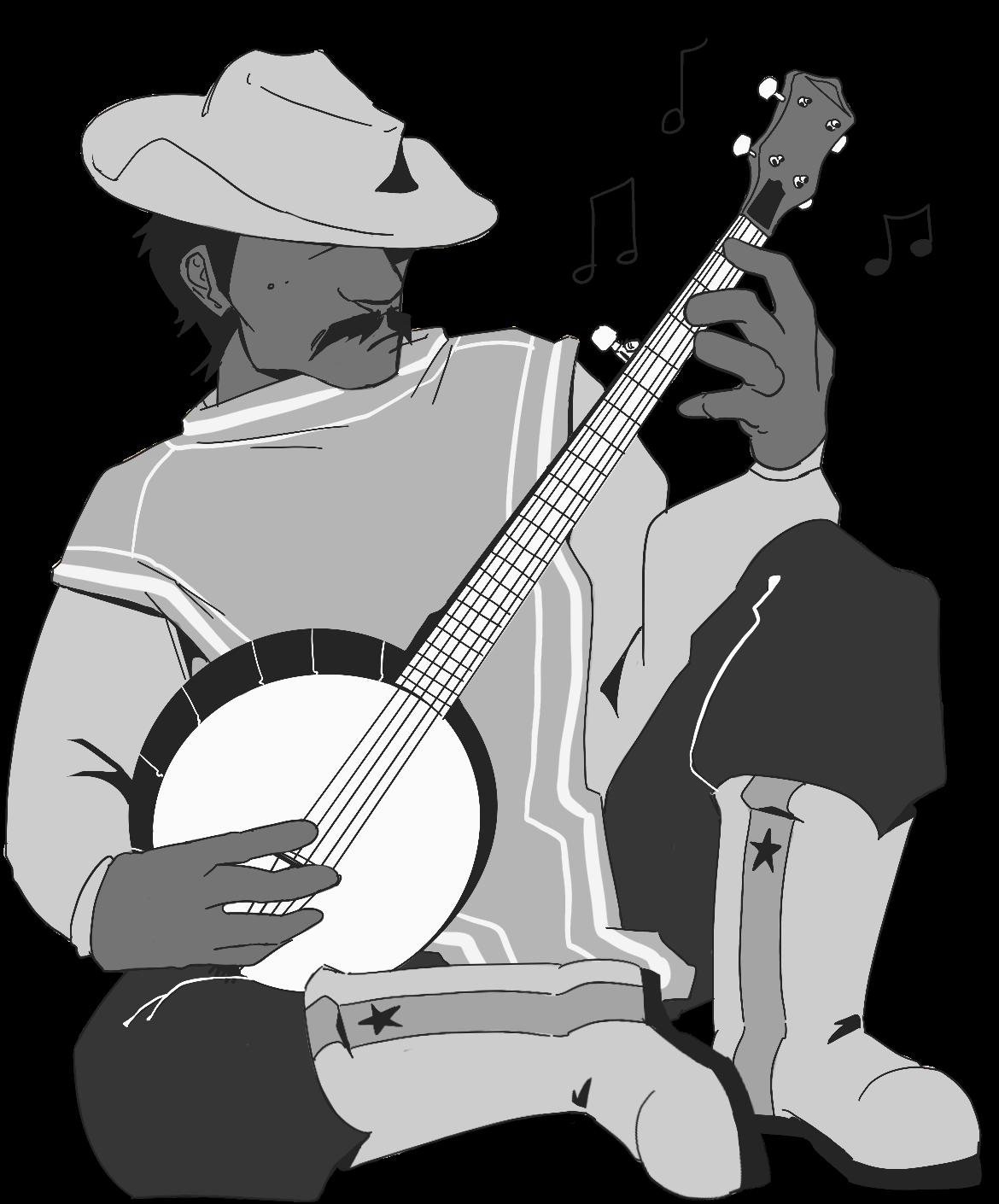
The banjo, a hallmark coun-

CHLOE WOLFE lifestyles editor
From the early days of country to the present day, Black artists have always shaped the genre. Despite their talent and influence, some of these artists remain under-recognized in the genre today.
Country music is currently having a surge in popularity and recognition with the release of “Cowboy Carter,” which brought attention to not only the genre, but Black artists within the community. Here are some of our favorite country songs by Black artists.
‘Pan American Blues,” DeFord Bailey
Becoming huge in the 1930s, Bailey was known for his harmonica playing abilities. He was incredibly popular on the radio, but due to licensing issues in 1941, his songs were unable to be played on the radio, according to Charles Wolfe and David Morton in their book “DeFord Bailey: A Black Star in Early Country Music.”
The beauty of this song lies in the raw recording of it. Unmastered, you can feel and hear the impact he had on country music and how timeless his music is.
Bailey died in 1982 but wasn’t inducted into the Country Music Hall of Fame until 2005.
‘Is Anybody Goin’ to San Antone,’ Charley Pride
Maybe heartbreak was always a part of country music?
Pride was country music’s first Black superstar, according to the Country Music Hall of Fame, and is credited with influencing many
try instrument, “was created by enslaved Africans and their descendants in the Caribbean and colonial North America. Here, they maintained and perpetuated the tradition within a complex system of slave-labor camps, plantations, and in a variety of rural and urban settings,” Smithsonian Music said.
Instruments such as fiddles were additionally embraced by enslaved Africans in the English colonies.
“Enslaved Africans adopted fiddles in the English colonies by at least the 1690s, and over time they developed unique styles while also mastering those of their European enslavers.
Black artists’ contributions to country; a genre that’s not just
modern artists, like Darius Rucker.
‘Wagon Wheel,’ Darius Rucker
One of the most identifiable songs for any kid that grew up listening to country during the 2010s, this cover dominated the radio for what seemed like months — for a good reason.
Not only is the song insanely catchy, but it won Rucker his first solo Grammy Award for best country solo performance.
‘I Will Follow,’ Chapel Hart
After being contestants on America’s Got Talent in 2022, this group of three women have since released their own album, gone on tour and recorded a feature for Darius Rucker.
‘Bad Case of the Blues,’ Linda Martell
The first Black female artist to play at the Grand Ole Opry, Martell held the highest chart-topping single by a Black female artist at No. 22 for over 50 years until 2024.
Ironically, this song is the one that ended her career. The song underperformed, leading to her label dropping her. However, it has stood the test of time, becoming one of her most popular songs.
‘SPAGHETTII,’ Beyoncé, Linda Martell, Shaboozey
Genres really are a funny little concept. Although this song has strong Brazilian funk influences, it features country great Martell and up-and-coming country artist Shaboozey.
‘Vegas,’ Shaboozey
Discussing leaving behind a life for something new and regretting it, this song is featured on Shaboozey’s new
Enslaved people were often responsible for providing musical entertainment to white colonists,” the Historic New Orleans Collection said.
Often tasked with providing musical entertainment for white colonists, varying from performances to minstrel shows, they excelled in popular forms of the time, becoming the primary musicians in many areas.
During the early American period, New Orleans emerged as an epicenter for music and training.
Enslaved individuals were sent from as far as Arkansas to learn to play the music their enslavers desired. The city’s close connections with the Caribbean introduced blends of European and African music, along with the quadrilles and other set dances that accompanied them. These influences left a lasting impact on American contradance and square dancing. Reports by the Historic New Orleans Collection from colonial times through the 19th century indicate that Black musicians and callers often played for both Black and white audiences.
During the Civil Rights Movement, African American musicians used their platforms to challenge racial segregation and injustice.
see COUNTRY on page 6

album, “Where I’ve Been, Isn’t Where I’m Going.”
Shaboozey has found fame after being featured on “Cowboy Carter” and his song, “A Bar Song (Tipsy),” going viral on TikTok.
‘‘BLACKBIIRD,’ Beyoncé, Tanner Adell, Brittney Spencer, Tiera Kennedy, Reyna Roberts
A recreation of The Beatles hit about Black women during the Civil Rights Movement, Beyoncé once again lifts up other Black country artists through this harmonic song.
‘Buckle Bunny,’ Tanner Adell
Only releasing her first album in 2023, Adell recently won best new artist at the BET Awards. She also performed “Buckle Bunny,” at the awards making her the first Black female country artist to do so.
‘Hit ‘Em up Style,’ Carolina Chocolate Drops
Songs like this make you feel patriotic. The fact that music like this was made in America is incredible.
A folk and bluegrass-inspired version of Blu Cantrell’s “Hit ‘Em Up Style (Oops!),” this song is featured on Carolina Chocolate Drop’s 2010 album “Genuine Negro Jig.”
‘Old Town Road - Remix,’ Lil Nas X Billy Ray Cyrus, Mason Ramsey, Young Thug
You can’t talk about influence over country music without talking about “Old Town Road.”
Even if you don’t enjoy country music, it’s likely you have heard this song. A combination of rap and country music, this song made waves in the country
genre, sparking debates as to whether or not it really is country.
‘Fast Car,’ Tracy Chapman
Although this song isn’t strictly country, country artist Luke Combs brought the song to a new generation and back into the spotlight.
In 2023, Chapman won the Country Music Association Award for Song of the Year, making her the only Black woman to do so.
‘Sweet Symphony,’ Joy Oladokun (feat. Chris Stapleton) Folk singer Oladokun released her first album “in defense of my own happiness” in 2021. Since then, she has collaborated with artists like Noah Kahan and is currently touring with Hozier.
‘XXX’s And OOO’s,’
Caroline Randall Williams
Based on the story behind Trisha Yearwood’s hit song “XXX’s And OOO’s (An American Girl),” this spoken song pays tribute to Alice Randall, Williams’ mom and the writer of the song. This song was released in an album to go along with Randall’s book “My Black Country: A Journey Through Country Music’s Black Past, Present, and Future,” about Black country artists.
‘Still Here,’ Rissi Palmer, Miko Marks
This song is about resilience in the face of adversity. Palmer herself discusses the resilience it takes to stay in the country scene as a Black woman on her podcast “Color Me Country.” Despite all the adversity and erasure Black country artists have faced since the genre’s inception, they are still here and they are still thriving.
AVA GALBAN reporter
SIUE’s online student literary journal, the River Bluff Review, invites all current undergraduate and graduate students to submit their creative works for publication.
“Our journal is meant to celebrate SIUE’s creative minds. We don’t care what you look like or where you’re from or what you’re majoring in or what you had for breakfast. We want work that makes us feel something,” the River Bluff Review’s website says.
The journal accepts a wide range of submissions, ensuring that every form of creative expression finds a home.
This also includes photography, drawings, paintings and media such as short videos and original music.
All current SIUE undergraduate and graduate students are eligible to submit their works. Submissions open in August and the deadline for submissions is at 11:59 p.m. on Sunday, September 17.
Works previously published in print or online journals are not eligible. However, pieces shared on personal websites and social media can be submitted, as long as there is a link provided to it when submitting.
Each student can submit up to four total pieces of art and/or written work, which
are to be uploaded and managed through Submittable. If submitting multiple pieces, each must be submitted individually. Text submissions should be in Word format, graphics in JPEG or PNG, audio in MP3 and other media in MP4.
Required information includes your name, SIUE email address, phone number and the title of the piece. Fiction and creative nonfiction pieces should also include the word count at the top of the document.
Ensure your name does not appear on any submitted pieces, as all submissions are reviewed blind by the editorial team.
Once your submission is received, you will receive an automated confirmation from Submittable. Make sure Submittable emails are safe listed to avoid them landing in your spam folder.
The student editors enrolled in English 494: Literary Editing will review all submissions and make final decisions on content and layout. Decisions are anticipated to be released in early to mid November.
River Bluff Review has a history of over 20 years publishing student work. For any questions regarding submissions, email them or reference their submission information page.

OLIVIA WHITLOCK copy editor
Despite the sweltering temperatures outside, you can still enjoy the summertime vibes from the comfort of your air-conditioned room by watching one of these movies!
Please visit websites such as “Does the Dog Die?” to check for potential triggers and sensitive topics before viewing any movie on this list.
‘The Florida Project’ (2017)
Director Sean Baker
Oh, to be six years old and burning down an abandoned condominium with your friends.
My personal favorite on this list, we often don’t see real-life struggles like poverty accurately depicted in cinema. This film, in particular, captures these difficulties through the lens of childhood wonder and innocence. It portrays the stark truth without exaggeration or romanticism.
If you enjoyed “The Florida Project,” check out “Mid90s” (2018).
‘Triangle of Sadness’ (2022)
Director Ruben Östlund
Watch how fast I can summarize this movie! Combine “The White Lotus” and “Gilligan’s Island,” then add lots of pretzels and bodily fluids. Boom! “Triangle of Sadness.”
Besides the projectile vomiting, the film has an interesting and humorous depiction of power and status, because it doesn’t matter how wealthy you
SCHOOL | COVER social justice work,” Taylor said.
teacher and leader for the scholars.
“Students are more confident in their reading skills or speech skills,” Alexander said. “A lot of people have stage fright, so getting them to get out of their shell and getting them to speak in front of people is developing soft skills or life skills that they need when they grow up.”
“Our number one goal is to get the kids to develop a love for reading and not feel like reading is a chore. And not just a love for reading, but a love for gaining knowledge and growing themselves,” Alexander said. “We have a lot of kids, but it’s a smaller program so we’re able to work one-on-one with a lot of students.”
Taylor said that starting SIUE’s first Freedom School by working with middle schoolers was a deliberate choice for their mission of educational equity.
“College readiness doesn’t start at the high school level. It starts well before then,” Taylor said.
She wants young scholars to see themselves as college students and recognize SIUE
are on a deserted island.
If you enjoyed “Triangle of Sadness,” check out “Glass Onion: A Knives Out Mystery” (2022).
‘Suncoast’ (2024)
Director Laura Chinn
If I had a nickel for every time Woody Harrelson befriended a teenage girl going through a tough time…
An underrated gem from this year, this movie explores the hardships of being a young person with a sick family member, delving into the emotional journey of maintaining strength and evolving into one’s own person.
If you enjoyed “Suncoast,” check out “The Edge of Seventeen” (2016).
‘Good Kids’ (2016)
Director Chris McCoy
So, this is the tomfoolery Cousin Greg was up to before joining Waystar Royco.
A coming-of-age comedy about a group of friends letting loose and creating an unforgettable summer — what could go wrong?
If you enjoyed “Good Kids,” check out “Superbad” (2007).
‘Aftersun’ (2022)
Director Charlotte Wells
Ouch. Ready to reassess your relationship with your parents? Paul Mescal stars, if that helps.
I remember seeing this father-daughter vacation movie described as “quietly devastating.” While there
as a viable option for furthering their education.
“A big part of our success with the program is the culture that we create of mutual respect, of empowerment, pursuit of justice for communities, and, most importantly, the belief in oneself that we can make differences,” Taylor said. “I can make a difference in my own life. I can make a difference in my family’s life. I can make a difference in my community, in my country, in the world through hope, education and action.”
Servant leader interns attended a training in Knoxville, Tennessee, before the school began. Taylor said the training nurtures a long-term passion for leadership development and service.
“I think the trip to Knox ville makes college students comfortable with their own natural skills and abilities while developing oth er skills. It takes many different types of people with many different types of strengths to do this kind of
The training was a week-long retreat spent practicing Harambee, learning chants and books to share with scholars and listening to keynote speakers talk about the history of the Freedom School and its connection to the Civil Rights Movement.
“Training in Knoxville was very, very tiring. I’m not gonna lie. I’ll say that outright,” Alexander said. “But so beneficial in every way.”
Wednesday, July 17, the Freedom School will be hosting an open house for families of the scholars and community members to check out the work that they have been doing this summer.
are many joyous, nostalgic moments in this film, there are also glimpses of struggle and grief. It offers a beautiful take on the power of memories and their complexities.
If you enjoyed “Aftersun,” check out “The Pursuit of Happyness” (2006).
‘Sylvie’s Love’ (2020)
Director Eugene Ashe
Can we collectively start saying, “See you later, alligator,” again?
This film portrays a wholesome love affair spanning years with a connection so strong that the passing of time barely affects it, all while exploring the highs and lows of showbiz.
If you enjoyed “Sylvie’s Love,” check out “Paris Blues” (1961).
‘The Way Way Back’ (2013)
Directors Jim Rash and Nat Faxon
I think someone may have thrown up near Crazy Tubes.
Oh, how I adore Sam Rockwell and his wonderfully eccentric characters! In this heartfelt film, Rockwell befriends a shy teenage boy, creating the ultimate buddy movie set at the most fun waterpark in Massachusetts.
If you enjoyed “The Way Way Back,” check out “Adventureland” (2009).
‘Fire Island’ (2022)
Director Andrew Ahn
“Fire Island” was originally a series pitched for Quibi. You know, Quibi, the streaming platform that had more than $1 billion invested in it before shutting
down after just six months.
This love, heartbreak and self-discovery whirlwind portrays the importance of chosen family and navigating life’s challenges alongside those you love most.
If you enjoyed “Fire Island,” check out “The Birdcage” (1996).
‘Moonrise Kingdom’ (2012)
Director Wes Anderson
Give me Wes Anderson or give me death.
Postmodern, eccentric, meticulous, unconventional and brilliant — how I would describe any one of Wes Anderson’s films. This film is a whimsical tale of young love captured in Anderson’s signature, quirky style.
If you enjoyed “Moonrise Kingdom,” check out “My Girl” (1991).
‘EuroTrip’ (2004) Directors Alec Berg, Jeff Schaffer and David Mandel
The list of things Scotty doesn’t know might be longer than the things he actually knows. Well, he does know how to act like a robot. So, Scotty has that going for him at least.
This movie is unapologetically and unabashedly foolish and raunchy, a defining characteristic of many of the best 2000s comedies. Its outrageous humor and outlandish scenarios deliver a bold and memorable comedic experience.
If you enjoyed “EuroTrip,” check out “We’re the Millers” (2013).

‘I Kissed Dating Goodbye’ provides alternative philosophy to modern-day dating
SAM MUREN managing editor
Love is a consequential piece of American culture — so much so that it often becomes the theme of films, books, poems and songs. Joshua Harris’ book “I Kissed Dating Goodbye” isn’t a feel-good love tale, but rather a philosophical examination of dating culture.
Harris, a former Christian, writes about his ideas and experiences regarding how romantic relationships should be pursued. He breaks down the process of dating and argues how this process can lead to personal deterioration.
The book gives readers an understanding of the moralities of lust and sex in the search for a relationship. Harris uses his own perspective to explain why these cultural desires interrupt what can be a beautiful process to find a sig-
nificant partner. He uses strong religious philosophy to back his assertions. Though Harris has since renounced his Christian beliefs, his examination of dating toxicity remains a prominent factor in American culture.
The book does not provide the solution to how to date, nor does it claim to. Harris maintains that our current dating reality is one with many flaws, and he provides his ideals for himself as a stylebook for others.
Despite Harris’ renounced faith, the book provides an excellent deconstruction for those with religious faith to self-reflect on their dating strategies and understanding of romantic relationships.
Even those without religious obligation or belief should consider this read as an alternative to today’s dating norms.
COUNTRY | PAGE 4
Although country music was largely seen as a genre dominated by white artists, Black musicians and their contributions were integral. Their music often addressed themes of freedom and resilience, subtly pushing back against the racial barriers of the time.
The influence of African American artists like Ray Charles, DeFord Bailey and Charley Pride demonstrated the genre’s potential for inclusivity. Charles’ groundbreaking album, “Modern Sounds in Country and Western Music,” introduced country music to new audiences and showcased its versatility.
Simultaneously, stylistic strengths of indigenous artists, such as storytelling techniques and distinct rhythmic patterns, were incorporated into the fabric of country music, enhancing the musical tapestry.
Artists like Blackfoot’s Tommy Wildcat and Cherokee singer Rita Coolidge have incorporated traditional indigenous elements into country music, creating a unique fusion that honors their heritage while contributing to the genre’s diversity.
Their music serves as a reminder of the enduring presence and cultural contributions of Indigenous peoples in America’s music.
Like the aforementioned groups, LGBTQ+ artists additionally faced barriers in the industry, yet infused country mu-
Words can be found in any direction (including diagonals)
sic with themes of love, identity and resilience.
In the 1940s and 1950s, there were artists whose personal lives and sexuality remained hidden from the public eye. These musicians, while not openly identifying as LGBTQ+, laid the foundation for future artists by challenging the genre’s norms through their music and personal stories.
One of the most significant milestones in LGBTQ+ country music history was the formation of the band Lavender Country.
“In 1973, Patrick Haggerty, the frontman of the band, released [the album] “Lavender Country,” [which] enjoyed wide recognition as the first openly gay country album,” Jewly Hight, an NPR journalist said.
Although the album received limited attention upon its release, it has since been recognized as a groundbreaking work, paving the way for greater visibility of LGBTQ+ artists.
In 2010, Chely Wright became one of the first major country stars to come out as gay and has been a vocal advocate for LGBTQ+ rights within the country music community. In sharing her truth, she has inspired many and opened doors for future generations of LGBTQ+ country artists.
While the industry has developed substantially, there remains a lack of diversity in the modern realm of the industry.
The recent release of Beyoncé’s album “Country Car-
ter,” and song “Daddy Lessons” on her “Lemonade” album has served as a large modern catalyst for conversations on the origins and development of country music, spotlighting the genre’s diverse roots and challenging traditional perceptions.
Artists such as Lil Nas X, whose track “Old Town Road” became a cultural phenomenon upon its release in December 2018, have faced controversy for combining both elements of country and hip-hop in a way that spoke to a larger audience.
The primary controversy took place when Billboard removed “Old Town Road” from its Hot Country Songs chart.
“[The song] incorporates references to country and cowboy imagery [but] does not embrace enough elements of today’s country music to chart in its current version,” Billboard said, following up with its defense that the “decision to take the song off of the country chart had absolutely nothing to do with the race of the artist.”
This decision sparked widespread debate about what constitutes country music and who gets to decide the genre’s boundaries.
The work of Black, indigenous and LGBTQ+ pioneers in country music are a testament to both the genre’s richness and complexity. It serves as a reminder that country music is not just a reflection of a single narrative but an amalgamation of many, woven together by a shared love and need for storytelling.











Tanning has become a socially acceptable activity, but saving skin cells by applying sunscreen should be a top priority. Summer offers numerous outdoor activities, such as swimming, hiking, camping, golfing, biking, fishing and countless other options — all of which take place under the scorching summer sun.
Tanning also seems to be another popular activity for many in the summer.
ate a tan but happen to be more dangerous than real sunlight.
Indoor tanning can increase the risk of developing the two most common types of skin cancer — squamous cell carcinoma and basal cell carcinoma.
Tanning beds are not something that should be used frequently, and even when summer is back in the air, it is still not safe to take in the summer rays.
Spending all day in the sun increases chances for sunburns, premature aging, skin discoloration, scarring, immune system suppression, dry, leathery skin and even skin cancer.
of time. It can result in painful blisters, severe redness, peeling skin, nausea, fever, chills, dizziness and intense headaches.
HAVE A COMMENT?
Let us know by scanning here: Campus Box 1167 Edwardsville, Illinois 62026-1167
LETTERS TO THE EDITOR POLICY:
The editors, staff and publishers of The Alestle believe in the free exchange of ideas, concerns and opinions and will publish as many letters as possible.
Letters may be submitted to: The Alestle Morris University Center Room 0311
All hard copy letters should be typed and double-spaced. Letters

Tanning involves lying outside for an extended period in hopes of achieving a bronze tan. While it can be enjoyable, the practice of tanning is often abused. Although socially accepted as a normal activity, tanning can have severe consequences.
The idea of having the “perfect” bronze tan makes some individuals feel more attractive. To them, having an appealing golden glow is vital, and they will make tanning a year-long hobby.
When the summer sun has dissipated, tanning beds are still available.
Tanning beds mimic the sun’s ultraviolet rays to create an artificial tan. These fake rays cre-
When tanning, some participants often spend hours without shade or water breaks, which can lead to dehydration, heat exhaustion or heat strokes. These conditions occur due to prolonged sun exposure and sweating without replenishing the body’s fluids.
Even if you do not overexert yourself amid the sizzling sun, a sunburn can occur in as little as 11 minutes. The longer you’re exposed, the higher the chance of a sunburn or its more dangerous counterpart: sun poisoning.
Sun poisoning — or photodermatitis — occurs when you have been exposed to the sun’s ultraviolet rays without protection for an extended period

DYLAN HEMBROUGH editor-in-chief
The Supreme Court just did something very dangerous and proved once again how out of touch they are with the American public.
On July 1, the Supreme Court decided that the president of the United States has absolute immunity in regards to exercising “core constitutional powers” and presumptive immunity for any “official act” he may enact. While there is no immunity from criminal prosecution for “unofficial acts,” the nature of an unofficial act is left vague.
Associate Justice Sonia Sotomayor, one of the three who voted against the Court’s decision in Trump v. United States, wrote the dissenting opinion.
“It makes a mockery of the principle, foundational to our
As dangerous as tanning is, the target audience seems to be teenagers and young adults. This age group also has the highest rate of having sunburns, which is why sunscreen needs to be a top priority. Sunscreen takes seconds to apply and will protect every individual’s skin from harmful effects. People with fair skin are not the only ones that need to wear sunscreen. Every person on this planet requires sunscreen, regardless of skin color.
Applying sunscreen keeps your skin healthy and prevents dangers from the sun.
Sunscreen prevents sunburns, reduces skin cancer risks, prevents premature aging, shields from UV rays, prevents sunspots, improves skin texture, reduces hyperpigmentation, prevents melasma and, as a bonus, provides moisture to your skin.
Sunscreen is highly effective and accessible; there is no excuse to avoid it. Grocery stores and convenience stores offer a variety of sunscreen products available for purchase. Some sunscreens are available in portable containers with keychains, ensuring you
can always have it with you. Prices are not something to fear when thinking about using sunscreen. A bigger bottle of sunscreen typically costs around $12. Smaller bottles amount to $8 or less, ensuring an affordable price to protect you for a lifetime.
For those who believe that tanning oil will suffice your sunscreen needs, that is far from the truth.
Tanning oil contains very little SPF and provides minimal protection against harsh UV rays. Using oils can attract the sun to your skin more than if you were not using any products, increasing the risk of skin damage. These oils may not always be effective, and some individuals may end up with a sunburn or damaged skin instead of a tan.
Tanning is an extremely dangerous hobby that should not be taken lightly. Damaging skin cells and possibly prematurely aging are effects that last a lifetime. Exposing yourself to the sun without protection is risky and can have serious repercussions.
The next time you or a friend want to lie out in the sun all day to achieve a tan, do not forget to pack sunscreen, your easily-accessible, protective best friend.
Constitution and system of Government, that no man is above the law,” Sotomayor said. “The indictment paints a stark portrait of a President desperate to stay in power.”
She is absolutely right.
It’s no coincidence that this ruling comes in the midst of former President Donald Trump’s legal issues. He was recently found guilty of 34 felony counts and is still under investigation for a number of other potential crimes, such as the Georgia election interference case. Trump was set to be sentenced on July 11 for that ruling, and in my opinion piece on said conviction, I said the wheels of justice move slowly in this country.
Unfortunately, I was right.
Shortly after Trump v. United States was announced, the judge presiding over the hush money case postponed the sen-
tencing until September 18 at the earliest. According to the Associated Press, Trump’s judges are arguing that the entire case be thrown out, and Trump himself has declared “total exoneration” from any and all charges.
No matter who sits in the Oval Office, handing them absolute immunity is a very bad idea. President Joe Biden has already spoken out against the powers he technically has now, but would the Supreme Court allow him to use them at all?
Even if Biden were to use his newfound powers, the Supreme Court has the liberty to decide what is and is not an official act.
That’s part of the checks and balances our nation’s founders built into the system. While Biden has not promised retribution against his political enemies, Trump very much has.
Citizens for Ethics and
Responsibility in Washington quotes Trump discussing “repercussions far greater than anything that Biden or his thugs could understand.” In addition, an August 2023 Truth Social post promises, “If you go after me, I’m coming after you!”
A Supreme Court under Trump is only safe as long as they allow him to do what he wants. The second they make a decision he doesn’t like, all he has to do is “officially” call the military in. I’m not saying this is our future, but it is technically a possibility.
Yale Professor Jason Stanley and author of “How Fascism Works” told the Associated Press that authoritarians are often underestimated until it’s too late.
“Believe what they say,” Stanley said. “He’s literally telling you he’s going to use the apparatus of the state to target his political opponents.”
contact the editor: sports@alestlelive.com (618) 650-3528
AUDREY O’RENIC
sports editor
SIUE recently announced the appointment of former National Hockey League player Darin Kimble as head coach for club ice hockey, which could mark a turning point for the team’s future.
three championship victories.
Although many current players come from the Granite City team, Kimble said he prioritizes players who prove dedication to the sport.
“They’ve won championships. They know how to win championships. It takes everybody to win them; they understand that,” Kimble said.
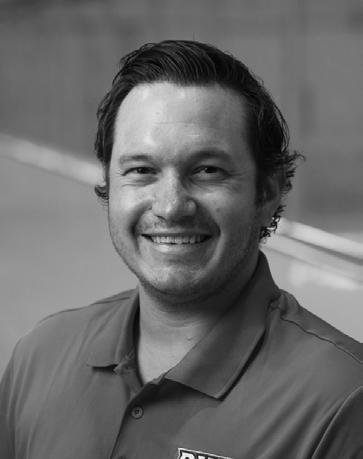
High School and] started off as [an assistant coach] for two years,” Watson said. “Then Darin came aboard, and then I was head JV coach [and] won a championship at that level. I was his assistant for the next four or five years after that.”
Watson has an energetic yet strategic approach to coaching, whereas Kimble is the “voice” of
sistant Director of Recreational Programs of Club Sports Natalie Rosales-Hawkins and] the rest of the board; we’re all working together.”

to shake public fears, especially given the river’s historical reputation and the visible evidence of ongoing pollution.
SIUE Ice Hockey will host their 2024-25 season tryouts on August 23 and August 25. To participate, you must be
“It’s their job to make the team, and then once they make the team, it’s my job to get them to be better, to come together as a team and then hopefully we can put some wins on the
about athlete safety.
While the idea of utilizing the iconic river for events like swimming and triathlon carries a certain romantic appeal, it is marred by a long history of pollution and recent “poop protests” which highlight ongoing concerns about water quality and public health.
Historically, the Seine has suffered from severe pollution due to industrial waste, sewage discharge and urban runoff.
“For decades, the Seine was used mainly as a waterway to transport goods and people or as a watery grave for discarded bicycles and other trash. Swimming there has, with some exceptions, been illegal since 1923,” an Associated Press article said.
However, regulations on
alone competitive sports.
Efforts to clean up the Seine began in the 1990s, with then-Mayor of Paris Jacques Chirac’s substantial investments in wastewater treatment and pollution control. Despite these efforts, the Seine’s water quality remains a contentious issue. Parisian authorities have undertaken a massive cleanup operation in preparation for the Olympics, aiming to make the river safe for athletes and spectators alike.
However, recent independent studies and environmental assessments suggest that the water still contains dangerous levels of bacteria and pollutants, such as E. coli.
This has led to public skep-
Protesters have staged var ious demonstrations, including symbolic acts like floating inflatable feces in the river, to draw attention to the issue. These protests underscore the broader public sentiment that the Seine, despite the cleanup efforts, is not yet safe for Olympic events.
One of the primary concerns is the potential health risk to athletes. Swimming in contaminated water can pose strong risks of illness, which Olympic athletes can’t afford.
The International Olympic Committee and local organizers have assured that water quality will be closely monitored and that events will be postponed or relocated if necessary.
However, this has done little
Another critical issue is the environmental impact. The rush to clean up the Seine for the Olympics has led to significant environmental interventions, some of which may have longterm ecological consequences.
For instance, the use of chemicals to treat water and the dredging of riverbeds can disrupt local ecosystems and harm wildlife. Environmentalists argue that a more sustainable, long-term approach to cleaning the Seine should have been prioritized over a rushed, high-profile cleanup for the sake of the Olympics.
From a logistical standpoint, the decision to hold events in the Seine also presents challenges. Ensuring consistent water quality over the course of the games, especially in an urban river subject to fluctuating pollution levels, is a formidable task.
Moreover, the infrastructure required to support these events — such as floating platforms,
spectator areas and safety measures — adding another layer of complexity and potential environmental disruption.
The controversy surrounding the use of the Seine for Olympic events highlights a broader debate about the intersection of sports, public health and environmental stewardship.

While the idea of showcasing Paris’s iconic river during the Olympics is appealing, the reality of its current state raises serious concerns. The “poop protests” serve as a stark reminder that the health of athletes and the integrity of the environment should not be compromised for the sake of spectacle.
While the Paris 2024 Summer Olympics promise to be a spectacular event, the decision to hold events in the Seine River is fraught with risk and controversy. The historical pollution of the river, ongoing concerns about water quality and the vocal opposition from the public through “poop protests” all point to the conclusion that this might be a bad decision.