alestle THE

Southern Illinois University Edwardsville
University replants native trees in attempt to offset loss of plants, wildlife due to construction
MADISON SAMPLE reporter
With the new Woodland Hall parking lot completed and many more construction projects and renovations on the way, ecosystem loss is a large concern to the SIUE community.
Co-director of SIUE’s Living Architecture Regional Center of Excellence and Interim Vice Chancellor for Administration Bill Retzlaff said with the completion of projects such as the construction and renovation of the Woodland lot, the university is attempting to recover some of the tree life lost.
“The lot was built because the old lot will be used for the new health sciences building and because students crossing the road in the middle of the night was a concern. While we removed some trees, the benefit and safety of the proximity to Woodland was really good,” Retzlaff said. “To offset that, we’ve planted 50 to 100 native trees around campus. At the parking lot, we are
What’s the deal with
going to replant some more native trees to shade the side of the lot as we finish the renovation.”
For future university construction projects, such as the new health science building, Retzlaff said wildlife habitat and tree life are being taken into consideration. Construction of the health science building is set to break ground this fall.
“The brand new health science building is placed so not many trees will be removed as the land is mostly mowed grass, so we aren’t taking too much of the ecosystem away,” Retzlaff said.
“We estimate that about 70 percent of the 2,660 acres is forested now. We are also very careful about what we remove.”

According to Retzlaff, the new building will follow the Environmental Protection Agency’s Leadership in Energy and Environmental Design certification program. The LEED program consists of four levels: certified, silver, gold and platinum; it ensures that buildings follow environmental guidelines.
“We have nine EPA

LEED-certified buildings, and four are LEED silver. If we are using state dollars to fund the construction, it is required that it be green,” Retzlaff said. “The health sciences building will have a target of LEED silver. To get to gold is challenging monetarily, but we can get to LEED silver and have a great green building while still achieving the things we want inside.”
Retzlaff also said that his work and research with green roofs and walls on campus not only provide educational opportunities for students, but also increase the sustainability of the campus.
“In 2004, a local company called my office asking us to evaluate a new product they were selling. We told them we wouldn’t be able to as we work for the state, but we could test the product to see if plants could live on the roof, what kind of fertilizer was needed and what was the best choice of plants,” Retzlaff said. “Since then, about 200 students
have worked on green roofs and green walls around campus.”
According to Retzlaff, some green roofs and walls on campus often go unnoticed by students who have not viewed aerial images of the university.
“The biggest green roof is on the Student Success Center. It is 16,000 square feet and covers about 2/3 of the rooftop,” Retzlaff said. “Our goal is to have a sustainable campus.”
Even with construction and renovation projects, Retzlaff said wildlife such as deer continue to thrive at SIUE.
“We are on the edge of the Eastern Deciduous Forest– which are the trees that exist here: oak,
ash, hickory and all of those kinds of trees,” Retzlaff said. “Under normal conditions in the Eastern Deciduous Forest, there are one to 12 deer per square mile. Here there are about 50 per square mile, so our deer density is really high.”
Retzlaff said that one of SIUE’s greatest appeals is its beautiful nature, and therefore the university must continue to protect its natural ecosystems.
“I like when I hit the edge of our campus, I know that I am driving almost a mile on SIUE property to a beautiful campus and the wildlife and trees are great,” Retzlaff said.
283 is a magic number: University launches retention campaign
 CHLOE WOLFE opinion editor
Towards the end of summer break, signs with nothing but “283” popped up all around campus with no explanation. Until the fall semester started, people were left to wonder – what is 283?
283, according to Chancellor James Minor, is a campaign centered around informing the community about their retention rate goal. He said the university only needed to keep 283 students enrolled from their freshman year into their sophomore year to reach their goal of 90 percent retention.
If the university meets this goal, Minor said SIUE will have one of the highest retention rates in the nation for regional metropolitan universities.
“I think in the state of Illinois, [a 90 percent retention rate] would put us only second to the University of Illinois Urbana-Champaign, which enrolls a very different demographic in terms of the academic profile of those students,” Minor said. “I think nationally, it would make us first and best in class for regional metropolitan universities
to have a 90 percent first to second-year retention rate. That’s our goal.”
Prior to the 283 campaign, Minor said his administration had been working towards raising retention rates by focusing on ending courses that offer no credits and giving resources to educators and students to ensure students do not receive Ds, Fs or withdrawals in courses.
“I think there’s a lot of work for the university to do in partnership with faculty to address those rates,” Minor said. “This is not about dumbing down the course or making it easier for students. It is saying, ‘Let’s maintain the same rigor in the course, but provide students with more effective support so that they meet those rigorous outcomes that have been established by faculty.’”
Retention is not just affected by courses though. On-campus housing plays a major role in making sure that students succeed outside of the classroom.
University Housing Director Mallory Sidarous said Housing is dedicated to ensuring that students find a community outside of the classrooms, but they also provide resources for students to
succeed academically.
Sidarous said Housing partners with faculty and staff for a program where they spend time with students outside of the classroom and, starting this week, Housing will reopen their study tables across all university housing. She also said that they are “exploring opportunities” to provide tutoring for students.
“We’re looking at that sense of community. That sense of belonging is a huge piece to folks’ desire to want to return and be a part of the community,” Sidarous said. “Really just that personal connection through whether students have the opportunity to talk to their residents, to talk to a doctor about what may be going on, and we can point you in the right direction.”
Retention rates may have an impact on Housing. Currently, Housing has about 2,750 students, according to Sidarous. Across all campus housing, she said that there is a capability to house 3,000 with the loss of some private rooms.
“We do not have a lot of open beds currently because we

the student voice since 1960
Thursday, August 31, 2023 Vol. 77 No. 2 Kimmel Center combats resource disparity with new hygiene packages PAGE 2 Follow along as five students start their next semester abroad PAGE 4 Men’s soccer secures first home game win of season against Butler PAGE 8
?
283
|
Taylor Mudge, a civil services worker, fills an order for cinnamon pretzel bites beneath a “283 special” sign, which many food service places around campus have adopted as part of university administration’s student retention campaign.
Chloe Wolfe / The
Alestle
see 283 on page 3
Kimmel Center’s hygiene kit project addresses resource disparities by giving away free items
Utilizing a portion of a grant awarded to the Department of Student Affairs, the Kimmel Student Involvement Center plans to assemble and distribute boxes of essential hygiene products to students in need.
According to a statement provided by Dean of Students Rony Die, SIUE received the End Student Housing Insecurity grant from the State of Illinois.
“The overall grant was $50,000, and roughly $13,000 was spent on purchasing items to support Cougar Cupboard,” Die said. “Specifically, we were approved to purchase hygiene products because of the correlation to housing insecurity. We were able to partner with The Hope Center for College, Community and Justice and participated in a nationwide survey that assessed college students’ basic needs.”
Associate Director of the Kimmel Student Involvement Center Elizabeth Delaney said the nationwide survey results, along with the results of a Kimmel survey, were used to decide what hygiene products to buy with the Kimmel’s allocation of the grant funds.
“We had a program over the summer where we did a ‘basics

in a bag’, where students could pick up a bag of basic food items. There we surveyed and asked what they were looking for,” Delaney said. “There was also a list of what students need on campus that we had access to.”
Delaney said that with this information the Kimmel was able to purchase a wide variety of hygiene items, including products for all hair types.
“We bought a whole bunch

of hygiene items, including shampoo and conditioner. We included haircare products specifically made for ethnic hair, making sure we were able to meet all the needs of all of our students,” Delaney said. “We were also able to buy things like loofahs, toothbrushes, toothpaste, menstrual products and even diapers that can be used for our students who have family members and children.”
Now that the hygiene products have been purchased, Delaney said there will be a few ways for students in need to receive them.
“One way is we are doing packaging of hygiene kits, a quick grab which students in need can get,” Delaney said. “Additionally, we will have those products available for students in our Cougar Cupboard and we are partnering with the Morris University Center. The MUC got a grant to do a project called Blessing Boxes, and we are going to put some products in there.”
According to Delaney, the Kimmel also took into account students’ need to practice selfcare when purchasing the items.
“We even picked up some self-care items. Some nice body lotions, some face masks and some things that, while not the normal hygiene items, are also part of making sure people are doing some self-care and feeling their best,” Delaney said.
Students, faculty and staff who are struggling with access to hygiene products or who are suffering from food insecurity are encouraged to reach out to the Kimmel Student Involvement Center for access to the Cougar Cupboard and other resources.
The Kimmel can be reached at kimmelcenter@siue.edu.
CODES program’s hands-on approach allows underprivileged students to thrive on campus
Black, Latinx, Pell-eligible and first-generation students in the Community-Oriented Digital Engagement Scholars program are given support through a tight-knit cohort of students and faculty as well as engaging and hands-on coursework.
Professor of English and Director of the Community-Oriented Digital Engagement Scholars program Jessica Despain said the CODES program provides an alternative education to general education courses.
“This is CODES’s second year. Essentially there is a set of courses that students take as part of the CODES program that are different from the gen-ed curriculum,” Despain said. “Students are awarded tuition scholarships for their participation in the program. It is a program that really centers community engagement pedagogy and digital skill development.”
According to Despain, students work in small research teams alongside a community partner to address a solvable problem throughout their gen-ed coursework.
“It’s really transdisciplinary. They start with the problem and maybe they pull in history, maybe they pull in English and maybe they pull in biology,” Despain said. “It creates a more synthesized experience for students where they are learning about all kinds of different fields but they are learning about them together towards the goal of solving that problem rather than all individual courses.”
Sophomore criminal justice major Madison Delgado is part of the original cohort of CODES students that began last fall. She said that throughout her time in the program she has witnessed the program struggle to find its footing.
“The first year was hard for all of us, especially for my group,” Delgado said. “We have been off and on with professors. In the first semester, we wish we would have met with our community partner more. I think that because we were the first year no one knew what they were doing. We were all guinea pigs trying to figure out what worked best for this program.”
As the program has changed and settled in, Delgado said many of the issues she and her group faced have now been alle-
viated. Delgado also said that she hopes to do more with the community and will have the chance to in the coming years.
“In the second semester, we were able to meet with our community partner several times and she’ll give us different ideas of what we can do to help,” Delgado said. “It’s not something where you come in and expect right off the bat to do something in the community, but you come in and you get to learn everything new about someone in the group.”
According to Delgado, some of the greatest parts of the program are getting to meet other students as well as learning lifelong skills.
“Everyone in our group is a different ethnicity, different race and from different cultures. It is really cool to learn about people and what they celebrate differently,” Delgado said. ”Doing all of this work is going to help us build connections we might need for our futures.”
SIUE professor of history and Director of the Universities Against Slavery Initiative Bryan Jack is teaching a CODES course for the first time this semester and said similar praise for the program.
08.26.23
An officer responded to a report of a person being sprayed by mace, though they declined to prosecute.
08.27.23
An officer responded to a report of an argument occurring at Bluff Hall, resulting in one person being moved by housing.
08.29.23

An officer responded to a report of criminal sexual assault in Evergreen’s Parking Lot, though the victim did not want to file a report at the time.
“I love the idea of a cohort of students working together as they go through the four years,” Jack said. “I also like that they’re doing project-based learning with a community partner, and the connection with the digital humanities where they’ll be learning all of these different skills regardless of what their major is. I wish we could expand it to more students.”
Jack gave a brief overview of what project his team of students will be working on this semester.
“We are working with the Missouri Botanical Garden,” Jack said. “My CODES team will be working with Michelle Bonner, who is the director of Diversity and Inclusion at the botanical garden. We will be working with her to tell a more complete and inclusive story of the botanical garden than has been told in the past,” Jack said. “The students come up with the project, so that’s what we’ll be doing this semester.”
More information on the CODES program can be found on their website, including information on how to apply for next year’s cohort for incoming freshmen as well as the late entry application process for current students.
GABON
On August 30, officers from Gabon’s Republican Guard announced a coup against Ali Bongo, upending the Bongo family’s decade long governance of the country.
HAITI
The U.S. embassy in Haiti has urged U.S. citizens to leave the country as violence escalates in an ongoing gang war. A reported 200,000 people have been displaced.
SPAIN
The Spanish government has urged for Luis Rubiales’ resignation after it emerged that he allegedly sexually assaulted women’s soccer player Jenni Hermoso.
AUSTRALIA
A referendum is set for Australia to recognize its Indigenous population in the constitution, marking a major step forward in Indigenous rights in the country.
JERUSALEM
Archaeologists have uncovered a system of aqueducts that they haven’t been able to explain, with no signs of animal sacrifice nor indication that they were used to drain or redirect water.
Information courtesy of Reuters / CNN
alestlelive.com PAGE 2 Thursday, 08.31.23
MADISON SAMPLE reporter
MADISON SAMPLE reporter
283 | COVER
are maximizing those spaces to the best of our ability with private [rooms],” Sidarous said. “If we look at future years and we make projections and adjustments based on the student enrollment and student retention, then we would adjust those private [rooms] to allow more students to live on campus. There’s always limits to that but Housing has the ability to be flexible.”
Minor said that he hopes that the campaign will achieve two things: awareness and a knowledge of steps to take to help improve student retention rates.
Minor believes that the campaign has achieved one of those goals so far.
“One thing for sure is that people are aware of the number 283,” Minor said. “People are frustrated because they don’t
know what it means. They’re also intrigued or pleased that we’re focusing on students’ success this way.”
As for the discounts on certain items in the MUC, Minor
said he is hoping to keep that going as long as interest remains. He hopes that endeavors such as discounts will keep the community interested and remind them that retention does
not just happen in the first two weeks.
“[We’re asking] the entire university community to be collectively committed, more focused and more engaged on
retaining students throughout the entire academic year,” Minor said.
Minor said this campaign is his first step towards other goals such as maintaining graduation rates and ensuring that the “structure and ecosystem” of advising is a positive experience for students.
“I think in a university community, if there is one single thing that we can agree on, it is that we’re all here to support student success,” Minor said. “For the students who begin their college career here, they all show up with the intent to succeed, none of them show up going, ‘Yeah, I want to be back home in a year without a degree and with some college debt.’ The overwhelming majority of them arrive with their ambition and the expectation that the university is going to convert that [ambition] into something real for them. That’s the challenge for us.”
Forensic science master’s program debuts in Belleville
The Forensic Science Masters’ Program allows students to explore future possibilities in criminal justice other than becoming a member of the police force.
Opportunities for students are widely expanding with the introduction of the program.
According to SIUE News, earning a forensic sciences degree at SIUE will qualify individuals to be employed as compliance officers, forensic science technicians, fire inspectors and investigators, detectives, and criminal investigators. These employment positions have the possibility to be in any sector from health care to federal level.
According to Kevin Leonard, the dean of the College of Arts and Sciences, on SIUE News, students will be able to learn and study from faculty from SIUE’s Departments of Anthropology, Biology and Chemistry. Conducting research alongside these professors is also an opportunity presented to students in this masters program.
On the SIUE website, it is stated that the program only has two paths: biology and chemistry. However, under these paths, there are many sub categories that allow students to study what they enjoy learning. Luci Kohn, a professor in the biology department at SIUE, said, “ Within forensic biology, we include courses that would be within the biology department. For example, anthropology is included under the biology department,” Kohn said.
Although SIUE is offering the forensic science masters’ program, the courses themselves are not focused in the Edwardsville campus. Courses will instead be primarily offered at the Southwestern Illinois Justice and Workforce Development Campus in Belleville. The Edwardsville campus will be offering course electives.
Kohn said that the Belleville campus is right across the street from the Illinois state police forensic lab, and while the program is not training students to become police officers, the program is training students to become excellent in their chosen field of forensic science.
According to Kohn, the program had a delayed start and has very few students this year.
“We have two students who have started and we’re anticipat-
ing roughly ten students in an entering class,” Kohn said.
However, according to Kohn, at least one hundred students are minoring in forensic science. The program is expected to grow to nearly five times its current enrollment.
“There are not a lot of programs in the Midwest, but when we look at other programs, the programs seem to have ten to 15 [students],” Kohn said.
Students will not be able to join in the spring semester,“We don’t have the capacity...We haven’t set a cap…We just accept students for the fall,” said Kohn.
If students are interested in taking these courses, certain requirements must be met.
“For the most part, anyone who has a minor in biology or chemistry [qualifies],” Kohn said.
Despite these broad qualifications, students must meet GPA requirements. “Applicants must have a GPA of at least 3.0, however, [the program] isn’t just GPA driven,” said Kohn.
With this requirement, the forensic program is flexible. According to Kohn, students with a GPA of a minimum of 2.5 can write a personal statement which allows them to explain their performance.
“The applicant provides a written explanation of why they will be successful in the program. The explanation may include documented relevant work experiences.” Once accepted, students will choose between the two main educational paths. For more information about the forensic science program, visit SIUE’s website.
Biden administration proposes overtime pay expansion which could affect over 3.6 million workers in the U.S.
administration attempted to raise it to $47,476, but the move was struck down in court.
The Biden administration wants to give 3.6 million workers access to overtime pay.
Under proposed changes from the Department of Labor, any salaried employee making less than $55,000 per year, or $1,059 per week, would be eligible for overtime. That would be a significant jump from the current cutoff at $35,568 per year.
“I’ve heard from workers again and again about working long hours, for no extra pay, all while earning low salaries that don’t come anywhere close to compensating them for their sacrifices,” Acting Labor Secretary Julie Su said in a statement.

Under current laws, hourly workers are automatically due time-and-a-half pay when they put in more than 40 hours a week. But salaried workers can only receive the same overtime pay if they earn less than $35,358 per year.
From 2004 to 2019, the cutoff was all the way down at $23,660 per year. The Obama
In 2019, the Trump administration set the number at $35,568 as a compromise. An estimated 15 percent of salaried workers are covered by that regulation, a number that would increase to 27 percent under the new rule. However, even the new mandate would lag way behind the 1970s, when an estimated 60 percent of salaried workers were eligible for overtime.
“We are committed to ensuring that all workers are paid fairly for their hard work,” said Jessica Looman, the Labor Department’s Principal Deputy Wage and Hour Division Administrator. “For too long, many low-paid salaried workers have been denied overtime pay, even though they often work long hours and perform much of the same work as their hourly counterparts.”
The Biden administration also wants to update the salary threshold every three years to keep up with inflation.
The Labor Department said 600,000 health care and social services employees, 300,000 manufacturing workers, 300,000 retail workers and 180,000 hospitality employees would be covered by the new overtime standard.
The proposed rule is subject to a 60-day public comment period before it can take effect. Business interests are expected to challenge the decision, as they did with the Obama administration’s attempt.
“Public input is essential as we consider the needs of today’s workforce and industry demands, and we encourage continued stakeholder input during the public comment period,” Looman said.
alestlelive.com PAGE 3 Thursday, 08.31.23
283: SIUE’s response
THEA WELTZIN illustrator
to improving campus retention rates
JOSEPH WILKINSON
New York Daily News (TNS)
At the end of the summer semester, signs saying “283” were posted around campus, leaving people to wonder what it meant. | Chloe Wolfe / The Alestle
Secretary of the U.S. Department of Labor, Julie Su speaks on stage during an event. | Courtesy of Arturo Holmes
Finding a home abroad; leaving home, first weeks
FRANCESCA BOSTON lifestyles editor
Whether the students are coming to the U.S. for the first time, going abroad to Europe or living on the ocean, each of these SIUE students is living in a foreign place alone for the first time.
Three of the students are spending their semester abroad on the SIUE campus. They come from Myanmar, Pakistan and Egypt, and are part of a program called Global Undergraduate
Exchange Program, Global UGRAD. The program is sponsored by the U.S. Department of State to support future leaders and allow them to experience American culture.
The other two students are SIUE students studying abroad. One is going to Spain, and the other is doing a “Semester at Sea,” a program that will take her from Belgium to South Asia on a cruise ship.
Follow along this semester to see their lives and studies, as well as the highs and lows of living and studying abroad. Photos and stories coming soon.
Name: Ana Vasquez
Year: Senior
Where are they from? SIUE
Where are they going? Semester at Sea
Studying: Economics
Vasquez said she has moved several times in her life. She was born in Colombia and moved to Mexico City, Mexico, when she was 10 years old. Her family moved to St. Louis when she was 15 years old, so she said she’s no stranger to traveling and exploring new cultures.
“I’ve always loved traveling. I found out about ‘Semester at Sea’ my senior year of high school and I fell in love with it just because I could go to so many different countries while taking classes. I get the best of both worlds,” Vasquez said.
Vasquez said the ship will stop in Belgium and will make stops in many countries throughout the four-month program.
“Then I will go to Morocco, Malta, Spain, Greece, Dubai, India, Malaysia [and] Vietnam. And I will end in Thailand, then [while] in Vietnam, I’m also going to Cambodia,” Vasquez said.

Vasquez said her experience of living in three different countries gave her a wider perspective of the world and she is passionate about meeting new people and experiencing new cultures.
“I think by getting to know different cultures, you learn a unique sensibility,” Vasquez said. “You become more open to other people, even if you have completely different points of view or ways that you look at life. I think I’m able to become friends with them and accept them because they accept me.”
Name: Myia McAllister
Year: Senior
Where are they from? SIUE
Where are they going? Barcelona
Studying: Marketing
McAllister, an SIUE student who will be studying abroad in Barcelona, Spain, said this is her first time traveling to Europe, and her second time
“I’ve only been out of the country one time. I’m half-Filipino, so when I was in high school, my mom and I got to spend two weeks in the Philippines to go see family,” McAllister said.
She said she chose to study abroad in Barcelona for several reasons. The university where she is studying has classes that easily transfer to SIUE credit and she wanted a Spanish-speaking country to develop her language skills.

“It was one of the cheapest cities in Spain and, amongst all the other cities, it had the most amount of classes that would transfer over to SIUE the easiest,” McAllister said.
McAllister said her program has planned excursions that she is excited for such as a paella cooking class and an overnight trip to Morocco. She said she is also planning on doing some of her own travel including going to Ireland and possibly France and Italy.
“I’m really excited to go to the Picasso Museum. My mom has been an art teacher. She’s really into art so that’s why I’m really excited to go take pictures and share it with her,” McAllister said.
Name: Mahmoud Taha
Year: Sophomore
Where are they from? Egypt
Studying: Mechanical Engineering
Taha said studying abroad at SIUE is his first time out of Egypt. He said he wanted to study abroad in the U.S. because many universities in the U.S. have more advanced laboratories and technologies than his home university has access too.
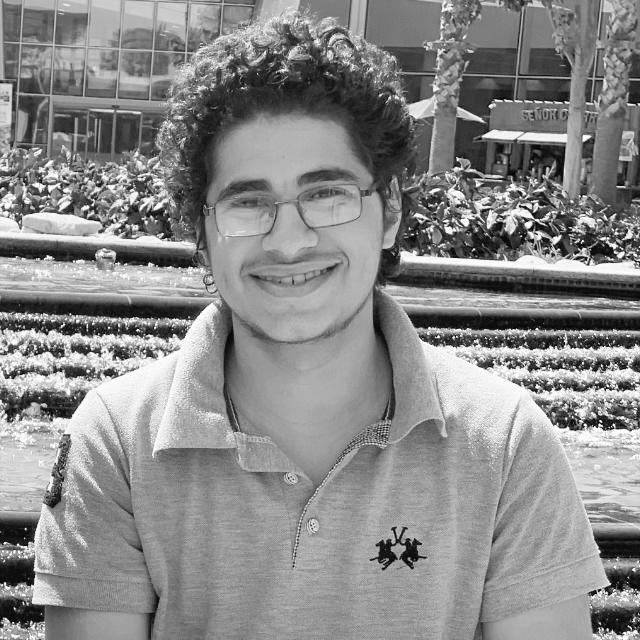
“I’m studying electrical engineering. I wanted to come here to see how your students are learning. I also wanted to experience American culture,” Taha said.
Taha said he is excited to try more American activities, as well as visiting some of the U.S. ‘s larger cities such as New York and Washington, D.C.
“The first thing is hiking. It’s in a lot of movies,” Taha said. “I was thinking of buying a skateboard and trying skateboarding because I think it’s fun. There’s lakes here and I was wondering if I can get a boat and sail in these lakes. I haven’t figured it out yet, it would be awesome.”
Name: Hein Zayar Naing
Year: Senior
Where are they from? Mynammar
Studying: English Literature and Sociology
Zayar Naing, an exchange student from Myanmar, said that because of political unrest in his home country, being able to study in the U.S is an opportunity to continue his education so he can support his home community.
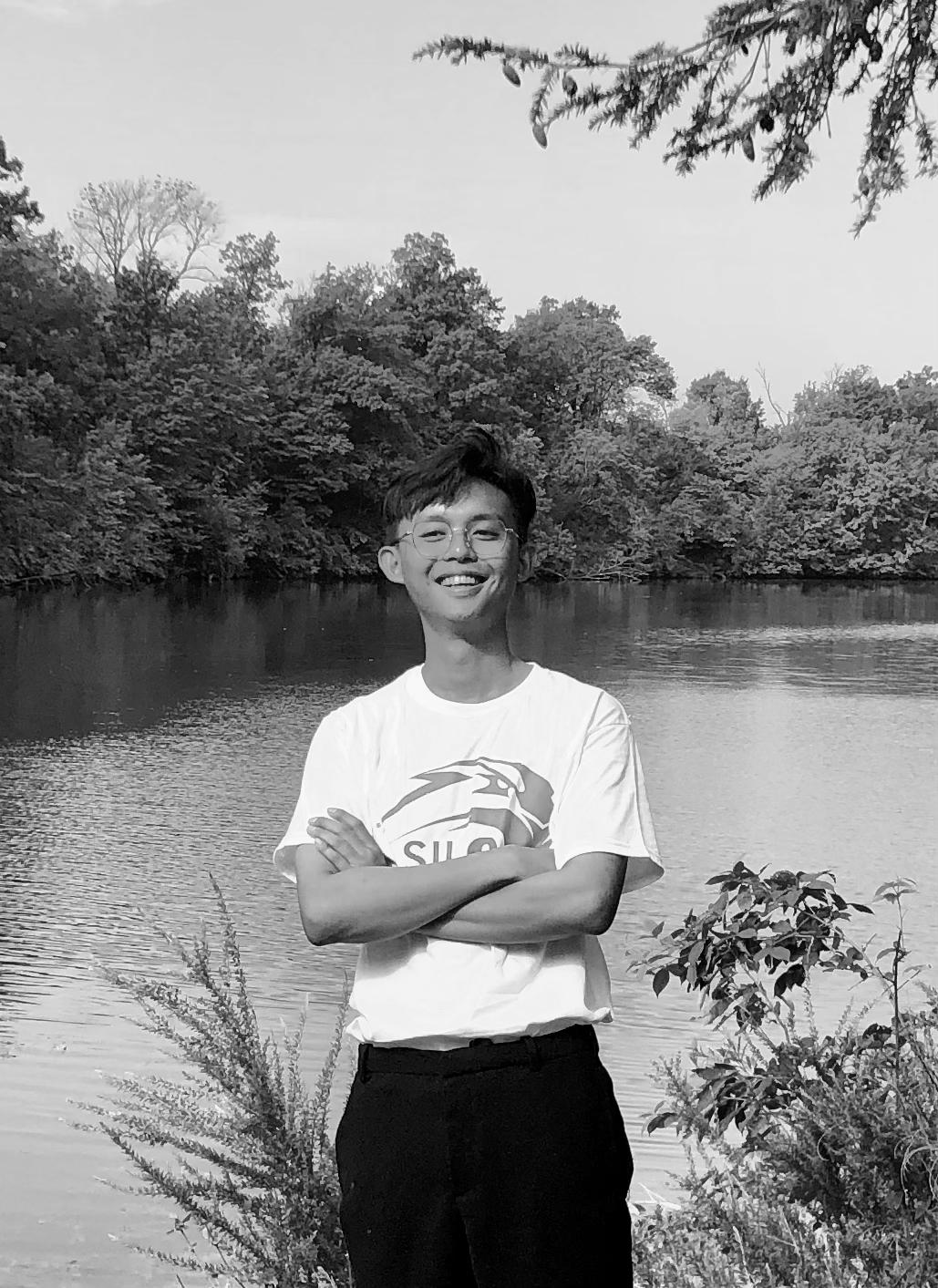
“I am here. I feel like sometimes I’m guilty of being here. But sometimes I feel like I am privileged enough. I got this opportunity. I will take every opportunity that I can get from SIUE and I will contribute all back to my community,” Zayra Naing said.
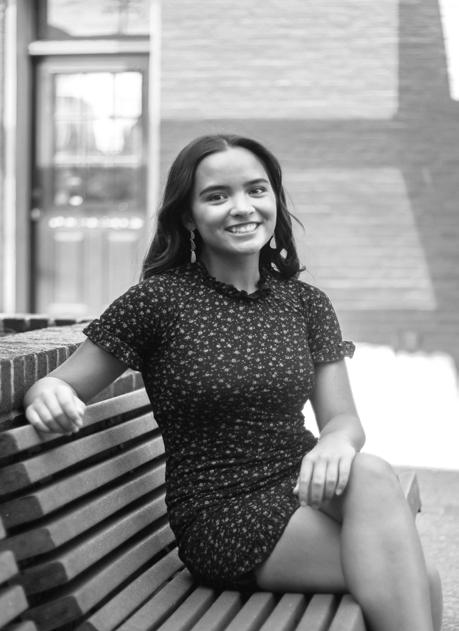
Zayar Naing said that he didn’t have much of a choice in his major, which is English literature, as it was chosen for him back home, but he is most interested in sociology and being able to learn about people to help them.
“Here I am still learning about English literature. It’s so interesting that we can learn a lot about people from literature like novels, short stories and poems. I can still learn the history and about the people from English literature,” Zayar Naing said.
Name: Raisa Rafique Gill
Year: Senior
Where are they from? Pakistan
Studying: Nutrition and Dietetics
Rafique Gill said it has been a dream to study overseas, which became a reality when she was awarded a full-ride scholarship that allowed her to study in the United States. She said her parents were even more excited than she was for the oppurtunity to be able to study in the U.S.

“In Pakistan, family is the center of everything. If you are doing something, you have to take the consent of your family. It’s a very good thing,” Rafique Gill said.
She said the program is meant to encourage cultural exchange and immersion, and as part of that she has a host family who she will meet with.
“I have been appointed a host family. I’m very glad. I have to learn about American culture and tell them about mine. It’s an exchange of cultures,” Rafique Gill said.
Rafique Gill said she is feeling a bit homesick, even though she regularly talks to her family. She said she is starting to make friends. but it has been a bit difficult.
“I am also missing my dogs,” Rafique Gill said.
contact the editor: lifestyles@alestlelive.com (618) 650-3528 NEXT WEEK: GAME DEVELOPMENT CLUB BRINGS MATH, ART TOGETHER lifestyles alestlelive.com PAGE 4 Thursday, 08.31.23
MATTHEW WOLDEN copy editor
The Climbing Club offers many activities to its members as well as support to its newcomers.
The Fitness Center provides various activities and rooms to allow students to spend their time to get fit or have fun. One of these rooms features a climbing wall, where members of the Climbing Club hang out.
Senior business mangament majorDavid Dempsey, president of the Climbing Club, described two different types of climbing available in the on-campus climbing gym.
“We have bouldering which is short stuff, 10 feet and under. You don’t need a rope tied to you,” Dempsey said. “And we have top-rope where you can go all the way to the ceiling, but you have to be tied into a harness with a belayer. A belayer is a
Climbing Club brings adventure to new heights
person who handles the rope [and] makes sure it’s tight [so] you don’t fall.”
Another thing these climbers have access to is making their own paths, as long as they have a staff member with them. Reece Larson, vice president of the club, described the process members can take to get a path set up.
“We’ll have members come in, and they’ll come talk to a staff member and they’ll get stuff put on the wall to make a challenge for them,” Larson said.
The options are up to what the person wants to try out, whether it is something they have seen online, a new challenge or some new movements on the wall.
Dempsey stated that even though the climbing gym is only open on Tuesdays and Thursdays, the Climbing Club makes use of what they have.
Since the climbing gym isn’t always open, the members will sometimes venture off campus for other climbing expe-
riences. Larson discussed how they go out to the climbing gyms in St. Louis or travel to more scenic areas in Illinois on trips.
While all these activities are available, some people can be put off by something so seemingly daunting. A fear of heights might deter some people from joining the Climbing Club.
“I’m terrified of heights,” Larson said. “That fear of heights does not go away no matter what people tell you about it.”
Even with the added fear, Larson has been climbing for upwards of eight years. Fortunately, the Climbing Club has proper equipment in place to ensure everyone’s safety. If that still deters you from trying out the club, Larson said you can also stick to bouldering to stay close to the ground while still having fun.
Larson said another deterrent might be the strength required to climb. He said to combat this, the climbing gym has de-
noted which walls are easier and harder based on grades. According to Larson, this can also be a double-edged sword as some might push themselves to higher difficulties and be discouraged simply because they can’t climb the path yet. Climbing requires time and practice, and when someone gets stumped by one of the paths, it becomes a new challenge to overcome, Larson said.
Tsai-Yu Chen, a member of the Climbing Club, said the club is welcoming and encourages even non climbers to give it a try. Chen said the people are encouraging and always try to help new people.
“They are willing to share their experiences and they really introduce you into climbing,” Chen said.
To get involved, the clubs’s first meeting this semester is on Friday, Sep. 8, from 3 p.m. to 5 p.m. Check out the club’s Instagram page or on GetInvolved.
A bike haven in a car centric country, SIUE makes biking accessible
FRANCESCA BOSTON
lifestyles editor
It’s not uncommon to see bikes on campus, but for those that do not own one, SIUE provides bikes through their bike share program giving all students access to explore the Madison County Trails.
Dave Hagedorn, assistant director of campus recreation, said that for students wanting to explore the trails or be able to access town on a bike, Campus Rec has the Bike Share program.
“Since 2017, Campus Rec has taken on the fleet management, the bikes themselves, the checkout systems, checkout processes,” Hagedorn said.
Hagedorn said the Bike Share program was a large part of SIUE being recognized as a bike-friendly university. He said the Bike Share program is a nocost system that allows students to use bikes for recreational us-
age, and can be used for more than simply exercise.
“[The bikes] have baskets, they have locks, there’s ways to go and commute to shop, to do errands, to do whatever someone might want to do, not just go out and exercise. Then knowing that the campus around us is wonderful, we get the MCT trails right here,” Hagedorn said.
SJ Morrison, managing director of Madison County Trails, said MCT is not a part of the local government, instead a separate transit district organized by the state of Illinois. MCT provided a public bus service, paratransit for the elderly and disabled, rideshare programs and their wellknown Class One bikeways that stretch more than 100 miles around Madison County.
Morrison said the bike paths also explore the diversity of the natural surroundings and can be
used by those looking to simply get outside.
“I encourage the university community to explore our entire system. There really is a diversity
River, through the cornfields and so it’s a really diverse array,” Morrison said.

Hagedorn said the employees will check the student’s ID, give them a waiver to be signed and then find a bike of the correct size for the student. The student will then be given a key with a number that matches the bike, and then they are free to use the bike until close of business or dusk.
people to bring another person along with them.
“It never hurts to make the experience better anyways. You’re enjoying the bike rides, walking or jogging with a friend or a loved one. I still think there’s value in walking or biking with a friend,” Morrison said.
of natural surroundings. There are forests, there are woodland areas, there are a couple of trails that run along the Mississippi
“They can ride it anywhere they want, but need to be back by the close of business or dusk, because they don’t have lights. We don’t want bikes on trails after dark. We don’t want cyclists at risk,” Hagedron said. According to Morrison, the trails are safe and people should feel comfortable being on them alone, but he always encourages
Hagedorn said the Bike Share program is not the only resource on campus for students. Throughout campus, there are bike repair stations, which provide tools, free to use, to all cyclists.
Hagedorn said SIUE is a wonderful place to support biking, and having the bike allows students who may not have had access to a bike explore the bike trails and campus in a new way.
“We’re in a beautiful environment for [biking]. It’s a safe space, it’s a great space [and] the community has done a great job,” Hagedorn said.
Geese, deer, raccoons, oh my: tips for wildlife safety on campus
WINTER RACINE
online editor THEA WELTZIN illustrator
Deer

- Do not drive fast, especially at night. Stay vigilant.
- Remember that deer are fast. Remain cautious even if one is in the woods just looking toward the road.
- Remember that deer often roam together. If one crosses the road, another is likely to follow.
- When driving in areas with limited lighting, use your high beam headlights to increase visibility.
- While deer might seem docile, they are still wild animals. Avoid attempting to approach, feed, or touch them.
Geese
-Do your best to stay away from geese.
-If you find yourself in a situation where a goose is cornering you, stay calm.
-Avoid making eye contact with the goose and make yourself appear large by lifting your arms. Slowly walk backward and away from the goose. Do not turn your back on the goose and run away. Avoid making sudden movements.

Skunks

-You can typically smell when they are near. Stay away.
-Avoid startling them. Do not approach them from behind.
-If you’re outside after dark, be aware of your surroundings and move slowly.
General Wildlife
-If an animal looks abandoned, leave it alone. Its mother likely is not far.
-Do not touch injured animals. Call animal control or campus police.
-Be respectful of all wildlife.
Raccoons
- Do not intentionally feed raccoons or leave out food that might attract them.

-Ensure that trash cans have tight-fitting lids and are properly secured to prevent raccoons from accessing them.
- If one is in the trash can, wait to toss out your trash.
Information provided by Kurt Schulz, current acting chair of academic land use committee
alestlelive.com PAGE 5 Thursday, 08.31.23
“We’re in a beautiful environment. It’s a safe space, it’s a great space [and] the community has done a great job,”
Dave Hagedorn, Assistant Directior of Campus Recreation
NEXT WEEK: IS SIUE’S SEXUAL ASSAULT TRAINING TOO CONFLICTING?
alestlelive.com
Thursday, 08.31.23

TYSON HICKS Reporters
MATTHEW WOLDEN
BRANDI SPANN Copy Editors
FRANCESCA BOSTON Lifestyles Editor
AUDREY O’RENIC Sports Editor
UDIT NALUKALA

Multimedia Editor





CHLOE WOLFE Opinion Editor
view
Hawaii needs tourists’ support, not their presence
THEA WELTZIN Illustrator
HANNAH LEDFORD Podcast Producer


MEGHAN FOSNOCK
DAMON FOWLER
Front Desk Managers
HAVE A COMMENT?
Let us know! opinion@alestlelive.com
Campus Box 1167 Edwardsville, Illinois 62026-1167
LETTERS TO THE EDITOR POLICY:

The editors, staff and publishers of The Alestle believe in the free exchange of ideas, concerns and opinions and will publish as many letters as possible.





Letters may be submitted at
The Alestle office:
Morris University Center, Room 0311
e-mail: opinion@alestlelive.com
All hard copy letters should be typed and double-spaced. Letters should be no longer than 500 words. Include phone number, signature, class rank and major.
We reserve the right to edit letter for grammar and content. Care will be taken to ensure that the letter’s message is not lost or altered.
Letters to the editor will not be printed anonymously except under extreme circumstances. We reserve the right to reject letters.
THE ALESTLE STAFF editorial board
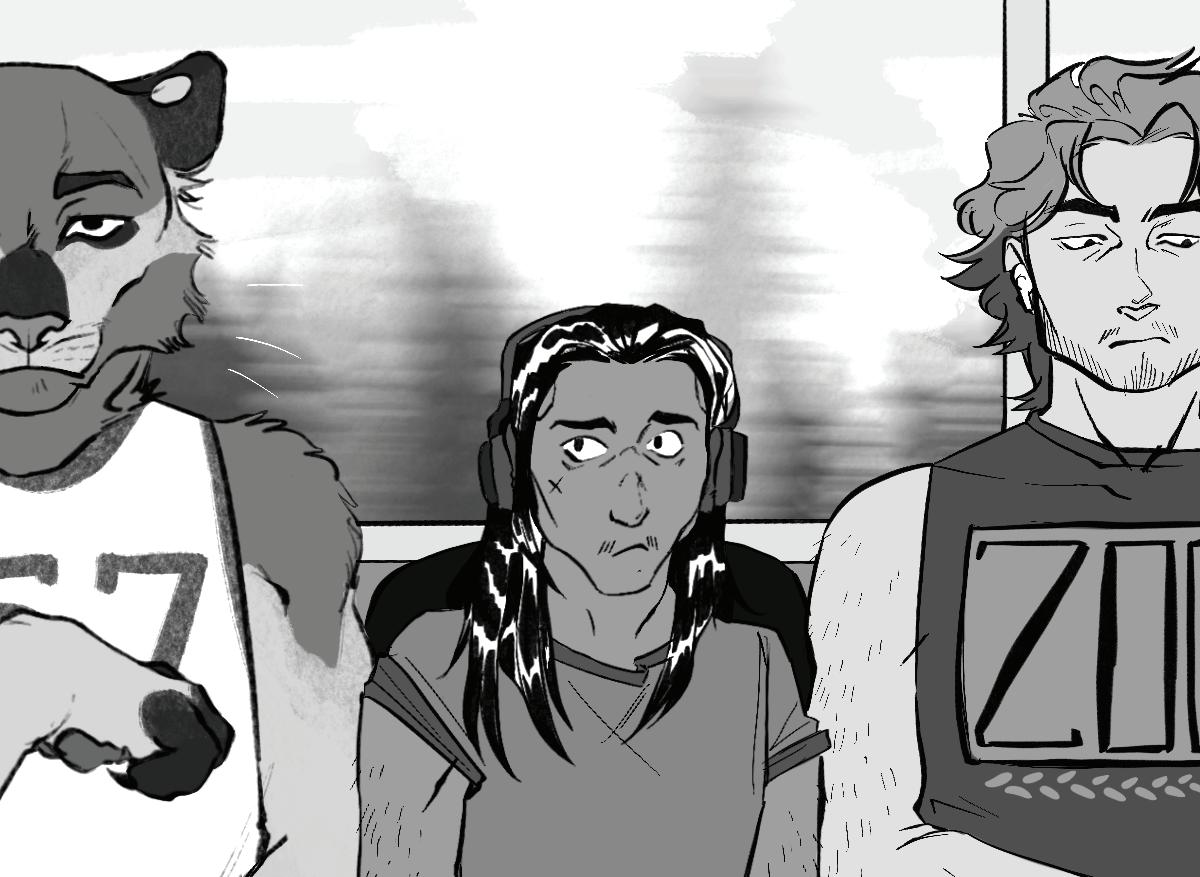
Losing property and lives due to natural disasters is not going to be a rare experience in the upcoming years. Excessive heat as well as wildfires are set to become the new norm as temperatures rise. Soon, historical sites and natural wonders will not be able to be saved by human intervention.
quoted $700 to those whose homes, properties and loved ones were lost to the wildfires.
The name Alestle is an acronym derived from the names of the three campus locations of Southern Illinois University Edwardsville: Alton, East St. Louis and Edwardsville.
The Alestle is published on Thursdays in print and on Tuesdays online during the fall and spring semesters. A print edition is available every other Wednesday during summer semesters.
For more information, call 618-650-3528
While emergency text and radio alerts were active, residents of Maui County had been without power since that morning, making it difficult to receive text and radio alerts. The negligence to realize what exactly needs power to operate correctly is one of the many factors that has killed upwards of 100 people.
With about 850 people missing due to the wildfires in Maui, Governor Josh Green has said that thousands of people are without adequate shelter and the town of Lahaina is destroyed.
Deep coastal states like Hawaii and Florida, as well the drylands of California, are subject to becoming uninhabitable. The Earth’s climate is shifting. It is undeniable, unlike some questionable theories surrounding how the fires of Lahaina started.
Online, many theorize that the fires started as a scheme for the rich to get richer instead of a natural disaster due to the president’s underwhelming reaction. In Salt Lake City, on Aug. 10, President Biden announced he would be “giving every asset he had” to assist the people of Lahaina. However, he has only
Most assets Biden claims are going to the residents in Maui have been spent taking care of tourists. While residents are struggling, fleeing and continuing using up residents’ resources. If the tourists were not there, these resources would otherwise be spent on the citizens.
As the devastation continues to unveil, residents and island officials are urging tourists not to come so essential items can be used for the people currently on the island.
According to a BBC article, residents are spending what money they have left at local grocery stores trying to replace essentials while tourists are relaxing in the water. Residents jumped in days before in an attempt to escape the fires.
This conundrum presents a problem. While many residents
of Lahaina and Hawaii itself express heavy distaste towards tourists, nearly 80 percent of the island’s money comes from tourism, according to the Maui Economic Development Board. The Maui Economic Development Board has also said that tourism is the “economic engine” of the county.

While students cannot immediately go to Hawaii and assist search parties, we can heed the wishes of Hawaiian residents to not visit their land. Deciding to not vacation to Hawaii would allow local markets to focus on building themselves up rather than catering to tourists.
Donating your vacation money would also help citizens get their balance. If you cannot donate, even spreading awareness of the true events helps, as it gives those with more money the opportunity to assist those in need.
Weed doesn’t smell bad — stop lying to yourselves
In a state where it’s legal, it’s time to stop caring about the smell of weed and face this simple fact: it just isn’t that bad.
While many will make the comparison between the smell of weed and that of a skunk, there are many qualities that make weed smell nicer — especially when compared to the stinky black and white devils.
Weed is a plant, grown from the ground and harvested for use. This gives its smell a natural quality, similar to any other plants you may find in nature.
It is true that weed has an extremely strong smell, which is one of its unmistakable indicators. However, many other things in nature have similarly pungent smells, and not many people complain about the smell of lemons or coffee.
The smell doesn’t last long. A skunk’s stench can remain in the area for many days after the initial incident; weed, however, will not linger for too long, and will often dissipate within a few hours.
People can grow accustomed to the smell of weed, while the same cannot be said for the smell of a skunk. After all, If you’re
sprayed by a skunk, the stench will require a tomato bath to rid yourself of it.
Tobacco is something that is comparable to the smell of weed, as well. Unlit, the smell of tobacco leaves is a pleasant one. As it is with weed, once lit, the tobacco odor is distinctly different.
The smell of burning weed can be a harsh one that fills in the area it’s lit in. Though, there are still key differences between the two that make it less of a problem.
The smell of a cigarette is a harmful one. The smoke that comes from them can be dangerous, as second hand smoke
can be a killer — especially for babies who, even in brief contact with cigarette smoke, can die from sudden infant death syndrome (SIDS). Weed smoke does not contain these dangerous properties, unless you consider getting contact high from the smoke to be dangerous.
This does not mean the process of smoking weed is safe, as smoking and inhaling anything is unhealthy for you; however, since weed doesn’t have as many additives that cigarettes do,
see WEED on page 7
Share your thoughts: opinion@alestlelive.com (618) 650-3527
OPINION
For advertising, email advertising@alestlelive.com PAGE 6
BRUCE DARNELL Managing Editor
DYLAN HEMBROUGH Editor-in-Chief
BRUCE DARNELL managing editor
TAMMY MERRETT Program Director
MADISON SAMPLE GRACE
GENTEMANN
Maui County wildfires left many dead and homeless after emergency sirens were not activated. Much of this death could have been prevented, but tourism culture and biased lawmakers made room for the number of dead to grow.
WINTER RACINE Online Editor
LETTER TO THE EDITOR: I’m leaving my job at SIUE for a better future




 TERRY CLARK former office support associate
After being a receptionist at the university for over two years, I’ve decided to leave for a position that is more in my field. Rather than hiring a replacement to sit at the front desk, my office has bought a tablet for people to sign in with … and it’s already causing problems.

With a shortage of labor, decreasing job satisfaction and increasing workloads among staff members, offices on campus are scrambling to cover the responsibilities of the ones that are left with varying degrees of success.
For the humble receptionist, some offices have decided that a virtual signin kiosk is a quick and cheap alternative
for the human component. But what they quickly find out is that the lack of that human component causes more issues than it solves.

As those in my department were learning about our new sign-in tablet, they quickly realized that it lacked the capability to convey if someone was busy, or even out of the office. I sat there as they brought up a multitude of problems that would arise from not having someone watch the front desk, and I couldn’t help but smirk and shake my head.
In our world of fast-paced technological development and post-COVID-19 labor challenges, the threat of automation remains high in many job sectors. However, it can be said that for a university, having a human do the work is the best
Weed doesn’t smell that bad
WEED on page 6
inhaling it is comparatively safer.
It is necessary to note that people should respect others’ spaces when it comes to smoking weed. Since many people dislike, or even hate the smell of smoke, it is courteous to avoid forcing it onto other people.

Having said that, the smell of weed is
not going away anytime soon. It’s been around forever and, given the changing public opinion on the criminalization of weed, it’s only going to become more common for people to smoke it.
There will still be barriers when it comes to smoking, as there are with cigarettes, though it is up to the actions of the smoker to respect the people around them and to put thought behind where they decide to light up.
course of action for a successful office environment. Communication, empathy and experience will always trump the short-term benefits of new technology. Furthermore, when one is dealing with students, a device is incapable of connecting or conveying the nuances that come from personal contact.
I’ve given aid to students when their advisors were unavailable and they needed answers. I’ve calmed students who were panicking about the classes they were struggling with. I may not have been able to help them in ways that other staff and faculty could, but I could at least be a reassuring presence that let them know that they were heard and that their problems were being addressed.
A tablet can’t do that.
As we hear more about our decreasing staff numbers and the fight for security from our union leaders, we should all remember that it is not the new software or hardware that makes SIUE the university that it is — it’s the people that work within it. If only one group were to be removed from our school, whether it be the faculty, administrators, staff, groundskeepers, police, student workers or the students themselves, then our whole university community would fall to pieces.
Please take the time to let every member of our university family know that they are appreciated and that the work they do is invaluable to the mission of SIUE and those that we serve.
alestlelive.com PAGE 7 Thursday, 08.31.23
(618) 650-3528
For the sixth year in a row, men’s soccer locked down a win at their first home game of the season and maintained their winning streak against Butler University.
The Cougars scored the first goal of the game at 27:27, continuing their streak of scoring first in games this season. Senior forward Sam Layton scored the goal off a corner kick from graduate student forward Mitchell Murphy.
A goal by junior Connor Gramke was called back after an offside call was made.
Butler evened the score with a goal by sophomore forward Palmer Ault in the 24th minute of the game.
Halftime came, and the score was tied. Head Coach Cale Wassermann said Butler has the ability to wear the team down with aggressive offensive plays, but the Cougars went on counterattack in the second half of the game and secured their second win of the season.
“We got a lot of chances in the first half that we didn’t quite bury. We turn those counterattacks into some more patient play. We started to wear
Butler down a little bit and kind of gave them some of their own medicine a little bit. We counterattacked and then balanced that with some possession later in the game,” Wassermann said.
The Cougars turned up the heat in the second half of the game, with graduate student midfielder and team captain for the game Alsadiq Hasan bringing home a cougar win with two additional goals, his first career goals at SIUE.
His first goal was in the first five minutes of the second half, after a foul in the box led to a penalty shot. The second goal followed shortly after as Butler’s goalie came to the top of the box with the ball. Murphy followed and stole the ball away, leaving the ball for Hasan to follow through on the unguarded goal.
Wassermann said Hasan is a leader on and off the field and fought hard for those goals.
“Hasan is an amazing leader, captain, person [and] human being. He deserved every bit of both of those goals. I’m sure they won’t be the only two.” Wassermann said.
Hasan, who transferred to SIUE last year, said that since transferring here he has shared the same goal as his team and
coaches: to win. He said it felt good to score the goal, but now he is looking forward to the next game and the rest of the season.
“Our focus now and all our attention is over to the next game. We’re not over yet, we aren’t doing this only at the beginning of the season,” Hasan said. “We want to win. Our goal this season is to finish with hardware and go to the NCAA [National Collegiate Athletic Association] tournament.”
The men’s team is coming into the season with a more experienced group of players, with a number of the team having been playing for five years. Wassermann said the benefit of having an older team is being able to rely on the leadership of the team.
“They know exactly what I want and what our team is all about. We haven’t gotten the rewards at some times in the last few years. We’re pushing for every game this year,” Wassermann said.
SIUE soccer will be playing at CITYPARK, St. Louis’s new soccer stadium, on Sept. 2 in the historic rivalry against St. Louis University. Women’s soccer will kick off at 5 p.m. and men’s will start at 7:30 p.m. Tickets are on sale at the CITYPARK website.
Historic soccer rivals to play at new stadium in St. Louis
FRANCESCA BOSTON
lifestyles editor
For the first time, men and women’s soccer will play at the new CITYPARK stadium in St. Louis, against their historic rival, St. Louis University.
Women’s soccer Head Coach Derek Burton said the game, known as The Bronze Boot, is a traditional match up with St. Louis University. The name of the game refers to the bronze trophy that is perpetually handed back and forth between the men’s teams.
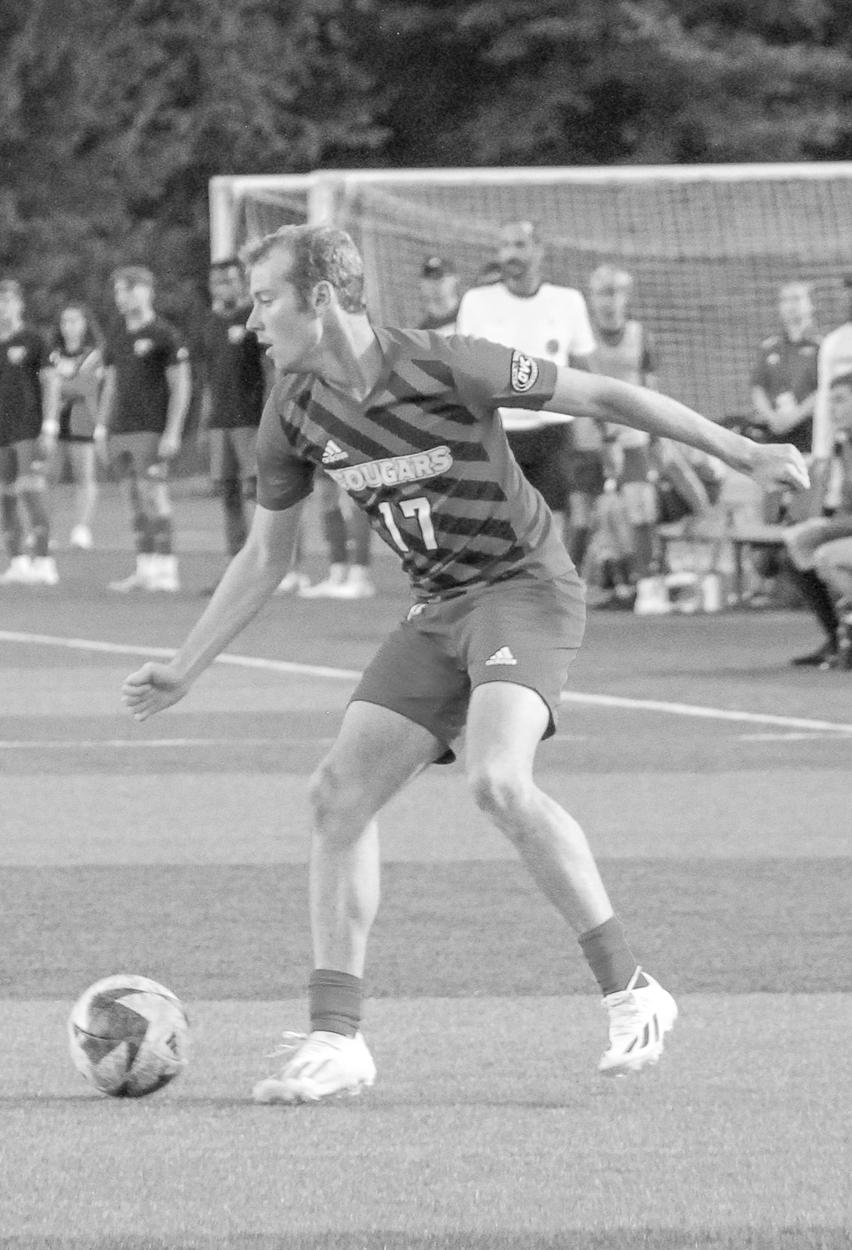
“A perpetual trophy that goes to the winner and stays with the winner until the next game and then changes hands if need be until the next time that it happens,” Burton said. “The Bronze Boot games specifically are relative to the men’s teams playing SIUE versus SLU. Us on the women’s side have also played obviously, but it hasn’t had that traveling trophy part.”
Burton said that especially for the women’s team, the games are important to the area. He said that both schools, SIUE and SLU, have a long tradition of
very good soccer programs and the teams are often made up of many local players.
“Both teams are traditionally largely made up of players from around the metro area. So it has a lot of local flavor to it,” Burton said.
Burton said being able to play at CITYPARK, a state of the art facility will be a great opportunity for the team, and the challenge going in will be handling the excitement of the day.
“It’s not something that you get a lot of opportunities to do. It’s really exciting,” Burton said. “Now, we just have to try to manage the emotions and the spectacle a bit and just remember that it’s still a game that needs to be played against a really good opponent.”
Men’s soccer head coach Cale Wassermann said the men’s team is excited as well, but have been taking the season moment by moment, game by game, trying to get better each time.

“Obviously, there’s some excitement from the group. We’ve been really professional in our mentality through preseason, just taking everything one day
at a time,” Wassermann said. “We’re focused on the moment.”
Grad student Sarah Magnoni, a fifth year player, said that there will not only be a physical challenge of a game against a good opponent, but also the mental challenge of playing in a stadium much larger than is normal for them.
“So having this opportunity comes with its challenges, but obviously going into it, and knowing those [challenges] and controlling what we can control is definitely going to be a factor when we go and play SLU this coming weekend,” Magnoni said.
Aug. 31
Women’s soccer will compete against sister school SIU Carbondale at 7 p.m. in Korte Stadium.
Sept. 2
SIUE soccer will face off against St. Louis University with the women kicking off at 5 p.m. and men’s beginning at 7:30 p.m. at
According to Magnoni, the team will be able to get to the field a day early and practice on the field. She said being able to get on the field ahead of time will help during game time.
“If we do have the ability to practice there [and] see the field, that helps us visualize what we’ll be seeing during game time,” Magnoni said. “But going to a new field, especially at CITYPARK, will be completely different, but we do have the ability to go there the day before and walk around and see the field before the game.”
Magnoni said she is looking forward to the upcoming season
St. Louis’s new, professional soccer stadium, CITYPARK.
Sept. 8
Women’s tennis will begin competition for the Cougar Invite against Bradley, Eastern Illinois and Saint Louis at the SIUE tennis courts.
Women’s volleyball will begin the Cougar Classic tournament
as it is her last, even as she recovered from an injury. She said she has had to change her perspective a bit and focus more on the team, and she hopes to be back by conference games later into the season.
“I’m super excited for all the newcomers coming in and getting the ability to start learning and playing in college. It definitely changes my perspective as an upperclassman to see the next generation come in and just attack the game of soccer and start loving it,” Magnoni said. “So just super excited for the rest of the season.”
with the battle against the University of Idaho at the First Community Arena at 6 p.m.
Sept. 9
Women’s volleyball will finish the Cougar Classic against Milwaukee at 1 p.m. They then will face off against Western Illinois for their first game of the Ohio Valley Conference at 6 p.m.
sports alestlelive.com NEXT WEEK: SOCCER PLAYS AT BRONZE BOOT COMPETITION PAGE 8
contact the editor: sports@alestlelive.com
Thursday 08.31.23
Jacob Bilyeu dribbles the ball toward the goal during their recent game against Butler University.
| Chloe Wolfe / The Alestle
FRANCESCA BOSTON
lifestyles editor
