Southern Illinois University Edwardsville
While racism and ableism are widely discussed topics separately, it is not often they are spoken of together. That’s what New Horizons, an organization dedicated to disability awareness on campus, wanted to discuss.
Masonya Bennett, an assistant professor in the department of anthropology, led the presentation on intersectionality in the Student Success Center.
“I’m Black, I’m a woman, I’ve experienced some mental health issues like anxiety [and] depression for various reasons, but I don’t necessarily identify as a person with a disability,” Bennett said. “So I said, ‘How can I approach this to include some of these experiences?’”
Bennett often referred to her own family history during the presentation, using as examples her blind grandfather and a cousin who had autism and their struggles to live a “normal” life.
“As a cultural anthropologist and ethnographer, I’m really big on critical reflectivity, and also storytelling,” Bennett said.
“When you grow up in such a large Southern family, there are just a lot of experiences, not just trauma but cultural practices that connect with a lot of what I talk about in my courses.”
Bennett connected her own family history to other wider trends through history as well, including what she termed “Black Emasculation,” as well as the anxiety and depression that comes along with it.

“Sixty-three percent of Black



Americans think that mental illness is a sign of weakness or a personal failing,” Bennett said.
“There is that fear of failure, and that’s compounded in academia.”
Bennett also touched on methods by which stereotypes about Black people have been furthered throughout history. These methods span everything from cartoon caricatures to the very public and visible lynchings that were so widespread in the pre-Civil Rights U.S.
“We’re also talking about Black bodies as [triggering] disgust or fear,” Bennett said.

“These are all these people who have been framed over time as people we should be afraid of. Black bodies have also been there for spectacle … [We’re] either invisible or hypervisible. This is used as a means of control.”
In response to a question about caricatures widely used in older cartoons, Bennett connected them to how wider society often viewed Black people as “sub-human.”
“None of these images are Black people depicted as humans,” Bennett said.
“They are portrayed as lazy, as dumb.”
Bennett said Black people with both mental and physical disabilities are often excluded from conversations of racism and civil rights. Bennett also said the Black community to this day is “pathologized,” where a lot of the issues that Black communities face are seen not as symptoms of injustice, but as something inherent to those communities.
“More than often, Black people are being blamed for those circumstances, instead of looking at the lack of resources,”

Bennett said.
Bennett used some statistics to reinforce her point, citing studies in which Black youth were determined to be 69 percent less likely to be diagnosed with ADHD than white youth with the same symptoms.

New Horizons sponsored Bennett’s presentation. New Horizons president Emily Milano said several students had proposed an event highlighting the issues faced by people who experience both ableism and racism.
“We had some students come up and say, ‘Hey, I’m kind of struggling with this, and some of my peers don’t understand that my experience is completely different from other people’s experience,’” Milano said.
Milano, who had taken Bennett’s medical anthropology class, said she reached out to Bennett because of her experience studying people and cultures from different perspectives.
“I knew from my experience in that class that she understood that different people have different experiences,” Milano said. Milano said she was pleased with the turnout, but that the event doesn’t necessarily end when the speaker is done presenting.
“I just really want to help people who need it, so I don’t count success as, ‘I had a huge, full room,’ I count success as being able to reach students who really need it,” Milano said. “Even if just one person showed up and was happy [with it], I think that’s really good. My goal is to help as many people as possible, and sometimes that’s just one person seeing representation … in my opinion, that’s a success.”
Milano had also prepared biographies of some historical figures who represented that intersection between experiences of racism and ableism, which she presented at the event and will be hanging up in the MUC for people to see.
“I’m actually going to hang those up in the Hub office for people that weren’t able to make it, because we did have several students who wanted to come but couldn’t due to prior commitments or classes,” Milano said.
For more information about New Horizons, visit their webpage on GetInvolved.

follow the alestle @alestlelive See you on the Internet! @TheAlestle @Online Editor Alestle @thealestle the student voice since 1960 alestle THE
Thursday, March 2, 2023 Vol. 76 No. 21 Dining Services questions, answered PAGE 3 African fashion, food, dance celebrated at Banquet PAGE 4 Baseball and softball coaches give season predictions PAGE 8
DYLAN HEMBROUGH reporter
@thealestle
“ These are all these people who have been framed over time as people we should be afraid of. Black bodies have also been there for spectacle … [We’re] either invisible or hypervisible. This is used as a means of control.”
Masonya Bennett, assistant professor of anthropology
02.19.23
A traffic accident was reported in Parking Lot F.
02.20.23
An iPhone was found on the Alton campus.
A traffic accident was reported in Parking Lot 7. A wallet was found in the Vadalabene Center.

02.21.23
A traffic accident was reported in Parking Lot C. Multiple SIUE laptops and computers were reported missing from Building A on James R. Thompson Boulevard on the East St. Louis Center.
02.27.23
An individual was reportedly throwing plates and breaking glass in the Gardens. When the officer arrived, the individual was gone.
AP African American Studies: How Other States Are Responding After Florida’s Ban
EESHA PENDHARKAR
Education
Week / TNS
Following Florida’s ban of the pilot version of the College Board’s advanced placement African American Studies course, at least seven other states have taken a stance on the course.
While some Republican-led states are questioning whether the course is in compliance with laws that restrict lessons about race and racism, others are emphasizing the importance of the course, demanding that it not be watered down to cater to Florida, and expanding access to it.
The state-level actions for or against the course have been along party lines. In four Republican-led states, the departments of education decided to review the course to determine if it complies with their restrictions on lessons about race and racism; another state passed a bill that would ban the course if it interfered with state law. All five states; Arkansas, North Dakota, Mississippi, Texas, and Virginia, are among the 18 states that have passed “anti-CRT” laws, which impose restrictions on lessons about race and racism that make students feel “guilt or anguish” for past actions of their race.
On the other hand, two Democrat-led states, Illinois and New Jersey, are emphasizing the need for AP African American Studies, or have warned the College Board—the organization that developed the course—that if it censors content, they will not accept the course.
The College Board’s final course framework, unveiled Feb. 1, unleashed a firestorm. Scholars, educators, news reports, and the nonprofit itself painted conflicting pictures of when and why certain topics were moved or dropped.
After Florida banned the pilot version of the course, the state said it would reconsider if the topics Republican Gov. Ron DeSantis and Education Commissioner Manny Diaz Jr. objected to were removed from the final version.
The College Board condemned Florida’s ban publicly, and DeSantis suggested he might consider withdrawing all AP courses from the state.
The pilot version, which will be taught until this fall, remains banned in the state.
Since then a parent-led civil rights advocacy organization called Save Your Six has filed a complaint with the U.S. Department of Education’s office for civil rights complaint against DeSantis and the Florida department of education for blocking AP African American Studies, claiming that the state officials are violating Title VI of the Civil Rights Act of 1964, which prohibits discrimination based on race, color, or national origin in programs or activities receiving federal financial assistance.
Arkansas and Virginia are reviewing the AP African American Studies course Republican governors in two states, Arkansas and Virginia, have announced that their departments of education are reviewing the AP course to determine if it violates state laws or executive orders censoring certain lessons on race and racism.
Arkansas Gov. Sarah Huckabee Sanders issued an executive order on her first day in office ordering a review of policies that “promote teaching that would indoctrinate students with ideologies,” such as critical race theory.
The pilot course is currently offered in two Arkansas schools: Little Rock Central High School and The Academies at Jonesboro High School.
The department is in touch with the College Board at Sanders’ direction to obtain information about the course, said Kimberly Mundell, the director of communications for the Arkansas department of education.
“We will review the information, including the recent changes, and assess the course at the end of this year’s pilot to ensure students are taught factual history and that participation articulates into college credit that is beneficial to students,” she said.
Some district leaders say these decisions should not be up to politicians.
“Educators and subject-matter experts, not politicians, should lead the curriculum-selection process. When elected officials use education to stir up partisan culture wars, our kids lose,” Ali Noland, a member of the Little Rock Board of Education in Arkansas, told EdWeek.
“Students at Little Rock Central High School, where the AP African American History course is being pi-
loted, have a right to learn about their school’s important place in American history, even if that history makes some people uncomfortable.”
Virginia Gov. Glenn Youngkin also passed an executive order on his first day banning “the use of inherently divisive concepts, including critical race theory,” saying that “political indoctrination has no place in our classrooms.”
Based on that executive order, Youngkin asked Education Secretary Aimee Rogstad Guidera to review the College Board’s proposed AP African American Studies course.
Fairfax County, Va., school board members wrote Youngkin a letter asking him to reconsider the review. Representatives from the Virginia department of education did not immediately respond to questions about the review.
North Dakota will review the course if any districts want to offer it
North Dakota passed a law in 2021 that prohibits instruction in critical race theory, and issued academic regulations that dictate the enforcement of the law.
The law also requires that each school district “adopt a policy related to critical race theory.”
Before a school district can offer the AP African American Studies course, it would have to go through the materials to determine if they comply with the state’s law and administrative rules, as well as academic content standards, according to Dale Wetzel, the public information specialist at the department of public instruction.
If a district reviews the course and wants to offer it, the district must put in a request for a course code to the department of education, which reviews the course to see if it aligns with academic content standards, Wetzel said.
“At this time, none of our school districts has asked to offer the new advanced placement course in African American Studies,” he said. “We have not reviewed the materials for this course, and do not plan to unless a district says it wants to offer the course.”
Mississippi officials deemed the course compliant with state law Mississippi’s office of secondary education reviewed and recently determined that the final version of the course is in
compliance with the state law, according to Jean Cook, chief of communications for the state department of education.
Mississippi’s state law is briefer than most others. It states that students can’t be taught that “any sex, race, ethnicity, religion or national origin is inherently superior or inferior” or “that individuals should be adversely treated on the basis of their sex, race, ethnicity, religion or national origin.”
Texas files bill to ban any AP course that doesn’t comply with the state’s anti-CRT law
This month, a Republican lawmaker in Texas introduced a bill that would ban any AP courses that did not comply with the state’s laws and “the essential knowledge and skills adopted by the [state’s board of education].”
If the bill passes, it will make Texas the only state to specifically target AP courses and test their compliance with state laws.
Texas already has an African American studies course, but it is not an AP course.
The state was also one of the first to pass a law against certain lessons on race and racism in 2021.
Students in Texas high schools that are piloting the AP course are concerned that their state might ban the course, according to local news reports.
Illinois is seeking information about changes to final course
When Florida first banned the pilot course, Illinois Gov. J.B. Pritzker, a Democrat, warned the College Board to not cave to DeSantis’ demands or make changes to it.
“In Illinois, we will not accept this watering down of history,” Pritzker wrote, according to a letter published by NBC News. “In Illinois, we reject any curriculum modifications designed to appease extremists like the Florida Governor and his allies.”
He also said that the state will examine the course to make sure it includes “a factual accounting of history, including the role played by Black queer Americans,” in response to DeSantis claiming that Black queer theory had no place in the course.
Pritzker is now seeking additional information about the final version of the course and the changes made to the pilot
alestlelive.com PAGE 2 Thursday, 03.02.23
CAMELA SHARP reporter
With the possibility of the return of a bigger Cocina, the completion of the library’s Starbucks and more, Dining Services has had many changes with more coming.
Hailey McKinnie, a junior public health major, said Dining Services should bring back some foods and are missing others. Like some other students, McKinnie said they’ve been hoping for Wok, a previous option that offered Asian cuisine, to return.
“I like the food. Other schools that I toured when I was a freshman, had a lot more of a variety of food. Since I’ve been here, they’ve shut a lot of things down and changed a lot of hours, and it’s okay,” McKinnie said. “They just need to expand it. Like we used to have a Wok. This is the only school that I’ve toured that doesn’t have more of a variety.”
Director of Dining Services Dennis Wobbe said Dining Services knows students want the return of Wok and they are trying to bring back something similar, if not something equally enjoyable.
“Little Concina’s doing okay, we like it, but it’s not the same and a lot of people haven’t seen what the Cocina is. So we’d like to, next year, get Cocina back and then we have some ideas for a concept that would be Asian,” Wobbe said.
Another possible update is the opening of the long-awaited Starbucks cart in the Lovejoy Library, according to Wobbe.
“Our intention is to try to have it open this fall, most likely a Monday through Thursday operation. We talked to the library and we’re hopeful that we will get things opened,” Wobbe said.
Last fall was the first time Auntie Anne’s had been open since before the COVID-19 pandemic. Wobbe said since its return, it’s been a big success.
“Auntie Anne’s was crazy unexpected, the amount of demand we had in August, September. We were doing about 450
to 500 customers per day. This semester we’re a little bit lighter. But still above where we were pre-COVID. So we’re very, very pleased with Auntie Anne’s,” Wobbe said.
McKinnie said a personal favorite that they’d like to see on campus again is Kaldi’s Coffee, previously in the Student Success Center.
“Kaldi’s used to be open and they had a lot. It’s like Starbucks, but they had more. It’s a Saint Louis brand coffee. It’s built in St. Louis and it’s more inclusive and they have better smoothies there too,” Wobbe said.
Wobbe said, unfortunately, due to current condi-
tions, Kaldi’s Coffee is not in the immediate future.
“I know a lot of people like the option of Kaldi’s. It’s kind of different than Starbucks. It’s more local, it’s a little bit different and it has a definite fan
greatly impacted by the COVID-19 pandemic. | Winter Racine / The Alestle
base,” Wobbe said. “Right now that area needs a lot of construction, there’s some repairs and everything needs to happen like plumbing and a lot of things, so I don’t see it happening. Fall and right now we’re not totally kept. Right now it does need a decent amount of plumbing and different things, infrastructure to get it back to any operation.”
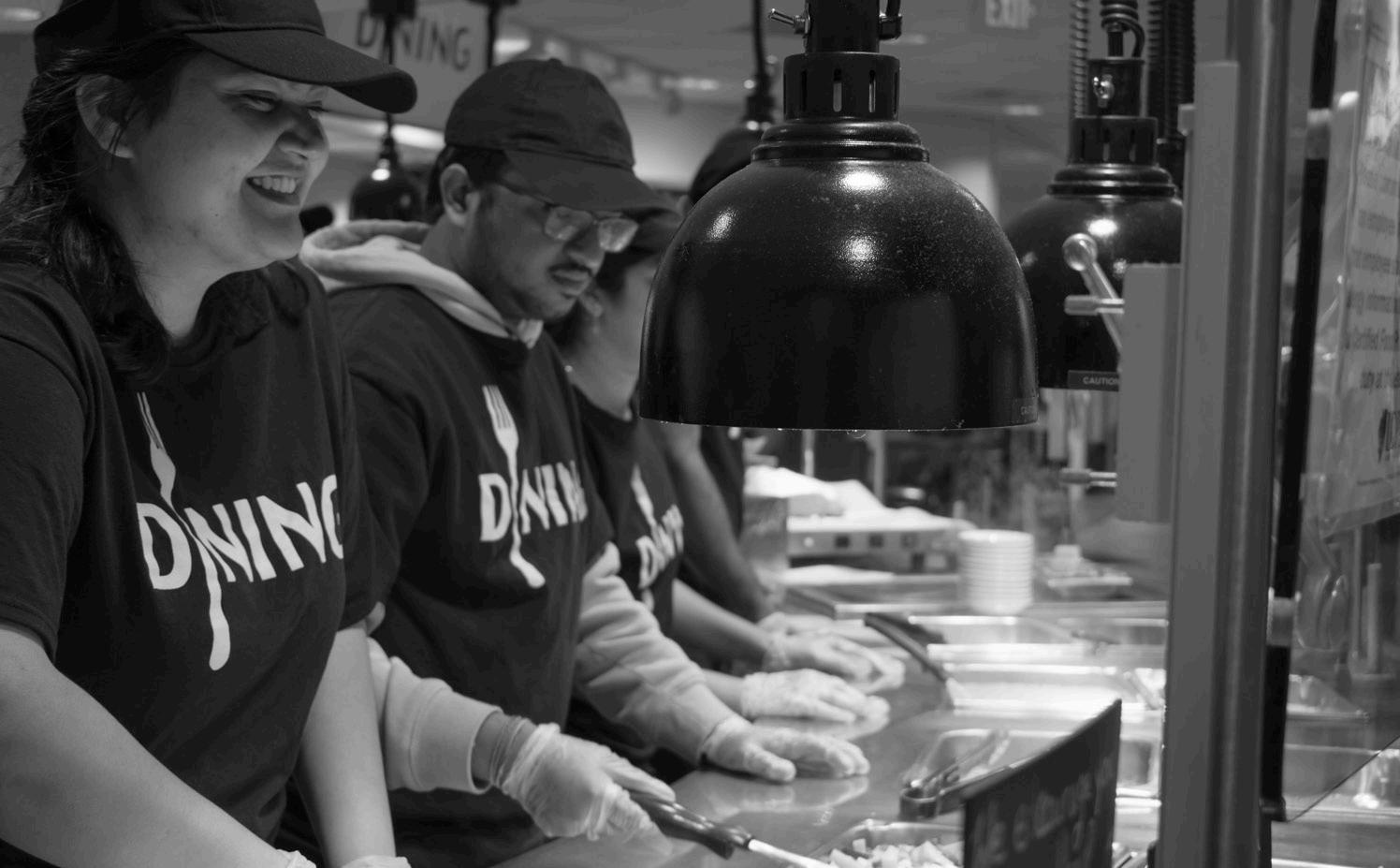
Wobbe said these changes and updates will hopefully show students that Dining Services wants to improve their time on campus, which has been hard to do due to staffing shortages.
“We’re down about 20 positions of our full time staff. We want to have variety in hours and operation. The first step is getting our team up,” Wobbe said. “So we are working on filling all those positions and then looking to the future of how fall will be. We know we need those positions because we’re running lots of overtime right now, but trying to get expanded. We’re trying to get more operations open. We have some hopefully cool changes that will be happening in the fall that will make all of the students happy.”
Megan Simmons, a senior exercise science major, expressed their concern with the lack of options for those with vegetarian and vegan diets.
“It’s probably pointless for them to buy a meal plan unless they wanted a salad or something like that. It’s not really much that
they can eat,” Simmons said. “You’re supposed to know what they’re serving, but it’s not always accurate. They can have the whole menu up here and you get up there and it’s something totally different. I feel like that’s like a waste of time.”
As well as vegetarian and vegan options, Wobbe said Dining Services are aiming to make international students feel more comfortable. He said they have been trying to add more variety and diversity to the meals, including Middle Eastern, Indian and Turkish cuisine. Wobbe also said Dining Services currently hires a fairly large number of international students.
“We’re actually looking at some of the international students, what we can do to make it feel more like home,” Wobbe said. “We went from having maybe 1020% of our staff as international students to the preponderance. I think we have 191 international students.”
Jinson Padilla, senior civil engineering major, said he believes Dining Services could use some improvements, though he is happy with what is available now.
“I think it’s okay, it could definitely be improved upon though, as far as choice selection goes. Seems sort of repetitive after a bit. So I think just changing it up maybe every two weeks instead of every week having the same thing,” Padilla said. “They
could add some new dishes, but other than that it’s pretty good.”
Wobbe said that they are actively making adjustments and plans to create a more versatile and sustainable vegetarian and vegan menu.
“Entree’s does give us some capabilities of changing the menu up and getting different things. We’ve been really working hard on the salads and we’re going to keep on introducing new ones. The kale salad, we’re trying to get weekly,” Wobbe said. “It’s really good. Looking at some other options. Honestly, we’ve had some issues at the beginning of this year and still going on with supply chain issues. So we’re always trying to just get everything in to get the current menu.”
Despite chain issues and the staffing shortages, Wobbe said Dining Services is seeing a large increase in customers from last year at the same time.
“We’re slowly coming out of the COVID experience. So from fall to spring, Paavo’s Express used to be open at 2 p.m., and we open earlier at 10:30 now. Auntie Anne’s, we open it up on Fridays now,” Wobbe said. “If you look at this spring versus last spring, we’re about 1,000 more customers per day from last February. We’re about 1,000 more than we were last year, which is good and we keep on slowly getting back to where we were.”
For more information, visit the Dining Services website.
alestlelive.com PAGE 3 Thursday, 03.02.23
Despite low staffing and supply chain issues, Dining Services have been reporting a large increase in customers since February last year. Director of Dining Services Dennis Wobbe said he thinks the increase is because last February, Dining Services and campus itself was still
“ We’re slowly coming out of the COVID experience … If you look at this spring versus last spring, we’re about 1,000 more customers per day from last February.”
Dennis Wobbe director of dining services
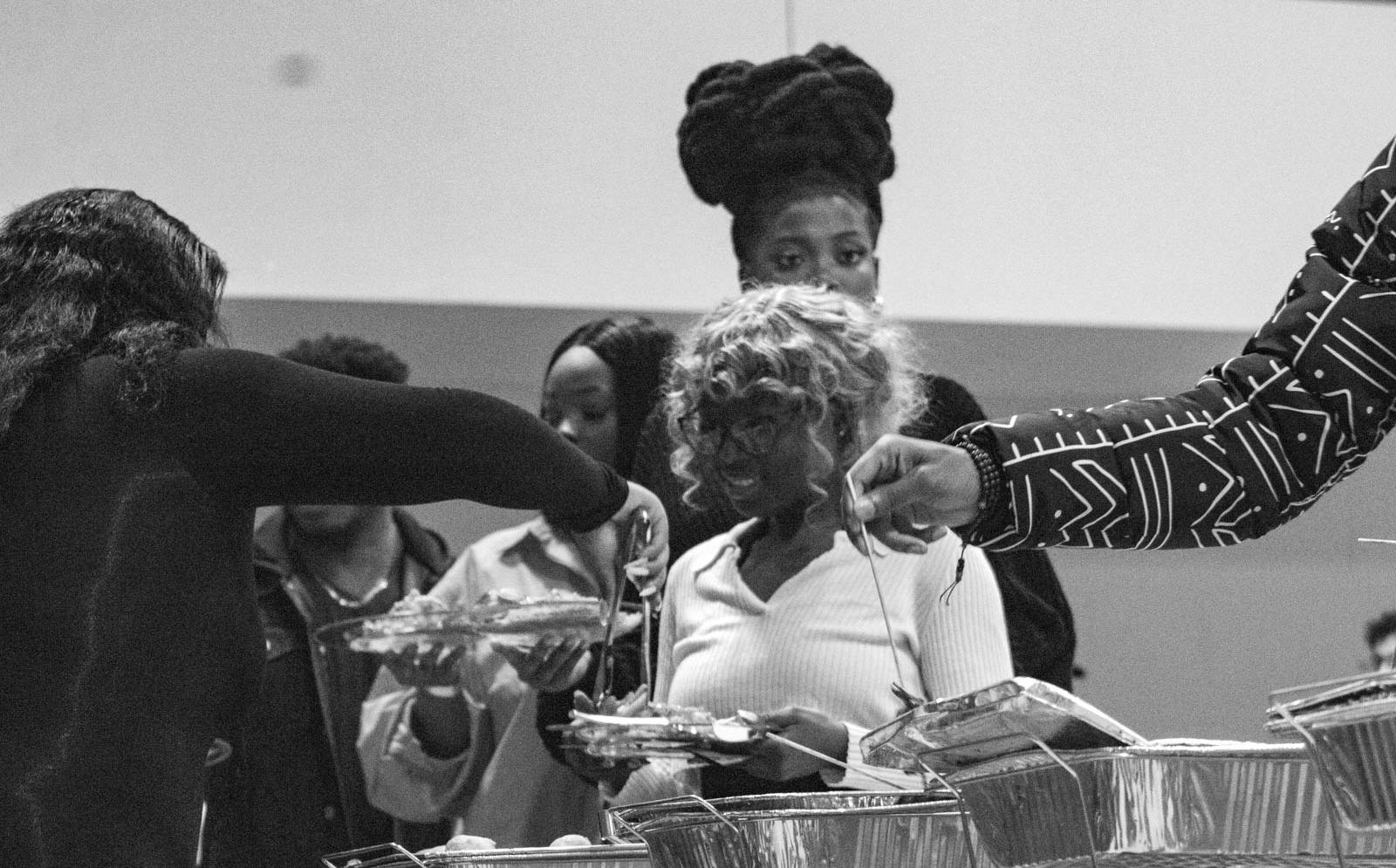
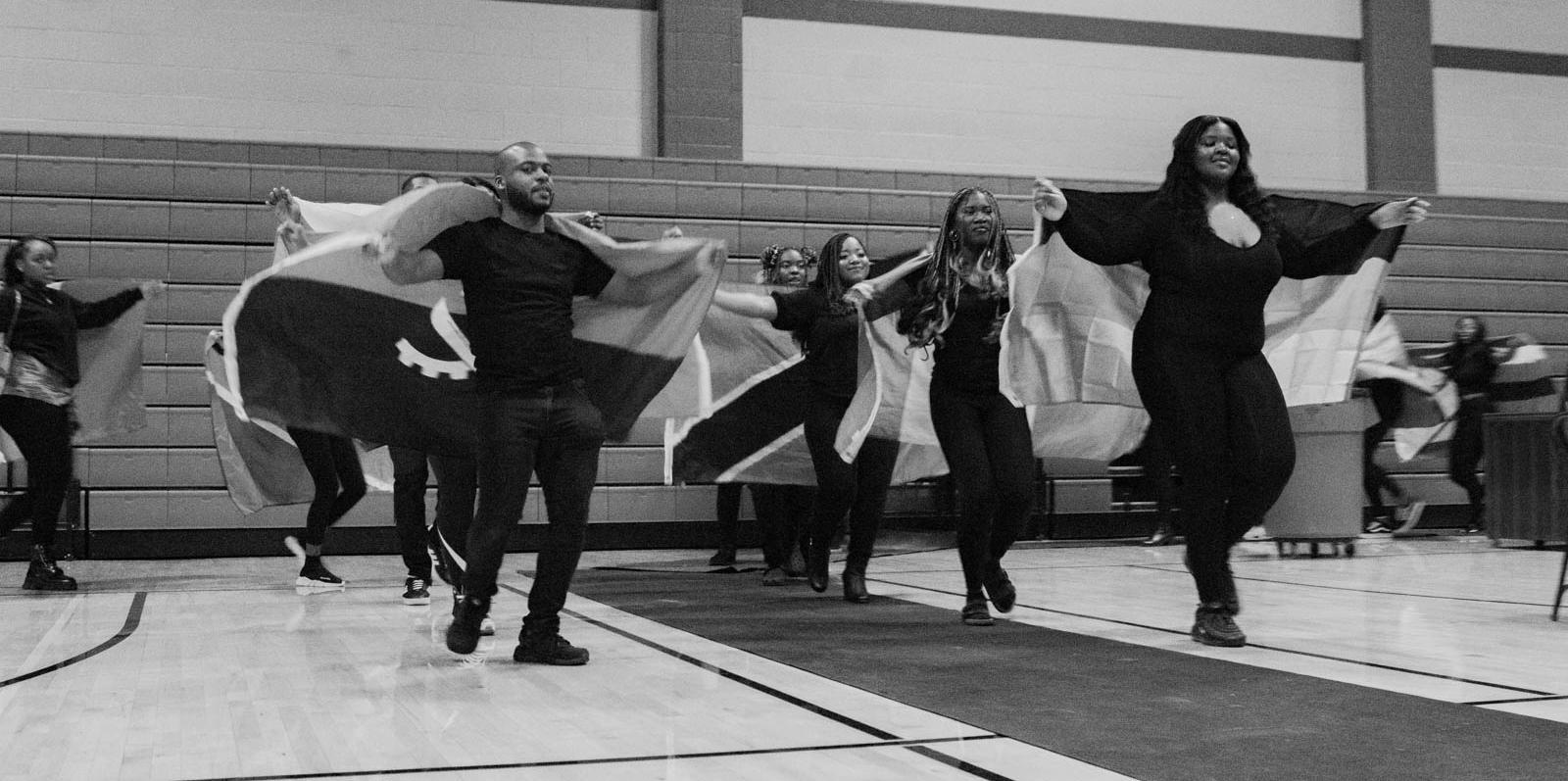
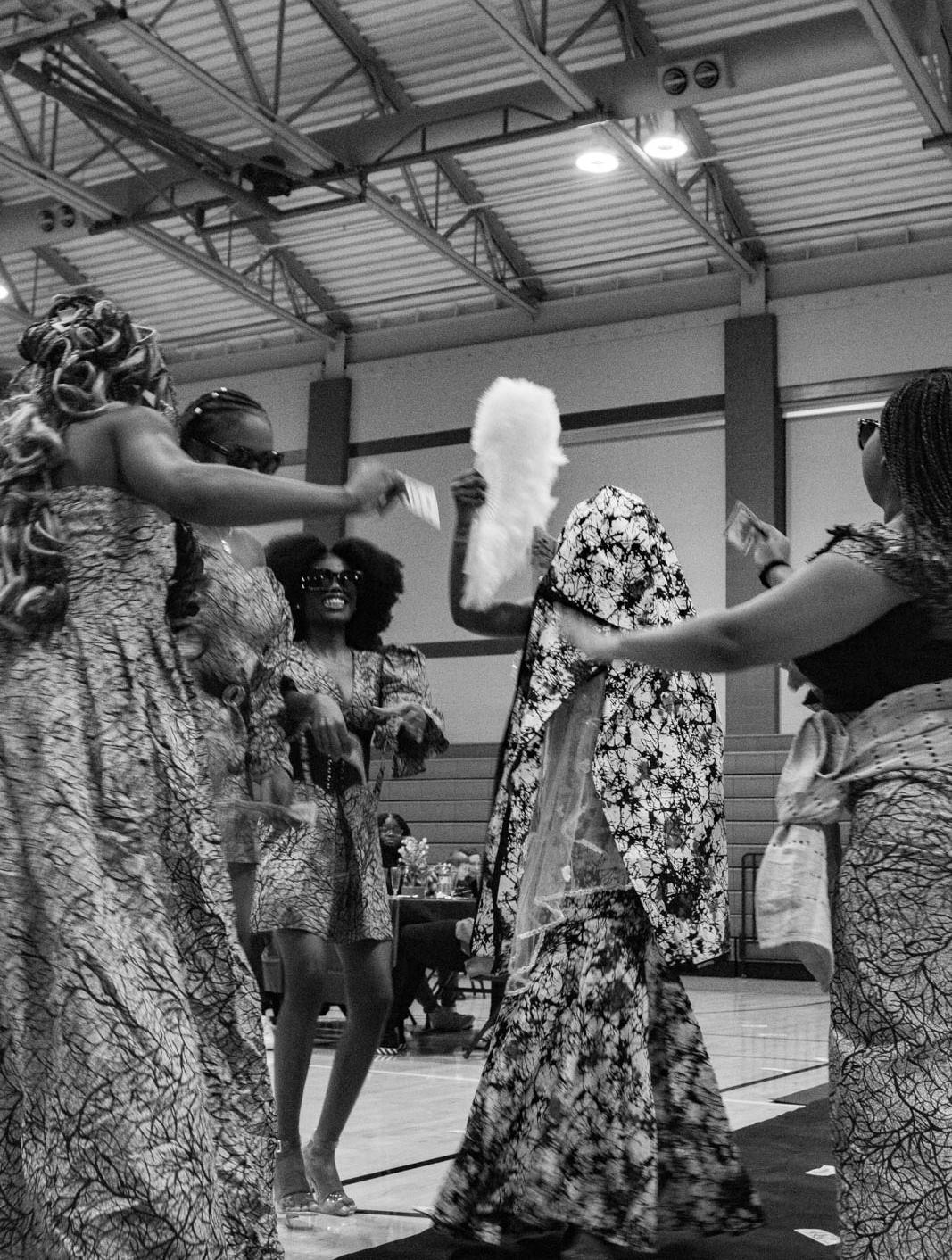
Diverse African cultures celebrated with food, fashion, flags
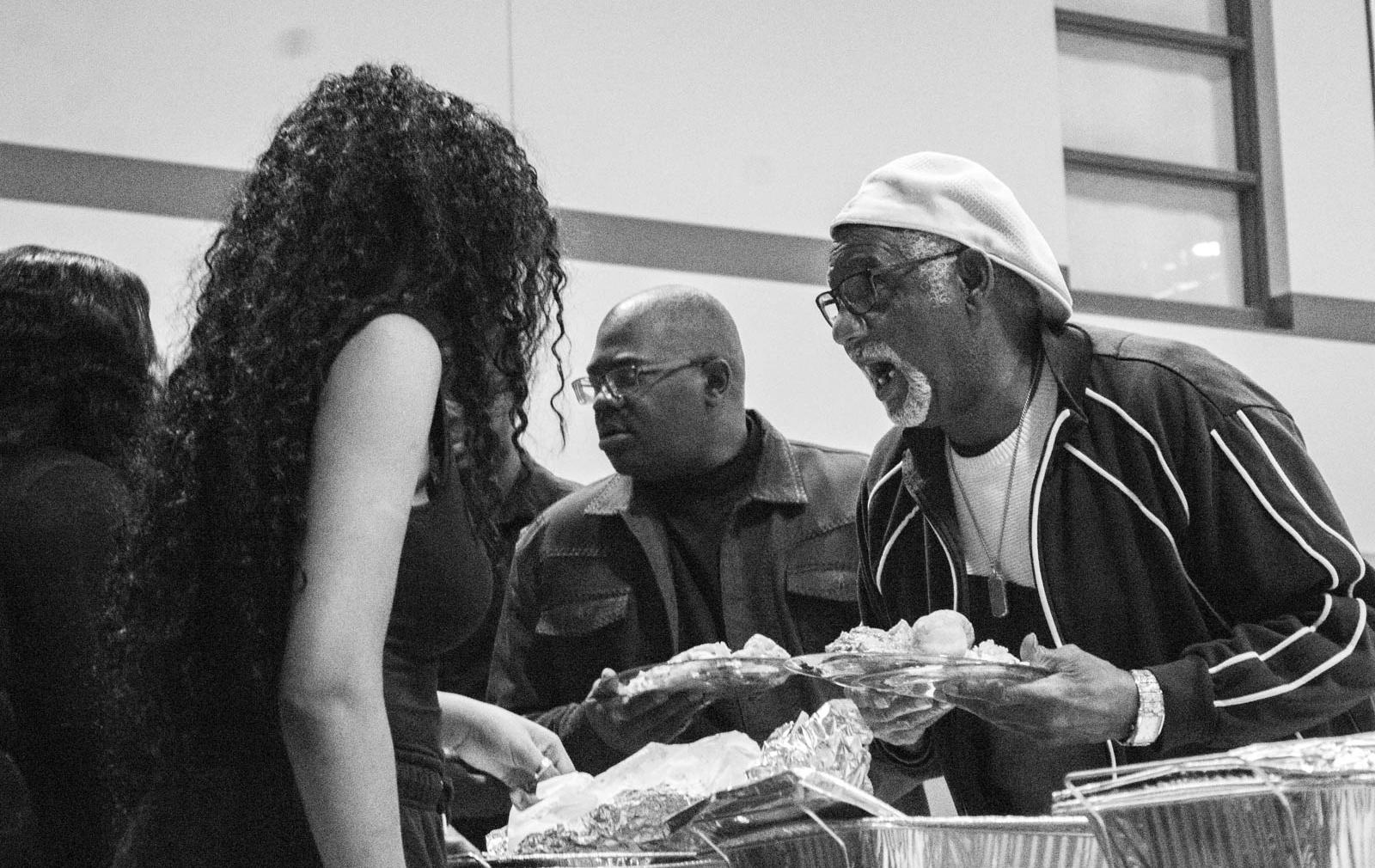
leads fellow attendees in presenting the flag of their nations on the runway as a collective after their individuals walks down the runway. The annual African Night Banquet is meant to celebrate and showcase cultures from around the African continent. Performance by students included presentations of singing, dancing, acting and poetry reading.
contact the editor: lifestyles@alestlelive.com 650-3527 THE ALESTLE WILL RETURN IN PRINT MARCH 16 WITH THE MENTAL HEALTH ISSUE. lifestyles alestlelive.com PAGE 4 Thursday, 03.02.23
The African Association Banquet presents a variety of African food of which many of the attendees were trying for the first time, and interviewed later by various event coordinators to be asked what they thought. | Damian Morris / The Alestle
African Student Association President Prince Kpae (left),
Damian Morris / The Alestle
Attendees walk down the runway, performatively presenting various selections of their traditional clothing through a fashion show. | Damian Morris / The Alestle
BRUCE DARNELL reporter it work, varying from the writing of the story to how the crew were able to produce the film and what techniques they’d use.
After its reboot for the new year, the Film Society has already screened multiple movies from a wide range of creators across the world.
President of the Film Society Bikash Pokharel, a research assistant in the Mass Communications department, wants to create a space where participants can actively and deeply engage in the medium.
“The Film Society is a place where we look at film in a different way,” Pokharel said. “It would be great if filmmakers or film enthusiasts could participate in our screenings and contribute your ideas and experience so we can collaborate on something.”
The film discussions go over each part of the movie that makes
Freshman Ava Johnson, an English education major, has gone to some of the screenings that the Film Society has put on.
“I think it’s fun,” Johnson said. “I would like to hear more voices and their different perspectives maybe.”
Though not a film major, Johnson still thinks the club has value to people who simply enjoy watching movies by allowing them to watch a variety of films that they may not see otherwise.
“I’m really glad that they’ve been showing movies from world cinema,” Johnson said. “Just getting to know older stuff or newer movies from different countries and cultures has been really interesting.”
Johnson said that the importance of screening world cinema is seeing how different routes can be taken in the filmmaking process. Another reason is so you can further understand a different country’s movie history.
The movie showings dedicated most of the time to watching the movie and approximately 30 minutes spent in discussion. Participants will ask questions and make comments about parts of the film they enjoyed or found the most interesting.
“The movies were good,” Johnson said. “But there weren’t that many attendees other than the ‘Everything Everywhere All at Once’ showing.”
Teaching assistant Chinedu Obuekwe, vice-president of the Film Society, said that showing movies from around the world helped open his eyes.
“It was really interesting seeing how many different ways culture can be translated through film,” Obuekwe said. “Our last showing had an Italian film set during the second World War set in fascist Italy… a first-time viewer was crying because she was Jewish and it was emotional for her and she was happy that we were showing the film.”
Obuekwe also described another aspect of the group that they wish to pursue further in the future.
“We’re working on films ourselves,” Obuekwe said. “We’ve already shot a short film that’s currently being edited. I acted in that one, and the president and another member were the directors.”
All short films made by the Film Society’s members will be screened during one of their
showings.
While Pokharel has hopes for a continual growth of the Film Society, he also understands that in-depth analysis may not be for everyone.
“From my experience of four to five screenings, we look at the films very seriously, but I doubt there are many people who would want to critique it in the same way we do,” Pokharel said.
Pokharel also said that due to the ability to watch film anywhere, many who may be interested in filmmaking might choose to engage in film on their own rather than by joining a group like the Film Society.
The Film Society is currently trying to broaden its participation. Screenings are hosted at 6 p.m. every Thursday at Lovejoy Library. Information about them can be found on GetInvolved.

REVIEW: Cults, funk and features make the latest Gorillaz album a hit
GABRIEL BRADY managing editor
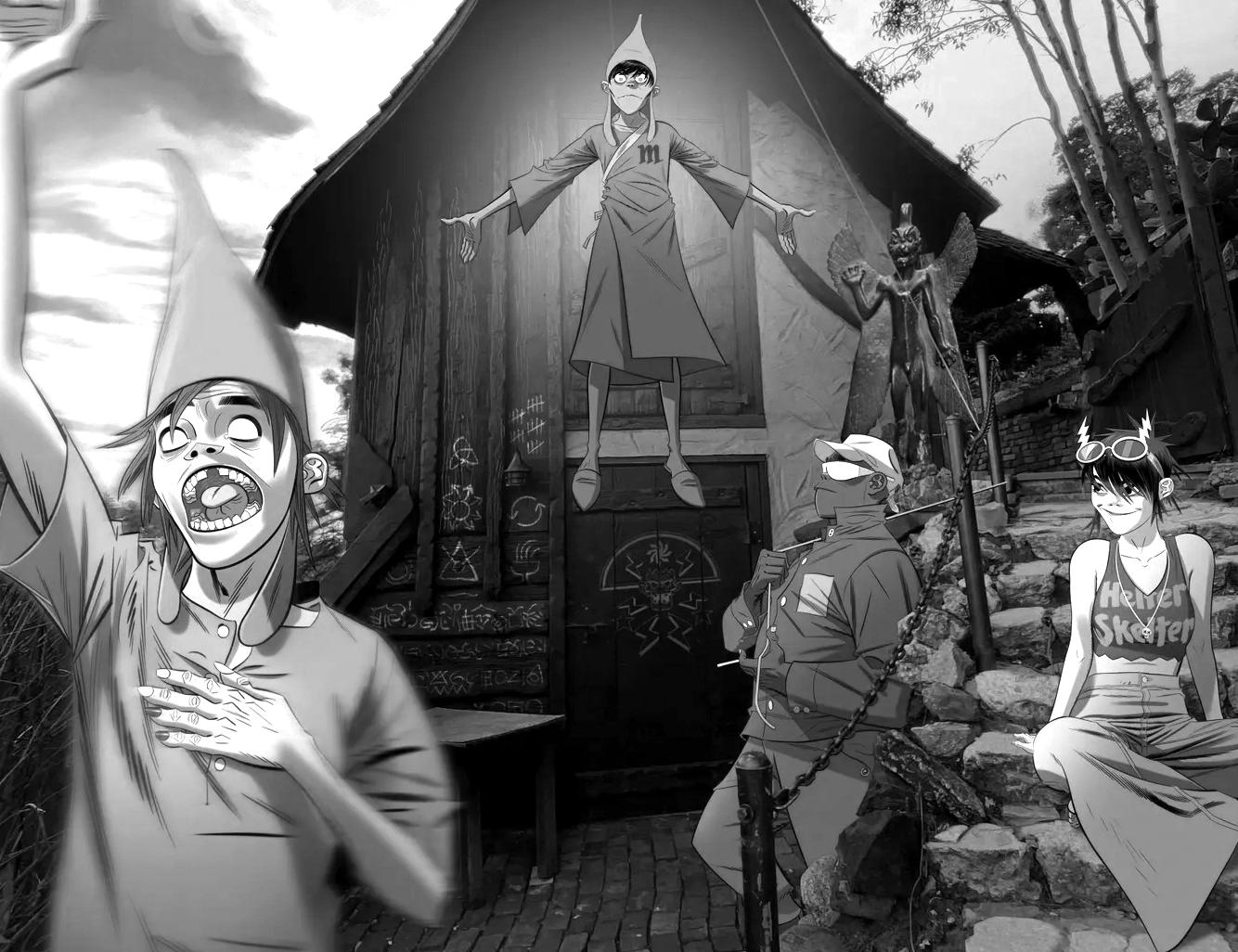
Gorillaz have released their second album of the 2020s, “Cracker Island.” Despite the non-deluxe album only being ten songs, it’s still a hit through and through.
Lately, it feels like dance music from the ‘70s and ‘80s are returning in a big way. Anderson .Paak and Bruno Mars put out a whole album of R&B music, featuring Bootsy Collins from Parliament Funkadelic, and most of Dua Lipa’s songs have a definite influence from funk and disco. This Gorillaz album is definitely taking that message to heart.
I’m a very physical person when it comes to music. I think that music doesn’t need to make you dance, but almost all music makes me move in some way. The album puts a very strong foot forward with its first track. The album’s eponymous song was the first single released for the album, way back in summer of 2022. It’s an explosive start to the album, with backup harmonies from Thundercat himself.
The track is followed up with another crazy feature: Stevie Nicks herself, on the song “Oil.” The drums on this track are infectious, as is true for most of the album. In fact, the sound and beat of the drums is incredibly
reminiscent of “Dreams,” from Fleetwood Mac, which is one of Nicks’ most famous songs.

After this song, it feels almost impossible for an even crazier feature, but Gorillaz pulls it off with Siri, from Apple, on the third track, “The Tired Influencer.” It’s a more laid-back piece, with an almost reggae beat.
Sometimes, with Gorillaz’ frequent collaborations, they accidentally create a fantastic mashup that was previously unthought of. A few great examples of this are also some of my favorites by Gorillaz — “Pink Phantom,” featuring Atlanta-based rapper 6lack and ‘80s pop icon Elton John, or “MLS,” with Japanese experimental pop group Chai and underground U.S. rapper JPEGMafia. Track has that exact same energy. Australian independent pop artist Tame Impala and rapper Bootie Brown create a groovy, fun match-up that you have to hear.
The weakest point on the album is the penultimate track, “Skinny Ape.” Whereas every other song on the album has the combination of the strange, artistic choices from Gorillaz mixed with strong funk influences, this track feels like it was played at one of my middle school dances — in a bad way. The chorus is obnoxiously repetitive, with an incredibly excessive, almost
dubstep keyboard riff. It almost feels like a joke song, added in just to mix the album up. I can appreciate a good joke, but with the rest of the album sounding so polished, this track comes across as unnecessary.
Luckily, the madness of “Skinny Ape” winds down with “Possession Island,” a beautiful, quieter piece that builds to a triumphant end. I would argue this track could compete with “On Melancholy Hill” and “El Mañana” for being one of the most beautiful, sad tracks Gorillaz have ever released (though, some more diehard fans may disagree). When the final build happens, the piece explodes into trumpets and acoustic guitar, giving it an almost Latin sound, like the end of a Western movie.
There’s another point of Latin influence on the album, with a song featuring Puerto Rican Grammy-award winning artist Bad Bunny. The song, “Tormenta,” has become a big hit among Gorillaz fans, thanks to its catchy rhythm and the fact that Bad Bunny may be the most mainstream, currently popular artist featured on the album, excluding Thundercat.
The imagery of the lyrics on the album are covered in the darkness that many Gorillaz songs are, but the musicality and rhythms keep the energy up.
Like other previous releases, the album centers a lot on loneliness and drifting away from others, which ties into the promotional art and lyrics of the first track. A cult, like the one on fictional Cracker Island, is sometimes where isolated people find themselves, and can be a community to bring people together. However, as is often the case in both Gorillaz music and with this album, there may be something sinister lurking beneath.
As is true with any band that’s been releasing music for any extended period, there’s bound to be fans who only want the artists
to release the same debut albums and never advance their sounds. Some fans said “Humanz,” an album from 2017, had too many features, even though Gorillaz often has a long list of features on every album. “Demon Days” was by far their most popular album, and some fans always want that same album again. For the fans who want to see Gorillaz change and want to see how they use influences from a wide variety of artists while maintaining their weird sound, “Cracker Island” is perfect.
To listen to the album, go to Spotify or Youtube.
alestlelive.com PAGE 5 Thursday, 03.02.23
| via Gorillaz
THE ALESTLE WILL RETURN IN PRINT MARCH 16 WITH THE MENTAL HEALTH ISSUE
EMILY STERZINGER Editor-in-Chief



alestlelive.com

Cougar Controversies
Are you enjoying the warmer weather?
67%
33%
yes! no!
Questions go up at 10 a.m. every Monday on Twitter: @TheAlestle
Education and advocacy should last beyond February
KIRSTEN O’LOUGHLIN
Graphics Manager
ELIZABETH
DONALD
JANA HAMADE
AUDREY O’RENIC
WILLIAM BANKS
Copy Editors
TAMMY MERRETT
Program Director
UDIT NALUKALA

Circulation Manager


HAVE A COMMENT?
ANGIE TROUT Office Manager
DYLAN HEMBROUGH CAMELA SHARP Reporters
WINTER RACINE CHLOE WOLFE Photographers
THEA WELTZIN Illustrator
Let us know! opinion@alestlelive.com
Campus Box 1167
Edwardsville, IL. 62026-1167
LETTERS TO THE EDITOR POLICY:
The editors, staff and publishers of The Alestle believe in the free exchange of ideas, concerns and opinions and will publish as many letters as possible.

Letters may be submitted at The Alestle office: Morris University Center, Room 0311
e-mail: opinion@alestlelive.com
All hard copy letters should be typed and double-spaced. Letters should be no longer than 500 words. Include phone number, signature, class rank and major.
We reserve the right to edit letter for grammar and content. Care will be taken to ensure that the letter’s message is not lost or altered.
Letters to the editor will not be printed anonymously except under extreme circumstances. We reserve the right to reject letters.
As Black History Month comes to a close, challenge yourself to educate yourself more on the impact and legacies of Black history in the United States.
Black History Month is a valuable tool used to encourage people to learn more about the history of the United States because in the simplest terms: Black history is American history, but if we limit our learning to 28 days we are not going to get anywhere.
Black History Month, or Black Heritage Month as SIUE has called it, should be a launchpad, a starting line— not
a contained unit or an ending point. Use the resources provided during February to continue learning throughout the year. Even better, support Black educators and creators year-round to ensure that access to Black history is always available.
The best thing about history is it’s more than just stuffy dudes sitting in a classroom talking about old European royalty, it’s vibrant and, ironically, living. Historians are making daily discoveries, people are finding more about their family history all the time, and each day that passes is another day recorded in history.
Black History is no different, with more and more historians
looking past the colonizer narrative, and seeing the value and impact of Black history on the blueprint of our nation.
Black History is more than slavery or the civil rights movement. It’s all the suffragettes who fought together, the cowboys who travel to the West and the musicians who shaped the present-day musical landscape in genres such as rock, jazz, and pop. It’s the historians who did research with minimal and gatekept resources, the anthropologist who recorded interviews of people ostracized by mainstream society to make sure we would hear first-hand accounts today.
All the writers and journalists re-
corded history, even if they didn’t know it. Black History is the union leaders, doctors and nurses who cared for those who hated them, the Black policymakers in state and federal government in the 1800s who fought for equality during the reconstruction period and beyond.
In the next 11 months, challenge yourself to find one person or one topic in Black History and take some time to learn them. Find someone outside of the typical Black figures we learned about in grade school such as Martin Luther King Jr. or Rosa Parks because there are so many more cool and inspiring people in Black History.
Independent artists on YouTube are the future of entertainment
minimal effort.
available every other Wednesday during summer semesters.
For more information, call 618-650-3528. For advertising, email advertising@alestlelive.com.
In corporate America, individualism is at an all-time low and everyone is expected to follow set guidelines and rules or propriety in all regions of work.
These guidelines even constrict the industry that is supposed to be filled with creativity: the entertainment industry. Every animated movie that has recently come out has had the same typical “Disney face” with large eyes and thin chins for the ladies, as well as large noses for the men.
This is not the case for animated movies. Live action films are also beginning to lack the original spark that movies once had. For example, consider every live action movie in the recent years that Disney has made. All the original films such as “The Lion King,” “Aladdin,” “The Jungle Book,” etc., are amazing movies that rightfully deserve their hype. However, the live actions that followed were more than disappointing. Every CGI animal lacked emotion and very much came off as
Disney is not the only culprit of wringing the entertainment industry dry of emotion. Independent Film Studios have begun to do this as well. The new movie Skinamarink, produced by IFC Films and BayView Entertainment, is guilty of prioritizing money. The movie itself appears to be very low budget with its astounding three cast members who rarely ever get shown on screen. Call this artsy, but this film never provoked any emotion other than disdain from me. It took me quite some time to come to that conclusion, but after reflecting on the various sponsorship deals it likely took to make the movie possible, I feel that director Kyle Edward Ball was looking for a quick buck.
Outside of multimillion-dollar companies who care more about money than creative storytelling, there are some astounding creators. YouTube is an amazing ad-supported hub for upcoming creators who create because they love what they do. YouTube creators have to love their work because if they do not,
no one else will – much unlike the mass production studios who gain support simply because their works have their name on it.
An amazing example of an independent studio who releases their content on YouTube is Spellbound, with content creator Matthew “Matthias” Frederick leading the company . Frederick has won multiple YouTube creator awards for his videos and deserves many more for his series “Project 863,” which follows the story of him and his coworkers uncovering secrets left behind in their building by the nefarious (and fictional) company Syntec.
The series kicks off as Matthias Vlogs, his channel featuring many challenges and fun content with hints of ominous shadows. Everything starts with the finding of a box of mysterious keys in the building’s wall and ends with unimaginable secrets being uncovered. The series is an impeccable example of a passion project, complete with astounding acting and absolutely amazing plot. With a story that took years in the making and focuses on the mystery and action of working
in an evil company’s shadow, the plot is extremely well thought out and even more well executed.
The show finale fills in all questions, and rewatching the show with this new information, every little detail adds up. The sheer amount of foreshadowing is incredibly impressive, and this series is far more awe-inspiring than the movies I have seen in recent years.
His series was interactive as well, the audience a major player in figuring out the mysteries surrounding every clue and item the team came across. Even now, the story continues to unravel with audience input in the form of novels.
Youtube gives creators a platform to share their stories such as this one, and I believe that stories made from passion and hard work will forever outweigh the value of recycling old ideas for quick payouts. Individual creators deserve far more credit and recognition for the work they pour their heart into. Make sure to support smaller artists and check out Project 863 on the YouTube channel OVERKILL.
Share your thoughts: opinion@alestlelive.com 650-3527
OPINION
THE ALESTLE STAFF editorial board
DAMIAN MORRIS Multimedia Editor
an acronym derived from
is
on Thursdays in print
online
the fall and
semesters. A print edition is
The name Alestle is
the names of the three campus locations of Southern Illinois University Edwardsville: Alton, East St. Louis and Edwardsville. The Alestle
published
and on Tuesdays
during
spring
PAGE 6
NICOLE BOYD Online/Opinion Editor
GABRIEL BRADY Managing Editor
BRUCE DARNELL Sports Editor
THEA WELTZIN illustrator
AMINA SEHIC Office Clerk
FRANCESCA BOSTON Lifestyles Editor
03.02.23
Part-Time Babysitter for 12-year-old. Some evenings and/or weekends. Near campus. Send resume and cover letter to: BJT.1915@yahoo.com.


alestlelive.com PAGE 7 Thursday, 03.02.23
Ben Sorden, the new head coach of the SIUE softball team, is doing well with the players so far. He complimented the team saying how impressed he is by how they’ve responded to him being their new coach.
“I think we’re learning a lot about each other and we’re adapting to one another. I’ve been very, very impressed with how they are taking to a new coach, a new system and frankly a new way of thinking about the game,” Sorden said.
Sorden speaks highly of the team, discussing how well they are doing with their progress. He shows to be an honest, optimistic and understanding coach as he reviewed the team’s performance during the games that took place over this past five-game weekend.
“I think we’re getting better every week and I noticed this Saturday that we actually played really, really well,” Sorden said. “I think fatigue set in on Sunday and we just were not conditioned for a five-game weekend, not only physically, but mentally. It takes a lot… We played two games on Friday, two games on Saturday and then one game on Sunday.”
Sorden mentioned some star players to look out for
season.
“Lexi King is on fire. She is leading us in hitting. Lexi has been playing very well, most recently Paige Rocha and Abby Braundmeier have come on. Micah Arps is improving every week. Both Kelsey Ray Syd Ballman have been steady in the circle. Freshman newcomer Riley Pindell is showing progress,” Sorden said.
Sorden and the team’s goal is to be in the top three in the conference. He identified the team’s biggest challenge as everyone getting to know each other.
“We want to be in the top three in the conference to put ourselves in the best position for the conference tournament, to win the conference tournament. I think the biggest challenge is getting to know each other. I’ve only been here a short time,” Sorden said.
The team does connect
through certain activities that get all of their spirits up. They have a little dance party before each game and they have something called a ‘home run hat.’
“Whoever hits the last home run or a pitcher that throws a
no-hitter gets to pass the hat, and then they can keep that until the next time,” Sorden said.
“We have speed, we have power, but more importantly, we have flares from all over with different backgrounds and different resources that they bring together,” Sorden said.
Sean Lyons, the baseball team’s six-year coach said their team is also doing well.

There are so many new players that half of the roster is newcomers. The season looks like it may be successful, looking at how the first weekend of the season has gone for all of the players.
“Over half of our roster are new faces to SIUE and to the program compared to last year. We just had our first weekend this past season, and a lot of those new players got their feet wet. So you know there’s obviously some optimism early in the season right now as to how the season can go, but I think there’s still a lot of positions up for grabs and pitch-
ing depth is still a question,” Lyons said.
Some players to look out for this season are junior Josh Ohl, junior Brady Bunten, junior Brennan Orf, junior Avery Owusu-Asiedu, senior Ole Arntson, freshman Garrett Helsel, freshman Chase Bloomer, junior Teague Conrad, senior Jake Bockenstedt, and junior Hayden Cooper.
“There’s a pretty good chance that they’re going to have a good season for us. I think the guys have worked really hard. The entire team has worked very hard throughout the offseason,” Lyons said.
Practices have been going well, especially now that the weather is slowly progressing and the team can practice outside more.
“Practices have been great,” Lyons said. “The weather here in February has been pretty mild. When you’re outside you can do full field size, defensive work and hit outside. And when you’re indoors, your space is limited so you can only do so much,” Lyons said.
The teams first home weekend is March 3 through March 5. They will be playing Western Illinois. OVC will start on Mar 24. They will be hosting the preseason at Southeast Missouri and will play Mizzou here on Apr 26.
SIUE Esports remains strong through middle of the semester
BRUCE DARNELL sports editor
Having both highs and lows, the Esports Club has kept its sights on winning as the semester reaches the halfway mark.
Senior Esports Club President Ben Wilke, a secondary English education major from St. Rose, Illinois, said that some teams either do extremely well or end up in the mid-range.
Esports is online competitive video game playing. It’s gained more traction over the past few years due to COVID-19 as more people have been inside and Esports online nature allowed for people to safely connect.
Some of the higher contenders are the Valorant Black team, the Call of Duty team and the Overwatch Red team. All three games are first-person shooters, which means competitions are team based instead of individual.
One of the Valorant players, Tyreese Adams, got 30 eliminations against other players in a match on Monday where the team went 2-0.
“Valorant should be 4-1 right now out of the five games they’ve played,” Wilke said.
“Our Overwatch Red team is also undefeated. Not too recently they faced one of the Carbondale teams and had a 3-0 against them.”
The club doesn’t limit their teams to fall or spring seasons, but they have tryouts at the start of each new semester so they can always keep new players coming in.
Matches are streamed on a personal, player-by-player basis. Wilke wants to remedy this in the future by dedicating more time to the club’s Twitch channel to streaming big matches.
“We have a club Twitch that predominantly is being used for Smash Ultimate, but I’m trying to adjust that for how content is adjusting,” Wilke said. “We’re trying to get more variety in content on there.”
The club can be reached through their Discord, discord. gg/siueesports, through Wilke at bewilke@siue.edu or by visiting their room in Bluff Hall.
contact the editor: sports@alestlelive.com 650-3527 SPORTS alestlelive.com Thursday, 03.02.23 PAGE 8 THE ALESTLE WILL RETURN IN PRINT MARCH 16 WITH MENTAL HEALTH ISSUE
CAMELA SHARP reporter this
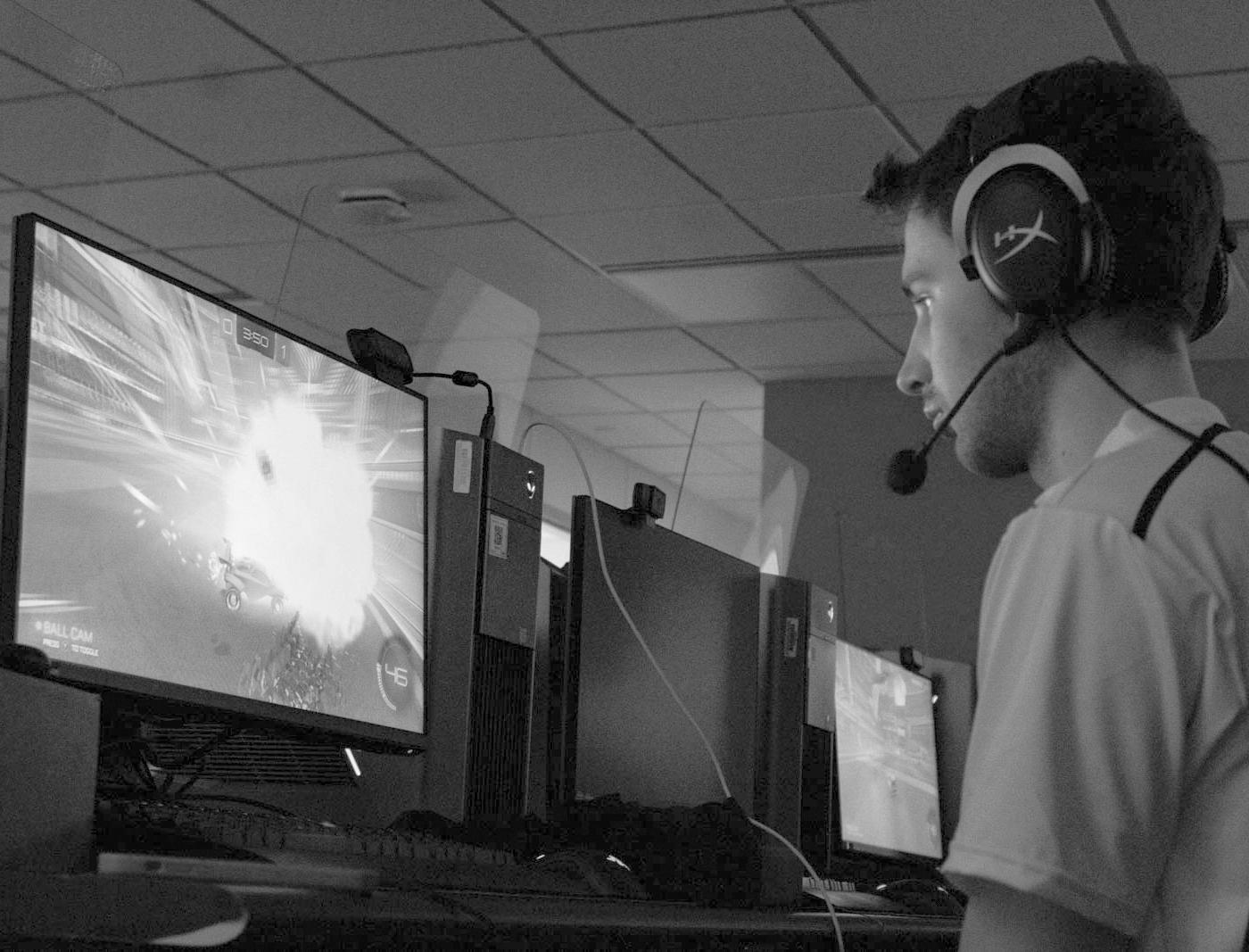
Freshman Luke Robinson demolishes another player in Rocket League in the Esports Arena. | Damian Morris / The Alestle
Players Josh Ohl and Brennan Orf chat on the field. | Clair Sollenberger / The Alestle
