

U pcoming e vents
ALAS Field Trip
Snowshoe Mead Conifer Bog
Sunday, February 8 8 a.m.
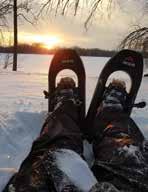
Come join us Sunday, February 8 at 8:00 AM for a snowshoe hike and explore a small island of boreal habitat in our own backyard! We will hike into the Mead Conifer Bog State Natural Area, which is part of the larger Mead State Wildlife Area. Dominated by black spruce, the bog can host an interesting mix of wintering birds and other wildlife. Goldencrowned Kinglets, Common Ravens, redpolls, and other species utilize this habitat most winters. If we’re really lucky, we may even happen across White-winged Crossbills.
Snowshoes are available to borrow at the Mead Visitor Center. RSVP online at www.aldoleopoldaudubon.org/event-details/snowshoe-winter-hikeat-the-mead or contact Rob Pendergast at acadiantigerheron@gmail.com or (715)498-4885 for details.
Weekly Bird Walk Schedule
Wisconsin Rapids Riverfront Sunday, February 15 - 7:30 AM Dependent on weather! Please check the website before you leave! https://www.aldoleopoldaudubon.org/ weeklywalks
Meet at Mead Rapids View Park in Wisconsin Rapids. We will walk portions of the riverfront looking for waterfowl. Check weather conditions beforehand, if temps are projected to be below zero or heavy snowfall is predicted, expect this outing to be cancelled or rescheduled.
For this walk we will walk along the Wisconsin River in Wisconsin Rapids. Access to the river is mostly concrete and the terrain is flat. Dress warm as we will be outside for most of these outings. We may opt to drive to a few other locations to increase species seen. Expect to be out for an hour at least and we will walk a half-mile or so.
Google Maps Pin: https://maps.app.goo.gl/RPuqMkfWTmgQ3wbU7
GPS Coordinates: 44.39315682721459, -89.82327722125481

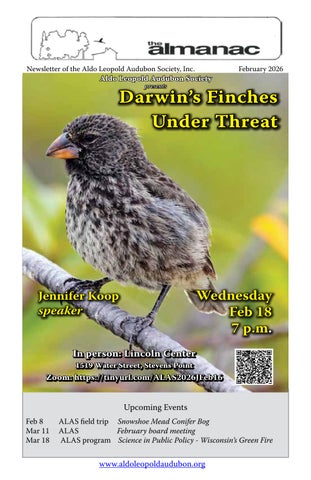
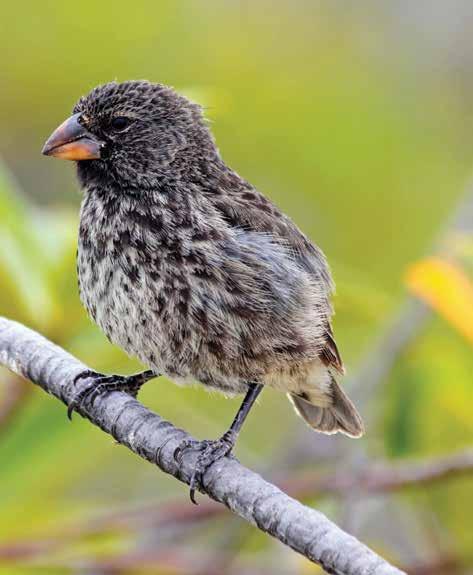
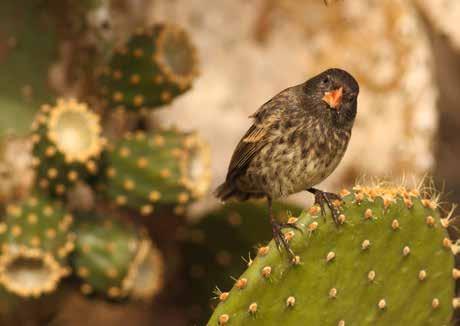
Jennifer Koop grew up in La Crosse, Wisconsin along the Mississippi River. She received her bachelor’s degree in Zoology from the University of Wisconsin and did a semester abroad in New Zealand with UW-Stevens Point. After receiving her bachelor’s, she went to University of Utah to pursue her PhD. She began her dissertation work looking at parasite defense mechanisms in pigeons, doves, and starlings, but in her second year began work in the Galápagos Islands on an invasive parasite of Darwin’s finches. She fell in love with the islands, their people, and their biota. She went on to an NIH funded postdoctoral fellowship at University of Arizona in Tucson, where she practiced her birding skills in the Santa Rita Mountains and studied the contributions of Phainopepla to the spread of mistletoe. Jennifer later accepted a position at University of Massachusetts-Dartmouth, where she worked until 2019, when she moved with her family to DeKalb, Illinois to be closer to extended family. She is a National Geographic Explorer and has had the opportunity to continue her research in the Galápagos through that partnership.
Jennifer is now an associate professor of biology at Northern Illinois University. Her graduate students study the ecology and evolution of avian invasive parasites including those in the Galápagos, but also a bit closer to home in the Great Lakes region. Her research lab uses both lab and field-based methods to recreate invasion pathways, quantify parasite effects on hosts and their environments, and determine ecological and evolutionary mechanisms of successful invasions. She teaches courses in ecology and evolution, birds and mammals, and parasitology. Her birding skills are questionable, but her love for the field is not!
Join us as Jennifer explains her fascinating research and field work with Darwin’s finches and their invasive threats. ALAS programs for the 2025-26 season will continue to be hybrid, with the in-person presentation held at the Lincoln Center (1519 Water St., Stevens Point, Wisconsin) and remotely live via Zoom on February 18, 2026. To view via Zoom, register at https://tinyurl. com/ALAS2026Feb18 Find this link on our website under the Events-Presentation tab.
Dates are correct as of press time.
Always be sure to check the ALAS website before you leave!
Aldo Leopold Audubon programs and field trips are free and open to the public.
DelightFUl BirDs i have (not) known
Guess That Bird
Alan Haney
This is a quiz. I’m going to describe a bird and your challenge is to guess its identity before it is revealed. I’m pretty sure you know of this bird even if you haven’t seen it in the field.
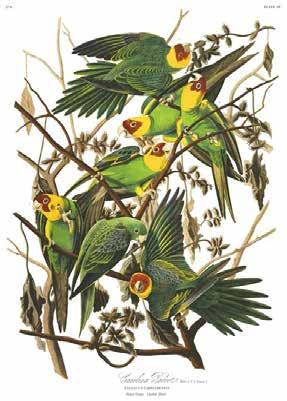
These birds were slightly smaller than the Mourning Dove (although they had a longer tail and wider wing-span). Males were slightly larger than females, but sexes otherwise were quite similar. Most striking was their color. They had a yellow head with an orangish-reddish face with a heavy, pale beak. Back and wings were olive-green or bluish, more green than olive, and with a breast and belly paler green. Shoulders were yellow, and yellow feathers extended down the front edge of the wings. Juveniles lacked the bright colors and were overall greenish-olive. Observers likened this bird to gems in the sky, suggesting that they looked like Christmas ornaments on a tree with their heads glowing like candles.
There were two subspecies; the one that ranged as far north as southern Wisconsin was more bluish, less green. The southern subspecies, occurred yearround in Florida and along the Atlantic and Gulf coasts from New York to east Texas. The more northern Midwestern subspecies had summer breeding range from northern Louisiana to Lake Erie and southern Wisconsin to eastern Nebraska. This subspecies moved south in the winter, avoiding the worst of our cold weather. It was then that the Midwestern population intermingled with the southern subspecies, and as spring advanced, genes were sometimes exchanged.
This species preferred a forest- or forest-edge habitat. In larger trees, often in floodplain habitats, it could find cavities in hollow trees for roosting as well as nesting. It sometimes used even hollow stumps. The species was monogamous, and strong pair-bonds persisted for the life of the birds. Two to five (mostly two) eggs comprised a clutch; “egg dumping,” however, when a female lays eggs in nests other than her own, was probably common. Incubation was shared by the male and female, and averaged 23 days. Young fledged in about 18 days and remained with the parents. Indeed, this was a very social bird. Not only did several pairs commonly nest in the same tree cavity, the birds traveled and foraged in noisy flocks of up to 200 or 300 birds. Primary food was nuts and fruits of a wide range of species, from acorns to pine or cypress seeds, and even seeds of some herbaceous species such as giant ragweed or cockleburs. Fleshy fruits such as apples, cherries, and grapes were eaten when available, along with some
insects, especially when feeding young in the nest.
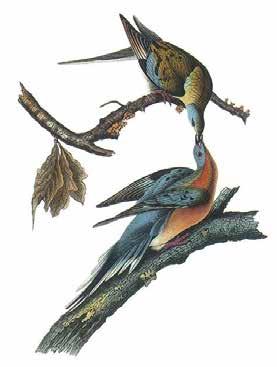
The population of this species was estimated to be in the millions in the early nineteenth century, but was observed by Audubon to be on the decline in 1831. The last known member in the wild was killed near Lake Okeechobee, Florida in 1904. The last captive member of this species died in the Cincinnati Zoo in 1918. It was declared to be extinct in 1939. As with most species that are approaching extinction, there were many contributing reasons.
Certainly, cutting old-growth forests resulted in loss of the mature forest habitat the species required. Fewer cavities, fewer successful nests, with greater competition from other cavity-nesting birds such as Barred Owls. Even greater competition for hollow trees was from European honeybees that were introduced into Virginia in 1622 and slowly spread across the country. Feathers had become fashionable for women’s hats and the millinery trade was going strong in the late nineteenth century. The bright feathers of this bird were highly prized, and market hunters took advantage of the social nature of the species that enabled a hunter to easily take several hundred birds in a day. Farmers also disliked the damage the birds could do to their fruit crops; damage in orchards increased as forests were cleared and the wild mast crops became more limited.
Still not sure what bird is being described? This has been a summary, based on the best available evidence of the extinct Carolina Parakeet (Conuropsis carolinensis), with two subspecies (the southern subspecies, C. c. carolinensis, and the Midwestern subspecies, C. c. ludovicianus). If your first guess was the Passenger Pigeon, you weren’t far off. There were some remarkable similarities between these unrelated species. Both are now extinct; both utilized similar foods; both were subject to market hunting, the parakeet for its feathers, the pigeon for meat; both were social species often moving in huge flocks; and both co-existed over roughly the same period in the eastern deciduous forest.
But here’s a less-known fact about the two species. The last Passenger Pigeon, Martha, was held at the Cincinnati Zoo. She died 1 September, 1914, presumably of old age. Carolina Parakeets lived longer than pigeons. The last known Carolina Parakeet, called Incas, also had been captive at the Cincinnati Zoo. He had been there for 35 years when he died, also apparently from old age. He died on 21 February, 1918, four years after Martha. For many years, they occupied the same aviary cage.
Our world is poorer for these lost species, and we should be alarmed that one in eight birds, over 12%, is currently threatened with extinction. That’s more than 1,400 species! The two primary causes are loss of habitat and climate change.
Passenger Pigeon
John James Audubon
F rom the p resi D ent w ings o F h U manity
Susan Schuller

As the recent events in our country and world continue to affect my state of mind, I think about the symbolism of birds used throughout history and across the globe. Despite where you fall politically, there is no denying birds continue to be a symbol used for peace, justice, resistance, and freedom. Throughout human history, birds have served as more than just inhabitants of the sky; they are symbols of our highest aspirations. Perhaps no bird is more globally recognized than the white dove as symbol of peace. Today, the dove can be seen on banners worldwide demanding the end of war, conflict, and fighting. As a Returned Peace Corps Volunteer, I bear this logo proudly. The dove’s gentle nature offers a vision of a world grounded in compassion rather than conflict.
Freedom is most symbolized through the act of flight, which allows birds to traverse the sky and earth. The Bald Eagle has represented freedom and independence since 1782 in our country.
During the African American struggle for liberation in this country, which can still be relatable today by many people of color and indigenous groups, Maya Angelou’s analogy of the caged bird in her poem I Know Why the Caged Bird Sings is used as a representation of this struggle. The “caged bird” represents the enduring hope for freedom despite systemic constraints, reminding us that even when wings are clipped, the spirit continues to sing for justice.
And recently, with the protesting in Minneapolis, I have noticed the use of the state bird, the loon, used as a symbol of resistance. I needed to do a little research on this. With the use of AI, I learned that in the last year, there is a movement to use state birds drawn with their wings formed in a circle spanning over their heads. This is a grassroots movement known as State Bird Resistance or “Rebel Birds,” which has emerged in the United States. Activists create profile images that combine their specific state bird (e.g., Minnesota’s Common Loon or California’s Quail) with a Rebel Alliance-style emblem from Star Wars. This movement uses these birds
Continued on page 14.
Avian Kids’ Corner
Sarah Wood
This time of year is not usually associated with much birdsong, but there is a sound I have been hearing a lot lately in the woods around my home: the drum of woodpeckers. It is loud and repetitive, a strong and clear hammering noise. Why does it seem so noticeable this time of year? Is it because so many other birds have not yet returned from the warmer climates down south? Are the woodpeckers just really hungry?
It may surprise you to learn that when a woodpecker drums on a tree like this, they are doing it for the same reason chickadees and robins sing in early spring: they’re trying to find a mate and claim their territory. It’s their own style of singing!
Woodpeckers do tap on trees to find food and make holes for nesting, but drumming is different. When they are foraging (or searching for food), you’ll see woodpeckers moving around, drilling here and there, searching for tasty little insects in the wood. Maybe you’ll hear a light tapping noise. They spend most of their day doing this. But in late winter and early spring, they turn up the volume and add drumming to their list of activities. Woodpeckers pick one spot on a tree – the more hollow the tree, the better – and drum away. Although it’s loud, it doesn’t damage the wood they’re banging away on.
Bundle up and take a walk outside to listen for the drum of your neighborhood woodpeckers. What other sounds are you starting to notice out there as the days get longer?
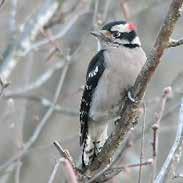
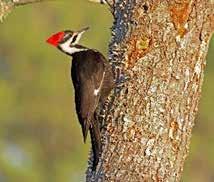
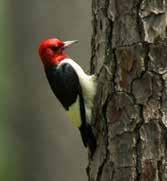
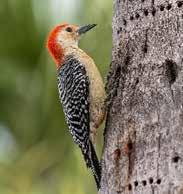
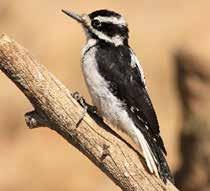
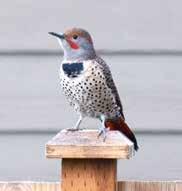
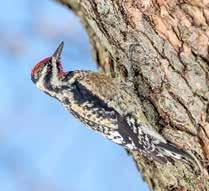
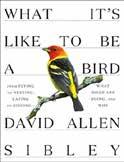
What It’s Like To Be A Bird, written and illustrated by David Allen Sibley (2020), is a fantastic resource for bird lovers of all ages! Nearly every page is bursting with fantastic illustrations and fascinating facts that give us a better idea of how birds live in and perceive the world. Spend a weekend learning more about birds or read a page to the aspiring birders in your family each night before bed. Can you name these woodpeckers of
Gerry Janz
In 1900, ornithologist Frank M. Chapman organized a “Christmas Bird Survey” as an alternative to traditional holiday bird “side hunts.” That first survey consisted of 27 volunteers and 25 count circles from Toronto, Ontario to Pacific Grove, California and tallied a total of 90 species. 2025 marked the 126th running of what is now known as the National Audubon Society Christmas Bird Count. Every year between December 14 and January 5, groups of citizen scientist volunteers try to find as many birds and bird species as they can during a 24 hour period within a 15mile diameter “count circle.” The Stevens Point circle, centered at the Old Main building of UWSP, was established by the Portage County Birders in 1960 and has been part of the National CBC for 66 consecutive years. The count was conducted by the Portage County Birders until 1980, when it was handed off to the Aldo Leopold Chapter of the National Audubon Society in Stevens Point.
This year’s count was held on Saturday December 20. 25 volunteers participated; 21 as part of 8 field teams and 4 others conducting feeder counts. The day began under a heavy overcast with light winds and temperatures in the upper teens to low twenties. By mid-morning conditions began to improve as the sky cleared and temperatures rose into the low 30s. The afternoon, however, brought significant changes; with the clearing sky came brisk Northwest winds from 17-22 mph, gusting occasionally to over 40. Drifting snow in open areas reduced visibility and birds hunkered down out of the wind and out of sight.
Due in part to the afternoon weather, both the number of species and individual birds recorded were down from last year. 5,386 individual birds were counted, down from last year’s 6,976 and below our 65-year average of 6,065. The 5,386 individuals belonged to 47 species; below last year’s 49 but above the 65-year average of 45. While waterfowl, raptors, and resident passerines were well represented, expected, irruptive northern finches were notably absent. Though average in many respects, this count did have its highlights; a White-crowned Sparrow was found-only the third ever recorded, Wood Duck and Chipping Sparrow made their 7th appearance, Merlins seen tied last year’s record high count of 3, and a small flock of Eastern Bluebirds discovered feeding in a red osier dogwood shrub set a new high count for that species at 6. As a side note, although “count week species” (birds found in the circle 3 days before or after the actual count day) aren’t part of the count tally, we had some interesting birds recorded in that period; Great Blue Heron, Brown-headed Cowbird, Sharp-shinned Hawk, Northern Shrike, Fox Sparrow, Pine Grosbeaks, and a count week
first, Rose-breasted Grosbeak.
The day ended with an evening after-count gathering, once again graciously hosted by my CBC coordinating/compiling mentor, Nancy Stevenson. Over cookies and cider, we totalled the number of species and individuals seen that day. We also shared stories of the day as well as remembrances of past bird counts and bird counters.
Count totals for this year; Canada Goose(208), Trumpeter Swan(15), Wood Duck(1), American Black Duck(2), Mallard(1247), Common Goldeneye(195), Common Merganser(8), Ruffed Grouse(1), Wild Turkey(26), Northern Harrier(1), Cooper’s Hawk(1), Bald Eagle(19), Redtailed Hawk(16), Rough-legged Hawk(4), Rock Pigeon(144), Mourning Dove(371), Great Horned Owl(4), Belted Kingfisher(1), Red-bellied Woodpecker(27), Downy Woodpecker(53), Hairy woodpecker(31), Pileated Woodpecker(11), American Kestrel(1), Merlin(3), Blue Jay(127), American Crow(386), Common Raven(12), Horned Lark(1), Blackcapped Chickadee(381), Tufted Titmouse(12), Red-breasted Nuthatch(19), White-breasted Nuthatch(76), Brown Creeper(3), Eastern Bluebird(6), American Robin(6), European Starling(629), Cedar Waxwing(77), Snow Bunting(140), American Tree Sparrow(284), Chipping Sparrow(1), Darkeyed Junco(331), White-crowned Sparrow(1), Northern Cardinal(104), House Finch(116), Purple Finch(1), American Goldfinch(159), House Sparrow(124). Total individuals-5,386. Total species-47.
Special thanks to this year’s participants; Bill Barry, Lisa Bey, Brad Branwell, Jean Diedrich, Bob Freckmann, Virginia Freire, Beth Grubba, Anne Graham, Ezra Graham, John Graham, Rose Helm, Gerald Janz, Maureen Janz, Katie Kozak, Michael LeClair, June O’Legthlobhair, Rob Pendergast, Nick Schultz, Dan Sivek, Stan Skutek, Collin Smith, Janet Smith, Nancy Stevenson, Rick Zahn, and Rosan Zahn. I would also like to thank everyone that has volunteered and participated in the Stevens Point Christmas Bird Count over the years, it’s what makes it all work.
A mherst C hristmas B ir D c o U nt
Joe Passineau
For almost 40 years, my family and I have started the Christmas season by enjoying a tradition—participating in the annual Amherst Christmas Bird Count, now in its 44th year. This year it was held on a blustery, windy Saturday, December 20, 2025. And we, again, “learned lessons from Leopold,” this time from his “Parable on Chickadees and the Wind,” in the December chapter of his best-loved book, A Sand County Almanac.
Indeed, the wind seemed to play a major role in this year’s CBC, and in the overall results posted below. On a personal note, this year, we also set a record in our 40 years of counting/recording the birds in our section of the Amherst CBC Circle (just east of the Tomorrow River, from Sunset Lake to the Amherst Mill Pond): (A) Our lowest ever total-bird numbers (165), and (B) our lowest ever total-species number (17). As we drove our annual 50-mile circuit, it was clear: Something was different! Why were there no (or so few) birds in places where we always saw (and counted) them? Indeed, the wind seemed to play a major role in this year’s CBC, and in the overall results posted below. In contrast, many birds were seen at birdfeeders along the driving routes, as they usually provided good shelter and plentiful food. The 11 participants who watched their home birdfeeders (at only 7 home sites) had a great day…as birds seemed to flock towards the ample food and shelter that they provide in their backyards. Interestingly, as noted above, a full 25 of the 40 different species found on this year’s CBC were also spotted at these 7 birdfeeder sites.
The weather also influenced waterfowl numbers, as all of the lakes and ponds were ice-covered and the fields were covered with snow—we saw just 24 mallards and 238 Canada Geese (compared to 1470 geese seen last year).
The weather, especially the wind, might also have contributed to good sightings of eagles and hawks. Bald Eagles were especially noteworthy, as they were seen soaring in the winds and perching on tree tops. This year, we likely set a new record of 32 Bald Eagles (23 mature and 9 immature). In contrast, over the past 15 years, we have only seen, on average, 11 eagles on any count day. (Why the higher count of eagles this year?? This might, in part, just reflect an actual increase in the winter population in our area, as we have counted just over 20 for the past few years. Alternatively, this year’s record of 32 might be explained, in part, by the windy conditions—the same eagles soaring over great distances might have been counted by multiple participants as they each drove different sections of the Amherst CBC circle.)
Although most species were seen in usual numbers, we had, as noted above, several rare and record setting observations: 2 White-crowned Sparrows sighted by Reed Turner (a new species for the Amherst circle); 3 East-
ern Bluebirds sighted by Scott Reilly and family (reported only three times before in 2005, 2007, and 2014), and 1 White-throated Sparrow sighted by Reed Turner (reported only a few times before, including in 2013 and 2022). Although these species are plentiful in Wisconsin in summertime, and a delight to see and hear singing in the springtime, all except a few, usually migrate south before the harsh winters arrive in Wisconsin!
While a fun and exciting sighting for the Amherst CBC, these unusual birds also bring a bit of “wonder and sadness.” Will any of them survive the harsh Wisconsin winter? Is their delay in migrating south influenced by the erratic changes in the weather that we all saw this autumn (perhaps, due to global climate change?).
Totals for the 2025 Amherst Circle Count included: Canada Goose, 238; Mallard, 24; Wild Turkey, 186; Bald Eagle, 32; Sharp shinned Hawk, 3; Cooper’s Hawk, 1; Red-tailed Hawk, 24; Rough-legged Hawk, 2; American Kestrel, 1; Rock Pigeon, 264; Mourning Dove, 259; Redbellied Woodpecker, 20; Downy Woodpecker, 57; Hairy Woodpecker, 35; Pileated Woodpecker, 6; Northern Shrike, 1; Blue Jay, 106; American Crow, 380; Common Raven, 14; Horned Lark, 6; Black capped Chickadee, 299; Tufted Titmouse, 15; Red breasted Nuthatch, 43; White breasted Nuthatch, 52; Brown Creeper, 4; American Robin, 16; European Starling, 144; Cedar Waxwing, 14; American Tree Sparrow, 199; Dark eyed Junco, 739; Snow Bunting, 35; Northern Cardinal, 78; Red-winged Blackbird 1, Purple Finch, 7; House Finch, 42; American Goldfinch, 112; House Sparrow, 102 (257); Unusual Species: Eastern Blue Bird, 3; White-crowned Sparrow, 2; Whitethroated Sparrow, 1.
Thirty-six volunteers participated: Section 1: Karen and Mark Dostal; Joe and Lyn Passineau; Section 2: Todd Knepfel; BJ and Carol Welling; Section 3: Reed Turner, Aaron Reser, and June Turner; Susan Anderson; Section 4: Scott, Sarah, and Liam Reilly; Sarah Snell; Section 5: Amy Powers and Holly Morgan; Section 6: Tim and Pam Corcoran; Susan, Kai, and Joy Schuller; Angie Lemar. Birdfeeder observers: (Area 1): Jim Zack, Al Young, Mary Jo Pfankuch and Rick Foris, Ron and Donna Zimmerman, Glenn Coenen, and Cindy Irvine; (Area 2): Dana Rima; (Area 6): Michael Hafemann. Reed Turner served as compiler. Karen Dostal and Joe Passineau served as coordinators for the Amherst circle.
This is be my last report as the scribe/reporter/coordinator for the Amherst Christmas Bird Count. It has been a wonderful 40 years, sharing a passion for “Birds and Nature” with all of you. And a big “Thank You” to all who have made and will continue to make the Amherst CBC a success!! A special note of appreciation to Karen Dostal and Eric Anderson for serving as Coordinator and Compiler for the past decade. Farewell and Best Wishes!
to symbolize unity in the resistance about the injustice experienced from immigration enforcement operations reaching beyond initial intensions of cracking down on illegal activity and crime in a country and infringing on the freedoms of legal residents and citizens. The movement incorporates state flag colors and symbols to engage local state pride and unity.
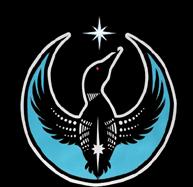
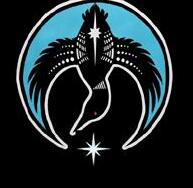
I am continuously inspired by how birds are used for social justice imagery. Birds are not only passive icons of peace; they are active symbols of political and social resistance used by movements to bring about hope, justice, and freedom for all.
At ALAS, we create programs, free and open to all, that can engage us as a community to join together and enjoy time in nature. I know experiences together like this can bring hope and healing during these difficult, divided times. In this newsletter, we share the opportunities we offer to find peace through community and connection.
Officers
President
Susan Schuller 715-340-4877
Vice-President Brad Branwell-Zinda 715-570-9587
Secretary
Willow Pingel 715-387-1398
Treasurer Janet Smith 715-630-6951
Committee Chairs & Directors
Bird Seed Sale
Midge & Steve Hall 937-608-0864
Christmas Bird Count
Karen Dostal 715-592-4706
Gerald Janz 715-340-3834
Conservation
Pendergast 715-498-4885
Your dues support local chapter activities and environmental projects exclusively in Central Wisconsin. You will receive The Almanac newsletter and invitations to ALAS programs, field trips, and educational events. ALAS will notify you when your annual membership is due.
$25/year Supporter Local Chapter Membership.
$50/year Sustainer Local Chapter Membership.
The date your Local membership expires is on the back cover!
I’ll help conserve resources, protect the environment, and save postage! Please send my newsletter via email.
Name:
Address:
Email:
Join/renew online: Go to our secure website and click on “Ways to Give” www.aldoleopoldaudubon.org

Join/renew by mail: Please make check payable to: Aldo Leopold Audubon Society Mail this form and check to: Aldo Leopold Audubon Society Membership PO Box 928 Stevens Point WI 54481-0928
More Ways to Give
We appreciate your additional donations supporting the work of ALAS.
$__________ ALAS Endowment Fund. Managed by the Community Foundation of Central Wisconsin.
$__________ ALAS Chapter Operations Fund.
ALAS will not distribute your contact information to any other organization. ALAS and the Community Foundation are 501(c)(3) organizations. Your donation will be tax-deductible to the extent permitted by law.
Please remember ALAS in your estate planning!

The mission of the Aldo Leopold Audubon Society is to foster appreciation and concern for all living things, and to protect and preserve their ecosystems.