ALAS Field Trip
Migration on the Mississippi Saturday, November 8
The Mississippi River Flyway hosts over 325 species of birds each year, as they make their way between breeding grounds in the northern US and Canada, to their winter habitats along the Gulf of Mexico, and even, Central and South America. We will most likely stop to visit several locations along the Mississippi, from La Crosse to Brownsville, but very little walking is anticipated.
Meeting time is 7AM, at the parking lot across from Chase Bank, 1200 Crosby Ave Stevens Point, Wisconsin https://www.aldoleopoldaudubon.org/event-details/migration-onthe-mississippi-1
Call or text Brad Baum at (715)-347-4570 for more information.
Stevens Point Weekly Bird Walk Schedule
For specific details and location information, please visit the ALAS website https://www.aldoleopoldaudubon.org/weeklywalks
The 126th Audubon Christmas Bird Count is coming up!
Christmas Bird Counts will be held December 20 in the Stevens Point and Amherst circles. Here are the folks you can call to be added to the count if interested. Contact: Gerry Janz 715-340-3834 (Stevens Point Area); Karen Dostal 715-592-4706 (Amherst Area)
The other way you can help is to fill your bird feeders! It helps the bird count a lot. Thanks!
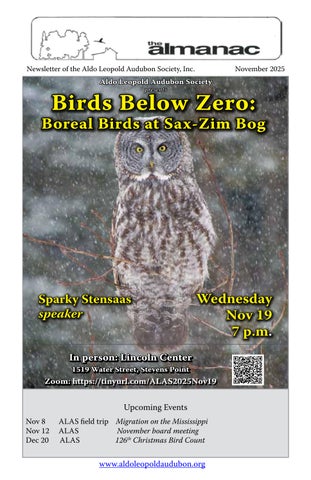
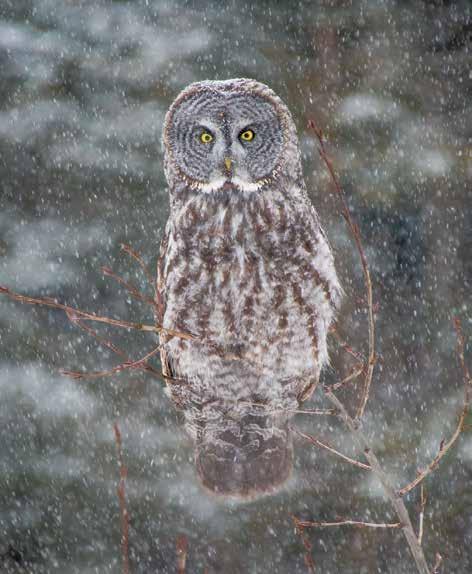
All the owls, woodpeckers, grouse, chickadees and winter finches of the Sax-Zim Bog are cold-hardy, and they have a multitude of survival tricks up their little feathered sleeves! Some thrive due to their amazing senses, others have snow-specific hunting skills, yet others have physiological strategies or anatomical quirks to help them thrive in the cold season. Cuddling and piloerection (not a dirty word!) also help birds stay warm. Did you know there are multiple species that even sleep the night away below the snow! HD Video will highlight some of these winter-warrior birds. Stay tuned… some of these tricks will blow your mukluks off!
Sparky will also share an introduction to Friends of Sax-Zim Bog and the best ways to visit the Sax-Zim Bog in winter.
Sparky Stensaas is the founder and executive director of Friends of Sax-Zim Bog (www.SaxZim.org), which has purchased & preserved over 25,000 acres of bog creating a forever home for future generations of birds and birders. A birder since age 14, Sparky is also a naturalist, publisher of field guides, wildlife photographer, and now YouTuber (really?). He is the author of six books on the natural history of the North Woods. Sparky, his wife, Bridget, and two sons, Birk and Bjorn, make their home under the big pines in the Nemadji Valley in northern Minnesota. You can see more of Sparky’s images at www.ThePhotoNaturalist.com and his bird/wildlife videos on YouTube “Sparky Stensaas”
ALAS programs for the 2025-26 season will continue to be hybrid, with the in-person presentation held at the Lincoln Center (1519 Water St., Stevens Point, Wisconsin) and remotely live via Zoom on November 19, 2025.
To view via Zoom, register at https://tinyurl.com/ALAS2025Nov19 Find this link on our website under the Events-Presentation tab. u
Dates are correct as of press time. Always be sure to check the ALAS website before you leave!
Aldo Leopold Audubon programs and field trips are free and open to the public.
d elig HT ful B irds i H ave K nown
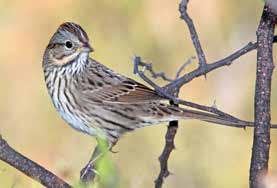
Lincoln’s Sparrow (Melospiza lincolnii)
Alan Haney
On a recent frosty morning, many birds were darting in and out of my feeders, and several were feeding among the grass and flowers nearby. It was the usual mix. Lots of House Finches, goldfinches, and juncos. White-crowned and White-throated sparrows were scattered among the taller vegetation near the feeder; they had arrived in numbers a few days earlier. The usual mix of males, females, and immatures made it a bit more challenging to identify them.
One bird caught my attention. It stayed in thicker vegetation, and moved about quickly, making it more difficult to see distinguishing markings. I first thought it was an immature white-throat, but its streaking was more crisp, and the throat was less white; its belly was tan with little streaking. It moved more quickly than the White-throated and White-crowned sparrows, and it often tended to erect the feathers on its crown, giving it a peaked cap. Clearly a sparrow, it seemed familiar to me, but I couldn’t identify it.
Three days later I was reading a delightful book, The Birds That Audubon Missed, by Kenn Kaufman (Avid Reader Press, 2024). In the book, Kaufman describes the details of Audubon’s initial encounter with Lincoln’s Sparrow while on an expedition to Labrador in 1833. In his journal, Audubon wrote that it was the unfamiliar song that alerted him to the bird. The specimen was obtained by Tom Lincoln, a friend of Audubon’s son, who was also along. It was the specimen that Tom acquired which Audubon used to describe the species, and Audubon named it for him. One of the details Audubon noticed was the unusual tendency for the bird to erect the feathers on its crown.
Now I knew why it seemed familiar to me, and I immediately knew the identify; the bird hanging out near my feeder was a Lincoln’s Sparrow, a species I had first seen in northern Minnesota thirty years ago. It was my good friend, Nancy Stevenson, who had been with us on that trip and who identified it (see p. 233 in More Jewels of Nature, 2024). Since then, I have seldom seen a Lincoln’s Sparrow.
Lincoln’s Sparrows are not nearly as common as white-throats, and probably also less common that White-crowned Sparrows. Moreover, they prefer heavy cover, and tend to be more shy. They nest throughout the boreal
region, preferring moist habitats, and migrate through Wisconsin to the southern U.S. and Central America. Whereas white-throats and Whitecrowned sparrows are frequent visitors around late autumn feeders, this was the first Lincoln’s Sparrow that I’ve seen in my backyard. Chances are, however, that I’ve missed them in mixed flocks dominated by other sparrows. Although we wouldn’t hear it now, the Lincoln’s Sparrow song is not difficult to recognize. It sounds most like that of the House Wren. I like the Cornell Lab’s description: two or three bell-like notes followed by bubbly trills and gurgles, rapidly changing pitch, ending with a thin slurred trill as if the bird is running out of steam.
The Lincoln’s Sparrow hung around my feeder for several days, but now has continued on south. Seeing it was like running across an old friend unexpectedly. That’s one of Nature’s best gifts…the unexpected species, like the card or call from a friend you haven’t seen in a few years. Great to see you! Do come again.
Interested in the book? Get the book through the library or find out about it out here: https://www.audubon.org/magazine/birds-audubonmissed-provides-new-insights-age-avian-discovery-america
Lincoln’s Sparrow. Photo courtesy USFWS.
Lincoln’s Sparrow. Photo courtesy allaboutbirds.org.
Avian Kids’ Corner
Scott Reilly
Last month ALAS distributed many bags of bird seed and suet to area birders, perhaps your family was one of the many people who picked some up? There were so many types of seeds being handed out, 50-pound bags of sunflower seeds, peanuts, corn, different types of seed mixes, thistle, different types of suet. It was really amazing to see the variety of seeds offered to feed our local birds!
Hauling around the bags got me thinking, why the incredible variety of seed options? Who prefers to eat what? Where is the best placement for a feeder? And many more thoughts.
As a science teacher, I love to help students to ask questions, and to help them figure out answers. Some questions that perhaps you can investigate with your new seed:
● What types of food is eaten by whom?
● How much is eaten?
● When is the food eaten?
● What about temperature or other weather?
Maybe your questions are not so much about food, but where to feed local birds. Maybe you are asking:
● Where is a good place for a feeder?
● Should I hang my feeder from a tree or a hook?
● How high does my feeder need to be?
● How far does it need to be from my house, trees, road, more?
Of course, maybe it is just the type of feeder you have that has piqued your interest. Are you asking:
● What should my feeder look like?
● What type of feeder attracts what type of birds?
● Can one that I make attract birds?
These are just the beginning, can you think of any other questions to ask? What do you wonder based on what you see? The enjoyment of feeding birds leads to so many questions, what surprises will you discover?
Feathered Friend’s Book Recommend:
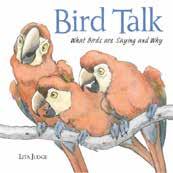
Bird Talk: What Birds Are Saying and Why by Lita Judge is a lovely book that discusses so many bird behaviors, from singing and dancing to drumming. Judge explores what these behaviors mean in a beautifully illustrated book that will capture your attention.
This book was written and illustrated by Fred and Fran Hamerstrom’s granddaughter.
g iving T H an K s
Susan Schuller
I recently attended the Inland Bird Banding Association Conference with our newest board member, Luke Trittelwitz. It was hosted by Carpenter Nature Center that has a campus in Wisconsin and Minnesota. It was an inspirational event for me. There were 9 university students reporting on their research on bird-related issues. Of course, we know birds are in great danger from habitat loss, climate change, mass pesticide applications, domestic cats, and of course, window collisions, to name a few. Yet, we have a great mass of young people doing amazing work to help address these wicked threats to birds. We have a great future of avian scientists coming up in this world and this gives me hope.
This was a prefect precursor to November for me. I, like many of you, focus on gratitude every November. As you can see from this newsletter, there is a lot we must be grateful for even in a difficult and divided political climate we find our country in. We know birds unite people and create common ground. Here are a few things I am grateful for.
#1 – Birdseed Sale supporters! Thank you to all who came out and supported our one and only annual fundraiser.
#2 - New Board Members! Luke Trittelwitz was approved as our newest board member! Welcome Luke.
#3 – Membership feedback we received on the important survey we sent out helping us grow our membership and make this organization even stronger.
#4 – Our vice president, Brad Branwell, is recognized for his work with Bluebird Restoration! Congratulations Brad!
#5 – Continued opportunities for field trips, bird hikes, and presentations coming up. Amazing job to our programs committee, field trip team, and special thanks to Rob Pendergast for continuing local bird hikes.
These are just a few things I am grateful for this month. I hope you get a chance to get out and enjoy our upcoming programs. Our speaker this month, Sparky Stensaas, will be a precursor to our January field trip Sax-Zim Bog. Christmas Bird Count is coming up in December, and I know many of you will be involved with that. Reach out to our coordinators if you wish to participate in that next month. Happy birding!
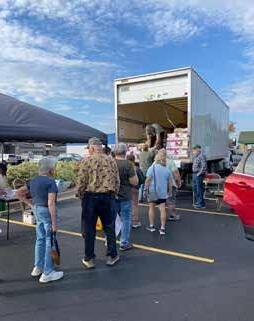
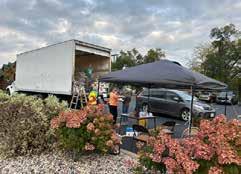
The combination of terrific volunteers and warm (and windy!) weather helped make the 2025 bird seed distribution a highly successful event. Thanks to everyone who ordered seed ahead of time, and to those who bought seed on Friday and Saturday. Profits from the sale will allow ALAS to continue existing programs and explore new opportunities. Special thanks to Jay-Mar for packing and delivering seed in their brand-new truck, to the Pineries Bank for allowing us to use their parking lot, and to all the folks who worked behind the scenes to make the event run smoothly.
Pre-sales totaled just under $12,000 with three-quarters of that due to online orders. Walk-up sales came in at ~$1,200. We have not yet received the final invoice from Jay-Mar and, thus, do not have the final numbers for how much the sale made for ALAS.
If you purchased a sample bag of buckwheat, please give us some feedback on how it works in your feeders. We can try to get it in smaller bags for next year if there is interest. Also, we will ask for striped sunflower seeds to be available in 25-lb bags next year, as per requests. Please let us know if you have any other suggestions or recommendations regarding offerings or processes for the bird seed sale (alasbirdseedsale@gmail.com).
Looking forward to 2026, folks can order seed during the month of September, with distribution scheduled for Friday and Saturday of the third week of October. We’ll provide more details closer to that time. Until then, be safe and enjoy feeding the birds.
Photos by Steve Hall.
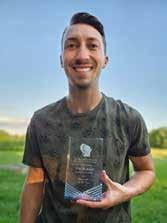
Brad Branwell, of Stevens Point, has received the Bluebirder of the Year Award from the Bluebird Restoration Association of Wisconsin (BRAW). He is our chapter’s vice president and a member of the ALAS board of directors since 2014.
According to BRAW President Steve Sample, “He is a leader in restoring and starting new bluebird nest box trails in Portage, Marathon, Waupaca, and Wood counties.”
Branwell currently monitors 55 bluebird nest boxes on his own trail.
Branwell points to “a passion for birds that started by being obsessed with mallard ducks and then getting my first bird feeder in fourth grade” for wanting to help birds.
Later, UW-Stevens Point professor Dr. Kent Hall “took me under his wings and helped me develop a 35-box bluebird trail.” Hall was a key figure in restoring a threatened bluebird population in the state.
To help birds now and in the future, Branwell suggests we “recognize the importance of birds not only to the environment but also for our own mental well-being. By providing and protecting their habitat and food sources from use of pesticides and herbicides, our whole ecology benefits.”
In accepting the award, Branwell said: “It is my mission to promote the conservation of the Eastern Bluebird, as well as maintain the legacy of Kent Hall into the future.”
Established in 1986, BRAW’s 900 members manage and monitor nearly 7,000 nest boxes statewide, which annually produce thousands of bluebird fledglings and a like number of other native cavity-nesters. More information about bluebirds, starting a trail, and BRAW is available at: www.braw.org .
Officers
President
Susan Schuller 715-340-4877
Vice-President Brad Branwell-Zinda 715-570-9587
Secretary
Willow Pingel 715-387-1398
Treasurer
Janet Smith 715-630-6951
Committee Chairs & Directors
Bird Seed Sale
Midge & Steve Hall 937-608-0864
Christmas Bird Count
Karen Dostal 715-592-4706
Gerald Janz 715-340-3834
Conservation Rob Pendergast 715-498-4885
715-252-8903
Your dues support local chapter activities and environmental projects exclusively in Central Wisconsin. You will receive The Almanac newsletter and invitations to ALAS programs, field trips, and educational events. ALAS will notify you when your annual membership is due.
$25/year Supporter Local Chapter Membership.
$50/year Sustainer Local Chapter Membership.
The date your Local membership expires is on the back cover!
I’ll help conserve resources, protect the environment, and save postage! Please send my newsletter via email.
Name:
Address:
Email:
Join/renew online: Go to our secure website and click on “Ways to Give” www.aldoleopoldaudubon.org
Join/renew by mail: Please make check payable to: Aldo Leopold Audubon Society Mail this form and check to: Aldo Leopold Audubon Society Membership PO Box 928 Stevens Point WI 54481-0928
More Ways to Give
We appreciate your additional donations supporting the work of ALAS.
$__________ ALAS Endowment Fund. Managed by the Community Foundation of Central Wisconsin.
$__________ ALAS Chapter Operations Fund.
ALAS will not distribute your contact information to any other organization. ALAS and the Community Foundation are 501(c)(3) organizations. Your donation will be tax-deductible to the extent permitted by law.
Please remember ALAS in your estate planning!
Aldo Leopold Audubon Society
Eastern Bluebird. Photo by Pat Ready..
mission of the Aldo Leopold Audubon Society is to foster appreciation and concern for all living things, and to protect and preserve their ecosystems.