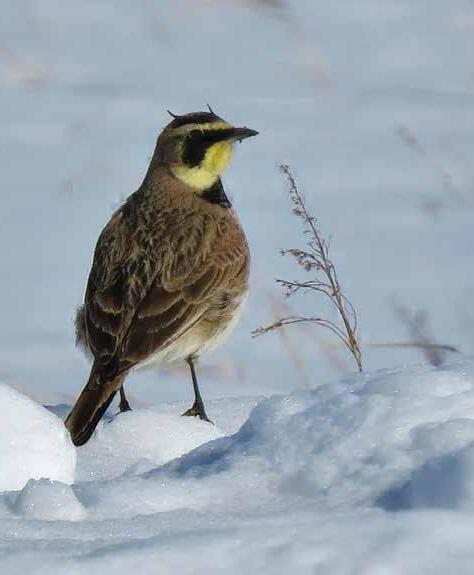
Photo by Gerry Jsnz
ALAS Field Trip
Sax-Zim Bog, Minnesota
Friday, January 30-Sunday, February 1
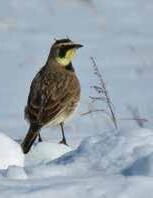
The Sax-Zim Bog is a 300-square-mile area in northern Minnesota with a unique boreal forest ecosystem that hosts a high diversity of species, especially northern owls and other boreal birds, such as Great Grey Owls, Canada Jays, and Boreal Chickadees. Over 237 other bird species have been seen there.
Aldo Leopold Audubon Society welcomes you to join us on our winter birding field trip to the Sax-Zim Bog on January 30-February 1. Explore the beauty of the bog with us as we search for hidden winter wonders.
If interested, we recommend everyone RSVP on our website to help us plan for the group, and book accommodations in Duluth, MN for Friday, January 30 and Saturday, January 31 ASAP in order to ensure you have a room, and also to help coordinate the morning of January 31.
While we will spend significant time in vehicles during the trip, we recommend bringing plenty of layers to stay warm for when we are outside. Make sure you bring any binoculars, cameras, and scopes you have! Snacks are recommended.
You won’t want to miss this!
If you have any questions please call or text Brad Baum at (715) 347-4570. We look forward to seeing you there!
Stevens Point Weekly Bird Walk Schedule
For specific details and location information, please visit the ALAS website https://www.aldoleopoldaudubon.org/weeklywalks
Some Christmas Bird count circles are still in need of birders to complete the count.
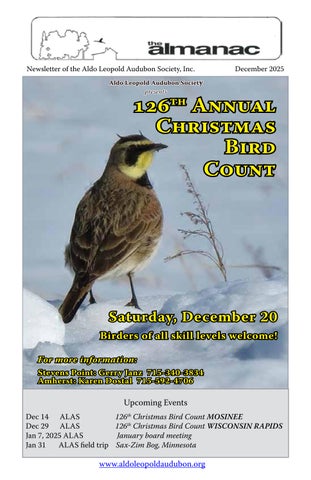
Christmas Bird Counts will be held December 20 in the Stevens Point and Amherst circles. Here are the folks you can call to be added to the count if interested. Contact: Gerry Janz 715-340-3834 (Stevens Point area); Karen Dostal 715-592-4706 (Amherst area)
Dates are correct as of press time. Always be sure to check the ALAS website before you leave!
Aldo Leopold Audubon programs and field trips are free and open to the public.
A new Christmas Bird Count circle has begun in the Mosinee area. Here is the updated information: The first-ever Mosinee-Mead Christmas Bird Count will take place Sunday, Dec. 14, 2025. The center of the circle is the intersection of Hwy C and Hwy O (north) in Marathon County. Habitat highlights in the circle include the Wisconsin River, Lake DuBay, Big Eau Pleine Reservoir, Big Eau Pleine County Park, and Mead Wildlife Area in portions of Portage and Wood counties, as well as Marathon. Headquarters for Count Day will be the Stanton W. Mead Education and Visitor Center. Feeder watchers also are needed throughout the circle on Dec. 14 and that week. For more information, please email Meadbird@gmail.com, by Saturday, Dec. 6. In your email, please indicate if you are interested in feeder watching or joining one of seven section teams. If interested in joining a section team, please include your hometown. We try to make section assignments closest to your community; however, please note, some section teams are full.
The Wisconsin Rapids group is holding the count on December 29. Please contact Willy Fleck at williflek@gmail.com
The other way you can help is to fill your bird feeders! It helps the bird counts a lot. Thanks!
For
For
WhErE havE all thE Birds gonE?
Alan Haney
I’m not a fan of horror stories, but we may soon be living one. Studies by scientists throughout much of the world have been reporting remarkably consistent and similar declines in the total numbers of virtually every lifeform that is being monitored. For example, Birdlife International, a global partnership of non-governmental organizations dedicated to the conservation of birds and their habitats, estimates that in North America, there has been an overall population decline of 3 billion birds since the 1970s. Forest birds have declined an estimated 22%; shore-birds 37%; and grassland birds a whopping 53%. Similar results have been found in Europe and Asia. Although many factors are contributing to the decline of birds, the two greatest are loss of habitat and climate change.
How loss of habitat contributes to fewer birds is obvious; climate change less so. One connection is through the decline in insect populations. Insects comprise at least a portion of the diet of about 80% of bird species. A recent study by Martin Nyffeler at the University of Basel in Switzerland estimated that, all together, birds consume 400 to 500 million metric tons of flies, beetles, moths, ants, aphids, grasshoppers, crickets, and other arthropods each year.
For many years those who study insects have been reporting a decline in nearly all populations examined. Perhaps the most startling peer-reviewed report was published by a group of Dutch, British, and German entomologists who conducted a long-term study using standardized trapping of insects from 1989 to 2017. Over that 27-year period, they found a 75% decline in the biomass (total live weight) of flying insects. A French study based on estimates of insect diversity concluded that as many as 250,000 to 500,000 species might have already become extinct.
It’s not only insects that are being lost. A United Nations study released in 2019 estimated that in the coming decades, as many a one million species are likely to become extinct, half of which will be insects. This study, as most others have, attributed loss of species to habitat alteration and climate change. It reported that human activities have significantly altered over 75% of the global land surface. In his recent book, The Insect Crisis* (2022), Oliver Milman concludes that loss of biodiversity represents a threat to civilization equal to or greater than the threat of climate-change, which is a major driver of it. Milman explores in some depth ways that loss of insects, even more loss of biodiversity, will lead to cascading decline and collapse of global ecosystems upon which civilization depends.
One might mistakenly assume that tropical rainforests, relatively
free of human disturbance, would be little affected by the global trends largely documented in the temperate world. Brad Lister, Research Professor of Biology at Rensselaer Polytechnic Institute, sampled the insects and their major predators (birds, lizards, frogs, etc.) in the El Yunque national forest of Puerto Rico, which has been protected from development since days of Spanish rule, in the 1970s as part of his doctoral thesis. He returned 35 years later with Andres Garcia, an ecologist at the National Autonomous University of Mexico, to repeat his study. They concluded that there had been a 98% reduction in biomass of insects on the ground, and an 80% reduction in biomass of insects inhabiting the leafy canopy. Not surprising, they found a 30% reduction in anole lizards.
Shortly after Lister and Garcia’s paper came out, an even more startling paper was published by two Australian scientists who completed a metastudy based on dozens of peer-reviewed papers from scientists around the world. They concluded that a third of insect species will become endangered in the next decades, and that the biomass of insects is declining at 2.5% per year. They concluded that we are witnessing the largest extinction event since the late Permian and Cretaceous periods. Birds are being swept up in the cascade, but there are winners and losers.
As niches become empty, some surviving species will expand to take advantage of the resources. Unfortunately for humans, many of the winners are generalists, or species that carry diseases that were previously less common. For example, tick populations are expanding at unprecedented rates in the United States, in part because there are fewer birds to eat them, and we have milder winters with climate change.
Scientists who are monitoring changes in climate and populations are alarmed. It is impossible to predict potential consequences with a high degree of certainty. The last great extinction event, 66 million years ago, led to the demise of dinosaurs and the rise of primates. Are we willing as a global society to roll the dice and continue to burn fossil fuels, hoping for another good outcome? Will Homo sapiens survive a mass extinction?
*Milman, Oliver. 2022. The Insect Crisis. W.W. Norton & Company. 260 pp.
Avian Kids’ Corner
Sarah Wood
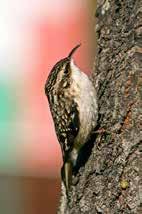
What birds have you noticed around your home lately? In the last few weeks, two bird calls have become a familiar sound on my morning walks in the woods where I live: the nasally yank-yank-yank-yank of the Red-breasted Nuthatch and the high-pitched tinkling of the Brown Creeper. Although they don’t sound anything alike, at first glance, they do look similar. Both birds are about the same size and shape, and they are both often seen climbing along the sides of trees. What are some other similarities you notice about these two birds?
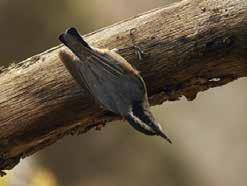
Here’s an easy way to tell the two apart: pay attention to what direction the bird’s head is pointing as it moves on the tree. Red-breasted Nuthatches have incredibly strong legs and feet to grip the bark, which allows them to climb head down along the tree. White-breasted Nuthatches also have this ability. Brown Creepers, however, use their stiff, pointy tail feathers to prop themselves on the bark, meaning they can only climb head up. Woodpeckers have this same adaptation.
Red-breasted Nuthatch.
Heads or tails, both birds are pretty special to be able to withstand winter in Wisconsin. Have you seen or heard these birds around your home? What are some other birds you have been seeing around as the temperatures drop and the seasons change?
Handmade Bird Ornament
Looking for a simple craft to add to your holiday decorations or to give to a fellow bird-lover as a thoughtful gift? Why not make a bird ornament? Use your imagination and get creative – you can probably find everything you need around the house. Here are a few ideas for supplies:
• Cardboard or felt—a great base for your bird!
• Paint, markers, crayons, or colored pencils—make it colorful!
• Fabric scraps or old newspaper, magazine, or book pages —a good source of patterns and textures.
• Buttons, pins, or sequins—will your bird have eyes?
• Glue, tape, staples—something to keep it all together.
• String, yarn, twine, thread, or ribbon—any of these could be used to hang up your ornament.
The opportunities are endless! What kind of bird are you going to make?
Feathered Friend’s Book
Recommend:
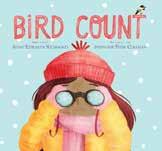
Bird Count written by Susan Edwards Richmond and illustrated by Stephanie Fizer Coleman (2019) takes us along with Ava on her first Christmas Bird Count, where we’ll learn some tips and tricks to identify local birds as well as the value of our contribution to citizen science. Join in on this 126- year-old tradition!
Photo courtesy Paul Danese.
Brown Creeper.
Photo courtesy Chuck Homler.
Susan Schuller
Tis the season. We recently hosted Sparky Stensaas, Executive Director of the Friends of the Sax-Zim Bog, a preserve in northern Minnesota now visited by thousands of people a year. He provided a wonderful program about how birds adapt and survive through the most extreme winters. I loved learning about how spruce grouse feet form deeper bumps doubling the surface area in their feet helping them better walk over deep snow; similar to us putting on snowshoes. Fascinating! Or how about a chickadee’s brain actually increasing by up to 30% in the winter to increase their memory capacity for finding their caches. Just think what we all could accomplish in the winter if our brains increased by 30% like chickadees! I guess that puts new meaning to the phrase “bird brain.”
This presentation was a pre-cursor to a field trip January 30-February 1. If you are interested in joining a group of people going up there in January, please RSVP online. It will help with planning that event. https://www.aldoleopoldaudubon.org/field-trips.
In this newsletter you will learn about Christmas Bird Count opportunities in the area. Many members get involved. We help promote the Stevens Point, Amherst, and now Mead/Mosinee has a count! Thank you to all the volunteers helping in those areas.
An important legislative update is on the proposed Wisconsin Sandhill Crane Hunt. We oppose this bill and encourage you to contact your legislators about this.
Also, as we go into the giving season, consider a gift supporting ALAS. There are many ways to support our organization this season:
1. Gift a membership to a family member and gain the benefits of joining a community of advocates for avian species and conservation issues.
2. Purchase Jewels of Nature and More Jewels of Nature These essays connect us to place and spark a sense of wonder about all the birds we find right in our backyards. https://www.aldoleopoldaudubon.org/shop
3. Join a field trip or bird walk. Your presence is a present to ALAS. Find a sense of community and enjoyment among other fellow bird lovers.
Whatever it may be, I hope you take a little time to gain a deeper appreciation of how birds survive our winters. They are truly remarkable critters. Slow down, take notice, and may the season bring you joy through birds.
Please contact your representatives. This is the third time in 12 years that the Wisconsin legislature has proposed a hunt on Sandhill Cranes, often claiming, without evidence, that it will resolve farmers’ issues with spring crop damage. The International Crane Foundation (ICF) and other bird organizations have worked on implementing meaningful solutions for farmers. We join the bird conservation community and oppose the widely unpopular hunting season that risks population stability, will operate at a significant financial loss, and does nothing to resolve crop damage.
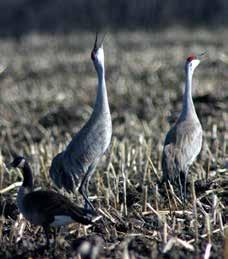
Further, the proposal comes on the heels of unprecedented outbreaks of Highly Pathogenic Avian Influenza (HPAI), posing a significant risk to the stability of crane populations worldwide. This past spring, thousands of Sandhill Cranes died of the virus in Indiana, marking the devastating loss of up to 2-3% of the Eastern Population of the species. In September, ICF announced the first known loss of an Endangered Whooping Crane due to HPAI. In just the past month, crane deaths in Europe have been estimated at nearly 40,000 individuals.
The science is clear. Now is not the time to experiment with a hunting season on Sandhill Cranes’ critical breeding grounds in Wisconsin.
Your presence sends a powerful message: Wisconsinites value cranes and the ecosystems they depend on. Please contact your representatives and show your support for cranes. You can find your representatives and contact information here: bit.ly/legiswi
Thank you for speaking up for cranes. Together, we can ensure these remarkable birds continue to thrive in Wisconsin and beyond.
ChaptEr namE changE sUBcommittEE rEsUlts
ALAS conducted an in-depth study to evaluate people’s perceptions and feelings about the inclusion of the name Audubon in our chapter name. This article is a summary of the vast data collected from May to November 2025.
Data Collection Methods:
A subcommittee of 7 people was formed and approved by the board of directors in April 2025. They represented as diverse of a representation as possible. They met monthly through November.
Members of the subcommittee researched the life of John James Audubon, shared resources with the membership to explore on the ALAS website, and hosted Matt Reetz from the Southern Wisconsin Bird Alliance for a special presentation at UWSP. www.aldoleopoldaudubon.org/ subcommittee
They conducted three focus groups with 40 high school students , 35 college students , and 14 founders/long term members of ALAS ( including mailed-in comments).
The subcommittee created a survey that was mailed to each member (594 people) and posted online. We received 106 responses total, 80 of whom responded as members.
Results:
The comments reflect a broad spectrum of emotions and opinions, ranging from strong opposition to a name change to thoughtful support for re-evaluating the organization’s identity.
The data showed a clear age gap in the way Audubon is viewed. Two distinct views:
1. For younger respondents, the name Audubon doesn’t connect or carry the brand recognition that it does for older generations. Many younger respondents believe the name carries a negative connotation and would deter others from joining
2. Yet, there is a completely opposite perspective with many older members (generally 60+). There is generally more pride in the name among this group. Dropping the name could be offensive to some.
What to do about this?
The subcommittee presented their findings to the board at the November meeting. The Board of Directors will discuss and decide what to do, if anything, at the January board meeting.
Officers
President
Susan Schuller 715-340-4877
Vice-President
Brad Branwell-Zinda 715-570-9587
Secretary
Willow Pingel 715-387-1398
Treasurer
Janet Smith 715-630-6951
Committee Chairs & Directors
Bird Seed Sale
Midge & Steve Hall 937-608-0864
Christmas Bird Count
Karen Dostal 715-592-4706
Gerald Janz 715-340-3834
Conservation Rob Pendergast 715-498-4885
715-252-8903
Your dues support local chapter activities and environmental projects exclusively in Central Wisconsin. You will receive The Almanac newsletter and invitations to ALAS programs, field trips, and educational events. ALAS will notify you when your annual membership is due.
$25/year Supporter Local Chapter Membership.
$50/year Sustainer Local Chapter Membership.
The date your Local membership expires is on the back cover!
I’ll help conserve resources, protect the environment, and save postage! Please send my newsletter via email.
Name:
Address:
City: State: Zip:
Email:
Join/renew online: Go to our secure website and click on “Ways to Give”
www.aldoleopoldaudubon.org
Join/renew by mail: Please make check payable to: Aldo Leopold Audubon Society Mail this form and check to: Aldo Leopold Audubon Society Membership PO Box 928 Stevens Point WI 54481-0928
More Ways to Give
We appreciate your additional donations supporting the work of ALAS.
$__________ ALAS Endowment Fund. Managed by the Community Foundation of Central Wisconsin.
$__________ ALAS Chapter Operations Fund.
ALAS will not distribute your contact information to any other organization. ALAS and the Community Foundation are 501(c)(3) organizations. Your donation will be tax-deductible to the extent permitted by law.
Please remember ALAS in your estate planning!
Aldo Leopold Audubon Society
The mission of the Aldo Leopold Audubon Society is to foster appreciation and concern for all living things, and to protect and preserve their ecosystems.