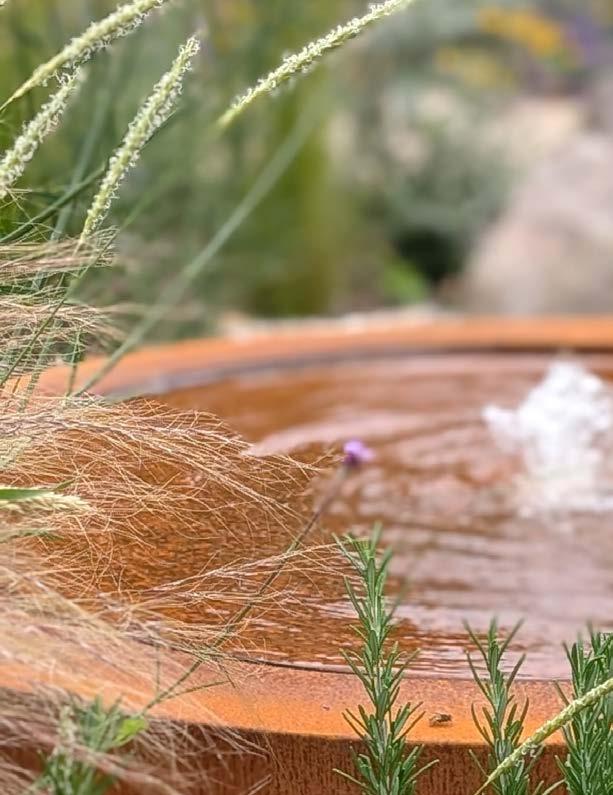
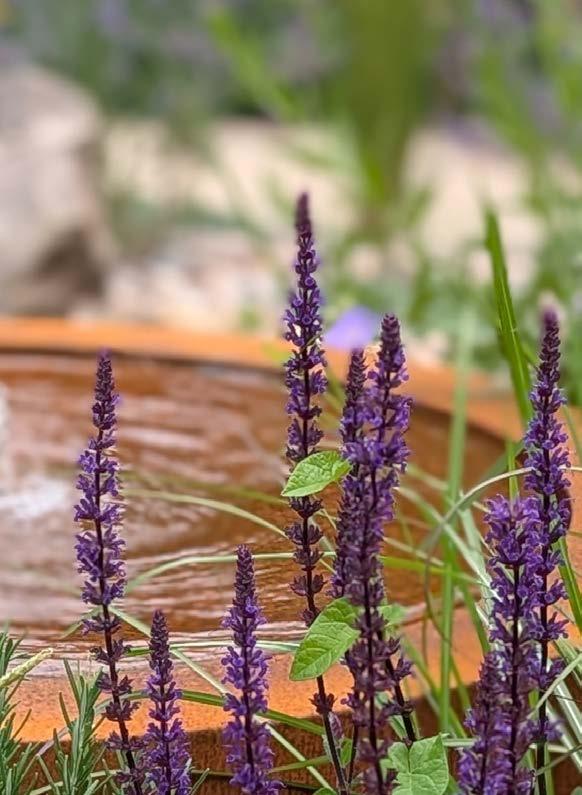
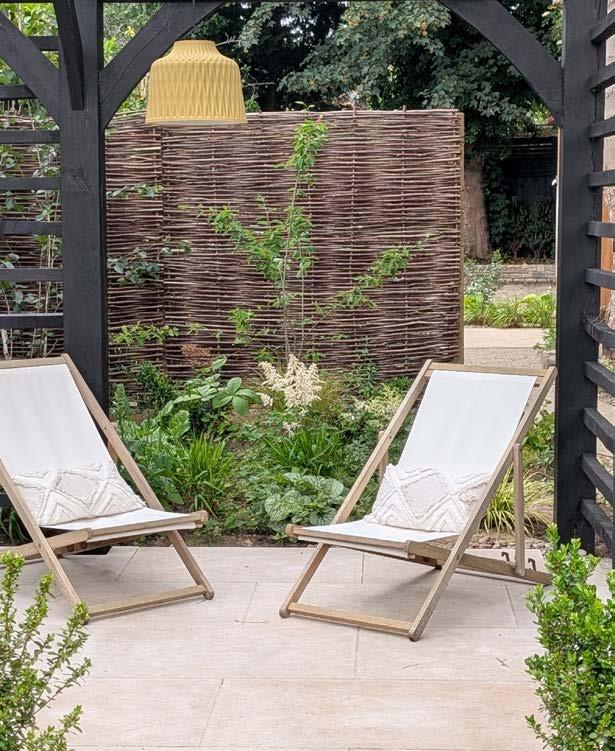
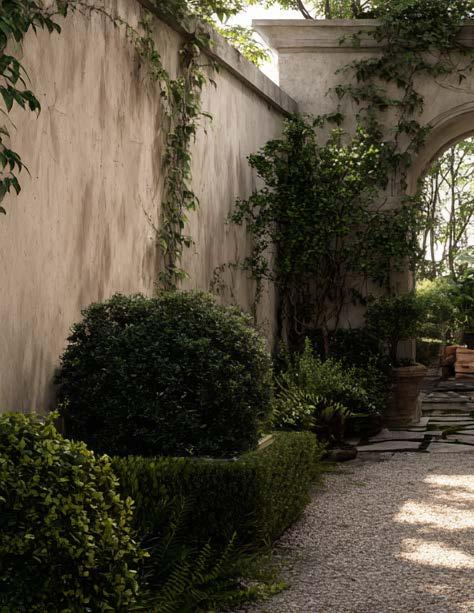
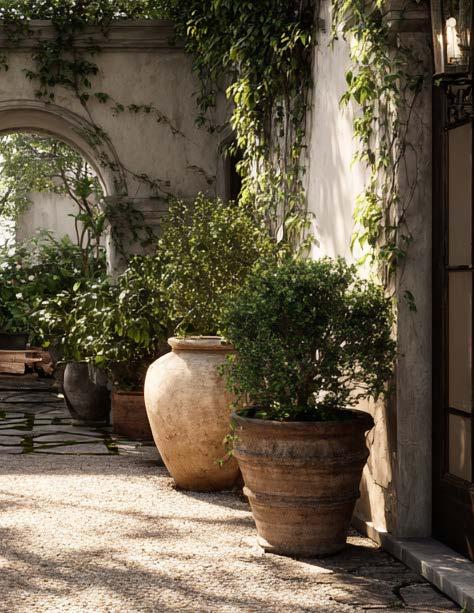
“Each voice in these pages reminds us that gardens aren’t measured by size , but by soul ”
I still remember my first garden. It was small and full of promise—and yet, nothing about it worked. The plants were all wrong, the layout confused, and the whole thing felt more like a really bad experiment than an escape. But even then, I was hooked. There was something about shaping a little patch of earth that felt deeply personal—like the start of a story I didn’t yet know how to tell.
Years later, after studying landscape architecture, I finally understood what I’d been searching for all along. A garden isn’t just about beauty or design—it’s about belonging. It’s about creating a space that reflects who you are and how you want to live. That idea became the heart of alcove.
Editor’s
In this debut Cozy Garden issue, you’ll meet designer Diane Samways, who shares how memories and storytelling can guide design; Callae Gedrose, whose regenerative approach brings life back to tired soil; and Carole Jordorson, who uses painterly plant palettes to make even small gardens feel layered and lived-in.
Each voice in these pages reminds us that gardens aren’t measured by size, but by soul. Whether you tend to a courtyard, a front stoop, or a single container, I hope this issue helps you find comfort and creativity in your own little alcove.
Welcome to alcove.
note
Contributors
DIANE SAMWAYS
UK GARDEN DESIGNER
Story-led garden designer creating emotionally grounded spaces in the English countryside.
@dianesamwaysgardendesign
CALLAE GEDROSE
COLORADO GARDEN DESIGNER
Founder of Honeywood Garden Design, known for her regenerative, pollinator-rich landscapes. @honeywoodgardendesign
CAROLE JORDORSON
UK GARDEN DESIGNER
UK-based designer behind Design Heights, bringing structure and rhythm to small gardens. @design_heights
Nadja Litau
Essex & London
Brand Photographer
@nadjalitau_ brandphotography
Dom Palmer
Photographer
@dommpalmer
Fergus Burnett
Fergus Burnett
@fergusburnett
Photography Images by Callae Gedrose
Images by Carole Jordorson
Photography by contributors and select licensed imagery
alcove magazine is a digital publication celebrating small gardens and beautiful outdoor living. Available at www.alcovemagazine.com. All rights reserved. No part of this publication may be reproduced, distributed, or transmitted in any form or by any means without prior written permission from the publisher, except for brief quotations in digital and print reviews.
Even as days shorten, a few steadfast plants keep the garden glowing. This month, we’re drawn to warm tones and resilient textures — those quiet heroes that bridge late-season color into winter structure.
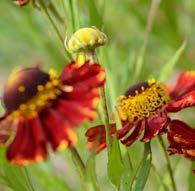
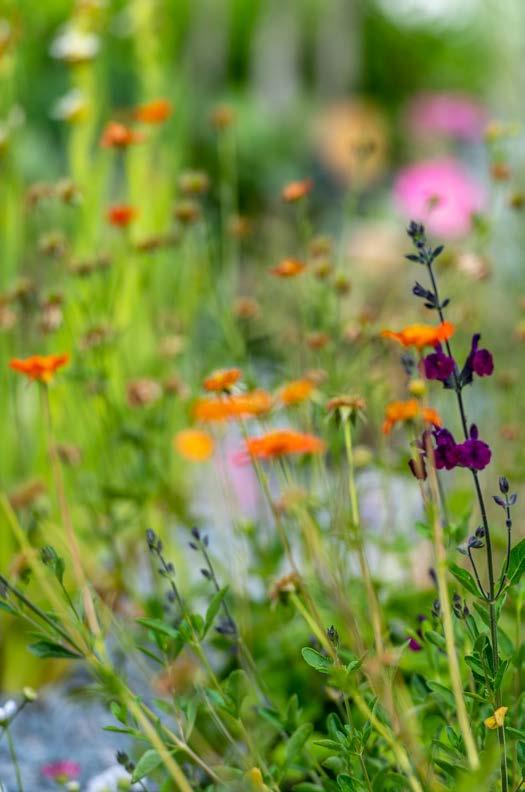
HELENIUM ‘DANCING FLAMES’
Few flowers capture autumn light quite like helenium. Its deep orange-red petals seem to hold the sun itself, glowing even on cool afternoons. Plant in clusters to echo the warmth of fading grasses or to frame late lavender blooms.
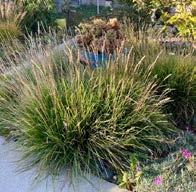
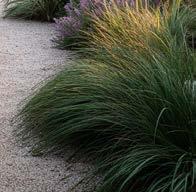
SESLERIA AUTUMNALIS
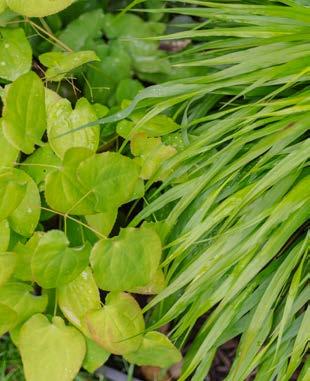
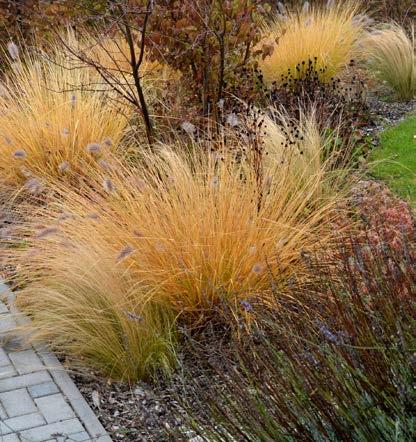
Graceful, fine-textured, and surprisingly tough — this cool-season grass keeps its green long after summer’s heat has passed. Use it as a soft filler between perennials or to unify mixed borders. Its luminous chartreuse hue pairs effortlessly with richer tones like helenium and aster.
SPOROBOLUS HETEROLIPIS ‘TARA’
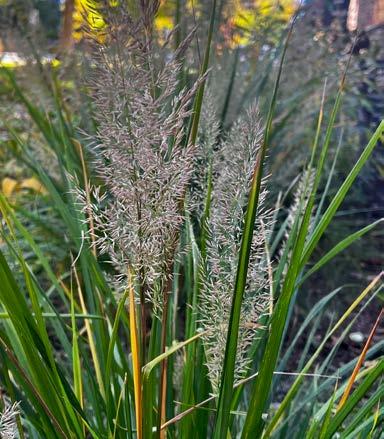
Airy, upright, and softly fragrant, Sporobolus ‘Tara’ brings a sense of lightness to fall borders. Its fine, glimmering seedheads catch every bit of evening sun, while the compact form keeps pathways and edges neat. In late autumn, the foliage turns a rich golden bronze — an effortless way to carry warmth through the season’s fade.
PLANT WITH
How shape, color rhythm quietly bring harmony to small gardens
color , and bring small
Dintentional and complete.
esigning a small garden is as much about feeling as form. Every plant, line, and texture has a role to play — and when they work together, even the tiniest space can feel
Garden designer Carole Jordorson of Design Heights believes that’s the real secret: understanding how shape, color, and rhythm quietly guide the eye — and the emotions — through a garden.
“The key is to start with how you want the garden to feel,” she says. “That’s always my first question when taking a client brief.”
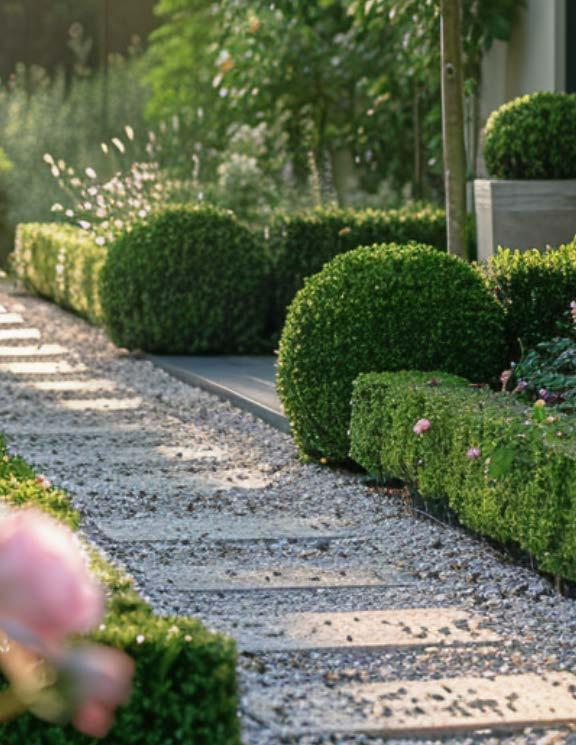
If you crave calm and structure, Carole suggests a restrained palette built around sculptural evergreens — yew balls, pittosporum, or finetextured grasses. For something softer and more romantic, a looser mix of cottage-style perennials can bring joy and movement.
“A good garden balances personality with practicality,” she explains. “It’s about knowing both your style and how much time you can really give.”
SHAPE FIRST
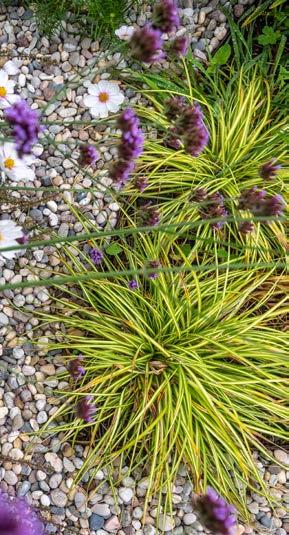
In small gardens, every plant has to earn its place. Thinking in shapes — mounds, spikes, clumps — helps build rhythm and balance. Seedheads add another layer, especially through autumn and winter, when flowers fade but structure remains.
“When you plan with shape in mind,” says Carole, “you end up with a garden that looks good all year, not just for a fleeting season.”
COLOR THAT FEELS RIGHT
Color, Carole says, is where emotion comes in. “Many people think small gardens call for restraint — and yes, that applies to structure — but with flowers, there’s room to play.”
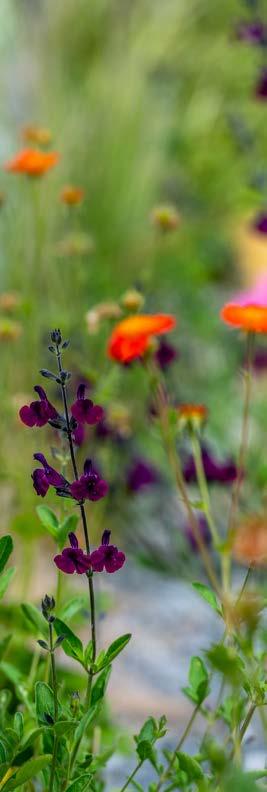
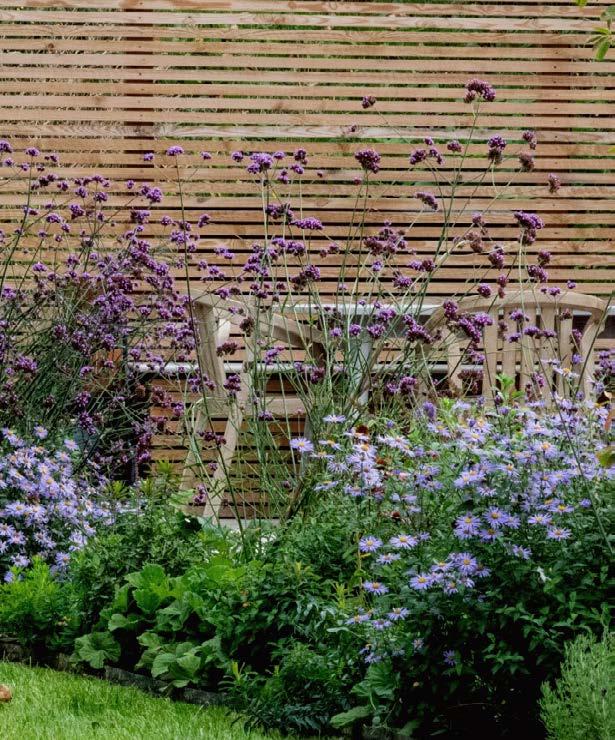
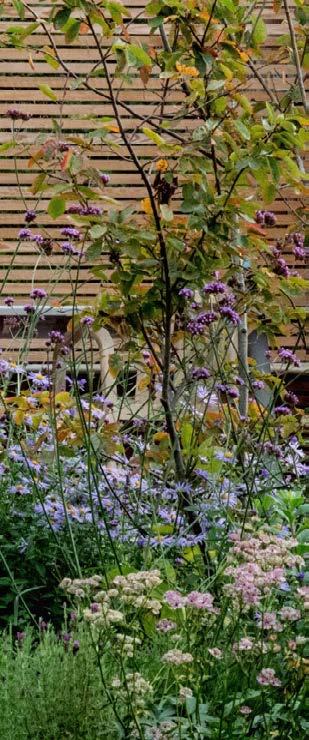
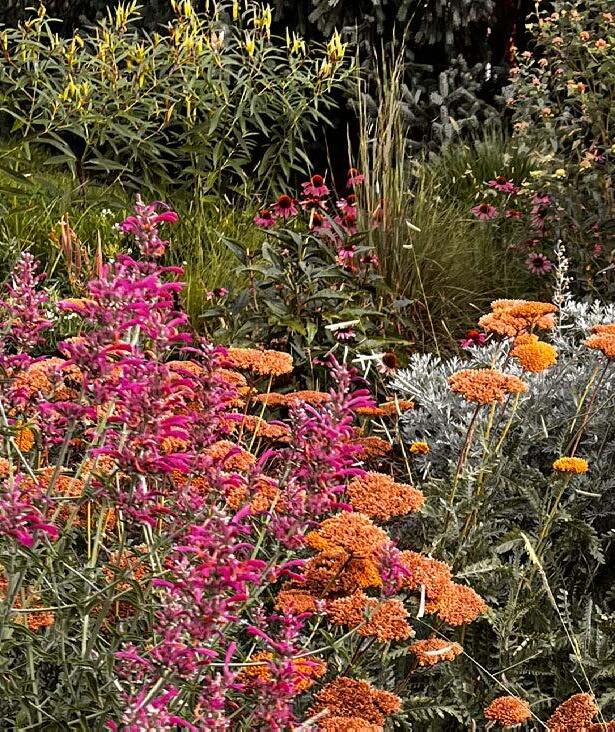
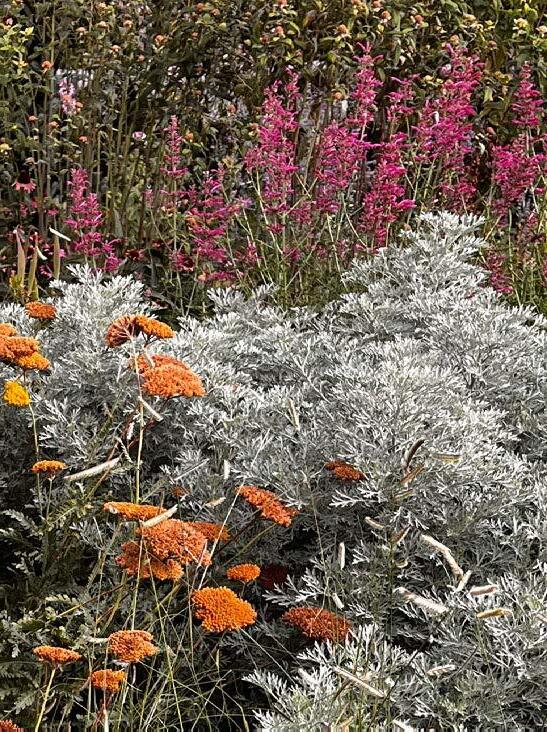
Her advice: pick one dominant tone, such as cool purples and blues, then layer in complementary or contrasting shades. Repeat colours across the space to create visual rhythm and cohesion.
“I always come back to feeling,” she adds. “Choose colours that reflect how you want to
feel — calming greens and blues for tranquillity, or warm oranges and pinks for vibrancy.”
HEIGHT & FLOW
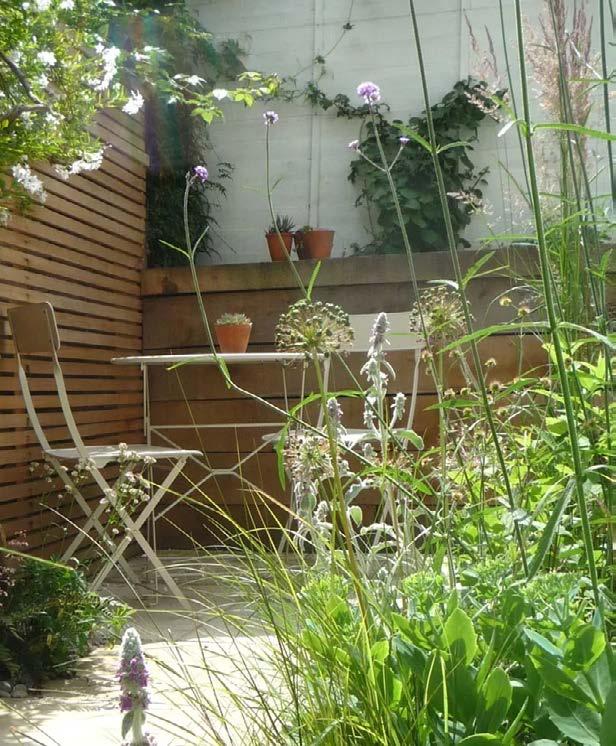
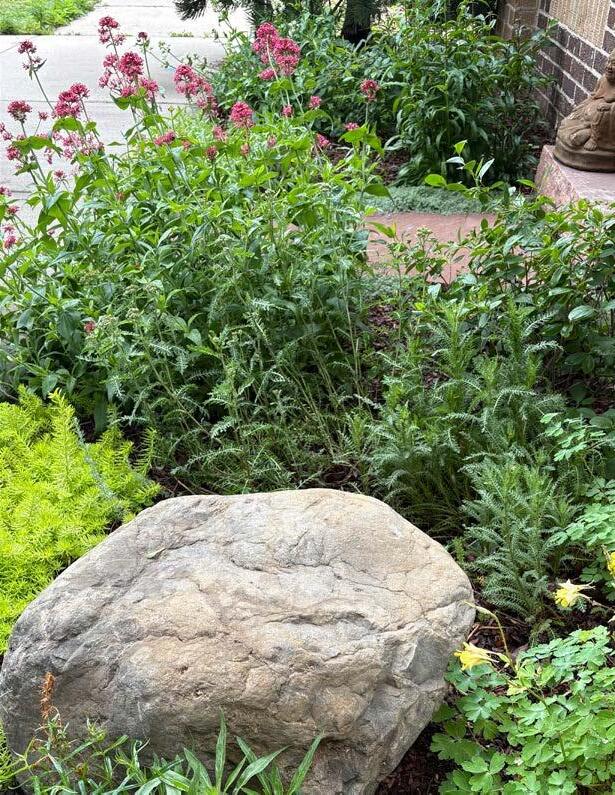
Height is the quiet hero of small gardens. Slim trees and upright perennials draw the eye upward without taking much space. Carole often turns to Verbena stricta, Thalictrum, and foxgloves for vertical interest, along with climbers to soften boundaries.
“Even a simple obelisk or pergola can make the space feel layered and immersive,” she says.
DESIGNING FOR EASE
The most personal gardens, Carole believes, are the ones designed to be lived in — not labored over.
“Keep your lifestyle in mind throughout the process,” she advises. “How often will you be in the garden, and how much time can you genuinely devote to it?”
A cozy garden, she adds, comes more from a sense of enclosure than from variety.
“Fewer species, chosen well and grouped generously, can be enough.”
And just as gardens grow, they change.
“Give plants space to breathe,” Carole says. “A well-planned small garden should feel abundant, but never overwhelming.”
Learn more about Carole’s work at Design Heights or on Instagram @design_heights
PHOTOGRAPHED by DESIGN HEIGHTS
Wild Beauty
Regenerative garden design in cozy spaces with Callae Gedrose
When we think of cozy gardens, images of blankets and lanterns often come to mind. But for designer Callae
Gedrose of Honeywood Garden Design, coziness begins with life itself. Working in Denver, she creates regenerative landscapes that hum with pollinators, shimmer with grasses, and offer sanctuary in every season. In this conversation, she shares why fall gardens are full of richness, how even the smallest spaces can nurture biodiversity, and the simple choices that turn an ordinary plot into a living retreat.
In your words, what does “regenerative garden design” mean, especially in the context of smaller spaces? Regenerative garden design is about working with nature instead of against it. Protecting pollinators, building soil health, conserving resources, reducing CO emissions, boosting biodiversity, and promoting resilience are all at its core. This approach intentionally incorporates native plants to support urban ecosystems, moving away from conventionally controlled landscapes and embracing the beauty of rewilded gardens
Small garden spaces, in particular, connect with one another to create much-needed
pollinator pathways. In dense urban areas, they become mini sanctuaries for wildlife and insects. When combined, these small regenerative gardens make a surprisingly big impact. They also help combat urban heat and pollution — proof that even the tiniest space can play a vital ecological role.
Fall gardens are often thought of as winding down. How do you see this season as a time of richness or coziness instead? Spring is a joyful time as everything wakes up,
but fall has its own kind of magic. Gardens are full of texture, seed heads, and pockets of intense color. Even as plants fade, their mature structure and “bones” create a different kind of beauty. This is the season when grasses and late bloomers truly shine. Fall also brings a sense of retreat and slowing down as we follow nature’s rhythms. There’s something deeply special about spending time in the garden with a cup of hot tea — it feels quiet, calm, and restorative, with a sense of relief knowing the hurried pace of spring
and summer has passed.
What’s one design principle you rely on to make a garden feel intimate, no matter the size?
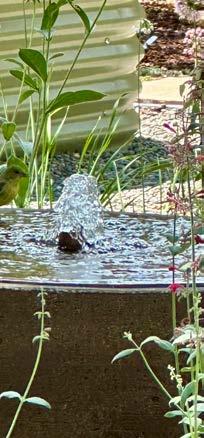
I always look for ways to add intentional elements that invite people into the garden — pathways, water features, or small seating areas. These signal that the garden has purpose and encourage visitors to linger.
Dense, layered planting is another key. When
a garden overflows with a mix of flowers, grasses, and shrubs, it becomes a sensory experience. Abundance creates intimacy, making you feel deeply connected to nature in a way a conventional landscape cannot.
Which native plants do you turn to in autumn for structure, texture, or warmth?
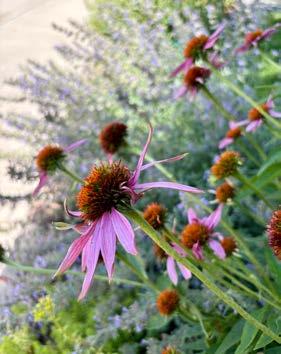
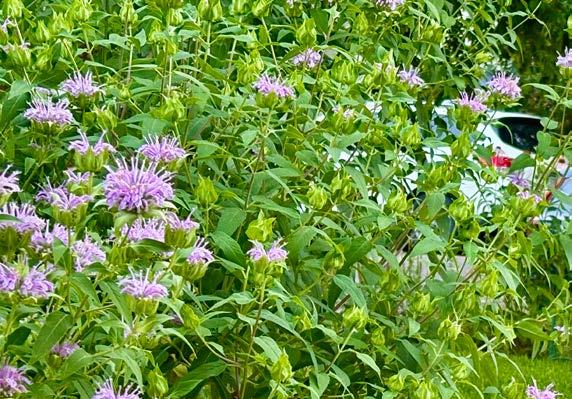
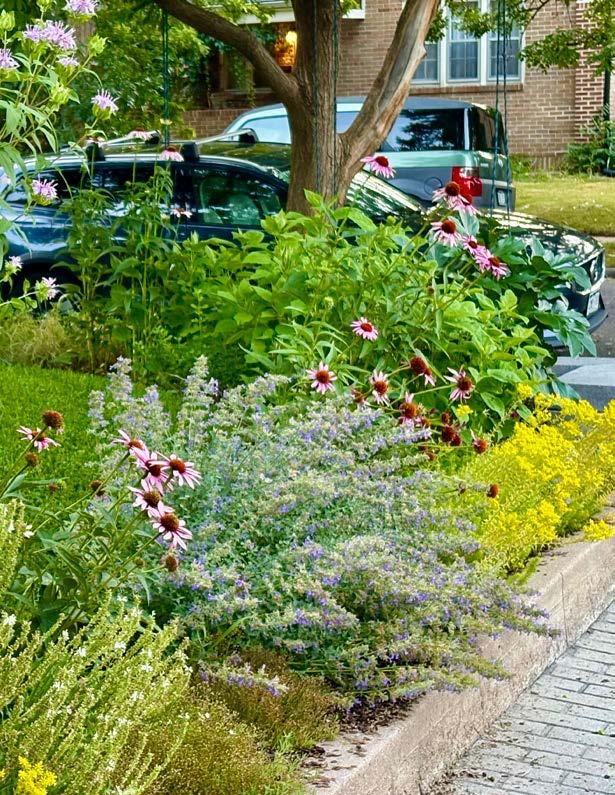
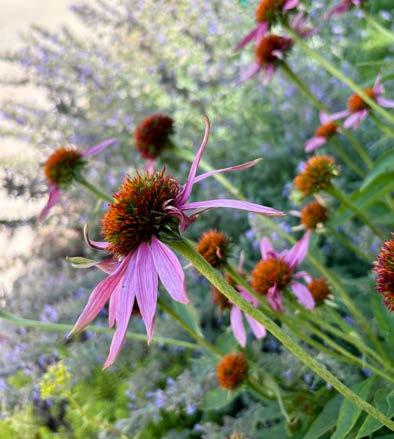
I love upright native forbs with seed heads that add texture and structure at this time of year — coneflowers, yarrows, and bee balm are all favorites.
“Abundance creates intimacy.”
Grasses are a must for fall. As flowers fade, they take center stage and continue to add interest well into winter when left standing. There’s nothing more beautiful than waking up to frosted grasses or a light dusting of snow. One of my favorites for small gardens is Blonde Ambition (Bouteloua gracilis ‘Blonde Ambition’), a clumping grass with striking blond seed heads that look like eyelashes.
For warmth and late-season interest, I also turn to groundcovers and perennials such as Sonoran Sunset Hyssop® (Agastache cana ‘Sinning’), Wild Thing sage (Salvia greggii), goldenrod, hummingbird trumpet (Zauschneria garrettii), plumbago (Ceratostigma plumbaginoides), and stonecrops like Sedum spurium ‘Dragon’s Blood’ and Sedum ‘Autumn Joy.’
For readers with very limited space — patios, small front yards, balconies — what’s one simple way they can bring regenerative principles into their garden?
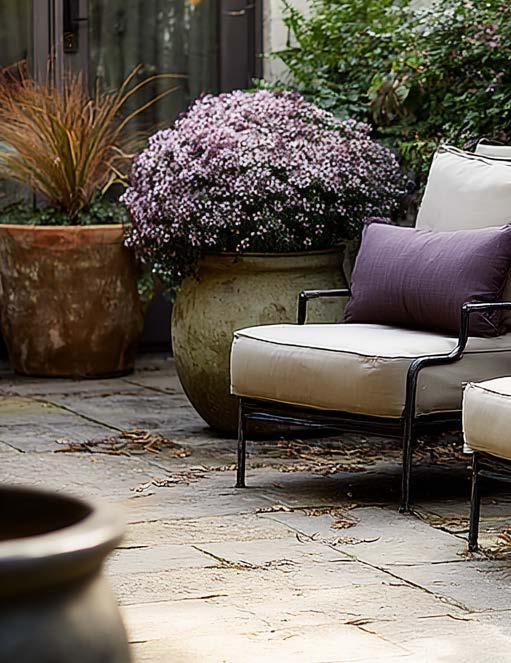
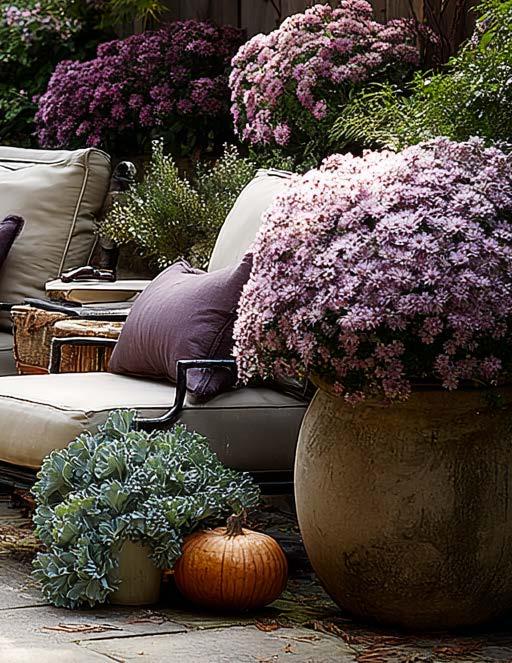
Container gardening is perfect for limited spaces. Native plants and grasses grow well in pots and provide the same ecological benefits as they do in the ground, serving pollinators, birds, and beneficial insects.
Mixing pot sizes and plant varieties can create a dramatic, “tiny but wild” container garden. And if your balcony or patio gets good sun, adding vegetables alongside native flowers will attract pollinators and boost your harvest.
When you imagine a cozy small garden, what feelings or experiences come to mind?
I imagine a living sanctuary that evokes calm and connection — a place to recharge and find respite from the hurried pace of city life. For me, coziness in the garden comes down to three things: peace, patience, and presence.
Learn more about Callae’s work at Honeywood Garden Design or on Instagram @honeywoodgardendesign.
In memory of Callae’s husband, a quiet reminder that beauty continues to grow even in difficult seasons.
THE GARDEN
Where Memories Bloom
Some gardens are planted. Others are remembered. For designer Diane Samways, the most beautiful ones are both — sanctuaries shaped by memory, intention, and the quiet details that make a space feel like home.
THE COZY GARDEN THECOZY GARDEN
PHOTOGRAPHED by DIANE SAMWAYS
Every garden tells a story — even if you don’t realize it yet. It’s the story of the people who’ve walked your path, the moments that
shaped you, and the quiet dreams that still live somewhere between the rosemary and the stepping stones.
Designer Diane Samways of Diane Samways Garden Design believes those stories deserve to grow right alongside the plants. She’s not interested in perfect symmetry or show-stopping blooms. Her gardens are the kind that feel lived in —
the kind that catch your breath on an ordinary Tuesday because something about them just feels like home.
SOME GARDENS ARE BUILT from blueprints. Others, from memories. Maybe it’s your grandmother’s roses, the shade of a childhood tree, or that courtyard on a trip that you still think about every spring. For Diane, those aren’t just sentimental details — they’re design cues. Each one becomes a thread in a story that blends emotion and aesthetic grace.
Many of the women Diane works with are in seasons of change — an empty nest, a new start, a little reinvention. To help them see the connection between their life and their
garden, she uses the rhythm of the seasons as a guide. Winter invites reflection. Spring sets intention. Summer celebrates growth. And autumn, as always, reminds us to let go.
It’s a simple, steady framework that teaches us a garden isn’t just something we build; it’s something we grow with. “These stories aren’t just anecdotes,” she says. “They’re emotional essences — magic, freedom, joy. That’s what I weave into a garden.”
And maybe that’s the part we’ve been missing all along: our gardens don’t just need plants. They need a little of us in them, too.
IN A WORLD OBSESSED with overnight transformations, Diane believes the best gardens are the ones that take their time. You can’t rush a space into feeling right—it has to unfold.
She encourages her clients to live with their gardens through every season: to notice how winter light softens edges, how spring’s damp soil smells just before the first bloom, how autumn breezes turn ordinary leaves into music. Those details, she says, reveal what a space truly wants to be. “You can’t design from a Pinterest board,” Diane says.
PHOTOGRAPHED by DOM PALMER
PRACTICAL TIPS
• Paint fences in warm tones that suit orientation.
• Layer plants at different heights for richness and texture.
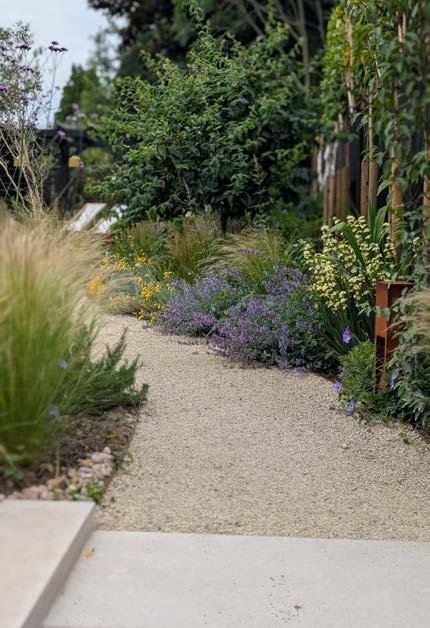
• Mix paving materials to add intimacy and flow.
• Create pockets of pause with seating or daybeds.
• Use mirrors and screens to spark discovery.
UNCOVERING YOUR GARDEN STORY
• Recall a childhood memory outdoors that made you feel free.
• Mark meaningful dates — solstices, anniversaries, moments of remembrance.
• Imagine how you’d like the garden to feel during those times.
• Let those cues guide planting choices, flow, and focal points.
“You have to stand in it. Feel how the light moves, how the air shifts, what’s already waiting to be discovered.”
The reward for patience is something deeper than beauty. A slow garden gathers texture and meaning year by year. It stops being a project and starts feeling like a relationship—one that matures quietly, becoming more generous and grounded with time.
ASKED ABOUT SMALL GARDENS
, Diane described them as places that demand both creativity and courage. “Every corner matters, every inch counts,” she said. “A small garden naturally invites us to be bold and intentional.”
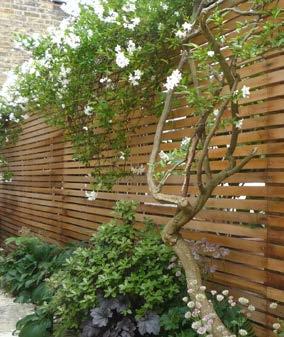
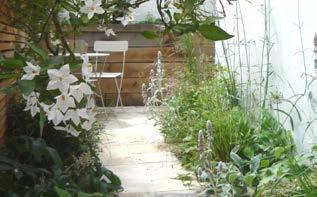
Her approach starts with simplicity. Instead of adding more, she edits—choosing one strong gesture to anchor the space and layering texture and light around it. A single climbing rose can pull the eye upward, a stretch of cobblestones can guide the way, and a mirror catching the evening sun can make even a modest courtyard feel twice its size.
For anyone whose garden feels more stressful than soothing, Diane’s advice is gentle: “Think of it as a rebirth, not a failure.” She helps clients clear what’s not working and make room for joy again. Warmly painted fences soften boundaries and make a small space feel like a private retreat. Mixed paving—gravel beside clay pavers, or a few cobbles tucked in for contrast—creates movement and intimacy underfoot. Layering plants at different heights adds depth without clutter, while a small nook for seating turns an unused corner into a place to pause.
When Diane talks about small gardens, she makes them sound like an opportunity in itself—a chance to create something intentional, personal, and beautifully your own.
“When the guesswork is gone, you can finally breathe and let the garden do what it does best: nurture, calm, and restore.”
When Diane describes a cozy garden, she paints a picture of quiet refuge — a place that holds you as much as it surrounds you. There are sheltered corners, the scent of something fragrant drifting through the air, and plantings that wrap the space in gentle enclosure. “Even if the garden is modest,” she says, “having the confidence to carve out little nooks brings a whole new level of coziness.”
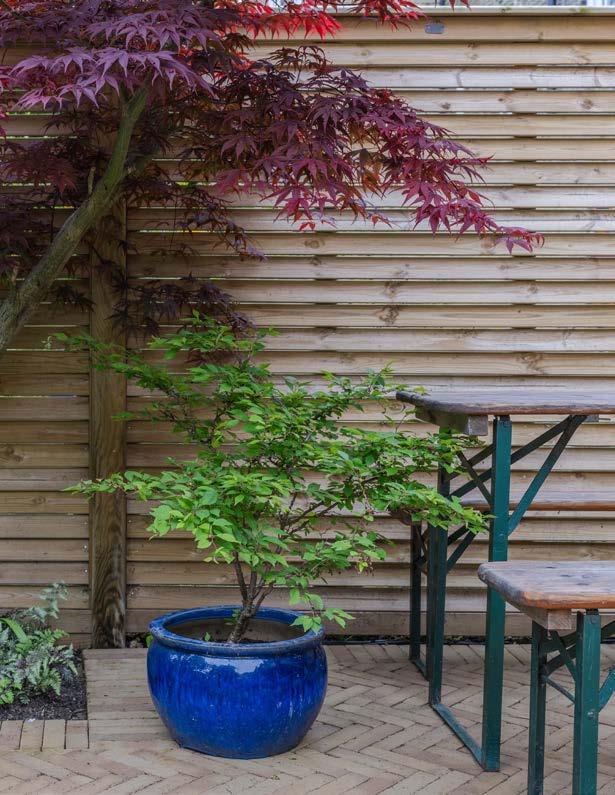
Her own garden reflects the same philosophy. At its center grows an Acer palmatum ‘Katsura,’ a tree that spends most of the year in quiet simplicity before bursting into brilliance without warning. For Diane, it’s a reminder that beauty doesn’t always announce itself — sometimes it just arrives.
She hopes her gardens offer that same kind of ease. “That voice that says, ‘This could be better’? It finally quiets down,” she says. What remains is softer: room to breathe, to rest, and to feel utterly at home.
Learn more about Diane’s work at dsgardendesign.co.uk or on Instagram @ dsgardendesign
Photo: Dom Palmer
PHOTOGRAPHED by DIANE SAMWAYS
alcove notes
Finding coziness in fall’s quiet corners.
A seasonal study in texture, tone, and the quiet beauty of small gardens.
Alcove Notes is a recurring visual journal celebrating the poetry of small gardens through the seasons. Each edition explores the materials, textures, and moods that define the moment —
from the hush of fall grasses to the glow of winter light. These pages are an invitation to slow down, look closer, and find beauty in the quiet details that make a garden feel alive.
“
FOR SLOW MORNINGS AND SOFT LIGHT —THE RHYTHM OF ALL IN MOTION.
SOFT LAYERS MEET SCULPTURAL SEEDHEADS
Pennisetum, dogwood, coneflower seedheads make a beautiful fall and winter scence.”
TEXTURE, TONE AND THE WHISPER OF WARMTH. THE COLOR OF COMFORT
Echinops, coneflower, agastache, and a pinch of sesleria autumnalis for the perfect fall pairing.” “