
INTRODUCTION
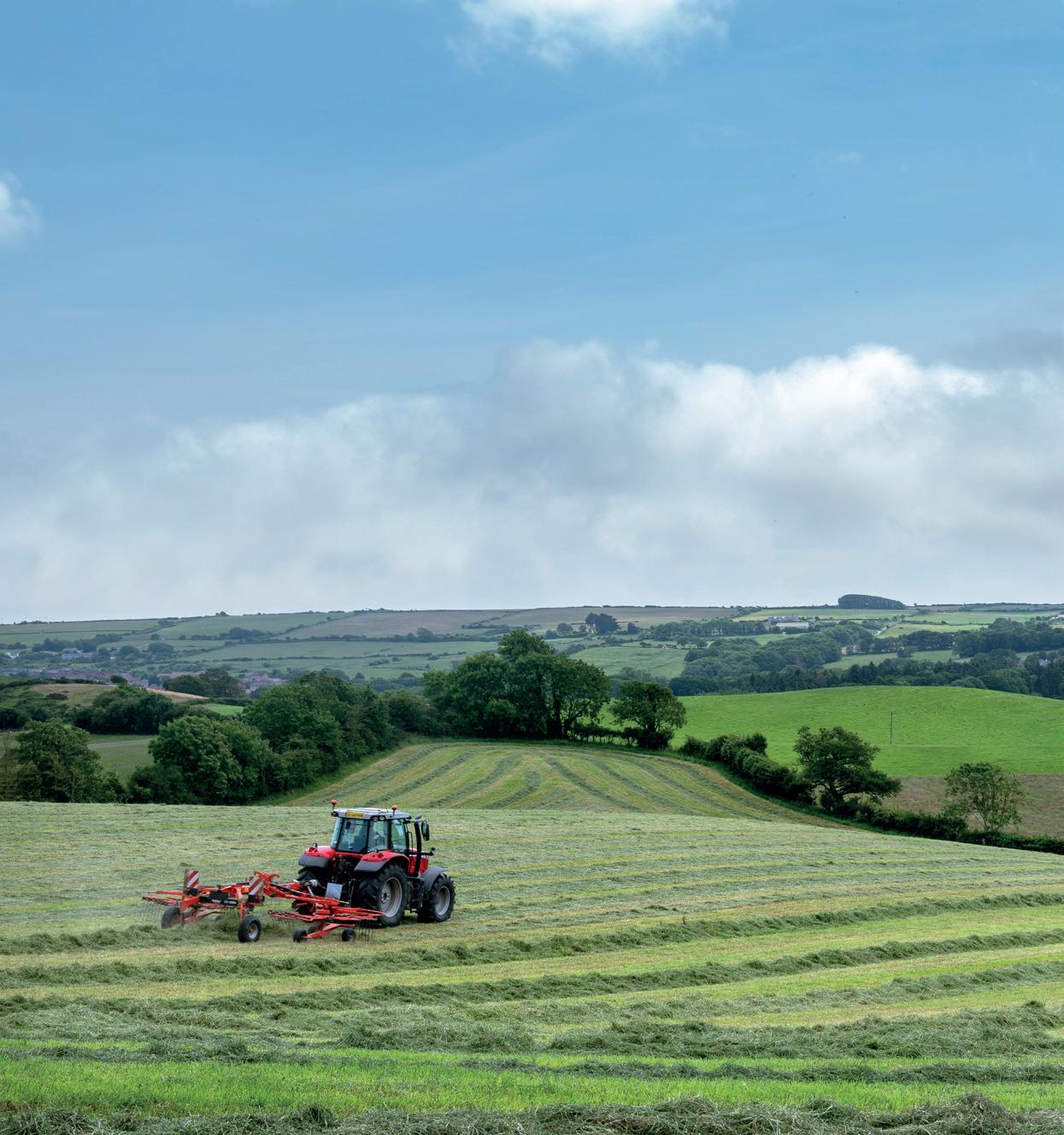
Welcome to the latest edition of our Farms and Estates Rural Intelligence newsletter. For many rural businesses, the pace of change continues to accelerate, with tax reform, policy development, market pressures and environmental regulation all demanding careful attention. At the same time, those same pressures are prompting important conversations around succession, structure, investment and long-term resilience. In a landscape that rarely stands still, as we anticipate another potential change of national leadership, timely advice and clear thinking have never been more important.
Despite these pressures, the resilience and entrepreneurialism of rural business owners stand out in a time where food security has never been more important but diversification to support farming is crucial for many. Attending two CLA Next Generation events recently, the optimism was evident as new opportunities were explored and ideas shared, at a time where collaboration is key.
In this issue, we have drawn together a range of topical updates and practical insights affecting farms, estates and rural businesses, with the aim of helping you stay informed, prepared and ready to act. Whether you are reviewing business strategy, considering future ownership and succession, assessing diversification opportunities or responding to legislative change, we hope this edition provides useful perspective and a clear sense of the issues worth keeping on your agenda.
As ever, if any of the topics raised would benefit from a more detailed discussion in the context of your own business or family circumstances, please do get in touch with our team.
SAM KIRKHAM Partner and Head of Farms & Estates Team

INHERITANCE TAX PLANNING –what are exempt normal gifts out of income?
For many landowners and farming families, most of their wealth is tied up in land and property rather than readily available cash. While reliefs such as Agricultural Property Relief (APR) and Business Property Relief (BPR) remain important, recent restriction of those reliefs has increased the focus on lifetime planning.
One effective strategy now more regularly discussed is the inheritance tax (IHT) exemption for normal expenditure out of income. This allows certain gifts to be immediately exempt – i.e. without the usual seven year waiting period.
What is the “normal expenditure out of income” exemption?
Gifts can be exempt from IHT if all three of the following conditions are met:
1. The gift forms part of the donor’s normal expenditure.
2. The gift is made from donor’s income.
3. After making the gift, the donor is left with sufficient income to maintain their usual standard of living.
What counts as “normal” expenditure?
HMRC guidance makes clear that it means normal for the individual, not for the average person. The focus is on whether the gifts form a pattern.
This pattern can be shown in one of two ways:
A series of regular payments over time, for example, annual or monthly gifts, or
Evidence that there was a clear commitment to make such gifts on an ongoing basis, even if the gift history is short.
Whilst it is preferable to have a history of say three to four years to establish a pattern of giving, the courts have confirmed that even a single gift can qualify if it can be shown and is documented to be the first in an intended pattern.
Gifts must be made out of income, not capital
Income for these purposes is not limited to taxable income and does not follow income tax definitions. It may include:
Drawings of profits from a farming partnership
Rental income
Dividend income
Pension income
ISA income and other non taxable income
Helpfully for farmers with fluctuating profits, HMRC apply a “taking one year with another” approach, allowing income to be averaged over time. However, accumulated income
can become capital if left unspent for too long, so regular planning and clear evidence are essential.
Maintaining your usual standard of living
The donor must retain enough income after making the gifts to maintain their normal standard of living. If gifts force the donor to use capital to fund everyday living costs, the exemption will fail. Therefore, careful record keeping is required of annual living costs.
Examples of how the exemption could apply
Common examples include helping fund children’s housing costs, grandchildren’s school fees, or regular support for younger generations involved in the farming business.
Given the proposed changes to bring pension funds into the scope of IHT from April 2027, many are considering withdrawing their pensions, either taking their 25% tax free lump sum or paying income tax, with a view to gifting the net of tax income onto the next generation to reduce the IHT on death. However, HMRC may yet have counter arguments to this type of planning.
Income for the purposes of the exemption is not necessarily the same as taxed income. While regular pension withdrawals may qualify, a large lump sum withdrawal taken to reduce the IHT pot, may be deemed capital and not surplus income.
Record keeping is critical
The exemption is usually claimed on death, so contemporaneous records are vital. HMRC will expect to see clear evidence that the conditions were met. Therefore, best practice would be to keep:
Annual income and living expenditure schedules
Evidence of the source of gifted funds
A clear written statement of intent to make regular gifts
Consistent patterns of gifting over time
Without adequate records, HMRC may deny the exemption, even if the gifts themselves looked reasonable. As the exemption must be claimed it is recommended that each year page 8 of Schedule IHT403 or a similar spreadsheet is completed and retained with your will.

SAM KIRKHAM Farms & Estates Team sam.kirkham@albertgoodman.co.uk
GETTING GIFTING RIGHT
For many landed estates and agricultural family businesses there have been a lot of transfers of assets in the last few years in preparation for the Agricultural (APR) and Business Property Relief (BPR) cap of £2.5million value for 100% relief.
Succession planning often involves transferring assets— such as land, properties, shares in farming partnerships or companies—to the next generation or into trust.
While these gifts can be effective for inheritance tax (IHT) planning, the “gift with reservation of benefit” (GWR or GRoB) rules can undermine their intended effect if not carefully managed.
Broadly, a GWR arises where an individual gives away an asset but continues to enjoy or benefit from it. In such cases, the asset is treated as remaining within the donor’s estate for IHT purposes, regardless of the legal ownership. For rural businesses, this is a common risk due to the intertwined nature of family lifestyles, farming operations, and ownership structures.
COMMON RISK AREAS
A classic example is the gifting of a share in the farmhouse to children while the parents continue to occupy it rentfree. There is an exemption from the GWR rules for cohabitation, provided not all of the property has been gifted, and costs of running the house are shared. Should the children move out, however, joint occupation ceases and the parents should pay market-rent instead, with rent reviews periodically.
Similarly, land transfers can create GWR issues. If farmland is gifted to the next generation but the donor continues to farm it “as before,” retaining control or benefiting disproportionately, the arrangement may fall foul of the rules. This is particularly relevant where no formal structure—such as a partnership agreement—exists to demonstrate a genuine commercial arrangement.
Trusts also require careful handling. If assets are settled into trust but the settlor (or connected parties) continues to benefit—for example, through use of property or receipt of income—GWR rules may apply. This can negate the IHT advantages of the trust entirely.
USING PARTNERSHIPS TO AVOID RESERVATION
A properly structured farming partnership can help mitigate GWR risks, particularly where all parties (e.g. parents and children) are actively involved in the business. If land or business assets are transferred but then contributed into a partnership, and profits are shared in line with genuine commercial participation, this may support the position that no benefit is reserved.
However, the key is substance over form. HMRC will scrutinise whether:
Profit shares reflect actual contributions (capital, labour, or management);
The donor’s involvement has reduced appropriately following the gift;
The arrangement is documented and operated on a commercial footing.
If parents retain significant control or derive disproportionate benefit, the GWR risk remains.
OTHER PRACTICAL EXAMPLES
Machinery or livestock gifts: If equipment or herds are gifted but the donor continues to use them without appropriate consideration, this may trigger a reservation.
Diversification assets: Holiday lets or renewable energy installations transferred to children but still enjoyed by the donor can create issues.
Deferred arrangements: Informal agreements allowing the donor to “use assets when needed” can be problematic, even if seldom exercised.
Existing caselaw has set out a guiding test that the donee must enjoy the asset to the entire, or virtually entire, exclusion of the donor. There should be a clear change in behaviours following any gifts, for example change to profit sharing arrangements and drawings.
KEY POINTS
To avoid GWR:
Ensure the donor does not continue to benefit from the gifted asset unless on full commercial terms;
Document arrangements clearly on an arm’s length basis (e.g. partnership agreements, tenancy agreements);
Consider charging market rent where occupation or use continues;
Align legal ownership with operational reality.
Given the complexity of agricultural businesses and the value of rural assets regular review is essential. Proper structuring can preserve both family harmony and tax efficiency, while failure to address GWR risks can lead to significant and unexpected IHT exposure.

ABI KINGSBURY Farms & Estates Team abi.kingsbury@albertgoodman.co.uk
VAT ON LAND AND PROPERTY TRANSFERS

For farming businesses, owned land and buildings are often the most valuable assets on the balance sheet. When ownership changes, either through a sale, gift or part of a restructuring process, VAT should be considered at the earliest possible stage.
There are two key points to consider
The first is whether VAT should be charged on the transfer.
While the sale of land or buildings is generally VAT exempt, in some cases it can be standard rated, with VAT payable. This most commonly occurs where the land or buildings are opted to tax or a non-residential building is new (completed within the last three years).
When opted land or a new building is sold, it will generally be obvious that VAT is due. However, less obviously, VAT can also be chargeable on non-sale transactions, such as gifts. This can be the case where VAT has been reclaimed on the purchase of the land or the construction of a building on the land. Where the building is new or there is an option to tax (“OTT”) in place, there would be what is called a ‘deemed supply’ and VAT would be payable on essentially the open market value at the time of transfer.
If VAT has been charged on rental income this may indicate an OTT has been made but it is not conclusive. The existence or otherwise of an OTT should be confirmed. The OTT is specific to the business that makes it and does not travel with property. HMRC may confirm if they have a record of an OTT, but this is not guaranteed.
Where VAT is charged on a sale it may be possible for the buyer to reclaim any VAT charged, however Stamp Duty Land Tax (SDLT) would be paid on the VAT inclusive selling price, so charging VAT can increase the SDLT cost. In some cases, it may be possible to structure a transfer so that no VAT is charged even if land is opted - for example, where the land and buildings transfer as part of a business that the new owner will continue to operate. This does require certain steps to be taken so needs to be planned early.
VAT free treatment of a sale or transfer would not only potentially reduce the SDLT payable, perhaps sweetening a
deal, it would also avoid trying to reclaim the VAT paid from HMRC. This is becoming an increasingly slow and tiresome administrative burden to be avoided if possible.
The second key area – often more problematic if not identified and addressed prior to a sale or transfer - is the Capital Goods Scheme (CGS).
Where VAT has been reclaimed on a high value capital asset, which includes land or the construction or refurbishment of buildings, the initial VAT deduction must be adjusted to reflect future changes in use of the asset. The current value for an asset to fall within the scheme is £250,000 of VAT bearing cost. The adjustment period is normally 9-10 years.
By way of example, assume a business constructed an agricultural building costing £350,000 and reclaimed all the £70,000 VAT incurred on the basis the building would be used wholly for taxable business purposes. After five years the barn was sold, without an OTT being made so the sale would be exempt. Because the exempt disposal occurs roughly halfway through the CGS adjustment period, the business would typically have to repay around half of the VAT originally reclaimed on the construction.
This VAT repayment cannot be reclaimed by the buyer and once the exempt sale has been completed there is no way of mitigating or reversing this charge. For that reason, VAT due diligence on land and buildings should cover not only whether VAT is chargeable on the transfer, but also whether CGS adjustments could be triggered. Identifying the position early gives you the best chance to consider alternative structures, obtain the right evidence, and avoid preventable VAT and SDLT costs.
RICHARD TAYLOR VAT Senior Manager richard.taylor@albertgoodman.co.uk

Inheritance Tax ChangesTime to Revisit Your Strategy
For many years, pensions and other tax efficient portfolios have played a central role in inheritance tax (IHT) planning. With recent changes to IHT and more due in 2027, those who have relied heavily on tax efficient portfolios as key to their IHT strategy may now need to reconsider their approach.
Pensions - A Shift in Treatment
From April 2027, most unused pension funds will form part of an individual’s estate for IHT purposes. This represents a clear change from the long-standing position where pensions typically sat outside the estate.
As a result, unspent pension funds could be subject to IHT at 40%, reducing their effectiveness as a vehicle for passing on wealth.
This change is particularly important for those over 57 because it may influence when and how pension benefits are taken. There are a wide range of options and the most tax-efficient route during someone’s lifetime and after their death needs careful consideration.

Individuals with an IHT liability who have previously planned to retain pensions for beneficiaries will need to revisit that strategy. In some cases, it may be sensible to spend or gift pension funds more actively during lifetime and preserve other assets (such as cash or investments held personally).
Advice is often needed to decide how withdrawals should be structured, the pace of withdrawals, use of tax allowances and tax bands, and the interaction with other income sources. This is rarely a one-off decision: but an ongoing strategy that should be reviewed as legislation, investment markets, personal circumstances and estate values change.
Now is also a sensible time to revisit any death benefit nomination (often called an expression of wish) attached to pension arrangements. Pension death benefits are not typically distributed through a will. Ensuring nominations remain up to date and reflect current intentions can help align pension wealth with the broader estate plan.
AIM Portfolios - A Changed Risk-Reward Balance
AIM investments have often been used as a shorter-term IHT planning solution, benefiting from 100% Business Relief after two years.
From 6 April 2026, this relief reduces to 50%. In practical terms, this could mean an effective IHT rate of 20% on these portfolios, prompting a reassessment of whether the level of investment risk remains justified.
AIM portfolios are high risk investments and not suitable for many investors.
Business Relief & Agricultural Relief: A New Cap
From April 2026, Business Relief and Agricultural Relief will be subject to a combined £2.5 million allowance.
The first £2.5 million of qualifying assets will continue to receive 100% relief.
Any value above this threshold will receive relief at 50%.
For couples, this allowance can be combined, allowing up to £5 million to pass free of IHT. Despite this, the changes represent a meaningful shift for business owners and farming families.
Taking Stock and Planning Ahead
With several established planning routes becoming less effective, this is a natural point to review existing arrangements.
There remains a range of options available. Trust planning, lifetime gifting, structuring of business interests, and revisiting pension and investment strategies can all play a role in building an effective approach under the new rules.
As always, the right solution will depend on individual circumstances. A structured review with a financial adviser can help ensure plans remain aligned with both current legislation and long-term objectives.
Please be aware, the Financial Conduct Authority does not regulate estate planning or trusts.
LOUISE OSBORNE Financial Planning Partner

AN UPDATE ON MAKING TAX DIGITAL FOR INCOME TAX (MTD-IT)
We have now passed the sign-up deadline for MTD-IT and it seems the publicity and hype regarding the topic has reduced.
For anyone who needs to register and has not yet done so, it’s not too late. HMRC are accepting late registrations with no penalties. If you have successfully signed up to MTD-IT, it’s time to get your MTD-IT software set up and ready to go for the first update, which is due to be submitted to HMRC by the 7th of August 2026.
Your MTD-IT software should allow you to select the following set up options:
Accounting dates or calendar dates. You have the choice of submitting updates to the 5th of each quarter i.e. first period 06/04/2026-05/07/2026 or to the standard calendar quarters i.e first period 01/04/2026-30/06/2026.
Cash accounting or traditional accounting. You can either submit updates based on the dates the income and expenses pass through your bank account (cash accounting) or based on the dates the income and expenses are incurred (traditional accounting). Consideration is needed before deciding which option to choose, especially where your turnover may exceed £1.6m. Generally, the best option is to align the MTD-IT preparation basis with your VAT return and income tax return preparation basis.
Full expenses or simple expenses. Full expenses will send all your expense category totals to HMRC, whereas simple expenses will combine all your expense categories into one, therefore reducing the amount of information sent to HMRC. If your turnover exceeds £90,000 you should use full expenses.
If you are using Xero to submit your quarterly updates, it’s important to review the tracking category options before you start reconciling the data. To prepare the quarterly updates Xero will only pull through transactions which have been allocated to a tracking category. Where you have both property and sole trade returns to submit, you will need to set up two separate tracking categories to ensure the correct income and expenses are allocated to the correct MTD-IT update.
If you are still unsure on your MTD-IT requirements or require any assistance setting up your software or tracking categories in Xero please do get in touch.


SUMMER 2026 TAX ANNOUNCEMENTS: WHAT RURAL BUSINESSES NEED TO KNOW
The government has announced two practical tax measures that may be relevant to farmers and rural businesses: a temporary cut in the VAT rate from 20% to 5% on certain family-focused activities and children’s meals over the summer holiday period, and an increase in the approved business mileage rate for employees using their own cars.
The temporary VAT rate reduction
The temporary reduction will run from 25 June to 1 September 2026 and is relevant to diversifications such as a farm park, open farms or family visitor attraction, such as indoor play barns, adventure trails, zoos, cultural facilities and heritage sites.
It also covers children’s meals served on the premises in restaurants and cafés, held out for sale only as a meal for children. Whether a meal is held out for sale only as a meal for a child will depend on how it is marketed, presented and priced rather than who consumes it (for example, being included on a distinct children’s menu).
In practical terms, the temporary VAT cut could allow businesses either to reduce ticket prices for visitors, improve margins at a busy time of year, or strike a balance between the two. For some businesses, the relief may also offer a useful marketing opportunity, particularly if the saving is passed on to families and promoted clearly in summer advertising.
The mileage rate change
The mileage rate change will affect travel reimbursement, and tax relief claims more widely across rural businesses. The government announced an increase in the approved business mileage rate for employees using their own cars. The rate is due to rise from 45p to 55p per mile for the first 10,000 business miles in a tax year, with effect backdated to April 2026.
If an employer reimburses mileage using the approved rate, the increase may allow a higher tax-free contribution towards travel costs. Where employees receive less than the approved amount, they may also be able to claim tax relief on the shortfall.
High value Council Tax surcharge
Following the announcement in the Autumn 2025 budget to charge a surcharge on owners of residential properties worth £2 million and above from April 2028, HMRC released its consultation on 19 May.
The annual charge is proposed in bands as follows:
£2m–£2.5m → £2,500
£2.5m–£3.5m → £3,500
£3.5m–£5m → £5,000
£5m+ → £7,500
The proposal is for valuations to be undertaken by the Valuation Office based on market value, refreshed every 5 years. Freeholders, or leaseholders with a lease granted of more than 21 years, would be in scope for the charge. Trustees would also be liable.
The government is considering relief for properties required for employment with potential recognition that farmers often must live on-site for operational reasons.
This is a key lobbying point for the rural sector, being a further tax on asset value and adding cost and complexity to running a rural business. We will be responding to the consultation and will keep you abreast of changes.

SAM KIRKHAM Farms & Estates Team sam.kirkham@albertgoodman.co.uk
THE TAX CONSEQUENCES OF ENVIRONMENTAL AGREEMENTS
After much anticipation HMRC has finally published its guidance on ecosystem services to clarify the taxation of environmental markets, including biodiversity net gain (BNG), nutrient neutrality, woodland creation and peatland restoration.
For farmers and estates this new income stream has been very helpful. However, the tax treatment of these arrangements remains one of the most complex and evolving areas in rural tax.
WHAT IS BEING TAXED?
Under HMRC’s framework, “ecosystem services”, is broadly defined as arrangements where landowners receive payments for delivering environmental benefits such as biodiversity enhancement or habitat creation.
INCOME VS CAPITAL
The most critical tax distinction is whether proceeds from ecosystem services are treated as income or capital, and if income, whether it is trading. Often taxpayers wish to argue capital treatment given the capital gains tax rate is currently 24% compared to income tax rates at 45% or more.
In many cases, HMRC is likely to view the activity as a trade where:
Land is actively managed or habitat created to generate units
Units are created and sold as a product
There is a clear profit motive
Where there continues to be a farming trade, the receipts could be part of that trade.
Capital gains tax may arise in two main scenarios:
1. Sale of land used for ecosystem services
2. Long-term change in land use, impacting underlying value. For this there would need to be clear evidence of the impact on value.
TIMING OF INCOME RECOGNITION AND COST DEDUCTION
Commonly we see commercial structures where there is a large up-front payment from the developer for say, BNG units, with separate contracts for 30 years of management obligations. This raises difficult tax questions in terms of whether the income received should be taxed over the term of the agreement and matched with the expenditure, or on receipt.
HMRC’s guidance acknowledges that the answer depends on the specific facts. Therefore, this remains an area of little clarity. In practice, this will require careful thought on the structuring of agreements and how the income and costs would be dealt with in the accounts, depending on the terms of the agreements. The tax treatment would follow the accounting treatment, and we are still waiting for guidance on this from the Institute of Chartered Accountants. This is not expected until the end of the year.
INHERITANCE TAX (IHT)
One of the biggest concerns has been whether entering into these contracts jeopardises Agricultural Property Relief (APR) and Business Property Relief (BPR). The Government extended APR to certain environmental land management schemes from April 2025. However, whether APR is available will depend on the nature of the agreement and who the contract is with and whether the land was previously in agricultural use.
Where the income is treated as trading, this will strengthen the argument that BPR applies, so the income would not upset the ‘Balfour’ balance.
CONCLUSION
The HMRC technical note provides much-needed clarity on the principles of taxing ecosystem services, but considerable uncertainty remains in practice. Therefore, careful planning in advance remains important, considering the tax and commercial obligation risks early on and whether the use of a limited company would help mitigate those risks.
SAM KIRKHAM Farms & Estates Team
sam.kirkham@albertgoodman.co.uk
Farmworkers’ and Estate Workers’
Accommodation: UNDERSTANDING THE CURRENT TAX TREATMENT
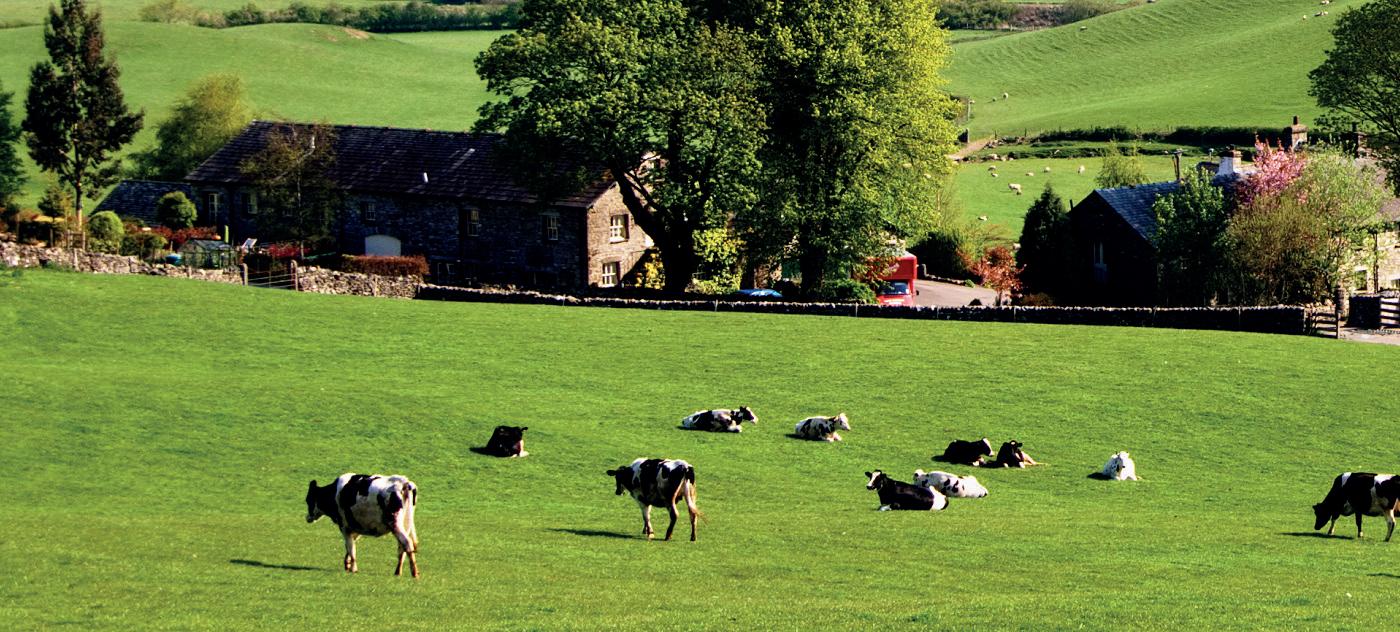
Provision of accommodation to farmworkers has long been a common feature of rural employment. Historically, much of this accommodation was treated as a tax free benefit, reflecting the necessity of living close to the land, livestock, or estate being managed. Legislative changes along with withdrawal of long standing concessions have made the rules far less straightforward.
1. CAN ACCOMMODATION STILL BE PROVIDED TAX FREE?
Accommodation provided for the proper performance of the employee’s duties
Living accommodation provided to agricultural workers can remain tax exempt only if the employer can demonstrate that the occupation of the property is a requirement of the job and necessary for the proper performance of duties.
Employment contracts must reflect the requirements of the role and explicitly state that living in the accommodation is a requirement of the role. Without clear evidence, HMRC may treat the accommodation as a taxable Benefit in Kind (BIK).
Accommodation provided customarily and for the better performance of duties
Accommodation may also be tax- exempt when it is customary for more than half of employees in similar positions, to be provided with accommodation AND the accommodation is provided for the better performance of the employee’s duties. Evidence that it is customary in your industry (not just in your employment) for employees to be required to live in provided accommodation must be kept. You must also prove that by occupying the particular accommodation the employee can perform the duties better than if they lived elsewhere. Consequently, it is necessary to look at the duties, if any, that are performed outside the employee’s normal hours. This test is more challenging for diversified farms and estates, where roles may no longer follow traditional patterns.
2. WITHDRAWAL OF THE REPRESENTATIVE OCCUPIER CONCESSION
Many workers previously relied on an Extra Statutory Concession known as “Representative Occupiers”. This was withdrawn on 6 April 2021. Many employers—particularly in estates with diverse roles—may not have recognised it is no longer possible to on this protection.
3. WHERE DOES THIS LEAVE EMPLOYERS PROVIDING ACCOMMODATION TO THEIR WORKERS?
While many traditional agricultural workers will continue to meet the “necessary for proper performance” exemption, the withdrawal of the representative occupier concession creates real uncertainty for others.
Employers must gather strong evidence that:
Occupation of accommodation genuinely supports the proper performance of duties; or
The role meets the “customary” test, and the employee must live in the accommodation “for the better performance” of their duties.
Without this, the accommodation can become a taxable benefit in kind (BIK).
Directors/shareholders
Where directors/shareholders provided with accommodation have a material interest in the company (more than 5%) the provision of accommodation cannot be exempt from tax and gives rise to a BIK.
4. TAX AND NATIONAL INSURANCE CONSEQUENCES
Accommodation which is not tax exempt, gives rise to a taxable BIK which must be reported annually. The employer is liable to Class 1A NIC on the value of the BIK.
HMRC is introducing mandatory payrolling of BIKs from 6th April 2027. Accommodation is one of those BIKs which is not required to be payrolled, unless the employer chooses to do this voluntarily.
All utility bills paid for by employers give rise to an additional BIK, even if the accommodation is accepted to be of the type which is tax-exempt.
5. ACCOMMODATION AND NATIONAL MINIMUM WAGE (NMW)
It is necessary to consider NMW and the accommodation “offset” rules. All employees must be paid at least NMW of £12.71 per hour (for those over 20). The daily accommodation off-set is £11.10 per day and should be taken into account for NMW purposes when employees are provided with accommodation, whether or not they pay their employer rent for the property. Where the accommodation is provided rent free employers add the accommodation off-set to pay to check that NMW has been paid. Where Rent is paid by the employee it is necessary for the employer to first deduct rent from pay and then add back the accommodation off-set to ensure that NMW has been paid.
6. RENT DEDUCTED FROM GROSS OR NET PAY
Where rent is deducted from gross pay a taxable BIK will arise. The BIK is the greater of the accommodation benefit itself or, the reduction in gross salary. Where the accommodation is tax exempt the measure of the BIK is the amount of rent deducted from gross pay, e.g where a worker’s salary is reduced by £500 per month an annual BIK of £6,000 arises. The employer will be liable to Class 1A NIC on the benefit.
On the other hand, where rent is deducted from net pay, any accommodation BIK can be reduced by the rent paid. If the accommodation is tax exempt no BIK arises. In both cases the calculation for NMW (point 5 above) should be carried out to ensure at least NMW has been paid.
7. RETIRED WORKERS
Accommodation provided to retirees, which previously attracted the tax exemption, can still continue to be provided tax-free if:
the employee continuously occupied the accommodation or similar accommodation for a period of 5 years immediately prior to retirement, and
the individual continues to occupy the same or similar accommodation after retirement.
8. WHAT EMPLOYERS SHOULD DO NOW
Tax treatment depends heavily on employment contracts and daily duties. It is recommended that you review your current arrangements to ensure compliance with HMRC regulations. This should include:
Employment contracts
Job descriptions
Working patterns and on call requirements
Historic arrangements for retired workers or widows
National Minimum Wage implications
Proper documentation is essential to defend tax exempt status.
Given the complexity of the rules surrounding the provision of accommodation, obtaining specialist employment tax advice is highly recommended. For further information please contact Sam Kirkham or Caroline Jones.
CAROLINE JONES
Farms & Estates Team
caroline.jones@albertgoodman.co.uk
SURRENDER OF AGRICULTURAL TENANCIES
Where an agricultural tenancy is surrendered, often compensation is paid to the outgoing tenant. Depending upon the terms of the agreement and the way in which the compensation is paid, the tax treatment of the receipt by the tenant can vary.
Where the tenancy began before 1 September 1995, the Agricultural Holdings Act 1986 (AHA 1986) applies. For tenancies commencing after that date, the Agricultural Tenancies Act 1995 (ATA 1995) applies. The difference can be significant for tax purposes – an AHA 1986 tenancy brings with it security of tenure and provides that statutory compensation can be paid to displaced tenants. A tenant under an ATA 1995 tenancy will only be entitled to compensation for improvements made that cannot be removed.
Where a tenant is entitled to compensation, part or all of this may be exempt from capital gain tax (CGT). To qualify, the landlord must issue a statutory notice to quit. The notice must not detail any of the 5 specific cases of breach of tenancy:
1. Failure to fulfil responsibilities in accordance with good husbandry,
2. Failure to comply with a notice given relating to a failure to pay rent or remedy a breach of terms
3. The interest of the landlord has been materially prejudiced which is not capable of being remedied by the tenant,
4. Insolvency of the tenant
5. Death of the tenant
The tenant must subsequently quit as a result of the notice.
The statutory compensation equates to five times the annual rent on the date immediately before the tenant quits the holding. However, if the tenant is able to show that his actual loss as a result of quitting the tenancy is greater than one year’s rent, he can give notice in writing to the landlord under section 60(6) AHA 1986 at least one month before the termination of the tenancy that he intends to claim a higher amount. The statutory amount can then be increased to six times the annual rent. Note if part of the holding is given up early and the rent reduced as a result, the amount of statutory compensation could also reduce.
If the landlord and tenant subsequently enter into an agreement for the tenant to leave the property early, entitlement to statutory compensation remains provided they ultimately leave as a result of the initial notice to quit issued by the landlord. As such, the statutory notice should give the required 12 months after the current tenancy is due to expire, but the tenant can choose to leave earlier.
Any compensation received in excess of the statutory amount will be liable to CGT. In such circumstances it will be important to obtain an apportionment of the excess between the various components of the property – farmhouse, land, buildings and any let properties. The tenant will need to calculate CGT on each part. Reliefs such as private residence relief and business asset disposal relief may be available depending upon the use of each part. If the tenant subsequently uses the proceeds to acquire replacement business property, rollover relief may also be available deferring the gain arising.
Care should be taken when considering a tenancy surrender to ensure that the opportunity to claim the statutory compensation is not missed and all reliefs are considered if CGT does become due.
For the landlord, if the compensation is paid to enable an onward sale of the property at a higher value, this should be a deductible cost against the sales proceeds, reducing any CGT payable. It is generally not deductible against any rental income.

LIZ JONES Farms & Estates Team liz.jones@albertgoodman.co.uk
2026 FARMING UPDATE
With the first of the March 2026 farming accounts filtering through the overall results are as follows:
Conventional milk prices averaged 41.63 pence per litre for the year to March 2026, according to the Agriculture and Horticulture Development Board (AHDB), resulting in good dairy profits. However, the February 2026 average conventional milk price was 36.59 pence per litre, over 5 pence per litre less than the annual average, a fall of over 12%. Prices fell below 30 pence per litre for some, having a negative impact on current business cash flows. More recently price increases of over 1 pence per litre have been announced, so hopefully this will continue and help cash moving forwards.
Organic milk prices have remained very strong at around 60 pence per litre, so profits have remained very good in this sector.
Beef prices have been over £6 per kg dead weight for prime finished beef and cull cows were not far behind, at over £5 per kg. The national beef herd continues to fall in overall numbers, with more beef coming from calves produced by the dairy herd.
New season lamb prices have reached over £9 per kg dead weight, up £1.50 per kg compared with 2025. The number of animals slaughtered year on year has increased around 5% so demand for lamb remains strong.
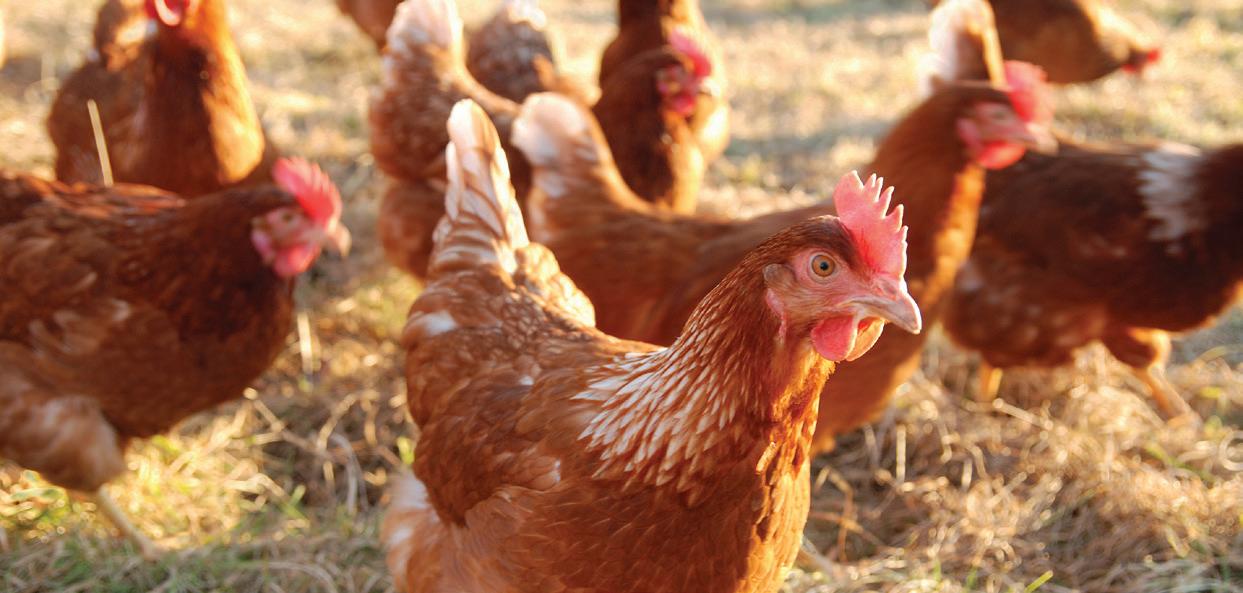
Poultry meat demand continues to be strong. A move towards lower stocking densities has caused tight domestic availability and kept markets supported, with many producers also seeing better performing birds as a result
of this transition. Egg producers are also doing well, with demand outstripping supply. Feed prices, which account for around 70% of productions costs, have also remained low which has kept the costs down.
Pig prices have changed very little, with slim margins at best. Imports from the EU has kept the demand for UK pork constant and therefore the price down.
Cereals and oilseeds prices have firmed very slightly but with the current price of fertiliser and fuel many are considering what to do if this harvest doesn’t improve on the last few years.
Increased minimum wage and competition for labour from other industries has hindered people recruitment and retention in some cases.
The basic payment scheme (BPS) has effectively disappeared. Those with Sustainable Farming Incentive (SFI) agreements are looking at when these will end to see what options they might have moving forwards, and those that don’t are looking at what they can claim and what it is worth. Capital grants have reopened albeit at a lower level than before and are helpful for the right project.
Cost control, maximising efficient output and improving management all remain a vital part of any successful farming business. Ensuring that you are measuring your own costs of production and output, whilst comparing them to industry data will help you see where improvements can be made.
Embracing change and developing more cost-effective systems will help the business now and into the future.

james.bryant@albertgoodman.co.uk

Sustainable Farming Incentive (SFI): are you ready?
With farming margins under pressure for many and the previous scheme closing without warning in March 2025, it’s important to stay on the front foot if you want to access available funding.
The SFI was designed to be an easy-to-access scheme that rewards the delivery of environmental outcomes. However, demand has been high, and the offer has been scaled back since its initial launch.
The application window for small farms (and those without an existing agri-environment agreement) opened in June 2026. The scheme is expected to open more widely in September 2026 (still limited to those with management control of the land). At a glance, the scheme now includes:
71 actions (down from 102)
3-year agreements
£100,000 annual cap per farm
Greater focus on higher-value environmental actions
To avoid missing out, make sure you are ready. If you need support, speak to your agent early and ensure the relevant information is in place. Although a “traffic light” style warning system is expected ahead of any closure, it’s important not to be caught out.
FROM AN ACCOUNTANT’S PERSPECTIVE
With agreements capped at three years, it’s essential to cost the options and understand the inputs required to deliver each action. Although SFI payments are received quarterly, the cash-flow implications should be planned. When modelling this, remember that payments are fixed, whereas input costs may rise with inflation or wider market forces.
Opportunity cost matters too. What are you giving up by entering the scheme? For example, do you need the output
you would normally achieve from ryegrass compared with a herbal ley? What is the practical impact of reducing fertiliser, and how might that affect performance elsewhere on the farm? While SFI options can be a better fit for more marginal land, you just need to weigh it all up.
There was a lot of excitement about “stacking” SFI options alongside other schemes, such as the Countryside Stewardship Scheme (CSS) and Biodiversity net gain (BNG), but that may now apply to far fewer businesses. It’s also sensible to plan for the worst-case scenario that there may not be an equivalent scheme available at the end of your agreement, even though I hope there will be.
If you are currently in a scheme that works well for you, be cautious about assumptions for this next round. As the recent reopening showed, several well-used options have been scaled back, so any future offer may not be as rewarding as it has been previously.
Finally, although I’m an accountant and naturally drawn to the numbers, the wider impacts of entering into SFI also need to be considered. Does it improve soil health, strengthen rotations, or reduce inputs—and therefore reduce risk? These benefits can be just as important as the payment itself when you’re thinking about the long-term sustainability of the farm.
KATE BELL Farms & Estates Team kate.bell@albertgoodman.co.uk

NEW HMRC CONSULTATION: REPORTING RULES FOR COMPANY–OWNER TRANSACTIONS
What farming and rural business owners need to know
HMRC has launched a consultation that could change how transactions between companies and their directors/ shareholders must be reported in future.
While no changes have been finalised yet, the proposals are highly relevant to farming businesses and landed estates who trade through a limited company.
What is being proposed?
HMRC is considering introducing a new reporting requirement for transactions between close companies and their shareholders or directors (known as “participators”).
A close company includes most farming and family companies – broadly any company controlled by five or fewer shareholders, or by shareholders who are also directors.
The proposals would require companies to report detailed information about payments and transfers of value between the business and its owners, going well beyond the current disclosures for loans to participators.
Why is HMRC doing this?
HMRC believes that transactions between companies and their owners are a key contributor to the small business corporation tax gap.

TOM STONE
Farms & Estates Team
This is aimed at where participators are withdrawing funds beyond what they are legally entitled to, and not repaying this outstanding balance to the company.
HMRC wants greater visibility of these transactions to reduce error and misuse.
How would reporting work?
HMRC is consulting on whether information would be reported:
Annually through the corporation tax return, or
Via a separate digital reporting process, possibly more frequently
HMRC is also considering whether specific penalties should apply for late or incorrect reporting.
What should farming businesses do now?
Although this is only a consultation, the direction of travel is clear.
Businesses should:
Ensure loans to directors, shareholders, or businesses they are associated with, including partnerships and sole trades, are properly tracked so correct tax reporting is made
Speak to their adviser before transferring funds or assets
We are feeding back to HMRC to encourage proportionate, practical rules that recognise how genuine farming and family businesses operate.
We will keep clients fully informed and provide guidance well in advance of any new reporting requirements coming into force.
tom.stone@albertgoodman.co.uk
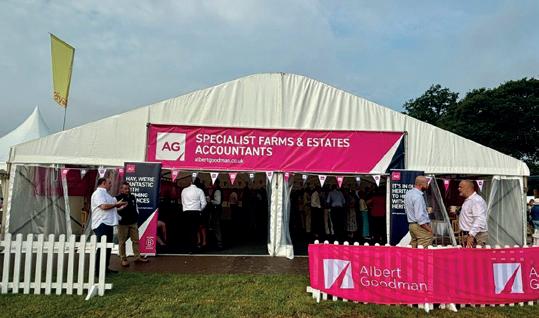
WE WILL BE AT THE HONITON AGRICULTURAL SHOW ON
Thursday 6th August
PLEASE COME AND SEE US FROM 2.30PM
CURRENT VACANCIES:
TRAINEE ACCOUNTANT OPPORTUNITIES 2026 - available in all locations (Taunton, Yeovil, Weymouth, Bristol and Weston-super-Mare). albertgoodman.co.uk/careers/trainee-accountant-graduate
SAM KIRKHAM
sam.kirkham@albertgoodman.co.uk 01823 250350
IAIN MCVICAR
iain.mcvicar@albertgoodman.co.uk 01823 250283
KATE HARDY
kate.hardy@albertgoodman.co.uk 01305 752064
KATE BELL
kate.bell@albertgoodman.co.uk 01823 250286



KEEPING IN TOUCH

TOM STONE
tom.stone@albertgoodman.co.uk 01823 250397
JAMES BRYANT
james.bryant@albertgoodman.co.uk 01823 250372
LIZ JONES
liz.jones@albertgoodman.co.uk 01823 286096
ABI KINGSBURY
abi.kingsbury@albertgoodman.co.uk 01823 286096




If you would like this newsletter to be sent to a different address then please send your updated details to: gdpr@albertgoodman.co.uk You may also use this address to opt out of receiving this newsletter or for any other queries you may have. If you would like to see our privacy statement please log on to our website: www.albertgoodman.co.uk/privacy

