In this issue Alberta Senior living


Published by
Allard Group of Companies Inc.
Fort Saskatchewan, Alberta
Serving readers across Alberta albertaseniorliving.ca hello@allardgroup.ca
Editorial Team
Publisher & Editor-in-Chief: Kerri Leland
Creative Director: Andrew Johnstone
Copy Editor: Finn Leland
Chief Morale Officer: Walter John
Contributing Writers:
• Accessible Acupuncture
• Celiac Canada
• Carol Christian
• Eazy Peazy Downsizing Team
• Liz Griffiths
• Tricia Ham
Photographers:
• Patricia Chuey
• Holly Harper
• Melanie Hval
• Indigenous Tourism Alberta
• Julie Matthews
• Michelle Nieviadomy
• Trixie Rowein
• Bonnie Schoonderwoerd
• Lorraine Hjalte, Willow Creek Studio
• Frederick McDonald
Advertising & Business:
Advertising Sales & Partnerships: Email: hello@allardgroup.ca
Distribution
Distributed throughout Alberta, including within senior living communities, recreation centres, libraries, medical offices, and other locations.
Contact Us
For all inquiries, please email hello@allardgroup.ca
Publication Details
Published bi-monthly by Allard Group of Companies Inc. © 2026 Allard Group of Companies Inc. All rights reserved.
Reproduction in whole or in part without written permission is prohibited.
Opinions expressed in Alberta Senior Living are those of the authors and do not necessarily reflect the views of the publisher. While every effort has been made to ensure accuracy, Allard Group of Companies Inc. assumes no responsibility for errors or omissions.
Printed in Canada
ISSN 2819-7577 (Print) ISSN 2819-7585 (Online)
Letter from The Editor
There’s something about this time of year that just feels good.
After a long Alberta winter, the longer days and warmer weather feel like a bit of a reset. Everything starts to come back to life, and I think we do, too! It’s the season where we naturally slow down a little, spend more time outside, and reconnect with the people who matter most.
With Mother’s Day and Father’s Day just around the corner, I often find myself reflecting on family, on the roles we’ve played over the years, and the ones we’re still growing into. And during Seniors’ Week, it’s a chance to really celebrate the older adults in our lives and communities, their stories, their resilience, and the wisdom they continue to share.
This is also the time of year when it feels like there’s so much to look forward to. The simple things start to call: morning coffee outside, evenings
that stretch a little longer, and weekends spent exploring. Personally, I’m especially excited to get out camping around the province this summer. There’s just something about being in nature that helps you slow down and take it all in.
This issue is one I’m especially proud of. It’s our third issue, and it’s full of inspiring stories and great information.
Our cover feature on Frederick McDonald is a powerful and meaningful story, one that really stayed with me. It speaks to leadership, resilience, and the kind of impact that lasts far beyond a single lifetime.
As we approach National Indigenous Peoples Day, we’ve also included stories that highlight Indigenous perspectives and experiences in a thoughtful way. In Summer Wellness the Indigenous Way, we explore a more grounded, holistic approach to well-being; one that focuses on connection to the land, community, and balance.
We’re also taking you across Alberta with a look at Indigenous tourism experiences; places and opportunities that invite learning, connection, and a deeper appreciation for the stories and cultures that shape this province.
As always, I hope this issue feels like something you can enjoy at your own pace, whether that’s with your morning coffee, out on the deck, or shared with someone close to you.
Thank you for being here. It truly means a lot to be part of this community with you.
Warmly,
Kerri Leland

SMART RETIREMENT PLANNING IS MORE THAN INVESTING — IT’S UNDERSTANDING YOUR OPTIONS
Your retirement years should feel secure and empowered. With a free Financial Needs Analysis, I’ll walk you through your long-term investment options, income strategies, and protection plans—including mutual funds and life insurance—so you can make decisions with confidence and peace of mind.
DEALER SERVICES PROVIDED BY PFSL INVESTMENTS CANADA LTD. INSURANCE AND SEGREGATED FUNDS OFFERED BY PRIMERICA LIFE INSURANCE COMPANY OF CANADA, DISTRIBUTED BY PRIMERICA CANADA.

Letter from Minister Minister of Indigenous Relations Sawhney Rajan
Every June, communities across the country recognize National Indigenous History Month and celebrate National Indigenous Peoples Day on June 21. Indigenous Peoples have lived on these lands for thousands of years, and it is important to deepen our understanding of the experiences that have shaped Indigenous communities, including the difficult legacy of residential schools and the ongoing impacts felt across generations.
I encourage everyone to reflect on the deep histories, diverse cultures and lasting contributions of First Nations, Métis and Inuit across Alberta and
Canada. Whether through community events, cultural celebrations or personal learning, June is a time to learn, celebrate and share Indigenous cultures and knowledge with one another.
For seniors and those who care for them, participating in these observances can also carry special meaning. Elders hold a unique and central role in Indigenous communities. Many Elders are respected spiritual leaders who guide their communities as Knowledge Keepers, teachers and mentors. Their wisdom helps preserve cultural identity and strengthen the connections between generations. As we mark National Indigenous History Month and National
Indigenous Peoples’ Day, we honour the role of Elders and acknowledge the importance of ensuring they are respected, supported and heard.
From language revitalization and traditional cultural and healing practices to leadership in environmental stewardship and community wellness, Indigenous Peoples continue to shape Alberta’s future with strength and vision. Let’s celebrate that vitality and recognize the many ways Indigenous communities contribute to the social, cultural and economic fabric of our province.
Minister Rajan Sawhney Minister of Indigenous Relations

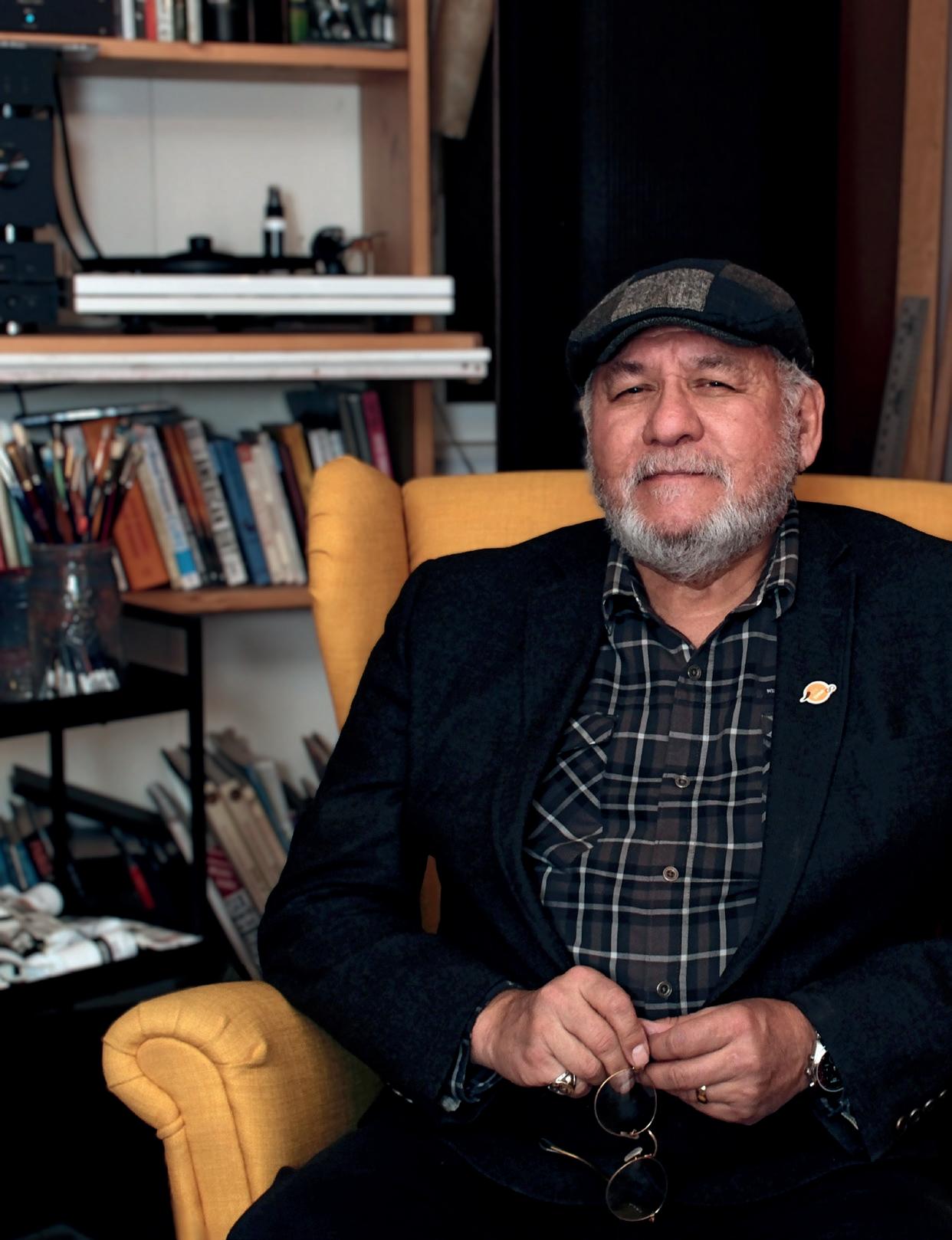
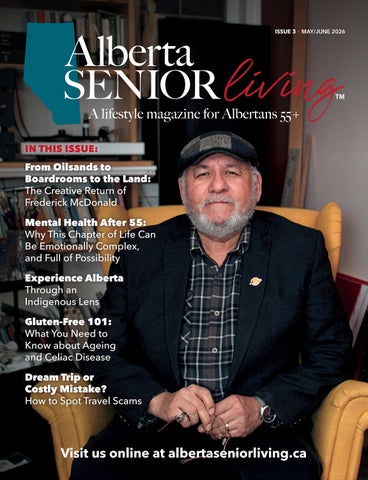
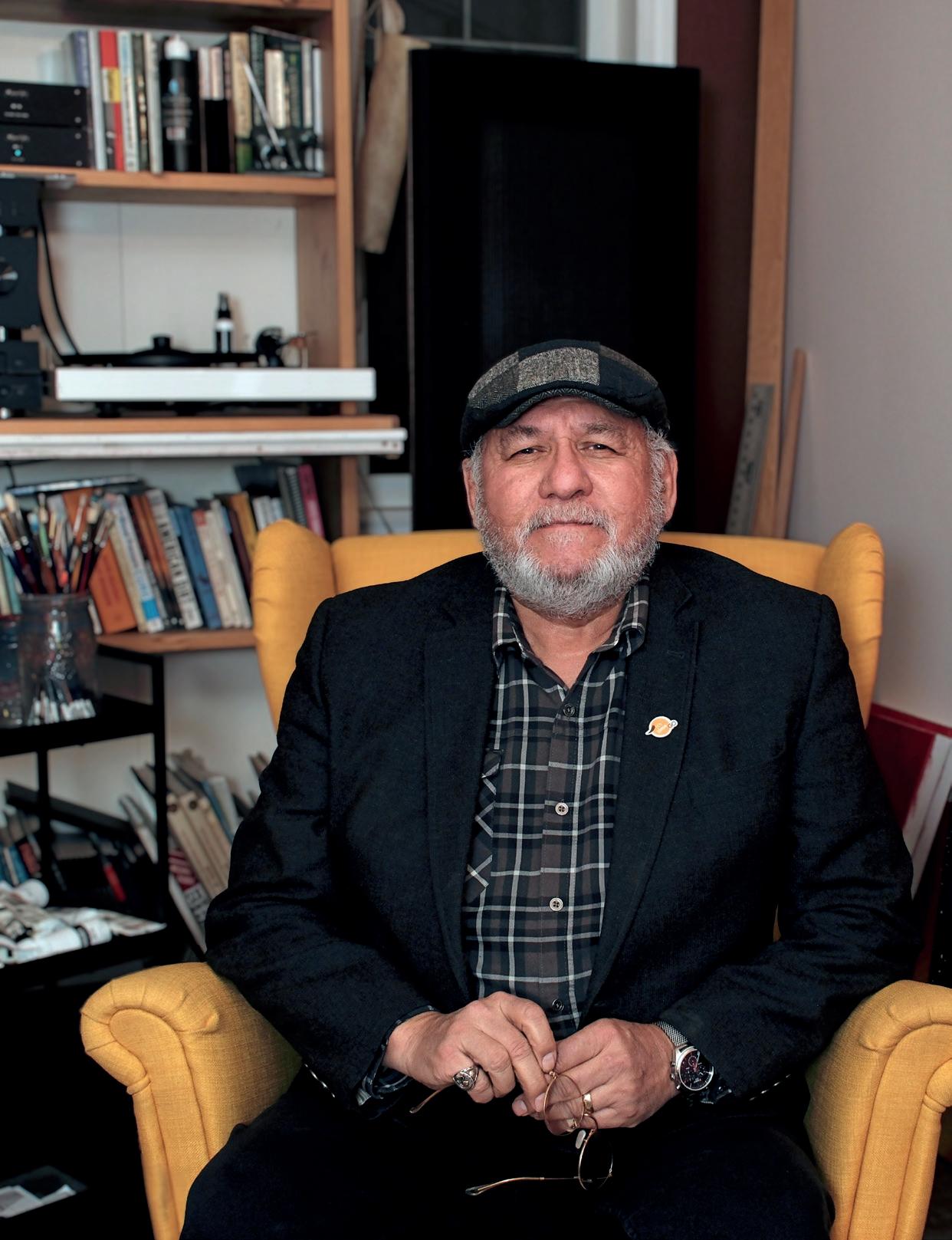
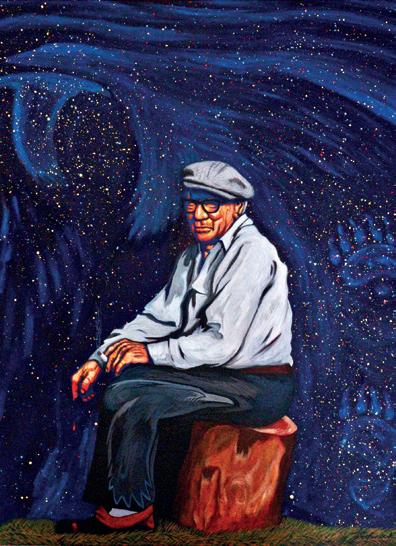
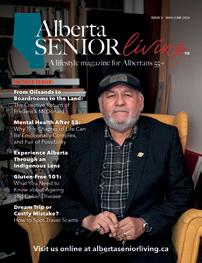
From Oilsands to Boardrooms to the Land: The Creative Return of Frederick McDonald
By Carol Christian
At 68, Frederick McDonald has come full circle— kind of.
A proud member of the Fort McKay First Nation, McDonald grew up steeped in the traditional hunting and trapping ways of his parents and ancestors. He left for a while, chasing after business, working in the oilsands, even travelling around the world, but soon enough, he ended up right where his heart always was, back home in Fort McKay.
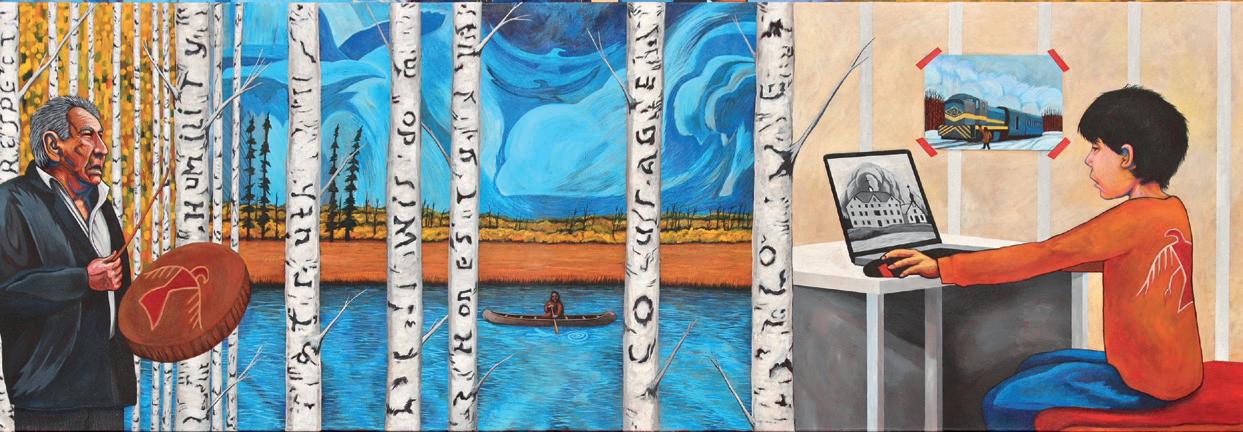
It’s the pull of family and a strong sense of heritage McDonald credits with keeping him grounded through all those years, and what drew him back to northern Alberta in the end.
He will tell you straight that his children have always been a big inspiration in his life, spending plenty of time with them as they grew and sharing many travel adventures together.
“That’s always something that brings me back, and it’s also what keeps me grounded. I now live full-time in Fort McKay, which is my community, and yeah, I really love living here. I really do. It’s such a wonderful, small, very safe community, and I love that about this community, and it’s tight, very supportive.”
Living out on the land—well, that’s a big draw, too.
“I love being in the bush. I love being with the animals … the trees … the wind and birds. There’s something just magical about it.”
Looking back, McDonald shares he originally wanted to be a trapper or a guide and live in the bush; then he started reading books. He’s a voracious reader, some times reading the same book two or three times.
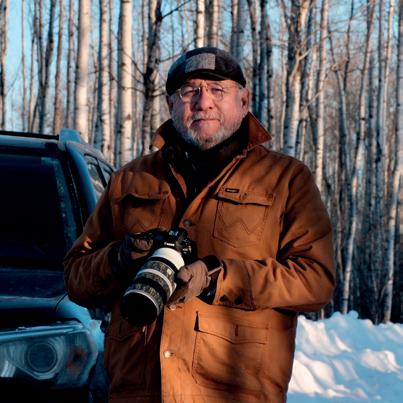
He earned a trade, going to work in the oil sands as a gas and pipe fitter for 10 years. Then he got bored—really bored—so he grabbed his backpack and took off exploring, spending about 18 months, travelling through Australia, New Zealand, parts of Europe and Mexico as well as the U.S. and Canada.
“I learned everything I could along the way.”
When he returned, he went back to school, earning his Bachelor of Fine Arts at the University of Calgary in 1995, then his Master’s six years later. “I loved university. I became an artist, and I did that for 10 years solid.”
In the years following, McDonald served as the CEO of the Fort McKay Group of Companies. He has been president of the Northeastern Aboriginal Business Association plus served on a number of Boards of Directors for such organizations as the Keyano College Foundation, United Way of Fort McMurray and Wood Buffalo, the 2015 Western Canada Summer Games, and the Alberta Foundation for the Arts. It wasn’t long, though, before his creative side beckoned again.
All those conversations with colourful people from different cultures during his worldly travels further inspired his creativity and ignited his desire to fulfill a lifelong dream: To be a poet.
“I did paint in high school. People liked what I did, but I’ve always just wanted to be a poet, and thankfully, I’ve now been published as a poet.” His work can now be found through Harbour Publishing out of Vancouver. He chuckles, thinking few artists can say they’ve transitioned from art to leading a multi-million dollar company as he did when he became CEO of the Fort McKay Group of Companies. At the start of his time there, the company was generating about $150-million annually with roughly 300 employees. Before long, his passion for the studio drew him back. By the time he departed, staff numbers had more than doubled.
“I say I’m in the 4-Ps in my life: Painting, poetry, photography and as an outhouse philosopher,” he laughed.
Reflecting on his stage of life, McDonald acknowledged he’s on the Elder list for his community, though he hesitates to claim the title. Instead, he prefers to call himself an “Older.”
“I’m just an older person, okay? I learnt from my stupidity over the years,” he deadpans.
His humility is evident as he looks back on his journey.
“There’s been some peaks and stuff and some valleys, but mostly, it’s been good.”
He admits early on that he realized he might not be able to get around as easily when he was older, so he tackled all the physical adventures he could after he left the oil sands in the late 1980s.
“I thought, well, I’m going to do all the physical stuff I can while I’m able. Some of us are not lucky enough to have good knees or a good back when we get older.”
He recognizes the fortune of reaching his age.
“I’m still pretty strong, but my knees aren’t as good now.
“I am wiser. I definitely know what I am, and I do cater to the idea that if you’re going to be good at anything you do, you have to spend 4,000 to 10,000 hours becoming more than just proficient to master those kinds of things.
“I still write a lot. I don’t paint as much. I spent a lot of time painting, and I do a lot of photography. I just kind of like being older, and so it just works for me, and I get to do what I want,” he chuckles.
McDonald is candid about his current routine: “I’m not as physically active as I should be, but I think a lot of us are like that. I don’t cater to 10,000 steps a day. I do 5,000, two or three times a week. Being active and just getting out and about and doing things, that’s very important. I think the physicality is important, and that’s socializing too. Getting out and about and keeping my mind strong, that’s very important to me. I do like being with people, but I limit that because I really love being on my own.”
Teaching videos on YouTube help McDonald in his pursuit of constant learning and in keeping his mind sharp.
“There’s a lot of people teaching, and it inspires me. Oh, what, a year and a half ago, maybe two years ago, there was a video on leather work. I did leather work when I was a boy, like 14-years-old. I still have that one leather wallet that I made. So, I took up leather work again, and, you know, I got that off YouTube, so it keeps my mind active, keeps me going strong, and that’s important. Keeping your mind active is really important.”
The challenges of aging are not lost on McDonald. “As we get older, we can get down on things, and we become more cynical, and we rage at the dying of the light, or we rage at the social, or we rage at the political. You know, we’re sitting in our room. No one’s hearing us.”
Hence his advice to other olders: “Keep your mind open and don’t follow blindly. Don’t follow what’s going on. Question everything because a lot of people don’t do the research. Form your own opinions and do what makes you happy.”
There are grannies and grandpas now getting out on the front lines with their placards and power to them, he states.
“More people are listening to grannies and grandpas. Again, community is very strong for our elders, and we respect them.”
CAROL CHRISTIAN
Carol Christian loves to write and tell people’s stories. She is a former journalist with a few awards, but no Pulitzer…yet… and loves being behind the camera catching awesome smiles and beautiful landscapes.
She is a strong believer in teamwork and helping others and lives by the Golden Rule. Always engaged with her community, Carol is a long-time volunteer who always gives back. She thoroughly enjoys the outdoors, and all the pursuits that go with it…hiking, camping, kayaking, and so on.
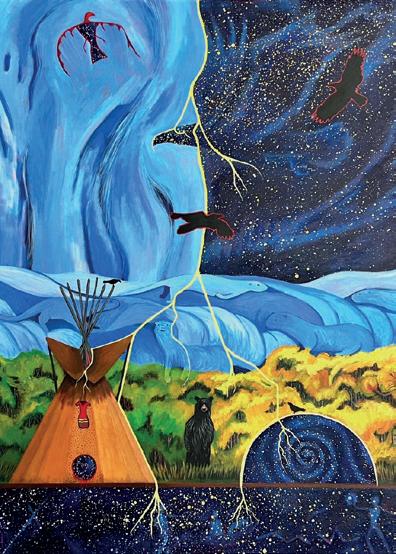
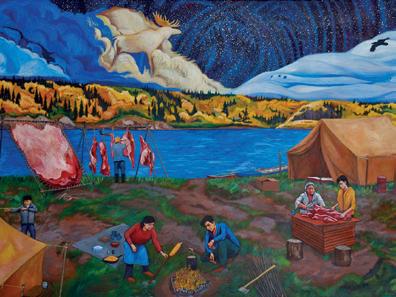


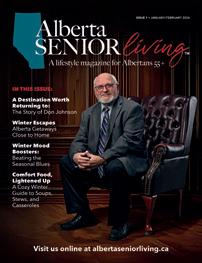
Never Miss an Issue of Alberta Senior Living

Postherpetic Neuralgia
Life-Changing Relief for
One of the Most Painful Conditions
You’ve Never Heard Of
By Accessible Acupuncture

After months of unbearable pain from complications following a bout of Shingles, Dean found lasting relief with Accessible Acupuncture. Mothers have described it as a ‘pain worse than labour’, others compare it to passing a kidney stone.
Postherpetic neuralgia (PHN) is a complication following a bout of shingles and is often ranked in the top 5 most painful things a human can experience. Affecting more than 18% of shingles patients, PHN causes you to experience the pain of active shingles for longer than three months, and in some cases, years after the rash has dissipated.
Dean G. of Edmonton, AB shares his story. “I had been diagnosed with shingles, and I thought it was going to be like the flu or any other virus. I’d have it and then get over it. Two months later, the blisters were gone, but the pain was so intense I was begging them to put me in the hospital and just put me out.”
During shingles, the virus injures nerves in and around the skin where the rash and blisters occur. Your immune system eventually suppresses the virus, and the rash and blisters disappear. Unfortunately, nerve damage often disrupts the function of your nervous system, and the damaged nerves send random, uncontrolled pain signals to the brain, causing lasting, debilitating pain.
“I couldn’t sleep,” Dean tells, almost in tears. “I was always in pain. I couldn’t get out of the house. I thought it was going to kill me.” PHN pain has been described as burning, throbbing, stabbing, or even gnawing. Even worse, it tends to escalate to unbearable levels, episodes that Dean referred to as ‘seizures.’ “You can actually feel them coming on, so you know you’re about to be in major pain, and there’s nothing you can do about it.”
This pain can gradually go away, return intermittently, or, in the worst cases, be with you for the rest of your life. Dean’s wife wasn’t willing to take that chance and sought the expertise of Dr. Melanie Morrill, Dr. Ac of Accessible Acupuncture.
“Sadly, we have seen an increase in PHN cases both at Accessible Acupuncture and the clinics I consult for across the country. My PHN patients are some of the most tragic cases I’ve seen. The pain these people experience is just beyond words. Fortunately, I am able to offer them real hope!”
“I started going for treatment, and it kept getting better. After about a month, I told Melanie [Dr. Ac], ‘I’m going to play golf again,” shared Dean. “It’s changed my life.” While Accessible Acupuncture is an acupuncture clinic (it’s in their name after all), it’s the ‘integrative medicine’ part of their practice that’s a hole-in-one when treating posther-
petic neuralgia. “Our ATP Resonance BioTherapy® is the real winner here,” says Dr. Melanie Morrill, Dr. Ac. “ATP treats PHN twofold. It both eradicates residual shingles virus, which reduces future episodes, and aids in repairing damaged nerves. Nerves have the ability to regenerate and repair on their own, but often times as we suffer from injury, or in Dean’s case, illness, this self-healing ability is interrupted. This therapy both ensures and supercharges that process.”
It should also be noted that if ATP Resonance BioTherapy® is used to treat an active case of shingles, the chances that you’ll develop PHN are reduced significantly.
In asking Dean, “What do you think would’ve happened if you never found Accessible Acupuncture?” His only response was, “That’s for a different conversation.” Dr. Melanie Morrill, Dr. Ac elaborates, “as a person, you can only handle so much pain. Dean is on the other side of this now, and to me, that is most important.”
If you or a loved one is experiencing the pain of an active shingles outbreak or is now suffering from postherpetic neuralgia, Accessible Acupuncture can help. Visit accessibleacupuncture.ca to learn more or call today 587-879-7122 and to take advantage of their New Patient Offer. Everyone is welcome at Accessible Acupuncture.
Mental Health After 55
Why This Chapter of Life Can Be Emotionally Complex, and Full of Possibility
By Bonnie Schoonderwoerd
Life after 55 is full of possibilities, and there are many actions you can take to intentionally create a fulfilling life.
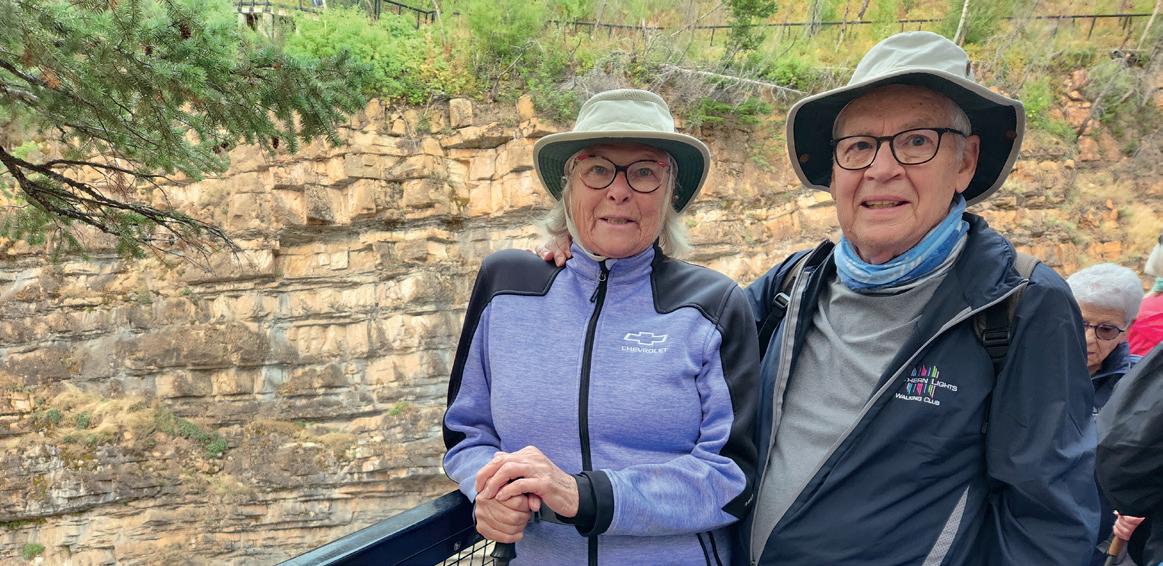
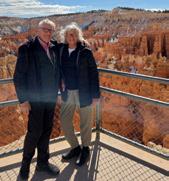
When Matt, 79, and Margaret, 76, talk about their retirement, they become excited. “We love finally having the time to pursue the things that we are interested in!” says Matt. Margaret agrees, “The pressure has lifted, we have fewer responsibilities now.”
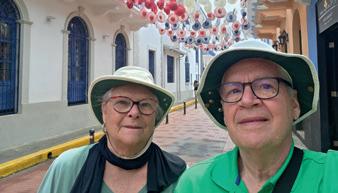
One of the couple’s shared interests that keeps them healthy is walking. They are members of their local chapter of an international walking association called Volkssport. Volkssport has over 50 participating countries worldwide, and they organize non-competitive walking events on safe trails, without the stresses of speed. The gatherings of walkers can range from a handful of locals, simply walking on city trails, to larger, organized events with up to 2,000 participants. Matt and Margaret have attended walking events in Lithuania, Latvia, Estonia,
Finland, the Netherlands, Switzerland, Spain, Texas, New Orleans, Arizona, Mexico, Honduras, Belize, and, most recently, Panama.
Matt believes that there are four pillars to having a healthy retirement: “There has to be a balance between the physical, social, mental, and spiritual parts of you.” Matt and Margaret explain that for them, travelling the world engages all four pillars and keeps them feeling young. They are long-time fans of travel guru Rick Steves, who proclaims that the thrill of navigating new places and challenges keeps your mind active and your body stimulated on a cellular level. Similar to Rick Steves, Matt and Margaret make a concerted effort to learn about the art, architecture, and history of the places they visit. With a sense of adventure, they visit open-air markets and restaurants to try out local foods, and they problem-solve to learn to use the local transit to explore churches and infrastructure like the Panama Canal, for example.
Matt and Margaret keep a journal of their travels, accompanied by photography, and keep their family updated about their trips online through a WhatsApp group. Once they are home, they self-publish their photo journals by using the Find Penguins app or by simply having their journals printed and coil-bound at Staples. Their travelogues make wonderful coffee table books and stimulating conversation pieces that they share with their friends and family members, who also love to travel.
PLANNING FOR RETIREMENT
Travelling is not inexpensive, however. The couple realized that travelling was something they valued and brought them joy. With the help of a financial planner, they budgeted for travel when preparing for their retirement. Matt took over three years to become officially retired. He eased into it by reducing his work schedule to three days per week. After that, he took on consulting projects and smaller contracts that brought them to live in Quebec for a
short time. “In hindsight, I realize that my identity was wrapped up in my job, and that wasn’t healthy,” Matt reflects. Research has found that how you transition into retirement is important. People have a higher risk of experiencing depression if retirement is involuntary or caused by unfortunate or shocking circumstances, such as losing a loved one, health complications, caregiving duties, or unemployment. Before you retire, it is important to make plans about how you want to spend your time. Consider booking an appointment with a counsellor or psychologist to help you adjust to this transition in your life. They can provide you with helpful resources in your community and online. For example, Matt and Margaret enjoy the newsletter they receive from the Optimal Aging Portal from McMaster University.
Psychologists can also do a personal values exploration with you, to help you rediscover the activities that you may have always wanted to do, but never had the time for, because you were too busy working. Through conversations or questionnaires, your therapist can help you pinpoint the pursuits that bring you joy, give you purpose, and keep you stimulated physically, socially, mentally, and spiritually.
Something that keeps Margaret joyful is being creative. An accomplished oil painter, Margaret enjoyed socializing with other artists when she enrolled in oil painting classes to hone her skills. Margaret has painted still life, churches, rustic scenes, and Dutch landscapes, including a very large painting of windmills in the North Sea that graces her front foyer. When Margaret was living in Quebec, she tried her hand at painting French villages in cheerful acrylic colours in the local folk art style. When in Panama, Margaret created her own greeting cards using black ink and watercolours.
COMBATING LONELINESS
Another way the couple finds purpose and meaning in their life is through
volunteerism. They visit senior members of their community who rarely leave their homes as a result of chronic conditions, disability, or age. When people become confined to their homes, it can be very isolating and lonely. People with strong social ties have a 50% higher likelihood of living longer, but loneliness is linked to a noticeably higher risk of stroke and cardiovascular disease.
When asked what they have learned through volunteering, Matt responded, “We have found that how resilient and adaptable to change you are affects your state of mind. If you have a positive outlook on life, you will enjoy it more. Your mindset matters. You can choose joy.”
Keeping on top of the latest advancements in technology is also important to the couple. With the help of their children, they strive to use the latest apps and current technologies like cell phones and tablets. This stimulates them mentally and helps them stay connected socially. “We observed that some retirees choose to give up, they don’t want to change, and they don’t want to update their communication devices… You can get left behind when your devices are obsolete.”
Whatever your personal beliefs are, it is important not to ignore the spiritual part of yourself. For some individuals, this can mean spending time in contemplation, pilgrimages, morning devotions, forest bathing, yoga, or meditation, for example. For Holy Week this year, Matt returned to the Taizé monastery in Burgundy, France, for a time of quiet reflection and focusing on God through prayers and songs. This time, one of his five grown children, Mathew, will be joining him.
CHANGING ROLES
Matt and Margaret are parents to five children. Their days used to be busy, with stressful schedules, focused on work, cooking, cleaning, raising their children, bringing them to school and to their extracurricular activities. Now, they are intentional about how they
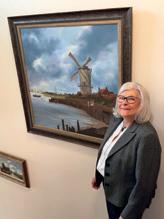
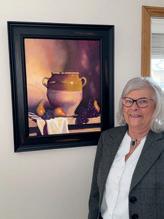
spend their time. They have found it easier to be mindful and present in the current moment, like when they spend time with their grandchildren. Grandparents can be instrumental in building a family identity through sharing their stories of their childhoods, their holiday traditions, language, culture, recipes, and their immigration stories. Knowing that you have created a legacy is rewarding to many retirees. Creating authentic bonds with your grandchildren takes time and energy, but the rewards are meaningful relationships with your loved ones.
BONNIE SCHOONDERWOERD
Bonnie Schoonderwoerd provides counselling for life transitions, anxiety, grief, trauma, and depression as a Registered Provisional Psychologist at Insight Psychological in Edmonton. Bonnie grew up on a hobby farm in northwestern British Columbia and moved to Edmonton in 1994 to begin her psychology degree at the University of Alberta. At age 19, she began working in an extended care facility as a nursing and recreation attendant on weekends, and she has loved working with seniors ever since.


Active But Not Extreme
Gentle Adventure Ideas for Every Fitness Level
By Tricia Ham
For many of us, the word adventure conjures up visions of something extreme. Scaling mountains, skydiving, or pushing physical limits often come to mind. But adventure does not have to mean adrenaline. In fact, meaningful adventures later in life can be surprisingly simple. Exploring a new cycling path on your e-bike, trying a gentle yoga class, paddling across a calm lake, or joining a local walking group to discover new places can all offer a sense of discovery. Adventure after 55 does not have to be about proving something. It can be about staying curious and capable as you continue to discover what your body can do. There is more to an adventure than the activity itself. Getting your body moving supports strength, balance, and mobility. It can lead to social connections, keep your brain engaged, and remind you of what your body is capable of. Trying something new can also boost mental well-being, especially when it gets you outdoors and into
nature. Exploring new activities helps maintain independence, and the challenge of learning something unfamiliar gives your brain a workout, too. This creates a simple, positive cycle. The more we move, the easier it is to keep moving.
Exploring new things, or even modified versions of activities you already enjoy, can create opportunities for adventure. A familiar activity done in a new way can feel surprisingly refreshing. A regular walk might become an exploration of a new neighbourhood or scenic pathway. A love of canoeing might inspire you to try paddleboarding or kayaking. Even small changes can bring a sense of discovery while keeping you active. Often, the fundamentals of good movement do not change with age. They are simply adapted so we can continue doing the things we enjoy.
So what kind of adventures are calling to you? Are you interested in the road less travelled by you? That might mean finding new locations for your daily or weekly walks. Explore different neighbourhoods or discover where your
community’s most picturesque pathways are. You may even uncover a new favourite spot for a post activity coffee simply by venturing outside your usual routine.
Have you ever wanted to try a new activity or sport? Enrolling in a beginner or “learn-to-play” program can be an adventure in itself. Whether it’s pickleball, golf, kayaking, or a dance class, learning something new keeps both body and mind engaged. Just as rewarding is the opportunity to meet others who share your curiosity. Often, the activity is only the beginning. The connections you make can lead to new friendships, regular outings, and many more adventures.
Ask your friends, neighbours, and family what they enjoy doing to stay active. Their ideas might inspire something you had not considered. Often, it is simply a matter of finding a version that suits you. If your grandson loves video games, you might even try a virtual reality arcade, where immersive games can have you moving, reaching, and balancing while you play. Or con-
sider something like geocaching. This modern-day treasure hunt gets you walking, exploring parks and pathways, and discovering places you may have never noticed before. It engages both your feet and your brain as you search for hidden caches using clues and GPS. Adventures like these are a reminder that staying active after 55 can be as much about curiosity and exploration as it is about exercise.
Do not overcomplicate things. At the same time, do not shy away from a little challenge. You know how capable your body is. Start with activities that feel fun, spark curiosity, and allow you to see what you can do. If you are a casual walker, set small goals as you explore new territory. Maybe you love canoeing, so transitioning to paddleboarding does not seem so intimidating. Start by sitting or kneeling until you feel ready to stand. If you never feel ready to stand, that is perfectly fine, too. Paddleboarding on your knees still counts.
Love dancing but struggle to find a partner? Many community centres and dance schools offer adult dance classes, making it easy to step onto the dance floor and try something new. Exploring a dance style like ballroom, line dancing, or Latin can be a fun adventure all on its own. Dance keeps your feet moving while improving balance, coordination, and cardiovascular health. It also challenges the brain. Learning and recalling step combinations and keeping time with the music support memory, focus, and cognitive function.
Adventure does not have to be extreme to be meaningful. Sometimes it is as simple as exploring a new trail, trying an unfamiliar activity, or discovering that your body is capable of more than you thought. Staying active helps us keep doing the things we love. Along the way, it often leads to new experiences, friendships, and discoveries that make life feel a little more adventurous.
TRICIA HAM
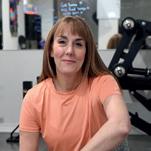
Tricia Ham, The Healthy Aging Coach, is based in Calgary. With certifications in personal training, functional aging, osteoporosis fitness, and holistic nutrition (CHN), she specializes in working with adults in midlife and beyond, helping them build strength, energy, and confidence through practical fitness, nourishing habits, and sustainable lifestyle strategies. Her seniors’ fitness classes in northwest Calgary are known for their welcoming, supportive feel and strong sense of community. Tricia believes most people are capable of more than they think and that small, consistent actions can make a meaningful difference at any age. Learn more at thehealthyagingcoach.ca or by emailing Tricia at tricia@thehealthyagingcoach.ca.
STAYING ACTIVE SAFELY IN SUMMER HEAT
Summer is a great time to get outside and stay active, but higher temperatures, especially in the middle of the day, can quickly turn a good workout into a draining or even risky experience if you’re not mindful.
One of the simplest and most effective strategies is to plan your activity around the heat. Early mornings and later evenings are typically cooler and more comfortable. If you enjoy a round of golf, consider an early tee time or a twilight round. The same goes for walking, running, or cycling. A small shift in timing can make a noticeable difference in how you feel and how long you’re able to stay active.
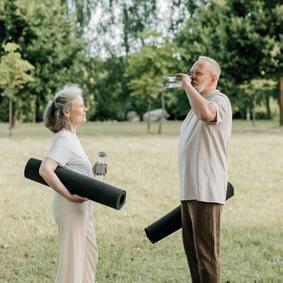
Everyday activities count too. Gardening, for example, is a great way to stay active, but it often happens right in the sun. Break it into shorter sessions, take regular breaks in the shade, and keep water nearby. Staying active doesn’t have to mean doing everything all at once.
If your preferred activities, like tennis or pickleball, aren’t accessible during cooler times of day, consider moving them indoors when possible. Many of the same indoor spaces used during the winter months are still available in the summer and offer a cooler, more controlled environment.
For those who enjoy hiking, heading to higher elevations or choosing shaded trails can provide some natural relief from the heat. Even then, it’s important to be prepared and not underestimate how quickly conditions can change, especially later in the day.
What you wear matters more than most people think. Lightweight, breathable clothing helps your body regulate temperature more effectively. A hat can make a significant difference in reducing direct sun exposure, whether you’re walking, gardening, or spending extended time outdoors. While some sun exposure supports vitamin D, protecting your skin during peak heat is just as important.
Hydration is key. Don’t wait until you feel thirsty. Sip water consistently before, during, and after activity. On especially hot days, or during longer sessions, adding electrolytes can be helpful, particularly if you’re sweating more than usual.
It’s also worth noting that some medications and health conditions can affect how your body responds to heat. This makes staying ahead on hydration and choosing the right time of day even more important.
Finally, pay attention to how your body is responding. Heat can affect energy levels, balance, and coordination more quickly than you might expect. Fatigue, dizziness, nausea, or a headache are all signs that it’s time to stop, cool down, and rest.
Staying active is one of the best things you can do for your health. With a few simple adjustments, you can continue to enjoy all the benefits of summer movement while staying safe, comfortable, and energized.

Expert Home Care When It Matters Most
HOME CARE REFINED AND RN-LED
Tailored companionship, respite, nursing, and dignified palliative/endof-life support delivered with presence, discretion and respect.
Locally owned and guided by decades of clinical experience, we partner closely with families, adapting care as needs evolve.
“Compass Rose Care stepped in during the most overwhelming time of my life. Their Registered Nurse–led team didn’t just care for my parents, they supported me through every decision, every pivot, and every fear. I truly could not have done this without them.”
—Sylvia, Family Caregiver, Calgary
ADULT DAY PROGRAM “THE BRIDGE”
Structured daytime support for older adults who cannot safely be left alone, featuring meaningful social engagement and thoughtfully planned activities tailored daily to the group.
A supportive bridge for families seeking connection, structure, and a plan for what’s next.
Space is limited. Call to secure your spot today.

Joint-Friendly Activities
That Don’t Feel Like Exercise
By Melanie Hval, MN, RN
There is a version of staying active that involves spandex, a gym membership, and a motivational poster on the wall. This is not that article. What most older adults actually need, and what the evidence supports, is consistent, low-impact movement woven into daily life. Not a program. Not a regimen. Movement that keeps joints mobile, muscles engaged, and bodies capable of doing the things that matter most. Here is what that can look like.
WALKING, EVEN SHORT DISTANCES, COUNTS
A 10-minute walk is not a consolation prize. It maintains hip and knee mobility, supports circulation, and keeps the muscles surrounding those joints doing their job. Short and consistent beats long and sporadic, particularly for anyone managing arthritis or recovering from illness.
In Alberta, that might mean a loop around the block before the weather turns, or a walk through a mall in January. For those who cannot easily leave home, a few loops around the kitchen island count. The surface matters less than the habit.
WATER-BASED MOVEMENT
Warm water reduces joint compression and allows a fuller range of motion than most land-based activity. Aquafit classes
at community centres are designed for older adults, with instructors trained to modify for different ability levels. Moving through chest-deep water, walking pool lengths, or doing gentle arm circles offers meaningful resistance without impact on knees, hips, or ankles. For anyone with significant joint pain, this is often the most comfortable place to start.
SEATED STRETCHING
Stiffness is not inevitable, but it requires consistent attention. A short seated routine in the morning addresses range of motion losses that accumulate quietly, rarely noticed until they become functional limitations.
The goal is not flexibility for its own sake. It is preserving the ability to reach overhead, turn to check a blind spot, or rise from a chair without pain. Chair yoga, much of which is free online (thank you, YouTube), follows the same principles and adds breathwork that many people find settling.
TAI CHI
The evidence here is strong. Tai chi consistently shows benefits for balance, fall prevention, joint flexibility, and pain management in people with osteoarthritis. Classes are available at many recreation centres, and for those in rural communities, free instructional series are available online, including programs specifically designed for older adults with arthritis.
The slow, deliberate movements are deceptive. This is a legitimate clinical recommendation, not a placeholder activity.
DANCING
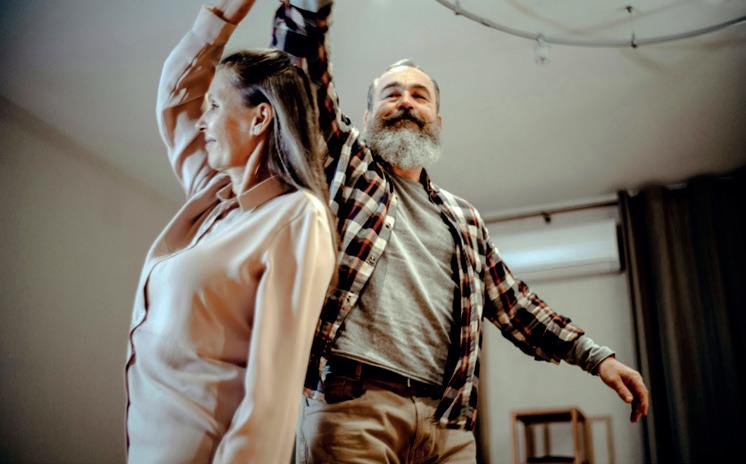
This one surprises people. Dancing! It improves balance, coordination, lower bodystrength, and cognitive engagement. A slow kitchen dance to a favourite song counts. So does a class through a local senior centre.
Movement people enjoy is movement they continue.
GARDENING AND LIGHT HOUSEHOLD ACTIVITY
Reaching, shifting weight, carrying light loads - these are functional movement patterns. Gardening and gentle household tasks recruit them without announcing themselves as exercise. Raised beds reduce the need to kneel or crouch, and adaptive tools with larger grips are widely available.
A NOTE BEFORE YOU START
Please speak with your family physician or nurse practitioner before adding anything new, particularly if you are managing a chronic condition, recovering from surgery, or have had a recent fall. Fall risk is real and worth a direct conversation with someone who knows your health history.
The activities above are appropriate for most older adults in general good health. Starting slowly is always the right approach.
A nurse or primary care provider can help you think through what safe, sustainable movement looks like for your specific situation. If you are not sure where to begin, that is a reasonable place to start.
MELANIE HVAL
Melanie Hval is a Master’sprepared Registered Nurse and Founder of Compass Rose Care, a nurse-led private home care company based in Calgary. For more information, visit compassrosecare.com.

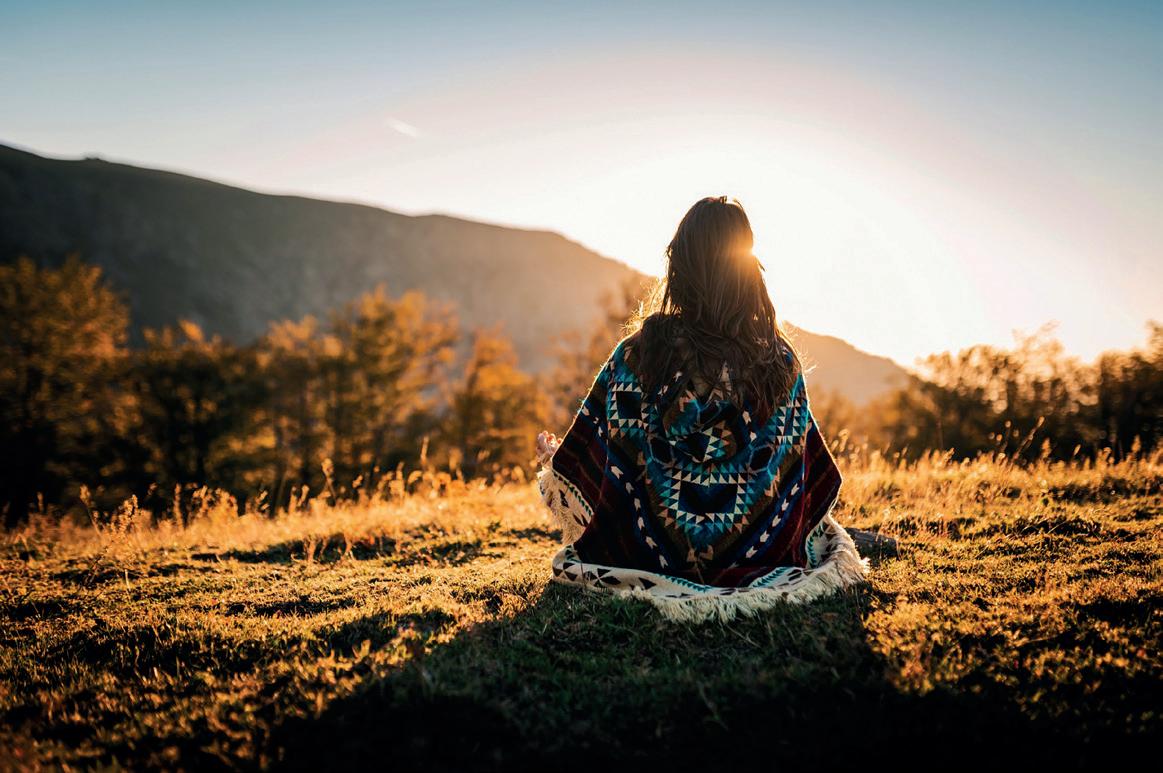
Traditional Teachings for Modern Health Summer Wellness the Indigenous Way:
By Michelle Nieviadomy
As we celebrate the summer solstice and a new season change, reflection is a good way to close one season while anticipating what is to come in this next season. One of my favourite stories to reflect on as the summer season approaches is the story of how the strawberry came to be. This beautiful heart-shaped berry graces us with its presence during the summer months, so it is fitting that this is one of the teachings that leads the way. As Indigenous peoples, we have so many stories and teachings that inspire us, guide us and even challenge us to live the good life (miyo pimatsowin!)
With the mere mention of a strawberry, you are probably reminded of its distinct fruity aroma and are wondering how good some strawberry shortcake would be right about now! Although a strawberry alone has the potential to fill our bellies with flavour and goodness, its teachings can also fill our mind, heart and spirit too!
This little heart-shaped berry can bring powerful teaching. For me, emotional health and healing are the core of this teaching: forgive fast and choose love always. While on our human journey, we experience pain, loss and heartbreak in
relationships. We can go through many seasons holding onto grudges and unforgiveness, which can get in the way of a life meant for abundance. This summer, may we choose good health in the spirit of love and forgiveness.
Sometimes that forgiveness needs to be turned inward. What are the ways in which we have neglected our own health and well-being? What are the ways we have not been kind to ourselves? What are the ways that we have forgotten our sacred responsibility of self-care? Perhaps this summer is the return to love. Return to your own love in mind, heart, body and spirit.
• Be a good relative to yourself with words of affirmation. Wake up with the sun & choose a good thought about yourself before your day begins!
• Be a good relative to others! Cultivate good relationships with other people by listening and sharing stories. You never know how much your presence and words may be just what other people needed that day! Connecting with other people is good for the heart. Find good people to share what’s in your heart and give your emotions a place to be fully felt.

• Be a good relative to the land. Mother Earth has given us so many gifts that help us to live well. You have abundance all around you, so tap into her beautiful resources for hydration, nourishment, teaching and connection.
• Treat your body with good hydration because water is life after all. Eat nutritious foods harvested from the land- remember those strawberries! Go outside once a day to observe the beauty of the sky, the smell of freshly cut grass, the sound of the birds chirping or pick a flower. Appreciate the miracles of life all around you, for you are never alone.
• Be a good relative to the Source of love. Before the sun sets, offer gratitude for what transpired in the day! Every day may not be a good day, but good can be found in every day if you look for it.
I hope this season, you experience the goodness all around you and within you!
MICHELLE NIEVIADOMY
Michelle Nieviadomy is the owner of Iskwew Health (iskwewhealth.com). With over 17 years of experience in Indigenous health and wellness, Michelle’s work is rooted in holistic healing, cultural grounding and community empowerment. This self-love coach is versatile, enthusiastic and engaging to various audiences across the province. In addition to being a yoga, Zumba and fitness instructor, she is a mental health therapist. She has called Edmonton her home for 20 years, while her roots are in Saskatchewan. This Cree woman is a proud member of Kawacatoose First Nation. She loves dancing, rose quartz and hopes to have a pet dog one day!


Small Town Care. Big City Technology.
Frequency Hearing is proud to be Beaumont’s first local hearing clinic serving Beaumont, Leduc, Edmonton, and the surrounding region.

4920 50 Avenue, Beaumont, AB T4X 1J9
Open Weekdays: 9:30 a.m. to 4:30 p.m.
Late appointments are available by request T: 780-737-7117
frequencyhearing.ca

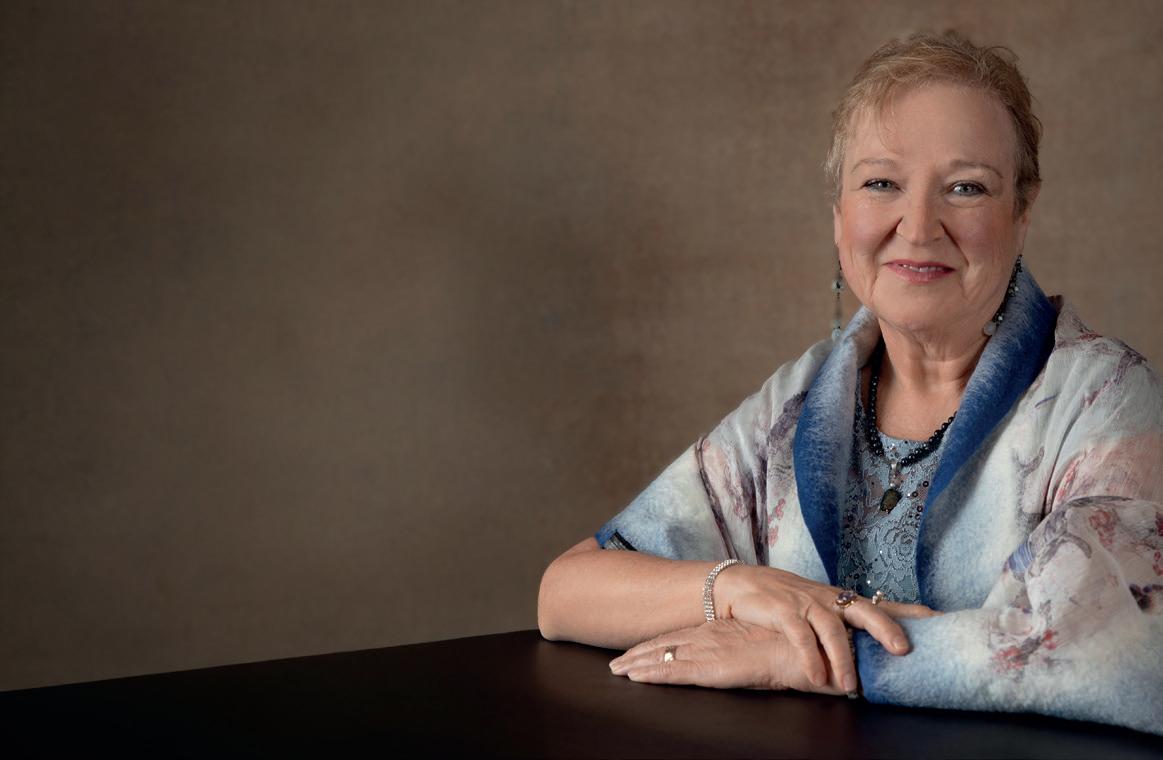
An Interview with Author Lise Mayne
By Kerri Leland
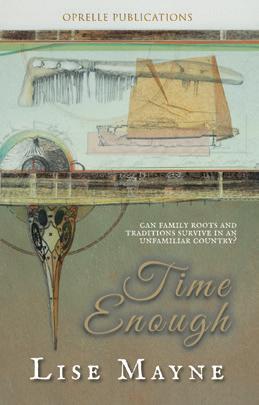
Alberta author Lise Mayne has a beautiful way of bringing history to life, and her latest novel, Time Enough, is no exception. Set in the early 1900s, it follows a young family’s journey from the Isle of Man to North America as they search for a place to truly call home. It’s a story filled with heart, resilience, and the kind of quiet strength that carries people through life’s biggest transitions.
I had the pleasure of connecting with Lise to talk about the inspiration behind the book, her writing process, and the themes that matter most to her: family, courage, and finding your place in the world.
KL: You published Time Enough at age 67. What gave you the courage to pursue traditional publication after retirement, and what would you say to others who feel it might be “too late” to start something new?
LM: You’ll never be as young as you are right now. Goethe said, “Whatever you can do, or dream you can do, begin it. Boldness has genius, power, and magic in it. Begin it now.”
When people asked my retirement goal, I answered, “I want to go back to five.” By that I mean returning to five years of age, when everything was fresh and new, without the stress of working. Excited to pursue activities I’d longed for — watercolour painting, calligraphy, volunteering on public boards — I kept busy. Too busy. Then I realized I missed challenging my brain and pushing myself creatively. I had to give my lifelong dream a shot!
KL: Retirement is often seen as a time to slow down, but your journey sounds anything but quiet. How did writing and publishing Time Enough reshape your vision of what life after 55 can look like?
LM: I self-published my first novel, Becoming Sand, at age 57, while still working as a principal. I wrote the book during my 32-year teaching career. Upon retirement in 2013, I marketed and sold it out in 18 months. I spent the next eight years researching and writing Time Enough, while continuing my other interests, welcoming grandchildren and becoming a bluebird nest box monitor. Then began the querying process, a pursuit that took two years. I never felt retirement meant slowing down. It takes a while to shift gears, but if you’ve been busy your whole life, I think it’s important to stay engaged and keep challenging yourself, while
Photo by Lorraine Hjalte, Willow Creek Studio
Lifestyle & Inspiration
enjoying freedom from the alarm clock. Now, with a published book and audiobook to market, I work hard every day, but I make time for family, friends and fun!
KL: You toured more than twenty Chapters stores and several independent bookstores across Alberta last spring and summer. What was that experience like, and how did it feel to take your work on the road?
LM: The experience of travelling to bookstores across our beautiful province was marvellous and eye-opening. I visited towns new to me, such as the cute town of Bellevue. I met family and friends in places we’d lived and studied decades ago, including my hometown of Red Deer.
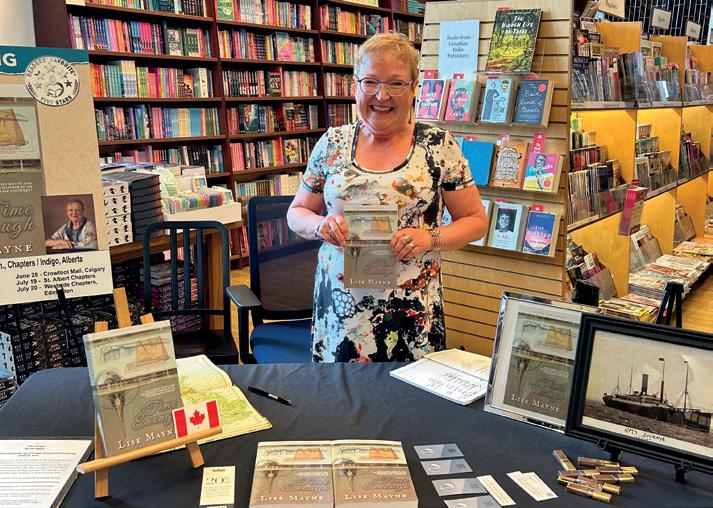
At my first book signing last May in Lethbridge, I was shaking; I hadn’t interacted with that many people since before the COVID-19 lockdown! But the staff and customers were so friendly and engaged that soon I became comfortable, and books started to fly off the table. My dream had come true. At every signing, I’ve been uplifted, made new friends and become even more proud to be Canadian.
KL: Your novel explores immigration, settlement, and the search for home. Why do you think these themes resonate so deeply with older readers in particular?
LM: Unless descended from First Nations’ people, you are an immigrant to Canada, with an emigration story, whether you’re aware of it or not. I believe our Canadian immigration stories should be more broadly shared. The past is in danger of being lost in this fast-paced world, and along with it, our culture and heritage. History informs the present.
With tears in their eyes, older readers tell me about their family’s difficult journey, with little preparation and few resources. The promise of “free land” left many broken dreams and hearts in its wake. Remember that when you see abandoned houses and granaries on the prairies. With no social safety net, survival was at stake. Many people died, especially women in childbirth and children in the age before vaccines. As we age, we become cognizant of the sacrifices which made our lives possible. New immigrants to Canada relate to these circumstances and are curious about the history of early settlement. This was my goal in writing Time Enough.
KL: You shared a powerful moment reading about the Dirty Thirties to a group of seniors, including a Métis woman who was deeply moved. How do experiences like that affirm the importance of storytelling at this stage of life?
LM: As a child, I sat at my grandmother’s knee while we shucked peas or cleaned berries for canning every summer. I was enthralled by stories of the family’s homesteading in

When the System Feels Overwhelming, You Don’t Have to Navigate It Alone.
At Nana’s Navigator, we provide trusted, personalized guidance for seniors and families navigating Alberta’s senior services system.
Backed by 25+ years of industry leadership and lived experience, we help families move forward with clarity, dignity, and informed choice —every step of the way.
Book your complimentary 15-minute discovery call today!
Tel: (825) 582-5574
Email: Ginger@nanasnavigator.ca





Ginger Bitzer Founder & Principal Consultant
Lifestyle & Inspiration
Saskatchewan, which I never forgot. Neither grandparent ever talked about where they’d come from in the first place. Through research, I learned that Grandma’s family originated on the Isle of Colonsay, then Manitoulin Island and Grandpa’s came from the Isle of Man, then Michigan. I discovered that poverty, disease and hopes for a better life motivated their emigration to unfamiliar lands.
The epilogue of Time Enough recounts the moment they abandoned the farm in the Great Depression. It’s the section of the book based on a real story, including honouring the first inhabitants of the land. The Métis woman at my reading was impressed by the honest dilemma between settlement and colonization: We never should have torn up the buffalo grass. We ought to have left this land to them as they knew how to live here. We can’t survive as they did for time out of mind. Sometimes I wish we’d never left Man. But then I’d never have met Mary… (Time Enough, p. 491).
KL: A younger reader told you your novel inspired them to ask more questions about their family’s migration story. Why do you believe it’s especially important for seniors to share their family histories with younger generations?
LM: My grandparents’ storytelling inspired me to pass on their legacy, as a teacher, a parent and now a grandparent. But I think it’s harder nowadays. When do we just sit and talk? Everyone is so busy. Are the young ones even interested in Nanny’s tales? How can I capture the depth of the knowledge passed down to me? I wish I’d asked my grandparents more questions and recorded their answers. Now, we have the technology to easily record stories, songs, recipes, etc. from our ancestors. Pioneer anthologies, family photographs, and museums like Heritage Park or Fort Edmonton can all bring the past to life, so our
children will understand their roots. Write your stories, make a video, sing your old songs…heck, even the Beatles are ancient history now! Take the time. Make the time.
KL: Writing historical fiction requires research, discipline, and persistence. What does your creative routine look like today? How do you stay mentally and creatively active?
LM: I am constantly reading historical fiction, poetry and non-fiction, and I belong to several groups online, like the Historical Fiction Society and the Grandmother’s Collective. It’s been a steep learning curve for me to understand marketing and engage with social media, which I never did before. Producing an audiobook is another new challenge. The more I do, the busier I get, it seems!
KL: You live in Nanton and volunteer as a Rocky Mountain bluebird nest box monitor. How does staying engaged in your community and in nature support your creative life?
LM: I’ve always sought to help nature as much as possible: volunteering, writing letters to government officials, picking up litter, etc. My husband and I enjoy monitoring the bluebirds and tree swallows, from nestlings to fledglings, and I share our results with my group, the Calgary Area Nest Box Society mountainbluebird.org, for whom I am the secretary. I also give presentations to schools, libraries and church groups about this important conservation work. Our summer and fall are spent with family and birds, away from the computer. We love the Eastern Slopes of the Rocky Mountains, where the buffalo grass still grows, and the deer and the bluebirds play!
KL: For readers who dream of writing their own stories, whether memoir, fiction, or family history, what practical advice would you offer about getting started and navigating the Canadian publishing landscape?
LM: Put pen to paper. Years ago, I took a course from the wonderful writer Richard Wagamese (gone too soon), and he said to get up at the Blue Hour, just before sunrise and write. It’s the
Lise’s first signing at Lethbridge Chapters, May 31, 2025.
Photo by Holly Harper.
magic hour of quiet and peace, when the creative doors are open. I’ve followed his advice ever since. You get to sleep in a bit longer in winter! That’s natural. Writing is natural. Let it flow. There’s no right way to begin.
To pursue publishing opportunities, your first stop should be joining a writers’ organization like the Alexandra Writers’ Society, the Canadian Authors’ Association, or any number of such societies. You’ll find writing guides, advice and courses online and in person. Local libraries have writers-in-residence free of charge, and the library is your best bet for research. You can learn from and support local writers by taking out their books and attending free events. Check out universities and colleges and programs such as the Calgary Distinguished Writers’ Program.
You can find many opportunities to learn and grow as a writer, online and in person. Independent bookstores offer presentations by local authors, too. The world is your oyster. You have time, now go for it! No excuses! You’ll be amazed at the magic that will happen, as Goethe says. Who would have imagined that my book about my Manx ancestors would someday be in the Library and Archives of the Isle of Man? You just never know!
KL: Looking ahead to this summer, what adventures, literary or otherwise, are on your horizon?
LM: This year, we plan to go to Newfoundland and Labrador. We will also spend time camping with our family. These excursions always inspire poetry and stories. My Blue Hour runneth over. After twelve years of retirement, I’ve finally made it back…to five!
You can find Time Enough online at lisemayne.ca, Amazon, and Chapters, as well as at Owl’s Nest in Calgary, Tap Town Books in Nanton, and many Alberta libraries.

Plan Ahead With Cooperative Memorial Society
Since 1966, the Cooperative Memorial Society (CMS) has helped Albertans plan ahead with compassion and integrity. As a nonprofit, we partner with locally owned funeral homes to offer affordable, straightforward funeral and cremation plans at member prices—helping families avoid financial strain and stressful last-minute decisions. Peace of mind. No prepurchase required.

Recommended Reads from Valleyview Municipal Library
By Liz Griffiths
Reading is more than just entertainment; it is one of the most powerful ways to keep the mind active and engaged throughout life. Studies have shown that regular reading can help support memory, concentration, and critical thinking, which are all important for maintaining cognitive health and preserving neuroplasticity as we age. Reading also reduces stress, encourages lifelong learning, and helps people stay connected to new ideas, cultures, and experiences. In a world where it’s become far too easy to isolate ourselves, books help us foster connection, empathy, and a sense of community.
Whether it’s a gripping mystery, a fascinating memoir, or a lighthearted novel, reading provides both mental stimulation and enjoyment, making it an important part of healthy aging, which is why I’ve curated a list of ten books from the 2020s to help you discover a love of reading no matter your age, genre preference, or topics of interest.
LIZ GRIFFITHS

Liz is a proudly Indigenous woman, a mother to the most wonderful young person ever created, and a total weirdo. It goes without saying that Liz is a lover of books of all genres and formats; however, she is also a video game nerd, frequent TTRPG Gamemaster, cryptid enthusiast, and fanatic of all things horror, so much so that in her spare time, she writes book and film reviews for a (semi) well-known horror site. Liz has worked at the Valleyview Municipal Library for eight years and counting, and would love nothing more than to make her childhood dreams come true by one day being a writer and getting her degree in Library Science.
THE BERRY PICKERS
By Amanda Peters (2023)
The Berry Pickers follows an Indigenous Canadian family whose young daughter, Ruthie, goes missing while they are working as berry pickers in Maine in the 1960s. Through alternating perspectives, the story shows how her disappearance fractures her family and echoes across decades. Meanwhile, a girl named Norma grows up in a troubled suburban household in Maine, gradually becoming suspicious about her parents’ distant and evasive behaviour. At times quite heavy and featuring subject matter such as abuse, addiction, and kidnapping, this book is just as much a story of resilience, connection, identity, and family as it is a story about tragedy and grief.
THE THURSDAY MURDER CLUB
By Richard Osman (2020)


LESSONS IN CHEMISTRY
By Bonnie Garmus
(2022)


Released as a film in 2025, The Thursday Murder Club remains as popular as ever among fans of cozy mysteries and comedic crime novels. In a quiet retirement community, four sharpwitted residents start a weekly club in which they meet up to investigate unsolved murders. But when a murder case begins to unfold around them, they find themselves becoming involved in something a lot less casual and a lot more dangerous. Both hilarious and at times heart-stopping, this novel shows that brilliance and curiosity have no age limits.
This award-winning book resonates with women of all ages, but being set in the 1960s allows mature readers to connect with it on a more personal and nostalgic level. Lessons in Chemistry is a story about challenging societal norms and finding power as a woman in a male-dominated world. It tells the story of a research chemist fighting for her spot at the table as she navigates the world as a doctoral candidate, woman in STEM, new mother, and, most unexpectedly, a pseudo-celebrity. While Lessons in Chemistry fearlessly broaches subjects like discrimination and harassment in a way that can feel heavy at times, this story is ultimately one of triumph and perseverance and does an excellent job of balancing its serious subject matter with moments of lightheartedness and humour.
FIVE LITTLE INDIANS
By Michelle Good (2020)
Written by a Cree Canadian author, Five Little Indians is a novel that was more than a decade in the making. Telling the story of five residential school survivors over the course of their complicated lives after the closing of the residential school they were taken to as children, author Michelle Good actually based much of the book on the real-life experiences of her own mother and grandmother, both of whom experienced the Canadian Indian residential school system. While many books tell stories of the horrors kids faced within the residential schools, few tell the
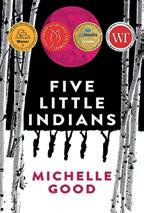
stories of their lives after leaving them, and this book does it beautifully, bringing to light the very real issues survivors face as they are forced to fend for themselves with no family, no support, and no real-world experience. While a bit bleak and dismal at times, Five Little Indians is a tale of acceptance and compassion and is a must-read for anyone interested in the continued impact of residential schools.
KILLERS OF A CERTAIN AGE
By Deanna Raybourn (2022)

When four of the deadliest assassins in the business are sent on a vacation to celebrate their upcoming retirement, it doesn’t take long for them to realize what’s really going on: They’ve been marked for death. After forty plus years of loyal service to the Museum, the women are being terminated, their impeccable methodology being phased out for a more tech-based approach to subterfuge and intrigue. But they aren’t going to go out without a fight. With only each other to rely on, they plan to teach the Museum why the most dangerous thing they could have done is underestimate these skilled and dangerous killers-for-hire.
THE MIDNIGHT LIBRARY
By Matt Haig (2020)
What if you could revisit the key moments in your life and see what would have happened if you’d done things differently? That’s exactly the opportunity Nora Seed gets when she is introduced to the Midnight Library, a sort of purgatory filled with books showing the various other paths her life would have taken had she made different choices. In one life, she is married to an accomplished surgeon, in another, she is a famous musician, and in yet another, she is a glaciologist living in the Arctic. In this poignant and fantastical exploration of choice, regret, depression,
and meaning, The Midnight Library shows us that sometimes even the wrong turns can lead to the right endings.
DEMON COPPERHEAD
By Barbara Kingsolver (2022)
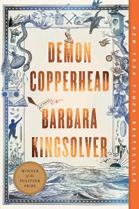
Don’t let the admittedly odd title fool you: This book tells a very familiar story. A contemporary retelling of Charles Dickens’ David Copperfield, the novel adds a modern grittiness that makes it relatable to a whole new generation of readers. Set in the Appalachian Mountains, it follows the life of the eponymous Demon Copperhead from the trailer park he grew up in with his drug-addicted mother, through his brief stint as a star quarterback for his high school football team, to the various streets, halfway houses, and rehabs he finds himself in all across the United States. Updated to fit into the current political climate, Demon Copperhead touches on prevalent issues like racism, domestic abuse, the opioid crisis, and how easy it is to fall through the cracks of the social services system, all while keeping the original story and its themes clearly in frame.
THE SWIMMERS

By Julie Otsuka (2022)
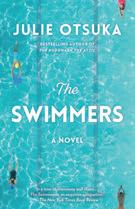
A bittersweet look into the complicated connection between mothers and daughters, The Swimmers is, on the surface, a story about a group of people who are forced out of their local swimming pool when it falls into disrepair. But it’s mostly a story about Alice, a woman who held onto her daily routine at lane swimming as a way to feel grounded when the rest of the world was fading away around her. Struggling with dementia, Alice has begun to lose control of her mind, often confusing the past and the present. Suddenly, without the support of her fellow lane swimmers and her daily routine, the world feels chaotic and scary, and the only person Alice has left to reach
out to is her estranged daughter, who finds herself caring for a woman she barely knows anymore.
THE AUTHENTICITY PROJECT
By
Clare Pooley (2020)
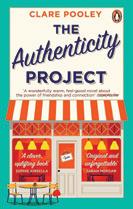
Julian, a solitary man in his 70s, wants to know what the world would be like if people were completely and totally honest about themselves. And so, he begins an experiment: Julian writes the truth about himself and his life in a notebook and leaves it at a cafe, hoping someone will find it and follow suit. And they do. They read his story and add their own, but each new person who adds to the project searches for ways to make the lives of the other participants just a little bit brighter. And each new writer adds a new perspective to the story, creating a lively little microcosm of how all of our lives can intermingle in unexpected ways. At times funny and at other times devastating, The Authenticity Project is a sweet story about connection, community, and the importance of, well, authenticity.
ANXIOUS PEOPLE
By
Fredrick Backman (English translation, 2021)

This book sets itself up to be a mystery unlike any other. An apartment for sale, a wanna-be bank-robber, a mysterious man in a bunny suit, and a group of accidental hostages, each of whom has their own complicated issues. But, at its core, Anxious People is not so much about crime or intrigue as it is a heartfelt, compassionate, slapstick adventure where there is no good vs. evil, just a bunch of anxious people doing their best. It’s the kind of story that draws readers in with its absurdity and laugh-out-loud moments, only to then warm their hearts with its overarching lessons on hope, forgiveness, and moving forward.
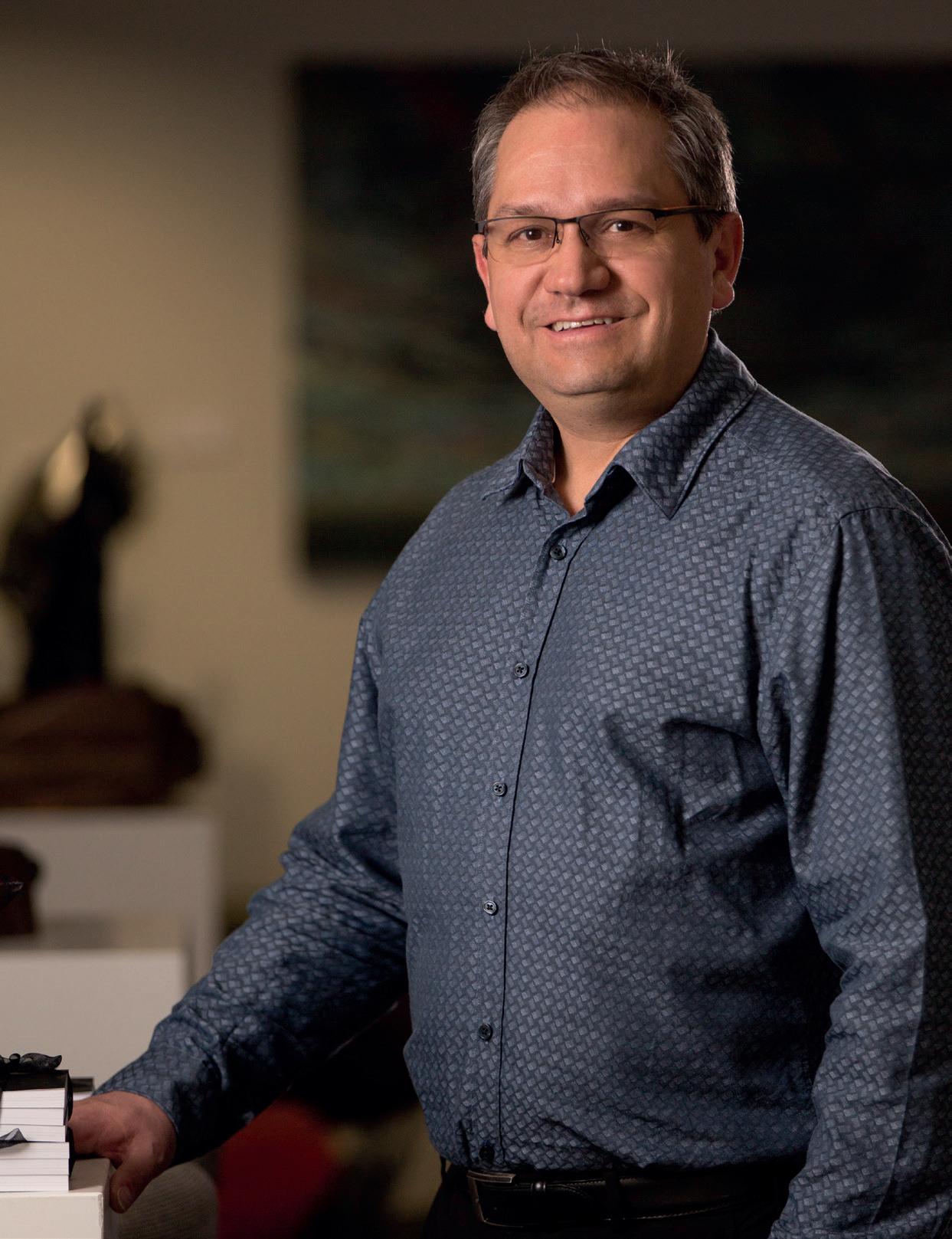
An Interview with Artist and Gallery Owner, Grant Berg
By Kerri Leland
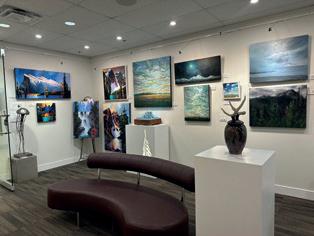
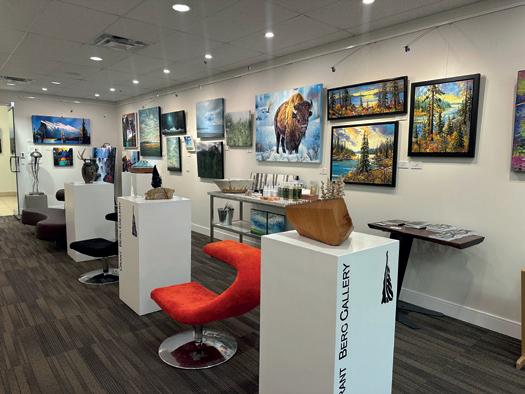
Tucked into the vibrant arts scene of Grande Prairie, Grant Berg Gallery offers more than just a place to view art; it’s a meaningful stop for travellers seeking connection, culture, and inspiration.
Owned by Indigenous artist Grant Berg, the gallery invites visitors to experience stories rooted in tradition, identity, and a deep sense of place. As summer unfolds and Canadians hit the road in search of memorable adventures, especially those embracing travel and discovery after 55, this Northern Alberta gem provides a rich and reflective pause along the journey.
I had the honour of talking to Grant about art, culture, and why exploring Indigenous perspectives can transform the way we travel.
KL: Can you tell us a bit about your journey as an Indigenous artist, and what inspires your work today?
GB: My journey has been a long one and has been featured in a book called Be Badass: Recipe for Success, by Jaquie Fenske. The short version is that when I was 13 years old, I had a serious medical issue where I had six major surgeries over one year, which I almost didn’t survive. While in the hospital, I listened to music and got lost in the artwork on every floor of the University of Alberta Hospital. Through that experience at a developmental age, I discovered the power of music and art to heal and to embrace life every single day.
I spent 29 years in broadcasting, bringing people music. I’ve been involved in the arts for over 20 years, the last 10 owning my own gallery.
I grew up very close to my grandma, who was born in 1910. The world changed in her lifetime, and she adapted with strength, resiliency and love. She believed in me, and she believed that I could do great things. She taught me to be brave and accept challenges, and with that, I honour her and our ancestors in my sculpture and my writing.
KL: For readers who may be discovering Indigenous art for the first time, what would you want them to understand or feel when they experience your work?
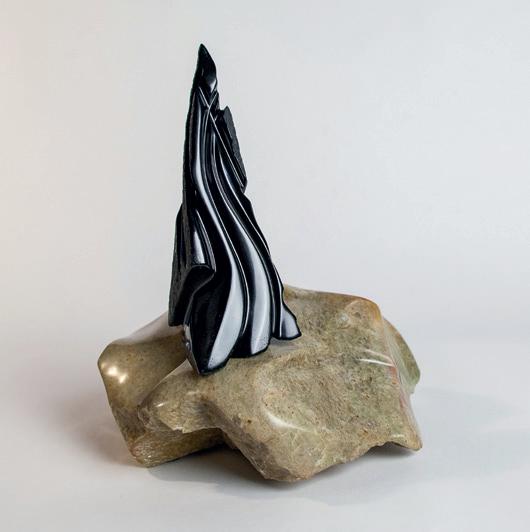
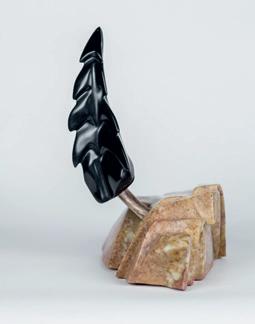
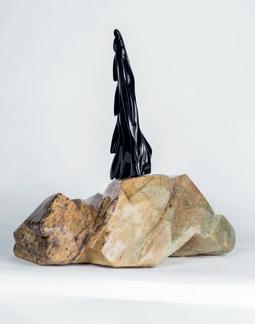
GB: In my sculpture, I represent the resilience of my ancestors. I sculpt trees from stone, and each tree flows and shows movement through the lines cut into the stone; no tree is perfect. Many leaning, twisted, and bent but standing proud and beautiful, shaped by the weather and elements as years pass, no different than my ancestors. Some fell and were lost to history, but those, like my grandma, became more beautiful as they adapted to the hardships of life.
KL: Why do you think exploring Indigenous art and culture is such a meaningful part of travel in Canada, especially for those rediscovering travel after 55?
GB: I believe we are at a point in our lives where we have a greater understanding of humanity, the permanence of what we can create, and the fragility of our own bodies. In Canada, we are only starting to recognize the peoples who have lived here before us. When we travel to Italy, Spain, England, Greece or Egypt, we instantly know where we are and recognize the cultures that came before us; these are embraced, celebrated and woven into everyday life.
For Indigenous Peoples, that blanket had its strings pulled out; it was illegal for Indigenous Peoples to speak their language and practice their traditions. Those are coming back now and are so beautiful. The West Coast Peoples lived artfully; even their homes were art. The music of drums and flutes is so beautiful. Exploring Indigenous arts and sites is acknowledgment, an acknowledgment that accepts the past but surrenders nothing, that by extension makes you better than you were before the experience. I will add that the food is also amazing, seek out traditional foods like bison, elk, fish, and so much more!
KL: Your gallery in Grande Prairie has become a destination in its own right. What can visitors expect when they walk through your doors?
GB: I want every single visitor to leave calmer and more relaxed than when they arrived, with a greater understanding of the power of original art. I have a wide variety of art, hoping that every person who visits connects with something in the work and its artist. I hope that each visitor leaves with an image in their mind and a great memory, and in a perfect world, takes that artwork home so those memories are easily recalled at a glance.
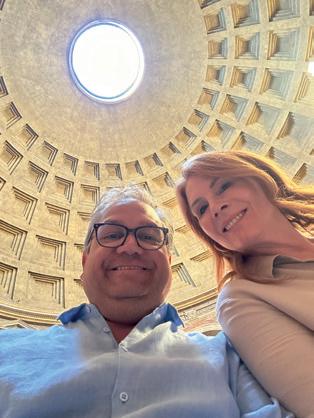
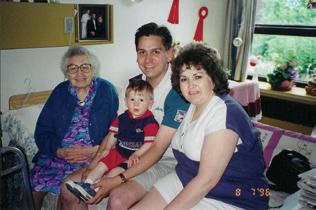

Grant and his wife Rhonda at the Parthenon in Rome
Grant Berg with Grandma, Mom and son
KL: Have you seen more interest from mature travellers or collectors in recent years? What do you think is drawing people to Indigenous art at this stage of life?
GB: Absolutely, a quote attributed to Métis leader Louis Riel. “My people will sleep for 100 years, but when they awake, it will be the artists who give them their spirit back.” As a Métis artist, I feel it is my obligation to fulfill that; to restore pride in who they are and to share stories with the world. This allows the general public to engage with it as it has been largely suppressed or absent for a couple of generations. There was a cultural void in which we were denied so much history and beauty. As that void is filled, we as Canadians become more culturally fulfilled.
KL: What role has creativity played in your own life as you’ve gotten older? Has your perspective or artistic voice evolved over time?
GB: I was born an artist, as every kid really is. Criticism has destroyed many brilliant artists. In my early 20s, I had a boss who literally laughed at my work, and it shut me down for years. I restored my belief in myself only after I matured and realized he had no idea what I was trying to achieve. With each level of success I achieved, I had fewer and fewer detractors. There is still one online, but his criticism is more a reflection of his failure as an artist. So, as I get older, I become more true to myself and less affected by criticism, as the criticism reflects who they are, not me or my work. Another quote whose source I cannot find: “The moon does not concern itself with the howling of the coyotes.” Has my voice evolved? It has. When COVID hit, in many ways, I retreated into my own mind to process what was happening. I found myself less drawn to the dusty physical process of sculpting stone and shifted to writing. Now I do both; I probably
complete less than half the sculptures I used to, and I enjoy the writing process.
KL: For readers planning summer adventures in Alberta, are there any cultural experiences, events, or hidden gems you’d recommend they explore?
GB: I wrote two children’s books and have another in the pipeline; they are set pre-contact in Alberta. By putting myself in these places, stories come to me inspired by their location. They are the Clearwater River near Rocky Mountain House, which extends into the mountains. The second story covers the prairies between Red Deer and Rocky Mountain House, extending over to the Hoodoos of Drumheller and down to Head-Smashed-In Buffalo Jump. The third book includes the Milk River and Writing on Stone Provincial Park. I have signed a publishing deal for the first two: Astina and the Quest for Medicine will be released this September, and Astina and the White Bison in May 2027.
KL: What advice would you give to someone over 55 who is looking to reconnect with creativity, culture, or even start something new?
GB: Throw away the fear and doubt and embrace your creative side; it is there. Everyone is an artist, EVERYONE. It is part of being human. It is genetically ingrained in us, as our ancestors had to create almost everything to survive.
I sculpt and write; some paint, some make music or woodwork, and beading and sewing are all art forms that our ancestors did. Food! My mom and wife are culinary artists, which makes me brilliantly fortunate. You just have to experiment and find it. The moment I did my first stone sculpture, I knew I had found mine.
KL: What does National Indigenous Peoples Day mean to you personally, and how do you like to celebrate or reflect on it?
GB: Each year is different, in 2025 I did something special for myself. I started the day by visiting my mom. She is in a seniors complex in Camrose and turns 80 in July.
From there, I drove near Ohaton, where my Great Grandfather was given land scrip as a Métis. Unfortunately, the land was nowhere near where they had been living in the Lac La Biche area, so he contacted a lawyer in Edmonton to sell the land on his behalf. My great-grandfather never saw a penny. I went to that flat piece of land, which had few trees and no water, and tried to imagine myself in my greatgrandfather’s heartbreaking situation.
Then I looped around to Tofield, where I grew up and where Grandma eventually moved from Plamondon. I drove by her house and relived memories. In many ways, I spent the solstice visiting my three previous generations. Getting to Edmonton, I spent the rest of the day with my brother at a ballgame.
KL: Summer is a time when many people are getting out, exploring, and reconnecting. What does a perfect summer day look like for you in Grande Prairie or the surrounding region?
GB: Many days come to mind: a workday where I come home, walk around Crystal Lake, visit the dock on a 24-degree day to see the swans with their babies swimming, and then pick saskatoons on the trails back home. Once each summer weekend, I try to visit the Wapiti River just south of Grande Prairie or the Peace River at Dunvegan north of Grande Prairie to walk the shores, look at rocks and driftwood and slow life down. Note that each of these involves being close to water.





Experience Alberta Through an Indigenous Lens
By Indigenous Tourism Alberta
There are many ways to travel through Alberta, but few offer the depth of understanding that comes from seeing the land through Indigenous perspectives.
Beyond its well-known landscapes lies a network of experiences led by First Nations and Métis operators, each offering a different way to connect with place. Through storytelling, guided exploration, food, and art, visitors are invited to engage with Alberta in a way that is rooted in history, culture, and lived experience.
What emerges is not a single narrative, but many. Each journey reflects the diversity of the Nations who call this province home, shaped by language, tradition, and relationship to the land.
For travellers seeking something more than scenery, Indigenous tourism offers an opportunity to move through Alberta with greater awareness, curiosity, and connection.
Here are a few Indigenous-themed journeys you can discover.
MÉTIS CROSSING - SMOKY LAKE
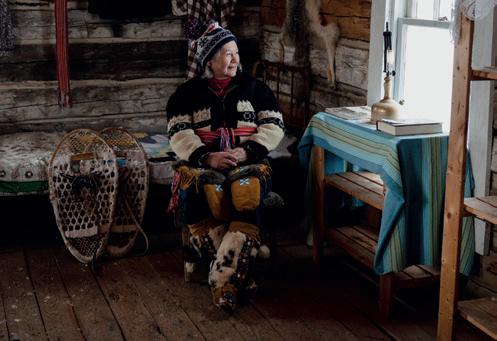
Set along the banks of the North Saskatchewan River, Métis Crossing is a living celebration of Métis culture and history. Located on traditional river lots, the site brings to life the stories of fur traders, buffalo hunters, and the families who helped shape the Prairies.
Visitors can take part in a range of immersive, yearround experiences, from guided cultural walks to traditional art and fiddle music, each offering insight into Métis identity, knowledge, and pride.
For those looking to stay longer, Métis Crossing offers several unique accommodation options, including a 40-room boutique lodge, sky-watching domes, a campground, and trapper’s tents. Evenings here are just as memorable, whether spent under the stars or gathered around a fire listening to stories of the land and the buffalo.
A standout experience is the Visions, Hopes and Dreams Wildlife Tour, where a Métis interpreter guides visitors through the wildlife park. Along the way, you’ll encounter heritage species such as plains and wood bison, elk, Percheron horses, and the rare white bison, all set against the sweeping natural beauty of the region.
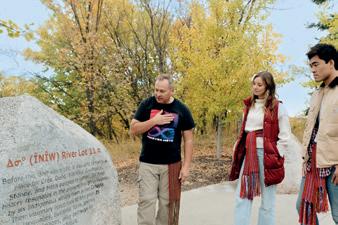
TALKING ROCK TOURS — EDMONTON
Explore the Edmonton River Valley from a new perspective with Talking Rock Tours, Alberta’s first geo-educational hiking and sightseeing company. Led by Métis owner and guide Keith Diakiw, these tours blend geology and Indigenous knowledge, offering a deeper understanding of how the land has been shaped over time, and how people have lived in relationship with it. Keith’s passion for both science and culture brings a unique dimension to each experience, making the landscape feel layered with meaning rather than simply scenic.
While many tours take place within Edmonton’s expansive river valley, Talking Rock Tours also offers experiences in Elk Island National Park and surrounding regions, including areas that explore the province’s oil and gas history.
Whether you’re walking through the valley or venturing further afield, these guided experiences offer a thoughtful and engaging way to better understand the land beneath your feet.
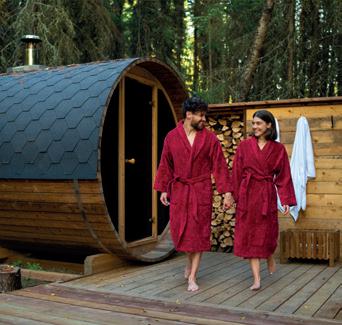
THE WOODS EXPERIENCE — WILDWOOD
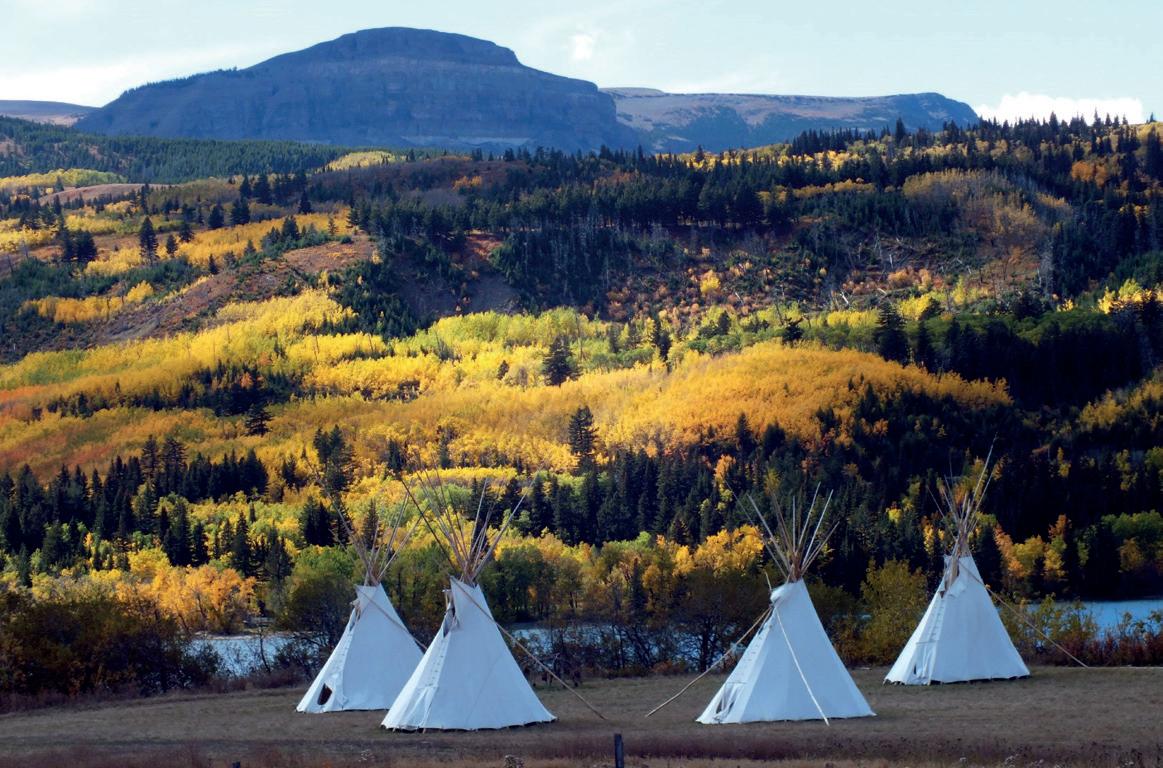
Tucked within Alberta’s boreal forest, about 90 minutes west of Edmonton, The Woods Experience is a Métis family-owned destination that offers a blend of comfort, culture, and connection to the land. The property features cabin and tipi stays, the Wilderness Spa, and the Native Wild Trading Post and classroom space.
Accommodations are off-grid yet thoughtfully designed, with comfortable beds, quality linens, heat, and essential amenities. Traditional tipis offer a more immersive stay, complete with fire for warmth and cooking, culinary samples, and fur-crafted décor that reflects the surrounding environment.
The Wilderness Spa provides a quiet space to unwind, featuring a woodfired hot tub, sauna, cold plunge, and fire lounge area. Private sessions allow guests to fully relax while taking in panoramic views of the forest, creating a sense of calm and grounding.
The Woods Experience also offers a range of courses, workshops, and land-based teachings. Many are led by Elders and skilled instructors, sharing knowledge through hands-on experiences that encourage learning, reflection, and personal growth.
PINE CREEK RETREAT — SMOKY LAKE
Set along the northern banks of the North Saskatchewan River, Pine Creek Retreat offers a quiet, immersive escape shaped by the land around it. A forested trail winds through river coulees before opening onto sweeping views of the glacier-fed river, where birdsong and wind move through the valley in a steady rhythm. It’s the kind of place that invites pause and reflection.
The experience here is designed to balance comfort with connection to nature. Custom A-frame cabins, complete with heat and modern amenities, provide a restful place to recharge, while trails extend directly from your doorstep into the surrounding landscape.
For those looking to explore further, the retreat offers all-terrain electric scooters, making the river valley accessible to a wide range of visitors. It’s an opportunity to move through a landscape shaped by generations of Indigenous and settler history, taking in the views at your own pace and experiencing the land in a way that feels both accessible and deeply engaging.
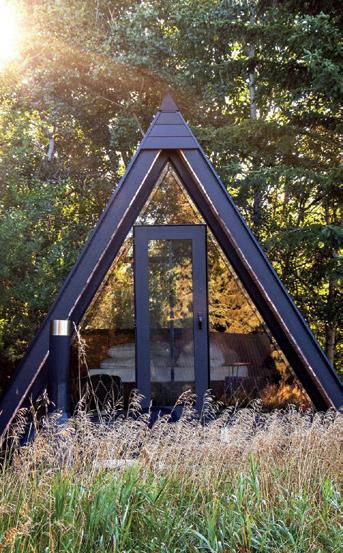
PAINTED WARRIORS — SUNDRE
Set on 82 acres of forest just northwest of Calgary, Painted Warriors Ranch offers more than outdoor adventure; it’s a place to reconnect with the land through Cree teachings and lived experience.
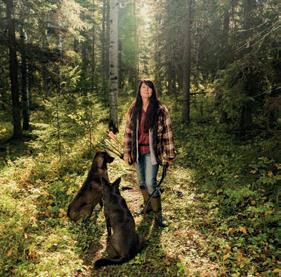
Run by Tracey Klettl, who carries deep knowledge of the land, the ranch blends physical activity with cultural understanding. Experiences often go beyond the surface, weaving in lessons about traditional ways of life, survival, respect for nature, and the values that have been passed down through generations. Whether you’re trying your hand at archery, riding through forest trails on horseback, or learning outdoor skills, each activity is grounded in purpose.
What sets Painted Warriors apart is the intention behind the experience. Guests are encouraged to slow down, listen, and engage, not just with the land, but with themselves. Evenings gathered around the fire become a space for storytelling, reflection, and connection, where teachings shared are as relevant today as they have always been.
Accommodations reflect that same balance of comfort and immersion. Heated wood cabins offer a warm and welcoming place to rest, while still keeping you close to the rhythms of the forest. It’s the kind of stay that leaves you feeling not just rested, but changed in a small, meaningful way.
WARRIOR WOMEN — JASPER
Set against the dramatic backdrop of Jasper National Park, Warrior Women offers an experience that is both powerful and deeply personal. Led by Cree knowledge keeper and guide Matricia Bauer, these experiences invite visitors to connect with the land through story, movement, and spirit.
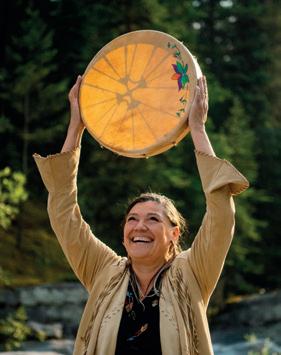
Experiences often include guided walks, storytelling, and traditional practices, each rooted in Cree teachings and delivered with honesty, humour, and intention. Matricia’s presence is central to the experience, creating a space that feels both welcoming and transformative.
BERNADETTE’S — EDMONTON
Taste tradition, innovation and the spirit of the land through Indigenous-owned Bernadette’s. The menu is both a tribute to the land and a reimagining of traditional ingredients through a modern lens. Led by Chef Scott Iserhoff (Omushkegowuk Cree), the restaurant offers refined dishes that honour family recipes and Northern culinary traditions. Their cocktail list is equally rooted in culture—featuring flavours like sweetgrass, wild berries, and cedar.
LITTLE CHIEF
RESTAURANT — CALGARY


Features locally sourced ingredients and a strong commitment to seasonal offerings, the menu is a journey through Alberta’s natural bounty. Guests can enjoy elk striploin or smoked trout while learning about the stories and communities behind each dish. For food that tells a fully immersive story, Chef Brandon Dashnay has introduced a special by-reservation-only chef’s tasting experience. Groups as small as two or as large as 20 can book a multi-course feast that sees the chef pushing his creativity with special items that take on more complex flavours, techniques and artistic presentations
CARTER-RYAN GALLERY CANMORE AND BANFF

The Carter-Ryan Gallery and Live Art Venue celebrates the works of Jason Carter, an acclaimed painter and soapstone sculptor from Little Red River Cree Nation. He uses bright colours and striking contrasts to create magnificent contemporary paintings of wildlife and nature. He also makes incredible sculptures. During the day, Jason Carter can often be found doing carving demonstrations or offering carving workshops for small groups. In the evening, the gallery often becomes an entertainment venue when Bridget Ryan’s passion for musical theatre infuses the gallery with live entertainment.
MAHIKAN TRAILS — BANFF AND SUNDREE
In the forests surrounding Jasper, Mahikan Trails offers a quieter, more introspective way to experience the land through guided medicine walks.
Learn how to respectfully gather and honour the land while harvesting and listen to the stories of the plants from owner Brenda Holder.
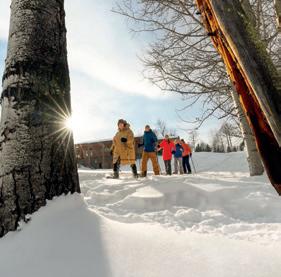
The medicine walk is rooted in traditional knowledge, focusing on the plants that grow along the trail and their roles as medicines, teachers, and sources of sustenance. As you move through the forest, you learn to identify species, understand their uses, and hear the stories that connect them to culture and community. What begins as a simple walk gradually becomes a deeper lesson in relationship, how to observe, respect, and interact with the natural world.
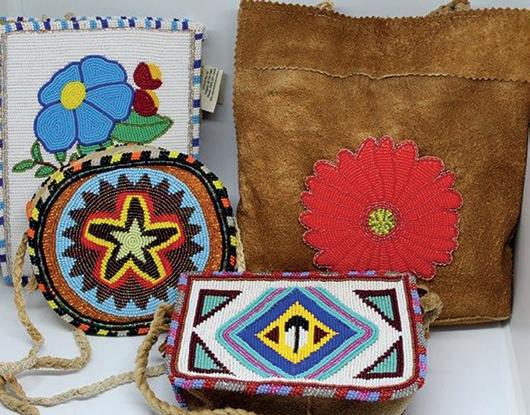
MOONSTONE CREATION — CALGARY
Located in the historic neighbourhood of Inglewood, Moonstone Creation represents countless artists around Turtle Island. You can find beadwork, paintings, leatherwork, jewellery, sculptures, apparel, ceremonial drums and more.
They also offer a hands-on way to connect with Indigenous culture through art and craftsmanship workshops. This includes traditional beading, porcupine quillwork and moccasin making. These workshops centre around traditional Indigenous art forms, with each session guided by teachings that speak to the cultural significance behind the work. Rather than simply producing a finished piece, participants gain an understanding of the stories, symbolism, and care that go into each design.
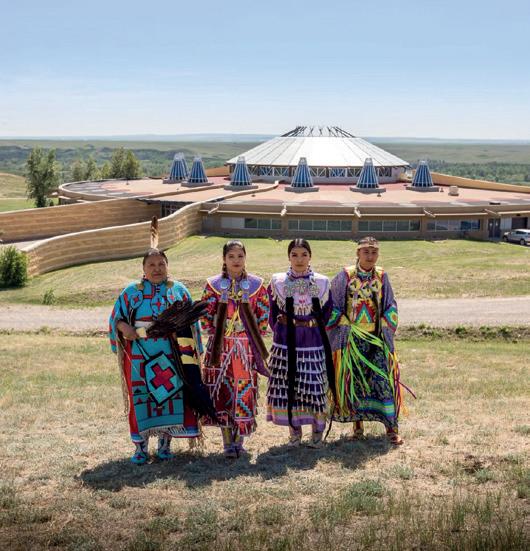
BLACKFOOT CROSSING HISTORICAL PARK — SIKSIKA Blackfoot Crossing Historical Park looks to the past and into the future. It’s the site where Treaty 7 was signed in 1877. As such, it’s a National Historic Site. But Blackfoot Crossing also has a greater purpose. It is dedicated to promoting and preserving the Siksika Nation’s language, culture and traditions.
The park, about 117 km (73 mi) southeast of Calgary, features a stunning eco-friendly museum with interactive exhibits that explain how Siksika (Blackfoot) culture developed and how it is thriving. The cafeteria serves traditional Indigenous foods, while the gift shop features the work of local artisans.
Dance and craft demonstrations occur frequently, and museum tours guided by Siksika interpreters can be booked in advance. Visitors can take a self-guided tour of the numerous historic sites around the property. Tipi camping is available for those who want an in-depth Blackfoot cultural experience.
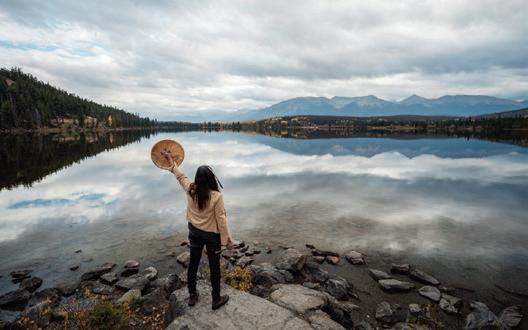
What You Need to Know about Ageing and Celiac Disease Gluten-Free 101:
By Celiac Canada

Many Canadians reach their later years still searching for answers to ongoing health concerns - digestive discomfort, fatigue, joint pain, or nutrient deficiencies that don’t quite add up. For some, the cause turns out to be celiac disease, a condition that affects about one per cent of the population.
Celiac disease occurs when the body reacts to gluten, a group of proteins found in wheat, barley, rye and their cross-bread grains. Over time, gluten damages the small intestine, making it harder for the body to absorb nutrients. There’s no cure, but a strict gluten-free diet can help people feel better and stay well. For those with celiac disease, food truly is medicine.
For years, celiac disease was considered a childhood disease. Now we know adults also have celiac disease, often suffering for years before being diagnosed. Diagnosis can be tricky because symptoms vary widely from person to person. With more than 200 possible symptoms - ranging from digestive issues to skin, dental and neurological issues - celiac disease is often mistaken for other conditions. When a doctor suspects celiac disease, they will order a blood test, and if the results are positive, the diagnosis is typically confirmed using a small bowel biopsy. It is very important that you continue eating gluten until all testing is complete, as removing gluten too early can lead to inconclusive results and delay diagnosis. When celiac disease goes untreated, the body may not absorb enough protein, vitamins, and minerals needed for strength, energy, and bone health. And as we age, getting the right nutrients becomes even more important. While switching to a gluten-free diet can feel overwhelming at first, smart food choices and good planning make it manageable.
If you’ve been diagnosed with celiac disease - or are living gluten-free for other health reasons - developing a few simple habits can help you eat well and feel confident.
• Choose whole, naturally gluten-free foods like fresh fruits, vegetables, legumes, nuts and seeds, meat, poultry, and fish.
• Make a habit of reading food labels carefully, even for products you’ve bought before – processes and ingredients can change without warning.
• Look for foods labelled “gluten free” - this means they contain less than 20 parts per million of gluten and are considered safe for people with celiac disease.
• Be mindful of cross-contact when preparing meals. Use clean utensils, toasters, cutting boards, and prep surfaces.
• Try batch cooking simple meals that you can freeze and reheat later.
• Keep simple pantry staples on hand: canned beans, rice, tuna, frozen veggies, and gluten-free oats.
• Use gluten-free delivery services or grocery pickup if shopping is difficult.
• Consult a registered dietitian to review your current intake and fill in any gaps.
• Regular medical follow-up is an important part of managing celiac disease, especially as we age.
Eating gluten-free doesn’t mean giving up flavour or comfort. In fact, today’s gluten-free kitchens are full of delicious possibilities.
Living with celiac disease can feel isolating at times, especially if you’re newly diagnosed. Connecting with others who understand can be a real lifeline.
Celiac Canada offers programs, resources, and an active Chapter community across Alberta to support seniors and caregivers alike. The Celiac Canada Support Group on Facebook provides a welcoming space to ask questions, share tips, and feel understood. Learn more at celiac.ca.
Looking for a new go-to gluten-free recipe? Try one of these simple, flavour-packed options from recipe developer and Celiac Canada ambassador Patricia Chuey.
Apple Cinnamon Muffins
Makes 12 muffins
INGREDIENTS
• 1⁄2 cup (125 ml) butter, at room temperature
• 1 2 cup (125 ml) packed brown sugar
• 1 4 cup (60 ml) liquid honey
• 2 large eggs

• 1 tsp (5 ml) vanilla extract
• 1⁄4 tsp (1.25 ml) salt
• 1 tsp (5 ml) baking powder
• 1 tsp (5 ml) baking soda
• 1 tsp (5 ml) cinnamon
• 11 2 cups (375 ml) all-purpose gluten-free flour (use a gluten-free flour that includes xanthan gum, like President’s Choice brand)
• 1⁄2 cup (125 ml) buttermilk
• 2 apples, unpeeled, seeded, minced or coarsely grated (the chopped grated apple should equal about 1 1⁄4 cups)
• 1⁄2 cup (125 ml) chopped pecans or walnuts (if you do not want to use nuts, try substituting ½ cup of raisins or dried cranberries)
INSTRUCTIONS
1. Preheat oven to 375° F (190° C). Mist muffin tins with cooking oil spray.
2. In a mixing bowl, cream butter until smooth. Add brown sugar and honey and beat well. Add eggs and vanilla, beating well and scraping the bowl. Add salt, baking powder, baking soda and cinnamon and blend. Stir in flour and buttermilk. Add chopped apples and pecans and stir just until combined.
3. Spoon batter into prepared muffin cups, filling 2 3 full. To garnish, place a few chopped apples or pecans on the top of each muffin before putting them into the oven.
4. Bake for 20-22 minutes or until a toothpick inserted into the center of the muffin comes out clean. These muffins are delicious served warm.
Store muffins in the refrigerator for four days or freeze for up to a month.
Salmon Burgers
Makes 4 patties
Use tuna for a tasty alternative
INGREDIENTS
• 2 tins (170g) salmon or tuna, drained
• 1 3 cup (80 ml) celery, finely chopped
• 1 3 cup (80 ml) relish
• 4 eggs, lightly beaten

• 1 cup (250 ml) gluten-free breadcrumbs
• 2 green onions, chopped
• Salt and pepper, to taste
• Canola oil, for cooking
INSTRUCTIONS
1. In a large mixing bowl, combine all ingredients.
2. Shape into 4 patties.
3. In a non-stick pan, heat about 2 tablespoons of oil. Cook patties until both sides are golden brown –about 3 minutes per side.
Fruity Pancake Puff
Serves 4
INGREDIENTS
• 3 cups (750 ml) thinly sliced fruit
• 11 2 Tbsp (22.5 ml) butter
• 6 eggs
• 3 4 cup (175 ml) milk of choice

• 1 2 cup (125 ml) all-purpose gluten-free flour (use a gluten-free flour that includes xanthan gum, like President’s Choice brand)
• 1 2 tsp (2.5 ml) baking powder
• 1 2 tsp (1.25 ml) salt
• 1 tsp (5 ml) cinnamon
• 1 tbsp (15 ml) granulated sugar
INSTRUCTIONS
1. Preheat oven to 425° F (220° C). Lightly mist an 8-inch (2L) baking pan with cooking oil spray.
2. Place fruit and butter in the baking dish. Set in a preheated oven for 5-7 minutes. Remove from oven, stir to toss with melted butter.
Recipies and photos courtesy of Patricia Chuey, recipe developer.
3. In a mixing bowl or blender, whisk eggs well. Add milk and whisk a bit more. Add flour, baking powder and salt and whisk to combine well.
4. Pour egg mixture over warmed fruit in the baking pan. Sprinkle evenly with cinnamon and sugar.
5. Return to the oven and bake for 20 minutes until the pancake puffs up and is lightly browned. Enjoy served warm, right away. Like a soufflé, the puff will fall shortly after coming out of the oven.

Conquering the Mountain of Downsizing
By the Eazy Peazy Downsizing Team
The thought of downsizing can feel like standing at the base of a towering mountain, with years of belongings and memories making the climb seem overwhelming. The good news is that with a clear vision and a thoughtful plan, you can go from feeling overwhelmed to confidently ascending that downsizing hill.
The first and most important step to take is to pause and imagine your vision. What are you dreaming about right now? Perhaps it’s repurposing a room, creating more space, or maybe your mobility has changed, and you want to move to a retirement living community.
Having this clear objective will guide your decisions and keep you motivated, especially during those times when the process feels very challenging. As with hiking up a mountain, you need to take one step, make one decision at a time. If you want to move, goals to achieve this may include listing your home for sale, choosing the furniture and contents to take to your new home, removing remaining contents out of your house and setting up your new suite. When dealing with your personal contents, sorting is one of the most effective ways to downsize, and it’s a 5-stage method we use with every
client. We recommend the simple S.P.A.C.E. process: Sort what you have, Purge what you no longer need, Assign a home to what you’re keeping, Containerize for easy access and Evaluate over time.
For example, when downsizing your linen closet, begin by sorting items into simple categories such as towels, bed sheets and table linens. Keep only what you know you’ll use going forward, donate items that are still in good condition, and let go of anything worn out. Neatly store what remains, grouping similar linens together on the shelves or begin to box items up for your move. From time to time, notice what isn’t being used and consider donating extra linens. Try to be gentle and practical with yourself. Keeping 1 set of sheets for a queen bed may feel limiting, while 4 sets may be more than you truly need. The goal is to find a balance that supports comfort but keeps excess to a minimum.
Voila! You have now used S.P.A.C.E. to create space! This system applies beautifully with everything from paperwork and photos to collections and clothes.
With a well-laid out vision, a solid plan and using good sorting techniques, you will have the tools needed to traverse this terrain. Don’t forget to celebrate your progress along the
way, and suddenly the view from the top, which is lighter, freer and more streamlined, is well worth the climb of downsizing.
EAZY PEAZY DOWNSIZING
Eazy Peazy Downsizing is celebrating its fifth year in business. Founded by Nicole Skiba, a Professional Home Economist and Trained Professional Organizer, the company was inspired by Nicole’s experience helping her own dad through the downsizing process. Today, Nicole and her dedicated team, Nancy, Lindsey and Dee, support older adults and families with practical, respectful help during life’s transitions. Contact Nicole at 587-5986123 or eazypeazydownsizing.ca for more information.
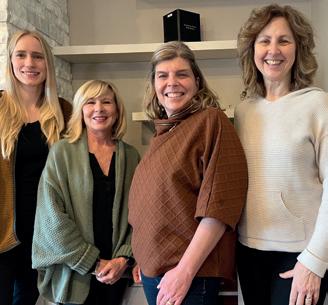


Walking Clubs, Travel Groups & Outdoor Meetups: Finding Your People After 55
By Kerri Leland
There’s something so powerful about doing life alongside others. Whether it’s a brisk morning walk, a bucket-list adventure, or a weekend birdwatching excursion, shared experiences have a way of turning ordinary moments into meaningful memories.
For Albertans 55+, joining a walking club, travel group, or outdoor meetup is about much more than fitness or sightseeing. It’s about connection, confidence, and community.
STEP BY STEP: THE RISE OF WALKING CLUBS
Across Alberta, walking clubs are gaining momentum. They’re simple, welcoming, and accessible to nearly everyone.
Organizations like Volkssport Association of Alberta offer a great way
to stay fit and healthy, or just meet new friends. Their motto is Fun, Fitness and Friendship, and they encourage walks that take you to new areas that you might not have otherwise visited or enjoyed on your own.
There are clubs throughout Alberta, including the Barrhead Walking Talkie Voklssport Club, Vokssport Club of Medicine Hat, Northern Lights Walking Club (Beaumont, Camrose, Leduc, Millet, South Edmonton, Wetaskiwin), and the St. Albert Trekkers (St. Albert, Morinville/Legal, Fort Saskatchewan, Sherwood Park, Spruce Grove/Stony Plain and North Edmonton).
WHY WALKING WORKS:
• It’s low-impact and joint-friendly
• You set your own pace
• It creates natural conversation
• It builds routine and accountability
From mall walking groups in winter to river pathway strolls in summer, the goal isn’t speed. It’s showing up.
If you’re in Calgary, groups frequently explore Fish Creek, Nose Hill, and community pathways. In Edmonton, the River Valley offers some of the most scenic walking routes in North America. Smaller communities across Alberta often have equally beautiful trails and even stronger social bonds.
TIP: If you can’t find a walking club nearby, consider starting one. Post in your local Facebook community group, at your church, or on a bulletin board at the rec centre. All it takes is a time, a meeting spot, and a friendly invitation.
SEE THE WORLD TOGETHER: TRAVEL GROUPS FOR 55+
Travel doesn’t have to mean navigating airports alone or planning every detail yourself.
Companies like AMA Travel and Collette offer escorted group tours designed for comfort and ease. These trips handle the logistics so you can focus on enjoying the experience.
Many Albertans also choose smallgroup travel through local travel advisors who specialize in:
• Solo travel for widows and widowers
• Couples’ cultural tours
• Multi-generational family trips
• Bucket-list destinations
Group travel often leads to lifelong friendships. You board a plane as strangers and return home as a circle of shared stories.
Shoulder-season travel, especially in May, June, September, and October, can offer fewer crowds and better pricing. It’s a sweet spot for retirees who have flexibility and want a more relaxed pace.
OUTDOOR MEETUPS: NATURE AS A SOCIAL CONNECTOR
If you love fresh air, Alberta offers endless opportunities to connect outdoors.
The Alberta Hiking Association is an umbrella organization for hiking clubs across the province. By becoming a member, you can meet new friends and be involved in protecting and educating about the Alberta trail systems.
Local naturalist clubs host guided hikes, birdwatching outings, and educational walks across the province. Many groups offer varying levels of difficulty so participants can choose what suits them best.
Birding is especially popular among older adults. It combines light activity with learning and mindfulness. Nature Alberta is an excellent resource for beginner birders. You can learn more at naturealberta.ca/birding.
Photography clubs, kayaking groups, snowshoe meetups, and gardening societies also provide seasonal ways to gather.
And of course, Alberta’s provincial and national parks offer senior discounts and well-maintained trails that make getting outside both safe and enjoyable.
WHY IT MATTERS MORE THAN EVER
Loneliness is one of the biggest health risks facing older adults. Studies consistently show that social connection improves:
• Heart health
• Cognitive function
• Emotional wellbeing
• Longevity
But connection doesn’t always happen organically after retirement. Work no longer provides daily interaction, children are grown, and friends move away, and that’s why intentional community matters.
HOW TO GET STARTED
• Check your local seniors’ centre or recreation centre website.
• Ask friends what groups they’re involved in.
• Start small. Try one walk, one meetup, or one info session.
You don’t need to commit forever, just show up once! Often, that first step leads to something far bigger than you expected.
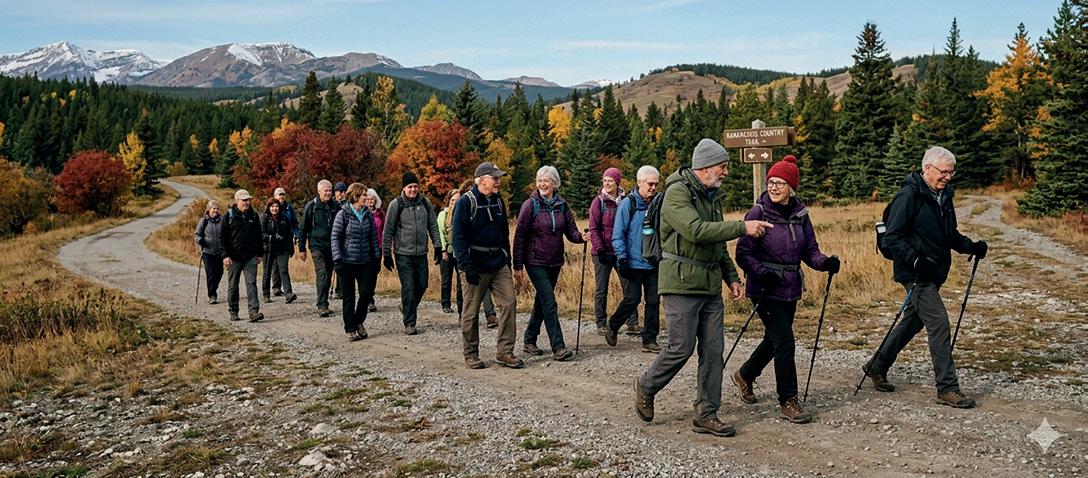
Around Alberta Events Worth Getting Out For
As we head into May and June, Alberta really comes to life. The days are longer, the air is warmer, and it feels like the whole province is ready to get outside and make the most of it. It’s the perfect time to explore, stay active, and reconnect, whether that’s close to home or somewhere new.
From local gatherings to outdoor adventures, there’s no shortage of ways to fill your calendar. Be sure to check in with your nearby seniors’ associations and community centres to see what’s happening in your area.
Here are just a few ideas to help you get out, meet new people, and enjoy everything this vibrant season has to offer.
MAY 2026
• May 1 from 7 p.m. to 9 p.m. at Scenic Acres Community Association in Calgary: Zambia Wildlife Photography by Don Campbell. Tickets $5. Light refreshments served.
• May 6 from 6:00 p.m. to 7:00 p.m. at GFLS (Greater Forest Lawn 55+ Society) in Calgary: Step by Step English Free; suggested $2 contribution. Learn English for free! Join us for relaxed, conversational English practice. Learn it step by step - the easy way! Free parking available. Designed for adults 55+, but anyone 18+ is welcome. Donations to our coffee fund are greatly appreciated. Come learn, connect, and have fun!
• May 7 from 1:00 p.m. to 3:00 p.m. at Our Lady of the Angels Church (10004–101 St.), Fort Saskatchewan: 10th Annual Caregiver Appreciation Tea – free. This year marks the 10th anniversary of this meaningful community event celebrating caregivers. Join fellow caregivers in a welcoming and supportive
environment. The theme for 2026 is Building Resilience Through Connection. This is a non - denominational celebration open to all caregivers. Light refreshments will be served. RSVP by April 30 to Diane McPherson at 780 -975 - 8721 or email dmcpherson_2000@yahoo.com. Come connect, reflect, and feel appreciated.
• May 7 from 10 a.m. to 11 a.m. at McArthur Place, Lac La Biche: Seniors Coffee and Connections. A free drop-in group for adults 55+ looking to enjoy coffee and lively conversations while connecting with others.
• May 7 from 1 p.m. to 2 p.m. at Bowness Seniors’ Centre in Calgary: Facing Seasons of Change or Loss. Join a warm and accessible conversation focusing on loneliness and grief. The conversation will be facilitated by therapists from Your Counselling Ltd and reflect some of the experiences many seniors may be navigating, such as the loss of a loved one or pet, changes after retirement, or feeling more isolated than before. Speaking to the idea of finding meaning, connection, and purpose, even during seasons of change or loss. RSVP by May 4, 2026. Coffee will be provided.
• May 9 from 1 to 4 p.m. at GFLS (Greater Forest Lawn 55+ Society) in Calgary: Mother’s Day Tea ! $25 ticket. Join us for a delightful celebration in honour of Mother’s Day. Enjoy a cozy and welcoming atmosphere. It’s the ideal way to spend the day — sipping tea, enjoying beautiful music, and making memories.
• May 9 from 9 a.m. to 6 p.m. on Hanson Street in Bawlf: Bawlf Show & Shine. Rev up your engines for the annual Village of Bawlf Show & Shine! Registration runs from 9:00–11:00 a.m. for $10 per show vehicle, with the show cruising all day long. Come check out an impressive lineup
of classic cars, trucks, motorcycles, and tractors — polished, powerful, and ready to turn heads. It’s not just for motorheads. Bring the whole family and enjoy face painting, inflatable fun, a petting zoo, and a local market. There’s something for everyone, whether you’re here for chrome and horsepower or cotton candy and cuddly animals. Everyone is welcome — come spend the day in Bawlf!
• May 9 at 7 p.m. at Josephburg: Vesna Zabava. Head down to Josephburg for an amazing evening of dancing, live music, raffles, and food! This is an amazing evening experience, so mark it in your calendars now! Tickets are $45. Contact: 780-990-8078 or 780-952-1765.
• May 10: Mother’s Day
• May 11 from 10:00 a.m. to 12:00 p.m. at GFLS (Greater Forest Lawn 55+ Society) in Calgary: Coffee & Conversation! $2 Drop-in. Join us for informal chats over coffee! This week’s topic: Toxic Relationships.
• May 13 from 6:00 p.m. to 7:00 p.m. at GFLS (Greater Forest Lawn 55+ Society) in Calgary: Step by Step English Free; suggested $2 contribution. Learn English for free! Join us for relaxed, conversational English practice. Learn it step by step - the easy way! Free parking available. Designed for adults 55+, but anyone 18+ is welcome. Donations to our coffee fund are greatly appreciated. Come learn, connect, and have fun!
• May 14 from 10 a.m. to 11 a.m. at McArthur Place, Lac La Biche: Seniors Coffee and Connections. A free drop-in group for adults 55+ looking to enjoy coffee and lively conversations while connecting with others.
Community & Connection
• May 14 from 9 a.m. to 10:30 a.m. at GFLS (Greater Forest Lawn 55+ Society) in Calgary: COMMUNITY BREAKFAST - $12 plate. Start your day with friends…and breakfast! Join us for a tasty morning, warm coffee, and great company.
• May 15 from 12:00 p.m. to 3:00 p.m. at Bowness Seniors’ Centre in Calgary: Monthly Bingo. Card sales begin at 11 am. There are a variety of games to play including Early Bird, Odd or Even, Regular Card games, and a Progressive Pot. Concession items available.
• May 16 from 10 a.m. to 3 p.m. at Scenic Acres Community Association in Calgary: Repair Cafe. Bring electronics, small appliances, jewelry and fabrics that need a tune-up and keep the items out of the landfill. Free event; however, knifesharpening services have a fee.
• May 20 from 6:00 p.m. to 7:00 p.m. at GFLS (Greater Forest Lawn 55+ Society) in Calgary: Step by Step English Free; suggested $2 contribution. Learn English for free! Join us for relaxed, conversational English practice. Learn it step by step - the easy way! Free parking available. Designed for adults 55+, but anyone 18+ is welcome. Donations to our coffee fund are greatly appreciated. Come learn, connect, and have fun!
• May 20 from 1:00 p.m. to 2:30 p.m. at Bowness Seniors’ Centre in Calgary: Plant Wand Class. Beautify a house plant or a bouquet with a plant wand. Cost: $10.00 per wand. All supplies provided (wand, beads, charms). Pre-register by May 10, 2026.
• May 21 from 10 a.m. to 11 a.m. at McArthur Place, Lac La Biche: Seniors Coffee and Connections. A free drop-in group for adults 55+ looking to enjoy coffee and lively conversations while connecting with others.
• May 21 at GFLS (Greater Forest Lawn 55+ Society) in Calgary: Multicultural Day! A celebration of the many cultures in our Centre. More details (time and program) will be shared soon —please watch for updates on our website or call the Centre.
• May 25 from 10:00 a.m. to 12:00 p.m. at GFLS (Greater Forest Lawn 55+ Society) in Calgary: Coffee & Conversation! $2 Drop-in. Join us for informal chats over coffee! This week’s topic: May 25 - Financial Consideration and Planning, speaker Joy Keong
• May 26 from 9:30 a.m. to 2:30 p.m. at Pioneer House Club 50 in Fort Saskatchewan: Mobile Hearing Clinic –Hearing Health Check Day – free. The Ears To You Mobile Hearing Clinic will be on site offering free hearing tests, clean and checks of existing devices, and professional on - site after- care using state - of-the -art technology. Competitive pricing is available, and most third-party insurance plans are accepted. Spots are limited and fill quickly. To book an appointment, call (833) 834 -3277 or visit earstoyou.ca.
• May 27 from 6:00 p.m. to 7:00 p.m. at GFLS (Greater Forest Lawn 55+ Society) in Calgary: Step by Step English Free; suggested $2 contribution. Learn English for free! Join us for relaxed, conversational English practice. Learn it step by step - the easy way! Free parking available. Designed for adults 55+, but anyone 18+ is welcome. Donations to our coffee fund are greatly appreciated. Come learn, connect, and have fun!
• May 28 from 10 a.m. to 11 a.m. at McArthur Place, Lac La Biche: Seniors Coffee and Connections. A free drop-in group for adults 55+ looking to enjoy coffee and lively conversations while connecting with others.
• May 28 from 4:30 p.m. to 8:00 p.m. at GFLS (Greater Forest Lawn 55+ Society) in Calgary: Birthday Supper; $27 ticket. Celebrate our March birthday guests with a 3-course dinner and enjoy live entertainment. Ticket sales close at the end of business on Tuesday before the event. Book early!
JUNE 2026
• June 1-7 at GFLS (Greater Forest Lawn 55+ Society) in Calgary: SENIORS’ WEEK. We’re getting ready for a fun-filled week of activities at the Centre in celebration of Seniors’ Week! Everyone is welcome— members and non-members alike. It’s a
great chance to try something new, enjoy a few laughs, and meet new people. We’ll have friendly instructors and volunteers on hand, so don’t worry if you’ve never joined an activity before. More details coming soon—watch for updates at the Centre and in our next newsletter!
• June 3 from 6:00 p.m. to 7:00 p.m. at GFLS (Greater Forest Lawn 55+ Society) in Calgary: Step by Step English Free; suggested $2 contribution. Learn English for free! Join us for relaxed, conversational English practice. Learn it step by step - the easy way! Free parking available. Designed for adults 55+, but anyone 18+ is welcome. Donations to our coffee fund are greatly appreciated. Come learn, connect, and have fun!
• June 3 at 2:00 p.m. at Fort Saskatchewan’s Fort Cinema (9922 100 Street): Free Matinee Movie Screening. Enjoy a complimentary afternoon movie as part of Seniors’ Week celebrations. Sit back, relax, and enjoy a classic cinema experience with friends and neighbours.
• June 4 from 9 a.m. to 4 p.m. at River Cree Resort & Casino: OLDER, BOLDER, BETTER! ™ SENIORS EXHIBITION & SYMPOSIUM. Calling all older adults! FREE EVENT - Don’t miss out on the largest and most extraordinary event during Alberta Seniors Week - Older, Bolder, Better 2025! Featuring over 100 senior-serving businesses and organizations. Door prizes, 50/50 draw, educational presentations, entertainment and more!
• June 5 from 10:00 am to 2:30 pm at Confederation Park 55+ Activity Centre in Calgary: Senior Information Fair. Free for the public. A great place to gather information in one single spot.
• June 5 from 1:00 p.m. to 3:30 p.m. at Bowness Seniors’ Centre in Calgary: Ice Cream Social. $12.00 to enjoy a Sunday or a banana split while sitting and enjoying the afternoon’s entertainment. RSVP by June 2, 2026.
• June 5, 6 & 7 in Camrose: Camrose Jaywalker’s Jamboree. Jaywalkers Jamboree is a full weekend experience featuring local vendors, food trucks, carnival games, and amusement park rides suitable
for all ages. Don’t miss out on this exciting yearly event held in Downtown Camrose.
• June 6 in Holden: Holden Farmer’s Day.
• June 6 in at the Viking Community Hall: Viking Kick Off the Summer Market. Get ready to Kick Off the Summer in Viking with an amazing market brought to you by the Viking and District Agricultural Society!
• June 6 from 11:00 a.m. to 4:00 p.m. at Legacy Park: Fort Saskatchewan Family Festival – free. Celebrate community at this all-ages festival featuring activities, entertainment, and food. The sheep will make their entrance and parade their way from the River Valley to their summer home in Peter T. Ream Historic Park. An Alzheimer’s Awareness and Support Walk will take place at 3:00 p.m., beginning at the Alzheimer’s Society Booth. Seniors’ Week will also be recognized through a collaborative chalk-art street mural. Come flock to the festival that honours friends, family, and community!
• June 8 from 10:00 a.m. to 12:00 p.m. at GFLS (Greater Forest Lawn 55+ Society) in Calgary: Coffee & Conversation! $2 Drop-in. Join us for informal chats over coffee! This week’s topic: TBD
• June 9 from 11:30 a.m. to 1:30 p.m. at Scenic Acres Community Association in Calgary: Senior’s Spring Luncheon. Join us for a great lunch and a chance to connect with others. Tickets $17.50
• June 10 from 6:00 p.m. to 7:00 p.m. at GFLS (Greater Forest Lawn 55+ Society) in Calgary: Step by Step English Free; suggested $2 contribution. Learn English for free! Join us for relaxed, conversational English practice. Learn it step by step - the easy way! Free parking available. Designed for adults 55+, but anyone 18+ is welcome. Donations to our coffee fund are greatly appreciated. Come learn, connect, and have fun!
• June 11 from 9 a.m. to 10:30 a.m. at GFLS (Greater Forest Lawn 55+ Society) in Calgary: COMMUNITY BREAKFAST - $12 plate. Start your day with friends … and breakfast! Join us for a tasty morning, warm coffee, and great company.
• June 12 to 14 at Métis Crossing: Métis Crossing Alberta Métis Fest. Get ready
for an exciting festival at Metis Crossing showcasing and celebrating the amazing Metis Culture! Visit metiscrossing.com for more information.
• June 13 at Camrose Casino: Camrose Ride for Dad. Camrose is hosting the final stop of the annual Ride for Dad event. This is your sign to get a simple blood test and catch prostate cancer early.
• June 17 from 6:00 p.m. to 7:00 p.m. at GFLS (Greater Forest Lawn 55+ Society) in Calgary: Step by Step English Free; suggested $2 contribution. Learn English for free! Join us for relaxed, conversational English practice. Learn it step by step - the easy way! Free parking available. Designed for adults 55+, but anyone 18+ is welcome. Donations to our coffee fund are greatly appreciated. Come learn, connect, and have fun!
• June 19 from 12:00 p.m. to 3:00 p.m. at Bowness Seniors’ Centre in Calgary: Monthly Bingo. Card sales begin at 11 am. There are a variety of games to play including Early Bird, Odd or Even, Regular Card games, and a Progressive Pot. Concession items available.
• June 20 at GFLS (Greater Forest Lawn 55+ Society) in Calgary: Father’s Day Celebration! We’re planning a fun event and would love to see you there—details (time and program) will be shared soon. Please watch for updates on our website or call the Front Desk.
• June 20 in Lloydminster: Just Kruzin Show & Shine. Get ready for the exciting annual Just Kruzin Show & Shine! Featuring tons of amazing classic cars, awards and prizes!
• June 21: National Indigenous Peoples Day
• June 21: Father’s Day
• June 22 from 10:00 a.m. to 12:00 p.m. at GFLS (Greater Forest Lawn 55+ Society) in Calgary: Coffee & Conversation! $2 Drop-in. Join us for informal chats over coffee! This week’s topic: TBD
• June 24 from 6:00 p.m. to 7:00 p.m. at GFLS (Greater Forest Lawn 55+ Society) in Calgary: Step by Step English Free; suggested $2 contribution. Learn English
for free! Join us for relaxed, conversational English practice. Learn it step by step - the easy way! Free parking available. Designed for adults 55+, but anyone 18+ is welcome. Donations to our coffee fund are greatly appreciated. Come learn, connect, and have fun!
• June 25 from 4:30 p.m. to 8:00 p.m. at GFLS (Greater Forest Lawn 55+ Society) in Calgary: Birthday Supper; $27 per ticket. Celebrate our March birthday guests with a 3-course dinner and enjoy live entertainment. Ticket sales close at the end of business on the Tuesday before the event. Book early!
LOOKING FURTHER AHEAD
AUGUST
• August 15 from 9:30 a.m. to 12:30 p.m. at the Trico Centre for Family Wellness, 11150 Bonaventure Dr SE in Calgary: Come and experience the FLC Seniors Club’s Annual Open House held. Wander through activity tables and displays hosted by our welcoming volunteers, who are excited to chat and share what makes our club so special. Enjoy a relaxed cup of coffee and cookies in the Seniors Room while getting to know members of our Board of Directors and connecting with current members. Like what you see? Join us! Membership is just $15 and will be active until September 2027. Whether you’re looking to stay active, try something new, or simply meet great people— we’d love to see you there!
SEPTEMBER
• September 11 from 10:00 am to 2:30 pm at Confederation Park 55+ Activity Centre in Calgary: Seniors Olympics 2026. Free registration, Lunch is available for $15.00. Wide range of events. Amazing prizes for the winner of each event.

Dream Trip or Costly Mistake? How to Spot Travel Scams
By Julie Matthews
It was a long winter. What better way to celebrate spring than with the perfect getaway? The destination is booked, and everything seems great until you arrive and discover there’s no reservation.
Travel scams are becoming increasingly common and more sophisticated. Fraudsters know travellers are excited, sometimes rushed, and not always familiar with the platforms they’re using. They use this against us.
FAKE WEBSITES AND LISTINGS
One of the most common scams involves fake booking websites and rental listings. These websites can look nearly identical to legitimate travel platforms, advertising hotels, vacation homes, or tours that either don’t exist or aren’t available through them. Fraudsters may pay more to advertise with the search engines to ensure their phony websites show up near the top of an online search. Travellers may not discover the problem until they arrive, and there is
no record of their booking. The same thing can happen with phony travel agents or group tour organizers.
TIPS:
• Don’t pay any funds or provide any information until you do your research.
• Search online carefully. Double-check the website address to ensure you are on the legitimate one.
• Read reviews for the company and/or tour before you book. Get references.
• Once you have an address for the property, verify its location through online maps and research.
BOGUS TRAVEL INSURANCE
Some companies promote policies that appear to offer comprehensive travel coverage, but in reality provide little or no protection. Travellers may believe they are covered for cancellations, medical emergencies, or lost luggage, only to find out when they need help that the policy is essentially worthless.
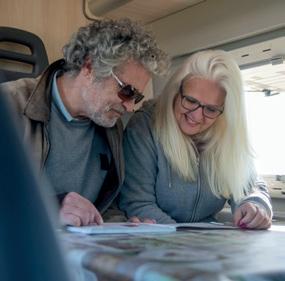
TIPS:
• Research the travel insurance company and its policies. Read reviews/ complaints.
• Read ALL of the fine print in the policy before you sign! This is where the surprises may be.
• Ask questions to ensure you understand what is and is not covered.
• You may already have some travel insurance through your credit card if you book with that card. Some trip cancellations, lost luggage etc., may be covered in your policy. Research this before paying for another plan.
NOT-SO-FREE VACATIONS
You may encounter offers for “free” or heavily discounted vacations. These promotions often promise cruises, resort stays, or luxury getaways, but require payment of fees or attendance at timeshare presentations. In many cases, the trip either doesn’t exist or ends up costing far more than expected. I have spoken with travellers who felt trapped for hours
Finance & Practical Living
in a high-pressure timeshare presentation. In some cases, they signed up because they felt like it was the only way out.
TIPS:
• Messages claiming “you’ve won a trip” are a red flag, especially when arriving unexpectedly by phone, email, or social media.
• If it seems too good to be true, it usually is.
• Don’t allow yourself to be pressured. Walk away.
CUSTOMER SERVICE FAKES
When travellers search online for help, particularly during flight delays or cancellations, they may be unknowingly contacting scammers. Fraudsters may place fake phone numbers and websites for airlines and hotels at the top of search results. Victims who call these numbers or click on these websites may be asked to pay rebooking fees or provide credit card details. These scams take advantage of stressful situations and vulnerable travellers.
TIPS:
• Double-check the website and phone number before you call or click.
• If you are at the airport, approach an airline staff member for assistance or to verify the number to call.
BEWARE OF PUBLIC WIFI
Public Wi-Fi networks or public USB chargers in airports, hotels, and coffee shops can expose your personal and financial information. Hackers may intercept data or attempt to install malicious software on your device without your knowledge.
TIPS:
• Read the terms and conditions of the public wifi before joining
• Don’t do any online banking or shopping while on public wifi
• Don’t plug your phone directly into a USB port in a public place. Use a charging block and plug directly into an electrical outlet instead
Trust your instincts. If something feels off, take a step back and investigate. Don’t let a fraudster ruin your next vacation.
Bon Voyage!
JULIE
MATTHEWS
Julie Matthews provides dynamic fraud prevention presentations across Western Canada to seniors, businesses and communities. Before starting her own business, Julie was an Investigative TV reporter for 19 years and an investigator with the Government of Alberta’s Consumer Investigations Unit. She is a certified fraud examiner and has the popular weekly segment “Scam Alert” on 840 CFCW radio. For more information or to book Julie, visit her website juliematthews.ca.



End of Life Planner
By investing time in an end of life planner, you are taking a proactive step towards ensuring that your wishes are honoured, your family is supported, and your legacy is preserved.
Available for purchase (in a PDF fillable and printable format) at the link or QR code below:
companionconnection.ca/ product/end-of-life-planner

The Freedom Fund: Creating a ‘Fun Budget’ in Retirement
By Trixie Rowein
When you retire, your next job isn’t to reduce spending— it’s to prioritize it. Everybody dies, but not everybody lives, so it’s important to have a fun budget in retirement to do all the things you want to do but haven’t done, be it travel, restoring a classic car, woodworking and more. If you plan to be adventurous during retirement but aren’t sure how to afford it, you’re not alone. The biggest mistake retirees can make is to start slashing expenses out of fear. Without understanding your true income, you may unnecessarily cut things that bring you joy.
Here’s a three-step retirement-friendly plan to help you thrive in your golden years.
Understand Your Income Sources
Unlike your working years when you knew exactly what was going into your bank account, retirement can involve multiple streams of income from a variety of sources that can change every month.
These could include your defined benefit pension from work, government benefits like Canada Pension Plan (CPP), and Old Age Security (OAS). There’s also income from personal savings from your RRIF (your converted Registered Retirement Savings Plan), LIF (your converted Locked-in Retirement Account) and Tax Free Savings Account (TFSA). There’s also investment income outside registered accounts to factor in, and sometimes part-time work.
When you add up your multiple sources of income, you can then craft a budget that works for you.
Identify Your Expenses and Spend on What You Love
Next, identify your expenses as needs and wants. Groceries, utilities, insurance premiums, condo fees, property taxes, debt payments, interest charges and out-of-pocket health-care costs all need to be covered before discretionary items like travel or hobbies. Now estimate how much you’d like to spend on the fun discretionary stuff: dream trips, dream cars, hobbies. If total income minus total costs leaves you with a negative value, your spending is too high. See if you can cut spending in certain areas or take that dream trip every two years instead of annually. Retirement is too precious to waste money on things that don’t matter. If you love gardening, invest in quality tools. If you haven’t gone to the gym in months despite paying for it then save the money and go walking. Cut out spending that brings little happiness. It’s simply not worth it.
Spending Isn’t Linear as Retirement Has Different Phases
To help you prepare for both wants and needs during retirement, break retirement into three phases: “go-go,” “slow-go,” and “no-go.” The “go-go” phase is often the beginning of retirement, when many prioritize fun, like travelling more or trying new things. Plan for expenses to be higher in this phase to account for those fun plans.
Eventually, that list runs out, or you run out of steam. When that happens, you pivot into the “slow-go” phase. This is when people start to slow down more, and expenses slow down with them. If, and when, you hit the “no-go” phase in which your health precludes you from doing much, expenses may move
higher because health care costs may be at their highest.
There is a transition from expenses for one thing to expenses for another thing, so prioritize your fun budget in the “go-go” phase.
Preparing for all three phases will ensure you have fun and are ready for whatever retirement entails when you get there. This is where planning makes a huge difference. Please contact our office at 780-414-2552 for a second opinion on your retirement-fun budgeting.
TRIXIE ROWEIN

Trixie Rowein is known for her work ethic and commitment to the community and clients. She started her career at Raymond James in 2000 as a financial advisor and has been empowering and guiding clients to make smart decisions for 25 years. She and her team specialize in advising clients going through a transition, including retirement, loss of a spouse through death or divorce and transitioning wealth to the next generation. Growing up in Edmonton in an immigrant family, she saw firsthand how smart financial planning could transform lives.
As a lifelong learner, she has earned several designations, including the Certified Professional Consultant on Aging (CPCA) designation, as serving our aging population matters to her. She values education - writing a weekly e-newsletter, in addition to hosting regular seminars and speaking to high school and UofA students. Trixie is on the Board of Directors of Little Warriors charitable organization, and part of the Raymond James Canada Foundation (RJCF) Advisory Committee. She and her husband Ian enjoy travelling, gardening and spending time out at their acreage. Trixie has two daughters and is fluent in Spanish.
Information in this article is from sources believed to be reliable; however, we cannot represent that it is accurate or complete. It is provided as a general source of information and should not be considered personal investment advice or solicitation to buy or sell securities. Raymond James advisors are not tax advisors, and we recommend that clients seek independent advice from a professional advisor on tax-related matters. The views are those of the author, Trixie Rowein, and not necessarily those of Raymond James Ltd. Investors considering any investment should consult with their Investment Advisor to ensure that it is suitable for the investor’s circumstances and risk tolerance before making any investment decision. Raymond James Ltd. is a Member of the Canadian Investor Protection Fund. Raymond James Ltd. is a Member of the Canadian Investor Protection Fund.
From Pain to Power
Murray, a retired teacher from Calgary, had been struggling with the painful effects of Peripheral Neuropathy for quite some time.
“My feet were having weird sensations, constant pain, my balance was off, and the bottoms of my feet were hot and sore,” he described.
Peripheral Neuropathy is a condition that causes pain, numbness, and discomfort due to nerve damage in the peripheral nervous system.
After an EMG test last summer, Murray was diagnosed with moderate to severe neuropathy. "What can I do?" he thought. As someone who had always lived life passionately, he grew increasingly frustrated and less motivated by the day due to the pain.
Murray experienced all the typical symptoms of neuropathy: burning, tingling, numbness, and sharp pain in his feet.
He knew he needed to take action, as the pain was starting to make him withdraw from his usual activities.
Unfortunately, Murray’s story is all too familiar for Canadians living with Peripheral Neuropathy. For many, the pain is so intense that even simple tasks like walking, shopping, or getting a good night's sleep can become difficult.
Things began to change for Murray when he read an article about Dr. Melanie Morrill Dr. Ac, an acupuncturist in Edmonton who is helping patients with Peripheral Neuropathy without invasive surgeries or medications.
“Well, I’m in Calgary and they are in Edmonton. This is too good to be true," Murray thought. "I wonder if they can help me?” Murray got in touch with the clinic and booked his initial consultation.
Dr. Melanie Morrill Dr. Ac, has been using acupuncture and technology originally developed by NASA to help improve blood flow and speed up healing.
This unique, non-invasive approach has been providing relief for Murray and others living with the pain and discomfort caused by neuropathy.
Murray’s wife, Marilyn, remembers how difficult it was to do simple things before he began his acupuncture treatments.
“Before, Murray and I had to walk about seven blocks. His posture was bent over, and he had to rely on trees, handrails, benches, and walls for support the whole way,” she said. Then, after starting treatment, the couple attended a function that required a long walk. Marilyn was amazed to see Murray walk the entire distance without stopping.
After just a couple of treatments, Murray started to notice a difference. “I have my life back,” he says now.
“My feet don’t hurt anymore, and my balance has improved so much.” He continued, “I started acupuncture treatments on my feet, and the balance issue changed. I could feel it, and I started to stand up straighter and walk much better.”
For Murray, despite the long drive from Calgary to Edmonton, the journey was more than worth it. Today, he is living pain-free and enjoying life again.
The relief he now feels makes every mile travelled well worth it. Murray is back to doing the things he loves. “I have a pep in my step that I didn’t have before,” he said, feeling more energized than he had in years.
Dr. Melanie Morrill Dr. Ac, has been helping seniors for over seven years, focusing on chronic complex pain, especially those that have been deemed "hopeless and untreatable.”
For seniors in Edmonton and the surrounding areas, relief from Peripheral Neuropathy is now more accessible than ever. If pain has kept you from enjoying life, it is time to call Dr. Melanie Morrill Dr. Ac, and her team at Accessible Acupuncture.
It’s time to let your golden years be GOLDEN!
Accessible Acupuncture is currently accepting new patients; 10 new patients will be accepted each month.
Call 587-879-7122 to schedule your consultation now or visit Accessibleacupuncture.ca to learn more.