Trends may fade, but the pursuit of effortless style endures. From American campus quads to Tokyo streets, the Ivy style became a shared expression of youth, ambition and belonging. That lineage still runs through today’s fashion, where Ivy’s quiet confidence evolved into the foundation of both streetwear and modern luxury.
Ivy style emerged on the campuses of Harvard, Yale and Princeton, where students traded stiff formality for sack suits, Oxford shirts, chinos, sweaters and loafers. The look carried a casual elegance that signaled privilege without pretense. Clean and distinctly American, it promised success and democracy, offering youth a way to move beyond wartime austerity.
After World War II Japan embraced Ivy as a symbol of modernity and cosmopolitan life. Although imported goods were scarce, young adults embraced the catalogs of Brooks Brothers and J. Press as aspirational style guides, studying their pages like textbooks. Department stores in Tokyo began carrying limited shipments

of American clothing, and Japanese students lined up for hours to secure each new arrival.
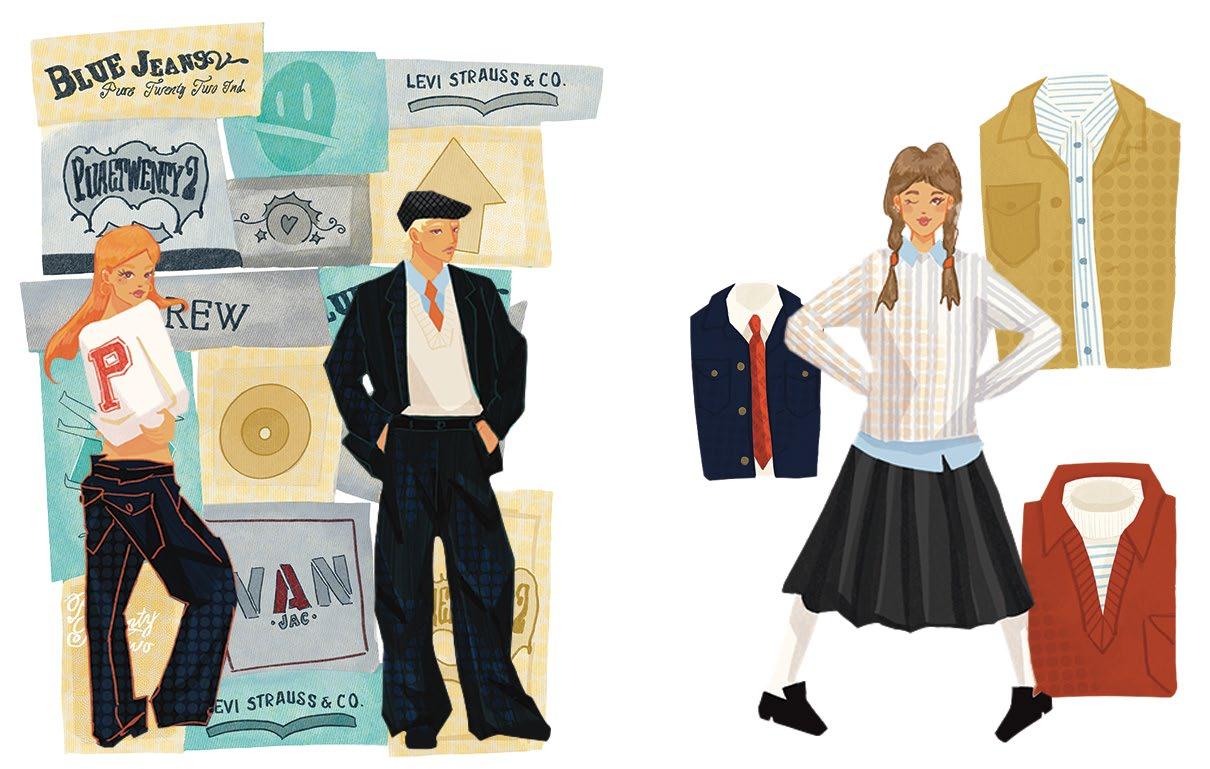
By the early 1960s the style that once existed only on catalog pages had come to life on Japan’s streets. Young men who once dressed like their fathers in boxy suits and stiff ties now wore button-downs, natural-shoulder jackets and sharply pressed chinos. Kensuke Ishizu’s brand VAN Jacket made the look both accessible and aspirational, translating American prep into a distinctly Japanese expression of confidence. The youths who followed it, known as the Miyuki-zoku, gathered in Tokyo’s upscale Ginza district and became Japan’s first visible Ivy subculture.
VAN’s success extended beyond clothing. Ishizu understood that the power of American catalogs lay not only in the garments but in the lifestyles they promised. To translate that appeal for Japanese youth, he built a brand that sold aspiration as much as apparel. In 1954 he helped launch the publication Men’s Club, which taught readers how to pair jackets, ties and shoes with the precision of a curriculum.
In 1976, the publication Popeye carried that ethos into a new era, blending Ivy influences with surf and travel culture. Together these outlets turned style into a form of education, showing readers not just how to dress but how to live.
By the late 1980s Japanese fashion was no longer following American cues; it was defining its own. Shoichi Aoki became one of the key figures in this shift. In 1985, he founded STREET, a magazine that featured real people in Tokyo, London and New York and documented what they naturally wore, rather than adhering to strict branded dressing.
Aoki treated sidewalks like runways, capturing a generation that mixed
Americana, British punk and Japanese thrift into something entirely new.
In 1997, he launched FRUiTS, turning his lens toward Harajuku’s most experimental youth. Each portrait recorded not only the outfit but the wearer’s name, age and inspirations, transforming street style into social documentation. Where earlier magazines like Men’s Club and Popeye taught readers how to emulate a lifestyle, Aoki’s work celebrated individuality and creativity as the lifestyle itself. His magazines signaled a new cultural confidence; Japan was no longer interpreting Western fashion, but exporting its own.
This evolution paved the way for a fascination with authenticity and craft that carried through the 90s and into the 2000s. Magazines such as Boon and Lightning reflected that shift, spotlighting denim, leather and workwear with the same precision once given to Ivy tailoring. They treated clothing as a cultural artifact, proof of both history and identity.
The move from Ivy’s polished to rugged wear reveals how fashion continually repurposes function into form. Workwear was born from necessity, built to endure the grit of factories, farms and construction sites. A Carhartt jacket or pair of Levi’s jeans began not as style statements but as tools of labor stitched for utility rather than image.
Just as Japanese youth once used American catalogs to imagine prosperity, later generations looked to magazines and brand editorials to define authenticity. Identity, once tied to what people did, now drifts between what they wear and how they want to be seen. In postwar Japan, the same interplay unfolded through publications where readers studied not just the clothes but the lifestyles they implied — the record players, the blazers and the perfectly parted hair.
What was once worn out of duty is now worn by choice. The denim jacket, the chore coat and the military parka each began in labor or service but now carry a new kind of meaning. Their durability and simplicity remain, but they speak less to the jobs that required them and more to the ideals they represent. Rather than a loss, this shift reflects fashion’s enduring ability to reinterpret work, class and belonging.