SARAH HOWARD Executive Director



























GCI delivers Alaska’s most advanced network, powered by trusted technology and industry-leading performance. Scan the QR code or visit gci.com/business



































24 EDUCATION
Alaska Innovators Hall of Fame 2026
Engineering for Alaskans
By Katie Pesznecker
30 LEADERSHIP
Doing Good by Being Good: Greed
By Lincoln Garrick
80 TRANSPORTATION
Pilot Lights
Kodiak explores advanced pedestrian safety technology
By Rachael Kvapil
84 GOVERNMENT
Disasters Anticipated APIP connects public and private sectors for emergency planning
By Christi Foist
90 ALASKA NATIVE
Equity or Subsidiary?
Two paths to profit
By Scott Rhode
96 OIL & GAS
Open Door to NPRA
Federal lease sales show where industry interest lies
By Terri Marshall
10 TELECOM & TECH
Digital Fulcrum
Small businesses leverage technology for success
By Tracy Barbour
18 FINANCE
Saving for Tomorrow
Alaska 529 marks 25 years of opening doors
By Alexandra Kay
Correction: On page 12 of the April 2026 issue, one of the founders of the Brother Francis winter shelter in Anchorage was misidentified as Bob Easton; his name is Bob Eaton.
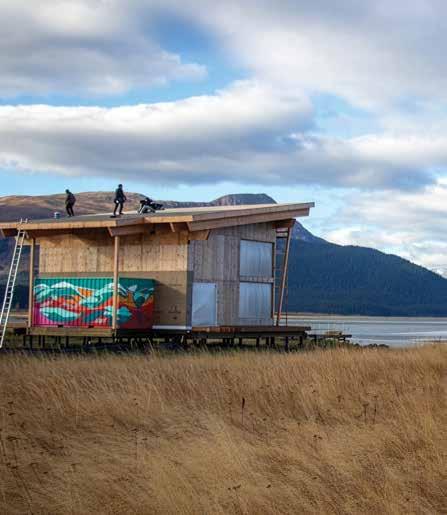
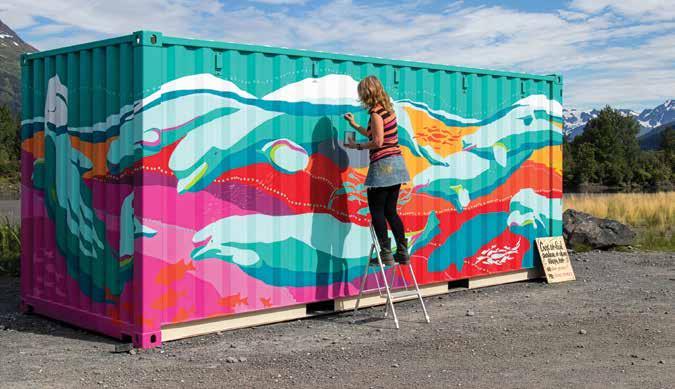
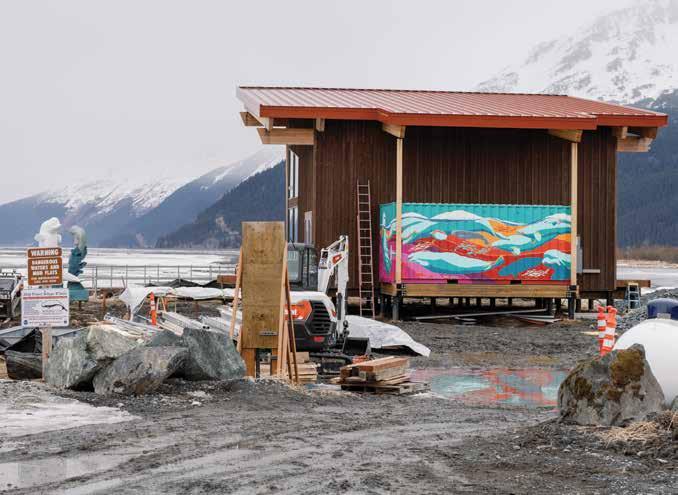
Alaska Wildlife Conservation Center Executive Director Sarah Howard poses in front of a mural by Dawn Gerety, who painted it on a 20-foot shipping container donated by Matson. Howard posed on a ladder because, at the time of the photo shoot, the ground directly in front of the mural was covered in several inches of mud. The ladder elevating Howard is a simple, practical solution that exactly addresses the problem in a timely fashion and within budget. Thus may it be for all construction projects in Alaska this year.
Photo by Kerry Tasker

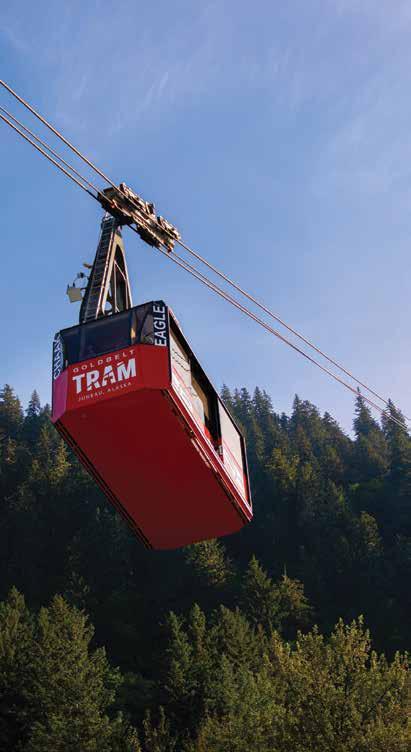
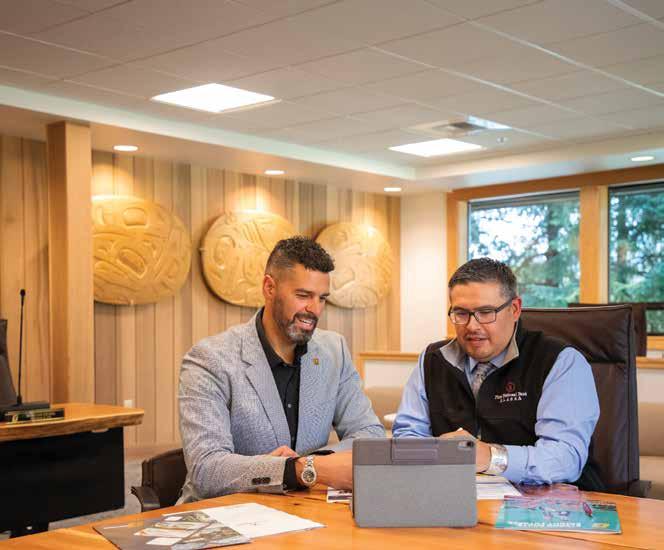

“I trust First National’s expertise and financing solutions to help us achieve our mission: To deliver economic success for our Alaska Native owners and the communities we serve.”
– McHugh Pierre PRESIDENT
& CEO GOLDBELT, INC.
Alaska Native businesses like Goldbelt drive economic growth benefiting both shareholders and their communities. First National Bank Alaska delivers the One Solution — a comprehensive suite of financial tools — to help them succeed, all backed by the experience of Alaska’s largest community bank.
Discover how shared values fuel Goldbelt’s growth and relationship with First National Bank Alaska.
SHAPE YOUR TOMORROW
46 NAWIC REBUILDS
Women helping villages hit by Typhoon Halong By
Jamey Bradbury
62 COSMIC PERSPECTIVE
The formation of UAF’s new planetarium By Rachael
Kvapil
68 HIGHWAY TO HIGHWAY UPDATE
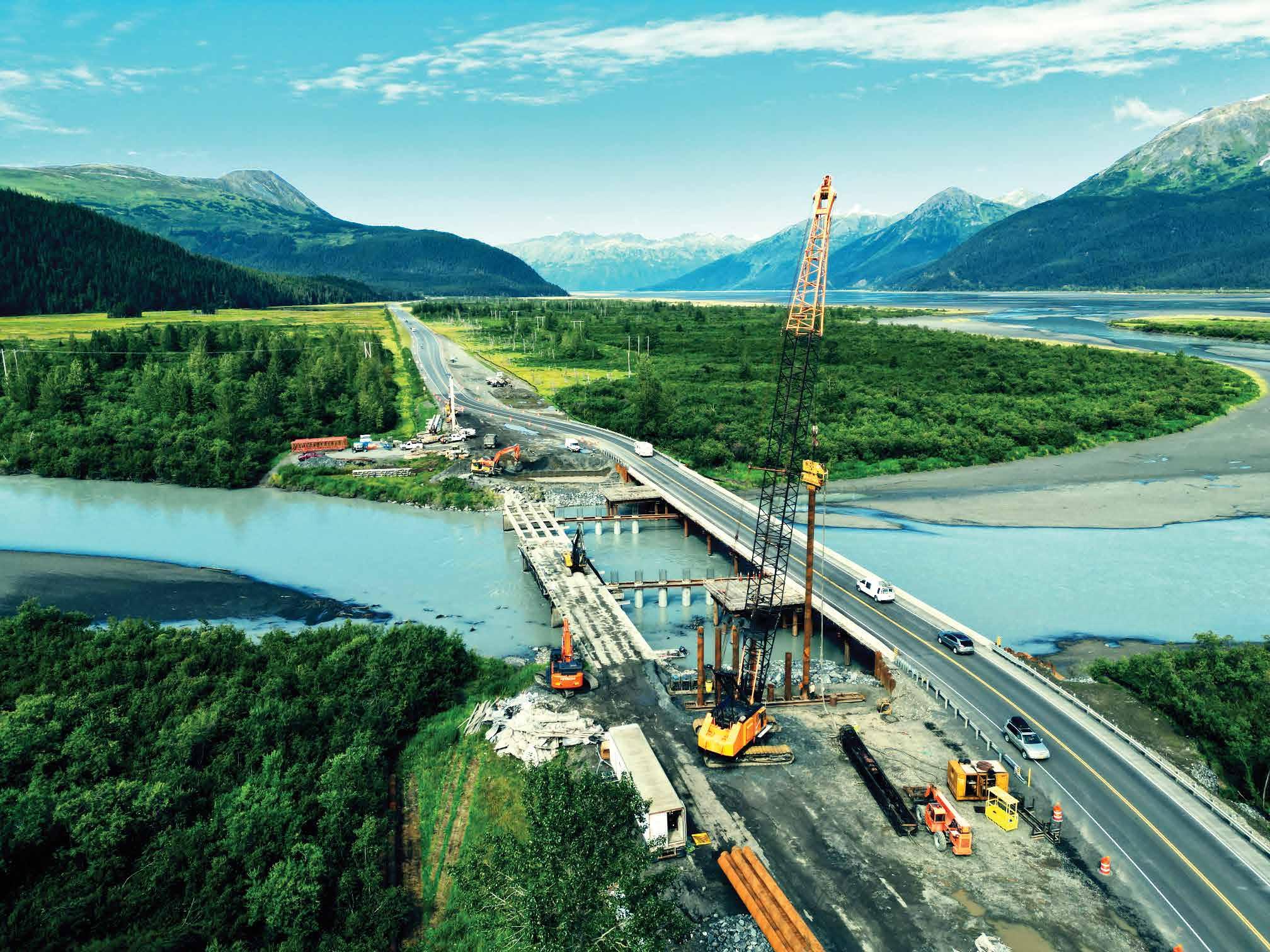
More than asphalt goes into rebuilding the Glenn–Seward junction By Christi
Foist
74 HANDS FOR HAMMERS
Workforce development in the building trades By Vanessa
Orr
56 WHAT’S UP, DOCK?
36 OCEAN EDUCATION CENTER
Matson lays foundation for marine science in Turnagain Arm By

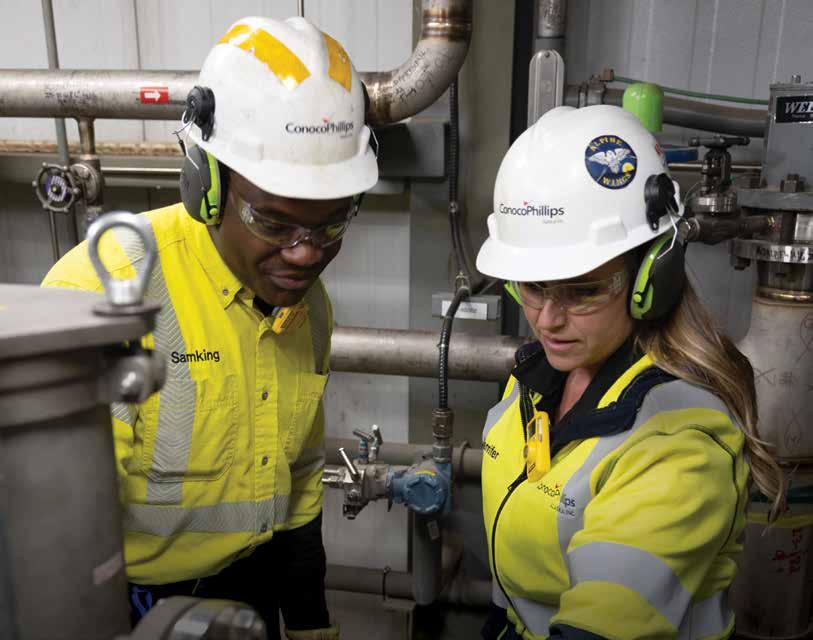
We measure success not only by what we do but how we do it. Our team is dedicated to the safe and responsible development of oil, ensuring a healthy economy for future generations of Alaskans.
Tasha Anderson, Managing Editor
Scott Rhode, Senior Editor
Rindi White, Associate Editor
Emily Olsen, Editorial Assistant
Monica Sterchi-Lowman, Art Director
Fulvia Caldei Lowe, Production Manager
Patricia Morales, Web Manager
Billie Martin, President
Jason Martin, VP & General Manager
James Barnhill, Accounting Manager
Charles Bell, VP Sales & Marketing 907-257-2909 | cbell@akbizmag.com
Chelsea Diggs, Account Manager 907-257-2917 | chelsea@akbizmag.com
Weston Giliam, Account Manager 907-257-2911 | wgiliam@akbizmag.com
Tiffany Whited, Marketing & Sales Specialist 907-257-2910 | tiffany@akbizmag.com
akbizmag.com | 907-276-4373
Press releases: press@akbizmag.com
Billing: accounts@akbizmag.com
Subscriptions: circulation@akbizmag.com
alaska-business-monthly
akbizmag
AKBusinessMonth
AKBusinessMonth
Alaska Business (ISSN 8756-4092) is published monthly by Alaska Business Publishing Co., Inc. 501 W. Northern Lights Boulevard, Suite 100, Anchorage, Alaska 99503-2577; Telephone: (907) 276-4373. © 2026 Alaska Business Publishing Co. All rights reserved. No part of this publication may be reproduced without written permission from the publisher. Alaska Business accepts no responsibility for unsolicited materials; they will not be returned unless accompanied by a stamped, self addressed envelope. One-year subscription is $39.95 and includes twelve issues (print + digital) and the annual Power List. Single issues of the Power List are $15 each. Single issues of Alaska Business are $4.99 each; $5.99 for the July & October issues. Send subscription orders and address changes to circulation@akbizmag.com. To order back issues ($9.99 each including postage) visit simplecirc.com/back_issues/alaska-business.
As a brand, Alaska Business has permanently adopted a cautiously optimistic outlook. For those who don’t recall, the phrase “cautiously optimistic” was more or less required in every economic forecast and keynote speech in the state during the few years of slow growth between oil prices crashing in 2014 and the rise of the pandemic in 2020. Even with those particular obstacles behind us, within these pages the phrase retains its utility.
There are some projects that—considering the long, long, long, long road they’ve traveled—we approach with a healthy dollop of caution. Without naming names, an LNG pipeline or the Alaska-to-Canada rail line may or may not fall in that category (although we love every update we can find on them). Others, such as a study on the feasibility of extracting rare earth elements from seaweed, are so early and speculative there’s little to propel them forward except optimism, and we’re happy to share it.
But within our editorial suite, before the final pages are sent to print, optimism always takes a back seat to caution. Key phrases—the biggest, the only, the longest, the worst, the best, the last—trigger our editorial cynicism, and we go looking for the facts.
We then have a conversation about what we find, if what we’ve found is pertinent to the conversation, and if the information meets this magazine’s goals.
For example: the March oil and gas lease sale in the National Petroleum Reserve-Alaska (NPRA). Shortly after the lease sale results were released, headlines littered the media landscape stating that this lease sale generated the most revenue of any NPRA sale. When the draft for our article landed on my desk, I was discussing edits with my editor Scott Rhode, and I mentioned out loud the record revenue of nearly $164 million; he immediately said, “Kind of; not really.” So we talked.
In the 1999 NPRA lease sale, six companies submitted 174 bids on 133 tracts, with 867,721 total acres receiving bids. The high bids totaled $104,635,728. Adjusted for inflation, that’s approximately $207 million today. Those facts, and the conversation about them, resulted in the unobtrusive edit “in nominal dollars” that we felt increased the accuracy of the introduction without detracting from the general excitement over the lease sale. Just that simple note was enough for us to signal that—although the lease sales results were exciting (and we share that excitement!), and although our publication champions responsible development—nevertheless, we double-check the optimism.


Tasha Anderson Managing Editor, Alaska Business













By Tracy Barbour
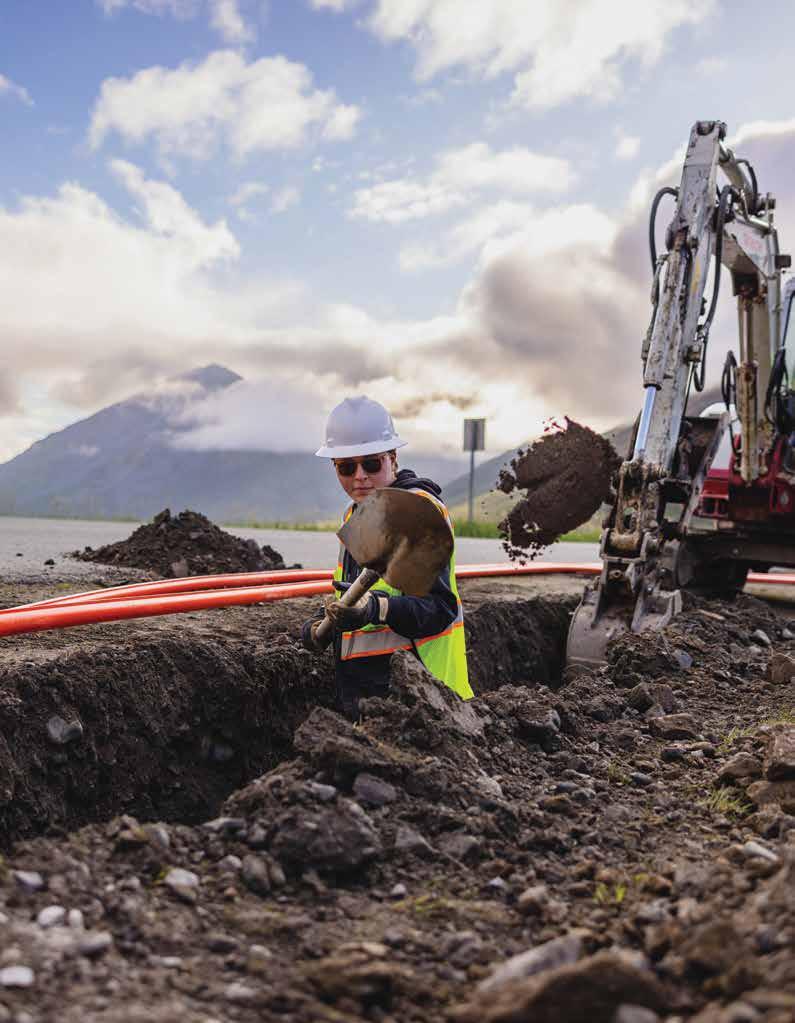
Alaska’s small businesses are rewriting the playbook on resilience, using technology to optimize operations, hone their competitive edge, and fuel their growth. Technology-driven tools are essential to the success of small businesses in Alaska. From AI-powered customer solutions to business platforms such as BuyAlaska, entrepreneurs are embracing digital transformation and making an impact on the local economy. Telecommunications providers are facilitating this shift, delivering connectivity and solutions that help businesses streamline workflows, rapidly scale, and adapt to a constantly changing marketplace.
Telecoms like Alaska Communications and GCI provide a variety of services to enable digital access and foster innovation among small businesses. In today’s digitalfirst economy, every business, regardless of industry or location, depends on reliable, affordable connectivity to operate, compete, and grow, according to Cindy Christopher, senior director of sales at Alaska Communications.
“Alaska Communications plays a leading role in powering this transformation across the state by expanding high-speed broadband, investing in infrastructure, and delivering modern connectivity solutions designed for organizations of all sizes,” Christopher says. “In

& Operated Since

www.chialaska.com info@chialaska.com
ph: 907.276.7667


2025 alone, we expanded high-speed broadband to tens of thousands of locations across Anchorage, the Kenai Peninsula, Juneau, and Fairbanks. These investments are helping Alaska businesses embrace new technologies, reach new customers, and compete on a broad scale.”
GCI views its role as providing the “digital foundation” that Alaska businesses need to operate effectively, efficiently, and confidently, according to Vice President of Sales Brad Spees. Whether it’s connectivity for a retail shop, secure solutions for a large enterprise, or reliable service for a small team managing its day-today operations, GCI’s network enables a huge range of essential work across the state. “We’ve spent decades building infrastructure that’s designed for Alaska’s geography and climate,



because digital transformation only works when the connection behind it is strong, predictable, and built for the realities of this place,” he says.
Spees says technology must be dependable and easy-to-use because most small business owners do not have time to troubleshoot or manage complex systems. That’s why GCI focuses on delivering reliable connectivity and straightforward solutions that support everyday needs like scheduling, online sales, point-of-sale systems, and secure communication. “We also back that up with local support teams who understand both the technology and the communities they’re working in,” he says. “When the connection works the way it should, business owners can focus fully on their customers— and that’s the goal.”






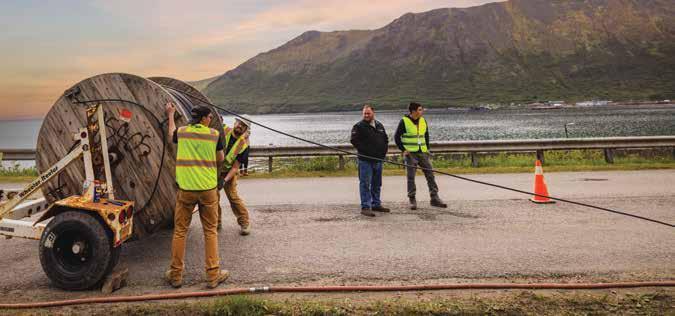
Christopher says Alaska Communications is proud to employ small business experts who, in most cases, live and work in the same communities as its customers. In addition, customer service and technical support teams are based in Alaska. “That local presence means personalized help, better understanding of on-the-ground need, and solutions tailored to the realities of our state,” she says.
Alaska Communications helps local businesses remain resilient— even during unexpected disruptions.
For example, with ACS SmartBiz, a busy coffee shop can keep serving customers during a network outage by instantly switching to a mobile hotspot or cellular connection. “This is a simple example, but it shows how reliable, managed connectivity can directly support business continuity, revenue, and long-term growth,” Christopher says.
Small business owners cannot afford to worry about network
security or operations; they need a trusted partner, Christopher says.
“We offer Small Business Bundles that allow business owners to delegate their connectivity and IT needs, gaining peace of mind and allowing them to focus on what truly matters—growing their business and enjoying a better work-life balance,” she explains.
Dependable connectivity, Spees says, gives companies room to grow and innovate. It might mean adding an online store, opening a second location, or using cloudbased tools to streamline operations.
“In communities like Unalaska and Bethel, where fiber connectivity has come online more recently, we’re watching businesses modernize how they communicate with customers, manage inventory, and support their staff,” he says. “Once the bandwidth is there, a lot of doors open. And businesses are quick to take advantage of that.”
Telecom services can be especially impactful to businesses in Alaska’s remote communities. “In rural Alaska,
access to fast, reliable connectivity can be genuinely transformational,” Spees says. “With initiatives like the Aleutians Fiber Project and the AIRRAQ Network, we’re significantly strengthening connectivity in some of the most remote communities in the state,” he explains. “Now, local businesses in places like Unalaska and Bethel can operate more efficiently, communicate more easily, and participate more fully in the digital economy. Reliable service gives them a foundation to grow, and we’re already seeing that momentum build.”
Alaska Communications is impacting businesses in rural communities through its role in the Alaska FiberOptic Project. The collaborative project is designed to provide reliable broadband in up to twenty-one unserved communities along the Yukon and Kuskokwim Rivers, improving education, healthcare, economic opportunities, and quality of life. “Having access to reliable, affordable broadband enables global ecommerce and
entrepreneurship opportunities in rural Alaska,” Christopher says. “It’s exciting to think of the possibilities that are within reach.”
Small businesses encounter obstacles like limited or nonexistent IT resources, cybersecurity concerns, and the complexity of integrating new options, according to Christopher. Owners often juggle multiple roles and long hours, so Alaska Communications works to give them peace of mind with their connectivity and IT.
“Cybersecurity, specifically, can seem overwhelming and unattainable for many entrepreneurs,” Christopher says. “That’s why many businesses benefit from working with a trusted partner who can put together a solution that meets their needs and budget.”
She emphasizes that Alaska Communications is a technology partner, not just a vendor. “When businesses work with us, they benefit from not only our employees’ decades of experience but also our industryleading partnerships,” she explains. “In the last several years, we’ve formed relationships with leading thought experts like SurePath AI, Remote Hands, Calix, and Tarana.”
Spees points out that business owners want to adopt the right tools but do not always know what will actually help—or how to manage it once it’s in place. “That’s where our team comes in,” he says. “We try to simplify the process, understand what the business is trying to achieve, and recommend solutions that fit their size and workflow… At the end of the day, technology should reduce friction, not add to it.”


We are the exclusive distributor for Clean Burn waste oil heating equipment in Alaska. We carry a full range of Clean Burn Genuine OEM parts and o er sales, installation help, unit cleaning and return services.


(907) 832-5445 or (800) 478-5447
E-mail: NHSI@alaska.net cleanburn.com/nenana-heating



Alaskans, by Alaskans
GCI has worked with a range of Alaska businesses that exemplify how reliable connectivity can make a real difference. LVSH Studio in Anchorage, for instance, uses the company’s internet and mobile services to handle scheduling, point-of-sale, and day-to-day operations of the hair salon without interruption. Another example is Swedish outdoor apparel brand SKHOOP, which has a local vendor near Downtown Anchorage. The outlet relies on GCI to power its online store and internal systems, helping its small team stay efficient and responsive. “What ties all of these stories together are the dedication and resilience of Alaska’s entrepreneurs,” Spees says. “When they have the right digital foundation, they’re able to focus on their mission—and we’re proud to help make that possible.”
AI is rapidly becoming a “baseline capability” for small businesses, much like email and accounting software, according to Carlos Machuca, director of the Alaska SBDC’s AI Resource Program. Although still somewhat experimental, it’s no longer reserved for large corporations; instead, it’s becoming a practical operational tool that small businesses can use to stay competitive and responsive.
This shift is especially important in Alaska, where businesses often operate with lean staffing, higher logistics costs, geographic constraints, and limited access to specialized talent. “In this environment, efficiency is not optional; it is essential for survival and growth,” Machuca says. “AI gives small teams the ability to perform work that previously required dedicated departments, whether in marketing, analysis, customer communication, or administrative support.”
The AI Resource Program helps small business owners move from AI curiosity to structured, practical implementation. Rather than focusing on theory, the program emphasizes embedding tools like large language models and other specialized AI solutions directly into real business workflows. It concentrates on helping small businesses with high-impact operational areas where they experience the most pressure. “The goal is to make AI operational—something that supports daily operations, decisionmaking and execution—not just a concept discussed in seminars,” Machuca says.
Integrated Project Services (IPS), an Anchorage-based data analysis consultant, for example, worked with SBDC to adopt AI for document creation and Excel-based processes, slashing production time in half. The adoption resulted in an estimated annual savings of $174,570 per team member, with the projected total savings for full team adoption to exceed $523,710 annually. “This technology has transformed weeks of work into days, making a significant financial impact,” says IPS Vice President Thad Phillips.
To help small businesses like IPS remain competitive, the AI Resource Program operates as a full AI adoption ecosystem, not just a one-time workshop. It offers tiered learning pathways and a four-part workshop series covering AI fundamentals for business, marketing with AI, data analysis using AI tools, and the development of custom AI assistants. The program’s training is increasingly being tailored to Alaska’s key industries, which ensures relevance to the state’s unique economic landscape. “The objective is not just education—it is competitive positioning,” Machuca says. “Businesses leave with working tools, clearer processes, and repeatable systems that strengthen efficiency and long-term resilience.”
The AI Resource Program treats AI adoption as a change management process—not simply a technology upgrade. It recognizes that most small businesses do not struggle with access to tools; they struggle with uncertainty, risk, and the lack of a clear implementation path. Therefore, the program helps
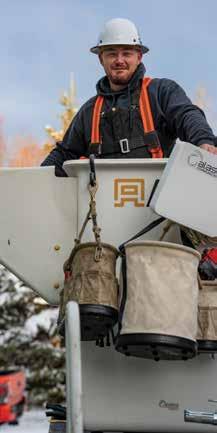
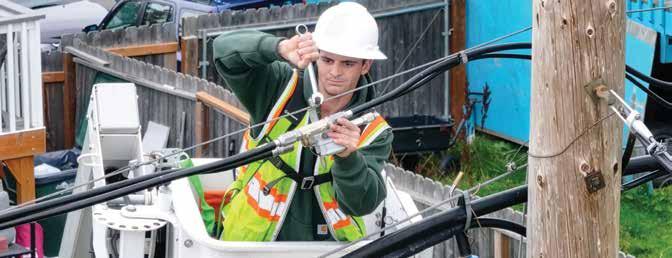
2026 Construction Spending Report Where Alaska Where Alaska Where Alaska Construction is Construction is Construction is Heading Next Heading Next Heading Next is

Workforce Demand. A Future to Build.

$4.2 B in statewide economic impact
Get the data shaping the 2026 season.





businesses address these and other challenges directly through structured education, practical guidance, and implementation support designed specifically for small business realities.
To reduce the risk of “shadow AI”—where employees use unvetted tools—the program provides a sixstage roadmap for AI adoption: awareness, experimenting, adopting, optimizing, standardizing, and transforming. Machuca explains: “By using this six-stage framework, the program prevents random experimentation and replaces it with structured progression. AI becomes a managed organizational capability that evolves deliberately rather than a fragmented or reactive initiative.”
A much older program within SBDC has provided an online spotlight for small Alaska businesses of all sorts for more than two decades.
BuyAlaska offers an online directory of more than 1,300 business listings that make it easier for consumers to find products and services from local enterprises.
Each business manages its own directory listing, but BuyAlaska vets them. “I make sure it is an actual business that has a business license in the state of Alaska and that the license is active,” says Dante Medema, who runs the BuyAlaska program.
Additionally, BuyAlaska helps businesses broaden their reach through digital community engagement. It uses social media to “hype” local enterprises and build visibility, which helps counter the geographic isolation that many businesses face in Alaska. Instead of relying on repetitive messaging, BuyAlaska encourages business owners to engage in digital storytelling. “We’re tagging them in things like the Member Moment Mondays and oftentimes prompting our followers to tag their favorite businesses on different posts,” Medema explains.
BuyAlaska’s Love Local strategy also promotes peer-to-peer tagging to drive digital engagement, especially in competitive sectors like coffee shops. “Oftentimes, those posts are our most popular ones because people just want to spread the love,” Medema says. “By posting about
local businesses and the benefits of shopping local, we hope to encourage Alaskans to keep our money in state, which will create more opportunities for more Alaskans and keep building up the economy.”
By participating in BuyAlaska, business owners become part of a supportive community that emphasizes the importance of conscious spending and mutual support. “Being part of this program is really like being part of a community where people are encouraging one another to be mindful of where they spend their money and mindful of supporting our neighbors,” Medema says. “If one of us benefits, we all benefit.”
By leveraging community connections and resources like BuyAlaska, the AI Resource Program, GCI, and Alaska Communications, small businesses are not just overcoming challenges, but they’re shaping a stronger economy for the state. Their ingenuity shows that, with the right support and technological solutions, Alaska’s business community can turn obstacles into opportunities and build lasting success.
















































By Alexandra Kay

Paula Hill grew up in Hooper Bay, a small Yup’ik community on the Bering Sea coast. Her mother pushed all of her kids to pursue education beyond high school and enrolled them in Alaska’s college savings program to help make that happen.
Hill went on to attend UAF— and now she’s pushing her own daughters, ages 3 and 14, and saving for them too.
“It feels like an honor,” Hill says of being part of the program for a second generation. “Being able to contribute to them after they leave my home and start their journeys. I know it doesn’t really feel like a difference each year, but everything adds up, and by the time they’re done with high school it will really make a huge impact.”
Hill is one of thousands of Alaska families who have turned Alaska 529 into something of a family tradition.
This year, the program marks twenty-five years, a milestone that Lael Oldmixon, executive director of the Education Trust of Alaska, says speaks to something bigger than the dollars in the accounts. “We’ve seen graduates, we’ve seen secondgeneration families using the 529 as a tool and a lever to be able to access and attain education and training after high school,” Oldmixon says. “For us, it’s really actualizing the goal. It’s seeing the goal come to life.”
The concept of a tax-advantaged education savings account didn’t happen overnight. In the mid-tolate ‘80s, a few states—Michigan among the first—recognized that rising tuition costs were pricing the middle class out of college and began establishing prepaid tuition programs. Alaska followed in 1990, becoming the sixth state in the
country to adopt such a plan, then known as the Alaska Advance College Tuition program. Jay Kerttula and Tim Kelly were driving forces in the state senate, and the Alaska Legislature built in the option to direct half of a Permanent Fund dividend into the savings program.
Through the ‘90s, a coalition of states lobbied the US Congress to formally protect these accounts from federal income tax. Alaska was a founding member of what became the College Savings Plan Network, and Jim Lynch—the creator of Alaska’s program and a University of Alaska finance official—was widely credited at a recent national industry conference as a key player in getting Section 529 of the Internal Revenue Code passed in 1996. That legislation put the tax-advantaged structure these plans depend on into law.
After Section 529 passed, Kelly and then-State Representative
Lisa Murkowski led the effort to convert Alaska’s prepaid plan into the UA College Savings Plan, which Governor Tony Knowles signed into law in 2001. Alaska partnered with investm ent management firm T. Rowe Price to build it out, creating what would eventually become one of the top-ranked college savings plans in the country by performance, cost, and governance.
“To have Alaska be such an important part of this industry that has now served millions of individuals is incredible,” Oldmixon says. “We’re a large state, we’re a small population, we have a big impact.”
One of the biggest shifts over twenty-five years has been in how people think about what Alaska 529 savings can be used for. In 2019, after a statewide survey found that many families mistakenly believed their funds could only be used at the University of Alaska, the trust rebranded the UA College Savings Plan into Alaska 529. The name change was deliberate. The money isn’t locked into one school—or even into a four-year degree.
Today, account holders can use their funds at virtually any eligible institution in the country, including four-year universities, community colleges, vocational and trade schools, apprenticeship programs, and even K–12 private school tuition. More recently, the plan expanded to cover professional credentialing and, under certain conditions, Roth IRA rollovers. Families can also use up to $10,000 to help pay down a beneficiary’s student loan debt.
“If I had my magic wand, it would be that every baby born has an account created automatically for them so that we can get them started with their savings journey as early as possible.”
Lael Oldmixon, Executive Director, Education Trust of Alaska







Having a 529 account can help students even if they go to college on a sports scholarship. Recent changes to the program allow it to be used for professional credentialing and Roth IRA rollovers if not used for tuition. Alaska 529

That flexibility matters to Gwen Rhein, an Anchorage mom with three boys under five. She and her husband—both born and raised in Alaska—started accounts for each son as soon as their Social Security numbers came through. Monthly automatic contributions and PFD deposits do most of the work, and grandparents chip in on birthdays.
“We love the flexibility of how the kids can use their funds however their future may look—college, trade school, et cetera,” Rhein says. “It’s an extremely easy program, and it’s certainly nice not to have to deal with a national organization.”
For Hill, the flexibility resonates as well. She told her 14-year-old that whatever path she chooses after high school, the money will be there. “I encourage her to find something that she really loves to
do and work for that,” Hill says. “Whether it’s a trade school or something else, because we’re literally going to have to be working for the rest of our lives.”
Opening an Alaska 529 account takes about five minutes online.
Families need a Social Security number for the beneficiary, a decision on how to invest, and a way to fund it.
The minimum contribution is $25—or families simply check a box on their Permanent Fund dividend application and direct half (or all) of their PFD into the account automatically.
Right now, the trust is running an incentive program called Dash to Save: Open a new account and fund it with at least $25, and Alaska 529 will add a $250 contribution. Set up recurring contributions and the plan
kicks in another $100 per year. New account growth was up 38 percent year-over-year in the most recent year, a number Oldmixon calls huge.
“Normally we would see low numbers or negative numbers,” she says. “We think we’re starting to stick, and that people are becoming more aware of the savings options and the many uses that folks can use the funds for.”
Families planning on the University of Alaska have an additional option: the University of Alaska Portfolio, which allows account holders to essentially pre-purchase tuition credits at today’s prices. Current UA System tuition runs roughly $230–$310 per credit; buying in now hedges against future increases. And any enrolled beneficiary can attend the University of Alaska at in-state tuition rates and apply for free admission, regardless of where they live at the time.
Accounts can be opened by anyone: parents, grandparents, other relatives, or even the eventual student. The maximum balance per beneficiary across all Education Trust of Alaska plans is $550,000.
The Education Trust of Alaska oversees three 529 plans: Alaska 529, marketed directly to in-state families; the T. Rowe Price College Savings Plan, sold nationally; and the John Hancock Freedom 529, an advisor-sold option. Together, the three plans cover roughly 316,000 beneficiaries, with assets approaching $12 billion.
Alaska 529 itself—the flagship direct-sold plan—has about 46,000
beneficiaries and is closing in on $886 million in assets, with the $1 billion mark within reach. Each year, approximately 3,800 students enrolled at University of Alaska campuses take withdrawals from their accounts, representing about $23 million flowing back into the university annually.
The average account balance across all three plans sits at around $40,000. That won’t cover every educational path from start to finish, but it’s a meaningful head start, and Oldmixon is quick to point out that even modest contributions add up in ways that matter beyond the balance.
“When we put small amounts of money aside for kids and say, ‘This is for college,’ the kid goes, ‘Oh, I believe I can do this. My parents
believe in me,’” she says. “Even a little bit can help families make the cost of education a little less expensive.”
Rhein puts it more plainly: “What seems like a minimal amount of money now can grow to a substantial amount of money for the future. It’s preparing for the future. Even if you just click the box on your PFD every year, that adds up.”
Getting families in rural and remote areas of Alaska to participate is an ongoing priority. The PFD application reaches virtually every household in the state and remains the trust’s most effective entry point, but outreach extends well beyond it.
The trust sponsors statewide competitions and programs: the Alaska Native Youth Olympics, the
Alaska Academic Decathlon, robotics competitions, and the UAF Arctic Innovation Competition, among others. The trust also supports Denali Arts Council, a Talkeetna program that brings artists and musicians into rural schools.
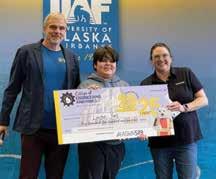
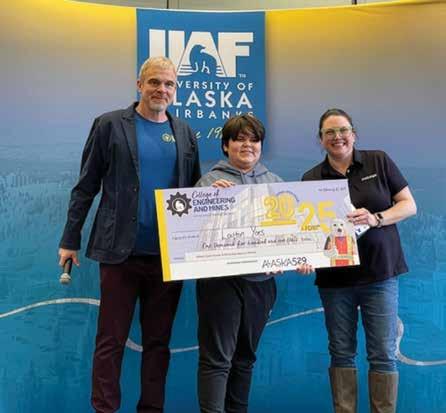
The annual $25,000 scholarship account giveaway, a raffle tied to the PFD check-off, has had some especially visible community ripple effects. When a young woman from Kasigluk won a few years ago, it gave her the push she needed to pursue her goal of becoming an illustrator after a period of feeling uncertain about her direction in life. After a boy from Sitka won in 2025, new account openings in that community jumped 128 percent.
“The story of this family inspired so many people in that community to

Alaska
Oldmixon has a clear vision of what the next chapter looks like. “I’ve always had the goal that every single Alaska child would have a 529 account,” she says. “If I had my magic wand, it would be that every baby born has an account created automatically for them so that we can get them started with their savings journey as early as possible.”
Alaska 529
save,” says Bonnie Carroll, the trust’s director of marketing.
For Hill, who lives in rural Alaska, the accessibility of the program through the PFD application is exactly the point. “I honestly wouldn’t even know there are college savings plans out there as an option if it weren’t for the 529 being right there on the PFD,” she says. “It’s such an easy, easy program. I don’t know how other plans work, but I’m glad it doesn’t require a lot of hoops.”
There are two common misconceptions about 529 plans that come up again and again. The first is that the money invested gets locked away. That isn’t true: account owners can withdraw funds at any time. If the money isn’t used for a qualified education expense, taxes and a 10 percent penalty apply to
the earnings portion only—not the original contributions. The principal is always accessible.
The second misconception is that 529 plans are only for the wealthy. In all actuality, these plans were designed to serve the middle-class and lower-income families. For families worried about financial aid, recent federal changes have softened that concern: Grandparent-owned accounts no longer factor into federal student aid calculations, and parent-owned accounts count only as a parental asset, typically around 4 percent.
There’s also the question of what happens if a child never uses the funds. Families can change the beneficiary to any qualifying family member, out to a first cousin. Unused funds can also now be rolled into a Roth IRA without penalty, up to certain limits. The flexibility built into these plans, Oldmixon notes, is one of their most underappreciated features.
It’s not an entirely abstract aspiration. The Dash to Save incentive program, the employer payroll deposit partnerships, and the community outreach investments are all steps toward that goal. So is advocating at the federal level to protect the taxadvantaged status that makes 529 plans so valuable in the first place.
For the families already enrolled, the next twenty-five years look a lot like the last twenty-five: steady, purposeful saving, PFD deposit by PFD deposit.
“Should they remain in state, which we clearly hope they do, I can’t imagine why they wouldn’t continue with the plan,” Rhein says of her boys. “Hopefully they would want to, after seeing the results of it, once they’re entering their next chapter.”
In Hooper Bay, Hill is already working on that next generation. “I’m slowly teaching her the concept of money and responsibility,” she says of her 14-year-old. “I’m getting confident she will also encourage her children to enroll, too.”
That cycle of one generation saving for the next is exactly what the people who built this program had in mind.
















































































































By Katie Pesznecker
In novation in Alaska emerges in remote communities, harsh climates, and challenging environments where solving problems requires creativity, persistence, and collaboration—and often urgency, delivering on the leading edge of innovation, against circumstances and limitations faced by relatively few others.
That spirit is exactly what the Alaska Innovators Hall of Fame celebrates. Each year, the program recognizes Alaskans whose ideas, inventions, and leadership are helping shape the state’s future— advancing industries, strengthening communities, and tackling the unique challenges of life in the 49th State. The selection committee is an advisory board formed within the University of Alaska system to promote “research and development as an enterprise and as an engine for economic development in Alaska.”
The 2026 inductees represent three distinct but interconnected forms
of innovation: academic research, community-scale energy systems, and sustainable building technology. From protecting infrastructure built on thawing permafrost to transforming the reliability of a remote coastal power grid to developing new tools for energy-efficient homes in Arctic climates, the work of Doug Goering, Clay Koplin, and Tom Marsik reflects ingenuity and dedication to bolstering Alaska’s communities that are leveraging best-available solutions for viability.
Their innovations may focus on different systems—roads and pipelines, electric grids, or building technologies—but they share a common goal: solving real problems in one of the most challenging environments on Earth.
For Goering, that mission has always centered on practical solutions. “I got into engineering because of my interest in solving practical problems,” he says. “That hasn’t changed in retirement.”
Marsik, a UAF instructor in Bethel, echoes that same sense of purpose when describing his work with students and collaborators. “Every time we discover something new, it is like opening a new present,” he says. “It is a win/win/win—for the students, for the projects, and for the world.”
Together, the three innovators demonstrate how Alaska’s unique conditions can inspire breakthroughs that reach far beyond the state itself.
For Goering, innovation always started with a simple observation: Alaska presents engineering challenges unlike anywhere else.
“I grew up in the Fairbanks area and had many years to observe and think about engineering challenges in Alaska,” he says. “After going to the University of Washington and the University of California Berkeley for undergrad and graduate degrees, I decided to
return to Alaska and started a career at UAF in the late 1980s.
Engaging in cold regions engineering problems was thus a natural for me.”
Over nearly three decades at UAF, Goering served as professor of mechanical engineering and later as dean of the College of Engineering and Mines, helping shape both the university’s research agenda and the education of thousands of e

aims to block summer heat from reaching the permafrost while allowing winter cold to flow downward and refreeze the ground.
while at the same time allowing the cold of winter to cool and preserve permafrost,” he says.
If successful, the technology could help stabilize the ground
Even early in his career, Goering believed that combining technical expertise with real-world experience could produce new approaches to the state’s most
“I always felt that a good engineering education combined with many years of practical experience dealing with cold regions issues could result in innovative approaches to Alaskan engineering challenges,” he says.
One of the biggest challenges is permafrost thaw, which threatens infrastructure across the state as the climate warms and development disturbs f
“Climate change is conspiring with construction-related disturbance to really destabilize permafrost layers by promoting accelerated warming and thaw,” Goering explains. “Permafrost thaw is one of the biggest challenges plaguing Alaska’s infrastructure, and it’s only getting worse as the climate changes.”




To address the problem, Goering has been working on a new type of insulation designed specifically for Arctic environments. His concept



Doug Goering
young engineers to start with the creative aspects of engineering and think of science and math as tools to bring those ideas to fruition.
Doug Goering
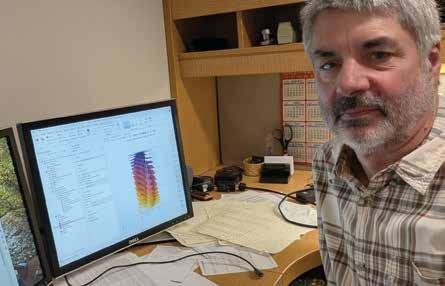
Beyond research, Goering’s impact can also be seen in the infrastructure of the university itself. As dean, he helped lead the effort to create the Joseph E. Usibelli Engineering Learning and Innovation Building, a modern facility designed to emphasize hands-on engineering education.
“The vision was to design a modern engineering facility that helped focus on hands-on student experiences and then bring that vision to life,” he says.
Today, the building supports both teaching and advanced research, providing laboratories and collaborative spaces for the next generation of engineers.
Goering also remains passionate about mentorship. Over the course of his career, he guided more than fifteen graduate students and influenced thousands of others.
His advice to young engineers is simple but powerful: focus on creativity. “I would counsel young engineers to focus on the creative, artistic, and innovative aspects of the engineering profession and think of the needed science and mathematical background as tools that are critical
to turn their engineering ideas into reality,” he says.
Even since retiring from UAF in 2018, Goering continues to research and publish. For him, innovation remains as compelling as ever. “Retirement just gives me the opportunity to focus even more on interesting research,” he says.
While Goering’s work focuses on infrastructure beneath Alaska’s roads and buildings, Koplin has dedicated his career to powering communities. As CEO of the Cordova Electric Cooperative, Koplin has spent decades building a resilient energy system for the coastal community of Cordova.
His path into the field started early. “My father was an electrician for the State of Alaska—Airport Maintenance Electrician— and flew all over the state to remote communities bringing home stories from all over Alaska,” Koplin says. “I realized that
people would need electricity for my lifetime, and a career in energy would allow me to work anywhere in Alaska that I wanted to.”
After beginning his career as an engineer, Koplin moved to Cordova in 1998 and eventually became CEO of the member-owned electric utility. Working in a small, remote community meant taking on challenges that spanned far beyond engineering. “Because of the remote location and limited staff and supporting resources, I was forced to build a support network of professionals in the industry and learn how to solve problems on the fly,” he says.
Under his leadership, the community’s energy system has undergone a remarkable transformation. Today, roughly 85 percent of Cordova’s electricity comes from hydropower, significantly reducing reliance on diesel fuel.
But the shi ft didn’t happen overnight.
“It was more a matter of many small steps and pieces over time than one big ‘set it and forget it’ transition to hydropower,” Koplin explains.
The result is one of the most reliable electric systems in Alaska. A major contributor to that reliability was the cooperative’s decision to convert the entire grid to underground power lines—a complex engineering effort that required routing cables across mountains, wetlands, rivers, and solid rock.

Clay Koplin
“Once the system was fully converted in 2011, our system reliability became exceptional,” he says.
Koplin has also shared Cordova’s experience with communities around the world, presenting on microgrids, hydropower innovation, and energy resilience at international gatherings such as the Arctic Circle Assembly. The lessons often extend beyond technology to the cooperative model itself. “The topics they are most interested in are our cooperative structure— community based and owned by the customers,” Koplin says.
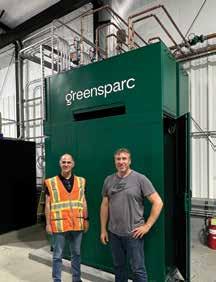
His vision for the future of energy in Alaska is equally ambitious. Through his doctoral research at UAF, Koplin is exploring how data infrastructure and electric grids can work together— an emerging challenge as energyintensive technologies expand. He invited Greensparc, developer of a modular 150 kW data center, to install its hardware inside one of the utility’s hydropower stations in 2024.
But for Koplin, innovation ultimately comes back to community. “I always think of energy as a community resource that has the potential to provide additional value,” he says. And he believes Alaska is uniquely positioned to lead in that space.
“Alaska has the energy, food, climate, and resources to be fully selfsufficient,” he says. “I hope that I can contribute to that future beyond just energy vision and implementation.”
For Marsik, the journey to becoming an Alaskan innovator began thousands of miles away. Originally from the Czech Republic, Marsik first visited Alaska while considering graduate studies.

Altman, Rogers & Co. supports Alaska organizations with clear, dependable accounting, audit, and tax services. As the state’s largest locally owned CPA fi rm, we work with established businesses and public entities that need accuracy, continuity, and steady fi nancial guidance year after year.
“What originally drew me when I first visited Alaska was the wilderness,” he says. “But when I arrived, I quickly fell in love with Alaska.”
Recognizing the importance of energy in the Arctic, he decided to focus his doctoral research at UAF on sustainable energy systems. “Energy is such an important issue here, and with my background in engineering and looking where I can have the most positive impact, it made sense to do my PhD in Alaska and focus on energy-related issues,” he says.
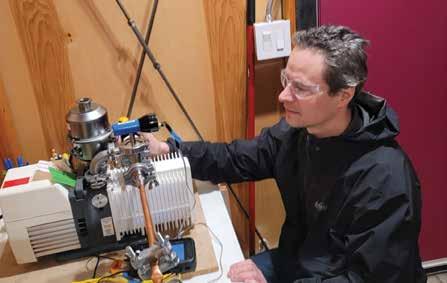
climates where heating demands can be extreme. “Cold climate not only means high energy use for heating the buildings but it also means issues related to moisture, condensation, freezing, and occupant health and comfort,” he explains.

Marsik now serves as professor of sustainable energy at UAF’s Bristol Bay Campus and Alaska Center for Energy and Power, and he has a joint position with the National Laboratory of the Rockies (known until December 2025 as the National Renewable Energy Laboratory) and its Cold Climate Housing Research Center at UAF.
Much of his work focuses on improving energy efficiency in buildings—a critical issue in cold
One of his most recognized inventions is the Arctic Dual Hood for heat recovery ventilation, a device designed to simplify the installation of heat recovery ventilation systems in cold climates. While conventional intake/exhaust vents for heat recovery ventilators tend to freeze up in cold climates, the Arctic Dual Hood uses a unique geometry that significantly reduces this issue.
Marsik’s work has always involved students, whom he sees as essential partners in innovation. “They are the future of this world,” he says. “They bring forward brilliant ideas, and we kick them back and forth, and that’s how we come up with working solutions.”
International collaboration also plays a key role in advancing Arctic energy solutions. “We are facing
common challenges, so it only makes sense to work together on solving them,” Marsik says.
Looking ahead, one technology he believes could transform energy efficiency is active vacuum insulation, which dramatically increases insulating performance compared to conventional materials. “Vacuum is the best insulator—that’s what keeps your coffee or tea warm in a thermos bottle,” he says. “The same principle can be used for insulating buildings.” Though the technology is still evolving, Marsik believes its potential impact could be significant—especially for retrofitting older homes across Alaska.
Ultimately, however, his optimism about the future comes from the next generation. “When I think about the next generation of energy innovators in Alaska, I definitely think of my students,” he says. “There is so much creativity out there.”
And sometimes inspiration comes even closer to home.
“When I see my daughter come up with ingenious solutions that I haven’t thought of myself, it makes me smile,” he says. “Kids have brilliant ideas.”


The line between enlightened self-interest and predatory greed is easily blurred. In Alaska, this was perhaps most infamously seen a little over a decade ago when Mark Avery, a lawyer and trustee for a local airline, secured massive loans by leveraging a $350 million charitable trust—diverting the funds not into the community but into a private fleet of vintage military planes and a personal security force. Federal prosecutor Steve Skrocki noted that Avery “burned through $52 million... in six months.” While his blatant theft may be a criminal outlier, the trajectory is a reminder that an unchecked hunger for more, stripped of a moral compass, can scorch an organization faster than any market crash.
Avery’s actions represent the extreme of a philosophy often debated in boardrooms. “Greed is right,” as Gordon Gekko famously declared in the 1987 film Wall Street,
By Lincoln Garrick
but in the real world, “greedy” is rarely a compliment. From an economic perspective, this impulse keeps the gears turning. Whether we call it greed or extreme ambition, the desire for more stimulates market activity and pushes individuals toward greater levels of success, in part because incentives are important. They’re the strategic rewards that align individual effort with company goals, turning personal ambition into the fuel that drives collective accomplishments. Even amassing wealth has redeeming qualities, as it creates the concentrated capital necessary for large-scale philanthropy and global impact.
A drive for more can build up businesses, but it can just as easily tear them down. When greed fully takes over, people often stop caring about who they hurt to get ahead. A me-first-at-all-costs attitude can break
the trust that holds an organization together, as well as strain the social contract that organizations need to operate. Instead of everyone winning, it can become a lopsided game where a few people get rich while everyone else loses out. History shows us that when we ignore the rules and the needs of others just to pursue short-term gains, it often leads to a crash—leaving behind a mess for the rest of us.
Greed-driven fraud thrives in the dark, which is why businesses rely on audits, public records, and independent boards. However, oversight is often just a partial remedy rather than a cure. Think of it like a police officer with a radar gun. The presence of an officer may convince a driver to slow, but it doesn’t change their desire to speed. If leaders feel they can dodge the radar and beat the oversight system, they may be emboldened by a false sense of invisibility, leading them to
take even more sophisticated and dangerous risks.
Lasting integrity requires moving beyond a check-the-box audit mentality that invites greed to find loopholes, shifting instead to a culture where ethical behavior is the natural default.
From fur to raw materials, Alaska’s booms create a race against the clock. This perceived shortage of time makes reckless behavior feel like a necessity for profitability, with greed acting as a catalyst, turning that urgency into outright instability.
While the Avery case is an extreme example of financial theft, the underlying impulse—the drive for more at any cost—is a trap that exists even in mission-driven sectors, where growth can easily masquerade as progress.
Kameron Perez-Verdia, president and CEO of the Alaska Humanities Forum (AKHF), knows the “saltwater trap” well—the idea that the more success you drink, the thirstier you become. I sat down with him to discuss how to build for good, not just for more.
Q: How do you personally define “enough” to ensure your ambition stays focused on the mission rather than just a hunger for more?
Perez-Verdia: For me, “enough” isn’t a number, it’s a question: Are we actually making a difference in people’s lives in a way that aligns with who we say we are?
I grew up in Utqiaġvik, formerly known as Barrow, in a community with roots going back thousands of years, where survival depends on each other, and where community isn’t an idea, it’s a necessity. That experience shaped how I think about leadership, purpose, and sustainability. It taught me that success isn’t about accumulation; it’s about whether people and communities can thrive together.
That perspective has stayed with me. Mission, vision, and values are not just statements; they are shared agreements about who we are, why we exist, and where we’re going. That clarity is what keeps ambition grounded.
There’s a real temptation, especially in the nonprofit world, to equate success with growth, bigger budgets, more programs, more visibility. But growth without depth is a kind of drift. You can look successful on paper while slowly moving away from your purpose.
At the AKHF, “enough” means we are resourced to do our work well, take care of our people, and show up meaningfully in communities across Alaska. Beyond that, more isn’t automatically better—it can become a distraction.
For me, it’s never really been about “more.” It’s about impact. Are we making a difference? Are we being true to why we exist?
When ambition is anchored in purpose, it becomes generative. When it’s not, it becomes extractive. That’s the line I try to stay aware of.
prioritize growth over impact. What checks and balances do you use at the AKHF to ensure the original goal of helping people doesn’t get buried? Perez-Verdia: This risk is real, and it rarely shows up all at once. It creeps in.
For us, the first check is clarity of purpose. Our mission, vision, and values, and the shared understanding behind them are active agreements that guide decisions. We consistently ask, are we being true to who we are and why we exist?
That’s especially important because I don’t believe nonprofits are here to do things to communities. Communities already have deep knowledge, resilience, and wisdom, often built over generations. Our role is to be partners, to listen, to support, and to work with, not on behalf of. When you lose that orientation, you risk drifting into extraction—of resources, of stories, and of power. Second, I strongly believe your first “customers” are your employees. If you invest in them, support them, and create a healthy internal culture, the communities you serve benefit directly.
Third, we stay close to community in very real ways. That includes who sits at the table, boards that reflect the communities we serve, advisory groups that inform our work, and ongoing engagement to ensure we’re not becoming disconnected from what’s actually needed.
Q: In the nonprofit world, “empire building” can cause a leader to
Fourth, we build partnerships across organizations. In Alaska, resources are limited, and duplication doesn’t serve anyone. That means having honest conversations about
alignment, collaboration, and how we use resources wisely.
And finally, we create a culture where people can push back. The most important ideas often come from those closest to the work.
Growth isn’t the goal; impact is. And sometimes the most strategic decision is not to expand but to go deeper and to stay accountable to the people and communities you serve.
Q: Oversight is often compared to a radar gun that only works when the driver is being watched. How do you build an internal culture where integrity is driven by values rather than the fear of an audit?
Perez-Verdia: You can’t audit your way into integrity.
External oversight creates guardrails, but culture is built in everyday moments, how decisions are made, how people are treated, and how mistakes are handled.
For us, it starts with values. Organizational culture is something we work on every day, and it’s grounded in a shared understanding of who we are. Just as important is creating an environment where people can bring their full selves to work, their experiences, perspectives, and values.
That’s where integrity really lives. We emphasize psychological safety. People need to feel they can raise concerns, ask questions, and challenge decisions without fear. If people only speak up when something becomes a compliance issue, it’s already too late.
We also actively create space for difference. Alaska is a place where
people from all over the world, with very different worldviews, live side by side. The same is true within organizations. Diversity of thought, background, and lived experience is where innovation and resilience come from.
But that doesn’t happen automatically. It takes intentional work to create an environment where differences are not just present but engaged, where people can coexist, challenge each other, and build something together.
There is a real tension here. You need shared values and alignment, and you also need to continuously invite new ideas, even when they’re uncomfortable. That is how organizations stay adaptive and responsive in a changing world.
The goal is that people do the right thing not because they’re being watched, but because it reflects who we are together.
Q: Beyond the balance sheet, what is the primary metric you use to determine if the AKHF is succeeding? Perez-Verdia: If I had to choose one, it would be whether people feel more connected to themselves, to each other, and to their communities because of our work. That may sound intangible, but it’s real. You see it in the stories people tell, in the way conversations shift, and in whether people feel seen and heard.
We track participation and outcomes, of course, but those are indicators, not the goal. The deeper question is, are we creating spaces where people can engage across difference, reflect on their own experiences, and build
understanding, and ultimately build community?
That’s especially important in a place like Alaska, where there are deep cultural histories, diverse identities, and often very different perspectives. A big part of our work is creating space for those differences to engage in meaningful ways.
And just as importantly, what do we leave behind? Are we helping individuals and communities build the capacity, relationships, skills, and ways of engaging that continue beyond any single program?
Success, for us, isn’t just what we deliver. It’s what continues after we’re gone.
Ultimately, greed is like fire in a fireplace. It provides warmth and energy. Left unchecked, it will burn the house down. We need that spark of ambition to innovate, but for growth to be sustainable, it must be balanced with responsibility. When personal success leads to a better world for others, we move past the Gekko mantra toward a type of success that truly lasts.
Join us next month as we explore recklessness.
Lincoln Garrick is an associate professor, MBA director, and alumnus at Alaska Pacific University. He has decades of experience in business, marketing, and communications fields, providing public affairs and strategy services for national and Alaska organizations.
Throughout 2026, Garrick’s leadership series is exploring different ways for leaders to align their values with ethical conduct and create lasting positive impact.
Big things never happen by accident.
The accomplishments that shaped Alaska and our business community demanded adaptation to harsh weather; short construction seasons; and complex supply chains, logistics, labor, and regulatory constraints in a remote place. Progress required breaking uncertainty into manageable parts: action items, deliverables, timelines, milestones, phases, and, ultimately, projects.
Project management serves as a North Star, whether the goal is GCI laying an 800-mile subsea fiber optic cable to improve rural connectivity; ANTHC expanding the Alaska Native Medical Center to meet a growing patient population; the Air Force establishing an F-35 squadron at Eielson Air Force Base; or ConocoPhillips developing the Willow Project to produce 180,000 barrels of oil per day.
In 2026, the Project Management Institute’s Alaska Chapter turns forty.
Back in 1986, leaders from Fluor, VECO, Woodward Clyde, SOHIO, and ARCO helped create PMI Alaska as a hub to sharpen the
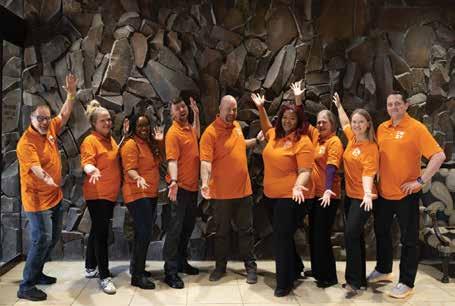
craft for project managers who lead time-bound efforts to build something new. The chapter began with eight founders and fifty-six members.
The chapter’s early years tracked with the rise of the Project Management Professional (PMP) certification, helping define capable project leadership. In Alaska, those standards became practical tools, with PMI Alaska offering seminars and trainings to build shared language, align teams, and deliver complex work.
Today, PMI Alaska has nearly 600 members across sectors, from finance and IT to oil and gas, construction, healthcare, and government. After four decades, the story remains simple: when something big is happening, project managers make
change a reality.
Join PMI Alaska’s 40th Anniversary Celebration on Friday, May 29, at 5:30 p.m. at O’Malley on the Green. Dinner is included, and an executive from Toyota’s headquarters will share lessons from large-scale programs. We welcome founders and early members. Register at pmiak.org.

900 East Benson Blvd. Anchorage, AK 99508 (404) 934-5656 www.pmi.org
Kim Drake | Sherri Kelly
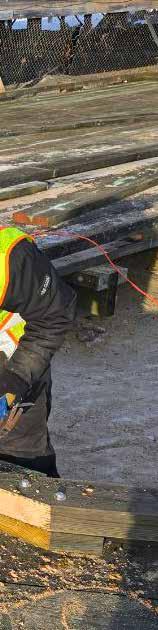
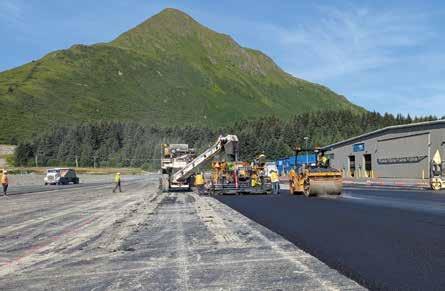
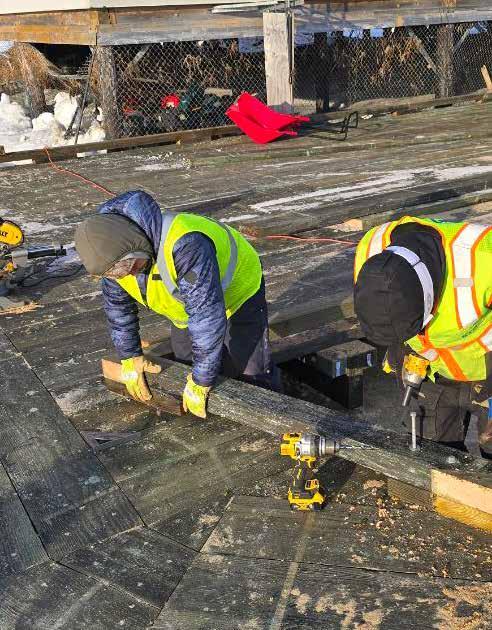
redesign a highway to heal a fractured neighborhood. They may stimulate the year-round economy of a small town by erecting a foundational asset for visitors and locals to enjoy. They could create lasting monuments to science and nature, spaces for learning about Alaska’s living and physical wonders. And, of course, construction trades invest in educating successors in their skills, developing the workforce that assembles the concrete, steel, and wood that are foundational to so many economic promises.

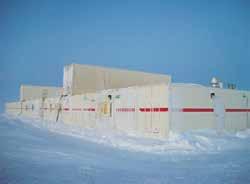
Pouring concrete, riveting girders, and pounding nails are visible manifestations of the construction industry, each applied to countless ends. Those varied manifestations are united, however, by a single product the skilled trades ultimately build: community. They might work overtime to repair storm-ravaged villages or


By Tracy Barbour
Land animals attract visitors to the Alaska Wildlife Conservation Center (AWCC) near Portage, from the elk, deer, muskox, moose, and wood bison to the bears, lynx, and porcupines. Situated at the head of Turnagain Arm as it is, AWCC also looks toward the marine habitat. This month, AWCC is opening the Matson Ocean Education Center (MOEC), a space where science, culture, and community converge. The new facility is designed to educate students and the public about Cook Inlet, its tides, its glaciers, and its wildlife, with a special focus on the critically endangered Cook Inlet beluga whale.
The MOEC is strategically positioned at “The Point,” a sweeping boardwalk that overlooks Turnagain Arm. It’s a scenic place with surging tides, glistening glaciers, and abundant wildlife—including beluga whales that frequently swim past. For years, the boardwalk has offered

“We’re excited to see the center finally become a reality… The way it blends location, science, and local art is really well done, and a building dedicated to AWCC’s educational offerings will be a great addition to AWCC’s campus.”
Dylan
Faber, Alaska Community Affairs Direct or, Matson


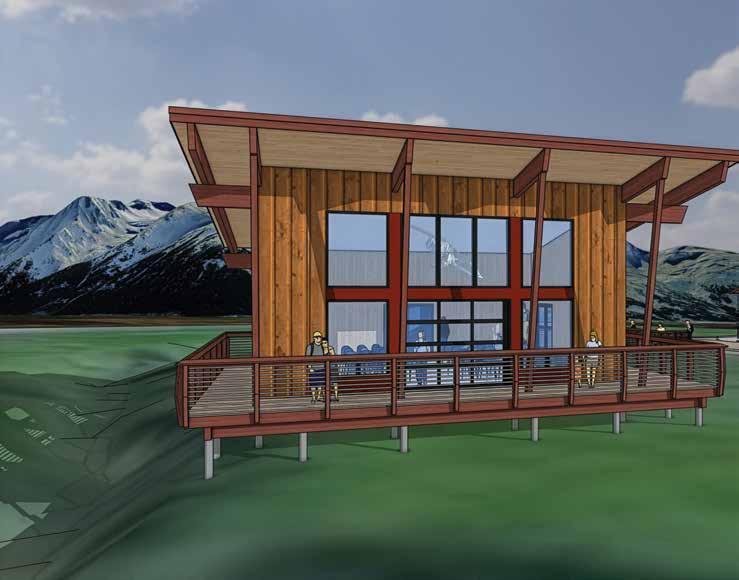
a peaceful vantage point for AWCC visitors. But on rough-weather days, it can be one of the harshest spots on the property. The new building changes that. “The location is pretty special,” says AWCC Executive Director Sarah Howard. “Having a building out there will still allow people to appreciate the space but also be able to get out of the weather and be sheltered a little bit.”
The facility promises to transform how visitors and students understand Alaska’s dynamic coastal ecosystems. For Howard, the MOEC represents a long-awaited


opportunity to bring Cook Inlet’s marine world to life. “Turnagain Arm has some of the top five record tides,” says Howard, who is originally from Palmer. “I think that’s something that can be really insightful for guests to learn about. We also have the mudflats right at the edges of our property. It brings a lot of opportunities to engage visitors and the public with what’s going on in our backyard.”
The 1,000-square-foot structure is intentionally designed to amplify the environment to create an immersive experience—even from indoors. For example, Howard envisions a classroom full of children watching the tide rise and then suddenly spotting belugas chasing salmon into the inlet. “Just imagine that experience as a kiddo in school,” she says. “There’s not a lot of schools that have something like that available to them. I’m really excited that we’ll be able to offer that and leave that
“The belugas are our wild neighbors, and we care about them… We have an incredible opportunity to help protect them and share their story.”
Sarah Howard, Executiv e Director Alaska Wildlife Conservat ion Center
kind of experience with kids when they go home.”
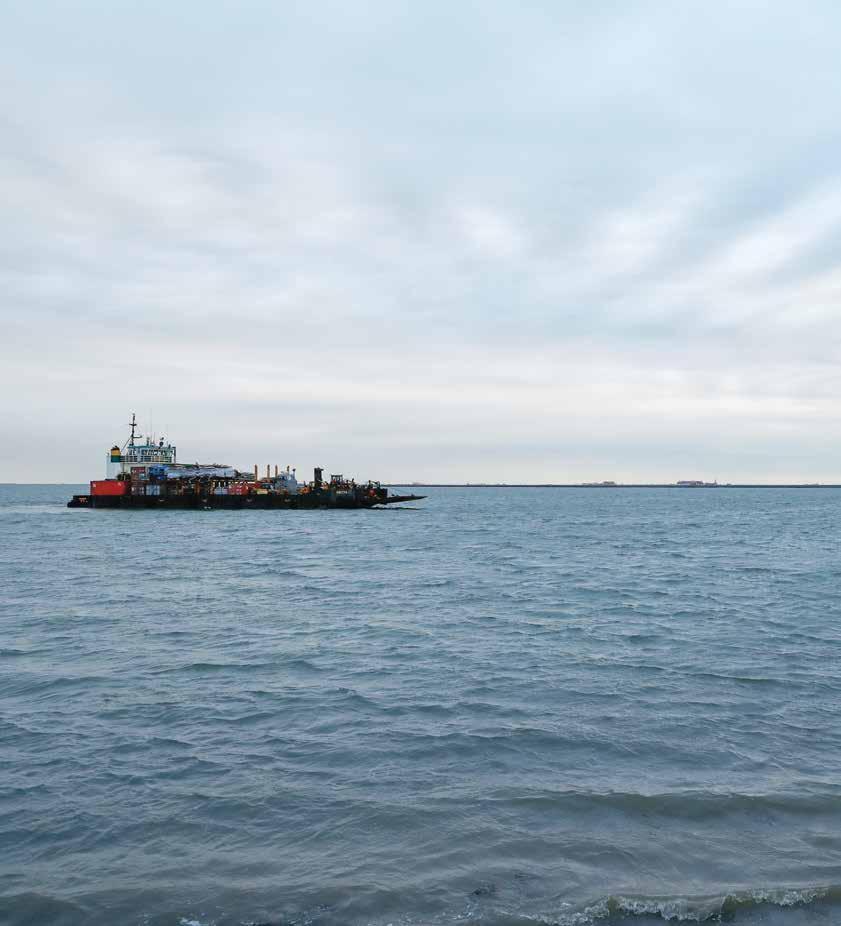
The MOEC project was made possible by a multi-year partnership with Matson, a transportation
services company headquartered in Honolulu, Hawai'i. The company, whose long history in Alaska includes decades of community investment, committed $250,000 to design, permit, and begin groundwork for the building. It was the largest capital grant Matson had ever made in Alaska. Matson also makes additional annual cash and in-kind donations to the AWCC to support educational programming and operations.
The MOEC is a versatile, classroomstyle facility designed to share Alaska’s ocean environment with students and other visitors. It features floor-to-ceiling windows facing the inlet, lab tables and workspaces for hands-on learning, and a dramatic “tide gut” beside the building that fills and empties with Cook Inlet’s powerful tides. Turnagain Arm experiences some of the largest tidal variations on Earth, with tides rising and falling by more than 30 feet.
“Anyone who’s visited AWCC before knows how special The Point boardwalk area is,” says Dylan Faber,
Matson’s government and community affairs and business development director for Alaska. “Its location, at the very end of the Turnagain Arm between the Portage and Turnagain valley drainages, is surrounded by a natural cathedral of mountains and glaciers. There’s truly nowhere else quite like it in the world.”
The company’s support of AWCC reflects its long-standing commitment to environmental stewardship across the Pacific region. As a maritime shipping company operating in the Pacific since 1882, Matson has a close connection with the ocean.
“Our community giving program supports many essential services that nonprofits perform for the community through more than $1.8 million in cash and in-kind giving in 2025, with programs that support
environmental stewardship and education being among our highest priorities,” Faber says. “The MOEC project was a perfect fit for Matson.” Matson and AWCC have forged a strong partnership because of their common values around environmental stewardship. Faber served on the MOEC project’s board since its inception in 2022, working alongside AWCC staff, architects, engineers, and contractors. They collaborated for three years—and hundreds of hours—to bring the center to life following delays due to the COVID-19 pandemic and building design modifications.
“We’re excited to see the center finally become a reality,” Faber says. “The way it blends location, science, and local art is really well done, and a building dedicated to AWCC’s


educational offerings will be a great addition to AWCC’s campus.”
In addition to AWCC staff, board volunteers, and all the contractors who helped build the new center, Faber says he is grateful to other corporate supporters, such as Hilcorp, which donated piling for the project, and Big Dreams Transport, which trucked the piles free of charge.
The MOEC is a multipurpose space that will be used for formal educational modules that the AWCC team has developed, as well as for events and as an indoor viewing area.
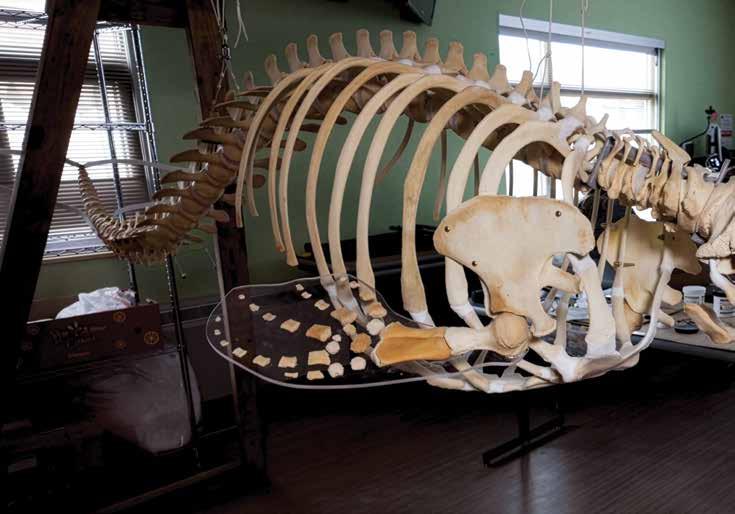
One of the facility’s signature—and perhaps most anticipated—features will be a life-size, fully articulated
Cook Inlet beluga whale skeleton that will serve as a centerpiece exhibit.
When Matson learned that AWCC would be receiving the skeleton, it adjusted the building’s design by raising the roof high enough to safely accommodate the addition.
“We expect the Cook Inlet beluga whale skeleton exhibit, which will hang from the ceiling, to leave a lasting impact on everyone who visits,” Faber says.
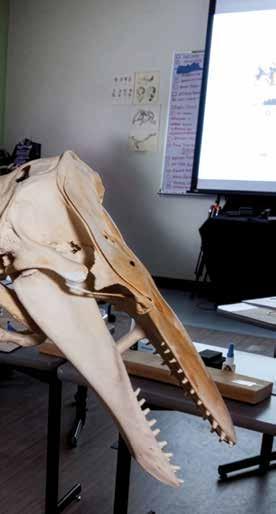
The beluga whale skeleton, which weighs 40 to 50 pounds, is 123 inches long from nose to tail, 36 inches wide from flipper to flipper, and about 24 inches high around midbody, according to AWCC Director of Education Lily Grbavach. “Had this individual lived to adulthood, it could have grown to 11 to 16 feet in
length,” she says. “The specimen was necropsied [the animal equivalent of a human autopsy] and collected to contribute to ongoing Cook Inlet beluga whale conservation and education objectives.”
The MOEC’s skeleton is from a subadult Cook Inlet beluga whale that the center’s staff calls “Qunchi,” which to the local Kenaitze tribe means “the one that comes upward” in Dena'ina Athabascan. Qunchi had washed up on the eastern shore of Cook Inlet in 2019, where staff from the Alaska Veterinary Pathology Services conducted a necropsy on the beach, assisted by students from the UA Kachemak Bay Campus in Homer. The students and their professors spent more than a year cleaning, aging, and reassembling Qunchi’s bones.
The beluga whale skeleton exhibit underscores AWCC’s role as a station for the Alaska Beluga Monitoring Program and its commitment to “citizen science.” Staff and volunteers track beluga activity during spring and fall migrations, helping raise awareness for a species listed as critically endangered. “The belugas are our wild neighbors, and we care about them,” Howard says. “We have an incredible opportunity to help protect them and share their story.”
Raising awareness about the declining population of the Cook Inlet beluga whale—which is genetically distinct from other belugas in Alaska waters—is a key priority for AWCC.
According to the US Marine Mammal Commission, Cook Inlet beluga whales were formally listed in 2008 under the Endangered Species Act. They are also protected under the Marine Mammal Protection Act, which applies to all beluga whales across their range. Cook Inlet belugas once numbered around 1,300 whales, but the population declined by 75 percent since the ‘70s. Today, the population is estimated at around 330 whales (based on 2022 data), showing only slight signs of stabilization.
Through the MOEC, AWCC also highlights local art. Matson donated a 20-foot shipping container that Dawn Gerety transformed into a vibrant mural. Born in Sydney, Australia, and raised in Girdwood, Gerety is known for her whimsical interpretations of landscapes and animals. Her creative work brings attention to the unique beauty of the region and adds a colorful, engaging element to the


Able to mobilize for quick action needed situations, our team can tackle any public or private project. From airports to schools, to mines and water treatment, choose RESPEC as your integrated solutions provider.
planners, surveyors... and everything in between.

MOEC, further connecting visitors to the surrounding environment and its wildlife.
“She was more than happy to help us out with putting a beautiful mural on that container,” Howard says. “She incorporated all things Turnagain Arm, and we especially wanted her to highlight belugas. So there are fun belugas on there, including a calf that she even painted the correct color [gray]. It’s super bright, colorful, and eye-catching. I think it’s fabulous.”
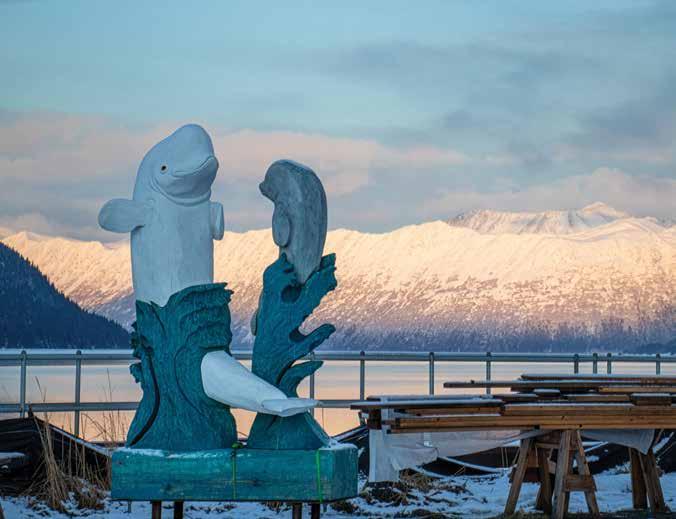
Besides displaying Gerety’s work, the MOEC hosts a Jordan Anderson sculpture, Turnagain Embrace. The lifelike, three-dimensional piece depicts a mother and calf beluga swimming around each other. Both the mural and sculpture warmly
welcome guests to the MOEC and boardwalks. The building will host art on a rotating basis, including Anchorage School District youth art inspired by conservation and Alaska’s wildlife.
In addition, the MOEC and its surrounding boardwalks incorporate updated interpretive signage focused on Cook Inlet ecology for self-guided visitors. The signage combines science, conservation, and art, including designs and photos by AWCC staff.
AWCC’s education team has been preparing for the MOEC for years, developing new programs around
science, technology, engineering, arts, and math (STEAM) that explore ecology, conservation, and the unique dynamics of Cook Inlet.
“We’re really excited to launch new programs that are all STEAM-based,” Howard says. “We’ve got a whole lineup of beluga-focused programs and ecology-focused programs that go through all the ages for the school groups and beyond for in the summer when we have visitors of all walks of life come through the gates.”
The MOEC will serve local school groups year-round—about 20,000 students—and the 350,000 visitors who come to AWCC annually, mostly between May and September. For many of them, MOEC may be their




first introduction to the complexities of Alaska’s marine ecosystems.
Faber says the MOEC will greatly increase AWCC’s ability to further leverage and utilize the area for enhanced educational offerings for multiple grade levels, research projects, daily visitors, indoor and outdoor informative signage and displays, and all kinds of small events.
“We want everyone who visits to leave with a greater sense of connection to and understanding of Cook Inlet, its tides, its glaciers, and its wildlife,
While the MOEC focuses on marine education, AWCC’s broader mission remains central to the experience. AWCC is a 501(c)(3) nonprofit sanctuary dedicated to preserving



Alaska’s wildlife through conservation, education, research, and quality animal care. The sanctuary, which shelters orphaned and injured wildlife, maintains more than 200 acres of habitats for resident animals “to feel at home displaying their natural wild behavior as education ambassadors for their species,” according to AWCC’s website.
The organization is currently caring for more than 120 animals across 17 species, ranging in size from the largest land mammal in North America, the wood bison, to their smallest animal onsite: the pine marten, Howard says.
In its sanctuary role, AWCC provides long-term care or a temporary holding before placing wildlife
Jordan Anderson’s sculpture, Turnagain Embrace, shows a mother and calf beluga swimming around each other, and it will welcome guests to the Matson Ocean Education Center and boardwalk at Alaska Wildlife Conservation Center. Alaska Wildlife Conservation Center
in permanent facilities. Space is limited—and demand is growing. “We wish we had more room,” Howard says. “Every year there are more calls for bears, moose, and orphaned wildlife, but we’re at the mercy of the capacity we can handle.”
The new MOEC will help AWCC elevate an important message: that conservation begins at home. Howard is hoping visitors will be motivated to support wildlife in their own communities. “My hope is that the center stands out as a lasting impression that inspires folks to go home and see where they can be helpful with their local facilities,” she says.
For AWCC, community involvement is essential for its ongoing operations.
As a nonprofit, the center relies on donors, visitors, and partners to sustain its mission, so AWCC offers a variety of ways for organizations and individuals to get involved, from entry fees to sponsoring memorial benches. “Just coming to visit the AWCC is super helpful,” Howard says. “It keeps things moving. We really appreciate all our donors and visitors... It all goes to the wildlife center and helps keep the animals fed and happy.”
As for Matson, it intends to remain actively involved with AWCC. “Our support for AWCC has always been broader than this one project,” Faber says. “We plan to keep participating on its board and provide an annual monetary grant for equipment and supplies.”














By Jamey Bradbury
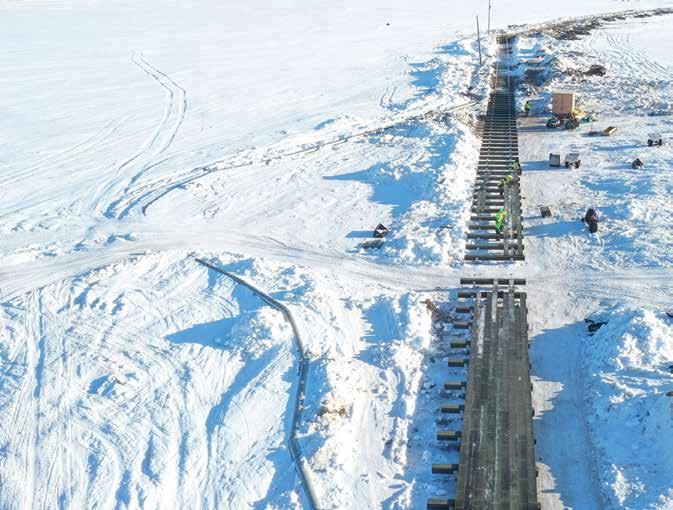
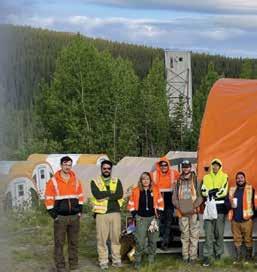
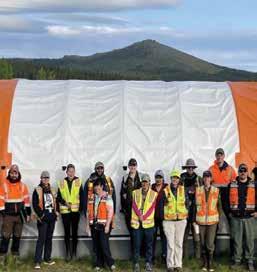
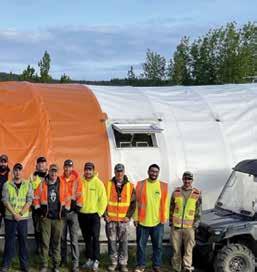
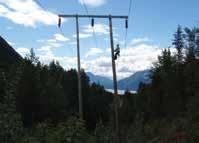
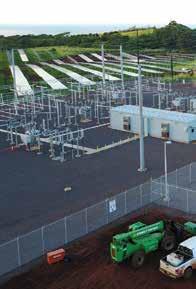
Members of the Alaska chapter of the National Association of Women in Construction (NAWIC) have been part of the massive effort since October to rebuild western Alaska communities affected by Typhoon Halong. Five NAWIC members shared their perspectives on the recovery effort.
Just after Valentine’s Day, Dora Hughes raided the sale aisle for discounted candy. She’d done the same at Christmastime, stocking up on decorations and treats. Each time, she slipped boxes of holiday cheer into another shipment bound for western Alaska, where crews from Knik Construction and other contractors were rebuilding communities devastated by Typhoon Halong.
“These people, they typically are at home during the holidays,” explains
Hughes, Knik Construction’s health, safety, and security manager and a member of the NAWIC Alaska Chapter board of directors.
Instead, construction workers have had boots on the ground since the moment the typhoon struck on October 12, 2025, in an effort to get residents of affected towns and villages back into their homes.
When Typhoon Halong swept across the region from Kuskokwim Bay as far north as Kotzebue, Knik Construction had already wrapped its seasonal work in communities such as Bethel and Nightmute. In the wake
of the storm, the company reopened its man camps in both communities to provide housing and support for partner contractors.
“Housing in remote communities is pretty slim to none,” Hughes describes. Local schools, where visiting construction workers would typically stay, were damaged in the storm or carried away by flooding.
Back in Anchorage, Hughes spent the winter coordinating logistics, shipping supplies—including personal protective equipment—to workers exposed to sewage or debris while they repair boardwalks and roads.
Mid-winter, she sent new cooking supplies, slipping those Christmas goodies into the shipment for crews who continued to work through the holiday.
Moving supplies into remote Alaska isn’t simple even in ideal weather. Under normal circumstances, Bethel serves as a busy hub as people and goods move through to satellite communities. With evacuations of affected residents leaving the region, and increased shipments of construction supplies coming in, shipping backlogs made Hughes’ job more challenging.
Safety is always on her mind, and personal protective equipment wasn’t all she supplied to Knik Construction employees.
“We have some locals working with radios in the [airport] control tower or at the runway to get some of the supplies, like lumber, out to remote villages,” Hughes says. “It’s super busy, so these guys are working every day—and they’re sitting in trucks for long hours, so I ordered fancy, ergonomic seat cushions to help make sure they’re comfortable, to take care of their spines while they’re assisting with radio communication.”
Thanks to Knik Construction’s regular-season projects in western communities, contractors had early access to supplies for immediate repairs post-typhoon. In Kotzebue, where Knik Construction had staged materials for an upcoming runway project, responding contractors were able to use the stockpile to make runway repairs and fix a bridge.
“The contractors in Alaska really come together and help in any way
“The work has been done by sheer force of will and grit and heart and strength of the guys out there who are manually pulling, lifting, building, doing things.”
Sherri

Landmark
real estate & construction projects are represented by Schwabe.
We don’t just settle on knowing your industry. We live it. Spotting trends and navigating turbulent waters can’t happen from behind a desk. The insights come when we put on our hard hats and meet our clients where they are.
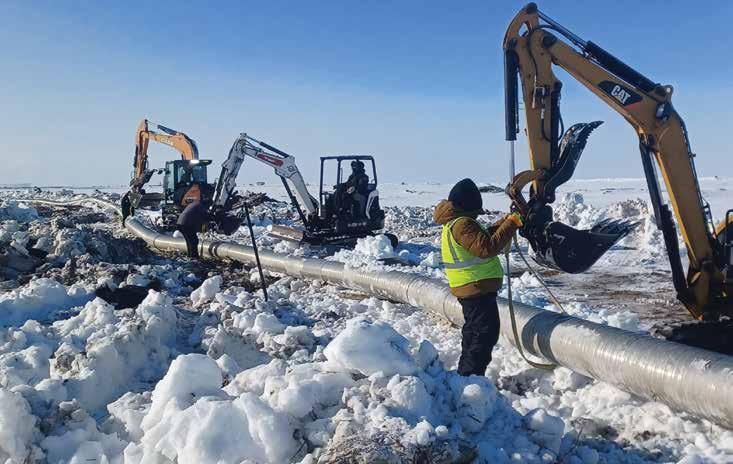
they can to make sure things get put back together,” Hughes says.
Originally from Teller, outside of Nome, Hughes is no stranger to the challenge of remote living. But typhoons like the one that struck western Alaska last October aren’t the norm. She observes, “These typhoons are very new. I have a young coworker who was like, ‘Well, yeah, they just happen every year,’ and I was like, ‘No, they don’t.’ This is not normal. It’s scary and alarming.”
There was no getting out of Kotzebue—not by driving. While the community’s seawall kept it relatively protected from the worst of the storm, the loop road around
Kotzebue was partially underwater. At another part of the road, erosion from the storm put a bridge at risk of falling over.
“That was the scariest part,” describes Iriqtaq Hailstone, a certified heavy equipment mechanic for NANA Construction (previously Drake Construction before NANA acquired it in January) who has been driving a truck for the company in the aftermath of the typhoon. “The escape routes were either underwater or damaged.”
Hailstone’s sister Qutan had a front row seat to the bridge repairs. She spent two weeks flagging for NANA Construction while her coworkers moved excess dirt from the airport to replace what had eroded; they took out pillars and replaced, then reinforced, them.
“Just seeing it slowly get done within the weeks, it was quite nice to watch,” Qutan says.
Both sisters live outside Kotzebue and understand that life near the ocean can be risky. “But it’s pretty bountiful out there,” Iriqtaq points out.
That local bounty was under threat from the local sewer lagoon. Although many Kotzebue homes escaped the worst of the storm, erosion at a cell block of the lagoon had to be repaired before sewage began to seep into the ocean.
Iriqtaq, who spent her time on the job driving E40 haul trucks between the airport and the lagoon’s cell block three, said the area, which locals call “tent city,” is also where people keep their meat drying racks, close to the ocean from which they hunt.

“If all that water was contaminated, they wouldn’t be able to wash their fish or process their skins properly,” Iriqtaq says. “We needed to keep it as clean as possible for the people’s sake.”
NANA Construction had already been preparing for the upcoming construction season, stockpiling gravel for a road project. “The moment the storm happened, it changed our priorities, and instead of using it for the road, NANA Construction used the gravel to rebuild the town,” says Iriqtaq.
The young man from Kipnuk riding in Kim Drake’s car was quiet. He had come to Anchorage to be with family after working on repairs in Kipnuk as
an STG Incorporated employee. Drake and an STG foreman were giving him a ride from the airport to a temporary community off Boniface Parkway.
“It’s rush hour, and we’re just seeing regular Anchorage stuff—people who are maybe drunk, falling down,” Drake recalls. “The kid got kind of quiet, and the foreman said, ‘Are you scared, bud?’ And he said, ‘Yeah, I am scared.’ I think he was scared of being sucked into the city life. I think anybody from Kipnuk or the other places that were evacuated just want to get back home. And all the efforts of not only STG and Brice Inc. but all the contractors out there working— that’s our end goal.”
A procurement and logistics manager for STG, Drake, like Hughes, is a NAWIC board member based in Anchorage and has been
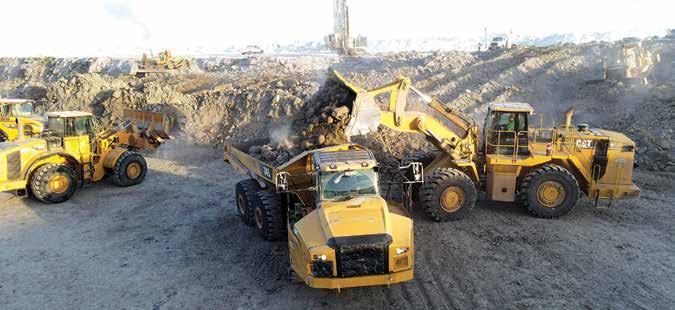
Project managers tried to phase the work to complete as much as possible while the ground was still frozen.
Kim Drake | Sherri Kelly
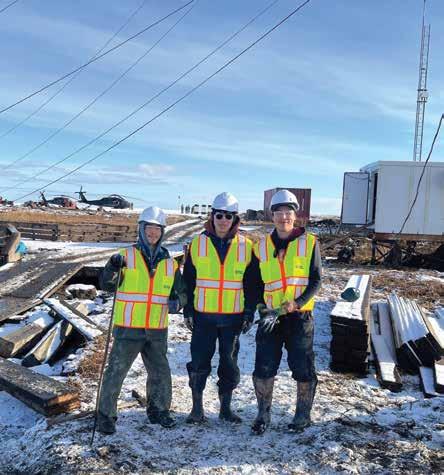
“There’s not a lot of work that goes on in a boardwalk village when it’s thawing or summertime,” says Kim Drake. “It’s just too hard to move equipment.”
Kim Drake | Sherri Kelly
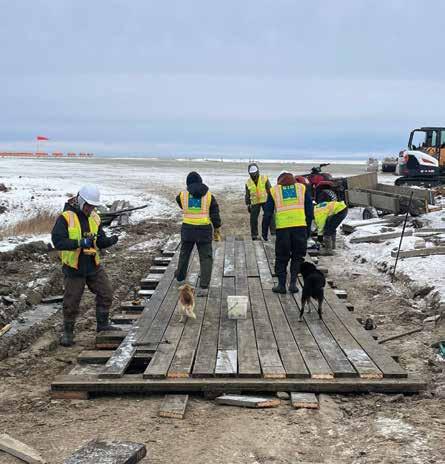
orchestrating the movement of supplies and employees between Alaska’s largest city and western Alaska since the moment the storm struck.
“We happened to be in Kwigillingok already, so we had guys on the ground when the typhoon actually hit,” she says. “So they were there trying to help people dig things out, dig out vehicles.”
STG crews diverted from the work they’d come to Kwigillingok to do— installing helicals for a new water tank—to respond to emergency repairs to infrastructure in the wake of the typhoon.
In many western villages, residents rely on systems of boardwalks to move between buildings. STG and Brice Inc.—sister companies owned by Calista, the Alaska Native corporation for the typhoon-affected region—are busy replacing helical piles to stabilize foundations in several villages where boardwalks were destroyed by flooding. In Kipnuk alone, Drake says, roughly five miles of boardwalk must be rebuilt.
Shipping materials to the region is challenging; trying to get heavy equipment into the area is practically impossible. By now, Drake says she has memorized the exact dimensions of a Ryan Air CASA aircraft’s door. Ryan Air’s fleet includes CASA 212200 medium cargo aircraft designed and built by Spanish aircraft manufacturer Construcciones Aeronáuticas SA.
“The heavy equipment has to be small—not so heavy. It has to fit into a Herc [C-130 Hercules] or a CASA,” she explains. “This minute, I am trying to get a drill rig into a CASA.”
Even once she figures out how to get the equipment on a plane, getting it on the ground is a whole other logistical challenge. A Herc is too large to fly into Kwigillingok; while there’s a lake near the village that could be turned into a runway, maintaining that runway would mean more manpower. The alternative is to fly equipment and materials into Bethel, then find a way to move them overland to their final destination.
Even with PistenBullies, tracked tractors made for breaking trail, getting materials where they need to be is a two- to two-and-a-halfday endeavor.
“The challenges are neverending,” Drake admits.
Still, there are bright spots. The day before this interview, Drake got a text from a worker in the field. “A
photo of two puppies. ‘Do you have a place for these puppies to go?’ I was like, ‘I know somebody that really likes village dogs,’” she shares. She reached out to her friend, who expressed interest. But she also showed her husband the puppies who had survived the storm.
“He’s like, ‘No,’” she says, then she smiles. “But I don’t think the answer is completely no, yet.”
Sherri Kelly, a Brice Inc. project manager, has been in western Alaska every day since October 19. Responsible for overseeing operations in every village where Brice Inc. is completing work, she spends her days driving. Kipnuk, Tuntutuliak, Tununak, Napakiak,
Chefornak, Nightmute—she’s been everywhere, transporting workers to and from the airport to get them to the next place they’re needed.
“The work has been done by sheer force of will and grit and heart and strength of the guys out there who are manually pulling, lifting, building, doing things,” Kelly says.
In addition to dealing with logistical challenges, crews are constantly battling weather. In winter, that means ambient temperatures, in some cases, of -40°F to -50°F. Blizzards roll through, undoing the work they’ve done.
“It’s Groundhog Day ,” Kelly describes. “Power lines get knocked down by an ice storm several days after they fought hard to get them put up, or water treatment plants they had just fixed froze, and we have to go fix it again.”

Contractors rolled from regular construction season in the fall straight through winter, even as blizzards knocked down what was just repaired.
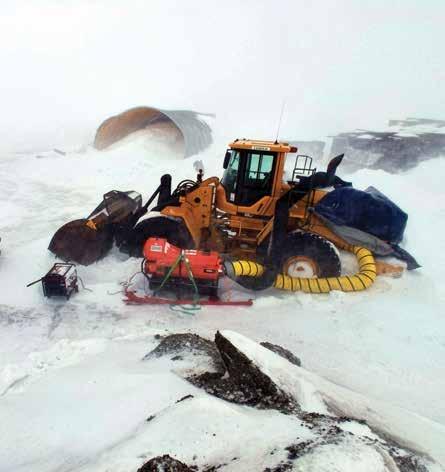
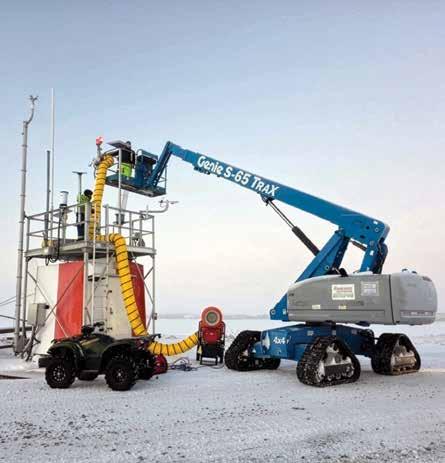
Kelly has lived in Alaska most of her life; she’s spent some time in the South, as well, where she experienced hurricanes, tornadoes, and floods. But the only thing she can compare the damage from Typhoon Halong to is the aftermath of Hurricane Katrina.
Kelly recalls, “When we landed, it was absolutely reminiscent of Katrina, with houses being picked up and moved, destroyed, flipped upside down. People have no idea how bad and how significant the devastation truly was for these villages.”
The workers she oversees are doing everything in their power to return as many people as they can to their homes. Kelly says when they first went into the villages affected by the storm, there was no power, no water, no sewer. Crews had to restore critical infrastructure—but to do that, they first had to clear debris to create paths so they could reach power and water lines.
In the meantime, she observed, families have gone back to old ways of surviving. In villages where water treatment plants froze solid, or where seawater tainted the freshwater ponds used for drinking, people have been riding snowmachines miles to ponds that are free of salt, to cut blocks of ice they bring home and melt down for drinking water.
“The challenges of everyday life out there, most people can’t even comprehend,” Kelly says.
Yet she’s been heartened to see how locals and visiting contractors work together. “To be able to work alongside the locals to help rebuild their own communities has been a really incredible thing to be a part of. You learn so much from them, and


Providing maximum efficiency and peak performance solutions for your building.
Building Automation Systems are the brain of your building, so it’s important they integrate with all your systems and remain healthy. We can help ensure they are installed correctly, run efficiently, and do the thinking for you.
From before your project breaks ground through the life of your building, our team is there to help you plan, execute, and maintain your facility. We specialize in:
• New Construction
• Upgrades & Retrofits
• Installation
• Service, Maintenance & Repair
• Building Analytics
• BAS Design
• System Integration
• Mechanical System Optimization
• Lighting Upgrades
• Financing Options
LONG selects product partners who are leaders in innovation and open systems. Our product selection provides you quality, high-tech solutions and software for cross-product communication.
We are committed to offering holistic solutions that fulfill for your specific building automation needs. Our staff includes in-house electricians and highly trained technicians that provide expert installation with every project, ensuring your building is compatible and working efficiently.
Every successful project starts with a solid plan. LONG specializes in New Construction, providing BAS Design by expert application engineers using state of the art software.
Our in-house electricians provide precision installation and Systems Integration. Connect realtime Building Analytics, to ensure your building runs at peak performance.
Preventative maintenance is the key to any efficient building system. Our team provides Scheduled Service, Maintenance, and Repairs, as well as Upgrades and Retrofits.

they’re so grateful for us. It’s a great working relationship when we can all come together and help each other,” says Kelly.
In addition to repairing basic services, cleaning debris, and rebuilding, Brice Inc.’s crews have undertaken the sensitive task of returning caskets to their resting places. In several villages, caskets were taken by the storm’s floodwaters and, in some cases, floated as far as ten miles away. Brice Inc. is working with the Alaska Air National Guard to find missing caskets and return them to where they belong.
With spring breakup looming, contractors worked straight through winter to repair and rebuild. Federal funding will take this work through June.
“The deadline is there,” Drake says, “but there’s also nature’s deadline. There’s not a lot of work that goes on in a boardwalk village when it’s thawing or summertime. It’s just too hard to move equipment.”
Drake, Kelly, and other project managers tried to phase the work to complete as much as possible while the ground was still frozen.
When summer arrives, crews will go straight from repairing damage from the typhoon into the busiest time of year for construction companies.
There’s little rest for the workers responding to the aftermath of this disaster, but it’s worth it. Kelly says, “All of the sacrifice, all of the dedication—when you go out and see the smiles on the faces of the families who are there, and you hear the children’s laughter and watch them play outside—this will go on for years to come, but it will be built stronger and better than it was.”

Northrim’s banking experts live and work across the state, serving the communities we call home. We understand Alaska’s industries, and the unique challenges and opportunities that come with doing business here.
From personalized lending to everyday banking, we deliver local expertise and Superior Customer First Service to help Alaska businesses achieve more.
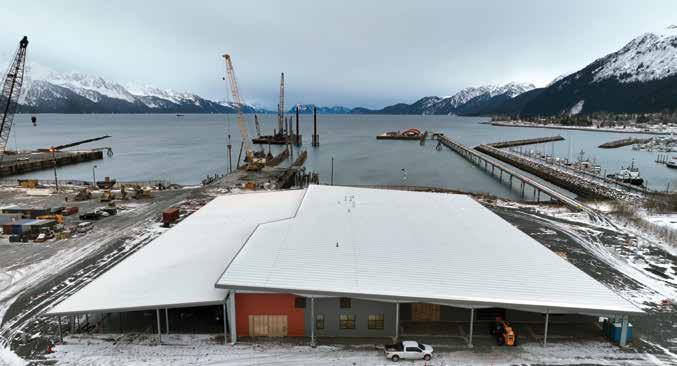
Th e Port of Seward has long been an important multimodal gateway, connecting marine cargo, cruise ship passengers, and rail passengers to Alaska. Now, a major infrastructure investment has transformed the aging facilities, expanding and modernizing the port to position it for increased economic opportunity.
The revitalized Seward Cruise Ship Terminal is designed as Alaska’s largest turn port, where passengers begin or end a voyage and ships are fully reprovisioned. It features a state-of-the-art floating double-berth pier, a 200-foot-long split transfer span, a 41,500-square-foot passenger terminal, and 27,500 square feet of covered outdoor space for luggage and passenger vehicles. The $137 million project is the culmination of a multi-year joint effort by the Alaska Railroad Corporation (ARRC), Royal
By Amy Newman
Caribbean Group, and The Seward Company, headed by real estate developer Mickey Richardson.
The project’s partners stress the collaborative nature of the process.
“Operations logistics are different [in Seward] than a lot of the other places we operate. We worked hand in hand with Mickey and Jason [Davis] from Turnagain Marine, and the Alaska Railroad, who had operated the existing terminal there for many years,” says Josh Carroll, Royal Caribbean’s senior vice president of destination development. “All of our thinking came together to [determine] what would create the best structure for what we all need.”
The Port of Seward’s original terminal, completed in 1966, was designed as a freight-specific dock and transfer area, says ARRC Vice
President of Real Estate Christy Terry. The terminal, docks, and adjacent uplands are part of a 328-acre land reserve the corporation owns. ARRC initiated an expansion and planning project in 2015 which resulted in a comprehensive master plan for the railport.
“The project that rose to the top of that master planning process was the critical need for a new passenger dock,” says Terry, who was the railroad’s port manager in Seward at the time, before a term as city mayor. “Once we had done a really deep-dive assessment, we realized that the dock was at the end of its useful life and required some major replacement.”
Despite the urgent need for replacement facilities, several attempts to get a project on track were unsuccessful—until Richardson formed The Seward Company as lead developer under his parent company
Port of Tomorrow. He brought in Royal Caribbean as a major collaborator and designed a proposal that satisfied the cruise line’s needs, securing a thirty-year pier use agreement with Royal Caribbean as the anchor tenant that guaranteed a 140,000 passenger minimum annually. Richardson approached the ARRC with his proposal in January 2024; by July, the three organizations had agreed to terms.
“We started by vetting this process through all of the different divisions that Royal Caribbean would be operating—hotel operations, procurement, security, marine operations—so that when we took the final proposal to the railroad, it had essentially been approved with all the elements to make this a worldclass port,” Richardson explains. “It’s a facility that’s a purpose-built design for cruise passengers, but also we know what the conditions are in Seward, and also the needs of the railroad outside of the cruise season, so we tried to accommodate all of those things in the design.”
Richardson’s understanding of the unique needs of all project partners was a key reason why Carroll believes this iteration of the project was not derailed. “I think it was their understanding of us as a large, publicly traded organization; their understanding of the Alaska Railroad and their capabilities and processes; and then lastly, timing for sure played a role in it,” he says, noting that COVID-19 was no longer sidelining projects. “They were able to bring together various groups that had their own unique operating structures and bring us all together.”




DESIGN for the Arctic Community DESIGN for the Arctic Community




With terminals and delivery services spanning the state, and a full range of quality fuels, Crowley is the trusted fuel partner to carry Alaska’s resource development industry forward.
Carroll says Royal Caribbean requested a few “very, very simple things” to change, such as relocating the terminal from the dock to solid ground, opening up the dock’s layout to improve logistics and make for a more seamless embarkation and disembarkation process, and creating a terminal designed for passenger and grounds crew ease. The changes, he says, were the result of the dock and terminal having a different purpose today than when it was built more than sixty years ago.
“I don’t even think the idea of a cruise ship visiting was even a faint glimmer in anyone’s eye” in the ‘60s, he says, “so it was not built for cruise ships in any way, shape, or form.”
The project’s centerpiece is the 748-foot-long floating double-berth pier, more than triple the length of the original. The floating dock makes it easier for provisioning vehicles and smaller vessels to load and unload.
“The benefit is that the dock will be set to the actual height of the provision doors,” Richardson says. “The pier itself moves up and down with the ship, and there’s never any change with the mooring lines and the gangways, so it always stays level without needing stairs or moving walkways. That’s a huge difference in the way that it will function.”
A 200-foot-long split transfer span facilitates safe and efficient embarkation and disembarkation of cruise ship passengers and provisioning vehicles. Additional mooring dolphins, a load capacity that exceeds current requirements, and caissons with a thirty-year design
life were included to accommodate future changes in vessel size, Richardson adds.
The passenger terminal, which is 75 percent larger than the original, was designed to meet the cruise industry’s needs. It includes covered awnings in the outdoor waiting space and an open-air component to protect vehicles and luggage from the weather.
“The new facility really does help with passenger protection from the weather and the safety aspect of separating vehicular and equipment traffic,” Terry says. “The new design helps with passenger flow, and we have covered walkways and larger awnings protecting passengers from the inclement weather, augmenting the customer experience.”
Separate from, but tangential to, the cruise terminal, the City of Seward is advancing a project to provide shore power to vessels. Funded primarily through a US Environmental Protection Agency grant, the project aligns port operations with the community’s environmental stewardship values.
“This project will allow up to two cruise ships to plug into shore power while docked, rather than running their engines,” Seward City Manager Kat Sorensen says. “It includes the installation of the necessary electrical
infrastructure as well as a battery energy storage system to support reliable power delivery. The goal is to significantly reduce air pollutants and greenhouse gas emissions associated with vessels at berth.”
Higher material costs, shipping delays, and a truncated construction season nearly doubled the project’s price tag, compared to a similar facility built elsewhere, according to Richardson.
“That in and of itself becomes a challenge, knowing that your cost to develop is higher,” he says. “Trying to figure out how to pay for it trickles down across all parties. That is a challenge.”
The project is funded by a mix of pier usage fees collected between 2022 and 2025 and ARRCissued revenue bonds; the bonds are secured by Royal Caribbean’s thirty-year pier use agreement and guaranteed passenger minimums. The commitment is “a tool we use from time to time in places that are very critical to us,” Carroll says. The Alaska Legislature had to approve raising the state-owned railroad’s bonding authority from $60 million to $135 million to advance the project.
The unique arrangement to finance the $137 million terminal netted it an award for 2025 Deal of the Year in the Far West by The Bond Buyer, notes ARRC Director of External Affairs Meghan Clemens.
The project’s biggest obstacle was the clock, which posed dual challenges.
“We have a failing piece of infrastructure that creates pressure,” The
Richardson explains. “When you have a state-run entity, it has its own limits as far as time goes. And you also have the reality that you only have a limited amount of time to construct the terminal because of the seasonal effects of winter and the effect of the cruise season.”
Getting Royal Caribbean on board with the design before presenting the proposal to the ARRC helped with the time crunch. So did having design-build firm Turnagain, which has marine construction experience throughout Alaska and in Resurrection Bay, serve as general contractor, Richardson says.
Structuring the project to avoid interrupting the cruise ship season was the other big clock-related challenge. Construction began in spring 2025, and demolition of the original dock began the day after the 2025 cruise ship season ended. Working in conjunction with ARRC and Royal Caribbean, Richardson designed a transport plan that enabled passengers to move alongside construction, with no interruptions to cruise or rail operations.
“We were able to have a continuous cruise ship season last year, so it didn’t interfere with any of our docked ships,” Terry says. “The developer simultaneously began the construction phase of the project while we continued to run an uninterrupted cruise ship season.”
“That was a really great thing, that we were able to continue our operations, while also making progress on the project in parallel,” Carroll adds. “That was very important and a really strong attribute of the project.”


Our innovative solutions and experience in Alaska construction and maintenance are second to none. From the Kenai Peninsula to the farthest reaches of the North Slope, CONAM has been there and built that.





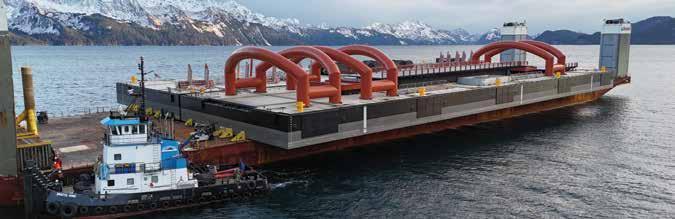
Construction is not anticipated to hamper the 2026 cruise season either; the new facility is scheduled to be open to passengers this summer.
“The new cruise terminal dock is a significant upgrade,” Sorensen says. “From a city and visitor perspective, it will definitely create a smoother, more organized first impression of Seward [and] presents a higherquality, more professional gateway to our community.”
The revitalized cruise ship dock and terminal offers more than a good first impression—it brings expanded economic opportunities for Seward and Alaska’s entire visitor industry as well.
“For the City, it means increased economic activity and greater yearover-year stability by reinforcing Seward’s role in the cruise industry,” Sorensen explains. “While we are a year-round community, we rely on seasonal tourism, and the terminal will be a key driver in supporting our local economy and the residents who live here full-time.”
Those benefits aren’t limited to the cruise ship season, either. The terminal was “designed with flexibility
in mind,” Clemens says, and the ability to reconfigure the interior’s layout provides increased opportunity to be used as a community space during the off-season.
“The community had often used the previous terminal for winter events, such as the Seward Music and Arts Festival,” Sorensen says. “I know we are all looking forward to finding ways to engage with the new facilities in a similar way and expanding the options for meeting and rental spaces.”
Construction also brought jobs to Seward. Richardson prioritized hiring local contractors, laborers, and construction companies, and he says there were consistently between thirty-five and fifty local workers on site. Ensuring the terminal’s longevity guarantees the continued availability of marine industry jobs in Seward.
“Cruise ships employ union longshore workers, and these are really good, living wage jobs, and this ensures that these will continue in the City of Seward,” Terry says. “Local jobs in check-in, security, [and] delivery during the cruise ship season, and in the off-season—the dock is going to be used to support the marine service industry.”
Last but far from least, cruise ships also come with passengers who have time to spare and money to spend while waiting to set sail or catch a train or other land-based tour, a boon to local businesses.
“When you look at that wave that moves off the ships, it helps local businesses—excursions, restaurants, staying in hotels, shopping in small shops,” Terry says.
And those waves of dollars are not exclusive to Seward.
“This facility is really important infrastructure with statewide economic impact,” Clemens says. “We know that cruise ships are traveling across a number of destinations. Having this new dock is going to have commercial impact across Southeast Alaska, as those cruises are traveling up the Panhandle en route to a cross-Gulf port in Southcentral. So many of those guests are going to step off the cruise ship and add on a land tour, whether it’s exploring the Kenai Peninsula or moving up Southcentral into Denali or the Interior, spending their money along the way.”
The city’s official motto is “Alaska Starts Here,” and the new cruise ship terminal is positioning Seward as the state’s front stoop.
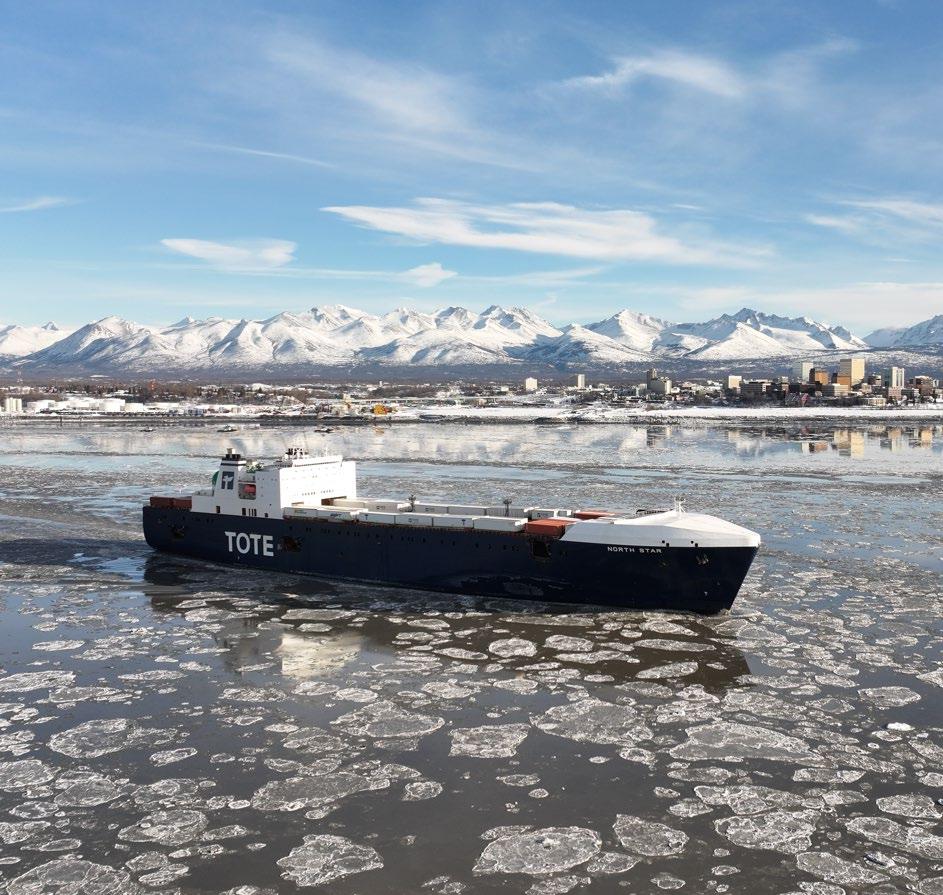
At TOTE, every shipment carries more than goods — it carries a promise. Since our beginnings in 1975 with a single ship, built to serve the unique needs of Alaska, we have been committed to the communities that rely on us. We’re proud to provide the critical shipping that keeps families supported, businesses running, and local economies strong. Because for us, excellence isn’t a goal — it’s a responsibility.

By Rachael Kvapil
Ei ght stars of gold have adorned the Alaska flag since the territorial legislature adopted the design in 1927. Stargazing indoors had to wait almost a century, when the state’s first planetarium opened on the UAA campus in 2009, followed within a year by a second at the Anchorage Museum. Now, nearing the centennial of Benny Benson’s astronomical inspiration, the state is getting its third space theater.
The new planetarium opening at UAF this spring is a dream come true. For decades, UAF floated the idea but couldn’t gain solid support until recently. Now, tourists and Alaskans will have a new facility to experience the Great Land and its sky like never before.
In the early 2000s, the University of Alaska Museum of the North considered adding a planetarium as part of its renovation. Due to financial constraints, the idea was set aside but not forgotten. When Walt and Marita Babula, formerly anonymous donors, provided $7.4 million to fund the construction, the university restarted this project, which is set to open this year. This is the single largest gift ever to UAF from living individuals, and the planetarium is named in their honor.
The UAF planetarium is connected to the museum as previously planned; however, all the major collaborators decided to start the design from scratch. Pat Druckenmiller, director of the
University of Alaska Museum of the North, says there were many aspects to consider when designing a planetarium, from the dome size, display technology, seating, and other details. From that decade of hard work, what resulted is a fulldome experience for residents, tourists, students, and educators.
The 11-meter dome is tipped at 18° toward the front of the auditorium. It has sixty-five reclining seats that allow visitors to view the entire dome above. “It’s a 365° experience where people can view content on any subject matter under the sun,” says Druckenmiller.
The dome’s size dictated most subsequent design choices. In an ideal world, it would be a 12- or 13-meter dome, but each additional
meter increased the facility’s overall size and cost. Instead, it was conceptualized as a 10-meter dome, but eventually it was scaled up to an 11-meter dome in the final design, making it one meter larger than the diameter of the UAA Planetarium & Visualization Theater in the ConocoPhillips Integrated Science Building.
Next, designers chose two highresolution projectors and a software system for the planetarium. Druckenmiller says there are only a few major vendors of this equipment, so they found significant overlap across the different systems. Eventually, they chose four imagegeneration computers that use the same system as the UAA planetarium, along with a theaterquality sound system.
The other big decision was the exterior. After reviewing several options, designers chose a box design that didn’t detract from the museum’s existing strong architectural statement. In all, the planetarium is a 5,700-square-foot facility, including the dome.
“We tried to find a balance between the dome size, the facility size, and costs,” says Druckenmiller. “When we looked at designs, we started with the Cadillac version in terms of design ideas and then moved our way down to more of a Toyota Camry.”
One thing that the collaborators never compromised on was the quality of the sound system, projector, and software. Druckenmiller says those are the
components that enable a cool experience. Additional funding from the M.J. Murdock Charitable Trust and longtime UAF supporters Sarah and Cary Keller enabled UAF to outfit the planetarium with the equipment it needed.
“The Murdock Trust has been honored to support the collaborative and innovative work of the Geophysical Institute and Museum of the North over the years,” says Elaine Charpentier Philippi, senior program officer for education and leadership development at the Murdock Trust, a Vancouver, Washingtonbased charity endowed by tech pioneer Jack Murdock.
Once the designs were finalized, construction started. Davis Constructors & Engineers was the general contractor, handling all


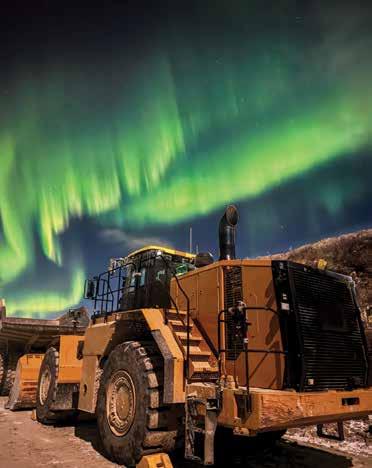

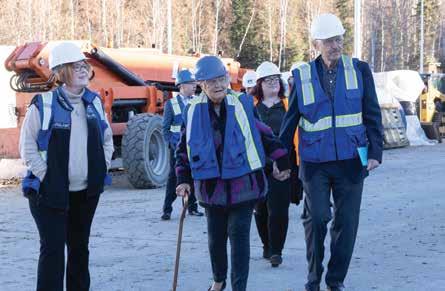
construction details. Druckenmiller says the biggest challenge in building the planetarium was national policy changes affecting source materials and supply chains. Several products sourced from outside the United States were
suddenly subject to a hefty tariff, including structural steel from Canada. Likewise, a tight labor market affecting all contractors nationwide was an additional issue to overcome. Otherwise, Druckenmiller considers the construction seamless.
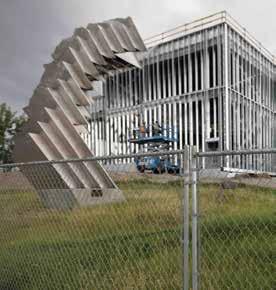
“The planetarium is an addition to the west end of the existing museum building and didn’t affect any of the existing exhibits or public spaces,” says Druckenmiller.
Most construction took place in 2025. By March of 2026, all
Spenard Builders Supply has been Alaska’s choice for building materials for over 70 years, supplying logistical solutions, manufacturing, truss design and build, millwork and interior design. Our team can provide the expertise needed to complete your project.
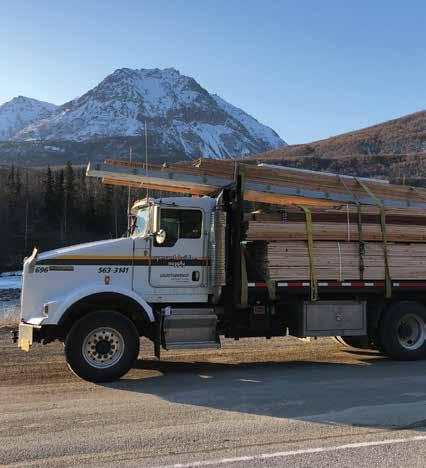

Bryan
Whitten | UAF Geophysical Institute

that was left was a final checklist before public occupancy.
Snow surrounds the University of Alaska Museum of the North, including its new planetarium addition (at left), in November 2025. Crews continued to work inside the enclosure during the winter to meet the spring deadline.
Eric Marshall | UAF Geophysical
Institute
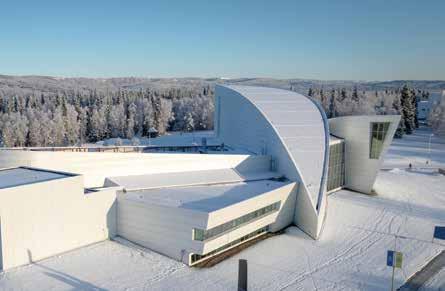
as well as celestial phenomena. This will include presentations, based on research conducted on campus at the Geophysical Institute and other UAF departments, about the aurora, volcanoes, and earthquakes. Likewise, the planetarium will feature content Planetarium construction at the University of Alaska Museum of the North. Davis Constructors & Engineers managed the project details.
The term “planetarium” implies a focus on astronomy and space
science, which aligns with UAF’s status as the only Land-Sea-Space grant university in Alaska and one of twenty-four in the United States. Yet Druckenmiller says planetariums provide an opportunity to discuss topics related to Alaska and the Arctic






on wildlife, climate, and indigenous culture and knowledge.
“It’s an opportunity to talk about all different topics and how they relate to one another,” says Druckenmiller.
Heading up content creation and curation is Planetarium Director Omega Smith. Born and raised in Alaska and a lifelong astronomer, Smith has twelve years of experience developing content for Anchorage planetariums. Early in the development of the UAF planetarium project, key players in the project reached out to her, seeking her input about planetarium structures and operations. When the position opened in Fairbanks, she immediately applied.
“I’m really excited about being up here because the story of Alaska and our skies is so different from anywhere else in the world,” says Smith. “Having a planetarium in such
a unique standpoint gives a new perspective on the natural world.”
Since the planetarium will host a wide range of audiences, how content is developed and delivered must account for factors such as age and existing knowledge of a topic. Material developed for a K–12 classroom is different from exhibits for the general community, tourists, or college students.
Smith says that a planetarium can do an endless number of things, from 3D model rendering to interactive material. It’s an environment that can both teach and entertain.
Above all, she says this is a chance for the community to connect with scientists and their research. Smith says research can easily get weighed down with complicated data, graphs, and coding. On the surface,
those details may seem unrelated; however, the planetarium will allow scientists to share the story behind the research in a meaningful way that makes people feel involved.
“At a planetarium, visitors can be surrounded by the story and see and feel the impact,” says Smith. “It really makes the messages hit home, and it causes a ripple effect of inspiration for people to support more research or even build a career in these fields and do their own research.”
Smith adds that not all the content will be science and research. She says there is also a great opportunity to present community events in the performance arts sector. For instance, it would be possible to host live music while visualizations play on the screen. In addition to learning, the planetarium aims to offer fun activities for diverse audiences on campus.


By Christi Foist
Tw o roads enter Alaska’s largest city, blending into the street grid before they intersect. The Seward Highway and Glenn Highway carry commuters into and out of Anchorage, as well as local traffic and drivers transiting the city via the junction of the highways.
The roads meet within the boundaries of the Fairview Community Council, and the neighborhood has watched for sixty years as municipal and state transportation planners have brainstormed ways to optimize the highway-to-highway flow. After several years of work on the Seward Glenn Connection Planning and Environmental Linkages (PEL) study, project leaders say they’re closer than ever to an answer.
“We want to provide certainty on where the new connection… is going to go and what it’s going to look like,” says Galen Jones, project manager for the Alaska Department of Transportation and Public Facilities (DOT&PF).
Building two one-way streets to connect with the Glenn Highway at Fifth and Sixth Avenues eliminated “what used to be a thriving main street,” says Lindsey Hajduk, director of community engagement and external affairs for NeighborWorks Alaska.
What happened in Fairview was common across the country. The 2017 report Beyond Traffic 2045 by the US Department of Transportation
states that builders of the Interstate Highway System chose “areas where land costs were the lowest or where political resistance was weakest. In practice, this meant that urban interstates cut through lowincome and minority communities more often than not.”
The Gambell-Ingra couplet was routed through Anchorage’s historically Black neighborhood. “That couplet has divided the neighborhood [and] caused major safety issues, especially for nonmotorized users,” Jones says. A 2023 traffic analysis completed for the PEL study showed 15th Avenue and Gambell Street had the most “fatal and major injury crashes” of any intersection within the study boundary. Ingra Street between Fifth
and Sixth Avenues had the highest crash rate, at 145.7 per million vehicle miles traveled. By contrast, the state had an average crash rate at the time of 9.6 per million vehicle miles traveled.
The current highway connection has also failed to meet federal requirements for interstates. In 1981, the state got the roadways classified as interstates due
“[The Gambell-Ingra] couplet has divided the neighborhood [and] caused major safety issues, especially for nonmotorized users.”
Galen Jones, Project Manager, Alaska Department of Transportation and Public Facilities




parcel has discouraged investment in Fairview, a trend that took on new urgency with the 2025 closure of the Carrs supermarket at Gambell and 13th Avenue, the neighborhood’s only grocery store.
“Investors hate risk,” Kemplen says. “That sort of economic calculus… results in disinvestment, and that’s what you saw along the Gambell-Ingra corridor.”
By their nature, transportation projects tend to involve long timelines, says Aaron Jongenelen, executive director of Anchorage Metropolitan Area Transportation Solutions (AMATS), the regional planning authority. “There’s a lot of strings attached when you use federal funding,” he notes.
Projects must meet design and environmental requirements and ensure appropriate communication with the public and any relevant tribal entities. Indeed, AMATS exists because of federal mandates for “metropolitan planning organizations” to ensure appropriate coordination among cities, states, and other entities when developing major transportation projects.
In 2005, city transportation planners called “Linking the highways… crucial to meet[ing] Anchorage transportation needs” in the Anchorage Bowl 2025 Long-Range Transportation Plan. But the highspeed route they envisioned, a plan dubbed “H2H,” was canceled in 2010.
Fairview leaders continued to push for a solution, leading to the 2021 start of the PEL study. “We’ve taken


Marisa Bavand Partner bavand.marisa@dorsey.com

Loni Hinton Of Counsel hinton.loni@dorsey.com
a little longer than we thought we were going to, and we’ve undertaken more rounds [of alternatives than we anticipated],” Jones says, “but I think it’s been a great thing because it’s gotten us to where we are now.” As of press time, he expected to release the study’s final recommendations in mid-April.
Those recommendations reflect several rounds of public meetings, feedback, and revisions. “We’ve gone a long way from the original vision, which, back in the highway-tohighway days… [involved] an eightlane freeway through the middle of Fairview,” Jones says.
Based on community feedback, the state abandoned plans for a high-speed freeway, like what the Seward Highway becomes south of 36th Avenue. Instead, Jones’

West Fourth Avenue, Suite 600 Anchorage, AK 99501-5907 T +1 (907) 276-4557 | dorsey.com
team recommends a parkway with separated facilities for non-motorized users, slower speeds, and trafficcalming features like a median and greenery. Where possible, DOT&PF hopes to connect major side stress via roundabouts, which use geometry to slow traffic and cue drivers of the changed to a more urban setting. After strong opposition, the PEL study also eliminated an option that would have put a parkway over part of the Chester Creek Greenbelt.
With a Fairview bypass, the team plans to separate regional traffic from neighborhood traffic, using a lowerelevation (i.e. depressed) parkway that curves to avoid Fairview and the accident-prone intersection of 15th Avenue and Gambell Street. “We’re lucky that the topography really supports this,” Jones says.
At the higher-elevation neighborhood level, planners hope to help Fairview eventually recover a two-way Gambell main street, with a feel more like Fourth Avenue in Downtown Anchorage. Ingra would also be converted to a two-way street with one lane in each direction. The rest of the connection would traverse the south and east sides of Merrill Field before going under Airport Heights Drive and connecting to the Glenn Highway.
The plan also includes changes to make Hyder Street—the northsouth street that runs parallel to and between Gambell and Ingra Streets—a more pedestrian-focused corridor. This idea draws on a project that NeighborWorks Alaska and the Fairview Community Council developed with funding from the
“Investors hate risk… That sort of economic calculus… results in disinvestment, and that’s what you saw along the Gambell-Ingra corridor.”

US Department of Transportation
Reconnecting Communities Pilot grant program. Through the 2023 grant, matched by the Municipality of Anchorage, the groups got roughly $672,000 for what Hajduk calls “a community-led visioning project” that seeks to reconnect Fairview and revitalize the neighborhood.
“One of those solutions is to take Hyder Street, which is now basically a no man’s land, and use it as a spine of revitalization,” Kemplen says.
“It becomes so by creating a unique bike-pedestrian beltway around the urban core of Anchorage. There is an untapped opportunity with the Coastal Trail on the west, the Chester Creek and Ship Creek Greenbelts with their regional trails on the south and north, and then converting Hyder into a hybrid urban greenway,” Kemplen explains.
With the PEL study complete, AMATS will now work to get the new highway-to-highway concept included in state and federal transportation funding.
Jongenelen agrees the highway connection has gone through several “start-stops,” but he thinks the work of the PEL study “has a higher degree of success chance.… [T]here’s more momentum behind this one because it’s kind of pulled back and it’s not as extreme as past design efforts were,” he says.
The PEL study’s recommendations entail several separate smaller projects. To seek federal funding, AMATS must first include the concept in its long-range planning document, or Metropolitan Transportation
“We’ve gone a long way from the original vision, which, back in the highwayto-highway days… [involved] an eight-lane freeway through the middle of Fairview.”
G alen Jones Proje ct Manager
Alaska Department of Transportation and Public Facilities
Plan (MTP). To achieve that, two AMATS committees will go through the whole package of PEL study recommendations and look at how Fairview elements compare to available funding.
Jongenelen says AMATS tentatively plans to release updates to MTP 2050 around December 2026—“perfect timing” relative to the PEL study’s final recommendations.
Once AMATS includes a project in its long-range plan, the panel then considers specific elements for inclusion in a shorter-term document. AMATS uses these Transportation Improvement Plans (TIP), as they’re called, to work on MTPs in fouryear chunks. Jones thinks the entire set of Fairview projects, including the Fairview bypass parkway, will probably take ten to twelve years to
design and build, once sub-projects reach the TIP phase.
Because the highway-to-highway question has such a long history, however, some ideas predate the PEL study and have already moved partway through the process. In February, DOT&PF Commissioner Ryan Anderson approved an AMATSrecommended update to the state’s 2024–2027 Statewide Transportation Improvement Program that would reduce Gambell and Ingra Streets from four lanes wide to three lanes each. This long-sought change would allow for features like wider sidewalks and snow storage buffers. However, the state paused lane-drop funding approvals in late 2025 until further analysis was performed in accordance with following the DOT&PF Chief Engineers Directive “Lane Reduction and Road Diet Analysis” released in July 2025, which mandates “a systematic approach… to ensure road cross-sections appropriately align with the full range of user needs and that any modifications support overall system performance, safety, mobility, and operational considerations.”
The Ingra-Gambell lane reductions analysis is currently underway and will determine if the project can move forward as an interim safety improvement until Gambell and Ingra can be converted to two-way streets after the Fairview bypass is complete.
“There’s a lot of work to be done,” Kemplen says. “The neighborhood has to stay ever vigilant as this project moves forward to ensure there’s no backsliding and actual true commitment to the betterment of all.”



By Vanessa Orr

Th e construction industry’s need for skilled human workers continues to grow, and organizations in Alaska are doing their part to encourage young people to learn about careers in the trades.
Alaska has a growing need for workers in construction, transportation, and maritime industries. According to the Associated Training Services report, Regional Construction Trends: Where the Jobs Are Growing Fastest , fortyone states added construction jobs in the past year, showing nationwide growth, and Alaska’s 20.3 percent growth was the highest percentage increase.
While companies are hiring, however, many in the younger generation face significant barriers to entering the workforce.
YouScience’s 2024 Workforce Report: Fixing America’s Broken Talent Pipeline—which highlights employers’ hiring needs, perceptions of student readiness for the workforce, and preferences for educational qualifications versus practical, on-thejob training—notes that 86 percent of employers report that entrylevel talent requires substantial or moderate additional training to be successful in their roles.
In addition to lacking certain skills, barriers to employment can also include housing instability, a lack of training, and limited support networks. Working individually and together, however, Alaska businesses can provide these potential employees with a path to success.
“Alaska is facing a huge workforce shortage with all of the infrastructure projects coming
in, which is going to require all of us working collaboratively to find solutions,” says Alicia Maltby, president and CEO of Associated Builders and Contractors of Alaska (ABC-Alaska). “There are so many job possibilities coming into the state in the next couple of years, and all of these projects require skilled workers. But we have to have the workforce to make it happen.”
Another trade association, Associated General Contractors of Alaska (AGC), has a Workforce Development Committee focused on ways to bolster existing training and apprenticeship programs. One of these is We Build Alaska, a collaborative campaign by AGC of Alaska’s 501(c)(6) nonprofit, the Construction Industry Progress
Fund. The goal of the campaign is to motivate and engage the next generation of workers, making them aware of career possibilities in the construction trades. It also provides access to local training programs as well as information on wages, training paths, apprenticeship opportunities, and more.
The We Build Alaska website maps out career paths for carpenters, ironworkers, laborers, truckers, equipment operators, electricians, plumbers and pipefitters, sheet metal and HVAC workers, and cement masons. Within each listing are job descriptions, wages, requirements to enter the field and links to classes, apprenticeships, training programs, and more.
Under the We Build Alaska umbrella, a new AGC program began on March 1, 2026, called Work Ready Alaska. AGC and Covenant House Alaska (CHA) will be working together to recruit youth at risk of homelessness or long-term instability to participate in a life skills curriculum. Designed for Alaskans aged 16–24 and aimed at transportation-related trades, the program includes youth who live at CHA in addition to young people in underserved communities who lack access to career advancement. Students will be provided with foundational employability skills training; vocational and technical training; employer and training partnerships, including apprenticeships and advanced training tracks; targeted recruitment; and wraparound support focusing on housing access, mental health, job coaching, and transportation assistance.


As the state’s largest nonprofit organization supporting youth experiencing homelessness and survivors of human trafficking, CHA offers emergency housing and a transitional living program. It also has a workforce training facility called Covey Academy. Through the academy, CHA helps young people gain the technical skills and the life skills they need to find employment.
According to Joe Hemphill, CHA’s chief development and external affairs officer, the organization provides access to training in the hospitality, culinary, and cosmetology industries, as well as training in the maritime, heavy equipment, and transportation trades following the national Jobs for America’s Graduates curriculum.
The program has proven to be a success: 240 young people gained or maintained jobs in 2025, and 252 young people engaged in onsite education programs. When CHA deployed its curriculum in Bethel three years ago, graduation rates improved by 40 percent in less than one year.
In addition to having each student complete the basic Work Ready Alaska certification, CHA is also tasked with helping thirty students to earn certifications and thirty students to obtain relevant employment, as well as help thirty youth enter apprenticeships or advanced training.
There is no cost to participants, who are required to take thirty hours of online learning or engagement for an estimated three to six weeks.
“In between these lessons are in-person interactions focusing on
“There are so many job possibilities coming into the state in the next couple of years, and all of these projects require skilled workers. But we have to have the workforce to make it happen.”
Ali cia Maltby Preside nt and CEO Associated Builders and Contractors of Alaska
conflict resolution, mock interviews, CPR training, and life skills like getting a driver’s license or opening a bank account,” says Hemphill. “We then introduce students to a more specific training program in the field in which they’ve shown interest, which may mean online training to be a flagger, joining a trade union, or entering into an apprenticeship program.”
These seemingly simple steps can be insurmountable hurdles for youth who’ve grown up without a supportive environment. “While many people can go onto multiple websites and figure out what path to take to get a job, others face the psychological hurdle of thinking that they are not good enough or won’t qualify for these positions,” Hemphill says. “It can also be overwhelming to know where to start. So many people are missing so many opportunities because they
have such anxiety about how to start the process.”
To augment what Covey Academy has achieved, Hemphill says CHA is partnering with AGC because the trade association’s member base gets jobs through state bids, and they will need workers to fill those positions.
CHA will also be embedding the Work Ready Alaska life skills training program into AGC’s We Build Alaska brand, making it even easier to reach out to potential prospects. The organizations are in the process of co-marketing a series of digital ads targeting the 16–24 age group.
Hemphill notes that there is also a massive opportunity for employer partners to become involved in the Work Ready program.
“As we are upscaling young people with life skills, it’s just as important that employers recognize that we need to change the ways that we’re managing these young people,” he says. “It would be worthwhile for employers to do some reading about being trauma-informed, so that they could approach conflict with more empathy.”
Hemphill hopes that employers will recognize the Work Ready Alaska certificate and provide guaranteed interviews for its graduates as a result.
“Our hope is that this project works so well that it becomes a feeder to young people for jobs in the trades, and that fewer youth have to try to get to jobs after being on the street,” he says. “Our ultimate goal is to have fewer young people who need the immense amount of resources








that are required to pull them out of homelessness and into stability.”
Representing one-third of the 2,400 registered apprentices in the state, ABC-Alaska knows exactly how important a ready and able workforce is.
“We’re facing a labor shortage, and we need to get new workers trained as quickly as possible,” explains Maltby. “We’re especially facing a shortage of journeymen in the electrical and mechanical fields.”
ABC-Alaska offers training in fifteen different trades, and more than 100 students graduate each year, representing one of the largest non-union apprenticeship training programs in the state.
“We used to see a lot of guys who tried college and it wasn’t working for them, or second-career guys, or those coming out of the military,” says Maltby. “But in the last two years, we’ve seen a lot more kids coming out of high school. It’s a real mix.”
ABC-Alaska partners with Junior Achievement of Alaska to visit elementary and middle schools and interest kids in construction trades. It also recruits at job fairs and talks to students who may be looking for a different path.
“A four-year degree program doesn’t work for everyone,” says Maltby. “Young people going into the trades get paid while they’re going through training and get out of school with no debt and high-figure salaries.”
Unfortunately, she observes, many of the students pursuing this career
“As we are upscaling young people with life skills, it’s just as important that employers… do some reading about being trauma-informed, so that they could approach conflict with more empathy.”
Jo e Hemphill Chief Development and External Affai rs Officer Covenant Ho use Alaska
path may not have the soft skills they need to get a job and succeed in a workplace. For this reason, ABCAlaska is introducing a soft skills training program to teach students how to write a résumé, handle a job interview, and even earn a GED.
“This is a new program for us that we’re just rolling out,” says Maltby, noting that most traditional schools don’t have the resources to offer these courses. “Talking to educators, they tell us that things like GED prep are lacking; those classes aren’t being offered in the community as frequently, so students don’t have the access they need—and to get into any of our apprenticeship programs, they need a GED or high school diploma.”
ABC-Alaska has established an education fund to cover this training and is partnering with other companies to teach things like interpersonal business skills, communication skills, résumé and interview skills, and more.
“The possibilities are endless once it’s fully up and running,” says Maltby. “We’re excited about what opportunities this can bring. And this is not just for those going into apprenticeships; if a journeyman in the trades wants to learn Excel so they can start their own business or learn how to write a proposal or do billing, we’ll be able to help.”
She adds, “We’re slow rolling it, but it’s coming.”
ABC-Alaska plans to let its member companies send apprentices to the program for free and to offer a discount for other workers who want to attend. With luck, grant money may extend the program to high school students interested in the trades.
“We’ve received really positive feedback from our member companies, the community, and our board and staff about offering trainings outside of ABC apprenticeship skills as a way to increase employment in the trades,” says Maltby.
“If young people are prevented from getting into skilled trades because of a lack of training, we’re really doing a disservice to students who haven’t had opportunities presented to them because of these barriers,” she adds. “We decided if there was a way to provide a solution, we’d find it.”









































































































By Rachael Kvapil
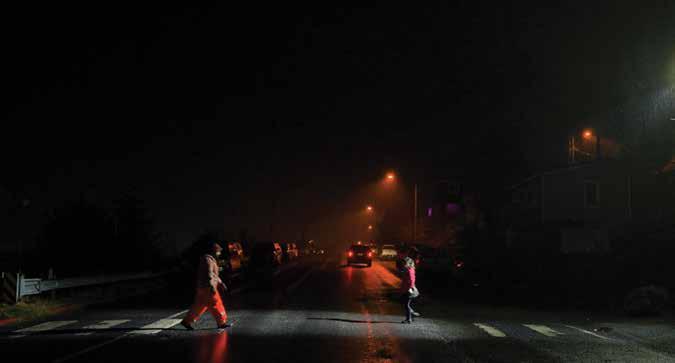
Th e Alaska Department of Transportation and Public Facilities (DOT&PF) is testing pedestrian safety technology in a pilot project in Kodiak. In early February, DOT&PF installed an advanced system on Rezanof Drive near Cope Street, overlooking Kodiak’s inner harbor, to improve nighttime visibility for pedestrians crossing the road. The pilot project will monitor the system’s durability and effectiveness to determine whether this technology could be used in other Alaska cities.
Long hours of darkness are an Alaska reality, but vehicles and pedestrians still must commute along shared routes. Despite the best efforts to watch out for one another, Alaska experiences a notable increase in pedestrian fatalities in September and October, when the decrease in daylight hours before the added glow of snow makes pedestrians less visible. Street lamps are an
obvious solution, but DOT&PF is exploring improved technologies that maintain visibility of pedestrians as they cross the street.
“The new Smart Pedestrian Lighting pilot in Kodiak is a dynamic pedestrian lighting technology designed to spotlight pedestrians as they enter the crosswalk,” says Sonny Mauricio, DOT&PF public information officer. “Unlike static streetlights, this system actively tracks movement to increase visibility for drivers, ensuring pedestrians are clearly illuminated throughout their entire crossing.”
The Smart Pedestrian Lighting pilot project is a collaborative effort with Intelligent Security Systems (ISS) using its SecurOS Soffit pedestrian safety system. Joe Harvey, director of ISS’ intelligent transportation systems sector, describes the Soffit system as an evolution of enhanced pedestrian systems that have relied on different static lighting and signaling systems. Soffit identifies pedestrians as they enter the crosswalk and illuminates
them as they travel and exit the area. Nearby drivers will notice a clear, directed LED spotlight that illuminates pedestrians without causing glare or reducing visibility.
Harvey says there are several reasons the Soffit system is a good option. Soffit uses advanced video analytics to detect pedestrians and illuminates them only when they enter the crosswalk. The targeted approach increases driver awareness while minimizing unnecessary light pollution, making it an ideal solution for enhancing visibility during Alaska’s dark autumn months. The system is designed to cover up to four lanes of traffic, ensuring pedestrians are visible even when crossing major roads.
“The beauty and the brains behind the system is video intelligence,” says Harvey. “We are using a camera to identify the outline, shape, and size of individuals, then use the hardware in order to engage the LEDs where they are crossing.”



STRUCTURAL
STRUCTURAL
Fabrication
Fabrication
Steel



REINFORCING
REINFORCING
Reinforcing
Reinforcing
Custom
Custom
Reinforcing
Reinforcing
Welded
Concrete
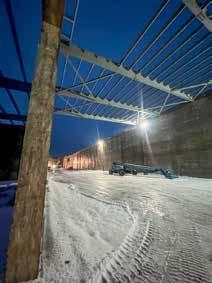
usage and gathering feedback on how pedestrians and drivers interact with the system.
“If the pilot proves successful and receives positive community feedback, we hope to expand the program statewide,” says Mauricio.
No end date for the pilot project is currently set; however, DOT&PF will make a final determination about expanding the project to other areas once it has gathered sufficient data and analyzed the full scope of public input.
Though ISS has installed several Soffit pedestrian safety systems in other parts of the world, this pilot project is the first in Alaska. As part of the collaboration with DOT&PF, ISS will receive feedback on the system’s performance. Above all, Harvey says ISS wants to make sure the
product is living up to the company’s standards. Customer feedback helps guide future versions.
“As you develop a product, you have an idea in mind and build towards that,” says Harvey. “Customer feedback identifies any areas for improvement or performance that we didn’t know were possible. Feedback will guide the next iterations and continue system evolution.”
Based on other case studies, ISS has developed ways to weatherproof its system for extreme temperatures. Specifically, the company added additional weatherproofing and heating inside the control cabinet. However, it can be further customized for Alaska’s subzero temperatures, as well as for locations with m uch hotter climates.
Pedestrian safety is a priority for DOT&PF. The “2024 Governor’s Highway Safety Association Pedestrian Traffic Fatalities by State” report shows pedestrian fatalities have risen in Alaska since 2019. In 2024, fifteen pedestrian fatalities occurred in the state, five more than in 2023, with another fifteen fatalities reported in Anchorage alone in 2025. Last year, Governor Mike Dunleavy declared October 2025 Pedestrian Safety Month. When launching the Smart Pedestrian Lighting pilot project, DOT&PF Commissioner Ryan Anderson emphasized the need to look for solutions to this problem.
“There’s no easy answer when it comes to pedestrian safety, and we take that reality seriously,” • 375’ Barge Dock (-20’ depth at MLW) • 1,200’ Deep Draft (-60’ depth at MLW) • Bow Ramp Berth
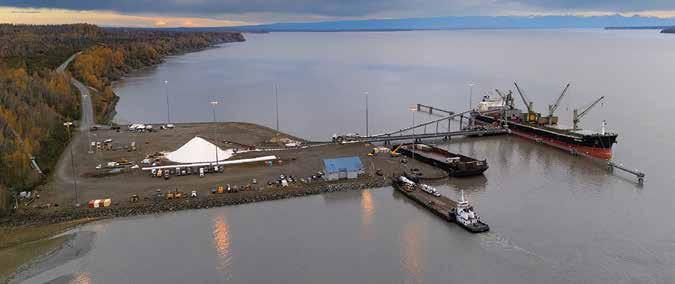
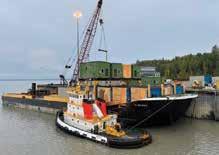
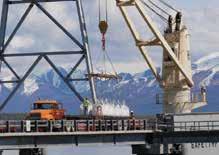
Anderson said in a press release.
“This pilot gives us a chance to explore a new tool that supports both pedestrians and drivers by improving visibility at night. If it works as we hope, it could become one more way we make Alaska’s roads safer for everyone.”
Harvey adds that ensuring the safety of vulnerable road users is a constant priority for cities and planners, which is why ISS is proud to collaborate with the State of Alaska on this pilot project.
According to Mauricio, the response from Kodiak residents has been overwhelmingly positive so far. He says they have already reached out to express their support, with many requesting similar installations in other areas of Kodiak and throughout the state.
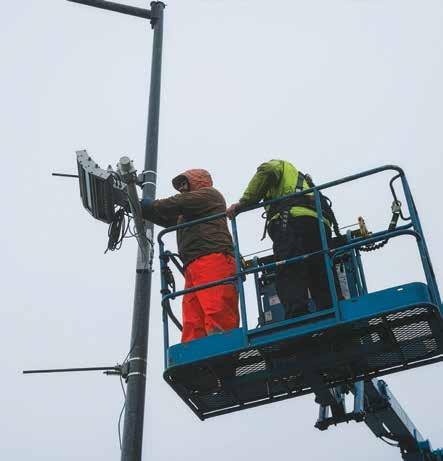
Kodiak was selected for this pilot project because the city met the specific technical requirements. The crosswalk on Rezanof Drive near Cope Street is a marked crosswalk at an unsignalized intersection, an ideal starting point for DOT&PF to evaluate the SecurOS Soffit pedestrian safety system. Alaska Department of Transportation and Public Facilities

By Christi Foist
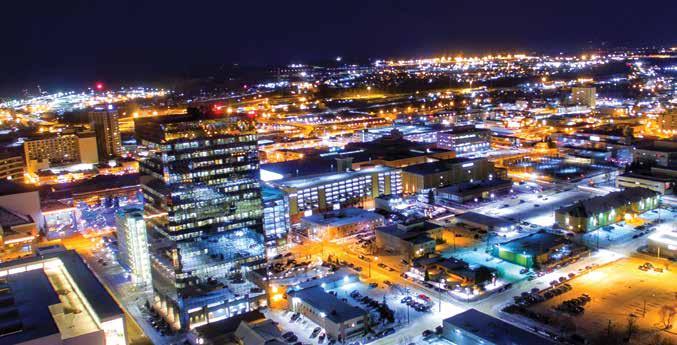
Ea rthquakes. Floods. Eruptions. Oil spills. Subsea cable breaks. Ransomware attacks. Twenty-first century emergency managers must plan for a growing list of scenarios, some increasingly complex. Since 2004, the Alaska Partnership for Infrastructure Protection (APIP) has helped educate and connect public and private-sector groups that have shared emergency concerns.
In the aftermath of the September 11 attacks in 2001, leaders across the country began to rethink infrastructure protection. That often required working with others outside their organization. Concerns about “proprietary information” initially hampered efforts in Alaska to coordinate public and private sector groups’ efforts according to an Intersector Project case study. The report found that the partnership overcame those obstacles: “APIP founders broke down
“I sometimes think of it as a youth group for infrastructure people.”
Be n Hartlieb Co-chair Alaska Partne rship for Infrastructure Protection
competitive barriers to information sharing by highlighting broadscale interdependencies.”
The public-private partnership was established as a forum within the Alaska Department of Military and Veterans Affairs: not quite a government agency but not quite a standalone nonprofit trade association. As APIP’s leaders addressed information security concerns, trust in the partnership— and its membership—grew.
Events soon underscored the partnership’s importance. In late July
2010, a US Air Force C-17 cargo jet stalled during training for the Arctic Thunder Air Show, crashing on part of the Alaska Railroad. The military had to investigate the crash and resulting deaths, and the railroad had to repair the tracks so it could restore service. By convening a same-day meeting, APIP helped “prevent a larger ripple effect” and gave the military information “that allowed their accident investigation to continue” during track work, the Intersector Project report noted.
By 2014, an APIP recurring training event called Alaska Shield had earned the attention of the Federal Emergency Management Agency (FEMA). The US Senate subcommittee on emergency management, chaired by then-Senator Mark Begich, met that April in Anchorage with thenFEMA Administrator Craig Fugate to observe the 50th anniversary of the 1964 earthquake. The hearing “Fifty Years Since the Great Alaska Earthquake: The Role of First Responders in Catastrophic Disaster
Planning” discussed how FEMA could learn from Alaska Shield.
The multi-day simulation event modeled a major earthquake, particularly its effects on the Port of Alaska in Anchorage. According to Fugate’s written testimony, “The Alaska Shield exercise was the centerpiece of the 2014 National Exercise Program Capstone Exercise… the culminating event in the biennial National Exercise Program Cycle.”
Today, APIP has nearly 1,000 members and meets the third Thursday of every month, September through May. “It takes… a whole slew of people to keep the lights on, keep the food in grocery stores, repair infrastructure, et cetera,” says Ben Hartlieb, APIP’s public sector co-chair. “No individual entity is an island in any of this.”
APIP’s leadership reflects this. Hartlieb, who works for the state’s Division of Homeland Security and Emergency Management, cochairs APIP with Hillary Palmer, a program manager with Dewberry. “I try to make sure that the private sector interests and capabilities are known and discussed so that when an emergency arises we can connect everybody that needs to be connected,” Palmer says.
Infrastructure generally means “the equipment and organizations that enable… our survival and lifestyle,” Hartlieb says. For this and other reasons, much of the partnership’s work has focused on urban areas with the most infrastructure and greatest share of the state’s population. (A
The Alaska Partnership for Infrastructure Protection helps communities prepare for disasters or recurring events, such as the glacial outburst flood in Juneau in August, 2024.
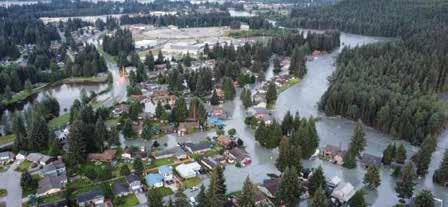
different part of the Division of Homeland Security and Emergency Management runs rural resiliency workshops throughout the state, covering similar topics through a different lens.) But Hartlieb welcomes anyone who wants to attend APIP meetings. “I sometimes think of it as a youth group for infrastructure people,” he says.
APIP’s influence extends well beyond infrastructure. “In Alaska, we all wear many hats,” Palmer says. Volunteer and faith groups don’t typically run the kind of communitycritical services that APIP focuses on. To inform and leverage such entities’ resources, states and the federal government rely on Voluntary Organizations Active in Disaster (VOAD), a nationwide nonprofit association. Some organizations
might participate in both the national and state VOAD. Palmer says several APIP members also serve on VOAD. Because of that, she says, “everyone who attends APIP ends up being the messenger back to their organizations, plural.”
To make events accessible, APIP usually offers both an in-person and online component. “It’s pitched to be statewide,” Hartlieb says, but he’s not sure how many APIP members live and work outside Anchorage. Except for field trips, where the group might tour a facility, APIP meets at the AT&T Center in Anchorage and via Microsoft Teams. Meetings typically last about an hour and include a featured speaker. Topics have included debris management, briefings on the National Weather Service and Alaska Water and
Wastewater Utility, and a tour of the Don Young Port of Alaska. Members also do occasional drills like the “rehearsal of concept” earthquake simulation. For events at the AT&T Center, Hartlieb says they usually have 20–30 people in the room and 70–100 people online.
Don Lynn, director of crisis management for Albertsons Companies, is one of those online viewers. Lynn joins the monthly Teams meetings from an office in Idaho, where he monitors events that could affect Albertsons’ operations in thirty-five states, including Carrs and Safeway supermarkets in Alaska. “Part of my responsibility is, when we talk about a cascading event that is going to involve Seattle, I raise my hand and I say, ‘Hey, what about Alaska?’”
In Alaska, connection looks a little different. Distance, terrain, and weather all shape how people communicate, and that’s part of why print still resonates especially strong here. Printed materials reach places and people that digital never fully can, especially in rural and Alaskan Native communities where a printed magazine, as it travels hand by hand and feels personal and trusted.
A printed ad isn’t just advertising. It’s presence. It’s a handshake when you can’t be there in person. It builds familiarity and keeps your name top of mind long after an online impression disappears.
When someone picks up a copy of Alaska Business, it is an experience
miles away from a quick online scroll. It’s a pause. A break in the day where your brand has a reader’s full attention. Alaska Business magazines live on desks, in lobbies, and in jobsite trailers; real spaces where decisions actually happen.
I’ve worked in print and marketing for more than twelve years, and what I’ve seen is that the most effective campaigns blend both worlds. You need reach and you need roots. Digital gets attention and print earns trust.
In a state where relationships drive business, trust matters more than any metric on a dashboard. People take pride in seeing their stories, their companies, and their communities in print. It represents permanence, something they can hold and share.
Print has always been about connection; and in Alaska, connection still means everything. Invest in print to build trust and lasting connections.

Weston Giliam is an Alaska-raised sales and marketing professional who understands the value of real connection in a relationship-driven business environment. He helps clients build effective campaigns across the state and holds a marketing degree with hands-on experience.

WESTON GILIAM 907-257-2911 | weston@akbizmag.com
Lynn says APIP is “crucial to identify the needs, not only of Alaska, but the challenges we need to overcome.”
Though his work covers much of the country, Lynn says he doesn’t always have such a resource in other states.
“APIP not only brings government and me as a company together; they bring together the other private sector… I look at Matson and TOTE as valuable partners.”
Those relationships have helped Lynn both in emergency response and understanding certain trends, like why his Kodiak store kept selling high volumes of chips and soda on certain days. “If I don’t know who to talk to, I can call Ben,” Lynn says. Through his APIP connections, he eventually realized that cruise ship traffic explained the strange sales spikes that might “wipe out
the products that the locals need.” Now he can better plan when to adjust stock of popular items and maintain a more stable supply for Kodiak residents.
For Lynn, that’s part of what makes APIP so valuable. When an issue like the recurring glacial outburst in Juneau happens, it doesn’t just affect his customers, it also affects his employees. “It’s always about people,” he says.
APIP meetings helped Gideon Garcia, general manager and vice president of cargo operations at Northern Air Cargo (NAC), more accurately anticipate staffing during a disaster. “It’s definitely been very eye opening,” he says of the training
“APIP not only brings government and me as a company together; they bring together the other private sector… I look at Matson and TOTE as valuable partners.”
Don Lynn, Director of Crisis and Business Continuity Management, Albertsons Companies
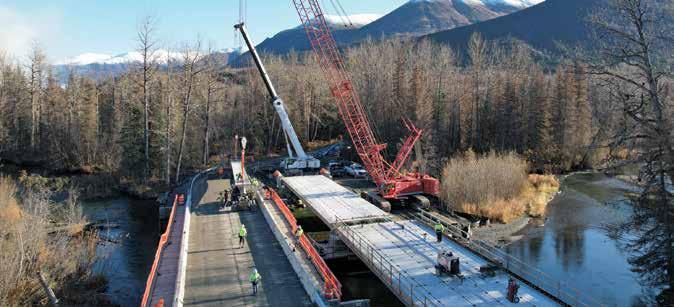

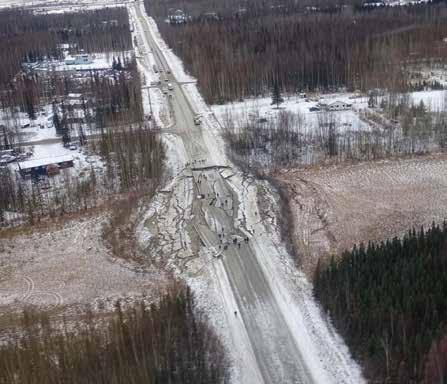
US Geological Survey
opportunities APIP connected him to. “For example, a large earthquake hits in the middle of the wintertime, it’s a good rule of thumb to plan that 30 percent of your employees can’t make it to work.” Insights like that have helped him consider what’s a “realistic approach” to adjusting NAC’s schedule during emergencies.
After a magnitude 7.0 earthquake in November 2018, Lynn both drew from and offered APIP insights. His Eagle River store’s “extensive cameras” showed him some of the impact in real time. “We kind of knew it before anybody told us,” he recalls. Through his APIP connections, he could share what he was seeing about how the quake affected things inside the store and the extent of the damage.
Later, in the quake’s aftermath, he had employees move a lot of the store’s wares outside, using "nature's refrigerator" to maintain perishable items. “You just put
up a bear patrol,” Lynn says. “I don’t know if the moose will get into it, but the bears will… How would Don know that if he didn’t get together and talk about some of these things, either with my employees or through APIP?”
For smaller organizations, Palmer says APIP can help businesses learn about their resources during a disaster. “There’s a meaningful support ecosystem, but navigating it requires knowing it exists in the first place. Bridging that awareness gap is one of the most practical things the public-private partnership model can do,” she says.
Through its meetings and community, APIP can also help organizations understand dependencies they might not be aware of. “Businesses know their direct suppliers, but not their suppliers’ suppliers, and that’s where
cascading failures tend to originate,” says Palmer.
Businesses also may not understand how supply chains in other parts of the state work. Garcia says not all Alaskans know of NAC’s role transporting bypass mail and freight to rural Alaska or of its regular flights to and from hub communities like Bethel, where it flies up to twelve times a week. After Typhoon Merbok hit western Alaska in 2022, Garcia got a call from someone wanting to send supplies, but the person didn’t know about NAC’s schedule to and from hub cities or its three-plane fleet of 737s.
“There is a network and an entire logistics system in place because of the bypass mail system,” Garcia says. Thus, he was ultimately able to help the person who called achieve their goal. “That networking is so important from APIP, being able to know someone, where they work,” Garcia says.
During the response to Typhoon Halong last fall, Garcia turned again to APIP connections. At one point, a volunteer organization dropped off donations meant for the villages without providing all the information Garcia needed, like the point of contact for pickup, whom to bill for shipping, and so on. Because of APIP, “in a time of need, you can call and reintroduce yourself and remind them, ‘Hey, we’re here for you and how can we help.‘”
Membership in APIP costs nothing, but in a time of crisis, that time saved on planning and research can prove invaluable. “It’s always easier to make a plan on a blue-sky day than during an incident,” says Palmer.

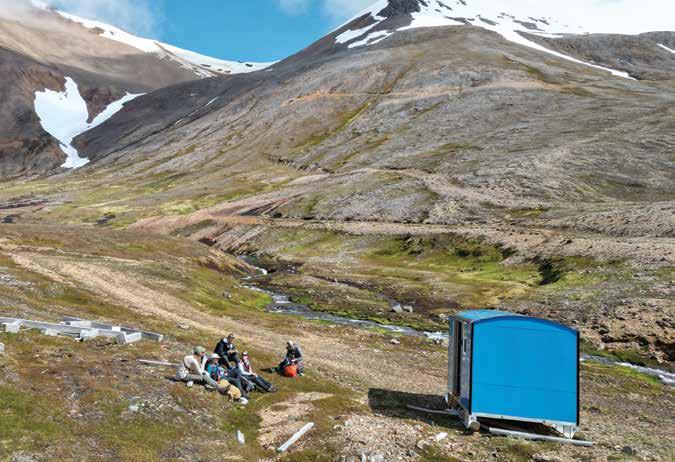
By Scott Rhode
Duty to shareholders is the guiding star for business decisions by Alaska Native corporations (ANCs). Not only is this principle established by the Alaska Native Claims Settlement Act (ANCSA), but corporations share this perspective when they become shareholders themselves. Equity ownership is one of many avenues for investing ANC assets. As partowners of other companies, ANCs earn dividends that they return to their own shareholders.
Majority- or wholly owned subsidiaries are too numerous to list. For example, Calista Corporation, one of the twelve ANCSA regional corporations, operates a robust construction business line, strengthened in 2010 by acquiring Yukon Equipment and the Brice family of companies, and again in 2018 by acquiring STG and its sister companies. However, Calista also owns a piece of Delta Constructors; its Bektuq Holding arm acquired a 25 percent interest in late 2019. The
minority, non-controlling stake gave Calista a partner in the resource development sector, turning a potential competitor for construction contracts into a source of revenue.
Investing instead of owning is a strategic choice that depends on ANCs’ goals, resources, and liquidity.
One reason to opt for a minority stake instead of owning outright is to test the waters of a new industry. Strategic investments allow ANCs to
enter sectors where they may lack day-to-day operational expertise.
For instance, Aleut became an investor in The Wildbirch Hotel as an entry point into tourism. “We did not have any holdings locally in the tourism industry, and without managing a tourism entity from a day-to-day standpoint, we really wanted to have a slice of that pie,” says Aleut COO Mandy Hawes. “We looked at our portfolio as a whole and said, ‘That’s a gap for us. How do we get into the game?’”
Hawes came to Aleut from the tourism industry, as former general manager of Alyeska Resort.
Last spring, just ahead of a grand opening for the refurbished hotel on Fourth Avenue in Downtown Anchorage, Aleut backed the project through its Aleut Real Estate subsidiary, joining as a strategic limited partner. “This partnership reflects our long-term vision of investing in Alaska in ways that generate meaningful impact,” Aleut CEO and President Skoey Vergen said at the time. “Through Wildbirch, we’re creating access, opportunity, and a launchpad for Aleut shareholders interested in hospitality careers.”
As part of the partnership, The Wildbirch Hotel agreed to a goal of hiring 10 percent of its workforce from among Aleut shareholders and descendants. Hawes says, “It was really important to make sure we could make the connection between our investment and giving back to the shareholders.”
Beyond the up-front terms of the partnership, Aleut is handsoff when it comes to running the hotel. “We are very much a
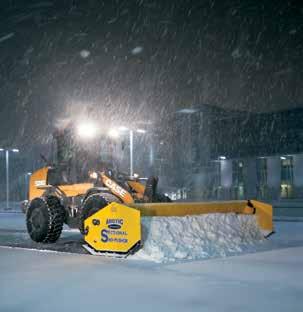
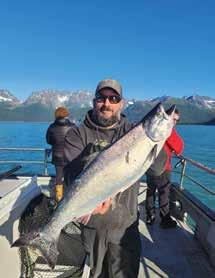


Contact Yukon Equipment to experience the power, intuitive controls and comfort that CASE equipment delivers. Be sure to ask about ProCare the most comprehensive, standard-from-the-factory heavymachine support program in the industry. And speaking of support, you can always count on us as your go-to resource for all your equipment needs.
Contact Yukon Equipment to experience the power, intuitive controls and comfort that CASE equipment delivers. Be sure to ask about ProCare the most comprehensive, standard-from-the-factory heavymachine support program in the industry. And speaking of support, you can always count on us as your go-to resource for all your equipment needs.
Yukon Equipment to experience the power, intuitive controls and
that
comprehensive,
Visit CaseCE.com/TryOne or contact us to schedule a demo today. Contact us for more information. Been in business since 1945. 800-478-1541 WWW.YUKONRQ.COM
Be sure to ask about
heavymachine support program in the industry. And speaking of support, you can always count on us as your go-to resource for all your equipment needs.
Contact Yukon Equipment to experience the power, intuitive controls and comfort that CASE equipment delivers. Be sure to ask about ProCare the most comprehensive, standard-from-the-factory heavymachine support program in the industry. And speaking of support, you can always count on us as your go-to resource for all your equipment needs.
Visit CaseCE.com/TryOne or contact us to schedule a demo today.
Visit CaseCE.com/TryOne or contact us to schedule a demo today.
Visit CaseCE.com/TryOne or contact us to schedule a demo today.
Contact us for more information. Been in business since 1945.
Contact us for more information. Been in business since 1945.
info@yukoneq.com

Contact us for more information. Been in business since 1945. 800-478-1541
800-478-1541 WWW.YUKONRQ.COM
ANCHORAGE
WWW.YUKONRQ.COM
FAIRBANKS
ANCHORAGE
WASILLA
Email: info@yukoneq.com
East Third Avenue
AK 99501
Phone: 907-277-1541
Email: info@yukoneq.com
3511 International Street
2020 East Third Avenue
Fairbanks, AK 99701
Phone: 907-457-1541
7857 West
AK 99701
Hwy. Wasilla, AK 99623
Anchorage, AK 99501
Email: info@yukoneq.com
Phone: 907-457-1541 Email: info@yukoneq.com
Phone: 907-376-1541
7857 West Parks Hwy. Wasilla, AK 99623 Phone: 907-376-1541
Email: info@yukoneq.com
Email: info@yukoneq.com
Phone: 907-277-1541
Email: info@yukoneq.com
FAIRBANKS
3511 International Street Fairbanks, AK 99701
Phone: 907-457-1541
Email: info@yukoneq.com
WASILLA
7857 West Parks Hwy. Wasilla, AK 99623
Phone: 907-376-1541
Email: info@yukoneq.com
MDF Global was looking for new mineral deposits, and Aleut wanted to monetize minerals in its region. Those common interests came together as joint ownership of Copper Bay Resources, currently a pre-exploratory mining operation near Sand Point. Copper Bay Resources
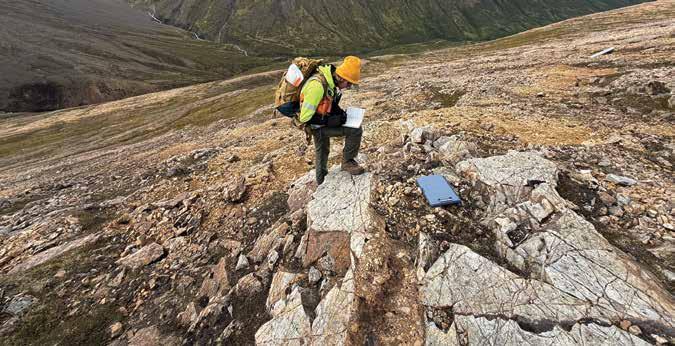
passive equity stakeholder,” says Hawes. “We do not influence dayto-day operations. We are strategic partners, and we appreciate the ability for our shareholders to have job opportunities in the tourism industry.”
Whether acquiring a subsidiary or pumping cash into an investment, corporations shop around for opportunities. Indeed, equity holdings entail even more rigorous upfront scrutiny because the investor has less direct control once the ink is dry.
“Partner vetting is the first step, really making sure we’ve chosen the right partner,” Hawes explains. “It’s about identifying the right partner and having that trusting relationship, having candid conversations, really a symbiotic relationship. To me, selecting the right partner is really critical.”
The Wildbirch Hotel is an example of a good fit, with local management
led by former US Senator Mark Begich, who is eager to appeal to Alaska-based investors. “We are very selective in who we partner with,” says Hawes of Aleut’s approach. “We have a funnel of opportunities that come to us, some that don’t make it to the next stage of analysis.”
For Aleut, the choice between owning and investing must survive a decision matrix that gives great weight to community benefit. A dealsweetener like shareholder hire by the hotel ensures that even passive investments fulfill the corporate mission of giving back.
Passive earning is not far from Aleut’s light touch with its more closely held assets, however. “We set the governance and guardrails for the subsidiaries, so they are accountable to the parent. We are actively involved, but we delegate a lot of the authority to subsidiaries for their own strategies,” says Hawes. “For passive investments, it’s a different mindset. Where we can offer a skill set, we will. However, for the most part,
we are not managing any of those operations on a day-to-day basis.”
One of Aleut’s equity positions is a minority stake in Copper Bay Resources, a joint mineral venture. The majority share, 64 percent, is held by Mine Discovery Fund Global (MDF Global), an Australian mineral development company.
Hawes says Aleut board members inquired about the critical mineral potential of lands in its region, so the corporation sought an exploratory partner. “We looked at four different partners and had a very thorough matrix, a thorough process of choosing the right partner,” says Hawes. MDF rose to the top. MDF has worked with Doyon, Limited before, and it’s the leading investor of publicly held Felix Gold, which is developing a prospect north of Fairbanks with a near-term focus on antimony.
MDF and Aleut have framed this venture within the context of the
green energy transition, providing copper for electric vehicles and renewable energy infrastructure.
At this stage, Copper Bay Resources is a pre-exploratory mining operation just outside of Sand Point. This summer will be the third field season. The focus is on the Pyramid and San Diego Bay projects. Pyramid has an inferred resource of 206 million tonnes of copper, which could support a high-grade open pit mine. Copper Bay Resources is currently raising capital with an eye toward a potential public listing within the next year or so, which could significantly raise the value of Aleut’s equity stake.
Unlike traditional mining leases, the strategic partnership lets Aleut provide access to subsurface mineral rights in exchange for economic opportunities, including dividends, local hiring agreements, and scholarship contributions. Vergen and Hawes have emphasized that, while Copper Bay Resources is passive from a management standpoint, and MDF through Copper Bay Resources handles the day-to-day geology and operations, the corporation remains actively involved, with representation on a management committee to ensure the corporation’s and shareholders’ interests are represented and aligned.
Because money can flow anywhere in the world, equity holdings are not limited to an ANC’s home territory. For instance, Aleut is furthering its green energy mineral development elsewhere in Alaska, backing the Graphite Creek project near Nome.







Graphite One is a Canadian company developing the Graphite Creek prospect approximately 35 miles north of Nome. It is widely cited by the US Geological Survey as the largest known graphite deposit in the United States and among the largest in the world.
The project is significant not just for its size but for its unique status as the first critical mineral project to receive direct investment from three different ANCs, totaling more than $15 million in committed capital. Aleut and Doyon combined for $5 million, and Bering Straits Native Corporation is the lead regional partner, starting with $2 million in 2023 and raising its commitment to $10.4 million. Its investment includes preferential hiring for shareholders and priority for subsidiary service contracts.
Hawes says Aleut was impressed enough to make Graphite Creek part of its strategic investments. “We spent quite a bit of time getting to know that team and understanding what the resource potential was, understanding who the people that are running the company are, and understanding the potential for that resource to come to fruition,” she says. “We’re really excited to keep watching how the story of Graphite One unfolds.”
In 2024 and 2025, Graphite One signed supply agreements with
electric vehicle maker Lucid, lining up a customer for synthetic and natural graphite supplied from an Ohio processing plant to the car factory in Arizona. Via the US Export-Import Bank, the company has received letters of interest for up to $895 million in federal loans for mine and facility construction. And in 2023, the US Department of Defense awarded Graphite One a $37.5 million grant to complete its feasibility study. A final construction decision is targeted for late 2026 or early 2027.
Although Graphite One is on a federal permitting fast track, aiming for a potential record of decision later this year, the mine is not yet digging ore or generating revenue. The beauty of an equity holding, as opposed to an operational asset, is that it can yield unrealized capital gains before cash flow commences. “It has been a very successful investment so far for us,” says Hawes. “It’s publicly traded, and we have done well so far.”
Historically, many ANCs rely heavily on federal contracting. In the case of Aleut, Hawes says government contracting was about 90 percent of its portfolio about five years ago, but that fraction is shifting. Equity holdings in other sectors are becoming a larger portion, but only because
the corporation has more assets to invest. “We don’t look at our investments as a defined pie; we look at it as a growing pie,” says Hawes. “As the whole pie grows, the percentages within that may shift.”
By moving away from a "controlat-all-costs" model toward a mix of subsidiaries and passive equity, ANCs are ensuring that their guiding star leads toward responsible development and respect for the land for generations to come.
Subsidiaries, especially when they service federal contracts, are points of pride for the parent company. ANCs disclose all of their investments in their annual reports, including equity holdings, but shareholders are more interested in the operations of the corporate family. “We do give more color to our specific subsidiary holdings,” says Hawes of Aleut’s reports. “But we also have a section on our investment income and how that is allocated between marketable securities, tourism, real estate, and critical minerals.”
Equity holdings are a first step toward expanding ANCs’ revenue base. Diversification is key to support generational shareholder impact. Hawes says, “Across all investments, we look for a long-term alignment, responsible development, respect for the land, and opportunities that support market growth in the region.”










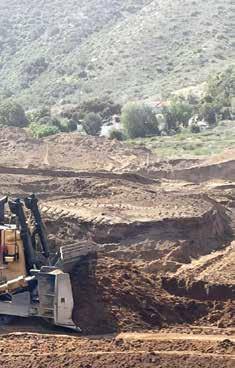

By Terri Marshall
Zero winning bids for the first federal oil and gas lease sale in Alaska mandated by the One Big Beautiful Bill Act of 2025 (OBBBA) was nothing to worry about. Instead of investing in offshore tracts in Cook Inlet, interested parties were keeping their powder dry for the main event later in March: leasing in the National Petroleum Reserve-Alaska (NPRA).
The sale, the first in the reserve since 2019, saw the second most acreage leased in a single sale, and the revenue is the most ever, in nominal dollars, at $163,696,722 in total receipts for 187 tracts.
While setting the stage for a major realignment of federal policy on oil and gas development, the Trump administration’s push for new oil and gas lease sales has renewed debate between those touting production as an economic necessity and those seeking the protection of the state’s environment, wildlife, and Indigenous traditions.
Under the OBBBA, the US Bureau of Ocean Energy Management must hold at least six offshore oil
and gas lease sales in Alaska, one each year from 2026 to 2028, and again from 2030 to 2032.
As a result, a total of eleven additional, separate offshore oil and gas lease sales will be held in Lower Cook Inlet over the next seven years. Five of these are proposed in the Trump administration’s new offshore drilling plan. Congress mandated six more sales when it passed its budget reconciliation bill.
The first federal oil and gas lease sale in 2026 for the lower Cook Inlet, held March 4, received no bids. It wasn’t exactly surprising. The most recent sale in state waters of Cook Inlet, held the same day, attracted only one bid: a $600 offer from Three Mountain Oil for 20 acres, out of 2.9 million acres available for lease.
Other parties assert that ongoing sales in Cook Inlet aren’t in anyone’s interest. “Today’s lease sale once again revealed the lack of industry interest in Lower Cook Inlet drilling and the continued political theater surrounding offshore drilling in Alaska,” said Bridget Maryott, coexecutive director at Cook Inletkeeper on March 4. “Continuing to hold lease sales with zero interest and strong
local opposition to drilling is a blatant waste of taxpayers’ money.”
Regardless, federal managers say lease sales will continue in Cook Inlet so that the industry has a regular, predictable schedule.
For onshore leasing in NPRA, the US Bureau of Land Management (BLM) is the lead agency. BLM rescinded a 2024 rule that restricted leasing and development in NPRA, withdrew three policy documents to expand limitations in special areas, and approved an updated integrated activity plan that reopens nearly 82 percent of the reserve to oil and gas leasing. Under OBBBA, BLM must hold at least five lease sales in NPRA by 2035, each offering no fewer than 4 million acres.
Judging by the receipts when bids were unsealed March 18, the first sale tapped into pent-up demand.
“Today’s lease sale underscores the National Petroleum Reserve in Alaska’s vital role in strengthening America’s energy security while fueling economic growth across Alaska,” said US Secretary of the Interior Doug Burgum. “The reserve
was created to support our nation’s energy needs, and this successful sale demonstrates what’s possible when we align responsible development with that original purpose.”
NPRA spans roughly 23 million acres in northwest Alaska. According to BLM, the sale was “exceptionally competitive,” drawing 430 bids across 1.3 million acres.
“We knew that industry’s interest in this area is remarkably strong,” says Senator Lisa Murkowski. “Our efforts to restore access, return to the rule of law, and get this program back on track have now been fully validated by these historic results. The best part is, the best is yet to come.”
Representative Nick Begich adds, “When we remove federal barriers, investments in Alaska’s future follow.
Removing those federal barriers and unlocking millions of acres in the NPRA is a direct result of hard-fought efforts and strategic policymaking.”
BLM offered 625 tracts across approximately 5.5 million acres. In response, eleven companies submitted bids on 187 tracts.
Senator Dan Sullivan notes, “This lease sale wasn’t just historic in the amount of bids but also in terms of the companies bidding, from some of the biggest energy companies in the world to smaller, aggressive wildcatters.”
The most active bidder was North Slope Exploration, a Colorado-based unit of Armstrong Oil and Gas, winning leases on 78 tracts southwest of Teshekpuk Lake.
ExxonMobil focused its bids on 24 tracts closer to the lake. A section of forty-two tracts south of Teshekpuk Lake were picked up by affiliates of Repsol and Shell bidding about $90 million together. Repsol, a Spanish company, owns a stake in Pikka, the project soon to enter production under the operating control of Santos.
The industry has noticed Santos’ successful drilling into a geologic feature called the Brookian Sequence, which includes the oil-bearing Nanushuk Formation. “All of a sudden you’ve got a lot of international companies, and the big ones, taking notice of the Brookian plays,” said Pete Laliberte, Santos’ vice president of business development, at the March conference of the Alaska


Support Industry Alliance. The Brookian results, he said, are “driving the overall, like, renaissance on the Slope.”
Santos affiliate Oil Search also bid on NPRA tracts, as did smaller players Beacon, Epoch, SE Partners, and Peritas, which bid on tracts along the Colville River.
ConocoPhillips, which is already producing from units inside NPRA and is nearing completion of the Willow project, successfully bid on thirty tracts adjacent to its current positions. Willow is set to produce an estimated 600 million barrels, peaking at 180,000 barrels a day. ConocoPhillips Alaska Vice President of Development and Execution Marc Lemons told Alliance conference attendees that the company is devoting up to $9 billion
to Willow, currently halfway toward first oil in early 2029.
Murkowski credits ConocoPhillips with demonstrating how to produce from NPRA. She says Willow, greenlit in 2023 during the Biden administration, was “the first step” and that infrastructure built for the project could make additional prospects more attractive to bidders. “This is what I think has attracted the number of bidders that you have,” Murkowski says. “I think it has helped with the higher prices for some of the lease sales that we saw, which were pretty impressive.”
The senator also welcomed Shell back into the mix of Alaska explorers. “Shell had been up in the state on the offshore side a decade or so ago,” she notes, “so to have them back in the state is going to be welcome.”
The federal government splits half of the NPRA leasing receipts with the State of Alaska, putting nearly $82 million into the state treasury. A portion of those proceeds benefit North Slope communities through the National Petroleum Reserve in Alaska Impact Mitigation program.
Although NPRA has been designated as a petroleum reserve since 1923, its boundaries also contain vital habitats for wildlife and local communities near Teshekpuk Lake and the Colville River. The leasing plan encompassed parcels within a conservation right-ofway, which a federal court in Alaska reaffirmed on March 16 following litigation initiated by Nuiqsut Trilateral, Inc. This right-



“This lease sale wasn’t just historic in the amount of bids but also in terms of the companies bidding, from some of the biggest energy companies in the world, to smaller, aggressive wildcatters.”
of-way was instituted to safeguard the Teshekpuk caribou herd from industrial operations.
Separate lawsuits have been filed by Earthjustice, the Center for Biological Diversity, and Friends of the Earth to challenge the NPRA integrated activity plan and the Willow project. “Trump wanted Big Oil to go big in the Arctic, grabbing as many leases as possible,” says Hallie Templeton, legal director at Friends of the Earth. ”The results
of this sale will spell disaster for the surrounding area.”
However, just as Pikka has proceeded with cooperation from, and to the benefit of, the nearby village of Nuiqsut, its neighbor about 160 miles deeper inside NPRA, the village of Atqasuk, is counting on resource development to spell prosperity for the surrounding area.
“Today’s lease sale is an exciting step in the right direction for Atqasuk, which has stewarded the
NPRA for millennia,” said Native Village of Atqasuk President Mary Bordeaux. “We have seen firsthand how responsible development improves our community, and we look forward to working with the federal government and industry representatives to advance projects beneficial to both our economy and Iñupiaq culture.”
Regional lobbying groups likewise have confidence that NPRA development will be a net positive.

US Bureau of
“As the North Slope’s regional Alaska Native tribal government, we exist to advocate on behalf of our people,” said Iñupiat Community of the Arctic Slope Executive Director Morrie Lemen. “We support responsible onshore development, represented by today’s successful lease sale, because it benefits our communities, coexists with our subsistence traditions, and ensures our Iñupiaq self-determination.”
More than 95 percent of North Slope tax revenue is generated by taxes on resource development infrastructure, which fund essential services. The expansion of educational institutions,
healthcare facilities, advanced water and sanitation systems, and comprehensive wildlife management has been associated with a significant increase in the average lifespan of North Slope Iñupiat, rising from 34 years in 1969 to 77 years at present.
“Today’s lease sale proves what we have been saying for years: when there is meaningful policy in place supporting responsible onshore development, industry interest will follow,” said Voice of the Arctic Iñupiat President and CEO Nagruk Harcharek. “This successful NPRA lease sale is a gratifying reminder of our work that will strengthen our self-determination
for generations to come.”
In the nearer term, the latest batch of NPRA leases gives energy companies new assets to leverage, with the potential for more acres in future lease sales.
“Investor confidence in Alaska’s energy future is not only strong— it’s growing,” says Steve Wackowski, president and CEO of the Alaska Oil and Gas Association. “That confidence is critical to advancing responsible development of Alaska’s vast resources, supporting jobs, sustaining the Trans Alaska Pipeline System, and strengthening US national security in an increasingly uncertain world.”
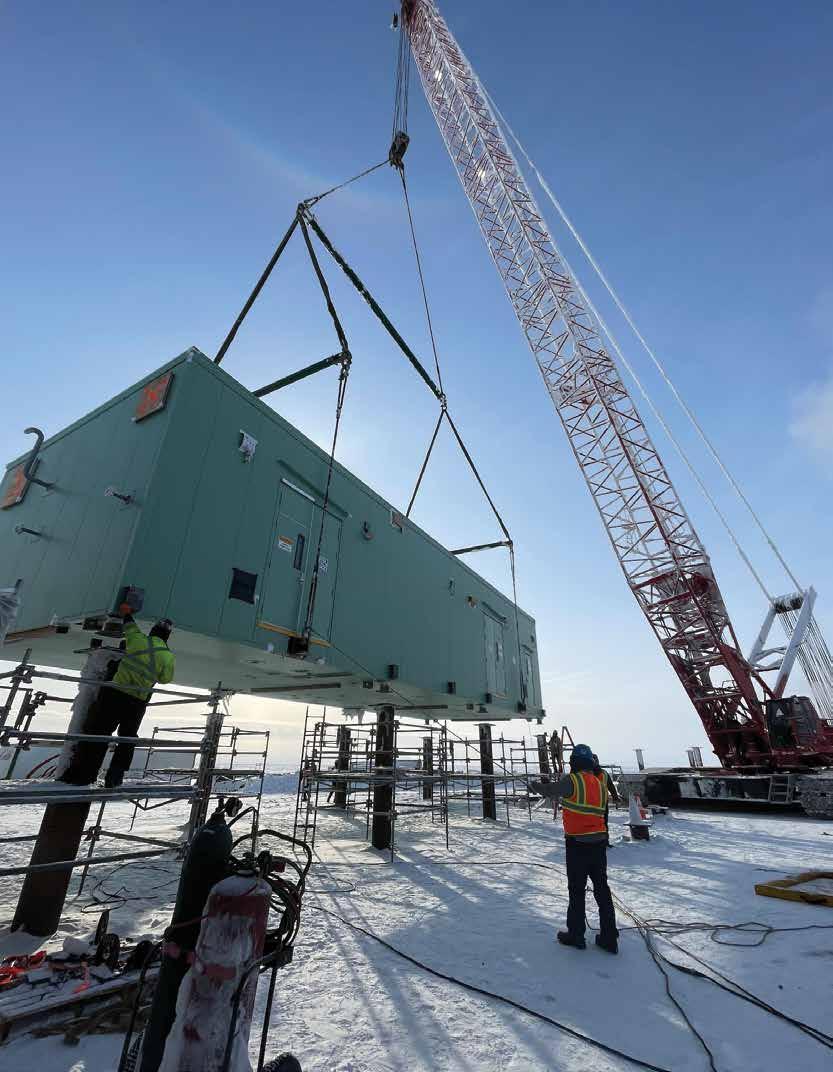
By Brian Walch
Do you know much about hermit crabs? In captivity, as they grow, their caretaker provides bigger shells and, when the crab is ready, it moves into a new one.
In the wild, this process is fascinating. When a larger shell becomes available, it creates a cascading set of transitions. Crabs line up beside the new shell in order of size. The largest crab moves into the empty shell, leaving its old one behind. The next crab moves into that one, and so on, down the line.
Biologists call this a vacancy chain, and a similar thing happens in organizations. A director retires, and a manager gets promoted to fill the role. A senior employee steps into management, and a new hire backfills the team. One transition triggers a chain reaction, and everyone must
move into a bigger shell and learn to navigate the unfamiliar space.
When a crab moves shells, they are exposed and vulnerable. They leave the protection and security of their existing shell in search of a chance to grow into a larger one. Just like people and organizational transitions.
The difference for people is that they are vulnerable for much longer. Instead of taking a few minutes to settle in, a manager will spend months feeling exposed as they get comfortable in a new role. During that time, every habit, every instinct, every pattern they built in the old role is on full display.
Many managers get promoted because they were great individual contributors. They do good work, know the business processes, the
clients, and deliver results. When they step into a bigger role, it can be hard to let that go.
Initially, it isn’t a problem. Things work because the manager knows everything, responds quickly, and keeps the team running smoothly. But it doesn’t scale, and they quickly become a chokepoint. People wait for approvals that didn’t previously require waiting. Decisions that should take an hour now take a week. The manager feels overwhelmed, and the team feels micromanaged. The behavior hasn’t changed; it’s just been amplified into a larger space. And the harder they work to keep up, the more it magnifies the problem, and the longer they’re exposed.

One complaint I often hear from managers scaling up is that their teams aren’t meeting the quality standards they expect or require. This
happens during transitions. When they had a small team, they could keep expectations in their head and communicate them through daily interactions. A quick correction or an impromptu conversation would result in the improvement needed.
But as the team scales, the manager can’t always be there. With informal enforcement gone, quality drifts, and they can’t understand why, because the standards seem obvious to them. However, they weren’t obvious. They were just always present because the manager was involved in the details.
Conflict often grows during transitions as well. Managers are often mediators, resolving tension before it becomes visible. With a small team, this keeps things running smoothly and productively. When the manager moves up or takes on more responsibility, the small tensions that used to be handled quietly start to compound. By the time they notice, the problem has grown beyond a quick conversation.
These aren’t failures. They’re habits that didn’t scale. The transition didn’t cause the problem; it made the problem visible. The manager is the single point of decision-making, the unofficial quality control, and the unspoken standard-setter. What was manageable with six people becomes unmanageable with eighteen, and they’re working harder than ever but falling further behind.
This is true whether the transition is a promotion, leading a rapidly growing team, or absorbing a new group after a reorganization. The dynamics are different, but the principle is the same:

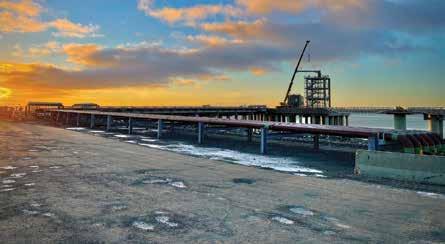







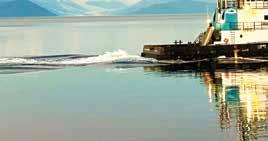


don’t create leadership problems, they expose the ones that were already there.
Managers with ambitions to move into a bigger role should honestly evaluate how they’re operating in their current one. The habits they’re building today will follow them into their next role, team, and level of responsibility. The behaviors they practice at this level get amplified at the next.
Preparation starts with selfawareness. Managers must build a habit of honestly assessing themselves and their teams. There are practical tools managers can use to identify where their personal involvement is what makes things work. That will be a weak point during a transition.
For instance, I always find it curious when managers tell their employees to take a vacation and disconnect, but then they don’t do the same themselves. At some level, I understand. It can be easier to just work a little during vacation rather than prepare to be totally gone. But managers who do this are missing a golden opportunity. Fully checking out for a week and observing what happens upon return is one of the most revealing tests of readiness. I call it the Vacation Test. When a manager returns from vacation, I encourage them to notice what happened. How were decisions made? Where did quality slip? Who stepped up?
There is a simpler version of this. On Friday afternoons, managers
The transition didn’t cause the problem; it made the problem visible… This is true whether the transition is a promotion, leading a rapidly growing team, or absorbing a new group after a reorganization.
can ask themselves what would have happened if they hadn’t been there that week. Where would decisions have stalled? Where would standards have been ignored? The answers will show where they’ve built dependency and where they’ve built discipline.
Managers who are ready to start preparing for a transition should consider two practices that will change how they operate.
Distribute operational ownership. Managers can review their operational duties and start moving them to the team. For example, they can identify a standing meeting to move to a team member. They coach them on the intent and desired outcomes, give them
freedom to adjust, and then set a date to stop attending.
The goal isn’t to hand off just a single meeting, though. It’s about building a pattern where operational work runs through the team rather than the manager. They must be systematic about identifying other responsibilities to assign, providing support, and following good delegation principles. Each time a responsibility is successfully moved, the manager’s role shifts from operator to leader, and the team’s capac ity grows.
Start a playbook. This documents the recurring decisions, standards, and operating norms that currently live only in the manager’s head. It becomes a living record of how work gets done, how decisions get made, and what good looks like. When those things are written down, they become the team’s standards, not just the manager’s preferences. A playbook allows new team members to onboard faster and enables existing team members to make decisions with confidence. When the transition comes, the playbook becomes the bridge between how the manager led and how the team continues to operate.
A playbook also forces clarity. The act of writing down “this is how we handle X” often reveals that the standard was more vague than expected. That is the benefit of creating the playbook now. It means catching the gap early, while the team is small enough to course-correct, rather than discovering it after a transition, when the consequences are greater.
Both of these behaviors are investments that can start this week. Neither requires permission, a budget, or a reorganization. And they compound. A manager who practices distributing ownership and codifying standards for six months will find their role and their team structurally different. They’ll be ready when the opportunity to move up arrives.
Organizations change and grow. People leave, others get promoted, and vacancy chains form. When a manager’s turn comes, they’ll be exposed, revealing every habit, pattern, and operating behavior they ’ve built.
The managers who settle into their new shell and start succeeding in the new role aren’t the ones who figured it out during the move. They are the ones who built a foundation before the opening appeared. They distributed decisions, codified standards, and developed their team’s capacity to operate without them in the room.
Transitions don’t create readiness; they expose it. The best way to prepare for a bigger shell is to outgrow the current one in the right way.



Brian Walch is an executive coach, consultant, and speaker on leadership development. He uses his extensive experience in people and systems to provide tools and services to empower managers to lead themselves, their teams, and their organizations. Learn more at shiftfocus.com.

Erickson Unlimited
The Anchorage Downtown Weekend Market is returning to the heart of Anchorage at EasyPark’s Chinook Parking Lot on Third Avenue, under new management. EasyPark hired event producers Brad Erickson and Kristin George, of Absolutely & Erickson Unlimited Events, to manage the weekly event all summer. As a team under the Erickson Unlimited brand, they have been creating concerts and festivals for the last eight years. “Activating our parking facilities with community events supports a vibrant downtown, and their experience and leadership make them a great fit for this next chapter,” says Jeff Read, parking director for EasyPark. Local vendors, food offerings, and live entertainment return to the market on May 2 and every weekend until Labor Day.
ericksoneventsak.com
Alaska Communications
A relationship between Alaska Communications and SurePath AI is meant to give Alaska businesses a safe onramp to AI innovation without security tradeoffs. SurePath AI is a Colorado-based developer of a platform that monitors interactions with public generative AI services to apply clients’ internal policies. “SurePath AI provides a single control plane to monitor and manage GenAI usage, enforce org-wide policies, and govern how AI accesses enterprise data in real
time,” says SurePath AI CEO Casey Bleeker. Alaska Communications’ Chief Revenue Officer Dale Kipp adds, “By collaborating with SurePath AI, Alaska Communications is leveraging the industry's leading governance platform known for offering a secure path for AI adoption.”
alaskacommunications.com | surepath.ai
Wells Fargo
Financial coaches from the national nonprofit Operation HOPE are setting up inside the Midtown Anchorage headquarters branch of Wells Fargo bank. The Anchorage HOPE Inside location continues Wells Fargo’s commitment to make financial education and guidance more accessible to those most in need. “HOPE Inside brings financial coaching into everyday community spaces, so people can build credit, save, and plan for the future where they already live and bank,” says John Hope Bryant, who founded Operation HOPE after the 1992 riots in his home neighborhood of South Central Los Angeles.
wellsfargo.com
Alaska Cargo and Cold Storage
Alaska Cargo and Cold Storage (ACCS) broke ground in February on Phase 1 of its logistics campus at Ted Stevens Anchorage International Airport (ANC). The initial phase on a 29-acre site near ANC’s primary
cargo ramp includes 100,000 square feet of climate-controlled and dry cargo storage facilities within the airport’s secure area and Foreign Trade Zone. ACCS is developing the campus as a hub for cold chain and time-sensitive logistics between Asia, Europe, and North America, enabling carriers to consolidate, transload, and distribute high-value goods. Upon completion, ACCS will be the only large-scale, leasable air cargo warehouse at ANC with direct aircraft parking adjacent to the bulk of current cargo operations.
rmrholdings.com/alaska-cargocold-storage
This year is shaping up as Hilcorp’s biggest for Cook Inlet natural gas drilling in more than a decade. The company is planning twenty-seven gas wells, second only to the twentyeight drilled in 2014 and an increase from 2025’s twenty wells drilled. Hilcorp Alaska senior vice president Luke Saugier told state legislators in January that the company is now able to operate two rigs full-time all year. hilcorp.com
Disappearing federal incentives for wind power have Chugach Electric Association losing interest in Little Mount Susitna Wind, a proposed 120-MW turbine farm. Instead, the co-op filed for state and federal permits to explore four hydroelectric options. Two are
in the Matanuska Valley: Caribou Creek could generate 18 MW, and Boulder Creek could generate 12 MW. The other two are on the Kenai Peninsula: Godwin Creek near Seward could generate 16 MW, and a run-of-river project on Canyon Creek near Hope Highway could produce 6 MW. By comparison, Chugach operates the 19-MW Cooper Lake hydroelectric project. Studies would take years to complete; tax credits are available for projects that begin before 2034. chugachelectric.com
Providence Alaska Medical Center
For a second consecutive year, US News & World Report recognized Providence Alaska Medical Center
(PAMC) for high-quality maternity care. The Anchorage hospital is the only facility in the state to receive the 2026 High Performing in Maternity Care (Uncomplicated Pregnancy) designation for its labor and delivery services. Among nearly 900 care centers evaluated, only half received recognition. Hospitals are evaluated on factors such as the rate of serious complications in newborns, how often they perform C-sections that aren’t medically necessary, and whether they follow best practices for breastfeeding. providence.org
Fred Meyer
The state’s prize for promoting Alaska Grown produce returns to a major retailer. Fred Meyer is
the winner of the 2025 Golden Carrot award in recognition of its marketing efforts during the 9th annual Alaska Grown $5 Challenge campaign, encouraging shoppers to spend $5 each week on local produce. The Oregon-based arm of the Kroger supermarket chain has won the Golden Carrot twice before, honoring the Palmer location in 2019 and 2020. For 2025, however, the prize comes to Midtown Anchorage. Fred Meyer-Northern Lights maintained Alaska Grown displays throughout the year, with marketing materials provided by the Alaska Division of Agriculture. Beginning this year, the Alaska Grown $5 Challenge is expanding from six months to a year-round campaign. fredmeyer.com
Just outside Wasilla city limits, Black Birch Books is many things: event space, community space, creative space, and retail space. It’s also the only thing: the only independent bookstore in the Wasilla area, and the only custom bookbinder in Alaska. “If you had told me at 17,” when she enlisted in the US Air Force, says owner Taylor Jordan, “that at 41 I’d be obsessed with rebuilding old Bibles, I’d’ve called you crazy.”
The bookbinding workbench doubles as the shop’s front counter, just as the store itself doubles as a depository for used books and a meeting place for military veterans and homeless youth.

Tanadgusix, the village corporation for St. Paul in the Pribilof Islands, better known as TDX Corporation, has new executives in charge.
· The board of directors hired Jay Hermanson, a principal at NorEnergi Consulting in Anchorage, to take over as CEO. Hermanson earned a bachelor’s degree in business administration and economics from Washington State University in Pullman, Washington, and he was the first employee and general manager of NANA Regional Corporation subsidiary Kuna Engineering.
· TDX also welcomed a new CFO, Tatiana Prokofieva, who has more than a decade of experience in strategic leadership in financial reporting, governance, compliance, and long-range planning for Alaska Native Corporations, tribal governments, and federal contracting entities.
The Alaska Native corporation for the Prince William Sound region has a new person in charge of its holding company and a new head of communications.

· Chugach Alaska Corporation promoted Gwen Welch to President of Chugach Commercial Holdings (CCH). Welch had been serving as CCH’s senior vice president.
In her new role, Welch oversees an expanding commercial portfolio which already encompasses eight operating companies and approximately 800 employees spanning Alaska, Hawai'i, and Illinois. Welch earned a bachelor’s degree in accounting from UAA and joined Chugach in 2002.

· To oversee brand strategy and media relations, Chugach promoted Randi Jo Gause to Vice President of Marketing and Communications. Gause joined Chugach more than a decade ago and most recently served as marketing and communications director. Gause earned a bachelor’s degree in public relations from the University of Utah and an MBA in International Business from Thunderbird School of Global Management in Phoenix, Arizona.

· Alaska Communications appointed Jesse Kleinbach as Vice President to expand service options, improve operational efficiency, and ensure partners and customers experience exceptional support and connectivity. Kleinbach holds a degree in international relations with a focus on economics from the University of Colorado. With more than twenty-five years of experience in telecom, Kleinbach has led initiatives that simplify connectivity, expand market opportunities, and ensure customers receive reliable, innovative services.

· The board of the Anchorage Economic Development Corporation (AEDC) found a new President and CEO at the Alaska Small Business Development Center. That organization’s state director, Jon Bittner, steps into the vacancy left when Jenna Wright, who succeeded

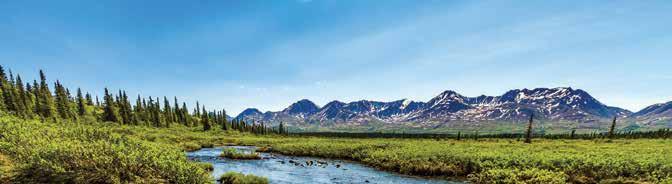
longtime AEDC leader Bill Popp in 2023, had to take extended medical leave. Having previously served at AEDC, Bittner combines deep institutional knowledge with new energy and perspectives. A graduate of the Anchorage School District and UAA, Bittner has held leadership roles advancing business growth and economic opportunity across the state.

· Mat-Su Health Foundation, the nonprofit co-owner of Mat-Su Regional Medical Center, hired Csesalie Bates as Chief Administrative Officer to lead internal operations, administrative strategy, and enterprise-wide systems. Bates previously held a senior leadership role in the healthcare sector where she led operations for three Class A healthcare facilities and supported more than 100 employees. Bates studied accounting and small business administration at UAA and earned a bachelor’s degree in business management from Western Governors University, a Utah-based online school.
· The Alaska Public Interest Research Group, better known as AKPIRG, selected Indra Arriaga as Executive Director. Arriaga brings decades of experience in finance, management, research, and community leadership to the consumer protection nonprofit. She most recently served as strategic and operational director with the Alaska Institute for Justice.
· A longtime veteran of the North Pacific Fisheries Management Council, Diana Evans, is the federal

regulatory body’s new Executive Director, overseeing fourteen staff from the Anchorage office. Evans becomes the council’s fifth leader since it was established under the Magnuson-Stevens Fishery Conservation and Management Act of 1976. Evans received undergraduate degrees in geography and linguistics from the University of California, Berkeley and has a master’s degree in geography from the University of London. She has been employed by the council since 2002 and served as deputy director since 2017.

· Cheryl Siemers didn’t have to wait until summer to find out if her position as UAA Chancellor would be locked in beyond the interim. In March, UA System President Pat Pitney decided that Siemers earned the appointment through a search process that concluded in October. Siemers earned a master’s degree in English at UAA and a PhD in rhetoric and linguistics from Indiana University of Pennsylvania. She joined UAA in 2002 as adjunct faculty at Kenai Peninsula College.

· To lead the bankable feasibility study for Donlin Gold, contracted to Fluor corporation, developers of the Middle Kuskokwim mining project hired Frank Arcese as its in-house Project Director. Arcese held senior leadership roles with TECK/Cominco and Rio Tinto and was most recently the North American capital projects business leader for engineering consulting firm WSP.














This edition of Alaska Trends features two reports: the construction industry’s economic impact and a construction forecast.
For impact, the construction industry’s presence in Alaska is well-noted through the common adage that Alaska has two seasons: winter and construction. Activities are highly visible as workers build or repair roads, buildings, and other infrastructure. But construction is a part of everyday Alaska life through less visible means, such as providing one in twenty Alaska jobs—accounting for 10 percent of all Alaska income—and an average wage surpassed by only a few other industries, such as oil and gas.
The construction forecast is a critical tool for construction companies, but considering the industry’s impact on the state—both through the projects constructed and the people constructing them—it is one indicator of the economy that all Alaska businesses operate in.
Setting the reports side by side provides an opportunity to consider how important construction industry activities are to Alaskans, as well as how Alaskans can diminish or support those activities through our business endeavors, purchasing choices, and elected leaders.
Sources: “The Economic Benefits of Alaska’s Construction Industry” and “Alaska’s 2026 Construction Spending Forecast,” both published January 2026 and prepared by McKinley Research Group for the Associated General Contractors of Alaska/Construction Industry Progress Fund
44,400 CONSTRUCTION RELATED JOBS
Total statewide including multipler effects.
$4.2B ANNUAL LABOR INCOME
10% of Alaska's total payroll.
EMPLOYMENT BY MAJOR CATEGORY
$101,700 AVERAGE ANNUAL WAGE
30% above the average wage for all Alaska workers.
85% OF WAGES ARE PAID TO ALASKA RESIDENTS.
79% of workers are Alaska residents.
The spending forecast projects total expenditures of $6.7B. Private sector spending accounts for $3.8B while the public sector comprises $2.9B.
One North Slope project will move into production this year, reducing overall oil and gas construction spending.
Healthcare-related spending reflects several large projects, and a wide range of utility infrastructure work is planned for the coming year.
A vital component of annual construction spending in Alaska is federal transportation infrastructure funding. Funds are unlocked by state matching funds.
In early April, Governor Mike Dunleavy signed the legislature's supplemental budget, which includes $70.2M for Alaska construction funding and unlocks upwards of $630M in federal funding.
$200M
$440M
$200M OTHER STATE AND LOCAL GOVERNMENT
$515M EDUCATION
$690M
$900M HIGHWAYS & ROADS
$6.7B TOTAL FORECASTED SPENDING
AIRPORTS, PORTS/HARBORS, RAILROADS
What book is currently on your nightstand?
I’m going through Lee Childs’ Jack Reacher series… I just started the twelfth one [Nothing to Lose].
What charity or cause are you passionate about?
Frontline Missions… There’s definitely a purpose bigger than us, and I pray my thankfulness every day.
What’s the first thing you do when you get home after a long day at work?
Catch up with the family, hear all the stories of the day.
What vacation spot is on your bucket list?
New Zealand… They wrote the book on jet boats.
If you could domesticate a wild animal, what animal would it be?
Brown bear/grizzly bear. It’s my favorite animal.
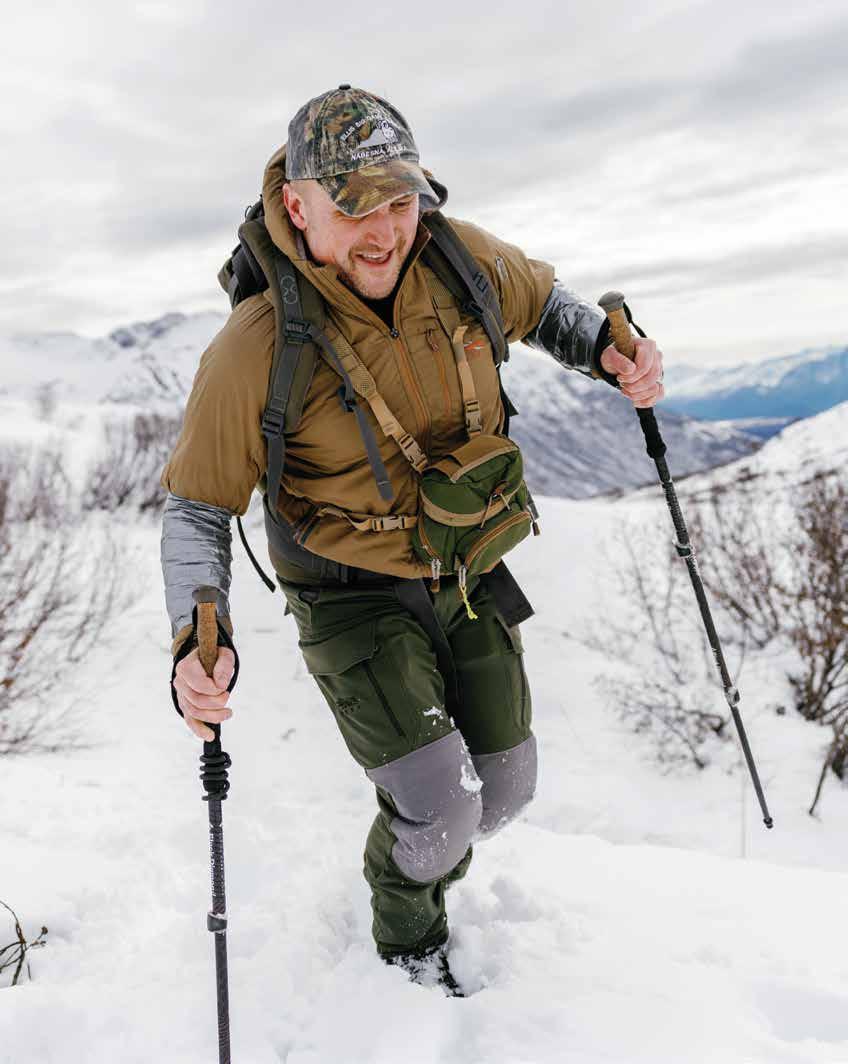
by Kerry Tasker
Adream of being a hunting guide attracted Jeff Miller to Alaska, and he still finds time for excursions as president of Cruz Construction. Miller started swinging a hammer as a carpenter’s assistant in Oregon. He tried studying medicine, but he recalls, “I really liked doing what I’d been doing to pay for college.”
Miller put in time as a project engineer at Wilder Construction and then joined Cruz Construction. He confided to founders Dave and Dana Cruz that he wished to run his own firm someday, so they cut him in as a third owner. Miller says, “Dave’s the best mentor you could ask for. I still talk to him half a dozen times every single day.”
Alaska Business: What do you do in your free time?
Jeff Miller: Anything in the Alaska outdoors with my three kids and my wife.
AB: Is there a skill you’re currently developing or have always wanted to learn?
Miller: I would like to be confident at the piano.
AB: What’s the most daring thing you’ve ever done?
Miller: Guiding sheep hunts… You’re usually taking people that aren’t from Alaska when you do this, so you’ve got their lives in your hands.
AB: What are you superstitious about?
Miller: Depends what sport I’m playing… My sport of choice these days is hunting, so I have a particular knife
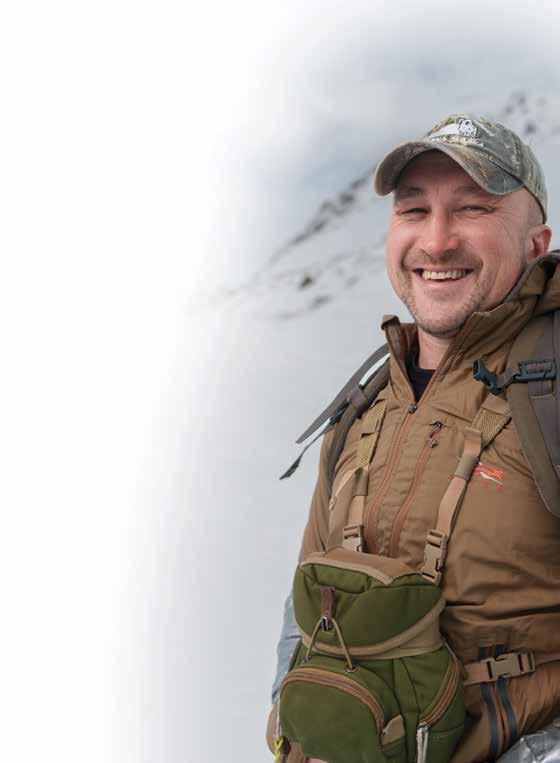
that was my grandfather’s in my front-right pocket… No matter what I’m doing, I’ve got a “Dumbocrow’s-feather” type thing.
AB: What’s your favorite local restaurant?
Miller: Turkey Red.
AB: Dead or alive, who would you like to see perform live in concert?
Miller: Kenny Chesney.
AB: What’s your greatest extravagance?
Miller: My coat collection. I have a coat problem… Alaska winter outdoor jackets: when I find a good one I like, I’ll buy a couple.
AB: What’s your best attribute and worst attribute?
Miller: My intensity… It’s got to be regulated to not be overwhelming to those around ya, but if you work really hard and be intense, you can get a lot of things done.
AIDEA Alaska Industrial Development and Export Authority 23
aidea.org
Airport Equipment Rentals ..................... 115 airportequipmentrentals.com
Alaska Dreams Inc 21 alaskadreamsinc.com
Altman, Rogers & Co. ............................... 27 altrogco.com
Anchorage Convention Centers 19 anchorageconventioncenters.com
Anchorage Sand & Gravel ......................... 51 anchsand.com
Arcticom 17 arcticom.com
ASRC Energy Services, LLC ........................ 37 asrcenergy.com
Associated General Contractors of Alaska ................................................ 15 agcak.org
Bering Straits Native Corp ........................ 95 beringstraits.com
Chugach Alaska Corporation 11 chugach.com
Conam Construction Co............................ 59 conamco.com
ConocoPhillips Alaska 7 alaska.conocophillips.com
Conrad-Houston Insurance Agency............ 11 chialaska.com
Construction Machinery Industrial 2 cmiak.com
Cook Inlet Tug & Barge Inc ...................... 103 cookinlettug.com
Craig Taylor Equipment 69 craigtaylorequipment.com
Crowley Fuels ......................................... 57 crowley.com
Cruz Companies 49 cruzconstruct.com
Davis Constructors & Engineers Inc............ 93 davisconstructors.com
Delta Constructors 101 deltaconstructors.net
Denali Commercial .................................. 67 denalicommercial.com
Design Alaska 57 designalaska.com
Dorsey & Whitney LLP .............................. 70 dorsey.com/locations/anchorage
Doyon, Limited ....................................... 93 doyon.com
Engineered Solutions Group 45 esgrp.net
Equipment Source, Inc ............................. 79 esialaska.com
First National Bank Alaska 5 fnbalaska.com
GCI ......................................................... 3 gci.com
Greer Tank 59 greertank.com
Haskell Corporation ............................... 103 haskellcorp.com Holmes Weddle & Barcott 75 hwb-law.com
JD Steel Co Inc ......................................... 81 jdsteel.com
Joint Base Elmendorf-Richardson 9 jberlife.com
King Halibut Lodge .................................. 43 kinghalibutlodge.com
Landye Bennett Blumstein LLP 63 lbblawyers.com
LONG Building Technologies ..................... 53 long.com
Lynden 116 lynden.com
MT Housing Inc. ...................................... 35 mthousing.net
N C Machinery 73 ncmachinery.com
NCB..................................................... 105 ncb.coop
NECA Alaska Chapter 71 alaskaneca.org
Nenana Heating Services, Inc .................... 13 nenanaheatingservicesinc.com
Northern Air Cargo 108, 109 nac.aero
Northrim Bank ........................................ 55 northrim.com Oxford Assaying & Refining Inc
oxfordmetals.com PeopleAK ............................................... 27 peopleak.com
perplus.com


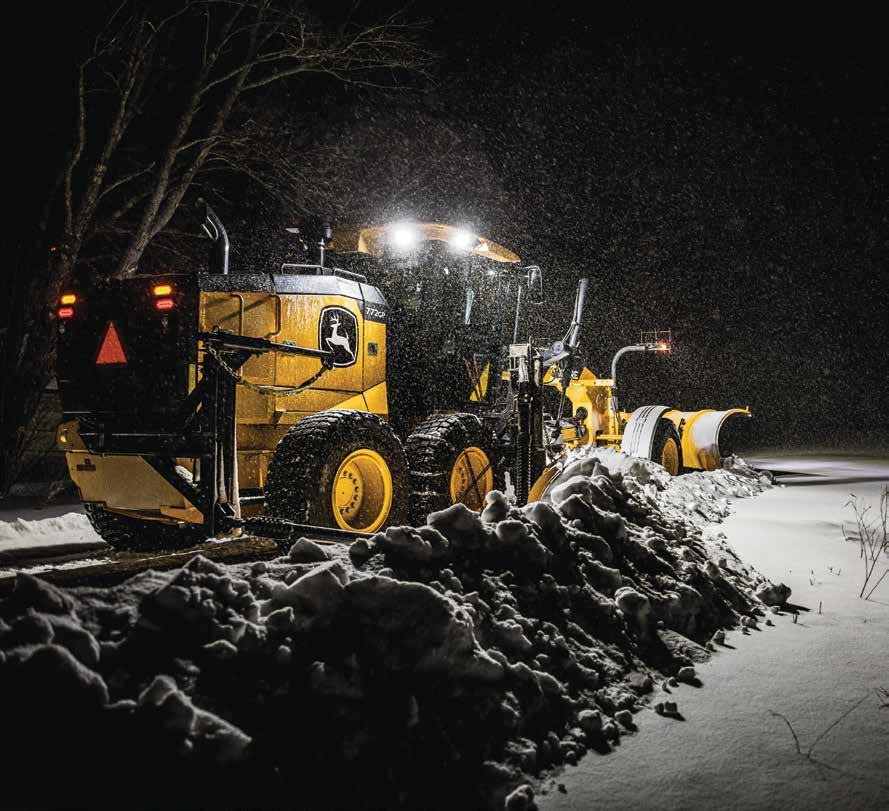
Over the past six decades, John Deere motor graders have built a reputation for outstanding machine control and effortless grading precision. Its optimized machine specs, reliable capability, and updated cab amenities that put operator comfort front and center can help take your productivity to the next level.