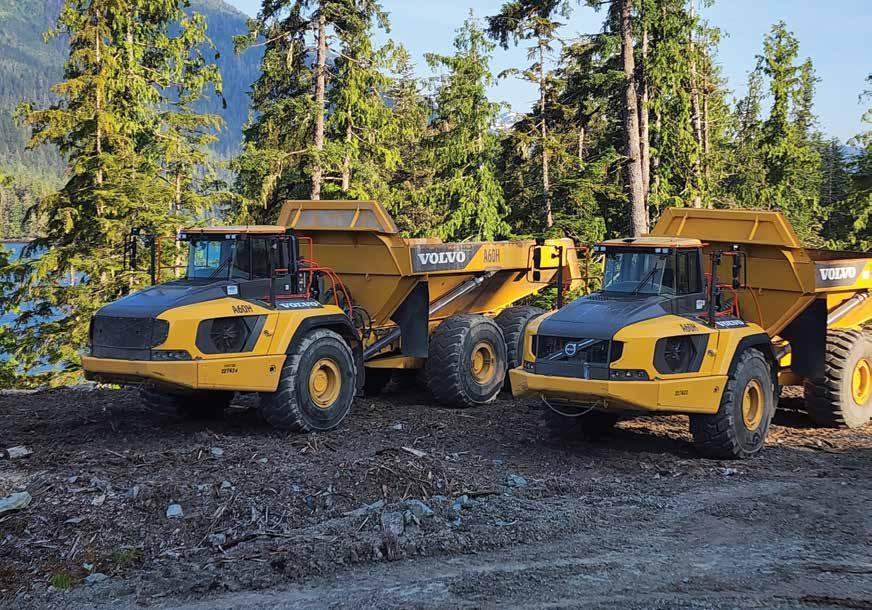
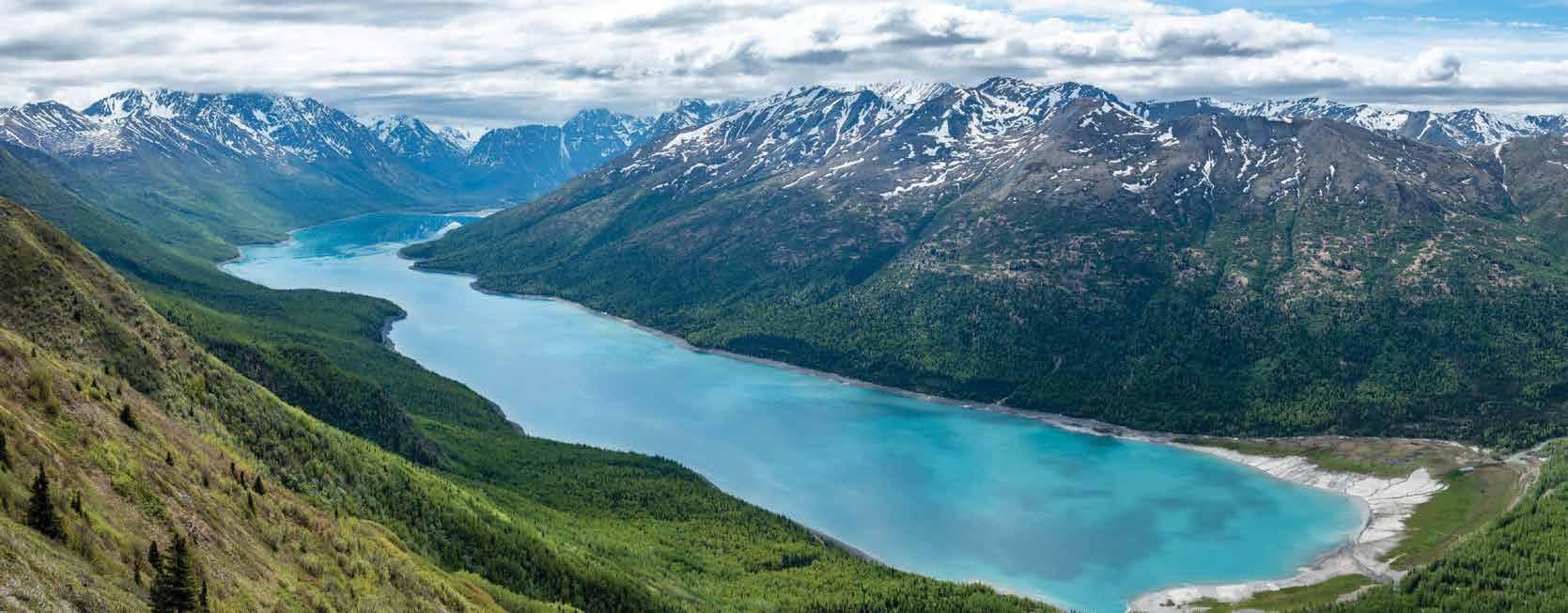
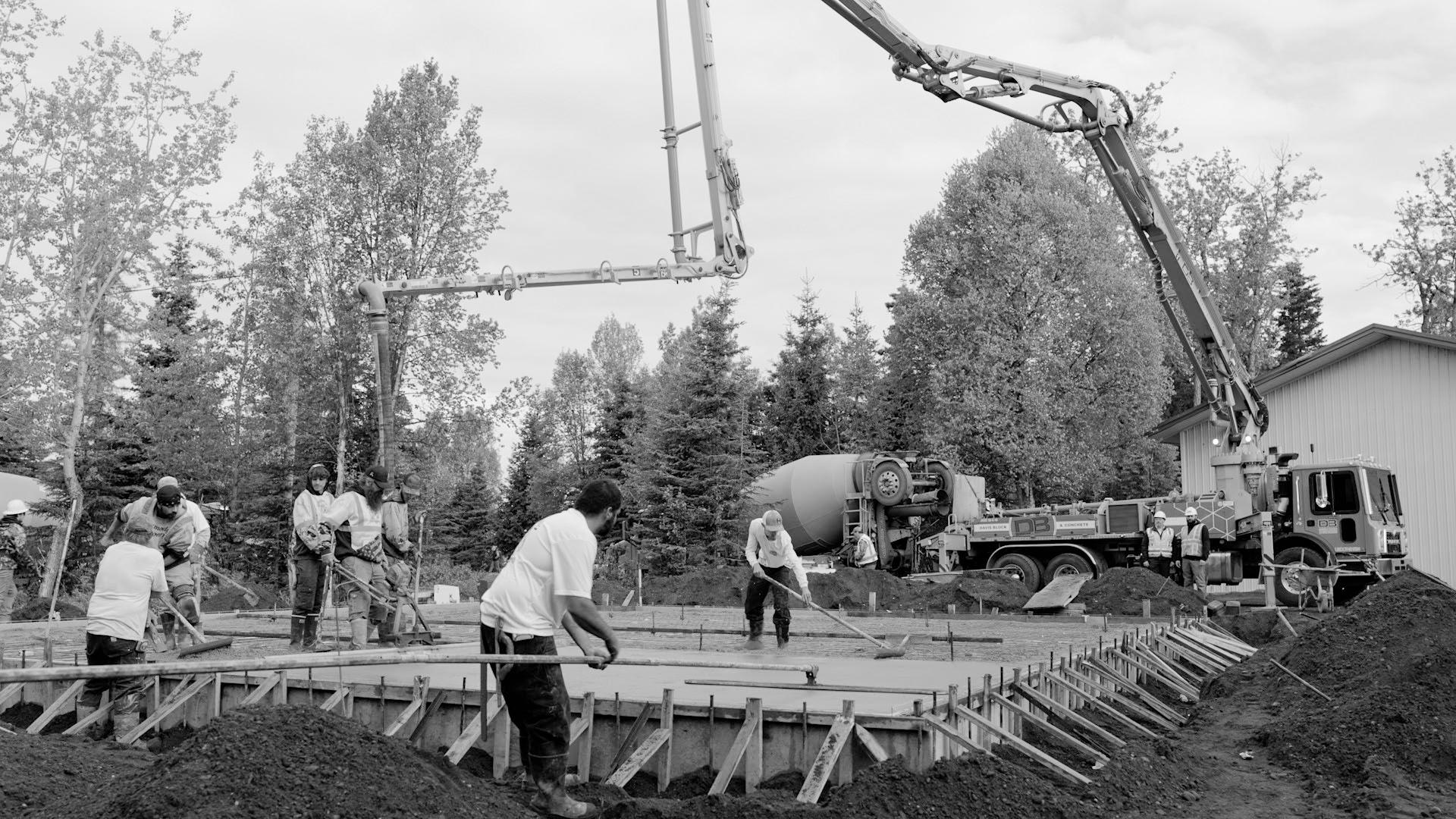
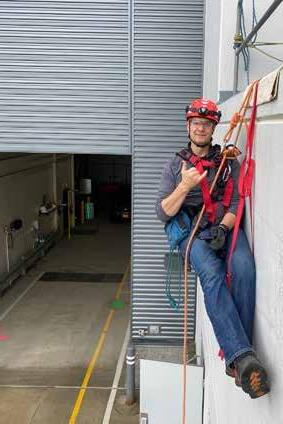
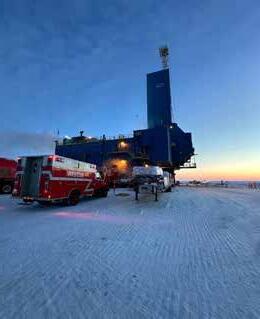
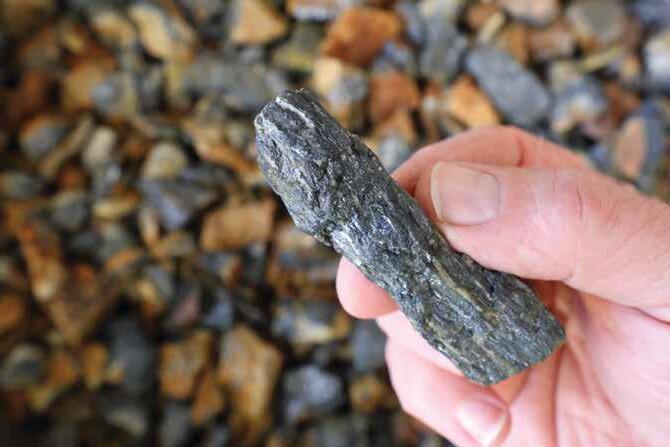
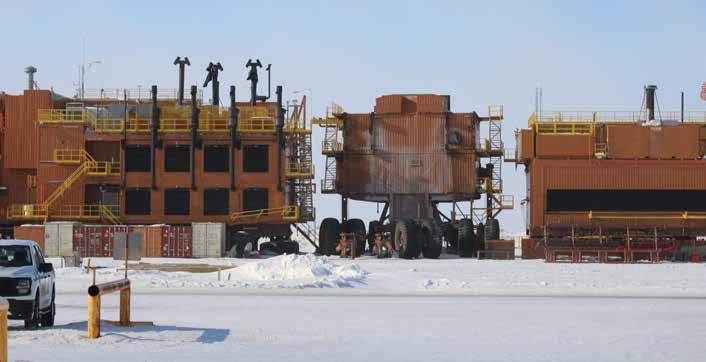
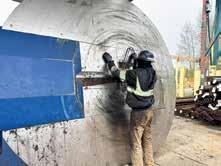
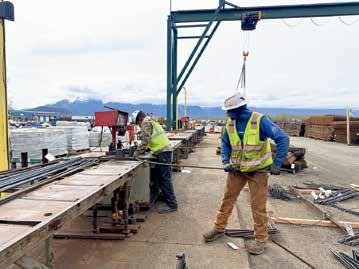
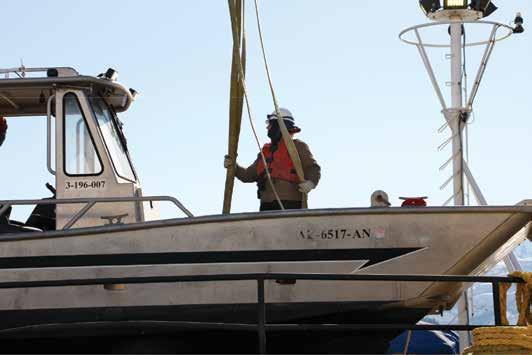
Volvo A60 Ar ticulated Truck Prince of Wales, Alaska
Volvo L120 Tok, Alaska
10 FINANCE
Penny Wise
Alaska businesses have varying approaches to penny production stoppage
By Rindi White
18 RETAIL
Till Tomorrow
The future is now for point-of-sale systems
By Vanessa Orr
68 MINING
Growing for the Long Haul
A report from the Alaska Miners Association convention
By Rachael Kvapil
74 HEALTHCARE
In Transit to Treatment
Evolving transportation models lead to better patient outcomes
By Tracy Barbour
82 LEADERSHIP
Doing Good by Being Good: Indecisiveness
By Lincoln Garrick
24 MEDIA & ARTS
T.G.I.F.F.
First Fridays boost sales and foot traffic for artists and small businesses
By Samantha Davenport
62 OIL & GAS
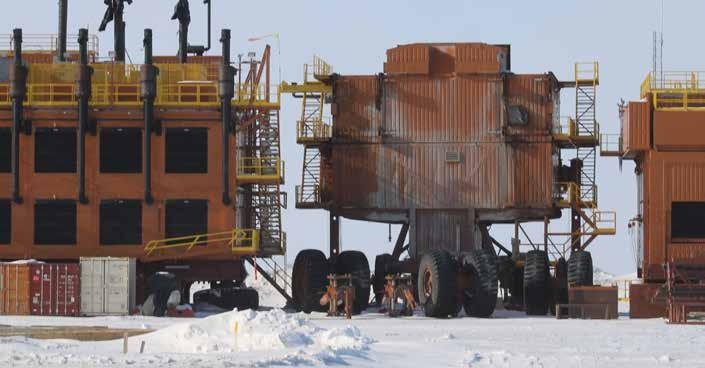
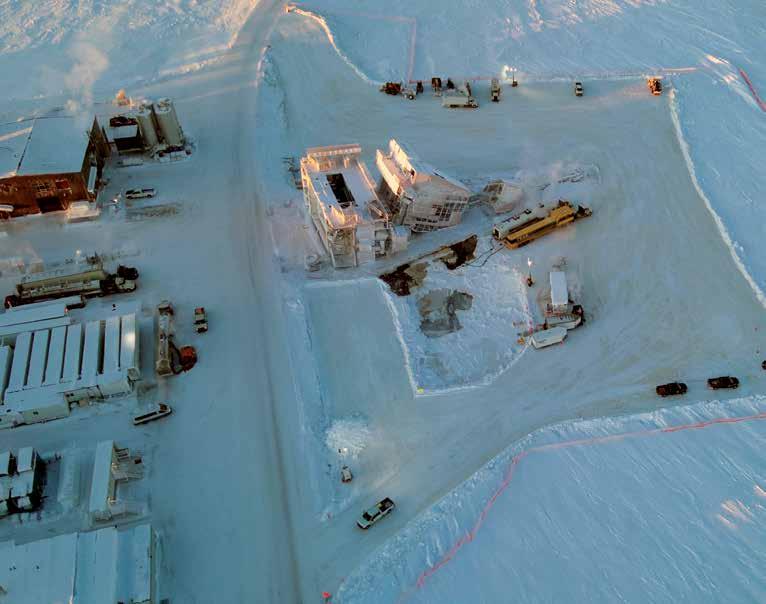
Goodbye, Beast
Remembering and remediating a North Slope icon
By Scott Rhode
Alaska Business
Valerie Jaimes
The Power of Culture
Thank you, Alaska, for voting First National Bank Alaska the Best Place to Work for a remarkable 11 years in a row! We’re also honored to be recognized as Best Bank for six consecutive years, Best Customer Service for the third year running, Best Corporate Citizen for the fifth time and Best Wealth Management Firm , a new category in 2026. When our employees are supported by a strong culture and the resources to thrive, they’re better equipped to help our customers succeed. Together, we’re helping build a brighter future for all Alaskans.
Betsy Lawer
BOARD CHAIR AND CEO/PRESIDENT
Alaska Business magazine Best of Alaska Business Awards
SPECIAL SECTION: BEST OF ALASKA BUSINESS
By Vanessa Orr
By Christi Foist
By Terri Marshall
ABOUT THE COVER
A single panel is a challenge for cover artist Lucas Elliott, especially when Best of Alaska Business involves illustrating dozens of categories. “That’s the tough part,” he says. “How do you do something that’s different and unique but also fits into the same vein?”
Elliott must avoid duplicating last year’s cover artist, Chad Carpenter. “I work in more of a long-form format, whereas he works in more of a Sunday comics format, which for me I actually find difficult,” Elliott explains. They understand and respect each other, which is why Carpenter enlisted Elliott in 2011 to adapt Moose: The Movie as a graphic novel.
Artistic challenges can pay off, big time: Elliott’s “What’s your next adventure?” cover for the October 2022 issue of Alaska Business won a first-place award from the Alaska Press Club.
by Lucas Elliott
Illustration
Lucas Elliott
VOLUME 42, #7
EDITORIAL
Tasha Anderson, Managing Editor
Scott Rhode, Senior Editor
Rindi White, Associate Editor
Emily Olsen, Editorial Assistant
PRODUCTION
Monica Sterchi-Lowman, Art Director
Fulvia Caldei Lowe, Production Manager
Patricia Morales, Visual Content Designer
BUSINESS
Billie Martin, President
Jason Martin, VP & General Manager
James Barnhill, Accounting Manager
SALES
Charles Bell, VP Sales & Marketing 907-257-2909 | cbell@akbizmag.com
In June I had a wonderful opportunity to drive to Seward and participate in the Port Partners program as a judge. Royal Caribbean Group teamed up with the Gateway Hotel, Alaska Small Business Development Center’s Kenai Peninsula Center, Alaska Vocational Technical Center, Seward Chamber of Commerce, City of Seward, and the University of Alaska for the Port Partners program, which combined a ten-week course with mentorship and coaching to help small businesses owners in Seward build business acumen and, for one small business, win a $20,000 grant.
In early June the course was complete, relationships were forged, and the sun was shining, so all that was left was to select which small business would get $20,000. As we gathered in the new Dale R. and Carol Ann Lindsey Seward Cruise Terminal (which celebrated its official ribbon cutting earlier the same day), I was eager to hear pitches from the owners. It quickly became clear that all the businesses had incredible potential, so as the presentations continued, I kept coming back to the same question: how does this business make Seward better?
In their own way, all small businesses make communities better—small businesses are the community. They provide gathering places, essential goods, and quality services. They understand local seasons, needs, and obstacles. They create opportunities for work: first jobs for local youth, part-time jobs for parents who need flexibility, or career tracks for deep-rooted residents.
To honor those contributions, we continue to publish the Best of Alaska Business awards year after year. While the businesses in those ranks range from large to small, the majority are small businesses, and we love the opportunity to celebrate them.
Thank you, again, Royal Caribbean, for facilitating such a unique opportunity for me: traveling to Seward, engaging with the incredible business community there, and giving what feedback I could to narrow down an amazing cohort of small businesses to just one. Congratulations, Exit Glacier Greenhouses: we’re all rooting for you.
Tasha Anderson Managing Editor, Alaska Business
Penny Wise
Alaska businesses have varying approaches to penny production stoppage
By Rindi White
Pe nnies are so 2025. Penny production, that is. The US Mint struck its last batch of pennies on November 12, 2025, ending a 233-year tradition. The reason: over the past ten years, the price of producing a 1-cent coin had risen from 1.3 cents per penny to about 3.69 cents, the US Mint says. The mint expects to save around $56 million per year in reduced material expenses from stopping production.
“Given the increasing number of non-cash transactions and the very low purchasing power of a single penny, the Department of the Treasury does not believe continued production is fiscally responsible or necessary to meet the needs of commerce in the United States,” the US Department of the Treasury wrote in a frequently asked questions page about penny production cessation.
Although new pennies are no longer rolling out of presses, the 1-cent piece is still legal tender and
still in circulation. It may be a little more difficult for businesses to purchase them to fill coin trays, but several Alaska business owners aren’t spending much time fretting over the availability of the nation’s smallest legal tender.
A Penny Saved
Helen Mickel, president of Tongass Federal Credit Union, prepared for the end of penny production just like Alaskans do when a serious storm is on the way: she and her team stocked up.
“When the announcement went out that pennies would no longer be minted, there was a flurry of member demand for pennies,” says Mickel. “We placed a one-time order for $600 in pennies last fall, which brought our total penny inventory across the credit union to just over $1,100. Since then, sentiment seems to have shifted. Members are now bringing pennies back in, and today
we actually have more pennies than we did at this same time last year.”
Last year, she says, the credit union had about $602 worth of pennies across all its vaults. The credit union has never had to place penny orders, she notes, because the supply and demand remained about even— pennies were simply circulated among members and branches. Now, if anything, the credit union is penny wealthy.
“Today, even after that one-time purchase, we’re holding more than $1,600 in pennies across the credit union," Mickel says.
Buffy Meyer, who owns Fish On! Camp Grill food truck, says many locations where she operates use vouchers, which don’t require any money to change hands, unless people not attending the event stop by for a bite—which Meyer always welcomes.
Meyer and her crew do run their grill at the Alaska State Fair, however,
Koonsiri
and there, money changes hands many ways. There are a lot more cash transactions and, in part due to the City of Palmer’s 4 percent sales tax, pennies are much more in use during the fair.
Meyer says she prepares all year for the event by tossing any change she accumulates into a jar.
“We keep a change jar so when we pay cash for anything through the year… we throw our change in the car or a jar at the side of the bed, then we bring it out at fair time, and we use it all up. By the end of the fair, we don’t have any more, but we round up, so [customers] end up getting more change back,” Meyer says.
Mickel says she’s seen a couple businesses in Southeast move to cashless payment. That means paying a percentage to credit card companies, but it avoids having to deal with coins altogether.
Troy McGlashan operates Aethereal Coffee, a Palmer-based organic fairtrade coffee roaster that often has a table at community events. He says Aethereal’s pricing structure, with half-dollar and full-dollar amounts, makes it easier to avoid the penny problem, but prices are primarily set that way so he doesn’t have to lug around change, which can be annoying.
Penniless Payments
John McDonald is the owner of five McDonald’s fast-food restaurants in Kenai, Soldotna, Homer, Juneau, and Ketchikan.
His last name is fortuitous only; he bears no known relation to the global chain’s founding brothers, Richard and Maurice McDonald, but he has
worked in McDonald’s restaurants for years, starting in Fairbanks as a crew member at the Airport Way McDonald’s and transitioning to the corporate side of the company from there.
McDonald says his bank let him know several months ago he would no longer be able to purchase pennies.
A century of commitment. And counting.
“We’ve been out about two months [on the Kenai Peninsula] and, in Southeast, about thirty days,” McDonald said in May.
He clarifies that his restaurants still accept pennies as payment, but cashiers don’t return them as change, instead rounding to the nearest nickel, as recommended by the US Department of the Treasury.
For over 100 years we have seen the cycles, weathered the storms and adapted with the times, steadfast in our commitment to support producers and rural communities alike. Because some things should never change.
Those guidelines, which come from a November 2025 report from the National Council of State Legislators, are as follows: “If the final digit of the total transaction amount (including taxes) is 1, 2, 6, or 7 cents, the amount is rounded down to the nearest multiple of five. If the final digit is 3, 4, 8, or 9 cents, the amount is rounded up. Transactions totaling exactly $0.01 or $0.02 might be rounded up to $0.05.”
Phasing out pennies has been a little complicated. If a jurisdiction doesn’t have a sales tax, it’s easier, but McDonald notes that all of his locations have sales tax. Thus, even if the price of the order ends in a five or zero, the tax would likely bring the total to something not solved by a nickel or dime.
McDonald says the company uses coin changers to give change at its kiosk ordering stations. The coin dispensers stop working if they run out of, say, quarters or nickels, and they won’t work until that denomination is refilled. His crew had to reprogram the dispensers to think
they’re full of pennies even if they’re not, he says. Likewise, the point-ofsale machines at the counter had to be reprogrammed with the round-up and round-down rules.
He says the rounding tends to even out—one customer might get a penny or two more than they’re owed, but the next customer might get a penny or two less.
“The Treasury projects that it’s a net zero of what the business and the consumer experience,” he says.
More importantly, he says, he’s not getting pushback from customers.
“I think people are just accepting the fact that pennies are going away and that is just how it’s going to be,” McDonald says.
In for a Penny, In for a Pound
Bushes Bunches produce stand owner Karianne Smith says pennies are still in circulation at her market at the foot of Lazy Mountain in the Matanuska Valley. While there’s no sales tax, the store sells vegetables and fruit by the pound, so even if all
prices ended in zeros and fives, the by-weight produce means there will always be a range of numbers after the decimal point.
“Because it’s by the pound, it doesn’t matter. We’ll still owe cents,” she says.
Smith says her bank has limited the amount of pennies she can buy to $5 worth per week, which is more than enough for the store; she goes through perhaps five to seven dollars’ worth of pennies every two weeks. For now, that means she can keep doing business as usual. She adds that most customers use credit cards, so it doesn’t matter what number comes after the decimal point.
“We’re a small enough operation where it’s not really affecting us yet,” Smith says. “The pennies—when we’re forced to do it, we’ll do it.”
Tongass Federal Credit Union’s Mickel notes that Alaska tends to lag other states when it comes to economic trends. However, the influx of summer tourists might drive adjustments to the mechanics of providing change.
Coinstar, the largest coin cashing and processing company in the world, is now owned by Arctic Slope Regional Corporation. CEO Kevin KcColly says Coinstar machines count about 13.5 billion pennies each year. So far, he says he's seeing nominal change in the amount of pennies being cashed in.
Robert Machado | Adobe Stock
“When I talk to my management team about how the branches are feeling or the input they’ve gotten, no one’s worried about it at this point,” Mickel says. “Once [pennies] start becoming more scarce, it’s going to happen really fast. Right now, we’re just seeing business as usual.”
When the Penny Drops
Arctic Slope Regional Corporation has a new reason to pay attention to pennies and other denominations of coins: the Alaska Native corporation in February took ownership of Coinstar, the largest coin cashing and processing company in the world.
There are about 25,000 Coinstar machines around the globe, and more than 19,000 of those are in the United States, often co-located at supermarkets. There’s at least one kiosk in all fifty states; more than thirty kiosks are operating in Alaska. Coinstar machines across eight countries collect about $3 billion a year in coins, says company CEO Kevin McColly. In a year’s time, Coinstar machines count about 13.5 billion pennies.
Fewer banks want to take in coins today than thirty years ago, so Coinstar fills a gap by exchanging coins for cash. Here’s how it works: a customer dumps a jar of coins into a machine, where it’s automatically sorted and counted. The customer can choose from several conversion options: give the counted change as a donation to charities, such as American Red Cross or Make-AWish Foundation of America (the charities offered vary by location); get cash for the change, minus a
processing fee; exchange the coins for eGift cards with no processing fee; add it to a prepaid debit card; or use the cash to buy one of several cryptocurrencies.
It’s only been a few months since penny production ceased, so it’s difficult to point to a clear trend, McColly says, but the company’s machines are taking in slightly fewer pennies than they had by this time last year.
The average jar of coins adds up to about $60, McColly says. His numbers show Coinstar is seeing about forty fewer pennies in the average jar than a year ago.
“It’s not like, ‘blow you away,’ but there is a little bit of a change, for sure,” he says.
Asked how he expects that to change in the future, McColly says it’s hard to say. Coinstar has operated machines in other countries where small-denomination coins have been phased out: Canada, where penny production ceased in 2012, and Ireland, which ceased production of the one-cent Euro coi n in 2015.
“It was a well-thought-out plan of how they’re going to do it and what’s the timeline,” McColly says. “That didn’t happen here.”
Why does it matter? Coinstar’s coins don’t go into a vault; they are separated, re-counted, and returned to circulation, mostly in the same communities where they were collected. Banks buy those coins, and so does the Federal Reserve— between 40 and 50 percent of the coins deposited by Coinstar go back to the Federal Reserve, which then recirculates them.
“I find it ironic that we’re saving money on the penny only to produce more nickels that are way more expensive.”
Kevin McColly, CEO, Coinstar
In September 2025, after announcing penny production would stop, McColly says the Federal Reserve also stopped taking orders and deposits of pennies in some markets. Coinstar couldn’t deposit the pennies it took in, which caused problems.
The decision to stop taking deposits of pennies has since been lifted in some markets, McColly says, but it’s an example of the hiccups that happened because there was so little discussion or guidance around ceasing penny production. Legislation had been introduced in the US Congress as recently as 2017 to phase out pennies, but ultimately it was done in February 2025 by President Donald Trump directing the Department of the Treasury to set the amount of new pennies to zero.
Some people seem confused about whether pennies are still legal tender—they are—and some businesses have stopped accepting them, even though not accepting them might be illegal in some areas. A larger issue is, without federal guidelines, there is confusion
about how to fairly give change. If guidelines vary from state to state, it becomes problematic for companies that work in numerous states.
The Common Cents Act, US House Resolution 3074, was introduced in April 2025 to address some of those concerns, including setting out guidelines for when to round up or down (they mirror the National Council of State Legislators guidelines). Although it was discussed at two House Financial Services committee meetings, the bill hasn’t moved since September 2025.
McColly says he wishes the bill was more comprehensive, but it would solve a few issues. It also attempts to address another looming coin-cost problem: although the president cited the cost of production outweighing the value of the penny, the nickel poses an even greater seigniorage gap. A penny cost nearly four cents to produce, but a five-cent piece— currently made of 75 percent copper and 25 percent nickel—costs 13.78 cents to produce. The Common Cents legislation authorizes the US Mint to test and produce nickels made with nickel-plated zinc instead of nickelplated copper. A reconstituted nickel would also provide an outlet for zinc that had made up 97.5 percent of post-1982 pennies.
Discontinuing those pennies has increased reliance on nickels, which contained more copper than the traditional red cent.
“I find it ironic that we’re saving money on the penny only to produce more nickels that are way more expensive,” McColly says.
One might call that penny wise and nickel foolish.
Send more cargo than ever before with our expanding fleet and network.
Thanks to our growing fleet of 350+ aircraft, and nearly 1,500 daily flights to 141 destinations, you can ship almost anything to more places. That includes 29 international markets in the Americas, Asia, Australia, the South Pacific, and to and from 20 of our beloved Alaska communities. For more information, go to alaskacargo.com/contact-us. Or call us at 1-800-225-2752
Aurora Integrated Oncology Foundation
Enhancing cancer prevention, treatment, and supportive care statewide
Aurora Integrated Oncology Foundation (AIOF) is transforming cancer care in Alaska. Operating four clinics— Anchorage Radiation Oncology Center, Mat-Su Radiation Oncology Center, Peninsula Radiation Oncology Center, and Southeast Radiation Oncology Center—AIOF delivers advanced services and comprehensive support for patients and their families. The clinics offer integrative services, including nutrition, palliative care, and social work, available in person and through Telemedicine. "We're not just seeing them through their radiation oncology; we help navigate the physical, emotional, and practical challenges that may come with a cancer diagnosis," says Vice President of Community Engagement and Philanthropy Jess Gutzwiler.
A 501(c)(3) nonprofit, AIOF goes beyond cancer treatment. Through strategic philanthropy and collaboration, it offers "upstream" services statewide to help Alaskans detect cancer early. Last year, AIOF hosted impactful Alaska State Fair and Beer for My Boys screening events, raising awareness for hundreds of participants. AIOF also alleviates financial barriers to care by granting eligible patients up to $2,000 annually for utilities, transportation, and other basic necessities.
AIOF is dedicated to strengthening cancer care across Alaska, and not just through its clinics. "It's about supporting local organizations and nonprofits—extending resources to provide comfort, advocacy, and assistance to any Alaskan fighting cancer," Gutzwiler says.
Anchorage Radition Oncology Center 907-562-2002
Mat-Su Valley Cancer Center 907-707-1333
Peninsula Radiation Oncology Center 907-262-7762
Southeast Radiation Oncology Center 907-586-5762
aiofak.org
P
Till Tomorrow
The future is now for point-of-sale systems
By Vanessa Orr
Gone are the days when merchants tallied up a client’s purchases on paper, rang it up on a cash register, and did all their bookkeeping by hand. While some Alaskans cling to certain traditional aspects of making a sale, more and more retailers and restaurateurs have point-of-sale (POS) systems that do much of the work for them.
“Everything is completely different now,” says Trish Moreland, a small business advisor at the Anchorage office of the Alaska Small Business Development Center. “Point-of-sale systems went from people using cash registers to ring things up, to barcode scanners, to POS systems that now integrate with a business’ inventory management pieces, payroll, and more.”
Customers can now safely shop online using ecommerce, pick up merchandise at the store, and find out from sellers via the POS system that their packages are on the way or what other offers are available.
“It’s not just a cash register system,” Moreland adds, noting that business owners can use POS systems to track revenue for tax reporting, manage sales tax collection, and monitor activity by state for ecommerce and other requirements. “POS has basically become an all-in-one tool for retailers.”
With All the Fixings
“Times have changed a lot,” says Thomas Greenman, the president and co-owner of Skurla’s POS Solutions, an equipment supplier in Anchorage. “We’re in our 50th year of providing Alaskans with POS and related solutions, but back when we first started, we only sold mechanical and electronic cash registers.”
Greenman laughs as he remembers the early era. “There wasn’t a lot of innovation at the time; going from mechanical to electronic registers was a big deal—it was the height of technology,” he recalls. “Today’s modern POS
Skurla’s POS Solutions
systems are essentially computers. When I tell people what I do now, I say that I work in IT for restaurants and retail. It’s really just selling fancier cash registers.”
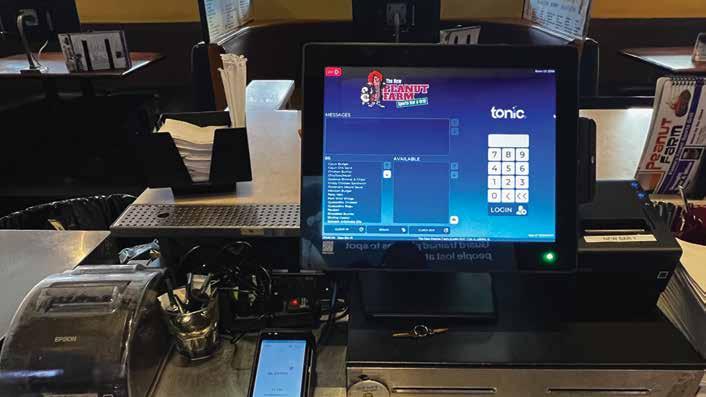
Today’s POS systems combine hardware (tablets, card readers, scanners) and software that enable businesses to process payments, record transactions, manage inventory, and track customer data.
Using modern digital tracking and analytics, these systems can scan retail items, apply discounts, and update inventory in real time; take restaurant orders tableside via handheld devices, send them to the kitchen, and split checks; and allow mobile businesses and pop-ups to use smartphones or tablets with card readers to process payments on the go.
POS systems can also be used for inventory management, automatically reducing stock levels when an item is sold, and for reporting: generating daily sales reports to analyze revenue and employee performance. Depending on the integrations chosen, POS systems can even be used to replace employee timecards and create employee schedules.
“Businesses can keep track of customers’ previous orders, loyalty points, payments, and more. In some restaurants, POS can provide a kitchen display to show orders coming in to the chefs,” says Greenman. “While previous systems kept track of how many hamburgers were sold in a given time period, today’s systems can analyze what the most popular burgers are, what
“Point-of-sale systems went from people using cash registers to ring things up, to barcode scanners, to POS systems that now integrate with a business’ inventory management pieces, payroll, and more.”
Tris
modifiers (lettuce, onion) are added to burgers, and more.”
These aren’t your greatgrandparents’ hand-cranked tills.
“POS is almost a misnomer; it’s more of a retail management system that provides very granular information across the board,” Greenman adds.
“You can get very specific and see how much bacon was added to burgers so that you can forecast how much bacon you’ll need next week. Restaurant owners can track how many sales they have on a Friday night and pull the resources and people they need to work those shifts in the future.”
According to Moreland, if a POS system is set up properly and used correctly, it can make a dramatic impact on managing a business.
“I used to own retail pet stores, and while I could see what was being purchased, I didn’t know which items were selling slowly,” she explains. “Using reorder points in the POS system, you can see what people are buying all the time.”
“This can even help you spot things like shoplifting,” she adds. “I had a product I thought was selling really well because it was always out of stock, but the POS slow-seller reports showed it wasn’t; it was actually being stolen. Once I moved it to a more visible spot, it made a big difference in my reorder frequency—and, more importantly, my margins.”
The Push Forward
While some consumers are ready to embrace new technologies, the adjustment is rarely cheap for retailers and restaurant owners. When the iPhone came out, for
When Trish Moreland was running pet stores, she would've loved a POS system that automatically tracks sell-through rate and inventory turnover.
Joni | Adobe Stock
example, it was inexpensive for consumers, but touch screens in the POS world were still quite expensive.
“When Apple came out with the thin, portable, lightweight iPad, there was a lot of consumer demand, but that type of software was still halfbaked for business use,” explains Greenman. “So small mom-andpop stores came up with their own software, but it was not ready for prime time.”
Beginning in the mid-‘70s, technology innovators such as Apple began redefining themselves, focusing on what technology means to people— especially in contrast to specialized tech dominated by IBM, maker of the first computerized cash registers.
“A lot of players in the POS world now didn’t exist years ago,” says Greenman of this shift in thinking. “POS is a very, very specialized world.”
Even technologies already in existence took a while to catch on in
the retail and restaurant industries. QR code technology, for example, has been around since 1995 as camerareadable labels, but it wasn’t until the COVID-19 pandemic hit that retailers began to pay attention.
“COVID forced people to get out of their boxes and to adopt new technologies,” says Greenman, noting that introducing QR codes for non-contact ordering spared Alaska businesses that would have gone under if customers hadn’t been able to connect with them.
“After COVID, some people got rid of these technologies, which is so weird to me,” he adds. “Why adopt something that clearly resonates with customers and then put it aside?”
One concern in Alaska is that many modern POS systems are cloudbased, which can be challenging in the many areas of Alaska that have low or inconsistent connectivity.
“The trends have gone from using cash registers completely offline to technologies that are all cloudbased,” explains Ben Nove, regional manager of Anchorage-based SkyTab Alaska. “Because we live in a harsh environment with power constraints and communication constraints, a lot of cloud products don’t work that well up here.”
SkyTab Alaska bills itself as an all-in-one POS system tailored for Alaska bars and restaurants.
“We use a hybrid model with an Internet connection instead,” Nove says. “If the Internet is working, it runs fine; if the Internet is severed, it runs in a local state where everything still functions, but you don’t have communication with the outside world.”
While Alaska doesn’t yet have access to some of the products and services used in the rest of the nation, Nove says that, through Starlink satellite-based internet and other technologies, the state is moving in the right direction.
“Alaska in general is about five years behind the Lower 48,” he explains. “We don’t have a lot of national brands up here because a lot of independents don’t move into places with small populations and diverse sets of applications and phone structures. But we’re getting there.”
What Works and What Doesn’t
According to Moreland, finding the right POS system for a business is like buying a house. Business owners should list the features they want and then work with POS vendors to narrow down their choices.
“Do you want to manage your inventory? Is ecommerce part of your store? How many locations do you have and do your customers shop online?” she asks. “Lay out your wish list and then request demos from your POS contacts. This is important because you don’t know what you don’t know.”
Moreland suggests that potential buyers also talk to local retailers or those in similar industries to see what is working—and not working—for them.
“Find out what they have to create workarounds for, like fractional items—dog biscuits by the pound, fabric by the yard, for example. That’s often difficult for POS to do, so it’s a good idea to put that at the top of your list,” she says.
“Basically, POS is implementing a computer that does business rules… You tell me your rules, and we’ll try to implement it in the computer.”
Ben Nove, Regional Manager, SkyTab Alaska
She adds that cybersecurity measures should also be part of the discussion so that clients’ personal information and credit card information are protected. This can also help businesses when acquiring insurance because they demonstrate how they are mitigating risk.
“While some POS solutions are not as feature heavy as platforms such as Square, Toast, or Lightspeed, one of their biggest advantages is having technicians on the ground here in Alaska,” notes Moreland about considering local vendors. “This is hugely helpful if a printer goes down or a card reader fails— both of which always happen at the worst possible moment.”
Skurla’s, based in Anchorage, takes a consulting approach with its clients, working to determine what each business needs now and in the future. “You can outgrow a POS system quite quickly, depending on what you’re doing—for example, integrating DoorDash into your system,” says Greenman. “In the POS world, some systems can evolve with you so that you can stay in the same ecosystem— just like upgrading a phone.”
Nove also notes that even customers in the same industry may have very different needs depending on where they are located. “Nome has drastically different delivery issues than Anchorage does,” he says. “Barrow may only have a three-mile delivery radius, but some houses don’t have roads to them. Things have to be flown in by plane. These are oddities we have to map out and deal with.”
Vendors are able to customize for these one-off situations. “Basically,
“Going from mechanical to electronic registers was a big deal— it was the height of technology… Today’s modern POS systems are essentially computers. When I tell people what I do now, I say that I work in IT for restaurants and retail.”
Thoma s Greenman President an d Co-owner Skurla’s POS Solutions
POS is implementing a computer that does business rules,” says Nove. “You tell me your rules, and we’ll try to implement it in the computer.”
The Cost of Doing Business
Installing a new POS system can be costly, but it can save business owners money in the long run. Prices on some items, such as new hardware, are negotiable and are often a better investment than using current equipment that may have compatibility issues. There is usually a one-time start-up fee to cover inventory migration, system set-up, and team training, and
then a monthly subscription fee for cloud-based systems as well as credit card fees.
Business owners may also want to purchase mobile hardware that is compatible with the POS system, especially if they sell in places like farmers’ markets or want to take restaurant orders tableside.
“All of these investments should be considered negotiable; the more volume you do and the more terminals you have, the more room you have to negotiate,” says Moreland.
Mobile terminals work best with plastic transactions, of course, but this comes at a price for the seller. Credit card fees may be taken out daily or monthly, and these can become a significant cost for small businesses. “When budgeting, typically add around 3 to 5 percent, depending on the card type, just to pay banking fees,” says Moreland, noting that this is why retailers and restaurants often offer a discount for cash transactions that don’t incur processing fees.
According to Greenman, Skurla’s saw the writing on the wall in 2010 and decided to transition to a monthly fee and offering credit card processing.
“Customers gravitated to the monthly fee because it covered everything, including credit card processing at a decent rate,” he says. “It made it easier to budget for a POS system.”
This contrasts with charging per service call. Greenman explains, “In previous years, the system could have cost you $20,000–$30,000 plus service and support, but nowadays
the monthly fee covers everything, for the most part. Clients are much happier than in 2008–10, where they felt nickeled-and-dimed with every call.”
Consumers, on the other hand, are not as pleased with a system that requires merchants to pass credit card fees onto them. Not only are customers paying a fee to own the card, but they are also paying processing fees of 2.5 to 6 percent, depending on the card they use.
“On a $100 ticket, you pay $3 for the privilege of paying with a credit card; for merchants, that’s 3 to 6 percent of their business going away every month,” says Greenman of the need to pass this expense along to customers. “If a restaurant does a million a month in credit card processing, just do the math. That’s why they’re offering customers incentives to use cash; it saves them big money.”
Although fees have caused some consternation, Moreland says businesses are increasingly moving to POS systems to ease their workload.
“As more business owners reach retirement, we’re seeing a lot of customers moving to POS or upgrading their POS systems,” she says. “They are passing their businesses onto their employees, and this next generation is adopting and leaning into these new technologies.”
Nove agrees. “We are seeing a lot more adoption of POS, even from the older population,” he says. “They understand the value of having so much more insight than a general cash register can offer.”
DESIGNED FOR ALASKA
T.G.I.F.F.
First Fridays boost sales and foot traffic for artists and small businesses
OBy Samantha Davenport
n the first Friday of each month, restaurants, cafés, and galleries across Alaska feature new art from creatives. These First Friday events came to Alaska after starting in the ‘80s as a networking opportunity for young, Black professionals. The idea has expanded into a nationwide monthly meetup for both artists and businesses.
Erika Tripp grew up with First Fridays in Juneau. She works at her parents’ art gallery, Mt. Juneau Trading Post. The store has been open since 1967. She doesn’t recall exactly when the store joined the First Friday movement, but especially in the last ten or so years, Mt. Juneau Trading Post was hosting more and more. Until, of course, the COVID-19 pandemic struck in 2020.
“When we didn’t do First Fridays, we could kind of feel… as the employees,
or, the owner’s daughters, we could kind of tell when we weren’t taking part in it,” Tripp says. “It was just such a drastically different kind of divide, almost, where people were looking for First Friday signs. They didn’t come in if we didn’t have one, or if we didn’t advertise it.”
First Friday caught on because it’s a rising tide that lifts everyone floating in it. For instance, Akela Space, an art gallery, studio, and community space at 320 West Sixth Avenue, just kittycorner to the Anchorage Museum, benefits from that proximity. Gallery manager Meneka Thiru says First Friday brings out a lot of folks who come to the museum’s free admission Friday.
“One of the really great benefits of First Friday is it just brings people Downtown, so they are more likely to sort of happen upon things,” Thiru says. “We get people visiting
our shows throughout the month, but the majority of the people who come, come on First Friday. First Friday is definitely, like, a big draw to downtown businesses.”
Form and Function
Glass artist Laurette Rose of Cold Rose Creations and Tiny Gallery in downtown Anchorage remembers when First Friday maps were organized through Anchorage Downtown Partnership. The membersupported nonprofit that manages the Downtown Improvement District had them printed in the Anchorage Press. When that weekly newspaper stopped printing, Anchorage Downtown Partnership continued to put out a map but charged businesses to be included. That format resulted in fewer places participating, so fewer patrons came out.
Jovell
Thus, Rose began to assemble a map herself at the website Anchorage First Friday. Also branded as Destination Downtown, Rose regularly updates the website and social media channels with First Friday happenings, gallery shows, exhibitions, and workshops for the public.
“As a small business owner in downtown Anchorage, I thought it was important enough for First Fridays to continue that I started creating a map,” Rose says. “And to ensure more businesses participate, it was important to me that their inclusion on the map be free.”
She has shifted away from the effort being labeled as an “art walk.” Instead, she’s “aiming to make it more a celebration of the diverse Downtown businesses and getting people to come out and support Downtown,” Rose says.
One location that regularly participates in Rose’s maps is Stephan Fine Arts Gallery on Fifth Avenue, tucked inside the first floor of the Hotel Captain Cook. Anchorage-based artist Valerie Jaimes sells her original oil paintings there, and she began showing her work at the gallery in February of 2023.
“That month in particular, where it is my month, is always the month where I have the most sales. And then throughout the year there will be some here and there,” Jaimes says. “But having that highlighted wall is always really important for me.” Jaimes has had five solo shows of her own in the space.
“When it is First Friday, usually there will be, like, two or three different artists that are featured,
and that’s when I get a main wall that’s dedicated only to my work,” she says. “I get the special event dedicated to me and the other featured artists. But throughout the rest of the year, my work is just mixed in with the curation.”
Jaimes is currently preparing for a First Friday show at Alaska Pacific University’s ConocoPhillips Gallery in
August to September, and another show at Stephan Fine Arts Gallery in December.
Freeing Facilities
Being with the gallery for more than three years, Jaimes says she has been able to evolve as an artist when she is curating her work for showings.
“I have been able to share my process with people in that way. And having an average of one to two shows per year, that’s been really special—that people have cared and come back and been a part of my journey as an artist,” Jaimes says. “I feel very supported through the opportunity to have First Friday, supported by the gallery itself and also by the people who obviously come in and see my work or buy my work.”
At Akela Space, Thiru was brought on recently to support First Friday events. She also supports artists and other programming the gallery wants to host.
Owner and co-founder Jovell Rennie opened Akela Space to art shows in April 2018, with a gallery in the front and a small photography studio in the
back. In 2023, Akela Space expanded the photography studio and opened it to the public. Community members can rent the photography studio to work on projects, with hourly rentals and monthly memberships available. The photography studio rentals, as well as event rentals in the gallery, help support the space’s ability to maintain free and low-cost programming.
The space provides lighting equipment, for instance, so photographers can rent the space for a one-time fee or support the gallery through a membership, which allows for a personal-use studio key, unlimited rentals, and additional benefits. “If someone just needed to do one particular project, or they are not going to need it month to month, they could just rent it out for that,”
Protect What You’ve Built.
Transform What’s Next.
CTG helps organizations stay secure and operational with advanced cybersecurity solutions and managed services—supported by a full portfolio of IT solutions that drive agility, efficiency, and growth.
Thiru says. “We also have people rent out the spaces for events. So we’ve had people just rent out the studio, just the gallery, or all three spaces, and the studio is split to two spaces… The gallery is hoping to be more of the sort of community space, like providing programming that is free to the public.”
In a world that’s increasingly online, Thiru says she wants to provide opportunities for people to interact in real life. Her position is grant-funded, which she says is truly special for being able to provide free programming for the community.
“Oftentimes, artists are selling their artwork, but you can come and look at it for free, and I think that is wonderful,” Thiru says. “We also try to have things like art club, which is a free, open to the public
event. Folks can just bring their own projects and work on them in community with other people. So you’re not just alone working on your work, but you can also have that social aspect. If you want to see what other people are working on or meet people maybe you haven’t me t before.”
Akela Space also has a newsletter in which it posts monthly updates about visiting artists and gallery happenings.
For Frosty Furloughs
Mt. Juneau Trading Post has two locations, so when it hosts First Fridays, an artist can be featured at each spot. First Fridays are a big deal in Southeast, according to Tripp, because of the seasonal visitor economy.
“They have always kind of been a big deal in Juneau,” Tripp says. “We [recently] had [April] First Friday, and that is the last one before the season. So I would say it was notably busier, even just on the streets, because of First Friday.”
April was especially exciting because events on February 6 and March 6 were canceled due to record snowfall in the capital city. That cut into the off-season months when Mt. Juneau Trading Post typically hosts First Fridays. Juneau transforms by the end of April, when the first cruise ships of the season arrive, so May has an entirely diffe rent vibe.
The storefronts are “pretty packed,” so Tripp and employees remove items from Mt. Juneau Trading Post to make room for the
The financial impact of First Fridays can be significant for small business owners, according to artist Valerie Jaimes. The monthly gathering allows her to connect directly with folks in the community. Valerie Jaimes
artists’ work to be featured. Tripp says they pause First Fridays in the summer months, only because their stores get so packed with everyday traffic.
When tourists go away after the last port call in early October, shops bring back First Fridays to connect with the local clientele. “Sometimes it is a reminder of, ‘Oh, yeah, there is this store downtown,’ or, ‘Oh, I haven’t been downtown in ten years or something,’ ‘We didn’t know you guys were open on this side,’ that kind of thing,” Tripp says. “So it is really exciting to be able to both remind people here and shed some light on these newer artists, or these seasoned artists who are picking it back up.”
Every December, the Juneau Arts & Humanities Council and the Juneau Downtown Business Association host Gallery Walk, a holiday event that Tripp says is “by far the most insane First Friday of the entire year.”
Tripp says it is always exciting for residents and visitors to come in and learn about Native artists and their
work, and it also reminds everybody to shop and support locally.
“I love First Friday. I think it is so fun,” Tripp adds. “We have been trying to highlight different local artists. A lot of them happen to be Native women, which is really cool, or women of color. We have had a few really cool Native beadwork artists, and then we had a ceramic artist—a local person in town—and that has been really cool.”
Festive Financial Flourish
First Fridays are special for Jaimes because they allow her to connect directly with folks in the community.
Jaimes paints realistic landscapes that are often recognizable to locals and tourists alike. She says, “People will tell me their stories of, ‘Oh, I went to that place,’ and ‘I used to go there every summer with my dad or my grandpa,’ or, ‘I got engaged there,’ whatever. So those stories are really exciting to share.”
As a small business owner, the financial impact of First Fridays is major. “The opportunity to meet the
artists is something that really excites people, and to be able to talk to them about what inspired them to make the piece,” says Jaimes. “I think that element of connection is what drives sales.” Jaimes says people often buy right away during First Friday events. Sometimes, folks will look at her work, think about it, and purchase it later in the month.
As a fellow Anchorage resident, Thiru says she loves to go to art shows every month. Afterward, she goes out for a drink or appetizers. She says it is a great way to frequent different businesses downtown.
“I really love First Friday, even just as a member of the public, because there are several different events going on downtown, it just makes it a little bit more festive,” Thiru says. “The more galleries that exist and do an event, the more that you can get to see Downtown. The really lovely thing about being able to walk around Downtown… you get to experience a lot of different shows. You get to see other people in your community coming and going.”
Akela Space is located at 320 West Sixth Avenue, diagonal to the Anchorage Museum. The gallery sees a lot of foot traffic from patrons who attend the museum's free admission Friday, according to Akela Space gallery manager Meneka Thiru.
Jovell Rennie | Akela Space
the best in us.
Providence Alaska Medical Center (PAMC) is honored to be the only hospital in Alaska recognized as Best Regional Hospital in U.S. News & World Report’s 2025-2026 Best Hospitals Rankings. PAMC was also recognized as high performing in the treatment of two adult specialties and nine procedures and conditions, more than any other treatment center in the state.
Our award-winning care reflects the exceptional work of our caregivers, providers and community partners, who share our commitment to ensuring Alaskans get the best care possible close to home.
Learn more at Providence.org/PAMCawards.
Best of Alaska Business Awards
Every spring, Alaska Business invites readers to nominate their favorite Alaska businesses across dozens of categories. The three that rise to the top in their respective niche are crowned “Best of Alaska Business,” their coronation memorialized in print and celebrated with a blow-out bash.
It’s that simple. To be a Best of Alaska Business winner, the only things to do are operate an excellent business in Alaska and encourage people to vote.
But that advice is for 2027. The 2026 Best of Alaska Business winners have already accomplished those tasks and are listed in the following pages. Our goal as you enjoy this special section is twofold: celebrate the businesses you already love and get to know a few new businesses that may deserve your vote in the future.
ACCOUNTING FIRM
Denali Altman, Rogers & Co.
Anchorage
St. Elias BDO USA
Anchorage
Foraker Veit & Veit, CPAs Willow
ADVERTISING AGENCY
Denali Spawn Ideas
Anchorage
St. Elias ARM Creative
Anchorage
Foraker Optima Public
LICHEN
(Macy Possenti and Anya Toelle, Owners) Artist-owned and operated boutique selling artisanmade goods, home decor, and apparel from local and worldwide makers. Located in the golden heart of Downtown Fairbanks.
What is your company best at? Lichen excels at curating a distinctive blend of “boreal-chic” artwork, home goods, and gifts from artisans across Alaska and beyond. Every piece we carry is thoughtfully chosen to evoke a sense of place, simplicity, and connection. We’re passionate about showcasing makers whose work reflects the North’s rugged beauty and quiet majesty, while celebrating a slower, more intentional way of living.
What makes your company unique? Lichen was founded and is run by two lifelong Fairbanksans and longtime artists. At its heart, Lichen is about community—we’re dedicated to fostering connections among artists and makers who share a deep appreciation for Nordic-inspired living and the rhythms of life in the North.
BANK/CREDIT UNION
Denali First National Bank
Alaska
Anchorage
St. Elias Credit Union 1
Anchorage
Foraker Global Credit Union
Anchorage
WEALTH MANAGEMENT
Denali First National Bank
Alaska
Anchorage
St. Elias Edward Jones
Anchorage
BURN+BLOOM
(AlisaMarie Selvaggio, Founder)
A blend of yoga, conditioning, breath work, meditation, and deep listening to the body for people who crave movement that’s wild, liberating, and sometimes strange. Studio located in Downtown Anchorage.
What is your company best at? What we’re best at is making people feel something: stronger, softer, grounded, alive. We believe movement is medicine, and our classes are designed to support both the body and nervous system while also giving people permission to move, feel, sweat, breathe, release, and just be.
What makes your company unique? We do things differently. We celebrate the duality—the burn and bloom—honoring ancient wisdom while making it relevant for the modern human through wild embodiment and authentic expression. We blend movement, music, ritual, healing, and community in a way that feels alive, accessible, and deeply human. BURN+BLOOM is a home for the rebels, misfits, and seekers—people craving something more real than the
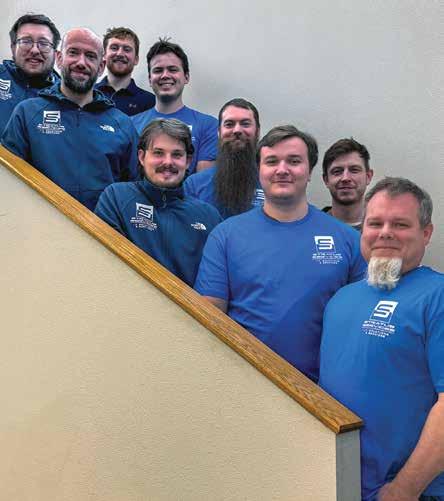
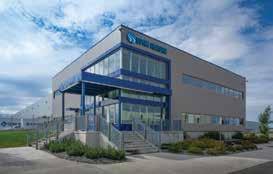
A compliance-focused managed IT service provider delivering secure solutions for heavily regulated industries in Alaska and the greater Pacific Northwest, including defense contracting, engineering, mortgage, title and realty, medical practices, and finance. Offices in Anchorage’s Abbott Loop neighborhood.
What is your company best at? Stratus has the local expertise to navigate the intersection of IT management and regulatory compliance. We excel at translating dense frameworks like CMMC [cybersecurity certification] and HIPAA [healthcare privacy] into practical, reliable policies and procedures that keep clients audit-ready and operating with confidence.
What makes your company unique? Stratus Services is Alaska’s first and only CMMC Level 2 Certified managed service provider, making us the definitive choice for Alaska-based US Department of Defense contractors who need a local partner with nationally recognized compliance credentials and a proven track record of success. We bring enterprise-level security expertise to businesses that can’t afford compliance gaps.
CARGO/LOGISTICS PROVIDER
Denali Span Alaska
Anchorage
St. Elias Lynden
Anchorage
Foraker Carlile
Anchorage
ENGINEERING FIRM
Denali Coffman Engineers
Anchorage
St. Elias RSA Engineering
Anchorage
Foraker CRW Engineering Group
Anchorage
CONTRACTOR
Denali Watterson Construction
Anchorage
St. Elias Davis Constructors & Engineers
Anchorage
Foraker Criterion General
Anchorage
MATERIAL SUPPLIER
Denali Spenard Builders
Supply
Anchorage
St.Elias Lowe’s
Anchorage
Foraker The Home Depot
Anchorage
Monica Sterchi-Lowman | Alaska Business
RAVENWOOD VETERINARY CLINIC
(Zoe Weston, Practice Manager)
Locally owned veterinary clinic in Eagle River established in 1990 to serve the unique needs of Alaska pets and help them live healthier, happier lives.
What is your company best at? Delivering high-quality medical care while creating a supportive, compassionate experience for pets and their people. We have built a reputation as a trusted hospital where expert medicine meets personalized service. We prioritize exceptional patient care through clear, compassionate communication.
What makes your company unique? Our strong community ties and focus on client education set us apart, empowering pet owners to make confident decisions for lifelong care.
LAW FIRM
Denali Law Office of Blake Fulton Quackenbush
Anchorage
St. Elias Landye Bennett Blumstein
Anchorage
Foraker Birch Horton
Bittner & Cherot
Anchorage
PRINTER
Denali Pip Marketing Signs Print
Anchorage
St. Elias Color Art Printing
Anchorage
Foraker Great Originals
Anchorage
STAFFING AGENCY
Denali ASRC Energy Talent Solutions
Anchorage
St. Elias Opti Staffing Group
Anchorage
Foraker Airswift
Anchorage
SWAG SUPPLIER
Denali Pip Marketing Signs Print
Anchorage
St. Elias Stellar Designs
Anchorage
Foraker Shirts Up
Ravenwood Veterinary Clinic
Denali GCI
Anchorage
St. Elias MTA
Palmer
Foraker AT&T
Anchorage
IT PROVIDER
Denali Alasconnect
Anchorage
St. Elias Stratus Services
Anchorage
Computer Task
ALASKA WEALTH ADVISORS
(Vladislav Finko, Marketing Strategist)
Financial planning firm providing personalized solutions and strategies tailored to clients’ individual circumstances and goals. Offices in Midtown Anchorage.
What is your company best at? Our core strength is helping Alaskans cut through financial complexity and find clarity. We don’t just manage accounts; we specialize in connecting every piece of the wealth management picture—retirement strategy, tax planning, estate planning, and beyond—so clients can stop worrying about money and align their financial lives with what matters most to them.
What makes your company unique? We’re a locally owned, fee-only, fiduciary firm, which means we answer to our clients, not to commissions. While our teams’ industry-recognized credentials provide a stand-out technical authority, what truly sets us apart is our belief that financial stewardship is about more than numbers. It’s about legacy. We’ve built our practice to serve generations of Alaskans with consistency, transparency, and genuine care, because when our clients thrive, our communities do too.
CONFERENCE VENUE
Denali Dena’ina Civic & Convention Center
Anchorage
St. Elias Hotel Captain Cook
Anchorage
Foraker The Wildbirch Hotel
Anchorage
ANIMAL HOSPITAL/CLINIC
Denali VCA Animal Hospitals
Anchorage
St. Elias Ravenwood Veterinary Clinic Eagle River
Foraker Hillside Pet Clinic
Anchorage
HOSPITAL
Denali Providence Alaska Medical Center
Anchorage
St. Elias Alaska Native Medical Center
Anchorage
Foraker Alaska Regional Hospital
Anchorage
HOTEL
Denali Hotel Captain Cook
Anchorage
St. Elias The Wildbirch Hotel
Anchorage
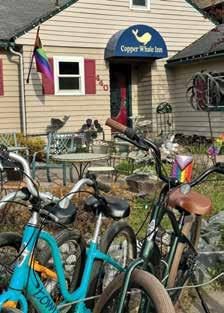
Foraker Copper Whale Inn
Anchorage
PHARMACY
Denali Fred Meyer
Anchorage
St. Elias Carrs Pharmacy
Anchorage
Foraker Bernie’s Pharmacy
Anchorage
THAT FEELING CO.
(Tanya & Carson Baldiviez, Owners)
A variety of plants and plant-related accoutrements + crafted coffee drinks = cozy comfort and the feeling of being with friends. Flagship shop on Dowling Road near Midtown Anchorage with a Downtown satellite location.
What is your company best at? That Feeling Co. is best at creating a space where people feel at home while connecting with nature. We invite nature’s wild beauty into everyday life through a curated collection of plants for every skill level— alongside ceramic pots, home goods, and gifts, many from local creators—to create a real sense of collaboration and community.
What makes your company unique? What makes us unique is the way we pair botanical expertise with the comfort of a thoughtfully crafted coffee beverage. Our space is designed to feel warm and welcoming, especially here in Alaska, where connection matters deeply. From the plants we source to the drinks we serve, everything is intentional. We want people to walk in, slow down, and feel something.
That Feeling Co.
YOGA STUDIO
Denali Tides Yoga
Kenai
St. Elias BURN+BLOOM
Anchorage
Foraker All Life Is Yoga
Eagle River
BOOKSTORE
Denali Title Wave Books
Anchorage
St. Elias Barnes & Noble
Anchorage
Foraker Beauty and the Book
Anchorage
BOUTIQUE
Denali Lichen Fairbanks
St. Elias Blush Boutique
Anchorage
Foraker Bottoms Up Boutique
Anchorage
CANNABIS RETAILER
Denali Catalyst Cannabis Company
Anchorage
St. Elias Uncle Herb’s
Anchorage
Foraker King Street Cannabis Company
Anchorage
JEWELRY STORE
Denali 5th Avenue Jewelers
Anchorage
St. Elias Fred Meyer Jewelers
Anchorage
Foraker Alaska Gem Lab
Anchorage
VEIT & VEIT CPAS
(Vincent
Veit, CPA, Partner)
Professional accounting services rooted in family tradition, quality services, and building trust with clients. Headquartered in downtown Willow.
What is your company best at? Tax preparation and working for the client and their individual needs. Every taxpayer has a unique situation, preferences, and their own way of conducting business, so each tax return is a fully customized job with the client’s needs being the top concern. We provide diligent and accurate reporting to make sure clients are in full compliance with everchanging tax laws.
What makes your company unique? We cater to our hard-working neighbors and small businesses of every type, bringing professional-quality work to ordinary Alaskans for nearly fifty years. We are the only CPA firm between Wasilla and Fairbanks, and we appreciate working with people in communities all over Alaska. We have a no-nonsense, matter-of-fact way of doing business while maintaining client relationships with a casual, easy-to-work-with approach.
PLANT SHOP
Denali That Feeling Co.
Anchorage
St. Elias Bell’s Nursery
Anchorage
Foraker Green Connection
Anchorage
GUN/AMMO SHOP
Denali 907 Ammo
Anchorage
St. Elias Arctic Ammo and Reloading Supplies
Wasilla
Foraker Alaska Ammo
Anchorage
Photos provided by Veit &
CATALYST CANNABIS
(Will Schneider, Founder and CEO)
Provides high-quality, handcrafted, 100 percent organic cannabis, plus products and accessories, to Alaska’s cannabis connoisseurs. Three locations in Anchorage.
What is your company best at? Catalyst provides an unforgettable customer experience. We offer great service and products in beautifully designed, comfortable spaces. We pride ourselves on being a cannabis retail store you’d be happy to bring your parents to.
What makes your company unique? Our commitment to sustainability and education. We have a reusable jar program, similar to growler programs, that keeps hundreds of thousands of single-use plastics out of our landfills. We also serve as a collection point for the proper disposal of used lithium-ion batteries commonly found in handheld vaporizer products.
INFLUENCER
Denali This Alaska Life Eagle River
St. Elias Alaska Elevated Kenai
Foraker Hardaway Learning Anchorage
BAKERY
Denali Fire Island Rustic Bakeshop
Anchorage
St. Elias The Flying Dutchman Pastry Shop
Anchorage
Foraker Charlie’s Bakery and Chinese Restaurant
Anchorage
BREWERY
Denali 49th State Brewing Anchorage
St. Elias Odd Man Rush Brewing Eagle River
Foraker King Street Brewing Co.
Anchorage
CATERING SERVICE
Denali Wild Fork Catering
Anchorage
St. Elias Main Event Grill & Catering
Anchorage
Foraker Mo’s Deli and Catering
Anchorage
COFFEE SPOT
Denali Kaladi Brothers
Coffee
Anchorage
St. Elias Jitters
Eagle River
Foraker Black Cup
Anchorage
FOOD TRUCK
Denali Alaska’s Best
Gourmet Dogs
Palmer
St. Elias Crepes De Paris
Girdwood
Foraker The Hungry
Deckhand
Anchorage
INTERNATIONAL CUISINE
Denali Basil Ginger Wasilla
St. Elias Ray’s Place
Anchorage
Foraker Turkish Delight
Anchorage
TACOS
Denali Serrano’s Mexican Grill
Anchorage
St. Elias Taco King
Anchorage
Foraker Tacos Cancun
Mexican Grill
Wasilla
ALASKA AMMO
(Cody Brons, Owner)
Firearms and ammunition store offering storefront and online sales, plus rural delivery to keep Alaskans on and off the road system locked, stocked, and loaded. Distribution center in Anchorage’s Mountain View neighborhood, and an indoor shooting range in the east Fairbanks shopping district.
What is your company best at? We are best at providing ammunition to rural villages that, before we came along, no other company was serving on a regular, easy-to-order basis. Our website has live, in-stock inventory and lets the customer place the order that we deliver to the airport. Our slogan is, “United we stand, for Alaska we deliver.” Staying true to that has helped us succeed in a competitive market.
What makes your company unique? We carry the widest variety of calibers and the largest inventory of ammunition in Alaska.
CUSTOMER SERVICE
Denali First National Bank Alaska
Anchorage
St. Elias Credit Union 1
Anchorage
Foraker MTA
Palmer
PLACE TO WORK (1-250 EMPLOYEES)
Denali Altman, Rogers & Co.
Anchorage
St. Elias Spawn Ideas
Anchorage
Foraker Alasconnect
PLACE TO WORK (250+ EMPLOYEES)
Denali First National Bank Alaska
Anchorage
St. Elias Chugach Alaska
Corporation
Anchorage
THAT POWER ALASKA. POWERING THE BUSINESSES
Northrim’s banking experts live and work across the state, serving the communities we call home. We understand Alaska’s industries, and the unique challenges and opportunities that come with doing business here.
From personalized lending to everyday banking, we deliver local expertise and Superior Customer First Service to help Alaska businesses achieve more.
Profit by the Pint
A toast to craft breweries
By Vanessa Orr
Since Alaskan Brewing Co. brought the craft beer craze to the state in 1986, the number of craft breweries has steadily grown, increasing from twenty-seven in 2015 to more than sixty in 2026. The Brewers Association, a nonprofit trade group, notes that Alaska consistently ranks in the top fifteen nationally for breweries per capita.
How do these breweries succeed in such a competitive field? It takes talent to brew great beer, but in a state where craft brewers face a lot of business, regulatory, and logistical challenges, making a profit by pints doesn’t come easy.
“Essentially, choosing to open a brewery in Alaska means also opening a logistics company,” says David
McCarthy, founder and CEO of Northern Hospitality Group, parent company of 49th State Brewing and Alaska Pacific Beverage Company. “Everything is related to shipping, from the raw ingredients to the cans to the spent grains that have to be moved out of the brewery.”
Alaska also poses weather-related challenges. “If your grain freezes while being transported through -40°F weather, it can cause enzymatic damage,” McCarthy notes. “We’re also one of the highest-taxed states in the nation on beer; there are definitely challenges here that aren’t found in other states.”
Alaska has some of the most restrictive brewery laws in the country, but recent changes have given craft brewers a little more leeway. While taprooms must close by 9 p.m. and enforce a strict 36-ounce consumption limit per customer per day, they are now allowed to have live entertainment as the result of a recent court ruling.
Live Music and More
regulations took effect. Jason Davis, owner of Sweetgale Meadworks and Cider House in Homer, stated that the 2022 law was shaped by the barowners’ lobby to prevent competition. In his ruling, Zeman wrote, “Political compromise is not recognized as a substantial government interest for the purposes of restricting speech under the First Amendment. Neither
is the codification of preference for one industry actor over another.”
While brewpubs may now feature live music and other performances year-round, instead of only four times a year, craft brewers are not sure that these changes are enough.
“It’s not a popular opinion, but I’m adamantly opposed to all of the changes that have happened; I
In January, Superior Court Judge Adolf Zeman overturned a 2022 law that had lifted an absolute ban on live entertainment at taprooms but imposed strict limits. Zeman found that the law infringed on businesses’ freedom of expression without demonstrating a direct benefit to public health—especially when bars, but not breweries or distilleries, could entertain as much as they liked.
Grace Ridge Brewing Company and Sweetgale Meadworks and Cider House, both of Homer, and Zip Kombucha of Anchorage filed the lawsuit in 2024, when new
BEST OF ALASKA BUSINESS
think the brewing industry accepted a lower-level win versus being able to open up on the same grounds as restaurants and other businesses,” says McCarthy. “The state of Alaska should look at brewing and brewpubs as a sense of place in the community, just like restaurants, and remove all restrictions, including letting them keep the same hours.”
The restriction of dart boards, pool tables, and other games at breweries, wineries, and distilleries is still in effect. Zeman found those are not forms of protected speech and therefore can be limited as a condition of a license.
McCarthy says that he believes the new legal regime brings false hope to owners hoping to increase revenue and improve their relationships with guests in the community.
“In the short term, they’ll get to remain open for an hour or two more and have live music, but that’s still a limiting factor for the brewing business,” he says. “I’m cognizant of drinking-related issues in Alaska per capita, but at the end of day, responsible people can consume alcohol, and it makes sense for them to have a place that they feel comfortable in.”
Odd Man Rush Brewing in Eagle River is navigating the rules as best it can. “I don’t want to get into the politics of it, but the laws here are the biggest obstacle to success when you have a brewery,” says co-owner Brian Swanson. “Tourists come in and we can only serve them three beers, and we can’t have a TV, and we have to close at 8 p.m. It’s a really competitive market, and we have to
get creative to keep pace with bars, other breweries, and restaurants.”
In Juneau, Alaskan Brewing Co.’s tasting room has seen some positive impact, according to co-founder Marcy Larson. However, she agrees that there are still a lot of things breweries ought to be able to do but currently can’t.
“Live music adds to the ambiance and fun of our tasting room, so we’re glad to have it whenever we want, instead of having to apply to the Alcohol & Marijuana Control Board to have performances four times a year,” she says, noting that the company carries a manufacturing retail license and not a full liquor license. “While it isn’t something we pushed for, now anyone can come in and pick up a guitar and play. And it’s great having music back.”
Amber Ambition
Alaskan Brewing Co. is celebrating its 40th anniversary this year and shows no signs of slowing down, despite being a pioneer of the craft beer scene in Alaska. When husband and wife team Geoff and Marcy Larson started their brewery in 1986, they were just trying to figure out how to make a living, and a friend said that they should start a brewery—as a joke.
“That was three years before we got started,” says Larson, who was working as an accountant while her husband, a homebrewer and chemist, was working in a gold mine. “We did some research and saw how many other breweries had gone out of business, and knew that there were a lot of reasons why we shouldn’t do it. But we were enamored of the
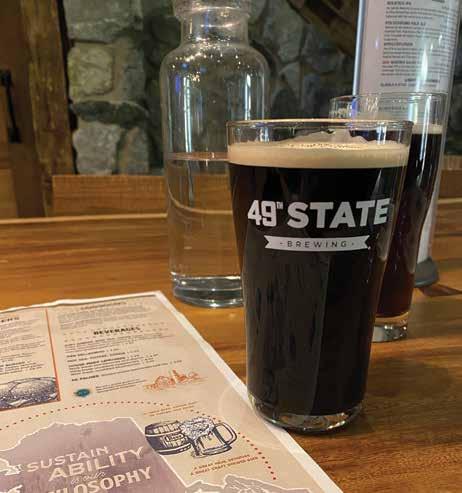
49th State Brewing set its eyes on developing a brewery that would be admired on a global stage. With more than 135 awards, including 25 international awards, the company is well on its way.
Patricia Morales | Alaska Business
idea. We liked the concept of working together and fueling a passion and having fun—and we also thought that we’d get to see a lot of the state while delivering beer.”
While Larson credits the brewery’s success to being at the right time in the right place, it took a lot of hard work and initiative to kick off the whole craft-beer craze. “But some things just happened, like finding the Alaskan Amber recipe,” she says.
While researching brewing in Alaska, Larson unearthed shipping records from Douglas City Brewing Company, which operated from 1899 to 1907, that listed ingredients for its popular beers. A newspaper article even described the way it was brewed, so they gave it a try.
“That beer just took off,” says Larson. “It went places we didn’t expect it to, and we won medals for it. And it’s still 50 percent of our sales.”
While the Larsons are faithful to their base and continue to offer a stable of award-winning core beers, they are also always refreshing their line-up, such as by introducing seltzers made with spruce tips right before the COVID-19 pandemic. Furthermore, realizing that retailers could not sell keg beer because of the shutdown, Alaskan Brewing Co. bought back all its kegs, got a liquor license, and began using that beer to create whiskey. Now, the company sells whiskey, gin, vodka, and a number of ready-to-drink cocktails as part of its Camp Fuel line.
Sniping a Gino
Unlike a lot of businesses, Odd Man Rush thrived after the pandemic and began expanding its footprint.
Sheri
Patricia Morales | Alaska Business
What started out as a 2,100-squarefoot operation now has outdoor and rooftop space as well as a concert venue. The brewing system was increased, too, with more fermenters. Obtaining a full liquor license enabled the brewery to also offer cocktails and wine. Food trucks are outside the brewery every day as an added attraction.
“We’ve hosted a ton of events here, including weddings, funerals, graduations, and more,” says Swanson. “We also host comedy shows and live music; brewery laws in Alaska are stringent to say the least, so we got a liquor license so that we could hold events.”
While providing space for the community was important for Odd Man Rush, Swanson says the priority remains making good beer, including its bestseller, Enforcer IPA.
“Putting out a good product is what it’s all about,” he says. “We’re constantly changing what’s on
tap, but we also always have our mainstay beers that are really popular. By concentrating on this and also focusing on our community, we’ve been able to do what we want to do.”
As the name of the ale and the brewery itself communicate, the Odd Man Rush team are hockey guys. Together with business partner Ross Johnson, Swanson started the brewery ten years ago with his brother-in-law Reid McDonald, son of the late Harry McDonald, a revered hockey coach at Chugiak High School. Having been home brewers since the early 2000s, they thought they could make a go of a place where the community could gather, drink a beer, and relax.
Odd Man Rush Brewing opened in 2015 and has grown to become part of the Eagle River community.
“After playing hockey in Germany, I came home and we all started making beer together and got
better and better at it—or at least we thought,” Swanson recalls with a laugh. “Around 2010, 2011, we thought it would be really cool to make a place that wasn’t your typical bar—where the vibe was cool and families could gather, because there really wasn’t a place like that. It took us a couple years to raise the capital and find the space, but it all came together. Now we combine our passion for beer with our passion for the community.”
Inclusive Philosophy
The roots of 49th State Brewing also reach into Germany circa 2010. That’s the year McCarthy founded his brewery brand. He was already an award-winning restaurateur in Healy, and he had completed a brewing technology credential at Doemens Academy in Munich, a dual-campus program with Siebel Institute of Technology, a brewing trade school at his alma mater Kendall College in Chicago.
McCarthy says he saw the chance to build something iconic; not only a brand that celebrated the state but one that could stand shoulderto-shoulder with other products on the worldwide stage. He watched Chicago-based Goose Island Beer become a global phenomenon, so he envisioned doing the same with an Alaska brand.
“Alaska is our home, so we started a craft brewery here because we believe Alaskans deserve a brewery that earns global respect in the beer industry,” he says. McCarthy attributes the success of 49th State Brewing to the team’s love of craft beer and passion for brewing.
Hockey, homebrewing, and the wish for a cool family hangout spot drove Odd Man Rush Brewing founders to get into the brewing industry.
The company now has four locations: three in Anchorage and one near Denali Park. It has earned more than 135 awards, including 25 international awards. Product lines include beer, cider, Frontier Alaska soda, and sparkling water.
“Years ago, it wasn’t unusual for a brewery brand to make root beer,” McCarthy says. “But it is unusual to make seven different types of soda.”
He says the strategy reflects 49th State Brewing’s attitude toward hospitality. “Most breweries start and try to create a very exclusive experience,” he says. “My beverage manufacturing philosophy is to create inclusivity. You’re not being inclusive if you only make alcohol; making alcohol-free and sugar-free products are part of what makes us unique.”
McCarthy notes that, while there are a lot of great craft breweries, what sets 49th State Brewing apart is its uncompromising commitment to quality that enables it to compete worldwide.
“We produce world-class products that can compete anywhere on this planet,” he says. “The fact that we’ve earned tons of awards, both nationally and internationally, is not by accident. It takes constant innovation and an obsession to get better every single day.”
McCarthy credits his team with dedicating their careers to the craft. He says, “We’ve never viewed it as building a beer brand or a brewpub. We are building a legacy brand to represent Alaska globally.”
“Essentially, choosing to open a brewery in Alaska means also opening a logistics company… We’re also one of the highest taxed states in the nation on beer; there are definitely challenges here that aren’t found in other states.”
Davi d McCarthy Found er and CEO Northern Hospita lity Group
craft breweries in Alaska outpaces residents’ taste for suds. The 22 gallons of beer consumed per Alaskan is less than the national average of more than 28, or about half the percapita consumption of top-ranked New Hampshire. However, with 11.5 craft breweries for every 100,000 drinking-aged adults, Alaska outranks the Granite State’s 9.3, per the Brewers Association.
who helped us start, and most are still with us today.”
The company is partially employeeowned, yet some original investors still share in the profits. “They weren’t out for a quick buck; they wanted to support economic growth and a way to make a living for young folks in Alaska,” she explains, noting that the company offered its brew crew health insurance from day one. “They were incredibly patient and understanding because it was their money we were spending. They had a long-term vision of keeping people happily employed.”
The company also committed to sustainability, which Larson says is a big part of its success. “People here really think outside the box, and our crew has worked together to create different ways of efficiently utilizing everything we do so as not to harm the environment,” she says.
This includes capturing the carbon dioxide made from beer, purifying it, storing it, and using it to drive pneumatic functions on the brewery’s packaging line. Spent grain is also used as fuel for the company’s steam boiler. “While most breweries buy these big cylinders of CO2 and ship them up, we haven’t had to purchase it in twenty years,” says Larson. “By turning a waste product into fuel, we’ve also replaced 50 percent of our diesel bill.”
Long-Term Vision
The relatively high number of
Larson credits the Alaska community for embracing breweries and supporting Alaskan Brewing Co. for so many years. “Our community includes vendors, customers, shippers, and more who have all helped us in so many ways,” she says. “We also had eighty-eight investors
Larson notes that Alaskan Brewing Co. is very fortunate to have “forwardthinking, wonderful, energetic people” on its team.
“Our goal is to have a high-quality beer that stands out—a beer that we can share with others who also think it’s great,” says Larson. “It’s an Alaskan institution.”
Standout Startups
BOAB voters’ favorite new arrivals of 2025
By Christi Foist
The “Best Startup” category is absent from the 2026 Best of Alaska Business awards list; it turns out that the survey results didn’t produce a winner. In order for a company to be ranked in the top three of any category, it must receive a set minimum number of nominations and clearly receive more nominations than other companies that our readers love. For 2026, the votes were spread pretty evenly among several 2025 startups. Rather than just pick the winners ourselves, we transitioned the voting results into this feature, dropping the ranks but expanding the number of businesses that we’re able to highlight. In no particular order, Alaska Business is pleased to feature new businesses that have earned customers’ favor with products, spaces, and services they can see, hold, hang, taste, or visit.
Narrow Aim
Alaska Gun Company of Wasilla fills a gap in the market for “lightweight, precision firearms,” says owner Reed Carlson. While the state has other gunsmiths, he knows of no other dedicated custom rifle manufacturer.
“We’re able to bridge the gap between your average, everyday hunter and put a much nicer firearm
in their hands and also teach them how to use it,” Carlson says. Between the quality of construction and training on use of rifles, this can “overall increase their success rates in the field.”
The company’s rifles, made with carbon fiber stocks and barrels, are “guaranteed to shoot very accurately,” Carlson says. He test shoots every
rifle before delivery to the customer. Rifles also get finished with an epoxy paint that’s “impervious to saltwater,” and he lets customers choose whatever color they want.
“I didn’t get into this for quantity; I got into this for quality,” Carlson says. Customers attest to that. Respondents to the Best of Alaska Business survey praise the “fantastic
Christi Foist
product,” “excellent service,” and “high-quality firearms.”
Carlson says that “staying in our narrow lane of only manufacturing custom guns” contributes to the company’s success. He has the licenses that he would need to open a gun shop, but he prefers this more focused approach. To leave his prior career with the airlines and work for himself, Carlson knew he needed to enjoy whatever he did. Making guns has been a passion since he was 18.
He runs the business from his garage, on a byappointment basis. Learn more at alaskaguncompany.com.
The Only Subject
Lightbox Studios of Palmer serves shooters of a different sort: photographers. The studio’s owner and manager, Rachelle Ferroni, says she got the idea from her own work as a photographer and from a previous job helping to manage the now-closed MadMen Studios of Anchorage.
“A lot of people rely on natural lighting,” Ferroni says, citing the many photographers based in Palmer. She hopes Lightbox Studios shows them and their peers in surrounding areas that “your photographic journey does not have to just stop, come fall, in Alaska.”
The studio offers a 2,000-squarefoot rental space with strobe lights, props, walls on wheels, soft boxes, and a mechanical backdrop system. The space also includes a client lounge and dressing rooms. Ferroni offers rentals by the hour, half day, or full day, and she plans to launch a membership option.
“We’re able to bridge the gap between your average, everyday hunter and put a much nicer firearm in their hands and also teach them how to use it.”
Reed
STATEWIDE REACH. LOCAL COMMITMENT.
COMMUNITY
Spaces that serve Alaska every day
Projects
Facilities
Carlson, Owner, Alaska G un Company
In addition to the space and equipment rental, Ferroni also plans to offer a range of training courses. Some will focus on lighting, especially for those more used to shooting in natural light. “Without light, you really can’t do anything with that camera,” she says. Studio space also gives photographers a year-round way to practice things like posing.
Ferroni wants other courses to serve students, whether homeschooled or in the public school system. “Our scholastic resources are… becoming more narrow and limited,” she says. “I want this to also work for anybody who is interested in photography.”
Respondents to the Best of Alaska Business survey applaud the “awesome services” and Ferroni’s “passion for what she does.” Find Lightbox Studios at 1633 S. Industrial Way, Building B #1, in Palmer or at lboxstudios.com.
“A lot of people rely on natural lighting… [Your] photographic journey does not have to just stop, come fall, in Alaska.”
Rachelle Ferroni, Owner, Lightb ox Studios
Petal by Petal
Pressed to Remember offers a floral preservation service so popular that owner Ellie Peralta has already had to cap bouquets for some months. She discovered the service niche after her own wedding showed her “how emotional flowers can be, and how quickly they disappear afterward.”
Peralta’s wedding bouquet helped launch the business in Anchorage, after a friend saw the framed piece she made from the petals and asked to have the same thing done with her flowers. Customers can choose among different frame sizes and styles, which start at $450 for an 8-inch by 10-inch presentation. They can also customize the backing.
“I always wanted to be an artist,” says Peralta, and she approaches flower preservation as such. Each piece starts with documentation and complete disassembly of the bouquet, petal by petal, which Peralta puts in handmade flower presses made of blotting paper and cardboard. During the first few weeks, Peralta changes the blotting paper almost every day.
It usually takes a few months to completely dry the flowers. Once dry, Peralta reconstructs the bouquet with museum-grade materials and restores the flowers’ colors. After everything’s glued down, her husband frames the
Ellie Peralta documents, then dissects, preserves, and reconstructs flowers from bouquets using museum-grade materials to create flower displays she hopes will become heirlooms.
Christi Foist
pieces. “I want them to feel like it’s an heirloom that can be passed on for generations,” Peralta says.
Most of Pressed to Remember’s business follows the summer wedding season, but she’s also preserved flowers from funerals, anniversary bouquets, and even some graduation leis. During the slower, colder months, Peralta focuses more on promotional expos and vendor markets, where she sells small items made from leftover flowers. View Peralta’s portfolio at pressedtoremember.com.
Berry Bowls and Island Dreams
The Zen Turtle in Fairbanks offers an antidote to the city’s long, cold winters that’s quickly gained traction with year-round fans. Owner Hannah
St. George says it’s “kind of a hybrid” business, combining açaí bowls with house plants for sale.
“I wanted it to be somewhere that people could walk in... and just feel like they were somewhere else and they were transported to some place with chill vibes and happy music and greenery,” St. George says, “kind of feel like they’re on an island.”
At first she wanted to launch the business as a plant and gift shop, running it more as a hobby. But after the reality of commercial real estate prices set in, St. George and her husband decided to add açaí bowls as a source of more consistent foot traffic.
The response surprised them. They initially hoped to sell 20 bowls a day, but they served more than 4,000 in the first month alone. “We were
“We were blindsided by the receptivity in the community and how excited people were.”
Hannah St. George Owner
The Zen Turtle
blindsided by the receptivity in the community and how excited people were,” St. George says.
Many customers are youth who come seeking the açaí, which The Zen Turtle stocks in a kind of sorbet form that’s not canned or frozen. Early on, while they were still solidifying their sourcing, St. George’s husband had to fly to the Outside supplier whose açaí fruit they use, and he brought back about fifty tubs.
Sourcing potted plants to sell for retail merchandise has also required creativity. St. George says she got several plants from people moving out of state, such as the palm-like bird of paradise she sourced from Anchorage last fall. She drove a large van down the Railbelt and filled it up during stops at about fifteen different homes.
The Zen Turtle is located at 409 Merhar Avenue in Fairbanks.
Yeast and Serotonin
Wild About Dough is a microbakery in Anchorage that
specializes in handmade sourdough bread, scones, and other baked goods. Owner Ivy Veriato says she does a mix of pop-ups at places like Double Shovel Cider Co. or Alaska Botanical Garden, and the bakery has some wholesale arrangements with coffee shops and stores such as Natural Pantry.
“I’ve been baking since I was a little girl,” Veriato says, but the business took shape after her second son’s birth, when she wanted a way to “a way to give myself a little bit of serotonin… a little bit of me time.”
She started by selling her sourdough bread, and she soon expanded into other baked goods and got more creative with her recipes. Scone flavors include blueberry-lemon and jalapeño-baconcheddar, while her sourdough loaves range from traditional to “zesty orange with white chocolate chips.” Veriato says, “I really started to find that I had a customer base that wanted to keep me in their homes.”
Wild About Dough baked goods
use local ingredients, and Veriato tries to be as organic and dye-free as possible. “I’ve just found a way to give people… healthy alternatives while also being homemade and fresh baked,” she says.
Veriato initially baked everything in her home oven, but her business eventually outgrew that. The Simply Bread Oven she recently bought uses steam to bake and can hold up to a dozen loaves or ten dozen scones at a time. “I make more every time I bake,” Veriato says. “I never thought that I would be selling out.” Every time she does, “I’m just shocked.”
Customers seem less surprised. Respondents to the Best of Alaska Business survey extol the “amazing product and huge community success” and how Veriato has “added light within the community she built.” Veriato says many customers have become friends.
Find her next popup or what’s on the menu on Wild About Dough’s Facebook page or at hotplate.com/ wildaboutdoughak.
Ivy Veriato distributes Wild About Dough small-batch goods through locally owned retailers like Natural Pantry.
Christi Foist
2026 Best Corporate Citizens
Alaska Survey Research, Credit Union 1, First National Bank Alaska
By Terri Marshall
Unique among the Best of Alaska Business awards, the three 2026 Best Corporate Citizens are unranked and selected by the Alaska Business editorial team based on the number of votes they received; the comments from our readers accompanying those votes; and our own insights from interviews, press releases, and community projects.
In addition to the top three, we are including a list of all of the companies that were nominated in 2026 by our readers. A nomination to this list means that the company has had a lasting impact on at least one Alaskan, and enough of one that they were inspired to share with us.
Communities are built by many hands, and we’re honored to highlight those turning a great state into a good society.
Credit Union 1 employees volunteer at the 2026 Girls on the Run Spring 5K Celebration. Credit Union 1 supports Girls on the Run
As Mark Burgess, president and CEO of Credit Union 1 stated in April, Credit Union 1 (CU1) operates with the understanding that strength starts at home, beginning with families doing their best to raise children, build stability, and create opportunity. The company also advocates that communities are stronger, more resilient, and better prepared for whatever comes next when families are supported.
These values drive CU1’s work and recently inspired the pursuit of a special grant from the Federal Home Loan Bank of Des Moines. The grant is now helping bring $700,000 into Alaska through the Iowa bank’s Member Impact Fund. Those funds support two organizations doing work for families: Alaska Children’s Trust and the KINDNESS Project in Kodiak.
CU1 has been named a Best Corporate Citizen three times before. Citizenship is a core value at CU1, as evidenced by 5,000 volunteer hours by 380 employees last year, showing up for everything from road cleanups to serving holiday meals for those in need. On the business side, CU1 is recognized for its transparent financial reporting on its website, which is accessible to all members.
First National Bank Alaska
First National’s team volunteers at Bean's Cafe. First National has been sponsoring Bean’s Cafe for more than thirty years, donating almost $200,000 in addition to in-kind contributions such as volunteering.
National Bank Alaska
First
embedded in the organization ’ s operations. The bank consistently aligns its financial strength, employee engagement, and leadership priorities with the long-term wellbeing of the Alaskan community. In 2025, First National Bank Alaska provided financial support totaling more than $1 million to a variety of health, youth, education, civic, and arts organizations in the state, with educational and youth organizations as a major focus of the bank’s support. In addition to donations, bank employees volunteered hundreds of hours to assist organizations and the people they serve.
According to Senior Administrative Director Steve Patin, “Supporting Alaskans and building community are at the heart of everything
we do at First National Bank Alaska. We believe our success is intrinsically linked to the wellbeing of the communities we serve. For more than a century, the bank has invested in Alaskans and contributed to organizations that help make our state a better place to live and work.”
Alaska Survey Research
For nearly thirty years, Alaska Survey Research (ASR) has helped ensure Alaska voices are heard in decisions that shape Alaska’s communities, economy, and future. Through partnership with nonprofits, tribes, agencies, and local leaders, ASR strengthens civic engagement and supports data-driven solutions statewide. This commitment earns ASR its
first appearance in the Best of Alaska Business.
Founder Ivan Moore believes being a good corporate citizen is about recognizing, acknowledging, and nurturing the symbiotic relationship between businesses and the people in the community.
ASR also believes in giving back to the community and to residents who participate in their surveys, and so it rewards survey participants with a chance to win money. Numerous winners have shared stories of how the funds reached them at a time when they needed the money to meet expenses. In addition to $80,000 in winnings to survey participants, the company provided $38,500 in additional sponsorships to nonprofit organizations in 2025 through e arly 2026.
Our Readers Also Nominated:
49th State Brewing
Alaska Community Foundation
Alaska Premier Auctions
Alaska Railroad
Altman Rogers & Co.
ASRC Energy Services
Caffe D'arte Alaska
Campbell Painting
Chugach Alaska Corporation
Chugach Commerical
Holdings
Coffman Engineers
ConocoPhillips Alaska
Copper Whale Inn
D&W Grill
David Jensen Photography
Denali State Bank
Doyon, Limited
EBO Consulting Inc.
Furniture Enterprises of Alaska
GCI
Global Credit Union
Kaladi Brothers Coffee
Keller Williams Realty Alaska Group
Kinross
Matson
Meridian Management, Inc.
MTA
Nana Management Services
Northern Hospitality Group
Northrim Bank
Opti Staffing
Porsche Anchorage
Premier Auction
Providence Alaska
Rain Proof Roofing
Saltchuk
Sealaska
Skinny Raven Sports
Subway of Alaska
Target
TOTE
Wild Smoke Alaskan BBQ
The AWAIC women’s shelter received a fresh coat of paint thanks to Paint it Forward, an ongoing initiative where Campbell Painting chooses a deserving homeowner, nonprofit, or charitable organization to receive a complimentary painting project.
Campbell Painting
Photographer David Jensen, seen with co-pilot Iris, has been passionate about animal rescue for more than thirty-seven years.
David Jensen
Copper Whale Inn is dedicated to creating and helping local organizations maintain safe spaces for our LGBTQ+ community.
Copper Whale Inn
Kaladi Brothers Coffee starts each year by giving back in a tradition called “Dale Tran’s New Year’s Day Giving.” This annual tradition of giving 100 percent of coffee drink sales on New Year’s Day has helped local youth-focused organizations better serve our community.
Kaladi Brothers Coffee
Built for Alaska. Trusted to Deliver.
Since 1978, Span Alaska has connected the world to all of Alaska with a weather-tested network of highway, vessel, barge, and air transportation.
At our West Coast Consolidation Center, we load your products into dedicated containers that transit directly to one of six service centers or air cargo facility for final-mile delivery. This eliminates extra rehandling and costly delays.
Benefit from:
• Year-round weekly ocean transit in all conditions
• LTL, FTL, Chill/Freeze, and Keep From Freezing Protection options
• Specialized equipment for project, oversized, and hazardous material loads
• Delivery throughout Alaska, from metro Anchorage to North Slope to remote villages in the Bush
• Customized solutions for commercial and industrial sectors, including oil and gas, construction, food & beverage, and retail/tourism
Top-Ranked in 2026
Goodbye, Beast
Remembering and remediating a North Slope icon
By Scott Rhode
Afateful night on the frozen tundra ended the career of a North Slope workhorse. The Beast was getting ready for more exploratory drilling in January when its owner and operator, Doyon Drilling, Inc. (DDI), had to scrap those plans and mobilize an emergency response when the rig toppled. The labors to lay the Doyon 26 rig to rest were worthy of its legendary reputation. Although it had many years of service left, The Beast had already contributed to the Alaska economy in ways yet to be fully measured.
Arriving in Alaska in the tumultuous year of 2020 as Doyon 26, the machine was destined for a nickname. Designed from its inception as the world’s largest mobile land rig, The Beast was so-called because of its mammoth scale. Twelve modules worked in concert as the most efficient and advanced machine of its type, capable of feats never achieved before.
The flame that burns twice as big, burns half as long—and The Beast burned so very, very big in its short existence.
Overview and Updates
None could’ve predicted how short, unfortunately. Doyon, Limited was not expecting, as 2026 dawned, that its drilling subsidiary would need to launch a new website chronicling The Beast’s fall. Yet the ever-busy Fairbanks-based Alaska Native regional corporation was prepared. Swiftly after the January 23 accident, DDI stood up its Western North Slope Rig Move Incident Information Hub.
“The most accurate, up-to-date information can be found on that website,” notes Sarah Obed, senior vice president of external affairs for Doyon and public information officer for the response effort.
“Unified Command is committed to ensuring effective communications and will provide updates on a
The page stated the plain facts: Doyon 26 was underway on a gravel road near Nuiqsut, under the control of DDI on behalf of ConocoPhillips Alaska. It was afternoon, not yet one week after the first sunrise following the polar night.
The self-propelled module tipped over less than 50 feet away from oil and gas infrastructure. A small
Photos owned and copyright by Doyon Drilling, Inc. and reprinted with permission.
fire broke out, extinguished by emergency responders. Rig personnel were treated for minor injuries, but no one was seriously hurt.
The module was carrying approximately 4,000 gallons of diesel fuel and 600 gallons of hydraulic oil. Based on initial assessments, any environmental impact appeared to be contained and minimal. However, the immediate cleanup had to wait until the toppled rig fully settled.
Nature of the Beast
The Beast had survived a road accident before, upon its arrival at the North Slope. The rig was fabricated in Alberta, Canada and hauled to Deadhorse in 270 tractortrailer loads. The modules were assembled and tested before being trucked to its first drilling site. In that
process, part of it slid off the road. DDI picked it up, dusted it off, and got back to work.
Nearly thirty years of DDI’s collected experience went into developing Doyon 26 after ConocoPhillips Alaska commissioned the rig in 2016. Designed in collaboration with Texas-based National Oilwell Varco (NOV), the objective was to create a drill to reach farther from a single well pad.
The design was based on extendedreach drilling concepts developed by DDI’s Ron Wilson and NOV’s Ron Sorokan. Engineers had access to 3D-modeling technology to compile a “master model” of mechanical, electrical, and plumbing systems, so design decisions could be iterated quickly and fabrication diagrams produced with precision.
Doyon 26 contained several innovations, covered by seven patents. The blowout preventer module was topped by a 165foot mast. The pipe shed module contained 15,000 feet of casing, with room left over for 2,400 square feet of offices. The engine module was equipped with eight gensets rated for more than 11,200 horsepower, or 8.4 MW, nearly the output of Copper Valley Electric Association’s diesel generators for every home and business in Valdez.
And that’s just the main drive. The rig was also self-propelled.
There’s a reason it was called The Beast. NASA’s Crawler-Transporter 2 is the heaviest self-powered vehicle in the world when it carries the Space Launch System to the pad in Florida. The total weight of
18 million pounds includes the crawler’s own 6.6-million-pound empty weight, somewhat less than the fully assembled 10-millionpound Doyon 26.
Yes, there are larger industrial behemoths in the world. The Bagger 293 excavator in Germany and its five siblings are each about three times heavier than Doyon 26. The Honghai Crane at a shipyard in China is about twice as big, but its operating power is about 1.8 MW.
That’s about on par with The Beast’s movement system, entirely separate from the main power that spun the drill. Six engines supplied more than 2,100 horsepower to the wheels. A driver could monitor four cameras around the rig and steer with a joystick. The Beast had a rackand-pinion steering geometry that
allowed the module to turn on its center, spinning like a ballerina.
Even ballerinas take a tumble, sometimes a career-ending calamity.
Unified Command
Immediate response to the January 23 incident organized under a Unified Command structure, with DDI in the lead. The North Slope Borough, Iñupiat Community of the Arctic Slope, Alaska Department of Environmental Conservation (DEC), and US Environmental Protection Agency were part of the team.
DEC was in charge of releasing situation reports. By February 12, initial containment—the first phase of the cleanup effort—was completed, and the team developed a plan to safely remove the wreck of Doyon 26, phase two.
The phase-two plan was executed through the rest of February until the end of March. After further inspection, The Beast was disassembled, and the salvaged components carried away. Obed states, “100 percent of the rig has been fully recovered, removed, and transported from the site to be recycled.”
The third phase took place in April: final cleanup, mitigation, and remediation of the affected area, complicated by the end of winter and the softening of the frozen tundra. Spill response crews, including Alaska Clean Seas, used flush-andrecovery tactics to spray hot water onto ice and snow, forcing oil and vegetation to float on top. Vacuum trucks collected the product and took it away.
By the last weeks of April, crews recovered approximately 5,435 gallons of spilled product, which Unified Command acknowledges was higher than the preliminary estimate of fuel and oil on board. That’s not
uncommon in spill response: final amounts commonly vary from initial estimates due to changes in product density through the flushing and recovery process. The response also accounted for 41 gallons of ethylene glycol coolant which remained contained in the rig.
Shore seal booms were laid in a circle around the site to prevent contaminated water from flowing out. The changing season deprived crews of ice roads to reach the site with heavy equipment, including water tankers, so teams demobilized by the end of April.
Long Reach
The final journey of The Beast was part of a winter exploration campaign for ConocoPhillips Alaska, which contracted Doyon 26 to drill two of four exploration wells.
In 2022, the rig proved itself a hero for ConocoPhillips Alaska, unlocking a new section of the western North Slope oil fields with its recordsetting reach.
The first wells developed at Prudhoe Bay could cover approximately 3 square miles with the directional drilling techniques of the ‘70s, using a 65-acre gravel pad. When Doyon 26 was commissioned in 2016, extended-reach drilling had advanced to cover 55 square miles from a 12-acre pad.
Doyon 26 was designed to cover 125 square miles from a single pad, drilling up to 35,000 feet horizontally, some of the longest laterals in the world.
On May 18, 2022, the rig exercised its full capability with a 6.7-mile well, setting a world record. That was also the day it produced first oil from the Fiord West reservoir northwest of the Alpine development. ConocoPhillips Alaska said the reservoir was expected to produce up to 20,000 barrels of oi l per day.
The company also believed The Beast was capable of greater reach, possibly drilling up to 7.5 miles horizontally.
A part of Doyon 26 remains at Deadhorse Airport, a monument to its legacy until it can be transported off the Slope. Bringing the rig north took 270 truckloads.
Alaska Business
DDI retains eight rigs in its fleet: 14, 15, 16, 19, 25, 141, 142, and Arctic Fox.
ConocoPhillips Alaska reserved Doyon 142 as a substitute for the work left to be done after January 23. Vice President for Commercial and Midstream Barry Romberg told the state House Resources Committee just days after the incident that the “unfortunate loss” of Doyon 26 would not have significant impact on the company’s winter exploration
“Our exploration work plan for this winter is going to be on track,” Romberg said. “I don point any material change to our long-term production f
By the end of April, Unified Command transitioned from weekly to monthly updates from DEC. All equipment was demobilized from the site except pieces necessary for containment, monitoring, or wildlife hazing. Wildlife agencies, along with local and tribal entities, developed wildlife response plans for the monitoring and observation phases in spring and summer.
Doyon also hired a third-party investigator to thoroughly review the incident. The exact cause of the mishap was not disclosed by the time The Beast was packed away from the site. “An investigation is ongoing,” says Obed.
Doyon had no comment on how soon a replacement rig might be brought to the North Slope. Just as new technology drove the development of Doyon 26, further innovations may inspire the creation of the next generation of majestic machines.
Growing for the Long Haul
A report from the Alaska Miners Association convention
By Rachael Kvapil
Alaska’s mining sector is a fundamental part of the state’s history, and it is a key to a prosperous future. In April, the Alaska Miners Association (AMA) held its 29th Biennial Convention in Fairbanks, looking back on successes while discussing the future of responsible mining. Keynote and technical speakers, short-course sessions, and a two-day trade show brought Alaska’s mining community together to share information, establish or build partnerships, discuss the issues facing the industry, and showcase the strength of mining, especially in the Interior.
Strong and Stable
Mining’s significant contribution to the Alaska economy was reflected in AMA’s theme at this year’s biennial convention: “Built to last: Alaska Mining for the Long Haul.” AMA’s organizational committee spokespeople—Dave “Zoom” Szumigala, who chaired the Fairbanks convention; AMA President Dave Larimer; and AMA Executive Director
Deantha Skibinski—say the theme reflects how AMA views mining in Alaska.
According to committee members, “It’s not as a shortterm opportunity, but as a long-term commitment to responsible development, strong communities, skilled jobs, and durable economic value for the state.”
During the technical session, speakers repeated similar viewpoints that are driving the vision for mining in Alaska. Several presentations and keynote speakers highlighted the historical importance of mining to Alaska while emphasizing its role in the state’s future. Many of the companies attending the convention— Kinross Fort Knox, Usibelli Coal Mine (UCM), International Tower Hill Mines, and others—have created a mining hub in the Interior that has successfully extracted important minerals while employing contractors, equipment suppliers, engineers, geologists, and skilled workers for exploration and daily operations. Although much has changed in mining methods since Felix Pedro’s
discovery sparked the Fairbanks Gold Rush in 1902, companies are working today to shape the state in decades to come.
Keeping the full impact of mineral extraction in mind, companies emphasized responsible mining as a major focus in their long-term plans. The AMA committee says the mining industry is dedicated to meeting Alaska’s high environmental standards and to respecting communities, landowners, Alaska Native corporations, regulators, and the people who live and work near mining projects.
Many companies, such as UCM, highlighted reclamation plans and completed projects to ensure a stable, sustainable environment in Healy that appears untouched by mining activity. Caleb Graham,
a mining engineer at UCM, spoke about a partnership with Risse Greenhouse, a garden center in Fairbanks which starts the trees planted at reclamation sites. He says UCM has planted 15,200 trees from Risse Greenhouse over the past five years and reclaimed more than 5,500 acres, earning multiple stewardship awards.
“Usibelli was the first coal mine in Alaska to recontour and replant mine land, setting a new standard for reclamation,” Graham said in his presentation. “We’ve been doing reclamation since before it was required, which I am very proud of.”
Another major topic reiterated in presentations was Alaska’s role in strengthening US mineral security, which goes beyond mining critical and strategic minerals to include
“If you can keep your workforce safe and the environment clean, then everything else takes care of itself… If you can’t do it safely and responsibly, then you shouldn’t do it at all.”
Dan
Health, Safety, and Environment al Manager
Twitchell
MDF Global
building the domestic capacity to process, refine, manufacture, and add value to them. The AMA committee says Alaska should not simply be a place where raw materials are extracted and shipped away. Instead, the industry should be looking at the full mineral value chain from exploration and mining to processing, infrastructure, workforce, and downstream opportunities.
“That is how we build a more durable mining economy for Alaska, support national security, and create more long-term value for Alaska communities,” says the AMA committee.
Preparation and Practice
Three short courses were offered at the AMA convention: “Introduction to Geology and Alaska Ore Deposits,” “State Mining Locations 101,” and “The Process (and Importance) of Emergency Planning for Remote Site Operations.” The introductory course on geology taught the basics of mineral and rock types, and a general explanation of Alaska’s more prominent ore bodies, such as the Yukon-Tanana terrane of the Interior, which uplifted the Brooks Range, and the volcanic deposits of the Aleutian Arc, including the Cook Inlet region. In the state mining course, attendees learned the basics of state mining statutes and regulations and the requirements for initiating a valid mineral claim. In the emergency planning course, participants learned the foundational concepts for proper preparation prior to dealing with a serious situation.
According to the organization committee, “We wanted the
“Usibelli was the first coal mine in Alaska to recontour and replant mine land, setting a new standard for reclamation… We’ve been doing reclamation since before it was required, which I am very proud of.”
Ca leb Graham Minin g Engineer Usibelli Coal Mine
program to reflect the full spectrum of AMA’s mission and the real breadth of Alaska’s mining industry, from exploration and geology to operations, permitting, environmental stewardship, safety, workforce, policy, legal issues, and community engagement.”
Because the convention was held in Fairbanks, the AMA committee focused on topics and speakers connected to the Interior. Fairbanks has a deep mining history, active operations, a strong exploration sector, and a large network of contractors, vendors, technical experts, and community partners. It is also home to UAF, established in 1917 as the Alaska Agricultural College and School of Mines, with
its strong science and engineering programs. With the current and next generation workforce in mind, the technical sessions and short courses were designed to give attendees a clear view of what is happening in the Interior today. As the industry grows, companies will need mechanics, equipment operators, drillers, engineers, geologists, environmental professionals, surveyors, electricians, welders, and many other skilled workers. The convention highlighted that mining offers real careers for Alaskans, especially young people who want to build a future here at home.
“Early in the planning process, we recognized that a successful program needed balance,” says the AMA committee. “We wanted strong technical and science-based presentations that highlighted emerging research and practical field knowledge, while also addressing the policy, environmental, regulatory, and legal issues shaping mining in Alaska today. Safety and risk management were also priorities because responsible mining starts with protecting workers, communities, and the environment.”
The short courses drew participants who supported responsible mining that included both the environment and workforce safety. When mining companies conduct clean, safe operations, it is better for the industry as a whole, says Dan Twitchell, the health, safety, and environmental manager for MDF Global, the Australian parent company of Alaskabased ventures Wiseman Metals, Felix Gold, and Copper Bay Resources.
“If you can keep your workforce safe and the environment clean, then everything else takes care of itself,” says Twitchell. “If you can’t do it safely and responsibly, then you shouldn’t do it at all.”
The AMA committee says the goal of the convention was to create a program that was useful, credible, and relevant. They wanted attendees to leave with a better understanding of the science, policy, economics, safety practices, and community responsibilities that define responsible mining in Alaska.
All the Players in One Place
The AMA committee says the trade show component turns the convention from a series of presentations into a real working marketplace for Alaska’s mining industry. It gives attendees a chance to see the equipment, technology, services, contractors, suppliers, safety systems, and professional expertise that make mining in Alaska possible.
“For attendees, the trade show creates direct value,” says the AMA committee. “A miner can talk with equipment dealers, drillers, surveyors, environmental consultants, engineers, transportation providers, fuel suppliers, safety professionals, and technology vendors all in one place. Exploration companies can meet the contractors they need for the coming field season. Students and young professionals can meet employers. Small operators can connect with vendors who understand Alaska conditions. Public officials and community members
“We’ve been seeing a need for more infrastructure in the mining industry… The [AMA] trade show is a good way for us to promote our man camps, fabrication work, construction support services, and manpower to companies in this industry.”
Mich ael Meyers
Kenai Facili ty Manager
(UOSS), better known for developing facilities and infrastructure for the chemical, petrochemical, and oil and gas industries since the ‘70s. Now UOSS is looking to expand into the mining sector and joined the trade show as a vendor to highlight how it can meet the needs of mining operations.
“We’ve been seeing a need for more infrastructure in the mining industry,” says Michael Meyers, facility manager for UOSS in Kenai. “The trade show is a good way for us to promote our man camps, fabrication work, construction support services, and manpower to companies in this industry.”
can see how broad the mining supply chain really is and how many local companies are involved in mining.”
They add that it also helps tell the larger story of mining in Alaska. Mining does not only include activity on the mine site; it involves the work of mechanics, welders, fabricators, pilots, truck drivers, engineers, accountants, environmental scientists, geologists, construction firms, equipment suppliers, and local businesses. The trade show makes that economic footprint visible. Increased visibility was the goal for Udelhoven Oilfield Systems Services
The AMA Committee says the 2026 AMA Fairbanks Biennial Convention had strong attendance and participation. The committee counted 608 attendees and 106 vendors, making it one of the strongest and most active Fairbanks conventions AMA has hosted. However, the committee says that number does not fully capture everyone who came through the doors. Additional walk-in visitors were welcome on the trade show floor without formal convention registration, helping make the event more accessible to the broader Fairbanks community. AMA also sponsored several classroom visits from local schools, giving students the opportunity to interact directly with AMA members, local miners, vendors, contractors, and industry professionals.
“Those visits were especially important because they helped young people learn more about responsible mining in their own community,” says the AMA committee.
Udelhoven Oilfield Syste m Services
Greatland Studios is a full-service Alaska video production company. Documentaries, brand films, and commercials for organizations that want to rise above. Real, human stories—produced in our Anchorage studio and on location across Alaska. LOCAL KNOWLEDGE |
In Transit to Treatment
Evolving transportation models lead to better patient outcomes
By Tracy Barbour
Medical transportation was once viewed mainly as a way to get patients to a hospital or clinic. Today, it’s increasingly part of the caredelivery system—extending the emergency department, intensive care unit, and even the outpatient network.
Advances in aircraft, onboard equipment, provider training, and mobile care models are expanding medical transportation across Alaska. Air ambulances and other transport services increasingly function as extensions of the hospital, stabilizing patients sooner, delivering more advanced care in transit, and in some cases supporting treat-in-place (TIP) strategies that reduce unnecessary hospital visits.
At the same time, providers face mounting pressures— ongoing Medicaid reimbursement challenges and the needs of aging and rural populations—that continue to shape how these services evolve.
From Transport to Mobile Care
In Alaska’s air ambulance sector, operators are emphasizing critical-care capabilities in transit instead of positioning transport as a simple transfer between facilities.
Take Guardian Flight Alaska, for example. The company provides critical-care air medical services across the state, connecting patients in rural and remote communities to higher levels of care. “Our teams deliver advanced medical care at the bedside and during transport, often in challenging weather, terrain and time-sensitive conditions,” says Matthew Philbrick, regional director for Guardian Flight Alaska.
A division of Global Medical Response, Guardian Flight is one of the few air medical providers nationwide equipped to carry blood products on every flight. Earlier this year, it became the first medevac provider to carry blood products on the North Slope—an approach grounded in the realities of trauma care in time-critical environments. The company also carries blood products on board its aircraft based out of Fairbanks, Sitka, Juneau, and Ketchikan. “We expect this to become the standard of care for all medevac providers,” Philbrick says.
Carrying blood products on flights out of Deadhorse significantly enhances the company’s ability to treat traumatic hemorrhage and critical illness in austere environments such as the North Slope. It allows crews
to begin life-saving interventions immediately, rather than waiting until the patient arrives at a hospital. “This approach is supported by clinical evidence showing that in-flight red blood cell transfusions can increase a patient’s chance of surviving the first twenty-four hours by nearly five times and reduce the risk of shock by more than 70 percent,” Philbrick emphasizes.
Guardian Flight also began expanding its Alaska fleet earlier this year, adding eight new Beechcraft King Air 350 aircraft, including longrange configurations designed for remote operations. The aircraft will add speed, range, and operational flexibility in the state’s harsh conditions, including the ability to serve shorter and more remote runways. “We continue to make significant investments in clinical capabilities, sustainable aircraft operations, leadership development, and partnerships that support higher-quality healthcare and system integration,” Philbrick says.
Guardian Flight’s investments are guided by a strategy Philbrick calls TIP.
Expanding Access with Treat-in-Place Care
TIP is an emerging model that allows ground-based emergency medical services (EMS) providers to deliver care closer to home. Under TIP, paramedics and emergency medical technicians (EMTs) assess and treat patients directly at the scene, allowing minor injuries and non-urgent conditions to be managed at home or on-site. This can reduce unnecessary hospital visits,
“Across the state, Medicaid fails to cover the costs of air (or ground) ambulances.”
Matthew Philbrick, Regional Director, Guardian Fli ght Alaska
lower healthcare costs, and free up ambulance resources.
According to the National Association of Emergency Medical
Technicians, evidence-based, peerreviewed studies show that many 9-1-1 callers do not need ambulance transport to an emergency room. TIP
lets EMS providers apply—and be reimbursed for—their clinical skills regardless of where care is delivered or whether a patient is transported.
This care model is especially relevant to Alaska's often remote locations, and it’s an important facet of the Alaska Department of Health’s plan for transforming EMS under the Rural Health Transformation Program (RHTP).
“EMS is often the first, and sometimes the only, point of contact people have with the health system,” said Alaska Department of Health Commissioner Heidi Hedberg during a recent webinar on the topic. “Strengthening EMS means improving health outcomes across the entire system.”
RHTP is a $50 billion federal initiative aimed at expanding
healthcare access in rural communities nationwide. Alaska’s first RHTP budget period runs from December 29, 2025, to October 30, 2026, during which the state will receive more than $272 million for targeted, systemwide investments to improve access to care and support long-term he althcare stability.
“Our team at Guardian Flight is excited about the RHTP,” Philbrick says. “The Rural Health Transformation Program has the potential to strengthen access to care in underserved communities by supporting workforce development, infrastructure, and care delivery innovation. For Guardian Flight Alaska, it represents an opportunity to partner in solutions that improve access and coordination across the
rural healthcare system, improve the patient’s experience with the healthcare system, and strengthen the healthcare workforce.”
Aging Population, Broadening Needs
Demographics are also shaping medical transportation trends. Alaska’s rapidly aging population— the fastest growing in the nation—is shifting the profile of transportation demand. In 2025, Alaska had 162,175 seniors ages 60-plus, representing 21.9 percent of the state’s population—up from 14.5 percent in 2010, according to the Alaska Commission on Aging: Senior Snapshot 2025.
An aging population has more complex and time-sensitive medical needs, Philbrick says, so Guardian
Flight must be prepared. “Our nurses and paramedics are equipped to care for patients of all ages, including older adults with complex conditions, while safely transporting patients from rural and remote areas,” he says. “We work closely with hospitals, clinics, and ground EMS partners statewide to ensure patients reach the next appropriate level of care quickly and safely.”
The data related to Alaska’s aging population is “humbling” to Kailah Butters, owner of Wasillabased Reliable Care Rides. The company provides non-emergency medical transportation (NEMT) to help patients in the Mat-Su get to medical appointments safely and on time. While the service is designed for individuals with mobility challenges or limited
access to transportation, Reliable Care Rides serves a broad spectrum of customers.
“I launched this business expecting seniors to be our primary demographic, and they are not,” Butters says. “The majority of our clients are working-age adults and younger individuals navigating disability, chronic illness, and financial hardship.”
Founded in 2024, Reliable Care Rides has provided more than 3,000 round-trip rides for ambulatory clients traveling to physical therapy, behavioral health, radiation, infusions, substance treatment, and dialysis. These NEMT services fall into a distinct category of medical transportation. NEMT is pre-scheduled, non-emergency transportation to and from medically
“You cannot run a business on money you may not see for a year. The market has been quietly set by whoever could afford to accept the lowest reimbursement rate… The current reimbursement structure continues to drive dedicated providers out.”
Kailah Butters, Owner, Reliable Care Rides
necessary appointments only, according to Butters.
“Some NEMT companies expand services to include wheelchair, Broda chair, or stretcher services, as we plan to in the future, but these individuals are medically stable and do not require medical intervention or care,” she elaborates. “Medical transport— emergent or not—with highly trained, skilled clinical staff like WEKA [Medical] or Alaska Medical Transport may have a nurse, EMT, or paramedic on board for medically fragile patients who require monitoring, often called EMS, critical care transport, or advanced life support and basic life support transport.”
Butters, who spent years working in the assisted living sector, is a strong advocate of aging in place. “Our elders should be supported to
age in place with easily accessible wraparound services whenever possible,” she says. “Transportation is one of those services. It is what keeps our elders connected to their care, their community, their family, and their independence.”
Medicaid Reimbursement Challenges
While medical transportation is a lifeline for patients, Medicaid transport can be a recurring pressure point for providers. Public insurance programs pay for a significant share of healthcare access in Alaska, particularly in rural communities, yet providers across the system continue to watch whether reimbursement structures keep pace with the cost of delivering care in difficult environments. For
transport operators facing new clinical demands, volatile fuel prices, and broader workforce pressures, small payment increases may still fall short of closing the gap between outdated reimbursement models and the realities of modern transport medicine.
Medicaid transportation covers travel to and from facilities for eligible patients receiving care that is medically necessary and authorized by their healthcare provider. Alaska Medicaid, for instance, pays for local ground transportation, such as a taxi, bus, or wheelchair van, to travel to and from medical appointments, either in Alaska or out-of-state, according to the Alaska Department of Health website.
But, as Philbrick points out, Medicaid reimbursement for air
PORT MACKENZIE
medical services has historically not reflected the true cost of delivering such a level of care in Alaska—particularly given the state’s geography, weather, and infrastructure challenges.
“Across the state, Medicaid fails to cover the costs of air (or ground) ambulances,” he says.
Likewise, Butters has experienced low and slow Medicaid reimbursements for non-emergency medical transportation. She says Medicaid reimbursement is, without question, the most “destabilizing force” the industry faces. “Despite services being pre-authorized before the trip ever takes place, on average, it takes six to twelve months from the date of service to receive payment, if I even receive reimbursement at all,” she elaborates. “And yes, that means
even with a pre-authorization there are instances when I may never get paid for my services.”
Part of the problem is how medical transport has been devalued over time, Butters says. When the state authorized taxi companies as NEMT providers, it created a perception problem that has never been corrected. “Dedicated NEMT providers set rates that reflect the actual cost of operating a specialized service, but when reimbursement takes six to twelve months, regardless of what we bill, the rate becomes irrelevant,” she says. “You cannot run a business on money you may not see for a year. The market has been quietly set by whoever could afford to accept the lowest reimbursement rate, and dedicated providers are
“Our elders should be supported... Transportation is one of those services. It is what keeps our elders connected to their care, their community, their family, and their independence.”
THE FULL-SERVICE FIRM FOR ALASKA’S COMPLEX FUTURE
Since 1971, Birch Horton Bittner & Cherot has been in the middle of the deals that shape Alaska. Our team brings legacy insight and a modern, hard-edge approach to every matter. Whether it’s high-dollar projects or personal stakes, you stay ahead because we stay out front.
birchhorton.com
Kail ah Butters Owner
the ones paying the price. The state itself has acknowledged Alaska's transportation and healthcare access crisis, as evidenced by the Rural Health Transformation Program launched this year, yet the current reimbursement structure continues to drive dedicated providers out.”
Reimbursement becomes even more consequential as TIP and other flexible models gain traction. Traditionally, medical transportation pays for moving patients from point A to point B. But as crews increasingly assess, stabilize, and sometimes prevent more serious episodes, their value no longer fits neatly into old payment categories. The lines between transport and treatment, vehicle and care site, and transfer and intervention are blurring.
Newer TIP initiatives are trying to change the traditional approach to reimbursement. For example, the US Centers for Medicare and Medicaid Services is encouraging the adoption of new care delivery models and to
ensure providers are adequately reimbursed for these services.
Adjusting to Ensure Readiness
Adjusting to industry trends can be challenging, and it requires stability that transportation providers do not currently have, Butters says. “Reliable Care Rides and other providers cannot make any changes, adopt new technology, expand services, or serve the aging population beyond what we all currently do when we have Medicaid claims that take six to twelve months to be reimbursed,” she says. “The trends are pointing toward everything Reliable Care Rides is already trying to do. The system is just not built to let us get there as-is.”
In Alaska, medevac flights are evolving to meet the realities of long distances, challenging weather, and limited access in rural communities.
“At the core of everything we do is a responsibility to be ready when Alaskans need us most—especially when time, distance, and conditions
leave few alternatives,” Philbrick says. “Roughly 82 percent of Alaska’s communities are not connected to a road system, making air travel essential for medical emergencies, and, in many cases, the only way for patients to reach advanced, lifesaving care.”
Given these realities, Guardian Flight recognizes that emergencies can bring significant financial uncertainty for patients and families. Offering an air medical membership through AirMedCare Network is one way the company is working to reduce that burden—regardless of insurance status—so patients and families can focus on care rather than costs.
“Providing pre-hospital healthcare and transportation in Alaska requires adaptability, partnership, and a strong commitment to the communities we serve,” Philbrick says. “We are proud to be part of Alaska’s healthcare system and remain focused on continuous improvement.”
Guardian Flight Alaska’s Beechcraft King Air 350 can serve shorter and more remote runways, allowing the company to provide critical-care air medical services across the state.
Guardian Flight Alaska
Providence Imaging Center
Our new Mobile Mammography coach has arrived.
At Providence Imaging Center every month is Breast Cancer Awareness Month, and we’re excited to announce the arrival of our new Mobile Mammography Coach. We’re scheduling now for corporate and school district benefits events for summer and fall.
There is no charge to host mobile mammography at your location, and screening mammograms at your business save employee time and productivity, in addition to showing your team you value their health. Schedule today at your place of business and encourage annual screenings.
To schedule Mobile Mammography at your location scan here or call 907-212-4982.
Now scheduling corporate benefits events
There’s no charge to bring mobile mammography to your employees.
Most employee insurance covers screening mammograms (check your plan).
Same equipment and high‑quality scan our patients get at Providence Imaging Center in the convenience of your location.
Financial assistance is available for mammograms.
Yearly mammograms save lives by detecting cancer earlier when it’s easier to treat.
Doing Good by Being Good: Indecisiveness
By Lincoln Garrick
The downfall of giants such as Blockbuster, BlackBerry, and Yahoo illustrates that indecisiveness is rarely about laziness. It’s often about choosing the proven path to avoid immediate risk, which unintentionally creates a long-term threat for survival. Each of those organizations prioritized preserving their existing, high-margin business models—late fees, physical keyboards, and traditional media advertising—over adopting disruptive innovations such as digital streaming, touchscreens, and search technology or mergers. Decision scientists call this “the safety trap,” a failure of leadership vision that mistakes stagnation for stability.
In an economy defined by geographic isolation, volatile resource markets, and a shifting workforce, playing it safe in Alaska often feels like the only survival strategy.
Most leaders don’t set out to fail; they get paralyzed by loss aversion,
holding on to today’s sure thing (like Blockbuster’s late-fee cash cow) while ignoring the tug of their competitors or the market at their heels. This creates a cycle of waitand-see, where leaders request one more data point or haggle over small-dollar decisions while the world moves on. It’s a classic leadership failing because “playing it safe” feels like responsible management in the short term, but within a fast-moving market, hesitation is really just slow-motion obsolescence.
Classic Drivers of Indecisiveness
Indecisiveness and the resulting safety trap don’t just happen on their own; they are shaped by a mix of internal choices and external forces. At the core are the psychological barriers that turn decisive leaders into cautious observers. Yes, I’m talking about analysis paralysis, where the hunt for perfect data kills
the window of opportunity. Toss a sprinkling of decision fatigue from a relentless grind and a pinch of imposter syndrome, and one has composed a leadership team more focused on avoiding a wrong move than making a right one.
These structures may start with a single leader, but they are easily baked into the organization’s culture and processes. Even a highfunctioning organization can be affected by indecisiveness if too many hierarchical bottlenecks are put in place for approval. This leaves teams idling and waiting for C-suite sign-off as opportunities pass them by. The pursuit of consensus overalignment—the classic “meeting about the meeting”—usually results in pleasing everyone but moving nothing. Too many of these toothless meetings can lead to strategic drift, when a clear plan gradually loses focus over time, eventually becoming unrecognizable and ineffective. When
roles are not clear, an indefinite “not my job” loop can form.
Even the best teams can get buried by external and data-related challenges. We live in a time of information overload, where the volume and noise of bottomless data can drown out the signal of genuine insight. Market and regulatory volatility can make every choice feel like a gamble. With all of that uncertainty, it can be tempting to go with the devil that
Agility as Sustainability
Avoiding the indecisiveness trap requires thinking about strategic agility over stagnant preservation as the path to sustainability. To explore how to develop this “upstream” or systems thinking, I sat down with Laurie Wolf, president and CEO of The Foraker Group. Wolf is coming up on twenty-five years with Foraker, a nonprofit that stands beside other nonprofits by providing capacitybuilding services; educational opportunities; staff and board leadership facilitation; strategic, fundraising, and finance planning; and back-office shared services in finance, leadership transition, and soon HR and public policy advocacy and research.
Q: How do you help leaders distinguish between a healthy, strategic pause versus the kind of indecisiveness that threatens long-term sustainability? Wolf: I think it comes down to how you are using your time. Are you looking ahead or getting stuck looking backwards? I would start by assessing your relationship with data. Indecisiveness
often comes from waiting for perfect data. Since most data is a look back, rather than a look forward, relying on it too heavily keeps you stuck in your past. To be strategic, you must be okay with using B.A.D. data—that’s the Best Available Data you have right now. Then you have to look for the through line, or the bigger story the data is telling you. Too often,
we are lost in a blizzard of data but have very little information to take action around. And taking action is the point. The data itself isn’t the story; it’s what we do with it that matters the most.
When looking at the full story of the data, it is important for the team to check in with their hearts and their heads. This is sometimes called
BLOOD. SWEAT. STEEL BLOOD. SWEAT. STEEL
“trusting your gut.” Whatever you call it, it comes down to balancing both the trend lines and your team’s understanding of the context you are operating within. If a leader is stuck, it’s often because they’ve separated their heart from their head or are leaning too heavily into one or the other. A healthy pause can be useful to reconnect those two. If the logic (the head) and the passion or mission and values (the heart) aren’t aligned—and your energy isn’t going into correcting that—then a pause can become an excuse for inaction rather than a strategic tool.
Slowing down can also be useful when it allows you to bring in more and new perspectives to solve problems. A strategic pause that involves slowing down specifically to lean on the collective wisdom of the team—something we often neglect in the rush of crisis decisions—can be beneficial. I often advise groups to “go slow to go fast,” which emphasizes planning. That makes room for an abundance mindset and deeply listening to all, which leads to a faster and better result.
The goal is not to go slow to get stuck. If you’re pausing but not looking ahead for the trends and the story in your data, working for better alignment, or bringing in more voices, then your pause is turning into indecision.
making, but not every group is transparent about that culture, so it is often learned by accident.
Sharing it means asking regularly, “Does everyone in the organization agree on how we make decisions?”
And then committing to sharing the answers in ways that each person or team can “hold it to own it” so they can do it... I have a “no surprises” rule in decision-making. We don’t make the best decisions if we are learning about something in the moment, especially if it is a big shift, and then need to make an immediate group decision. Indecision, paralysis, and even a future aversion to the topic is often the result of surprise for groups. The antidote is to frontload the process as much as possible. By frontloading the conversation and purposefully gathering key perspectives early, we prevent the confusion that leads to indecision. Frontloading can also dissuade the role of the devil’s advocate, which can often create a defensive atmosphere. And that halts the flow of shared impressions and alternative points of view, which are necessary for good decision-making. Ultimately, strategic agility comes from intentionality because having a clear, agreedupon process that allows us to move forward with confidence.
encourage organizations to answer two foundational questions: “Who are you?” and “Where are you going?” When they explore these questions, they better understand their core purpose and the core values that motivate them in every decision. Then they can take any new idea and put it up against these ideas and see, “Does it match who we are?” and “Will this take us where we want to go?”
From what I’ve seen, the groups that navigated the challenges from the COVID-19 pandemic most seamlessly knew who they were and had long-term goals. They had already thought about what was most important to them, so when they got knocked off kilter, they could take the twists and turns since the core of the organization was front and center; they rebalanced faster.
It sounds easy, to know what’s core. But it really isn’t. And everyone has to find the unique answer for their own organization.
Another aspect of strategic decision-making within a missioncentered framework is honestly assessing your capacity and deciding your specific role in any given initiative—whether you are leading, following, collaborating, or simply monitoring.
Q: How do leaders remain responsive and agile without allowing the quest for total consensus to paralyze necessary progress?
Wolf: I think a lot about how decisions get made within organizations. Every group has a culture of decision-
Q: How do you coach boards and CEOs to build a mission-centered decisionmaking framework so that, when tough choices arise, the path forward is already dictated by their core purpose rather than fear?
Wolf: I’m a big believer in strategic planning and the big-picture thinking that comes from that process. I
Especially in Alaska, missions are bigger than institutions, so work doesn’t happen in isolation, which means your framework must recognize how your mission fits into the broader effort of nonprofits, forprofits, and the public sector working together to have lasting results.
Q: When leadership teams get stuck, to what extent is it a technical problem
versus a relationship problem?
Wolf: In my experience, when a board or leadership team gets stuck, it is rarely a technical problem and almost always a relationship and trust problem—specifically, a fear of breaking trust.
In the nonprofit sector, this is heightened because of the unique nature of our work. Unlike forprofits, nonprofits make promises to the entire community. Everyone is watching, the level of scrutiny is incredibly high, and because we are serving the greater good, we are highly regulated and reported. Everything from our budgets and compensation to our partnerships and results are out there for anyone to see.
We hold the public’s trust, and that public-facing aspect can cause
leadership teams and boards to freeze. They get stuck in analysis paralysis or start chasing the shiny, new thing without considering if it’s the right fit.
For me, the key is to keep encouraging teams to ask, “How will we keep your promises?” It starts with knowing yourself and recognizing that, while we may not get an immediate reward for keeping our past promises, that’s what builds trust... It is surprisingly easy to break relationships, and when that happens, it is usually because we failed to keep our promises.
Beyond Indecisiveness
Ultimately, the antidote to the paralyzing safety trap isn’t more data or endless consensus but a return to radical clarity about who
you are and what you’ve promised. By aligning your strategic head with your mission’s heart, you can stop chasing the next shiny distraction and build the relational trust needed to react to the tug of the community, competition, and market.
Join us next month as we explore incompetence.
Lincoln Garrick is an associate professor, MBA director, and alumnus at Alaska Pacific University. He has decades of experience in business, marketing, and communications fields, providing public affairs and strategy services for national and Alaska organizations.
Garrick’s leadership series is exploring different ways for leaders to align their values with ethical conduct and create lasting positive impact.
THE FOCUSED MANAGER
The Manager Who Was Doing ' Fine'
…And what her boss missed
By Brian Walch
Fi rst, a scenario. Sarah was her company’s top project manager. She was technically sharp, reliable under pressure, and clients asked for her by name. When a team lead role opened in Maya’s division, Sarah was the obvious choice.
That was eighteen months ago. As VP, Maya closely monitored her division’s performance, and Sarah’s numbers had been steady. Now, one of Sarah’s employees asked for a meeting to talk about the team. Maya was curious.
Robert sat down across from Maya. “I’m being stifled,” he said.
“Tell me more,” encouraged Maya.
“I really like Sarah. She’s smart, a very hard worker, and she cares about people. But she’s not letting me help out. We have two new hires on the project. They aren’t superstars, but they are fine. However, Sarah is always jumping in and helping them with their work. I should be the one mentoring them, but when they get stuck, they talk to Sarah, not me, and Sarah helps them through the issues. It’s becoming the
norm, and I think it’s undermining me as a tech lead.”
Robert and Maya talked some more. After Robert left, Maya thought about it. Sarah was carrying a lot, and Robert was an experienced engineer who probably had his own ideas about how things should run. Maya had seen tension between a strong contributor and a new manager before, until everyone settled into their roles. Sarah’s numbers were solid. Maya decided to let them work it out.
Two weeks later, Maya received an email from Sarah. It was Robert’s resignation notice. Maya felt the disappointment in her gut and knew Sarah was probably feeling it, too.
Sure enough, right behind that email was a calendar invite from Sarah, asking to talk about her team.
Sarah came into Maya’s office, sat down, and started talking. Sarah said, “I’m really discouraged about Robert quitting. It is a big loss, and we don’t have anyone to backfill for him. I already have two open positions, and now I have a third.”
“Yeah, it is hard when one of your valuable employees leaves,” Maya agreed.
Sarah continued, “Yes, I’ve been overwhelmed since I took this job. I know the goal is to keep the team highly billable and meet our deliverable milestones. However, I have a lot of work to do to make that happen. The new hires are fine, but they aren’t developing their skills as fast as I’d like, so I help them out a bit. I end up reviewing timesheets and approving invoices after hours, which leaves no time for one-on-ones with my employees. I know Sally in Accounting wants to work on the new invoicing process, but I don’t have time for her.”
Sarah sighed. “Maybe I’m not cut out to be a manager.”
Maya was taken aback. Sarah’s team had been performing well and meeting their targets. Maybe she was a little over her head, but nothing abnormal for someone at her stage.
But then Maya realized there was so much more going on beneath the surface. It wasn’t that Sarah was over her head as much as she
was working hard to hold up the team’s numbers. Robert’s complaints made sense now. Sarah was so focused on results that there was no room left for developing anyone, Robert included.
Maya looked directly at Sarah. “Sarah, I’m sorry. That’s a lot to work through. Your team has had great results, but I now understand that isn’t the whole picture. Can you tell me more about what you’re experiencing?”
Sarah reflected, “Well, I think Robert left because we were too busy, and he knew it wasn’t going to get better. We have two open positions, now three, and everyone is just heads down. There isn’t much banter or collaboration. We have a value of teamwork, but it doesn’t feel that way to me.”
Maya could see that Sarah cared deeply but was also very discouraged. They talked a while longer. Then Maya said, “Sarah, I know we need to make some changes and support you so you can grow into the kind of leader we need here. I’ve got some ideas. Let me work them out a little more, and I’ll get back to you.”
Sarah left feeling hopeful. Even though her immediate situation hadn’t changed, she had a different understanding of her role. It wasn’t just about numbers and results, and if Maya could help redefine what good management was, she thought she’d be excited about it.
Maya left the meeting with her brain in high gear. They had been driving their managers to deliver results and neglecting to develop
DON’T SWEAT
If managers were responsible for the culture, retention would improve. If they developed their replacements, the company would have a real leadership pipeline.
them to build the business. If managers were responsible for the culture, retention would improve. If they developed their replacements, the company would have a real leadership pipeline. Articulating the full scope of a successful manager wouldn’t just help Sarah; it could change the organization.
Maya got to work. Not only was she going to help Sarah become the manager she wanted to be, but she was also going to transform how the company selected, developed, and promoted its leaders.
The Framework for Manager Effectiveness
Maya and Sarah made the mistake that many organizations and managers make. It isn’t that they look at the wrong measurement. Results
are important. The mistake is that they only look at one.
Manager effectiveness isn’t a single measurement; it is a system of three components: results, environment, and capacity. These must be evaluated to assess the manager’s effectiveness.
Results are what the team produced. They are reflected in project deliverables, revenue contributions, and business metrics.
This is what most organizations already track because it matters.
In our story, Sarah’s results kept Maya from looking further. If she had, she would have seen Sarah was producing the results, rather than developing her team to do the work.
“Environment” is what it’s like to be on this team right now. These are the conditions people work in every day,
and whether they feel physically and psychologically safe. Businesses can evaluate the environment by asking both qualitative and quantitative questions. For example, what is retention over the last twelve months, especially of strong performers? What safety incidents and near-misses have happened? Are people reporting them or hiding them? What do employees say about their team, and what don’t they say?
On Sarah’s team, Robert quit, and the rest went heads-down. Sarah herself sensed something was off. Teamwork had become words on the wall rather than a behavior.
“Capacity” is about what the team can do next. Not what they’re producing now, but what they’re becoming. Are people growing? Is the team’s capability increasing
Alaska Owned & Operated Since 1979
www.chialaska.com info@chialaska.com
ph: 907.276.7667
We work as hard as you do to provide great service and insurance protection to our clients. Let us show you how to control your Insurance costs.
or standing still? Could the team absorb more responsibility if the work demanded it, or is it already at its ceiling?
This is the hardest dimension to evaluate because it’s forwardlooking. Asking a question like, “Could this team take on 20 percent more work, or 20 percent harder work, without adding people?” can provide useful insights.
Capacity is undervalued until needed. When Robert walked out with no one to backfill, it put Sarah and her team in a very deep hole that will require significant resources to overcome.
Alaska Needs Great Managers
Back to the scenario. After Maya talked to Sarah, she followed through
and changed how the company supported and evaluated managers. Sarah started learning to delegate and develop her people instead of covering for them. She carved out time to do the work only she could do. The new hires started excelling in their careers, and Sarah hired a new senior engineer to replace Robert. This time, she let the new engineer lead.
The team’s numbers improved, and the culture became one that people wanted to be part of. The team grew and started taking on more complex projects.
Every company in Alaska has Sarahs and Roberts working in them right now. If they are only evaluated on results, businesses pay the price later. The leaders a company needs won’t emerge, and the people who
YOUR CLIENTS ARE PROUD TO BE ALASKAN .
could have built the future will have already left.
If Alaska is going to realize its potential, it needs successful managers who create a culture where people want to stay, who invest in and develop the next generation of leaders, and who deliver results that move our businesses and state forward.
Brian Walch is an executive coach, consultant, and speaker on leadership development. He uses his extensive experience in people and systems to provide tools and services to empower managers to lead themselves, their teams, and their organizations. Learn more at shiftfocus.com.
Photo by Crystal Porter Umialik Employee
INSIDE ALASKA BUSINESS
McFarlane Aviation
Alaskan Bushwheels and Airframes Alaska are coming together under McFarlane Alaska, a new brand of McFarlane Aviation, itself a business line of Kansas-based Victor Sierra. The Palmer-based maker of airplane landing gear and other parts for backcountry aviation rebranded in 2024 as Alaska Gear Company. As that company diversified its outdoor equipment offerings, owner Sean McLaughlin sold the aviation side to Victor Sierra, which formed in 2021. mcfarlanealaska.com
Global Credit Union
Global Credit Union, in partnership with Ukpeaġvik Iñupiat Corporation, opened a new branch inside the AC Stuaqpak supermarket in Utqiaġvik.
The new branch is the credit union’s 28th in Alaska and its 1st north of Fairbanks, joining the Alaska Commercial Company supermarket that returned to the property last year.
globalcu.org
The Agency
Global real estate brokerage The Agency is launching its newest office in Anchorage, establishing the brand’s first location in Alaska. Managing Partners Emma Shibe and Bethany Weiser, industry veterans and lifelong Alaskans, are leading the new office in Midtown. The Agency has become one of the fastestgrowing luxury boutique brokerages in the world, opening twenty-seven
new offices in 2025, with more on the horizon.
theagencyre.com
Launch Alaska
Remote Hands and Applied Atomics are the Alaska-grown companies among eight energy and tech startups in the new cohort under Launch Alaska’s wing. Remote Hands is a gig work platform that places technicians in rural communities. The other Anchorage selection, Applied Atomics, is developing a nuclear reactor in the 100 MW to 1,000 MW range, as big as the most powerful conventional generators in Alaska, and then some. launchalaska.com
Santos
Santos completed the Quokka-1 appraisal well, prompting plans for development to a follow-up on par with Pikka Phase 1, which achieved first oil on May 14. The company says Quokka-1 encountered a highquality reservoir with 143 feet of net oil pay in the Nanushuk formation, and an initial test achieved a flow rate of 2,190 barrels of oil per day. Managing Director Kevin Gallagher says Quokka, east of the Pikka unit, “represents another high-return opportunity that strengthens our position on the North Slope.” santos.com
The Wildbirch Hotel
The next phase of renovation at The Wildbirch Hotel included the launch
in May of Undertap, a microbrewery and tasting room through a partnership with Midnight Sun Brewing. The former Holiday Inn on Fourth Avenue in Anchorage, which reopened last year with JdV by Hyatt affiliation, was named this spring on Travel + Leisure’s annual “It List,” featuring the best 100 hotels globally. The Wildbirch Hotel is the only Alaska property on the 2026 list, and one of 19 in the United States. wildbirchhotel.com
Alpenglow Woodfired Pizza Haines is down to one year-round dinner restaurant after the town’s only pizza joint closed in April. Alpenglow Woodfired Pizza owner Nolan Woodard said he had yet to turn a profit, and he was unable to reach a new lease agreement with the landlord. That leaves Lighthouse Restaurant and Harbor Bar as the only dining option outside of visitor season.
Firebrand BBQ
The US Small Business Administration selected Chad and Stephanie Higgins, owners of Firebrand BBQ in Seward, as Alaska’s Small Business Person of the Year for 2026. Chad honed his barbeque skills in Amarillo, Texas, while working as a firefighter before he and his wife retired to Seward in 2017. The couple traveled to Washington, DC, for an awards ceremony in early May before racing home for the start of tourism season. firebrandbbqak.com
RIGHT MOVES
University of Alaska
· The University of Alaska Board of Regents selected Matt Cooper as the eighteenth President of the UA System. Cooper previously worked for the university as general counsel from 2020 to 2024, when he left to join the law firm of Davis Wright Tremaine. Cooper succeeds Pat Pitney, who announced last year that she would be retiring in May. A resident of Fairbanks, Cooper earned a bachelor’s degree from the University of Puget Sound and got his JD at the University of Washington School of Law. Prior to joining the UA System legal department in 2011, he worked in private practice at Guess & Rudd P.C., and was elected to the Fairbanks North Star Borough Assembly, serving two years as presiding officer.
UAA
· UAA appointed Evan Steinberg as Strategic Engagement and Government Relations Officer. Steinberg previously served as director of governmental and external
affairs at the Florida Department of Education’s Division of Career and Adult Education. Steinberg earned a bachelor’s degree in social sciences from Florida State University and holds certificates in emergency management, homeland security, and US intelligence studies.
Alaska Small Business Development Center
· With Jon Bittner returning to the Anchorage Economic Development Corporation as its president and CEO, his role as State Director of the Alaska Small Business Development Center (SBDC) is taken up by Jared Reynolds. Most recently, Reynolds served as executive director of the University of Alaska Center for Economic Development (CED). Although SBDC and CED are both programs within the UAA Business Enterprise Institute, SBDC offers oneon-one consulting whereas CED focuses on broader economic development. Reynolds holds a bachelor’s degree in kinesiology from the University of New Hampshire and a master’s degree in public policy analysis from the University of Chicago. Prior to joining CED in 2024,
he led Do North, a coworking space in Vermont where he built the Forest Products Accelerator.
RSA Engineering
Promotions at RSA Engineering give new leadership to the Anchorage firm that serves clients throughout Alaska, the Lower 48, and Antarctica.
· Channing Lillo, previously director of the Electrical Department, was chosen as President. A multi-state licensed professional engineer and lighting certified professional, Lillo brings thirty years of experience, all at RSA.
· Jeremy Maxie is promoted from principal electrical engineer to Vice President, Electrical Department. Maxie has been with RSA for sixteen years, starting as an intern. He specializes in low-voltage and special systems design.
Alaska Wealth Advisors
Anchorage-based wealth management firm Alaska Wealth Advisors assigned new titles to key executives.
· Dave Valdez, a firm partner and
RIGHT MOVES IS BROUGHT TO YOU BY NORTHERN AIR CARGO
Reynolds
Steinberg
Lillo
Maxie
Cooper
formerly COO, is now Chief Strategy Officer. Valdez holds a bachelor’s degree in finance from Seattle University’s Albers School of Business and Economics and earned his MBA with a concentration in finance at UAA.
· The firm promoted chief marketing officer Amber Frizzell to step in as COO. Frizzell has a bachelor’s degree in business management and international business from Whitworth University and is an accredited investment fiduciary.
Landye Bennett Blumstein
· Alex Cleghorn joins the Anchorage law firm of Landye Bennett Blumstein as a Partner. Cleghorn returns to private practice after serving Alaska Native communities across nonprofit, governmental, and corporate contexts for more than twenty years. Cleghorn is a tribal citizen of Tangirnaq Native Village and a shareholder of Natives of Kodiak, Koniag, and Cook Inlet Region, Inc.
Manley Brautigam Bankston
· Haylee Brister joined the Anchoragebased law firm of Manley Brautigam
Bankston as an Associate Attorney in the estate planning, tax law, and asset protection groups. Admitted to practice in Alaska and New Jersey, she previously clerked for Burlington County Superior Court Judge Reema Y. Hindawi Scaramella in New Jersey. Brister holds a bachelor’s degree in psychology and sociology and earned her JD from Rutgers School of Law.
The Nature Conservancy
· The Nature Conservancy selected Caitlin Hedberg as Executive Director of its Alaska business unit. For the last nine years, Hedberg served as the environmental nonprofit’s director of philanthropy in Alaska. “Caitlin has been a steady force on Alaska’s leadership team through significant change, building our capacity, and driving critical initiatives,” says Alaska Board Chair Nikoosh Carlo.
Rasmuson Foundation
· Rasmuson Foundation selected LeeAnn Cooper Garrick as COO, an executive position the state’s largest philanthropic organization has not had before. “The COO role is key to creating a
unified, collaborative work environment and strengthening our ability to serve Alaskans,” says President and CEO Gretchen Guess. Garrick was previously COO at Cook Inlet Tribal Council. A member of the Kenaitze Indian Tribe, Garrick grew up in Petersburg and Eagle River. She holds a master’s degree in public administration and a master’s degree in English, both from UAA.
United Way of Anchorage
United Way of Anchorage (UWA) added new members to its team.
· Rea Bavilla comes aboard as Vice President of Development to oversee fundraising. Bavilla brings more than twenty-three years of management and supervision in Alaska’s business and nonprofit worlds. Bavilla holds a bachelor’s degree in business administration from Alaska Pacific University.
· Alice Hisamoto is UWA’s new Director of Community Impact, focused on facilitating collaboration among UWA and its community partners. Hisamoto holds a bachelor’s degree in cultural anthropology and a master’s degree in cross-cultural education from UAF.
Bavilla
Valdez
Frizzell
Cleghorn
Brister
Garrick
Hisamoto
ALASKA TRENDS
The category of Best Brewery is always a favorite in the Best of Alaska Business survey because there are so many heavy-hitting contenders to choose from. Since its debut in 2016, eight dominant brewers have jockeyed for elite status, consistently striving to stay ahead of each other and the up-and-comers in scrappy niche markets where the top dogs got their start.
This year, breweries competed against distilleries for the first time in the survey. Distilleries debuted separately in 2016, and the following year saw the same winners repeat: Alaska Distillery, Anchorage Distillery, and Port Chilkoot Distillery. The category was suspended until last year, when Anchorage Distillery returned to the ranks along with some newcomers. Under the logic that ethanol is ethanol, the 2026 survey lumped them together.
Voters nominated meaderies and kombucha brewers, too, but beer makers far outpaced their spiritous competition, thanks to prominent branding efforts. As this month’s article “Profit by the Pint” by Vanessa Orr notes, Alaskans consume about 22 gallons of beer per capita, which is below the national average. However, by measuring undiluted alcohol alone, Alaska was among the top ten states at 2.85 gallons of ethanol consumed per person in 2023, according to World Population Review, or more than double the national average. New Hampshire is an outlier, far outranking all other states, if only because its tax-free alcohol attracts New England buyers on cross-border booze runs.
For this edition of Alaska Trends, fill a frosty flagon with a bracing belt of frothy, fermented facts.
SOURCE: Brewers Association’s 2024 Annual Craft Brewing Industry Production Report and State Craft Beer Sales & Production Statistics, 2025
28 Breweries
with taprooms.
ALASKAN BREWING CO.
is the lone Alaska brewery listed in Brewers Association's 2025 Top 50 US Craft Brewing Companies and its 2025 Top 50 Overall Brewing Companies list.
COMMUNITIES WITH BREWERIES
Alaska's largest brewery is Alaskan Brewing Co. with under 6M gallons of beer produced.
133,395 Barrels of craft beer produced in 2025. Ranked 32nd nationally.
ALASKA CRAFT BEER PRODUCTION IN 2025
7.7 Gallons per 21+ adult produced in 2025. Ranked 5th nationally.
248
PINTS
in one beer barrel.
19 Locations counted as brewpubs.
$259M total economic impact. Ranked 46th nationally.
2025 IMPACT IN ALASKA
$480 spent per 21+ Alaska resident. Ranked 7th nationally.
NUMBER OF CRAFT BREWERIES OPERATING IN ALASKA PER YEAR
SOURCE: Alcohol and Tobacco Tax and Trade Bureau, ttb.gov/regulated-commodities/beverage-alcohol/beer/statistics
What book is currently on your nightstand?
Bookshops & Bonedust by Travis Baldree.
What charity or cause are you passionate about?
St. Baldrick’s [foundation for childhood cancer research]. I actually shaved my head when I was a kid.
Is there a skill you’re currently developing or have always wanted to learn?
Printmaking… I’ve already bought the printmaking kit. I’m going to start small.
What vacation spot is on your bucket list? New Zealand.
If you could domesticate a wild animal, what animal would it be? Honey badger.
by
Photos
Misty Kincaid
Lucas Elliott
Ahot November in Burbank, California
deprived cinema of an animator. Lucas Elliott was attending a conference there in 2015, having set his heart on the career as a child after a studio tour at Walt Disney World, but the temperatures convinced him that Alaska was his preferred climate.
Elliott’s mother is an artist, so he grew up drawing. But he also worked at Apple for ten years, at print shops, at UAF, and lately as a graphic design instructor at UAA. “I love teaching,” he says. “It gives me the ability to connect with people and help them build their own craft.”
Two years of Elliott’s labor culminate next month with the publication of Spy Grandma , a graphic novel written by Celina Frenn.
Alaska Business: What’s the first thing you do when you get home after a long day at work?
Lucas Elliott: Hang out with my dog… our ginger Dalmatian.
AB: What’s your greatest extravagance?
Elliott: [points to coffee cup] Irish cream latte, or I’ll do an Americano with milk and honey.
AB: What’s your favorite local restaurant?
Elliott: The Alibi down in Homer. They have by far the best chicken wings you’ll find in the state.
AB: Dead or alive, who would you like to see perform live in concert?
Elliott: [Canadian indie pop band] Walk off the Earth.
AB: What’s the most daring thing you’ve ever done?
Elliott: I rafted the Yukon River when I was a kid as part of my Boy Scout troop.
AB: What’s your best attribute and worst attribute?
Elliott: I’m really good at coming up with a variety of different ideas… The first idea is not always the best idea; you have to explore all avenues. My worst attribute is that I get into my head too much sometimes, especially when on deadline.
AB: What are you superstitious about?
Elliott: I mean, I drop some salt, I throw it over the shoulder. That’s about it.
AB: What do you do in your free time?
Elliott: I work on my own personal projects, or just drawing characters like, “Finally, I have time to draw SpiderMan!”
ADVERTISERS INDEX
5th Avenue Jewelers 33 akdiamondco.com
AEDC - Anchorage Economic Development ..................................... 85 aedcweb.com
matson.com Matsu Health Foundation ..................... 77 healthymatsu.org
C Machinery..................................... 71 ncmachinery.com NANA
Combining serious performance with fuel efficiency, customer inspired components, and intuitive controls, our 744 P-Tier provides the muscle operators need to work productively and comfortably. Enhancements include increased horsepower, an ergonomically reimagined cab, and simplified service points.