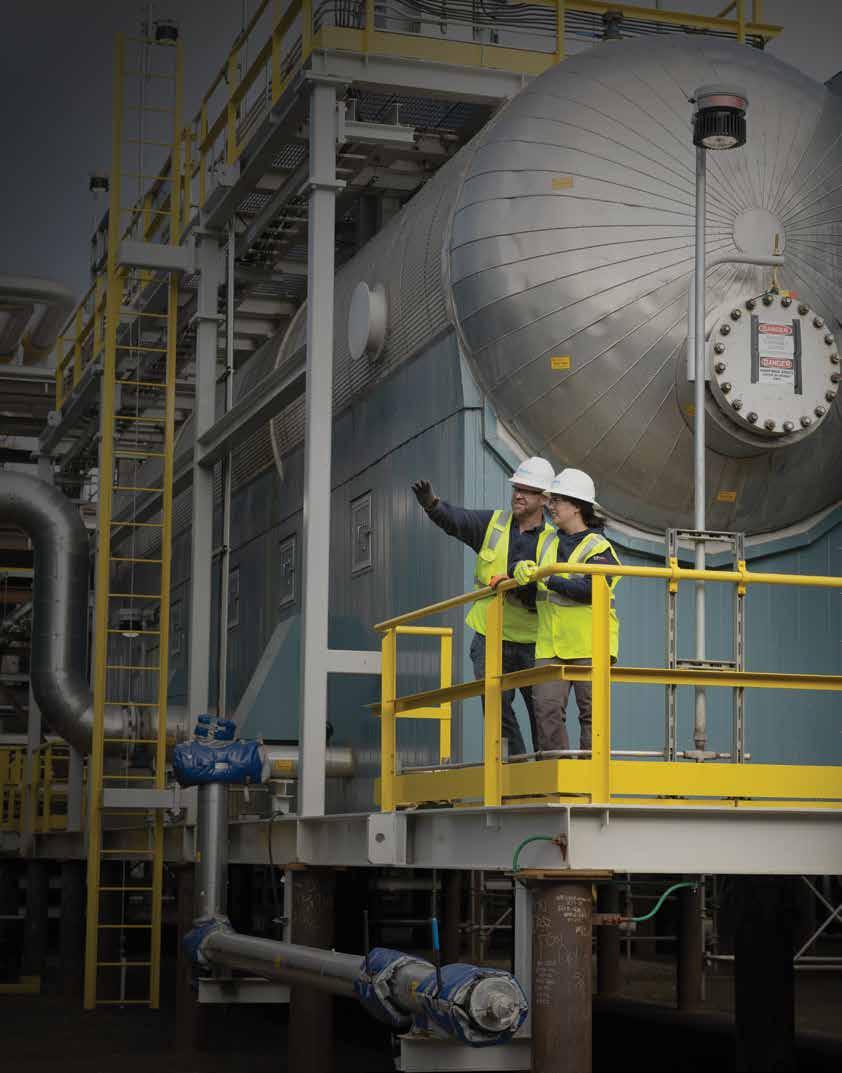

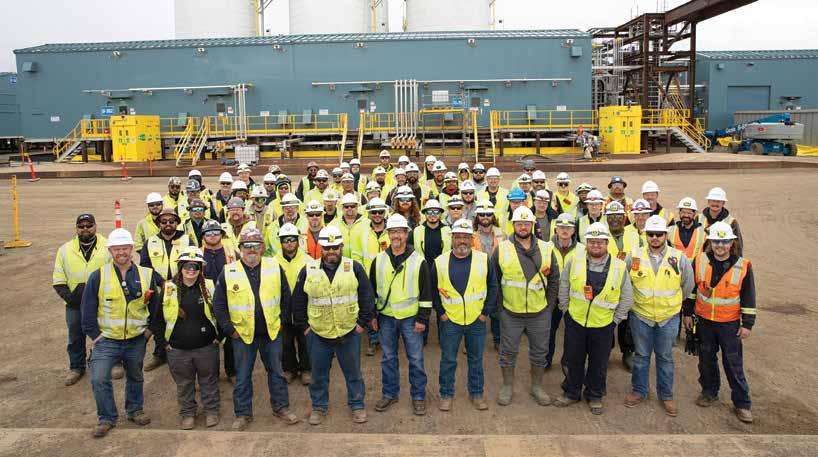

First oil at Pikka marks the beginning of a new era for Alaska.
This world-class development reflects what’s possible when innovation, partnership and determination come together. The result is more than a new oil field – it’s new opportunity.
More jobs. More investment. More revenue for the State of Alaska. And more oil flowing down the Trans Alaska Pipeline System.- helping secure the state’s energy future.
We’re proud to have reached this milestone alongside our employees, Alaska Native partners, contractors, suppliers, regulators and communities.
Thank you to everyone who helped make first oil a reality.
Built by Alaskans. For Alaska’s future.

18 EDUCATION
A Pipeline of Talent
The ConocoPhillips Alaska Process Technology Support Fund
By Tracy Barbour
10 FINANCE
Carry On, Wayward Loss
Reducing taxes on profits by carrying losses forward
By Christi Foist
26 CONSTRUCTION
Simulation for Real
Building the Joint Integrated Test and Training Center-Elmendorf By Christi
Foist
34 TRANSPORTATION
Anchorage Airport Takes Off New routes and major investments By Terri Marshall
82 MINING
Paper for Gold
How to stake a claim, literally By Rachael Kvapil
96 LEADERSHIP
Doing Good by Being Good: Incompetence By Lincoln
Garrick

Aspen Branches Out Hotel brand expands with acquisitions and renovations By



“First National helps us overcome the seasonal swings of Alaska’s hospitality industry.”
– Kevin and Stacey Lane, Owners of The Cookery
Discover how The Cookery stays open year-round in Seward with help from First National Bank Alaska.
At The Cookery, shaping tomorrow means building something that lasts. That’s why they trust First National Bank Alaska for personalized expertise and a banker who keeps pace with their goals. Through our One Solution approach, we deliver comprehensive tailored services to meet all The Cookery’s financial needs – helping them move forward with confidence, backed by the strength of Alaska’s largest community bank. FNBAlaska.com
By

58 ARCTIC ENCIRCLING
International moves toward polar resources
By Scott Rhode
66 OUNCE OF PREVENTION, BARREL OF CURE
Spill response practice and progress
By Alexandra Kay
76 TEN
Talk like a petroleum pro
By Scott Rhode
Santos and Repsol announced first oil at Pikka on May 18. While it’s a milestone for the companies, it’s also part of a building renaissance of oil and gas exploration and development on the North Slope. Combined with an exceptional lease sale in National Petroleum Reserve-Alaska in March and the ongoing excitement over Glenfarne’s Alaska LNG project, many are looking forward to more years of robust oil and gas industry activity.
Regardless of other projects, Pikka’s accomplishment is worth celebrating. The state-of-the-art facility will produce oil and generate revenue for Alaska for decades to come.

Tasha Anderson, Managing Editor
Scott Rhode, Senior Editor
Rindi White, Associate Editor
Emily Olsen, Editorial Assistant
Monica Sterchi-Lowman, Art Director
Fulvia Caldei Lowe, Production Manager
Patricia Morales, Visual Content Designer
Billie Martin, President
Jason Martin, VP & General Manager
James Barnhill, Accounting Manager
Charles Bell, VP Sales & Marketing 907-257-2909 | cbell@akbizmag.com
Weston Giliam, Account Manager 907-257-2911 | weston@akbizmag.com
Joshua Wilks, Account Manager 907-257-2917 | jwilks@akbizmag.com
Tiffany Whited, Marketing & Sales Specialist 907-257-2910 | tiffany@akbizmag.com
akbizmag.com | 907-276-4373
Press releases: press@akbizmag.com
Billing: accounts@akbizmag.com
Subscriptions: circulation@akbizmag.com
alaska-business-monthly
akbizmag
AKBusinessMonth
AKBusinessMonth
Alaska Business (ISSN 8756-4092) is published monthly by Alaska Business Publishing Co., Inc. 501 W. Northern Lights Boulevard, Suite 100, Anchorage, Alaska 99503-2577; Telephone: (907) 276-4373. © 2026 Alaska Business Publishing Co. All rights reserved. No part of this publication may be reproduced without written permission from the publisher. Alaska Business accepts no responsibility for unsolicited materials; they will not be returned unless accompanied by a stamped, self addressed envelope. One-year subscription is $39.95 and includes twelve issues (print + digital) and the annual Power List. Single issues of the Power List are $15 each. Single issues of Alaska Business are $4.99 each; $5.99 for the July & October issues. Send subscription orders and address changes to circulation@akbizmag.com. To order back issues ($9.99 each including postage) visit simplecirc.com/back_issues/alaska-business.
The North Slope oil and gas environment is, in some aspects, surreal. Visiting in spring, it reminded me in many ways of the Star Trek universe. So much of daily life is provided for: free housekeeping, free food, free access to health clinics, et cetera. But you’re stuck on the “starship”; there’s no popping off for a jaunt if you’re feeling restless; there are limits to your activities; you don’t really choose who you’re interacting with most of the time. Some days you’re just maintaining engines or providing transport or working in the kitchen. Some days there’s a polar bear outside. The mundane is combined with the awesome in unpredictable ways.

In Star Trek, a giant spaceship is dwarfed by the vastness of space; on the North Slope, huge trucks, massive rigs, and large buildings likewise could be easily lost in the endless expanse of tundra. The scale of everything is just greater, yet somehow that emphasizes how the most significant works of the human race are dwarfed by nature in its many forms.
And then, on Rig 272, descending to the ground level, we were met by the massive wheels that allow the whole rig to just pack up and move when the job is done. It was impossible not to feel small. It was impossible not to feel I was connected to something special, when my fellow human beings are able to produce such an incredible machine.

Tasha Anderson Managing Editor, Alaska Business


Our work reduces operating costs for businesses across Alaska
Our skilled team of electrical professionals ensures quality installation, integrates new and existing electrical systems, and installs efficient generators and controls.
We understand logistics and thrive in remote locations! Our typical customers are remote lodges, rural communities and school districts, commercial and health care facilities, communication sites, mines, and off-grid homes.
The 48E Clean Electricity Investment Credit is a Federal Tax Credit of up to 50% of full solar & battery project costs. Remaining project costs are fully depreciable. This credit is available for Commercial Enterprises across Alaska and also includes a Direct Pay option for Alaska Native Corporations, Tribes, Municipalities, School Districts, and Non-Profits.
*Some time limits and circumstances apply. Long Spring cannot guarantee Tax Credits or Direct Pay.

By Christi Foist
Ne w businesses can take anywhere from several months to a few years to turn a profit. The seasonal economy of many industries in Alaska can add additional financial uncertainty for small businesses. With all that uncertainty and financial risk, small business owners often try to do as much by themselves as they can, including marketing and tax filings.
As a self-employed writer and occasional communications consultant, I’ve seen this pattern firsthand. But I’ve also learned that extending a “DIY” mentality to taxes can hold unexpected perils, especially when it comes to handling business losses. “People… make decisions that they don’t understand the long-term impact of,” says Bryan Fick, a CPA at Younger and Company, “so then they get into undesirable tax situations.”
Authors have peculiar tax situations, by the nature of the job. From 2018 to 2019, I used savings to fund international research for a book I hadn’t yet sold but hoped to write. In both years, I took financial losses, and I trusted my longstanding online tax service to track all the details that mattered. Not until 2022, when I finally got the first book advance, did I think about whether my earlier losses could help reduce my tax bill. It took a few calls with my DIY tax service’s “experts,” but eventually we reported a carryforward loss, and I thought all was good.

A few years later, however, when facing a challenging tax bill, I realized that my carryforward losses hadn’t been set up right at all. Worse, it might be too late to fix things. Here’s how to learn from— and hopefully avoid—some of the mistak es I made.




A carryforward loss, as the term implies, is a financial deficit that has implications for more than just the present year. Most CPAs contacted about this article referred to it as a net operating loss. I mostly use “carryforward” in this article to help convey the potential multi-year impact of such a loss.
According to current Internal Revenue Service (IRS) instructions for Form 172 “Net Operating Losses for Individuals, Estates, and Trusts,” a net operating loss occurs when “your deductions for the year are more than your income for the year” and, furthermore, those deductions occur from certain qualifying activities. CPA Rajeev Modi, president of Tax One accounting


“If you create a problem by year one, by year five you have a real mess on your hands… The quicker you catch things and get it dealt with, the more options you have.”
Bryan Fick, CPA, Younger a nd Company
office in Anchorage, says there are multiple ways to have a net operating loss. When that happens, he says one can’t always apply the full loss to the current tax year.
In some cases, the IRS applies excess business loss limitations (as detailed in the Form 172 instructions on “Excess Business Loss”). Carrying a loss forward allows a business to reduce taxes on future profits by essentially spreading the profit over the multiple years it took to achieve.
An activity that doesn’t turn a profit for years might just be a hobby, and the IRS needs to be able to tell the difference. The Hobby Loss Rule helps the IRS distinguish between for-fun expenses and business losses. If the activity is run like a business, with a separate bank account and punch-clock hours, the IRS will likely treat it
as eligible to write off losses. And if the activity records a profit in three out of five consecutive years, the IRS presumes it is a business, not a hobby.
Stuart Lyle, an enrolled agent with Lyle Tax Services, says carrying a loss forward doesn’t count as an additional year of loss; it just offsets part of the profit.
Consider the following scenario. Small Business A loses $20,000 in 2022 and $10,000 in 2023, then earns a profit of $10,000 in 2024 and a profit of $30,000 in 2025. Viewed through the tax-year lens, this business has two years of losses, for which the business owes no tax, and two years of profit, for which the business does owe taxes.
Iwas born in Fairbanks, and although I spent part of my youth traveling throughout the Lower 48, Alaska is the place that truly shaped who I am. Hard work, integrity, and the importance of community have guided my personal life and professional career.
I’ve had the privilege of working with businesses across the state for more than twenty years, and I’ve built relationships with professionals in construction, transportation, oil and gas, mining—the industries that drive Alaska’s economy.
I’ve learned that Alaska is built on relationships. In a state separated by vast distances but united by strong communities, trust matters. Business is
built through reputation, consistency, and a commitment to serving others. Those principles have served me throughout my career and guided me to join Alaska Business
For more than four decades, Alaska Business has connected leaders, entrepreneurs, and decision-makers by sharing the stories that shape our economy. The publication brings together people from every corner of the state and highlights Alaskans’ innovation, resilience, and determination.
What excites me most about joining the Alaska Business team is the opportunity for new, productive, and meaningful relationships as I help local organizations share their stories.
–SPONSORED CONTENT–
I look forward to helping Alaska businesses showcase their expertise and what makes them unique, and to connecting them with the leaders, decision-makers, and customers who can help them grow.

With more than 20 years of experience serving Alaska’s construction, transportation, and oil and gas industries, Josh has a passion for sales and developing customer relationships. Outside of work, Josh enjoys an active outdoor lifestyle with his family.

JOSHUA WILKS 907-257-2917 | jwilks@akbizmag.com
Or consider a second scenario.
Small Business K loses $30,000 in 2022 and then earns $5,000 in 2023, $10,000 in 2024, and $25,000 in 2025.
How much total profit is taxable over those four years? Business owners who don’t understand carryforward losses and do their taxes themselves might pay taxes on $40,000 in total taxable income over that four-year period. But given their respective losses, both Business A and Business K actually have net profits over four years of $10,000. A properly applied carryforward loss helps the business owner’s taxes better reflect this. But DIY tax services don’t always handle such situations correctly.
“I always tell people [those services might be] fine if you’re a W-2 type employee,” Fick says, but
with any kind of small business, “there’s a lot of things that ge t missed.”
In general, Fick finds that people either err on the side of being too conservative or too aggressive. “The top two things I see that cost people money” by not using a professional are either “missed deductions” or “the exposure that you open yourself up to if you got audited,” he says. In both cases, a professional could help a business owner take appropriate deductions.
If a small business owner suddenly notices that a prior year’s return didn’t correctly handle a carryforward loss, Fick says it’s important to get professional help as soon as possible. “If you create a problem
by year one, by year five you have a real mess on your hands,” he says. “The quicker you catch things and get it dealt with, the more options you have.”
The IRS website says, “Generally, to claim a refund, you must file an amended return within three years after the date you filed your original return or two years after the date you paid the tax, whichever is later. If you filed early, count from the April tax deadline.”
However, the same IRS page says, “Special rules apply to file for refunds when you have net operating losses” and other tax situations. Modi and Fick were both unsure about attempting to amend a return older than three years. Lyle says he’s sometimes filed an amendment past the deadline and the IRS has accepted it.

Dorsey & Whitney’s Energy & Natural Resources attorneys assist clients with a wide range of oil & gas matters, providing timely and effective counsel to companies engaged in upstream, midstream, or downstream operations.
dorsey.com/anchorage
A properly applied carryforward loss helps the business owner’s taxes better reflect profits netted across multiple years, but DIY tax services don’t always handle such situations correctly.
Monkey Business | Adobe Stock

Business owners rethinking a DIY tax preparation strategy have various options for help. The IRS authorizes multiple kinds of entities to prepare taxes. CPAs, enrolled agents, and attorneys all have “unlimited representation rights,” which means they “may represent their clients on any matters including audits, payment/collection issues, and appeals.” Alaska licenses both CPAs and attorneys, but enrolled agents like Lyle get their licensure through the IRS. Both CPAs and enrolled agents also have continuing education requirements.
Modi says low-income small business owners might also be able to get help through the Volunteer Income Tax Assistance program, an IRS service for free basic returns coordinated by local nonprofits such as United Way. Business networking groups, such as chambers of commerce, can also be a valuable
resource that connects different kinds of professionals with each other, he says.
Both Modi and Fick thought most CPAs would prefer to handle all of a customer’s filing, rather than offering consultation on a return the customer handled in DIY fashion. “It’s difficult for us, from a liability perspective, to give advice when we don’t see the whole picture,” Fick says. If a firm like Tax One were to offer consultation rather than full filing services, Modi thinks this would be most likely during the quietest months, when CPAs or enrolled agents might otherwise work on continuing education more than taxes.
For small business owners considering that their losses might be so perpetual that the IRS would classify the activity as a hobby, both Lyle and Modi stress the importance of running things like a business.
Several practices help show that the filer intends to make a profit
and approaches the operation like a business, not a hobby. These include having a separate bank account and credit card for the business, rather than intermingling business transactions in otherwisepersonal accounts.
Lyle says tracking one’s hours, pursuing continuing education, and having a business plan also help. The latter might include a plan to increase pricing or other documented strategies to turn the business from losses to profits. And even if one operates as a sole proprietor, he recommends getting an employer identification number from the IRS.
Whether the taxpayer is an author doing research, a horse breeder waiting for foals to mature, or an innovator in the startup phase, thinking ahead can benefit the nascent business financially by taking advantage of tax rules meant to spur innovation.






AUGUST 24 - 26






















By Tracy Barbour
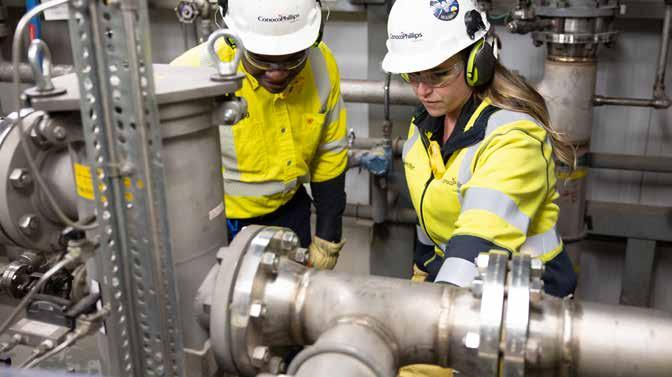
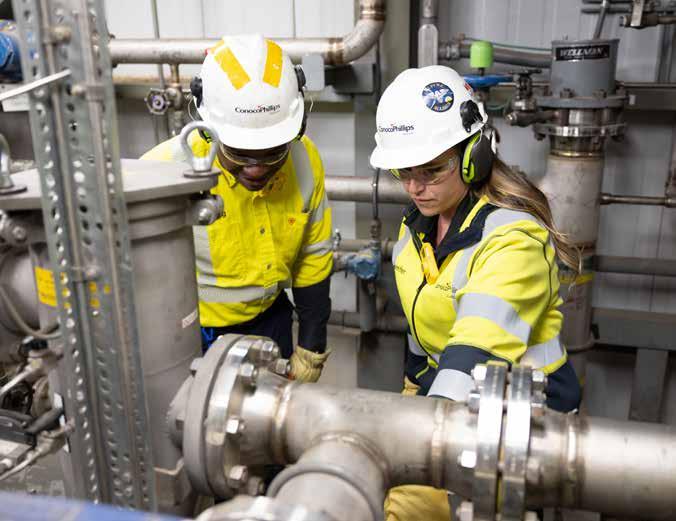
To help meet Alaska’s growing workforce needs, companies are forming innovative partnerships with educators around the state. One example is ConocoPhillips Alaska, which recently donated $400,000 to the University of Alaska (UA) to establish the Process Technology Support Fund. The fund supports process technology programs in Fairbanks at UAF Community and Technical College (CTC) and at UAA’s Kenai Peninsula College (KPC), helping pay for equipment and technology upgrades as well as expanded outreach.
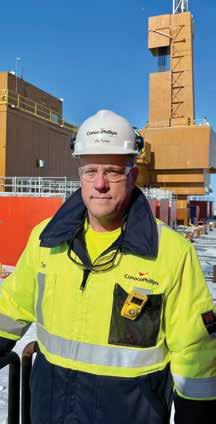
“This is the right time because the workforce need is real and immediate and because UA’s process technology programs already deliver strong outcomes,” says Tim Turner,
vice president of operations at ConocoPhillips Alaska. “We see this as a long-term workforce development investment that connects classroom learning to real careers, and we hope it also encourages additional industry partners to invest in this vital pipeline.”
The UA System has long had a strong relationship with ConocoPhillips—its largest corporate donor—which has invested nearly $45 million over four decades. That support has reinforced the value of private-sector investment in workforce training. UAF CTC Dean Kevin Alexander says ConocoPhillips’ latest donation may be the largest single cash gift he has seen directed to any UAF CTC program. In his view, the contribution reflects both the
urgency of Alaska’s workforce needs and the strength of the partnership behind the effort.
Process technology refers to the equipment and methods for controlling industrial systems, such as oil and gas pipelines, refineries, or heavy machinery in power plants and factories. According to Turner, ConocoPhillips and its peers depend on highly skilled process technicians and operators to keep critical infrastructure running safely and reliably. With twenty years at ConocoPhillips in engineering and production operations leadership roles in the Lower 48 and the Alaska Business Unit, he has seen firsthand how essential these professionals
are to safe day-to-day operations and long-term workforce sustainability.
“The need is growing, and the challenge is twofold: awareness and access,” he says. “Too few
“Too few Alaskans—especially students in rural communities—know this career path exists, and training programs need the modern

Built for Alaska’s Toughest Conditions.
Contractors, Municipalities , Homeowners - we have you covered.
AUTHORIZED DEALER:

Tim Turner, vice president of operations for ConocoPhillips Alaska, oversees North Slope operations, including production, maintenance, and operational excellence initiatives.
ConocoPhillips Alaska
students to earn college credit early through a three-credit introductory process technology course that can be offered both in-person and online,” Turner says.
On the Kenai Peninsula, the fund supports outreach through the “Taste of College” program and a trainthe-teachers model—enabled by portable simulation equipment—so more high schools can offer dualcredit process technology courses. Support is also available to help students take the next step after high school. Turner explains, “We’ve also launched a scholarship fund at the Alaska Community Foundation for those students pursuing the two-year process technology degree through the University of Alaska—whether they attend in Fairbanks or on the Kenai Peninsula.”
For ConocoPhillips, Turner says, workforce development is not abstract; it is reflected every day in the people who keep operations safe
Jesse Thomas, a facility supervisor at Kuparuk River Unit and UAF Process Technology graduate.
ConocoPhillips Alaska
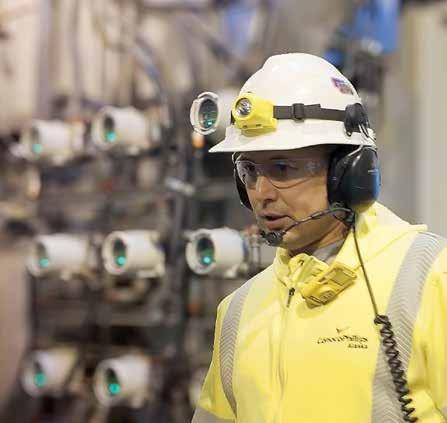
and running. “Many ConocoPhillips Alaska operators started in the University of Alaska process technology programs, and we know the value of graduates arriving with strong fundamentals and handson experience,” he explains. “Our involvement helps ensure the training stays aligned with real-world needs: emphasizing safety culture, reliability, problem-solving, and the technologies students will see on the job.”
“Our message to students is: if you’re looking for a hands-on, highresponsibility career with strong longterm demand, process technology is a great place to start,” Turner says.
UAF CTC’s process technology program prepares students for careers in oil and gas production, mining and milling, transportation and refining, chemical manufacturing, power
generation, utilities, wastewater treatment, and food processing. The students work with the same kinds of systems, controls, valves, pumps, and industrial safety expectations they will encounter on the job. The program is aligned with the North American Process Technology Alliance, meaning the curriculum matches national industry standards.
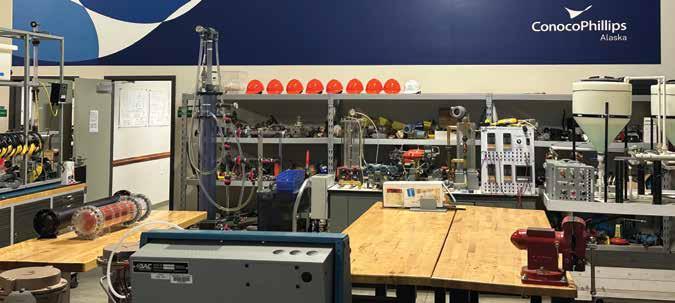
Fonger describes UAF CTC’s process technology program as a comprehensive two-year associate of science degree that focuses on several key areas: safety, knowledge, hands-on learning, and experience. The program leases an off-campus, 6,500-square-foot facility with classroom space and a hands-on shop, creating an in-person learning environment with remote access capability. “This allows each student to gain an understanding of the lecture topic and then complete various hands-on activities to allow a
better understanding and knowledge of the topic,” Fonger says.
The program’s shop includes handson trainers as well as an operational plant with a control room. The plant is used in a variety of classes, from introduction to process technology to piping and instrumentation diagram (P&ID), operations, systems, and troubleshooting. Students prepare for real-world work environments through a safety minute before class, job safety analysis before any handson activity, and safety briefings, along with personal protective equipment for each situation.
Students also write plant startup and operating procedures, which are tested and revised as needed. They use simulators to experience what it’s like to sit in the operator’s seat—starting up equipment, running operations, troubleshooting problems, and handling issues that happen during the simulation. “Parameters are input by the instructor beforehand to simulate a variety of possible issues,” Fonger explains. “This is to see how the student deals with these different scenarios.”
There are no educational prerequisites for entry into the process technology program at UAF CTC, which also offers on-demand tours of the facility. “If you are in high school, reach out and we can talk about the program, classes, and a timeline to complete the degree,” Fonger says. “Adults who are interested in the program, have questions, or are ready to sign up, can also reach out to me.”



is a statewide nonprofit serving 200+ Alaska high schools, 35,000+ student participants, 95,000+ attendees and hosting 52 state championships each year
HIGH SCHOOL SPORTS CHAMPIONSHIP EXPERIENCE





During the spring 2026 semester, eighty students were enrolled in UAF CTC’s process technology



program, including full-time, parttime, in-person, and remote or distance learners. “We have quite a few students who currently work on the North Slope of Alaska or other process technology fields that are also enrolled and actively taking classes either in person or remotely,” he says.
That’s Richard Goss’ situation as a student at KPC. Goss already works on the Slope as an equipment engineer, and he completes most of his coursework online. He describes KPC’s process technology program as “excellent” and professors as “wildly accommodating” with scheduling. “P&ID drawing assignments—where we walk down Big Silver (the training process system on campus) and draw out flow paths—have been excellent,” he says. “I’m a hands-on learner, so the exercise really helps solidify the relationships between vessels, their control elements, and their measurement elements. Our Simtronics work, where we use a simulator to ‘control’ a process like a furnace, is also great for illustrating the cause-and-effect
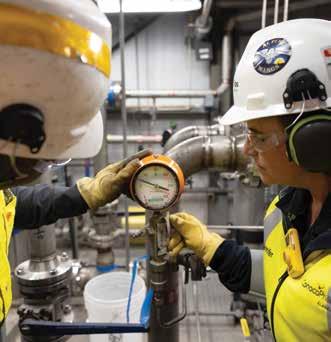
relationships between inputs and controllable variables.”
Through the program, Goss expects to gain the skills he needs to learn effectively and absorb knowledge from more experienced professionals. That foundation, he says, will help him become a capable operator who can support the growth and success of those around him.
“There isn’t a scenario where enrollment doesn’t help you in some way. You could enroll, love the program, and set off on a path full of incredible opportunities with some of the major players in the industry,” he says.
KPC’s process technology program has a strong track record. According to recent institutional data, 88 percent of KPC process technology graduates land jobs in their field within one year of graduation. Average first-year earnings exceed $84,000, and the average wage rises to about $130,000 within five years.
Whereas a process technology education trains operators to
monitor entire industrial systems, an instrumentation certification deals with the installation, calibration, and repair of the sensors and valves that enable the control of those systems. UAF also offers an instrumentation certification program that complements the process technology program. The Certificate in Instrumentation Technology gives students entry-level skills in industrial instrumentation through state-of-theart equipment and hands-on training. It also prepares them to take the entry-level International Society of Automation (ISA) certificate exam, a nationally recognized credential.
Fonger says many students study process technology and instrumentation at the same time. Doing so typically means taking three or four additional classes, depending on course load, but students finish with both a process technology degree and an instrumentation certification. That combination can make them more competitive job applicants. “ConocoPhillips has expressed interest in the instrumentation program expanding

to include automation and other high-tech components,” Fonger says. “We have answered the request by adding three classes to help prepare for the automation as well as revamping another class to include automation.”
While UA is making strides in strengthening its curriculum, it’s also facing several challenges. One is how to increase enrollment. UA wants to preserve a strong hands-on component while serving as many students as possible, Alexander says. That is a constant balancing act because process technology training requires specialized equipment and dedicated space.
Programs with an online component reach more students, while hands-on portions are scheduled as space allows. For now, that is the most effective way to manage growing enrollment. At the same time, the university is looking strategically at how to expand its physical footprint—even as rising costs make that more difficult—so it can accommodate more students and meet workforce demand.
“Every trade sector is showing an increase,” Alexander says. “And,
if we’re being honest, the state of Alaska is a little bit behind the power curve in building capacity to meet that demand. But that speaks to state budget challenges and massively increasing costs that are out of everyone’s control. It’s nobody’s fault really, but that’s where we are… Investments like the ConocoPhillips Process Technology Support Fund help maximize enrollments at least to our capacity as we look at ways to build.”
Alexander says he hopes UA’s strong relationship with ConocoPhillips will continue. Ongoing industry support could help address one of the university’s top priorities: faculty recruitment. Alaska’s demand for skilled workers has pushed private-sector wages to unprecedented levels, which benefits workers but makes recruiting and retaining faculty in trade programs increasingly difficult.
“My hope is that there’s a future where there is faculty salary support or the idea of a sponsored faculty where a large company like Conoco is simply paying a salary that’s
competitive with the private sector so that we can recruit folks,” Alexander says. “Or there’s a partnership where they take a competent, qualified instrumentation technician and pay them to come teach for us on a temporary basis and we rotate their expertise through the classroom.”
Long term, Turner says ConocoPhillips would like its partnership with UA to make process technology a well-known, accessible path to stable, high-demand careers—especially for Alaska students who might not otherwise know about or see themselves in these roles. For Turner, success means more students earning early college credit, more modern training capacity, and more graduates stepping into jobs across Alaska’s critical industries.
“On our side, we’re also expanding career on-ramps—our goal is to increase our process tech/operator summer interns each year and offer a stronger pipeline of operator apprenticeships for post-graduates,” he says. “Together, those pieces help sustain a workforce that can support safe operations and long-term economic vitality for Alaska.”








•
•
•
• Mountain Top Repeaters
• Site Security Solutions (Cameras, Door









•
•
•
•


By Christi Foist
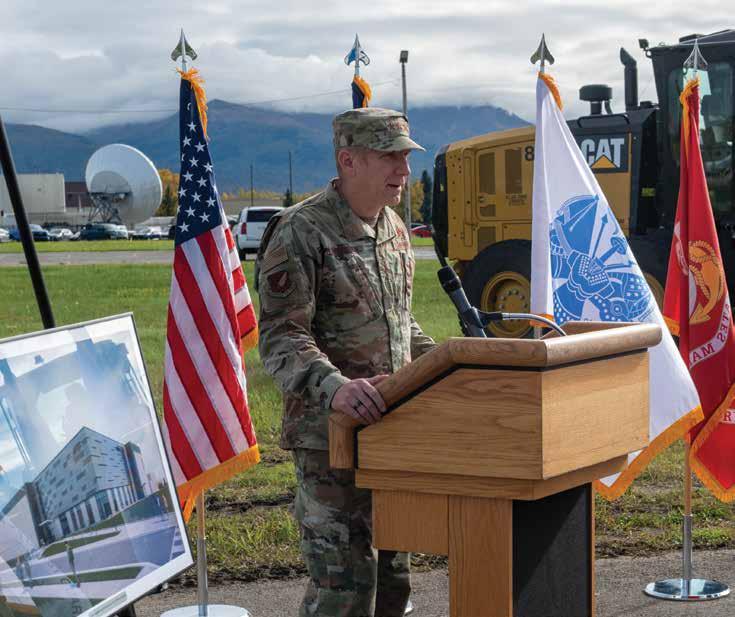
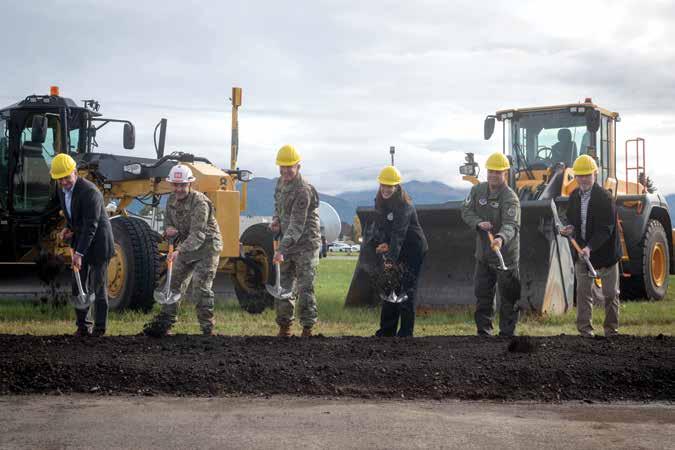
Mi litary operations in the Far North go back decades, but the region has taken on growing significance for the US Department of War. US military operations are organized as geographic commands, and two of the seven now conduct regular exercises in the Arctic. The US IndoPacific Command, sometimes called the Pacific Command, operates Northern Edge, while the Northern Command conducts Arctic Edge.
With that increased importance comes a need to update and expand existing facilities. The $332 million
Joint Integrated Test and Training Center-Elmendorf (JITTC-E) adds a 150,000-square-foot facility with significant simulation capability to Joint Base Elmendorf-Richardson (JBER) in Anchorage.
“The goal of JITTC-E is to revolutionize how we train and test our forces,” says Colonel Philip Lancaster, deputy commander for the Eleventh Air Force at JBER.
The facility “will provide a state-ofthe-art, single-site, joint simulation
Contact Yukon Equipment to experience the power, intuitive controls and comfort that CASE equipment delivers. Be sure to ask about ProCare the most comprehensive, standardfrom-the-factory heavy machine support program in the industry. And speaking of support, you can always count on us as your go-to resource for all your equipment needs.
Visit CaseCE.com/TryOne or contact us to schedule a demo today.
environment that allows military forces to train together in realistic, complex scenarios across multiple domains,” Lancaster says. The twostory structure will include simulator and briefing rooms, a 200-person auditorium, and several other spaces, says Thareth Casey, project manager in the US Army Corps of Engineers (USACE) – Alaska District’s Air Force Projects Section.
“It’s going to be a premier facility,” says Cameron Carlson, dean of the UAF College of Business and Security Management. “There’s only one other facility like this in the Air Force,” he
Contact us for more information. Been in business since 1945.

ANCHORAGE, AK
Phone: 907-277-1541
Email: info@yukoneq.com
FAIRBANKS,AK
Phone: 907-457-1541
Email: info@yukoneq.com
WASILLA, AK
Phone: 907-376-1541
Email: info@yukoneq.com
notes, at Nellis Air Force Base in Nevada. A former lieutenant colonel, Carlson served as the site lead for a similar facility at Fort Wainwright.
“Elements of this type of training exist across various platform-specific simulators and live-fly exercises,” Lancaster says. “However, the level of integrated, secure, and largescale training that JITTC-E will provide does not currently exist in a single location.”
The test center will meet a “need for realistic, high-end training that cannot be fully replicated in the livefly environment,” Lancaster says. “Modern operations require forces to train against complex threats in a secure setting while protecting advanced tactics and technologies.” It will also allow military forces to
“rehearse operations and train in contested environments” without the limits of real-time, real-plane practice.
One of those limits is geographic: JBER hosts F-22 Raptors, while two squadrons of F-35As call Eielson Air Force Base home. For pilots of the different fighter jets to train in joint scenarios, they must meet at the Joint Pacific Alaska Range Complex, but with JITTC-E they can avoid that commute. Eielson and JBER crews can meet in a simulated environment for exercises that are too massive, secretive, or dangerous for the openair training range.
Simulator-based training also has significant financial benefits, Carlson says. According to a 2024 US Government Accountability Office report, the Department of Defense (DOD), as it was then called, “plans to use the F-35 aircraft through 2088
and plans to spend over $2 trillion” on “lifetime sustainment costs.” The estimated costs of this have increased annually; in 2018, DOD projected only $1.1 trillion in lifetime sustainment costs.
According to a 2025 Congressional Budget Office report, “Availability, Use, and Operating and Support Costs of F-35 Fighter Aircraft,” 2023 costs per flying hour varied from $47,000 to $60,000, depending on the plane. These costs included both operation and support.
In recent years, both the US Navy and US Air Force have reduced estimated yearly flight hours for the planes. The Government Accountability Office reports that cost-saving measures have focused on things like maintenance, parts quality, and reducing engine damage caused by “foreign object debris.”



Using more simulator-based training would also reduce costs. “I really never thought about the cost of fuel,” Carlson says of his military days, but a simulator’s cost savings could add up quickly. “If you are able to fly in simulations and you’re doing long simulations,” he says, “you can see very easily” how the savings add up. Using 2023 per-hour costs, a single six-hour simulation could save $282,000 to $360,000, depending on the aircraft.
Carlson says less practice in actual planes also reduces the wear and tear on them. “The more you use the aircraft, the more you have to rebuild the aircraft,” he says, which increases the already-high maintenance costs.
The project has progressed with noteworthy speed, Lancaster says.
He attributes how quickly JITTC-E moved from concept to construction to “close collaboration with the Defense Innovation Unit and industry partners.” Lancaster says this shows “a broad alignment on training for high-end warfighting.”
ASRC Builders-Caddell won the contract for most of the JITTC-E project: a $290 million award announced in July 2025. The project broke ground a few months later. Arctic Slope Regional Corporation owns ASRC Construction, which formed ASRC Builders-Caddell as a joint venture with Alabama-based Caddell Construction.
Both parts of the joint venture have experience with government projects. ASRC Construction has worked in communities across Alaska. Caddell Construction’s government projects include work
on multiple US embassies, including in Kabul, Afghanistan; Beijing; and Mexico City.
The project is currently in the construction phase, Casey says. If all goes according to schedule, work on the test center should finish in 2029. AECOM is the designer of record, while USACE is the design construction agent. Given the project’s location, AECOM and USACE have designed the building to meet heating and air conditioning standards for an International Energy Conservation Code zone 7 climate. The standards establish requirements for thermal efficiency and condensation control; Southcentral falls into this zone. Casey says the building will also meet certain seismic design requirements.
Construction challenges extend beyond the weather and potential
“The facility’s hardware-agnostic design and state-ofthe-art simulators will provide unmatched flexibility… Operators from multiple platforms and services [will be able] to train together in ways that are difficult or impossible to achieve today.”
for earthquakes. Casey says USACE is also navigating “joint occupancy with both construction contractors and end-user contractors that must be well planned and highly coordinated.”
The building’s highly complex and sophisticated technical needs—never mind the security—add further layers to the project.
Once finished, in order to be commissioned, the structure will require an extensive process to test all building components for working order in both normal and various emergency scenarios.
Carlson says the JITTC-E project should provide “a tremendous economic boost for Alaska.” Casey says the construction requires hundreds of workers.
Lancaster adds that the project “represents a significant investment in the local community, creating construction jobs and ultimately jobs requiring science, technology, engineering, and math backgrounds to support the training housed in JITTC-E.”
Once up and running, the test center will allow the US military to play a larger role in the joint exercises the Pacific Command regularly conducts at JBER. “The




architects
engineers surveyors
DESIGN for the Arctic Community DESIGN for the Arctic Community





facility’s hardware-agnostic design and state-of-the-art simulators will provide unmatched flexibility,” Lancaster says. “Operators from multiple platforms and services [will be able] to train together in ways that are difficult or impossible to achieve today.”
In particular, it “will allow forces to rehearse complex combat scenarios involving air, space, cyber, maritime,
and land domains focused on the US Pacific Command area of responsibility,” Lancaster says.
“It’s a very good thing for Alaska to have this,” Carlson says. Having “a more robust portfolio [should] draw individuals here for training.”
He notes that both Australia and Japan, which are Indo-Pacific Command affiliated partners, fly F-35s.
“JITTC-E is designed as a joint and coalition capability,” Lancaster says. “The facility is expected to support participants from all military services and many of our coalition partners. By enabling forces to train side-byside in realistic scenarios, JITTC-E will strengthen interoperability and improve the ability to operate together during real-world contingencies.”
Every parking lot, road, airport and commercial property in America has one thing in common: pavement that eventually cracks, fades and deteriorates.
Today, there are more than 4 million miles of road, thousands of airport runways, tens of thousands of parking lots and countless millions of driveways in need of maintenance and periodic sealcoating.
The demand for quality pavement maintenance services is constant, making a SealMaster franchise investment a recession-resistant business opportunity for ambitious entrepreneurs.
For over 55 years, SealMaster has been a leading nationally recognized brand, manufacturer and distributor of pavement maintenance products and equipment. SealMaster offers large, statewide protected territories designated exclusively for you, unlike most franchise systems that operate in small, oversaturated markets.
As a SealMaster franchise owner, you will supply contractors, municipalities and property owners with a one-stop source for pavement maintenance products, equipment and support while manufacturing SealMaster pavement sealers on-site. Franchise owners can also establish storefronts and distribution centers within their territories.
SealMaster pavement sealers set the industry standard for quality, helping contractors deliver results their customers can depend on. For decades, SealMaster has built its reputation by helping contractors succeed while providing franchise owners with the tools, training and guidance necessary to grow their operations into successful businesses.
In addition to providing products and equipment, franchise owners will supply a full line of SportMaster sport surfacing products. These products are designed for tennis courts, basketball courts, pickleball courts, running tracks as well as many other recreational surfaces.
SealMaster provides franchise owners with a wide range of support, including:
• Manufacturing / Operations
• Comprehensive Training in Sales, Technical Skills and Administration
• Quality Control and Lab Support
• Access to National Accounts
• Ongoing Marketing and Advertising Assistance
• Use of SealMaster and SportMaster logos, as well as other trademarks
• And Much More!
As a SealMaster franchise owner in Alaska, you will operate as a statewide supplier and industry leader. Franchisees gain access to a B2B industrial business with tremendous potential for long-term growth and recurring revenue.

“Given the investment, I can’t imagine any other franchise with the income potential SealMaster offers. Our territories are huge. We just keep growing and growing and to me, the market is limitless.”
– Jake Bernath SealMaster Franchise Owner

“I made it my mission to own a SealMaster franchise after I joined the company as an employee 16 years ago and watched franchisees grow and become very financially successful. I knew I could do it, too, and I couldn’t be more excited for my career and my family’s future.”
learn more about building a business worth the
please visit sealmaster.net/franchise-opportunities or call (800) 341-7325
By Terri Marshall

Te d Stevens Anchorage
International Airport (ANC) is both Alaska’s primary gateway for travelers and one of the state’s most powerful economic engines. Each year, it welcomes visitors while also serving a far larger role in global commerce. According to the latest rankings from Airports Council International World, ANC now ranks first in the United States for cargo volume and third worldwide.
“ANC continues to prove that Alaska is at the center of global commerce,” says Angie Spear, director of the Alaska International Airport System. “Being ranked among the world’s busiest cargo airports reflects the strength of our tenants,
airline partners, workforce, and the strategic advantages only Anchorage can offer.”
Because the Pacific Great Circle route passes near Alaska, ANC serves as a key global transit point for air cargo. Major carriers, including UPS and FedEx, regularly stop in Anchorage to refuel, change crews, and sort packages before continuing eastward to Asia or westward to the Lower 48.
Driven by its strategic location, ANC serves as a major link to global commerce. It also plays a role in promoting growth in tourism, trade, and international connectivity.
“Anchorage’s rise to the nation’s top cargo airport highlights Alaska’s
critical role in the global supply chains,” says Ryan Anderson, commissioner of the Alaska Department of Transportation and Public Facilities. “By continuing to invest in our aviation infrastructure and partnerships, we’re strengthening a system that drives economic opportunity across the state.”
ANC’s cargo strength is only one part of its broader economic story. The airport’s growing passenger network, expanding airline partnerships, and ongoing infrastructure investments are creating new opportunities for business travel, tourism, and trade while reinforcing Anchorage’s
role as a vital connection point between Alaska, the Lower 48, and international markets.
Located within a 9.5-hour flight of nearly 90 percent of the industrialized world, Anchorage has long been a critical refueling and cargo transfer point between Asia, Europe, and North America.
While cargo operations often generate headlines, passenger travel continues to experience significant growth. Airport officials estimate approximately 5 million passengers pass through ANC annually, and forecasts show continued expansion over the coming decades.
“Ted Stevens Anchorage International Airport is experiencing unprecedented growth in interstate passenger traffic. Our research shows ANC leading all medium and large hub airports in the nation with more than an 11 percent yearover-year increase in seat capacity during the first half of 2026,” says Alaska International Airport System Development Manager Teri Lindseth. “This growth reflects strong demand for travel between Alaska and the Lower 48 and reinforces ANC’s role as a critical national gateway.”
To accommodate that growth, the airport recently approved a comprehensive twenty-year master plan that serves as a blueprint for future development. Projects include expanded terminal facilities, additional gate capacity, enhanced passenger services, upgraded cargo infrastructure, improved parking, and modernization of critical operational systems. The phased approach allows airport officials to respond to changing parking conditions
“Being ranked among the world’s busiest cargo airports reflects the strength of our tenants, airline partners, workforce, and the strategic advantages only Anchorage can offer.”
Angie Spear, Director, Alaska International Airp ort System


“Welcoming Southwest gives passengers more choice, strengthens competition, and underscores Anchorage’s position as a gateway for both people and goods moving between Alaska and the world.”
Angie Spear, Director, Alaska International Airp ort System
while maintaining flexibility for future growth.
The most visible and vertical change would be a new air traffic control tower, double the height of the existing structure. However, the Federal Aviation Administration restarted the bidding process last fall after initial bids came in too high. Stantec had been chosen to design a 300-foot-tall tower, which would make it the tallest occupied building in Alaska. Under new criteria, bidders must be capable of sustaining a project worth $120 million or more. The timeline for rebidding has not been specified, pushing construction of the new tower into the indefinite future.
In the meantime, the stateowned airport is proceeding with incremental changes at its own pace.
On the travel side, ANC is undertaking an ambitious modernization effort to upgrade infrastructure, expand passenger services, attract new airlines and direct routes, and support longterm growth.
Alaska Airlines continues to strengthen its network with new nonstop routes. In 2026, the airline expanded its spring and summer seasonal service from Anchorage by adding three new nonstop routes to and from Boise, Boston, and Spokane.
“It will now be even easier for visitors to get to Alaska this summer and start their vacation. Also, Alaskans will enjoy more nonstops to visit family and friends in the Lower 48, or explore Boston, Boise, and Spokane,” says Marilyn Romano,
Alaska Airlines regional vice president for Alaska.
The airline also expanded service on two additional seasonal routes. Flights between Anchorage and San Diego and between Anchorage and Sacramento were previously operated on Saturdays only. In summer 2026, a Wednesday flight was added.
“These inaugural routes from Anchorage signal a new chapter of growth at ANC and underscore Alaska’s rising role as a global travel hub,” says Spear. “Alaska Airlines’ leadership in launching these connections is creating more choices, more access, and more opportunity for travelers.”
Alaska Airlines isn’t the only carrier focused on increased flights to Anchorage. In October 2025, ANC announced a new
seasonal route with American Airlines, connecting Anchorage and Phoenix. The route started in May 2026 and continues through Sep tember 8.
ANC also welcomed seasonal service from Southwest Airlines in May 2026, adding another nationally recognized carrier to its growing passenger network.
“This is an exciting milestone for ANC and for Alaska travelers,” says Spear. “Welcoming Southwest gives passengers more choice, strengthens competition, and underscores Anchorage’s position as a gateway for both people and goods moving between Alaska and the world.”
The addition of Southwest also reflects the continued momentum behind Anchorage’s aviation sector, where rising passenger demand complements ANC’s long-established strength in cargo operations. Together, these developments reinforce the airport’s role as both a major economic driver for Alaska and a critical link between the state, the Lower 48, and global markets.
The addition of Southwest highlights the strength of Alaska’s air travel market and the continued demand for expanded service. “Southwest is honored to announce our intention to serve Ted Stevens Anchorage International Airport and to join the Anchorage and Alaska communities,” says Andrew Watterson, chief operating officer at Southwest. “We look forward to connecting our customers to Anchorage’s rich history and culture, and thank Governor Dunleavy, Commissioner Anderson, and the State of Alaska staff for welcoming us with open arms.”
“Air service is essential to Alaska’s future,” says Anderson. “Bringing Southwest to ANC reflects the success of our long-term strategies to expand service. It enhances opportunities for Alaskans, strengthens global connectivity, supports tourism and business, and drives lasting economic growth for the state.”
With additional flights coming in, ANC has improved the airport experience for all travelers. One of the most visible initiatives involved terminal modernization and expansion. Plans call for additional gate capacity, expanded passenger waiting areas, upgraded baggage handling systems, and a larger checkpoint for TSA screening.
The airport is also evaluating new parking solutions to address increasing demand. Initial plans would add hundreds of parking spaces, while longer-term proposals examine expanded surface lots and the possibility of a future parking structure.
The airport earned top honors for its concessions program, placing first in two Top 50 performance categories in the Airport Experience Fact Book 2025, published by Airport Experience News, a leading source on airport concessions and passenger experience.
The annual publication ranks US airport concessions programs based on measures such as total sales, revenue per enplaned passenger, and overall effectiveness. ANC’s first-place finishes highlight the strength of its food, retail, and service offerings, as
well as its continued commitment to improving the traveler experience.
“This recognition reinforces the success of ANC’s thoughtfully curated concessions program and the important role it plays in supporting local businesses and enhancing the overall travel experience,” says Lindseth. “It also represents a positive economic story for the airport and the community, reflecting an airport environment that people want to be part of—not just pass through.”
ANC’s concessions program emphasizes a balanced mix of local and national brands, strong operational performance, and customer-focused amenities that make the airport experience more convenient, welcoming, and memorable for travelers. By highlighting Alaska-based products
and services alongside familiar national offerings, the program gives passengers more choice while also reflecting the character of t he state.
ANC offers several passenger amenities including an adult changing station, family room/ nursery, pet relief area, a meditation room, and the Hidden Disabilities Sunflower program. The latter is part of a national program for travelers who need additional support, given that navigating a busy airport can be stressful, especially when a disability or medical condition is not immediately visible.
Through this voluntary program, passengers who self-identify as needing extra assistance can receive











a sunflower lanyard or wristband from airline ticket counters or the visitor information center. A discreet symbol, the sunflower lets airport staff, TSA personnel, and other service providers know that those travelers may need additional time, patience, or support without requiring them to explain their condition or answer intrusive questions. Non-visible disabilities and conditions may include anxiety, autism spectrum disorders, cognitive or sensory conditions, chronic illnesses, mobility challenges, or short-term recovery needs.
“Accessibility is at the heart of delivering world-class service at ANC and FAI [Fairbanks International Airport],” says Spear. “By implementing the Hidden Disabilities Sunflower Program at both of Alaska’s international airports, we are taking
another step toward ensuring every traveler feels recognized, supported, and welcomed. We want passengers to know that whether their needs are visible or not, our teams and partners are here to provide care, compassion, and understanding for those who may need extra assistance.”
The airport is also equipped with WHILL autonomous wheelchairs, thanks to a partnership between NANA Management Services (NMS) and Alaska Airlines. Like a self-driving car requested on a ride-sharing app, WHILL has supplied wheelchairs since 2020 and now services twenty-six airports worldwide.
“Anchorage represents an important step in expanding access to autonomous mobility in North America,” says Shane Bogni, president of WHILL Autonomous Service, North America & EMEA.
A sunflower lanyard is a discreet, recognizable signal to TSA agents, airport staff, and airline employees that the wearer may benefit from extra time, patience, or assistance.
The lanyard does not identify a specific condition nor require the traveler to share personal medical information. By offering the lanyards, ANC is helping create a more inclusive and welcoming airport experience.
Carolina Jaramillo | Adobe Stock
“Our goal is to give passengers more independence and confidence as they move through the airport.”
The service rolled into ANC in March. Users can request wheelchair assistance through Alaska Airlines at the time of booking, prior to arrival, or upon entering the terminal. At the NMS assistance kiosk in the terminal, NMS staff screen passengers for mobility needs and coordinate the service.
“This program is about dignity and independence in travel,” says NMS Vice President of Food, Facilities & Maintenance Clinton Lasley. “Whether a passenger is traveling with limited mobility, recovering from an injury, or simply needs assistance navigating a busy terminal, WHILL autonomous wheelchairs help travelers move at their own pace, with support from our trained team.”


Since 1978, Span Alaska has connected the world to all of Alaska with a weather-tested network of highway, vessel, barge, and air transportation.
At our West Coast Consolidation Center, we load your products into dedicated containers that transit directly to one of six service centers or air cargo facility for final-mile delivery. This eliminates extra rehandling and costly delays.
Benefit from:
• Year-round weekly ocean transit in all conditions
• LTL, FTL, Chill/Freeze, and Keep From Freezing Protection options
• Specialized equipment for project, oversized, and hazardous material loads
• Delivery throughout Alaska, from metro Anchorage to North Slope to remote villages in the Bush
• Customized solutions for commercial and industrial sectors, including oil and gas, construction, food & beverage, and retail/tourism
Top-Ranked in 2026


Thirteen years since the Qugruk 3 exploration well found oil at the Pikka field, Santos is sending that project through all three segments of the petroleum chain. Upstream production becomes midstream transport, destined for downstream refining and sales. Pikka advances Alaska’s position on the circular chessboard for Arctic resource development, even as the pawn skeleton of spill response and technical training shores up the state’s defensive posture.
While the state draws nearer than ever to a new pipeline that would transport more North Slope energy as natural gas, the crude oil in the Trans Alaska Pipeline System remains an economic foundation.

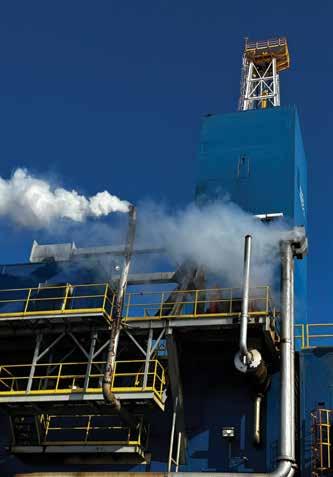
By Tasha Anderson
In mid-May it was 19°F and windy at the Aurora Hotel in Deadhorse. As I stood in the parking lot surveying the surroundings, I chatted with a gentleman from Texas who works for Nabors Alaska Drilling and was in town as part of a crew tasked with getting a previously inactive drill rig up and running. He said that, according to his supervisor, spring is the windy season on the North Slope. The gusts were bracing, numbing the fingers holding my camera, but most of my attention was focused on what I could capture through the lens: work trucks, shipping containers, buildings obscured by snow whipped up by the wind. That morning I had flown out of an Anchorage that was laboring to move past winter, plodding through a gray, chilly spring. But in Deadhorse the sun was out in full force and I paused to soak the first beams of 2026 that actually felt warm. Despite the sun working overtime, it had not yet cleared the heavy lift of melting the ice and snow from the Arctic tundra; beyond the trucks and containers and buildings were miles and miles of bright white.
It was just a matter of time, though. Spring was coming, and—two hours by road to the west—so was first oil at Pikka.
Santos, which holds 51 percent interest and operates Pikka, and Repsol, with the remaining 49 percent interest, officially announced “first” oil from the Pikka Phase I development on May 18. By the end of the third quarter of this year, Santos expects to reach a production plateau of 80,000 barrels per day.
What does first oil really mean? Oil has been drawn from the ground at Pikka as far back as 2013, when Repsol and Armstrong Energy drilled Qugruk 3, the site’s “discovery” well, and subsequent exploration wells drilled in 2015 also drew up oil. While on site at Pikka in May, Santos Senior Vice President of External Affairs Joe Balash clarified, “There’s been oil coming out of the ground here at Pikka, at this drill site, since 2023… but that doesn’t constitute production because it’s not being put into marketable conditions.”
The significant milestone Santos achieved on May 18 was flowing oil (brought up to “commercial quality, marketable condition,” Balash says) through the Lease Automated Custody Transfer meter into the Pikka sales oil line. “Once oil leaves the lease or unit, that creates what’s called a ‘royalty event,’ meaning we have produced, and the state is entitled to, its share of the oil,” says Balash.
The Lease Automated Custody Transfer meter measures the volume, quality, and mass of the oil, and those measurements ensure that all parties with an interest in the oil are paid appropriately.
The Trans Alaska Pipeline System (TAPS) is a common-carrier pipeline, which means anyone producing oil on the North Slope has the right to use it, and all North Slope oil intermixes within it as it flows south. But not all oil transported via TAPS is the same quality. According to Balash, “All the fields produce different qualities of oil, and they go into TAPS and all get mixed together. At the other end, it’s just one quality down in Valdez. To account for that difference in quality, there’s something called the ‘quality bank,’ and it’s settled in cash between the operators: some pay into it and some get cash. We’re going to get cash.”
This is in part because the oil now being produced at Pikka is new oil; while it naturally contains some water and gas, it does not yet hold water or gas that has been injected back into the ground to maintain pressure to produce more oil. According to Trevor Palaniuk, operations and maintenance manager for Santos on the North Slope, “It’s remarkable that the North Slope has gone so many years without this [Pikka] being developed, because we’ve had very little gas to deal with, very little water—very high-quality crude.” Palaniuk says at present, the “water cut,” or amount of water, is approximately 5 percent, and the amount of gas is so low he couldn’t estimate a rough percentage. “We are actually buying gas from Prudhoe Bay to provide fuel gas for our operations, and we’ll need to do that for some time,” he clarifies.
“There’s been oil coming out of the ground here at Pikka, at this drill site, since 2023… but that doesn’t constitute production because it’s not being put into marketable conditions.”
Joe Balash, Senior Vice President of External Affai rs, Santos
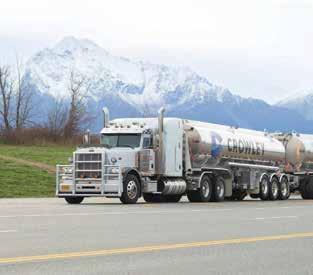



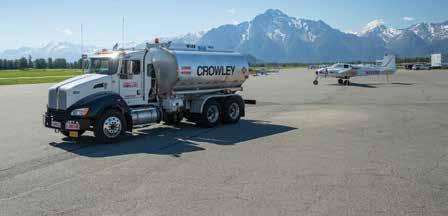
With terminals and delivery services spanning the state, and a full range of quality fuels, we carry petroleum products and services that carry Alaska forward.
Diesel | Gasoline | Lubricants
Propane | Heating Fuel | Aviation Fuels

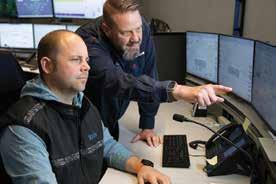
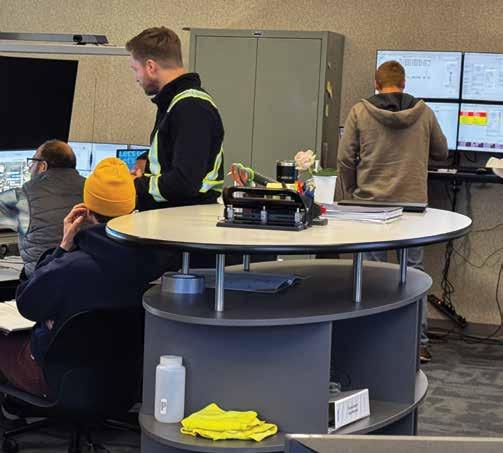
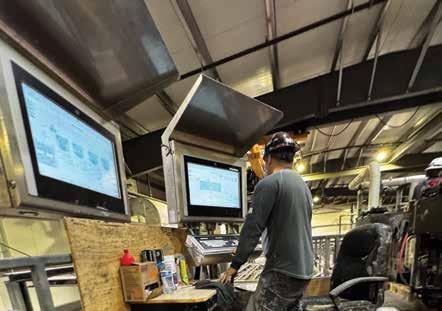
At Pikka it’s not just the oil— everything is new. That includes the control room at the Pikka Operations Center, for example. Palaniuk says, “It’s world class… it looks kind of like a NASA space center… it does everything and is a highly automated, modern facility.”
In mid-May, days before first oil, the control center was full of people finalizing the commissioning equipment. One supervised instrument automation; two were controller moderators who operated equipment remotely; another was overseeing crude processors; and many more were reviewing, consulting, and calibrating.
Pikka’s control room design is unique on the North Slope. According to Palaniuk, “A lot of the older design of the facilities—they call it ‘facility siting’—wasn’t really
well understood, and a lot of control rooms were built in hazardous areas. That’s the biggest driver here,” he says, speaking of the Pikka control room, “that we got them [employees] away from the site, so if there’s a major incident [on site], these guys are safe.” He clarifies that the modern control room and automated equipment doesn’t completely replace the need for employees on the ground: “You can’t replace a human walking through the facility— what they hear, what they smell, what they see—so that will always be part of our operation.”
And in mid-May, Pikka was buzzing with people. Palaniuk estimated approximately 650 personnel were on site, though Santos anticipates closer to 400 long-term employees at Pikka. The additional 250 were wrapping up construction and working on calibration.

Workers were housed in multiple locations, but the largest group was at the mancamp situated within the Pikka Operations Center, which is also new.
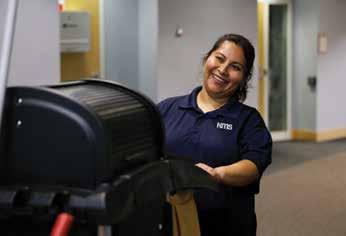
At the Pikka Operations Center mancamp, all of the rooms are “singles” and contain a bed, wardrobe, desk, and TV, as well as a bathroom with a toilet, sink, and shower. Residents have access to a thermostat to heat or cool the room to their personal preference. Gyms, laundry facilities, and a healthcare clinic are available to all residents, as is the cafeteria and 24-hour spike room, which is a small convenience store (minus the need to pay) complete with nachos, hot dog, and soft serve machines, fresh fruit, and a range of snacks and beverages.
What the mancamp doesn’t have is a lot of noise. Contrary to portrayals in modern cinema of rowdy camps

bursting at the seams with violence, alcohol, and illicit drugs, the Pikka mancamp observes quiet hours around the clock and, like all North Slope oilfield facilities, alcohol, marijuana products, and nonprescribed medication are strictly prohibited. Because employees work a variety of shifts, the expectation is that all conversations in the halls and rooms will be at a courteous decibel.
Those not at the Pikka Operations Center mancamp were housed in a handful of locations, including approximately sixty at ND-B (Nanushuk Drill Site B), the primary development pad for Phase I of Pikka. The milestone of first oil was the climax of a decade of development, but the party isn’t over. The work is just beginning. In mid-May, Nabors



was onsite with a crew drilling a new well, adding to the dozens already operating there.
On our way to tour Rig 272, which was working during our visit, we passed multiple wellhouses, and the Santos team described the wellheads working within as “Christmas trees.” At the drill site, one wellhead had yet to be housed: ND-BI39. Balash explains the “I” indicated it’s an injector well, which injects water or gas back into the formation, and those without an “I,” like the neighboring ND-B40, are production wells.
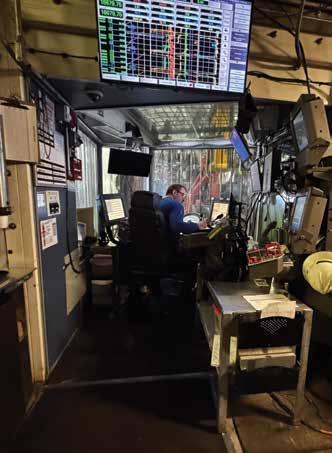
At Rig 272, a crew was working on a new production well; on the ground level, a machine picked up pipe and moved it up the drill rig to a team of three, positioned several flights of stairs higher: two were staging pipe for imminent drilling, and a third was in the “dog house,” the colloquial
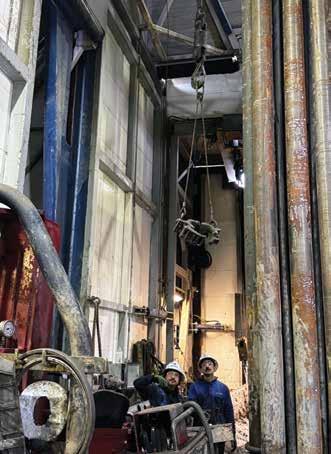
name for the seat of an engineer who monitors the crew and drilling operations from behind a metal cage (hence the nickname).
Unique on our tour of Pikka, Rig 272 is not new. Tony Sherman, who works for Nabors, helped build it and its sister rig, 273 (which in mid-May was performing work for Hilcorp), in 2010 in Vancouver, Washington.
To get to jobsites in Alaska, Rigs 272 and 273 were barged as modules into West Dock, and it took approximately three weeks to get them all onshore once they had arrived. “It was pretty impressive,” Sherman says. “You’ve got the three units… just shy of 10 million pounds of steel right there.”
Rig 272 started its career by transiting North, and it remains a mobile rig today, albeit under its own power; it drove to ND-B in 2023. For its current operations, as Sherman says, “[The crew] will drill the well and
complete the well, and then when the rig finishes drilling activities, it will move.” What look like observation rooms on the side of the rig allow an operator to drive it down the road and on to its next job.
Once the rig has driven away from the well, another team performs hydraulic stimulation, which gets the oil flowing, and will “flowback” the well, or clean out any debris from the drilling process. With that completed, the well is ready to produce oil intended for market. “It’s a two-part process,” Sherman says. “The rig activity and then the non-rig activity.”
Larry Skanderbeg, completions frac supervisor for Santos, is the expert on the fracking part of the non-rig activity. According to Sherman, Pikka crews are drilling long, horizontal wells into tight rock, so fracking
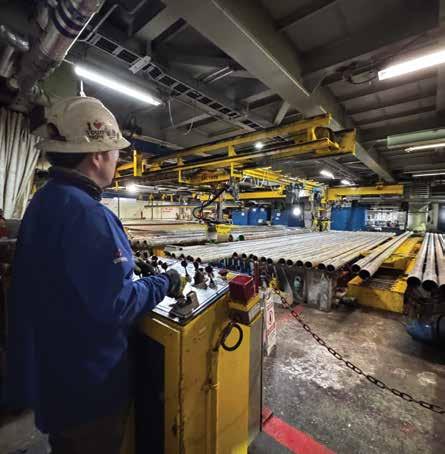
An employee operates equipment in the pipe shed on Drill Rig 272, where pipe is stored before being pulled and used for
•


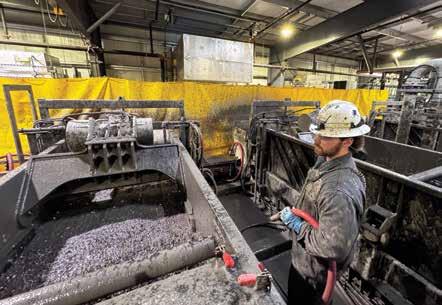
material that is most commonly made of processed silica sand or man-made ceramics) that is sourced in the Lower 48, put on a rail car, transported across the United States, put on a barge in Seattle, shipped to Whittier, put back on the railroad, moved to Fairbanks, loaded into trucks, and then brought up the Dalton Highway. The journey takes two months.
And, because the investment in getting the material to Alaska is significant, Santos purchases man-made proppant. “When you spend that amount of money on transportation to get it up here, it’s not that much more to get a goodquality proppant,” Skanderbeg says.
In addition to fracking, Santos also uses proppant in producing wells to help prevent scale. “When certain fluids are mixed together, and they’re not meant to get together… some of the dissolved ions in the water will precipitate out, and that scales up the tubulars [an oilfield pipe] and production equipment.” Chemicals added to the sand injected into the well dissolve over time in the formation and help prevent the precipitates, he explains.
One of the Pikka wells, ND-B27, is 27,000 feet long. A hole of that size naturally produces waste rock, which Palaniuk says in the Lower 48 would be trucked to a landfill or similar facility. “But here in the sensitive Arctic environment, we can’t just let all these cuttings sit on the ground; we have to put them somewhere,” he says.
The solution is a literal solution: grinding down the rock into a slurry and injecting it into an underground reservoir via a disposal well. William
Rauchenstein, fittingly nicknamed “Rock,” manages the Nanushuk Grind and Inject (NGI) facility. He says, “We don’t do oil here… what we do is we take the big rocks from the rig and we crush them to dust, put it into a slurry—which is the equivalent of going into a milkshake—and inject it into the ground.” The consistency, he says, specifically allows the mixture to be injected underground without it separating.
The underground reservoir that holds the slurry is a permitting formation (i.e., permeable and porous rock), and the well that fills it was specifically drilled for waste rock disposal.
Before Pikka finished constructing the NGI, it trucked its waste to Drill Site 4 in Deadhorse. Doing so required twice as many trucks as processing the rocks on site; the round-trip journey from Pikka to Deadhorse is 10–12 hours in the summer due to road conditions. “Lots of trucks, lots of men, lots of food, lots of money,” Rauchenstein says.
Although the waste rock trucks are now running shorter routes, there are still trucks making the trek to Deadhorse to transport NGI’s “mud” supply, an oil-based mud mixed in Deadhorse that can be adjusted to various viscosities to suit its purpose. “If we’re drilling the well with tenpound-per-gallon mud, our spike fluid will be thirteen- to fifteen-pound-pergallon mud, and we’ll dilute it, giving us more mud volume. That buys us time to control the well, or continue drilling the well, while the trucks go to Deadhorse and get more mud for us,” Rauchenstein says.
To maintain reservoir pressure at Pikka, Santos will inject processed



www.chialaska.com info@chialaska.com





PIKKA GRAVEL PADS
PIKKA GRAVEL PADS PERMITTED
PIKKA GRAVEL ROADS BUILT
PIKKA GRAVEL ROADS PERMITTED GSP PIPELINE PIKKA PIPELINES STP PIPELINES EXISTING GRAVEL PAD EXISTING
Santos spent approximately $16 million on a boat ramp, but it doesn’t have any boats at Pikka. This particular investment was not in its own operations but in Santos’ relationship with its North Slope neighbors, the residents of Nuiqsut, allowing them to travel more efficiently through the sparse far north road system.
Nuiqsut residents travel on the Colville River for subsistence and gathering activities, hunting caribou and seals, for example, as well as traveling to Deadhorse and other communities. Since the boat ramp was completed in 2021, “It’s been positive feedback,” says Santos Community Field Coordinator John Kunaknana, who is also a shareholder of Kuukpik, the village corporation representing Nuiqsut.
Kunaknana now resides in Anchorage, but he has family still living in the village who use the ramp, and he
has utilized the ramp himself. He says, “Before [the boat ramp], they would have to drive [via boat] all the way to Oliktok Point, which is another hour and a half drive.”
Located in the Nikaitchuq oil field operated by Hilcorp, Oliktok Point is the northernmost extent of the Prudhoe Bay road network.
Of the approximately 400 residents of Nuiqsut, Kunaknana reports that more than a quarter have taken advantage of the boat ramp. On a summer day, there may be up to fifty vehicles parked on the pad near the ramp.
“This is something that the community very much wanted,” says Lisa Houghton, a senior communications consultant for Pikka, of the boat ramp that Santos built and maintains. “We don’t use it: it’s for the Alaska Native residents.”
seawater into the reservoir. Unlike the mud and rocks, the water travels by pipeline.
A steady supply of processed seawater flows from the Seawater Treatment Plant (STP) to other Pikka operations. Tim Brown, lead operator for the STP, says the facility processes about 100,000 barrels of water per day at its current configuration. “One of the things that makes this facility unique from the other facilities on the North Slope that process seawater,” Brown says, “is we use all-membrane technology; others use different forms of filtration.” The benefit of the membrane system is that it’s much more compact, Brown explains.
The seawater is processed to remove solids, which have an erosive effect on production infrastructure; sulfates, which, “when you put them down the hole, they’ll bind with strontium and barium and make a really difficult scale to get out of the process piping”; and air, which can promote the growth of bacteria and create hydrogen sulfides, according to Brown.
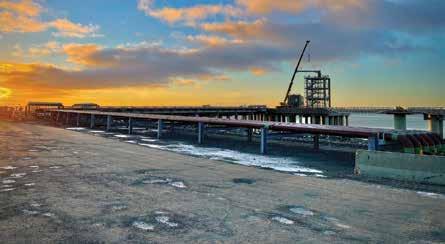
The STP sits on the shoreline and pumps in water directly from the sea. Unlike every other module at Pikka, moved north by truck, the STP facility was fully constructed overseas and traveled by ocean. Arriving in Alaska, the facility was ballasted down, and its ballast tanks were filled with gravel, settling it securely and permanently in its current location.
That’s all it takes, really, to produce new oil on the North Slope: drilling equipment, grinding facilities, seawater processing, and a whole bunch of power; hundreds of people





A ‶bear cageʺ at Pikka's Seawater Treatment Plant; it allows those leaving the facility a clear view of the surroundings to check for bears before leaving the safety of the bars.
Tasha
Anderson | Alaska Business
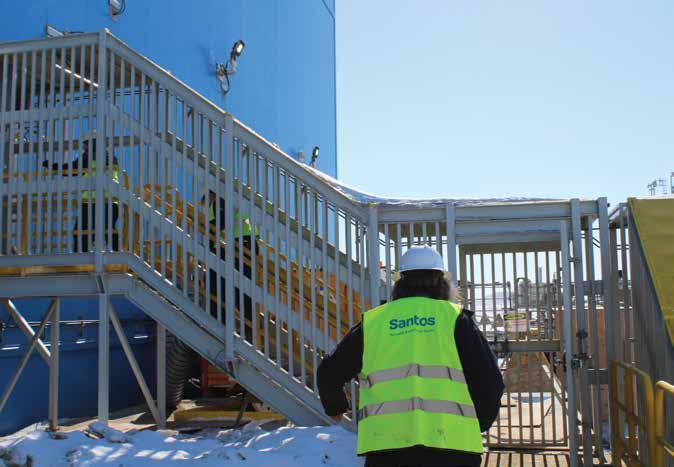
“Safety comes first on the Pikka project; everybody has the right and responsibility to stop a job,” says James Hollopeter, health and safety lead for Santos at Pikka. “We [North Slope operators] rely on each other for a lot of things…. In the event of an emergency, it takes the whole village to pull together because we’re so remote.”
Hollopeter says safety comes first, but really it’s omnipresent. Every task, such as leaving a building, is governed by rules and best practices that consider the safety of infrastructure, equipment, the environment, and people.
For example: at the Seawater Treatment Plant, every external door to the structure is surrounded by steel bar walkways; those leaving the building can move within these “bear cages” safely and survey the surroundings to check for polar bears, which frequent the area, before moving toward a vehicle or outdoor task.
The number of employees allowed to operate a vehicle on the North Slope is limited, and those who are
permitted to drive are expected to follow posted speed limits at all times—including the signs that read 7 ½ miles per hour. Santos Operations and Strategy Manager Todd Lirette’s take on the unique speed limit is that it encourages drivers to be particularly mindful of how fast they’re driving.
On the day of the media tour, in an early-morning briefing, Hollopeter covered everything from personal protective equipment, muster points, and the emergency number in the event of a polar bear sighting to being aware of the massive equipment running on site. “The big iron is going to win,” he cautioned. His briefing was supplemented at every job site with specific safety hazards, required safety equipment, and onsite personnel giving timely “duck here” or “make sure you have cleats on” warnings throughout the tour.
He summarized his briefing with classic advice: “When we’re going out and about, you know, try not to touch things.”
and a place to feed and house them; and somewhere between $3 billion and $4 billion. Probably closer to $4 billion, Balash says, when Santos does the final accounting next year.
It’s not surprising that Santos, with such a significant investment, is already looking at how to stretch those investment dollars far into the future.
Pikka Phase I has marked first oil; Phase II is a logical next step, and the company is already making plans.
As one example, Brown says the STP can be configured to increase output to 140,000 barrels of water per day to support Phase II operations.
Balash said in mid-May, “We have some extra [workers] around… we expect we’re not really going to have a significant dropoff. We’re going to be moving to the next drill site… That’s the near-term plan here at Pikka. Once we get our arms around reservoir performance, facility performance, we’ll be looking at how to expand the capacity of our processing facility.”
He says Santos estimates that Phase I will ultimately produce 400,000 million barrels of oil in approximately thirty years. Balash also says that’s a conservative estimate. “Oil fields tend to grow,” he continues. “As long as the world continues to demand energy that’s made of hydrocarbons and there’s a market for it.”
Pikka Phase I is targeting the Nanushuk 2 and Nanushuk 3 formations. “We haven’t delineated the 4, 5, and 6 for their viability, but we will, eventually,” Balash says. “That’s the reason the [National Petroleum Reserve-Alaska] lease sale in March was so extraordinary: this particular resource is widespread across the Slope, and a lot of the






Monica Sterchi-Lowman | Alaska Business
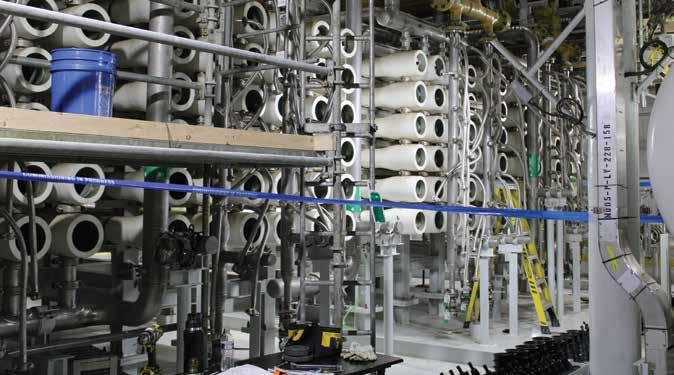
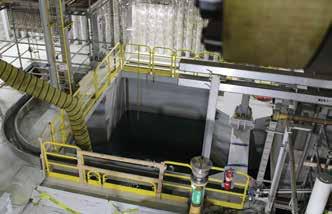
work that this team has done to demonstrate the viability of the resource—our company took a big risk and it’s paying off—but there’s so much more available.”
While there’s clearly ongoing potential in the Alaska Arctic, Santos’ decision making is guided by environmental and social standards, particularly in consideration of North Slope residents.
One obstacle to production further west is that doing so economically may require a permanent bridge over the Colville River, and Balash

says local communities are debating whether a bridge meets their needs and expectations. “Historically they haven’t wanted infrastructure close; some are reconsidering that, but I would not say there’s a consensus in the community,” Balash says. John Kunaknana, Santos Community Field Coordinator and Kuukpik shareholder with family in Nuiqsut, says that’s his impression of the community sentiment, as well.
“As responsible investors, we want to make sure we’re using the best available technology,” Balash says. “We’re looking for the smallest footprint possible as we deliver the
benefits of the project to Alaska, and the nation, and our shareholders.”
What are the benefits? For Alaska, specifically, there’s the money. “The royalty revenue, in particular, is going to be considerable. We expect this next year, on a conservative oil price, we’ll be contributing somewhere around $250 million to the treasury. And over the life of the project, it gets closer to $7 billion, and that’s just Phase I. As we continue to make investment in production, those numbers are going to grow,” Balash says.
He summarizes: “This truly is a world-class operation we have.”












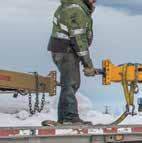



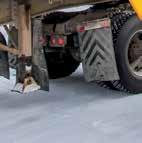






































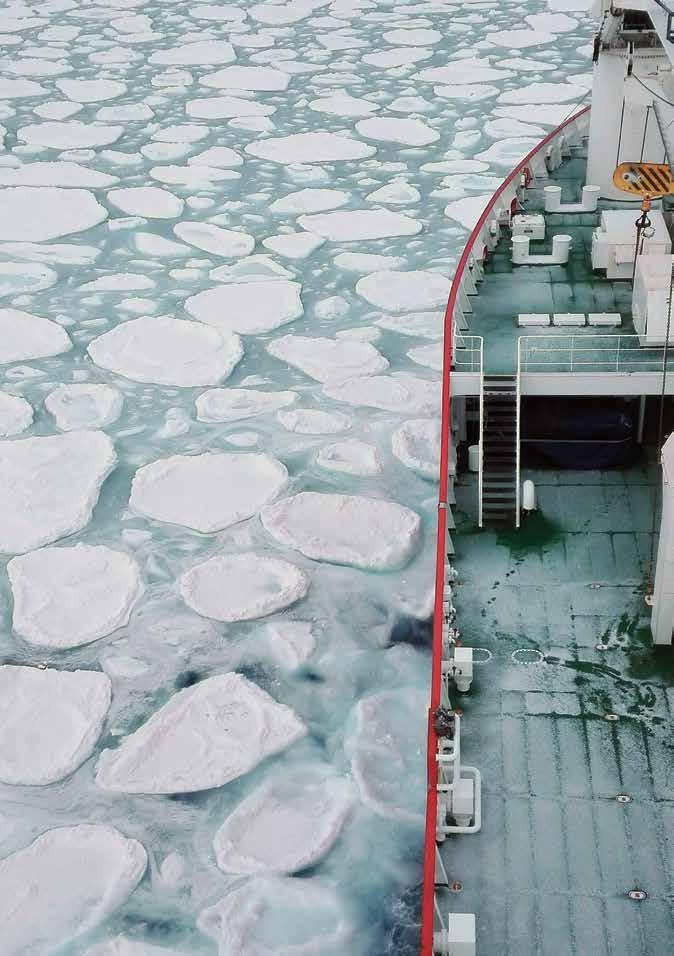
By Scott Rhode
Houses in Kodiak are pawns in a global chess match. The US Coast Guard (USCG) awarded task orders in May to build fifteen duplexes, a childcare center, and a playground to accommodate new personnel on the island. The projects are the final phase of the Nemetz Park housing initiative, which already brought fifty new housing units for USCG families at Base Kodiak.
Construction is set to finish by 2028, when two new icebreakers arrive in Kodiak. The homeporting is an economic stimulus for the community, valued at $81.1 million for the new duplexes and $61.6 million for the childcare center to be built by California-based Tutor Perini Corporation—but local investment is not the prime motivation. Icebreakers coming to Alaska, and homes for the crew, are strategic moves in the contest to control the Arctic region.
According to the National Oceanic and Atmospheric Administration, the extent of Arctic Ocean ice cover reached its lowest point in nearly a half-century of records in March 2025. The agency further observes that the Arctic region is warming faster than the global average. Despite attempts to limit greenhouse gas emissions, 2025 saw the largest ever total, more than 60 billion tons from human activity, and about twothirds were attributed to fossil fuels.
Ironically, the retreat of sea ice due to greenhouse warming is increasing access to fossil fuels in the Arctic. According to a US Geological Survey assessment from 2008, the most recent comprehensive circumpolar assessment available, the region contains an estimated
412 billion barrels of oil equivalent, or approximately 22 percent of the world’s undiscovered oil and natural gas reserves. Gas is about two-thirds of the estimate, and about 84 percent is located offshore. Russia’s West Siberian Basin contains about onethird of the undiscovered resource, followed by the Arctic Alaska Basin.
Nations are positioning strategic assets to control those resources. Development of Arctic oil and gas by commercial players is a proxy for high-stakes maneuvering, as governments balance their need to dominate the Arctic against the challenges of operating in the region.
The United States has fewer icebreakers sailing the Arctic Ocean than it has on the Great Lakes, by far. Nine icebreakers ply the Midwestern shores; one heavy icebreaker and eight icebreaking tugs. Until 2024, the USCG operated just three Arctic-class vessels, all based in Seattle. The fleet grew to four in December 2024, when the commercial vessel M/V Aiviq , built for Shell’s 2012 offshore exploration in the Chukchi Sea, was purchased and renamed USCGC Storis, to be homeported in Juneau when shoreside accommodations are ready.
Thus, adding two icebreakers to Kodiak, plus another slated for duty in Seward, is a significant expansion of the fleet. Those three vessels are among eleven medium icebreakers that Congress authorized in 2025, allocating $8.6 billion to build them. Home ports for the other eight icebreakers, part of a new class of Arctic Security Cutters, have not yet been announced.
Arctic allies are aiding the construction of the new USCG assets. The first four ships are being built in Finland, a global leader in icebreakers, and Finnish experts will assist US shipyards in fulfilling the remainder of the order. The third member of the Icebreaker Collaboration Effort, or ICE Pact, is Canada, which is supplying proven hull designs. Quebec-based
Chantier Davie is also designing next-generation cutters, and it is responsible for a billion-dollar shipyard upgrade in Texas to facilitate domestic fabrication.
The Canadian Coast Guard is itself acquiring two polar icebreakers for delivery within the next decade. Although a US ally, Canada is protective of its claim to the Northwest Passage as internal





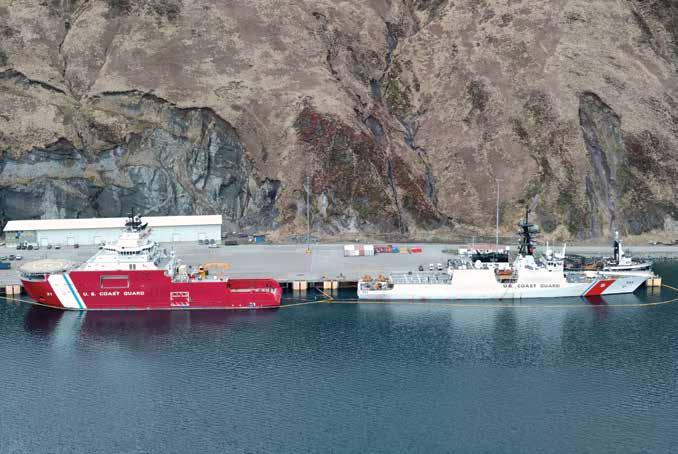
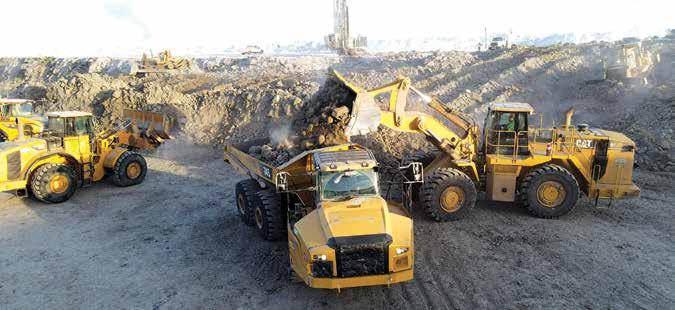
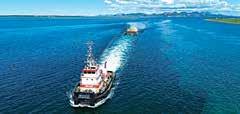
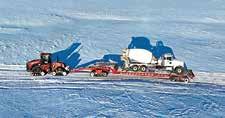
waters, allowing the country to regulate or tax foreign shipping.
The US argues that historical use for travel between the North Atlantic Ocean and the Arctic Ocean has established the passage as an international route under traditions codified by the United Nations Convention on the Law of the Sea, although the United States has never ratified that treaty.
The North American neighbors also contend in the global oil market, with each government enlarging the portfolio of lands and waters available for oil and gas development. Last year, Canadian Prime Minister Mark Carney advocated for Arctic pipelines to deepwater ports, to avoid dependence on US routes. However, new routes are not yet economically feasible, and instead of more Arctic production, Canada’s focus remains
on its Alberta oil sands and maritime oil fields.
With the longest Arctic Ocean coastline, Canada is guarding its polar position by checking the entry of China. In 2020, Canada blocked the acquisition of a gold mine operator in Nunavut by a Chinese company, partly to deny an outpost near Arctic infrastructure. Other deals involving Chinese investors have been blocked in the interest of Canadian minerals security.
Despite lying entirely outside the Arctic Circle, China has asserted itself as a “near-Arctic state.” Last September, two Chinese research vessels entered the US Extended Continental Shelf off Alaska, prompting USCGC Healy to monitor their activities, supported by
aircraft from the nearest US base in Kodiak. Under the United Nations Convention on the Law of the Sea, marine scientific research in the 200mile extension of the continental shelf requires consent from the coastal state.
China has declared its ambitions for a Polar Silk Road, with a yearround regional presence. Five Chinese vessels currently operate during the open-water season, collecting oceanographic data with strategic potential. China National Petroleum Corporation has also invested in Russian energy projects to gain a further foothold in the Far North.
Sanctions triggered by Russia’s 2022 invasion of Ukraine have prompted closer ties between China and Russia. Chinese companies hold 30 percent of Yamal LNG and 20 percent of Arctic LNG 2,
Summer days are underway, but winter weather is always on our minds...



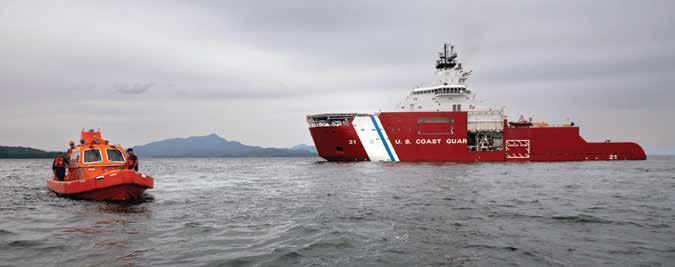
two major liquified natural gas terminals on opposite sides of the Gulf of Ob. Shipping from Arctic LNG 2 commenced in 2025, despite sanctions, with the first delivery to a Chinese port
The vanguard of Arctic oil development is Norway, which holds the record for the northernmost production. Last year, oil began flowing from the Johan Castberg field, more than 100 miles northwest of Hammerfest. The latitude of 72.5° N beats the previous record holder, the Goliat field, about 93 miles across the Barents Sea. Both offshore projects are somewhat farther north than Nikaitchuq at 70.6°N, about 35 miles northwest of Prudhoe Bay.
Norway has another record breaker in store, but a final investment decision slipped into next year on Wisting, the country’s largest undeveloped Arctic oil field. The national oil company Equinor is committed to advancing the project; it’s just a question of when. Worldwide inflation delayed an initial 2022 greenlight, so Equinor is biding its time until finances pencil out. If approved, Wisting would take the crown as northernmost producer at 73.4° N, about halfway between the mainland and Norway’s island territory of Svalbard.
facility at Hammerfest. Near-field and wildcat exploration has also gained momentum, with four discoveries last year totaling more than 50 million barrels of oil equivalent, not far from Goliat and Johan Castberg.
By giving Russia a customer for its new LNG project, China bolsters its northern neighbor’s Arctic bulwark, even as the market for Russian crude oil withers. Russia has all but ceased offshore exploration, with no new discoveries since sanctions were imposed. The Vostok Oil project—a collection of fields on the Taymyr Peninsula, the northernmost extent of the Eurasian mainland— is falling behind schedule. Russian energy conglomerate Rosneft was ramping up from 600,000 barrels per day in 2024 to 2 million by 2030, but construction has been sluggish. Limited terminal capacity has capped output to about 500,000 barrels per day—a bit more than the Trans Alaska Pipeline System, but far short of expectations. Due to international sanctions, Russian shipyards cannot build enough tankers with specialized hulls to meet the delivery targets. Thus, Rosneft is stretching the Vostok Oil development timeline by an extra five to seven years.
Nordic neighbor Denmark is a negligible offshore oil producer at about 72,000 barrels per day, and the country has committed to end all production by 2050. Denmark’s autonomous territory of Greenland likewise decided in 2021 to ban oil and gas exploration. However, a pre-2021 license will enable Texasbased Greenland Energy, known until recently as March GL, to drill a pair of onshore exploration wells targeting an anticipated 1.2 billion barrels beneath the Jameson Land basin. The company is procuring equipment this summer for a drilling campaign in October.
However, the Greenland government has only issued permits for exploration. Permits for infrastructure to develop, produce, and transport Jameson Land oil might be politically unpopular. The territory is instead focused on development of rare earth elements; however, these deposits are often co-located with uranium, and the 2021 moratorium on oil also forbids uranium extraction. USCGC Storis, a
The Barents Sea also saw natural gas production commence last year from the Askeladd West field, sending gas ashore to Europe’s largest LNG
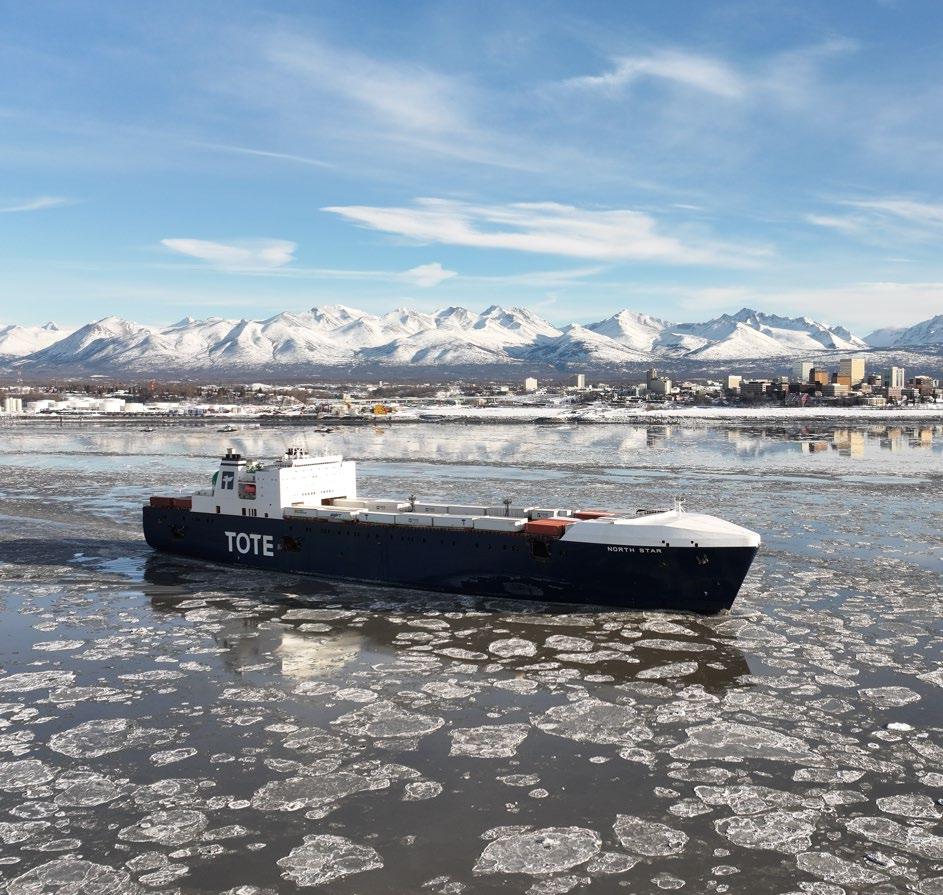
At TOTE, every shipment carries more than goods — it carries a promise. Since our beginnings in 1975 with a single ship, built to serve the unique needs of Alaska, we have been committed to the communities that rely on us. We’re proud to provide the critical shipping that keeps families supported, businesses running, and local economies strong. Because for us, excellence isn’t a goal — it’s a responsibility. DEDICATED. RELIABLE. BUILT TO SERVE.
◼ Northwest Passage
◼ Northeast Passage
◼ Northern Sea Route
◼ Arctic Bridge
�� Oil Fields
● Offshore Oil Discoveries
● Onshore Oil Discoveries
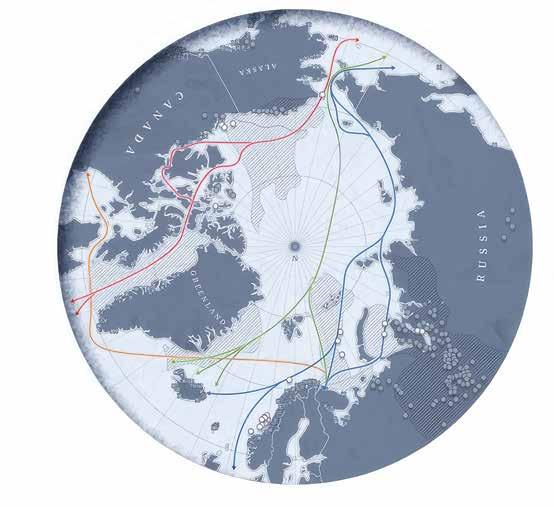
The United States has a Greenland of its own, of course, and Alaska is key to the Trump administration’s Arctic gambit. Oil lease sales have already resumed in the Arctic National Wildlife Refuge, although only Alaskans bid on tracts while global investors stayed away. Greater attention was given to the National Petroleum Reserve-Alaska, where eleven companies submitted bids on 187 tracts in March, generating more than $163 million in federal receipts, split 50-50 with the State of Alaska.
The Trump administration is also encouraging offshore drilling in the Arctic. The US Department of the Interior is preparing a fiveyear offshore leasing plan for a newly designated High Arctic
region, farther from North Slope infrastructure than previous exploration ever attempted.
Other nations are also looking to Alaska to advance their own Arctic strategies. As Glenfarne assembles the pieces of an Alaska LNG pipeline project, agreements from export customers form an essential foundation, and those customers are mainly in East Asia. South Korean firm POSCO International signed on to supply much of the steel for the project and to eventually buy gas from the pipeline. In May, the company further committed to Alaska by signing a framework for collaboration on other megaprojects, including the dormant Knik Arm Crossing.
Why would a Korean company help Alaska build a Knik Arm Crossing?
Because, according to POSCO International President and CEO Lee Kye-in, the company would like to “explore these projects responsibly and create meaningful opportunities that can help strengthen supply chains and support sustainable growth for both parties.”
A desire for regional dominance by political leaders can help push commercial ventures in the Arctic, but projects will only pay off in the long term when private-sector developers can overcome economic obstacles, operational costs, and volatile global markets. In turn, those companies advance national interests in the pursuit of profits for their shareholders and, along the way, benefits for the Arctic communities that sit on top of the resource bonanza.





Providing maximum efficiency and peak performance solutions for your building.
Building Automation Systems are the brain of your building, so it’s important they integrate with all your systems and remain healthy. We can help ensure they are installed correctly, run efficiently, and do the thinking for you.
From before your project breaks ground through the life of your building, our team is there to help you plan, execute, and maintain your facility. We specialize in:
• New Construction
• Upgrades & Retrofits
• Installation
• Service, Maintenance & Repair
• Building Analytics
• BAS Design
• System Integration
• Mechanical System Optimization
• Lighting Upgrades
• Financing Options
LONG selects product partners who are leaders in innovation and open systems. Our product selection provides you quality, high-tech solutions and software for cross-product communication.
We are committed to offering holistic solutions that fulfill for your specific building automation needs. Our staff includes in-house electricians and highly trained technicians that provide expert installation with every project, ensuring your building is compatible and working efficiently.
Every successful project starts with a solid plan. LONG specializes in New Construction, providing BAS Design by expert application engineers using state of the art software. Our in-house electricians provide precision installation and Systems Integration. Connect realtime Building Analytics, to ensure your building runs at peak performance.
Preventative maintenance is the key to any efficient building system. Our team provides Scheduled Service, Maintenance, and Repairs, as well as Upgrades and Retrofits.
By Alexandra Kay
Wh en Typhoon Halong swept through western Alaska in 2025, the damage it left behind seeped underground. Home heating oil tanks were dislodged, ruptured, or submerged. Communities were flooded. And, somewhere in the chaos, oil started leaking from tanks.
Within days, crews from 1-Call Alaska, a division of Resolve Marine, were in Nightmute, recovering fuel and managing contaminated materials. “We responded in the wake of severe weather to remote villages to recover home heating oil tanks, village oil tanks, and other oil spilled during flooding,” says Chris Svencer, Preparedness Response Manager at 1-Call Alaska/Resolve Marine.
The US Coast Guard (USCG) also contracted Alaska Chadux̂ Network to conduct oil spill recovery operations in Kipnuk, where responders recovered contaminated materials, restored usable fuel to the community, and helped mitigate environmental impacts following the storm.
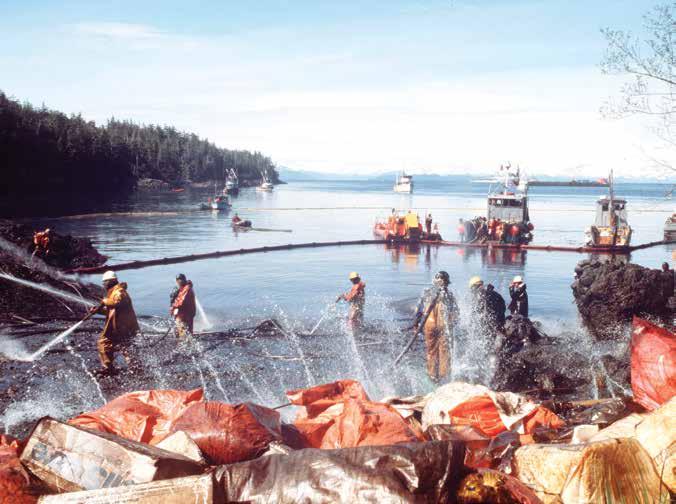
These responses offer a glimpse into what oil spill management looks like in Alaska—less Hollywood disaster movie, more logistical puzzle played out across one of the most unforgiving geographies on earth.
Alaska’s oil spill response system is built on the Oil Pollution Act of 1990 (OPA 90), the sweeping federal legislation enacted a year after the Exxon Valde z disaster. The law fundamentally shifted responsibility: the polluter pays, and the polluter must have a plan.
“After the Exxon Valde z, OPA 90 was enacted—that was a seminal piece of legislation that changed how oil spill prevention and response is managed and regulated in the US at both the federal and state levels,” says Buddy Custard, president and CEO of Alaska Chadux̂ Network, an oil spill removal organization founded in 1993 by five companies that transport oil throughout Alaska. Today, the network supports more than 650 companies operating in or transiting through Alaska waters.
Under OPA 90, facilities and vessels are required to contract with a qualified oil spill removal organization to meet their cleanup obligations. 1-Call Alaska/Resolve Marine holds USCG ratings covering Prince William Sound, Cook Inlet, Kodiak, the Aleutian Islands, Western Alaska, and Bristol Bay.
Alaska Chadux̂ Network maintains the broadest federal and state response classifications in Alaska, supporting both vessel and facility response planning throughout much of the state; it maintains seventeen equipment hubs across the state.
“The best spill response is prevention… Cleanup should never be viewed as a substitute for prevention, maintenance, inspection, and risk reduction.”
David Owings, General Manager, Southeast Alaska Petroleum Response Or ganization

Cold Bay Airport (PACD) delivers a powerful combination of infrastructure, location, and operational reliability—now featuring the Frosty Fuels Fixed-Base Operator (FBO).
FIXED-BASE OPERATOR (FBO)
10,180 FT RUNWAY
RELIABLE YEAR-ROUND OPERATIONS
SUPPORTS BOTH LOCAL & INTERNATIONAL OPERATORS
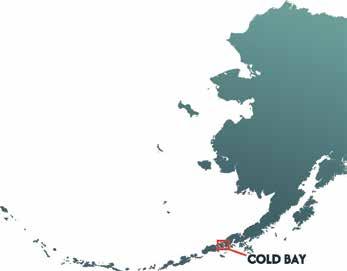
www.aleutventures.com/frosty-fuels
Southeast Alaska has its own dedicated response organization.
Southeast Alaska Petroleum Response Organization (SEAPRO), a nonprofit, member-supported cooperative, has covered the region from Dixon Entrance north to Yakutat since 1991.
“We are not the regulator, and we are not the responsible party,” says David Owings, SEAPRO’s general manager.
“We are a response organization that helps ensure oil spill response capability is local, maintained, trained, and deployable when needed.” The region’s geography drives a heavily marine-based response model, with vessels, boom, skimmers, and pre-positioned caches built around steep shorelines, strong currents, and long transit distances.
Todd Duke, general manager of compliance services at 1-Call Alaska/ Resolve Marine, describes OPA 90 as a genuine success story. “Vessel Response Plans are written, contracts with response organizations are in place. Drills and training are conducted; equipment is secured and maintained,” he says.
Resolve Marine, established in 1980 as a single tugboat in Florida, has offices worldwide and expanded into Alaska in 2014. The following year, 1-Call Alaska was approved as its Alternate Planning Criteria provider, as is Alaska Chadux̂ Network, meaning they maintain a roster of response vessels in remote areas where standard equipment is hard to come by.
1-Call Alaska/Resolve Marine
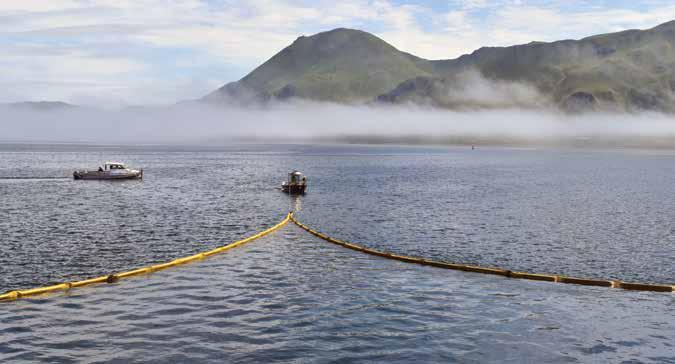
Ask any responder what the first hour looks like and the answer is the same: it depends. “No spill is alike,” Custard says. “Every s pill is different.”
When a report comes in, the immediate priority is information gathering: what type of oil, where is it, how did it happen? The Alaska Department of Environmental Conservation (ADEC) and the USCG receive calls immediately, with the US Environmental Protection Agency joining the picture for spills on land.
“We have to understand the spill, where it is, how it happened,” Custard says. “In the winter, there are storms and cold weather. The best way to respond to all of these places is by aircraft. In western Alaska, there’s only one major road and no highways.”
1-Call Alaska/Resolve Marine maintains immediate response capability from its Anchorage warehouse and Dutch Harbor facility.
“Our immediate response capability can cover the initial 72 hours of a response and will be backfilled or expanded as needed,” Svencer says.
Alaska Chadux̂ Network keeps eight full-time responders on call around the clock, with contracts for additional labor on large-scale incidents.
Both 1-Call Alaska/Resolve Marine and Alaska Chadux̂ Network invest heavily in training before a drop of oil ever hits the water. “For planned drills and exercises, the USCG and ADEC are invited to participate to ensure compliance, enable cross training, and minimize introductions in a crisis,” Svencer says. 1-Call Alaska/Resolve Marine also hosts an annual cross-training event at its Dutch Harbor facility covering oil spill cleanup, marine salvage, aerial observation, and wildlife monitoring, followed by a live equipment deployment.
Alaska Chadux̂ Network takes a similarly broad view of readiness.
Responders are certified in wildlife hazing, aerial observation, drone operations, and enhanced first aid— because in a remote village with no hospital, the ability to stabilize an injured worker until an aircraft arrives isn’t optional. “The number one goal of any oil spill response is the safety of responders and the public,” Custard says. “That is always number one.”
Recovering oil is only part of the job. In Nightmute, Resolve Marine recovered more than 1,500 gallons of diesel from damaged heating oil tanks, most of it clean enough to redistribute to the village for use in undamaged homes and the school. Absorbent boom—flexible, cylindrical tube-like devices used to
contain and soak up liquid spills— was incinerated onsite, so only the remaining oily water mixture had to be barged back to Anchorage for disposal. “To minimize the cost and carbon footprint of hauling recovered oil, we look for ways to reuse or dispose of the waste onsite,” Svencer says.
Custard describes a similarly resourceful approach at Alaska Chadux̂ Network. Recovered oil is separated into liquids and solids, and some is incinerated locally with permission while the rest is shipped to larger incinerators.
In Kipnuk, another storm-damaged village, filtered fuel from damaged tanks could be cleaned and returned to the community. “We have filters and fuel cleaners, and we can give it back to the community to be reused,” Custard says.
“Until the regs change and they demand innovation, no one has the incentive to change what they’re doing.”
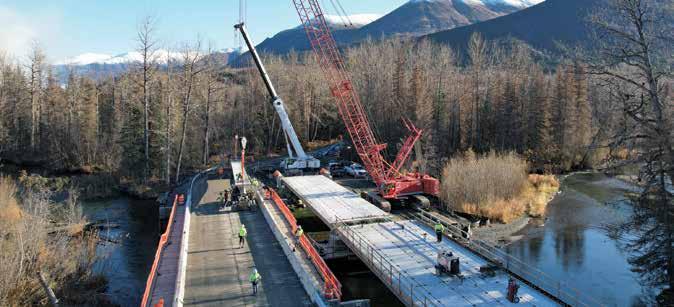


Svencer answers directly: Yes, but perhaps not in the ways people expect. “Although the tactics and techniques haven’t changed much in the nearly forty years since the [Exxon Valdez] spill, there has been growth in the resources available in the state for responding quickly with larger assets and trained personnel,” he says.
The bigger shift, all three responders observe, has been upstream: preventing spills before they happen.
Following the Exxon Valde z grounding and passage of OPA 90, the US Coast Guard established the Prince William Sound Vessel Traffic Service, which continuously monitors and manages crude oil tanker traffic through Prince William Sound and can help identify abnormal vessel movements and emerging risks. It is a
critical component of the region's spill prevention system.
Svencer says, “Tracking like this would have identified the Exxon Valdez as being off course,” and may have allowed for intervention from onshore, potentially saving the vessel from Bligh Reef.
Alaska Chadux̂ Network requires member vessels to stay at least 50 miles offshore and steps in with salvage support after a breakdown becomes a grounding. The Don Young Coast Guard Authorization Act of 2022 codified some of this Alaskaspecific thinking federally. “The downsouth model doesn’t work in Alaska,” Custard says. “Our time-distance equation is huge.”
Owings offers a similarly cleareyed accounting: more dedicated equipment, more formalized organizations, larger inventories, and far more regular exercises
than existed in 1989. “By almost any practical measure, Alaska’s spill response capability has improved substantially since 1989,” he says—but then he adds a caution: “Improved does not mean risk has been eliminated. Weather, distance, darkness, ice, and limited infrastructures can overwhelm even a good plan.” Part of that risk traces back to aging infrastructure built largely in the ‘70s.
“The best spill response is prevention,” Owings adds. “Cleanup should never be viewed as a substitute for prevention, maintenance, inspection, and risk reduction.”
Owings is also careful not to let Alaska’s progress curdle into complacency. He considers the state a leader in planning for remote, highconsequence environments, but not the only one. “Norway, Canada, and
other Arctic and sub-Arctic nations have deep experience with cold-water operations, offshore planning, ice conditions, and government-industry coordination,” he says. “Alaska is a leader, but not the only leader.”
All three responders field the same conversation after a spill: the expectation that everything will be cleaned up quickly and completely is rarely realistic. “Sometimes withholding action is the best option for the environment,” Svencer says. “Removing every last drop of oil, sheen, or oiled debris will not be feasible, nor good for the environment.”
Custard frames it similarly. Natural weathering and dispersion can handle 75 percent or more of a spill,
depending on conditions. “If you see a 1,000-barrel spill, and the public is expecting we’re going to pick up that 1,000 barrels, that’s not going to happen,” he says.
Owings pushes further against the misconception, into what “recovery” actually means. “Recovery means ecological function is returning, not just that the oil is no longer visible,” he says. “Are fish returning? Are birds nesting successfully? Are subsistence uses restored? Those are harder questions, and they require monitoring over time.” A rocky shoreline recovers differently than a marsh, an eelgrass bed, or a seabird colony. “Some resources may recover within months, while others can take years or even decades,” he says.
That uncertainty extends to the tools themselves. Dispersants, for instance, break surface oil into
“We are not the regulator, and we are not the responsible party… We are a response organization that helps ensure oil spill response capability is local, maintained, trained, and deployable when needed.”
Da vid Owings Gener al Manager

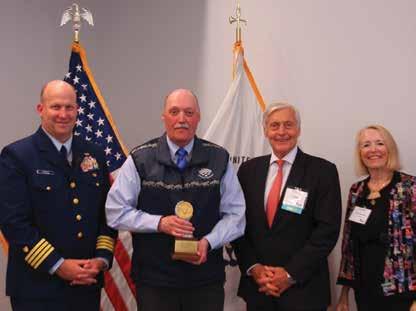
In June, Alaska Chadux̂ Network was recognized among the nation’s top maritime environmental response organizations. It received the Gold/ Osprey Award in the Special Small Business category at the US Coast Guard’s 2026 Benkert Awards program.
The Benkert Awards, named in honor of Rear Admiral William M. Benkert, whose US Coast Guard career spanned thirty-eight years, recognize organizations that demonstrate exceptional commitment to protecting the marine environment and advancing safe and responsible maritime operations.
The award was presented to Alaska Chadux̂ Network during the North American Marine Environment Protection Association Safety at Sea Seminar, and it represents the highest level of recognition awarded for excellence in marine environmental protection, operational readiness, and safety leadership.
At the time of the award, Alaska Chadux̂ Network President and CEO Buddy Custard stated: “Protecting Alaska’s coastal waters and communities is at the center of everything we do. The companies we support believe that environmental protection and responsible commerce are not competing interests—they are inseparable responsibilities.”
droplets and move it into the water column rather than letting it reach shore, buying shoreline protection at the price of greater risk to fish and shellfish. “That decision should not be made casually,” Owings says.
Most skimmers fall into one of three categories: oleophilic skimmers, which use oil-attracting discs, belts, or drums to draw oil away from water before scraping it off into a collection tank; weir skimmers, which let oil flow over a submerged barrier; and vacuum skimmers, which use suction to pull oil directly off the surface. Mechanical recovery remains the preferred option when it’s safe and effective, but icecovered water remains one of the toughest scenarios of all. Oil can travel beneath the ice or resurface elsewhere entirely, rendering boomand-skimmer systems less effective than in open water.
Spills of the future may not resemble the scenarios of decades past, as vessels bring different substances on board. The global shipping industry is mid-transition, so Alaska’s responders are watching closely. The International Maritime Organization’s revised greenhouse gas emissions reduction strategy, adopted in 2023, is driving rapid adoption of liquefied natural gas, liquefied hydrogen, ammonia, methanol, and lithium-ion batteries as marine fuels.
Duke flags this transition as perhaps the most significant emerging challenge for spill prevention and response: among those alternatives, OPA 90 only applies to biodiesel, and the rest of the regulatory framework hasn’t caught up. “The US Coast Guard
Research and Development Center issued a critical warning [that] without adequate awareness, training, and preparation, alternative fuel spillage in US waterways can pose serious risks,” Duke says. “Congress needs to work to provide the same regulatory guidance and safety net that OPA 90
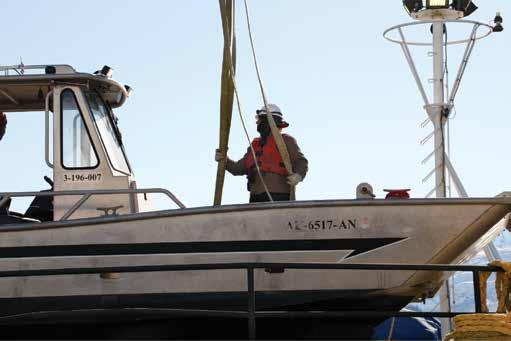
Custard sees technology as the other side of that coin: a tool for better response, not just new risk. He says advances in technology are creating new opportunities to improve oil spill prevention and response. Emerging capabilities— including improved vessel monitoring, unmanned systems, enhanced detection technologies, artificial intelligence, and other decision-support tools—have the potential to improve situational awareness, response effectiveness, and responder safety, particularly in Alaska's challenging operating environment. “It’s exploding and starting to become a game changer in oil spill response,” he says.
Some observers outside the established response industry argue that the pace of adoption hasn’t been fast enough. Kevin Kennedy, founder and owner of Pacific Petroleum Recovery Alaska, has spent years developing vacuum-based skimming technology he contends outperforms conventional equipment, even in cold water and slush conditions. He believes regulatory inertia has kept more effective tools from being adopted. “Until the regs change and they demand innovation, no one has the incentive to change what they’re doing,” Kennedy says.
Sustained Investment
Owings sees a parallel risk building on the traffic side.






















With bases in Anchorage and Dutch Harbor, 1-Call Alaska/Resolve Marine is able to respond immediately to cover the initial 72 hours of a response, which can be expanded as needed.
1-Call Alaska/Resolve Marine
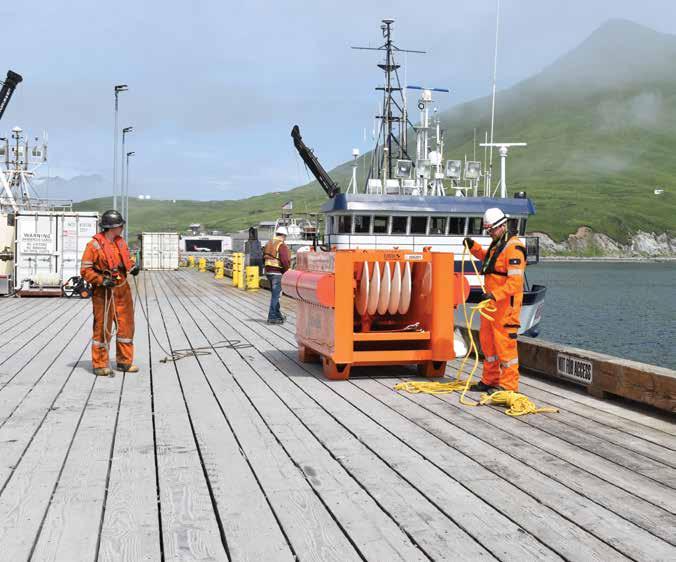
Reduced sea ice and longer openwater seasons are drawing more vessel traffic into Arctic and subArctic waters, often into places with limited response infrastructure. “The concern is that vessel traffic and operating risk may increase faster than response infrastructure, trained personnel, ports, communications, salvage capability, and waste handling capacity,” he says. He sees the same pressure building in Southeast without the Arctic headlines: heavier rain events, landslides, and changing storm patterns all affect readiness.
For Owings, the fix isn’t a single piece of equipment or regulation; it’s sustained investment in the whole
system before a spill happens. “In Alaska, the challenge is rarely one missing piece of equipment,” he says. “It is the whole chain: people, equipment, transportation, weather, communications, storage, waste handling, permits, and decisionmaking. It is much cheaper and much more effective to maintain capability than to try to build it during an emergency.”
Thirty-seven years after Exxon Valdez ran aground on Bligh Reef, Alaska’s oil spill response system is meaningfully better: more equipment, more hubs, better monitoring, and organizations that have built real institutional knowledge.
Organizations such as Alaska Chadux̂ Network, SEAPRO, and 1-Call Alaska/Resolve Marine have expanded equipment, training, prevention technologies, and operational readiness, creating one of the world's most capable oil spill response systems.
Yet the people closest to that system are also its most cleareyed critics. The geography hasn’t changed. The remoteness hasn’t changed. And as the shipping industry transforms its fuel supply and Arctic traffic increases, the regulatory framework that has guided spill response for more than three decades will need to continue to evolve right along with it.



By Scott Rhode
Things every Alaskan should know: how to swim, how to start a fire, when to play dead for a bear and when not to, the five species of Pacific salmon, and basic petroleum geology. The oil industry has driven the last half century of the state’s development, and a share of its profits lands in Alaskans’ bank accounts every fall, so this glossary will help every Alaskan become a petroleum geologist at heart.

part of natural gas, which might be dissolved in oil or water contained in rock. More carbons in the chain make gas condensates, ideal for synthesizing plastics. Crude oil is a mixture of various carbonaceous gunk. What makes it “conventional” is the ease of accessibility from porous and permeable rock formations like sandstone or limestone, where hydrocarbons flow through interconnected pathways. Alaska has historically relied on conventional reservoirs.
Crude oil is not dinosaur juice. True, most petroleum is found in rocks laid down during the Mesozoic Era, the Age of Dinosaurs, but the organic precursors were plankton and algae. These goopy critters accumulated on the seafloor and were compressed until the carbohydrates in their bodies converted into hydrocarbons. The lightest carbon-hydrogen molecules are methane, the main
A distinction between conventional and unconventional resources was unimportant, if not unheard of, before the oil shocks of the early ‘70s. Then geologists began considering how to extract oil from more difficult reservoirs, like low-permeability shale or high-viscosity tar sands. Shales used to be considered the source rocks where conventional oil “cooked”
before it seeped upward. By the ‘90s, hydraulic fracturing coaxed resources out of their hiding places by cracking shale with injected water. In Alaska, unconventional resources include the Shublik Formation, the Kingak Shale, and the Hue Shale, layers underlying several North Slope units, from bottom to top, respectively, and beneath the National Petroleum Reserve-Alaska. Companies can’t just drill straight down; they have to induce permeability to access those shales.
Where specific geologic conditions—such as source rock, reservoir rock, seal layer, and trap structure—create an accumulation of oil or gas, a group of similar prospects is called a “play.” A large unit like Prudhoe Bay can tap multiple plays: the Ellesmerian play (with multiple reservoirs at different depths) as well as the Kuparuk
River play and several satellite formations. Or a single play can contain multiple oil and gas fields. The Nanushuk play has generated a lot of headlines. It’s the target of the Pikka Phase 1 project, and it crosses underneath the boundary into the National Petroleum ReserveAlaska, where ConocoPhillips Alaska’s Willow project is also tapping Nanushuk. While technically a conventional sandstone reservoir, Nanushuk demands unconventional horizontal drilling techniques to be commercially viable.
Alaska holds 3.1 billion barrels of proved crude oil reserves, according to the US Energy Information Administration using 2024 data. “Proved” means that geological and engineering data demonstrate with reasonable certainty (typically at least a 90 percent probability) that resources are recoverable under current economic and operating conditions. Aggressive exploration on the North Slope increased Alaska’s proved reserves from 3 billion barrels in 2023, even as the rest of the United States saw lower reserves while prices dipped, making recovery less economic. The increase from 97 trillion cubic feet of natural gas to 103 trillion cubic feet from 2023 to 2024 also defied national trends. Texas, North Dakota, and the Gulf of Mexico outrank Alaska in terms of proved reserves.
When Prudhoe Bay was first developed, the field contained an estimated 9.6 billion barrels of proved reserves, out of 24 billion barrels of probable reserves. Probable resources are less certain, and the US
Securities and Exchange Commission regulates when data support reclassifying a 50 percent probability as 90 percent proved. Prudhoe Bay has, over its lifetime, produced more than 12 billion barrels, thanks to technology not available during the initial estimate. The US Department of Energy estimates probable reserves across the North Slope at 22 billion barrels, including
undiscovered resources, plus 124 trillion cubic feet of natural gas. The Alaska Outer Continental Shelf has 26 billion barrels of probable reserves, and 132 trillion cubic feet of gas, but that includes hard-to-access tracts of ocean.
Wildcat wells, also called exploration wells, are drilled in


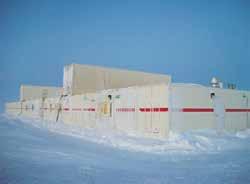


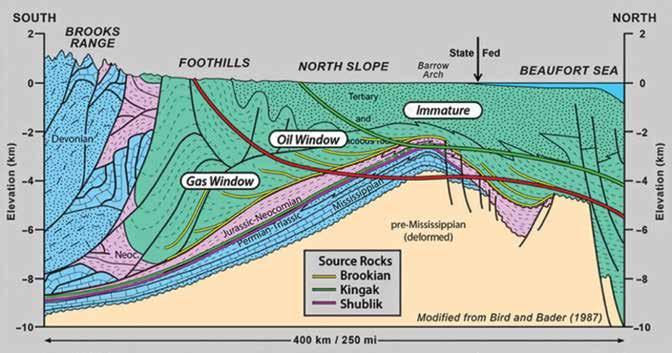
unproven areas, far from known production fields or into deeper, untested geological zones. These multimillion-dollar ventures are not shots in the dark; targets are chosen based on surface reconnaissance. If the exploration well discovers a resource, the next step is drilling appraisal wells to delineate the size and characteristics of the reservoir. Some companies specialize in pre-production with no earnings from oil itself, such as Pantheon Resources, which has spent $350 million in Alaska while its Great Bear Petroleum subsidiary explores contingent resources at the Ahpun and Kodiak projects on the North Slope.
When a company knows where oil is, and deems it worth retrieving, it’s time to drill a development well. These roughly eight-inch conduits can descend more than a mile and
extend up to 7 miles horizontally, forming steel-cased pathways for black gold to reach the surface. Fields in production for decades continue to gain new wells. For example, ConocoPhillips Alaska plans to drill ten development wells at the forty-four-year-old Kuparuk River Unit for 2026 and 2027, and its 2026 plan for the Colville River Unit includes up to five new development wells targeting the Qannik pool (not an underground lake but a geological layer beneath the main Alpine reservoir). Mature wells can be older than the roughnecks who tend them.
The above terms pertain to one of the three petroleum industry “streams.” Upstream covers exploration and production, until crude oil reaches a lease automatic custody transfer unit, a metering platform where taxable value is
measured. North Slope fields rely on dozens of transfer points to feed the Trans Alaska Pipeline System, while the Cook Inlet basin has closer to twenty. Because tiny variations in flow or temperature can result in massive financial discrepancies, transfer points utilize highly precise Coriolis meters, ultrasonic flowmeters, and in-line gas chromatographs. From these readings, the State of Alaska figures its royalty cut (12.5 to 20 percent charged as the landowner) and production taxes (35 percent of gross value minus operating and capital lease expenditures, adjusted by a per-barrel credit).
When crude oil moves horizontally, that’s midstream. Hilcorp’s sister company Harvest Midstream operates the Milne Point, Endicott, and Northstar pipelines that gather oil to Pump Station 1. Harvest


Upstream starts with the underground resource and lasts until oil or gas reaches a metering valve where taxes are assessed.
Midstream covers transport pipelines and tanker ships until the resource is refined into a new product.
Three refineries within Alaska produce fuel, and tankers from Valdez carry most North Slope crude to West Coast refineries. Gasoline, diesel, jet fuel, et cetera have their own transport streams.
Midstream also holds Hilcorp’s 49 percent share of the Trans Alaska Pipeline System, the largest midstream asset in the state. Alyeska Pipeline Service Company celebrated the 19 billionth barrel moved since 1977 in September 2025. And midstream doesn’t end at Milepost 800 in Valdez, where tankers load. ConocoPhillips subsidiary Polar Tankers has five Endeavour-class ships on a twicemonthly circuit to West Coast refineries. The slightly smaller MT California and MT Washington were formerly ExxonMobil’s SeaRiver Maritime ships, acquired by Crowley Alaska Tankers. In Cook Inlet, natural gas pipelines that connect offshore platforms to onshore customers are also Harvest Midstream’s domain.
The middle stream leads to refineries, where “downstream” begins. Alaska has three main refineries. The Valdez and North Pole refineries operated by Petro Star, a subsidiary of Arctic Slope Region Corporation, turn North Slope crude into heating oil, kerosene, diesel, and jet fuel. The Marathon Petroleum refinery in Nikiski processes up to 68,000 barrels per day of Cook Inlet crude into gasoline and jet fuel for Southcentral. Marathon reported outstanding performance in 2025, with 94 percent utilization across thirteen refineries nationwide. The stream continues with delivery of refined product, thanks to transporters including Petro Star and sister company Sourdough Fuel, family-owned Petro 49, Vitus Energy, Crowley, and NorthStar Energy subsidiaries Delta Western and Inlet Energy, part of the Saltchuk logistics network.

The Petroleum Club of Anchorage is growing and evolving as a premier place for business, community, and connection. Membership has expanded beyond petroleum and mining, welcoming professionals from various industries and creating a diverse, dynamic environment for networking. Along with frequent sponsored networking events, the PCA offers engaging social activities. Members can enjoy live music on the patio this summer, Sunday football in the fall, monthly karaoke, and signature seasonal parties that bring people together and strengthen the PCA’s special sense of community.
The PCA has also elevated its food and beverage offerings with a refreshed menu by Chef Marcos Barreto and a broader wine selection. Members can indulge in enhanced experiences that encourage connection through great food, exceptional wine, and conversation.
Looking ahead, the PCA is excited to celebrate its 70th anniversary in 2028. The milestone offers a chance to honor its history, recognize longtime legacy members, and celebrate the young professionals helping shape its future.
With renewed energy and strong leadership—including female leadership—growing membership,
the Petroleum Club of Anchorage is entering an exciting new chapter while remaining true to the traditions and relationships that have made it a cornerstone of Anchorage’s business and social community.

Sheri Underwood, General Manager
3301 C Street, Suite 120 Anchorage, Alaska 99503 (907) 563-5090, Ext. 5
www.petrolclub.net
By Rachael Kvapil
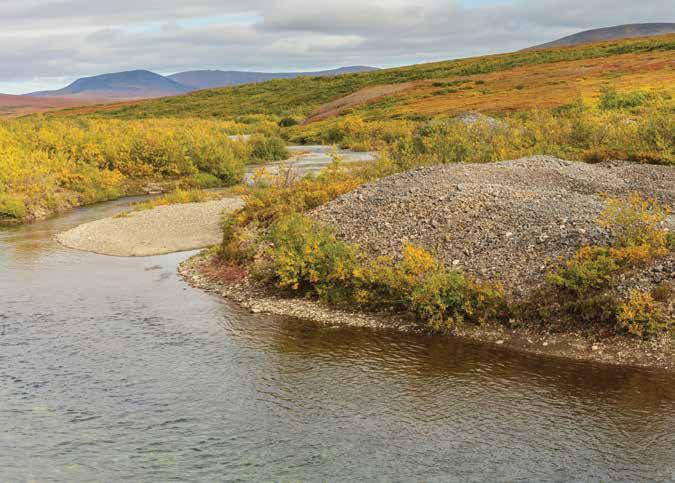
At any time, there are between 40,000 and 42,000 mining claims in Alaska. And with the price of gold hovering around $4,500 per ounce, the interest in trying to strike gold is increasing. In the spring of 2006, the Alaska Department of Natural Resources (DNR) Division of Mining, Land, and Water faced a backlog of 2,000 to 2,300 filings awaiting review. Anticipating that claims will continue to increase, DNR staff offered a halfday course at the 2026 Alaska Miners Association Biennial Convention so future miners can understand what is required to initiate and record a valid mining location.
DNR geologist Aaron Nickols says the key to successfully initiating a valid mining location is to remember
that mining is a business. Therefore, active miners must obtain an Alaska business license and an Alaska Mining License from the Alaska Department of Revenue before staking any claims or filing any paperwork. The only exception is true recreational mining, which can be done without a permit unless dredging in fish bearing streams. However, if a mining operation intends to run a commercial recreational mining venture, it must have the appropriate business licenses so that the department can collect the 3 percent production royalties and the Mining License Tax (up to 7 percent) on mineral sales.
“A lot of times, people have the impression that they’re going to stake a couple of claims and go out with their kids or their grandkids to mine,” says Nickols. “But the reality
is, when you acquire a mineral right, you have a business, and you need to treat it like one because you have requirements.”
The Alaska Constitution allows for self-initiated claims, the right to stake and possess a parcel of land by any current or pending United States citizen for the purpose of exploring and extracting minerals on state public lands prior to government permission or administration action. To stake a claim, a person need only post a location notice in the physical area.
“Only,” except posting the notice requires tromping through unimproved terrain to locate the northeast corner of the property. By law, that is where a piece of paper, typically a standard 8.5-by-11-inch sheet, is attached to Monument #1, which could be a literal wooden
stake in the ground. The sheet had better be waterproof, or sealed in a jar or plastic bag, and firmly affixed to resist strong wind or mischievous animals. The paper shows a map of the area being claimed, its legal description, the date and time of the staking, the legal name and address of the claimant, and a unique identifier for the claim. This is where seemingly arbitrary monikers like the aspirational “Fort Knox” and initially frivolous “Pogo” o
However, that is just the start of the process. To make the claim valid and acquire a location certificate, a miner must undergo discovery to prove that there are valuable mineral deposits on site in quantities sufficient to make development
Nickols says DNR typically does not ask for proof of discovery; however, the law requires that step. As a business, it is important to have proof of mineral deposits, especially if the company is ever
“The court will ask for it because that is in the statute,” says Nickols. “We don’t ask for it because we assume you’ve comp
Likewise, when the owners of a mining operation sign at the bottom of a location certificate, they are affirming under penalty of perjury that they are aware of all applicable statutes and regulations, including the discovery process. But before DNR can issue a location certificate, the owners must complete all the paperwork necessary to record the claim. This is a detailed process that can make or break the claim, so Nickols suggests using all available resources.
“When you acquire a mineral right, you have a business, and you need to treat it like one because you have requirements.”
Aaron Nickols, Geologist, Alaska Department of Natural Resources




The first thing Nickols suggests is becoming very familiar with Alaska’s
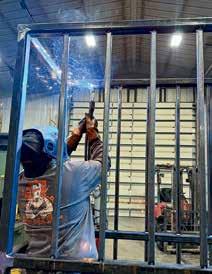
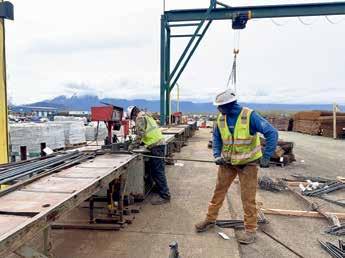

mining statutes and regulations. He says the regulations on the Division of Mining, Land, and Water page on the DNR website guide placer and hard rock mining, distinguish among different mining locations, and describe the circumstances under which a mining location requires a lease rather than a claim. Nickols emphasizes that miners themselves have a responsibility to monitor any changes to the statutes and regulations. With more than 40,000 mine locations in Alaska, state authorities lack the resources to send change notices to all parties every time something changes.
A research priority for anyone starting a mining claim is identifying which lands are available for mining. One resource on the DNR website is the Alaska Mapper program, which helps prospective miners identify
“It behooves you not to mess up the documentation.”
Aar on Nickols Geologist
Alaska
state lands open to claims. Though Alaska is a large state, the land has federal, state, Alaska Native, and other private owners and managers. Alaska Mapper also allows users to identify land owned or managed by the Alaska Mental Health Trust Authority and by the University of Alaska.
Alaska Mapper also shows what areas have already been staked. Nickols notes that new claims are submitted all the time, so an area
may appear unclaimed on Alaska Mapper while paperwork is being processed. He says this shouldn’t deter anyone from prospecting a location or even filing a claim in the same area, since common paperwork errors might prevent DNR from issuing a location certificate. Until a recorded document is noted on Alaska Mapper, any state location open to mining is available to claim.
In addition to serving as a reference guide, Alaska Mapper includes a claim sketch pack that lets users create a custom map showing the outline of the claim area. However, DNR geologist Walter Zimmerman says it is vital that the final map is printed in black and white.
“This requirement was meant for fax machines, which do not have color,” says Zimmerman. “A color map

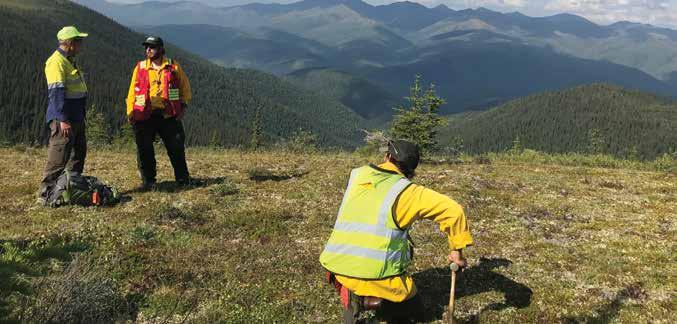
run through a fax machine will come out illegible on the other side. And then we have to reject the map. So, no color.”
To ensure the map is legible, he recommends darkening the outline
with a pen or marker after printing it.
One last feature in Alaska Mapper that helps with the application process is showing legal descriptions of a land area. In mining, a legal description is a precise written



When a claim is staked, part of the descriptive data is a unique name. During the initial prospecting of a valley near Delta Junction in the late '70s, pogo dancing was the craze, and the field team reportedly named the nearby stream after their joyful jumping: Pogo Creek. The name stuck when, in 1994, Teck Cominco discovered considerable gold at that claim and developed the underground Pogo Mine.
US Geological Survey
statement used to identify the exact boundaries of claims. The paperwork used by DNR requires the Aliquot Part description that divides land using the Public Land Survey System into a geographical hierarchy: meridian,

township, range, section, quarter section, and quarter-quarter section.
Alaska Mapper will produce a legal description in a pullout box, making it easier for the miner when submitting a claims application.
Once a claim is staked and discovery completed, all that’s left is to officially record it. This means obtaining an Alaska Division of Lands (ADL) number, completing the paperwork, and paying rent. Since 1989, the state has charged annual rents of approximately $1 per acre, in the form of a flat fee for a 40-acre small claim or $165 for a quartersection claim, and roughly doubling every five years the claim matures. The state also requires “sweat equity” of at least $100 worth of work per year on a small claim, or a payment in lieu of labor. Other land managers have different rental structures.
However, Nickols says a lot can go wrong during this time-sensitive, detailed process. First, many people fail to complete their filing and pay
rent within the initial forty-five-day period, and other critical errors can also cause DNR to deny a location certificate. Among the most common errors are filling out the wrong form, listing an incorrect location description, drawing an incorrect location on a map, or entering an incorrect posting date that would put the application outside the forty-fiveday period.
“These are what we call fatal errors,” says Nickols. “They’re errors that are uncorrectable. There is nothing you can do to fix this except to start over.”
He adds that, even once a location certificate is acquired, the mining operation still needs to keep up on its paperwork and annual rent. Failure to perform “sweat equity” or make a payment in lieu of annual labor; failure to record a certificate of location or a statement of annual labor in a timely fashion; or failure to pay annual rental fees and royalties would constitute abandonment under state statutes. Abandonment results in claimholder loss, and the area
immediately becomes open to staking by others.
Mining operations can cure abandonment, provided nobody else has staked a claim in the area, by recording overdue documents and paying rent and royalties, plus a penalty fee equal to the annual rent for the claim. If abandonment is not cured, the now-defunct stakeholder, or anyone directly associated with them, must wait a full calendar year before posting a claim in that area again.
“It behooves you not to mess up the documentation,” says Nickols.
Ultimately, Nickols says that anyone with questions about the process of staking claims and filing for a location certificate should contact DNR, especially if they are having trouble finding information or interpreting it. He says staff can also help miners understand the mapping process or the form details. However, with DNR’s backlog of current claims and a forty-five-day filing deadline, he says it’s best to contact the department sooner rather than later.









By Vanessa Orr
Quadrupling the state’s population, about 3 million visitors flow into Alaska each year. Approximately one-third of those don’t have berths aboard a cruise ship or beds in a motorhome, so they need somewhere to stay. With more than 5,000 arrivals every day during the summer, on average, hotels would need more than 20,000 double-accommodation rooms to hold them all, assuming a week-long stay. But not nearly that many are available.
According to Visit Anchorage, the state’s largest city has an inventory of just over 8,000 rooms, and the remainder of visitors stay in a less-visible network of bed-andbreakfasts, short-term rentals, and rented motorhomes. So, while locals might wonder why Alaska needs so many hotels, they have no trouble achieving 90 percent occupancy rates.
Aware of this demand, the Aspen Hotel chain reorganized as a more integrated statewide chain
this year, becoming the largest Alaskan-owned regional hotel brand by location.
According to Stuart Newmark, operating partner of JL Hospitality Management, Aspen’s multimilliondollar expansion has grown its statewide portfolio by 168 percent, bringing the brand to sixteen properties and 1,428 rooms across the state. And it accomplished that in barely a year: parent company JL Properties, the real estate venture led by developers Jon Rubini and Leonard Hyde, acquired the parent company of Aspen Hotels of Alaska in March 2025.
The hotel brand is named for the common tree species, the quaking aspen, which ranges widely across North America. In fact, the largest and heaviest organism on Earth is a 106-acre forest in Utah cloned from a single quaking aspen named Pando. Like its namesake, Aspen Hotels has spread itself throughout Alaska.
Newmark notes, “The Aspen Hotels brand has been around since 2001 with assets situated throughout the state, including two properties in Anchorage, and properties in Haines, Homer, Kenai, Juneau, Sitka, and Soldotna.”
As a result of the reorganization, properties that will now be affiliated with the Aspen Hotels brand include Grande Denali Lodge by Aspen Hotels and Denali Bluffs Hotel by Aspen Hotels in the Denali Park area; River’s Edge Resort by Aspen Hotels in Fairbanks; Hotel Seward by Aspen Hotels and Hotel Edgewater by Aspen Hotels in Seward; and The Voyager Inn by Aspen Hotels in Downtown Anchorage.
“I
Myrna Green, General Manager, Aspen Suites Hotel Anchorag e Downtown



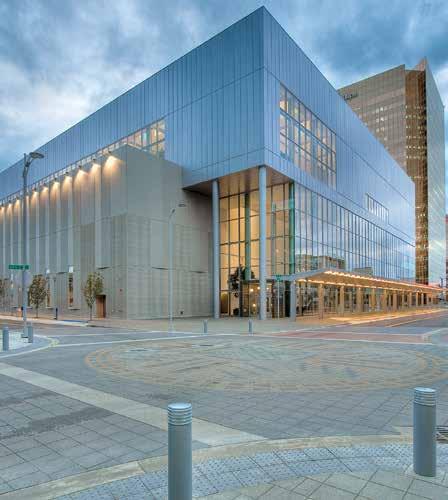


The Grande Denali Lodge, overlooking Glitter Gulch at Mile 238 of the Parks Highway, was purchased by JL Hospitality in 2019 from Old Harbor Native Corporation. Now that JL Hospitality holds the Aspen Hotels portfolio, including Sitka (lower right) and Soldotna locations (lower left), the lodge is realigned as an Aspen affiliate.
Aspen Suites Hotel
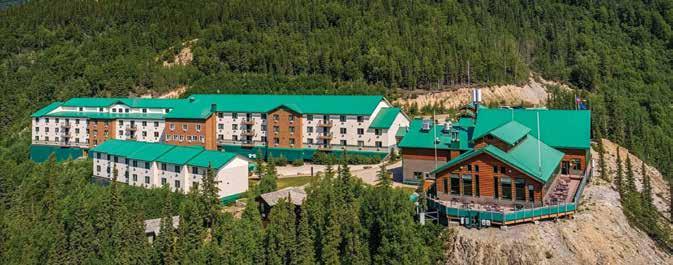
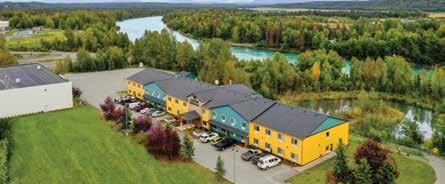
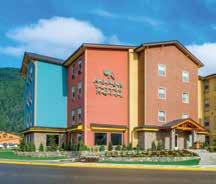

As part of the expansion, JL Properties also purchased and fully renovated three former Extended Stay America properties: Aspen Suites Hotel Anchorage Downtown, Aspen Suites Hotel Fairbanks, and the Aviator Suites Hotel Juneau Airport by Aspen Hotels.
“After renovations, we opened the Aspen Suites Hotel Anchorage Downtown location in February and the Aspen Suites Hotel Fairbanks location on May 1,” says Newmark. “The Aviator Suites Hotel by Aspen Hotels in Juneau opened in June of 2026.”
Guests staying at The Aviator Suites Hotel by Aspen Hotels are seeing a markedly different hotel than what previously existed. The hotel now pays tribute to its location as a five-minute walk from Juneau International Airport. Located on
Shell Simmons Drive (named after the legendary Bush pilot and aviation pioneer), the hotel features aviationthemed artwork and a new bar and restaurant, aptly named Bar 737.
“The Aviator Suites Hotel by Aspen Hotels is a whole new experience; it’s completely remodeled and it is so beautiful,” says General Manager Jennifer Skinner. “Everything is airport-themed, and so much attention to detail went into creating a great guest experience. It’s not a typical cookie-cutter hotel. It’s uniquely Alaskan.”
Beyond the Aspen Hotels brand, JL Hospitality Management also operates Marriott-branded properties including Aloft Anchorage; Courtyard Anchorage Airport; Residence Inn Anchorage Midtown; SpringHill Suites Anchorage Midtown; SpringHill Suites Fairbanks; Bridgewater Hotel,
Trademark Collection by Wyndham in Fairbanks; and Denali Park Hotel in Healy.
According to Newmark, millions of dollars were invested into upgrading the guest experience as part of the recent renovations.
“Renovations included a full overhaul of all guests rooms and suites, including painting, carpeting, furniture, window treatments, wall décor, and more,” he says. “We also redid all of the interior and exterior signage and made changes to enhance curb appeal.”
Anchorage and Juneau renovations also included adding food and beverage outlets, fitness centers, and a sauna and massage treatment room in Anchorage.

the world buys and sells
September
Don’t miss out! Equipment selling from Wasilla and other locations across Alaska
See full auction & equipment listings at rbauction.com/Wasilla Scan the QR code to see the latest inventory

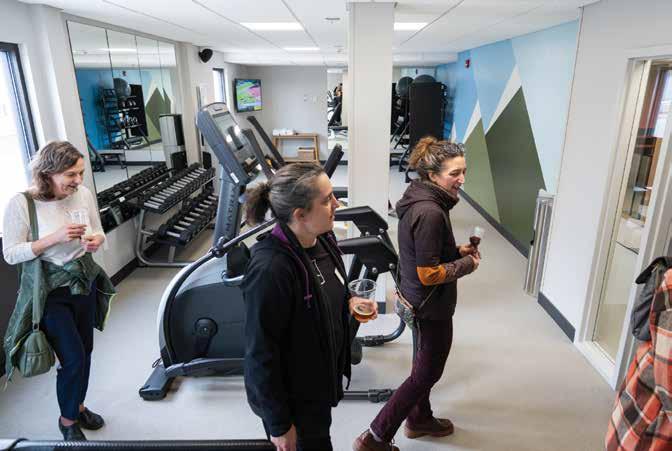
“Everything is top notch,” Newmark says. “While we focus on brand consistency and the overall guest experience, there are many unique characteristics of our Aspenaffiliated properties.”
For example, at the Grande Denali Lodge by Aspen Hotels, the restaurant is named Alpenglow, providing an upscale dining experience with breathtaking views of the epic mountains.
Myrna Green, general manager of the Aspen Suites Hotel Anchorage Downtown, says guests have been delighted with the recent renovations. She laughs as she says, “I love that the guests who stayed here when it was an Extended Stay America property come in and say, ‘Whoa! This transformation is amazing!’”Green adds, “They really did a great job with the whole renovation, and it has such a nice,
crisp, fresh look. We now have a beautiful fitness center, sauna, and massage treatment room. I’m amazed at how many guests use these facilities daily.”
While many markets are seeing increased hotel consolidation by national brands, JL Hospitality Management believes in the authentic Alaska experience.
“We are proud to be part of the Alaskan hospitality community, welcoming business and leisure guests throughout the state at all of our locations,” Newmark says.
He adds that the company’s mission is to “wow and dazzle” its guests, creating “exuberant” experiences and memories to last a lifetime.
Just as it is imperative to please guests, Newmark believes that
it’s important to contribute to the communities where each of its hotels are located. The expansion contributed significantly to the economy, creating hundreds of jobs statewide.
According to Green, who has worked in the hospitality industry for more than thirty years, working for Aspen Hotels is different than working for larger national franchises. “I love the idea of the Aspen brand in Alaska; it has a whole different feel to it,” she says. “I wish I could bottle it because people absolutely love it. They love coming into the hotel, and they love being here.”
While this is Skinner’s first time working in the hospitality industry and for Aspen Hotels, she is excited to be part of the growing brand. “This is an amazing opportunity for me to be part of something new
The original Aspen Hotel in Downtown Anchorage, which had to be rebuilt after a fire during construction in 2002, was more utilitarian. Renovation added some upscale touches.
Hotel

“We are proud to be part of the Alaskan hospitality community welcoming business and leisure guests throughout the state at all of our locations.”
Stua rt Newmark Operati ng Partner
JL Hospitality Management




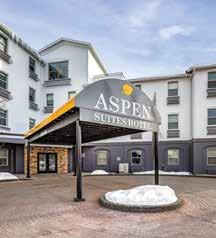
from the floor up,” she says. “I’ve worked in the nonprofit community for the past ten years; however, this is completely different. I’m excited about my new-found career.”
Speaking early in the season, when the newly renovated hotel had only been open for two days, Skinner had already seen a lot of tourists. She adds, “We’re also seeing guests who are in Juneau for work, and we’re hoping to provide space for those coming for the legislative session while they’re here serving our state.”
The hotel brand is expanding its community partnerships across the state as well. Aspen Suites Hotel Anchorage Downtown, for example, has established an artistin-residency program in concert with the Anchorage Museum that
A ribbon-cutting ceremony in April showed off renovations of the former Extended Stay America at 8th Avenue and A Street, returning to its original branding


allows local artists to stay in its penthouse-style suite during the offseason, where they can create and display their artwork.
Aspen Hotels also partners with the American Cancer Society, offering special rates based on availability to people coming into the area for medical care.
“We wake up every morning with a passion for hospitality and for creating wonderful experiences with our employees, vendors, and guests and the overall communities in which we do business,” says Newmark. “We are committed to all of them.”
As the new hotels come online and bookings increase, Newmark says that he and the staff feel an “awesome”
responsibility to make guests’ experien ces truly memorable.
“It comes from having a servant’s heart,” he says. “We take great pride and joy in instilling that culture in each and every one of our team members and leaders. We bring members onboard who share the same philosophy to ensure our guests are overjoyed with their experiences.”
Newmark is aware that, for many of the 3 million visitors, Alaska is a once-in-a-lifetime experience.
“Many guests visit Alaska to fulfill a bucket-list trip, and our philosophy is to always treat our guests as kings and queens,” he adds. “We take this mission of representing the 49th State very seriously, especially since many of the memories will not only last a lifetime, but will be passed on to future generations.”








$1.09 billion in visitor spending
10,000 Anchorage jobs
One place we all care about






By Lincoln Garrick

Many view incompetence as an individual problem— some combination of lack of skill, judgment, or motivation. But the greater threat is organizational: a corporate culture that rewards appearances, relationships, or politics over capability.
“Failing up” is one of the most enduring paradoxes in business. This occurs when individuals receive promotions, expanded authority, or prestigious appointments despite a track record of poor performance. Classic examples range from executives who leave struggling organizations only to land influential board positions elsewhere to managers who consistently miss targets yet are moved into more senior roles rather than held accountable.
At first glance, incompetence appears to be a training or motivation issue. In reality, organizations
often enable it through incentives and culture. When leaders avoid difficult personnel decisions, poor performers can be transferred, promoted, or otherwise repositioned instead of being developed or removed. Doing so can send a powerful message about what the organization truly values.
When failing up becomes normalized, the consequences extend beyond individual performance. High-potential employees who expect meritbased advancement are less likely to remain in organizations where competence takes a back seat to politics or presentation. Leadership pipelines weaken as promotions increasingly reward visibility and networking rather than execution and results. This
can make succession planning much more problematic.
Canadian sociologist Laurence J. Peter notably observed in his book The Peter Principle (1969) that employees are often promoted based on success in their current role until they reach a position where they are no longer effective. His observation remains relevant today: organizations that equate advancement exclusively with management responsibility are at risk of placing talented specialists into roles that don’t match their strengths.
For Alaska employers, where specialized expertise is often difficult to replace, one solution is the dual-career ladder. By creating advancement paths for both technical experts and people leaders, organizations can reward excellence without forcing top performers into management roles that may not suit their skills.
Not all incompetence looks the same. Decision scientists and psychologists, including Martin Broadwell and Noel Burch, describe a progression:
• Unconscious incompetence: You don’t know what you don’t know, also known as blind spot or blissful ignorance.
• Conscious incompetence: You know what you don’t know and recognize your knowledge gap.
• Conscious competence: You can do the task, but it requires focus and heavy lifting.
• Unconscious competence: You are “in the zone,” and mastery becomes second nature.
Each stage presents different leadership challenges. Employees who don’t recognize their limitations need feedback and accountability; those who acknowledge gaps need psychological safety to learn; those developing expertise need opportunities to practice; and seasoned experts need continuous learning to avoid complacency. The challenge for organizations is recognizing where people are on that spectrum and creating systems that help them progress rather than stagnate or stall out.
Building competence isn’t simply about hiring talented people. It requires leadership systems that reward expertise, encourage honest feedback, and create accountability. To explore how high-performing organizations achieve that balance, I spoke with Tom Barrett, US Coast Guard vice admiral, retired, who’s also a prolific Alaska board member and former president of Alyeska
Pipeline Service Company, operator of the Trans Alaska Pipeline System. Barrett has led in roles as varied as Vice Commandant of the US Coast Guard and Deputy Secretary of the US Department of Transportation, positions where individual and organizational incompetence can have catastrophic and l ong-lasting effects.
Q: What goes into building an organizational culture that tolerates creative, high-risk failure while maintaining a zero-tolerance policy for technical carelessness and operational incompetence?
Barrett: My goal was always to create and sustain a high-performance culture as a path to organization success. Anchorage, Alaska | delve-group.com hello@delve-group.com


I think culture is more important to success than strategy and plans. Of course, leaders have to provide clear goals and model desired organizational values—people watch you—but the role of a leader in some ways is the simplest job in the company. I would joke that you just have to light fires or put them out. But leading is really about helping the people you work with excel. In a high-performance organization, everyone understands they earn respect by adhering to high standards, demonstrating strong professional skills, building good personal relationships, and acting with integrity. And respect builds pride.
Peers know who excels at their craft; people respect people who can be depended on to get the job done, and done well, irrespective of
position or title. Business is always changing. Both the business and employees need to keep growing and learning. You don’t want average. You don’t want to just be OK at your job. TAPS is an engineering-heavy company that moves oil. Solid skills drive system safety and reliability. Lives and the environment can’t tolerate mediocrity.
People respect those who care about those who they work with. People respect leaders who are skilled, caring, build authentic relationships, and support the local community where employees live. And the best time to make a friend is before you need one.
Personal and organizational integrity is foundational to a highperformance culture. Doing the right thing in situations with competing interests can be complex, with a lot of gray area. Good leaders have to honor a point at which they are simply not going to do something that compromises their own or the organization’s integrity.
In the naval services, they call your long-sleeved outer jacket a blouse; its insignia reflect command position and authority. In a position of authority, one should know the point where you will take off your blouse. Meaning, give up the career before [compromising integrity]. If people sense you are serious on integrity, you are less likely to be pushed. Establishing that line isn’t to be taken lightly.
Start with those three respectbuilding ideas. But even with that, fixing culture and being innovative is challenging. Pressures can be subtle, and finances are always a consideration. You don’t want to

spend more money than you need to, and you have to look at a whole risk profile to fully understand a problem. I learned early on to never just walk past someone who is working. I remember stopping to talk to a young tech and asking, “What are you doing?” To which he responded, “I’m fixing this #$@&%*!? stupid radio again, swapping a part from one aircraft to another.” A genuine operational readiness risk. I followed up and learned that a supply depot was sending replacement parts to Alaska via ground shipping to save money, which delayed receipt. They were switched to air shipping. Had I not stopped to speak with the airman who did not fear speaking up to me, we might not have fixed the issue.
If you’re in a room where decisions are being made, you’re there for a reason, and different voices help shape better decisions. In a decision brief, I tried to draw people into conversation so more voices and perspectives would contribute. A leader’s currency is trust, built by listening, getting out of the office, and being active, which is harder the higher up you get in an organization. It reminds me of the motto at the US Merchant Marine Academy, “Acta Non Verba,” which means “Deeds Not Words.”
Q: How do you separate charismatic talkers from those who actually possess the competence and capability to lead?
Barrett: First, do you have the
“It takes different skills to be an amazing engineer than to supervise twenty of them. Highly technical organizations do well to create a path for individuals to advance in their careers without having to shift from being a subject expert to a leader of others.”



The Alaska Heart Run & Walk brings co -workers and communities together to create health and hope for every heartbeat By forming a company team, you give employees the opportunity to take action by walking and learning Hands- Only CPR



realizing that, with only one perspective, it is hard to tell if someone is blowing smoke. Get other views; take your time to get it right. At a luncheon I attended, Colin Powell, then Chief of Staff of the Army, observed that in a decision space, your timing needs to be “as decisive as the situation demands.” When operating, you might not have time to pause, but in a policy discussion, be comfortable saying, “I’m going to think more about this,” or talk to others about this before deciding.
I sometimes liked expert panel advice. You surface more information and insight. Yes, there may be challenges with this, but you get more diversity of thinking, different knowledgeable perspectives, and insights improve your decisionmaking. You’re still accountable as a leader, but sometimes you can kick the tires harder using an expert panel.
Q: How can a leadership team design their organization so that their highestperforming individual contributors are recognized, rewarded, and elevated without being forced into traditional people-management roles where they might fail?
Barrett: It starts with building a culture of trust so people know you won’t “shoot the messenger,” a “speak-up-and-step-up” culture where people are not afraid to voice ways to improve things. And if someone sees a problem, they are obligated and not afraid to step up. That climate is critical to a high-performance culture. It takes different skills to be an amazing engineer than to supervise twenty of them. Highly technical organizations do well to create a path for individuals to advance in their
“Peers know who excels at their craft; people respect people who can be depended on to get the job done, and done well, irrespective of position or title… People respect leaders who are skilled, caring, build authentic relationships, and support the local community where employees live.”
Thom as Barrett Vice Admiral (retired) US Coast Guard
careers without having to shift from being a subject expert to a leader of others. The organization has goals, but people do, too, and they should have a say in those.
When I visited ships, I went first to the engine room. How people care for areas out of sight says something. On one Coast Guard vessel, the crew had a brass plaque on the engine room bulkhead: “Courage. Fortitude. Tenacity.” One word was misspelled. When someone wanted to correct and replace it, I cautioned, “Don’t do it. They own it.”
Mission ownership matters. You may have to let some little things go if people have ownership pride and are doing the job well. Those engines ran flawlessly, even if crew spelling wasn’t perfect.
Q: At what point does a leader’s empathy for an under-performer become a betrayal of the high performers?
Barrett: Peers know who is cutting corners. A leader may be the last one to know. When brought up and a leader acts decisively, you may well hear, “It’s about time.” A cluster of negative people is corrosive. Leaders can’t let it fester. Set high standards; be clear about goals and what success looks like.
At TAPS we had Atigun awards. Atigun is the highest pass the line crosses, so the award represents the highest praise. What made this special was that it was not top-down driven. Anyone could nominate people for recognition. Praise has to be authentic and visible. That’s what people react to.
And, yes, sometimes people selfselect out. They decide that it is not the right place for them. That’s OK.
Organizations rarely fail because they lack talented people. More often they struggle because incentives, culture, and leadership practices fail to recognize and develop competence. The challenge for today’s leaders is not simply identifying capability but building systems that reward it before their best people decide to pack up and take their talents elsewhere.
Join us next month as we explore corruption.
Lincoln Garrick is an associate professor, MBA director, and alumnus at Alaska Pacific University. He has decades of experience in business, marketing, and communications fields, providing public affairs and strategy services for national and Alaska organizations.
Throughout 2026, Garrick’s leadership series is exploring different ways for leaders to align their values with ethical conduct and create lasting positive impact.
The May 29 edition of the Mat-Su Valley Frontiersman was the last to roll off the press, but its legacy continues. The nonprofit Mat-Su Sentinel acquired the seventy-nineyear-old newspaper from Wick Communications. Mat-Su Sentinel owner Amy Bushatz says although the paper is now closed, its archives and website will remain available for use, now without a paywall. The sale included the Anchorage Press, a former alternative weekly, which Bushatz sold to nonprofit news website Northern Journal. matsusentinel.com
Credit Union 1
MAC Federal Credit Union is officially part of Credit Union 1. Both cooperatives approved the merger as of June 1, creating an institution with nearly 112,500 members, $1.7 billion in assets, and nineteen branches statewide. MAC was established for Fort Wainwright soldiers and thus extends Alaska’s only state-chartered credit union into the Fairbanks area. cu1.org
The state’s only Alaskan-owned natural gas producer renamed the legacy company it bought a Cook Inlet monopod platform from. HEX LLC rebranded Furie Operating Alaska as HEX Operating, and HEX Cook Inlet is now HEX Energy. HEX formed in 2019 to acquire Furie at a bankruptcy auction. Furie began as Escopeta Oil, a Texas company that came to Alaska in 1999 and
consolidated leases into the Kitchen Lights Unit.
Construction is underway on the North Slope’s first value-added petrochemical plant. Alyeschem broke ground in May on a factory to process natural gas into methanol, avoiding the need to transport the chemical up the Dalton Highway, and to use hydrogen to scrub sulfur out of diesel fuel. Truckable modules fabricated in Texas will be assembled on site, and the facility is expected to come online in late 2027.
alyeschem.com
SouthEast Alaska Regional Health Consortium (SEARHC) cut the ribbon in Sitka of the new Mt. Edgecumbe Medical Center in April, featuring expanded inpatient capacity, enhanced emergency and surgical services, and updated technology. SEARHC self-funded approximately $300 million across two phases. Meanwhile in Juneau, SEARHC opened Front Street Urgent Care clinic to better serve Downtown and Douglas Island. searhc.org
A ribbon cutting in July introduced Douglas Island to the first electronic gaming hall in Juneau. The Central Council of Tlingit and Haida Indian Tribes of Alaska is offering pull tabs, bingo, and slot-style machines at Two Coppers Casino. It also faces the
same legal ambiguity over its land allotment as the Native Village of Eklutna, which did not stop its Chin’an Gaming Hall from doubling staff and adding games and a food truck to accommodate demand. tlingitandhaida.gov
The Texas-based parent of North Slope oil explorer Apache Corporation is becoming a producer as well. APA Corporation announced in June it would acquire Savant Alaska, operator of the Badami Unit, for $70 million. The deal gives Apache access to Badami infrastructure nearer to its active exploration prospects. apacorp.com
Fans of The Writer’s Block Bookstore & Cafe in Spenard were saddened by its sudden closure late last year, when owner and co-founder Vered Mares moved out of state. Mares sold her business to a new buyer, who is maintaining The Writer’s Block brand while seeking a new location. Meanwhile, the old location has a new tenant with a similar business model. Emily Klopfer is opening the shop this summer as Betti’s, named for her dog, who in turn was named for Klopfer’s late grandmother, Betti Cuddy. Klopfer is blending her publishing and performance experience with her exposure to hospitality. The shop has a mix of story hours for children, all-ages inventory, and all-genres entertainment at night. bettisalaska.com



























































· Alaska Business Publishing Company’s sales department gained a new team member. Josh Wilks applies his experience as market director for NAPA Auto Parts to print and multimedia advertising as Account Manager. He’s been on the other side of advertising, so he brings that experience to his new position. Wilks was born in Fairbanks and started his career there. By 2018, when he was promoted to statewide sales manager, Wilks moved to Anchorage.
· The Alaska State Fair hired Blake Allen as its new CEO. Allen was previously lodging operations manager at Denali Park Village, returning to Alaska this year after a tenure at Glacier National Park in Montana. He worked in retail as a District Manager for ALDI, overseeing operations in Alabama, Florida, Georgia, Louisiana, and Mississippi. Allen has experience in events and security as a regional manager with Stadium People, supporting universities and concert halls in the South. Allen earned his undergraduate degree from the University of North Georgia and
attended graduate school at Appalachian State University in North Carolina.

· Alaska’s hospitality trade association has a new boss. The Alaska Cabaret, Hotel, Restaurant & Retailers Association
(CHARR) appointed BreeAnna Erickson as President and CEO. Since joining CHARR in 2019, Erickson has served as ProStart coordinator, workforce development director, and operations director. Erickson has a bachelor’s degree in business management from Western Governors University.
Advertising agency Spawn Ideas added new staff as leadership adapts to the planned retirement this year of CEO Karen King.

· Codie Costello returns to Spawn Ideas as Director of Account Management, leading the client relationship and strategy team. Costello ended a seven-year tenure as president of the Alaska Center for the Performing Arts last year. She holds an MFA degree from The New School in New York City.

· Media director Kathy Norford, a longtime Spawn vice president, moves into a new role as Vice President, Client Strategy & Growth. Norford holds a bachelor’s degree in finance from the University of Richmond and an MBA in marketing from the University of Richmond’s Robins School of Business.

· April Cook is promoted to Vice President, Project Management and Operations, from her previous role on the executive team as director, client service. A twenty-three-year veteran of the agency, Cook is a graduate of Montana State University in Bozeman.

· Amy Adams, previously creative lead and director of social and digital engagement, is promoted to Creative Director. A fourteen-year Spawn veteran, Adams is a social media expert and Alaska influencer who graduated from Millersville University in Pennsylvania.
John Hall’s Alaska
Family-owned small-group tour operator John Hall’s Alaska organized a new leadership team for the 2026 visitor

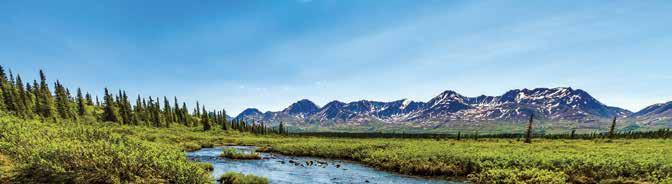
season, upon the passing of founder and CEO John Hall Sr. in February. The transition began last year, when two of his children took on executive responsibilities.
· Elizabeth Hall adds CEO to her previous title as President. Hall earned bachelor’s and master’s degrees in business administration. She grew up immersed in the motorcoach industry alongside her father and became COO in 2011.
· Her brother Joe Hall, who became COO last year, takes on CFO duties as well. Like his sister, he has worked for the company since 2001.
· John Hall III becomes President/ Chair of the Board for the three brands under Anderson House Tours, Inc., the Minnesota-based umbrella company for John Hall’s Alaska, Black Label Experiences (which focuses on premium international travel beyond Alaska), and Bucket List Travel Dreams (specializing in once-in-a-lifetime trips).
· As Director of Tour Operations, Erica Gindele joins the team to oversee tour operations, Alaska and World Adventure partnerships, and product development.
· As Director of Strategic Accounts and Partnerships, Jeremy Schuler cultivates relationships in Alaska and Minnesota operations. Schuler has experience owning an Alaska small group tour company himself.
· As Director of Motorcoach and
Charter Operations, Haley Walleser manages charter and group partnerships for Alaska and Minnesota. Walleser brings nearly fifteen years of Alaska tourism experience.
· As Director of Art Production, Brian Teague is responsible for brand identity and creative representation in catalog production, website design, and social media visuals.
· As Social Media and Content Producer, Emily Burton manages social media channels, written content, and all guest communication and support.

· Constance Aguilar joined Credit Union 1 in December as Vice President of Member Operations, leading the Member Service Center.
With seventeen years of experience in financial services, Aguilar brings a strong background in branch leadership, risk management, and team development.
Two members of the PND Engineers team are stepping up, one after a career in government service and the other with a fresh professional certification.
· Sean Baski is a new hire after working for sixteen years at the Alaska Department of Transportation & Public Facilities (DOT&PF). He spent the last four years as the DOT&PF Central

Region Highway Design
Section head. Baski earned a bachelor’s degree in civil engineering at UAA. He was awarded DOT&PF Central Region Employee of the Year in 2025.

· The firm’s newest Senior Engineer is Jhon Landicho, who recently passed his Principles & Practice of Engineering exam to become a professionally licensed engineer. Landicho has worked at PND since January 2021, specializing in structural engineering with a focus on bridge design and marine infrastructure.

· The Alaska branch of Hawai'i-based commercial furniture and storage dealership Systemcenter has a new Business Development Manager. Kim Fontana was hired to drive strategic growth, strengthen relationships, and build new partnerships throughout the Alaska market. Fontana has more than a decade of experience in commercial furniture, previously at Capital Office Systems. She returns to the industry from a sojourn in healthcare. Fontana earned a bachelor’s degree in psychology from UAA and received a master’s degree from Alaska Pacific University.













Memphis is still the #1 destination for Graceland visitors. The Bluff City can cling to that superlative despite no longer having the nation’s busiest cargo airport. Restructuring by FedEx decreased domestic cargo through its Memphis hub by 20 percent, dropping the airport behind UPS hub Louisville, which handles more international shipping, and even below Miami, where 80 percent of cargo is from overseas, not subject to domestic fluctuations.
Which US airport, then, topped April’s ranking by Airports Council International World? Good ol’ Ted Stevens Anchorage International Airport. The Air Crossroads of the World has grown its cargo handling by 40 percent since 2019, when it ranked third in the US and sixth in the world. In 2025, only two other airports moved more cargo: Shanghai Pudong International at 4.1 million tonnes and the champion, Hong Kong International, at 5.1 million tonnes.
This month’s article “Anchorage Airport Takes Off” by Terri Marshall reports on updates at ANC driven by, and in support of, growth in cargo and passenger volume.
For this edition of Alaska Trends, we explore findings from the Alaska International Airport System (comprising the Ted Stevens Anchorage International Airport and Fairbanks International Airport) year-end report, detailing contributions from facilities credited with 26,000 jobs statewide and $2.3 billion in economic activity.
SOURCE: 2025 AIAS Annual Report
6.3M Passengers traveled through ANC & FAI in 2025.
That's about 9 times Alaska's population.
ANC ranked #1 in North America for Concession sales per passenger in 2024. The average enplaned passenger spent $20 per flight, or about 2 in-flight picnic packs.
ANC Ted Stevens Anchorage International Airport
JFK John F. Kennedy International Airport
BNA Nashville International Airport
MSP Minneapolis-Saint Paul International Airport
MCO Orlando International Airport
SEA Seattle-Tacoma International Airport
IAH George Bush Intercontinental Airport
LAX Los Angeles International Airport
PHX Phoenix Sky Harbor International Airport
DEN Denver International Airport
2025 saw an 8% year-over-year increase which included a 7% increase in Lower 48 capacity.
3.8M Tonnes of cargo were handled by ANC
About 10 times the annual garbage handled by Anchorage Regional Landfill
In FY2025, Alaska International Airport System generated $193M in operating revenue and Passenger Facility Charges, an increase of $20M over FY2024.
57,345 Cargo Landings Annually 1 every 10 minutes, allowing for 24/7/365 operations
18% Increase in cargo handled by FAI.
What book is currently on your nightstand?
The Mercy of Gods by James S. A. Corey.
What charity or cause are you passionate about? Alaska Christian College.
What’s the first thing you do when you get home after a long day at work? Start working on dinner.
What vacation spot is on your bucket list? Israel.
If you could domesticate a wild animal, what animal would it be?
Musk ox! It’s about freaking time! They’re on a slow, multi-century path at the Musk Ox Farm.

by Kerry
Alifelong interest in chemistry led JR Wilcox to study at UAF to become an environmental chemist, aiding oil and gas companies in regulatory compliance. Better, he thought, than pursuing nanotechnology in hot, humid Texas or doctoral research in atmospheric chemistry.
An industry shakeup in 2009 opened a niche for Wilcox to create Cook Inlet Energy, soon acquired by Miller Energy Resources and dissolved in bankruptcy court. Still, the experience set Wilcox on the path to establish Baxter Senior Living, Quantum Laundry, and a project that broke ground in May: Alyeschem, the first petrochemical plant on the North Slope. By the way, “JR” doesn’t stand for anything, he says, but Wilcox stands for this: The North Slope has long-term potential, so it needs longterm infrastructure.
Alaska Business: What do you do in your free time?
JR Wilcox: Cross-country skiing in the winter and hiking in the summer.
AB: Is there a skill you’re currently developing or have always wanted to learn?
Wilcox: I would like to speak Russian better.
AB: What’s the most daring thing you’ve ever done?
Wilcox: When I worked maintaining weather towers… There was one outside of Endicott, and I had to fix a windspeed sensor when the chill factor was -100°F.
AB: What are you superstitious about?
Wilcox: No, not a superstitious guy.
AB: What’s your favorite local restaurant?
Wilcox: Bear Tooth.
AB: Dead or alive, who would you like to see perform live in concert?
Wilcox: I had tickets to the White Stripes concert when they were coming to Anchorage, and Meg threw in the towel… I’ve always felt cheated, so I’d put Meg and Jack back together.
AB: What’s your greatest extravagance?
Wilcox: Um, I went to Tokyo with my wife for her fortieth birthday… I don’t know if that counts.
AB: What’s your best attribute and worst attribute?
Wilcox: Good at thinking of creative solutions to things? And worst attribute is, uh… I can get impatient.

AIDEA Alaska Industrial Development and Export Authority 103 aidea.org
Airport Equipment Rentals 111 airportequipmentrentals.com
Alaska Chadux̂ Network ............................. 79 ak-mprn.org
Alaska Dreams Inc ..................................... 28 alaskadreamsinc.com
Alaska Mergers & Acquisitions, LLC 51 akmergersandacquisitions.com
Alaska Oil & Gas Association 43 aoga.org
Alaska Pacific University ............................. 11 alaskapacific.edu
Alaska Railroad ......................................... 38 akrr.com
Alaska School Activities Association 21 asaa.org
Aleut Corporation 67 aleutcorp.com
American Heart Association ........................ 99 heart.org
Anchorage Convention Centers .................... 89 anchorageconventioncenters.com
Anchorage Sand & Gravel 29 anchsand.com
Arctic Shred 90 arcticshred.com
Arcticom .................................................. 25 arcticom.com
ARG Industrial........................................... 61 alaskarubber.com
Aspen Hotels 101 aspenhotelsak.com
Chugach Alaska Corporation 73 chugach.com
Conrad-Houston Insurance Agency .............. 51 chialaska.com
Construction Machinery Industrial ................. 2 cmiak.com
Cook Inlet Tug & Barge LLC 73 cookinlettug.com
Craig Taylor Equipment 19 craigtaylorequipment.com
Crowley Fuels............................................ 45 crowley.com
Cruz Companies 60 cruzconstruct.com
Delve Group 97 delve-group.com
Denali Universal Services 49 denaliuniversal.com
Design Alaska ........................................... 31 designalaska.com
Dorsey & Whitney LLP ................................ 13 dorsey.com/locations/anchorage
Equipment Source, Inc 57 esialaska.com
Fairbanks Economic Development Corporation/ Alaska Defense Forum 16 fairbanksdefenseforum.com
First National Bank Alaska 5 fnbalaska.com
Greer Tank................................................ 55 greertank.com
Haskell Corporation ................................... 53 haskellcorp.com
Highmark Marine Fabrication, LLC ................ 35 highmarkmarine.com
Home Instead - HI Southern Alaska, Inc. 98 homeinstead.com
JD Steel Co Inc 83 jdsteel.com
LONG Building Technologies ....................... 65 long.com
Long Spring ................................................ 9 longspringak.com Lynden
lynden.com
mthousing.net
C Machinery
ncmachinery.com
Nenana Heating Services, Inc ...................... 53 nenanaheatingservicesinc.com NMS ........................................................ 47 nmsusa.com









Our new P-Tier mid-size excavator fleet is designed and built for proven performance. Shaped by the John Deere ALL-IN commitment to innovation, these machines deliver smarter technology and a refined operator experience that elevates productivity and confidence on the job, helping you dig deeper into what is possible on today’s jobsites and tomorrow’s demands.