How industry associations grow themselves and the economy
By Rachael Kvapil
82 HEALTHCARE
Neo CEOs
Three new healthcare executives
By Vanessa Orr
88 LEADERSHIP
Doing Good by Being Good: Disconnectedness
By Lincoln Garrick
92 ENERGY
POLAR Project
Pumped thermal for long-duration energy storage
By Vanessa Orr
96 MANUFACTURING
Flight Path
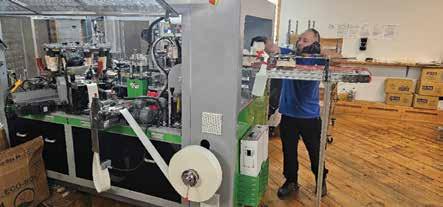
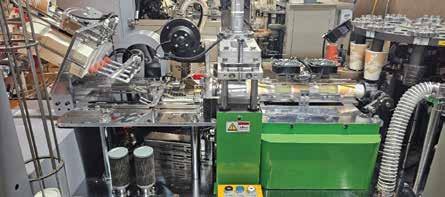
Three Alaska entrepreneurs share their manufacturing journeys
By Rindi White
104 REAL ESTATE
Build, Buy, or Lease?
Options for commercial occupancy
By Tracy Barbour
28 MEDIA & ARTS
Film Ascendant
Local businesses respond to revival in analog photography
By Christi Foist
ABOUT THE COVER
It’s possible for an excellent employee to suddenly appear in an employer’s breakroom; it’s more likely that a skilled, motivated, and productive employee is grown through deliberate corporate actions and culture. For the 2026 Corporate 100, Alaska Business recognizes companies around the state that cultivate the workspaces in which Alaskan employees can learn, grow, and be an essential feature in Alaska’s economic landscape.
Thank you to the incredibly talented BDS Architects team, who designed their office and generously lent it to us as a backdrop for the cover photo.
Christi Foist
Photo by Kerry Tasker | Cover Design by Monica Sterchi-Lowman
“I trust First National’s expertise and financing solutions to help us achieve our mission: To deliver economic success for our Alaska Native owners and the communities we serve.”
–
McHugh Pierre
PRESIDENT
& CEO GOLDBELT, INC.
Where Traditions Shape Tomorrow
Alaska Native businesses like Goldbelt drive economic growth benefiting both shareholders and their communities. First National Bank Alaska delivers the One Solution — a comprehensive suite of financial tools — to help them succeed, all backed by the experience of Alaska’s largest community bank.
Discover how shared values fuel Goldbelt’s growth and relationship with First National Bank Alaska.
SHAPE YOUR TOMORROW
40
Alaska’s
By Tasha Anderson
68
Recruiting
By Jamey Bradbury
76
How
By Woodrie Burich
Alaska’s
By Scott Rhode
Kerry Tasker
VOLUME 42, #4
EDITORIAL
Tasha Anderson, Managing Editor
Scott Rhode, Senior Editor
Rindi White, Associate Editor
Emily Olsen, Editorial Assistant
PRODUCTION
Monica Sterchi-Lowman, Art Director Fulvia Caldei Lowe, Production Manager Patricia Morales, Web Manager
BUSINESS
Billie Martin, President Jason Martin, VP & General Manager
James Barnhill, Accounting Manager
SALES
Charles Bell, VP Sales & Marketing 907-257-2909 | cbell@akbizmag.com
When I entered the Alaska workforce at the age of 17, I was in no way career minded. A family friend who had coached my youth volleyball team approached me with the opportunity for a summer job after I graduated from high school. Having no other plans to speak of, I agreed a job was a good way to occupy my time.
Similarly, when I graduated from college, I wasn’t looking for any specific work; I was looking for a paycheck that would ensure I could pay back my student loans. When Alaska Business hired me to work the front desk, all parties assumed it would last for a few years.
Shortly after I was hired, then-editor Susan Harrington set a story on my desk and asked me to edit it. I did a terrible job. I over-corrected editorial choices that were fine and completely failed to fact-check anything, really. I was, at the time, a good editor, but I had no idea how to edit for this publication.
Instead of giving up, she gave me feedback.
Years later, when I was working regularly with the editorial team, I recall walking into her office and asking her a question about an article. She paused and then asked: “Did you try to find out?” I had not. She told me to see what I could find and come back to her if I was stuck. I don’t remember what I asked her, but I do remember the critical lesson that, if I have questions, I am responsible for trying to find answers.
While working with then-editor Kathryn Mackenzie, there was an issue in need of a construction story. I pitched several ideas, and she told me to pick the one I was most interested in. She trusted that whatever I was curious about would prove valuable to our readers.
Over my years at this publication, I have been gifted with the opportunity to grow. I have been watered and set in sunlight, pruned and repotted. Very occasionally I’ve been tethered to a stake (looking back, it was probably for the best), but mostly I have been nurtured and provided space to thrive.
It’s my annual April wish that all Alaskan employees find their own space to root, and grow, and bloom.
Tasha Anderson Managing Editor, Alaska Business
Send more cargo than ever before with our expanding fleet and network.
Thanks to our growing fleet of 350+ aircraft, and nearly 1,500 daily flights to 141 destinations, you can ship almost anything to more places. That includes 29 international markets in the Americas, Asia, Australia, the South Pacific, and to and from 20 of our beloved Alaska communities. For more information, go to alaskacargo.com/contact-us. Or call us at 1-800-225-2752
Feed Others What You Would Feed Yourself
Volunteers cook meals for Clare House
By Christi Foist
Wh en I started occasionally cooking dinner for Clare House, a Catholic Social Services Alaska-run shelter for women and children in Anchorage, I usually had more of one ingredient than I could use up in even a potluck soup. From canned clams to mustard, salmon to bok choy, each ingredient called for a crowd to feed. Central Lutheran Church’s monthly commitment to cook a dinner for the sixty to seventy residents of Clare House provided the perfect solution. Eventually these efforts stirred my own hunger. I wanted to know more about the citywide effort through which more than twenty churches
and a few other groups provide mostly home-cooked meals for Clare House, 365 days a year.
How It Started
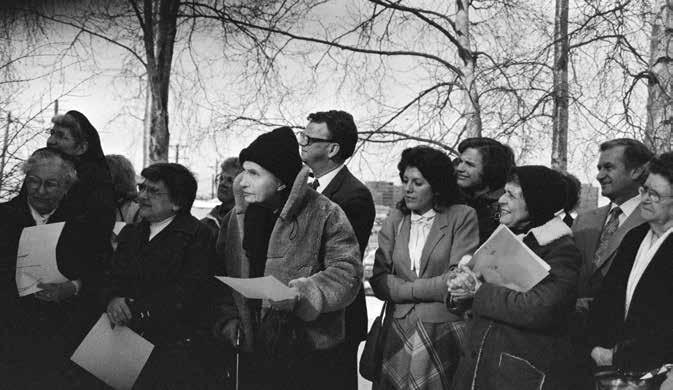
The dinner program goes back to the shelter’s earliest days, when Sister Gaetana Cincotta “just started calling all the churches in Anchorage… and asking if they could take one evening meal,” recalls Peggy Bergsrud, who was part of the group that launched Clare House in the early ‘80s.
The shelter opened on January 4, 1983, two months after the initial, but more short-term, Brother Francis Shelter near Downtown
Anchorage. Both facilities were part of a city partnership with the thenArchdiocese of Anchorage, after multiple people’s deaths on city streets galvanized the community. The deaths weren’t attributable only to the freezing cold: in June 1980, a man sleeping in a dumpster behind Holy Cross Cathedral was fatally injured when it was emptied while he was still inside. Three more people froze to death in October 1982, which shocked the city.
By that point, two Catholic Brothers who’d worked on Skid Row in Spokane, Washington, had come to Alaska at the request of thenArchbishop Francis Hurley. Bob
“Just because it serves the nutritional needs of somebody does not mean that’s what is wanted or needed… I cook by heart.”
J enn Miller Founder Showere
d in Grace
Multi-denominational churches and other groups supply fresh food, usually one day each month, for Catholic Social Services' shelter for women and children.
Christi Foist
Christi Foist
Easton and Dave Sifferman were close to launching the first cold-weather version of Brother Francis Shelter, but they hadn’t finalized the details. The shelter opened a month later, on November 8; however, a March 27, 1983, Anchorage Daily News article reported the shelter still had no cots, beds, or sleeping bags for fire-safety reasons—only blankets.
Women and children required a different setup, which Catholic Social Services Alaska founder Sister Mary Clare Ciulla worked on with Sister Cincotta and others. A few days after the Brother Francis winter shelter opened, officials from the city and the Alaska State Housing Authority worked out an agreement for Anchorage to lease two community halls for emergency shelter: Willow Park and Loussac
Manor. The latter became the home of the first Clare House, named for Sister Ciulla, who’d worked in Alaska since the ‘60s.
Days after the January 4 opening, an Anchorage Times story quoted the city’s then Family Services counselor Joyce Lee saying the Clare House “desperately needed” meals that a local church was bringing. According to a February 19, 1983, Anchorage Daily News account, Clare House initially had no showers and only a very small kitchen. So Sister Cincotta
got to work. “She was not shy,” recalls Bergsrud, who wrote the job description for, interviewed, and basically chose the first Clare House director, Rosalie Nadeau.
The shelter had opened with space for eight women and twelve children, but the need almost immediately exceeded that.
The February story reported “residents have sometimes had to squeeze closer together to make room for more.” Clare House moved to its longtime location at 410 West 54th
Sister Mary Clare Ciulla, founder of Catholic Social Services Alaska and namesake of its shelter for women and children.
Peggy Bergsrud
Anchorage weathered the Trans Alaska Pipeline System construction boom before the community organized to open Clare House in 1983. Peggy Bergsrud
Avenue on Christmas Eve in 1984. There, it could help more people, but Bergsrud recalls that space, too, had a limited kitchen.
Cook by Heart
In a sermon given shortly before the opening of Brother Francis Shelter, Archbishop Hurley mused, “What will happen to us now that we are so involved? What have we gotten ourselves into?” As Catholic Social Services Alaska marks its 60th anniversary this year, the answer is still unfolding.
For the many churches and other groups that continue to cook for Clare House each day, the answer is clear. “It’s good to put our money where our mouth is,” says Diana Williams, who coordinates Christ Community Church’s
monthly Clare House meal. “That’s what we’re here for.”
It can also foster empathy, says David Rittenberg, chief program and impact officer for Catholic Social Services Alaska. “We’ve all experienced hunger; we’ve all experienced someone providing us with a meal to satiate that hunger,” he says.
For Jenn Miller, who coordinates and often cooks the monthly meal Anchor Park United Methodist Church provides, the program also underscores people’s dignity. “A lot of times… what gets served [to poor or homeless people] is slop,” she says. “It’s like, ‘Well, it’s good enough if it’s nutritious…’ Yeah, that’s true, but just because it serves the nutritional needs of somebody does not mean that’s what is wanted
Founded by Alaskans. Built by Alaskans.
“We’ve all experienced hunger; we’ve all experienced someone providing us with a meal to satiate that hunger.”
David Rittenberg Chief Program and Impa ct Officer Catholic Social Servi ces Alaska
Nearly 1,000 dedicated Alaskan employees are here to champion local businesses and serve members like you across the state and beyond.
or needed.” Instead, Miller tries to provide food that she herself would eat: “I cook by heart.”
That ethos undergirds the whole volunteer food program at Clare House. Though groups might occasionally provide rotisserie chickens, pizza, or Costco lasagna, most who were interviewed for this story provide homemade food.
Many Churches, One House
Current volunteer coordinator Ashely Ardrey says she generally gives little guidance to most groups that cook, since the program’s been around for so long. Most meal coordinators interviewed for this story say their churches have provided Clare House dinners for decades. Cara Fletes, coordinator for Saint John Orthodox Cathedral in Eagle River, says she was told Saint John has provided dinners for Clare House since 1986.
According to Ardrey, groups typically cook once a month, usually the same day of the month—e.g., first Sunday or fourth Thursday. Cathedral of Our Lady of Guadalupe, one of the few churches that cooks more than one day a month, cooks on a Wednesday and also on the 29th of each month. John Fleming, the cathedral’s business manager, says Our Lady of Guadalupe picked up the “movable” day after another church had to stop providing the meal. A handful of groups also alternate months or cook less often than once a month. Christ Church Episcopal provides dinner every other month, for example.
Groups approach meals for Clare House in different ways, but most have a person who coordinates cooking and shopping efforts. Ardrey says she mostly focuses on answering questions rather than
giving guidance. She gets an updated head count each week, to keep groups informed.
Tasha M. Porcello, coordinator for Christ Church Episcopal, says they treat any child over age 2 as an adult when calculating portions. “We always cook a little bit extra because, first, we want to make sure that people don’t have to ration food,” she says, “and then we throw in a little extra food in case the number went up.”
Williams of Christ Community Church, says her volunteers always assume sixty adults when cooking, but usually children outnumber adults. Both pregnant women and mothers with children can stay at the Clare House.
Loaves and Fishes
Sometimes the date dictates the meal design. With its fourth-Thursday commitment, Central Lutheran always has Thanksgiving and sometimes
Bergsrud
Christmas Day duties. Other nights of the year, the church picks a theme or anchor entrée and asks parishioners to provide sides and desserts that complement it.
Porcello, who’s been coordinating the Christ Church Episcopal meal for about a year, usually plans the menu and creates a sign-up sheet for people to provide items. “We try to do a really balanced meal,” she says. This usually includes a main dish with protein (sometimes an animal protein like ham or salmon, if a parishioner donates fish) and a side course “with broad appeal.”
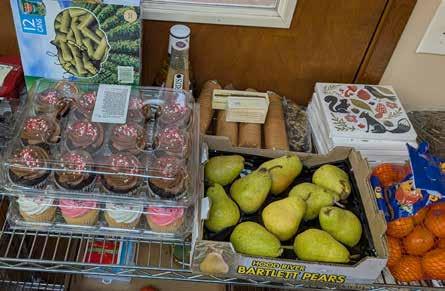
Cooks also provide two to three other side dishes like potatoes or rice and one to two full servings of vegetables per person. For dessert, they usually provide cookies and fresh fruit.
Other churches cook the meal together. At St. Mary’s Episcopal Church coordinator Amy Lindsey says a small group usually cooks after the Sunday service, following a rotating menu. Miller and others at Anchor Park United Methodist usually cook a chicken pot pie for the Clare House in conjunction with their monthly United Women in Faith meal and meeting.
Christ Community Church also cooks together and makes the same dish each month: chicken enchiladas. Williams says the menu used to be more varied, but that made things more complicated. “This way, it’s kind of like another small group,” she says. “I’ve really enjoyed it.”
The day before the Friday when Christ Community Church provides dinner, Williams and her husband do most of the shopping at Costco and
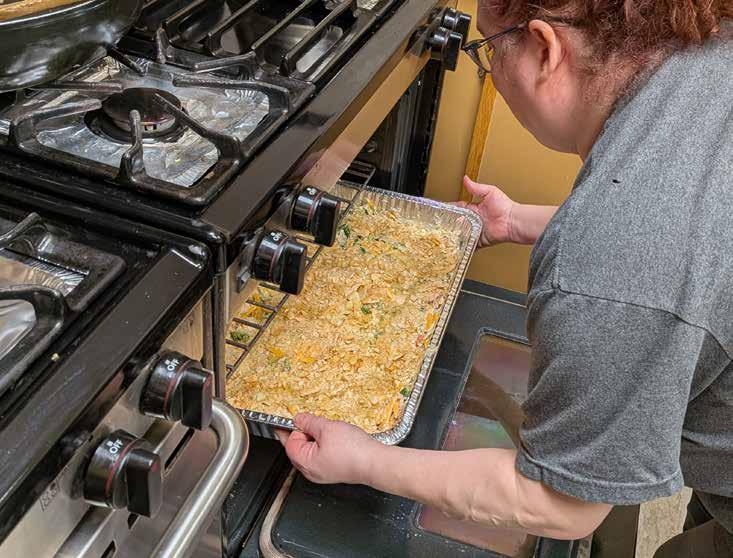
Walmart. The cooking group—usually six people, sometimes more—then meets at their church at 4 p.m. to fill four full-size aluminum pans with enchiladas, two with fiesta rice, and two with salad. A baker provides dessert. Williams says they can usually drop everything off around 6 p.m. for Clare House staff to warm and serve the next day.
Whatever the menu or their denomination—or lack thereof— each of these groups help carry on a long-time legacy of service. As the Anchorage Daily News quoted Sister Cincotta telling attendees of a 1996 charity ball, “Jesus did say, ‘Whatever you do to the least of my brothers and sisters, you do to me.’”
Out of Many, CU1 Credit Union 1 expands footprint and services
By Tracy Barbour
It ’s an exciting time for Credit Union 1 (CU1). It’s already one of the largest credit unions in the state, and is the only statechartered credit union in Alaska. Last year, CU1 announced its intent to merge with MAC Federal Credit Union (MAC). At the same time, CU1 is expanding its business account services and business lending options to better serve small businesses and entrepreneurs throughout the state. The proposed merger promises to be a significant development in Alaska’s financial sector, as it will enhance how local communities access banking and business services. The merger process began last March and has progressed through careful planning, collaboration, and the shared vision of these memberowned institutions—both Alaskagrown credit unions founded in 1952. Now the merger is awaiting the blessing of state and federal regulators, according to CU1 President and CEO Mark Burgess.
“Once we get their approval, then we can announce to the members of MAC and CU1 that there will be a vote to approve the merger,” Burgess says. “We’re anticipating that vote will happen in the April to May timeframe.”
Shared Histories and Missions
Both CU1 and MAC have longstanding traditions of focusing solely on serving Alaska and supporting local communities. CU1 was established as the Anchorage Teacher’s Credit Union and has undergone multiple mergers. MAC— which stands for Members and Community—originally began as Tanana Valley Federal Credit Union and later became Fort Wainwright Federal Credit Union to serve the military and employees at the US Army post. “Our scope has expanded to more than teachers and service members, but we’re still taking care of Alaskans,” Burgess says.
“What’s kind of neat in combining organizations like this is we have that shared value of taking care of Alaska—we’ve been doing it for nearly seventy-five years—and now we just get to do it together.”
MAC’s mission has always been to prioritize the well-being of its members, says MAC Board of Directors Chair Jeremy Fillipi. This guiding principle ensures that major decisions—including the consideration of a merger—are approached with members’ best interests in mind. The decision to pursue a merger is rooted in the credit union’s commitment to “keeping members happy, keeping their money safe, and offering them more services,” he says.
The impending union of the two institutions is a strategic response to an evolving financial landscape. When MAC’s longtime CEO recently decided to step down, the organization found recruiting a new chief executive to be a challenge. It was also struggling
with financial hurdles, including the difficulty of operating in an everevolving digital banking environment.
Ultimately, MAC’s leadership and board of directors decided that merging with a like-minded credit union would be the best option, so they reached out to CU1 for support. CU1 responded positively and committed to helping MAC move forward. “That’s what credit unions do all the time; that’s a credit union model: people helping people,” Burgess explains. “So we said, ‘Of course, we’re here to help.’”
CU1 has since been working on stabilizing MAC’s operations and devising a process to blend the institutions. A key goal is to provide greater scale and resources to members without sacrificing local focus.
Notably, there’s a significant size difference between the credit unions. CU1, which holds $1.5 billion in assets, has nearly 400 employees, fifteen branches (with a sixteenth opening this year), and approximately 95,000 members. MAC, in contrast, has $175 million in assets, 66 employees, four branches, and about 18,000 members. The merged entity will operate under the CU1 brand, with more than 112,000 members and $1.6 billion in assets.
CU1’s and MAC’s shared value system remains central to the melding of their organizations. The result will be an expanded reach coupled with a continued local focus. “We’re still here in Alaska,” Burgess says, highlighting the commitment to local service and presence. “Our headquarters is in Alaska. Most of our employees are here in Alaska. I’m
sitting in Anchorage right now and headed to Fairbanks.”
Anticipated Changes
After the merger, CU1 intends to maintain all four MAC locations and staff members. On “operational day one”—which CU1 hopes will happen by the end of 2026—CU1 and MAC members will have expanded access
to branches and services, Burgess says. “But what’s really important to us is that all of the MAC employees are staying on with Credit Union 1,” he emphasizes.
CU1 will benefit from having MAC’s team of professionals continue in their roles. “I think CU1 is getting amazing employees that are dedicated to the members and to
Fairbanks,” Fillipi says. “That is going to make the transition easier.”
Once the institutions are fully integrated, CU1 and MAC members will have access to a total of twenty branches across the state—including a new Homer branch slated to open in June. Members will also be able to use more than fifty automatic/interactive teller machines and a co-op network with more than 30,000 surchargefree ATMs around the country. “I will be updating online banking to make that much simpler and easier for MAC members,” Burgess says. “So we’re really kind of expanding from a physical footprint perspective and then adding that technology onto the backside as well with the scale that Credit Union 1 has.”
Additionally, MAC members will benefit from higher lending limits
after the merger—up to $1 million for homes and $300,000 for vehicles or recreational toys. Currently, MAC provides up to $200,000 in total for each individual loan.
Continuity and Personalized Service
While some operational components will be updated, including system integrations and staff training, many member-facing services and experiences will remain consistent. The goal is for members to experience enhanced offerings and access to resources with minimal disruption to everyday banking.
For the sake of continuity, all current MAC branches will initially retain their identity—even as operations shift to CU1’s software and platforms. For two years after
the merger, the credit union’s Wasilla, Palmer, and Fairbanks branches will continue to operate under the MAC name as “a division of CU1.”
The long-standing Fort Wainwright Federal Credit Union branch, however, will retain its current name and function as a division of CU1 for five years. “Wainwright is really important to the MAC team,” Burgess says. “And from a Credit Union 1 perspective, we’re already a combination of many other credit unions. So, of course, we’re going to honor that history. We’re showing that nod to the history to make sure that they know we really care about their members and their history and the shared values that we have.”
Fillipi says the decision to retain the MAC name for the Fort Wainwright Federal Credit
Union branch and operate it as a division of CU1 for five years was both intentional and meaningful. The choice was made because the identity of MAC holds great significance for the military community it serves. “We did not want the military to feel that their needs were being overlooked or that the credit union was no longer dedicated to serving them,” he says. Not surprisingly, personalized service is at the heart of CU1’s approach. As CU1 expands, it remains a priority because of the important role credit unions play in members’ lives. How Alaskans interact with their credit union is distinct from what is typical in the Lower 48, according to Burgess. These differences are particularly pronounced for members living in rural Alaska, where the
needs and expectations are unique. CU1’s commitment to delivering personalized service is shaped by these differences and drives the credit union to remain responsive for all Alaskans.
“Growth sometimes makes it so that personalized service doesn’t exist, and our team has been really clear in that ‘growing just to grow’ is not what we want to do and is not the purpose of this merger or opening new branches,” Burgess says. “What we really find fulfillment in is connecting with our members, and this growth allows us to fulfill that need. If we aren’t providing personalized service, a good product, a good service, or a fun place to come, then we don’t check that box for our members.”
Expanding Business Services
CU1 is not only broadening its presence but also making major strides in expanding business account services and lending to ensure there are local options for small
Mark Eliason 3-Club Scramble Golf Classic
Linda Eliason
businesses and entrepreneurs. This marks a notable development, as credit unions—which historically have focused less on commercial services—are increasingly providing these solutions to business members.
“Members told us they needed more commercial services,” Burgess explains. “After reviewing what other financial institutions were offering— and the fees they charged small businesses—we thought this was a good spot for Credit Union 1 to step into and help. We’ve now added business credit cards, equipment loans, vehicle loans, unsecured loans, and lines of credit—all because our small business members lacked these options.”
Burgess says Alaska’s small businesses and entrepreneurs—many running multiple ventures—each need some kind of financial service. That’s why, beyond just starting to offer these products years ago, CU1 recently hired a full business team and a specialized small business team. “We rolled out these extra
products and have really seen some incredible growth,” he says.
CU1 is also taking steps to address the unique and evolving needs of business members. Historically, credit unions were established to address the needs of individuals who were not adequately served by traditional banks. Banks typically focus on maximizing shareholder value for owners, whereas nonprofit credit unions are member-owned organizations. Over time, however, the distinction between individual members and small business entities like sole proprietorships or limited liability companies has blurred.
This evolution in the business environment has influenced how financial institutions view their clients, Burgess says. Banks that concentrate on commercial lending typically offer multimillion-dollar loans with cap rates, expensive financing, and multiple contingencies. But many small businesses only need financing to support basic needs, often drawing from a checking account. In rural Alaska, most enterprises—aside
from Native corporations—are small companies with just a handful of employees. “Those are the ones that really need help,” Burgess says. “And that’s what credit unions have always done: serve the underserved. And we think small businesses like that are underserved in Alaska.”
Broad Impact on the Community
Wherever CU1 has a presence, it’s not just about putting up a branch or raising a flag, Burgess says. “We want the community to do well,” he says. “So we invest in local nonprofits. We hire people from the community and make sure they are trained and represent our credit union well and represent the community well.”
He continues, “And we care about those small businesses that are keeping the economy going as well. All of those things together make it so that we can survive in small locations like Kotzebue, Skagway, and even Homer. And we have a prosperous shared-value model between the local economy and the credit union.”
As CU1 looks to the future, innovation and technology investment will remain top priorities. Expanding digital banking capabilities, enhancing member engagement, and strengthening community involvement will also be key areas of focus. Burgess views the merger with MAC as “expanding the reach of CU1 but not changing the DNA or values” of the organization.
“Our commitment is to Alaska,” Burgess emphasizes. “We only have branches in Alaska… that continued, single focus of taking care of Alaska finances is really important to us.”
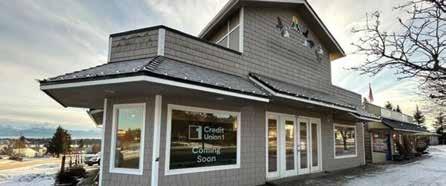
(Above) CU1’s Homer branch is scheduled to open in June. (Below) CU1’s Ketchikan branch.
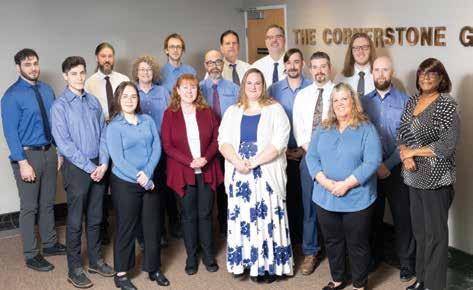
Cornerstone Credit Services LLC
Employee-owned merchant services and accounts receivable management provider with Alaska roots and national reach
Formore than twenty-five years, Cornerstone Credit Services has proudly been Alaska’s leader in accounts receivable management and merchant services, delivering consistent results while treating clients and consumers with the respect and professionalism they deserve.
Growth and Employee Ownership
Founded in 1999, Cornerstone quickly established itself as the go-to partner for medical service providers, hospitals, utilities, financial institutions, municipalities, and businesses of all sizes for third party collections. In 2001, it expanded into merchant services to provide businesses with reliable, hands-on payment processing solutions. In 2010, Cornerstone became fully employee-owned through an employee stock ownership plan. This change fostered a culture of personal investment, with every team member dedicated to the success of every client—whether they operate in Alaska or beyond.
Cornerstone’s merchant services division is rapidly expanding, enabling businesses to accept payments securely and efficiently in-store, online, or remotely. In partnership with established local financial institutions, Cornerstone
provides modern payment solutions supported by local expertise and enterprise-level technology. This collaboration allows businesses to access fast, flexible payment processing with the confidence of working alongside institutions that understand both community values and operational demands.
Local Expertise, Nationwide Capability
Based in Anchorage, Cornerstone understands Alaska’s unique economy, communities, and logistical challenges. Unlike most competitors with staff outside Alaska and the US, Cornerstone’s employees are rooted in the local and rural communities they serve. At the same time, its merchant services platform is built to support businesses wherever they operate, offering scalable solutions with
nationwide capability.
Cornerstone has earned a reputation for results-driven performance backed by a leadership team with decades of industry experience. As an employeeowned company, Cornerstone is guided by shared accountability and a commitment to client success that sets the standard for trusted accounts receivable management and merchant services across Alaska.
Contact Cornerstone today for a noobligation consultation.
1835 S. Bragaw Street, Suite 500 Anchorage, AK 99508 (907) 770-8100 | 877-375-8100
Ac ompany ramping up its gold activity in Alaska is merging with another precious metal producer to broaden its asset base. Contango ORE, headquartered in Fairbanks, and Dolly Varden Silver Corporation, based in British Columbia, recently announced their intent to merge, pursuant to a statutory plan of arrangement under the Business Corporations Act of British Columbia.
Structured as a merger of equals, the companies say combining would provide investors with exposure to a diversified portfolio of wellcapitalized North American assets. These holdings include the cashgenerating, high-grade Manh Choh gold mine near Tok and the Johnson Tract and Lucky Shot projects in Alaska, and, post-merger, several high-grade silver and gold projects
in British Columbia, collectively called the Kitsault projects. The merger also plugs Dolly Varden Silver into the direct shipping ore (DSO) business model that Contango uses, which seeks high-grade ore that can be sent to mills without expensive concentration processes.
Upon completion of the merger, scheduled this spring, existing Contango and Dolly Varden shareholders will each own approximately 50 percent of the outstanding shares of the new company on a fully diluted, inthe-money basis. The company is expected to be renamed Contango Silver & Gold Inc. and will be led by Contango’s Rick Van Nieuwenhuyse as CEO and Dolly Varden’s Shawn Khunkhun as president. Among the board of directors is Contango cofounder Brad Juneau, whose Juneau
Oil & Gas has interests in Arctic offshore exploration.
“This merger is an exciting transaction for both Contango and Dolly Varden shareholders, given the complementary and synergistic nature of our North American asset portfolios,” says Van Nieuwenhuyse. “With the Manh Choh gold mine providing significant cash flows in a strong gold and silver price environment, the combined company will have a source of non-dilutive funding to advance development of its high-grade Lucky Shot and Johnson Tract projects in Alaska and the Kitsault Valley project in British Columbia.”
Khunkhun adds, “We are very pleased to present this transaction to the shareholders of Dolly Varden. The merger represents a step change for the company, adding production and
Mishainik
combining an exceptional portfolio of projects with the potential for highgrade precious metal development. The combined company is poised to become a unique, multi-asset platform for silver and gold production, focused exclusively on the United States and Canada.”
Merger Motive
Gold is great, and silver is second best, so why combine them? Because of the commodity market. The silver-to-gold price ratio, which had stretched to more than 100-to-1, has recently narrowed to around 50-to1. Silver remains significantly more volatile than gold, reflecting both its investment demand and its strong ties to industrial activity.
and lead mining, making its supply dynamics closely linked to base metal production rather than standalone silver output,” explains Van Nieuwenhuyse. “The supply of silver is fixed, so when new applications— such as solid-state batteries—are developed, they increase demand on a system that cannot easily boost production, and prices go up.”
Since silver is often a byproduct, meeting this extra demand is challenging. “Roughly a billion ounces of silver are used each year, but there are only about 800 million ounces of silver produced a year. So you have to convince people who own bars of silver to sell to you,” says Van Nieuwenhuyse. “Looking at the big picture, we like silver,
“We like silver, we still like gold, and we love the exposure and timing!”
Rick Van Ni euwenhuyse Preside nt and CEO Co ntango ORE
The merger of Contango and Dolly Varden was driven by the goal to create a premier North American high-grade silver-gold producer. Van Nieuwenhuyse says, “We like gold, but we also like silver, and we don’t have a lot of it in our portfolio. The merger with Dolly Varden adds significant gold and silver resources to Contango. We’ve been very timely in acquiring Dolly Varden as the silver price has doubled.”
The companies anticipate several other benefits from merging. In addition to an asset portfolio ranging from advanced-stage exploration to current production, the merger brings additional exploration potential based on a track record of high-grade exploration success across the portfolio. The projects in development are strategically located near existing infrastructure supporting a DSO approach. Furthermore, the companies share a common development philosophy to pursue DSO projects with low capital expenditures that can be developed using existing processing facilities.
Shareholders would benefit from greater “critical mass” with a combined market capitalization of approximately $1 billion (C$1.5 billion), as well as increased trading liquidity, index inclusion, research coverage, and institutional ownership. And finally, the merger would enable both companies to trade on the New York Stock Exchange, with the intention to apply to list on the Toronto Stock Exchange as well.
The merger has received insider and institutional support, with all directors and officers of Contango and Dolly Varden, as well as
“This merger is an exciting transaction for both Contango and Dolly Varden shareholders, given the complementary and synergistic nature of our North American asset portfolios.”
Rick Van Ni euwenhuyse Preside nt and CEO Co ntango ORE
significant shareholders of both companies, having signed voting support agreements in favor of the transaction, representing approximately 22 percent of the outstanding Contango shares and approximately 22 percent of the outstanding Dolly Varden shares.
Updates on Alaska Projects
The merger puts more fuel into enterprises that have been, on their own, chugging along just fine. Contango holds a 30 percent interest in Peak Gold, the joint venture with Fort Knox mine owner-operator Kinross, which poured the first bar from Manh Choh in 2024.
“Things are steady, operations have been running for a year and a half now, and things are operating smoothly,” says Van Nieuwenhuyse. Manh Choh has operated as one of the highest-grade open pit mines in the world, with gold reserves estimated at approximately 8 grams per tonne. The Peak Gold JV represents the joint venture between Kinross (70 percent) and Contango (30 percent), and with Kinross as the operator, the outlook for 2026 remains positive.
Ore mined at Manh Choh is trucked to the Fort Knox mill north of Fairbanks. The 2026 production campaign began in February 5. “It has been a cold winter in Alaska, but ore has continued to be delivered to the Manh Choh stockpile at Fort Knox,” says Van Nieuwenhuyse. “Despite a conveyor belt fire reported at Fort Knox in late January, there has been no interruption to processing Manh Choh Ore.”
Income from Manh Choh has sustained Contango’s exploration of other prospects in Southcentral. “Lucky Shot and Johnson Tract are gold-rich projects, and the development plan is focused on bringing them into production as gold-dominant operations, targeting approximately 200,000 ounces of gold in annual production,” he says.
Lucky Shot is in the headwaters of Craigie Creek, a few miles west of where century-old mineshafts pierce the hillsides of Hatcher Pass, remnants of the historic Independence Mine. In November 2025, Contango announced the start of the Lucky Shot drill program to support completion of a feasibility
DEMAND JENNMAR
Our commitment to you, our customers, is guided by three words; SAFETY, SERVICE, and INNOVATION. We are constantly moving forward creating products of the highest quality and providing you with the services which make the impossible possible.
At JENNMAR fabrication takes place in our numerous strategically located manufacturing facilities associated with our a liated brands. From bolts and beams to channels and trusses, to resin and rebar, and more, JENNMAR is ideally positioned to meet the industrial fabrication demands of our customers. Our ability to provide our customers with a complete range of complementary products and services ensures quality, e ciency, and availability resulting in reduced costs, reduced lead times, and increased customer satisfaction!
From our Engineers to our Technical Sales Representatives we work tirelessly with you to ensure your safety is at the forefront. We will be with you every step of the way.
study. The drill program will be conducted in four phases, focusing on a combination of underground drilling from drifts and surface exploration, through 2026.
Contango exploration manager David Larimer says, “It’s exciting to get back underground at the Lucky Shot mine. The initial phase of drilling is a decisive resource 'in-fill' program on the Lucky Shot Vein. In addition, we will be drill testing mineralized conjugate and raleigh structures off the Lucky Shot Vein system that have recently been mapped underground in the West Drift.” The feasibility study is expected to be completed in 2027.
Farther off the beaten path, but on a literal fast track, is the Johnson Tract. Acquired by Contango in 2024, the prospect sits on 21,000 acres owned by Cook Inlet Region Incorporated within the boundaries of Lake Clark National Park and Preserve.
Contango is advancing exploration, engineering, and environmental baseline studies for the Johnson Tract, which holds potential for copper, zinc, and lead production in addition to gold and silver. On January 30, Johnson Tract permitting was officially placed on the FAST41 dashboard, a Congressionally established tracking tool for infrastructure projects that require federal environmental review that aims to ensure the project's development stays on track and remains coordinated among all involved parties.
Contango is evaluating an underground exploration tunnel to improve access for completion of feasibility-level definition drilling. The
“The combined company is poised to become a unique, multi-asset platform for silver and gold production, focused exclusively on the United States and Canada.”
Shaw n Khunkhun Preside nt and CEO Dolly Var den Silver
company also plans to build a road to connect the campsite at Johnson Tract to the proposed portal site and to upgrade the camp.
“We are pleased that our Johnson Tract project is now up and running on the FAST 41 Dashboard and posting progress in real time with our first initial application submitted for a permit on February 2, 2026,” says Van Nieuwenhuyse.
Across the Border
Dolly Varden has no incomegenerating production yet, and no operations to speak of in Alaska. Its assets are positioned nearby, however, in the transboundary region
near the tip of the Alaska Panhandle. Several companies are exploring in the mountains of British Columbia known as the Golden Triangle, and Dolly Varden has staked its claim about 82 miles east of Ketchikan, or about 30 miles southeast of the border town of Hyder.
The Kitsault Valley project encompasses two sites: the Dolly Varden and Homestake Ridge properties. Underground mines had penetrated the area historically, but Kitsault itself is now a ghost town.
Homestake Ridge is being evaluated as a prospect for both gold and silver. “The deposit remains open for expansion, and we look forward to accelerating drilling and engineering studies to advance the Homestake Main and Homestake Silver deposits during 2026,” says Khunkhun.
No decision has been made whether to mill Kitsault Valley ore on site or to truck it to nearby Golden Triangle projects, but the proximity to an inlet of the Inside Passage creates supply chain options.
“Kitsault Valley and Johnson Tract are particularly synergistic, as both are high-grade, have similar metallurgy, are located near tidewater, and fit the Direct Shipping Ore model,” says Van Nieuwenhuyse.
“With Dolly Varden's cornerstone land position in the Golden Triangle, one of the most exciting and prospective mining districts in the world, we see great potential to expand resources and advance Kitsault Valley to production. The combined company will be well-financed for growth that is expected to continue to deliver long-term value for its shareholders.”
Freestone Capital Management Local insight, national resources
For Founded in 1999, Freestone Capital Management offers comprehensive services to help Alaskans protect, grow, and transfer their wealth. As an independent, fee-only firm with more than $14 billion under management, Freestone draws on decades of expertise to guide clients through complex financial decisions. The firm’s advisors are supported by in-house estate planning, tax, and investment teams that collaborate to address clients’ distinct needs.
As a fiduciary, Freestone is legally obligated to act in its clients’ best interests. Thus, Freestone emphasizes long-term relationships and thoughtful advice—not products or transactions. “We take the time to understand our clients’ lives, values, and goals, and bring the right expertise to support them,” says Anchoragebased Jenny Doherty, CFP ®, who grew up in Homer. With no state income or estate tax and some of the most trust-friendly laws in the country, Alaska offers opportunities for retirement planning, estate structuring, and multi-generational wealth transfer.
Freestone—ranked #12 on the Forbes 2025 List of America’s Top RIA Firms—combines the
sophistication of a leading national firm with its personalized approach. The firm’s investment expertise spans across tradtional and alternative asset classes. Investment recommendations are based on client objectives—not a preset portfolio allocation. For eligible clients, Freestone offers access to private equity, real estate, and other alternative investments.
By blending local insight with inhouse expertise across planning and investments, Freestone enables clients to make confident decisions.
“Our client-centric model means clients in Alaska receive advice that is personalized, and grounded in the realities of home,” Doherty says.
Disclosures:
AUM as of 12/31/2025. Forbes ranking is based on data provided by the firm. The award is based on data as of 3/31/2025. Freestone did not pay a fee to be considered for this recognition. Forbes requires a fee for use of award logos and reprints in marketing materials.
Jenny Doherty, CFP® 911 W. Eighth Avenue, Suite 101, PMB 20
Anchorage, Alaska 99501 (907) 600-2000
www.freestonecapital.com
Film Ascendant
Local businesses respond to revival in analog photography
By Christi Foist
When an editor asked me to submit film-based photographs for a story of mine and the second roll came off the spool inside the camera, I faced what seemed like a classic problem. How could I salvage the film without exposing it to any light so I could mail the film—and not the whole camera— out of state for processing?
The solution—via a tip from local photographer Brian Adams— revealed an unexpected resurgence in film photography.
The Death Knell That Wasn’t
When Keller’s Custom Photolab in Anchorage’s Spenard neighborhood closed at the end of 2020, it seemed like the end of an era. A few months later, Costco followed suit, ending all in-store photo processing. Digital, it seemed, had killed film photography, leaving what few Anchorage stalwarts remained with almost no local options for developing and printing old-school pictures.
For a time, one of the only options—for those who knew—was
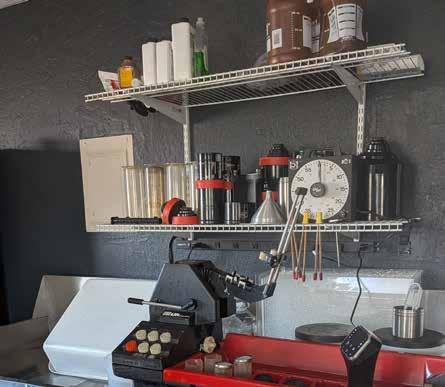
a marketing agency production manager, who did some film developing on the side. When people asked, Stewart’s Photo Shop, a Downtown Anchorage institution since the ‘40s, sent film-bearing customers to Kahleal Milner’s house.
From 2019 through 2021, he kept order forms next to his mailbox and treated film developing as a sideline.
“But then it was like I was constantly on the phone explaining services,” recalls Milner. In 2022, he quit his advertising job and launched MediaM Film Lab that fall. At first, a busy week involved 30 to 40 rolls to process. Now a peak week brings 150 rolls, and he averages closer to 80.
Since October 2023, Stewart’s Photo Shop has had a formal arrangement with Milner to provide film drop-off and collection for his service.
New Audiences Discover Slow Photography
“There’s been an absolutely massive boost” in interest in film photography, says Dublin, Ireland-based chemist and photographer Alexander Doran,
who’s helped Milner ensure he safely disposes of the chemicals. Doran, who has a PhD in synthetic organic chemistry, runs a YouTube channel focused on the chemistry of film photography.
Stewart’s Photo Shop has seen increased interest firsthand. “I’ve been blown away by the amount of people coming in to buy film,” says Matt Ellis, one of the store’s owners. He left Anchorage about ten years ago and recently returned. “This is something we never would have considered about a decade ago.”
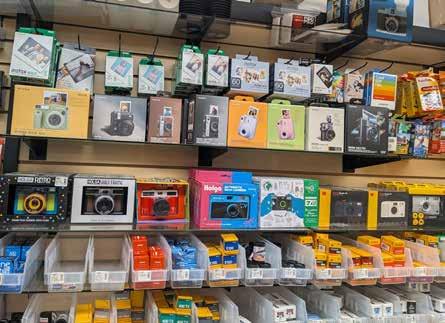
Between tourists and local interest in digital photography, Ellis says Stewart's Photo Shop has remained on firm footing at its Fourth Avenue location. But film sales have grown so much that Stewart’s Photo Shop has started ordering and featuring a film of the month. The shop has seen sales of development chemicals increase, too—especially for black and white photography.
That demand comes from a new audience. “About ten years ago, it was really the hipsters” who
Christi Foist
were into film photography, Ellis says. “Now, it’s really all walks of life that are shooting film… I can’t generalize now.”
Doran, who co-runs a film photography group in Ireland, has seen a similar trend there. “Film photography is a luxury, I have to concede that,” he says, but even with a higher price tag attached, he’s seen a lot more diversity among hobbyists in just the past couple years: more women, younger people, and varied backgrounds.
Part of the Landscape
Perhaps due to those younger shutterbugs, Milner’s seen strong interest in the photo walks he organizes with photographer Tia Thompson, who runs Analog Alaska. When their Instagram
group chat first discussed a meetup, twenty-five people showed up. The gatherings, initially organized alongside downtown gallery Akela Space, soon became a chance to foster community.
“Anyone should be able to get into [film photography] if they want to put in that effort,” says Milner, who first went to school for engineering, then for film. The walks, which have included trips to Portage Lake and an Eagle River yurt, sometimes draw more than fifty people.
Those relationships are especially important, given some of what’s unique about film photography. Milner sometimes returns orders with a jotted note about things he observed while processing the roll or making prints, to help customers improve. “That’s what I wish I had
“About ten years ago, it was really the hipsters… Now, it’s really all walks of life that are shooting film.”
Matt Ellis Co-owner
Stewart’s Photo Shop
DISCOVER THE URBAN WILD
when I was starting.” He thinks it will also support his business in the long run, by nurturing customer engagement with what can be a demanding hobby.
Milner also teaches workshops, booked on a “pay-what-you-can basis.” One workshop on basic film developing drew from his conversations with Doran about safe chemical disposal. Some chemicals used in photography— hydroquinone developers, silver halide fixers, and selenium toners— are “massively toxic to aquatic life,” Milner says. Thus, he’s tried to focus on chemistry that’s safe for the environment, an ethos he encourages others to follow, too.
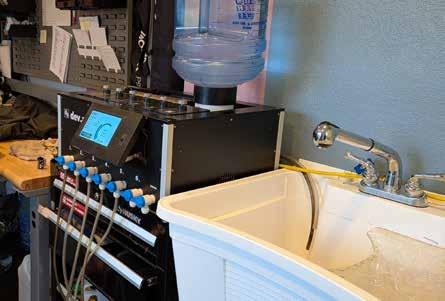
Sometimes, safer chemistry means buying a slower-acting bleach, Doran says, or a modern developer redesigned with better ingredients. In those cases, education can help people understand the differences between their options, and why one might choose a slightly more expensive product. While some products cost more, Milner says his careful chemical choices have allowed him to launch a film developing business without a traditional darkroom. “Literally the only thing I need is tables and a sink,” he says. “It wouldn’t work that way if I wasn’t using that type of chemistry.”
Milner’s approach also requires careful treatment of chemicals after their photographic use. Here, Doran, who manages industrial-level hazardous chemical waste at his Dublin day job, has been especially helpful. Ireland has a lot more home film development, Doran says,
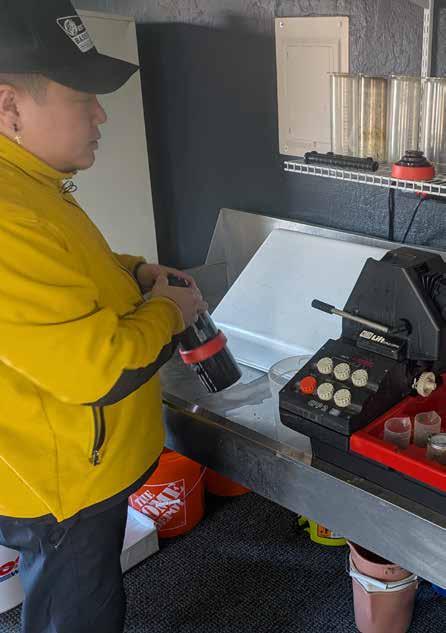
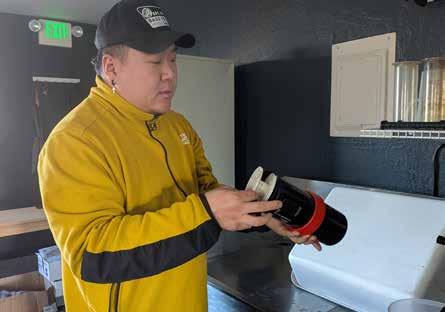
MediaM Film Lab grew out of Kahleal Milner’s photo developing hobby.
Christi Foist
As if time stood still since the digital photography takeover in the last twenty years, rolls of film are still on sale at Stewart's Photo, established circa 1943 on Fourth Avenue in Downtown Anchorage.
Christi Foist
which has led him to focus on things “people can do at home.”
One such technique, which Milner uses, involves putting clumps of steel wool into used fixer, the chemical bath that removes unexposed, undeveloped silver from film. After a week or two, the iron in the steel wool becomes ionized and oxidized, and the hazardous silver salts in the fixer become harmless silver metal. “You effectively electroplate the steel wool with silver,” Doran says. The change also transforms the fixer solution into a harmless iron salt that Doran says people once used as a laxative.
A Hobby That Fosters Community
Another Anchorage business is also working to foster in-person and indoor community among photographers. Photographer Young Kim opened The Stoop, a new boutique photo lab and meeting space on Fireweed Lane, in March 2025. The space offers film processing, meetings, and equipment rentals, plus a growing library of film books. He also makes archival-quality exhibition prints and can extract and salvage partly light-exposed film from inside a camera.
“This is still a very new space… I’m really open to… what the community might need,” says Kim, a UAA graduate who teaches a beginning photography course. He has a master’s degree in photography from the Hartford Art School at the University of Hartford.
Kim’s desire to serve the community shapes The Stoop’s other services, like its meeting space and library. The nature of film photography makes
others’ input valuable, but limited processing and printing space inhibits such collaboration. “Old negative film, it’s an interpretive medium,” Kim says. “There’s so much translation that needs to be done.” Film photographers can adjust contrast, darkness, and other variables during the printing process.
The communal darkrooms that many places once offered provided
a built-in community to help with those decisions. “You need that constructive criticism from a group setting. It helps build people as photographers,” Kim says.
Every time he travels out of state, he pays attention to local photography scenes and the features that foster community. “I’m always looking for what I find helpful,” he says, citing photography spaces
he’s visited in New York and a Tokyo photo library that inspired The Stoop’s collection of books. “I try to bring a little of that back here.”
Developing Interest
In The Stoop’s meeting space, south- and west-facing windows let natural light flood the wall-length magnetic “crit board,” where artists present their works for open critique.
Alaska Photographic Center, a statewide arts organization whose board includes Kim, has already used the room for multiple events.
“We love the space,” says Alaska Photographic Center board member Petra Lisiecki. She says the group has had board meetings there as well as a summer workshop. Lisiecki says the space’s location, intimacy, and uncomplicated rental process have worked well for meetings.
“What’s very nice with Young’s space is that it’s flexible. You can adjust the space to your need. He has all the technical elements there that you might need,” Lisiecki says.
Once Kim finishes building The Stoop’s darkroom, he plans to rent that space to photographers who want to personally see their pictures through the entire process. He also offers limited equipment rentals on a consultation basis.
Whether hobbyist or professional, digital disavower or retro enthusiast, Anchorage film photographers have a growing ecosystem and community to turn to. With something as tangible as film, sometimes there’s no substitute for a local, in-person experience. I, for one, am grateful. It turned out I’d gotten the best shots on the roll with partial light exposure.
Serious photographers gained a central gathering place a year ago when The Stoop opened in the Spenard neighborhood.
Christi Foist
Membership Matters
Al arge membership base can significantly impact a professional organization’s success. Naturally, it’s no surprise that onboarding new members is a consistent goal among organizational leadership.
However, enlisting new members is more than just increasing numbers. New members often lead to new collaborations, new programs, or additional support for Alaska industries. They are also key to creating employment opportunities that will ultimately result in a sustainable Alaska economy.
Key Connections
Cari-Ann Carty, president and CEO of the Alaska Safety Alliance (ASA) and Alaska Workforce Alliance (AWA), is passionate about professional organizations like hers, a multiindustry association focused on workforce development.
“Our mission covers a lot of territory, both geographically and programmatically,” says Carty, “but this is the work that guides us every day.”
Professional organizations and trade associations exist to support, represent, and advance industry or specific career fields. How they accomplish their mission often depends on the needs of their membership. Determining these needs is a mix of quantitative and qualitative analysis.
How industry associations grow themselves and the economy
By Rachael Kvapil
“We use both data and direct member insight to guide decisions,” says Megan Militello, co-founder and executive director of the Alaska Manufacturing Association (AKMA). “We track acquisition, retentions,
Alaska Manufacturing Association
engagement, and referrals, and we listen closely at events and in one-on-one conversations. That feedback shapes our programming, partnerships, and outreach.”
AKMA formed in 2025 and is still growing. At any stage, though, adding new members is important to the health of associations. A large membership base increases a professional organization’s revenue and financial stability, enabling it to expand its programs and services for members.
However, bringing new members to the fold takes more than baseline marketing. Professional organizations often implement business-tobusiness strategies to build longterm relationships and high-value collaborations, which fits given that members are primarily other companies and nonprofits rather than individuals. In this context, membership numbers might appear low, as a company counts as a single member even though all employees receive benefits.
Furthermore, as Militello explains, growth isn’t just about numbers. A major part of growing a membership is defining who a professional organization serves and the challenges it can address.
“Growth is not about volume,” says Militello. “It’s about building the right network.”
To build the right network, associations must provide benefits to its members. Common benefits provided include representation, advocacy, networking, industry knowledge, training or professional development, and access to unique technology. The specific form of these
benefits depends in part on members’ location, the problems they seek to solve, and the economic and political climate in which they operate.
“The challenge really is to find the value for any company’s specific needs,” explains Carty. “What programs, initiatives, or actions are we doing that connect with the company’s training workforce or community engagement value? Each member is unique, and it often takes several conversations for us to find that fit.”
Sparking Interest
For both Militello and Carty, membership growth happens somewhat naturally. Measurable targets may exist; however, the focus is on value-driven growth. Outreach strategies are based on the organization’s mission, its length of operation in Alaska, and the industry it supports. Some organizations have very detailed plans, but others take a more organic approach to attracting potential new members.
As a young organization, AKMA has relied on a five-stage approach to increase its membership. First, AKMA leads with relevance through programming, roundtables, and partnerships, which are built around real challenges Alaska manufacturers are navigating, from workforce gaps to supplier connections. Second, AKMA leverages visibility and storytelling to highlight member wins, showcase Alaska-made products, and position itself as the connector within the ecosystem. Militello says when members see themselves reflected in the network, they are more likely to engage and invite others in.
Third, AKMA builds intentional partnerships and collaborations with industry groups, economic development organizations, and service providers to expand its reach while reinforcing its credibility. Fourth, it creates clear pathways to join by communicating what AKMA stands for, what members gain, and how to get involved. This is to reduce friction in the decision-making process. Finally, AKMA prioritizes retention as much as recruitment through strong onboarding, consistent communication, and meaningful touchpoints to ensure members stay engaged.
“Sustainable growth comes from members who see ongoing value and bring others with them,” says Militello.
This blueprint has proven successful for AKMA. In a short time, it has grown from an idea into an active community with events, partnerships, sponsorships, and structured membership benefits.
Mature Stage
In comparison, ASA/AWA uses a slightly less formal, but equally effective, strategy to increase membership. ASA/AWA was established in 1999 under its former name, the Alaska Process Industry Careers Consortium, to provide industry-specific training and create a skilled, safe, and sustainable workforce for Alaska. Carty says that, for many years, oil and gas companies made up the core of the membership. However, after ASA/AWA was renamed in 2019 to reflect a broader safety focus, membership has grown to include construction, mining, and maritime industries as well.
In her sixteen years with the organization, Carty can’t remember the board setting a specific goal number for new members. However, ASA/AWA is always ready to discuss its programs and services with industry sectors that can benefit from them. Carty points to engagement
with the maritime sector as an example of how the alliance adds new members. She says conversations with a group of businesses about a maritime workforce development plan in 2014 opened the door to prospective members.
“They got through the exercise of writing a plan but didn’t have the staff to really implement it,” says Carty. “Through conversations, we talked about how we could take that on and how we can manage that.” Carty says ASA/AWA now manages the maritime workforce plan along with other training programs.
From there, building membership involves having additional conversations with companies about the benefits of and philosophy behind its services.
Most professional organizations offer category-based, tiered membership rates. For some professional organizations, such as ASA/AWA, the chosen member category can determine board
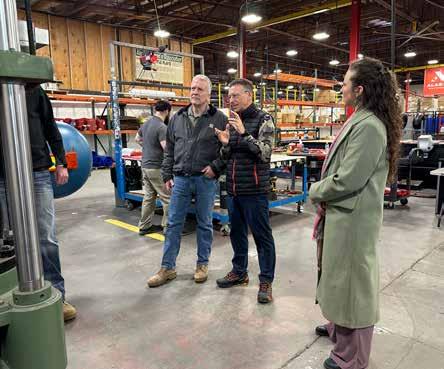
Senator Dan Sullivan (left) talking with Alaska Gear Company owner and CEO Sean McLaughlin about research and development on its new Bunny Boot, part of a listening tour the Alaska Manufacturing Association arranged.
Alaska Manufacturing Association
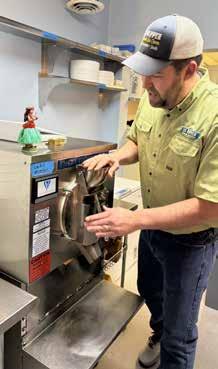
Big Dipper Homemade Ice Cream owner Robert Brown shows how he supplies his three Mat-Su outlets.
Alaska Manufacturing Association
Navigating the Alaska Freight Market?
Navigating the Alaska Freight Market?
Time to Talk
It’s Time to Talk
For logistics professionals, fall is a critical time. As you review your contracts and plan your shipping strategy for 2026, the question isn’t just about rates. It’s about creating custom solutions so you can serve your Alaska customers with faster, better, and more consistent service.
For logistics professionals, fall is a critical time. As you review your contracts and plan your shipping strategy for 2026, the question isn’t just about rates. It’s about creating custom solutions so you can serve your Alaska customers with faster, better, and more consistent service.
REACH AND RELIABILITY
REACH AND RELIABILITY
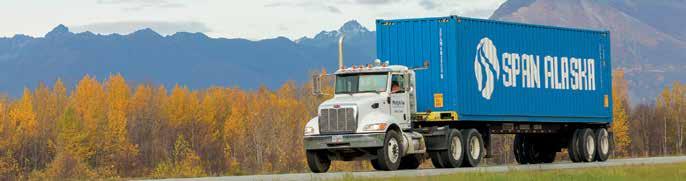
Span Alaska’s owned network of terminals and equipment provides direct access to ~80% of Alaska’s population. This infrastructure ensures reliable, flexible service with tight control over quality and transit times.
Span Alaska’s owned network of terminals and equipment provides direct access to ~80% of Alaska’s population. This infrastructure ensures reliable, flexible service with tight control over quality and transit times.
SINGLE-SOURCE SOLUTIONS
DESTINATION DIRECT™
DESTINATION DIRECT™
Our direct, non-stop routing from our West Coast Service Centers to key hubs in Alaska improves transit times, minimizes handling, and reduces the risk of damage.
Our direct, non-stop routing from our West Coast Service Centers to key hubs in Alaska improves transit times, minimizes handling, and reduces the risk of damage.
FIRST MILE TO FINAL MILE
SINGLE-SOURCE SOLUTIONS
LTL, Chill and Freeze, Hazmat and oversized cargo? We handle it all, managing all modes of transportation—LTL, truckload, rail, ocean, and air—to provide a single chain of control for dispatch, shipping, tracking, and billing.
LTL, Chill and Freeze, Hazmat and oversized cargo? We handle it all, managing all modes of transportation—LTL, truckload, rail, ocean, and air—to provide a single chain of control for dispatch, shipping, tracking, and billing.
FIRST MILE TO FINAL MILE
Leverage our logistics team to schedule pick up of your shipment from anywhere in the Lower 48 and schedule day-definite delivery throughout Alaska within our standard 1–2 days of vessel arrival.
Leverage our logistics team to schedule pick up of your shipment from anywhere in the Lower 48 and schedule day-definite delivery throughout Alaska within our standard 1–2 days of vessel arrival.
Gold Ranking
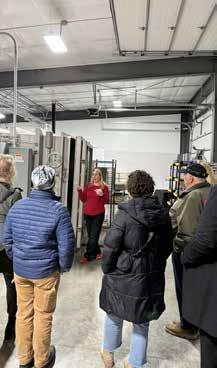
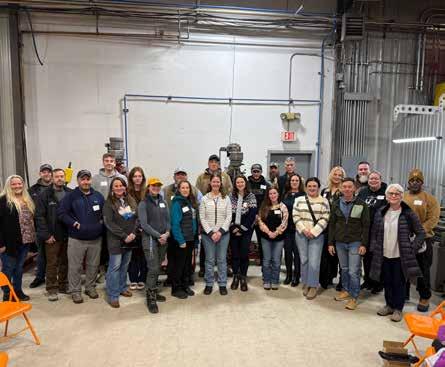
Alaska Food Company (left) and Trijet Manufacturing Services (right) hosted Alaska Manufacturing Association's "Meet. Forge. Grow." mixers in 2025 and 2026, respectively, where attendees learn more about a fellow member’s operation.
Alaska Manufacturing Association
eligibility and voting rights. For others like AKMA, members will have access to all benefits regardless of their chosen membership category.
One of the biggest challenges of increasing membership is geographic distance. This is particularly true for potential members in rural areas who need to travel to urban areas to attend events. Many professional organizations will rotate event locations or, when possible, add a virtual component to make access easier. By making participation possible, professional organizations demonstrate to potential members the clear benefit of membership.
Benefits All Around
When professional organizations grow, it has a positive effect on all industries. Member companies can save money by taking advantage of the organization’s training, programs, and services. Members can also develop collaborations through networking, potentially
leading to innovative solutions or mutually profitable projects.
Professional organizations can also spur industry expansion by enhancing collective visibility.
“A stronger, more representative membership base amplifies our voice with policymakers, economic development partners, and industry stakeholders, which benefits every member,” says Militello.
From an industry perspective, a larger, more engaged network helps keep activity in-state, supports local supply chains, and reduces reliance on outside vendors. Stronger industries can lead to a stronger, more diverse economy and increase job creation.
As more working-age residents reach retirement, Alaska industries continue to look for new ways to recruit and train the next generation of workers. Through outreach programs, professional organizations can present in-state employment, training, and education opportunities
that encourage working-age individuals to stay in the state.
“Outmigration is always a conversation we’re having in workforce development,” says Carty. “We’re rife with opportunities for young people getting started in their careers, but I don’t think they always see that, so we have to do a better job of career awareness.”
Carty says nonprofit organizations like Alaska Resource Education are making great efforts to increase contact hours with students to introduce them to science, technology, engineering, and mathematics careers across different sectors of the state’s natural resource development industries. She says organizations that market career opportunities in Alaska are critical to reducing outmigration.
A business might choose to island itself, operating as a rugged loner. But associations are out there to multiply a company’s effectiveness.
OPPORTUNITY AWAITS
In 2025, UIC surpassed $1 billion in revenue and reached record profit, a milestone built on strategy, diversity, and discipline. Greater success for us means greater opportunities for our Iñupiat shareholders, Alaskans, and those who have built careers within the UIC Family of Companies.
JOIN US. THE JOURNEY IS JUST BEGINNING.
Tending the Corporate Garden
Alaska’s largest employers cultivate a thriving workforce
By Tasha Anderson
p ril is rarely warm or snow-free enough for most Alaskans to expect to see budding green in the ground. But for those looking forward to long days, warm sun, and verdant garden plots, April is the right time to plan for Alaska’s short but powerful growing season.
Fortunately for some of Alaska’s largest corporations, planting the seeds for a vibrant workforce can be a year-round effort. Especially for those companies who see other growth in their future—higher revenue, additional locations, new subsidiaries, innovative products, diverse service lines—a skilled, robust bouquet of employees is essential.
Cultivating the right employees— whether guiding budding workers in entry-level positions or revitalizing transplants from other workplaces—can be a deciding factor on whether a company climbs to its goals or is left stunted in the shadows.
For the 2026 Corporate 100, Alaska’s largest companies as ranked by number of Alaskan employees, every employee counts—certainly to move higher in the ranks but, more significantly, on a day-to-day business as these companies provide services and goods to Alaska’s residents and businesses.
Since 2016, the Corporate 100 has provided employee data for for-profit, not-for-profit, and nonprofit entities. Ranking the Corporate 100 by number of Alaskan employees gives Alaska Business an opportunity to share with our readers the companies providing home-grown jobs in the 49th State.
As a group, the 2026 Corporate 100 employ 73,268 Alaskans, which is approximately 20 percent of the Alaska workforce; across the world, they employ upwards of 3 million people, including their Alaskan workers.
The Top of the Trellis
Ranking #1 for 2026 is Providence Alaska with 4,500 employees. The healthcare provider has held its position at the top of the Corporate 100 for seven consecutive years. Three other healthcare organizations join it in the top ten: Southcentral Foundation (3,000 employees, #5), Foundation Health Partners (1,994 employees, #9), and SouthEast
Cultivating the right employees— whether guiding budding workers in entry-level positions or revitalizing transplants from other workplaces— can be a deciding factor on whether a company climbs to its goals or is left stunted in the shadows.
Walmart, at #6, is the first retailer in the top ten for Alaska, with 2,825 Alaskan employees, and it’s the largest employer on the list in terms of worldwide numbers, reporting more than 750,000 workers. In the top ten it is joined by retailer Carrs Safeway (#7), now owned by Albertsons, with 2,800 Alaska employees.
Rounding out the top ten is Alaska Airlines, one of eleven transportation companies in the Corporate 100, reporting 2,200 Alaskan employees and ranked at #8.
Other Perennial Varieties
Alaska Regional Health Consortium (1,950 employees, #10).
At #2 is Arctic Slope Regional Corporation with 3,705 employees, a slight increase for the regional corporation over 2025, when it held the #4 rank. It’s joined in the top ten by NANA Regional Corporation (3,122 employees, #4).
At #3 is Trident Seafoods, which is the only representative of the seafood industry in 2026, reporting 3,653 Alaskan employees. In past years, other seafood processing and valueadded companies have ranked high in the Corporate 100, but they have recently seen reductions in workforce or production, many in response to changes in Alaska’s fisheries.
Alaska Native corporations and health and wellness providers each represent 15 percent of the 2026 Corporate 100, together accounting for one-third of this year's list. Alaska’s major industries—namely industrial services, mining, oil and gas, finance, construction, architecture and engineering, transportation, utilities, and telecommunications—make up the bulk of the Corporate 100, with transportation carrying 11 percent itself. Retail and wholesalers, food and beverage, tourism, and seafood combined are 14 percent of the Corporate 100, but several retailers are quite high in the ranks.
Approximately one-third of the Corporate 100 report 100 percent Alaskan workforces, but for some of the larger employers, Alaskans represent fewer than 1 percent of their global workforce.
Nearly 80 percent of the Corporate 100 have their roots firmly planted in Alaska, having been launched in the 49th State. The majority of
the Corporate 100 report locations in Anchorage, but many on the list have operations outside of the state’s largest city, and much of the list has multiple locations around Alaska, giving the group statewide reach. Native regional and village corporations, healthcare providers, and retailers such as Three Bears Alaska (#14) have many employees outside of the state’s major urban centers.
This year’s Corporate 100 ranks are unique in that there are no new entrants: every organization listed this year has been listed previously, but that does include Walmart, Northern Hospitality Group (#29), and Orthopedic Physicians of Alaska (#40), which were listed in the ranks for the first time in 2025.
The Seeds of the Survey
Any company with an Alaska business license and Alaska address is eligible for the Corporate 100. In January, Alaska Business surveyed hundreds of companies regarding their number of Alaska employees; the ranked companies voluntarily supplied employee figures. We are aware of companies that have sufficient employee numbers to qualify for the Corporate 100 but choose not to participate, so while this list is a robust representation of Alaska’s largest employers, we acknowledge it is not comprehensive.
The survey asks employers to report their peak employment numbers; it does not specify what “type” of employee to count in terms of full-time, seasonal, et cetera.
In the rare event that two companies report the same number of Alaskan and worldwide employees, the company that has been operating in Alaska for longer is ranked higher on the list.
Employers are asked to report their employee numbers however they internally determine that figure.
Companies occasionally will report identical Alaskan employee figures; in those cases, the employer with more worldwide employees is ranked higher. In the rare event that two companies report the same number of Alaskan and worldwide employees, the company that has been operating in Alaska for longer is ranked higher on the list.
Reporting 100
This year five companies reported employing exactly 100 Alaskans, which for 2026 is the minimum number of employees required to rank in the Corporate 100. This created a five-way tie between Airport Equipment Rentals, Cook Inlet Region, Inc. (CIRI), Jacobs, Major Marine Tours, and R&M Consultants for the #99 and #100 spots. Alaska
Business does not extend the list past 100 to accommodate ties, so once the tie-breaking criteria were applied, two remained in the ranks: Jacobs and CIRI.
CIRI and R&M were invited to respond to a Q&A about how they cultivate and care for their employees.
CIRI
Alaska Business: What qualities are most important for your organization in prospective employees?
CIRI: We look for mission-driven professionals who demonstrate integrity and operate with a high standard of excellence; professionals who collaborate well across teams, respect diverse perspectives, and take ownership of their role; and individuals who demonstrate adaptability, accountability, and alignment with our company values.
AB: What words best describe your company culture?
CIRI: Mission-driven, collaborative, respectful, and accountable.
AB: What does your organization do to retain employees?
CIRI: Our focus is on meaningful work and contributing directly to our CIRI shareholders/descendants and families; opportunities to contribute to impactful initiatives; leadership engagement; professional development; recognition of performance; and culture of respect and unity.
AB: What’s your plan: holding steady or looking to grow?
CIRI: We are working to continue to grow our business and shareholder value responsibly and sustainably.
AB: What qualities are most important for your organization in prospective employees?
R&M Consultants: We hire people who share our values. We want people who share a commitment to doing things the right way and improving our communities through projects that matter. We look for those who want to work as part of a competitive team to collaboratively develop innovative solutions to meet the toughest challenges our clients face. The qualities that support this are commitment to quality work, integrity, work ethic, collaboration, and a true desire to improve Alaskan communities.
AB: What words best describe your company culture?
R&M: Flexible, empathetic,
supportive, excellence-driven, community-minded.
AB: What does your organization do to retain employees?
R&M: We expect a lot from our employees, but in return we provide a flexible, supportive work environment that gives people space to be great at work and in their family lives. We also offer unique benefits, such as free snacks and beverages; an employee wellness center where people can work out or just engage socially with their peers; and numerous wellness and community volunteer initiatives.
AB: What’s your plan: holding steady or looking to grow?
R&M: R&M fluctuates between 100 and 140 employees, depending
on how many seasonal staff we employ to accommodate Alaska’s construction season. Right now, we are closely watching developments in match funding for transportation projects, as this will greatly affect the size of our staff over the next few construction seasons. With several large projects under discussion, including the LNG pipeline, major military projects, and renewed interest in the Port MacKenzie Rail Extension, we are optimistic about growth. We recently opened our fourth office in Alaska —in Wasilla—to assist in recruiting people living in the Mat-Su Valley, which we hope will lead to additional growth.
2026 CORPORATE 100
ALASKA'S LARGEST EMPLOYERS AS RANKED BY ALASKAN EMPLOYEES
Providence Alaska
1
2
3
Deborah Berini, CEO 3760 Piper St., Ste. 3035 Anchorage, AK 99508
Arctic Slope Regional Corporation
Rex A. Rock Sr., Pres./CEO PO Box 129 Utqiaġvik, AK 99723
Trident Seafoods Corporation
Joe Bundrant, CEO 717 K St., Ste. 100 Anchorage, AK 99501
NANA Regional Corporation
4
5
6
John Aġnaaqłuk Lincoln, Pres./CEO PO Box 49 Kotzebue, AK 99752
Southcentral Foundation
April Kyle, Pres./CEO 4501 Diplomacy Dr. Anchorage, AK 99508
Walmart
John Furner, Pres./CEO 8900 Old Seward Hwy. Anchorage, AK 99515
Carrs Safeway
7
907-212-3145 providence.org/alaska
HEALTH & WELLNESS
Providence Health Renton, WA
907-852-8633 asrc.com
NATIVE CORPORATION
206-783-3818 tridentseafoods.com
SEAFOOD
907-442-3301 nana.com
NATIVE CORPORATION
907-729-4955 southcentralfoundation.com
HEALTH & WELLNESS
Cook Inlet Region, Inc. Anchorage, AK
800-WALMART walmart.com
RETAIL/WHOLESALE Walmart Inc. Bentonville, AR
907-339-7704 carrsqc.com; safeway.com
Healthcare provider serving Alaskans in six communities: Anchorage, Eagle River, Mat-Su, Kodiak Island, Seward, and Valdez. Providence Alaska includes Providence Alaska Medical Center, the state’s largest hospital.
Year Founded: 1859 Year Founded in AK: 1902
Employees Worldwide: 120,000 Employees in AK: 4,500
ASRC is the largest business established and headquartered in Alaska and has five major business segments: government services, petroleum refining and marketing, energy support services, industrial services, and construction.
Year Founded: 1972 Year Founded in AK: 1972
Employees Worldwide: 16,952 Employees in AK: 3,705
Trident Seafoods is North America’s largest vertically integrated seafood harvesting and processing company. Trident is a privately held, 100 percent USA-owned company with an operating presence in ten countries and customers across nearly sixty global markets.
Year Founded: 1973 Year Founded in AK: 1973
Employees Worldwide: 7,700 Employees in AK: 3,653
Resource development; land management; federal contracting; engineering and design; surveying and mapping; food and facilities management; camp services; security; industrial and commercial fabrication and installation; drilling services.
Year Founded: 1972 Year Founded in AK: 1972
Employees Worldwide: 15,048 Employees in AK: 3,122
Alaska Native-owned, nonprofit healthcare organization serving over 70,000 Alaska Native and American Indian people living in Anchorage, MatanuskaSusitna Borough, and fifty-five rural villages. SCF is home to the awardwinning Nuka System of Care.
Year Founded: 1982 Year Founded in AK: 1982
Employees Worldwide: 3,000 Employees in AK: 3,000
Walmart is a people-led, tech-powered, omnichannel retailer dedicated to helping people save money and live better.
Year Founded: 1962 Year Founded in AK: 1994
Employees Worldwide: 750,000+ Employees in AK: 2,825
Retail food, drug, and fuel.
Stephanie Kennedy, District Mgr. 5600 Debarr Rd., Ste. 100 Anchorage, AK 99504
Alaska Airlines
8
Ben Minicucci, CEO/Pres. AK Air Group 3600 Old Intl. Airport Rd. Anchorage, AK 99502
RETAIL/WHOLESALE Albertsons Boise, ID
907-266-7200 alaskaair.com
TRANSPORTATION
Alaska Air Group Seattle, WA
Year Founded: 1901 Year Founded in AK: 1950
Employees Worldwide: 290,000 Employees in AK: 2,800
Alaska Air Group, Inc. comprises Alaska Airlines, Hawaiian Holdings, and Horizon Air. We provide passenger and cargo service to more than 140 destinations throughout North America, Central America, Asia, and across the Pacific.
Year Founded: 1932 Year Founded in AK: 1932
Employees Worldwide: 31,000 Employees in AK: 2,200 9 Foundation Health Partners
Shelley Ebenal, CEO 1650 Cowles St. Fairbanks, AK 99701
SouthEast Alaska Regional Health Consortium
10
Charles Clement, Pres./CEO 3100 Channel Dr. Juneau, AK 99801
907-452-8181 foundationhealth.org
HEALTH & WELLNESS
907-463-0400 searhc.org
HEALTH & WELLNESS
Foundation Health Partners is a nonprofit, community-owned healthcare system based in Fairbanks that operates the Tanana Valley Clinic, Fairbanks Memorial Hospital, and a long-term care facility, the Denali Center.
Year Founded: 2017 Year Founded in AK: 2017 Employees Worldwide: 1,994 Employees in AK: 1,994
SEARHC is a nonprofit health consortium serving the residents of Southeast. SEARHC provides essential healthcare services, including primary, urgent, and specialty care, dental services, behavioral health support, wellness programs, and more.
Year Founded: 1975 Year Founded in AK: 1975 Employees Worldwide: 2,000 Employees in AK: 1,950
Join Our Team
Building Alaska Careers Since 1952
Since 1952, the SBS team has remained our greatest investment. We have built more than structures — we have built enduring careers, with team members averaging 25 years across roles from retail and drivers to managers and skilled millwork craftsmen. Joining our team means becoming part of a respected legacy defined by our culture of growth, stability, and professional development. Take the next step with SBS.
We Honor Your Military Service & Invest In Your Future. SBS is a proud and approved DodSkillbridge Employer.
Hilcorp Alaska
Luke Saugier, Sr. VP AK
3800 Centerpoint Dr., Ste. 1400 Anchorage, AK 99503
Costco Wholesale Corp.
Ron Vachris, CEO 330 W. Dimond Blvd. Anchorage, AK 99515
GCI
Ron Duncan, CEO 2550 Denali St., Ste. 1000 Anchorage, AK 99503
Three Bears Alaska
Paul Sonnenberg, Pres./CEO 7462 W. Parks Hwy., #814 Wasilla, AK 99623
Alaska Regional Hospital
Mark Roberts, CEO 2801 DeBarr Rd. Anchorage, AK 99508
Bristol Bay Native Corporation
Jason Metrokin, Pres/CEO 111 W. 16th Ave., Ste. 400 Anchorage, AK 99501
Lynden
907-777-8300 hilcorp.com
OIL & GAS
Hilcorp Energy Houston, TX
800-774-2678 costco.com
RETAIL/WHOLESALE
Costco Wholesale Corp. Issaquah, WA
907-265-5600 gci.com
TELECOMMUNICATIONS
907-357-4311
threebearsalaska.com
RETAIL/WHOLESALE
907-276-1131
alaskaregional.com
HEALTH & WELLNESS
HCA Healthcare Nashville, TN
907-278-3602 bbnc.net
NATIVE CORPORATION
Hilcorp is one of the largest privately held oil and gas producers in the US and is Alaska’s largest operator. Since 2012, Hilcorp has invested billions to operate North Slope & Cook Inlet assets, supporting jobs, communities, and TAPS throughput.
Year Founded: 1989 Year Founded in AK: 2012
Employees Worldwide: 3,600 Employees in AK: 1,750
Costco is a membership warehouse club that provides its members the best possible prices on a wide selection of quality, brand-name merchandise.
Year Founded: 1976 Year Founded in AK: 1984
Employees Worldwide: 356,694 Employees in AK: 1,499
GCI delivers communication and technology services in the consumer and business markets. GCI has delivered services in Alaska for 45+ years to some of the most remote communities and in some of the most challenging conditions in North America.
Year Founded: 1979 Year Founded in AK: 1979
Employees Worldwide: 1,880 Employees in AK: 1,325
Retail grocery and convenience stores, general merchandise, sporting goods (hunting, fishing, and camping), pharmacy, package stores (beer, wine, and spirits), and fuel.
Year Founded: 1980 Year Founded in AK: 1980
Employees Worldwide: 1,293 Employees in AK: 1,229
24-hour ER department, Family Birth Center, comprehensive stroke center, surgical robotics, cancer center, cath lab, diagnostic imaging, heart center, orthopedic and spine, rehab unit, and nurse residency program.
Year Founded: 1963 Year Founded in AK: 1963
Employees Worldwide: 1,200 Employees in AK: 1,200
Industrial services, construction, government services, seafood, and tourism.
Year Founded: 1972 Year Founded in AK: 1972 Employees Worldwide: 5,356 Employees in AK: 1,095 17
Jim Jansen, Chairman 6520 Kulis Dr. Anchorage, AK 99502
Mat-Su Regional Medical Center
Taylor Rudd, CEO 2500 S. Woodworth Lp. Palmer, AK 99645
HEALTH & WELLNESS Community Health Systems Nashville, TN
907-275-5100 worley.com
INDUSTRIAL SERVICES Worley, Limited Sydney, NSW, Australia
907-822-3476 ahtna.com
NATIVE CORPORATION
907-563-4567 globalcu.org
The Lynden family of companies provides transportation and logistics solutions in Alaska, Canada, the Pacific Northwest, Hawai’i, and around the world. For more than a century, Lynden has been helping customers get the job done.
Year Founded: 1906 Year Founded in AK: 1954
Employees Worldwide: 2,594 Employees in AK: 1,087
Mat-Su Regional Medical Center is the Valley’s healthcare hub, providing advanced surgical service, including robotics, birthing center, emergency services, diagnostic imaging, wound care, and two convenient Urgent Care Centers.
Year Founded: 1935 Year Founded in AK: 1935
Employees Worldwide: 1,074 Employees in AK: 1,074
Program management, procurement, fabrication, construction, and operations and maintenance, sustaining capital projects, all field services including drilling support and fluid hauling, equipment services, and commissioning/ decommissioning.
Year Founded: 1962 Year Founded in AK: 1962
Employees Worldwide: 45,000 Employees in AK: 1,050
Administrative and management, base and facilities operations, construction, environmental services, government contracting, logistics and procurement, resource development, environmental housekeeping, and security and investigative services.
Year Founded: 1972 Year Founded in AK: 1972
Employees Worldwide: 1,406 Employees in AK: 1,031
Global Credit Union has nearly 1,000 employees serving 14 Alaska communities, is one of the largest credit unions in the US, has operations in five western states, and serves 800,000+ members to enrich their lives through world-class financial services.
Year Founded: 1948 Year Founded in AK: 1948
Employees Worldwide: 2,065 Employees in AK: 1,003 22 ConocoPhillips Alaska
Erec Isaacson, Pres. AK 700 G St., Anchorage, AK 99501
907-263-4115 alaska.conocophillips.com
OIL & GAS
ConocoPhillips Company Houston, TX
An independent exploration and production company. We are Alaska’s largest oil producer and have been a leader in oil exploration and development in the state for more than fifty years.
Year Founded: 1952 Year Founded in AK: 1952
Employees Worldwide: 11,800 Employees in AK: 1,000
Calista Corporation
Andrew Guy, Pres./CEO
5015 Business Park Blvd., Ste. 3000 Anchorage, AK 99503
Matson
Jennifer Tungul, Sr. VP AK 1717 Tidewater Rd. Anchorage, AK 99501
The Alaska Club
Robert Brewster, CEO 5201 E. Tudor Rd. Anchorage, AK 99507
Bartlett Regional Hospital
Joe Wanner, CEO 3260 Hospital Dr. Juneau, AK 99801
Bering Straits Native Corporation
Cindy Massie, Pres. 3301 C St., Ste. 100 Anchorage, AK 99503
Kinross Alaska
Meadow Riedel, External Affairs Mgr. PO Box 73726 Fairbanks, AK 99707
Northern Hospitality Group
David McCarthy, CEO/Founder 725 Christensen Dr. Anchorage, AK 99501
Northern Star Resources Limited (Pogo Mine)
MIchael Eckert, GM PO Box 145 Delta Junction, AK 99737
South Peninsula Hospital
Ryan Smith, CEO 4300 Bartlett St. Homer, AK 99603
Denali Universal Services
Maria Bourne, Pres./CEO 11500 Sukdu Way, Ste. 100 Anchorage, AK 99515
Ukpeaġvik Iñupiat Corporation
Dr. Pearl K. Brower, Pres./CEO PO Box 890
Utqiaġvik, AK 99723
Alyeska Pipeline Service Company
John Kurz, Pres./CEO PO Box 196660, MS 542 Anchorage, AK 99519
907-275-2800 calistacorp.com
NATIVE CORPORATION
1-877-678-SHIP (877-678-7447) MATSON.COM
TRANSPORTATION
Matson, Inc. Honolulu, HI
907-337-9550 thealaskaclub.com
HEALTH & WELLNESS
Partnership Capital Growth San Francisco, CA
907-796-8900 bartletthospital.org
HEALTH & WELLNESS
907-563-3788 beringstraits.com
NATIVE CORPORATION
907-490-6132 kinross.com
MINING
Kinross Gold Corp. Toronto, ON, Canada
907-302-3515 northernhospitalitygroup.com
FOOD/BEVERAGE
907-895-2841 nsrltd.com
MINING
Northern Star Resources, Ltd. Perth, WA, Australia
907-235-8101 sphosp.org
HEALTH & WELLNESS
907-522-1300 denaliuniversal.com
INDUSTRIAL SERVICES
Calista Corporation is the parent company of 40+ subsidiaries in the industries of defense contracting, construction, real estate, environmental services, natural resource development, marine transportation, oil field services, and heavy equipment.
Year Founded: 1972 Year Founded in AK: 1972
Employees Worldwide: 4,320 Employees in AK: 970
Matson provides twice-weekly vessel service to Anchorage and Kodiak and weekly service to Dutch Harbor, linking domestic and international cargo with seamless rail and trucking connections to the Kenai Peninsula, Valdez, Fairbanks, and Prudhoe Bay.
Year Founded: 1882 Year Founded in AK: 1964
Employees Worldwide: 4,356 Employees in AK: 965
The Alaska Club has twelve statewide locations offering group fitness classes, premium equipment, personal training, pools, splash parks, youth activities, spa amenities, court sports, and community to Alaska families for forty years.
Year Founded: 1886 Year Founded in AK: 1886 Employees Worldwide: 767 Employees in AK: 767
Bering Straits Native Corporation (BSNC) was formed as a result of ANCSA in 1972. It is owned by more than 8,200 Alaska Native shareholders and actively pursues responsible development of resources and other business opportunities.
Year Founded: 1972 Year Founded in AK: 1972 Employees Worldwide: 2,676 Employees in AK: 754
Kinross Alaska comprises Fort Knox and Manh Choh mines. We are a leader in responsible mining, employing approximately 750 Alaskans. We take deep pride in being in Alaska since 1996, putting people and the environment first.
Year Founded: 1996 Year Founded in AK: 1996
Employees Worldwide: 6,000 Employees in AK: 750
49th State Brewing-Denali Park, Anchorage, Ted Stevens, The Rail Prospector’s Pizzeria & Alehouse-Denali Park, Denali Crow’s Nest Cabins-Denali Park, tAKo Alaskan Cantina-Denali Park, Alaska Pacific Beverage Company-Production Facility-Anchorage.
Year Founded: 2006 Year Founded in AK: 2006
Employees Worldwide: 750 Employees in AK: 750
Northern Star Resources Limited is a top 10 global gold producer with mines in Western Australia and North America. In 2018, the company acquired Pogo Mine, 30 miles northwest of Delta Junction.
Year Founded: 2000 Year Founded in AK: 2018
Employees Worldwide: 4,850 Employees in AK: 725
Eighteen-bed medical/surgical inpatient hospital; ER, general/orthopedic surgery; diagnostic lab & imaging services; rehabilitation; SART/SANE, homehealth, primary care, OB/GYN, visiting specialists, infusion clinic, behavioral health & long-term care.
Year Founded: 1956 Year Founded in AK: 1956
Employees Worldwide: 710 Employees in AK: 710
Remote operations support including facility, maintenance, culinary, and housekeeping services. Uniformed and physical security services, both armed and unarmed capable.
Year Founded: 1946 Year Founded in AK: 1946
Employees Worldwide: 1,203 Employees in AK: 684
907-852-4460 uicalaska.com
NATIVE CORPORATION
907-787-8700
alyeskapipeine.com
OIL & GAS
Diversified service offerings in commercial, government, technical/ professional, logistics/support, heavy civil/vertical construction, oil field support, architectural/engineering, marine construction, marine transportation, municipal & real estate.
Year Founded: 1973 Year Founded in AK: 1973
Employees Worldwide: 3,842 Employees in AK: 660
Alyeska Pipeline Service Company has operated the Trans Alaska Pipeline System since 1977 and delivered more than 19 billion barrels of oil. Focused on safe operations, employees are committed to environmental protection and TAPS sustainability.
Year Founded: 1970 Year Founded in AK: 1970
Employees Worldwide: 675 Employees in AK: 635
First National Bank Alaska
Betsy Lawer, Board Chair/CEO/Pres. PO Box 100720 Anchorage, AK 99510
Spenard Builders Supply
Randy Johnson, Area Mgr.
907-777-4362 fnbalaska.com
FINANCE
907-563-3141 sbsalaska.com
Alaska’s community bank since 1922, First National, with assets of $5.1 billion and 28 locations in 19 communities, helps Alaskans shape a brighter tomorrow with banking services to meet their needs across the state, the nation, and around the world.
Year Founded: 1922 Year Founded in AK: 1922 Employees Worldwide: 633 Employees in AK: 633 36
SBS provides a full line of building materials and home-improvement products, logistical solutions, manufacturing, truss design and build, millwork, and interior design.
300 E. 54th Ave., Ste. 201 Anchorage, AK 99518
Northern Energy Services
RETAIL & WHOLESALE TRADE
Year Founded: 1952 Year Founded in AK: 1952 Employees Worldwide: 29,000 Employees in AK: 600 37
John Ellsworth Jr., Pres. PO Box 224889 Anchorage, AK 99522
Teck Alaska Inc - Red Dog Mine
38
39
Les Yesnik, GM 2525 C St., Ste. 310 Anchorage, AK 99503
Hecla Greens Creek Mining Co.
Bill Kloth, GM PO Box 32199 Juneau, AK 99803
Orthopedic Physicians Alaska
40
42
Tim Mullen, CEO 3801 Lake Otis Pkwy., Ste. 300 Anchorage, AK 99508
The Odom Corporation
William Odom, Vice Chairman/Exec. VP 6300 Changepoint Dr. Anchorage, AK 99518
PeaceHealth Ketchikan Medical Center
Sarah Cook, Chief Administrative Officer 3100 Tongass Ave. Ketchikan, AK 99901
Chugach Alaska Corporation
Sheri Buretta, Chairman of the Board 3800 Centerpoint Dr., Ste. 1200 Anchorage, AK 99503
Odyssey Logistics & Technology
Gerald Hofmann, Pres. IML Div. 5025 Van Buren St. Anchorage, AK 99517
Krista Williams, Pres./CEO 1800 E. First Ave. Anchorage, AK 99501
Huna Totem Corporation
Russell Dick, Pres./CEO 9301 Glacier Hwy., Ste. 200 Juneau, AK 99801
Builders FirstSource Dallas, TX
907-245-6190 nes-ak.com
INDUSTRIAL SERVICES
907-754-6170 teck.com/reddog
MINING
Teck Resources Limited Vancouver, BC, Canada
907-600-7737 hecla.com
MINING
Hecla Mining Company Coeur d’Alene, ID
907-562-2277 opalaska.com
HEALTH & WELLNESS
907-272-8511 odomcorp.com
RETAIL/WHOLESALE
The Odom Corporation Bellevue, WA
907-225-5171 peacehealth.org/ketchikan
HEALTH & WELLNESS
PeaceHealth Vancouver, WA
907-563-8866 chugach.com
NATIVE CORPORATION
907-248-5548 odysseylogistics.com
TRANSPORTATION
Odyssey Logistics & Technology Charlotte, NC
907-276-7797 carlile.biz
TRANSPORTATION
Saltchuk Resources, Inc. Seattle, WA
907-789-8500 hunatotem.com
NATIVE CORPORATION
Rig moving, rig support, oil field trucking, fabrication and welding, O&M support, ice road and civil construction services, piling installation, overland transport, crane and rigging services, pipeline repair and maintenance.
Year Founded: 2010 Year Founded in AK: 2010 Employees Worldwide: 665 Employees in AK: 576
One of the world’s largest producers of zinc concentrates. Year Founded: 1986 Year Founded in AK: 1986 Employees Worldwide: 776 Employees in AK: 553
Hecla’s 100 percent-owned and operated Greens Creek mine in Southeast is one of the largest and lowest-cost primary silver mines in the world.
1891 Year Founded in AK: 1987 Employees Worldwide: 1,500 Employees in AK: 546
Orthopedic care, including surgical and non-surgical treatment for all orthopedic subspecialties, rheumatology, physiatry (physical medicine), and physical therapy. Athletic trainers provided to ASAA schools, free of charge.
Year Founded: 1966 Year Founded in AK: 1966 Employees Worldwide: 544 Employees in AK: 524
In 1923 the Sisters of St. Joseph of Peace opened the Little Flower Hospital in Ketchikan. Today, it is a 25-bed critical access hospital, in partnership with the City, providing medical services to support the health and wellness of Southeast.
Year Founded: 1890 Year Founded in AK: 1923
Employees Worldwide: 16,000 Employees in AK: 500
The Chugach family of companies provides government services, facilities services, and energy services. Chugach also manages a diverse portfolio of investments and land/resource development opportunities.
Year Founded: 1972 Year Founded in AK: 1972
Employees Worldwide: 4,200 Employees in AK: 500
Ocean freight forwarding, freight consolidation of all kinds, LTL/LCL, full loads and single shipments, temperature protected, dry vans, specialized equipment, heavy haul, project logistics, intrastate trucking, warehousing, and distribution.
Year Founded: 1984 Year Founded in AK: 1988
Employees Worldwide: 2,500 Employees in AK: 500
Transportation and logistics company offering multi-modal trucking, air gateway, and logistics services across Alaska, Hawai’i, and North America.
Year Founded: 1980 Year Founded in AK: 1980
Employees Worldwide: 870 Employees in AK: 480
Owned by 1,600+ Alaska Native shareholders from Hoonah and Glacier Bay, Huna Totem has investments in tourism, government contracting, natural resource management, and an investment portfolio providing economic and cultural benefits for our people.
Year Founded: 1973 Year Founded in AK: 1973
Employees Worldwide: 657 Employees in AK: 467
FedEx Express
Dale Shaw, Mng. Dir. 6050 Rockwell Ave. Anchorage, AK 99502
Chugach Electric Association
Arthur Miller, CEO 5601 Electron Dr. Anchorage, AK 99519
Alaska Communications
Paul Fenaroli, Pres./CEO 600 Telephone Ave. Anchorage, AK 99503
Petro 49
Kurt R. Lindsey, Pres./CEO 1813 E. First Ave. Anchorage, AK 99501
Hope Community Resources
800-463-3339 fedex.com
TRANSPORTATION
FedEx Corp. Memphis, TN
907-762-4489 chugachelectric.com UTILITY
907-563-8000 alaskacommunications.com
TELECOMMUNICATIONS ATN International
907-562-5000 petro49.com OIL & GAS
Air cargo and express-package services.
Year Founded: 1973 Year Founded in AK: 1988
Employees Worldwide: 400,000 Employees in AK: 450
We provide safe, reliable, and affordable electricity through superior service and sustainable practices, powering the lives of our members.
Year Founded: 1948 Year Founded in AK: 1948 Employees Worldwide: 450 Employees in AK: 450
Alaska’s leading provider of managed IT services, high-speed internet, data networking, and voice communications.
Year Founded: 1999 Year Founded in AK: 1999
Employees Worldwide: 455 Employees in AK: 413
Petro 49, family owned since 1959, distributes petroleum products across Alaska and the Yukon. The company operates under the brand names of Petro Marine, Shoreside Petroleum, North 60 Petro, Alaska Oil Sales, Essential One, and Petro One.
Year Founded: 1959 Year Founded in AK: 1959 Employees Worldwide: 466 Employees in AK: 406 51
Michele Girault, Exec. Dir. 540 W. International Airport Rd. Anchorage, AK 99518
Grant Aviation
52
Gabriel Kompkoff, Pres./CEO 6420 Kulis Dr. Anchorage, AK 99502
53 Santos
Bruce Dingeman, EVP/Pres. AK 601 W. Fifth Ave. Anchorage, AK 99501
Price Gregory International
Robert Stinson, Sr. VP AK Div.
907-561-5335 hopealaska.org
HEALTH & WELLNESS
888-Fly-Grant flygrant.com
TRANSPORTATION
907-375-4600 santos.com
OIL & GAS Santos Limited Adelaide, SA, Australia
907-278-4400 pricegregory.com
Supporting Alaskans who experience intellectual and developmental disabilities since 1968.
Year Founded: 1968 Year Founded in AK: 1968 Employees Worldwide: 443 Employees in AK: 405
An Alaska airline known for a strong track record of safety and commitment to customer service. Provides scheduled and charter passenger, mail, freight, and air ambulance services in the YK Delta, Bristol Bay, the Aleutian chain, St. George, and Kenai.
Year Founded: 1971 Year Founded in AK: 1971 Employees Worldwide: 409 Employees in AK: 404
Building Alaska’s energy future starting with the giant Pikka oil field located on State lands east of the Colville River. Phase 1 production of ~80,000 barrels per day is expected in 2026, generating billions of dollars for State of Alaska and North Slope stakeholders.
Year Founded: 1954 Year Founded in AK: 2018
Employees Worldwide: 4,000 Employees in AK: 400 54
301 W. Northern Lights Blvd., Ste. 300 Anchorage, AK 99503
Cruz Construction
55
Jeff Miller, Pres.
7000 E. Palmer Wasilla Hwy. Palmer, AK 99645
CONAM Construction
Zac Kissee, Pres.
CONSTRUCTION Quanta Services Houston, TX
907-746-3144 cruzconstruct.com
CONSTRUCTION
907-278-6600 conamco.com
Pipeline, power, heavy industrial construction, EPC, and consulting services. Infrastructure construction services provider.
Year Founded: 1974 Year Founded in AK: 1974
Employees Worldwide: 400 Employees in AK: 400
Experts in resource development and heavy civil construction.
Year Founded: 1981 Year Founded in AK: 1981
Employees Worldwide: 400 Employees in AK: 400 56
301 W. Northern Lights Blvd., Ste. 300 Anchorage, AK 99503
Coeur Alaska Kensington Mine
CONSTRUCTION Quanta Services Houston, TX
907-523-3300 coeur.com/kensington
General construction contractor specializing in design and construction of oil and gas facilities and pipelines, mining facilities, water and sewer facilities, and other remote infrastructure projects.
Year Founded: 1984 Year Founded in AK: 1984 Employees Worldwide: 400 Employees in AK: 400 57
Steve Ball, GM 3031 Clinton Dr., Ste. 202 Juneau, AK 99801
Northrim Bank
MINING
Coeur Mining Chicago, IL
907-562-0062 northrim.com
Kensington Mine is an underground, hard rock gold mine located in the Berners Bay Mining District about 45 miles north-northwest of Juneau. The mine is owned and operated by Coeur Alaska, Inc., a wholly owned subsidiary of Coeur Mining.
Year Founded: 1987 Year Founded in AK: 1987 Employees Worldwide: 400 Employees in AK: 400 58
Mike Huston, Chairman/Pres./CEO PO Box 241489 Anchorage, AK 99524
FINANCE
Northrim Bank is an Alaska-based community bank with twenty branches statewide. The bank differentiates itself with its detailed knowledge of Alaska’s economy and its superior customer first service philosophy.
Year Founded: 1990 Year Founded in AK: 1990 Employees Worldwide: 528 Employees in AK: 395
59
ESS Support Services Worldwide
Nicholas Swiatek, VP
201 Post Rd. Anchorage, AK 99501
60
61
Crowley Deepak Arora, GM
201 Arctic Slope Ave. Anchorage, AK 99518
Afognak Native Corporation
Dan Corbett, CEO
300 Alimaq Dr. Kodiak, AK 99615
Ace Hardware
907-865-9818
essalaska.com
INDUSTRIAL SERVICES
Compass Group PLC (North America) Charlotte, NC
866-770-5587
crowley.com/alaska
OIL & GAS
Crowley Jacksonville, FL
907-486-6014
afognak.com
NATIVE CORPORATION
Afognak Native Corporation Kodiak, AK
907-333-6648 acehardware.com
Hospitality and workforce solutions partner delivering restaurant-grade dining, premium catering, and scalable staffing for restaurants, lounges, espresso concepts, remote camps onshore and offshore, in-flight programs, and government ops.
Year Founded: 1986 Year Founded in AK: 1986
Employees Worldwide: 590,000 Employees in AK: 384
Crowley Fuels Alaska is a leader in the fuel industry by storing, selling, and distributing petroleum products to more than 160 communities across the state and backed by decades of proven capabilities with an intense focus on safety in all that we do.
Year Founded: 1892 Year Founded in AK: 1953
Employees Worldwide: 6,300 Employees in AK: 345
Afognak Native Corporation, Alutiiq, LLC, Afognak Commercial Group, and their subsidiaries offer exceptional government and commercial services worldwide, including leasing, timber, retail, engineering, security, logistics, and facility support.
Year Founded: 1977 Year Founded in AK: 1977 Employees Worldwide: 2,996 Employees in AK: 342 62
John Venhuizen, Pres./CEO 240 Muldoon Rd. Anchorage, AK 99504
Credit Union 1
63
64
Mark Burgess, Pres./CEO 1941 Abbott Rd. Anchorage, AK 99507
Everts Air
Robert Everts, Pres./CEO PO Box 61680 Fairbanks, AK 99706
Wells Fargo
RETAIL/WHOLESALE
907-339-9485 cu1.org
907-450-2300 evertsair.com
TRANSPORTATION
Tatonduk Outfitters Ltd. Fairbanks, AK
907-444-7889 wellsfargo.com/biz
Paint, sundries, custom paint matching and mixing, power tools, hand tools, electrical, plumbing, heating, hardware, fasteners, lawn & garden, outdoor living, BBQ, housewares, key cutting, special orders, online orders, businessto-business services.
Year Founded: 1924 Year Founded in AK: 1969 Employees Worldwide: 115,000 Employees in AK: 338
As a local, full-service financial institution that serves nearly 100,000 Alaskans, Credit Union 1 is proud to foster thriving communities by always putting people first. We achieve this goal by offering low-cost loans, innovative technology & more.
Year Founded: 1952 Year Founded in AK: 1952 Employees Worldwide: 389 Employees in AK: 337
Everts Air delivers scheduled and charter passenger and freight service to 18 Alaskan hubs and villages, plus on-demand cargo charters across North America—powered by dedicated employees and a diverse, versatile aircraft fleet.
Year Founded: 1995 Year Founded in AK: 1995 Employees Worldwide: 336 Employees in AK: 324 65
Sam Mazzeo, AK Commercial Banking Leader
301 W. Northern Lights Blvd. Anchorage, AK 99503
MTA
FINANCE
Wells Fargo Bank, NA San Francisco, CA
907-745-3211 mtasolutions.com
Wells Fargo & Company is a leading financial services company. We provide a diversified set of banking, investment, and mortgage products and services, as well as consumer and commercial finance products and services.
Year Founded: 1852 Year Founded in AK: 1916 Employees Worldwide: 211,000 Employees in AK: 305 66
Demian Voiles, CEO 1740 S. Chugach St. Palmer, AK 99645
Chenega Corporation
67
Charles W. Totemoff, Pres./CEO 3000 C St., Ste. 301 Anchorage, AK 99503
Delta Constructors
68
Ed Gohr, CEO 351 E. 104th Ave. Anchorage, AK 99515
The Hotel Captain Cook
TELECOMMUNICATIONS
907-277-5706 chenega.com
NATIVE CORPORATION
907-771-5800 deltaconstructors.net
CONSTRUCTION
907-276-6000 captaincook.com
As a key player in the economy of Southcentral, MTA provides residential and business technology solutions to empower member-owners and patrons to live a connected life. Today, MTA remains as one of the largest technology co-ops in the US.
Year Founded: 1953 Year Founded in AK: 1953
Employees Worldwide: 309 Employees in AK: 303
Specializing in government services contracting by supporting defense, intelligence, and federal civilian customers. Through our portfolio of companies, Chenega competes in 8(a), small business, and full and open markets.
Year Founded: 1974 Year Founded in AK: 1974
Employees Worldwide: 9,000 Employees in AK: 300
Delta Constructors specializes in project management, procurement, fabrication, self-perform construction, commissioning, and integrated EPF&C project delivery. We focus on industrial clients in oil and gas and mining, as well as commercial services.
Year Founded: 2007 Year Founded in AK: 2007
Employees Worldwide: 700 Employees in AK: 300 69
Joe Towslee, Pres./CEO 939 W. Fifth Ave. Anchorage, AK 99501
ENSTAR Natural Gas Company
TRAVEL & TOURISM Hickel Investment Company Anchorage, AK
907-277-5551 enstarnaturalgas.com
The Hotel Captain Cook is a 557-room luxury hotel with four unique restaurants and an athletic club. Centrally located in downtown Anchorage.
Year Founded: 1964 Year Founded in AK: 1965
Employees Worldwide: 300 Employees in AK: 300 70
John Sims, Pres. PO Box 190288 Anchorage, AK 99519
UTILITY
TriSummit Utilities, Inc. Calgary, AB, Canada
ENSTAR is a regulated public utility that delivers natural gas to over 155,000 customers across Southcentral. For more than sixty years, ENSTAR has heated homes and businesses with efficient natural gas.
Year Founded: 1961 Year Founded in AK: 1961
Employees Worldwide: 289 Employees in AK: 285
72
Goldbelt Incorporated
McHugh Pierre, Pres./CEO
3017 Clinton Dr. Juneau, AK 99801
Udelhoven Oilfield System Services
Scott Selzer, Pres. 184 E. 53rd Ave. Anchorage, AK 99518
Matanuska Electric Association
73
74
Tony Izzo, CEO 163 E. Industrial Way Palmer, AK 99645
Chrys Fleming, Pres. 6670 Arctic Spur Rd. Anchorage, AK 99518
Great Northwest, Inc.
77
A. John Minder, Pres./CEO PO Box 74646
Fairbanks, AK 99707
Fairbanks Resource Agency
907-790-4990 goldbelt.com
NATIVE CORPORATION
907-344-1577 udelhoven.com
INDUSTRIAL SERVICES
907-761-9300 mea.coop
UTILITY
907-224-3198 jagmarinegroup.com
INDUSTRIAL SERVICES
907-561-4300 aleutcorp.com
NATIVE CORPORATION
907-563-3787 alcanelectric.com
ARCHITECTURE & ENGINEERING
907-452-5617 grtnw.com
CONSTRUCTION
Tourism, hospitality, transportation, security services, 8(a) government contracting.
Year Founded: 1974 Year Founded in AK: 1974
Employees Worldwide: 2,389 Employees in AK: 274
Commercial and industrial construction, oil & gas operations and maintenance, procurement, fabrication, FCO, commissioning, automation systems, mechanical and electrical inspections.
Year Founded: 1970 Year Founded in AK: 1970
Employees Worldwide: 300 Employees in AK: 270
A member-owned electric cooperative serving nearly 58,000 members across 4,800 miles of power lines in the Mat-Su and Eagle River areas. MEA’s mission is to provide safe, reliable energy at reasonable rates with exceptional member service.
Year Founded: 1941 Year Founded in AK: 1941 Employees Worldwide: 245 Employees in AK: 245
Ship repair serving private, commercial & governmental entities. Full in-house blast & coating, marine electrical, mechanical, machine shop, piping, structural and joiner departments. 5,000T synchro-lift, (5) berths on rail system. 100T Grove crane.
Year Founded: 2018 Year Founded in AK: 2018 Employees Worldwide: 512 Employees in AK: 242
Govt contracting; IT; ops & maintenance; training & logistics; environmental remediation; engineering, prototyping, manufacturing; land & resource mgmt; commercial real estate, brokerage svcs, property mgmt; fuel & port svcs; retail; renewable energy.
Year Founded: 1972 Year Founded in AK: 1972 Employees Worldwide: 1,237 Employees in AK: 220
Electrical and telecommunications, security, CCTV, integration, oil production modules, hazardous electrical installation, and 508A control panel fabrication.
Year Founded: 1971 Year Founded in AK: 1971 Employees Worldwide: 210 Employees in AK: 210
Heavy highway civil construction, utilities, and paving.
Year Founded: 1975 Year Founded in AK: 1975
Employees Worldwide: 200 Employees in AK: 200
78
Emily Ennis, Exec. Dir. 805 Airport Way Fairbanks, AK 99701
Subway of Alaska
79
Steve Adams, Pres./Co-Founder 1118 E. 70th Ave., Ste. 200 Anchorage, AK 99518
Ryan Air
80
Lee Ryan, Pres. 6400 Carl Brady Dr. Anchorage, AK 99502
Alaska Village Electric Cooperative
81
Bill Stamm, Pres./CEO 4831 Eagle St. Anchorage, AK 99503
Usibelli Coal Mine
82
Joseph E. Usibelli Jr., Pres./CEO 100 Cushman St., Ste. 210 Fairbanks, AK 99701
907-456-8901 fra-alaska.org
HEALTH & WELLNESS
907-563-4228 subwayak.com
FOOD/BEVERAGE
Subway World Headquarters Miami, FL
907-562-2227 ryanalaska.com
TRANSPORTATION Saltchuk Seattle, WA
907-561-1818 avec.org UTILITY
907-452-2625 usibelli.com MINING
Fairbanks Resource Agency is a nonprofit Alaska corporation dedicated to assuring that Interior Alaskans with disabilities and their families have the support needed to be fully included in the community.
Year Founded: 1967 Year Founded in AK: 1967
Employees Worldwide: 195 Employees in AK: 195
From small groups to big crowds, Subway Catering has you covered for pick-up or delivery. Order at subway.com, on the Subway app, or at any Anchorage, Eagle River, or Girdwood Subway restaurant. Third-party delivery also available.
Year Founded: 1988 Year Founded in AK: 1988
Employees Worldwide: 192 Employees in AK: 192
Ryan Air operates twenty-four aircraft out of eight hubs across Alaska to serve more than seventy villages. From Platinum to Point Hope, from Gambell to Anchorage, we know the challenges of transportation in Alaska.
Year Founded: 1953 Year Founded in AK: 1953
Employees Worldwide: 185 Employees in AK: 185
AVEC is a member-owned, not-for-profit electric cooperative providing power generation and distribution to fifty-eight member communities in rural Alaska.
Year Founded: 1967 Year Founded in AK: 1967
Employees Worldwide: 164 Employees in AK: 164
Alaska’s only operational coal mine and its affiliate companies.
Year Founded: 1943 Year Founded in AK: 1943
Employees Worldwide: 198 Employees in AK: 157
83
Capstone Clinic
Wade Erickson, Dir.
3122 E. Meridian Park Lp. Wasilla, AK 99654
Span Alaska
84
Michael Johnson, Pres. 6128 Electron Dr. Anchorage, AK 99518
HDR Engineering
85
86
87
Anna Kohl, AK Area Ops Mgr. 582 E. 36th Ave., Ste. 500 Anchorage, AK 99503
Anchorage Sand & Gravel
Chris Taylor, Pres. 1040 O’Malley Rd. Anchorage, AK 99515
Furniture Enterprises of Alaska
Dave Cavitt, Owner 940 E. 38th Ave. Anchorage, AK 99503
88 Weaver Brothers
Jimmy Doyle, Pres. 2230 Spar Ave. Anchorage, AK 99501
Coffman Engineers
89
907-357-9590 capstoneclinic.com
HEALTH & WELLNESS
Medical Network of Alaska Wasilla, AK
907-349-3606 spanalaska.com
TRANSPORTATION Matson Logistics
907-644-2000 hdrinc.com
ARCHITECTURE & ENGINEERING
907-349-3333 anchsand.com
MINING
907-272-5800 furnitureenterprisesak.com
RETAIL/WHOLESALE
907-278-4526 weaverbrothersInc.com
TRANSPORTATION
907-276-6664 coffman.com
We are a multispecialty medical clinic, offering medical care treatments for family medicine, OB/GYN, endocrinology, diabetes, and urgent care services throughout Alaska.
Year Founded: 2003 Year Founded in AK: 2003
Employees Worldwide: 151 Employees in AK: 151
Transportation services to & from Alaska, LTL and truckload. Steamship & barge service to central Alaska and Kodiak. Barge service to Southeast. Overnight service from Anchorage to Fairbanks & the Kenai Peninsula.
Year Founded: 1978 Year Founded in AK: 1978
Employees Worldwide: 265 Employees in AK: 150
Comprehensive infrastructure development services firm, serving transportation, water/wastewater, waste, power, mining, and oil and gas clients. We provide engineering, environmental, construction management, planning, permitting, and communications.
Year Founded: 1917 Year Founded in AK: 1979
Employees Worldwide: 14,000 Employees in AK: 140
Since 1938, Anchorage Sand & Gravel has been Alaska’s trusted source for building materials, specializing in concrete, aggregates, landscaping products, and structural essentials such as rebar, block, and precast concrete.
Year Founded: 1938 Year Founded in AK: 1938
Employees Worldwide: 5,700 Employees in AK: 140
Furniture Enterprises sells furniture, mattresses, and accessories through our retail stores: Sadlers, Ashley, Williams & Kay, La Z Boy, Ultimate Mattress, and Mattress Firm.
Year Founded: 1972 Year Founded in AK: 1972 Employees Worldwide: 140 Employees in AK: 140
Trucking, local drayage, linehaul, dry bulk, liquid bulk, fuel, chemical, hot oil, heavy haul, hazmat, and specialty transport as well as oil field support.
Year Founded: 1948 Year Founded in AK: 1978 Employees Worldwide: 135 Employees in AK: 135
Ben Momblow, Mng. Principal 301 W. Northern Lights Blvd., Ste. 200 Anchorage, AK 99503
Homer Electric Association
90
Bradley Janorschke, CEO 3977 Lake St. Homer, AK 99603
Craig Taylor Equipment
91
Chris Devine, Pres./CEO 733 E. Whitney Rd. Anchorage, AK 99501
92 REI Co-op
Mary Beth Laughton, Pres./CEO 500 E. Northern Lights Blvd. Anchorage, AK 99503
ARCHITECTURE & ENGINEERING
907-235-8551 homerelectric.com
UTILITY
907-276-5050 craigtaylorequipment.com
INDUSTRIAL SERVICES
907-272-4565 rei.com/stores/anchorage. html
RETAIL/WHOLESALE
800-478-6101 firstbankak.com
Civil, commissioning, corrosion control, electrical, fire protection, industrial design, mechanical, pipeline integrity management, process design, project management, structural, alternative energy, carbon capture, and process safety management.
Year Founded: 1979 Year Founded in AK: 1979 Employees Worldwide: 900 Employees in AK: 130
Homer Electric Association is a member-owned electric cooperative serving more than 24,600 members on the western Kenai Peninsula inSoldotna, Kenai, Homer, and remote communities across Kachemak Bay.
Year Founded: 1945 Year Founded in AK: 1945
Employees Worldwide: 130 Employees in AK: 130
Dealership for John Deere, Bobcat, Peterbilt, Doosan, Dynapac, and more. Full equipment sales, rentals, service, and parts covering all of Alaska. Local experts for all equipment needs. Locations in Anchorage, Fairbanks, Wasilla, and Soldotna.
Year Founded: 1954 Year Founded in AK: 1954
Employees Worldwide: 125 Employees in AK: 125
National specialty outdoor retailer and the nation’s largest consumer co-op. Alaska stores in Anchorage and Fairbanks.
Year Founded: 1938 Year Founded in AK: 1979
Employees Worldwide: 12,186 Employees in AK: 122 93
Ron Unger, Chairman/CEO 194 Alimaq Dr. Kodiak, AK 99615
FINANCE
907-290-8492 koniag.com
NATIVE CORPORATION
First Bank is a community bank headquartered in Southeast Alaska with branches in Juneau, Ketchikan, Sitka, Petersburg, Wrangell, and Craig. First Bank offers a wide variety of deposit and loan products for consumers and small businesses.
Year Founded: 1924 Year Founded in AK: 1924
Employees Worldwide: 130 Employees in AK: 122
Koniag makes a meaningful difference in the lives of its shareholders and descendants through investments in government contracting, commercial tech, energy and water, real estate, and businesses generated by its lands in the Kodiak Archipelago.
Year Founded: 1972 Year Founded in AK: 1972
Employees Worldwide: 3,037 Employees in AK: 120
95
Construction Machinery
Industrial
Ken Gerondale, Pres./CEO 5400 Homer Dr. Anchorage, AK 99518
Franz Bakery
96
97
98
Larry Brandt, GM AK Division 2248 Spenard Rd. Anchorage, AK 99503
North Star Behavioral Health
Jaime Eggert, CEO 2530 Debarr Rd. Anchorage, AK 99508
ARG Industrial
Mike Mortensen, Pres./CEO 5811 Old Seward Hwy. Anchorage, AK 99518
907-563-3822 cmiak.com
INDUSTRIAL SERVICES
907-375-8800 usbakery.com
FOOD/BEVERAGE
907-258-7575 northstarbehavioral.com
HEALTH & WELLNESS
Universal Health Services Inc. King of Prussia, PA
907-562-2200 teamarg.com
INDUSTRIAL SERVICES
907-762-1500 jacobs.com
Construction and mining equipment sales, rentals, service, and parts.
Year Founded: 1985 Year Founded in AK: 1985
Employees Worldwide: 114 Employees in AK: 114
Franz Bakery is a fourth-generation family-owned baking company based in Portland, Oregon. Since 1906 Franz has been providing communities with fresh bread, buns, bagels and cookies, using the highest quality ingredients.
Year Founded: 1906 Year Founded in AK: 2013
Employees Worldwide: 6,000 Employees in AK: 110
North Star offers pediatric acute psychiatric care & residential treatment. Chris Kyle Patriots Hospital offers psychiatric care to first responders, active duty, and veterans. Arctic Recovery offers detox and substance use treatment.
Year Founded: 1984 Year Founded in AK: 1984
Employees Worldwide: 106 Employees in AK: 106
Alaska’s largest supplier of hydraulic & industrial hose assemblies & associated products; specialize in fabrication/testing of wire rope, chain & synthetic slings for overhead lifting & rigging; supply & service fueling, lubrication & cleaning equipment.
Jacobs leads the global professional services sector delivering solutions for a more connected, sustainable world. Jacobs provides a full spectrum of services including scientific, technical, and program management.
Year Founded: 1947 Year Founded in AK: 1969 Employees Worldwide: 43,000 Employees in AK: 100
CIRI was incorporated on June 8, 1972, and is owned today by a diverse group of nearly 10,000 shareholderswho live in Alaska and throughout the world. CIRI manages a diverse investment portfolio for the long-term benefit of our stakeholders.
Year Founded: 1972 Year Founded in AK: 1972 Employees Worldwide: 2,500 Employees in AK: 100
Good Company Alaska’s most common occupations
By Scott Rhode
Even on a slow early February day, Circular clothing boutique on Sixth Avenue in Downtown Anchorage is hopping with customers. Kim Stalder, the owner, attends each one personally. For regulars, she suggests bargains they might like; for first timers, she recommends a local tailor who can alter a garment. The name of the shop indicates Stalder’s ecological consciousness, and her clientele is willing to pay a premium for apparel that lasts a lifetime and won’t end up in the waste stream.
With only one paid associate, Stalder’s business might seem lonely, especially compared to the state’s largest companies with hundreds or thousands of workers on the payroll. Yet she is part of an army of retail salespersons, the single most common occupation in the state, according to the US Bureau of Labor Statistics (BLS).
Stalder isn’t surprised. “There are a lot of folks working at jobs like this,” she observes, whether selling clothes, shoes, furniture, cars, art,
hunting and fishing gear, or whatever.
A handful of the Corporate 100 have workforces made largely of retail salespersons, but most people in this category are scattered among small businesses like Circular.
Classification Codes
Several occupations, taken together, outnumber the largest employers in the Corporate 100. According to the latest BLS report from May 2023, at least ten occupations had more than the 4,500
Alaskans working for perennial charttopper Providence Alaska.
These occupations are defined by Standard Occupational Classification (SOC) codes. For example, SOC 372011 Janitors and Cleaners excludes the type of work done by SOC 37-2012 Maids and Housekeeping Cleaners, with the former outnumbering the latter in Alaska 5,270 to 3,130.
The 5,080 Alaskans employed as SOC 43-9061 Office Clerks, General are separate from secretaries or bookkeeping clerks, although both are nearly as numerous.
Naturally, any office needs those types of personnel, but SOC codes generally don’t care where a person works. BLS maintains a separate registry, the North American Industry Classification System (NAICS), for business establishments. NAICS codes classify primary business activities and company types; SOC codes define individual job roles.
For instance, SOC 29-1141 Registered Nurses totaled 6,590 employees in Alaska in 2023, but that says nothing about whether they worked in hospitals or elsewhere.
The state’s quarterly census of employment and wages, which has more recent data, counts by NAICS code. The report for July to September 2025 split the 15,001 workers in NAICS 622 Hospitals from the 23,548 in NAICS 621 Outpatient Health Care, such as offices of physicians, dentists, and home healthcare services. These workers could include nurses or SOC 31-1120 Home Health and Personal Care Aides, the latter numbering 5,660.
NAICS 458 covers clothing and accessory retailers like Circular. More
than 200 sellers of shoes, jewelry, luggage, and leather goods are included in that code, too, but NAICS 459 counts retailers of books, flowers, sporting goods, musical instruments, stationery, and gifts separately. Combined, those businesses employ more than 7,300 people. Add the 1,100-odd employees at NAICS 449 Furniture and Appliance Retailers, and the total nearly matches the 8,250 workers counted as SOC 41-2031 Retail Salespersons in 2023.
The Selling Floor
As the owner of Circular, any given day might find Stalder cleaning the toilets or marketing the business. These duties are encompassed by SOC 11-1021 General and Operations Managers, who numbered about 6,150 in 2023. Customers mostly see her as a retail salesperson though.
“Styling assistance, research on behalf of customers, visual merchandising in the store, assistance in ordering based on knowledge of customer needs and desires” are among the tasks she lists.
Stalder had zero experience when she started the shop in 2007. “Absolutely none,” she recalls. “But I had faith in myself. I knew I could learn.” Stalder had worked as a consultant, mostly helping organizations apply for grants.
Turns out the skills overlap. Stalder says, “When I had my consulting business, I held people’s hands. I take care of them. It’s my nature.”
Circular sells everything from pajamas to ballgowns, mostly to women. “They really appreciate that we know who they are, we know what they like,” says Stalder. “I text my
customers if I have something I think they’re going to like. Never, ever any pressure; that’s the last thing I want. But I want them to know it’s here.”
While many retail sales positions are entry-level, the personal attentiveness at boutiques like Circular is not a service that every applicant can provide. “I need somebody who can understand how clothes look on a body type,” Stalder explains. “You have to give people their space but also be as helpful as you can; a cashier just takes your money.”
A separate occupation, SOC 412011 Cashier is quite abundant, with 5,720 counted in 2023. Such workers are quite evident at supermarket check stands, but the distinction can be blurry. At a small shop, the person ringing up an order might be a cashier or a retail sales employee,
Kim Stalder keeps Circular boutique running by herself, with the help of one associate, yet she counts nearly 10,000 peers in Alaska among the Retail Salesperson profession.
Alaska Business
depending on the degree of customer interaction.
While behind the counter at a Hot Topic store, Devin Merilatt engaged in retail sales, above and beyond cashiering. “When I worked there, I was definitely trying to help them find what they were looking for. You go there today, and almost every worker in there greets you,” says Merilatt.
Tables and Counters
These days, Merilatt interacts with customers in a different occupation: SOC 35-3031 Waiters and Waitresses. She’s a server at IHOP, yet she considers sales to be part of the job.
“The companies like to say it’s all about the sales, so you want to upsell as much as you can,” says Merilatt. “I always found that kind of hard to do, but I just want to make sure the
guests or customers are satisfied with their experience.”
The 3,730 waiters and waitresses in Alaska, as of 2023, are second in the Food Preparation category only to SOC 35-2023 Fast Food and Counter Workers, numbering 5,740. Merilatt used to be among them, too, when she sold pretzels at Auntie Anne’s for three years.
“It was a good job. We didn’t get tips there, but the hours were good, and it was still enough to pay the bills,” she recalls. Since then, Merilatt has waited tables at Village Inn and at IHOP’s corporate sister Applebee’s.
She prefers tables to counters. “I feel like counter service prepared me for all the other serving,” Merilatt says. “It’s all about the tips, really. Having money you can walk away with every day is really comforting.”
Fast-food workers are underrepresented in the Corporate 100. With a single statewide owner, Subway of Alaska shows up in the ranking. The chain has the most locations in Alaska, with fifty-three. Starbucks has forty-nine, and McDonald’s has twenty-seven.
MaryAlice Larmi spent time behind a Starbucks counter inside a Target store, but she would’ve been open to jobs outside of food service. “I applied at, like, Bath and Body Works, Victoria’s Secret, stores at a mall,” she recalls. But she had experience as a waitress at Denny’s and a hostess at a restaurant. “I definitely preferred food service,” says Larmi. “It does come with tips, generally.”
McDonald’s in Soldotna attracted Rachel Nill when she was seeking a job in high school. It paid well while
hiring teenagers. “I was pretty much one of the busy bees, working the front counter,” says Nill.
After she finished college with a master’s degree, Nill tried returning to fast food. “I applied to every entrylevel job possible,” she says. “I had no other choice; I had to pay rent.” McDonald’s turned her down, but not just because her education made her overqualified.
Nill figures she was swamped by too many other applicants. “They’re so oversaturated now that you can’t even get a job at McDonalds,” she says.
Clerks and Nurses
Nill’s application was accepted last fall by McLaughlin Youth Center, the juvenile justice facility in Anchorage operated by the Alaska Department
of Family and Community Services. Her state job title is Office Assistant 2, making her part of the Office Clerk, General cohort.
“In the nursing department, I am the only clerical person there,” Nill says. “We do have administrative assistants and such in our administration section—people who pay the bills and handle all the finances, the running of the actual building itself.”
That leaves Nill to handle scheduling, uploading documents, processing paperwork, and restocking supplies. She notes that Office Assistant 2 is designed as a steppingstone in an administrative career.
Even though little experience is required, Nill believes not everyone can fill the job. “Anybody can scan a
file, upload it to a portal, and do the paperwork,” she says, but “are you going to be a good fit for the group of people you’re working with?”
In her section, Nill works with registered nurses, the kind who don’t work at a hospital. “It is a 7-to-3, Monday to Friday. They do not work on the weekends; they do not pull twelve-hour shifts,” says Nill of her colleagues. “You do have to do all this crazy work that you normally wouldn’t do in a hospital, but you don’t have to pull a random twelve-hour shift in the middle of the night or get put on call for some other thing.” She adds that working parents find the environment appealing.
With a few months of experience, Nill now has office clerical skills that could transfer to plenty of workplaces. The Alaska Department
Creating Opportunity, Delivering Success
of Corrections is always looking for people, she notes, or she could pivot into a medical office. “I find it most interesting that I ended up in hybrid healthcare and clerical work at the same time. It’s like I have two different skillsets I’m working on,” she says.
Larmi spent five years at the front desk of a medical office, handling intake for an oncology clinic. She also worked for two years as office administrator for a real estate agency. “Making sure files were organized properly,” she recalls. “Emails and some event coordinating. That translated into this job as a theatre professional now. My main job is event coordination.” As volunteer coordinator at Anchorage Community Theatre, Larmi expects to stay a while. She says she doesn’t dread going
to work, now that she can focus on making art, not money.
Convenient Money
Except for management and supervisory jobs, or the professional track of registered nurses, Alaska’s most common occupations tend to be part-time or temporary positions. Not necessarily careers, that is. For instance, all Larmi’s odd jobs were secondary to her artistic aspirations. “It wasn’t a career, but it was a convenient way to make money and not have to have a college education,” she says.
Merilatt, who thinks of herself primarily as an actress and filmmaker, works at IHOP part-time. “I wanted to have my nights free to do whatever,” she says. “I prefer diners so I can do theatre at night.” Compared to other
“I applied at, like, Bath and Body Works, Victoria’s Secret, stores at a mall… I definitely preferred food service… It does come with tips, generally.”
MaryA lice Larmi Volunteer Coordinator Anchorage Communi ty Theatre
types of jobs, she’s found the money from food service to be sufficient. For entry-level workers, it also provides an important foundation for a work ethic, she believes. But Merilatt doesn’t see herself as a waitress forever.
Nor does Nill expect to stay in an office job. “I don’t think I would hate doing this job for the rest of my life,” she says. However, “It’s not what I went to college for.” Nill studied to be a museum curator (SOC 25-4012, with sixty in Alaska as of 2023). Clerical work isn’t a million miles away, she figures, “like logging where the artifacts are and planning where you want to put them on the wall. That sort of stuff.”
Museum curators have barely 1 percent of the job openings compared to office clerical positions. Yet competition is fiercer among the wider pool, where anybody without a master’s degree can qualify.
Peers See Peers
Not that Nill sees herself as competing with fellow office clerks. “We’re not competing; we’re just distant coworkers,” she says. “Have you ever had to scan, like, thirty pages, and your printer breaks down, and you have to be on the phone with the tech? Yes, absolutely. I get that, and it sucks.”
Peers recognize peers in retail sales too. Stalder recently bought a couch at Treeforms Furniture Gallery, and the service impressed her. “They did a great job helping me,” she says. “I was very particular about what I wanted, and they go the extra mile. She came to my house and looked at the space.”
Alaska Business
Food service workers often find themselves on both sides. When Merilatt goes out to eat, “I always try to be patient with them. I feel like I understand what they go through,” she says.
She notes that waitstaff are part of a customer’s life for up to an hour at a time. She advises, “If you have a good server who’s really attentive to you and talkative and personable, I feel like you should want to tip them at least 15 percent.”
Larmi’s restaurant experiences likewise taught her to be patient with servers. “I tend to give a lot of grace, unless they’re being downright rude.
Like, if things are slow, I totally get that,” she says. “I like to also tip well because I get that you’re not really making enough money doing jobs like that.”
Fast food counter staff, among the lowest-paid jobs in Alaska, have a lifelong friend in Nill. She says, “The stress of that job, I remember very well. I pride myself in being probably the most understanding customer they will have that day.”
Workers in common occupations may not be employed by the biggest businesses, but they are in good company with their thousands of peers in the labor force.
meet ANCHORAGE in
The Meeting:
Alpha Kappa Alpha Sorority Inc. –Far Western Region
Regional Founders’ Day 2026
February 13-15, 2026
175 delegates
Estimated Economic Impact: $155,416
Alpha Kappa Alpha, the oldest sorority established by African American women, convened in Anchorage for its first major regional conference since 2003. The idea to return to Anchorage began with President Deanne Woodard, and the executive committee – Porsha Grant, Tracy Poole, and Loujester Fontenot – guided plans from concept to completion.
Meeting Champions (L-R):
Porsha Grant, Vice President
Deanne Woodard, President
Tracy Poole, Corresponding Secretary
Loujester Fontenot, Member at Large (not pictured)
Commemorating the 118th Founders’ Day, the celebration in Anchorage carried on the tradition of service and sisterhood while showcasing Alaska’s cultural richness, history, and landscape through Alaska Native storytelling, local artwork, and immersive experiences across Anchorage. More than a milestone gathering, the event made meaningful connections, strengthened bonds, and embraced Anchorage’s deep-rooted heritage and unforgettable natural beauty.
Improving Inclusivity
Recruiting and retaining
employees with non-apparent disabilities
By Jamey Bradbury
Un derutilized sources of labor could help alleviate Alaska’s staffing challenge.
Due to an aging workforce and an eleven-year streak of migration loss, the state is hurting for employees. According to the US Department of Labor, about 80 percent of Alaskans with no disability were employed in 2022.
Meanwhile, only 48 percent of Alaskans with disabilities were employed. Many highly capable Alaskans remain underemployed or excluded from the workforce—not because of lack of skill but because workplace cultures and systems haven’t been built with their needs in mind.
The rate of employment among individuals with non-apparent disabilities was even lower, at 38 percent. “Non-apparent disabilities” include a wide range of cognitive, neurological, behavioral, and chronic health conditions that aren’t immediately obvious to others. Autism, ADHD, traumatic brain injuries, mental health conditions, chronic pain, learning disabilities, and many long- and shortterm health issues fall into this category.
For Alaska employers, building disability-inclusive practices into workplaces isn’t just about solving the problem of a too-small workforce. Studies have shown that businesses measurably improve when they actively recruit and hire people with disabilities.
Better for Everyone
The Alaska Work Matters Task Force has spent several years advancing a coordinated strategy to improve disability employment statewide. Its findings highlight a central truth that when employers build inclusive, flexible workplaces, everyone benefits: productivity rises, retention improves, and businesses gain access to a deeper talent pool.
The numbers speak for themselves. With 62 percent of Alaskans with nonapparent disabilities unemployed, there’s a large, untapped talent pool that— with reasonable accommodation—could be using their skills and abilities to bolster Alaska businesses. People with disabilities bring a wide range of
experiences and perspectives to the workplace; the adaptability and problem solving they use when approaching daily life tasks can apply to their work as well.
“The benefits of an inclusive workplace extend to all employees,” says Allison Biastock, chief communications officer for Alaska Mental Health Trust Authority (AMHTA). “As an employer, not only do you get the benefits; maybe you come to realize the benefits of an individual who has a [non-apparent] disability and the strengths they bring.”
Barriers to Employment
Although the Americans with Disabilities Act of 1990 requires employers to make reasonable accommodations for people covered by the act, hesitancy remains among some employers when it comes to recruiting individuals experiencing disability. Cost of accommodation, belief that a disability may prevent an employee from being productive, fears around absenteeism, and prejudiced attitudes all serve as barriers to creating a more inclusive workplace.
The good news, according to Patrick Reinhart, executive director of the Governor’s Council on Disabilities and Special Education, is that these barriers are beginning to erode, thanks to a younger generation of employers.
“We have a generation of people who have grown up with people with disabilities in mainstream education. [They] had kids with disabilities in their classrooms, and that changed attitudes,” he says.
Samantha Vetter, program coordinator for the Alaska Department of Health, adds that people with disabilities tend to stay longer with their employers than those without disabilities, yet they are often the first let go when a business struggles, due to the view that they are less productive or more costly.
“This can be especially true for employees who have nonapparent disabilities and chronic conditions,” she adds. “They may be viewed as less involved or more unmotivated simply because they do not work in a very traditional method and may become rejected for lack of ‘fitting in.’”
Yet businesses benefit from retaining employees, including those with disabilities, given that employee turnover is one of the largest costs a business can experience.
The idea that employing an individual with a disability is costly or burdensome, adds Reinhart, is simply inaccurate.
“Research from the Job Accommodation Network has shown that most accommodations cost less than $600,” he shares. “And there’s even more that’s free. [Employers] just don’t think about all the ways you can accommodate people these days, including working from home.”
The COVID-19 Shift
Remote work has become more common for all kinds of employees, thanks to the COVID-19 pandemic. Hybrid schedules, virtual meetings, and new digital tools changed the landscape of work almost overnight— and many employees with disabilities saw immediate benefits.
“With remote working opportunities that seem to be part of this new world, it should be a much bigger opportunity for people with disabilities to find jobs than it has been in the past,” Reinhart points out.
The COVID-19 era introduced many people to the ways technology could make work easier, from task management apps and automated captioning to improved ergonomic equipment that makes working from home more comfortable. These are the same assistive technologies that can be incorporated into remote or office work to support individuals with both apparent and nonapparent disabilities.
Many of these technologies offer free versions, but even the tools that come with a price tag are relatively inexpensive, Reinhart says.
It’s a small price to pay to fill in a significant gap left in Alaska’s postpandemic workforce. “The job market has really changed in the last few years, and we’re having a hard time filling a lot of jobs in this state,” Reinhart says. “Employers do seem to be more open to considering people they may not have previously thought were capable of doing some jobs.”
Crafting Inclusive Work Cultures
The employees are out there. So how do employers go about crafting a work environment that recruits, retains, and supports workers with non-apparent disabilities?
It starts, says Biastock, with a culture shift. By creating a workplace where differences are accepted and asking for support is commonplace, employers—and
HR departments, in particular— can make accommodating employees’ needs something that is “baked into the culture.”
“It becomes something that’s not foreign or different,” Biastock describes. “If you want to be inclusive, you need to create an environment where someone wouldn’t be worried about negative consequences of disclosing a challenge.”
One way to work toward creating such an environment is through consistent messaging. Sharing information about health plans, employee assistance programs, resources, supportive services, and general education through company tools like newsletters and social media can be a way to normalize talking about workplace challenges.
Employers have a wealth of resources available to educate themselves and their staff, adds AMHTA Senior Program Office Eric Boyer. Organizations such as the Alaska Association on Developmental Disabilities provide support for both employees and employers, while UAA’s Center for Human Development offers educational courses and coaching for both individuals and workplaces on how to customize jobs for employees with disabilities.
Inclusive messaging can start during recruitment. When crafting job descriptions and recruitment materials, employers should focus on essential functions rather than specific abilities. For example, rather than describing a position as requiring employees to carry a certain amount of weight,
“If you want to be inclusive, you need to create an environment where someone wouldn’t be worried about negative consequences of disclosing a challenge.”
Allison Biastock, Chief Communications Officer, Alaska Mental Health Trust Authority
CROWLEY FUELS ALASKA
With terminals and delivery services spanning the state, and a full range of quality fuels, Crowley is the trusted fuel partner to carry Alaska’s resource development industry forward.
Propane Heating Fuel Aviation Fuels
descriptions can use words like “move” or “transport” weight to make the description friendlier to people with a variety of abilities.
Representation Matters
Boyer points out that culture often shifts when leaders or staff have lived experience and can model openness. “When you’re around people who share their story and feel empowered, it changes the culture of that business,” he says. He notes that some Alaska employers—particularly behavioral health organizations— have openly embraced lived experience as a strength.
“They have people in their leadership who have struggled with brain-based disabilities, whether it’s severe mental illness or a brain injury that’s impacted their ability
to function, but they’re still able to do jobs, give back, support other people—and they’re really vocal about their stories,” Boyer describes.
As more people with disabilities, both apparent and non-apparent, become part of the workforce and move into leadership positions, greater visibility can help diversify recruitment.
Service-disabled veteran-owned small businesses are a great example, adds Vetter. “These businesses are typically more suited to accommodate and… often allow more flexibility with managing needs” of employees with disabilities, she says.
Making Space for Everyone
Whether a culture of inclusion is created through leadership examples, HR messaging, or both,
the point is to make all employees comfortable expressing their needs. When staff do so, HR or management should be ready to address those needs appropriately.
Reasonable accommodations don’t have to be difficult, says Reinhart, especially with resources like the Job Accommodation Network.
The organization’s website has a searchable “Situations and Solutions Finder” where employers can discover ideas for how to appropriately address an individual’s needs based on their disability. A casual look at the site’s featured solutions provides examples such as using generative AI tools to help an employee with ADHD better manage multiple work projects; letting an employee with a communication disorder use a synthetic voice product; and providing
Water Sample Testing & Analylis • Septic System Design & Testing
Percolation & Sample Analysis • Commercial Site Development
Subdivision Design & Platting • Right of Way/Easements
an employee suffering from chronic pain associated with endometriosis with the option of working from home and using ergonomic seating for increased comfort.
Additional support for making on-the-job accommodations is hopefully on the horizon. One recommendation of the Alaska Work Matters Task Force’s 2022 report is for the state to establish a “centralized accommodations fund” that employers could tap into for more costly equipment or upgrades to support employees in their work. Such a fund could aid workers in their existing careers and likely increase recruitment of individuals with disabilities, Reinhart says.
“If somebody comes into an interview and you think they may need an expensive accommodation,
then it immediately affects your
INTEGRATED
the needs of workers with nonapparent disabilities. The Alaska Division of Vocational Rehabilitation and the Alaska Tribal Vocational Rehabilitation Programs both work directly with job seekers and employers to connect talent with opportunities, including training, onsite support, job coaching, and accommodations guidance. AMHTA also offers job coaching and training for employers and employees.
Employers can also partner with organizations that provide job preparation or job coaching to individuals with disabilities. Individual placement and support programs help people with mental health or substance use conditions maintain employment. Individual placement and support participation in Alaska nearly doubled from 80 individuals to 154 between 2024 and 2025.
with hospitals and other employers to provide intensive internships leading to high-paying, benefited jobs. Though the program within the Alaska Department of Health is small, it has achieved a 70 percent employment rate among its participants.
Return to Work
Another factor in underemployment is short- or long-term disability due to injury or illness, either on or off the job. In these circumstances, it’s crucial to find a way to return to work as soon as a person is able; the consequences of not doing so are detrimental to both the employer and the employee.
“It’s all a matter of timing,” Reinhart says. “If you don’t get back to work quickly after an illness or an injury, you may never get back to work.”
and effective support to absent employees and by ensuring their HR managers are well schooled on the Family and Medical Leave Act of 1993, employee assistance programs, and stay-at-work/returnto-work programs. Employers should be prepared to offer flexibility to those employees whose injury or illness may prevent them from returning to their specific positions, adds Reinhart.
“We experience this all the time,” he says. “If the supervisor figures out a way to get [an injured employee] back on the job—maybe it’s not the same job they were doing, but something new they can do—that’s better for the employer, and the employee’s health and wellbeing becomes better.”
Project SEARCH is an effort targeted at young adults with cognitive disabilities that partners
Work can be one of the things that gives life meaning. By taking steps to make workplaces more inclusive, employers can provide that for all employees, regardless of ability. Audio sensitivity, also
Employers can encourage returning to work by providing timely
The Human Alignment Problem
How AI speed quietly risks outcomes
By Woodrie Burich
We’ve seen a flurry of activity in generative AI over the past three years, from massive capital expenditure investments to technology stock whiplash on Wall Street. Every leader, consultant, and coach now seems to have an AI solution, yet reports show less than stellar outcomes. MIT’s “State of AI in Business” report for 2025 notes that approximately 95 percent of organizations are getting zero return on AI projects. This trend feels far too reminiscent of past digital transformation blunders.
Despite limited measurable success, AI expenditures continue to rise. Meanwhile, a white-collar recession continues, with Wall Street Journal headlines like “Job Hunters Are So Desperate That They’re Paying to Get Recruited,” all against the backdrop of a supposed agentic revolution in AI just over the horizon.
How do we navigate all this, and how do we approach AI in business? I like to start by looking at approach styles. After defining that, we can start looking at implementation tips.
Leadership Styles & AI Approaches
One approach to new AI advances is, “Quick, let’s go!” Leaders in this category are going all in, sometimes out
of true excitement, yet sometimes there’s a bit of hidden fear of missing out. No shame; any of us seriously working with AI have hit this stage, and it’s been a whirlwind.
Being first to market has its positives, but speed without clarity can increase noise, stress, and burned capital. If you choose this path, do it deliberately. Be sure to commit the time, energy, and funding needed for training and quality reviews so you can understand the opportunities while also mitigating the risks. Also plan for heavy investment in multiple iterations and rework.
A second approach is “partial play,” or trying to ignore or avoid the technology. Leaders in this category may be lightly playing with AI, but nothing significant is happening. The underlying sentiment is mild curiosity. It’s not in the forefront of understanding, strategy, or planning. It sits in the background behind other priorities, sometimes by default, sometimes by choice.
In my experience, the primary reason leaders land here is lack of time (ironically, the very thing AI promises to give back). Sometimes there is true and justified avoidance, often tied to intense regulatory/legal or industry issues and/or legitimate ethical and moral concerns. For others, though, it’s a deliberate decision to wait and see or let others figure it out first. There’s no right or wrong here, so long as there’s a conscious strategy.
The biggest risk is the assumption that just because your company doesn’t approve of AI usage or have an AI policy, that means your people
The future of work is focused, collaboratively creative, with strong and high-quality reviews integrated throughout. Our workflows are not designed for that yet, but it’s on the horizon.
Trusted Counsel for Alaska Business
Industry-driven legal guidance for companies operating across Alaska and beyond.
The primary risk here is overemphasizing only the technology and missing the human piece. If you are working with a strong partner or internal team, focus on the human side.
That’s where the long-term gains will be won.
aren’t using AI. They are. Business Insider reports that 57 percent of employees are already using it without leadership visibility—and that number is growing. If you are not providing secure access behind your own paywall, your intellectual property may already be leaking, and/ or liabilities may be growing without your awareness.
And policies matter not just internally but externally, too. Do your vendors have clear AI policies? If they don’t, you should expect one.
The third style of approaching AI tools is to prepare, plan, and execute judiciously. These leaders are steady and informed, and they integrate AI on their own terms. They start small, focus on one or two high-value use cases, and invest heavily upfront in both human and technical alignment. They understand that AI implementation is not just a technology rollout. It’s a change management initiative.
Research and history both support this approach. The primary risk here is overemphasizing only the technology and missing the human piece. If you are working with a strong partner or internal team, focus on the human side. That’s where the long-term gains will be won.
Overclocking Fatigue
As we move from strategy to execution, one thing is becoming increasingly clear: AI’s biggest risk isn’t technical—it’s human.
AI is adding speed to systems and workflows that weren’t made for it, and humans aren’t ready for the increased intensity. AI is
putting managers and teams who are already overwhelmed and unable to focus under even greater pressure. In a controlled study from MIT’s Media Lab, participants who relied heavily on ChatGPT showed lower neural engagement, weaker memory integration, and less original output compared to those who used search tools or worked unaided. Over time, reliance increased while cognitive effort decreased. When asked to reproduce their work without AI, recall dropped significantly.
Business Insider also recently wrote about what AI engineers are calling “AI fatigue,” a paradox where output increases but exhaustion rises with it. As one engineer put it, “The AI doesn’t get tired between problems. I do.”
Harvard Business Review ’s latest research reflects the same pattern: AI doesn’t reduce work. It intensifies it by expanding scope, accelerating pace, and quietly increasing cognitive strain.
And this is the real problem.
Consider the fact that we’re already dealing with a significant lack of availability and accountability at work (see The Wall Street Journal’s article “Your Boss Doesn’t Have time to Talk to You”). Our current reality is that leaders don’t have time to work with their teams, burnout and overwhelm are already at all-time highs, engagement has dropped below 2020 levels, and our collective focus and attention is dwindling. When we combine all of this, we get a recipe for poor strategy, poor implementations, and ultimately poor outcomes.
Quality Comes First
So what do we do? We have to start managing this new AI world by rethinking our strategy, redesigning our workflows, and doubling down on how we support our people.
If we look historically, most work on programs and projects was frontloaded, with quality checks handled later. With AI, that model flips. We need more thinking time and more review cycles built into workflows earlier. Research shows the best outcomes come from people actively reviewing, pushing back on, and refining AI outputs throughout the work. That means front-loading decision quality as a core operating discipline—and prioritizing the time and space needed for higher cognitive functioning. If we don’t, both outcomes and people will suffer—at 10x the speed.
As we navigate the months ahead, leaders will need to get very clear on how to hone their team’s time, focus, and energy with AI. And they will need to redesign work to enable more capacity for critical thinking at the individual and team level.
Three Steps for AI Alignment
The first way to align teams for better AI implementations is to plan and pace yourself, more so than normal. Humans need time and space to think effectively, and we are currently short on both. Critical thinking, sound decision making, and creativity improve when people are given cognitive space. If our teams already lack that space, what happens when we layer in more interruptions and multitasking? What
PERFORMANCE
with Purpose
We need more thinking time and more review cycles built into workflows earlier. Research shows the best outcomes come from people actively reviewing, pushing back on, and refining AI outputs throughout the work.
happens when we add speed to an already taxed system?
This is where we need to strategically plan at the individual, team, and organizational level. Leaders need to honor and model healthy work boundaries (and, worryingly, early AI indicators show AI is blurring work boundaries even more). Teams need to understand energy levels and build capacity into their workflows, not just stack more output on top of already stretched systems. Organizations need to examine how their systems are functioning before layering in more speed.
These steps are foundational to successful AI integration. When humans have clarity and capacity, they integrate AI more effectively. Space. Time. Thinking. Clarity. This is what our teams need. When teams are overworked and fragmented, speed only increases complexity and errors, as highlighted in Harvard Business Review ’s February article “AI Doesn’t Reduce Work—It Intensifies It.”
A second step is to avoid scattered solutions and be precise in your focus. Let history be the guide. Just as any lasting technology solutions need to be tied to a clear business case and be outcome driven, AI needs well-defined use cases, aligned workflows, and intentional integration. Indiscriminate rollouts are not performing well. In fact, the most recent Deloitte study shows only 5 percent of AI implementations are meeting expectations.
A good example is Copilot, a Microsoft chat assistant, which is seeing mixed results. Not because there isn’t value there, but because
blanket implementation rarely delivers strong outcomes. Simply giving teams access to a tool and hoping value emerges is not a strategy. As with any technology, outcomes depend on how precisely the tool is applied to a clearly defined problem. Find your business case, map the solution, and be diligent on implementing key performance indicators. And don’t forget to focus on building in time for iterative team training, touchpoints, and focused, deliverable reviews; much more time will be needed for quality reviews when using AI.
The third step is to train and educate while focusing on the human side. On the technology side, teams need training on AI tools, how to use them, and when to use which tools and why. Platforms like ChatGPT, Claude, and Gemini operate differently from each other, and building custom generative pretrained transformers (i.e., chatbots or AI agents, known as Projects or Gems in the Anthropic or Google ecosystems) requires training and skill. Clear company policies around usage, privacy, transparency, and ethics are also essential.
However, on the human side, our declining attention levels are already creating major challenges, and AI will only increase them. Leaders need to start building workflows to pre-emptively address attention and focus issues now, not later. Today’s work worlds are designed to distract: hundreds of emails, instant messages, notifications, and constant interruptions. It’s no wonder adults and children alike are struggling with attention.
Protecting People
The moment AI starts giving us the ability to outsource our critical thinking—and we do not actively
Neo CEOs
Three new healthcare executives
By Vanessa Orr
Th ree new leaders have recently joined health systems throughout the state—Esther Pitts as president and CEO of Mat-Su Health Foundation; Mark Roberts as CEO of Alaska Regional Hospital; and Deborah Berini as CEO of Providence Alaska.
Berini arrived in February from the plains of Missouri. “We’re excited to drive the Alcan and to make Anchorage our home,”
Berini says. “And I’m looking forward to joining Providence Alaska because of the unique alignment of mission, values, scale, and impact of this role.”
Berini is not entirely new to Alaska. Her partner grew up in Kenai, so she has made regular visits to the state.
Alaska Regional Hospital’s (ARH) new CEO arrived in Anchorage after flying more than 3,000 miles from Texas. Not business class; not even coach. Roberts was behind the yoke of his twin-engine Cessna Skymaster for three full days.
“It was a true adventure and an unforgettable way to start this chapter in the Last Frontier,” he says.
“In spite of multiple refueling stops, two customs and border security checks, and plenty of cloudy, stormy weather along the way, I arrived in Anchorage to officially begin my new role.”
Meet the Chiefs
covered asthma treatment 100 percent, that changed my mind,” says Pitts, whose middle child suffers from the condition. “While I took the job to get affordable, accessible healthcare for my family, it opened up a whole new world and a love for this kind of work that I had never imagined.”
The healthcare executive who made the shortest trip is Esther Pitts, who was already Chief Community Impact Officer at Mat-Su Health Foundation (MSHF) in April 2025 when she was promoted to president and CEO. She was the board’s choice after a nationwide search to succeed Elizabeth Ripley, who retired as head of the nonprofit co-owner of Mat-Su Regional Medical Center.
Pitts hadn’t originally planned to make healthcare her career. Living in Kodiak, she worked in government contracting and had turned down numerous recruitment offers from Providence.
“My insurance at my government contracting job wasn’t great, and when I found out that Providence
Roberts’ assignment to ARH was partially an internal promotion. His previous job was COO at Corpus Christi Medical Center in Texas, owned by ARH’s parent company, Tennessee-based HCA Healthcare.
“What drew me to HCA Healthcare, and what continues to inspire me, is the combination of purpose, opportunity, and scale,” says Roberts. “Our mission is, ‘Above all else, we are committed to the care and improvement of human life.’ That commitment shows up every day in the work of our colleagues and the difference they make for patients, families, and the communities we serve.”
As one of the nation’s largest healthcare providers, HCA Healthcare includes about 190 hospitals and more than 2,400 care sites, supported by more than 316,000 professionals across the United States and United Kingdom.
Deborah Berini Providence Alaska
Esther Pitts Mat-Su Health Foundation
“That scale helps us share ideas and proven practices across facilities and make meaningful investments in technology, research, and innovation, all with the goal of advancing care, safety, and efficiency,” says Roberts, noting that he values the company’s dedication to combining its mission with real, measurable investments in the communities it serves. “Through partnerships with nonprofits and support for programs that promote well-being, we’re able to help meet needs beyond the walls of the hospital.”
The largest healthcare provider in Alaska is Providence, with facilities in Anchorage, Eagle River, the MatSu, Valdez, Seward, and Kodiak. Its flagship hospital, Providence Alaska Medical Center in Anchorage, provides the state’s highest level of care with trauma center designations for adults and children as well as Alaska’s only Level III Newborn Intensive Care Unit. Part of Providence Health & Services with hospitals and clinics throughout the western United States, it started humbly as a Roman Catholic mission in 1902, when the Sisters of Providence first brought healthcare to Nome during the Gold Rush.
Berini most recently served as president of a nonprofit Catholic health system in her home state of Missouri: SSM Heath DePaul Hospital in St. Louis.
“Providence Alaska’s Catholic health heritage has demonstrated
www.akbizmag.com
as the aging patient population fuels rising demand for services.
“This is felt with particular intensity in Alaska, where delivering care across vast rural and remote geographies demands adaptive models of care, deep community partnerships, and technologies that extend clinical reach well beyond the traditional settings seen in the Lower 48,” Berini says.
Roberts agrees that workforce shortages across the care continuum remain a persistent challenge. “Staffing continues to be one of our most significant challenges in the postpandemic environment,” he says. “Healthcare professionals have faced extraordinary demands
Ma Alaska Regional Hospital
over the past several years, and rebuilding and strengthening our workforce is a top priority.”
Roberts also notes that local access to long-term post-acute care is lacking, especially as skilled nursing facilities and long-term acute care hospitals play a critical role for patients who are well enough to leave the hospital but not yet able to return home safely.
“Access to care remains one of the most significant challenges, particularly access to primary care,” he explains. “Alaska needs a sustainable payer model that ensures people have adequate insurance coverage to access preventive, routine, and emergency services. Without strong primary care, patients are more likely to delay care and rely on emergency
departments, which increases costs and worsens outcomes.”
While Texas has its own difficulties with delivering healthcare in rural communities, Roberts observes that Alaska is at another scale. “Rural outreach is another major challenge in Alaska. Our geography, weather, and infrastructure create real barriers to delivering consistent care in remote communities,” he adds.
“Recruiting and retaining healthcare professionals, maintaining continuity of care, and ensuring timely access to services all require innovative and flexible approaches.”
Healthcare systems across the country also face escalating supply costs in an inflationary environment with increased capital costs. “This requires discipline and stewardship to continue to invest in infrastructure,
access, and to ensure the long-term sustainability of the organization,” Berini says.
Infrastructure investment is coming soon to Mat-Su Regional Medical Center. The hospital, whose ownership is split between Franklin, Tennessee-based Community Health Systems, Inc. (65 percent) and the nonprofit Mat-Su Health Foundation (35 percent), is advancing plans for a forty-five-bed behavioral health center, to be built adjacent to Mat-Su Regional Medical Center. The center, expected to open in 2028, will expand inpatient psychiatric care for adults and adolescents, reduce pressure on emergency rooms, and create fifty full-time jobs.
Pitts says she is focused on creating clarity, accountability, and impact to
VOLUNTEERS ARE AT THE HEART OF WHAT WE DO.
improve the health and wellness of the Mat-Su community. In addition to co-owning the local hospital, the foundation offers financial and strategic support to community nonprofits.
“We want to make ourselves accessible to the community to the point where we’re walking alongside them, helping them navigate the system to receive the care they need,” says Pitts. “Healthcare in general is really complex and hard to understand, even if you’re an insider who understands the jargon.”
Immediate Goals
In 2026, Pitts plans to embark on a “strategic refresh” for MSHF over the next three to five years.
“I want us to be more intentional in how and what we do,” she
explains. “I want us to have a high level of transparency within the community, and that means sharing our milestones, our measurements, celebrating when we hit it out of the park, and finding out what we missed. I want to go back to the basics in order to establish a base-level foundation for true change that will far outlast any o ne of us.”
Pitts earned an MBA degree with a focus on healthcare leadership from Capella University. She is a certified professional healthcare risk manager and holds certifications in human resource management.
But even she can use extra expertise. Pitts hired three new executives to round-out MSHF’s five-person executive team. “Over the past six years, the foundation
has grown exponentially, and we needed a robust leadership team to achieve clarity, accountability, and impact,” she says. “One thing we’ve been working on as a team is defining who we are accountable to. This includes not just ourselves, our patients, and our board of directors but also the community as a whole.”
Roberts began his career as a radiologic technologist, and he later led imaging programs at UC Davis Medical Center. He served as head of imaging and catheterization lab services at King Faisal Specialist Hospital and Research Centre in Saudi Arabia before joining HCA Healthcare in 2011.
As CEO of ARH, he brings several lofty goals. “When I stepped into this role, my goals were centered
on strengthening the foundation of our organization while expanding our impact,” says Roberts. “First, we focused on improving overall quality performance—ensuring that every patient receives safe, high-quality, evidence-based care. At the same time, we worked to better align our services with the evolving needs of our community, particularly by expanding access to specialty care across the region so patients can stay closer to home.”
Roberts also prioritized investing in ARH’s facilities by updating, upgrading, and modernizing its physical plant. “Operationally, keeping our emergency department open 24/7 and reducing the need to go on divert has been a major focus, as consistent, reliable emergency access is critical for any community,” he adds.
Berini is a career health administrator, with a master’s degree from Washington University School of Medicine. Prior to her position at SSM Health DePaul Hospital, Berini was president of Penn State HealthMilton S. Hershey Medical Center. She previously served as COO at the University of Texas Medical Branch Health System and was an associate vice president at the University of Alabama at Birmingham. She has also served nationally as an advisor to health systems on how to reduce clinician burnout.
Berini says that her immediate goals as Providence CEO are grounded in listening and learning. She aims to build strong relationships with caregivers, physicians, and leaders throughout her new home. “I’m focused on
ensuring continued, safe, highquality care, strengthening the workforce, improving access, and positioning Providence Alaska for long-term sustainability to deliver exceptional, trusted care for Alaskans now and for generations to come,” she says.
Making a Difference
Among the things Berini is looking forward to is helping Providence Alaska meet the needs of patients and staff by investing in people, advancing quality and safety, strengthening community partnerships, and maintaining strong financial stewardship.
“For me, healthcare is about people; about showing up for them at their most vulnerable moments and making a meaningful difference,” she says. “I’m always inspired by caregivers’ compassion, resilience, and unwavering commitment to excellence.”
That inspiration began with family ties. “My motivation to work in healthcare is deeply rooted in values instilled by my grandmother, who taught me the importance of serving others,” she adds. “I feel very fortunate to have a career where I can live that value every day by supporting caregivers and strengthening the communities we serve.”
Berini adds that there are exciting possibilities that come with the responsible use of telehealth, AI, robotics, and advanced digital tools. “These tools offer real potential to improve access, productivity, and care outcomes. However, they also require significant investment, training, governance, and disciplined
change management to deliver meaningful value at scale for organizations,” she explains.
One of Roberts’ primary longterm goals for ARH is to strengthen alignment and collaboration with hospitals and clinics across the state. To this end, ARH is partnering with local universities, schools, and training programs to create clinical learning environments for nursing and allied health students.
“Our communities are best served when we work together strategically. By better coordinating services and specialties statewide, we can ensure we’re meeting the true needs of Alaskans,” he says. “A key part of that effort is expanding access to specialty care so more patients can receive the care they need closer to home, rather than having to travel out of state.”
MSHF has a very concrete goal for the remainder of this decade, which Pitts is committed to achieve. “In order to become the healthiest borough in Alaska by 2030, we can’t follow our mission in isolation,” says Pitts. “Oftentimes, nonprofits lack the power and voice to make change, which is why we’ve also partnered with state senators and representatives to look at community needs and the policies around health and systems change.”
She adds that MSHF also works with tribal partners to ensure that it is being culturally responsive. “In our partnerships, we sometimes lead, sometimes assess from the side, and sometimes lead from behind,” she says. “These partnerships are what make any level of success or impact possible.”
the best in us.
Providence Alaska Medical Center (PAMC) is honored to be the only hospital in Alaska recognized as Best Regional Hospital in U.S. News & World Report’s 2025-2026 Best Hospitals Rankings. PAMC was also recognized as high performing in the treatment of two adult specialties and 10 procedures and conditions, more than any other treatment center in the state.
Our award-winning care reflects the exceptional work of our caregivers, providers and community partners, who share our commitment to ensuring Alaskans get the best care possible close to home.
Learn more at Providence.org/PAMCawards.
Doing Good by Being Good: Disconnectedness
By Lincoln Garrick
As a business leader, you keep your attention on your competitors, the shifting market, brand sentiment, and regulatory shifts in your industry. However, your biggest operational risk might be the staff member sitting in the third row of your all-hands meeting who has stopped caring.
Welcome to the “Great Detachment”: a workforce too tired to quit but too checked out to contribute. High retention rates may feel like stability, but the reality is that many enterprises are experiencing a surge in organizational friction—a heavy, invisible drag in which trust has been replaced by performative busywork. This isn’t a communication issue; it is the result of a fundamental leadership trap—disconnectedness.
When you manage by the numbers and at a distance, you lose people, the human glue that holds an organization together. Once connection is gone, it is really hard to reestablish. You can’t just throw systems, money, or software around to fix a team that has stopped caring.
Operational Friction
Decision scientists who study organizational friction break it down
into three types. One, procedural friction—the bloat of burdensome and redundant processes and meetings. Two, cognitive friction—the energy employees spend preparing for the-meeting-about-the-meeting. And three, relationship friction— this is the “trust tax” that comes from wasting energy on polishing work to satisfy a distant boss rather than doing the actual work of moving the project forward. It’s negative work, spending effort to look involved because that’s what’s valued by leadership.
This friction isn’t just a bad-vibesin-the-workforce problem; it’s a financial one. In the 2019 report The High Cost of a Toxic Workplace Culture, the Society of Human Resource Managers revealed that 20 percent of workers left a job due to culture, and 76 percent stated their manager sets the culture of their workplace. This turnover resulted in $223 billion in expenses over the previous five years of the study, roughly $15,000 per fulltime employee. Researchers Robert I. Sutton and Huggy Rao, in The Friction Project: How Smart Leaders Make the Right Things Easier and the Wrong Things Harder, identify five sources of friction, and number one is “Oblivious
Leaders: Those who fail to notice the friction their decisions create.”
Connection with both the company’s mission and its leader are important, but they function differently. Mission connection provides a stable sense of purpose (the long-term why), while leader connection offers relational trust and psychological safety (the daily how). Both are important. A compelling mission without connected leadership can lead to unsupported burnout, whereas a great leader without a connected mission often results in a highly motivated team with no direction.
Why Your Best People Feel Invisible
In the 2024 Gallup report The Great Detachment: Why Employees Feel Stuck, a staggering 73 percent of employees stated that, since 2020, they had weathered constant, disruptive change—navigating chaotic restructures while battling the emotional distance that comes with organizational change, hybrid work, and evolving technologies like AI. Additionally, the unspoken promise that loyalty earns security has vanished. This broken psychological contract has fueled four
types of disconnection:
• Loud quitting: “You aren’t listening, so I’m making sure you hear me.”
• Quiet quitting: “I’ll do the job, but I won’t give you my soul.”
• Quiet staying: “I hate it here, but I can’t find a better exit.”
• Quiet cracking: “I want to care, but I’m too exhausted to try.”
With the disconnect ranging from guarded and paralyzed to hostile and eroded, employees are prioritizing personal well-being over blind corporate loyalty. The Gallup report observed that the COVID-19 pandemic caused many to reevaluate what they want from their career and employer: “The Great Detachment [also] coincides with significant declines in two critical elements of employee engagement: clarity of expectations
at work and feeling connected to the company’s mission and purpose.”
Alaskans have been doing remote work since way before COVID-19. From spoke-and-hub work sites to rotational jobs, the way we work in Alaska is often asynchronous, with frontline staff getting clear instructions and leaders trusting them to execute without direct oversight. In these highautonomy environments, it’s easy to mistake self-reliance for satisfaction. We assume rugged employees don’t need a connection, but even the most independent worker can’t remain aligned with a mission they can no longer see. Between travel, relocation, and the small talent pool in the state, losing a rugged employee can be catastrophic for Alaska firms. When distance meets low-touch leadership, the Alaska Factor stops being a
competitive advantage and starts being a recipe for disconnectedness. When these pressures collide with leaders who fail to see or grow talent, the result is a serious workforce alignment issue. A big part of being a leader today is stabilizing a workforce that feels increasingly invisible and disconnected from the organization and its leaders.
Avoiding the Disconnectedness Trap
It is easy to mistake a lack of pushback for personal brilliance when it might just be that leadership has created its own echo chamber. Connectivity requires the humility to realize that your vantage point is limited, and your organization’s strength comes from its staff.
Flora
Teo, president and CEO of
Junior Achievement (JA) of Alaska, is uniquely qualified to talk about connection within the workforce.
JA brings students and business leaders together through handson mentoring, celebrates visionary leaders at the Alaska Business Hall of Fame, and builds community through active projects like the JA Company Program, Biz Camp, and various networking events. In a recent sitdown, Teo shared connection insights gathered from twenty-four years at the organization.
Q: Flora, how have you seen leaders successfully balance trusting their team to execute while making sure they don’t feel invisible?
Teo: Alaska is special. We’re built on independence—our workforce is used to solving problems without direct supervision. Autonomy can quietly and quickly become isolation. What I’ve seen at JA is that the most effective leaders are deliberate about both connection and being accessible. They trust their teams to execute, but don’t outsource clarity or recognition. They focus on the “why” behind the “what” of work, making sure every team member understands how their role is part of a larger mission.
We see this in action when business leaders volunteer in JA classrooms: CEOs and presidents telling rooms full of third-grade students, “Here’s what our company does, and here’s how every role—from entry-level to executive—helps do that.” They know that spotlighting frontline contributions, sharing wins broadly, and tying individual effort back to community impact is what matters.
I believe trust is giving your team
the room to operate, but leadership is making sure they’re fully seen and supported when they do it.
Q: You’ve worked with more than 100 visionary leaders through the Alaska Business Hall of Fame. When you look at organizations that have high trust versus those paying a trust tax, what is the one habit those leaders have to stay out of the Ivory Tower?
Teo: Engagement, for sure! They engage with everyone and in a way that doesn’t get tied up in bureaucracy or office politics. They’re also accessible. Leadership hierarchy is important, for sure, because you want efforts to be coordinated and not have employees going around their managers, but those frontline workers are usually the ones who see challenges and opportunities first, and leadership should know what they know.
You have to remember that speaking to your boss can be intimidating. Employees can be afraid of standing out, being wrong, and losing their jobs. There is a lot of guilt and shame when you make a mistake, and it’s easy to not speak up and not make waves. So that one thing is more like three things: intentionally engaging, staying accessible, and prioritizing trust.
Q: The JA mentorship model thrives on senior leaders guiding the next generation. How does a leader acting as a mentor help bridge the gap with their own disconnected frontline staff back at the office?
Teo: There is a saying, “You’re not a master of something until you can explain it to a small child.” Kids don’t care about what you do until they
understand why you do it. They don’t care that you are the bank’s president; they want to know, “Why does the bank need a president?” Kids will also very clearly let you know when you have lost them—you just see them put their heads down. There is absolutely a humility component when serving as a role model.
I once had a former Anchorage mayor, just before stepping in front of thirty kids, say, “I’m really pretty nervous about this.” But it will make you grow as a business professional. It makes you more relatable and a much better communicator. It also makes you more curious because kids are all about curiosity, which may be an undervalued skill in adults.
Q: We talked about quiet cracking. What are the early warning signs you look for that suggest an organization’s human glue is starting to fail?
Teo: I think about this a lot, especially since I work for a mission-driven organization where our team cares deeply about outcomes for young people and works so hard. It seems like quiet cracking doesn’t start with big and dramatic exits. It starts subtly. It’s not in the numbers right away. It shows up in tone and behavior. Energy drops in meetings. People stop bringing ideas to you. Your high performers aren’t proactive; they’re transactional. Collaboration becomes compliance. You’ll hear phrases like “Just tell me what you want” instead of “This is what I was thinking.” People tolerate long hours when they believe in a cause. What they won’t tolerate for long is unnecessary bureaucracy or working for a place they don’t believe in.
I think the way you get in front of this takes three things. First, you have to know what you are struggling with—not just the metric or performance output, but really audit the problem and ask, “How is what I’m doing helping, or not?”
Next, reconnect to your people and reconnect them to the organization’s purpose. I think that burnout happens even faster when people are not connected. When we have staff go out to rural communities, they get reenergized. They’re doing the work of sending business executives out there, all that challenging logistics, but then you meet a kid who is more prepared for the workforce because of their efforts—and it hits.
Lastly, reward initiative and not just output. If people feel like they are going to get in trouble
for trying new things, they eventually stop trying at all.
Yes, metrics matter, but if all you’re looking at is the numbers, you’ll be so focused on the “what” you’ll miss the bigger picture. Invite kind-hearted dissent. Curiosity is not being disloyal. When you’re more connected to your staff, your big picture goals, and your community, you’ll be re-energized as well.
Out of the Bubble and Reconnected
Spreadsheets can track output, but they can’t measure engagement. Lead from a distance and by the numbers at the risk of your organization becoming much less effective, especially if innovation is needed. Turn that thirdrow staff member into a proactive, innovative employee who is connected
to the organization and its leadership.
Those one-on-one “curiosity conversations” with a frontline staff member can help you reduce redundant processes and shift staff energy from performative busywork back to the mission-driven work that actually matters.
Join us next month as we explore greed.
Lincoln Garrick is an associate professor, MBA director, and alumnus at Alaska Pacific University. He has decades of experience in business, marketing, and communications fields, providing public affairs and strategy services for national and Alaska organizations.
Throughout 2026, Garrick’s leadership series is exploring different ways for leaders to align their values with ethical conduct and create lasting positive impact.
Photo by Kelsey Despain Umialik Employee
POLAR Project
Pumped thermal for long-duration energy storage
By Vanessa Orr
Alaska’s electric utilities often use diesel as a back-up to generate power. The fuel sits in tanks, always ready, and it can be fired up in a matter of minutes. Yet there may be a better way to store energy when demand is high and supply is low: long-duration energy storage (LDES).
LDES enables utilities to store energy that can be discharged to minimize the frequency and length of power interruptions. While lithiumion batteries can provide short-term power (4 to 8 hours) and pumped storage hydropower can provide 10plus hours of energy, those solutions don’t always work in Alaska. Batteries and pumped hydro also have safety and siting issues—including the fact that water—the source for hydropower—freezes in the winter. As a result, utilities are looking for a new way to harness and store energy to be used as needed.
“When something fails because of cold weather, for example, we need enough time to bring up additional generation or to repair items to bring them back online,” explains Travis Million, CEO of Golden Valley Electric Association (GVEA). “In the Lower 48, there are power sources all over the country, so it’s easy to pull from different sources. But Alaska is limited by how much power generation is in each area, which means that one point of failure anywhere on the system is a struggle.”
By having excess energy stored and ready to use, power plants won’t need to use more expensive diesel generation, which Million says could result in saving millions of gallons of fuel a year.
The First of Its Kind
In June 2024, the US Department of Energy’s (DOE) Office of Clean Energy Demonstrations (OCED)
awarded $5.5 million to the Pumped Thermal Energy Storage in Alaska Railbelt (POLAR) project. It was one of nine projects selected for the demonstration program.
The POLAR project is a partnership between GVEA and Westinghouse Electric Company, which is further collaborating with technology provider Echogen Power Systems and construction partner ASRC Energy Services–Houston Contracting Company. The companies are devising a plan to design and build a pumped thermal energy storage system that will have a 1,200 MWh capacity and be capable of a minimum continuous output of 50 MW for 24 hours. That would be greater than one day’s output from GVEA’s oil-fired Zehner Power Plant and significantly greater than its current Battery Energy Storage System.
“This project in Alaska will be the first commercial scale demonstration
of this technology,” says John Battaglini, vice president of new market development and sales for Americas at Westinghouse, noting that smaller, lab-scale and vendor sited demonstrations have already taken place. “Having the DOE involved in the first phase has helped us get this technology off the ground, and it will also be helpful in follow-up phases as investors looking into the technology and the project see that DOE has done its due diligence.”
Pumped thermal storage charges by heating large reservoirs of specialized concrete elements through the flow of mineral oil. The heat is created by the phase change of ice to water. When needed to discharge, the flow is reversed, and energy is converted back to electricity for the grid.
Early Phases
The project is nearing completion of Phase 1, which includes planning related to budgeting, permitting, procurement, and early development activities. By spring, Battaglini says that the front-end engineering design study will be complete, as well 30 percent of the design, supply chain quotes, and project reconfiguration as needed.
While GVEA’s Healy Power Plant was originally considered to host the POLAR Project, Million says further evaluation showed it was not the best location.
“So much has changed with this administration and with the power generation mix in Alaska,” says Million, noting that Healy’s coal plant will now remain open longer than originally scheduled. “During our next stage of modeling for the greater
region, we’ll determine the precise location for this asset.”
He adds that the project team began looking at other sites about six months ago, including a possible site next to GVEA’s power plant in North Pole.
If the project is approved to go forward, the partners will move on to site prep with construction partner
ASRC Energy Services–Houston
Contracting Company. ASRC Energy has a history of completing large energy projects in Alaska and is deeply familiar with the state’s energy needs and limitations.
“We’re excited to partner with Westinghouse and GVEA to help implement this important technology,” says Liam Zsolt, senior
BLOOD. SWEAT. STEEL BLOOD. SWEAT. STEEL
for over 25 Years
Employee-Owned for over 25 Years
STRUCTURAL STEEL DIVISON
STRUCTURAL STEEL DIVISON
Fabrication
Fabrication & Welding Steel
REINFORCING STEEL DIVSION
REINFORCING STEEL DIVSION
Reinforcing Steel Fabrication & Installation
Reinforcing Steel Fabrication & Installation
Custom Field Reinforcing Fabrication
Custom Field Reinforcing Fabrication
Reinforcing Steel hreading & Cou ling
Reinforcing Steel Threading & Coupling
Welded Wire Mesh
Welded Wire Mesh
Concrete Forming ccessories
Concrete Forming Accessories
director of innovation and new business development at ASRC Energy Services. “Through our significant operations footprint in the Interior, the ASRC Energy team has a longstanding relationship with GVEA as a client and a supplier, and together we understand the unique challenges of providing affordable, reliable power in the Interior and across the state.”
He adds that Alaska has a unique need for long-duration energy storage. Zsolt says, “The electrical grid in Alaska is aging and delicate, and long-duration energy storage assets help provide resilience and energy security.”
Flexible Architecture
Westinghouse has been exploring the idea of LDES for about eight years, according to Battaglini. While the company originally planned to combine thermal storage with nuclear technology, more opportunities arose as the market has begun utilizing other types of energy generation.
“There are a lot of benefits to LDES,” Battaglini explains. “To begin with, it is very safe; unlike some issues with lithium-ion batteries, there are no safety risks associated with this technology. We can also site this technology anywhere because it is not dependent on water availability, elevation changes, and underground caverns associated with pumped hydro and/or compressed air.”
The footprint is larger than GVEA’s lower capacity massive rack of nickelcadmium batteries, but it’s smaller than a hydro reservoir. “We can store one gigawatt hour on a five-acre site,” says Battaglini. “Energy density, or the amount of energy that can be
“Unlike some issues with lithium-ion batteries, there are no safety risks associated with this technology. We can also site this technology anywhere because it is not dependent on water availability, elevation changes, and underground caverns.”
John Battaglini
Vice President of New Market Development and Sales fo r Americas We stinghouse
stored, is best-in-class.”
LDES also adds value to the energy grid, as it has a flexible architecture that allows utilities to shift large amounts of energy from, say, lowdemand nighttime hours to higher demand during the day. Longduration storage can provide energy for more than eight hours, and it can be scaled up to 200 hours.
“Up to this point, there’s been a gap in the technology between storage options that provide shorter duration power, such as a standard lithium-ion battery that’s good for
two to four hours, and extremely long duration solutions, like pumped storage hydropower that can provide weeks or months of energy,” explains Million. “For Golden Valley and other utilities, there’s a sweet spot— longer than four hours, but less than the long, long-term.”
One day’s worth of storage would fit the bill. Million says, “If we can solve this problem, it would help us greatly; we need about 8 to 24 hours of stored energy to use as we make operational changes on the system.”
Glue for the Globe
When the POLAR Project was first proposed, GVEA was looking at adding large renewable energy projects, including wind power, with the idea of storing excess energy. Changes since the project’s inception, including the change and reduction of federal tax credits for renewable energy projects, raised costs.
However, LDES doesn’t care where electricity comes from. “LDES can be used to optimize gas-fired generation, coal-fired generation, and solar and wind power, filling in the gaps as needed and allowing power companies to optimize their assets already in the field,” says Battaglini. “LDES is the glue that holds it all together, especially in a sensitive grid like the one in Alaska where you need high reliability, highresiliency solutions.”
Because pumped thermal uses abundant, safe, low-cost elements such as water, ice, and concrete, it does not require critical minerals, including lithium. “This technology does not require reliance on foreign entities of concern, which is
becoming a very complex issue for other energy storage technologies,” says Battaglini. “It utilizes a high amount of US domestic content.”
Battaglini was hesitant to provide a full cost estimate while the project is in the early stages. To date DOE has provided a $5.5 million grant that includes a 100 percent cost match during the first phase. DOE estimates its total cost share for all phases to be up to $50 million.
“While that will not cover the full size of the project, it’s very substantial; very significant,” says Battaglini. “When we finish modeling and dial in the exact size, I’ll be able to state the full cost.”
According to Battaglini, Westinghouse is commencing regional modeling for other possible stakeholders in Alaska, such as military bases or other utilities along the Railbelt. The company has already introduced pumped thermal LDES to various markets, working with early adopters around the globe and meeting with several prospects in the United States, Canada, Slovakia, South Africa, the United Kingdom, and Ireland.
“Because we can couple LDES with numerous renewable technologies as well as existing coal and gasfired plants, it’s attracting global interest,” he says.
Westinghouse, GVEA, and their partners anticipate it will take about three years to build this ground-breaking project—weather and short construction seasons permitting—once it commences. Battaglini expects it to come online in roughly 2030.
Flight Path
Three Alaska entrepreneurs share their manufacturing journeys
By Rindi White
Ma nufacturing in Alaska is a different journey for every entrepreneur. In most cases, it involves seeing a need, determining how to fill that need, then gathering the support to lift it off the ground. But each step is governed by different decisions: what’s the right path for growth, what market makes the most sense for your product, and what constitutes success?
Preparing For Takeoff
Walter Combs, owner of Montis Corporation, is working on buildup. His Palmer-based company manufactures Montis Weather Observation Systems (MWOS), which he believes will revolutionize navigation—whether by air, water, or road.
The MWOS is a pole-mounted device that tells current weather, accompanied by pannable 360-degree cameras, refreshed every five seconds. Once in place, users can
determine whether to allow the system to be publicly available or keep the data private. Although some Montis clients operate private lodges and set their MWOS station as a private feed, several users have chosen the public route, allowing anyone with a free account to Montis’ VisRoute website to see the current weather in, for example, Kaktovik, Rampart, or even the small boat harbor at Port Townsend, Washington. The website is gaining ground, with more than 8,000 registered users and a daily use count that varies between 600 to 800 on a winter day to more than 1,000 daily users in the summer.
Public or private, the goal is a real-time navigational tool. Interior regional airline Warbelow’s Air, which operates scheduled flights, charters, tours, and freight services, was one of Combs’ first customers. The company installed an MWOS at Rampart, a Yukon River village about 75 miles northwest of Fairbanks, to allow its
pilots to make more informed flight decisions. It wasn’t uncommon for a Warbelow pilot to begin a flight, only to have to turn around due to bad weather up the Yukon River, or to cancel a flight based on a forecast, only to find out the weather was decent.
“Within four months of installing it, they paid for it in the number of flights they didn’t cancel and the number of flights they didn’t take because they knew the weather,” Combs says. “In just a handful of months they’ve realized a return on their investment.”
Combs spent his career working for the Federal Aviation Administration (FAA). There, he deployed the FAA weather camera program across Alaska, Hawai'i, and the Lower 48. There are currently about 200 federally owned Automated Weather Observing System (AWOS) systems installed at airports around the United States, and more than 500 non-federally owned systems.
Alchem Media LLC Photography
But there are drawbacks to the FAA system. Combs says the AWOS setup costs up to $2 million to install and, when a system goes offline, it might remain that way for weeks or months.
By contrast, Montis’ setup can be installed for around $25,000, allows users to pan, tilt, and zoom the camera, and it offers up-to-date weather monitoring on the same screen as the camera. Users pay a small yearly maintenance fee. If a system goes offline, Combs says his staff receives a notification and often can remotely fix the system before the user is aware it’s offline. If it can’t be fixed remotely, a new MWOS can be shipped and, upon arrival, installed in half an hour.
The other big difference, Combs says, is that a buyer can put the MWOS wherever they want. For example, although there’s already an FAA AWOS station at Barter Island, near Kaktovik, that system is notorious for being frequently offline. North Slope Borough bought an MWOS, giving Montis a sideby-side comparison tool. As of this writing, the Barter Island FAA site was offline, but the Montis MWOS showed it was a blustery day in Kaktovik with wind gusts of up to 58 knots and low visibility.
Alaska has around 400 public use airports. Not all of them have been equipped with the FAA AWOS system, as in the case of Rampart. Montis allows communities or users to install a system on their own, without having to wait for the federal investment.
Combs built the first few units in his garage in 2023, tapping into the knowledge base of friends and family. The first two units were installed at
Merrill Field Airport, where they’re still up and working, and a third went to Rampart. In 2024, he set a goal to build twenty systems over the year and treat them as prototypes. They’re now part of the FlightVis system, working in locations around the state and Outside.
Last year, Combs rented a shop with office space upstairs to grow his manufacturing lab. His company made its public debut at the 2025 Alaska Airmen’s Association‘s Great Alaska Aviation Gathering in Palmer. Combs expects to be busy attending trade conventions this year, bringing the company—and its staff that now numbers seven—more fully into the manufacturing phase, provided he can find funding to assist that growth.
“We have proven that, yes indeed, this is a very viable product, a viable company. Now we’re looking for seed funding to bridge between now and our first hundred systems,” he says.
“We want to build them in networks. On the North Slope, we have five of them there, and we want to build out the rest of the North Slope so all the communities can enjoy this combined service with the FAA. Our next target this year is Western Alaska; there’s a lot of airports and communities that have very poor service or no service there. We really intend to become the leader in transportation observation systems, providing observations and security services nationwide.”
Steady as She Goes
Not every entrepreneur wants a rapid upward growth trajectory. For some, it’s about finding the sweet spot and holding steady with incremental growth.
Dale Banks, owner of Loopy Lupine, makes custom-printed, compostable coffee cups. It’s a business that grew organically over time, not unlike the flower that grows prolifically along
Paper is shaped into cups at Loopy Lupine in Homer.
Loopy Lupine
the Homer Spit Trail, for which his business is named.
Banks started his business in 1997, selling office supplies and other items made from recycled materials. “I had restaurant owners and coffee shop owners and others coming in, asking me for things like napkins and containers for takeout that were compostable,” he says. “I transitioned into that niche business, and I kept growing… and ended up expanding into Kenai and Soldotna.”
His customers asked about customprinted cups, but everywhere Banks searched, the custom cup orders were too large for Alaska-sized restaurants and coffee shops. So Banks started looking into the cost of printing and making the cups himself.
“It wasn’t the best planning, I guess. I had built a warehouse a couple
years prior to that, with the intention of just wholesale distribution. The next thing I know, I filled up my space with just the manufacturing equipment,” Banks says. That was about fifteen years ago.
Making coffee cups takes up more space than one might expect. Banks starts with a large roll of heavy paper and runs it through a roll printer for custom prints. Then the cup shape is punched out of the paper and run through a cup forming machine. Another machine checks the quality of the cups, picking out any that have blemishes or are improperly formed. One last machine sleeves the cups so they can be packed into boxes, ready for customers. Many of those boxes stay on the shelf until needed, Banks says—most customers don’t have adequate storage space to
SPRING INTO CONTROL.
store thousands of cups, so Loopy Lupine stores the formed cups for customers, ready to be shipped when the customer needs them.
“We’ve come a long way from where we started, just incrementally,” Banks says. He still sells other environmentally friendly products as well, from compostable takeout containers to environmentally friendly paper towels and cleaning products.
Banks and his four employees keep busy. He handles machine repairs and does most of the printing but relies on others to operate the machines. He also finds ways to optimize the equipment, such as upgrading the machines to run faster.
The decision to stay right-sized is clearer in the face of economic uncertainty. Tariffs enacted in the last year have had a significant
effect on his bottom line. Sourcing the paper Banks needs to make compostable cups is a challenge—in large part because Loopy Lupine is a small operator.
“In the US, it’s very hard to find someone who will sell to us. We’re considered fairly small potatoes up here; I haven’t had much luck with a domestic source,” he says.
Prior to the new tariffs, his paper came from China. He’d visited the mills, had a business relationship with the operators, and could trust the product.
“That was destroyed due to this administration. We’re not pleased with that, obviously,” Banks says. Finding a new paper source has been challenging. One paper order resulted in bad side and bottom seals—leaky cups—and that
spelled waste and also a damaged reputation. “We ran out of paper for a while because I thought that was going to be a reliable source,” he says.
He’s since found a potential supplier in South Korea, with lower tariffs than China, and is testing out four rolls. He’s hopeful it will work. But those losses, and the added costs due to the tariffs, are costs he’s eating, not passing along to customers.
“We’re not the cheapest cup. We’re already using compostable paper, and we have the custom printed labels,” he says, noting that if he raises the price, it might turn customers away.
Growing the business might seem like an attractive idea, but there’s a point at which stepping up requires
“We have proven that, yes indeed, this is a very viable product, a viable company…. We really intend to become the leader in transportation observation systems, providing observations and security services nationwide.”
Wa lter Combs
Founder and CEO, Montis Corporation
PORT MACKENZIE
• 375’ Barge Dock (-20’ depth at MLW)
• 1,200’ Deep Draft (-60’ depth at MLW)
• Bow Ramp Berth
• 8,000-Acres of Uplands (Rent/Lease)
• Secure Laydown and Storage
a significant amount of investment— and that money might not pay off. Banks says he sold through a distributor for a while, but the margins between additional sales and the percentage being paid out for distribution was thin.
Now, scaling up is further off the table. A focused expansion effort would require investment in machines with a faster output—and those machines aren’t manufactured in the United States, so the investment cost might be more than doubled when tariffs are added.
For the time being, Loopy Lupine is content to use the equipment it has, focus on incremental growth to maximize production capacity, and handle its own distribution on the Kenai Peninsula. Companies elsewhere in Alaska use the cups too; his customer list stretches from Nome to Gustavus—and Banks says he relies on UPS to ship those orders, keeping a direct line from Loopy Lupine to his customers.
“I feel like going direct to the end customer and dealing with them… is sort of our specialty,” Banks says.
The Sky’s the Limit
For other entrepreneurs, the journey starts out as a slow climb and keeps climbing and climbing, with no indication of leveling off.
Watching Food Network’s Cupcake Wars at slow moments while working in her father’s office led Kastle Sorensen to try her hand at uniquely flavored cupcakes, which she brought into the office to share. That led to coworkers requesting a dozen here and there.
“More and more people kept calling me and I was like, ‘Huh, maybe this is something, ’” Sorensen says. She tested sales at local farmers markets—Eagle River, Palmer, Anchorage—and consistently sold out. On her first try, she sold 100 cupcakes in 30 minutes. Clearly, this was something.
Sorensen had a food truck built and went on the road. The cupcake truck business took off, and Sorensen competed on Cupcake Wars, winning Season 9 in 2013.
But it didn’t take long for her to realize the food truck wasn’t an ideal bakery. The steam from ovens inside
plus cold temperatures outside wasn’t a great mix. “I was getting locked inside my truck because my doors were freezing shut,” she says.
So she built a garage on her grandfather’s Eagle River property, large enough to house the truck and a bakery. A single mom with two young children, she’d spend days with her kids, then drop them off with their grandmother and work in the bakery all night. “It was the only time I could work uninterrupted,” she says.
She expanded her dessert repertoire to include chocolatecovered strawberries, cookies, peanut butter pie, and cheesecake sandwiches. She made a peanut butter pie and dropped it off at several restaurants, hoping to strike up a deal as a wholesale supplier. Matanuska Brewing Company agreed to sell her desserts, and soon others followed. Today, Kastle’s Kreations desserts are selling in about twentyfive restaurants around the state.
In 2021, Sorensen’s distributor reached out with a possible partial contract with the Alaska Railroad, supplying desserts for train travelers for the last portion of the summer season. Her team finished the season with the Alaska Railroad and prepared for 2022, an order for 50,000 desserts. Kastle’s Kreations supplied those and more.
“At the end of the season, they asked for 1,000 mini cheesecakes and would say they’re good for a week, then the next day they’d be out,” Sorensen says.
With proof she could mass-produce tasty desserts, Sorensen went back to a restaurant she’d sought a deal with earlier: 49th State Brewing.
Kastle Sorensen held a pop-up to showcase her Protein Cookie Dough Balls and cheesecakes at Planet Fitness for a recent grand opening.
Kastle Sorensen
She got that contract but ended her distributorship contract as well as the contract with the Alaska Railroad, changes that opened the door for a new direction: grocery store sales.
Three Bears Alaska was the first grocery store to carry Kastle’s Kreations treats on their shelves, starting in January 2025 after roughly two months of meetings. For a while, Sorensen and her crew were selfdelivering to Three Bears, a process that took four to five hours in the cupcake truck.
“When I started talking with other companies like Fred Meyer, Greatland Distributing reached out. They made a great offer,” Sorensen says. She started working with Greatland in September. “I didn’t lose any money going with them. I got the same amount [of income] through Three Bears, plus I get more through new clients. It’s been a really good partnership with them.”
Kastle’s Kreations has weathered some turbulence along the way. For some would-be buyers, packaging was an issue. Clear tops that showcase the dessert don’t hold up well in the walk-in freezers where they’re stored. When workers would transfer them from truck to store or truck to train, the brittle plastic might break, resulting in a dessert that could no longer be sold.
THREE BEARS ALASKA
• Serving Alaskans since 1980
• Your “one stop shop”. Groceries, fuel, sporting goods, hardware & so much more!
• 36 Locations state-wide
• No membership required...ever!
“We’ve had so many clients that want our product but say, ‘Unless you change packaging, we won’t buy the product.’ In Alaska, it’s hard to find packaging,” Sorensen says.
She has spent nearly six months trying to find new packaging. A trade show in Las Vegas last year turned up some possibilities, but not the perfect
Corporation
option. Finally, Sorensen resorted to scouring Amazon, where she found a container that looks like it might work. But at $0.26 per container, they’re double the price of her previous containers.
“I only make $0.75 per cheesecake, but it’s a matter of getting these contracts or not getting these contracts, so I have to sacrifice the $0.13 cents to make that,” she says.
In January her team was at a stopping point until the new packaging was ready for use. But downtime isn’t really a thing for Sorensen. While things in the bakery slowed, she was busy in the office.
She met with representatives from Target, Safeway, Costco, and local military base commissaries, looking for a way into those stores.
Working with the large chains is a whole different process, Sorensen says. She reached out to Fred Meyer about two years ago but got no response. After she taped an episode of Inside Success TV’s Legacy Makers in March 2025, in which she describes her journey as an entrepreneur, she heard back from Fred Meyer executives interested in starting the discussion to carry her desserts. She brought samples in, talked with a district manager and corporate staff, and sent more samples overnight to the corporate offices.
New products often start out with a pay-per-scan arrangement, in which the business owner provides the products and gets paid each time a product is scanned for purchase. Once the grocer has proof customers like the product, the business can switch to invoicing, in which the grocer purchases wholesale inventory and pays upfront.
There are a lot of small obstacles and bureaucratic bungles that inevitably happen along the way, from getting the invoicing and purchase order systems set up to agreeing on a fair in-store price. It was enough to cause Sorenson to doubt if it’s all worth it, but she persisted and was ready for the launch date.
Sorensen, who has a solid following on social media, had told her customers to expect to see her cheesecakes in stores on a certain date. But everything was delayed by a day, and Sorensen spent the day
fielding calls from customers who said they’d been to several locations but hadn’t found her desserts. It was ahead of Thanksgiving, she says, and people wanted the desserts on their holiday table.
“I had people coming to the bakery and Pink Cadillac [the country bar and dance hall she operates] because they really wanted cheesecakes,” Sorensen says. “When we finally launched, we sold out of 1,500 cheesecakes in 24 hours.”
Every store she’s dealt with so far has been different. While her mini cheesecakes seem like a good option for the grocery stores, she says Costco wasn’t so interested in those. But the wholesaler does seem interested in a new product she developed: cookie dough protein balls.
“It’s something that’s really popular right now. If I just get a couple big influencers in the fitness world, they’re going to go viral,” Sorensen says.
She says if she can convince the wholesaler to carry them, “that’s going to be a huge process. That’s part of it, when you get into the big corporate world, it’s a different ball game.”
But Sorensen, who started making cupcakes as a hobby and has piloted the business as it’s soared ever higher, isn’t daunted. She misses being in the bakery, and having close oversight of every dessert made, but the growth has been rewarding.
“I still enjoy it—it’s just a different side of it,” Sorensen says. “I get joy out of seeing all these big things happen. Here’s something I created out of nothing.”
The Montis Weather Observation System consists of a single unit containing both weather equipment and a 360-degree camera. The units are made in Palmer, along with a tilt-down pole for easy maintenance and repairs.
Montis
Build, Buy, or Lease? Options for commercial occupancy
By Tracy Barbour
Is it better to buy, build, or lease commercial property?
It’s an important question because these options have vast discrepancies in costs as well as pros, cons, and other factors that business owners need to consider.
The current inventory of commercial real estate in Alaska— which ranges from office buildings and retail spaces to industrial properties, medical centers, hotels, and even large apartment complexes—is tight. This is especially true in Anchorage for industrial, warehouse, and well-located, service-type commercial properties, according to Manny Rodriguez, an associate broker with Jack White Commercial, which specializes in facilitating the purchase, sale, and lease of commercial properties.
“Vacancy rates for functional industrial space are low by historic
standards, helping to keep both sale and lease prices relatively firm,” Rodriguez says. “Pricing has generally leveled off, but wellkept and competitively priced properties continue to sell quickly. Lease rates have held strong as new construction has been limited in recent years. Overall, core submarkets remain undersupplied, keeping competition high despite increasing interest rates.”
Industrial and warehouse properties are the fastest-selling commercial real estate in Anchorage due to low supply and strong demand from logistics, trades, and servicebased businesses, Rodriguez says. Smaller owner-user buildings under 10,000 square feet also perform well because they attract both investors and business owners. Properties with functional layouts, sufficient parking, and flexible zoning are
most sought after. In contrast, older office buildings with outdated layouts and deferred maintenance tend to move more slowly. “Buyers and tenants are increasingly focused on efficiency and operating costs, so well-located and modern-use properties continue to outperform the broader market,” he says.
Brandon Walker, also an associate broker at Jack White Commercial, says the biggest challenge now is that construction costs are so high most new inventory is not economical. These elevated expenses make development of new properties difficult to justify, creating a pronounced supply-side problem. The existing inventory is relatively picked over; most of what’s available is suffering from obsolescence, whether located too far away or configured in the wrong way for today’s business needs.
Anchorage is undersupplied with industrial properties, relatively healthy for the retail sector, and weak among lower-quality office buildings. This imbalance highlights the ongoing challenges in matching available properties with current market demand. “If I have an industrial client, it’s harder to find what we need,” says Walker, who has worked in the commercial real estate industry for more than twenty years in various roles. “Sometimes we’re looking at office buildings and trying to consider how can we convert them. In terms of the poorestquality buildings, with the cost of remodeling, by the time you acquire the building and do the conversion, the cost would be higher than if you just bought a new building.”
Costs and Other Considerations
How does the cost of buying an existing commercial property compare to building a new one?
Prices vary widely, but most stabilized office, retail, and industrial properties in Anchorage sell in the $150 to $350 per-square-foot range, depending on condition and location, Rodriguez says. New construction is typically the most expensive, with total costs running 25 to 50 percent higher than comparable existing buildings once hard and soft costs are included.
Industrial construction costs often exceed $300 per square foot when including land, utilities, and site work. “As a result, replacement cost plays a key role in supporting existing property values, which is one major reason buyers often favor existing buildings,” he says.
According to Rodriguez, buying an existing commercial building in Anchorage usually provides the most stable route to occupancy; it offers known pricing, predictable operating costs, and shorter schedules. Leasing requires less initial capital and provides flexibility, but it limits longterm control and exposes businesses to potential rent increases.
On the other hand, building new allows for customization to modern standards, but it’s typically the most complex option due to limited land, permitting challenges, and high construction costs. “Development timelines often range from eighteen to thirty-six months, adding both cost and risk,” Rodriguez says. “Financing is also more favorable for stabilized buildings than for speculative construction. These factors make existing buildings especially appealing to many Anchorage owner-users.”
However, existing buildings often come with certain drawbacks, according to Todd Christianson, president and CEO of Anchoragebased Titan LLC, which performs site work and vertical and civil construction. Most available inventory consists of older properties, typically built in the ‘80s or ‘90s. As a result, buyers may need to invest in updates or renovations.
With new construction, many variables affect development costs. And it all starts with the ground, Christianson says. “If the ground has organics—which most of the ground in Anchorage does—it costs a lot more to develop it,” he explains. Organic soil composed of plant and animal matter is typically excavated and replaced with structural fill with a
“Sometimes it’s wiser to lease for the first twentyfour months… But if a business experiences solid growth, buying may be better aligned with their long-term goals.”
Ang ie Tallant Br oker-Owner
Somers Sotheby’s Internatio nal Realty
more mineral composition.
Another crucial factor is the time required to complete a construction project. Anchorage’s building safety and planning processes present considerable hurdles for developers’ timetables. “These regulatory procedures not only extend the timeline for construction but also contribute significantly to the overall cost,” Walker notes. “Streamlining these procedures could help reduce expenses and improve efficiency. In addition, the labor shortage adds another layer of difficulty, further complicating efforts to manage costs and timelines.”
While new construction usually requires more time and higher upfront costs, the property will likely appraise for higher than the construction cost. “So there’s a good chance that you can gain more equity with building brand new,” Christianson says.
Similar factors exist in the Fairbanks area, and the availability of commercial property is “thin,” reports Angie Tallant, a Somers Sotheby’s International Realty agent with more than twenty-five years of industry experience. With around seventy properties on the Multiple Listing Service, much of the commercial real estate activity happens off market. Functional properties like industrial/flex and well-located retail/office spaces maintain strong pricing, and average price per square foot has steadily increased over five years. “The properties that are selling the fastest are usually mixed-used buildings with good frontage on a major Fairbanks roadway or in proximity to railroad or industrial areas,” she says.
Tallant says multifamily properties with more than eight dwelling units— which rarely enter the market—can sell quickly when correctly priced due to high construction costs for logistics, short building seasons, and cold-weather requirements. Fairbanks’ construction cost premium is significant, about twice the national average, according to the US Army Corps of Engineers Area Cost Factor.
Evaluating the Options
When business owners and investors contemplate whether to buy, build, or lease, key deciding factors often come down to budget, preferences, and needs. If they have the capital available and desire to own, they often pursue purchasing an existing property or building a new facility. But many businesses prefer leasing because real estate returns are generally lower than
enterprise returns—plus, it’s more flexible, Walker says.
For companies that are certain they will continue operating for the foreseeable future, owning can provide greater stability and control. For instance, they may not want a landlord telling them they have to move out or cannot make certain improvements in their leased space. “Usually, what we’ll see is a tenant who’s been in a bad situation,” Walker says. “That drives them to want to own their property so that they don’t have to be at the whim of their landlord.”
The buy-build-or-lease choice often hinges on specific business objectives. Rodriguez helps clients evaluate all the pertinent elements. For example, he helps analyze total projected occupancy costs over
their expected operating timeline. This includes purchase or rental prices, financing terms, operating expenses, capital improvements, and potential exit value.
“We also assess flexibility and control needs, which are factors often as important as total costs,” he explains. “Market data, comparable sales, and lease benchmarks help ground the analysis in current Anchorage conditions. For longterm businesses, ownership often provides better cost certainty and equity growth. Ultimately, the goal is to align any client of ours’ real estate strategy with both their financial and operational objectives.”
Similarly, Tallant says determining the client’s use for the commercial property and future business goals is key. Purchasing an existing building
is usually the quickest solution— provided the property meets the business’ operational needs. The key is due diligence, including evaluating the building’s physical condition, environmental status, title and survey, zoning and permitted uses, verification of income and expenses for investment properties, and meeting lender requirements.
Constructing a new building on purchased land is more complex and time-consuming, with extra steps such as site evaluation, design, permitting, contractor selection, financing, and construction oversight. Leasing can be quickest if a suitable space is available, focusing on lease terms, renewal options, tenant improvements, maintenance obligations, transfer rights, and exit flexibility.
Brands That Go Dormant Get Forgotten
After more than twenty-five years representing Alaska Business and partnering with companies across the state, I’ve watched marketing trends rise, fall, and reinvent themselves. Digital surges. Social shifts. Platforms come and go. But one principle has never changed: consistency in print advertising builds memory—and memory builds business.
In Alaska, where communities are tightknit yet separated by vast geography, trusted publications still anchor decision-making. Alaska Business is more than a magazine; it’s a tangible touchpoint that connects leaders from Anchorage to Juneau, from Kodiak to the North Slope. Copies are dogeared, shared between colleagues, tucked into briefcases, and revisited months later on coffee tables. Print lingers. It invites
return engagement. It becomes familiar.
And familiarity is powerful.
But here’s the hard truth: brands that go dormant get forgotten.
I’ve watched companies invest in a strong, well-designed campaign for a year or two, gain real traction, and then pull back when budgets tighten. Within a single season, competitors who maintained a steady presence filled the void. Readers assume the brands they consistently see are the stable, successful ones. When your ad disappears, so do you—at least in the consumer’s mind.
Consistency isn’t about running the biggest ad. It’s about showing up, issue after issue, with a clear message and recognizable identity. In Alaska’s relationship-driven economy, trust is built over time. Print advertising creates presence, and when
done consistently, signals commitment—to your customers and to the community. And in a market where reputation travels fast and relationships matter deeply, that steady presence isn’t just advertising—it’s assurance.
Charles Bell is Vice President of Sales & Marketing at Alaska Business magazine, with more than 25 years of experience supporting and connecting Alaska’s business community. An Anchorage native, he brings deep local insight and a passion for helping businesses grow across the state.
CHARLES BELL Vice President of Sales & Marketing 907-230-8213 | cbell@akbizmag.com
“Sometimes it’s wiser to lease for the first twenty-four months,” Tallant says. “But if a business experiences solid growth, buying may be better aligned with their long-term goals.”
Building for Builders
When there’s no suitable commercial inventory available for sale or lease, custom building a property may be the ideal solution. That’s what Titan is doing. The company is constructing a $6.3 million building in Anchorage and is using out-of-the-box strategies to reduce costs. For example, Titan trucked up steel instead of barging it to save money, got creative with material sourcing and freight, and combined equipment shipments to subsidize some of its building expenses.
According to Christianson, who has been in business for forty-three years, the new building is integral to Titan’s vision of establishing itself as a “destination” construction company. And this requires attracting and
retaining the best talent, offering competitive compensation, and providing high-caliber facilities and training. The building will not only enhance training opportunities but offer ample space to optimize equipment storage and usage.
Christianson says the structure will be a “game changer,” as it will also alleviate logistical challenges for Titan. Currently, the company is paying a premium for a mechanic shop located about five miles from its main site, resulting in several employees going back and forth daily. By centralizing maintenance and storage under one roof, Christianson expects the investment in the new facility to pay for itself through increased productivity and more frequent use of equipment.
Perhaps more important, the new edifice will reflect Titan’s commitment to excellence, enhance its prestige, and support future growth. “It’s going to be one of the best construction offices in Alaska,” Christianson says. “We’re designing it to fit our needs
and for expansion, as our company is looking at $25 [million] and then $50 million growth here in the next three to five years. It’s a critical part of our success.”
Still, for many businesses, Rodriguez says, building fresh is less optimal than buying an existing commercial property, in terms of cost certainty, long-term control, and value—especially with today’s high construction costs. Leasing remains a strong choice for businesses needing flexibility or shorter commitments, although long-term lease costs often exceed ownership costs. New construction can make sense for specialized users, but it’s generally the most expensive and timeconsuming option, given land and infrastructure constraints.
Rising replacement costs continue to support the value of existing buildings. “Ultimately, the right choice depends on how long a business plans to stay and how essential customization is to its operations,” Rodriguez says.
Builders gonna build, so Titan is planning a new headquarters to consolidate scattered facilities and demonstrate its capabilities.
THE SAFETY CORNER
Write It Down Formalizing a health and safety program
By Sean Dewalt
Af ormalized health and safety program is crucial for any business. While many business owners believe it is only important for companies with a large number of employees or businesses with high hazard operations, the truth is that every company can benefit greatly from a formalized health and safety plan. It can reduce the total cost of risk, increase safety throughout the operations, aid in dropping your experience modification factor, improve regulatory compliance, and prevent injuries. Other benefits include increased productivity, employee engagement, and helping maintain a positive safety climate and culture. And it is not that hard to start.
The Drawing Board
The first step is to draw up a formalized safety plan. This plan will become the basis for your safety management system, which is a formal, top-down, bottomup, organization-wide approach to managing safety risk and assuring the effectiveness of safety risk controls.
The key here is it must be
developed to be driven by both company ownership down through management to the workers and (just as importantly) pushed up from the workers to the ownership. By having the entire company in complete alignment, the risks and hazards associated with the business operations are effectively “squeezed,” creating a safety atmosphere where everyone throughout the operation has buy-in. To achieve this, every facet of the day-to-day work must be assessed for hazards and controls, creating a pathway for all job tasks to be completed in a safe manner.
It starts with a statement of the company’s safety policy. This should include a brief paragraph illustrating the value of safety to the organization. When a company values the safety of its workers and is willing to stand behind that statement, engagement and alignment can begin. This documented statement does just that, so it will be the overarching theme throughout the program.
The next step is to establish safety responsibilities. While employers are ultimately responsible for the safety
of the workers, a well-managed safety management system involves every worker in the organization. Rolespecific responsibilities throughout the business create a framework within which everyone is responsible for safety.
The US Occupational Safety and Health Administration (OSHA) states in its General Duty Clause that employers “shall furnish to each of his employees employment and a place of employment which are free from recognized hazards that are causing or are likely to cause death or serious physical harm to his employees.”
In addition to the employer’s responsibilities, workers have duties within that safety system. This includes following safety procedures, wearing assigned personal protective equipment, reporting hazardous conditions, reporting all injuries, and using tools and equipment properly. OSHA also has requirements for required written plans that employees must be trained on prior to starting work. This regulatory requirement list is comprehensive, but some of the required plans are Hazard Communication, Emergency
Action Plans, Fire Prevention Plans, and OSHA recordkeeping. A more complete list is available at the OSHA website.
The state counterpart, Alaska Occupational Safety and Health, offers free consultative services that can assist in identifying exposures and creating adequate written safety programs. Safety consultants are also great resources to assist in formulating these required programs, and they can lower the burden of time a company must spend developing these plans.
Hazard Analysis
There are multiple ways of identifying hazards in the workplace. It is of the utmost importance to completely understand the work that is being conducted by every worker. The important factors here are asking, “What could possibly happen that could injure the worker? What are the consequences of that occurrence? What conditions, human factors, or other contributing factors could lead to an incident?” This simple exposure analysis will then allow for the employer and employees to create controls to effectively manage the risks.
A workplace inspection that observes and documents the job tasks is another great place to start. A job hazard analysis can ensure that the worker understands the procedures for completing the work in a safe manner. A job hazard analysis describes job tasks in stepby-step fashion, identifies associated hazards at each step, and outlines proper hazard controls that minimize the risk of injury or illness to the
individuals performing that task. This formalizes each task, minimizing the probability of an occurrence. This dynamic system can also be altered to adjust to working conditions and exposures.
A written safety program is not simply handed to the employee to read and sign; employees must be trained on these safety plans at the time of the initial assignment. Each segment of the manual should be reviewed with the worker, and each of the job tasks should be illustrated and conveyed so that the worker understands the process to conduct the work safely. Employee training should always be documented, and then reviewed periodically when changes are made, revisions are introduced, when the task or process changes, or when workers are not conducting the work as prescribed. Ensuring that workers understand the programs by observation, supervision, and mentoring will help to reinforce training and can help determine if training was sufficient.
Meeting of Minds
To assist in enhancing and maintaining a positive safety climate and culture, conduct periodic safety meetings. This allows teams to congregate and discuss relevant work-related topics, sitespecific hazards and controls, or incidents and near misses. These meetings should be interactive, and the employee and management engagement should be shared amongst the team. An effective safety meeting should be short and specific, with consistent times and
While employers are ultimately responsible for the safety of the workers, a wellmanaged safety management system involves every worker in the organization.
days, and should have clear and actionable takeaways.
Companies should evaluate the effectiveness of these programs often. This is especially true if incidents occur, if employees are not following standard operating procedures, if job tasks are altered, or if changes are made to the company’s operations. A lack of incidents and accidents does not mean a strong safety program is in place. Workplace inspections, employee engagement surveys, and continued safety oversight are a few ways to ensure that real risk reduction is happening. Trust, but verify.
For companies that want to take their safety to the next level, consider a risk assessment tool. These formalized safety risk assessment programs are fieldbased systems that can be used for safety meetings, pre-task planning,
stop work authority, near miss evaluation, and job hazard analysis. These tools allow teams to assess risk by evaluating hazards, human factors, processes, and procedures to ensure that everyone is working from the same safety perspective. Some of these systems are behaviorbased safety, a proactive and datadriven approach to enhancing workplace safety by focusing on workers’ actions and behaviors. The goal of this methodology is to reduce hazards, risks, and occurrences by observing a worker’s behavior and determining what follows when said behavior occurs.
While these different systems come in different qualitative and quantitative styles, the goal of
the products are the same—to assess risk and develop means to control hazards.
Pay Costs or Pay Dividends
Safety and health programs do more than just help reduce incidents and accidents; they also assist in reducing the total cost of risk. The total cost of risk is defined as the total cost of managing risks and losses incurred by an organization. This includes the cost of insurance and other risk-transfer vehicles, risk control and safety costs, losses incurred (both insured and uninsured), and administrative and contract costs.
One of the first questions asked on any workers’ compensation insurance
application is, “Is a written safety program in operation?” Insurance companies assess safety programs to help determine premiums for workers’ compensation coverages. Insurance companies also use an experience modification factor to determine credits and debits by percentage to help calculate these costs.
By having formal safety programs in place, not only does the company get to check the “yes” box on the application, but that safety program is likely helping to reduce incident rates. This lower frequency can help underwriters create credits that reduce the cost of the insurance.
Formalizing a safety and health program is not as difficult as it might appear. Alaska businesses know their operations, and they know what needs to be done to get the work done safely. Having a solid written program that helps reduce the probability and consequence of employee injuries makes good sense. Not only is it going to benefit every business in the short term, but investment in a good safety culture will pay dividends for years to come. Start it now. When it comes to safety, there is indeed no time like the present.
Sean Dewalt is the owner of Alaska Risk Management.
He has been working in safety and risk management in Alaska for twenty-five years. Please visit www.akriskmgt.com for more safety articles, training opportunities, and consultation information.
INSIDE ALASKA BUSINESS
Alaska Growth Capital
Six Alaska Native entrepreneurs won business-boosting awards of up to $20,000 in the multi-region Alaska Marketplace business plan competition organized by Alaska Growth Capital in association with Arctic Slope Regional Corporation, Bristol Bay Native Corporation, and Aleut. Locked In Mobile Detailing and Burning Love Candles topped the Arctic Slope region; Camp Gibraltar near Kokhanok and K’s Cup Coffee Company in King Salmon were chosen for the Bristol Bay region; and Arlluk Charters in Chenega and Bering Home, an assisted living facility planned in Unalaska, won for the Ale ut region. alaskagrowth.com
The Side Quest
Games aren’t for sale, and coffee is limited, yet The Side Quest brings the board game café experience to Anchorage with a new shop near Midtown. Owner Chris Morlang was inspired by venues he saw while visiting South Korea. Guests borrow from his shelf of 250 games, pay a cover charge ($12 for adults, $6 for kids), and play at a table for as long as they wish. Morlang cuts the cover charge in half for customers who bring their own games. The shop on East 68th Avenue, near Putters Wild indoor minigolf, sells packaged snacks a nd drinks.
thesidequestak.com
Delta Car Connection
Anchorage car dealership Delta Car Connection signed on as a U-Haul neighborhood dealer. U-Haul has teamed with independent dealers to offer rental equipment to doit-yourself movers since 1945, enabling small businesses to earn supplemental income as an affiliate of the national chain. Delta Car Connection offers U-Haul trucks, trailers, towing equipment, and moving supplies at its Dowling Road location. Delta Car Connection owner Pedro Hernandez says he is proud to team with the industry leader in do-it-yourself moving and self-storage.
deltacarconnection.com
Iglu Construction
A new subsidiary of Ukpeaġvik Iñupiat Corporation (UIC) through its UIC Commercial Services business line rounds out a design and construction division that already includes UIC Construction, UIC Nappairit, and UMIAQ Design. Headquartered on Arctic Spur Road in Anchorage, Iglu Construction focuses on vertical buildings along the road system. “Setting up Iglu Construction with a focus on road-system work fills a geographic gap in our service line and allows Iglu to focus solely on the core road corridor,” says Robbie Lynn, general manager of UIC Construction and now also in charg e of Iglu. uicalaska.com
R&M Consultants
Fresh from achieving Level 2 cybersecurity certification for federal contracts, R&M Consultants is expanding its Alaska footprint from three to four offices. The Wasilla office at 2002 East Bogard Road, Suite B, supports R&M’s engineering, planning, surveying, geosciences, environmental, and construction support services. Establishing a permanent presence in the Mat-Su improves local responsiveness, enhances collaboration with clients and partners, and positions the firm to better support infrastructure, land development, and community projects throughout the region, says CEO Len Story. rmconsult.com
Alaska Commercial Company
Since late October, Alaska Commercial Company has been flying fruits and vegetables from Seattle directly to Nome, Dillingham, and King Salmon stores. Airborne produce is a test for the rural retailer. Flying the food is more expensive than the usual barge-based supply chain, but company president Kyle Hill expects the cost pencils out because of less spoilage and higher sales of fresher produce. If the test pans out, the company intends to make the flights permanent and expand to more of its forty statewi de stores.
alaskacommercial.com
Workers at ConocoPhillips Alaska’s Kuparuk Unit and Colville River Unit (better known as Alpine) voted to unionize. The National Labor Relations Board counted 220 ballots from 242 eligible voters, and 165 employees voted in favor of representation by United Steelworkers. The new bargaining unit includes full-time and regular part-time operations and maintenance employees but not temporary employees, contractors, professional and managerial staff, or guards. If certified by the board, United Steelworkers could negotiate over wages, benefits, and working conditions.
usw.org
Alaskan Dream Cruises
Allen Marine is refocusing resources by shutting down its Sitka-based sightseeing venture, Alaskan Dream Cruises. Ending overnight voyages was “intentional and necessary” for the sustainability of the company, according to Allen Marine spokesperson Zak Kirkpatrick. Alaskan Dream Cruises operated four vessels that each carried between forty and eighty passengers. Kirkpatrick says Allen Marine is putting full attention on its founding strengths: day tours, shipyard operations, and marine services. He adds that Allen Marine won’t be hiring crew for overnight boats this season.
allenmarinetours.com
First National Bank Alaska
The best bank in the country, according to the 17th annual ranking by Forbes, is HBT Financial of Bloomington, Illinois. In second place, though, is First National Bank Alaska. The ranking of the 100 strongest banks compares factors such as profitability, credit quality, and efficiency ratio. First National is the only Alaskan-owned institution on the list, which ranges from the world’s largest bank, JPMorganChase at #40, to banks with barely more than half of First National’s $5.2 billion in assets.
“This recognition is a tribute to the team of 633 Alaskans across the state who don’t show up every day to be simply average,” says Board Chair and CEO/President Betsy Lawer.
fnbalaska.com
THIS ALASKA BUSINESS
Touring as a musician opened the door to audio and video production for Richard Cooper. By the late ‘90s, he committed to helping others make magic through pictures and sound. Now he owns Frostline Studios, a fullservice digital production facility in Anchorage with world-class capability for commercial clients, local artists, and TV shows such as HBO’s True Detective and FOX’s The Great North. Cooper built Frostline Studios into the only Dolby Atmos-certified facility in Alaska. Cooper notes that the installation of the very first Neve Genesys G3D 16-channel digitally controlled analog console last year shook out some tweaks that were implemented for the next customer, a little place called Abbey Road Studios in London.
THIS ALASKA BUSINESS
Frostline Studios
Scan the QR code to watch the video featuring Frostline Studios. Part 41 of an ongoing video series.
youtube.com/@alaskabusinessmagazine
Greatland
RIGHT MOVES
Assets, Inc.
· A new Executive Director is taking the helm at an Anchorage-based nonprofit that supports adults with developmental disabilities or mental illness. Assets, Inc. selected Gina Bastian to oversee day-to-day operations while working on strategic growth. Bastian comes to Assets from the Alaska Division of Vocational Rehabilitation. She previously served on the Assets board.
The Wildbirch Hotel
Building upon its grand opening last summer, The Wildbirch Hotel in Downtown Anchorage welcomed two new members to its leadership team.
· Patrick Faas has been named General Manager. Born and raised in the Netherlands, Faas moved to the United States at 21. He brings more than thirty-five years of leadership experience across luxury resorts, boutique hotels, and high-volume properties in the United States and the Caribbean.
· A lifelong Alaskan, Susynn Snyder brings more than a decade of experience in hospitality and events as Director of Experience. In this role, Snyder curates on-property programming while developing concierge services through the Adventure Desk. She previously held key roles at Williwaw Social, Humpy’s Great Alaskan Alehouse, and Flattop Pizza + Pool.
Providence Alaska
· The largest private-sector employer in the state has a new boss. Providence Alaska selected Deborah Berini, president
of SSM Health DePaul Hospital in her hometown of St. Louis, Missouri, as CEO. Like Providence, SSM Health is a nonprofit Catholic health system. Berini is a graduate of Drury College (now Drury University) in Missouri with a master’s degree in health administration from Washington University School of Medicine. Her partner’s family is from Alaska, so Berini has made regular visits to the state.
Stoel Rives
Three lawyers at the Anchorage office of Stoel Rives were elevated to Partner.
· Shannon Bleicher, a natural resources attorney in the Environment, Land Use & Natural Resources practice group, co-chairs the Alaska Bar Association’s Arctic Law Section. She earned a bachelor’s degree in political science from Creighton University in Nebraska, a master’s degree in negotiation and conflict resolution from the university’s Werner Institute, and a JD from its School of Law.
· Whitney Brown is a litigator who chairs the firm’s Appellate Critical Motions Group. She returned to Stoel Rives after clerking for US Supreme Court Justice Sonia Sotomayor. She received a bachelor’s degree in anthropology from the University of Chicago and a JD at UCLA School of Law. Brown is also president of the Anchorage Association of Women Lawyers.
· Connor Smith is an attorney in the Litigation practice group, representing clients in the commercial fishing, energy, mining, oil and gas, and Alaska Native corporation sectors. Smith earned a bachelor’s degree in political science from California Polytechnic State University and a JD from Seattle University
MOVES IS BROUGHT TO YOU BY NORTHERN AIR CARGO
RIGHT
Bastian
Faas
Snyder
Berini
School of Law. Smith clerked for Alaska Supreme Court Justice Craig Stowers.
Landye Bennett Blumstein
The Anchorage law firm of Landye Bennett Blumstein (LBB) brought in three Associate Attorneys.
· Kyla Lucey focuses on business law, real estate, and environment and natural resources. She graduated from The Catholic University of America, Columbus School of Law. During law school, she published articles about international human rights and interned with the Alaska Department of Law. After graduation, she clerked for Alaska Superior Court Judge Adolf Zeman.
· Michael Partrick practices business law at LBB and focuses on estate planning, real estate, tax, and civil litigation. He graduated from the University of Wyoming College of Law, where he was the student director of the business planning practicum and an editor of the University of Wyoming’s Law Review. Partrick previously clerked for Alaska Superior Court Judge Ian Wheeles.
· Jed Ullrich is a lifelong Alaskan whose greatgrandparents homesteaded before statehood. He was an LBB Summer Associate in 2024, and he returns as an Associate Attorney with a focus on Alaska Native law, environment and natural resources, labor and employment, and municipal law. Ullrich earned his JD from Gonzaga University School of Law in 2025 and, as of January, was sworn in to the Alaska Bar Association.
KPMG
The only “Big Four” accounting firm with a presence in Alaska, KPMG, promoted three professionals at its Anchorage office.
· Al Asuncion is now Tax Manager. Asuncion joined KPMG in 2022 and has experience in tax compliance with Alaska Native corporations, and he has worked with the technology and media sectors. A graduate of UAA, Asuncion holds a master’s degree in business taxation and data analytics from the University of Southern California.
· Joye Sumner becomes Audit Manager. Sumner brings five years of accounting experience with Alaska Native corporations and retail organizations, and she has worked in greenhouse gas assurance. She earned a bachelor’s degree in accounting from UAA and master’s degree in accounting from Gonzaga University.
· Tyler VanAusdal is promoted to Audit Manager. VanAusdal joined KPMG in 2020 and provides audit services to government agencies and Alaska Native corporations, and he has experience in construction, government contracting, and investments. VanAusdal earned bachelor’s and master’s degrees in accounting from Brigham Young University.
Resource Development Council
· Connor Hajdukovich can remove the “interim” tag from the title he carried since last October as Executive Director of the Resource Development Council for Alaska. Hajdukovich had been leading RDC since the departure of his predecessor, Leila Kimbrell. A graduate of UAF, Hajdukovich previously served as a senior consultant advising the US Department of Defense on legislative and policy initiatives, and he worked as a military legislative aide for US Senator Dan Sullivan.
Lucey
Partrick
Ullrich
VanAusdal
Sumner
Asuncion
Hajdukovich
ALASKA TRENDS
Alaska Business launched the Corporate 100 list in 1993, but the early iteration was an unranked list of companies selected by an Alaska Business editorial board for their overall contributions to the Alaska economy, including considerations such as size of their workforce, community engagement, revenue, and economic activities. While the list was significant, it was also subjective.
In 2016, the Corporate 100 saw an overhaul: we added a ranking system based on the number of Alaskan employees and defined criteria for qualification (an Alaska business license and address; no government entities). That year, NANA Regional Corporation took the top spot on the list with 5,000 Alaskan employees, approximately one-third of its worldwide workforce of 15,000.
Providence Alaska, ranked #1 this year, has always been in the top five in the decade since we switched to a ranked list, and it has ranked #1 for seven consecutive years, demonstrating the healthcare provider’s massive influence on Alaska, even beyond providing healthcare services.
Our original method of selecting the Corporate 100 had its merits, but switching to a ranked system allows us to document and share concrete data about the importance of these companies in the daily lives of Alaskans.
In this edition of Alaska Trends, we have pulled together even more facts and trends about the Corporate 100 that highlight the importance of their work in Alaska.
78 of the Corporate 100 were FOUNDED IN ALASKA . ≈30% of the Corporate 100 report a 100% ALASKAN WORKFORCE.
14 of the Corporate 100 are 100 YEARS OLD OR OLDER.
Top 5 Rank Climbers
Total Number of Corporate 100 Employees between 2016-2026
The highest total employment was recorded in 2017, with 89,329 employees. This year, the total number of Alaskan employees dropped slightly from 73,565 in 2025 to 73,268 for 2026.
Ahtna saw the largest increase in Alaskan employees from 2025 to 2026, 196%, followed by Hecla Greens Creek Mining Co., with an 102% increase in Alaskan workers.
Percentage of Alaskan Employees for Top 5
The YOUNGEST company, JAG Alaska, was established in 2018; the OLDEST, Wells Fargo, in 1852.
Walmart has the MOST WORLDWIDE EMPLOYEES, reporting 750K+, followed by ESS Support Services (590K), FedEx Express (400K), and Costco (357K).
32 of the Corporate 100 are also 2025 Top 49ers; together they reported $25.2 BILLION in 2024 revenue.
What book is currently on your nightstand?
The Firkin Saga: Brewing Up Entrepreneurial Adventures and Pioneering Tales with the Prince of Ales by David Bruce.
What charity or cause are you passionate about?
Child sports and arts… and I look at issues with drug use, alcohol addiction, and homelessness.
Dead or alive, who would you like to see perform live in concert?
The Grateful Dead.
What vacation spot is on your bucket list? Mauritius.
If you could domesticate a wild animal, what animal would it be?
Snow leopard.
by Kerry Tasker
Photos
OFF THE CUFF
David McCarthy
Back in the day, Wieboldt’s department store in Chicago had a resident chef, and David McCarthy’s Irish grandmother held the job. Her example, further catalyzed by a gig at a sports bar near Wrigley Field while studying architecture, inspired McCarthy to make hospitality his career. He earned degrees in French culinary arts in Chicago and brewing in Germany. A love of mountains drew him to Denali Park, where he set up eateries. “I was working in a dream bucket location for a global audience,” he observes.
As CEO of Northern Hospitality Group, McCarthy oversees 49th State Brewing and its sister companies. He states, “My goal in life is to make hospitality a noble career choice.”
Alaska Business: What’s the most daring thing you’ve ever done?
David McCarthy: I’m a long-distance motorcycle rider… [In 2005] I took a ride all the way up the Alcan in the beginning of April… I would try to ride in the rut where the trucks cleared the snow. It’s a miracle that I made it.
AB: What’s the first thing you do when you get home after a long day at work?
McCarthy: I call out, “Daddy's home." And there's usually a call and response between my two sons... I have to remind myself that I'm now in the role of husband and father.
AB: What do you do in your free time?
McCarthy: Spend it with my children and my wife.
AB: Is there a skill you’re currently developing or have always wanted to learn?
McCarthy: Get a captain’s license to take my family out on boats.
AB: What are you superstitious about?
McCarthy: Fans of baseball have superstitious beliefs… So if I go to a sports game and I put my rally cap on or wear the same shirt, my team will probably win.
AB: What’s your best attribute and worst attribute?
McCarthy: Tenacity towards a goal… On the flipside, that clearly comes with the challenge of time management.
AB: What’s your greatest extravagance?
McCarthy: International travel and the study of gastronomy. If you go into my kitchen, you’re going to see products like clear soy sauce from Japan.
Material Flow & Conveyor Systems, Inc. .. 43 materialflow.com
Matson Inc. ........................................ 49 matson.com
Matsu Health Foundation..................... 85 healthymatsu.org
NANA North ....................................... 60 nananorth.com
nana.com
MADE TO GRADE AND LEAD THE WAY
Over the past six decades, John Deere motor graders have built a reputation for outstanding machine control and effortless grading precision. Its optimized machine specs, reliable capability, and updated cab amenities that put operator comfort front and center can help take your productivity to the next level.