مجلة حديقة الحيوانات بالعين " زوولايف " العدد التاسع عشر ZooLife July 2019 edition
“I am interested in cinematic effects and painting”
Amira Abdul Hamid
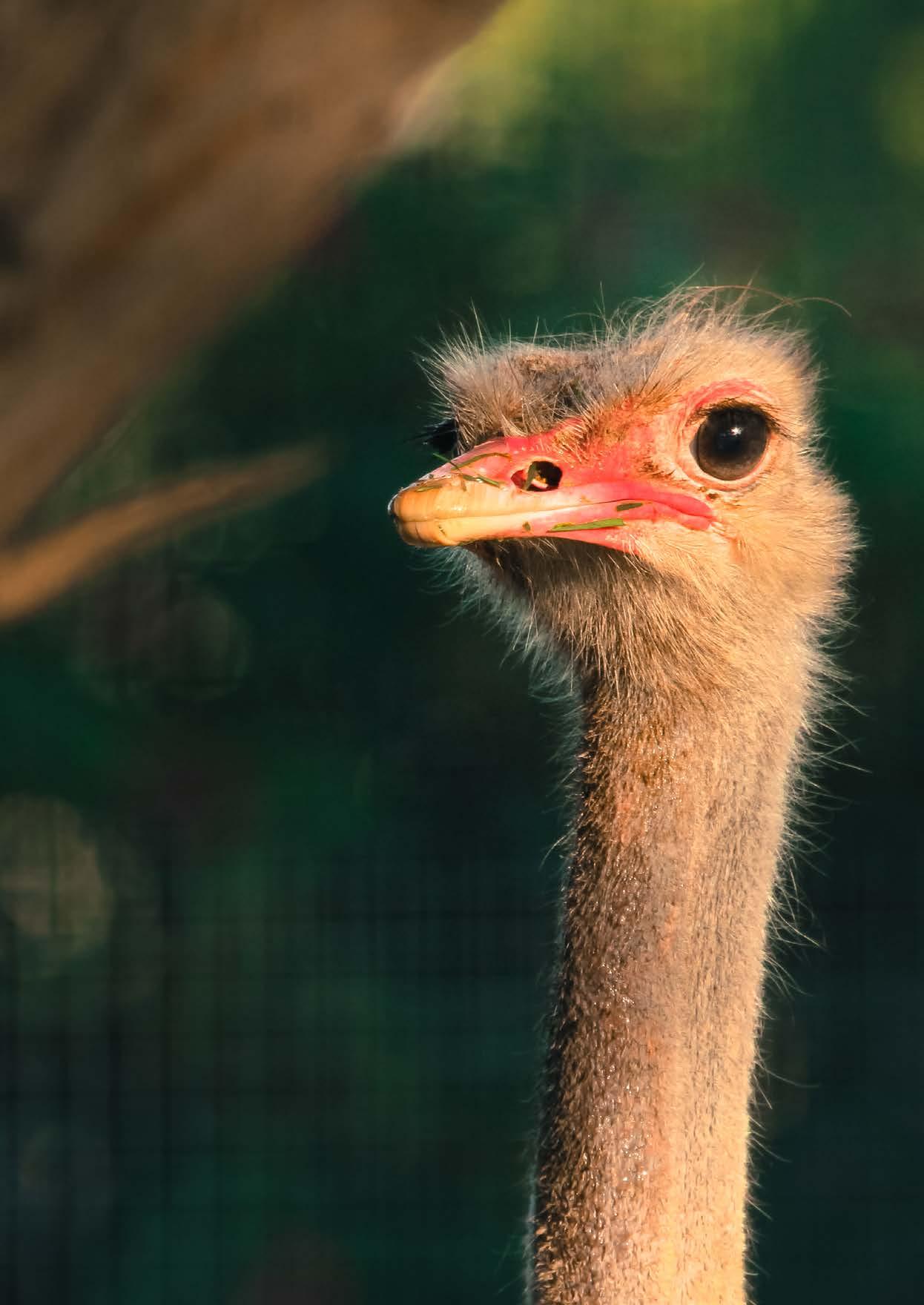
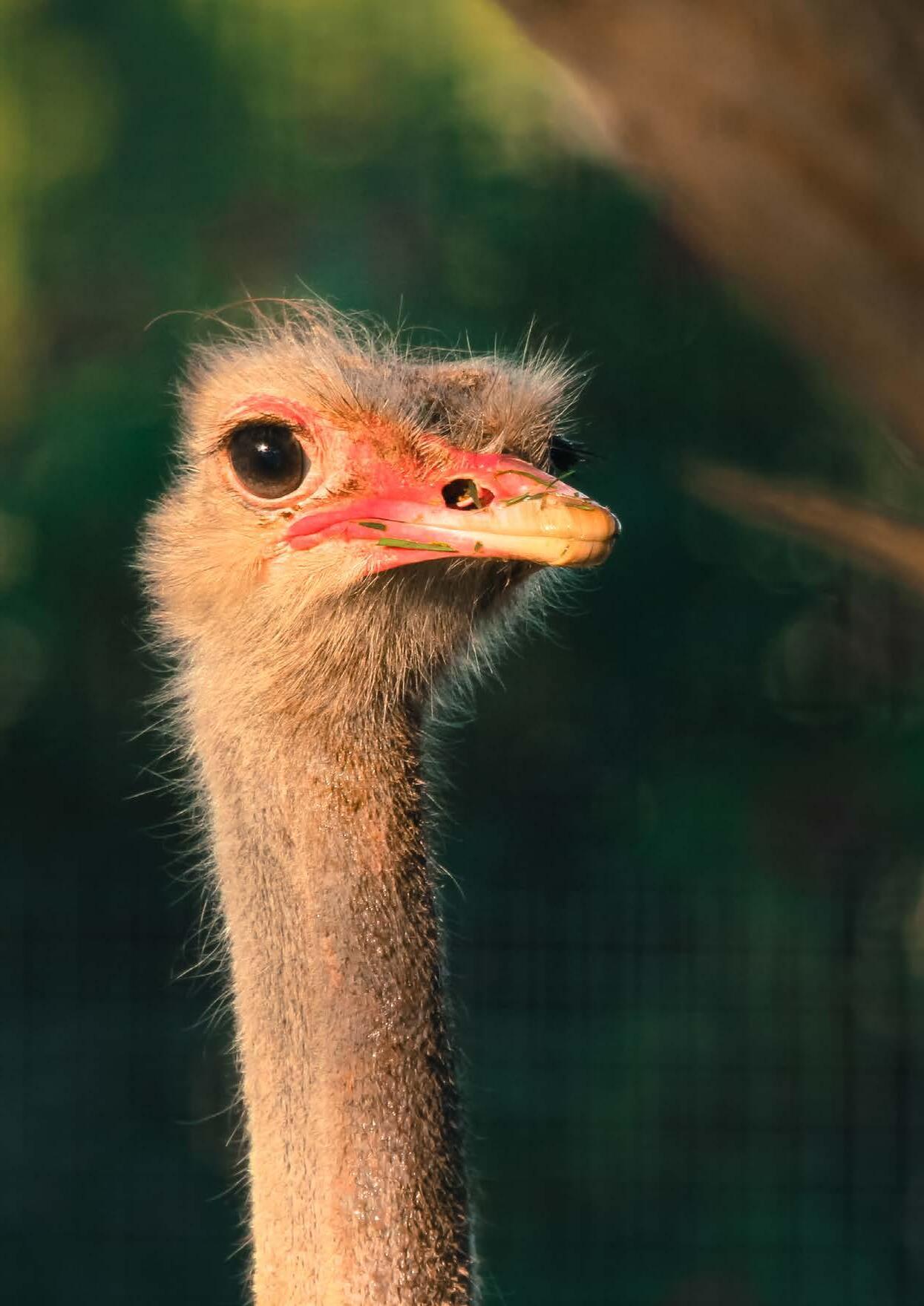
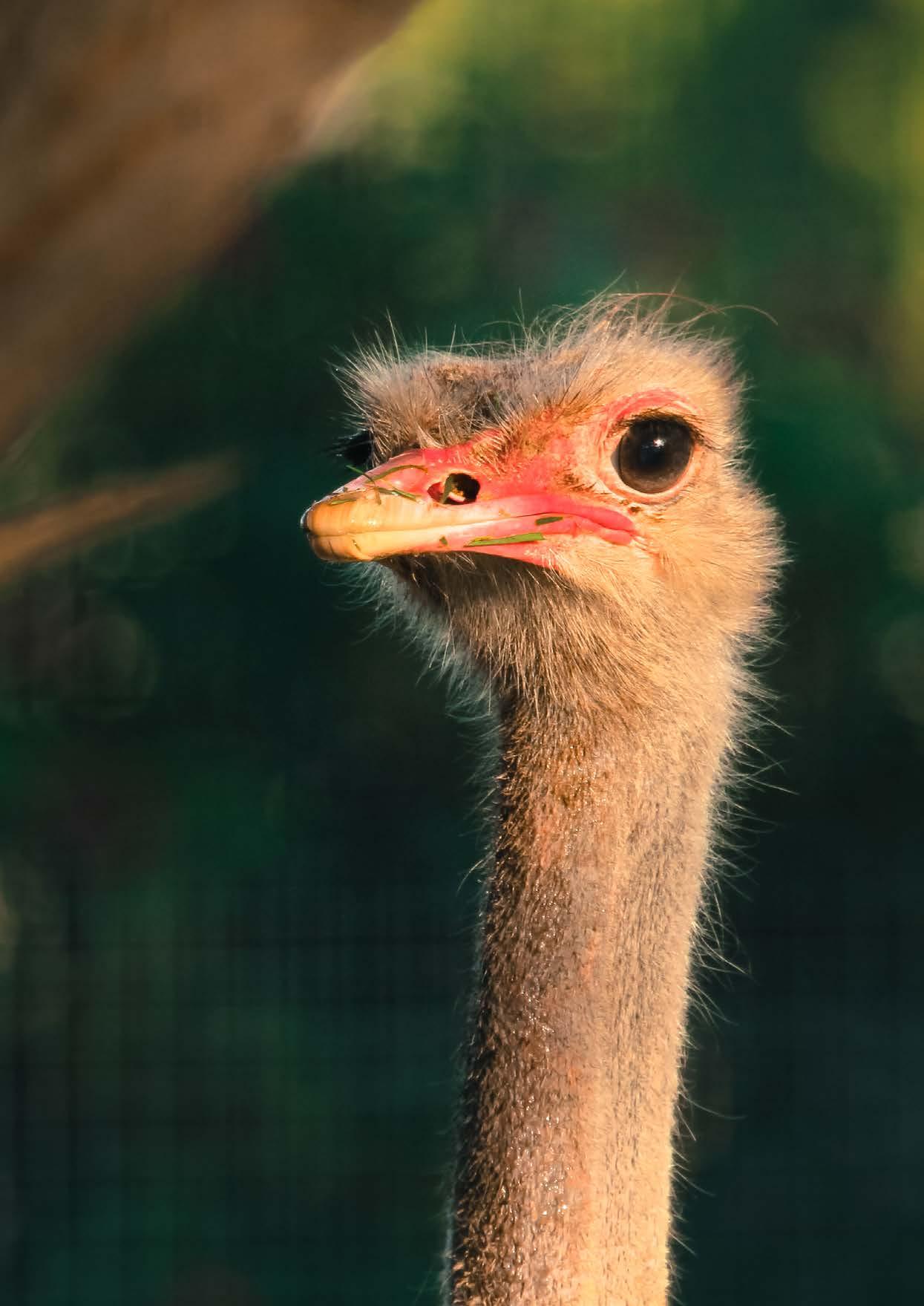
BLUE-NECKED OSTRICH
the largest bird in the world
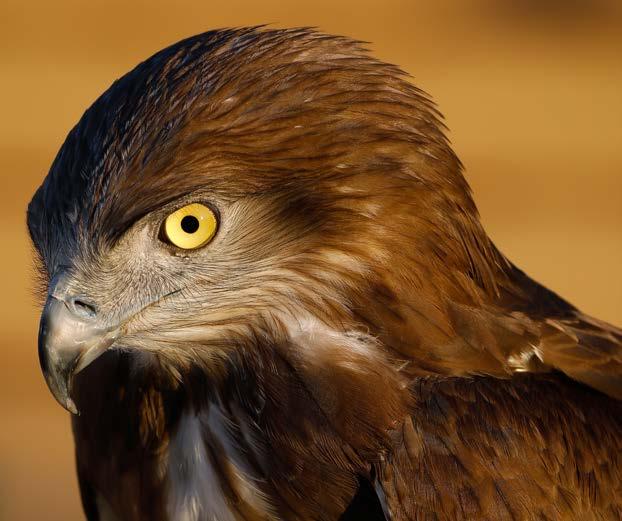
A free space for the wonders of light and lens, that we leave up to the visitors’ and webpage surfers’ creativity. Share your picture with us, and let it speak for you.
Please send the photographs to zoolife@alainzoo.ae
The Falcon is an example of nature’s power, pride and courage, but it seems that our visitor has overlooked the falcon’s strength and courage to be captured by the purity of its eyes and their sharpness; between this purity and sharpness, a world of admirable beauty is revealed.
By: Ahmed AlFalahi
Abu Dhabi
01 - 31 JULY
Al Samalia Summer Heritage Camp 2019
Al Samalia Island - Al Raha Beach
07 - 25 JULY
Art Explorers: Summer Camp
Louvre Abu Dhabi
07 - 31 JULY
Cultural Foundation: July Programme Cultural Foundation
22 - 30 JULY
Liwa Date Festival 2019
Liwa - Abu Dhabi
27 JUNE - 03 AUGUST
Summer #inAbuDhabi Abu Dhabi City
01 - 31 JULY
Summer Camp at Al Qattara
Al Qattara Arts Centre
04 - 05 AUGUST
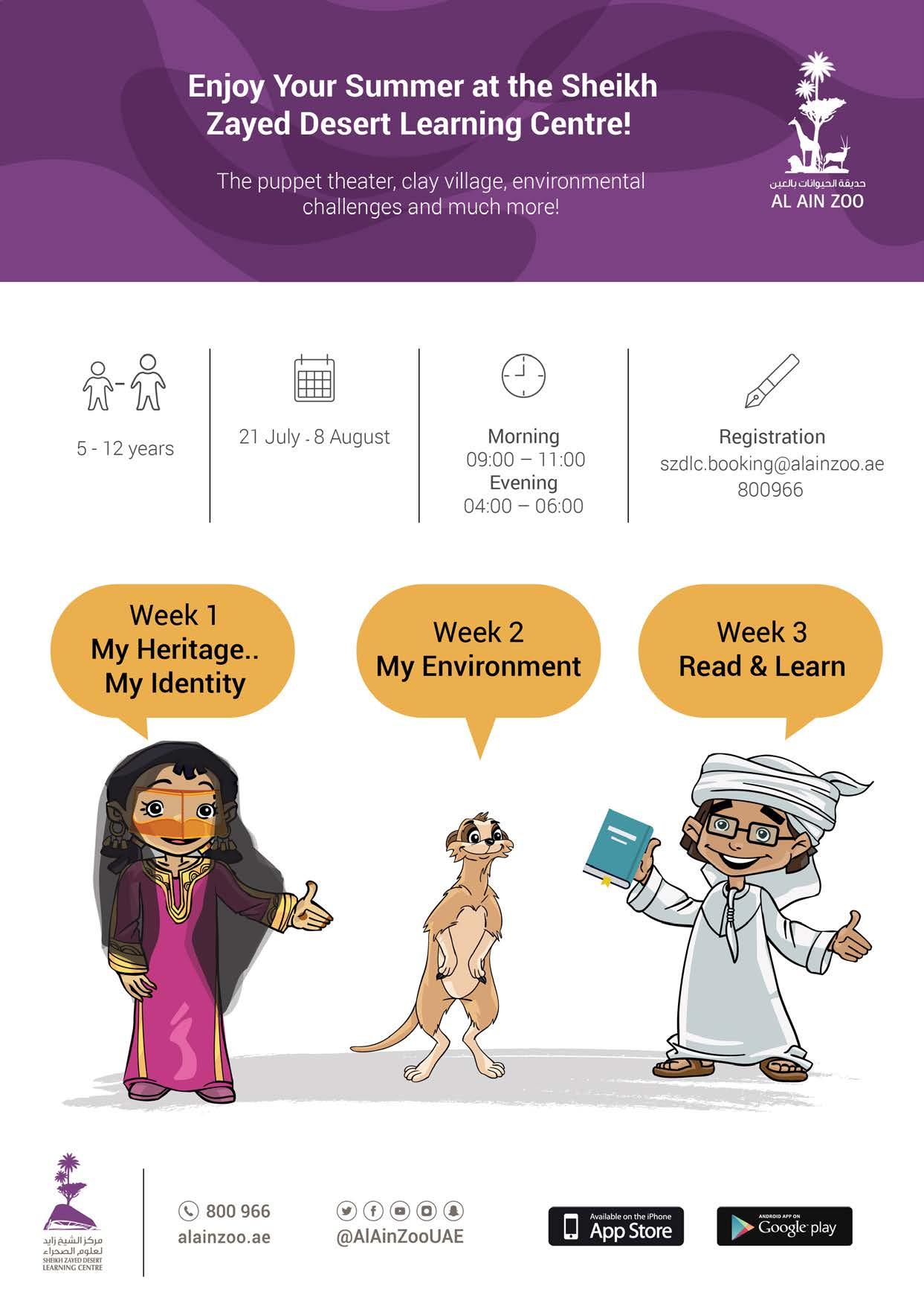
Summer activates in SZDLC Al Ain Zoo
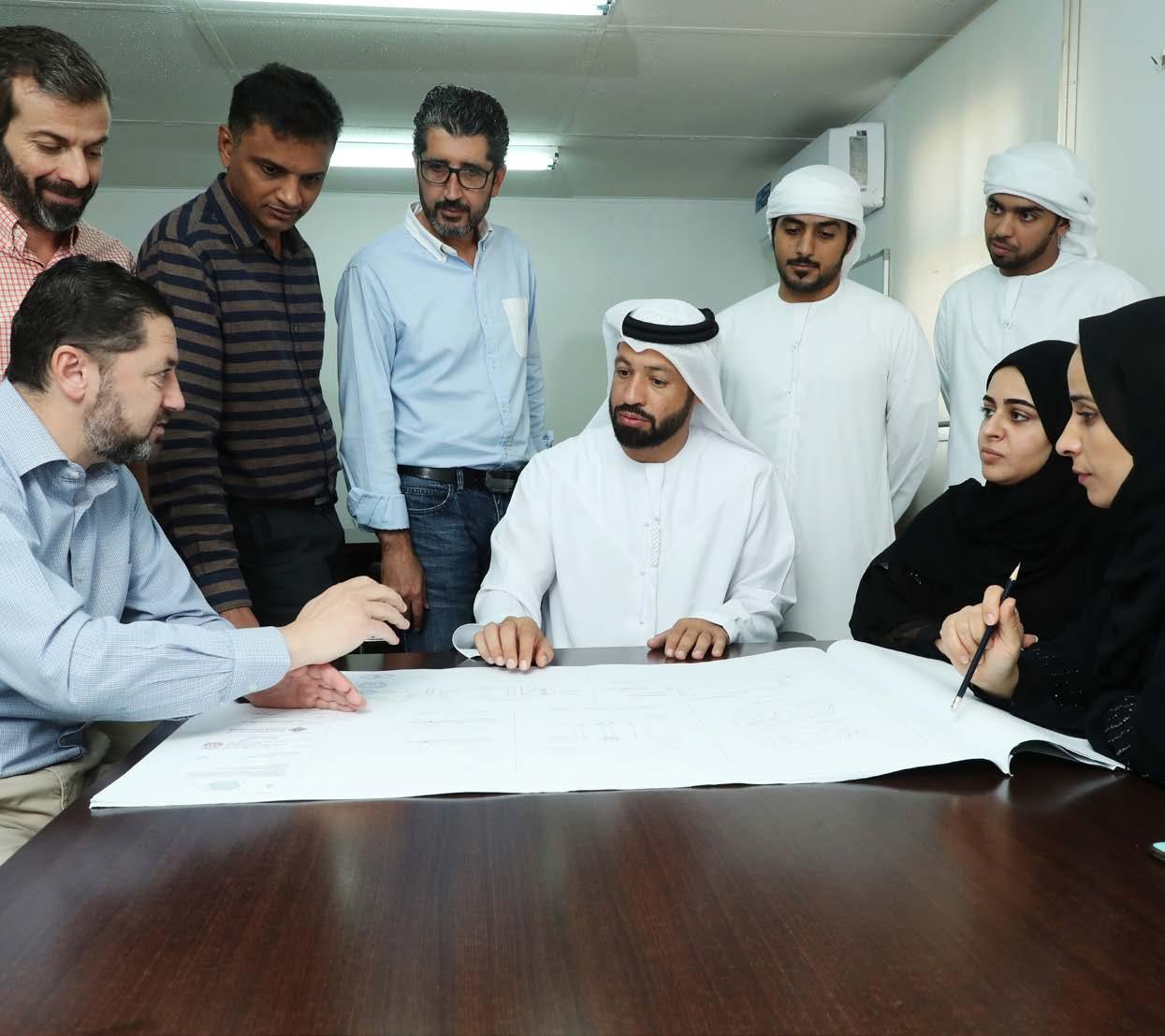
Project Management Department
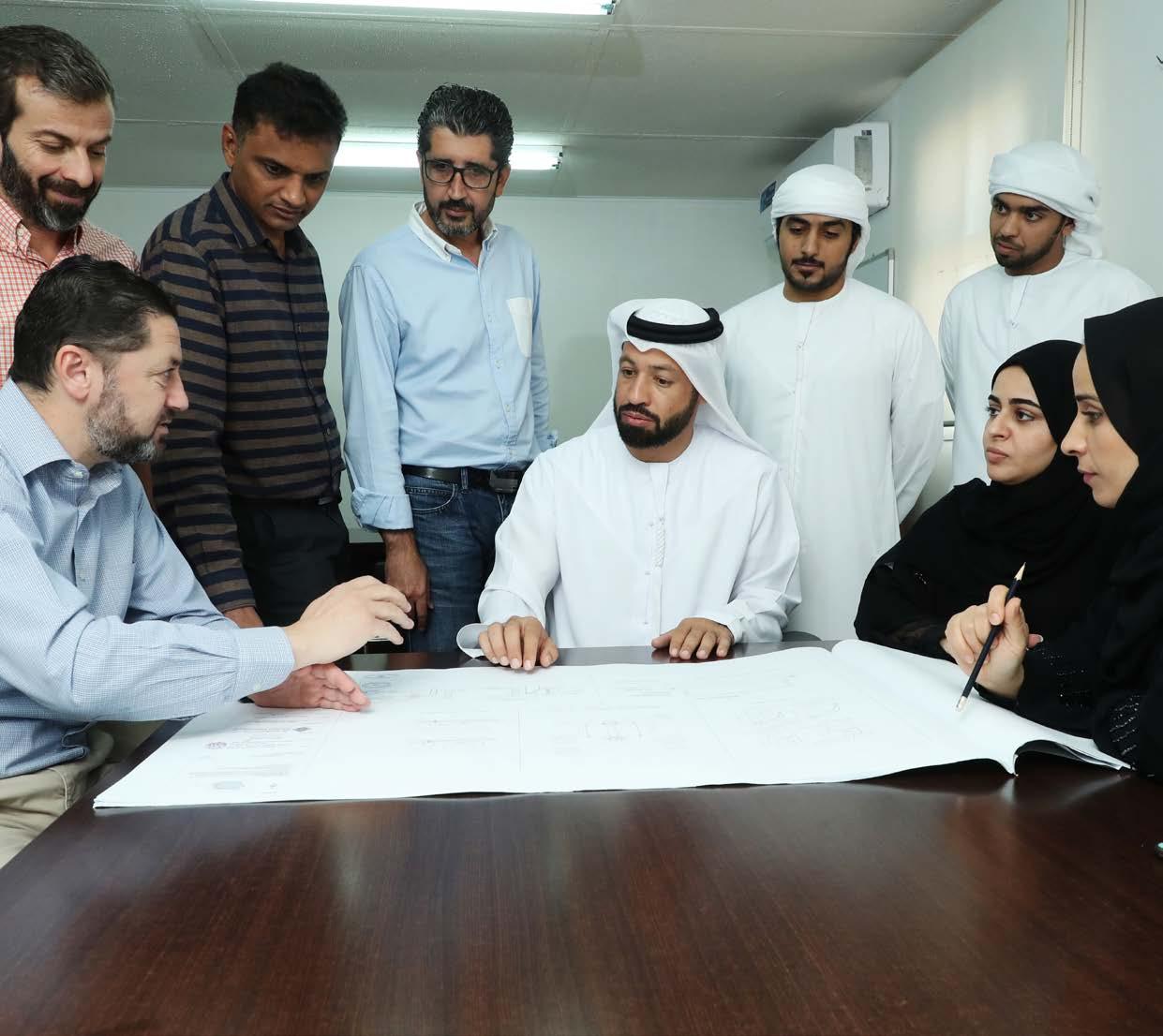
The Project Management Department of the Zoo & Aquarium Public Institution in Al Ain. They undertakes key tasks such as project management, project planning, project control to ensure project success and coordination with all concerned parties. It is responsible for the completion of the project’s stages, overall supervision as per the contract and finally delivering the project after completion to the Operations Department.
The department is divided into two main sections, The plan and control section and the project delivery section.
Project Management Department provides various services like: business development, project value estimation, project implementation, monthly and annual payments approval, final testing of projects for start-up, project contract management and project delivery, project budgeting, preparation of initial project designs, evaluation of project tenders.
In this period, Project Management Department is working on the development of existing and future projects for the Zoo.
Protect and Connect with Nature
Once upon a time, there was a beautiful village. The villagers, mountains, trees, animals, birds and fishes lived happily. There were three friends Faisal, Ahmed and Faris.
Written by: Sai Sahana Manikandan
One of the winners in the Short Story Writing Competition 2018 Category: 8 - 10 years
One day, all the friends were playing by the riverside. Suddenly Faisal saw a woodcutter coming towards the tree. Faisal shouted “Hey look a woodcutter is coming towards the tree!” He said to his other friends, “The trees give us food, shelter and also fresh air to breathe.
I think he is coming to cut this tree. Come, let all of us speak to the woodcutter. How can we leave our tree in danger?”. The other friends also felt the same and agreed with Faisal. ”OK
let us do something” said Ahmed. So all the three friends started to walk towards the woodcutter.
Woodcutter was very confused when he saw the children coming towards him. Faisal asked the woodcutter, “Greetings to you Sir. How are you?”.
The woodcutter replied, “I am fine children. What are you all doing here?”. Ahmed replied, “We come here every day to play, enjoy the breeze and to listen to the chirping sound of the birds. Nature is so beautiful”.
Faris continued, “Very true Ahmed. Sir, you look tired. Do you need water?”. The woodcutter replied, “Yes my child. I had been working all day long and feel very
thirsty.” Faisal gave water to the woodcutter and then said to Ahmed and Faris, “If you cut this tree today, that tree tomorrow and so on, then after a few days when we go grow up we will not have even a drop of water to drink, fruits to eat and most importantly no oxygen to breathe. Humans life will be in danger due to this action”. The others agreed to Faisal’s view.
The woodcutter was impressed by their talks and informed the children that although he knew these facts, he wasn’t giving much importance to it.
But now their conversation had really opened his inner mind and eyes. Finally he took a decision not to cut trees anymore and look for
some other ways to protect and save the nature.
The children were thrilled to hear this. Faisal thought for a moment and suggested for doing organic farming and have a nursery for selling plants and seedlings. The woodcutter loved the idea and informed them that he will surely implement it. They also suggested that they would come every day to help the farmer (previously woodcutter) in his farm.
Together they took a pledge to save trees. The other villagers also tried to protect and connect with nature by their different actions.
Love nature, stay close to nature. It will never fail you.
Summer Camp 2019
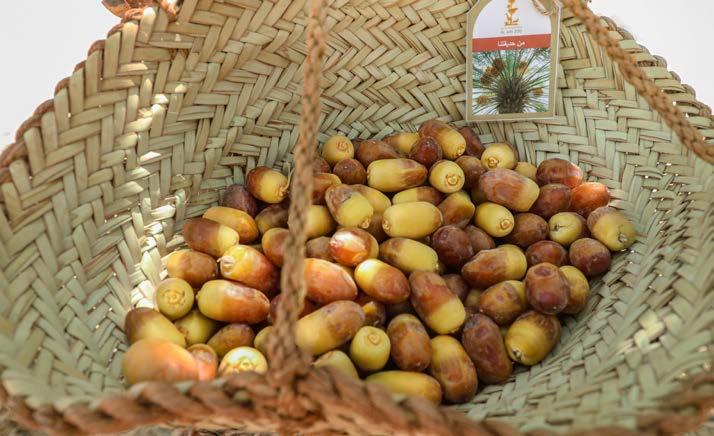
Dates from Zoo palm trees
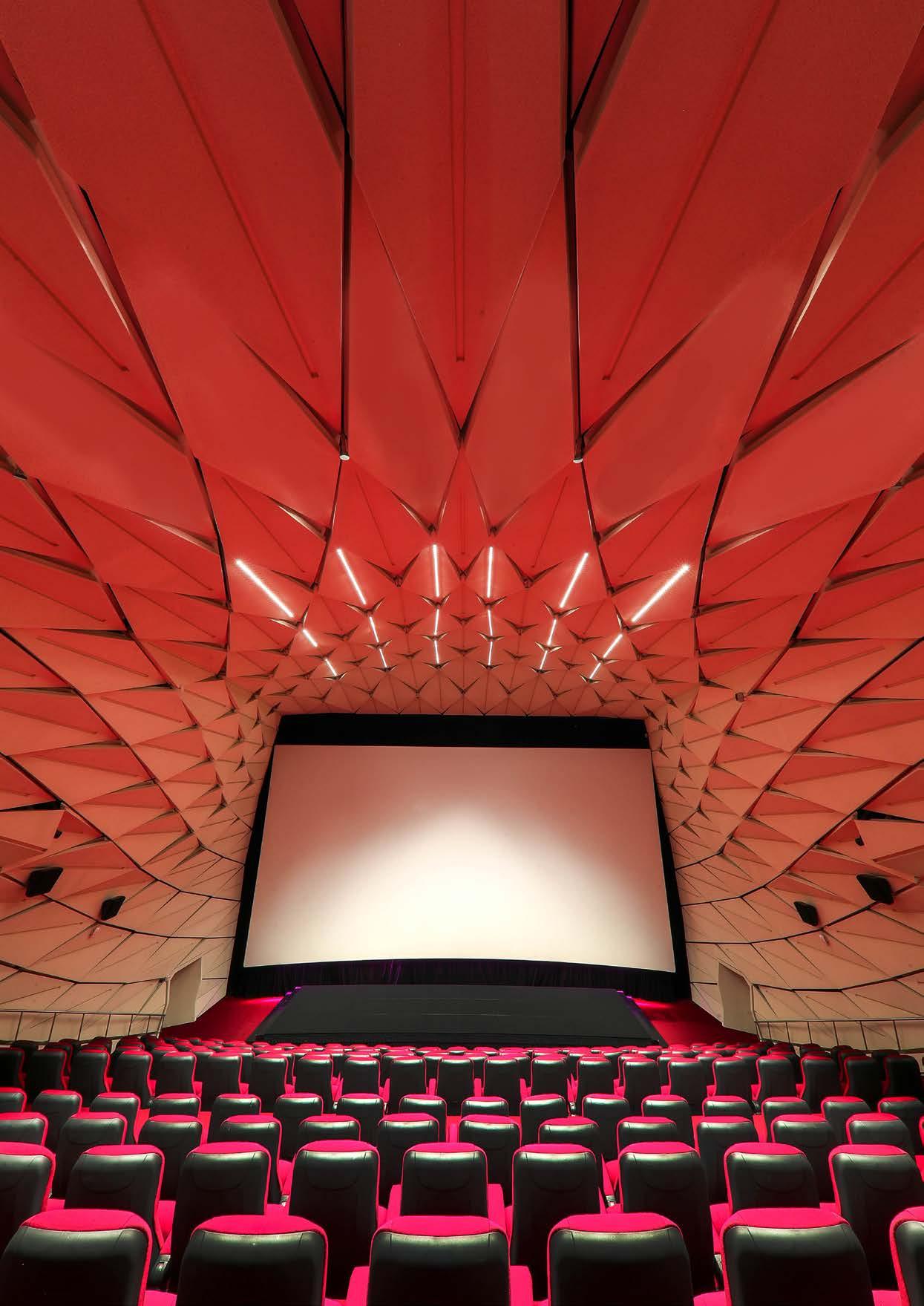
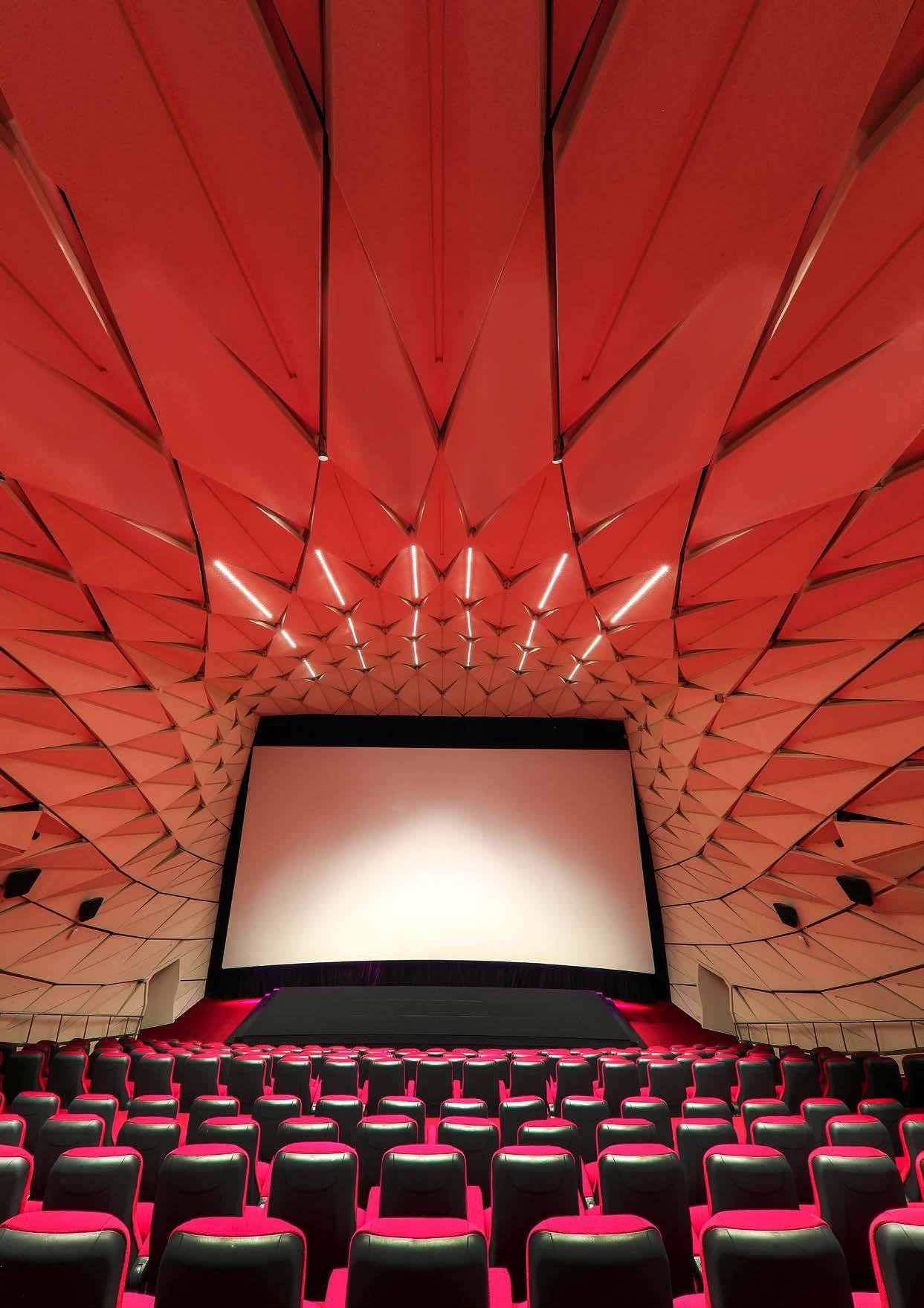
The Main Theatre
The Sheikh Zayed Desert Learning Centre includes Main Theater featuring one of the largest screens in the UAE. It consists of three floors, 258 seats, and a screen of 16 x 8.5 meters with 4K projection technology. Here, you feel as if you are sitting in a galaxy or a sparkling piece of diamond with a dazzling geometric design similar to that of the palm trunk.
The 13 minutes “Visions of the Arabian Desert" film, which takes you on a journey through the harsh desert life, welcomes you to find out how our ancestors could live in these conditions. The film is a visual masterpiece that brings the region’s nature to you and gives you the opportunity to be part of this human cultural diversity.
The theatre also offers a variety of activities throughout the year, characterized by its breadth and beauty, making it a suitable choice for many activities that are carried out and organized by the Zoo. Since opening in 2016, the theatre has become an incubator for cultural and social development in Al Ain.
BLUENECKED OSTRICH
Ostrich is the largest bird in the world, and it is the fastest bird on this planet. It differs from the rest of the birds significantly because of its characteristics and physical features. There are three different types of ostriches such as bluenecked, red-necked, blacknecked, all of which are similar in characteristics, but vary in color and size.
Range
Blue-necked ostrich lives in Northeastern Africa and Southern Egypt.
Characteristics
Ostrich is a large-sized bird, with thick feathers and thin skin, so it is not fit for dyeing. The bluenecked ostrich is less aggressive than the red-necked, but its legs are weaker, and the female ostrich can put up to 20-30 eggs. Its chicks are characterised by rapid growth and high vitality. Blue-necked ostrich is found in Ethiopia, Somalia and Northern Kenya.
The ostrich is a bird that does not fly because of its weight and size. It weighs more than 100 kg, and is 1.8 to 2.7 meters long, so it is taller than humans. Because of its large size and high length, the ostrich can run at about 70 km per hour and can walk 3-5 meters at a time. It has only two fingers in its foot, unlike the rest of the birds that have four fingers per foot.
Food
For food, ostrich depends on the insects and larvae found in the soil where it buries its head. It also feeds on some plants, small reptiles and mammals. It is characterised by its ability to remain without water for several days, as it uses stored water and moisture inside the body.
Inhabitation
Ostrich lives in groups of up to 1050, led by a dominant male. The group includes young and adult ostriches. The female ostrich lay its eggs in a very deep hole up to three meters and put about 20 eggs, and the incubation period for eggs is between 35-45 days, but exposed eggs often do not hatch all.
Preservation
The average age of ostrich ranges from 50-70 years.
#Year of Tolerance
On December 15, 2018, the UAE declared 2019 to be the Year of Tolerance, making the UAE the global capital of this superlative human value, extending from the approach of the late Sheikh Zayed bin Sultan Al Nahyan, the founder of the UAE, to provide the means to deepen the positive values of tolerance and spread them from the UAE to the rest of the world.
Year of Tolerance Framework:
1. To deepen the values of tolerance and openness to cultures and people in society with a focus on new generations.
2. To anchor the UAE as a global capital for tolerance through a range of initiatives and pro-jects, including research contributions and social studies specialized in the dialogue of civi-lizations.
3. To consolidate the values of tolerance in education through educational and cultural pro-grammes.
4. To develop policies, legislation and executive regulations that aim to create values of toler-ance related to education, religion and society.
5. To promote tolerance and acceptance of others through targeted initiatives and projects.
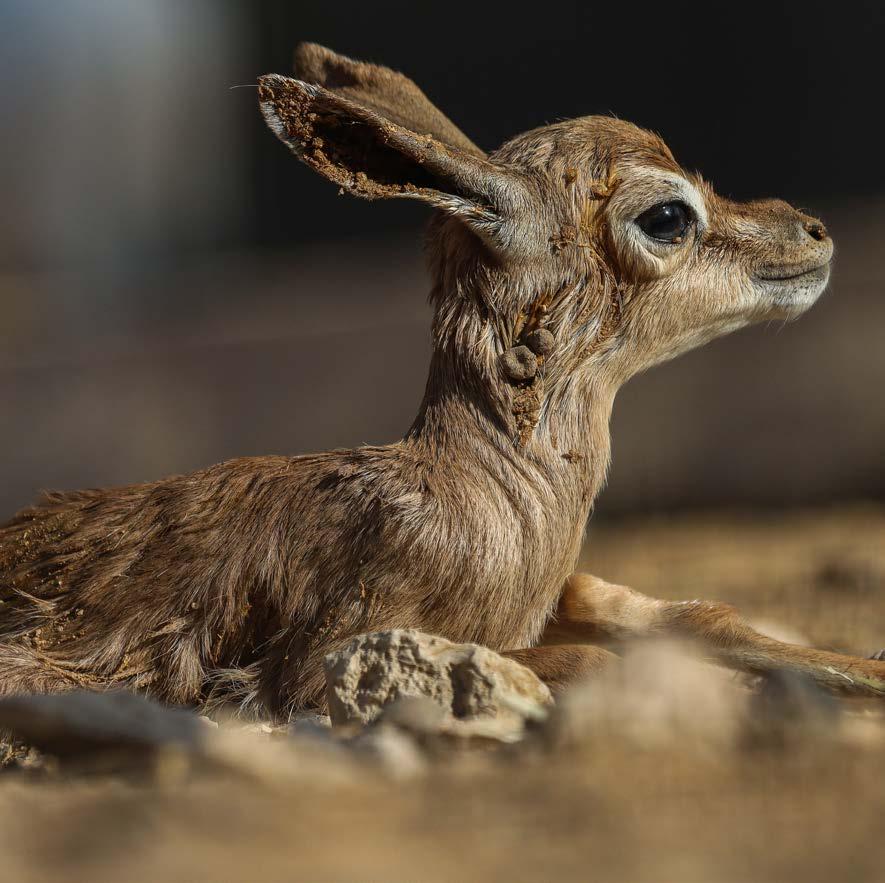
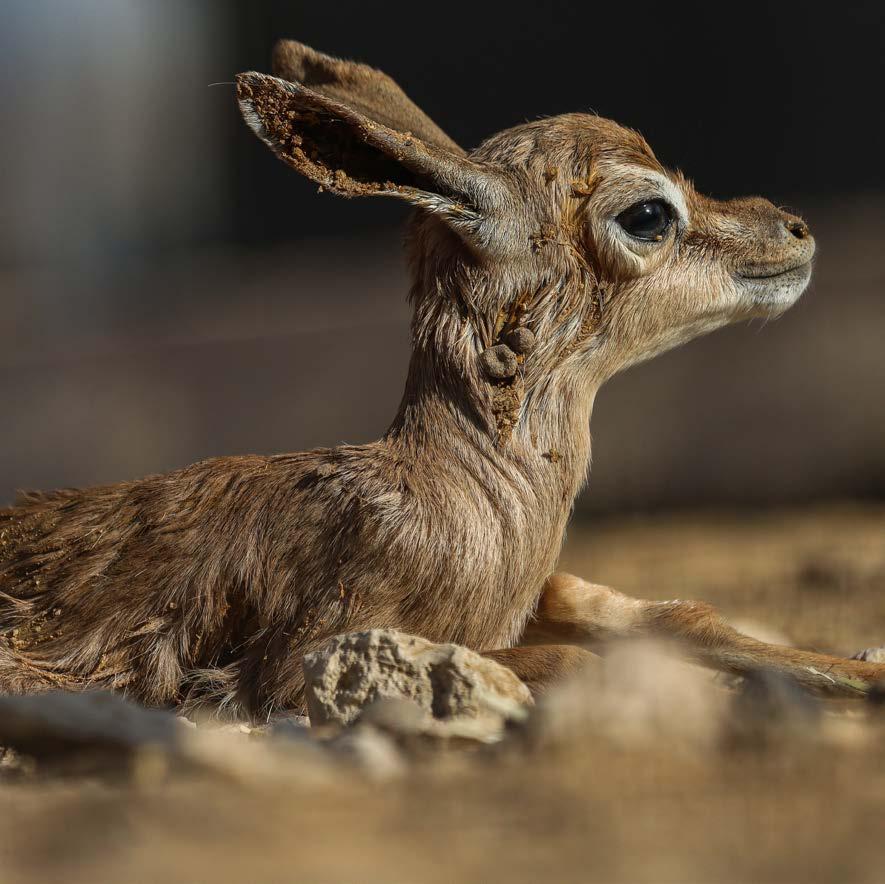
LOOK at our new BUNDLE OF JOY! Our family just keeps getting bigger and bigger and we can’t be happier #AlAinZoo
540 likes
alainzoouae
Conservation
Al Ain Zoo partnered with the Sahara Conservation Fund (SCF) in 2006 to be a key supporter and partner in the protection of endangered species in the Sahara Desert and the surrounding grasslands.
The Sahara Conservation Fund is a non-profit organization that operates to preserve the wildlife and natural habitats of the Great Sahara Desert and its surrounding territories, where a large number of major ecosystem species have been rendered completely extinct and others are threatened with extinction.
Under this partnership, the Zoo provides care, protection and safety for important groups of these species as their mission and one of their primary roles in the conservation of arid region wildlife.
A part of the Zoo's efforts with the Sahara Conservation Fund:
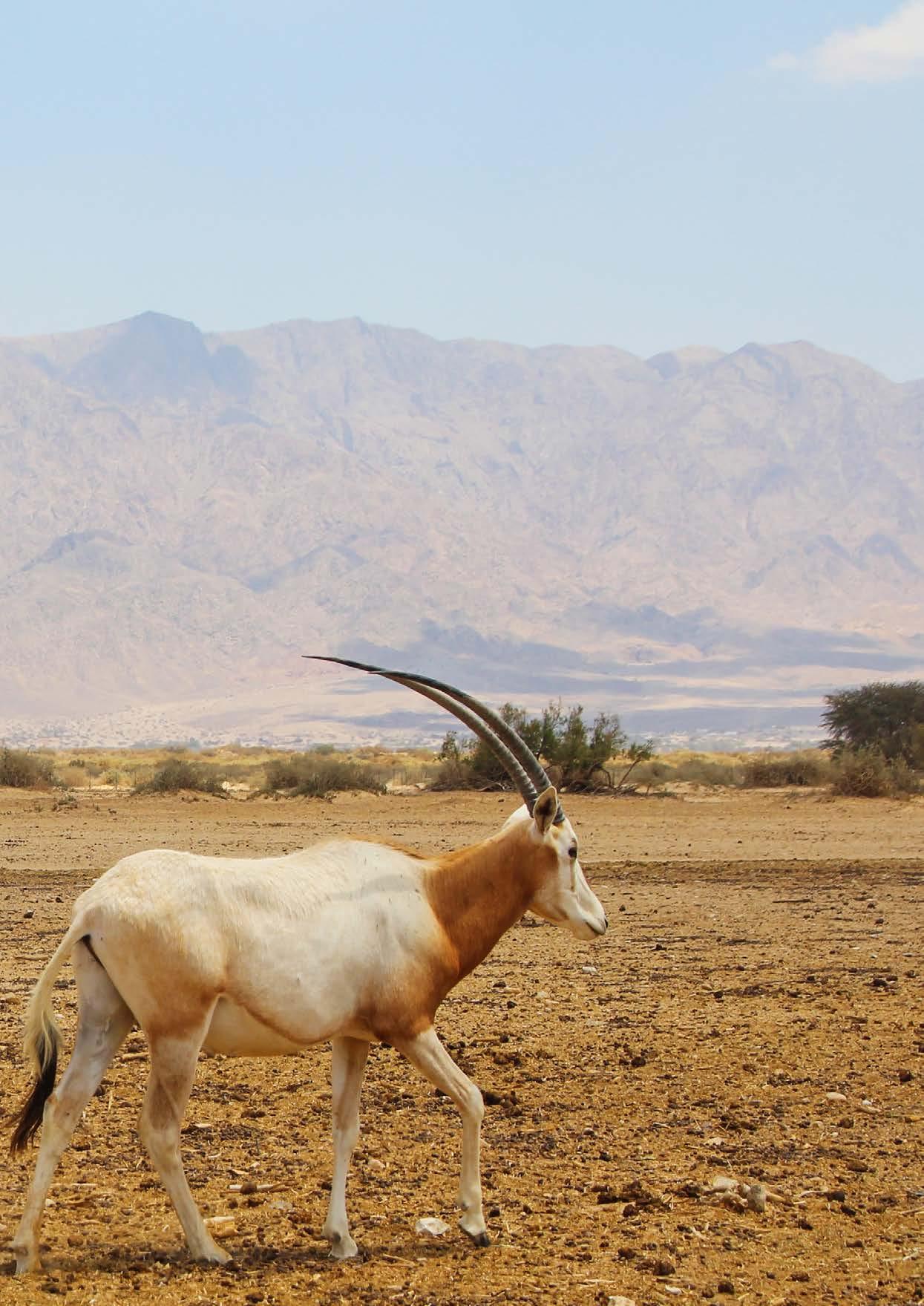
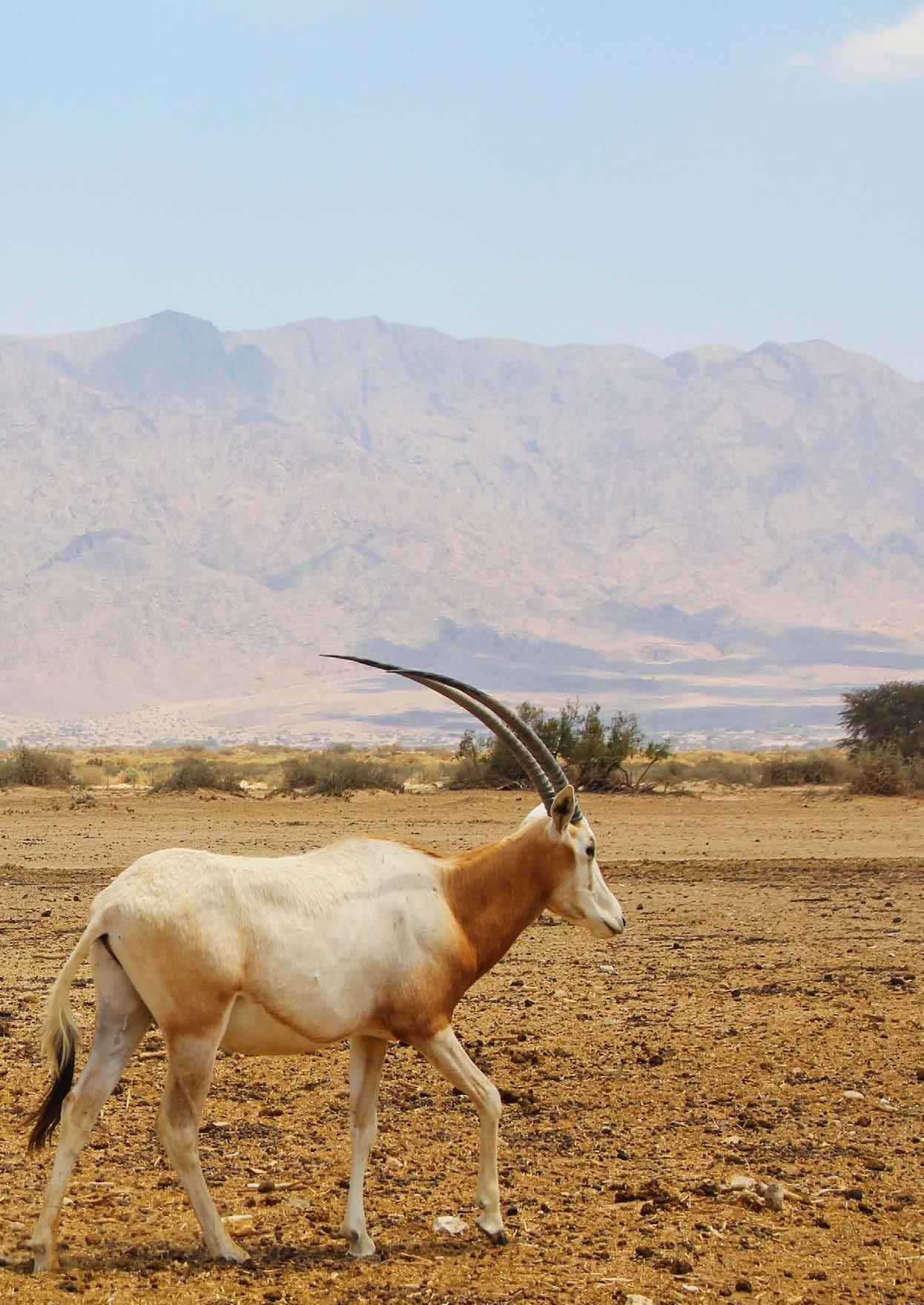
• Re-introduce the Scimitar Oryx
Since 2008, our Zoo has been working with the Sahara Conservation Fund and a number of international partners to reintroduce the Scimitar Oryx that is extinct in the wild. This process requires identifying all the underlying risks and consulting the local population and government departments, securing their support.
There are now 250 Scimitar Oryx in Al Ain Zoo, which is actively looking for common efforts to breed and release some of them into the African wilderness.
• Support field research in natural habitats
In order to save what is left of the wildlife, it is necessary to monitor the movements of endangered species, their numbers in the wild, and the risks they face. The Zoo supports three fund researches and three surveillance programmes located in a national park in Nigeria. These endangered species are the Dama Gazelle, the Lappet-faced vulture, and the Barbary Sheep, and the support of Al Ain Zoo enables better resources, equipment and other planned future activities.
What is the mission of the Sahara Conservation Fund?
To conserve wildlife and raise awareness about the extinction crisis facing many desert species, to restore lost species, and to reintroduce extinct species into their wild habitats.
“One should learn something new every day of our lives”
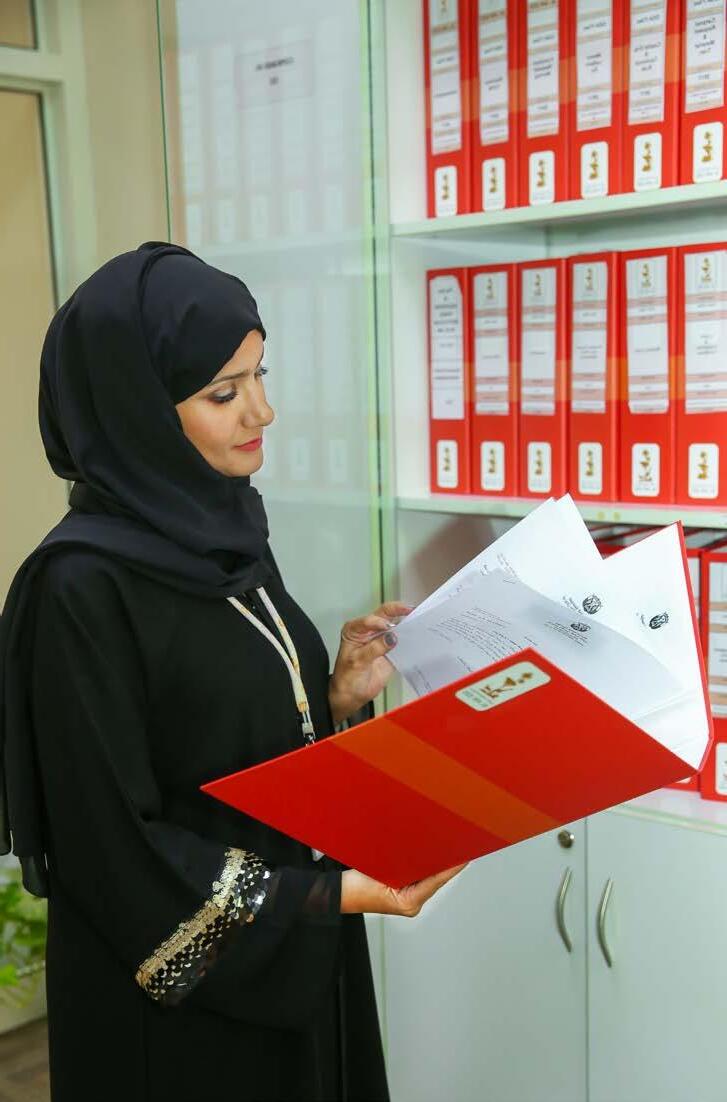
Amira Abdul Hamid:
“I am interested in cinematic effects and painting, and I will not allow an e-book into my life!”
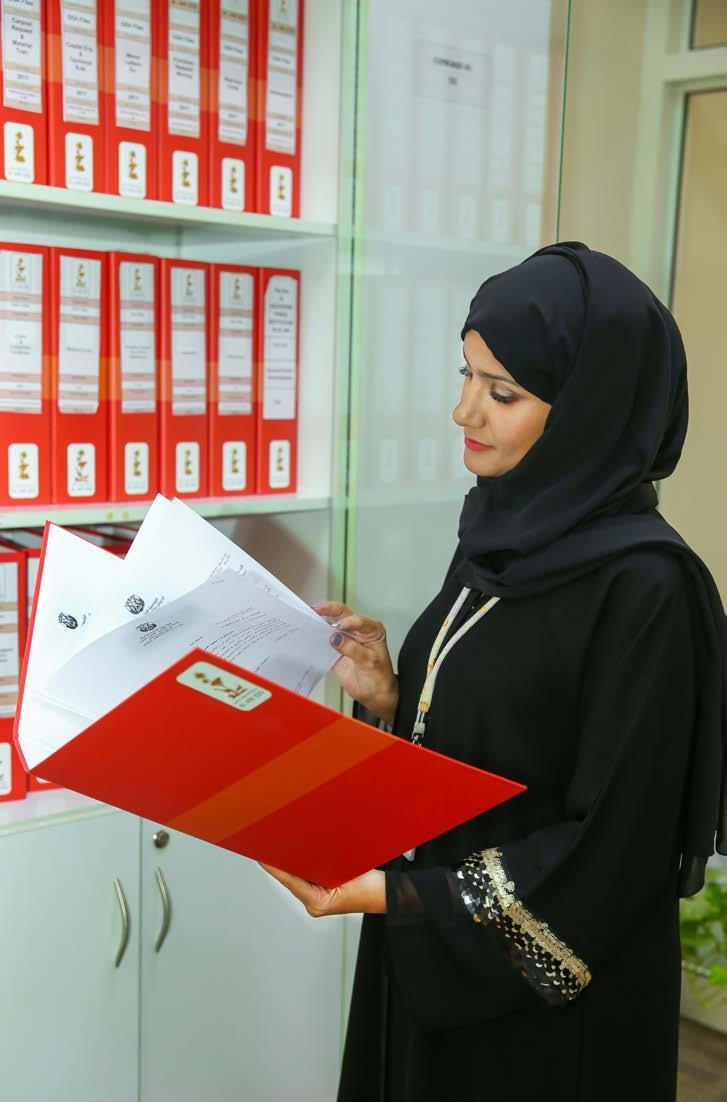
Our Zoo Life guest in this issue is Amira Abdul Hamid, an Officer Office Planning in General Services Department. She began her journey at Al Ain Zoo in 2010, working as a receptionist after receiving a high school certificate. She completed her education in Fatima College of Health Sciences, where she received a Diploma in Public Services in 2013, and a Bachelor of Digital Media Degree in 2019 from Al Khwarizmi International College.
Amira, you have a lot of interests and talents, but tell us about your relationship with Al Ain Zoo?
“I started on the reception desk, and it came at the right time for me because I was previously quite shy. This position contributed a lot to my character development and I became more daring, gaining high skills in dealing with visitors and employees. After my experience at the reception, I can say that this position is very important for any organization. Receptionist must have the awareness and knowledge of everyone and everything in the working place. In addition, to participate in leaving a positive initial impression on the visitors, that would be the “first and permanent mental image”.
I continued my work in reception for two years and then I worked as administrative officer, after that I moved on and worked as an office planning officer. I have been in the Public Services Department for five years now.”
So you work in 3 different positions?
“This was my good fortune: I was not transferred until I became ready and qualified for this transition. At each stage, I gained new experiences and discovered my skill in continuous development and adaptation. I have seen in myself abilities that I would not have discovered without these movements.”
What are your other interests away from work?
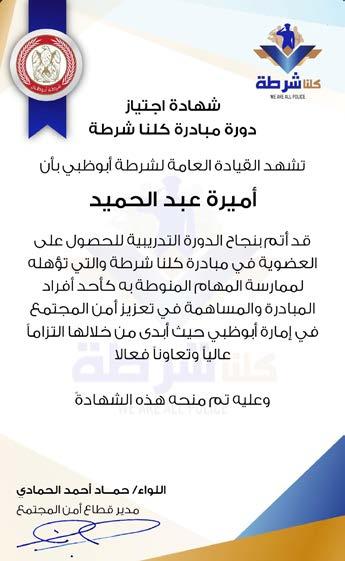
"I have been an active member of the “Takatof” volunteer programme since 2008 and I was the first girl from Al Ain to be nominated for a trip to Jordan to build low-income homes. I also went to the Kazakhstan Expo in 2017 to participate in the Kazakhstan Astana Future Energy Volunteer Pavilion, in addition to my membership in the UAE Red Crescent since 2010 and my membership in the "We Are All Police" programme to enhance the readiness and resilience of community members to respond in emergency situations and first aid.
Actually, my eligibility to attend the Expo was a great achievement because those who were nominated were the elite of the Emirati youth chosen to represent our city in international forums and humanitarian competitions under strict terms and standards, and I successfully met all the requirements.
Despite all the humanitarian situations I have experienced during my volunteering, the most influential experience was after my high school at Tawam Hospital in the Paediatric Oncology Department. I do not think that there is anything more painful than a child to whom I promise that I will play and draw with him tomorrow and I will bring him a toy only for tomorrow to arrive with the news of his unfortunate death. I have learned from these children that optimism in the most difficult situations is a
friend that we must keep with us to the last moment, because there is always a blessing from our God for those who suffer."
What is your story with the smell of paper?
"I love the smell of paper, mostly because I'm stuck in the mindset of ‘reading real books’ made with, and the e-book will not invade my life. I was very interested in writing to the readers' page, "People's Opinion", in Al Ittihad newspaper, and I enjoyed sending my writing through the traditional mail system. I do not deny the importance of the electronic revolution, but paper and ink have their own special beauty and cultural splendor."
It is said that you collect cinematic effects paraphernalia! Is this true?
"Yes, I go specifically to London’s famous Camden Town area with its hugely popular market and dynamic cultural diversity to acquire some rare exotic things that cannot be found in Arab countries, and those who are interested in this art are few and far between.
I have dedicated my ‘Insta’ account to show my hobby and introduce it to others, and have collaborated with sites and parties concerned with the art of cinema effects and famous character replicas. I am not only presenting my work, but am also keen to teach amateurs in this field through social networking accounts. Some of my recent work was a collaboration on the “House of Horror” project for the UAE's Dark Moon Company, and the talent of drawing helped me continue the art of film effects."
With all this diversity and creativity, what are your plans for the future?"
"I am very much looking forward to
working for the theatre and this is what I will be working on in my next stage. Every day, we have to learn something new.
However simple it may seem, it can make a big difference in the long term. Because nothing kills ambition like routine, and nothing breaks creativity like dependency. We must be renewed and independent thinkers to keep the passion in our lives."
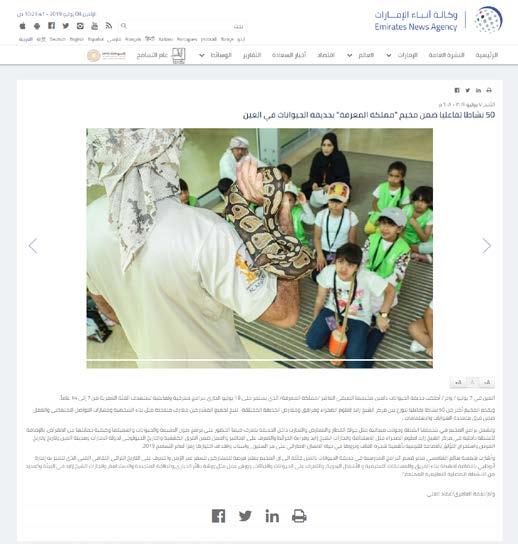
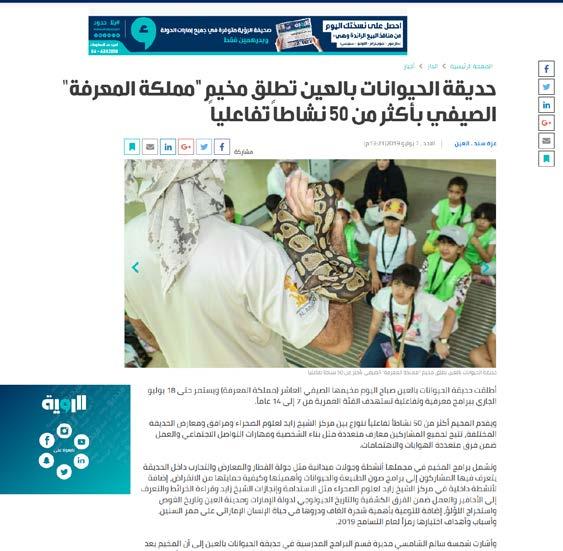
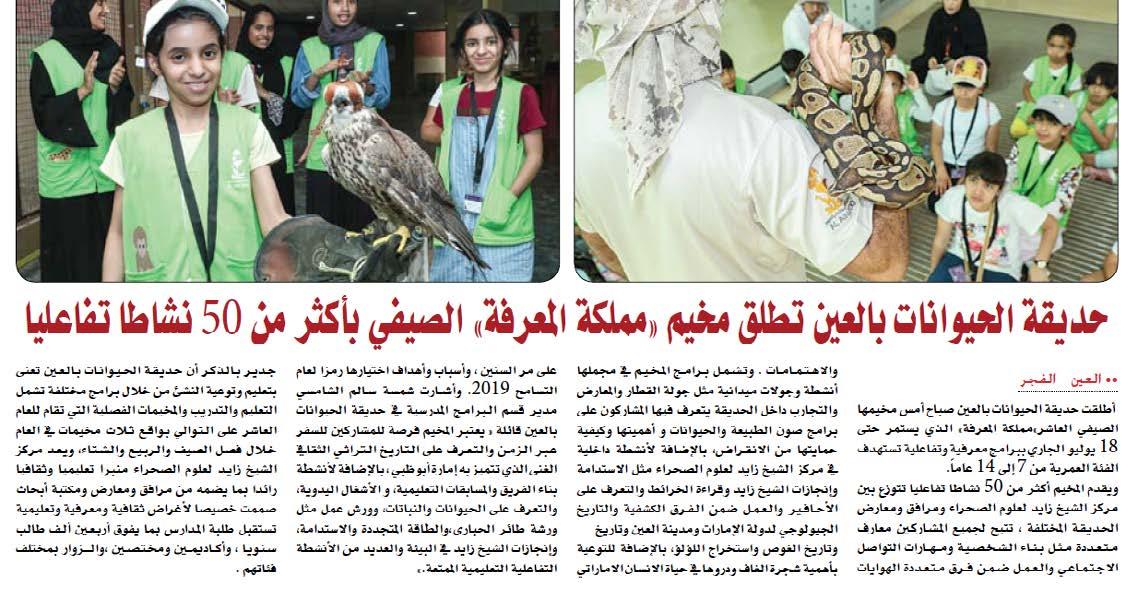
Al Ain Zoo launches “Kingdom of Knowledge " summer camp with more than 50 interactive activities
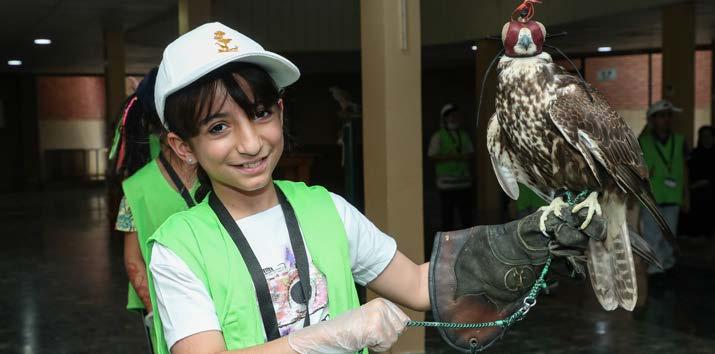
Al Ain, UAE, 7 July 2019: Al Ain Zoo has launched its 10th summer camp under the banner of Knowledge Kingdom, which runs until July 18th and includes a range of educational and interactive programs targeting the 7-14 age group.
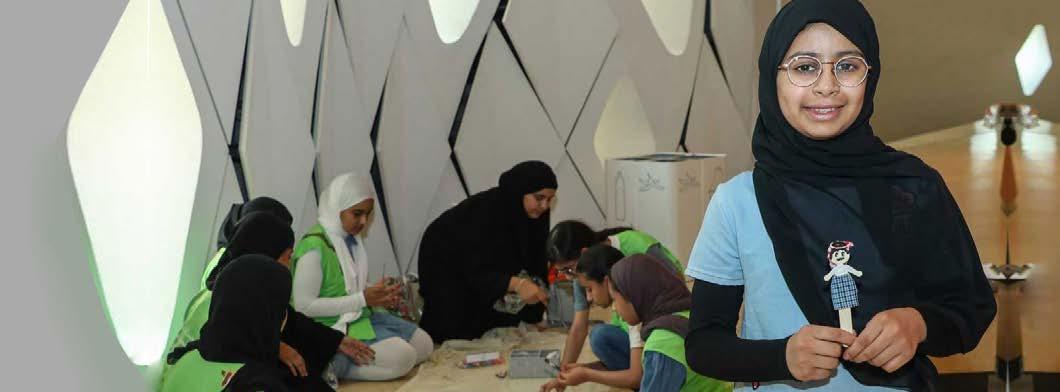
The camp offers more than 50 interactive activities between the Sheikh Zayed Desert Learning Centre and the various Zoo facilities and exhibitions that encourage participants to develop their knowledge on multiple subjects, such as personality building, social networking skills, and working with multi-interests and hobbies teams.
The camp programmes include activities and field trips including train tours, exhibitions and experiences within the Zoo where participants become acquainted with the conservation programmes and their importance in protecting the animal from extinction.
There are also internal activities at the Sheikh Zayed Desert Learning Centre for such as sustainability, Sheikh Zayed's achievements, map reading, fossils, the geological history of the UAE and Al Ain, the history of pearl diving, as well as raising awareness of the importance of the Ghaf tree, its role in the
life of Emiratis over the years, and the reasons and objectives of its selection as a symbol of the Year of Tolerance 2019.
Shamsa Salem Al Shamisi, Manager School Programs at Al Ain Zoo, said: "The camp is an opportunity for participants to travel through time and learn about the rich cultural heritage of the Emirate of Abu Dhabi, as well as educational activities and competitions, handicrafts, the Houbara bird workshop, the renewable energy workshop and sustainability, Sheikh Zayed's achievements on the environment and many interactive educational activities."
Al Ain Zoo is dedicated to educating young people through its various programmes including education, training and seasonal camps, now in their tenth consecutive year with 3 camps per year during summer, spring and winter. The Sheikh Zayed Desert Learning Centre is also a pioneering educational and cultural centre with its multitude of facilities, exhibitions and unique research library designed specifically for cultural, educational and educational purposes, which attracts 40 thousand students annually, as well as academics, specialists and visitors of all nationalities and interests.
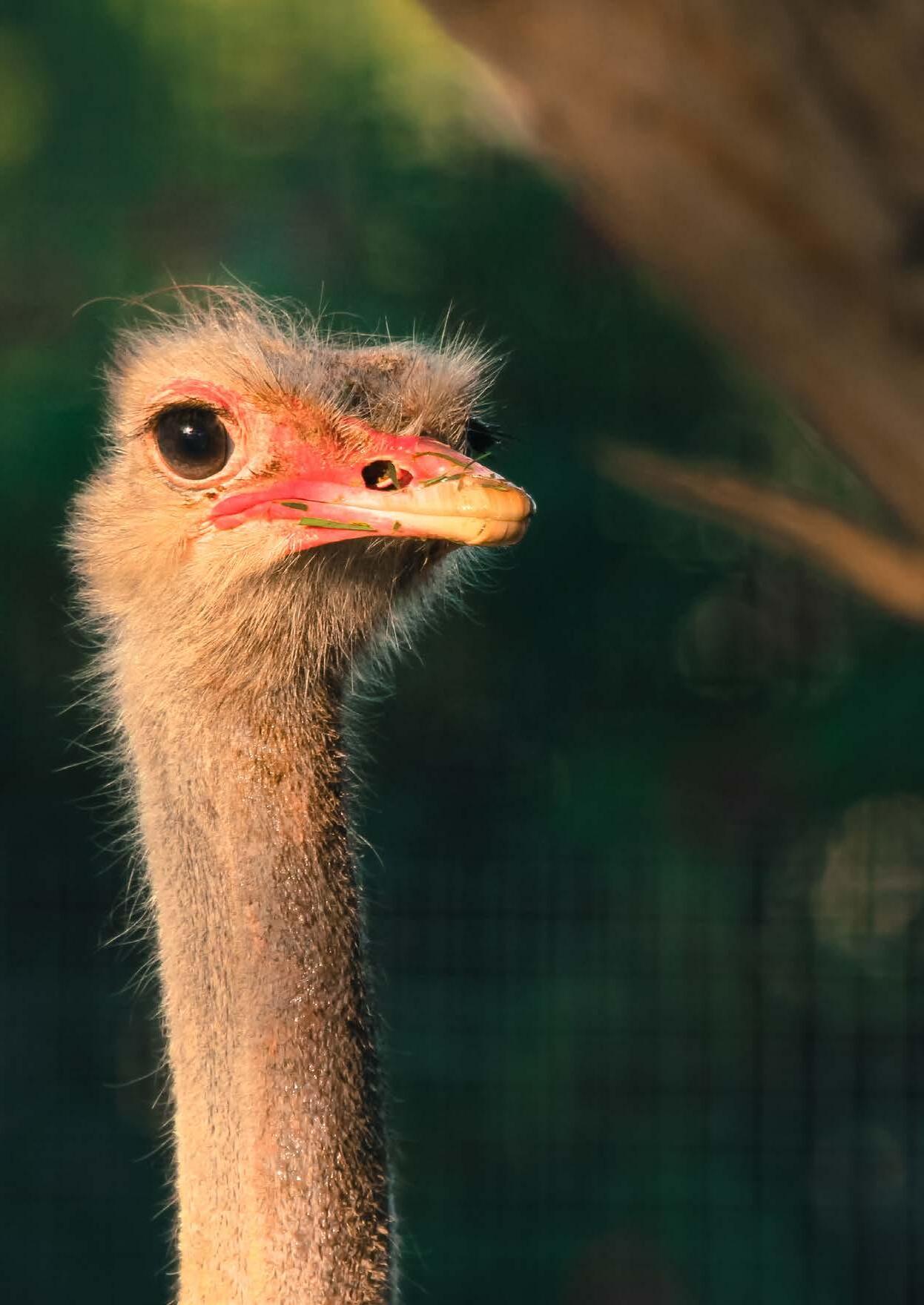
Ostrich
is the largest bird in the world, and it is the fastest bird on this planet