ALABAMA LIVING is delivered to some 450,000 Alabama families and businesses, which are members of 22 not-for-pro t, consumer-owned, locally directed and taxpaying electric cooperatives. Subscriptions are $15 a year for individuals not subscribing through participating Alabama electric cooperatives. Alabama Living (USPS 029-920) is published monthly by the Alabama Rural Electric Association of Cooperatives. Periodicals postage paid at Montgomery, Alabama, and at additional mailing o ce.
CHANGE OF ADDRESS: For co-op members, contact your local electric cooperative. Non-members, send your address change to contact@alabamaliving.coop.
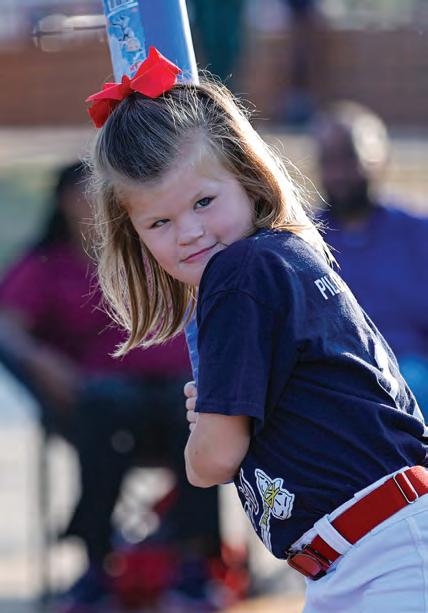
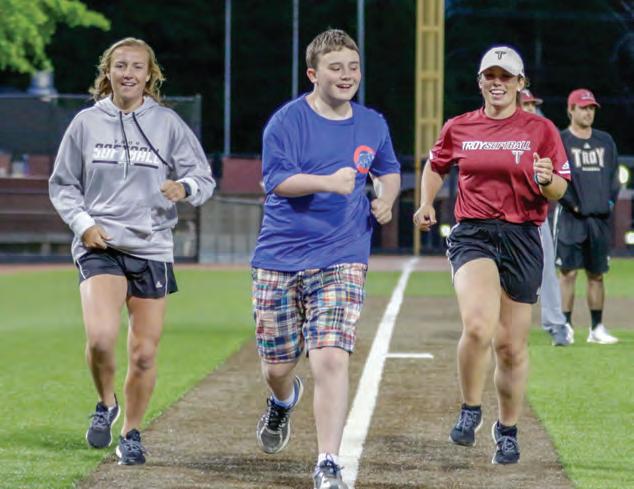
Troy Miracle League’s home eld gets a brand-new playing surface.
Events celebrating the 250th anniversary of the Signing of the Declaration of Independence are planned across the country and Alabama.
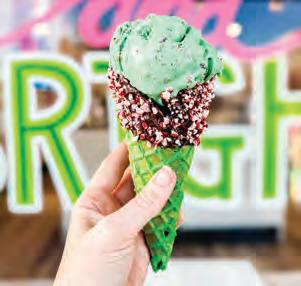
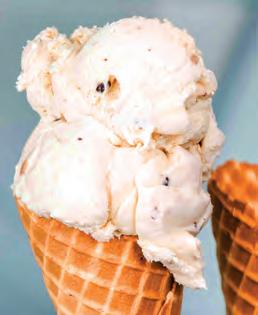
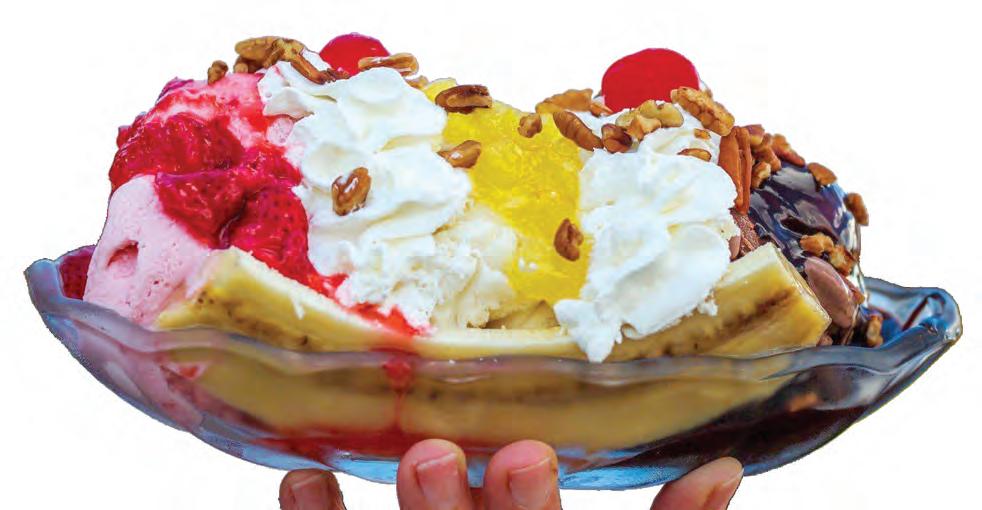
July is National Ice Cream Month, and Alabama has more than enough favorite ice cream shops for you to satisfy your craving for a bowl or a cone.
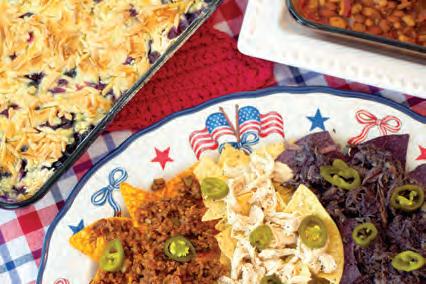
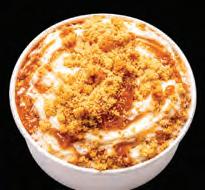
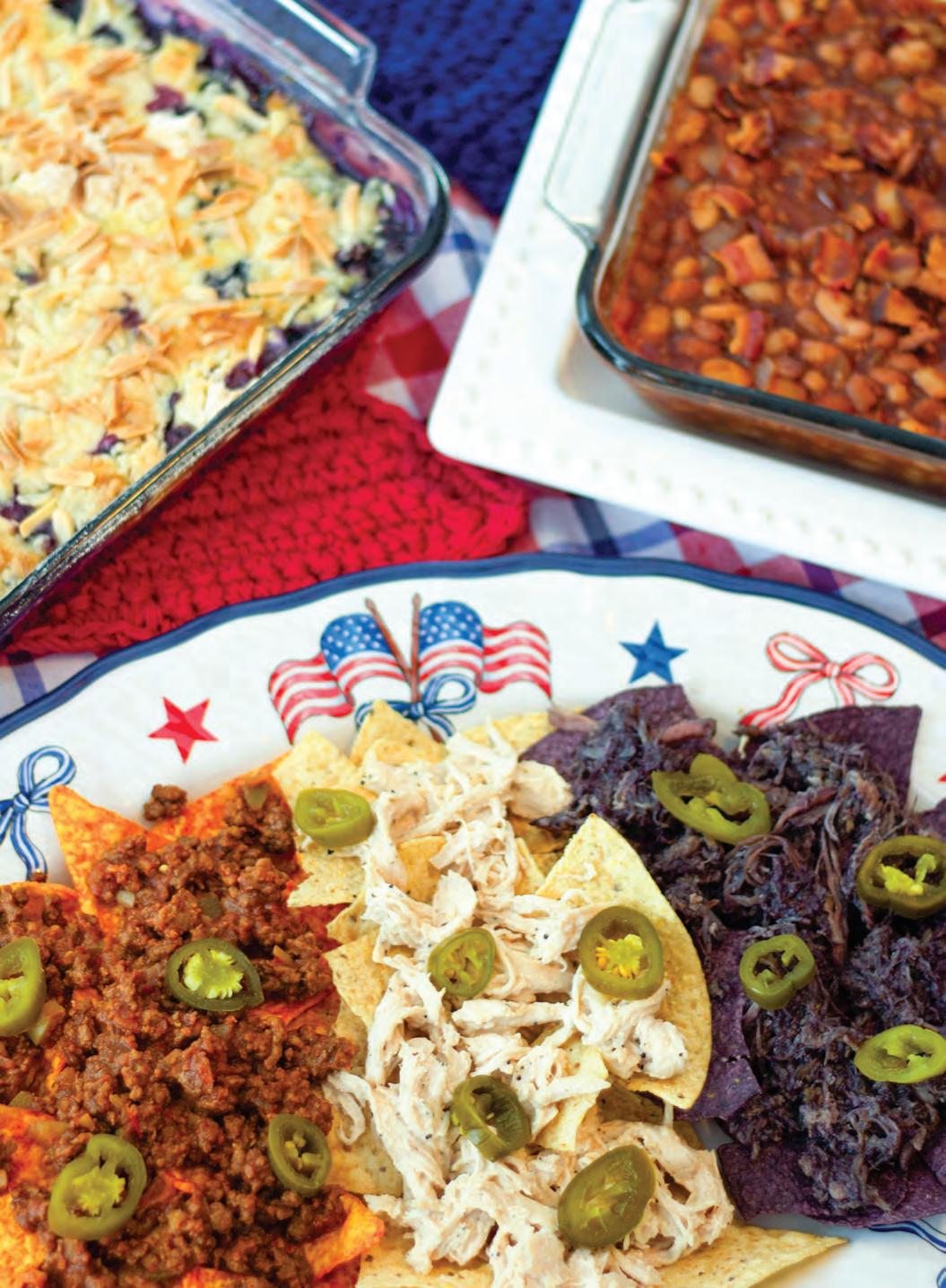
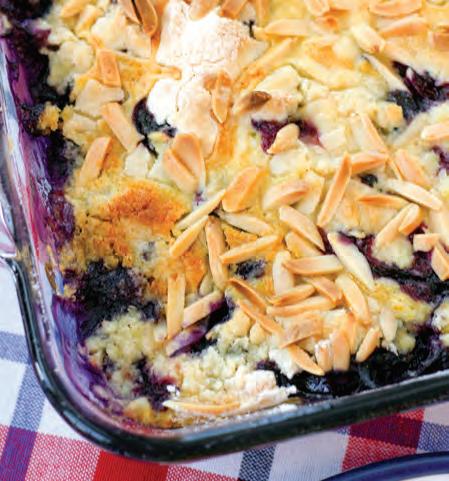
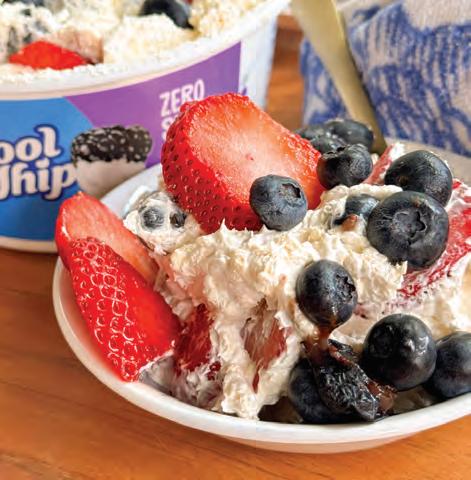
Red, white & blue can be incorporated into your July 4 meals, from main dishes to desserts.
ONLINE: www.alabamaliving.coop
EMAIL: letters@alabamaliving.coop
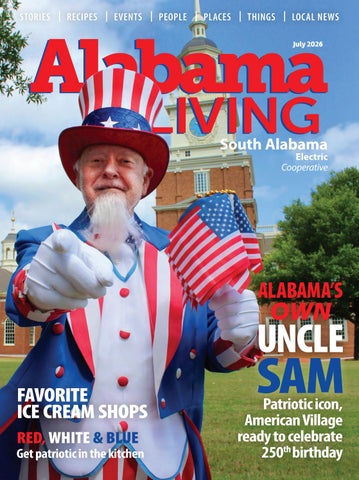
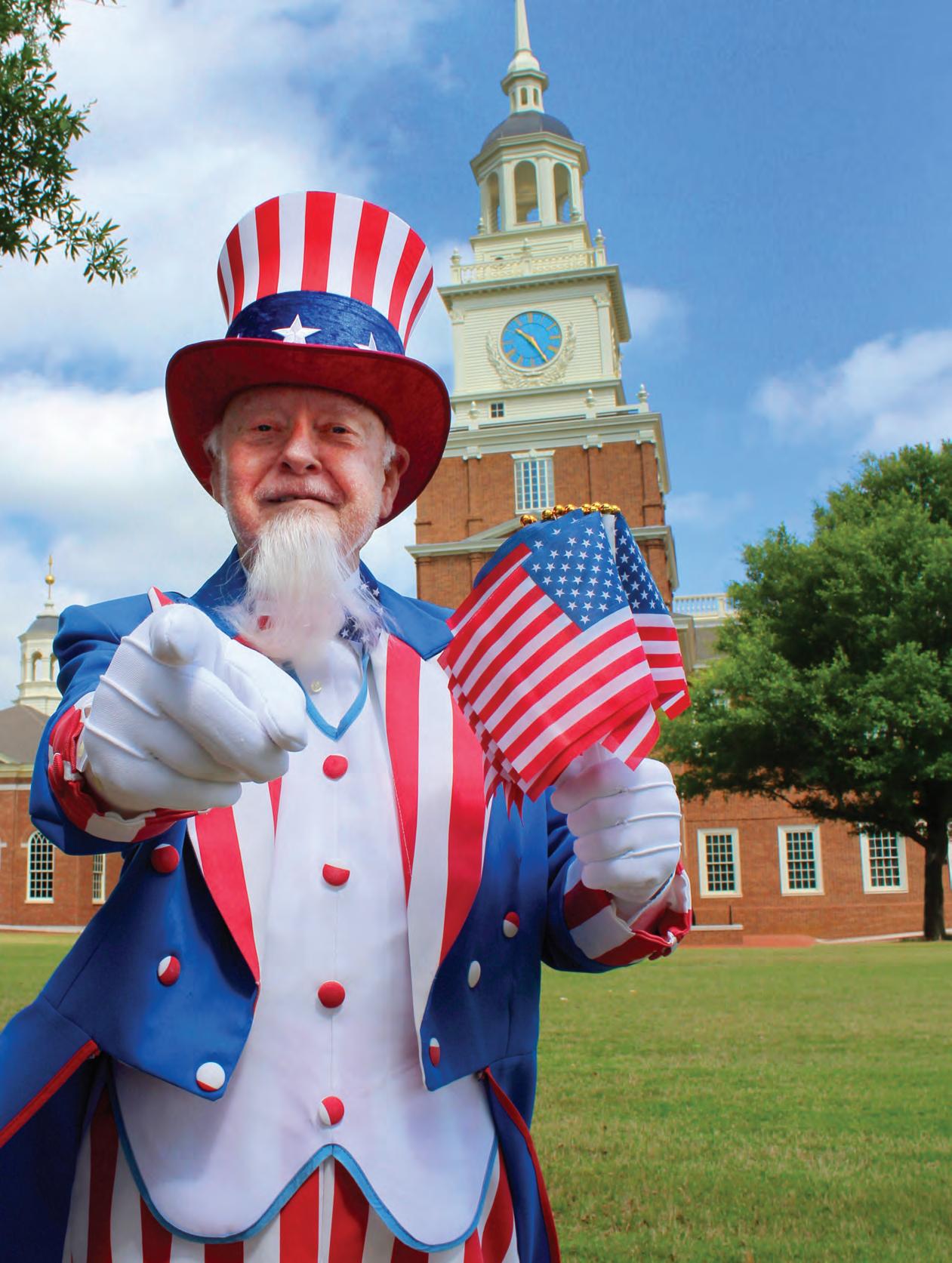
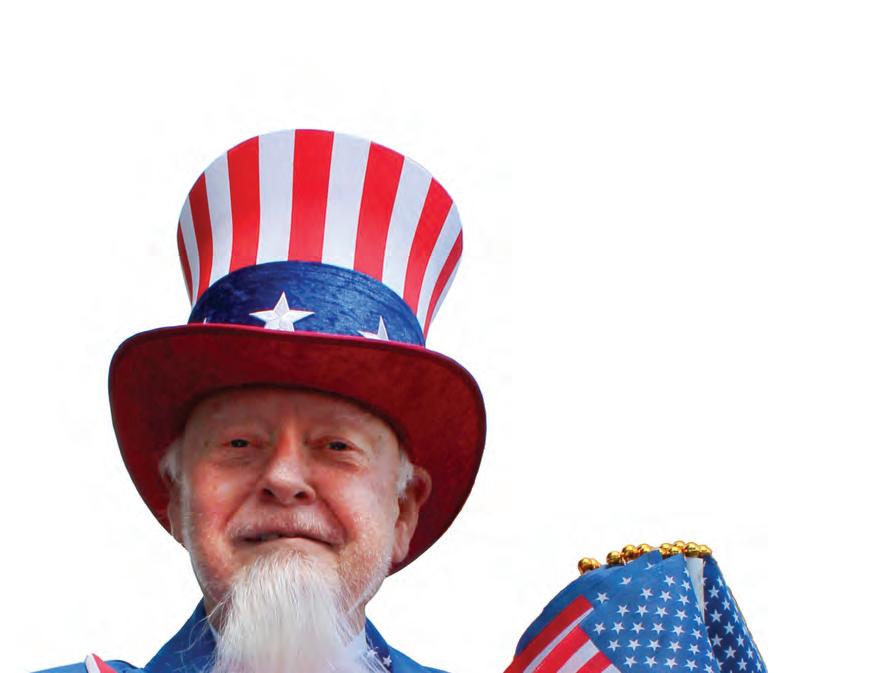
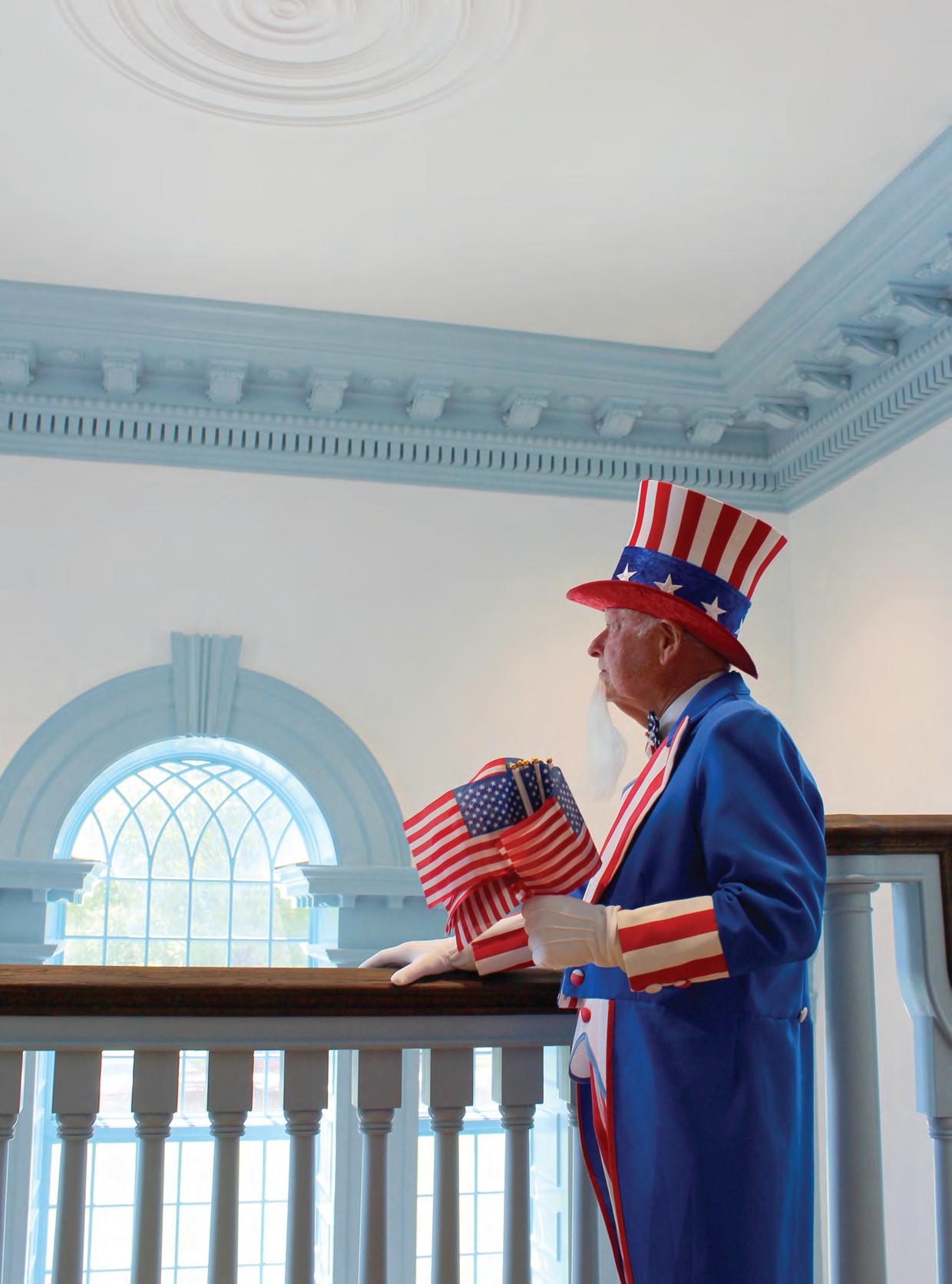
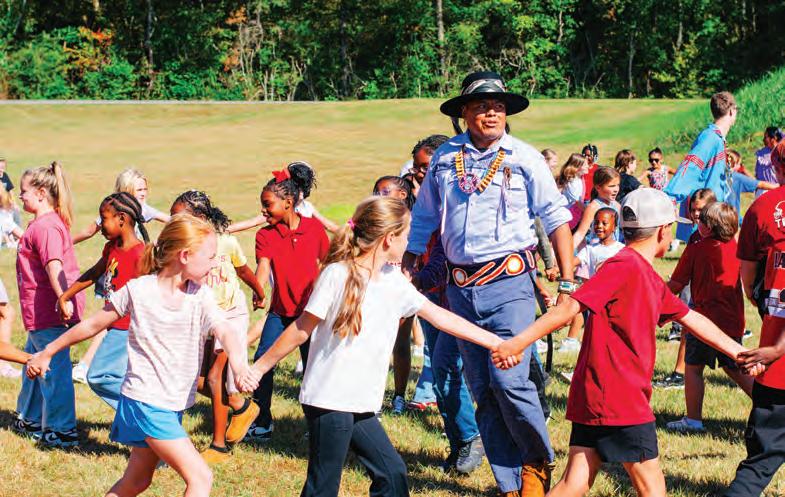
One of the don’t-miss favorite characters at the American Village’s July 4 events is Uncle Sam. JDanny Cooper of Montgomery is in his 14th year of portraying the iconic character. See story, Page 12. PHOTO: Sean Burnley
Board of Trustees
James May President At Large
Raymond Trotter Vice President District 3
Ben Fox
Secretary/Treasurer District 4
Johnny Garrett District 1
Bart Snyder District 2
Janet Kervin District 5
David Lowery District 6
Tim Sanders District 7
250 years and counting
DAVID BAILEY CEO
This Fourth of July, our country’s Great Experiment will be 250 years old.
The Declaration of Independence was accepted and signed by a group of men we call Founding Fathers. These men knew the cost of signing this document and risked their lives, reputations, wealth and families’ safety.
The statement in the Declaration that sets the standard for this experiment is as follows: “We hold these truths to be self-evident, that all men are created equal, that they are endowed by their Creator with certain unalienable Rights, that among these are Life, Liberty and the pursuit of Happiness.”
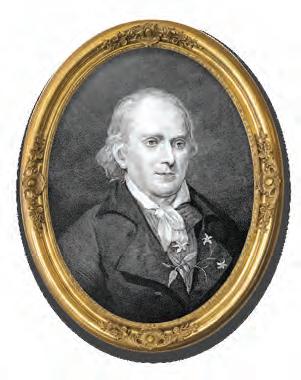
Samuel Adams was one of the men who signed the Declaration. Sadly, Adams is probably better known today for beer even though he was involved in organizing resistance to the British rule in Boston. Adams helped create the Sons of Liberty, a political organization active in the 13 American colonies. Secret meetings were held in the basement of the Green Dragon Tavern, which became known by historians as the headquarters of the Revolution. The Boston Tea Party was planned at this tavern. Adams and friends probably drank beer and ale while planning the Boston Tea Party, but he was not a brewmaster.
The British viewed him as one of the most dangerous revolutionaries in America. He could have been arrested or executed for treason. Knowing that possible outcome, I would have had a beer or two myself if I had been in there planning the Boston Tea Party. But the individuals at that time understood the necessary sacrifices.
During World War II, the people of the United States understood sacrifice because they knew their freedom could be lost. Today, you hear complaints about temporarily high gas prices due to trying to remove nuclear threats from a country that will use them against anyone who opposes them without discernment.
I believe God has blessed our country — not because our Declaration of Independence and Constitution are perfect documents, but because they provide hope that some of these imperfections could be worked out, giving its citizens life, liberty and the pursuit of happiness.
Understanding the threats to the Great Experiment throughout our country’s history
will help you see why I believe God has blessed this country.
In the early days of the Revolutionary War, our commander, Gen. George Washington, was defeated in the battle of Brooklyn. Washington and 9,000 Continental troops had their backs up against the East River, and Washington ordered a nighttime evacuation with the British army only 600 yards away. At daybreak, thousands of troops were still waiting to cross, including Washington. Remarkably, a thick fog settled over Brooklyn and the East River, allowing the army to safely cross the river with supplies. If Washington and his army had been captured, he would have been killed. With no army and no supplies, the experiment would have been gone with the wind. The signers of the Declaration of Independence would have met the same fate as Washington.
On Dec. 7, 1941, Japan attacked the Hawaiian Islands. With the Pacific naval fleet crippled, Japan had open access to the West Coast of the United States. Such an invasion would have given them a strong foothold in our country. With our limited military at that time, turning them away would have been almost impossible. But, strangely, Japan not only turned away from the West Coast, they even turned away from the Hawaiian Islands.
With these two events, and there are more, is the United States just lucky? I don't think so. I believe God has not only blessed this country but protected it as well.
After 9/11, President George W. Bush asked American musician and singer Michael W. Smith to write a song about the country. The song he wrote was “There She Stands.” It is about the American flag, the ultimate symbol of this Great Experiment. Here are some of the song’s lyrics: “When the night seems to say/ All hope is lost, gone away/ But I know I’m not alone/ By the light she stands/ There she waves, faithful friend/ Shimmering stars, westward wind/ Show the way, carry me/ To the place she stands/ Just when you think it might be over/ Just when you think the fight is gone/ Someone will risk his life to raise her/ There she stands.”
God bless the USA until the creator returns. Happy Fourth of July. n
Track your usage
Web tool provides account access, usage alerts
Members of South Alabama Electric Cooperative can easily track their energy use with a web-based tool that can be accessed by laptop, tablet or smartphone.
My Usage is an application that provides real-time access to account information even if a member has multiple accounts. It is a safe and secure way for members to pay their electric bill or request service.
The tool works like this: The cooperative receives meter readings each night around midnight. That meter reading is sent to members around 7 a.m., so they can see how many kilowatt-hours they used. It provides the high and low temperatures as well, so members can see how their use changes with the outdoor temperatures.
With My Usage, members can see copies of previous bills as well as their payment history. Beyond daily electricity use, members
can receive alerts for bill due dates, payment reminders and payment receipts.
And if members want to know when they’ve gone over their normal electricity use, they can set up an alert for excessive use. The app sends a notification if the previous day’s use exceeded the kilowatt-hours amount set by the member. With the alert, members can then take action to determine why their electricity use was higher than normal, whether there is an equipment problem or if they need to make adjustments to their use at home.
To learn more about My Usage and how to set up online access, visit SAEC’s website at southaec.com/your-account/my-usage or call the co-op member services team at 800-556-2060. n
www.southaec.com
Payment Options
SAEC Connect
Available from the App Store and Google Play BY MAIL
P.O. Box 449
Troy, AL 36081
WEBSITE
www.southaec.com
PHONE PAYMENTS
877-566-0611, credit cards accepted
NIGHT DEPOSITORY KIOSK
Available at our Highway 231 office, day or night
PAYMENT POINTS
Kiosk in office lobby
Regions Bank - Troy branch
Troy Bank and Trust - all branch locations
First Citizens - Luverne branch
Banks Buy Rite - Banks
Country One Stop - Honoraville
IN PERSON
13192 U.S. Hwy. 231, Troy, AL 36081
Office Hours: Monday-Friday, 8 a.m.-5 p.m.
Questions?
For questions concerning capital credits, contact: capital.credits@southaec.com.
For questions concerning billing, contact: billing@southaec.com.
For questions concerning construction, contact: construction@southaec.com.
Home field advantage8
Opening of new Miracle League field delayed by tornado damage
A few weeks before the Miracle League of Troy was set to debut a new baseball field at the Troy Sportsplex in 2025, the unthinkable happened.
An EF2 tornado tore through the sportsplex, ripping part of the roof off the recreation center and damaging ballfields, bleachers and lighting.
Debris tossed by the tornado shredded the Miracle League’s new playing surface.
“It picked up one set of bleachers in particular and threw it into the chain link and backstop of the Miracle League field,” says Dan Smith, director of Troy Parks and Recreation. “The bleachers disintegrated but then kept going and just acted like box blades. It went across the surface of the brand-new Miracle League field that had never been played on.”
The diamond’s debut was delayed a year, but Miracle League athletes stepped onto their home field for the 2026 season with a new playing surface.
The Miracle League is a national organization that gives children and adults with disabilities the opportunity to play baseball. Today, there are chapters, sports
complexes and teams across the U.S., Canada and Mexico. Players are paired with volunteer buddies, who assist them during play. The fields and dugouts are wheelchair-accessible.
The first Miracle League field opened at the Troy Sportsplex in 2011.
“Our original surface was a rubber-coated safety surface that was installed in sheets and rolls, and it was beautiful when it was installed,” Smith says. “But over the years, the edges began to curl up on all of the seams, and it became not only
unsightly but a hazard.”
The league sold T-shirts and sought donations from supporters to help cover the $200,000 cost of replacing the playing surface.
In 2024, South Alabama Electric Cooperative was among the contributors to the field restoration project, pledging $5,000. The cooperative’s wholesale energy provider, PowerSouth Energy Cooperative, pledged another $5,000. SAEC also submitted the project to the charitable program of one of its third-party lenders, CoBank, which put in another $5,000.
Each year, SAEC employees make a Miracle League donation as a Christmas gift to CEO David Bailey, whose grandson Kristian Prettyman played with the Troy Miracle League.
“Everybody loves it, and it was just standing-room only — a lot of people in the bleachers and in lawn chairs.”
— Dan Smith, director of Troy Parks and Recreation
Smith says the generosity of sponsors, individuals and the city of Troy helped the Miracle League raise enough money to cover the field in a synthetic turf similar to what is used on college and professional football and baseball fields.
The new field was completed in February 2025. Then on March 15, the EF2 tornado tore through Troy and rural Pike County.
“It was a very proud day when we were finished with it, and then three weeks later, the tornado came through,” Smith says.
ball and softball fields and the soccer complex. Upgrades were made as well, such as shades over bleachers and netting to catch foul balls.
The Miracle League of Troy’s Monday night games were packed during the 2026 season as the new playing surface made its debut.
“Because there was so much damage to so many of our other recreational facilities, it all just kind of blended into one challenge. We were, of course, discouraged, but at the same time we were enthusiastically motivated to get everything reopened.”
Everything at the Miracle League field had to be replaced — the playing surface, the bleachers and the chain-link fencing. All lighting had to be replaced at the Miracle League field as well as 11 other base-
While heartbreaking for all those who worked to raise money for the new Miracle League field, Smith says they were thankful nobody was hurt in the tornado. Insurance as well as a multimillion dollar bond issue by the city government covered the cost of repairs.
Baseball, softball and Miracle League games were played in 2025 at other locations, including Troy University’s baseball field, where the Miracle League has traditionally played its season-opening game.
“It’s just beautiful,” Smith says. “Everybody loves it, and it was just standing-room only — a lot of people in the bleachers and in lawn chairs.” n
Kristian
BELOW: Miracle League athlete Loki Sikes runs during a game.
ABOVE: Hayes Turner readies her swing at the Troy Miracle League field during a game earlier this year.
RIGHT: Miracle League of Troy volunteer coach Blake James catches as Luna Lindsey takes a swing at a pitch.
LEFT:
Prettyman, center, runs home during a 2019 Troy Miracle League game. Prettyman is the grandson of South Alabama Electric Cooperative CEO David Bailey, and SAEC employees make an annual donation as a gift to Bailey.
Upgrade your manufactured home to a heat pump with rebate
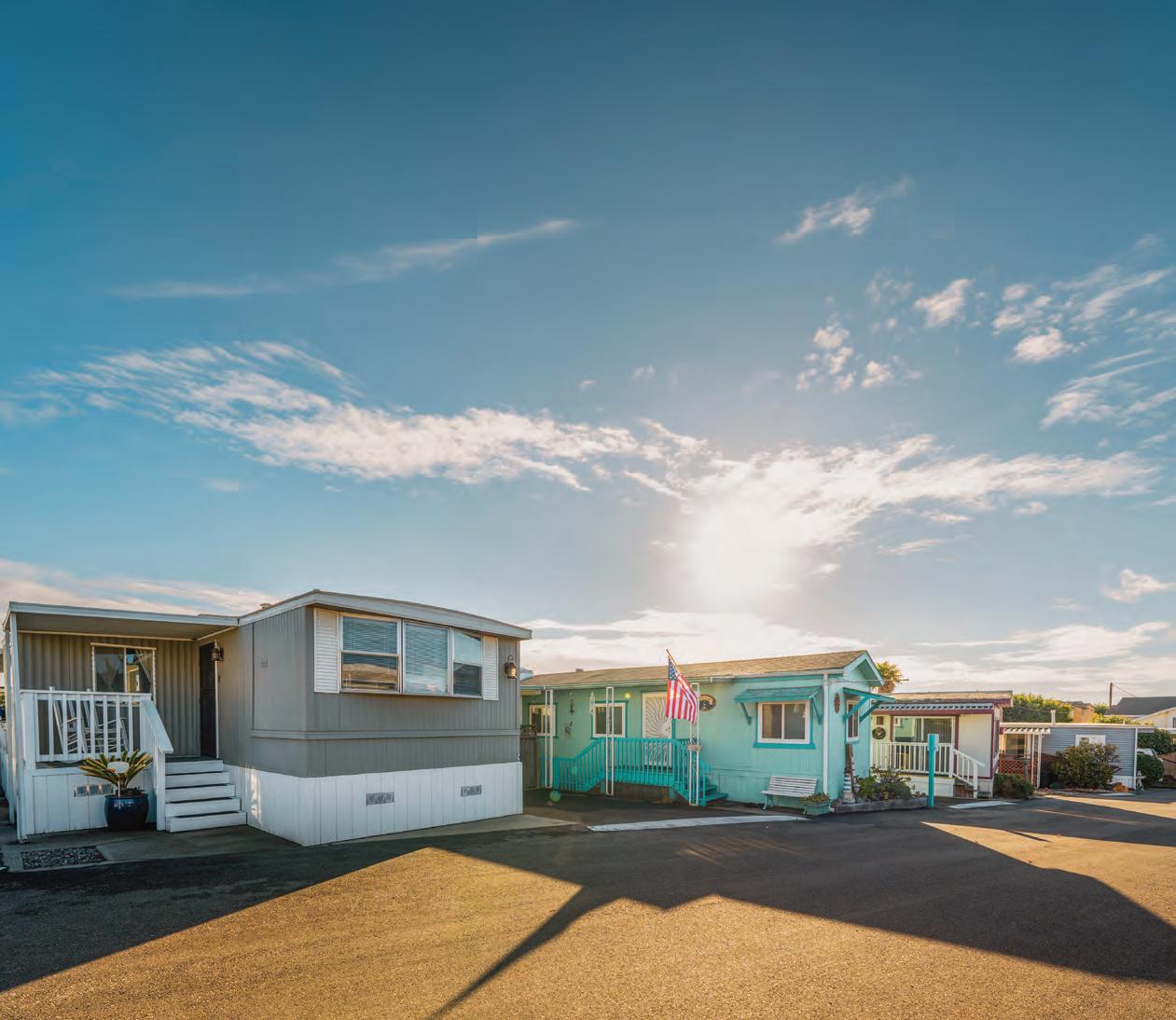
Manufactured homes are an affordable way to home ownership for many people. But while modern manufactured homes may include energy-efficient features, older models may not, adding to your monthly costs to heat and cool your home.
South Alabama Electric Cooperative offers rebates to upgrade manufactured homes to energy-efficient heat pumps. SAEC members may qualify for rebates up to $400 per ton to convert their manufactured home to a heat pump system.
Older manufactured homes were often equipped with electric furnaces. SAEC’s rebate is designed to help cover the higher upfront costs to purchase a heat pump, which can be up to four times more efficient to operate than an
electric furnace. And despite the name, heat pumps are efficient at both heating and cooling. Heat pumps work by moving heat from your inside home to the outdoors when set to cool and do the opposite when heating. Since heat pumps don’t generate heat, they are more efficient to run, according to the U.S. Department of Energy.
Members can save hundreds of dollars a year by upgrading to a heat pump. The rebate is made possible with financial support from PowerSouth Energy Cooperative, says Andy Kimbro, vice president of member services for SAEC. As SAEC’s wholesale energy provider, PowerSouth has to provide enough capacity to meet the power demand among its co-op members.
Rebates that improve operational efficiency even at a household level create cost savings for PowerSouth, SAEC and members.
For more information on the manufactured home rebate, contact SAEC’s member services team at 800-556-2060.
Kimbro says whatever heating and cooling system you currently have, it’s important to keep it maintained. Heating and cooling systems can account for roughly 50% of your monthly power bill.
Kimbro recommends having your system serviced once a year and changing the filter monthly to ensure it runs as efficiently as possible. n
Stars and Stripes
September theme: “House Divided/Football Rivalries” | Deadline: July 31
Submit photos at alabamaliving.coop/submit-photo or by scanning the QR code. Photos submitted for publication may also be used on our website and on our social media pages.
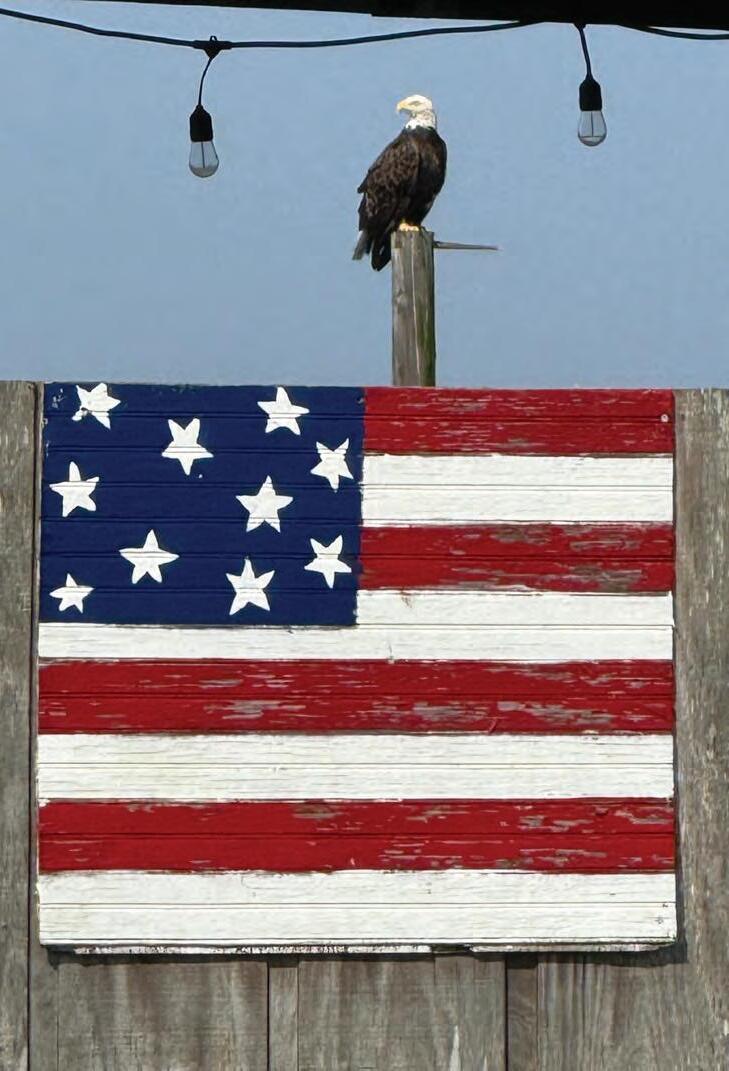
Bald eagle on my pier. SUBMITTED by Caroline Coker, Fairhope.
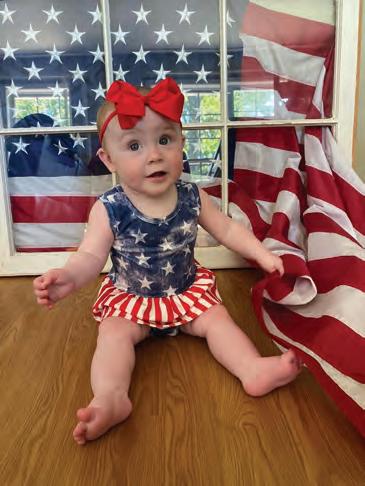
Our granddaughter Ellie is 7 months old. Her father Lance Miles is currently serving in the U.S. Army. SUBMITTED by Ronnie and Sherri Peacock, Enterprise.
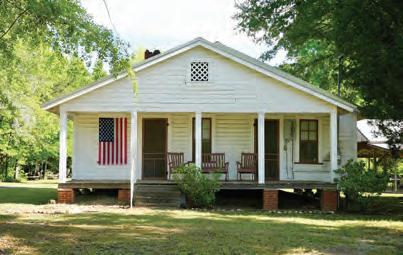
The old home place. SUBMITTED by Wanda Stinson, Georgiana.
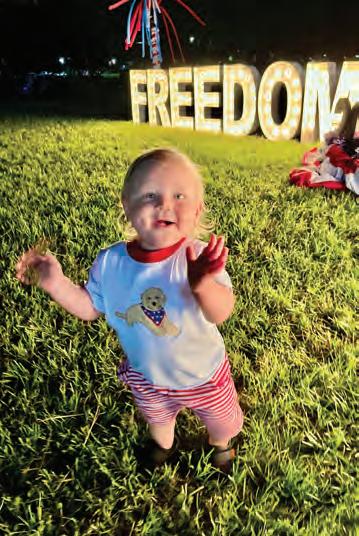
My grandson, Sterling Joiner, enjoying his first Freedom Fest in Ft Rucker, AL. SUBMITTED by Renee Godbold, Hartford.
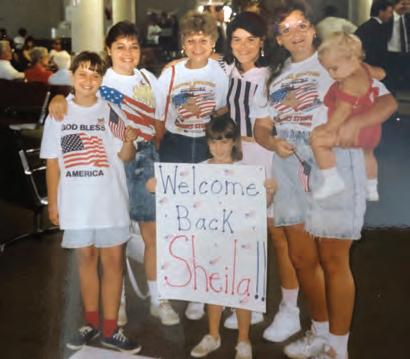
My sister, Sheila, coming home from serving in Desert Storm in 1991. Monica, Debbie, Renate, Sheila, Theresa, Stephen and Leah. SUBMITTED by Debbie Godwin, Evergreen.
The Smokehouse. SUBMITTED by John T. Tucker, Randolph.
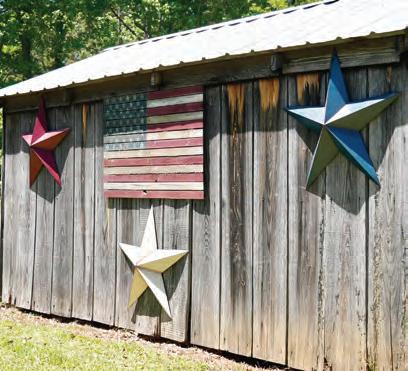
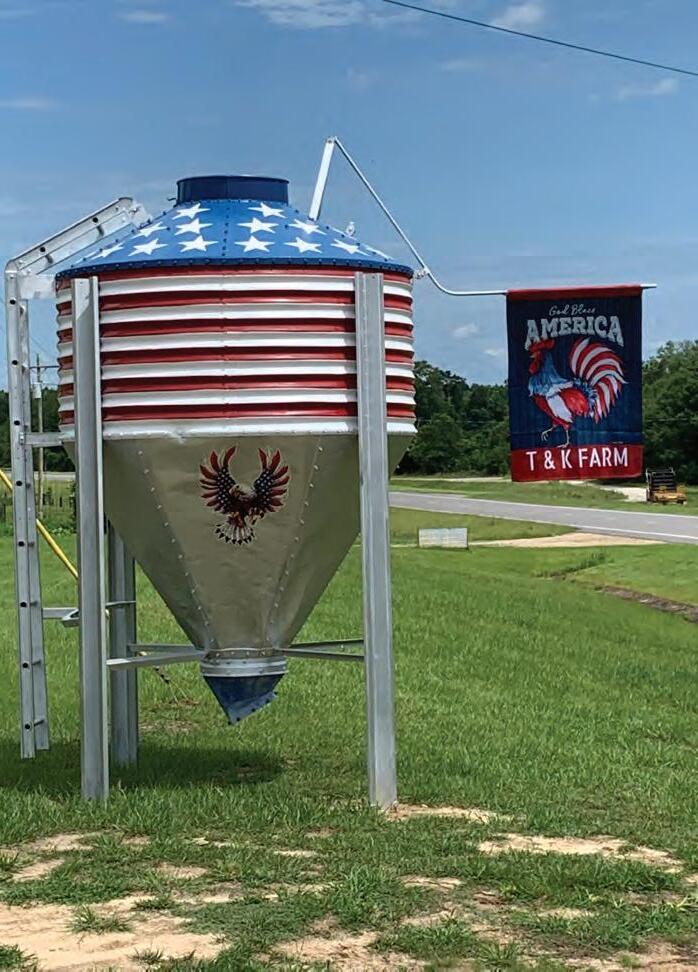
Hand painted patriotic grain bin. SUBMITTED by Tommy Hall, Evergreen.
Whereville, AL
Identify and place this Alabama landmark and you could win $25! Winner is chosen at random from all correct entries. Multiple entries from the same person will be disqualified. Send your answer with your name, address and the name of your rural electric cooperative, if applicable. The winner and answer will be announced in the August issue.
Submit by email: whereville@alabamaliving.coop, or by mail: Whereville, 340 Technacenter Drive, Montgomery, AL 36117.
Contribute a photo you took for an upcoming issue! Send a photo of an interesting or unusual landmark in Alabama, which must be accessible to the public. A reader whose photo is chosen will also win $25.
THIS MONTH IN ALABAMA HISTORY
Naturalist William Bartram Arrives
In the summer of 1775, amidst the American Revolution, naturalist William Bartram’s years-long trek through the Southeast brought him to present-day Alabama.
Long regarded as a gifted artist, in 1772 the Philadelphia-born Bartram received a commission from an English patron to traverse the southeastern lands and sketch the region’s unique flora and fauna. He departed Philadelphia in March 1773, making his way first through the Carolinas and Georgia.
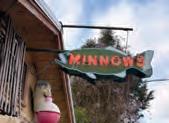
June’s answer: This sign has hung in front of Stoddard’s Bait & Tackle in Wetumpka, 314 Company St., for more than 75 years. (Photo by Therese Carter) The randomly drawn correct guess winner is Derald Shepherd of Central Alabama EC.
Protect yourself and family from ticks
Alabama’s warm, humid climate makes tick activity common, especially during peak season. Ticks can spread diseases through bacteria, viruses, and other pathogens. To reduce your risk, the CDC recommends you avoid tall grass, brush, and wooded areas when possible, and stay in the center of trails.
Wear long sleeves, long pants, and protective footwear outdoors. Treat clothing and gear with permethrin and use EPAregistered insect repellents containing ingredients such as DEET or picaridin. Check yourself and family members for ticks daily, shower after spending time outdoors, and remove any attached ticks promptly with tweezers.
CORRECTION:
In the June issue, an item on dog-friendly hiking places on page 20 was incorrect. Dogs are not allowed on the beach anywhere in Gulf State Park. However, the Lake Shelby area is dog friendly and allows dogs on a leash. There is also a dedicated dog park where dogs can run, play, and even swim in the lake.
In July 1775, Bartram crossed the Chattahoochee River just south of what is today Phenix City. He traveled toward Mobile along a well-trod Native American trade route, parts of which would later become the Federal Road. East of Montgomery, he noted the appearance of Spanish moss in the trees. He commented on the “expansive and illumined grassy plains” of the Black Belt. He marveled at the distinctive animal inhabitants of Alabama’s vast (and now mostly vanished) longleaf pine forest, including the gopher tortoise and indigo snake.
William Bartram traveled extensively in Alabama in 1775, observing and documenting the state’s unique flora and fauna.
Nearing Stockton by the end of the month, Bartram met Major Robert Farmar, the top-ranking official of British-controlled Mobile, a place he found less interesting than the expansive river delta which flowed into it. He borrowed a canoe from Farmar’s plantation and paddled deep into what we today call “Alabama’s Amazon,” where he discovered a stunning new species of primrose.
Bartram sent his English sponsor more than 200 plant specimens, 59 drawings and a lengthy written report. His observations and sketches on the Native Americans he encountered were some of the most important and accurate of the era. Bartram published an account of his travels in a 1791 book, widely regarded as the first great work of American environmental literature. His illustrations and romantic prose inspired generations of budding naturalists.
— Scotty Kirkland
Editor’s note: More information on Bartram’s journeys through Alabama may be found at bartramandalabama.org
Find the Hidden Dingbat!
Our graphic artist, Sean, loves it when our readers persevere and find the hidden dingbat, even when it’s hard to spot! That was the case for the hidden water bottle last month, but just over 100 of you correctly found it in the photo of the boy in the stroller on Page 24. Ruth Russell of Dixie EC wrote us that we were “very sneaky, but it appears that the boy in the red jacket has a ‘peg leg’ made out of a water bottle.” Deborah Collier of Cullman EC wrote that her daughter, Elizabeth “finger circled” each picture it might be hiding in, and together they found it. “Thank you for being the catalyst for giving us some much needed quality time together.” Daniel Deal of Arab EC admitted this was “one of the hardest ones to find,” and went through the magazine several times before deferring to his wife who spotted it.
Congratulations to Sherri Hipp of Joppa, a member of Cullman EC, our randomly drawn winner of $25 from Alabama One Credit Union, our contest sponsor.
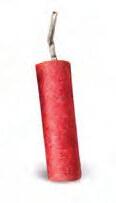
To celebrate our country's semiquincentennial, we’ve hidden this firecracker for you to find. So don't blow it! Remember, it won’t be in an advertisement or on Pages 1-8. Entries without a hometown and electric cooperative listed will not be considered for the prize. Good luck!
By email: dingbat@alabamaliving.coop
By mail:
Find the Dingbat Alabama Living 340 TechnaCenter Drive Montgomery, AL 36117
Take Us Along!
Sponsored by
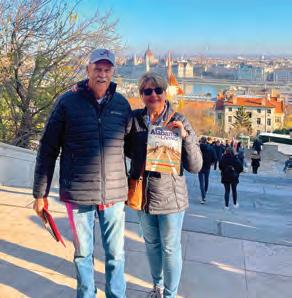
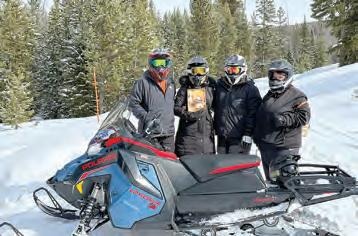
We’ve enjoyed seeing photos from our readers on their travels with Alabama Living! Please send us a photo of you with a copy of the magazine on your travels to: mytravels@alabamaliving.coop. Be sure to include your name, hometown and electric cooperative, and the location of your photo. We’ll draw a winner for the $25 prize each month.
See more travelers on page 28!
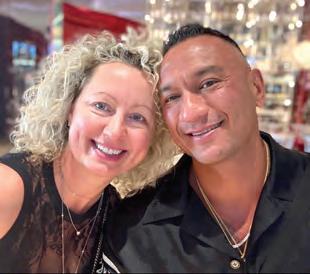
Iven & Deborah
Letters to the Editor
E-mail us at: letters@alabamaliving.coop or write us at: Letters to the editor 340 TechnaCenter Dr. Montgomery, AL 36117
Readers identify with Hobby’s new truck complaints
I and some friends read your piece “Too Old for a New Truck” (“Cup o’ Joe,” June 2026). My friends asked me if I wrote it for you. They said it sounds exactly like me, almost verbatim, complaining about my new truck. I told them, no, it doesn’t sound like me. I don't think there’s a darn thing humorous about my truck. And here's another thing, I've accumulated a million dollars’ worth of CDs over the years and guess what? They are now useless in this piece of overly complicated computer toy for the screenaddicted.
Anyway, great article. Amen, brother! I’m going to give a copy to my truck dealer. He’s a young guy. Probably will leave him confused and wondering what is our “problem.
Joe, I worry for the future of our country.
Dr. Doug Phillips, Tuscaloosa
I gotta thank you for the apt smile generated by your column. I recently got a slightly used 2024 Toyota Corolla Cross and had the same dilemma. What are all these AI assists for? Am I a Luddite? I've spent hours reading the manuals and pondering if my driving experience will be enhanced (or hindered) by these modern marvels. Now in my 80s, I'd like to think that a lifetime of driving has given me the skills and knowledge to operate a vehicle safely.
John Bloszies, DVM, Seale
Somewhere under all those helmets are Connon and Debra Goodman, along with daughters Ashley & Madison, who went snowmobiling with Alabama Living while in Steamboat Springs, Colorado. They are members of Tallapoosa River EC.
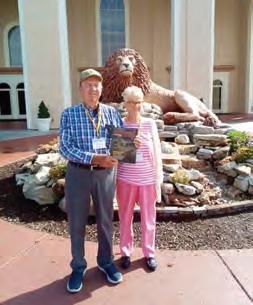
Raymond and Bonnie Trotter of Luverne visited the Sight and Sound theater while in Branson, Missouri. They are members of South Alabama EC where Raymond is a board member.
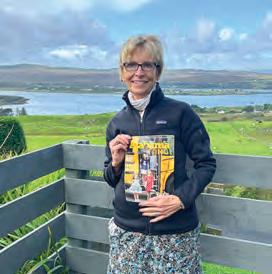
Barbara Warnes had a scenic view during her stay on the Isle of Skye, Scotland. She is from Guntersville and a member of Arab EC.
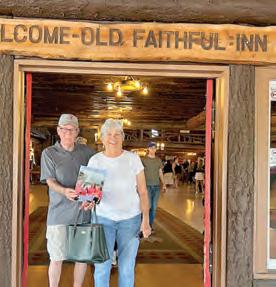
J.R. and Marvalee Farris of Gulf Shores visited the Old Faithful Inn at Yellowstone National Park. They are members of Baldwin EMC.
Harville of Dawson went all the way to Budapest, the capital of Hungary overlooking the Danube River. They are members of Sand Mountain EC.
ALABAMA’S Own UNCLE SAM
HPatriotic icon and the American Village are ready for America’s 250th birthday
BY LENORE VICKREY
For Katelyn and Anthony Albritton, family traditions matter. They celebrate birthdays. They cherish milestones of their children. They give and receive presents at Christmas.
But every Fourth of July, one tradition stands out.
Before the fireworks burst across the sky, before the hot dogs hit the grill, before the watermelon is sliced and served, the Albrittons make a pilgrimage to the American Village in Montevallo for one essential Independence Day ritual:
A photo with Uncle Sam.
Not the Uncle Sam from posters or history books — but Alabama’s very own.
“I enjoy seeing them every year,” says JDanny Cooper of Montgomery, the man behind the white goatee, towering top hat and star-spangled smile. Since 2012, he has portrayed the iconic American figure every July 4 at the American Village, greeting thousands who come seeking a little patriotism and nostalgia amongst the 1776-era buildings and reenactors who create memories they won’t forget.
“People from all over the United States and foreign countries come,” Cooper says. “It’s amazing to me that people will plan vacations and they drive and find a place to stop on Independence Day, and when they read about American Village, this is where they want to stop. And they often want to see Uncle Sam.”
And he’ll be ready to greet them. This year, as America celebrates its 250th birthday celebration, Cooper will appear all day on July 4 during the American Village’s “Sweet Home 250 Festival” July 3-4.
For most people, wearing a full costume with jacket, striped trousers and a top hat in Alabama’s July heat might sound unbearable. But for Cooper, now 78, stepping into the role each year is nothing short of a calling.
“It’s the heart of what I love to do each year,” he says. “Being able to portray someone that people, especially veterans, respond to, is really important.”
Long before he became Uncle Sam, Cooper spent decades in public service and politics, retiring in 2012 after 23 years as executive vice president of a professional association and a distinguished career in state and national government affairs. But his connection to the American Village stretches back even further — to the very beginning, when its founder, the late Tom Walker, first sketched his dream for the campus on the back of a napkin.
Cooper was a close friend of Walker, who first asked him to portray Uncle Sam. “At first, I didn’t think I was tall enough,” says Cooper, “but the top hat makes up for that.”
He worked closely with Walker to turn the dream into reality, through legislative and administrative contacts, and helped him secure funding for not only the 188-acre campus but the educational field trips already experienced by 750,000-plus students, civic educational programs, and the National Veterans Shrine, all while promoting love of God, country and family.
Today he likes nothing better than to be the unofficial guide for the village, pointing out the replicas of historic landmarks and urging visitors not to miss dramatic reenactments like the Battle of Concord Bridge.
Our young people cannot safeguard what they do not cherish. And they cannot cherish what they do not know.
– Tom Walker, American Village “
On July 4, children will spot him immediately.
“Uncle Sam! Uncle Sam!” They race toward him, laughing and waving as he hands each one an American flag, distributing more than 7,000 flags each Independence Day. This year, he’s ordered more for the larger-thanexpected crowds.
“I’m not Uncle Sam, but this uniform and these flags represent Uncle Sam,” says Cooper. “I can’t describe how many times I’ve been hugged around the kneecaps on Independence Day! There’s nothing in the world like it.”
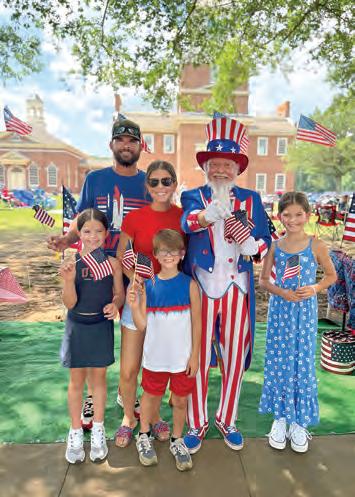
For the Albritton family, who live in Montevallo, he’ll always be Uncle Sam. “He’s like a family member that you see each year,” says 10-year-old Emmaline. She and her sister, Nora, 12, and brother Sam, 9, look forward to their parents bringing them to the annual event. Sam, who shares the same name with his “uncle,” is proud of the acrylic flag paperweight Cooper gave them last year.
Sometimes Katelyn’s work schedule as an ER nurse at UAB makes it hard to stay all day at the American Village, but they wouldn’t miss seeing their “Uncle.”
“Last year, we went, took the picture and I went straight to work,” remembers Katelyn. But they kept the tradition going because “any family tradition is important that instills fun, teaches about our culture, and educates about what America is,” she adds. “Hopefully they will do the same with their children when the time comes.”
For Cooper, his role carries profound meaning because it reflects the mission of the American Village itself — preserving America’s story for future generations, just like the Albrittons.
He often repeats the words of Tom Walker:
“Our young people cannot safeguard what they do not cherish. And they cannot cherish what they do not know.”
“To me, those are among the most powerful words any American has ever spoken,” Cooper says. “History repeats itself. Unless we teach our children what to cherish, how can they know what to cherish and to safeguard?”
Emotion overtakes him when he walks through Independence Hall and sees Walker’s portrait hanging inside. Even more moving is stepping into Walker’s office, preserved exactly as it was before his death in September 2025, just hours before the opening of his crowning achievement: the replica of Independence Hall.
There from the beginning
“JDanny was really side by side with Tom in the beginning, even before the campus was established,” says Alan Miller, Walker’s successor as president and CEO. “And he’s been instrumental to our success over the years. He’s really become one of the features of our Independence Day celebration.”
The thousands of photos taken with Uncle Sam and families tell the story of that impact. In the beginning, his costume was humbler: He wore red Converse sneakers and his beard was made of cotton balls. “It looked terrible,” Cooper recalls with a laugh. “The children didn’t notice but the adults did.”
His costume has come a long way. The red and white striped pants, jacket and top hat are now professionally made. His shoes are red, white and blue Van’s. And his goatee is longer and more realistic, thanks to expert help from makeup artists at the Alabama Shakespeare Festival.
Like the Albrittons, being at the American Village on July 4 has become a tradition for Cooper and his own family. With the help of his son, Jay, he arrives the day before to set up a special photo-op area to staple a 10-foot by 20-foot carpet of Astro-turf to the ground in front of Independence Hall for families to stand to have their photo made with Uncle Sam.
Some of his most meaningful encounters happen with veterans. To each one he meets, Cooper presents a $2 bill signed by Uncle Sam on the side showing the signing of the Declaration of Independence and dated July 4. He makes sure their children and grandchildren hear what he says to them. “I want to make sure they know how much they are appreciated, respected and honored and thanked, and they and their families are remembered for their sacrifices.
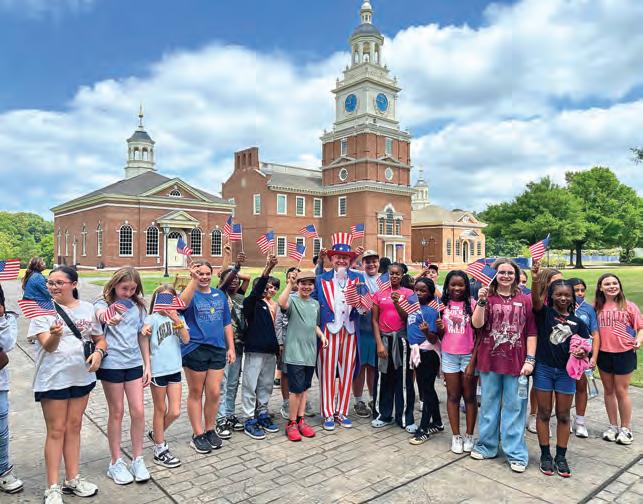
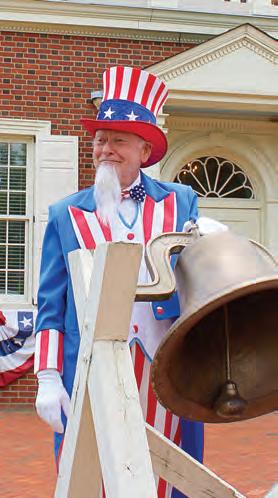
Top, Visiting with school groups touring the American Village is one of Uncle Sam’s favorite duties; below left, the Albritton family, Anthony, Katelyn and their children, Emmaline, Sam and Nora, have their photo made with Uncle Sam on July 4, 2025; JDanny Cooper rings the ceremonial bell in front of the National Veterans shrine in honor of his uncle, Carl Cooper, who served in WWII.
PHOTO BY SEAN BURNLEY
PHOTO BY MELANIE
POOLE, AMERICAN VILLAGE
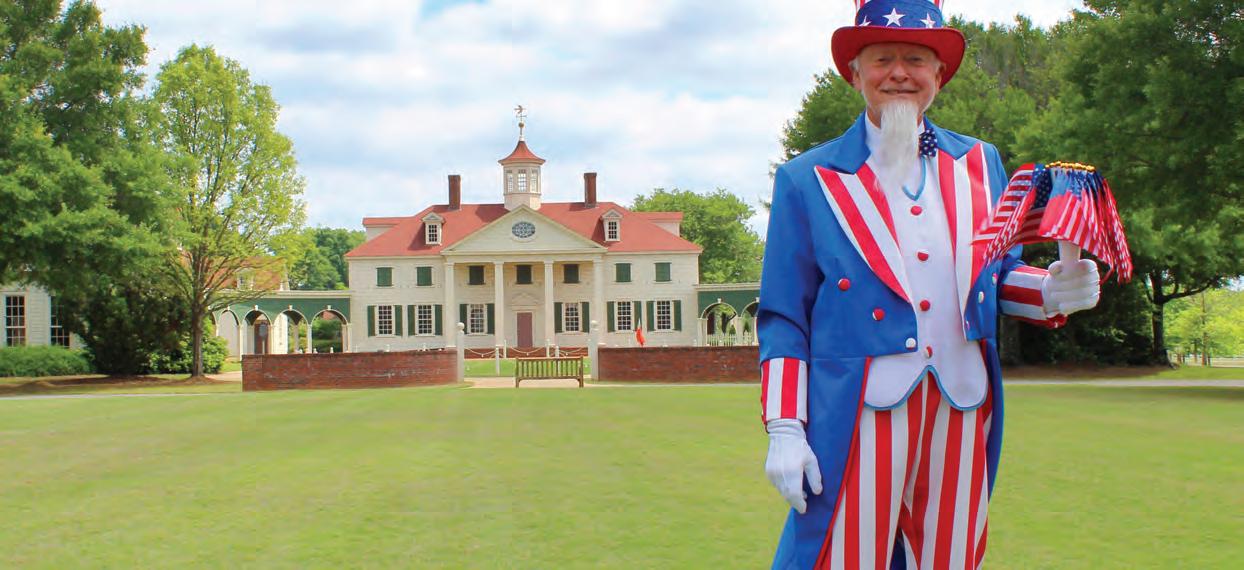
Uncle Sam (JDanny Cooper) estimates he’ll give out more than 7,000 flags this Independence Day at the American Village; in the background is Washington Hall, one of 20 historic building replicas on the 188-acre campus.
“I also ask if they have registered at the National Veterans Shrine (at the American Village). It is the only place in America where each veteran can be forever honored by name, service record and their lives before and after their service, if they returned. Some percentage of them have not, but before they leave, they will be.”
Veterans have a special place in his heart. His uncle, Col. Carl Cooper, was one of the longest living World War II veterans in the state and was featured in Alabama Living’s story on Jeff Rease’s Portraits of Honor in November 2020. The Marine colonel, who died in 2021 at the age of 101, is among the veterans featured in the Shrine, as is JDanny’s father-in-law, Henley Carter, who landed at Omaha Beach.
When student groups visit the Shrine, those with veterans in their family are allowed to ring a ceremonial bell in memory of or to honor their relative. “You can hear the bell ringing all over the campus,” says Cooper. “It is one of the sounds of freedom heard here every day.”
Although problems with his back prevented him from serving in the Vietnam War after he graduated from college in 1970, Cooper has spent a lifetime honoring those who did serve in uniform. Every year he personally places American flags on veterans’ graves, a tradition that began with 36 graves at his home church in Chilton County and has grown to 108.
He pauses, recalling the words of a special teacher. “The most important thing about Uncle Sam is to represent something that I hope would make my 9th grade civics teacher, Billy Wyatt, proud. He ended every class by saying, ‘Say something positive about your country today. When you see the flag, always put your hand over your heart for a second. Say something friendly to a neighbor or to a student.’
“This gives me a chance to do that and, hopefully, I inspire young people and adults to do it also.”
Editor’s note: Uncle Sam is available to speak to veterans’ groups, historical societies, churches and other groups. Contact him at unclesamflagwaver@gmail.com.
So who was Uncle Sam, really?
The white haired, goateed man in the top hat and striped pants has been part of American lore for more than 200 years. Legend says the original person was a meat packer named Samuel Wilson of Troy, N.Y., who provided packages of preserved meat for soldiers during the War of 1812. The packages were stamped with U.S., for United States, but some of the troops who knew Sam Wilson told their buddies it stood for Uncle Sam. A newspaper picked up on the nickname, and by the end of the war, the name had become synonymous with the United States. Cartoonist Thomas Nast created an illustration for Uncle Sam for the cover of Harper’s Weekly in 1872 and he was often depicted in political cartoons of the day.
In 1917, artist James Montgomery Flagg drew the stern-looking character, using himself as a model, for the famous Army recruitment poster, “I Want YOU for the U.S. Army,” the image that endures today.
THE SEMIQUINC
BY RUKSANA HUSSAIN
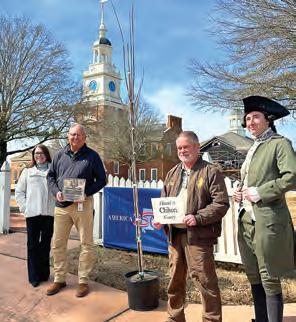
As part of Alabama's semiquincentennial celebration, each county in Alabama was gifted a seven-foot Princeton Elm, the same species of tree as the original Liberty Tree on Boston Common, where patriots gathered to pass information during the Revolutionary War. The trees, along with a bronze commemorative plaque, were a legacy gift from the Alabama USA Semiquincentennial Commission. Representatives from Chilton County, shown here, picked up their tree from the American Village, which has a piece of wood from the original Liberty Tree on display. The trees will grow to be 70 feet tall.
Asstatewide and national celebrations are planned for the 250th anniversary of the Signing of the Declaration of Independence and the birth of the United States of America, counties across Alabama are gearing up for local festivities spanning the next few months.
The America250 Alabama Commission is leading efforts, providing a central community hub with toolkits for everyone to access and sharing the many ways Alabamians can participate in the nationwide celebration. The Commission allocated $725,000 in grant funding for local counties, communities, and organizations to encourage programming for this occasion. To date, at least one grant has been awarded within every county in Alabama.
The American Village in Montevallo is Alabama’s Designated Semiquincentennial Celebration Capitol, hosting the state’s official celebration, Sweet Home 250, July 3-4. The two-day event will feature 18 musical acts including Taylor Hicks, Roman Street, the Blind Boys of Alabama and others, celebrity chef demos, food-eating contests and much more.
A living history museum and educational nonprofit, the American Village is located on a 188-acre campus, offering firstperson historical interpretation of the colonial and Revolutionary eras with costumed interpreters, authentic settings,
and immersive, hands-on experiences. Since 1999, it has served as an educational institution engaging and inspiring visitors, with a special emphasis on programs for young people.
Statewide initiatives organized for the occasion include a Stitching America’s Story quilt project and a Liberty Trees plantation drive. One quilt square each is expected from approximately 30 quilt guilds in Alabama, each square showcasing some aspect of its community or county of creation. These quilt squares will be joined together to create a single commemorative quilt for the 250th, with the finished quilt on display in July at Sweet Home 250. The Commission funded 68 Liberty Trees and bronze plaques as legacy gifts for the semiquincentennial –one for each county in Alabama and one for American Village. More at america250al.org
A nod to history
Highlighting nature and legacy during these celebrations is the Muscle Shoals National Heritage Area annual photo contest, back after a two-year hiatus, and with a little challenge as well. The new “Landmarks and Legacies” theme gives participants a chance to truly celebrate Northwest Alabama’s history with a nod to America’s 250th birthday.
“We chose this theme for our photo contest because landmarks honor events, places, and times that impacted the entire region, or simply made a difference in one person’s life. And legacies are stories and ideas passed down through generations
ENTENNIAL
that have taken root and made a difference in our lives today,” says Jessie M. Johnson, programs coordinator at MSNHA.
The photo contest opened in February and runs through August. Entries will be showcased on the MSNHA social media channels and displayed for viewing at Florence Arts and Museums. The winning entry from the gallery show will receive a cash prize donated by the venue.
“MSNHA wanted to participate in the semiquincentennial, but as we are all aware, Alabama was not a colony and thus not an active member of the Continental Congress,” Johnson says. “However, the impact of the Declaration of Independence can be felt in our local history. Our theme, Landmarks and Legacies, is a way to encourage our community to think about our landscape, architecture, and history and the lasting impact it has had on them.”
Images reflecting MSNHA’s mission of protecting and promoting the Tennessee River, indigenous culture and music in its six-county region of Colbert, Franklin, Lauderdale, Lawrence, Limestone and Morgan are welcome.
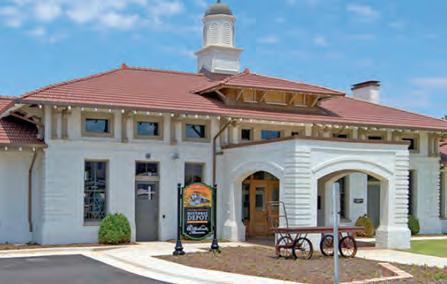
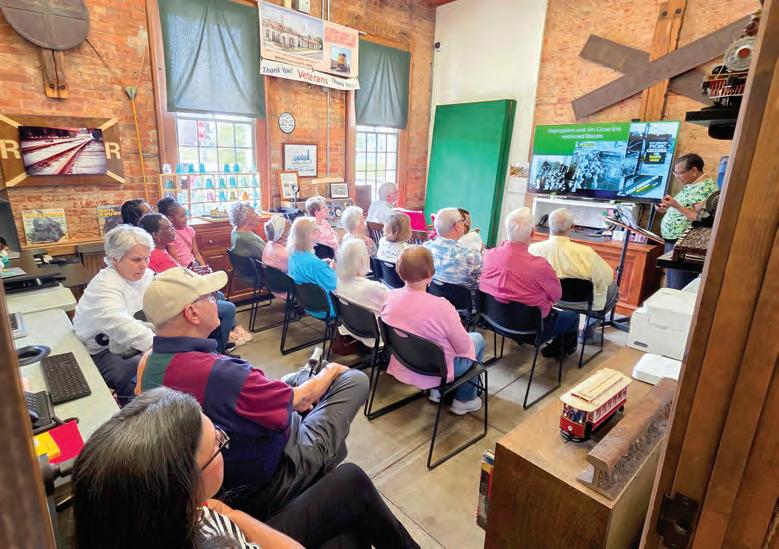
Taking a deep dive into Alabama’s past is the “History First” speaker series hosted monthly at the Historic Decatur Union Depot. Upcoming sessions include Decatur’s Ghosts and Legends in July, Cotton Queen Lelia in August, and Decatur’s Founding Fathers and Churches in September. The series takes place inside the beautifully restored Union Depot, which serves as a living artifact itself,
The Historic Decatur Union Depot, right, is the site of monthly “History First” speaker series, below, which brings in expert speakers who address various topics of local historical significance.
featuring original tongue-and-groove ceilings and award-winning restorations, and provides historical education that highlights Decatur’s significance on a national scale.
“Our goal with this program is to place local history at the forefront of our community’s growth,” says Suzanne Langdon, downtown events coordinator and Decatur’s historic museums supervisor.
“By bringing in expert speakers to discuss everything from Decatur’s unique transit history to its pivotal role in the Civil War and the civil rights movement, we are ensuring that as our city moves toward the future, we remain grounded in our past.”
These sessions often serve as a kickoff for their wider historic district activities, including walking tours of the Bank Street corridor and Old Town.
A tribute to heritage
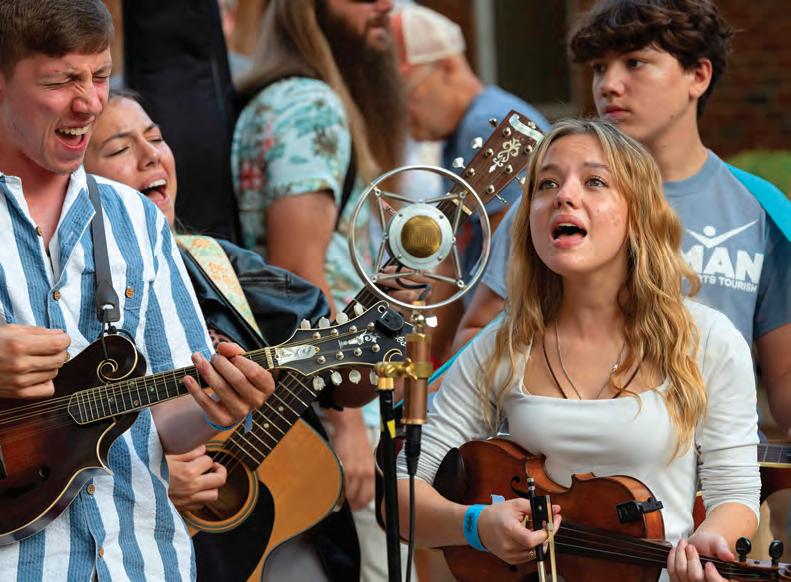
For those musically inclined, the Tennessee Valley Old Time Fiddlers Convention, celebrating its 60th anniversary, invites old time music fans of all ages to the campus of Athens State University from Sept. 30 through Oct. 3 for live entertainment, competitions, workshops, and family-friendly activities.
Competitions culminate in the crowning of the Tennessee Valley Fiddle Champion and categories include fiddle,
banjo, mandolin, guitar, string band, Appalachian buck dancing, old time singing, and bluegrass band.
This year’s entertainment lineup features performances by The Larry Sparks Show, a special Delmore Brothers tribute by Mike Compton and Andy Todd, Dale Ann Bradley, The Isaacs, and The Del McCoury Band.
The Moundville Native American Festival celebrates the state’s indigenous culture with the annual event’s 38th edition scheduled for Oct. 1-3. The Moundville Archaeological Park is 13 miles south of Tuscaloosa off Alabama Highway 69 and part of The University of Alabama. Native American artisans, traditional dances, stories and music are some of the experiences residents and visitors can partake in while also supporting local and Native American businesses at an ancient city on the Black Warrior River.
These are but a drop in the bucket when it comes to all the festivities planned to mark this moment. Other experiences include the Revolutionary Roots exhibition at Vulcan Park and Museum; Huntsville Music Month all September long, featuring more than 200 events; and a Walking Tour Series in Historic Mooresville. Details for these and other programming in the works are all available online.
For more information, visit america250al.org
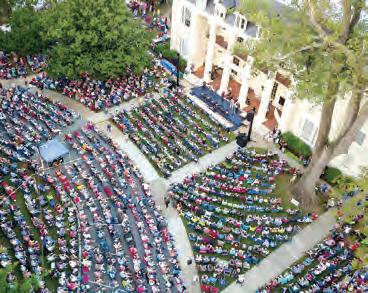
Above: Thousands gather beneath the trees at Athens State University for the Tennessee Valley Old Time Fiddlers Convention. Above left: Musicians of all ages gather for impromptu jam sessions throughout the convention, keeping the spirit of old time music alive from one generation to the next. Bottom left: Native American dances are part of the Moundville Native American Festival in October.
PHOTO BY REBECCA
JOHNSON, THE UNIVERSITY OF ALABAMA MUSEUMS
PHOTO COURTESY ATHENS STATE UNIVERSITY
On Some Scream-Worthy Alabama Ice Cream
BY JENNIFER KORNEGAY
ce cream aficionados scream for the frosty treat year-round, but our state’s blistering July and August temps make summer peak ice cream-enjoyment season.
Providing a combo of smooth, sweet and cold in every lick or spoonful, the dessert soothes, refreshes and satiates sugar cravings like nothing else can. Check out these favorite Alabama shops that make their own ice cream.
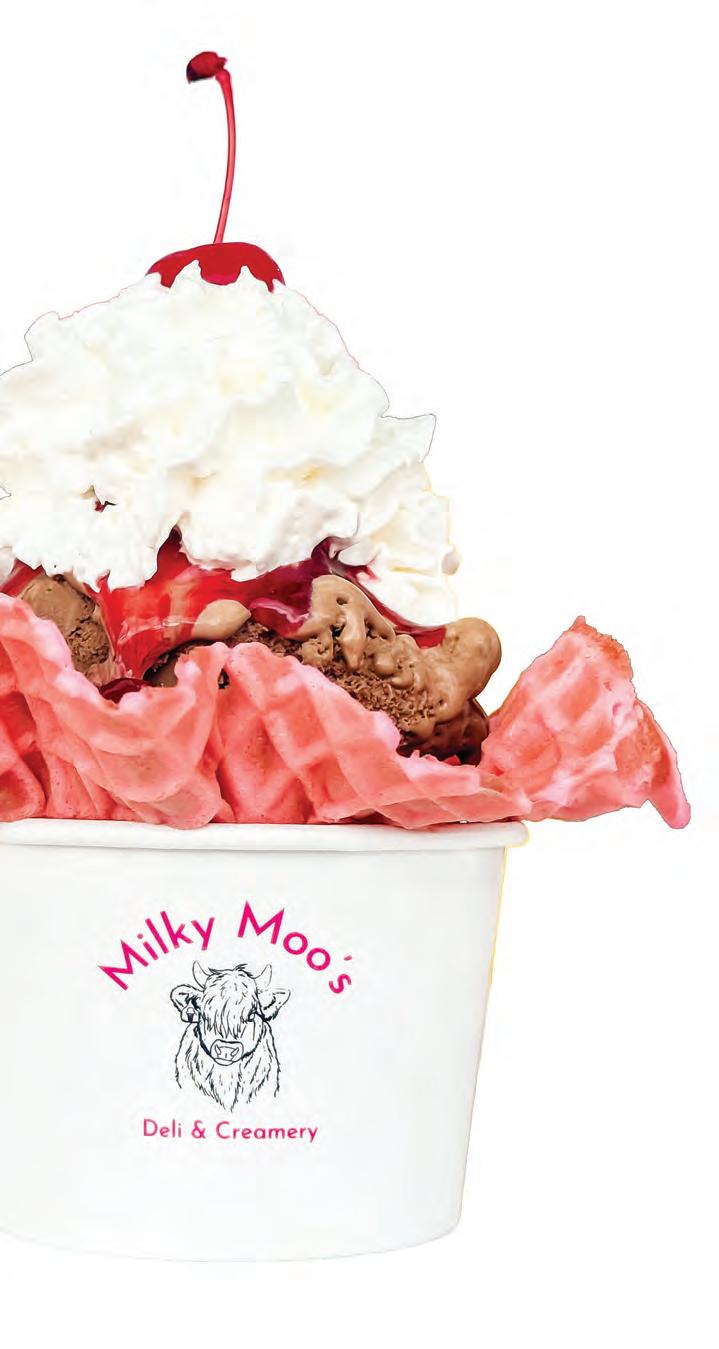
Milky Moo’s Deli & Creamery, 113 East College Street, Enterprise milky-moos.com
While current owners Elizabeth Shanks and her husband bought Milky Moo’s three years ago, the ice cream shop in downtown Enterprise celebrates its 21st birthday this year. Its menu of more than 100 different hand-crafted, homemade flavors, earn it the love of locals and beyond. It was named “Best Ice Cream Parlor” in the state by the Guide to Alabama in 2025.
Milky Moo’s offers 16 flavors at a time; seven classics like strawberry, chocolate and mint chocolate chip are always available, and other selections rotate on and off the menu, often with the seasons. Lemon Strawberry Shortcake, a blend of lemon pound cake ice cream and strawberry ice cream debuted this summer. The Grinch, a green peppermint ice cream studded with crushed Oreos and little red heart sprinkles (representing the villain’s notoriously tiny heart), adds to the festive feel of downtown Enterprise’s transformation into Whoville during the holidays. It’s just one of Milky Moo’s “Enterprise-specific” offerings.
“We do several flavors tied to our community,” Shanks says. Inspired by the Boll Weevil Monument a few blocks away (which commemorates how the cotton-crop-decimating pest pushed area farmers to grow peanuts, thus saving the city’s
economy), the Boll Weevil variety combines peanut butter ice cream, peanuts, marshmallows nodding to cotton and Oreos mimicking dirt. “It’s a massive seller,” Shanks says. “A military family that was stationed here for a bit, and then moved to Massachusetts, drove to us from where they were vacationing in Destin just to get it.”
While some of the recipes were inherited from the original owner, Shanks says coming up with new flavors is fun. “We kinda ‘mad scientist’ our way into new things,” she says. “It is usually us thinking, ‘Have you ever heard of X flavor ice cream? I wonder if we can do that ?’”
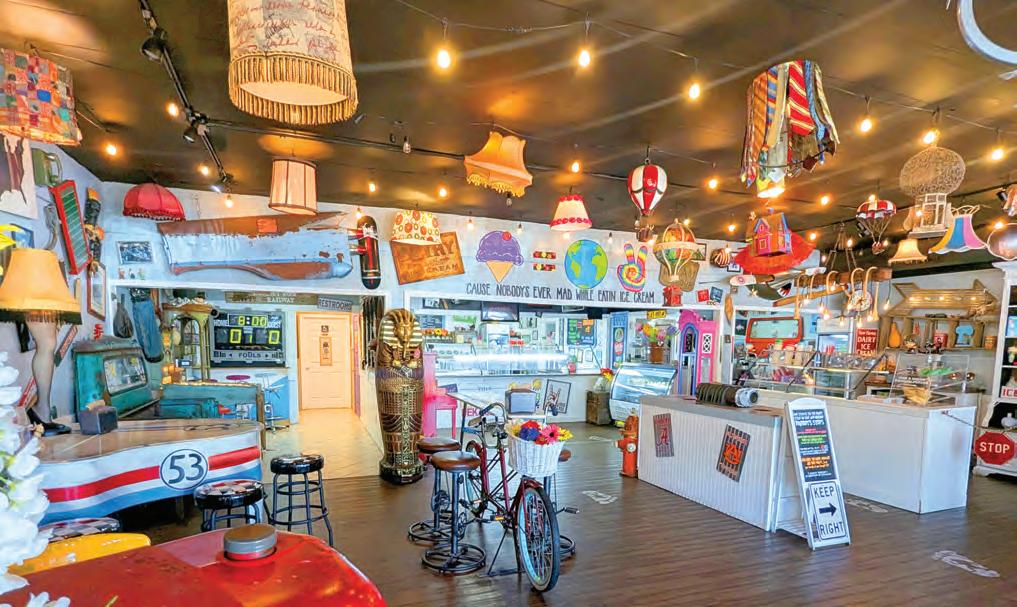
Shanks hopes this playful approach and the store’s whimsical atmosphere make every guest feel like a kid again. “The vibe is like Mary Poppins and Willy Wonka and Mr. Magorium (of Wonder Emporium fame) designed an ice cream shop together,” she says.
Lookout Mountain Creamery, 612-D Gault Avenue North, Fort Payne facebook.com/LookoutMountainCreamery
While Brian Mince admits ice cream is no health food, he stresses that the homemade ice cream served at his shop is as good for you as the frosty dessert can be. “It’s all homemade with milk — not powdered milk — sugar and natural ingredients like real fruits,” he says. “We don’t use any artificial flavorings.”
Mince owns the creamery with his wife Tiffany, and the idea to open the shop grew from the couple’s passion for sweets. “For 10 years, we worked for the Discovery Channel show, ‘Street Outlaws,’ a drag-racing series, handling their
merchandise, and that took us all over,” he says. “On our travels, we always sought out ice cream and dessert shops to try.” Once they began thinking about their own creamery, they got serious about sampling and sourcing ideas.
Then COVID hit. “The shop became our pandemic experiment,” Mince says. “We had the time, so we just did it.” The creamery opened on Jan. 1, 2021, and now churns up about 100-150 gallons a week of approximately 30 flavors during summer. The shop also makes its own brownies, cupcakes and rice crispy treats.
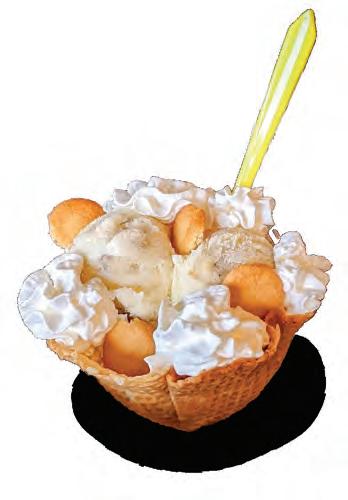
While standards like chocolate and vanilla sell well, more complex confections like its salted caramel and banana pudding ice creams earn five-star reviews too. Seasonal hits include pumpkin spice in fall and refreshing pina colada and watermelon in the summer. “If it is sweet and people like it, we’ve probably turned it into an ice cream,” Mince says. Or will in the future. Mince sometimes takes requests. “A customer asked if we could make a black walnut ice cream, so I’m figuring out how try that for them,” he says.
The colorful and playful interior of Lookout Mountain Creamery in Fort Payne creates a fun atmosphere for diving into this shop’s cold, creamy and dreamy flavors like Pina colada, banana pudding and more.
Brian and Tiffany Mince, owners of Lookout Mountain Creamery.
Cammie’s Old Dutch, 2511 Old Shell Road, Mobile & 9555 Co Rd 24, Fairhope cammiesolddutch.com
Necessity drove Cammie Wayne, owner of Cammie’s Old Dutch Ice Cream, to start making her own ice cream. While the business has been open since 1969, and she’s owned it since 1998, the closure of Dairy Fresh, the company that custom made the ice cream for the shop (based on the original owners’ recipes) closed in 2010. “So, I decided we’d make our ice cream ourselves,” she says. Customers who frequent Cammie’s are sure glad she did.
One little ice-cream-making machine kept Cammie’s supplied initially, but as word spread of Wayne’s peanutbutter-cup-studded Moose Tracks and praline-packed Creole pecan, demand increased. “Other ice cream shops started reaching out to me, so I started selling our ice cream to them wholesale,” she says. Then grocery stores came calling.
Today, Cammie’s fans find their ice cream fix at the small retail ice cream shop fronting its ice-cream factory, at the Fairhope shop that opened in 2023, in half gallons at south Alabama Piggly Wiggly and Greer’s locations, and at ice cream shops in Alabama, Mississippi, Florida and Louisiana. “There’s actually a waiting list for other spots to get our ice cream,” Wayne says. But the original shop, Mobile’s oldest ice cream parlor, remains busy, too.
Despite the growth, Wayne still makes her ice-cream in 10-gallon batches with the best ingredients she can find — which includes baking all the cakes, brownies and cookies that get blended into some of her flavors — and builds all her ice creams on a base containing 12percent butterfat. Wayne stirs all the flavorings in by hand and jokes she’s got the forearms to prove it. “That’s the key to our success,” she says. “Making it small batch like that, our product is super fresh, in our store and in others.”
While Wayne stays faithful to the original owners’ recipes, she enjoys coming up with new flavors too, like Moon Pie. For America’s 250th birthday, she’s whipped up a blackberry cobbler ice cream. “It reminds me of my mom,” she says. “We’d go blackberry picking, and then she’d make us a cobbler with what we got.”
More Frozen Fun
Blue Ribbon Dairy, Tallassee 5290 Chana Creek Road, Tallassee facebook.com/blueribbondairyllc
“Fresh” is no empty adjective attached to the ice cream made by Blue Ribbon Dairy in Tallassee. In 2019, owner Michaela Wilson started turning the milk squeezed from her cows into vanilla, strawberry, chocolate, blueberry cheesecake, banana pudding and Snicker’s ice creams. They’re available by the pint at the dairy’s farm store seven days a week from 7a.m. to 7p.m. Before hitting the road again, most folks who make this ice-cream field trip sit a spell to enjoy the farm’s relaxing scenery, which includes a playground, a picnic area and a petting zoo with goats and fuzzy sheep. Wilson’s coffee shop in Tallassee, the Coffee Cow, serves her ice cream, too.
Perfect Pit Stop — Peach Park 2300 7th Street South, Clanton, AL facebook.com/peachparkclanton
Right off I-65, Peach Park draws drivers off the interstate in droves with its 14 flavors of homemade ice cream, including the beloved and best-selling peach ice cream crafted with Chilton County’s famed fruit. Each year, Peach Park turns more than 4,000 three-gallon buckets of peaches into cobblers, pies and cakes, but 70 percent of these peaches go into its ice cream.
For decades owner Mark Gray’s mom Frances made its cool treats using recipes she developed in 1987. Last summer, she turned over the churning duties to her granddaughter and a few other Park employees, but she remains involved. Robin Gray, speaking on behalf of the Peach Park family, shares the “secret” to Peach Park's ice cream success. “Our recipes are from-scratch recipes with real sugar, real milk and fresh fruit with no added ingredients,” she says, “just like you would make at home.”
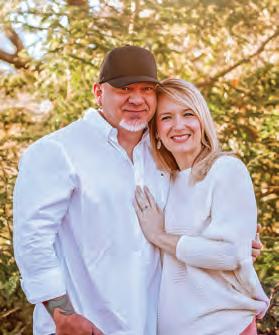
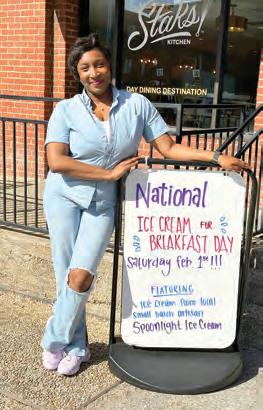
As she traveled and tasted ice creams everywhere she went, Dominique Treadwell, founder and “chief flavor maker” of Opelika’s Spoonlight Ice Cream, got a little bored. “I saw so much of the same stuff,” she says. In 2024, she started Spoonlight to add some energy to the ice-cream scene. There’s no shop to visit; if you want her hot honey cornbread (sweet cream ice cream swirled with habanero honey and crumbles of cornbread), lavender honeycomb (lavender-steeped ice cream with homemade honey-vanilla candy pieces mixed in) or other imaginative concoctions, you place an order through her website, and schedule a weekend pick-up of your pints. If you’re after vanilla or chocolate, keep looking. “I never make an ordinary ice cream,” Treadwell says. “If you’re going to waste calories, you need to go for something special.” And if ice cream doesn’t usually agree with your tummy, Spoonlight might be for you. Treadwell uses milk from cows that naturally produce only A2 protein, which is easier to digest for many. “My lactose-intolerant family can eat gallons of my ice cream with zero digestive issues,” she says.
Can’t-Miss Cones
Scoop Du Jour, 512 A. Broad Street, Gadsden facebook.com/ScoopDuJourAL
Great ice cream tastes even better in a great cone, and the homemade waffle cones at Scoop Du Jour, which opened in fall 2020 in downtown Gadsden, make the perfect edible containers for the shop’s dreamy ice creams. “They’re very popular,” owner Kossi Amegble says. “If we ever run out, folks get mad.” While not every flavor at this shop is homemade, he crafts the bourbon butter pecan, brandy peach and grape varieties inhouse and tastes every batch to ensure top-shelf quality.
Other Don’t-Skip
Ice Cream Stops
Delighting taste buds since for more than a century, the orange-pineapple ice cream at Trowbridge’s Ice Cream & Sandwich Shop in Florence is an essential Alabama experience. 316 North Court Street, Florence facebook.com/p/Trowbridges-Ice-Cream
Big Spoon Creamery, an artisan ice cream company based in Birmingham (with two Magic City locations and an additional location in Huntsville), whips up inventive flavors like tahini-chocolate crunch and passionfruit mascarpone.
Tucked away on a rural road in Gallant, Greasy Spoon Kitchen’s homemade ice creams, like strawberry cheesecake and chocolate chip cookie dough, encourage diners to save room for dessert.
Homemade soft serve in both chocolate and vanilla add to the abundant good-eats at Pike Road’s SweetCreek Farm Market , which also features produce right off area farms, barbecue, jellies, pickles and more, as well as other ice cream from Blue Bell.
Freezy’s Creamery in Helena is only open on weekends but home-makes and serves flavors like fruit punch and caramel macchiato that are well worth the wait.
4025 Helena Road, Helena facebook.com/FreezysCreamery
Spoonlight Ice Cream owner Dominique Treadwell (left) pleases palates with her highly original flavor creations like hot honey cornbread ice cream (right).
From a Cigar Box to a Statewide Cooperative: Alabama ONE Credit Union Celebrates 75 Years
Seventy-five years is a long time. Long enough to watch telephones migrate from kitchen walls to traveling in our pockets. Long enough to see vehicles that once simply carried us from place to place begin to navigate the road on their own. Life has grown faster, busier, and more connected than any of us could have ever imagined. But even amid all that change, the deepest human needs have remained the same—trust, genuine relationships, and the comfort of knowing the people you count on will show up when it matters most.
That is the story of Alabama ONE Credit Union.
Alabama ONE’s roots reach back to a time when the hum of industry was just beginning to fill the air in Tuscaloosa. When the B.F. Goodrich Tire Plant opened its doors in 1946, it brought jobs, wages, and a new sense of stability to working families across west Alabama. It also planted the seed of something more.
Just a few years later, in 1951, seven individuals decided that the hardworking men and women on the plant floor deserved a financial institution that worked just as hard for them. They pooled their own money—each placing $5 into a King Edward cigar box. That humble $35, combined with a whole lot of passion, led to the chartering of TRW (Tire & Rubber Workers) Federal Credit Union, which would later evolve into B.F. Goodrich Employees Federal Credit Union.
For decades, the credit union faithfully served its members—people who worked hard, raised families, and built lives in the communities around them. Then, in 2001, came a pivotal moment: the credit union was designated as a community credit union, extending membership eligibility beyond a single employer.
As its reach expanded, so did its name. The credit union became Alabama ONE Credit Union, and what followed was a deliberate, purposeful journey into the small towns and rural stretches that make up so much of our state’s character. Branch by branch, community by community, Alabama ONE extended its reach to the places that often go overlooked by other financial institutions.
Earlier this year, Alabama ONE opened a new branch in Southside, extending services to Coosa Valley Electric Cooperative members and the broader Etowah County community.
Today, Alabama ONE serves nearly 100,000 members across 58 Alabama counties, standing as one of the state’s most respected financial cooperatives. Those are meaningful numbers. But they are not what defines Alabama ONE.
What defines Alabama ONE is the young member opening a first checking account, the growing family buying their dream home, or the small business owner taking a leap of faith. It’s the relationship built over years—a name remembered, a face recognized, a phone call answered by someone who actually knows your story.
At its core, Alabama ONE exists for a purpose that reaches beyond financial performance. It is built on the same principle that guided those seven founding members back in 1951: people helping people.
Strategic mergers brought together organizations that shared Alabama ONE’s cooperative spirit. Alabama Rural Electric Credit Union joined in 2020—connecting Alabama ONE to the employees of the 23 Alabama Rural Electric Cooperatives, along with their 600,000 members. Additional mergers and partnerships in 2021, 2023, and 2024 planted Alabama ONE firmly across the state, establishing branches in the same communities served by many of Alabama’s rural electric cooperatives: Cherokee, PowerSouth, Southern Pine, ClarkeWashington, Central Alabama, Tallapoosa River, Black Warrior, Dixie and Wiregrass.
Throughout 2026, Alabama ONE is honoring their 75th Anniversary with Member Appreciation events at all 31 branch locations. At each celebration, the credit union is making a $750 donation to a local nonprofit, highlighting the credit union’s longstanding support of the communities it serves. A limited-edition 75th Anniversary T-shirt and a commemorative video have also been unveiled, each reflecting on the journey that brought the credit union to where it stands today.
Alabama ONE’s story is still being written. And the commitment that shapes every chapter remains unchanged: from farms to city streets, from small businesses to family homes, Alabama ONE will continue to stand beside the communities it serves—rooted, reliable, and ready to help its members manage what life is.
ONE.Together. Since 1951.
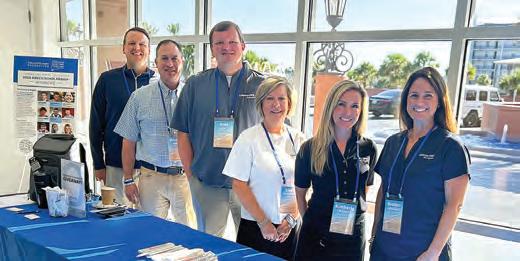
From left, Tyler Foster, SVP Wealth Advisory; Whitney Oswalt, CEO; Brad Cox, AVP Business Development West; Linda Williamson, Business Development Officer; Kimberly Adams, Business Development Officer; and Heather Menefee, Business Development Officer, at 2025 AREA Summer Conference in Orange Beach.
BIG FISH
Asian influence helps restaurant stand out in beach dining choices
BY JENNIFER KORNEGAY
BY JENNIFER
Leck and Jana Lilayuva, owners of Big Fish
PHOTO
KORNEGAY
The sign out front says Big Fish, but when you ask Leck Lilayuva to describe the food served at the Orange Beach restaurant he owns with his wife Jana, and he uses the word “fresh” three times in under 30 seconds, you wonder if maybe Fresh Fish would do the spot more justice.
Then again, “Big” makes good sense if you add “selection;” some days, the menu features as many as 10 different fresh fish species. But coastal residents and tourists in the know don’t waste time pondering Big Fish’s name. They simply show up and hope they don’t have to wait too long for a table.
But if there is a wait, most don’t hesitate to put their name on the list, and Lilayuva believes including some Asian influences helps Big Fish stand out in Orange Beach’s ocean of seafood-centric-spots. “My dad was from Thailand, so when Jana and I created the menu, we were a little unsure about adding those touches that point back to my heritage, but people love it, and I think that’s because it’s different,” he says.
And again, he stresses the food’s freshness. “The focus here is super-fresh quality fish, nothing frozen,” he says. Big Fish’s sushi bar benefits from this mantra too. Ask residents and those who frequent Orange beach where to get the best sushi, and Big Fish is usually among the answers.
The positive response to Big Fish’s food philosophy was never guaranteed but fueled the vision as Lilayuva and Jana dreamt up their own spot. Lilayuva grew up on Alabama’s coast, working alongside his dad on his fishing boat and at his restaurant, Niki’s Seafood. While a modeling career took him away from Alabama and all over the globe for eight years, when he returned home, he rejoined his dad.
But not long after, Hurricane Ivan hit, and his dad sold Niki’s to Lilayuva’s cousin. Lilayuva did some construction work before landing back in the restaurant business, working at Tacky Jack’s, where he met Jana. The two moved on to work at another area restaurant, and while there, began thinking about opening Big Fish.
“We wanted a place we could do things our way, and in January 2010, we welcomed our first diners,” Lilayuva says.
A few months later, the oil spill caused by the explosion of the Deepwater Horizon washed up on Alabama’s beaches, keeping visitors home and scaring many people away from eating seafood. “I thought that was the worst thing, and then 10 years later, the pandemic happened,” Lilayuva says. “But we made it through both hardships, and that’s because of our reputation for super fresh seafood and fish.”
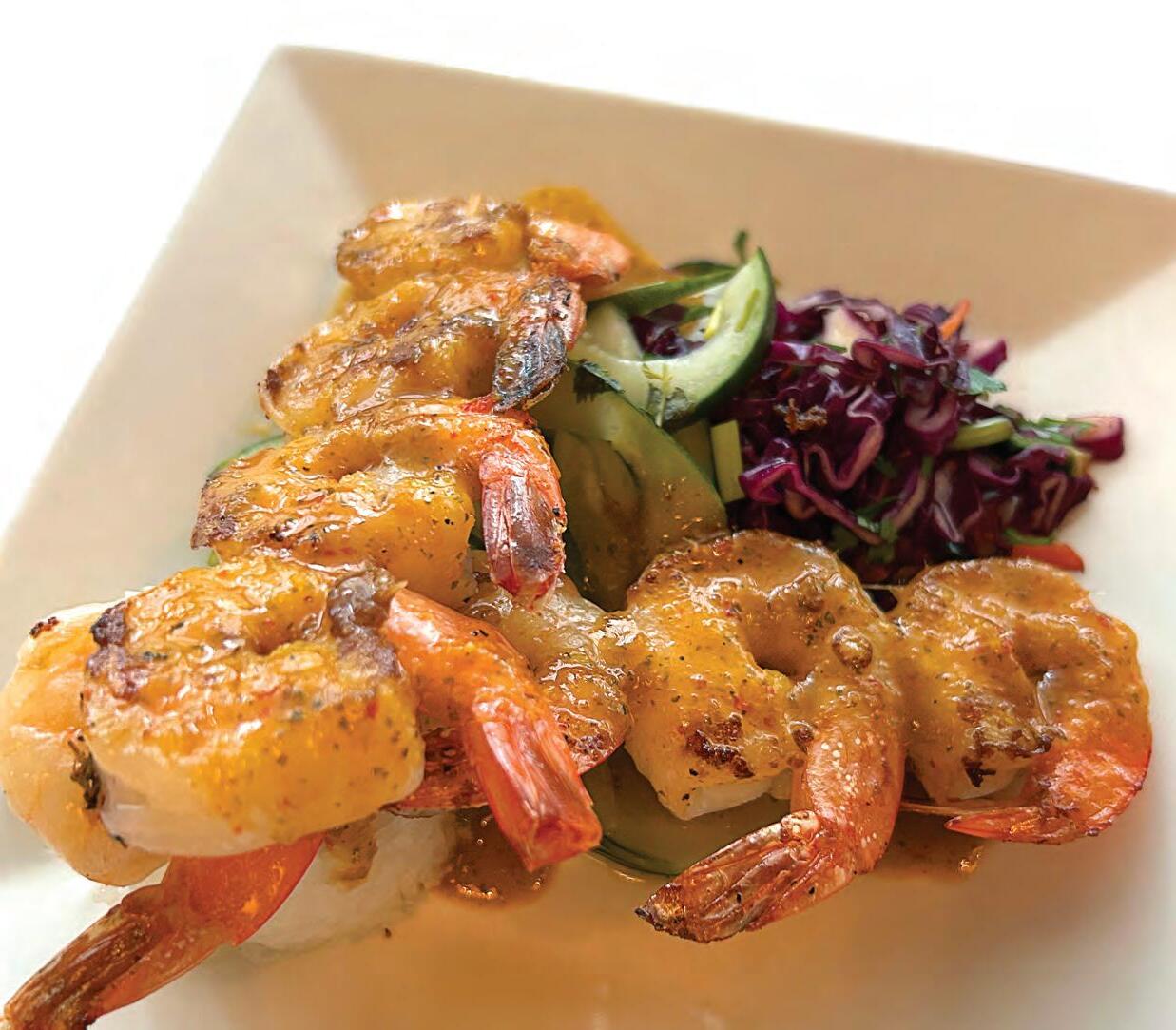
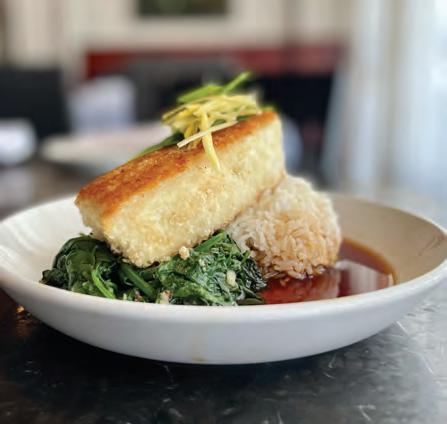
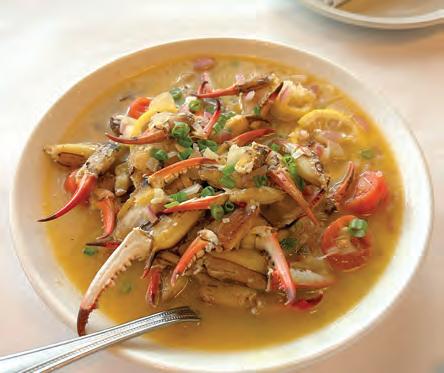
That reputation still packs the restaurant and is evident in plump blue crab claws sauteed in a garlic and white wine-butter sauce, the ginger-glazed shrimp and the day’s fresh catches served Big Fish style — sauteed and topped with scallions and ginger over wilted spinach and fluffy jasmine rice, all swimming in a sherry and soy sauce broth. On the sushi bar, it shines in the best-seller: chili-garlic sashimi. “People who don’t think they like sushi love it, and it opens the door for them to try other sushi selections,” Lilayuva says.
Folks who don’t enjoy seafood find plenty of options, too. Big Fish’s beef tataki — pieces of filet sliced thin and seared (but still rare) brightened with a citrus-soy sauce reduction and jalapenos — is Lilayuva’s favorite dish. “I’m actually a steak guy,” he says.
And while a drive down the main beach road sends one restaurant after another buzzing by your car window, Big Fish sits tucked in a strip mall on Canal Road, a less noticeable spot, especially for tourists. And yet, first-time beachgoers continue to find their way there. And they come back, joining the seasoned visitors and locals.
Lilayuva explains why. “I know I keep saying it, but it’s the freshness, and also the consistency,” he says. “If you get a dish today, and then you get the dish a week or a month from now, it will taste the same. I’m proud of that.”
He’s equally proud of achieving Big Fish’s success with his wife and his team. “Jana is still involved behind the scenes, and I love that we’ve done this together,” Lilayuva says. “And I love our staff; they’ve become like family.”
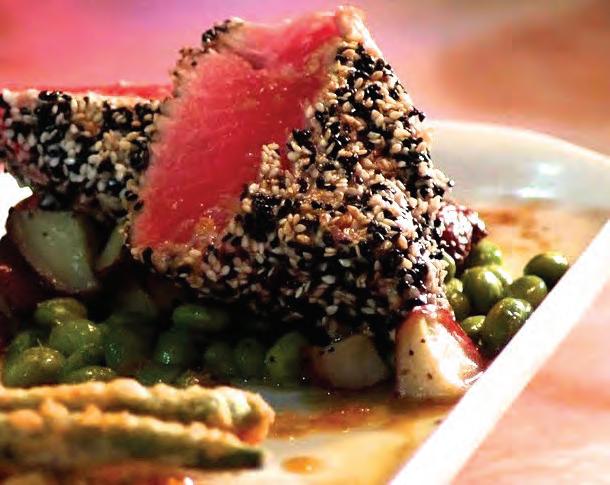
Always fresh is the common thread tying together the diverse seafood selections at Big Fish, like tuna (top), grouper (middle) and blue crab claws (bottom).
Big Fish
25814 Canal Rd, Orange Beach, AL 36561 251-981-5516
bigfishrestaurantbar.com
Hours: 3p.m. – 9p.m. Monday-Saturday
Orange Beach l
PHOTO BY JENNIFER
KORNEGAY
PHOTO COURTESY LECK
Take Us
Continued from page 11.
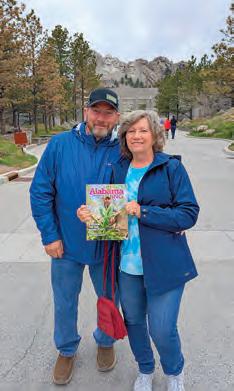
Coosa Valley EC members Donald and Anita Mitchell from Lincoln visited Mount Rushmore in South Dakota last year.
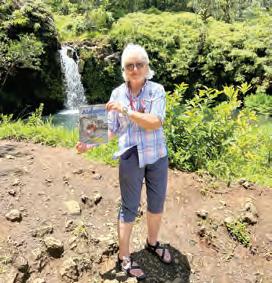
Kay Parker-Phillips of Holly Pond made a trip to Maui last year and took along her magazine. She is a member of Cullman EC.
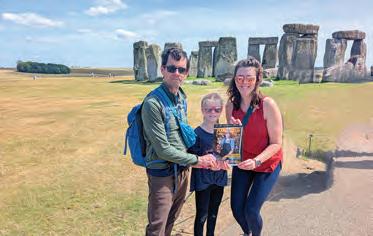
Hank, Katie and Rosalind Murrah of Auburn and Tallapoosa River EC visited Stonehenge in England last year as part of their multi-generational family trip.
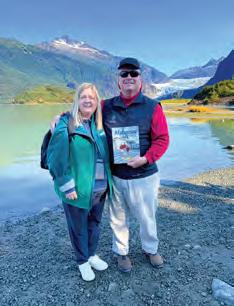
Todd McLeroy and his wife Kathryn recently traveled to Mendenhall Glacier near Juneau, Alaska, with their Alabama Living. He is general counsel for Cullman EC.
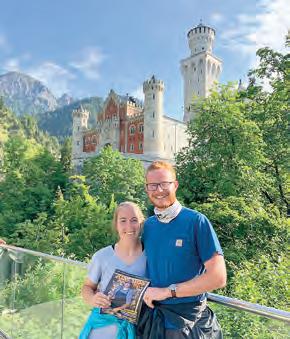
Leah and Shelton Moomaw of Hatton traveled to Ireland and Germany, where they visited Neuschwanstein Castle. They are members of Joe Wheeler EMC.
CROSSWORD
BY MYLES MELLOR
1 Educational institution in Montevallo celebrating U.S. history and independence, goes with 6 down
5 Pre-holiday days
8 Primitive shelter
9 The color of American blue hearts flowers, 2 words
12 Current events
13 French architect who designed the plan for the development of Washington D.C.
15 American Freedom ___: it toured the country in 1975-6 to celebrate the US bicentennial
18 Total, 2 words
20 Front of a ship
22 Suffix indicating a practitioner or believer
23 Concealed 24 Exclamation of mild surprise
25 Fundamental law of the US nation
28 Period of 24 hours
29 V igorous style and enthusiasm
30 Professional
1 Historic Northern Alabama city on the official list of Semiquincentennial cities
2 Alabama city named in honor of the Revolutionary War Battle of ____ Springs, and on the official list of Semiquincentennial cities
3 Dauphin or Twelvemile
4 US professional basketball league, abbr.
6 Second part of 1 across
7 __ ___ 250, celebration to be held at the American Village in Montevallo July 3-4, 2026, 2 words
10 White trumpet-shaped flower
11 Massachusetts town best known for the “shot heard from round the world”
14 __ Hall Ballroom- place for events at the American Village
16 The _____: Jeffersonian-style building in the American Village used for meetings, and workshops
1 7 Word of refusal
19 Independence _____: Area at American Village representing Liberty drawing the 13 colonies together in common cause
21 Red, ___ and blue
24 ___ Hill: southwest Alabama city on the official list of semiquincentennial cities
26 __ Antonio
2 7 Formal dinner jacket
EVENTS Around Alabama
JULY
All month, St. Stephens, “Many Voices, One Nation: Alabama’s First County,” St. Stephens Museum, 1854 Washington County Courthouse. Museum worked with the Smithsonians’ Museum on Main Street program to develop this exhibition, which reflects the broad history and culture of the county, in celebration of America 250. Open 10 a.m. to 2 p.m. Tuesdays and Thursdays throughout the month. Search for Washington County Museum, Alabama on Facebook.
JULY 3
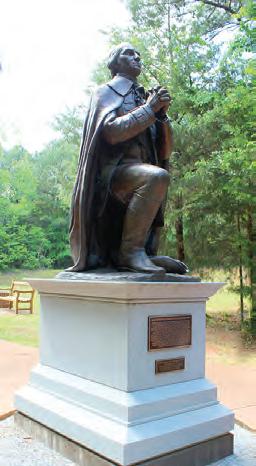
Cullman, celebration to commemorate a new Revolutionary War Minute Man bronze statue, Veterans Park Pavilion at Sportsman Lake Park. 10 a.m. Sponsored by the Dripping Springs Chapter of the Daughters of the American Revolution in honor of America 250. Search for Sportsman Lake Park on Facebook.
JULY 3
Kilpatrick, Fourth of July celebration, Kilpatrick Event Center, 17475 Highway 168 in Albertville. Live entertainment, kids’ corner, cornhole tournament, food vendors, craft booths and fireworks. Free. Begins at 4 p.m. 256-849-0934 or kilpatrickal.org
JULY 3
Prattville, Concert and drone show, Stanley-Jensen Stadium, 6 p.m. Live performance by Blackberry Breeze; evening culminates with 100 drones lighting up the night sky. Free. Search for the event’s page on Facebook.
JULY 3-4
Fort Payne, Independence Day events at DeSoto State Park. Flag-making contest for all ages, splish and splash pool party on Friday and ice cream social on Saturday at the campground pavilion. Brittney. hughes@dcnr.alabama.gov
JULY 3-4
Grand Bay, 52nd annual Watermelon Festival, Odd Fellows Festival Park, 10327 Taylor F. Harper Blvd. 3 to 7 p.m. July 3 and 10 a.m. to 5 p.m. July 4. Friday is a preview day, with arts and crafts vendors, rides, food vendors and entertainment. Additional activities on Saturday, including a car show, games, contests for all ages and all the watermelon you can eat. Admission on Saturday is $5 per vehicle. Fireworks show at dusk. GrandBayWatermelonFestival.org
JULY 3-4
Montevallo, Sweet Home 250: Where Freedom Feels Like Home, at the American Village. A two-day music, arts & food festival honoring Alabama’s rich musical heritage by featuring artists from across the state, while celebrating our history, visual arts, and culinary traditions. Musical artists include Taylor Hicks, the Blind Boys of Alabama, Chuck Leavell, Act of Congress, Roman Street and more. 11 a.m. to 10:30 p.m. each day. sweethome250.com
JULY 4
Andalusia, Fourth of July Parade, 212 S. Three Notch St., 10 a.m. Organized by the Old Three Notch Daughters of the American Revolution in celebration of America 250. Decorate a float or vehicle, ride a bike, push a stroller or walk a dog and wear red, white and blue. All are welcome. Lineup at First Baptist Church parking lot at 9 a.m. 912-312-6628.
JULY 4
Henagar, Sand Mountain Potato Festival, Henagar City Park. A patriotic parade starts at 10 a.m.; the day also features an antique car show, antique tractor show, games for children, arts and crafts and food vendors from across the Southeast. Live entertainment includes Southern gospel, country and bluegrass music. Cityofhenagar.com
JULY 4
Cedar Bluff, Liberty Day/America 250 Celebration in Cherokee County, Cedar Bluff Town Park, beginning at 7 a.m. Fireworks over Weiss Lake at 9 p.m. Car show, vendors, bouncy houses, face painting, balloon artists, food and more. Cherokee-Chamber.org
JULY 4
Scottsboro, Independence Day Celebration in downtown. Vendor market, patriotic parade, live music performances and activities for the whole family. CityofScottsboro.com
JULY 17-18
Montgomery, Hot Air Balloon Festival, 5 to 11 p.m., Blount Cultural Park, 1 Festival Drive. Event was postponed from April due to weather. Tethered hot air balloon rides for $35 per person (limited availability), live entertainment, craft and retail vendors, kids’ zone and festival food. After 9 p.m., the hot air balloon glow and laser show kicks off the grand finale, with musicsynced visuals, coordinated balloon burns and crowd-led countdowns. Bring blankets, chairs and umbrellas. Tickets are limited. ExperienceMontgomeryAl.org for information and ticket link.
JULY 23-26
Mobile, Gulf Coast Ethnic and Heritage Jazz Festival, various locations. This non-profit group works to preserve and encourage the study of jazz music for future generations. Event features an evening of poetry on Thursday, the Marcus Johnson Summer Jazz Camp Orchestra on Friday, the Brass Queens, Madoca and Kim Scott on Saturday, and a celebration of Mobile music legends on Sunday. Gcehjazzfest.wordpress.com
JULY 25
Eclectic, Lake Martin Songwriter’s Festival featuring the Marcus King Band, 6 p.m. at the Amp at Lake Martin, 8878 Kowaliga Road. Also performing will be Charlie Argo and his band and singer/songwriter Jeffrey Steele. Some proceeds from the event benefit the local community. TheAmpOnLakeMartin.com
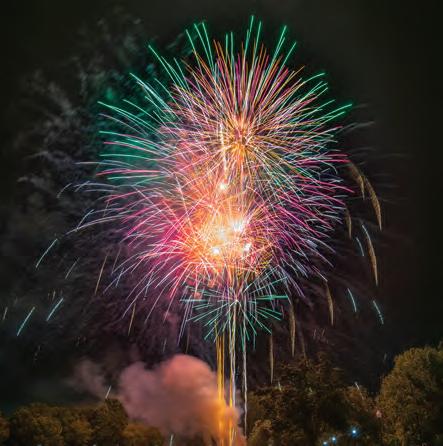
Several Alabama communities will have fireworks displays for the Fourth of July holiday.
JULY 25
Vina, Vina July Fest at the Vina Volunteer Fire Department, 79 Church St. 10 a.m. to 7 p.m. Music, car show and food and arts and crafts vendors, plus traditional family summer contests and a cash draw down. Event concludes with fireworks display. Free. 256-356-4996.
AUGUST 6-8
Mentone, St. Joseph’s On the Mountain Episcopal Church workers will participate in the World’s Longest Yard Sale. Proceeds benefit the church’s ministries and the community. 8 a.m. to 5 p.m. Thursday-Friday, and 8 a.m. to 12 p.m. Saturday. 21145 Scenic Highway. Stjom.church
AUGUST 14-15
Russellville, Franklin County Watermelon Festival, Jackson Avenue in downtown. This free family event features two days of music, contests, entertainment, arts and crafts, a 5K run, antique car and truck show, festival foods and a slice of free watermelon. FranklinCountyChamber.org
AUGUST 14-16
Montgomery, Buckmasters 31st Annual Expo, Montgomery Convention Center. More than 300 booths, bull riding on Friday and Saturday nights, and lots of family fun. Free admission with a canned food item or $1 donation. Buckmasters.com
To place an event, e-mail events@alabamaliving.coop. or visit www.alabamaliving.coop. You can also mail to Events Calendar, 340 TechnaCenter Dr., Montgomery, AL 36117; Each submission must include a contact name and phone number. Deadline is two months prior to issue date. We regret that we cannot publish every event due to space limitations.
Alabama Living on FB instagram.com/alabama_living
PHOTO BY DREW
250th Birthday:
Opportunity to unite around our founding principles
The American Village has been designated the state’s official celebration capital for America’s 250th birthday. It seems like the ideal place to be the official Semiquincentennial Celebration Capital for the state of Alabama, doesn’t it?
It is indeed an honor for us, and all the credit goes to Tom Walker, our founder. The vision he had to establish this campus and the education that takes place here, it’s just gotten more and more important over the years. All you have to do is walk around this campus and the entire place is a testament to Tom’s vision and perseverance. This year in particular, it’s an opportunity for us to appeal to folks across the state as the celebration capital, but also to really raise awareness for what we do here. We (want to) bring students to the campus of American Village and give them an appreciation for the founding of our nation. We’re probably the only country in the world that celebrates a birthday. Because we have this defining moment where these principles were beautifully written for us to stand behind, not just in 1776, but for the rest of our history. Especially now, it’s vitally important for us to look back at our founding principles of life, liberty and the pursuit of happiness and seize this as an opportunity to unite around those founding principles once again.
What’s your favorite part of your job here?
One of my favorite things is being able to walk around campus and see the students out here, and I’m always thinking in the back of my mind, there’s always going to be a handful of students who are coming to us from really difficult circumstances. The thing I love about what they learn, is that no matter how challenging your circumstances are, there is no lid to your future potential. We want them to think beyond what they think their limitations might be. After all, things didn’t get much darker than they did for our founding fathers.
How is that theme carried out at the Village?
About Alan: Named president and CEO of the American Village in 2022. He came to the Village after serving as chief assistant district attorney for Alabama’s 18th Circuit in Columbiana. A retired colonel in the U.S. Marine Corps Reserve, he served both in the United States and overseas, including with Marine Forces Europe and Force Headquarters Group. He holds a bachelor’s degree from Tulane University and law degree from the University of Alabama School of Law. He heads the 188-acre non-profit campus in Montevallo which includes more than 20 historically inspired buildings from the Revolutionary War period, and is staffed by actors in period costumes who entertain and inform visitors, especially school children, with historical interpretations.
We just started a high school program that incorporates the oval office. On the president’s desk is a replica of the famous coconut husk that President Kennedy kept on his desk. (After his boat was sunk by a Japanese destroyer in 1943, Kennedy and his crew were stranded. He scratched an SOS message into a coconut shell, which was delivered to Allied scouts by local islanders. They were rescued as a result and he kept the coconut as a paperweight during his presidency.) That is a reminder that things can be difficult but they can be overcome. That’s my favorite theme at American Village: Challenges are coming, but you can overcome them.
—Lenore Vickrey
Alan Miller
PHOTO BY SEAN BURNLEY
Growing the Nation: Alabama plants with deep American roots
As the United States prepares to celebrate its 250th anniversary, it’s a meaningful time to reflect on the living pieces of history rooted right here in Alabama’s landscapes. Beyond historic landmarks and documents, many native plants found across the Southeast quietly supported early settlers’ resilience, and survival — offering a deeper connection to our nation’s story.
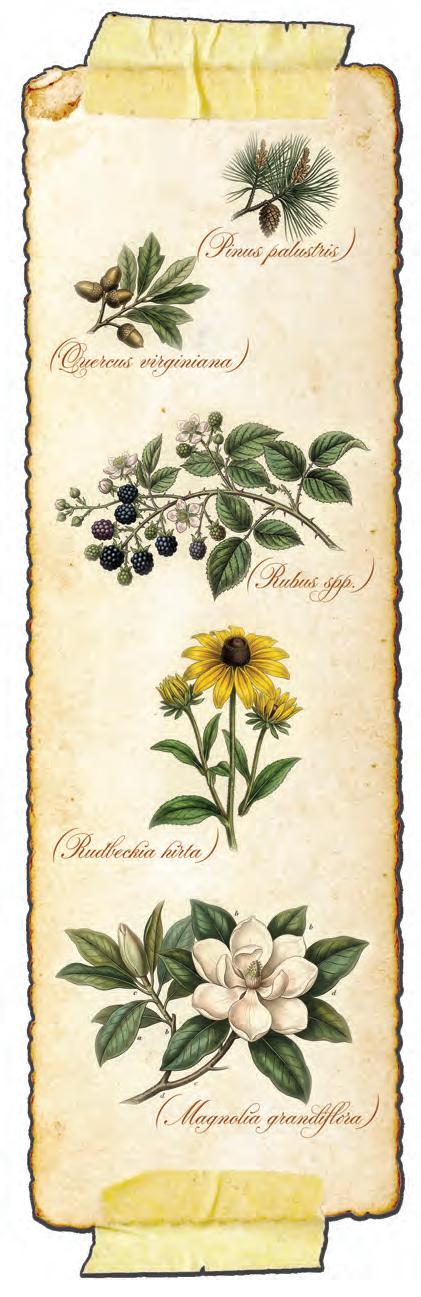
One of the most iconic native trees in Alabama is the longleaf pine (Pinus palustris). Once dominating the Southeastern landscape, longleaf pine forests were vital to early American industry. These trees provided naval stores — tar, pitch, and turpentine — used to waterproof and maintain wooden ships during the Revolutionary War era. In many ways, longleaf pine helped keep early American fleets afloat, making it a true symbol of strength and service.
Equally significant is the live oak (Quercus virginiana), native to southern Alabama’s coastal regions. Known for its dense, durable wood, live oak was essential in shipbuilding. Its natural curves were ideal for constructing hulls of naval vessels, including those used in the early years of the United States Navy. Today, these majestic trees still stand as living reminders of the nation’s endurance and ingenuity.
Alabama’s native food plants also played a critical role in early survival. Native plums (Prunus angustifolia), mayhaw (Crataegus spp.), and blackberries (Rubus spp.) provided seasonal fruit for both Indigenous communities and early settlers. These fruits were not only delicious, but also were dependable sources of nutrition in a time before modern agriculture and transportation systems.
Another important native crop is corn (Zea mays), cultivated for thousands of years by Indigenous peoples long before European settlers arrived. Corn became a foundation of Southern agriculture and was essential for feeding early communities during times of hardship, including the Revolutionary period. Its adaptability to Alabama’s soils and climate made it a cornerstone of food security.
We can’t overlook the ecological importance of native wildflowers like black-eyed Susan (Rudbeckia hirta), purple coneflower (Echinacea purpurea), common yarrow (Achillea millefolium), and blue false indigo (Baptisia australis) — all native to Alabama. While they may seem simple, these plants supported pollinator populations by providing reliable sources of nectar and pollen for bees, butterflies, and other beneficial insects — organisms that were, and still are, critical for food production. Yarrow, in particular, has long been valued for attracting a wide diversity of pollinators as well as predatory insects that help naturally manage pests, strengthening early garden systems. Both yarrow and echinacea also held important medicinal value for Indigenous communities. Echinacea was commonly used to support immune health and treat infections, while yarrow was used to help stop bleeding, reduce inflammation, and promote wound healing. Meanwhile, blue false indigo contributed to early dye production and improved soil health through its nitrogen-fixing ability, enhancing fertility in both native ecosystems and cultivated fields.
Finally, the southern magnolia (Magnolia grandiflora), though often appreciated for its beauty, represents a deeper cultural connection to the South. Native to Alabama, it has long symbolized hospitality, resilience, and continuity — values that resonate strongly as we mark 250 years of American history.
As we reflect on this milestone anniversary, these native Alabama plants remind us that history is not just something we read, it’s something we grow. By preserving and planting these species, we honor a legacy rooted in the land and ensure it continues to thrive for generations to come.
Bethany O’Rear, a horticulturist for more than 20 years, is a regional agent with the Alabama Cooperative Extension System, specializing in commercial and home horticulture.
Blackberries
Black-eyed Susan
Live Oak
Longleaf Pine
Southern Magnolia
FINALLY ... LIFE INSURANCE YOU CAN AFFORD
• Rate schedule is based on your current age and is guaranteed for the life of the policy.
• Monthly rates as low as $3.49.
• Coverage is also available for your spouse and other family members.
• Benefits will NEVER be canceled or reduced for the life of the policy if premiums are paid on time.
Form #SRTCV/SRTCV R13 or R17, or #SRTCV90MA in MA
• Rates are based on your children’s or grandchildren’s present age and never increase for any reason.
• Monthly rates as low as $2.17.
• Benefits will NEVER be reduced or canceled if premiums are paid on time.
• Give your children a financial head start right now. Your policy builds CASH VALUE for your family’s needs.
Form #GWL2001 or GWLA001
RED, WHITE and BLUE Alabama Recipes
Reba's Blueberry Crunch Cake
Photos by Brooke Echols
Nachos de USA
Shawn's 4th of July Barbecue Beans
Cook of the Month Wanda Monk, Cullman EC
WNachos de USA
Tostitos original restaurant-style tortilla chips
Doritos Flamin’ Hot nacho tortilla chips
Tostitos blue corn tortilla chips
BBQ pulled chicken (from favorite place)
BBQ pulled pork (from favorite place)
1 pound ground beef
1/2 white onion
1 ounce packet taco seasoning (I use Taco Bell original)
1 small packet Sazon Goya (con culantro y achiote)
1/4 cup water
Alabama white sauce (I use Big Bob’s)
Pace picante sauce (medium)
Blueberry BBQ sauce (I use Pepper Palace)
1 jar jalapeño slices
anda Monk is one of our faithful regular contributors to the recipe pages of Alabama Living, and this month her recipe for Reba’s Blueberry Crunch Cake took top honors. She gives credit to her late mother-in-law, Mary Sue Monk, for originating the recipe which was a favorite for family and friends over the years. “She cooked for everybody in her little trailer,” she says, and Wanda enjoyed making it for her family at holiday time and other times. The recipe calls for topping the cake with almonds or pecans (we used almonds) but Wanda says, “I like any nut really.” And while the cake doesn’t have any red color in it, she named it after singer Reba McIntyre because “we both have red hair.”
Reba’s Blueberry Crunch Cake
1 20- ounce can crushed pineapple (do not drain)
5 cups fresh blueberries
1/4 cup sugar
1 box yellow cake mix
1/4 cup slivered almonds or chopped pecans
1 stick margarine, melted
In a 9x13-inch baking dish, spread pineapple with juice evenly over the bottom. Spread blueberries evenly over pineapple layer. Sprinkle sugar over blueberry layer. Sift cake mix over blueberries evenly. Layer almonds or pecans over cake mix top. Drizzle melted margarine over almond layer. Bake at 350 degrees for 45-50 minutes or until tested done and nuts are brown.
In a large pan, brown ground beef and onion until cooked throughout. Drain grease and return to pan. Add taco seasoning, Goya and 1/4 cup water. Simmer for 5 mins and remove from heat. When ground beef is almost finished, heat pre-purchased chicken and pork. Assemble tortilla chips on a large plate: red Doritos on the left side, white tortilla chips in the middle and blue tortilla chips on the right side of the plate. Top red chips with ground beef mixture and picante sauce. Top white chips with chicken and white sauce. Top blue chips with pork and blueberry BBQ sauce. Last, top every chip with a single jalapeño slice. Heat nacho plate in microwave for 30 seconds; serve and enjoy!
Jim Archuletta
Joe Wheeler EMC
Shawn’s 4th of July Barbecue Beans
4 15- ounce cans Luck’s Pinto Beans
1 pound bacon
1 large onion, chopped
1 teaspoon salt
1/2 teaspoon black pepper
1 19-ounce bottle Big Bob Gibson’s Bar-B-Q Red Sauce
1/4 cup apple cider vinegar
1 tablespoon hickory liquid smoke
Drain and rinse pinto beans in a colander, set aside. In a medium-size skillet, fry bacon until crisp. Set aside to cool, then crumble the bacon. Drain all but 1 tablespoon bacon drippings, and in the same skillet, sauté chopped onion with salt and pepper until onion is translucent. In a large mixing bowl, pour in all the bbq sauce. Pour vinegar into the empty bbq sauce bottle, replace lid and shake. Pour out vinegar into bowl, add all remaining ingredients and mix well. Pour beans mixture into a 9x13inch casserole dish, cover with foil. Bake at 350 degrees for one hour.
Shawn O’Harra
North
Alabama EC
Reba's Blueberry Crunch Cake
FBrooke Burks
or me, summer really kicks off with the July 4th holiday. This year, our country’s birthday is even more special being her 250th! I don’t know about you, but I plan to celebrate BIG this year! With it also being my youngest girl’s birthday, I plan to go all out on the menu. I can’t wait to see what all of our winners this month have in store that I can add to our July 4th table.
One dessert that will be there for sure is one my whole family loves, this Red White and Blue Sugar-Free Cheesecake Dessert or “fluff” as my girls like to call it. With only five ingredients, including fresh berries, this recipe is one your whole family will love, too! For more simple recipes like this one, visit us at thebutteredhome.com
Red, White and Blue Sugar-Free
Cheesecake Dessert
1 1- ounce package zero sugar cheesecake instant pudding mix
1 8- ounce container zero sugar Cool Whip
2 teaspoons lemon juice
4 ounces sliced strawberries
1/2 pint blueberries
In a bowl, mix Cool Whip, cheesecake pudding mix and lemon juice well, until combined. Fold in the strawberries and blueberries, reserving a few for garnish. Cover and refrigerate 30 minutes to overnight. Serve garnished.
*For an added treat, place in a freezer safe container, cover and freeze for a creamy, soft-serve ice cream consistency.
Old Glory Dessert (Fruit Pizza)
1 tube refrigerated sugar cookie dough
1 8- ounce package cream cheese, softened
¾ cup confectioners’ sugar
41/2 teaspoons lemon juice
1/2 cup fresh blueberries
2 cups strawberries, quartered (if large or cut in half if small)
Press cookie dough in a greased 15x10-inch sheet pan. Bake at 350 degrees for 10-12 minutes until golden brown. Cool on wire rack. In a mixing bowl, combine cream cheese, sugar and lemon juice until smooth. Set aside ¼ cup. Spread remaining cream cheese mixture over cookie crust. Decorate with blueberries and strawberries to resemble an American flag. Put remainder of cream cheese mixture in a small plastic bag. Cut one small hole in a corner and pipe stars in the spaces between the blueberries. *If you have a pastry star tip, use it in the plastic bag for prettier stars!
Nancy Sizemore Baldwin EMC
ENTER TO WIN $50 Cook Of The Month Prize!
Peanuts / Peanut Butter
October theme: enter by August 7, 2026
Send us original recipes featuring peanuts or peanut butter!
WEBSITE: alabamaliving.coop or scan here:
EMAIL: recipes@alabamaliving.coop
MAIL: Alabama Living Recipes, 340 Technacenter Dr., Montgomery AL 36117
Please include the name of your electric cooperative
Please do not submit recipes from other sources, including cookbooks or online publications. A recipe may be adapted and considered original only if at least one ingredient is changed from a previously published recipe. We will make every effort to review all recipes submitted for Cook of the Month consideration to ensure that only original recipes are published in Alabama Living.
PHOTO BY THE BUTTERED HOME
Red, White and Blue Sugar-Free Cheesecake Dessert
Consumer Wise
Apply your dishwasher’s delaystart feature to use electricity during off-peak hours.
How You Can Help During Peak Demand
Your electric utility works hard to ensure safe, reliable power to homes and businesses 24/7.
To make sure everyone has the power they need, generation must match consumption and have the capacity to adjust to changing demands for energy.
Peak demand is the period in a given range of time — day, month or year — when electricity use is highest. It’s caused by many people using energyconsuming equipment at the same time. It differs based on geography, weather and time of year. For example, demand is typically highest on hot summer afternoons and cold winter mornings. Most utilities also experience daily peaks when people are getting ready in the mornings and returning home in the evenings.
When everyone uses more energy at the same time, it puts more stress on the electric grid and requires more expensive electricity to meet the need. Electricity pricing is based on supply and demand. The price of electricity is higher when the demand is higher, which costs the utility more.
Let’s look at two examples.
Joe and John arrive home from work at 5:30 p.m. They both turn on the oven to make dinner.
While John waits for the oven to preheat, he throws in a load of laundry. He finishes dinner, cleans up and starts the dishwasher. Then, he moves the clothes to the dryer.
Joe finishes dinner, loads the dishwasher and sets it to start at 10 p.m. He puts a load of laundry in the washing machine and later that evening switches it over to the dryer.
Although they use the same appliances and amount of energy, John uses it all at once, running multiple appliances during peak hours, creating higher demand and more strain on the electric grid while using more expensive energy.
To lower your demand, spread electricity use throughout the day and avoid peak times as much as possible. This will reduce the utility’s cost of supplying electricity to your home. Another benefit of shifting your use to midday is integrating renewable energy, such as solar, which produces energy when the sun is shining.
Large appliances — including washers, dryers, ovens, water heaters and air conditioners — have the biggest impact. Using them during offpeak hours or one at a time can help. Automate as much as possible. Most electric vehicle chargers can be set to charge during scheduled hours with built-in timers or apps. Most modern dishwashers have delay-start features. If you have a pool, set the pool pump to run in the middle of the day, particularly if you are in a region with strong solar production.
You can also automate air conditioning. Some utilities offer programs that precool homes during off-peak hours to reduce demand during peak times. Simple, free adjustments, such as closing your curtains on hot afternoons and evenings, can help, too.
To lower energy use and strain on the grid during peak times, there are habits we can adopt in our homes.
Keep in mind that extreme weather, such as freezing temperatures in Alabama or a heat wave in Minnesota, puts extra stress on the grid. Taking it easy on your energy use during extreme weather events can help prevent outages.
Spreading out your energy use helps your utility keep costs down and benefits your local energy grid.
Miranda Boutelle is the chief operating officer at Efficiency Services Group in Oregon, a cooperatively owned energy efficiency company. She
You may think you understood the concept of “priceless” jewelry. For years, “priceless” meant “astronomically expensive.” That is, until now ...
Stauer smashes the luxury status quo with the release of our FREE* 200-Carat Lusso Amethyst Necklace
That’s right, we said FREE ... as in “priceless.” No charge.* ZERO dollars.* Call now and we’ll send you this impressive helping of genuine amethyst (independently appraised at $295) for FREE. We cut the price 100%. You only pay $24.95, our regular charge for shipping and processing.
We’ll even pay you back with a $30 discount certificate –– that’s our Better Than Free Shipping!
A collection of purple perfection. Your Lusso Amethyst Necklace is a 200-carat symphony of smooth purple genuine gemstones. Each gemstone’s shape and translucence ignites the velvety, violet hues. The polished amethysts are hand-strung on double-knotted jeweler’s thread, and the stunning 18" necklace (with 2" extender) secures with a goldfinished lobster clasp.
Too good to pass up. Too good to last long. Amethyst is one of the world’s most coveted gemstones and our supply is extremely limited. We can only offer such an outrageous deal for a short time every few years. Over 30,000 thrilled customers were lucky enough to get this promotion last time.
We only have about 2,500 left in stock. Act now!
Necklace Specifications:
• 200 ctw of genuine amethyst
• Gold-finished spacers
• 18" + 2" length necklace
Lusso Amethyst Necklace:
amethyst necklace limited to just the first 2,500 responders to this ad! 200 carats of pure luxury independently appraised at $295† ... yours FREE!*
Lusso Amethyst Necklace (200 ctw) $249** FREE* *Pay only shipping & processing of $24.95. Special price only for customers using the offer code.
“This necklace is beautiful. I could not believe my eyes ... GREAT!” — Bonnie from Longs, SC
Outdoors
Feathered Scouts
On ‘fowl’ days look for frenzied aerial action
Like a scene from a classic Alfred Hitchcock movie, hundreds of agitated and loudly squawking birds hovered just above the water or dove into it. Beneath the feathered fracas, the surface churned frothy white with activity.
“Watching birds is a good way to find speckled trout,” says Bobby Abruscato with A-Team Fishing Adventures in Mobile. “In the right spot, it gets insane. People can catch a limit quickly because the fish are in a feeding frenzy.”
Predators herd terrified baitfish and shrimp to the surface where they run out of escape room. From the air, sharp-eyed birds instantly spot any activity and pounce to get their share of protein. At any time along the Alabama coast, anglers might spot diving birds marking a feathered feeding frenzy. Besides speckled trout, anglers might catch redfish, white trout, Spanish mackerel, bluefish and other predatory species.
As quickly as a melee erupts, it could suddenly cease. After an attack, surviving prey species don’t necessarily leave the area. Baitfish scatter, but try to regroup. They find individual safety only in numbers. As long as food stays, predatory fish remain and try to herd the bait back to the surface where vigilant birds watch for renewed activity.
Not every diving bird indicates schooling activity. One bird might dive after a single fish, a dead fish on the surface or even a floating cracker. Terns dive frequently, but habitually go after smaller prey than seagulls, such as tiny shrimp or minnows. Pelicans often go after bigger prey.
“By looking at the bird species, we can usually tell if they are over trout,” Abruscato says. “The laughing gulls really give it away. People can see and hear them from long distances. When they start that laughter, anglers need to pay attention because something is happening.”
‘Read the birds’
Anglers also need to “read” the birds. Seagulls sitting on the water could indicate prey in the area, but they wait for activity to flare up again. One or two diving birds might not mean much, but excited and noisy birds hovering low over the surface probably indicate a feeding fish school.
“I watch for several birds hovering over the water,” Abruscato says. “They get right over the surface waiting for shrimp or baitfish to jump so they can get them. We might see 10 or 20 birds hovering low over the water. Then, suddenly, a couple of them dive. That’s when they see the shrimp or baitfish coming up.”
Nothing shuts down a feeding frenzy faster than a whirring boat propeller. After spotting hot activity, never run full throttle into the fray. Instead, try to determine where the school heads and cut them off. If possible, get upwind. Let the breeze quietly blow the boat toward the school. Run a trolling motor only sparingly for directional control.
“The worst thing anyone can do is run right into the middle of the school with the engine running and start casting,” Abruscato cautions. “The fish will just disappear. Come in from upwind and drift into the fish. Make long casts. Doing it the right way can turn a frenzy into a limit instead of just a couple fish or nothing.”
Frenzied trout might attack anything hitting the water. Many anglers use popping-cork rigs. They bait them with live shrimp, soft-plastic shrimp or minnow imitations. Floating lures can provoke incredibly exciting strikes.
“I prefer to throw a popping-cork rig,” Abruscato says. “The cork sounds like a fish striking the surface when it hits the water. I’ll fish a Gulp! or a Vudu Shrimp about two to three feet under the cork. If we miss a trout or a fish gets off, just leave the bait in the water. Another fish will probably hit it. I use a 7.5-foot rod with braided line so I can make really long casts to get to those schools.”
Schooling trout typically run on the small side, but larger trout and redfish could lurk just beneath the feeding school. Bigger trout and reds don’t want to eat shrimp or small fish. They want to snatch smaller trout. To target bigger fish, use larger baits that sink beneath the school of smaller trout.
Few people leave the dock planning to chase birds all day, but spotting diving feathered fury could put a limit of fish in the boat quickly if anglers can get to the right spot in time!
To book a trip with Abruscato, call 251-661-7696 or visit ateamfishing.com.
John N. Felsher is a professional freelance writer who lives in Semmes, Ala. He also hosts an outdoors tips show for WAVH FM Talk 106.5 radio station in Mobile, Ala. Contact him at j.felsher@ hotmail.com or through Facebook.
Flocks of agitated birds can often mean a school of feeding speckled trout or other fish beneath them.
As peak season approaches, take steps to protect your family, home
August through October is when the Atlantic hurricane season picks up momentum with September generally considered peak season. Storms are stronger and more numerous. And while this year’s forecasts indicate less activity, it’s important to be ready regardless of predictions.
It only takes one storm to make an impact, after all.
Members of South Alabama Electric Cooperative may recall two storms that impacted the cooperative’s service area and the larger region of Alabama, Florida and Georgia — Hurricane Opal in 1995 and Hurricane Michael in 2018, both October storms.
“We want our members to be ready at all times for any kind of severe weather, but hurricane season is a time when we want them to take particular care,” says Andy Kimbro, vice president of member services for SAEC. “Hurricane Opal in ’95
knocked out power for our entire system for 36 hours. Our linemen worked two weeks straight with help from outside utilities and cooperatives to make all the repairs. And Opal was a tropical storm by the time it reached us.”
The 2026 forecast from climatology researchers at Colorado State University — where hurricane forecasts have been developed since the 1980s — predicts a lower than normal hurricane season in the Atlantic basin. This lower activity is attributed to the presence of El Nino, a naturally occurring climate pattern that causes warmer temperatures in the Pacific Ocean and higher wind shears that reduce hurricane activity in the Atlantic, leading to fewer and weaker storms impacting the coastal U.S.
“We hope the forecast models hold for a less-active hurricane season, but we’re ready and we want our members to be ready,” Kimbro says.
Tropical system tips:
• Prepare your home and family. Secure any outdoor items that could become airborne during a storm. If you live in a mobile home, have a plan to shelter in a safer structure if possible.
• When a storm is reported, stock up on items such as flashlight batteries, nonperishable food, drinking water and any necessary medical supplies.
• Follow local media for storm updates. Keep tabs on where a storm could make landfall and its path once it moves inland. Tornadoes, flooding and damage from high winds are still possible far inland even when a system weakens after landfall.
• If someone in your home has a medical condition that requires electricity, reach out to your cooperative’s member services team by calling 800-556-2060.
• Once a storm moves through, be careful around any damaged structures, flooded areas or downed power lines. n
OUR COUNTRY, OUR COMMUNITY
Independence Day is more than fireworks and backyard barbecues. It’s a celebration of the spirit and determination that led America’s Founding Fathers to declare our country’s independence and establish a government ruled by those it governs.
In the 250 years since the approval of the Declaration of Independence on July 4, 1776, the United States of America has fought to preserve that spirit and independence. We have stumbled along the way, but we always manage to right ourselves.
The city of Brundidge, founded in 1851 and incorporated in 1890, has its own history of independent spirit from its early days as a trading post to the heyday of peanut butter production. We celebrate our history every day as we work to protect our future.
AS OUR COUNTRY MARKS ITS 250TH ANNIVERSARY, WE HOPE OUR RESIDENTS AND VISITORS HAVE A WONDERFUL 4TH OF JULY!
GOD BLESS AMERICA
Turning the Page
Pages are turning, but the song and verse remain the same. Gary Smith, long-time PowerSouth president & CEO has retired, and I have been named his successor. Allow me to introduce myself and my purpose.
My wife, Dorothy, and I are natives of northwest Florida. I grew up in Bogia, Fla., on the lines of Escambia River Electric Cooperative, where my family attended Ray’s Chapel Baptist Church. I went to high school in Walnut Hill, Fla., and later attended Auburn University, earning an electrical engineering degree in 1982. In October of that year, I started my employment with PowerSouth (at that time called Alabama Electric Cooperative), where I have worked for 43 years. For the past 13 years, I have served as PowerSouth’s executive vice president & chief operating officer.
Over my lifetime, I have played, hunted and fished all over the PowerSouth service territory -- from the Tensaw River Delta to Lake Eufaula, from Tallapoosa County to the Dead Lakes, and all in between. This area of the country defines me, and I owe my upbringing and life lessons to the people, the soil, and the soul within it.
It is here I found Jesus, learned the value of hard work and family, and learned lessons on loyalty and patriotism. I learned how to lose, and I learned (less often) how to win. I learned to say “yes, sir” and “yes, ma’am,” to value every human life, and that everyone deserves to be treated with dignity and respect.
I come from a large family with many aunts, uncles and cousins. We picked each other’s gardens, pulled, shucked and cleaned corn, shelled peas and butter beans together, and went to the creek on the back of a pickup truck with our legs dangling off the tailgate. Along with my little brother, Kevin, and my closest cousins, Donnie, David, Eric, Russ, Marcus, Ricky, and our preacher’s two boys, Mark and Mike, we played ball every Saturday and Sunday depending on the season (football, baseball, or basketball—no soccer). I learned about teamwork, competition, and resiliency. Growing up in a rural community prepared me well for navigating a complex world as I left home.
Finding a way to make a difference
I did not have to go very far to find a way to make a difference. The rural values I had enjoyed, values that shaped me, were worth preserving, and I found that working for a not-for-profit electric cooperative in Andalusia, Ala., was the best way to use the skills God gave me to improve the lives of the communities that raised me.
People live in rural areas for good reasons. It may be their family heritage, or perhaps they value the lessons of rural life. Maybe it’s less crime, open fields, creeks, rivers or forests. Whatever the reason, a lot of folks desire rural living. I count it as a privilege and an honor to help make that a reality — to serve these rural communities and give back to them as they have given to me.
As has been recorded on these pages in the past, keeping electricity affordable and reliable is challenging. As people migrate to our area, electric load increases. We must plan years in advance for new lines and plants to serve the growing load. Permitting takes longer and longer, supply chains are constrained, and inflation has raised the cost of everything. Not to mention that the environmental goal posts keep being moved by successive administrations. They have pushed us to shut down fossil fuel power plants, while at the same time trying to convert everyone to electric cars, trucks and even tractors, espousing that the power gap can be made up by wind and solar. I can hear Admiral Akbar’s famous line from “Star Wars: Episode VI –Return of the Jedi”: “It’s a trap!”
Despite these challenges, our purpose to safely and reliably keep the lights on continues. Rest assured, our mission will be successful. Failure is not an option.
Along with so many great leaders and employees in the cooperative network, it has been my purpose to safely and reliably keep the lights on in Alabama and the Florida panhandle. Our goal is to improve economic conditions so that young people who enjoy rural values can find employment and raise their families here at home. We provide lights, cool air, and heat so that life is comfortable for those who aspire to live in the country. Our job is not only to provide electricity but to preserve our way of life.
This is my purpose. Have you discovered yours?
Until next month, may the Lord bless you real good!
Damon Morgan is President and CEO of PowerSouth Energy Cooperative.
How To Place an Ad in Marketplace
Closing Deadlines (in our office): September 2026 Issue by July 25
October 2026 Issue by August 25
November 2026 Issue by September 25
Ads are $1.75 per word with a 10 word minimum and are on a prepaid basis; Telephone numbers, email addresses and websites are considered 1 word each. Ads will not be taken over the phone. You may email your ad to hdutton@areapower.com; or call (800) 4102737 ask for Heather for pricing.; We accept checks, money orders and all major credit cards. Mail ad submission along with a check or money order made payable to ALABAMA LIVING, 340 TechnaCenter Dr., Montgomery, AL 36117 Attn: Classifieds.
Miscellaneous
FUNERAL INSURANCE PLANS FOR ANY BUDGET. No Exam, Easy Qualification. Visit finalexpenseassured.com or call (813)3522587
Vacation Rentals
MILITARY / SERVICE DISCOUNTS on dozens of rentals. No Booking Fees. (251)333-6500, ALAVHR.com
OWNERS – Join the fastest growing regional site in Alabama. Low annual fee. Verified Owners, no booking fees or commissions. Alabama Vacation Home Rentals. Locally Owned and Operated. (251)333-6500, ALAVHR.com
LAST
ANNUAL PHOTO CONTEST!
GULF SHORES / ORANGE BEACH / FORT MORGAN – Choose from hundreds of beach houses and condos! Verified Owners. No Booking Fees. ALAVHR.com
MENTONE, AL LOOKOUT MOUNTAIN COTTAGE RENTALS – Best brow views, River Front – cottagesofmentone.com, Call or text (504)481-8666
PANAMA CITY BEACH CONDO – Owner rental – 2BR / 2BA, wireless internet, just remodeled inside and outside – (502)7777819, larrysusemichel@reagan.com, www. theroneycondo.com
Pet Friendly – Save $$$ by booking directly from Verified Owners. ALAVHR.com
ABSOLUTELY LOWEST PRICES ON THE BEACH! Affordable Beachfront & Beachside Vacation Condos – Sugar Beach Condos in Orange Beach, AL. Rent Direct from Christian Family Owners. – www.gulfshorescondos.com, (251)752-2366.
ARE YOU CHANGING YOUR ADDRESS? If you’re a member of an electric cooperative, please contact your local co-op office with your new address so you can keep receiving Alabama Living. If you’re not a member of an electric co-op, send your new address to contact@alabamaliving.coop.
CALL!
Breathtaking landscapes, people enjoying the outdoors, a curious animal in its natural habitat — photos of these scenes and many, many more offer brief but beautiful flashes of real life, and we want to see your best ones.
Enter this year’s annual photo contest beginning on June 1; all entries must be uploaded at alabamaliving.coop (no hard copies will be accepted). If your photo includes an identifiable person, be sure you have that person’s permission to enter the photo.
First-place winners will win $100, and those winning photos plus several honorable mentions will be published in the September issue of Alabama Living!
This year’s categories will be Nature - insects and animals; Nature - scenery; At play (recreational sports or activities or fun); and Alabama travels (photos taken at scenic sites around the state). Note that all photos entered must have been taken in Alabama.
Each entrant is limited to two photos per category. If more than two photos in a category are entered, we will take the first two received and disregard the rest.
Good luck, and make some good photos!
Photos must be uploaded to alabamaliving.coop beginning on June 1. Complete rules will be posted there. Good luck!
The essential steps to finding a market for your business: Step 1. Look no further.
*Alabama Living is delivered to homes and businesses in all 67 counties in Alabama.
Old Bands, Old People, Old Music
DENNIS AUTH
I’ve never been shushed at a concert in my life, until a few days ago.
That’s when a lady seated in front of us turned around and said we were talking too loudly and she couldn’t hear the blaring music. At an outdoor concert, no less. And all I did, besides sing along with the band like everyone one else, was ask the guy next to me if he wanted my extra bottle of water. The couple to the left of us just shook their heads in disbelief.
My wife said, “What’s wrong with her?”
“I don’t know. But it’s not PMS. She’s way past the “M.”
“Well, somebody must have kicked her cat.”
I suppose when there is a boatload full of old people, a few crabby ones are inevitable.
And when I say boatload, I’m not kidding. We were on a ship, aptly named the Flower Power Cruise.
If I had to describe it, I’d call it “Woodstock on the Water.” Only with better plumbing, more food, and legal prescription medication. This cruise is a floating jukebox. It’s old bands playing old music for old people.
And business is booming.
If you like ‘60s and ‘70s music sung by groups like Tommy James and the Shondells, The Animals, Chicago, or Blood, Sweat & Tears, this is your Super Bowl. And it quickly became mine.
From 10 a.m. until the wee hours of the morning, there’s rock, pop, and occasionally someone who sounds like a bad karaoke singer.
Even the elevator music plays tunes from the same decades. And there’s nothing like gorging yourself with cake and ice cream at the buffet while the loudspeaker is playing “Sugar Sugar.”
This cruise is not about the destination — it’s about the music. I’m convinced we could’ve circled off the coast of Miami, and as long as the bands kept playing, no one would complain.
I averaged over four concerts a day. And even though the majority of the people were great, I learned when you have about 3,000 people between the ages of 68 and 131, there are going to be a few complainers.
Some of them do not like to wait in line or be inconvenienced. Some of them do not want you wearing big hats that block their view of the stage, even though they were wearing one. And some of them do not like you talking at all during a concert.
You’re
17 again
So, occasionally, all that peace-and-love stuff they preach from the stage is thrown overboard. Once when some Baby Boomer tried to cut in front of a little old hippie lady in a concert line, I thought Woodstock was about to turn into Wrestlemania.
The talent was surprisingly good, even if some of them were a bit long in the tooth. I think when the Beach Boys sang “Good Vibrations,” they meant their Miralax was working.
But it works because it’s nostalgia on steroids. It’s 3,000 people who all know the words to every song. And for a few minutes, you’re not thinking about your cholesterol, your knees, or where you left your reading glasses. Because you’re 17 again.
You’re in a car with the windows cranked down, AM radio cranked up, singing at the top of your lungs with old friends who are sitting right next to you.
And when 3,000 people start singing “Crimson and Clover” together, it’s not just a song, it’s a time machine. A slightly out-of-breath, off-key time machine, but a time machine, nonetheless.
And that’s why people keep coming back — because for one week, the music still sounds the same…even if we don’t.
It’s fun to sing the soundtrack of your life, and even dance, which at my age means standing up, swaying, waving your hands, shouting “Woo!”… and then sitting back down before you strain something.
It’s not often that I begin my week singing “Mony Mony” and end it with “In-A-Gadda-Da-Vida.” But that’s what happens on the Flower Power cruise. Even with the shush, it was a great experience.
Peace and love, y’all.
Come for the Aerial Adventures In Alabama’s Black Belt Kick-off Celebration/ Guided Field Trips/ Keynote Speaker
July 31- August 2, 2026
Peanuts & Peanut Butter
See page 36
Send us your “House Divided/ Football Rivalries” snapshots See page 9
ANNUAL PHOTO CONTEST! ENTER ALABAMA LIVING’S
Breathtaking landscapes, people enjoying the outdoors, a curious animal in its natural habitat — photos of these scenes and many, many more offer brief but beautiful flashes of real life, and we want to see your best ones.
Enter this year’s annual photo contest beginning on June 1; all entries must be uploaded at alabamaliving. coop (no hard copies will be accepted). If your photo includes an identifiable person, be sure you have that person’s permission to enter the photo.
First-place winners will win $100, and those winning photos plus several honorable mentions will be published in the September issue of Alabama Living!
This year’s categories will be Nature - insects and animals; Nature - scenery; At play (recreational sports or activities or fun); and Alabama travels (photos taken at scenic sites around the state). Note that all photos entered must have been taken in Alabama.
Each entrant is limited to two photos per category. If more than two photos in a category are entered, we will take the first two received and disregard the rest. Good luck, and make some good photos!
Photos must be uploaded to alabamaliving.coop beginning on June 1. Complete rules will be posted there. Good luck!