Member
Perks on Page 27!
Perks on Page 27!

March/Spring 2026 | Volume 51 | Number 2
Marlee Jackson | Editor
Maggie Edwards Associate Editor
Laura Unger | Graphic Designer
ALABAMA FARMERS FEDERATION
Paul Pinyan Executive Director
Jeff Helms | Director of Communications
FEDERATION OFFICERS
Jimmy Parnell | President, Stanton
Mark Byrd | Vice President | North, Danville
Jon Hegeman Vice President | Central, Anniston
Chris Carroll | Vice President Southeast, Ariton
Hope Cassebaum Vice President | Southwest, Lillian
Steve Dunn Secretary-Treasurer, Evergreen
DIRECTORS
Dorman Grace | Jasper
Charles Butler | New Hope
David Bailey | Dawson
Darrell Lee | Addison
Will Gilmer | Sulligent
Phillip Hunter | Birmingham
Mahlon Richburg Auburn
Stewart Koon Gordo
Bill Cook Montgomery
Trip Horne | Louisville
Mark Kaiser | Daphne
Jerry Peak | Chancellor
Lisa Lake | Vinemont
Forrest Anders | Hartselle
Neighbors (ISSN 0162-3974) is published monthly by the Alabama Farmers Federation, 2108 East South Boulevard, Montgomery, Alabama 36116 or (334) 288-3900. For information about Alabama Farmers Federation member benefits, visit the website www.alfafarmers.org. Periodicals postage paid at Montgomery, Alabama, and additional mailing offices. Printed in the U.S.A.
POSTMASTER
Send address changes to Neighbors P.O. Box 11000, Montgomery, Alabama 36191-0001
MEMBERSHIP AND SUBSCRIPTION CHANGES 800-392-5705, Option 4 or BWatkins@alfafarmers.org
ADVERTISING REPRESENTATIVE
Ben Shurett, (256) 997-7922 BenShurett.alfafarmers@gmail.com
DISCLAIMERS: Advertisements in Neighbors do not represent an endorsement by the magazine or Alabama Farmers Federation. Editorial information from sources outside the Alabama Farmers Federation is sometimes presented for our members. Such material may, or may not, coincide with official Alabama Farmers Federation policies. Publication of information does not imply an endorsement by the Alabama Farmers Federation.
www.AlfaFarmers.org

| Heartfelt Recipes From Laura Hixon’s Kitchen

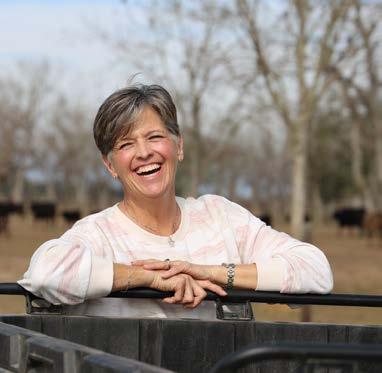
Known for her warm smile and welcoming laugh, Hope Cassebaum is the Alabama Farmers Federation’s new Southwest Area vice president. Her family farms in Lillian in Baldwin County.
Photo By Maggie Edwards
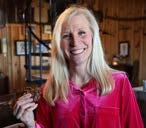

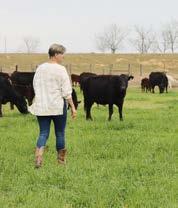
By Marlee Jackson
With her warm smile, welcoming laugh and work ethic that just won’t quit, Hope Cassebaum is the quintessential friendly farmer.
She’s also sensible, sharp and unafraid to speak her mind — characteristics that will serve her well as Alabama Farmers Federation Southwest Area vice president.

“I’m a people person,” said Cassebaum, who farms in Lillian in Baldwin County. “I like to get out, tell my story, listen to what other people do and help tell their story.”
Her service marks a milestone for the 105-year-old organization. Elected by her peers in December, Cassebaum is the first
female officer to serve on the boards for the Federation and Alfa Insurance.
However, inking her name in the history books wasn’t Cassebaum’s objective. (The likable leader learned her election would be historic just days before the annual meeting.)
Instead, she spent two years shoring up support from the Coastal Plain to the Black Belt, campaigning on her willingness to fight for Alabama farmers. Her message resonated.
As Southwest Area vice president, Cassebaum will represent members from Baldwin, Butler, Choctaw, Clarke, Conecuh, Dallas, Escambia, Hale, Lowndes, Marengo, Mobile, Monroe, Montgomery, Perry, Sumter, Washington and Wilcox counties.
Federation President Jimmy Parnell has known Cassebaum and her husband, Todd, for decades. He said he’s excited for her to lend insight to Federation and Alfa business. Her service follows that of Jake Harper, who retired due to term limits.
“Hope is smart. She is a hard worker and is easy to get along with,” Parnell said. “It takes a unique personality and work ethic to replace Jake Harper. She has some large shoes to fill. She can do it. More importantly, Hope will do it.”
A trailblazer of sorts, Cassebaum has proven her mettle through years of service.
In 2015, Cassebaum became the first female president of the Baldwin County Farmers Federation (BCFF) when tapped to fill a term vacated by the death of longtime BCFF President David Bitto. She still holds that office.
She was one of just three women in Class III of Agricultural Leaders for Alabama (A.L.F.A. Leaders); is a Farm Service Agency county committee member; and serves on advisory boards for United Bank, Extension and Elberta High School.
Cassebaum’s leadership has breathed new life into BCFF. Under her guidance, Baldwin County established the local member benefits program and expanded scholarships to support students in non-agricultural fields.
“We quickly realized agriculture was not going to be dominant in Baldwin County forever,” Cassebaum said. “We had to do more to serve all our members while promoting ag.”
The outreach is simple but powerful. Young Farmers participate in Christmas parades, tossing Alabamagrown peanuts to the crowd. BCFF also donates food, including peanut butter, through programs like Backpack Buddies.
A daughter of west Alabama, Cassebaum learned early the importance of bearing the mantle of leadership. Her father, George Aust, was Sumter County Farm Bureau president in the ‘70s.
Cassebaum moved to Baldwin County in 1987. Never one to shy away from work, she graduated high school and quickly climbed the ranks of management in food service — from McDonald’s and Golden Corral to a well-known supper club in Gulf Shores.
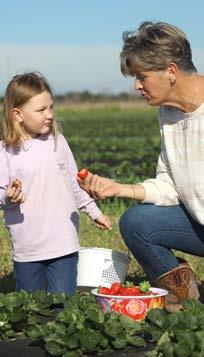
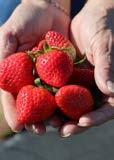
She soon met Todd and passed what she jokes was his test — trial by sweet corn. In addition to pecans, cattle and row crops, Cassebaum Farms is known for delicious produce.
Sweet corn is a summer favorite,
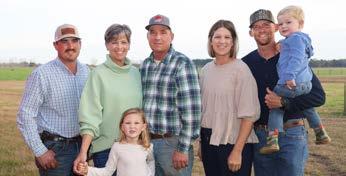
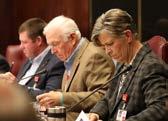
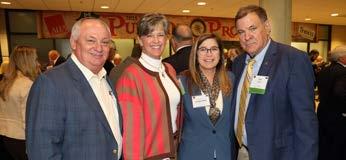
Clockwise from above: Hope and Todd Cassebaum’s family includes son August and daughter Kelsey, plus her husband, Destry Hopper, and their children, Margaret and July; Hope Cassebaum took her seat in the Alabama Farmers Federation board room in January; Federation President Jimmy Parnell, Southwest Area Vice President Hope Cassebaum, Rep. Jennifer Fidler of Fairhope and former Southwest Area Vice President Jake Harper visited during the Taste of Alabama.
with visitors snagging freshly picked, hand-bagged corn en route to the Gulf Coast.
“I would get there at 7 a.m. to start bagging corn and sell until I had to go to work that evening. I didn’t get paid. I still don’t get paid!” Cassebaum said with a laugh.
In addition to working on the farm with Todd, son August and daughter Kelsey’s husband Destry Hopper, Cassebaum has spent 30 years bookkeeping for a local asphalt company. A more recent, rewarding duty emerged as she became Oma to grandchildren Margaret and July.
She simultaneously grew her Federation network. Cassebaum remembers an impactful encounter with

then-President Jerry Newby during a Young Farmers Conference in the ‘90s.
“Mr. Newby met us in the elevator and asked our names,” she said. “The next time he saw us, he called us by name. I was impressed.”
Three decades later as a freshly minted vice president, Cassebaum took her seat in the board room where Newby once wielded the proverbial gavel.
“I’m proud to be part of an organization that puts family, faith and community first while fighting for the needs of farmers,” Cassebaum said. “I’m thankful my children and I have grown up on a farm where we’ve learned hard work, how to make it through tough times and the value of family.”



By Peyton Woods
For Adleigh Mayes, peanuts aren’t just a snack. They’re part of who she is.
So when her dad, Jeremy, sent a link in their family group chat about the Planters Peanutter Program, her curiosity was quickly piqued.
“At first, I thought it was a joke,” Mayes said with a laugh. “The picture was a giant peanut on wheels. But then I clicked the link and started reading about it — the travel, the people you meet, the creativity involved — and I thought, ‘Wait, this actually sounds amazing.’”
That was November 2024. Today, she’s on a yearlong adventure driving the giant peanut-shaped Nutmobile across America, spreading smiles and educating others about peanuts.
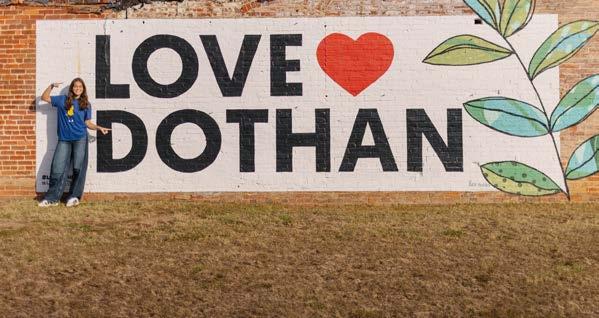
It’s fitting for Mayes, a native of Dothan in Houston County. Dothan is the self-proclaimed Peanut Capital of the World — full of dusty peanut fields, fall festivals and a community that celebrates Alabama’s official state legume every fall.
Mayes played to her strengths
and south Alabama roots while filming her 60-second application video. She recorded footage around Dothan — posing beside the city’s beloved peanut statues and shooting inside her family’s shelling plant.
“I started the video by saying, ‘My name is Adleigh Mayes, and I guess you could say peanuts are in my roots,’” she said. “It just felt right.”
The clever and personal approach helped her stand out among nearly 900 applicants.
The application process stretched on for months, including written materials, video interviews and group exercises. Mayes was one of eight finalists flown to Planters’ headquarters in Chicago for an in-person evaluation. There, she met her future teammates, Aria and Hudson, as the finalists collaborated on creative challenges and mock campaigns designed to test their teamwork and communication skills.
On the final day, each candidate was asked to name two people with whom they’d want to spend the next year. Unwittingly, Mayes, Aria and Hudson chose one another.
“It’s funny to look back on that moment now,” said Mayes, 22. “We didn’t realize we were picking our dream team that day.”
A few days later, Mayes’ phone rang early in the morning. On the other end
was her soon-to-be boss calling from Minnesota, home of Planters’ parent company, Hormel Foods.
“I was still half asleep when I answered,” she recalled. “But once I realized what was happening, that I got the job, I was just so excited. I couldn’t believe it.”
Within weeks of graduation from Freed-Hardeman University with a degree in public relations, Mayes packed her bags for Peanut Prep. The weeklong training in Minnesota taught the new Peanutters everything from public relations techniques to mascot etiquette to safely driving the 26-foot Nutmobile.
“It felt like summer camp,” Mayes said with a smile.
Since then, her schedule has been packed with travel days, community events and countless opportunities to connect with people from all walks of life. She’s visited cities big and small, from the hustle of New York City to the peaceful charm of the Outer Banks, representing a brand that’s been part of her life since childhood.
Everywhere she goes, she meets new people, tells her story and brings a bit of Dothan’s peanut pride to every stop.
“It’s funny,” she said. “My dad used to bring home peanuts from work, and now I’m driving one around the country. It really has come full circle.”

By Marlee Jackson
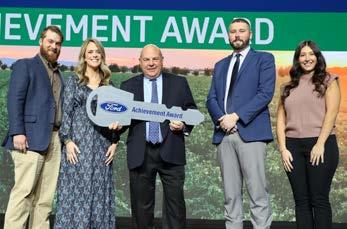
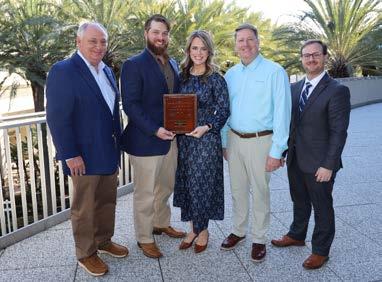
For the second time in four years, Alabama is home to the nation’s top young farm family. Drew and Lauren Wendland of Autauga County received the Achievement Award during American Farm Bureau Federation’s (AFBF) Annual Convention Jan. 12 in Anaheim, California.
The accolade honors their impact at Autauga Farming Co. in Autaugaville, plus Farm Bureau involvement, civic service and agricultural advocacy.
“We are very honored and humbled to bring this award home to Alabama,” Drew said. “It’s a reflection of the
opportunities we have had to grow and develop through Alfa to be better equipped to serve our business and our community. God has blessed me with the opportunity to spend my days working and raising a family in Autaugaville. This award is just icing on the cake. I am proud of the legacy of Autauga Farming Co., the team that makes it work today and the opportunities we have looking forward. It’s not my farm. It’s just my turn.”
The Wendlands’ farm covers row crops, cattle and hay, plus timber, a fertilizer business and custom work. Their most precious crop, however, includes sons Mills, Smith and Rhett.
Left: Drew and Lauren Wendland of Autauga County were presented the national Achievement Award during AFBF Convention in California. From left are Federation President Jimmy Parnell; the Wendlands; Executive Director Paul Pinyan; and Young Farmers Division Director Hunter McBrayer. Above: Josh and Bailey Williams of Tallapoosa County made the Top 10 in the Excellence in Agriculture contest.
As Achievement Award winners, the Wendlands receive $35,000 toward a vehicle courtesy of Ford. That builds on the $80,000 prize package they clinched as the state champion.
Nearly 100 Alabama farmers were on hand to celebrate the Wendlands’ win on the West Coast. They joined more than 4,000 farmers from across the nation for AFBF’s mammoth meeting Jan. 10-13.
The 107th Annual Convention was Karah Skinner’s first. Skinner said a highlight was being introduced to international representatives for agriculture during Orange County specialty crop farm tours.
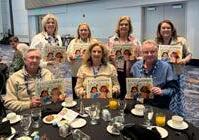
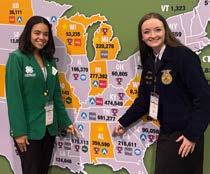
“I loved getting to learn and see so many different things,” said Skinner, the Cleburne County Farmers Federation president. “Sometimes, we get so used to being in our own little bubble, not because we don’t want to leave but often because farmers can’t leave the farm. The whole experience truly was life changing.”
Farmers were entertained and educated during sessions that featured Heisman Trophy winner Tim Tebow and U.S. Secretary of Agriculture Brooke Rollins. Rollins recapped the Trump Administration’s efforts on behalf of farm country, such as reduced regulatory burdens, trade negotiations and critical aid aimed at keeping farmers in agriculture.
Meanwhile, AFBF President Zippy Duvall noted agricultural labor is a limiting factor for young farmers while moderating an on-stage discussion.
The bipartisan panel included Senate Ag Committee Chair John Boozman, R-Ark.; Senate Ag Committee Ranking Member Amy Klobuchar, D-Minn.; House Ag Committee Chair G.T. Thompson, R-Pa.; and House Ag Committee Ranking Member Angie Craig, D-Minn.
“If you don’t have workforce, you have food insecurity,” Thompson said. “If you have food insecurity, you have national insecurity.”
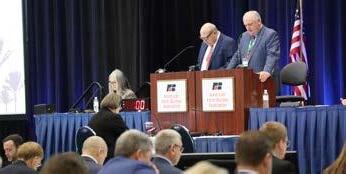
Labor conversations continued during the Annual Meeting of Voting Delegates. Alabama nurseryman Phillip Hunter chairs the AFBF Ag Labor Issue Advisory Committee and led the charge to clarify the organization’s workforce policy. Hunter is the Alabama Farmers Federation District 6 director and Shelby County Farmers Federation president.
In addition to debating and adopting policy recommendations, delegates reelected Federation President Jimmy Parnell to AFBF’s board of directors.
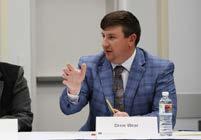
Alabama accrued other accolades during the convention. Those included Awards of Excellence in all four categories; the Navigator Award for membership growth; and a Top 10 placement in Excellence in Agriculture for Josh and Bailey Williams of Tallapoosa County. Drew Wear of Lawrence County competed in Discussion Meet.
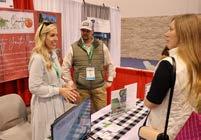
Geneva County Farmers Federation expanded its impact during the Trade Show, where its Farm-City Youth Council was honored as a County Activity of
Excellence. Just 24 counties were recognized nationwide.
Alabamians also participated in the Annual Meeting of Farm Bureau Women and the Flapjack Fundraiser, where Book of the Year “I LOVE Blueberries” was announced. Alabama 4-H President Aaliyah Sanders of Henry County and Alabama FFA President Alyx Johnson of Randolph County attended AFBF’s Youth Leadership Program.
Alabama’s delegation also partnered with Florida Farm Bureau for a night of fellowship at the Richard Nixon Presidential Library and Museum.
During his keynote address, AFBF’s Duvall, a farmer from Georgia, remarked on the value of Farm Bureau friendship during difficult seasons.
“We have faced some tough times across agriculture, and there’s no sugarcoating that,” he said. “I am reminded of the scripture in Isaiah: ‘He gives power to the faint, and to him who has no might He increases strength.’ You might be feeling faint some days, but you are not alone. You are surrounded by a Farm Bureau family who believes in you. Can you imagine what we can achieve together?”

By Maggie Edwards
Christian Stanley’s life changed the day he and wife Madison welcomed their firstborn son into the world.
A few weeks later, his life changed again when he received the nationally renowned Milken Educator Award during an assembly in the Goshen High School (GHS) gymnasium. Students, coworkers and Alabama Superintendent of Education Dr. Eric Mackey exploded in thunderous applause Dec. 10 as the $25,000 cash prize was announced.
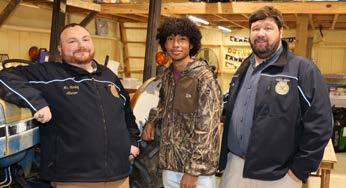
“It was really surprising when my name was called,” said Stanley, a teacher at the Pike County Agriscience Academy housed at GHS. “I was in shock. If we’re going to be honest, the idea of winning a personal award is not what you get into education for. You want to see your students in the spotlight, but it was a great honor to win an award like this.”
Dubbed the “Oscars of Teaching” by past recipients, Milken Educator Awards target early- to mid-career education professionals for their already impressive achievements and, more significantly, for the promise of future accomplishments. Stanley is Alabama’s 43rd recipient since the program’s inception in 1998 — the first from Pike County and one of 30 nationwide honorees in 2025. Stanley plans to save a portion of his winnings for his son’s college fund.
“Winning this award means exposure for our program,” said Stanley, who served as an FFA state officer in his native Illinois. “Highlighting a great little community like Goshen is something to be proud of. That’s been the part I’ve tried to highlight — how great this community is, how great the program is and how great my co-teacher, Cody Eiland, is.”
The Pike County Ag Academy is the state’s only dual enrollment ag program. Students from GHS and Pike County
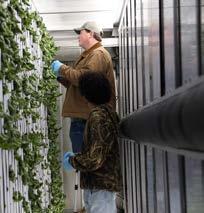
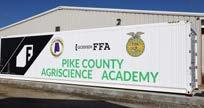
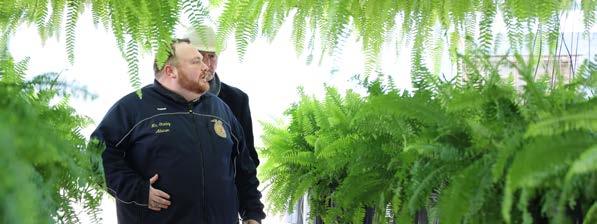
Students cultivate around 100 pounds of hydroponic lettuce weekly in the Pike County Ag Academy’s climate-controlled shipping container. The farm-fresh produce feeds students through school cafeterias.
High School interview during ninth grade to be accepted.
Students take hands-on agricultural classes with Stanley and Eiland, plus college courses online through Enterprise State Community College.
“Something I’ve found as I’ve taught is that it’s just as important for a child to figure out what they don’t like as
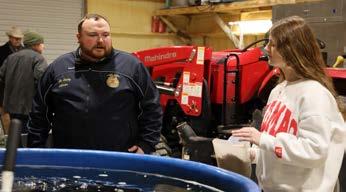
what they do like,” Stanley said. “We try to have as diverse of a program as we can to expose them to as much of the agriculture industry. That allows them to see what their passion is — and what they could see themselves never doing.”
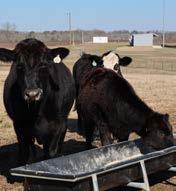
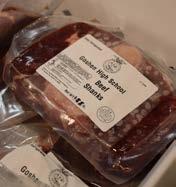
The academy includes a cow-calf operation, small feedlot for freezer beef, sheep, goats, greenhouses and aquaculture. Students also grow about 100 pounds of hydroponic lettuce weekly in a climate-controlled shipping container. Local school cafeterias incorporate the lettuce into student lunch menus.
“Goshen is rural with several students having a tie to agriculture,” said Eiland, a past Alabama FFA state officer. “There are still some whose first introduction to ag is through our classrooms. We try to make the younger generation understand where their food is coming from.”
Chapter FFA President Jaden Law is proof the program is life changing.
“FFA caught my interest in how Mr. Stanley and Mr. Eiland talked about it,” Law said. “Anybody could join it, and I wanted to be a part of something important. Even though I wasn’t familiar with cows and plants to the extent I needed to be, I learned and I conquered.”
Law credits Stanley and Eiland for his success and involvement with dual enrollment and ag.
“They knew I was unfamiliar with agriculture, but they accepted to teach me,” Law said. “I’ve just gradually been able to work my way up throughout the three years. Their patience and teachings on handiwork, leadership skills and personality qualities that I need to have as a man have really helped me.”
Law said he and his classmates were proud of Stanley’s recognition.
“It was well deserved, so I was surprised but also not surprised at the same time because I knew how hard
Mr. Stanley works,” Law said. “It was just exciting. Everybody was really pumped up. It really brought a good energy throughout the entire chapter. Mr. Stanley is caring and very empathetic. No matter the situation or where the students come from, we’ve always been treated the same. He’s always loved us equally.”
Stanley said seeing students find their passions fills his cup.
“I’ve always wanted to see my students and community shine,” he said. “That’s what I hope this award can do. This program ultimately is what causes everything to happen. It’s not me as an individual. I don’t do anything different than any other educator would. I’m just lucky enough to be able to have a great program and great kids.”
Learn more about the Milken Family Foundation.

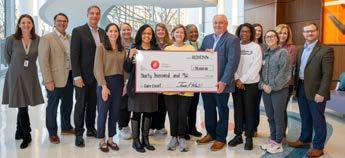
The Alfa Cares Closet at Children’s of Alabama received a boost Jan. 20 when Alabama Farmers Federation and Alfa Insurance President Jimmy Parnell presented a $30,000 check to Children’s President and CEO Tom Shufflebarger.
“Families who end up at Children’s often do so unexpectedly,” Parnell said. “No one should have to leave their child to go home or to the store for necessities. Through the Alfa Cares Closet, we’re pleased to provide the
resources these families need during a difficult time.”
Federation members and Alfa employees raised over $30,000 last year to purchase personal hygiene items for families encountering overnight stays at Children’s.
In November, those funds allowed teenage students at the Alfa Youth Leadership Conference to assemble 11,000 dental and shower kits for the newly named Alfa Cares Closet — a
tangible act of service that’s already impacted countless families from Alabama and beyond, said Parnell.
The January donation from the Alfa Foundation will allow social workers to purchase other items for patients and parents. During the check presentation, Parnell and Children’s leadership were joined by social workers and Federation employees who coordinated the fundraiser.
Hunter McBrayer was among those in attendance. McBrayer is the Federation’s Young Farmers Division director and organizes the Alfa Youth Leadership Conference.
He said community response toward the Alfa Cares Closet has been inspiring.
“We know the Alfa Cares Closet makes a difference in people’s lives,” McBrayer said. “We were called to be the hands and feet of Jesus and are not shy about that at the Federation and Alfa. This is something we will continue to do. This is just the beginning.”

Agriculture has been woven into the very fabric of the United States of America since its founding in 1776.
Around 90% of the colonial population worked as farmers, according to an 18th-century census. Those colonists often practiced subsistence agriculture, stewarding their natural resources while growing the

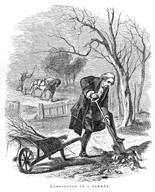
food and fiber on which their families depended.
It’s fitting, then, that some of the country’s Founding Fathers were also Founding Farmers.
Those men, along with merchants, military leaders, ministers, printers and politicians, fought for a cause greater than themselves while crafting the Declaration of Independence, fighting in the Revolutionary War and establishing the U.S. Constitution.
Historians debate the number of farmers, or “planters,” who signed the Declaration of Independence, with some arguing nearly half the 56 signers qualify. Others say just nine worked the soil of the fledgling nation.
One of the most well-known planters-turned-politicians is Thomas Jefferson, who grew tobacco on his Virginia plantation, was the principal author of the Declaration and was later elected the third president of the U.S.
While not a farmer, Declaration signer and inventor Benjamin Franklin
took a decided interest in agriculture. Mirroring the goal of modern conservationists, Franklin conducted experiments related to restoring fertility in nutrient-depleted soils.
Perhaps the most prominent Founding Farmer didn’t sign the Declaration. Instead, patriot George Washington led the Continental Army as its general during the Revolution. He later served as the young democratic republic’s first president.
Despite his public service, Washington was most at home on his Virginia farm, Mount Vernon. He’s often remembered in the farm community for saying, “I’d rather be on my farm than be emperor of the world.”
Editor’s Note: This is the first in a four-part series highlighting agriculture’s prominent role in U.S. history as America celebrates the 250th anniversary of the signing of the Declaration of Independence. Learn more about semiquincentennial events in Alabama at America250AL.org.

By Marlee Jackson
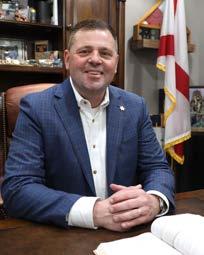
Sheriff Matt Gentry’s tall frame lumbers through the Cullman County Detention Center, posing firm-but-kind questions to the 400-plus inmates in his charge.
“You keeping out of trouble?”
A genial leader who’s garnered respect across the county, Gentry delivers similar quips to those he’s pledged to protect since his first election in 2015.
“Tell them I said to straighten up,” Gentry grinned to a fellow diner at a barbecue joint later that day.
While Gentry occasionally dons a sheriff’s uniform, he’s more often clad in a crisp button-up and jeans. Worn cowboy boots rock heel-to-toe, a holdover from Marine Corps boot camp.
“When you wear a uniform or suit, citizens are not as comfortable. I want our community members to be at ease,” Gentry said. “The office of the sheriff belongs to the whole community. When law enforcement and citizens stand shoulder to shoulder, it’s unbreakable.”
Creating community was one of Gentry’s goals for Cullman County, a sprawling locale home to 100,000 citizens.
He readily doles out his phone number, coordinates a Sheriff’s Youth
Leadership Academy and has rekindled a popular Sheriff’s Rodeo. Rodeo proceeds fund community cookouts, plus help outfit his staff with modern equipment, such as drones.
Gentry has borne well responsibility for 170 staffers who patrol, investigate, supervise work release programs and man a call center. That’s in addition to overseeing 40,000 civil processes, such as subpoenas and lawsuits.
Lt. Brandon Woods said Gentry’s servant leadership has had an impact — whether during a standoff, leading the charge to pick up litter or taking communion with inmates during Easter services.
“(Sheriff Gentry) is the one who has been for us — in the community and the sheriff’s office,” said Woods, a poultry and cattle farmer who serves on the Cullman County Farmers Federation board. “He wasn’t afraid to go to bat for us. He was able to come in and change with the times.”
Despite success, Gentry will retire from law enforcement in January 2027. He then hopes to extend his impact

statewide as a member of the Public Service Commission (PSC), which regulates utility companies and protects consumer interests. Gentry will be on the ballot in the Republican primary May 19.
“The Public Service Commission touches every citizen in Alabama,” Gentry said. “You need a strong voice that will protect the citizens and not back down. I’ve been standing the line for 27 years.”
As sheriff, Gentry is well versed in managing regulations and protecting citizens’ rights. He reports to the Department of Justice, has testified in Washington, D.C., assessed security issues during visits to the Southern border and successfully fought a federal injunction that would have wreaked havoc on bail nationwide.
Gentry’s personable nature and plan for public service quickly earned the respect of Alabama Farmers Federation members, who endorsed Gentry as the Alabama FarmPAC candidate for PSC Place 1.
A self-proclaimed hobby cattleman, Gentry said the farmer-leaders reminded him of childhood days spent with his late grandfather, a sweet potato and cattle farmer.
A black-and-white photo with that patriarch rests behind Gentry’s desk. The office is packed with memorabilia — from photos with veterans and saddles from the Sheriff’s Rodeo to a gun collection and artwork by nursing home residents.
There’s his Bible, too, and stacks of devotionals nestled near snapshots of his and wife Susie’s two sons.
At 47 years old, Gentry said his family has a real stake in the PSC election.
“We’re setting the foundation for the state and our kids,” he said. “A lot of people want to complain but aren’t willing to get in the truck and get the job done.”


ALFA MUTUAL INSURANCE COMPANY
ALFA MUTUAL FIRE INSURANCE COMPANY & ALFA MUTUAL GENERAL INSURANCE COMPANY
The annual meetings of the policyholder members of Alfa Mutual Insurance Company, Alfa Mutual Fire Insurance Company and Alfa Mutual General Insurance Company will be held at the Executive Office of the Company, 2108 East South Boulevard, Montgomery, Alabama, 36116, on March 30, 2026, at 8:00 a.m., to consider and act upon the following:
1. To elect directors in accordance with the bylaws.
2. To transact such other business as may properly come before the meeting or any adjournment thereof.
The record date fixed for determining members entitled to vote at said meeting is the close of business on February 10, 2026. If a member has authorized the Company’s Board of Directors to vote as his/her proxy at said meeting and wishes to revoke such proxy, such member may do so by written notice to the Secretary of the Company, by registered mail to the address set forth above, at least 10 days prior to said meeting.
— Angela L. Bradwell, Secretary
By Tanner Hood
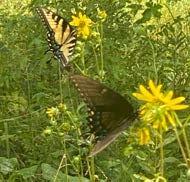
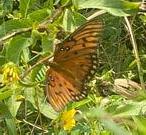
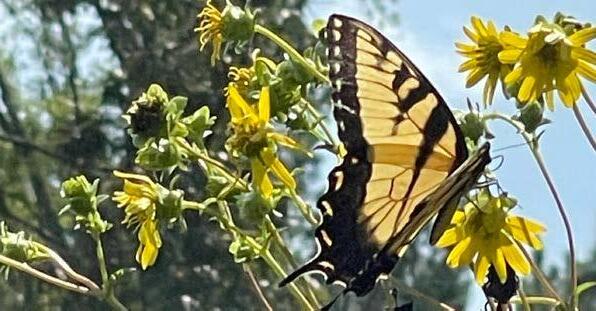
Planters, gardens and fields filled with flittering, floating and flying pollinators foster plant and crop growth every spring and summer in Alabama.
Connie Fuller experienced this firsthand while participating in the Great Southeast Pollinator Census administered by Alabama Cooperative Extension System. For Fuller, engaging in the census was enjoyable.
“We decided to participate because it’s connected with our interest in agriculture and conservation. It was something simple we could do to make a difference,” said Fuller, who raises cattle, poultry, goats and bees with her husband, Brad, the Jefferson County Farmers Federation president. “Once we got started, it was surprisingly relaxing. Watching all the activity in our wildflower field made us realize how much we overlook in a busy day.”
that reach and identifies pollinators across the region, said Extension Agent Bethany O’Rear.
“This is a citizen-science project,” said O’Rear, the Alabama project coordinator. “We had almost 3,000 counters and over 53,000 pollinators spotted in the state last year.”
The census began in 2017 in Georgia and has since expanded to include Alabama, Florida, Mississippi, North Carolina and South Carolina.
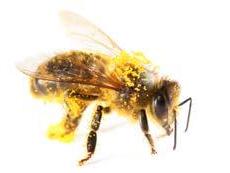
Participation involves observing as pollinators land on plants and recording the kinds of insects and how many times they land within a short span of time. The census provides an opportunity to improve public perception about farmers, O’Rear said.
Jefferson County community of Warrior, reiterated fellow farmers’ impact on the census.
“Farmer participation is key to projects like this because we see how pollinators affect crops,” Fuller said. “Sharing what we observe helps Extension better understand what’s happening in the field.”
O’Rear said there are three primary goals for the census.
“We want to create a sustainable pollinator habitat,” O’Rear said. “We also want to increase entomological literacy. The census is designed to generate valuable insights about pollinator populations. This isn’t a rigorous study, but there is useful data that can come out of it.”
The 2026 target is statewide involvement.
Extension is working to determine where, and what, pollinators are active in Alabama each summer. The Great Southeast Pollinator Census expands
“Highlighting this work helps reinforce the understanding that farmers are committed to caring for the land and the environment,” she said. “Their success is closely connected to healthy pollinator populations, and showcasing farmers as dedicated environmental stewards strengthens appreciation for the important role they play.”
Fuller, who farms in the north
“Fifty-five of Alabama’s 67 counties participated in 2025,” O’Rear said. “We developed education programming to increase collaboration with teachers and classrooms, and we hope day-long training in June will reach other groups, too.”
The 2026 Great Southeast Pollinator Census is Aug. 21-22.
Scan to learn more.


By Marlee Jackson
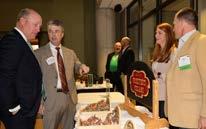
From heirloom grits grown on the Gulf Coast to pulled pork smoked in the Tennessee Valley, decision-makers savored a taste of agriculture during the Alabama Farmers Federation’s annual legislative reception Jan. 21.
The real refreshment, however, came during conversations with Alabama farmers. Sen. Will Barfoot, R-Pike Road, said breaking bread with producers is a highlight of the busy legislative session.
“There are lots of reasons to enjoy the Taste of Alabama,” said Barfoot, who serves on the Senate Ag Committee. “You get to see people you don’t get to see as often as you’d like. You get to meet people from other parts of the state who are enthusiastic…and proud of the ag we have in Alabama. Lastly, I love the food. It’s great. You get samplings of everything from steak to catfish to quail. There are so many things to enjoy, and the fellowship is wonderful.”
The annual event followed the Federation’s Alabama FarmPAC meeting, where farmers from all 67
counties gathered to review polls and make game plans to push endorsed candidates across the finish line during the May 19 primary election.
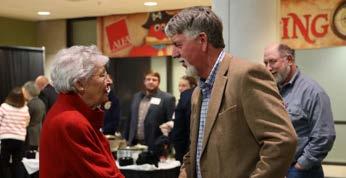
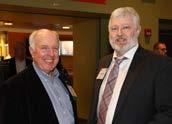
Farmers mingled with FarmPACendorsed candidates during the reception at the Federation home office. A hearty crowd of statewide leaders, agency heads, judges, senators and representatives attended, following a busy day in downtown Montgomery.
All seven constitutional officers, including Gov. Kay Ivey, were among those in attendance.
Chatter abounded as guests moved throughout the reception, fellowshipping with old and new friends while congregating around serving stations piled high with Alabama-grown and -produced food.
The evening’s savory spread included hanger steak from Perdido River Meats in Escambia County; heirloom grits from Bayou Cora Farms in Baldwin County; quail and biscuits courtesy of Bob Plaster in Lee County; catfish from Consolidated Catfish Producers in Greene County; and Bishop’s Barbecue from Colbert County.
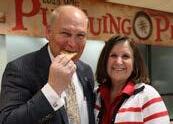
Clockwise from above: Lt. Gov. Will Ainsworth and Attorney General Steve Marshall visited with Grace and Taber Ellis of Autauga County; Elmore County Farmers Federation President Richard Edgar met with Sen. Will Barfoot, R-Pike Road; Gloria Jeffcoat of Houston County ensured Rep. Paul Lee, R-Dothan, enjoyed a grilled PB&J; Lauderdale County’s Joe Dickerson talked with Gov. Kay Ivey at the Taste of Alabama.
Sweet treats were Blue Bell ice cream made in Talladega County; honey from Choctaw Bee Co. in Geneva County; pecan goodies from Priester’s Pecans in Lowndes County; and grilled peanut butter and jelly sandwiches provided by the Alabama Peanut Producers Association (APPA).
Rep. Paul Lee, R-Dothan, said he was proud to see a packed crowd around APPA’s table.
“Being from the Wiregrass and the Peanut Capital of the World, I’m a little biased thinking that’s the best,” said Lee, who chairs the House Health Committee. “That’s where the biggest crowd was. I had to elbow in there to get a peanut butter sandwich!”
Lee grew up on his family’s diversified farm in Houston County and raised cattle before entering the political arena. He hailed Alabama’s hard-working farmers, sharing his appreciation for the chance to catch up during the reception.
“If you want to be a farmer today, you want to be a farmer,” Lee said. “There’s no question about that. They’re going to have troubles, and they’re going to have obstacles. They’re so valuable to us, and we need to make sure they have the ability to (farm).”


The two girls knocked on my door. They wore Kelly green berets and green vests. I greeted the Girl Scouts.
They went through their spiel.
“We’re selling cookies, sir."
“Do you have any identification?”
They exchanged looks.
“Well,” I said amiably, “how do I know you’re really Girl Scouts? Proof would be nice. Dangerous world.”
I have a deep appreciation for Girl Scouts, and each year I buy a LOT of Thin Mints, which has made me quasifamous in local Girl Scout circles. Last year, my salesgirl won a pink Cadillac.
So the tallest girl gave me her name, rank and serial number.
“And this is my new American flag badge,” she added. “We had to iron it on because my mom can’t sew.”
“How about you?” I said to the girl with pigtails. “Got any ID?”
Pigtails had no ID, but she did proudly display her proficiency badges, her Junior Leadership pin, her Junior Aide Award, her Daisy Safety Award pin and her Purple Heart.
“And what’s that badge for?”
“Oh, this one?” she said. “This is the Junior Inside Government badge.”
That merit badge requires Girl Scouts to explore ethics of government. Girls are given faux countries and charged with making up fun, nonsensical laws, sort of like Congress.
“My country was called the United States of Amandica," one girl said. “I had a law where you got to eat candy with every meal. Oh, and each house was required to have a swimming pool. Vegetables were illegal.”
“What’s this one?”
“This my Lifesaving badge. I had to swim in a pool for-EVER and learn how to save someone’s life. I

learned about spinal injuries, rescuing a drowning person and giving CPR.”
I pointed to another badge.
“This one?” said Pigtails. “This is the Playing the Past badge. I got this one when I was little. This is when you pick a period in history and pretend you’re back in that time. I picked Colonial America. Me and my mom dressed up like colonial people, and we had a party and ate colonial food.”
I asked about another badge.
“This is the Social Butterfly badge,” the girl said. “It’s where you learn how to talk to people at, like, a dinner party. You have to make conversation and not be awkward and be super polite. You have to use your manners, use the right silverware and learn table manners from other countries."
“Yeah,” said Pigtails. “And then we had to write a BUNCH of thank-yous. My mom said it was just like Junior League only with shorter people.”
I asked about another patch.
“This one? This is the Starts With Kindness badge.”
Scouts are expected to hold the door for someone, give hugs, leave notes around town, make gifts or call someone who is not feeling well.
“For my badge, I wrote chalk messages of encouragement on the sidewalks,” said Pigtails.
The other girl said, “My mom and I baked desserts for everyone at my grandpa’s nursing home, and, honestly, we just showed everyone we care”
After our pleasantries, my sales professionals got down to cutting bait like two savvy businesswomen.
“How many cookies can we put you down for, Mister Dietrich?”
I paid in cash. I hope those girls win a few Coupe DeVilles. ■


By Justin Miller
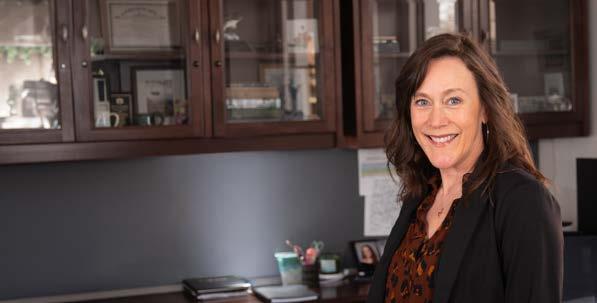
For more than 100 years, sciencebased information, practical solutions and meaningful experiences have been the pillars of the Alabama Cooperative Extension System. This year started a new chapter in the organization’s history, with Eve Brantley taking the reins as Alabama Extension’s 16th director. In this role, Brantley looks to build on Extension values of the past to create a more sustainable and engaging future.
“I hope the hallmark of Alabama Extension will be impact through connection: programs that are sciencebased, relevant and transformative,” Brantley said. “I’m excited for the opportunity to provide leadership as our professionals work hand in hand with communities, positioning them for long-term success and prosperity.”
Modern Extension systems across the country face a myriad of challenges. For Alabama Extension to remain relevant, Brantley said she will address these challenges through a systematic approach.
“That approach begins with a willingness to innovate and adapt
by embracing new technologies, partnerships and delivery methods that allow us to meet people where they are, both in person and online,” Brantley said. “Extension’s true strength is our presence in communities. We will use innovation to enhance our work, but we will not lose our authentic interactions that build relationships, trust and continuity to serve Alabama communities.”
Jimmy Parnell, Alabama Farmers Federation president, said Brantley has the leadership skills to strengthen Extension’s relevance and impact across the state.
“Dr. Brantley’s experience and relationships within Extension will allow her to hit the ground running as she identifies areas for improvement and develops strategies for success,” Parnell said. “She is well-respected among our members for her willingness to listen to their concerns and work alongside the agricultural community to solve problems.”
Reflecting on her new role, Brantley said it is an incredible honor and responsibility to lead Alabama Extension as director. During her first year, Brantley will primarily focus
on learning, listening and engaging with employees as well as Extension’s stakeholders and partners. Her goal is to create more opportunities for individuals to grow, lead and contribute to a vibrant Alabama.
“Leadership is about opening doors, and I want to ensure those doors remain wide open for the next generation of innovators and changemakers,” Brantley said.
Etching her name in Alabama Extension history, Brantley joins former Extension Director Ann Thompson (1984 to 1994) as the only two women to lead the organization. Understanding this significance, Brantley said she is grateful past leaders believed in her and gave her opportunities, encouragement and support.
“Being only the second woman in this role underscores the importance of involvement and leadership development, values that I hold dear,” Brantley said. “I hope my tenure encourages others — especially young professionals and emerging leaders — to see that they belong in leadership roles and can make a lasting impact on their communities and the world.”
By Maggie Edwards
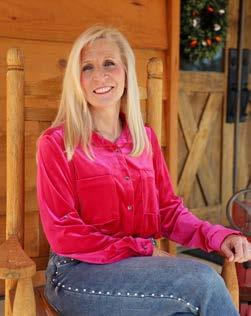
Laura Hixon is known for her bright smile and warm hospitality. She brings those qualities to the table when hosting family and friends at Hixon Farms in Pike County.
She finds joy being with loved ones at the family’s unique gathering place — a fully furnished enclosed barn with space for the kids to play, Laura to cook and adults to relax.
Laura and her husband, Billy, grow row crops and raise cattle and chickens on his family land. Billy is also the Pike County Farmers Federation president.
“When I was growing up in Brundidge, we always went to my grandmother’s house on Sundays,” said Laura, chair of the Pike County Women’s Leadership Committee and a retired educator. “She made every meal special. That was ingrained in me. Billy’s mom cooked for us, too.”
Laura carries on the tradition, going above and beyond to serve her family home-cooked dishes.
“A lot of life’s great moments happen
1 can Pillsbury cinnamon rolls (Grands or regular)
Heavy whipping cream
1/2 stick butter
1/4 cup brown sugar
1 teaspoon cinnamon
1/4 cup chopped roasted and salted peanuts
Heat oven according to package directions for the cinnamon rolls. Lightly spray baking dish with cooking spray. Place cinnamon rolls in the dish. Pour heavy whipping cream around the rolls to cover the bottom of the pan. In a small bowl, combine melted butter, brown sugar and cinnamon. Spoon this mixture over each roll, then sprinkle with chopped peanuts. Cover and bake 15 to 20 minutes. Uncover during last few minutes to brown, if desired.
1/4 cup peanut butter (or less, to taste)
1/2 cup powdered sugar
Milk
Mix peanut butter, powdered sugar and splashes of milk to desired consistency. Spread over hot rolls.
This
month’srecipes
byHiLaura xon
gathered around meals,” she said. “It’s a time for bonding. You become so close. On Sunday nights, my family comes here. I want my grandkids to always remember coming to my house to eat, just like I remember going to my grandmother’s.”
Birthday meals are especially meaningful for the Hixons.
“We celebrate everyone’s big day,” Laura said. “I let them choose the meal and dessert. Shrimp spaghetti has become a family favorite and is almost always chosen.”
Laura’s go-to recipes, however, often include the Alabama state legume. March is National Peanut Month, a special time to pay homage to the protein powerhouse.
“As peanut farmers from the Wiregrass, we love using peanuts in our kitchen,” Laura said. “We eat them for snacks daily. They sustain us. I have an entire category on Pinterest devoted to peanuts. It makes us proud to use something we grow.”
3 pounds fresh medium shrimp, peeled and deveined
1 1/2 cups butter
1 cup chopped onion
1 tablespoon dried parsley flakes
1 tablespoon Worcestershire sauce
1 teaspoon salt
1 teaspoon ground pepper
1/2 teaspoon dried basil
1/2 teaspoon dried thyme
1/4 teaspoon garlic powder
12-ounce package thin spaghetti, cooked according to directions 8-ounce package processed cheese, cut into 1/2-inch cubes (I use Velveeta.)
Heat oven to 350 F. Add shrimp to a 9-inch-by-13-inch baking dish and set aside. In a large skillet, melt butter over medium-high heat. Add onion and cook, stirring occasionally, until tender. Stir in parsley, then add Worcestershire sauce and remaining spices. Pour mixture over shrimp in the baking dish. Bake 25 minutes, stirring occasionally. Remove from oven and stir in cooked spaghetti and cubed cheese. Use tongs to toss. Bake 5 more minutes or until cheese is melted.
3 cups cake flour
1/2 teaspoon salt
3 teaspoons baking powder
2 sticks unsalted butter, softened
2 cups sugar
4 eggs
1 cup milk, whole or low-fat
1 teaspoon vanilla extract
1/2 teaspoon almond extract, optional
Heat oven to 350 F. Butter and lightly flour three cake pans. Sift flour, then lightly measure out 3 cups into a bowl, spooning the flour into the cup as you measure. Sift flour plus salt and baking powder into a bowl and set aside. In a large bowl, cream butter. Gradually add sugar, beating until light and fluffy. Add eggs one at a time, beating well after each addition. Add flour mixture and milk alternately, along with extracts, blending after each addition until smooth. Do not overbeat as this causes a dry cake. Pour batter into prepared pans and bake 20 to 25 minutes, or until a toothpick inserted in the center comes out clean. Cool in pans 10 minutes, then invert onto cooling racks. Cool completely. Frost with peanut frosting.
Peanut Frosting
2 1/2 cups sugar
3 tablespoons flour
3/4 cup milk
1/4 stick butter or oleo
1 whole egg, plus 1 yolk, beaten
2 cups roasted ground peanuts
1 tablespoon vanilla extract
In a large saucepan, combine sugar and flour. Stir well. Add milk and butter. Add eggs to mixture. Place over medium heat and cook until mixture begins to thicken. Add peanuts (reserving a small amount to sprinkle on top of cake after frosting) and vanilla, then continue to cook until thick enough to spread. Sprinkle with reserved peanuts.
Recipe note: This frosting adds a delicious flavor to nearly any cake, including a boxed cake mix.

1 pound white chocolate almond bark
1 pound chocolate almond bark
1 bar German chocolate
1 12-ounce package semisweet chocolate chips
1 jar dry roasted peanuts
Layer the almond barks, German chocolate bar, chocolate chips and peanuts in slow cooker. Cook on low 1 hour. Stir well. Continue cooking 1 more hour or until melted. Drop mixture by spoonfuls onto wax paper or parchment paper. Allow to firm. Store in airtight container.
Recipe note: This is also great made with peanut butter chips and honey-roasted peanuts. For holidays, top with themed sprinkles for a festive treat.

2 1/2 cups self-rising flour
1 cup buttermilk
1 cup vegetable oil
1 teaspoon baking soda
1 teaspoon vanilla extract
1/4 cup (or two 1-ounce bottles) red food coloring
1 1/2 cups sugar
1 teaspoon unsweetened cocoa powder
1 teaspoon white vinegar
2 large eggs
Heat oven to 350 F. Add all ingredients into a large bowl. Mix with an electric mixer until smooth. Spray and flour three 9-inch cake pans. Pour batter evenly in pans and bake 20 minutes or until a toothpick inserted in the center comes out clean. Cool in pans 10 minutes, then invert onto wire racks and cool completely.
1 1/3 sticks butter, softened
10 ounces cream cheese, softened
1 pound powdered sugar
2 cups chopped pecans, divided
Combine butter, cream cheese and powdered sugar in mixing bowl. Beat until fluffy. Stir in 1 1/2 cups chopped pecans. Frost the cake, spreading between layers and sides. Sprinkle remaining pecans on top. Refrigerate 1 hour before serving.
Recipe note: My grandmother clipped this recipe from a 1987 edition of Redbook magazine. Willard Scott said he received it from a restaurant in Florida and called it his “Favorite Christmas Cake.” It quickly became a family favorite.

By Selina Bruckner
As spring unfolds, the landscape is abuzz with various insects. While not all insects are greeted with enthusiasm, bees can be actively invited into landscapes through pollinator plantings. Most people associate the word bee with honey bees, which live in large colonies. However, is it surprising to learn honey bees are not even native to the U.S.?
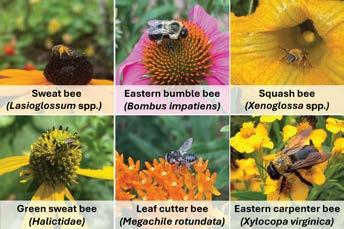
While they may not be as commonly known as the honey bee, there are approximately 400 other wild and native bee species living in Alabama landscapes, including the sweat bee
and eastern bumble bee. At best, this number is a rough estimate, because Alabama does not have full documentation of the wild and native bees present. However, researchers at the Auburn University Bee Center and employees of the Alabama Cooperative Extension System are trying to fill this knowledge gap, so everyone can appreciate the full diversity of wild and native bees in the state.
Wild and native bees vary greatly in their coloration, size and lifestyles. Most bees, approximately 70%, build their nests underground with rather inconspicuous exit holes. For example, mining bees (Andrena spp.) build their
underground nests in clusters. In sandy soils, the nest’s exit holes can be seen during March and April. The remaining 30% of bees build their nests in cavities, such as hollow plant stems. Most bees are solitary, meaning these nests are usually taken care of by one female.
Wild and native bees are seasonal, with spring and summer being prime observational times. When temperatures increase and flowers start to bloom, bees emerge from their winter diapause. Soon after, they mate and the female builds a nest for her offspring, while the male, unfortunately, dies.
The female then collects pollen from flowers to provision her nest with a pollen ball, onto which she lays an egg. The female lives for a few weeks and lays as many eggs as possible before she dies. These eggs hatch into larvae that consume the pollen before pupating and undergoing metamorphosis into an adult. This process happens gradually between late spring and winter. Many bees spend the winter protected in an underground burrow or cocoon, either as a pupa or adult.
This spring, take advantage of the natural emergence of bees and get to know the wild and native bees that call Alabama home. Look for their underground nests and observe how many different bee species visit the flowers around you. They are truly bee-utiful!





The beans in your Alabama fields today are destined to see the world. Last year, we exported $83.8 million worth of soybeans. That’s a lot of overseas opportunity for one year. And we’re always growing new markets abroad to help keep this demand going strong. And if you’re wondering how far your soybeans can go, we’re charting more ways to keep your ship coming in. Learn more about the story of soy at unitedsoybean.org/hopper.