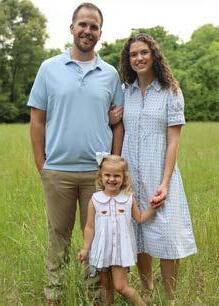
Hope Cassebaum Vice President | Southwest, Lillian
Steve Dunn Secretary-Treasurer, Evergreen
DIRECTORS
Dorman Grace | Jasper
Charles Butler | New Hope
David Bailey | Dawson
Darrell Lee | Addison
Will Gilmer | Sulligent
Phillip Hunter | Birmingham
Mahlon Richburg Auburn
Stewart Koon Gordo
Bill Cook Montgomery
Trip Horne | Louisville
Mark Kaiser | Daphne
Jerry Peak | Chancellor
Lisa Lake | Vinemont
Forrest Anders | Hartselle
Neighbors (ISSN 0162-3974) is published monthly by the Alabama Farmers Federation, 2108 East South Boulevard, Montgomery, Alabama 36116 or (334) 288-3900. For information about Alabama Farmers Federation member benefits, visit the website www.alfafarmers.org. Periodicals postage paid at Montgomery, Alabama, and additional mailing offices. Printed in the U.S.A.
MEMBERSHIP AND SUBSCRIPTION CHANGES 800-392-5705, Option 4 or BWatkins@alfafarmers.org
ADVERTISING REPRESENTATIVE
Ben Shurett, (256) 997-7922 BenShurett.alfafarmers@gmail.com
DISCLAIMERS: Advertisements in Neighbors do not represent an endorsement by the magazine or Alabama Farmers Federation. Editorial information from sources outside the Alabama Farmers Federation is sometimes presented for our members. Such material may, or may not, coincide with official Alabama Farmers Federation policies. Publication of information does not imply an endorsement by the Alabama Farmers Federation.
www.AlfaFarmers.org
4 | Dothards Revisit Roots, Revive Produce Farm
10 | Farmers Reflect on Dry Spring, Pray for Rain
13 | Watson Joins Elite Farm Bureau Advocacy Group
16 | Federation Welcomes New Crop of Summer Interns
25 | Extension Highlights Issues With Invasive Plants
18
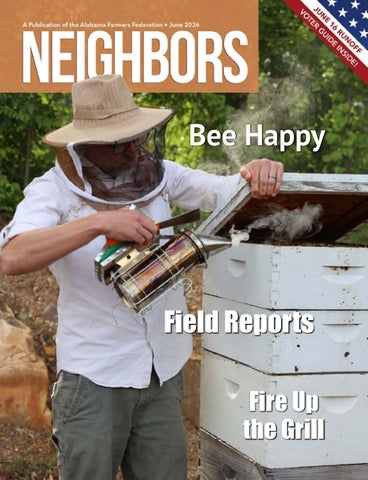
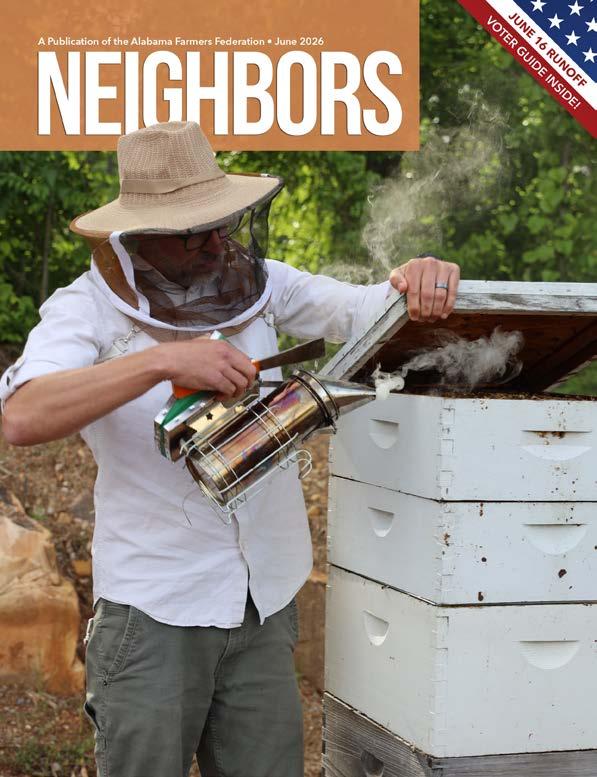
On The Cover
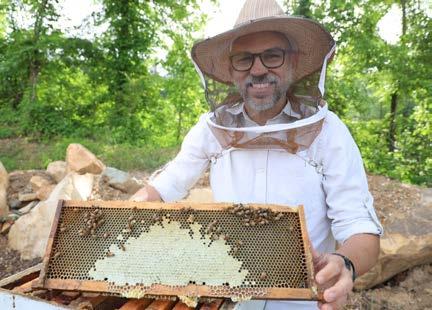
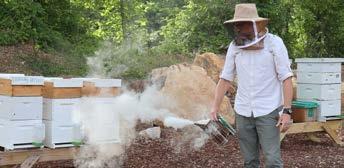
Adam Hickman has built a buzzing business in Irondale. He’s gradually grown Foxhound Bee Co. from hawking wares out of his garage to a thriving enterprise that helps novice and expert beekeepers.
Photo By Maggie Gaddy
28 | Farmhouse Kitchen Fires Up the Grill for Father’s Day
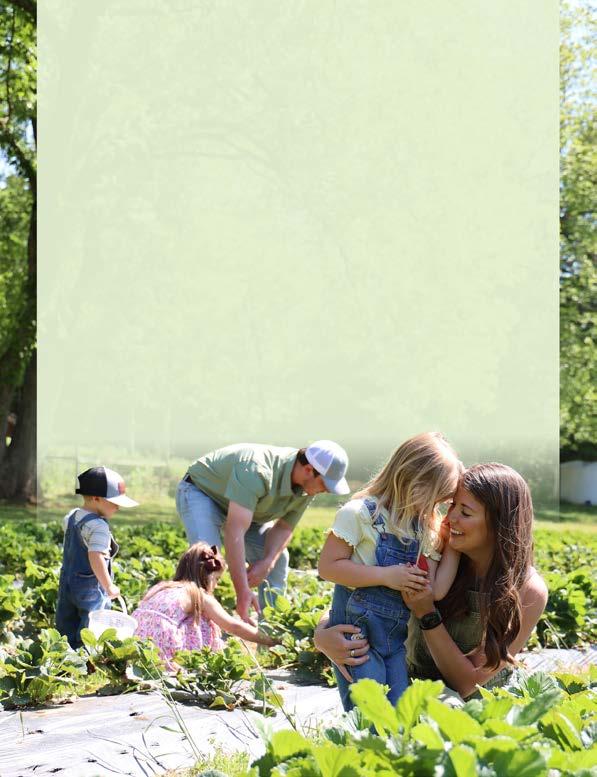
Laughter fills the valley beneath Appalachian foothills as children weave between rows of red strawberries at Nances Creek Farms. There, Joseph Dothard cultivates his passion for agriculture and appreciation for family history.
“We are so thankful to steward the farm my family settled in the 1800s,” said Dothard, a Calhoun County Young Farmer. “God had to bring me to my knees for me to see that I wasn’t in control. He led me to this life. I look at this century-old farm and strive to protect it for future generations.”
Along with strawberries, pumpkins
and summer produce, Dothard and wife Sabrina are raising the next crop of farmers. Their three children, Libby, Lorelei and JT, are the seventh generation of Dothards to grow up in the Nances Creek community near Jacksonville. The original Joseph Dothard immigrated to Alabama from Ireland in 1880.
“My perspective changed after we had children,” Dothard said. “I grew up thinking farming wasn’t for me. I was working a job off the farm for almost a decade in occupational safety. Once having kids, I realized this is where I needed to be.”
Today, Dothard also works at Greenway Plants, a nearby nursery owned by Alabama
Farmers Federation Central Area Vice President Jon Hegeman.
“That ties in perfectly with what we’re doing at the farm,” Dothard said. “It goes hand in hand growing strawberries. Working at Greenway allows me to be full-on ag. Jon encouraged me to get involved with the Federation and Alabama Fruit & Vegetable Growers Association. That’s been instrumental for us.”
The Dothards’ love story began at Jacksonville State University (JSU). After they married, Sabrina taught school for seven years before turning her attention full-time to her most important pupils — their children.
“It’s amazing to see Sabrina use
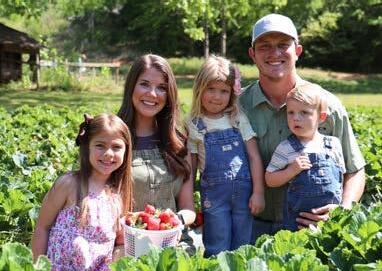
Family time is precious for Joseph and Sabrina Dothard, who are raising Libby, Lorelei and JT on the family farm outside Jacksonville.
her talents and degrees to teach our own children,” Dothard said. “Our kids are the driver of why we do it all. We believe in being together and planting the seeds.”
While the Dothards also raise cattle and sheep, Nances Creek Farms is rooted in specialty crops.
“When I grew up, it was mostly cattle,” Dothard said. “I wanted to go back to the roots. This farm once produced fruits and vegetables. I wanted to follow in those footsteps and bring tradition back.”
The Dothards launched their U-pick strawberry farm in 2020 during the COVID-19 pandemic.
“That timing was impeccable,” Dothard said. “People wanted to get out and be outside with family. Our farm offered that. It took off from the beginning.”
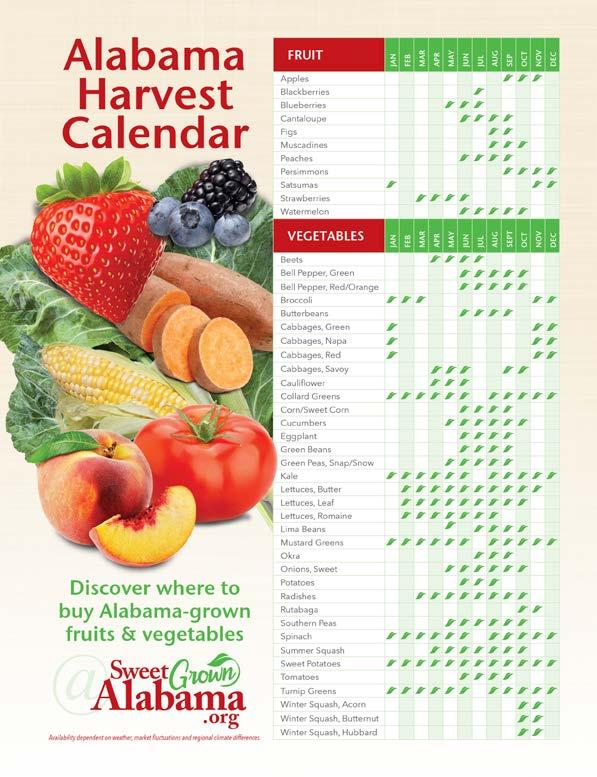
The farm is structured into seasons — strawberries in spring; cut-flowers, sweet corn and okra in summer; and pumpkins in fall. The family also participates in the Piedmont Strawberry Festival.
Proximity to JSU and the Talladega Superspeedway created demand for an on-farm Airbnb. The 94-year-old rock house overlooks pastures and produce.
“This model allows us to always have people coming out to the farm,” Dothard said. “Agritourism is our market. There is something different about putting your hands on the plant and seeing how it was produced. Our town loves that.”
The Dothards’ neighbor, Gail Pollard, said picking strawberries at Nances Creek Farms brings back memories of growing up on her family’s farm.
“It’s worth the time coming out here to see the beauty of this land and taste the difference in these berries,” Pollard said. “This is the life of the country. It’s what we were built on. We need more farmers. We need to get back to the basics of why America was founded.”
A successful strawberry season this year followed a difficult 2025 when the nation faced issues with the Neo-P disease in some strawberry plants, Dothard added.
“We made the hard decision to not open for strawberry season last year,” Dothard said. “It was heartbreaking telling the community we were closed. But that’s part of farming. You face obstacles and figure out how to overcome them. We came back stronger.”
Today, the bountiful berries are proof of the family’s resilience, faith and commitment to preserving the farm.
“I want to leave a good legacy,” Dothard said. “I am thankful the Lord put us where we are. He has worked and built a paradise here.”
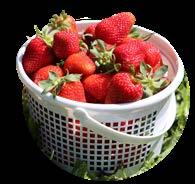
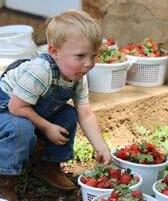
JT Dothard sneaks a sweet strawberry snack at his family’s Nances Creek Farms.
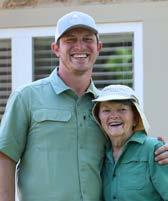
Joseph Dothard’s father Scott, right, is an integral part of Nances Creek Farms.
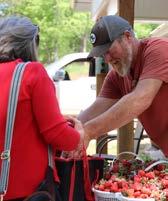
Gail Pollard said Joseph Dothard’s farm reminds her of precious childhood days on her family’s farm.
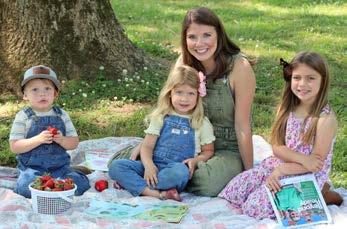
Strawberry season is a special favorite for the Dothard family — from parents Joseph and Sabrina to their trio of young farmhands, Libby, Lorelei and JT.
Summer Signals Season for Fire Prevention
By Marlee Jackson
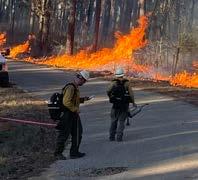
From fighting small fires to battling behemoth blazes, it’s been a busy year for Alabama Forestry Commission (AFC) wildland firefighters.
“With drought loading and lower relative humidity, it’s the perfect recipe for a wildfire,” said Ethan Barrett.
Barrett is AFC’s fire analyst, tasked with monitoring weather conditions, analyzing fire behavior and checking long-range data that lead to safety restrictions, such as fire alerts and burn bans.
With four months left before its fiscal year ends Sept. 30, AFC staff have contained 1,700 fires covering more than
37,000 acres since Oct. 1 — outpacing the previous year when fire ran through just under 34,000 acres.
Tinderbox
Alabama wildfires historically ramp up during early spring and fall dry weather patterns. Fire season then tapers off thanks to spring and summer showers or wet winter weather.
Recent years deliver a different story.
“In the last three years, we’ve transitioned to a drier pattern,” Barrett said. “Every year, we’re seeing a growth in wildfires.”
Lee Ellenburg is Alabama’s state climatologist. His office produces climate
Barrett
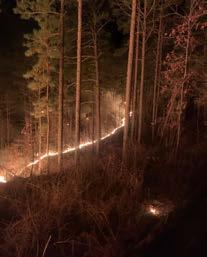
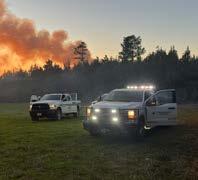
Wildfire flames light up the night sky as they crackle through anAlabama forest.
Alabama Forestry Commission wildland firefighters respond to calls in all 67 counties.
summaries, drought assessments and monitoring tools that support decisionmaking in agriculture, water resources, emergency management, forestry and infrastructure planning.
Alabama is no stranger to dry conditions, Ellenburg said. Continued drought over certain seasons, however, compounds the conundrum.
“What is unique about this drought is it occurred over our recharge season,” he said. “In December to March, we don’t use a lot of water, vegetation is dormant, sun angle is low and there are low temperatures, so we don’t evaporate a lot of water. The rain systems are more scattered, with drizzle days. Those are critical to recharge our deeper soil moisture and reservoirs. We didn’t get that (this winter).”
A deeper dearth of soil moisture means the forest fuel load is a tinderbox. Dry needles, leaves and other debris are ready to ignite — or reignite, as embers can smolder and rekindle days later.
Prevention
Following a drier-than-usual spring, showers began popping up across Alabama in early May — a gift of moisture that’s helped reduce wildfires, Barrett said.
While rain can quell fire, property owners play a crucial role in prevention. Wildland fires often spark in rural, heavily wooded areas. Many are in forest land, but structures, such as homes, camp houses and barns, are sometimes close by.
Barrett said simple actions can help prevent or stall fire. AFC’s publication “50 Ways to Make Your Woodland Home Firewise” details those tactics.
“I tell homeowners defensible space is something you do in the off season preparing for fire season,” Barrett said. “You don’t have to change a lot to keep the aesthetics and add safety to your structures.”
Simple strategies include:
n Cleaning the roof and gutters to remove leaves and pine needles
n Installing highly visible house numbers on the house and at the street
n Trimming all tree branches that overhang on the house or are within 20 feet of chimneys
n Moving firewood piles out of a home’s defensible space
n Removing trees along a driveway to make it 12 feet wide
n Pruning branches that overhang the driveway for 14 feet of clearance
n Maintaining a green lawn 30 feet around a house
n Considering replacing conifer and evergreen shrubs from a home’s defensible space
n Installing a hose at least 100 feet long on a rack and attaching it to an outside faucet
AFC also recommends regularly thinning forest land and incorporating controlled burns to regulate understory debris and fuel load.
“Thinning will help the trees be healthier anyway, even if you don’t have a wildfire,” Barrett said.
Forecast
While May rain helped squelch more immediate wildfire concerns, Barrett said the threat of a summer fire season is still possible.
“If we carry the drought over into June and July, the time you really need to pay attention is when your grasses start turning colors,” he said. “When grass turns yellow, it’s starting to be conducive to fire.”
He urged landowners to check the weather and forestry.alabama.gov before striking a match.
“Hopefully this is a non-issue by then,” he said. “But if we start going into summer not getting the rain and staying in a drought deficit, we will have an above-average fire season in October. That’s the reality. You have the summer months to do what you can to help.”
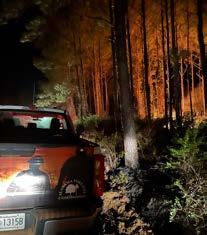
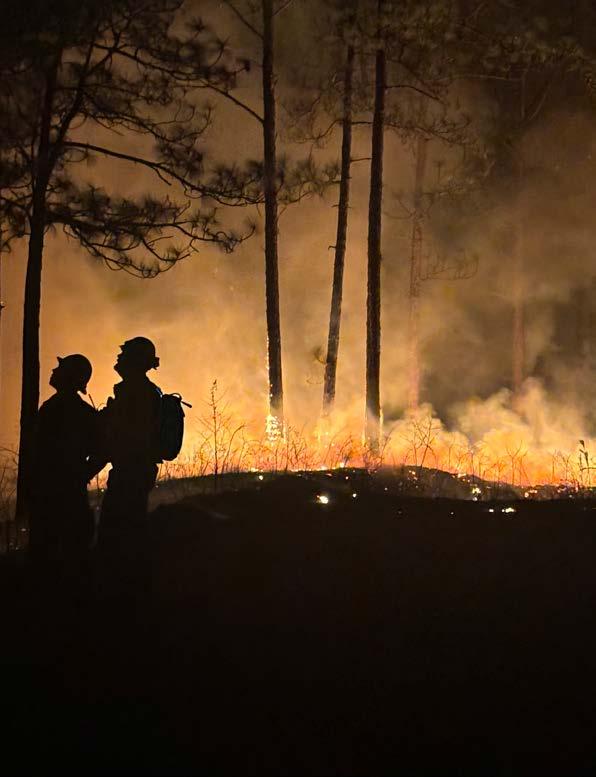
Wildland firefighters jump into action fighting a fire earlier this year.
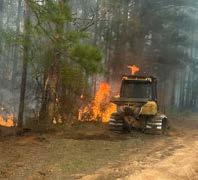
Wildland firefighters use bulldozers to help create fire breaks and halt flames’ movement.
Alabama Forestry Commission and USDA Forest Service wildland firefighters respond to a call this spring.
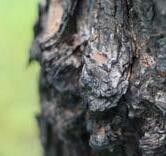
Fire chars the bark of pine trees. Stands often recover after fire, though prolonged and especially hot flames can cause damage.
Scan for “50 Ways to Make Your Woodland Home Firewise.”
You have goals. With Merrill, the bull has your back.
Congratulations to THE HARTY CARPENTER GROUP for being named to the Forbes “Best-in-State Wealth Management Teams” 2025 list, published on January 9, 2025. Rankings based on data as of March 31, 2024.
2025 Forbes “Best-in-State Wealth Management Teams” list. Opinions provided by SHOOK® Research, LLC and is based on in-person, virtual and telephone due-diligence meetings and a ranking algorithm that measure best practices, client retention, industry experience, credentials, compliance records, firm nominations, assets under management and Firm-generated revenue (investment performance is not a criterion because client objectives and risk tolerance vary). SHOOK’s rankings are available for client evaluation only, are not indicative of future performance and do not represent any one client’s experience and available for investor help in evaluating the right financial advisor and not an endorsement of the advisor. Compensation was not received from anyone for the rankings study. Past performance does not guarantee future results. Details available at the SHOOK Research website. SHOOK is a registered trademark of SHOOK Research, LLC.
Pursuant to the provisions of Act #108, approved July 3, 1957, and Act #79-331, the Alabama Peanut Producers Association, Inc., has been certified by the Alabama Board of Agriculture and Industries as the authorized association to conduct a referendum among the peanut producers in the State of Alabama to determine whether or not an assessment at the rate of twelve and one-half cents ($.125) per one hundred pounds shall continue to be collected on all peanuts marketed in Alabama.
Notice is hereby given that the Association has determined:
That the referendum will be held on June 24, 2026, during established office hours between 8:00 a.m. and 4:00 p.m.
That all persons engaged in the production of peanuts for the years 2023, 2024 and 2025 shall be eligible to vote.
That in the event the referendum is carried by a majority of those voting, then the assessment will be collected upon an order of the Commissioner of Agriculture and Industries to all persons, firms and corporations engaged in the business of purchasing peanuts in this state by deducting the aforementioned assessment from the purchase price of peanuts.
That the proceeds from the funds derived from the assessment will be administered by the Alabama Peanut Producers Association, Inc.
That the funds shall be used for the purpose of financing or contributing toward the financing of programs in research, education, promotion and other methods designed to increase the consumption of peanuts and peanut products, as well as the general well-being of the peanut producers.
To obtain a list of 2026 polling places, growers can contact the Alabama Peanut Producers Association office at (334) 792-6482, any APPA board member or visit alpeanuts.com.
Farmers Hope Drought Breaks as Growing Season Dawns DRY SPELL:
By Marlee Jackson
Brian Byrd was reviewing weather data late last year when he noticed a concerning trend.
“I told Dad in December that we were about 14 or 15 inches behind on rainfall,” said Byrd, who farms corn, peanuts and cattle in Coffee and Dale counties with his father, Jerry. “Usually, we catch up in November, December, January. Earlier this year, we weren’t getting 3- or 4-inch rains. They were a half inch and weeks apart.”
The dry spell is a double-edged sword.
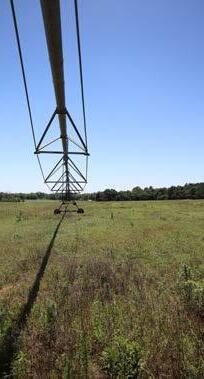
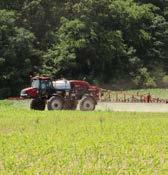
It’s delivered optimal weather for field work, but the impending summer growing season means steady, soaking, routine rain will be essential to nurture crops and boost yields.
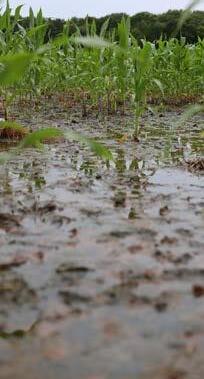
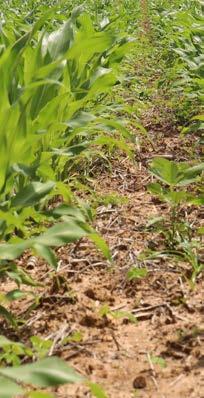
“When I started laying rows off for corn in February, we got a pretty decent rain,” Byrd said. “Then we went five or six weeks without a shower. To me, it was perfect corn planting. I want dust rolling when I’m planting, and I want that corn to get boot high. Corn doesn’t react well with wet feet when it’s young. So far, it’s looking good, but we’re a long way from home.”
The dry pattern has reduced reservoirs, causing concern even for farmers blessed with irrigation.
The Byrds have invested in irrigation on around 70% of their fields. Those pivots, though, rely on surface water. Byrd watched pond levels fall this winter and made the call to leave 160 acres out of production when he planted corn in March.
“I’d hate to plant all this and run out of water and come up short, especially as tight as margins are this year,” he said, adding they’ll do field repair while the ground is fallow.
May delivered much-needed
Reduced pond levels thanks to continued drought caused Brian Byrd to leave 160 acres of mostly irrigated land fallow this spring.
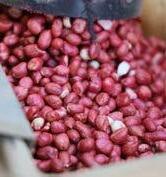
Brian Byrd was planting peanuts in mid-May following minimal rain earlier in the month.
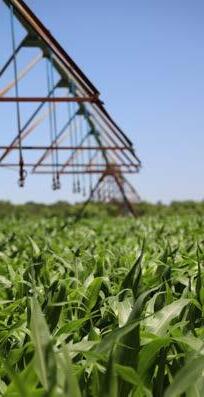
moisture through a series of scattered storms. Thanks to that rain and irrigation, some of Byrd’s fields were flush with chest-high corn as he planted the remainder of his peanut crop.
Continued rain, however, isn’t guaranteed.
“That’s the scary part,” he said. “We’ve been in this drought the whole winter. Now we’re coming into spring. When I’m out working and I’m not sweating a bunch, you know the humidity is low, and you won’t get a whole lot of pop-up showers.”
It’s weather whiplash compared to conditions last year. State Climatologist Lee Ellenburg said 2025 delivered the wettest May on record.
The pattern turned dry around July. Ellenburg said his concern escalated in the fall, which delivered minimal rain. A parched winter compounded the issue.
“This summer, when we go through seasons of no rain, there’s no storage,” Ellenburg said. “We’re in a deficit that’s hard to overcome. We’re almost beyond needing to recoup that loss. At this point, we are going to be teetering on worsening conditions unless it rains every week.”
As Byrd welcomed May moisture in the Wiregrass, north Alabama farmer Forrest Anders prayed for rain, too.
Anders farms with his father, brother and uncle in Lawrence and Morgan counties. He said dry prime planting conditions, coupled with memories of last spring’s consistently soggy fields, sent tractors rolling unusually early.
“Guys like us struggled to get in the
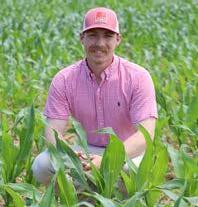
field last year to plant,” said Anders, who chairs the Alabama Farmers Federation State Young Farmers Committee. “The first opportunity we had this year, we hit the ground running. Going forward from here, it’s going to change some a little bit about what we do.”
By late May, most of Anders’ singlecrop seeds were in the ground. More decisions then come into play.
“We’re obviously wanting those rains,” he said. “But then, how much do we invest into that crop? Do we put out that extra fertilizer? Will we see a return on that? Because without the rain, you’re not going to be able to move nutrients throughout the plant. You’ve got to have the rain to push those nutrients and drive yield.”
Byrd said he hopes a return to normal weather is in the future, though he’d take current dry conditions over a constant deluge.
“In a dry year, you plant it, you do what you do, and you can kind of cut it off,” Byrd said. “You keep it clean and gather what you can. It seems in wet years, you’re chasing your tail. It’s hard to fix a crop that’s been getting drowned. If it’s drought and you start getting rain, you can deal with that.”
Scan to report drought conditions.
Forrest Anders said his family is weighing the benefits of extra investments into this year’s corn crop due to a lack of early season rain.
Forrest Anders said this year’s dry spell delivered optimal conditions for field work — a stark contrast to last May’s soggy weather.
By Marlee Jackson
Arising star in Alabama agriculture, Ellie Watson will soon put her advocacy skills in action nationwide through the American Farm Bureau Federation’s Partners in Advocacy Leadership (PAL) program.
Farm Bureau announced Watson’s appointment to the elite class of 10 farmers and industry professionals May 7. The director of Sweet Grown Alabama, Watson is the state’s inaugural PAL delegate.
“It’s rare you meet a young person with Ellie’s gift for telling folks about agriculture,” said Alabama Farmers
Watson Joins Elite Farm Bureau Advocacy Class
Federation President Jimmy Parnell, who nominated Watson for the position. “There’s something special about Ellie. She’s a hard worker who knows agriculture, and people listen when she speaks. I’m convinced PAL is getting one of our best.”
Watson’s PAL class will spend the next two years honing advocacy, storytelling and policy skills through four institutes that include a stint in Washington, D.C., plus an international experience.
She will graduate in March 2028.
Watson’s work builds on a strong legacy of leadership. Her late great-grandfather, Hollis Isbell, was
a respected leader in the U.S. cotton industry, a heritage continued by her grandfather, Neal.
The sixth generation on her family’s row crop farm, Watson formed an appreciation for agriculture watching family — including her father, Todd — tend the Colbert County soil.
“As a child, I remember listening at meals and holidays as family talked about checking irrigation, moving equipment or the weather,” Watson said. “Everything revolved around the farm. That’s when I started to grasp how involved agriculture was. It’s not a job they went to from 8 to 5. It was a lifestyle. Through Sweet Grown Alabama and the Farmers Federation, I’ve been able to give back to this industry in a way that honors their legacy.”
Watson has taken Sweet Grown Alabama from a visionary concept in 2019 to a successful marketing program with hundreds of members and broad-based private and public support. An enthusiastic communicator, she effectively bridges the gap among traditional agriculture operations, niche farmsteads, grocery stores, restaurants, artisans and food manufacturers.
In addition to her day job, Watson gives back to the farm community. She chairs the Autauga County Young Farmers, serves on the State Young Farmers Committee and mentors students at her alma mater, Auburn University. She’s also a graduate of the Federation’s elite Agricultural Leaders For Alabama (A.L.F.A. Leaders) program, where she was instrumental in developing recommendations to address the industry’s workforce development challenges.
Her most important role, however, is at home in Autaugaville, where she and husband Dalton are raising their daughter, Charlotte.
Clockwise from above left: Ellie and Dalton Watson are raising their daughter, Charlotte, in Autaugaville; Watson visited with Alabama Gov. Kay Ivey during her time in the elite A.L.F.A. Leaders program; Watson is a sought-after speaker who shares the good news about Alabama agriculture.
Alfa Awards Spanish Fort Elementary Teacher With New Vehicle
By Melissa Martin
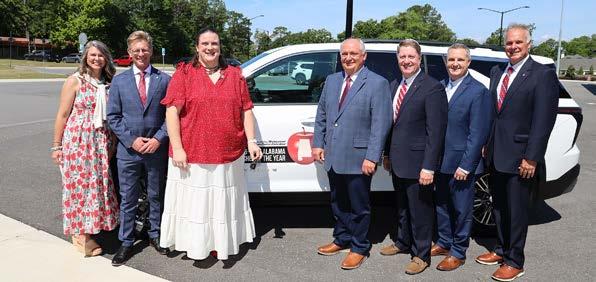
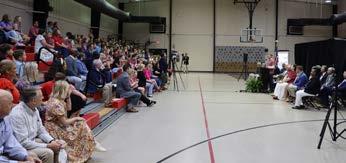
Spanish Fort Elementary students and staff celebrated a familiar face May 19 during an assembly honoring special education teacher Elizabeth Eubanks Von Hofe, Alabama’s 2026-27 Teacher of the Year.
Gleeful cheers and roars of applause echoed through the gymnasium as Alfa Insurance and Alabama Farmers Federation President Jimmy Parnell presented Von Hofe keys to a 2026 Chevrolet Traverse during the program,
which she will use as she promotes education across the state. This marks the 30th year Alfa has provided the year’s use of a new vehicle to Alabama’s Teacher of the Year, while the Federation covers the cost of insurance.
“Thirty years ago this week, I walked across my own high school graduation stage, never dreaming I’d be standing here as a teacher,” said Von Hofe. “I couldn’t be prouder to represent this state that educated me, and I couldn’t be prouder of these students who show what true inclusion is. We’re all put here for a purpose. God chose me to be here today, and I could not be more honored to get in that car, drive across this great state that raised my family and the generations before me, and share the message of true public education — Every child. Every chance. Every day.”
Parnell said he was pleased to offer the vehicle to Von Hofe.
“Teachers across all school levels have a tremendous impact on their students and the communities they serve,” said Parnell. “Mrs. Von Hofe is an outstanding advocate for education and ensures all students, regardless of ability, have the tools they need to succeed. I believe special education
left are Spanish Fort Elementary Principal Allison Guy, State Superintendent of
Alabama Teacher
Dr.
Year Elizabeth
Von Hofe, Alfa and Federation President Jimmy Parnell, Federation Executive Director Paul Pinyan, Alfa Executive Vice President of Operations Tommy Coshatt and Alfa Executive Vice President of Marketing Mark Evans.
teachers are called to serve others, and her drive to create a sense of belonging for students with special needs only reinforces that belief. We applaud and admire her commitment.”
Von Hofe said Alfa’s support feels full circle.
“Alfa and the Alabama Farmers Federation have always been special to me,” she said. “They’ve insured my family for generations. Since the 1830s when my family migrated here from North Carolina and Georgia, their roots were planted in the farmlands of Bibb, Marshall and Shelby counties. My core childhood memories are from their farms. Just like farmers, educators are planting seeds every day to see them flourish. We may not see the harvest, but the harvest carries on. And here I am, seven generations later, standing before you as Alabama Teacher of the Year. This
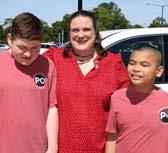
Alabama Teacher of the Year Elizabeth Eubanks Von Hofe has a heart for serving children with special needs at Spanish Fort Elementary.
From
Education
Eric Mackey,
of the
Eubanks
is truly an honor, and I hope I represent you well.”
The daughter of two Limestone County teachers, Von Hofe is a secondcareer educator and has served as Special Education Department chair and teacher at Spanish Fort Elementary since 2021. She develops alternate achievement lesson plans, designs multi-sensory instruction for students in kindergarten through sixth grades, and conducts functional behavioral assessments and intervention plans for students. Additionally, she collects data, assesses eligibility and creates IEPs for students with diverse cognitive, behavioral and socio-emotional deficits. In her previous professional life, Von Hofe was a licensed nursing home and hospice administrator. She and husband Desmond have two sons, Bryant and Garrett.
The Teacher of the Year Program is administered through the Alabama State Department of Education (ALSDE), which received 155 applications for the 2026-27 award.
“Alabama boasts thousands of educators, and it’s always a highlight of
our year to celebrate the state’s top teacher,” said State Superintendent of Education Dr. Eric Mackey. “This year is no exception. Elizabeth Von Hofe is everything you want in an educator — driven, resourceful and caring. We’re so proud to have her represent Alabama within the state and across the country.”
As the 2026-27 Teacher of the Year, Von Hofe will serve as the state’s official ambassador for public education and
for the national award and will actively advocate for the profession alongside Alternate State Teacher of the Year Eshwaa Godfrey of Selma High School in Selma.
A special assembly May 19 honored Elizabeth Eubanks Von Hofe as Alabama’s Teacher of the Year.
Foxhound Bee Co. Builds Buzzing Business Near Birmingham
By Maggie Gaddy
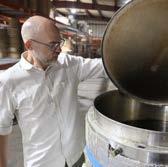
From smokers and bee suits to honey and hive tools, Foxhound Bee Co. offers an array of equipment options for novice and expert beekeepers.
It’s a sweet success for Adam Hickman, whose buzzing business in Irondale began in the beekeeper’s garage.
“Foxhound Bee Co. is a place for beekeepers and non-beekeepers,” said Hickman, who serves on the Alabama Farmers Federation State Bee & Honey Committee. “We just want to inspire people to be good stewards of the environment through supporting the bee industry.”
After gleaning inspiration from his great-grandfather, Hickman started his
company with just one hive in 2012. The full-service beekeeping supply company now spans more than 30,000 square feet.
“We strive to carry a variety of products,” Hickman said. “I needed an operations space, distribution, a place to run a forklift and somewhere to receive shipments. It went from a shelf in my garage to three warehouses and a storefront.”
Hickman’s business also houses an educational space that hosts events. He recently started a free women’s beekeeping class where participants learn about bees, share experiences and enjoy hands-on, bee-inspired crafts.
“I look at this like community development,” Hickman said. “I do encourage people to get into beekeeping. I want them to be successful at it, but I want them to truly love it before they go all in and buy the stuff.”
The thriving business didn’t expand overnight. Before launching Foxhound Bee Co., Florida native Hickman spent
Beekeeping is in Adam Hickman’s blood. His great-grandfather was a beekeeper and inspired him to pursue the craft.
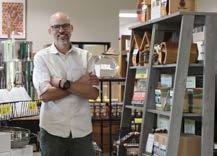
Adam Hickman has found sweet success as a beekeeper.
a decade developing recipes after attending culinary school in Miami. He later studied business management at the University of Alabama at Birmingham.
There, he met his wife and planted roots in Jefferson County.
“At first, I saw the appeal in beekeeping and thought it was a fun hobby,” Hickman said. “I then realized I could make some money here. I enjoyed it. I began learning more about the business side of things. That’s when I started buying extra equipment so other beekeepers could source it from me.”
Hickman launched his LLC in 2014 after realizing he could turn a side hustle into a full-time career.
“I never allowed myself to think I could do it full time, have employees or own a building,” Hickman said. “Things just grew naturally. I realized if I could do this much with half my time, I needed to go all in.”
Foxhound Bee Co. sells a variety of honey, including Sweet Grown Alabama honey, Florida tupelo honey and North Carolina sourwood honey. Hickman said offering multiple varieties helps customers understand no two honeys taste exactly alike thanks to regional flora where bees forage.
“The only difference is the flower it came from,” Hickman said. “Honey is special. I love teaching people how unique those flavors can be.”
Hickman’s expertise even led him and fellow Alabama beekeepers to an unexpected opportunity in Hollywood.
During production of “The Rivals of Amziah King,” a thriller starring Matthew McConaughey, movie producers visited Foxhound Bee Co.’s original downtown Birmingham location seeking inspiration for the film’s bee scenes.
That spur-of-the-moment visit turned into a consulting role for Hickman. The movie, set for release in August, features
bees and equipment from Hickman and other local beekeepers.
“One of the highs of my life was helping with the production,” Hickman said. “What was especially meaningful was seeing McConaughey use the same bee smoker my great-grandfather used. That’s the smoker that piqued my interest in beekeeping as a hobby.”
Federation Bee & Honey Division Director Blake Thaxton said he’s proud to have a volunteer-leader with Hickman’s knowledge, passion and expertise guiding policy for beekeepers across Alabama.
“Adam is an encouraging entrepreneur who understands the growing bee industry in Alabama,” Thaxton said. “Foxhound Bee Co. is a helpful resource for apiarists. He’s a great fit for the committee.”
Hickman said he was introduced to the Federation through the local Jefferson County Beekeepers’ Association.
“I wanted to be involved at another level I could contribute to,” Hickman said. “I’m proud to work with the group that moves the needle on things and makes a difference. I was looking for the next step that could change things for the future.”
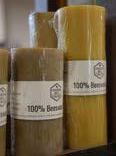
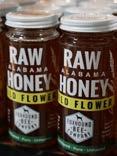
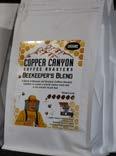
Adam Hickman’s Foxhound Bee Co. in Irondale sells assorted bee-related and themed goods, including candles, honey and even coffee.
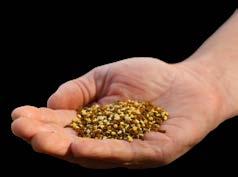
Foxhound Bee Co. ships bee pollen collected in the Birmingham area nationwide. Each granule is a different color, reflecting the species of flower from which it originated.
Adam Hickman’s full-service beekeeping supply company spans more than 30,000 square feet in Irondale.
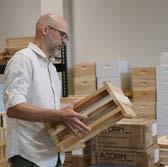
Foxhound Bee Co. is a one-stop shop for novice and expert beekeepers and stocks an assorted inventory.
better prepared to advocate for their communities and ensure agriculture has a strong voice at the table. Experiences like this can truly inspire young people and leave a lasting impact.”
Federation External Affairs Department Director Brian Hardin said seeing farm kids in the State House reaffirms his faith in the future.
“Working with legislators every day
reminds us that the impact we make on our young people today will shape who they are tomorrow,” Hardin said. “It’s so important for our young farm families to be involved in the legislative process and show young people that this is an important avenue to serve our farming
communities. We appreciate the lawmakers who welcome these students and hope this will continue for years to come.”
Contact a local legislator for more information on paging in the House or Senate.
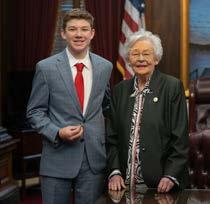
Jefferson County’s Cash Nelson learned government’s function from the inside as a legislative page in 2025 and 2026. Nelson’s participation in the program offered an opportunity to meet with Gov. Kay Ivey. He and his parents, Evan and Christy Nelson, also spent time with Rep. Leigh Hulsey, R-Helena.
International Wild Pig Experts Gather in Alabama
By Marlee Jackson
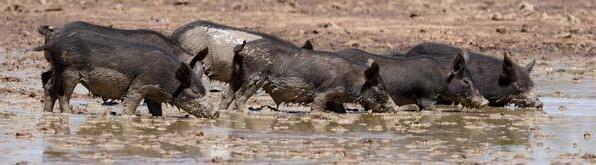
Experts from around the globe gathered in Alabama April 20-22 to discuss Sus scrofa — commonly known as wild pigs.
The Alabama Farmers Federation and Alabama TREASURE Forest Association (ATFA) sponsored the International Wild Pig Conference in Montgomery, which kicked off with an overview of wild pigs’ impact on the Americas.
Dr. Jack Mayer of the Savannah River National Laboratory said U.S. wild pigs create $3.4 billion in damage annually, noting that projection doesn’t fully gauge environmental impacts.
“It’s best to know thy enemy,” said Mayer, who authored the first scientific text on U.S. wild pigs. “The better you know an invasive species, the better chance of controlling or managing that animal or plant.”
Mayer’s historical overview highlighted pigs’ introduction to the Americas by Spanish colonials, eventual status as a game animal in the 1900s, and modern illegal translocation and release.
Mayer said wild pigs are established
in 35 states, with a presence in 13 others. The overall population could range from 4 million to 11 million pigs, he added.
Their population hovered between 1 million to 2 million just 50 years ago.
Common wild pig-related issues include rooted land, damaged timber, vehicle collisions, domestic livestock disease, native fauna predation, agricultural crops damage and native game species competition.
Mayer recalled less than two dozen people attended wild pig meetings in ‘70s. More than 150 gathered in this year’s host city. That increase in curiosity, plus new control technology, could move the needle on decreasing sounders — and damage.
“As time moves on, you folks will see some amazing technologies,” Mayer said. “As far as the future, I see there are two choices. The first one is…100% eradication. Give it enough money, enough time and enough resources… and yeah, it is possible. If we don’t do eradication, we have to learn to live with them. Reduce the numbers, you reduce the damage.”
Innovative technologies discussed
during the conference ranged from traps and toxicants to robots. The speaker lineup included U.S. Department of Agriculture specialists, land-grant university researchers and experts from Down Under.
Daniel Lewer works with Hunter Land Management in New South Wales, Australia. He offered an overview of Australia’s wild pig problem, highlighting ways the U.S. can implement lessons learned in his homeland.
“I think the governance, the process, the training, the education is way more important than finding the silver bullet of a chemical (to eradicate wild pigs),” Lewer said.
Fellow Aussie John Scriven of Darling Downs South West Queensland Feral Pig Program reminded attendees that warring with wild pigs is complex.
“With toxins, with traps, with guns, with thermal, the biggest thing is control over a large enough area to impact an abundance and reinfestation rates,” Scriven said. “The key is to implement control as one community, rather than enterprise-based individual control.”
ATFA Executive Director William Green said he was pleased the collaborative international effort took place in Alabama, where farmers and landowners actively encounter and combat wild pigs. Green is also the Federation’s Wildlife Division director and state staff policy adviser for American Farm Bureau Federation’s Wildlife Damage Advisory Committee.
“It’s important we take proactive steps to combat wild pigs in our state and across the globe,” Green said. “We may never eradicate them, but with time, I’m hopeful we can reduce their numbers. That ultimately improves our landscape and positively impacts landowners and citizens everywhere.”
Aussie Daniel Lewer offered his perspective on wild pig management in the Land Down Under.
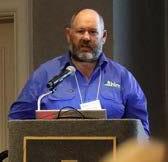
Alabama TREASURE Forest Association Executive Director William Green attended the International Wild Pig Conference in Montgomery.
COUNTY
2026 Annual Meeting Dates, Times & Locations
Baldwin Thurs., Aug. 13 6 p.m.
Bullock Thurs., July 30 6:30 p.m.
Coffee Mon., July 20 6:30 p.m.
Dale Mon., July 13
DeKalb Thurs., Aug. 20 6:30 p.m.
Escambia Tues., Aug. 11 6 p.m.
Henry Tues., Aug. 4 6:30 p.m.
Houston Tues., July 14 6:30 p.m.
Jackson Tues., Aug. 4 6 p.m.
Marshall Tues., Aug. 25 6 p.m.
Mobile Tues., Aug. 4 6:30 p.m.
County Farmers Federation Building 21332 Hwy. 59 Robertsdale
Alabama Extension Project Spotlights Harm of Invasive Plants
By Justin Miller
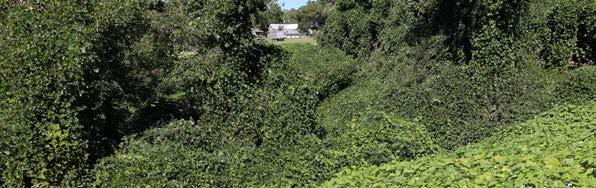
From bamboo to kudzu, Alabama landscapes are full of invasive plants. Whether introduced accidentally or intentionally, these plants are costly reminders of the harm native ecosystems sustain annually.
Throughout the year, the Alabama Cooperative Extension System is working to bring greater awareness to this issue. Kerry Steedley and Norm Haley are forestry, wildlife and natural resources Extension agents at Auburn University who created the 2026 Year of Invasive Plants project to share knowledge and resources.
the ecosystem,” Steedley said. “This can limit the availability of wildlife or insect food sources. It can also create physical barriers that prevent natural patterns of movement and reduce habitat connectivity.”
Impact on Alabama
Known as America’s Amazon, Alabama is one of the most biodiverse states in the country. It ranks No. 1 in freshwater diversity and No. 4 in overall native plant, animal and insect diversity. Steedley said invasive plants threaten many aspects of this biodiversity.
“When invasive plants are dominant in a landscape or aquatic system, they can displace native species and disrupt
This year, Alabama Extension is highlighting a different invasive plant each week, sharing information on its impact and control.
The Forestry, Wildlife and Natural Resources team shares these features on its Facebook and Instagram accounts, as well as the project’s web page on the Alabama Extension website at aces.edu.
and control invasive plant species in their communities.
“Invasive plants can be found throughout Alabama, and they will not go away on their own,” Haley said. “This project will help participants identify some of the top invasive species in the state along with the tools needed to reduce their density and spread.”
Get Involved
To take the pledge and report local successes in removing invasive species, visit aces.edu/go/YearofInvasivePlants. On the web page, people will also find resources on invasive plant control and a list of workshops and volunteer events. More workshops and volunteer opportunities will be added.
“Invasive plants directly compete with Alabama’s native plants,” Haley said.
Public involvement is another large part of the project. People can pledge to help raise awareness
“Getting involved in this project will help foster ecosystem function, producing cleaner air and water and healthier, more abundant wildlife.”
Bamboo
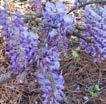
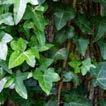
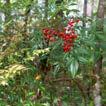
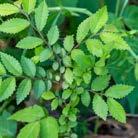
Kudzu Wisteria English Nandina
ChineseElm
It’s time to reserve strawberry plugs for October delivery!
• 50 plugs per tray
• Plugs have an intact root ball
• Plugs establish quickly
Best of all Plant plugs in October and harvest sweet strawberries in the Spring!
THE TREE
In my front yard is something beautiful. Something living. Something that sometimes reminds me of my mother.
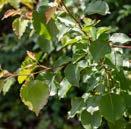
It is a tree, about 80 feet tall, with a gnarled trunk, long limbs and thick, waxy leaves.
Some 20 years ago, a hapless workman with a chainsaw tried to cut this tree down. I rushed to its rescue and stood between his chainsaw and the tree, shouting, “Turn that thing off!”
Later that day, I tied a nylon ribbon around the trunk, reminding workmen not to harm this beautiful thing.
On cool mornings, I would often sit beneath the branches, reading, sipping coffee. This softwood is home to many local creatures like neighborhood cats, squirrels, lizards, butterflies, ladybugs, moths, and 52,349 birds.
This tree is not exceptionally good looking. Actually, it’s average. Its bark is peppered with scars, knots and blotchy steel-colored freckles.
It’s not especially old, either. This particular tree is pushing 50 years old, although the one in my backyard is closer to 120. Still, many of these trees have endured droughts, hurricanes, tornadoes and real estate development.
The older ones have lived through eras of war, stock market crashes, ragtime, jazz, disco. These trees will survive pop country.
There are about 210 varieties of this particular tree. They are the oldest known flowering species on Earth.
The flowers on this tree are incredible. If you’re lucky enough to see this tree bloom in late March or April, it will bless your heart. The cream-colored blossoms are like a woman’s palms, cupped upward to heaven, waiting for something to fall
from the sky.
But they are not dainty. That’s just a trick of the eye. These delicate-looking blossoms are anything but flimsy. They have leathery petals and can endure disagreeable weather.
And when the sun rises, I sit beneath this tree looking upward into its branches, watching daylight filter through the canopy of chlorophyllchoked foliage.
The tree is steadfast. It is strong. It reminds me of strength. Of resilience. But most of all, it reminds me of people like you.
Yes, you. You’ve been kicked around. You’ve been whipped by people and circumstances that seemed stronger than you were. But they were not stronger. Neither were your problems too great. Your roots are deep.
You were built for more than mere endurance. And you prove this each spring when you bloom so prettily, so arrestingly, so proudly, that people sometimes stop just to sigh at you.
That’s your purpose, you see. You were put here to be beautiful. You were made to grow tall, to sway in the wind, to soak in sunlight.
So when some fool with a chainsaw arrives and threatens to harm your base, you can laugh at your adversaries because you’re protected.
You will see a guy running to your rescue, shouting, “Turn that chainsaw off!” This man will stand between you and your enemy with arms outward to protect your lovely branches.
Then he will tie a ribbon around your slender waist because he would rather die than see you fall. Because you are a magnificent magnolia.
Just like his mother. ■
This month’s recipes shared by Jacob & AislingWalding
By Maggie Gaddy
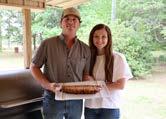
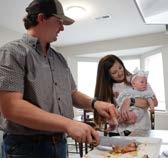
Summertime means family time around Jacob and Aisling Walding’s Dale County farm.
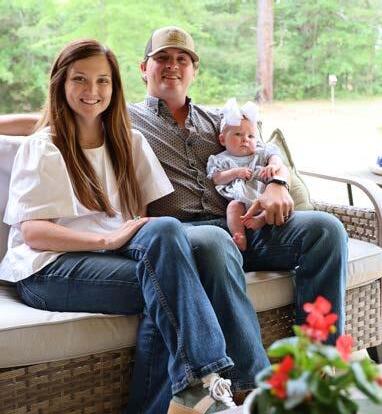
Along with tending livestock, picking vegetables or firing up the grill, Jacob and Aisling enjoy slow evenings on the patio, sharing home-cooked meals and spending time with their 5-month-old daughter, Emma.
“What we cook in the summer is fun,” said Aisling, assistant director of Sweet Grown Alabama. “A lot of the ingredients we use we grew or raised ourselves, or it’s from another Sweet Grown Alabama member. Everything we can eat in the summer, we get local. We enjoy spending time in the kitchen with Jacob’s family.”
Jacob and Aisling met through mutual friends while Aisling studied agricultural communications at Auburn University. Upon graduation, she began working for the state’s agricultural branding program, Sweet Grown Alabama, while Jacob focused on growing the farm. They married in 2023.
“I always knew I wanted to communicate the importance of agriculture to the public,” Aisling said. “There is no greater feeling than helping a farmer make a sale or improve their marketing plan. As a farmer myself, I can connect with Sweet Grown Alabama members and understand where they are coming from.”
The Waldings raise cattle, grow hay and manage commercial poultry houses in Ozark with Jacob’s dad, Bill. They also sell freezer beef, plus pork, under the Walding Cattle banner.
“It means so much having Aisling, who is from Georgia, come to my hometown and for us to create our family here,” said Jacob, the Dale County Cattlemen’s Association president. “Having Emma along with us makes it all worth it. It’s my turn to carry on the next generation.”
As Jacob prepares to celebrate his first Father’s Day this June, Aisling reflects on his unwavering support as the leader of their home.
Jacob’s Ribs
1 rack baby back ribs
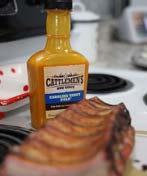
Bad Byron’s Butt Rub Cattlemen’s Carolina Gold barbecue sauce
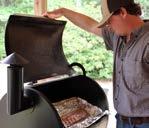
Heat smoker to 225 F. Rub meat with Bad Byron’s Butt Rub and let sit 30 minutes. Place on smoker for 1 hour or until internal temperature reaches 160 F. Remove ribs, coat with barbecue sauce and wrap in foil. Return to smoker 1 hour or until internal temperature reaches 205 F.
“We couldn’t do anything without Jacob,” Aisling said. “Watching him step into this role as a dad — it feels like he’s always had it in him. Seeing the young guy I met in college now carrying the weight of the world on his shoulders and keeping us afloat is special.”
Jacob said watching Emma grow up like he did is something he will cherish.
“My goal isn’t to have the biggest farm or make the most money,” he said. “It’s to get the farm to a point where the next generation can steward it. My goal is that Emma can come back if she wants.”
Byah’s Deviled Eggs
1 dozen eggs
1 tablespoon Dijon mustard
1/2 cup mayonnaise
1/4 cup yellow mustard
Garlic powder, to taste
Onion powder, to taste
Paprika, optional
Place eggs in a large pot, cover with water and bring to a boil. Once boiling, reduce heat, cover and cook 10 to 12 minutes. Transfer eggs to ice water to cool. Peel eggs and cut in half lengthwise. Remove yolks and place in a bowl. Add Dijon, mayonnaise, yellow mustard, garlic powder and onion powder, and mix. Fill whites with yolk mixture and sprinkle with paprika.
Barnyard Brisket
Brisket
Mustard
Cowboy Beans
2 (28-ounce) cans baked beans
1 pound ground beef, browned and drained
1 cup packed brown sugar
1 tablespoon Worcestershire sauce
Salt and pepper, to taste 1/2 pound bacon, diced
Heat oven to 350 F. Combine baked beans, browned beef, brown sugar and Worcestershire sauce in a baking dish. Season with salt and pepper. Spread bacon evenly over top. Bake until bacon is cooked through.
Hi Mountain Brisket and Prime
Rib Rub
2 cups beef broth
Heat smoker to 200 F. Trim excess fat from brisket. Coat brisket with mustard, then season generously with rib rub. Place brisket fat-side down on smoker and cook until internal temperature reaches 160 F. Remove brisket from smoker and place on foil. Create a foil boat, add beef broth and wrap tightly. Return brisket to smoker and cook until internal temperature reaches 200 F. Rest 30 minutes before slicing and serving.
Walding Chicken
Chicken thigh quarters
Slap Ya Mama seasoning
Cattlemen’s Carolina Gold barbecue sauce
Heat smoker to 400 F and prepare charcoal grill. Sprinkle chicken with Slap Ya Mama seasoning to taste. Place chicken skin-side down on grill and cook 5 to 7 minutes. Transfer chicken to smoker and brush with barbecue sauce. Cook until internal temperature reaches 165 F.
Mimi’s Potato Salad
3 pounds red potatoes
1 cup mayonnaise
1/2 cup mustard
3 eggs, hard-boiled, peeled and chopped
Dill relish, to taste
Salt and pepper, to taste
Cut potatoes in half and place in a large stockpot. Cover with water and bring to a boil over high heat. Cook until tender. Drain. In a bowl, combine potatoes, mayonnaise, mustard, eggs and dill relish. Season with salt and pepper to taste.
Mama Di’s
Mac ‘n’ Cheese
1 pound elbow noodles
4 cups shredded cheese, divided
2 eggs, beaten
1 stick butter, melted
1 can evaporated milk
1 can milk (measured using evaporated milk can)
Cook noodles according to package directions. Drain well. Place noodles in a slow cooker. Stir in 3 cups shredded cheese, eggs, butter, evaporated milk and milk. Sprinkle remaining 1 cup cheese over top. Cook on high 1 hour.
The beans in your Alabama fields today are destined to see the world. Last year, we exported $83.8 million worth of soybeans. That’s a lot of overseas opportunity for one year. And we’re always growing new markets abroad to help keep this demand going strong. And if you’re wondering how far your soybeans can go, we’re charting more ways to keep your ship coming in. Learn more about the story of soy at unitedsoybean.org/hopper.