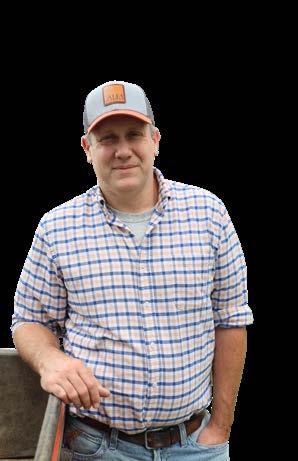
Hope Cassebaum Vice President | Southwest, Lillian
Steve Dunn Secretary-Treasurer, Evergreen
DIRECTORS
Dorman Grace | Jasper
Charles Butler | New Hope
David Bailey | Dawson
Darrell Lee | Addison
Will Gilmer | Sulligent
Phillip Hunter | Birmingham
Mahlon Richburg Auburn
Stewart Koon Gordo
Bill Cook Montgomery
Trip Horne | Louisville
Mark Kaiser | Daphne
Jerry Peak | Chancellor
Lisa Lake | Vinemont
Forrest Anders | Hartselle
Neighbors (ISSN 0162-3974) is published monthly by the Alabama Farmers Federation, 2108 East South Boulevard, Montgomery, Alabama 36116 or (334) 288-3900. For information about Alabama Farmers Federation member benefits, visit the website www.alfafarmers.org. Periodicals postage paid at Montgomery, Alabama, and additional mailing offices. Printed in the U.S.A.
MEMBERSHIP AND SUBSCRIPTION CHANGES 800-392-5705, Option 4 or BWatkins@alfafarmers.org
ADVERTISING REPRESENTATIVE
Ben Shurett, (256) 997-7922 BenShurett.alfafarmers@gmail.com
DISCLAIMERS: Advertisements in Neighbors do not represent an endorsement by the magazine or Alabama Farmers Federation. Editorial information from sources outside the Alabama Farmers Federation is sometimes presented for our members. Such material may, or may not, coincide with official Alabama Farmers Federation policies. Publication of information does not imply an endorsement by the Alabama Farmers Federation.
www.AlfaFarmers.org
| Begin Work Now for Next
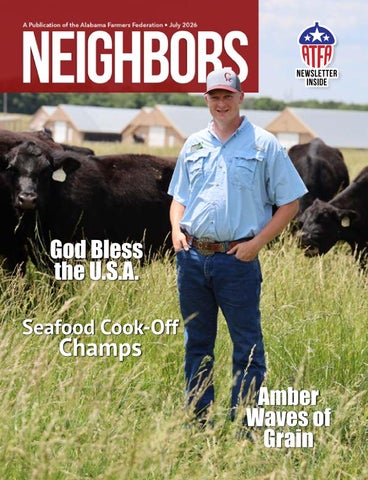
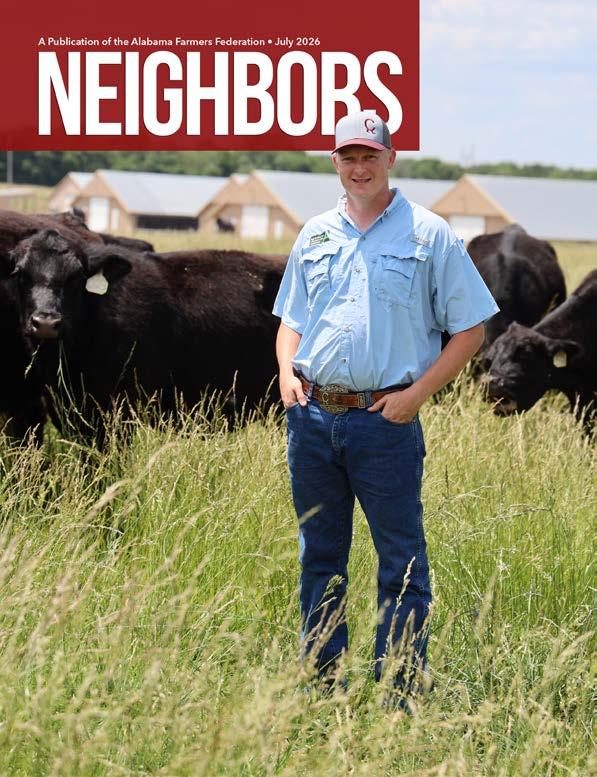
The Cover
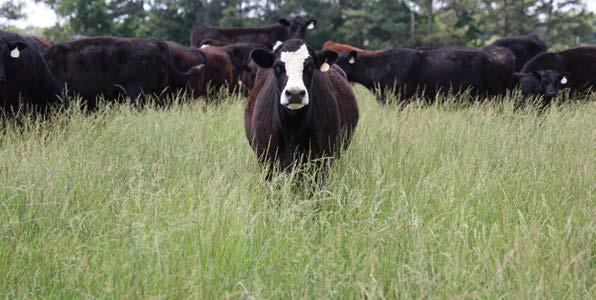
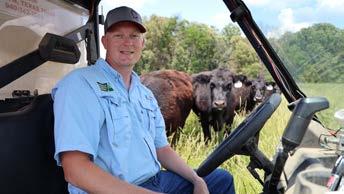
Trevor Collier is just one of thousands of Alabama farmers who wisely steward the land. He’s committed to serving his Lauderdale County community, too, by donating beef to families in need through Thousand Hills Cattle.
Photo By Maggie Gaddy
Amber Wavesof Grain
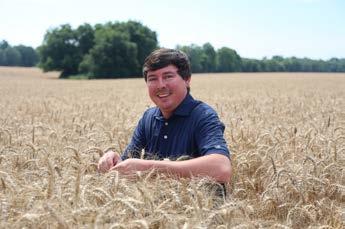
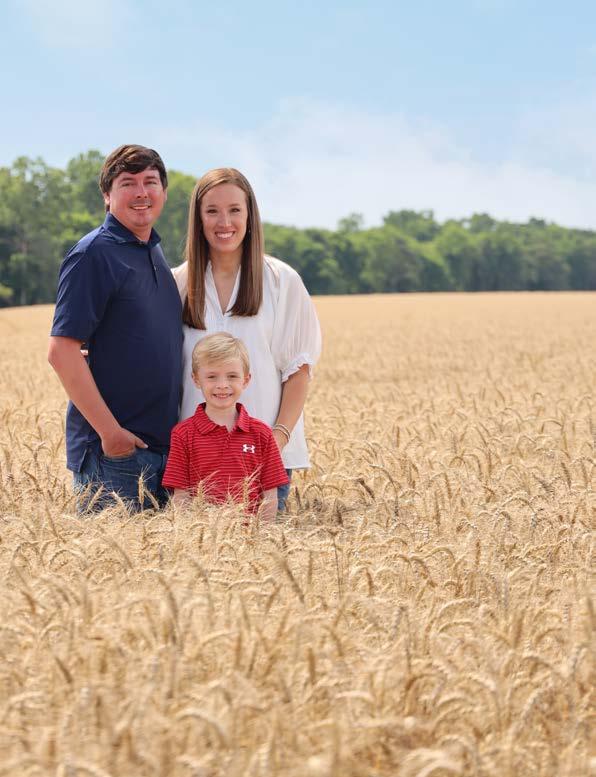
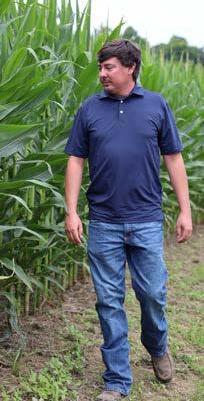
DeKalb County’s David Kellett raises row crops in Geraldine with his wife, Brooklyn, and son, Conner.
The proud American farm family harvests wheat straw each June.
By Maggie Gaddy
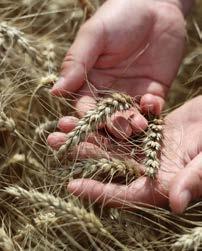
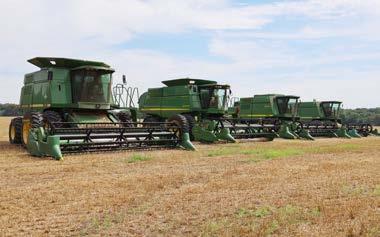
As his combine cuts through swaying amber waves of grain, DeKalb County’s David Kellett sees more than wheat harvest. It’s his American dream come to life.
“I grew up watching local farmers in the fields and knew it’s what I wanted to do,” said the first-generation farmer. “Farm life is a challenge, but I think it’s in my blood. I love being outside and seeing the crops grow. The tractor
views are unmatched. This keeps me grounded.”
David grows corn, soybeans and wheat in Geraldine with his wife, Brooklyn, and son, Conner. They’re expecting an additional farmhand in August.
“Farm life was new to me,” said Brooklyn, a second-grade teacher. “I see now the hours, hustle and heart farmers put into their work. David always says, ‘If you’re going to farm, farm right,’ meaning he puts in the extra time to
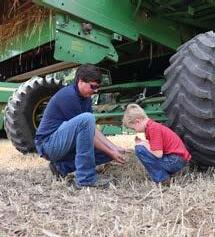
Kellett and son Conner are two peas in a pod. David spends long days in the combine harvesting amber waves of grain that will become bales of wheat straw. After, the bales are processed into square bales, which are sold to over 20 nearby retailers. Conner loves to tag along — learning from David each step of the way.
make the outcome the best it can be.”
Brooklyn plays
a big role in Kellett Farms’ success, too, David said.
“It’s a team. With her doing so much at home, I can focus on the farm when I am in the field. She just takes care of so much, and that is the biggest help,” he said.
David and Brooklyn said they are proud to instill the value of farm life in their children.
“I spent hours lining up toy tractors in rows across the carpet as a child,” said David, 33. “I watched how farmers did things in the field, and I mimicked that. My sons will have the chance to play with real-life farm equipment. I’m proud of that.”
Although agriculture wasn’t a family tradition, farming was always David’s goal. His journey began at the Sand Mountain Research and Extension Center before he went to work for a local farmer, gaining valuable experience behind the wheel of a combine and collecting knowledge from fellow row croppers.
By 2018, David was farming on his own and searching for ways to expand. Opportunity came in the form of wheat straw.
“After wheat harvest each June, grain is hauled to elevators and mills where it’s processed into flour or feed,” David
said. “Left behind is straw, which we bale and market for a variety of uses.”
The straw finds new life as animal bedding, garden mulch and erosioncontrol material on construction and landscaping projects.
“Straw is a byproduct, but it’s a lot of work,” David said. “You have to have somewhere to sell it and people willing to buy it.”
David started with round bales in 2020 and expanded into square bales two years later. Today, the farm supplies more than 20 retailers.
Connections made through the Alabama Farmers Federation have lent a hand to David while he navigates a niche market. Adversity hit hard in 2025 when excessive June rain hurt yields and a straw-filled barn caught fire.
“I was fortunate to meet Morgan County’s Mark Byrd and Calhoun County’s Daniel Trantham, who are both involved in wheat straw production,” David added. “Those connections have been invaluable. I’ve been able to find and sell quality products this way.”
As he counts his blessings, David said he’s proud to bear the title of American farmer.
“To take a dream and turn it into a livelihood — while helping feed people across this country — is something I never take for granted,” David said. “American people are getting American products grown by American farmers. That’s something to be proud of.”
David
David Kellett is a first-generation farmer who found his passion for agriculture as a child. His farm now spans over 1,000 acres.
Teachers Dig Into Agriculture During Summer Institute
By Lydia East
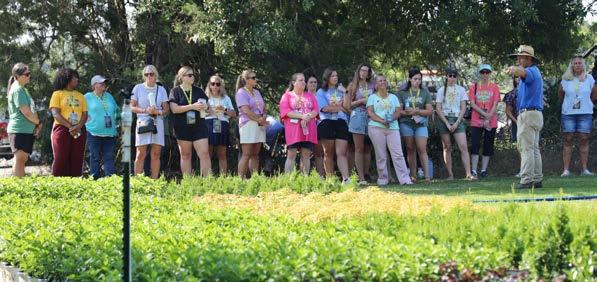
Summer smiles stretched wide as teachers came together for Alabama Ag in the Classroom (AITC) Summer Institute June 10-12 in Prattville. Through hands-on activities, fun-filled farm tours and classroom workshops, educators spent three days learning new ways to incorporate agriculture in their classrooms.
Savanna Dutton teaches agriscience across grade levels at Fairview Elementary School and said AITC resources are a staple.
“The ag literacy matrix is an essential resource in my classroom,” said the Cullman County educator. “My kids love it, and it gives them knowledge about agriculture they wouldn’t know otherwise. Ag encompasses so much of what we already teach, like math and science, except it’s new and exciting — for kids and teachers.”
Teachers also forged connections with farmers across the River Region during tours.
One stop was Poague’s Tree Farm & Nursery, full of beautiful greenery and blooming flowers in Elmore County.
Farmer Scott Poague is also an agriscience teacher at Elmore County High School and said he was excited to welcome Alabama teachers to his farm. He emphasized the importance
of AITC and the benefit of educators implementing agricultural skills.
“This conference gets teachers out of the classroom and on the farm so they can see what’s happening in the world of agriculture,” said Poague, who serves on the Alabama Farmers Federation State Greenhouse, Nursery & Sod Committee. “Teachers get the opportunity to take back what they have learned and put a spark in students’ minds. That’s the first step of getting them involved.”
Teachers also visited Blue Ribbon Dairy in Elmore County to learn about milk; enjoyed lunch at the Alabama Wildlife Federation NaturePlex in Millbrook; and stopped by Priester’s Pecans in Lowndes County to see pecan production from tree to treat.
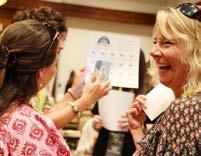
Teachers were all smiles meeting new friends during a networking game.
Above: Scott Poague welcomed teachers to his Elmore County nursery during Ag in the Classroom Summer Institute.
Teachers learned about pecans from tree to treat at Priester’s Pecans in Lowndes County.
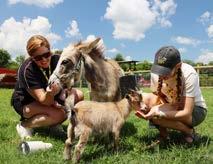
Farm animals were a hit with teachers who toured Blue Ribbon Dairy in Elmore County.
During the conference, teachers were inspired by speakers such as Sam Yu, who owns Zizi’s Bee Co., a mobile bee lab.
“It doesn’t matter what kids do, as long as they get involved with agriculture,” Yu said. “You don’t have to reinvent the wheel if it has already been invented.”
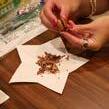
Teachers enjoyed hands-on activities they can implement in their classrooms. Those included churning homemade, farm-fresh strawberry ice-cream; making five-point paper stars as a tribute to the America 250 celebration; lessons on hydroponics; and Farmer on the Shelf, agriculture’s take on the popular Christmas toy.
It’s all about giving teachers a new perspective on agriculture, said Rachel Chastain.
Chastain teaches at Alabama Institute for Deaf and Blind Helen Keller School in Talladega County. A former National AITC Teacher of the Year, Chastain emphasized the importance of AITC and how this conference has shaped her as a teacher.
“I found my place here, and I want other teachers to feel that, too,” said Chastain, who serves on the Federation’s State Women’s Leadership
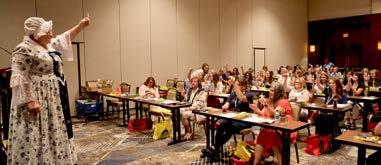
Roberta McClellan of Cullman County donned a colonial frock and “became” American flag seamstress Betsy Ross during an America 250 presentation. Her lesson included a star-making activity.
Committee. “I want to teach ag, but I also want to invest in children so that they have skills they can take with them for the rest of their life.”
Some of the conference’s most fruitful moments came from teachers connecting with one another, said Morgan County educator Kathy DeFoor.
“That’s how we learn as teachers,” DeFoor said. “We learn from each other.”
In addition to meaningful connections, new memories and fresh ideas, teachers headed home with over $450 each in classroom resources, which included books, lesson plans and more. A handful of educators received incubators, too.
During a special presentation, Amanda
Talantis was recognized as Alabama AITC Teacher of the Year and scored even more prizes for her classroom. Talantis teaches at Gulf Shores High School and will compete for the national title in 2027.
Kim Earwood chairs the AITC Steering Committee. Earwood said she’s grateful the institute sparks agriculture in minds of teachers and, eventually, their students.
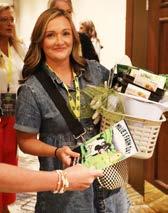
“AITC is always a blessing,” said Earwood, also the Federation’s Women’s Leadership Division director. “Seeing teachers smile when they receive overflowing baskets of goodies and new information is so special. I hope teachers leave with knowledge and tools they need to start implementing agriculture in their classroom.”
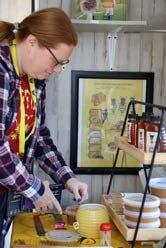
Zizi’s Bee Co. brought its mobile bee lab to Summer Institute, where teachers sampled local honey and learned about pollinators.
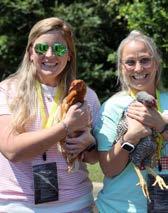
The ZiZi’s Bee Co. trailer also brought feathered friends. Teachers Brooke Helms and Brittany Thrash flocked to the fun.
Teachers received dozens of free books and materials worth more than $450 during the Summer Institute.
Auburn Chefs Win Sweet Grown Seafood Cook-Off Catch of the Day:
by
Catch of the Day WINNERS
By Marlee Jackson
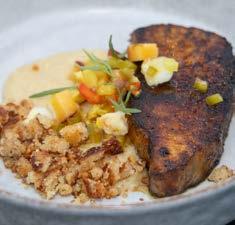
Chef Robbie Nicolaisen knows how to plan, prepare and plate an entrée that purely sings of Sweet Grown Alabama — ember-roasted cobia, sweet corn puree, peach chow-chow, Gulf shrimp and cornbread crumble.
The executive chef and owner of The Hound in Auburn, Nicolaisen and sous chef Gabe Atkinson wowed judges of the Sweet Grown Alabama Seafood Cook-Off May 18 at The Wharf in Orange Beach, clinching the coveted championship.
As state winners, the duo receives a $2,500 cash prize from the Organized Seafood Association of Alabama. They’ll
display their cooking chops again during the Great American Seafood Cook-Off July 25 in the Big Easy.
“It’s an incredible honor to win this competition alongside Gabe and represent Alabama on a national stage,” Nicolaisen said. “We’re proud to cook with the outstanding seafood harvested from our Gulf waters and the amazing local ingredients grown across this state. Events like this celebrate the people behind our food, and we’re excited to carry that story to New Orleans.”
Nicolaisen’s dish showcased the quality and versatility of Alabama seafood while highlighting farmers and fishermen who make those ingredients possible. His signature recipe included summer staples such as Chilton
peaches and Gulf shrimp.
He had a hand in harvesting his produce, too.
The evening before the cook-off, chefs and industry partners toured Cassebaum Farms in Lillian, a centuryold family farm regionally renowned for its sweet corn.
County
Chef Robbie Nicolaisen and sous chef Gabe Atkinson, The Hound, Auburn
Chef Robbie Nicolaisen grilled thick, meaty, championship-winning cobia during the Sweet Grown Alabama Seafood Cook-Off. Nicolaisen is executive chef and owner of The Hound in Auburn.
Photos
Billy Pope
The group trouped to the corn field, where they selected, shucked and sampled ears under the tutelage of Todd and Hope Cassebaum. There, Nicolaisen picked a handful of ears he then transformed into a sweet-andsavory side dish.
Similarly, some chefs chose seafood from Bon Secour Fisheries during a tour the next day. That perusal through the fishery facility included an up-close look at oyster shucking and processing.
Joining Nicolaisen and Atkinson in the culinary showdown were chefs from Central in Montgomery, Coastal in Orange Beach and Cayo Coco in Birmingham. They qualified for the lauded cook-off after submitting original recipes earlier this year. A panel
of judges narrowed the field to the finalists.
A separate slate of culinary masters judged the cook-off. Kathleen Phillips was among the lucky judges and hailed the chefs’ skills, artistry and use of fresh products.
“The level of talent on display was exceptional,” said Phillips, a recipe developer and food blogger. “Chef Robbie and Gabe delivered a dish that was beautifully executed and also told the story of Alabama through flavor and presentation. Each chef demonstrated creativity, technical skill and a true appreciation for Alabama seafood and agriculture.”
Catch of the Day RUNNERS UP
Joining Phillips at the judging table were reigning Seafood Cook-Off champion Ben Rosen, chef at The Depot in Auburn, and Southern food evangelist Jonathan Harrison, who has competed on Gordon Ramsay’s “Next Level Chef.”
During the cook-off, guests enjoyed chef tastings, a shrimp boil and entertainment from emcee Jim Cox while cheering on competitors.
The day before, a special farm-to-table feast highlighted Sweet Grown Alabama goods. Catered by 3 Arrows Boutique Butcher, guests tucked into dishes crafted using corn and strawberries from the Cassebaums, lettuce from McKenzie Farm Market in Fairhope, shrimp from Fairhope Fish House and beef from Perdido River Meats in Atmore. The flower arrangements were grown in Georgiana and arranged by Petal Party.
Sweet Grown Alabama Director Ellie Watson said the event continues to underscore the strong connection between Alabama farmers, fishermen and chefs.
“The Seafood Cook-Off is one of our favorite opportunities to bring together Alabama chefs and Alabama seafood in such a meaningful way,” Watson said. “We are proud of all the chefs who competed and are grateful to all who attended and supported local products.”
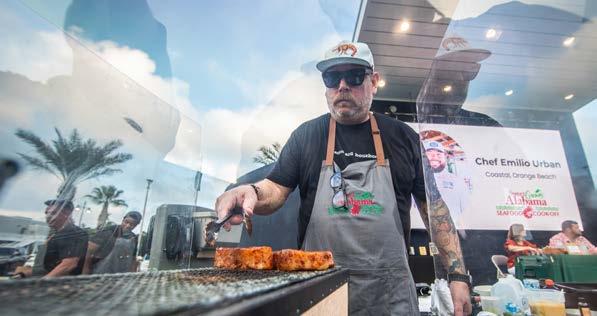
Chef Emilio Urban and sous chef Chelsea Holbrook, Coastal, Orange Beach
Chef Jason McGarry and sous chef Christian Green, Central, Montgomery
Chef Chris Ippolito and sous chef Chase Rodgers, Cayo Coco, Birmingham
Miso-lacquered Gulf cobia, Alabama collard slaw, toasted red runner peanuts
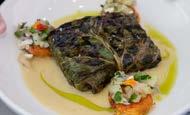
Red snapper en collard green papillote, cornbread pudding, green tomato beurre blanc
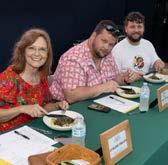
Judges Kathleen Phillips, Ben Rosen and Jonathan Harrison put their taste buds to the test during the Seafood Cook-Off.
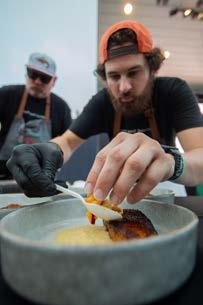
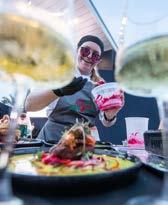
Chelsea Holbrook of Coastal in Orange Beach plated a fresh, colorful offering for judges of the Sweet Grown Alabama Seafood Cook-Off.
Cattlemen Producing : Farmers Donate Freezer Beef to Families in Need
Lauderdale County’s Trevor Collier learned lessons of leadership and community service through A.L.F.A. Leaders and the Young Cattlemen’s Leadership Program (YCLP). Collier is now giving back through Thousand Hills Cattle and connections forged with YCLP classmate Michael Smith.
By Tanner Hood
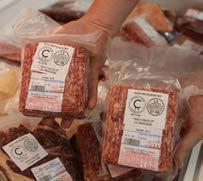
Trevor Collier reached into a freezer filled with processed beef bound for families in need around his north Alabama community. The Lauderdale County farmer scraped frost off packages of roast and ground beef knowing the difference it could make in someone’s life.
“When I came back to the farm, I was looking for something different in our area to help support my family and parents, so we broke into the freezer beef business,” said Collier, who worked an office job before returning to his family farm in 2019. “I also joined the Alabama Cattlemen’s Association (ACA) Young Cattlemen’s Leadership Program
(YCLP). That’s how I met Michael and learned about Thousand Hills Cattle.”
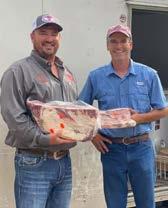
Created by Michael and Kelli Smith, Thousand Hills Cattle is a network of cattlemen helping families in need. Producers donate protein, while the Smiths purchase freezers, coordinate donation points and deliver the beef.
“One thing that stuck with me was when Michael said, ‘Just because someone is down on their luck doesn’t mean they don’t deserve good, quality food,’” said Collier, a Class VI graduate of the Alabama Farmers Federation Agricultural Leaders for Alabama (A.L.F.A. Leaders) program. “We made our first donation to Thousand Hills Cattle in 2023 and asked if he knew anyone who needed the meat. Michael
The Collier family’s Walking C brand is labeled on their retail freezer beef, with unlabeled packaging used for Thousand Hills donations.
wanted us to donate locally and make a change at home.”
Since 2020, Thousand Hills has partnered with 17 Alabama farmers to provide freezer beef to families, food banks and community service programs.
“I was sitting at home with my wife one night, and she asked, ‘If you had all the money in the world, what would you do?’” Michael remembered. “I had just gotten out of the military and was looking for my next passion, so I said, ‘I’d run cattle, and we’d give it all away.’”
Kelli stepped out of the room and returned with a pencil and notebook. That night, the Smiths created Thousand
Hills Cattle, based on the oft-quoted Psalm 50:10 — “for every animal of the forest is mine, and the cattle on a thousand hills.”
“God owns it all anyway, so I figured we could give it all away,” said Michael, a Shelby County Farmers Federation board member. “We started saving money to buy freezers, and I started looking for producers who we could buy beef from. Lowndes County’s David Lee was the first person to call me back.”
Despite not having a background in agriculture, Michael said he’d been enamored with the industry since reading the Federation’s Neighbors magazine at his grandparents’ house. Michael joined ACA to meet producers for Thousand Hills, which lead to involvement in YCLP and his position as ACA’s industry outreach manager.
“Everything we buy is from Alabama farms,” Michael said. “We work out different deals with producers like the Colliers and go through churches and schools to identify families facing hardship. We’ve never had to tell anyone, ‘No.’”
With the slogan “Cattlemen
Producing Hope,” Collier said Thousand Hills opened a door for him to use abilities honed in A.L.F.A. Leaders.
“The whole purpose of A.L.F.A. Leaders is to develop skills to take back home and make an impact in our part of the state,” Collier said. “As farmers, even
if you’re working on your own, there’s a sense of community. A lot of farmers are people of faith because so much of what we do is out of our hands. Part of that comes back to taking care of our neighbors. If we’re going to tend His land, we need to do what He says.”
Thousand Hills Cattle founder Michael Smith, left, received his first donation from Lowndes County farmer David Lee.
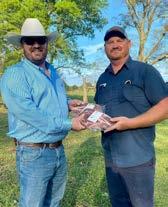
Thousand Hills Cattle relies on producers from across the state, including Barbour County’s Jamie Dykes, right.
Savor Summer Produce:
On-Farm Markets Connect Consumers to Agriculture
By Lydia East
On hot summer days across Alabama, farm stands fill with consumers looking for homegrown fruits and vegetables. Produce brings them to the stand, but bonds they build with farmers keep them coming back.
Cullman County farmer Jeremy Calvert said those relationships are just as valuable as his crop.
“It’s never our goal to have a one-time customer,” Calvert said. “We want to have repeat customers. I have made really great connections by doing business locally. That is something a chain store can’t offer.”
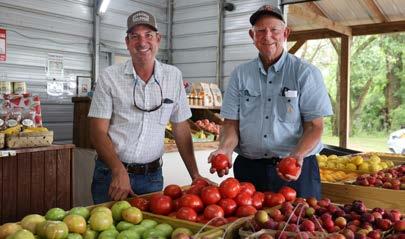
Less than 10 miles from Smith Lake and minutes from I-65, J. Calvert Farms welcomes thousands of visitors annually. Calvert’s wife, Julie, is a friendly face as customers enter the farmers market.
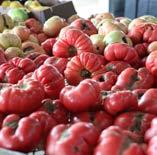
Travelers step into the store empty-handed and — thanks to Julie’s hospitality and knowledge — leave carrying baskets of juicy red tomatoes, fresh-picked squash, plump peaches and more seasonal goodies.
“Everybody is better off when you buy locally,” Julie said. “You get to know your farmer.”
Guests interact with the entire farm
family, too, including the Calverts’ 8-year-old twin daughters, Jennie Clara and Julianna Kate. Their adult son, James, occasionally pops in the market as well.
More than 300 miles south, Mobile County farmer Jeremy Sessions is also rooted in a family operation. Sessions, a third-generation farmer, works alongside his father, Art, and assorted relatives.
The Sessions family has planted row crops, along with specialty goods, since the 1940s. High input costs and low
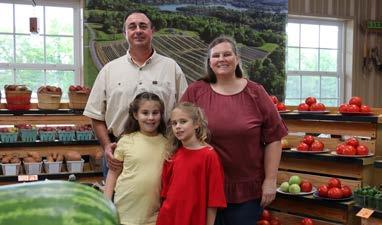
Jeremy and Julie Calvert have spent more than two decades building a life rooted in agriculture, a legacy they now share with twin daughters Julianna Kate and Jennie Clara.
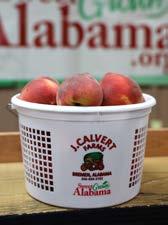
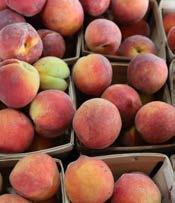
Locally grown peaches provide a sweet taste of summer for customers visiting J. Calvert Farms.
commodity prices, however, forced the difficult decision to stop row crop production this year.
“I didn’t think there would ever be a day I wouldn’t plant row crops,” said Art, the Mobile County Farmers Federation president. “But specialty crops have superseded row crops.”
This change didn’t happen overnight. Years before, they began investing more time, resources and energy in produce such as satsumas, tomatoes, melons, squash and more.
In 2018, the family opened its second market location, Sessions Farm Market in Grand Bay. It offers buyers something unusual: produce harvested hours before it goes on the shelf.
“We pick our crops, and that day or the next, they are on the shelf for consumers to buy,” Sessions said. “We never sell anything past the third day. We focus on freshness.”
He said he believes the value of a farm stand goes beyond providing peak produce.
“What consumers need to see is the
time, preparation and labor that goes into produce,” Sessions said. “Putting a seed in the ground, watching it grow, harvesting it and then transferring that crop in the store to sell is hard work.”
Shopping local connects consumers to farmers’ way of life.
“If consumers don’t buy local, it won’t be long before they don’t have anyone local to buy from,” Sessions said. “Folks in agriculture aren’t trying to get rich, but without a profit, they are going to quit.”
Calvert and Sessions are members of Sweet Grown Alabama, the state’s agriculture branding program, and are passionate about supporting local agriculture.
“For some time, Alabama vegetable growers needed branding for our products, and Sweet Grown Alabama was something most everyone could get behind,” said Calvert, who has long been involved in the Alabama Fruit & Vegetable Growers Association. “It is a logo that people look for.”
For the Calvert and Sessions families, every purchase at a farm stand is more than a sale. It helps shore up the local economy, sustain a family business and support a way of life.
“Everyone knows you get better service,” Calvert said. “One transaction means so much to our store.”
Find local products at SweetGrownAlabama.org.
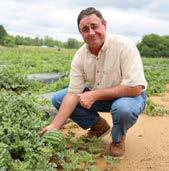
Jeremy Sessions keeps a close eye on his harvest as baskets of ripe red tomatoes fill market shelves.
Jeremy Sessions and his father, Art, work side by side to keep their family’s farm market stocked with fresh produce during the summer season.
New World Screwworm Detected in U.S.
The U.S. Department of Agriculture (USDA) announced the first reported case of New World screwworm (NWS) in the U.S. June 3.
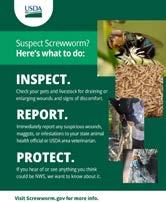
NWS is a live animal health concern and is not a food safety or quality issue. NWS does not infect meat. Active checks, including inspection, prevent meat from impacted animals entering the food supply.
The deadly, parasitic worm was detected in a 3-week-old calf near La Pryor, Texas. NWS can infest a variety of open wounds on a living host, including castration sites, mucosal cavities, insect bites, ear tags, branding wounds, umbilical sites and vaccination sites.
Alabama Farmers Federation Beef Division Director Chris Prevatt encouraged farmers to be vigilant when checking livestock.
“Producers should begin implementing stringent fly control protocol,” Prevatt said. “Keeping an eye on newborn calves, postpartum cows and recently handled cattle is
important to detect signs of infection while also being aware of any open wounds. Monitoring and evaluating cattle standing off from the herd, loss of appetite, foul odors and other abnormal behaviors is important to detect signs of NWS.”
NWS is passed through adult screwworm flies, which lay larvae in open animal wounds and lead to extensive tissue damage. NWS flies can be identified by orange eyes, a metallic blue or green body and three dark stripes along the back. Adult screwworm flies are similar in size to common houseflies.
Prevatt said farmers will work closely with USDA, Alabama Department of Agriculture & Industries and veterinarians to control the issue.
“NWS should not affect our food supply,” Prevatt said. “NWS was eradicated in the 1960s, and steps are being taken to prevent further spread. This can only be stopped if farmers, ranchers, hunters, pet owners and
others regularly interacting with animals are aware, take preventative measures and report issues.”
Questions or concerns should be reported to Alabama State Veterinarian Dr. Tony Frazier at (334) 240-7253. Contact the state veterinarian’s office if infestation is suspected.
Sanford Celebrated for Service to Cotton Commission
By Maggie Gaddy
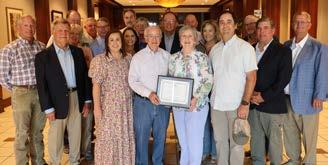
Acareer dedicated to advancing Alabama’s cotton industry earned Autauga County’s Jimmy Sanford, 81, special recognition from past and current members of the Alabama Cotton Commission — an organization he chaired from 1991 to 2025.
A humble leader known for avoiding the spotlight, Sanford was the guest of honor at a surprise celebration organized by cotton growers and family members May 18 in Prattville.
“I don’t know what to say other than, ‘Praise God,’” Sanford said to a crowded room of farmers. “I am thankful my family allowed me to serve all these years. Everyone in here has a family connection. I thank each of you for letting me get to know you. I am embarrassed because I know so many of you could have done such a greater job than me. Thank you for trusting me.”
Current Alabama Cotton Commission Chair Mike Tate of Madison County thanked Sanford for his commitment to cotton growers.
“I describe Jimmy as a servant leader,” Tate said. “I think of Philippians 2:3, which says ‘Do nothing out of selfish ambition or vain conceit. Rather, in humility value others above yourselves.’ That is Jimmy. He has always looked to the interests of others. We thank him for being great among us.”
Current Alabama Cotton Commission Chair Mike Tate honored longtime leader Jimmy Sanford for 34 years of service during a presentation May 18.
Colbert County cotton farmer Neal Isbell echoed Tate, saying Sanford helped farmers draw closer to Jesus.
“To see how he lives his life and how he loves the Lord…it’s made a difference,” Isbell said. “He was the best man in the job as long as we could keep him there.”
Sanford said the greatest gift he received from cotton growers was the group’s Christ-centered focus.
“I continue to say I have never met a cotton producer who didn’t believe,” he said. “If farmers didn’t have hope, they wouldn’t go plant.”
Sanford, a fourth-generation farmer, has earned an impressive array of agricultural accolades. He’s served as president of Southern Cotton Growers,
National Cotton Council, Autauga Quality Cotton and Choice Cotton. His leadership skills now serve Auburn University’s Board of Trustees as president pro tempore.
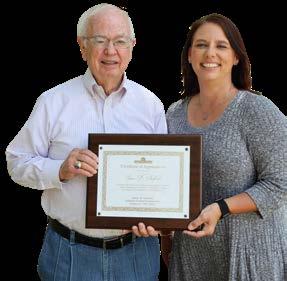
Alabama Farmers Federation Cotton Division Director Carla Hornady said she values Sanford’s humility, passion and devotion.
“Working alongside Mr. Jimmy has been a blessing,” Hornady said. “His dedication is unmatched. From leading the charge in eradicating the boll weevil to advancing Alabama’s cotton industry, Mr. Jimmy is a loyal advocate for growers and a trusted leader. He has always put farmers first.”
Above: Past and current members of the Alabama Cotton Commission gathered to celebrate Jimmy Sanford and his family during a special, surprise celebration in May. Right: Alabama Farmers Federation Cotton Division Director Carla Hornady was proud to present Sanford with a plaque and gift in recognition of his dedicated leadership to Alabama’s cotton industry.
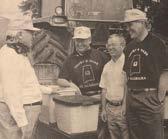
Jimmy Sanford, second from right, has decades of service under his belt. He was featured in the June 1992 Neighbors magazine for efforts in the “Grown and Made in Alabama” cotton campaign.
Inaugural Forestry Tour Educates Landowners
of the inaugural
on the steps of the
was one of several stops highlighting traditional and modern methods applied to forestry and wildlife habitat.
By Tanner Hood
The rustle of pines and whistle of quail rang out through the tall timbers of south Georgia and north Florida, reaching the ears of foresters, loggers, landowners and wildlife professionals.
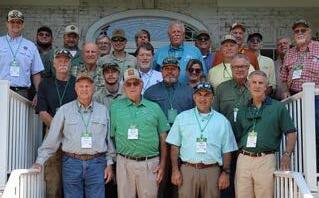
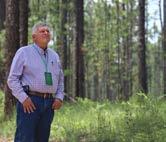
The group was part of the Alabama Farmers Federation’s inaugural forestry tour — an opportunity May 20-22 to spend time with like-minded industry professionals while touring timber operations. The Alabama TREASURE Forest Association (ATFA) sponsored the tour for its board, plus members of the State Forestry and Wildlife committees.
Attendees
Forestry Tour gathered
historic home at Pebble Hill Plantation near Thomasville, Georgia. Pebble Hill
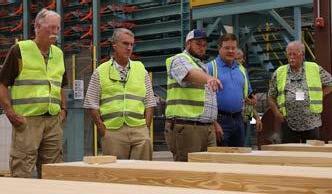
Members of the Alabama TREASURE Forest Association board, plus the Alabama Farmers Federation State Forestry Committee and State Wildlife Committee, toured SmartLam in Dothan.
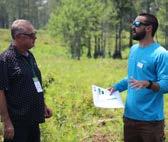
Montgomery County’s Tim Nestor, left, discussed wildlife research projects conducted at The Jones Center at Ichauway.
Montgomery County Farmers Federation board member and forest landowner Bill Cook said the tour was informative, especially pertaining to prescribed burns.
“A lot of things have been pointed out to be watchful of, including invasive plants,” said Cook, who serves on the Federation’s state board and State Forestry Committee. “Fortunately, they can keep a handle on cogongrass, which is one of our big enemies. You just have to stay on it with a good spray program followed by burning.”
Attendees stepped among the residual char of recent burns while touring The Jones Center at Ichauway and Pebble Hill Plantation. Prescribed burn benefits were evident through still-glowing embers and rising smoke. Despite a healthy timber stand, finding viable markets for wood is becoming more difficult across the Southeast, Cook said.
“I asked the timber manager at Ichauway about the years they’ve kept records and the difference in prices,” Cook said. “Based on their records, big logs that were roughly $40 per ton a few decades ago should be the equivalent of over $100 today. However, we’re probably getting only $25 to $26, and that doesn’t make you feel good about prices.”
As attendees shared their experiences and empathized with counterparts, they walked away with a fuller toolkit of management practices. Ag teacher and FFA adviser Levi Noles from Randolph County said lessons learned will be useful for his operation and in the classroom.
“Being from rural Alabama means
hunting is a big topic for a lot of our kids,” said Noles, who chairs the State Wildlife Committee. “That opens the door to talk about how good timber and wildlife management coincide. We visited Pebble Hill and saw they had a different practice than most people. Their timber wasn’t planted in nice and pretty straight rows, but they had awesome wildlife habitat.”
As one of the younger attendees on the trip, Noles said learning from veterans in the forestry industry was beneficial.
“There’s a wealth of knowledge to take in,” Noles said. “You’ve got a generation here with solid practices and things that are proven to work. It takes active, knowledgeable people to participate and put effort into... protecting God’s beautiful creation. I try to make sure my students know there’s someone who is doing that and trying to do the best they can.”
Other out-of-state tour stops included Tall Timbers Research Station in Tallahassee, Florida, and Paradise Park in Thomasville, Georgia. Attendees further examined the effects of prescribed burns on quail habitats and learned about shaping policy and environmental protection at Tall Timbers. Paradise Park provided a refreshing take on the role of natural grasses and pines in urban settings.
The tour concluded with a stop at SmartLam in Dothan — a mass timber producer focused on construction-ready materials. Dale County’s Billy Blackwell said the stop at SmartLam was a change in pace from the old-school ways of timber plantations.
“We went from the way things
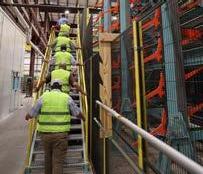
At Dothan’s SmartLam manufacturing plant, landowners learned about innovative mass timber products like cross-laminated timber.
were years ago to the way things are today,” said Blackwell, who serves on the ATFA board. “Seeing the timber industry’s products and advancements — the whole gamut from where we were to where we are now — was a real educational experience.”
Attendees heard from SmartLam CEO Derek Ratchford about promoting the timber industry, new products and markets before a facility tour. Taking in a modern approach to timber products reminded Blackwell of the role ATFA and other industry organizations play.
“We need to treasure the past, but we need to look forward to the future, be advocates and let people know exactly what the importance (of the timber industry) is,” Blackwell said. “It’s a critical part of our total economic picture, and the more we educate people, hopefully, the future will be bright for us in the forestry industry.”
Chambers County’s Chris Langley, who serves on the Alabama Forestry Commission, observed a recent burn site at The Jones Center at Ichauway.
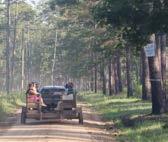
Tour attendees loaded on trailers to ride through the pines at Pebble Hill Plantation outside Thomasville, Georgia.
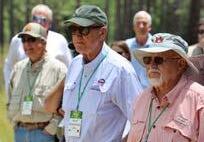
Alabama TREASURE Forest Association board member Billy Blackwell, center, said the tour provided insights to new and old forestry practices.
MADE IN AMERICA: Maples Stock Farm Holds Elite Bicentennial Farm Honor
By Marlee Jackson
William David, William E., Mack, Billy, Tommy and Ben,” said Tommy’s wife, Melanie. “Our grandson, Graham, is the
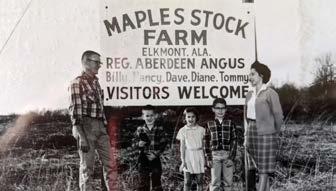
In addition to their sprawling family tree, there’s farm history a-plenty, thanks to Maples Stock Farm’s 208-year presence in the crook of the Elk River.
“I guess we’re just blessed by being up here out of the way,” Tommy joked, referencing the farm’s location in the hills of north Alabama. “We’re in a little
The family’s especially extensive tenure tending the land is unusual in Alabama agriculture, said Tommy. His ancestor, John Maples, was deeded
acreage from the U.S. government Feb. 11, 1818, more than a year before Alabama joined the Union.
That makes Maples Stock Farm an Alabama Bicentennial Farm — a special designation from the Alabama Department of Agriculture & Industries (ADAI).
It’s one of just 13, said program coordinator Amy Belcher.
“The Bicentennial Farm program was established for family farms like Maples Stock Farm — farms that have stood the test of time for over 200 years,” said Belcher, who also coordinates the Century & Heritage Farm Program. “The steadfastness
Ben Maples is the eighth generation of Maples men to make his home on the family farm in Elkmont, which was founded in 1818. Maples Stock Farm holds a special designation as a Bicentennial Farm.
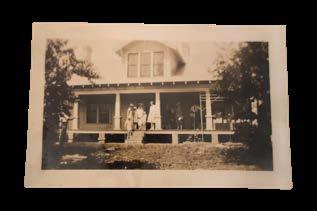
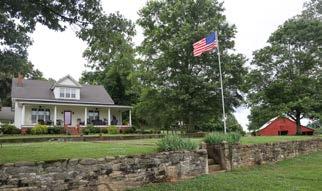
Built in 1911, the Maples farmhouse has a storied history.
Tommy and Melanie Maples are the fourth generation to live in the farmhouse.
and love of the land demonstrated by these families is the heritage of our nation and the State of Alabama.”
The Maples family applied when the program was introduced to commemorate Alabama’s bicentennial in 2019. Bicentennial Farms have been in the same family at least 200 years, are 40-plus acres and have current farm activities. Applicants must reside in Alabama.
Tommy said completing the form was a breeze thanks to his mother’s meticulous genealogical records.
“My mother, Nancy Jo, had it all written down — every generation, every date of birth, everything the state needed,” Tommy said. “All I had to do was fill in the blanks.”
The application captured Maples Stock Farm in its current iteration while chronicling the farm’s ebb and flow.
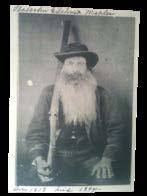
Its original settlers were traders, surveyors and farmers — English descendants who journeyed south from Virginia and nearby Tennessee, landing in the Elk River bottom.
Subsequent generations included a cadre of medical doctors, more farmers and jacks of all trades. A wooden structure still on the farm at one time boasted business as a general store, doctor’s office, blacksmith shop and grist mill. It now bears a red-white-andblue Bicentennial Farm sign, presented by ADAI.
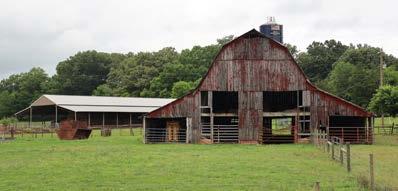
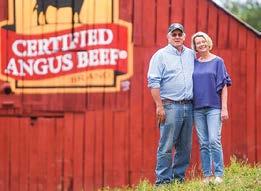
An even more prominent logo — that for Certified Angus Beef — is painted on the family’s iconic red barn tucked just below Tommy and Melanie’s 1911 farmhouse. Since 1937, the farm has been home to registered Angus cattle, an investment that began with the farm’s fifth generation and Tommy’s grandfather, Mack.
“Early in the last century, our family sold genetics for species across the gamut — sheep, dairy, beef, goats, pigs, mules, you name it,” said Ben, Tommy’s oldest son and the farm’s eighthgeneration steward. “That’s why we are a stock farm instead of just a farm.”
The farm has evolved over the years, weathering economic storms, incorporating innovations in agriculture and flexing to fit what works for their family.
Today, that looks like experimenting with quality cattle genetics, renting out layer hen houses and leasing land to row croppers. The family has been honored for their work nationally from organizations such as the American Angus Association and Beef Improvement Federation.
They’ve achieved state honors, too, with Mack and Billy earning spots in the Alabama Agriculture Hall of Honor. Maples men are generational leaders in the Alabama Farmers Federation, with Billy, Tommy and Ben having chaired the State Young Farmers Committee.
Encouraging leadership is just one way each generation prepares the next to take the reins, Tommy said.
“When we came home to the farm, Bill gave us the checkbook,” Tommy remembered. “He said, ‘I think y’all can handle it better than I can.’”
Melanie, a retired accountant, added, “I keep trying to hand it to Ben.
He keeps handing it back!”
The tight bonds of family are evident in the Maples clan. They’re playful, prayerful people who know good stock and are good stock — qualities fortified by adversity and with enduring faith.
“Bill talks about how difficult it was in the ‘60s and ‘70s,” Melanie said. “You had high interest rates and the Jimmy Carter years. He talks about the year the crops didn’t make, the year they couldn’t sell cattle. To hold it together through all that is incredible.”
Scan to learn more about special farm designations.
Billy and Nancy Jo Maples raised their three children on Maples Stock Farm.
Tommy and Melanie Maples are the seventh generation at Maples Stock Farm in Elkmont.
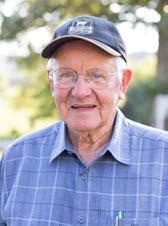
Malcolm Gilchrist Maples, left, was the second generation of Maples men to toil the soil of what is now Elkmont. Billy Maples, affectionately called Bill by his progeny, is the farm’s sixth generation.
Alabama FFA United for 98th Annual State Convention
By Tanner Hood and Maggie Gaddy
Hushed tones settled through the room as a countdown clock created an air of anticipation over a sea of national blue and corn gold corduroy jackets during the 98th State FFA Convention.
More than 2,000 Alabama FFA members and guests gathered June 10-12 in the Capital City to celebrate the past year’s successes while growing closer through the theme “United.” Outgoing Alabama FFA Reporter Luke Garrett said he hoped this convention highlighted the importance of sticking together in good and trying times.
“A strong state officer team creates a solid base for members statewide throughout the year,” said Garrett, who hails from Dale County. “Our base camp is when we really learn to love each other, and we selected the word
‘united’ going into that. When it came to planning this convention, we knew it was important to bring our members closer through the opportunities FFA offers.”
Sessions showcasing achievements and proficiencies allowed students from across the state to honor their peers. In the nearby trade show, Alabama Farmers Federation Ag Leadership Director Hunter McBrayer introduced students to the breadth of ag careers beyond farming.
“Alabama FFA goes beyond farmers and classrooms to show students the never-ending careers in agriculture,” McBrayer said. “We partnered with the Alabama Community College System to bring simulators of excavators, skid steers and semi-trucks to show young people those job possibilities.”
As Alabama faces a need for more students entering trades and
ag-adjacent industries, McBrayer said FFA bridges the gap between schools and the workforce.
“Our goal is to show students an idea they maybe hadn’t considered,” McBrayer said. “FFA unites farmers, welders, machinists, technicians and a world of other careers for the common cause of agriculture. We wanted to unlock that door during convention.”
At the Federation’s booth, Boaz High School Senior Carson Pointer climbed down from the cab of a simulated semi-truck he successfully maneuvered through “traffic.”
“I got my skid steer certification through FFA,” Pointer said. “This organization provides a lot of learning opportunities and offers scholarships into ag and related fields. Getting people interested now can lead to a fulfilling career moving forward.”
Garrett echoed that sentiment while highlighting the sense of unity outside FFA.
“FFA is great about working with neighbors, like community colleges, to offer those credentials and open new doors for students,” Garrett said.
As a state officer, Garrett offered retiring remarks during a general session packed with his peers. His address reflected on inspiration gleaned during the annual gathering.
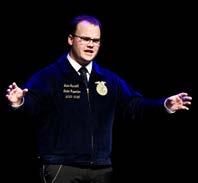
“This blue jacket is what unites us all,” Garrett said. “We’re all here for the same purpose, and we hope members can find that common purpose in each other.”
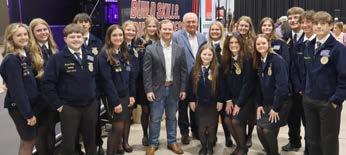
Students from Pell City FFA visited with Alabama Farmers Federation President Jimmy Parnell and Federation Ag Leadership Director Hunter McBrayer during annual convention.
Outgoing Alabama FFA Secretary Natalie Helms of G.W. Long FFA threw the first pitch at a Montgomery Biscuits game.
Students explored the myriad workforce options in agriculture by testing an equipment simulator at the Alabama Farmers Federation booth.
Luke Garrett of Dale County FFA is the outgoing Alabama FFA reporter and delivered his retiring address June 10 during annual convention.
The beans in your Alabama fields today are destined to see the world. Last year, we exported $83.8 million worth of soybeans. That’s a lot of overseas opportunity for one year. And we’re always growing new markets abroad to help keep this demand going strong. And if you’re wondering how far your soybeans can go, we’re charting more ways to keep your ship coming in. Learn more about the story of soy at unitedsoybean.org/hopper.
By Mary Wilson
Baking is Elizabeth Belcher’s lifelong passion.
“Growing up, we did Saturday morning breakfasts with my grandpa, and he always baked his own bread,” Belcher said. “I baked my first cake when I was 7 years old. My parents had to taste test a few mistakes, but I’ve always loved to bake for people. Baking feels like my love language.”
A student at Auburn University, Belcher thought a desk job was her likely future until she started baking sourdough. The loaves were a hit. That interest made Belcher reconsider her career goals.
Auburn Student Crafts Cottage Food Business After Alabama Extension Training
The mother-daughter duo attended a class with Janet Johnson, a food safety and quality agent with Alabama Extension at Auburn University.
“Without that certification, you can’t really start a cottage food business,”
is saving and reinvesting in her business. Johnson said the ability to slowly build a business without overheard costs is a benefit of the Cottage Food Law certification.
“You can see if your product is going to sell and if this is something you really want to do,” Johnson said. “Sometimes, people start small and grow into a big company. Other times, people keep their businesses small, making just enough to cover minor expenses or a vacation.”
“Recently, someone asked me what I saw myself doing with a business administration degree, and I said I wanted to own a bakery,” Belcher said. “I had never said that out loud before, but now I feel like it’s something I can do.”
Starting With Certification
Before starting a business, Belcher’s mom encouraged her to pursue a Cottage Food Law certification through Alabama Extension. The certification allows people to sell certain foods made in their home kitchens.
Johnson said. “So, we help people understand what they can and can’t do in their home kitchens to make sure they’re doing the right thing.”
After passing her certification exam, Belcher started her baking business, Eats by Elizabeth.
For Belcher, the unspoken dream of running her own bakery now feels more achievable.
“I’ve heard it said that your career should be something you enjoy doing so much that you’d be fine not getting paid for it,” Belcher said. “For me, that’s baking. I will always bake.”
Training Options
Building a Business
Eats by Elizabeth offers a variety of baked goods, from signature sourdough loaves and bagels to cakes and cookies. With sales, Belcher
Alabama Extension offers Cottage Food Law training in-person and on-demand. The online training is available in English and Spanish. To learn more, visit aces.edu/go/ CottageFoodBusiness.
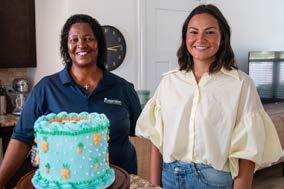
Elizabeth Belcher took a Cottage Food Law course with Alabama Extension’s Janet Johnson, leading to Belcher’s bakery business, Eats by Elizabeth.
Wheat & Feed Grain Referendum Is Aug. 11
Producers who grew feed grains in 2025 or planted for harvest in 2026 are eligible to vote in the Aug. 11 Wheat & Feed Grain Referendum. The balloting will determine if the wheat and feed grain checkoff program will continue for five more years at the current rate of 1 cent per bushel on corn, wheat, grain sorghum and oats sold in Alabama.
If approved, checkoff funds would be used to finance research, education and promotion activities aimed at further development of the state’s wheat and feed grain industry.
Poll locations will be open from 8 a.m. to 4 p.m. in every county. To find a poll location, visit alfafarmers.org/ wfg-referendum-polling-sites-2026/.
For more details, contact Alabama Farmers Federation Wheat & Feed Grain Division Director Carla Hornady at (334) 613-4216.
It’s time to reserve strawberry plugs for October delivery!
• 50 plugs per tray
• Plugs have an intact root ball
• Plugs establish quickly
Best of all Plant plugs in October and harvest sweet strawberries in the Spring!
SEAFOOD
An old Florida village. Not the touristy kind with swimsuit shops and scooter rentals. This is a place where the local high-school colors are probably camo and orange.
I am in search of tuna dip.
I pull into a random seafood market.
In the sandy parking area, an old man and a kid leap out of a dusty Suburban. The old man wears an Atlanta Braves ballcap. His grandson is maybe 9.
Inside the market, the old man never speaks. He communicates via sign language with the boy. I don’t speak sign language, but I speak fluent Kid. I see a lot of love on that freckled face.
When the employee at the counter is ready to take their order, the old man gestures to the kid. The kid points and speaks to the guy at the counter.
“We want 3 pounds of those.”
The seafood market employee is a man with a shaved head, lots of inkwork and an unlit cigarette wedged in his lips.
“Three pounds of shrimp? Anything else, boss?”
The kid checks with Granddaddy. The old man looks over the motherlode displayed on ice. He signs. Junior translates.
“Yeah. What’re those things?”
“These? Grouper cheeks. Good eating. Want some?”
“Yes, please.”
The kid never stops signing, even when speaking to the cashier. It’s called being polite to Granddad.
“Sure thing, bossman.”
The guy behind the counter is trying to act nonchalant, but I can tell he’s impressed by the duo. So am I.
He places the fish into a double-bag filled with ice and addresses the kid.
“He your grampaw or something?”
“Yessir, this is my granddaddy.”
Granddaddy lifts his hat.
Cigarette Guy nods, then weighs the fish on a digital scale.
“My granddaddy says he wants to know about the tuna dip."
“Oh, yessir, boss. We smoke the tuna. My wife makes the dip with my mom. Wanna sample?”
Granddaddy is in full support.
He chews, swallows, signs.
“Okay,” the boy says. “We’ll take two tuna dips.”
Granddaddy signs again.
“Nope,” the boy clarifies. “Three.”
And I’m lost in the cinematic scope of it all. Sometimes everyday life presents itself like a divine picture show. I miss too many of these scenes because I focus on the wrong stuff.
Granddaddy and Grandson eventually approach the register. The old man removes a wallet and pays while Boy Wonder is placed on standby.
The old man says thank you — hand touching the chin, then sweeping downward.
The kid says, “He says thank you.”
The man at the register smiles. He repeats the gesture. Then, he does something I will never unsee: He performs another phrase.
As it happens, I know the words he’s signing because I learned this same phrase in Vacation Bible School.
Granddaddy and Junior are extremely impressed. They return salute, then exit grinning.
I say, “I know what you just said.”
He laughs.
“Yeah? It’s the only bit I know. My daughter learned it for a play.”
Before I leave, I force my clumsy hands to make the same gesture.
He signs back and says, “God bless you, too, boss.” ■
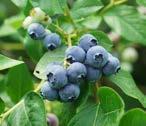
Work Now to Ensure a Healthy Crop of Blueberries Next Year
By Mallory Kelley
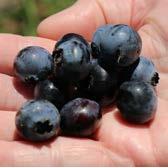
Nothing says summer quite like blueberries. This seasonal favorite has been in full swing since May and will fizzle out by July’s end. With fruit fading, it’s time to prep for next year.
At the start of the season, blueberries have the best size and quality. By now, ripe blueberries will be much smaller in size and quantity. It’s OK to sacrifice fruit for the sake of a little maintenance that will ensure a more prolific blueberry harvest next summer.
As the plant finishes production, it puts energy into new shoots and branches. This is good news! Next year’s biggest and best berries will come from new growth that is encouraged now.
Fertilizing Blueberries
For optimal branch growth, the plants need water, mulch and a boost of fertilizer. Generally, blueberries should be fertilized twice a year — once in early spring and again as berries fade.
Use a urea-based fertilizer or a fertilizer labeled for azaleas and camellias. This will help acidify the soil. Blueberries like a low pH of 4.5 to 5.2. Do not fertilize after mid-September because new plant tissue needs time to harden off. To understand the garden’s soil pH and available nutrients, conduct a soil test every three years.
Pruning for More Punch
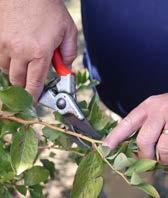
Light pruning now will multiply next year’s berry production. Pruning long canes that were missed or overlooked last year will encourage branching. The more branching there is, the more cane area there will be for fruit.
Prune canes at a leaf node. Then, the leaf nodes below the cut will form new branches for even more fruit next year. If the desired plant height next year is chest-high, clip canes about 12 inches lower. Also, remove dead or diseased branches.
Planting in Fall
Add more blueberry plants to the garden in fall. To prolong the season, select Rabbiteye varieties that produce at different times — from early June to late July or early August.
Blueberries need full sun and moist, well-aerated, well-drained soil that’s high in organic matter. Incorporate
organic matter — such as peat moss, compost or fine pine bark — into the soil at planting. Add mulch to retain water and suppress weeds, but don’t add too much. It can suppress new cane development.
Plant blueberries on a little mound. This ensures they do not settle too deep. Blueberries hate “wet feet.” If submerged too deep, the roots or plant may start a slow decline with less production through the years.
More Information
For more information about growing blueberries, visit aces.edu. Also, volunteers staff the Alabama Master Gardener Helpline during regular business hours Monday through Friday. Call 877-252-4769 for help with gardening questions.
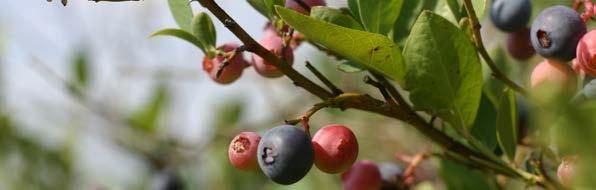
Once blueberries fade, pruning plants will help multiply next year’s production. Prune canes at a leaf node.
Once harvest is finished, it’s time to fertilize and prune blueberry bushes to ensure a more bountiful harvest next year.
By Maggie Gaddy
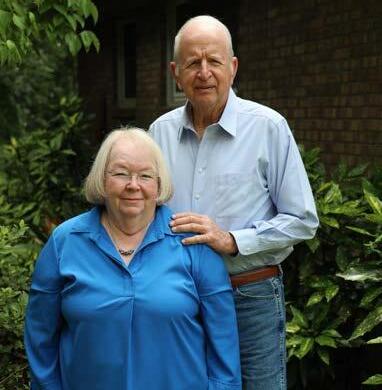
After decades spent shaping young minds in the classroom, Lee County’s Mahlon and Mary Richburg now enjoy different kinds of lessons — those taught by the rhythms of farm life and shared meals with children and grandchildren.
The retired educators met as freshmen in an English class at Auburn University and married in 1972. More than 50 years later, they still call Auburn home. While Mahlon spent his career teaching agricultural education and helping students develop leadership skills through FFA, Mary was devoted to elementary pupils. They built a life rooted in service, agriculture and family.
Today, the Richburgs manage a cattle operation while remaining active in agricultural organizations, their church and community. Mahlon serves as Alabama Farmers Federation District 7 director, and Mary chairs the Lee County Farmers Federation Women’s Leadership Committee.
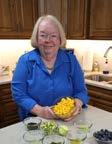
Mary said some of her most meaningful moments happen in the kitchen.
“I enjoy cooking,” Mary said. “It’s a way to take care of people and bring them together.”
Raised around generations of talented home cooks, Mary was helping in the kitchen by fifth grade. Over the years, she has gathered recipes from family members, friends and neighbors, creating a collection filled with memories as much as ingredients.
“I love cooking recipes from family members,” Mary said. “Some of them go all the way back to when we were first married.”
Whether preparing summer vegetables from the garden, farm-fresh beef or a family favorite dessert, the Richburgs enjoy sharing meals with loved ones. They credit their community-minded upbringing for inspiring their commitment to service.
“We were taught to help others,”
Million Dollar Chicken
6 boneless chicken breasts
1 stick margarine
Salt, to taste
1/4 teaspoon dried basil
1/4 teaspoon dried rosemary
1/2 cup chopped onion
1/2 cup slivered almonds
1/4 cup cooking sherry or wine
2 cans cream of mushroom soup
1/4 cup lemon juice
Paprika, optional
Heat oven to 350 F. Halve chicken breasts. Melt margarine in medium bowl. Add remaining ingredients, except for paprika, and stir together. Place chicken in a baking dish and top with sauce. Sprinkle with paprika. Bake 1 hour and 15 minutes. Serve over rice.
Mahlon said. “You gain more than you give. Everyone has had a helping hand somewhere along the way, and it’s important to do the same for others.”
That same spirit of service carried into the Richburgs’ home. As their two children were growing up, Mary and Mahlon often assigned family cooking nights to teach life skills and encourage independence.
“It became the kids’ night to cook,” Mary said. “That way, they learned before they left home. It was fun, and they gained confidence.”
Today, Mary enjoys experimenting with new recipes while preserving old favorites.
“I get tired of cooking the same thing all the time,” she said with a laugh. “I’m always looking for something new to try.”
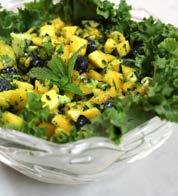
Some recipes, however, remain timeless. Mary’s Beef Noodle Bake takes her back to her daughter’s cooking competition, while Mango Avocado Salad With Blueberries offers a taste of summer. She concocted the salad for a Federation Heritage Cooking Contest, where she earned third place.
“When I cook something from a family member or a friend, it reminds me of the people who shared it with me,” Mary said. “Food has a way of bringing back those memories.”
This month’s recipes shared by
RiMarychburg
White Sheet Cake
2 cups all-purpose flour
2 cups sugar
1 teaspoon baking powder
1 teaspoon salt
1/4 teaspoon baking soda
1 cup butter, cubed
1 cup water
2 large eggs, room temperature
1/2 cup sour cream
1 teaspoon almond extract
Heat oven to 375 F. Grease a 15-inch-by-10-inch-by-1-inch pan. In a large bowl, whisk together flour, sugar, baking powder, salt and baking soda. In a small saucepan, combine butter and water; bring just to a boil. Stir into flour mixture. In a small bowl, whisk eggs, sour cream and almond extract until blended; add to flour mixture, whisking constantly. Pour into pan. Bake 18 to 22 minutes or until golden brown and a toothpick inserted comes out clean. Cool on a wire rack 20 minutes. Top with frosting.
Squash Casserole
2-3 cups sliced yellow squash
1/2 cup chopped sweet onion
1/2 cup butter, melted
1 cup evaporated milk
2 eggs, slightly beaten
1 cup shredded cheddar cheese
1 teaspoon salt
1 teaspoon pepper
3/4 cup Ritz cracker crumbs
Frosting
1/2 cup butter, cubed
1/4 cup milk
4 1/2 cups confectioners’ sugar
1/2 teaspoon almond extract
1 cup chopped pecans or walnuts
Combine butter and milk in a large saucepan, bringing almost to a boil. Remove from heat and gradually stir in confectioners’ sugar and almond extract. Add a splash of milk if the frosting is too thick; it should be pourable. Stir in nuts. Pour and spread over warm cake.
Heat oven to 350 F. In a medium pot, cook squash and onion with enough water to almost cover them. When tender, drain squash and onions. Melt butter in a 2-quart baking dish. In a large mixing bowl, combine squash, onion, milk, eggs, cheese, salt and pepper. Place mixture in baking dish where butter was melted. Cover with cracker crumbs. Bake 40 minutes.
Beef Noodle Bake
11/2 pounds ground beef, browned and drained
1 teaspoon salt
Pepper, to taste
1 teaspoon sugar
16 ounces tomato sauce
Medium onion, chopped
8 ounces cream cheese
1 cup sour cream
8 ounces medium noodles, prepared according to package directions
1/2 cup grated cheddar cheese
Heat oven to 350 F. In a skillet, combine beef, salt, pepper, sugar and tomato sauce. Cover and cook on low 5 minutes. Add onion to the meat sauce. Cook on low 5 more minutes. In a medium bowl, mix cream cheese and sour cream. Set aside. Assemble dish in a 2-quart baking dish coated with cooking spray. Place noodles in the bottom of the dish. Add sour cream mixture. Follow with meat sauce. Top with cheese. Bake 30 minutes.
Mango Avocado Salad With Blueberries
2 mangoes, peeled and diced
1 avocado, diced
2/3 cup blueberries
1/4 cup chopped fresh mint
1/4 cup chopped fresh basil
1/4 cup chopped fresh cilantro
Zest of 1 lime
Juice of 1 lime
1 tablespoon olive oil
Salt, to taste
Optional garnish:
Lettuce leaves
Mint
Lime, sliced
Combine mango, avocado, blueberries, mint, basil and cilantro in a medium bowl. In a small bowl, combine lime zest, juice, olive oil and salt. Pour dressing over salad and stir. Line a medium crystal bowl with lettuce leaves. Spoon salad into bowl. Garnish with mint and lime slices. Serve immediately.
County Annual Meeting Dates, Times & Locations
COUNTY DATE TIME
Autauga Wed., Aug. 19 7 p.m.
Baldwin Thurs., Aug. 13 6 p.m.
Autauga County Ag Center
2224 Hwy. 14 W Autaugaville
Baldwin County Farmers Federation Building 21332 Hwy. 59 Robertsdale
Barbour Thurs., Aug. 13 7 p.m. Old Louisville School 1857 N Main St. Louisville
Blount Thurs., Aug. 20 6:30 p.m.
Bullock Thurs., July 30 6:30 p.m.
Butler Tues., July 28 5:30 p.m.
Calhoun Thurs., Aug. 13 6 p.m.
Chambers Mon., Aug. 24 6 p.m.
Cherokee Thurs., Aug. 27 6 p.m.
Blount County Multi-Purpose Facility 6700 County Hwy. 1 Cleveland
Greenway Sportsman’s Lodge 231 Jan Dr. Union Springs
Southside Baptist Church 211 King St. Greenville
Calhoun County Farmers Federation Building 1535 Pelham Rd. S Jacksonville
Chambers County Farmers Federation Building 1006 Ave. A SE LaFayette
Gadsden State Community College - Chamber Room 801 Cedar Bluff Rd. Centre
Chilton Tues., Aug. 11 7 p.m. Alfa Service Center 301 1st St. N Clanton
Choctaw Thurs., Aug. 13 6 p.m. Alfa Service Center 229 S Mulberry Ave. Butler
Clarke Tues., Aug. 18 6:30 p.m. Alfa Service Center 148 S Jackson St. Grove Hill
Clay Thurs., Aug. 27 6:30 p.m. First Baptist Church of Ashland - Christian Life Center 83558 Hwy. 9 Ashland
Cleburne Tues., Aug. 11 6 p.m.
Coffee Mon., July 20 6:30 p.m.
Colbert Mon., Aug. 31 6:30 p.m.
Cleburne County Mountain Center 6751 Hwy. 78 Heflin
Community Room 1055 E McKinnon St. New Brockton
Northwest Shoals Community College - Building 110 800 George Wallace Blvd. Muscle Shoals
Conecuh Mon., Aug. 17 6 p.m. David Burt Building 102 Liberty St. Evergreen
Coosa Thurs., Aug. 13 6:30 p.m. Old Rockford School 8840 County Rd. 18 Rockford
Covington Thurs., Aug. 27 6:30 p.m.
Cullman Thurs., Aug. 13 6 p.m.
Covington County Extension Office 23952 Hwy. 55 Andalusia
Cullman County Farmers Federation Building 307 Main Ave. NW Cullman
Dale Mon., July 13 7 p.m. Alfa Service Center
217 S Union Ave. Ozark
DeKalb Thurs., Aug. 20 6:30 p.m. DeKalb County Farmers Federation Building 346 McCurdy Ave. S Rainsville
Elmore Tues., July 21 7 p.m. Wetumpka High School 1281 Coosa River Pkwy. Wetumpka
Escambia Tues., Aug. 11 6 p.m. Nett’s Kitchen 1310 E Nashville Ave. Atmore
Etowah Mon., Aug. 10 6:30 p.m.
Etowah County Farmers Federation Building 125 Broad St. Gadsden
Fayette Tues., Aug. 4 6:30 p.m. Fayette Civic Center 530 Temple Ave. N Fayette
Franklin Mon., Aug. 3 6 p.m. The Canteen (behind A.W. Todd Center) 201 S Washington Ave. Russellville
Geneva Tues., Aug. 18 7 p.m. Geneva County Farm Center 2765 E Hwy. 52 Hartford
Henry Tues., Aug. 4 6:30 p.m. Wiregrass Research & Extension Center Auditorium 167 Hwy. 134 Headland
Houston Tues., July 14 6:30 p.m. Alfa Service Center 1038 Ross Clark Cir. NE Dothan
Jackson Tues., Aug. 4 6 p.m. Jackson County Farmers Federation Building 23625 John T. Reid Pkwy. Scottsboro
Jefferson Fri., Aug. 28 10 a.m.
Birmingham Botanical Gardens
2612 Lane Park Rd. Birmingham
Lamar Mon., Aug. 17 6:30 p.m. Vernon City Complex 44425 Hwy. 17 Vernon
Lauderdale Thurs., Aug. 13 6 p.m. Walker Ranch 16402 County Rd. 2 Florence
Lawrence Tues., Aug. 4 6 p.m. Sanderson Chapel Methodist Church 2943 County Rd. 144 Hatton
Lee Tues., July 28 6:30 p.m. Lazenby Farms 11546 Lee Rd. 54 Auburn
Limestone Thurs., Aug. 20 6 p.m. Willow Oak Farms 17434 Morris Rd. Elkmont
Macon Mon., Aug. 3 6:30 p.m. Beck’s Turf Farm 2858 County Rd. 53 Tuskegee
Madison Tues., Aug.4 6:30 p.m. Huntsville Country Club 2601 Oakwood Ave. NW Huntsville
Marengo Tues., Sept. 8 6:30 p.m. Alfa Service Center 206 Shiloh St. Linden
Marion Fri., Aug. 14 6:30 p.m. Tombigbee Electric Cooperative 3196 County Rd. 55 Hamilton
Marshall Tues., Aug. 25 6 p.m. Marshall County Farmers Federation Building 1333 Blount Ave. Guntersville
Mobile Tues., Aug. 4 6:30 p.m. Greater Gulf State Fair Grounds 1035 Cody Rd. N Mobile
Monroe Mon., Sept. 14 6:30 p.m. Monroe County Ag Center 334 Agriculture Dr. Monroeville
Montgomery Tues., Aug. 25 6 p.m. Alfa Home Office 2108 E. South Blvd. Montgomery
Morgan Fri., Aug. 14 6 p.m.
Hartselle Civic Center 406 Nance Ford Rd. SW Hartselle
Pickens Thurs., July 23 6 p.m. Cattle on a
Pike
Randolph
Shelby Mon., Aug. 17 6:30 p.m.
St. Clair Mon., Aug. 10 6 p.m.
Sumter Wed., July 8 11:30 a.m.
Talladega Thurs., Aug. 20 7 p.m. Talladega County Farmers Federation
Tallapoosa Tues., Aug. 25 6 p.m.
Baptist Church of Dadeville
Walker Tues., Aug. 18 6 p.m. Walker County Farmers Federation Building