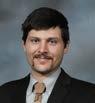
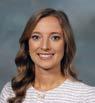
Hope Cassebaum Vice President | Southwest, Lillian
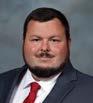
Steve Dunn Secretary-Treasurer, Evergreen
DIRECTORS
Dorman Grace | Jasper
Charles Butler | New Hope
David Bailey | Dawson
Darrell Lee | Addison
Will Gilmer | Sulligent
Phillip Hunter | Birmingham
Mahlon Richburg Auburn
Stewart Koon Gordo
Bill Cook Montgomery
Trip Horne | Louisville
Mark Kaiser | Daphne
Jerry Peak | Chancellor
Lisa Lake | Vinemont
Forrest Anders | Hartselle
Neighbors (ISSN 0162-3974) is published monthly by the Alabama Farmers Federation, 2108 East South Boulevard, Montgomery, Alabama 36116 or (334) 288-3900. For information about Alabama Farmers Federation member benefits, visit the website www.alfafarmers.org. Periodicals postage paid at Montgomery, Alabama, and additional mailing offices. Printed in the U.S.A.
MEMBERSHIP AND SUBSCRIPTION CHANGES 800-392-5705, Option 4 or BWatkins@alfafarmers.org
ADVERTISING REPRESENTATIVE
Ben Shurett, (256) 997-7922 BenShurett.alfafarmers@gmail.com
DISCLAIMERS: Advertisements in Neighbors do not represent an endorsement by the magazine or Alabama Farmers Federation. Editorial information from sources outside the Alabama Farmers Federation is sometimes presented for our members. Such material may, or may not, coincide with official Alabama Farmers Federation policies. Publication of information does not imply an endorsement by the Alabama Farmers Federation.
www.AlfaFarmers.org
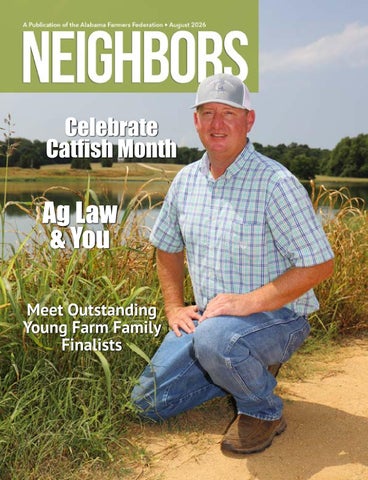
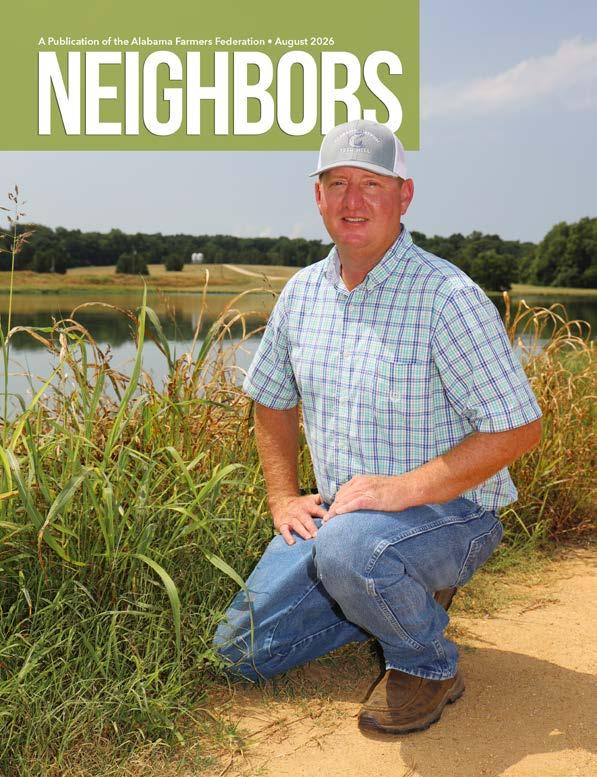
August is National Catfish Month — a time to celebrate delicious, nutritious U.S. FarmRaised Catfish grown by farmers like Matt Sims. Sims, who farms in Hale County, is Alabama’s Catfish Farmer of the Year.
Photo By Marlee Jackson
Meet Young Farm Family Finalists
the Alabama Farmers Federation Farm & Land Conference in Mobile Aug. 8.
By Marlee Jackson
Three exceptional, hard-working couples are in the running to be named Alabama’s Outstanding Young Farm Family (OYFF).
Cade and Shelby Easterling of Barbour County, Jacob and Misty Porter of Clay County, and Garrett and Robin Dixon of Lee County qualified for the elite honor following an interview and application process earlier this year, which narrowed a stacked pool of producers to the Top 3. Those families then welcomed experts to their farms in June for a final round of judging.
The OYFF will be announced during
Federation Young Farmers Division Director Hunter McBrayer said honoring Alabama’s OYFF is a top moment of his year.
“The more time I spend with these folks, the more I appreciate their faith, commitment to family and sheer determination to make a living off the land,” McBrayer said. “The Easterlings, Porters and Dixons represent the very best of the best. What I know is while they excel now, this is just the beginning. We’ve seen OYFF winners go on to become state board members, Federation presidents and national leaders who are truly making an impact. The OYFF is more than a contest. It’s a training ground, and we’re excited to see where each family goes from here.”
OYFF applicants receive more than
half their income from production agriculture. The contest focuses on farm growth, profitability, Federation involvement and civic service.
This year’s OYFF will receive $40,000 toward a Ford vehicle courtesy of Alfa Insurance; a year’s lease on a John Deere tractor from John Deere, SunSouth and TriGreen; and a John Deere Gator from Alabama Ag Credit and Alabama Farm Credit.
Additionally, the OYFF will represent Alabama during American Farm Bureau Federation’s Achievement Award contest in Charlotte, North Carolina, in January.
For the third year, the remaining finalist families will receive prizes from perennial sponsors.
The OYFF first runner-up will receive a 250-hour lease on a Kubota tractor from Kubota, while the second runner-up will receive a custom chemical package from Corteva Agriscience. Alabama Ag Credit and Alabama Farm Credit will present $500 to both families.
THANK YOU, SPONSORS!
When Cade and Shelby Easterling tied the knot Jan. 23, 2023, they didn’t just become one family.
They joined farms, too, uniting her Generation Ridge and his Red Rock — two broiler chicken operations in Dale and Barbour counties, respectively.
“We both love to farm, and making our farms work together was never a big to-do,” said Cade, 31. “From Day 1, it was just part of life.”
Near the top of the newlyweds’ farm to-do list was transitioning to the same integrator across all eight poultry houses. That move streamlined bird size, flock placement and sell dates for the nearly 3 million chickens they raise each year.
“We grow a rotisserie-sized chicken, so that’s 3 million meals we are providing families all across the U.S.,” said Shelby, 30. “That sits well with me because I know the food we grow is wholesome, good to eat and safe because I feed it to my family.”
The Easterlings’ southeast Alabama flock extends beyond poultry into goats, sheep and cattle.
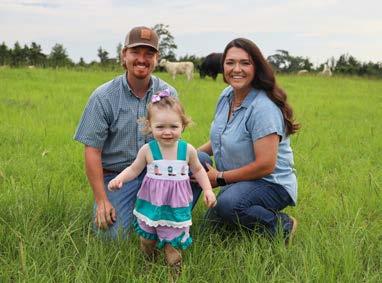
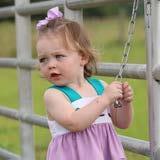
Their most precious lamb, however, is daughter Mary Jo. The 18-month-old farm kid toddles in her parents’ bootsteps, whether checking chickens with Shelby, feeding cows with Cade or setting out on the family’s favorite pastime — coon hunting.
“When Mary Jo was a little bitty baby, we could slide her down in Cade’s overalls, and he would take her all over the farm. That is just the most precious memory,” Shelby said with a sweet smile. “Now that she’s big enough to wear overalls, I love to put her in them and just see them go and do their thing. I can stay home and cook dinner and know they’re out there solving all the farm’s problems together.”
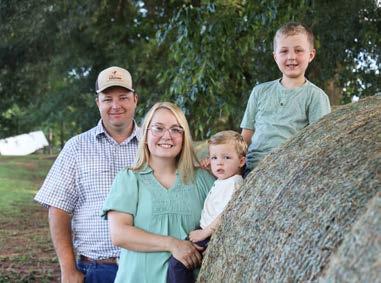
The Easterling Family
BARBOUR COUNTY
poultry farmer took Cade under his wing around the same time, teaching him the ropes of raising chickens.
Despite Barbour County’s proximity to aviation mainstay Fort Rucker, the clarion call to farm was clear.
Cade stepped out on faith and built four poultry houses, naming the farm Red Rock after a childhood nickname due to his ginger-hued hair. Red Rock’s first flock was delivered May 28, 2019. Just 20 minutes away, Shelby’s Generation Ridge received its first flock weeks earlier on April 1. The poultry operation shares a moniker with her on-farm event venue, a weathered wooden barn that hosts sundry celebrations.
Cattle chomp tall green grass nearby, adding to the agritourism-esque atmosphere.
Committee and the State Young Farmers Committee. She and Cade serve on the State Sheep & Goat Committee, in Barbour County Young Farmers and as grassroots Extension advisers.
“Cade sometimes jokes, ‘Which one are you going to today?’” said Shelby, also a member of the elite A.L.F.A. Leaders program Class VII. “It all goes back to serving other people and making sure we have a future for our children to grow and prosper in.”
To secure that strong future, the Easterlings continue to improve their farm. They’ve replaced fencing, acquired land, improved weed control, upgraded equipment, diversified into custom farming and repaired machinery for fellow farmers.
They’re good shepherds reliant on the Good Shepherd — giving Him praise in seasons of plenty and times of petition.
The simple lifestyle is an answered prayer and fulfilled dream.
A straight-shooting handyman with a knack for solving problems, Cade earned an aviation mechanic certification after high school. A local
A long-time believer in the tenets of FFA, Shelby taught agriscience before returning to the farm. While she’s no longer in the classroom, Shelby remains a passionate proponent of youth education and volunteerism, lending time to the Alabama CattleWomen’s Association, the Beef Checkoff
“Everything I’ve ever wanted is to have my children and my wife here on the farm every day with me,” Cade said. “As we wake up in the morning, my goal is to make it through the day and for nothing to do without. I don’t want my chickens to do without, my cows, my sheep, my wife, my little girl. If we make it through the day and nothing has done without, I think that’s a pretty good day.”
The Porter Family
Fresh out of high school, Jacob Porter’s checklist had a hefty line item: Finagle a way to farm full time from near scratch.
Fourteen years and countless hours of labor later, he and wife Misty live out that dream in the hills of Clay County.
“It’s just in my DNA,” said Jacob, who grew up on a hog farm and began raising cattle as a teenager. “Everyone has a thing they truly love to do, and farming is mine.”
Jacob was just 20 when he plunged into poultry farming. He built four broiler chicken houses — a leap of faith that positioned him for future success.
“Being young gives you an advantage,” said Jacob, 32. “Here I am 12 years in, and I don’t have the debt above my head that I had. Some people get in at my age, and they’re taking out loans for $2 million. I’m ahead.”
In those early days as Jacob tended flocks, rebuilt fences and beefed up his cattle herd, Misty earned a degree in elementary education from Auburn University. The farm became her classroom, too, as she learned the ins and outs of agriculture from her high school sweetheart. The Porters married in 2015.
A natural educator with a calm demeanor, Misty has spent the last decade caring for kindergartners
at Ashland Elementary School. She’s planting seeds of agricultural knowledge through lessons on the chicken life cycle, “adopting” a dairy calf and leading science experiments.
“That is my favorite part about teaching, the science and the agriculture,” said Misty, 33, who co-chairs the local Women’s Leadership Committee to promote ag literacy. “All kids can do this and get excited about it. Anything we can get our hands dirty with, I like to bring to my classroom.”
Admittedly Type A, Misty thrives on organization, giving credence to the adage that opposites attract.
Smiles stretch across the boys’ faces as they traipse through pastures, jump on mounds of cotton seed destined for feed bunks or load up for a spin in the tractor with Jacob.
“He wants to teach them all the things and be there and be present,” Misty said. “Farming takes a lot of time, but he includes them in everything. It doesn’t matter if he has to go back out to the farm afterward, he’s always there for bedtime. Seeing him take on the role of dad, it’s his purpose.”
Jacob has balanced family time while improving the farm. In the last decade, they’ve increased the cattle herd, improved livestock genetics, added custom hay work and acquired additional acres. They’ve also expanded into hog production, harkening back to Jacob’s childhood.
Each step has been grounded in guidance from above, Jacob said.
“I’m not sure how anyone can live life without faith,” Jacob said. “Being a farmer, we get to see it firsthand. We can do everything, as far as giving animals the right nutrition, but you can only do so much. The man upstairs is in control.”
“Jacob is carefree,” Misty said. “He goes with the flow. I love a plan. Most of the time, that’s not going to work on a farm. You adjust and have faith that things will work out.”
Misty and sons Olen, 7, and Asher, 2, beeline to the farm after school. There, they find Jacob, check cows, mend fences and give thanks for God’s creation.
A selfless servant, Jacob has cultivated leadership skills through involvement in ag organizations. He serves on the State Poultry Committee, State Young Farmers Committee and Clay County Farmers Federation board. His flexible schedule helps him serve the local community, too, through the volunteer fire department and church.
It’s a lifestyle they hope to cultivate for generations to come.
“In the future, I’d love to still be right here doing what we’re doing, maybe a little bit bigger,” Misty said. “We won’t be here forever, but what we leave behind us will be. Every day, we try to make a difference and leave things better than we found them.”
CLAY COUNTY
When the going gets tough, Garrett Dixon gets going — digging in, doubling down and asking God for guidance on his Lee County farm.
“I love farming in spite of all its challenges because you see the fruits of your labor rewarded,” said Garrett, 35. “When you plant a tiny seed and then harvest a crop in the fall, it’s satisfying knowing you were with that crop every step of the way.”
Calm determination is classic Garrett, said his wife, Robin. She’s been Garrett’s stalwart teammate since their early days as students at Auburn University.
“Garrett is the most driven person you’ll ever meet,” Robin said. “That inspires me daily. He gets up every day trying to get as much work done as possible.”
She added, “He’s also goofy. Anyone who knows Garrett knows he will pick and mess and make a joke.”
His farm, however, is no laughing matter.
It’s a labor of love Garrett built from the ground up, starting with a few head of cattle in high school. He found his true passion for farming in the row crop fields of Salem — land his ancestors toiled since the 1800s.
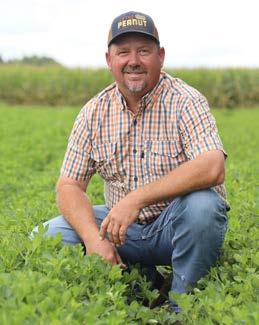
A skip-generation farmer, Garrett started with 100 acres of soybeans in college before switching to a rotation of peanuts and cotton. The crops are more suited for sandy soil and thrive in hot weather, Garrett said.
“As a peanut farmer, I help feed Alabama,” Garrett said. “By growing cotton, we can clothe the world and state, too.”
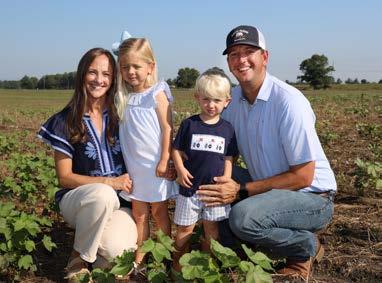
The Dixon Family
LEE COUNTY
The Dixons are investing, too, in their young farmhands, Chandler Jane, 4, and Cash, 2, who are often found visiting Garrett at his shop, scouting for bugs or hitching rides in the sprayer.
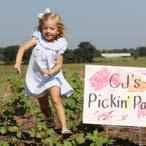
This year, a sign sways in a field of young cotton proclaiming CJ’s Pickin’ Patch. The handful of rows near Garrett and Robin’s home is a classroom of sorts for the Dixons’ daughter.
“We’ll take some of those proceeds and give to her to use as she wants to teach her to be responsible, to tithe and to take some ownership, albeit a small slice, at a young age,” Garrett said.
even visit the farm to see agriculture in action.
“They buy their groceries in the store but don’t think about where their food comes from,” said Robin, who cultivated a love for agriculture through FFA in her native Florida. “With my personal perspective, it really opens their eyes when I’m late to school because the cows got out or whatever it is that’s happened on the farm.”
The Dixons additionally live a life of service to their community through church and political involvement. They’re also committed to grassroots organizations.
In the last decade, Garrett has expanded acreage, installed irrigation and improved soil fertility, facing challenges like tough markets and weather woes along the way.
Garrett and Robin recently welcomed a new challenge by expanding the farm’s cattle herd. The cattle spend summer months grazing peacefully in recently acquired pasture; they’ll munch fields flush with cover crops this winter — adding even more value to the land.
The investment in the farm’s seventh generation mimics Garrett and Robin’s childhood experiences selling bottle calves and show pigs, respectively. Robin’s sphere of influence extends beyond their home. As an agriscience teacher and FFA adviser at Smiths Station High School, she ties on-farm experiences into curriculum standards.
Her students calculate sprayer formulas after watching footage of Garrett driving machinery across a field, discuss animal husbandry while clicking through slides of the Dixons’ herd and
Garrett has chaired the State Young Farmers Committee, serves on the Alabama Peanut Producers Association board and is a Lee County Farmers Federation board member. He’s also graduated from two elite leadership development programs — A.L.F.A. Leaders Class V and the Peanut Leadership Academy. Both Dixons have held various roles in Lee County Young Farmers.
Each area of service yields rewards far beyond what meets the eye, Garrett said.
“He knows how this will play out,” Garrett said. “Knowing He is sovereign gives you a sense of peace. That transcends agriculture.”
Eminent Domain: When the Government Takes Private Property
Land is more than an asset on paper for most farmers. It represents a generational legacy, the site of a family homeplace, a lifetime of work and a place of countless memories. For these reasons, eminent domain can be a difficult topic. While eminent domain issues are highly fact-specific, a basic understanding of eminent domain can help landowners when a road project, utility line or pipeline proposal affects their property.
Generally, eminent domain is the power of the government to take private property for public use, so long as just compensation is paid to the landowner. The right of the government to exercise this power is found in the U.S. Constitution under the 5th Amendment’s Takings Clause and Alabama’s state constitution. The legal term for the process used to exercise eminent domain power is called condemnation. However, not every situation requires formal condemnation action, and in some cases, a landowner may receive an offer and negotiate a voluntary easement or sale before any official condemnation action is filed.
Although federal and state constitutions recognize the power
to take private property, Alabama landowners enjoy among the strongest legal protections in the country. In 2005, the Alabama Legislature enacted reforms that limited the use of eminent domain for certain private development purposes.
Alabama law also requires condemning authorities to file a formal complaint in the local probate court. The court then appoints a three-person panel of commissioners to evaluate the property and hold a hearing before compensation is determined. Alabama property owners also have the right to appeal a probate court condemnation award to circuit court, including before a jury if requested.
In practice, the dispute in many eminent domain cases is not whether the condemning entity has the power to take the property but what amount of compensation is considered “just.” When an entity exercises its eminent domain power, it is legally obligated to provide the landowner “just compensation.” Determining that amount, however, is not always straightforward. In a total taking, compensation is generally based on the fair market value of the property acquired. In a partial taking, however,
Alabama law measures compensation by the difference between the fair market value of the entire property before the taking and the fair market value of the remaining property after the taking. This means compensation may include not only the value of the land acquired but also any reduction in value to the remaining property caused by the project.
Unfortunately, the term “just compensation” can leave room for a condemning authority to make an initial offer that does not fully reflect the property’s true value or the impact on the remaining property. For that reason, it is critical to obtain experienced legal counsel. An independent appraisal is often essential to ensure all compensable damages are properly identified and valued.
While eminent domain can be a difficult and disruptive process, Alabama law provides important protection to ensure property owners receive full and fair compensation. Before signing any documents or accepting an offer, landowners should carefully review all documents and seek qualified legal or professional advice to protect their interests and make informed decisions about their property.
By Preston Roberts, JD, Exter nal Affairs Department Assistant Director
USDA Helps Rural Oyster Farm Reach New Markets
By Maggie Gaddy
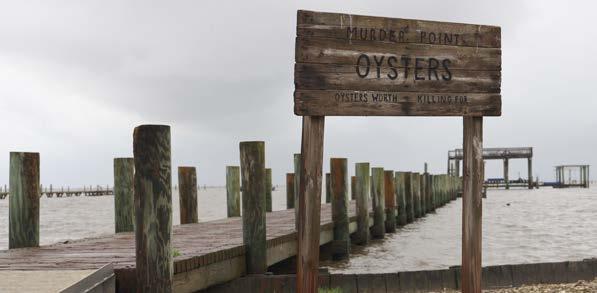
Thousands of oysters bobble in cages just offshore Sandy Bay in Bayou La Batre. There, the Zirlott family has spent more than a decade building Murder Point Oysters, transforming a small oyster farm into a nationally recognized brand rooted in Mobile County’s coastal community.
“We got into oyster farming in 2012,” said Rosa Zirlott, a multi-generational
fisherman and co-owner of Murder Point Oysters. “Auburn University (AU) brought the opportunity to the Gulf, and there weren’t any commercial industry people wanting to do it. I talked my husband into taking the course. Being water people and being around the water, it came very natural to us.”
AU’s Gulf Coast Research & Extension Center provided the family a 2-acre plot to learn the craft. The GPS coordinates, known as Murder Point, inspired the morbid name.
As the family expanded its operation, it reinvested nearly every dollar back into the business, purchasing land, building a hatchery and expanding production. Marketing, however, remained out of reach.
The U.S. Department of Agriculture’s (USDA) Rural Development program helped bridge the gap, Rosa said.
“My son, Lane, is an excellent marketer, but it takes money to be able to do great marketing,” Rosa said. “We started looking for ways to do more than what we could financially do ourselves.”
A USDA grant helped the family
strengthen the Murder Point brand, create promotional materials and gain exposure at national seafood trade shows. Rosa said the opportunity allowed the small family business to compete with corporations that had significantly larger marketing budgets.
“This little Bayou La Batre
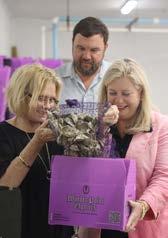
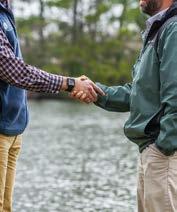
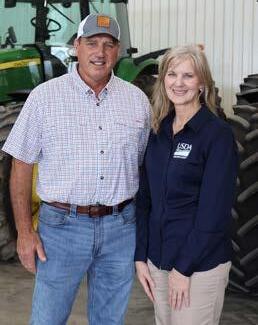
Murder Point Oysters co-owner Rosa Zirlott, left, demonstrates oyster packaging to Alabama USDA Rural Development’s Joe Freeman and Twinkle Cavanaugh.
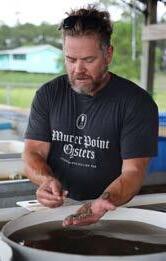
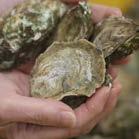
Lane Zirlott, above, said his family’s oyster farm is Alabama’s only operation with a hatchery and broodstock. From hatchery to harvest, the oysters are carefully cultivated through a hands-on process.
oyster farm is doing big-time marketing with the big guys,” Rosa said. “We are standing out with everybody else, so it’s been a blessing.”
USDA Rural Development State Director Twinkle Cavanaugh said the Zirlotts exemplify how the agency’s programs help rural businesses grow.
“The USDA grant allowed them to market what they do here and to get Alabama oysters throughout the U.S.,” Cavanaugh said. “We offer 86 programs designed to address needs in communities across Alabama.”
Cavanaugh noted about 75% of
Alabama is considered rural, according to USDA guidelines.
“We don’t go into a smaller community and tell them what they need,” Cavanaugh said. “We go in and let them know what we have, and then they tell us what they need.”
Lane Zirlott said the grant allowed the family to present Murder Point Oysters on the level they always envisioned.
“No matter what you’re doing, if nobody knows about it, nobody
knows,” Lane said. “Being able to get that marketing grant allowed us to really present this oyster on the stage that we see it.”
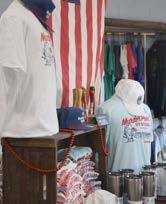
One platform included the Seafood Expo North America in Boston, where the family’s bigger-is-better marketing approach helped Murder Point stand out with branded merchandise such as hats and scarves.
“We’re big. We’re a little louder than life,” Lane said. “We kind of come in and just show off what’s really going on with the product. Without that grant, you’re limited to what you can budget for and what you can afford. It opened the door and led to all kinds of things.”
Those doors have carried Murder Point Oysters far beyond the Gulf Coast.
“For the first time ever, we are in Canada,” Rosa said. “We’re shipping to Boston. We are in California. We are in Denver. We are in a lot of places that, without that exposure, we wouldn’t be.”
The product drawing attention in those markets begins at home in Bayou La Batre. Murder Point is Alabama’s only oyster farm with its own hatchery and broodstock, Lane said.
“When you’re oyster farming, you’ve got to have a mindset of, ‘What I do today matters tomorrow,’” Lane added.
As the Zirlotts continue growing their market, USDA Rural Development is helping the family explore ways to extend the reach of their Sweet Grown Alabama product.
Through USDA’s Value-Added Producer Grant, the business is seeking new customers while creating an oyster product designed to travel farther.
For Lane, seeing his family’s logo appear across the country is a full-circle reminder that work happening each day in the waters of Bayou La Batre matters.
“When you find somebody that’s invested enough to look into you, to see your story, like your product and want to wear it…it means something,” Lane said. “Even though you’re out here in the water and there’s nobody around you, somebody in this country is buying a Murder Point logo hat, a shirt or eating your oyster. It makes a difference.”
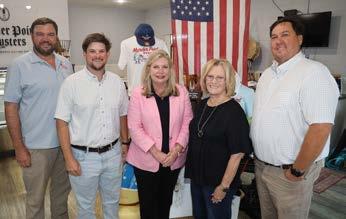
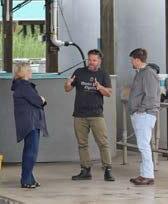
Representatives from USDA Rural Development and the Alabama Farmers Federation visited Murder Point Oysters’ processing facilities, store and farm this summer in Mobile County. From left are Joe Freeman, William Green, Twinkle Cavanaugh, Rosa Zirlott and Mitt Walker.
Murder Point Oysters T-shirts, hats and oyster knives are available for purchase in the Bayou La Batre storefront.
Murder Point Oysters’ Rosa and Lane Zirlott discussed the oyster breeding operation with Alabama Farmers Federation’s William Green.
Understanding The 5Cs of Credit:
What Lenders Look for When Evaluating a Loan
By: Alabama Ag Credit
Whether you’re purchasing land, expanding a farming operation, buying equipment, or refinancing existing debt, understanding how lenders evaluate credit can help you prepare for success. One of the most common tools lenders use is the 5 Cs of Credit. These five factors help paint a complete picture of your financial situation, your ability to repay a loan, and the overall risk involved. While no borrower is perfect in every category, understanding the 5 Cs can help strengthen your application and improve your financing options.
Character is all about your track record as a borrower, but it goes beyond a credit score. Lenders review your credit history, payment habits, and past financial obligations, while also considering how you manage your operation, plan for the future, and respond to challenges. Strong character is reflected through honesty, communication, sound decision-making, and a history of following through on commitments.
Capacity measures your ability to repay a loan based on your income, cash flow, and existing financial obligations. Lenders want to see that your operation generates enough income to support loan payments while still covering operating expenses and family living needs. Debt-to-income ratios, earnings history, and cash flow trends all help determine whether a loan is realistically affordable.
Capital refers to your overall financial strength and what you can contribute toward an investment. This may include a down payment, savings, cash reserves, or equity you’ve built over time. Capital demonstrates commitment and provides a financial cushion during unexpected challenges. The stronger your financial position, the greater your flexibility when opportunities arise.
COLLATERAL
Collateral is the asset pledged to secure a loan, such as land, real estate, equipment, or livestock. While lenders never make a loan expecting to rely on collateral, it serves as a secondary source of repayment if unforeseen circumstances affect income or cash flow. Strong collateral helps reduce risk and can positively influence loan structure and terms.
CONDITIONS
Conditions refer to the purpose of the loan and how it is structured. Lenders consider factors such as the amount being borrowed, repayment terms, interest rates, income stability, and current economic conditions. The goal is to structure a loan in a way that aligns with the borrower’s operation and cash flow while supporting long-term success.
WHY DOES EACH
MATTER?
Of the five, character and capacity often carry the most weight. Character reflects how you’ve handled financial obligations in the past, while capacity helps determine whether you can successfully manage debt going forward. Understanding the 5 Cs can help you prepare for financing and identify areas where you can strengthen your financial profile. Building savings, reducing debt, maintaining strong payment habits, and keeping accurate financial records can all improve your position over time.
“C”
While each of the 5 Cs is evaluated separately, they work together to tell a complete financial story. Strength in one area can often help offset challenges in another. Rather than focusing on a single number, lenders use the 5 Cs to gain a broader understanding of a borrower’s financial position, management ability, and repayment capacity.
EVERY FINANCIAL STORY IS DIFFERENT
At Alabama Ag Credit, we believe lending is about more than numbers. It’s about understanding the people, operations, and goals behind every loan request. Whether you’re planning a land purchase, expanding your operation, refinancing debt, or preparing for future opportunities, our experienced lending team is here to help you evaluate your financial position, understand your options, and build a plan for long-term success.
Learn more at AlabamaAgCredit.com or contact your local Alabama Ag Credit office to start the conversation.
Federation Introduces New Class of A.L.F.A. Leaders
By Lydia East
Class VII of the Agricultural Leaders for Alabama (A.L.F.A. Leaders) program was announced June 29 after a strenuous application and interview process.
Fourteen participants who range from farmers and ag lenders to Extension agents will become part of a distinguished network of Alabama Farmers Federation leaders whose involvement and personal growth advanced through the prestigious leadership experience.
A.L.F.A. Leaders is sponsored by the Federation and creates an intensive learning environment by focusing on individual development, political involvement, effective communication
and understanding of grassroots leadership.
“A.L.F.A. Leaders is Alabama’s premier ag leadership initiative,” said Federation Ag Leadership Programs Director Hunter McBrayer, a Class IV graduate. “It refines leadership and creates better advocates for agriculture across local communities, Alabama and our country. A.L.F.A. Leaders changes lives.”
Graduates have gone on to become county presidents, board members, legislators and other leaders at the local, state and national levels. More than 300 difference-makers have graduated from A.L.F.A. Leaders and its predecessor, the Alabama Agriculture and Forestry Leadership Development Program. The program begins in September
and will conclude with a capstone project presentation and graduation at the 2028 Farm & Land Conference. Participants will enhance their skills in agricultural policy, industry leadership, productive communication and organizational involvement at six seminars in Alabama, Washington, D.C., and a to-be-determined international location.
Participants were chosen by an independent selection committee comprised of former class members and stakeholders with a deep-rooted commitment to agricultural leadership development.
Selection was based on community involvement, personal ability and character. The program is designed for agricultural leaders ages 25 to 45.
Shelby Easterling Barbour County poultry, cattle and sheep farmer
Amanda Baker Fayette County cattle ultrasound technician and meat market owner
Jake Tucker Monroe County cattle farmer and agricultural lender
Charlie Langley Chambers County cattle farmer and logger
Tyler Walker Geneva County commercial beekeeper
Laura Jean Mitchell Montgomery County agricultural communicator
Karah Skinner Cleburne County cattle farmer and social media influencer
William Stewart Jackson County row crop farmer
Ben Johnson Randolph County poultry, cattle and row crop farmer
Jonathan Sanders Coffee County row crop and cattle farmer
Hunter Rogers Limestone County agriscience teacher
Levi Noles Randolph County agriscience teacher
Caleb Elrod Cullman County cattle farmer and school principal
Kristen Roberson Marshall County Extension director
By Lydia East
Matt Sims grew up on his family’s farm where mornings began early, nights ran late and hard work was a way of life. Decades later, not much has changed for the 2026 Catfish Farmer of the Year.
“I knew from an early age I wanted to farm,” Sims said. “I couldn’t imagine doing anything else.”
The Hale County native’s passion for agriculture began long before he could drive a tractor.
“When I was 5, I would stand on the door of an old feed truck watching the fish with my mom,” Sims said. “That’s my earliest memory of agriculture.”
Sims Reels in Catfish Farmer of the Year Honor
That childhood sparked a lifelong calling. Driven by faith, experience and a desire to continue the family legacy, Sims works daily alongside his father, Henry. Together, they manage catfish ponds, commercial cattle and pastureland.
While the farm has burgeoned over the years, Sims said its greatest success isn’t measured in acres.
“Having a family and getting to work with my family is the greatest reward,” Sims said.
Sims and his wife, Lindsey, are raising the next generation of farmers — Wade, Sara Morgan and Emmy. Sims said he hopes his children grow up with the same appreciation for agriculture that guided him as a young boy.
“Wade helps around the farm when he can, and Sara Morgan loves to hunt,” Sims said. “I want my kids to love agriculture as much as I do.”
In 1989, Sims’ operation pivoted from row crops to catfish, a decision that altered the family’s future.
“If it wasn’t for catfish, I don’t know what would have happened on this farm,” Sims said.
Today, the operation includes 25 ponds that yield U.S. Farm-Raised Catfish in the heartland of American catfish production. Hale County’s heavy clay soil creates ideal pond conditions, making Alabama’s Black Belt region the anchor of the industry.
Life on the farm rarely follows a schedule, Sims said. Each day presents new challenges and responsibilities, whether monitoring pond conditions, checking fish health or maintaining equipment.
“I love to be outside,” Sims said. “Every day is different, but I like not knowing what tomorrow brings.”
Working on the water has granted Sims a deep appreciation for the place
Matt and Lindsey Sims share life on the farm with their children – Wade, Sara Morgan and Emmy.
Matt Sims’ day extends beyond the catfish ponds as he works across the family’s diversified farm.
he calls home. Peaceful moments around the ponds remind him farming is more than a job; it’s about stewarding land the Lord has provided.
“I think about God’s creation and this land a lot,” Sims said. “When I slow down, I really get to see the beauty.”
Sims respect for agriculture extends beyond his farm. Through his involvement with the Hale County Farmers Federation, he continues to serve alongside farmers and families who make Alabama agriculture stronger. Federation meetings often center around a homegrown catfish meal, the connections made around the table lasting beyond the dinner bell.
That sense of community is one reason Sims takes pride in raising U.S. Farm-Raised Catfish. From farm to table, Sims said every step is carefully managed.
“We have guidelines and the U.S. Department of Agriculture watching over how everything is grown and processed,” Sims said. “U.S. Farm-Raised catfish is important because you know where it is coming from.”
Alabama Farmers Federation Catfish
Division Director William Green said he was pleased when the State Catfish Committee chose Sims for this honor.
“Every day, Matt strives to be a better farmer, son, husband and father,” said Green. “He represents the hard-working American farmers who provide U.S. Farm-Raised Catfish many families enjoy — both during August Catfish Month and beyond.”
Sims said he hopes to use his
position as Alabama’s Catfish Farmer of the Year to showcase that success in agriculture is built through hard work, family and faith.
“It is a great honor to be Catfish Farmer of the Year and represent what my family and I have built over the years,” Sims said. “At the end of the day, it comes down to hard work and trusting in the Lord.”
Henry, Wade and Matt Sims reflect three generations of a deep-rooted love for agriculture.
The best memories are often made between fence rows for Wade, Sara Morgan and Emmy.
FSA Calls for Farmers to Serve on County Committees
By Marlee Jackson
When the federal Farm Service Agency (FSA) releases programs aimed at assisting farm country, county committee members spur into action helping farmers meet deadlines.
It’s especially important producers fill those committee seats, said Mark Platt. A row crop and cattle farmer from Fruitdale, Washington County’s Platt is a member of the FSA committee that serves Clarke and Washington counties.
“Agriculture is different from one county to the next, and no one understands the challenges of local farming better than the producers who work that land every day,” Platt said. “Having local producers serve on the FSA county committee ensures federal farm programs are administered with local knowledge, fairness and accountability.”
Monica Carroll is encouraging that philosophy as FSA county committee elections draw near.
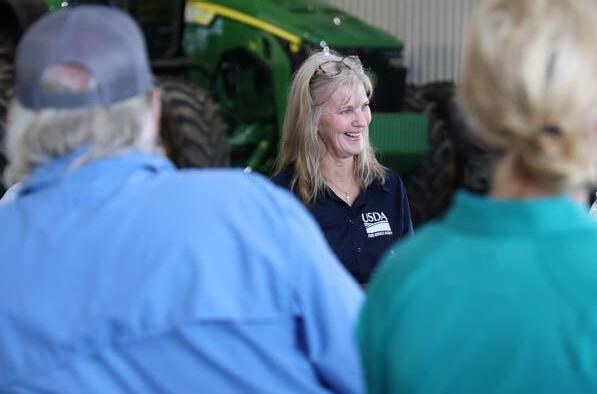
As Alabama’s FSA executive director, Carroll meets with farmers, highlights farm programs and takes Alabamians’ concerns to the U.S. Department of Agriculture (USDA).
She’s also a farmer from Dale County who sees the diversity of agriculture across Alabama — from production practices and weather to terminology and soil types.
“I want those who are in the trenches, those who are dealing with real life on their real farms, to serve on these committees,” Carroll said. “The decisions they make are so important to their counties and our state. This is an opportunity for their voices to be heard.”
Fruitdale farmer Mark Platt said it’s important fellow producers step up to the plate to serve on Farm Service Agency county committees.
Each county committee or multi-county jurisdiction has members who represent Local Administrative Areas. Members can serve a maximum of nine years — or three 3-year terms.
Nomination forms are due Aug. 3 at local USDA Service Centers, and eligible voters will receive ballots in November. Voting ends Dec. 7.
In addition to contacting local farmers about upcoming deadlines, committee members provide input on income safety net programs, conservation programs, disaster payments, emergency programs and payment eligibility.
Those decisions should be taken seriously, said Brady Peek. A row crop farmer familiar with safety nets such as crop insurance, Peek is serving his first term on the Limestone County FSA committee.
“In these positions, it’s important to put our personal bias aside and make informed decisions based off of FSA guidelines. We need to uphold that and put our best foot forward, especially when dealing with government funds and peoples’ livelihoods,” Peek said. “We make decisions that could cost people hundreds of thousands of dollars. You’ve got to have good people working with FSA — whether they’re a county committee member or a USDA employee.”
A similar thought process fueled farmer Rickey Cornutt during three terms on FSA’s Marshall County committee. He’s since encouraged his daughter, Cara Cornutt Clough, to pick up the mantle of leadership and serve fellow producers.
“It shouldn’t be a popularity contest,” said Cornutt, whose
FSA County Committee Elections
Aug. 3 — Nominations due.
November — Eligible voters receive ballots by mail.
Dec. 7 — Ballots due to local USDA Service Center.
diversified row crop, cattle and agritourism operation is near Boaz. “You need to ask: Are they doing this for themselves or the whole county? It’s about being a servant.”
Committee members work hand in hand with county executive directors, too, keeping records that span from average yields to land rent. Those figures become critical should disaster strike, Cornutt said.
“Committee members have a lot of power,” Cornutt said. “If a disaster comes, assistance gets funneled through FSA. It’s important that office is maintained well.”
Accountability is the bottom line, Platt said.
“The best decisions for Alabama agriculture are made when Alabama farmers have a seat at the table,” Platt said. “That’s exactly what an FSA county committee provides — a local voice helping ensure federal farm programs work for the people they’re intended to serve.” Learn more at fsa.usda.gov. u
Limestone County farmer Brady Peek serves on the local FSA county committee and said he feels the weight of the committee’s decisions, which deal with both government funds and peoples’ livelihoods.
Marshall County farmer Rickey Cornutt caught up with Alabama Executive Director for FSA Monica Carroll during a recent roundtable in northeast Alabama.
Alabama Farmers Gain Iowa Insights on Beef Tour
By Tanner Hood
Cows and corn could be found around every Iowa corner for attendees on the Alabama Farmers Federation Beef Tour June 22-25.
“I think the first thing that catches anybody’s eye when they come to Iowa is it’s corn country,” said Lamar County’s Will Gilmer. “Their feeding program is different than what we have, so the thought in my mind is how can we start compensating, getting our cows prepared for when they ultimately make the move up here.”
Gilmer, the Federation District 5 director and a first-time Beef Tour attendee, said learning from other farmers in a different state adds value to his operation.
“I’m trying to be like a sponge and soak in as much of it as I can,” said
Gilmer, a dairyman-turned-beef-cattlefarmer. “We’re learning some of the same things at the same time. We have conversations, so hearing how other farmers are taking what they’re learning and how they can apply it cues some ideas in my mind. Anytime you can build relationships, whether it’s with people in other regions within your industry or right there at home, those are where the real dividends are paid.”
Alabama cattle producers and industry professionals spent four days hurtling across the Hawkeye State touring farms, feedlots and beef breeding facilities. Stops included Iowa Farm Bureau; Plowman Farms Inc.; Nichols Farms; Lorimor Farming Corporation; Gilman Shorthorns; Hawkeye Breeders; Hanrahan Ranch; Brummer Farms; Amana Beef; and Cornfed Farms, LLC.
Coffee County’s Ginger Gaines said insight into individual techniques could benefit Alabama farms.
“It’s opened my eyes to a whole other world of the beef industry,” said Gaines, who runs a family commercial cow-calf farm and works as a beef sales representative. “You can take something back and integrate it with your own operation. This will help us provide a better product but do it more cost-effectively.”
Attendees were introduced to the importance of localized feedstuffs for finishing cattle. The tour covered the use of monoslope barns to prevent cattle from slogging through mud while
providing shade, plus visits to enhanced genetic and artificial insemination breeding practices.
Federation President Jimmy Parnell said the tour is designed to spur new ideas while building connections across the nation.
“It’s kind of opening everyone’s horizons a little bit to the opportunities that are out there,” said Parnell, who raises cattle in Chilton County. “It puts us in perspective for what’s going on in the rest of the country. That’s the ultimate goal — to help our people understand the industry, learn how to do things better and learn more where they fit into the production cycles.”
The Federation Beef Tour will travel to Virginia next spring.
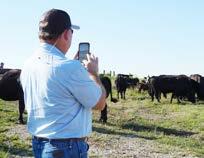
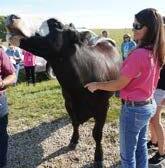
Alabama farmers toured breeding and feeding facilities in the Hawkeye State to learn new beef cattle management techniques.
Coffee County’s Ginger Gaines spent time with fellow cattle farmers in Iowa during the Alabama Farmers Federation’s Beef Tour June 22-25.
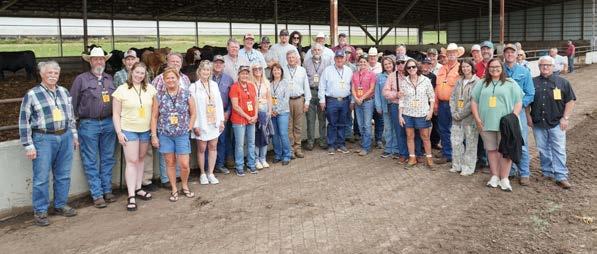
Alabama Farmers Federation members gathered in Iowa this summer for the Beef Tour highlighting beef cattle industry innovation and ingenuity.
From Backyard Flocks to Poultry Science: Meet Alabama 4-H’s First Poultry Pioneers
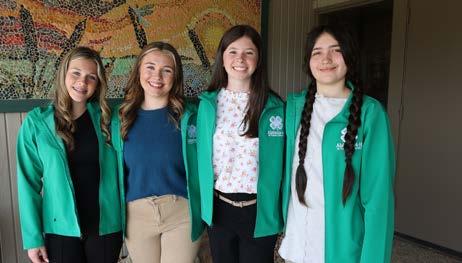
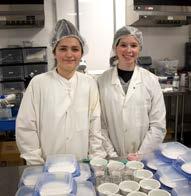
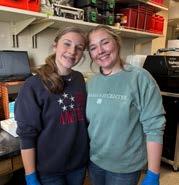
Clockwise from above: The inaugural flock of 4-H Poultry Pioneers includes sisters Emma and Ava Mullins of St. Clair County, Elizabeth Knight of Lamar County and Alyssa Rios of Marengo County; Rios and Knight studied egg functionality; the Mullins sisters focused on egg quality.
By Ashlee Hall
Alabama 4-H offers an array of poultry projects, from starting a flock of chickens through Chick Chain to competitions like Avian Bowl. With a new, one-of-a-kind program called 4-H Poultry Pioneers, four Alabama 4-H’ers have taken a crack at undergraduate level research.
Brigid McCrea, specialist with Alabama Extension at Auburn University, created the program to address the need for research on small, backyard flocks. In addition, 4-H Poultry Pioneers gives youth real-world industry experience.
“The 4-H’ers in the pilot group have taken the next step in expanding their knowledge,” McCrea said. “They have read and critiqued research journal articles, conducted their research projects and organized and presented their findings in a scientific presentation.”
A Flock of Pioneers
Ranging from freshmen to seniors in high school at the start of the project, the four pioneers were responsible for their own research projects, but
they worked in pairs. Elizabeth Knight of Lamar County and Alyssa Rios of Marengo County focused on egg functionality. Sisters Ava and Emma Mullins of St. Clair County focused on interior and exterior egg quality. All four projects compared eggs from heritage and commercial chicken breeds.
“We want to better educate the consumer about how eggs from different chicken breeds can perform differently,” Knight said. “If someone is using eggs for baked goods, this will help them know what breed will give them the best outcome.”
McCrea selected the group based on their success in 4-H poultry projects and dedication to their own backyard flocks.
Building Beyond Ready 4-H’ers
In September 2025, McCrea kicked off the pilot program. The group met regularly to prepare and design their projects. Each pair spent two days collecting data in a lab in Auburn University’s Department of Poultry Science. They analyzed and organized the data into scientific presentations.
After 10 months, the project culminated in July when the
pioneers presented their research at the 2026 Poultry Science Association annual meeting in Toronto, Canada. During the annual gathering, the pioneers presented in front of poultry science professionals from around the world. They also learned about cutting-edge research and innovation.
Contributing to the poultry science industry and addressing needs of small flock owners are experiences that McCrea said make the pilot group of poultry pioneers beyond ready for great careers.
“The 4-H Poultry Pioneers program reflects Extension’s mission to extend knowledge to communities,” McCrea said. “Our 4-H’ers are doing work that benefits underserved small flock owners as they improve their life skills and personal development.”
To learn more about poultry projects offered through Alabama 4-H, visit alabama4h.com.
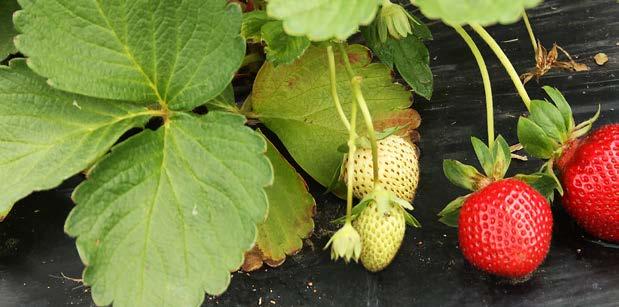
It’s time to reserve strawberry plugs for October delivery!
• 50 plugs per tray
• Plugs have an intact root ball
• Plugs establish quickly Best of all Plant plugs in October and harvest sweet strawberries in the Spring!
NICKNAMES
Ihave a friend who was recently asked by his employer to use a different name in his workplace. My friend’s nickname is “Tater Log.” But mostly, we just call him “Tater,” “Tater Bug” or “Sweet Tater Pie.”
Tater’s employer, however, felt this was unprofessional to use when dealing with high-level clients. He said it sounded, quote, “hillbilly.” (“Hello, ma’am. Your loan officer today is “Sweet Tater Nugget.”)
Sadly, Tater has had to start using his legal name, which is Marian. So you can see why this is so tragic.
When Marian was a boy, we used to give him a hard time about his legal name. He hated the name Marian. Any time the name was invoked, you had to run because a glass object would be hurled in your direction.
Well, all this got my dander up because forcing someone to change their name is discriminatory. Moreover, it raises important ethical questions:
Such as (1) why, exactly, is “Tater” less fit for the workplace than other names such as, for example, Hubert or Archibald? And (2) what precisely does it mean to get one’s “dander up”?
Furthermore, in this part of the world we have a cherished tradition of nicknames. I don’t know how other regions such as, say, Ohio, approach nicknames, but to us, a good nickname expresses lovable personality traits and characteristics.
When I was growing up, for example, I had several nicknames. My initials are S.P.D. So my Little League coach called me “Speedy.” Which I did not care for because “Speedy” is what is known as a “reverse nickname.”
A reverse nickname expresses the opposite of the truth about its titleholder. It’s like calling a big person “Tiny” or a bald person “Curly."
If you would have seen me in a baseball uniform, you would have understood the irony of my nickname. I was a chubby kid and a terrible ball player. During the time it took me to run the bases, many of my teammates had already graduated college.
I’ve had other names. My mother gave me the nickname “Biscuit Booty” when I was 3. My uncle used to call me “Skillet Licker.” And my cousin, Ed Lee, used to call me, for no apparent reason, “Husky Jeans.”
My cousin Ralph’s nickname was “Muffin Top.” My redhead cousin Margarett Ann’s nickname was “Tootie.” I don’t know how she got this name. Perhaps it was because Tootie was redheaded, and redheads were usually stereotyped as, among other things, having hot tempers. This is expressly untrue. And that is how all her friends lost their front teeth.
Speaking of redheads. I am a redhead. And anyone born with red hair has been called “Red” at some point in life. My grandfather was Red. My father was Red. I was called Red on my first day of kindergarten by my teacher. Of all the names I hate, I dislike Red the most.
I have another friend named “Butta.” This happened when his baby brother couldn’t pronounce “Brother,” and so the name Butta just came out.
Any way, I don’t think it’s American to make someone change their name. Unless, of course, their name happens to be Marian. ■
Get Ready for Fall Strawberry Planting
By Dani Carroll
For a better strawberry harvest next spring, August is the time to get ready. In Alabama, late September into October is a good time to plant strawberries, so planning now can pay off later.
Location
The first consideration is where to plant. Strawberries need plenty of sunlight, so choose a spot that gets at least six to eight hours of direct sun daily. While they tolerate a little shade, full sun usually provides better growth, better flavor and better production. Avoid locations where tomatoes, peppers, eggplants or Irish potatoes were planted previously. Those crops can share some disease problems with strawberries, so starting with a clean area can help avoid trouble later.
Soil Preparation
This month is also a good time to prepare the soil. Strawberries grow best in well-drained soil with a pH between 6.0 and 6.8. Conducting a soil test will provide gardeners with helpful pH information.
For soil that is heavy or stays too wet, adding organic matter ahead of planting can improve drainage. It is much easier to fix issues now, rather than after plants are in the ground.
Varieties and Planting
Selecting strawberry varieties is another August task. For most Alabama gardeners, June-bearing strawberries are the best choice. Varieties like Chandler, Camarosa and Earliglow tend to perform well in Alabama’s climate and produce a plentiful crop in spring.
Fall planting gives strawberry plants time to get settled in, grow roots and
If it is planted too deep, the plant may struggle or rot. Space plants 12 to 18 inches apart, and water well.
Strawberries need consistent moisture while they are getting established, but they do not like soggy soil. Adding a layer of straw or pine-straw mulch can help hold moisture, cut down on weeds and keep the berries cleaner.
During winter and late-spring cold snaps, cover strawberries with frost cloth when temperatures are expected to fall into the 20s. Plant growth stage affects cold tolerance, but covering plants overnight is a simple way to protect blooms and fruit.
For smaller spaces, strawberries also grow well in containers or strawberry pots, if they have good drainage and a quality potting mix.
A Productive Patch
Strawberries take a little effort, but they are well worth it. Taking time now to choose the best spot, prepare the soil and select the right variety can lead to a productive patch and plenty of sweet berries next spring.
For more information on caring for strawberries, visit aces.edu.
Conducting a soil test now could help fall-planted strawberries bear better fruit next spring. To learn more about soil testing and growing strawberries, visit aces.edu or contact a local Extension office.
By Maggie Gaddy
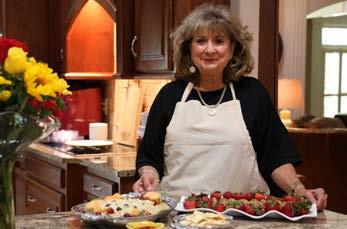
Limestone County’s Patty Marsh believes life is too precious to spend every moment in the kitchen. But whether she’s rolling sausage pinwheels, churning homemade ice cream or throwing together a simple, delicious meal, the time she does spend cooking is cherished.
“I do love to provide for my family and try new dishes,” said Patty, 71. “Life is just too short to stand over a stove all the time.”
Patty’s cooking style is simple by design. She favors tried-and-true recipes that provide hearty meals without requiring hours of work — an approach shaped by more than five decades of feeding a busy farm family.
She and her husband, Alan, have been married 53 years and raised two children on their row crop farm. Today,
they welcome their children and four grandchildren for a meal each week.
“I may cook spaghetti, pick up wings or have a pizza, but it’s the coming together one night a week that matters,” Patty said. “That’s important. It’s family time that you’ve got to make time for or you’re going to lose communication.”
Food has long been intertwined with family for the Marshes, whose life is rooted in faith, family and farming. Alan serves on the Limestone County Farmers Federation board, while Patty is past chair of the Limestone County Farmers Federation Women’s Leadership Committee.
“First, you’ve got to have your faith, then your family and then the farm,” she said. “That’s the way it’s always been to me — and in that order.”
Family meals haven’t always been
Crock-Pot Buffalo Chicken Dip
2 (12.5-ounce) cans premium chunky white chicken breast, undrained
8 ounces cream cheese, cubed 1 cup ranch dressing
3/4 cup Buffalo wing sauce
2 cups shredded cheddar cheese
1 teaspoon garlic salt
1 teaspoon paprika
Add all ingredients to a slow cooker. Cook 3 to 4 hours on low, stirring occasionally. Serve warm with chips or crackers.
served around the Marsh kitchen table. When their children, Peyton and Austin, were young, the family’s schedule revolved around the farm, where cotton and soybean fields were joined by 27 acres of strawberries, plus feeder pigs.
“We had a lot of meals in the field, especially during strawberry season and harvest,” Patty said. “If you wanted to be together, you just had to find a way.”
For Patty, food also has a way of preserving memories of loved ones.
Her sausage pinwheels can be traced back decades to her late friend, Tammy. Patty discovered the simple recipe while visiting Tammy’s kitchen and watching her spread a thin layer of sausage over canned crescent roll dough.
The two-ingredient recipe became a staple in Patty’s kitchen.
Other recipes reflect new generations gathered around Patty’s table. Her grandchildren introduced her to protein balls, a healthier snack that’s since earned a prized place in her recipe book.
“The grandchildren like to eat healthy, and I’m proud of that because I was not raised that way,” Patty said. “They think healthy. They eat healthy.”
Still, some family favorites are timeless. When Patty asked Alan which recipe she should share from their farmhouse kitchen, his answer was short and sweet: Homemade vanilla ice cream.
This month’s recipes shared by Patty Marsh
Lemon Pudding Cake
1 box lemon cake mix 3/4 cup water
1 box lemon instant pudding 4 eggs
3/4 cup vegetable oil
Heat oven to 350 F. Beat all ingredients together until smooth. Pour batter into a well-greased Bundt pan. Bake 45 minutes. Cool cake completely before placing on cake plate. Top with lemon glaze.
Quick Chicken Salad
2 (12.5-ounce) cans premium chunky white chicken breast, drained
1 cup mayonnaise or Miracle Whip
5 tablespoons sweet pickle cubes
3 eggs, boiled, peeled and chopped
1/2 cup chopped pecans (optional)
1/2 cup sliced red grapes or chopped apples
1 teaspoon poultry seasoning
Salt and pepper, to taste
Mix all ingredients. Chill and serve on bread, as lettuce wraps or as a dip with crackers. Garnish serving platter with fruit.
Lemon Glaze
3 cups powdered sugar
3 tablespoons melted butter
1/4 cup lemon juice
3 tablespoons milk or water
Mix all four ingredients well. Drizzle glaze over cake. Slice and serve.
Strawberry Freezer Jam
3 cups strawberries
4 1/2 cups sugar
3/4 cup water
1 box Sure-Jell
Stem, wash and mash 3 cups strawberries to yield 1 1/2 cups mashed berries. Place mashed strawberries in a large bowl. Add sugar and let stand 10 minutes, stirring occasionally. In a small saucepan, combine water and Sure-Jell. Bring to a hard boil for 1 minute, stirring constantly. Remove from heat. Pour Sure-Jell mixture into strawberry and sugar mixture. Stir for 5 minutes. Immediately fill containers, leaving 1/2 inch at the top for expansion. Let stand for 24 hours. Refrigerate up to three weeks or freeze up to one year. Small glass jars freeze well. Makes 6 cups.
Tammy’s Sausage Pinwheels
1 pound ground sausage
2 cans crescent rolls
Heat oven to 350 F. Unroll crescents. Place on a flat, clean surface side by side and pinch seams together to form a sheet of dough. Place uncooked sausage on a plate and microwave for 45 seconds to reach a soft consistency. With a spatula, spread a thin layer of sausage over the crescent sheet. Roll from top to bottom to form a tube. Cut into 2-inch slices. Place on a greased cookie sheet. Bake 20 to 25 minutes. Garnish with jam or jelly.
Protein Energy Balls
1 1/2 cups peanut butter
1/2 cup honey
2 cups quick oats
1 cup vanilla chia granola, crushed
1/4 cup protein powder
1/3 cup ground flaxseed
1 cup mini chocolate chips
In a large bowl, mix all ingredients. Form into bite-size balls. Store in an airtight container in the refrigerator for up to a week.
Family Favorite
Homemade Vanilla Ice Cream
2 cans Eagle Brand condensed milk
1 can Carnation evaporated milk
1 1/2 cups sugar
4 tablespoons vanilla extract
Whole milk
Ice cream salt
Mix first four ingredients well. Pour into a 4-quart electric ice cream freezer container. Fill remaining space with whole milk. Pack ice around the canister and top with ice cream salt. Add more ice and salt as ice melts. Most electric freezers stop when ready.
County Annual Meeting Dates, Times & Locations
COUNTY DATE TIME BUILDING
Autauga Wed., Aug. 19 7 p.m.
Baldwin Thurs., Aug. 13 6 p.m.
ADDRESS CITY
Autauga County Ag Center 2224 Hwy. 14 W Autaugaville
Baldwin County Farmers Federation Building 21332 Hwy. 59 Robertsdale
Barbour Thurs., Aug. 13 7 p.m. Old Louisville School 1857 N Main St. Louisville
Bibb Tues., Aug. 18 6 p.m. Alfa Service Center 1101 Walnut St. Centreville
Blount Thurs., Aug. 20 6:30 p.m.
Calhoun Thurs., Aug. 13 6 p.m.
Chambers Mon., Aug. 24 6 p.m.
Cherokee Thurs., Aug. 27 6 p.m.
Blount County Multi-Purpose Facility 6700 County Hwy. 1 Cleveland
Calhoun County Farmers Federation Building 1535 Pelham Rd. S Jacksonville
Chambers County Farmers Federation Building 1006 Ave. A SE LaFayette
Gadsden State Community College - Chamber Room 801 Cedar Bluff Rd. Centre
Chilton Tues., Aug. 11 7 p.m. Alfa Service Center 301 1st St. N Clanton
Choctaw Tues., Aug. 13 6 p.m. Alfa Service Center 229 S Mulberry Ave. Butler
Clarke Tues., Aug. 18 6:30 p.m. Alfa Service Center 148 S Jackson St. Grove Hill
Clay Thurs., Aug. 27 6:30 p.m. First Baptist Church of Ashland - Christian Life Center 83558 Hwy. 9 Ashland
Cleburne Tues., Aug. 11 6 p.m.
Cleburne County Mountain Center 6751 Hwy. 78 Heflin
Colbert Mon., Aug. 31 6:30 p.m. Northwest Shoals Community College - Building 110 800 George Wallace Blvd. Muscle Shoals
Conecuh Mon., Aug. 17 6 p.m. David Burt Building 102 Liberty St. Evergreen
Coosa Thurs., Aug. 13 6:30 p.m. Old Rockford School 8840 County Rd. 18 Rockford
Covington Thurs., Aug. 27 6:30 p.m.
Covington County Extension Office 23952 Hwy. 55 Andalusia
Crenshaw Thurs., Sept. 10 6:30 p.m. Alfa Service Center
357 S Forest Ave. Luverne
Cullman Thurs., Aug. 13 6 p.m. Cullman County Farmers Federation Building 307 Main Ave. NW Cullman
Dallas Tues., Sept. 8 5:30 p.m. Alfa Service Center 403 Broad St. Selma
DeKalb Thurs., Aug. 20 6:30 p.m. DeKalb County Farmers Federation Building 346 McCurdy Ave. S Rainsville
Escambia Tues., Aug. 11 6 p.m. Nett’s Kitchen 1310 E Nashville Ave. Atmore
Etowah Mon., Aug. 10 6:30 p.m.
Etowah County Farmers Federation Building 125 Broad St. Gadsden
Fayette Tues., Aug. 4 6:30 p.m. Fayette Civic Center 530 Temple Ave. N Fayette
Franklin Thurs., Aug. 3 6 p.m. The Canteen (Behind A.W. Todd Center)
Geneva Tues., Aug. 18 7 p.m.
Geneva County Farm Center
Greene Tues., Aug. 25 6 p.m. Alfa Service Center
201 S Washington Ave. Russellville
2765 E Hwy. 52 Hartford
101 Boligee St. Eutaw
Hale Thurs., Sept. 10 11 a.m. The Catfish Center 529 S Centreville St. Greensboro
Jackson Tues., Aug. 4 6 p.m. Jackson County Farmers Federation Building 23625 John T. Reid Pkwy. Scottsboro
Jefferson Fri., Aug. 28 10 a.m. Birmingham Botanical Gardens 2612 Lane Park Rd. Birmingham
Lamar Mon., Aug. 17 6:30 p.m. Vernon City Complex 44425 Hwy. 17 Vernon
Lauderdale Thurs., Aug. 13 6 p.m. Walker Ranch 16402 County Rd. 2 Florence
Lawrence Tues., Aug. 4 6 p.m. Sanderson Chapel Methodist Church 2943 County Rd. 144 Hatton
Limestone Thurs., Aug. 20 6 p.m. Willow Oak Farms 17434 Morris Rd. Elkmont
Macon Mon., Aug. 3 6:30 p.m. Beck’s Turf Farm 2858 County Rd. 53 Tuskegee
Madison Tues., Aug.4 6:30 p.m. Huntsville Country Club 2601 Oakwood Ave. NW Huntsville
Marengo Tues., Sept. 8 6:30 p.m. Alfa Service Center 206 Shiloh St. Linden
Marion Tues., Aug. 14 6:30 p.m. Tombigbee Electric Cooperative 3196 County Rd. 55 Hamilton
Marshall Tues., Aug. 25 6 p.m.
Marshall County Farmers Federation Building 1333 Blount Ave. Guntersville
Mobile Tues., Aug. 4 6:30 p.m. Greater Gulf State Fair Grounds 1035 Cody Rd. N Mobile
Monroe Mon., Sept. 14 6:30 p.m. Monroe County Ag Center 334 Agriculture Dr. Monroeville
Montgomery Tues., Aug. 25 6 p.m. Alfa Home Office 2108 E South Blvd. Montgomery
Morgan Fri., Aug. 14 6 p.m. Hartselle Civic Center 406 Nance Ford Rd. SW Hartselle
Perry Tues., Sept. 1
Randolph
Russell
Talladega Thurs., Aug. 20 7 p.m.
Aug. 25 6 p.m.
Tuscaloosa Thurs., Aug 20 7 p.m. Alabama Extension
Walker Tues., Aug. 18 6 p.m. Walker County Farmers Federation Building
Washington Mon., Aug. 4 7 p.m.
Winston Thurs., Sept. 10 6 p.m.
Amphitheater Complex and Cultural Center
YOUR SOYBEANS ARE THE RIGHT FEEDSTUFF FOR
ANIM ALS
Alabama’s 2,500 family poultry farms are our state’s No. 1 agricultural industry. And they count on over 2.3 million tons of your soybean meal a year as a high-protein ingredient in their feed. That’s 98 million bushels of your soybeans every year. As your Alabama Soybean Checkoff, we’re working with the Alabama poultry industry to make sure this stays one good-looking figure. Learn more about the story of soy at unitedsoybean.org/hopper.