

How to Create and Use a Balance Sheet for Your Farm
By Alabama Ag Credit
Establishing a balance sheet for your farm is essential. Just like you go to the doctor every year for a check-up to gauge your health, checking in with your farm’s nances using a balance sheet allows you to evaluate the nancial health of your business and make adjustments to improve it. It provides a clear snapshot of where your operation stands at a speci c point in time.
Over time, you can compare your yearly balance sheets to see trends and measure your progress. For example, you’ll be able to see whether your equity is growing or shrinking and if you’re maintaining adequate liquidity. When used correctly, a simple balance sheet can even address whether your operation has long-term viability and help you overcome nancial challenges by allowing you to make more accurate predictions and strategies.
How Do You Create a Balance Sheet?
Creating a balance sheet is relatively straightforward. All you have to do is look at your nances and create two columns. List assets (what you own) in one column and liabilities (what you owe) in the other. en, add up each column to get your total assets and liabilities. e di erence (assets minus liabilities) is your operation’s equity or solvency, which measures the relationship between assets and liabilities as an indicator of the overall nancial health of your operation.
Understanding Your Balance Sheet
A balance sheet provides a snapshot of your farm’s nancial health. By understanding what you own and what you owe, you can make better decisions about borrowing, investing and managing risk.
ASSETS are everything you own.
Current assets are liquid and can quickly be converted to cash, such as bank accounts, stored grain, market livestock, growing crops, feed, prepaid inputs and accounts receivable. Liquidity helps farms manage expenses and unexpected challenges.
Noncurrent assets are long-term items that aren’t easily converted to cash, including machinery, vehicles, breeding livestock, farmland, buildings, co-op stock and retirement accounts.
LIABILITIES are what you owe.
Current liabilities are debts due within 12 months, including accounts payable, operating loans, credit lines, taxes and credit card balances.
Noncurrent liabilities are longer-term debts such as loans for land, equipment, vehicles or buildings.
Valuing Assets
Some assets (like grain, livestock and land) change in value over time. Producers may estimate values using either market price or cost basis, but consistency is key. Machinery values are o en adjusted through depreciation, while loan balances typically provide clear liability values.
The Bottom Line of Balance Sheets
Overall, balance sheets are a useful tool for identifying and determining the strength of your operation and your capacity to bear risk. If you’re consistent with when and how you capture your assets and liabilities, it will be easy to see your operation’s nancial progression from one year to the next and overcome challenges.
Not only are balance sheets useful to you as the owner of your operation but those on your nancial team like your lenders and loan o cers. Once you’ve completed your balance sheet, feel free to send it over to these professionals so they can understand your farm’s nancial health and better support you and your nancial decisions.
When to Create Your Farm Balance Sheet
e majority of businesses update their balance sheets at the end of each accounting period, such as the end of the tax year. Others check their numbers quarterly.
When you create a balance sheet for your farm may depend on what type of business you have. For grain operators, post-harvest is a good time to update balance sheets because the information will be more accurate and provide more valuable insights. Meanwhile, the best time for cow-calf operations to create a balance sheet is when calves are on the ground.
When you prepare your balance sheet doesn’t matter as long as the timing works for you and your business, and you do it consistently. What’s most important is that you try to update your balance at the same time each year, so you have a more accurate comparison.
If you’re not sure when the best time would be to create your farm balance sheet, consider your nances at certain times of the year and how volatile they can be. When would you have the most information and the best overall idea of your operation’s health?
Need Help?
If you’d like to talk through your balance sheet or get help getting started, we o er free one-on-one guidance and are happy to help!
Scan to connect with a local lender near you!


April 2026 | Volume 51 | Number 3
Marlee Jackson | Editor
Maggie Edwards Associate Editor
Laura Unger | Graphic Designer
ALABAMA FARMERS FEDERATION
Paul Pinyan Executive Director
Jeff Helms | Director of Communications
FEDERATION OFFICERS
Jimmy Parnell | President, Stanton
Mark Byrd | Vice President | North, Danville
Jon Hegeman Vice President | Central, Anniston
Chris Carroll | Vice President Southeast, Ariton
Hope Cassebaum Vice President | Southwest, Lillian
Steve Dunn Secretary-Treasurer, Evergreen
DIRECTORS
Dorman Grace | Jasper
Charles Butler | New Hope
David Bailey | Dawson
Darrell Lee | Addison
Will Gilmer | Sulligent
Phillip Hunter | Birmingham
Mahlon Richburg Auburn
Stewart Koon Gordo
Bill Cook Montgomery
Trip Horne | Louisville
Mark Kaiser | Daphne
Jerry Peak | Chancellor
Lisa Lake | Vinemont
Forrest Anders | Hartselle
Neighbors (ISSN 0162-3974) is published monthly by the Alabama Farmers Federation, 2108 East South Boulevard, Montgomery, Alabama 36116 or (334) 288-3900. For information about Alabama Farmers Federation member benefits, visit the website www.alfafarmers.org. Periodicals postage paid at Montgomery, Alabama, and additional mailing offices. Printed in the U.S.A.
POSTMASTER
Send address changes to Neighbors P.O. Box 11000, Montgomery, Alabama 36191-0001
MEMBERSHIP AND SUBSCRIPTION CHANGES 800-392-5705, Option 4 or BWatkins@alfafarmers.org
ADVERTISING REPRESENTATIVE
Ben Shurett, (256) 997-7922 BenShurett.alfafarmers@gmail.com
DISCLAIMERS: Advertisements in Neighbors do not represent an endorsement by the magazine or Alabama Farmers Federation. Editorial information from sources outside the Alabama Farmers Federation is sometimes presented for our members. Such material may, or may not, coincide with official Alabama Farmers Federation policies. Publication of information does not imply an endorsement by the Alabama Farmers Federation.
www.AlfaFarmers.org

This Issue 5 | Ag Hall of Honor Inducts Influential Leaders 11 | U.S. Cattle Inventory Hits Low as Demand Spikes 12 | Children’s Museum Farm Exhibit Shifts Into Gear 14 | Specialty Crop Conference Educates, Inspires Farmers
17 | Meet FarmPAC Candidates on May 19 Primary Ballots

19
On The Cover
The Jr. Livestock Expo was a banner event for young showmen who exhibited champion animals during beef, swine and dairy shows. The annual event, coordinated by the Alabama Farmers Federation, was March 16-18 in Montgomery. Design By Laura Unger 32 | Family Favorites From



Leaders Honored for Impact on Agriculture

By Marlee Jackson
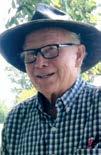
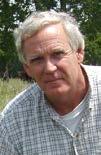
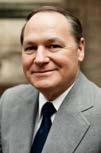
Three lauded leaders in Alabama agriculture were inducted into the Hall of Honor Feb. 20 in Auburn. Inductees were Andy Sumblin, agribusiness; Dr. Arlie Powell, education and government; and Charles Holmes, production.
Coordinated by the Auburn Agricultural Alumni Club, the event posthumously paid homage to Pioneer Award recipients Dr. Clifton Cox and Dr. Gordon Patterson.
A native of Kinston in Coffee County, Sumblin spent more than 40 years with what is now Nutrien Ag Solutions. He mentored countless industry professionals and was instrumental in founding Covington Gin Co. and Andalusia Peanut.
Sumblin is also a dedicated farmer whose row crop, sod and cattle operation spans south Alabama and Walton County, Florida.
“I couldn’t have accomplished what I did without a whole team behind me — my family, my team who worked for Nutrien Ag, my farm help and a lot of people from Auburn over the years,” Sumblin said to attendees in the packed banquet hall. “I love this university. War Eagle.”
A cornerstone of horticultural education and outreach, Powell spent his career in Extension helping farmers improve specialty crop production. He worked in Florida and Georgia before landing at Auburn University.
Powell has authored over 300 works; pioneered cane selection and trellising of blackberries; and encouraged establishment of the Chilton Research and Extension Center.
He and son Jason operate Petals from the Past, an heirloom nursery in Jemison in Chilton County.
“(Ben Hagler) convinced me Auburn was the place to be,” Powell said. “I was convinced immediately that was absolutely the right decision. I want to thank everyone, thanks a million, for… recognizing all the honorees.”
Holmes is the sixth generation at Holmestead Farms near Marion in Perry County. The farm is one of Alabama’s oldest continuous working family operations and was an early adopter of conservation practices. Holmes continues that legacy of stewardship through the farm’s healthy forests and robust agritourism elements.
He is a longtime leader in agricultural groups, including the Perry County Farmers Federation, Alabama TREASURE Forest Association and
National Association of Conservation Districts.
“There are so many more deserving people other than me for this award,” Holmes said. “The experiences I got from Cattlemen’s and from Alfa, my coming up in Soil & Water and the opportunities and the people I’ve met have given me so much insight. I give my credit to all of y’all who helped me be the person I am to receive this award.”
Pioneer Award honoree Cox mentored numerous doctoral candidates and young people who then made significant contributions to agriculture. A leader in the food division at Armour and Co., Cox was a trusted national authority on agriculture.
Patterson’s impact on agriculture continues to ripple across generations. He taught agriscience education at Auburn for 45 years; advised the Auburn Collegiate FFA chapter; and facilitated countless Alabama State FFA Conventions.
Nominate candidates for the 2027 Hall of Honor.

Sumblin Powell Cox Holmes Patterson


Farm Day Fun Sparks Kindergartners’ Curiosity
By Marlee Jackson
“
What type of bees are these?”
“That’s hay!”
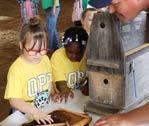
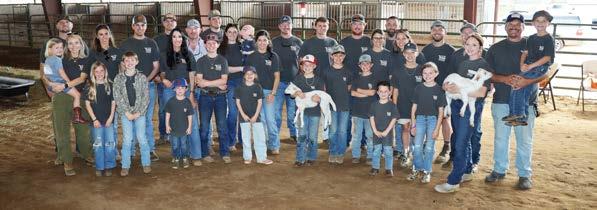
Covington County Young Farmers fielded copious questions and comical declarations from nearly 700 curious kindergartners during the group’s annual Farm Day March 5.
“Your shoes are brown! Mine are black,” one excited youngster told Mitchell Alexander, the Covington County Young Farmers chair who helped coordinate the fun, farm-centric field trip.
The kindergartner’s class was wrapping up its lesson at the cattle station, where Alexander explained
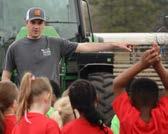
the various goods that come from cattle — including leather used to make shoes. It’s important to help kids tangibly connect their lives with farming, Alexander said.
“Just to see their reactions and their interest in farming and wanting to know more about it — that makes the Farm Day worth it,” said Alexander, who raises cattle and works with PowerSouth Energy Cooperative. “It’s good to get everyone out here. Most of the kindergarten teachers say this is their favorite field trip.”
Long known as the Young Farmers Petting Zoo, the event modified its moniker this year to better reflect the day’s slate of activities. Young leaders coordinated the first event in the ‘90s, said Covington County Farmers Federation board member Ashley Kelley.
“Even though we’re in rural Covington County, there are still kids who don’t realize where their food comes from,” he said. “You can tell that by some of the questions they ask.”
Seven schools and a local daycare bused children to the Covington Center Arena, where Young Farmers parked mammoth machinery. The equipment doubled as educational exhibits and a playground, with students climbing
in cabs to “say cheese” for teachers’ cameras.
They also learned about the largerthan-life pickers, combines and sprayers from Young Farmers who used posters and posed questions to pique kids’ curiosity.
“Do you know how wide these booms are?” asked Caleb Fleming, pointing to the folded arms of a towering spray rig.
“Four feet!” one student guessed.
“Five!” said another.
“They’re 100 feet wide,” Fleming revealed.
“WHOA,” the children exclaimed.
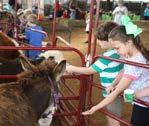
Groups trooped through stations to learn about local agriculture such as cotton and peanuts, plus bees, forestry, hay and wildlife. Squeals and smiles abounded as students held chirping, downy, butter-yellow chicks; scooped cups of pellets to feed livestock; and gently petted goats, horses and donkeys.
The day’s success was a team effort that began during initial planning last fall, said Alexander.
“I’ve been involved in a lot of things, but these people get things done, and you don’t even have to ask,” Alexander said. “It takes every one of these guys to make it happen.”
Covington County Young Farmers Chair Mitchell Alexander manned a station that taught children about beef cattle and forage production.

You have goals. With Merrill, the bull has your back.
Congratulations to THE HARTY CARPENTER GROUP for being named to the Forbes “Best-in-State Wealth Management Teams” 2025 list, published on January 9, 2025. Rankings based on data as of March 31, 2024.
THE HARTY CARPENTER GROUP
Merrill Lynch Wealth Management 601 North Section Street Fairhope, AL 36532
251.990.2361
advisor.ml.com/sites/al/fairhope-al/ thehartycarpentergroup


2025 Forbes “Best-in-State Wealth Management Teams” list. Opinions provided by SHOOK® Research, LLC and is based on in-person, virtual and telephone due-diligence meetings and a ranking algorithm that measure best practices, client retention, industry experience, credentials, compliance records, firm nominations, assets under management and Firm-generated revenue (investment performance is not a criterion because client objectives and risk tolerance vary). SHOOK’s rankings are available for client evaluation only, are not indicative of future performance and do not represent any one client’s experience and available for investor help in evaluating the right financial advisor and not an endorsement of the advisor. Compensation was not received from anyone for the rankings study. Past performance does not guarantee future results. Details available at the SHOOK Research website. SHOOK is a registered trademark of SHOOK Research, LLC. Merrill Lynch, Pierce, Fenner & Smith Incorporated (MLPF&S) is a registered broker-dealer, registered investment adviser, and Member SIPC. MLPF&S is a wholly owned subsidiary of Bank of America Corporation. © 2025 Bank of America Corporation. All rights reserved.
| 01/2025
Planting Seeds, Making Waves: Young Farmers Gather in Gulf Shores
By Tanner Hood
Young Farmers from across the state planted their boots in the sand Feb. 27 through March 1 during the Young Farmers Conference in Gulf Shores.
From mighty sandcastles to calving demonstrations, the annual event offered ample opportunities for the nearly 450 farmers in attendance. It was also a time to build each other up, Alabama Farmers Federation President Jimmy Parnell told the group during the opening dinner.
“I want to encourage you. This is a time to learn, a time to figure out how to make it,” said Parnell, the 1997 State Young Farmers Committee chair and a Chilton County farmer. “Hang in there, enjoy the good times, and work through the hard times.”
The conference kicked off with a school colors welcome reception hosted by the Auburn Alumni Association. Greeting friends new and old was a conference priority, said State Young Farmers Committee Chair Forrest Anders.

“I’m most excited about our organization’s growth,” said Anders, a Morgan County row crop producer. “We hear how hard it is on farmers across the nation, and the age of farmers is steadily going up. At the same time, we’ve got 450 Young Farmers here. Our goal is to make it interesting and try to get people to see the value in being part of the Young Farmers organization.”
Keynote speaker and former Georgia Ag Commissioner Gary Black highlighted the importance of involvement.
“It is no accident you are here,” Black told the crowd from the stage. “The way was paved for you. You get to do this. The call for all of us to step to the plate for American agriculture is now. It is time for our spine to be as strong as ever before with my arm against yours holding each other up.”
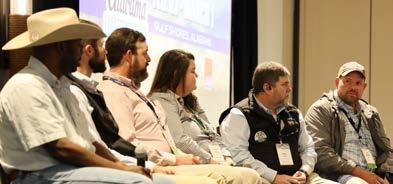
Day 2 began early with a panel of young leaders sharing their experiences with the organization, followed by educational breakout sessions.
The sessions consisted of legacy building and succession planning with Cheryl Mitchell; a technology overview from State Young Farmers
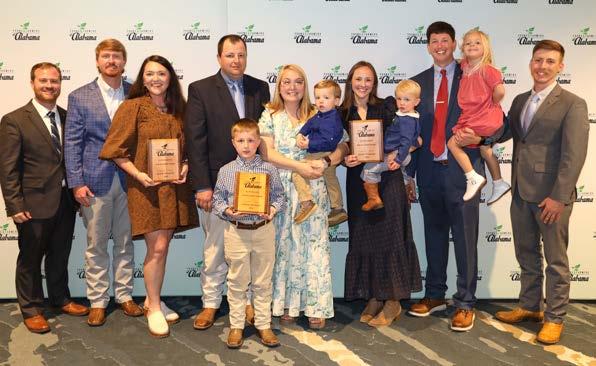
Top 3 finalists in the Outstanding Young Farm Family contest were named Feb. 28 at the Young Farmers Conference in Gulf Shores.
From left are Alabama Farmers Federation Young Farmers Division Director Hunter McBrayer; the Easterlings of Barbour County; the Porters of Clay County; the Dixons of Lee County; and State Young Farmers Committee Chair Forrest Anders.
State Young Farmers Committee Chair Forrest Anders welcomed members to Gulf Shores.
Alabama FarmPAC-endorsed candidate for lieutenant governor Wes Allen, left, visited with Lawrence County’s Mitchell Henry.
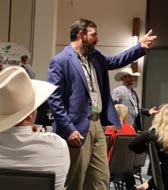
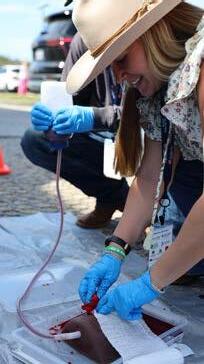
Committee member Trey Colley with GreenPoint Ag; best calving practices with Auburn University College of Veterinary Medicine’s Dr. Jessica Rush; market breakdowns with Glen Arnold; farm equipment highway safety with Alabama Law Enforcement Agency (ALEA) Captain Jeremy Burkett; and a hands-on emergency response workshop with EMS professionals and the Coastal Alabama Community College Simulation Lab.
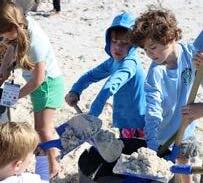
Even budding Young Farmers got in on the fun at Sandcastle University. Children gathered at the Gulf’s edge to learn all-important sandcastle-building skills, a family favorite session.
The pinnacle moment of the conference included announcing Outstanding Young Farm Family (OYFF) contest division winners. OYFF
competitors are farmers ages 18 to 35 years old who earn most of their income from production agriculture and are judged based on farm growth, Federation involvement and community service.
Judges selected Cade and Shelby Easterling of Barbour County, Garrett and Robin Dixon of Lee County, and Jacob and Misty Porter of Clay County as Top 3 finalists, with each family receiving a Turtlebox speaker courtesy of Alfa Insurance and Alfa Farmers Member Perks. They will compete for more than $80,000 in prizes this summer during on-farm judging, with the winner announced at the Federation’s Farm & Land Conference in Mobile Aug. 8.
Commodity division winners were also chosen. They are Mitchell and Rebecca Henry of Lawrence County, beef; Heath Clary of Hale County, catfish; Tommy and Lauren Murray of Franklin County, fruit & vegetable; Christopher and Hannah Langley of Chambers County, forestry; Will and Camille Bullen of Clay County, hay & forage; the Dixons, peanut; the Porters, poultry; and the Easterlings, sheep & goat.
Those families will serve ex-officio terms on state commodity committees. They also received $500 from the Federation.
To cap off the event, the yearly live auction benefiting the Alabama Farmers Agriculture Foundation raised more than $40,000 to support youth education across the state.
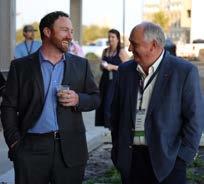
Clay County Farmers Federation President Chris Upchurch called bids during the live auction, which raised over $40,000.
Clockwise from above: A panel of young leaders presented on opportunities available through the organization; farm kids showed off their ingenuity and hard work during Sandcastle University; Hale County catfish farmer Heath Clary caught up with Alabama Farmers Federation President Jimmy Parnell during the Alabama FarmPAC reception; Young Farmers learned critical life-saving skills during a breakout session.
Demand Stays Strong as Cattle Herd Hits 75-Year Low
By Marlee Jackson
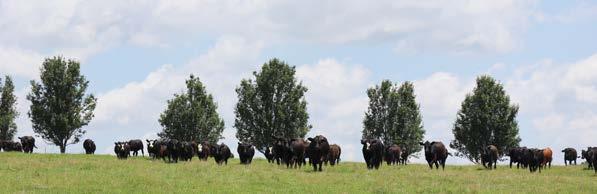
As the U.S. cattle herd hits its lowest level in 75 years, consumer demand is still trending upward, making beef a bright spot in today’s turbulent farm economy.
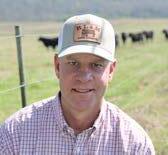
“With that supply and demand, prices (per head of cattle sold) have continued to rise,” said Jason McKay, who farms at RL&M Cattle Co. in Cusseta. “We have not seen demand for high-quality beef decrease.”
McKay farms with business partners Jack Robertson and Gaines Lanier. Their RL&M, a cow-calf operation in Chambers County, mirrors farms across the country whose animals are fetching higher prices.
While consumer demand is a factor, so is an issue outside of farmers’ control.
“It’s almost like a perfect storm,” Robertson said. “The low inventory has come mainly because of droughts out West. We don’t feel those effects as much down here.”
Drought hit heavy cattle-producing states hard a couple years ago, drastically reducing forage availability. Low cattle markets underscored farmers’ woes, which caused impacted producers to reduce their herds.
Fewer cattle led to fewer calves. That’s meant fewer animals in the harvest supply chain — and higher prices.
In January, the U.S. Department of Agriculture (USDA) reported national inventory at 86.2 million head of cattle and calves, the lowest since 1951. Last year’s calf crop came in at 32.9 million head, the smallest since 1941.
Producers have worked to alleviate supply issues by packing more pounds on cattle.
“With the number of head down, it’s important we put as much weight on them as we can before they’re harvested,” said McKay, the Chambers County Farmers Federation president. “We’ve really focused on forage quality, making sure we produce the best grass for our animals. That’s the most inexpensive way to put weight on animals. Regardless of where prices are, we want to run as efficiently as we can.”
While cattle prices have increased, so have input costs. From fertilizer and equipment to labor and energy, input spikes are tightening margins.
“We’re in it to win it, I guess you’d say,” Robertson said. “We didn’t decrease our numbers. We’re trying to stay level and not so much trying to increase either. We’re trying to maintain. We have tried to take some of the rewards, the revenues we’re getting now, and reinvest for the long term — putting extra potash on the field or buying upgraded equipment to keep us in shape or spraying pastures.”
Continued consumer demand has stretched this portion of the cattle cycle, causing farmers to continually retain fewer replacement heifers the last couple of years. USDA reports replacement heifer numbers are up
marginally — increasing 1% to 4.71 million head.
“We’re not seeing the retainment of heifers like we expected,” McKay said. “We see that producers are still selling most of their calves. At some point, I think producers who are in it for the long haul will have to start retaining more heifers to maintain and rebuild their herd.”
Alabama Farmers Federation Beef Division Director Chris Prevatt reminded producers that prices will eventually contract after this extended price expansion. He urged caution, too, with the threat of rising energy and grain costs and New World Screwworm across the Southern border.
With prices reflecting the economics of supply and demand, McKay said he’s encouraged to see consumers back beef, whether at the grocery store or purchased directly from farmers.
“We’re a little biased, but we believe beef is the best protein out there,” McKay said. “We don’t see that demand slacking off.”
McKay
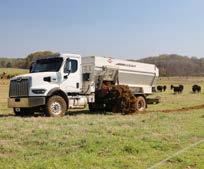
To help meet consumer demand while battling low supply of cattle, farmers are packing more pounds onto each animal with quality feedstuffs.
Walker Ranch Donates Tractor to Children’s Museum
By Maggie Edwards
Childhood dreams come to life at the Children’s Museum of the Shoals. Brightly painted murals and realistic agricultural exhibits give youth a place to play, explore and discover.
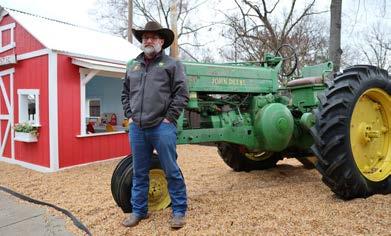
Thanks to a generous tractor donation from James and Rosie Walker of Walker Ranch in Florence, kids can now experience farm life near the city.
“Agriculture and forestry are the largest industries in Alabama,” said Walker, an Alabama Farmers Federation State Wheat & Feed Grain Committee member. “We donated a 1959 model John Deere 620 so children can see what technology looked like in the 1950s. We are hoping to continue collaborating with the museum so they
also witness modern-day technology and see how far farming has come. Agriculture is one of the most technologically advanced industries in the world. Kids need to see that.”
Walker said it’s a blessing to honor the farm’s legacy through this gift.
“It was a family tractor we felt called to give,” said Walker, who is vice president of the Lauderdale County Farmers Federation. “Generations of my family have had an impact on agriculture in Lauderdale County.”
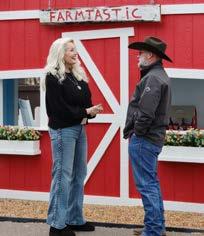
The tractor arrived at the museum earlier this year, joining a vibrant red barn in the “Farmtastic” exhibit. Children can also “sell” goods at a play area farm-to-table market.
“This piece will highlight the agricultural heritage in our community and how it continues to inspire learning for children who visit the museum,” said Children’s Museum of the Shoals Executive Director Kimberly DeLape. “When James and I met, we both wanted it to be educational. James is a man of his word and helped make it happen.”
A community-centered family, the Walkers have expanded their row crop, cattle and fertilizer operations to include agritourism activities that welcome thousands of visitors to their land each year through the Walker Ranch Pro Rodeo, farm tours, fall festival and more.
“We try to promote agriculture in a positive light and welcome people to the farm,” Walker said. “The
diversification also provides different streams of revenue during a tough farm economy for row croppers.”
Walker said he and Rosie believe in being ambassadors for agriculture. They raised four children on the family farm.
“We were taught to be good stewards of the resources God blessed us with,” Walker said. “The land means a lot to me because I grew up here. I understand the blood, sweat and equity the family puts into it. I want to ensure our generation recognizes the importance of agriculture. We’ve got to tell our stories as farmers and ranchers.”
Community outreach doesn’t stop at the Children’s Museum of the Shoals. The Walkers use their rodeo to give back through scholarships.
“Education is one of the most important things we can have,” Walker said. “I feel it’s imperative we give back and show that we are a family farm that cares and wants to stay connected to community. We want local people to see how much we want to help.”
Scan to learn more about the museum!

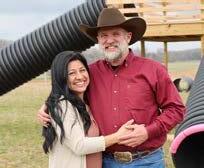
James and Rosie Walker are committed to their community, from organizing a new agritourism adventure to donating a tractor to a local museum.
Above left: Children’s Museum of the Shoals Executive Director Kimberly DeLape thanked James Walker for his and wife Rosie’s donation to the kid-focused space.
Above right: James Walker donated a 1959 John Deere 620 to the Children’s Museum of the Shoals.
Golson’s Work Anchored in the Word
By Marlee Jackson
Words matter to Wendy Golson. That’s one reason she labored over remarks for her retirement celebration from Alabama Farmers Federation and Alfa Insurance, landing on a line from the Good Book.
“As you work, remember Colossians 3:23, ‘Whatever you do, work at it with all your heart, as working for the Lord, not for human masters,’” Golson quoted to a reception room full of farmers, friends, family and coworkers. “Your workplace is like a mission field. Your excellence is your testimony. Don’t just work for a paycheck; work for the King, serving with kindness. Your integrity at work speaks louder than any sermon.”
Her heartfelt speech was fitting for one who exemplified those deep-seated beliefs during a career of service. She retired as executive secretary to Federation and Alfa President Jimmy Parnell Feb. 27.
“It’s easy to work with folks you love,” Parnell said. “It was a package deal. Wendy loved me and my family, and we loved her.”
Though she’s called the River Region home for nearly 40 years, Golson’s roots are tinged Tarheel blue.
A Raleigh native who graduated from the University of North Carolina, Golson’s early career focused on human
resources. She moved to Alabama and joined the Alfa family in 1987, a job that tapped into her love of organization and service — and resulted in an unexpected blessing.
“People called me all the time to talk about their employee benefits,” Golson remembered. “Carol Golsan called and asked to see me one day. When she got to my office, she said, ‘My husband has this cousin….’ Roger and I married the next year.”
Golson departed Alfa in ‘97 to spend more time with sons Zach and Matt, then transitioned to teaching English at their school, Autauga Academy.
There, seeds for future growth were sown when Golson met Jimmy and Robin Parnell while teaching their son.
The hand of God, with the help of good friends, guided Golson back to Alfa and the Federation in 2012. She served as Governmental & Agricultural Programs Department administrative assistant before moving to the front office to work for Parnell, who had been elected president of Alfa and the Federation a year earlier.
Golson thrived behind the scenes, from managing Parnell’s carefully coded calendar and typing meticulous meeting minutes to supporting farmer-leaders from all corners of Alabama.
Brimming with laughter but shying from the spotlight, Golson is well-known
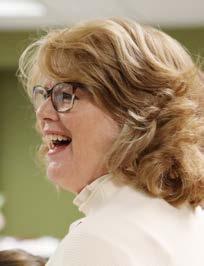
A genial soul with a gift of gab and grace, Wendy Golson retired from the Alabama Farmers Federation and Alfa Insurance in February.
for spinning a yarn, often sharing stories about her sons, daughters-in-love and six grandchildren.
Golson’s gift of gab and Parnell’s attentive ear led to a special trust with each other.
“Working for Jimmy Parnell was a pleasure,” Golson said. “He is a man of integrity, honesty and fairness; he is a good listener, a good mentor and a positive influence on those around him. His leadership will leave a lasting impact at Alfa for years to come, and I’m thankful I worked for someone who became a good friend.”
Golson says her retirement plans are decidedly not grandiose, likely consisting of spending more time with family, crafting photo books, researching genealogy and, perhaps, penning a children’s book.
She and Roger laugh as they share their plans to visit all county seats in Alabama, an homage of sorts to the men and women they’ve met through the Federation.
“The opportunity to develop relationships and work with the most wonderful, dedicated people from the home office to farms in all 67 counties was the most rewarding aspect of my job,” Golson said. “The daily interaction with my Alfa family is what I will miss most.”

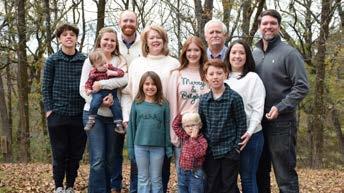
Faith and family have long been priorities for Wendy Golson. She and husband Roger have two sons, Zach and Matt; daughters-in-law Sarah and Sally; and grandchildren Madison, John Matthew, Jackson, Adelynn, Roger and George.

AFVGA Huddles Up for Annual Conference
By Maggie Edwards
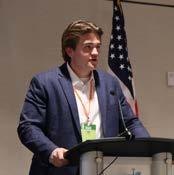
Afootball-themed specialty crop conference huddled together almost 300 farmers, industry professionals and vendors in Gulf Shores Feb. 4-6.
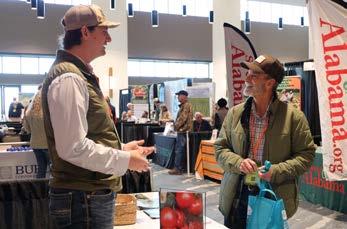
Alabama Fruit & Vegetable Growers Association (AFVGA) Executive Director Blake Thaxton said the theme “Game Plan for Growth: Team AFVGA” was a testament to farmers’ hustle and heart.
“Football is a big deal in Alabama, so we felt this theme would really resonate, especially since the conference was held right before the Super Bowl,” Thaxton said. “It reflects the spirit of teamwork AFVGA members have to bring fresh produce to consumers.”
The conference created a team-like atmosphere, giving producers the
playbook for cultivating crops, fighting plant diseases and marketing products.
“Just like a successful team, progress in agriculture depends on us working together, sharing ideas and supporting one another,” said AFVGA President Taylor Hatchett of Chilton County. “The past year brought change, opportunity and lots of hard work for growers. This event gets us together to discuss weather challenges, new markets and updated production practices.”
The conference agenda included a packed session on marketing led by Hatchett.
Additionally, a slate of standout speakers highlighted various crops and technologies. From drone spraying to disease protection, farmers took a deep dive into ways to become more profitable.
New this year was an integrated pest management workshop led by Alabama Extension, plus roundtable talks on flowers, farm-to-school programs, indoor growing and wholesale marketing.
AFVGA honored an outstanding crop of individuals, too.
Dylan Teel of Bejo Seeds received the Partner of the Year Award for continuous support of the AFVGA Trade Show.
Lawrence County’s Larry LouAllen received the Exceptional Achievement Award — the association’s highest honor.
“I thank this group for allowing me to serve them,” said LouAllen, a fourth-generation farmer from Moulton. “Serving AFVGA has been a highlight of my life — that I could be a part of something like this. I am honored. I
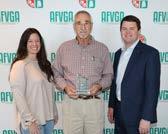
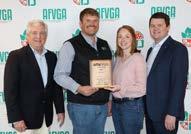
Covington County’s Sidney and Sheryl McKathan won the Grow Forward Award and $5,000 from First South Farm Credit. From left are First South’s John Sport, the McKathans and AFVGA Executive Director Blake Thaxton.
Auburn University student Nate Payne received the Jimmy Witt Memorial Scholarship.
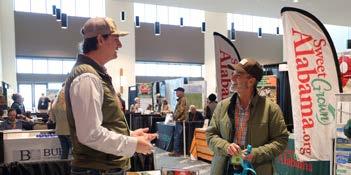
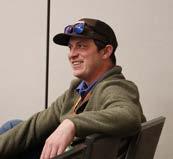
Chilton County’s Bobby Boozer, right, visited Bejo Seeds’ Dylan Teel during the trade show. Teel was also honored as the AFVGA Partner of the Year. Bejo Seeds is the annual trade show sponsor.
Lawrence County’s Larry LouAllen received the Exceptional Achievement Award. From left are AFVGA President Taylor Hatchett, LouAllen and AFVGA Executive Director Blake Thaxton.
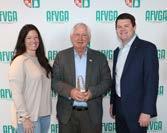
Pike County’s Don Wambles earned the Service to Horticulture Award during the conference. From left are AFVGA President Taylor Hatchett, Wambles and AFVGA Executive Director Blake Thaxton.
am also filled with hope seeing so many young people here involved in agriculture.”
Pike County’s Don Wambles was honored with the AFVGA Service to Horticulture Award for his work through the Alabama Farmers Market Authority. Wambles became a fearless proponent of specialty crops, often scoring touchdowns for Alabama horticulture on state and national stages.
“I’m truly humbled by this,” Wambles said. “It’s an honor to be recognized by (the farmers) who I went to work for every day for 30 years. Every decision I ever made, I asked myself three questions: Is this going to glorify God? Is this going to bring honor to my family? Is this going to help a farmer?”
The inaugural Grow Forward Award, sponsored by First South Farm Credit, highlighted farmers with innovative ideas.
Covington County’s Sidney and Sheryl McKathan claimed the Grow Forward Award and $5,000 after an in-depth application and presentation.
The McKathans’ farm, Pleasant Pastures, began in 2019 with honeybee
hives. It has grown into a well-loved specialty crop and agritourism operation in Andalusia.
“I feel blessed to have others believe in our farm as much as we do,” Sheryl said. “When we saw the award advertised, it caught our eyes. We knew it would be something to challenge us. It would also benefit our farm in the long run.”
In addition, the Jimmy Witt Memorial
Scholarship was presented to Auburn University student Nate Payne, while the AFVGA Scholarship went to Troy University student Tori Hobbs.
During the Tailgate Party ticket fundraiser, conference attendees raised over $4,000 for scholarships.
The 2027 AFVGA conference is Feb. 3-5 in Gulf Shores.
AFVGA is an affiliated association of the Alabama Farmers Federation.

Calhoun County’s Joseph Dothard engaged in farm-focused workshops. Hundreds of farmers joined him as speakers presented research and new farming techniques.
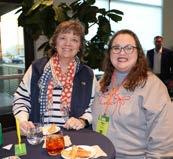
Elmore County’s Donna Matthews and Melissa Palmer represented their favorite football teams during the AFVGA Tailgate Party.
Farm Peer Groups Power Business-First Mindset
By Marlee Jackson
At Autauga Farming Co., slips of paper highlighting the farm’s mission rest between a wooden conference table and its glass top.
Implemented just a few years ago, Andy Wendland said the simple concept keeps the farm’s values top-ofmind for their seasonal labor force.
“I took this idea from a peer group,” Wendland said.
He made the remark to farmers from seven other states who visited his family’s Autaugaville operation in December — the newest peer group he and sons Drew and Dan joined to improve their executive-minded approach to farming.
Improved communication and strategic goal setting are hallmarks of the groups, said peer group organizer Chris Barron.
“You have to think about (your operation) like a business,” he said. “You just happen to farm.”
Through his Iowa-based Ag View Solutions, Barron intentionally constructs peer groups comprised of farmers with similar backgrounds. Common denominators often include farm size, diversification and structure.
The Wendlands’ group is mostly row crop farms, though one dairy is included for additional perspective. They span from Maryland and Montana to Iowa and sweet home Alabama.
The geographic diversity is deliberate, Barron said.
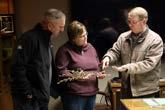
“You can get more into the details of your business when you talk with someone who isn’t your competitor, someone across the country,” he said.
Brothers Terry and Chris Patterson journeyed from north-central Iowa to Alabama for the group’s first in-person meeting. It’s their second peer group — an investment of time, finances and emotion that’s prompted real change in their corn and soybean farm.
Barron said 95% of participants commit to another group after their first four-year intensive wraps up.
“Chris Barron has changed our operation,” Terry said. “He digs deep and can see things from the outside.”
His brother added, “I knew we needed help. I just didn’t know how to get there.”
Over the course of four years, the peer group will visit each member’s farm. In addition to a farm tour, they conduct in-depth interviews with the host farm’s team, from lenders and laborers to farm partners.
They parse through each element of the farm; ask deep, sometimesuncomfortable questions; and conduct a SWOT (strengths, weaknesses, opportunities and threats) analysis that’s then presented to the hosts at the end of Day 2.
The interview process is daunting — and impactful.
“It’s draining, and it’s emotional,” Chris Patterson said. “Families are tough.
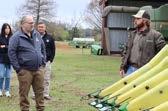
That’s why you’re going there, but all members of your team have to be willing to accept change.”
The brothers said their first group encouraged them to improve communication, impartially analyze their farm, collaborate with others and, importantly, craft a succession plan.
Before that peer group, estate planning was one of the Pattersons’ pressing problems. None of their combined eight children are returning to the family farm, having found success in other fields.
“Finally, we’re in the process of working on our transition,” Terry said. “We have the infrastructure in place. We just need the person.”
Feedback from that first group encouraged the Pattersons to invest again in professional development.
During their visit to central Alabama, the brothers and fellow group members unfamiliar with agriculture in the Deep South peppered the Wendlands with questions. They picked up practical farm tips, plus easily implemented concepts — such as posting visible mission, vision and value statements.
“We learn from everyone here every day we are here,” Chris Patterson said. “The things we take home provide value to our homes even before we host. We were strangers when we started. These people will be lifelong friends when we’re done.”
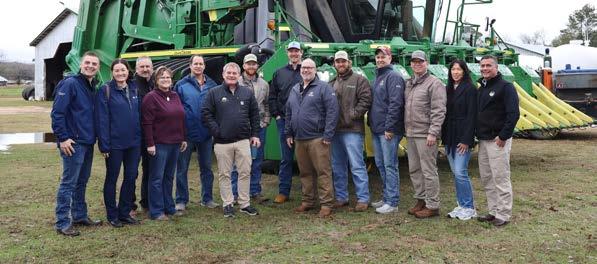
Farmers from eight states gathered at Autauga Farming Co. in December for their first peer group meeting. They’ll meet twice annually over four years to help improve their business-oriented approach to farming.
Alfa, Federation Front Office Welcomes Familiar Faces
Alfa Insurance and the Alabama Farmers Federation welcomed familiar faces to new positions in the executive office earlier this year.
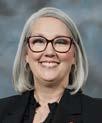
Longtime employee Leanne Worthington has shifted to serve members and customers as the new executive secretary to Alfa and Federation President Jimmy Parnell, following the retirement of Wendy Golson.
Worthington joined the Alfa family in 1986. She eventually moved to the Federation, first as an administrative assistant in the Communications Department and later serving in the Organization Department.
“Leanne has been a tremendous asset to the Federation and our members,” Parnell said. “I am confident her experience, knowledge of the company and organizational skills will continue serving our folks well.”
In 2013, Worthington joined the executive office as administrative assistant for Federation Executive Director Paul Pinyan.
“I loved working for Federation members and farmers,” Worthington said. “This new role is an exciting change and challenge. It’s a blessing that the entire executive office works together.”
Stepping in as Pinyan’s new administrative assistant is Ashton Monk, who honed her skill set and Federation knowledge through more than a decade in the Organization Department.
“Ashton is a great team player who is well respected by members from all over the state,” Pinyan said. “We are fortunate to have her as a part of the
front office team. She’s a hard worker who cares for Alabama farmers.”
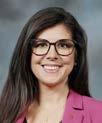
Monk came to the Federation in 2014 and has been a loyal employee, serving members and assisting with Young Farmers and Women’s Leadership divisions, Alabama FarmPAC and critically important county president onboarding.
“I’m excited for the new role,” Monk said. “I am looking forward to being more hands-on with other departments and developing a broader understanding of and appreciation for our grassroots organization.”

Worthington
Monk
Roots Revisited:
Jr. Livestock Competitors Return to Garrett Coliseum
By Tanner Hood
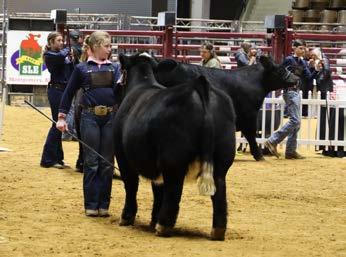
Nostalgia, intensity and grandeur filled the ring at the 2026 Jr. Livestock Expo (JLE) in Montgomery March 16-18 as competitors stepped into new-to-them arenas to exhibit finely fitted animals.
Before rodeo athletes kicked up dust during the Southeastern Livestock Exposition (SLE), beef and dairy exhibitors entered the historic Garrett Coliseum for the first time in over a decade. Held in conjunction with SLE, the Alabama Farmers Federation and Alfa Insurance annually coordinate JLE, which includes beef, swine and dairy shows.
“I was kind of on the fence,” said Cullman County’s Caleb Elrod, whose son Easton was a participant in the beef shows. “We’ve kind of gotten used to showing in the other facility. But when we walked in, that nostalgic feeling of coming back in here and my son getting
to do that was pretty exciting.”
Caleb’s career reached its pinnacle when he won the state steer show two decades before returning to the coliseum to watch his son compete.
“I thought showing in here was bigger and better,” Easton said. “It’s a bigger ring with more room to work. It’s been fun getting to learn from my dad and granddad because they were good at showing, and now I’m getting to learn from them.”
Family ties also connected Chambers County’s Jessi Maples to the coliseum’s history.
“Showing in the Garrett Coliseum is cool for me just thinking back like, ‘Oh, my parents showed here, and now I’m showing here,’” said Jessi, who competed in the steer and heifer shows. “I like showing in the same place my parents did. It’s fun to have them teach me what they did when they were younger.”
For John Maples, watching his
children follow in his footsteps is a callback to a simpler way of family life.
“This is a family project,” said John, who is raising Jessi, Rylie, Boone and Rivers with wife Laura in Waverly. “Showing in Garrett was always a special thing when the rodeo was in town, and I was excited to hear we were coming back to the arena this year. Me and my wife showed, and now our children getting to come in here brings back a lot of memories.”
Swine exhibitors also welcomed a new show ring opportunity, moving into the Teague Arena with more space for friends and family to gather and watch.
Federation and Alfa President Jimmy Parnell said he was pleased to offer a historic venue for competitors.
“This is a real-life lesson,” Parnell said about raising show animals. “Sure, you learn about livestock and agriculture, but you also learn about taking care of things. The venue, you might say, is a little bit awe-inspiring to those young people when they walk in here. It’s a good learning experience.”
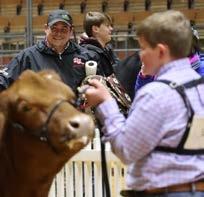
Cullman County’s Caleb Elrod looked on as his son, Easton, exhibited a heifer around the show ring March 17 during the Jr. Livestock Expo in Montgomery. Caleb, a former state steer show winner, said returning to the Garrett Coliseum this year brought back memories of times past.

Jessi Maples of Chambers County exhibited in the Garrett Coliseum during the Jr. Livestock Expo. She’s following in the footsteps of her parents, John and Laura, who grew up showing in that same historic space.
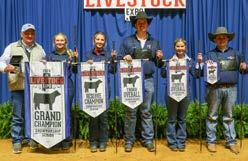
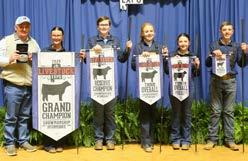
beef | 2026 Showmanship
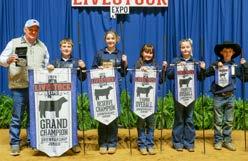
Junior showmanship Top 5
senior showmanship Top 5

are
intermediate showmanship Top 5
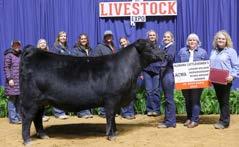
Louise Wilson Showmanship Scholarship
Callie Rae Childers of Morgan County received the Louise Wilson Showmanship Scholarship from the Alabama CattleWomen’s Association (ACWA). She is pictured with ACWA leaders and past recipients.

Randy Owen Exhibitor Scholarship
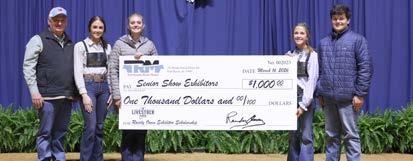
Recipients of $1,000 scholarships from Randy and Kelly
Winners are Bryson Upchurch of Clay County, champion; Abigail Leatherwood of Pike County, reserve champion; Jessica Mezrano of Shelby County, third; Emmy Lovelady of Tallapoosa County, fourth; and Toby Selzer of Monroe County, fifth.
Winners are Claire Smith of Chilton County, champion; John Matthew Carnley of Coffee County, reserve champion; LouLou Thompson of Pike County, third; Brooklyn Price of Lee County, fourth; and Camden Upchurch of Clay County, fifth.
Winners are Laura-Landers Franklin of Blount County, champion; Sara Beth Faust of Blount County, reserve champion; Cooper Burgess of Blount County, third; Lillian Smith of Chilton County, fourth; and Mason Smith of Marshall County, fifth.
Top 5 winners
pictured with Alfa Insurance and Alabama Farmers Federation President Jimmy Parnell, left.
Owen are Emma King Armstrong, Dale County; Callie Rae Childers, Morgan County; Jael Downey, Autauga County; Brylee Goode, Lauderdale County; Ty Harrison, Cullman County; Wyatt Johnston, Pike County; and Paycee Sewell, Dale County. From left are Alabama Farmers Federation President Jimmy Parnell, Goode, Childers, Sewell and Johnston.
2026 Market Show

Top 5 winners are pictured with judge Chris Mullinix of Kansas and Alfa Insurance and Alabama Farmers Federation President Jimmy Parnell.
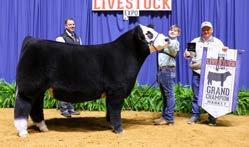
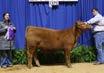
Grand Champion
Exhibited by Carson Fallin of Blount County. Also the champion Crossbred.
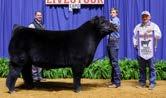
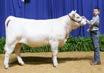
third overall
Exhibited
Also
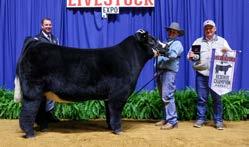
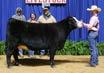
reserve Champion
Exhibited by
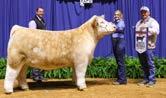
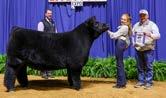
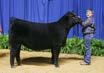
fourth overall
Exhibited by Callie Rae Childers of Morgan County. Also the champion
Market Show Division Winners

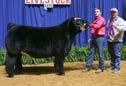
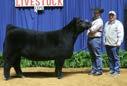
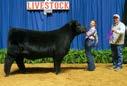
the
fifth overall
Exhibited by
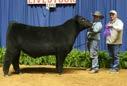
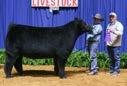

LouLou Thompson of Pike County. Also the fourth Crossbred.
by Ty Harrison of Cullman County.
the third Crossbred.
Mason Smith of Marshall County. Also
reserve champion Crossbred.
Charolais.
All Other Breeds American: Exhibited by Alivia Miller of Etowah County.
All Other Breeds British: Exhibited by AJ Noles of Chambers County.
All Other Breeds Continental: Exhibited by Mason Smith of Marshall County.
Maintainer: Exhibited by Mason Smith of Marshall County.
Market Heifer: Exhibited by Cooper Burgess of Blount County.
Percent Chianina: Exhibited by Sara Beth Faust of Blount County.
2026 Breeding Bull Show
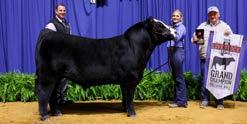
Grand Champion
Exhibited by Callie Rae Childers of Morgan County. Also the grand champion Alabama Bred & Owned.
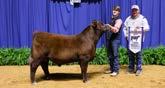
third overall
Exhibited by Caleb Cook of Autauga County.
Top 5 winners are pictured with judge Chris
and
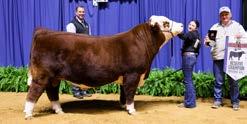
reserve Champion
Exhibited by Brooklyn Price of Lee County. Also the reserve champion Alabama

fourth overall
Exhibited by Luke Meadows of Houston County.
2026 B&O Heifer Show
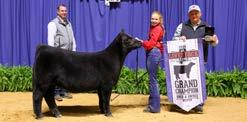
Grand Champion
Exhibited by LouLou Thompson of Pike County. Also the champion All Other Breeds British and champion Alabama Bred & Owned All Other Breeds British.
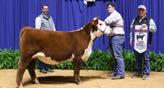
third overall
Exhibited by Silas Gullatt of Lee County. Also the champion Alabama Bred & Owned Hereford.
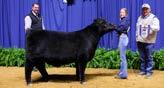
fifth overall
Exhibited by Kloee Sewell of Dale County.
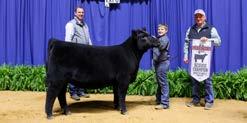
reserve Champion
Exhibited by Bryson Upchurch of Clay County. Also the champion Alabama Bred & Owned Angus.
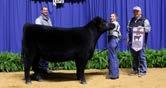
fourth overall
Exhibited by Sara Beth Faust of Blount County. Also the reserve champion Alabama Bred & Owned Angus.
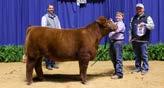
fIFTH overall
Exhibited by Easton Elrod of Cullman County. Also the champion Alabama Bred & Owned All Other Breeds Continental.
Bred & Owned.
Mullinix of Kansas
Alfa Insurance and Alabama Farmers Federation President Jimmy Parnell.
Top 5 winners are pictured with judge Chris Mullinix of Kansas and Alfa Insurance and Alabama Farmers Federation President Jimmy Parnell.
2026 Breeding Heifer Show
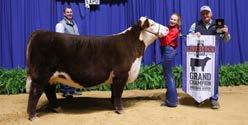
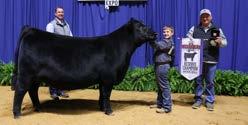
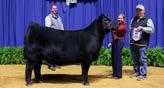
third overall
Exhibited by
Also the champion All Other Breeds Continental.
fourth overall
Exhibited by Laura-Landers Franklin of Blount County. Also the champion Percent
Breeding Heifer Show Division Winners
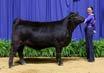
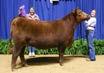
fifth overall
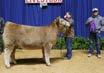


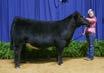
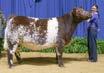
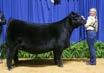

Exhibited by Lillian Smith of Chilton County. Also the champion Percent Chianina.
Laura-Landers Franklin of Blount County.
Grand Champion
Exhibited by LouLou Thompson of Pike County. Also the champion Hereford.
reserve Champion Exhibited by Bryson Upchurch of Clay County. Also the champion Angus.
Simmental.
Commercial: Exhibited by Bryson Upchurch of Clay County.
Maine-Anjou: Exhibited by Mary Margaret Waddail of Coffee County.
Alabama Bred & Owned Percent Simmental: Exhibited by Loggins Williamson of Escambia County.
Alabama Bred & Owned Red Angus: Exhibited by Silas Gullatt of Lee County.
Alabama Bred & Owned Shorthorn: Exhibited by Brylee Goode of Lauderdale County.
All Other Breeds Continental: Exhibited by Claire Smith of Chilton County.
Red Angus: Exhibited by Paycee Sewell of Dale County.
Alabama Bred & Owned Charolais: Exhibited by Luke Meadows of Houston County.
Black Hereford: Exhibited by Alec Ashley of DeKalb County.
Shorthorn: Exhibited by Claire Smith of Chilton County.
Alabama Bred & Owned Percent Chianina: Exhibited by Ryleigh Lance of Cullman County.
Charolais: Exhibited by Owen Downey of Autauga County.
Simmental: Exhibited by Laura-Landers Franklin of Blount County.
Top 5 winners are pictured with judge Chris Mullinix of Kansas and Alfa Insurance and Alabama Farmers Federation President Jimmy Parnell.
SWINE | 2026 Showmanship
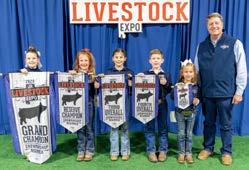
beginner showmanship top 5
From
are
Top 5 winners are pictured with Alabama Farmers Federation Executive Director Paul Pinyan.
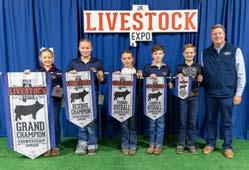
junior showmanshiP top 5
From left are Ruby
2026 Market Hog Show
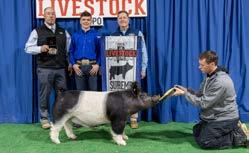
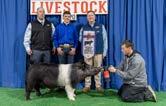
supreme champion
Exhibited by Colton Simpson of DeKalb County. Also the champion Crossbred.
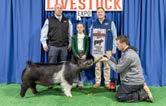
third overall
Exhibited by Charlee Stone of Jefferson County. Also the third Crossbred.
Winners are pictured with judge Eric Polich of Iowa and Alabama Farmers Federation Executive Director Paul Pinyan.
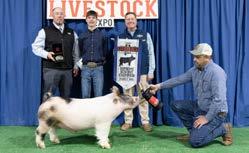
SUPREME reserve Champion
Exhibited by Terry Meadows of Randolph County. Also the reserve champion Crossbred.
fourth overall
Exhibited by Colton Simpson of DeKalb County. Also the fourth Crossbred.

fifth overall
Exhibited by Makenna Martin of Tallapoosa County. Also the fifth Crossbred.
left
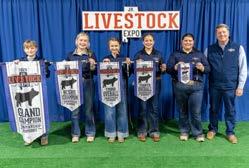
Laina Chesnut of Barbour County, champion; Ryleigh Harwood of St. Clair County, reserve champion; Hazel Lucas of Autauga County, third; Finn Johnson of Etowah County, fourth; and Landry Simpkins of Clay County, fifth.
Hodnett of Tallapoosa County, champion; Ansley Payne of Randolph County, reserve champion; Charlee Stone of Jefferson County, third; Frasier Johnson of Etowah County, fourth; and Raiden Lovvorn of Randolph County, fifth.

intermediate showmanship top 5
From left are Hunter Smith of Calhoun County, champion; Makenna Martin of Tallapoosa County, reserve champion; Kendall Castleberry of St. Clair County, third; Macie Simpson of DeKalb County, fourth; and Aubrey Pilgrim of Randolph County, fifth.
senior showmanship top 5
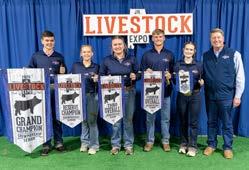
From left are Colton Simpson of DeKalb County, champion; Katelynn Dummar of Calhoun County, reserve champion; Addison Payne of Randolph County, third; Philip Belcher of Lee County, fourth; and Ella Alldredge of Blount County, fifth.
2026 Breeding Gilt Show
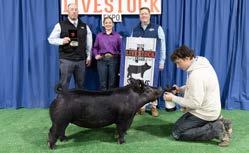
supreme Champion
Exhibited by Macie Simpson of DeKalb County. Also the champion Crossbred.
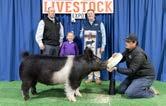
third overall
Exhibited by Johna Reeves of Jefferson County. Also the third Crossbred.
Winners are pictured with judge Eric Polich of Iowa and Alabama Farmers Federation Executive Director Paul Pinyan.
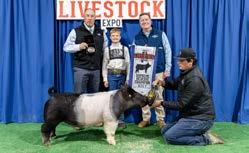
SUPREME reserve Champion
Exhibited by Raiden Lovvorn of Randolph County. Also the reserve champion Crossbred.
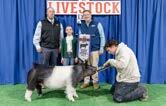
fourth overall
Exhibited by Charlee Stone of Jefferson County. Also the fourth Crossbred.
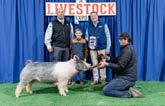
fifth overall
Exhibited by Roop Lovvorn of Randolph County. Also the fifth Crossbred.
DAIRY | 2026 Showmanship
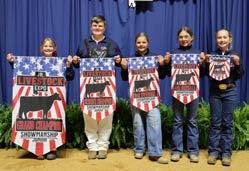
JUNIOR showmanship
From left are Gracelyn Bristow of St. Clair County, champion; Mason Patterson of St. Clair County, reserve champion; Saydie Lasley of St. Clair County, third; Ava Kate Lasley of St. Clair County, fourth; and AJ Belden of Lowndes County, fifth.
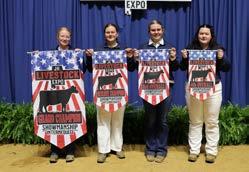
INTERMEDIATE showmanshiP
From left are MaKenna Smith of St. Clair County, champion; Maggie Keener of Cullman County, reserve champion; Mallory Middlebrooks of St. Clair County, third; and Brooke-Lynn Mathews of Cullman County, fourth.
2026 Junior Heifer Show
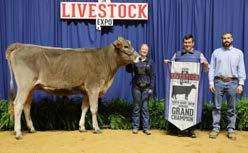
grand champion
Exhibited by MaKenna Smith of St. Clair County.
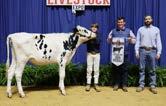
third overall
Exhibited by Gabriel Bristow of St. Clair County.
Winners are pictured with judge Matthew London of Georgia and Alabama Farmers Federation Dairy Division Director Colton Christjohn.
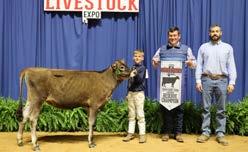
RESERVE Champion
Exhibited by Steele Keener of Cullman County.

fourth overall
Exhibited by Mason Patterson of St. Clair County.
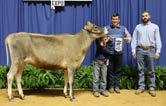
fifth overall
Exhibited by Gideon Wrenn of St. Clair County.

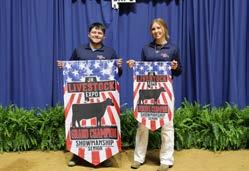


2026 Senior Heifer Show
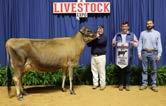
third overall
Exhibited


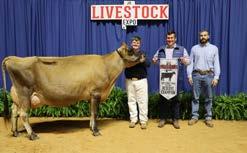
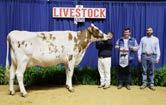
fourth overall
Exhibited
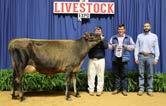
fifth overall
Exhibited
by Mason Patterson of St. Clair County. Also the third Jersey.
by Mason Patterson of St. Clair County. Also the reserve champion Jersey.
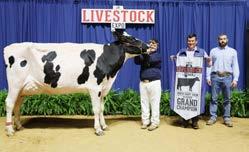
Grand Champion
Exhibited by Mason Patterson of St. Clair County. Also the champion Holstein.
reserve Champion
Exhibited by Mason Patterson of St. Clair County. Also the champion Jersey.
by Mason Patterson of St. Clair County. Also the reserve champion Holstein.
Winners are pictured with judge Matthew London of Georgia and Alabama Farmers Federation Dairy Division Director Colton Christjohn.
senior showmanshiP
From left are Travis Smith of St. Clair County, champion, and Irish Keener of Cullman County, reserve champion.
ST. CLAIR COUNTY FARMERS FEDERATION
JEFFERSON COUNTY FARMERS FEDERATION
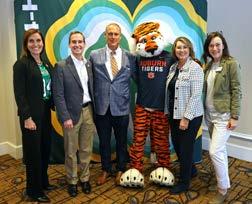
Members of the National 4-H Council visited Alabama to meet with Alabama Extension at Auburn University staff and Alabama 4-H members. From left are National 4-H Council President and CEO Jill Bramble, Assistant Director for Alabama 4-H Casey Mull, Auburn Chief of Staff Rich McGlynn, Aubie, Auburn First Lady Tracy Roberts and Alabama Extension Director Eve Brantley.
Alabama Plays Host to National 4-H Council
By Mary Wilson
Nearly a dozen members from National 4-H Council were beyond ready for a winter retreat in Alabama.
From Feb. 5-7, members of the Executive and Extension Relations teams discussed priorities, successes and opportunities with Alabama Cooperative Extension System staff and 4-H members. A priority conversation was the Beyond Ready workforce readiness initiative.
“A theme I heard from Alabama 4-H’ers is that their 4-H educators push them outside of their comfort zones,” said Jill Bramble, president and CEO of National 4-H Council. “These students are leading and mentoring younger youth. It is a great example of how 4-H prepares students to be Beyond Ready for work and life.”
The trip also included visits to Auburn and Tuskegee universities.
Choosing Alabama
National 4-H Council supports national and state 4-H programs through fundraising, communications, brand management, legal and fiduciary
services. The group regularly tours Cooperative Extension systems across the country.
“It’s so important to experience different land-grant universities and the way they deliver Cooperative Extension and 4-H,” Bramble said. “The Alabama Extension team was so welcoming. We are excited about new leadership in the state, including Extension Director Eve Brantley and Assistant Director for 4-H Casey Mull.”
The timing of the visit was a plus for Mull, who started his role with Alabama 4-H in January.
“It was an honor to have our National 4-H Council colleagues here to share our successes,” Mull said. “They told us about new innovations and techniques they’ve seen at other land-grant institutions. Gaining that knowledge helps give us what we need to be on our game.”
Additional Highlights
During a luncheon, National 4-H Council presented a crystal clover to Auburn President Christopher B. Roberts for serving the nation’s youth. Auburn First Lady Tracy Roberts
and the president’s Chief of Staff Rich McGlynn accepted the award. In turn, Tracy Roberts and Mull presented Bramble with American and 4-H flags.
“Our partners with National 4-H Council saw so many aspects of Alabama 4-H,” Mull said. “That included the institutional support from Alabama A&M, Tuskegee and Auburn universities. Seeing the National 4-H Council staff interact with our young people is the takeaway I will remember.”
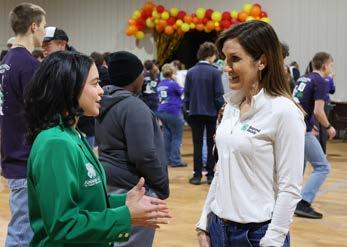
On the last day of their visit, a few members of National 4-H Council’s leadership team traveled to the Alabama 4-H Center in Columbiana to meet with more than 100 4-H members during the Midwinter Teen Leadership Retreat.
“My very favorite part of 4-H is seeing young people in action,” Bramble said. “It gives me hope and inspires me for our future.”
To learn more about Alabama 4-H, visit alabama4h.com. To learn more about the National 4-H Council, visit 4h.org.
Alabama 4-H State Ambassador President Aaliyah Sanders visited with National 4-H Council President and CEO Jill Bramble.


POUND CAKE DAY
You might not know this, but a few days ago was a national holiday. A day when our nation traditionally puts aside our differences, stands together in solidarity and brotherhood, from sea to oil-slicked sea, and we celebrate our most cherished national pastime.
Pound cake.
Frankly, I did not know it was National Pound Cake Day until a reader brought this to my attention.
“We must ask ourselves,” she wrote, “how many pound cakes sacrificed their lives defending our privilege to celebrate this day?”
Pound cake is expressly American, up there with Velveeta. Yet nobody in the media is even talking about this issue.
I demand to know why.
Contrary to popular notions, apple pie is not our flagship American dish.
Apple pie originated in England during the 14th century, shortly after the birth of Cher. Back then, English peasants were so poor that most historians believe the first apple pies were made with apples harvested from the stalls of nearby horse pens.
Pound cake, on the other hand, is an American cake. It originated right here in the North American colonies. The first mention of pound cake comes to us in a cookbook entitled “American Cookery,” published in 1796.
I choose to celebrate by eating a wedge of pound cake roughly the same thickness as the unabridged edition of “Gone With the Wind.”
Pound cake is in my DNA.
In the hospital delivery room, shortly after my birth, my granny and her church-lady friends showed up with baked goods and greeting cards. She allegedly shoved a tiny slice of cake into my infant mouth, and I started to gag.

“Mama!” said my mother. “It’s too soon to feed my baby pound cake!”
“Why?” said Granny.
“He doesn’t even have teeth yet.”
“Neither do I, but you don’t hear me whining about it.”
So my people are extremely serious about our pound cake. We eat it for every community event. We eat it at birthday parties, church potlucks, graduations, weddings, funerals, infant baptisms, real estate closings, etc.
We had cinnamon pound cakes, orange-currant pound cakes, chocolate pound cakes, 7 Up pound cakes, strawberry pound cakes, fluffy pound cakes, dense pound cakes, loaf-shaped pound cakes and pound cakes that weighed more than tractor tires.
We sold our mother’s pound cakes at Little League bake sales to earn money for new uniforms. Our aunts and mothers donated pound cakes to raise money for the missionaries. I ate pound cake at my father’s wake.
Pound cake was not just cake, not to my people. It was code for “I love you.”
I remember when my grandfather was dying. The whole family gathered around his bedside, weeping, and my grandfather bid goodbye to each of us.
That night, my grandmother was grieving so deeply she stayed up all night baking a pound cake.
That evening, Granddaddy smelled the wafting scent and somehow, miraculously, found strength to rise. He painstakingly made his way down the stairs and limped into the kitchen where he ate a slice of cake.
Immediately, my granny slapped the cake from his hands and shouted, “That’s for the funeral!”
Long live the pound cake. ■


April in the Alabama Garden: Planting Season in Full Swing
By Mallory Kelley
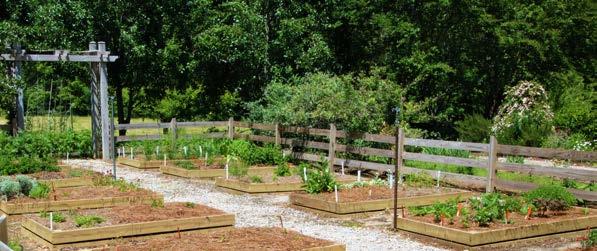
April is an exciting month for gardeners. Warmer, longer days and milder nights signal planting season is here. While a late frost is still possible early in the month, especially in north Alabama, most gardeners across the state can begin planting with just a little weather awareness.
Vegetable Garden Highlights
April is prime time to plant warm-season vegetables, especially in central and south Alabama, as soil is warm enough to encourage root growth for strong, resilient plants. In north Alabama, gardeners may want to wait until mid to late April or keep frost protection handy.
Popular warm-season vegetables include tomatoes, peppers, squash, zucchini, cucumbers, corn, okra and beans. Direct seeding is a great option for crops like squash, cucumbers, okra, beans and corn. This saves money and often helps the plants
establish much faster and better than transplants.
Mulch newly planted vegetables to conserve moisture, suppress weeds and stabilize soil temperatures.
Flowers and Ornamentals
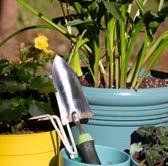
April is the ideal month for adding color to garden beds and containers. Annuals that grow well across Alabama include zinnias, marigolds, petunias, vinca and cosmos. Remember — these beautiful blooming plants will attract pollinators, so be mindful of spraying insecticides.
Keep an eye on azaleas, camellias and other springflowering shrubs. Once blooms fade, they should be pruned. Gardeners will benefit from tackling this task before the heat of summer. In late summer and fall, these shrubs have already set buds for next spring, so pruning too late will remove next year’s buds.
Lawn Care
This month, sharpening mower blades, deciphering soil test results
and procuring proper fertilizer are all necessary steps to take as lawns begin actively growing. Once turfgrass is out of dormancy and fully green, apply preemergent or postemergent weed control as needed. Water lawns early in the morning to reduce fungal diseases. For established turfgrass, 1 inch of rain or irrigation a week is best.
Pest and Disease Watch
As temperatures rise, so will pest activity. Scout for aphids, caterpillars and spider mites in landscapes and vegetable gardens. Always identify pests before treating, as many insects are beneficial.
Watch for fungal diseases encouraged by warm days and late afternoon rain showers. Fungicides are preventatives. As soon as an issue is identified, apply fungicides to healthy plant tissue to prevent its spread.
Use Alabama Extension’s “Farming Basics” smartphone app for help identifying diseases and insects in fruits and vegetables.
Thoughtful planting and timely care this month will set your garden well on its way to being productive and beautiful this summer.
Find more gardening advice online at aces.edu.
MawMaw Vista’s Hot Fudge Sauce
2 1/2 cups sugar
3 tablespoons cocoa powder
2 cups whipping cream
3 tablespoons Karo syrup
2 teaspoons vanilla
2 tablespoons salted butter
Mix sugar and cocoa together in a saucepan. Add whipping cream and Karo syrup. Bring to a boil. Reduce heat to medium and cook until mixture begins thickening, about 7 minutes. Remove from heat, and add vanilla and butter. Do not stir. Let sit for 5 minutes, then stir until smooth. Pour over cake, brownies or another dessert of choice.

Red Beans and Rice
1 pound smoked sausage, sliced in thin rounds
2 tablespoons olive oil
1 green pepper, chopped
1 medium onion, chopped
3 cloves garlic, minced
3 celery stalks, chopped
2 cans red beans, undrained
1 tablespoon Creole seasoning
Cooked white rice

Momma’s Chicken and Dressing
Step 1: Boil the Chicken
1 cube chicken bouillon
1 3- to 4-pound whole chicken
Add bouillon cube to water in a large pot. Add chicken and bring to a boil. Cover and boil 2 hours, or until tender. Remove chicken from broth and set aside. Reserve broth.
Step 2: Make the Cornbread
1 1/2 cups self-rising cornmeal
1 cup self-rising flour
2 eggs
Buttermilk
1 heaping tablespoon shortening
Heat oven to 450 F. In a large bowl, mix cornmeal, flour and eggs. Add buttermilk until mixture reaches cornbread batter consistency. Melt shortening in a 10- to 12-inch cast-iron skillet. Add batter and bake until done. Let cornbread cool, then crumble and set aside.
Step 3: Sauté Onions
1 tablespoon vegetable oil
4 onions, chopped
Heat oil in large skillet. Sauté onions until tender. Set aside.
Step 4: Assemble the Dressing
1 1/2 teaspoons sage
1/4 teaspoon cayenne pepper
1 teaspoon salt
1/2 stick salted butter
Add sage, cayenne and salt to crumbled cornbread. Add sautéed onions. Slowly add broth until mixture reaches the right consistency (a little soupy and not too dry). Cornbread will absorb the juices. Mix well. Cover and sit overnight to allow mixture to absorb flavor.
The next day, heat oven to 350 F. Taste and adjust seasoning or broth as needed. Add chicken. Place in 9-inch-by-13-inch dish. Dot top of mixture with salted butter. Bake 30 to 45 minutes.
In a skillet, brown smoked sausage. Set aside. In a separate skillet, heat olive oil and sauté green pepper, onion, garlic and celery until tender. Add sausage and red beans. Stir in Creole seasoning, and cook until simmering. Serve over hot cooked white rice.
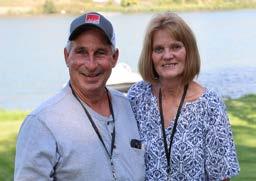
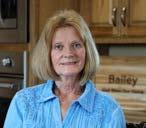
While they’re most at home on their DeKalb County farm, David and Carolyn Bailey said they enjoy touring farms across the U.S. with friends at the Alabama Farmers Federation.