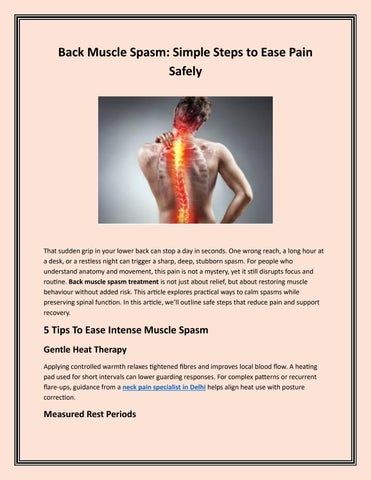
Back Muscle Spasm: Simple Steps to Ease Pain
Safely

That sudden grip in your lower back can stop a day in seconds. One wrong reach, a long hour at a desk, or a restless night can trigger a sharp, deep, stubborn spasm. For people who understand anatomy and movement, this pain is not a mystery, yet it still disrupts focus and routine. Back muscle spasm treatment is not just about relief, but about restoring muscle behaviour without added risk. This article explores practical ways to calm spasms while preserving spinal function. In this article, we’ll outline safe steps that reduce pain and support recovery.
5 Tips To Ease Intense Muscle Spasm
Gentle Heat Therapy
Applying controlled warmth relaxes tightened fibres and improves local blood flow. A heating pad used for short intervals can lower guarding responses. For complex patterns or recurrent flare-ups, guidance from a neck pain specialist in Delhi helps align heat use with posture correction.
Measured Rest Periods
Brief rest allows irritated muscles to settle, but long inactivity weakens support structures. Experts favour limited rest paired with light movement to prevent stiffness, maintain neuromuscular signalling, and reduce protective tightening that prolongs spasm intensity. This balance protects connective tissue integrity and preserves functional range during recovery phases.
Get Akshit Jainn’s stories in your inbox
Join Medium for free to get updates from this writer.
Subscribe
Targeted Stretching Control
Stretching should be slow, precise, and pain monitored. Short holds within a safe range help reset muscle length without triggering reflex contraction. This approach suits informed readers who respect tissue tolerance and timing. Breathing control during stretches further reduces neural tension and supports consistent muscle release.
Hydration And Minerals
Fluid balance affects nerve firing and muscle contraction. Adequate water intake supports metabolic exchange, while balanced electrolytes assist relaxation phases. Knowledgeable individuals consider diet patterns during recovery rather than relying on isolated supplements.
Professional Assessment Timing
Persistent spasms signal deeper biomechanical issues. Timely assessment helps rule out disc involvement or nerve irritation. Integrating back muscle spasm treatment within a structured plan improves outcomes and reduces recurrence through guided loading and movement education.
Final Thoughts
Back spasms demand respect for structure, timing, and recovery capacity. Quick fixes may mute pain, yet informed care reduces recurrence and protects spinal mechanics. Applying heat, movement, hydration, and stretching with intention creates measurable improvement. Persistent symptoms should prompt evaluation, as skilled input can refine loading strategies and identify hidden triggers. Consulting a neck pain specialist in Delhi adds a clinical perspective for complex cases without defaulting to excessive intervention.