NOTE All the longer articles in the Akrapovič magazine include a text that will be marked with the // Si sign and placed in a special frame. The Akrapovič company is based in Slovenia and this is why we decided to keep this part of the text in Slovenian as well.
Long-term efforts
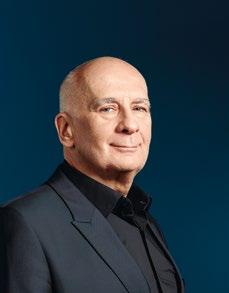
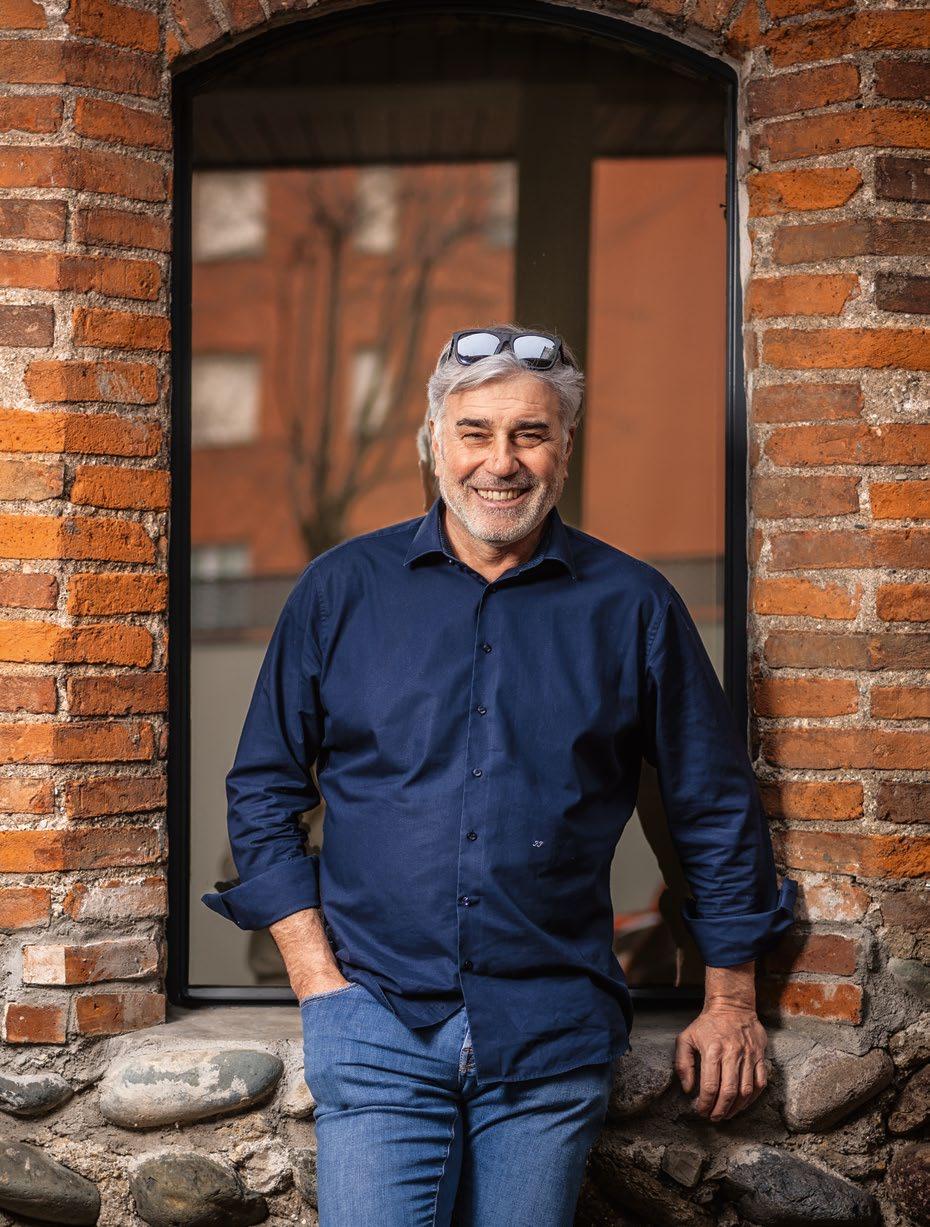
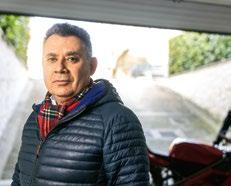
Less than a month before this issue of the ALM went to press, exactly 35 years had passed since I founded the company and decided to embark on an entrepreneurial journey. Our goal was to constantly strive to develop and manufacture the best products, while believing that technology can always be improved and upgraded. I had envisioned the journey would be interesting, but I did not realise we would grow at such a pace.
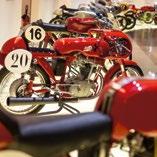
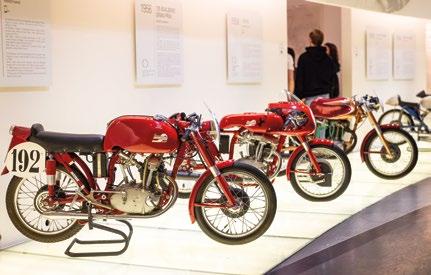
I am often reminded of this period by the collection of racing motorcycles in front of my office. From the racing bikes from the ‘90s, to the current engineering masterpieces, which are some of the greatest accomplishments of Grand Prix racing technology in history. Comparing these bikes from the two periods to the way the company and the world have developed within these three and a half decades, I would say that things have changed gradually, evolutionary. But if I compare 1991 to 2026 directly, I would say revolutionary. In all areas.
Looking back today, it seems many things used to be simpler, although every period of the company’s development was very demanding, every day was a race to become better, more successful, and address challenges effectively. There were quite a few of those, and it is because of them that we got to where we are today.
Broadly speaking, we had the will, knowledge and desire to learn, and many of us were ready to work harder than the rest. Markets were opening up, Europe was breathing differently, the world around us was
relatively predictable. The World Wide Web was in its infancy, so we exchanged plans with our racing partners via a fax machine. I will never forget returning to the office after the New Year holidays and being welcomed by a bunch of new blueprints, sent by a Japanese partner at the very turn of the year. Yes, even many years ago, the competitiveness between engineers in motorsport was at the highest level.
We can, obviously, no longer imagine communicating in such a way today. Communication technology as well as everything else alongside it has advanced greatly. The world has – if I may borrow the phrase from the appearance of modern racing motorcycles – grown wing(let)s. Engineers have judged that racing bikes, which have become ever more powerful and faster, need them.
Since the start, I have been a big advocate of investing in research, development, and knowledge. I have received confirmation many times that this is the correct approach. Things are changing faster in the world today than they did a few years ago, so it is crucial to be at the forefront and stay the course.
I believe that the world rewards those who are willing to think in the long-term rather than those looking for shortcuts.
Igor Akrapovič
Record-breaking EICMA
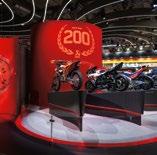
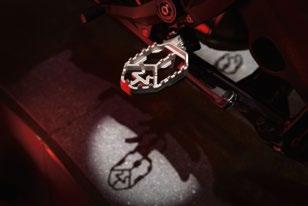
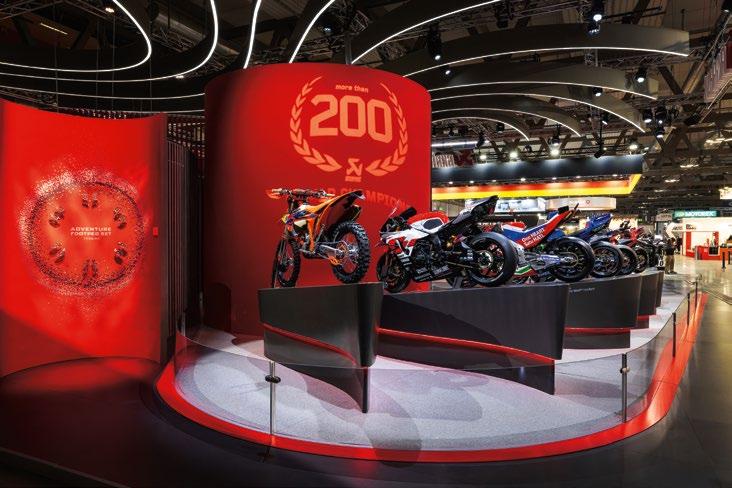
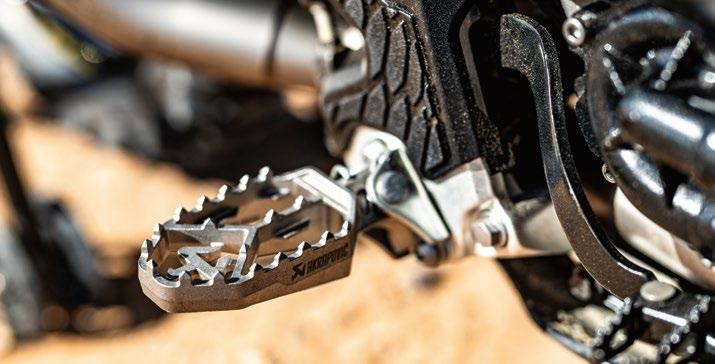
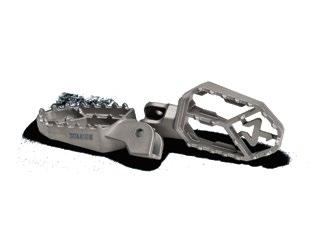
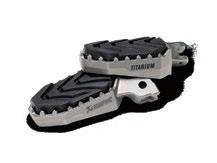
During its six days in November 2025, the EICMA motorcycle show in Milan saw more than 600,000 visitors, including the public, professionals, industry operators, and the media. Akrapovič was one of the show’s 730 exhibitors from 50 countries and more than 2,000 brands. Among its various exhaust systems for all motorcycle segments, the Slovenian company also premiered its brand-new Adventure Footpeg (Titanium), which attracted a lot of interest. As is the norm for Akrapovič’s unique exhibition space, it was visited by many racers who also took the time to chat with the visitors.
Double double
The renowned Motorsport aktuell magazine has once again asked its readers to vote for the best brands. The latest Racer of the Year competition saw Akrapovič come first in the sports exhaust systems for cars and the exhaust systems for motorcycles categories, giving the company its 13 th double award in a row.
Visiting champions
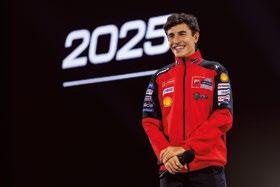
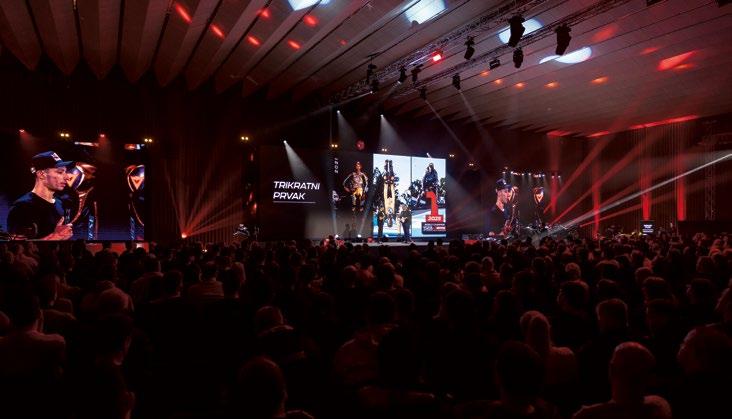
Last year’s racing season set a record for Akrapovič, with racers from partner teams winning a total of 16 world championship titles. Among them were the FIM MotoGP World Champion Marc Márquez (Ducati Lenovo Team) and the FIM Superbike World Champion Toprak Razgatlıoğlu (ROKiT BMW Motorrad WorldSBK Team), who told the story of their successful year to Akrapovič employees at their New Year’s gathering, as well as peering into the 2026 racing year. At the end of the event, they also made many a worker’s day with a valuable autograph.
Full Send
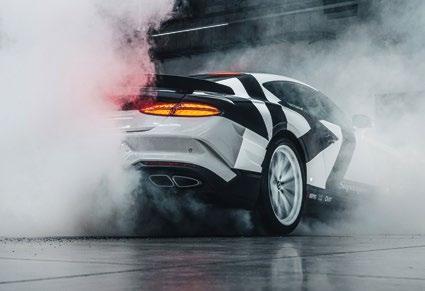
A specially modified Bentley Supersports, not representative of the production model, has demonstrated its exceptional agility and performance in the hands of extreme sports athlete and legendary stunt performer, Travis Pastrana, in ‘Supersports: FULL SEND’, the most exhilarating and dynamic film ever released by Bentley and shot entirely at Bentley’s campus and Dream Factory in Crewe, England. Production of the new Supersports in its roaduse-ready specification will begin in Q4 2026, with the first deliveries at the start of 2027. Production will be limited to 500 units.
Lucky 13
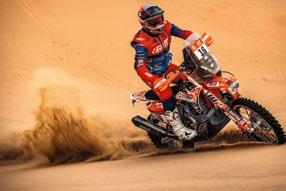
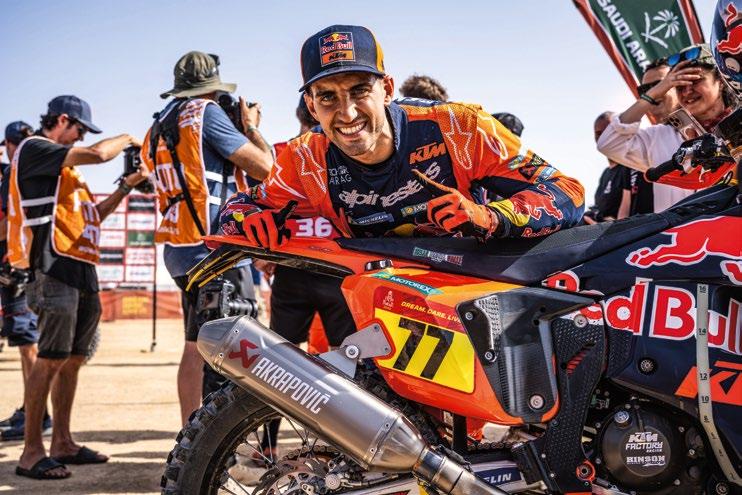
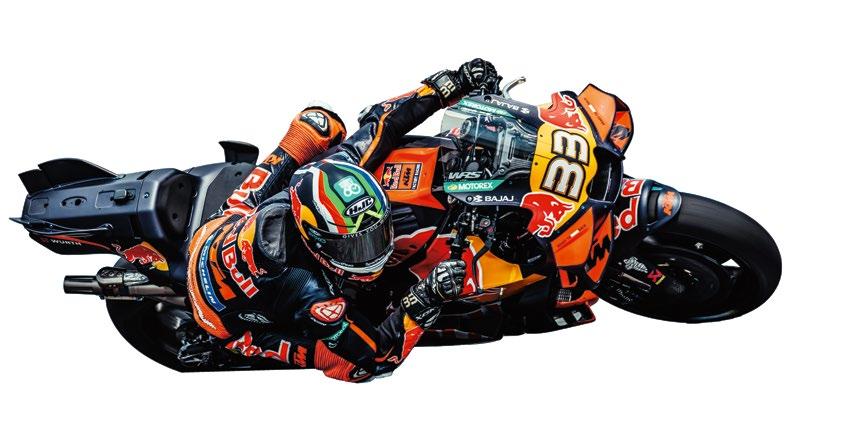
This year’s Dakar went down in history due to an amazing feat by Luciano Benavides. At the final, 13 th stage, the Red Bull KTM Factory Racing rider closed the gap to the leader and, after more than 49 hours of racing, won the rally by a mere two seconds. “This is my ninth Dakar, and it shows that if you never stop dreaming, never stop believing, and keep fighting for your goals, anything is possible. I never gave up,” said Luciano. Another rider who never stopped believing is Toni Mulec, the Slovenian Rally2 class winner, who finished a very impressive ninth overall.
21st time in a row
Readers of Motorrad magazine voted for the best brands in its annual poll, with the largest share of the 46,737 votes for the best exhaust systems brand going to Akrapovič. The Slovenian company won for the 21st time in a row.
Ténéré conquers Africa
Ténéré Spirit Experience (TSE) rider Kevin Gallas was crowned the overall champion of the 2026 Africa Eco Race, while Gautier Paulin of the Ténéré Yamaha Rally Team, in partnership with Riders for Health (powered by Two Wheels for Life), secured second just 41 seconds behind. The records did not stop there, as the shores of Lac Rose in Dakar (Senegal) celebrated five Ténéré 700s in the top seven overall. This year’s race marked the first Africa Eco Race victory for Gallas and the Ténéré 700, with the rally also presenting a special test for Akrapovič, which equipped the Yamahas with both exhaust systems and a new product: the Adventure Footpeg (Titanium).
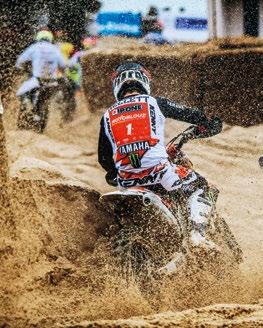
By winning the legendary Enduropale du Touquet 2026, Todd Kellett confirmed his dominance in the FIM Sand Races World Championship. The Team Dragon Tek rider was in a class of his own in France despite extremely challenging weather conditions with freezing temperatures and continuous rain.
by Imre Paulovits
V FO U R VIC TORY
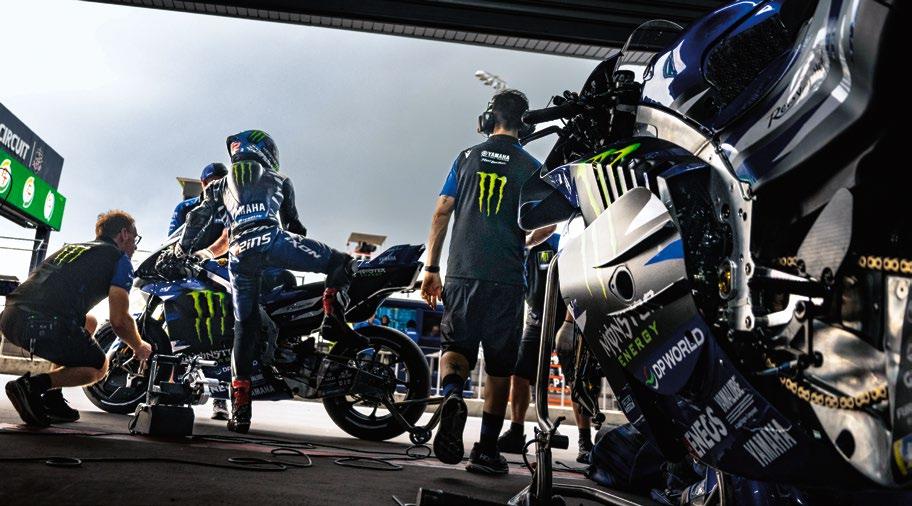
V4‑Engines in MotoGP
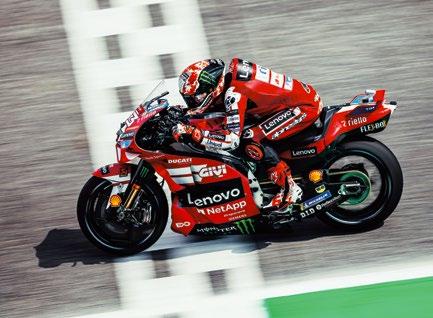
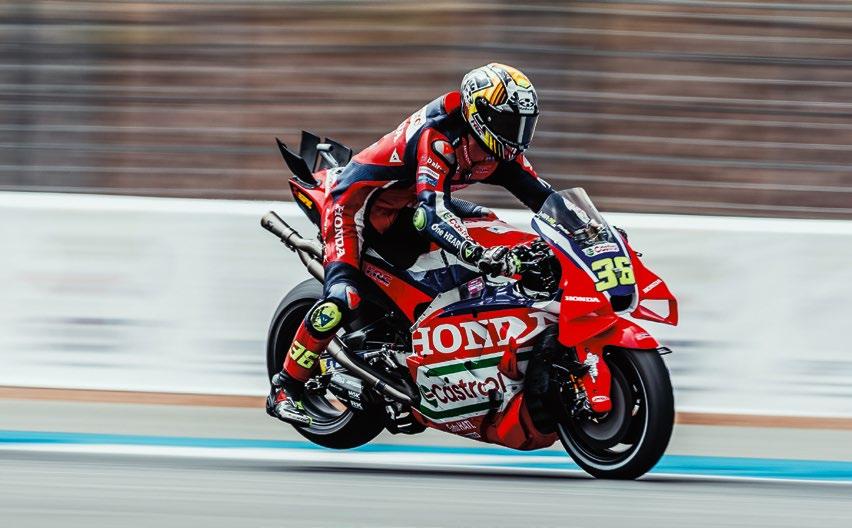
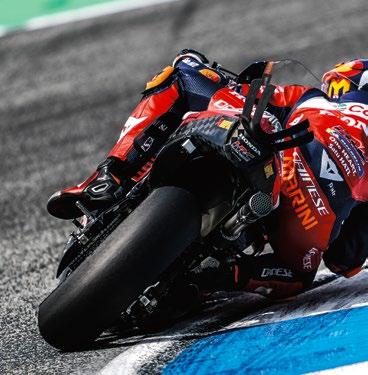
This year, all five MotoGP manufacturers are racing with V4 engines, all of which have cylinder angles of 90 degrees or close to this. But what is so powerful about this concept that it has supplanted all others?
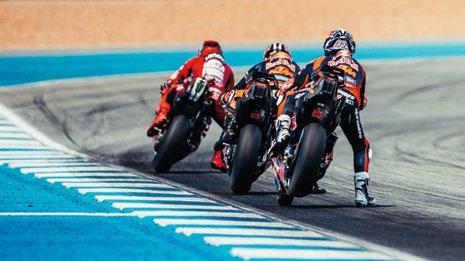
The longer a regulation remains in place, the more similar the solutions become.
photography Rob Gray, Polarity Photo, Ducati Corse, Honda HRC Castrol, KTM Images/Sebas Romero/Polarity Photo, Monster Energy Yamaha MotoGP
Luigi Dall’Igna
Romano Albesiano
There is a saying in motorsport that the longer a regulation remains in place, the more similar the solutions become and the less variety there is in terms of design. Unsuccessful ideas are discarded, while successful ones are adopted by others. When MotoGP was launched almost 25 years ago, there were still experiments with three, four, and five cylinders, arranged in a row or in a V shape. After 2012, when the bore was limited to 81 mm at 1,000 cubic centimetres and the number of cylinders to four, the only options left were in-line or V engines, with the latter still having different cylinder angles.
The shift to V4 engines
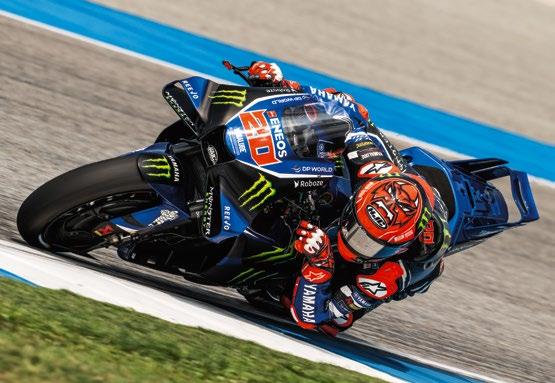
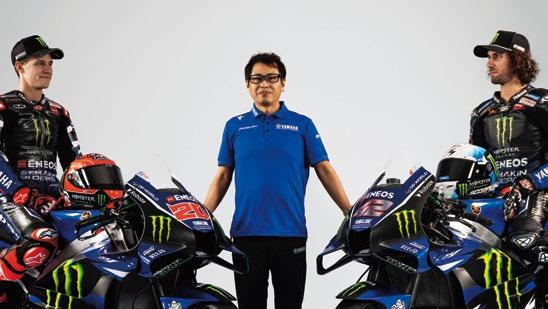
Several concepts were on par, with Honda and Ducati winning the world championship with V engines, and Yamaha and Suzuki with in-line engines. But after Suzuki withdrew at the end of 2022, Yamaha remained the only manufacturer with an in-line four-cylinder engine, and this year the Iwata factory is also competing with a V4 engine. Takahiro Sumi, General Manager of Yamaha Motor Sports Development Division, explained why at the presentation of the new motorcycle: “We had already done calculations and simulations in 2021, when we won the title with Fabio Quartararo, and realised that we needed a change of concept in line with the
development of MotoGP. The advantages of an in-line four-cylinder engine were overtaken by those of a V4, and we decided to build a V4 as well.” But what are the advantages of each concept, and what has changed to cause the in-line four-cylinder engine to fall behind?
Conceptual references
The advantages of the in-line four-cylinder engine are obvious: fewer parts, as only one cylinder bank requires camshafts and drive. In addition, it is relatively easy to achieve equal lengths for the intake and exhaust tracts. An in-line four-cylinder engine can also be built shorter because the rear cylinder bank does not get in the way of a transmission with shafts placed one above the other. This allows a longer swing arm to be used, which is advantageous for traction. There is also a dynamic driving characteristic: its width provides stability in corners – comparable to a tightrope walker using a pole to maintain balance more easily. However, there is also a clear disadvantage that is easy to see: greater width means greater air resistance, and there are more restrictions on the centre of gravity because the crankshaft has to be positioned relatively high to achieve the necessary lean angle. Twenty years ago, it was already apparent that the power of MotoGP engines required an irregular firing order for
traction, and this meant that the inline fourcylinder engine needed a balance shaft, which in turn reduced power.
The advantages of a V4 seem to be just as evident. It is narrower and, due to its design, already has an uneven firing order. If the cylinder banks are at a 90-degree angle to each other, the oscillating masses cancel each other out, even if the crankpins of the left and right cylinders are offset from each other as desired – this allows different ignition sequences to be achieved. Then something else became apparent in practice: with the smaller construction width, a large part of the flywheel mass can be placed on the outside. Since the maximum number of engines per year is limited and the engines have to be sealed, this is the only way to use different flywheel masses for different track characteristics.
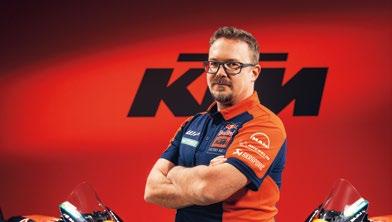
However, the V4 also has clear disadvantages. “Before entering MotoGP in 2017, we at KTM considered various concepts,” reveals Sebastian Risse, technical director of the MotoGP project at KTM. “We chose the V4 because it is the better concept for our approach to the class. It simply fits best with the experience we have gained in other classes. We had always built compact engines and
Sebastian Risse
in terms of peak performance. We had also built a MotoGP engine back in 2004, and that was a V4 too. But a V4 also presents a number of challenges. You have to accommodate everything twice, and there is no area of the motorcycle that stays cool. This makes it trickier to control the temperatures.”
There is another reason for Risse to favour the V4: “Engine development is becoming increasingly compact and lightweight, and it is also important that it becomes like this because the rest of MotoGP motorcycles are becoming increasingly complex. This also changes the conditions for how best to accommodate the engine in the chassis and what compromises one is willing to make.”
The rise of the V4 engine
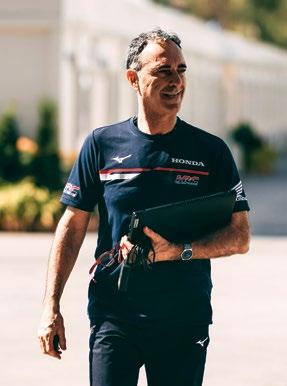
The 90-degree V4 is increasingly emerging as the best compromise, largely due to the direction in which MotoGP racers have developed in recent years. “With a production motorcycle, it is very important to have a compact engine in the longitudinal direction, but a MotoGP motorcycle is so long that there is no advantage in building a short engine,” explains Romano Albesiano, technical director of Honda’s MotoGP project. “With a V4 with a narrower cylinder angle, the injection unit is higher, which makes it difficult to accommodate the airbox under the rider. This requires a balance shaft. The 90-degree V4 is easier to build, has fewer losses, and has a lower centre of gravity. This makes it clearly better for MotoGP than an engine with a narrower cylinder angle.” When Albesiano was still at Aprilia, they initially built a V4 with a narrower cylinder angle, but then switched to 90 degrees themselves.
However, the positioning of the cylinders also plays a role. When Ducati unveiled its first V4 for Grand Prix racing 23 years ago, it was a doubling of the legendary L2 that Fabio Taglioni introduced in 1970, which brought
Aerodynamic aids enabled V engines to make up for their deficit in cornering speed, and since the maximum width of the fairing is limited by the regulations, the wider inline engine leaves less space for the wings.
Takahiro Sumi with Yamaha riders.
the Bologna-based brand one Superbike World Championship title after another into the 2000s. In these models, the front cylinder was almost horizontal, but in the early 2010s, Ducati realised that this was not the optimal concept for the best MotoGP package. “With the L4, the front cylinder bank is too close to the front wheel, which severely limits the setup options. In addition, the rider sits directly above the rear cylinder bank and gets all the heat. The V configuration is much more beneficial, and you have enough leeway to move it around in the frame to get the most favourable package,” says Ducati Corse General Manager Luigi Dall’Igna.
Accelerated by development
However, the fact that the V4 engine has become even more prominent in recent years is mainly due to developments and competition in MotoGP. As long as Suzuki was a second manufacturer with a similar concept to Yamaha, these two manufacturers were able to measure themselves against each other. When Yamaha remained the sole representative of the in-line engine, the balance has tipped even further in favour of V4 engines on the starting grid. The needs of the majority were also taken into account in the further development of the standard tyres. In addition, aerodynamic development became increasingly important, and V4- powered racers continued to gain the upper hand even in this area. Aerodynamic aids enabled V engines to make up for their deficit in cornering speed, and since the maximum width of the fairing is limited by the regulations, the wider in-line engine leaves less space for the wings – a problem that will be further exacerbated by the 2027 regulations, which will further restrict the overall width.
Yamaha has decided to change its concept for various reasons. However, it was clear to them from the outset that the V4 would need time for development and that the 2026 racing season would be a learning year. This will ensure that, by 2027, they will no longer be novices competing against experienced V4 rivals, when a more substantial change in the technical regulations will follow.
// Si
V4 v MotoGP: Z V4 do zmage
V letošnji sezoni MotoGP vseh pet proizvajalcev uporablja motocikle z V4 motorji – tudi Yamaha, ki je po umiku Suzukija leta 2022 do začetka letošnje sezone ostala zadnja znamka, zvesta uporabi vrstnega štirivaljnika. A kaj je prednost tega koncepta, da je izpodrinil vse druge?
Vrstni štirivaljniki imajo sicer manj sestavnih delov in dobre dinamične vozne lastnosti zaradi širine, hkrati pa jih omejujeta večji zračni upor in višje težišče. Nasprotno pa so agregati V4 ožji, zaradi svoje zasnove imajo neenakomeren vrstni red vžiga, njihova konstrukcija pa omogoča namestitev večjega dela mase vztrajnika na zunanji strani, kar omogoča, da se masa vztrajnika lahko prilagaja različnim stezam.
Agregati
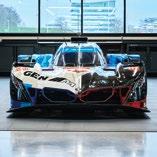
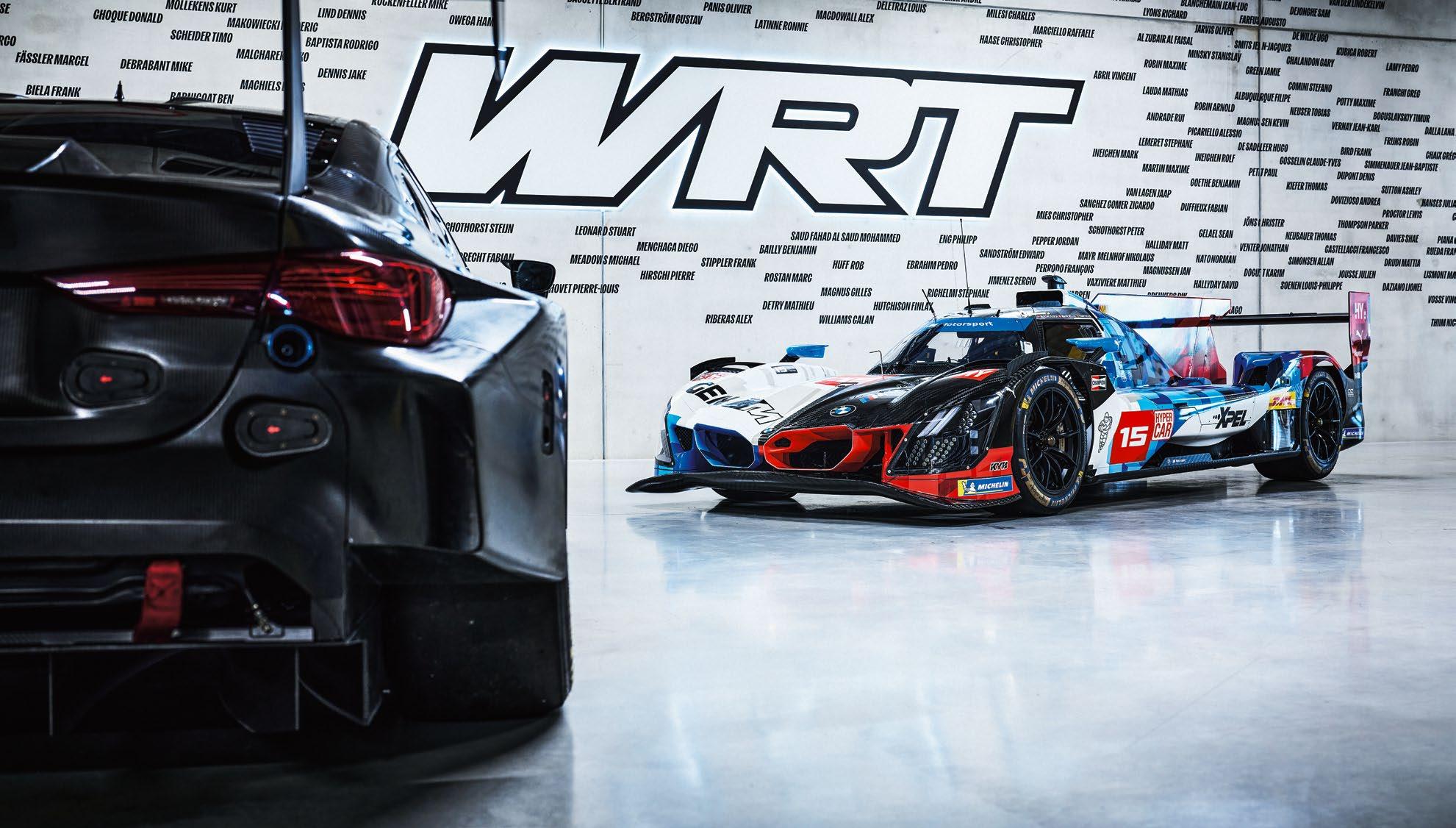
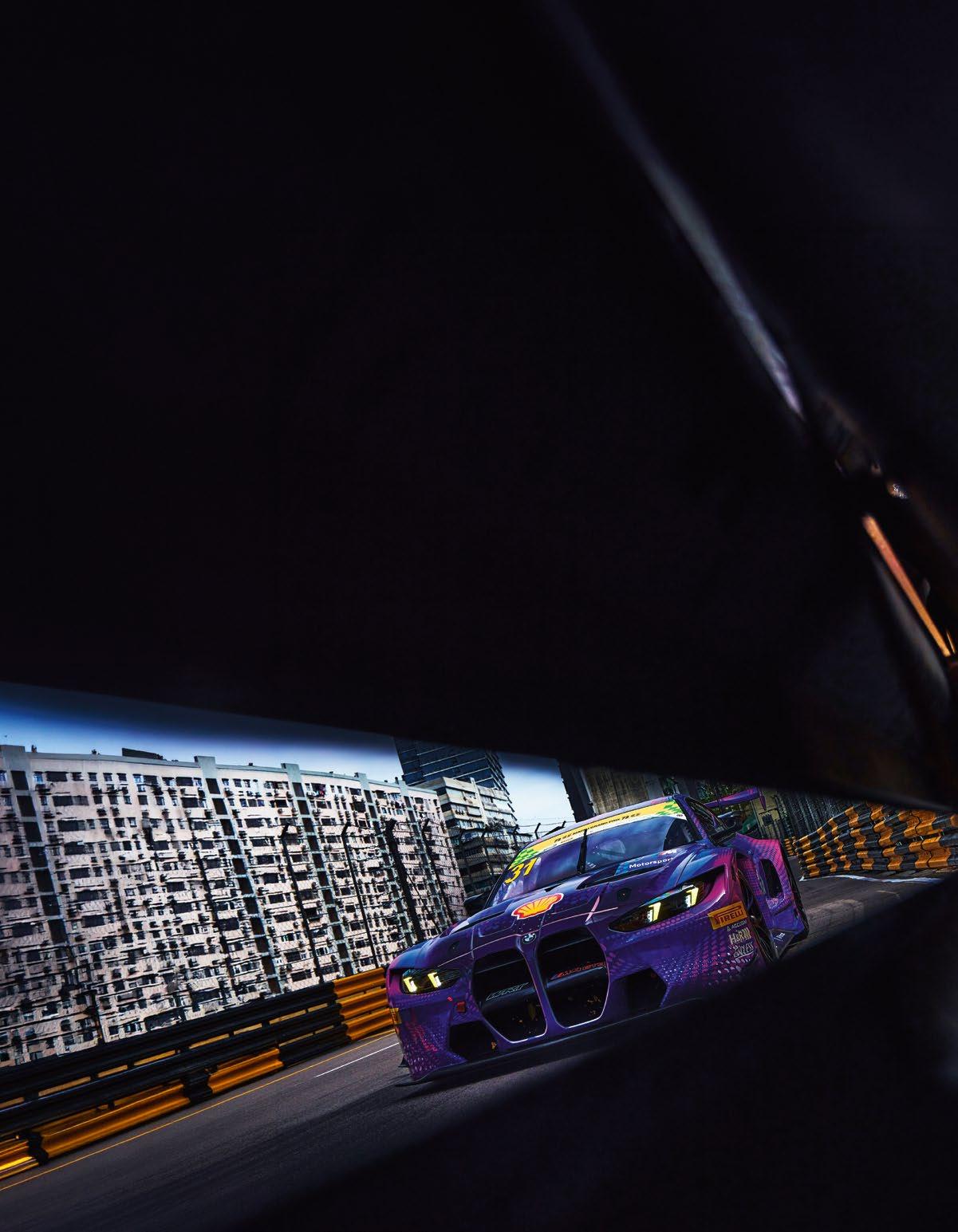
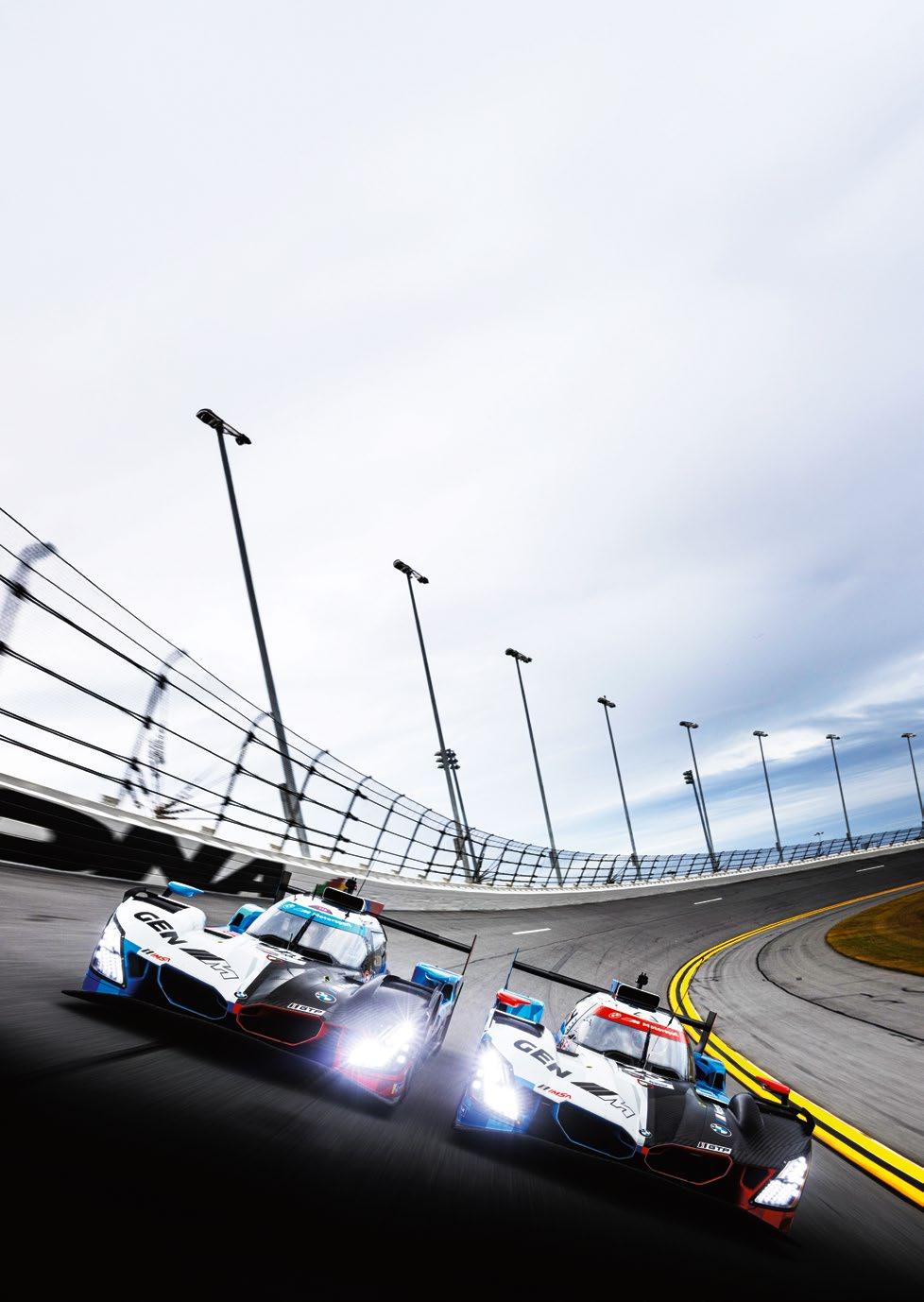
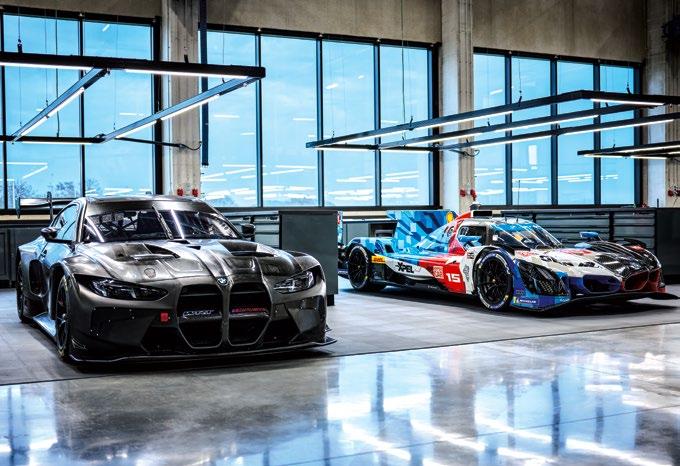
“IN GT3 A GROUP OF PEOPLE TAKE CARE OF THE CAR. IN HYPERCAR, A GROUP OF PEOPLE TAKE CARE OF A PART OF THE CAR,” VINCENT VOSSE, TEAM PRINCIPAL BMW M TEAM WRT, SUCCINCTLY COMPARES THE TWO CLASSES, WHICH FEATURE COMPLETELY DIFFERENT VEHICLES. BMW M HYBRID V8 VS BMW M4 GT3 EVO.
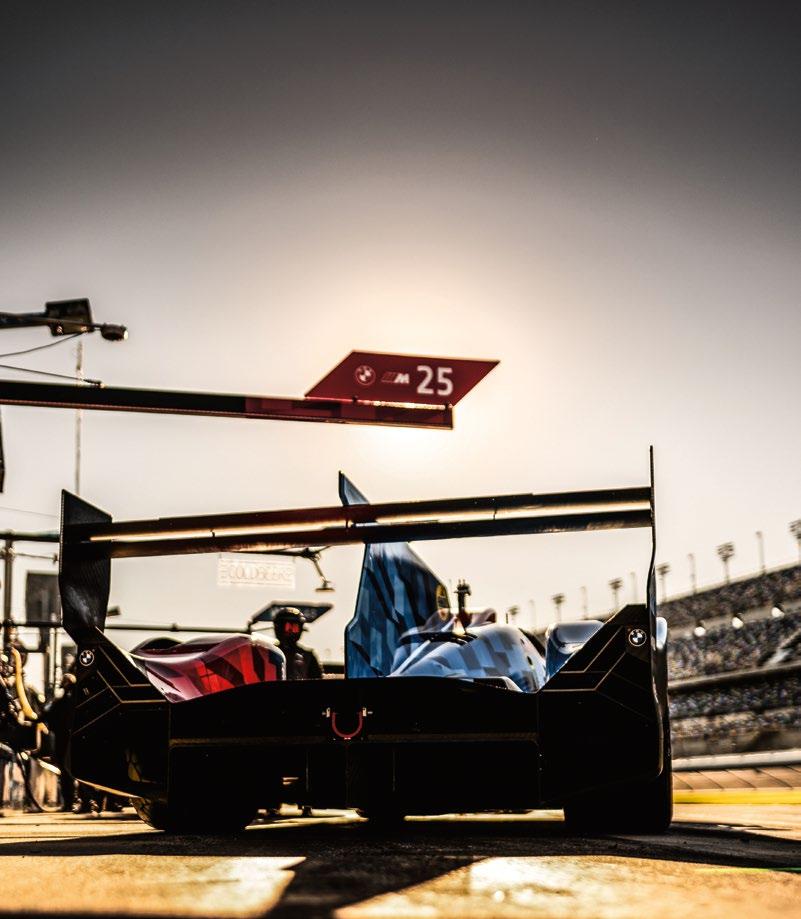
People in the paddock would say we are comparing apples to oranges. On one side is a prototype, spaceship-like race car with a 4-litre twin-turbo V8 engine and a hybrid system, which, according to the factory data, weighs in at 1,030 kilograms, produces some 500 kW (680 hp) and 540 Nm of torque, has a top speed of more than 340 km/h, and a prototype chassis made of carbon fibre; while on the other side is a race car, based on the BMW M4 that you can buy at the dealer’s, with a modified production M4 chassis, a 3-litre twin-turbo in-line-6 engine with 434 kW (590 hp), no hybrid system in sight, about 300 kilograms more, and, according to the factory data, a top speed of 300 km/h.
mean those who like to check how fast their production BMW M4 is on the autobahn. These are serious and extremely fast racers.
BETTER IS THE ENEMY OF GOOD
Vincent went back to 2019 when the team, after years of experience with GT3 race cars, began competing in the DTM series with a car made under Class 1 regulations. “That was a very good way to upgrade ourselves into something on a higher level,” he commented. After DTM, WRT began racing with a singleseater LMP2 (Le Mans Prototype 2) car, and then moved to the highest category of endurance racing, the Hypercar class. Having been the head of WRT as the team grew by doing increasingly demanding projects, we asked Vincent what the biggest operational differences between running the LMDh and GT3 projects are.
BMW M4 GT3 EVO is a production-based Grand Tourer refined for customer racing, used by tens of teams (including WRT) all over the world in various racing categories, and can be purchased by all whose pockets are deep enough, while the BMW M Hybrid V8 is a pure bespoke Hypercar prototype, only used by the BMW M Team WRT in the IMSA WTSC (GTP class) and the FIA WEC (Hypercar class, LMDh category) championships. This hybrid prototype uses regenerative braking, converting kinetic into electric energy to aid acceleration. Its aerodynamics are highly complex, generating immense downforce at the cost of being very sensitive to clean air. Unlike the prototype, which only the professionals race with, the GT3 race car can be driven by both the pros and ‘gentleman’ (amateur) racers. And by amateurs we do not
“There are two LMDh cars racing in IMSA and two cars racing in WEC, while in GT3, there are many cars racing all around the world. The latter is called customer racing, but racing with the Hypercars, whether in IMSA or WEC, we call it factory racing. So, it’s very different, and it naturally requires more people in Hypercar due to the technical complexity of the car, engine, hybrid system. The Hypercar is just a much more complex car in general. We have a gearbox specialist, a hybrid system specialist, an engine specialist, a suspension specialist...” the Belgian said.
We could say that the BMW M Hybrid V8 is difficult even to drive out of the garage
without the help of BMW M Motorsport. WRT
Technical Director Sébastien Viger confirmed Vincent’s statement about cooperating closely with the Bavarian motorsport department.
“There’s a high level of collaboration between WRT and BMW. People at BMW design and develop the car, while WRT takes care of the operational side.” The technical director then highlighted one of the main differences between the LMDh and GT3 models, namely the hybrid system. “The GT3 is a mechanical car. There’s little aero, so you need to make sure that you get the best compromise in terms of mechanical and aero set-up to have a car that’s easy to drive. When you work on the LMDh with only pro drivers, and many systems added on top of the aero and the mechanical set-up, there is much more scope for improvement. It kind of gives you an extra layer.” But this extra layer can also bring something less attractive – more problems. “It can give you a strong headache if it’s not doing what you want it to. It’s quite challenging because sometimes better is the enemy of good and you need to make sure that every layer of hybrid software stuff is actually improving the car and not making your life more complicated,” Sébastien explained.
It is said that LMDh cars are computers on wheels, which means even more data to analyse. Repairing them after a crash can also be much more complex and more expensive, but the teams are prepared for such scenarios. “You need to reorganise everything when such a thing happens. And this is sometimes a struggle,” Vincent admitted. The clock ticks on relentlessly in motorsport. Also for mechanics.
Close cooperation between drivers and engineers is key. “You need to have this close relation between the driver and the engineering crew to make sure that if you want to avoid driving over kerbing, for example, the driver understands it and doesn’t do it because you want the car to remain more aero efficient. But sometimes the driver says, ‘yeah, but if I could drive over the kerbing, I could be much closer to the car in front and it would be much easier to attack it.’ There is this kind of a complex discussion about how to set up the car, do we compromise in terms of driving or in terms of set-up and this obviously is evolving from track to track, but also, in Le Mans for example, hour to hour,” Sébastien stressed.
BEHIND THE WHEEL
BMW has quite a few works drivers who have racing experience with both cars, so we asked Sheldon van der Linde point-blank. BMW M Hybrid V8 or BMW M4 GT3 EVO? “A very clear answer on this. In qualifying for one lap when you’re on your own, the LMDh car is much more fun to drive because you have more grip, you can brake later and it just feels much more like a race car. However, it’s very difficult in the LMDh car to drive behind other cars in the race, because you’re in dirty air, the same as in Formula 1, where you cannot get close to the guy in front because you start to lose downforce and the car starts to understeer a lot. You don’t get that in a GT3 car, so you can follow bumper to bumper. So for me, GT3 in terms of racing. I think it’s much more fun because you can battle door-to-door. You can even afford to make slight contact with the car next to you or in front of you without causing significant damage to your car. In the LMDh,
Akrapovič is in charge of exhausts for both race cars as a BMW M Motorsport official partner.
Računalnik na kolesih? Primerjava BMW M Hybrid V8 in BMW M4 GT3 EVO Dirkalnika BMW M Hybrid V8 in BMW M4 GT3 EVO sta že na videz povsem različna, a vendar nas je zanimala bolj podrobna primerjava. Prvi je hibridni prototip s 4.0-litrskim motorjem V8 z dvema turbopuhaloma, ki tehta okoli 1.030 kilogramov, zmore okoli 500 kW (680 KM) in razvije 540 Nm navora, njegova končna hitrost pa je 340 km/h. Drugi pa je dirkalnik, zasnovan na serijskem BMW M4, ima 3,0-litrski vrstni 6-valjni motor z dvema turbopuhaloma, ni hibrid, doseže pa 434 kW (590 KM). Od prvega je težji za približno 300 kg in doseže končno hitrost 300 km/h. Svoje mnenje o enem in drugem so nam zaupali Vincent Vosse, vodja ekipe BMW M Team WRT, Sébastien Viger, tehnični direktor pri WRT, dirkač Sheldon van der Linde ter njegov moštveni kolega in ambasador znamke Akrapovič Marco Wittmann.
// Si
however, if you touch another car, the damage really affects your performance negatively because you lose downforce with any flicks that fly off the car.” We then asked Sheldon’s teammate and Akrapovič brand ambassador Marco Wittmann which one he would choose if he could only pick one – LMDh or GT3? “Hard to say. I think at the moment as you know the LMDh or the Hypercar is growing. Pretty much all the manufacturers are joining the Hypercar, and it’s a full factory program. I think that’s the place to be as a professional racing driver at the moment,” he leaned towards the prototype, also partly due to it being a factory programme. “But I couldn’t really tell you if it was for the remainder of my career,” he added. Marco has seen quite a lot of GT3, including from the highest step of the podium, so we wanted to know what he found were the biggest differences after moving from GT3 to LMDh. “I think the biggest difference is really the speed where the GT3 is quite a bit slower compared to the LMDh, so less engine power, but also less downforce compared to an LMDh car. The big challenge after switching from a GT3 to an LMDh car is the absence of ABS so you obviously need to deal with locking front or rear tyres and modulate your brake pressure. These are probably the two biggest things.” Sheldon also pointed to braking as the main issue one needs to adjust to after getting into an LMDh race car. “In a GT3 car, because there’s no downforce, you’re braking a lot more like in a road car. The brake pressure build-up is therefore a lot softer and smoother, whereas in an LMDh car, because you want to stop the car at high speeds to use the downforce, your brake curve is a lot more aggressive in the beginning and then bleeds off towards the end.” Both drivers
also pointed out that prototypes are much more demanding to drive, as one can change various settings during the drive, which, among other things, changes the balance of the car.
TECH GEEKS
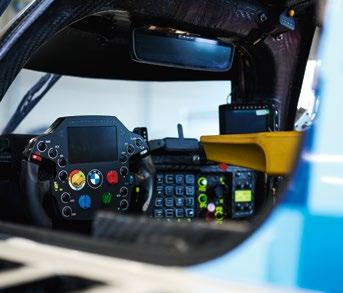
We are living in a time when racing drivers, be it MotoGP, Formula 1 or WEC, are required to be more than just fast. “I’ve always said that to drive an LMDh car, you need to be a tech geek as well, because there are so many different settings and scenarios that you need to account for when you’re behind the wheel. The engineer will always give you some settings to input, some are background settings and some are settings that affect the way that the car behaves and drives. But these are things that you need to be changing on the steering wheel while you’re driving at 110 %, overtaking other cars, having to pit in the next lap. The mental capacity you need to drive a hypercar is so much higher than a GT3 car, and that’s why I think it’s not only the actual driving aspect that’s more difficult because you’re faster in a hypercar, it’s also the mental capacity. You need to be comfortable with driving the car and have the presence of mind to also change a lot of technical things on the steering wheel on the fly. The biggest difficulty in this car for me is just getting used to operating all these buttons and switches and how complex the actual steering wheel is,” said Sheldon. I feel we should all keep his words in mind the next time we aim an unkind comment at one of the drivers. They are only people too!
“In GT3, it’s obviously more down to pure driving, you can’t change much while you’re behind the wheel. The rest of the set-up and so on has to be done either before or after
a session, but the racing is a bit different. I would say racing in GT3 is more intense, there’s more fighting, more bumper-to-bumper fighting,” added Marco.
The drivers also pointed to the huge difference in speed when comparing the two classes. “It feels like comparing a Formula 1 car to a Formula 3 car,” said Sheldon while also mentioning that both cars actually feel “very similar at low speeds.” Makes sense, the prototype’s aerodynamics do not play as large a role in slower corners. Sheldon also touched on two other topics. Each driver has their own custom-made seat in an LMDh race car and they’re essentially lying down with feet above their hips, so “an LMDh car is a lot more comfortable for me personally. I often get a lot of lower back pain in race cars, whereas in an LMDh car, because it’s been moulded to my body, I don’t get any.”
If we were to make road-certified versions of LMDh race cars (a Porsche 963 RSP with license plates is supposedly just a one-off), their daily drivers (the mere thought feels naughty, never mind trying parallel parking) would have another problem: visibility. “I would say there’s a lot of blind spots in an LMDh car. For example, you sometimes cannot see cars next to you. I remember I had one experience where a GT3 car was next to me, and I actually squeezed him out to the grass because I couldn’t see where he was,” Sheldon remembered.
21
by Matevž Hribar
Meeting world-class motocross star Tim
Gajser
photography Bor Dobrin
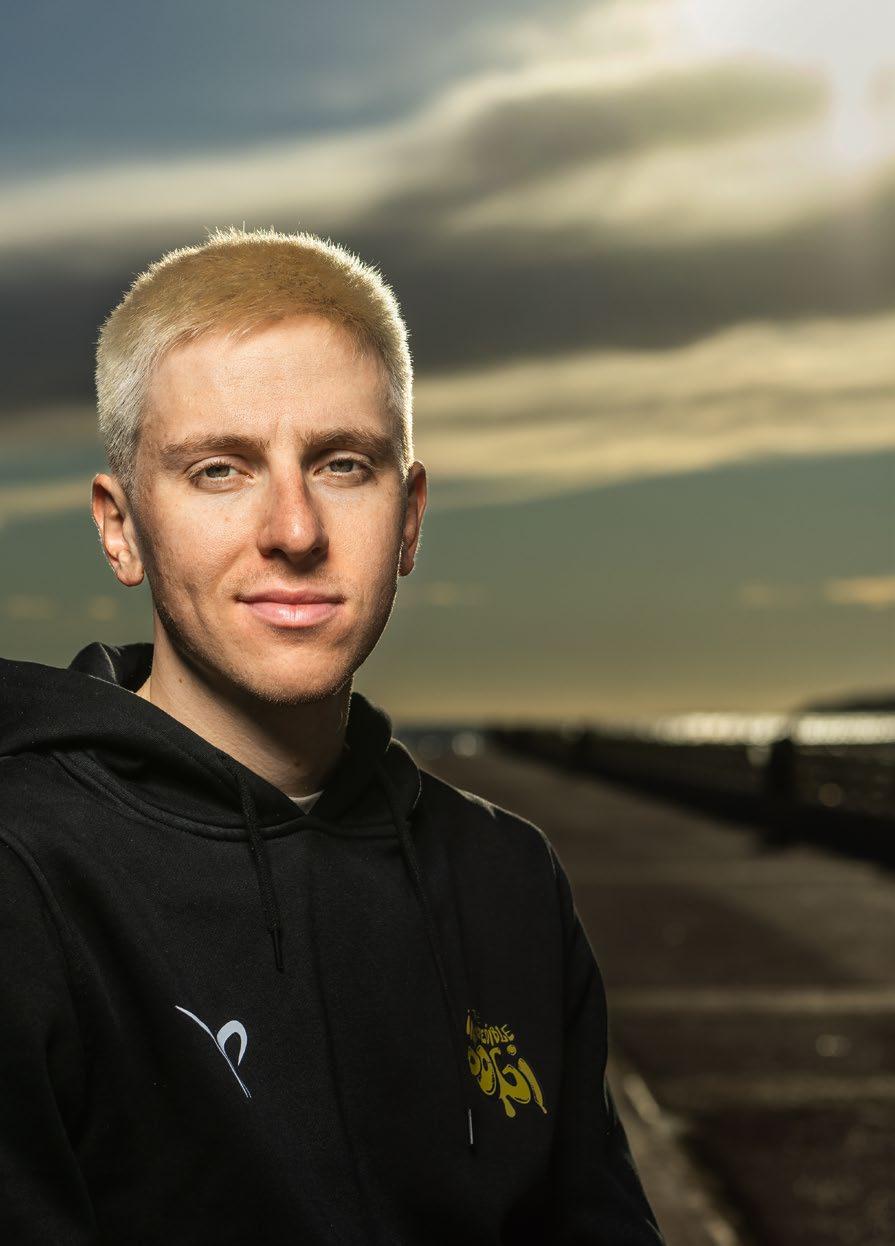
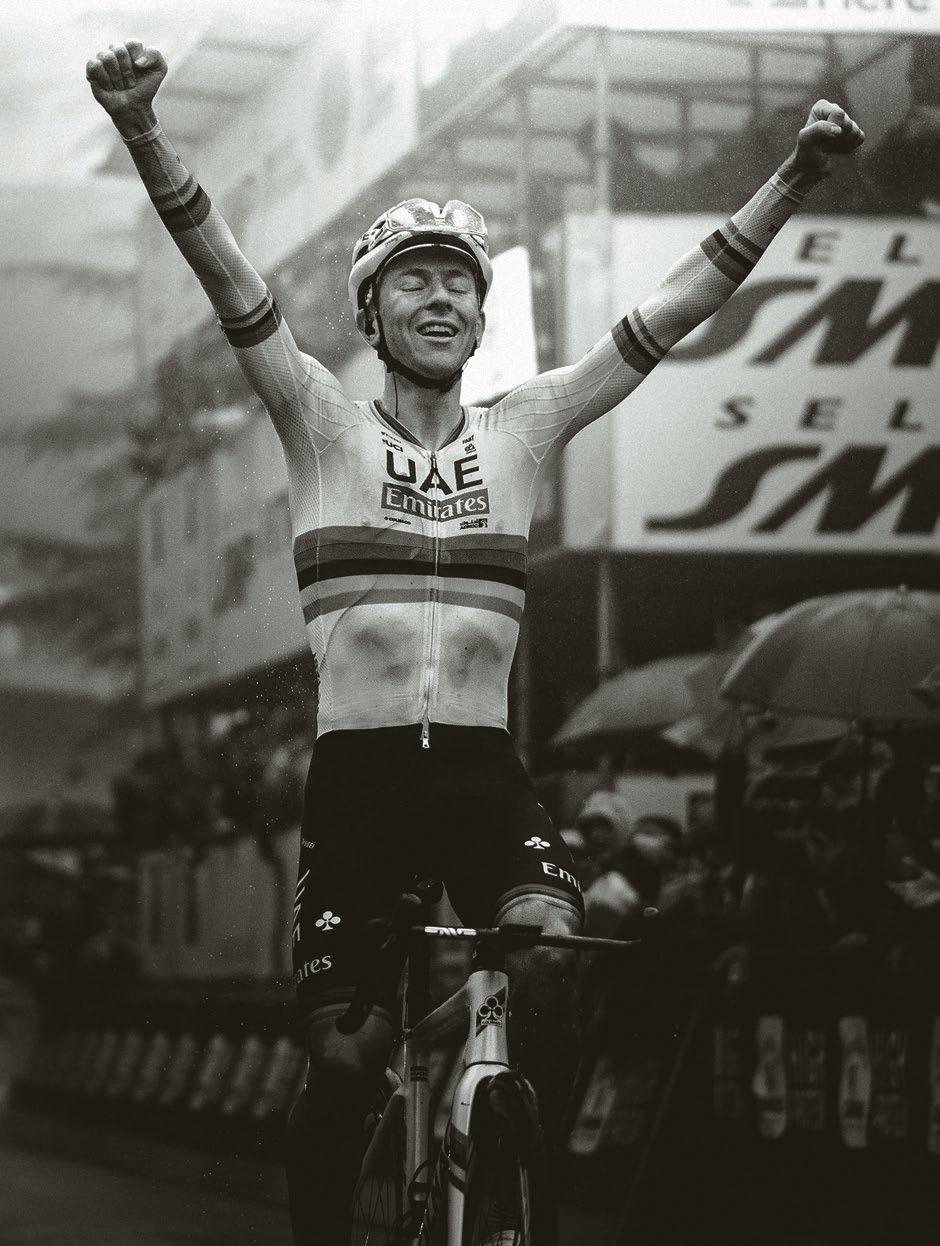
Since you are holding an Akrapovič magazine in your hands, you probably already know about Slovenia even before you have heard of the Prevc family of ski jumpers, NHL ice hockey player Anže Kopitar, the fast and successful ski racer Tina Maze, the incredible cycling heroes of the indestructible Primož Roglič and the invincible Tadej Pogačar (see his interview in this issue, ed.) and the magician with the basketball Luka Dončić, just to name a few. Yes, the country has produced some good motocross riders, like the MX3 World Champion Klemen Gerčar, but never has there been such an exceptional motocross rider as Tim Gajser from a country of two million. Also because, and I fully expect to be rapped on
partially due to its dispersed population, which promising all sorts of things, including a proper
national championship races. “For a while I was quite involved in trying to get permits for a new staging an MXGP race. Now I’ve stepped back I’ll be very happy if it comes through, but I won’t
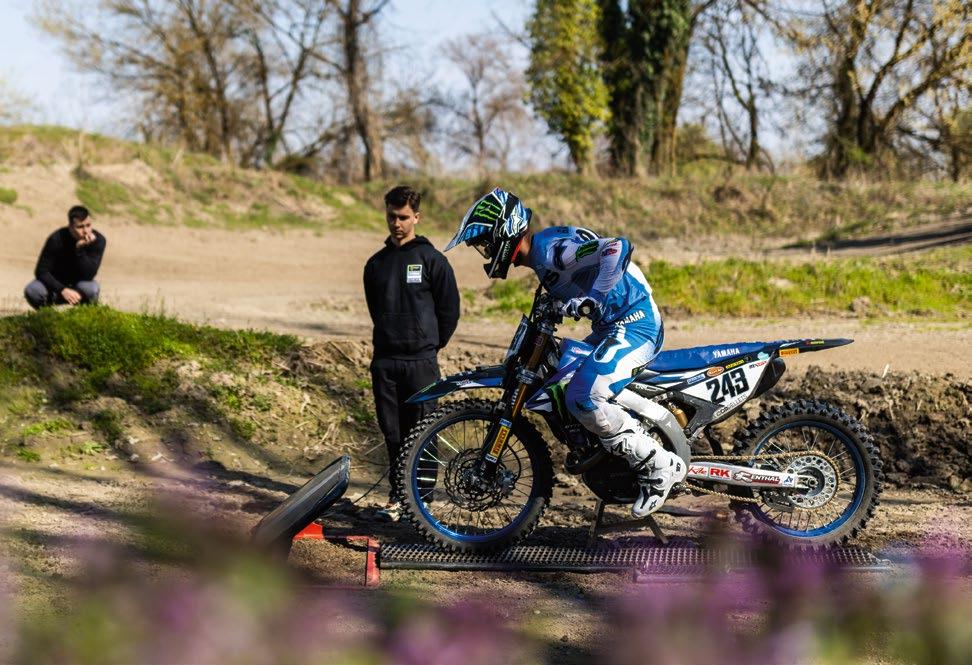
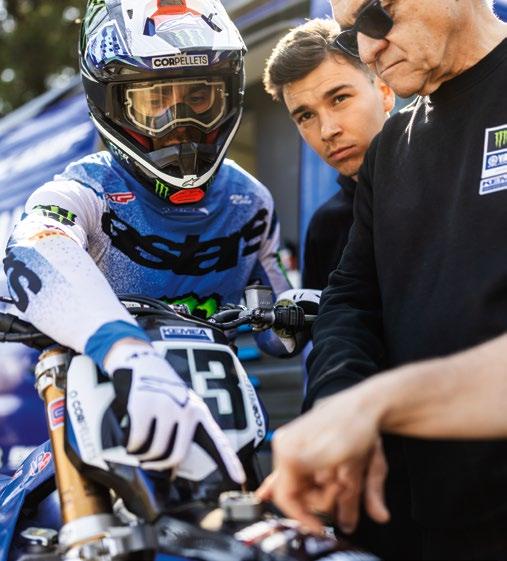
knobs had barely rounded off by a millimetre… Tim wakes up at seven. He trains two to three times a day, four times a week, with one of the sessions taking place on a track three times a week. He has Sundays off, “but not completely, I do some light training or stretching.” The practice the photographer and I visited was his second today. Since he had just finished his first FIM World Championship race with a new team and was ‘only’ fourth overall in Argentina, a suspension specialist and chief mechanic Massimo Castelli – who had said before that Tim was like a second son to him – were also present. After each session, Tim stops, focuses as if preparing for a freedive, and then begins to explain his impressions, which, as written above, require a good understanding of the suspension and the motorcycle’s response to the terrain. After a few exchanged words and looks, this time they decided on one click here, two clicks there “nothing too crazy, so as not to lose stability.”
When training is over, he likes to stay at home. In peace, with his fiancée Špela, his dog, a Cane Corso called Tiga (who, by the way, has five thousand followers on Instagram, about a hundred times fewer than TiGa243 – Tim’s account), and he goes to bed at ten or eleven at the latest. He is so attached to Slovenia, its people, nature, and relatively good accessibility to tracks and airports that he, unlike many top athletes, settled here despite the temptations of living in Monaco, Switzerland, or Andorra, with more favourable tax rates. Sometimes in the evenings he invites friends over and they play football under the floodlights – the real kind, not table football over a beer.
A few days after our talk, he stepped onto the podium for the first time on a Yamaha in Andalucia. ‘Only’ the lowest step, true, but the clicks were done correctly.
the young hopefuls. Or is it just the reverse – is even more on the international scene to secure the latter. Is it a fact or fiction that they used to
Three hours later, the motorcycle was pushed into the van, and we were off for a late lunch, with Tim opting for grilled chicken with vegetables and rice. He burns up to 4,000, 4,500 calories a day, which (without too much sugar and fat) is not that difficult to make up for. The job was done for the day. Does he ever get tired, does he ever feel he does not want to do his dream job anymore? “I’m only human, it’s normal to have a bad day. But I still do what I have to do. Luckily, such days are really rare.” He put it well – he is only human, though also the fifth best in the world in terms of career GP wins in the Motocross World Championship. He is not annoyed by children or anyone else asking for an autograph. The fact that Tim is different, friendlier and more down-to-earth than others from this profession, was also confirmed by one of his mechanics. Tim meanwhile agreed that there is no room for friendship in the line of 40 of the best motocross riders in the world, who take off at the same moment towards the same corner, a few meters wide. “We respect each other, yes, but we might only become good friends after retiring.” He is aware of the limits of his passion, he has already crossed them several times, and the penalties for doing so in motocross are very harsh. In 2023, he broke his femur at the Italian championship race in Trentino, just before the MXGP season. Ouch, and it had to happen right in Trentino in the north of Italy, always full of Slovenian flags and almost a home venue due to the proximity to his home country. He trains not only for raw strength, but also for flexibility, agility, and stability – of the mind and body. “There are so many good riders on amazing motorcycles at the top that I believe the difference is the head. How long can you remain focussed on one thing, on riding, before your mind begins to wander.”
“I’m only human, it’s normal to have a bad day. But I still do what I have to do.”
– Tim Gajser
After each session, Tim stops, focuses as if preparing for a freedive, and then begins to explain his impressions, which require a good understanding of the suspension and the motorcycle’s response to the terrain.
FIA World Endurance Championship
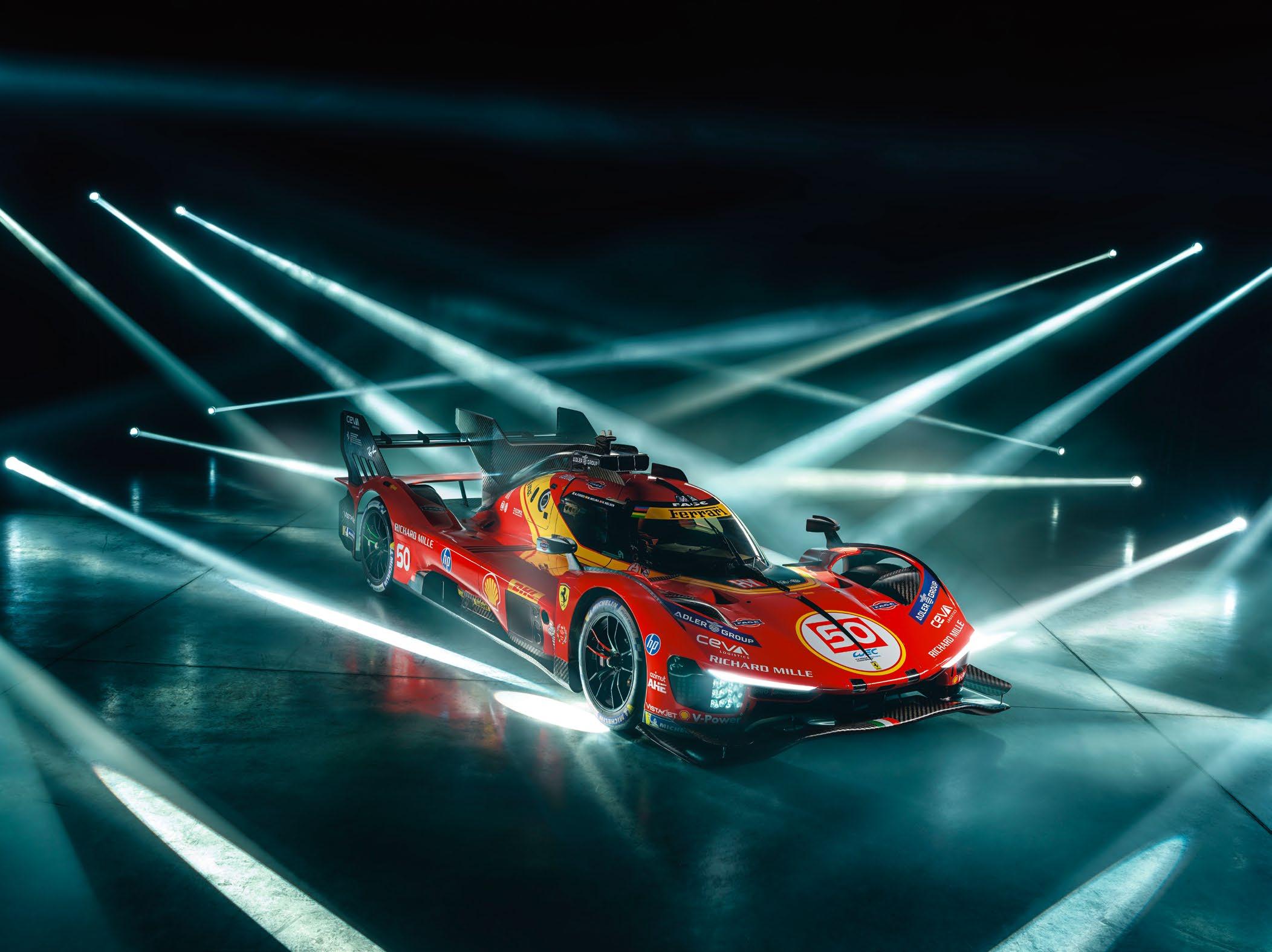
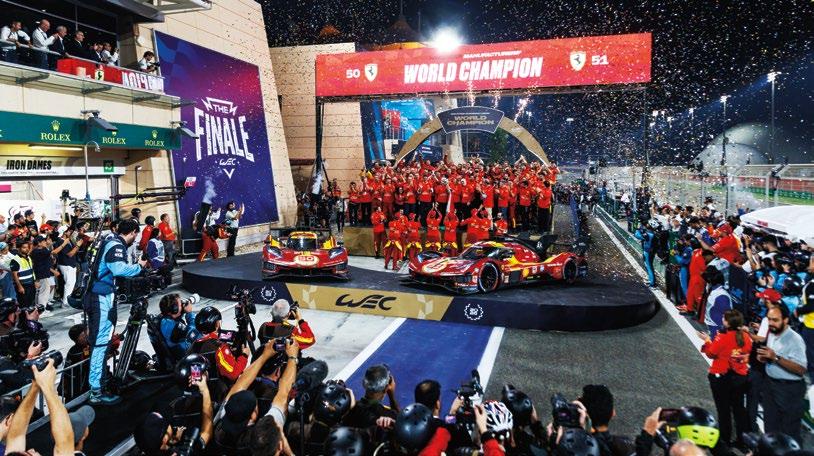
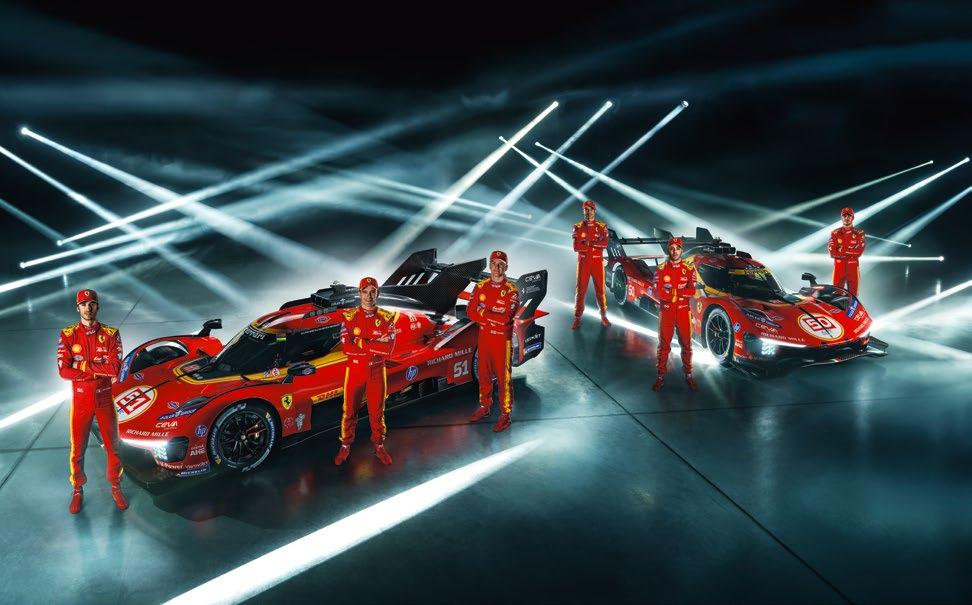
At the final race of the 2025 FIA World Endurance Championship, Ferrari celebrated the World Manufacturers’ title while Alessandro Pier Guidi, James Calado, and Antonio Giovinazzi secured the World Drivers’ Championship in the #51 Ferrari 499P. Ferrari claimed the Manufacturers’ crown 53 years after its last endurance world title way back in 1972.
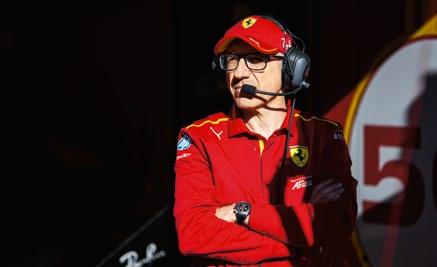
Has winning the two titles put the team under more pressure before the start of the 2026 season? “When you’re Ferrari, the goal is always to fight for victory, even if our competitors have, in some cases, strengthened significantly. We’ll give it our best and still be able to learn from what the track tells us,” Ferdinando Cannizzo, Head of Endurance Race Cars at Ferrari, confirmed that not that much has changed in the team during winter. In motorsport, just as in other sports, the basic principle is ‘In it to win it’. In the three years since returning to the top tier of endurance racing, Ferrari, apart from winning both world championship titles last year, also won the last three 24 Hours of Le Mans races. “These results are the outcome of four years of hard work and tireless commitment by the entire Endurance team. The project started from a blank sheet, and demonstrates how Ferrari was able to enter a new context, bringing expertise and technologies from the world of motorsport. Winning while competing against motorsport giants is a great honour,” Lucio Calogero, Endurance Power Unit & Controls Manager, reflected on the exceptional season three months later.
From analysis to optimisations
Looking in the rearview mirrors is common when one is behind the wheel on the racetrack, but less so in the engineering departments. Here the view is primarily directed straight ahead. After all, racing technology can always be improved. There is no resting on the laurels for the big teams. We wanted to know how winning the two of the most prestigious titles in the world of endurance racing affected Ferrari, especially in terms of preparing for the title-defending season. “Winning the world titles hasn’t changed our approach, which is the same we’ve followed since the beginning of the project: a lot of humility and awareness. With these guidelines, we’ve evolved the project year after year, improving, refining, and learning from our mistakes. Last winter, by analysing the car’s behaviour in-depth and trying to understand where and why we were not the benchmark in terms of performance, we were able to make huge strides forward in understanding the car and exploiting its potential. We’re convinced that the 499P still has room for growth, so we haven’t introduced any substantial changes this
“Winning the world titles hasn’t changed our approach, which is the same we’ve followed since the beginning of the project: a lot of humility and awareness.”
– Ferdinando Cannizzo, Head of Endurance Race Cars
year, except for a few small details resulting from the homologation required by the Federation at a new wind tunnel. We certainly haven’t changed our approach: analysis, studies, comparisons, ideas, and optimisations to make sure we are ready for the start of the season,” explained Ferdinando Cannizzo.
The approach to racing has therefore not changed for the world champions in the new season. What about the pressure, is there more of it with a target painted on your back? Lucio Calogero does not seem to think so. “Starting the 2026 season as world champions makes the challenge even more exciting; we’ll have to do our utmost to keep up with developments and defend the title. What’ll make the context even more thrilling is the entry of an increasing number of manufacturers, who’ll bring new projects after having had the chance to observe three full seasons of the category.
The best way to face this challenge is to remain humble and do our job to the best of our abilities as we always do, while knowing that there are aspects in racing we can’t fully control.”
Reliability versus performance
Many motorsport fans associate the term ‘performance’ with kilowatts or horsepower, but racing teams understand it much more broadly, reliability included. We all know the golden rule of racing: ‘To finish first, you must first finish.’ But what does the team from Maranello prioritise when developing solutions – performance or reliability? “Reliability is performance,” is Lucio Calogero’s short answer. “Since the beginning of the project, our work on reliability has never stopped. The learning curve leads us, race after race, to push the use of all mechanical systems to the limit in order to extract every bit of performance. The work on reliability must ensure that we can
do this without the risk of stopping, and it’s an extremely dynamic process, because the risks shift from one system to another as performance progresses. What wasn’t a problem yesterday can become one today. The goal of working on reliability is to identify conditions that could put the system under stress – it’s a daily exercise in thinking ‘what if,’ knowing that no matter how remote a situation may seem, it’ll happen sooner or later. So, without compromise, every time we identify an area that can be improved, we set up a plan to do so, always with a view to continuous improvement.” It truly is inspiring to hear the engineers speak.
The performance of a race car, including reliability as we have just heard, is not the only area where teams are looking for progress. The competition certainly did not sit idly by over the winter break, but was, like Ferrari, looking for ways to move
FIA World Endurance Champions
forward in all areas. “Even though the 499P is at the heart of our project, our approach has always been to work across the board on every aspect that can make a difference on the track. Beyond the pure performance of the car, there are many areas where we can continue to improve: from race strategy management, to optimising operational processes in the garage, to the training and development of our team members. Data analysis, internal communication, the physical and mental preparation of our crews, as well as logistical efficiency, are all fields where we believe there’s still room for growth,” is how Lucio Calogero explains the complex nature of the racing environment where every detail counts. “Our goal is to leave nothing to chance, continue to innovate and improve in every possible area.”
Working calmly
Every Ferrari 499P is made of more than 3,000 parts. Three thousand! Every one of them must be flawless. “Counting on technical partners such as Akrapovič is fundamental for our company, especially so in the world of racing. For the current season, our partners have ensured that they have
mastered their processes to produce certifiedquality components in a short time frame. Often, the most difficult thing is not to design a system, but to be able to replicate it identically in many units and in a short time. As every year, while we are racing on track, new developments for the coming years are being conceived and developed in the factory. Being able to count on Akrapovič’s technology and expertise is a key point for Ferrari in achieving its goals,” said Lucio Calogero.
Our speakers pointed out modesty as one of the values of the world championship winning team, alongside the passion and pride that can be felt in the air of the small town in Emilia-Romagna. The winners of the last three consecutive 24 Hours of Le Mans races did not enter any edition of the French classics, “confident that we’d win. I’d say our work is more focused on minimising the risks of losing,” are Lucio Calogero’s succinct and memorable thoughts.
All of us who follow racing know that the final result can be influenced by countless factors. The vast majority of these are not under the teams’ control. “Setting expectations for
something you can’t influence does not help you work calmly,” adds the Endurance Power Unit & Controls Manager at Ferrari, a sentence worth remembering, and by saying it confirms that despite the exceptional 2025 season and three victories at the 24 Hours of Le Mans, nothing will fundamentally change at Maranello. “In recent years, we’ve been both fortunate and deserving to reach the chequered flag, having done everything possible to give the team a chance to win, with no regrets. We’ll do the same this year, for sure.”
Time for the next round then, where everything will be the same yet different.
29 28
Akrapovič is a Ferrari Hypercar Technical Partner
UNSUNG HEROES
by Primož Jurman
photography Graeme Brown
BEHIND THE SCENES
AS IN ALL OF MOTORSPORT, RIDERS ARE IN THE FOCUS IN WORLDSBK. ALSO, THE SAME AS IN OTHER CHAMPIONSHIPS, THEY ARE SUPPORTED BY AN UNSEEN TEAM OF EXPERTS: TEAM MANAGERS COORDINATE LOGISTICS AND TACTICS, MECHANICS ADJUST SUSPENSION LATE INTO THE NIGHT, DATA ENGINEERS ANALYSE TELEMETRY, PHYSIOTHERAPISTS MANAGE THE RIDERS’ FITNESS, PR PERSONNEL COMMUNICATE WITH FANS, MEDIA AND THE GENERAL PUBLIC, ETC. WITHOUT THESE DEDICATED PEOPLE, A RACING MOTORCYCLE COULD NEVER BE THE FASTEST ON THE RACETRACK OR, INDEED, EVEN MAKE IT OUT OF THE PITS.
/ / / PADDOCK AS AN OPERATING THEATRE
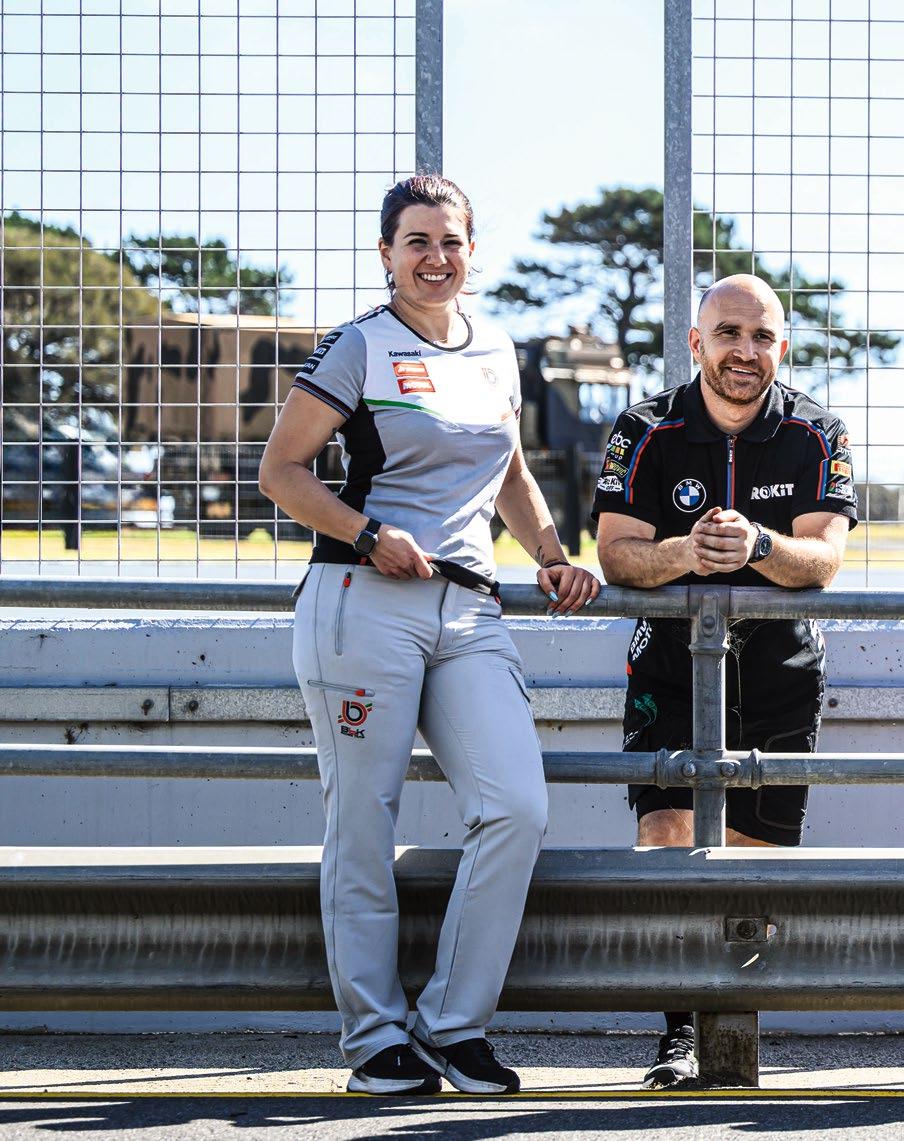
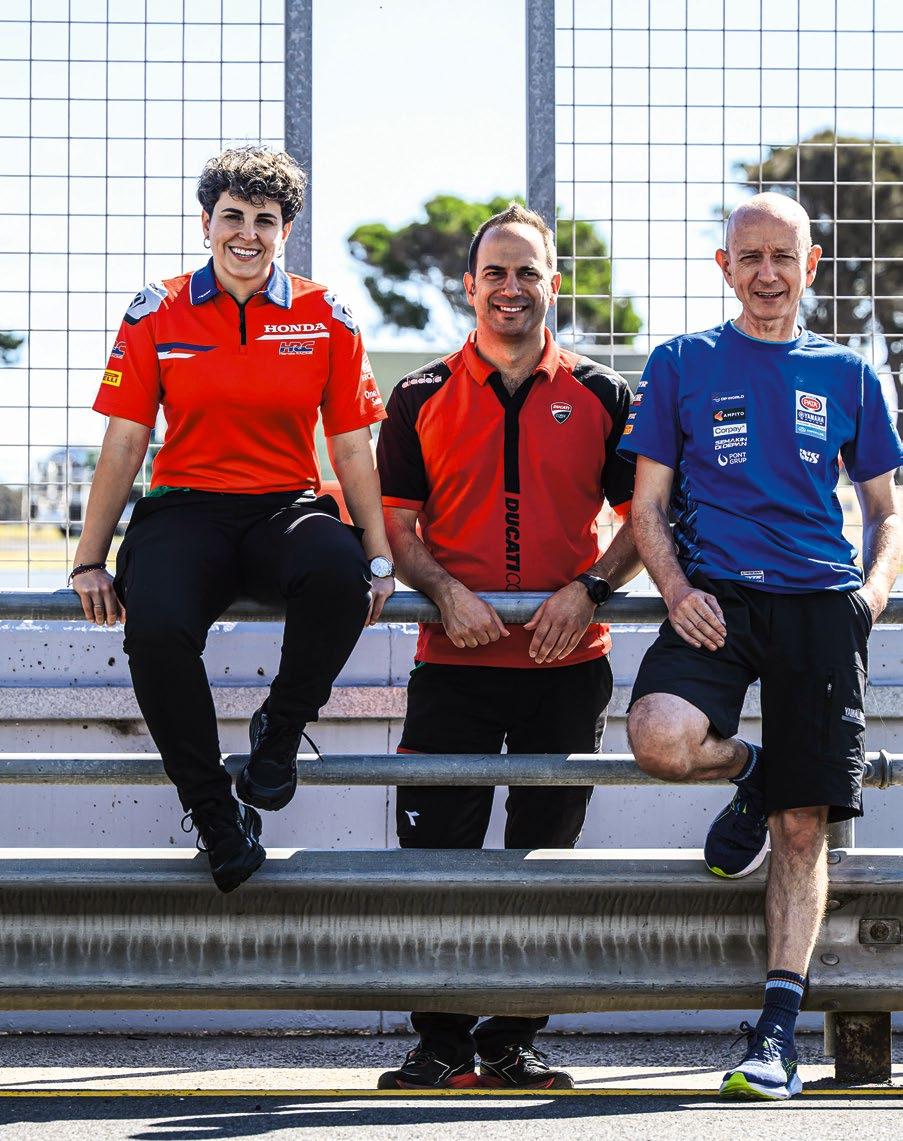
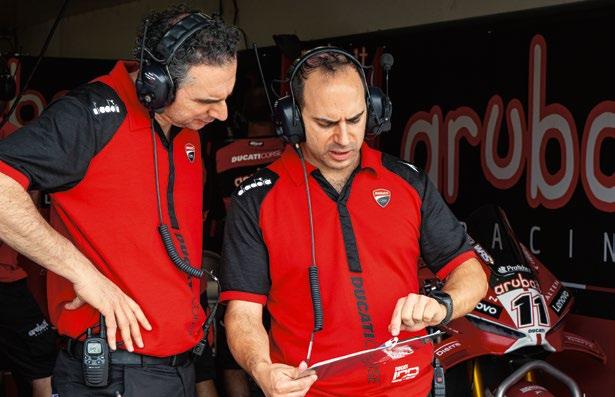
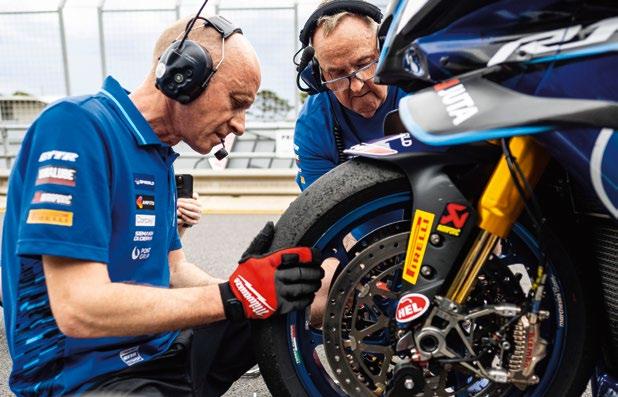
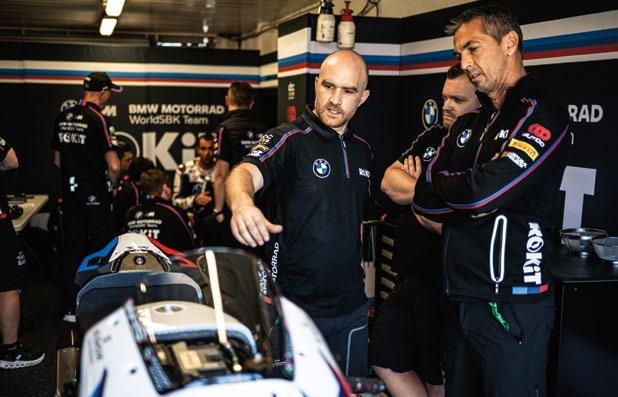
The ritual begins with mechanics entering the pit-box and approaching the motorcycle like surgeons approaching a patient. They disassemble the bike and check every component. It is the sum of all the small things that counts in the category where racing bikes are production models modified to the hilt. Suspension settings are altered depending on asphalt temperature, tyre wear and the racer’s riding style – a millimetre at the rear can mean better traction during acceleration, but a wrong setting can endanger him. We peeked into the teams’ pit-boxes and asked members of five teams to tell us what they do. Although they are of various nationalities, ages and perform different jobs, they have something in common: they adore motorsport and the work they do. So please meet Andy Carroll, Lead Technician at the ROKiT BMW Motorrad WorldSBK Team; Mara Soto, Tyres / Mechanic at the bimota by Kawasaki Racing Team; Giacomo Guffanti, Technical Coordinator Ducati Corse at Aruba.it Racing – Ducati; Lucia Menéndez, Data Engineer at Honda HRC; and Pete Bancewicz, Chief Mechanic at Pata Maxus Yamaha, who will present their jobs and the challenges they face.
/
/ / ENGINEERS WHO READ NUMBERS LIKE A NOVEL
While the riders are chasing the tenths, sometimes even hundredths and thousandths on the track, the digital world is beating in the paddock. The chief mechanic, the team’s cornerstone, is the bridge between the rider, engineers and mechanics. He listens to the rider’s description of his sensations on the track and translates it into technical language. Telemetry engineers monitor motorcycle data in real time: its speed in each sector, lean angle in corners, brake fluid pressure. The mechanics, analysts, team members responsible for tyre selection, assistants, they are all there.
Briton Andy Carroll, who has gathered a lot of experience in his 22-year career in motorsports, explains, “My role is to support the technicians on both sides of the pit-box.” He oversees processes in the garage, ensures consistency in the way the team works. During sessions he also monitors tyres and helps keep the team updated on what’s happening across
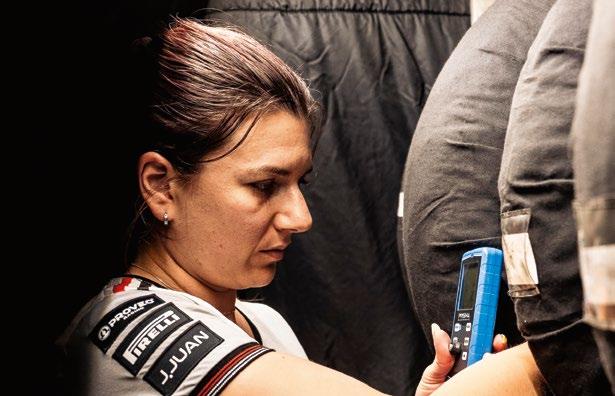
the grid. Mara Soto, a passionate dancer from Malaga, Spain, is in charge of tyres, fuel, and brake discs, assists the mechanics, and supports all the logistics and set-up activities alongside the rest of the team. She works on Alex Lowes’s side of the garage. Giacomo Guffanti from Monza, Italy, is the Data Analyst Engineer and as such he interprets and visualises data, speaks with crew chiefs, and reports to the Ducati Factory. He also talks to the riders alongside the crew chief in order to improve the bike’s performance.
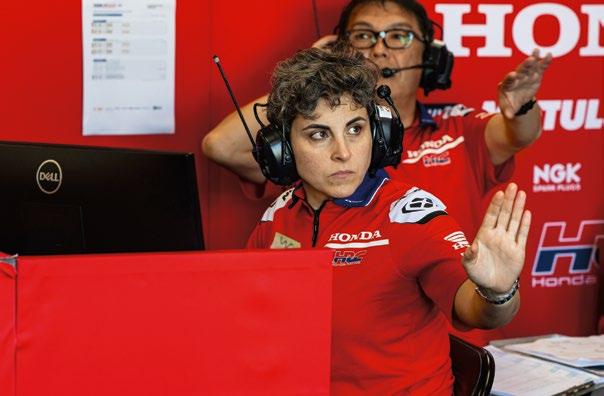
Lucia Menéndez, a 37-year-old Spaniard from La Rioja, is Somkiat Chantra’s Data Engineer and is in charge of the ECU and the strategies to get the best performance out of the bike.
Pete Bancewicz, Xavi Vierge’s Chief Mechanic described his job thusly: “I am the link between the Crew Chief and the mechanics. I try to make sure all the relevant information about the running of the bike, or fixing the bike, gets passed in both directions – to the two mechanics working on the bike with me, and to the Crew Chief and Application Engineer.”
After the rider returns to the garage, team members hold a meeting. His performance graph is displayed on the screen. “You lost two tenths here,” says the engineer. Maybe the rider entered the turn too sharply, maybe traction control intervened too quickly.
The decision to change the settings has to be prudent, as there is not much time between practice sessions. It is like playing chess at 300 kilometres per hour.
/ / / TEAMWORK
Speed is not only determined by mechanics, but also by psychology. The rider must trust the bike and the team. The pressures are immense – sponsors, public expectations, the risk of crashing. After a tough day, it is the team’s job to restore or strengthen the rider’s confidence. Discussion, analysis, a clear plan for the next track outing … all done to keep the rider confident and focused. The process is based on mutual trust between team members and on teamwork that is concentrated on winning – or at least achieving the best possible result.
“Confidence is everything in racing. We’re fortunate to have a strong group of people who bring and instil confidence in the team and support one another,” expressed Andy Carroll. It his opinion trust and belief in each
»The biggest challenge in this job is maintaining high morale when things are tough. Racing isn’t easy, and sometimes things don’t go to plan. It’s important to hold your head high for the rest of the team and the rider – and that’s easier said than done.”
– Pete Bancewicz, Pata Maxus Yamaha
“We’re fortunate to have a strong group of people who bring and instil confidence in the team and support one another.”
– Andy Carroll, ROKiT BMW Motorrad WorldSBK Team
“Trust inside the team is key – if we trust each other, the work is much easier.”
– Giacomo Guffanti, Aruba.it Racing – Ducati
“When we win races, it’s because a lot of people did a great job together. You always go further when you are part of a team.” – Lucia Menéndez, Honda HRC
“The most challenging moment happens when decisions are taken in a few seconds. I like the fact of having to process a lot of variables to come up with the best choices for better performance.”
– Mara Soto, bimota by Kawasaki Racing Team
// Si
Nevidni junaki v zakulisju prvenstva WorldSBK Tako kot v vseh motošportih je tudi v paddocku prvenstva WorldSBK v ospredju dirkač, medtem ko v zakulisju deluje nevidna ekipa strokovnjakov. Predstavili so nam tehnične in organizacijske izzive, s katerimi se soočajo ekipe. Andy Carroll, glavni tehnik ekipe ROKiT BMW Motorrad WorldSBK Team, skrbi za podporo tehnikom, nadzoruje postopke in usklajenost ekipe. Mara Soto, mehaničarka in specialistka za pnevmatike ekipe bimota by Kawasaki Racing Team, izpostavlja zahtevne trenutke med kvalifikacijami in na startu, ko je treba hitro sprejemati odločitve. Giacomo Guffanti je tehnični koordinator pri Ducati Corse in poudarja pomen interpretacije povratnih informacij dirkačev ter združevanja človeške in tehnične zmogljivosti. Lucia Menéndez, inženirka za analizo podatkov ekipe Honda HRC, verjame v moč ekipnega delovanja na visoki ravni kljub zahtevnosti situacije. Pete Bancewicz, glavni mehanik Xavija Viergeja v ekipi
Pata Maxus Yamaha, izpostavlja ohranjanje motivacije v težkih trenutkih.
other are essential for performance and teamwork is crucial. “We work openly and support both sides of the garage. We try to build a strong work ethic where everyone pulls in the same direction.” His view was seconded by Mara Soto, “Confidence is very important, firstly between the rider and mechanics, since we would be putting the rider’s safety at risk if we made mistakes, and secondly between mechanics themselves, because someone’s mistake is everyone’s mistake.” In the pit, it is her responsibility to predict what circumstances will arise in the short term to prepare the wheels for any variable that appears and provide the solution. She also interacts quite a lot with Pere Riba, the Crew Chief. Giacomo Guffanti emphasised the significance of trust and how important it is to have faith in oneself and others, as it makes work in the team much easier. He believes that knowing one’s own responsibilities means the work can be done much faster without getting in each other’s way. The importance of teamwork was also underlined by Lucia Menéndez as being the basis of it all. “When we win races, it’s because a lot of people did a great job together. You always go further when you are part of a team.” Pete Bancewicz concluded that confidence between the team and rider is crucial, both among team members and, even more importantly, the rider’s confidence and belief in his team. “Riders need to trust us, as mental strength plays a huge part in this sport.” He also emphasised teamwork as essential, since without the team, the job simply cannot get done.
/
/
/ SWEETNESS OF VICTORY AND BITTERNESS OF DEFEAT
As with any profession, though perhaps pronounced even more in motorsport, one sees prominent moments of victory and defeat. Sometimes a team can only be a step away from victory, while the same margin at other times prevents a poor result. It is precisely because the differences are so small that racing at the highest level brings so many challenges. And what are the challenges the WorldSBK teams face?
Andy Carroll noted that one of the biggest challenges is making sure everyone pulls in the same direction. In a team full of experienced people, there are often different ways of doing
things. His job is to ensure consistency, so that they have a repeatable platform. If everyone follows the same processes, it becomes much easier to diagnose issues and improve performance. Similarly, Mara Soto feels that the most challenging moment happens during the Superpole Qualifying, because decisions are taken in a few seconds. She also finds it very stressful on the starting grid when it’s not clear if the race will take place in dry or wet conditions. “I like the fact of having to process a lot of variables to come up with the best choices for better performance. I feel great satisfaction when we finish on the podium.” Giacomo Guffanti added that the best part of his work is interpreting riders’ feedback, “We analyse it with the other technicians and then give the solution back to the rider to make him faster. Our job intersects human and technical performance. Putting both together is an unbelievable result.” Lucia Menéndez believes, every run is a competition. For her, the biggest challenge is to always perform at one’s best and stay at a high level under pressure: “The best part is growing as an engineer and as a person. We use amazing technology, and I love sharing time and learning from different cultures.” Pete Bancewicz concluded by saying, that the biggest challenge in this job is maintaining high morale when things are tough. Racing isn’t easy, and sometimes things don’t go to plan, ”We all race to win, but when that isn’t possible and things don’t quite work out, it’s important to hold your head high for the rest of the team and the rider – and that’s easier said than done.”
While the spotlight mainly shines on individual riders in the world of racing, victory is always a team effort. The people working behind the scenes are the team’s backbone – unseen, yet an indispensable pieces of the puzzle. It is precisely this relationship, this awareness that success is not just due to an individual, but to the team, that is where the real essence of racing lies, it is true in WorldSBK, as it is in other championships.
by Matevž Hribar
Bor Dobrin, Fabio Farioli Archive
SUNGLASSES, SMILE AND VICTORIES
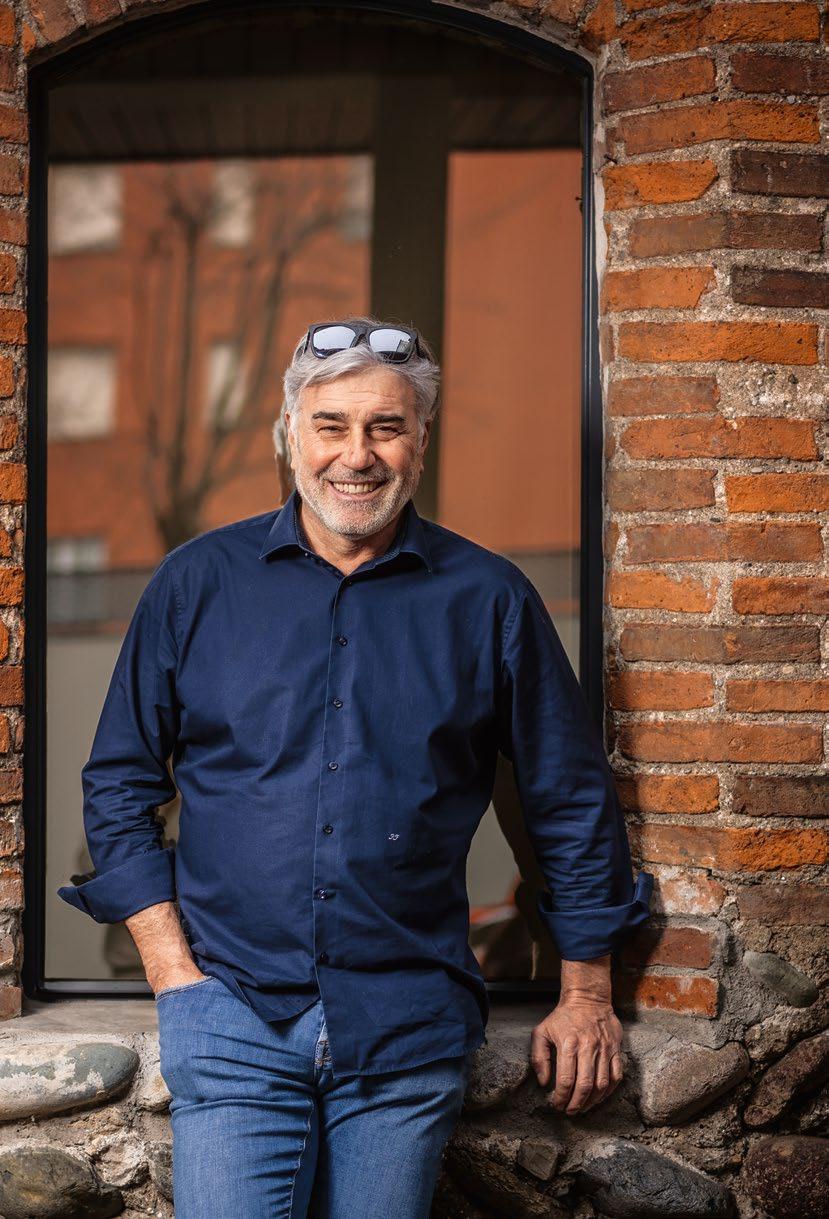
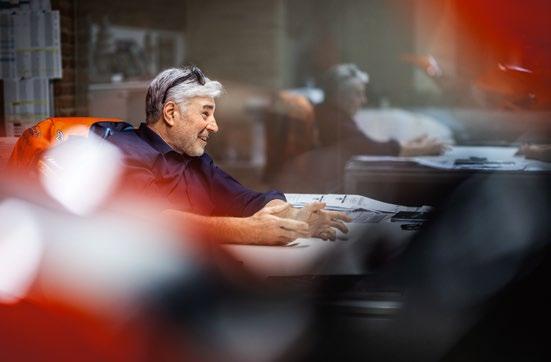
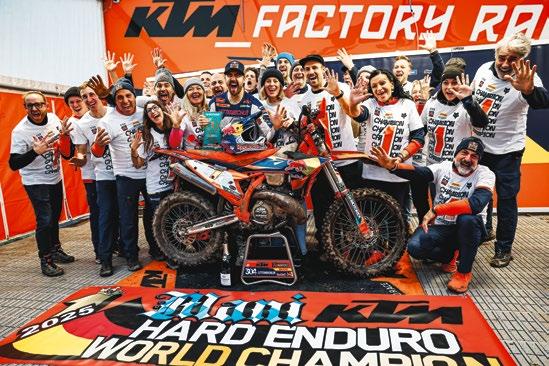
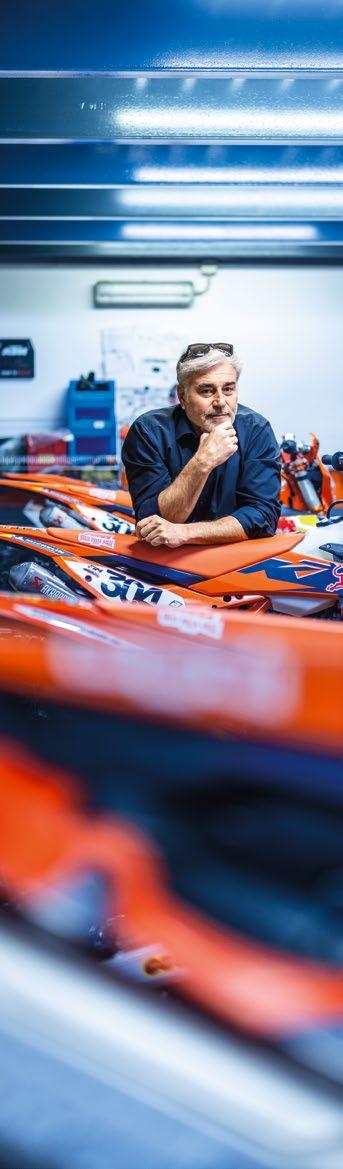
“But the sunglasses are my trademark. If I’m seen without them, people will think something is wrong,” laughs the grey-haired man with a close-trimmed beard and crow’s feet, when the photographer asks him if he could take them off. True, but his trademark is also his radiant smile. You must have seen him in a group photo, with the whole team by the motorcycle and the rider with the winning trophy in his hands, all beaming, so that you can almost hear their joy from the moment frozen in time. When I ask whether they have a joke they tell before the photo, he exclaims, “No, we’re just happy to win!” Well, winning is also his trademark. As Team Manager of Red Bull KTM Factory Racing, Fabio Farioli has amassed so many that the shelves in the workshop in Bergamo, where we visited him, are running out of space. “Hold on, don’t photograph them, they’re a bit dusty, sorry. How about some candy?”
PORTRAIT FABIO FARIOLI
photography
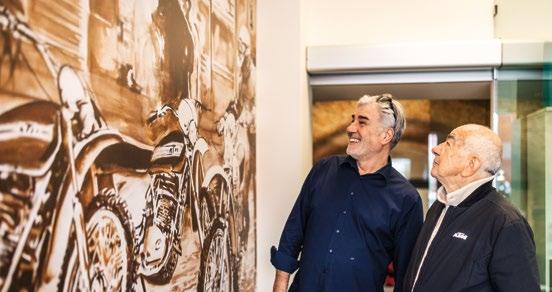
Even if you have not met the man, you have probably seen Farioli written on an enduro racing machine or two. But if you do not follow or love enduro – I know, we readers of this magazine are not the majority, after all – let me give you a number: Team Farioli has won no fewer than 97 world titles since 1990, to which we could add 16 European championship titles between 1974 and 1989, when the world championship was not yet a thing. Yes, Fabio is strongly to blame for the glory of the Austrian brand, which built its fame mainly on motocross, enduro and rally. Well, him and his father Arnaldo, a former baker who used to deliver bread on his motorbike before starting racing as an amateur. When KTM came to the Valli Bergamasche race, they unsuccessfully looked for a local to replace an injured factory rider. No one wanted to race with a motorbike with the gear lever on the ‘wrong’ side. No one but Arnaldo, who, after a successful performance and still young, signed with the Austrians. He became Italian champion in 1969 and took over as the official distributor in Italy, but soon after gave up racing due to business and, I guess, the birth of Fabio.
He helped others to begin racing instead, by launching a racing team because he believed that racing was the best promotion. Arnaldo, whom we saw walking briskly between the workshop, office and dealership during the interview, is one of the few, if not the only, person in the world who has worked with all KTM owners, and also one of those who have pledged their name and fortune to revive the brand after the financial crisis of the ‘90s.
Incidentally, some of the bikes for the Motohall exhibition were lent by Arnaldo and the Farioli family archive. The other 40 or 50, he himself doesn’t know exactly how many, vintage KTM models are stored in a hidden attic in Bergamo.
The success of team Farioli is based on relationship, respect, and loyalty. If we forget the two mini cross bikes that KTM didn’t make at the time, Fabio has never ridden another marque of off-road motorcycles in his life.
He has retained the passion for the orange brand and off-road motorsport up to now.
Racing a motorbike over rocks and mud in your turbulent youth is somewhat understandable; to do this professionally at 55, when one could peacefully sell the new and service the used motorcycles a few hundred meters away from the racing HQ in a dealership selling KTMs, GASGASs and CFMOTOs, is another kind of thrill altogether.
From a horse to ‘dachshund’
Contrary to today, when young people are introduced to the sport when barely out of their diapers, Arnaldo did not allow Fabio to race motorcycles until he was 15. He did not want him to experience the arrogant desire of some parents, who want to live their unlived
Fabio with his father Arnaldo
or unfulfilled dreams through their offspring. Fabio did ride 50 cm 3 and 80 cm 3 motorcycles, then a 125 cm 3 , which was called a dachshund because of its lowered suspension, but he was also jumping hurdles on a real horse in between. The day came when his father invited him into the world of racing, and he had to make a decision. He did. The horse was sold. At 15, he started in the 125 cm 3 class, a year later he moved to 250 cm 3 , and at 17 he was already riding 500 cm 3 bikes, becoming the Italian champion in the MX 500 Junior class. After a knee injury, he switched to enduro, although he never completely abandoned motocross. His love for enduro was partly due to the proximity of Valli Bergamasche, one of the prime enduro racing venues in the world, and partly due to his friends inviting him out to practice. In total, he won the Italian championship 14 times, bagged the 500 4T class World Champion title in 1993, was on the winning team at the International Six Days Enduro (ISDE) four times, and successfully raced in supermoto and rally. He got offers
Enduro is more about fighting the terrain than the competition, an endurance test for the flesh, metal and plastic, measured with a stopwatch.
from competing manufacturers, but this would have meant even more absence from home and after his family grew by two daughters, his racing kit was replaced by a team manager outfit. How many weekends does he spend away from home now? “Too many,” he laughs and starts counting the races from the Hard Enduro, SuperEnduro and EnduroGP calendar. He has to count them twice on both hands, then add a few races from the Italian championships, and the International Six Days Enduro… “I have a wonderful wife. When we met, she knew what my profession was.”
Secret to success: food truck
Well, not secret anymore with the publication of this article. He told me about the kitchen on wheels while talking about the needs of a factory enduro team. Success, as you might well have guessed, is not just a mega talented racer or a great bike, trustworthy partners or a great team. All of the above must come together. Farioli had the luck and the knowhow to have been able to set up an unofficial ‘Bergamo school’. He has a small band of top mechanics who all ride motorcycles, some also race them, and pass on and perfect their knowledge from generation to generation. Above all, Fabio tries to keep the atmosphere
in the team relaxed, friendly, and family-like. If you have not yet been to an enduro world championship race, go, if only just to feel the difference in the atmosphere compared to sports where competitors race elbow to elbow. Enduro is more about fighting the terrain than the competition, about finding racing lines among the hard trees and over even harder rocks, an endurance test for the flesh, metal and plastic, measured with a stopwatch. In addition to a team’s courage and ability, another secret to success is… food. They were the first enduro team to employ a cook, although, of course, the hospitality should not be compared to the MotoGP paddock, where great food is a given. “We sometimes do not have electricity, or even running water at our venues. But we must always have good food.” Like all enduro riders, they mainly consume a lot of pasta. “Everyone loves pasta if it’s good.” A bit of extra chocolate for Billy Bolt, please, and some more veggies for Manuel Lettenbichler, but Josep Garcia and Andrea Verona, representing Spain and Italy, apparently do not require anything and eat everything. In case you missed it, all four of them are current world champions.
“When I say ‘us’, Akrapovič is included” He also does not forget the partnerships he has been building for decades. Akrapovič is a brand he can trust and they have a relationship where useful information and products travel both ways. “When we need something, they react immediately. They supply top-notch products, and we provide quick and, I believe, valuable feedback from the toughest test tracks in the world. When I say ‘we’, I don’t just mean the mechanics and racers, but also partners. Akrapovič is one of us. And I have to say, I miss their barbecue party at Erzberg. We were all looking forward to it.”
It was getting towards lunchtime and employees started walking by, almost everyone with a mischievous remark about Fabio posing for the camera. We ended the off-therecord conversation at a nearby restaurant with a superb risotto with porcini, pasta with salmon and, recommended by Fabio, beef steaks in a sauce with really good local polenta. I will not give away the location, because you have to make a booking and it is only open during lunch. It will remain another little secret of the dolce vita
MASTERS!
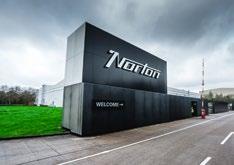
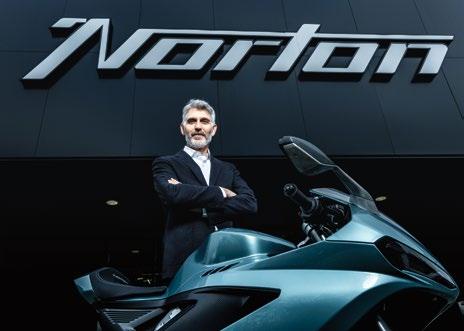
VISITING WITH (THE NEW) NORTON MOTORCYCLES
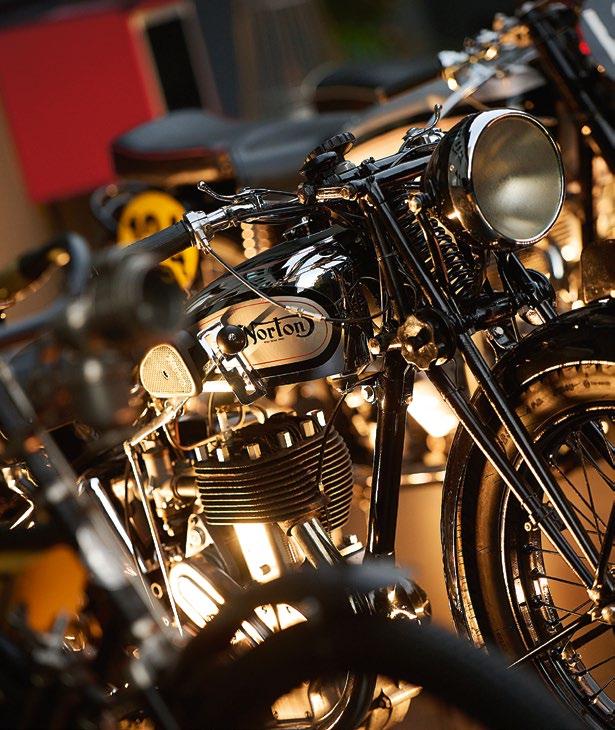
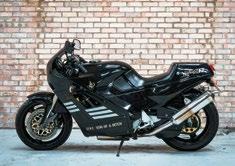
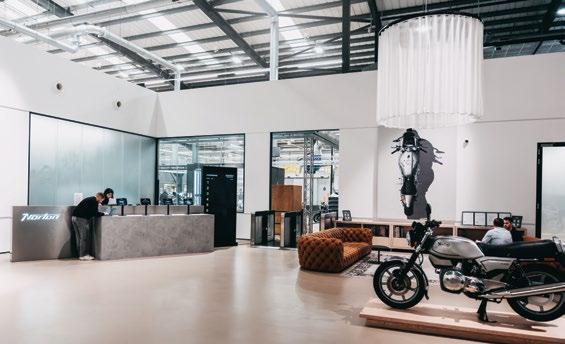
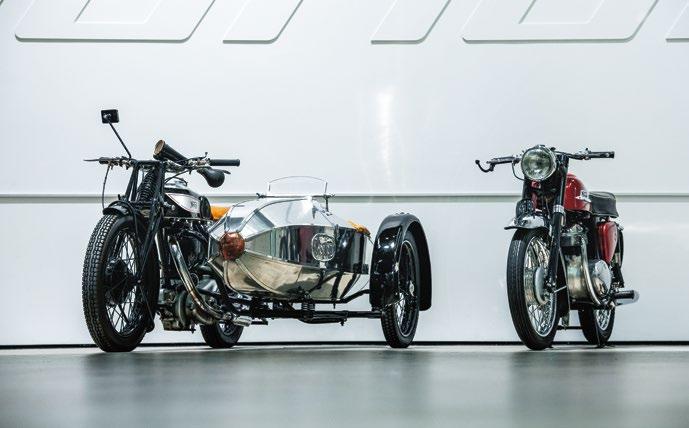
display as if we were in a museum. These are the legendary Nortons made during more than a century of the brand’s existence. I spotted two brown leather sofas in the lobby’s corner next to the coffee machines and sat down there. I hadn’t even finished my coffee when I was already welcomed by Piers Scott, who takes care of the company’s PR through an authorised agency. The conversation soon got going and I opened up by praising Norton for a great first impression. He quickly interrupted me, pleased, “We are currently in a transition. We are moving away from the production of ‘old’ models, such as the neo-retro modern classic Commando 961. It was a wonderful bike, but what is coming now is a completely different story. We are sailing into high-tech waters.”
REBIRTH OF A GLOBAL PLAYER
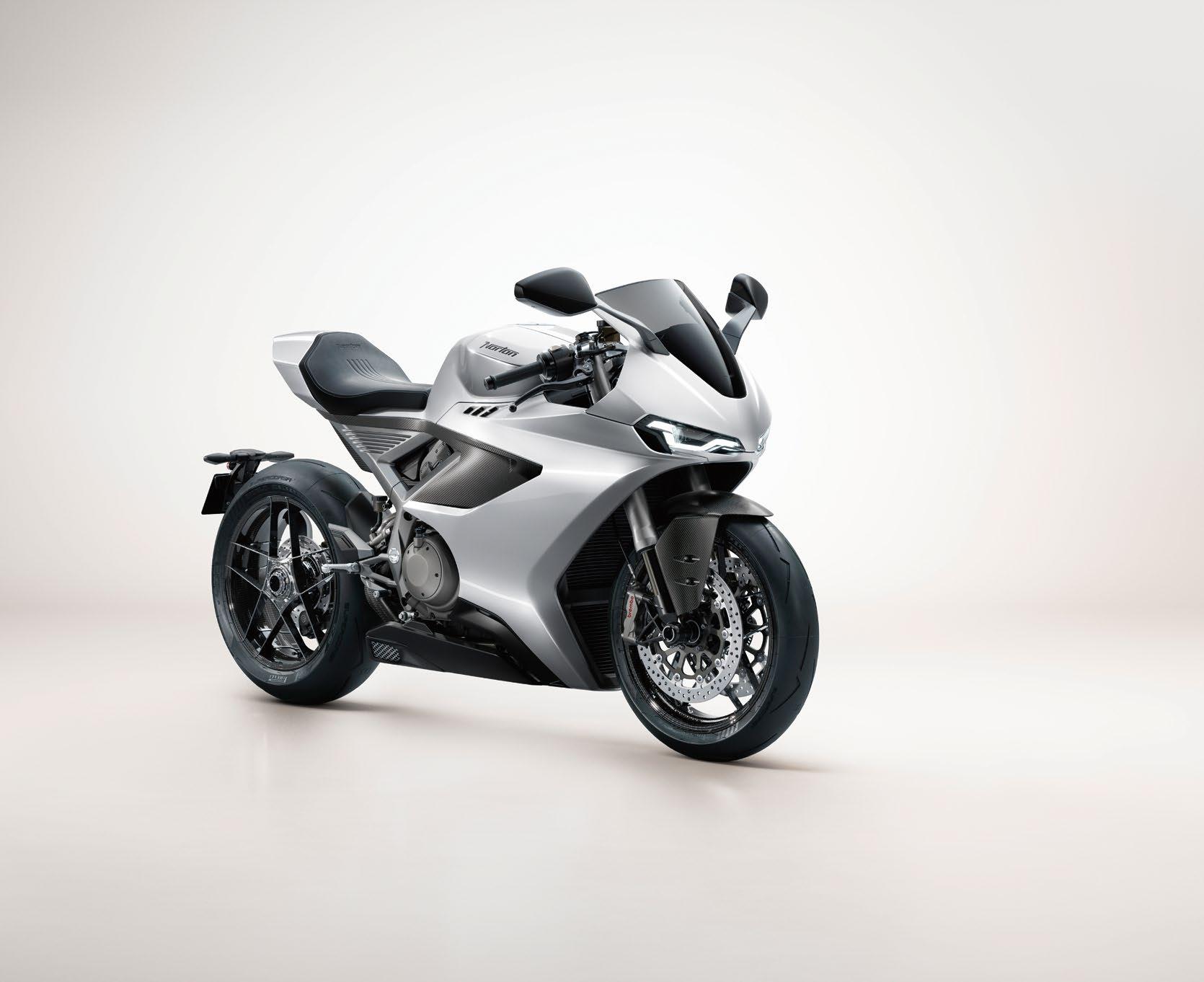
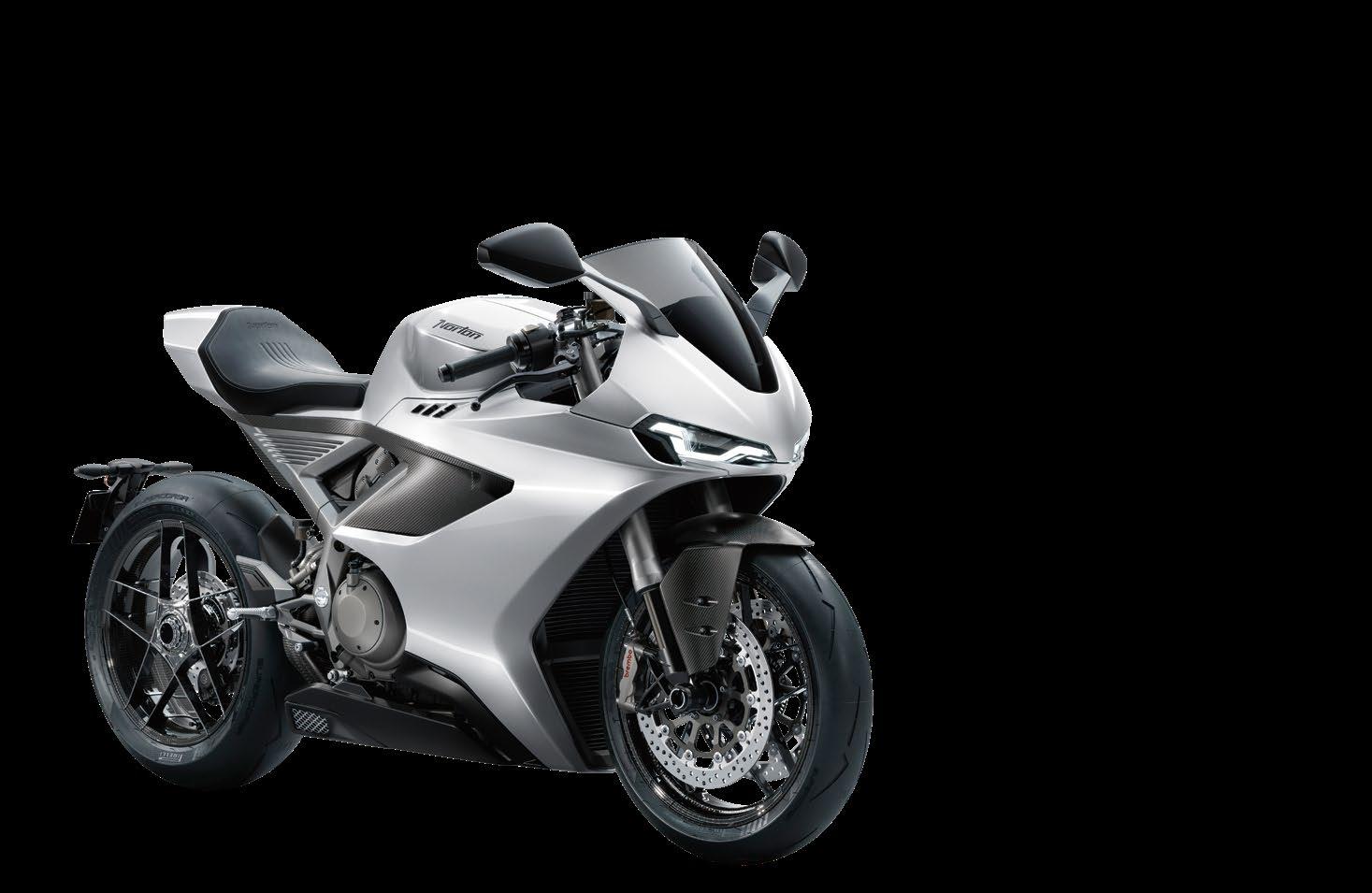
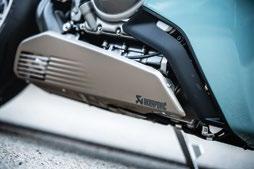
The new Norton, managed and owned by the Indian TVS Motor Company, the world’s third largest motorcycle manufacturer, is progressing full speed ahead. They plan to expand to Germany, Spain and Italy this year, followed by France, Portugal, the USA and India later on. Norton, founded in 1898, is returning to the world of super-prestigious modern and luxury motorcycles with a bang. It is not surprising that the first new model from the factory is a superbike named the Manx R, which, according to what I’ve been told, is not supposed to be a racing motorcycle or even a motorcycle for the race track, although it would certainly not feel out of place there with its super-sporty characteristics, looks, more than 200 horsepower, carbon wheels, an Akrapovič exhaust, Brembo brakes
“IT IS A CHALLENGE TO COMPLETELY REINVENT A MOTORCYCLE BRAND WITH AN ICONIC NAME AND A LONG HISTORY. NORTON MEANS A LOT TO MANY PEOPLE.”
– BRIAN GILLEN
and other first-class components. Norton’s new family of motorcycles was codesigned by Gerry McGovern, the previous head designer at Jaguar and Land Rover. At Norton he performs the role of a senior advisor, responsible not only for designing the motorcycles, but for Norton’s brand identity. Currently, more than 200 people are working on the new Nortons (an adventure motorcycle called Atlas is coming soon), while more than 1000 developers additionally work for TVS.
The Indian company, managed by the third generation of the founder’s family, has invested more than 250 million British pounds in the new Norton so far as well as acquired the Italian engineering center Engines Engineering, founded in 1979 in Bologna, which has been designing and developing full bikes for many Italian and global brands. The aim for that purchase was to enhance additional engineering knowledge and experience for all motorcycle brands under their umbrella and it certainly looks that they are not starved for knowledge.
TECH-DRIVEN TORQUE OPTIMISATION
The Norton of today does not hide its ambitions. They want to compete with the best, and take their share in the prestigious top performance motorcycles market. “We are striving for a dramatic, modern, eye-catching motorcycle, full of new technology, but also special in terms of design. Our V4 engine was designed entirely at Norton and is also built here. Its sound is extremely important to the project, so we are delighted to have Akrapovič as our partner in developing and supplying the exhaust. The engine has a really cool sound. It is extremely light and sporty, but still stays within the legal limits,” Norton workers tell me as we sit down for coffee and tea.
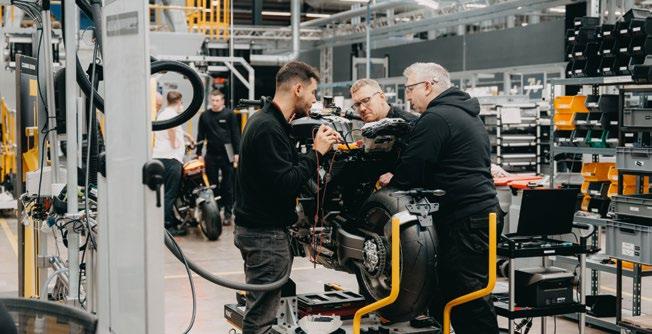
Then it is time to tour Norton’s ultra-modern and fully computer-aided production line with Mark Burditt, Norton’s Chief Concept Engineer, as my guide. As we walk around the plant, he explains that before having decided on the character of their new bike, they had studied 30,000 miles of riding habits and found that the riders primarily use the engines in the mid-range torque 90 percent of the time. That’s why they decided against a highrevving powerplant, which is what works best on the racetrack. “For the road version, we were looking for an engine that offered as much torque as possible in the middle or low-rev range,” says Burditt.
REINVENTING AN ICON
At the conclusion of our visit, we are joined by Norton Chief Technology Officer Brian Gillen, a well-known technical guru and innovator in motorcycle circles. I have met Brian before, as he spent many years developing motorcycles for MV Agusta before joining Norton. I wondered whether his new job was challenging or stressful.
“Definitely both. It is a challenge because we are trying to completely reinvent a motorcycle brand with an iconic name and a long history. Norton means a lot to many people, and that’s where the stress comes from, because we are representing a famous name and many years of successes. Every decision hangs on the question of whether it is suitable for the brand.
“We have new platforms and a new vision. This is a great opportunity and I’m pleased to be able to contribute my knowledge and experience. Our competition is looking for performance and racetracks, while we are a torque-based brand that offers torque and capable motorcycles that
Brian Gillen
impress with their usability, riding characteristics and acceleration. Norton has always welcomed new and technologically interesting solutions and I’m not only referring to its famous Wankel (rotary) engine or Featherbed frame. There were a lot of challenges with the new Manx R. The exhaust system was certainly one of them and I’m glad to have been cooperating well with Akrapovič for many years. They really had to do their best, because there is precious little space under the motorcycle where the exhaust is located. Due to the exhaust’s small volume, its development, integration and production were extremely challenging.”
A BALANCE OF HERITAGE AND DEMAND
Since I know that the technical boss is a former avid racer and still very much interested in racing, I decided to poke him a little. Will they take the new Manx R to the racing asphalt? “Racing success has played a big role in Norton’s history. We are not hiding our ambitions and we are definitely flirting with this idea – in the future. But, as I said, we would like to get our bikes into the hands of our customers first to fully satisfy the demand and expectations. Then we may decide to focus on racing,” was Gillen’s frank reply.
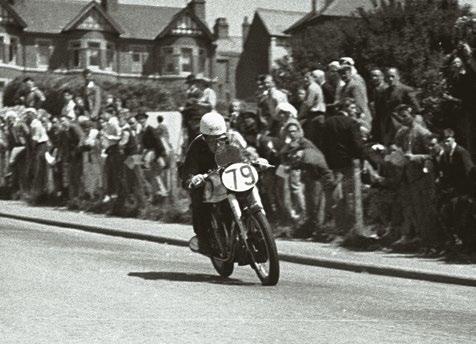
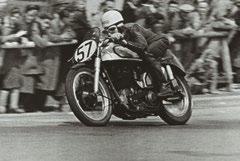
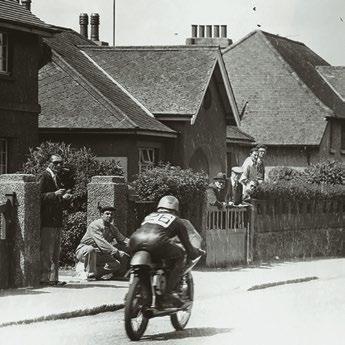
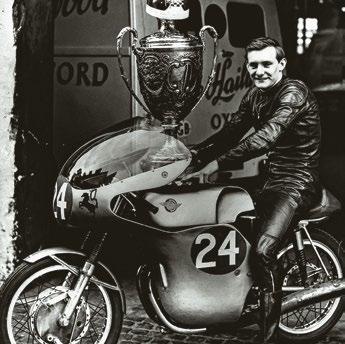
Geoff Duke, Norton 1950, Junior TT Isle of Man
Geoff Duke, Norton 120 FF, 1950
Bike Stuff
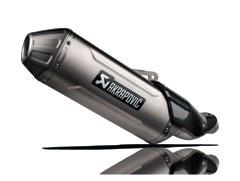
Akrapovič exhaust systems are designed for riders who demand maximum performance from their motorcycles. They feature exceptional production quality, hi-tech materials, increased engine performance and all come with amazing sound and appearance as standard. The change is also visual, as Akrapovič mufflers perfectly fit the exterior line of modern motorcycles and add a clean racing image.
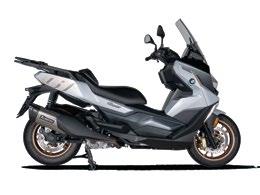
BMW C 400 X / GT
+ 0.9 kW (+ 1.2 hp) at 7,500 rpm
+ 1.1 Nm at 7,500 rpm
- 1.7 kg (- 33.2 %)
by Mitja Reven
+ 1.3 kW (+ 1.8 hp) at 11,000 rpm
+ 0.8 Nm at 7,500 rpm
- 1.0 kg (- 30.7 %)
+ 0.5 kW (+ 0.7 hp) at 5,600 rpm
+ 1 Nm at 3,000 rpm
- 0.8 kg (- 25.8 %)
Versatile layout with wide surface
Titanium one-piece construction
High mechanical strength
ABE type approved
+ 0.7 kW (+ 0.9 hp) at 3,000 rpm
+ 3 Nm at 3,000 rpm
- 0.2 kg (- 5.1 %)
Standing up and heel-down functionality
+ 0.6 kW (+ 0.8 hp) at 9,000 rpm
+ 0.8 Nm at 5,000 rpm
- 1.5 kg (- 35.3 %)
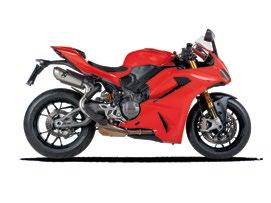
Ducati Panigale
V2 / S / Streetfighter V2 / S
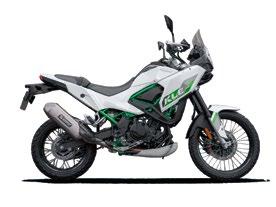
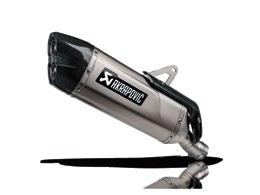
Kawasaki KLE500
Adventure Footpeg Set (Titanium)
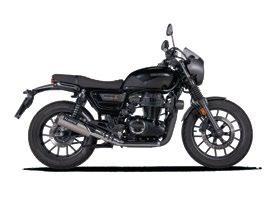
Honda GB350S
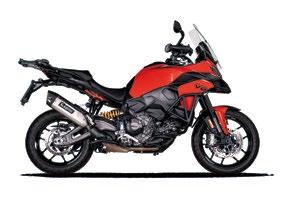
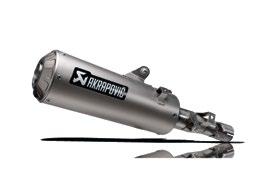
Ducati Multistrada V2 / S
Car Stuff
by Mitja Reven
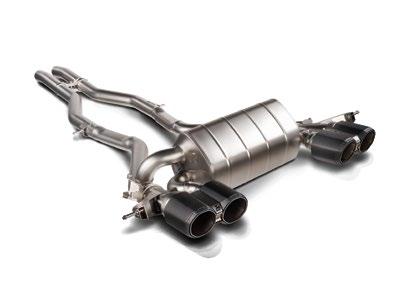
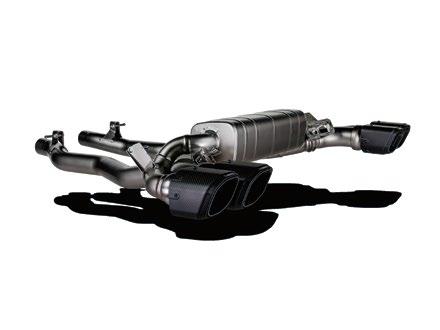
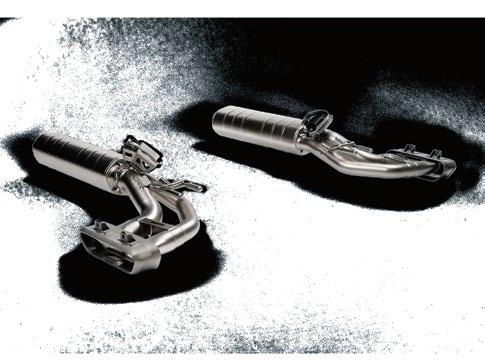
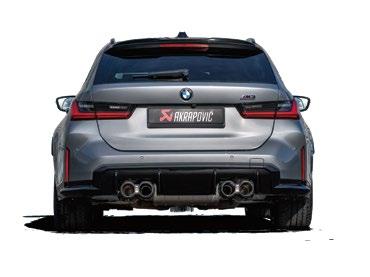
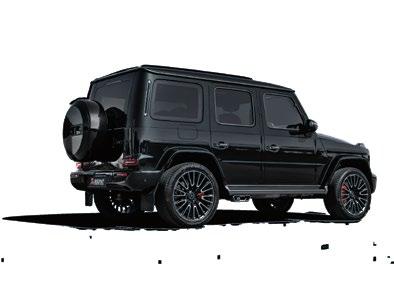
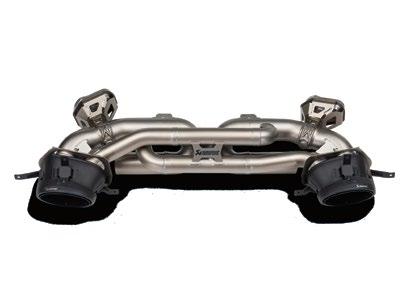
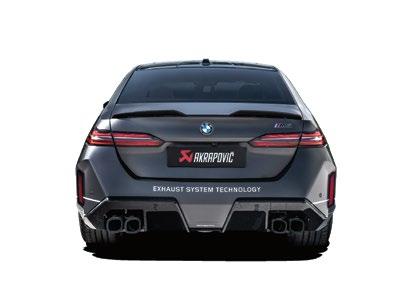
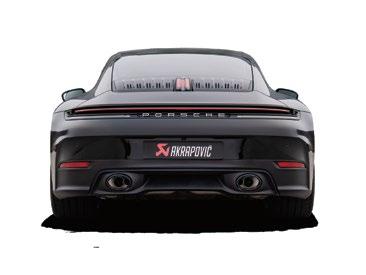
Check out the latest Akrapovič aftermarket exhaust systems and optional carbon-fibre products for cars. By using only the best materials in combination with high-tech know-how and exquisite craftsmanship of Akrapovič employees, the company has created a package that stands out from everything else on the market.
BMW M3 (G80 / G81)
+ 8.0 kW (+ 10.9 hp) at 6,000 rpm, + 13.9 Nm at 5,000 rpm, - 8.3 kg (- 35 %),
Mercedes-AMG G 63 (W465)
+ 15.8 kW (+ 21.5 hp) at 5,950 rpm, + 25.3 Nm at 5,950 rpm, - 9.4 kg (- 41.4 %),
BMW M5 (G90 / G99)
+ 5.2 kW (+ 7.1 hp) at 2,050 rpm, + 24.3 Nm at 2,050 rpm, - 6.1 kg (- 31.8 %),
Porsche 911 Carrera / T / S / 4S / Cabriolet / Targa (992.2)
+ 4.7 kW (+ 6.4 hp) at 7,150 rpm, + 10.4 Nm at 3,150 rpm, - 6 kg (- 51.4 %),
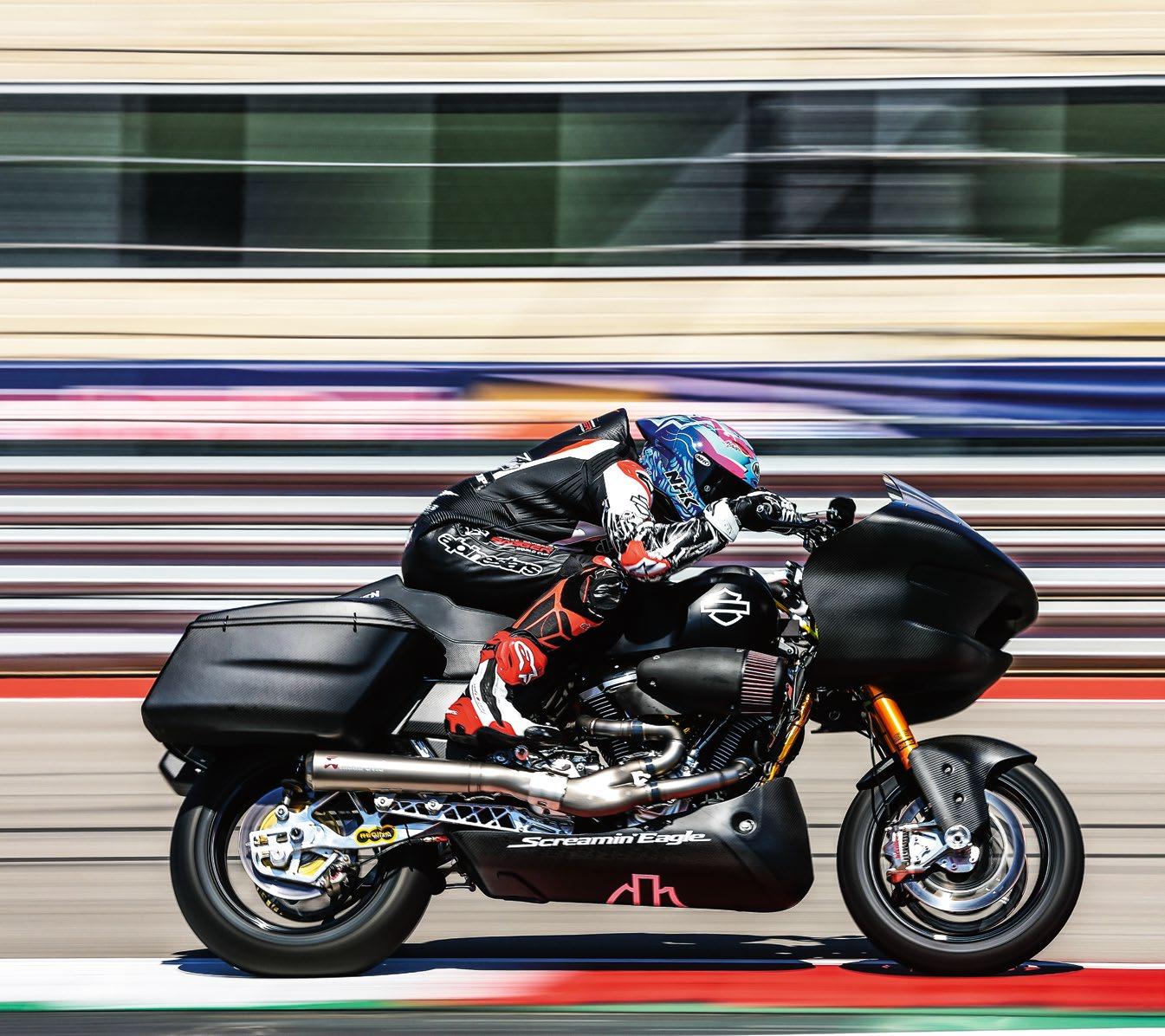
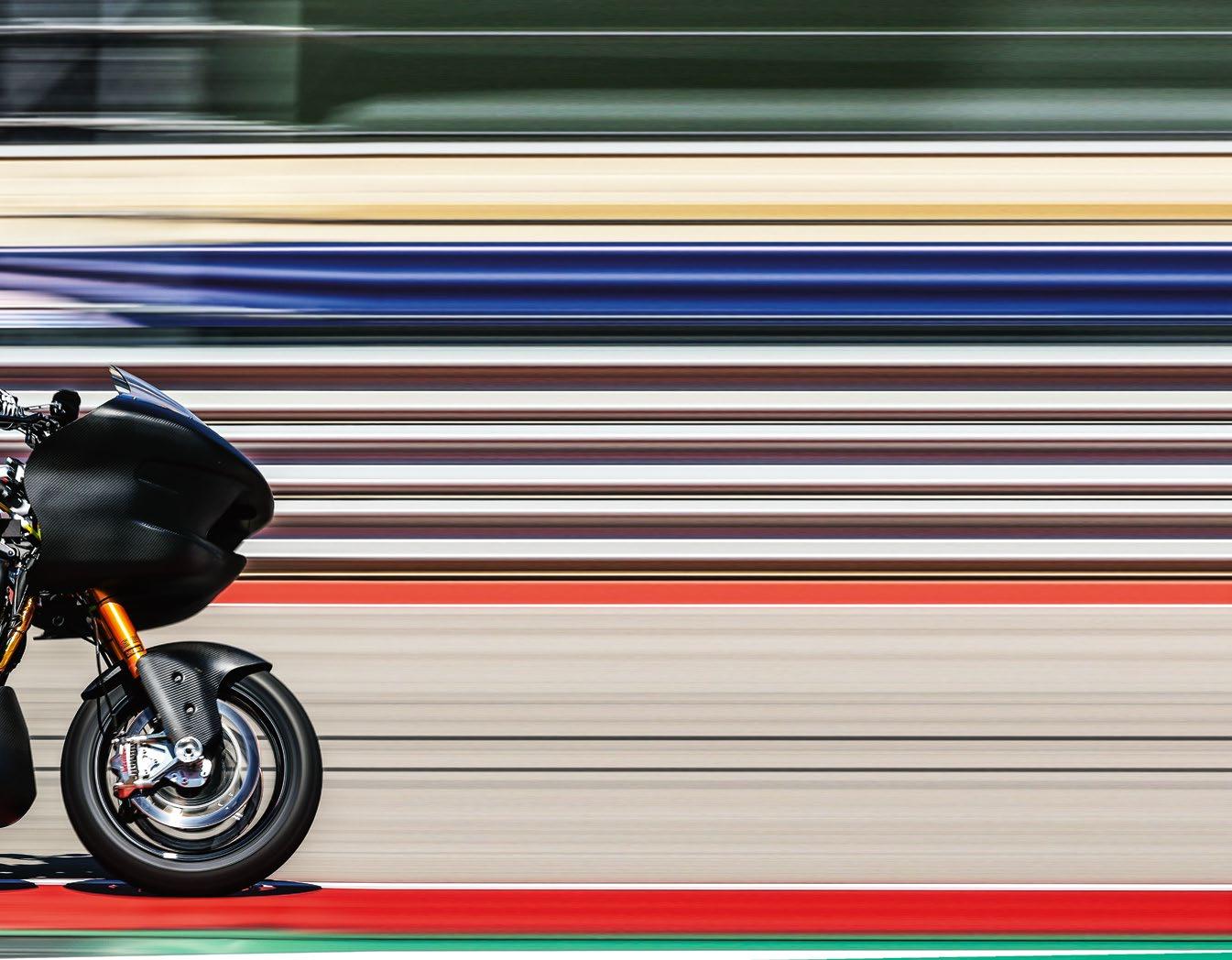
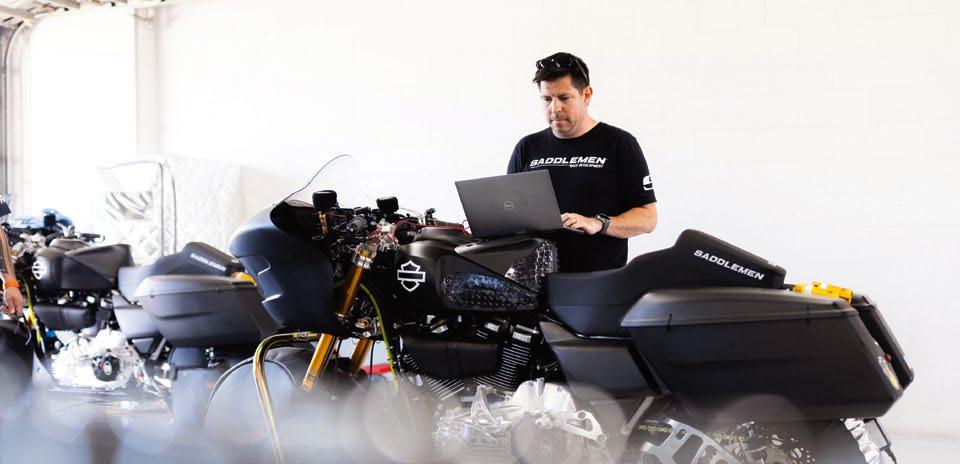
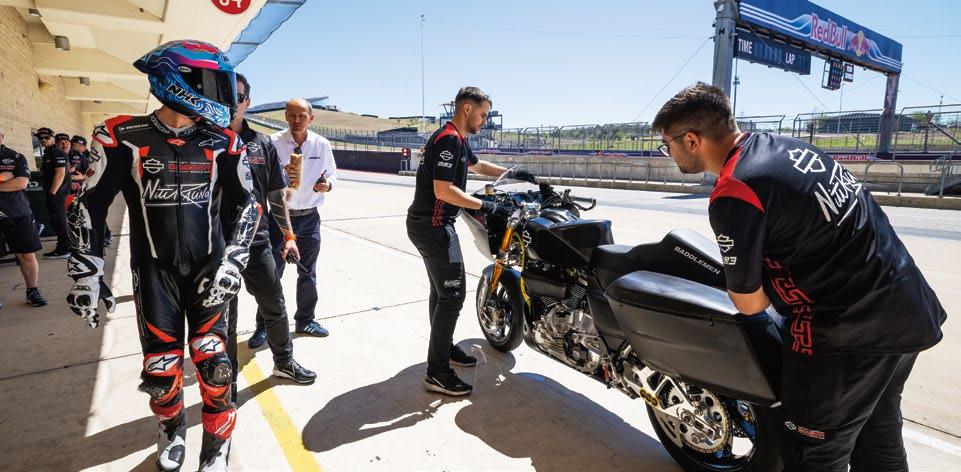
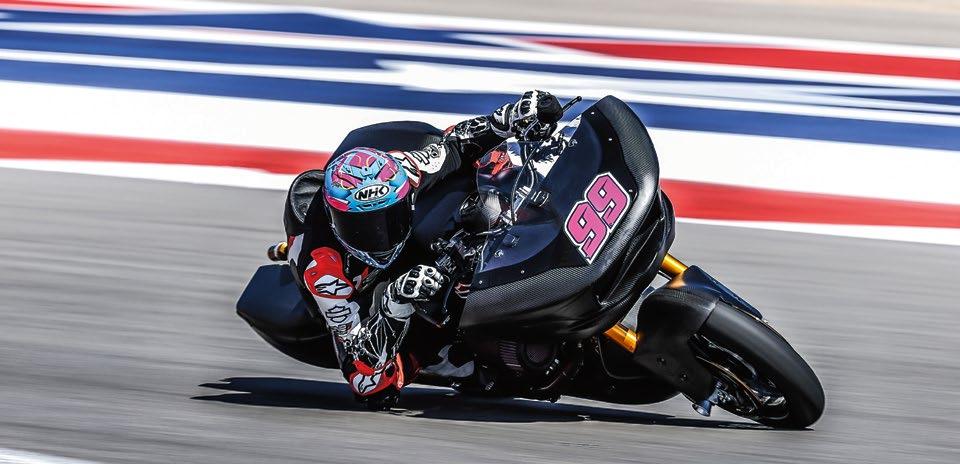
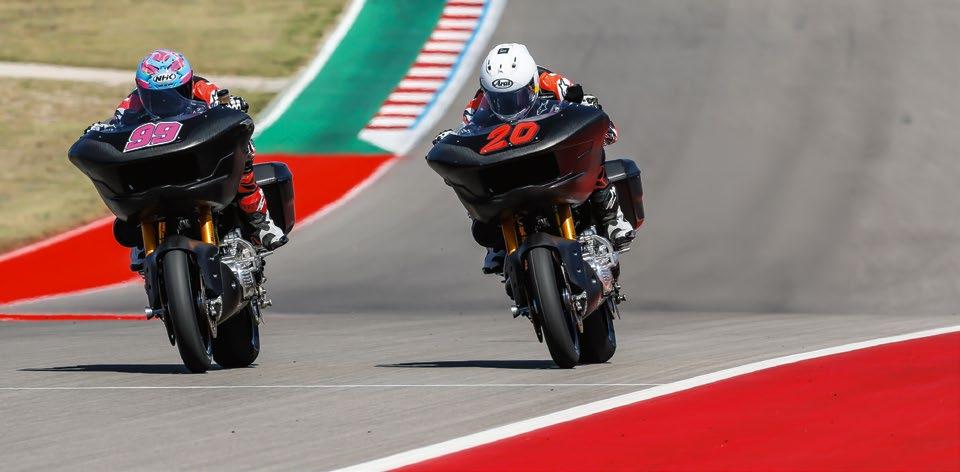
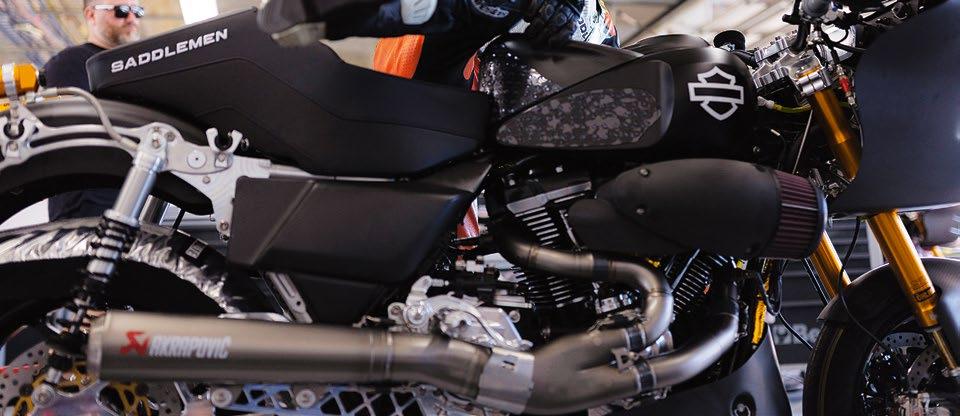
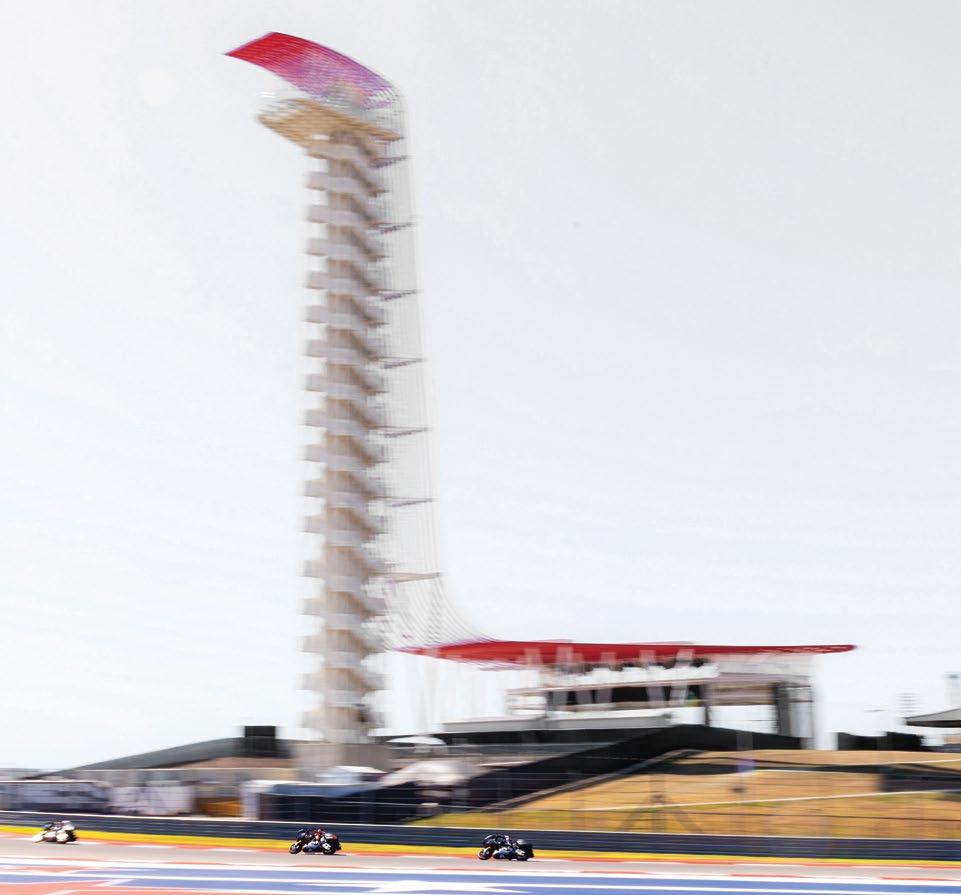
After the rider pressed the start button, the first thing you heard was whoop whoop whoooooop whoooop. Even before the brand-new engine fired up, it was clear that this is a power unit with a huge capacity, breathing with the unmistakable Harley-Davidson V-Twin lungs. When it did start up immediately afterwards, a thunderous roar came out of the long 2 into 1 Akrapovič titanium exhaust system. This is the sound that has in recent years been sending motorcycle racing fans into ecstasy all over the world, especially in the USA. Substantial motorcycles with large dimensions and powerful engines. Fitted with first-class racing equipment and the finest components. A large and wide fairing at the front and indispensable saddlebags. We went to Austin, Texas, to learn about and test everything in the FIM Harley-Davidson Bagger World Cup.
They are coming in a big way. Sliding through the turns, spectacular braking, elbow dragging and overtaking for the win on the last lap.
The FIM Harley-Davidson Bagger World Cup launched this year in cooperation with the MotoGP Sports Entertainment Group (formerly known as Dorna) as one of the specific categories at selected MotoGP races. After the success that King of the Baggers has been seeing in America, the bikes are now coming to MotoGP circuits as a cup competition.
“Through racing on flat tracks and Bagger races, Harley-Davidson is re-establishing its racing program. This is a big thing for us, because in terms of organisation, as you can see, it’s quite a big deal. But I believe that it’ll be great for the sport and also for our brand. Bagger races have been very well received and attended throughout the world. At first, we used almost stock bikes, but they’ve turned into well developed and purebred racing machines. Of course, they’re still based on consumer models, but they’re proper racing bikes now. For us, it’s a phenomenal testing ground, we’re developing and progressing. In the company of bikes the likes of MotoGP motorcycles, we couldn’t possibly have come up with a different
approach,” said Jeffrey Schuessler, the Director of Global Racing Programs at Harley-Davidson, adding, “We want to move forward. We want to have a few more races next year, a few more teams and obviously a few more racers. We’re still learning and our goal is to deliver great racing for fans to enjoy and create rider-centric experiences at the circuit. Our contract is valid for three years with the possibility of a twoyear extension. Five years then to make our plan come true and I firmly believe it’ll be an interesting journey. Motorcycles are the same for everyone, meaning that the rider, his talent and courage will come to the fore, alongside the knowhow of the team and mechanics to set up the motorcycle the best they can.”
// First time on track
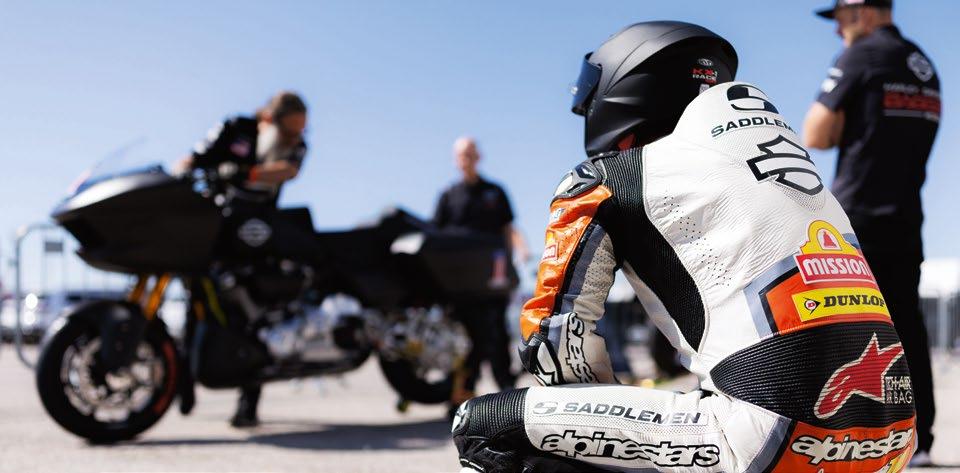
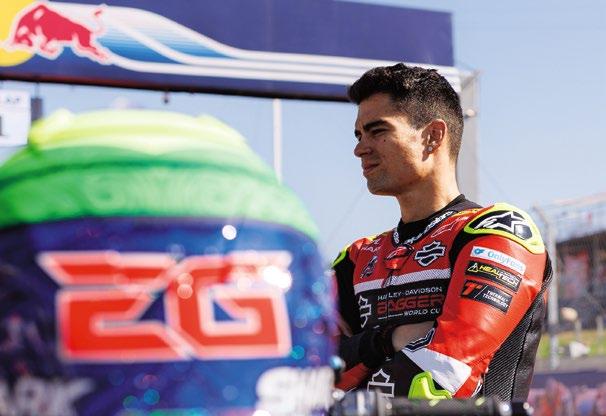
We have been following the new cup from the start. From the first race of the 2026 season in Austin, or, more precisely, from the FIM Harley-Davidson Bagger World Cup tests on the same track a week before, just after the teams had received their brand-new racing bikes and the racers took to the track for the first time. A few well-known racing names stood out, such as Brazilian Eric Granado. Far from being a newcomer to the paddock, he
Eric Granado
competed in the Moto3 and Moto2 classes for many years, before becoming a specialist MotoE rider. He has always been among the fastest and stood on the podium many a time in the MotoE class. It was clear that he would be fast as he is used to heavier motorcycles and racing in cup competitions. And he was. He finished the two-day test as the fastest rider with excellent prospects for the first race. What were his impressions from the practice run? “The feelings are good. I feel good, though the bike is a bit unusual. I’ve ridden many motorcycles in my career, both two-stroke and four-stroke. I’ve done Moto2, Moto3, Superbike, MotoE and more... But this is something completely different. The position on the bike is different. You sit high, but that doesn’t bother me. Once you start pushing it to the limit, the bike feels great. I’m enjoying myself. True, I’ll have to do a few more laps to really get to terms with it, but it’s not bad at all for the first time. The weight is similar to the MotoE bike, but these bikes require a completely different riding style. Once you get used to it, you feel good, you can ride very fast. The front end is excellent, the brakes work as they should. I believe that people will like this racing series and I think we are in for a great championship,” said Granado.
“Our goal is to deliver great racing for fans to enjoy and create rider-centric experiences at the circuit.”
– Jeffrey Schuessler, Harley-Davidson
// Press test and impressions
The teams racing in the new competition gathered at the COTA circuit on the weekend before the first race. They were doing official testing on Saturday and Sunday, which was the perfect time for the press to sneak in. The motorcycle was tested on a short ride by Mark Hoyer, the Editor-in-Chief of the prestigious American magazine Cycle World, who, sweating as he took off his helmet, said, “The bike is incredible. It rides like a true race bike. You don’t feel its larger weight while riding and it has an incredible amount of torque. You have to be careful with the throttle because it accelerates continuously from the lowest rpms. I was surprised at how easy it is to ride, but on the other hand it’s really different from anything I’ve tried so far. Dunlop’s racing tyres do their job perfectly and the Öhlins suspension, combined with the Brembo brake discs and the full-on racing monobloc brakes absolutely bring it to the level of the best racing bikes. Amazing. I was shocked,” Mark enthused on Saturday after being able to test the bike with the famous Harley number 1, among other racers in the infernal heat of the scorching COTA racetrack.
// Nascar on two wheels
Harley-Davidson is not hiding its large ambitions. They have built a racing monster. A machine weighing about 280 kg, with a twin engine capable of over 147 kW (200 hp). Something we have never seen on
the world’s tracks. “The bike combines all the knowledge and experience that we’ve gained over the years by racing in the ‘King of the Baggers’ championship. The part of the bike that probably stands out the most is the rear swingarm made of a single piece of aluminium. Only the best components have been fitted. Akrapovič, Öhlins, Brembo, STM dry clutch, alloy wheels, plenty of carbon components and parts milled from aluminium. The bike has numerous settings and riders have many options to tune them to their liking,” said Technical Director and Team Principal Jason Kehl, agreeing that the point of racing is that racers ride motorcycles that are in serial production. Well, at least their basic versions. Just like in the old days of Superbikes, which also started in America in the late 70s and early 80s. At first, it was a mockery of racing on light two-stroke and expensive racing specials, but then a lightbulb flashed and the teams converted the large and cumbersome 1000 cm 3 four-cylinder bikes for racing. They removed the license plates, lights and indicators, added starting numbers, flat handlebars, and took the bikes to the starting line. Everyone laughed at first, but with the roar of the engines, elbow-toelbow overtaking and backing it in, the races soon gained their ardent followers and spread all over the world. The World Superbike Championship was born. Does it sound familiar? Well, just follow the ‘Baggers’ and wait for a few years.
Obisk testnega dne svetovnega pokala Harley-Davidson Bagger: Gospodje, poženite svoje Baggerje
Svetovni pokal Harley-Davidson Bagger, ki bo letos zaživel kot eden od podpornih razredov na izbranih dirkah MotoGP, ima pomembno vlogo pri razvoju dirkaškega programa znamke Harley-Davidson. Ponuja platformo za močno predelane motocikle, ki so bili iz serijskih modelov preoblikovani v visoko zmogljive dirkalnike. Novo prvenstvo smo spremljali od samega začetka – na prvi dirki sezone 2026 v Austinu oziroma že na testiranjih na isti stezi teden dni prej, ko so moštva prevzela povsem nove dirkalne motocikle in so se dirkači prvič zapeljali na stezo. Svoje mnenje o vožnji s približno 280 kilogramov težkim motociklom z več kot 147-kilovatnim V-Twin agregatom, na katerem so vgrajene komponente priznanih proizvajalcev, sta nam zaupala brazilski dirkač razredov Moto3, Moto2 in MotoE, Eric Granado, ter novinar in urednik uglednega ameriškega medija Cycle World, Mark Hoyer.
Jeffrey Schuessler
Jason Kehl //
Tadej Pogačar , world class cyclist
I LAY THE GROUNDWORK FOR WINNING IN THE WINTER
He’s got a long list of records, victories and achievements, is being compared to cycling’s greatest, adored by many and credited with incredible abilities. The four-time winner of the Tour de France, meeting me at the reception desk of the Columbus Hotel under the Prince’s Palace of Monaco, is a calm, slightly reserved, man with a clear and determined gaze. He is ready for the first question without any unnecessary introductions or small talk. It is essential to allocate time wisely is how I understand his non-verbal message and the first question in the warm and sunny early spring day in Monaco arises by itself.
by Miran Ališič
photography Bor Dobrin, Alen Milavec, Photo Fizza, Tadej Pogačar Archive
For more than six years you’ve been living in Monaco, where Formula 1 and the World Rally Championship rule the roost. What is your attitude towards motorsport?
Since coming here, a new world has opened up for me. I’ve met some great people from Formula 1 and rallying, some became my friends. There’s precious little time to socialise, but when we meet, we talk a lot. I want to know more about motorsport, they about cycling. I’m increasingly turning into a motorsport fan. When I was growing up, we mainly watched Formula 1 on the telly, it was a Sunday afternoon tradition. My family saw it as a world apart, a dangerous sport; my mother would never want me to get involved in motorsport, and it was way too expensive anyway. I watched motorsports from the sidelines, as something distant. Now, after having had a chance to be a codriver in a city stage of the Rally MonteCarlo, I told Urška (Urška Žigart, Tadej’s
Why Monaco? There are other tax-friendly locations, there’s Switzerland, perhaps a country in the Persian Gulf, where the owners of the team you ride for come from...
You must take care of your financial security, there’s no way around that. Urška and I moved here six years ago, just before the outbreak of COVID-19, and the first year was definitely mixed. It was tough during the restrictions, the place turned from a cyclist’s paradise to a complete lockdown. We slowly got used to living here in that year, because Monaco has ideal conditions for training at the top-level. In Slovenia, the weather is often much worse in winter and a bit depressing. Monaco is excellent for cyclists.
Top athletes who have resided in Monaco harbour different attitudes towards the principality. Some build a home here and stay for a long time, even their entire
I disliked French and didn’t force it down our throats. Now I’d feel grateful if she was a bit stricter and pushed me to learn French more. I sometimes think of calling her and arranging some distance learning French lessons, but that probably won’t happen for a while. French will have to wait for better times.
Your cycling career, put simplistically, started on a unicycle. Unusual for a child at the age of seven or eight. It then got stolen or lost, what happened?
I don’t remember the exact story, but Tilen wanted a unicycle and everything he did, I had to do too. So, we started riding unicycles. After about a week of riding up and down the street, we managed quite well. I could still ride it now. Tilen was more interested in the unicycle than me, but I rode it to school many times. How did it go missing? I forgot it at the school, and it was gone the next day. That’s how my
Since turning professional in 2019 with UAE Team Emirates, Tadej Pogačar, also known by the nickname Pogi, quickly became one of cycling’s all-time greats. His career highlights include multiple Grand Tour victories, Monuments, and world titles. His remarkable achievements include four Tour de France wins in 2020, 2021, 2024 and 2025, a feat that has earned him the title of the youngest four-time winner in history. In 2024, he added the Giro d’Italia to his list of victories, achieving the rare Giro-Tour double.
By mid April 2026, he has already secured twelve Monument victories: Giro di Lombardia (five consecutive wins from 2021 to 2025), Liège–Bastogne–Liège (2021, 2024, 2025), Tour of Flanders (2023, 2025, 2026), and Milan–San Remo (2026). The Slovenian claimed back-to-back UCI Road World Championships in 2024 (Zurich) and 2025 (Kigali). He reached 100 professional victories in 2025, topped the UCI for four consecutive years, and set a record 25 wins in 2024.
fiancée, ed.) that I could more easily imagine picking up car racing in an amateur category after finishing my cycling career.
Max Verstappen recently said he might help a talented racer achieve success in motorsport after he retires from racing.
I think I should be able to find a teacher, so we’ll just have to see. Never say never.
Dani Sordo let you be the codriver in his Hyundai on a unique Monaco Circuit stage this year. You must’ve really enjoyed it!
I’d wanted to be here when the rally takes place for quite a few years, but it didn’t work out due to my demanding schedule. This year I specifically made sure to be here. It was a fantastic experience! The drivers seemed a bit unhappy because the streets of Monte Carlo, where Formula 1 takes place, were wet. I still found it incredible how the rally car stuck like glue to the asphalt despite the rainy weather. I don’t even dare to imagine what it would feel like in dry weather.
lives, while others return home or move somewhere else after retiring. Which side are you leaning towards?
At first, I thought I’d only stay here during my professional career. I was 20 when I came to Monaco. I remember my lovely childhood in Slovenia, but now I look at it differently. I socialise with older people, including former athletes and their families. Education here is very good, life’s comforts are amply provided for, I enjoy Monaco, I spend most of my time here now. Monaco has sort of become my home, so the decision about what I’ll do in the future became more open than it was a few years ago.
It’s a bit ironic that you moved to a place that speaks French. Your mother, a teacher of French, once said in an interview that you were not a fan of the French language when growing up. Why was that?
I don’t know if it’s me being weird or whether it’s normal that children have an aversion to what their parents do. My mother soon realised that my brother (Tilen, two years older, ed.) and
unicycle career ended. A few years ago, I got another one as a gift from a friend.
An older brother can be a role model and a nuisance, but mainly a great motivator for the younger sibling. What was your main experience from growing up together?
I wouldn’t be where I am today without Tilen. There’s no doubt about that. He didn’t like losing, he was quite competitive, and it rubbed off on me. I always tried to beat him, but he was older so I usually lost, which taught me how to lose, and that you can’t always win. It gave me perseverance, diligence. It was different for Tilen. He didn’t have to prove himself in this way, he ran out of motivation, which might be why he probably ended his cycling story too soon. If it were the other way around, Tilen, not Tadej, would probably be talking to you now.
“After being a codriver in a city stage of the Rally Monte-Carlo, I could imagine picking up car racing in an amateur category after finishing my cycling career.”
You come from a family of four children. Your fiancée Urška (also a professional cyclist, ed.) is an only child. Do you have a different attitude towards life based on growing up in different environments?
When I met Urška, when she first moved in with me for a longer period, it was a shock for her. All the constant adjusting to each other, even when using the bathroom, for example, and our different individual rhythms… At first, she couldn’t really cope, it was too much for her. It’s also different if you grow up without that much competition in your family, everything is more focused on you, so it might be a bit harder to find your own path. Urška had tried many sports, before settling for cycling. She’s doing well, and she was also doing great studying law. She was expected to have a more academic career, but she took a different path and I don’t think she regrets it.
Two top careers in a relationship usually don’t gel well. Someone has to adapt and put some of their goals in second or third place. How do you two manage?
There’s no doubt that Urška adjusts to me more. She competes at a high level, we get along, we adjust, but Urška had to give up more than I. My career exploded, so she’s often just Tadej Pogačar’s girlfriend. Sometimes she would rather just be Urška Žigart, not my girlfriend. Hats off to her for all she’s done, really. I’m at the peak of my professional career now, but I’m sure there will come a time when I’ll be able to repay Urška for everything she sacrificed during this time of my life.
You eventually chose cycling over football. Do you still remember what finally convinced you to opt for the bicycle?
Well, football was more of a pastime until I was about 10. I didn’t want to be at the front, I wasn’t interested in attack, I mostly played in defence. Cycling hooked me in a completely
“I wouldn’t be where I am today without my older brother Tilen. He was quite competitive, and trying to beat him – even when I usually lost – taught me perseverance and that you can’t always win.”
different way, so I gave up football and focused on it. Cyclists are special people and ours is a special sport. Despite there being many cyclists in general, the professional community is relatively small, we are connected to the fans. It’s a positive approach, everything should be positive in our relationship with the fans. Things are different in football, popularity is associated with stardom and money.
In 2011, you took a trip to France with your parents. Wanting to avoid the expensive tunnel under Mont Blanc, you took a mountain road and accidentally came across a stage of the Tour de France near Sestriere. Your mother mentioned that you said back then you would win this race one day. You’ve done it four times so far. Was this a turning point in your attitude towards cycling, at the age of 12?
It really was a wonderful coincidence. I remember how my brother and I cheered for all the professionals who were pedalling up the hill. I couldn’t believe how fast they were, we were shouting at the top of our lungs, they were so close to us, one could almost touch them. I trained on those roads many times later in life, I know exactly where I was standing then. Perhaps it really was a turning point and motivated me to try and reach this peak of cycling, win the Tour.
Your parents say that you are a very good leader, you lead without others even noticing. Cycling is a team sport, but also very individual in a way. The whole team works for you, but you stand alone on the podium. How do you deal with this duality in cycling?
I think the whole team should be on the podium, not just the winner. Victory in cycling is a team achievement. True, many riders want to win, and some have more potential to do so. But there’s also something else. In the UAE Team Emirates-XRG, I am the leader due to my abilities and the relations are clear; when we race, everyone helps me to achieve the joint goal – victory. Some teams, however, have three or four equal athletes who can fight for victory. These may have perhaps five more teammates, but how should they act to help all three leaders at the same time. It cannot be done. This is where problems arise, both regarding results and in relations.
You are known for early breakaways, which many experts say come too early for you to be able to win. But in the end, you usually do. Who decides on when to launch a breakaway, team tactics or your instinct?
Recently I’ve been having a lot of success launching early, but this is a continuation of
what we were talking about before. We have very well-developed tactics. Here, I would say, we are better than the rest. We make sure in the early part of the race that one of our top cyclists, Domen Novak for example, dictates such a hellish tempo for the first 100 km that it creates an unpleasant atmosphere behind, making it difficult to follow the high tempo. Later, two or three other riders join in and take over his role, causing some additional confusion among the competitors and tiring them out. We thus make sure before my attack that the competitors are tired and a little confused. It’s a deliberate racing tactic.
This is something that started with you and your team, such tactics didn’t exist before, right?
True. We have so much data about cycling today that we have to adapt. For example, on a five- or ten-minute climb, the differences between professionals are so small that I can’t drop or can, at best, finish the climb just slightly ahead of a cyclist who is relatively unknown to the general public, who has maybe won a stage or one race all year. That’s why we’re working on endurance now, because you have to get up such a climb just as fast even after five or six hours of racing. This is an important key to success and has caused the races to become more demanding.
What goes through your mind during these long breakaways, which can last an hour or more?
I mainly think about how far ahead I am; I’m always looking back. I think about whether my team is succeeding in fulfilling the plan, I try to maintain the same gap between me and the chasers. Food and drink are important, as is choosing the best time and place to consume them; aerodynamics are crucial when riding at 45 km per hour with absolutely no time for rest... I think about why I had to attack so early when the finish line was still very far away, I want the gap to increase, I keep calculating all this in my head, this motivates me. For example, we’ve already done two thirds of the race before I launched, and similar mathematical puzzles...
Do you notice the fans along the track, do they motivate you as well?
I see and feel them. They are a major contributor to success. Close contact with the fans is very encouraging. I remember the eighth stage of the 2020 Tour when I hit a literal funnel of fans close to the top of a hill.
I have a hard time understanding how you survive these inhuman efforts during the three-week races, especially the Tour. Where do you get your energy, strength
and endurance from? You probably understand this better than us?
I understand it more and more. Preparation is key. I haven’t raced since the beginning of October and my first race will be in March. But I’ve been training intensively all this time. I barely have any free time. There’s physical preparation, endurance training, altitude preparation, everything is planned down to the smallest detail so that we can withstand what the long season throws at us. Not just the start, also the season’s highlights at the Tour or an autumn race, the World Championships... It’s key to prepare your body in the winter, which some perhaps neglect a bit too much.
What about the dangers of cycling? I’d say the dangerous and fast (especially) group descents, wet roads and of course the sword of Damocles constantly hanging over cycling in the shape of doping all play a part. Would you agree?
Training sessions are the most dangerous.
Really? I’d never have thought of that.
Training is the most dangerous. People can be impatient; we have no respect for each other. There are people who shouldn’t be behind the wheel, there are cyclists who think the whole road belongs to them and so we have chaos. I’m not defending the former or the latter. More respect would make roads safer. I’m afraid of riding a bike on a road in Slovenia, even more so in Italy. It’s a bit better on the Cote d’Azur, though Urška has already been hit by a car twice here.
We cannot ignore doping. History has shown that cycling is the sport most exposed to illegal substances. I read your quote somewhere in relation to this, where you say that there is no trust and you do not know how to restore it.
In cycling there will always be talk about doping, it will always be under the microscope, and will continue to have the most doping controls out of all sports. But how do we regain the trust from fans? The majority of today’s ‘older’ supporters once idolised their role models. but ended up disappointed and betrayed. So those people will always doubt new winners. With the younger
generation it’s already much better, there’s much less talk about it. People don’t realise how hard it is to be under the microscope all the time; we have an app where you have to update your whereabouts 24/7. They can come and test anytime; if you miss one test, you will live under constant stress. If you miss two, some teams will have already put you on the side. Three missed, and you are done. In the first two and a half months of this year, I had eleven controls. Since I’ve been in the system, I’ve had a total of more than 330 check-ups. It has become part of our daily life to expect someone to knock on the door at any moment. In my opinion, even if we show people all of this, they will not gain any trust. It is how it is: if you have clear conscience, you will be fine. Criticism hurts, but you can be happy inside knowing you are doing the right thing. And I truly believe professional cycling is one of the cleanest sports today, but there will always be some fool, who tries to take shortcuts, like everywhere else in life…
You have an enviable record of victories and achievements. Apparently, you’re after two more laurels: winning the legendary one-day Paris–Roubaix and Milan–San Remo races. And an Olympic gold medal, but the opportunity for that won’t come before the 2028 games in LA.
I really want these two victories and they are a big challenge. I would like to improve my capabilities to help me win there. These are very special races where everything has to fall in place for me. And one of my competitors must have a bad day. (The interview took place before the 2026 Milan–San Remo race, where Pogačar went on to win, ed.)
What about the LA Olympics?
That too, I just got the route from a colleague who lives there and it should be interesting. Yeah, that’s another goal.
Racing driver Ayrton Senna attributed his extraordinary successes to his relationship and conversations with God, that is, to a spiritual power that ultimately helped him overcome all difficulties. Are you a rationalist or do you also have such conversations or thoughts?
Another difficult topic. It’s not about some external energy with me, but I think that someone does protect me. I’ve been in dangerous and difficult situations in training and races, when I said to myself, oh dear, this could have ended differently. I won’t claim to believe in the Almighty, but I have a guardian angel somewhere.
Do you have any interesting sports cars in your garage? Do you like to drive somewhere fast; do you enjoy driving cars?
I really like sports cars. I luckily only have two parking spaces in Monaco, so my choice has to be rational. The first car I bought with my own money was an Audi S3 with a manual transmission. It was a lot of fun to drive. It was followed by something bigger and safer, an Audi RS 4, which I have, after five years, recently replaced with an Audi RS 6 GT which has for a long time been my dream car. It’s also equipped with an Akrapovič exhaust system. This is my everyday car, but I also have a Porsche 911 GT3 RS, which I unfortunately drive less often because I don’t have the time.
“I see and feel the fans along the track. They are a major contributor to success. Close contact with the fans is very encouraging.”
Tadej Pogačar: “Zmage si pripravim pozimi!”
Tadej Pogačar. Slovenec. Svetovno priznani kolesar. Štirikratni zmagovalec dirke po Franciji. Kljub izjemnim uspehom se nam je v recepciji hotela Columbus pod monaško knežjo palačo pridružil miren, rahlo zadržan fant z jasnim in odločnim pogledom. V Monaku živi že več kot šest let; tu je spoznal številne ljudi, tudi iz Formule 1 in rallyja. Po izkušnji kot sovoznik na promocijski vožnji rallyja Monte-Carlo se poigrava z mislijo, da bi se po koncu kolesarske kariere preizkusil tudi v amaterskem dirkanju z avtomobili. Spregovoril je o partnerki Urški Žigart, prav tako profesionalni kolesarki, ter vplivu starejšega brata Tilna na njegovo kariero ter življenjskih izzivih. Poudaril je pomen ekipne dinamike, strateške taktike in nevarnosti treningov ter se dotaknil problematike dopinga.
FANTASTIC
FANTASTIC
by Alenka Birk
SPIRIT 70
Celebrating the spirit of speed and style, Porsche and BOSS unveil a green short sleeve T shirt crafted from soft mercerized cotton. The front features a print inspired by the limited edition Porsche 911 Spirit 70, merging motorsport heritage with contemporary design. Part of the Porsche x BOSS capsule, the piece belongs to a line of bold styles that reflect BOSS’s approach to speed and decisiveness. A refined yet dynamic addition for automotive enthusiasts with a sharp eye for modern luxury.
hugoboss.com
TRACK VISION
Carrera and Ducati celebrate MotoGP style with the CARDUC 050/S sunglasses, part of the Paddock Collection inspired by the aerodynamic design of the Ducati Panigale V4. Shot on model and MotoGP star Francesco ‘Pecco’ Bagnaia, the wrap‑around injected polyamide frame delivers a sporty yet refined look with superior comfort. Slim, straight temples are engineered for maximum grip, even under a helmet, while Carrera and Ducati logos highlight the collaboration’s heritage. With 100 % UV protection and a bold motorsport attitude, these shades make a perfect accessory for both trackside and everyday wear.
carreraworld.com
ENZOLOGY
Montblanc celebrates an automotive legend with the Great Characters Enzo Ferrari Special Edition Notepad in Giallo Modena. Part of the prestigious Great Characters line, this elegant leather covered accessory features a motif inspired by a Ferrari engine, paying tribute to Enzo Ferrari’s pioneering spirit and passion for engineering. A refined piece that honours both history and motorsport heritage.
store.ferrari.com
LEGO MCLAREN
LEGO unveils the Technic McLaren MCL39 F1 Car, a 1:8 scale 1,675 piece model of the 2025 championship winning vehicle. Designed for adult builders, it features working steering, suspension, gearbox, and a functional DRS rear spoiler. The V6 engine is visible under a removable cover, and the livery mirrors McLaren’s iconic black and papaya colours. Available for order, this set is a must have for Formula 1 fans and collectors alike, combining engineering precision with display worthy detail.
lego.com
DRIVEN ELEGANCE
Ferrari presents a silk twill tie in iconic Ferrari Red, featuring a graphic regimental pattern that reinterprets the brand’s logo in a contemporary way. The tie’s matching loop is embroidered with the Ferrari logo, completing this Italian made accessory with a distinctive touch. Designed for motorsport enthusiasts, it blends luxury craftsmanship with Ferrari’s racing heritage, making it a statement piece for any wardrobe.
RACEWATCH
Swiss watchmaker Breitling unveils the Navitimer B01 Chronograph 43 Aston Martin Aramco Formula One Team Edition, the first official watch from its new multi year partnership with Aston Martin Aramco Formula One Team. Limited to 1,959 pieces, it features a titanium case and carbon fibre dial inspired by a Formula 1 cockpit. Racing Green with lime accents mirrors the team’s livery, while the textured leather strap evokes a race car safety harness. Engravings ‘Instruments for Drivers’ and ‘One of 1959’ honour Aston Martin’s Formula 1 debut. A true motorsport lifestyle gadget for 2026.
store.ferrari.com
breitling.com
BELLEZZA
Zagato – a century of style and design
NECESSARIA *
Andrea Zagato is a gentleman of soft movements and Italian charm. Dressed casually, but elegantly, and happy to converse. Since he travels all the time, it was not easy to arrange our meeting. We finally managed to get together at an unusual location – on an icy, snowy track at Livigno in Italy, almost 2,000 metres above the sea. Accompanied by some of his clients, Andrea, in partnership with Scuderia Sport, was there to drive one of the six Lancia Fulvia Sport Zagato cars in the preparation for the Coppa delle Alpi rally for historic cars. His grandfather Ugo Zagato founded a coachbuilding workshop in 1919. After World War II, his father and uncle continued and expanded the business outside of Italy. The atelier and factory for limited-series cars are now run by Andrea and his wife, Marella Rivolta Zagato.
*Necessary Beauty
The list of all the car bodies designed by Zagato is too long for a single article, so we will only mention the most important ones. “I think our company’s development could best be broken into two periods: the one before World War II with Alfa Romeo and the one after it with Aston Martin,” Andrea says over an espresso during a break between two snow outings. Only a few probably know that Ugo worked in a military aircraft factory during World War I. He learned quickly, got promoted, earned quite a bit of money and founded the company after the war finished. There were 70 coachbuilders in Milan at the time. “Cars back then were heavy and unwieldy, made of heavy materials. Ugo brought his knowledge of lightweight and composite materials from the aviation industry and proposed to the racing teams in Italy, namely Fiat, Lancia and Alfa Romeo, to work with him. Since the result were lighter, more agile and faster cars, they all agreed. I’m mainly referring to the Alfa 6C and Alfa 8C, which Scuderia Ferrari also raced with. These two racing cars were unbeatable in the 1920s and early 1930s,” Andrea recalls the time of his grandfather, who laid the foundations for the company’s century-long success. Enzo Ferrari was highly focused on weight, so he kept working with Ugo. They had a good business-like relationship, though not necessarily a friendly one.
Three generations of innovation
We then move on to the challenges that three generations can bring with them. Were the transitions always calm and quiet or did fur occasionally fly? “There was often a bit of tension in the air, of course, but we always
somehow found a reason to keep sticking together. And something else made us stand out. My grandfather set a rule that we have to reinvent ourselves technologically every ten years. In other words, we have to find new ways and methods so that we don’t become obsolete.” The company had to start from scratch again after World War II, because the factory was destroyed by bombing, so they remembered a revolution in truck design, where the cabin was placed above the engine rather than behind it, as was usually the case. This resulted in the delightful Isotta Fraschini 8C Monterosa with a rear mounted engine, followed by the first concept with panoramic windows modelled after World War II aircraft; Ugo went back to Enzo, who had meanwhile founded his own company, and offered him a much more aerodynamic design for his cars. In its more than 100 years, Zagato has been, or is, collaborating with 47 car brands. “Our history certainly helps. Should we knock on Rolls-Royce’s door today, everyone would know that Ugo had worked with Mr. Royce in 1928 – doors get opened this way,” explains Andrea. “My father coached me to take over the company, he was a gentleman driver, he competed a lot in the Grand Turismo series, a combination of the sport and turismo series and this category suited him best.”
The birth of an icon
Then came the Aston Martin era. At the end of the 1950s, Andrea’s father Elio and uncle Gianni met David Brown at the Geneva Motor Show, David needed an Aston Martin racing car to take on Enzo Ferrari’s GTO and
wanted Zagato to make a touring model for Aston Martin, only much lighter. Ugo was quite amused by this, because a touring car cannot be super light, only fairly heavy. “We designed the DB4 GT Zagato instead, which, although it didn’t beat the Ferrari, has remained one of the most iconic cars to this day,” explains Andrea, adding that much later, when Aston Martin came inquiring about a new joint project, he agreed to it only on the condition that he could build himself another DB4 GT. “That was my youthful dream.” Many other projects followed in the meantime, involving numerous brands, some of them also British, but the period was marked by Aston Martin. “My grandfather always talked about his two automotive wives; the first was Alfa Romeo and the second was Aston Martin.”
The merging of two dynasties
Talking about spouses, we cannot leave out Marella Rivolta Zagato. Coming from another Italian automotive dynasty, the Iso Rivolta, she met Andrea by chance when an American journalist wanted to combine two interviews. “To save time and travel, we agreed to do the interview together and that’s when sparks flew,” says Andrea with a smile, adding that his wife is an important pillar in their design and selection of models for limited car series. The Rivolta family initially manufactured refrigerators. It got its renown after World War II with the Isetta, which was sold under license in many countries in Europe and even South America, with BMW becoming the most successful
photo Aston Martin Lagonda LTD
Aston Martin DB4 GTZ Continuation and Aston Martin DBS Zagato, 2019
Mostro Coupé (2015) and Mostro Barchetta (2022)
Iso Grifo (1963) and Iso Rivolta GTZ (2021)
sacrificing for and supporting Zagato for decades, and would now like to have a project of her own. A modern version of the Iso Grifo called the Iso Rivolta. I’ve lost count of how many times she reminded me of this project, but as we were at Milan airport late one evening she said, ‘If you don’t get on it right away, I’ll call Giugiaro (a famous Italian designer, ed.) tomorrow morning and ask him to design this car for me.’ Well, I brought the sketches late the next morning and now this wonderful coupé has been with us for a while. We built nine of them and keep one in our atelier, of course.”
Perfection through simplicity
Our interest was piqued by another thing Andrea said – he spoke of his cars having a necessary beauty, bellezza necessaria in his words. What exactly does he mean by that, we wondered. “This phrase comes from how we describe design. There are two design languages, addition, and subtraction. You therefore have two options, remove everything unnecessary or add ornamentation. One could say that the French love to add ornaments, just look at the bridges of Paris. That’s your Art Deco, Art Nouveau; on the other hand, you have the German counterpoint in Bauhaus or the Ulm School, where nothing is superfluous. It’s similar with cars and airplanes. Cars are full of accessories, ornaments, airplanes are completely devoid of everything, they are light and elegant. My grandfather came from the world of aviation and when you look at his bodies for Alfa Romeo, that’s exactly what you see.” At the end of the conversation, Andrea opens a monograph on Zagato’s selected models made over the past century and finds the page with the Alfa Romeo 8C. “Look at this car, you can’t take anything away, you can’t change anything, this Alfa is simply perfect or in other words, bellezza necessaria.”
1930 Alfa Romeo 6C 1750 Gran Sport Zagato driven by Tazio Nuvolari
photo
Publifoto
1960 Coppa Intereuropa Monza — 10 Zagato cars at the start
Compasso d’Oro award (1960) for the Fiat Abarth 1000 Bialbero Zagato
Zagato and Marella
at Atelier
Zagato – stoletje stila in dizajna: Nepogrešljiva lepota
Andrea Zagato je gospod lahkotnih gibov in italijanskega šarma, ki vodi podjetje Zagato, ki ga je ustanovil njegov ded Ugo leta 1919. Podjetje je skozi generacije v različnih obdobjih pomembno vplivalo na avtomobilsko industrijo. Na začetku je Ugo s svojim znanjem iz letalske industrije uvedel lahke materiale, ki so omogočili uspeh modelov Alfa Romeo 6C in 8C. Kasneje so podjetje preobrazili in takrat je Andrein oče Elio vzpostavil sodelovanje z Astonom Martinom. Danes podjetje vodi Andrea skupaj s svojo ženo Marello Rivolta Zagato, ki dodaja izkušnje še iz ene italijanske avtomobilske dinastije. Kljub izzivom treh generacij družina ohranja tradicijo iskanja inovacij v dizajnu, pri čemer jih vodi misel bellezza necessaria – nepogrešljiva lepota.
Andrea
Rivolta Zagato
Zagato //Si
photo Salvo Sportato
by Alenka Birk
BITE OF ART
RACE TO THE CLOUDS
A race that begins in forested valleys and ends above the clouds. 156 turns, nearly 20 kilometres of ascent to 4,302 metres, where thin air changes the way engines breathe. Pikes Peak is both a laboratory for automotive engineers and a temple for drivers. There’s no room for error – only the perfect line matters. The next climb happens on 21 June, along the Pikes Peak Highway in Colorado, USA. You don’t have to race to experience it, just watching is a meditation above the clouds. This is the vertical version of racing.
ppihc.org
Not just schnitzel and Sachertorte – coffee houses, vineyard taverns and sausage stands create Vienna’s daily culinary rhythm. Now, the city puts its gastronomy in the spotlight with ‘Vienna Bites’, where innovative chefs reinterpret tradition, turning classic dishes into surprising, modern creations. The fusion of bite and art comes first with ‘A Bite of Art’ at the Museum of Art History, where food takes centre stage among masterpieces. The museum’s domed hall transforms into a temporary dining room, offering exclusive breakfasts, evening tastings and guided culinary-art tours.
wien.info
48 hairpin turns wind from Prato allo Stelvio, a mountain pass in northern Italy bordering Switzerland, to the summit at 2,757 metres. Morning mist drifts over asphalt, soft grey light kisses the curves, and the road lies nearly empty – perfect for motorcycles, sport cars, or any alpine-ready vehicle – with engine hums echoing off sheer cliffs. Each curve reveals sculpted peaks and fleeting panoramas. A minimalist adventure where motion and raw alpine beauty converge. It remains the highest paved mountain pass in Italy and the second highest in Europe, a must-ride for lovers of altitude and open horizons.
passostelvio.eu
In Gorizia, a former strategic passage between Slovenia and Italy has been transformed into Europe’s largest digital art tunnel. Inside the Digital Art Gallery Gorizia, 300 metres of immersive light unfold in a hypnotic flow of data and colour. The highlight, Data Tunnel by Refik Anadol, turns artificial intelligence into liquid landscapes that pulse, shift and breathe around you. Part of the cross-border cultural project GO! 2025, the space blurs architecture, technology and emotion. Open through December 2026, it’s less an exhibition, more a walk through a living algorithm.
go2025.eu
by Gaber Keržišnik
photography Bor Dobrin, Ducati, Simona Tamburini Archive
A CENTURY OF GENIOUS ES
Flags are flying in the courtyard and a festive atmosphere permeates the factory as Ducati celebrates its 100th anniversary. So, what to write about and who to visit on this meaningful centenary? Perhaps our memory and the archives can lend us a hand. Much has already been said and written about Ducati. We pause when we come across two names. Fabio Taglioni, probably the most unique Ducati engineer, and Massimo Tamburini, the unforgettable designer of cult motorcycles. They are no longer with us, so we went to Bologna to visit Ducati’s museum where Fabio holds a special place before making a beeline for San Marino to see Simona Tamburini, the famous designer’s daughter.
We must first mention the brothers Adriano and Bruno Ducati, who had to take over the company quite unexpectedly in 1927 after the sudden death of their father Antonio Cavalieri Ducati, an Italian industrialist and Ducati founder. Their younger brother Marcello joined them in 1930. The company initially produced electrical components, then switched over to electronic devices and following market demand for affordable means of transportation after World War II, turned to manufacturing lightweight motorcycles.
a 500 cm 3 four-cylinder racing engine, while in 1960, being a big lover of Formula 1, he devised a 1500 cm 3 air - cooled eight - cylinder Formula 1 engine. It was under Fabio that Ducati switched from producing smaller motorcycles for everyday use to larger bikes which brought the company such success on the track.
The driving force behind racing technology
As already mentioned, our stop in Bologna was primarily dedicated to Fabio Taglioni, probably the most famous engineer in Ducati’s history. Some of his many patents worth highlighting are the L twin-cylinder engine, desmodromic valve timing, and the trellis frame. Fabio was a technical genius. For his 1948 graduation thesis, he designed
“His love of racing inspired numerous decisions and innovations. By going to Formula 1 races and befriending racing mechanics, he learnt in the paddocks of the Modena racetrack that Mercedes was experimenting with desmodromic valves to achieve greater engine power and durability. Who told him that? None other than Enzo Ferrari! At that time, valve springs broke as the material was not up to the task,” we were told at the beginning of our visit to the museum. Because Fabio, a great lover of orchids and botany, believed that engines should first be durable and only then fast, he successfully transferred this idea to the world of motorcycles. Desmodromic valves were soon abandoned in Formula 1, which did not bother Fabio, as he believed that the system might be too complicated for use on eight - cylinder in - line engines in the first place. But he also believed that it could work on one - or two - cylinder motorcycle engines – which it did, especially on double camshaft power plants. We heard most of that at the museum from Livio Lodi, the Ducati Museum’s curator, who has dedicated his professional career to the brand’s history. “Fabio was the force behind nearly 100 road and racing motorcycle projects, because at that time the transfer of racing technology into everyday use was much more intensive than today,” explained Livio, before telling us how the famous engineer, who initially worked for Mondial, actually arrived at Ducati. “When a Mondial motorcycle won the legendary MotoGiro race in 1954, they ‘forgot’ to invite Fabio, the motorcycle’s designer, to the final ceremony. He was so offended that he left Mondial and moved to its rival Ducati. Ducati’s managing director at the time, Giuseppe Montano, told Fabio that he knew he was capable, but still made him work for the first six months of his probationary period without pay. Ducati needed a new motorcycle, and only had a few weeks to develop it. Fabio accepted the terms and the new Ducati was designed in just 40 days.” Thus was born a motorcycle called Marianna, which won the very first race it appeared at with Francesco Villa in the saddle. The engine was powerful and the bike was excellent. But there was more: Ducati took all five first places. Victories meant a surge in profit for the brand as, in those days, racing bikes were essentially just refinements of serially produced models.
Adriano, Bruno and Marcello: three Ducati brothers.
Massimo Tamburini
“Fabio was the force behind nearly 100 road and racing motorcycle projects, because at that time the transfer of racing technology into everyday use was much more intensive than today.”
Remembering the designer who shaped Ducati
And since we are talking about those, we cannot ignore another name writ large in Ducati’s history. Massimo Tamburini, the famous designer and motorcycle enthusiast, marked Ducati’s history and its later super-sport models with the 916. Massimo, one of the founders of bimota, left that company in 1985 to begin designing a new Ducati in the Cagiva Research Centre (CRC), the motorcycle design department of the Cagiva and Ducati brands, both of which were then owned by brothers Claudio and Gianfranco Castiglioni. We then left Ducati’s Museum in Bologna and travelled to San Marino to pay a visit to Simona Tamburini, the daughter of the designer who died in 2014. Simona has a rich family archive and, of course, holds many memories of her father. She also invited Paolo Bianchi, an active motorcycle designer and a good friend of her father, with whom he had worked for 18 years, to tell his recollections of the great man.
“It is interesting that Massimo did not draw much, although one would expect him to. He mostly developed ideas in his head and immediately transferred them into a prototype form. He might have sometimes told someone to change or redesign something, but most often he used a Polaroid camera and then drew and corrected new lines on the photos with a permanent marker. To this day, I still have some faded photos as a keepsake where the lines that ultimately defined the 916 are drawn with a marker,” Paolo told us as he presented those very same photos.
– Livio Lodi, the Ducati Museum’s curator on Fabio Taglioni
Massimo Tamburini
Simona Tamburini
Paolo Bianchi
Simona has kept her father’s motorcycle. It is a perfectly preserved and practically new 916 in a half-racing/half-road kit that bears the serial number 2. The motorcycle is in full working order and is a pre-production prototype, as some small changes were later made for large-scale production. Simona lent this motorcycle to the Ducati Museum for its annual exhibition. “My father loved motorcycles but he didn’t ride them on the racetrack. He had his own ‘proving circuit’ on the public roads in the vicinity of Rimini. He sometimes took me on some of these rides. We would get on his Ducati Paso and ride to the racetrack in Misano or just to the beach. I still have a scar on my leg from the hot exhaust,” she showed us while recalling how her father came up with the idea for designing motorcycles. “Once, while waiting for a haircut at the hairdresser’s, he leafed through an old motorcycle magazine that was lying on the waiting room table. From then on, he became more and more interested in motorcycles.”
Two wheels move the soul
Has Massimo ever thought about designing cars, we inquired? “Never,” was Simona’s concise answer. “His motto was that four wheels move the body, while two wheels move the soul,” added Paolo, before remembering something else. “He once completely dismantled a new Ferrari F40 that belonged to Claudio Castiglioni. It took him a month to disassemble it into tiny pieces. When Claudio came to the workshop and saw his car in pieces, he went ballistic and asked Massimo why he did it. ‘Because I was interested in how it’s made,’ was the designer’s succinct answer.”
Paolo also recalled the qualities of his mentor, “Massimo never talked much. He was always mulling over ideas and thinking about solutions and shapes even during lunch or while driving. Sometimes he could get so lost in thought that he would run out of fuel somewhere by the side of the road,” recalled Paolo with Simona adding, “He was very talented. He was not a trained designer or engineer. He was self-taught and designed by inspiration. He had a sense for lines, shapes and interesting solutions. He liked clean, racing lines, so I am sure he wouldn’t like the look of today’s racing motorcycles with all their aerodynamic accessories. There’s too much of everything.”
Design that became legend
“Massimo was the first to popularise the routing of two exhaust pipes under the seat of a mainstream motorcycle. Everyone copied this then and still do today. Or the headlight housing that houses the dashboard and the turn signals integrated into the mirrors. He was the first to come up with that. Today it’s the standard,” added Paolo, admitting that at the time the single swingarm at the rear was based on the non-Italian motorcycle.
At the end of our chat, both Paolo and Simona agreed, “The Ducati 916 is a milestone. It is probably the most beautiful motorcycle ever made. And you know how it is here in Italy. Ducati is like Ferrari. Italy has many good motorcycle brands, but for a true Italian, when it comes to motorcycles, there can only be one. Ducati.”
Fabio Taglioni
Fabio Taglioni
Taglioni with Spaggiari and Spairani in Imola 1972
100 let Ducatija: Stoletje genijev
Podjetje Ducati je sprva izdelovalo električne komponente, po drugi svetovni vojni pa se je preusmerilo v izdelavo manjših motociklov.
Ob velikem jubileju smo se odpravili po spominih na dve veliki imeni znamke – v Bologni smo postanek v Ducatijevem muzeju namenili Fabiu Taglioniju, verjetno najbolj edinstvenemu inženirju Ducatijev. Znamko je zaznamoval z inovacijami, kot sta L-zasnova agregata in desmodromično krmiljenje ventilov. Zatem pa smo skočili še v San Marino, kjer smo spomine na Massima Tamburinija, nepozabnega oblikovalca legendarnega modela 916, obujali z njegovo hčerko Simono Tamburini in njegovim nekdanjim dobrim prijateljem, prav tako oblikovalcem motociklov Paolom Bianchijem.
María Herrera: A Racing Queen
Precision, Resilience and the Art (of Speed)
by Tina Torelli
photography Judit Hernandez/Valkyria Fotografia, Graeme Brown
There are two passions in María Herrera’s life: racing and art. At first glance, they seem incompatible – the pursuit of the fastest line through circuits versus surrendering to brushes and pencils – yet within her they coexist in perfect balance. Precise, analytical and action-driven, she is also sensitive, expressive and distinctly feminine.
At 29, the rider from Oropesa has built an outstanding résumé. She won as the first girl in JuniorGP (then known as the FIM CEV Moto3 Championship) and scored points in Moto3, establishing herself as a pioneer for female riders in Grand Prix racing. She has competed across several top-level championships, including WorldSSP, WorldSSP300, and MotoE, consistently proving her competitiveness. In 2024, she became the first-ever race winner in the FIM Women’s Circuit Racing World Championship, and in 2025 she claimed the title – while still racing in MotoE. In 2026, the girl with pearl earrings will dedicate herself fully to defending her title in WorldWCR and painting yet another page of history. And here we are at Circuit Ricardo Tormo – the place where everything began. María removes the helmet she designed herself and slips her earrings back on. There’s no sun and no fuel left – the perfect moment for a chat.
What do you mean by that?
One example… Last year I came fourth in Le Mans, even though I had missed the prior tests due to a calendar clash. The problem was that some changes had been done on a bike and I had to race with information from my teammates – all bigger guys. That was hard to assimilate, but then something clicked: I stopped focusing on what I couldn’t control and started focusing on what I could do – my lines, my braking, my strengths. The bike is too heavy for me. So, what!
Do you have any race rituals?
Nothing special, but I always prepare in exactly the same way, 30 or 40 minutes before the start, I like to be mindful and never late. The last thing I do is take off my pearl earrings, which I put back on after the race. On every podium photo since I was little, I have worn pearls.
What do you do daily to stay mentally and physically on top?
I’ve worked with a psychologist since 2015, when I entered the High-Performance Centre in Barcelona. We work extensively on strategy and sector analysis. We also train memory and do visualisation exercises – in English, to increase the difficulty. Most of my mornings
start with a gym session on an empty stomach: gym, bike and functional work. Weight is constant management – in Moto3 I had to gain weight; in WorldWCR I must stay light. Honestly, that’s hard because I’m a foodie. My family owns a restaurant, Karento, and we raise our own cattle – imagine how good our burgers are.
The 2025 season has gone really well. What are you most satisfied with, and where is there still room for improvement?
After the rain comes the sun. 2024 was a difficult year mentally, especially after the crash – I was badly hurt, but I finished the season out of stubbornness. In 2025 I managed to be consistent and avoid mistakes. I also learned to enjoy the fight. I focused more on myself and on giving my best on track. This season I will focus primarily on strategy. The category is highly tactical – a big group with equal machinery. As I’ve changed teams, I’m motivated to work with Ayrton Badovini –he truly knows my potential.
You are very vocal about the importance of this championship continuing. But is it where it should be yet?
What we should aim for is that women can truly make a living from this sport. Right
now, there is still a lack of belief in the project – in its potential. I would also love to see more categories – R7 and R9, for example. The talent is there, so let’s keep the numbers growing.
How is the competition among women?
It’s complicated. (She smiles.) Even though the dynamic on an allfemale grid is passionate, competitive and quite intense, the vibes are good and I always try to help the newcomers. Obviously, this is what I came to this planet for. (She smiles) I’m proud to open doors for girls drawn to this sport and it looks like I’m doing something good for older generations too. Last year I had a big celebration in my hometown, and the happiest were the grandmothers. They probably don’t even like motorcycles, but they were so proud that “we won”.
And finally, how’s your life when the helmet comes off?
I paint and draw. I designed my helmet again this year. Right now, I have some interesting artworks to show and might soon organise an exhibition. Besides that, I’m giving riding lessons to my boyfriend – he’s a policeman training for the traffic division. Luckily, he has zero problem with that. He respects what I do, and this is what I value most.
Josip Kajetan Knežić was born in 1786 in Petrinja, about 50 kilometres south of Zagreb. As the son of a teacher, he was already an assistant teacher at the age of 15, and, aged just 16, designed mountain roads as a self-taught engineer. He later oversaw the irrigation of rivers, draining of swamps and the construction and renovation of ports. Austria was already a very modern and, in many ways, advanced empire at that time. One of Josip’s greatest accomplishments is the gravel road across Velebit, a mountain range towering above the northern part of the Adriatic Sea, which was built between 1825 and 1832, an era when the internal combustion engine was still in its infancy. And since the carriages of the time were still pulled by real horses, usually one or two, the gradient had to remain manageable. This was not easy at all in this harsh world of rocky outcrops and strong winds, which is why the project earned the name Majstorska Road –from the German ‘meisterstück’ meaning a masterpiece.
GENTLE GRADIENT FOR FOURLEGGED ‘ENGINES’
The Majstorska Road connects Sveti Rok in Lika with Obrovac in Dalmatia, linking northern with southern Croatia, and, if looked at from farther away, the port-town of Zadar with Vienna. At the time when roads in the area were few and far between, it constituted an important trade, postal and military link. The 41km road reaches a maximum gradient of 5.5 %, and the bends are relatively gentle given the mountainous environment. This is also because it was used to transport (wooden) jamborees from the wooded Lika region to Dalmatia. For comparison: the famous Transfăgărășan Road
in Romania averages 5.2–5.5 %, with the maximum incline of 9 %, while the road towards the Stelvio Pass in the Alps climbs with a 7.5 % average. That is why the Majstorska Road is so popular with cyclists, who – like horses, mules, and donkeys of centuries past – get their potential energy by using up their own reserves rather than, and not, oil. After the construction of the coastal Adriatic Highway in the middle of the last century during the Yugoslav era, and even more so after the 5.7-kilometer tunnel on the highway to Dalmatia was opened in 2003, the road has been left to the tourists and recreational users. Embraced by Tulove Grede, a white rock ridge above the Mali Alan pass and with a view of the sea lapping the coast of Novigrad and, in good weather, stretching all the way to the nearby Adriatic islands of Pag, Dugi otok and some others, it is considered the most beautiful mountain road in Croatia, as well as one of the most desirable routes for riders on adventure motorcycles. But this time I had neither a bicycle nor a motorbike under my backside, let alone a horse, though more than 500 of them were controlled by my right foot.
RESULT OF GERMAN, AUSTRIAN AND – IF WE GO BACK FAR ENOUGH – SLOVENIAN TECHNICAL HERITAGE
The Mercedes-Benz G-Class is certainly the most angular vehicle you will see in Zurich, Dubai, or Monaco. Well, it is rivalled by the Tesla Cybertruck in terms of boxiness and ability to catch the eye, but that’s a different beast altogether… Today’s Mercedes G, if seen at a distance and through nostalgic eyes, is not much different from its grandfather, the Austrian Puch G, sold under that name in some
markets until 2000. The Puch company was founded back in 1899 by the Slovenian inventor Janez, or, in German, Johann Puch, though he had nothing to do with the MercedesBenz G, as he died long before the German company designed an off-road military vehicle at the request of Iranian Shah Mohammad Reza Pahlavi. In order to meet the idea of an indestructible military machine, it was tested not only in German mines and in the Arctic, but also in the Sahara. Another interesting fact: the Mercedes-Benz G enjoys the second longest production run among all Mercedes models, surpassed only by the versatile Unimog off-roader. In this roundabout way, we have come from the Puch G and the Mercedes-Benz G-Class to the cherry on today’s cake, the Mercedes-AMG G 63, proudly staring at you from the pages of this issue.
I think that the G is one of the most original cars and has remained true to its roots. When it comes to maintaining its design style, we can draw parallels with, for example, Porsche 911 or Jeep Wrangler, as opposed to the new Land Rover Defender, which only contains a few details of the sturdy old off-roader in its silhouette. If not the most elite Mercedes – that distinction naturally belongs to the S-Class –it is certainly the most versatile. It can be driven by a landowner on a deer hunt or the main star of a hip-hop video. It is an icon of German technical heritage and a symbol that communicates your success to those around you. Though, in today’s era of instant fame, it can also be driven by overnight sensations such as reality TV stars and celebrity wannabees, but this is something that cannot be changed.
BECOMES SPIRIT
by Nick Valentine
photography Nick Valentine
Getting to New Zealand already feels like crossing into another dimension. From Europe it takes almost two days before your boots touch the ground of Aotearoa, as the Māori call it, the “land of the long white cloud”. By the time the engine finally fires up, you have crossed half the planet. That distance will take its toll in the first days of riding.
The land is not owned in the Western sense, but cared for, protected and passed on.
Where the road finds its rhythm
The North Island does not overwhelm you; it absorbs you. Riding north from Whanganui along the Forgotten World Highway, distance becomes secondary to rhythm. The road folds through green hills scattered with sheep, and somewhere along that quiet stretch a tiny settlement appears almost by accident. Whangamōmona once declared itself an independent republic and today survives on a single hotel that doubles as a pub and restaurant, a few wooden buildings and a silence pressing against the hills. Remoteness is no longer an idea, but something physical, slowing your breathing and sharpening your senses. Farther on, near Kawhia, asphalt gives way to gravel as forest tightens toward the coast. Ferns brush the track, the Tasman Sea flashes between branches, and the shift from smooth asphalt to loose stone sharpens every input at the bars. By the time you reach Raglan, salt hangs in the air and the rhythm slows. It is unmistakably a surf town, where sunburnt faces and wind-tangled hair move to the rhythm of tides rather than clocks. The emotional intensity of Rotorua breaks that softness. Steam rises from street corners, geysers erupt at Te Puia, sulphur lingers as if the earth were breathing. Here Māori culture is not a backdrop, but a living structure. Inside a marae , the sacred communal meeting house, ancestors are carved into wooden beams, each figure carrying genealogy and history. Whakapapa , lineage, binds people directly to mountains, rivers and lakes. It pairs with kaitiakitanga , guardianship: the land is not owned in the Western sense, but cared for, protected and passed on. Hearing the haka inside the marae rather than in a stadium, feeling voices rise together in confined space, makes that continuity tangible. Identity lives
in body, memory and duty, moving forward without breaking from the past. That understanding deepens beside the stillness of Lake Taupō, born from ancient volcanic force. Watching the face of Ngātoroirangi rise from stone at Mine Bay compresses centuries into a glance. The carvings are modern yet rooted in tradition, affirming continuity. Māori navigators once crossed the Pacific guided by stars and instinct. On a motorcycle, reading wind and weather across open land, that awareness feels close. East of Taupō, the road drifts toward Hawke’s Bay and Napier emerges almost improbably. Rebuilt in Art Deco style after the 1931 earthquake, it glows with curved façades and pastel symmetry. Vintage cars slide along Marine Parade and, for a brief moment, the journey slips into a Jazz Age atmosphere from another continent.
Nature’s untamed grandeur
The ferry cuts through mist over Cook Strait and something shifts. The South Island feels rawer from the first kilometres after landing in Picton. Mountains rise abruptly from the sea and the wind grows stronger. You are no longer gliding through scenery; you are entering it. The road toward French Pass dances along sharp hilltops before opening onto vast horizons where Pacific and Tasman currents collide. Standing above those waters, you feel both small and vividly alive. Farther inland, the Rainbow Road strips riding to essentials, running through wide emptiness as river crossings cut across gravel like cold veins. Climbing toward Island Saddle in thin mountain air, rain lashing your visor, the world reduces to throttle, breath and balance. When light
Remoteness is no longer an idea, but something physical, slowing your breathing and sharpening your senses.
finally breaks through, exhaustion turns to gratitude and the road’s name feels earned. From that raw interior, the route turns toward Christchurch, a modern city of wide avenues and cautious renewal that briefly shifts the rhythm. Nearby, the Akaroa Peninsula drops in volcanic ridges toward quiet bays where French echoes linger, a final coastal curve before the vast interior returns. The Canterbury Plains stretch open and exposed, wind blowing warm and relentless, pressing against your chest until names like Windwhistle make sense. The horizon lies flat and shimmering before land rises, air cools and the Mackenzie Basin opens. Lakes Tekapo and Pukaki glow turquoise beneath the snow-covered mass of Aoraki/Mount Cook. The road curves along the water, then enters a broad valley framed by peaks, guiding you toward the summit that anchors the island with quiet authority. The scale is immense yet strangely intimate, as if the landscape were drawing you inward. Farther west, in Fiordland along the wild West Coast, beaches stretch beneath brooding skies, rainforests press against the sea and glaciers descend improbably close to the water. The contrast with the eastern side is stark: there the light is dry and bright; here it is grey and rain-soaked. The road to Milford Sound winds through forest before the Homer Tunnel opens onto dark cliffs and plunging waterfalls. In sunshine it astonishes; in rain it punishes.
Adventure becomes humility
Queenstown unfolds along Lake Wakatipu beneath jagged peaks, immersed in nature yet shaped by contrast. It is the hub for excursions of every kind, a mountain town with all the essentials, though its polished centre is lined with luxury boutiques serving waves of visitors from the nearby airport. Women with fur collars dwarfing the dogs at their feet, Chinese tourists with parasols and cameras, hikers and riders fresh from the backcountry share the same compact streets and lakefront paths, wilderness and commerce coexisting
without apology. It is a brief return to movement and colour before the road calls again, this time in the shape of Skippers Canyon, often described as the most dangerous road in New Zealand, a title it earns without exaggeration. Carved into rock high above the Shotover River, narrow and without guardrails or forgiveness, it demands total commitment. Every curve sharpens instinct. Adventure here loses any trace of glamour and becomes pure humility before gravity and stone. Farther east, the Old Dunstan Road brings a different challenge. Once walked by gold miners, you need to open and close farm gates by hand as you pass by, dust rising as sheep scatter across Otago’s dry hills. Isolation deepens but never feels empty. With no distractions you become aware of breath, engine and horizon. That clarity follows you to the edge of the Catlins coast, where the Southern Ocean moves beneath an ancient wind that does not care whether you are there or not.
The land leaves its mark
The journey closes in Invercargill, small in size yet large in motorcycle passion. The unassuming Motorcycle Mecca Museum opens onto more than three hundred machines spanning every era, including early examples of John Britten’s revolutionary creations. Then E. Hayes & Sons, a working hardware store, where Burt Munro’s heavily modified 1920 Indian Scout rests among tools and shelves. The machine with which he set land speed records at Bonneville lies there as a reminder that belief and stubborn passion can carry a rider farther than geography ever will. Riding New Zealand from north to south is not about destinations but transformation. Between steam and stone, ocean and mountain, heritage and horizon, the land reshapes you. You arrive thinking you are exploring a country. You leave understanding that it has explored you in return.
Potovanje na Novo Zelandijo je kot vstop v drugo dimenzijo. Že dolga pot iz Evrope v Aotearoo – »deželo dolgega belega oblaka«, kot jo imenujejo Maori – nakazuje, da ne gre le za menjavo celine, temveč za notranjo spremembo. Severni otok očara s cestami, ki se vijejo med zelenimi griči in kraji, kjer maorska dediščina pokrajini daje globlji pomen. Južni otok deluje bolj surovo: gore se dvigajo naravnost iz morja, veter postaja ostrejši, občutek majhnosti pa spremlja močna živost trenutka. Prostrane ravnice in neskončna obzorja ustvarjajo tišino. Z naravo obdani, a kontrastni Queenstown je izhodišče številnih odprav, po cestah, ki zahtevajo pogum in popolno zbranost. Zaključek poti v muzeju motorjev v Invercargillu poudarja, da resnični smisel potovanja od severa do juga ni cilj, temveč preobrazba, ki jo doživiš na poti.
Speedbooks
Massimo Bottura, Lara Gilmore: Slow Food, Fast Cars
When in the Motor Valley
There is a place in Emilia-Romagna that embodies the perfect union of slow food philosophy and highperformance automotive engineering. Created by the celebrated chef Massimo Bottura and his wife Lara Gilmore, the 18th-century guest house Casa Maria Luigia blends Michelin-starred culinary heritage with contemporary art, design, and an extraordinary collection of Italian sports cars and motorcycles – Ferrari, Lamborghini, Maserati and Ducati. Bottura, named one of the 100 most influential people by TIME, a UN Goodwill Ambassador and Netflix star, is the brilliant brain behind Osteria Francescana, restaurant Cavallino in Maranello, Gucci Osteria and Torno Subito. His latest book Slow Food, Fast Cars captures the multisensory experience of Casa Maria Luigia through evocative photography, personal stories and 85 seasonal recipes. Bottura reimagines the past without nostalgia, transforming tradition into something dynamic and forward-looking. Through events such as Motor Valley Weekend, Casa Maria Luigia becomes a meeting point for gastronomy, design and automotive passion.
ippocampoedizioni.it
Fresh perspective
Elaine Sciolino: Adventures in the Louvre
How to fall in love with the world’s greatest museum? A former New York Times Paris bureau chief Elaine Sciolino shows you exactly how she reimagines the iconic museum as an intimate journey rather than an overwhelming destination. What was once a forbidding fortress, the Louvre is a magical space, filled with stories and masterpieces. Exploring galleries, basements, rooftops, and gardens. Sciolino demystifies the Louvre, introducing us to her favourite artworks, both legendary and overlooked, and guides readers through hidden corridors, rooftops and workshops while introducing the curators, artisans and guardians – the real lifeblood of the museum. The book reveals the Louvre not only as a repository of art, but as a living ecosystem shaped by centuries of innovation and restoration. Celebrated as one of the more recent standout travel and art titles, it offers both seasoned visitors and first-time explorers a fresh perspective on Paris’s most legendary landmark. Insightful and immersive, Sciolino’s narrative transforms the vast museum into a truly exciting personal experience.
wwnorton.com
The road is calling
The Impossible Collection: Motorcycles
This heavy piece of art is all about freedom: freedom from the chains of gravity, personal identity, distance, and time. Motorcycles were born into this world when the fastest way a human could travel alone was on the back of a horse, or a camel. A luxury coffee-table edition created by an expert automotive journalist Nicolas Stecher and artist-designer Ian Barry, Motorcycles: The Impossible Collection celebrates this spirit through a curated selection of 100 of the most exceptional machines from the twentieth and early twenty-first centuries, spanning rare icons and record-breaking racers. From the 1948 Vincent Series Rapide that rewrote speed history to the Easy Rider chopper that Peter Fonda made famous, Evel Knievel’s Harley-Davidson XR750 and futuristic creations such as the Dodge Tomahawk or Shinya Kimura Spike, the volume explores design, performance and mythmaking in equal measure. Far from “another classy catalogue”, the book is a tribute to craftsmanship, risk-taking and the emotional power of motorcycling. With a tag price of 1400 US dollars logically comes with care instructions: handle with clean hands, possibly gloves, keep away from kids and dust regularly.
Deeply personal
by Tina Torelli
Matthew McConaughey: Poems & Prayers
Academy Award–winning actor and bestselling author Matthew McConaughey returns to the writer’s scene with Poems & Prayers, a deeply personal collection of poetry, reflections and spiritual musings. Described by McConaughey as “more than a book – it’s a buddy”, the volume explores faith, doubt and the search for meaning in a fast-moving, hyperconnected world. Written as an antidote to creeping cynicism, the book embraces humour, vulnerability and philosophical insight, encouraging readers to rediscover faith, imagination and authenticity. “Forget logic, certainty, owning, or making a start-up company of it; let’s go beyond what we can merely imagine, and believe, in the poetry of life!” McConaughey invites us to embrace wonder, creativity and the poetry of everyday life – to “rhyme our way to reason” and reconnect with humanity and personal potential. Poems & Prayers are the newest example of the actor’s signature storytelling style with introspective depth. “If we are not missing, coming up short, or sinning enough, maybe we aren’t trying enough,” writes McConaughey … trying hard just enough.
crownpublishing.com
Stephanie Vermillion: 100 Nights of a Lifetime
In this one-of-a-kind travel guide, Stephanie Vermillion invites us to explore the world after sunset, revealing how adventure transforms when daylight fades. This beautifully illustrated guide (perfect also for your nightstand) curates 100 extraordinary nocturnal experiences across more than 30 countries – from kayaking Puerto Rico’s glowing bioluminescent bays and night snorkelling with manta rays in Hawaii, to chasing the aurora borealis in Arctic landscapes or celebrating lantern-lit festivals in Asia. Blending high-energy cultural celebrations with serene natural encounters, the book captures the magic of nighttime travel, where familiar destinations reveal unexpected perspectives. Whether sleeping beneath Sahara stars, hiking by moonlight or discovering hidden wildlife on night safaris, Vermillion presents a global invitation to embrace the romance, mystery and sensory intensity. The 100 Nights of a Lifetime (make it 1001 if you can) reframes travel through a nocturnal lens – for modern night owls alike. Get ready to stay up late!
penguinrandomhouse.com
Back to the future
The Epic of Gilgamesh: 2025 comprehensive reader’s edition
We’re living in an ancient wisdom revival like never before. There’s a strong current interest in mythology, philosophy and foundational texts. People are revisiting origin stories – not just Greek or Egyptian myths, but also older, deeper sources. Gilgamesh feels almost like discovering the ‘source code’ of storytelling: friendship, mortality, grief, power, and the search for meaning. So yes, before Homer and before the Bible, and long before Coelho, Tolle and Dr. Joe Dispenza, there was Gilgamesh! Meticulously reconstructed and translated from the Standard Babylonian tablets – along with integrated Sumerian and Old Babylonian variants – this edition delivers the full poetic journey of Gilgamesh and Enkidu with clarity and emotional depth. The Epic of Gilgamesh stands as humanity’s earliest surviving literary masterpiece and yet is surprisingly modern. These themes feel very contemporary in a time shaped by rapid technological change, uncertainty and identity questioning. Gilgamesh’s journey from arrogant ruler to reflective seeker mirrors modern narratives about personal growth.
fifthestatepub.com
Night owls travel guide
Tea needs time to show its full nature
Zhao Zhou teahouse – The secrets of
tea
In the mountains of Tibet, tea is neither a ritual nor a luxury, but a part of everyday life. In many homes, water for tea is boiling almost all day long. When the tea is ready, it is simply poured and drunk at any time. Milk or yak butter is often added, making the beverage an important source of energy in the highlands. Tibetan butter tea, which may seem unusual to a Western visitor, plays a very practical role on the Tibetan plateau: it warms the body, provides calories and aids survival in a challenging environment. Up there, tea is not a symbol of culture or sociability, but an essential part of everyday life. Zhao Zhou teahouse, opened in Budapest in 2015 by Gábor Tálos, offers such a Tibetan experience and much more in the middle of a bustling metropolis.
by Patricija Maličev photography
Pino Goodman, Zhao Zhou Archive
The principle of chaqi has a scientific background. Tea contains caffeine, as well as the amino acid L‑theanine. Combining the two creates a state that many describe as a calm concentration. Caffeine promotes alertness, while L‑theanine increases relaxation and concentration. In addition, tea contains numerous antioxidants and aromatic compounds that affect blood circulation, the brain and mood. In fermented teas such as Pu‑erh, microorganisms create additional compounds during aging that can affect digestion and the functioning of the nervous system.
Tibetan understanding of tea has strongly influenced Gábor’s thinking. While traveling in Asia, he spent some time in Tibet, where he tried meditation and encountered simple life in the mountains. During his meditation retreat, he drank black tea daily. He would brew a larger amount in the morning, drink half alongside breakfast, and put the rest in a vacuum flask to drink throughout the day. Tea became a part of his daily rhythm, something that accompanied the silence and long hours of meditation. The way he understands tea gradually took shape from his experiences. He often repeats a thought that sounds strange at first: with very old Pu-erh teas, one doesn’t consume the taste, but the effect. Such teas may taste unusual or even somewhat harsh, but they create something else: they produce a feeling of warmth and gentle energy in the body and peace and focus in the mind. Some tea drinkers say that they feel a change in mood, as if their thoughts have calmed down a bit, after just one or two cups. In this sense, tea is not only a question of taste, but also a question of energy and awareness.
Drinking tea as meditation
Such an understanding requires a different way of drinking. According to Gábor, the character of tea can only be perceived when one stops. Tea requires a calm environment, attention and time. The leaves must open slowly as the flavours develop through several successive pourings. If drunk hastily or casually, a large part of the experience simply vanishes. That is why many masters of tea say that drinking it is akin to meditation. Teas from
The
way you drink tea also plays an important role. When you brew tea slowly and mindfully, you activate attention processes similar to meditation. It is this combination of chemistry, sensory experience and concentration that probably creates the feeling that tea drinkers describe as energy.
ancient tea trees hold a special place among tea connoisseurs. In the southwestern Chinese province of Yunnan, one can find tea trees growing that are hundreds, sometimes even thousands of years old. These trees have deep roots that reach into the mineral-rich layers of the earth. Their leaves therefore have a more complex chemical composition and often a different effect on the body. Experienced tea drinkers use the term chaqi, meaning tea energy, to describe this effect.
Discovering Calm
Gábor’s path to tea discovery was not straightforward. He received a scholarship to study economics in Beijing in the early ‘90s. He travelled extensively in China, Tibet, and India during his studies, becoming interested in Asian culture, philosophy, and traditional tea practices. After returning to Europe, he did not immediately turn to tea. He was in the wine industry for 16 years, cooperating with the Hungarian company Bortársaság and working in wine sales and wine tasting. He says that wine was basically just a detour on the way to tea. The turning point came around 2010, when he tasted a cup of Pu-erh that was about 50 or 60 years old. The experience surprised him mainly because of the effect that tea had on him. The effect was not only related to the taste, but also to the feeling of calm concentration that persisted long afterwards. Since then, he has become deeply involved with old Pu-erh teas and the tea gardens of Yunnan. This interest led to the opening of the Zhao Zhou teahouse in Budapest in 2015. Its name comes
from the Zen master Zhao Zhou, who, when asked about the essence of enlightenment, quipped, “Have a cup of tea.” This simple sentence also sums up the philosophy of his shop, just a few steps away from the Danube. Apart from tea, the teahouse offers an experience in slowness and mindfulness. In Gábor’s world, tea is more than just a drink. It is a way of experiencing time and space. Sometimes it just takes a few leaves, hot water and a few minutes of silence to slow down the hustle of everyday life. It is in this small pause that something beyond taste can emerge. Sometimes it seems that tea is actually the quietest form of travel. It is not the person who moves, but water. It is not the steps that travel, but the leaves. When dry leaves in a small cup meet hot water, they open up like a tiny landscape. From them arises the scent of distant places – wet earth, forests after the rain, and misty slopes where old tea trees grow.
The tea effect
Gábor often speaks of tea as something that requires patience. A good tea does not reveal itself immediately. The first pouring is a mere introduction, the second the beginning of a conversation, and the third might become a hidden revelation. In this sense, tea is similar to humans: it needs time to reveal its nature. As Gábor sits at the table and slowly pours water over the leaves, his movements are simple, almost imperceptible. There is no spectacle, no ritual, no theatre. Just water, leaves and the silence between sips. In this silence, something unusual can
happen – space becomes a little wider, thoughts a little slower. Perhaps this is what he calls the tea effect. Not just its taste or aroma, but a small change in the way we perceive the moment.
This actually means tea is something very simple. It does not promise enlightenment, it does not speak big words. It simply invites you to pause a little. Experience a moment in which the steam slowly rises from the cup, and the leaves open up in the hot water. In a world rushing away like a runaway train, such a moment is more than precious. Perhaps that is why tea is more than just a drink for Gábor. It allows one to stop for a moment – and listen.
Gábor Tálos
Grand Egyptian Museum RETURN TO THE Temple
Near the last surviving Wonder of the Ancient World – the Great Pyramid of Khufu – stands a new wonder. A true GEM: the largest archaeological museum in the world dedicated to a single civilisation, housing nearly 100,000 artefacts spanning seven millennia. But to describe it merely in numbers – or simply as a museum – is to miss its deeper point. Conceived as a ritualistic architectural journey and an orchestrated experience, the Grand Egyptian Museum is not a simple container of antiquities. Though it does not imitate the outward forms of ancient temples, it reinterprets their spatial choreography: from forecourt to atrium – the threshold –from royal encounter and solar alignment to ascending processional stair and horizon framing. This modern building reconstructs cosmic logic in contemporary form.
by Tina Torelli photography Nour El Refai, Profimedia, Shutterstock, Tina Torelli
The journey begins at the first hanging obelisk in Egypt – the obelisk of King Ramesses II – where we meet Lamia Mohamed, an official museum guide, a gifted storyteller, and a connoisseur of all things Egypt. Or, as Lamia prefers to describe herself: an ambassador for Egypt and its culture. “Working in the Grand Egyptian Museum is much more than a job,” she says with a smile. “It is a great honour and a big responsibility. Shall we?”
Cairo’s density, noise, and dust dissolve as we approach the vast forecourt. After scanning the entrance code – only online reservations or card payments are allowed – we begin ascending gently toward the plateau. The building rises in monumental clarity – angular, geometric, aligned with the pyramids. Its triangular plan subtly echoes their form. Designed by the Irish firm Heneghan Peng Architects, construction began in 2005. Due to financial crises, the 2011 Arab Spring, the pandemic, and regional instability, this €1.1-billion symbol of Egyptian national pride took nearly two decades to complete. “What makes the museum’s architecture so outstanding,” Lamia explains, “is how it connects the past and the present. It has a modern design, yet it is deeply inspired by ancient Egyptian geometry and symbolism.”
The façade of the entrance plaza is one of the most striking features of the building. Constructed from translucent alabaster stone panels arranged in triangular patterns, it appears solid during the day yet glows from within at night. The filtered light recalls ancient temples, where the gradual transition of illumination symbolised movement from the outer world into a sacred domain. And here we are, at the foot of the divine King Ramesses II. The temperature shifts. The sound softens. Despite the many visitors, the museum embraces us with a delicate scent of jasmine and a surprising calm. Under the wing of Ma’at, order is restored – just like magic.
Encounter with the king
Carved in red granite more than three millennia ago, Ramesses II is 11 meters high and weighing 80 tons. As a mediator between visitors and the gods, the divine king presides over the grand hall. The statue originally stood outside the Temple of Ptah at Memphis. Discovered in six fragments, it was moved to Cairo’s Bab al-Hadid Square in 1955 before being relocated to the Giza plateau in 2019. Wrapped in protective gum, the king endured a painstaking ten-hour journey through Cairo’s busy streets to reach his new home, where he could – protected from pollution – finally breathe. At the museum, he stands precisely on the central axis. Twice a year – on 22 February and 22 October – sunlight penetrates the only open window in the façade and illuminates his face in a carefully calculated alignment. The phenomenon recalls the solar event at Abu Simbel, where the inner sanctuary is lit on the same dates. “Whether or not those days correspond to his birth and his coronation remains debated,” Lamia explains. “What matters is the symbolism: the solar king, eternally renewed by light.”
The grand staircase. Ritual ascent
From the atrium rises the museum’s most dramatic architectural feature: a monumental diagonal staircase acting like a ceremonial spine ascending through the building. Here, in the company of royalties, a ritual procession through Egyptian history begins. Along the terraces stand kings and gods – Thutmose III, Queen Hatshepsut, the falcon-headed Horus, the King Senwosret I, the god Ptah, Ramesses II, and the lion goddess Sekhmet. Fragments of pylons – Hathor capital, pyramidions, sphinxes, sarcophagi and temple doors interweave with colossal statues, creating the sensation that an avenue of Karnak has been reassembled inside contemporary architecture. This is also where we encounter one of Lamia’s favourite pieces. “Look at this masterpiece,” she says, “the statue of Ramesses II and the Ugaritic goddess Anath is truly one of a kind, different and so beautiful. It demonstrates the pharaoh’s political astuteness and spiritual inclusivity. Notice the intimate detail: she gently touches his crown and rests her hand on his arm –a symbolic gesture of protection over his rule.” As we ascend, soft desert light shifts across granite and quartzite surfaces. At the summit, the pyramids gradually appear on the horizon. “You feel as if the pyramid is part of the
museum,” Lamia says, smiling, “almost as if it were displayed inside with the artefacts.”
Time as architecture
The 12 main galleries, thematically divided into the sections of society, kingship and beliefs, unfold chronologically: Prehistoric Egypt, the Old Kingdom, Middle Kingdom, New Kingdom, and Late Period. Time itself becomes the organising principle. The Old Kingdom galleries celebrate the era of the great pyramid builders through monumental sculpture. Other works, as the painted pair statue of Rahotep and Nofret amaze with striking realism and inlaid eyes, showing the Egyptian concern with the survival of identity. Our guide explains: “Statues were believed to act as substitute bodies for the
soul. If the physical body of the deceased king were damaged or destroyed, the soul could recognise itself in the statue. Broken noses on statues are not simple acts of vandalism, but politics – deliberate attempts to deactivate an image’s power.” The Middle Kingdom galleries introduce a shift in scale and sensibility. Wooden funerary models of boats, workshops, and granaries demonstrate the increasing complexity of afterlife provisioning. In the New Kingdom galleries imperial power expands, but so do aesthetic and theological experimentation –particularly during the Amarna period of Akhenaten – still a mystery, in life and death –who introduced monotheism, centered on the Aten. We stop before a remarkable sculpture of the high priest Meryre and his
wife Iniuia. Lamia speaks with affection: “The sculptor demonstrated incredible talent by carving intimacy, tenderness and harmony into a single block of limestone. He carved the block so delicately that we can admire very elaborated wigs, different garment textures and the contours of her body, suggesting she is wearing silk or chiffon.”
The museum suddenly feels more intimate –not only a monument to power, but a record of human life. We stopped before the
The façade of the entrance plaza is constructed from translucent alabaster stone panels arranged in triangular patterns, it appears solid during the day yet glows from within at night.
amazing collection of New Kingdom’s social media substitute. “Here we focus on daily life; we discover how ordinary people lived and communicated by leaving messages on pieces of stone and pottery. It was almost like WhatsApp today – cheap and easy. Papyrus was expensive, so ostracon became one of the most important sources of information about ordinary people,” Lamia explains.
“Yes, wonderful things”
When Howard Carter peered into the sealed tomb in 1922, he whispered: “Yes, wonderful things.” The journey through the GEM culminates in the complete funereal assemblage of Tutankhamun. More than 5,000 objects from his intact tomb are displayed together for the first time: four massive gilded wooden shrines, a quartzite sarcophagus, and three coffins nested one within the other –the innermost coffin of solid gold – and, within it, the world’s most iconic burial mask. It is not merely a treasure collection, but a complete funerary cosmology – a material
synthesis of Egyptian beliefs about death, rebirth, and eternal life: gilded chariots, ritual beds, animal-headed furniture, shrines for internal organs, mummification tools, foetus mummies, musical instruments, clothes, sandals, jewellery, cosmetics, food offerings, wine, weapons, military equipment ... All showing out-of-this world craftsmanship. We are speechless, here gold is everywhere. The greatest archaeological discovery of the twentieth century was not the tomb of a powerful empire-builder like Ramesses II, but that of a relatively obscure teenage king whose burial survived precisely because it had been forgotten.
Like the desert’s mystery
Whether viewed strictly as a museum or a symbol of an emerging cultural renaissance, the Grand Egyptian Museum is a transformational place. This “bridge between Egypt’s ancient heritage and modern aspirations” as the tireless advocate for archaeological exploration and the conservation of Egypt’s ancient monuments Dr. Hawass would say, is the newest major hype. Albert Einstein once wrote: “The most beautiful experience we can have is the mysterious.” So true; despite its academic structure, the GEM retains precisely that element of mystery. Certain artefacts continue to provoke questions about technical precision, materials, and symbolic meaning – such as Tutankhamun’s meteoritic iron dagger, the surgical precision of carvings and the gigantic scale of high-tech works.
Svetovna atrakcija: Veliki egipčanski muzej v Kairu Veliki egipčanski muzej ob piramidah v Gizi je največji arheološki muzej na svetu, posvečen eni sami civilizaciji. Hrani približno 100.000 eksponatov iz več kot sedem tisoč let egipčanske zgodovine. Ta simbol egipčanskega nacionalnega ponosa so zasnovali v irskem arhitekturnem biroju Heneghan Peng Architects, gradili pa so ga skoraj dve desetletji. Sodobna arhitektura muzeja povezuje preteklost in sedanjost, saj se močno zgleduje po geometriji in simboliki starega Egipta. Muzejska pot se začne pri monumentalnem 11-metrskem kipu faraona Ramzesa II. Obiskovalci se po ceremonialnem stopnišču povzpnejo na pot, ki jih vodi mimo številnih kipov in artefaktov. Na vrhu se na obzorju prikažejo piramide in zdi se, kot da so del muzeja. Dvanajst tematskih galerij prikazuje egipčansko zgodovino od prazgodovine do rimskega obdobja. Posebno mesto ima razstava zakladov iz grobnice Tutankamona, vključno z znamenito zlato posmrtno masko, ki ponazarja verovanja o smrti in ponovnem rojstvu.
//Si
How racing used to be
FEAR THEN FUN
Motorsport was a very different game 50 years ago. The summer of 1976 was ruled by playboy friends Barry Sheene and James Hunt, who won that year’s Grand Prix Motorcycle – or MotoGP as it is now known – and Formula 1 World Championships respectively, while having a hell of a lot of fun along the way.
Those were the days before gruelling media activities, endless technical debriefs and daily gym marathons. They were also the days before the sport took safety seriously.
Four riders were killed during the 1976 Grand Prix Motorcycle season, two during the Italian Grand Prix and two at the Isle of Man TT, which was finally removed from the Grand Prix calendar at the end of that year because it was too dangerous. No Formula 1 drivers lost their lives during ’76, but Hunt’s great rival Niki Lauda suffered life-threatening burns when he crashed at Nürburgring, and the following year two drivers were killed.
No wonder most racers of that time went racing with a certain devil-may-care attitude, celebrating their survival at the end of each weekend by partying into the small hours. Fear, then fun…
“The sum of life needs to be pleasure,” said Hunt at the time. “What’s the point of having a million medals and cups if you don’t have any fun? And how is that winning?”
Both men drank and smoked, but they kept
fit, up to a point. Sheene’s Suzuki team-mate Steve Parrish has fond memories of their pre-season training regime. “We did our training every year in January, when we went to Venezuela for a month to meet up with [fellow racers] Johnny Cecotto and Roberto Pietri,” Parrish recalls. “We’d go waterskiing every day and eat seafood every night. And we always took a Bullworker [a personal fitness device] with us. That was our training!”
G-forces in 1970s racing weren’t what they are today, because the motorcycles and cars had fewer horsepower, lower grip and less braking power, but the riders and drivers had other things to worry about.
In 1977 Sheene rode the fastest-ever Grand Prix Motorcycle race at Spa-Francorchamps, averaging 217 km/h (135 mph) around the deadly Belgian street circuit, despite his Suzuki RG500’s rudimentary chassis. Riding through Spa’s high-speed direction changes Sheene noticed that when he yanked the handlebars left or right, the front wheel didn’t respond accordingly, so most of his input was being soaked up by the chassis twisting beneath him!
And during practice for the same event his engine seized, forcing him to take to a sliproad at high speed, where he literally scraped his way between two parked cars. No wonder thoughts of death were never far from their minds.
“I’m terrified of dying because I’m having a jolly good time down here,” said Hunt in early 1976. “When it is frightening is when you’re sitting at home in a very serious, sober moment… You say to yourself, well, these are the odds, there’s a chance you can get killed, maybe 40 % or 50 %, so is it worth taking that risk? I’ve always decided that it is worth carrying on. The odds are never as good as I’d like them to be, but there are things inside me that would make it very difficult for me to live with myself for the rest of my life if I stopped now. I’m so near, yet so far and I’ve got to get that extra bit.”
Sheene won the Grand Prix Motorcycle World Championship title in July 1976 and weeks later travelled to Japan with Hunt to watch his friend lift the Formula 1 crown during a rain-lashed race at Fuji. Their post-race celebrations are the stuff of legend.
They were the best of times; they were the worst of times.
Mat Oxley
Mat Oxley has been a motorcycle journalist for more than four decades, covering MotoGP full-time since 1988. During his own racing career, he won an Isle of Man TT and finished second in the Le Mans 24 Hours.