Adam Bodine - Undergraduate Architecture Portfolio 2026
ADAM BODINE
Critical Mass False Figures
Hydroponic Development
Modular Construction
HeXagon
Systemic, human-centered design through the lens of global experience and computational research. Bridging the gap between theoretical complexity and material reality to create responsive, sustainable, and operative frameworks. P O R T F O L I O
TEXAS TECH UNIVERSITY, HUCKABEE COLLEGE OF ARCHITECTURE
Interests : Golf, MMA, Film Travel : USA expatriate for 7 years (3 years Rio de Janeiro, Brazil; 4 years Perth, Australia)
SECTOR 01
SECTOR 02
SECTOR01
SECTOR
SECTOR
SECTOR02
SECTOR04
SECTOR
CRITICAL MASS
SPRING 2026
ARCH 4602 - ARCHITECTURAL DESIGN VIII
INSTRUCTOR - DANIEL PRUSKE
CONTRIBUTORS - AJ BODINE, EVAN MONTE & MASON MOYA
LOCATION - LOS ANGELES
SIZE - VARIABLE
HEIGHT - VARIABLE
PURPOSE - HOUSING
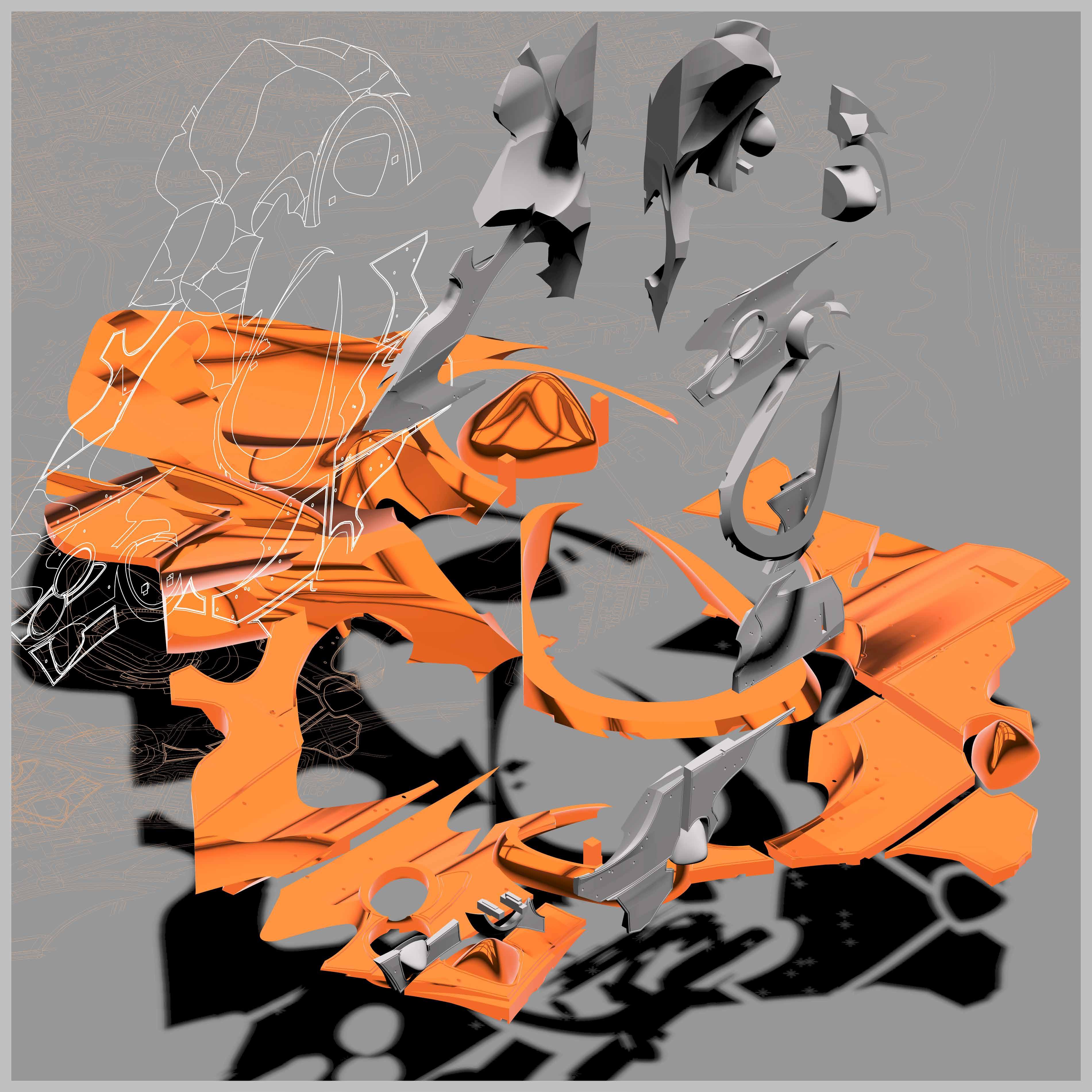
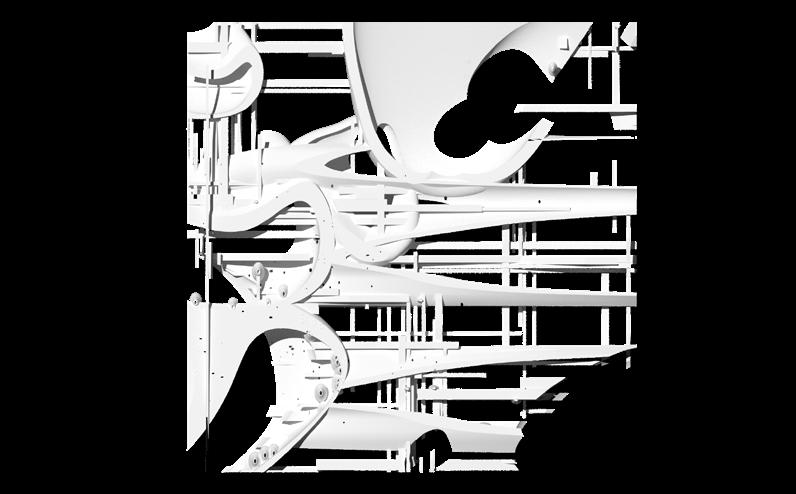
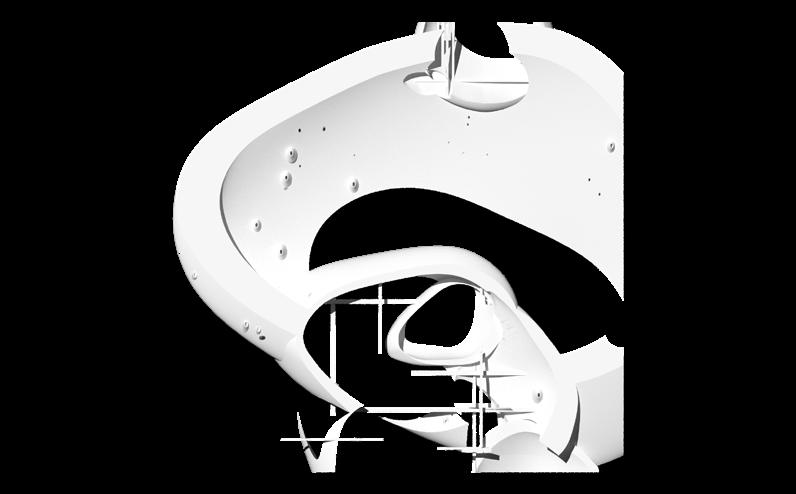
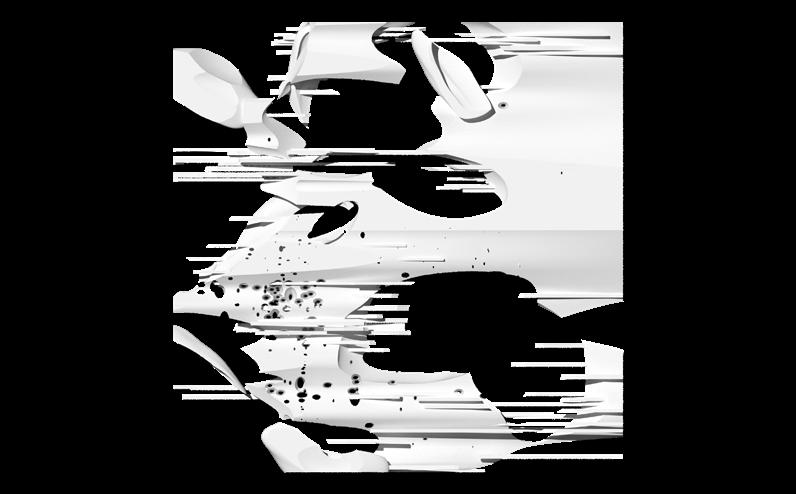
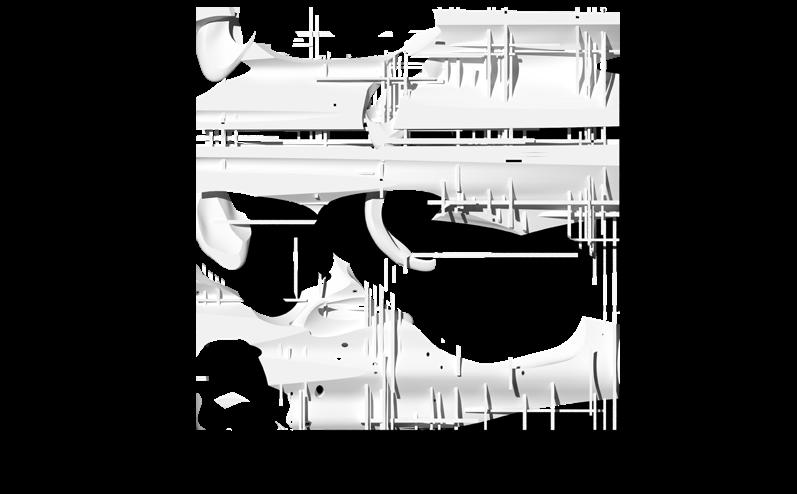
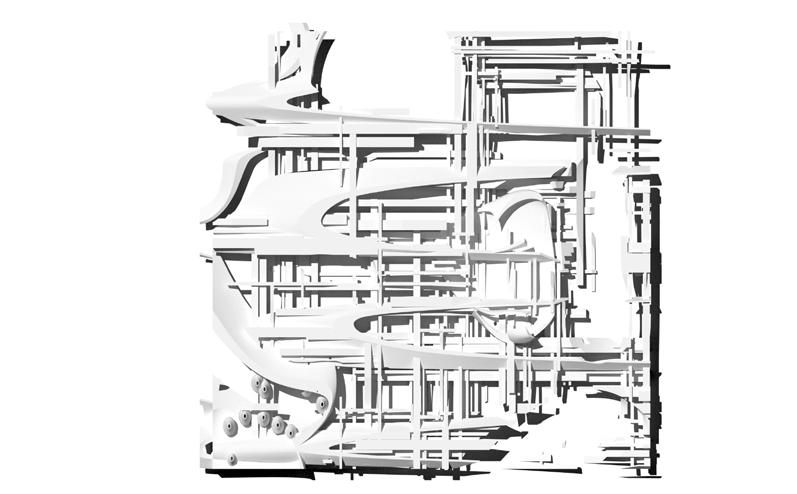
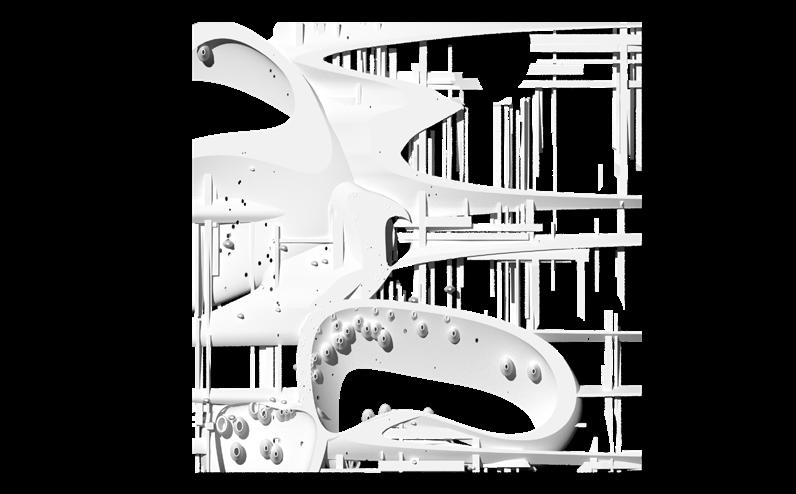
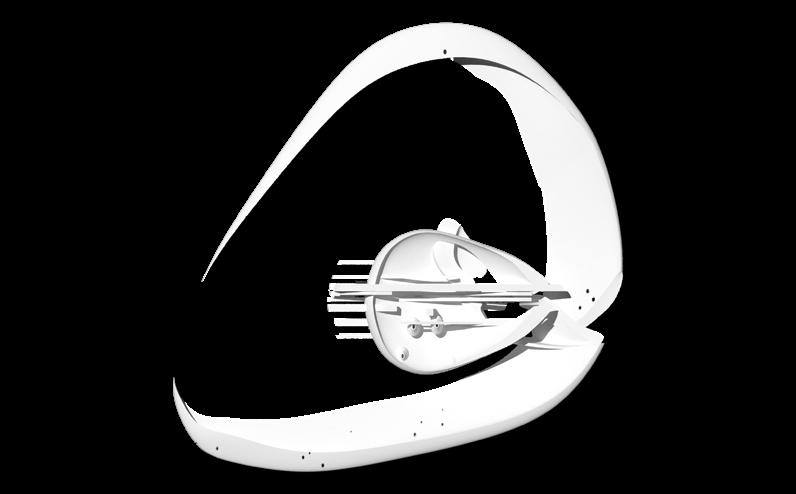
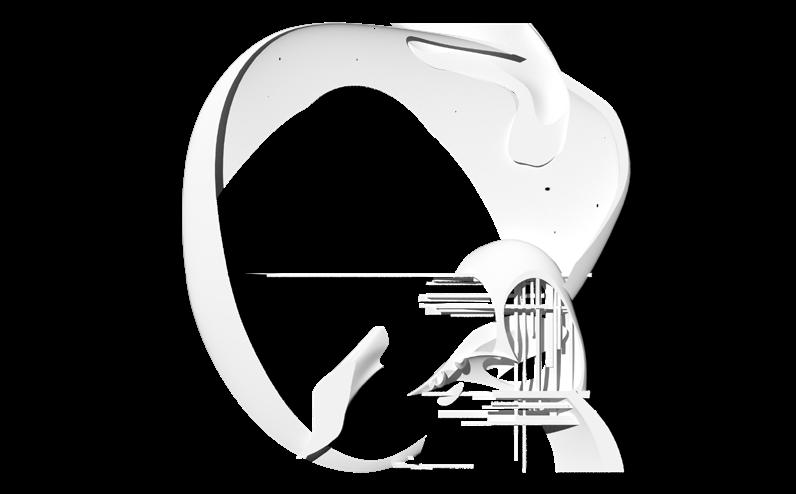
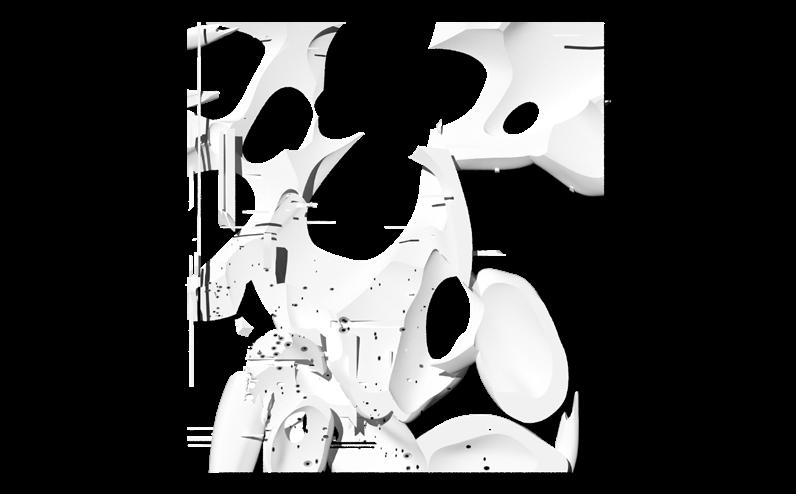
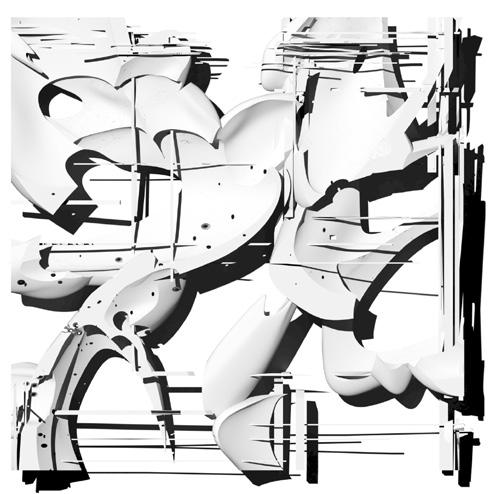
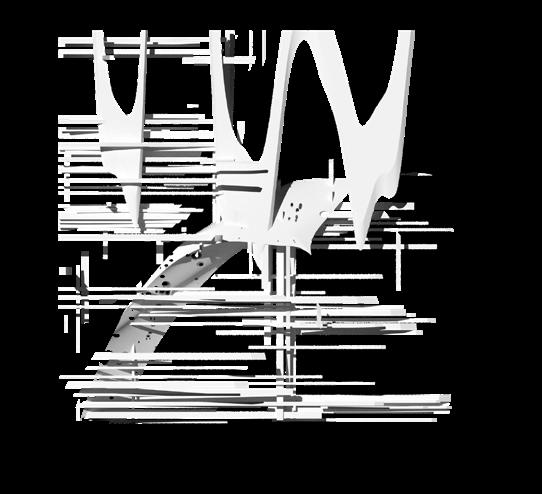
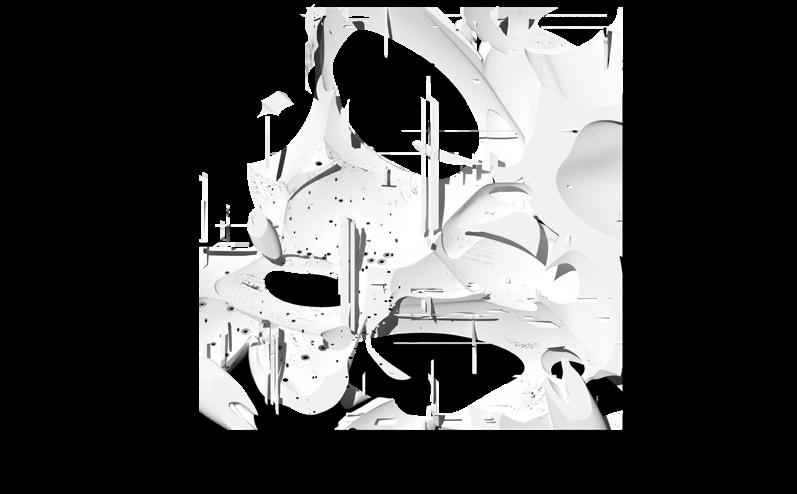
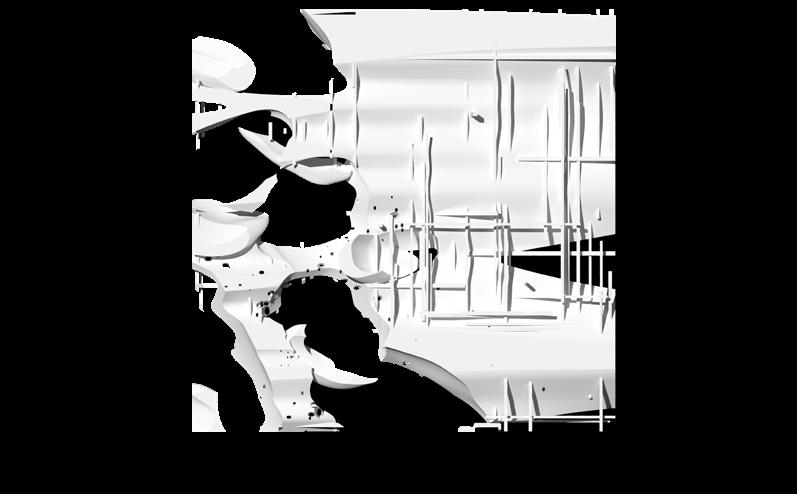
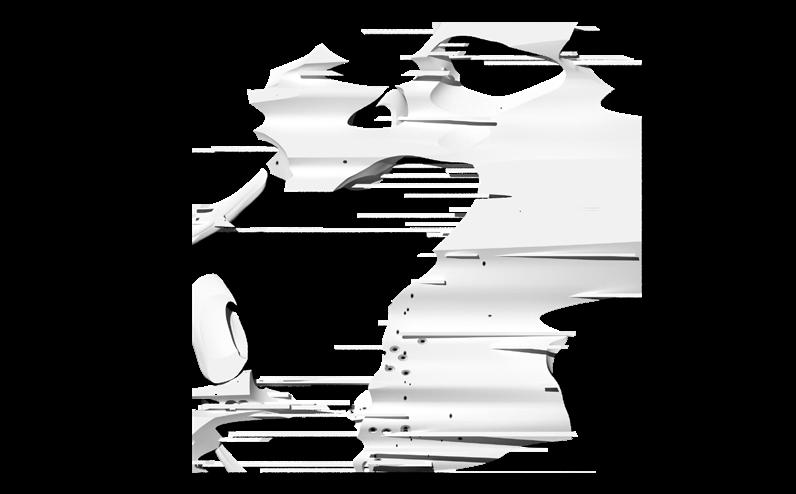
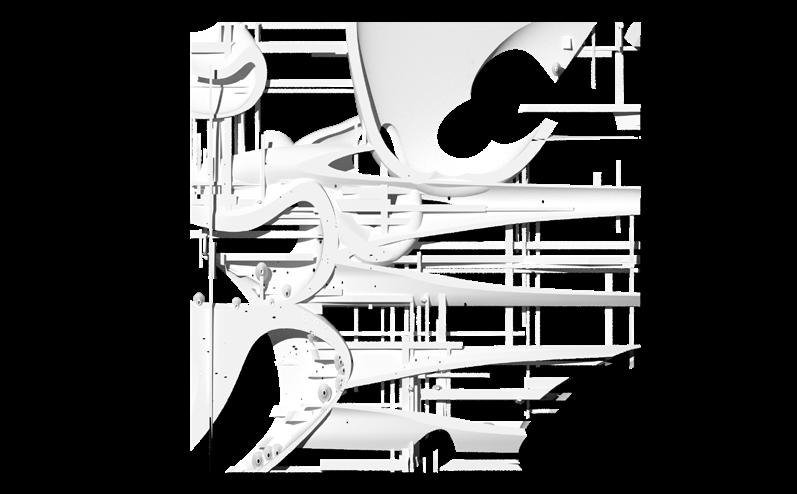
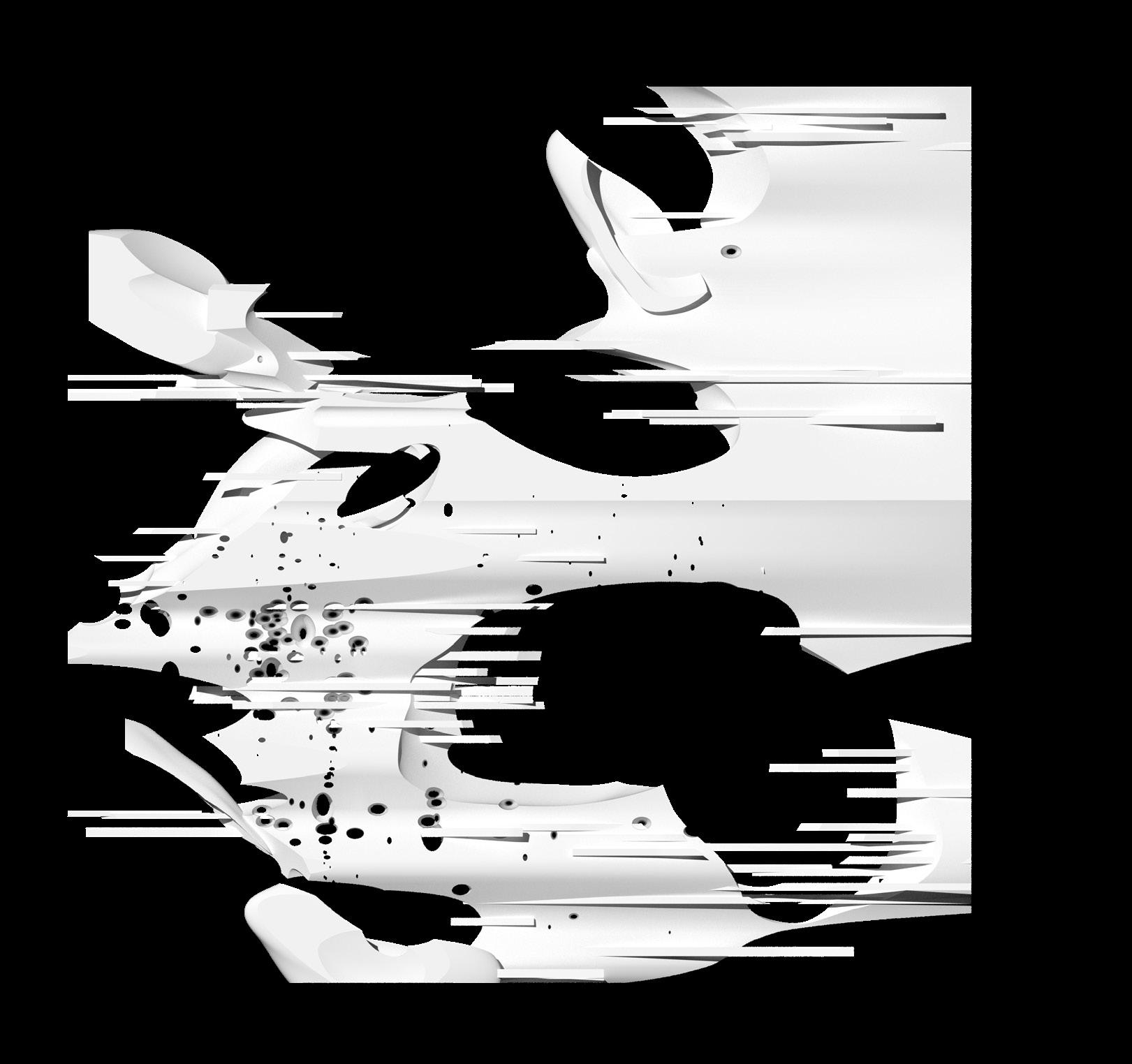
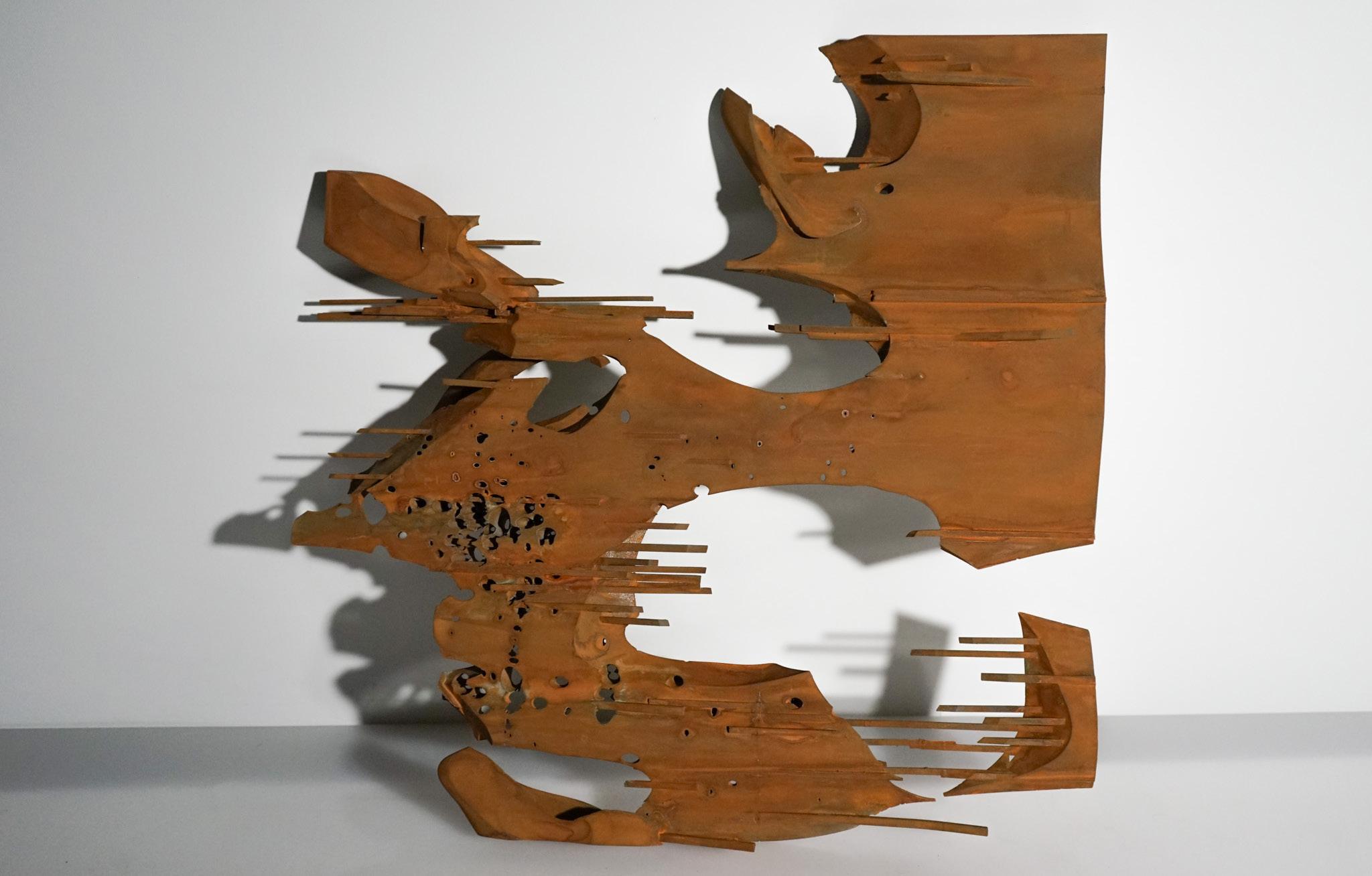
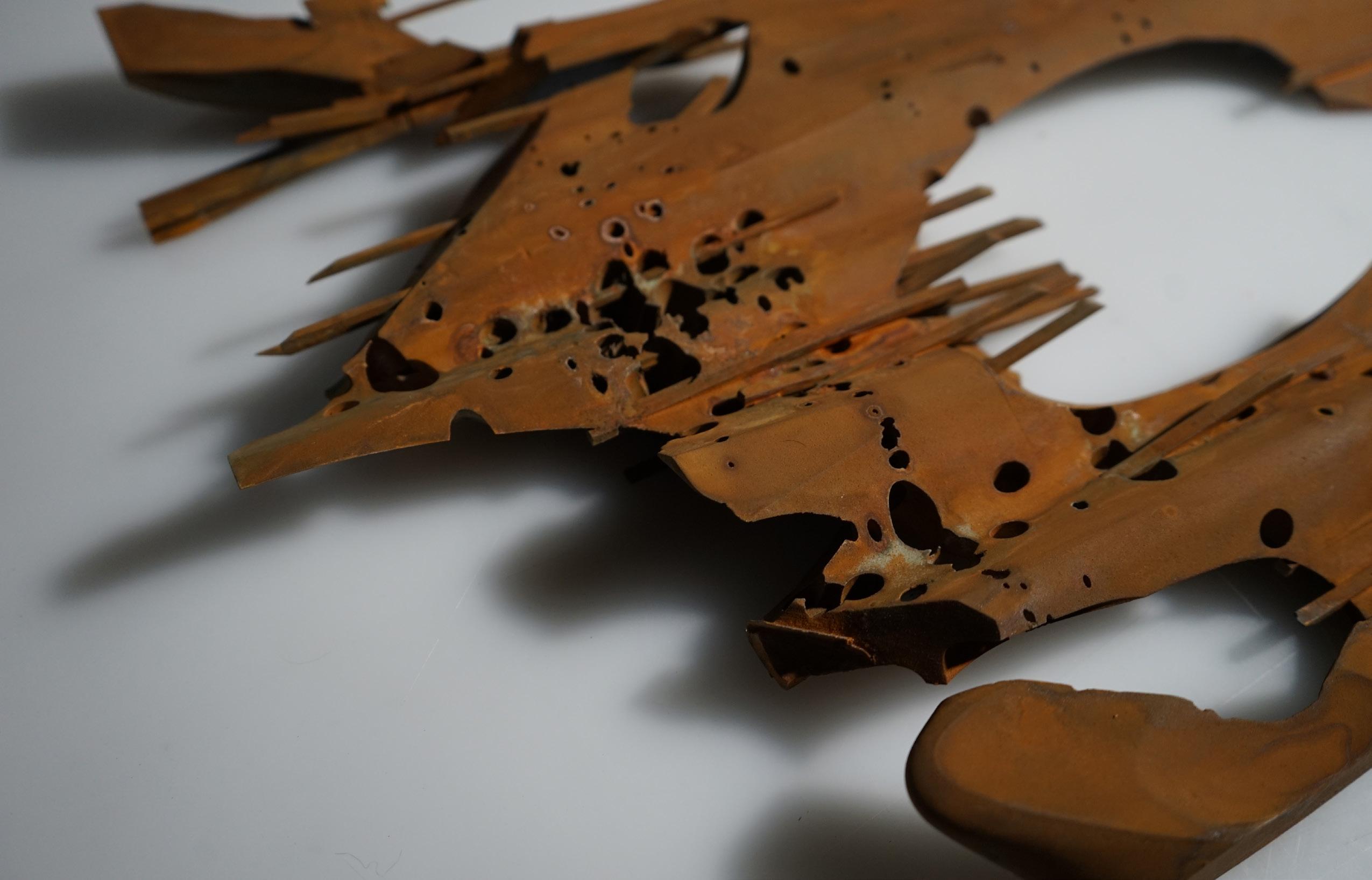
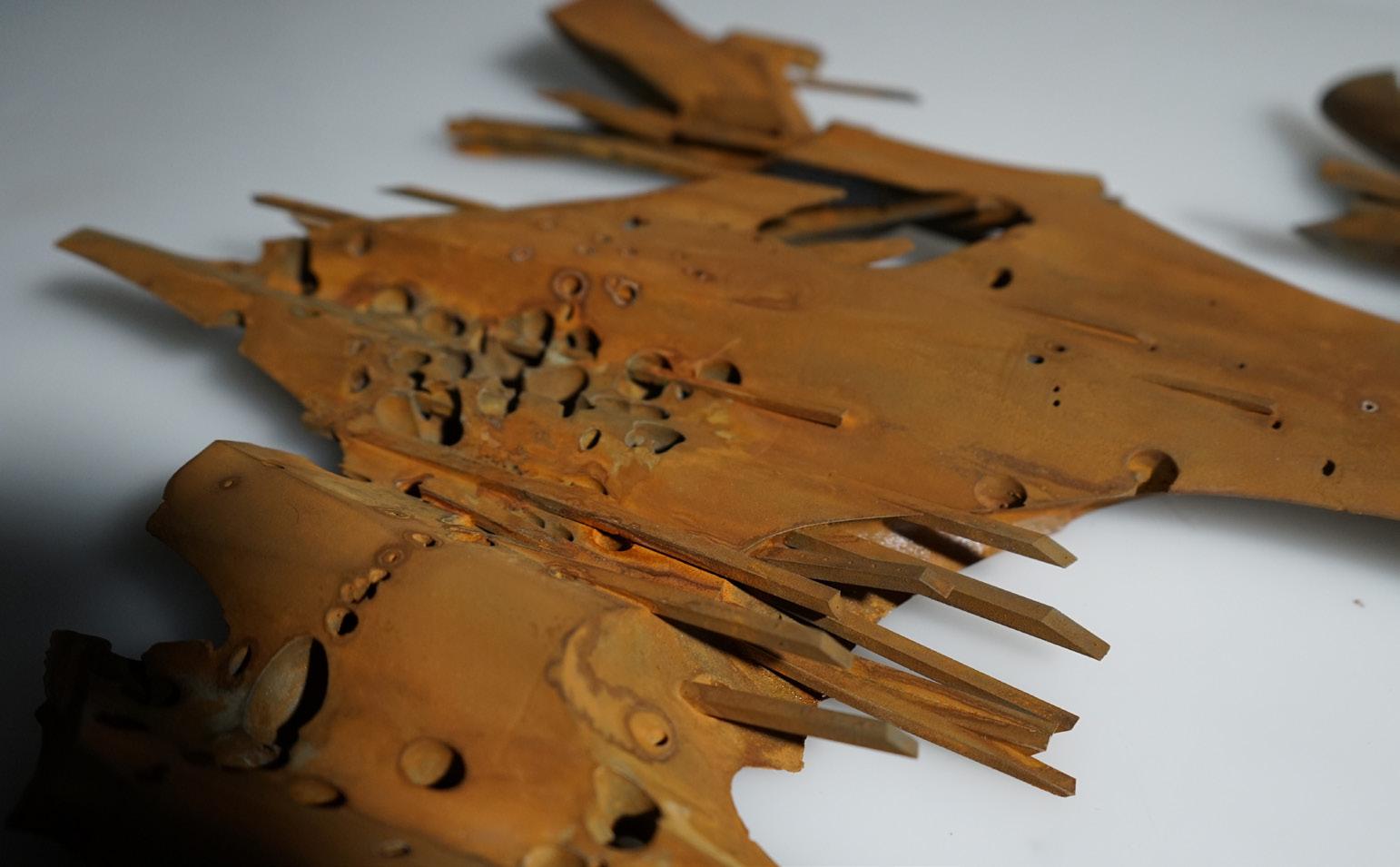
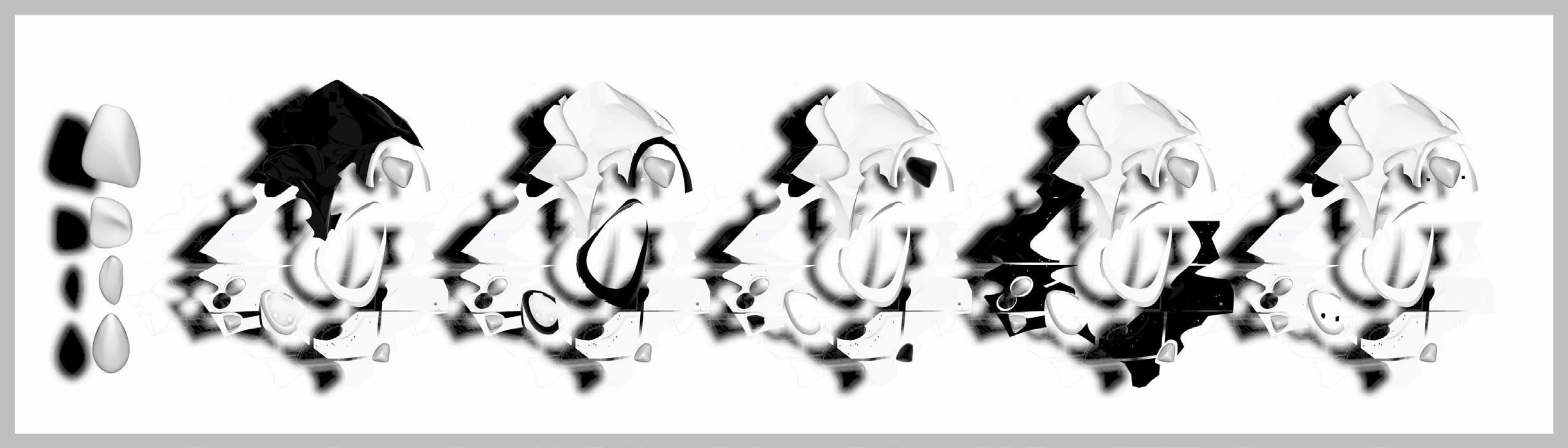
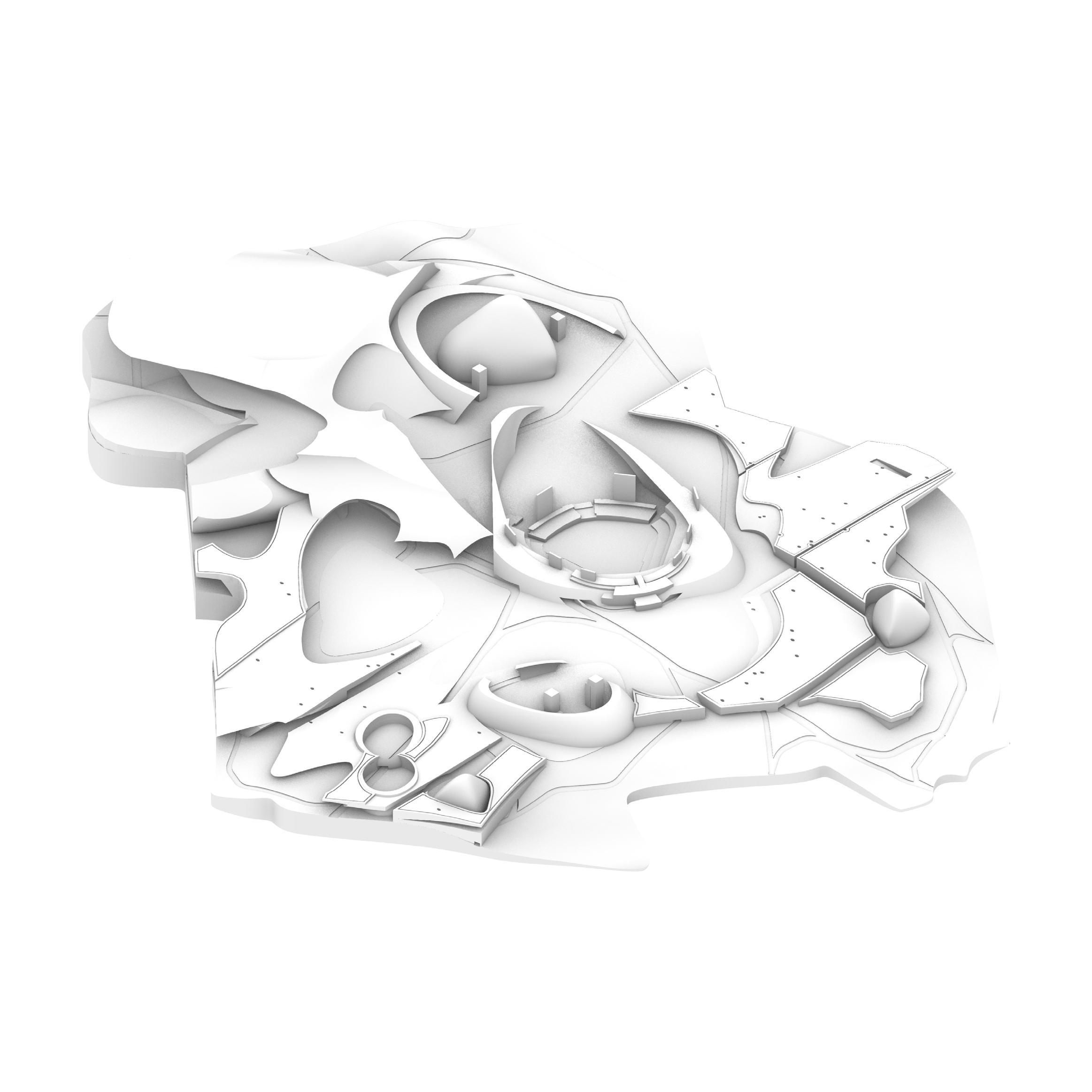
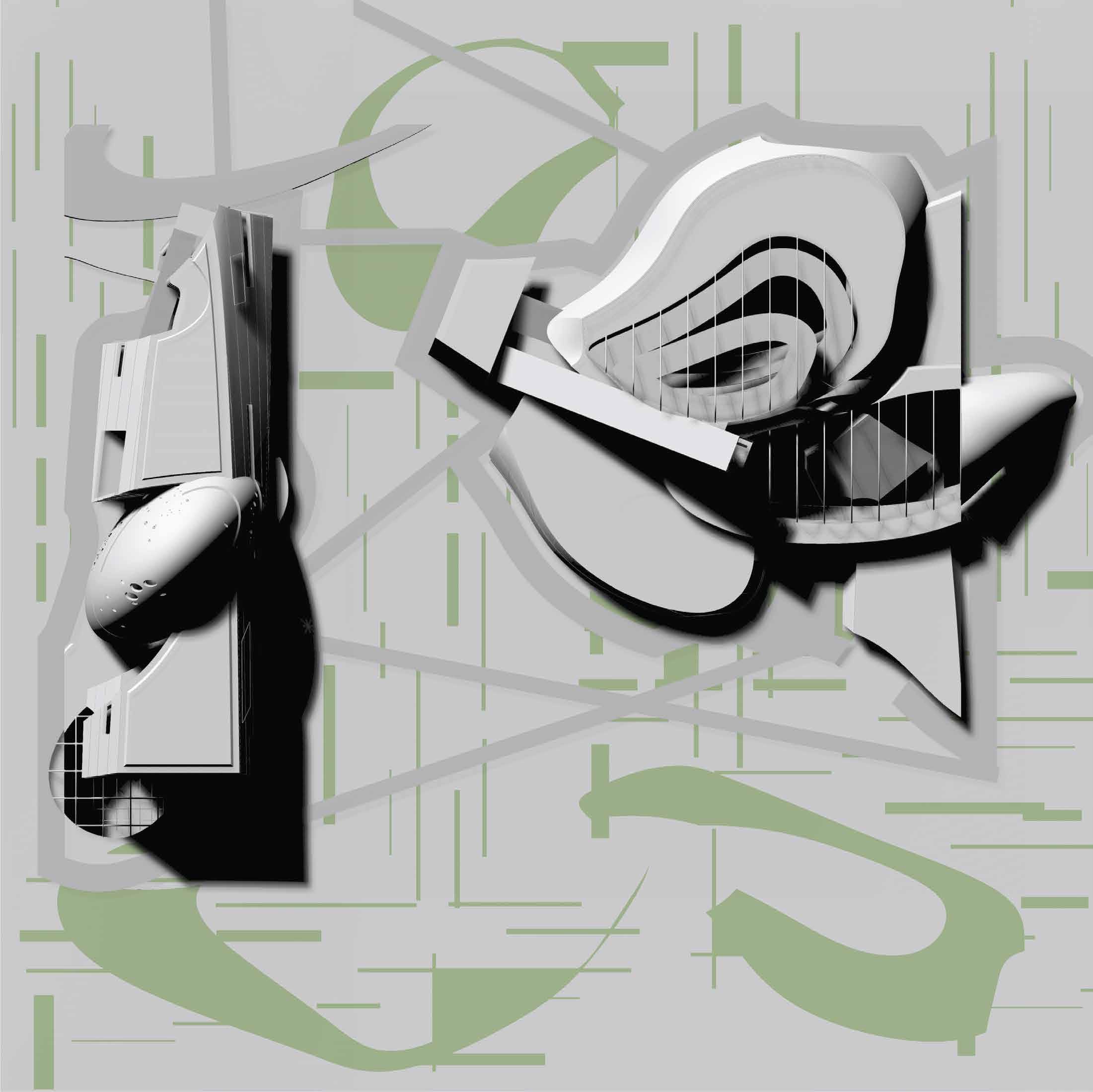
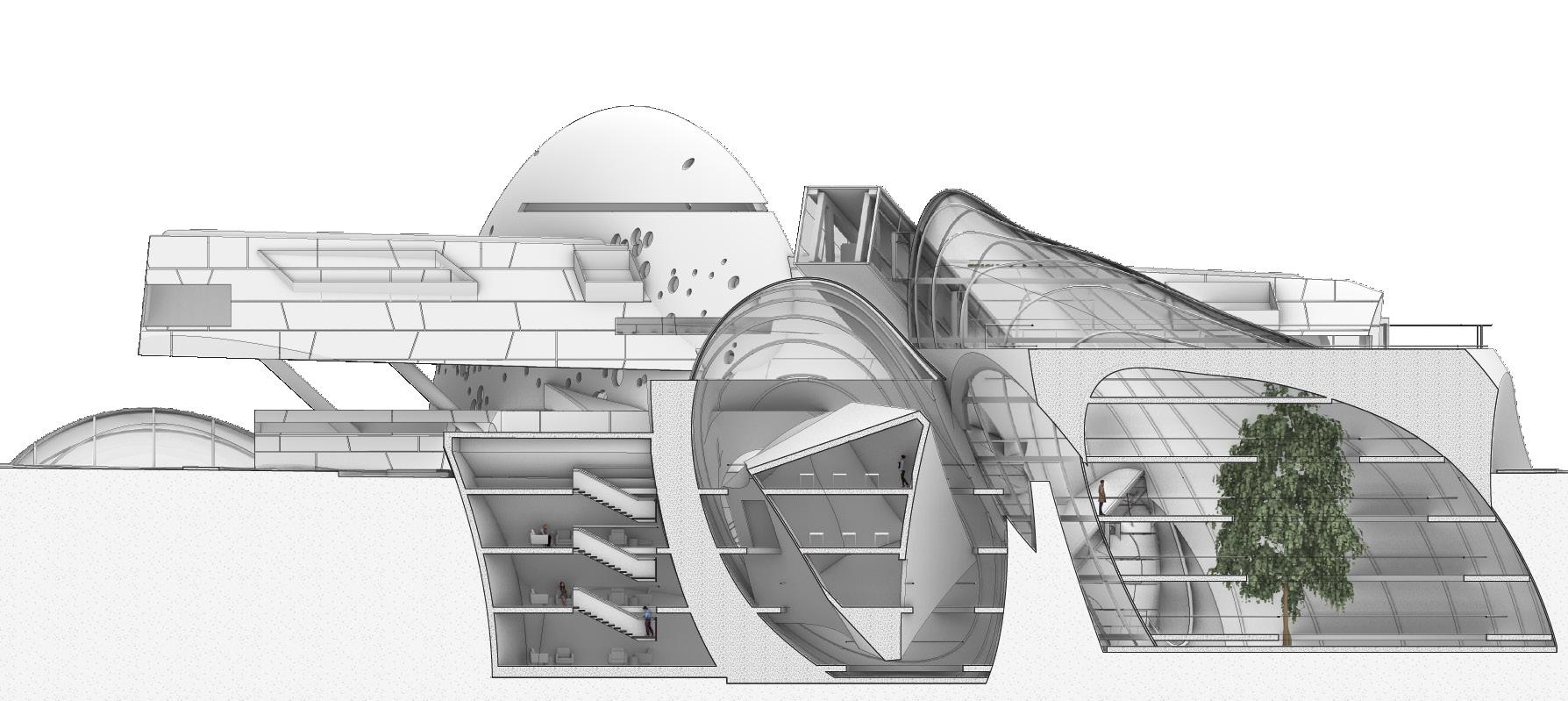
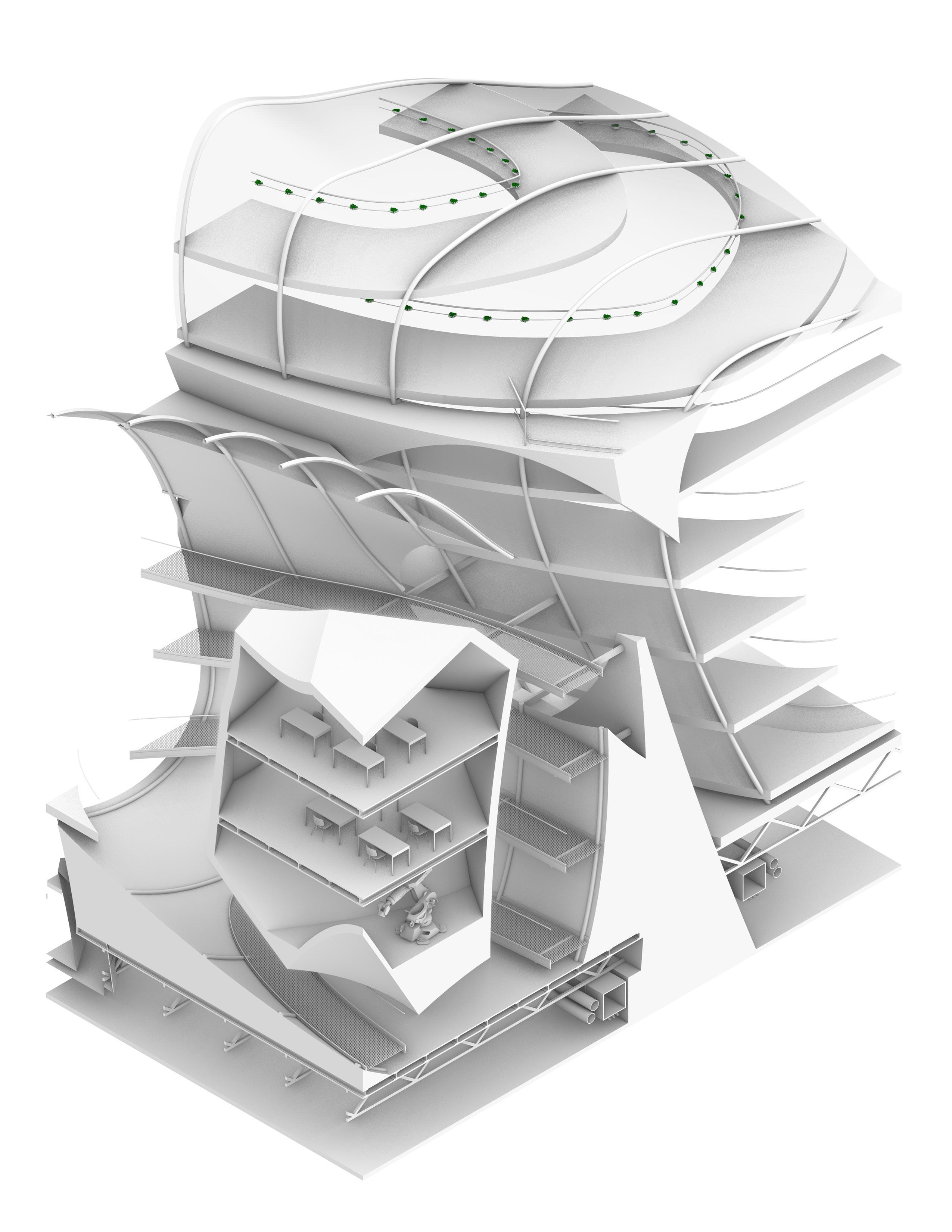
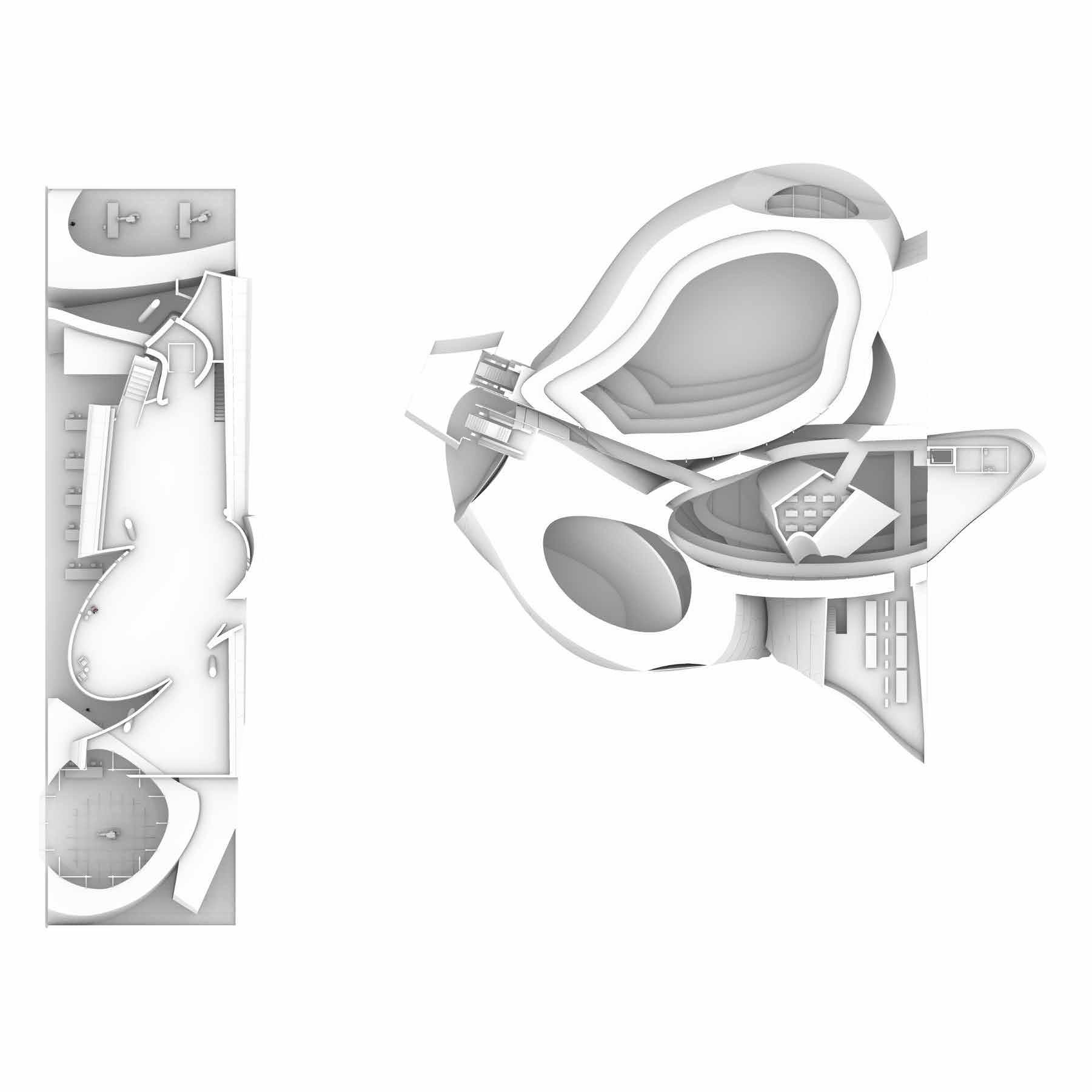
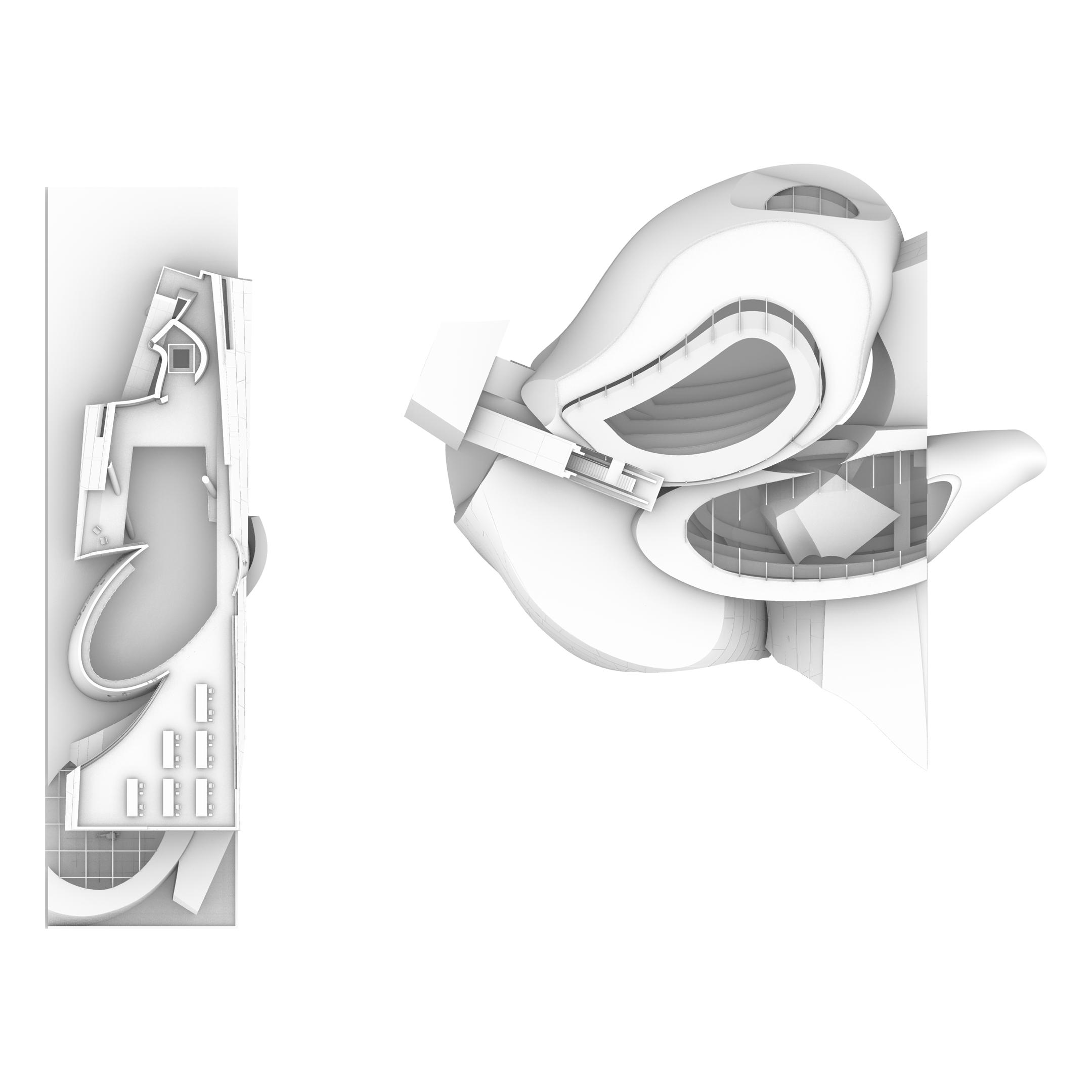
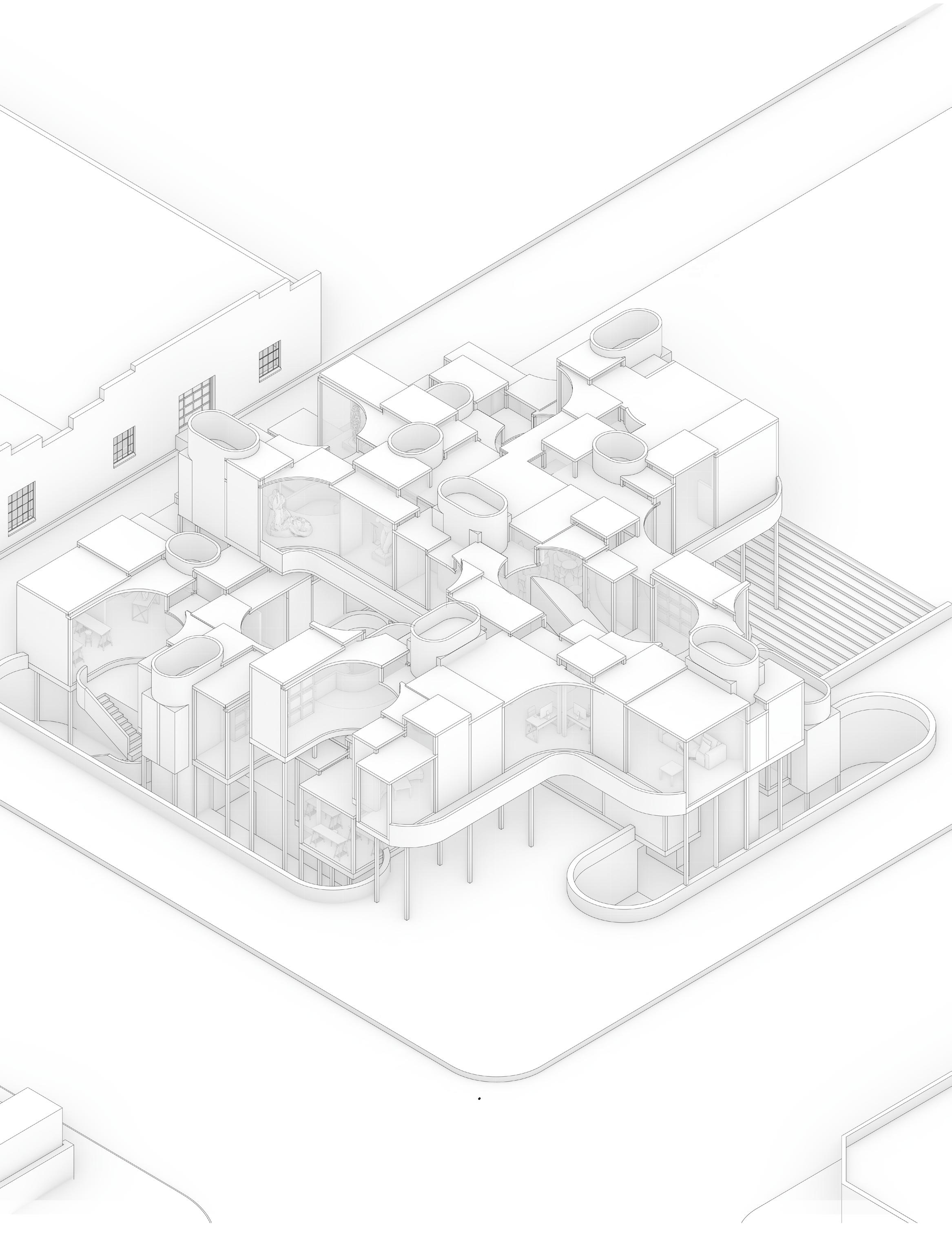
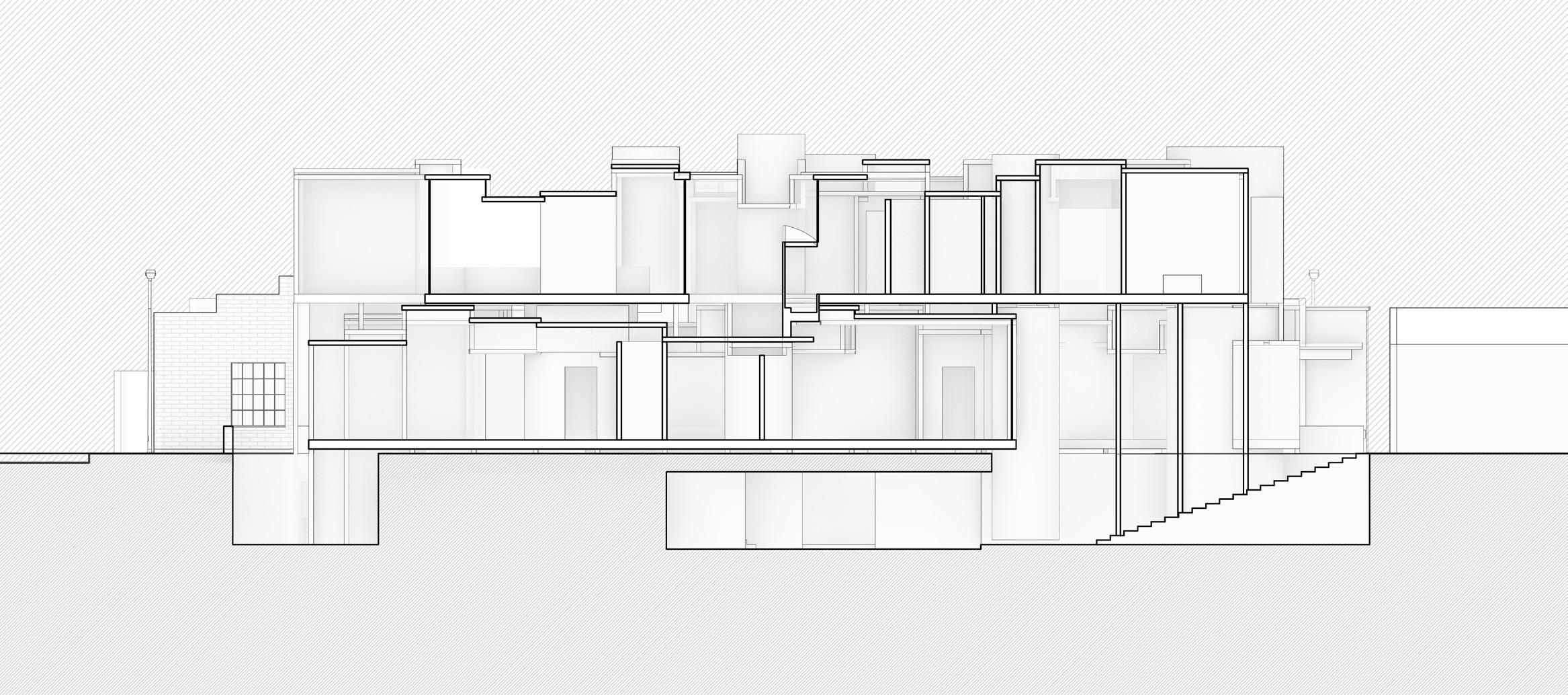
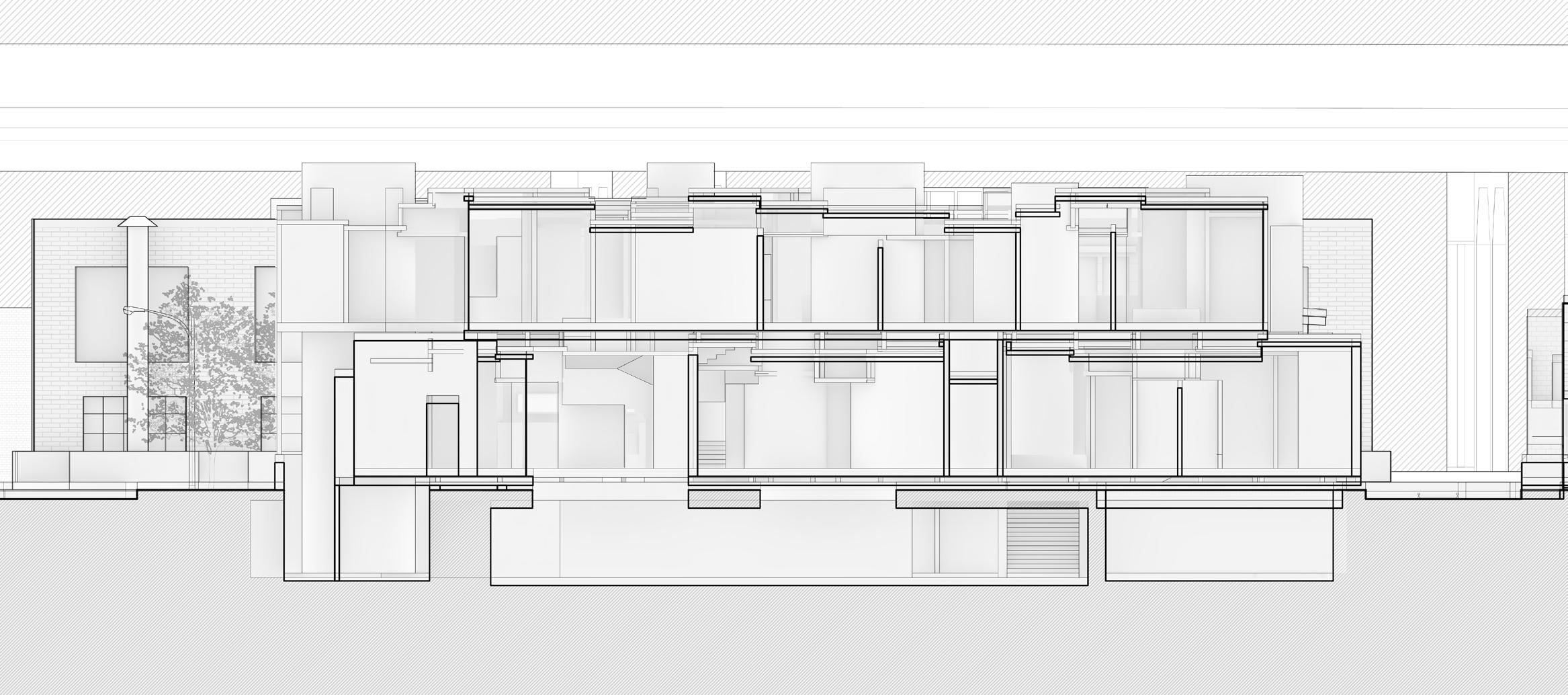
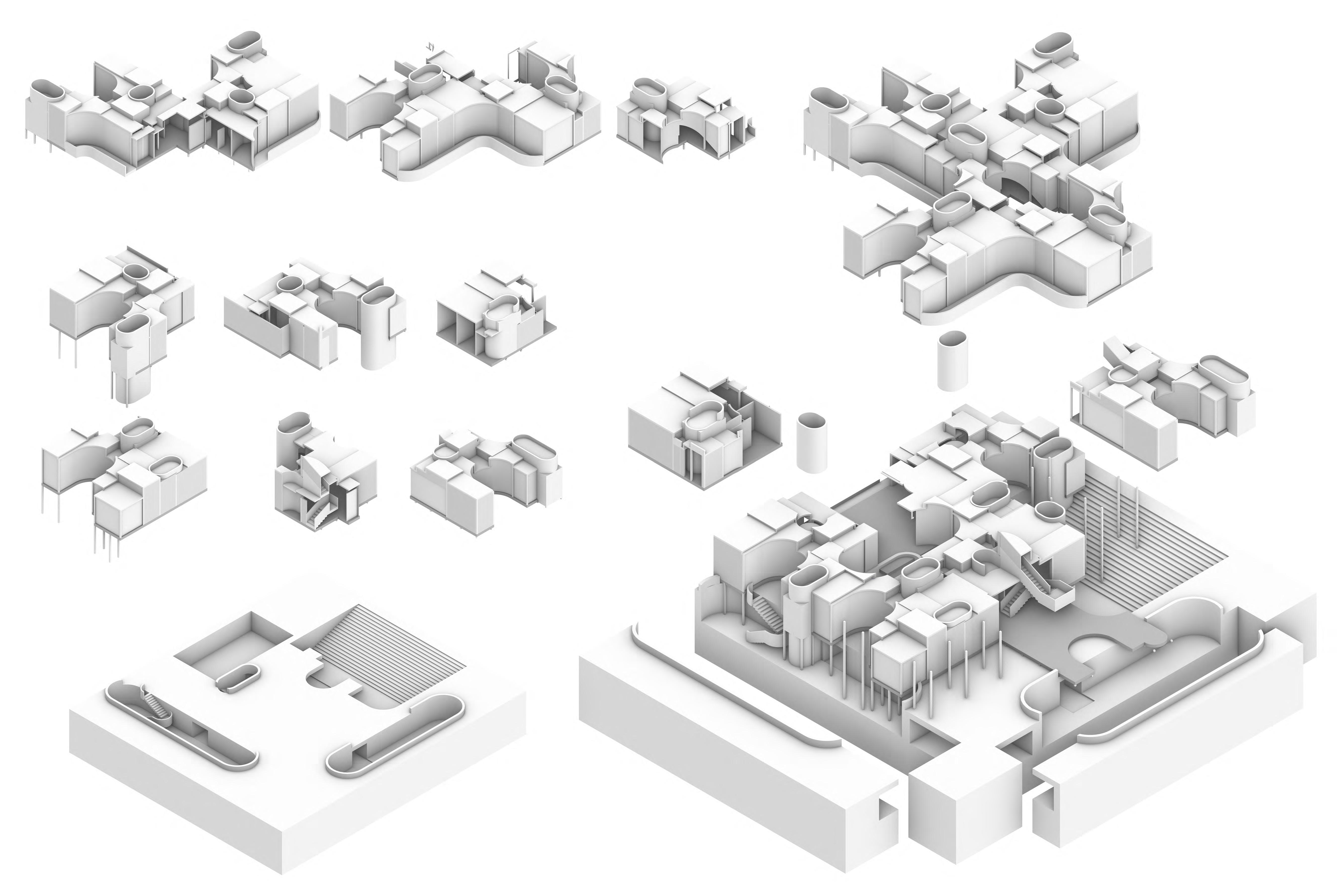
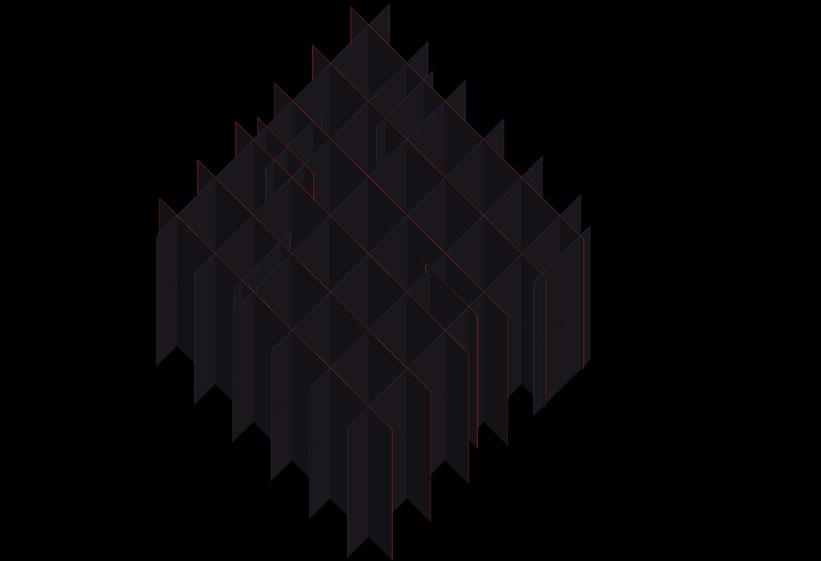
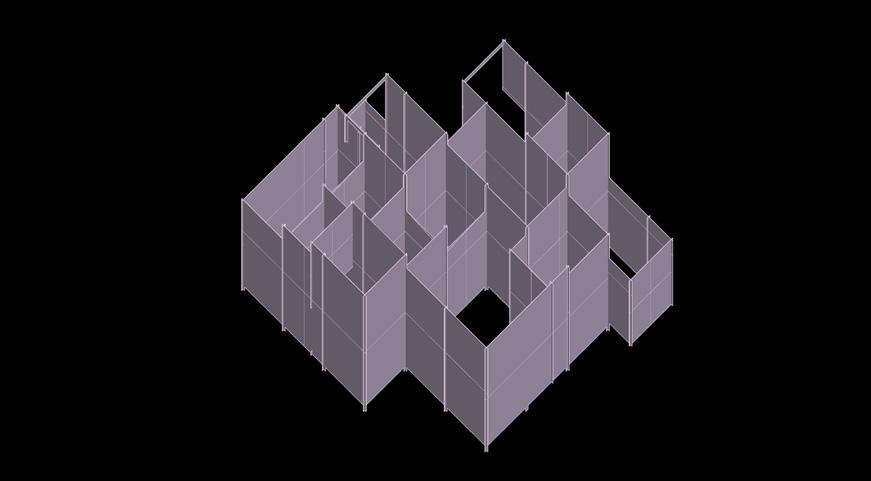
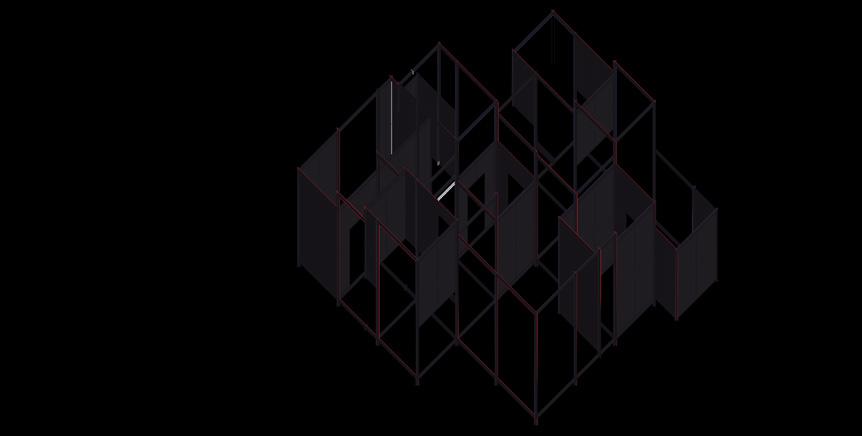
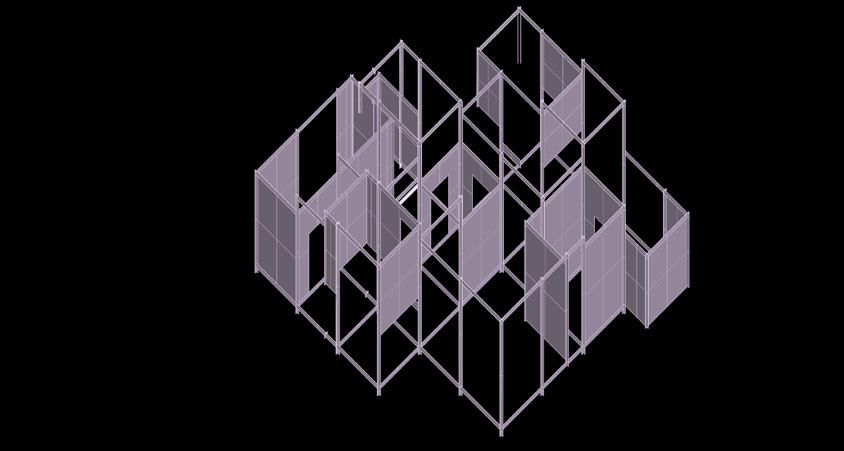
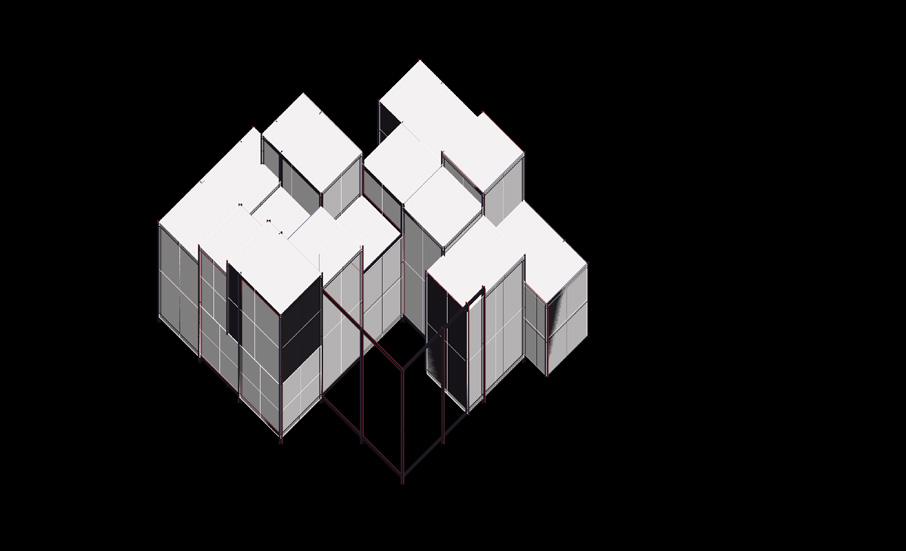
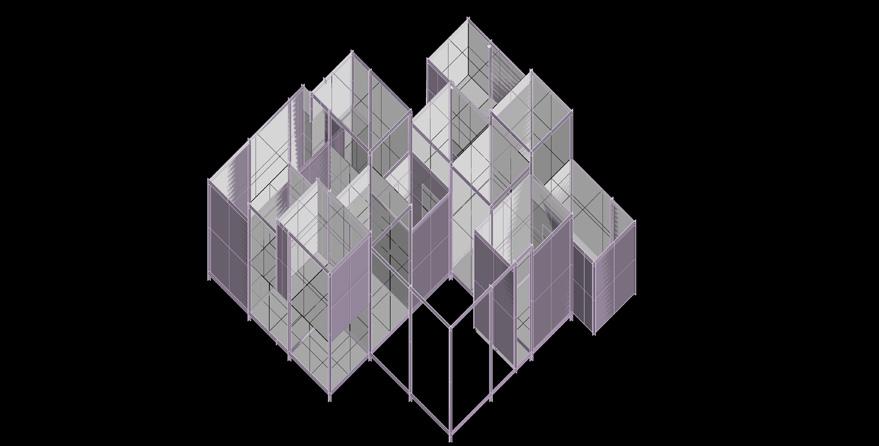
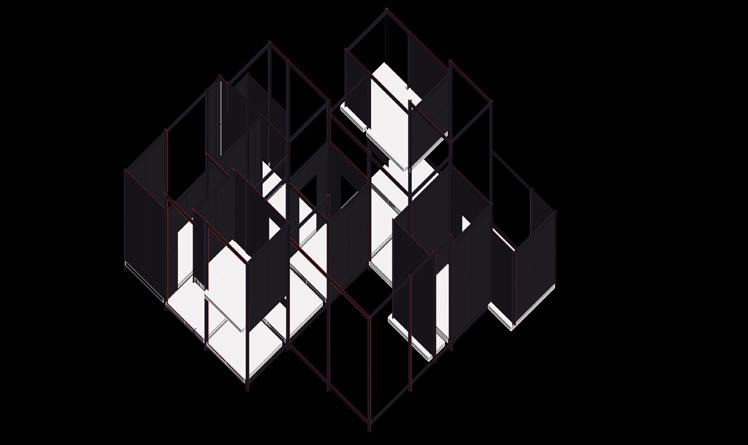
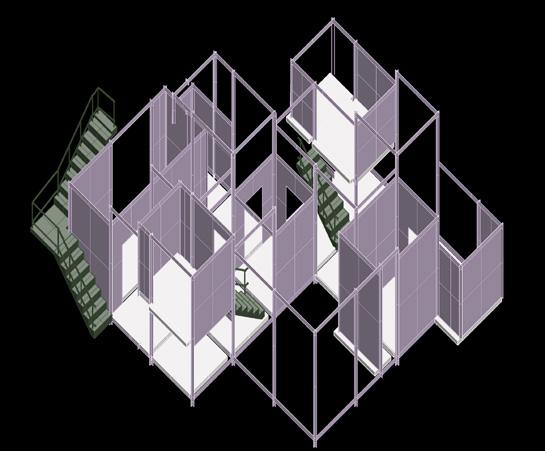
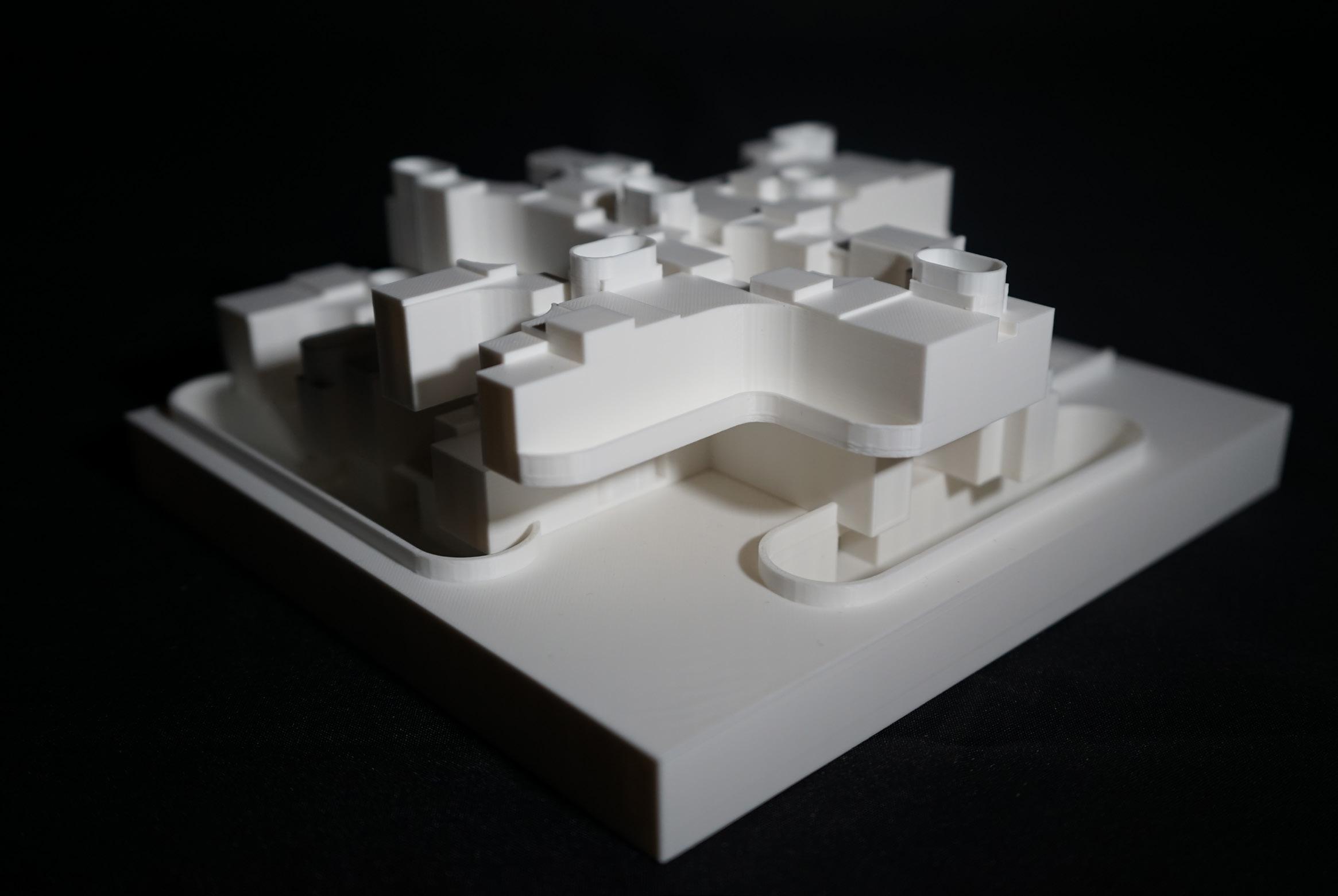
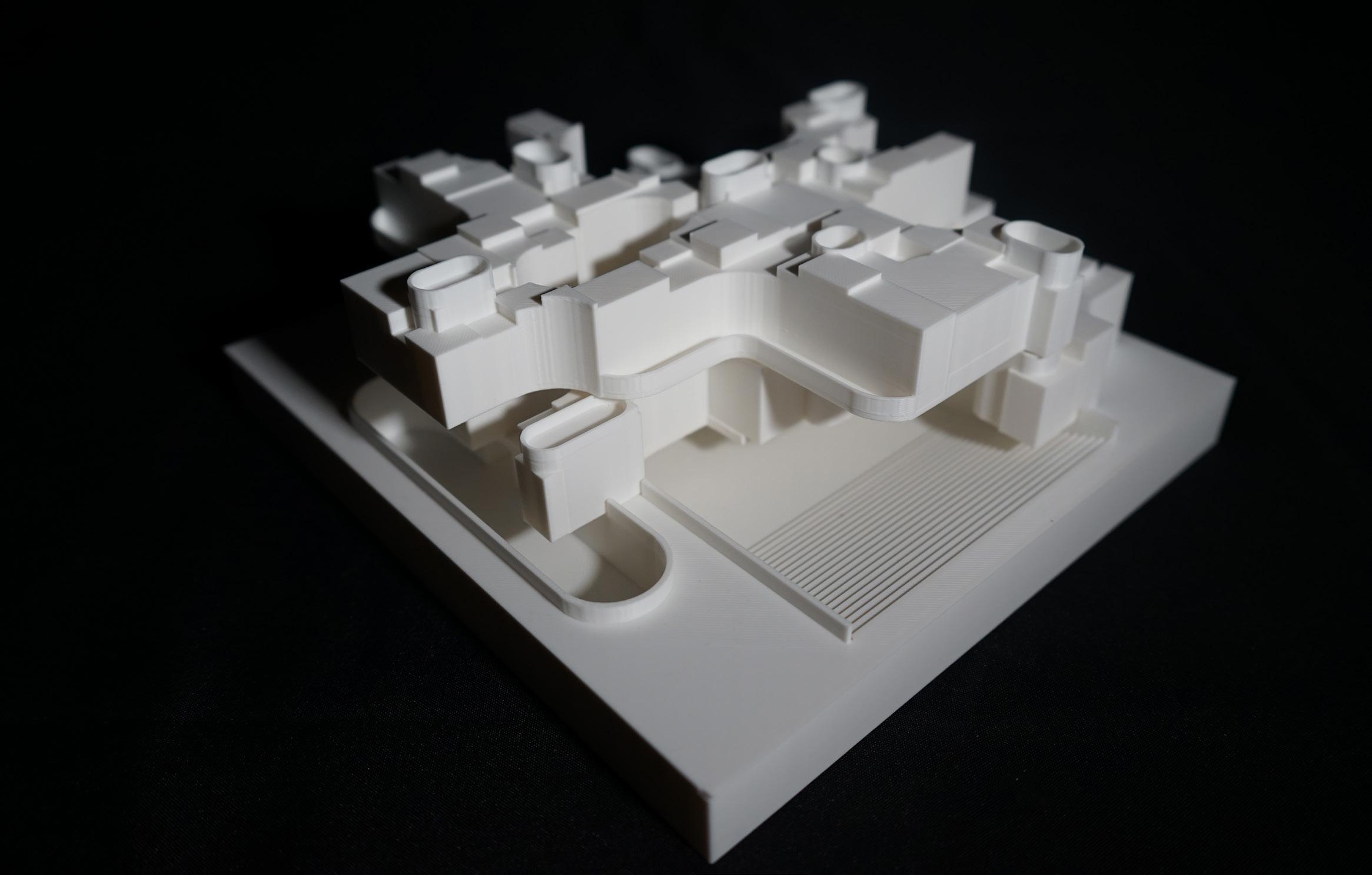
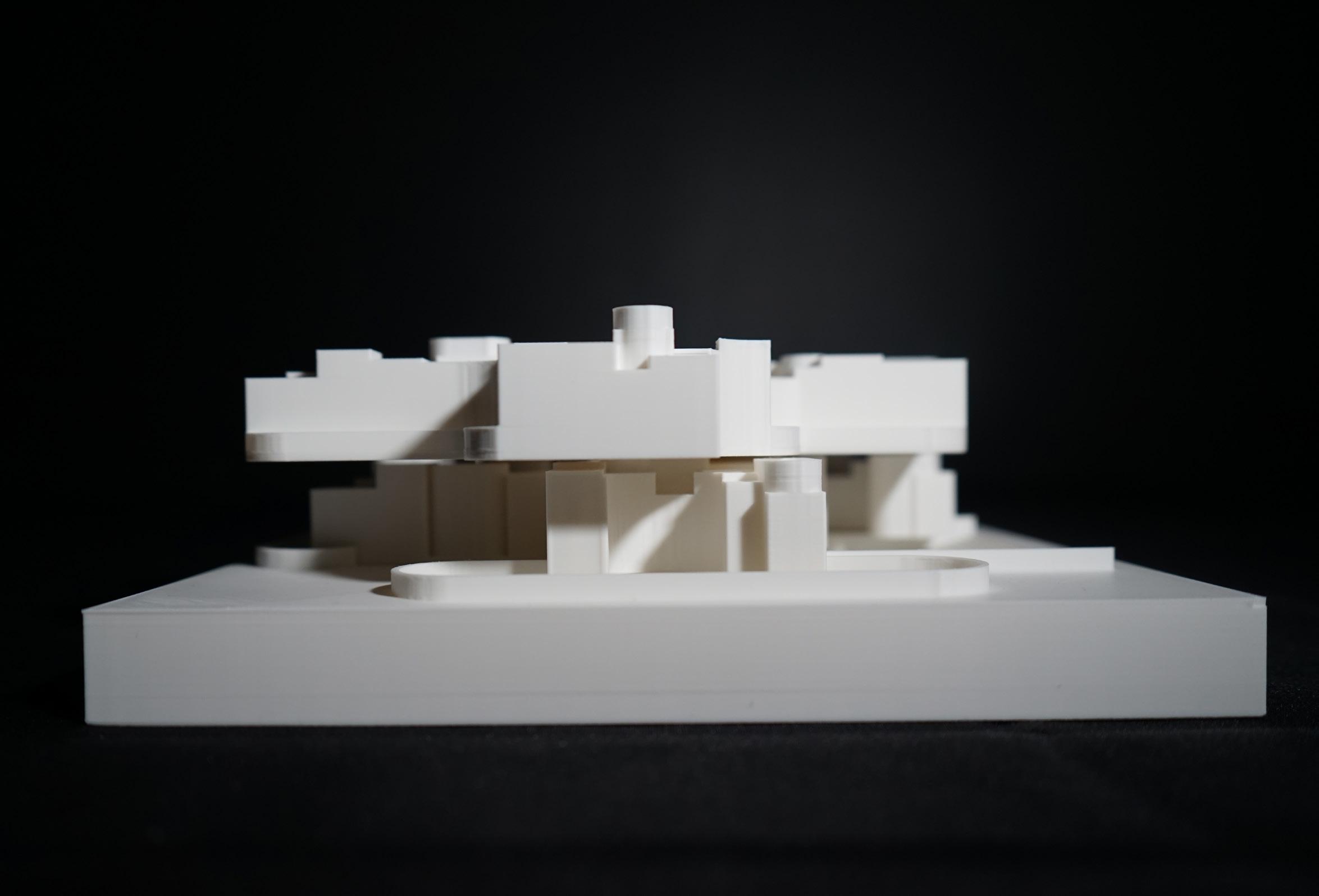
Critical Mass investigated the translation of abstract formal logic into rigorous urban architectural interventions. Initial stereotomic and tectonic massing studies developed formal ecologies through a hybrid of scripted and manual digital modeling. These primitive geometries evolved into a complex urban design proposal, balancing conceptual integrity with the pragmatic realities of the public realm and program dispersal. The process synthesized systemic ordering principles into a high-resolution building design, harmonizing foundational architectural aspirations with site-specific tectonic necessity.
PRIVATE RESIDENTIAL
PROGRAMPUBLIC COMMERCIAL PARKING PARKS
Using combinatory and collective form as underlying design methodologies, strategies are formulated for the implementation and layering of their ordering systems within a “site,” leading to individualized and variable design investigations. Through the use of various operational methods and adaptive constraints derived from readings, research, and experimentation, these strategies are employed to generate stereotomically and tectonically rich formal and spatial ecologies. Research and experimentation are used to introduce, develop, and clarify concepts, operational techniques, and primitive geometries. Grounded in the realms of point, line, plane, and volume, these geometries act as catalysts for individually simple yet situationally variable ordering systems.
Abstraction
By utilizing surface design as a primary driver, this project employs combinatory and collective methodologies to develop layered ordering systems within a specific site. This approach facilitates highly individualized and adaptive design investigations.
Through a series of operational techniques and constraints informed by research and experimentation, these strategies are used to generate complex formal and spatial ecologies that are both stereotomically and tectonically rich.
FALSE FIGURES
SPRING 2025
ARCH 3602 - ARCHITECTURAL DESIGN VI
INSTRUCTOR - PRATANA KLIEOPATINON
LOCATION - AUSTIN, TEXAS
SIZE - 26,000 SQUARE FEET
HEIGHT - 50 FEET
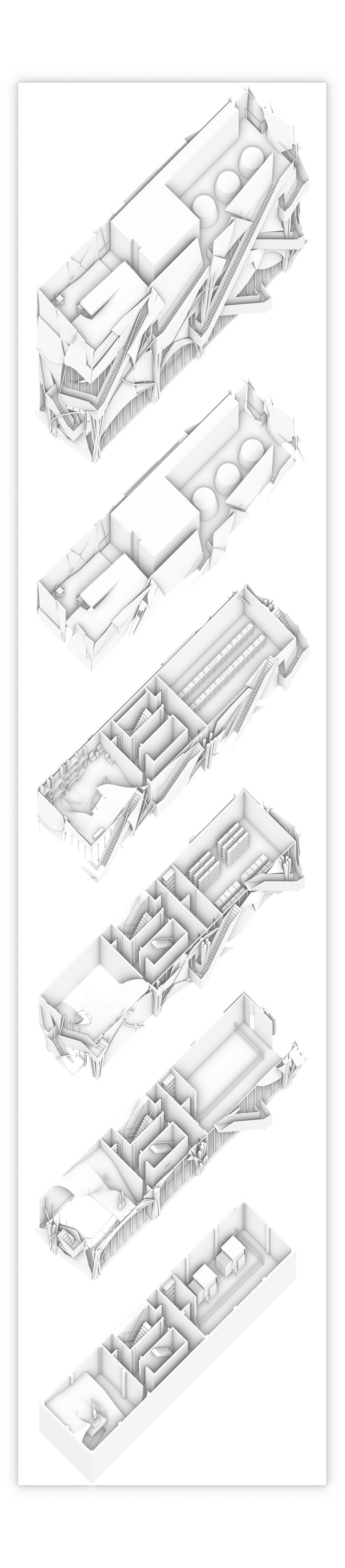
PURPOSE - ART GALLERY, COMMUNITY SPACE, ELECTRICAL SUBSTATION
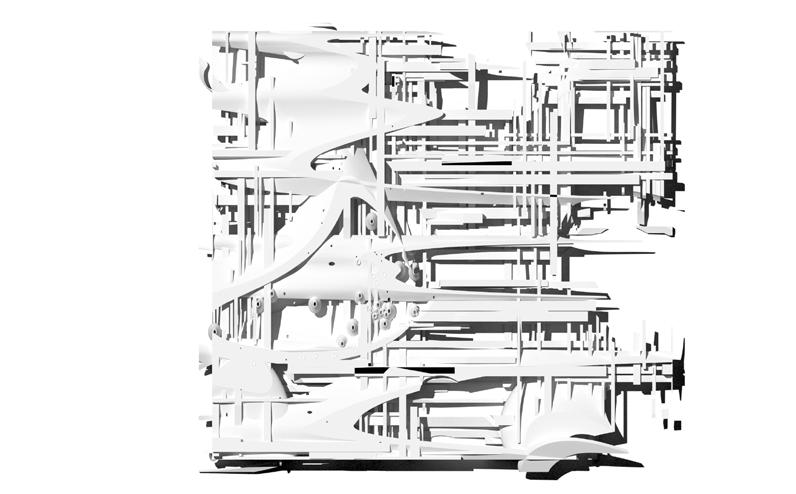
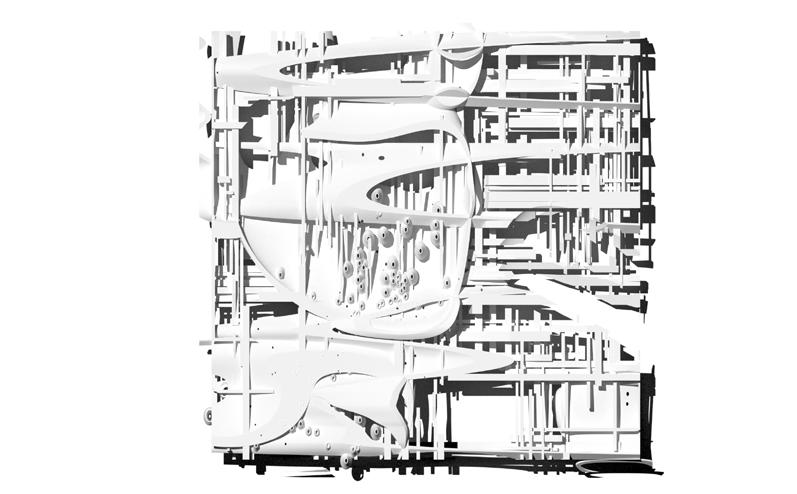
In Façade City, we explore how architecture engages with the city, its most intricate and essential context, through a series of assignments that oscillate between elevational studies of the city’s ephemeral accumulations and planimetric studies of its concrete aspirations. By examining the interplay of vertical and horizontal, spontaneous and planned elements, we question whether architecture can exist in isolation, while investigating the aesthetic, regulatory, ecological, typological, and socio-economic opportunities and constraints that shape architectural design. The course begins with urban analysis, progresses to a collaborative design game, and culminates in new contextual proposals for a dense urban site.
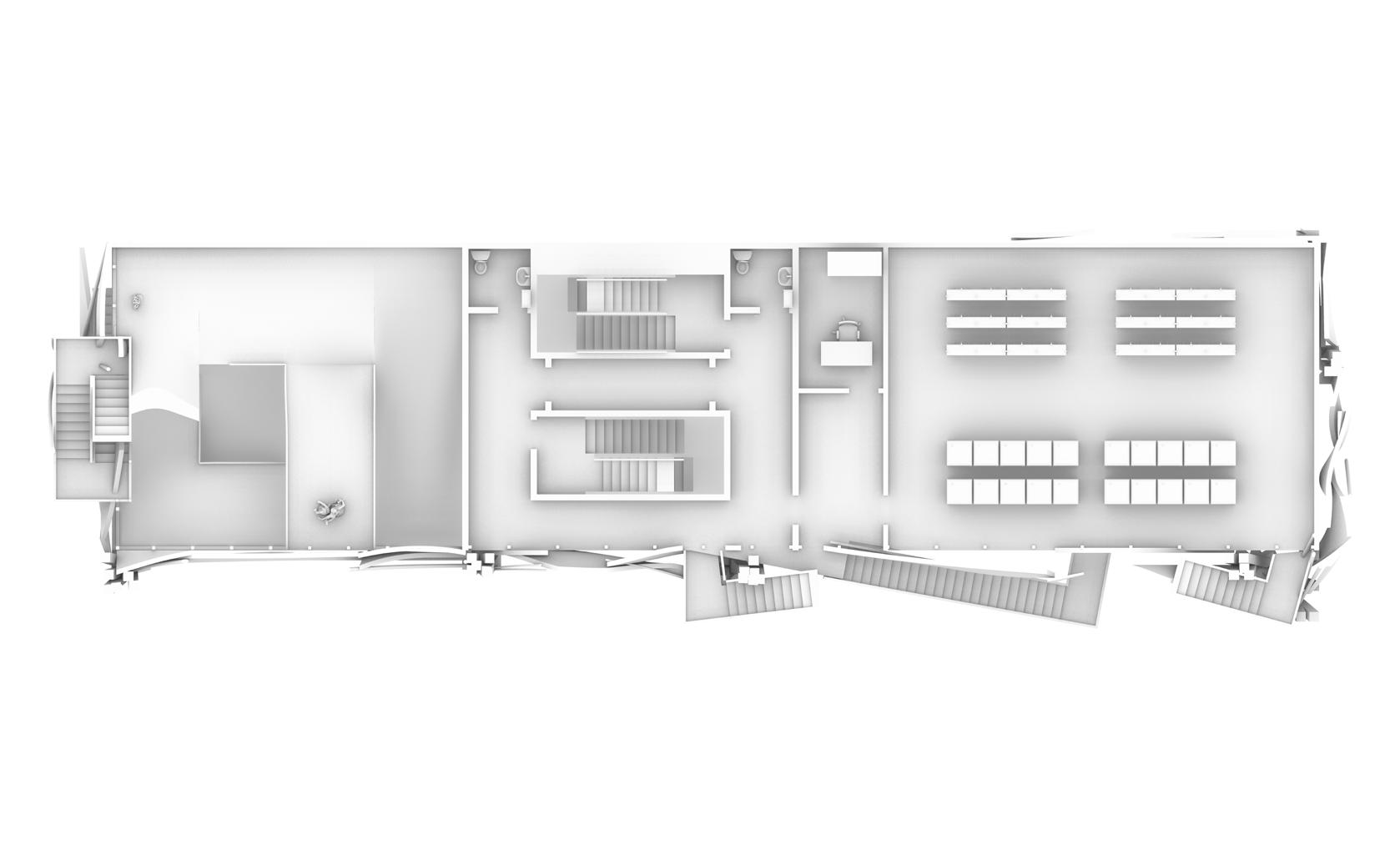
PROGRAM -
PRIVATE
DATA CENTER
ELECTRICAL SUBSTATION
GENERATOR ROOM
STORAGE
LOADING DOCK
OFFICES
COOLING TOWERS
MECHANICAL SYSTEMS
False Figures
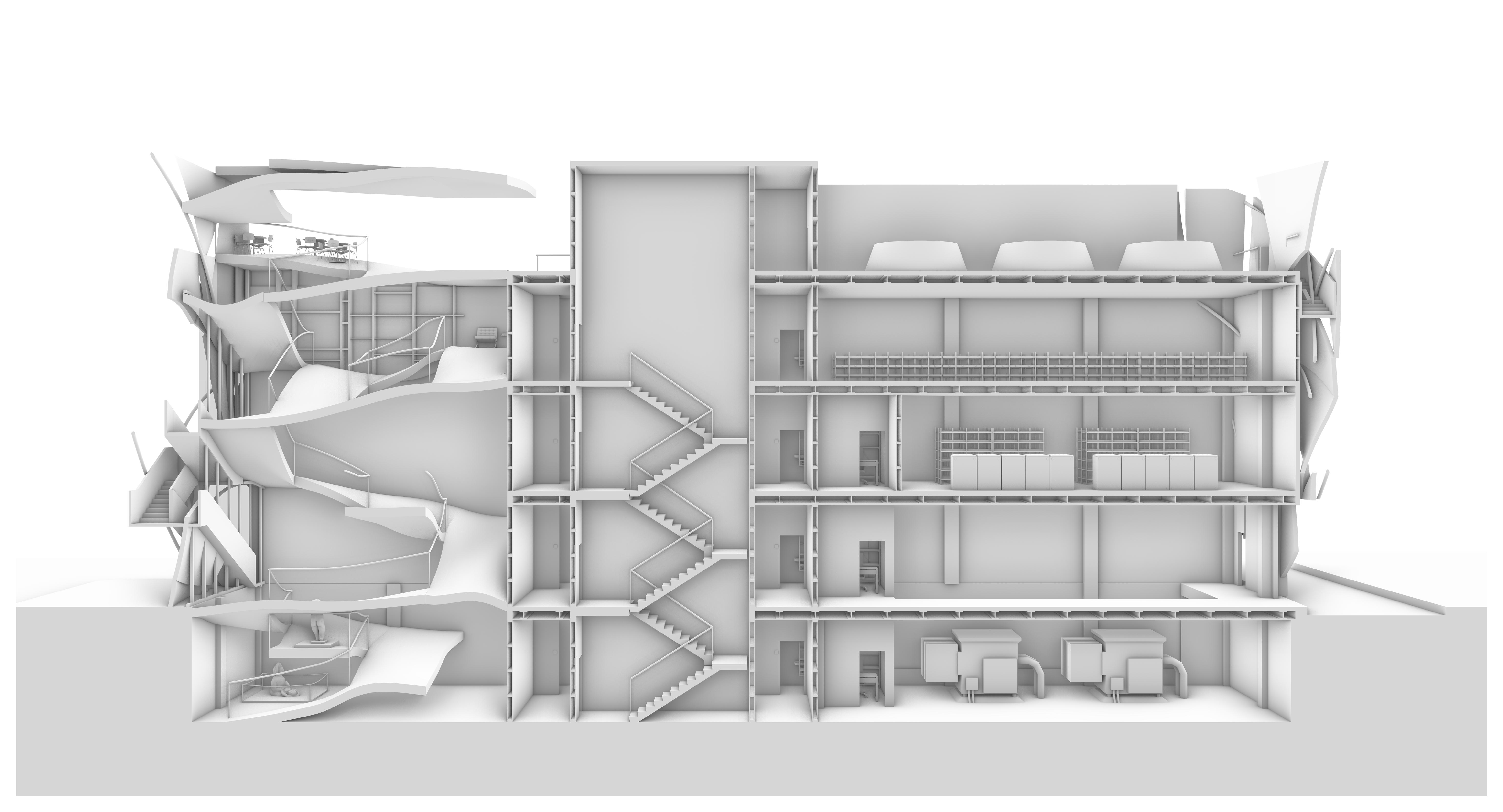
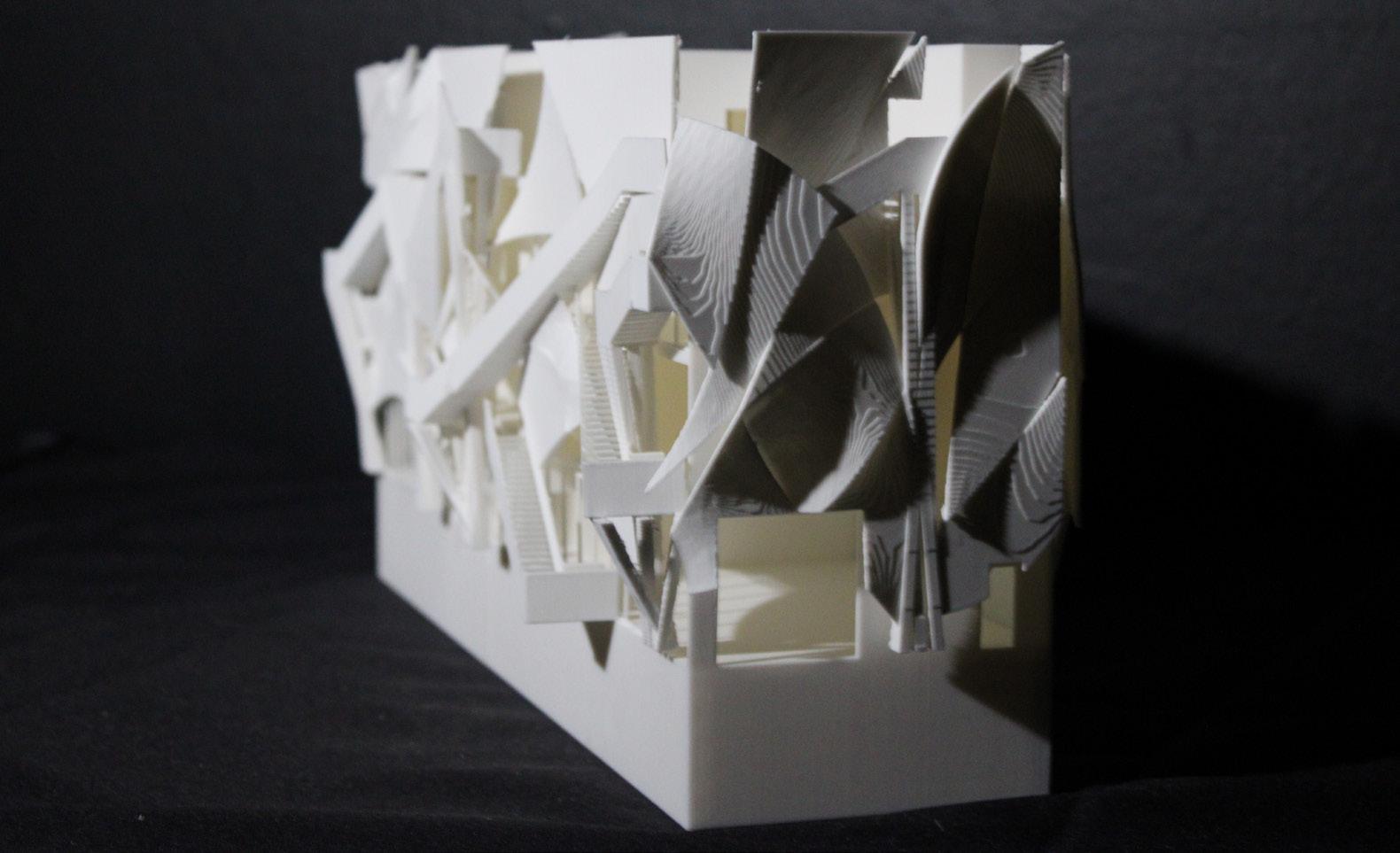
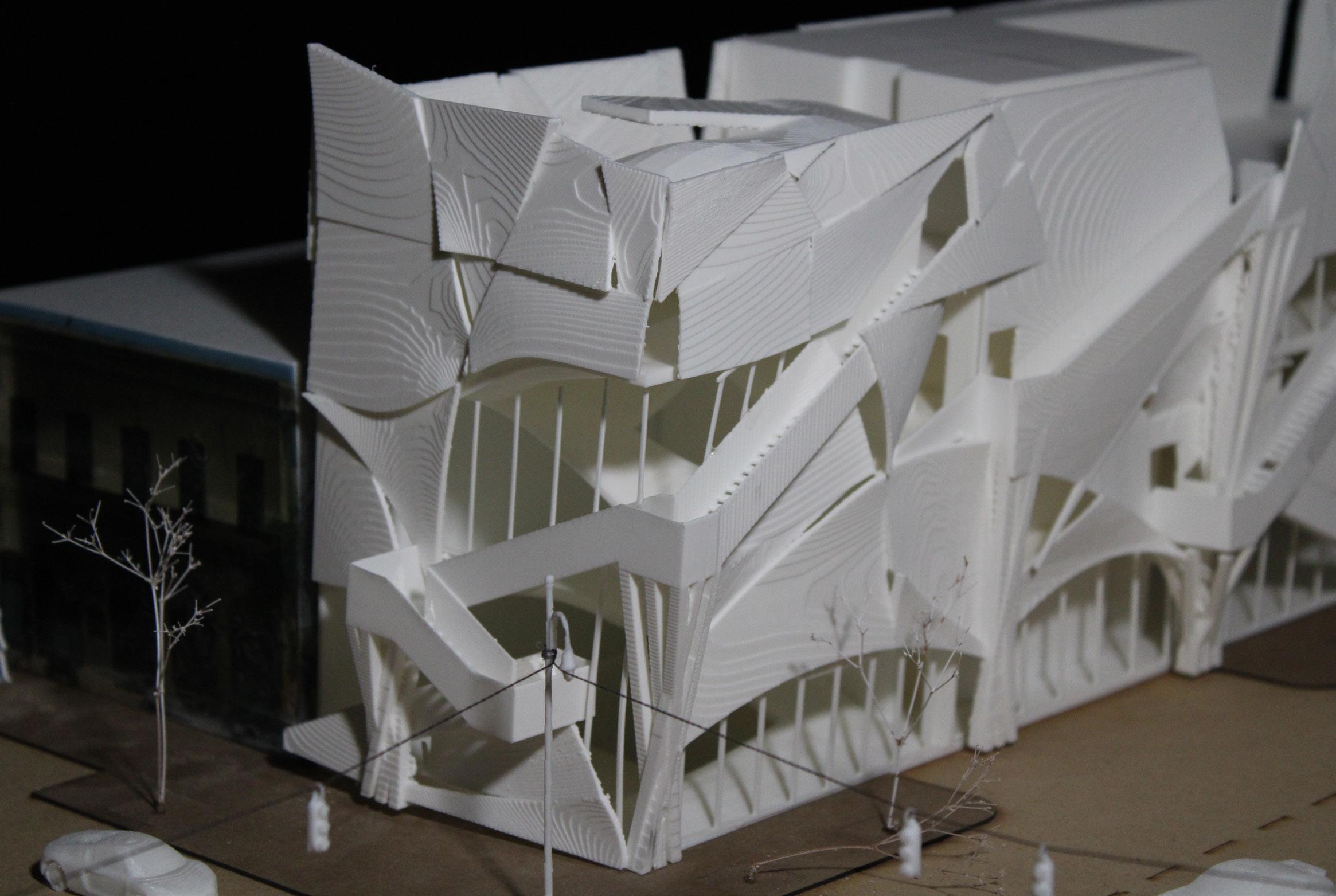
Building elements masquerading as necessary, is the concept of this study, False Figures. This project begins with the case study of a small courthouse town, Levelland, Texas. A survey of the architecture of the town results in two notable buildings façade wall features to apply to a model. For this project, these building elements seem to be essential, but only serve the purpose of aesthetics.
“The light filters through these panels in a facinating way!”
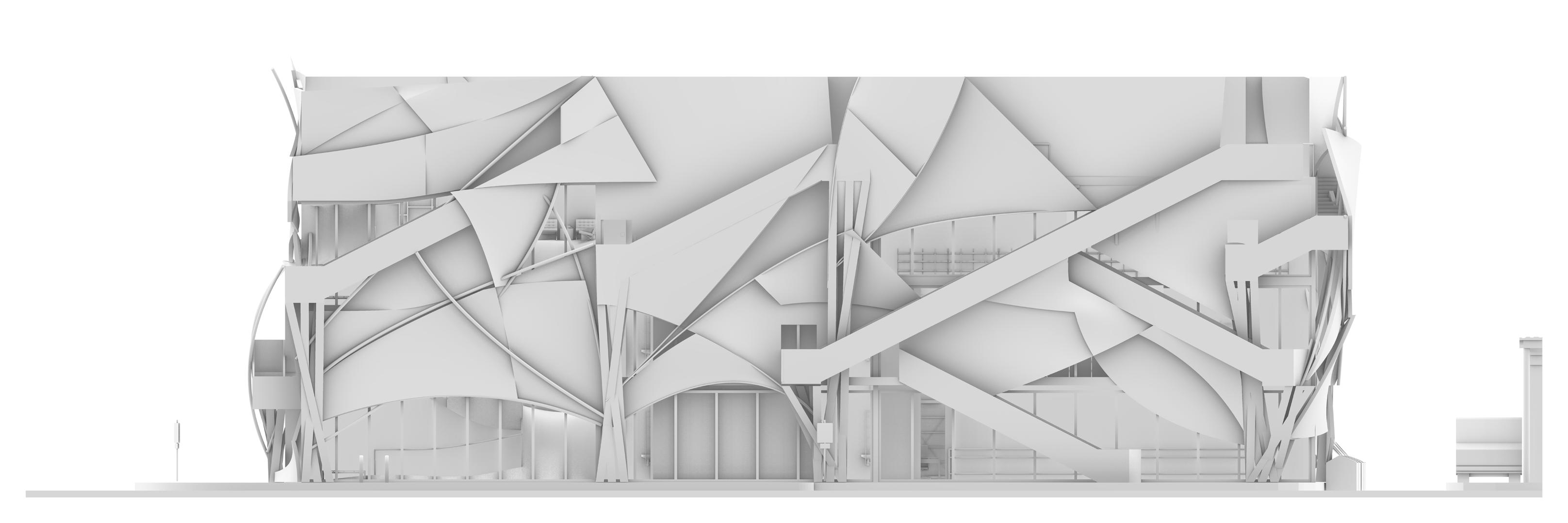
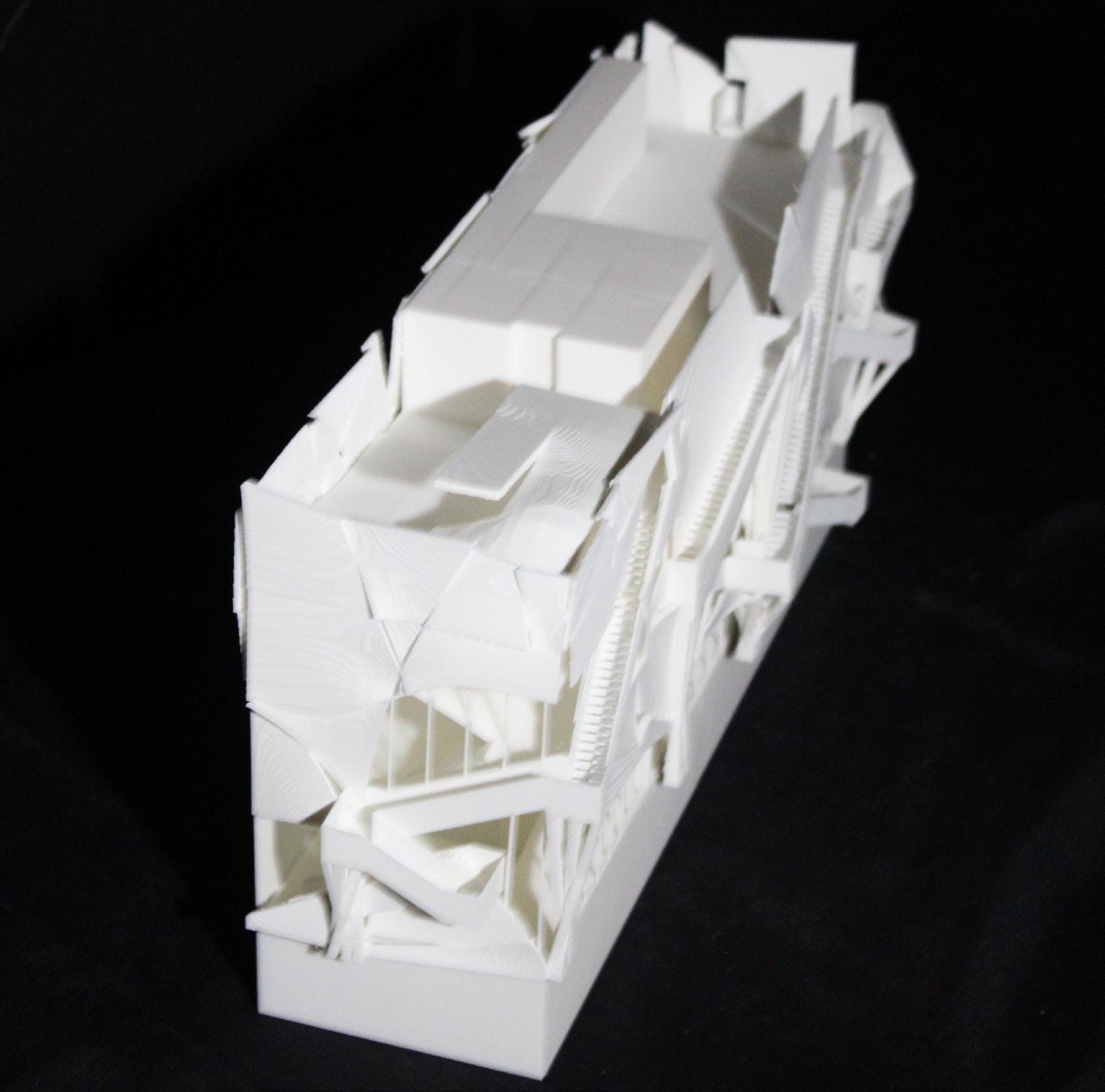
Looking down the corner and long facade
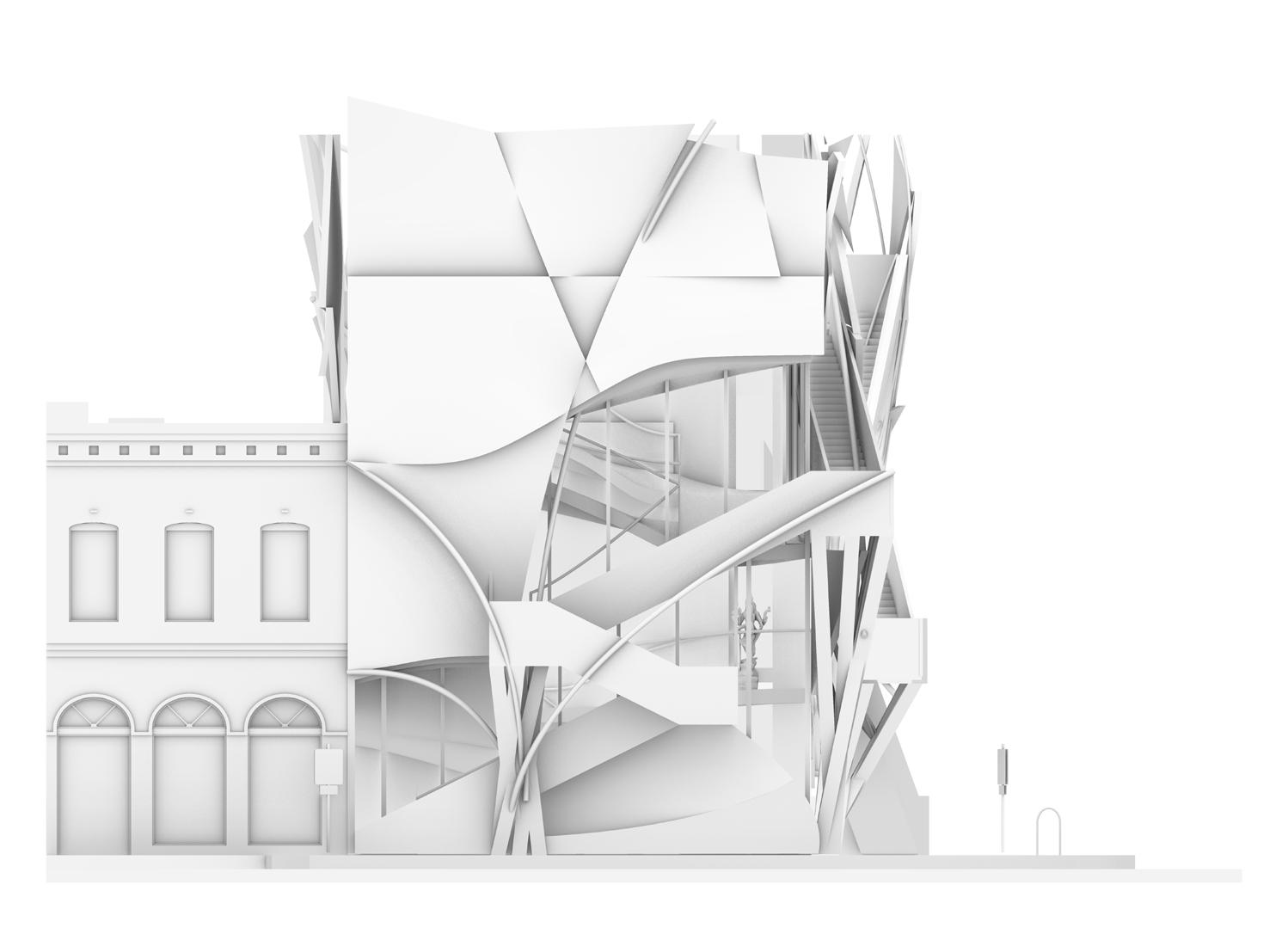
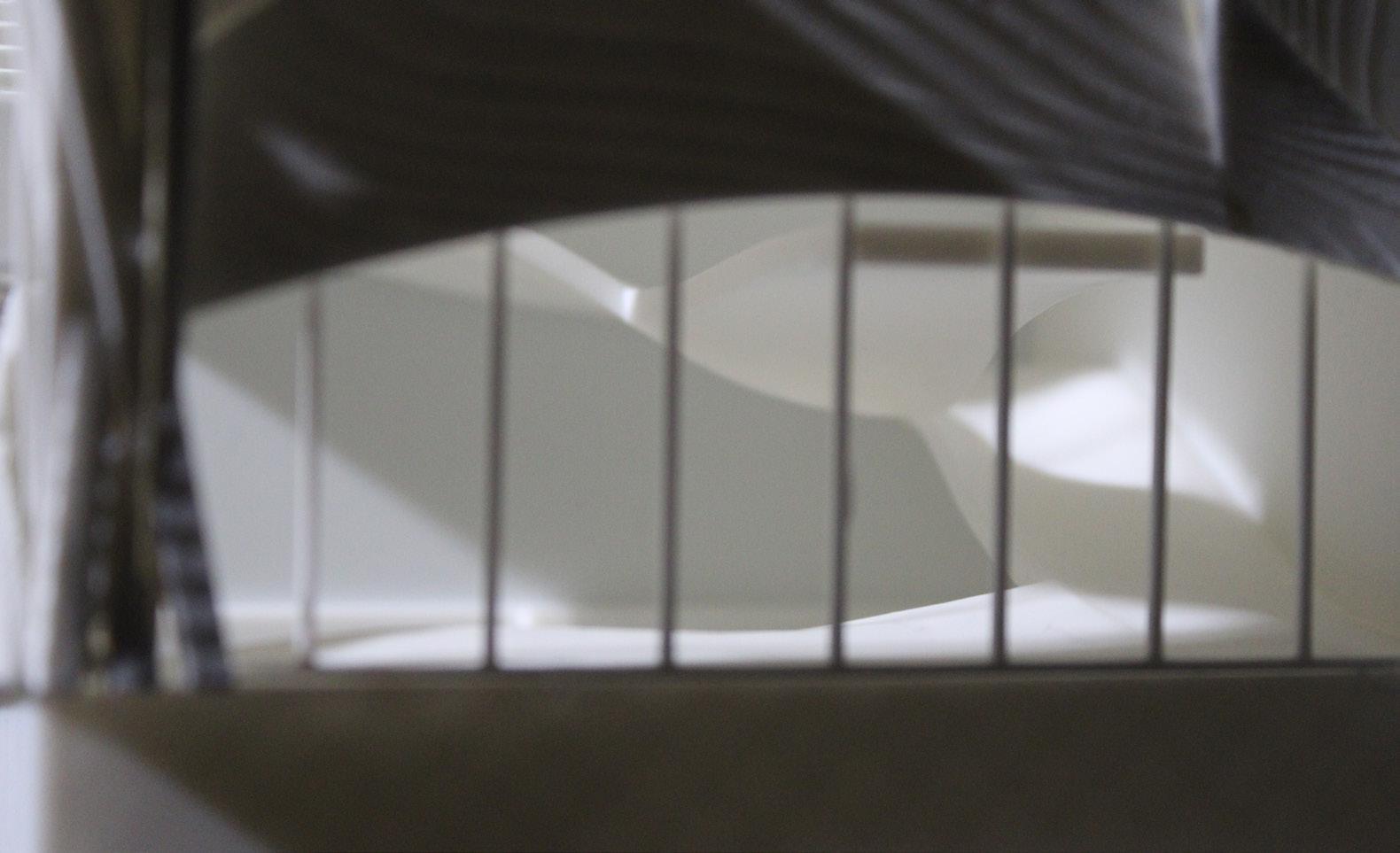
The gallery floor nests in the panels and branching system
The multitude of stairs allow traversing of the buidlings facade
“These stairs look like tree limbs!”
Floor System
Borrowing ideas from Christian Kerez’ parking structure in Casabella, Bahrain, the floor system is a continuous leveled surface organically transferring occupants between floors. This unified system embraces one of the false figures, a tree-like stair system, allowing the user to occupy the façade and nest in the tree. This nesting, within the interior gallery, connects the central gallery with the floors above, unifying the program and interacting spaces with each other. This monolithic concrete structure is a sculpture, in itself, enhancing the art on display.
Facade City
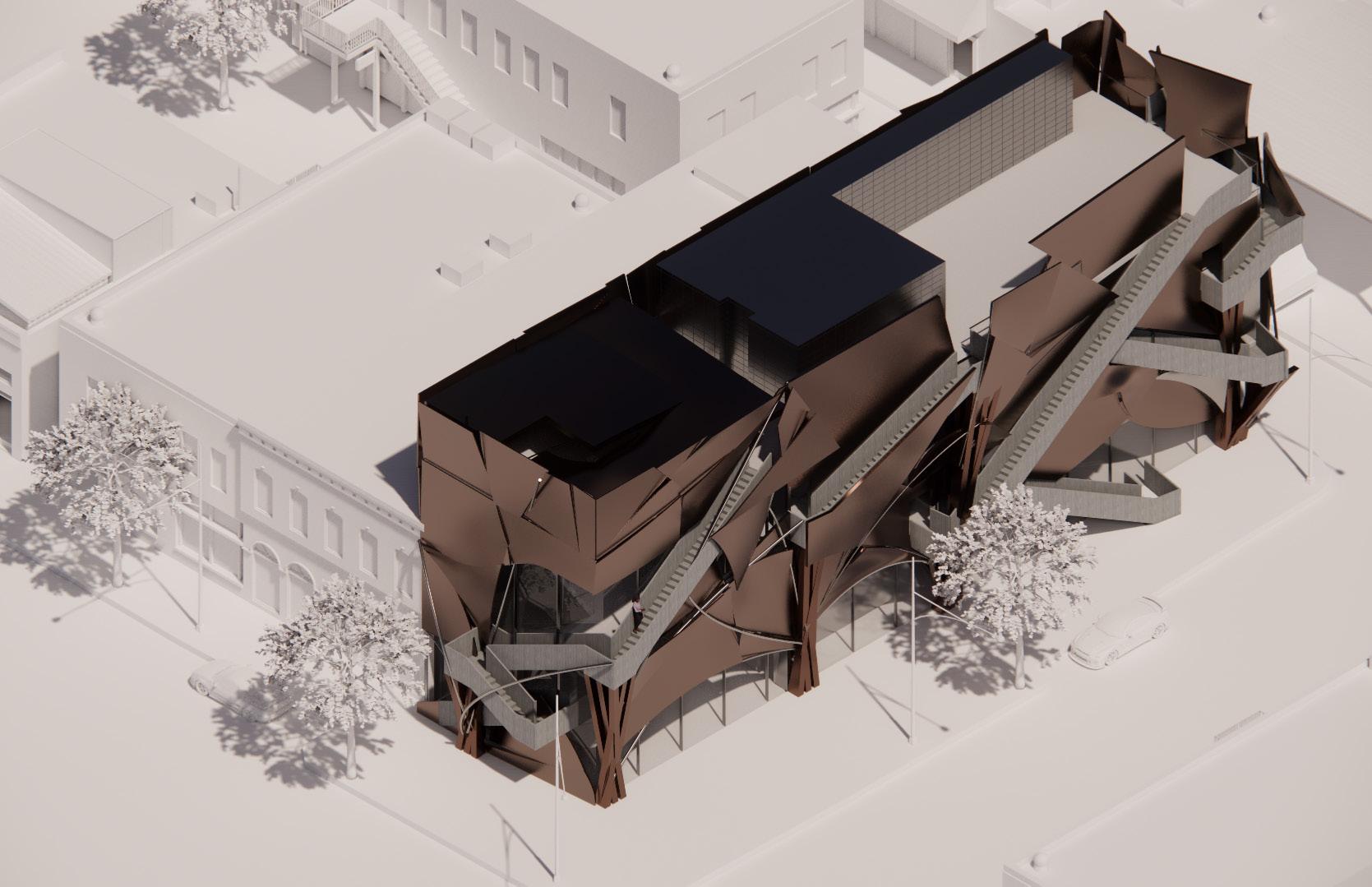
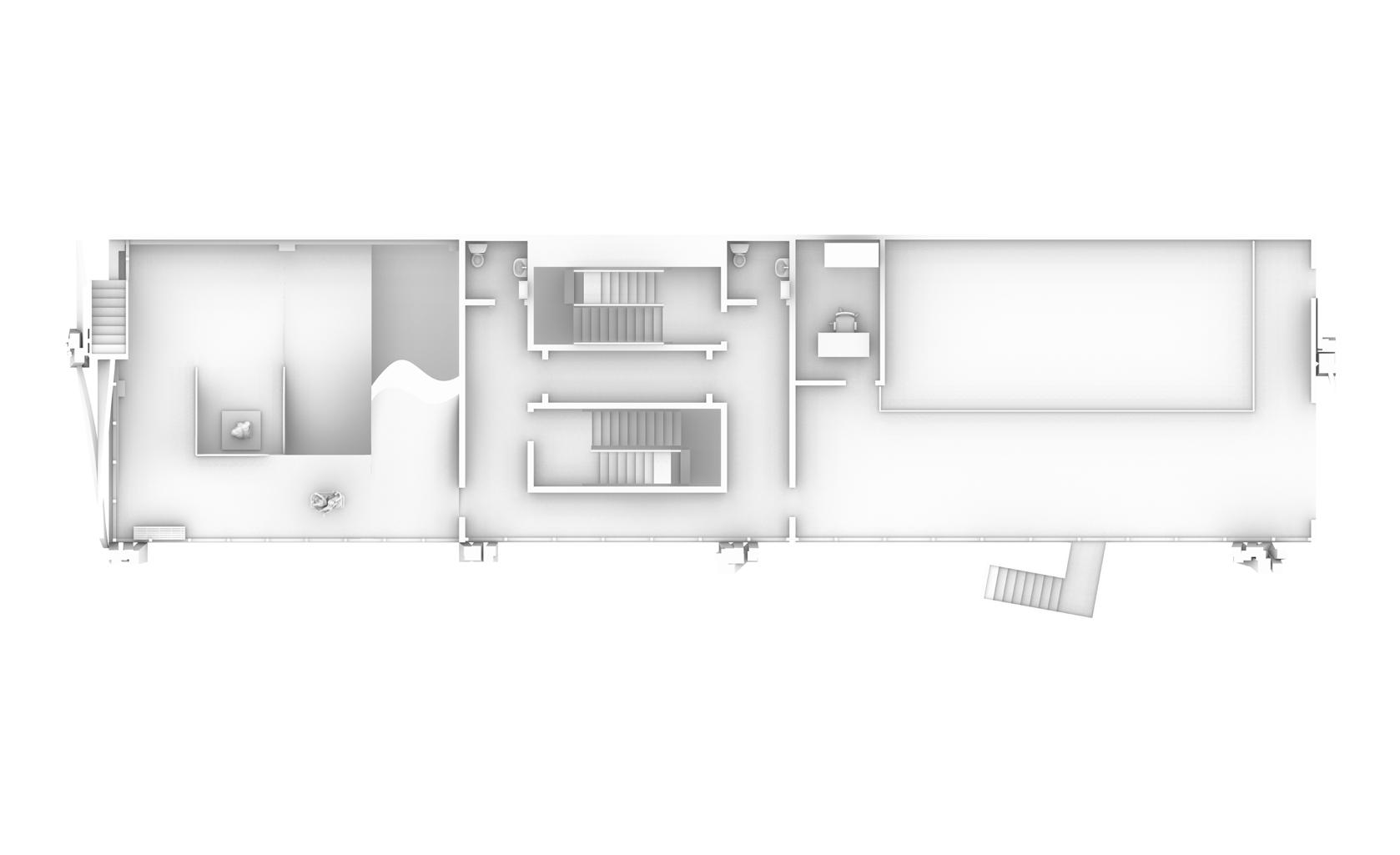
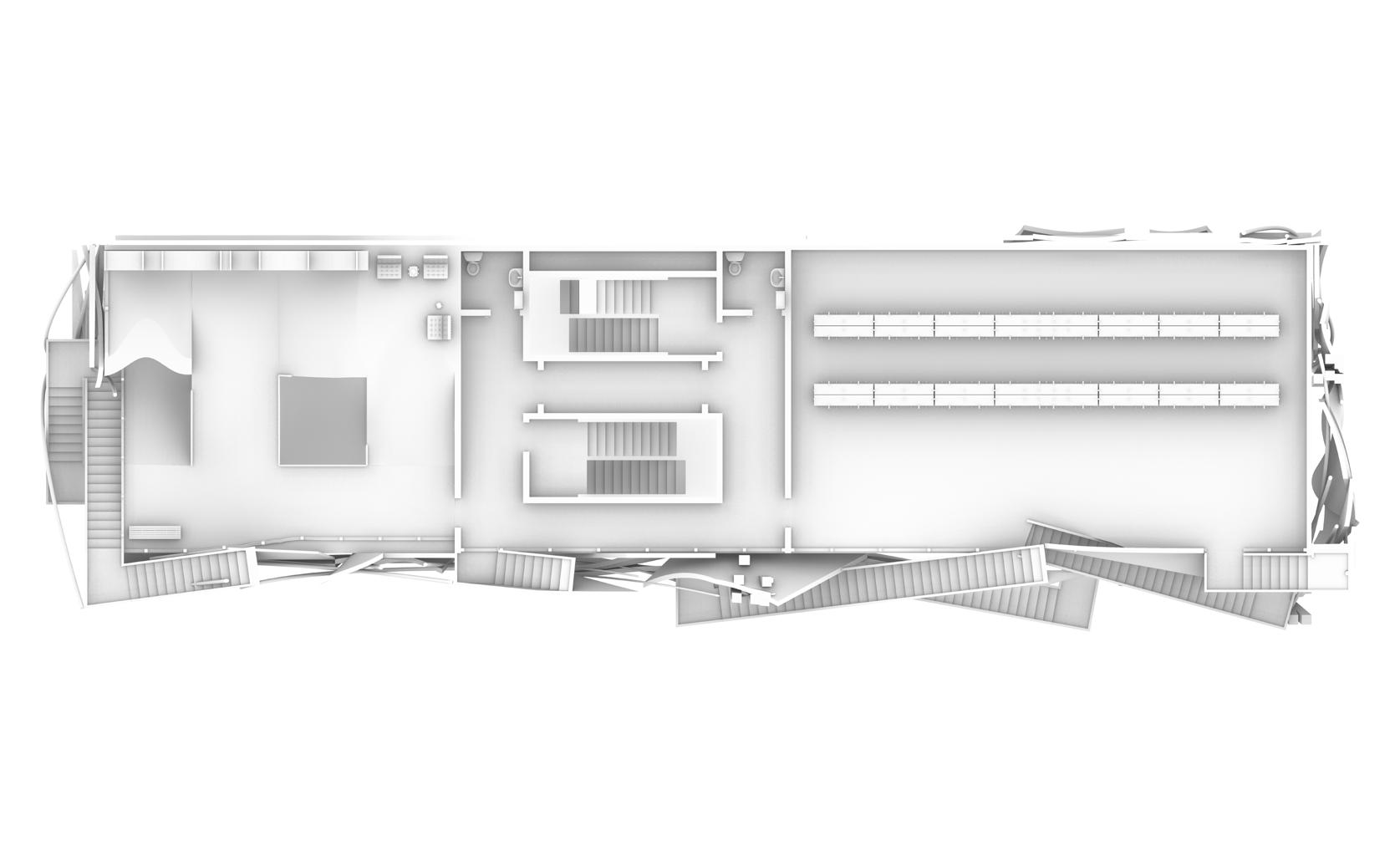
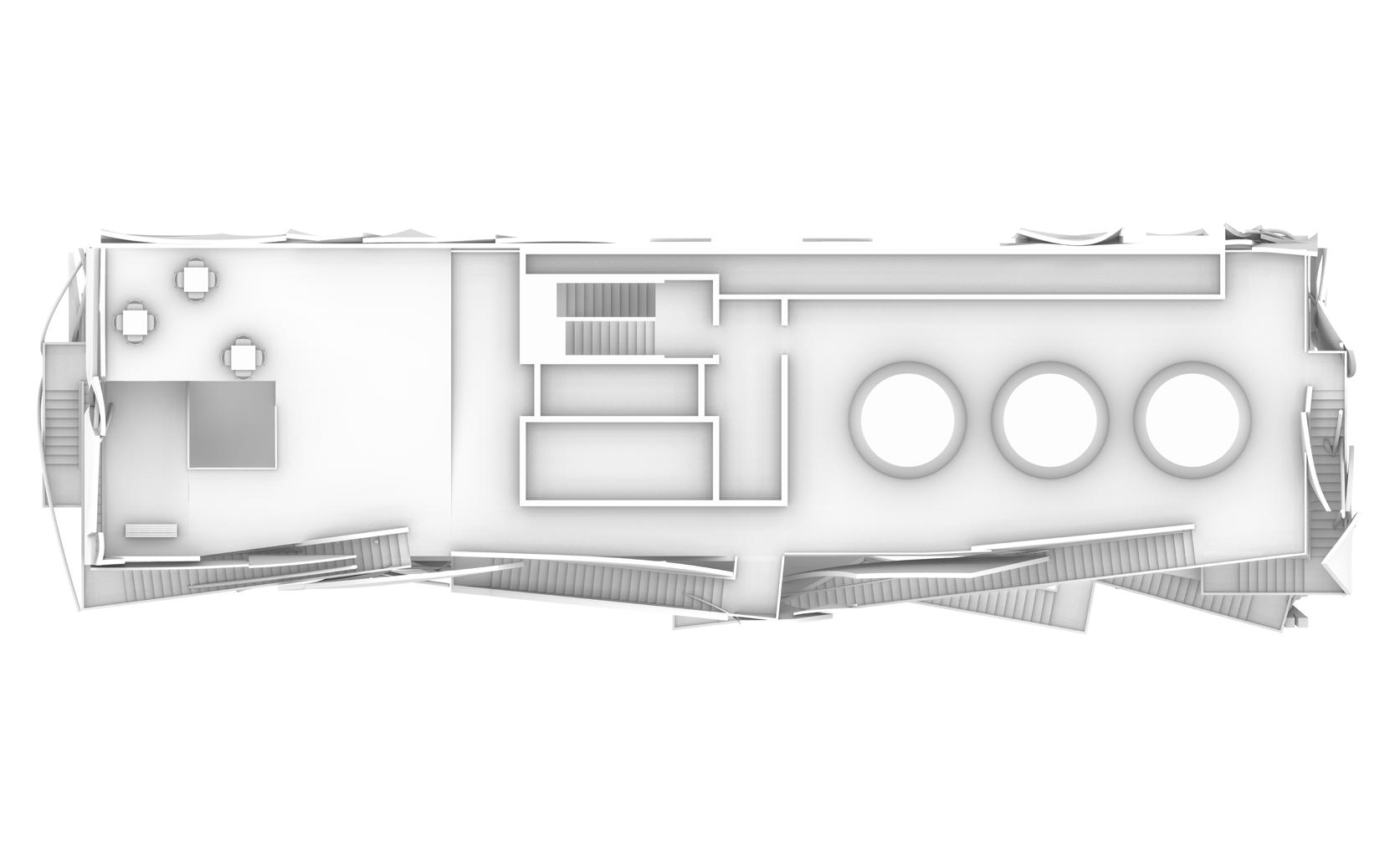
600 Red River Street will serve as a mixed-use building that merges art, literature, and work environments into a cohesive whole. Featuring an art gallery, a small library, and a rooftop terrace, the design is driven by a dynamic, facade-oriented approach. The term “False Figures” drives the design. These architectural elements are deployed to elicit a specific feeling or emotion while not being needed structurally. Exterior stairs evoke the irregularity and organic growth of tree limbs, establishing a strong relationship with the surrounding environment. Columns support the stairs and set up a visual order. This order is chaotically disrupted by vines that span the negative space between limbs. Panels nest in the geometry that is generated. The interior public space hosts a continuous, monolithic concrete flloor that links all spaces, merging the programmatic functions and enhancing the fluidity between them. The floors nests itself into the facade, echoing the connections made by the outside. This brings a symbiotic relationship between the interior and exterior realms.
NORTH
EXTERIOR MODEL, WITH SITE CONTEXT
INTERIOR VIEW OF GALLERY
HYDROPONIC DEVELOPMENT
FALL 2025
ARCH 4601 - ARCHITECTURAL DESIGN VII
INSTRUCTOR - LOGMAN ARJA
CONTRIBUTORS - AJ BODINE & EVAN MONTE
LOCATION - UNDETERMINED
SIZE - VARIABLE
HEIGHT - VARIABLE
PURPOSE - SPACE FOR HYDROPONIC LEARNING, DEVELOPMENT AND DEPLOYMENT
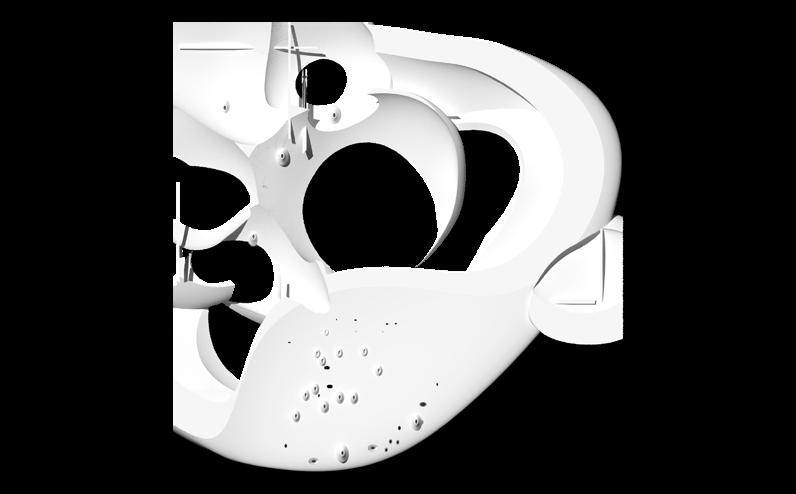
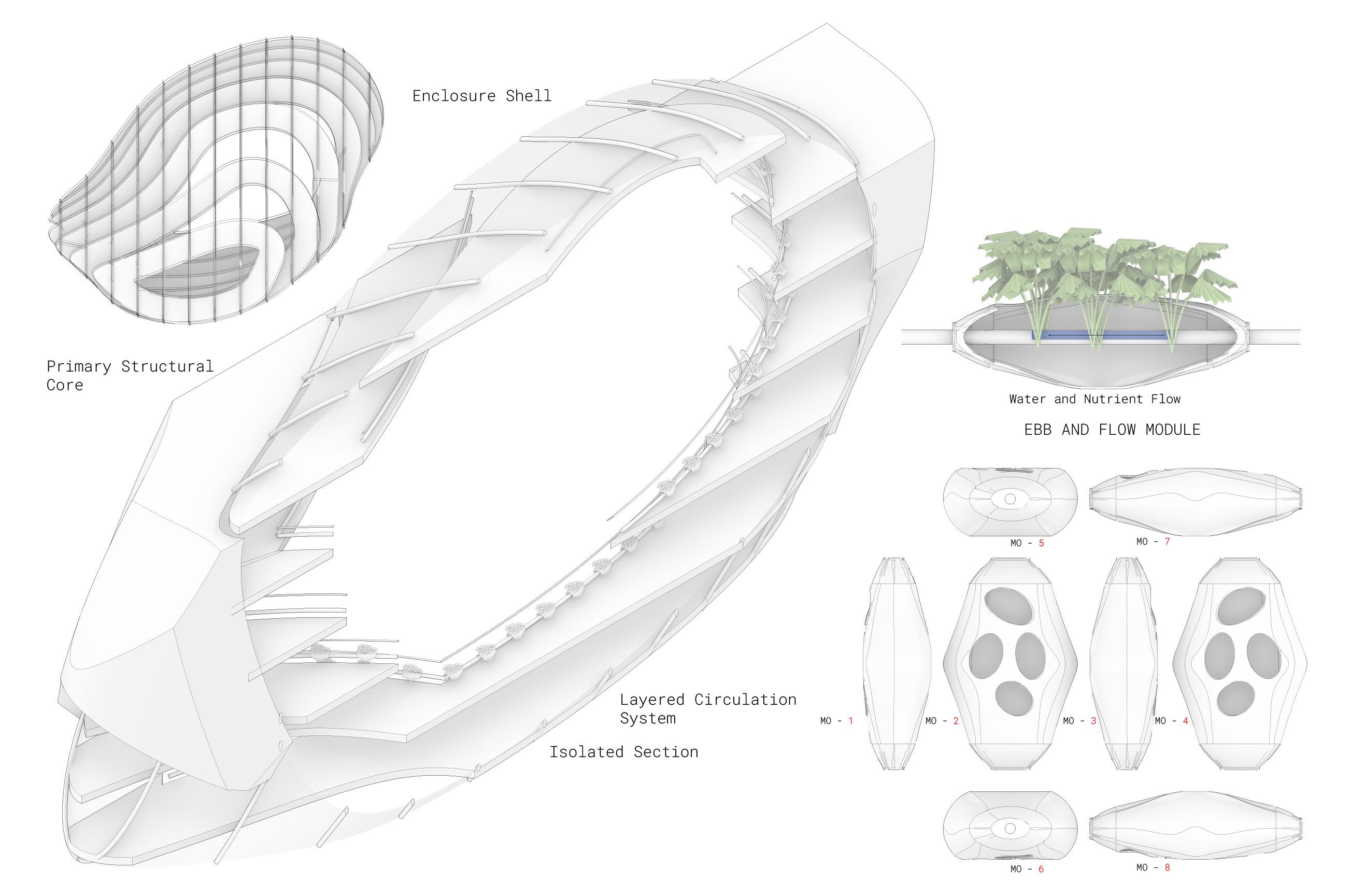
The Hydroponic Development Lab investigates how modular architectural systems can support research, testing, and education in controlled-environment agriculture. Evolving from earlier work on deployable farming units, the project now functions as a science academy and testing campus for hydroponic innovation. A programmable framework organizes site operations, allowing modules to assemble, scale, and reconfigure in response to environmental and research demands. Each unit integrates the Ebb & Flow hydroponic cycle, forming a distributed network that circulates water, nutrients, and data across the site. Rather than imposing a fixed form onto the landscape, the architecture adapts with it—creating a light, repeatable, and ecologically productive system for developing next-generation agricultural technologies.
PROGRAMPUBLIC
PRIVATE OFFICES
ADMISTRATION
VERTICAL GROWING SPACES
MAKERS LABS
ROBOTICS LABS
RESTROOMS
CLASSROOMS
AUDITORIUM
GALLERY SPACES
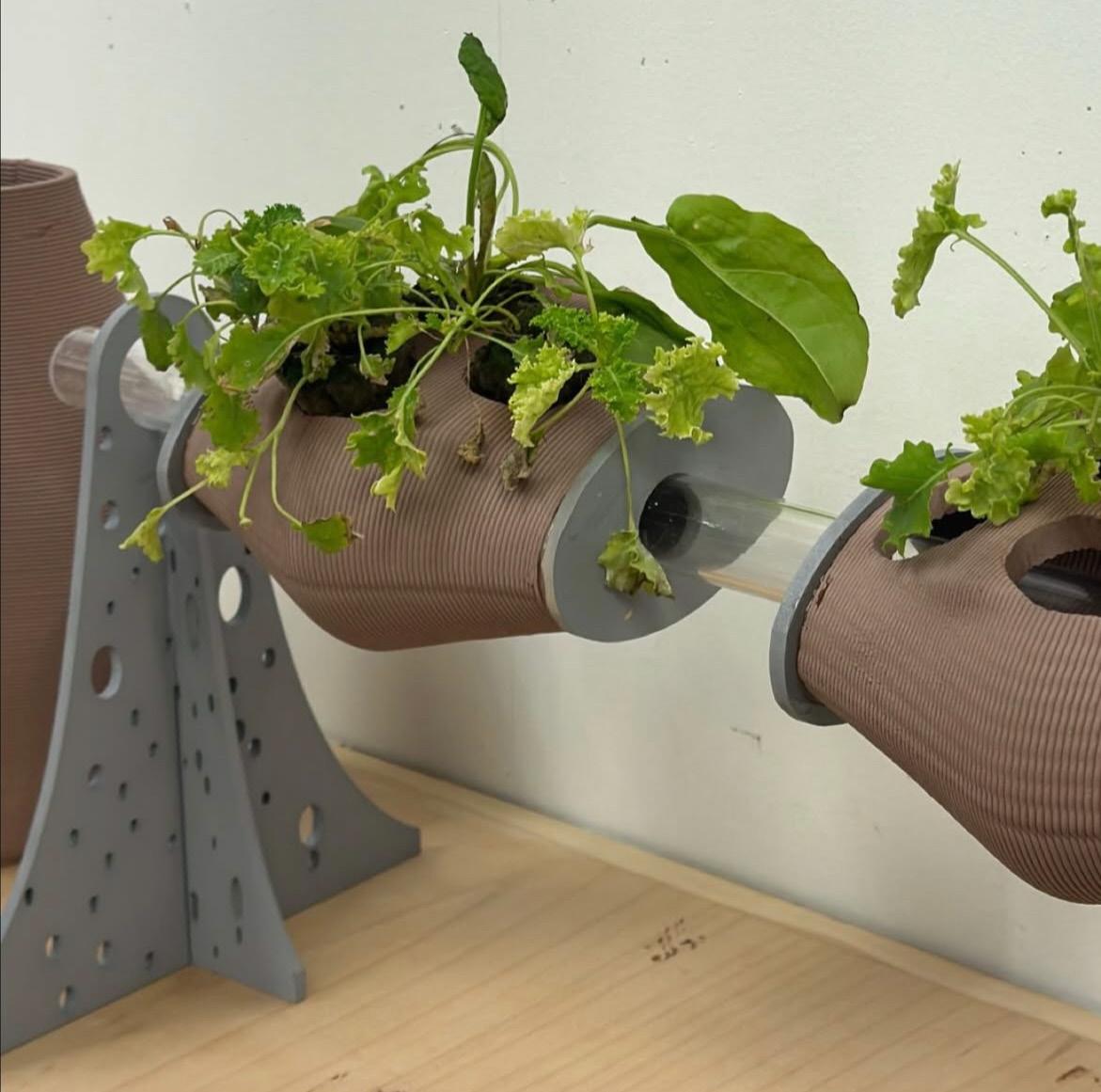
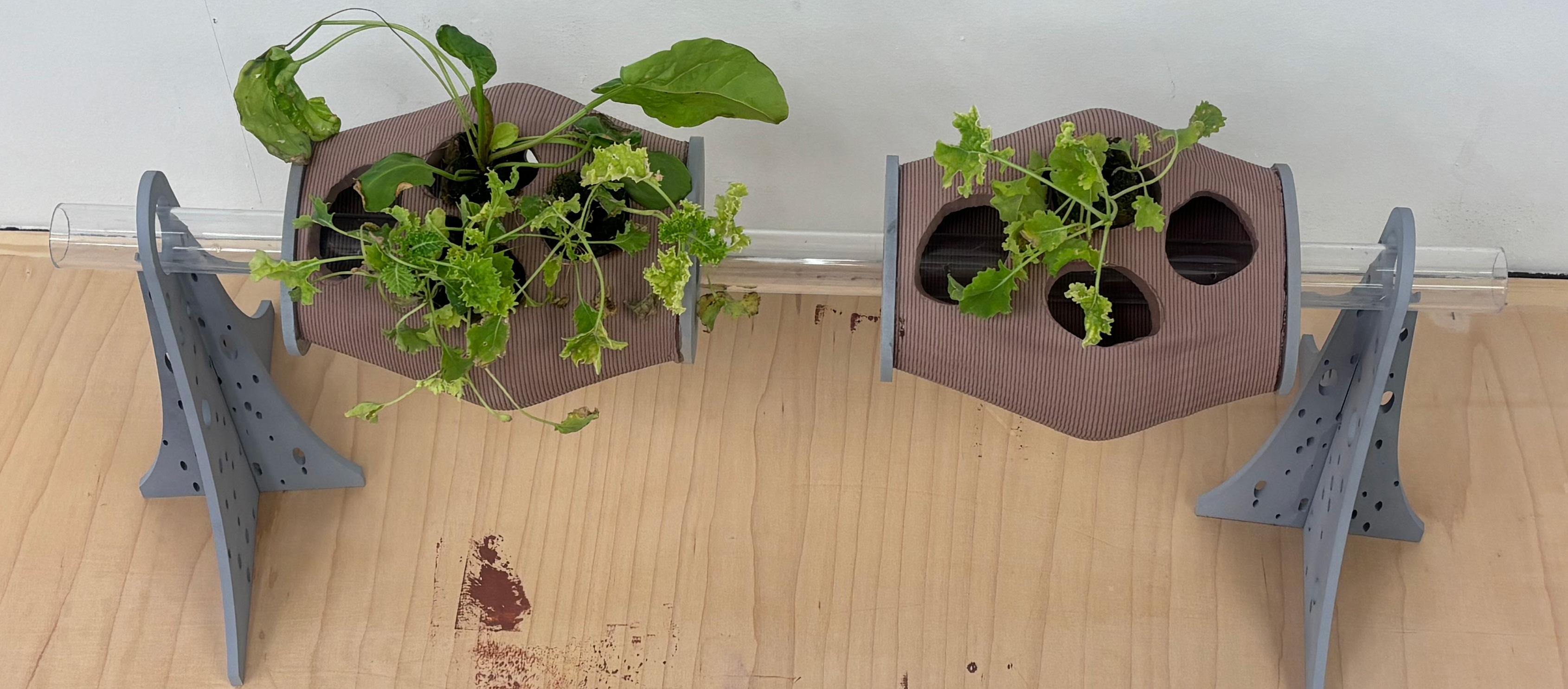
Clay Hydroponics
This system uses an ebb-and-flow hydroponic setup built around 3D-printed clay modules that can be placed, rotated, or removed as needed. Each module acts as a self-contained planter, periodically flooding and draining to support root health. These modules are housed within a layered outer shell that creates a stable microclimate and supports multi-level hydroponic growth. Together, they form a flexible, adaptable environment for a wide range of plants and growth cycles.
Clay 3D printing is a fabrication process that uses digitally controlled machines to extrude layers of wet clay into precise, three-dimensional forms. Blending traditional ceramic material with contemporary digital design, the technique allows for complex geometries and customized structures that are difficult or impossible to achieve by hand.
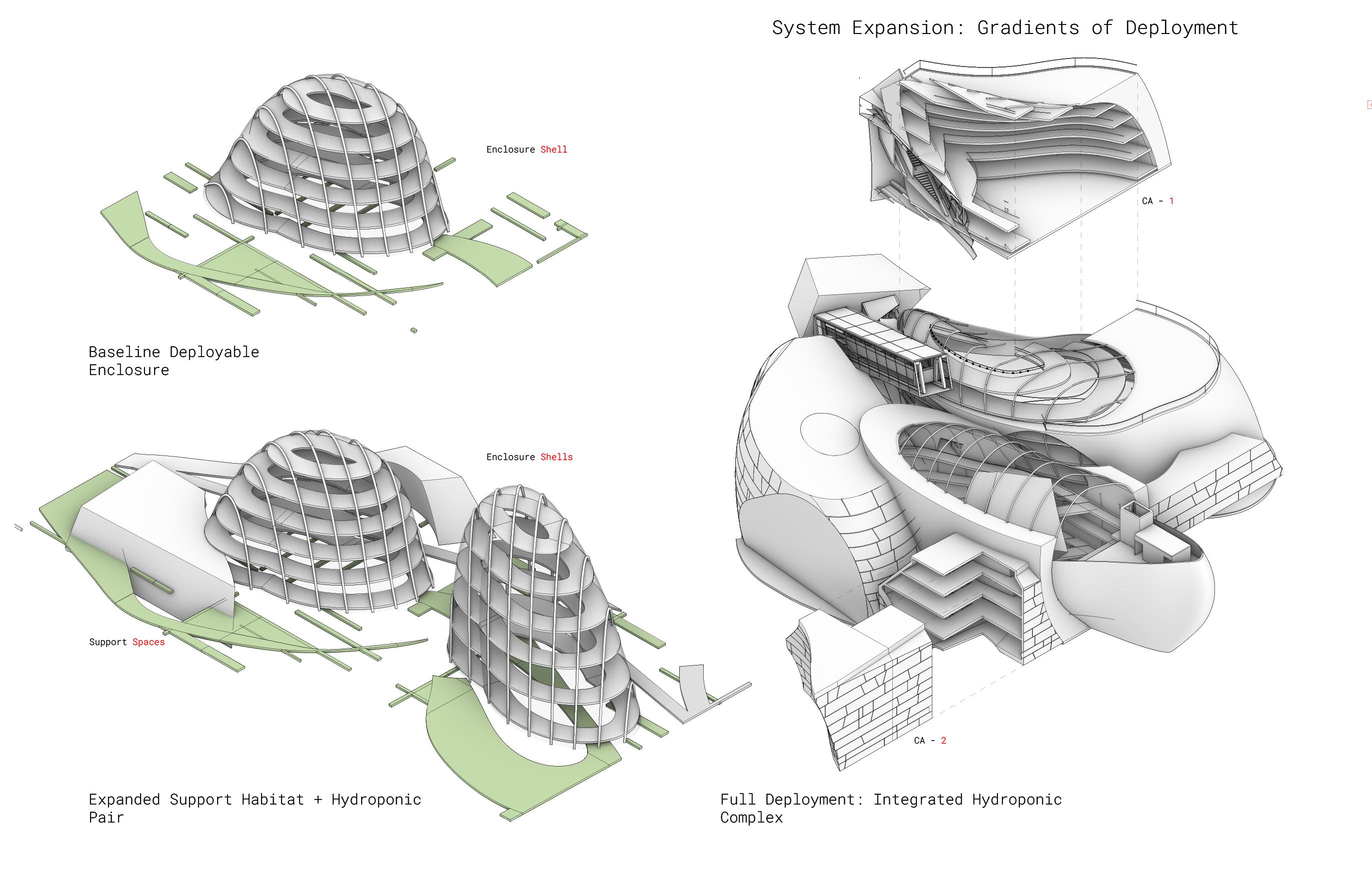
DEPLOYMENT DIAGRAM
Development Lab
This organizational approach enables an adaptable site strategy where architecture can be staged temporarily, relocated, or expanded over time. A programmable framework controls assembly, environmental routing, and infrastructure connections to allow rapid deployment in resource-limited regions. This flexibility lets the system function as a research laboratory in one setting and a community-scale demonstration farm in another. The result is a lightweight and repeatable system that connects agricultural research to local implementation.
MODULAR CONSTRUCTION
FALL 2023
ARCH 2503 - ARCHITECTURAL DESIGN III
INSTRUCTOR - NERO HE
LOCATION - LUBBOCK, TEXAS
SIZE - 26,000 SQUARE FEET
HEIGHT - 32 FEET
PURPOSE - ART GALLERY, COMMUNITY SPACE, ELECTRICAL SUBSTATION
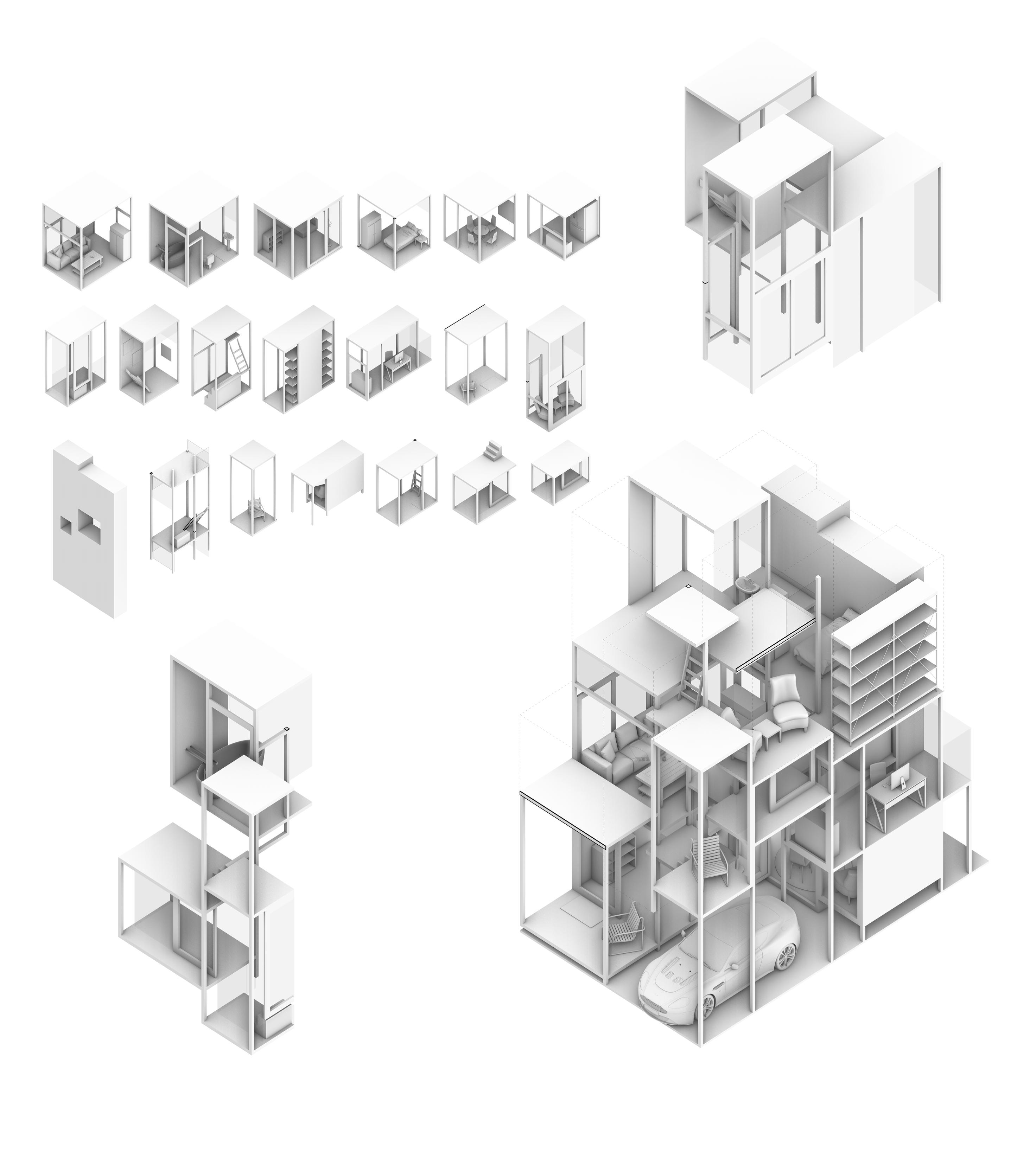
This modular construction began with a study of two precedent projects: a residential buidling and a larger corporate structure. Elements of both projects were to be selected and incorporated into the work. A singular module was to be created that used a minimum of four elements of each project. Afterward, a structure was to be amassed using nine of the created modules. The assignment was to create an art studio / school in the arts district in downtown Lubbock, on a lot owned by the Charles Adams Art Studio.
Designed by Sou Fujimoto in Tokyo, is a 914-square-foot transparent residence for a young couple, completed in 2011. Inspired by the concept of living within a tree, it features 21 individual floor plates at varying heights, creating a hierarchical living experience. The white steel-frame structure, encased in glass, blurs indoor-outdoor boundaries, contrasting with Tokyo’s dense concrete surroundings. Minimal walls and strategic window placements maximize openness while maintaining privacy through staggered platforms. Curtains provide temporary partitions, and a north-facing wall houses utilities. This innovative design redefines spatial relationships, blending city, architecture, and nature.
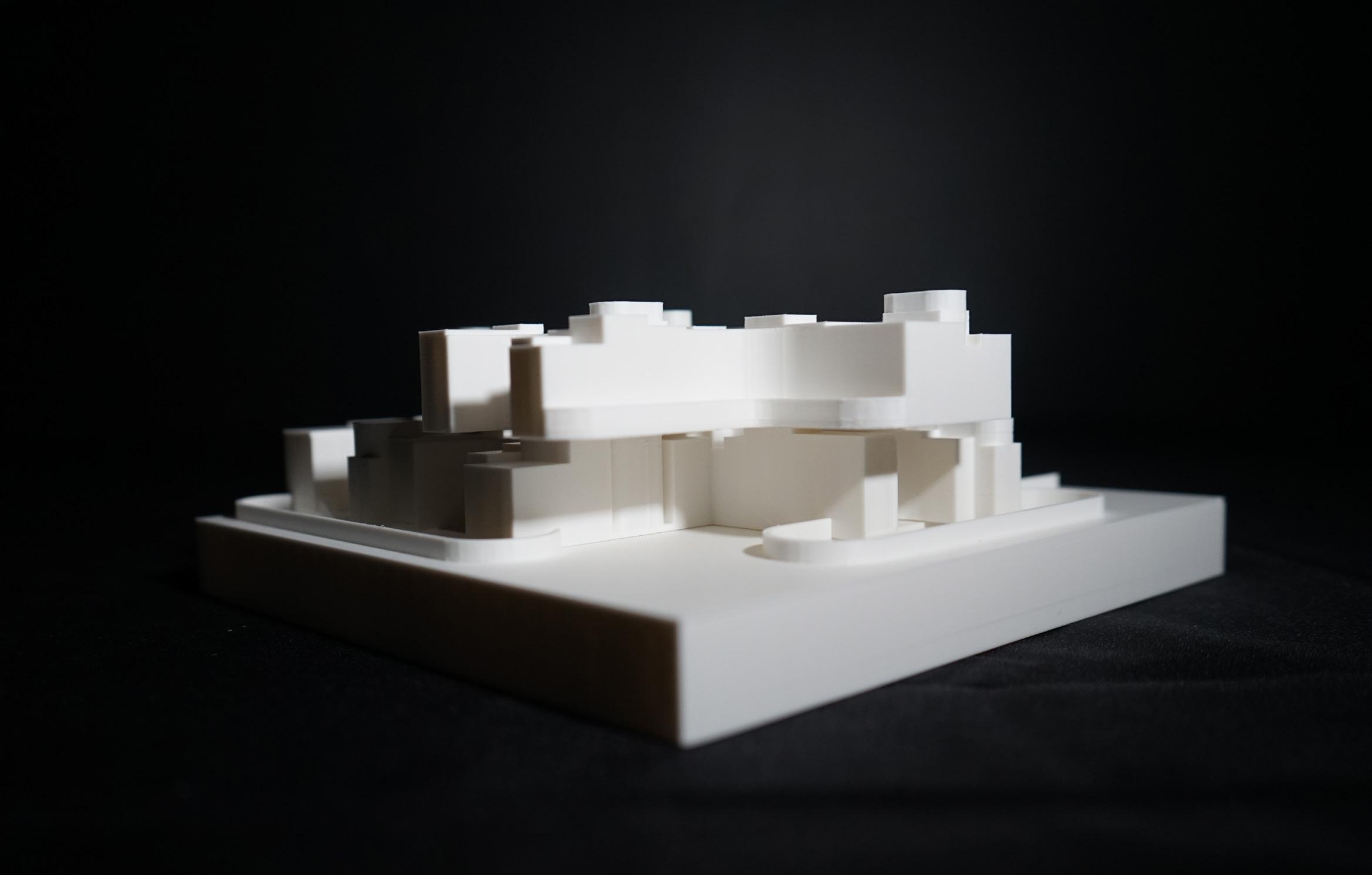
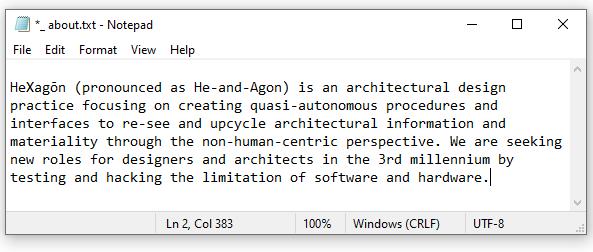
HeXagon
First Friday Art Trail is a long-standing tradition in Lubbock, Texas. In the evening, on the first Friday of every month, the Downtown Art District hosts individual artists and entrepreneurs providing an avenue to exhibit, share and sell their work. This area of downtown becomes a mass of people enjoying the art, music, food and creativity on display. Professor Nero He participates each month, using gallery space to display research work. A team of select students endeavor, throughout the year, to develop and present Professor He’s design visions, pushing the boundaries of architectural thinking through the use of material studies and space.
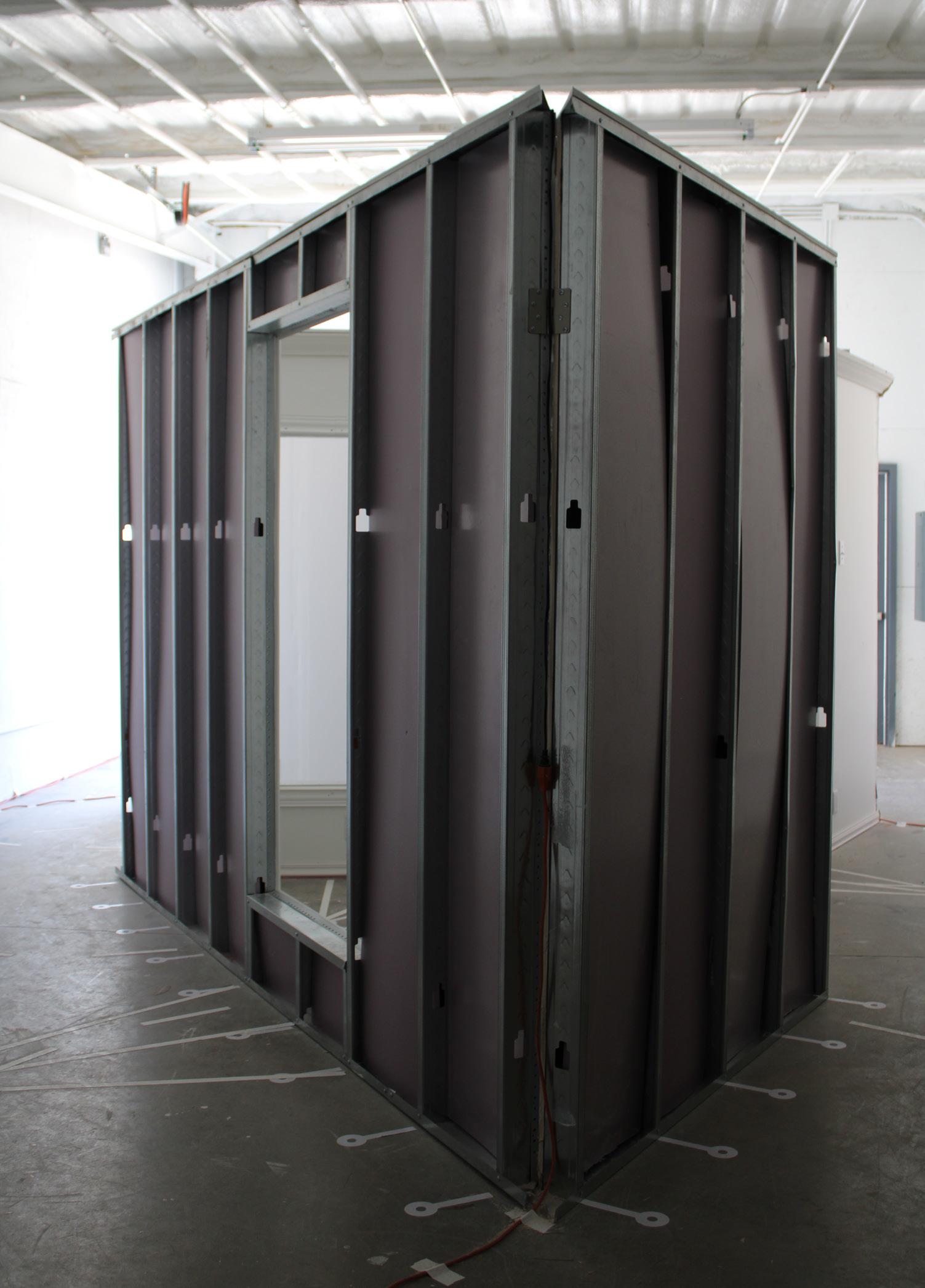
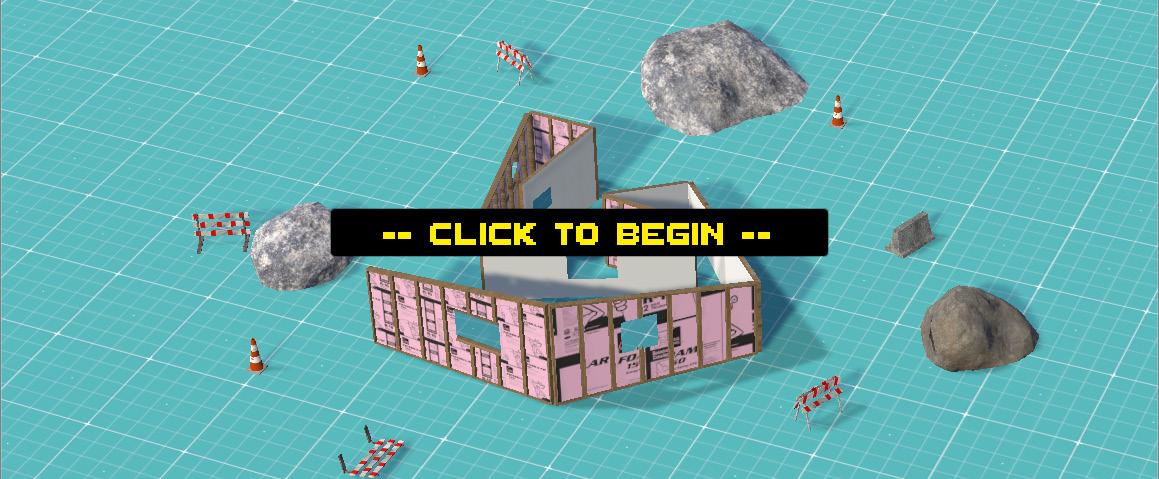
The Domestic Game
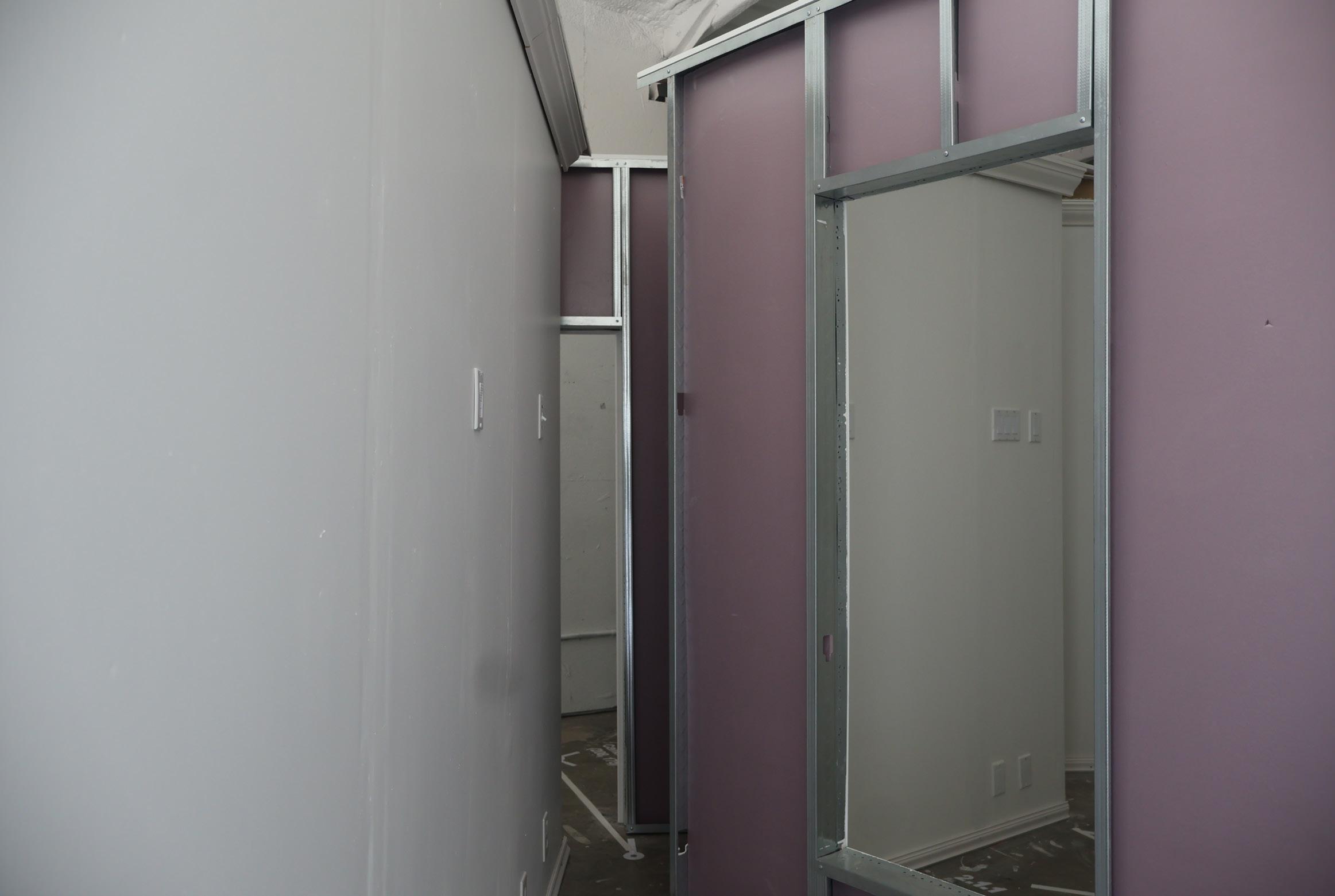
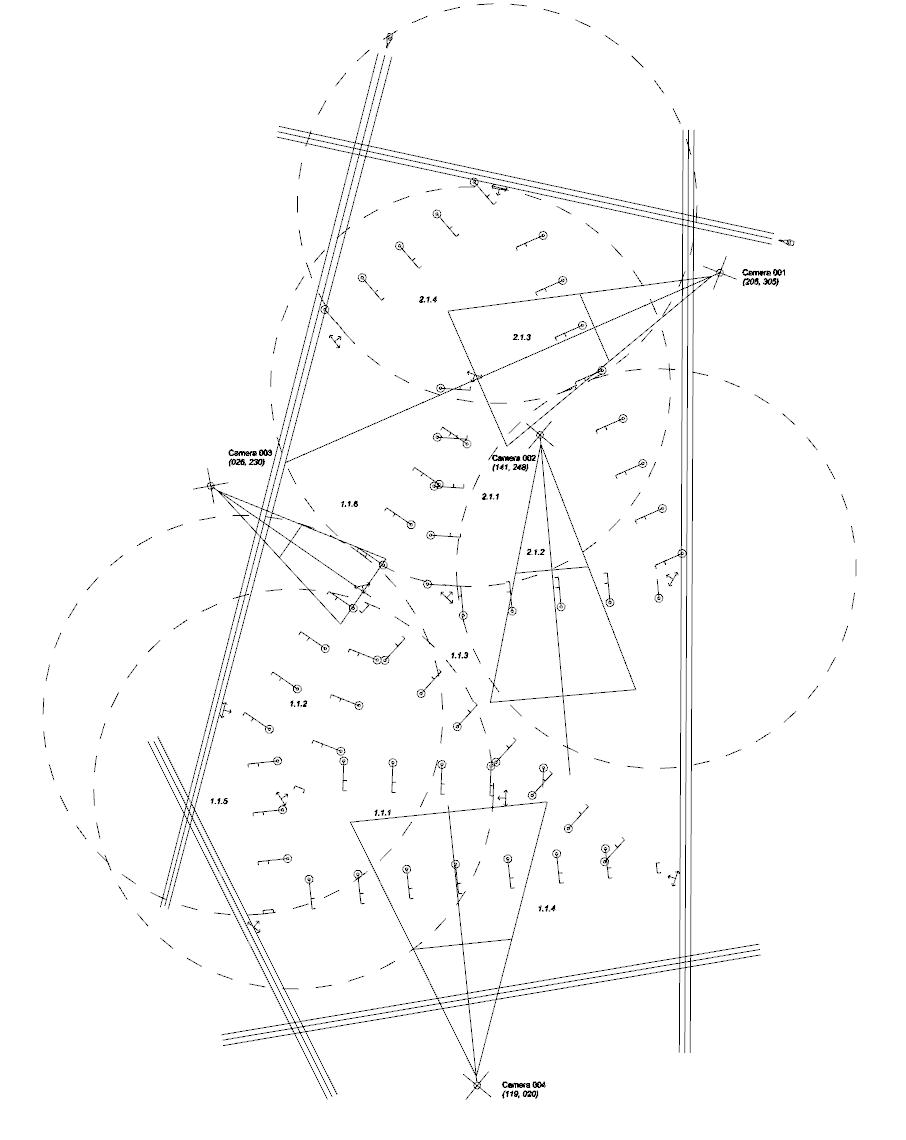
Professor He and Colorado University Denver Professor Alex Li, co-created this exhibit. The genesis of this exhibit was the game development software, Unreal Engine. The professors created, The Domestic Game. Participants imposed geometries on paneled wall systems, thus creating unique spaces. This program challenged domestic architecture with singular and exceptional space design. For this gallery display, the student assistants translated and fabricated the chosen wall system from the software to life-sized scale.
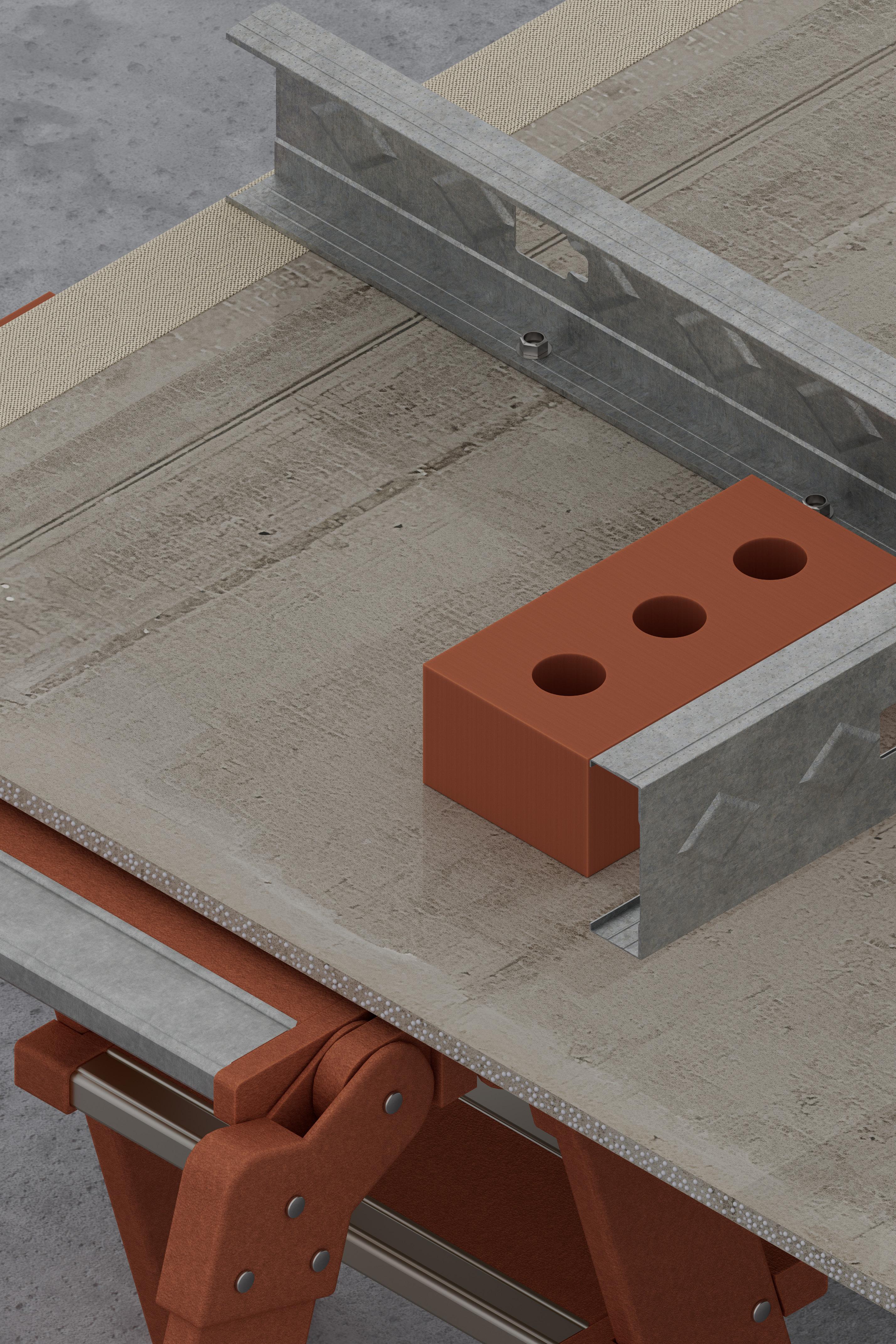
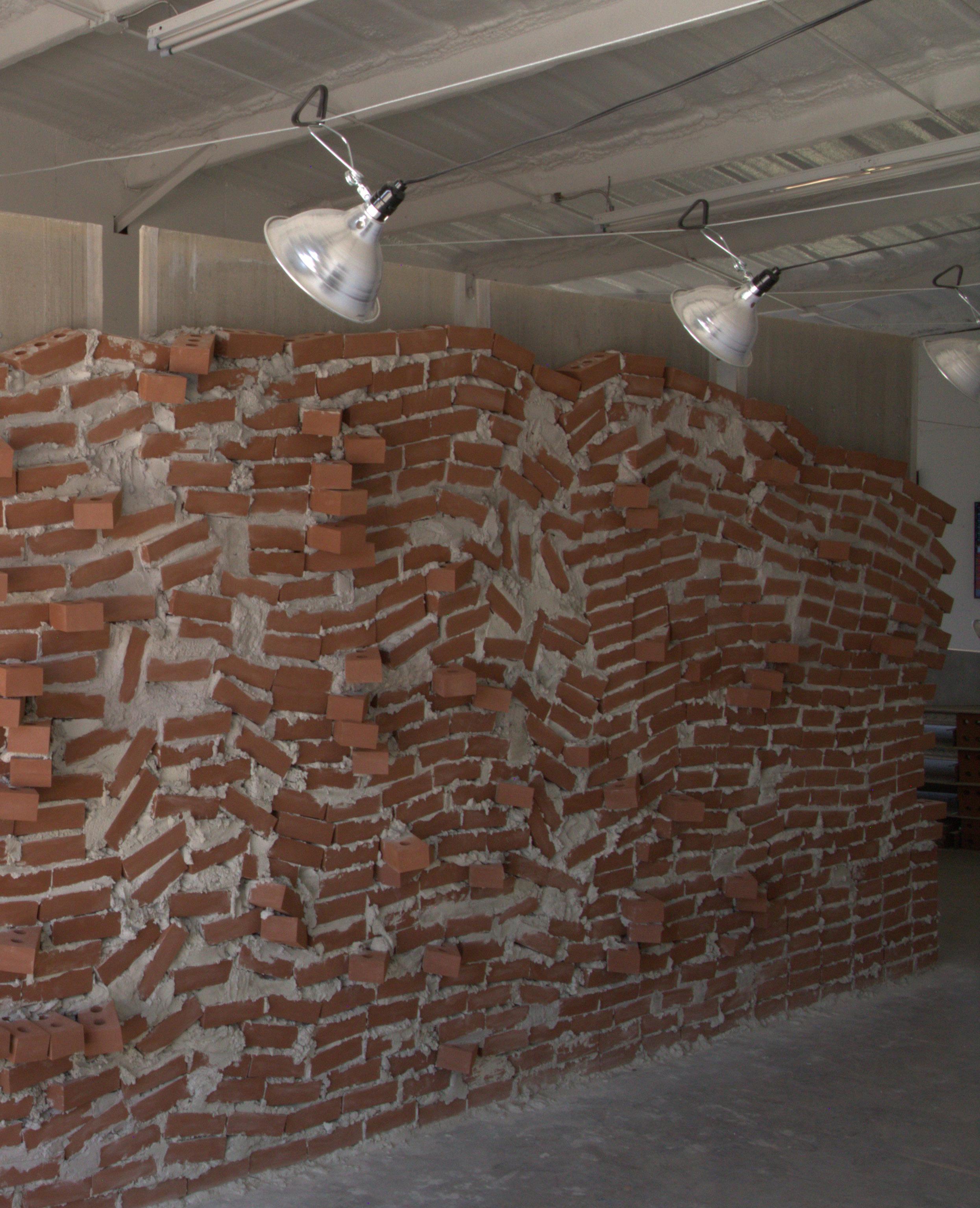
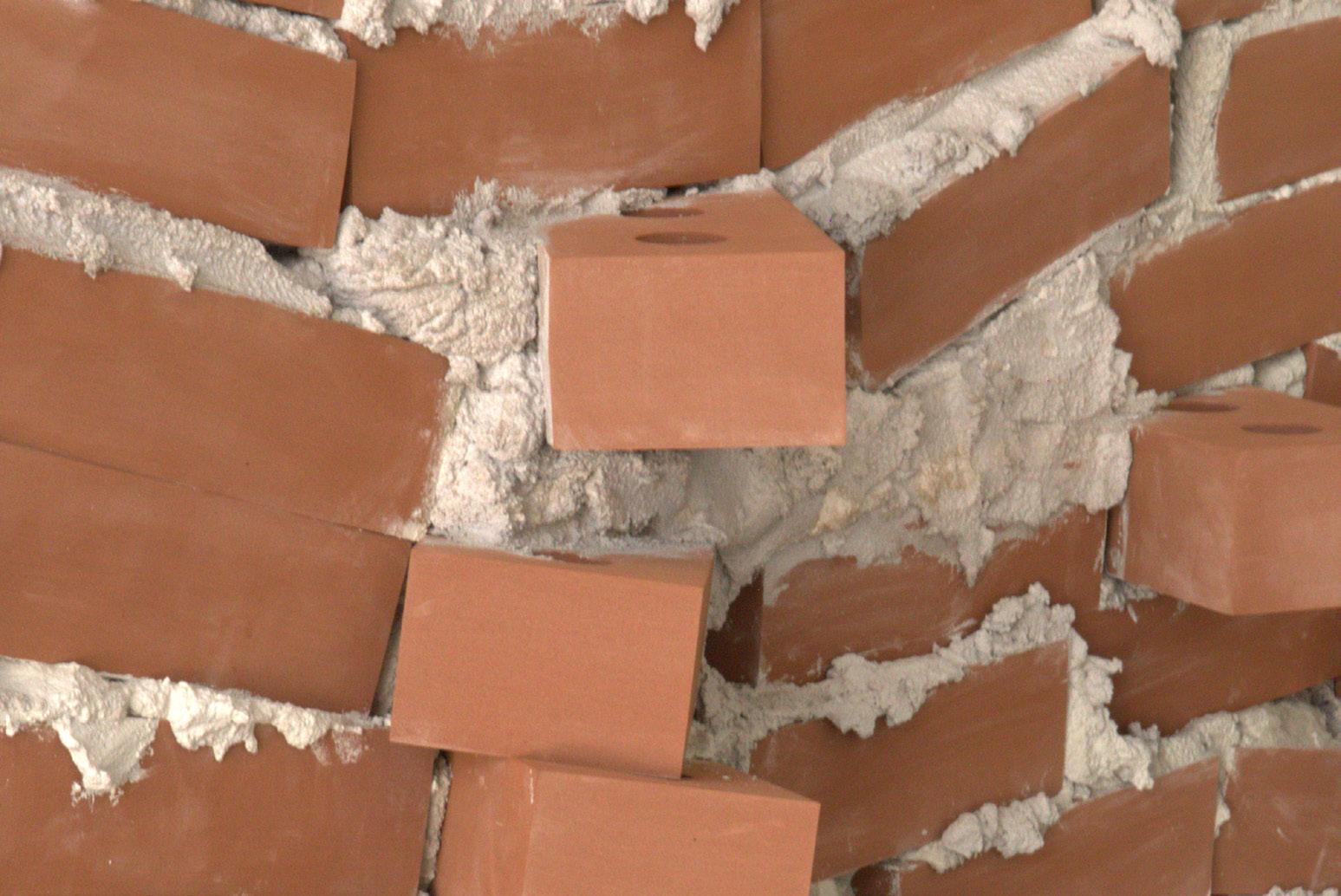
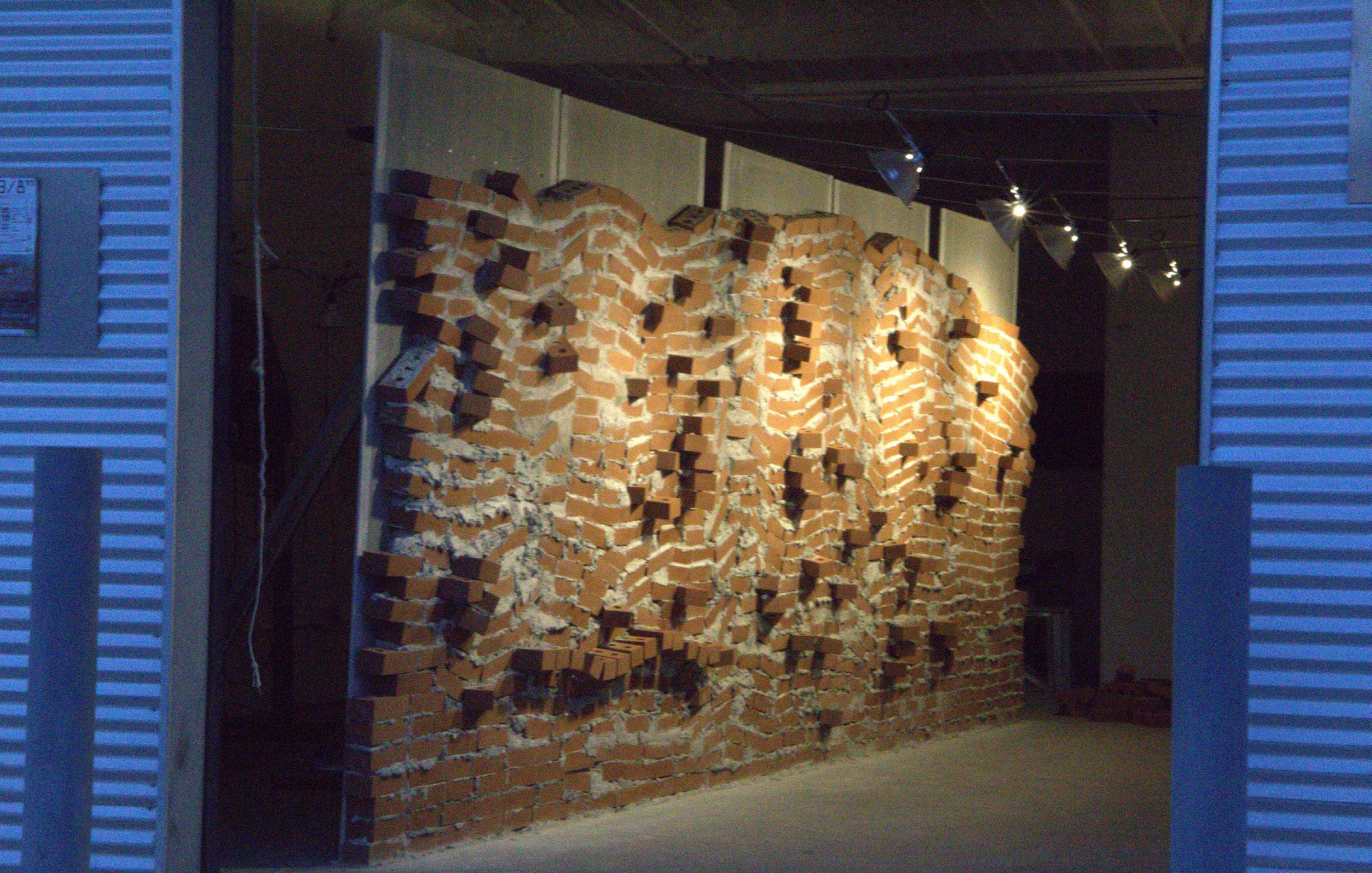
A Sloppy Construction
This installation challenged the notion of mortar as a unit system, viewing instead, its pasty nature as a form of spatiality. It posited mortar not only as a binding agent, but as a legitimate building material in its own right, capable of shaping new assembly possibilities, by delving into the chemical composition, labor processes and construction sequences associated with mortar. The installation aimed to articulate a design process that fosters a reciprocal and non-hierarchical relationship between the site of imagination and the site of construction.