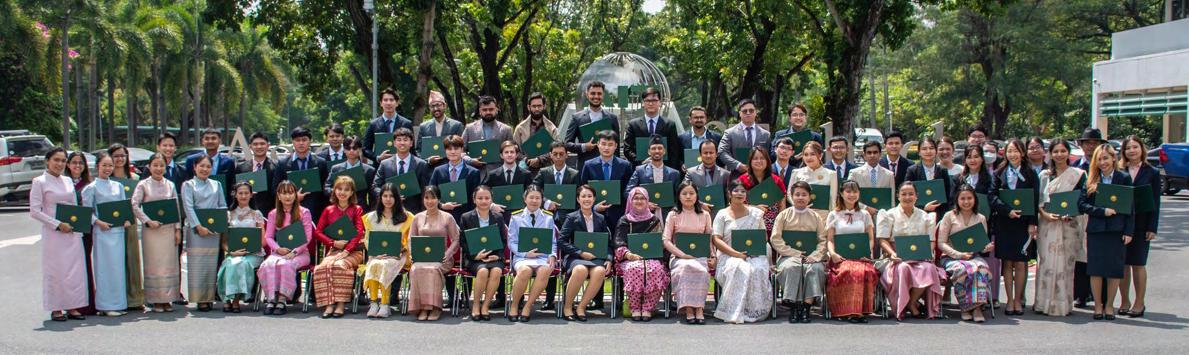
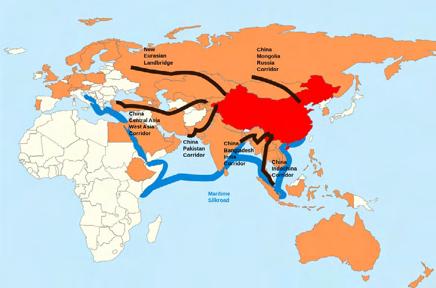
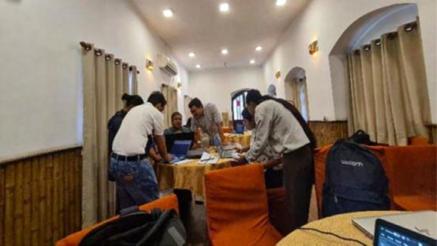
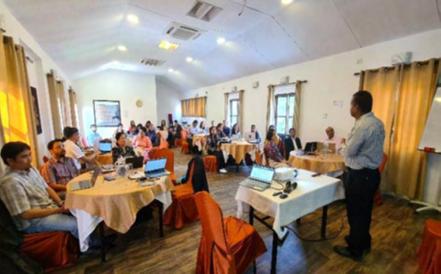
TRAINING PROGRAM ON GEOSPATIAL TECHNOLOGIES AND DATA ANALYTICS FOR SUSTAINABLE DEVELOPMENT OF URBAN AREAS IN BELT AND ROAD REGION
AIT Research Theme: Technology, Policy and Society
AIT Unit: SET/RSGIS
Project Duration: 1 August 2023 to 31 December 2025
Project Partners: University of Chinese Academy of Sciences, China Visayas State University, Philippines Department of Agricultural Land Management, Ministry of Agriculture and Forestry, Lao PDR
Expected Social Impact:
⏵ Competence development: the participants will develop fundamental to intermediate level understanding of traditional and recent advances in geospatial technologies.
⏵ The participants will approach a spatial related problem with confidence, knowledge, and skill.
⏵ Further, the training program will definitely extend ANSO’s world influence.
Description:
Over the past few decades, and particularly in the last one, geospatial technologies have evolved significantly.
As the innovations and advancement of technologies improve and digital devices become more affordable, there is also an explosion of huge amounts of archived and real-time geospatial data. This data is gathered through multitudinous sources viz., satellites, sensor networks, Internet of Things systems, and the hyper-connectivity of our society. It is diversified, containing rich information across different geographic scales and resolutions. However, a massive challenge also exists on how this data has been exploited and explored to understand and solve problems to achieve the sustainable development goals (SDGs).
With global unprecedented increasing trends of urbanization across the world in developed, developing, and underdeveloped countries, the population is aggregating in urban areas. According to the United Nations (UN) statistics, in the 1950s only 30% of the world’s population lived in urban areas, which has increased to 55% in 2018, and it is expected that by 2050, every two out of three people are likely to live in urban areas.
The major goal of this training is to work together to strengthen geospatial skillset at all levels - local, national, regional, and global and to fully realize the potential of geospatial knowledge services by developing novel, practical, and scalable solutions to problems related to achieving selected SDGs related to urban studies and applications. It will expand the opportunities available to the participants, assist them in developing their skills in geospatial technologies, enable them to use these toolsets for achieving SDGs, and advance the process of global economic integration.
PROMOTING TECHNOLOGY INNOVATION IN CLIMATE CHANGE RESILIENCE
AIT Research Theme: Climate Change; Technology, Policy and Society
AIT Unit: Office of the President
Project Duration: 1 September 2022 to 15 November 2023 (440 days)
Project Sponsor/Client: Oak Foundation Ltd.
Expected Social Impact: Enhance skills and capabilities of the CIAA officers on practical approaches and methods to implement anti-corruption strategies to help create a well-disciplined and uncorrupted culture in the organizations.
Description:
Organizing a two-part conference focusing on problem identification and solution development for disadvantaged communities.
CONSTRUCTION
CONTRACT MANAGEMENT IN PRACTICE & STANDARD TURNKEY / EPC CONTRACTS FROM 28 OCTOBER TO 28 NOVEMBER, 2023
Expected Social Impact: : Improving job site efficiency, reducing project delays and cost overruns, benefiting construction companies and local communities through timely and cost-effective infrastructure development.
Description:
Participants engage in project scheduling, cost estimation, risk management, site supervision, budget planning, subcontractor coordination, and safety compliance.
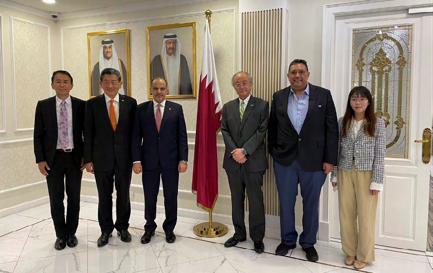
AIT DELEGATES MADE A COURTESY VISIT TO H.E.ALI AL-TAMIMI, AMBASSADOR OF THE STATE OF QATAR TO THAILAND
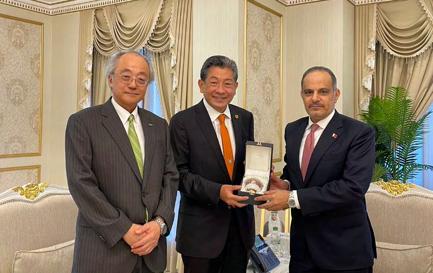
12 January 2023 - H.E. Dr. Suwit Khunkitti Vice Chairman, AIT Board of Trustees and AIT President Prof. Kazuo Yamamoto made a courtesy visit to H.E Ahmed Ali AlTamimi, Ambassador Extraordinary and Plenipotentiary of the State of Qatar to the Kingdom of Thailand at Embassy of the State of Qatar.
H.E. Dr. Suwit Khunkitti thanked the Ambassador for the warm hospitality accorded to the AIT delegation and for the fruitful deliberations on possible collaborations that will establish a range of initiatives between AIT and the Government of the State of Qatar. AIT being a neutral platform in the Asian region could be a conduit for Qatar to use to further its outreach and presence in the Asia Pacific region.
AIT President Prof. Yamamoto conveyed his thanks to the Ambassador for inviting AIT to submit a concept note on the possible areas of collaboration with the State of Qatar which the Ambassador has offered to help facilitate and transmit to the concerned authorities in Qatar for their consideration.
Also attending the meeting were Mr. Sanjeev Jayasinghe, Executive Director, Office of Advancement & Alumni Affairs, Mr. Karma Rana, Institute Secretary and Ms. Sirikate Owasit, Senior Advancement Officer, Office of Advancement & Alumni Affairs.
AIT EXPLORES
COLLABORATIVE OPPORTUNITIES WITH ASIAN DEVELOPMENT BANK TO DRIVE REGIONAL SUSTAINABLE DEVELOPMENT
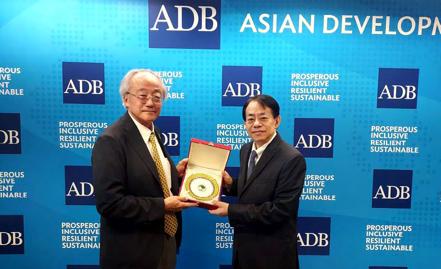
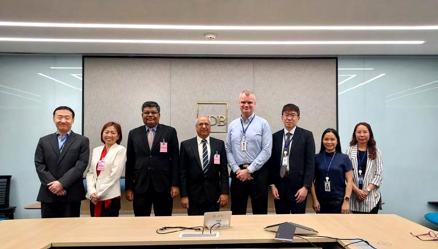
22 May 2023 - The President of the Asian Institute of Technology (AIT), Prof. Kazuo Yamamoto, paid a courtesy visit to Asian Development Bank (ADB) President Masatsugu Asakawa in Manila, Philippines, on 22 May 2023. Accompanied by Prof. Shobhakar Dhakal, Vice President for Academic Affairs at AIT; Prof. P. Abdul Salam, Dean of the School of Environment, Resources and Development, and Dr. Chutiporn Anutariya, Associate Dean of the School of Engineering and Technology, President Prof. Yamamoto provided an update on AIT’s impact in the region and the ongoing activities for the region’s development. The objective of the visit was to explore areas of mutual interest and explore opportunities for collaboration between the two institutions.
In addition to a courtesy visit to ADB President, the AIT team, led by Vice President Prof. Dhakal, engaged in a series of meetings and discussions with other key members of ADB’s Senior Management Team. The deliberations focused on how ADB and AIT can work together to enhance regional capacity in areas of climate
change, energy transition, water, social development, and urban development. The aim was to explore opportunities for AIT’s complementary role and collaboration in various sectors.
AIT team met Mr. Haruto Takimura, Chief Advisor to the President; Mr. Woochong Um, Managing Director General
from the Office of the President; Mr. Kenichi Yokoyama, Director General of South Asia and Mr. Norio Saito, Director, Urban Development and Water Division of the South Asia Department. Additionally, discussions were held with Mr. Ramesh Subramaniam, Director General and Chief- Designate Sectors Group; Mr. Toru Kubo, Senior Director-Designate of Climate Change, Resilience and Environment and Ms. Noelle O’Brien, Chief of Climate Change and Disaster Risk Management Thematic Group Concurrently Director, Climate change and Disaster Risk Management Division.
AIT Team engaged in productive discussion with Ms. Ayako Inagaki, Director, Human and Social Development Division; Ms. Neeta Pokhrel, Chief of Water Sector Group; Mr. Priyantha Wijayatunga, Chief of Energy Sector Group; Mr. Manoj Sharma Chief of Urban Sector Group, Urban SG, Sector Advisory Service Cluster, from the Sustainable Development and Climate change Department. The team also met with Mr. Alessio Giardino, Senior Water Specialist (Climate Change), Water Sector Group; Mr. Hong So Lee, Senior Urban Specialist (Smart Cities), Urban Sector Group; Ms. Luxmi Sharma, Senior Urban Development Specialist of Urban Development and Water Division of the South Asia Department and Ms. Architrandi Priambodo, Senior Energy Specialist, Energy Division; and Ms. Emma M. Veve, Senior Advisor, Office of the Director General of the Southeast Asia Department.
The meetings with ADB officials highlighted the significance of AIT’s collaboration with ADB, particularly through the ADB-Japan Scholarship Program (JSP).
The AIT team interacted and shared experiences of the ADB-Japan scholarship program with Mr. Hiroki Kasahara, Principal Financing Partnership Specialist of the Partner Funds Division, Mr. Sho Tabata, Financing Partnership Specialist of the Partner Funds Division, and other members of the fund providing ADB-Japan scholarship. AIT expressed gratitude for the collaboration and highlighted the impressive impacts of the ADB-Japan scholarship program in the region through AIT. The AIT team also visited SDCC/SDPF’s Photo Exhibit for the JFPR History Book- Two Decades of Japan Fund for Poverty Reduction (JFPR).
The visit underscored the immense potential for partnership and collaboration between ADB and AIT in promoting regional capacity building and addressing the pressing challenges faced by Asian countries. By harnessing their synergies, both institutions can make a lasting impact in driving sustainable development in the region.
AIT AND APN FOSTER REGIONAL COOPERATION AND CAPACITY BUILDING FOR SUSTAINABLE DEVELOPMENT IN SOUTHEAST ASIA
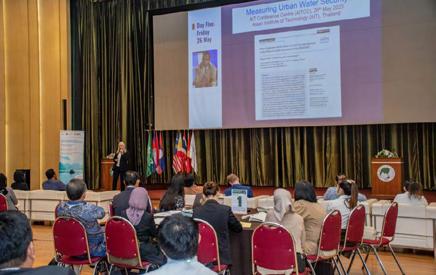
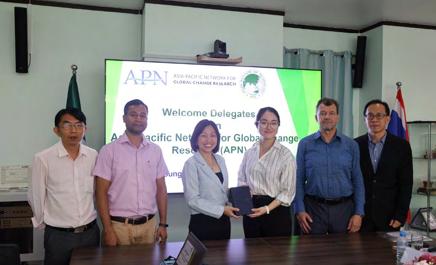
From 22 to 26 May 2023, the Asian Institute of Technology (AIT) and the Asia-Pacific Network for Global Change Research (APN) co-hosted a series of pivotal events aimed at enhancing regional cooperation, capacity building, and knowledge exchange. These events, held at AIT’s main campus in Bangkok, Thailand, included the 13th Southeast Asia Subregional Committee (SEA-SRC) Meeting, Proposal Development Training Workshop (PDTW), Early-Career Professional Networking Session, and Water Security Assessment Tool (WATSAT) Training Workshop.
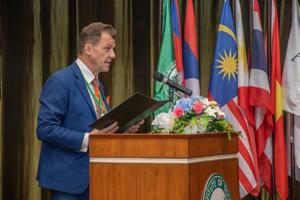
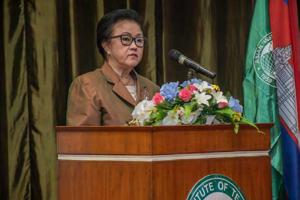
The events commenced with opening remarks from distinguished speakers such as Prof. Dieter Trau, Dean of AIT’s School of Engineering and Technology, Dr. Monthip Sriratana, APN National Focal Point for Thailand, and Dr. Linda Anne Stevenson from the APN Secretariat. They emphasized the significance of these events in fostering collaboration to address global change and sustainability challenges.
A keynote address by Prof. Sangam Shrestha, Professor of Water Engineering and Management at AIT, focused on proposal development and project implementation, setting the stage for an interactive panel discussion. AIT faculty
members highlighted the importance of collaborative research, interdisciplinarity, and the engagement of earlycareer professionals.
The PDTW, a flagship event, spanned two and a half days and aimed to equip early-career professionals from Southeast Asia with the skills to develop competitive project proposals for APN funding. This year’s workshop concentrated on “Water security: improving knowledge systems, governance, and regional cooperation,” involving
active participation from APN members, early-career professionals, and AIT experts.
Concurrent sessions included the Early-Career Professional Networking Session and the 13th SEA-SRC Meeting, fostering inclusive discussions and interactions. The networking session led by Dr. Saurav KC, introduced the Asia-Pacific Network of Early Career Professionals (APN-ECAP), a platform for early-career visibility in global change and sustainability issues.
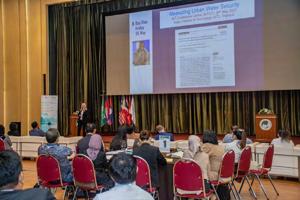
The event concluded with the WATSAT Training Workshop, aimed at enhancing participants’ capacity to assess urban water security. The closing session reflected on the week’s meaningful discussions and the long-term impact of regional cooperation among early-career professionals in addressing global challenges.
REGIONAL TRAINING WORKSHOP ON CLIMATE ADAPTATION TOOLS ORGANIZED
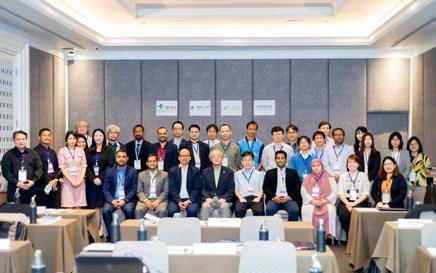
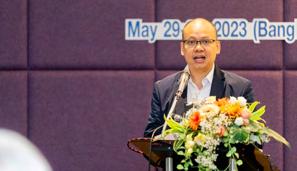
From 29 to 31 May 2023, the Asian Institute of Technology’s Regional Resource Centre for Asia and the Pacific (AIT RRC. AP) successfully hosted the “Regional Training Workshop on Climate Adaptation Tools.” The event, supported by the Ministry of Environment of Japan (MoEJ), was held in collaboration with the National Institute for Environmental Studies (NIES), University of Tsukuba, and Hitachi, Ltd., Japan.
The three-day workshop aimed to build regional capacity to understand and predict local climate change impacts using advanced climate modeling. It also focused on translating climate projection results into practical, resultsdriven interventions. The workshop was attended by 20 participants, including government officials, researchers, and representatives from various sectors across the Philippines, Bangladesh, Japan, Nepal, Vietnam, Myanmar, Thailand, Sri Lanka, and India.
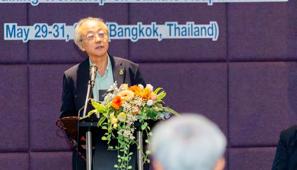
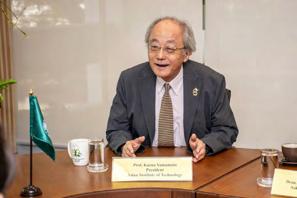
In his opening remarks, AIT President Prof. Kazuo Yamamoto emphasized the urgent need for adaptation actions in response to the widespread effects of climate change. He highlighted that the climate adaptation tools presented in the workshop enable practitioners to evaluate local climate scenarios without requiring highly specialized technical skills, helping to assess impacts, vulnerabilities, and adaptability.
Mr. Orita Tomonori, Climate Change Adaptation Specialist from Japan’s Ministry of the Environment, underscored the MoEJ’s commitment to overcoming adaptation challenges in vulnerable countries. He encouraged participants to
Prof. Dieter Trau
Dr. Monthip Sriratana
leverage the tools provided to address local adaptation issues effectively.
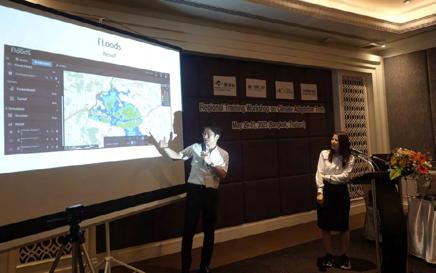
The workshop featured hands-on sessions on key tools, including ClimoCast, S8DS, and FloodS. Dr. Masutomi Yuji from NIES introduced ClimoCast, an online climate forecasting tool, while Prof. Hiroyuki Kusaka from the University of Tsukuba and Mr. Shusaku Nakamura from Pacific Consultants Co., Ltd. (virtually) presented the S8DS tool for downscaling regional climate data. Dr. Satoshi Yamaguchi from Hitachi, Ltd., showcased FloodS, a tool for flood forecasting and climate change adaptation.
Participants engaged in practical exercises, exploring how these tools could be used to assess vulnerabilities and develop adaptation strategies. The workshop concluded with participants presenting their findings and proposed adaptation solutions tailored to their regions, followed by a certificate award ceremony recognizing their achievements.
Mr. Orita Tomonori, Climate Change Adaptation Specialist, Ministry of the Environment, Japan
SCHOOL OF ENGINEERING AND TECHNOLOGY SEMINAR ON “EXPLORING OPPORTUNITIES BETWEEN AIT AND THE APN CALL FOR PROPOSALS”
8 December 2023 - The Asia-Pacific Network for Global Change (APN) organized a seminar titled “Exploring Opportunities between AIT and the APN Call for Proposals” at the Asian Institute of Technology (AIT). The event featured Ms. Naomi Young, the Program Officer for APN. This seminar was also attended by Dr. Saurav KC, Deputy Executive Director of the Center of Research for Environment, Energy and Water (CREEW), Nepal. Dr. Chutipon Anutariya, Associate Dean of SET, and Dr. Sumana Shrestha, Director of International Affairs at AIT, and SET students extended a warm welcome to the representatives.
The seminar aimed to familiarize participants with the APN’s Call for Proposals, providing insights into research funding opportunities, the application process, and associated deadlines. Priority areas for proposal submissions included Climate Change and Climate Variability, Disaster Reduction, Transboundary issues like air pollution and marine plastics, Big Earth Data for SDGs, Bio-circular green economy, circular ecological economy, and achieving Sustainable Development Goals (SDGs) amidst a changing climate.
APN, established in 1996 as an international non-profit organization with 22 member countries, is headquartered in Kobe, Hyogo Prefecture, Japan. With a vision to address global change and sustainability through innovative research and capacity development, APN aligns its direction with key global agendas, including the UN Sustainable Development Goals, the Paris Agreement, Sendai Framework for Disaster Risk Reduction, Global Biodiversity Framework, UN Decade of Ocean Science,
IPBES, and IPCC, as outlined in its Fifth Strategic Plan (2020-2026).
In recent years, APN has achieved significant milestones, with 77.6% of projects led by researchers from developing countries during FY 2020–FY 2022. Notably, in 2022, 60% of funded projects were spearheaded by early career
Prof. Kazuo Yamamoto, President, AIT
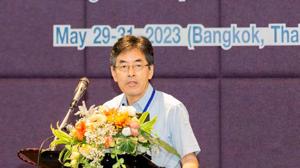
Dr. Guilberto Borongan, Director, AIT RRC.AP
professionals, and in FY 2021, 75% of projects actively involved early career professionals.
The School of Engineering and Technology (SET) at the Asian Institute of Technology expressed gratitude to APN for its ongoing support and research funding since 2012. This collaboration has played a pivotal role in advancing impactful and sustainable research initiatives at AIT.
For more information about APN Call for proposals for 2024, please visit the site: � https://www.apn-gcr.org/opportunities/calls-forproposals/
AIT AND FHI 360 RENEW COLLABORATION FOR SUSTAINABLE DEVELOPMENT IN ASIA PACIFIC
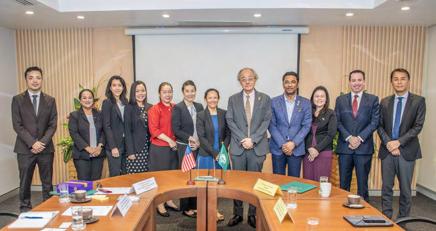
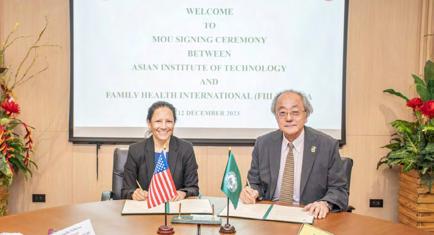
On 12 December 2023, the Asian Institute of Technology (AIT) and Family Health International (FHI 360), USA, renewed their Memorandum of Understanding (MoU), reinforcing their collaboration in research, education, health, technology, and development across the AsiaPacific region. The partnership, which began in February 2018, aims to strengthen ties and explore mutually beneficial opportunities.
The MoU sets a framework for cooperation in various fields, including joint research, innovation, and the development of concept notes and proposals for resource mobilization. AIT and FHI 360 will focus on leveraging big data and analytics for development, integrating these methods into ongoing projects, and coauthoring concept papers. The agreement also facilitates the exchange of experts and offers AIT students internship opportunities, providing them with practical experience. The collaboration extends to technical areas such as health, environment and climate change, education, and civil society engagement.
Prof. Kazuo Yamamoto, AIT President, emphasized the transformative potential of the partnership through AIT’s new School of Practice, highlighting the importance of training, digitalization, and FHI 360’s expertise in climate change and air pollution. He noted the alignment of their environmental initiatives and commitment to achieving net-zero emissions by 2030. AIT’s AI and technology centers are poised to support FHI 360’s impactful projects.
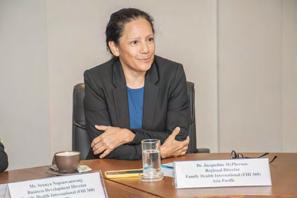
Dr. Jacqueline McPherson, Regional Director of FHI 360 Asia Pacific, expressed enthusiasm for future collaborations, including business opportunities, innovative solutions, and the application of Artificial Intelligence. She anticipates joint efforts in addressing
critical issues like air and plastic pollution, and climatesmart healthcare, alongside joint events, roundtables, and meetings.
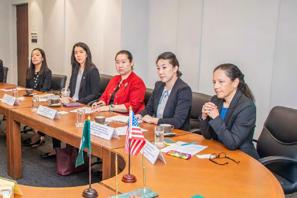
The signing event was attended by key representatives from both organizations, underscoring the strategic importance of this renewed collaboration in driving sustainable development and addressing global challenges.
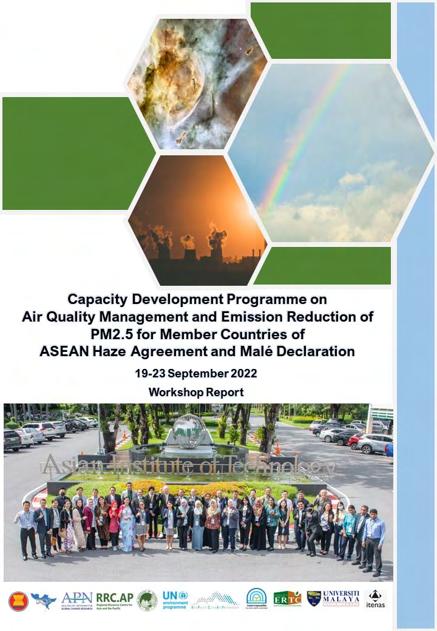
PUBLICATION OF THE AIR QUALITY MANAGEMENT AND EMISSION REDUCTION OF PM2.5 WORKSHOP REPORT, PUBLISHED ELECTRONICALLY
AIT Unit: RRC.AP
Project Duration: March 2023
Description:
The AIT RRC.AP had published the Workshop Report of the “Capacity Development Programme on Air Quality Management and Emission Reduction of PM2.5 for Member Countries of ASEAN Haze Agreement and Malé Declaration”. The report can be downloaded from RRC. AP website ( http://www.rrcap.ait.asia/Publications/AQM_ Workshop_Report_2022.pdf).
The report was also published by the Asia-Pacific Network for Global Change Research (APN) on their website ( https://www.apn-gcr.org/wp-content/ uploads/2023/03/AQM_Workshop_Report_2022_ Final_for_Publication_v1.pdf) as the project was funded by the APN.
The programme mainly aimed to build the capacities of the member countries of the ASEAN Haze Agreement and the Malé Declaration on air quality management and emission reduction of PM2.5. This e-publication is a compilation of the session outcomes of the capacity development programme workshop that was held from 19-23 September 2022 organized by the AIT RRC.AP.
THE STAKEHOLDERS CONSULTATIONS, WORKSHOP, AND TRAINING ON KATHMANDU CLEAN AIR PROGRAMME (KCAP) IN KATHMANDU, KATHMANDU, NEPAL
AIT Unit: RRC.AP
Project Duration: 3 - 7 April 2023
Description:
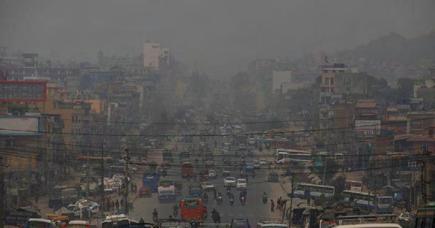
The AIT (including RRC.AP) lead a back-to-back stakeholders consultation workshop during the week of 2-7 April 2023 in Kathmandu, Nepal. Present among the key stakeholders were FHI360, Tribhuvan University, ICIMOD, MinErgy, and USAID of the USAID Clean Air (or Kathmandu Clean Air Programme (KCAP)). The consultations were aimed to strengthen collaboration
and partnership for the implementation of the USAID Clean Air activities.
On 5 April 2023, a workshop on Air Quality Monitoring and Emission Inventory was organized and a total of 59 participants including organizers, academia, policymakers, international organizations, and private sectors attended the workshop. The AIT team played a pivotal role as resource persons. The workshop discussed the establishment of the Consortium of Atmospheric Researchers in Nepal (CARN). CARN aims to provide scientific and technical support to USAID Clean Air.
MALÉ DECLARATION RECEIVED
Furthermore, on 6-7 April 2023, an Emission Inventory Training Workshop was organized. The training workshop covered key factors and processes involved in conducting the emissions inventory and demonstrated and provided hands-on training on an Excel-based tool to develop EI for key sources. A total of 26 participants (10 male and 16 female) from various organizations working on air pollution in Nepal have participated in the workshop.
GREAT ATTENTION AT THE UNEP-CCAC CLEAN AIR WEEK, BANGKOK
AIT Unit: RRC.AP
Project Duration: 29 May to 1 June 2023
Description:
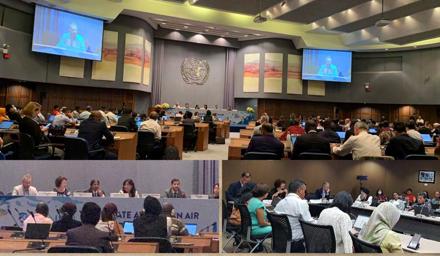
UNEP-Climate and Clean Air Coalition (CCAC) organized a clean air week at the UNCC, Bangkok, from 29 May 2023 to 1 June 2023. The CCAC brings together 79 state partners representing 50% of global short-live climate pollutants (SLCP) emissions alongside intergovernmental organizations, businesses, scientific institutions, and civil-society organizations committed to protecting the climate and improving air quality through actions to reduce SLCPs.
Several plenary sessions and side events were organized during the Clean Air Week. Dr. R. L. Verma, Coordinator of the Malé Declaration Secretariat (hosted by RRC.AP), and Mr. J. S. Kamyotra, Regional Facilitator, Malé Declaration, were invited to share the progress and future plans of the Malé Declaration. Dr. Verma contributed as a panelist in the plenary session on the “Regional Cooperation to Air Quality” and shared Malé Declaration’s brief history, achievements, progress, and future plan which was well received by the participants. The Malé Declaration received great attention during the UNEP-CCAC Clean
Air Week. Dr. Verma and Mr. Kamyotra had bilateral consultations with several UN organizations and international organizations to establish and strengthen the partnership on addressing air pollution issues in the Asian region.
BACK-TO-BACK WORKSHOPS ON MERCURY MASS FLOW AND MONITORING IN MALDIVES, MALDIVES
AIT Unit: RRC.AP
Project Duration: 20 -22 June 2023
Description:
On the 20th to 22nd of June 2023, AIT RRC.AP supported in organizing the back-to-back workshops on mercury mass flow and monitoring on mercury in Malé, Maldives. This is part of the Japan-funded project implemented by United Nations Environment Programme (UNEP) titled “Project for Promoting the Minamata Convention on Mercury by Making the most of Japan’s Knowledge and
Dr. R. L. Verma and Mr. Kamyotra serving as panelist at the plenary sessions in the UNEP-CCAC’s Clean Air Week.
Experiences.” The first workshop was a full day session held on 20th June with participants from government institutions, titled “Workshop for improving knowledge management within national stakeholders and frontline agencies, using mercury mass flow model”. The second workshop was held on 21st June with participants from different regional hospitals around the Maldives for half a day, titled “Training of sample collectors as part of the nationwide mercury biomonitoring program to identify the significance of mercury exposure within Maldives”.
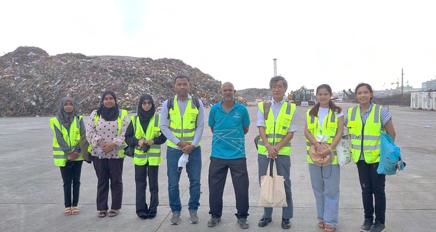
The program concluded with a site visit to Thilafushi, a national landfill on a separate island near Malé, to gain insight about the current state of waste management in the Maldives. The site is managed by Waste Management Corporate Limited (WAMCO) who presented their procedures and future plans to expand operations.
AIT SUSTAINABILITY EXPO 2023: PAVILION OF ACTIVITIES, AIT CONFERENCE CENTER, PATHUM THANI
AIT Unit: RRC.AP
Project Duration: 23-25 August 2023
Description:
The Asian Institute of Technology (AIT) successfully hosted the dynamic three-day Sustainability Expo from August 23 to 25, at the AIT Conference Center, reflecting an encouraging step forward in fostering environmental transformation and achieving its goal of becoming a netzero campus by 2030. This event served as a platform for global experts, researchers, and students to explore innovative solutions and share insights to meet the Sustainable Development Goals (SDGs). It comprised several engaging components including the Interuniversity Research Fair, the Inter-university Hackathon, and a variety of informative workshops that covered diverse areas including water conservation, climate change, waste management, air pollution, sustainable buildings, remote sensing, social business and GIS, and sustainable farming.
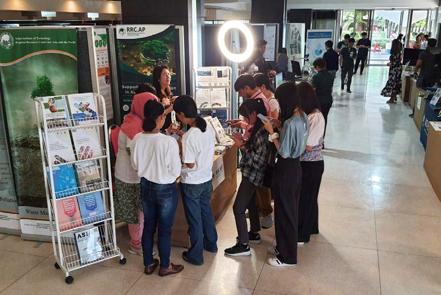
Regional Resource Centre for Asia and the Pacific (RRC. AP) was an integral part of the AIT Sustainability EXPO showcasing its work through a booth and a hybrid half a day seminar conducted on the morning of 24th August 2023. During the AIT Sustainability Expo, RRC.
AP enthusiastically engaged in the exhibition through the booth, showcasing its regional experiences, activities, and services to the participants. Visitors to the RRC.AP booth were provided with an extensive display of the organization’s initiatives which ranged from capacitybuilding programs, climate adaptation tools, e-learning courses as well as knowledge sharing products.
THE AIT RRC.AP PARTICIPATED IN THE PAVILION OF PARTNERSHIP DURING THE AIT-BOI SCIENCE AND TECHNOLOGY PARK LAUNCH, PATHUM THANI
AIT Unit: RRC.AP
Project Duration: 7 September 2023
Description:
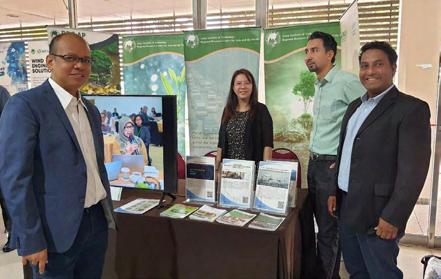
The Regional Resource Centre for Asia and the Pacific (AIT RRC.AP) participated in the Pavilion of Partnership at designated booths in the exhibition area during the historic launching of the Asian Institute of Technology (AIT) - Thailand Board of Investment (BOI) approved Science and Technology Park (BOI STP). The event was held on 7 September 2023 at the AIT Conference Center that aims to foster innovation and collaboration between academia, industry, and government.
The science and technology park is located on the AIT campus in Pathum Thani, Thailand, and offers a range of services and support to businesses, including business incubation and acceleration, access to state-of-the-art research facilities and equipment, IP licensing support, fully equipped workspaces, and a pool of highly skilled and qualified interns and researchers. Companies that
set up in the park are eligible for a range of tax and nontax incentives, including an exemption from corporate income tax for up to 12 years.
THE 3RD INTERNATIONAL FORUM ON TRANSBOUNDARY AIR POLLUTION, SEOUL, SOUTH KOREA, (HYBRID EVENT)
AIT Unit: RRC.AP
Project Duration: 8 September 2023
Description:
The 3rd International Forum on Transboundary Air Pollution (IFTAP) was held on 8 September 2023 in Seoul, South Korea, in commemoration of the 3rd International Day of Clean Air for blue skies. The forum was a hybrid event, with both in-person and virtual components, and brought together experts, policymakers, scientists, and other stakeholders from the Northeast Asia region and beyond.
The forum focused on the following key topics:
⏵ The current status and response strategies for air pollution in Northeast Asia
⏵ Lessons and implications drawn from Europe’s scientific and data-based approaches to air pollution
⏵ The mutual benefits of addressing climate change and air pollution
⏵ Envisioning a regional modality on air pollution in the Northeast Asia and the Asia Pacific
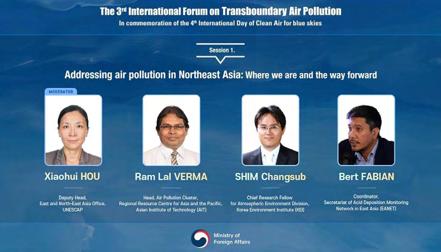
Dr. Ram Lal Verma represented the AIT RRC.AP and served as one of the resource speakers in the forum’s session 1: Addressing Air Pollution in Northeast Asia: Where we are and the Way Forward. The title of his topic is “Air Quality Trends and Policy Measures in Northeast Asia”
WORKSHOP ON AIR QUALITY MANAGEMENT WITH A FOCUS ON AIR QUALITY MODELING, KATHMANDU
AIT Unit: RRC.AP
Project Duration: 10 October 2023
Description:
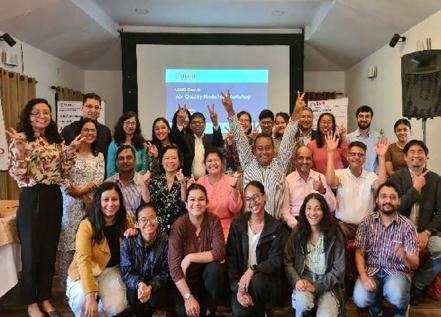
The Asian Institute of Technology (AIT) including Regional Resource Centre for Asia and the Pacific (RRC.AP), served as an implementing partner for the USAID Clean Air (Kathmandu Clean Air Programme). In collaboration with FHI360, the AIT-team hosted a one-day workshop titled “Air Quality Management with a focus on Air Quality Modeling” on 10 October 2023, in Lalitpur (Kathmandu), Nepal.
The workshop brought together 36 participants, including government officials, researchers, and international experts involved in air quality management in Nepal. The diverse group of 17 male and 19 female attendees fostered a dynamic exchange of knowledge and experiences.
Key outcomes of the workshop included:
⏵ Sharing ongoing research: Participants presented updates on their research in air quality management, specifically focusing on air quality modeling techniques relevant to Nepal.
⏵ Building collaboration: A mechanism for ongoing coordination among air quality researchers in Nepal was established, facilitating future knowledge sharing and collaborative efforts.
⏵ Sustainable modeling practices: Strategies for conducting air quality modeling in a sustainable and efficient manner within the Nepalese context were identified and discussed.
⏵ Future research partnerships: Potential areas for collaborative research projects among the attending researchers were explored, paving the way for future studies that address Nepal’s unique air quality challenges.
TRAINING WORKSHOP ON AIR QUALITY MANAGEMENT WITH A FOCUS ON AIR QUALITY MODELING, KATHMANDU
AIT Unit: RRC.AP
Project Duration: 11 -12 October 2023
Description:
The Asian Institute of Technology (AIT) including Regional Resource Centre for Asia and the Pacific (RRC.AP), served as an implementing partner for the USAID Clean Air (Kathmandu Clean Air Programme). In collaboration with FHI360, AIT-team held a 2-day training workshop on “Air Quality Management with a focus on Air Quality Modeling” in Lalitpur (Kathmandu), Nepal, from 11-12 October 2023. This intensive workshop aimed to equip participants with the technical skills and knowledge necessary for air quality modeling and its application in managing Kathmandu Valley’s air quality.
Over the two days, participants gained a solid foundation in air quality modeling principles and its role in effective air quality management. The workshop also presented relevant case studies applicable to Kathmandu Valley and provided hands-on experience with meteorological and air quality dispersion modeling tools. A total of 13
participants (3 male, 10 female) actively engaged in the learning process.
This successful workshop empowered participants with valuable technical expertise, contributing to improved air quality management strategies for Kathmandu Valley.
CONSORTIUM FOR AIR QUALITY RESEARCHERS OF NEPAL (CARN), KATHMANDU
AIT Unit: RRC.AP
Project Duration: 13 October 2023
Description:
The Asian Institute of Technology (AIT) including Regional Resource Centre for Asia and the Pacific (RRC.AP), served as an implementing partner for the USAID Clean Air (Kathmandu Clean Air Programme). On October 13, 2023, AIT-team collaborated with FHI 360 to host the 3rd Meeting of the “Consortium for Air Quality Researchers of Nepal (CARN)” in Lalitpur, Nepal. This gathering aimed to foster better coordination and collaboration among the nation’s air quality and atmospheric researchers. By facilitating timely exchange of science-based information, CARN ultimately hopes to influence policy-making and drive effective improvements in air quality across the country.
The meeting provided a platform to discuss CARN’s progress, showcase ongoing collaborative research projects, and share results and findings from previous measurement campaigns conducted by various research groups in Nepal. Participants explored future directions
and possibilities for collaboration. A total of 33 individuals (17 male and 16 female) attended the meeting, representing universities, research organizations, international organizations based in Nepal, and private sector entities.
STEERING COMMITTEE MEETING IN GENEVA TO SET PLAN WITH CIFAL MEMBERS TO PROMOTE SDGS
AIT Unit: AIT Extension
Project Duration: 13-15 November 2023
Description:
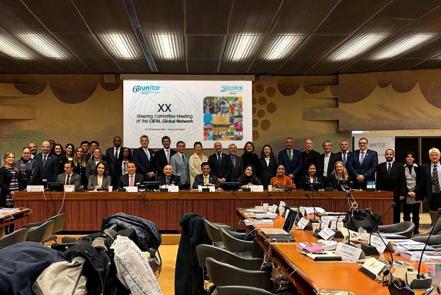
Between 13 and 15 November, with other 30 CIFAL Centers all over the world, CIFAL Bangkok participated in the annual Steering Committee Meeting of the CIFAL Global Network coordinated by the United Nations Institute of Training and Research (UNITAR) at the Palais des Nations in Geneva. During the 3-day meeting, UNITAR and CIFAL Centers reviewed accomplishments achieved in the past year, celebrated two decades of building capacities in support of local sustainable development, and collectively defined a roadmap for the upcoming years. This Steering Committee Meeting highlighted the important role that CIFAL Centers have in empowering governments, private companies, universities, and civil society to implement and promote the SDGs at the ground level.
UNITAR AND AIT JOINTLY LAUNCHED CIFAL BANGKOK TO FOCUS ON SUSTAINABLE DEVELOPMENT
AIT Unit: AIT Extension
Project Duration: 2 August 2023
Description:
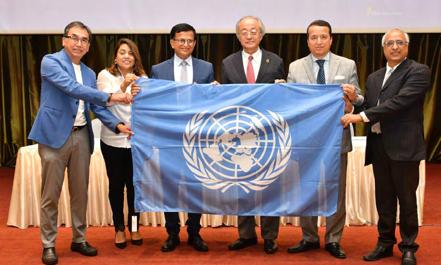
On 2 August 2023, in partnership with AIT, United Nations Institute for the Training and Research (UNITAR) established the International Training Centre for Authorities and Leaders (CIFAL) in Bangkok to offer a range of learning opportunities on sustainable developmentrelated areas and facilitate knowledge sharing between government officials and leaders across Asia Pacific. The partnership was signed in a special ceremony with community stakeholders at the AIT campus in Bangkok, Thailand, between Mr Nikhil Seth, United Nations Assistant Secretary-General and Executive Director of UNITAR, and Prof. Kazuo Yamamoto, President of the Asian Institute of Technology. 47 representatives from UN agencies, (I)
NGOs, government offices, universities, and private sectors attended this ceremony to build cooperation with CIFAL Bangkok for the promotion of all SDGs.
As an international training center, CIFAL Bangkok aims to strengthen the capacities of individuals and institutions, serving public officials and leaders of Asia Pacific countries in order to improve the decision-making process and encourage sustainable development. CIFAL Bangkok will hold training activities and events centered around critical thematic areas including climate change, smart communities, water-energy-food, infrastructure, technology, policy and society.
AIT AND STOCKHOLM ENVIRONMENT INSTITUTE JOIN FORCES TO ADDRESS GLOBAL CHALLENGES
26 October 2023 - The Asian Institute of Technology (AIT) and the Stockholm Environment Institute (SEI) solidified their commitment to collaboration by signing a Memorandum of Understanding (MoU). This partnership aims to advance common goals related to global change and sustainability in the Asia-Pacific region. The MoU delineates various collaborative activities, including joint workshops, research support, exchange programs, and capacity development initiatives. Prof. Kazuo Yamamoto, President of AIT, stressed the institution’s dedication to addressing global challenges such as climate change and Sustainable Development Goals (SDGs), highlighting the significance of partnering with esteemed institutions like SEI. Mr. Niall O’Conner, Center Director
of SEI Asia, emphasized the potential for collaboration in areas like urban development, gender equality, and climate change mitigation, aiming to influence global agendas and policies. Cynthia McDougall, Senior Research Fellow at SEI, suggested thematic partnerships and interdisciplinary approaches to tackle sustainability issues. The partnership between AIT and SEI promises to drive sustainable solutions and positively impact the Asia-
Pacific region. Attendees from both institutions included key figures, indicating strong support and enthusiasm for this collaborative endeavor.
MS. ANU VÄNSKÄ, EXECUTIVE DIRECTOR, ASIA-PACIFIC REGION, AALTO EXECUTIVE EDUCATION ACADEMY PTE LTD. (SINGAPORE) AND DELEGATION FROM EMBASSY OF FINLAND MEET WITH AIT MANAGEMENT
2 February 2023 – Prof. Vilas Nitivattananon, Dean, School of Environment, Resources & Development (SERD), Dr. Roger Levermore, Dean, School of Management (SOM), Mr. Voravate Chonlasin, Co-Executive Director, AIT Extension, Mr. Sanjeev Jayasinghe, Executive Director, Office of Advancement and Alumni Affairs, and Ms. Sirikate Owasit, Senior Advancement Officer, Office of Advancement and Alumni Affairs had a meeting with Ms. Anu Vänskä, Executive Director, Asia-Pacific Region, Aalto Executive Education Academy Pte Ltd. (Singapore) and Delegation from the Embassy of Finland led by Mr. Kai Tuorila, Counsellor for Trade and Investment, Embassy of Finland.
Aalto University was established in 2010 as a merger of three major Finnish universities: the Helsinki University of Technology, the Helsinki School of Economics and the University of Art and Design Helsinki. Aalto has had a long history with AIT, as several Finnish Professors were seconded to AIT in the 90’s who were coming from Helsinki University of Technology, which is part of Aalto now. Aalto University Executive Education (Aalto EE) in Singapore provides executive education, professional development
services, and training for public and private sector clients all around Asia.
Dean SERD will have further details discussion in the areas of sustainability and smart city, similarly, Dean SOM has highlighted the Executive MBA program and Professional Master’s program in Environmental, Social, and Governance (ESG), and Co-Executive Director AIT Extension will discuss the possibility of having Aalto EE as a partner to offer joint program on tailor made short-term training program.
A GLOBAL REUNION AT THE 52ND AITAA GOVERNING BOARD MEETING HELD AT AIT
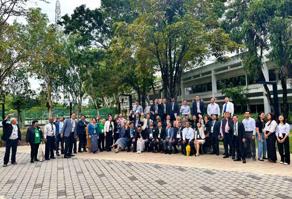
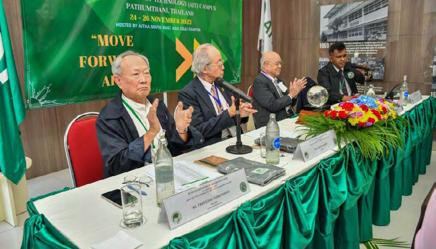
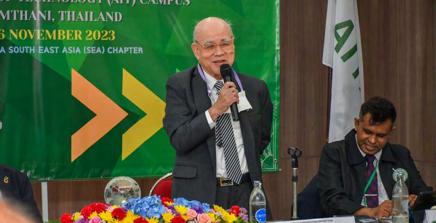
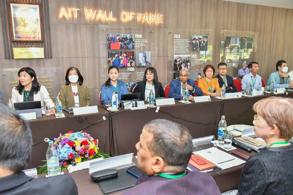
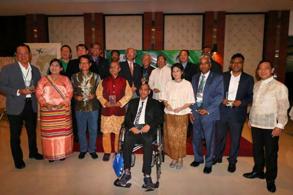
26 November 2023 –The Asian Institute of Technology (AIT) campus buzzed with energy and nostalgia as it welcomed its alumni for the 52nd AITAA Governing Board Meeting. Hosted by the AITAA South East Asia Chapter from November 24 to 26, this event marked a significant gathering under the theme ‘Move Forward AIT,’ emphasizing the alumni’s role in shaping the institute’s future.
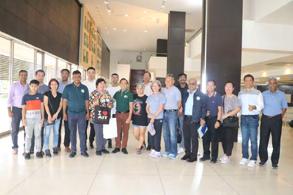
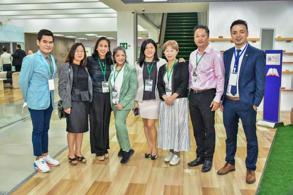
The event saw over 45 official delegates from 18 countries, including Australia, Bangladesh, Cambodia, Canada, India, Japan, Lao PDR, Myanmar, Nepal, New Zealand, Pakistan, Philippines, Singapore, Sri Lanka, Taiwan ROC, Thailand, the USA, and Vietnam. This diverse attendance highlighted the global reach and impact of AIT’s alumni network.
Day 1: Reconnecting with Roots
The event kicked off on November 24 with the arrival of delegates, followed by a campus walking tour, allowing alumni to revisit and reminisce about their time at AIT. The day concluded with a welcome dinner at the AIT Conference Center, setting the stage for days of fruitful discussions and reunions. Honorable Dr. Subin Pinkayan,
AIT Alum and former AIT Board of Trustees Chairman welcomed all the delegates to AIT Thailand. Dr. Pinkayan is one of the first graduates of AIT after completing his Master’s in Hydraulics in 1961. He has attended several GBMs in many countries.
Day 2: Inaugural Ceremonies, Discussions and Election
November 25th began with the official opening of the Governing Board Meeting. Highlights of the day included the welcome address by Dr. Duminda Jayaranjan, President of the AITAA SEA Chapter, and Mr. Taweechai Termkunanon, President of AITAA.
A welcome message from AIT President Prof. Kazuo Yamamoto emphasized alumni’s importance in shaping AIT’s future. He said: “As we move forward, the insights and experiences of our alumni are invaluable. Together, we can elevate AIT to greater heights in research, innovation, and global impact.”
One of the event’s highlights was the gala dinner, where seventeen distinguished alumni awards were presented, along with an honorary member recognition. These awards celebrated the achievements and contributions of AIT’s alumni to their respective fields and communities. Among the 17 awardees were the AIT Faculty and Dean of the School of Engineering and Technology, Prof. Sangam Shrestha, Executive Director of the Office of Alumni and Advancement Affairs, Mr. Sanjeev P. Jayasinghe, and Business Development Director of AIT Extension, Dr. MD. Zakir Hossain. Details of the awardees can be found on the AITAA website here.
� https://www.aitaa.asia/DAA%26HM
The reunion was not just an occasion for formal meetings but also an opportunity for alumni to reconnect with their alma mater and each other. Attendees shared stories, visited their old schools, and relived cherished memories, rekindling connections and reinforcing the sense of community within the AIT family.
Dr. Anat Arbhabirama, Chairman of the AIT Board of Trustees, also addressed the gathering, underlining the institute’s commitment to excellence and innovation. He emphasized that the strength of AIT lies in its diverse and dynamic alumni network. Their contributions and ongoing engagement are vital in steering AIT towards new horizons of excellence.
The day was filled with activities, including chapter reports, networking breaks, a session dedicated to the AITAA’s business affairs, and an election in which Dr. Donald M. Ugsang from the Philippines was elected as the new AITAA President.
The success of the event was not just in its turnout but also in the enthusiasm and engagement of the alumni. Their continuous support is crucial for the advancement and enduring legacy of AIT. As the institute looks forward, the role of its alumni in driving growth and innovation remains pivotal.
As this year’s meeting concluded, the baton was passed to the Laos PDR Chapter, which will host the next AITAA Governing Board Meeting in 2024. This announcement was met with anticipation and excitement, promising another eventful reunion for the AIT alumni community next year.
The AITAA Governing Board Meeting stands as a testament to the enduring bonds and collective aspirations of the AIT alumni. As they departed from their beloved alma mater, they carried with them not just memories but also a renewed commitment to ‘Move Forward AIT‘ into a bright and impactful future.