








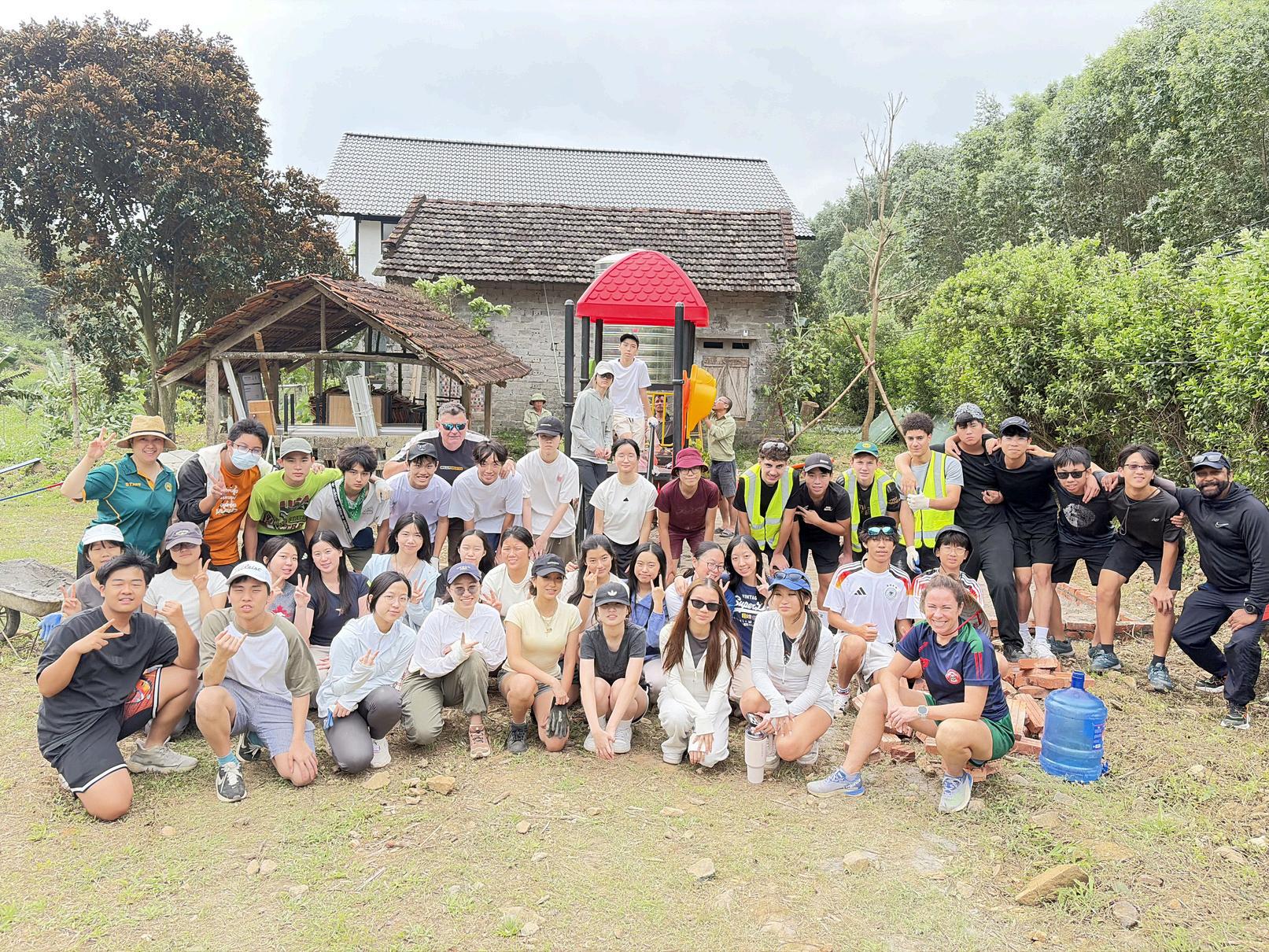
Sunday began with rickshaw rides through Hanoi, followed by visits to Ho Chi Minh’s mausoleum and the Temple of Literature The next day we travelled into the countryside for our service project, where we spent two days immersed in traditional Vietnamese culture and building a playground for local children, laying a rock pathway, and planting trees. Afterwards, we journeyed to the breathtaking waters of Ha Long Bay. There, we boarded the Halora Nova Cruise for 24 hours of kayaking, bamboo boat rides, and squid fishing, surrounded by some of the world’s most stunning scenery
On our final full day, we returned to Hanoi to explore Hao Lo Prison and the famous Train Street, picking up souvenirs along the way. Leaving the next morning was bittersweet, as none of us wanted the adventure to end. A heartfelt thank you to Mr Bennet, Ms Ho, Mr Bhardwaj, Ms Byrne, and our Infuse team leaders for making this trip unforgettable

In a society where success stories are frequently shared on social media, many are unaware of the detrimental effects of grade obsession which contribute to the decline in mental health and confidence.
Research by the American Psychological Association indicates that academic pressure has a greater impact on anxiety and depression due to the constant comparison culture shown online. This unforgiving cycle of perfectionism creates a destructive pattern where a single poor grade triggers overwhelming shame, directly undermining confidence and selfworth It is not healthy tol continually re-evaluate a test score or assignment and endlessly scroll through mistakes. Look, there’s nothing wrong with striving to be best or checking for mistakes, but an issue arises when someone becomes fixated on it. It could lead to problems when they fail to meet those exacting standards.
As a student, it is important to remember that one poor grade does not define an entire academic journey. If your goal is to strive for success, then what should be done is to find out what went wrong and learn how to improve that aspect of your learning. Create a realistic plan for a better grade in the future
it is important to distinguish between striving to be the best you can be and being perfect. Grades are simply feedback, not a measure of personal value. Therefore, it is essential to use your feelings of disappointment as motivation for genuine improvement and focus on positive mental health and feeling good Remember, you are not your grade
In this modern age, where technology dominates every aspect of our existence, a new drug has been developed by mankind in the recent decades, and it is merged into our daily lives, draining us of our time and mental energy. Social media.
The scientific evidence is alarming. Studies from institutions like Stanford and MIT have demonstrated that infinite scrolling systems and strategically timed notifications are not accidental design choices, but rather calculated features designed to maximize user engagement and dependency. It’s intentional psychological manipulation.
Our brains, constantly bombarded by endless content streams, have developed dramatically shortened attention spans, making us incapable of focusing on deep work or meaningful tasks that truly matter. We've become so accustomed to the quick shots of dopamine hits from likes and comments that sitting down to read a book, complete a project or engage in genuine learning feels practically impossible
In such instances, can we really claim to have free will when our attention spans are being systematically harvested and monetized by billion-dollar corporations? These losses are then transformed into a new type of trend; people call it the ‘Gen-z stare’. It refers to the inability to respond to small talk, simple questions and social cues. The loss of ability in human communication will be inevitable if we don’t strive for change The uncomfortable truth is that we have willingly handed over our cognitive autonomy to systems specifically engineered for addiction. Unless we recognize this reality for what it truly is, our ability to focus, think deeply, and to genuinely connect with one another will continue to deteriorate.
In a world where information can often feel overwhelming, and where the average person is constantly bombarded with real‐time data, it becomes easier to disengage from meaningful learning about the world around us. When we begin to rely less on our own curiosity and autonomy, we risk moving closer to the kind of society imagined in Aldous Huxley’s Brave New World.
Surrounded by constant streams of digital stimulation, it is easy to become distracted from our surroundings and less aware of how much influence technology and large corporations can have over our choices. While this influence is not forced upon us, convenience and comfort can make it tempting to accept it without much reflection. Over time, this quiet acceptance may leave us more vulnerable to losing a sense of independence in how we think, learn, and engage with the world.
In the current status quo, it is understandable that individuals may step back from actively engaging with global news due to the emotional toll it can take. Taking time to rest or disconnect is valid and sometimes necessary. However, remaining completely detached often means becoming a bystander to issues that eventually affect us all.
The news we consume today does not necessarily mean the world has suddenly become worse; rather, it reflects how much we have progressed in our ability to uncover injustices and inhumane actions. Choosing not to pay attention or engage with these realities can allow wrongdoing to go unnoticed and unchallenged. While it is important to protect our mental wellbeing, finding a balance between awareness and avoidance matters because ignoring these issues altogether risks allowing harm to continue without accountability.
As suggested in Brave New World, “We prefer to do things comfortably,” yet comfort is not the same as freedom. Choosing to look away may feel easier in the moment, but over time it can mean quietly giving up pieces of our autonomy. Rather than paying attention to everything, we can focus on what truly matters; on the issues that shape our world and influence our future. Staying aware in this way helps us remain thoughtful, engaged, and conscious of the choices we make. In doing so, we find ways to enjoy our interactions and, perhaps, enjoy a little more autonomy.
What is your priority in life? Is it to have stable and loving relationships, to achieve financial freedom, or to become loudly successful and strike gold? Have you ever even thought of that question and had a clear goal of what it would be?
In the words of Robin Williams in Dead Poets’ Society, ‘Medicine, law business, engineering, these are all noble pursuits...but poetry beauty, romance, love, these are what we stay alive for.’ This reminds us of what we need to sustain our wellbeing, but it is the subjects that embody these elements of life (History, Music, Art, Poetry, Philosophy) that we often neglect. To dive into subjects that value creativity and critical thinking and that explore new ideas is to find different perspectives and empathy for others. It helps uncover complexities and it grows your humanity.
When we are one-dimensional and only focus on study, burnout is a very real possibility. And when we evaluate our happiness in relation to our academic results we often get lost in the chase and find ourselves stuck in a cycle where we are unhappy. So, take time to focus on your wellbeing. Put the focus on learning rather than grades. Try to listen to ideas that you think of as uninteresting. Maybe in doing so, you will find pleasure in something unexpected.
So, we all know that studying is tiring and boring. It is always stressing people out and this causes them to entirely avoid doing it. But what if it is not tiring or boring and you have just been using the wrong study method all along! Well, here are five effective methods to help you improve your study technique and enhance your learning. Give them a go!
Feynman Technique
The Feynman Technique is a four-step process for mastering a concept
1.choose a concept E.g. cell structure
2.explain it very simply (no complicated language)
3.find the gaps in your learning
4 simplify and refine
This technique encourages better thinking, reveals gaps in understanding, and promotes lasting retention.
The Pomodoro Technique is a time management method which involves working in 25-minute intervals with fiveminute breaks This can be increased for individual needs and as improvements in focus and motivation enable longer study periods.
Time boxing
Timeboxing is a time management strategy that allocates a fixed amount of time to complete a specific task, creating urgency and focus. It can be used for individual tasks, team organization, and meeting management, with hard timeboxing enforcing strict deadlines and soft timeboxing allowing flexibility. Timeboxing differs from time blocking, which reserves calendar time for work categories, by focusing on completing individual tasks within set time limits.

Leitner system
The Leitner System, created by Sebastian Leitner, is a flashcard study method that uses spaced repetition to enhance learning. It involves moving flashcards between boxes based on correct or incorrect answers, with more difficult concepts requiring more frequent review This method promotes active recall and helps retain information more effectively than passive memorisation.
So, the next time you have a subject to study, try out one of these methods. They are more effective than simply re-reading information.
In today's world, where technology and artificial intelligence are advancing at rates unprecedented, video essays, podcasts, and documentaries have become extremely powerful tools for personal development and continuous learning. These diverse tools offer accessible ways to explore new ideas, gain deeper knowledge, and connect with communities of minds from around the globe.
Video essays break down complex topics into engaging, digestible content that speaks directly to viewers, while podcasts allow you to learn on the go, whether during your commute or workout. Documentaries provide immersive storytelling that brings real-world events and experiences to life in ways that textbooks simply cannot match.
The beauty of these forms of media lies in their ability to inspire, entertain and broaden perspectives. They provide perspectives often neglected and inspire critical thinking. There is a vast array to choose from, such as educational channels like TED-Ed, thought-provoking podcasts like NPR's "Stuff You Should Know" and award-winning documentaries like “The Social dilemma”. If you haven’t already, go and explore; there exists an unimaginable amount of quality content quietly waiting to enrich your mind.
These media forms serve as gateways to knowledge, encouraging you to find a new angle on topics you have studied, or to delve into new topics. Whether you're interested in science, history, philosophy, or something else, there’s a digital medium with mind blowing content out there, waiting for you. Go and find it...and then recommend it to your friends.

Picture this
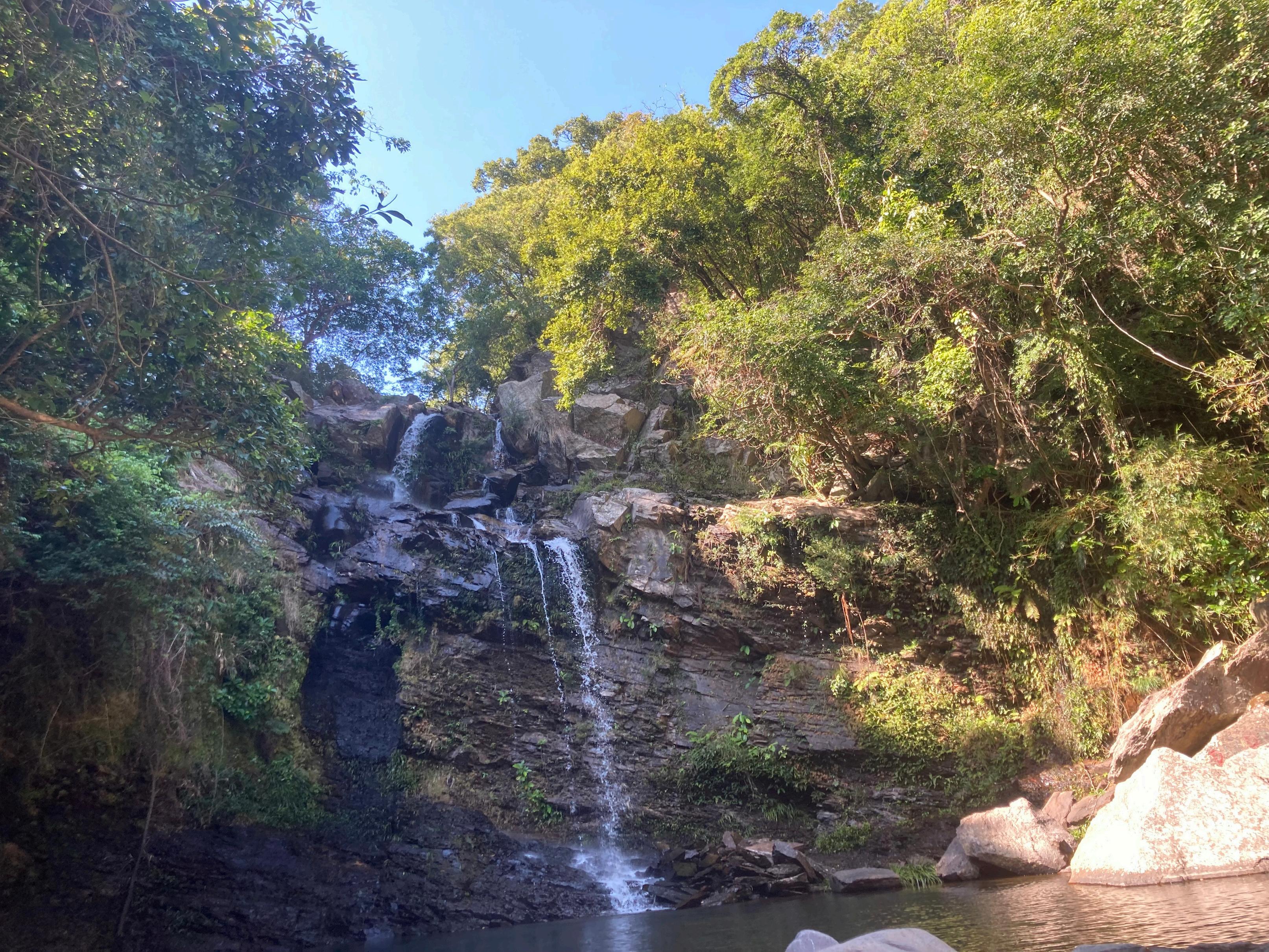
When foreigners picture Hong Kong, they usually imagine an Asian metropolis: towering skyscrapers, hustle and bustle and underground rail systems. However, many residents view the lush hills behind the skyscrapers as an integral part of the city’s skyline. Hiking is a very popular leisure activity in the city. In fact, 75% of Hong Kong is undeveloped natural landscape.
Did you know...
When you are hiking in Hong Kong, you are not hiking in the same forest that was there a thousand years ago, or even a hundred years ago. Extensive occupation and burning for agriculture fragmented original forest land, with the burnings from the Second World War eliminating original forests almost completely.
Where did all the forests come from?
Where did all the current forests come from, you may ask. The Hong Kong government established planting programmes to reforest the territory. Fast-growing, non-native tree species were the main plants used, such as the Taiwan Acacia you see everywhere However, every organism in an ecosystem is heavily adapted to a role - each a piece in a larger puzzle. Whilst non-native plants may have done enough to support some diversity of wildlife, they did not do the job of native species. The fast-growing trees the government planted obscure the forest floor from sunlight, preventing native lower-level vegetation from establishing. This leads to increased soil erosion, as there is no understorey vegetation to do the job of holding the soil together
Additionally, top predators such as tigers and leopards, which roamed the territory until the 1950s, are now extinct. Whilst we all may be glad to know that we won’t be attacked by a tiger on a trail, apex predators maintain ecological balance. Without them, the ecological state is impacted by altered food webs, stressed habitats,


Kadoorie Farm and Botanical Garden, a Hong Kong based environmental institution, is doing its best to restore native ecosystems By creating restoration sites and planting native trees, the organisation aims to recreate some of the territory’s original biodiversity; and it has proven to be making an impact with rare birds and insects returning to the restored sites.
How can you help?
You can help with this by staying on paths, cleaning up after yourself, and not disturbing wildlife or trampling plants. If at all possible, you can donate to Kadoorie Farm and Botanical Gardens, or other environmental institutions. Y’know, pretty stock standard advice.

Have you ever experienced hardship or inequality as an immigrant? Or perhaps you have watched friends who are immigrants face these challenges Across the world, political climates strongly influence public attitudes towards immigration. In recent years, there has been growing concern about anti‐immigration rhetoric and policies emerging from governments, particularly in the United States.
This issue has been brought into sharper focus by the actions of ICE (Immigration and Customs Enforcement). Several high‐profile incidents have drawn criticism, with officers accused of using excessive force and undignified treatment during arrests and deportations These reports have sparked protests, including demonstrations in Minnesota that escalated into serious confrontations between ICE agents and protesters. Tragically, tensions reportedly resulted in the deaths of two American citizens who were advocating for immigrant rights, highlighting the deep divisions and human cost surrounding the immigration debate today
While the current situation in the United States may seem extreme, it reflects a broader global reality. Immigrant communities around the world face injustice on a daily basis Many live under constant threats of violence, economic hardship, and cultural misunderstanding. These pressures can make even everyday activities, such as buying groceries or travelling to school, feel dangerous. For some, the fear of being targeted by bullies, discrimination, or worse becomes a daily reality rather than a distant concern.
Elmo Wong
To further complicate the issue, negative past experiences mean many immigrants are reluctant to seek help from the police or cooperate with law enforcement, even when a crime has occurred. Access to medical care can also be limited. For some, treatment is simply unaffordable; for others, language barriers or uncertainty about how healthcare systems operate create further obstacles to getting help.
People choose to immigrate for many different reasons. One of the most common is economic migration, seeking better living conditions, safety, and greater opportunities for the future. However, the decision to move to another country involves serious risks and considerations, particularly the political climate at the time. Today, many immigrants face harassment and hostility, sometimes fuelled by politicians who should instead be protecting them Those in positions of power often direct their influence towards people who are already vulnerable, exposing the harsh reality faced by many immigrant communities.
This has been particularly visible in the United States in recent months, with reports from Minnesota describing scenes filled with fear, where warnings such as “ICE is here” or “Run, ICE is coming” are shouted through communities. Government agencies like ICE are intended to offer protection and security; yet for many immigrants, they have become a source of fear. This contradiction underscores the urgent need for systems that genuinely safeguard the rights and dignity of those they are meant to serve.
Fear and anxiety within immigrant communities can have serious consequences for mental health, often leading to long‐term depression or other psychological challenges. The ongoing stress of uncertainty and discrimination takes an emotional toll that cannot be ignored. Trauma therapist Adriana Alejandre discussed this issue on CBS News (17 June 2025), highlighting the widespread community trauma and mental health strain linked to ICE enforcement She explained that many immigrants are experiencing exhaustion, heightened anxiety, and financial stress as a result of these pressures. Constant exposure to distressing news coverage and social media content further intensifies feelings of fear and instability, making it increasingly difficult for individuals and families to cope.
Ultimately, the way societies respond to immigration reflects their values. By promoting understanding, compassion, and fair treatment, countries can move towards systems that respect human dignity and recognise the essential contributions immigrants make to communities everywhere.

The Academy Awards, better known as the Oscars, began in 1929 as a small ceremony in Hollywood. Over time, they grew into the most famous film awards in the world, with the golden statuette becoming a symbol of excellence in cinema. From honouring silent films in the early years to celebrating global blockbusters today, the Oscars have long reflected both the evolution of movies and the debates surrounding them. Taking place on Sunday, 15th of March, this year will mark the 98th Academy Awards ceremony.
In the past few years, the Academy Awards have been losing credibility with the public, especially the younger generation Last year, several controversial wins, including Adrien Brody for Best Actor and Zoe Saldana for Best Supporting Actress, sparked debates about whether the Academy truly rewards artistic merit. It was later revealed that Oscar voters were not required to watch every nominated film before casting their ballots, causing public outrage. In response, a new rule was introduced this year mandating that all voters view every contender, helping to restore some confidence in the integrity of the awards.

This year's Best Picture nominees included: Bugonia, F1, Frankenstein, Hamnet, Marty Supreme, One Battle After Another, The Secret Agent, Sentimental Value, Sinners, and Train Dreams. Going into the Oscars, the two favourites for this category were One Battle After Another and Sinners, with One Battle After Another winning most ‘Best Film’ awards throughout the awards season However, Sinners recently claimed Best Ensemble Cast and Best Actor at the SAG Awards, which has historically pointed to a likely Best Picture win at the Oscars. The SAG Awards are often seen as a reliable predictor of Oscar success, especially in the Best Actor category. While Timothée Chalamet picked up wins at both the Critics’ Choice Awards and the Golden Globes, Michael B Jordan’s triumph at the SAG Awards carried particular weight With the SAGs historically aligning closely with Oscar outcomes, Jordan’s victory positioned him as the leading favorite heading into the Academy Awards. Additionally, Chalamet has been facing backlash for his recent interview with Matthew McConaughey where he claimed ballet and opera were dying art forms, weakening his momentum in this clash.
As the 98th Academy Awards drew near, all eyes were on the showdown between Sinners and One Battle After Another. With Michael B. Jordan gaining momentum after his SAG win and Timothée Chalamet facing setbacks, this year’s ceremony provided its own drama. So, who won? Click the link to find the complete list of 2026 Oscars’ winners. https://www.pbs.org/newshour/arts/heres-a-full-list-of-2026-academy-awardswinners
Debates and controversies remain part of the Oscars’ story but the night once again highlighted the power of film and the passion it inspires.
Natasha Au
18
“How can the school improve
“How can the school improve gender equality?” Students speak... equality?” Students speak...
“I think the school has achieved full gender equality.”
gender
“No femme friday, if there is a femme friday we need a mens monday.”
“I don’t really see any problems.”
“Is it about gender equality? Or is it just feminism.”
“I feel like its not equal to prioritise gender equality for one gender”
“Make interhouse mixed gender.”
“More mental health check ins and teacher assistance to students.”
“More school psychologists.”
“They should make long pants for the girls.”
“More random class groups for more mixed gender interaction.”
a program in which school-based teams of students engage with 20 diverse books and match their wits against others in rounds of trivia
alternatively, the competition in which AISHK won BOB 2025, in a feat of quizzing domination
let battle commence for the 2026 BOB team in term 2
COME AND JOIN US IN TERM 4 FOR THE 2027 COMPETITION
F1 in Schools is an international STEM competition where students work in teams to
F1 in Schools is an international STEM competition where students work in teams to design, build, and race a miniature Formula 1 car while managing the project like a real design, build, and race a miniature Formula 1 car while managing the project like a real motorsport team. motorsport team. Recently, Recently, The Voice The Voice asked a member of asked a member of 2025's Team Overdrive 2025's Team Overdrive about their experience. about their experience.
“So, what have you learned as part of Team Overdrive?

I would say that being part of such a new team & project allowed me to realise how much work is required doing a group project. It made me realise how hard doing those ‘simple things’ actually was, and how important leadership is in a team.
I also learnt about the harshness of the real world where you are actually formally negotiating and having to meet deadlines. Essentially, it helped me realise how hard it is to make a startup company.
It seems like a real rude awakening. Can you expand on how those challenges helped you grow, both in F1 and beyond?
In F1, it taught me how to manage my time better, to start the project as early as possible and plan for the months ahead of the competition.
Beyond F1, I learned how to manage stress & workload. It’s hard balancing workload between F1 and academics. Time management is essential.
Ok. On another note, I should mention that Overdrive technically no longer exists and that you and some of your teammates have formed a new team, ‘Singularity’. Can you tell us about your choice to disband?
Well, the choice to disband was one of collective choice. Very simply, some team members didn’t feel like doing it again, since it was actually very demanding work; very different to what some of them expected. The choice to disband was to enable us to start fresh as well, as our professional class went horribly. By starting fresh and having a newer and more pure image, it can help with brand reputation
Last question. As a bit of a veteran yourself, relatively speaking, who would you recommend F1 to and why?
F1 in schools is for people who either like motorsports/F1, or people who want to do engineering, visual design or finance. This competition is VERY useful in your CV if you can win, as F1 in schools includes so many different areas.
If you have a genuine interest in F1 and can commit to the workload, F1 is for you

...to all of our incredible athletes for training, working hard as a team or individually, and competing like champions...you started the year with a bang
BASKETBALL
ACAMIS
ISSFHK U20
Boys 1st Girls 2nd
Boys 1st Girls 3rd
ISSFHK U16 Boys 1st
ISSFHK U14 Boys 1st
HKPSSA BASKETBALL
Kowloon Festival
Boys 1st Girls 2nd
Championship Girls Made it to Quarter Finals
CROSS COUNTRY
HKPSSA Kowloon
HKPSSA Championship
ISSFHK
VOLLEYBALL
U11 Girls - Sena Wood 2nd
U10 GirlsCharlotte Doherty 2nd
U8 Boys – Cato Tuzovic 1st
U20 Boys - Luka Youl 3rd
SDRC Girls 2nd
HKPSSA Kowloon
Strong participation; Huge growth in fundamental skills; 100% enjoyment by all!
CDNIS Invitational
Izzy Troller: 50m Back
100m Free
100m Back
50m Free Final 1st 3rd 2nd 4th
Sophie Rial: 100m Breast 1st
Lewis Liu, Andrew Allison, Jason Ng & Jasper MorganCheng:
4x50m Free Relay 2nd
Ian Ma:
50m Fly Final
50m Breast Final
50m Free Final 5th 6th 6th

https://aishkedumy sharepoint com/:w:/g/personal/lesley stewart aishk edu hk/IQA2HDG4OIsbRJmVon6igSgxAY5oxw7dMEOQX1NBswbHc?e=zz7cCq
https://aishkedumy.sharepoint.com/:w:/g/personal/lesley stewart aishk edu hk /IQACpxuMTXQIQamu7bDGhqPDAUIwhrW5qJqkOc4-ecrIUKs? e=ZszPs0
https://aishkedumy.sharepoint.com/:w:/g/personal/lesley stewart aishk edu hk /IQBkDspwfN3GRKJ ADmLwM2qAf0znaCAgQeqBMicFOHK4FE? e=DBAB8h
https://aishkedumy.sharepoint.com/:w:/g/personal/lesley ste wart aishk edu hk/IQDDOdgjJaIwRYakHKy0 HbaLAWltcnZvoJbTVAiiOWH2Vyw?e=Y2ihwg

Writers: Writers:
Vienna Choi Vienna Choi
Natasha Au Natasha Au
Thomas Pulsford Thomas Pulsford
Kiran Esvaran Kiran Esvaran
Elmo Wong Elmo Wong
Designers: Designers: Vienna Choi Vienna Choi
Editors: Editors: Vienna Choi Vienna Choi