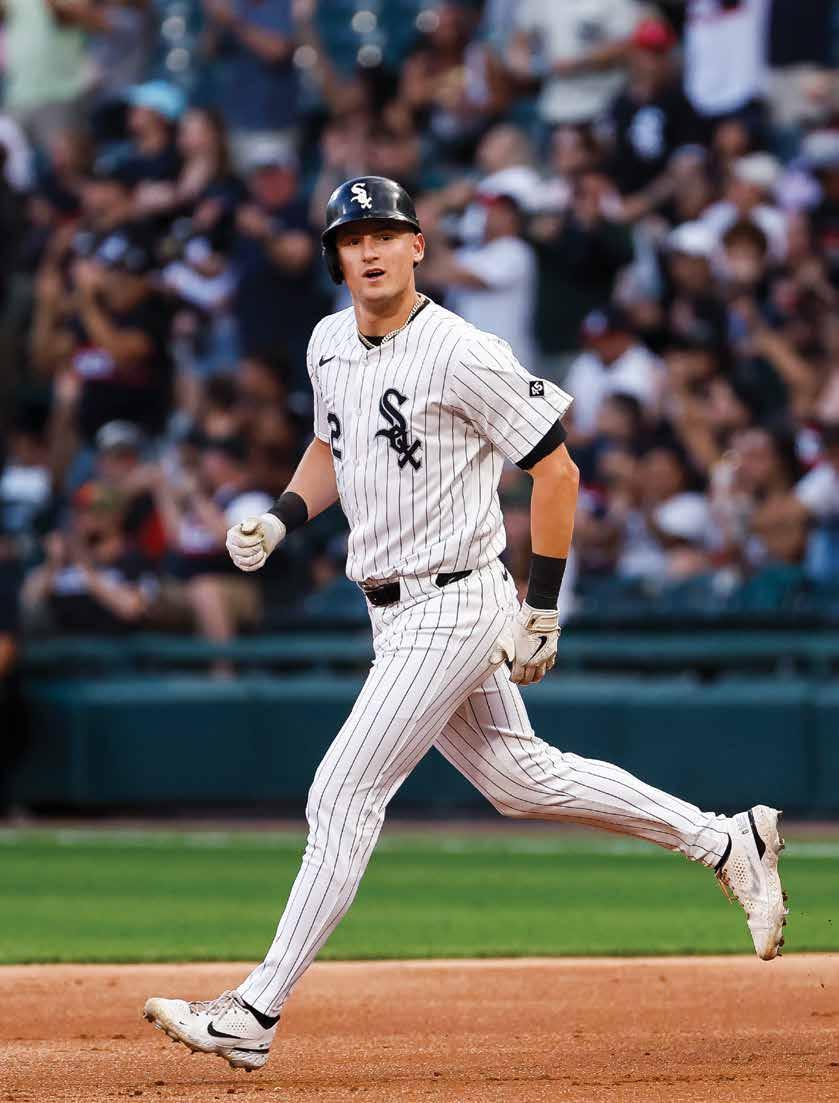
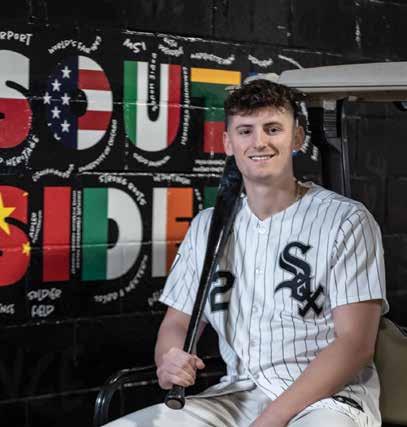
Colson Montgomery



Reserve from your home. Terms & Conditions apply. Shop Now
Club Avolta members save more when you reserve online.




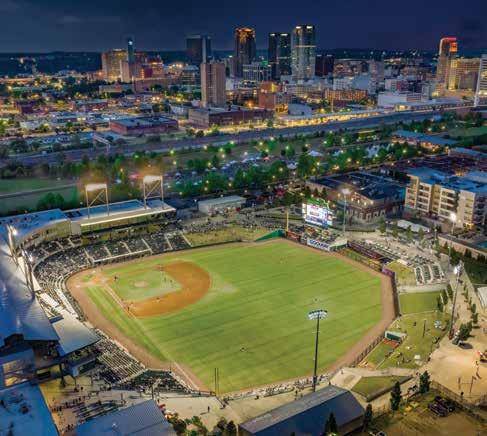
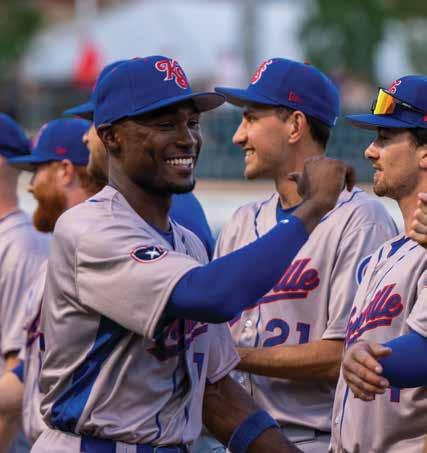
Regions Field, Birmingham, Alabama
Credit: Steve Dunlap
Reserve from your home. Terms & Conditions apply. Shop Now
Club Avolta members save more when you reserve online.
Regions Field, Birmingham, Alabama
Credit: Steve Dunlap
Spring in Chicago signals a season of renewal. The lakefront warms up, patios come alive and neighborhoods start bubbling with activity. Most notably, the sound of baseballs hitting bats vibrates once more across the North and South Sides.
In this baseball-themed issue of Air Chicago, we highlight a sport that transcends being just a pastime in our city — it’s a language, a heritage and a living heartbeat. From Wrigleyville to Bridgeport, baseball both divides loyalties and bridges generations. This year, we shine a spotlight on two emerging stars who represent the next chapter of this shared story, the Cubs’ Pete Crow-Armstrong and the White Sox’s Colson Montgomery. Each has a unique style — one dynamic and energetic, the other steady and powerful — but both exemplify the work ethic and resilience that Chicago admires.
Beyond the majors, we delve into the region’s rich baseball heritage, from minor league stadiums to 16-inch softball felds where gloves aren’t necessary and pride is palpable. You’ll also discover ways to stay engaged at O’Hare and Midway International Airports, whether by catching baseball and other sports highlights before your fight or exploring new airport experiences that showcase Chicago’s culture, including our city’s worldwide contribution of house music.
Certainly, spring travel covers more than just the ballpark. In this issue, we explore Amsterdam’s eclectic vibe, Tokyo’s neon energy and the buoyant festivals of New Delhi. Closer to home, we highlight the Near West Side, a community where immigrant history blends with contemporary culture and culinary creativity.
Wherever your travels take you this season, we hope this issue inspires you to explore, connect and maybe even catch a game.
May you have a wonderful spring season!
To learn more about the latest happenings at Air Chicago, follow us on TWITTER, INSTAGRAM and YOUTUBE @airchicago
NO. 36
Publisher
Ten Thirty Media, LLC
Editors
Akai Higginbotham
Siobhan Higgins
Contributors
Crai Bower
Christopher Cason
Rosalind Cummings-Yeates
Debbie Emery
Serra Kook
Nevin Martell
Patricia Szpekowski
Mark Tom Photography
Duane Wells
Art Direction
Jaidy Schweers
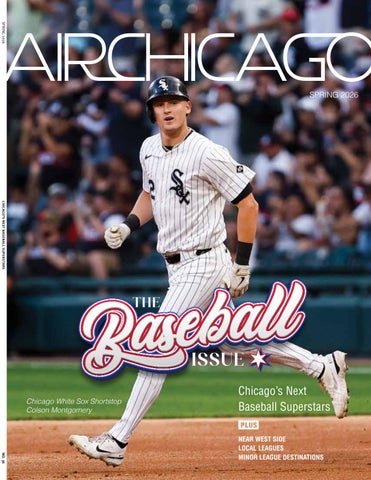
Cover Images
Pete Crow-Armstrong
Credit: Chicago Cubs
Colson Montgomery
Credit: Darren Georgia
Advertising Inquiries
For all advertising inquiries email jenniferp@consultvistra.com
©2026 Air Chicago Magazine is published quarterly by Ten Thirty Media, LLC. All rights reserved. Points of view expressed do not necessarily represent those of Chicago Department of Aviation. The publisher reserves the right to accept or reject all advertising matter. The publisher assumes no liability for return or safety of unsolicited art, photographs, or manuscripts.
Air Chicago is a joint venture by Clear Channel Airports and Ten Thirty Media.


DIGITAL EDITION AVAILABLE ONLINE AT WWW.AIRCHICAGOMAGAZINE.COM
SEND COMMENTS, QUESTIONS AND SUGGESTIONS TO COMMENTS@AIRCHICAGOMAGAZINE.COM
AIRPORT INFORMATION
WWW.FLYCHICAGO.COM
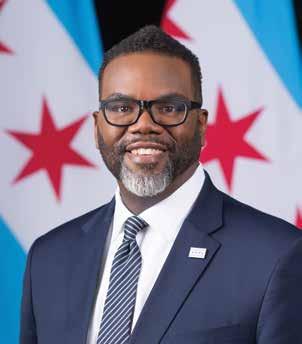
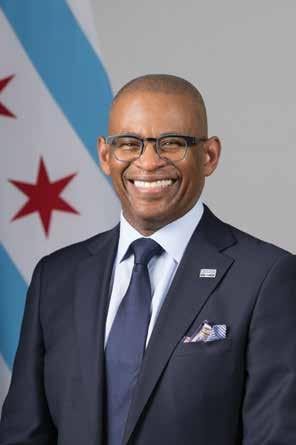
On behalf of the people of Chicago, welcome to the greatest city in the world!
You may notice a fresh feeling in the air as you venture through our city. It’s that unmistakable vibe of a new season when the weather gradually gets warmer, people spend more time outdoors and hope springs eternal in the minds and hearts of Chicagoans. As we usher in rising temperatures and longer days, I hope you’ll take in some of the destinations highlighted in this edition of Air Chicago.
What’s spring in the Windy City without the crack of a bat, the smell of grass and a sizzling hot dog in your hand? That all means one thing…baseball is back! Both the Cubs and White Sox made strides in 2025, and hopes are high for this upcoming MLB season that gets underway in March. We are so excited for baseball’s return that for this edition of Air Chicago, we’ve got two covers featuring two of the game’s next-generation stars — the Cubs’ Pete Crow-Armstrong and the White Sox’s Colson Montgomery. Make sure you attend a game on the North Side or South Side, and while you’re at it, don’t miss out on the action at our city’s softball leagues and at the Chicago-area’s minor league parks. Check it all out starting on Page 8.
Spring will also be a busy time on the Near West Side, one of our city’s 77 community areas. The Near West Side is home to diverse ethnic neighborhoods, the bustling Fulton Market district and the University of Illinois Chicago, the largest university in the Chicago area. It is also home to the United Center, the world-class sports and entertainment arena where the NBA’s Bulls and NHL’s Blackhawks play, and in March will become a college basketball lover’s paradise as it hosts both the 2026 Big Ten Men’s Basketball Tournament and the Men’s March Madness Midwest Regional tournament. To fnd out all there is to do in this lively community, go to Page 50.
As you can see, we’ve got a lot going on, and you’ve come at the right time! Thank you for making Chicago part of your spring plans! Here’s hoping you have an amazing time — we’re glad you’re here!
Sincerely,
Brandon Johnson Mayor
Dear Traveler:
Welcome to O’Hare and Midway International Airports! We are happy to have you here, and we thank you for picking up a copy of the Spring edition of Air Chicago!
Throughout both airports, passengers are preparing to head to exciting destinations or have arrived to spend time in this wonderful city of ours. No matter where you’re going this spring, the dedicated workers of O’Hare, Midway and the Chicago Department of Aviation (CDA) are ready to help make your travels enjoyable.
There’s a lot going on at Chicago’s airports, with new carrier routes springing up in time for the season, along with new concessions to make the consumer experience even better than it already is. To celebrate seven decades of commercial air service at O’Hare, we’ve rolled out a campaign for travelers to share memorable moments of their time spent at the airport. And being that Chicago is the birthplace of house music, we are proud to have unveiled an exhibit at O’Hare that honors one of our city’s greatest cultural contributions, which has become a beloved art form worldwide. Read up on all that’s happening in the At the Airport section, beginning on page 18.
As the Mayor described in his letter for this edition, Chicagoans are passionate about baseball, and you can count me among those fans! Across the Midwest and South, you’ll also fnd great places to catch a baseball game. You can learn about some of these cities that are home to minor league afliates of the Cubs and White Sox by starting on page 28.
Overseas, various festivals and events are getting underway to celebrate the season. Great places to visit no matter the season, Tokyo, Amsterdam and New Delhi especially come alive during this time of year. To fnd out what makes spring so special in these world-renowned locations, start reading on page 36.
This May will mark my frst anniversary as Commissioner of the CDA. Every day, I have the privilege of being assisted by the best staf and airport employees in the world, and I could not do this job without them. It has been a joy to be of service to you and so many travelers who come through our airports, and I look forward to even greater days ahead as Commissioner of one of the world’s busiest aviation systems.
May your time at O’Hare and Midway be a great one, and thank you for making us part of your travel plans!
Sincerely,
Mike McMurray Commissioner Chicago Department of Aviation

PCA.
PRESENCE OVER HYPE: CHICAGO BASEBALL’S NEXT ANCHORS
Chicago has always understood baseball as something more intimate than a sport. It’s a soundtrack to the summer, an inheritance passed down from generations, a shorthand for where one’s allegiances lie due largely to the communities in which they were reared. Long before analytics dashboards and viral highlights, the game embedded itself into the rhythm of the city, with afternoons organized around the first pitch, nights measured by the hum of stadium lights and childhoods bookmarked by ticket stubs.
The Cubs and White Sox don’t merely share the city, they divide its temperament. North Side reverence. South Side edge. Day games and night games. Ivy and steel. Each team reflects a different way of enduring, a different relationship with hope. Together, they form a cultural dialect Chicago has been fluent in for generations.
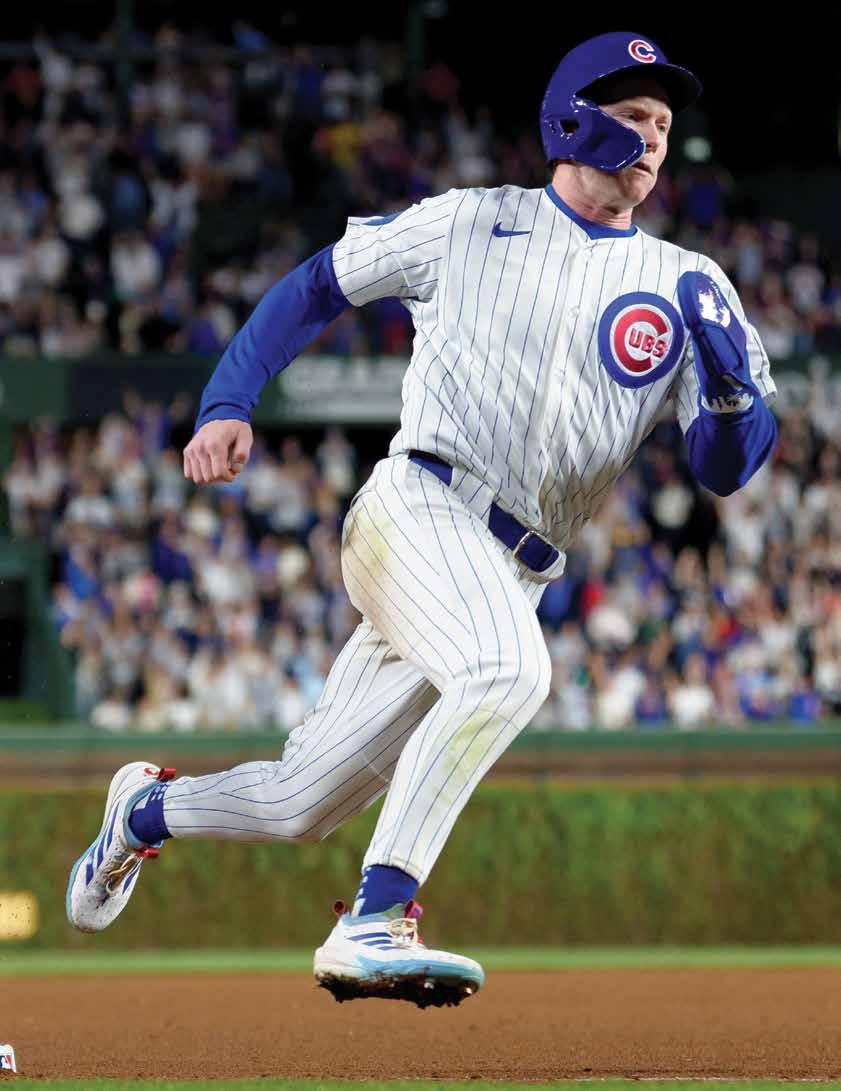
When his swing connects, it rarely feels accidental. The results feel earned — less a flash than a conclusion reached through discipline.
Chicago baseball has always moved in cycles rather than straight lines. The Cubs, shaped by patience and persistence, carry the weight of longing as much as triumph, with decades defned by “Wait ‘til Next Year,” until the wait, at last, ended. The White Sox, forged in a diferent register, have long embraced disruption — championship runs that arrive without permission, eras that burn bright and fade quickly, a fan base fuent in both skepticism and loyalty. Between them exists not so much a true rivalry, but rather the interpretation of the same game in two distinct dialects. And whether they ask to or not, every new generation of Windy City fans inherits that history of contrasts.
In the long arc of Chicago baseball, eras rarely announce themselves loudly. They emerge in fragments. A prospect usually debuts without ceremony. A defensive play circulates online. A swing looks diferent in slow motion. Usually by the time a consensus forms, by the time the city agrees something is happening, it has already happened.
Now, in the quiet space between rebuilding cycles and renewed expectation, two names have begun to surface with growing frequency. Sometimes in the same breath. Pete Crow-Armstrong of the Cubs. Colson Montgomery of the White Sox. They aren’t saviors, nor are they fnished products. They are something more compelling — signals, indicators that the next chapter of Chicago baseball is turning with intention.
Known throughout the game as PCA (an abbreviation of his frst name and hyphenated last name), Crow-Armstrong entered the 2025 season as the Cubs’ everyday center felder, and fnished it as one of the National League’s most dynamic, all-around players. Over the course of 157 games, he hit .247 with 31 home runs, 95 RBIs and 35 stolen bases, scoring 91 runs while posting a .768 OPS (on-base plus slugging percentage). The combination placed him among a rare class of players capable of impacting the game with power, speed and defense in equal measure, a production that earned him both All-Star recognition and a Gold Glove.
He plays baseball like someone unfamiliar with stillness. Watch him in center feld, and the movement registers immediately — not just the speed, but the preparation. The micro-moves before contact. The way his body seems to register possibility before the ball ever leaves the bat.
Defense, for Crow-Armstrong, is not reaction. It is anticipation refned through repetition. His reads are intuitive, but never casual. There is deliberateness even in his spontaneity, a sense that every sprint begins half a second earlier than expected. Statistically, that instinct shows up in the margins — among league leaders in range and defensive value, altering games in ways that don’t always register on the scoreboard. That fuency is not accidental, as Crow-Armstrong grew up in an environment of storytelling. His parents worked in flm and television, arenas where timing, emotional awareness and physical presence mattered. Long before baseball entered the conversation, he learned how rhythm functions, movement communicates and awareness sharpens performance.
Baseball entered his life early, but it was never framed as an escape or a gamble. It became a craft. Something to be refned, not rushed.
Drafted by the New York Mets in the frst round of the 2020 MLB draft, he was acquired by the Cubs the next year in a high-profle trade involving longtime fan favorite Javier Baez. In 2023, CrowArmstrong got the call to “The Show,” gradually making his mark as the Cubs’ center felder, playing a defensive position that carries an equal measure of pedigree and pressure, which demands range and confdence, and requires comfort with visibility. He’s always seemed comfortable there, not arrogant or performative, but present. His defense was never the question, but the conversation tended to focus on his bat. That chatter, however, would soon shift.
By the end of 2025, he was no longer being discussed as a defender waiting on his bat but as a complete player, one of the few in the leagues to pair 30-home run power with 30-plus stolen bases — all while continuing to rank among the Cubs’ most valuable defenders. Over a full season, his ofensive production began to mirror his defensive impact, pairing power with speed in a way few players manage simultaneously. He became one of the rare center felders capable of contribution across every column — home runs, stolen bases and run prevention — without sacrifcing discipline.
What distinguishes his ofensive growth is not volume, but intention. He studies pitchers. He tracks tendencies. He adjusts within at-bats rather than between games. His approach values quality of contact over spectacle, timing over brute force. When his swing connects, it rarely feels accidental. The results feel earned, less a fash than a conclusion reached through discipline.
Of the feld, he carries himself with a poise that feels almost uncommon among young athletes navigating visibility. There is an articulateness that doesn’t feel rehearsed, a confdence without posture. When he speaks about Chicago, it is rarely through the lens of legacy. Instead, he frames the experience as responsibility, which refects an awareness of how deeply baseball is woven into the city’s sense of self.
Where Crow-Armstrong moves like motion embodied, Montgomery arrives with gravity. A left-handed hitter and shortstop by trade, Montgomery reached the major leagues in 2025 as part of the Sox’s rebuild. In his frst full season, he hit .239 with 21 home runs and 55 RBIs while posting an .840 OPS, all numbers that refect immediate power and an advanced approach for a rookie adjusting to majorleague pitching.
At shortstop, Montgomery’s presence is unmistakable. Broadshouldered, balanced and left-handed, he occupies space in a way that suggests inevitability. There is weight to his game, both physical and psychological, a sense that moments slow slightly when the ball fnds him.
At the plate, Montgomery represents a profle that teams still dream of, in which power doesn’t abandon patience. Over his frst extended exposure to major-league pitching, he demonstrated the ability to drive the ball without expanding the zone — early production that hinted at long-term, middle-of-the-order potential.
CONTINUED ON NEXT PAGE
His left-handed swing is smooth but forceful, a contradiction that resolves itself upon contact. The ball carries diferently of his bat, as if convinced it has already been struck correctly. That intent showed up quickly in the numbers, as Montgomery fnished his rookie campaign among the team’s home-run leaders, ofering middle-ofthe-order production on a roster searching for ofensive consistency. What sets his ofensive presence apart is his intent. When he swings, it is not speculative, but rather decisive. He does not chase moments; instead, prepares for them.
Defensively, Montgomery has faced the modern shortstop debate about range versus size, quickness versus arm strength. What he ofers is adaptability by reading the game well and positioning himself intelligently. He compensates for what he does not do with what he does exceptionally well.
In an era where defensive versatility has become currency, Montgomery projects as a player who managers can trust across contexts. His game may not announce itself loudly, but it stabilizes environments.
For the White Sox — a franchise historically defned by grit, resilience and fashes of dominance — Montgomery represents something foundational, which is a presence capable of carrying responsibility through transition, and a player who understands that production matters more than performance.
His demeanor aligns naturally with the South Side’s blue-collar ethos. Understated, durable and focused on the work rather than the optics, Montgomery does not speak or play in absolutes. On the contrary, his game is rooted in preparation, repetition and the quiet confdence that comes from understanding process.
Montgomery is optimistic about the season, telling Air Chicago he’s most excited about the White Sox’s free-agent signings. “I think our front ofce did a really good job,” he said. “You can tell they want to build around us young guys, and we have a lot of really good veterans, too. I’m excited to get to spring training, and I feel like our mindset has set the tone early.”
Comparisons between Crow-Armstrong and Montgomery are predictable, largely because Chicago insists on them due to the history of the Cubs-White Sox rivalry. But the more revealing contrast is not between franchises, but the individual styles of the players.
Crow-Armstrong represents motion, speed and disruption. He changes games without touching the ball, infuencing outcomes through anticipation and range. Montgomery changes games with one swing, one decision and one moment of resolved intent. What both share is less obvious but more signifcant — professionalism at a young age and a willingness to grow in front of the public. Neither play as if auditioning for relevance, but play as if relevance is a byproduct of consistency.
As Major League Baseball continues to feel out its relationship with youth, personality and marketability, players like Crow-Armstrong and Montgomery matter. They resist caricature and are not content engines. Their appeal is rooted in credibility, in the sense that what you see is what they are becoming.
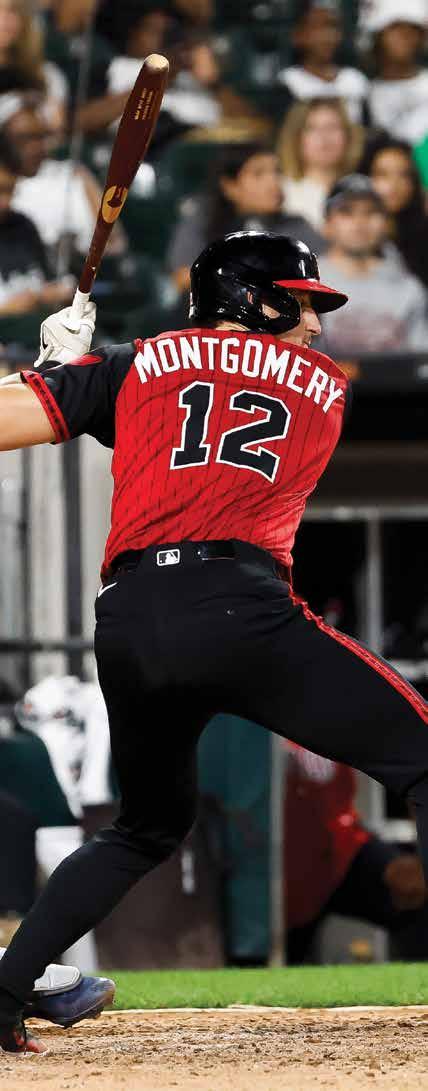
In an era where defensive versatility has become currency, Montgomery projects as a player who managers can trust across contexts. His game may not announce itself loudly, but it stabilizes environments.

CONTINUED ON NEXT PAGE
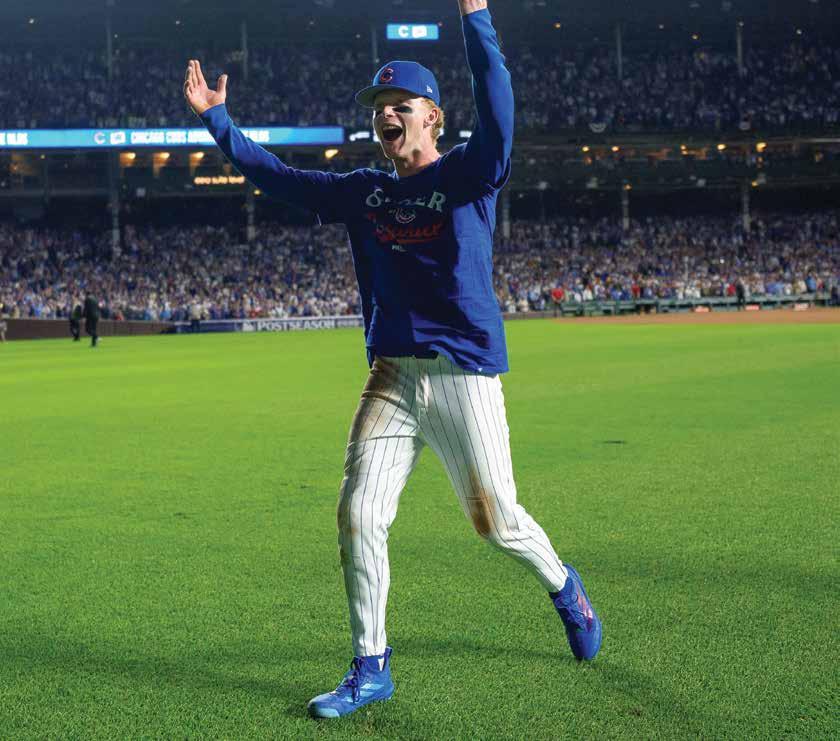
Chicago can be an exacting place to develop as a sports fgure. It’s a city that watches closely and remembers selectively. It archives moments not because they were loud, but because they lasted — like a diving catch in August, a two-strike approach in September or the way a player responds when the game pushes back.
For young players, that environment can feel heavy. Every at-bat exists inside a lineage. Every defensive rep carries the echo of someone who once held the same position and was judged just as thoroughly. The city does not rush to conclusions, but does not forget impressions either.
What separates players like Crow-Armstrong and Montgomery is their comfort inside that tension. Neither appears hurried by the need to announce himself, nor do both perform as if overly aware of the spotlight, even as it grows brighter. Their games suggest an
understanding that relevance in Chicago is not seized, but granted slowly, and only after consistency proves real.
Fans in Chicago have seen too much to be persuaded easily by hype. They have lived through promise and collapse, resurgence and recalibration. Optimism is careful, and both Crow-Armstrong and Montgomery seem to understand that restraint. Their games emphasize reliability over statement, repetition over display. In a city that values substance, that approach resonates.
There is also something quietly signifcant about their timing. Both arrive as their franchises reassess what sustainability looks like, not just in roster construction but in identity. The Cubs and White Sox are not searching for saviors, but rather players who can hold a season steady and grow alongside a city rather than outgrow it.
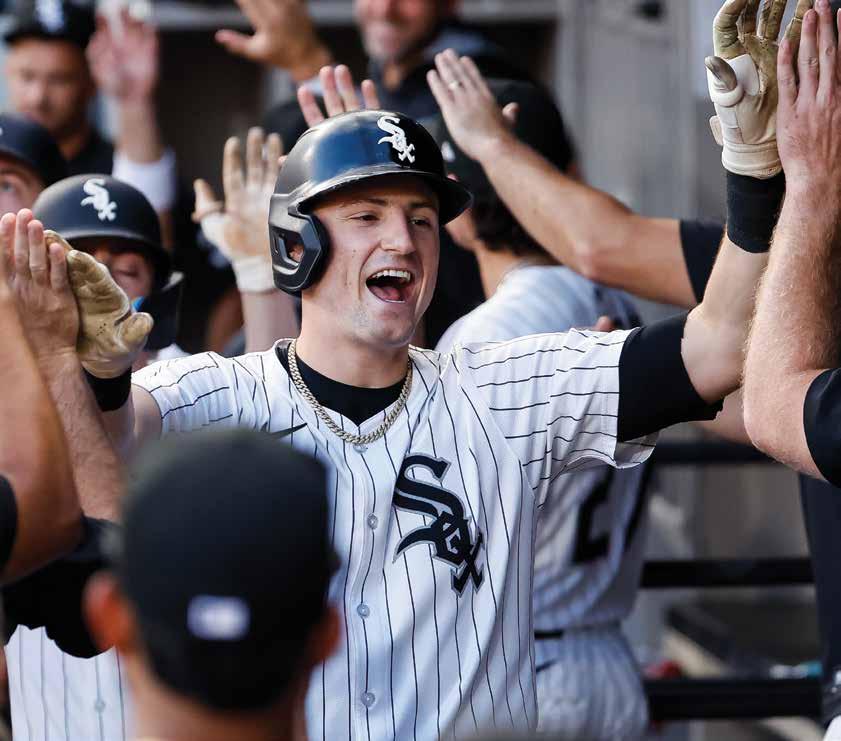
“What I like about both of them is the way that they carry themselves, both being very confdent baseball players,” LaMond Pope, the Chicago Tribune’s White Sox beat reporter, told Air Chicago. “The way that PCA can go anywhere in center feld and track down a ball, and then you add in that power, it’s a bundle of energy whenever he’s on the ball feld. With Colson, there’s this swagger to him that carries the rest of the club. He’s got a club that’s coming together with young players that are all growing at the same time.”
Chicago baseball does not need heroes every night. It needs presence. It needs players who return day after day and look unchanged by the noise, unafected by expectation and are grounded in the work. That steadiness, over time, becomes narrative. Both players also have begun engaging with the city beyond the stadium walls through youth clinics, local appearances and early charitable partnerships. These
connections matter in a city where baseball loyalty is inherited rather than recruited, where fandom is passed down through family members and other loved ones, which is reinforced by memory and proximity rather than marketing.
The 2026 season will not defne either Crow-Armstrong or Montgomery. However, it may clarify them. By season’s end, both will have accumulated enough moments through wins and losses to establish a rhythm, which recognizes them no longer as prospects, but as fxtures.
Chicago doesn’t require perfection from its athletes. But it respects honest efort, improvement that’s visible, commitment that’s mutual. In a city built on neighborhoods and nuance, that’s how one weaves themself into the local fabric. It is that kind of arrival to the Windy City by both PCA and Montgomery that feels not just familiar, but right.

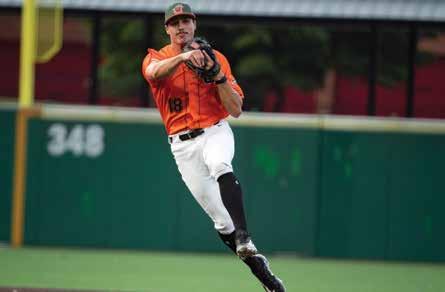
There’s no denying that in Chicago and the surrounding areas, baseball is deeply embedded in the local fabric. While the Cubs and White Sox may get the lion’s share of Chicago-area attention when it comes to baseball fun, you can check out plenty of excitement and competition this spring at various minor league parks.
To start your local minor league baseball experience, check out the Chicago Dogs of the American Association of Professional Baseball. The Dogs play at Impact Field in Rosemont near O’Hare and are named after Chicago’s most beloved culinary tradition, the hot dog. The team’s logo features the red, white and blue colors of the Chicago city fag, along with the emblem’s iconic four stars.
In Geneva, you’ll fnd one of the Chicago-area’s longest-running minor league clubs, the Kane County Cougars, playing at Northwestern Medicine Field. The team, which moved from Wausau, Wisconsin to Geneva in 1991, is a member of the American Association of Professional Baseball and has had past afliations with several MLB teams, including the Cubs. Notable team alums include Kyle Schwarber, Willson Contreras and Albert Almora, all of whom would become members of the Cubs’ 2016 World Series Championship squad.
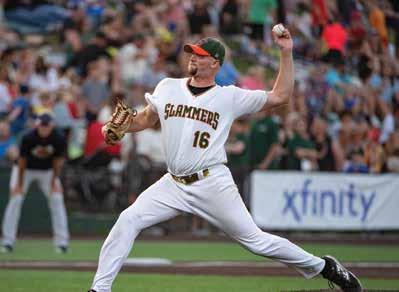
The Frontier League has a signifcant presence in the Chicago area, represented by three teams. Among the exciting places to experience a memorable league game is at Slammers Stadium, home to the Joliet Slammers. The team has a colorful presence in its ownership ranks, as it is co-owned by award-winning actor Bill Murray and Michael Veeck, son of Bill Veeck, baseball’s late, legendary showman and former owner of the White Sox. Another sign of its quirkiness comes from its name, which is inspired by the historic Joliet Prison, which became a pop culture touchstone after it was featured in the 1980 movie The Blues Brothers. Further embracing Joliet’s penal past, the Slammers will also play an April 30th exhibition game at the former prison, which closed in 2002.
Another Frontier League team, the Schaumburg Boomers, plays home games at Wintrust Field. Named after the greater prairie chicken, a native bird of Illinois, the team has won four league championships in less than 20 years of existence and is a big draw at the home box ofce, breaking regular season home attendance records in the northwest suburbs over the last several years.
Down in south suburban Crestwood, the Windy City Thunderbolts are the Chicago-area’s third Frontier League team, playing home games at Ozinga Field. Through three leagues, three stadiums, two names, fve playof appearances and three championships since their founding in 1995, the team has become the minor league treasure of the Southland region.
Impact Field – 9850 Balmoral Ave, Rosemont; (847) 636-5450
Northwestern Medicine Field – 34W002 Cherry Lane, Geneva; (630) 232-8811
Ozinga Field – 14011 Kenton Ave., Crestwood; (708) 489-2255
Slammers Stadium – 1 Mayor Art Schultz Drive, Joliet; (815) 722-2287
Wintrust Field – 1999 S. Springinsguth Road, Schaumburg; (847) 461-3695
The enthusiasm in the Chicago area for the bat and ball doesn’t stop with baseball, as 16-inch softball games are a big draw at parks throughout the city and suburbs.
A no-glove, slow-pitch ofshoot of baseball, softball was born in the Windy City in 1887 and intended as an indoor alternative to a nation pining to scratch its baseball itch during the winter. Today, parks throughout Chicago and the suburbs host random softball games and league action that draw enthusiastic crowds. Along with players wearing no gloves, the 16-inch ball (compared to the standard of 12 inches) is what diferentiates softball played in and around Chicago from the rest of the country. To appreciate the connection of softball to the Chicago area, check out the 16” Softball Hall of Fame
Two of Chicago’s most popular places for softball games are downtown at Grant Park and the South Side at Washington Park, which is listed on the National Register of Historic Places. Washington Park is home to the largest 16-inch softball league in the country, with teams playing on 13 diamonds. The park has also been a popular spot for hosting competitions of the Black American Softball Tournaments and was the site of the 2006 Gay Games Softball Cultural Festival.
Grant Park – 331 E. Randolph St. (Columbus Drive), (312) 742-3918
Washington Park – 5531 S. King Drive, (773) 256-1248
16” Softball Hall of Fame – 7501 W. Harrison St., Forest Park; (630) 234-2398
Fun fact: Former White Sox player Jim Thome — who was inducted into the National Baseball Hall of Fame in 2018 — is the nephew of Caroline Thome Hart, a member of the National Softball Hall of Fame (located in Oklahoma City).
BY SERRA KOOK
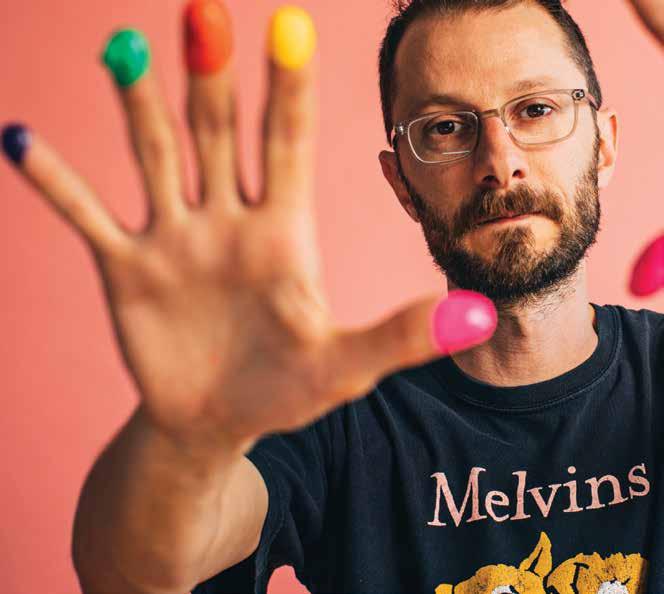
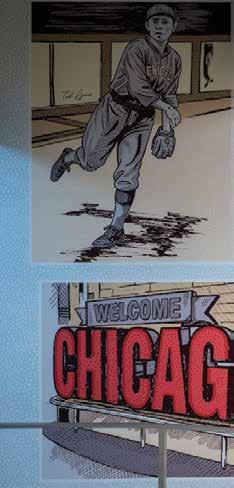
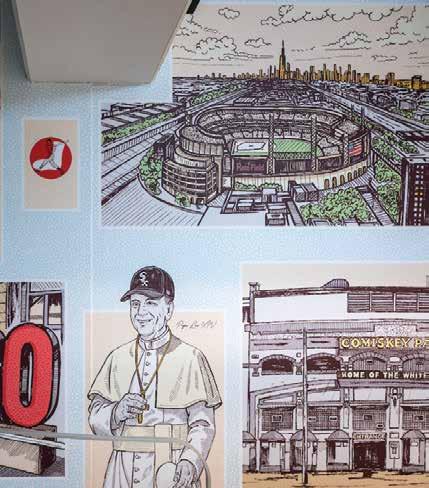
At Midway, a new mural tells the story of the White Sox on the South Side. Created by artist and printer Zissou Tassef-Elenkof, founder of All Star Press and Fugscreens Studios, South Side Pride is the culmination of an eight-year creative partnership with the club.
Baseball has always been personal to Tassef-Elenkof, who is known by many as ‘Z.’ Raised in London and Paris, Z stayed up late in the 1990s watching MLB broadcasts beamed into England, forging a bond with his American grandfather over their shared love of the game. After moving to Chicago for college, he witnessed the White Sox’s 2005 World Series run, which cemented his connection to the team and the city.
The mural’s imagery is fueled by a sense of history. Spanning the walls of the CTA pedway area, it showcases 125-plus years of White Sox achievements, including retired numbers, legendary players, championship highlights and tributes to South Side neighborhoods like Bridgeport, Pilsen and Bronzeville. It also includes references to Midway’s pioneering history as one of the nation’s frst and most infuential airports.
The resulting artwork is both civic and communal. In a space once fragmented, the mural now brings cohesion and color. Travelers pause, look up and see more than a baseball team. They see Chicago — its grit, its neighborhoods, its history — and the White Sox at the heart of it all.

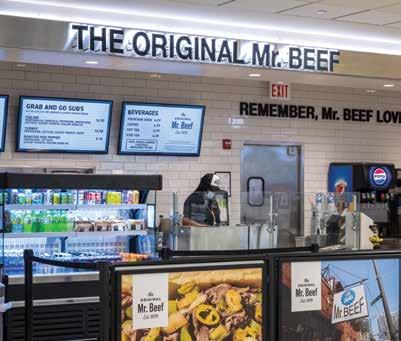
Chicago’s popular Mr. Beef has opened at Midway, ofering travelers a taste of the city’s iconic favors. Famous for its traditional Italian beef sandwiches, juicy Chicago-style hot dogs and satisfying comfort food, Mr. Beef becomes part of the expanding selection of local culinary favorites available to passengers at the airport.
Situated in Concourse B, the new Mr. Beef location refects all the qualities fans adore in the original — tender, thinly-sliced beef stacked on fresh rolls, with sweet or hot peppers and favorful juices for dipping. Whether you’re arriving and craving an authentic Chicago sandwich or leaving and wanting something tasty before your fight, Mr. Beef makes it convenient to enjoy that genuine local favor.
The opening represents an important milestone for both Midway and the Mr. Beef brand, a longtime fxture in Chicago’s dining scene since 1979. Airport ofcials note that this addition is part of a wider initiative to highlight local eateries alongside national chains, ofering visitors and residents a genuine sample of the city’s culinary culture.
Travelers have warmly received the new location, appreciating the quick, friendly service and the distinctive favors that have established Mr. Beef as a legend. With hours tailored to fight timings, this new spot guarantees that one of Chicago’s most renowned sandwiches is always within reach at Midway.
Welcome to Midway, Mr. Beef — and bon appetit, Chicago travelers!
CONTINUED ON NEXT PAGE
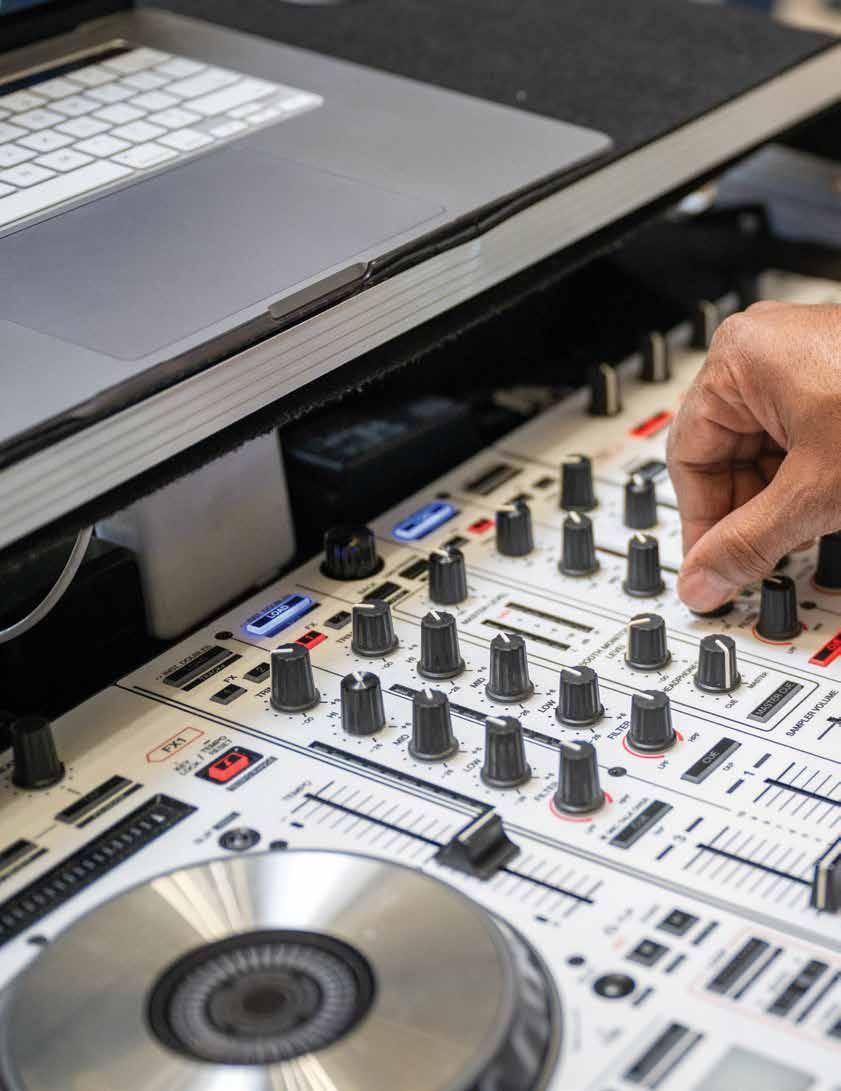
A new exhibit reminds travelers that Chicago is the birthplace of house music.
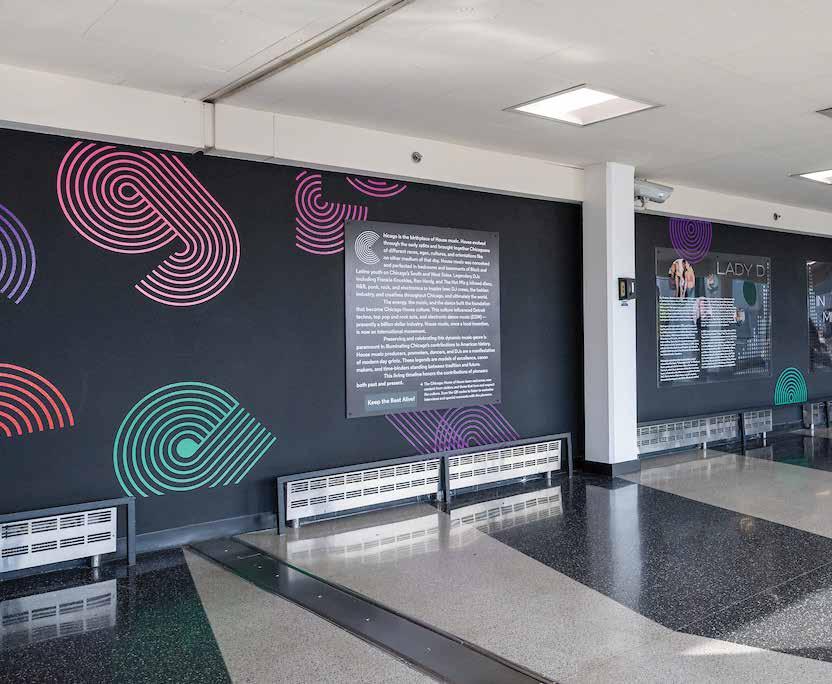
Travelers passing through O’Hare are greeted by more than the usual rhythm of rolling suitcases and boarding announcements. In the Rotunda between Terminals 2 and 3, a new exhibition pulses with color, memory and meaning — Chicago: Home of House, a love letter to the city that gave the world one of its most infuential musical movements.
Presented by the CDA, Design Museum of Chicago and Vintage House Show, the exhibit is a cultural time capsule. Bold graphics, layered typography and striking wall installations guide visitors through the evolution of house music — from its underground beginnings in Chicago basements, school gyms and clubs to its global impact on sound, fashion, dance and identity.
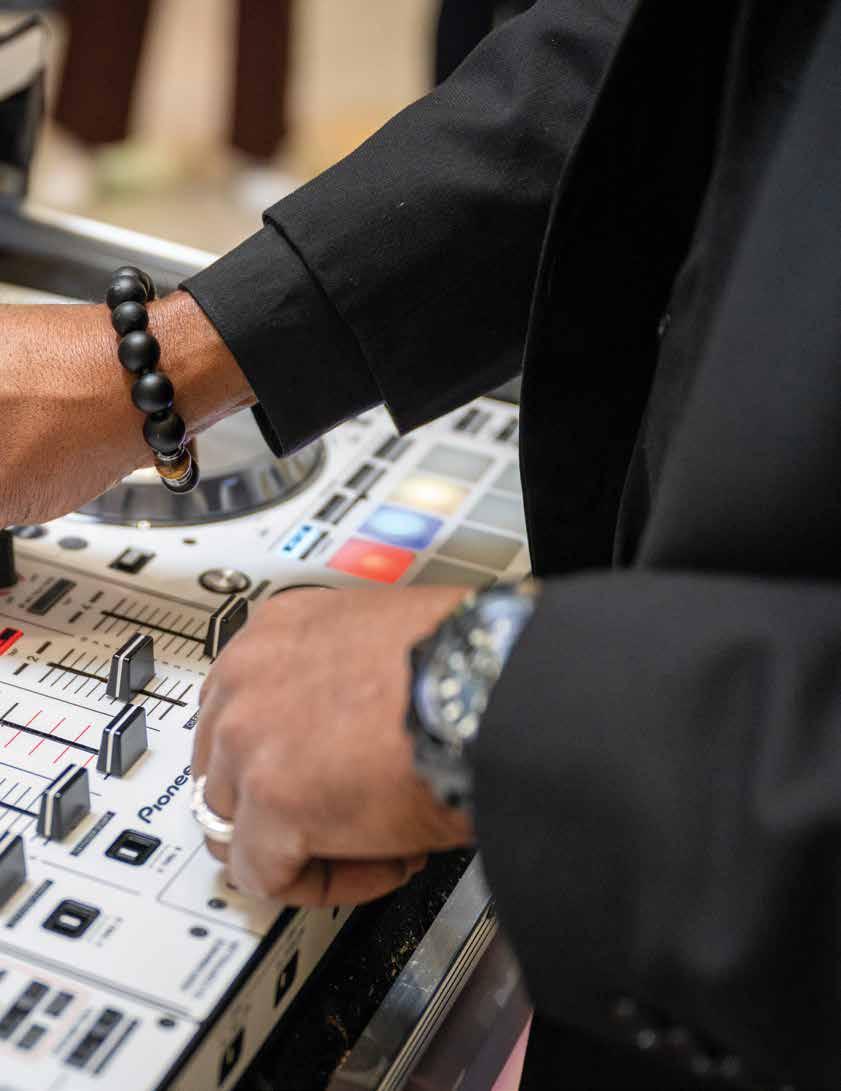
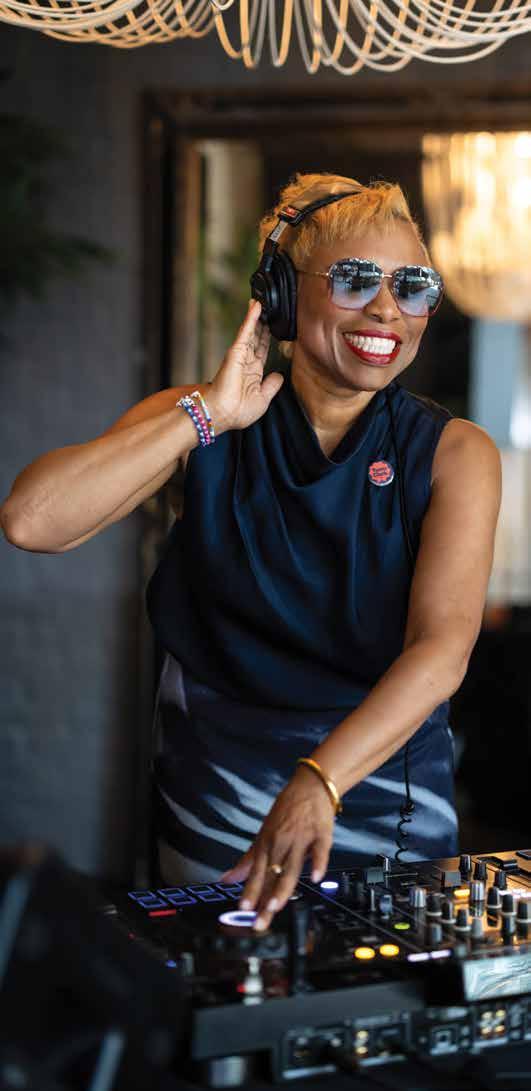
Visually, the exhibition is both celebratory and reverent. Large-format panels spotlight pioneering artists, lyrical moments and cultural milestones, while graphic soundwave motifs in neon hues ripple across matte black walls. One featured fgure is legendary Chicago DJ Lady D, whose career embodies the genre’s endurance, innovation and community spirit. Nearby, travelers pause to read, take photos and refect — some even dancing lightly in place as house beats echo through nearby performances.
The exhibit ofcially opened November 13 with a public celebration attended by city leaders, curators and members of Chicago’s house music community. Grammy-nominated producer Joe Smooth joined the event, helping trace the genre’s journey from neighborhood dance foors to international stages, while CDA Commissioner Michael McMurray spoke about the importance of showcasing local culture in public spaces.
In conjunction with the exhibition, the CDA has scheduled more than 20 live house music performances across O’Hare and Midway, reinforcing the idea that house music isn’t just history — it’s a living, breathing expression of Chicago itself.
For travelers, Chicago: Home of House ofers a powerful reminder that before house became a global phenomenon, it was — and remains — from Chicago.


Opening at Midway
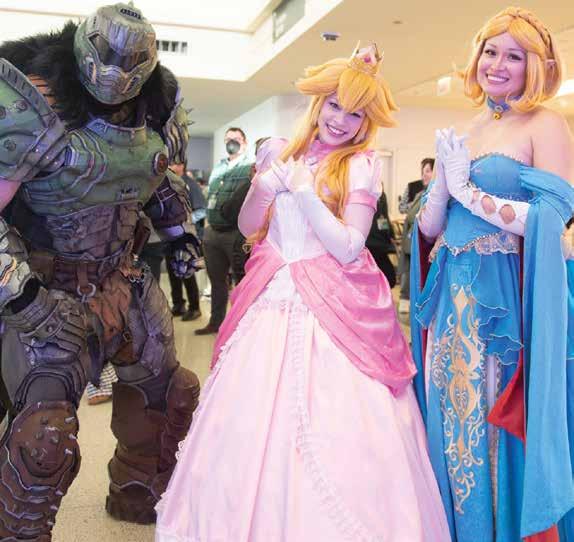
Travelers passing through Midway have an exciting new option to enhance their layovers. The CDA and Midway Partnership recently celebrated the opening of Gameway, a modern video gaming lounge near Gate A5.
Gameway is designed to turn waiting into entertainment, ofering premium gaming stations with PCs, Xbox and PlayStation consoles, as well as high-quality headphones and fast internet connections. Guests can reserve sanitized stations to play popular games like Call of Duty, Fortnite, Madden, NBA 2K and Minecraft. The lounge also provides various beverages, from soft drinks and cofee to beer, enabling travelers to unwind and recharge before their fight.
CDA Commissioner Michael McMurray described the lounge as an innovative feature that improves the travel experience for both Chicago residents and visitors. Gameway co-founders Jordan and Emma Walbridge explained that the idea was developed to “make airports entertaining,” providing travelers with a lively, engaging space to socialize and relax.
The Feb. 19 ribbon-cutting celebration captured that playful spirit, featuring gaming-themed decor and special guests. Open daily from
5 a.m. to 8 p.m., Gameway provides fexible pricing options, from 30-minute sessions to unlimited play.
Gameway has become part of a network that now includes over 70 dining and retail brands, introduced through Midway Partnership’s concessions transformation. This progress further establishes Midway as a neighborhood airport ofering diverse options for every traveler.
For baseball fans passing through Chicago, missing the frst pitch doesn’t have to be part of the itinerary. Both O’Hare and Midway ofer opportunities to watch Cubs and White Sox games while indulging in classic Chicago foods and drinks.
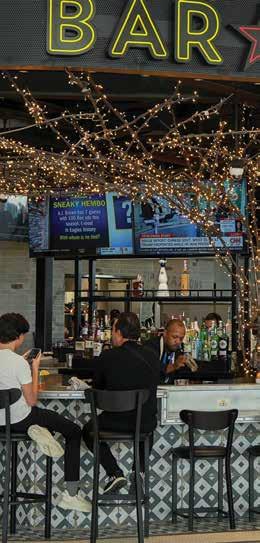
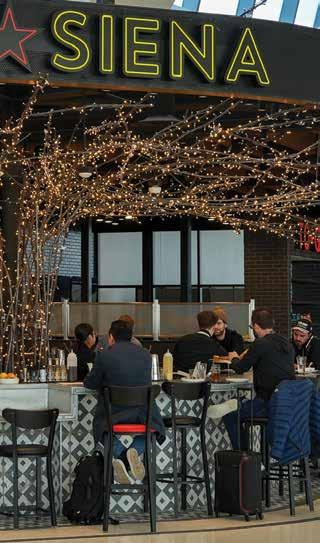
At O’Hare, visit Bar Siena for an entertaining atmosphere featuring multiple screens showing the day’s top matchups. Famous for its Italian-inspired dishes and craft cocktails, the restaurant provides an environment to enjoy pizza or pasta while watching the Cubs and White Sox compete. Its open design and bar-centric seating make it simple to fnd a seat, order a drink, or keep track of every inning before your fight.

Cubs fans can also stop by the Cubs Bar & Grill, a must-visit for those in blue pinstripes. Adorned with team colors and memorabilia, it ofers an authentic Wrigleyville atmosphere right within the terminal. Several TVs are conveniently placed along the bar, allowing fans to follow the game while savoring classic ballpark snacks and a cold beer. It’s an ideal spot for fans wanting to cheer for the North Siders before heading to their fight.
At Midway, the spirit of baseball is also alive and well. Harry Caray’s Shortstop combines Chicago sports heritage with airport amenities, decked out with a full bar, big-screen TVs and memorabilia displays. It’s the perfect spot to catch live MLB games, whether it’s the Cubs, White Sox or a major national showdown.
Also at Midway, the White Sox Bar & Grill brings plenty of Rate Field energy for South Side loyalists cheering on their team. With Sox branding, baseball bat accents and multiple screens overhead, fans can catch the latest highlights or live game action while enjoying Chicago-style bites.
No matter which team you root for, Chicago’s airports make it easy to stay connected to the game — right up until boarding begins.
Whether you are returning home, catching a connecting fight or setting of on a new journey, you have likely experienced a moving, heart-rendering experience at O’Hare — one of realization, connection, excitement and pure joy. Now, the CDA has unveiled O’Hare Moments, a storytelling campaign that pays homage to those everyday yet special times at the airport, which is commemorating over 70 years of commercial travel.
O’Hare Moments shines a light on the meaningful times that routinely occur for travelers at the airport. From its humble beginnings to its current stature as the nation’s busiest airfeld, O’Hare has become a place of belonging, a birthplace for memories and a commuter crossroads for folks from all walks of life.
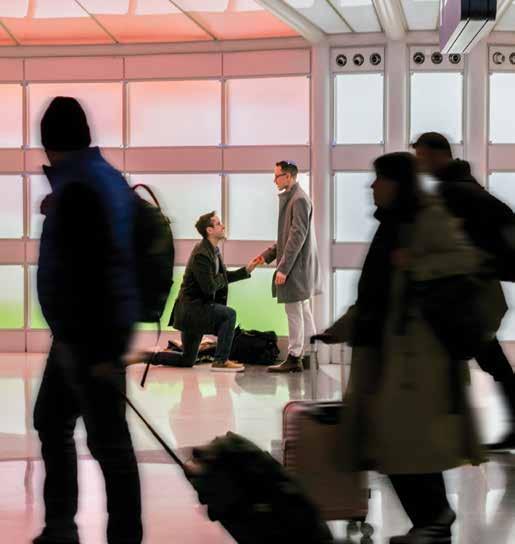
The campaign presents elements of visual storytelling as well as on-site digital displays that spotlight hundreds of captivating stories submitted by passengers, who recount how brief moments at O’Hare left a lasting impression on their lives. Featured stories include a baby taking its frst steps, a romantic proposal in Terminal 1, a special greeting and an emotional goodbye. O’Hare’s function clearly extends beyond a mere place of passage, and the campaign emphasizes that the airport can be a welcoming gateway and a roadmap to the heart.
The campaign coincides with the arrival at O’Hare of the ORDNext project, the airport’s largest-ever expansion. As the airport continues to evolve, the O’Hare Moments campaign celebrates its storied past while looking ahead to its exciting future.

If baseball is America’s pastime, then the purest distillation of the game can be found in the minor leagues, which abounds with the raw talent of prospects, quaint ballparks and communities that still believe a summer evening is best spent watching tomorrow’s stars on the field of dreams. For Chicago baseball lovers, a springtime visit awaits to a trail of towns that stretch from near the Great Smoky Mountains down to the heart of Alabama and on to the sun-soaked shores of the Carolinas, which are home to minor league affiliates of the Cubs and White Sox.
Come for the baseball. Stay for everything else. But don’t be surprised when the destinations themselves steal the show.
Cubs Minor League Destinations
Des Moines, Iowa (Iowa Cubs – Triple-A)
Where Cornfelds Meet Curveballs
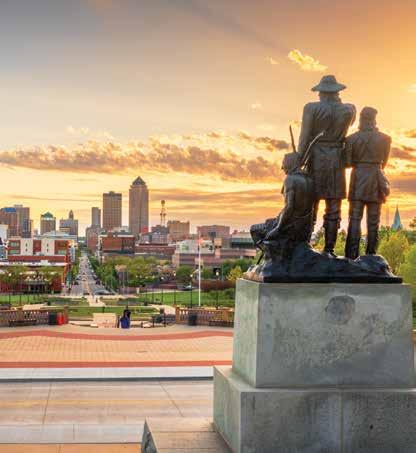
There is a reason Des Moines’ metro area is the fastest-growing in the Midwest. It almost certainly has to do with the fact that Iowa’s capital city has, in recent years, shed its sleepy reputation in considerable style while simultaneously maintaining its heartland authenticity.
For those making the venture here 300 miles west of Chicago, they will fnd Triple-A baseball at its fnest in the intimate Principal Park, where
BY DUANE WELLS
Iowa Cubs prospects showcase their talent on their last minor league stop before the majors.
Beyond the ballpark, this spring promises visitors an array of fun activities and excursions throughout town. For art lovers, the Des Moines Art Center features a renowned collection of works from such noteworthy fgures as Georgia O’Keefe, Edward Hopper, Mark Rothko and Francis Bacon. Just down the road is the famed Pappajohn Sculpture Park, which spans more than four acres and showcases majestic works by artists ranging from Willem de Kooning to Richard Serra. Elsewhere in the city, the buzzy, historic East Village district is home to more than 90 shops, restaurants and entertainment destinations, many of which would not seem out of place in Logan Square. The East Village is also home to walking trails along the Des Moines River and the gilded Iowa State Capitol building, another must-see. And in terms of dining, Oak Park (whose executive chef, Ian Robertson, is a 2026 James Beard semifnalist for Best Chef Midwest) as well as Prime and Providence are two hot spots not to be missed.
Takeaway
The corn may be high in Iowa. But when it comes to Midwestern fun, visitors to Des Moines should set their expectations even higher.
2026 Iowa Cubs Home Opener
March 27, vs. Columbus Clippers
Where
The elegantly-appointed Des Lux Hotel is located in downtown Des Moines, just steps away from the Des Moines River. Not far away is the Surety Hotel (part of the Marriott’s Autograph Collection lodgings), which is an artfully-restored 1913 bank building that ofers a blend of historical gravitas and contemporary cool.
Getting There
Direct fights from O’Hare (ORD) to Des Moines International Airport (DSM) take about 90 minutes on United and American, and Southwest began a new service there from Midway (MDW) this March.
CONTINUED ON NEXT PAGE
Tennessee
Smoky Mountain Baseball & Southern Charm
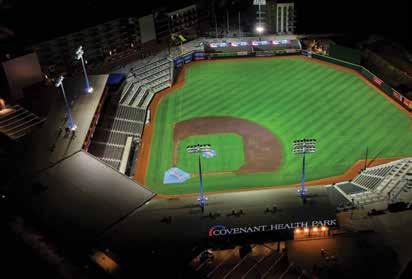
In Knoxville’s growing downtown area, the Smokies play Double-A home games at Covenant Health Park, which celebrates its oneyear anniversary this April. The city’s location near the Great Smoky Mountains makes it an excellent stop for fans to combine their love of the game with an opportunity to explore the surrounding Appalachia area.
Like the rest of the Volunteer State, Knoxville has experienced tremendous expansion in the decades since it hosted the World’s Fair in 1982. Perhaps nowhere is the rise of “Scrufy City” more evident than in the evolution of its culinary scene. Downtown’s Market Square is a jumping-of point for indulging in the local food culture, flled with everything from down-home cooking at eateries like Stock & Barrel and Myrtle’s Chicken + Beer to more upscale dining at establishments like the Oliver Royale
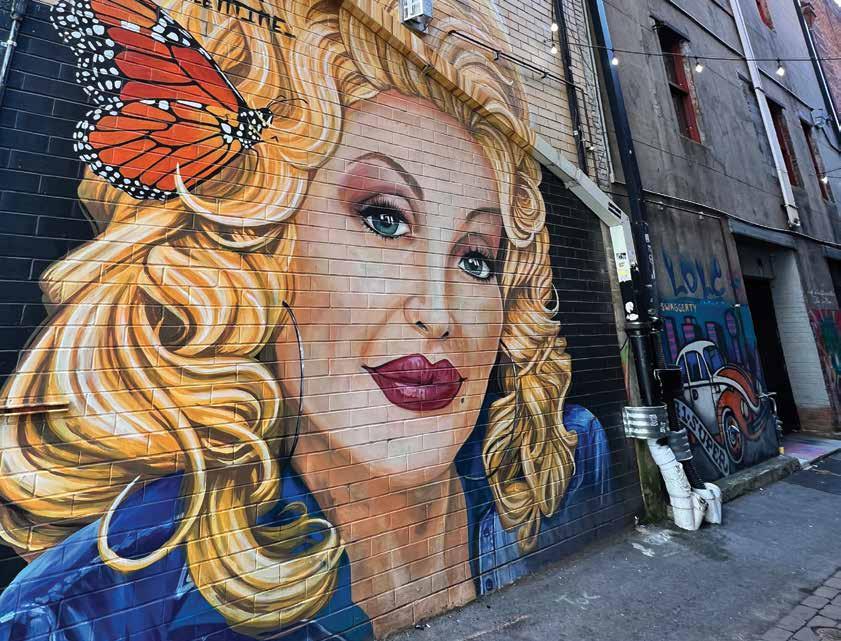
Spirits are also a draw in Knoxville as the city anchors both the Tennessee Whiskey Trail and the Great Valley Wine Trail, the latter of which connects four independent wineries in East Tennessee. The same goes for the Great Smoky Mountains National Park during wildfower season, which typically peaks from late April through early May. And how could we fail to mention that Dollywood is less than an hour’s drive southeast in Pigeon Forge?
Takeaway for Visitors
Knoxville isn’t merely a stop for baseball lovers; it’s an interlude for recreational adventures throughout Appalachia’s beautiful outdoors.
2026 Smokies Home Opener
April 3, vs. Birmingham Barons
Where to Stay
The Tennessean is perhaps Knoxville’s most-lauded hotel, which in 2025 was awarded a One Key rating by the Michelin Guide for the second
consecutive year, along with being named one of the top 24 hotels in the South by Condé Nast Traveler. Located not far away, the boutique Oliver Hotel Knoxville also ofers guests a luxurious Southern experience.
Getting There
Direct fights from O’Hare to McGhee Tyson Airport (TYS) take about 90 minutes on United and American, and Allegiant serves Knoxville seasonally from Midway.
The Quintessential Quick Escape
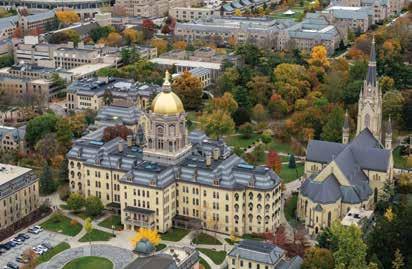
You may think staycations are overrated, but some of the most underrated getaways are often in our own backyards — if not at home. Close enough for a day trip to watch the High-A Cubs play at Four Winds Field, yet far enough to warrant a weekend excursion, South Bend sits ninety miles east of Chicago and less than ten miles south of the Michigan state line.
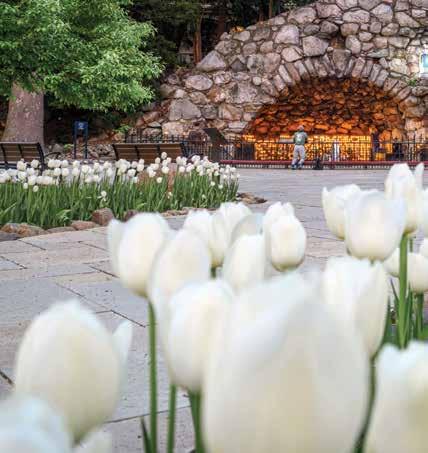
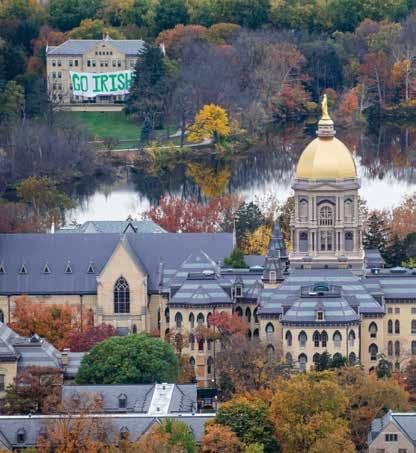
The University of Notre Dame is arguably South Bend’s most famous institution, and its attractions are fascinating for both visitors and members of the community. Among the many sights to see, for starters, include the Basilica of the Sacred Heart church, the iconic 14-story Word of Life mural that’s famously known as “Touchdown Jesus” and Notre Dame Stadium, the home of the Fighting Irish football team (with tours of the locker room and access to the playing feld available). And it’s not all about football on campus, as sites like the Raclin Murphy Art Museum showcase an extraordinary collection featuring works by the likes of Joan Miro and John Singer Sargent. Beyond Notre Dame, the South Bend area has much to explore. There’s the Studebaker National Museum, which has a display of more than 120 vintage cars; stunning parks like Potato Creek State Park, located about 12 miles southwest of town; and a clutch of notable restaurants like the LaSalle Grill and the Crooked Ewe Brewery & Ale House.
Sometimes the best adventures start right by your doorstep.
2026 South Bend Cubs Home Opener April 3, vs. Quad Cities River Bandits
If you’re staying in South Bend, why not make it special? In nearby Mishawaka, the lovingly-restored seven-room Beiger Mansion Inn (originally completed in 1907) will take you back to the grandeur of another era. However, if you prefer to stay on Notre Dame grounds, the Morris Inn is a great option.
United ofers one hour direct fights available from O’Hare to South Bend International Airport (SBN).
Where the Living (and Vacationing) is Easy
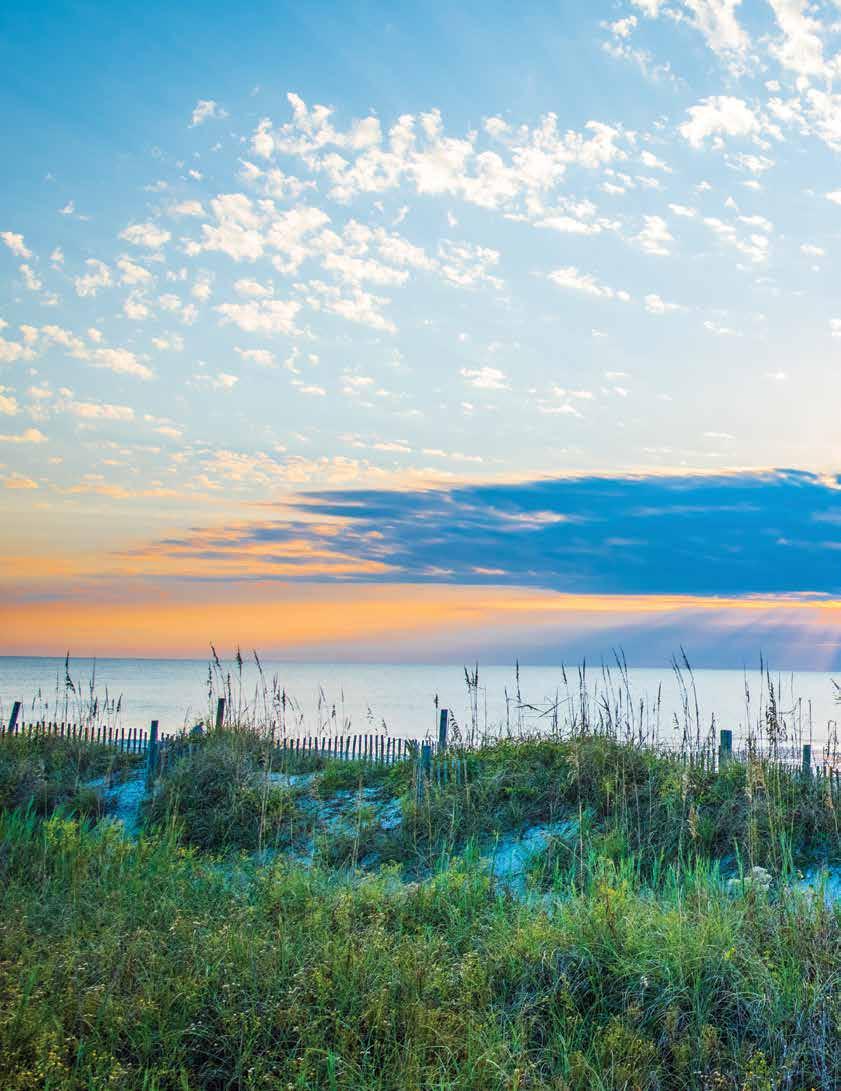
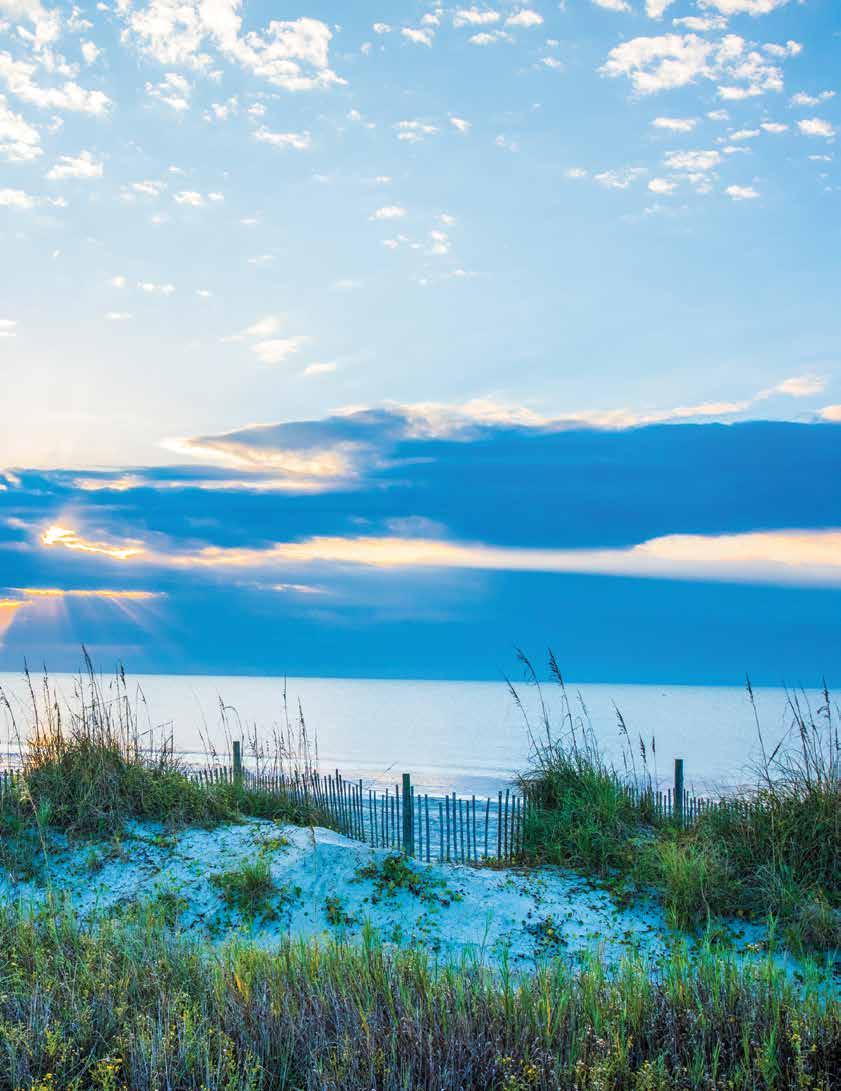
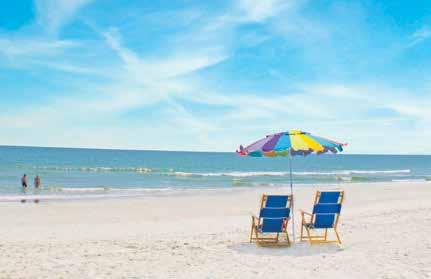
Obviously, Chicagoans don’t need an excuse for a springtime trip down South — especially for spring break. But for diehard baseball fans, the Low-A Myrtle Beach Pelicans ofer a deal sweetener, as they prepare to kick of their upcoming season in one of South Carolina’s most popular destinations, where they play home games at Pelicans Ballpark
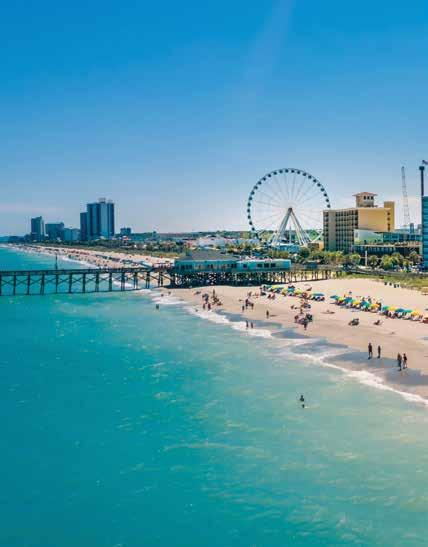
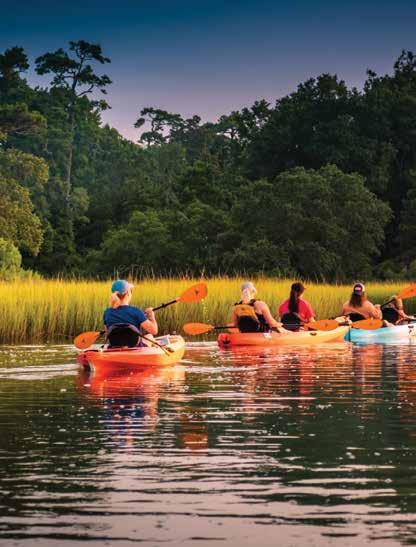
Aside from checking out the up-and-coming Pelicans talent, Myrtle Beach is a place where you can do as little — or as much — as you like. Spend the day lounging at one of the delightfully-pristine local beaches and resorts, or if you’re in the mood to explore some of the city’s restaurants, shops and arcades, stop by the mile-plus-long Oceanfront Boardwalk and Promenade. To sample local wines (yes, there are wineries in South Carolina), head over to the Duplin Winery in North Myrtle Beach. You can also hit the links at your choice of over 80 golf courses in the city that’s known as the “Golf Capital of the World,” take a day trip two hours south to Charleston, or escape the masses by checking out nearby Murrells Inlet and the serenity of Brookgreen Gardens, which consistently earns top ranks on a number of lists of the nation’s best public gardens.
Come nightfall, there’s even more on tap. The Myrtle Beach area boasts many live music venues, with The Bowery, the Alabama Theatre and Carolina Opry Theater being among the most popular. For a bevy of musical productions, there are local favorites like the Broadway Theater Then, of course, there’s the seafood and popular eateries led by the likes of Sea Captain’s House, a four-time winner (for four straight years) of Southern Living magazine’s award for Best Seafood Restaurant. Takeaway for Visitors Baseball + the beach = the perfect coastal escape.
2026 Pelicans Home Opener
April 14, vs. Kannapolis Cannon Ballers
Where to Stay
Where else but on the beach? Options are plentiful and include amazing beachfront home and condo rentals. Among the traditional hotel and resort options, the Hilton Grand Vacations Club-Ocean Enclave Myrtle Beach and Marina Inn at Grande Dunes ofer great oceanfront locations and easy access to the boardwalk.
United and American ofer seasonal direct fights from O’Hare to Myrtle Beach International Airport (MYR). Southwest ofers year-round fights from Midway and will start seasonal service from O’Hare in June 2026.
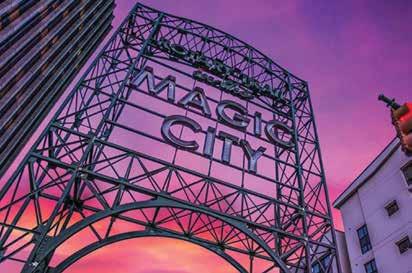
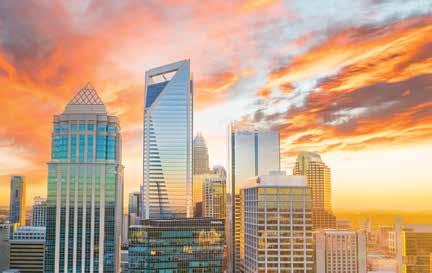
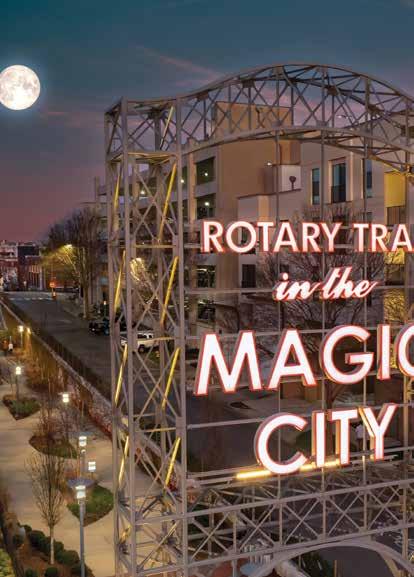
Top Tier Attractions in the South’s New Capital Charlotte, North Carolina, may have long ago been known as a sleepy textile town. But today, this city of nearly a million by the South Carolina state line is a banking and fnance powerhouse, one of the South’s major epicenters whose transformation is evident in everything from its gleaming uptown skyline to the arrival of pro sports in the city, beginning in the late 1980s with the NBA’s Hornets and followed a decade later by the NFL’s Panthers. If you need further proof of the Queen City’s status as a go-to destination for sports, check out the Charlotte Knights’ Truist Field, a park that plays above its minor league classifcation, as it gives stunning views of the downtown skyline that rival outfeld panoramas of the best major league stadiums.
The restaurant scene of North Carolina’s largest city perfectly exemplifes major league ambition. Last year, the city’s culinary profle got a big boost as 13 local restaurants were featured in the inaugural edition of the Michelin Guide American South. Counter, chef Sam Hart’s boundary-pushing, tasting-menu restaurant, earned Charlotte’s frst-ever Michelin star, as well as notching a Green Star for sustainable gastronomy. The guide also recognized Lang Van — a family-run Vietnamese restaurant in east Charlotte — with a coveted Bib Gourmand award, while Colleen Hughes, the head of mixology at the steakhouse Supperland, received Michelin’s Cocktail Award. Seven additional Charlotte restaurants earned Michelin “recommended” status, including Haberdish in the NoDa (North Davidson) neighborhood and Kindred in suburban Davidson.
Being that Charlotte sits in the heart of racing country, a tour of the NASCAR Hall of Fame is not to be missed. For world-class rapids and zip-lining just minutes from downtown, make a trip to the U.S. National Whitewater Center. Or, if you want to stroll through NoDa, you’ll fnd an array of galleries, breweries and street murals dotting the way.
Takeaway for Visitors
A minor league baseball town, Charlotte’s cosmopolitan vibe ranks high up in the big leagues.
2026 Knights Home Opener
March 27, vs. Durham Bulls
Where to Stay
For a taste of Paris on this side of the Atlantic, The Ivey’s Hotel in Uptown is a supremely elegant choice. For other equally impressive lodgings Uptown, the historic The Dunhill Hotel is worth a stay. And for luxurious options outside of downtown, you won’t go wrong in south Charlotte at The Ballantyne.
Getting There
Multiple airlines, including American, United, Frontier (all from O’Hare) and Southwest (from Midway) ofer direct fights to Charlotte Douglas International Airport (CLT) in just over two hours. (However, as Charlotte is a hub for American, the airline ofers the most fights there.)

CONTINUED ON NEXT PAGE
Regions Field, Birmingham
Credit: Greater Birmingham Convention & Visitors Bureau


Civil Rights History & Baseball Soul
There is something special about baseball in Birmingham, the South’s one-time steel capital that was a backdrop for pivotal moments in the Civil Rights Movement. Located roughly in the center of Alabama, Birmingham is home to the Barons, the White Sox’s Double-A ball club whose roots go back to 1885. The city was also once home to the legendary Birmingham Black Barons of the Negro Baseball League, where players like Willie Mays and Satchel Paige honed their craft before Major League Baseball integrated. For years, the Barons and the Black Barons shared Rickwood Field as their home stadium, and between the teams, over 180 future Hall of Famers plied their trade at the park. Today, the Barons call Regions Field in downtown Birmingham home, but Rickwood still exists as the nation’s oldest baseball park.
The Birmingham of today is not just a place for taking in baseball, but other attractions such as museums and music venues. Among the must-see destinations are the Alabama Jazz Hall of Fame, where you can trace the state’s impressive jazz legacy from Erskine Hawkins to Sun Ra. To learn about the city’s importance to the nation’s social justice movements, make it a priority to visit the Birmingham Civil Rights Institute and the 16th Street Baptist Church. Additionally, the Birmingham Museum of Art is an impressive building in its own right and boasts a collection of more than 29,000 works.
Birmingham also has its share of tasty eateries to crow about. For starters, you can’t go wrong at Saw’s, which serves smoky, saucy Alabama barbecue at three regional locations. If inventive Southern fare is what you’re in the mood for, there’s The Essential downtown.
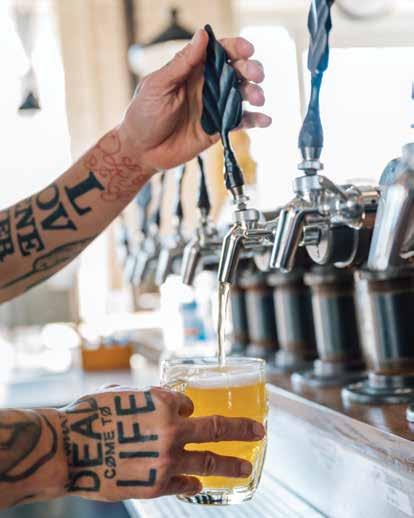
Afterward, when you’re ready to whet your whistle, stay nearby and visit The Collins Bar. Drinks — along with Italian dishes — are also part of the appeal at Bottega, which was a recipient of the 2025 Michelin Guide’s American South Service Award.
Takeaway for Visitors
For the perfect balance of Southern history and modernity, Birmingham is where it’s at.
2026 Barons Home Opener April 7, vs. Chattanooga Lookouts
Where to Stay
Housed in the Empire Building (which was once Birmingham’s tallest skyscraper), the Elyton Hotel of Marriott’s Autograph Collection pairs historic character with modern amenities. If quirky fabulousness is your fancy, consider the Grand Bohemian, another Autograph Collection hotel that is located in nearby Mountain Brook.
Getting There
United and American ofer direct fights from O’Hare to BirminghamShuttlesworth International Airport (BHM) in two hours, and Southwest also ofers direct fights from Midway to BHM.
Winston-Salem, North Carolina (Winston-Salem Dash – High A)
High-A Baseball in an Arts-Infused Oasis
In the heart of North Carolina tobacco country lies the White Sox’s High-A baseball team, its nickname inspired by the dash between the names of Winston and Salem, two towns that became one city in 1913. Home to Wake Forest University, Winston-Salem has also been where the Dash have been a White Sox minor league afliate since 1997, initially playing their games a stone’s throw away from the Wake Forest campus at Ernie Shore Field before moving to Truist Stadium in 2010.
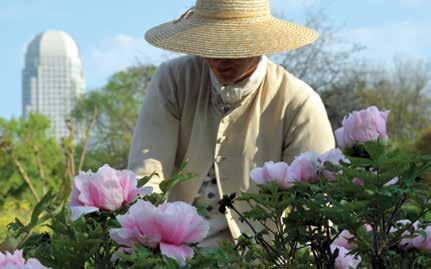
Winston-Salem has cultivated a thriving arts community over the past few decades, which is centered on the historic Old Salem district and the nearby arts corridor. Among the institutions representing the city is the Reynolda House Museum of American Art, a worldclass institution located inside a stunning mansion with impressive collections of American paintings and decorative arts. Another major draw is the North Carolina Museum of Art–Winston-Salem (formerly known as the Southeastern Center for Contemporary Art), which features cutting-edge contemporary work and experimental installations. If also you’re into old-school craftsmanship, the Museum of Early Southern Decorative Arts (also known as MESDA) showcases an incredible collection of fne antiques, ceramics, paintings and other decorative arts characteristic of the early American South.
Beyond museums, art is woven into nearly every aspect of life in Winston-Salem, from the street murals and public art installations that have proliferated in neighborhoods across the city in recent years to the city’s Innovation Quarter, one of the leading future-forward districts in the U.S. Outside of art, other hot spots to explore in Winston-Salem include the Yadkin Valley wine region, which is home to several North Carolina wineries. There are also plenty of green spaces like the Reynolda Gardens (which is home to the Reynolda House Museum), the Old Salem Museums & Gardens, as well as the Tanglewood Arboretum in nearby Clemmons.
Takeaway for Visitors
Winston-Salem is about the arts, but it doesn’t skimp on the baseball love, either.
2026 Dash Home Opener
April 7, vs. Frederick Keys
Where to Stay
Not far from downtown is the Graylyn Estate, a 55-acre property built in the 1920s for Bowman Gray — the former president and CEO of tobacco company R.J. Reynolds — and his wife. Featuring 85 rooms across multiple buildings, it has been named one of the top 10 boutique hotels in America by USA Today.
Getting There
There is no direct service to Winston-Salem, but United and American both ofer nonstop fights from O’Hare that arrive at Piedmont Triad International Airport (PTI) in Greensboro in approximately two hours. (From there, it’s just a 25-minute drive west to Winston-Salem proper) Kannapolis, North Carolina (Kannapolis Cannon Ballers – Low-A)
Grassroots Grandeur + Small-Town Charm
For years, many outside of Kannapolis, North Carolina, may have only known it as being the hometown of NASCAR legend Dale Earnhardt, Sr. But Kannapolis wasn’t built to be a tourist destination, but rather a mill town.
For nearly a century, sprawling textile mills defned the community, located about 30 minutes north of Charlotte. But as industry layofs hit Kannapolis in the mid-1980s, the town subsequently experienced a wave of mill closures. But rather than fading away, the town reinvented itself.
Today, “Towel City” boasts attractions such as the West Ave District, a redeveloped area that features walking paths, local shops and welcoming gathering spaces. The town is home to the North Carolina Music Hall of Fame, and on the sports front, the White Sox’s Low-A ballclub, the Cannon Ballers, play downtown at Atrium Health Ballpark. Kannapolis is seeding a budding food and drink scene, highlighted by local purveyors such as the family-owned Douglas Vineyards — which taps into the broader wine country of the Piedmont region — while Old Armor Beer Company and Tipsy Hare Ciderworks represent the craft beverage movement.
The times are indeed a-changin’ in this North Carolina locale. But through it all, Kannapolis maintains an of-the-beaten-path vibe, ofering visitors a destination that remains true to its industrial roots while embracing a future that looks entirely diferent.
Takeaway for Visitors
There is plenty of splendor to be found in cozy towns, and Kannapolis has it in abundance.
2026 Cannon Ballers Home Opener April 2, vs. Lynchburg Hillcats
Across from Atrium Health Ballpark sits The Mill Inn, a boutique hotel with six suites inside a former textile mill. About a 25 to 30-minute drive north in Salisbury is the Bonaparte Castle, which, in addition to being a boutique dwelling, also doubles as a wedding venue. But if you prefer a big-city vibe, nearby Charlotte provides many great selections.
Getting There
No direct fights are available to Kannapolis. But multiple carriers fy directly from O’Hare and Midway to Charlotte, just a 30 minute drive away (see Charlotte above).
BY NEVIN MARTELL
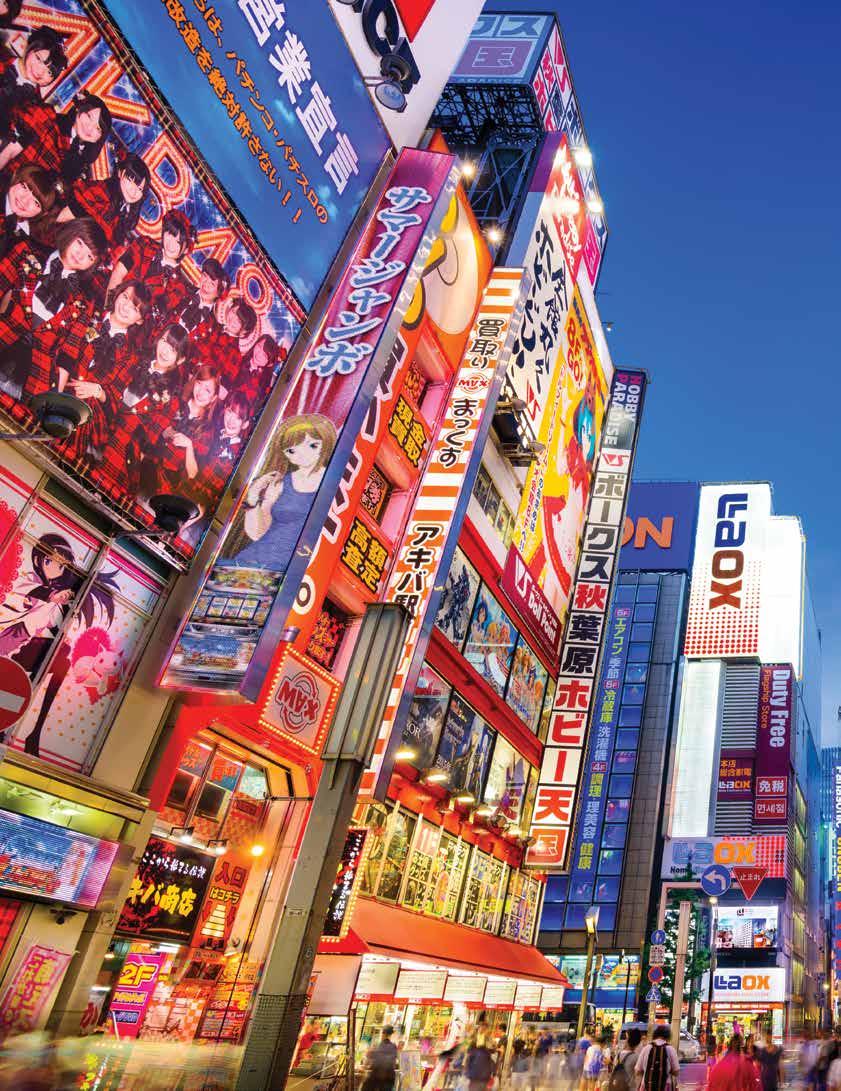
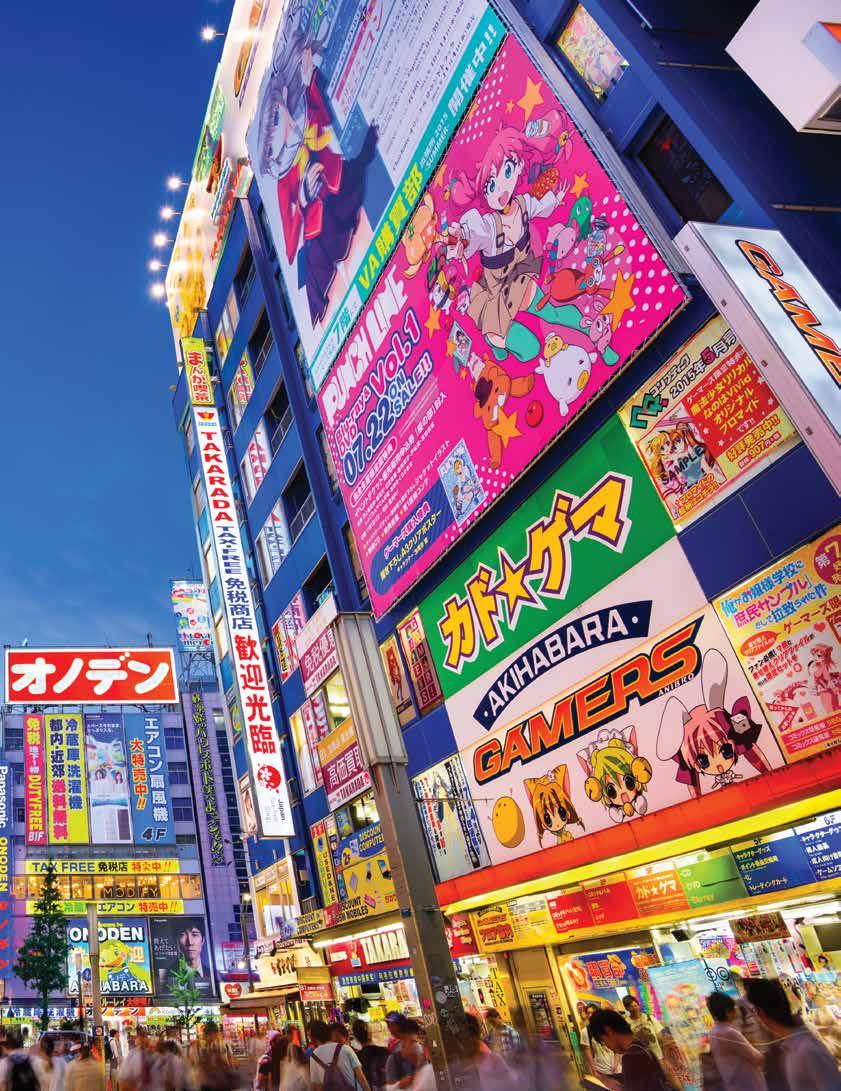
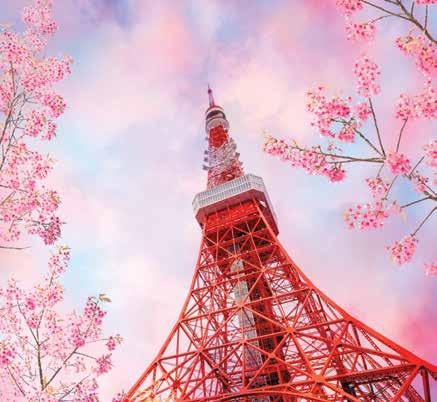
Tokyo is an artful study in contrasts, where the timeless and traditional thrive alongside the forward-thinking and futuristic. A city of more than 13 million residents, it’s a place where ancient shrines and the Imperial Palace are set against soaring skyscrapers and 21st century architecture. A metropolis of constant rebirth, Tokyo is forever adding new attractions and amenities. Here are a few new places in the city that are on our radar for playing, dining and lodging.
POKÉPARK KANTO
Play around with Pikachu and snap selfes with Squirtle at this epically adorable theme park, the frst-ever permanent Pokémon outdoor facility. Hidden in the Tama Hills and featuring over 600 Pokémon, the 6.4-acre wonderland is divided into the Pokémon Forest and Sedge Town, where you’ll fnd attractions like the Pokémon Trainers’ Market, Pokémon Center, the Vee Vee Voyage carousel and a high-energy show. Fuel up at Pikachu’s Onigiri Shop, sip character-themed latte art drinks and munch on ice cream bars at Eevee’s Café, and enjoy special beverages featuring other Pokémon characters.
TOKYO DREAM PARK
The gleaming new megaplex in Ariake ofers cutting-edge entertainment to dazzle all the senses. The 5,000-seat concert venue, SGC Hall Ariake, is a showcase for a variety of top-tier acts, while EX Studios 7 and 8 host exhibitions and an immersive art show featuring Van Gogh paintings and the largest-ever Doraemon exhibit (which features over 100 life-size fgures of the popular manga character).
MON TAKANAWA: THE MUSEUM OF NARRATIVES
Located in the Minato ward, and conveniently situated near a train station, this ambitious new museum (scheduled for a late March opening) will use state-of-the-art immersive exhibits, live performances, workshops and talks to tell stories connecting traditional Japanese culture with forward-thinking imagination. The nine-story complex will feature several performance spaces and other amenities such as a large-scale tatami-foored room, a rooftop garden, a library, a semi-outdoor footbath and restaurants. The museum’s programming is being built around biannual themes, beginning with “Life as Culture.”
IMPERIAL TREASURE
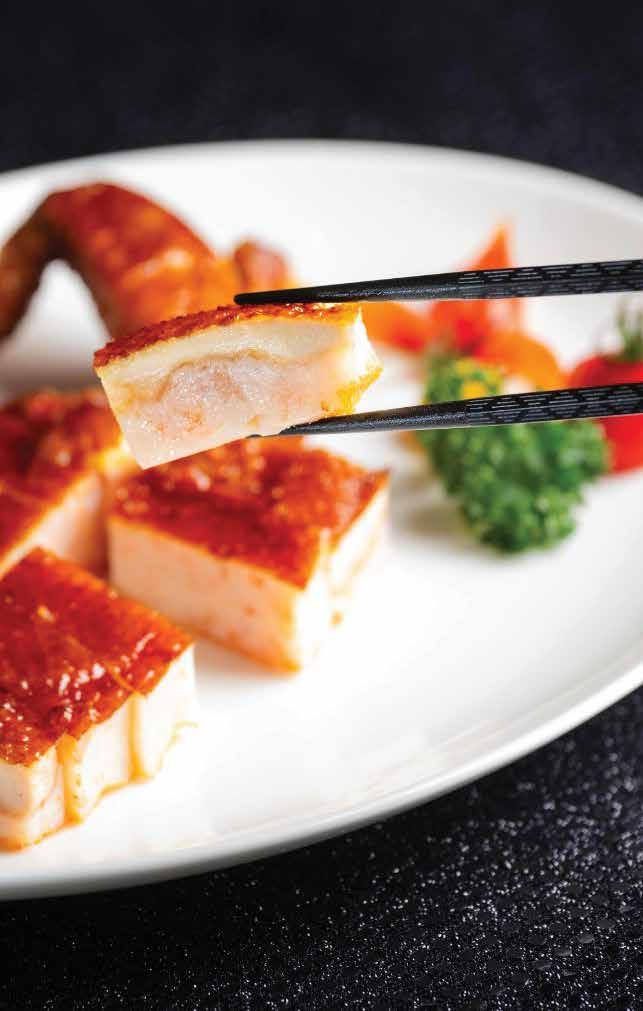
The Singapore-born restaurant — renowned for its high-end Chinese cuisine — has earned a constellation of Michelin stars at its 20-plus worldwide locations, with one being its Japanese debut last April in the Ginza district. The restaurant’s world-famous, lacquered red Peking duck (reserve one in advance to ensure availability), roasted Iberian piglet, crispy chicken stufed with minced shrimp, and dim sum platter are must-orders. Dress in your swankiest stretchy pants, because you won’t be able to restrain yourself.
MAERGE
Hideyuki Shibata’s Michelin one-star restaurant in Minami-Aoyama takes its name from the fusion of the French word ‘marge’ (meaning blank canvas, margin or frame) with the English word ‘merge.’ It’s a ftting name for a concept where ideas about modern French cuisine collide and come together. Shibata also crafts his exquisite cuisine with hyper-fresh Japanese ingredients that pay homage to his homeland.
1 HOTEL TOKYO
Located in the Akasaka district, the new 1 Hotel Tokyo earned Rank S certifcation from CASBEE (Comprehensive Assessment System for Built Environment Efciency), a Japanese rating system denoting
the highest level of environmental performance. From energy and water conservation systems to the use of reclaimed materials, the eco-conscious luxury space considers sustainability as the bedrock of its operations.
The hotel’s arrival area features moss-covered boulders and plantlined walls along with Oya stone, the last being the material that Frank Lloyd Wright used to create the facade of Tokyo’s late, famed Imperial Hotel. On the 38th foor, the 1 Hotel Tokyo lobby features a soothing, sculptural stone water display and ceiling art that evokes the raked sand patterns of a Zen garden. The space’s 211 rooms and suites allow guests to sink further into natural settings that include moss walls, lattice wood accents and natural stone.
JW MARRIOTT HOTEL TOKYO
Nestled in the heart of Minato’s Takanawa Gateway City development, Tokyo’s frst JW Marriott Hotel ofers guests stunning views of the Rainbow Bridge, Mount Fuji and Tokyo Tower. For a quick decompression, visit the hotel’s Serene Room located of the lobby — a vibrant oasis with mood lighting, comfortable seating and soothing sounds. After a chillout session, stop at Le Cres on the same foor for indulgent, cake-level croissants that provide unforgettable culinary comfort.
FAIRMONT TOKYO
Situated at the center of the historic Shibaura district, Fairmont’s debut Japanese property features 217 spacious rooms and suites with views of the city’s skyline — punctuated by the Tokyo Tower and the sweep of Tokyo Bay. There are plenty of ways to relax and refresh at this lux property, such as lounging in the relaxation pool, getting cozy around the observation deck’s freplace or pampering yourself in the worldclass spa. The hotel features two bars and fve restaurants, including French-Japanese cafe Vue Mer, modernist sushi counter Migiwa and Mediterranean-minded Kiln & Tonic
Flights to Tokyo Haneda Airport (HND) are available 7x weekly on All Nippon Airways (ANA), United and Japan Airlines (JAL) from O’Hare; as well as to Tokyo Narita Airport (NRT), 7x weekly on ANA and JAL from O’Hare.


BY DEBBIE EMERY
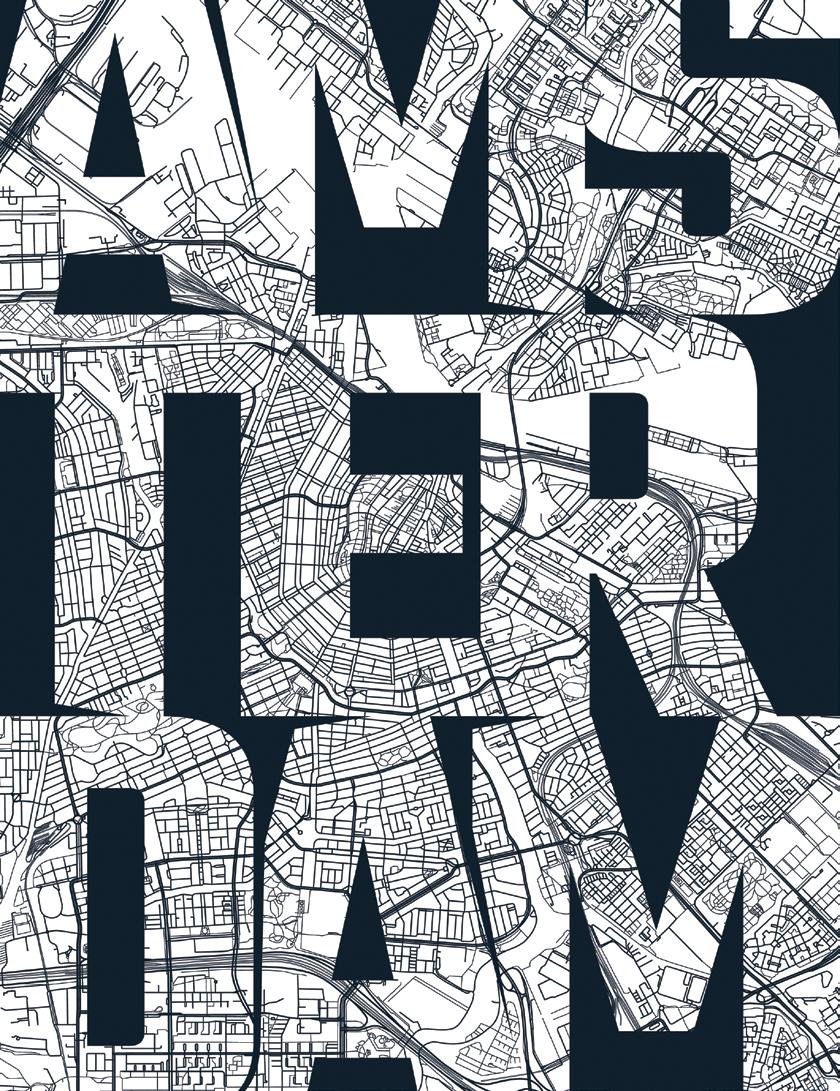
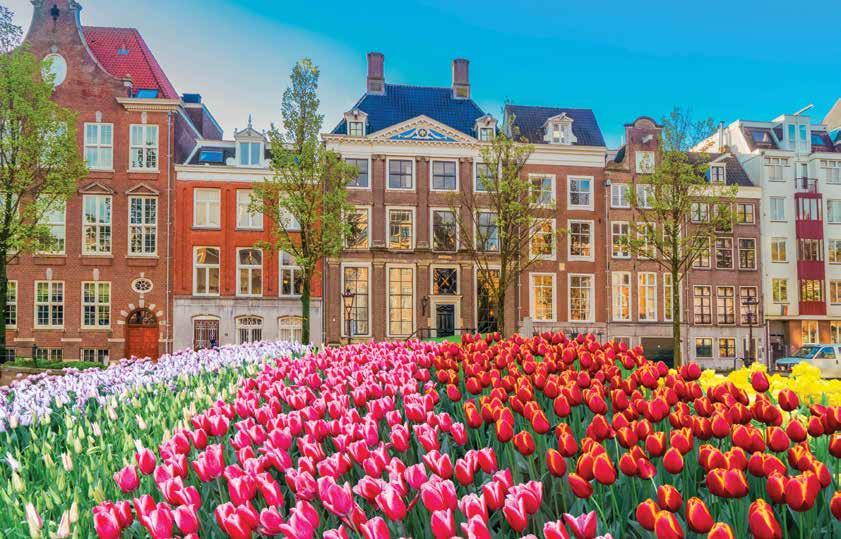
Famous for its red-light district and cannabis-filled coffee shops, Amsterdam also draws visitors seeking history, art, culture, fine dining and the chance to walk or bike along its iconic canal paths.
Amsterdam has evolved from a small fishing village in the 12th century to a major international port in the 17th century and to the Netherlands largest city in the 20th century. The city has also become a tech hub in recent years, with Google, Meta, Tesla, Uber and Netflix maintaining regional offices and headquarters in what some call the “Venice of the North.”
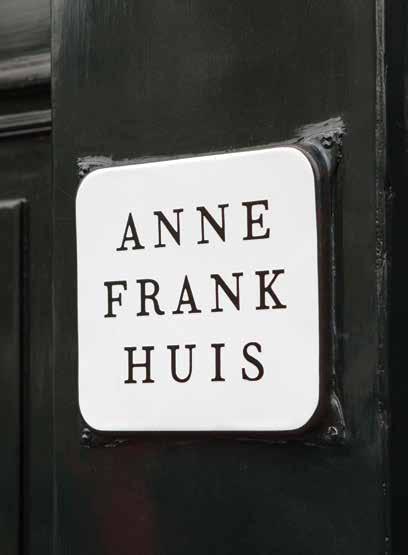
One of Amsterdam’s most famous residents was the teenager Anne Frank, who in her famous diary chronicled the two years she and loved ones spent hiding from the Nazis during World War II. The Anne Frank House allows visitors to learn her story through quotes, photos, videos and original items in the annex where she and seven others hid from 1942 until their capture two years later.
Anne’s father, Otto, was the only person in the group to survive the war. He would not only publish his youngest daughter’s diary but help save the building where they had hid from demolition, thereby preserving it as a museum. Displayed among the museum’s artifacts is the red-checked diary that Anne received on her 13th birthday, shortly before she and her family went into hiding. Guests can also walk through the hinged bookcase leading to the secret annex and view a map of Otto’s that shows the Allied forces’ advancement across Europe. Tragically, Anne and her older sister, Margot, died from a typhus epidemic while at the Bergen-Belsen concentration camp in Germany, less than two months before the Nazis surrendered to the Allies.
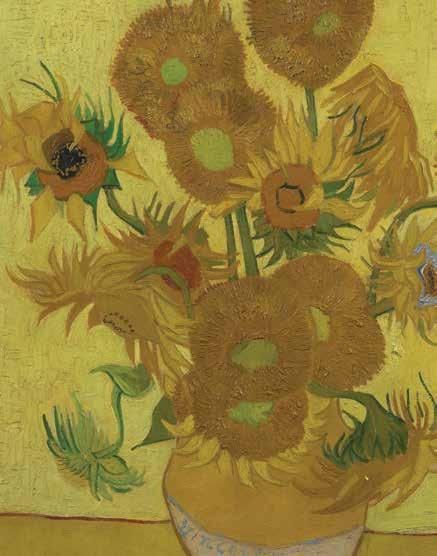
Another iconic Amsterdam fgure was Vincent van Gogh, and some of his greatest masterpieces are on display at the Van Gogh Museum, which celebrates the tragic genius’s life and tracks his development as an artist. Founded in 1973 at the Museumplein public space, the museum is home to more than 200 paintings and over 500 drawings, including the world’s largest collection of Van Gogh’s work. Guests can marvel at his most famous selections — including “Sunfowers,” “Almond Blossom,” “The Bedroom,” “The Potato Eaters” and his “Self Portrait with Grey Felt Hat” — and view some of his lesserknown works along with those of his contemporaries, including Monet and Toulouse-Lautrec.
To learn more about Dutch art history, continue through Museum Square to The Rijksmuseum, which originated in The Hague in 1798 before moving to Amsterdam in 1808. The space is home to more than 8,000 works of art and history (with some dating back to 1200) and showcases masterpieces by Vermeer, Rembrandt and Frans Hals, along with special exhibitions documenting real-life stories.
Guests can experience life on the water frst-hand at the Houseboat Museum Amsterdam, located in a former cargo boat called the Hendrika Maria. During a self-guided audio tour, visitors learn about the origins of houseboats (many are 100-year-old freight ships), how they evolved from a cheap way of life to a chic housing alternative, as well as the history of the canal system. While at the waterfront, a canal cruise ofers the clearest view into the heart of the city. A variety of companies ofer canal tours, ranging from group cruises with open bars to romantic sunset cruises for couples. Many are hosted by tour guides who provide colorful commentary, insider tips, local history and amusing anecdotes.
Amsterdam’s De Negen Straatjes (Nine Little Streets) is a shopaholic’s dream. The streets that straddle the Prinsengracht and Singel canals are packed with everything from high-end boutiques and specialty shops to vintage clothing and retro furniture stores. The beautiful neighborhood — which is home to over 250 shops, eateries, hotels and museums — is also one of the most photogenic.
Once a working-class area, Jordaan is now a sought-after neighborhood and one of the most upscale areas in the Netherlands. Visitors will fnd a wealth of specialty shops, art galleries and fne dining restaurants in the area that is bordered by the Singelgracht canal. Those visiting on a Saturday can soak in the Noordermarkt, where stalls ofer local produce, home-made cakes and Dutch cheeses. Rembrandt spent his fnal years in Jordaan and is buried at nearby Westerkerk church.
Amsterdam-Noord, located north of the IJ (Amsterdam’s waterfront), has a rich and dark history. It was used as a gallows feld until 1795 and was where convicts’ bodies were hanged after execution as a deterrent to would-be outlaws. The region fourished during the Industrial Revolution and its factories were the target of Allied bombs during World War II when the Netherlands was occupied by the Germans. Amsterdam-Noord is now a trendy area that combines modern architecture with quaint villages, where locals outnumber tourists. Those who venture there will fnd hip galleries housed in former warehouses, street art and eclectic cafes. Must-sees include the Eye Filmmuseum (which is the Netherlands’ national museum for flm), the technologically-driven Nxt Museum, and the eco-friendly, vegetarian restaurant Pllek, which is constructed from shipping containers.
South of Amsterdam’s city center is De Pijp, originally built in the 19th century to house working-class residents and migrants (it is also known as Amsterdam’s Quartier Latin). Overfowing with plants and fowers, the neighborhood has been popular with creative and bohemian types since the 1960s, as locals of all cultures gather at sidewalk restaurants. Unlike much of Amsterdam, De Pijp has no canals, but it is surrounded by water, which adds to its unique charm.
The best thing about a walking city like Amsterdam is the opportunity to stop at tempting bakeries and cafes. One of the most popular is Bakkerij Louf, which has four locations and draws crowds for its heavenly croissants, sweet honey buns and thick focaccia sandwiches.
A Michelin Green Star recipient, Restaurant De Kas in Amsterdam Oost (east Amsterdam) follows a plant-to-plate philosophy, and many of the vegetables, herbs and fruits in its dishes come from the restaurant’s own gardens. Local Dutch ingredients, combined with international favors, are served on fxed menus for a full culinary experience.
For those seeking a more traditional Dutch meal, Moeders (which means “mothers”) is a favorite spot for visitors. Straddling the Jordaan and Oud-West (west Amsterdam) neighborhoods, the restaurant is famous for classic Dutch dishes like hotchpotch (mashed potatoes with carrots and onions), suddervlees (stewed beef) and hachee (beef and onion stew).
Wanting to check out the cultural diversity of Amsterdam’s culinary scene, but pressed for time? Stay in Oud-West and head to Foodhallen, which has more than 20 restaurants and bars. Housed in an old tram depot, the space includes a snack bar (known as a bitterballen bar) founded by a Michelin-star chef, Indonesian street food, crepes, meatballs and sushi.
Flights from O’Hare to Amsterdam Airport Schiphol (AMS) are ofered 7x weekly on both United and KLM.

BY CRAI S BOWER
People in New Delhi love to celebrate, whether solemnly reciting hymns and prayers during an afternoon processional or coating each other with colored powders. And spring, in particular, is a wonderful time for festivals in India’s capital city.
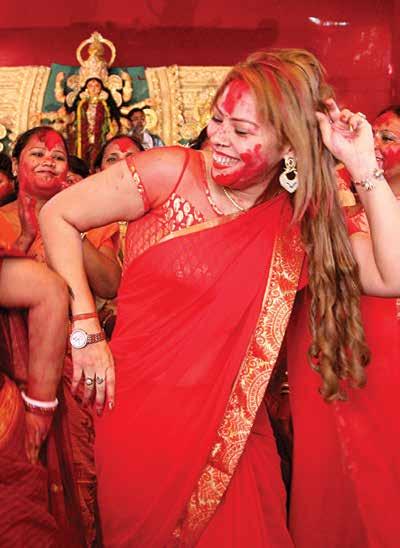
For many outside India, perhaps the best-known of these festivals is Holi, a Hindu celebration that marks the start of spring. Every year, the day after bonfires are ignited, Holi participants at festivals throw gulal powder at each other in a celebration of good triumphing over evil. These vibrantly-adorned individuals wash away their colors during rain dances or by having participants soak them with various water vessels. Punjabi songs are also a memorable part of the celebrations, and you’ll find them filling the air at events such as the Holi Moo and Unite Holi Music Festivals, as well as in smaller venues throughout Delhi.

Next to Hindus, Muslims are the second-largest religious group in Delhi. Varying each year according to the lunar calendar, Muslims throughout the city and beyond observe Ramadan, an approximately 30-day period of fasting from dawn to sunset, along with prayer, refection and reading of the Quran.
Eid al-Fitr marks the end of Ramadan and is celebrated with renewed vigor in Delhi. Early morning prayers are followed by family and friends who come together to “break the fast” over feasts flled with traditional foods and sweets. The festival is one of two primary yearly Muslim celebrations, with the other being Eid al-Adha, also known as the “Feast of Sacrifce,” which pays homage to the willingness of the Prophet Ibrahim to sacrifce his son to God — a signifcant event in the Abrahamic religions of Islam, Christianity and Judaism. The end of Eid al-Adha occurs on the fnal day of the yearly, fve-day pilgrimage of Muslim adherents to Mecca. This year in Delhi, Eid al-Fitr will occur on the evening of March 20-21, while Eid al-Adha is expected to fall on the evening of May 27 — both dates are dependent on the sightings of new crescent moons days beforehand.
Outside of Holi, Eid al-Fitr and Eid al-Adha, religious and cultural festivals are a year-round happening in Delhi. Whether visiting during Diwali or one of the lesser-known times to gather, the vibrancy of Delhi is unmistakable.
LOHRI FESTIVAL (JANUARY)
The depth of winter is celebrated amidst bonfres, folk songs and dance for Lohri, a Punjabi culture festival in which revelers share foods like popcorn, peanuts and sweets to encourage conviviality. Sarson da saag with makki di roti (a spinach delicacy with corn four fatbread) and kadhi pakora (a yogurt-based meal with fritters) are among the many dishes served during the festival.
Bharat Parv annually honors Republic Day — India’s adoption in 1949 of its post-British colonial constitution — with a fve-day event at Delhi’s Red Fort Lawns that honors the nation’s culture, culinary and spiritual foundations. Visitors attend A-list musical performances, tour artistic installations, dine among food courts and browse handmade crafts and other oferings that refect India’s fabled culture.
NAVARATRI (JANUARY)
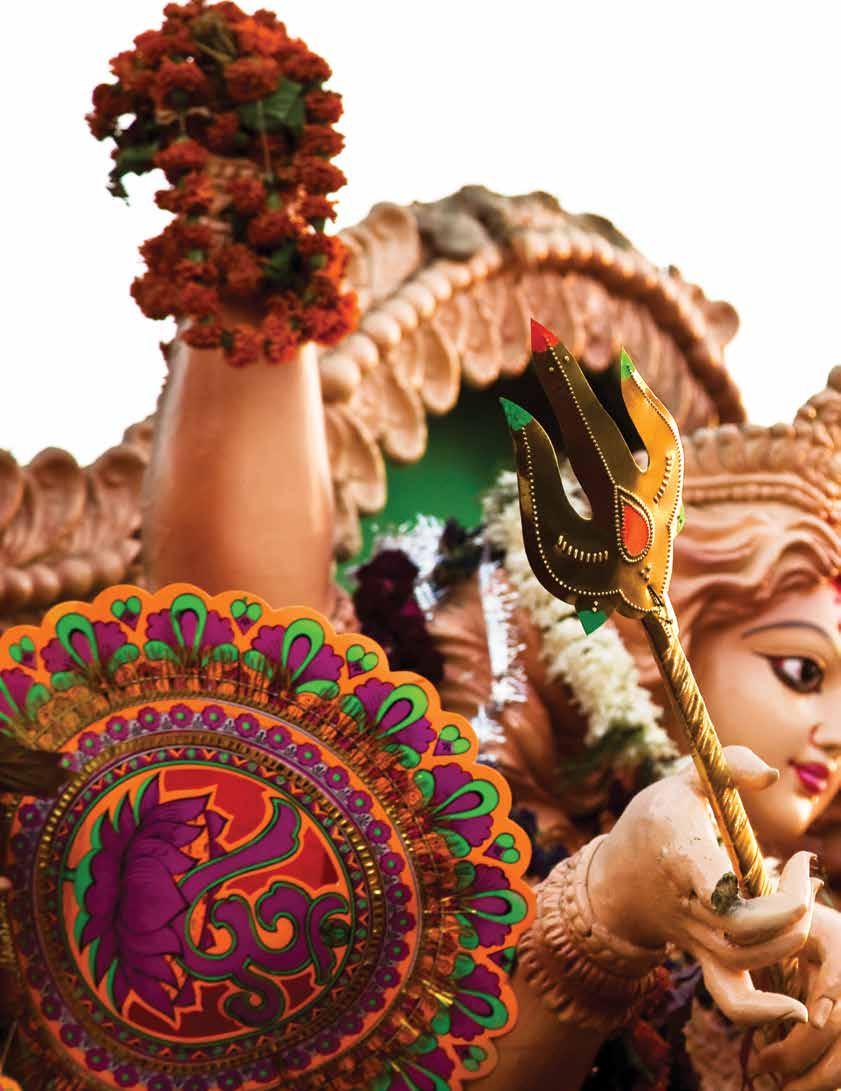
The goddess Durga and her feminine divinity are celebrated over nine nights during Navaratri. Throughout the city, Delhi residents build and decorate pandals, which are temporary shrines dedicated to the goddess who is called “Mother of the Universe” by devotees, and who keeps evil away. Each more spectacular than the last, the pandals shelter idols festooned in jewelry and traditional garments. Devotees to Durga dance, sing and ofer unending prayers leading up to Durga Puja, the climactic celebration of Navaratri. After days flled with rituals, feasts and performances, the idols are immersed in water as Durga returns to the heavens to watch over her fock for another year.
The “Great Night of Shiva,” known as Maha Shivaratri, invites Hindus and visitors to overcome the dark days of winter with meditation and self-discipline. All elements of this powerful god are illuminated as participants join the Divine Dance, Lord Shiva’s dance of creation and destruction. The marriage of Shiva and Parvati and Shiva’s omnipotence are also honored through fasting and all-night vigils. Delhi’s Neeli Chhatri and Gauri Shankar temples teem with thousands
of devotees performing sacred rituals, including Abhishekam, a bathing of a Shiva symbol with milk, water and honey, with lotus and other fowers ofered during the ceremony.
A secular event celebrating the mango, which is India’s “king of fruits,” this two-day Delhi celebration typically showcases as many as 500 varieties of the fruit, whose roots go back to the country more than 4,000 years ago. Eating competitions and cooking classes are also part of the fun of this event, which is held in Delhi’s Dilli Haat market.
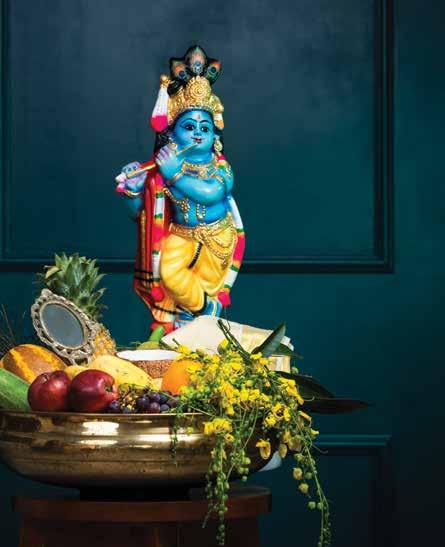
For Janmashtami, celebrants typically fast in honor of the birth of the deity Krishna, which occurred at midnight. Afterward, participants bathe and wash Krishna idols to prepare for the animated festivities to come over the next 24 hours. Lanterns and fowers adorn local temples and homes throughout Delhi during this period, with singing, dancing and tales told from the Bhagavad writings of Krishna’s life also part of the festivities. Another memorable feature of Janmashtami is revelers forming human pyramids to perform Dahi Handi, a ritual in which a pot flled with a dairy product is broken in homage to Krishna’s reputation as a butter thief.
Few places on earth light up quite like Delhi during late fall when Diwali, the Hindu Festival of Lights, shines across the city. Illumination takes many forms during this vibrant festival, a period when benevolence and enlightenment reign supremely over misanthropy and ignorance. Delhi’s Diwali primarily honors Lord Rama’s return from exile after defeating the evil king Ravana. Bearing prosperity, the goddess Lakshmi is welcomed on Diwali’s frst day into the recently-cleaned homes of residents, which are flled with sweets. Decorative activities and the lighting of diyas (lamps) are part of the festival’s second day, while freworks declare Rama’s return on the third day. The giving of gifts to loved ones takes place on Diwali’s fourth day, and for the ffth and fnal day, siblings engage in rituals intended bless each other.
The birthday of Guru Nanak Jayanti — the founder of Sikhism who is also known as Gurpurab — is an annual, three-day celebration throughout India. Nagar Kirtan (a major parade) opens the festivities, which are followed by a 48-hour reading of the primary Sikh scripture — Guru Granth Sahib — on the second day. A refective gathering designed to emphasize honesty, meditation and generosity, the festivities also feature communal meals followed by a fnal procession on the last morning. Visitors are welcome at the feasts and food is shared generously among all.
The birth of Jesus is widely honored in Delhi, where churches are decorated with colorful lights and ornaments, carols are sung, prayers are ofered, and prosperity and goodwill are shared among attendees. Christmas markets are held throughout the city, featuring such items for sale as crafts, holiday-themed decorations and a variety of delicious foods.
Fly from O’Hare to Indira Gandhi International Airport (DEL) in New Delhi 4x weekly on Air India.
50 NEAR WEST SIDE PAGE
BY ROSALIND CUMMINGS-YEATES
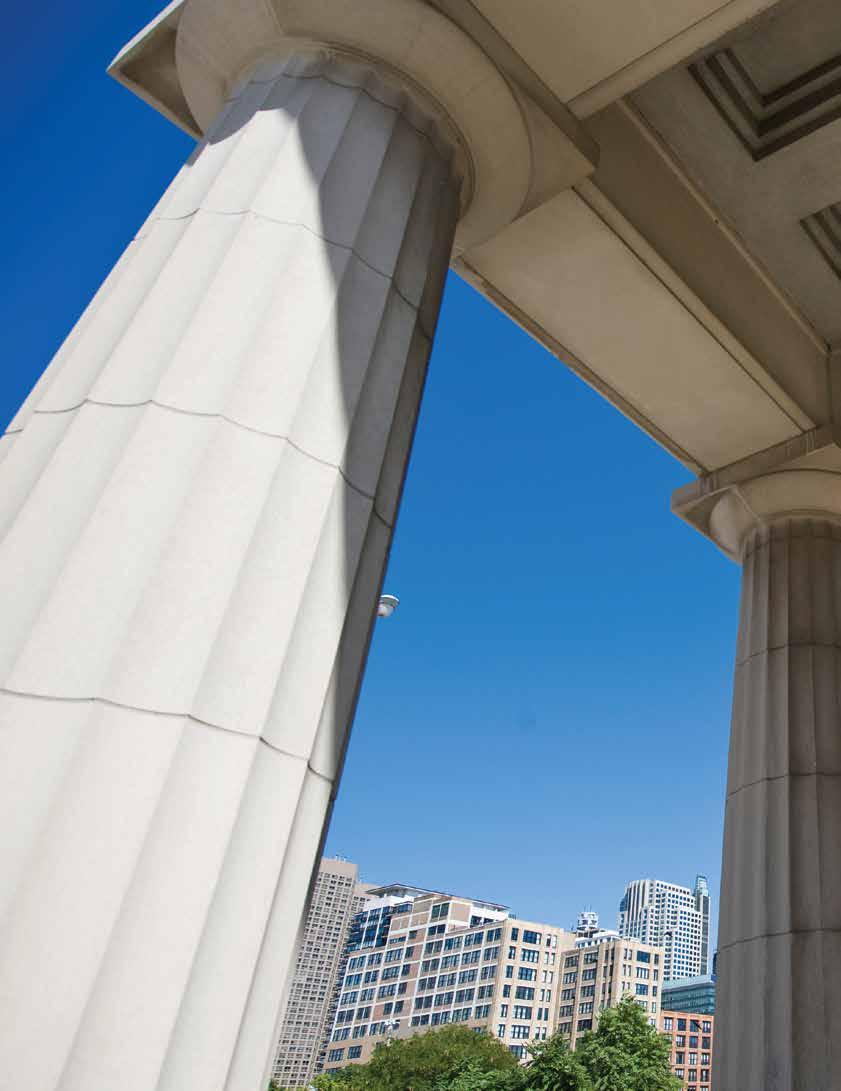
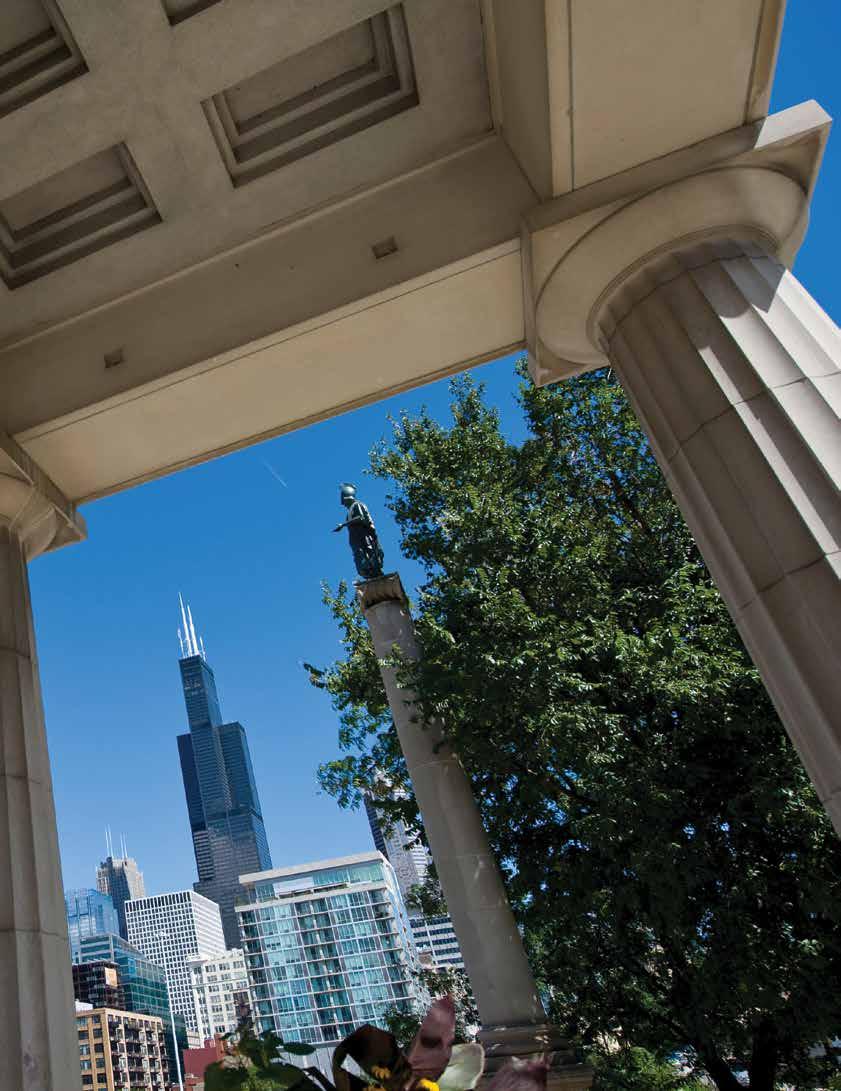
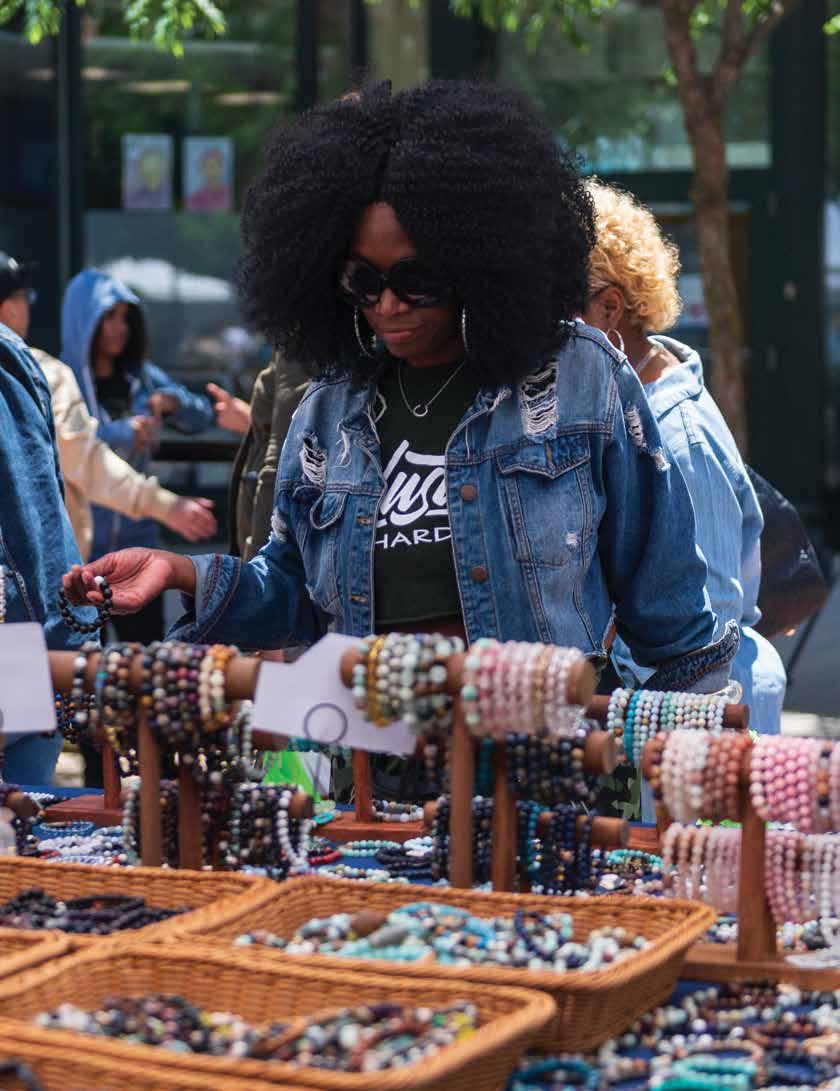
Stretching two miles west of the Loop, the Near West Side is a blend of historic sites, trendy restaurants and cultural landmarks. Encompassing neighborhoods such as Little Italy, Greektown, Fulton Market and Restaurant Row, the Near West Side reflects Chicago’s rich history of cultural diversity and its present-day vibrancy as an entertainment and dining hub.
During the early 19th century, the Near West Side served as a port of entry for European immigrants to the city, with Irish, Germans, Czechs, Poles, Greeks, Italians and Jews among the groups moving in and establishing enclaves in various neighborhoods. Later in the century, the community would become the site of the largest mass tragedy in the city’s history with the Great Chicago Fire in 1871.
CONTINUED ON NEXT PAGE
The fre followed severe drought conditions in the area, burning for three days, killing approximately 300 people and destroying around 18,000 structures across three square miles. The blaze has long been alleged to have started in the O’Leary family barn on West DeKoven Street, and although the fre’s cause was never determined, the Chicago Tribune would publish a report shortly afterward claiming that Catherine O’Leary was milking a cow in the barn when it knocked over a lantern.
Fifty years after the fre, a Tribune reporter covering the incident admitted to fabricating the account, which played into the country’s prevailing anti-Irish and anti-Catholic sentiments of the times. O’Leary (who died in 1895) and her husband were never ofcially charged with starting the fre, and in 1997 were ofcially pardoned by the Chicago City Council — along with the cow.
Out of the tragedy, Chicago would rise like a phoenix to become one of the country’s major cities, as the railroad, timber, steel and stockyard industries helped rebuild the town, spurring its growth from a population of 300,000 to 1 million just 20 years after the fre. Chicago would also become a world-class center of architecture in the years after the inferno, as construction innovations such as non-fammable steel, brick and stone would become the frameworks of buildings that would make up the city’s distinctive neighborhoods and skyline.
No barns exist today on the Near West Side, and no cows are anywhere in sight — save, maybe, for the faces of the ones adorning the headquarters for milk company Fairlife. And the community’s ethnic enclaves of the 19th and 20th centuries have given way in the present age to a more cosmopolitan mix of residents. But through the modern buzz of nightlife, eateries and big corporate names like Google and McDonald’s that have focked to the community, the spirit of old Chicago — through the good and tough times, in tragedy and triumph — still runs deep in this part of town.
800 S. Halsted St., (312) 413-5353
More than 200,000 people made their way to the Near West Side shortly after the Great Chicago Fire, worsening already overcrowded conditions. Poverty and other struggles experienced by immigrants inspired social reformers Jane Addams and Ellen Gates Starr to open Hull House in 1889.
As the frst settlement house in the U.S., Hull House (named after the building’s original owner, Charles Hull) provided new arrivals with support services such as kindergarten and day care for working mothers, English and citizenship classes, an employment bureau, as well as legal aid services. Hull House quickly expanded into a blocklong, 13-building complex that included dormitories; cultural resources like libraries, art galleries, a theater and a labor museum; along with recreational amenities like pools and a gymnasium.
The work of Addams and others at Hull House was instrumental in the passage of child labor and factory laws, in addition to the development of the nation’s labor union movement. Hull House also inspired other settlement houses to open across the country and arguably remained the most famous until its operator, the Jane Addams Hull House Association, closed in 2012.
The Jane Addams-Hull House Museum, which is located in the house’s original building, commemorates the social reforms and activism of Addams, who in 1931 was the frst American woman to win a Nobel Peace Prize. The building was designated a National Historic Landmark
in 1965 and today is part of the University of Illinois Chicago campus — admission to the museum is free.
Once dubbed the “Ellis Island of the Midwest,” the business district along Halsted and Maxwell Streets — commonly known as the Maxwell Street Market — was established in the latter part of the 19th century by Jewish immigrants hailing primarily from Russia and Poland. On Sundays, nine blocks of shops near Hull House were transformed into a bustling open-air market — which was part cultural festival, part bargain hunters’ paradise and part live music venue.
Maxwell Street Market featured goods, foods and fashions sold by merchants from pushcarts, tables, wagons and makeshift stands. Fresh produce was the market’s standard, but it soon became the place to get quick bites like bone-in pork chop sandwiches, gyros and the iconic Maxwell Street Polish, which consists of a grilled kielbasa covered in onions, mustard and sport peppers, and served in a plain bun.
Strolling through the market’s colorful lineup of clothes, housewares, art and everything in between was an adventure where customers navigated a raucous medley of haggling, bartering and yelling. Blues musicians who came from the South during the Great Black Migration often played on the streets, but soon realized the need for electric instruments and amplifers to be heard above the din of the crowd.
Merchants in storefronts along the market ofered extension cords and electricity to musicians in order to broadcast their sound throughout the market. From there, the Chicago blues was born, which was an amplifed, urban version of acoustic blues that musicians had brought to Chicago largely from the Delta region of northern Mississippi. Guitarists like Muddy Waters, Howlin’ Wolf and Bo Diddley would perfect their pioneering electric sounds — which would be vital to rock and roll’s development — by regularly performing on Maxwell Street, with visitors ending their day listening to the rhythms that became synonymous with Chicago’s grit.
Expansion of the University of Illinois Chicago campus efectively shuttered the original Maxwell Street Market in 1994, with the old mom-and-pop shops and takeout spots replaced by more chain-like retail and dining establishments. The market would continue in name at a much smaller iteration in other parts of the neighborhood before the city, in 2024, brought it back to its original location. The market is open on Sundays from May to October, with live blues and bargain hunting still being the main attractions. And if you’re craving a Maxwell Street Polish that conjures up nostalgia of the market’s past, head over to longtime staples — and rivals — Jim’s Original and Express Grill, which sit beside each other right of the Dan Ryan Expressway.
Express Grill – 1260 S. Union Ave., (312) 738-2112
Jim’s Original – 1250 S. Union Ave., (312) 733-7820
Another immigrant group that established a distinct presence around Hull House was Italians, as between the late 19th and early 20th centuries, approximately 16,000 lived near the building. Residents lived mostly between Halsted and Taylor Streets, opening a plethora of restaurants, bakeries, meat markets and specialty grocers that earned Taylor Street the nickname of Little Italy.
Much of Chicago’s culinary reputation is closely tied to Italian newcomers who would develop the city’s gastronomic hallmarks

The Great Chicago Fire In Focus Exhibit Credit:
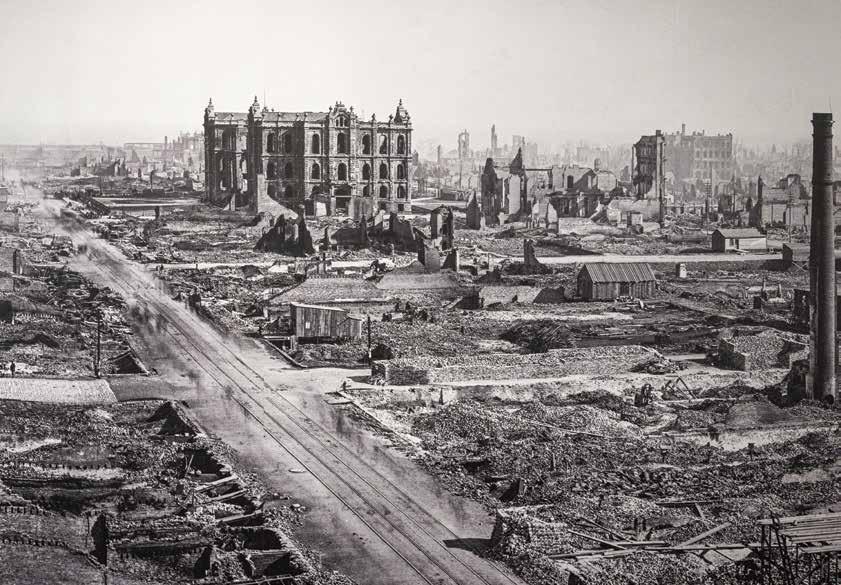
like Italian beef sandwiches and deep-dish pizza. The neighborhood expanded to include the founding of the city’s frst Italian church, Holy Guardian Angel, in 1898, and when that congregation grew overcrowded, Our Lady of Pompeii Church opened in 1911, which operates today as the city’s oldest Italian American church.
The tight-knit neighborhood was forever altered in the 1960s when Mayor Richard J. Daley designated Little Italy as the site for the new University of Illinois at Chicago — resulting in the displacement of around 5,000 residents and the demolishment of approximately 200 businesses to make way for the 100-acre campus (which decades later dropped the ‘at’ in its name). Today, the spirit of Little Italy’s early days lives on — whether it’s at Our Lady of Pompeii; bocce ball games at Arrigo Park; or legendary eateries like the fagship location of Al’s Italian Beef, Tufano’s Vernon Park Tap, Scarfuri Bakery, Ferrara Bakery and Conte di Savoia. And if you plan on being here as the weather gets even warmer, check out Mario’s Italian Lemonade, which is open from May to September.
Al’s Italian Beef – 1079 W. Taylor St., (312) 226-4017
Arrigo Park – 801 S. Loomis St., (312) 746-5369
Conte di Savoia – 1438 W. Taylor St., (312) 666-3471
Ferrara Bakery – 2210 W. Taylor St., (312) 666-2200
Mario’s Italian Lemonade – 1068 W. Taylor St.
Our Lady of Pompeii Church – 1224 W. Lexington St., (312) 421-3757
Scarfuri Bakery – 1337 W. Taylor St., (312) 733-8881
Tufano’s Vernon Park Tap – 1073 W. Vernon Park Place, (312) 733-3393
The history of Greeks in Chicago begins with Greek ship captains in the 1840s arriving in the city after sailing up the Mississippi River from New Orleans. More Greek immigrants arrived in 1871 and in subsequent years to help rebuild the city after the Great Chicago Fire, and many found a living as purveyors of food, which led to a number of Greek Americans owning restaurants in the area.
By the early 1900s, the Greek community was concentrated around Halsted and Harrison Streets, where a proliferation of restaurants, cafes and churches sprouted in the neighborhood that would become Greektown, which would also develop into a happening nightlife spot. The faming saganaki cheese dish was purportedly invented at the legendary Greektown restaurant The Parthenon (which closed in 2016), and Greektown vendors are largely credited with being the frst to introduce gyros — the delectable pita sandwich of blended beef and lamb, with onions, tomatoes and tzatziki sauce — to the U.S.
During the early ‘60s, the new University of Illinois Chicago campus — as well as the Eisenhower Expressway — forced Greektown to relocate a few blocks north on Halsted to between Madison and Van Buren Streets. The community continued to fourish, with Greek archways and temples denoting key intersections, and would eventually welcome both the annual Taste of Greece summer festival and cultural institutions like the National Hellenic Museum
CONTINUED ON NEXT PAGE
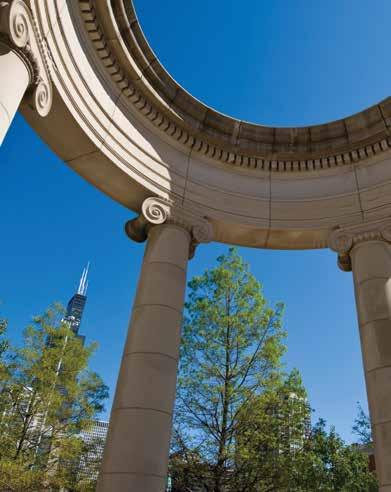
Visitors to Greektown can sample some of the best Greek food in the country at standout restaurants like Greek Islands, Athena, 9 Muses and Ithaki Estiatorio. After flling up on delicious cuisine, stroll down the main Greektown drag of Halsted and you can view public art representing Greek culture, and possibly hear Greek spoken by some residents on the streets.
Athena – 212 S. Halsted St. #1, (312) 655-0000
Greek Islands – 200 S. Halsted St., (312) 782-9855
Ithaki Estiatorio – 314 S. Halsted St., (312) 741-9105
National Hellenic Museum – 333 S. Halsted St., (312) 655-1234
9 Muses – 315 S. Halsted St., (312) 902-9922
One of the Near West Side’s en vogue neighborhoods, Fulton Market in the 19th and 20th centuries was a center for the city’s meatpacking industry. On Randolph Street, an open-air produce market drew farmers and wholesalers who sold fresh food to restaurants, hotels and grocers, with the neighborhood’s warehouses and processing buildings being fxtures through the 1980s.
The opening of Oprah Winfrey’s Harpo Studios in 1989 on Randolph Street sparked a change in the neighborhood, as restaurants and companies descended on the area, subsequently shifting its focus toward dining and entertainment options. Now, top-chef eateries line the strip, which has inspired its nickname of “Restaurant Row.”
A casual stroll down the street reveals upscale emporiums like Au Cheval, Girl and the Goat, Alla Vita, Bar Siena and Nobu Chicago. Head north and you’ll fnd trendy favorites like Rose Mary, The Publican and Aba. After a nice meal, don’t pass by nightlife hot spots like The Aviary, Lazy Bird, The Emily Hotel and City Winery
Aba – 302 N. Green St., (773) 645-1400
Alla Vita – 564 W. Randolph St., (312) 667-0104
Au Cheval – 800 W. Randolph St., (312) 929-4580
Bar Siena – 832 W. Randolph St., (312) 492-7775
City Winery – 1200 W. Randolph St., (312) 733-9463
Girl and the Goat – 809 W. Randolph St., (312) 492-6262
Lazy Bird – 200 N. Green St., (312) 761-1799
Nobu – 854 W. Randolph St., (312) 779-8800
Rose Mary – 932 W. Fulton St., (872) 260-3921
The Aviary – 955 W. Fulton St., (312) 226-0868
The Emily Hotel – 311 N. Morgan St., (312) 764-1919
The Publican – 837 W. Fulton Market, (312) 733-9555
1901 W. Madison St., (312) 455-4500
When the United Center opened in 1994, it had some very big shoes to fll, as it replaced the legendary Chicago Stadium next door on West Madison Street. Chicago sports fans will always have a place in their heart for the old “Madhouse on Madison,” the longtime home of the NBA’s Bulls and NHL’s Blackhawks that was also the site of numerous other sporting events, concerts, circuses and the 1940 Democratic National Convention. But the United Center has been more than a worthy successor, and with over 30 years of service under its belt, the arena keeps growing and getting better with time.
Seating more than 20,000 at a size of nearly 1 million square feet, the United Center annually hosts more than 200 events ranging from sports to concerts, and was also the site of the 1996 and 2024 Democratic National Conventions. The Michael Jordan-led Bulls of the early 1990s, which won three NBA Finals during Chicago Stadium’s fnal years, didn’t skip a beat carrying their championship dynasty over to the United Center, winning three more titles later in the decade — two of which were clinched at home. Since then, the Blackhawks have hoisted three Stanley Cup banners to the rafters, which includes their Game 6 win at home in the 2015 Final to seal the series.
Some of the many artists that have played shows at the United Center include Bruce Springsteen, Paul McCartney, Lady Gaga, Mariah Carey and U2. College sporting events have also been a staple at the United Center since its opening, and basketball will be a top attraction this spring as the arena hosts the 2026 Big Ten Men’s Tournament March 10-15, followed by the 2026 March Madness Men’s Midwest Regional Tournament, taking place March 27-29. (If you’re into college hockey, make plans to be in Chicago two years from now, as the arena will host the 2028 Men’s Frozen Four Championship.)
The United Center has grown over the years with the addition of a fan atrium and ofce spaces. The Bulls’ Advocate Center practice facility is located next to the arena, along with Fifth Third Arena (1801 W. Jackson Blvd., 312-455-7611), the Blackhawks’ practice facility that doubles as a community hockey center with programs and leagues for youth and adults. The United Center’s owners — the Reinsdorf and Wirtz families — also have more ambitious plans for the area surrounding the arena with a $7 billion, phased, mixed-use development project that would include retail, entertainment and housing spaces, in addition to a park and 6,000-seat music venue.
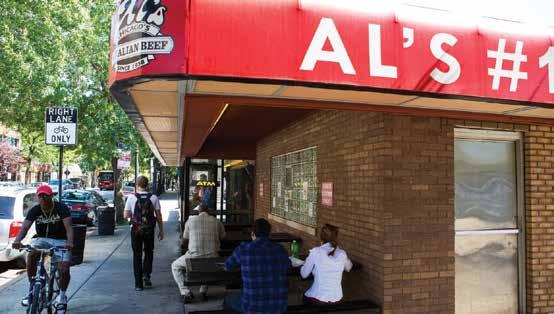
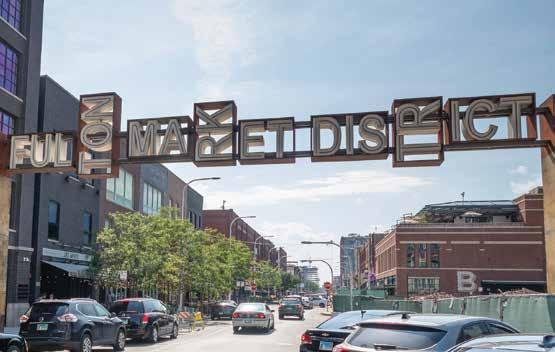
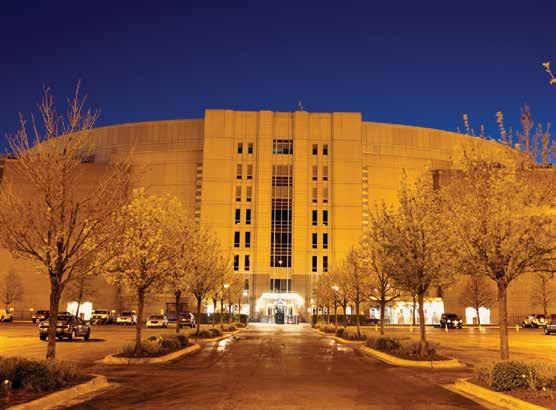
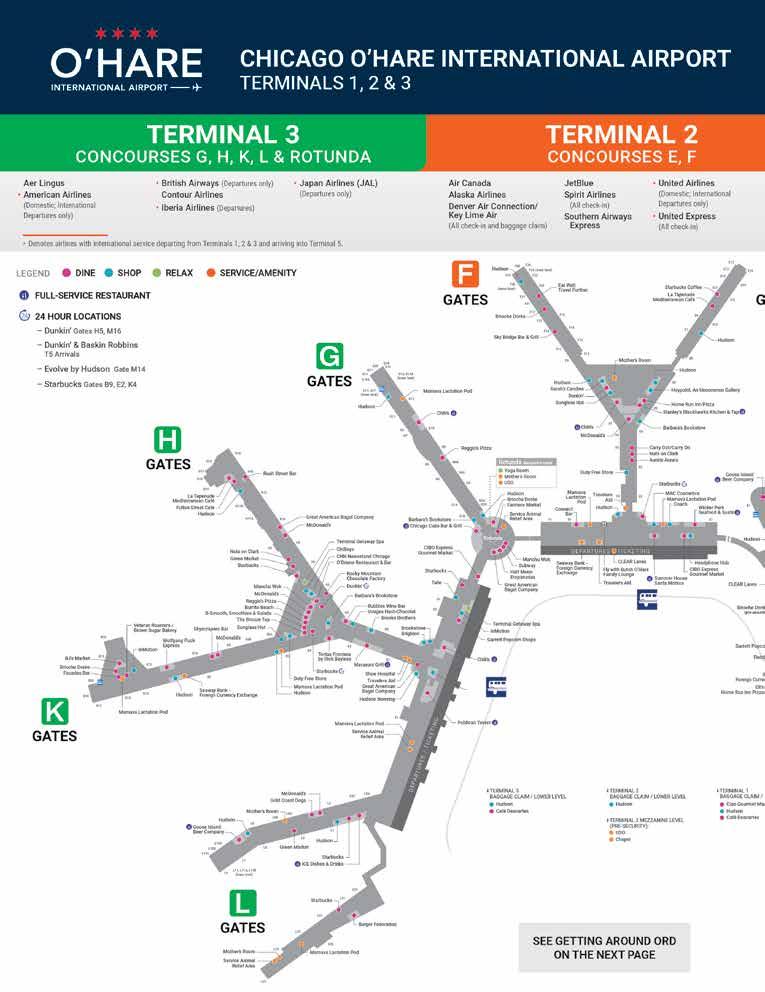
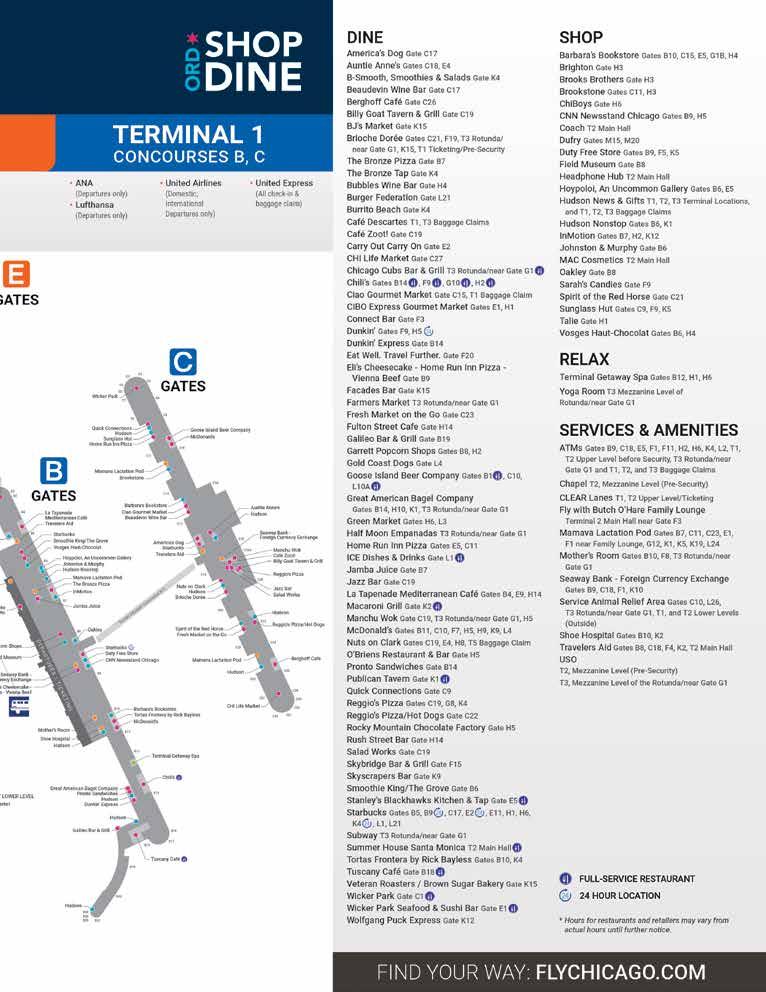
Bar Siena Gate M34
Big Bowl Gate M11
Burger King Gate M11
Butcher & The Burger Gate M26
CHI Life Market Gate M4
Chicago Neighborhood Market & Goods Gate M10
Chick-fil-A Gate M10
The Dearborn Gate M17
Dunkin’ Gate M16
Dunkin’ & Baskin Robbins T5 Baggage Claim
Garrett Popcorn Shops Gates M10 (Cart), M18
The Goddess and Grocer T5 Ticketing/Pre-Security
The Hampton Social Gate M5
Hub 51 Gate M16
McDonald’s T5 Baggage Claim
Metropolis Coffee Company Gate M30
Nuts on Clark T5 Baggage Claim
Protein Bar & Kitchen Gates M15, M25 (Kiosk)
Publican Quality Bread Gate M5
R.J. Grunts Gate M16
Tocco Gate M11
Tortas Frontera by Rick Bayless Gate M18
Urban Olive Gate M16
Wow Bao Gate M16
BLVD & Branch Gate M30
Brookstone Gate M11
Dufry Gates M15, M20
Evolve by Hudson Gate M14
Gallery ORD Gate M16
Hudson News & Gifts Gates M18, M20, and T5 Baggage Claims
I Love Chicago Gate M11
InMotion Gate M29
Six Points Market Gate M30
ATMs Gate M18 and T5 Arrivals
CLEAR Lanes T5 Departures
Interfaith Room Gate M25
Mother’s Room Gates M8, M20, M32, M37
Seaway Bank - Foreign Currency Exchange Gate M14, T5 Arrivals
Service Animal Relief Area Gates M8, M28, T5 Sterile Corridor, T5 Baggage Claim
Travelers Aid Gate M15, T5 Upper Level/Ticketing, and T5 Baggage Claim
Airport Transportation System (ATS)
The Airport Transportation System (ATS) is operating 24/7 to service passengers to and from Terminals 1, 2, 3 and 5, as well as the Multi-Modal Facility (MMF) for rental cars, Economy Parking Lot F, Kiss ‘n’ Fly, Pace buses and Metra.
Terminal Transfer Bus
Passengers with connecting flights can use the secure airside bus service between Terminal 5 and Terminals 1 and 3 to avoid exiting and re-entering security. For bus stop locations and operating hours, visit flychicago.com/TransferBus.
America’s Dog & Burger Central Market
Arami Concourse A Food Hall
Beecher’s Handmade Cheese Central Market
Big Bowl Central Market
Big City Chicken Gate B7
Big Shoulders Coffee Gate A14
Billy Goat Tavern and Grill Concourse A Food Hall
Café Descartes Baggage Claim
Camden food co. Gate B20
Cielo Cantina Gate A7
Connie’s Pizza Central Market
Dunkin’ Central Market
Dunkin’ Express Gate B21
Einstein Bros. Bagels Gate A7
Fuel Bar Gate A4A
Garrett Popcorn Shops Central Market, Gate B14
Gene’s Bistro Central Market
Harry Caray’s Shortstop Gate A9
Home Run Inn Gate B17
Hubbard Inn Gate B7
M Burger Central Market
Mr. Beef Gate B14
Nuts on Clark Concourse A Food Hall, Gate A5, Central Market
Porkchop Gate B14
Reilly’s Daughter Concourse A Food Hall, Central Market
R.J. Grunts Gate B16
Specialty Vending Central Market, Gate A4A, Gate A5, Gate C1
Tallboy Taco Central Market
The Orange Line Gate B21
White Sox Bar & Grill Central Market
Woodgrain Neapolitan Pizzeria Concourse A Food Hall
Chicago Sports Gate B10
Departures News Gate A4B
EVOLVE by Hudson Central Market
Fannie May Gate A5
FAO Schwarz Gate A5
Hudson News & Gifts Baggage Claim, Gates A5, B9, C1
Hudson Nonstop Gate B21
ink by Hudson Gate A9, B17
iStore Concourse A Food Hall, Gate B17
Johnston & Murphy Gate B8
MAC Cosmetics/Jo Malone Central Market
Sarah’s Candies Central Market
Southside News Gate A11
Specialty Vending Central Market
The Atrium Gate A5
TUMI Central Market


Adult Changing Table Gate B15
ATMs Concourse A Food Hall, Gates A1, A8, B9, B18
Chapel Concourse C, Mezzanine Level
Chicago Police Department Concourse C
Lactation Pod Concourse A Food Hall
Mother’s Room Concourse C
Pet Relief Concourse A Food Hall, Outside Baggage Claim Door 4
Seaway Bank and Trust Company
Currency Exchange Gate A1
Toilets Concourse A Food Hall, Central Market, All Concourses, Baggage Claim
USO Concourse C
Yoga Room Concourse C
Battle of Midway Exhibit Gate A1
Central Market Seating Zone Central Market
Gameway Gate A5
Kids Play Area Gate A5
Seating Zone Gate A5
The Club MDW Gate B1
1920’s chief justice 5 Actress June of “Love Nest”
Barbed comments
Is under the weather
Muscat resident
Eye up and down
Brainwashing ploy
Temple of Jerusalem 20 Clairvoyance, e.g.
Demolishes
Quay
Keyboard instrument
Melted glace
Reporters’ questions 28 Showy bloom
Sweep under the rug
Like the Marx Brothers
Start for a Spanish count
Bee’s charge
Kama ___
Defense grp.
Harvest goddess
Like Solomon
Some nest eggs
Expressionless in cards
Back of the neck
Jazz man
Scout’s mission, briefly
52 Place for a massage
Bony food fish
Abe’s youngest son 60 One of Chekhov’s Three Sisters
On an individual basis
63 Last name in spydom 64 “Home ___” (1990 farce) 65 “Scream” star Campbell
Barbra’s “Funny Girl” co-star
“Beau ___” (1939 Cooper flick)
Winter Palace ruler
Sticky stuff
Pretenses
Computing device of yore 4 Cooking meas.
“___ Heroes” (Bob Crane TV show)
Virago
Windmill part
They may be split
River inlet
Book in the Old Testament
Eastern pooh-bah
Picture problem 13 “To thine own ___ be true” 31 Written
On one’s guard
Fortuneteller’s opening
Seat of Jackson County, Tex.
___ it up
River horse
Tenochtitlan resident
Lasso loop
Strain
G8 member
Chihuahua child
“That’s a ___!”
Cream-filled
Wide of the mark
Scorecard number
Formal order
Chinese tea 18 Rome’s ___ Pacis

NO Artificial Flavors
NO Synthetic Colors
NO Artificial Sweeteners



NO High Fructose Corn Syrup



NO Hydrogenated Fats














Whether you’re sprinting for a connection, boarding an overnight flight, or simply craving something honest between gates, Eat Well. Travel Further. is your travel companion. Fresh, thoughtfully-made food options, so you feel ready for wherever your trip takes you.
Now available in select locations at Chicago O’Hare International Airport.