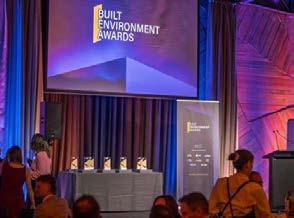
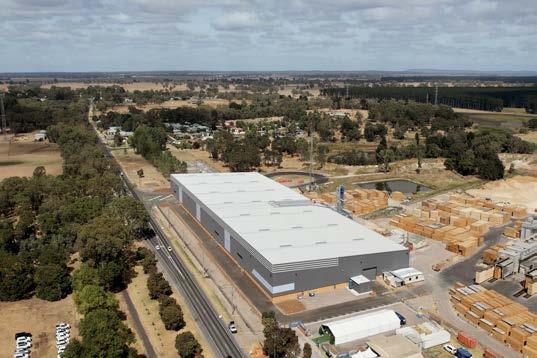
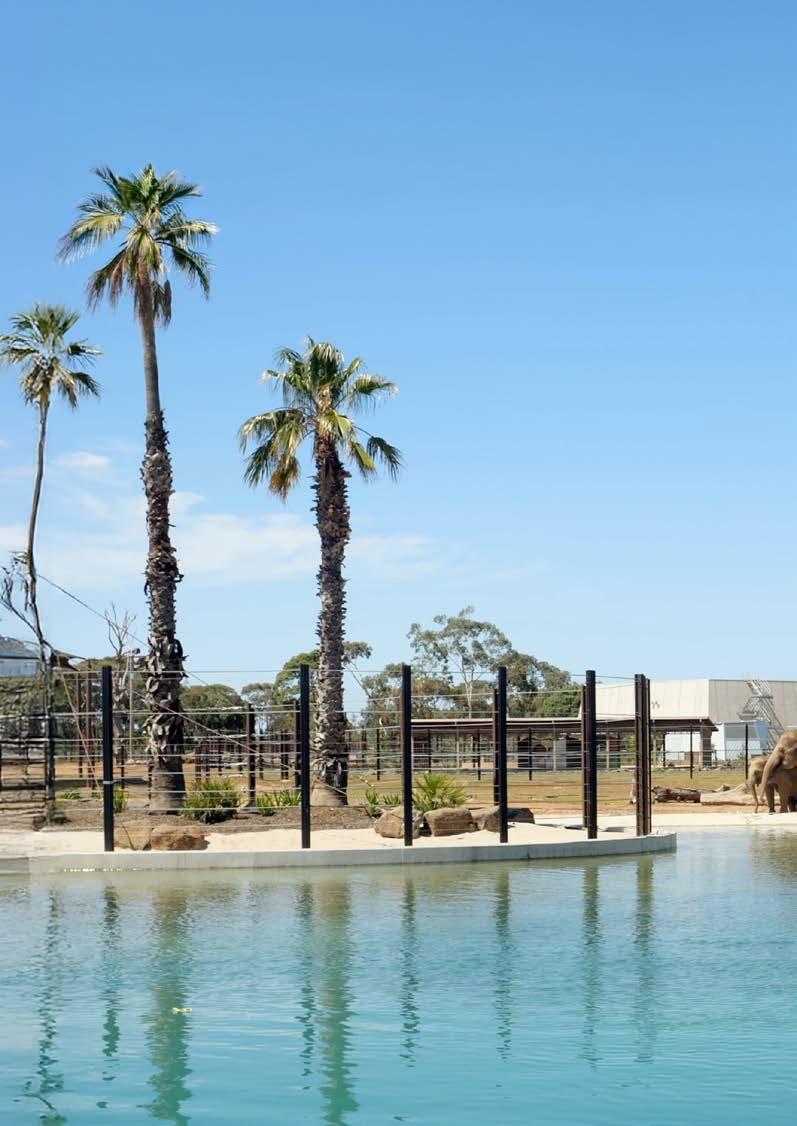
Werribee Open Range Zoo Expansion by Development Victoria. Winner of the Built Envoronment Awards 2026 for Swinburne University of Technology Project Innovation Award.
The pages used in this publication have been printed with Sustainable Green Print industry certification.
About The Built Environment Economist is the flagship publication of The Australian Institute of Quantity Surveyors (AIQS). Produced quarterly, the Built Environment Economist seeks to provide information that is relevant for quantity surveying and construction professionals, as well as asset owners.
Subscribe At aiqs.com.au/shop you can purchase a copy of this edition or subscribe for 12 months.
Contribute
AIQS encourages readers to submit articles relating to quantity surveying, the built environment and associated industries including: construction economics, cost estimating, cost planning, contract administration, project engineering. If you would like to contribute, email marketing@aiqs.com.au
Advertise
Contact AIQS to discuss available opportunities: Katie Freeman Brand Engagement Specialst T: +61 2 8234 4000 E: marketing@aiqs.com.au
This edition was curated by Katie Freeman and Anthony Lieberman.
Disclaimer
AIQS does not take any responsibility for the opinions expressed by any third parties involved in the writing of the Built Environment Economist.
ISSN 2652–4023
CEO LETTER
By Dr James Cameron
AIQS has achieved a great deal this financial year to benefit members, and there have been many key initiatives. Members have been forming and driving national committees to create a robust standard development process, and these have been developing numerous standards and sending submissions to several government and external agencies. We have been looking at ways to integrate innovative technologies that AIQS can harness to benefit members and key stakeholders. More than 70 events and webinars have been delivered across multiple topics presented by industry experts. AIQS has been continuing the accreditation of construction management programs to ensure that the standard of tertiary education provided to students is being upheld.
AIQS recognised and celebrated key achievers in the industry via the Built Environment Awards. Quantity surveying professionals I warmly encourage you to renew your AIQS membership, and speak to your colleagues about the benefits of AIQS membership and events. One issue continues to be the fuel situation and broader energy price volatility. Fluctuating fuel costs are having a direct impact on construction pricing, logistics and contractor risk allocation. For quantity surveyors, this has reinforced the importance of disciplined cost planning, realistic escalation allowances and early risk identification.
Quantity surveyors’ role as trusted, independent advisers has never been more valuable, particularly as clients navigate feasibility in uncertain conditions. We have recently undertaken some media to this effect, and highlighted that fuel escalations show the importance of employing the services of Certified Quantity Surveyors (CQS), to calculate construction, facilities management and depreciation costs. We have also communicated ways to assist members in the Middle East.
Policy and advocacy remain a key priority. AIQS continues to engage with government and industry on these matters, ensuring that the perspectives of cost management professionals are clearly articulated and understood. Your input, experience and insights are essential to informing this advocacy. The federal budget shows how policy settings for the built environment can change unexpectedly, and of the need to be vigilant.
Membership engagement will always be a focus of the institute. Strong professional bodies rely on active participation, whether through events, committees or mentoring. Events and forums provide invaluable opportunities to share insights, respond to emerging issues and support the next generation of quantity surveyors.
Looking beyond Australia, collaboration with international peers remains a valuable source of learning and connection. The upcoming NZIQS Conference in July is one example of how trans-Tasman
engagement can broaden perspectives and highlight shared challenges across markets. The NZIQS conference from 1-3 July promises to be a great event, and registration is now open. The conference will be held in Auckland at the brand-new New Zealand International Convention Centre. After the successful conference in Invercargill last year, NZIQS is gearing up for two days packed with inspiring speakers, practical skills, industry insights, and plenty of chances to connect with fellow professionals. The theme this year is “Rise Together!”, and connecting people, creating value, and shaping the future. I encourage members to take advantage of this opportunity to broaden perspectives and strengthen professional networks.
With best wishes,
DR JAMES CAMERON
Chief Executive Officer, Australian Institute of Quantity Surveyors
Thank you to all our sponsors:
Planitnum: RIB
Gold: Swinburne University of Technology, Wilde and Woollard
Silver: PCMG, CPB, Siraj Finance and Rider Levett Bucknall. Media Partner: Sourceable.
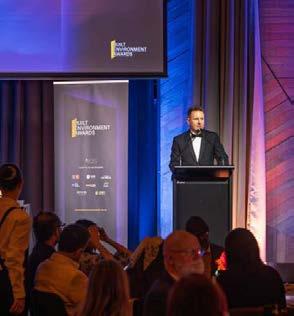
Celebrating excellence, innovation, sustainability, and diversity across the built environment.
Proudly brought to you by the Australian Institute of Quantity Surveyors (AIQS), the Built Environment Awards recognises excellence and celebrates outstanding achievements shaping our industry worldwide. builtenvironmentawards.com.au
PLATINUM
SPONSOR
RIB is a global leader in digital solutions for the engineering and construction industry, helping organisations improve efficiency and sustainability through innovative technology. With over 60 years of industry experience, more than 550,000 users worldwide, and a team of 2,700 professionals, RIB delivers software solutions designed to transform the built environment. Its comprehensive portfolio supports the entire project lifecycle, from planning and construction to operations, connecting people, processes, and data to help customers deliver projects on time, within budget, to the highest quality standards, while reducing their environmental impact.
EMERGING PROFESSIONAL AWARD
WINNER: Sophie Ly MAIQS, CQS
Sophie has been recognised for outstanding contributions to the quantity surveying profession and broader built environment through technical leadership, industry advocacy, and mentoring emerging professionals.
Across major Victorian Government projects, Sophie demonstrated exceptional capability in cost management, risk mitigation, and governance. Sophie also promotes the profession through lecturing, mentoring, and thought leadership.
RLB EXCELLENCE IN DIVERSITY, EQUITY AND INCLUSION AWARD
WINNER: CPB Contractors
CPB Contractors has been recognised for its industry-leading commitment to diversity, equity and inclusion through practical initiatives delivering lasting change across the built environment.
Programs supporting women in construction, migrants, refugees, Indigenous partnerships, and veterans, including the world’s first allwomen tunnel boring machine crew, have achieved significant workforce outcomes.
WILDE & WOOLLARD EXCELLENCE IN COST AND COMMERCIAL MANAGEMENT AWARD
WINNER: WT
WT was recognised for exceptional cost management and advisory services on the Hawthorn Football Club Kennedy Community Centre project.
Through complex site conditions and market volatility, WT maintained strict budget control, provided strategic procurement advice, managed risks proactively, and delivered innovative solutions. Strong collaboration and communication helped successfully realise this landmark community and sporting facility.
THE PCMG QUANTITY SURVEYING ADVOCACY AWARD
WINNER: Dr Jeremy Wu MAIQS
Jeremy was recognised for outstanding advocacy and leadership in promoting the quantity surveying profession across industry, academia, and government.
Through his roles at Curtin University and AIQS, he advanced professional development, strengthened industry recognition, and championed the strategic value of quantity surveyors in project delivery, risk management, and commercial governance.
THE CBP CONTRACTORS SUSTAINABLE PROJECT AWARD
WINNER: Oran Park Leisure Centre (Hunter Scott)
The Oran Park Leisure Centre delivered an outstanding community-focused project, creating an inclusive, accessible, and sustainable civic hub for a rapidly growing community.
Delivered on time and under budget, it generated significant social and economic benefits while setting a benchmark for public infrastructure through innovative sustainability, strong community engagement, exceptional design, and long-term operational efficiency.
SWINBURNE UNIVERSITY OF TECHNOLOGY PROJECT INNOVATION AWARD
WINNER: Werribee Open Range Zoo Expansion (Development Victoria)
Werribee Open Range Zoo was recognised for delivering a world-class elephant habitat through innovative, conservation-focused infrastructure.
The project combined sustainable reuse of materials, advanced utility solutions, and internationally informed animal welfare design. Delivered on time and on budget, it achieved outstanding environmental, social, and economic outcomes while creating a lasting legacy.
RIB INDIVIDUAL EXCELLENCE IN QUANTITY SURVEYING AWARD
WINNER: Jessica Ling MAIQS CQS
Jessica was recognised for her exceptional contribution to the quantity surveying profession through technical excellence, leadership, education, and industry service.
As Associate Director at Wilde and Woollard and a lecturer at Curtin University, she has mentored future professionals, modernised education, and inspired emerging quantity surveyors while advancing the profession’s future.
OUTSTANDING REGIONAL PROJECT AWARD
WINNER: Roebourne District High School (ADCO Constructions)
The Roebourne District High School redevelopment was recognised for delivering a culturally inclusive, sustainable, and high-value education facility.
Achieving outstanding outcomes in safety, cost, programme management, and community engagement, the project embedded Aboriginal culture, supported local employment and businesses, and set a benchmark for regional educational infrastructure through collaboration and innovation.
RIB OUTSTANDING PROJECT AWARD
WINNER: Charles Darwin University
Danala Education and Community Precinct (QS Services)
Charles Darwin University’s Danala Education and Community Precinct was recognised for delivering a complex, culturally significant, and highly sustainable public infrastructure project.
Despite major challenges, it achieved exceptional value through rigorous cost control and collaboration, setting new benchmarks for climate-responsive, culturally inclusive design while creating a vibrant community and education hub.
ASSEMBLING THE FUTURE GENERATION OF QUANTITY SURVEYORS
By Sr Colin Kin
The question facing us all today is: How do we as a profession thrive in an era of digital transformation, shifting workplace expectations, and rapid change? What is very clear is that as the workplace continues to evolve, so must our approach to leadership and staff development. This article explores why in an environment of artificial intelligence (AI), soft skills and mindsets are now, more than ever before, critical for long-term people development, career and business success.
CURRENT INDUSTRY LANDSCAPE
Quantity Surveying is not a government regulated profession in Singapore despite years of institutional advocacy. Instead, we have established a selfregulation framework called the Accredited Professional Quantity Surveyor (APQS). Developed collaboratively by the Singapore Institute of Surveyors and Valuers (SISV) and the Building and Construction Authority (BCA) under the national SkillsFuture initiative, APQS serves as a structured path for professional recognition. As the current President of the QS Division at SISV, I continue to champion APQS as a necessary step towards elevating standards and strengthening trust in our profession.
As its name suggests, the required “skills of the future” have been defined and the levels of competency required for each, have been identified for accreditation. APQS Tier 3 represents the entry-level, traditional institutional Assessment of Professional Competency (APC) level of expectation. This accreditation framework was in response to, and sits in an environment in Singapore, where we have a severe shortage of Quantity Surveyors.
In a global “War for talent”, students are not drawn to this oft-perceived unglamorous profession. Student numbers have fallen to a trickle, insufficient to meet current and future industry demands. Generational expectations are now focused on: Purpose, Impact, and Innovation first, and Mentorship, Career Advancement, and Salary second. I suppose this is a challenge shared across global markets, though the scale and severity may vary.
SKILLS THAT WILL ENDURE THE TEST OF TIME
Large Language Models (LLMs) like ChatGPT currently struggle with numbers. AI models are rapidly advancing toward integrated language and numerical reasoning capabilities, which will eventually automate traditional quantification tasks. But we are not there yet, and we must empower our staff with the full potential of the tools they have at their disposal.
AI is a powerful enabler for comparison, analysis and generation of strategic recommendations, given enough data for learning and formalised standard operating procedures. The ability to harness traditionally disparate and unstructured data will enable us to work quickly, more accurately and be better advisors who are able to seek valueadd and “value for money” solutions. This shift will allow us to focus more on high-value advisory services, moving from technical quantification to strategic problem-solving.
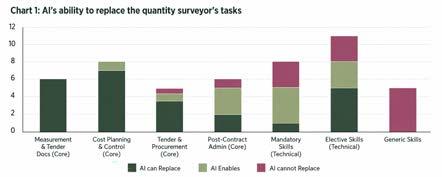
The question is whether AI adoption is the panacea for our woes. To answer this, we have deep-dived into the APQS Tier 3 framework and asked the question: Can AI Replace or Enhance the defined task and future skills required?
Analysis of the task and required future skills shows that the soft skills of Teamwork, Communication, Interpersonal skills, being Creative, and Problem solving, have been repeated often in the technical skills section.
cannot manage conflicts or negotiations
AI will greatly Enable, if not replace, the technical elements – but not the human aspect. The soft human skills are more important today, more so than ever before in our profession.
We need to become better at being Human. We need to have greater Awareness of situations, have greater Understanding and Discernment and Empathy to proactively propose solutions based on our experience. The question therefore is: Is it the responsibility of the company to develop these skills? This is given that those who are naturally good at these things will be the ones we naturally reward and promote. Do we need these skills from everyone in the company?
My proposition is yes. We as a profession are moving away from being technical “numbers people”, and staff who rely solely on technical competencies may risk becoming less relevant in a landscape that increasingly values soft skills.
How? Apart from outside training, there is no better way to teach and train staff in these skillsets than to model them by Leaders who “walk the talk”. In an age of AI, our strength lies in our humanity – and this is our competitive advantage that cannot be replaced.
I firmly believe that we will be able to safeguard our future relevance and key differentiator as a company, only if we at RLB are able to truly embody our values of Truth, Trust, Together and Tomorrow, and exhibit this in our behaviour to staff and wider project teams.
WHAT NEW VALUE CAN WE DELIVER IN A DIGITAL FUTURE?
Whilst we have discussed how we might evolve internally (staff, training, leadership), we need to more importantly consider how we remain externally valuable (client impact, relevance, positioning):
• From technician to advisor: As AI handles more technical tasks, we become strategic advisors— offering insights on value-formoney, sustainability trade-offs, lifecycle risk, and client-centric delivery models.
• Integration into multidisciplinary teams: The modern QS must speak the language of engineers, planners, data scientists, and sustainability consultants — embracing and adopting a “translator” role.
• Driving value-based outcomes: Take the lead in setting project performance metrics beyond cost, such as carbon value, productivity yield, and adaptability score.
“Can AI Replace or Enhance the defined task and future skills required”
This will require:
• Leaders to embrace digital disruption, adapt to evolving hybrid work models and proactively respond to changing client expectations
• Investment for continuous upskilling
• Buy-in from team leaders to support and provide peer learning, mentoring and coaching
• Future leaders and staff to be adaptable, collaborative and skilled communicators
• Personal action planning in performance reviews, for staff career development and upskilling
• Everyone to build a mindset of lifelong learning
This article was written by Sr Colin Kin from RLB
VISIONARIES
"The QS who can cut through complexity and bring clarity to clients becomes indispensable - not despite volatility, but because of it."
PRICING IN A VOLATILE WORLD
THE QS CHALLENGE FROM PANDEMIC TO CONFLICT
The role of the quantity surveyor has always demanded expertise in dealing with uncertainty. But the years since COVID have provided more challenges than anticipated. A pandemic, a global supply chain crisis, high inflation, and now a conflict in the Middle East reshaping energy and freight markets in real time.
For Oliver Nichols, Director at Rider Levett Bucknall in Sydney, that volatility now needs to be considered daily as part of his professional role. 'The fundamentals of what we do haven't changed,' he says. 'But the inputs we're working with are more dynamic than ever. A cost plan you prepared six months ago or one you will prepare in six months’ time may not reflect where the market is today, and you have to be transparent about that with clients as the market evolves.'
FROM PANDEMIC TO CONFLICT: COMPOUNDING UNCERTAINTY
COVID introduced construction to a new kind of risk: one that could close borders, idle labour forces and disrupt global supply chains simultaneously. The profession had to adapt, fast, how to cost projects where the inputs were moving targets. That experience built know-how. Now, the Middle East conflict has created more upheaval for the construction sector. There was an initial supply shock in fuel and freight that has pushed up prices, which has fed into broader inflation across construction inputs. If the conflict continues, there is the potential of higher interest rates and slower growth to follow.
RLB's analysis of current supplier pricing shows diesel prices up 70–80%, plastic pipes and fittings up 25–40%, bitumen and asphalt up 20–40%, and concrete up 8–12%. Delivery surcharges are running at 10–20% across most freight providers. Working alongside RLB’s Oceania Chief Economist Trent Wiltshire, who has analysed the conflict's immediate and broader effects, Oliver is clear on the key message for clients: 'This is a live cost risk issue, not a settled escalation outcome. Historic benchmarks date quickly — separate your base cost from your escalation and contingency allowances and make those assumptions visible.'
PROJECTS AT THE SHARP EDGE
Oliver's recent project experience reflects the complexity the profession now navigates. As QS for multiple Sydney Metro integrated development sites including Indi Sydney - the first build-to-rent tower in the Sydney CBD, constructed over the southern entrance to the Gadigal Metro station - he guided a $152 million project through developer transitions, COVID delays, union action and Metro line wide impacts. The project ultimately completed in late 2024, winning multiple awards including the AIA National Residential Architecture award and the CTBUH Best Tall Building (Oceania) for 2025.
'Build-to-rent fundamentally changes the design and cost conversation. Durability, maintainability, operational design - these drive value in a different way to build-to-sell,' he explains. 'Understanding the client's longterm asset model is as important as understanding the construction market.'
WHY IT MATTERS BEYOND THE PROJECT
The stakes extend well beyond individual projects. The conflict will put pressure on the cost of building, which could reduce housing supply a direct blow to an already strained housing pipeline and affordability housing crisis. Higher costs may also place strain on insolvencies and so monitoring builders, and the supply chain is important in a volatile environment. For a profession central to project feasibility and cost governance, the QS role has rarely carried more consequence. Providing independency in managing budgets, costings and programme are key to project success, making the QS vital to any development.
'In today's market, the QS who can bring structure to ambiguity and provide clear and early advice to enable informed decisions becomes genuinely indispensable,’ Oliver says.
OLIVER NICHOLS
This article was written by Oliver Nichols from Rider Levett Bucknall (Sydney)
WHERE IT STARTED, WHERE IT'S HEADING
The last time I walked through the University of Melbourne's Parkville campus as an undergraduate, the Melbourne School of Design was still under construction. Returning fifteen years later as a seasoned quantity surveyor to a building now complete and alive with purpose was a powerful reminder that some places quietly witness our growth, then invite us back with renewed intent.
Being back recently, contributing to industry conversations about the future of construction professionals, brought that perspective into sharp focus.
“What once felt like possibility has become responsibility”
The choices we make today about how we lead, educate and invest in people will determine how resilient, relevant and trusted our industry becomes.
One question continues to resonate. What does leadership in construction look like in the age of artificial intelligence? As digital tools become embedded across estimating, planning and delivery, the opportunity is not to replace professional judgement, but to elevate it. The leaders of the future will combine technical excellence with curiosity, ethical clarity and the confidence to challenge assumptions, including those generated by technology.
This presents an exciting moment for education and professional development. Alongside core technical skills, we must cultivate critical thinking, adaptability and communication. Future professionals will need to understand not just how projects are costed, but how value is created, how risk is shared and how decisions shape communities over time.
“Our profession sits at the intersection of data, judgement and trust.”
For quantity surveyors, this is a moment to lead. Our profession sits at the intersection of data, judgement and trust. As complexity grows, so does the value of clear, independent insight.
The built environment shaped my career long before I realised it. The opportunity now is to ensure it does the same for the next generation, equipping them to lead boldly, think broadly and build a future worthy of the profession.
SUZY CHU MAIQS, CQS
This article was written by Suzy Chu MAIQS, CQS, National Director at WT
Plan smarter with timber
Access free, practical resources made for quantity sur veyors
Timber product and system information for early planning
Environmental Product Declaration Database for insights in one location
Guidance on fire performance, durability, sustainability, buildability and compliance
Aligned with the National Construction Code, WoodSolutions gives you the knowledge and tools for greater cer tainty in planning & project deliver y
GIICA’S FIRST DELIVERY CONTRACTOR TENDER GIVES US A STEER ON ITS PREFERRED DELIVERY MODEL
By Owen Hayford
The Queensland Government’s Olympic Games infrastructure delivery agency - GIICA - has recently commenced the procurement process for a delivery contractor for its first of 17 venue construction/upgrade contracts. The volume of contracts to be awarded, coupled with immovable Games deadlines and market capacity concerns, will drive GIICA towards a largely standardised procurement and contracting approach across most of its venues program. Variants are likely to be limited to site-specific, stakeholder and legacy-use issues unique to each project. As such, the Invitation for Prequalification for the National Aquatic Centre (IFP) provides us with a steer on the delivery model GIICA is likely to prefer for many of these projects.
GIICA’s first delivery contractor IFP is not just about the National Aquatic Centre; it is a template for how risk, market capacity, and design control will be managed across the entire venue program.
D&C CONTRACT WITH DUAL ECI PHASE
The contracting model adopted is a design-and-construct (D&C) contract, coupled with a ‘dual’ Early Contractor Involvement (ECI) phase. GIICA proposes to shortlist two tenderers based on capability and experience to proceed to the ECI development phase, during which D&C offers will be developed.
Whether the D&C contract will incorporate a lump-sum price or an incentivised target-cost arrangement has yet to be announced. GICCA will no doubt express its preference during the ECI phase.
Importantly, GIICA will have already appointed the principal architect prior to the commencement of ECI
activities. During the ECI development phase, the principal architect will lead design progression, with the ECI contractors contributing construction input, sequencing advice and value engineering. Following contract award, the principal architect may be novated to the delivery contractor or retained directly by GIICA, at GIICA’s discretion. This is a material qualification for the ‘D&C’ label. While construction risk will ultimately sit with the delivery contractor, design control during ECI will remain client-led. The critical commercial questions for bidders will be how and at what point design risk is expected to transition from a client-led ECI environment to a contractor-held D&C position, and what warranties the architect will provide to the delivery contractor under the novated design contract.
“This structure signals a willingness to invest in competitive tension through to a high level of design and pricing maturity ”
THREE-PHASE PROCUREMENT PROCESS
The procurement process proposed for the initial project involves three phases:
• Phase One: Invitation to Prequalify
• Phase Two: Invitation to Offer
• Phase Three: Dual ECI Development Phase.
The terminology for Phase Two is curious. Ordinarily, this phase would involve shortlisting two prequalified tenderers to proceed to phase three based on their experience, capability, and capacity, rather than their proposed commercial terms.
OLYMPICS
However, the reference to an ‘Invitation to Offer’ suggests that GIICA may seek early confirmation of key commercial positions (such as pricing approach and risk allocation) as part of Phase Two – an approach that is unusual in the Australian ECI market and may prove difficult to operationalise before design and risk are sufficiently developed.
The shortlisted tenderers will be expected to sign GIICA’s ECI Agreement at the commencement of Phase Two, but this agreement can’t lock in price or other commercial terms at this early stage. Rather, that will occur at the end of Phase Three.
GIICA proposes to contribute to the costs incurred by the losing ECI contractor during Phase Three. The extent of the proposed contribution will be included in the Phase Two invitation to offer. Phase Two is expected to take 4-5 months. Phase Three is expected to take 8–10 months. GIICA has expressed a desire to select a sole preferred tenderer six months into Phase Three, but bidders should expect GIICA to take both ECI contractors to fully detailed contract offers.
This structure signals a willingness to invest in competitive tension through to a high level of design and pricing maturity, notwithstanding the cost and resourcing implications for bidders.
MANDATORY CRITERIA AND ELIGIBILITY CRITERIA
To be invited to proceed to Phase Two, applicants (which may be a joint venture or consortium) must satisfy the eligibility criteria and the mandatory criteria:
The eligibility criteria are:
• Applicant includes an entity that has delivered an aquatic centre or comparable sporting building project with a contract value of at least A$300m in the last 15 years
• Applicant includes an entity that has delivered comparable sporting infrastructure projects in Australia under an ECI model, or other comparable collaborative procurement model, with a contract value of at least A$300m in the last 15 years, and
• Applicant includes a participant who has delivered building or large-scale integrated precinct projects within Australia with a minimum value of $400m in the last 10 years that involved
• multiple assets, major civil works and complex interfaces
• managing planning considerations, such as heritage assets, and
• delivery within the Australian regulatory, planning and industrial relations environment.
Accordingly, relevant Australian experience is essential. These criteria also point to a deliberate weighting in this project, due to the nature of this site, towards bidders with demonstrated capability in managing heritage, planning, and stakeholder complexity.
The mandatory criteria are:
• Compliance with Queensland Procurement Policy, including the Queensland Government Supplier Code of Conduct
• Registration with the Queensland Building and Construction Commission
• Compliance with the Commonwealth Fair Work Act and Industrial Relations legislation, and
• Previous projects that demonstrate compliance with the Disability Discrimination Act, the National Construction Code and the Queensland Development Code.
PROCUREMENT PROCESS DEED POLL
GIICA’s Procurement Process Deed Poll, which every Applicant must sign, also provides an early indication of GIICA’s preferred risk profile. For example:
• Statutory functions of GIICA, the State and other yet to be notified entities are unfettered, and don’t constitute an act or omission under the deed poll
• Information documents cannot be relied upon
• Applicants have no right to appeal or make a claim against GIICA or the State in respect of the procurement process
• Applicants must indemnify GIICA and e State from liabilities arising from ‘anything GIICA does or fails to do’ as part of the procurement process
• The liability of bidders that bid as a consortium or joint venture is joint and several.
“Early alignment of bid strategy with this model may be as important as technical capability.”
SITE CONSTRAINTS AND SUSTAINABILITY COMMITMENTS
The National Aquatic Centre site presents an unusually complex risk profile for a major aquatic project. The site is constrained by heritage -listed assets, proximity to rail infrastructure, flood planning overlays, geotechnical interfaces and significant stakeholder sensitivities associated with Victoria Park. These constraints help explain GIICA’s preference for a dual ECI model and its emphasis on collaborative risk development.
In addition, GIICA has embedded firm sustainability requirements into the project. The National Aquatic Centre must achieve a minimum 5 Star Green Star Buildings rating and is targeting a 6 Star outcome. Sustainability performance is therefore not merely aspirational, but a defined project parameter that will limit the scope of value engineering during ECI.
OTHER ROLES?
Unsurprisingly, GIICA’s Delivery Partners – Laing O’Rourke and AECOM – are precluded from bidding for the delivery contractor roles.
But any entity identified as a sole preferred ECI contractor for the Brisbane Stadium Project must seek GIICA’s permission to participate as an ECI contractor for the National Aquatic Centre project.
More broadly, the IFP makes clear that participation across multiple venue procurements is permitted in principle, but subject to strict probity management and GIICA’s sole discretion. Entities proposing to bid with different partners for different projects within the program will need to carefully consider how they will manage the probity issues that may arise from this.
WHAT THIS MEANS FOR BIDDERS?
• “D&C” does not mean contractorled design:
° GIICA will retain design leadership through its appointed principal architect during ECI. Bidders should plan for a collaborative but client-directed design environment.
• ECI resourcing will be intensive and prolonged:
° The dual ECI model, coupled with GIICA’s stated intention to take both bidders to detailed offers, implies a long and resource-heavy competitive phase.
• Probity will be managed across the entire programme:
° Participation in multiple venue procurements is possible, but only with careful probity planning and transparent disclosure.
• Heritage and planning capability are critical for NAC:
° The eligibility criteria and site constraints indicate that heritage and regulatory risk management is as important as aquatic construction credentials.
• Sustainability outcomes are locked in early:
° With a minimum 5 Star Green Star requirement and a 6 Star target, ECI innovation will need to work within fixed sustainability parameters.
CONCLUSION
There are presently 17 projects – seven new builds and 10 upgrades – within GIICA’s venue program.
Industry participants wishing to bid for any of these would be wise to study GIICA’s Invitation for Prequalification for the National Aquatic Centre.
More importantly, bidders should treat the NAC procurement as an early signal of how GIICA intends to balance speed, risk transfer, design control and market capacity across the wider venues program. Understanding that balance early will be critical to structuring competitive and credible bids as the program accelerates.
For bidders targeting multiple venues, early alignment of bid strategy with this model may be as important as technical capability.
This article was written by Owen Hayford from Infralegal
IN TIMES OF PROCUREMENT UNCERTAINTY, DUE TO UNFORESEEN CIRCUMSTANCES
(E.G.,
COVID OR FUEL SHORTAGES), HOW DO
QUANTITY SURVEYORS HELP TO MINIMISE FINANCIAL RISK ON CONSTRUCTION PROJECTS?
JARROD DUNFORD
Executive Quantity Surveyor, MBM
As Quantity Surveyors, our primary role is to reduce financial risk for our clients and ensure they achieve the greatest possible value for money. Over the past six years, events such as the COVID-19 pandemic, the war in Ukraine, and most recently the conflict in Iran have significantly influenced how the construction industry responds to unforeseen circumstances. Our responsibility is to apply the lessons learned from these events and provide strategies that help minimise risk and improve project resilience.
For projects already underway, this may involve reviewing contract provisions relating to cost escalation, identifying trades most exposed to disruption, maintaining consistent payment practices to support contractor cash flow, and adopting collaborative risksharing approach where appropriate. Given we typically deliver multiple
projects concurrently, we are able to develop cost escalation benchmarking data and assess contractors’ escalation claims on a trade-by-trade basis. In these circumstances, consideration should be given to support contractors beyond their contractual provisions to ensure their liquidity and maintain overall project stability.
For project in the planning and preconstruction phase, we can provide strategic advice by recommending the sourcing of materials from lowerrisk markets and local suppliers to reduce exposure to disrupted trade routes. We can also assist in refining procurement strategies, allocating targeted contingency funding for cost volatility, and introducing projectspecific provisions designed to absorb fuel, energy, and conflict-related price increases over time. It is important to recognise that price shocks arising
from major global events often reset the underlying cost base rather than create temporary fluctuations, meaning prices rarely return to pre-crisis levels.
Recent and ongoing events have demonstrated that the strongest project outcomes are typically achieved by clients who act early, communicate openly, and adopt sensible risk-sharing approaches. Ultimately, our objective is to educate and guide clients, so they remain informed about current market conditions. In times of uncertainty— when costs escalate rapidly, lead times extend, and contractors face increasing financial pressure—we help clients respond proactively, stay ahead of disruption, and minimise the impact of market shocks.
In periods of procurement uncertainty, quantity surveyors (QS) play a critical role by employing robust cost management and contractual strategies to safeguard project viability. Recent global shocks - including the COVID-19 pandemic, ongoing geopolitical tensions in the Middle East and fuel price volatility - have exposed on the construction industry’s vulnerability to financial risks, often resulting in substantial cost escalations. In response, the QS profession has evolved beyond traditional cost planners into a strategic commercial and risk advisor.
A core contribution of QS professionals is the early application of rigorous cost planning and risk analysis. QS professionals contribute to mitigating financial risks through three key areas: cost planning, procurement strategy, and contractual arrangements.
Effective cost planning involves the development of order-of-magnitude and elemental estimates informed by real-time market intelligence. QS apply escalation allowances based on upto-date construction cost indices and utilize risk analysis tools to determine appropriate contingency allowances. This approach enables clients to better understand potential cost uplifts and improves budget resilience in changing economic conditions.
Procurement strategy is another critical lever in managing uncertainly. QS professionals provide strategic advice on suitable procurement routes and contractual options, this may include early contractor involvement (ECI), two-stage tendering, and/or hybrid models such as cost-plus arrangements with Guaranteed Maximum Prices (GMPs), and fixed price contracts. By recommending procurement strategies
that promote flexibility and balanced risk allocation, QS help clients navigate market capacity constraints and price volatility.
Contractual expertise further reinforces the QS role as a financial stabilizer. Through incorporating various risk allocation mechanisms, particularly those relating to price adjustment for inflation and pain/gain share arrangements, QS professionals refine the existing commercial frameworks to better reflect contemporary market realities.
In conclusion, as procurement uncertainty becomes a structural feature of the market - QS professionals are increasingly redefining commercial leadership in the built environment by proactively managing risk - ensuring uncertainty is strategically managed rather than feared.
WHAT WOULD BE THE COST IF THE WORLDS LARGEST RETAINING WALL WAS BUILT IN AUSTRALIA?
By Moises Lopez MAIQS CQS
The Great Wall of China is history’s largest retaining wall and manmade structure, built over a period of more than 2,000 years. During its construction, it is estimated that between 2 and 3 million people died from falls, freezing conditions, extreme heat, disease, rock falls, and starvation.
ASSUMPTIONS* AND SCOPE
• Section: We will analyse a 1-kilometer (1,000-meter) segment of a standard, two-story Ming Dynasty wall in a mountainous region.
• Typical Section Dimensions (based on historical surveys):
• Height: 7.5m (from foundation to parapet)
• Base Width: 6.5m
• Top Width (walkway): 4.5m
• Cross-sectional area (trapezoid): 45 m² per linear meter.
Material Take-Off & Quantities (for 1km segment) (see table 1).
DIRECT COSTS
Transport Note:
This is a simplified metric. Transporting a single brick hundreds of kilometres to the site, then up a steep incline, could involve dozens of man-days per 1,000 bricks.
Logistics (70-80% of effort):
Moving materials. Without modern vehicles or roads, this was incredibly expensive in labour terms.
Labour:
Unskilled labour and soldiers. Their “cost” was their upkeep (food, shelter) and the lost agricultural output.
Materials:
Brick production required massive kilns, fuel (wood), and clay. Mortar required lime kilns. Deforestation around construction sites was a major environmental cost.
Table 1: Material Take-Off & Quantities (for 1km segment)
HYPOTHETICAL
“assuming a workforce of 5,000 men, the construction would take approximately 4,000,000 man-days”
TIME SCHEDULE
For our 1km segment with one tower, assuming a workforce of 5,000 men, the construction would take approximately: 4,000,000 man-days / 5,000 men = 800 days or over 2 years. This aligns with historical records of segments being built in campaigns over several years.
LABOUR CALCULATION
Labour Analysis (per 8-hour day) Productivity rates are based on historical records and scaled modern equivalents for manual labour. (table 2)
PLACEMENT AND CONSOLIDATION TECHNIQUES
Australian Estimate:
$30-40.5 million per km.
Observation:
The Australian estimate assumes more mechanisation and modern methods but then applies the world’s highest labour rates and extreme remoteaccess premiums.
The final range converges in the $3080 million per km range, highlighting that such a project is astronomically expensive by any modern Western standard.
In summary for the Ming Great Wall (8,850km) in Modern Australian Terms: Using the mid-point of $65m/km, the total cost would be approximately $575 billion. For perspective, Sydney to Melbourne is a distance of 880km the National Broadband Network (NBN) cost $58 Billion (2026) Snowy Hydro 2.0 cost $14 Billion (2028).
Table 2: Labour Analysis (per 8-hour day) Productivity
This article was written by Moises Lopez MAIQS CQS from Accent Estimating
WHY QUANTITY SURVEYORS ARE INCREASINGLY SUITED TO CONTRACT ADMINISTRATION
By Ryan Marschke MAIQS CQS
CONTRACT ADMINISTRATION
“Ultimately, Quantity Surveyors make great Contract Administrators because they bridge the technical and commercial worlds of project delivery.”
Across major projects, contract administration is too often treated as a secondary function rather than a core element of commercial governance. When the role is underresourced, fragmented or absorbed into already stretched delivery teams, the consequences are predictable: delayed notices, inconsistent records, weaker determinations, avoidable disputes and unnecessary commercial leakage.
In practice, the contract administrator sits at the intersection of cost, time, process and risk. The role is not merely procedural. It demands sound judgement, commercial discipline, evidentiary rigour and the ability to administer contractual mechanisms fairly while preserving momentum during project delivery.
This is why Quantity Surveyors are often well placed to perform contract administration functions. Their training and experience develops many of the capabilities and skills that the role demands. This includes a strong grounding in cost and value, an understanding of procurement and risk allocation, disciplined record keeping, and a practical appreciation of how project decisions affect commercial outcomes over the full lifecycle of a project.
As projects become more complex, margins tighten and stakeholder scrutiny intensifies, the value of these capabilities becomes more pronounced. Effective contract administration can strengthen project governance, reduce avoidable exposure and support fairer outcomes for all parties. In that context, the alignment between quantity surveying and contract administration is not incidental, it is increasingly strategic.
A DEEP COMMERCIAL UNDERSTANDING
Quantity Surveyors are trained to think commercially. Their work is grounded in the relationship between cost, value and risk. The same considerations that sit at the heart of effective contract administration. This commercial orientation allows them to assess issues not only by reference to the wording of the contract, but also in terms of their practical effect on the project’s overall commercial position. That perspective is particularly important where contracts must be administered in dynamic delivery environments. Design development, scope change, procurement pressures and programme disruption all have downstream commercial consequences. A Quantity Surveyor is typically well equipped to understand those consequences and to apply the contract in a way that is both robust and commercially informed.
STRONG GRASP OF PROJECT COST DRIVERS
One of the most demanding aspects of contract administration is the assessment of change, including variations, delay claims and extension of time submissions. These issues rarely turn on contractual entitlement alone. They also require a disciplined understanding of how time and cost impacts are generated, measured and substantiated.
This is an area in which Quantity Surveyors can add real value. Their familiarity with quantities, productivity, sequencing, preliminaries, resource assumptions and cost build-ups supports a more rigorous assessment of cause and effect.
That, in turn, can lead to determinations that are fairer, better evidenced and more likely to withstand scrutiny. In an industry where poor change management remains a common source of tension and dispute, that capability is increasingly important.
ABILITY TO READ AND INTERPRET DESIGN AND THE WORKS UNDER CONTRACT
Quantity Surveyors are well practised in reading and interpreting drawings, specifications and other contract documents. That capability is fundamental to understanding the scope of the works under contract, which underpins almost every aspect of effective contract administration. From assessing variations and testing claims to reviewing compliance and determining entitlement, sound administration depends on a clear view of what the contractor is engaged to deliver.
ANALYTICAL RIGOUR AND OBJECTIVITY
Quantity Surveyors are trained to work methodically and to build conclusions from evidence. This mindset is highly relevant to contract administration, where administrators must often assess competing positions, interpret incomplete information and reach conclusions that are balanced, supportable and procedurally sound.
CONTRACT ADMINISTRATION
DILIGENCE IN RECORD KEEPING AND DOCUMENTATION
Contract administration depends heavily on process discipline. Notices must be issued within time, registers must be maintained accurately, and decisions must be supported by clear contemporaneous records. Where documentation is inconsistent or incomplete, even well-founded positions can become difficult to defend. Quantity Surveyors’ training in measurement, substantiation and reporting can help bring greater structure and integrity to that process.
END-TO-END COMMERCIAL AWARENESS
Effective contract administration also requires a whole-of-project view. Quantity Surveyors are typically exposed to multiple stages of the asset lifecycle, from feasibility and procurement through to delivery, final account and close-out. That broader perspective helps them understand how early decisions on scope, packaging, risk allocation or programme strategy can shape later contractual issues.
This end-to-end awareness is valuable because many contractual issues do not arise in isolation. They are the product of decisions made earlier in the project, sometimes well before a claim or dispute formally emerges.
A practitioner who understands those linkages is better placed to identify issues early, advise proactively and support more effective commercial governance.
COMMUNICATION AND RELATIONSHIP MANAGEMENT
None of this diminishes the importance of communication and relationship management. Contract administration is not only about applying clauses correctly, it is also about managing expectations, explaining determinations clearly and maintaining confidence in the process. Quantity Surveyors who have worked extensively in post-contract environments are often adept at balancing technical precision with practical communication across principals, contractors and consultant teams.
As project environments become more demanding, contract administration can no longer be treated as a secondary or purely procedural function. It is a critical discipline within commercial governance, with a direct bearing on project outcomes. Quantity Surveyors do not hold a monopoly on the role, nor should they. However, the profession’s grounding in cost, risk, substantiation and lifecycle thinking means many Quantity Surveyors bring a strong and increasingly relevant capability to the task.
For clients and delivery teams alike, the question is no longer whether contract administration matters, but whether it is being resourced with the capability it requires. In many cases, Quantity Surveyors are well placed to provide that capability and, in doing so, contribute to fairer, better governed and more commercially resilient projects.
This article was written by Ryan Marschke MAIQS CQS from Mersa
THE RISE AND FALL OF RISE AND FALL CLAUSES
By Kiri Parr
It’s 2026 and here we are discussing rapidly rising inflation and the need for rise and fall clauses in our construction contracts. The last time we did this was just 6 years ago during Covid. As this war continues, contactors will, quite rationally, refuse to take the risk of inflation and rise and fall clauses will reenter our construction contracts.
The immediate focus for many, unfortunately, is managing the consequences of this high inflation on their fixed price contracts. While principals may contractually have the benefit of a fixed price and refuse to provide relief, those principals still face the risk of claims, future price increases and abandoned contracts as contractors have no choice but to try and keep their business afloat.
“This pattern isn’t new. It has happened every time our world has entered a period of high inflation.”
Which begs the question, what is the history of inflation and rise and fall clauses, and what should we have learned by now?
The first instance can be found in the housing boom that followed the first world war. This boom, driven by the War Homes Act which was designed to assist returning servicemen build affordable homes, led to massive price instability. As reported in the Cessnock Eagle and South Maitland paper at the time:¹
The uncertainty as to the future price makes it almost impossible to quote in any industry, but more especially in the iron and steel trade, without a sliding clause authorising the sellers to increase their prices, if cost of coal (or other raw materials) are increased on them.
The end of the second world war sees this pattern repeat with another significant housing boom. In Hobart’s Mercury Newspaper on 13 February 1947, it is reported that the Tasmanian State Government has opted to include rise and fall clauses to encourage tendering, its justification being that ‘it is impossible to secure tenders for large works as contractors found it difficult to assess their future costs with the obscurity of the labour marker’.²
“nothing did more harm to the building industry than contracts under which a client did not know the extent of his commitment.”
A decade after the second world war, the WA State Housing Commission dropped the clause in late 1952³, closely followed by the Hobart City Council in March 1953.⁴ The construction industry locked itself in debate about the future of rise and fall clauses. In one corner the Royal Australian Institute of Architects (RAIA), argued that ‘nothing did more harm to the building industry than contracts under which a client did not know the extent of his commitment.’⁵
Whilst the Master Builders Federation of Australia (MBFA), countered that ‘tenders for new works should be submitted only with the proviso that a rise and full clause be included in the building contract.’⁶ The Master Builder’s protestations were not sufficient, and rise and fall clauses faded amidst market stability and builders’ willingness to take on this risk again.
20 years later however the 1970s oil crisis happened and, following the Yom Kippur war and the Iranian Revolution, there were massive petroleum shortages, rapid oil price inflation and a decade of stagnant economic growth and price inflation. On 3 May 1974, the Canberra Times reported that ‘many Canberra builders are inserting rise and full clauses in contracts for building private houses, the move undertaken because of what the builders consider to be increasing uncertainty about future rises in the price of materials and wages.’⁷
More recently, 2020 saw the world again enter a period of high inflation due to COVID and the resurgence of rise and fall clauses as contractors could not absorb the price uncertainty. By way of example, the Australian Department of Defence got on the front foot in response to this crisis by introducing a pandemic adjustment event clause into
its Head Works contract, HC-1 2003, which allowed Contractors to recover extra costs reasonably incurred as a result of the pandemic.
So here we are in early 2026, entering another high inflation phase and wondering what we should have learnt by now.
The lesson from the last century is that high inflation is always the principal’s risk and contracts need to have a rise and fall clause or some other pricing mechanism that will allow an appropriate price adjustment. It is worth noting that rise and fall clauses are common in many industry standard contract suites, including NEC, GC21, and the FIDIC Yellow Book.
And the argument that inflation risk always needs to be the principal’s risk is the same as the one made by the Master Builders made in 1954 – the principal pays one way or another.
In the longer term, the real question is whether we will remember why we want to keep rise and fall clauses in our contracts.
1 BUILDING AND CONSTRUCTION JOTTINGS. (1919, December 5). The Cessnock Eagle and South Maitland Recorder (NSW: 19131954), p. 2. Retrieved February 3, 2023, from http://nla.gov.au/nla.news-article99444713
² STATE CONTRACTS TO ALLOW FOR COST RISES (1947, February 13). The Mercury (Hobart, Tas.: 1860 - 1954), p. 8. Retrieved February 3, 2023, from http://nla.gov.au/nla.news-article26396384
³ Rise And Fall Clause Banned (1953, January 9). The Daily News (Perth, WA: 1882 - 1955), p. 8 (FINAL). Retrieved February 3, 2023, from http://nla.gov.au/nla.news-article266059045
⁴ Fall Clauses for Council Contracts (1954, April 22). The Mercury (Hobart, Tas.: 1860 - 1954), p. 17. Retrieved February 3, 2023, from http://nla.gov.au/nla.news-article27209805
⁵ HOMES And BUILDING (1954, November 2). The Sydney Morning Herald (NSW: 1842 - 1954), p. 10. Retrieved February 3, 2023, from http://nla.gov.au/nla.news-article18454690
⁶ HOMES And BUILDING (1954, December 7). The Sydney Morning Herald (NSW: 1842 - 1954), p. 11. Retrieved February 3, 2023, from http://nla.gov.au/nla.news-article18458390
⁷ A.C.T. BUILDERS Cost changes in contracts (1974, May 3). The Canberra Times (ACT: 1926 - 1995), p. 9. Retrieved February 3, 2023, from http://nla.gov.au/nla.news-article110776449
This article was written by Kiri Parr from Kiri Parr Pty Ltd
BEAUDESERT REPLACEMENT MAGISTRATES COURTHOUSE
COURTHOUSE
By
Paul Tate MAIQS CQS QUEENSLAND’S NEWEST
CASE STUDY
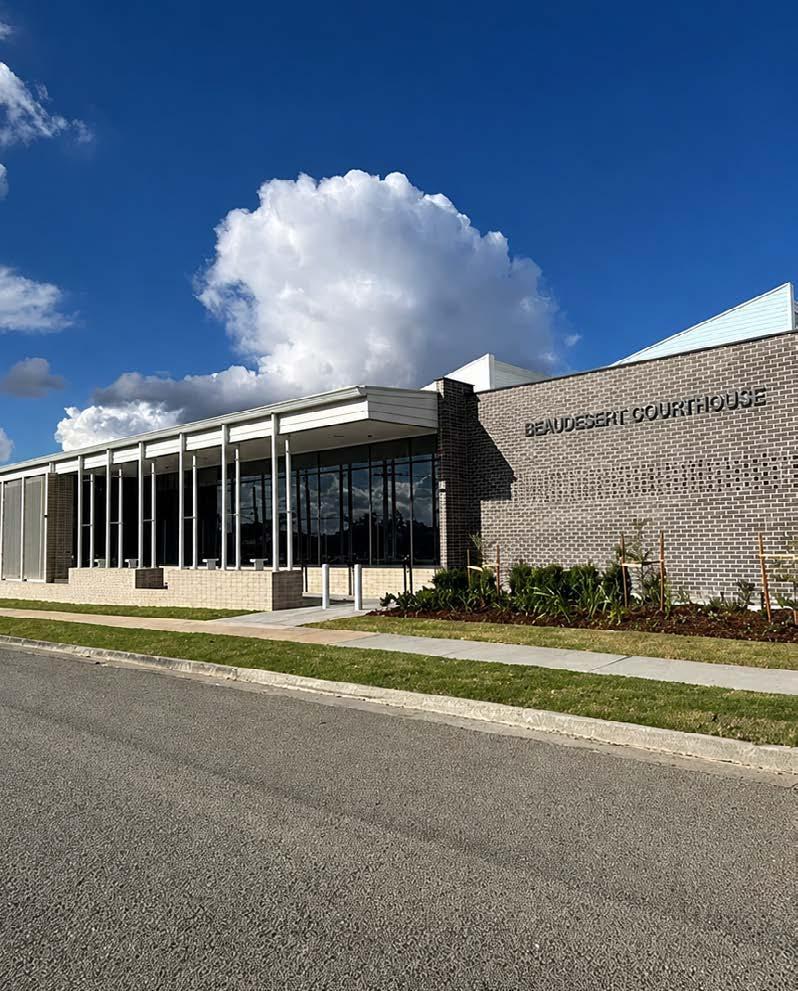
As the first new courthouse in Queensland in 13 years there were high expectations for the new Beaudesert Magistrates Courthouse project.
The new Beaudesert Magistrates Courthouse was officially opened on 17 September 2025. It is the first new courthouse building in Queensland since the construction of the Brisbane Supreme Court and District Court that was completed in 2012.
Located in Queensland’s Scenic Rim in central Beaudesert, south of Brisbane, the new Magistrates Court addresses the growing population, the shortfalls of the outdated existing facilities, and a lack of support for victims of crime, including domestic and family violence (DFV).
The courthouse was designed by Phillips Smith Conwell Architects, with the team led by Dr Lisa Daunt, and built by Apollo Property for the Queensland Department of Justice and Attorney General. The project had the benefit of having a consistent team of designers, engineers, client representatives and the construction team throughout the project.
“…the project was delivered on time and under budget while achieving a result reflective of the high importance of a courthouse in the public realm.”
It has been a successful project by many metrics, with a $19.4M budget, the project was delivered on time and under budget while achieving a result reflective of the high importance of a courthouse in the public realm. The new courthouse stands prominently when viewed beside the adjacent police station (Constructed 2021 - Also designed by PSC Architects).
The courthouse replaces the existing courthouse that has remained in operation since it was built in 1969. Despite being refurbished in 1995 and 2007, the existing facilities had many critical issues with a lack of operational capacity, insufficient safety and security for all users, an inadequate standard of facilities and segregation for vulnerable users. The external toilets were an often derided feature of the old design and highlights the true age of the existing building.
The new replacement courthouse is built on the same site as the old courthouse, meaning demolition of the old courthouse was required.
To maintain court operations this necessitated the provision of temporary court facilities in Beaudesert for the duration of the demolition and construction of the new. The temporary court was located in a commercial tenancy in central Beaudesert. While being temporary, the temporary court facilities required modern functionality including a courtroom, magistrates chambers with secure access, Registrar’s office, registry office, public waiting area, interview room, a vulnerable witness room and domestic and family violence (DFV) safe room.
The new courthouse has a contemporary, modern design. The facilities are victim focused and includes a security screening checkpoint at the entry, segregated access, safe waiting areas for witnesses (DFV), video conferencing facilities including remote witness rooms, a large public waiting area, secure courtroom dock, and secure connected access through to the adjacent Police Station. Appointments include solar power, electric vehicle charging, use of natural light throughout and two in-situ underground stormwater tanks. The building features spacious design elements, a brick and glazed façade with custom perforated aluminium artwork window screens to the frontages. Internally timber and stone finishes are extensively used throughout. The stone is used on the public waiting area seats, joinery units, writing benches and the front of the Magistrate’s bench in the courtroom.
Currently there is one courtroom, with spatial provisions within the building for the future fit out of a second expansion courtroom to meet future demands.
For fire safety, as it is the path of travel, all of the Blackbutt timber linings to the curved wall and ceilings required an intumescent fire treatment to be applied.
Coming in under budget the project was procured using a fully designed, traditional Lump Sum contract model that included a Bill of Quantities. The preparation of the Bill of Quantities was used as an opportunity to collaborate with the design team and coordinate issues to help minimise errors in the tender documents and reduce variations. The resulting competitive tenders received were very close.
The construction stage was relatively smooth but not without some bumps. Latent conditions were an issue as always. The footings of the old courthouse were more substantial than expected, additional asbestos was found in the old building, and bad ground. A mysterious existing underground fuel tank had to be located on the site by vacuum excavation so it could be removed. For the new building the unique feature detailing had to be carefully managed and coordinated during construction.
Adding some complexity to the works was the connection to the police station that had to occur while the police station remained fully operational. The connection extended part way into the police station through existing rooms that needed to be reconfigured to suit.
The original selected bricks had an excessively long lead time that did not suit the construction program. The alternative replacement bricks that were selected arrived with inconsistent shapes, making the brickwork a challenge to lay neatly.
Unfortunately the subcontractor responsible for the custodial cells went into administration before completing the works and a second company had to be engaged to finish the works right at the end of the project.
The project has been entered into the Australian Institute of Architects awards with the Darling Downs and West Moreton region awards yet to be announced at the time of writing.
The new courthouse is part of a broader Queensland government investment in the justice system and various court infrastructure upgrades across the state.
“The new courthouse is victim focused, with safe waiting areas, remote witness rooms, segregated access, and secure connections to the adjacent Police Station.”
This article is written by Paul Tate MAIQS CQS - Director Wilde and Woollard (QLD)
INTERESTING TIMES
By Doyles Construction Lawyers
In the face of changing geopolitical circumstances, construction costs have become unpredictable and commonly exceed what the contracts originally envisaged by a large margin.
Such a reality poses a particular challenge to quantity surveyors, whose role is to manage costs and promote the successful outcomes of projects.
ADAPTING TO GLOBAL IMPACTS
To perform their roles effectively, quantity surveyors must understand how government responses affect construction contracts and what legal arguments are potentially available to parties to re-distribute unexpected costs. However, the principals and contractors are in a particular challenge as the principal pressing the contractual arrangements to breaking point must find another contractor to finish the project with inevitable increased costs.
FAIR WORK AMENDMENT BILL
Recognising the unprecedented challenges in the construction industry, the Australian government introduced the Fair Work Amendment (Fairer Fuel) Bill 2026, which received royal assent on 1 April 2026. This legislation granted the Minister new powers to address these financial pressures on road transport so essential to projects throughout Australia.
THE RTCCO MANDATE
Following the new bill, the Road Transport Contractual Chain Order –Fuel Cost Recovery – 2026 (RTCCO) was swiftly implemented. The RTCCO requires parties in a road transport contractual chain to adjust costs either fortnightly or twice per month to allow for the increased cost of fuel.
This order impacts all work within the road transport industry, including primary parties, secondary parties, and road transport businesses.
Primary parties must make necessary adjustments so their primary contractual partners can recover increased fuel costs. They must also take reasonable steps to ensure secondary parties make adjustments to properly compensate regulated road transport contractors and employee-like workers.
CONTRACT VARIATIONS
Because of the new mandates, there will likely be a sharp increase in requested contract variations. Quantity surveyors must ensure these variations are considered properly and reasonable assessments are conducted quickly. Contractors who might be prepared to carry some variations in normal times may be more pressing to collect every variation to cover increased costs.
FORCE MAJEURE
When facing unpredictable cost increases and supply failures, contractors may rely on force majeure clauses for time and /or cost relief. However, these legal arguments must be carefully established and depend heavily on the precise contract terms to define the relief available.
FRUSTRATION
Of more general application, depending on the impact on a particular contract frustration has a more dramatic effect on the contractual obligations. Generally, it sets the parties free and new arrangements must be negotiated for ongoing work once frustration has occurred.
When considering frustration, Codelfa Construction Pty Ltd v State Rail Authority of New South Wales [1982] HCA 24 remains a foundational Australian authority. This landmark decision confirmed that frustration only occurs when an unexpected event makes performance radically different from what was originally undertaken by the contract.
In that case a three-shift project was restricted to two shifts and found to be frustrated.
CONTRACT TERMS
It remains crucial for all parties to carefully review their contracts, consider exactly what the terms are,
“The escalating and uncertain extent of the present crisis may appear to have a much larger impact. ”
and if they remain appropriate. Care should be given to agree to a reasonable adjustment for costs and supply failure to avoid heavy premiums for risk or walking off projects.
THE SHIFT TO RISE AND FALL CLAUSES
Due to the difficulty of the interesting times in which we live it is important to include rise and fall clauses. These are essential considering that it is probable the value of the end project will likely rise over the period of construction by a similar amount to the cost of fuel.
CONCLUSION
Sensible rise and fall clauses are a rational method of adjusting for the present crisis and the likelihood of inflation. They will avoid otherwise unnecessary disputes and massive disruptions to the industry and the country.
This article is written by By Doyles Construction Lawyers
OLYMPICS
DESIGNING BRISBANE 2032 VENUES
By Tim Bessell MAIQS
As the momentum builds toward Brisbane 2032, one of the most important conversations we need to have is about venues, not just how we deliver them, but how we ensure they deliver for Queensland long after the Games are over.
Our recent report, ‘From vision to legacy: a game plan for Brisbane 2032 and beyond’, explores this challenge in depth. Sports venues are among the most visible and scrutinised Olympic investments. They’re high-profile, highcost, and high-risk, which is exactly why they must be designed with legacy in mind from the outset.
Delivering these venues won’t be easy. The state is facing a projected construction labour shortfall that could reach 46,000 workers by 2028–29. But the bigger challenge, or opportunity, may be productivity. Some sites are achieving the equivalent of just 2.5 productive days per worker per week – not because people aren’t working hard, but because of structural inefficiencies: Best-practice Industry Conditions (BPIC), health and safety regimes, weather delays, variability in contractual terms & risks, and fragmented governance.
“The solution isn’t to work harder – it’s to work smarter.”
That means locking in scope early, sequencing projects to avoid coinciding peaks, and embracing modular and offsite construction where it makes sense. Procurement models must reward collaboration and productivity, not just shift risk.
La Defense Arena, developed for Paris 2024, reminds us of the importance of diversified revenue streams for arenas to stack up financially. This is why Gabba Arena, Gold Coast Arena and Sunshine Coast Arena have chosen a Public Private Partnership (PPP) procurement model for delivery. These contracts, by integrating Operators in the procurement model, are structured to capitalise on projected revenue streams in legacy mode. I spoke more about this in an interview with The Urban Developer last week.
There’s also a need to challenge some persistent myths. Faster delivery doesn’t always mean higher cost – not if speed is designed in from the start through collaboration and sharing of risks between project parties, early works packages that reduce long lead times, weather tight construction methods that reduce impact and severity of weather delays, streamlining certification and inspection processors through early engagement with Regulatory Authorities and utilising third-party accessors to undertake preliminary assessments.
And while stadiums attract the headlines, the real risks often lie in the supporting infrastructure: transport, utilities, and enabling works that are complex, interdependent, and critical to Games delivery, as outlined in a recent article; ‘Brisbane 2032: Acting now to secure the legacy’ from my colleague Jack Shelley.
Brisbane 2032 is a once-in-ageneration opportunity to raise the bar on how we plan, scope, and deliver major venues. The Games will be judged not just by what’s ready on day one, but by the legacy they leave behind. Every dollar spent should work twice – once for the Games, and again for Queensland’s long-term growth. The challenge is real. But so is the opportunity. Let’s make the most of it.
This Article was written by Tim Bessell MAIQS from WT
EXCAVATION COSTS AND CYCLE TIMES
A STEP-BY-STEP GUIDE
By Paul McArd FAIQS CQS
FORENSIC
WHAT IS CYCLE TIME?
Excavator cycle times are critical for forensic quantity surveyors when analysing construction productivity or resolving disputes as expert witnesses.
The cycle time of an excavator is the time it takes to complete one full operation. This includes:
Digging
The bucket scoops up material like soil or gravel.
Swinging (Loaded)
The bucket moves to where the material will be dumped.
Dumping
The material is emptied out of the bucket.
Swinging (Returning)
The bucket swings back to start digging again.
HOW IS CYCLE TIME MEASURED?
1. Timing Each Step
If you can watch the excavator in action, you can measure each step with a stopwatch:
• Digging Time: Start timing when the bucket begins scooping and stop when it is full.
• Swinging (Loaded) Time: Time how long it takes for the bucket to swing to the dumping spot.
• Dumping Time: Time how long it takes to empty the bucket.
• Swinging (Returning) Time: Time how long it takes for the bucket to swing back to the digging position.
Add these times together to find the total cycle time:
Cycle Time = Digging Time + Swinging (Loaded) Time + Dumping Time + Swinging (Returning) Time
2. Using Reference Data
If timing isn’t possible, you can use data from trusted sources such as:
• Caterpillar Performance Handbook: Includes average cycle times for different excavator models.
• Manufacturer Manuals: Brands like Komatsu provide benchmarks for their machines.
• Construction Textbooks: Books like Construction Planning, Equipment, and Methods by R.L. Peurifoy provide industry standards.
Forensic quantity surveyors often rely on these references when serving as expert witnesses to ensure accurate, evidence-based assessments.
MAKING ADJUSTMENTS FOR REAL CONDITIONS
Certain factors are often crucial in forensic quantity surveying when investigating delays or inefficiencies.
Cycle times can vary depending on:
• Operator Skill: More experienced operators can work faster.
• Material Type: Harder materials take longer to dig.
• Swing Angle: A larger swing angle, like 180°, increases time compared to a smaller one, like 90°.
• Site Conditions: Weather, space, and visibility can all have an impact.
Calculating Cycle Time:
• Digging: 6 sec
• Swinging (Loaded): 4 sec
• Dumping: 2 sec
• Swinging (Returning): 3 sec
The total cycle time is:
6 + 4 + 2 + 3 = 15 seconds
WHY IS CYCLE TIME IMPORTANT?
Knowing the cycle time helps calculate how much material an excavator can move in an hour, which is called the production rate.
This is important for:
• Checking how efficient the excavator is.
• Identifying delays or inefficiencies.
• Working out costs for a project.
The formula to calculate productivity is:
Production Rate (m³/hr) = (Bucket Capacity (m³) × 3600) ÷ Cycle Time (s)
× Efficiency Factor
Example: Calculating Production Rate
• Bucket Capacity: 0.5 m³
• Cycle Time: 15 seconds
• Efficiency Factor: 0.85 (accounts for breaks and repositioning)
Production Rate:
(0.5 × 3600) ÷ 15 × 0.85 = 102 m³/hr
HOW CYCLE TIME LINKS TO COSTS
Once you know the cycle time, you can calculate how much it costs to move one cubic metre (m³) of material.
The cost calculation formula would be:
Cost per m³ = Hourly operating cost of excavator ÷ Production Rate (m³ / hr)
Example: Calculating Cost per m³
• Hourly Operating Cost: $120/hour
• Production Rate: 102 m³/hr
Cost per m3:
(120 ÷ 102 = $1.18 / m³
This means it costs approximately $1.18 to move one cubic metre of material.
“Cycle times are an important measure to understand how productive an excavator is.”
FINAL THOUGHTS
Understanding cycle time helps us work out how productive an excavator is and how much it costs to move material. This information is crucial for planning projects, finding inefficiencies, and supporting claims or disputes. Forensic quantity surveyors often analyse excavator cycle times as part of their work as expert witnesses, ensuring clarity and accuracy in constructionrelated cases. By following these simple steps, you can explain and calculate the key details clearly and effectively while considering the role of cycle time in construction analysis.
Disclaimer: This paper does not in any way constitute any type of legal or professional advice whatsoever and in no way should be relied upon by any party whatsoever in any jurisdiction.
This article is written by Paul McArd FAIQS CQS from Accura Consulting
WHY SBBIS REMAINS NSW'S MOST STABLE QUALITY ASSURANCE MODEL
NSW HAS A PROVEN, CONSUMER-FACING QUALITY ASSURANCE
MODEL DELIVERING REAL OUTCOMES FOR REAL PEOPLE. THE CASE FOR BACKING IT FULLY HAS NEVER BEEN CLEARER.
By Sarah Bozionelos
STRATA DEFECTS
When I walk into a Strata Building Bond and Inspections Scheme (SBBIS) inspection, owners are there. They are a little nervous, they have spent everything on their apartments, and they want to know someone is genuinely looking. Not at a spreadsheet, not at a liability matrix. At their home. What happens next is the scheme doing exactly what it was designed to do: defects get documented, builders engage, things get fixed. People leave feeling heard.
After Mascot Towers. After Opal Tower. After years of owners wondering whether anyone in the industry was really on their side, that moment of visible, tangible accountability is precisely what the reforms set out to create. SBBIS delivers it consistently, and that is worth saying clearly.
The conversation now, of course, is about what comes next. Latent Defects Insurance (LDI) has entered the picture with genuine momentum, and there are good reasons to take it seriously. But as the NSW regulatory landscape evolves, it is worth stepping back and asking an honest question: what is each model built to do, and for whom?
“Owners leave SBBIS inspections feeling heard. After everything this industry put them through - that is exactly what the reforms were designed to create.”
STRATA DEFECTS
“Incorrect falls to wet area floors, corrected in year one, never becomes chronic water pooling, tile debonding, and substrate rot requiring full bathroom stripouts by year seven.”
TWO MODELS, ONE QUESTION: WHO DOES IT SERVE AT THE MOMENT THAT MATTERS?
LDI is a catastrophic risk product. It responds to major structural failures, potentially years after completion. It is designed by insurers as internal risk management - not as a public compliance function. There is currently one insurer offering it at scale in NSW, working through a small number of national inspection partners. That means limited price competition, offshore underwriters, non-refundable premiums, and no established benchmarks in the Australian market. None of that makes it a bad product, it makes it a very specific product, designed for a very specific scenario.
SBBIS is built differently. It is a public, regulator-controlled scheme drawing on an openly competitive pool of inspectors, engineers, surveyors, waterproofing specialists, façade consultants. Reports go directly to NSW Fair Trading in a prescribed format, with the regulator able to require revisions until the standard is met. Independence, transparency, and accountability are structural features, not aspirations.
THE BOND DOES SOMETHING INSURANCE STRUCTURALLY CANNOT
The 2% bond changes behaviour before anything goes wrong and that is its real power. Because the bond can be drawn on to fund defect rectification, and is only released once defects are resolved, developers and builders have a direct financial reason to care about quality while they’re still on site. Closer supervision, better detailing, fewer shortcuts on the waterproofing and flashing that cause half the problems we see downstream.
I’ve watched this dynamic play out in real time. Developers who might once have been slow to engage are now motivated to resolve issues quickly. The scheme has shifted the culture on site in ways that are genuinely observable and genuinely encouraging.
There is a longer-term dimension here too. Fixing minor defects early stops them becoming major defects later. Incorrect falls to wet area floors, corrected in year one, never becomes chronic water pooling, tile debonding, and substrate rot requiring full bathroom strip-outs by year seven. SBBIS is proactive in a way that insurance, by its nature, cannot be. It doesn’t wait for catastrophe. LDI captures none of this. It doesn’t reach the 90% of defects that owners live with and that quietly erode building harmony and asset value over time.
SBBIS — PROVEN MODEL LDI
STRATA DEFECTS
WHAT SBBIS DELIVERS — RIGHT NOW
• A competitive, publicly accountable inspection market
• Defect scope covering what owners actually experience
• Direct consumer engagement at the moment of handover
• Financial incentives for quality during construction
A SCHEME READY TO DO MORE - GIVEN THE CHANCE
SBBIS is not a scheme in difficulty. It is a scheme that hasn’t yet been given the full resources to reach its potential. Fair Trading’s specialist team is small relative to the work the scheme demands, and that gap has widened as policy attention has broadened. Addressing that is straightforward, it is a resourcing decision, not a structural one.
It is also worth noting that Victoria, having looked at the available models, chose to implement a developer bond scheme closely mirroring SBBIS in 2025. Not an insurance-first approach. That’s an independent jurisdiction arriving at the same conclusion NSW’s own experience supports: publicly overseen, consumer-facing bond schemes deliver transparency and community confidence at handover in a way that market insurance products are not designed to replicate.
• A refundable 2% bond — predictable and financeable
• Early rectification that prevents major defects forming
• Transparent reporting directly to the regulator
• Measurable, documented quality uplift on site
COMPLEMENTARY, NOT COMPETING, BUT LET US BE CLEAR ABOUT WHAT EACH DOES
LDI has a real role. Long-tail insurance for catastrophic structural failures is a legitimate and valuable product in a mature market, and there’s every reason to see it develop here. The point is simply that it and SBBIS address different problems, at different moments in the building lifecycle, for different stakeholders. They are far more complementary than they are alternatives to one another.
The industry has done serious work rebuilding consumer trust over the past several years. SBBIS is one of the mechanisms carrying that load, not in theory, but in practice inspection by inspection. For developers, financiers, strata managers, and building practitioners, the question is less about whether to back it and more about how actively to make that case as the policy conversation continues to evolve.
The evidence is already there. The outcomes are already there. Now it just needs the resources and the industry’s voice, to go the distance.
This article was written by Sarah Bozionelos from Archi-QS
BUILDING COST INDEX
JUNE 2026
THE BUILDING COST INDEX IS PUBLISHED IN THE PRINT VERSION OF THE BUILT ENVIRONMENT ECONOMIST.
IT CONTAINS DATA THAT CAN BE USED AS A PREDICTOR FOR THE ESTIMATED TIMES FOR DESIGN AND CONSTRUCTION AND INCLUDES A SUMMARY OF THE PAST, PRESENT AND ESTIMATED FUTURE CONSTRUCTION COSTS.