













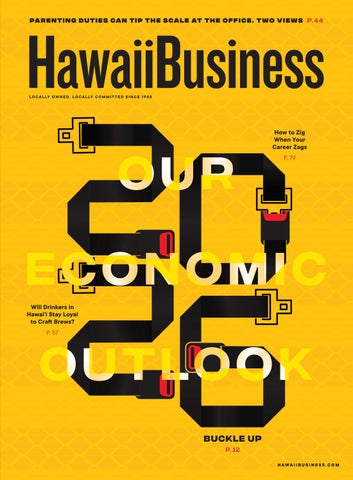
12 Hawai‘ʻi Economic Outlook for 2026
Jolted by federal, global and local shocks, the state’s economy heads into a new year off kilter. Whether we’ll slide into recession, bounce back unscathed or flourish with new opportunities varies sector by sector. Our roundup examines the tipping points.
41 Prep Work for Handing Over a Business
When it comes time to retire, handing over a business to family members, or employees or selling it outright requires advance planning and consideration of many factors. Consider four paths before exiting a family-owned company.
44 The Balancing Act of Working Moms
Few working moms’ resumes list their childraising skills or their ability to multitask by juggling family and work obligations. But maybe they should. We hear from two women who offer perspectives on finding the right balance.
57 Hey Bartender, Pour Me Another!
The state’s craft beer companies are bucking national trends that show declining beer consumption amid everincreasing beverage options. More people are also giving alcohol a pass. Gen Z has unique drinking habits. All that has local craft brewers scrambling.









My Job:
Redefining Being Black in Hawai‘i
Through podcasts, festivals, awards and art, Amy Benson’s company Afro Aloha is breaking down misconceptions of what it means to be Black in Hawai‘i. As the founder of a multifaceted cultural hub, she helps Blacks navigate their identities and cultures in the Islands.

When Horses Whisper Back Therapeutic Horsemanship of Hawaiʻi offers riding programs for children and adults with physical, developmental and learning challenges, and those who have suffered trauma. The nonprofit located next to the polo field in Waimānalo taps the softer side of these powerful and stately animals. 10
Trial and Error
Our Digital Director Randall Libramonte advises those in their 20s and 30s to be comfortable with careers that arenʻt directly related to what they studied. Using his own circuitous route as an example, he concludes that a nonlinear path might be preferable to stepping up a corporate ladder. 79
THE COVER Illustrations: Shutterstock and Getty Images
Hawai‘i’s 2026 Guide to Shipping, Air and Transportation
Your 2026 guide to one of Hawai’i’s most vital industries. 51
IIDA Ho‘ohuli Awards
Honoring commercial interior design excellence in Hawai‘i. 65
The new year always arrives with promises, pledges, and resolutions. Mine is simple: How can Hawai‘i’s wealthiest residents — and those with global influence — turn admiration for these islands into meaningful action for the communities that call them home?
WKuleana, a central Hawaiian value embodying responsibility, privilege and care for one another and the a¯ina (land), framed last fall’s Hawaii Executive Collaborative, hosted by Lynelle Marble and Duane Kurisu. It reminds us that with privilege comes responsibility — and that action matters far more than admiration.
HAT MAKES A GREAT CEO? Is it showing up early or staying late at work – or both? Is it leading by example or directing from the top?
At Hawaii Business Magazine, we believe great leadership reveals itself in times of crisis – when calm, compassion and clarity matter most. That’s why we selected Ann Teranishi, president and CEO of American Savings Bank, as our 2025 CEO of the Year.
Hawai‘i is breathtaking. Its beaches, mountains, sunsets and diverse cultures attract visitors from around the world. And for some, it has become a second home: tech titans, media icons, Hollywood stars, athletes and political elites. But what does their presence mean for the people who live, work and raise families here?
She was chosen not only for her steady guidance through the Covid crisis, the Maui wildfires and Hawaiian Electric Industries’ divestiture of ASB, but also for her ability to tackle real-world problems, including pressing issues like home affordability.
2025 marks ASB’s 100th year of serving Hawai‘i, and under Ann’s leadership, the bank has continued to address our state’s most critical challenges.
Opulent estates, gated compounds — and in at least one known case, a massive underground bunker — have appeared across the islands, even as property values soar and the cost of living climbs. (Read about Mark Zuckerberg’s secretive Hawai‘i compound: https://tinyurl.com/msyb5sda) Luxury alone does little to ease the daily struggles of residents facing high housing costs, limited employment opportunities and gaps in essential services.
Some high-profile individuals, however, are showing a different path — turning their wealth and influence into tangible contributions for Hawai‘i.
If her father, prominent business leader Dennis Teranishi, planted the seeds of purpose with his guidance and example, it was her mother who instilled courage, compassion and a deep sense of inclusion – traits that define Ann’s leadership. Dennis, who declined a formal interview, insists the spotlight stay on his daughter, a reflection of the family’s pride in her accomplishments.
Marc and Lynne Benioff, longtime admirers of the islands, have made historic contributions to health care and housing. In 2024, they donated $150 million to transform health care statewide. Part of this funding expanded Hilo Benioff Medical Center with a family birthing center, intensive care, neurosurgery programs and behavioral health services. The remainder redeveloped Honolulu’s Straub Benioff Medical Center into a modern “health-care campus of the future.”
The Benioffs also helped address Hawai‘i’s housing crisis, donating 440 acres to the Hawai‘i Island Community Development Corporation for the ‘O uli Project — a development of affordable housing with parks and community space on that island. These gifts are long-term, structural investments in homes, health care access and infrastructure that benefit everyday Hawai‘i residents. Calls and emails to Marc Benioff were not returned by press time.
I interviewed her elder sister, Lori Teranishi, several times, and she is effervescent, insightful and downright determined. Lori is the founder and CEO of iQ 360, a certified woman- and minority-owned consultancy firm, and she describes Ann as neither fully introverted nor extroverted, but “in the middle,” able to observe thoughtfully while still driving decisions. That balance, Lori says, allows Ann to consider multiple perspectives while leading decisively.
“Mom always taught us that when you walk into a room, try to talk to the people that no one else is talking to,” Lori says. Ann exemplifies that lesson in the workplace, ensuring all voices are heard and creating an inclusive environment.
Philanthropy in Hawai‘i extends beyond hospitals and housing. MacKenzie Scott has quietly given millions to support local nonprofits, providing unrestricted funds that empower organizations to respond to community-defined needs.
During the Covid-19 crisis, she contributed $10 million to the Hawai‘i Community Foundation Resilience Fund,
Lori notes, “After one of the Hawai‘i Executive Conferences, she started to work with a variety of people, and they created a Native Hawaiian loan program at American Savings Bank to really provide access to financing to a group that historically had a lot of difficulties accessing capital.”
helping nonprofits remain operational when support was most critical. Following the 2023 Maui wildfires, she donated $5 million to the Maui Strong Fund, enabling both immediate relief and long-term recovery. Scott’s strategy demonstrates the power of flexible, substantial funding to address urgent local priorities effectively.
Another recent initiative is Hui Kapili, a 10-week accelerator supporting small and mid-sized construction and home remodeling companies that are helping to address Hawai‘i’s housing and labor challenges.
Ann’s leadership is also reflected in ASB’s financial strength and industry recognition. The bank, which is ranked in the top 4% of U.S. financial institutions (according to Forbes), managed $9.3 billion in assets at the end of 2024 and has been recognized by Forbes as one of Hawai‘i’s Best In-State Banks for six consecutive years. And her focus on thoughtful, people-centered leadership and connection to local communities ensures ASB will continue to thrive.
Long-term prosperity also requires investment in education, research and culture. Walter Dods Jr. donated $5 million to the University of Hawai‘i to create the Residences for Innovative Student Entrepreneurs (the RISE Center). John C. Couch contributed approximately $3.76 million to establish UH Ma¯noa’s first gastroenterology and hepatology fellowship program. And the Barbara Barnard Smith Foundation donated $3.5 million to create the university’s first endowed chair in ethnomusicology — preserving and advancing the cultural traditions that define Hawai‘i’s identity.
For more on Ann and her family, be sure to read our December cover story on page 46.
Even in the first week of December, momentum continued. Residential Youth Services & Empowerment (RYSE), a frontline youth-homelessness nonprofit on O‘ahu, received a $2.5 million grant from the Bezos Day 1 Families Fund — the largest in the organization’s history. The funds will support housing programs for youth and young families, a vivid example of how philanthropy can respond dynamically to pressing social needs.
These contributions — to hospitals, housing, disaster recovery, universities and youth services — are not symbolic. They create opportunity, access and stability. They rebuild in the face of tragedy, expand access to health care, and preserve culture and education.
This year has been inspiring for all of us at Hawaii Business Magazine. We’ve covered a lot, from the record-breaking Wahine Forum to thought-provoking cover stories on toxic workplaces, Bank of Hawai‘i’s Peter Ho and local social media stars. And there’s the tale of U.S. Army veteran Sae Joon Park, a green-card holder who felt compelled to self-deport to South Korea, and our online viral ICE map spearheaded by managing editor Ken Wills that brought timely, critical insights to readers across the state.
For those who choose to call Hawai‘i home — whether briefly or permanently — privilege comes with responsibility. As my managing editor, Ken Wills, reminds me, “In Hawai‘i, kuleana means treating each other like relatives — with care, respect and accountability.”
We celebrated Hawai‘i’s business excellence and generosity with cover stories on the Top 250 and the Most Charitable Companies, and we launched our inaugural Excellence in Business Awards to honor outstanding local organizations.
The islands do not need more sprawling estates or underground bunkers. A few individuals cannot carry the burden alone. For Hawai‘i to thrive, more wealthy residents — both longtime and new — must embrace kuleana seriously, translating resources and influence into real impact for communities.
With this issue’s 28th edition of the Black Book, which profiles 401 of Hawai‘i’s most influential business and nonprofit leaders, we continue to spotlight the people shaping our state’s future.
It’s time for action, not admiration: Supporting local talent, investing in essential services, and strengthening the foundations that make life here possible. Hawai‘i is more than paradise — it is a place where people live, work and belong.
But the true source of our success is you, our readers, whose ideas, feedback and support guide and challenge us. Mahalo for helping us tell the stories that matter most. Here’s to another year of learning, leading and building a better Hawai‘i together.
Happy New Year!

JENNIFER ABLAN EDITOR-IN-CHIEF
JENNIFER ABLAN EDITOR-IN-CHIEF
CONNECT
LOCALLY OWNED, LOCALLY COMMITTED SINCE 1955.










Our goal is to strengthen the local economy and help our communities thrive.
Publisher KENT COULES kentc@hawaiibusiness.com • (808) 364-5869
Editorial
Editor-in-Chief JENNIFER ABLAN jennifera@hawaiibusiness.com
Managing Editor KEN WILLS kenw@hawaiibusiness.com • (808) 987-8135
Senior Editor STEVE PETRANIK stevep@hawaiibusiness.com • (808) 534-7584
Senior Contributing Writer CYNTHIA WESSENDORF cynthiaw@hawaiibusiness.com
Staff Writer RYANN NOELANI COULES ryannc@hawaiibusiness.com
Copy Editor ELROY GARCIA
Design & Photography
Graphic Designer CHRISTINE LABRADOR
Graphic Designer KAREN TANIGAWA
Graphic Designer CHASE NUUHIWA
Staff Photographer AARON YOSHINO
Digital
Digital Director RANDALL LIBRAMONTE randalll@hawaiibusiness.com
Digital Content Manager MARIANNE LEANO mariannel@hawaiibusiness.com
Sales & Marketing
Account Executive YONGCHAE SONG yongchaes@hawaiibusiness.com • (808) 228-5078
Account Executive CHAZ TIOGANGCO chazt@hawaiibusiness.com • (808) 387-1672
Senior Account Coordinator REBECCA BROOKING rebeccab@hawaiibusiness.com • (808) 534-7560
THU, MAR. 5, 2026
HB 20 (For the next 20)
This exclusive, invitation only celebration brings together our annual cohort of 20 community leaders projected to have a major impact for the next 20 years.
Cafe Julia, YWCA Downtown
For more information on events, visit hawaiibusiness.com/events or contact Ashley McLean, Events Manager, at ashleym@hawaiibusiness.com FEBRUARY 2026 | 7:30 A.M. TO 10:30 A.M. Venue
Healthcare professionals, C-suite executives, and business owners are invited to a morning forum with Hawai‘i’s top healthcare CEOs to explore rising costs, emerging trends, and the future of care—moderated by Jennifer Ablan
FRI, MAR. 27, 2026
Best Places to Work
Organizations chosen for the Best Places to Work in Hawaii are recognized at a fun and exciting celebration, where we officially release our April issue featuring the overall and category winners of our annual Best Places to Work survey.
Hilton Hawaiian Village
Events Manager ASHLEY MCLEAN ashleym@hawaiibusiness.com • (808) 272-6550
Events Coordinator OLIVIA DE SENA oliviad@hawaiibusiness.com
Circulation circulation@pacificbasin.net
Connect with us on social media: HawaiiBusiness HawaiiBusinessmagazine
Hawaii Business is published by
Chairman DUANE KURISU
Chief Executive Officer SUSAN EICHOR
Chief Operating Officer BRANDON KURISU
Director of Finance JADE CARREL
















BY LILI HURD / PHOTOS BY AFRO ALOHA


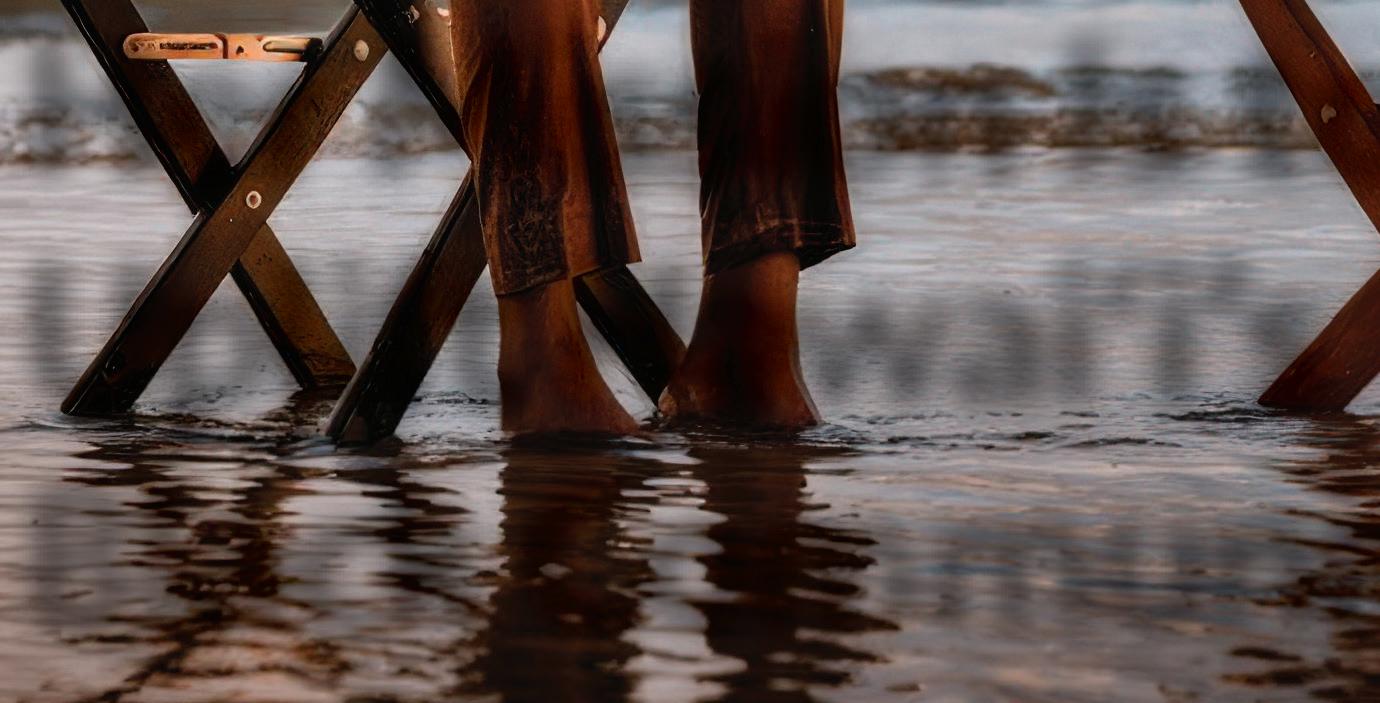






Amy Benson’s company Afro Aloha challenges invisibility and redefines what it means to be Black in Hawai‘i
AMY BENSON FOUNDED AFRO ALOHA AS A MULTIFACETED CULTURAL HUB FOR BLACK PEOPLE IN HAWAI‘I –SHARING THEIR STORIES AND HELPING THEM CONNECT.
“Blackness is expansive, especially here in Hawai‘i,” she says. “A lot of people are bicultural and they’re Black and Japanese, Black and Hawaiian, or Black and Filipino. … We’re shedding a light on those that are Black in Hawai‘i and navigating those identities and cultures.”
Beginnings: Benson, the company’s executive director and only employee, says she started Afro Aloha in 2020, during the Covid pandemic, to build a community where Black people could feel heard, seen and safe.
“This was during the height of a lot of injustice in the continental U.S. and across the globe. You had the murders of Breonna Taylor, Ahmaud Arbery, George Floyd,
and so there was a very heightened climate that was happening in 2020 especially with the pandemic.”
Activities: She launched the Afro Aloha podcast in 2023, which spotlights entrepreneurs, scholars, performers and creatives. “It’s Hawai‘i’s only media outlet dedicated to sharing Black stories and amplifying Black voices of the past and the present.”
She also organized the Dripniq Festival, an annual celebration of food, music, fashion and culture, held in 2025 on the Bishop Museum lawn.
Other events have included the Hawai‘i Black Entrepreneur Awards, Black Is Art and Honolulu Black Pride. A monthly newsletter has over 4,500 subscribers and Benson plans to restart a membership program in 2026.
“Over the past five years, we’ve worked with over 250 black busi-
nesses and creatives and entrepreneurs and we work with several communities all across Hawai‘i. We’ve been a launching pad or cohort for many of these entrepreneurs in Hawai‘i.”
Misconceptions: The U.S. Census Bureau estimates that Blacks represent about 1.5% to 2% of Hawai‘i’s population.
“One of the stereotypes is that anyone who is Black in Hawai‘i is in the military, and that’s just not accurate. … If you are Black in Hawai‘i, people often assume – wrongly – that you’re somehow an outsider or not truly part of the local community.”
Impact: “People tell us, ‘My experience in Hawai‘i has completely changed. Afro Aloha has changed my life. It’s made me think about my identity in a new way. I see myself represented here in ways I never have before.’ ”
HORSES, WHICH OFTEN WEIGH UPWARDS OF 900 POUNDS, ARE KNOWN FOR THEIR POWER AND STRENGTH. BUT THEY CAN ALSO BE GENTLE—AND THAT MAKES THEM IDEAL THERAPISTS, SAYS DANA VENNEN, EXECUTIVE DIRECTOR OF THERAPEUTIC HORSEMANSHIP OF HAWAIʻI, A NONPROFIT LOCATED NEXT TO THE POLO FIELD IN WAIMĀNALO.
She describes a powerful moment when THH was working with the Children’s Alliance of Hawai‘i, which serves sexually abused children.
“After a session, a parent came to me in tears and asked, ‘What did you do? My child finally talked about what happened on the way home.’ The only difference that day was that she had ridden a horse. I told them, ‘It wasn’t me, it was the horse,’ ” Vennen says.
THH specializes in riding programs for people with physical, developmental and learning challenges, including severe cases.
Riders benefit in three ways: They build physical strength, improve coordination and balance, and boost their self-esteem. Sitting on these large, powerful animals and learning to guide them, Vennen says, can be empowering.
She tells another story, of a boy named Kaipo who came to THH in a stroller, though he was at an age when most children are walking. Vennen says that at the start, the boy was able to hold his head up, but not his whole body.
“His core strength was not very good, but he started riding,” Vennen says, and within six months he was able to sit up in a saddle “on his own, and his mom said that it really improved his ability to roll over.”
BY LILI HURD

The nonprofit also brings two miniature horses—named Makakoa and Kamalani—into hospitals, schools and private homes free of charge.
“I once got a call from a woman about her mother, a lifelong horsewoman who was housebound and just wanted to see a horse one last time. She hoped someone could bring a horse to the driveway. I told her, ‘We can bring them right inside,’ ” Vennen says.
“When the horses were finally in the house, her mother was amazed and completely shocked.”
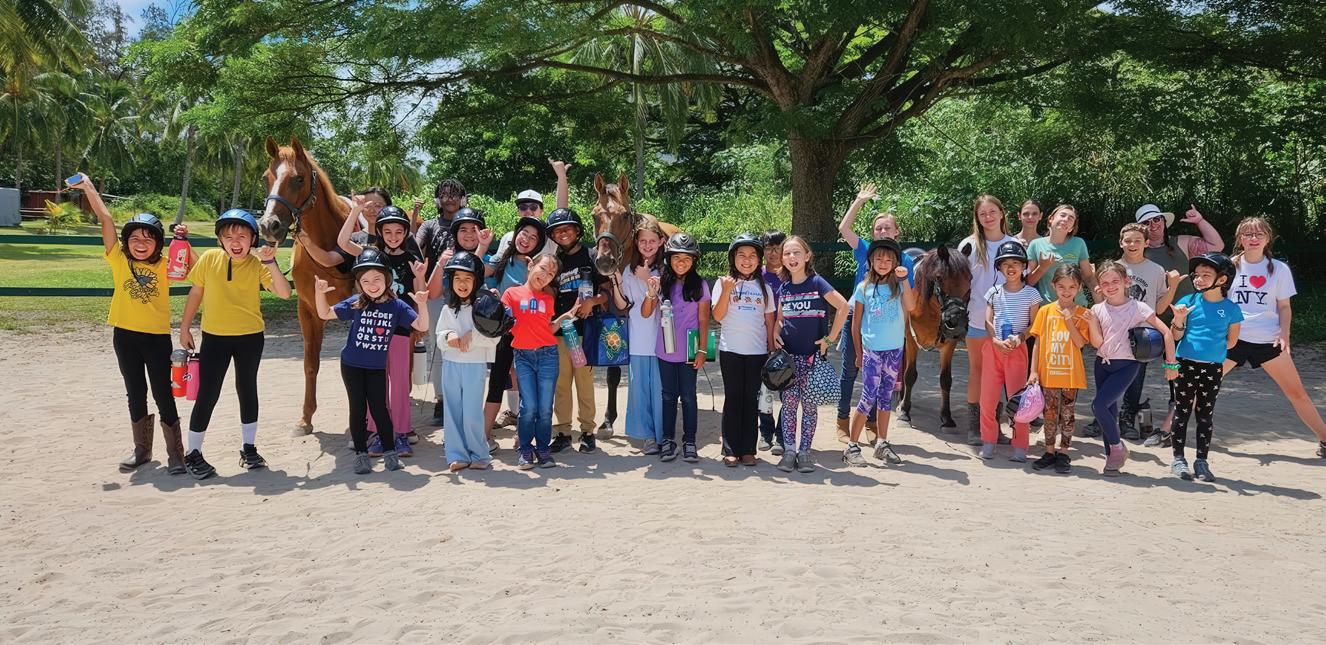
THH offers day camps, ranging from one day to a week, where children 6 to 12 can groom, feed and ride the horses, and enjoy other activities.
The nonprofit’s biggest challenge is the cost of feeding the horses and keeping them healthy.
According to Vennen, the weekly feed bill is between $5,000 and $6,000, while the facility itself costs $2,250 in rent each month. Additionally, health insurance for horses can top $10,000 a year, and they need their shoes replaced every six weeks, which costs about $150 per horse.
Volunteers run 80% of THH’s operations, which helps to keep costs down. They handle almost everything, from feeding the horses to leading riding lessons, except bookkeeping, marketing and office work. Vennen along with another instructor are the only paid employees. A volunteer’s day might include yard work, scrubbing, refilling water buckets, mucking the paddocks —sometimes removing two large wheelbarrows of manure—and shoeing the horses, which the volunteers do as well as grooming the



After a session, a parent came to me in tears and asked, ‘What did you do? My child finally talked about what happened on the way home.’ The only difference that day was that she had ridden a horse. I told them, ‘It wasn’t me, it was the horse,’ ”
Dana Vennen Executive Director of Therapeutic Horsemanship of Hawaii
horses before and after every lesson. One volunteer is usually there all day on Mondays and Fridays to “groom the horses, let them eat grass, turn them out in the arenas so they can run, play and roll,” Vennen says. “She basically looks after their mental health, making sure they’re able to do this job, which isn’t physically hard, but does require patience and empathy to do what we ask of them.”
THH is home to 10 horses to suit different riders and activities. Each of them, Vennen says, is confident and patient. “We’re lucky to have a few horses who can accommodate the full spectrum of our riders,” she says. “They’re incredibly patient, whether it’s wheelchair mounts or
advanced riders working on walk, trot and canter.”
THH also offers horse rides for those without disabilities, ranging from 30 minutes for $50 to an hour for $70. Each lesson begins with visitors grooming and saddling the horses, with guidance from an instructor, before transitioning to riding in the arena.
For now, Vennen is the driving force behind the program, but she hopes that in the next five to 10 years, she can train and guide the next generation to take her place.
“In our future somewhere, I believe this organization [will] become so important to the community that, if I were to get hit by a bus, it would survive somehow.”
Construction is expected to be strong, driven in part by large infrastructure projects, but tourism is slipping and the safety net fraying.
by Cynthia Wessendorf
At the end of one chaotic year and the threshold of another that could be equally turbulent, Hawai‘i’s people, institutions and economy remain fairly resilient, though vulnerable to developments beyond its borders. The rapid, disorienting changes of 2025 show few signs of letting up, adding pressures on the local economy.
Nationally, trade has been disrupted, while the role of the federal government in education, health care, public health, disaster recovery, assisting the poor, scientific research, and clean energy initiatives is being dismantled. In Hawai‘i, at least 1,200 civilian federal employees have already left their jobs, millions of dollars in federal grants have been slashed or are at risk, and monthly premiums are rising on the Health Insurance Marketplace.
Troops have been sent into cities and ICE agents are running aggressive deportation campaigns, including in Hawai‘i. The result is a declining job market nationally as inflationary pressures are accumulating, says Seth Colby, chief state economist at the Department of Business, Economic Development & Tourism. In the fall, the longest
“WE’RE REALLY DEPENDENT ON WHAT HAPPENS IN THE U.S. ECONOMY RIGHT NOW, ARGUABLY MORE SO THAN AT ANY TIME THAT I’VE OBSERVED.”
Carl Bonham Executive Director UH Economic Research Organization
federal government shutdown in U.S. history led to cuts in food assistance and airline flights.
In Hawai‘i, the shutdown intensified an existing economic slowdown, pushing tourism—the state’s most important economic engine—into a sputter. Visitor arrivals and real spending, adjusted for inflation, have fallen after a promising spring season, and many international visitors are staying away. The UH Economic Research Organization expects numbers to continue dropping significantly in 2026, though the state Department of Business, Economic Development & Tourism is more optimistic.
Together, tourism and federal spending represent almost a third of Hawai‘i’s economy, so slowdowns and cuts hurt badly, cascading across sectors. “Federal spending is much broader than just its direct contribution in GDP. It’s also showing up in the hospitals. It’s showing up at the university. It’s showing up through grants to the state and grants to nonprofits,” explains Carl Bonham, executive director of UHERO.
“We’re really dependent on what happens in the U.S. economy right now, arguably more so than at any time that I’ve observed, because of cutbacks in federal spending, and also because roughly 80% of our
visitors are from the U.S. right now,” he says. With consumer sentiment sinking, fewer people will want to splurge on a Hawai‘i vacation.
Hiring, business planning and new investments have stalled across the country, including Hawai‘i, amid concerns about tariffs and rising prices. While the impact so far hasn’t been as dramatic as predicted, researchers at Harvard Business School found a 5% increase for imported goods since March 2025, and 2.5% for domestic goods —and even larger price increases when compared to the pre-tariff deflationary trends of 2024.
About half of imports are materials and equipment used to manufacture goods, says Steven Bond-Smith, an assistant professor at UHERO and expert in regional economies, so tariffs drive up the cost of even locally produced goods and create a “headwind for future activities.” In mid-November, the average tariff rate was 18%, up from 2% in 2024. But the whiplash of add-ons, roll-backs, special deals and targeted punishments make it hard for many companies to plan or invest in production.
The U.S. Supreme Court was still deciding at press time wheth-
er the emergency powers used to impose tariffs were legal, but the Trump administration has promised to seek other mechanisms to keep them in place. Many large companies have been absorbing the levies while they wait to see what happens next, but small businesses with lean profit margins and negligible negotiating power can be facing extinction.
I spoke with a local jeweler who imports saltwater pearls from French Polynesia and other Pacific nations, as well as jewelry hardware and some freshwater pearls from China. The pieces are designed and assembled in Hawai‘i and sold primarily to mainland stores and customers.
His monthly UPS tariff bill has quadrupled from about $5,000 a month to $20,000 a month since the trade wars began in April 2025, forcing him to slowly raise prices at the same time that customers pull back on spending. With three full-time employees and health insurance costs, there’s little left over. He says he’s prepared to close the business.
For all the self-inflicted damage to the economy, national and state-level GDP continues to inch upward. That growth, however, is largely a reflection of the 2024 economy showing up in data for
the first half of 2025, according to Bonham. Others point to a massive buildout of data centers—much of it tied to the tech industry’s push into artificial intelligence—propping up the U.S. economy.
Seth Colby at DBEDT is less alarmed by tariffs, and says the national economy should continue to grow, though less than if there weren’t tariffs. Estimates of lost GDP range from 0.2% to 1%, distributed over a couple of years, he says. “It’s not great, but it’s not the end of the world.”
Indeed, the stock market bounces back from every shock, driven to new records by a handful of tech companies and investors’ exuberance for AI. Interest rates were cut in September and October by the Federal Reserve, with more cuts possible on the near horizon, which could spur homebuying in Hawai‘i. Meanwhile, billions of dollars in defense spending for infrastructure projects are rolling into the state, a bright spot in projections for 2026.
The country seems to split into separate worlds: the comfortably affluent, who now account for half of all spending, and working people scrambling to cover housing and food. The soaring financial markets and the struggling small businesses. The beneficiaries of government largess and the targets of its ire.
U.S. price jump on imported goods in 2025: 5%
For Hawai‘i, geography exacerbates the split: A remote island chain vulnerable to global shifts and a continental behemoth that dominates the globe. “The U.S. economy has proven over and over for the last five years that it’s way more resilient than most people could believe,” says Bond-Smith. “UHERO’s forecast for the U.S. economy is about 1% GDP growth for next year. If it ends up being 1.5% or 2%, which is completely possible, then things will look better here than we expected,” Bond-Smith says. And if the mid-term elections change the balance in Congress, cuts in federal funding to Hawai‘i are expected to slow, he adds.
Although Hawai‘i is 2,500 miles from the U.S. West Coast, its open economy is integrated with the continent through tourism and the military presence. That makes Hawai‘i “the richest island chain in the world,” says Colby from DBEDT. “We definitely punch above our weight. Generally, we are wealthier and more diversified than most island economies,” he says. Hawai‘i incomes, for example, are closer to the continental U.S. than incomes in the Canary Islands versus continental Spain, he says.

Minimum wage in 2026: $16, up from $14
Hawai‘i is also less dependent on tourism overall than many other islands, says Colby. In a recent presentation to a Chamber of Commerce Hawaii gathering, he explained that tourism accounts for about 22% of Hawai‘i’s GDP. That figure is 32% in the Canary Islands and 29% in the Azores off Portugal. Hawai‘i’s GDP per capital compared to the mainland economy is 92%, the Azores is 83% and the Canary Islands is 78%.
While these figures show comparative strengths, fractures have appeared in the economic picture, and they’re getting worse. Hawai‘i’s strict pandemic lockdown, for example, pushed people out of jobs, sometimes permanently. Job growth never fully bounced back.
Today, the number of jobs is stuck at 2016 levels, while the unemployment rate is one of the lowest in the country. “And the reason for that rate is not because our economy is hot, hot, hot,” says Colby. “It’s because we don’t have enough workers, which is a very big constraint on the Hawai‘i economy.”
Low pay and high prices are driving people out of the Islands. While Hawai‘i salaries are higher than most states—11th highest in the nation—when adjusted for cost of living, that ranking falls to 43rd. “So everyone here feels like they’re not getting paid enough,” says Colby.
According to Bond-Smith from UHERO, Hawai‘i incomes and economic growth, adjusted for inflation, started slowing in 1990, and they’ve remained below national averages ever since. In the past several years, incomes have fallen even further, he says, particularly for professional jobs such as lawyers and accountants.
“If you look at per capita incomes, or you look at GDP per capita, that number is now 5% to 10% below the U.S., and the gap is getting wider,” says Bond-Smith. “That income pressure, and even productivity pressure, pulls people and activity to the mainland, away from Hawai‘i. That’s why there’s fewer jobs and super low unemployment.”
And many people in Hawai‘i, notes Bonham, are underemployed, stringing together part-time service jobs. In economic reporting, even a substandard, limited-hour job counts as being employed.
Hawai‘i’s decades-long affordability problem is worsening as wages fail to keep up with escalating prices. In the nonprofit Holomua Collective’s 2025 affordability survey, 42% of respondents said it was “very difficult” to save money from their paychecks, compared to 34%
of respondents in 2024. Their biggest worries centered on earning enough given the state’s high cost of living, not being able to meet basic needs and achieve economic stability, and the heavy burden of Hawai‘i’s expensive housing.
The survey gathered input from 3,200 working people in Hawai‘i, the majority middle or upper-middle earners. Among respondents, 29% said they plan to leave and 46% hadn’t ruled it out—together, up 5% from 2024. Households earning more than $150,000 a year were less likely to say they plan to relocate, while those making less were more likely to want to move away.
Among people in the lower income levels, two state initiatives will provide some relief in 2026: the minimum wage rises to $16 from $14, and the standard deduction for a single person filing a state tax return rises to $8,000 from $4,400. The deduction will rise incrementally to $9,000 in 2031.
But housing, food, childcare, transportation and health care can still exceed wages, and cuts are planned for many federal programs that serve as lifelines. For example, a “thrifty” food budget for a family of four in Hawai‘i costs nearly $1,500 a month, according to the USDA, which administers the SNAP program. While about 150,000 Hawai‘i
“IF YOU LOOK AT PER CAPITA INCOMES, OR YOU LOOK AT GDP PER CAPITA, THAT NUMBER IS NOW 5% TO 10% BELOW THE U.S., AND THE GAP IS GETTING WIDER.”
residents depend on the hungerrelief program, the “One Big Beautiful Bill” calls for large cuts.
The OBBB also scales back subsidies that lower the cost of health care for people purchasing plans on the Affordable Care Act’s exchanges. In Hawai‘i, 24,606 people, many self-employed, buy plans through the health insurance marketplace; costs for most people are expected to rise, and sometimes astronomically.
Looming ahead in 2027 are major changes to Medicaid’s eligi-
bility rules and the potential loss of health care for many of the 441,000 children and adults in Hawai‘i who depend on the program. And the state’s vast nonprofit sector, which helps stitch together a relatively robust safety net, faces a shortfall of $129 million in federal funding, with more cuts likely.
As we head into 2026, economists at UHERO predict a weaker economy, with slowdowns in tourism and cuts to federal jobs and spending cancelling out the gains
in construction. DBEDT predicts modest growth. Both UHERO and DBEDT see rising unemployment ahead, but with better news coming in 2027.
Barring a major disaster, such as a stock market crash brought on by a deflating AI bubble, the state should be able to weather a softening economy or mild downturn. But for the 45% of residents in poverty or struggling to cover basic expenses, life in Hawai‘i will get even harder.
Projections from the UH Economic Research Organization and the state Department of Business, Economic Development & Tourism are based on third quarter 2025 results. Fourth quarter results are scheduled to be released after press time, and preliminary data was delayed because of the federal government shutdown from Oct. 1 to Nov. 12, 2025.
Real GDP: 1.7% growth in 2025, flatlining to 0.1% in 2026
Unemployment: 3% in 2025, rising to 3.6% in 2026
Inflation (Honolulu): 2.8% in 2025, rising to 3.6% as tariff passthroughs show up
Visitor arrivals:
Down 3.2% YOY in Q3 2025, dropping 1.1% in 2026
Visitor spending:
Real expenditures down 1.4% in 2025 and down 5.8% in 2026
Real personal income:
Up 1.3% in 2025 and 0.1% in 2026
Overall sentiment: Pessimistic, with hopes that they’re wrong
Worst-case scenario:
A mild recession, with risks of a U.S. recession compounding local impacts
Real GDP:
1.3% growth in 2025, rising to 1.4% in 2026
Unemployment: 2.9% in 2025 and 2026
Inflation (Honolulu): 3% in 2025, dipping to 2.8% by 2026
Visitor arrivals:
Flat in 2025, rising slightly by 0.6% in 2026
Visitor spending:
Expenditures (not adjusted for inflation) rising 2.3% in 2025 and 2.2% in 2026
Real personal income:
Up 1.4% in 2025 and 1.6% in 2026
Overall sentiment:
Neutral, but cautiously optimistic
Worst-case scenario:
Inflation becomes embedded, interest rates rise and the economy cools



• Mainland visitors dominate the market, exposing the sector to downturns
• Alaska/Hawaiian expect more visitors from West Coast markets
• Group travel to drop as convention center closes for repairs
When tourism surges, it’s easy to spot: crowded trails, overrun snorkeling spots, grumbling residents. That last happened in 2022, when Hawai‘i experienced a wave of post-pandemic “revenge travel.” But when tourism dies, as in 2020, the results are much uglier: mass unemployment and long lines at food banks.
At the moment, the mood has turned anxious, as a strong start of the year shifted into a disappointing summer season. By the end of September 2025, visitor arrivals were down 3.2% from a year ago, according to UHERO. Real expenditures, adjusted for inflation, had risen just 0.1%, though the total dollars spent was higher.
The six-week federal shutdown in October and November reduced flights to Hawai‘i and could lower fourth-quarter results. On Dec. 1, the Honolulu Star-Advertiser reported that Waikīkī hotels and restaurants were unusually empty and the industry was confronting its weakest holiday season in years. With tourism accounting for about 22% of Hawai‘i’s economic activity, according to DBEDT’s Seth Colby, the current dip strains hotels, restaurants, shops, rental companies, and all the small businesses that rely on visitors.
Carl Bonham from UHERO says what worries him most is the makeup of those visitors: about 80% now come from the U.S. continent, which is vulnerable to a downturn. That figure was about 60% in 2019, according to Je rey Eslinger, senior director of market insights and CRM at the Hawai‘i Visitors & Convention Bureau. While projections for a U.S. recession range from dire to upbeat, the hiring slowdown and a surge of layo s announced in October can make potential visitors jittery.
As for international visitors, the once-booming markets of Japan and Canada now comprise only about 5% each of the overall market, says Bonham. The remainder of visitors come from South Korea,
Australia, New Zealand, Europe and elsewhere.
Japanese arrivals peaked at about 2 million in the early 1990s. By 2025, their numbers had dropped to less than a quarter of that amid a stagnant economy and weak yen, but some positive movement may be afoot. The merged Alaska and Hawaiian airlines reports a “steady rebound of Japanese visitors to Hawai‘i. We continue to see improvements in point-of-sale bookings to Hawai‘i, but we remain well below preCovid demand levels,” says Alex Da Silva, the regional communications manager for Hawai‘i, in an email.
Canadian visitors began dwindling after the 2023 Maui wildfires, and took a nosedive in 2025 when the Trump administration launched a trade war and threatened to annex the country. The Canadian economy is now feeling the sting of tariffs, with real GDP projected to grow just 1% in 2025 and 2026, compared to earlier projections of 2%—another deterrent to traveling.
In preliminary forecasts, UHERO expects about 9.48 million visitors to arrive by air in 2026,
“WE
about 1% less than 2025; DBEDT expects 9.76 million visitors by air and cruise ship in 2026, a 0.6% gain over the previous year. UHERO forecasts a steep drop in real expenditures—down nearly 6% in 2026—while DBEDT forecasts a 2.2% increase in expenditures, not accounting for inflation. Both organizations expect arrivals and spending to improve in 2027.
While Hawai‘i Tourism Authority’s visitor surveys find the vast majority of people are happy with their Hawai‘i vacations, some tourism leaders have misgivings, particularly about stiff competition from resort spots in Mexico, the Caribbean, and Southeast Asia, where visitors get more for their money.
“Tourism in Hawai‘i,” a September 2025 report by UHERO Associate Professor Colin Moore and a team of researchers, interviewed 19 tourism executives. Some thought Hawai‘i is coasting on its reputation, which doesn’t match the reality of subpar infrastructure and crowded beaches. They worry
Hawai‘i Visitors & Convention Bureau budget: about $16 million
that the state relies too much on tourism for its economic survival.
Executives at the Hawai‘i Visitors & Convention Bureau, the nonprofit agency that oversees tourism marketing to the U.S. continent, say Hawai‘i remains a sought-after, “aspirational” destination. They say they’ve had success reaching the ideal “target travelers,” described as having the means and desire to regularly travel for new foods, adventures and cultural experiences.
But they’re now worried about getting the message out as their funding has been “dramatically cut,” says Aaron J. Salā, president and CEO of HVCB, amid broader state cuts to the Hawai‘i Tourism Authority, which contracts with the bureau. In 2025, HVCB’s budget was about $16 million—half its 2011 budget. In contrast, the Las Vegas Convention and Visitor Authority has budgeted a whopping $138 million for marketing and sales in 2026.
“We invested in the marketing of Hawai‘i, which is why everybody in the world knows Hawai‘i. You now see the diminishing of marketing, and we start to lose control of our own story,” says Salā. He says without the Hawai‘i brand put front and center in the visitor’s mind, many might head to Mexico instead.
Las Vegas Convention and Visitor Authority budget: about $138 million
And the sector is facing another painful hit: the Hawai‘i Convention Center’s main event spaces are scheduled to close for repairs in January 2026 and aren’t expected to reopen until early 2028. Honolulu conventions account for about 150,000 visitor nights a year and about $1 billion to Hawai‘i’s economy, says HVCB’s Eslinger.
At the moment, HVCB is trying to reschedule conventions for 2028 and beyond or redirect groups to large hotels. Eslinger estimates that 60% to 65% of that business could go missing in 2026 and 2027. The agency is also trying to fill the gap in international visitors with more travel from the U.S. East and West coasts, which are now Hawai‘i’s biggest markets.
Da Silva from Alaska and Hawaiian airlines writes in an email that travel between Hawai‘i and cities such as Seattle, San Francisco, Los Angeles, San Diego and Las Vegas remain popular, and they’re optimistic that tra c will pick up in 2026. He says combining the airlines has quadrupled the routes connecting the Islands to the U.S. continent and internationally. And in April 2026, Hawaiian will join Alaska’s global airline alliance, opening up 125 routes to and from the Islands—and lots more potential visitors.
• Construction is a bright spot in UHERO’s 2026 forecast
• NAVFAC Hawaii to award $8 billion in construction contracts
• Rising material costs and labor shortages are persistent challenges
Hawai‘i’s construction industry continues to boom, with residential housing, particularly multi-family housing, making up more than 50% of the market in the first three quarters of 2025, according to the Pacific Resource Partnership, a nonprofit organization aligned with the carpenters’ union.
UHERO’s third-quarter forecast says total commitments to build in 2025 would exceed $10 billion, up 10% from 2024. Residential building permits rose more than 27% and government contracts rose more than 12%. While the forecast expects construction to cool in 2026, to $9.35 billion in total commitments, the sector will continue to help drive Hawai‘i’s economy.
Much of the future growth will come from state and federal infrastructure projects, including an influx of defense spending that’s expected to last for years. At the state level, construction on the Middle Street-to-Kaka‘ako rail segment is underway. In October 2025, the Honolulu Authority of Rapid Transit contracted Tutor Perini Corporation to design the next Skyline segment running to the Ala Moana Center. Demolition work to make way for the massive Aloha Stadium Entertainment District is expected to start in 2026.
The rebuilding of Lahaina has picked up pace, with 784 residential and 191 non-residential permits in process, issued or completed as of November 21. On O‘ahu, a multitude of large residential and industrial projects are underway or expected to begin in 2026, much of it in Kaka‘ako and West O‘ahu, according to Colliers’ third-quarter 2025 reports on commercial real estate.
Total commitments to build in 2026: $9.35 billion
Among federal projects, construction of a new dry dock at the Navy’s Pearl Harbor shipyard will continue until at least 2027. The $3.42 billion project began in 2023 to support the nuclear-powered submarine fleet in the Pacific.
Work is also ongoing on a nearly billion-dollar Naval Facilities Engineering Systems Command (NAVFAC) contract, which includes local construction companies.
In June 2025, NAVFAC Hawaii announced a mammoth $8 billion contract for new military construction projects across the state and at the U.S. base on Wake Island, a small atoll more than 2,000 miles west of Honolulu. The contract runs through 2033, and includes housing, industrial buildings, airfields, roads and waterfront areas.
Five Hawai‘i-based companies were pre-qualified to bid on specific projects: Hawaiian Dredging Construction Company, Hensel Phelps Construction Company, Nan Inc., Kiewit Infrastructure West Company and Nordic PCL Construction Inc.
“WE ALL ROLL THE DICE”
Nordic PCL’s recent experiences illuminate some of the challenges facing the construction industry, even in times when work is abundant. Some of its new or upcoming projects include the Nāulu a ordable apartments in ‘Aiea; a 32-story tower for Hilton Grand Vacations in Waikīkī; housing at Schofield Barracks; a large expansion of Queen’s Medical Center, West
“THERE’S ENOUGH WORK THAT WILL SUSTAIN US THROUGH 2026. BUT IN OUR BUSINESS, IT’S HARD TO SEE BEYOND 18 MONTHS OR MAYBE 24 MONTHS OUT. … IT’S TOO BLURRY.”
Glen
Kaneshige President Nordic PCL Construction Inc.
O‘ahu; the renovation at Mauna Kea Resort on Hawai‘i Island; and a new Hilton hotel, Hale Malana, in Līhu‘e.
The company, like others, ships in all its materials, including stone and glazing from the U.S. continent, pre-made cabinets from Asia, and lumber from Canada. Goods entering from Asia and Canada are subject to wildly fluctuating tari s. At press time, the rate for some Canadian imports was 35%. Imports from China have reached a high of 125% in April 2025 and had dropped to 47.5% in November.
While the price of materials continually rises, there’s no clear culprit, says President Glen Kaneshige.
“We don’t know what the driver is, whether it’s the cost of transportation, the cost of production, tari s or some middleman marking it up,” he says. “They all get built into the final cost of the product.”
And Kaneshige says the supply-chain snarls from the start of the pandemic still haven’t been resolved. What used to take three months to arrive in 2019 turned to 12 months in 2020; today, it can still take six months, he says. Delays and price hikes complicate planning.
that don’t adjust for inflation. For structural steel and mechanical, electrical and plumbing work, Nordic uses subcontractors, which only o er short-term price guarantees as they’re also at the mercy of inflation and tari s.
In 2024, Nordic PCL had about 250 employees and $437.3 million in gross revenue, and Kaneshige expects those numbers to be about the same in 2025 and 2026. But his outlook beyond that is more cautious, a sentiment shaped from living through the state’s decade-long recession that followed the 1991 crash of Japan’s economic bubble. Japanese investors had poured billions of dollars into Hawai‘i real estate and resort properties, and the fallout was rough.
“I’ve been around long enough you see how things can go bad,” says Kaneshige. “We basically went through two cycles of our recession where our industry really su ered, and we had to scratch and claw to get the next project.”
Construction jobs predicted through 2029: 40,000 to 41,000
When construction companies bid on projects, “we all roll the dice,” he says, particularly with county and state contracts
At the moment, he says “there’s enough work that will sustain us through 2026. But in our business, it’s hard to see beyond 18 months or maybe 24 months out. Going farther out on the horizon, it’s too blurry. There are too many things that can come into play.”
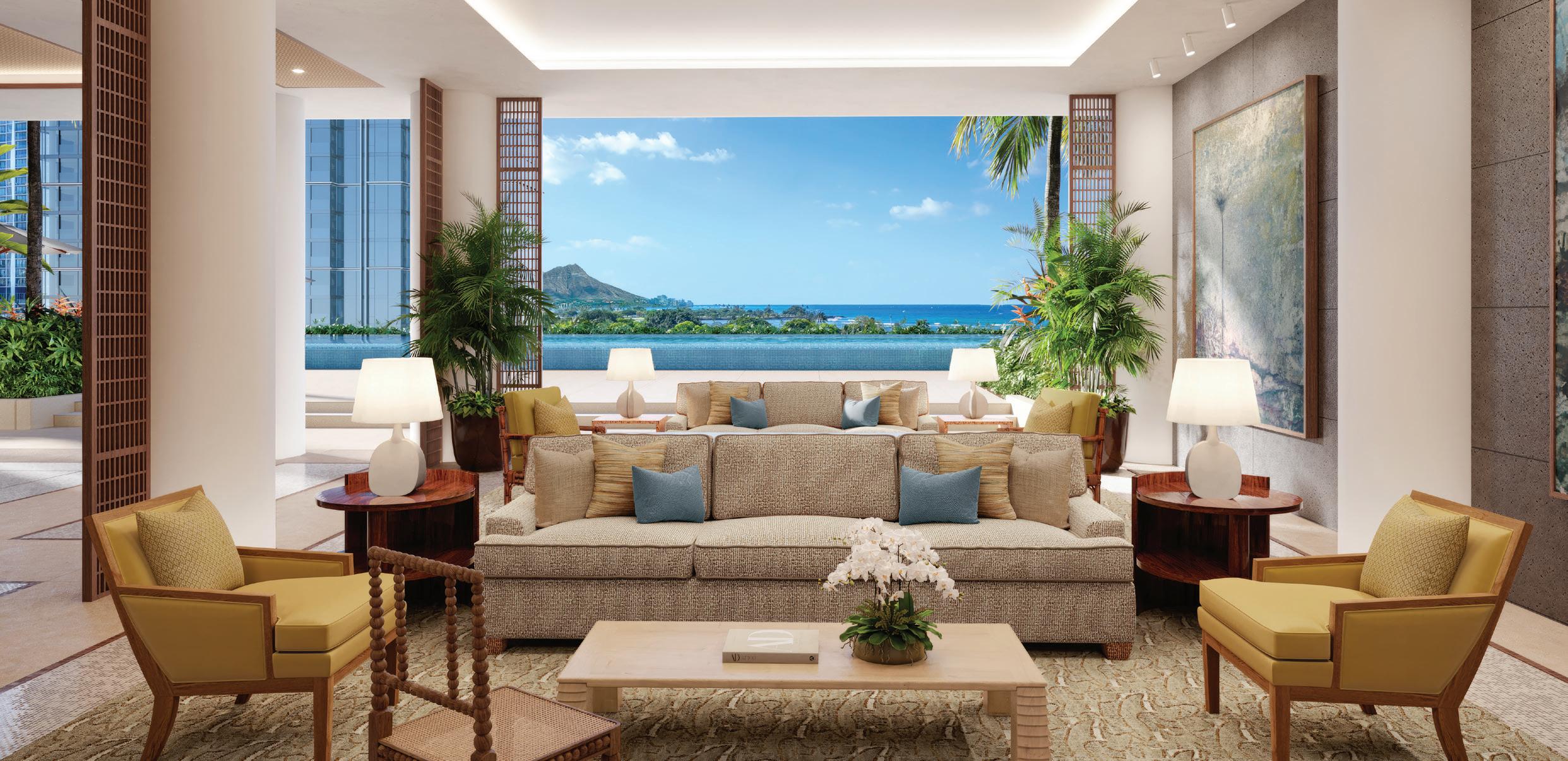
The Launiu Ward Village residences are an artful blend of inspired design and timeless sophistication. Expansive views extend the interiors, and a host of amenities provides abundant space to gather with family and friends.
Studio, One, Two, and Three Bedroom Residences
livingatlauniu.com | 808 556 6543 Offered by Ward Village Properties, LLC RB-21701
THE PROJECT IS LOCATED IN WARD VILLAGE, A MASTER PLANNED DEVELOPMENT IN HONOLULU, HAWAII, WHICH IS STILL BEING CONSTRUCTED. ANY VISUAL REPRESENTATIONS OF WARD VILLAGE, INCLUDING WITHOUT LIMITATION, RETAIL ESTABLISHMENTS, PARKS, AMENITIES, OTHER FACILITIES AND THE CONDOMINIUM PROJECTS THEREIN, INCLUDING THEIR LOCATION, UNITS, VIEWS, FURNISHINGS, DESIGN, COMMON ELEMENTS AND AMENITIES, DO NOT ACCURATELY PORTRAY THE CONDOMINIUM PROJECTS OR THE MASTER PLANNED DEVELOPMENT. ALL VISUAL DEPICTIONS AND DESCRIPTIONS IN THIS ADVERTISEMENT ARE FOR ILLUSTRATIVE PURPOSES ONLY. THE DEVELOPER MAKES NO GUARANTEE, REPRESENTATION OR WARRANTY WHATSOEVER THAT THE DEVELOPMENTS, FACILITIES OR IMPROVEMENTS OR FURNISHINGS AND APPLIANCES DEPICTED WILL ULTIMATELY APPEAR AS SHOWN OR EVEN BE INCLUDED AS A PART OF WARD VILLAGE OR ANY CONDOMINIUM PROJECT THEREIN. EXCLUSIVE PROJECT BROKER WARD VILLAGE PROPERTIES, LLC, RB-21701. COPYRIGHT ©2026. EQUAL HOUSING OPPORTUNITY.
WARNING: THE CALIFORNIA DEPARTMENT OF REAL ESTATE HAS NOT INSPECTED, EXAMINED OR QUALIFIED THIS OFFERING.
THIS IS NOT INTENDED TO BE AN OFFERING OR SOLICITATION OF SALE IN ANY JURISDICTION WHERE THE PROJECT IS NOT REGISTERED IN ACCORDANCE WITH APPLICABLE LAW OR WHERE SUCH OFFERING OR SOLICITATION
He sees positive developments, such as the flow of military dollars into the state, major expansions to health care facilities, and dense, vertical housing rising across the urban corridor, including ambitious a ordable housing projects planned for Iwilei. But he also worries about the volatile tourism industry, the risks of conflict between China and Taiwan, and serious workforce pressures in the construction industry.
UHERO expects the number of construction jobs to stay in the current 40,000 to 41,000 range through the end of the decade. At some point, those numbers will be even harder to fill than they are today, says Kaneshige, because not enough young people are entering the skilled trades to replace those who are retiring.
“I think we will continue to struggle with workforce development, and that is not going to get resolved in the very near future,” he says. He says he hasn’t heard of ICE raids at local construction sites, but that the national industry as a whole depends on immigrant labor and can’t a ord to have its workforce disrupted.
“Light
at the End of the Tunnel”
• Mortgage rates have dropped, li ing sales and prices
• NAR Economist Lawrence Yun expects “double-digit growth”
• Affordability continues to lock residents out of homeownership
In good news for home sellers, buyers and real estate professionals, the Federal Reserve cut interest rates twice by press time in 2025. While mortgage rates are higher than interest rates, they run in tandem, rising and falling together. The cut is expected to entice buyers and sellers and reinvigorate the sector, which has stalled over the past few years.
“We’ve been living in the doldrums,” said Trevor Benn, president of the Honolulu Board of Realtors, at an Oct. 31, 2025, economic forum that HBR hosted in Waikīkī. High prices and interest rates have made it hard to buy property, while people with sub-4% mortgages are loath to sell and give up their rates. Little went on the market, little was bought.
But conditions are changing nationally. “Now that the mortgage rate is coming down somewhat, that’s going to help on the a ordability, and then inventory showing up. That’s why we anticipate double-digit growth and home sales activity, but it won’t be back to preCovid levels,” says Lawrence Yun, chief economist at the National Association of Realtors, who spoke with me after the forum.
In his address to a room packed with real estate professionals eager for business to bounce back, Yun o ered a message they wanted to hear: Even if the economy softens in 2026, “we will not have a homeprice crash. There’s a light flickering at the end of the tunnel.”
For the local market, Benn says he expects a slight increase in volume and prices in 2026. However, “if we get rates to 5%, then it’s o to the races,” he writes in an email. “But with price inflation and slowing job growth, the Fed is a little stuck between fighting inflation (keep rates higher) and stimulating job growth (lower rates).” He wrote that if the mid-term elections in 2026 bring mixed-party leadership, “it will bring more stability, which markets like.”
In mid-November, many local banks o ered 30-year fixed mortgages at 5.5% to 5.625%, which
O‘ahu singlefamily home sales in Q3 2025: up 27% year over year
Despite problems with Hawai‘i’s aging condo stock, it’s often the only route into an otherwise prohibitively expensive market. For a glimpse of how una ordable it is, consider this jump-scare data: the latest costof-housing index from the National Association of Home Builders and Wells Fargo found a typical family in urban Honolulu would need to allocate 73% of its pre-tax income to cover the mortgage payment of a median-priced home.
by the Hawai‘i Housing Finance & Development Corporation.
O‘ahu has historically embraced suburban sprawl over a dense, walkable city with enough housing, at various prices, to accommodate everyone. But attitudes are shifting. Even the Honolulu Board of Realtors wants leaders to focus on supply, says Benn, as do a wide range of would-be homebuyers and city and state o cials.
is below the 6.5% to 7% range of much of the year. The Honolulu Board of Realtors’ September 2025 report for O‘ahu shows a flurry of activity through the third quarter, with the number of sales of single-family homes up 27% year over year and median prices up nearly 4%.
The condo market is more sluggish, though, and represents a “tale of two markets,” as Benn puts it. He says maintenance fees have risen 40% over the past decade, driven by skyrocketing insurance costs from old plumbing, fire-suppression installations and a surge of weather-fueled property damage across the country. Hawai‘i’s average condo association fee is about $1,000 a month, according to Stephany Sofos, principal at SL Sofos—an obstacle to a ording a unit.
Some assistance arrived in July 2025. The Hawai‘i Hurricane Relief Fund, described as “the state’s insurer of last resort,” was signed into law to help condo associations a ord coverage and tap low-cost loans for big repairs. It also helps them purchase enough insurance to fully replace their buildings, which is a requirement for mortgage lenders.
Exorbitant prices are nothing new on O‘ahu, where just 4% of land is zoned for urban housing and 0.3% for multi-family apartments and condos. The state also has some of the nation’s most stringent regulations blocking development, leaving it 64,490 housing units short, according to a 2024 study
Gov. Josh Green told attendees of the Chamber of Commerce Hawaii’s cost-of-living summit in October that 10,000 new units in a ordable housing projects are scheduled in the 2023-2026 timeframe, and another 64,000 units are in the pipeline. If the momentum holds, we may see giant cranes sweeping their arms across the skyline for years to come.
“IF
• Tight industrial market to gain 578,000 square feet of warehouse space
• Office vacancy on O‘ahu stabilizes at 13% compared to 18% nationally
• Local investors continue to dominate the market
After years of turmoil from the pandemic shutdown and rising interest rates, the commercial real estate market has stabilized and is steadily improving, says Mike Hamasu, research and consulting director of Colliers’ Hawai‘i o ce.
“Volatility appears to be the only thing stable in our market right now,” he says. “But from a real estate perspective, we’re not seeing a dramatic increase in vacancy rates and we’re still seeing real rate growth at a very slow pace.”
Hamasu says that stability makes him a little more optimistic than local economists, given that they look at a wider range of economic indicators. “For commercial
“WE’RE PART OF THIS ECONOMY, AND INVESTMENT AND LEASING AND STORE EXPANSIONS AND OFFICE GROWTH ARE ALL INTERWOVEN INTO HOW THE ECONOMY PERFORMS.”
Mike Hamasu Research and Consulting Director Colliers Hawaii
real estate, nothing a ects it more than the interest rate environment and federal policies that could a ect taxes,” he says.
The Federal Reserve cut interest rates twice in the fall 2025, with more on the horizon. Among its tax provisions, the “One Big Beautiful Bill” makes many business-income deductions permanent and reduces personal income tax rates, according to an analysis by the National Association of Realtors.
Commercial real estate is an amalgam of five di erent spaces— o ce, industrial, retail, hospitality and multifamily—with di erent trajectories. For example, the industrial market on O‘ahu is strong but also tight, with vacancy rates hovering at 1%. In 2025 and 2026, about 578,000 square feet of new warehouse space is scheduled to be built, which will allow businesses to expand or relocate.
O‘ahu’s o ce vacancies have stabilized at about 13%, compared to the national average of about 18%. One factor helping to drive down vacancies are o ce conversions and commercial renters that buy their buildings, he says. “Once they move into alternative usage, we remove that building from our statistics,” says Hamasu. He estimates that about 1.4 million square feet of o ce space has been
removed from the inventory over the past decade.
The retail market on O‘ahu was strong in 2025, with vacancy rates falling to 5%, which is below pre-pandemic levels. Monthly rates for prime real estate reached a record high of $4.80 per square foot, which is 4% more than the previous year, according to Colliers’ third-quarter report. But as the fourth quarter approached, economic uncertainty signaled “a more measured retail environment” in 2026.
Among real estate investors, local investors have been entering the market more frequently in the past couple of years, Hamasu says. Institutional investors from the mainland and foreign investors pulled back during the pandemic and as interest rates rose, giving local investors an opening as those rates drop.
“A lot of investors have been acquiring capital on the sidelines, waiting for an opportunity when the market might show a shift,” he says. Local investors gravitate to small apartment buildings, retail stores and o ce buildings—“properties that had not been on the market for a long time.” In 2025, Hawai‘i-based investors accounted for nearly 60% of sales volume, a pandemic-era shift that’s expected to continue.








Hamasu has also seen an uptick in megadeals of $100 million or more, most of it land sales. In 2025, for example, Kamehameha Schools sold the leasehold land under the Royal Hawaiian Resort Waikīkī for $510 million to the Japan-based Daisho Company. The trust also sold the land under the Four Seasons Hualālai on Hawai‘i Island for $400 million to a group of investors that includes the hotel’s billionaire owner Michael Dell.
As for the Neighbor Islands, they are “a microcosm of what happens in Honolulu,” says Hamasu, with similar strengths and vulnerabilities. The retail sector is strong in places such as Hilo, which has a more diversified economy, including UH Hilo, health care facilities, and astronomy. Kona, on the other hand, has seen downturns because of its reliance on tourism.
New warehouse space scheduled for 2025−2026: 578,000 square feet
Hamasu is closely watching what happens in tourism, government and construction—the three stool legs of Hawai‘i’s economy, he says. “The interaction between all these sectors on the real estate market is direct, and we’re adversely a ected by any negative changes.”
He sees a retail market that could be damaged by declining tourism. The o ce market could be impacted by a downturn in job growth. And the industrial market is dependent on wholesale distributors and construction companies, both of which are dealing with erratic trade policies that are driving up prices.
“If material pricings escalate at a dramatic rate, it’s going to slow development activities in the Islands,” he says. “We’re part of this economy, and investment and leasing and store expansions and o ce growth are all interwoven into how the economy performs.”
• Cuts to Obamacare and Medicaid insurance will strain the sector
• Changes to H−1B visas and student loan limits will exacerbate doctor shortage
• Costs, staffing, patients, revenue are always climbing
Hawai‘i is one of the healthiest states in America, with the highest life expectancy. That’s thanks, in part, to a piece of progressive legislation passed in 1974, the Hawai‘i Prepaid Health Care Act. It requires private employers to provide health insurance to employees with at least 20 hours per week.
Another large portion of the population—about 30%, according to 2025 data from the health policy organization KFF—gets insurance through Medicaid, the federally subsidized program for low-income people. Many recipients are children, nursing home residents and working people.
A much smaller group—about 24,606 people—purchased plans in 2025 through the A ordable Care Act’s health insurance marketplace. With the addition of Medicare for seniors and military plans, only 2.8% of Hawai‘i residents lack coverage— one of the lowest rates in the nation.
That low rate helps the entire health care ecosystem function smoothly. In fact, Hawai‘i ranks first in the nation for overall health care quality, access and public health, according the U.S. News and World Report. But some of the programs that drive that ranking are being undermined by recent federal policies.
Federal subsidies that lowered the cost of ACA marketplace premiums have been eliminated under the “One Big Beautiful Bill” and prices are now rising. As an example, the average premium in Hawai‘i after tax credits was $244 a month in 2024. Without the credit, the full price costs $704. Though price hikes are expected to be less severe in Hawai‘i than in most states, some people will be forced to drop their plans.
Dramatic cuts to Medicaid are planned for 2027. The OBBB requires recipients to reapply every six months and to verify that they’ve worked at least 80 hours per month, which can include school or volunteer work. That means getting sick or having shifts cut could result in losing health care. KFF estimates that roughly 41,000 residents could lose coverage in 2027.
Judy Mohr Peterson, the Hawai‘i Medicaid administrator, is working to help clients keep their insurance. In an August 2025 conversation, she was already investigating ways to connect people with job training, volunteer activities and educational opportunities.
“We know we won’t be able to help everybody,” she says. “We know some people are going to drop o . But at the same time, if you focus on that then you become paralyzed. So we’ve got to figure out how to do this with intention,
Hawai‘i residents who could lose Medicaid insurance in
“WE KNOW SOME PEOPLE ARE GOING TO DROP OFF. BUT IF YOU FOCUS ON THAT, THEN YOU BECOME PARALYZED.”
Judy Mohr Peterson Hawai‘i Medicaid Director
to be as helpful as possible and do the least amount of harm.”
Claire Tong, VP of marketing and communications at Hawai‘i Pacific Health, says HPH expects to see more uninsured patients turning up in their hospitals, which burdens the organization financially. For patients, they can be stuck with bills they can’t pay, or forgo routine checkups, prescription drugs and other forms of preventative care.
The state’s physician and nursing shortage is about to be exacerbated by an OBBB provision targeting student loans. Starting July 1, 2026, the federal loan program will cap borrowing for professional degree programs to $200,000. That’s far less than the costs of medical school, which costs $228,959 on average— not including living expenses.
Graduate students studying to be nurses and other high-level health care positions face a $100,000 lifetime borrowing limit. The restrictions will force people to take more expensive private loans or give up on health care careers altogether.
Adding to professional sta ng problems is the cost of new H-1B
work visas. As of September 2025, the federal government is charging $100,000, up from $2,000 to $5,000 previously. Tong says Hawai‘i Pacific Health regularly brings in specialized physicians through the visa program, but the hefty fee will limit future hires.
Despite the turmoil, health care has been a steadily growing sector. “It’s one of the areas that grows almost nonstop in the state,” says UHERO’s Carl Bonham. UHERO expects 2025 to close with 76,900 employees working in health care and social assistance roles. That number is expected to dip slightly in 2026, then rise again in 2027.
Gross annual revenue increases nearly every year for the state’s three largest health care systems, according to data collected for Hawaii Business Magazine’s Top 250 list. Over the past five years, Kaiser Permanente reported an average annual gain of 5%, The Queen’s Health Systems reported an 8.5% gain, and Hawai‘i Pacific Health a 6% gain. These gains follow a decades-long trend of rising health spending in the U.S.
The coming cuts to the system will make it harder to get health care insurance, and as emergency rooms fill with uninsured patients, the cost of health care will only go up for everyone.
• Steep, fluctuating tariffs are hitting this sector hard
• Any slowdowns in consumer and visitor spending will hurt
• Hawai‘i’s minimum wage increases to $16 per hour in 2026
Small businesses are big players in the economy. Of the more than 33 million small businesses in the U.S., the majority are solo operations. But those with sta employ nearly half of the American workforce, according to the U.S. Chamber of Commerce.
In Hawai‘i, 99.3% of all businesses are small, defined by the U.S. Small Business Administration as having fewer than 500 employees. By that definition, most are tiny. Based on U.S. Census data from 2019, there were 141,460 small businesses in the state, of which 83% had no employees, 15% had 1 to 19 employees, and about 2% had 20 to 499 employees.
On top of Hawai‘i’s notoriously di cult business environment— ranked 49th in CNBC’s “Best States for Business 2025”—many small businesses now face slowing tourism in the Islands, a $2 minimum
“WE’VE PAID $235,000 MORE THIS YEAR IN TARIFFS COMPARED TO LAST YEAR. … THAT’S THREE OR FOUR FULL-TIME, FRONTLINE POSITIONS THAT WE COULD HAVE HIRED.”
Butch
Galdeira President Diamond Bakery
raise hike and steeply rising costs. The HR company ProService Hawaii recently surveyed 200 local businesses about what keeps them up at night: 85% said ever-increasing business costs, 78% said the impact of tari s on Hawai‘i’s economy and 36% said hiring woes.
In a webinar hosted by the company on November 13, 2025, Butch Galdeira, president of Diamond Bakery, said his company feels the impact of all three forces, but the cost of importing packaging from Taiwan and China is particularly onerous.
“We’re a relatively small company, and we’ve paid $235,000 more this year in tari s compared to last year during the same time period. That’s three or four full-time, frontline positions that we could have hired,” he said. “Taiwan tari s rose from zero to 20%. China has surged from 25% to well over 100% depending on the product. Our average for China is 55% percent.”
“The last thing we want to do is increase prices to retail because you’re not going to be able to sell a box of soda crackers for $7. People won’t buy it,” he said.
In November, Diamond Bakery was still absorbing the extra costs, but Galdeira says he can’t keep it up and is planning changes for 2026, specifically “shrinkflation without compromising brand integrity. Instead of a 12 count, maybe it’s a 10 count.” He’s also working to expand the company’s reach to the Hawai‘i diaspora on the West Coast, Texas, Nevada and other states.
Businesses in Hawai‘i with 0−19 employees: 98%
The ingredients for soda crackers, cream crackers, saloon pilots and other snacks are shipped in from the U.S. continent or purchased locally, so not subject to tari s. To try to lower costs, he says he renegotiates prices with major vendors and, in some cases, has found new partners with better terms and pricing.
Frank Duval, the jeweler mentioned in the introduction, has worked in the pearl business for decades but is seriously considering getting out. The saltwater pearls he buys from French Polynesia, Australia, Japan and the Philippines aren’t produced in the U.S. and must be imported. Until 2025, loose pearls and other gemstones were duty free if they came from countries with normal trade relations. Those days are over.
The jewelry findings—such as clasps, jump rings, connectors and pins that keep the pieces together —as well as some packaging and freshwater pearls are imported from China, for which he pays a total duty of 47.5%. All told, he says

his monthly tari bill jumped from about $5,000 to $20,000, which is unsustainable.
“It has a huge impact on my cash flow, it slows down my buying. I’m slowly raising my prices as the taxes are eating into my profit,” he says. “Customers say, why is it so expensive? I say, have you followed the news?”
Duval says that if the tari s aren’t dramatically scaled back, he won’t be able to keep his three full-time employees, and he’s preparing to wind down the business. Even the Great Recession and the pandemic were survivable, he says, but not the new tari regime: “I have never seen anything like this, nothing this threatening.”
Beyond tari s, small businesses can no longer use the de minimis provision that let them import up to $800 of goods duty-free. The longstanding rule was killed in August 2025, causing headaches for mom-and-pop importers. Even ordering a single book from abroad can be impossible as many postal services in Europe and Asia have suspended mail packages to the U.S., citing confusion about the new requirements.
While some businesses are buckling under the pressure of tari s, those with products made exclusively with U.S. materials
could benefit from having less competition. Other small businesses are working hard to adapt, such as the Hawai‘i-based solar company RevoluSun.
David Gorman, president of RevoluSun, told ProService’s webinar attendees that the abrupt removal of solar tax credits in 2025 sent customers into a frenzy to get rooftop panels installed. As the inevitable 2026 slowdown approaches, he’s trying to help customers tap alternative financing options and expand into areas such as the maintenance of complex solar and battery systems.
Health care will get significantly more expensive in 2026 for many business owners. Plans purchased on the A ordable Care Act marketplace are rising as federal tax credits are eliminated. KFF research finds that, nationally, 38% of marketplace enrollees are self-employed.
While optimism among small business owners is slipping nationally, according to the National Federation of Independent Business, the OBBB’s permanent extension of a 20% deduction for qualified business income will help o set rising costs and, as U.S. Chamber of Commerce says, “deliver meaningful benefits to America’s small businesses.”
According to the Council on Foreign Relations, the OBBB allocates $13 billion for the U.S. Indo-Pacific Command, headquartered in Hawai‘i, in fiscal year 2026. It’s part of a $156.2 billion temporary increase in national defense funding, on top of the Pentagon’s request for $848 billion in 2026.
Steven Bond-Smith at UHERO says the steady flow of defense spending is a significant advantage for the state’s economy. “It doesn’t have market forces pushing it around,” says Bond-Smith. “It’s geopolitical in that Hawai‘i is a strategic location in the Pacific where it makes sense to have all this extra federal defense spending,” he says.
That money trickles into the local economy in a variety of ways. The 45,000 active-duty military members stationed in Hawai‘i also buy in Hawai‘i. The military provides well-paid civilian jobs, particularly in the construction industry. And it enlists many local people; Hawai‘i has one of the highest recruitment rates per capi-
Estimated loss of federal jobs by end of 2026: 4,500
ta in the country. “It’s an important source of upward mobility for our local population,” says Seth Colby from DBEDT.
All told, about 11% of Hawai‘i’s GDP comes from direct federal spending in the Islands, according to Carl Bonham of UHERO. It’s a critical lifeline, but also puts the state at risk of federal cuts.
Cuts can target federal jobs, contracts to local businesses, grants to nonprofits, subsidies to state and local governments, and direct assistance to vulnerable populations, according to an Oct. 2, 2025, UHERO brief by Trey Gordner and Jack Driggers.
Some of those cuts arrived in dramatic fashion when the world’s richest man, Elon Musk, rampaged through the federal bureaucracy as head of the newly created Department of Government E ciency. The Sturm und Drang of the DOGE project has shifted into a quieter, more successful government-shrinking e ort now underway.
In Hawai‘i, about 128,600 working people, or 19% of the overall workforce, are employed in civilian government jobs at the city and county, state, and federal levels. Of those, about 34,800 are civilian federal jobs, or 27% of all government jobs. UHERO projects the loss of
“[THE MILITARY] IS AN IMPORTANT SOURCE OF UPWARD MOBILITY FOR OUR LOCAL POPULATION.”
Seth
Colby Chief State Economist
Hawai‘i Department of Business, Economic Development & Tourism
about 4,500 federal jobs in Hawai‘i through the end of 2026.
Another 12% of Hawai‘i employees work for nonprofits, which are also hit with federal funding cuts. Gordner and Driggers found that 74 federal grants to 59 Hawai‘i nonprofits—worth $126 million in unpaid balances—are vulnerable. Most of these grants are for health care, human services, environmental and education programs.
Taking a longer and more alarming view, the Hawai‘i Alliance of Nonprofit Organizations estimates that total losses could reach $400 million, and more than 500,000 residents could lose access to food assistance, housing support, health care and other services.
In response, the state awarded $49.5 million in November 2025 to 95 nonprofits that saw federal cuts or that serve populations vulnerable to cuts. The biggest award, at $5.5 million, went to the Hawai‘i Foodbank, which like others around the Islands saw a flood of requests during the six-week government shutdown. Michelle Bartell, CEO of Aloha United Way, says her organization was averaging 930 calls a day on its 211 helpline during the shutdown, up from about 125 to 150 calls a day, with the most common request being food support.
The OBBB, meanwhile, specially targets the safety net. Among its provisions, the law makes it harder to qualify for Medicaid health insurance, purchase subsidized insurance plans through the Affordable Care Act and qualify for SNAP benefits. The need for food assistance during the shutdown exposed some of the challenges ahead when SNAP programs are scaled back, particularly as food insecurity is rampant in the Islands.
In a report from five local food banks released in November 2025, 32% of Hawai‘i households had trouble getting enough food— slightly up from 2023, and reflective of a persistent problem. In addition, 1 in 5 households skipped meals or didn’t eat at all on some days. Food insecurity is worse on Maui and Hawai‘i Island, and it impacts Hawai‘i’s Filipino households the most, at 47%.
The coming year could see new pressures on the state and hard-hit nonprofits to fill widening gaps in the fraying safety net, at the same time that federal funding cuts squeeze the flow of money into Hawai‘i.
by Jennifer Ablan
Hawai‘i’s banks have earned consistent national recognition from Forbes and Newsweek for their financial health, stability, and customer service—a trend leaders expect to continue in 2026 as the state enters another period of economic reinvention toward a more diversified, tech-enabled future.
At the same time, they see a mixed outlook ahead. Easing interest rates, emerging industries, and fresh investment opportunities are creating momentum, even as affordability pressures, workforce out-migration, and a persistent housing shortage continue to weigh on the islands.
That blend of optimism and realism defines the outlook among Hawai‘i’s major financial institutions, which say the state is positioned for growth—if it can successfully channel national trends, advanced technologies, and capital into meaningful local gains.
Peter Ho, CEO of Bank of Hawai‘i, describes the environment as “mildly optimistic.” A er a turbulent 2025 marked by political distractions, fluid federal policies, and global uncertainty, markets held steady, real estate remained resilient, and key industries performed reasonably well. Lower interest rates now offer an additional li .
“If long-term rates drop along with short-term rates, it could create real
benefits for lending and economic activity,” Ho says. A positively sloped yield curve could support commercial lending, construction, and small-business expansion, helping the state capture more momentum.
National signals add another layer to the outlook.
“We’re a reflection of the economy,” says Bob Harrison, president and CEO of First Hawaiian Bank. Some analysts at Bank of America describe a potential “Goldilocks” scenario for the U.S. in 2026, with GDP growth around 3.3%, inflation moderating near 2.9%, and unemployment nudging slightly higher, to about 4.4%.
Still, Harrison urges caution. Many working families—including some bank employees—rely on federal benefits to meet basic needs. Recent interruptions in SNAP payments, he says, highlighted the fragility of household finances. “The biggest concern is the people who might get le behind,” he says.
He also warns that Hawai‘i’s tourism-driven economy has yet to fully recover. “I’m not ready to say I’m bullish yet,” Harrison says. “We still have Japanese and Canadian tourists not fully back. If we had one of those, I’d feel better. If we had both, I’d be really bullish.”
While visitors from the U.S. mainland—particularly the Western states—remain strong, the lack of a full recovery from Japan and Canada continues to limit overall confidence.
Housing affordability, however, remains what Harrison calls his “hot button.” He emphasizes the urgent need for more housing aimed at working families—not luxury buyers and not only those who qualify for subsidized programs. “That’s the gap. That’s what’s missing,” he says.
“That’s what’s holding us back as a state,” he says. “The sooner we build a lot more mid-priced housing, the better off we will be. There’s a limit to how much tax-subsidized housing we can do through low-income tax credits because it’s constrained by how much the state and federal government can support through tax offsets.”
He says Hawai‘i is short more than 20,000 middle-priced homes. “We need 20,000 more homes for middle-priced housing. The high-end market takes care of itself, and the low-income tax credits and senior housing programs help those in need. But the thousands of homes in the middle—the working people in all sorts of jobs—are what we really need to build, and we’re just scratching the surface on it.”

Despite these structural burdens, the banking sector overall remains deeply tied to the state’s long-term success.
“The banking marketplace is supported by several large, locally headquartered institutions,” Ho notes. “We have to be successful here in order to be successful—period. For Bank of Hawai‘i, Hawai‘i is more than 90% of our business. If Hawai‘i isn’t successful, we aren’t going to be successful. That’s true for most other banks as well. We all have a vested interest in ensuring this marketplace prospers.”
That vested interest is informing how banks view Hawai‘i’s next economic chapter. Alongside core sectors such as tourism, construction, defense, and military spending, leaders are paying closer attention to technology and knowledge-based industries.
Ho describes artificial intelligence (AI) as a “scale enabler,” allowing small companies to produce what once required hundreds of employees. In a labor-constrained state, that kind of technological leverage could be transformative.
It may enable Hawai‘i to attract more innovative, low-impact businesses that create revenue and career pathways without straining housing, infrastructure, or the environment.
“There are a lot of assets that we have here,” Ho says. “We have a community that is more integrated, more diverse than any community in the United States. And the idea that we can’t reconcile a quality economy out of that is a little crazy.”
Still, the pressures are real. Out-migration continues to drain young talent. Many early-career professionals cite high housing costs, limited upward mobility, and fewer career opportunities as reasons for leaving. Ho frames that challenge in terms of productivity and output: affordability must be paired with industries that generate real income.
Streamlining permitting, accelerating construction timelines, and strategically investing in tourism and military infrastructure could create both jobs and economic activity. Without those structural improvements, growth may remain constrained.
Hawai‘i’s history suggests reinvention is possible. The state has repeatedly transformed its economy—from whaling to sugar to mass tourism. Ho believes the next transformation will be driven by AI, technology, and niche markets like wellness tourism, paired with Hawai‘i’s natural beauty, climate, and culture. With the right regulatory and infrastructure support, those sec-
tors could draw high-value investment while preserving local quality of life.
Overall, U.S. investor sentiment mirrors cautious optimism. In Bank of America’s November 2025 Global Fund Manager Survey, 53% of respondents said they expect a so landing for the economy, while only 6% foresee a hard one. Improving financial conditions and global capital flows could support local banks and businesses, especially those connected to international tourism, trade, or emerging tech.
“There is opportunity to generate economic output without jeopardizing the community,” Ho says. “We need to focus on what Hawai‘i does best and make it easier for capital to flow here responsibly.”
Harrison adds that if Hawai‘i takes care of its people and communities, the banks will follow—and so will the state’s future.
“WE’RE A REFLECTION OF THE ECONOMY.”
Bob Harrison, president and CEO of First Hawaiian Bank.
by Ken Wills
If business executives loathe surprises, few will be nostalgic for 2025. Business plans were whipsawed by fluctuating government policies, rising fuel costs, and a host of disruptions that are difficult to predict.
A er on-again, off-again tariffs affecting global commerce and tourism, followed by a 43−day government shutdown late in 2025, the longest government shutdown in U.S. history, the sector could benefit from stability.
Even without fresh curveballs, the year ahead could bring more turbulence, as several underlying conflicts —including unresolved political standoffs—were kicked down the road.
That dispute—over extending Affordable Care Act subsidies—was unresolved as of press time and may come up again in late January. Without a deal, health insurance premiums due to soar on Jan. 1 may rise further still. And another shutdown would cause further damage to the U.S. economy on top of the $11 billion loss from the 2025 closure, according to the Congressional Budget Office.
Cascading effects of shutdowns on air cargo, ocean container shipping and commercial aviation can have a profound impact on this island economy. While many analysts are optimistic that the worst can be avoided, others see more uncertainty and volatility ahead.
At least the state’s economic pain may be short-lived, according
to UHERO’s forecast for the state in September. A er what the research organization projects will be a mild recession in the state’s economy, “a gradual recovery will begin by late next year.”
Alaska Air Group, the owner of Hawaiian Airlines, couldn’t catch a break in 2025. Dogged by higher fuel costs due to a West Coast refinery fire as well as increased labor and maintenance expenses, it also ran into snags as it aims to complete the integration of its 2024 $1.9−billion purchase of Hawaiian Airlines.
If that weren’t enough, the group faced flight delays and cancellations during the 43−day government shutdown that strained the air-traffic control system across the nation. A portion of those bookings were lost for good.
On the plus side, the airline’s core bookings remain strong. Despite a 23% revenue increase in the company’s latest earnings report, third quarter 2025 expenses surged 32% in the period from the prior-year quarter, causing profits to fall 69.1%.
When Alaska reports its fourth quarter earnings in late January, it’s expecting higher fuel costs to continue to drag on profits for the year. Even so, a number of analysts are bullish on the company’s outlook.
“There have been some [earnings] drags due to the economic slowdown that the sector witnessed post-“Liberation Day” (when President Trump announced sweeping tariffs), says Atul Maheswari, transportation sector stock analyst at UBS Group.
“There have also been Alaska-specific issues related to a couple of IT issues that the company had, and there’s also been higher fuel prices that Alaska has had to deal with plus a higher tax rate. So, a bunch of things put together that comprise $2.70− $2.80 in earnings-per-share that was essentially lost (in 2025). We think Alaska can recover that. And obviously there are the merger synergies as it makes more progress with the Hawaiian acquisition. So, we think 2026 can be a very good year for Alaska.”
Integration headaches have dogged the combined company.
Customer complaints about glitches and delays with the combined frequent-flyer miles program and the check-in system reached a crescendo in November. That prompted Hawaiian’s new CEO, Diana Birkett Rakow, to issue an email to customers, seeking to reassure them the airline was addressing the problems and hoped to have them resolved by spring.
“As we pushed a lot of change through our systems to bring you more value, I know that some of you encountered technical issues with your Atmos
account, managing travel, or knowing whether to contact Hawaiian or Alaska for support,” she wrote in her email. “Mahalo for your patience as we work through this transition and improve your experience across our apps, websites, and airport spaces. Our teams are focused on resolving issues now, even as Alaska and Hawaiian remain on separate passenger service systems.”
The Hawaiian booking system is due to be moved over to Alaska’s system by late April.
Even as the email went out to customers, however, wait times on the hotline for the combined miles program were two to three hours long, testing the patience of some of the most loyal passengers seeking to use miles for their bookings.
For 2026, the airline group is hoping for a return of Japanese travelers who have stayed away due to an unfavorable dollar-yen exchange rate. The company says it is seeing an uptick in bookings from Japan to Hawai‘i, but those remain “well below” pre-Covid levels. A lopsided exchange rate has stunted travel from the state’s premier foreign source of visitors and continues to discourage Japanese tourists from visiting the Islands. However, the same dynamic has increased travel from Hawai‘i to Japan.
Meanwhile, new flights are being added to serve Fiji starting in March, and Los Angeles and Seattle on the
continent. The airline declined to say whether it was cutting back flights to other destinations.
“While we experienced some post-summer so ness, we are pleased with end-of-year bookings and into 2026,” says Alex Da Silva, regional communications director for the airline.
Another sore point is an ongoing boycott by Canadian tourists to its southern neighbor. Canada is Hawai‘i’s second-largest source of international tourists. The backlash to Trump’s tariff threats and comments about annexing Canada has deprived Hawai‘i of an important source of tourism revenue.
The Economic Research Organization at the University of Hawai‘i reports that the number of visitors to the state was projected to fall in the second half of 2025, and it expects even fewer in 2026.
In one move benefiting airlines, if not consumers, the Trump administration eliminated a rule finalized in the last months of President Joe Biden’s administration that would have required airlines to pay travelers between $200 and $775 for cancelled or delayed flights. Now any payments will be at the discretion of the airline.
Hawai‘i’s shipping sector, including Matson, the state’s dominant ocean shipper, is feeling the pinch of President Trump’s tariff policies that raised prices for some goods and has played havoc with supply chain operators who have sought to dodge the tariff impact.
First, companies tried to get ahead of anticipated tariffs by frontloading orders, only to cut back when he y tariffs were imposed on China and other key trading partners. Then came a game of shi ing orders to manufacturing countries with the lowest tariffs. By turns, tariffs or threats of tariffs changed again.
The good news in 2026 is that analysts were able to scale back some projections for worst-case scenarios. Transportation analyst J. Mintzmyer says that among the reasons he’s optimistic about the sector for the year ahead is that the worst projections didn’t come to pass.
“The broad shipping sentiment headwinds (particularly around tariffs) are shi ing into tailwinds, and the market has not yet adjusted,” he wrote in a November outlook on Seeking Alpha.
“Tariff announcements, pauses and retractions have ebbed and flowed throughout 2025, but the fear of a full-blown U.S.-China trade war has
lurked in the background,” he adds.
“Until recently, both nations were poised to implement onerous port fees on each other’s vessels. Then … we received news of a one-year pause for these efforts along with a White House endorsed agreement with China to establish a mutually respectful framework for future negotiations.”
Matt Cox, chairman and CEO of Matson, said the company would focus on what it can control in the year ahead.
“While the global economic picture remains dynamic, the framework trade and economic deal reached between the U.S. and China in October, which rolled back much of the tariff escalation in 2025 for a year, created a more stable trading environment for our customers and we are optimistic this will lead to a more lasting agreement between the two countries,” he said in a statement.
“Still, the effects of all the disruption to supply chains, inflation and lingering atmosphere of uncertainty are all likely to continue weighing on businesses and tempering consumer spending into the new year.”
Reed Seay, equity analyst at Stephens, says Matson’s outlook for 2026 is expected to be profitable from April-December a er a sharp loss in the first quarter. That is due to much lower shipping rates in the first three months compared to a year ago when they were still strong. For the full
year, per-share profits are expected to decline a modest 1.5%, Seay says, noting the outlook is closely tied to its China trade.
“Matson has a much quicker and more reliable service from China to California, which allows them to command [rates that are] multiples higher than others who offer the same service,” he says. Its premium customers, meanwhile, are less likely to leave China and are willing to absorb the higher rates.
“Our expectation that we express in our model is that it will be more stable [in 2026] than this year, which is a low bar to clear, but we expect more stability,” he said in December. “It’s really tough to tell with this administration, which direction things will go.”
Inter-island shipping, meanwhile, faces rough waters in 2026. The main player— Young Brothers LLC—is predicting it will lose money even a er winning a 25.75% cargo rate increase from the Public Utilities Commission in November.
Although the commission denied a request for additional annual increases to cover inflation up to 5%, the move was sharply criticized by local businesses such as agricultural entities who ship goods between islands.
At a commission hearing ahead
of the vote, Edward Knox, an attorney for the state Division of Consumer Advocacy, criticized Young Brothers’ management practices that led it to ask for new rate hikes on top of a 2020 Covid-era emergency increase of 46%.
Knox said Young Brothers sends funds to Saltchuk, its Seattle-based parent, but when it faces downturns, it returns to the commission, requesting rate hikes to close the gap.
“And for every crisis, Young Brothers’s one answer seems to be repeatedly to seek higher and higher rates. That has been the cycle Young Brothers has been stuck in,” Knox said.
In unanimously approving the increase, the three-member commission said the move was necessary to avoid a sudden loss of service by the monopoly tug-and-barge operator.
Young Brothers’s interim president Frank Almaraz said of the increase: “These new rates address our most immediate financial solvency risk by better aligning customer rates with the costs to provide and maintain reliable service across every island.”
The company said operating costs since 2020 have increased by about 44% while cargo volume declined by about 14%.
Paradoxically, the rate hike meant to stabilize revenue may further shrink shipping volumes, setting off a vicious cycle of declining demand and rising costs.

HAWAI‘I IS KNOWN FOR, AND IS RIGHTLY PROUD OF, ITS ENTREPRENEURIAL SPIRIT.
But like so many other parts of the country, Hawai‘i is facing economic headwinds that could cause significant change. These include rising insurance costs, affordable housing, a shortage of skilled labor as well as evolving trade policies nationwide. One key factor that comes up in our conversations with local businesses is the wave of business owners set to retire—and what that means for their companies.
significant change. These short- age of skilled labor evolving trade policies nation-wide. One key factor that retire – and what succession difference or more employees.
The issue of retirement and succession is particularly pressing in Hawai‘i, where the aging population is outpacing the national average. Between 2020 and 2024, the percentage of people in Hawai‘i over 65 increased from 19.3% to 21.5%, faster than the national growth rate.
Succession planning is a crucial component of any long-term
business strategy. It safeguards the future of a business, preserves its legacy, and ensures the community continues to access essential goods and services. Effective succession plans can mean the difference between a seamless transition and potential disruption for business owners, employees and clients.
Often business owners assume that succession is synonymous with a sale, but while a transaction is always an option, there are several paths to consider.
1
Studies show that at least 2,000 family-owned businesses in Hawai‘i employ five or more employees. For many owners, the ideal exit route is passing the business to the next generation. While this may seem like the smoothest option, it requires
careful thought and preparation, often years in advance.
For instance, there are potential tax implications when gifting a business to family members, so consulting with an accountant early in the process is essential. Alternatively, selling the operation to family requires preparation similar to any major business transaction. Establishing a fair valuation and agreeing on payment terms is crucial, especially if the original owner plans to use those funds for retirement.
The most important aspect of a familial transition is having the right family members and team in place to take over. Some younger family members may be eager to carry on the legacy, while others may choose their own path. For families in the latter category, there are still more options to consider.
If no family members are available or willing to take on the enterprise, an ESOP, or employee stock ownership plan, may make sense. An ESOP transitions ownership to employees, who bring familiarity with the company’s culture, values and operations. Employees receive stakes in the company, usually in the form of stock, making them
advantageous in uncertain economic climates. They also o er significant tax benefits for both the business and the selling owner. Contributions to the ESOP are tax-deductible, and sellers may defer capital gains taxes if they reinvest in qualifying securities. A fully ESOP-owned S Corp. is free from federal income taxes, making them a financially attractive option for certain businesses.
owner. Whether the owner wishes to exit entirely or remain involved in some capacity, the terms of the sale can be tailored to accommodate these preferences.
Whether through a familial transition, an ESOP or an M&A transaction, succession is not a process any business owner should tackle alone.



Commercial Banking based in Honolulu, and serves midsize businesses in Hawai‘i.

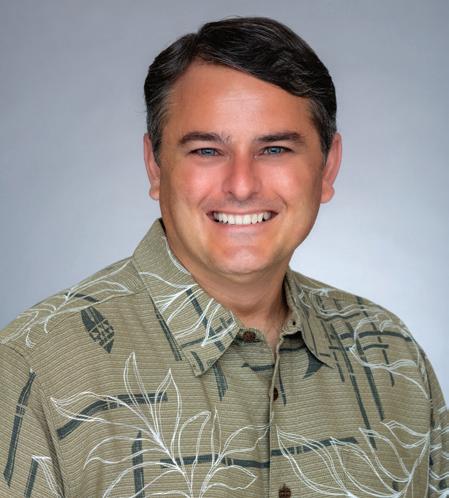
Scott Hogle President, iHeartRadio Honolulu
What advertising trends are business owners facing?
• AI is Disrupting Google Search Behavior: 61% of Gen Z and 53% of Millennials use AI tools instead of Google or other traditional search engines. If your SEO isn’t working, this may be why.
• Fragmentation is Diluting Reach & Frequency: Consumer media usage is so spread out that it’s challenging to achieve Reach & Frequency which is what makes an ad campaign work. The good news is that adding audio to your ad campaign boosts ROI. Audio increases Social media performance by +83% and SEARCH by +29%.
• Trust in Social Media is Collapsing: Nearly 80% of users have low trust in social media content, but radio continues to be the #1 TRUSTED news source.
• Human Connection
Matters More Than Ever: 9 in 10 consumers say it’s important to them that the media they consume is created by real humans rather than AI. iHeartRadio leads the market with the highest rated live & local morning shows in Honolulu.
• According to Nielsen, Americans under 50 spend more time with AM/FM radio than TV. Broadcast television continues to lose audience to streaming services like Netflix, Amazon Prime, Hulu, and more. AM/FM Radio audiences have grown their listenership by 40M since the early 2000’s.
What is iHeart’s secret sauce for creating ROI for advertisers?
John Wanamaker once said, “I know half of my advertising works I just don’t know which half.” At iHeartMedia, we know which half works. My upcoming business book on The Art of Negotiation has a chapter where I talk about the 3 M Formula for Marketing Magic we use to accelerate ROI for an advertiser. If only one M is missing it can negatively impact ROI.
The MESSAGE should reveal a clear U.S.P. Lots of ad messages are talking but not saying anything. Advertising filled with cliché causes the mind to hear ‘blah, blah, blah’, people
tune out. We help advertisers create ad messages that connect. We do this discovering, then developing their Unique Selling Proposition to differentiate themselves in a crowded marketplace.
The MESSENGER accelerates TRUST to fast-track ROI. It’s not just what you say, but who says it that matters. Once we’ve crafted your message, we pair you with the right voice to deliver it. At iHeartMedia, we specialize in relationship marketing through what we call “appointment listening”. Loyal audiences tune in daily to trusted voices like Michael W. Perry (92.3 KSSK), Rory Wild (Island 98.5), and Rick Hamada (KHVH 830 AM). These influencers have spent decades building relationship with their audience. When a message and messenger resonate with an audience, your ad takes flight to create instant credibility. Your message becomes more than an ad, it becomes a recommendation from a TRUSTED friend. Relationship marketing helps to accelerate ROI so your ad dollars work harder.
The MAGIC FORMULA: Reach × Frequency = Accelerated Results: In today’s media-saturated world, it’s harder than ever for an advertiser to stand out. According to best-selling author Tim Elmore, the average person is exposed
to over 10,000 media messages a day. Cutting through that noise requires repetition so your message is remembered. At iHeartMedia Honolulu, we reach nearly 700,000 listeners across our AM’s, FM’s, streaming, and podcast channels. But reach alone isn’t enough. To make an impact, you need consistent frequency to create Top of Mind Awareness and brand recognition so when a consumer has need for your product, recall is triggered, your ad is remembered, and you pick up a new customer.
What advice would you give to people new to advertising?
If you’ve ever invested dollars in an ad campaign and it didn’t work , it is likely one of the 3 M’s was missing. When buying advertising, make sure you are buying it from a marketer, not just a salesperson and you are following the 3 M Formula for Marketing Magic. For more information on what makes advertising work, email ScottHogle@iHeartMedia.com.

HOW RAISING CHILDREN STRENGTHENED THEIR RESILIENCE AND REDEFINED THE WAY THESE WOMEN SHOW UP IN THEIR CAREERS. PROFILES OF TWO WOMEN IN HAWAIʻI WHO FOUND THAT PARENTING AND FAMILY LIFE WERE THE SUPERPOWER SKILLS ON THEIR RESUMES
BY KERRI MEADE



On a weekday afternoon in April 2011, Siana Hunt was trying to get ready for an event, make dinner and attend to her two young children while her husband Anthony was still at work. The phone rang. The caller ID showed CBRE, the commercial real estate and investment firm where he was employed. She picked up and yelled, “Are you kidding me? You haven’t even left the office yet?”
Only it wasn’t her husband. It was Ryan Sakaguchi, a CBRE vice president who is also the board chair for Make-AWish Foundation, asking if she would consider being interviewed for the foundation’s CEO position. Her immediate answer: “Thank you, but no.”
He asked her to hear him out.
Life was chaotic. She held a longterm substitute position at Punahou and ran a successful event planning company that often had her traveling to the East Coast. She was also an active board member for several nonprofits while raising two young children.
But the next day, as she drove by Kapiolani Hospital on her daily commute, she thought about the mothers inside who faced the unimaginable fear of losing their children, so she decided to hear what Sakaguchi had to say.
At the interview, Hunt admitted, “I’m sorry, I don’t know anything about Make-A-Wish.” He responded, “That’s the problem.” Even though Make-AWish Hawai‘i was the third chapter ever formed, and also one of the largest, it wasn’t well known. Sakaguchi asked where she saw herself in 5 years. She
“God put this little ember in my heart, and oxygen got blown on this ember to a point where I couldn’t avoid it.”

replied, “I’m going to be really honest with you. I see myself at home, making sure my teenage kids have a stable home environment. I am a mom first.”
But her life was about to pivot. It was as if all of her past experiences came together for this new, single purpose. She could merge her early-childhood education background, event planning experience and maternal heart, and turn it all into an organization. In this moment everything shifted: “God put this little ember in my heart, and oxygen got blown on this ember to a point where I couldn’t avoid it.”
So she said yes, but quickly realized transitioning into this new role would be a tremendous undertaking.
Unable to get useful advice about being a CEO while juggling family responsibilities, she picked up the book, “You’re in Charge, Now What?” by Thomas J. Neff and James M. Citrin. She followed the guidelines it laid out: For the first 90 days, listen, take a lot of notes, and assess. She told her family, “Just give me
90 days,” and in that time, she worked relentlessly. She missed after-school activities and every family dinner, many nights not leaving downtown until 3 am. She immersed herself in the organization to gain a deep understanding of its operations. She took the financials to a friend who was a CFO, asking for his help: “I can read these as numbers; they tell a story to you. Help me read the story.” And it quickly became evident how much work needed to be done. She reflects, “They were like, here’s the keys to the Ferrari. And I got sold a jalopy.”
Hunt followed the book and made her plan. On day 91, she began restructuring the entire team to support the scale and potential of Make-A-Wish Hawai‘i. Her decision was rooted in accountability and care for the mission, ensuring the organization could honor every child it served.
She and her children struggled with her new role as CEO. She went from being class mom to missing all of her children’s school events. She vividly remembers the day her son forgot his binder and she told him she couldn’t bring it. He cried on the phone, and
she held herself together until the call ended—then she broke down.
The morning car ride was where she shed one life and stepped into the next, her own version of Clark Kent’s phone booth. From her home to school dropoff, she was completely kid-focused. From school drop-off to downtown, she mentally transitioned to CEO (while putting on her makeup at stoplights).
Each night as she pulled into her driveway, she paused, taking slow breaths and gathering herself, knowing the day would begin all over again the moment she walked inside. She had to be fresh for her family because that’s what she gave everyone else. Her husband would meet her at the door with a glass of wine, she would start cooking dinner, and she would squeeze every ounce out of this time with her children. Her initial three-year commitment turned into eight. At some point, she realized the only way her kids would get her undivided attention was for them to have a medically critical moment. With tears in her eyes, she said, “They were never going to get the best of me because the best of me was also being shared with the people who were going through the worst of times.”
On a spring break trip with her family, she tore her ACL, MCL and LCL in a skiing accident. As she was lying face down in the snow, her first thought was that she didn’t have time for this. Three major events were on the horizon: World Wish Day, the Make-A-Wish Annual Gala and the May Day celebration, where her daughter would be crowned Queen. Now she had to figure out how to fit surgery into all of this. “What the hell am I doing?” she asked herself. After postponing surgery for three months, she realized, “I was the change agent, and it was time for someone else to take it to the next place.” She wanted to be there for her family while still contributing to the community in which she felt so deeply rooted: “My family has called Hawai‘i home for six generations, rooted in the land, culture
and communities that shaped us. From ranching and stewardship to service and leadership, each generation has carried forward a deep sense of kuleana and connection to these islands.”
She was faced with a new opportunity. Barron Guss, ALTRES president and CEO, asked her to shape ALTRES’s mission for the next 50 years, and she couldn’t pass it up. He spoke candidly about Hawai‘i’s leadership vacuum, a problem she knew well, having created the Young Leaders Board to address the very same gap. The new roles of Director of Corporate Philanthropy and Executive Director of the ALTRES Foundation offered an opportunity to leverage everything she learned at Make-A-Wish and apply it more broadly in service to Hawai‘i’s nonprofit community. The job would also let her spend more time with her family. It was, in every way, the perfect match for her.
Make-A-Wish Foundation achieved significant growth under Hunt’s leadership. In eight years, it went from three full-time staff to a combined staff and intern team of more than 65, achieving 40% growth in funding and wishes granted for four consecutive years. Her journey was not without missteps. She chose to use these failures as teachable moments. As a verbal processor, she regularly invited her children into the conversation of challenges at work: “I screwed up today,” or “I blew this opportunity.” She wanted them to see failure as part of the process, that you have to work at something, and talent isn’t something you’re born with —it’s something you build.
For Hunt, career and motherhood have a symbiotic relationship. She believes motherhood has taught her tenacity she would never have gained without children: “You can’t give up because there are little beings that depend on you. So, when you face a hurdle, not getting over is just not an option. Because I’ve got to get home to my little guy, so I’ve got to get this done.”
Being a mother held her accountable at all times: “They’re watching how I communicate with a phone call. They’re watching how I interact with people in the community. They’re watching me when I go to the mailbox, and I’m dog tired, but a neighbor wants to talk about my day. These interactions inform how they’re going to interact in this world. I’m never going to ask my kids or my employees to do something I wasn’t also willing to do myself. That was a huge part of my authenticity in which I was approaching life.”
As her children neared college graduation, they called to say that they wanted to come home and work in Hawai’i. Her son, Aukina, felt compelled to take over the family ranch on Moloka’i. “The transition has been meaningful but also clunky, painful and very real. Aukina has stepped up with the same grit and tenacity he comes from, especially after my father passed.” They’re figuring it out together as a family, one step at a time: “There is something really transformational about working in generations. The four of us, we do life as a team. And we love it.”
It’s clear that Hunt’s family will always be her greatest success and deepest legacy. The words she used years ago in her interview with Make-A-Wish still ring true. She will always be a mom first.

When Yunji de Nies was a young girl, her mother would not let her into the kitchen at all. She wasn’t allowed to cook or even wash a dish. She was constantly ushered away and told to go study instead. Her mother grew up in South Korea under martial law, and because she was a woman, college wasn’t an option for her. Since she wasn’t afforded that opportunity, she insisted on it for her daughter.
As the daughter of two immigrants, de Nies was the first native-born American in her family, and she absorbed her parents’ strong work ethic. A quotation she tacked to her corkboard in college was her mantra: “Busy as a bee, results as sweet as honey.”
After graduate school, she moved to New Orleans. A year later, in 2005, Hurricane Katrina caused the levees in New Orleans to break, flooding most of the city. Amid businesses shutting down, rampant looting, a communications collapse and food scarcity, de Nies was working as a TV reporter. She was suddenly doing regular live updates over the months as New Orleans slowly recovered. Circumstances forced her to learn her craft at a relentless speed.
AN UNEXPECTED TRANSITION
Soon after, she accepted a position with ABC News in Washington, D.C., and she quickly rose to become a White House correspondent for Good Morning America. Even though she was only 27, because of her experience with Hurricane Katrina, she held her own among the veteran reporters and learned how to cover the White House in the final year of the George W. Bush administration. “So when Barack Obama came in, and suddenly, I was on television all the time, I’d at least had the reps.”
The hustle was real. She was working 80- to 90-hour weeks at a feverish pace. “In news, you’re only as good as your next story. No one rewinds the tape. As soon as you’ve done it, as soon as it airs, it’s over. It disappears.”
During a brief stint in Atlanta, the unthinkable happened. Her mother called from Hawai‘i Island; her
stepfather had been killed in a boating accident. Without hesitation, at the height of her career, she immediately moved home.
After navigating those difficult years, life slowly settled. She married and started a family. She was anchoring the 5 o’clock, 6 o’clock, and 10 o’clock news on KITV, working 2 pm to 11 pm, when she had her daughter. She took the maximum maternity leave, three months, before returning to the studio. Luckily, her mother flew in from Hawai‘i Island each week, staying from Monday to Friday to watch her daughter while she worked.
One evening, she was in a little office where she had the privacy to pump. While looking at a picture of her daughter and pumping, she was also answering emails and reading the newscast, and in that moment she knew, this is not it. “I am an all-in kind of worker,” she says. “I always have been, and suddenly I felt very torn, and I just couldn’t show up in the same way. It’s not that I couldn’t do the work. I still anchored the news. You’re still able to do it. But I felt distracted in both worlds.”
She also felt self-conscious of her body, having returned to the air and in the public eye just three months after giving birth. Although she wanted to be with her daughter, she was concerned about losing her identity: “So much of my identity was wrapped up in work. Who would I be if I wasn’t working?” she says.
De Nies had envisioned pursuing her career the same way she did before children. But the realities hit differently now: “[Childcare] is so expensive, right? So, by the time I paid the person, paid taxes, and paid myself, it just didn’t make any sense. We put women in this impossible position where you’re saying, okay, if you want to work, you have to pay to keep working.”
At first, this transition was difficult. She felt unmoored. People approached
her while her daughter was strapped to her chest, asking, “When are you coming back?” She admits it took time before she felt comfortable explaining that she was taking time to be with her children.
“I don’t think we value mothers in the same way we value professional achievement. Nobody puts that on a resume, but it should be on there.”
She found her footing, and the career shift allowed a return to what really mattered to her professionally: public affairs. De Nies now divides her time between four main projects: “INSIGHTS on PBS Hawai‘i,” “KĀKOU: Hawai‘i’s Town Hall,” “Spotlight Now with Ryan Kalei Tsuji,” and a new 10-episode series titled “A Leader’s Journey.”
“In all of the work that I do, I’m really trying to create spaces for deeper connection and to cultivate a better understanding of politics and government, creating a conversation and a space for the audience to understand the levers and levels of power in our community,” de Nies says.
“I feel like my heart tripled in size, right? It’s like the Grinch.”
Asking questions is at the heart of her job, so she naturally wants to cultivate curiosity in her children: “I really want to let them ask as many [questions] as possible.” And she’ll often turn the questions back on them, asking, “Why are you asking me that? What are you curious about? What about that interests you?”
One way she satiates their need for knowledge is to take regular trips to the library, letting her children check out as many books as they can carry. She says that when their children ask, “Can you read me this book?” her husband will stop whatever he’s doing. The answer is always yes.
PARENTHOOD, PRESENCE AND PURPOSE
She once asked a friend, a high-powered executive, about his secret to par-
enting. “He said, ‘I just showed up to everything.’ This sounded like a movie or something! When his son scanned the crowd, he would be there. And I thought, I want to do that too.” She wanted to show up for her children in a way that her parents didn’t have the luxury to do for her.
Although being a working mother inherently requires choice and sacrifice, de Nies feels it’s important for her children to see that she’s intellectually engaged with her own interests and that she cares about her community.
De Nies’s career has been shaped by
family—her parents and her children —in unmistakable ways. She says with a laugh, “I feel like my heart tripled in size, right? It’s like the Grinch.” Raising her own children allowed her to gain a newfound appreciation for her parents, now better understanding their challenges and sacrifices. This empathy has also deepened her career as a journalist, approaching every story with a bigger heart, just like the Grinch’s when he realized the true meaning of Christmas.
“I’ve learned I’m pretty strong,” she says. “I think if you’re a mom, you could pretty much handle anything.”




























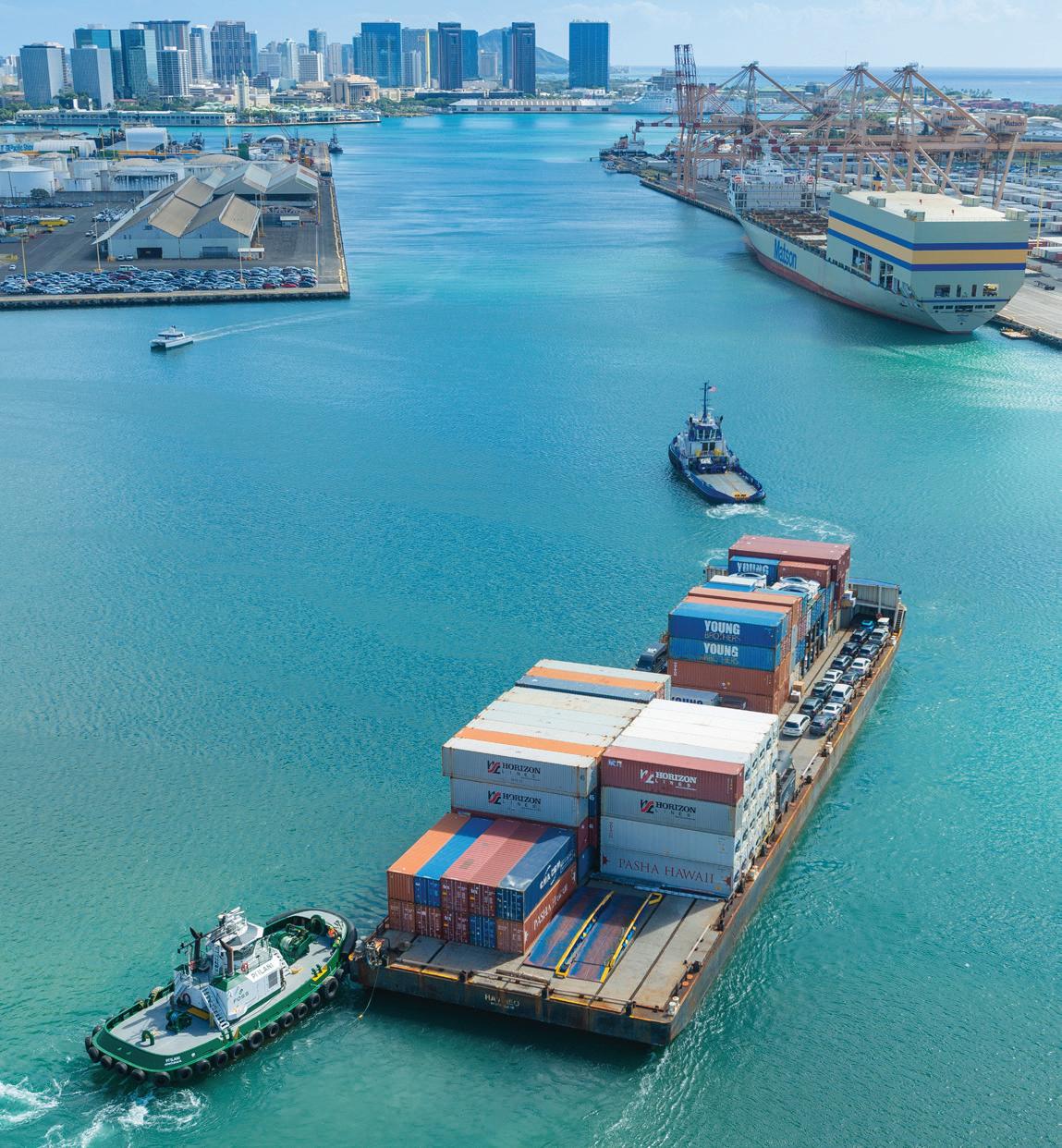
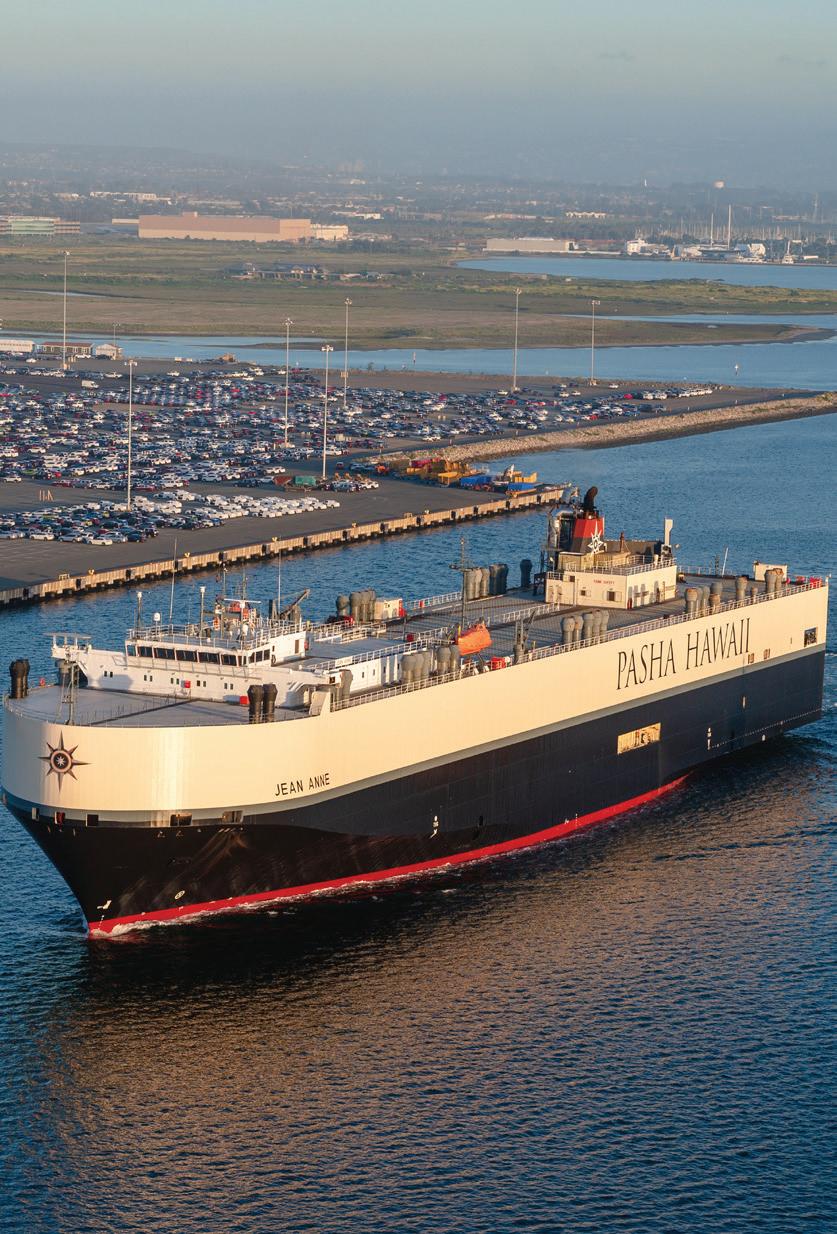
Once Hawai‘i’s shipping carriers transition their operations to Honolulu’s new state-of-the-art
Kapalama Container
Terminal this year, they’ll have more space, less congestion and environmentally advanced technology.
The Pasha Group already achieved a clean-air milestone in November with its new roll-on/roll-off vessel that moves vehicles and heavy machinery between San Diego and Honolulu. The MV Jean Anne, the fi rst of its kind in the U.S., aims to reduce emissions while at dock by using shore power from the local power grid rather than diesel fuel, thus reducing the amount of pollutants released into the air, including nitrogen oxides, sulfur oxides, diesel particulate matter and greenhouse gas emissions, according to Pasha.
Pasha will soon put into operation another similar clean-air vessel, the
Marjorie C, also using shore power.
Young Brothers — the state’s only interisland cargo shipping barge company — recently marked its 125th anniversary. Since 2020, it has reinvested more than $120 million into its own infrastructure, including the addition of two new barges.
The Kalohi and Nāulu, both with advanced safety technology, have been in service for the past year.
The 365-foot Nāulu has the largest cargo capacity in Young Brothers’ fleet, allowing for the transportation of more cargo during peak periods. The 286foot Kalohi serves smaller ports such as Kaunakakai on Moloka‘i and Kaumalapau on Lāna‘i. Both vessels feature advanced ballast technology for stability in challenging ocean conditions and multiple cargo ramps for improved efficiency in loading and unloading.
“This $45 million fleet investment
is already delivering lasting value statewide as we work to strengthen Hawai‘i’s supply chain as the state’s only regulated interisland water carrier,” says Chris Martin, Young Brothers’ VP of operations.
In addition to its two new barges, Young Brothers introduced the Mount Baker and Mount Drum tugs to further increase the fleet’s capacity and reliability. Their advanced fuelefficient engines reduce emissions and support Hawai‘i’s sustainability goals.
Young Brothers is also incorporating more sustainable practices into its shoreside operations by adding electric vehicles to its fleet.
The Hawai‘i Public Utilities Commission also approved a rate hike for Young Brothers effective Jan. 1. The move increases the cost of shipping a container between the state’s harbors by 20%, with the exception of Hilo, where the cost rises by 35%.
Young Brothers reports that since 2020, cargo volume has fallen by


12 sailings a week, 1,250 voyages a year, and 125 years of moving what matters most for Hawai‘i.






With enhanced ballast systems and expanded cargo capacity, our new barges, Kalohi and Nāulu, strengthen reliability and safety across Hawai‘i’s interisland routes, helping us move what matters most for our island communities every day.
Learn more or book your next shipment at youngbrothershawaii.com.
about 14% and the company’s operating costs have increased by 44%. Additionally, it says, the company has not been profitable since August 2024, and that losses in 2025 are expected to total more than $24 million.
Even with the adjusted rates, Young Brothers expects to incur a loss of at least $6 million in 2026.
“The commission’s decision represents an important step toward addressing the breakdown in regulatory safeguards that has contributed to long periods without rate adjustments followed by steep increases,” Martin says. “As a regulated utility, Young Brothers must maintain statewide service regardless of volume or profitability, even as operating costs, declining cargo volumes and mounting fi nancial losses continue to increase. Those
pressures, combined with regulatory lag, have made it difficult for customer rates to keep pace with the actual cost of providing essential service.”
Martin adds Young Brothers will continue to advocate for a system that allows smaller, more consistent updates based on independent inflation metrics, saying a more consistent rate adjustment process would help customers “by avoiding steep changes after long periods without updates and offering a clearer understanding of what to expect over time.”
This approach, he says, would provide greater certainty and make planning easier for families and businesses.
“It also positions Young Brothers to give our customers more choices and certainty of services, with reasonable rates, while continuing to provide the
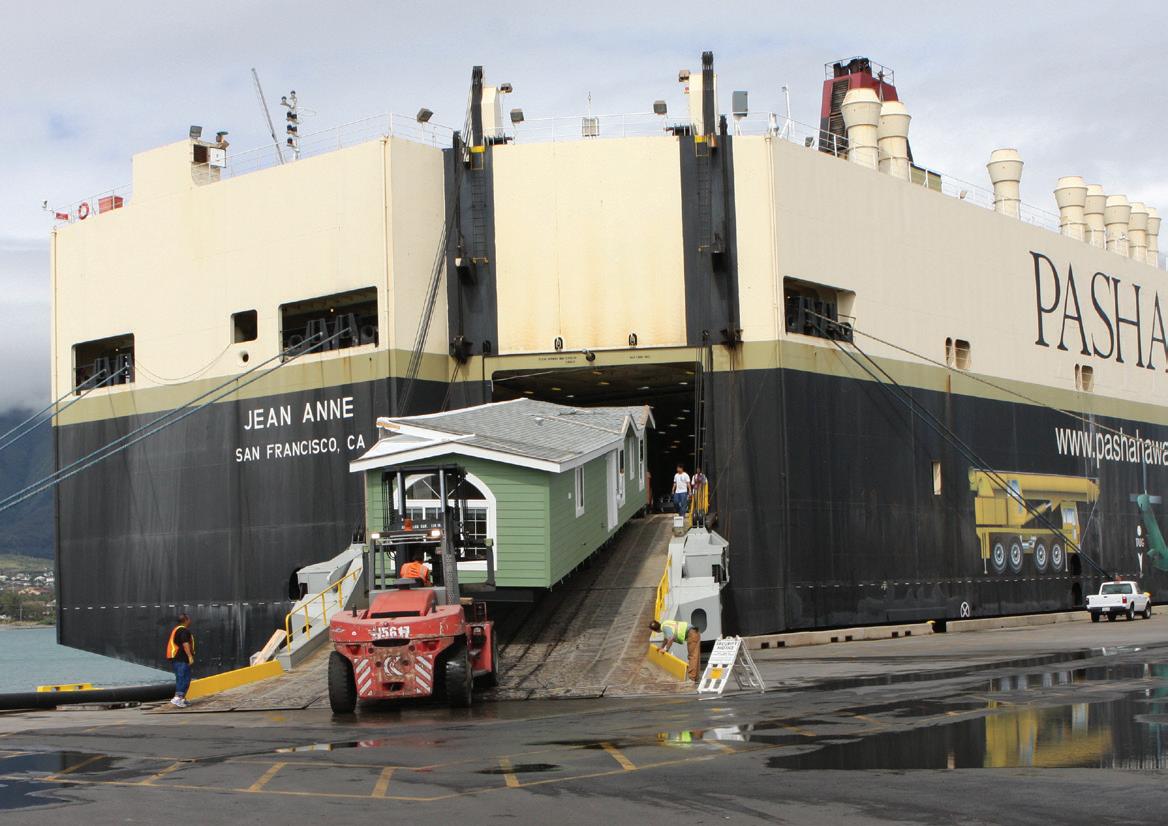
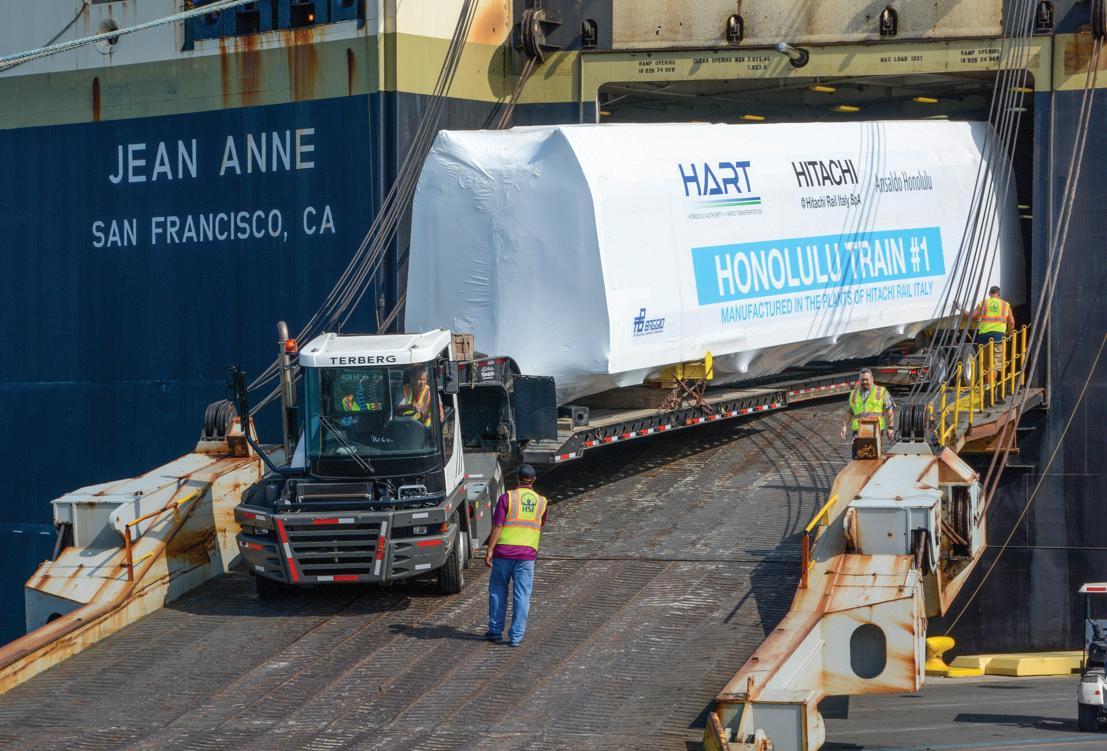
safe, frequent and reliable interisland ocean freight service we’ve always provided.”
In a difficult environment marked by continued uncertainty and volatility arising from tariff s and global trade, Matson Chairman and CEO Matt Cox says the company has “performed well,” adding operating income was lower year over year primarily due to lower freight rates and container volume in the company’s China service.
“The Transpacific trade lane experienced a muted peak season compared to the elevated demand levels last year due to businesses advancing cargo in the late second quarter and early third quarter ahead of U.S. tariff deadlines, which led to lower third quarter demand for our expedited services,” Cox says.
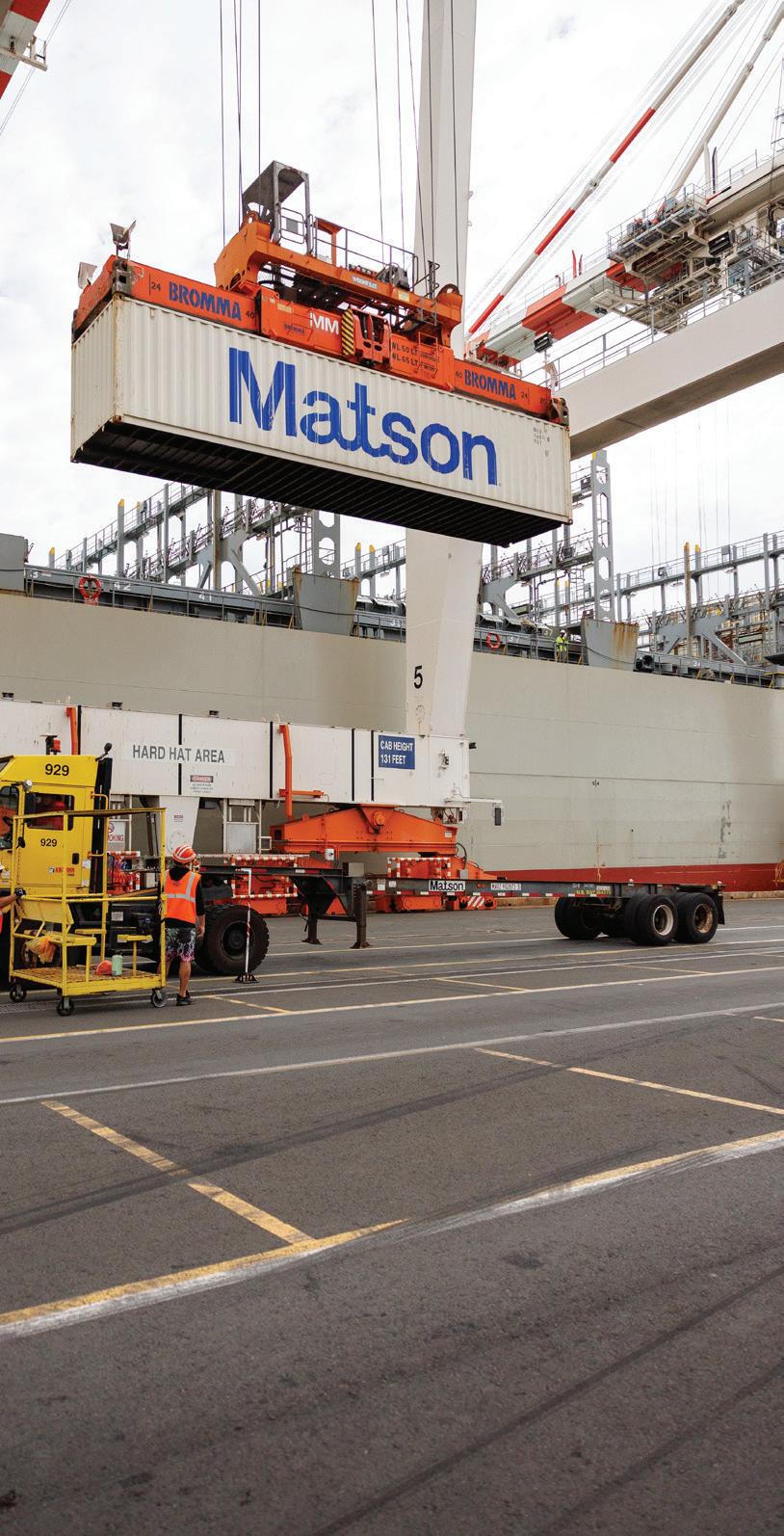

Pasha Hawaii’s dynamic shipping network and knowledgeable professionals are here to serve your supply chain needs. Pasha offers the broadest range of container and roll-on/roll-off services between Hawaii and the Mainland, with connections to comprehensive intermodal services nationwide. Find out more at pashahawaii.com.
POSITION: Director IT Technical Solutions
LOCATION: Honolulu, Hawaii
HIRED: 1988
NOTES: Over 36 years of experience at Matson. Solutions oriented. Big picture thinker. Believes in the power of mentoring as a big sister and board member for Big Brothers Big Sisters Hawaii. Values Matson’s commitment to service.


Matson’s people are more than Hawaii shipping experts. They are part of what makes our community unique. Visit Matson.com

BY KEN WILLS AND SHELBY MATTOS
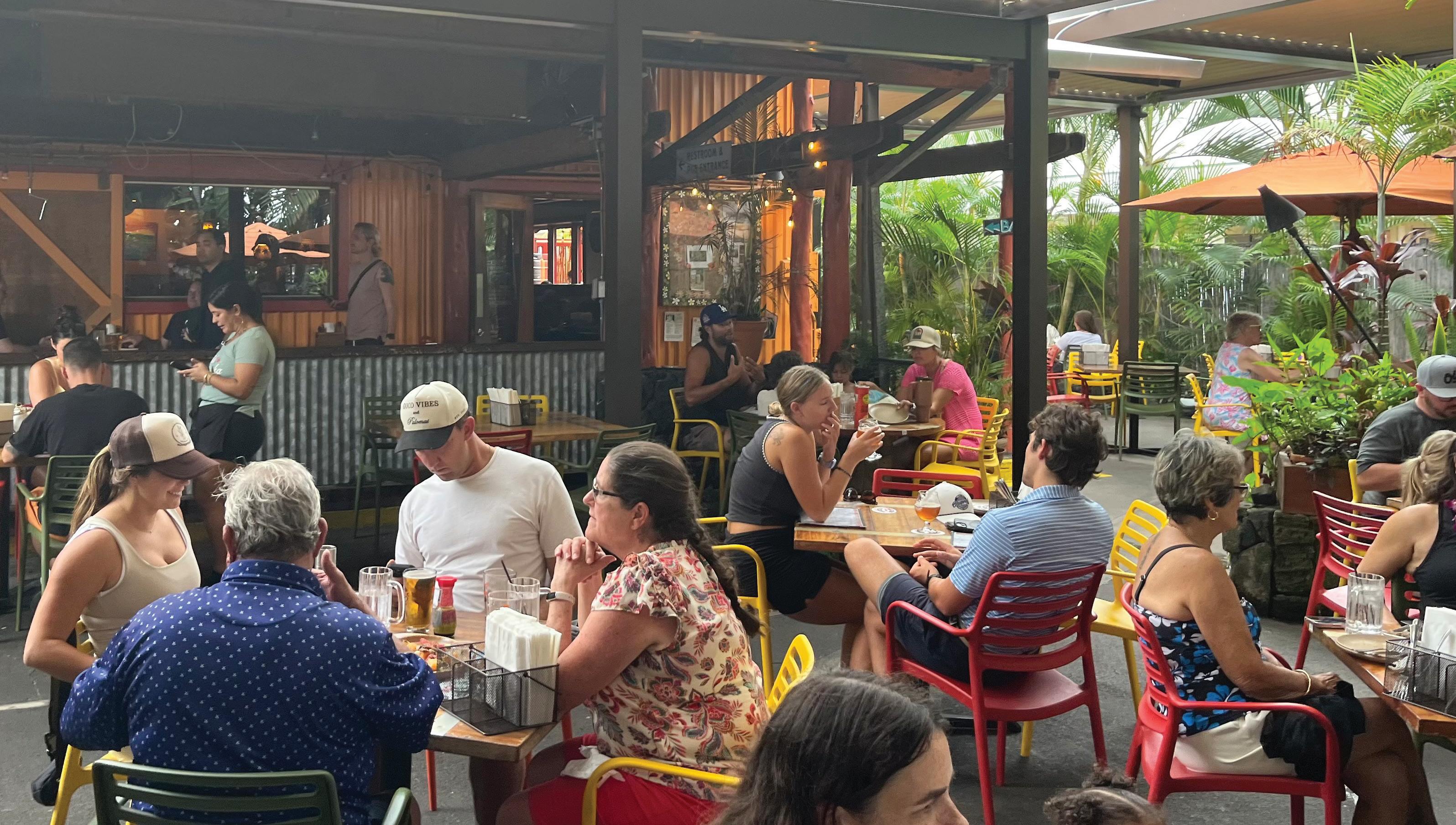
IT’S PAU HANA ON ALOHA FRIDAY AT THE KONA PUB, AND YOU’D BETTER HAVE RESERVATIONS. LOCALS AND TOURISTS VIE FOR SEATS AT THE BAR, AT INDOOR TABLES AND AT OTHERS UNDER UMBRELLAS IN THE OUTDOOR LANAI SURROUNDED BY THE LUSH GREENERY OF HAWAI‘I ISLAND.
There’s a buzz of lively conversation as waiters serve freshly brewed craft beers from the Kona Brewing Co. kettles nearby. Try Backyard Batch, Pinkboots with Fir, Dad Joke IPA (made from corn… get it?), a seasonal Liliko‘i Kea Witbier, Pipeline Porter, Big Al’s Blonde Stout… As dizziness sets in, a waitress offers a menu with even more options: Traditional lagers and IPAs and of course wine, spirits, as well as Ko¯lea Sparkling Hop Water, and
non-alcoholic beers and soft drinks.
The exhaustive options reflect the promise and the peril of today’s beer industry.
Faced with consumers’ fickle loyalty amid ever-expanding beverage options—plus growing numbers who have stopped drinking altogether—beer consumption across the country has started to slump. Last year was the first time since 2005 that more breweries across the nation closed than opened.
Hawai‘i brewers, including Kona Brewing Hawai‘i and its larger rival Maui-based Craft ‘Ohana—are hoping they can continue to buck the trend.
“No one seems to be drinking only one thing anymore,” says Gar-
rett Marrero, CEO and co-founder of Craft ‘Ohana, parent of a family of brands including Maui Brewing Co. “I think more than ever we have promiscuity in the drinker world, right? There’s just a shift in that. No one sticks to one core beverage. We make beverages that people want to drink, and we’re not beholden to any one beverage.”
As the froth comes off the mainland craft beer market, Hawai‘i’s brewers are hoping that Island-style drinking habits, and a steady infusion of tourists who are eager to sample a local brew, can keep the taps flowing.
Brewers across the nation are facing worrisome signs. Output from craft brewers, which represent
about a quarter of total beer market sales, fell about 4% in 2024 after a prior decline in 2023, according to the Brewers Association, even though overall revenues picked up 3% in the year due to price increases and shifting consumption patterns.
“The overall beer industry is having a rough go of it, and craft brewers—so recently the vanguard of the category—are getting the worst of it,” writes Dave Infante in his Hop Take column for industry website VinePair. Craft beer sales have declined for the past two years after two prior years of mostly flat sales, he notes.
“More than half of the aggregate brewing capacity across the country is slack, built to service growth that never materialized.”
While the beer industry as a whole generates $471 billion a year, craft brewers on the mainland are scaling back production in response to declining demand. Hawai‘i brewers contributed $347 million of that total last year, with output of nearly 179,000 barrels, association figures show.
Craft breweries in Hawai‘i are watching the trends, and the drinking habits of a new generation who are eagerly sampling a flight of beverages. Some companies are targeting drinkers who prefer non-alcoholic beverages. They’re being forced to adapt to changing tastes.
Hawai‘i’s top brewers say their production is still steady or growing, but the field is also shrinking, with 26 craft brewers, down three from the prior year. The Brewers Association ranks two among the nation’s top 50 craft producers— Craft ‘Ohana at No. 17 and Kona Brewing Hawai‘i at No. 37.
Whether Hawai‘i’s brewers can continue to buck the national trend is uncertain.
“Consumer habits are shifting fast, and breweries need to keep up,” writes the Brewers Association’s staff economist Matt Gacioch in an online newsletter. “Understanding these shifts isn’t just good business, it can be the key to staying relevant in a rapidly evolving beverage landscape.”
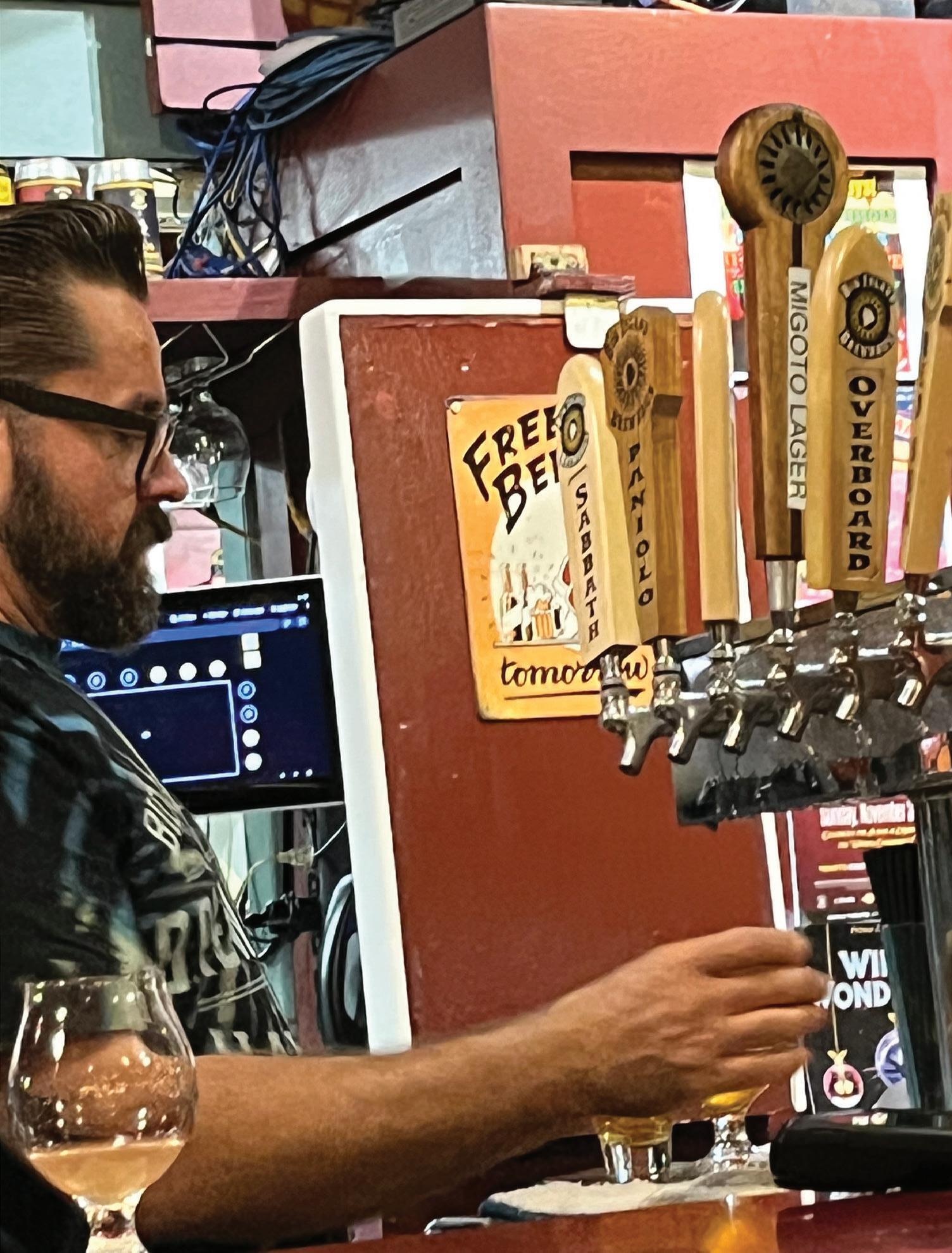
BY
Nevada—which, along with Hawai‘i, account for 95% of its business.
To that end, Kihei-based Craft ‘Ohana’s brands, including Maui Brewing, offers beers, seltzers, sodas, and ready-to-drink mixed beverages.
Like many others on the Brewers Association’s list of top craft producers, Craft ‘Ohana is more than just a brewery; it packages brews for delivery to places across the state and also sells its beer and seltzers in 26 other states.
The group produced 80,000 barrels this year, split between cans and kegs, the company says. With many distributors in 26 different states and a wide range of beverage choices, Craft ‘Ohana plans to consolidate some of its mainland distribution sites to focus on Western states— California, Oregon, Washington and
Rather than “downsizing,” Marrero prefers to call it refocusing sales, pulling out of states, such as Georgia, that don’t have strong partnerships, and producing closer to its core market.
“It’s maybe a misnomer to say we’re pulling out of states because we’re just not really even in them,” he says.
“We’re not unique, seeing what’s happening in the world,” Marrero says. “I mean, for us, beer consumption is still up. Our beer sales are still up. You look at the overall market, and beer growth has slowed, and some drinkers are switching.”
Compared to the alcohol market in 2007, during the last brewery lull, there were fewer options available. Now consumers can stroll into a
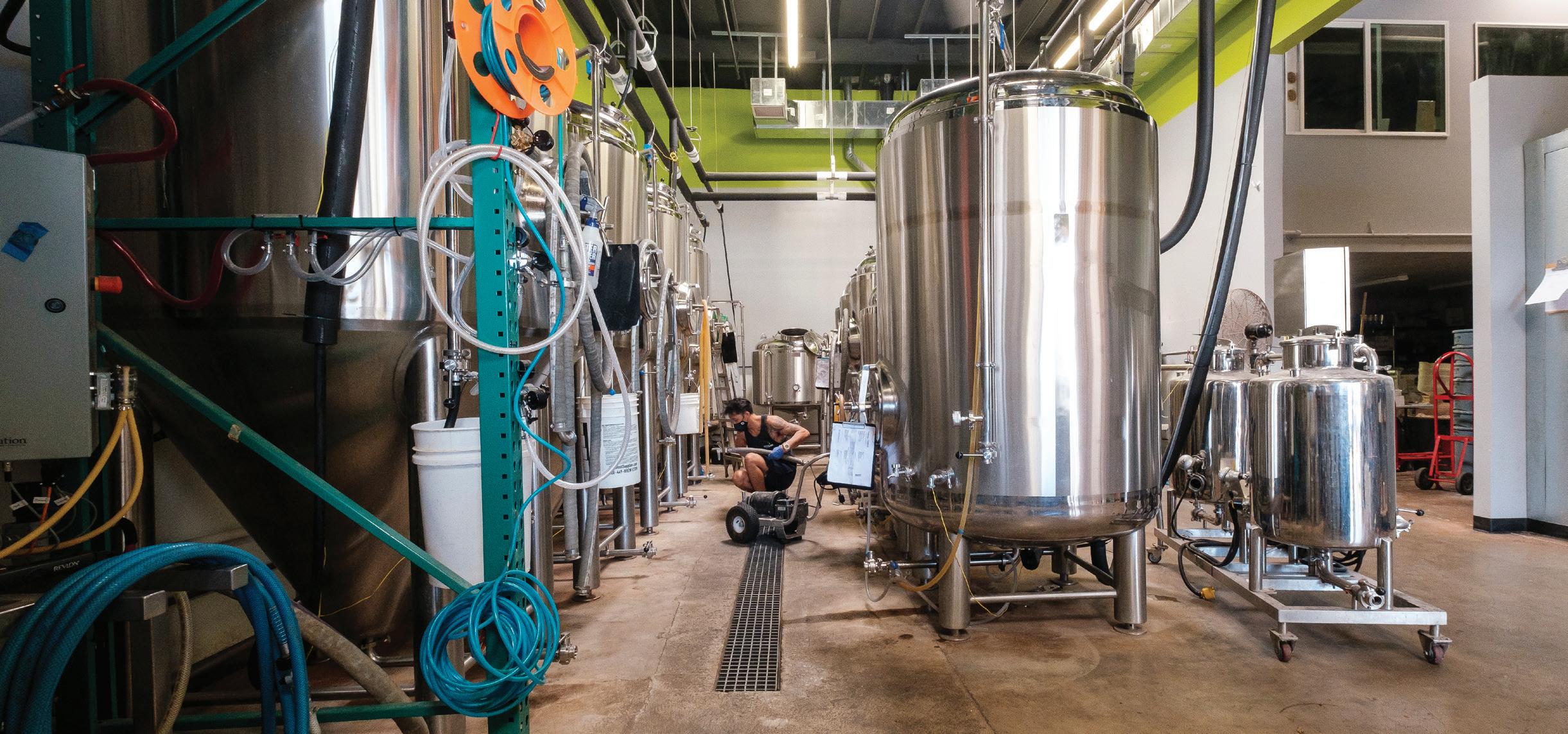
store and have choices ranging from hard seltzers to non-alcoholic and ready-to-drink cocktails, in addition to traditional wine and spirit options.
As a consumer, Marrero says, despite his love of beer, he found his own tastes changing. Now, he, too, reaches for different types of alcohol to match different occasions.
One national trend that started before the pandemic but accelerated recently is non-alcoholic beer, although it’s less pronounced here on the Islands. Maui Brewing launched a non-alcoholic beer in 2022, but it is no longer sold due to production issues. Non-alcoholic beer can spoil, so consistently producing a safe and correct batch takes a lot of effort. Marrero says the company is working with a partner to bring back canned non-alcohol beer in the next 9 months.
“I don’t see it as being a huge market here in Hawai‘i,” Marrero says. “Just because we’re a little different than the mindset in the mainland, but I do see an occasion for it.
“The volume of non-alcohol beer sold in Hawai‘i is so minimal that no one would ever invest the money necessary to do it in a high-quality,
safe and responsible way. It’s just something that working with a partner is the only proper way to do it.”
“We’re the top local beverage alcohol brand,” he says. “So, we’ve seen that success. We’re actually retrenching, where we’re going to pull out of a bunch of states that just don’t necessarily make sense for us to be in at the moment.”
In the next six months, every beverage the company produces will be created and canned in Hawai‘i, then shipped to the mainland and across the state.
Marrero says he looks forward to returning to a more straightforward sales approach.
“We’re excited to lean into that and continue to innovate and make the highest quality locally produced beverages available, and we’ve got the right team to do it, the right supplier partners, and the right wholesale partners. We’re looking forward to the next 20 years.”
For its part, Kona Brewing Hawai‘i is turning to a series of limited-edition and seasonal beers, expanding on the annual
Octoberfest offerings. This year it added a passion fruit flavored Liliko‘i Kea Witbier. It’s marketing campaign served up all the allure of exotic islands: “Brewed with tropical passion fruit (liliko‘i), grains of paradise, and coriander, this crisp and aromatic Witbier is as refreshing as the landscapes that inspire it—capturing the lush beauty of Kaua‘i’s rugged coastline.”
That’s a mouthful, but waiters say it sells well, especially among tourists.
“There are a lot of challenges with beer, as with the entire alcohol industry. None of it’s new, but it’s certainly different in that consumers are telling us they’re thinking about alcohol in a different way,” says Katie Feldman Lefsrud, Kona Brewing Hawai‘i VP of Sales & Marketing.
She says consumers in Hawai‘i still show a lot of love for locally made craft beer.
“There’s a lot of passion for it, but the category is still seeing pockets of growth where I think it’s harder to find in the mainland, and that’s because there’s so much innovation still in the category here. And you know, beer plays a role on a hot day on a beach, no matter who
you are. Consumers here in Hawai‘i, whether you’ve lived here a long time or visiting, just interact with the craft category differently and in a much more engaged way.”
Kona Brewing, which is the state’s oldest craft brewery, began in 1994 and has operated as an independent company for the past five years. The majority of its beer is brewed in Kailua-Kona on Hawai‘i Island.
The brand on the mainland is owned and managed by AnheuserBusch and shares the same name. Those are brewed in the mainland, except for the Kona Big Wave, which is exclusively made in Hawai‘i.
“There are a couple packs that we cannot make on our own. So, we do ask some other brewers in the mainland to make those for us. They’re specialty packs, like our variety pack, we just don’t have that capability. So, they make those.”
“The one here on Hawai‘i Island is the beating heart of our brand, our brewery, and we’ve seen pretty consistent traffic. Of course, as tourism ebbs and flows, so does the traffic here.”
“We’ve been delivering on what we expected this year to be, and
we think for the year, we’re going to end up in a really, really positive place.”
One trend among Gen Z drinkers is a move toward more health-conscious choices. They also spend less on alcohol than older cohorts.
“The challenge for Kona Brewing, and for all craft breweries, is younger consumers are not walking away from beer altogether,” she says. “It’s just maybe they’re making sure that they’re alternating more often with a non-alcohol option, or that instead of going out for five nights a week, they’re going out for two. Beer absolutely has a role.”
Kona Brewing’s goal is to reach production of 85,000 kegs by 2027, says Feldman Lefsrud. Another marketing effort is a tie-in sponsorship of sporting events and live music, including the Big Island Blues & Brews Festival.
“I think our opportunity to connect with our communities has always been a pillar of Kona Brew, and you’ll see us continue to connect with the surfing community

and other organizations throughout the state, where we can really connect with our neighbors in a more meaningful way.”
Some smaller craft breweries go heavy on “local” atmosphere at their taprooms and pubs, trying to draw regular customers in by creating a friendly, neighborhood feel. At some pubs and taprooms, dogs are welcome to belly up to the bar alongside their human sidekicks.
“There’s nothing better than enjoying a delicious IPA, or any beer!, while hanging out with your beloved pup,” says Hawai‘i Island resident Diane Fuller, who brings her dog Coco when she and her husband Leo Fullner stop for a refreshment.
She said both Big Island Brewhaus in Waimea and Ola Brew Kona Taproom staff are especially welcoming to customers with dogs. “Several of the staff dote on dogs and give them water and special attention,” she says.
“I’ve always, always seen that Hawai‘i’s five to 10 years behind trends that you usually see on the mainland,” says Geoff Seideman, co-founder of Honolulu Beerworks. “That being said, I think the shift here I’ve seen has been for more local.
“Unfortunately, you tend to see what happens on the mainland happen here as well. But because our market, especially in the stores and even in bars and restaurants, is not saturated with local because there aren’t that many local breweries, I think there’s still room for people to be opening up and kind of filling that void of having enough choice.”
Honolulu Beerworks, now located in Kalihi, is focused on wholesale manufacturing. It operates a tasting room and taproom, but when it moved from its Kaka‘ako location to Kalihi, it gained more space to produce.
The company is behind on its production plan. Seideman says the company reached maximum capacity at its former location in 2018, but when it planned to start moving out,

the pandemic hit. Now the company is returning to the momentum he wishes had happened five years earlier.
The company started moving everything to the new location about two years ago. However, since it is still actively canning and kegging at the old location, Honolulu Beerworks is continuing to transfer kegs to Kalihi.
“Moving away from Kaka‘ako, which used to be this heavily tourist area, and having our tap room here, we really didn’t have any expectations where it would be,” he says. “It’s almost like this is a bonus that people come and hang out and stuff like that. But we’ve been surprised. It’s actually been pretty steady, which we’re enjoying.”
Honolulu Beerworks discovered a large following in Japan. In 2014, Seideman was asked to judge at a beer competition in that country. He joined the event in 2015 and brought Honolulu Beerworks to the beer festival, which takes place alongside the competition and features trained judges who teach beer tasting.
Seideman says that in its previous location, 30% of the business came from Japanese tourists before Covid. By tapping Japanese social media pages and a website, the company is slowly building its market in Japan.
In the future, Seideman says they plan to create a sweet tea, collaborating with other companies and brewing for smaller breweries.
He says it’s crucial to keep adapting to changing markets and tastes.
“When I was 14, I was itching to drive. When I was 16, I was itching to get out of the house. At 18, at college, you’re like, ‘alright, I’m drinking.’ And I think it’s changed” for the younger generation, says Seideman.
Hawai‘i brewers, along with their mainland counterparts, are also seeing rising costs associated with tariffs.
In June 2025, President Donald Trump increased tariffs on aluminum to 50%, saying it would boost
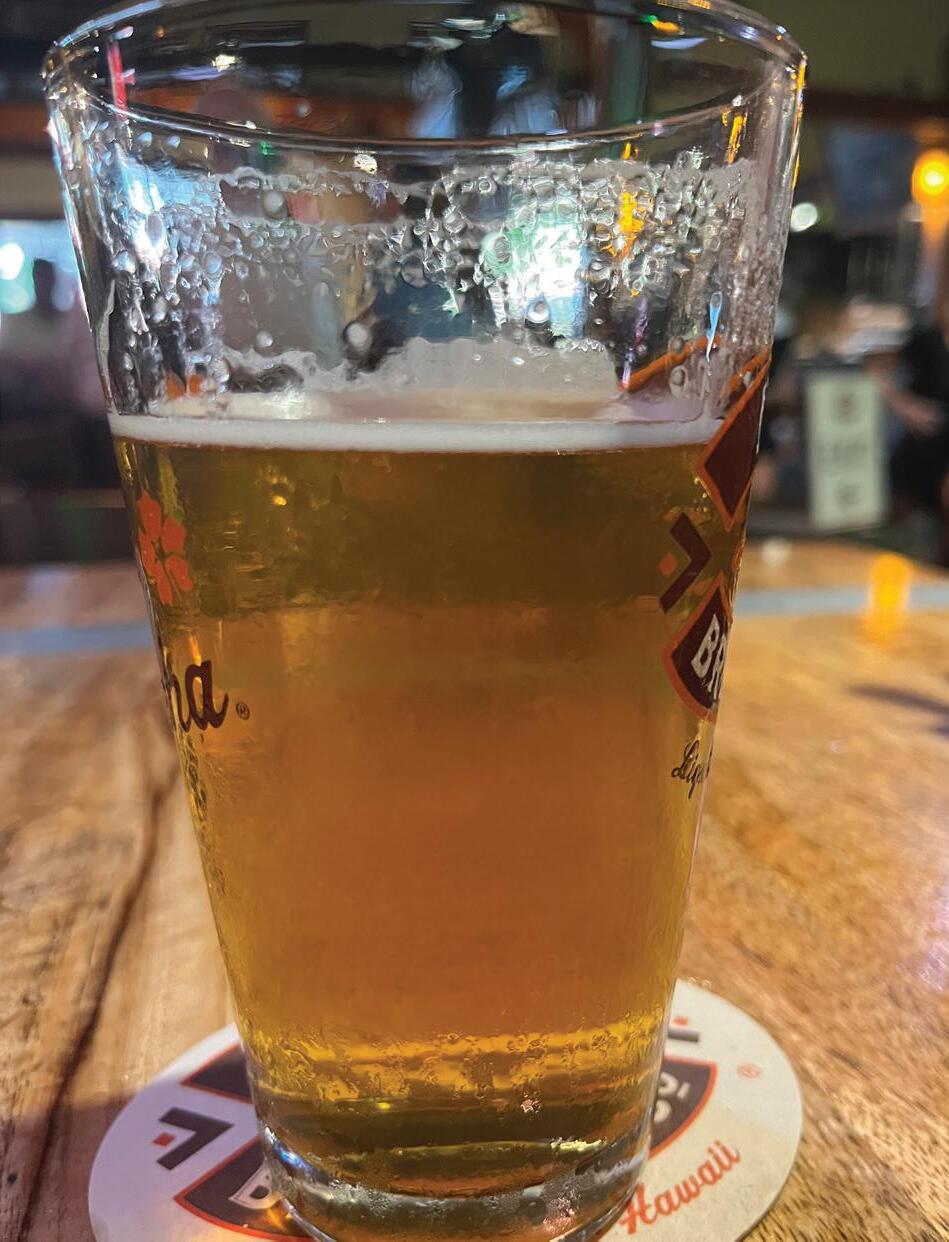
U.S. competitiveness by making imported steel and aluminum more expensive. Most of the increased cost is being passed on to consumers through higher prices on goods that contain aluminum.
“I think Hawai‘i is unique in that we have a can plant here that serves the state. Ball has done a great job of insulating us as much as possible, given our size. We do participate in buying futures and such, so we can shield ourselves from price increases,” says Marrero from Craft ‘Ohana.
The lids, or the pieces used on the tops of cans, were historically excluded from Section 232 tariffs in 2018. The most recent adjustment added them to the list, and all brewers in Hawai‘i will see a meaningful increase in the cost of those ends.
“No one’s immune to it,” Marerro says. “I spend a lot of time in government affairs, and we’re continuing to work on solutions. But this is certainly where scale has an advantage.”
While he didn’t share the exact amount that tariffs will affect prices, he says the pennies per unit could add up to hundreds of thousands or
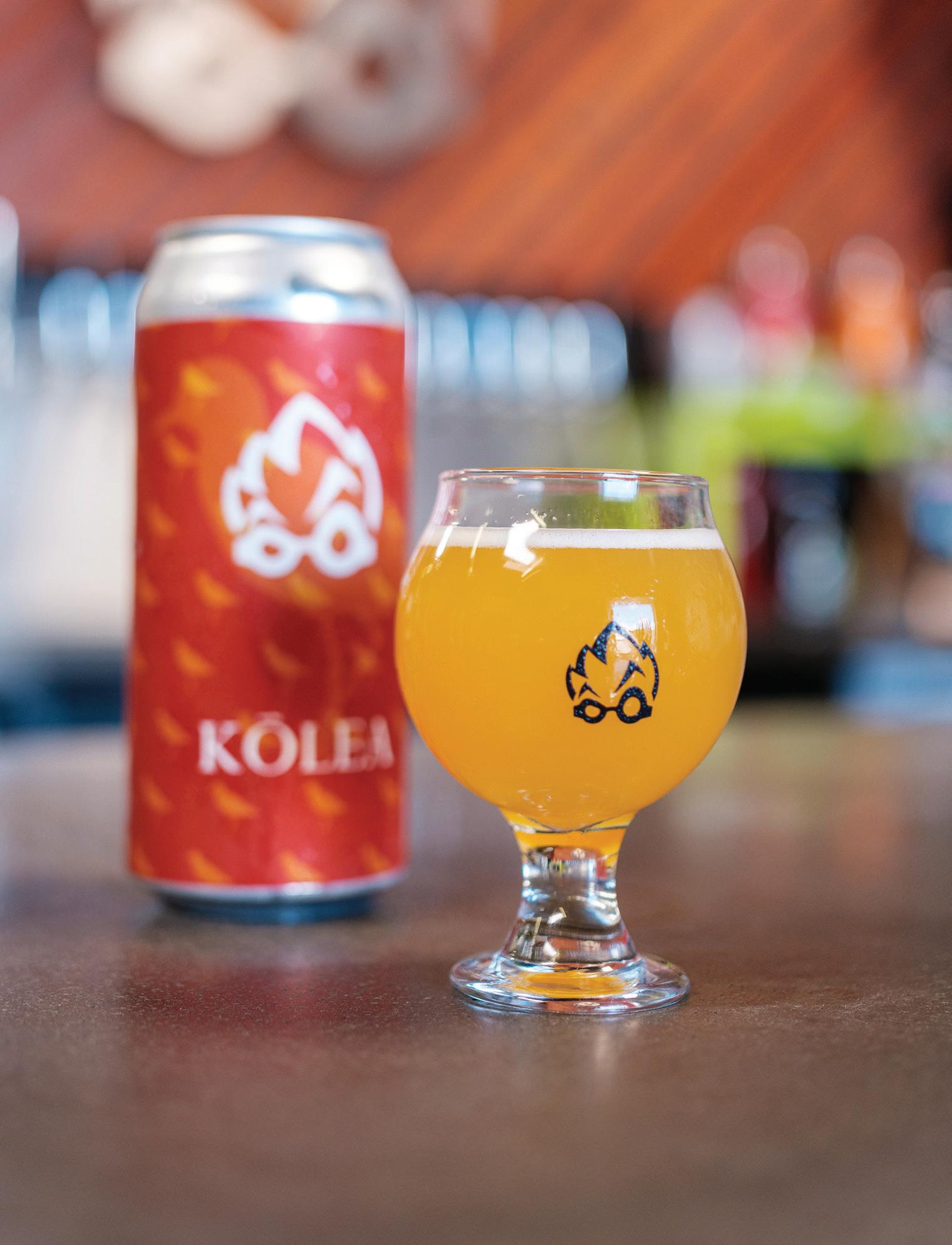
millions of dollars over time. Marerro and other local business owners met with Hawai‘i U.S. Senator Mazie Hirono to discuss the impact of tariffs on their bottom lines.
For Honolulu Beerworks, the lids are causing a 35% increase in production costs. But Honolulu Beerworks and Craft ‘Ohana say the cost of cans has remained unchanged so far.
“But you know, we’re always on edge waiting for what’s going to be the next thing that’s going to increase,” Seideman says. “Because
obviously, like everybody, we can’t absorb everything. Some of it has to be passed on to the consumer.”
As the administration’s tariff policies change, the brewers also adapt. Seideman and other local brewers say they control what they can and adjust to outside factors.
Says Marrero of Craft ‘Ohana: “It’s constant change. I think that’s one thing I can always count on –tomorrow’s gonna be different. It’s been that way for 20 years, and I don’t expect that to change.”










































































Mahalo nui loa to everyone who joined us for the 2025 Money Matters Financial Conference presented by Hawai‘i State Federal Credit Union. From Jean Chatzky’s inspiring keynote to Nash Subotic’s powerful insights, the event brought together financial experts from across the industry to share tools for smarter saving, investing, and lifelong financial confidence. We extend our gratitude to all our sponsors from HSFCU to our community partners AARP and Stadia, and our venue sponsor Punahou School for providing such a beautiful and welcoming space. To our speakers who gave their time and wisdom, and to every attendee who showed up ready to learn and take charge of their financial future — mahalo for making this year’s conference a success.





































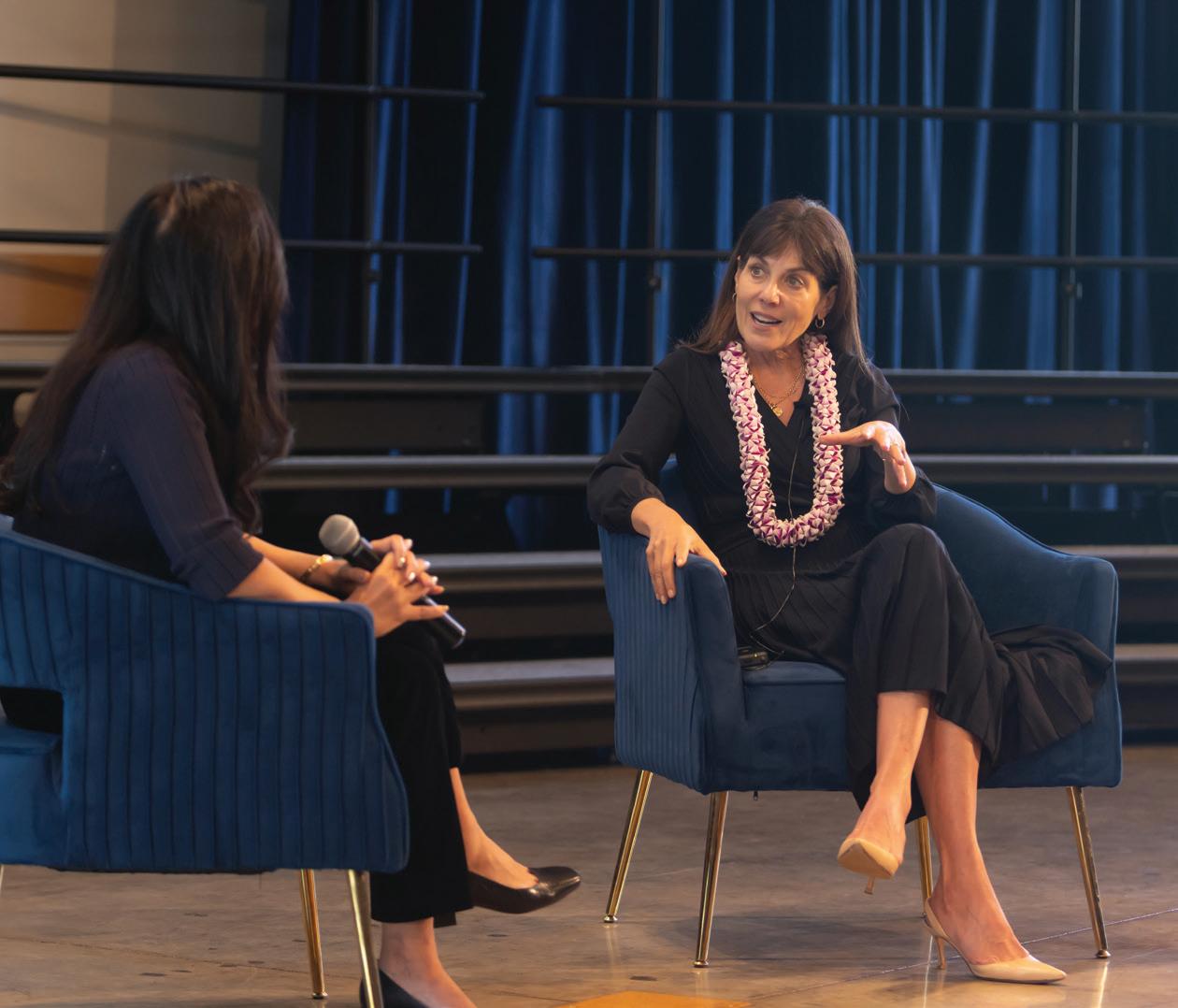







“AARP Hawai‘i was proud to be a non-profit sponsor of the 2025 Money Matters Conference. It is critical for all of us to plan ahead so that we can live the lives we want to live as we grow older. This conference provided valuable information to help people make solid financial decisions for every stage of life. It was a special treat to hear from financial guru Jean Chatzky in person her “money rules,” were both inspiring and achievable.”
—JACKIE BOLAND, AARP HAWAI‘I COMMUNITY OUTREACH
DIRECTOR






Together, we’re investing in Hawai‘i’s financial future.























































“Hawaii State Federal Credit Union is proud to once again partner with Hawaii Business Magazine for the 2025 Money Matters Financial Conference. As presenting sponsor, we are honored to support an event that empowers our community to learn, grow, and build confidence in their financial journey. Financial security is essential to overall well-being, yet we know many families continue to face challenges in achieving it. Every day, we see members working tirelessly to support their loved ones while managing tight budgets, which is why we are so passionate about events like Money Matters. Access to financial education, tools, and guidance can make a lasting difference. Together, we can strengthen financial confidence across Hawai‘i and create opportunities that endure for generations.”
—DEL MOCHIZUKI, SVP, CHIEF OF STAFF, HAWAII STATE FEDERAL CREDIT UNION











“The 2025 Hawaii Business Money Matters Financial Conference exceeded all expectations. As Community Sponsor, Stadia Financial was proud to provide tickets to the AUW ALICE Cohort, and the connections we made with attendees were truly priceless. I was also grateful for the opportunity to speak in the breakout session Mind Over Money: The Philosophy Behind Financial Success. This event is an invaluable service to our community, and the strong turnout and engagement proved just how much Hawai‘i wants—and needs—resources like this. Mahalo Hawaii Business Magazine and all the sponsors for making this event a success!”
—KARI CLARK, COO & FINANCIAL EDUCATOR & INVESTMENT ADVISOR REPRESENTATIVE, STADIA FINANCIAL































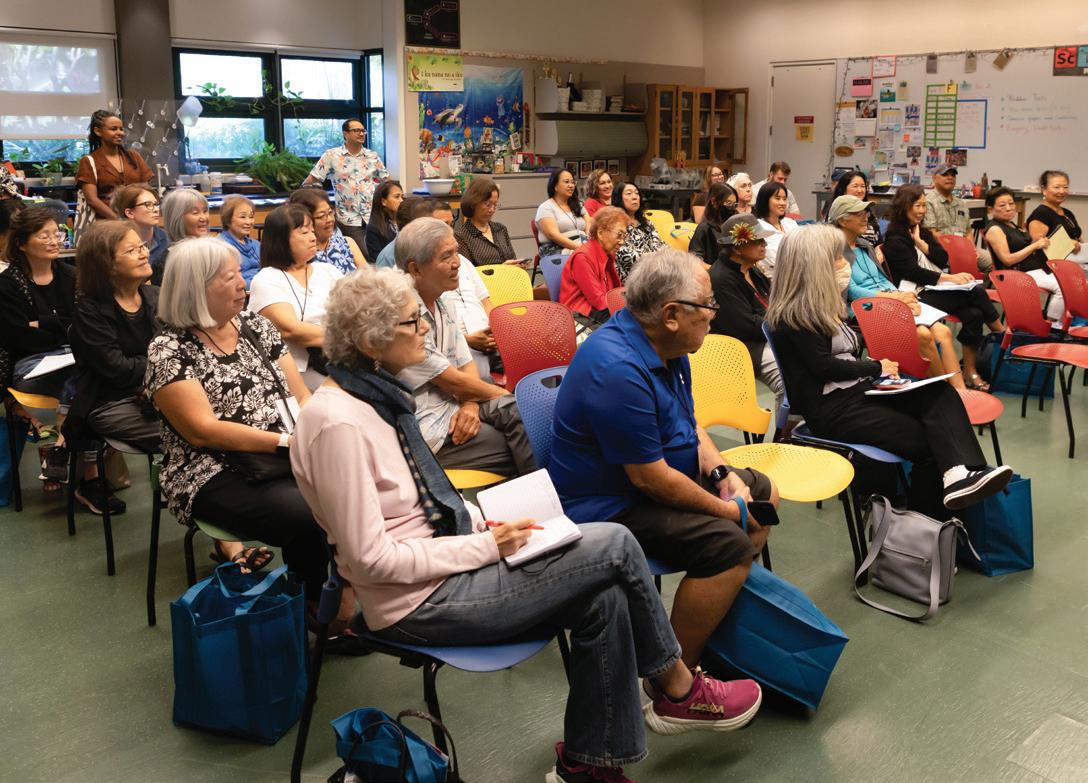






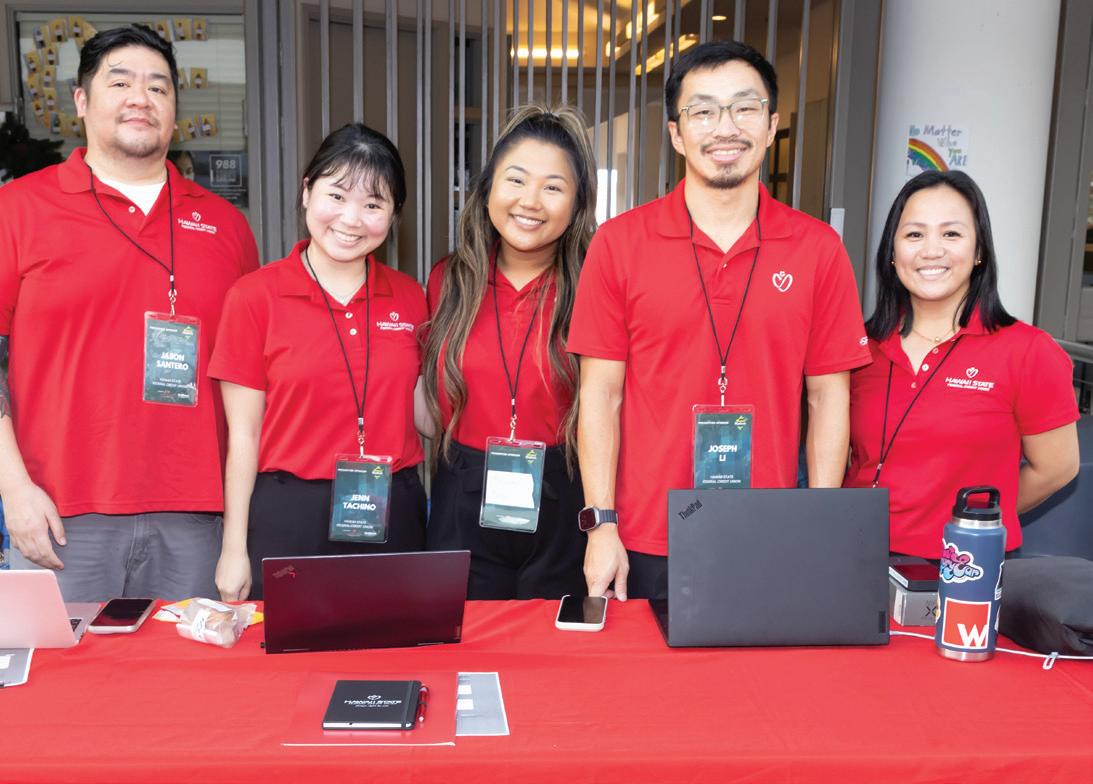































































































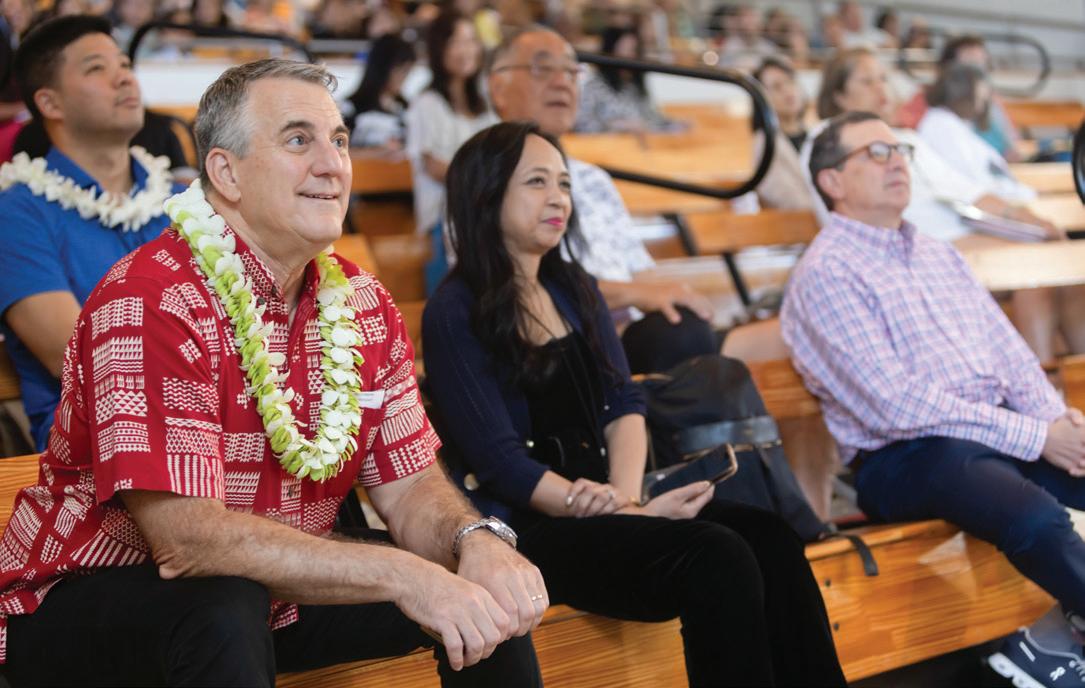


































































































































































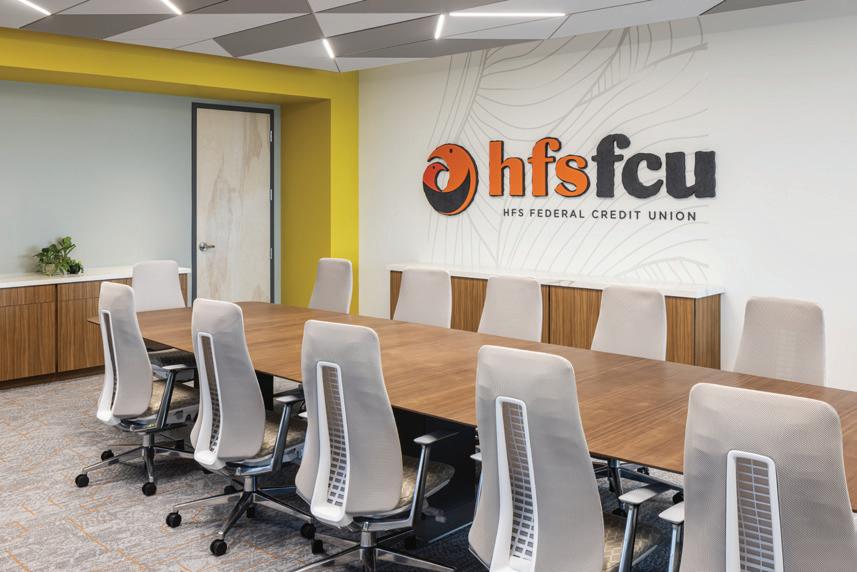





LAST YEAR, THE INTERNATIONAL INTERIOR DESIGN ASSOCIATION (IIDA) HAWAI‘I PACIFIC CHAPTER CELEBRATED THE EXTRAORDINARY PEOPLE AND PROJECTS SHAPING THE FUTURE OF COMMERCIAL INTERIOR DESIGN IN HAWAI‘I AND ACROSS THE PACIFIC AT OUR 4TH HO‘OHULI AWARDS ON OCTOBER 11, 2025 AT THE ‘ALOHILANI RESORT. The awards recognize how creativity, collaboration, and community come together to define our industry — and, most importantly, how design can move people, strengthen connections, and build a better world.
In the Hawaiian language, ho‘ohuli roughly translates to “to change or transform”. This perfectly encapsulates what excellent interior design is: a transformation of interior environments that inspires, supports and influences the occupant. We are surrounded by rich culture and history, filled with stories of our land and people that speak to what makes us unique, which shape how we design spaces where memories are made, businesses thrive, and communities come together. Winning an award is a symbol of exceptional commercial design.
We are surrounded by rich culture and history, filled with stories of our land and people that speak to what makes us unique, which shape how we design spaces where memories are made, businesses thrive, and communities come together.
To our nominees, honorees, sponsors, volunteers, and committee members — mahalo for your incredible work, generosity, and dedication. I am so humbled to be part of this team where each of you have played a part in making this event and our design community truly special. Your time, talent, and aloha have made the Ho‘ohuli Awards what it is today: a space to celebrate innovation, elevate excellence, and inspire one another to keep pushing boundaries.
As we just celebrated our 10th anniversary as a chapter, may we continue to design with intention and heart — honoring Hawai‘i’s unique sense of place while embracing the evolving possibilities of our craft for many years to come.
Congratulations to all our winners and a big Mahalo to all for being part of this special celebration.


2025 Ho‘ohuli Awards is published by Hawaii Business Magazine, in partnership with IIDA Hawai‘i Pacific Chapter, February 2025 by aio Media Group, 1088 Bishop St., Suite LL2, Honolulu, HI 96813.

Monique Palisbo, Assoc. IIDA, LEED Green Associate., WELL AP President, IIDA Hawai‘i Pacific Chapter




JUROR:
Dr. Liza Lockard
M.ARCH, PHD, NCIDQ, ASID, IIDA, IDEC, LEED, SEED, Co-Founder and Executive Director, Pacific Academy of Building Design
Dr. Liza Lockard is the Executive Director of the Pacific Academy of Building Design. She has an M.Arch from Yale University and received her PhD in Futures Studies at UH. She is the author of the book Human Migration to Space: Alternative Technological Approaches for Long-Term Adaptation to Extraterrestrial Environments.



JUROR:
Katy Mercer
IIDA, Principal and Interior Design Leader, West Coast Studios
Katy Mercer is a Principal and Interior Design Leader shaping Woods Bagot’s global practice across workplace, hospitality, residential, and aviation. With clients from OpenAI to SFO, she delivers people-centered, branddriven spaces. A former IIDA NorCal President, Katy is a trusted voice in design, culture, and placemaking.
VENUE
Alana Yasui
Michel MaedaShimaura
COMMUNICATIONS, MARKETING & DESIGN
Deanna Carillo
Monique Palisbo
Nicolle Soriano Perez
JURORS & SUBMISSIONS
Amelia Gates
Kimi Logan
Malia Maldonado
Laverne Kawakami
Nathan Stierli
Trixie Jenks
SPECIAL AWARDS
Erika Zelasko
Lyndsay Brady
EVENT SPONSORSHIP
Amber Bonifacio
Colette Lee
Jenny Manansala
Nicolle Soriano Perez
AWARDS & TROPHIES
Keri Powlison
Nicolle Soriano Perez




JUROR:
Matt Thompson
ASSOCIATE IIDA, CDF, Strategic Relationship Executive, MillerKnoll
Matt Thompson began in theater, sparking a passion for interiors.
After training at Bellevue College, he launched his design career at NBBJ. Now at MillerKnoll, he connects with the A&D community, advocates through IIDA, and brings futurefocused insight as one of the first Certified Design Futurists.
TICKETS
Alana Yasui
Monique Palisbo
Merrie Chung
DECOR
Kera Yong
Merrie Chung Montserrat Lanfranco
Trixie Jenks
PROGRAM & DAY-OF
Denmark Famorca
Greg Endo
Laverne Kawakami
Malia Maldonado
Nathan Stierli
IT/AV
Greg Endo
Michael Yasui

The 2025 Ho‘ohuli Awards, hosted by the International Interior Design Association (IIDA) Hawai‘i Pacific Chapter, honors outstanding commercial interior design in Hawai‘i. Ho‘ohuli is Hawaiian for “change,” which captures how interior design transforms spaces, creating fresh experiences for occupants.
The biennial event celebrated its winners at an exquisite gala on October 21, 2023, moderated by Cheryl S. Durst, Vice President & CEO of IIDA; emceed by Unyong Nakata, Founder and Principal of Nakata Advisory, LLC, and featured an esteemed panel of industry experts from outside Hawai‘i.
Since 2016, the IIDA Hawai‘i Pacific Chapter has been a professional resource to commercial designers in the local design community. As a Chapter within a global professional organization, we strive to enhance Interior Design’s value by promoting design excellence. Our mission is to elevate our profession and create positive impacts on businesses and the people behind them.
Explore more at iida-hi.org and join us on Instagram at @iidahawaiipacific.
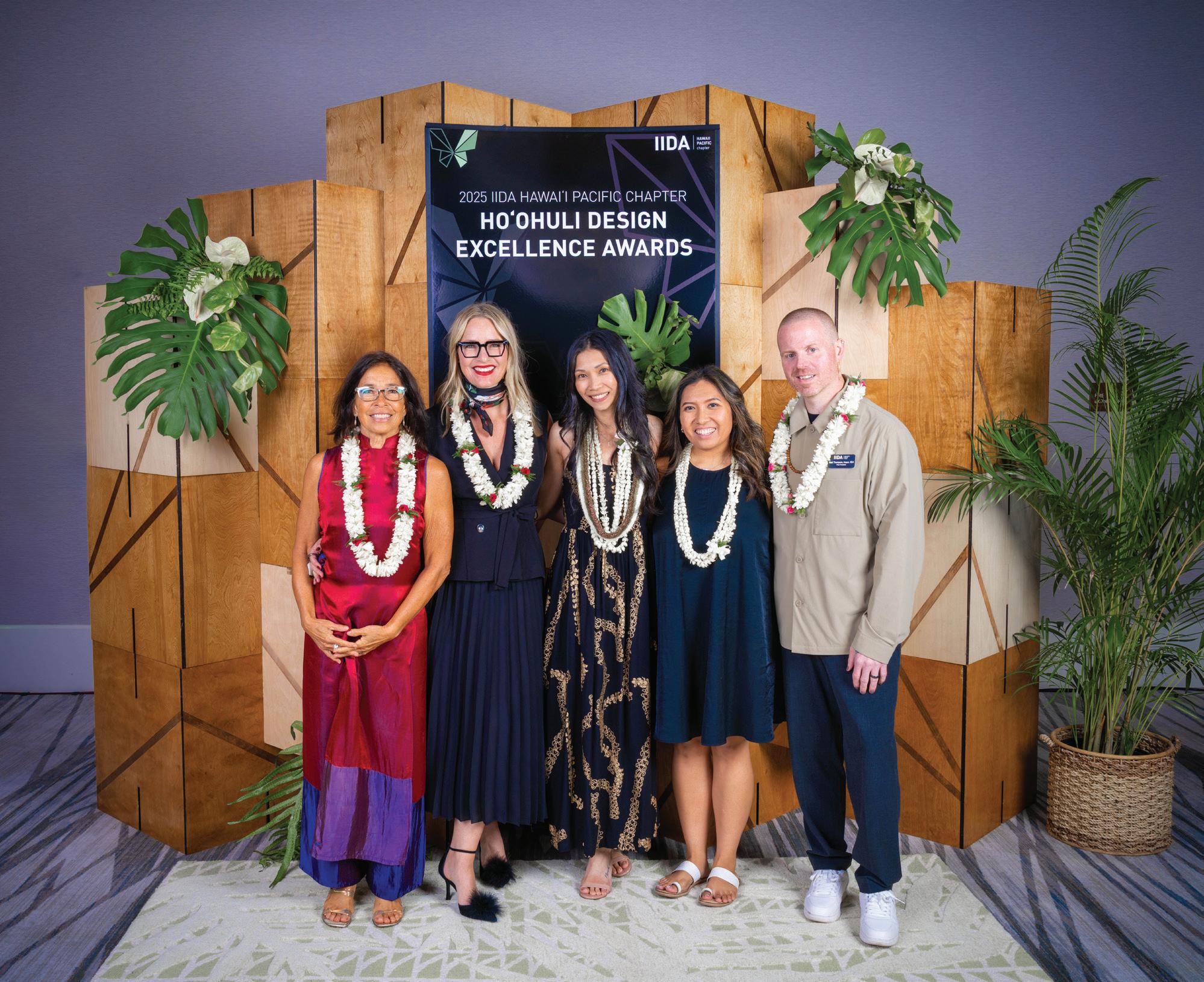
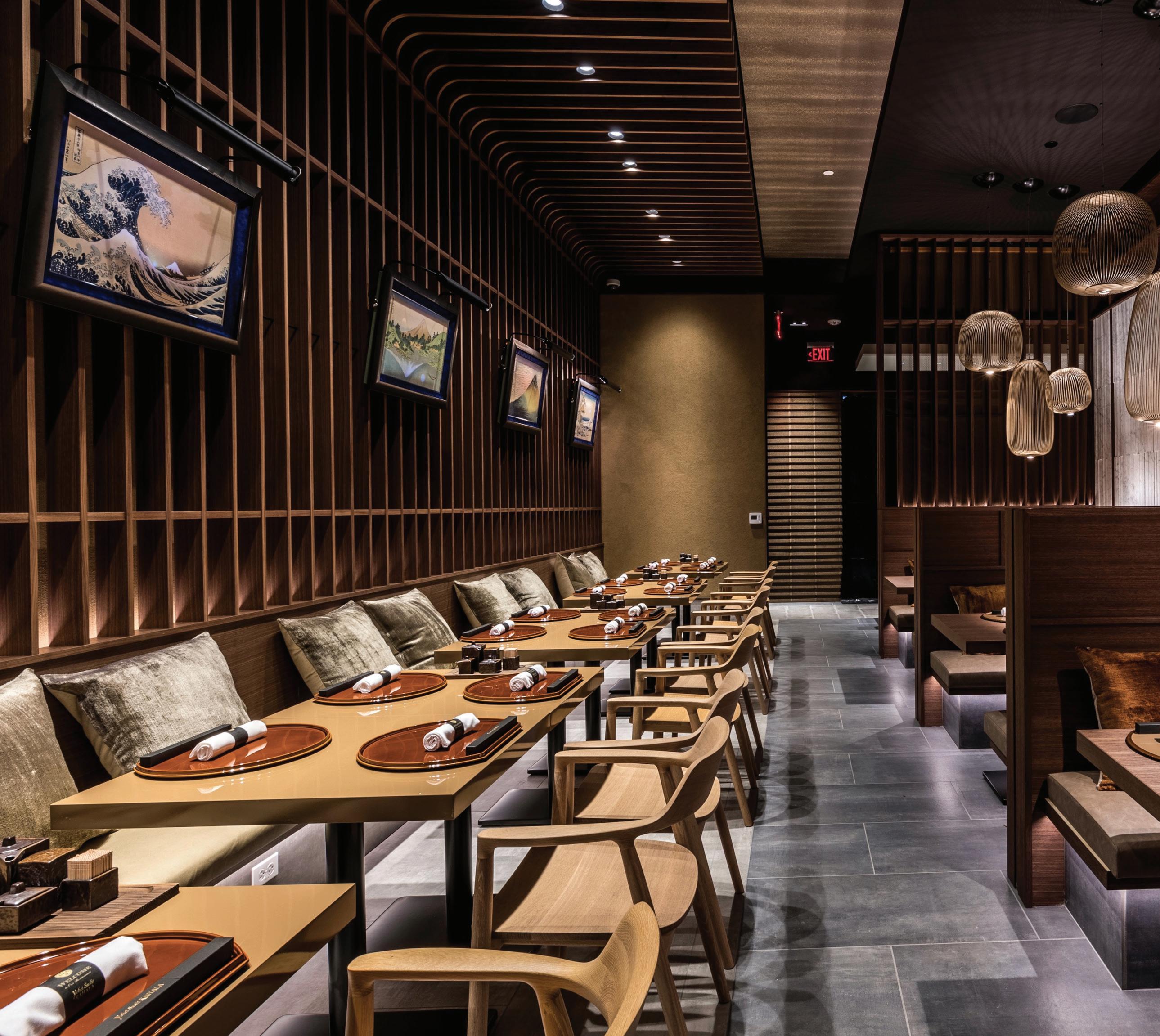
THE GRAND HO‘OHULI & DINE AWARD

FIRM Wander x Wonder
TCLIENT Pueomao, Inc.
LOCATION Kahala, O‘ahu
PHOTO: AKIRA KUMAGAI
HE CLIENT AIMED TO TRANSFORM YOHEI SUSHI INTO A SERENE, DESIGN-FORWARD DINING DESTINATION BLENDING JAPANESE TRADITION WITH CONTEMPORARY LUXURY. PROGRAM GOALS INCLUDED AN ICONIC SUSHI BAR, FLEXIBLE SEATING ARRANGEMENTS, ART INTEGRATION, AND A HIGH-PERFORMANCE YET INTIMATE ATMOSPHERE—ONE THAT HONORS OMOTENASHI AND ELEVATES GUEST EXPERIENCE THROUGH DETAIL, MOOD, AND CRAFTSMANSHIP. Jurors praised the result as “a space that doesn’t shout—it resonates,” noting the refined restraint, layered lighting, and cultural clarity achieved within a compact footprint. Thoughtful material choices and a rhythm of wood screens, ambient glow, and curated art create a dining experience that feels grounded, contemporary, and quietly transportive.
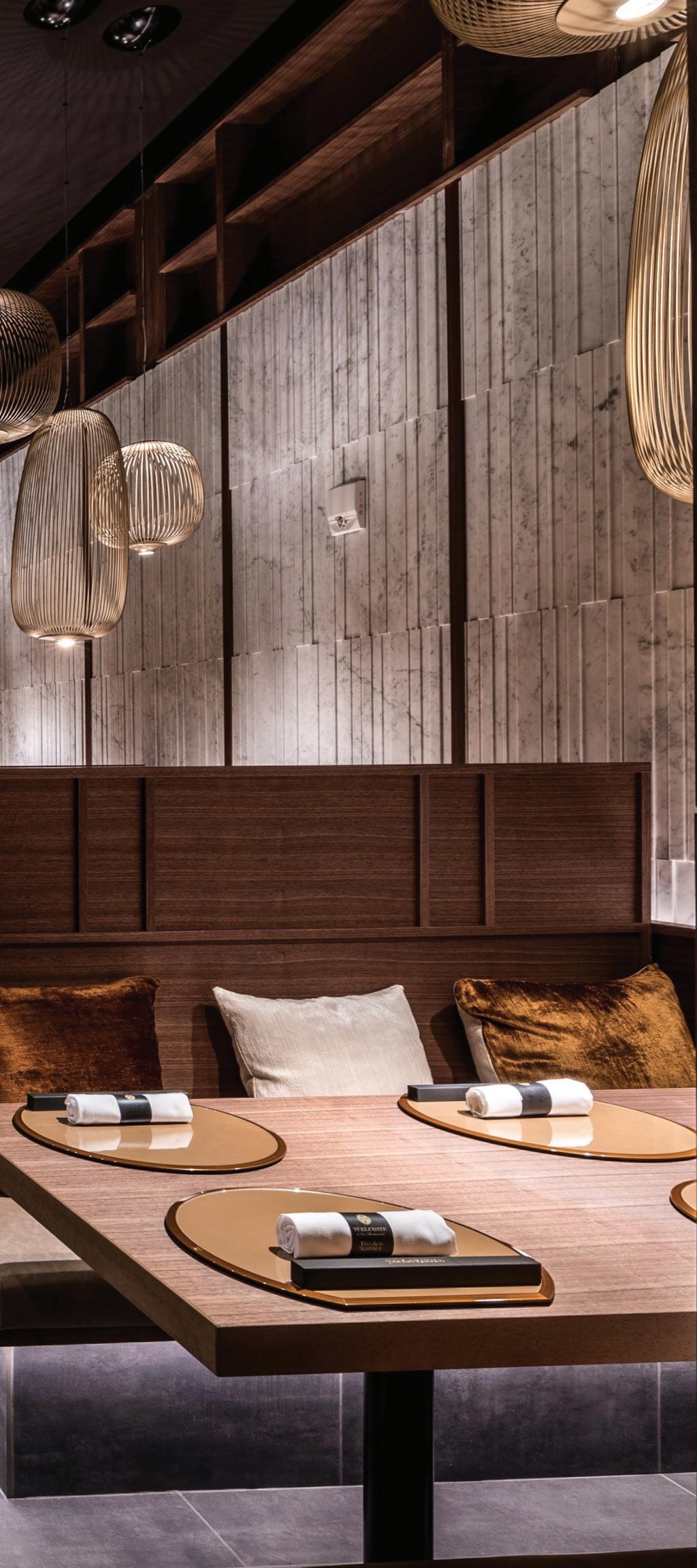
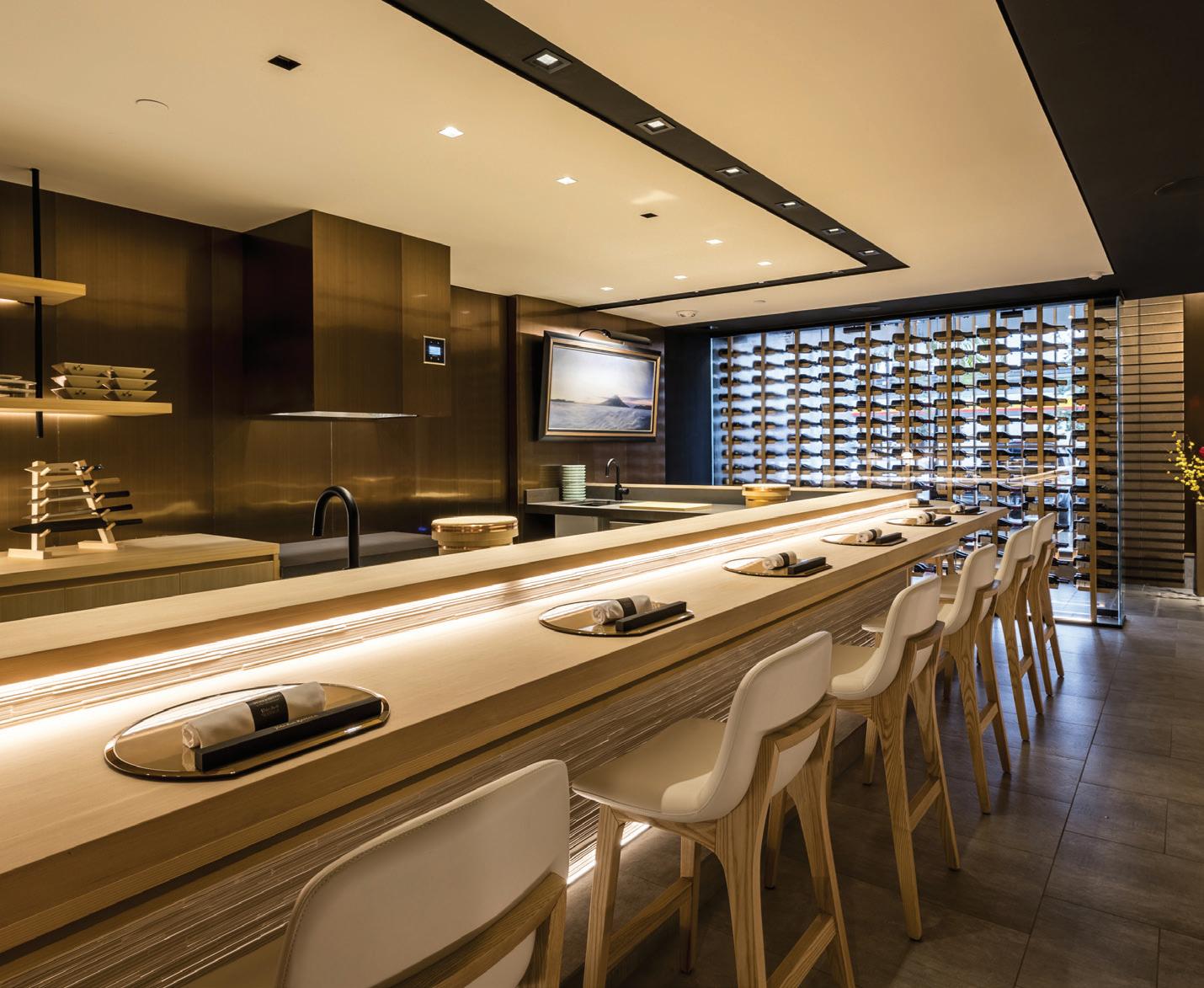
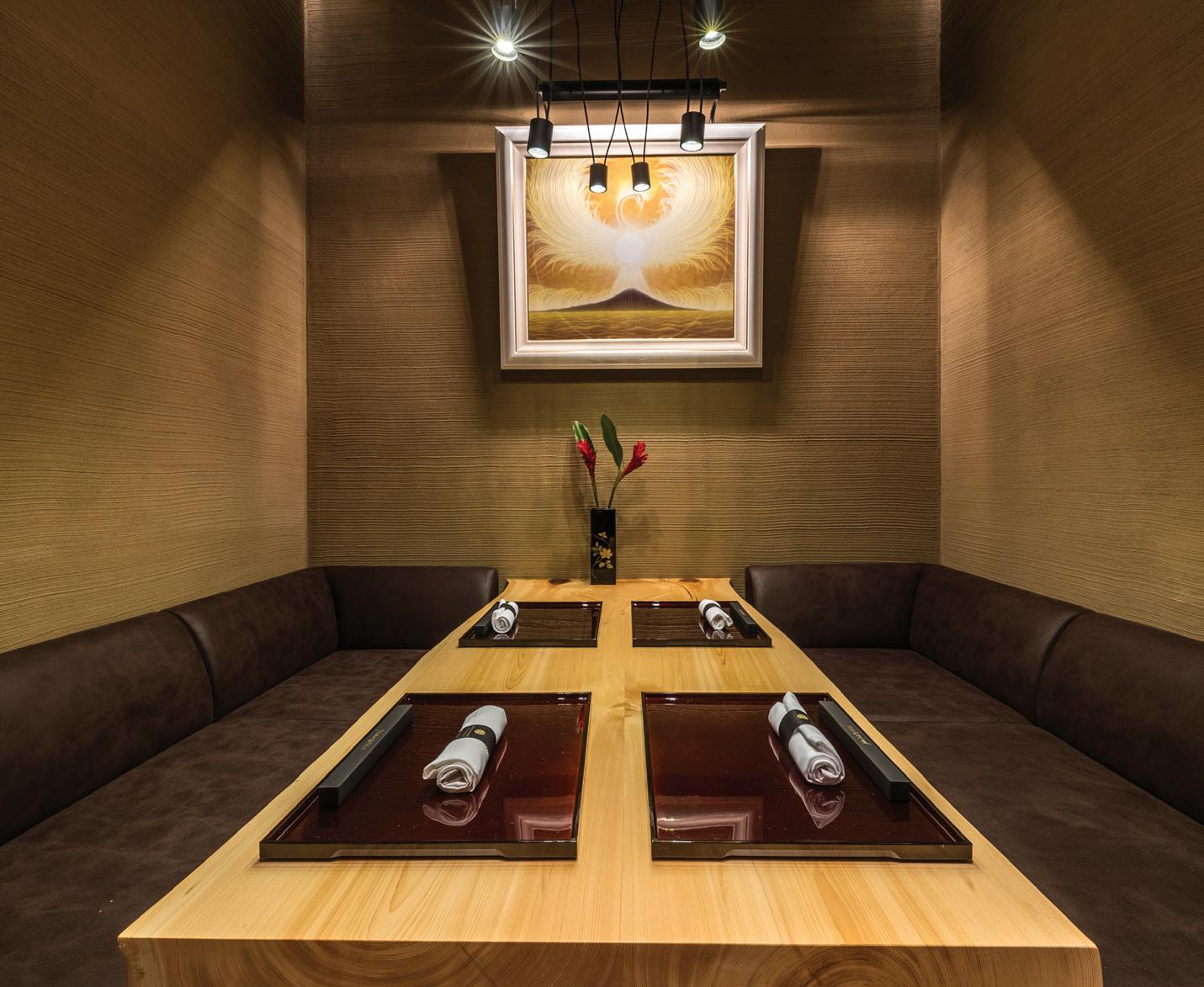
THE WORK & IMPACT AWARD
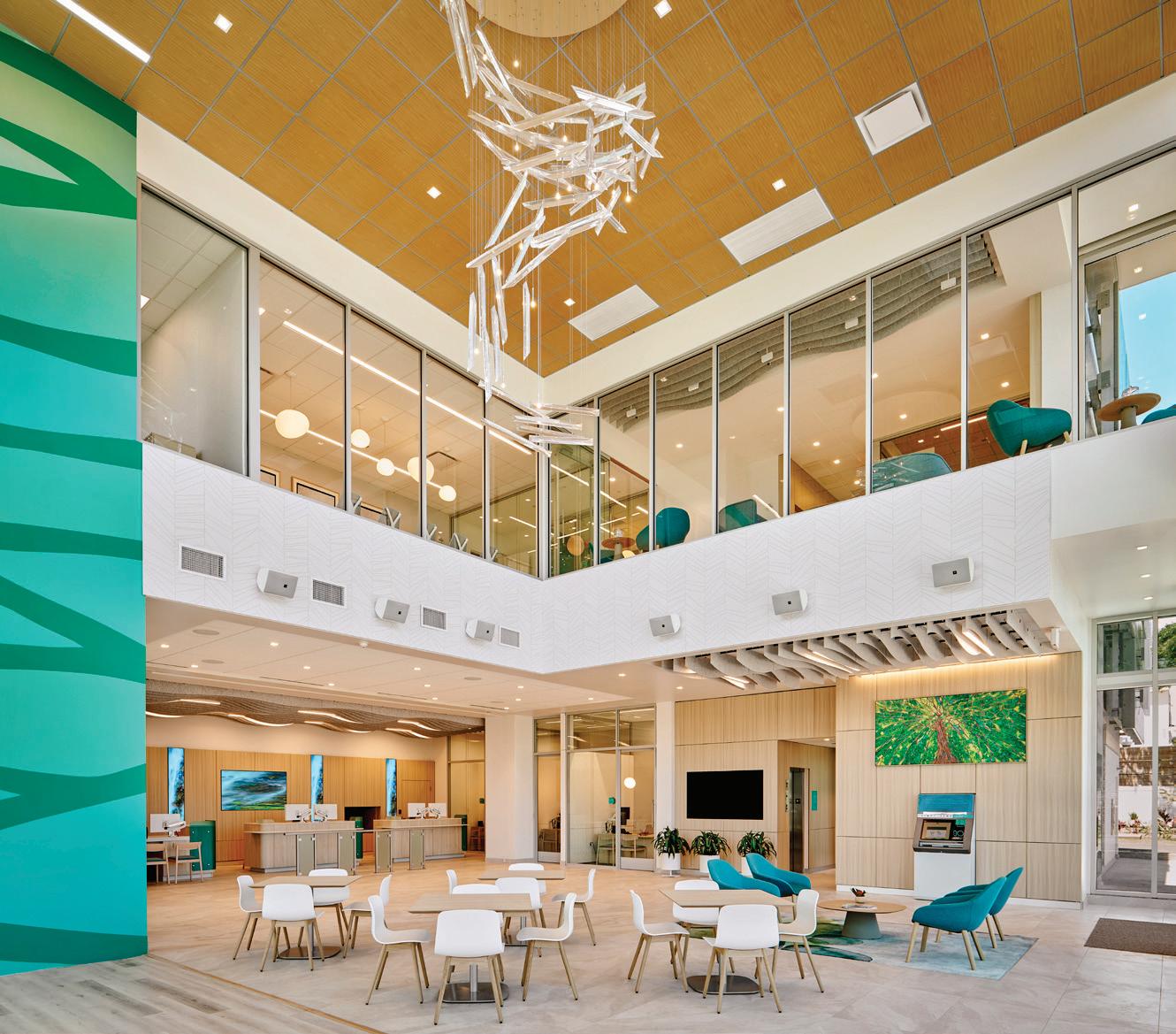
THE LIVE AWARD
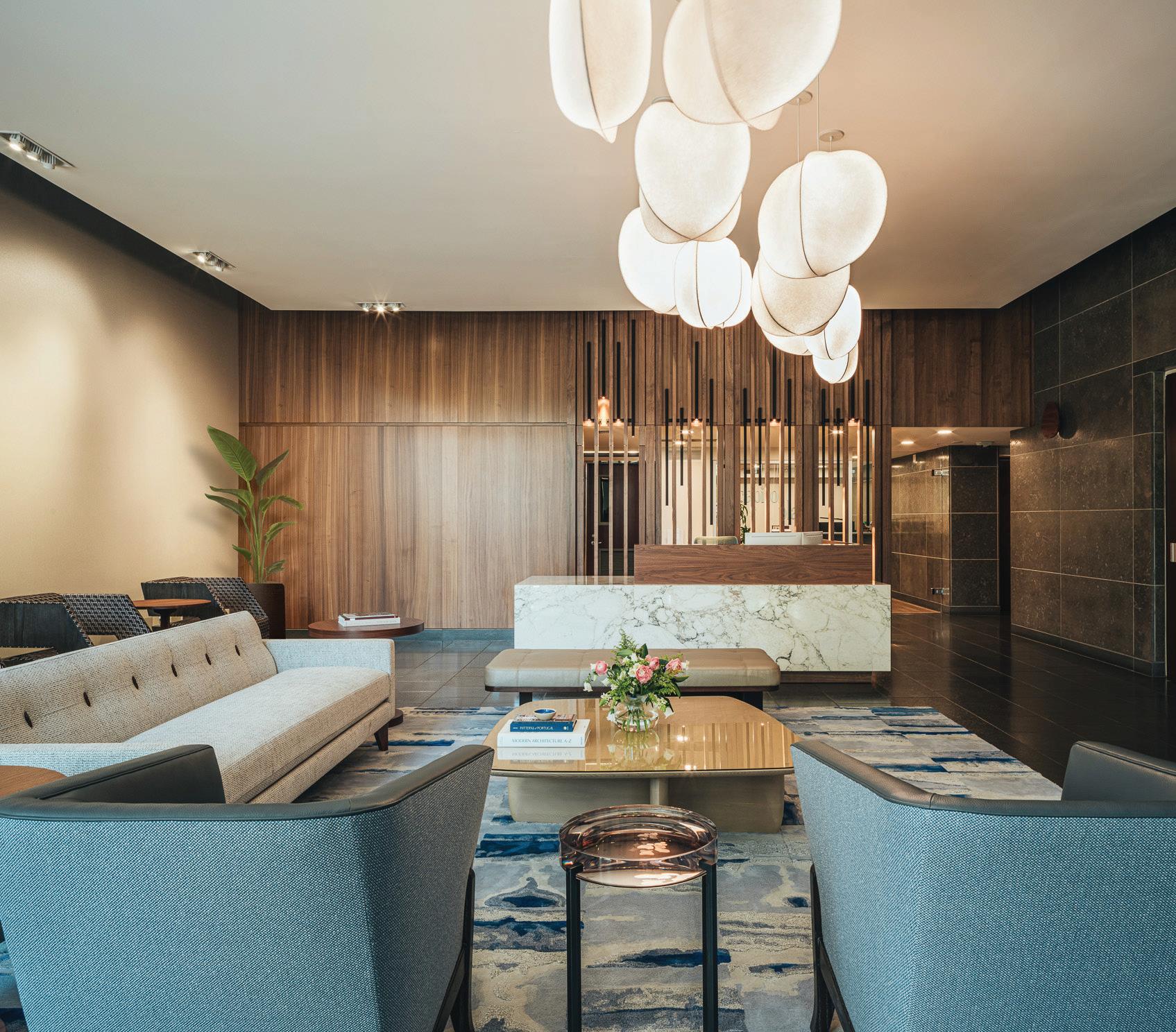
FIRM Next Design
CLIENT Central Pacific Bank
LOCATION Kahului
PHOTO: RYAN GOBUTY
The new Kahului branch of Central Pacific Bank branch blends cultural motifs of Central Maui with midcentury architectural forms that honor the bank’s founding era. Designed with sustainable features along with a contemporary banking experience, the branch design celebrates its unique sense of place.
FIRM InForm
CLIENT Capitol Place
LOCATION Honolulu
PHOTO: MARK KUSHIMI
A 4,200-square-foot renovation of three amenity spaces – Lobby, Theatre, and Event Room – reimagined the resident experience at a luxury condominium. The redesign prioritized visibility, safety, and elegance while introducing flexibility, acoustic comfort, and upgraded functionality. The result is a modern, community-enhancing destination that honors place and promotes residential well-being
THE MAKER AWARD

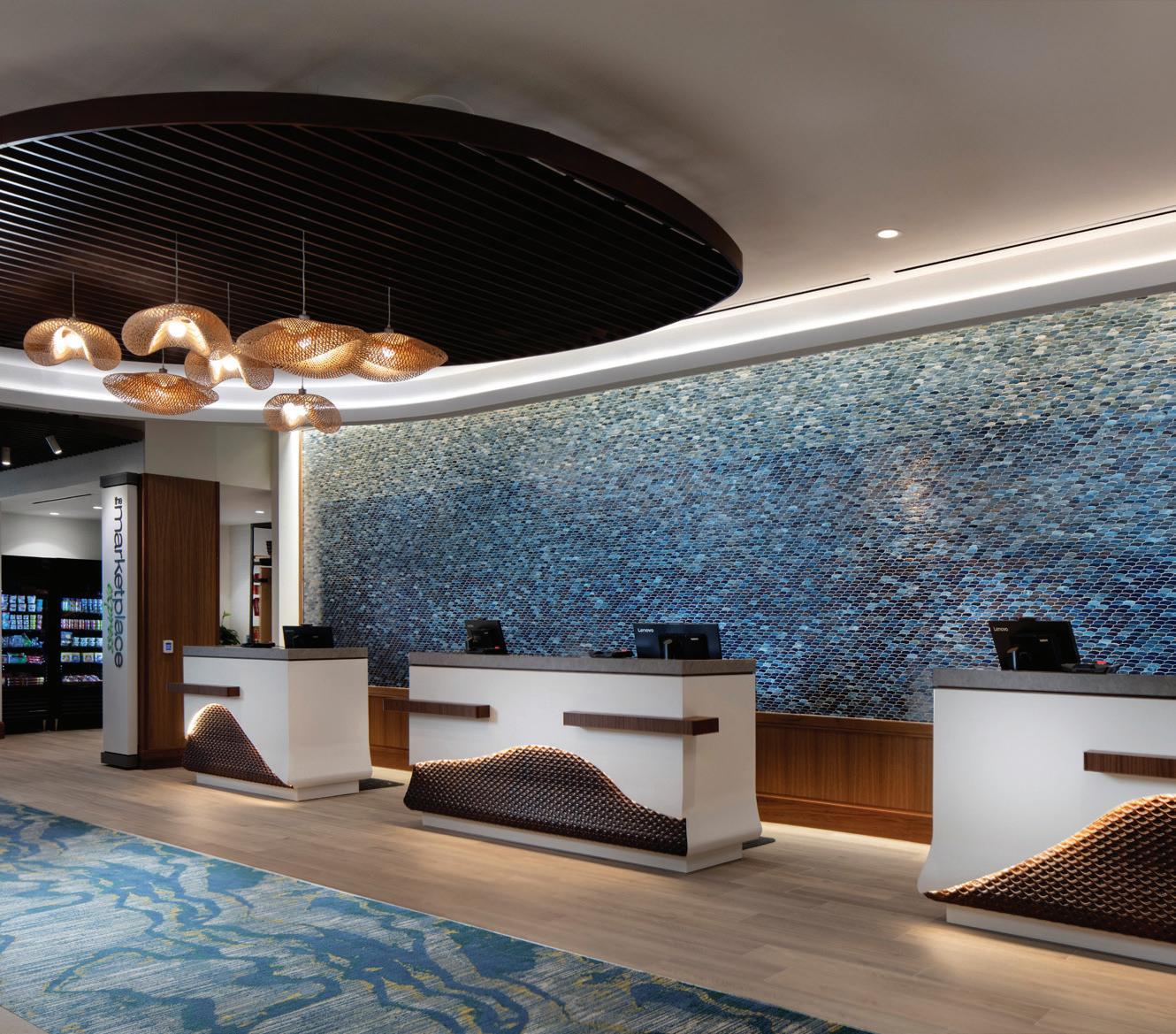
FIRM Design Loops
CLIENT University of Hawaii
LOCATION Honolulu
PHOTO: TOM TAKATA
Design Loops are a lightweight, modular system of interconnected display frames for indoor use. Expansive in scale yet easily disassembled for compact storage, the system employs custom connections that share lateral forces, enabling the frames to operate as a composite structure with enhanced collective strength and stability.
FIRM G70
CLIENT Marriott Vacation Club
LOCATION Waikīkī, O‘ahu
PHOTO: OLIVIER KONING
The client aimed to transform Yohei Sushi into a serene, design-forward dining destination blending Japanese tradition with contemporary luxury. Program goals included an iconic sushi bar, flexible seating arrangements, art integration, and a high-performance yet intimate atmosphere—one that honors omotenashi and elevates guest experience through detail, mood, and craftsmanship.

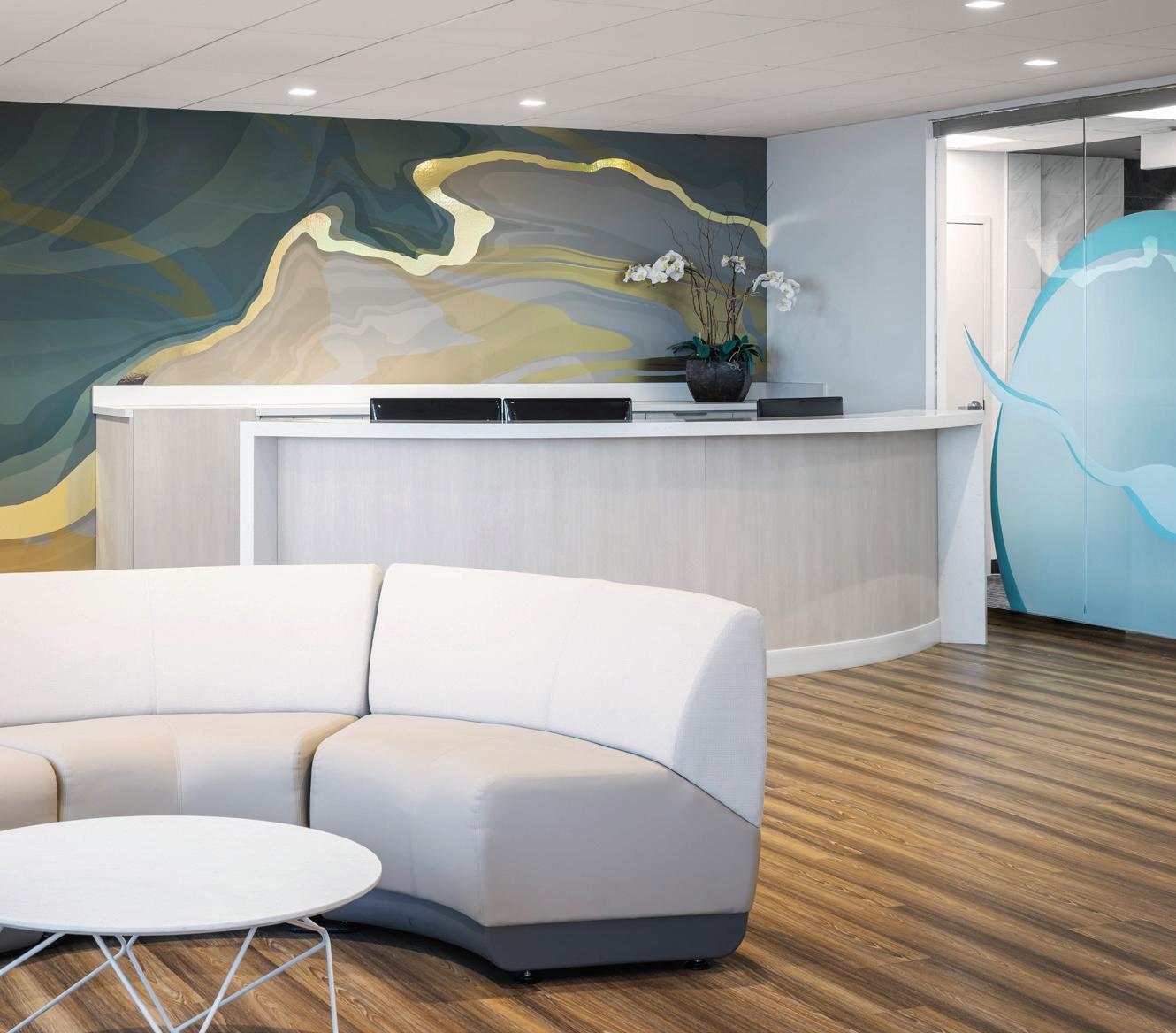
FIRM Next Design
CLIENT Lovers & Fighters, Inc.
LOCATION Honolulu
PHOTO: RYAN GOBUTY
Uncle Paul’s Corner Store reimagines a neighborhood general store as an eclectic retail and event space. Guided by discovery and hospitality, the design blends residential warmth with curated experiences. Reuse of a bank vault and beam structure, strategic budgeting, and collaboration delivered a welcoming venue inviting community, exploration, and delight.
FIRM Next Design
CLIENT Fertility Institute of Hawaii
LOCATION Honolulu
PHOTO: ADAM TAYLOR
The Fertility Clinic of Hawaii’s 14,061 sf relocation and renovation embody a vision of advanced medical care balanced with emotional sensitivity. Designed to support patients and staff, the space integrates privacy, comfort, and hope, creating a calm, supportive environment that reflects the deeply personal journey of fertility care.
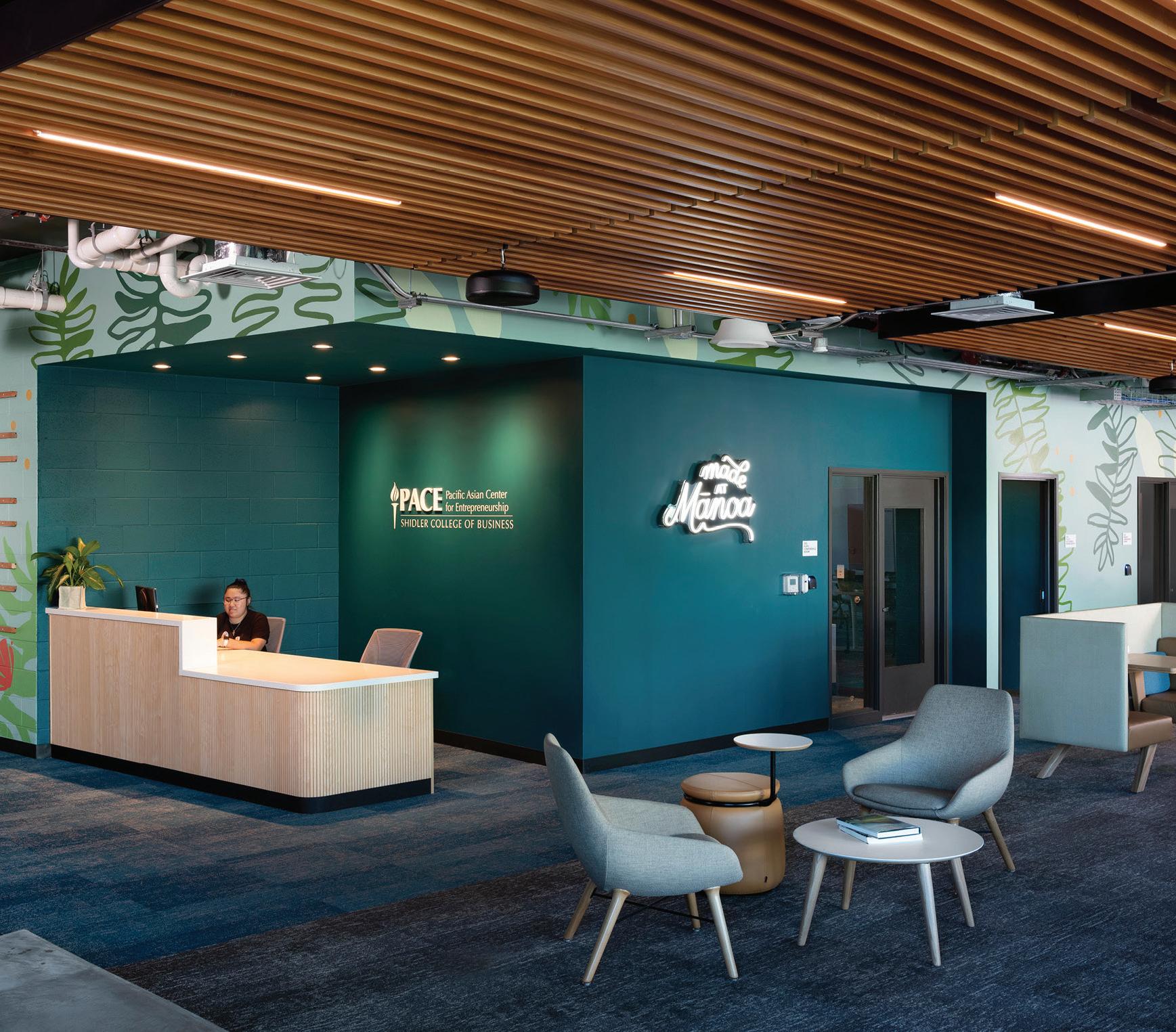

FIRM AHL
CLIENT University of Hawaii
LOCATION Honolulu
PHOTO: OLIVIER KONING
PACE at RISE is a dynamic environment designed to inspire innovation, collaboration, and entrepreneurship. Flexible workspaces, vibrant local references, and modular classrooms support ideation, acceleration, and incubation—empowering students to think boldly, grow resiliently, and create ventures that benefit Hawai‘i and beyond.
FIRM District Architects
CLIENT HFS Federal Credit Union
LOCATION Hilo, Hawai‘i
PHOTO: ADAM TAYLOR
New Office Headquarters for HFS Federal Credit Union in Hilo, Hawai‘i. HFS Federal Credit Union, one of the largest in the state, required a new headquarters to support continued growth and better serve its members. The new facility delivers state-of-theart workspaces for all departments, executive offices, and employee amenities. Initiated just before the onset of COVID-19, the project successfully overcame significant challenges with shipping delays, material shortages, and evolving workplace needs.

TITLE Field Engineer
FIRM Honolulu Builders
PHOTO: OLIVIER KONING
For the second year in a row, Monique Palisbo is recognized as Member of the Year — a testament to the heart, consistency, and leadership she brings to our design community. Whether serving as Chapter President or working behind the scenes to strengthen IIDA Hawai‘i Pacific, Monique shows up with purpose, humility, and genuine care. She connects people, champions volunteers, and builds momentum wherever she goes. Monique leads with aloha, creating a welcoming space for members at every stage of their careers. Her dedication, follow-through, and contagious positivity continue to elevate our chapter in meaningful, lasting ways.

TITLE Partner
FIRM Philpotts Interiors
PHOTO: JENN ELLENBURG
Holly Boling Ruiz is the kind of leader who brings energy, authenticity, and heart into every room. As a partner at Philpotts Interiors and a longtime supporter of IIDA Hawai‘i Pacific Chapter, she has spent more than 20 years mentoring young designers, supporting students, and strengthening community connections. Her influence goes beyond design. Holly shows up consistently, leads with compassion, and encourages others to grow with confidence and purpose. Whether she’s guiding clients, championing emerging professionals, or uplifting fellow creatives, Holly’s presence makes the industry stronger, more connected, and more joyful. Her impact is felt everywhere she goes.

TITLE Founding Designer
PHOTO: TRACY CORVO
FIRM Philpotts Interiors
Mary Philpotts built a legacy that forever shaped design in Hawai‘i. As founder of Philpotts Interiors, she championed a design approach rooted in culture, craftsmanship, and a deep sense of place. Her work—spanning Kona Village Resort, Aulani, Washington Place, and countless homes—set the standard for timeless, island-authentic design. But Mary’s greatest impact lives in the people she mentored. She guided generations of designers, artists, and makers with generosity, curiosity, and heart. Through her leadership, community service, and ability to bring out the best in others, Mary leaves a legacy that continues to influence Hawai‘i’s creative landscape.
TITLE Junior Designer
FIRM The Vanguard Theory
PHOTO: IJFKE RIDGLEY
In just a few years, Allyson Gonzaga has become a standout voice at The Vanguard Theory. Her blend of technical skill and creative thinking has shaped major hospitality projects, including the Sheraton Princess Kaiulani renovation and its upcoming lobby redesign. Allyson brings a fresh curiosity to every challenge— whether developing custom millwork, leading presentations, or collaborating with local artists on projects like the Royal Lahaina Resort mural. Her perspective pushes her team to think in new ways, and her humility makes her a natural leader. Allyson represents the future of design in Hawai‘i: thoughtful, innovative, and full of potential.


























March
Many young professionals in Hawai‘i find their careers look nothing like the degrees they earned. Here’s how I found my way.


WHEN BUSINESS SCHOOL STUDENTS TOURED HAWAII BUSINESS MAGAZINE’S OFFICES THIS YEAR, THEY PEPPERED THE STAFF WITH QUESTIONS: WHAT DID YOU STUDY? WHAT IS YOUR DAILY ROUTINE? HOW DID YOU GET FROM POINT A TO POINT B?
Somewhere between the desks, coffee cups and stacks of magazines, the students noticed something: The path from degree to job rarely plays out the way one expects.
Most young people grow up hearing a simple blueprint: Go to college, choose a sensible major, get a degree, then a job, and the rest will fall into place. But recent numbers reveal a different picture: Among recent U.S. graduates aged 22 to 27, studies show that anywhere from 35% to more than 50% have jobs that don’t require a bachelor’s degree.
A degree still matters. It opens doors, builds discipline and strengthens long-term earning potential. But it no longer guarantees a straight path, and you still must learn to pivot, stack skills and find places where your interests meet real opportunities. If you didn’t discover how to do that in school, let me share what I’ve learned since graduating.
I never planned a non-linear career, but mine turned out that way because life kept pushing me sideways. I treated college like a step to a waiting career, so I pushed through the credits quickly and earned my computer science degree in three years.
Then I did something that made no sense on paper. I took my first full-time job as a legal assistant at a debt collection office on Merchant Street – because there weren’t many “computer science” jobs in Hawai‘i then.
I learned to track patterns, read people, manage court filings and work under serious pressure. I was promoted to head the “Judgment” department in six months and handled cases that demanded speed, accuracy and ownership for both district and circuit court cases. I learned by having real problems thrown at me and figuring things out.
The pivots kept coming. I decided to study criminal justice to move my career forward. I moved to San Francisco with no plan beyond finding work that would increase
my opportunities. I held three jobs while finishing my master’s degree online: I worked the opening shift at a Starbucks in the financial district, worked a corporate day job and interned with the San Francisco Police Department at night. That strategy opened doors, and New York pulled me in for a lucrative investigator role. The hustle was paying off and I gained momentum. I loved every bit of it – until I didn’t.
ZIGZAGGING HAS BENEFITS, ADDED STRESS
Burnout hit hard enough to break the rhythm.
That breaking point pushed me back toward computer science. I leaned on my network, taught myself new programs, picked up relevant skills and started freelancing in the tech industry. I even started an Instagram account for my two corgis that somehow led to real clients and real projects.
Every pivot looked random at the time, but I kept returning to the same skills: problem solving, efficiency, curiosity, communication and design.
The same skills I built through those pivots continue to power me today. I run private client projects on the side, and I work fulltime as the Digital Director at Hawaii Business Magazine. Both roles pull from the skills I picked up along the way. My career didn’t narrow into one lane, it opened wider and that works better for me.
A non-linear career does add stress. My pivots came with financial pressure, long hours, the strain of switching disciplines and eventually burnout. But that didn’t make me quit working. It steered me back to computer science.
If your career feels like left turns, side gigs or the unexpected, it could mean you’re figuring out what holds your interest. You might not discover that good fit while earning your degree, but you will by moving, testing and adjusting through a non-linear career.


























Families planting roots in homes they can afford. Students discovering their passion in schools built for success. Reefs and forests thriving under the care of communities who know them best. From keiki to kūpuna, ensuring everyone has what they need, not just to survive, but to thrive.
Community Centered Economy • Health & Wellness Arts & Culture • Natural Environment • Governance • Education
This is the CHANGE Framework in action, and it’s happening across every island. Be part of it: hawaiicommunityfoundation.org/change hawaiicommunityfoundation.org