A New Sun Rises in Hawai‘i
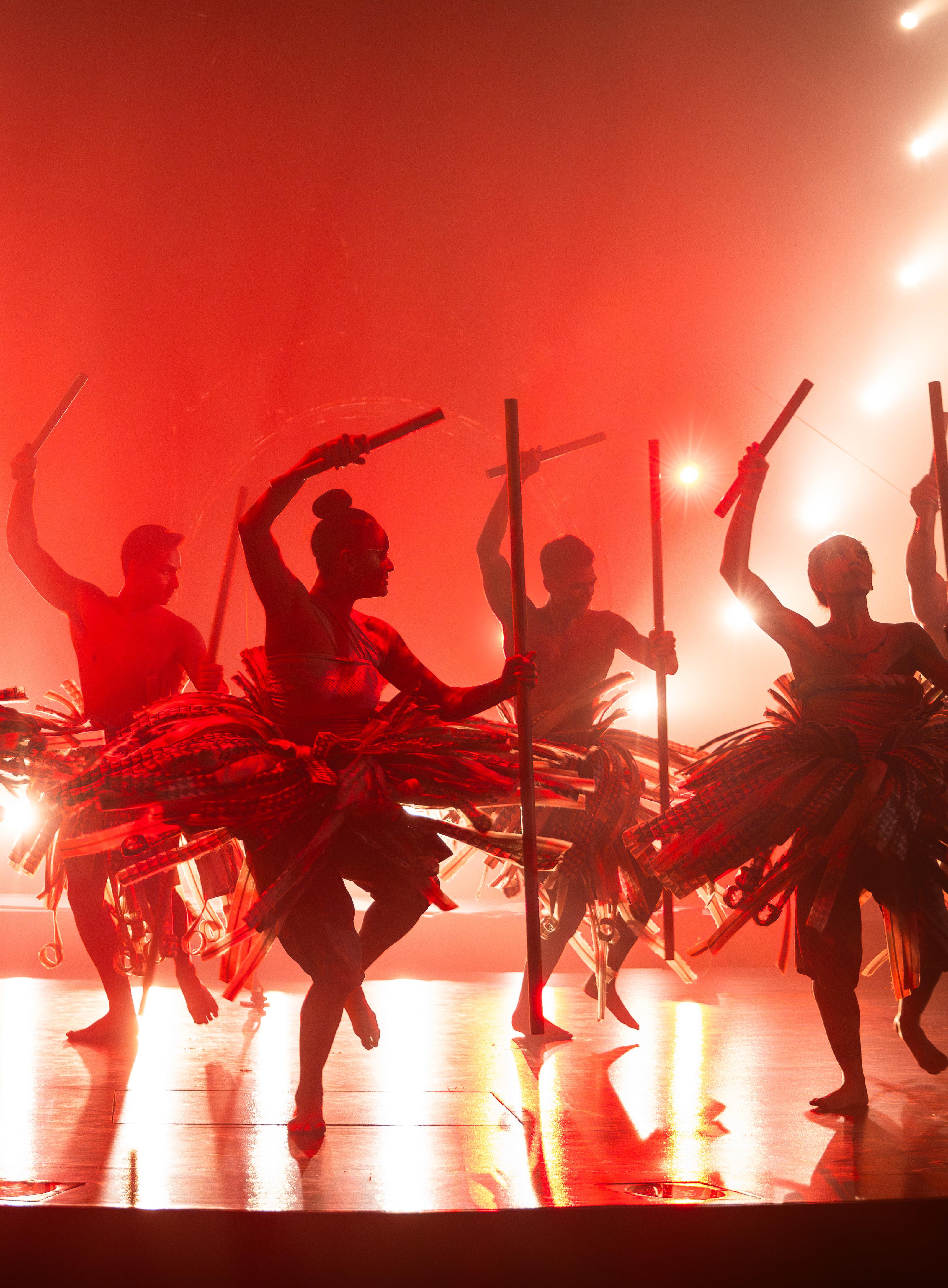
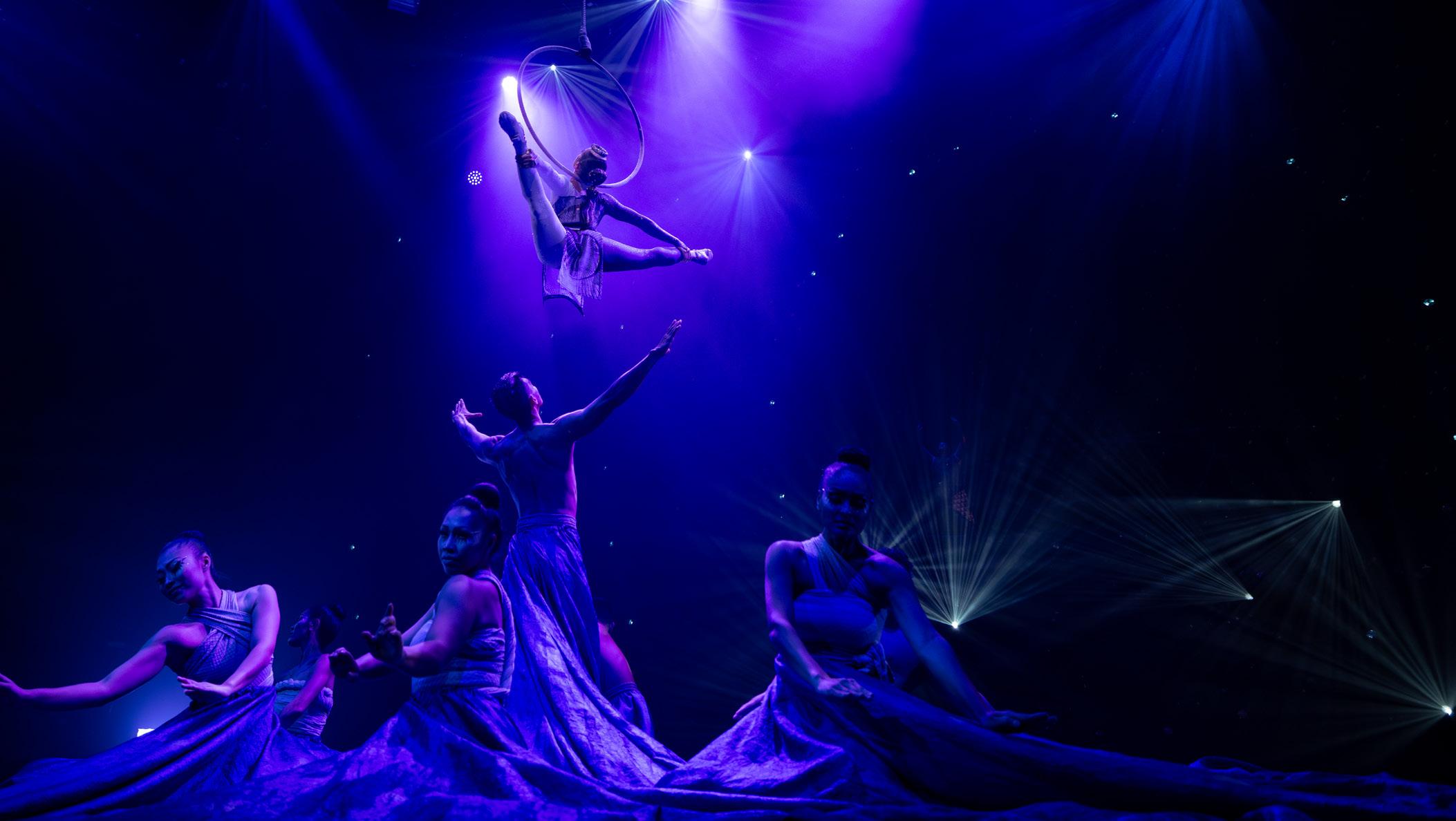
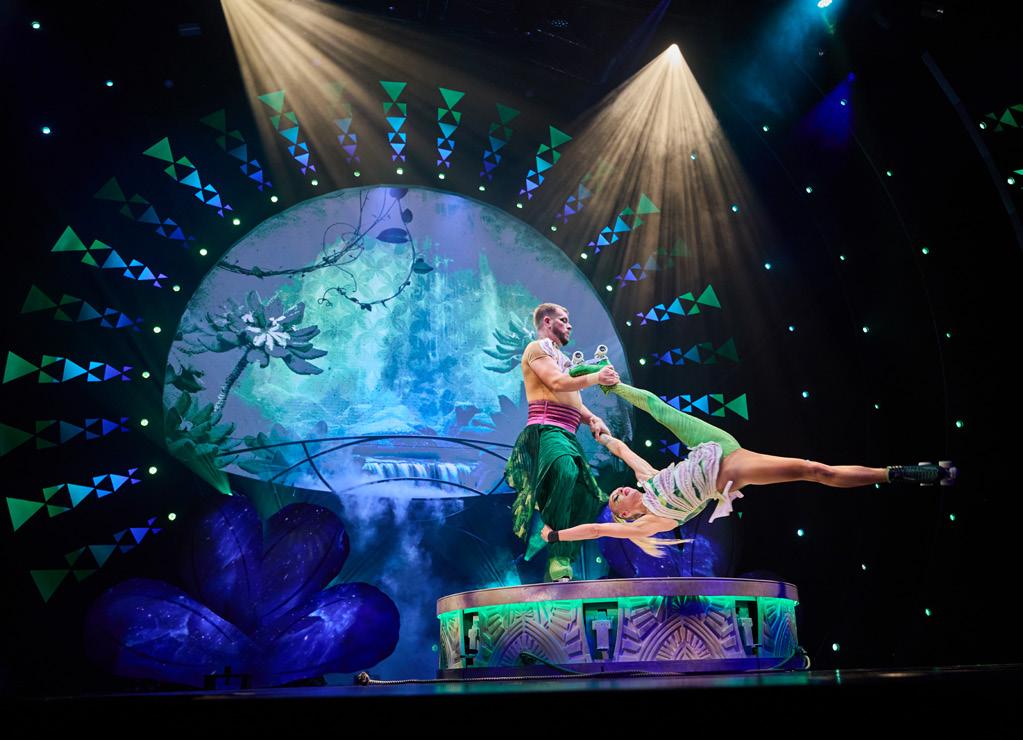
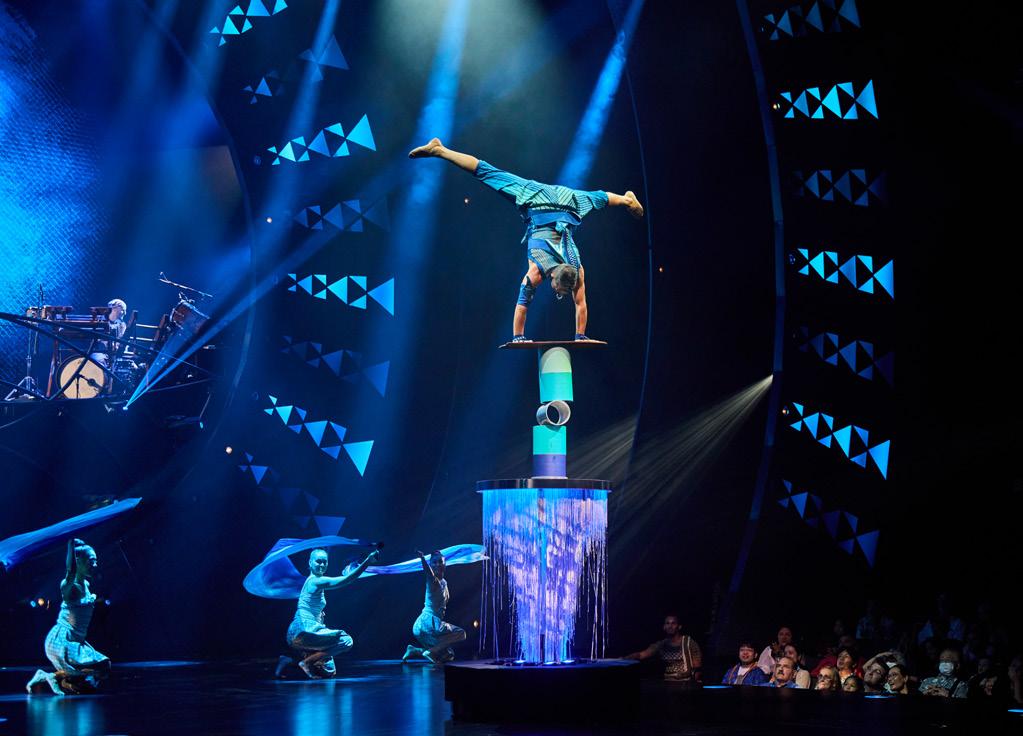
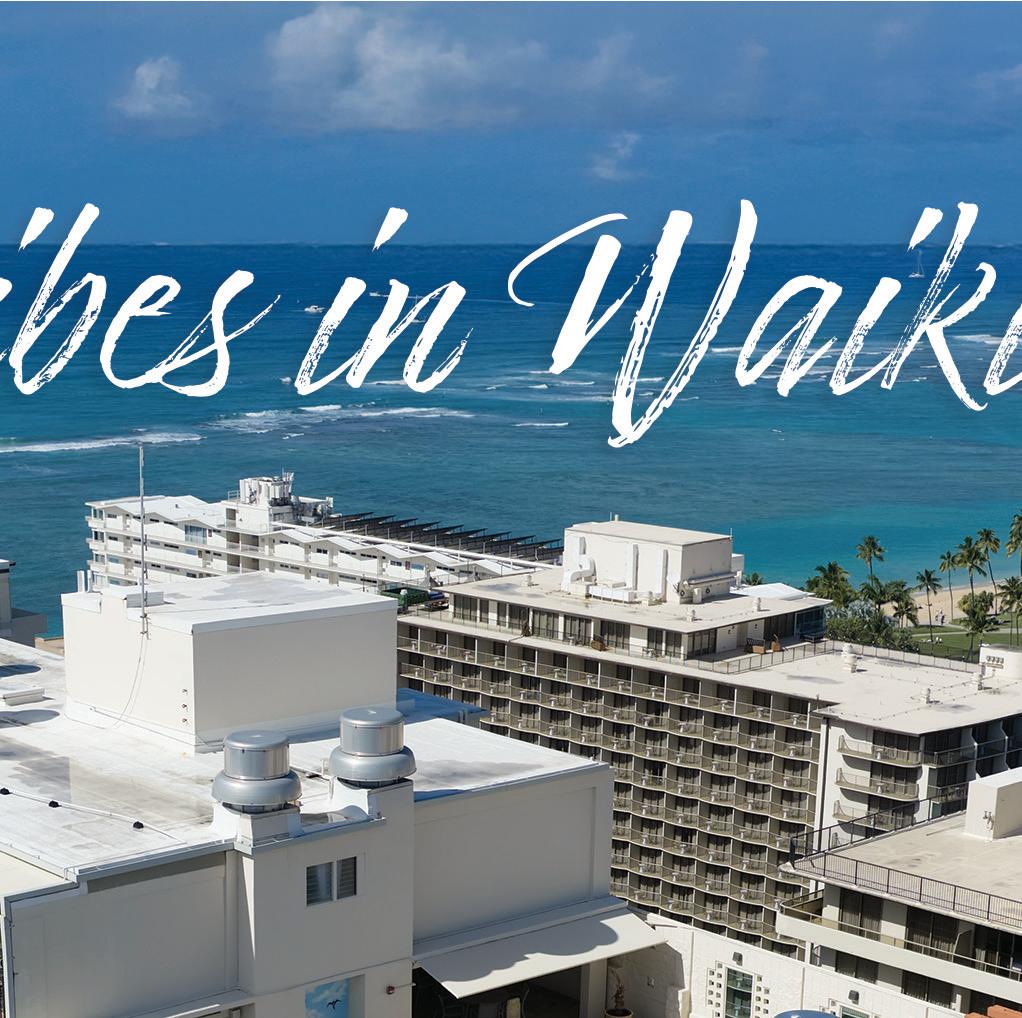
Located in the heart of Waikīkī, Cirque du Soleil ‘Auana has solidified its place as a cultural and artistic landmark in Hawai‘i. As the Islands’ first resident Cirque du Soleil production, the show blends the company’s signature acrobatics and theatrical spectacle with the stories, traditions and spirit of Hawai‘i.
Performed exclusively at the custom-designed OUTRIGGER Theater inside the OUTRIGGER Waikīkī Beachcomber Hotel, ‘Auana takes audiences on a vibrant journey through the Islands’ history, culture and natural beauty. The name, ‘Auana, meaning “to wander” or “to journey,” foreshadows the adventure that ventures beyond the familiar, unfolding across eight chapters inspired by Hawai‘i’s unique mo‘olelo and pivotal moments in its history.
At the heart of the production is the cultural creative team led by cultural creative producer Aaron J. Salā , awardwinning Kumu Hula Hiwa Vaughan, internationally acclaimed fashion designer Manaola Yap and Native Hawaiian linguist Keao NeSmith. Their collective vision ensures that every element, from choreography and costume design to language and storytelling, honors Hawai‘i.
Through dazzling acrobatics, live music, comedy, hula, immersive
projections and breathtaking visual design, ‘Auana transcends the limits of reality, celebrating Hawai‘i through color, movement, texture and sound. The result is a world-class production that captures the essence of the Islands while inviting audiences to experience them in a new light.
Due to overwhelming audience demand, Cirque du Soleil ‘Auana will release its official soundtrack on July 17. Composed by Evan Duffy and performed
entirely in ‘Ōlelo Hawai‘i, the music blends traditional Hawaiian influences with contemporary sounds, extending the show’s powerful storytelling experience beyond the stage.
Performances are held most Wednesdays through Sundays at 5:30 p.m. and 8 p.m. Tickets start at $85, inclusive of taxes and fees. Reservations are available online at cirquedusoleil.com or at the ‘Auana Box Office in the lobby of the OUTRIGGER Waikīkī Beachcomber Hotel.
SUMMER DIGITAL
2026 ISSUE • VOLUME 43, NO.2 34
The Winning Images of HAWAI‘I Magazine’s Annual Photo Contest
Hundreds submitted stunning images of the Islands to our annual photo contest. Readers voted for their favorites across six categories—land, ocean, people, wildlife, Kīlauea and student submissions. Here are the winners and runners-up in each category, along with the overall grand-prize winner and an editor’s pick.
52 Bees, Blossoms and Bottles
How honeybees found a home in Hawai‘i.
BY KRYSTAL KAKIMOTO
photo: aaron k. yoshino
IN THIS ISSUE
ISLAND HOPPING
16 O‘ahu: Exploring Chinatown
Spend an afternoon eating, shopping and wandering one of Honolulu’s most storied districts.
SARAH BURCHARD
22 Voices of the Forest Conservationists are working to ensure Hawai‘i’s remaining forest birds have a future.
BY SERENE GUNNISON
26 Kaua‘i: Discovering the Nāpali Coast
Exploring this coastline is a reminder that locals can still find places that inspire awe.
GRACE MAEDA
30 Hawai‘i Island: Home of Hāhālua
These magnificent creatures grace the Kona Coast.
GRACE MAEDA
DEPARTMENTS
PHOTO
AARON K. YOSHINO

BThe Rhythm of Summer
Marked by long beach days, rodeos, Obon dances and fruit harvests, these months are filled with daily rituals and cherished traditions— and we’re making new ones, too.
IG AND SMALL RITUALS create the rhythm of summertime in Hawai‘i.
I often wake up with the sun. Some days I pluck plumeria—or any flower that is blooming—to string lei. Or I’ll pick buckets of lychee at my hānai grandpa’s house, then go to the beach where I’ll linger long enough to enjoy the sun’s last rays. And I’ll attend at least one Obon dance.
A sweet mix of ease, excitement and nostalgia fills the air this time of year. From rodeos and paddling regattas to the sharing of mangoes with neighbors, folks here are connected by their summertime traditions. And as these traditions evolve, new ones are made.
Here at HAWAI‘I Magazine, we’re launching something new—our SUMMER Digital Issue—but we’re also celebrating tradition. In these pages, you’ll find the winners of our 26th annual photo contest—a cherished tradition for us and our
readers (flip to page 34). From the Islands’ endemic species to its rugged landscapes, these winning images offer a glimpse of Hawai‘i, from land to sea.
On the remote slopes of Haleakalā, the Maui Forest Bird Recovery Project is working tirelessly to ensure native birds have a future (flip to page 22), and off Hawai‘i Island’s Kona Coast, you can dive with manta rays (flip to page 30).
On O‘ahu, Yuki Uzuhashi, owner of Mānoa Honey & Mead, is using ingredients grown in the Islands to make mead (flip to page 52).
There’s no place like Hawai‘i, and we’re thrilled to continue sharing stories with you in new ways.
Thank you to our publisher, Traci Rose; my hardworking colleagues; and our friends at Eleven17 for making it all possible. We’re looking forward to many more exciting adventures as HAWAI‘I Magazine continues to evolve.
Mahalo for being on this journey with us.
Send
a note at gracem@hawaiimagazine.com.
HO‘OMAKA to begin c
The Local Scoop
Inspired by nostalgia, Neale Asato created one of Waikīkī’s sweetest and most unexpected culinary experiences.
BY CATHERINE TOTH FOX
The three-course omakase finale.

WHEN NEALE ASATO
launched an exclusive hourlong tasting menu at Asato’s Waikīkī with the kind of local snacks most of us grew up with, I was skeptical.
Crack seed and shave ice for $58? Who’s gonna sign up for that?
Apparently, a lot of people.
The Flavor Lab, which takes over a counter at the sherbet shop inside an apparel store on Kalākaua Avenue, features a three-course omakase menu and just four seats. The menu is offered twice a day, Wednesday through Sunday. Reservations are required and open seven days in advance starting at noon on Open Table. And good luck trying to snag one. They sell out almost immediately.
“It’s been a good way to showcase a lot of things I grew up eating,” says Asato, 39, who
fondly recalls visiting candy and crack seed shops in ‘Āina Haina and Kaimukī on O‘ahu as a kid. “Even a lot of locals haven’t tried all the different li hing mui and lemon peel, so this allows them to taste them side by side.”
The concept makes sense for Asato, who, since 2017, has been cleverly turning favorite small-kid flavors—White Rabbit candy, pickled mango, li hing sour belts— into sherbet or sorbet.
He launched Asato Family Shop in 2017, offering sherbets through subscription, then opened a small takeout shop in Downtown two years later. It wasn’t uncommon to see more than 100 people waiting in line to buy pints of his nostalgic flavors.
In November 2025 he opened a small shop within Kings & Queens, a boutique in the Hyatt Regency Waikīkī Beach Resort & Spa, located directly across the street from
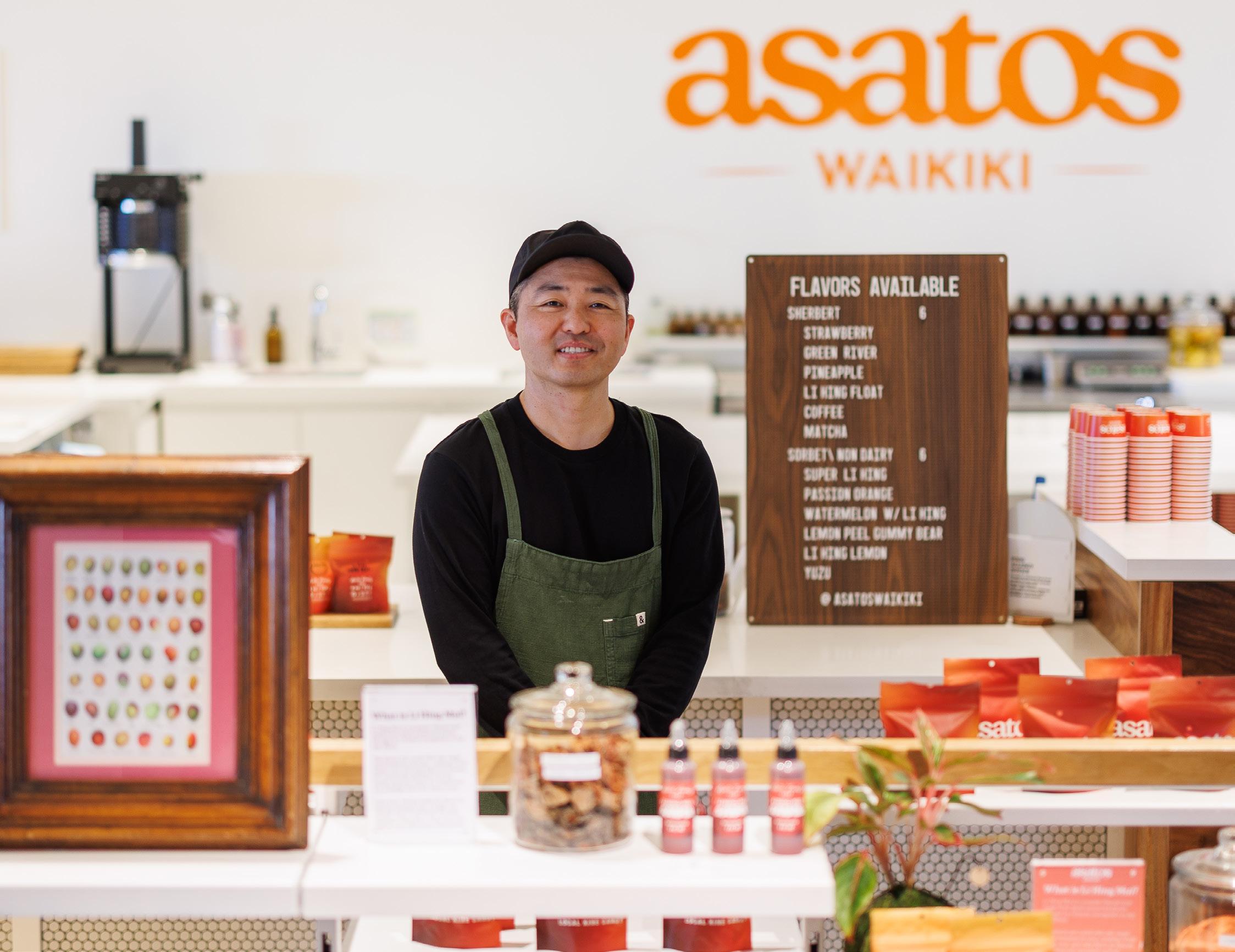
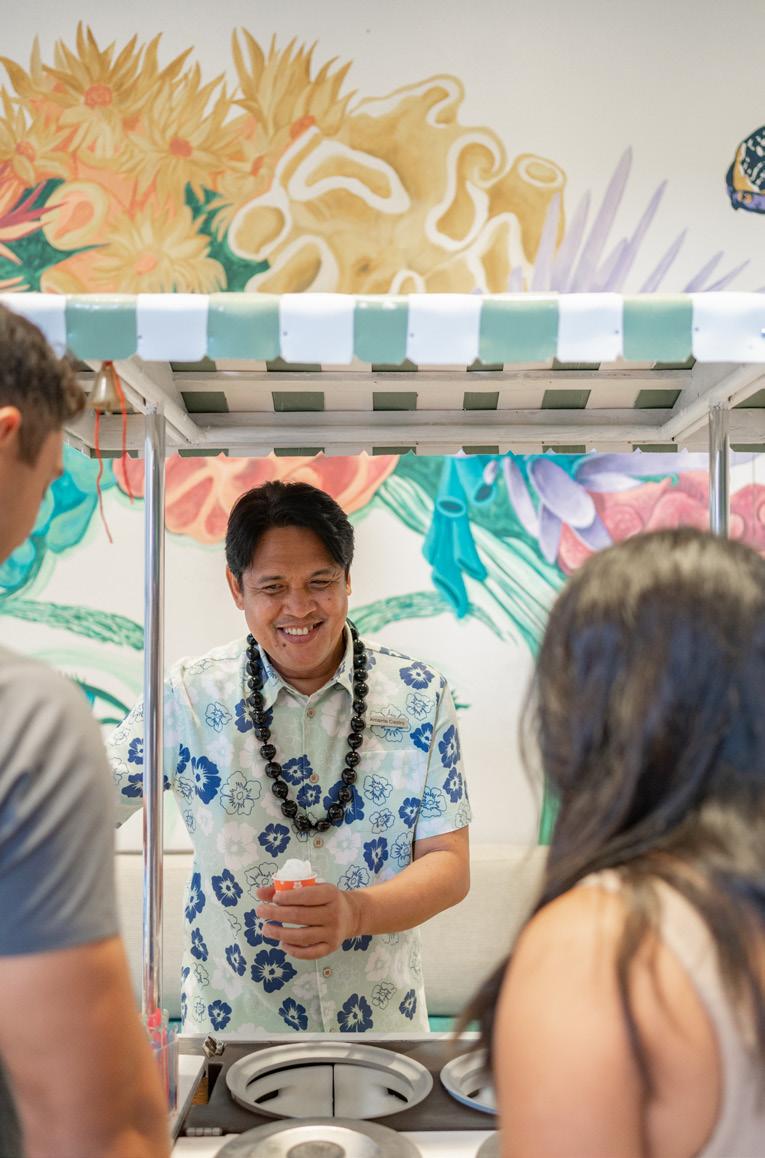
Neale Asato launched Asato Family Shop in 2017, making sherbert and sorbet inspired by small-kid flavors.
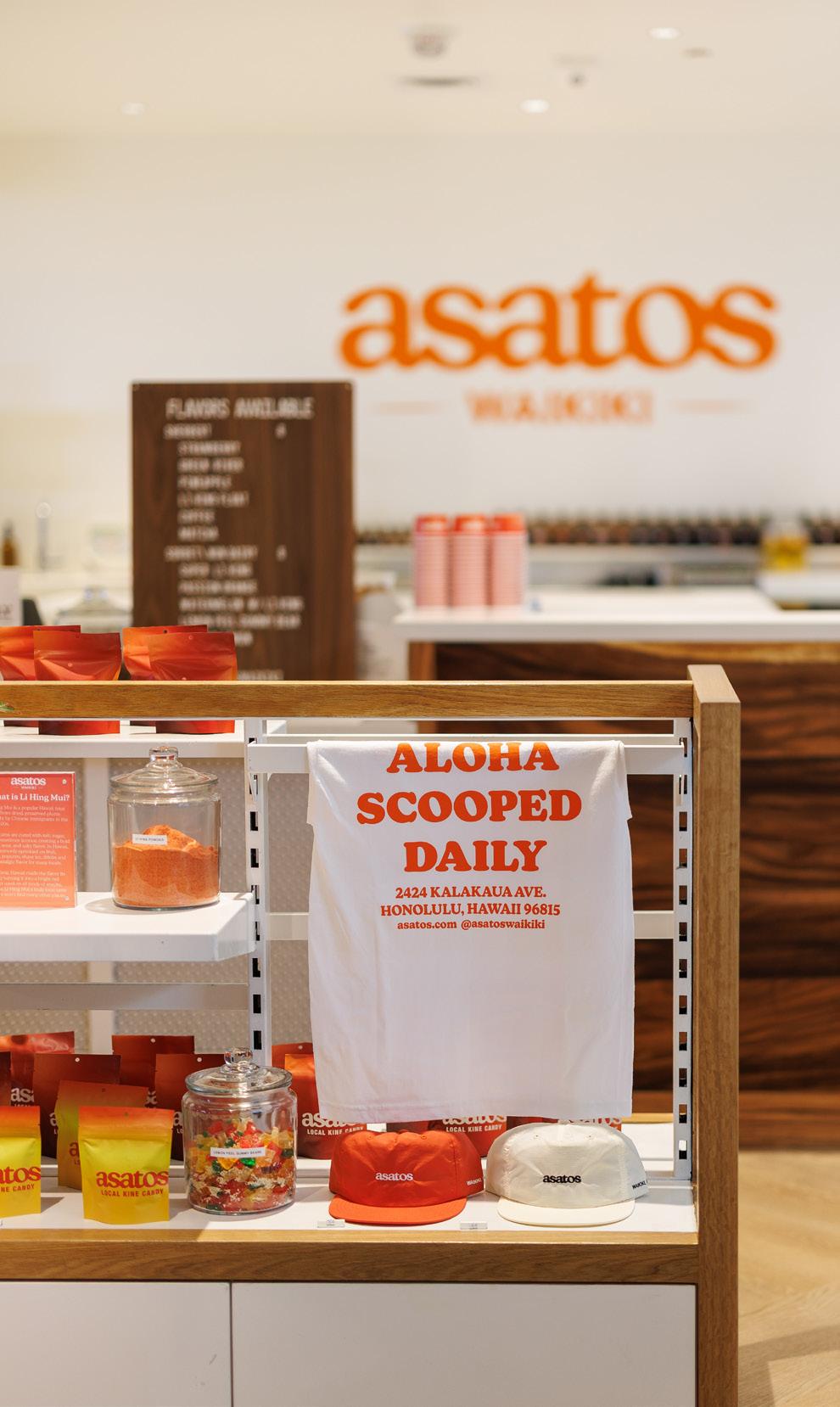
the Duke Kahanamoku statue. Asato’s Waikīkī serves scoops of sherbet and sorbet ($6 each) in flavors like pineapple, matcha, ube, lychee and li hing lemon. The strawberry flavor is inspired by the nearly century-old guri-guri frozen dessert from Tasaka Guri Guri on Maui, and Green River is a sherbet version of the bright neon-green soda that was once a staple at Hawai‘i drive-ins and soda fountains. The flavors here rotate based on seasons—lychee and mango are summer finds—and whim. To date, Asato has created more than 240 flavors, any of which can find their way onto the menu here.
In January Asato, a semifinalist for the 2026 James Beard Award for Outstanding Pastry Chef, opened Flavor Lab, flexing the culinary skills he’s honed through years of working in kitchens on O‘ahu. It’s truly like nothing I’ve ever experienced, as if a crack seed shop had a chef’s counter.
The three-course menu starts with a sampling of crack seed staples like dried lemon peel and li hing watermelon. It’s served alongside a cube of rainbow gelatin made from melted gummy bears and is rem-
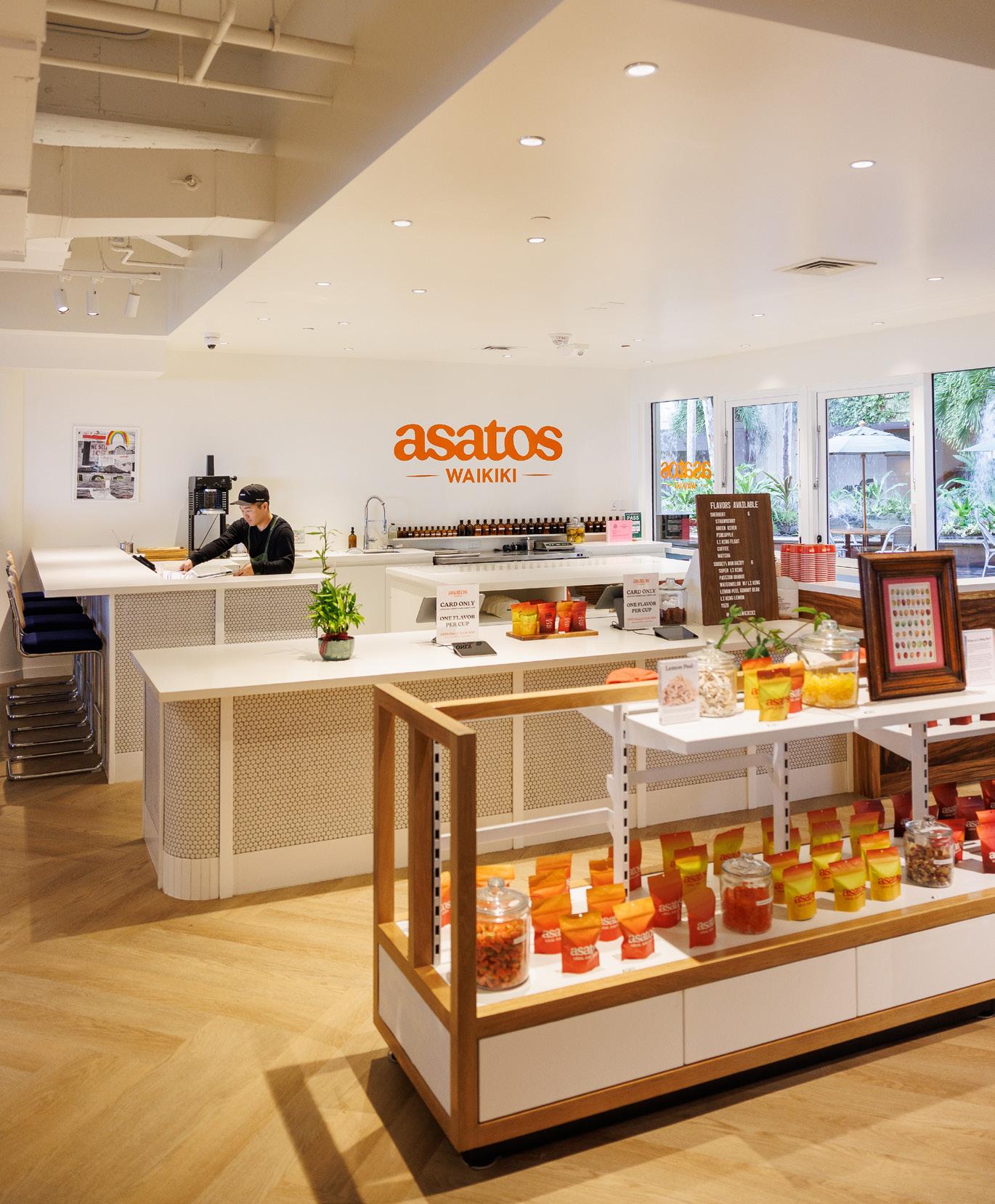
iniscent of the layered Jell-O you’d often see at potlucks across the Islands. Asato says the experience is like sampling your way through a crack seed store.
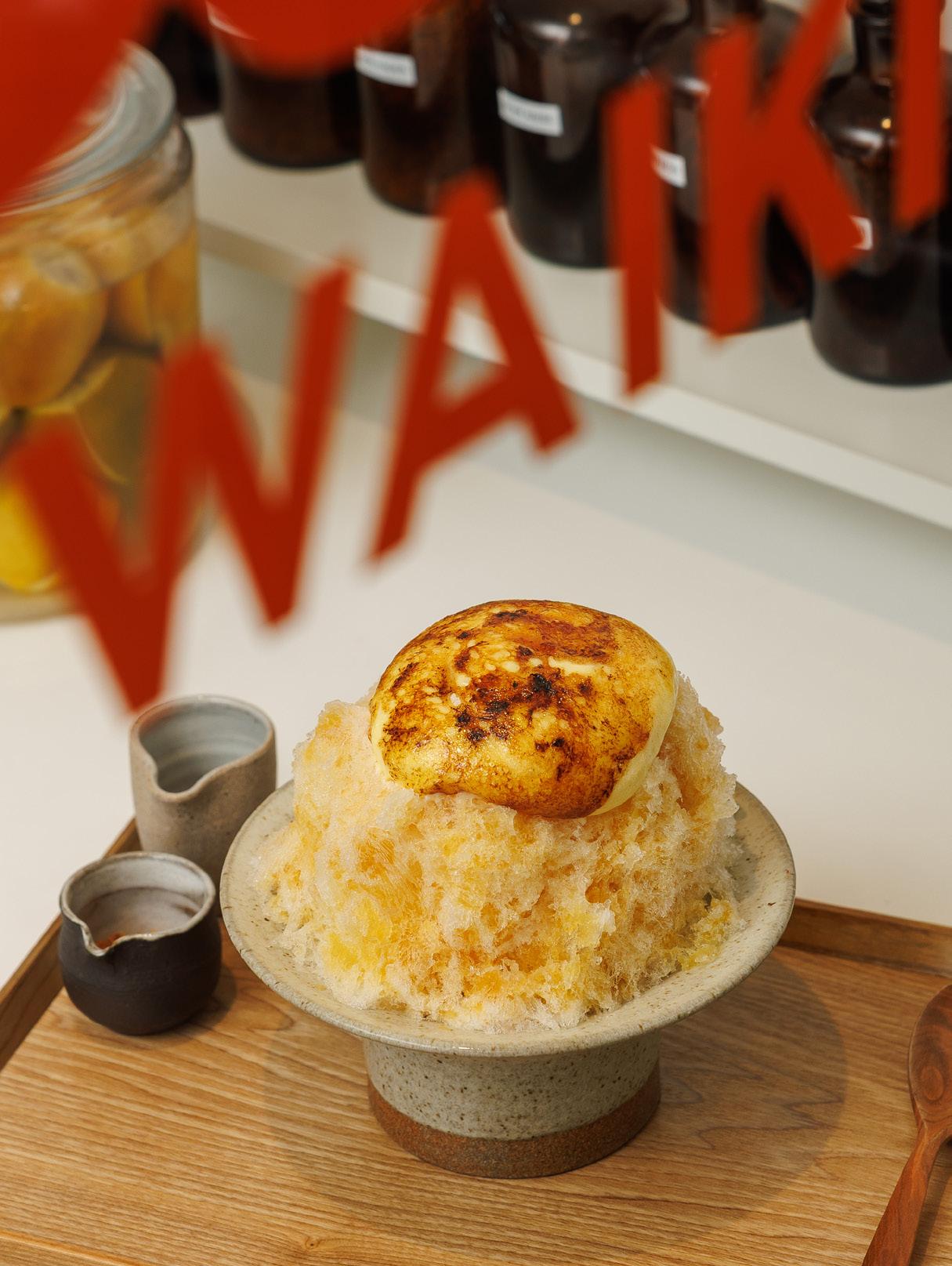
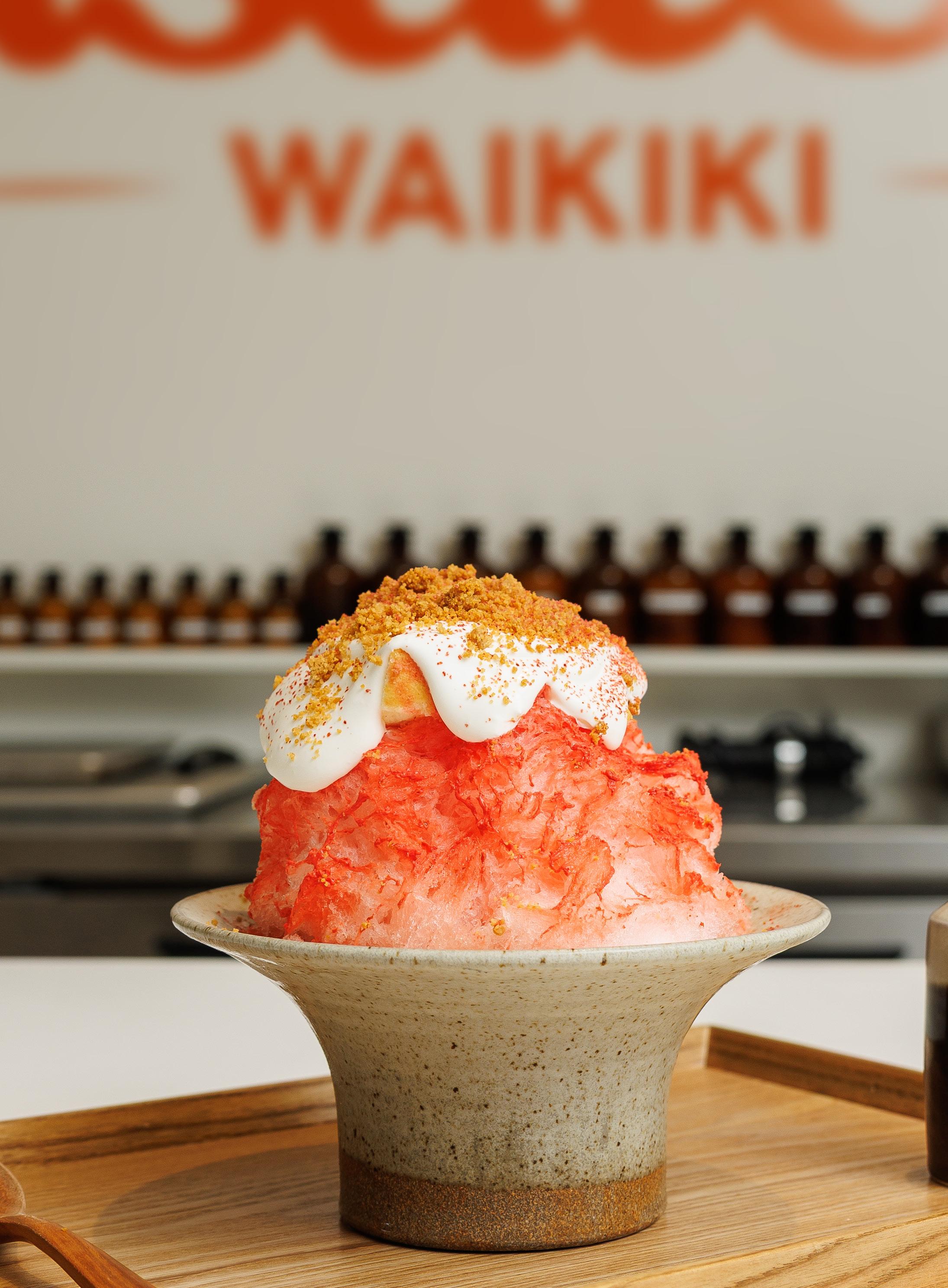
The second course is a make-yourself soda, where you add apothecary tinctures to housemade syrups to adjust the flavor. And the finale is an over-the-top kakigori, or Japanese-style shave ice. The bowl of fluffy ice is topped with a sort of crème brûlée or chucks of crunch cake.
The business has grown since he started churning out sherbet at home in 2017, and Asato says it helps him to remain creative. “I wish I had more time to do this kind of stuff,” he says. After this experience, I can’t imagine anything more inventive than this.
Asato’s Waikīkī
Open daily, 11 a.m.-9 p.m., inside Kings & Queens at Hyatt Regency Waikīkī Beach Resort & Spa, 2424 Kalākaua Ave., Honolulu, asatos.com.

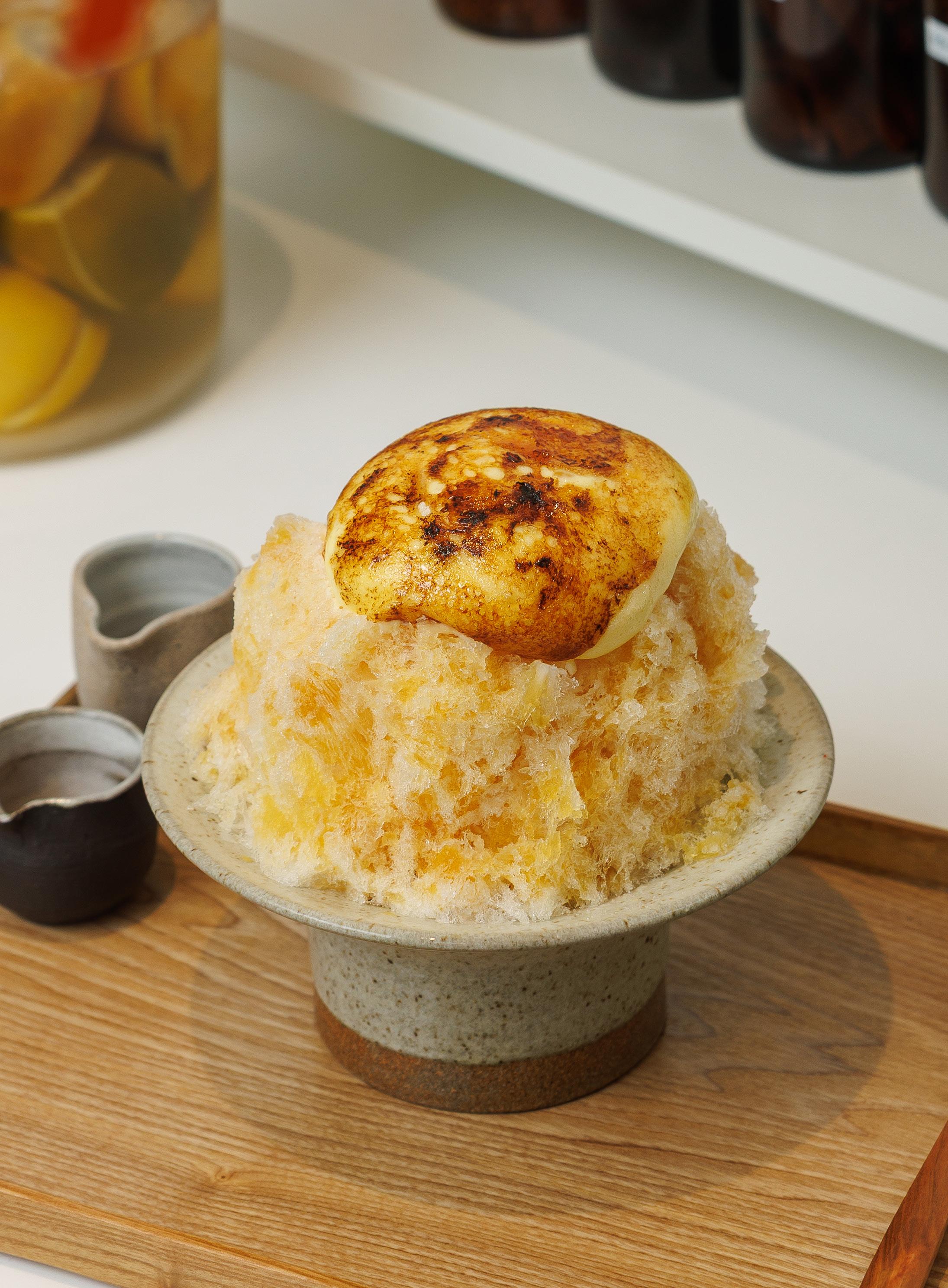
This kakigori finale is with a sort of crème brûlée or chucks of crunch cake.
Through the Lens
A day with Bishop Museum’s collections photographer.
BY KRYSTAL KAKIMOTO
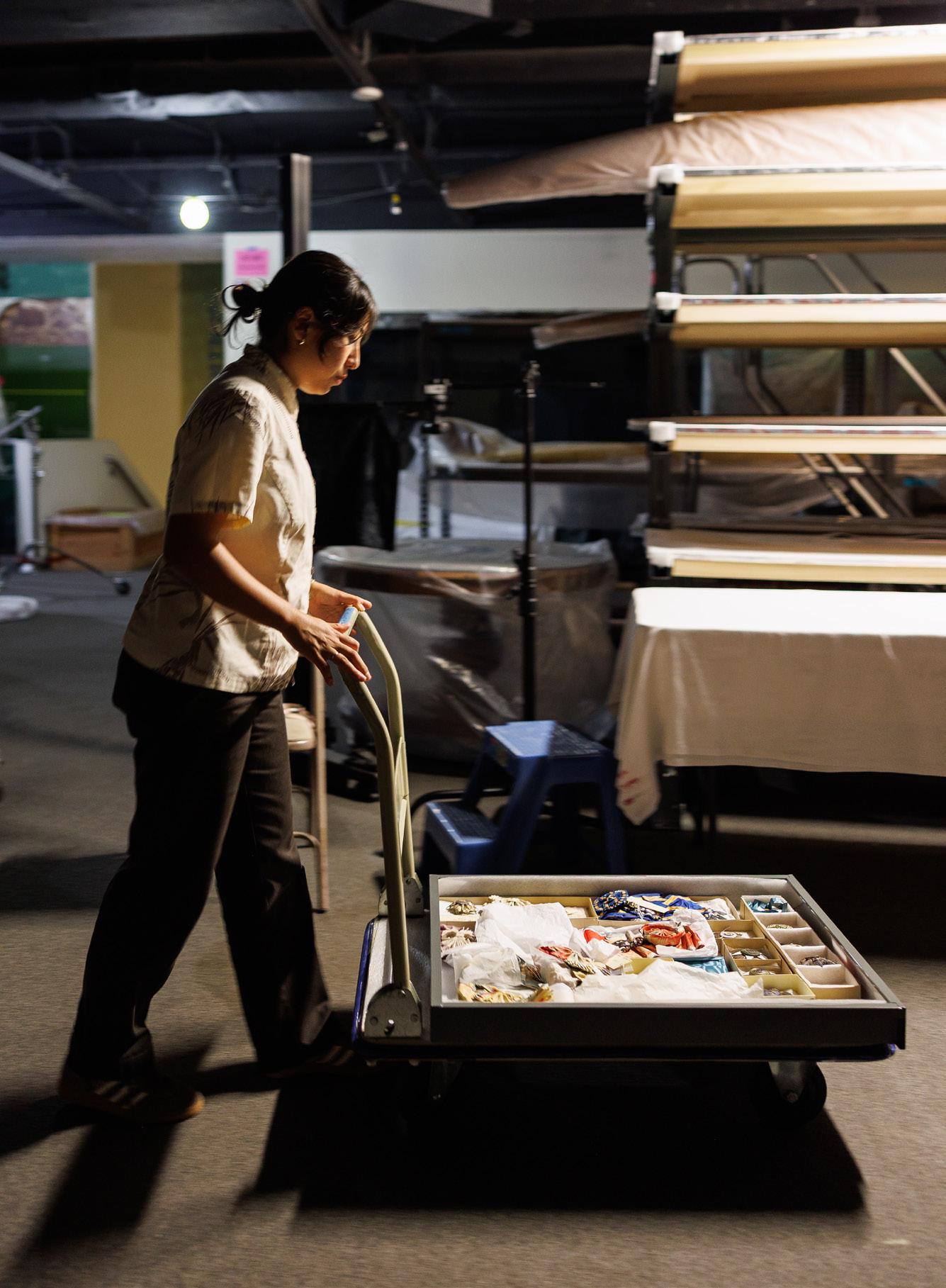
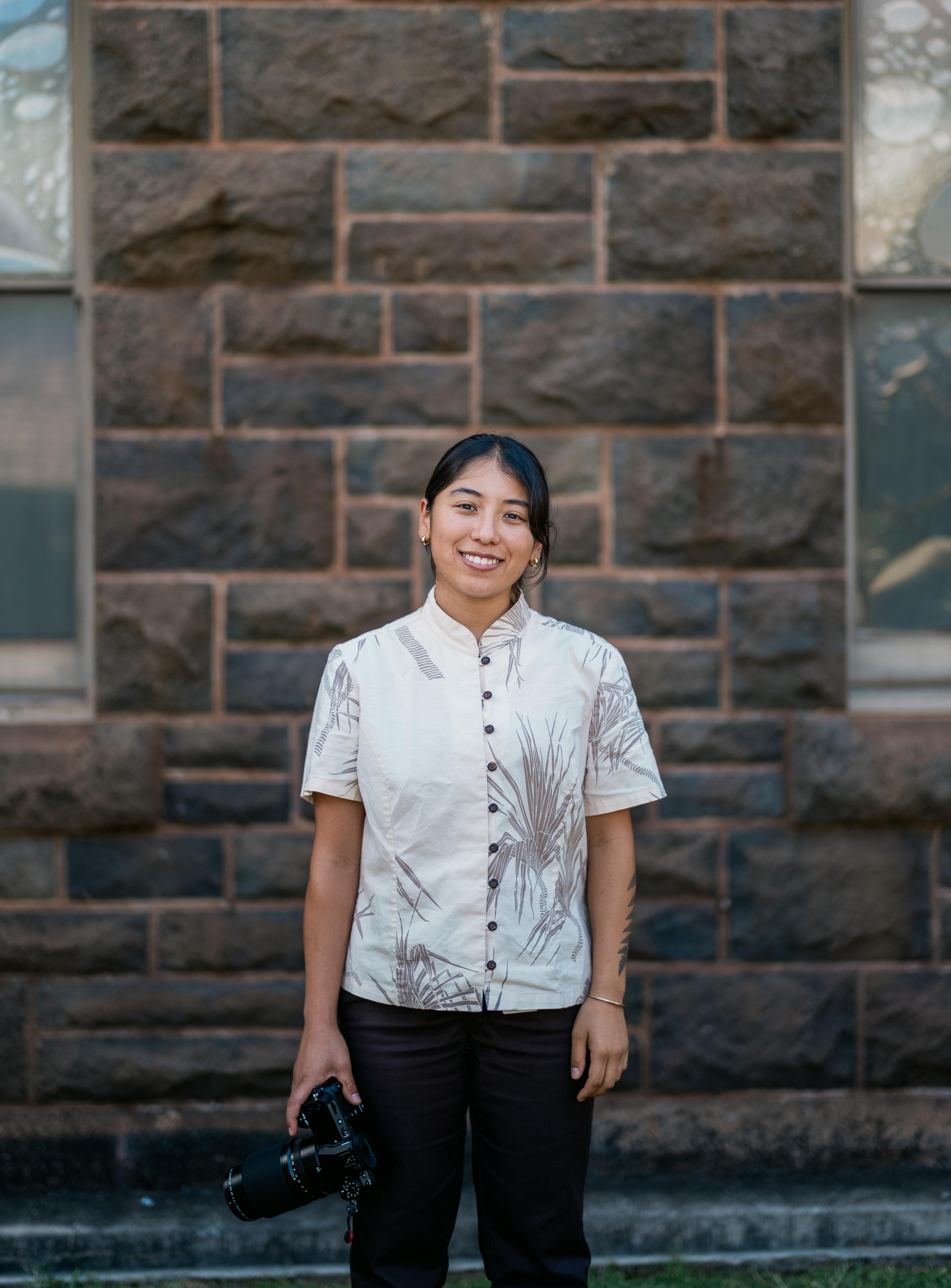
NOEL KENNY MOVES ACROSS BISHOP MUSEUM’S
CAMPUS UNNOTICED , pull cart in tow. Armed with camera gear, tethering cords and portable backdrops, her stroll signals the start of another day documenting the museum’s vast collections and preserving Hawai‘i’s history for future generations.
Kenny’s passion for photography began during her freshman year at the University of San Francisco, where she studied advertising and design. After graduation, she worked in advertising in San Francisco, honing her skills in visual storytelling and content creation, and when homesickness hit, she returned to the Islands in 2021.
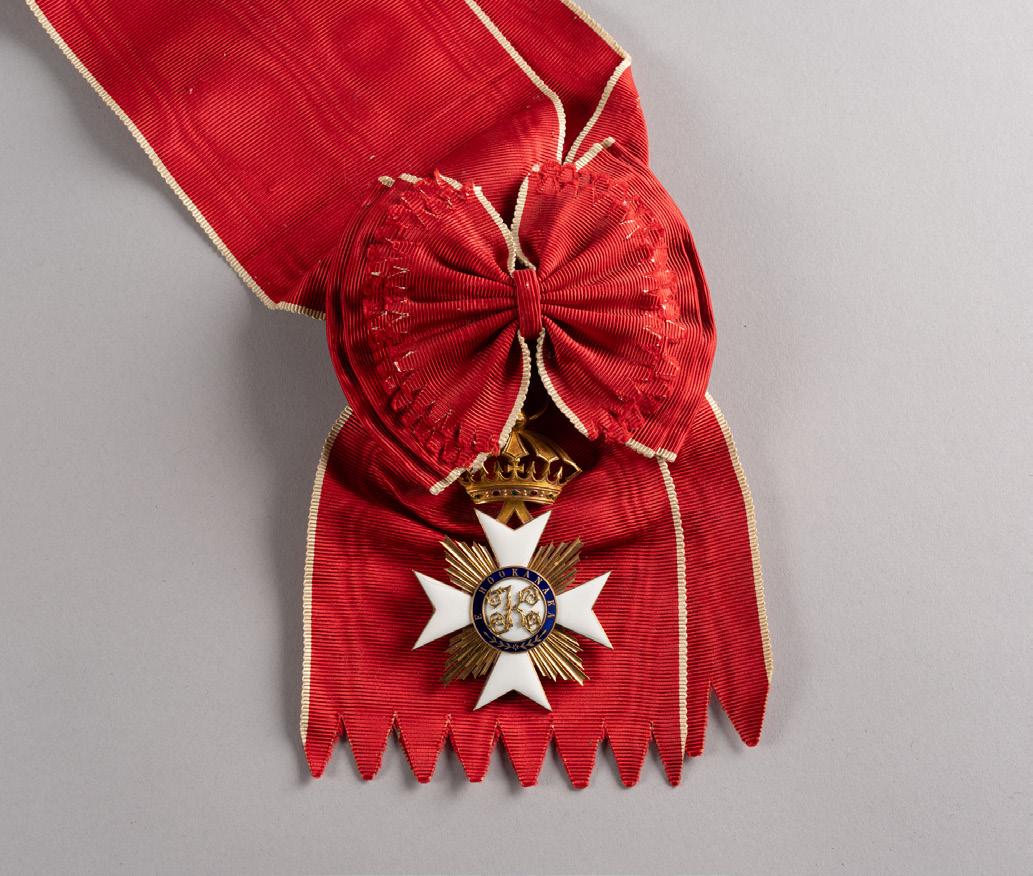
Today, as collections photographer and asset manager at Bishop Museum, Kenny is helping to digitize the museum’s collections, making them accessible to audiences around the world. Combining technical precision with an artistic eye, she creates authentic, unedited images of specimens and cultural artifacts that serve as both archival documentation and community resources.
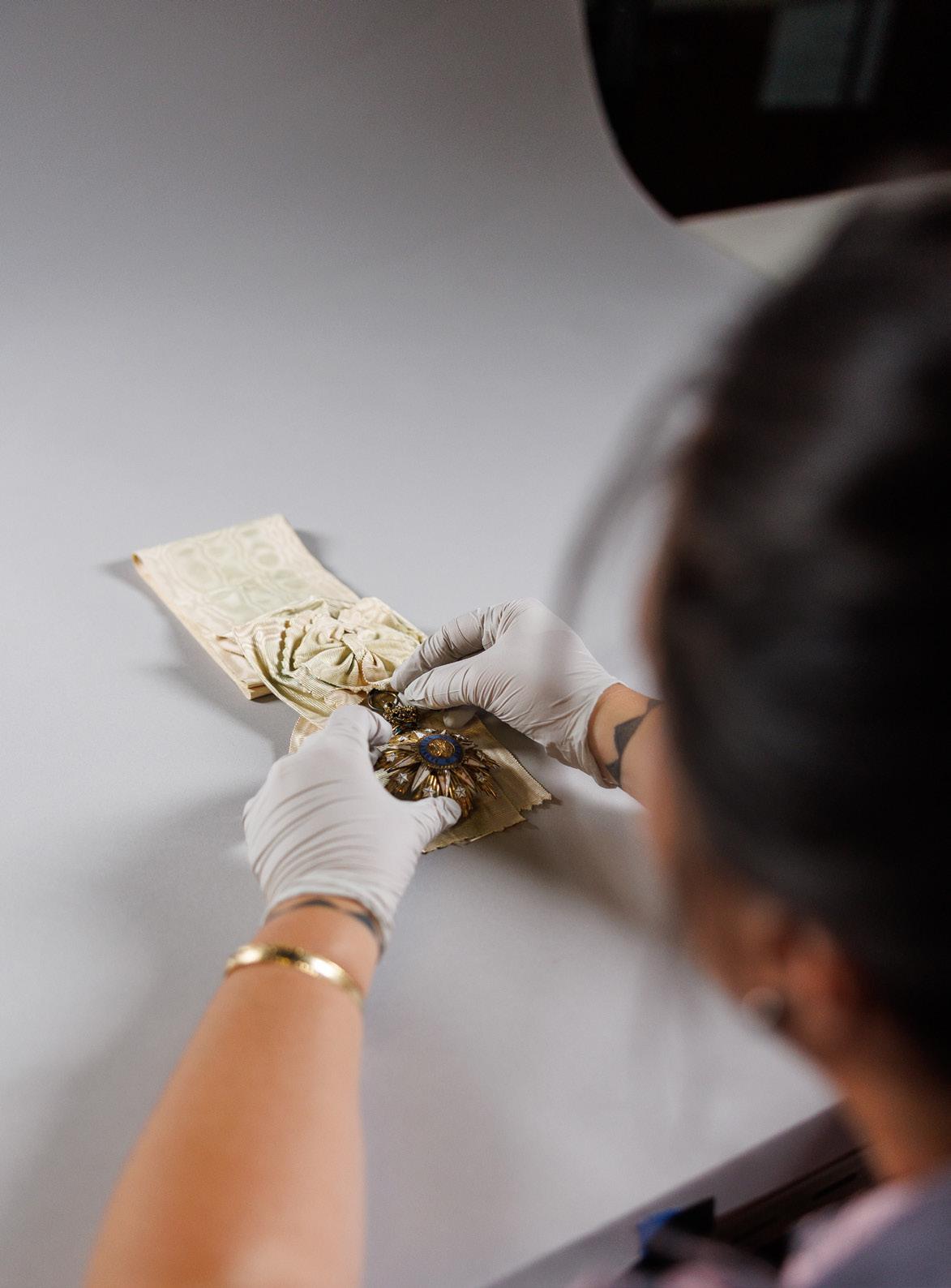
At least two days each week, Kenny moves between collection spaces at Bishop Museum, working with departments to photograph and digitize varied collections—from archival images from the 1800s to 20-foot-long canoes. Because of the variety of subjects,
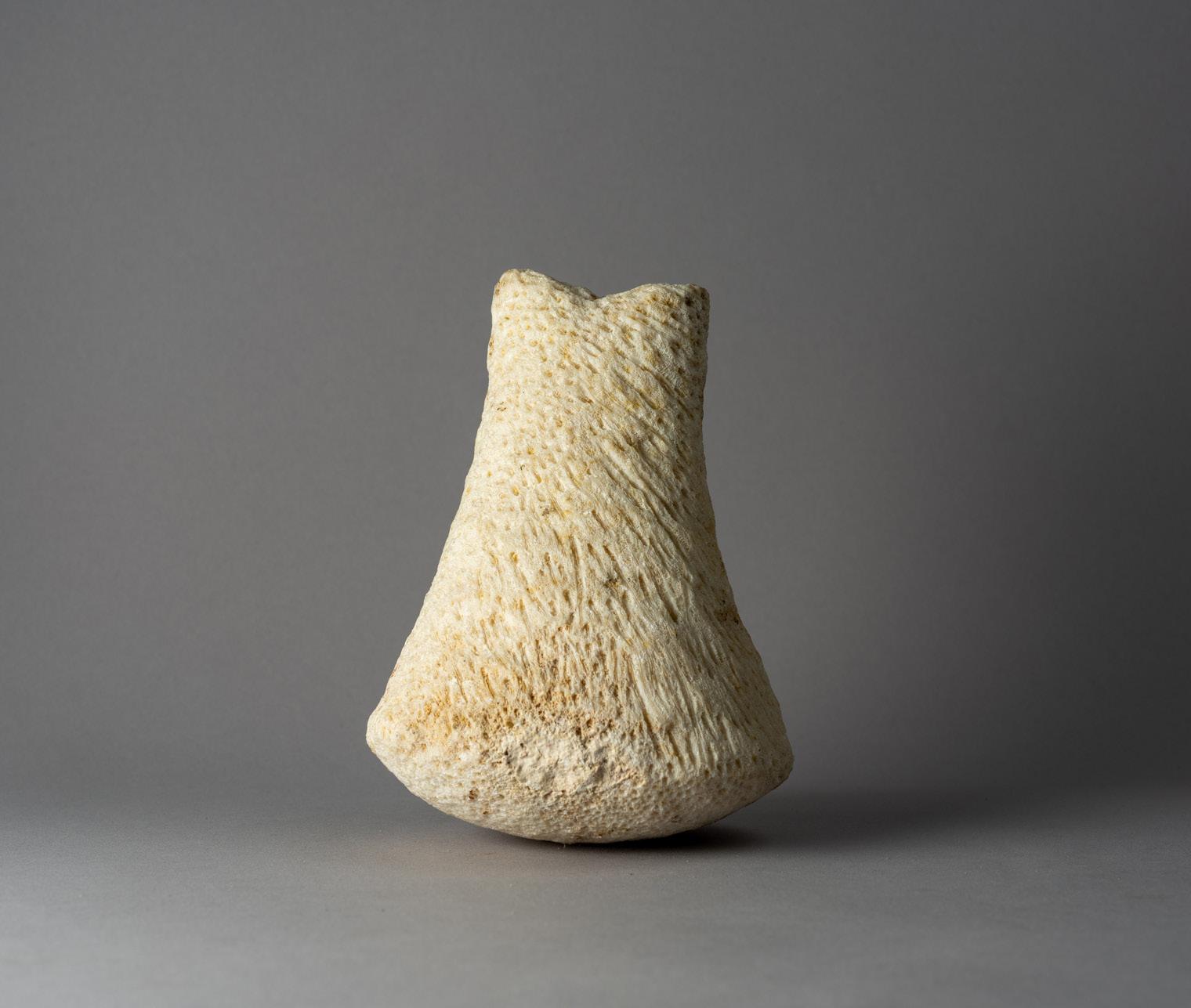
MIDDLE: Pounder from Rurutu, French Polynesia
BOTTOM:
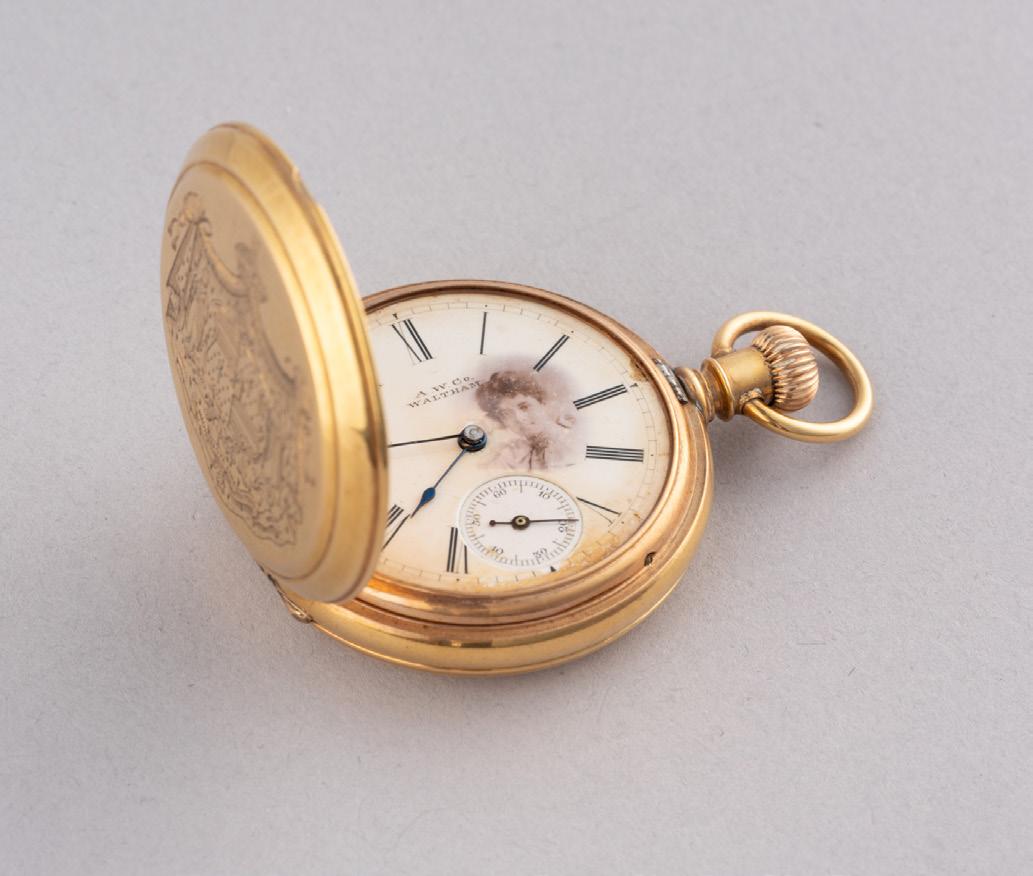
Pocket watch made for Her
Noel Kenny works with departments to photograph and digitize varied collections.
TOP:
Royal Order of Kamehameha, Knights Commander Cross
Royal Highness Princess Ka‘iulani
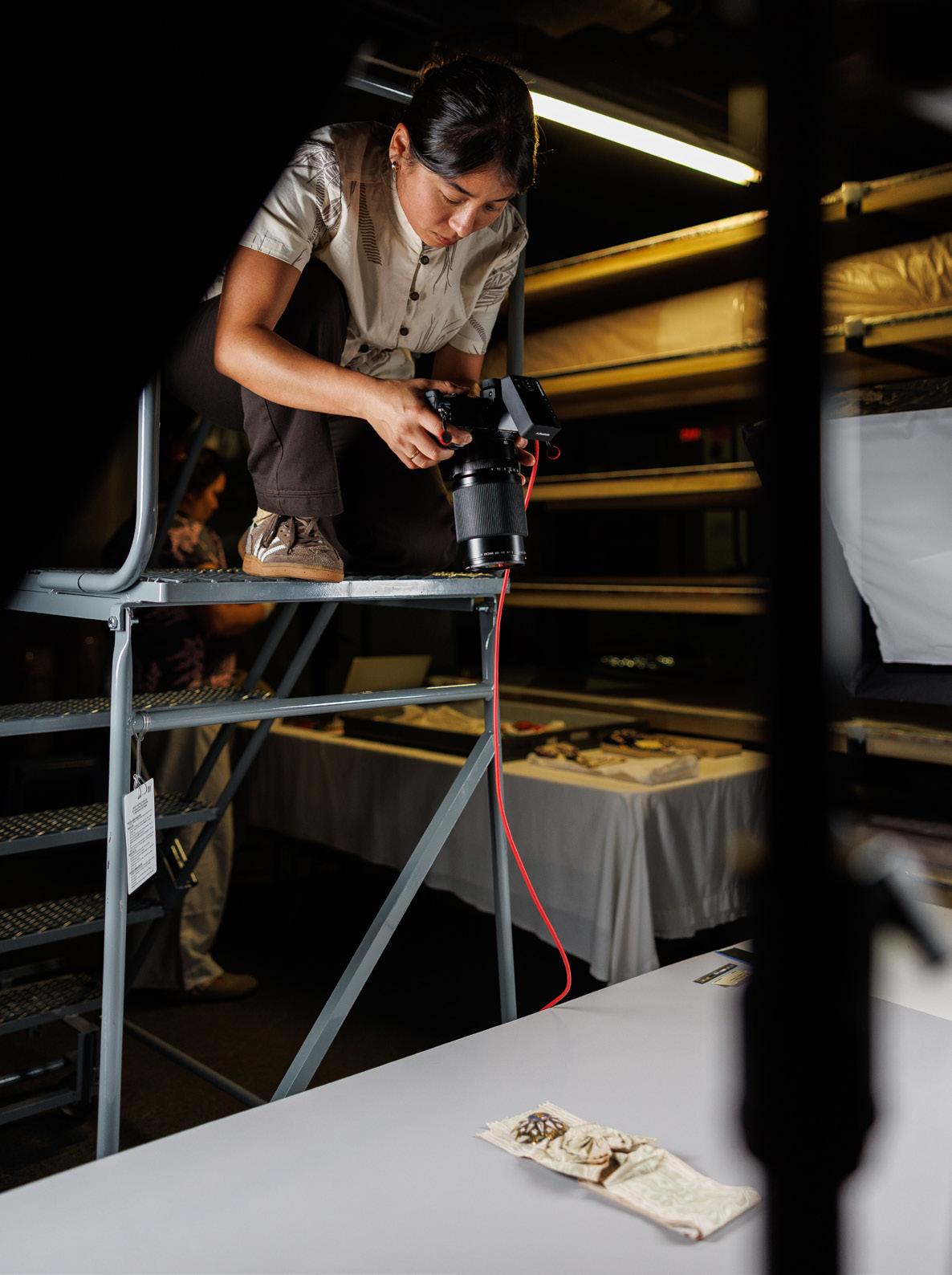
creativity is key and it’s up to her to find new ways to photograph each object. She also builds pop-up studios in collection spaces, sometimes even in hallways.
“I think the photos I am taking today will play roles in the future that are beyond my imagination.”
Though the click of a camera takes almost no time at all, the preparation behind each image fills her days. “Before I take the first photo, I spend time talking to the lead in the department to learn more about the project they are working on and the future use of the photos I am taking,” she explains. “Then, we can highlight specific parts of the specimen, changing the workflow for how I set up equipment or lighting.”
Each photograph is approached with a nod toward accuracy and respect. “There is a nuance based on material. Lighting is important for bringing out texture or fine details,” she says, adding that a lot of thought goes into “ensuring we represent the artifact respectfully.” For example, she says, “We want objects to stand up in the correct way, and we might even discuss what the ‘front’ of an artifact is. There are a lot of things to consider, and there is a need to be collaborative in that discussion.”
For Kenny, her work carries a deep sense of purpose. “I know that the collections here hold so much knowledge and importance for Hawai‘i and the Pacific,” she says. With care and intention, she approaches each photograph with both documentation and preservation in mind. “I think the photos I am taking today will play roles in the future that are beyond my imagination,” she shares. “I am hoping that they will inspire people in Hawai‘i and beyond to connect more deeply with their culture and to be able to access knowledge that might not have been accessible before.”
Bernice Pauahi Bishop Museum
1525 Bernice St., Honolulu, HI 96817 bishopmuseum.org.
Aloha Matters
At
Waikīkī Malia, personalized service and genuine aloha create the moments guests remember the most.
In an age of self-check-in kiosks, digital room keys, and increasingly automated travel experiences, genuine hospitality has become one of the most valuable and memorable parts of any vacation.
While amenities and location certainly matter, many travelers remember something else long after they return home: the people who made them feel welcome.
At Waikīkī Malia, hospitality begins with a simple philosophy. As a locally owned and operated hotel, the people who work here welcome guests the same way they welcome
friends into their own homes, with warmth, care and a genuine desire to help them make the most of their time in Hawai‘i.
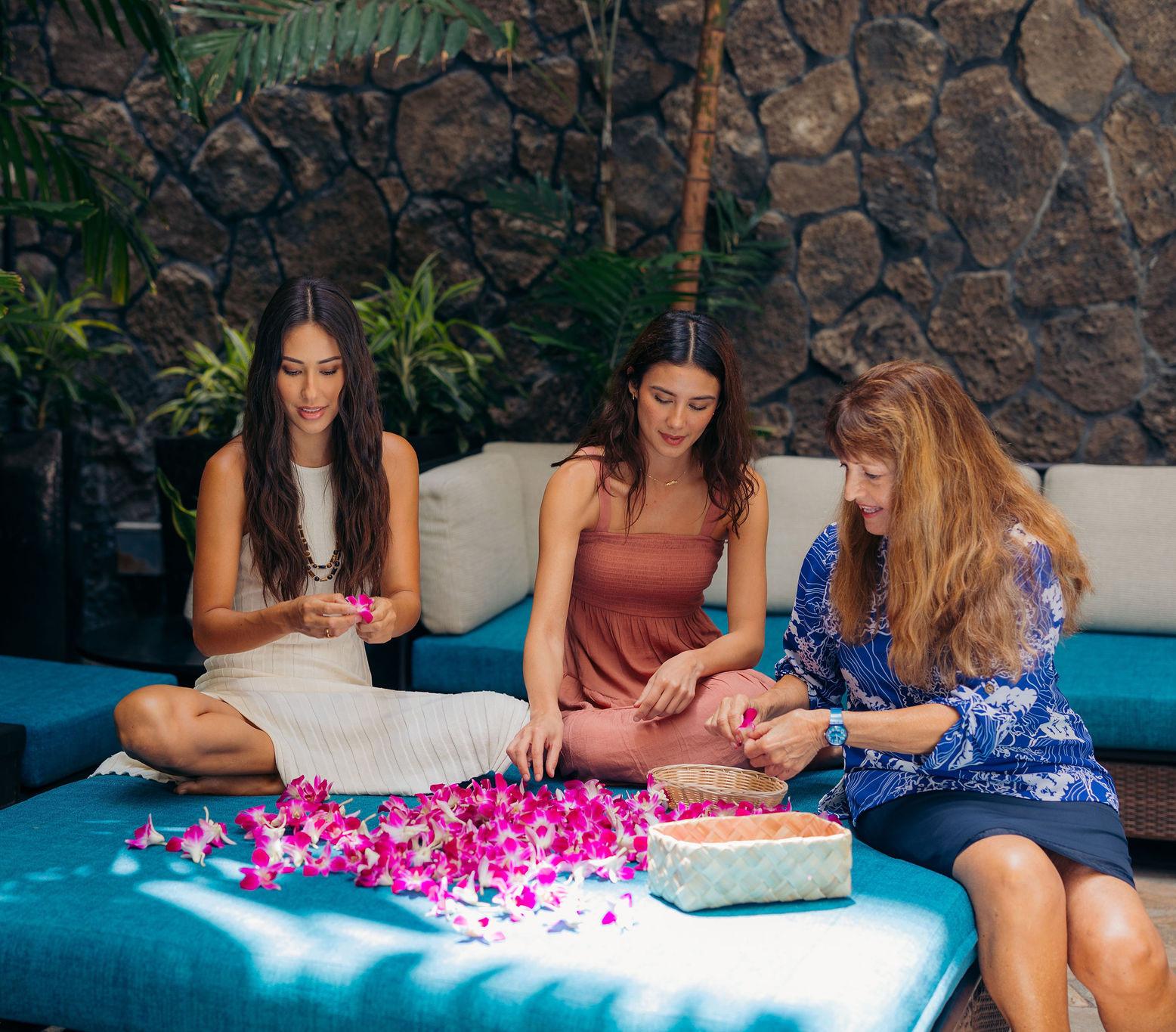
That spirit comes to life in daily interactions. It may be a front desk team member sharing a local lunch spot, a bellman offering tips for your Diamond Head visit or a groundskeeper helping your ‘ohana discover activities that everyone— from grandparents to keiki—will enjoy.
Located in the heart of Waikīkī, Waikīkī Malia, recognized by HAWAI‘I Magazine readers as one of the Best Value Hotels, places guests within walking distance of beaches, shopping,
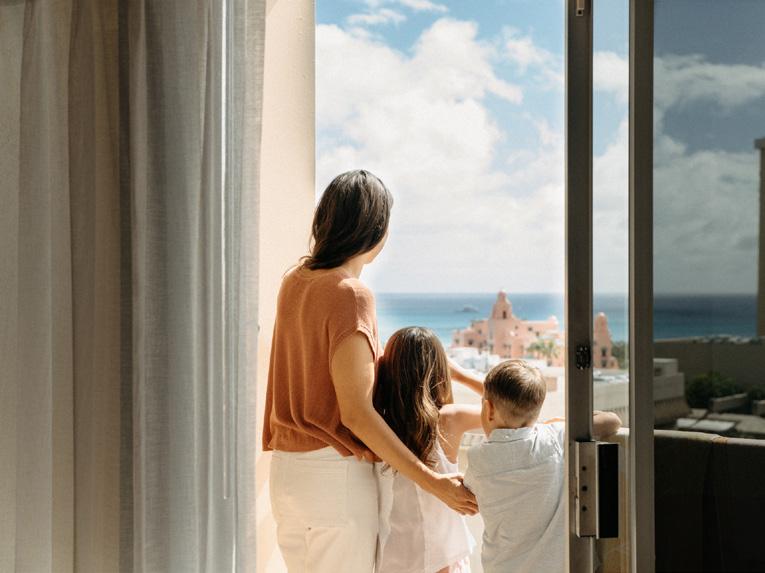
dining and cultural attractions. Yet for many guests, it’s the personal connections they make here that stand out most. Many visitors return year after year, greeted by familiar faces and the kind of service that can’t be programmed into an app.
As travel continues to evolve, one thing remains timeless: People want to feel cared for. They want local recommendations, authentic experiences and a sense of belonging in the places they visit.
At Waikīkī Malia, hospitality isn’t measured by room size or amenities alone. It’s found in the conversations, connections and aloha shared along the way, creating the kind of stay guests remember long after their Hawai‘i vacations end.
A Walk Down Maunakea Street
Spend an afternoon eating, shopping and wandering one of Honolulu’s most vibrant, storied—and affordable—districts.
STORY BY SARAH BURCHARD
PHOTOS BY AARON K. YOSHINO
CHINATOWN IS ONE OF THE last neighborhoods on O‘ahu where I can still afford to eat out.
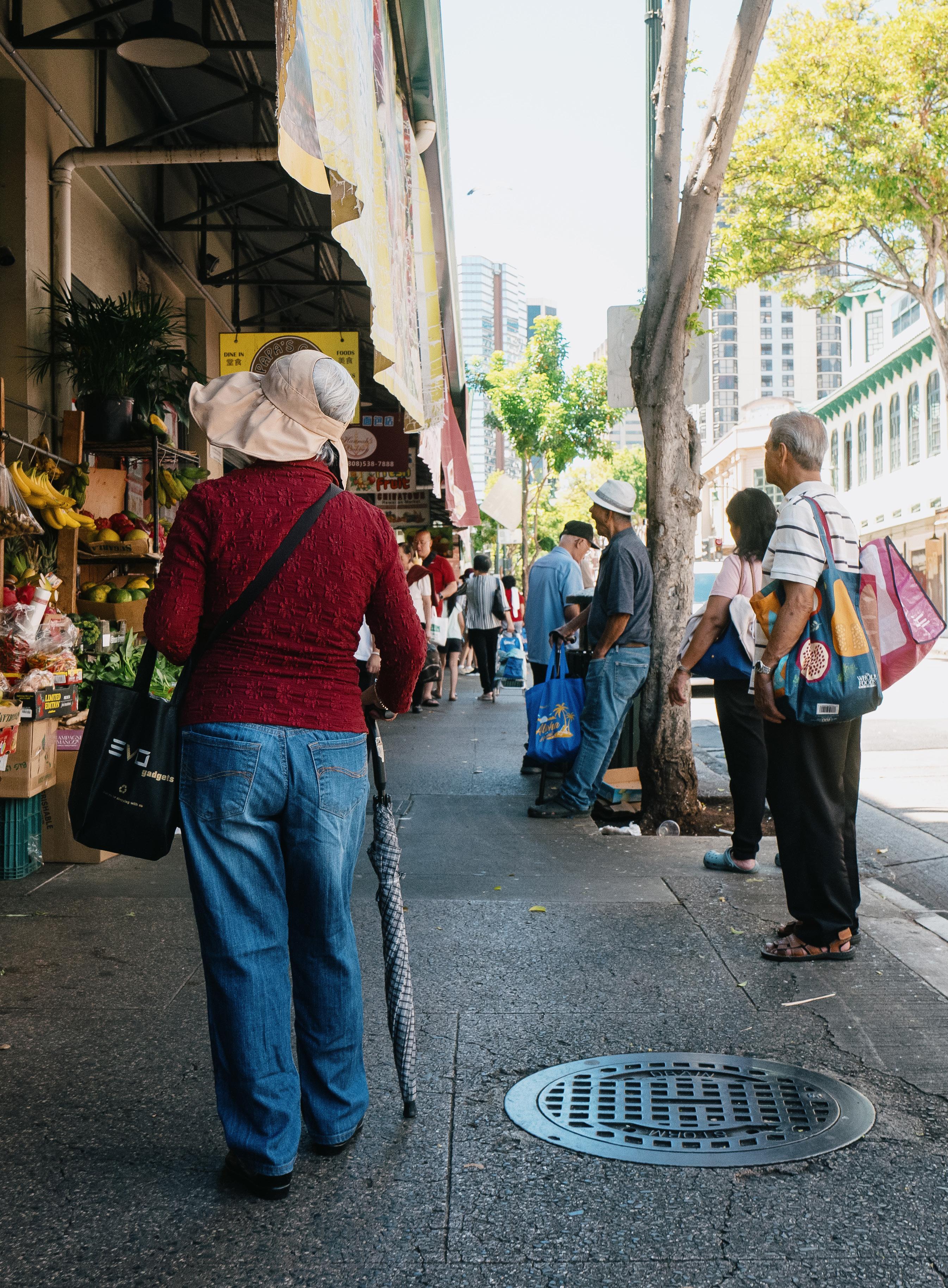
Far from the glitz of Kaka‘ako and Waikīkī, the historic district doesn’t care about being Instagrammable or cutting-edge. Everyone is busy moving pallets of fish, fruit and meat carcasses. And chopping roast pork and hand-pleating hundreds of dumplings. And feeding people.
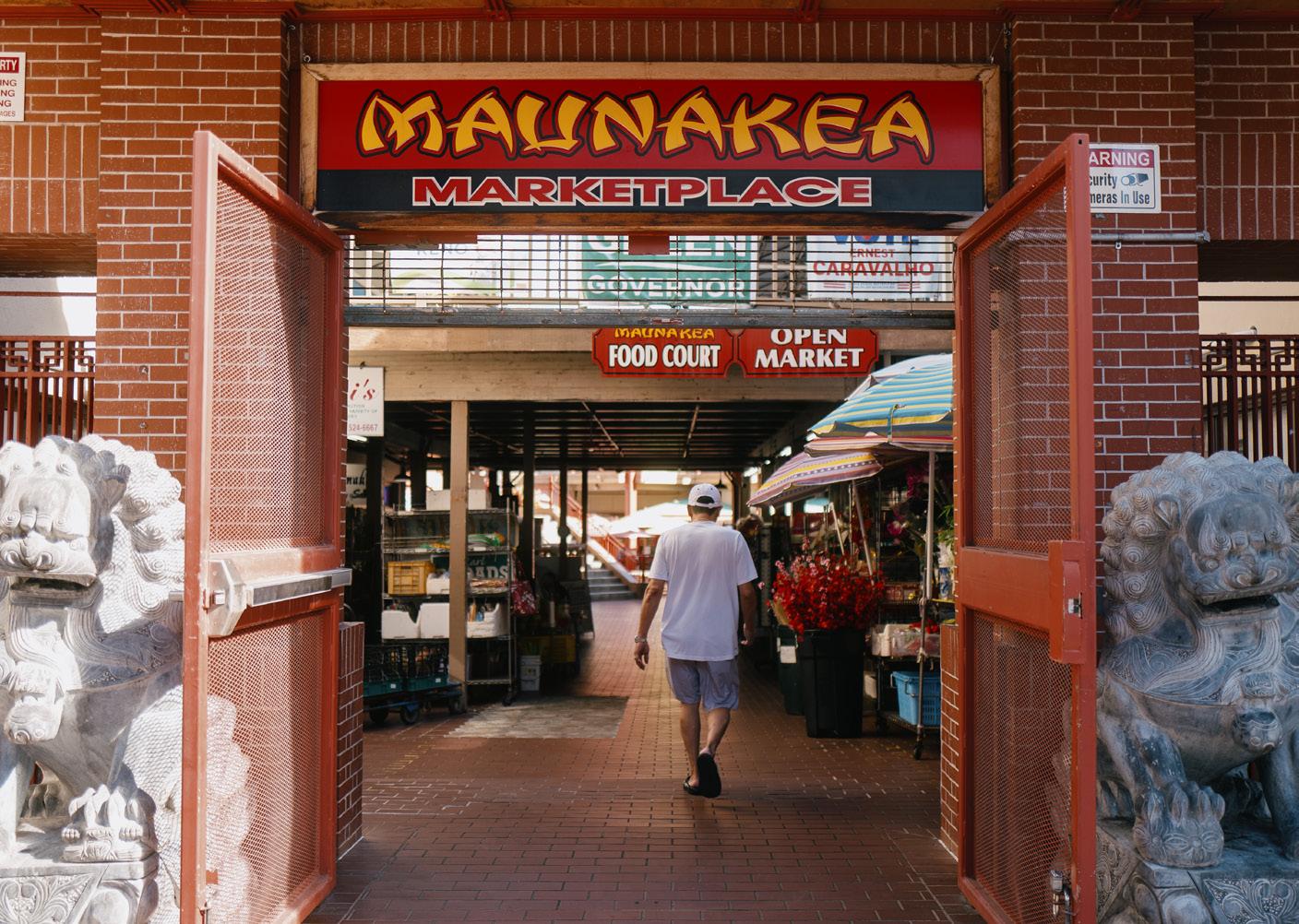
Maunakea Street is at the center of all the action, a microcosm of Chinatown’s bustling rhythm, packed into two blocks between North King and North Pauahi streets.
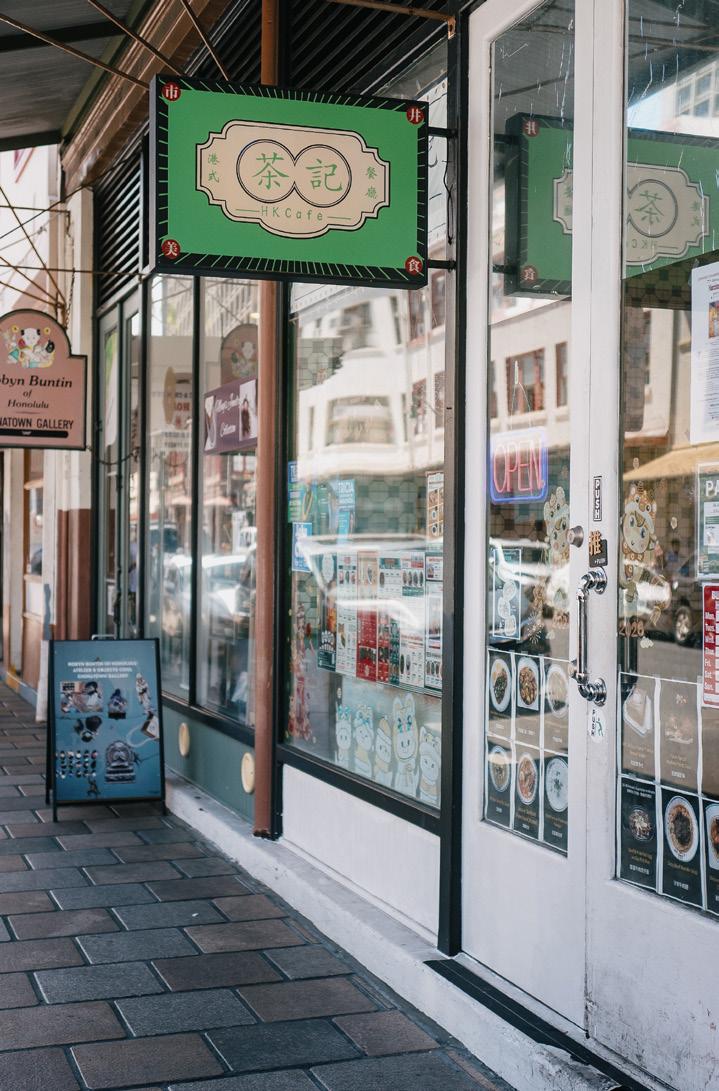
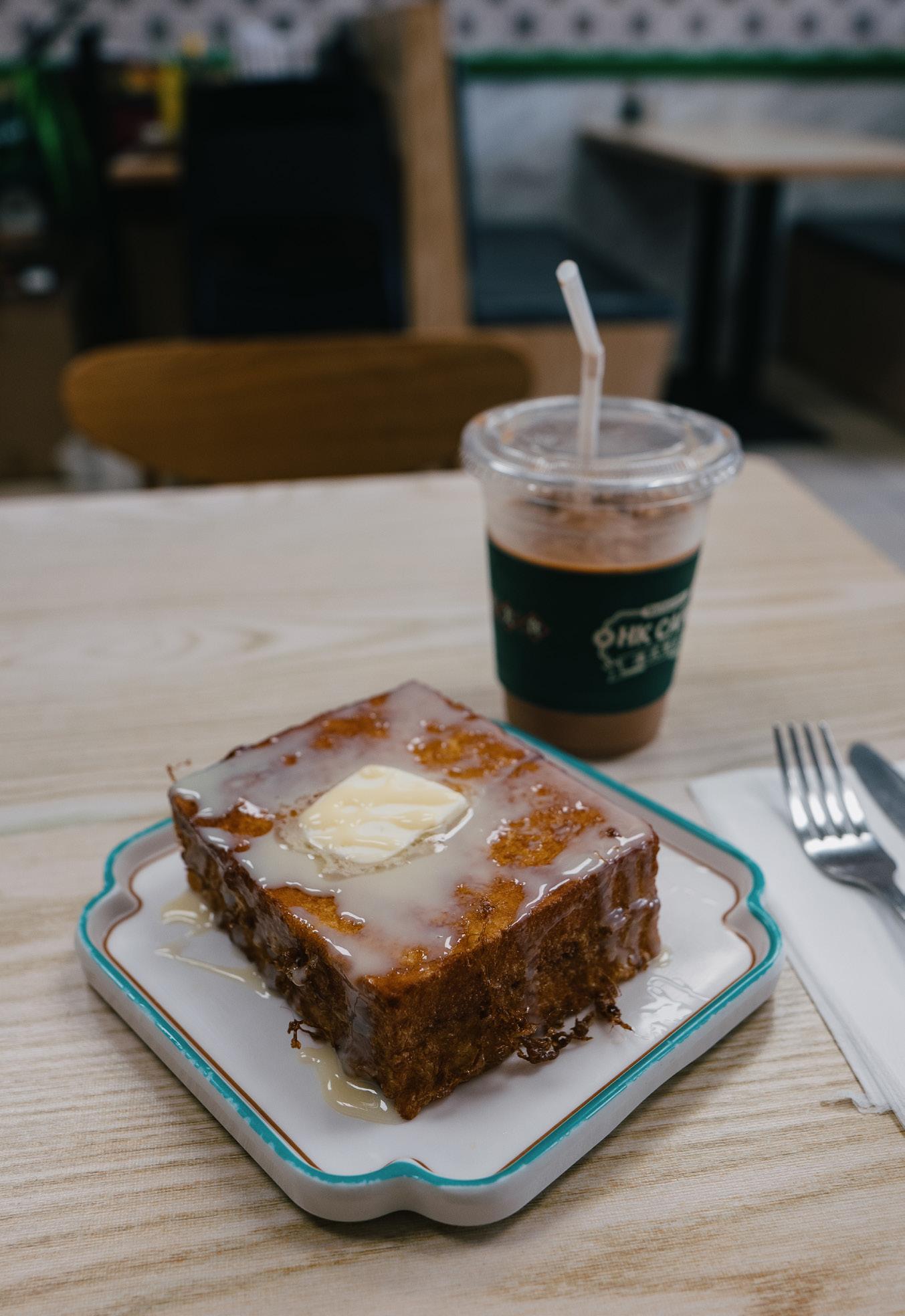
On this Sunday morning, I duck into HK Café to escape a steady June downpour. At 10:30 a.m. a few customers sip coffee while a soap opera blares from the big screen overhead. I order a hot Hong Kong-style milk tea with no sugar and the café’s signature French toast—two thick slabs of white bread, battered in egg, seared crisp and dusted in Ovaltine. When I drag a butter knife through the middle, condensed milk rushes out, flooding the plate. The woman from Hong Kong sitting next to me confirms Ovaltine’s popularity as a beverage and flavoring for desserts and candies in her native home. “This place does Hong Kong cuisine right,” she says. By 11:15 a.m. every table is full.
OPPOSITE
Maunakea Street is at the center of all the action in Chinatown.
TOP
Maunakea Marketplace is in the heart of Chinatown.
HK Café
HK Café’s thick French toast
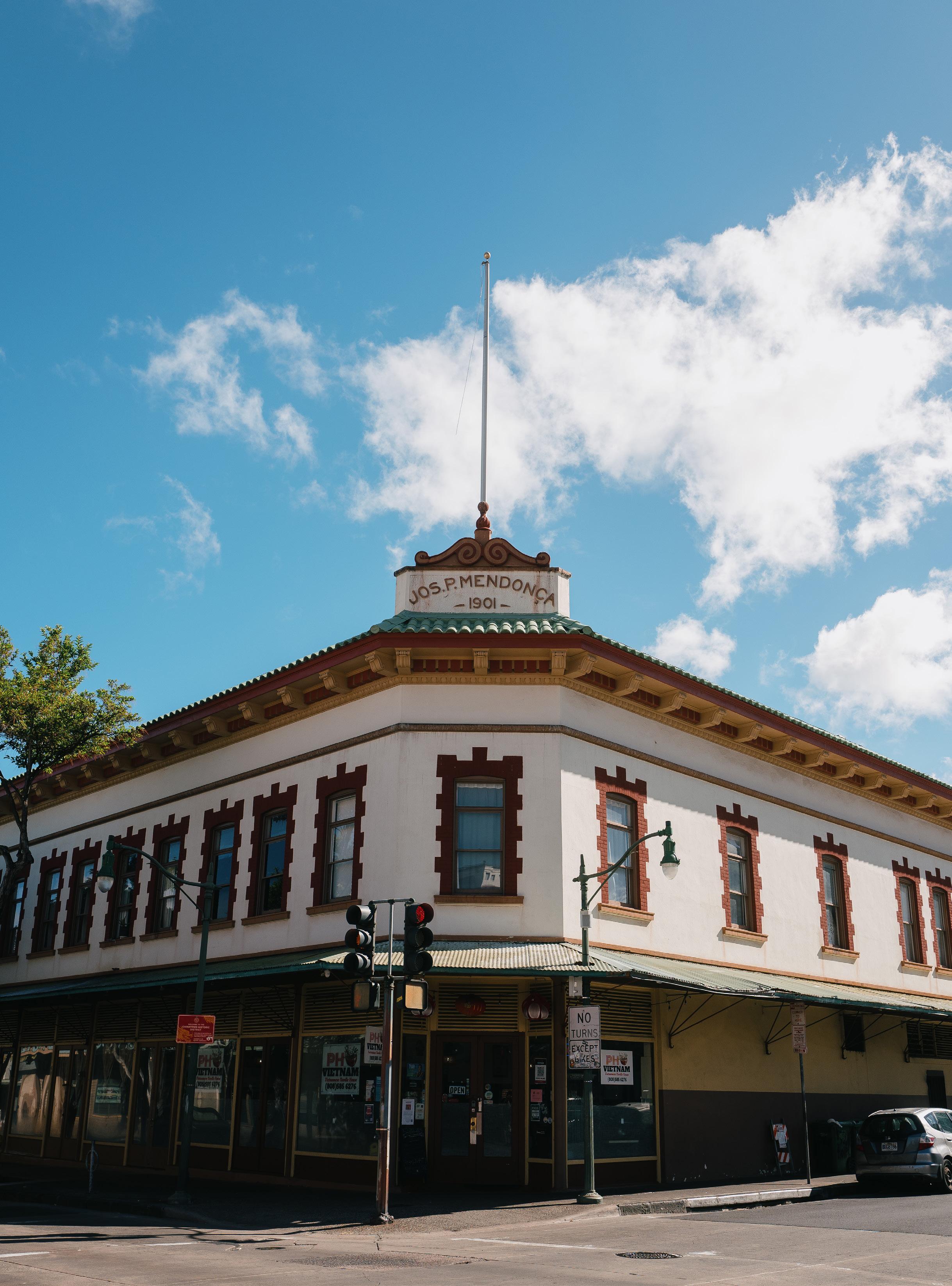
Joseph P. Mendonca building
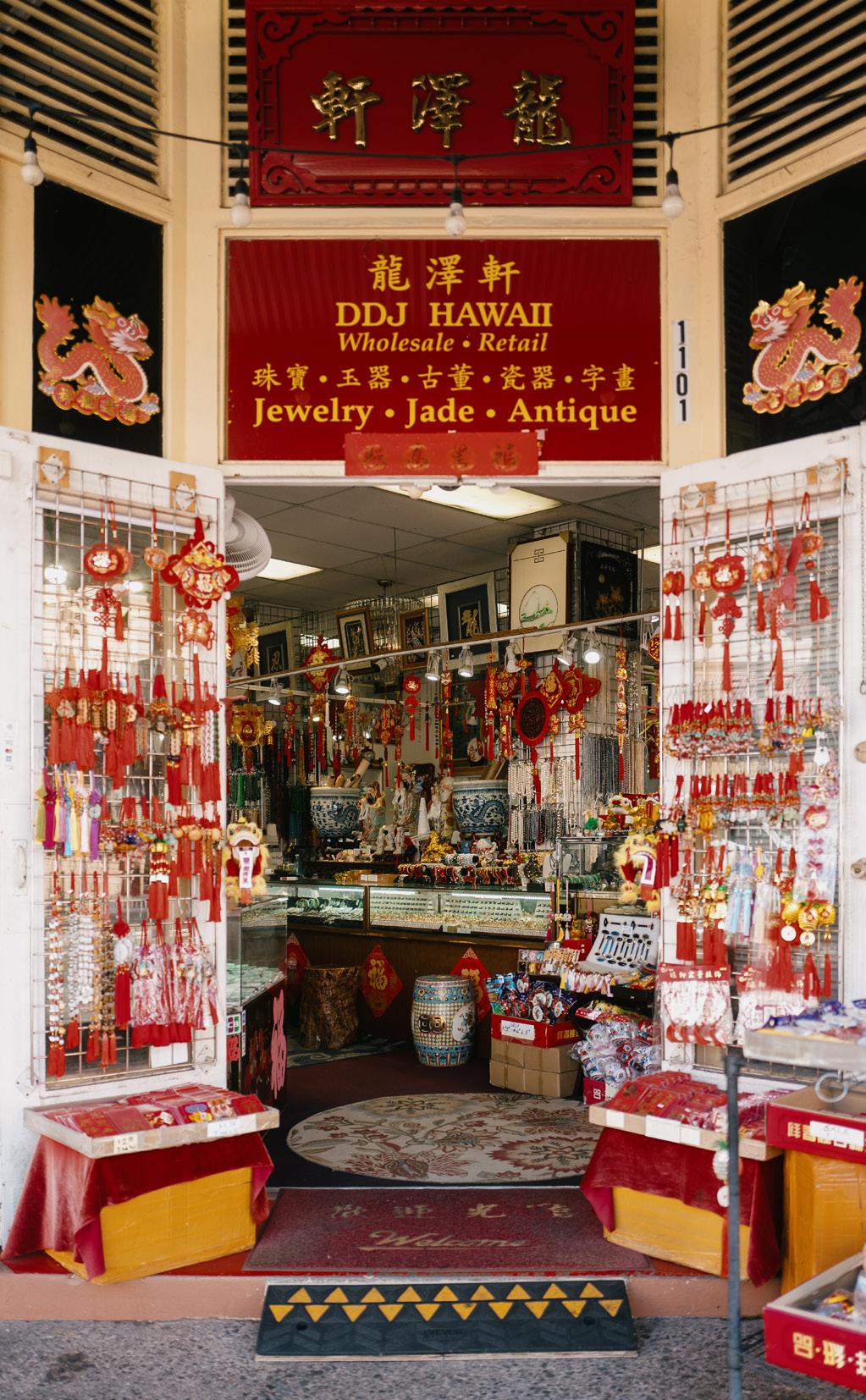
Afterward, I dip into DDJ Hawai‘i and get lost among heaps of jewelry, porcelain tea sets, gold Buddha statues and plush lion dance toys. The front door lures you in with its archway of red money envelopes and knot tassels. This is where you come for green or white jade at every price point. There are bangles, pendants and rings, with a dazzling two-room display that features not only jade, but also amber, coral and gold.
The Joseph P. Mendonca Building, home to HK Café and DDJ Hawai‘i, was built in 1901 after a series of devastating fires reshaped Chinatown. One blaze destroyed much of the neighborhood in 1886, and another followed after the discovery of Honolulu’s first case of bubonic plague in 1899. To contain the outbreak, officials intentionally burned infected buildings in 1900, but strong trade winds spread the flames across 29 acres. Across the street, the Lum Yip Kee Building reflects another chapter of Chinatown’s colorful past. In the 1930s and ’40s, when the area around Chinatown was known as “Hell’s Half Acre” and the neighborhood itself was a red-light district, its upper floor housed a brothel.
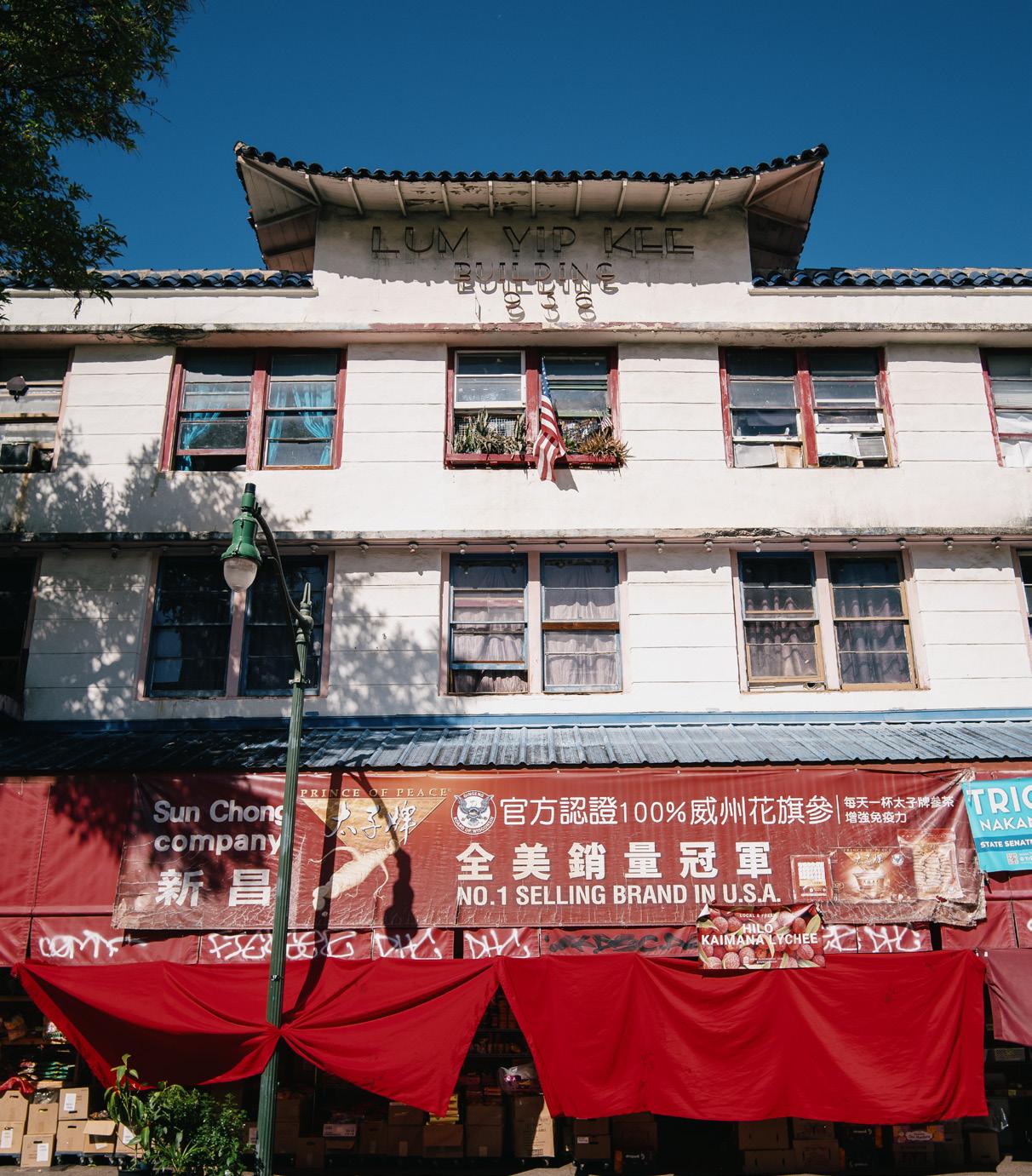
Lum Yip Kee Building
Royer’s Inc.
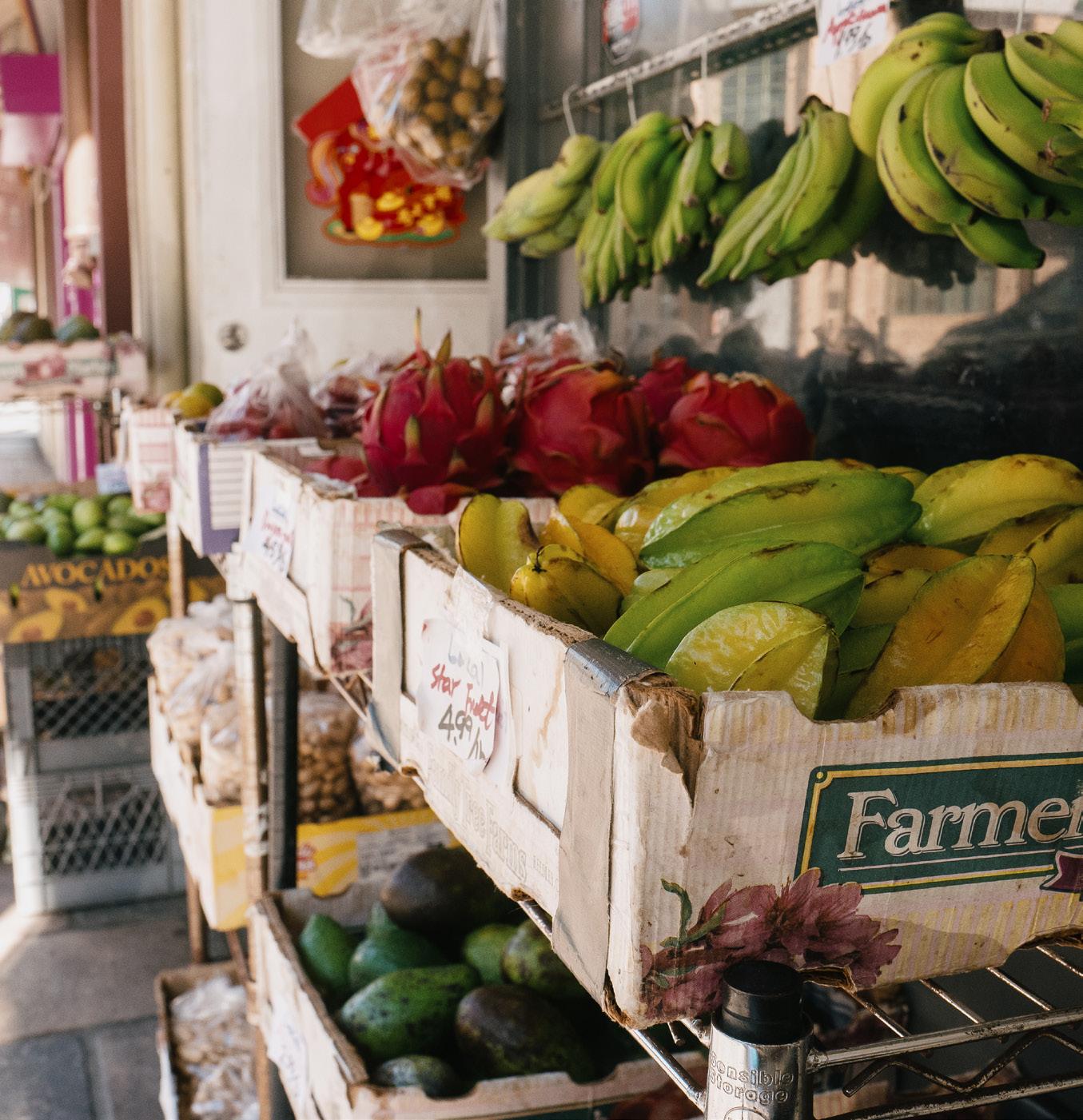
Today, the building is home to New Char Siu House, where glazed ducks hang in the window over hunks of crunchy pork belly, roasted chickens and spicy sliced pig’s ear. Order the meats by the pound or packed into a bento with rice and choy sum. Hardly anything costs more than $20. A few storefronts down is Royer’s Inc., a hole-in-the-wall selling locally grown tropical fruit—mountain apples, mangos, ‘ulu, soursop, pomelo, lychee, coconuts, you name it. Farmers from Kunia in Central O‘ahu deliver daily to Chinatown, filling the markets with local ingredients sold at better prices than any farmers market or grocery store in town.
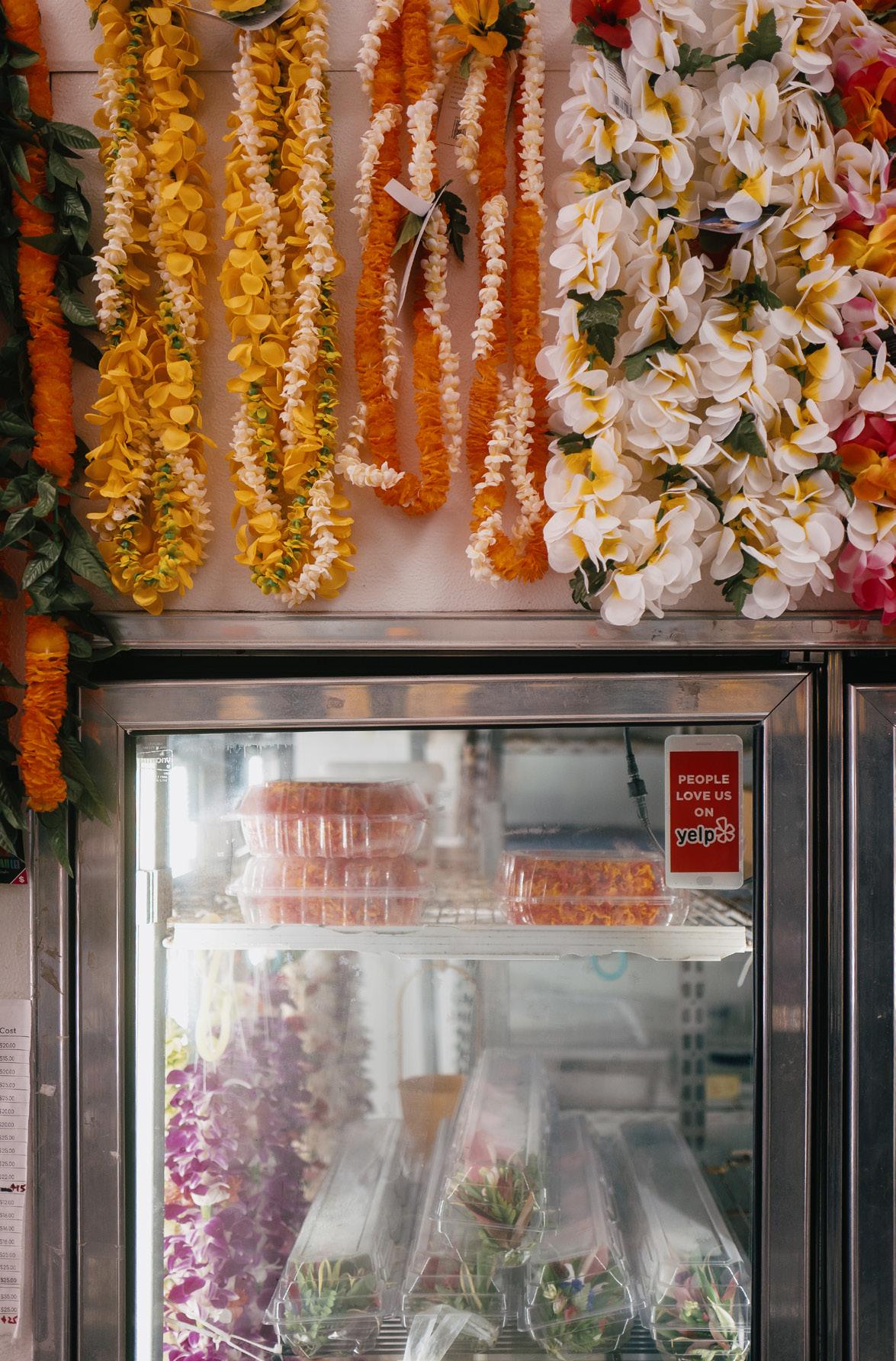
The next block over, still on Maunakea, I pass Cindy’s Lei and Flower Shoppe, opened in 1959. On a street lined with lei vendors, Cindy’s is routinely recognized by The Honolulu Star-Advertiser as Hawai‘i’s best lei shop. Across the street,
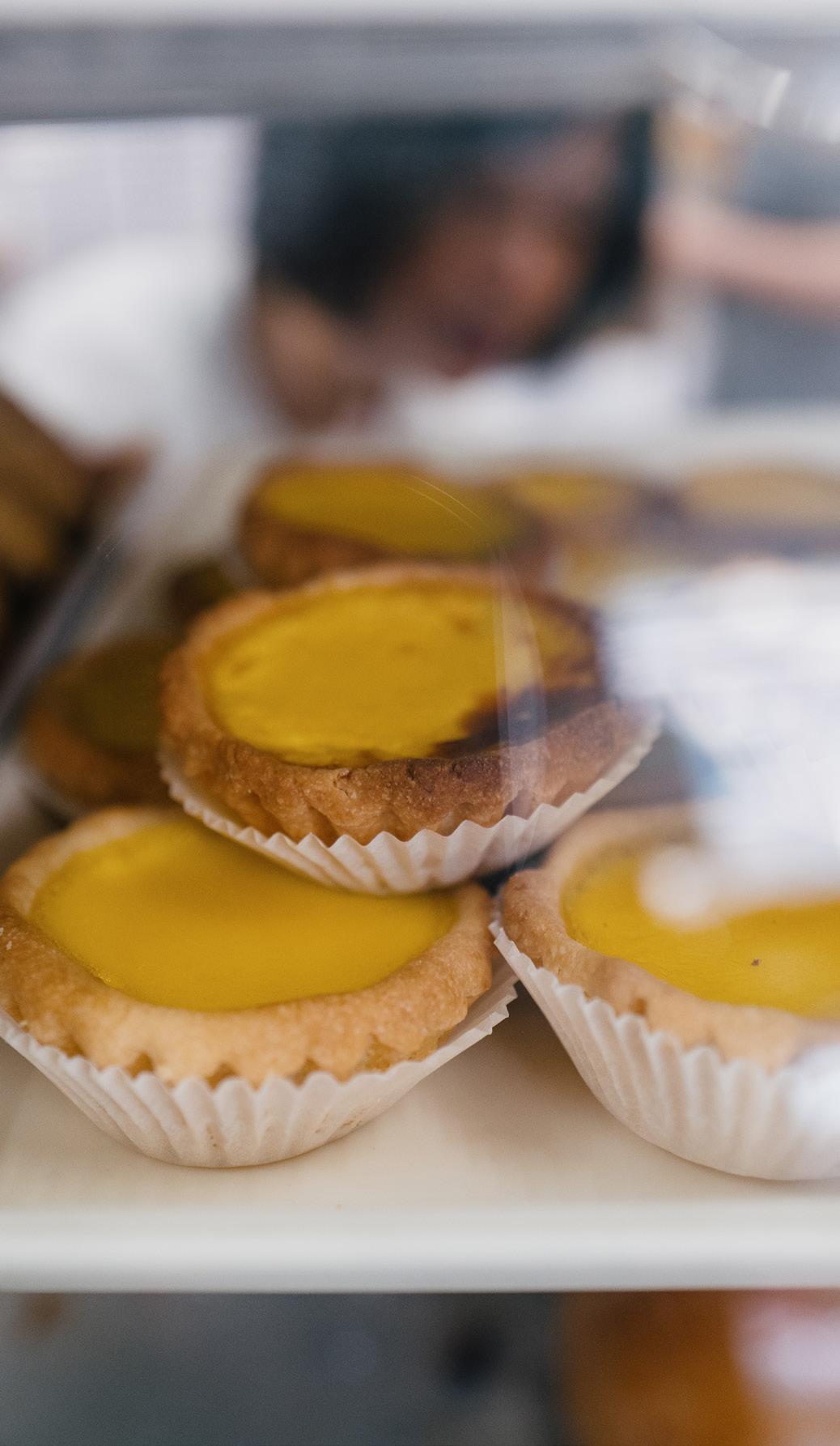
Sing Cheong Yuan Bakery’s perpetual line snakes down the sidewalk. Inside, glass cases display egg tarts, manapua, dumplings, moon cakes and almond cookies. Happy customers spill out the door with cake boxes stuffed to the brim.
My final stop is Bo Wah Trading Co., a grocer and kitchen supply store since 1976. Here you’ll find the ingredients for your favorite Chinese recipes that aren’t available at typical grocery stores. Dried fish, mung bean powder, fermented curd. You can find packages of dried mushrooms here the size of 40-pound bags of fertilizer. Need a wok, bamboo steamer or Ovaltine? You’ll find it here.
By the time I walk back to the bus stop on Hotel Street, the clouds have parted. I’ve got a shopping bag heavy with mangos, shoyu chicken and black bean sauce, a caffeine buzz and a full stomach. And $3 still in my pocket to get home.
LEFT
Cindy’s Lei and Flower Shoppe is a local favorite.
RIGHT
Sing Cheong Yuan Bakery’s custard tarts.
Experience Hawai‘i’s Marine Life at Maui Ocean Center
Explore immersive exhibits, encounter unforgettable creatures and go behind the scenes at Hawai‘i’s top-ranked attraction.
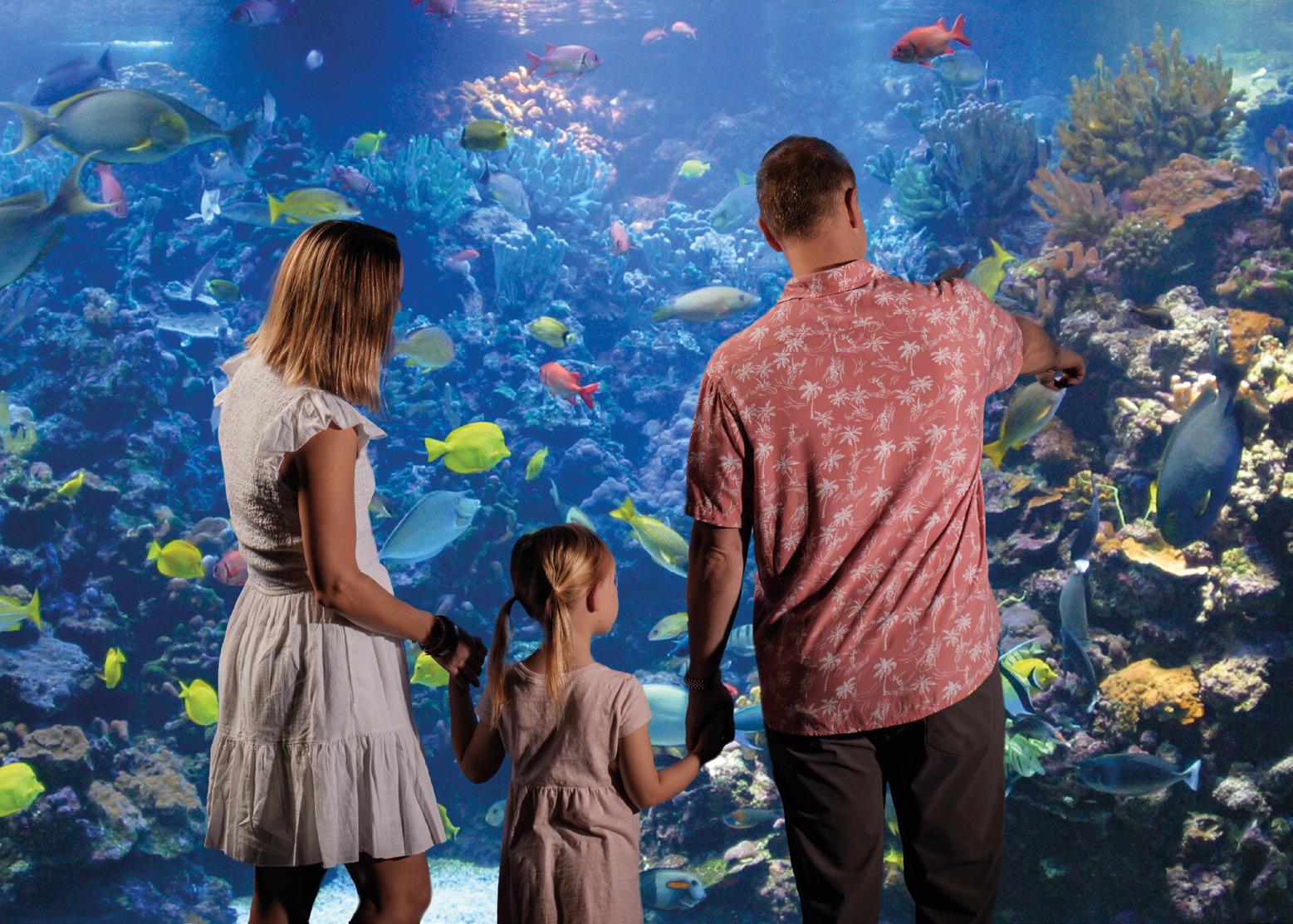
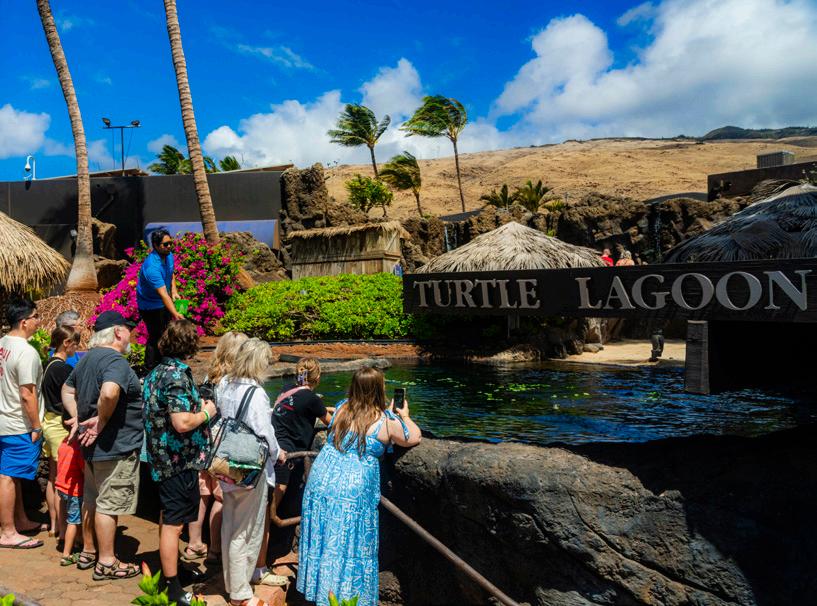
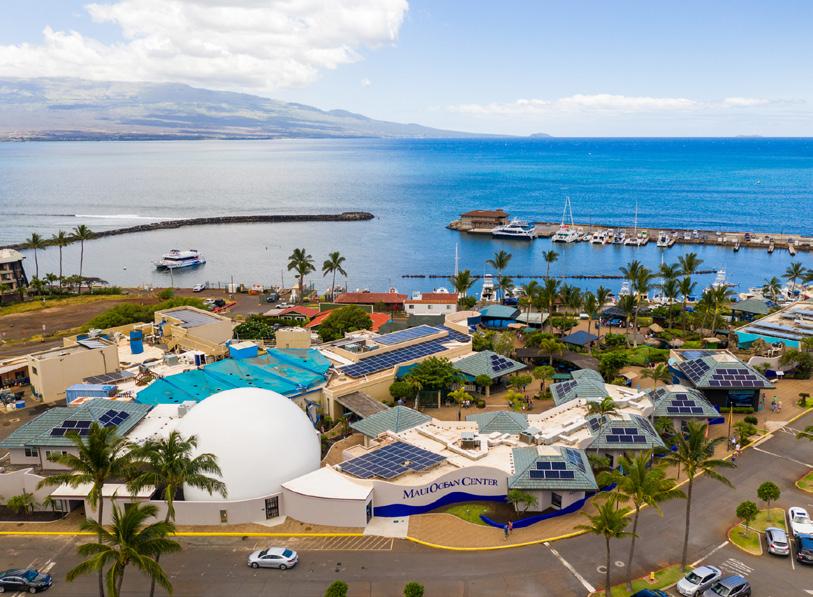
Maui Ocean Center, recognized by the readers of HAWAI‘I Magazine as the No. 1 Activity and Attraction in the Islands, connects visitors with Hawai‘i’s marine life.
Journey through a 54-foot-long underwater tunnel surrounded by manō (sharks), visit Turtle Lagoon to meet honu (sea turtles) and immerse yourself among life-sized koholā (humpback whales) in the 3D “Humpbacks of Hawai‘i” Sphere Experience. The aquarium also features one of the largest displays of living, rare and endemic Pacific corals. Maui Ocean Center is open daily from 9 a.m. to 5 p.m., with the last entry at 4 p.m.
For visitors looking to dive even deeper into Hawai‘i’s culture and marine ecosystems, Maui Ocean Center offers even more experiences:
Take a Tour
On Maui Ocean Center’s Behind the Scenes Tour, visitors stop at The Marine Institute at Maui Ocean Center to learn about the nonprofit organization’s work protecting Maui’s marine resources. The tour includes a visit to the aquarium’s coral nursery, where guests can feed squid and brine shrimp to mushroom coral.
Maui Ocean Center also offers a Hawaiian Culture and Plant Tour, which concludes with a hands-on poi-pounding demonstration.
Become a Member
Maui Ocean Center’s annual members, known as Nā Hoa Kai (Ocean Friends), receive exclusive benefits while helping support ocean conservation efforts. Membership pays for itself in just three visits, and members also enjoy free admission to special events, including Coral Spawning Night.
Dive with Sharks
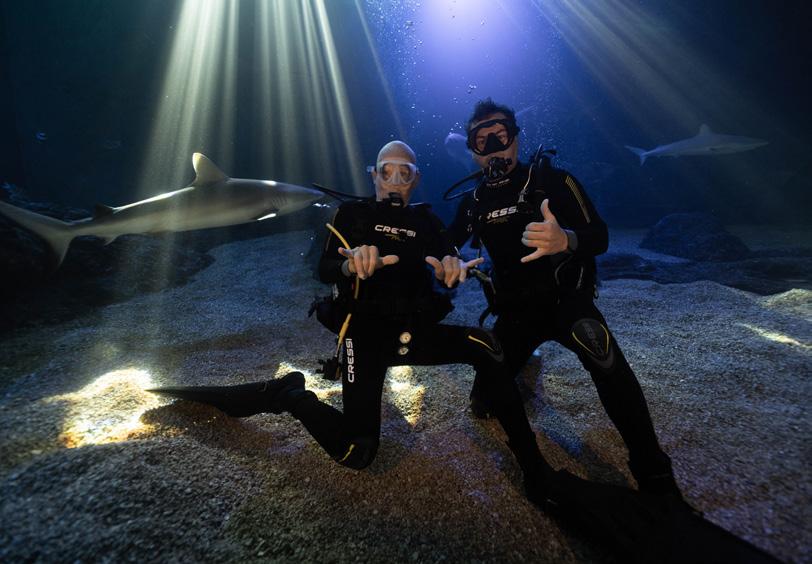
Scuba-certified guests can dive cage-free into the aquarium’s 750,000-gallon Open Ocean exhibit alongside five species of sharks, Hawaiian broad stingrays and schools of tropical fish. Shark Dive Maui is more than a thrilling bucket-list adventure—it’s an opportunity to gain a deeper understanding of the profound connection between sharks and Native Hawaiians.
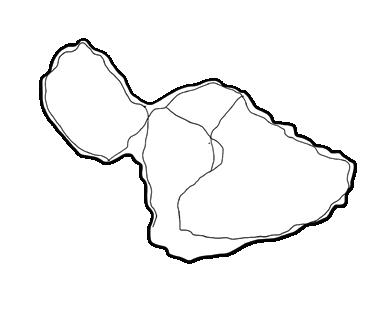
Voices of the Forest
On Maui’s remote slopes, conservationists are working to ensure Hawai‘i’s remaining forest birds have a future.
STORY BY SERENE GUNNISON
ON THE BOGGY SLOPES OF WINDWARD HALEAKALĀ
, a mist-weighted wind bends the canopy of ‘ōhi‘a lehua and kōlea toward the forest floor. Calls of native ‘apapane and ‘amakihi echo above the breeze. As two technicians with the Maui Forest Bird Recovery Project pore over data in their makeshift field research tent, I wonder how the soundscape of this forest has changed over time.
Just two centuries ago, Maui supported at least 13 native forest bird species. Today, only six remain—and two are critically endangered. Across Hawai‘i, dozens of native forest birds have been driven to extinction by habitat loss, predation by non-native mammals and invasive mosquitoes carrying avian diseases. Without intervention by conservation programs like the MFBRP, many birds would continue on a path to extinction.
MFBRP’s work is centered on protecting and restoring Maui’s forest bird populations through research, mosquito suppression and habitat restoration. Today, we’ve trekked into the forest on a routine bird banding and disease sampling outing. However, one of MFBRP’s more ambitious projects is unfolding on the opposite side of Haleakalā. In the ultra-remote Kīpahulu Forest Reserve, an ancient voice has returned to the landscape.
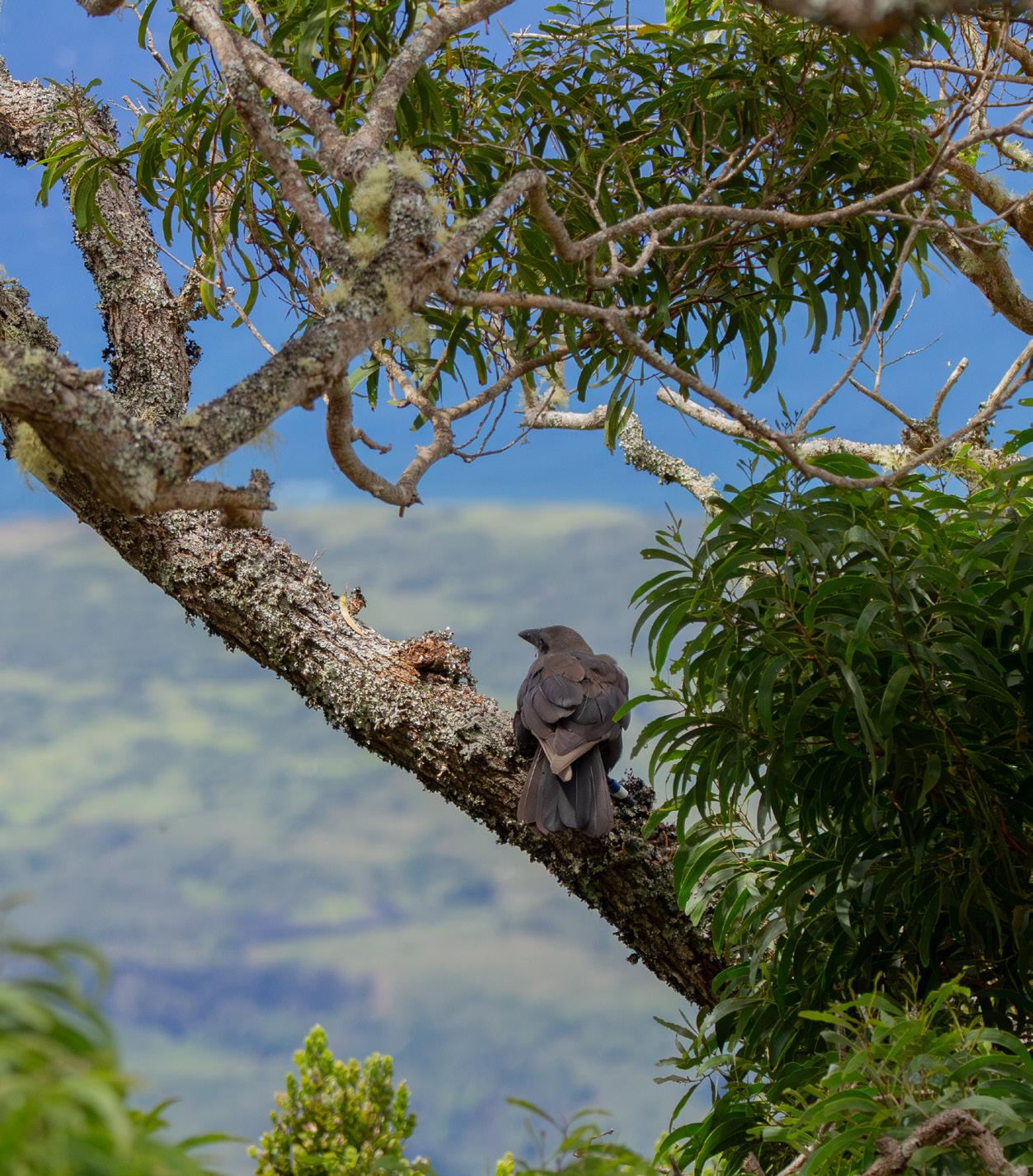
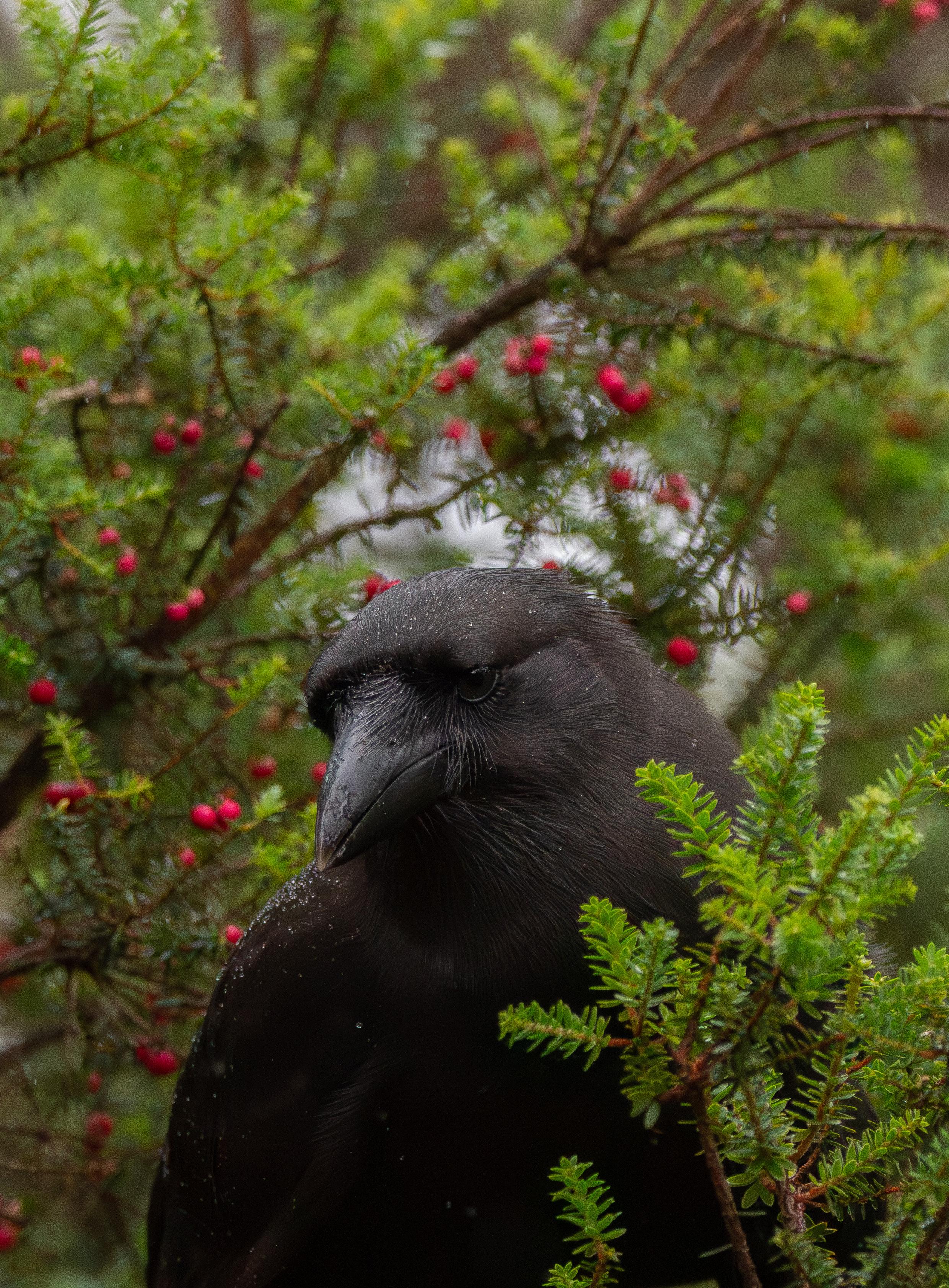
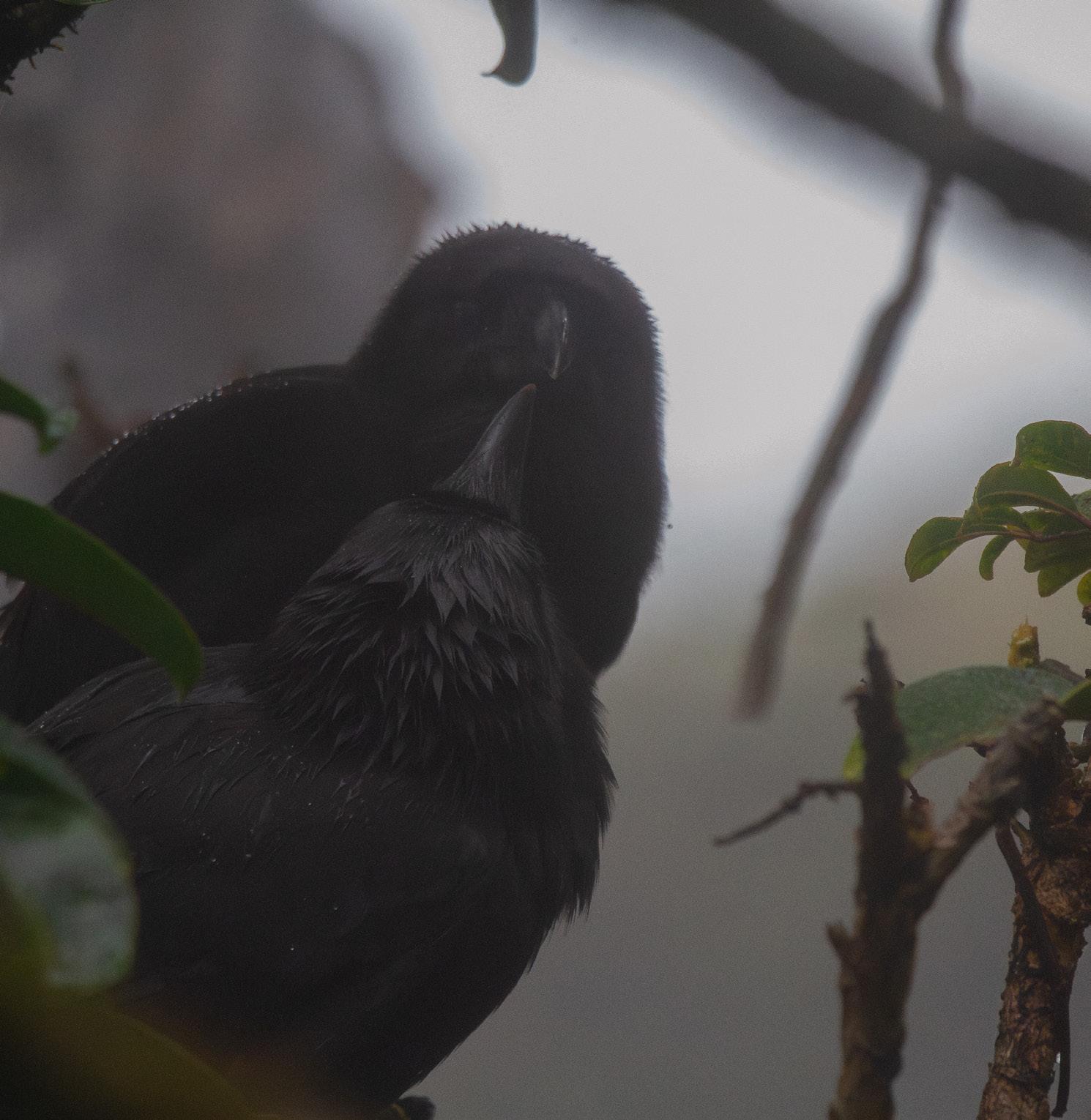
In late 2024, in collaboration with The ‘Alalā Project, MFBRP released a group of five young ‘alalā, or Hawaiian crows, into the Kīpahulu Forest Reserve. ‘Alalā were last seen in the wild in 2002 on Hawai‘i Island, following a sharp decline through the 20th century. In a last-ditch effort to prevent extinction, biologists began a captive breeding program for ‘alalā in 1993.
Known for its clever problem-solving abilities and repertoire of raucous calls, the crow was once a familiar presence in forests across Hawai‘i Island. Ecologically, the ‘alalā was an important seed disperser for endemic plants; culturally, it’s an ‘aumākua species, or ancestral family guardian.
Nearly two years after the birds’ release on Maui, MFBRP says the cohort is adapting to forest life, utilizing native plants and natural foraging behaviors.
OPPOSITE
ABOVE
Conservation
“It’s especially exciting to see their natural behavior,” says Faith Bellas, ‘alalā field and data technician. “They’re interacting with native plants, eating pūkiawe and ‘ōlapa. Overall, it’s going really well.”
MFBRP technicians visit the forest almost daily to monitor the birds and service their automatic feeders. While the
team planned to eventually wean the birds off the feeders, that moment came sooner than expected during the back-to-back Kona low storms in March 2026, when severe weather kept the crew out of the field for several weeks. “After [the storms], we noticed even more foraging behaviors that we didn’t see previously,” says Bellas. “Maybe we just needed that push to realize that they have really innate instincts.”
The birds’ success in East Maui is a collective relief for MFBRP and conservation partners, who have spent decades working to return ‘alalā to the wild. Past reintroductions on Hawai‘i Island were unsuccessful, in part due to predation by ‘io, or Hawaiian hawks. “Changes in the forest habitat [on Hawai‘i Island] favored ‘io and diminished the healthy relationship between ‘alalā and ‘io,” says Jessica Eden, MFBRP public relations and education specialist. In 2021, partner organizations selected Maui Nui as the next ‘alalā release site, where ‘io are not present. While ‘alalā are endemic to Hawai‘i Island, fossil records suggest a similar species was once present on Maui. “We needed these birds back on the landscape, but in a relatively safe space,” says
The ‘alalā, or Hawaiian crow.
groups released five young ‘alalā into the Kīpahulu Forest Reserve.
Eden. A long-term goal is to eventually return ‘alalā to Hawai‘i Island.
For conservationists, ‘alalā’s return demonstrates that extinction may not be inevitable. “The first time I saw them soaring overhead, I just felt a sense of awe. I was elated,” says Bellas, who also worked with ‘alalā in conservation centers on Hawai‘i Island. “It’s definitely an honor, and it’s really meaningful to be able to see them in the forest.”
Back at the mist-drenched field site, I watch as an ‘i‘iwi nestles against a scarlet ‘ōhi‘a blossom. I’m reminded of the ancient connections between these birds and the forest—the two evolved alongside each other for millions of years, long before the first Polynesians arrived. And while the void left by Maui’s seven extinct species can never be filled, there is hope for Hawai‘i’s remaining species, thanks to groups like the MFBRP.
For more information about the Maui Forest Bird Recovery Project, visit mauiforestbirds.org.

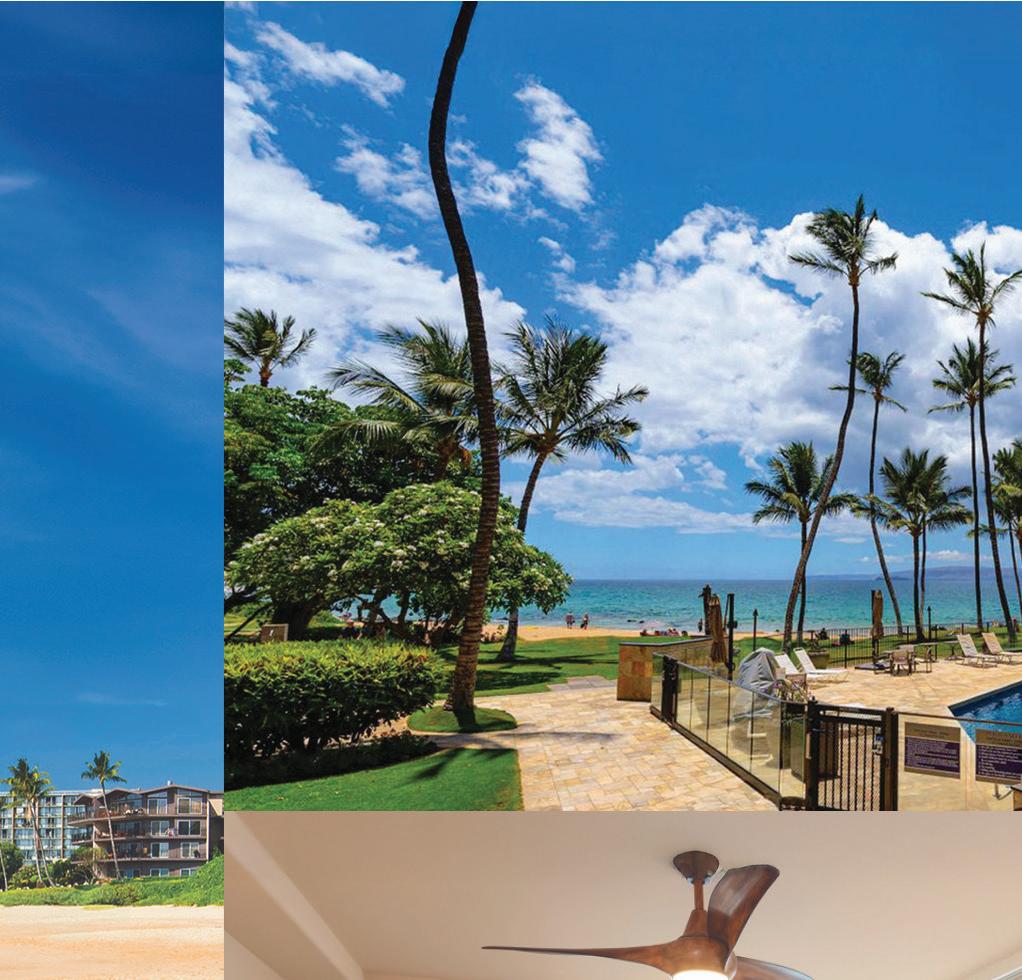
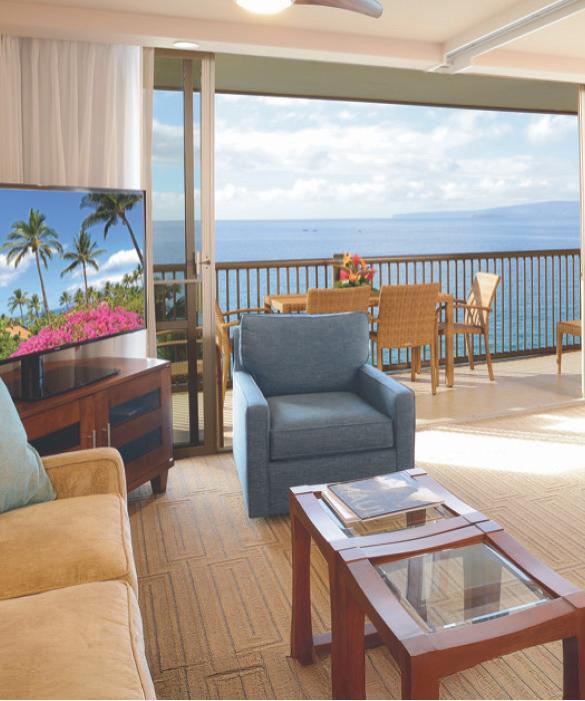
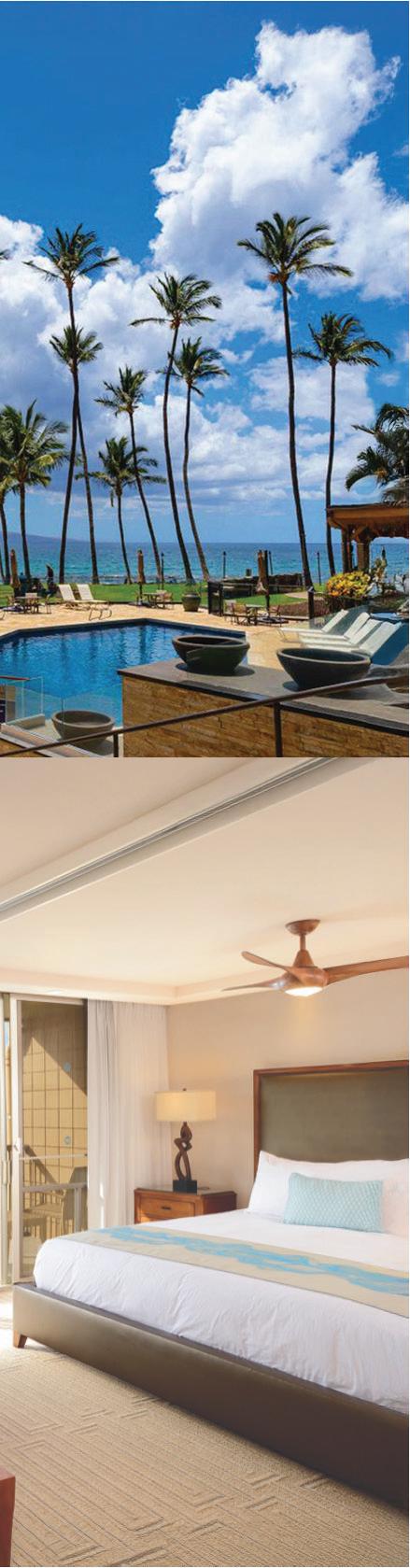
Find Your Home Away from Home in Hawai‘i
Locally owned and operated, Castle Resorts & Hotels offers welcoming stays across the Islands.
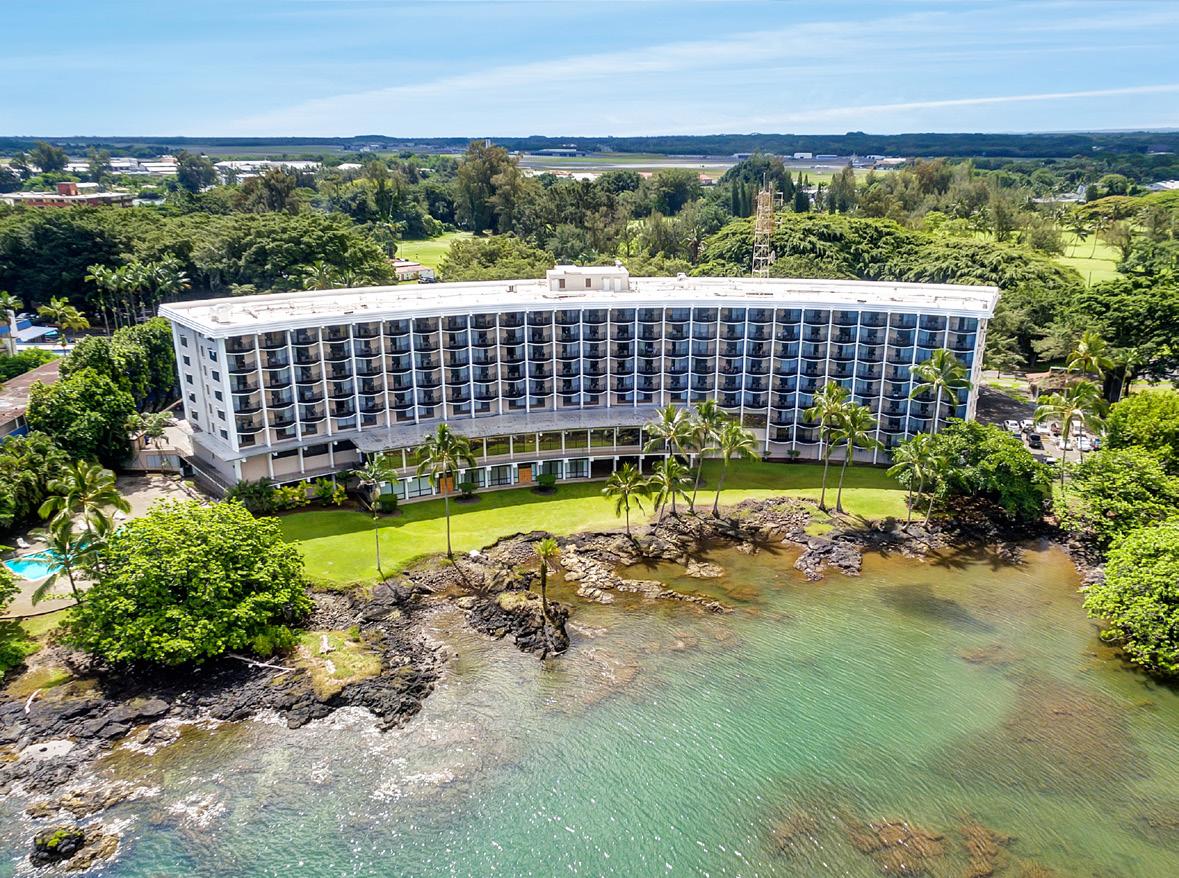
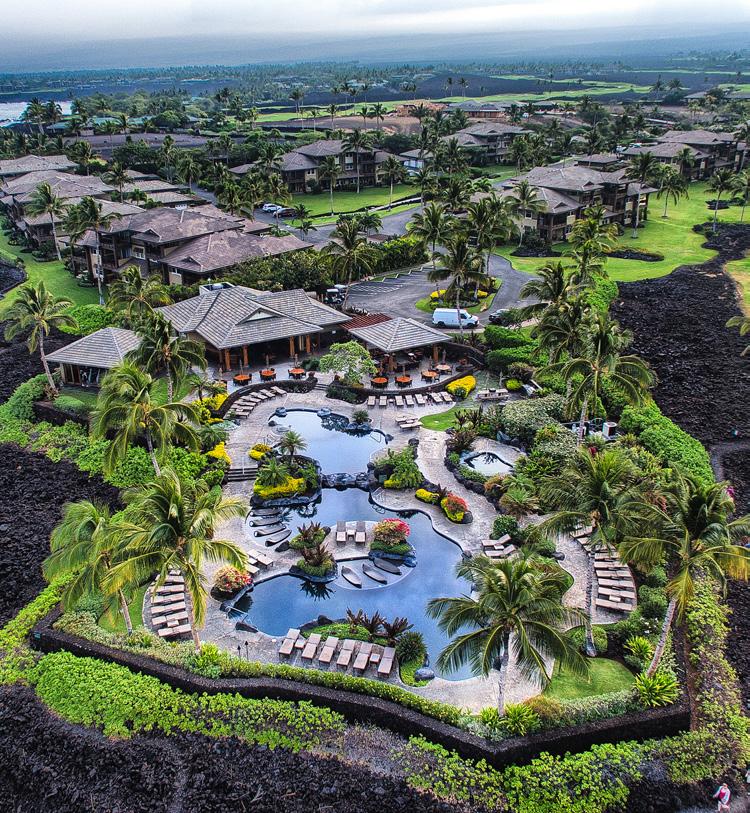
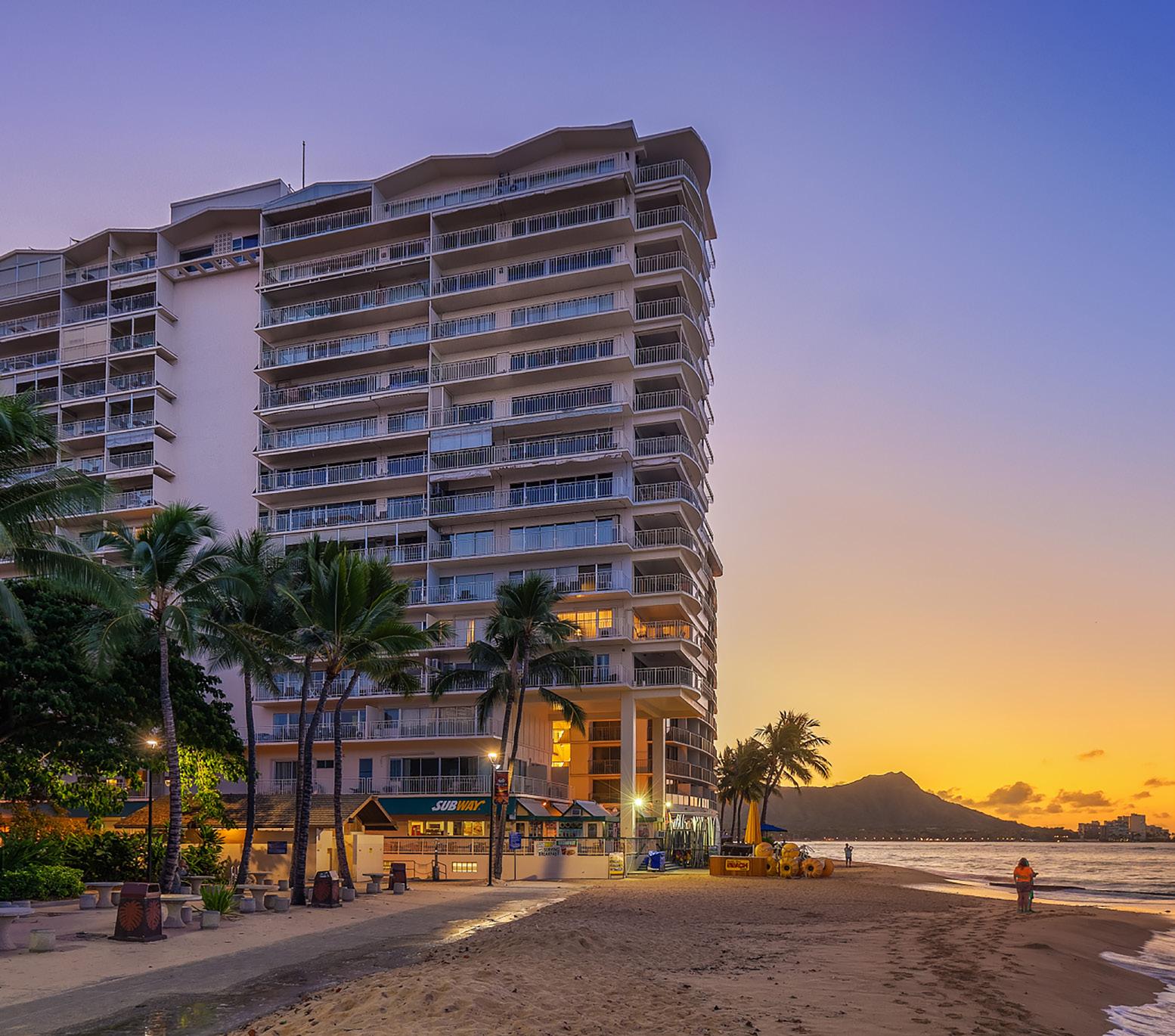
Since 1993, Castle Resorts & Hotels has specialized in innovative hotel, resort, condominium and vacation rental management throughout Hawai‘i and New Zealand. As the only locally owned and operated management company of its kind in Hawai‘i, we are proud to share the aloha spirit while delivering the comforts of home to travelers from around the world.
Our portfolio includes properties across Kaua‘i, O‘ahu, Maui, Moloka‘i, and Hawai‘i Island, as well as Auckland, New Zealand. From full-service hotels to spacious condominium resorts and vacation rentals, Castle offers a diverse collection of accommodations designed to meet the needs of every traveler. Whether guests are seeking a romantic escape, a family vacation, an extended stay or a business trip, our properties provide exceptional value, convenience and authentic local experiences.
For more than 30 years, Castle Resorts & Hotels has been woven into the fabric of Hawai‘i hospitality. From the moment you arrive, the focus is simple: making your Hawai‘i dream feel effortless. Across sunlit shores and lush valleys, our team continues to refine the art of the Hawai‘i getaway—introducing new Island hideaways, refreshing guest experiences, and ensuring that every stay brings moments of surprise and delight.
Every property in our collection has its own distinct character and soul. From watching the sun melt into the Pacific from a lānai in Waikīkī to sinking your toes into the powdery sands near our Kaua‘i properties to cooling off in a shimmering pool surrounded by tropical gardens in Waikoloa, there’s something for everyone. Whether it’s your first Island-hopping adventure or a return to your favorite place, we’re here to make every moment count. What sets us apart is simple: We care about the details that make a vacation unforgettable.
Rooted in Hawai‘i and guided by a spirit of innovation, Castle Resorts & Hotels continues to deliver authentic hospitality, personalized service and meaningful experiences that inspire guests to return again and again.
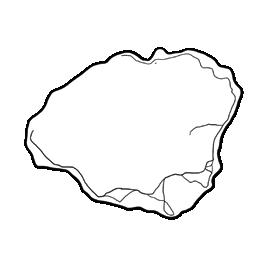
Discovering the Nāpali Coast
Exploring this fabled coastline is a reminder that locals can still find places that inspire awe.
STORY BY GRACE MAEDA
PHOTOS BY AARON K. YOSHINO
AFEW MONTHS AGO , I met a colleague for coffee in Downtown Honolulu. He worked at HAWAI‘I Magazine more than a decade ago and kindly let me pick his brain about the local publishing industry. We also talked about the once-in-a-lifetime experiences that come with working at HAWAI‘I Magazine.
Even though we’re scattered across islands, there is no doubt a shared experience of growing up in Hawai‘i. Yet living on separate islands means there are places many of us have never seen—or even heard much about.
My colleague and I admitted that it wasn’t until we started working at HAWAI‘I Magazine that we were exposed to the grandeur of all the Hawaiian Islands. We were both surprised by how little we knew about places like the Nāpali Coast growing up.
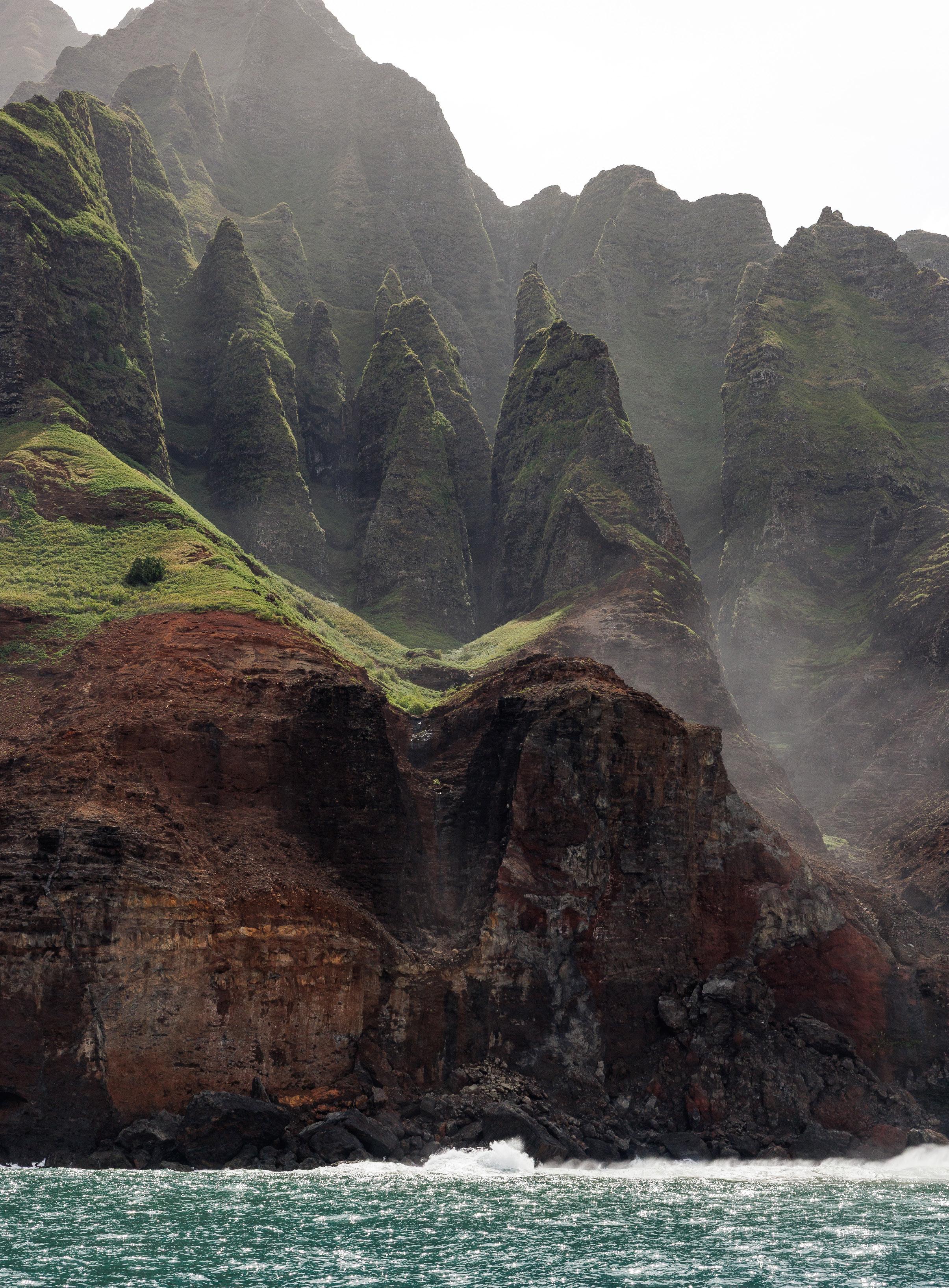
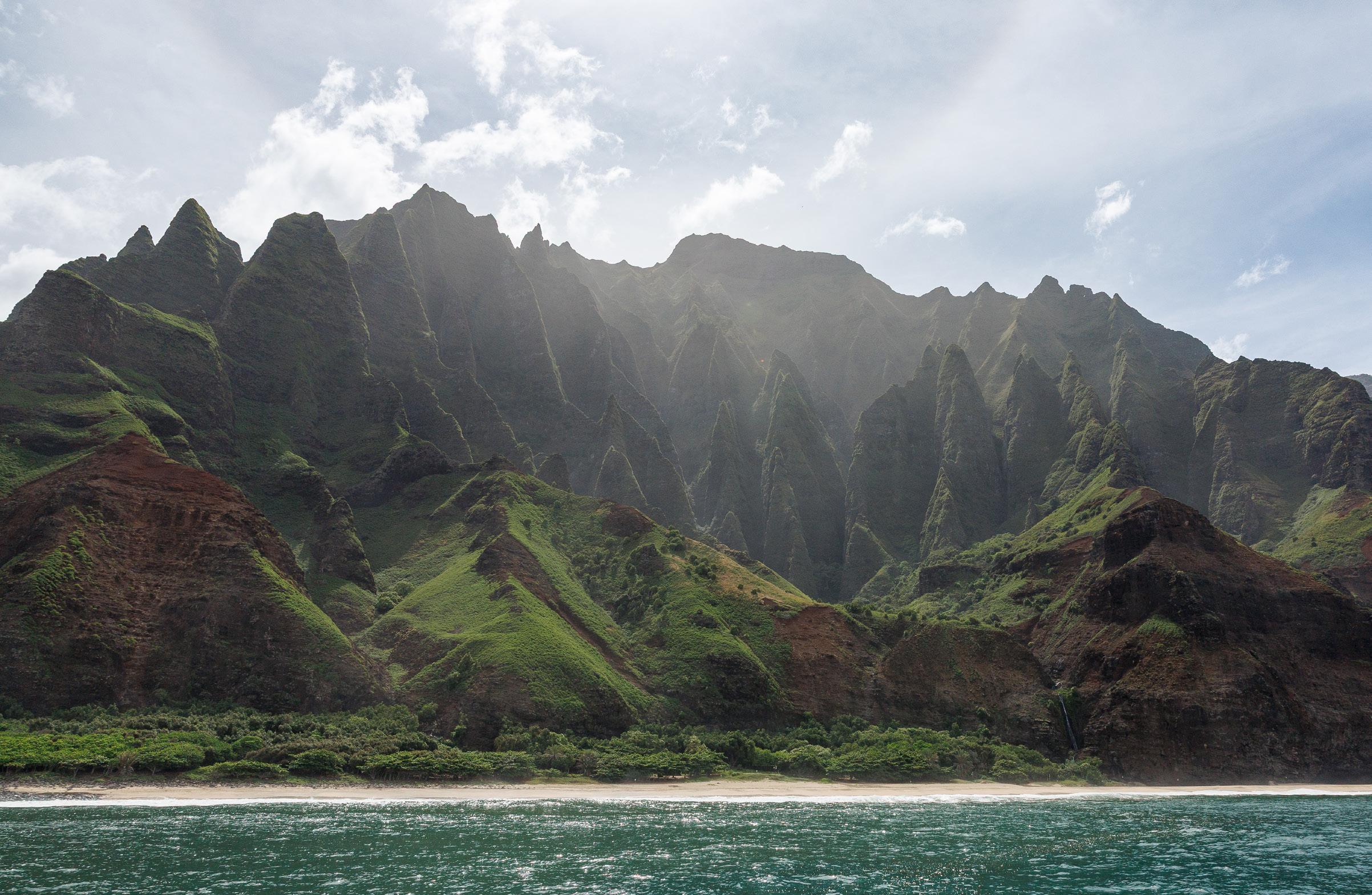
It wasn’t until I began working at the magazine that I started to understand why the Nāpali Coast is considered one of Hawai‘i’s most iconic landscapes—not only for its rugged beauty and towering sea cliffs, but also for its rich cultural history.
On this slightly overcast morning, I’m excited to finally witness the legendary coastline with our photographer Aaron K. Yoshino.
Aaron and I arrive at Port Allen Marina in ‘Ele‘ele, on Kaua‘i’s south shore, where many Nāpali Coast tours depart. We check in with Blue Dolphin Charters, and once all guests are accounted for, we take a short walk down to board the boat.
Not long after leaving the marina, we make our first stop to snorkel off Kaumakani on the island’s southwest coast. As soon as I jump into the ocean, schools of fish dart past me, and I’m immediately struck by the crystal-clear visibility. Our group spends about an hour snorkeling among brightly colored reef fish.
Back on board, Capt. Joe Kali, who’s been working with Blue Dolphin Charters for more than 20 years, tells me he still looks forward to watching guests experience both the snorkeling and the Nāpali Coast for the first time. He says it’s often the kids on board who are the most animated. “They’re on cloud nine and it’s so cool to see.”
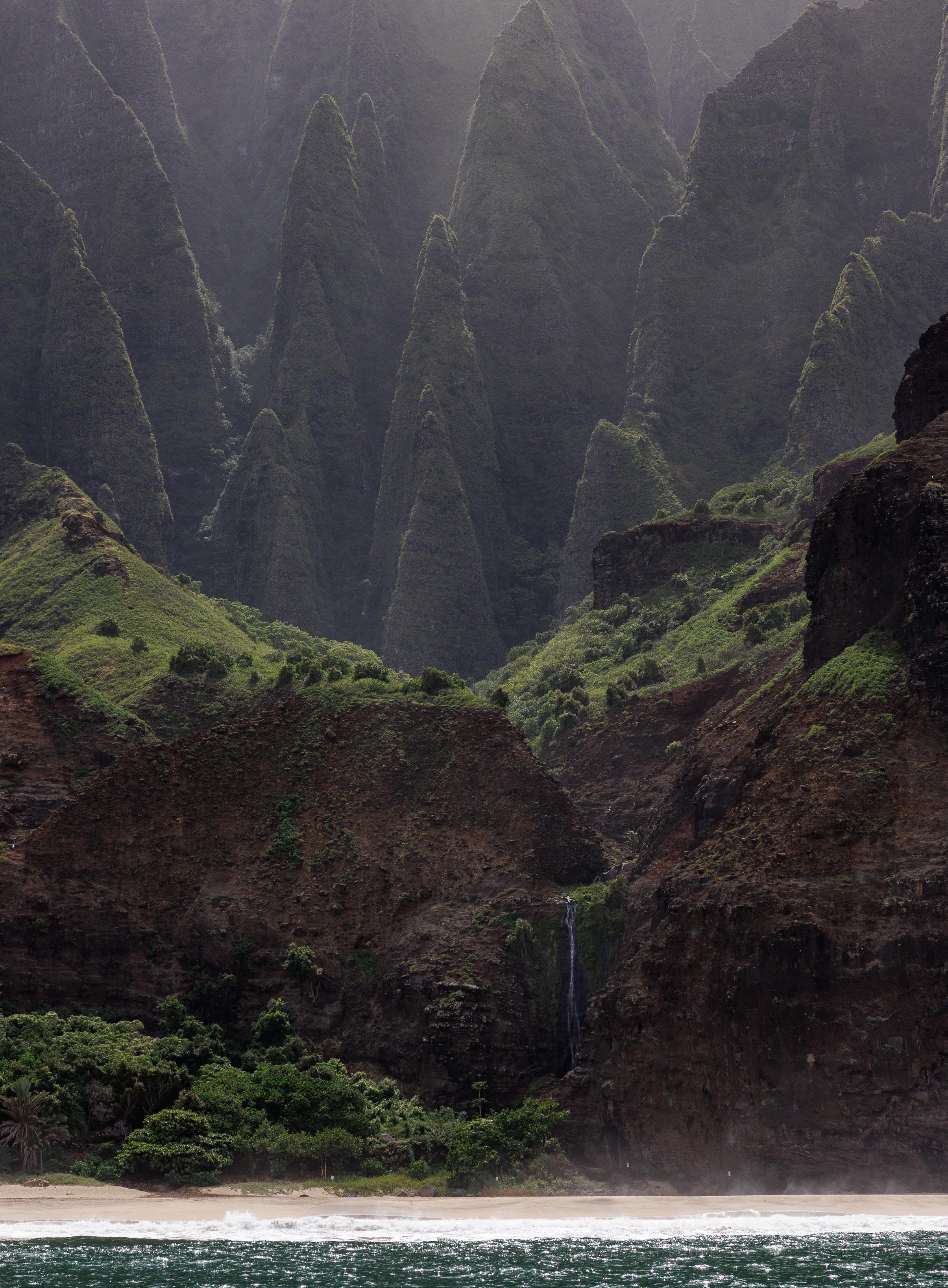
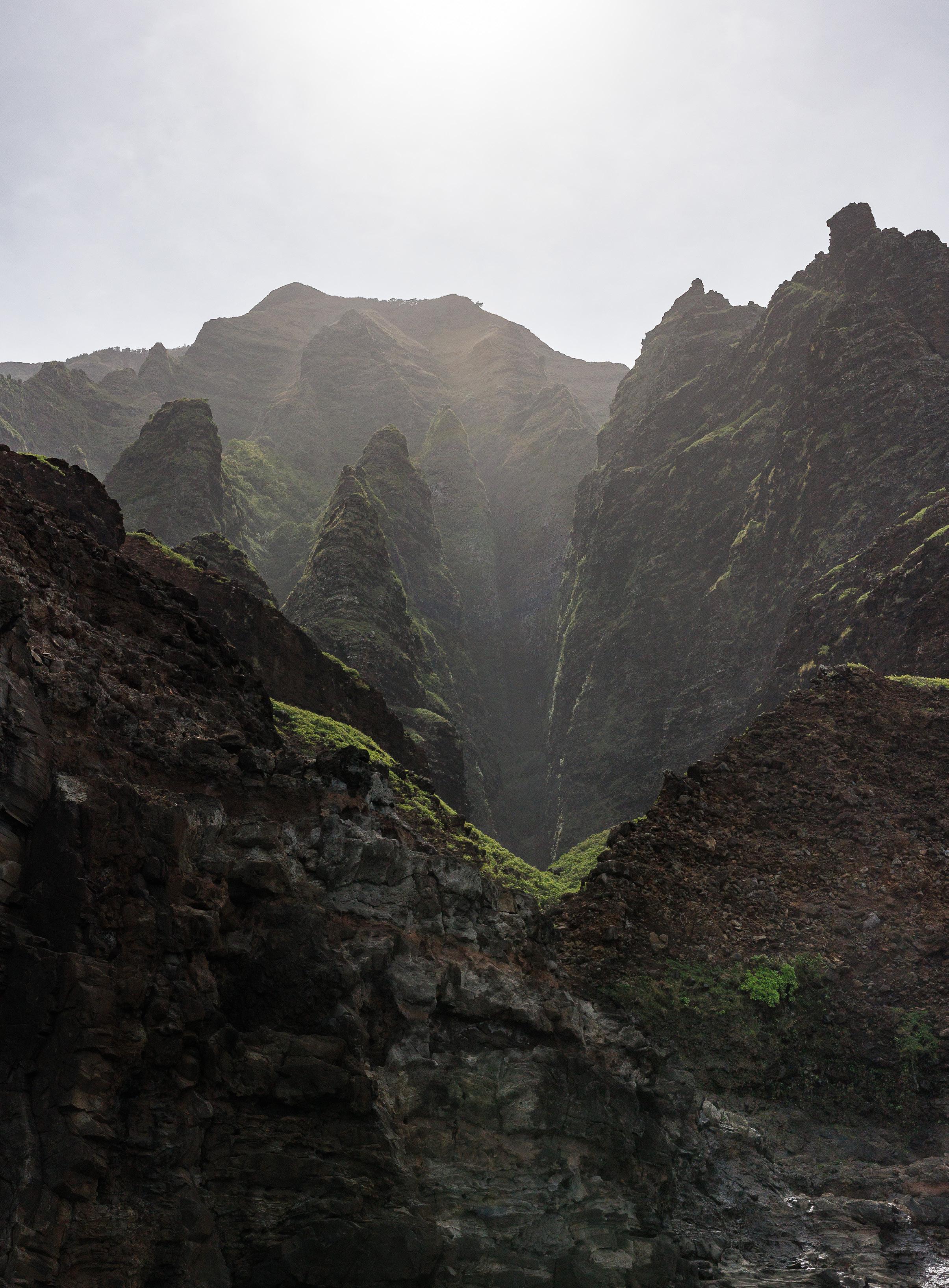
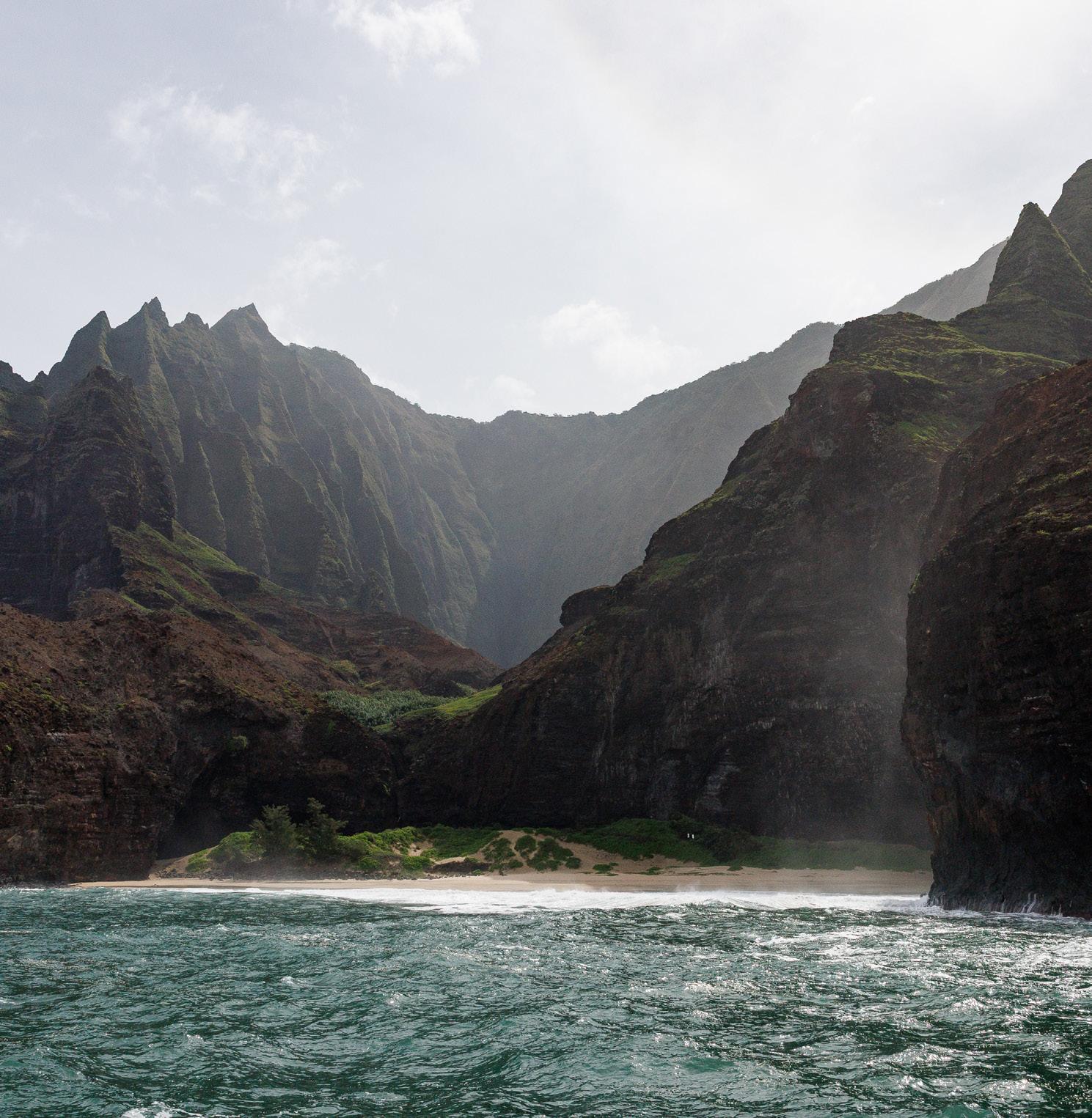
As we continue north along Kaua‘i’s western shoreline, we pass jagged cliffs that plunge into turquoise waters. Capt. Joe steers the boat close to shore, giving us a better look at the secluded beaches between valleys, impressive sea arches and streaming waterfalls.
“I’ve probably seen the pali 500 times, and it’s still as amazing as the first time,” says
ISLAND HOPPING | KAUA‘I
first mate Zeke Perciavalle, who has been working with Blue Dolphin Charters for about two years. He says, “Each time you notice something different.”
The Nāpali Coast stretches 17 miles, with sea cliffs reaching as high as 4,000 feet. Capt. Joe tells our group that long before recreational hikers and sightseeing boats arrived, this coastline was home to thriving ancient Hawaiian communities. Archaeological surveys have uncovered agricultural terraces, remnants of houses and ceremonial structures throughout the valleys. The coastline’s isolation helped sustain these communities, which were primarily accessible by steep foot trails or by canoe. Archaeological research also suggests that some sea caves were used for shelter, storage, fishing and, in some cases, ceremonial purposes.
As we marvel at Kaua‘i’s famed sea cliffs that rise above the Pacific Ocean, Capt. Joe says, “It’s hard to imagine how something this big, with this kind of essence, is on an island so small.”
For more information about Blue Dolphin Charters, visit bluedolphinkauai.com.
Discover an Authentic Kaua‘ i Vacation at Waimea Plantation Cottages
At this oceanfront retreat, you’ll experience the charm of Old Hawai‘i and the natural beauty of the Garden Isle.
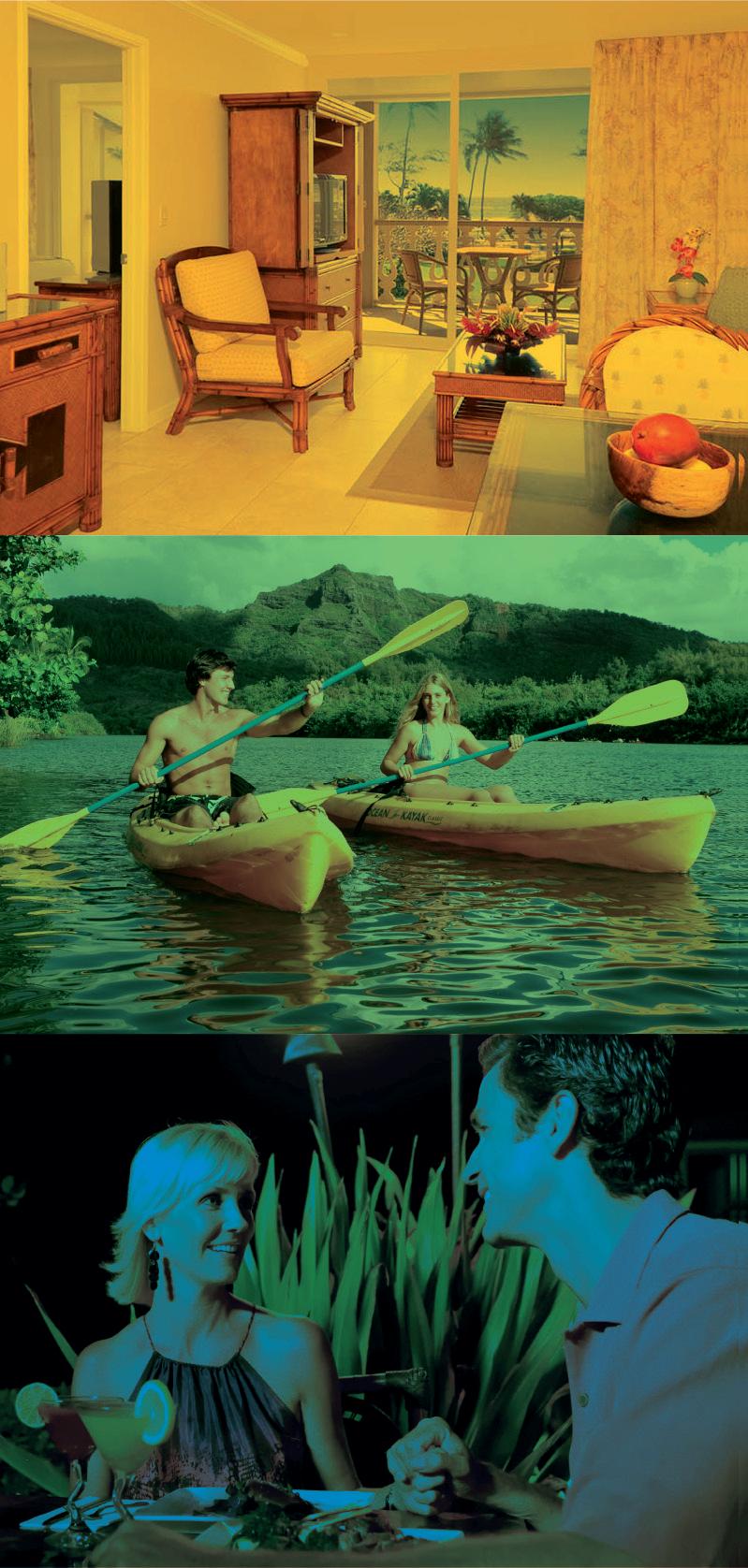
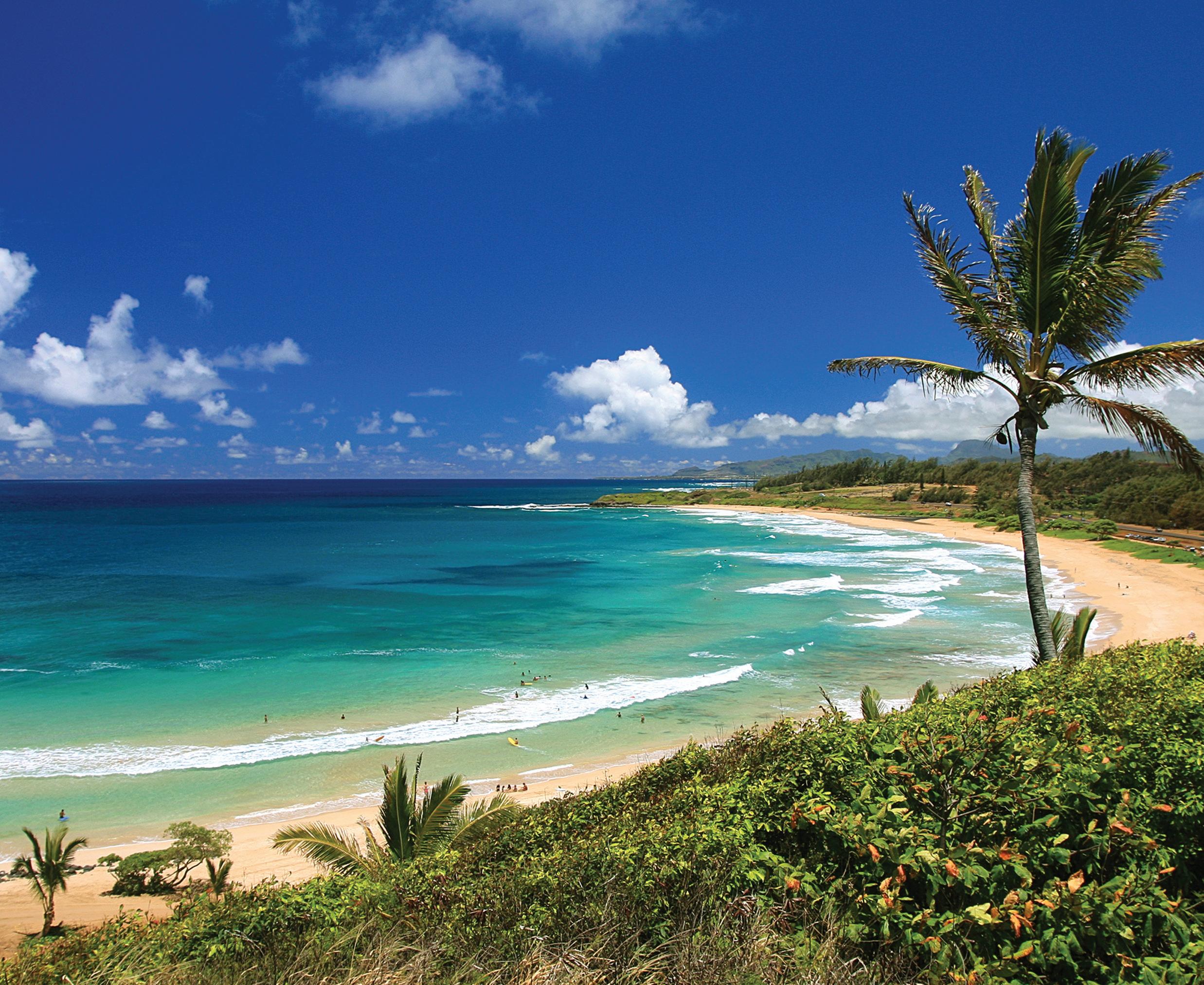
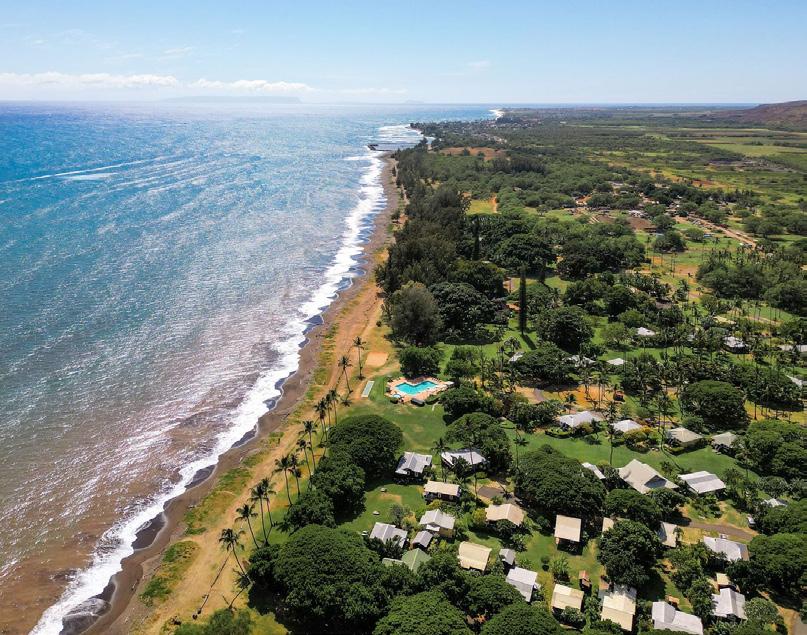
Set along 43 oceanfront acres on the peaceful west side of Kaua‘i, Waimea Plantation Cottages offers a relaxing island escape where history, nature and aloha come together.
Amid the soothing sounds of the ocean and the natural beauty of West Kaua‘i, it’s a place that invites you to slow down, unwind and reconnect with what matters most.
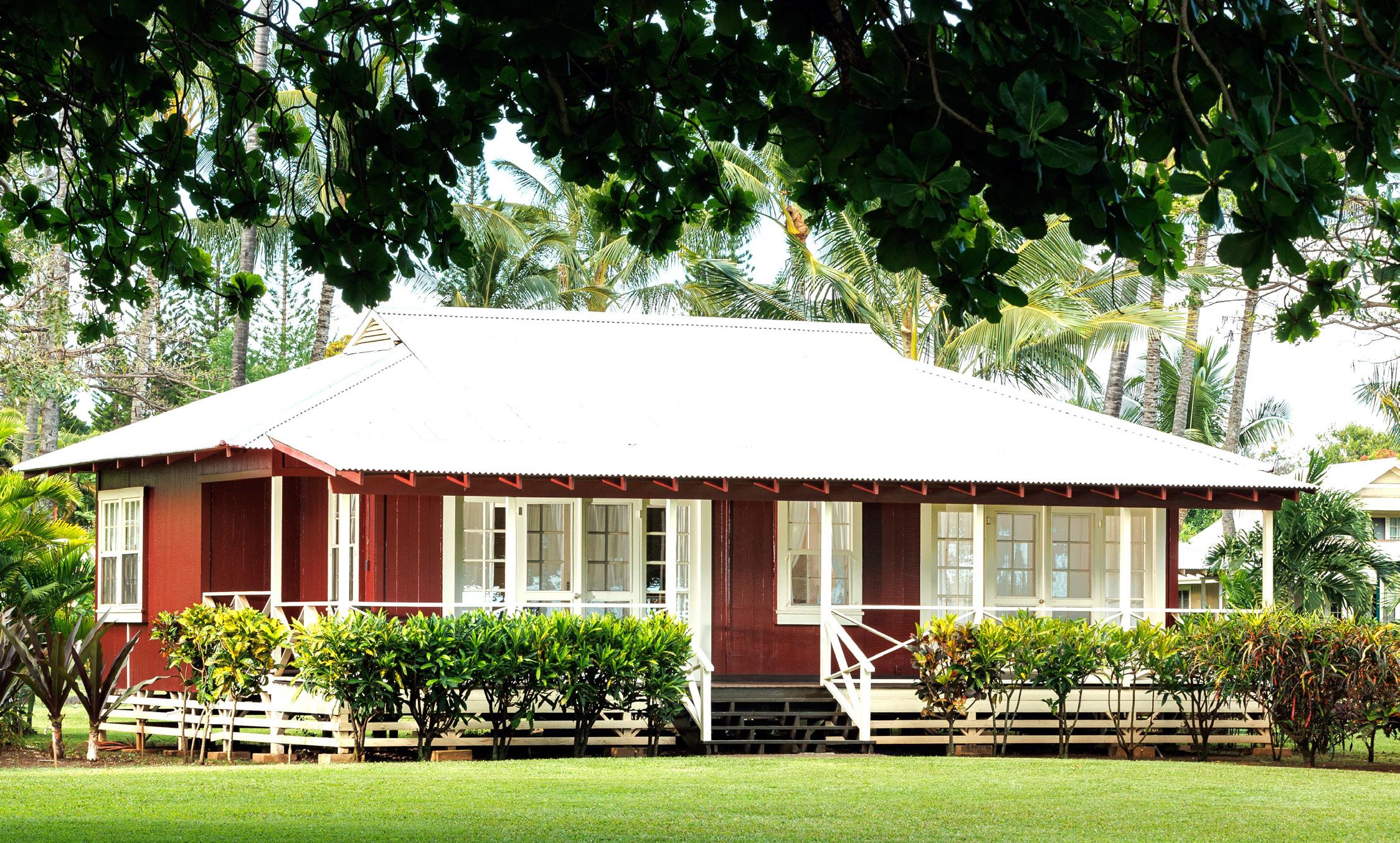
While each charming one- to fivebedroom cottage, originally built between the 1880s and 1930s, has been thoughtfully refreshed with modern comforts, the simple character of Hawai‘i’s plantation-era homes has been preserved. Surrounded by lush tropical gardens, each cottage offers privacy and a sense of tranquility, and the retreat’s wide-open lawns provide inviting pathways to the beach and plenty of space for families to relax and play.
The family-friendly homes include fully equipped kitchens for easy living. Or you
can gather outdoors around one of the propane grills for a relaxing dinner under the trees. Prefer to leave the cooking to someone else? The casual and popular Chicken in a Barrel barbecue restaurant and bar is conveniently located right on the property.
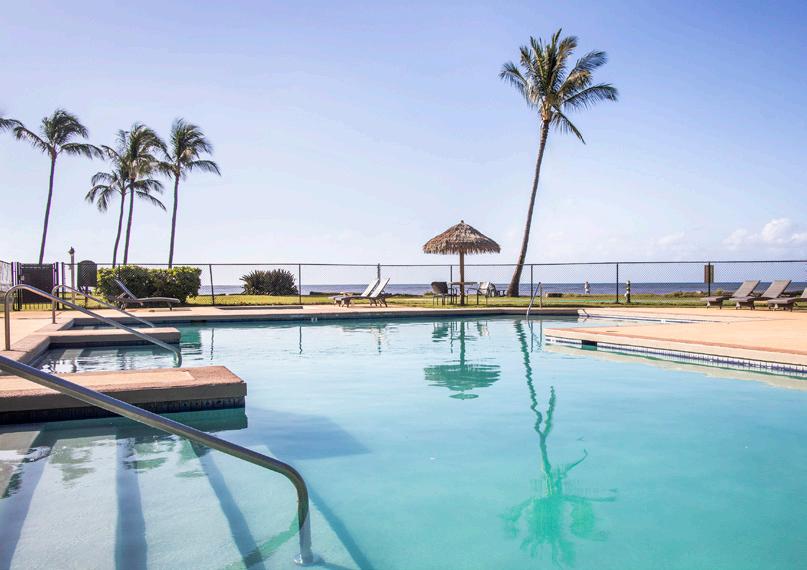
Days here are best spent at an easy pace—swimming in the oceanfront pool, relaxing in a hammock by the sea, strolling along the black-sand beach, and taking in Kaua‘i’s unforgettable sunsets. At night, the clear skies offer incredible stargazing opportunities and a peaceful sense of escape.
For those eager to explore, some of Kaua‘i’s most remarkable natural wonders are nearby, including Waimea Canyon and Kōke‘e State Park. Or embark on a boat tour from one of the nearby harbors to experience the breathtaking Nāpali Coast. When you’re done with that, discover
the small-town charms of Waimea and Hanapēpē, known for their shops, art galleries and eclectic island eateries. Then return to your cottage retreat and the gentle sounds of the waves and morning birdsong.
At Waimea Plantation Cottages, history and ho‘okipa—the spirit of Hawaiian hospitality—come together to create a stay that feels both meaningful and unforgettable.
STORY BY GRACE MAEDA
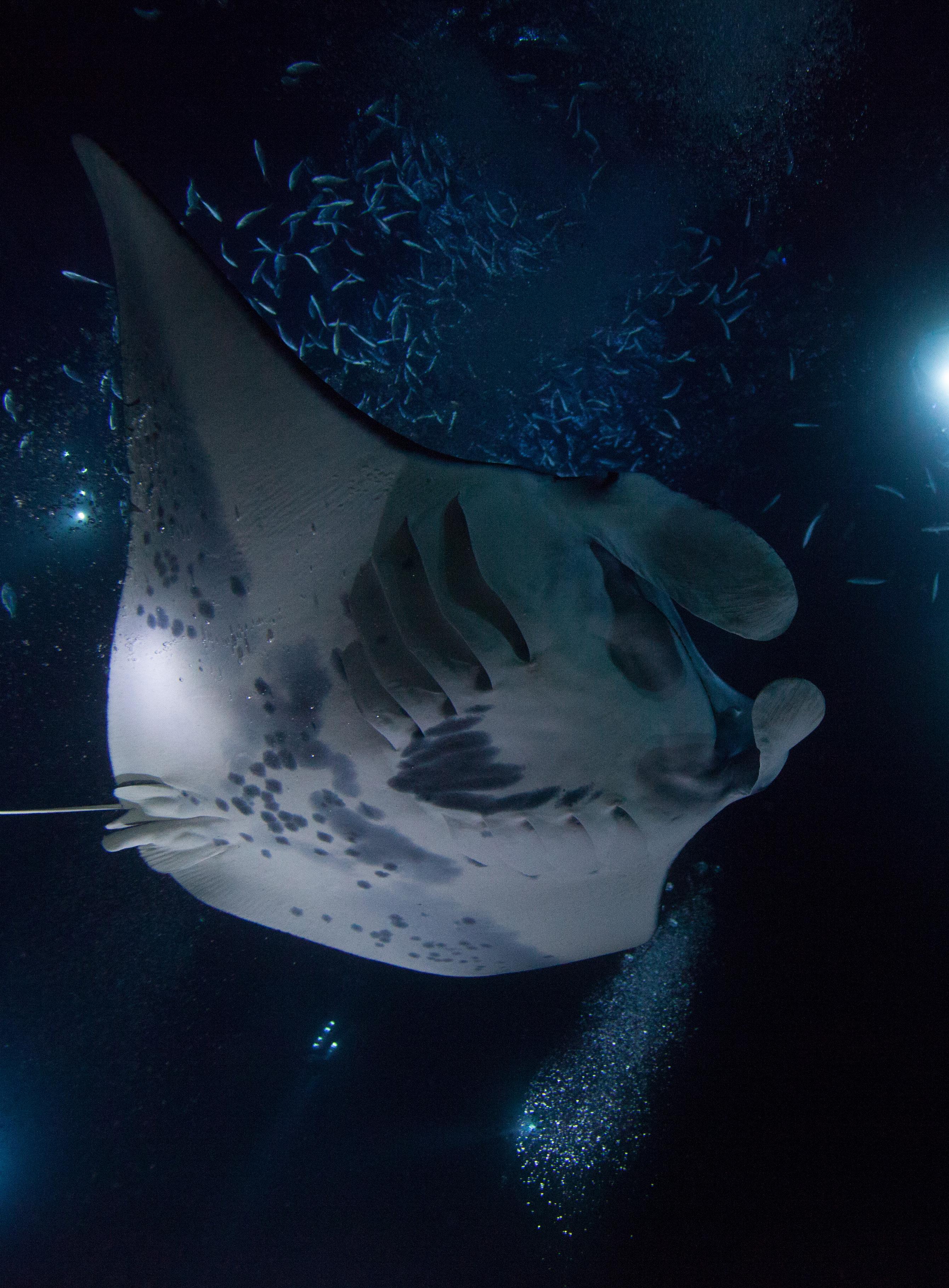
UNDER THE OCEAN’S SURFACE and beneath a starry sky, a manta ray with a 12-foot wingspan glides just below me. Its winglike pectoral fins propel it effortlessly through the waters off the Kona Coast.
More of these gentle creatures are drawn to the boat’s underwater lights, which attract microscopic zooplankton, their primary food source.
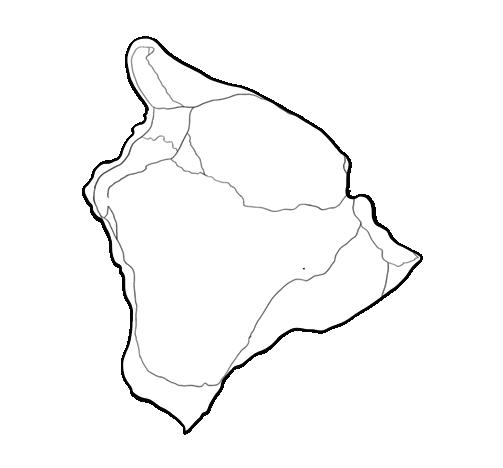
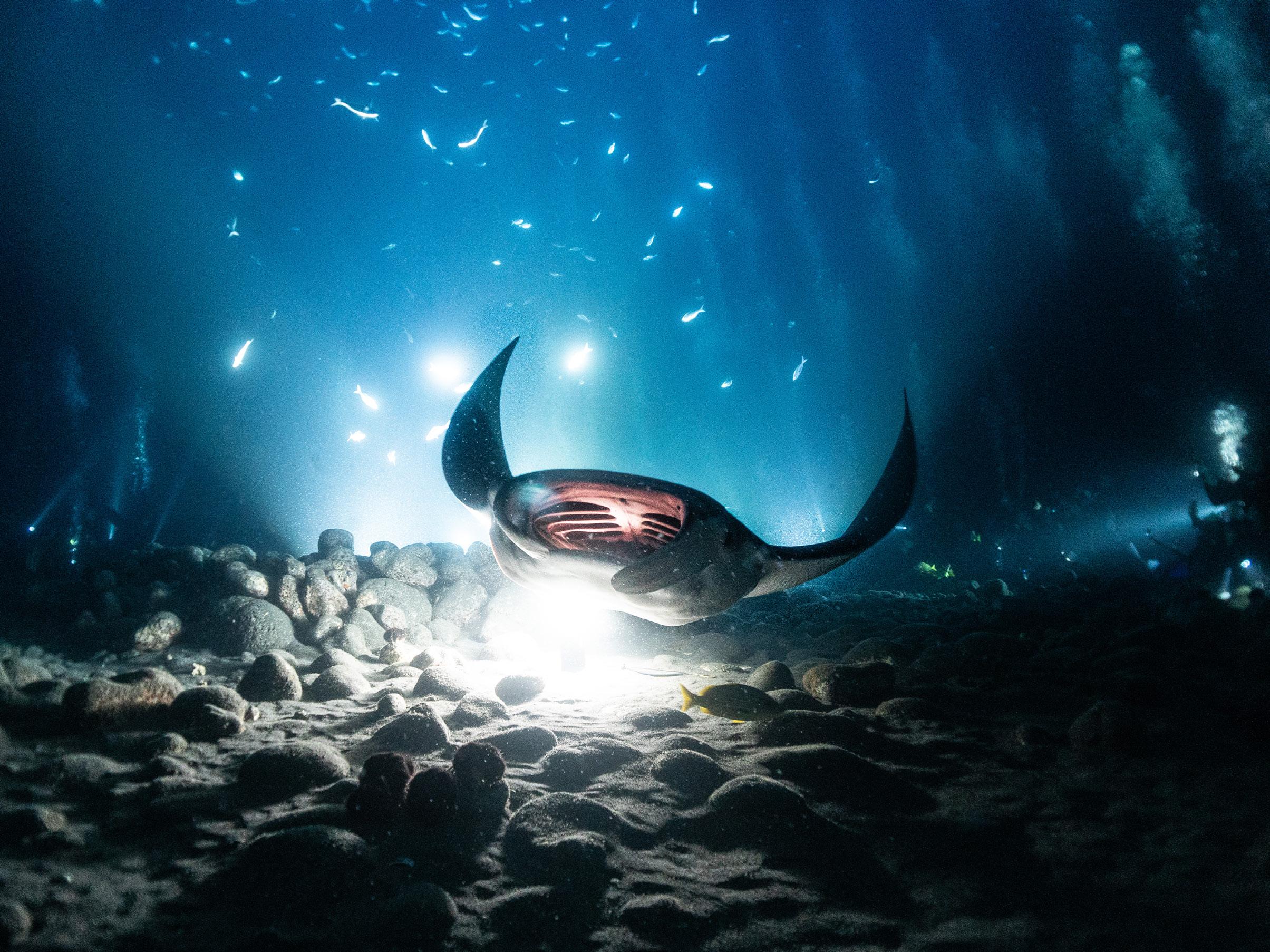
The Kona Coast is considered one of the best places in the world to swim with manta rays. Kona’s resident population can be seen year-round, thanks to nutrient-rich waters that provide a reliable food source. During nighttime snorkel and dive tours, underwater lights attract plankton, creating abundant feeding opportunities that manta rays return to night after night.
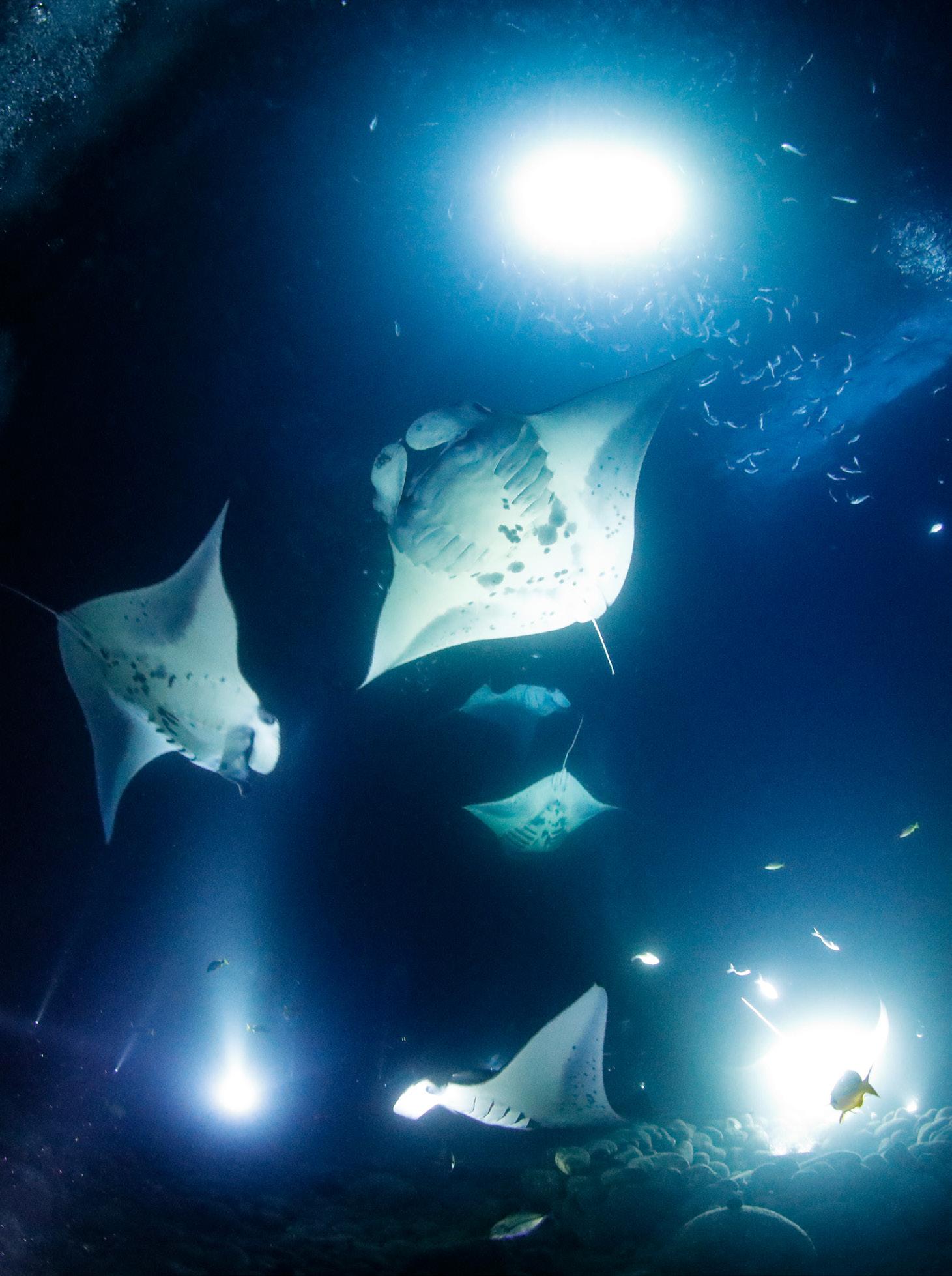
Most excursions begin around sunset and head to established feeding sites off the Kona Coast. Once guests enter the water, they hold onto illuminated platforms while manta rays glide toward the surface in search of plankton.
OPPOSITE
Manta rays are known as hāhālua in ‘Ōlelo Hawai‘i.
ABOVE
The Kona Coast is one of the best places in the world to swim with manta rays.
Known as hāhālua in ‘Ōlelo Hawai‘i, manta rays are revered in Hawaiian culture and mentioned in the Kumulipo, the Hawaiian creation chant. Hāhālua are also regarded by some families as ‘aumākua, or ancestral guardians, believed to provide protection and guidance. With their calm demeanor and steady movements through the ocean, manta rays have become symbols of balance and grace.
Two species of manta rays are found in Hawai‘i: the giant manta ray (Mobula birostris)
and the reef manta ray (Mobula alfredi). Giant manta rays can have wingspans of up to 26 feet, while reef manta rays typically span 10 to 18 feet across. Although giant manta rays are occasionally spotted off the Kona Coast, reef manta rays are most often encountered on Hawai‘i Island’s famed nighttime manta tours. Despite their impressive size, these creatures are remarkably gentle as they feed on tiny zooplankton.
Keller Laros, founder and director of the Manta Pacific Research Foundation, says these creatures are among the most intelligent fish. “They have a brain the size of a human fist,” he says. Manta rays also have the largest brain-to-body ratio of any fish. Research also
suggests they may even be capable of recognizing themselves in a mirror. Like human fingerprints, Laros also explains that each manta ray has a distinct pattern of spots on its belly, which helps researchers identify individuals.
Manta rays are known to live long lives, with some documented to survive 40 to 50 years or more. The Manta Pacific Research Foundation identifies and tracks these animals throughout the Islands, maintaining catalogs for Hawai‘i Island, Maui and O‘ahu.
Laros has been diving with manta rays since 1991 while working as a dive instructor at Jack’s Diving Locker in Kailua-Kona. He founded the Manta Pacific Research Foundation in 2002, and one of its first major initiatives was advocating legal protections for manta rays. Those efforts became successful in 2009, when Hawai‘i made it illegal to kill or capture manta rays.
Today, the foundation conducts and collaborates on a variety of research projects. One study is analyzing DNA from manta rays across the Islands to piece together family trees. Laros says one question researchers are exploring is whether
squadrons of manta rays have a social hierarchy, including an “alpha” male or female.
Beyond identifying and tagging animals, another team of researchers has been closely tracking their daily movements. A group followed a manta ray named Big Bertha and recorded that she traveled about 40 miles in 12 hours. Despite their ability to cover long distances, research indicates that reef manta rays rarely cross the channels between the Hawaiian Islands. One study estimates that only one male reef manta ray crosses the ‘Alenuihāhā Channel—the 30-mile stretch of ocean between Hawai‘i Island and Maui—every 50 to 150 years. The same study suggests only one female makes the crossing every 500 to 1,500 years. Researchers believe this is because reef manta rays spend much of their time in waters about 100 feet deep, while the ‘Alenuihāhā Channel plunges to depths approaching 7,000 feet.
Watching manta rays glide gracefully through the ocean reminds me why hāhālua have been revered for generations—not only as remarkable marine animals, but as living links between Hawaiian culture and the natural world.
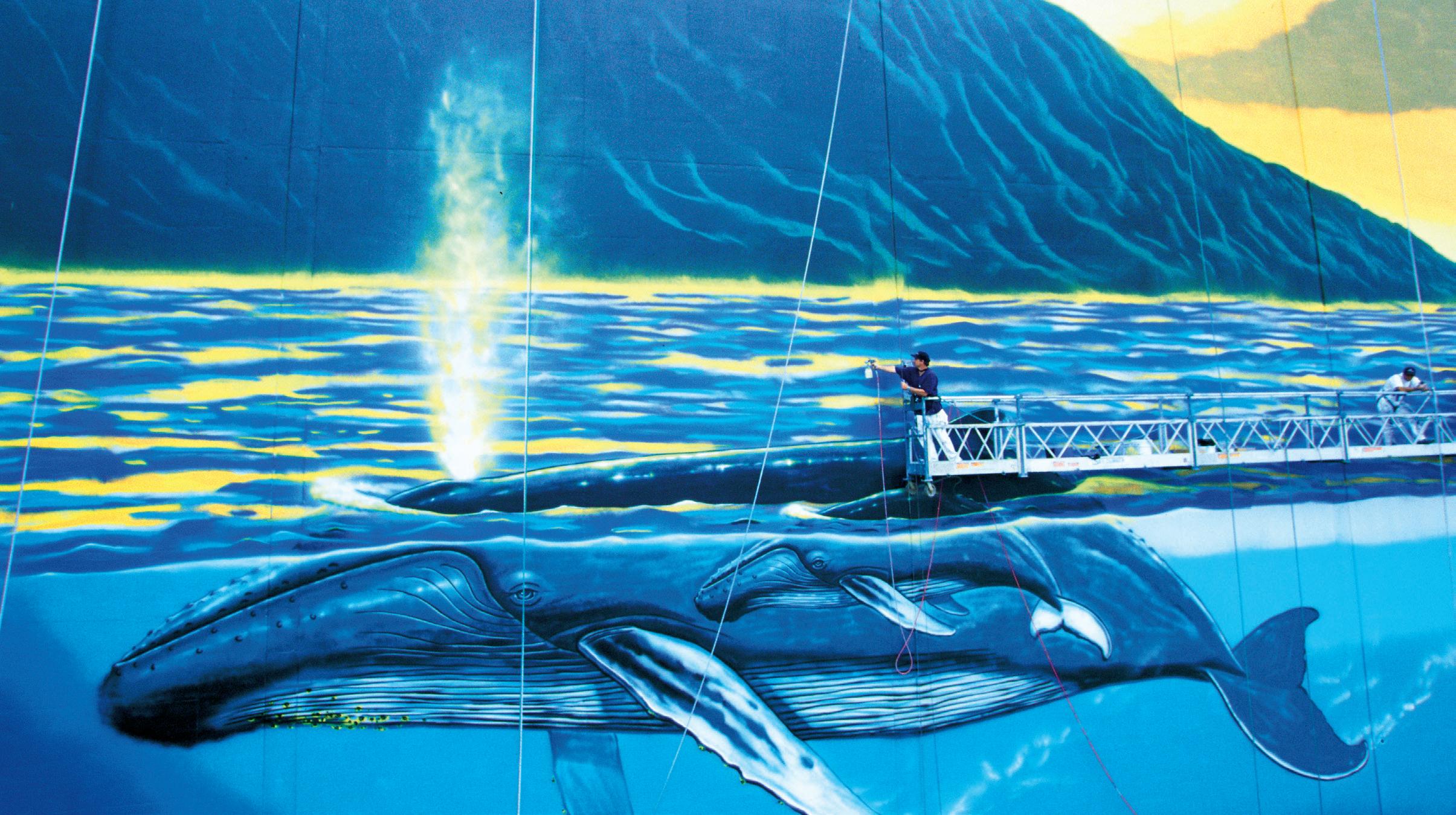
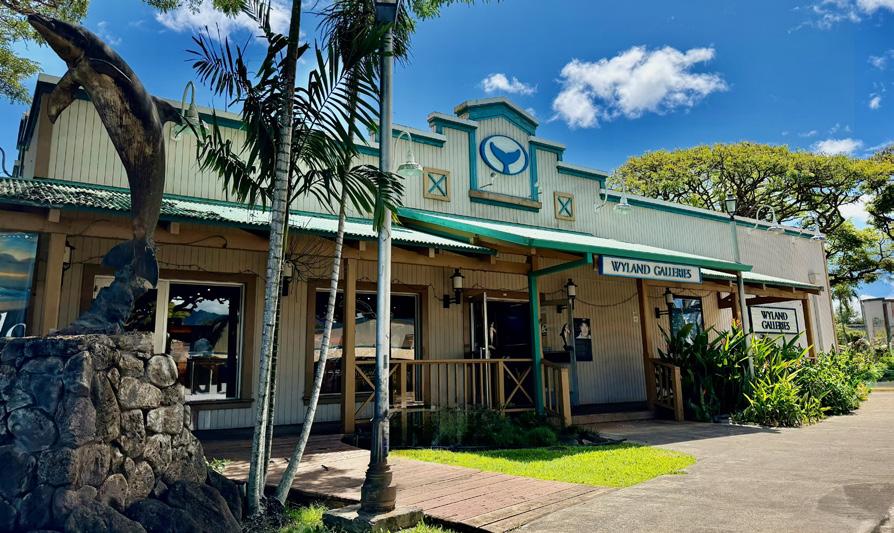
Discover Wyland Galleries Hale‘iwa: Art, Ocean and North Shore Legacy
Since opening his first Hawai‘i gallery in Hale‘iwa in 1988, Wyland has inspired generations through marine life art and a lifelong commitment to ocean conservation.
Nestled in the heart of historic Hale‘iwa, Wyland Galleries invites visitors to experience Hawai‘i through the eyes of one of the world’s most celebrated marine life artists.
When Wyland opened his first Hawai‘i gallery on O‘ahu’s North Shore in 1988, he found more than a place to display his artwork. He found a community and island lifestyle that continue to inspire his work today.
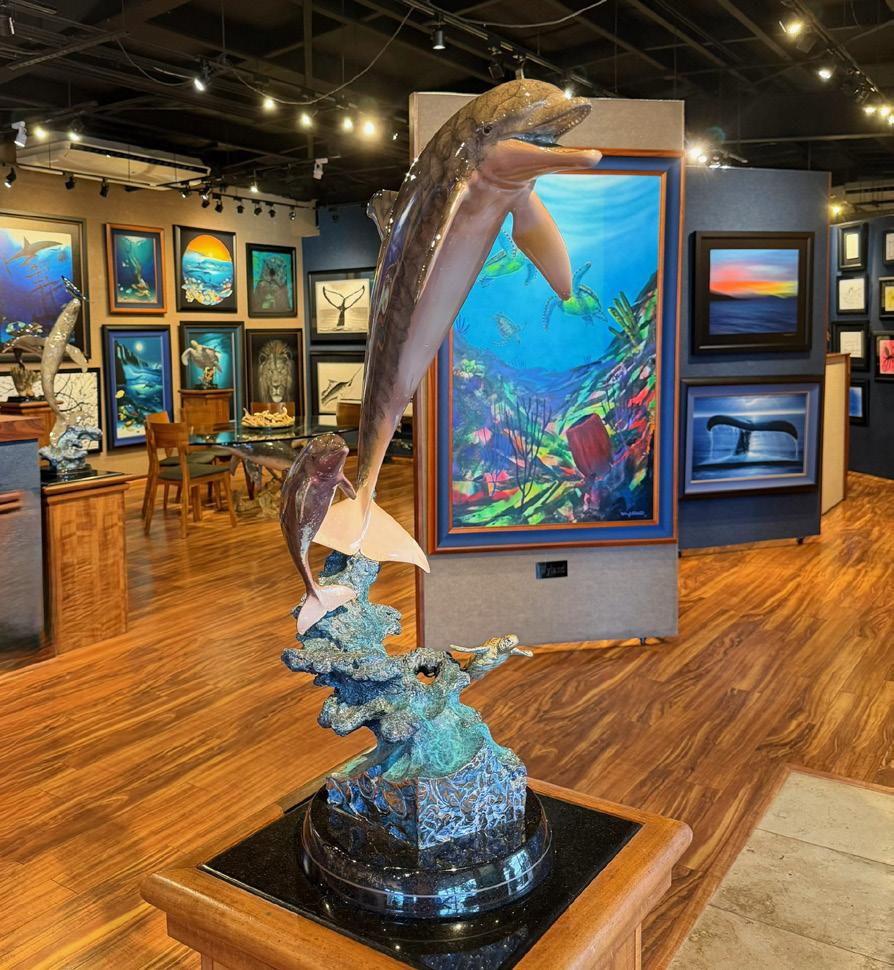
Inside the gallery, original paintings, limited editions and sculptures celebrate the vibrant marine life that has become the hallmark of Wyland’s career. Every piece reflects a lifelong passion for the ocean and the natural beauty of Hawai‘i.
Visitors can also discover the story behind Wyland’s iconic Whaling Wall murals, internationally recognized public artworks that celebrate marine life and inspire ocean conservation.
Whether you’re an art collector, an ocean enthusiast or simply exploring the North Shore, Wyland Galleries Hale‘iwa offers an unforgettable stop where art, culture and Hawai‘i’s ocean heritage come together.
Plan Your Visit
Wyland Galleries Hale‘iwa
66-250 Kamehameha Highway, Hale‘iwa, O‘ahu
10 a.m.–7 p.m. daily
808-637-8729
Meet Wyland in Person
Hale‘iwa August Artist Events
Meet Wyland, Walfrido, David Wight, Sophia Noel and Rachel Michelle during special artist events throughout August. Experience new artwork releases, exclusive show specials and live painting demonstrations.
View all August event dates at Wyland.com/events

THE WINNERS OF HAWAI‘I MAGAZINE’S 26TH ANNUAL PHOTO CONTEST
HAWAI‘I Magazine’s annual photo contest has become a beloved tradition, and we’re always inspired by the hundreds of images submitted every year.
For our 26th contest, we did something different. We invited our readers to vote on their favorite images in the categories of land, ocean, people, wildlife, Kīlauea and student submissions. Mahalo to everyone who voted, and to our sponsors, Southwest Airlines and Waimea Plantation Cottages, for supporting our voting contest.
Featured on the following pages are the winners and runners-up in each category, along with the overall grand-prize winner and an editor’s pick.
Congratulations to this year’s honorees, and mahalo to everyone who shared their incredible images of Hawai‘i.
LAND OCEAN PEOPLE WILDLIFE KĪLAUEA STUDENT
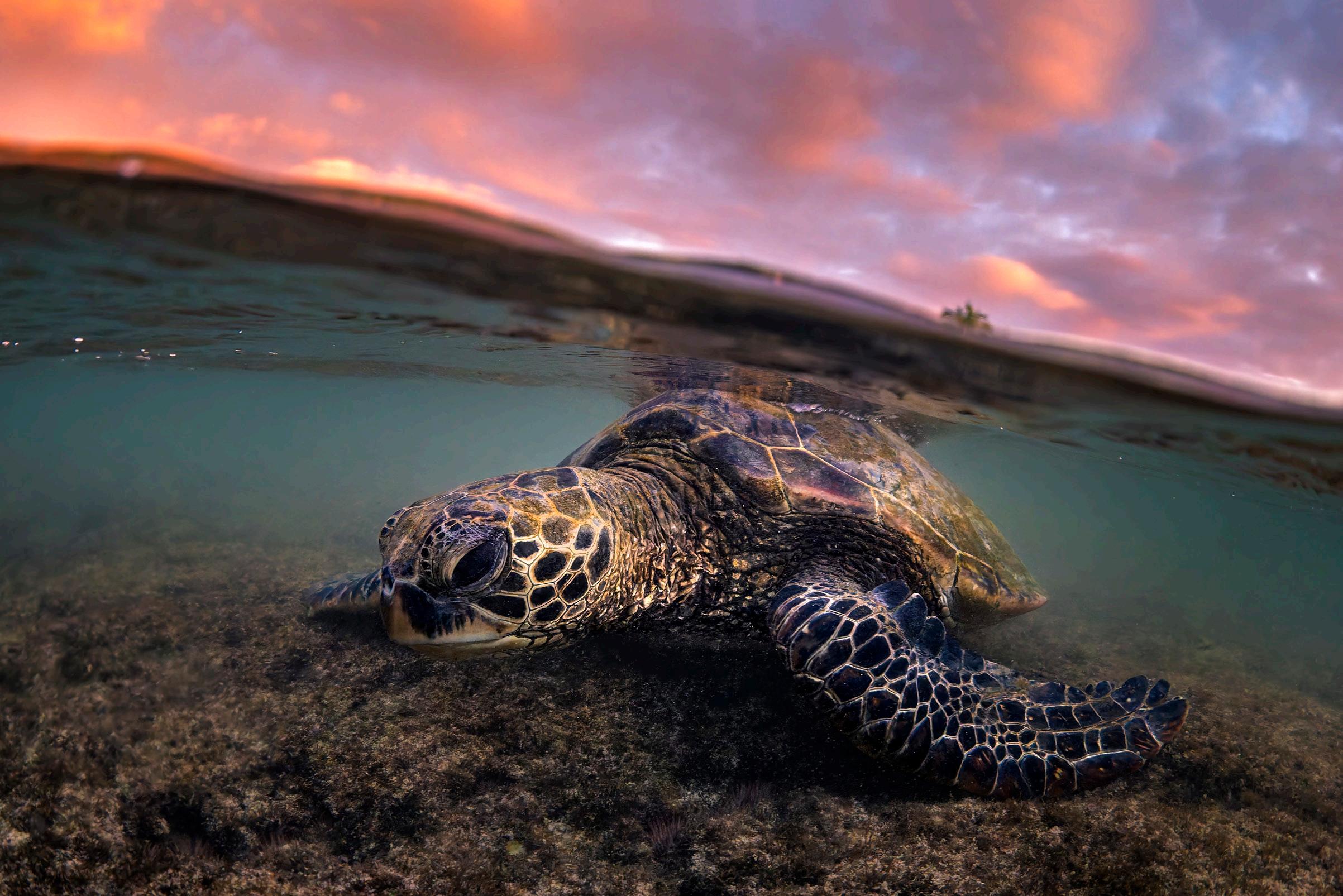
Leighton Lum
@photography_by_leighton
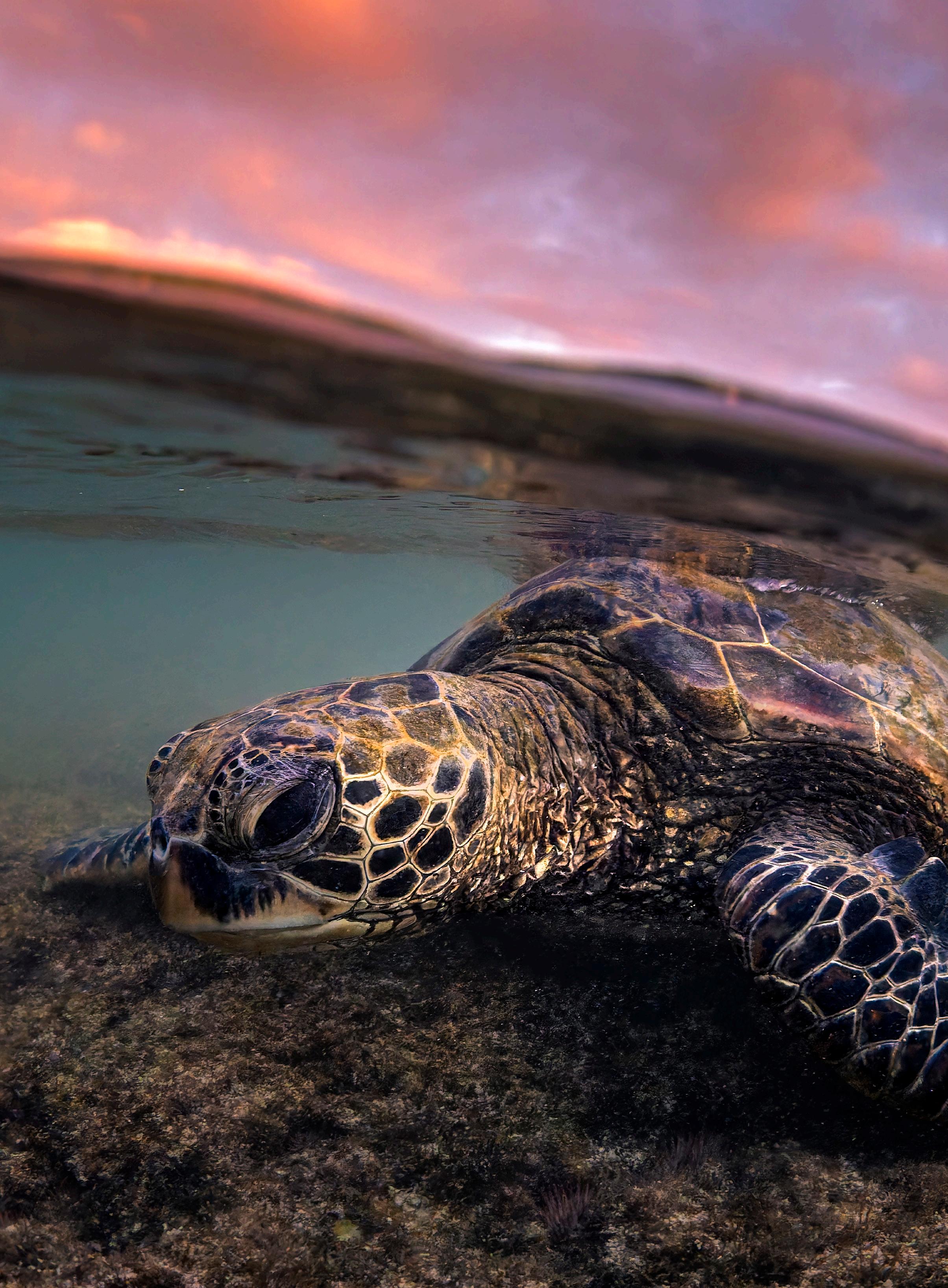
This honu (green sea turtle) was photographed at sunset off the coast of Kona, Hawai‘i, in December 2025, as it searched the reef for fresh limu (algae). The split-shot technique captures both the turtle underwater and the colorful sky above in a single frame. It took some patience to get close while the turtle went about its evening meal, but it stayed calm long enough for me to get the shot.
About the photographer
I’m a self-taught photographer with a passion for wildlife and landscape photography. I love capturing the natural beauty of Hawai‘i, from underwater encounters to sweeping aerial views. You can find more of my work on Instagram @photography_by_leighton
Honu Between Worlds
Kona, Hawai‘i Island
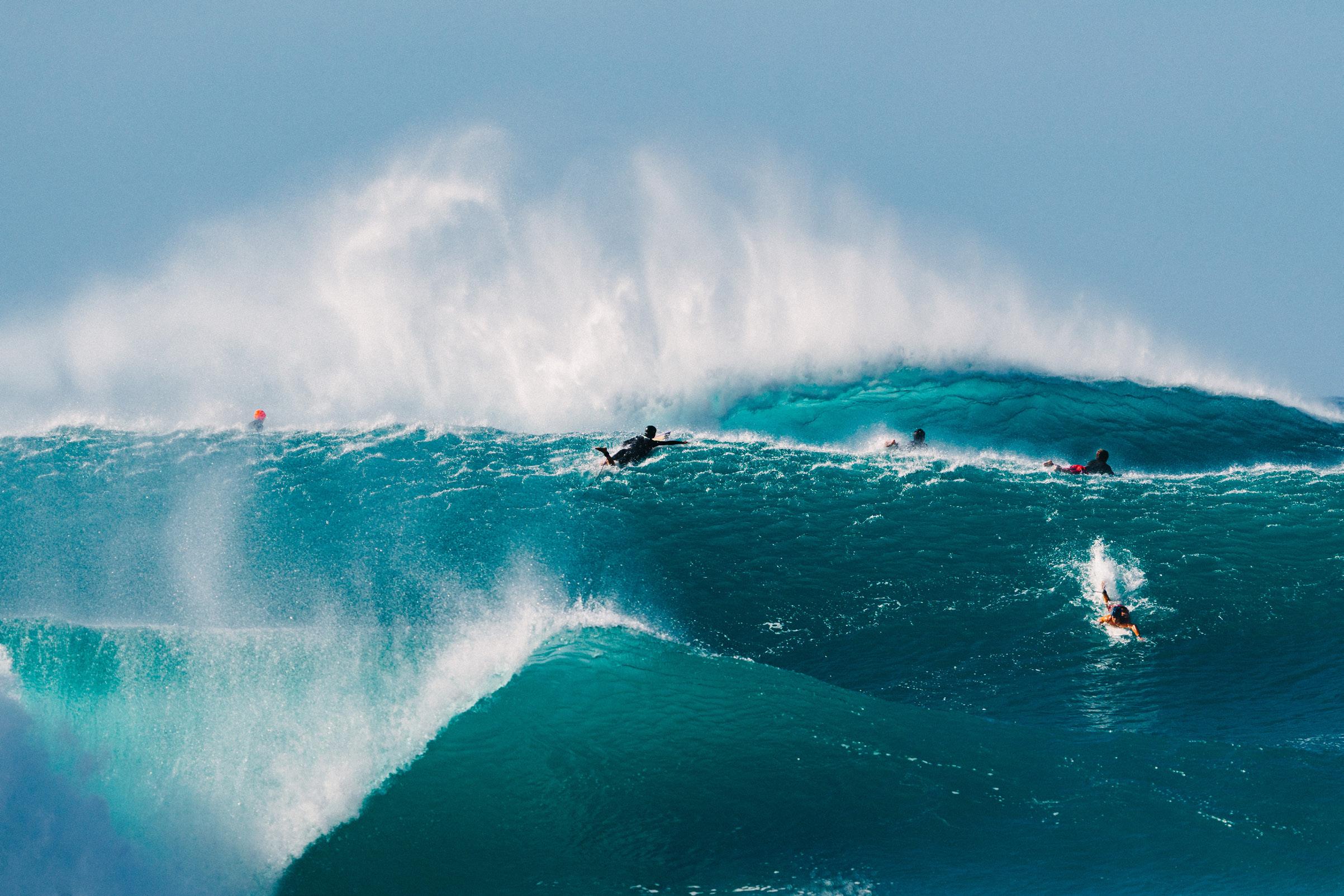
Jake Ewe @whoisyewe
Different Kinds of Peaks
Pipeline, O‘ahu
Pipeline has a way of making everything else feel small. On Jan. 13, 2026, beyond the third reef, mountains rose from the sea, surfers disappeared into walls of spray, and the ground beneath me translated the kind of power that words never can.
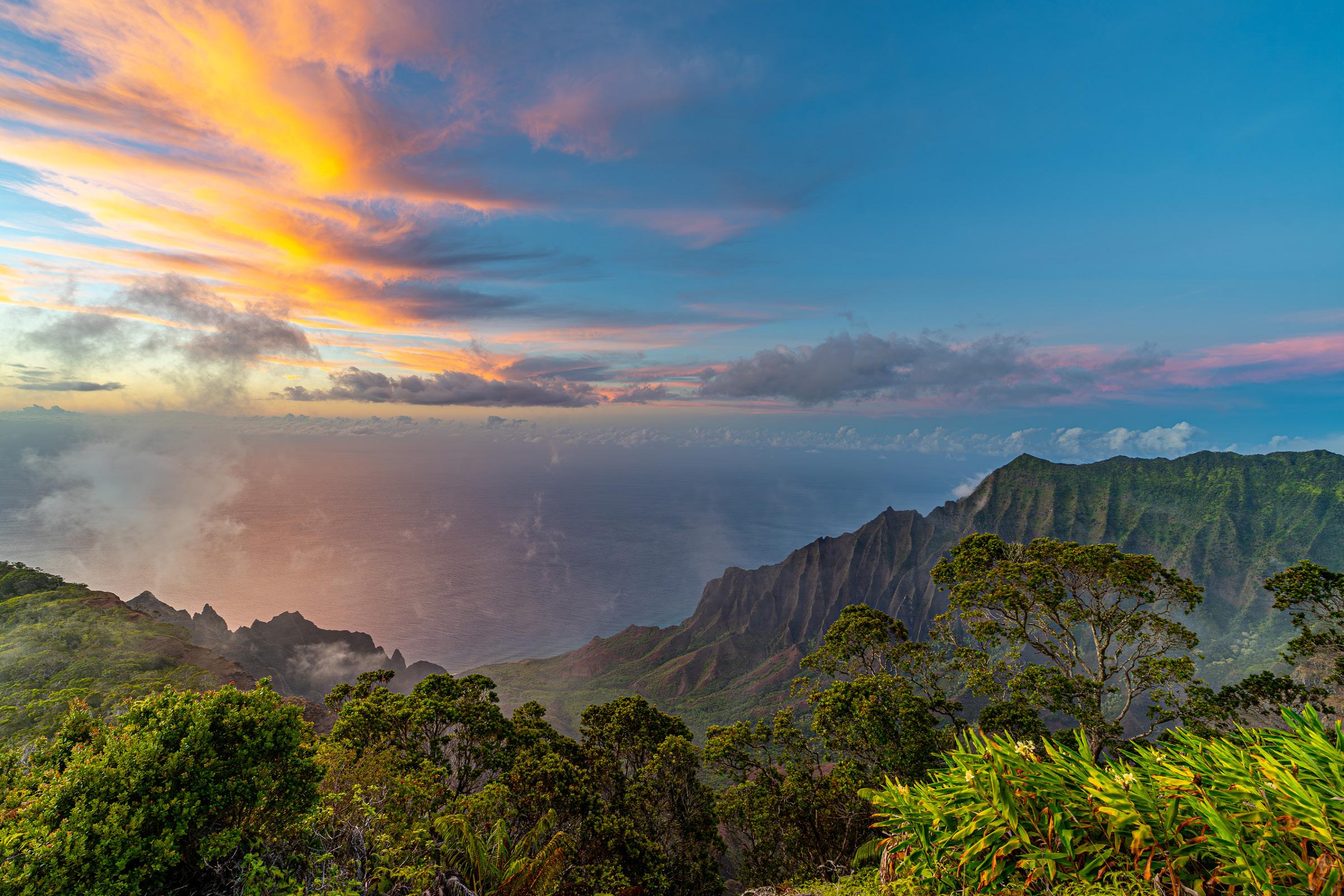
Brian Deuel @_deuelbrian
On this day, like many in Kōke‘e, the clouds were rolling in and out around the cliffs all afternoon as we hiked around the lookout. Just as the sun was setting, I was able to capture this beautiful view of the Nāpali Coast. Here, amid the clouds, the ocean and the shadows of the cliffs, the setting sun’s vibrant colors are revealed.
Last Light Over Kalalau
Kalalau Valley Lookout, Kaua‘i
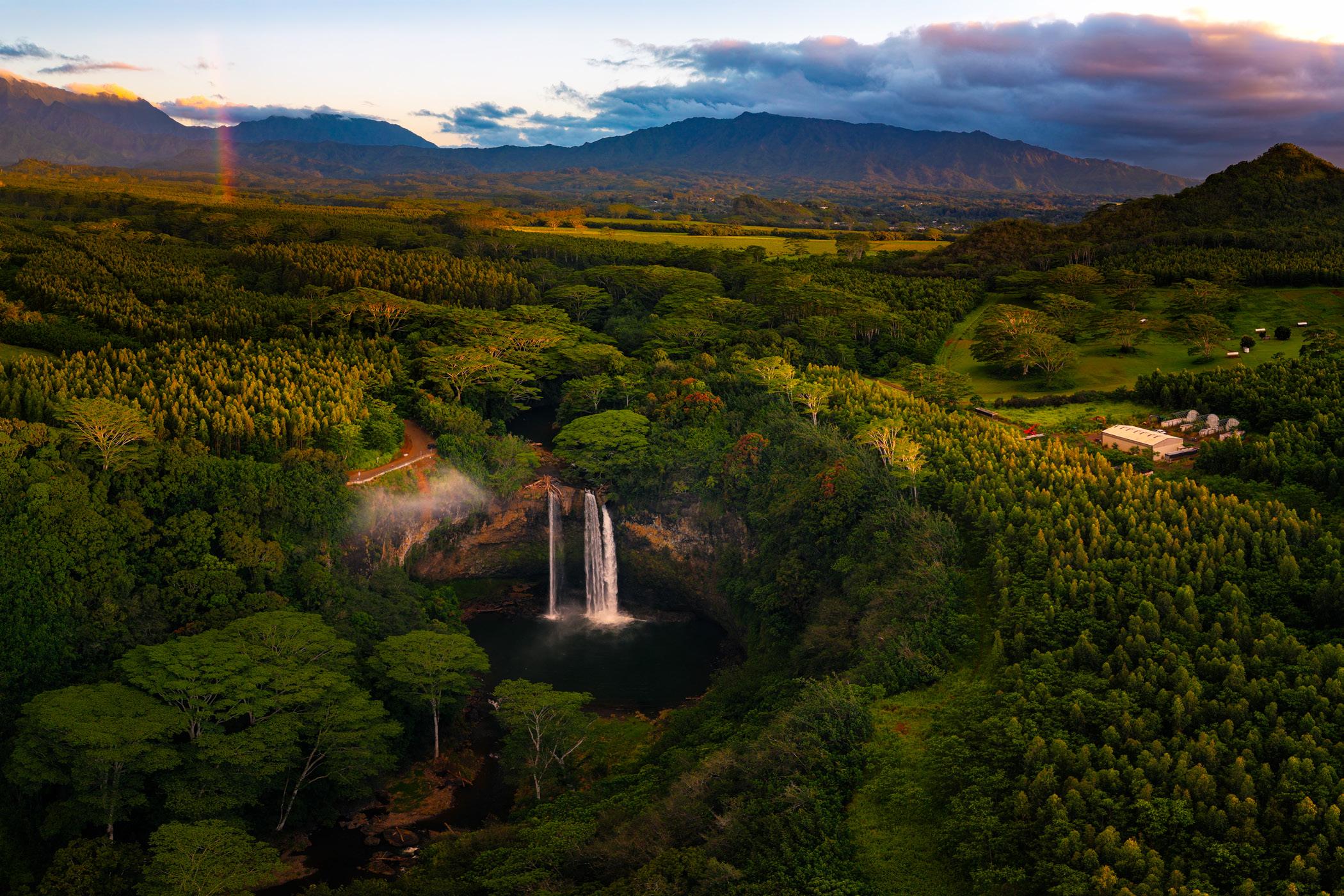
Lum
@photography_by_leighton
This aerial photo of Wailua Falls on Kaua‘i was taken in April 2026, just after sunrise. Rain in the distance created a rainbow over the falls as the morning light broke through.
Wailua First Light
Wailua Falls, Kaua‘i
Leighton
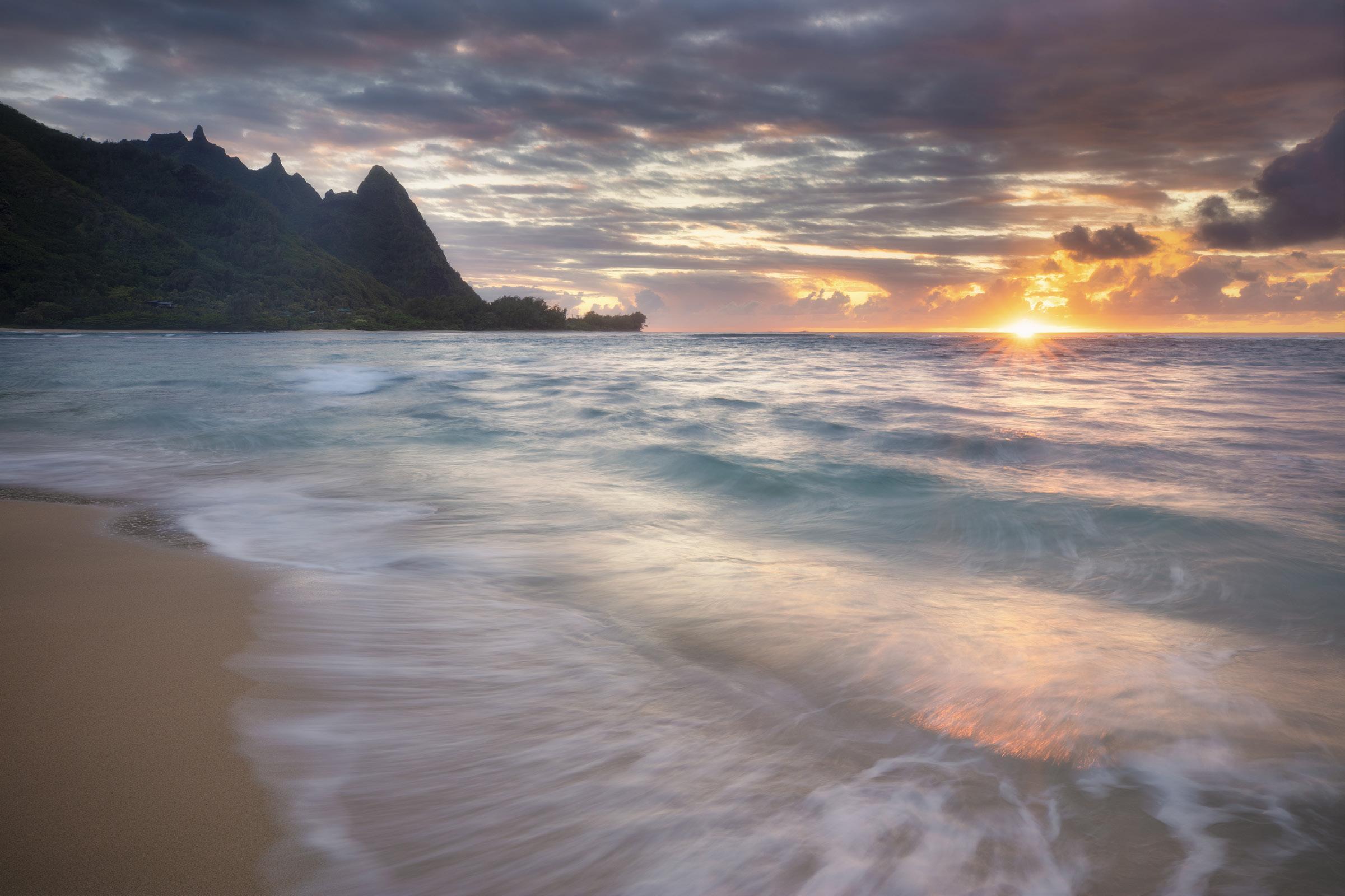
Jeff Nigro @jeffnigrophotography
I’ve visited this beach on the North Shore of Kaua‘i many times, in all kinds of weather. But without a doubt, this was the prettiest sunset I have witnessed there. I shot more than 100 images that evening, and the memories of that sunset—with the waves lapping at my bare feet and the soft Hawaiian breeze on my face—will stay with me forever.
Sunset at tunnels beach Hanalei, Kaua‘i
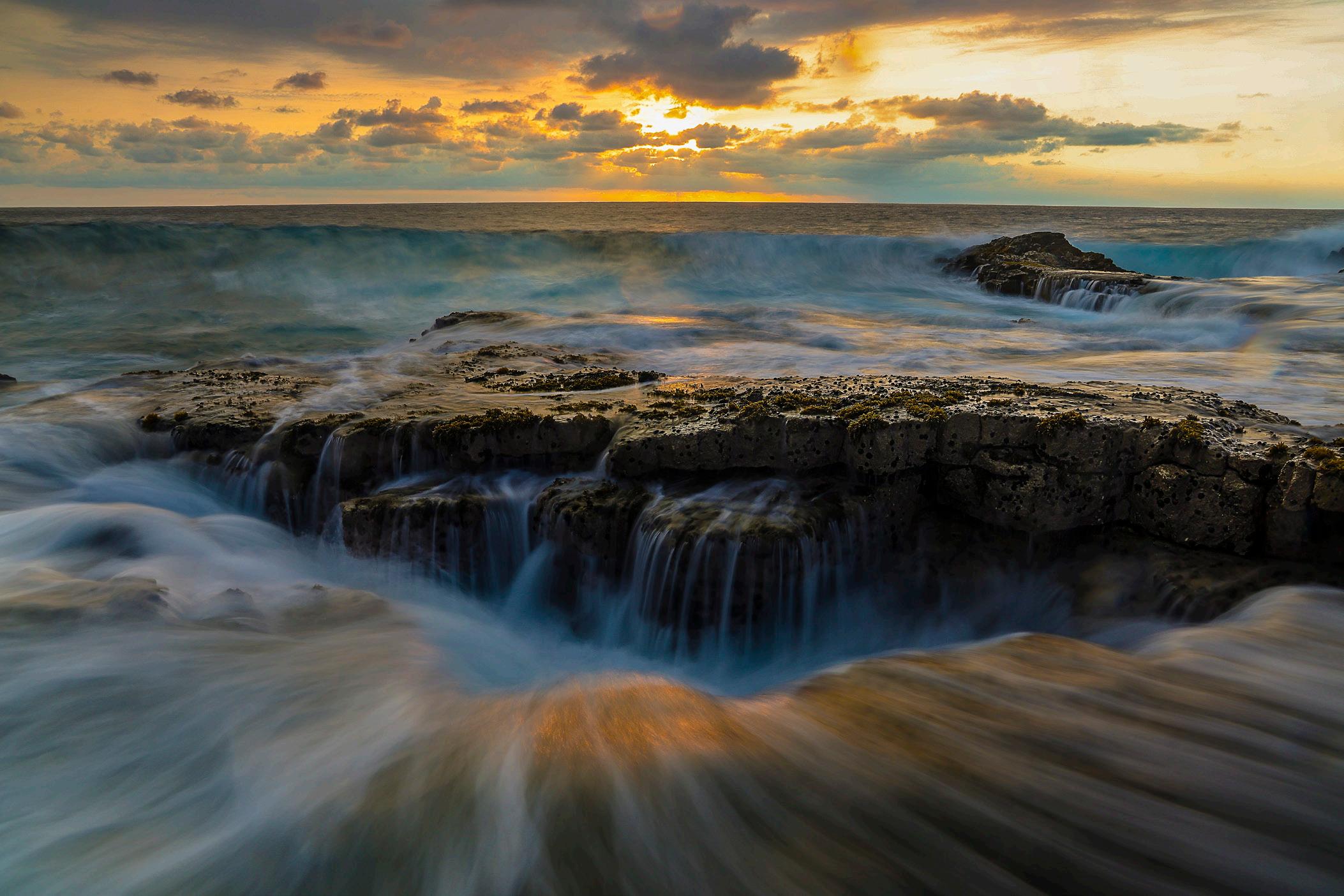
After capturing images of Episode 40 of Kīlauea’s eruption the day before, I returned to Kona. That evening, I decided to wander the shoreline and capture the sunset. After walking up and down the beach for nearly 45 minutes, I finally spotted a lava tube and enjoyed photographing it.
The ocean’s Secret passage Kona, Hawai‘i Island
David Pascua
@the_david_pascua
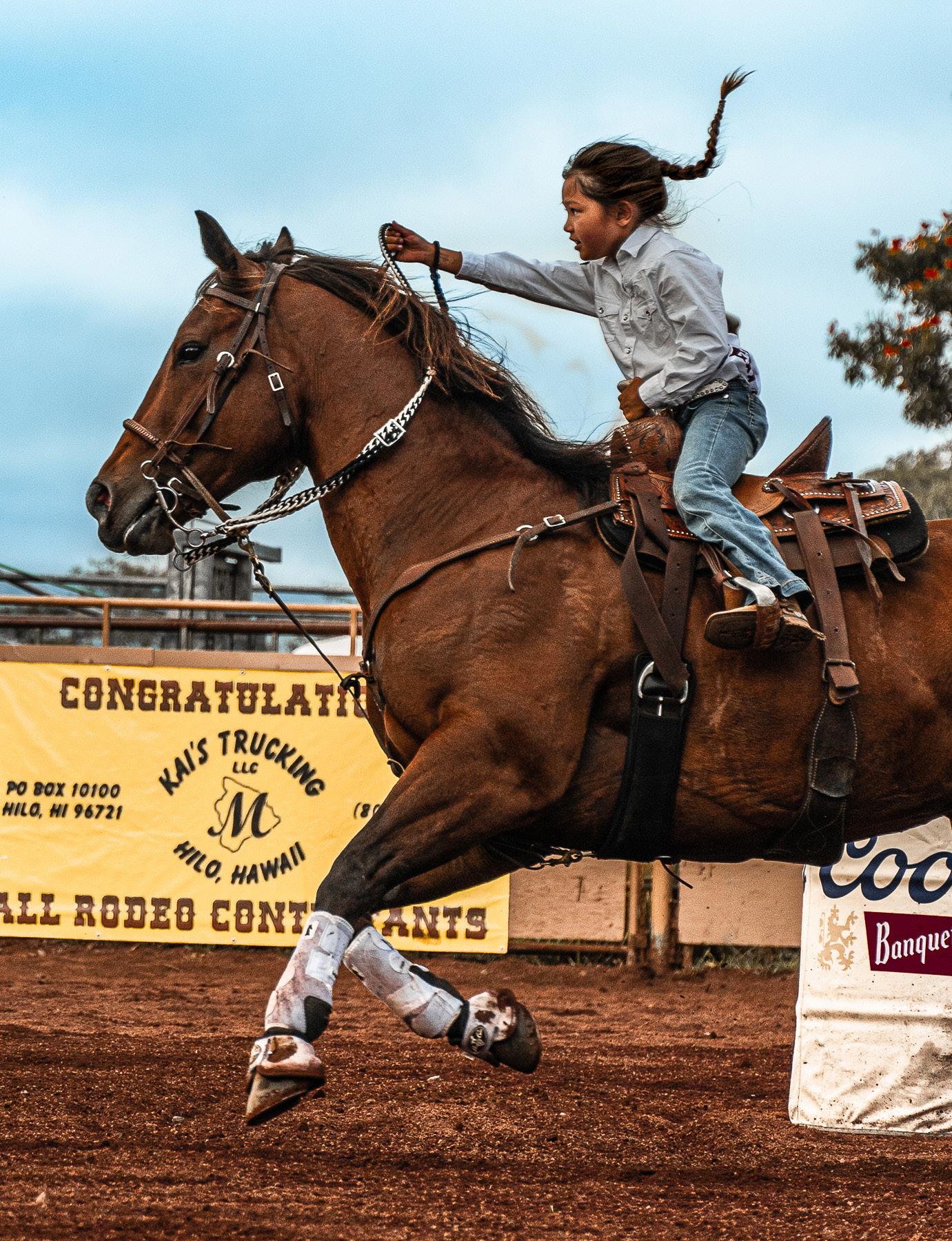
Lipine Muraki-Griffin
@lipine_muraki_art_photography
2025 Pana‘ewa Stampede Rodeo Queen
Hilo, Hawai‘i Island
Island and paniolo pride at the 2025 Pana‘ewa Stampede Rodeo capturing the Rodeo Queen, Ezra Leialoha-Hernandez and her horse, Patty Buttons.
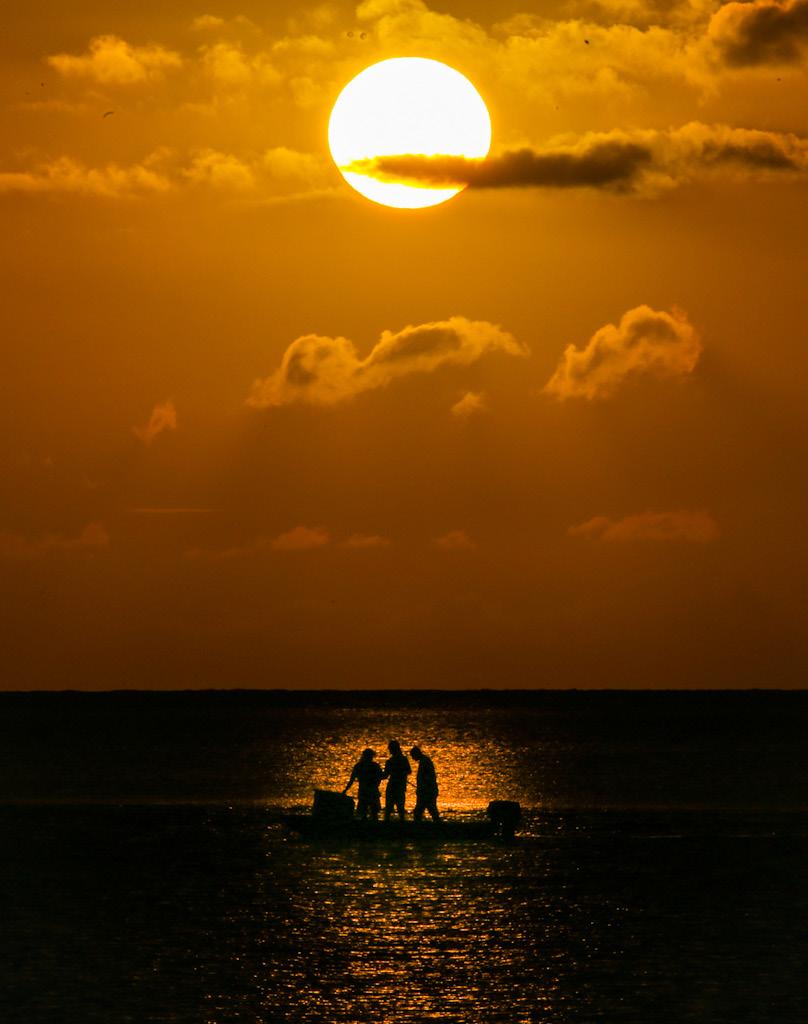
Eugene Santiago
The Three of Us Kaunakakai Harbor, Moloka‘i
I just happened to be watching sunset at the pier in Kaunakakai when three young fishermen sailed across the water into the sunlight.
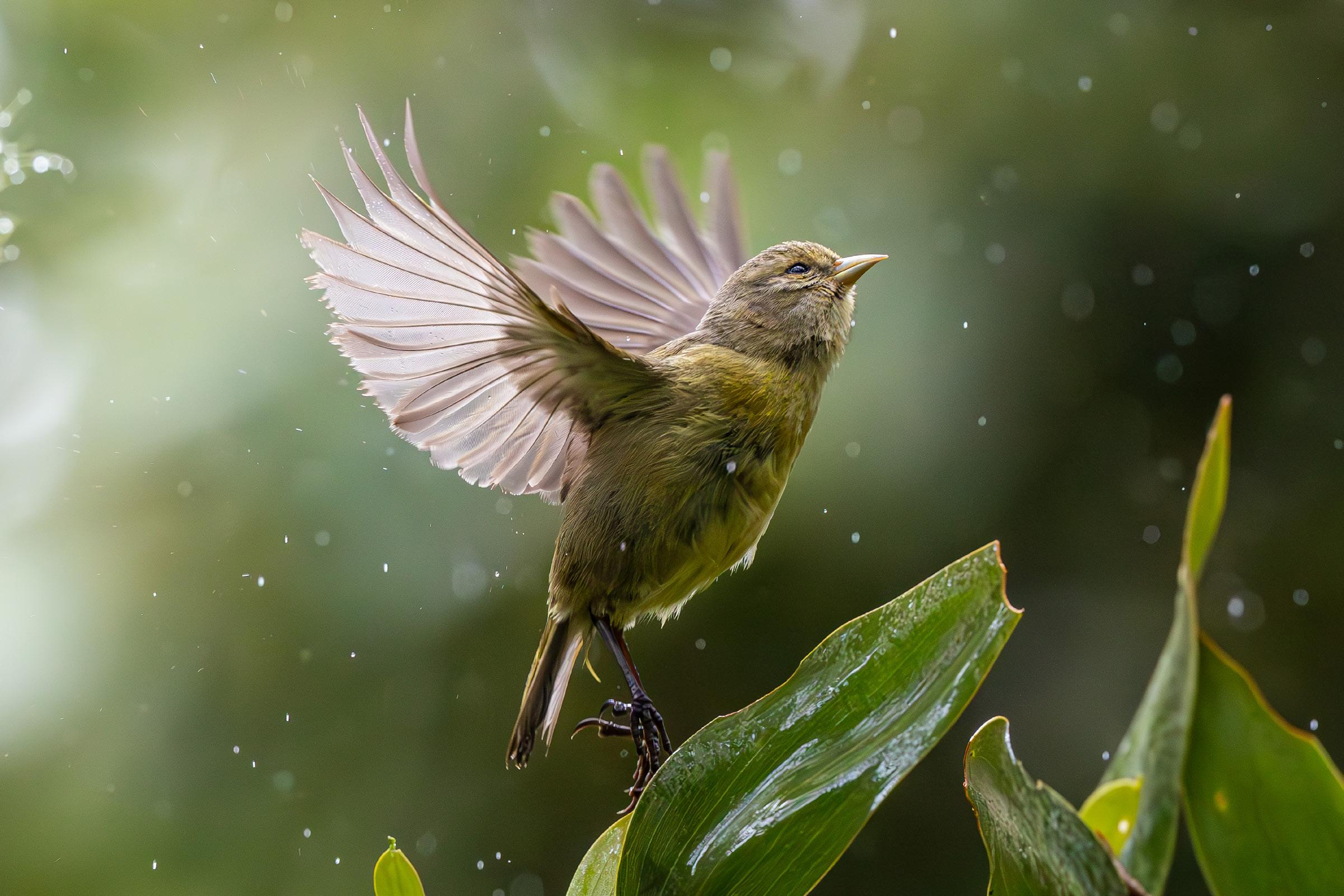
A rainy day in Hakalau Forest National Wildlife Refuge brings the forest to life.
‘Ākepa in Flight Mauna Kea, Hawai‘i Island
Josh Ha‘o @dropshotkillah
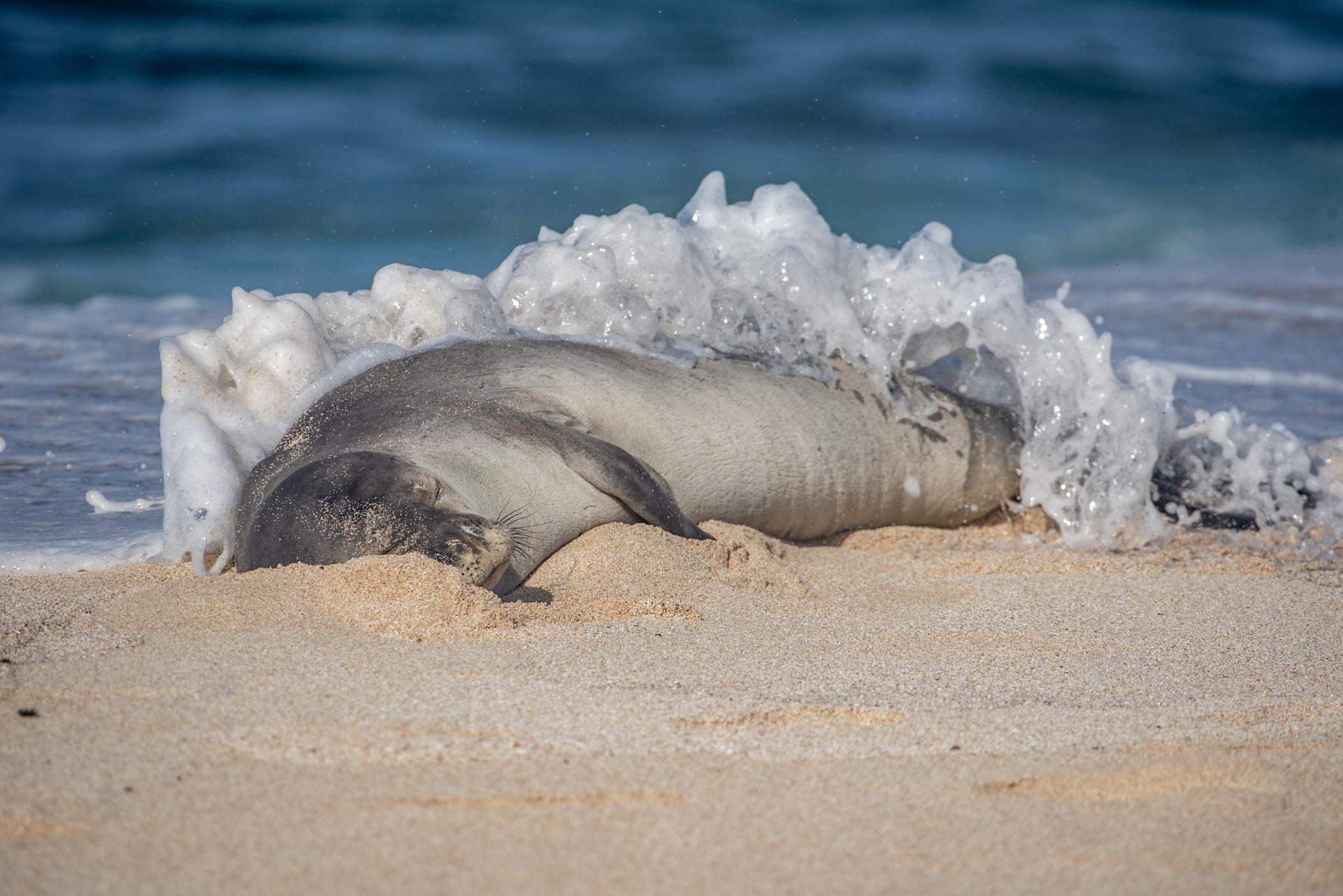
@jasonophoto
What does Lehiwa dream about when she is napping on a remote North Shore beach? A soft ocean blanket draped over her, tucking her in?
Lehiwa’s Blanket Kahuku, O‘ahu
Jason O’Rourke
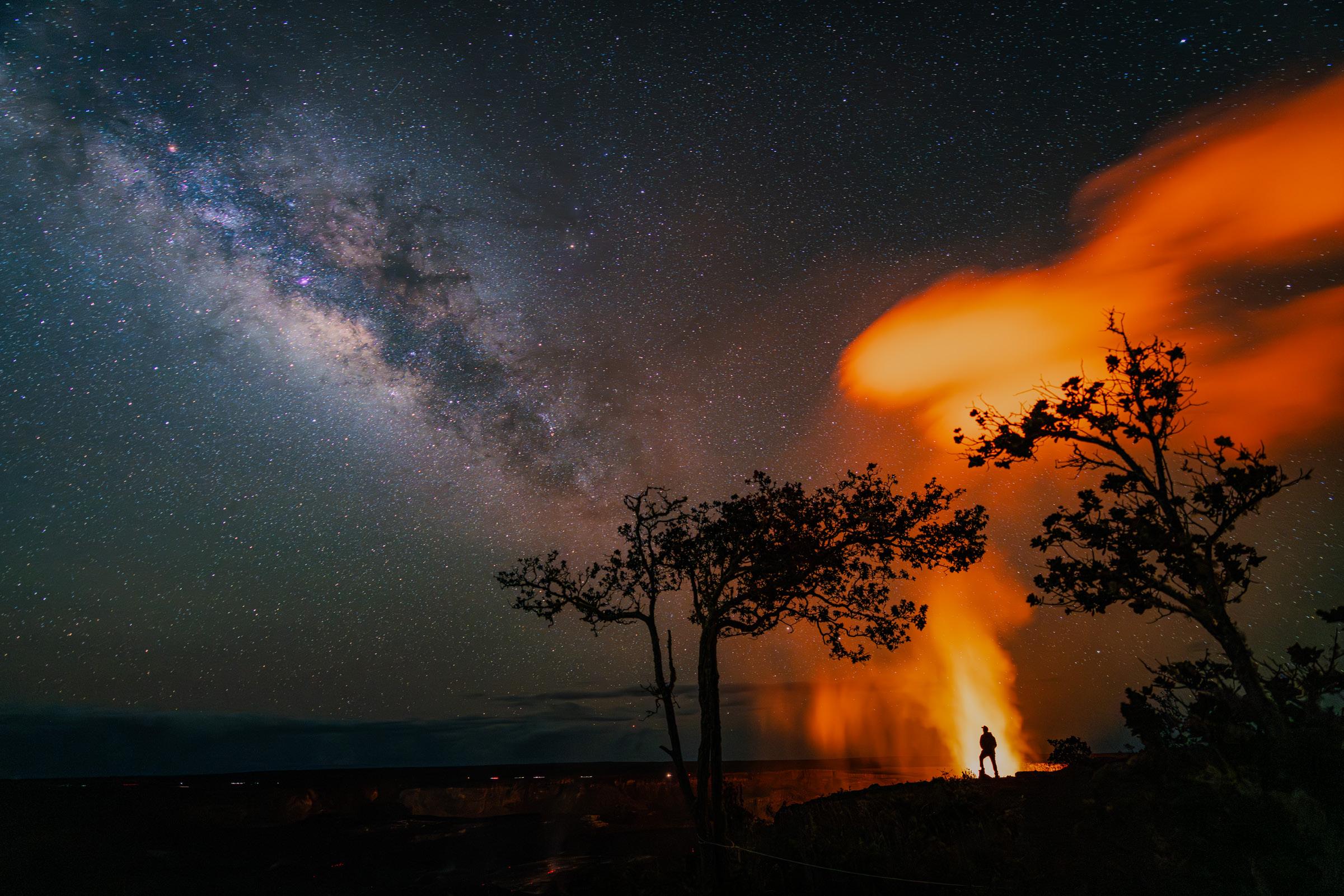
2 0 2 6
Travis Morrin @traviskeahi_photos
A Galaxy of Fire—A Self Capture
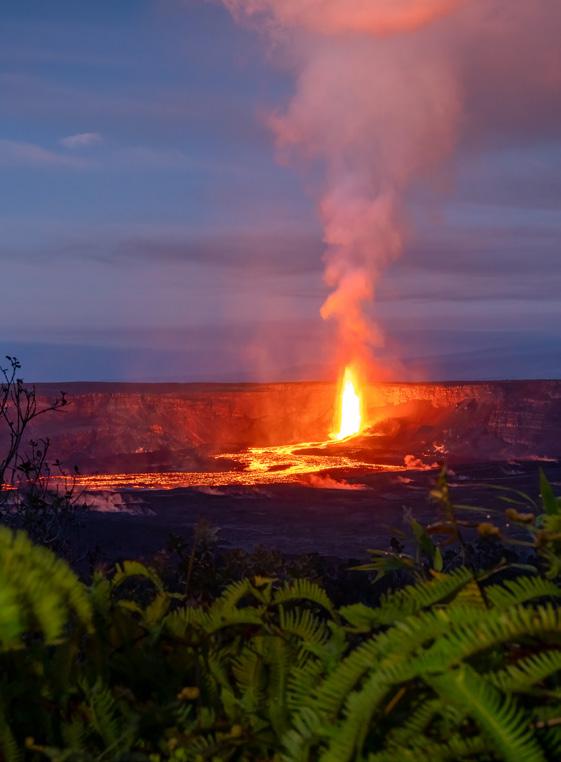
Beneath a river of stars, Kīlauea breathes her ancient fire—a dance of earth and sky, creation and wonder. A “self-portrait” from Episode 15, and one of those nights I’’ll never forget.
Hawai‘i Volcanoes National Park, Hawai‘i Island
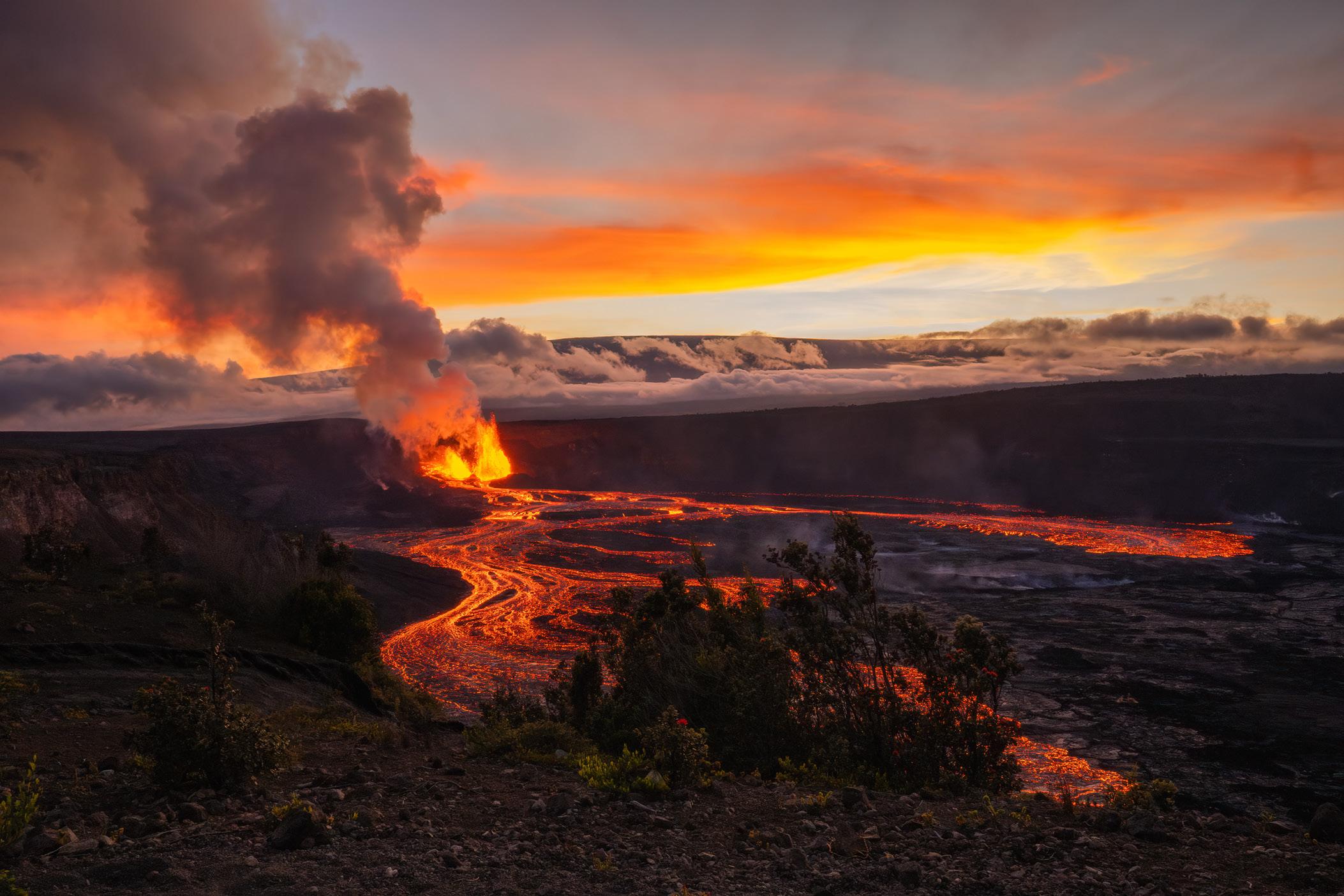
Spencer Lee @spencerlee808
Breath of Halema‘uma‘u
Hawai‘i Volcanoes National Park, Hawai‘i Island
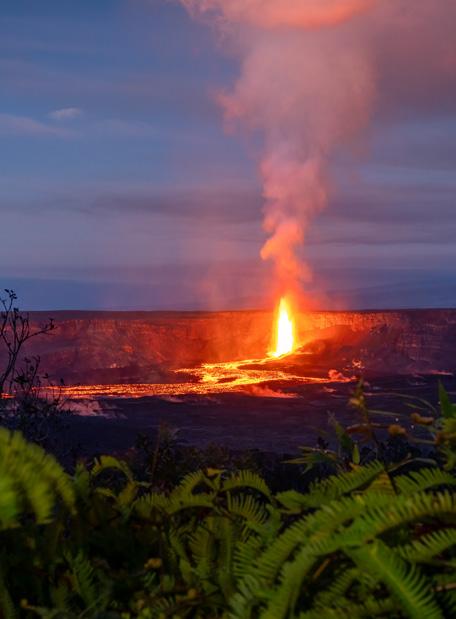
Steam and lava rise together from Halema‘uma‘u—quiet reminder from Kīlauea that the island is still being made.
Gavin Yasunari @yasunariphotography
in the Canopy
Hakalau Forest National Wildlife Refuge, Hawai‘i Island
2 0 2 6
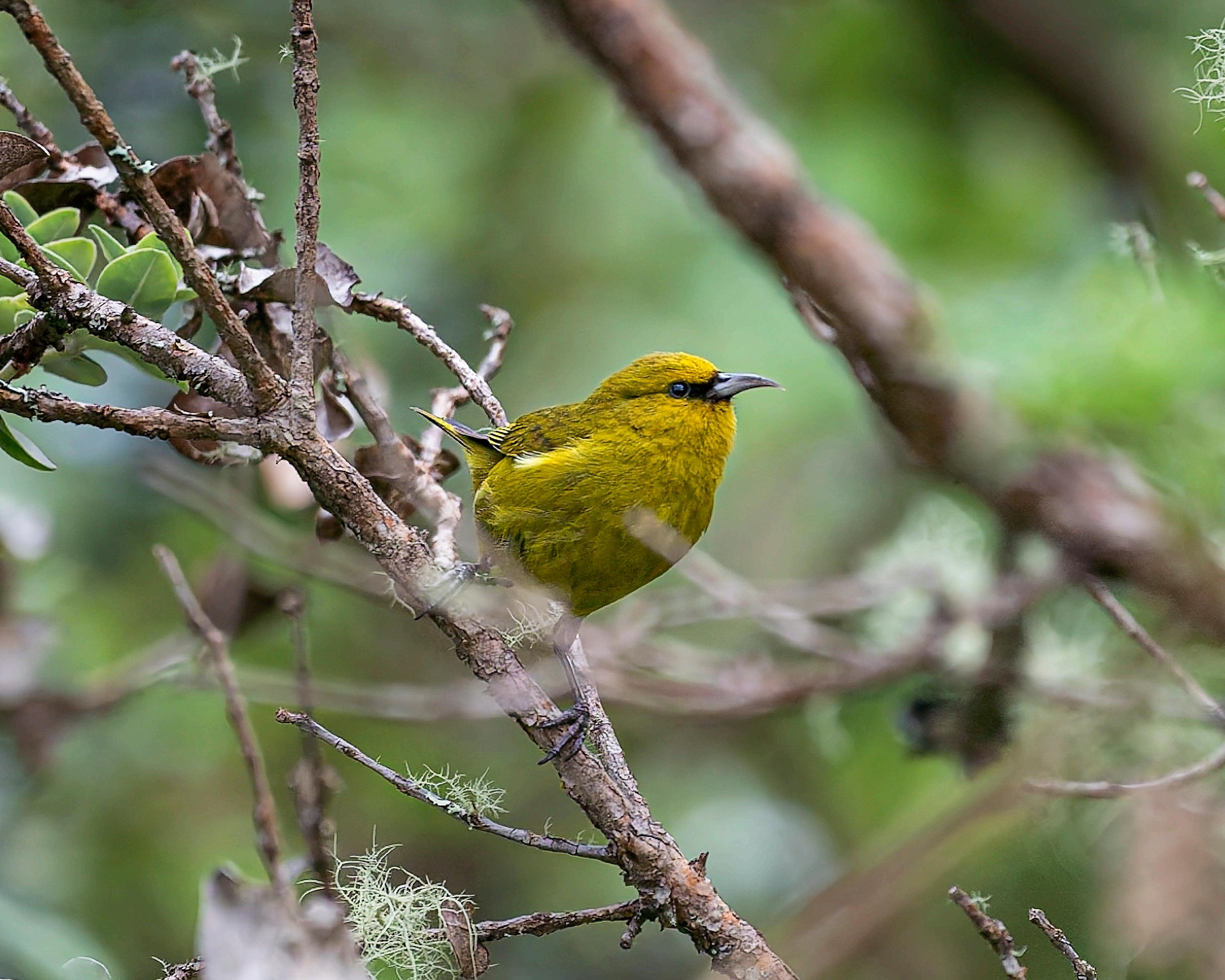
After patiently waiting in the forest, I captured this moment as a Hawaiian ‘amakihi paused on a branch, framed by the soft greens of its natural habitat.
‘Amakihi
2 0 2 6
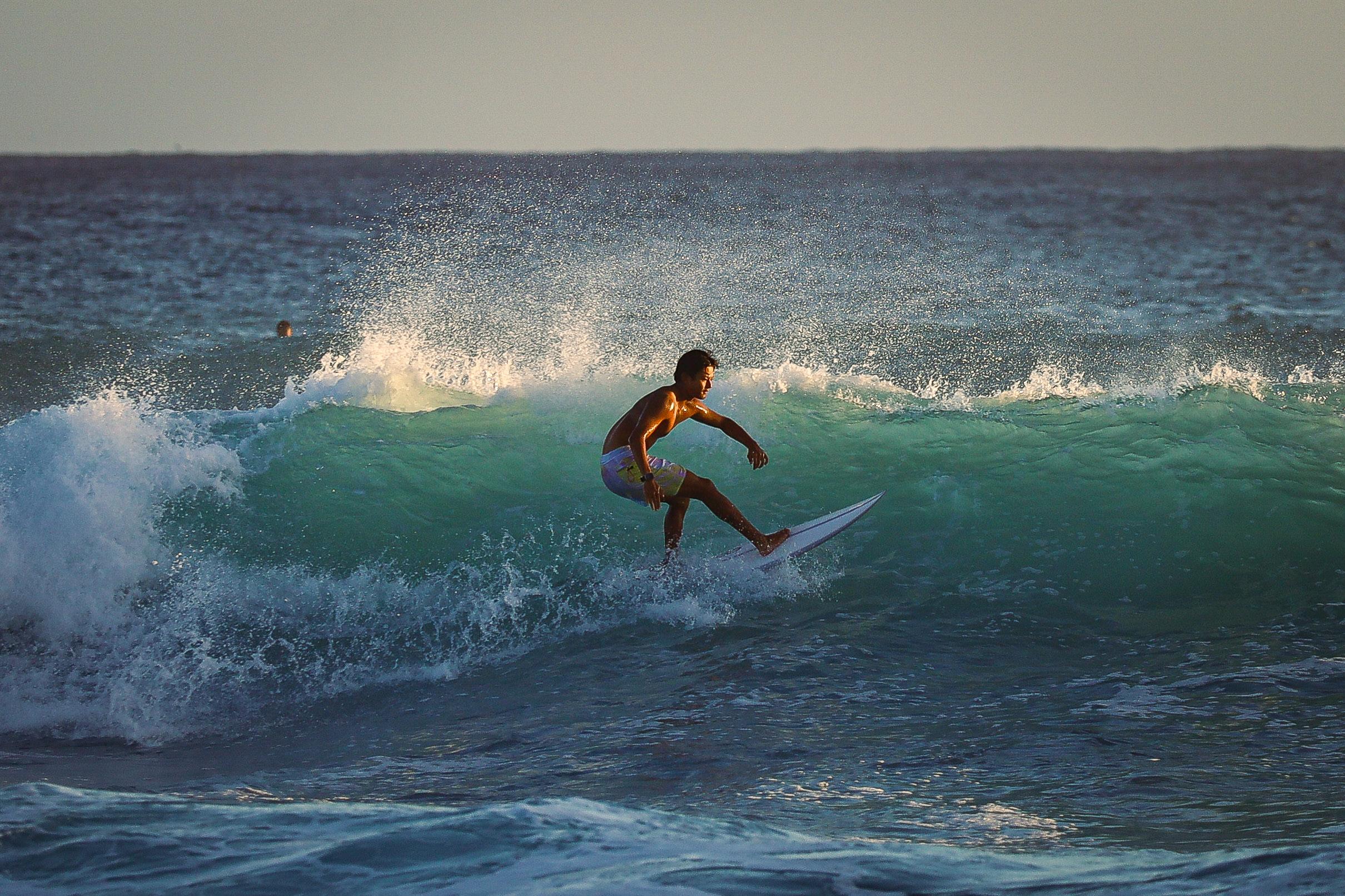
An evening surf session at Kewalo with my friend Sean.
Afternoon Surf at Kewalo Honolulu, O‘ahu
Trey Abe @comeflickmeup
InspIred by TradITIon, powered by CollaboraTIon
Kilo Summit bringS together local artiStS, deSignerS and entrepreneurS to celebrate collaboration and Strengthen hawai‘i’S creative community.
Kilo Summit is rooted in the Hawaiian practice of kilo, the art of deep observation. For generations, cultural practitioners have studied the relationships among ocean tides, endemic forests and weather patterns to better understand how every part of an ecosystem works together. That same mindset guides Kilo Summit by observing, connecting and strengthening Hawai‘i’s creative community.
Taking place Aug. 20–24 during the Made in Hawai‘i Festival, Kilo Summit brings together a curated group of local artists, designers, musicians, makers and storytellers to celebrate the creativity and innovation rooted in the Islands. Founded by Zak Noyle and Kuha‘o Zane, the summit is built on the belief that collaboration is stronger than competition, creating opportunities for
established creatives and emerging talent to share ideas, build relationships and grow together.
At the heart of the summit is a series of exclusive capsule collections in which participating brands collaborate to create one-of-a-kind products. These partnerships are designed to spark unexpected ideas while introducing audiences to new voices across Hawai‘i’s creative landscape.
The experience extends beyond the show floor through the Kilo Summit mobile marketplace. Available exclusively on-site during the event, the platform allows guests to browse every participating brand, view live inventory and purchase products directly from their phones using Shopify Checkout and Apple Pay. Orders are collected at a single pickup location, eliminating checkout lines and allowing brands to focus on what matters most: sharing their stories and connecting
with the community.
By combining cultural values with thoughtful technology, Kilo Summit creates a uniquely local experience that honors Hawai‘i’s makers, rewards those who support them and builds a stronger, more connected creative ecosystem for years to come.

bees, blossoms, & bottles
How honeybees found a home in Hawaii.
by Krystal KaKimoto
THEY SAY THE FLUTTER
OF
A
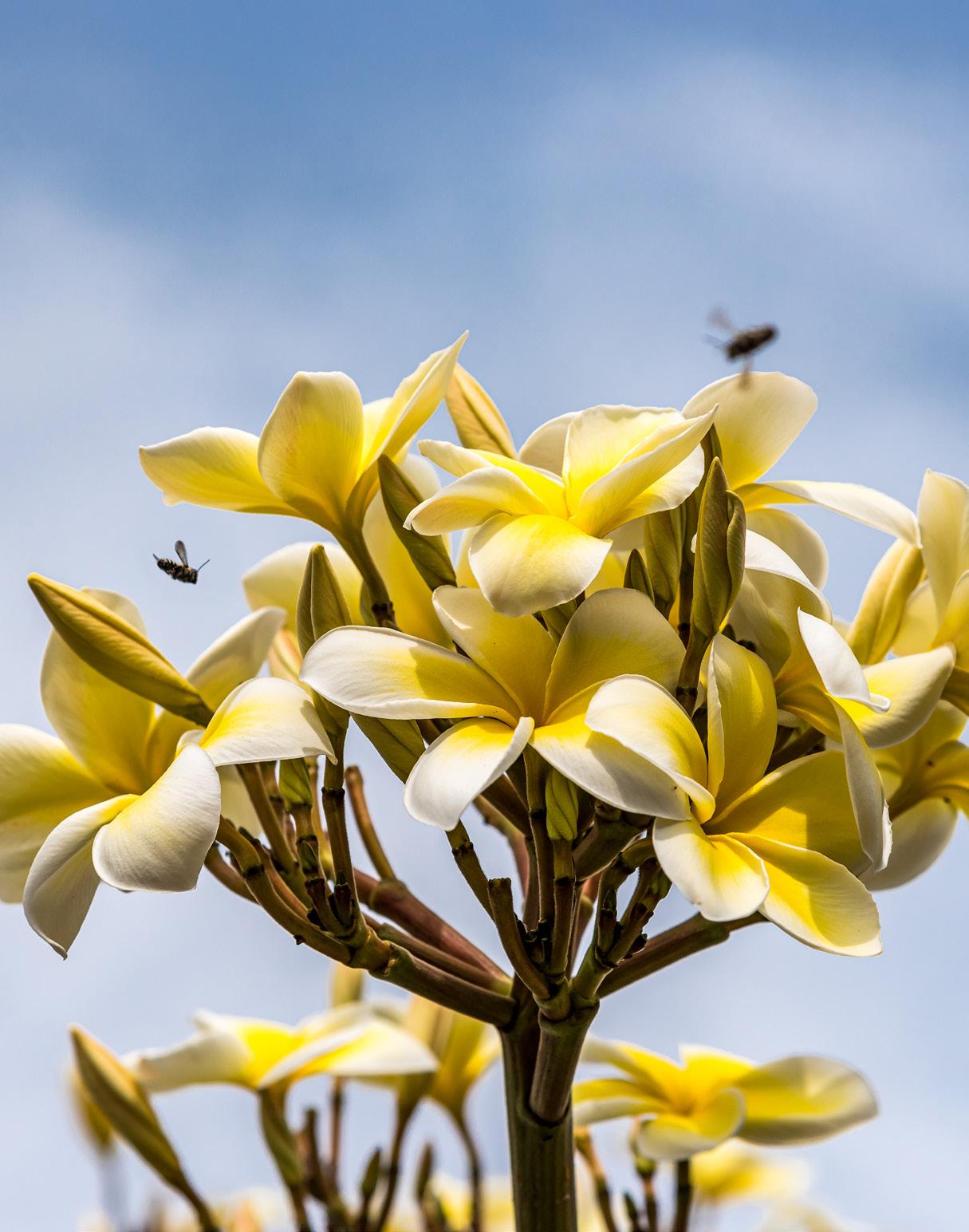
BUTTERFLY’S WINGS can set off a ripple effect half a world away, that a single moment or seemingly small decision can alter the course of generations. Much the same could be said for the honeybee. When the first honeybees arrived in the Hawaiian Islands in 1857, few could have predicted the profound impact their tiny wings would have on Hawai‘i’s ecosystems, agriculture and economy.
Long before the arrival of the European honeybee (Apis mellifera), Hawai‘i was already home to its own native pollinators. Also known as Nalo meli maoli, the Hawaiian yellow-faced bee (Hyaleus genus) plays a vital role in sustaining native ecosystems by pollinating plants such as ‘ōhi‘a lehua, naupaka and ‘ilima, but it does not produce honey.
Many may wonder why honeybees were introduced to the Islands at all, especially when Hawai‘i already had its own native pollinators. To understand that decision, one must look back to the 1850s and the reign of King Kamehameha III, Kauikeaouli. Under his leadership, the Royal Hawaiian Agricultural Society was established to advance commercial agriculture, expand cash crop production, and strengthen the Hawaiian Kingdom’s sovereignty through economic growth. Among the topics that captured the group’s attention was the growing importance of honeybees in global agriculture, not only as pollinators, but also for the economic potential of the honey and beeswax they produce.
In 1851, the society appointed a three-member committee to oversee efforts to introduce honeybees to the kingdom. Its first attempt came the following year, when hives were ordered from New Zealand. But because of a miscommunication, the bees were never sent.
Undeterred, fellow society member Henry A. Pierce, a partner of Charles Brewer, sought another route. In 1852, he contacted associates in Boston and arranged for a hive to be transported aboard the R. B. Forbes. Over the course of 180 days, the ship crossed tropical waters and rounded Cape Horn at the southern tip of South America. Extreme heat during the journey melted the honeycomb aboard the vessel, ultimately killing the bees before they could reach Hawai‘i.
Pierce made a second attempt in 1853, requesting two hives be shipped from Boston, with one packed inside a block of ice and fitted with a small ventilation pipe so the bees could breathe during their voyage. The ice-packed hive survived the journey. However, of the tens of thousands
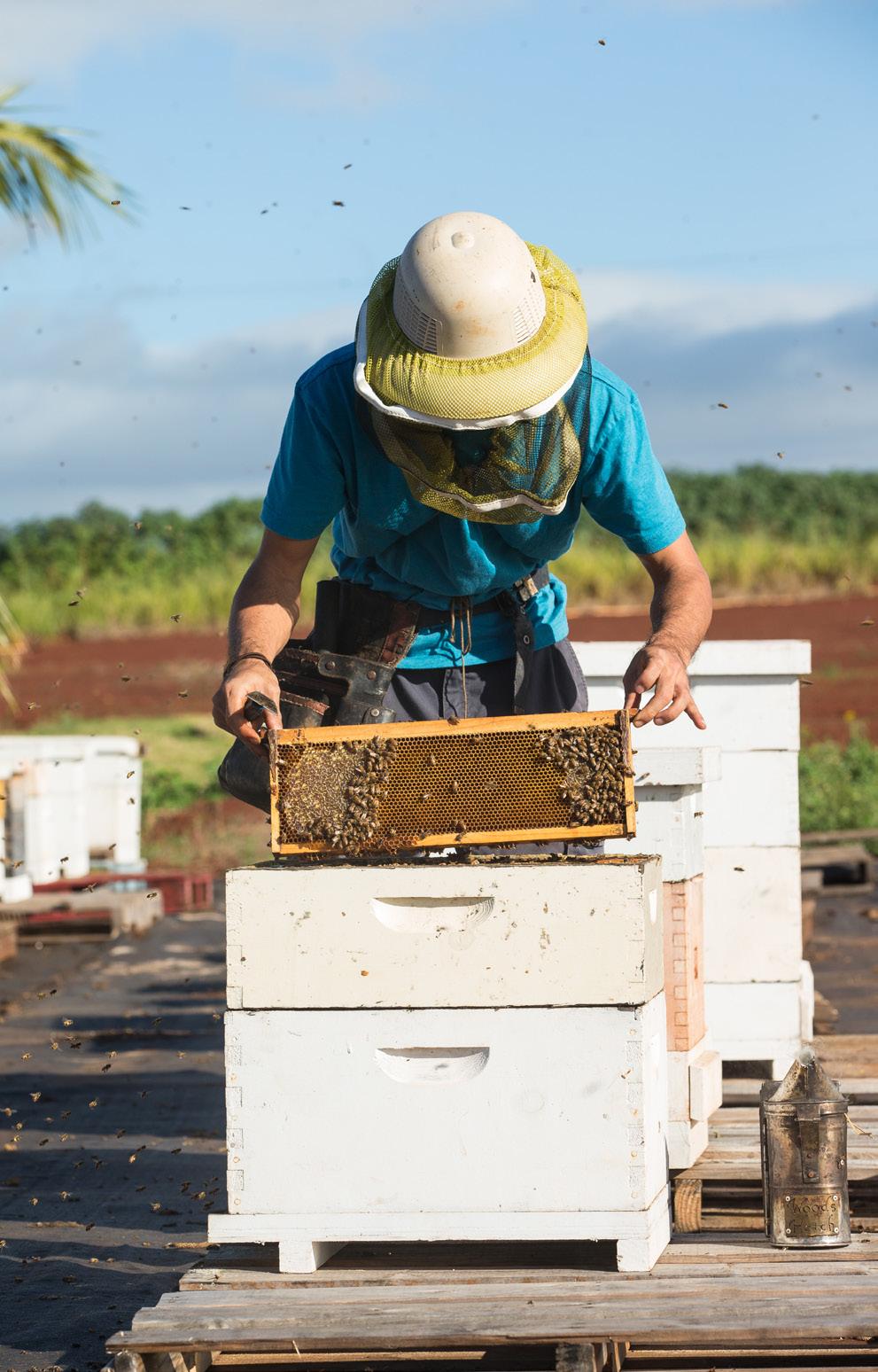
Beekeeping is an important part of Hawai‘i’s agricultural economy.
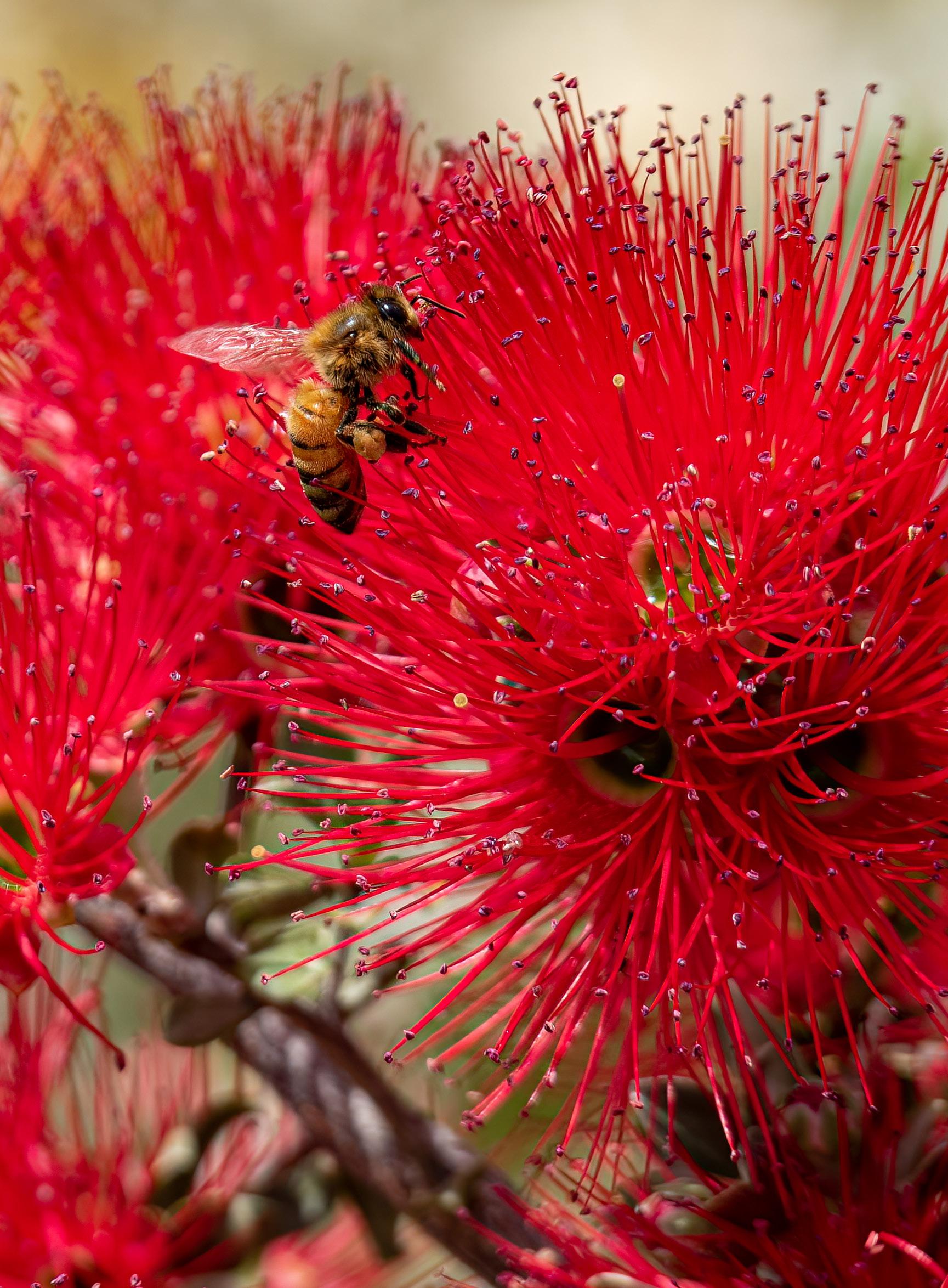
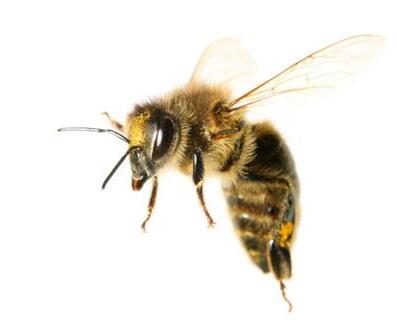
Honeybees are vital pollinators.
of bees shipped, only about 40 bees were still alive upon arrival. Despite the losses, the hive was auctioned and purchased for $13 by Charles Reed Bishop, a member of the Royal Hawaiian Agricultural Society and husband of Princess Bernice Pauahi Bishop. Hopes for establishing a colony were shortlived, however, as the remaining bees soon perished.
Years passed as the society continued its pursuit of honeybees and the economic promise they represented. Eventually, the society appealed directly to the public, offering a $10 reward to anyone who could successfully transport live bees to Hawai‘i.
Success finally arrived on Oct. 21, 1857, when three hives of German dark bees were shipped from San Francisco to Honolulu by William Buck aboard the Fanny Major. After an 18-day voyage across the Pacific, the hives arrived in the Islands, a turning point that marked the successful introduction of honeybees to Hawai‘i. The society purchased the hives for $100 each and placed them in the care of Dr. William Hillebrand, a renowned botanist and society member. Hillebrand transported the bees to his home in Nu‘uanu Valley, where the colonies flourished. From the original three hives, he expanded to nine and established feral honeybee colonies across O‘ahu, laying the foundation for the species’ spread throughout the Hawaiian Islands.
After successfully establishing honeybee colonies on O‘ahu, the society turned its attention to the rest of the island chain. In the years that followed, honeybees were introduced throughout Hawai‘i, largely to support the
LEFT
photo: david croxford, paul morton via getty images
pollination of kiawe trees, which had become increasingly valuable to the growing cattle industry.
Kiawe (Prosopis pallida), native to South America, was introduced to Hawai‘i in 1828 by the Rev. Alexis Bachelot, head of the first Catholic missions to the Islands. The hardy trees thrived in Hawai‘i’s hot, dry climate and produced protein-rich seed pods that could be used as nutritious cattle feed, and their sprawling canopies provided shade for the grazing herds. Honeybees helped improve kiawe pollination and seed production, intertwining the future of Hawai‘i’s cattle industry with the success of the newly introduced insects.
By the 1890s, beekeeping was flourishing across the Hawaiian Islands. In 1894, Hawai‘i exported its first shipment of honey to the United States, just 4 gallons, but a milestone that signaled the beginning of a new industry. By 1897, more than 109,000 pounds of honey was exported from Hawai‘i. Much of that growth was fueled by the Islands’ favorable climate, which allowed bees to forage yearround and enabled continuous honey production.
Today, beekeeping remains an important part of Hawai‘i’s agricultural economy, even as the role of introduced honeybees continues to spark thoughtful discussion among conservationists, farmers and researchers. While honeybees can compete with native pollinators for floral resources and, in some areas, dominate access to nectar, they also provide significant economic and agricultural benefits. According to the Hawai‘i Department of Agriculture’s Market Analysis & News Branch, the farm value of honey production was approximately $3 million in 2021.
The value of honeybees extends beyond honey production. They are vital pollinators for a range of agricultural crops, including macadamia nuts, coffee and citrus, helping to support both food production and farm profitability. As a result, even folks who oppose the idea of non-native species in the Islands recognize the
benefits that honeybees provide and the need for a balanced approach. But, they say, any potential negative impacts on Hawai‘i’s distinct native ecosystems must be addressed, and honeybee advocates say they agree.
Efforts to achieve that balance often include removing unmanaged feral colonies, strengthening disease monitoring and control programs, and establishing buffer zones to reduce interactions between introduced honeybees and native Hawaiian plants. These measures aim to preserve the local ecological integrity of Hawai‘i’s fragile environments while ensuring that managed honeybee populations can continue to support agriculture.
ABOVE
The story of introduced species in Hawai‘i is often one of unintended consequences. While honeybees, like introduced cattle and mongooses, have contributed to ecological challenges that were never anticipated, they have also generated unexpected benefits. Beyond supporting agriculture, honeybees have inspired new artisanal traditions that celebrate Hawai‘i’s unique sense of place. One example is the growing use of locally produced honey in hyperlocal meads, transforming a species introduced to the Islands into a catalyst for innovation, craftsmanship and local flavor.
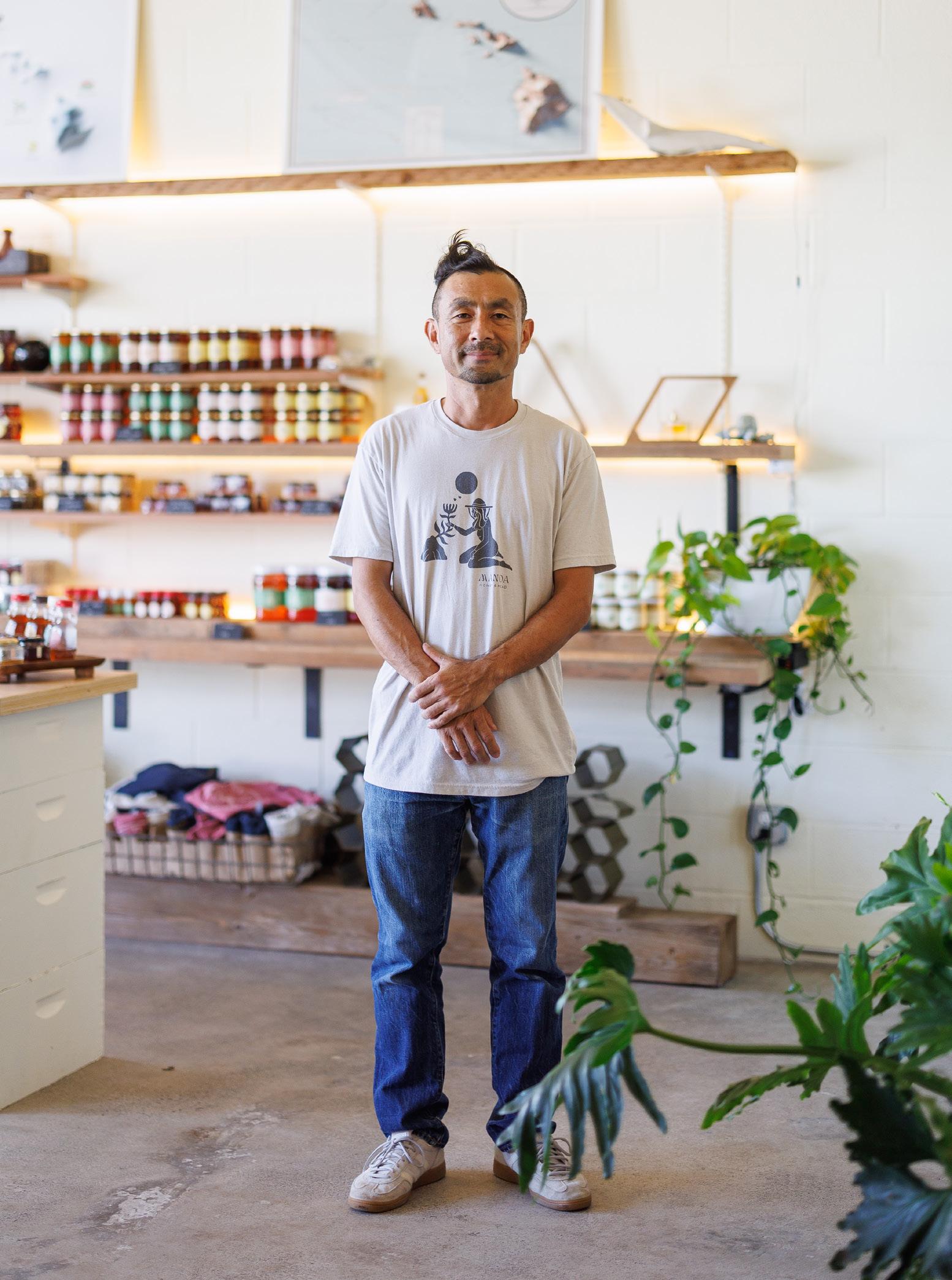
Yuki Uzuhashi is the owner of Mānoa Honey & Mead.
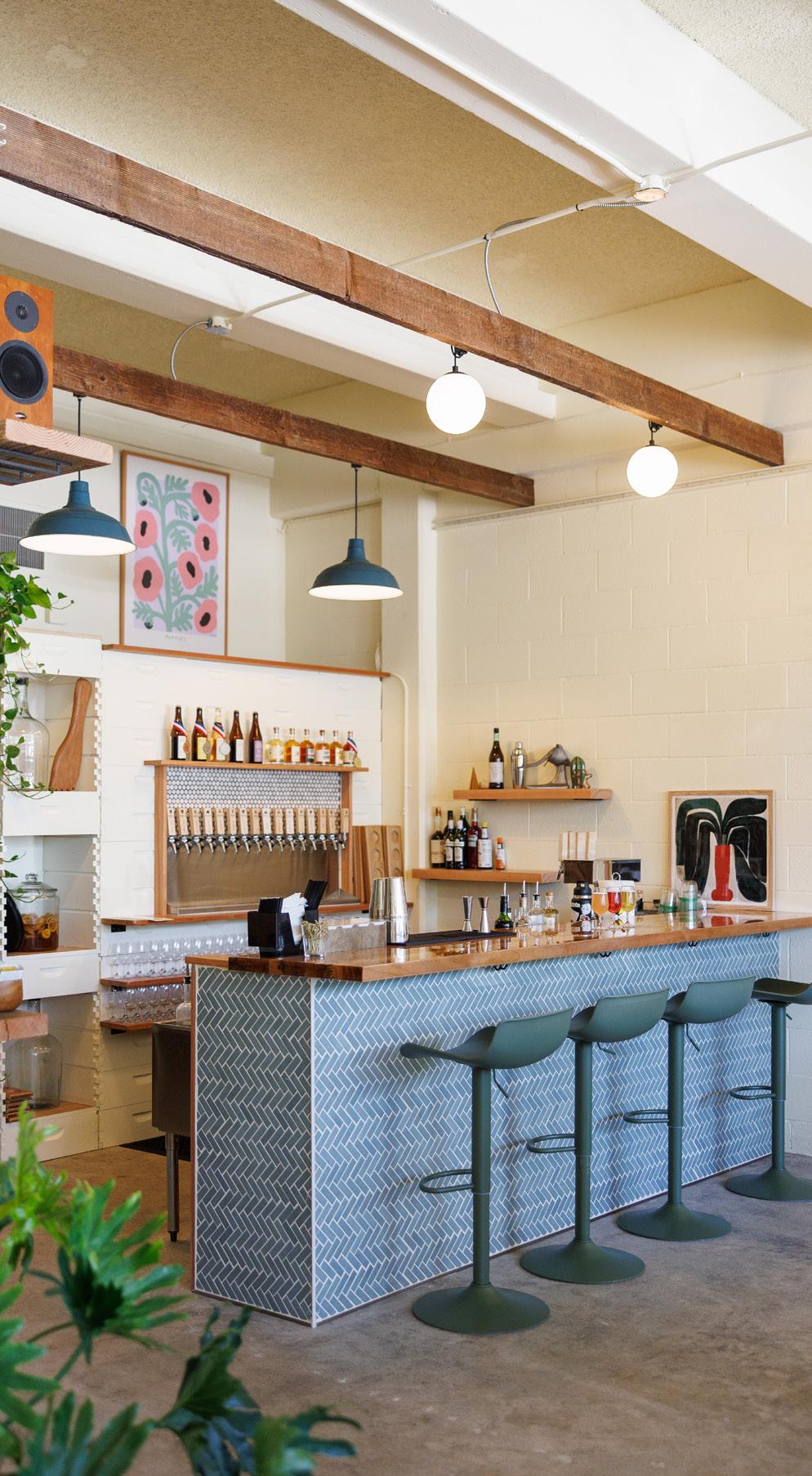
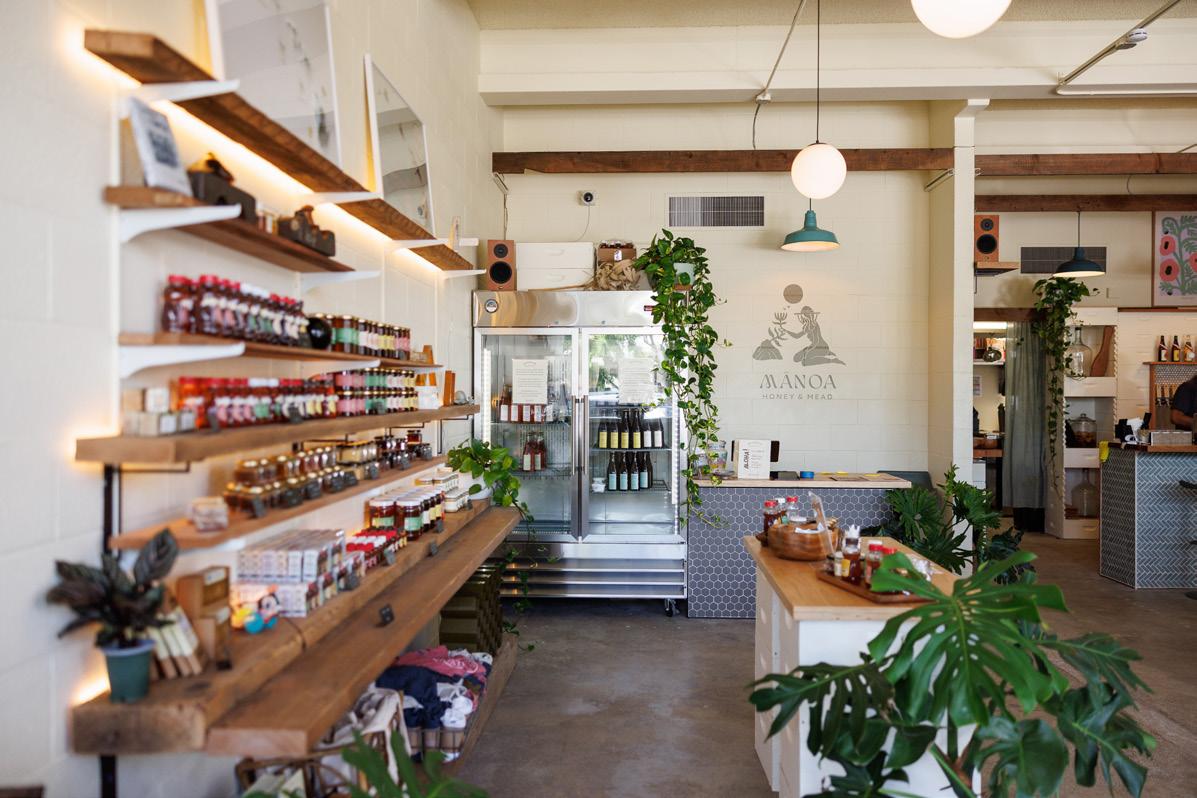
Often associated with Vikings and medieval feasts, mead is, at its heart, created simply, through the fermentation of honey and water—a tradition that spans thousands of years across various cultures. In Hawai‘i, Yuki Uzuhashi, owner of Mānoa Honey & Mead, is reimagining the ancient drink through an Island perspective, bringing mead to the forefront of Hawai‘i’s craft beverage scene. Rather than reproducing a heavy, traditional style of mead, Uzuhashi has developed a style that is bright, lively and expressive of the Islands, using locally sourced honey and Island-grown ingredients
LEFT
Mānoa Honey & Mead opened a tasting room in Kaimukī.
TOP RIGHT
Uzuhashi has developed a style of mead that is bright, lively and expressive of the Islands.
BOTTOM RIGHT
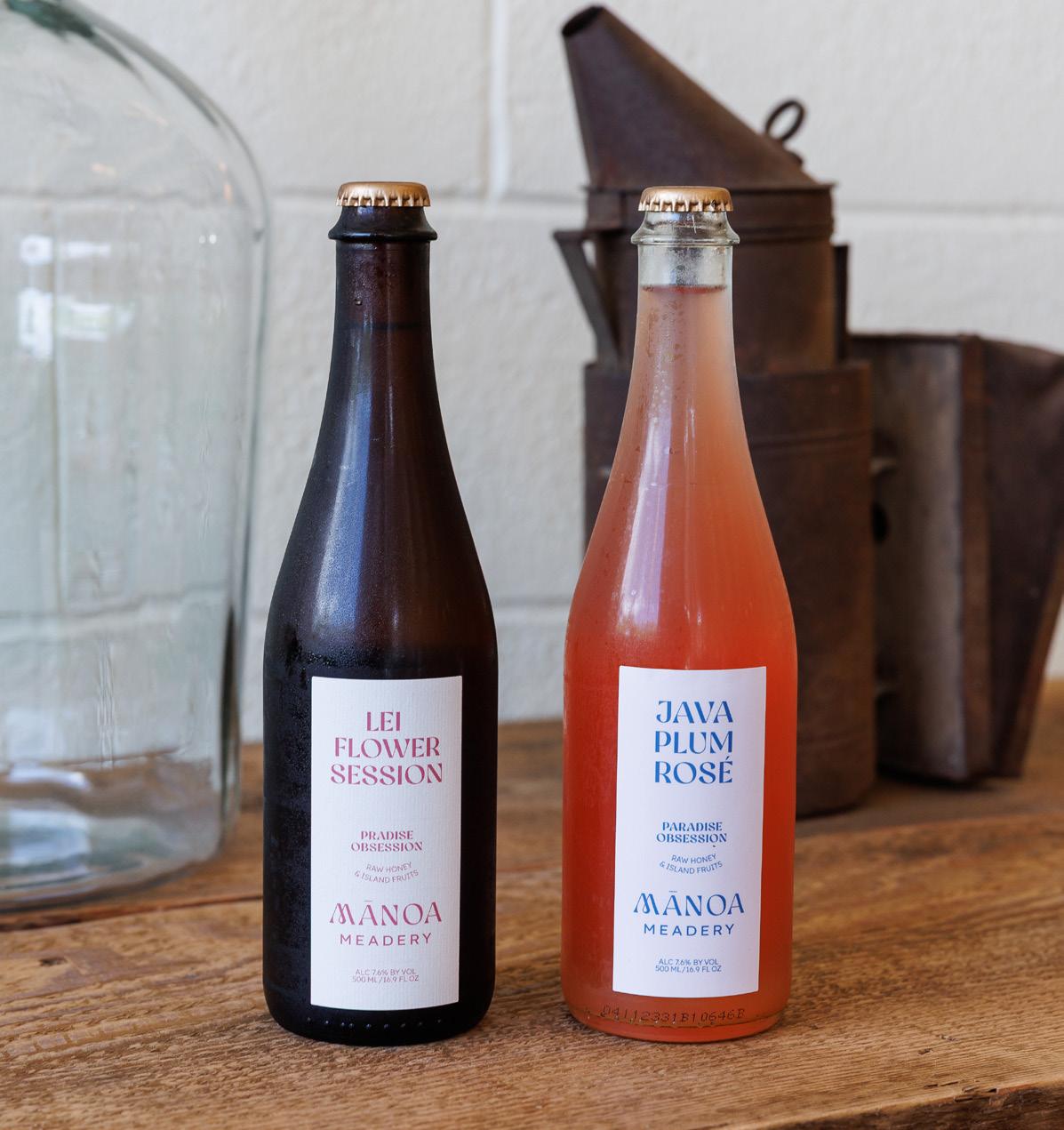
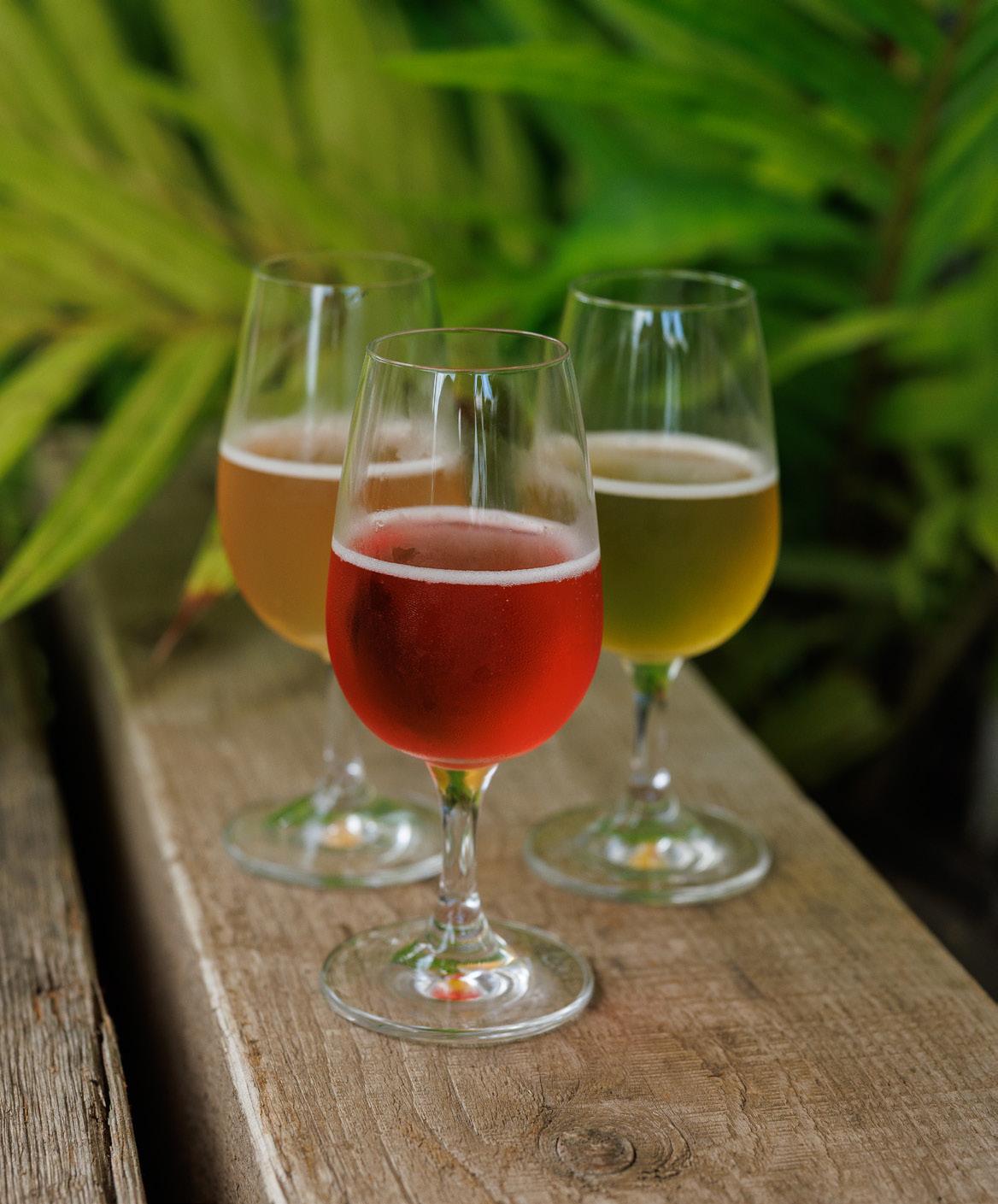
Mānoa Honey & Mead showcases Hawai‘i’s unique agricultural products.
to showcase Hawai‘i’s unique agricultural flavors.
After graduating from art school in Japan in 2003, Uzuhashi made an unusual declaration for his thesis project: He would become a beekeeper. What began as an artistic vision soon evolved into a life calling. Following graduation, Uzuhashi apprenticed under a beekeeper before launching a small independent operation with his grandmother in 2005.
Years later, a chance trip to Hawai‘i altered the course of his career. During the visit, Uzuhashi met the founder of Mānoa Honey & Mead, who was preparing to retire. Seeing an opportunity to carry his legacy forward, Uzuhashi and his wife, Erika, made the leap and relocated to Hawai‘i in 2014. Today, the couple operates the family-run business, focusing on small-batch production and high-quality ingredients. Their offerings have expanded beyond raw honey to include specialty hive products and, notably, O‘ahu’s only craft mead production facility, bringing new attention to an ancient beverage.
While their mead was officially launched during the Covid-19 pandem-
“When you are drin King our mead and looKing into the floral trees... you are tasting harmony, and isn’t that a beautiful thing?”
ic, Uzuhashi says the groundwork began years earlier. In 2017, he enrolled in a mead-making course at UC Davis and later formalized his recipe after receiving a USDA value-added grant. From the outset, he set out to create something distinctly suited to Hawai‘i.
“Over the course of developing our recipes, we could not find a role model or style of mead to follow, because our climate in Hawai‘i is so unique,” he recalls. “We are in a humid and warm climate, reaching for things that are refreshing and unlike traditional meads that are heavier and higher in alcohol. Therefore, we created a mead that made sense to us, something bubbly, meant to be drunk cold, and using the iconic fruits of the Islands.”
Still, Hawaiian-grown honey is at the heart of his work, and the health of the Islands’ hives are a constant concern. “Weather, rain, invasive parasites—they are all risks to the health of hives,” he explains. “The health of hives is 100% a concern to us. Without healthy bees, we do not have anything.”
Despite these challenges, Uzuhashi remains busy as a bee, expanding operations to include a retail and meadery location in Wahiawā as well as a new tasting room in Kaimukī, all while continuing to develop meads rooted in place. “We are working to create a super terroir-centric beverage,” he shares. “When you are drinking our mead and looking into the floral trees, you are
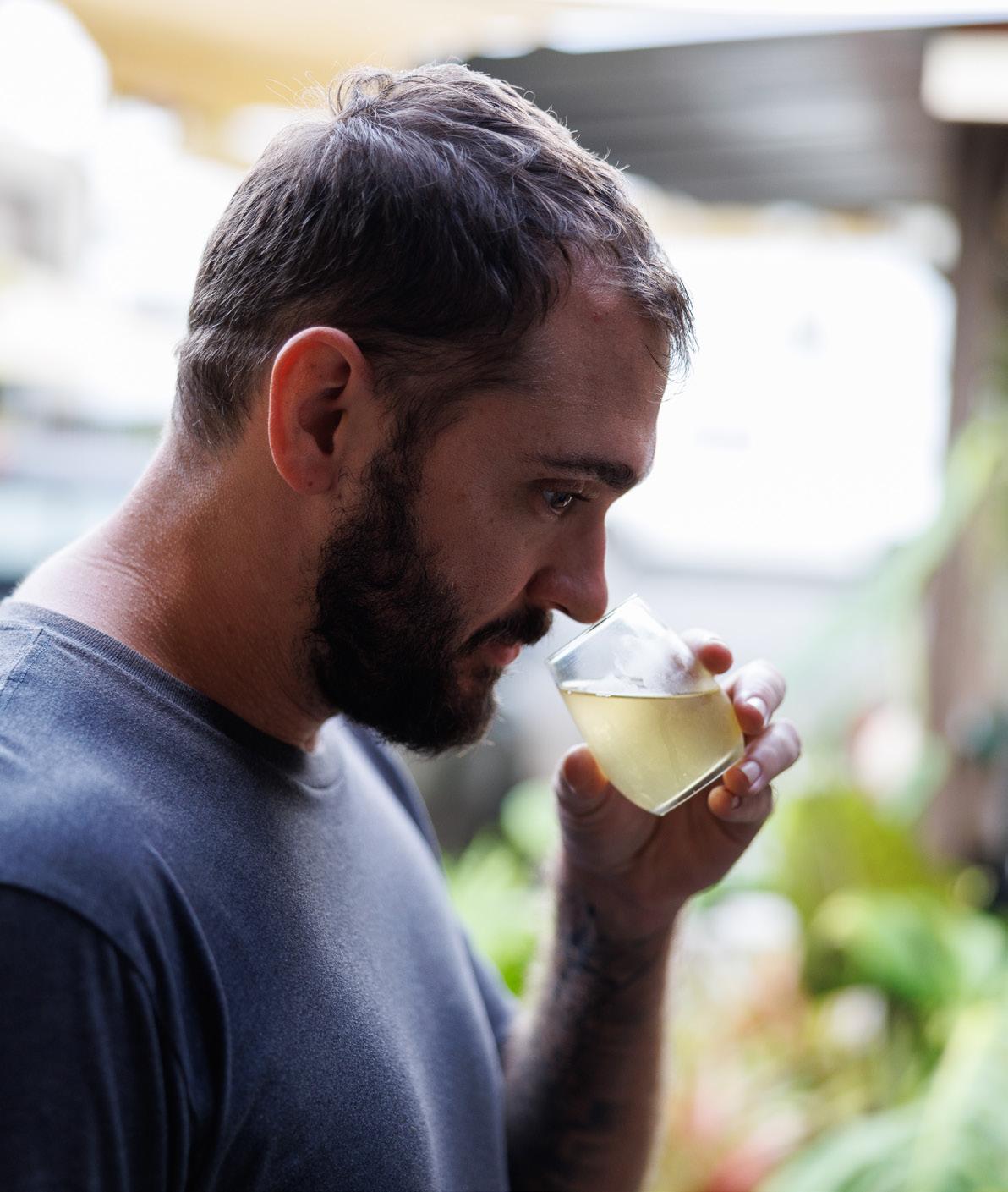
Uzuhashi is helping bring mead to the forefront of Hawai‘i’s craft beverage scene.
Meant to be enjoyed cold, the mead is bubbly and features iconic fruits of the Islands.
looking at the flowers that you are getting a buzz from; you are tasting harmony, and isn’t that a beautiful thing?”
Today, the story of honeybees in Hawai‘i stands as one of both transformation and interdependence, an imported species that quietly reshaped the Islands’ landscapes, economy and flavors. Their presence is now inseparable from the rhythm of Island life, woven into agriculture, ecology and culture alike. In every drop of honey and every glass of mead, there is a reminder of how something so small can leave such an enduring imprint.
For more information about Mānoa Honey & Mead, visit manoahoney.com.
LEFT
RIGHT
A Morning with Mālama PūpūkeaWaimea
People might not know that Kapo‘o, O‘ahu’s popular snorkeling destination, is a conservation area too.
BY SARAH BURCHARD
IFEEL SILLY TRYING TO KEEP MY BALANCE in the rain while planting naupaka along a slippery bank. I should’ve worn work boots. But that’s not the only thing I learn on my Saturday outing to the North Shore.
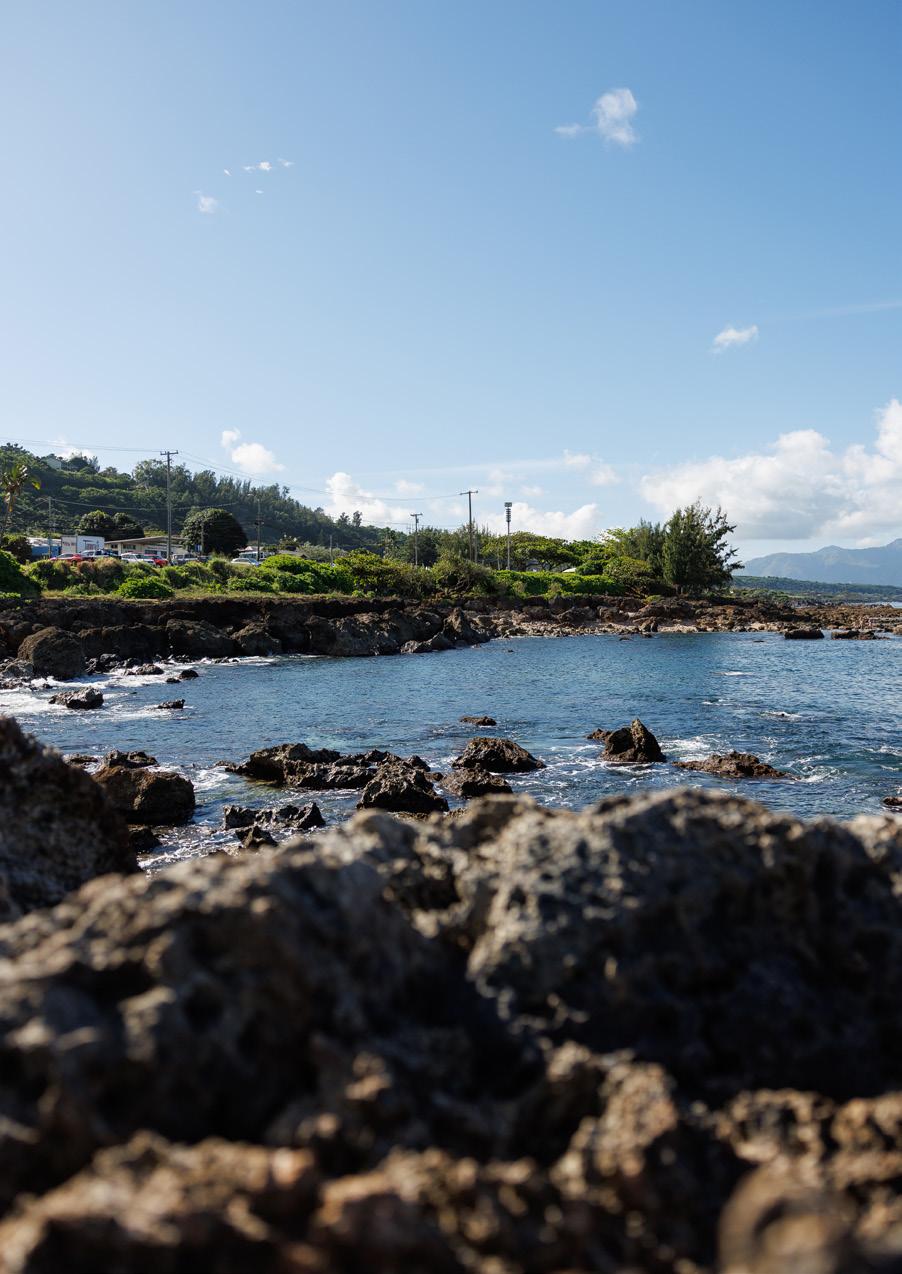
Kapo‘o, also known as Sharks Cove, is a protected marine life conservation district in Pūpūkea, O‘ahu. The area, which
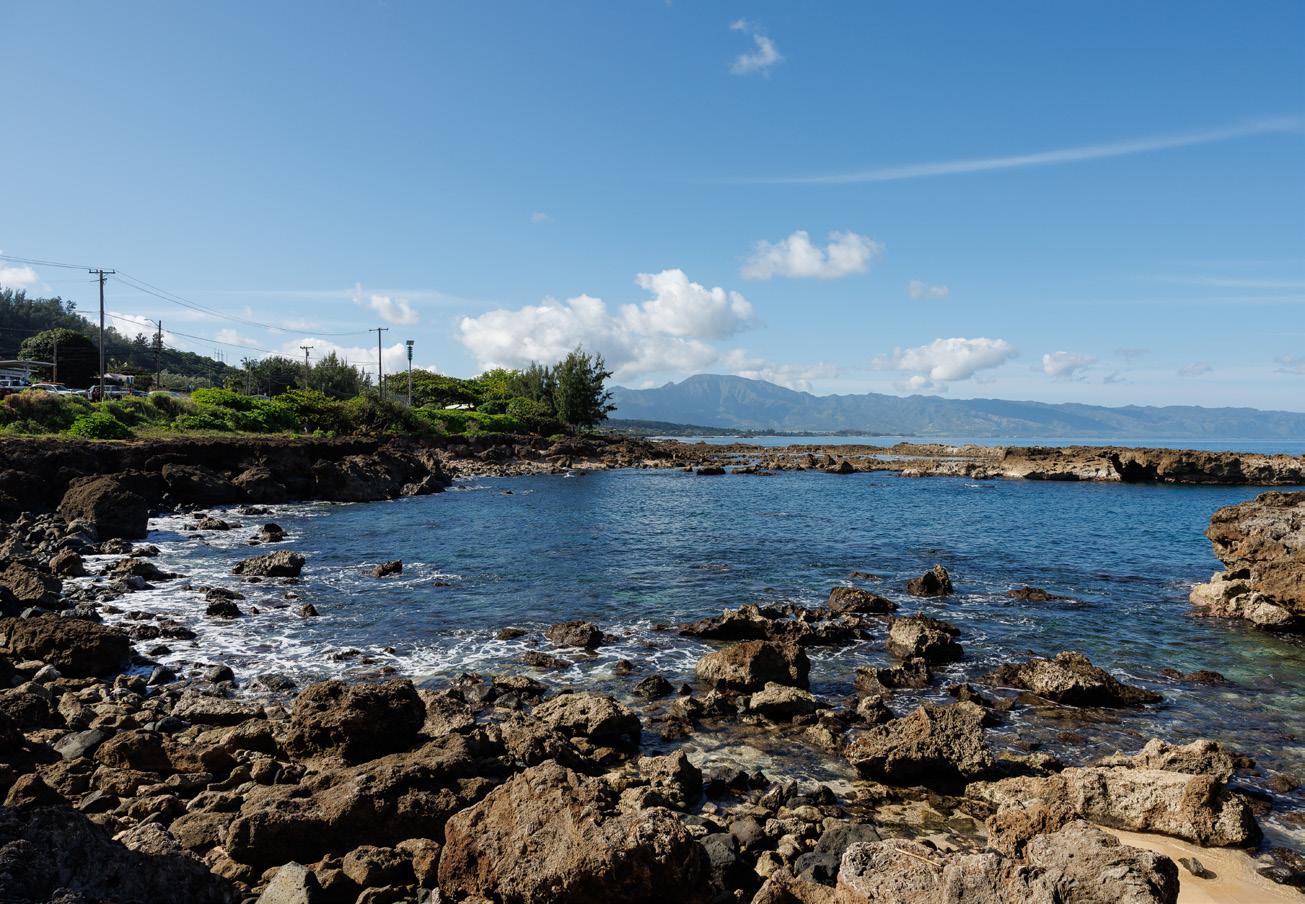
includes the adjacent tide pools, is a “no take zone” policed by the Department of Land and Natural Resources. Because of the area’s abundant sea life, it’s also a prime snorkeling spot, and visitors come here in droves. The fact that not everyone is privy to its protection status is why Mālama Pūpūkea-Waimea was founded in 2005—to act as a neighborhood watch for the ocean and to steward the land around it.
According to Denise Antolini, the group’s president and co-founder, the tide pools contain 13 coral species and more than 85 kinds of fish and invertebrates. On the morning I volunteer, dozens of people are wading in them. Antolini says Mālama Pūpūkea-Waimea conducted a study last year that showed a correlation between the number of people entering the tide pools each day and a decrease in fish population. Simply stepping on coral can damage it; when that happens fish are displaced from their habitat, she says.
Contaminated dirt and water that seeps into the ocean from land can also damage coral. About 12 years ago, the organization began planting native coastal plants
photos: courtesy of hawai‘i alliance of nonprofit organizations
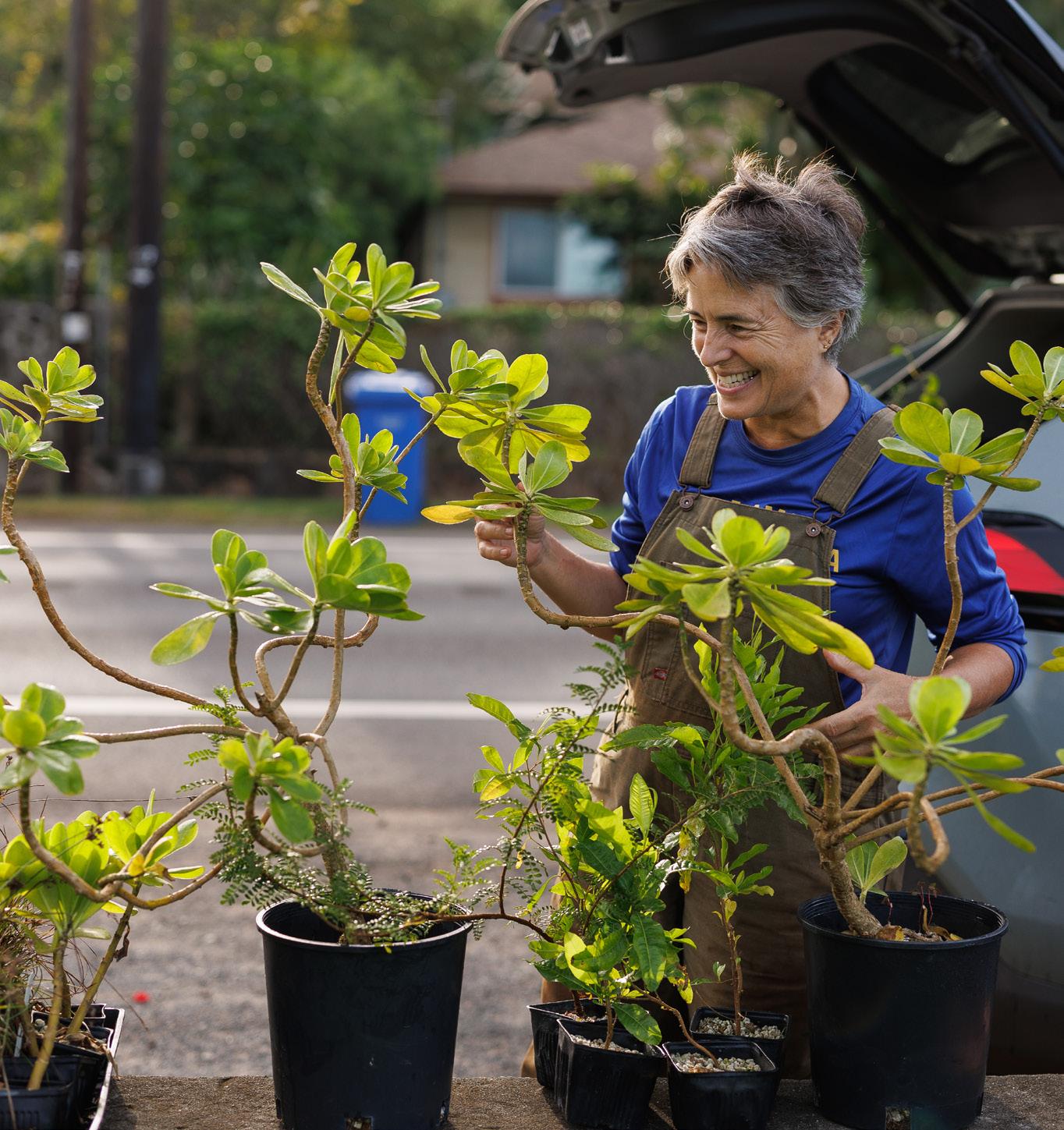
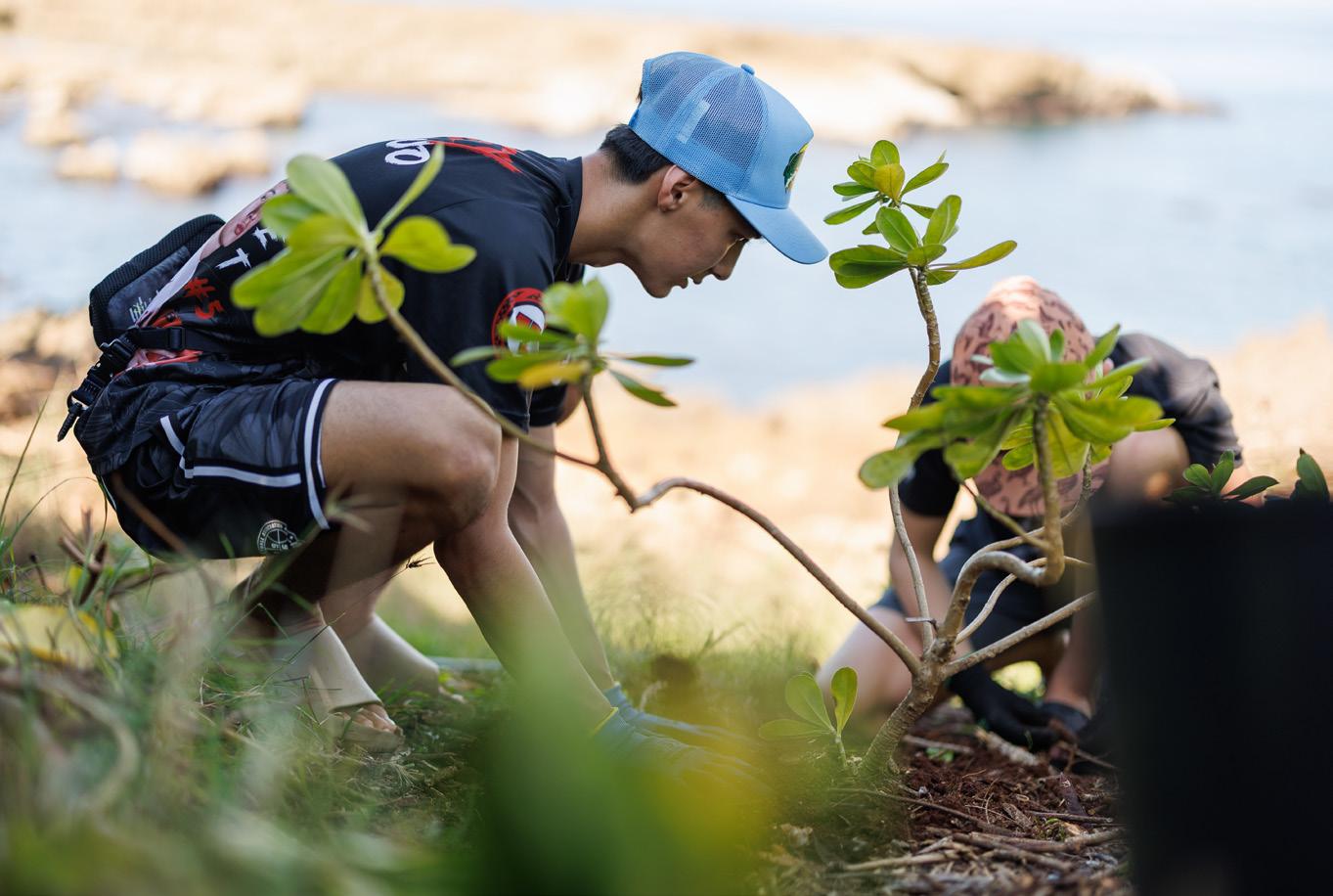
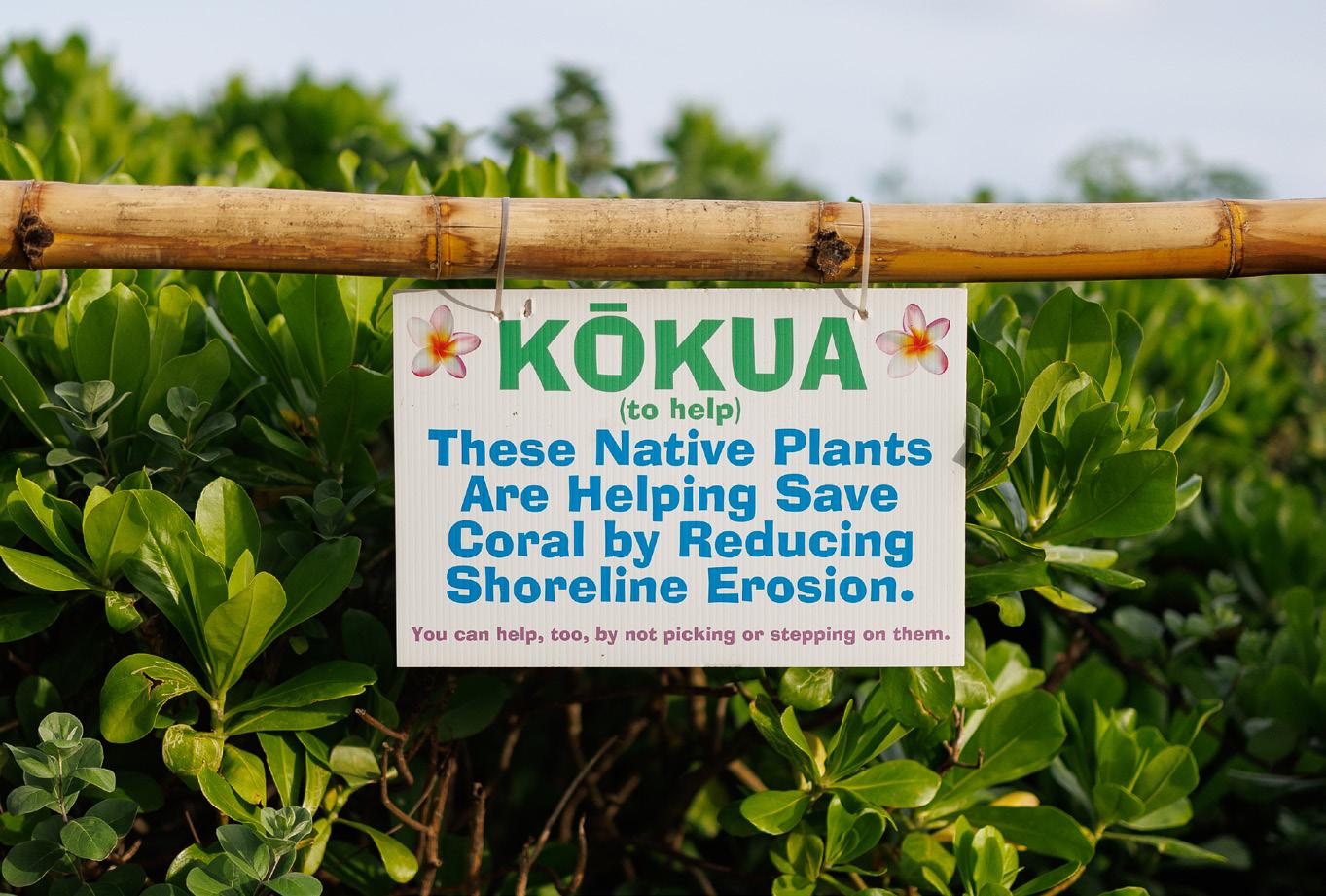
along the banks of the shoreline to help prevent erosion. This is where volunteers are especially helpful. The area stretches along 80 acres of coastline, and Mālama Pūpūkea-Waimea plans to extend its work around the restroom, shower and parking lot. “We want to have specified pathways [and] put in boardwalking and signage on the pathway, so you know you’re entering something special,” Antolini says.
“There’s no control on the number of people who can currently go in the tide pools…which is a problem,” Antolini says. The last thing Mālama Pūpūkea-Waimea wants is to limit resident access, she adds, but perhaps a system could be implemented, like Hanauma Bay’s, limiting the number of nonresidents visiting each day.
The group’s ocean watch program has already led to a dramatic drop in violations in the area. Most violations are by tourists with small children who don’t realize they can’t bring buckets and nets into the tide pools. But there have also been arrests made among poachers fishing just outside Sharks Cove.
“The whole idea of a marine sanctuary is that it is so abundant that it spills over, and it helps the whole coastline,” Antolini explains. “[Sharks Cove] deserves more care and protection and management. That’s why we do it.”
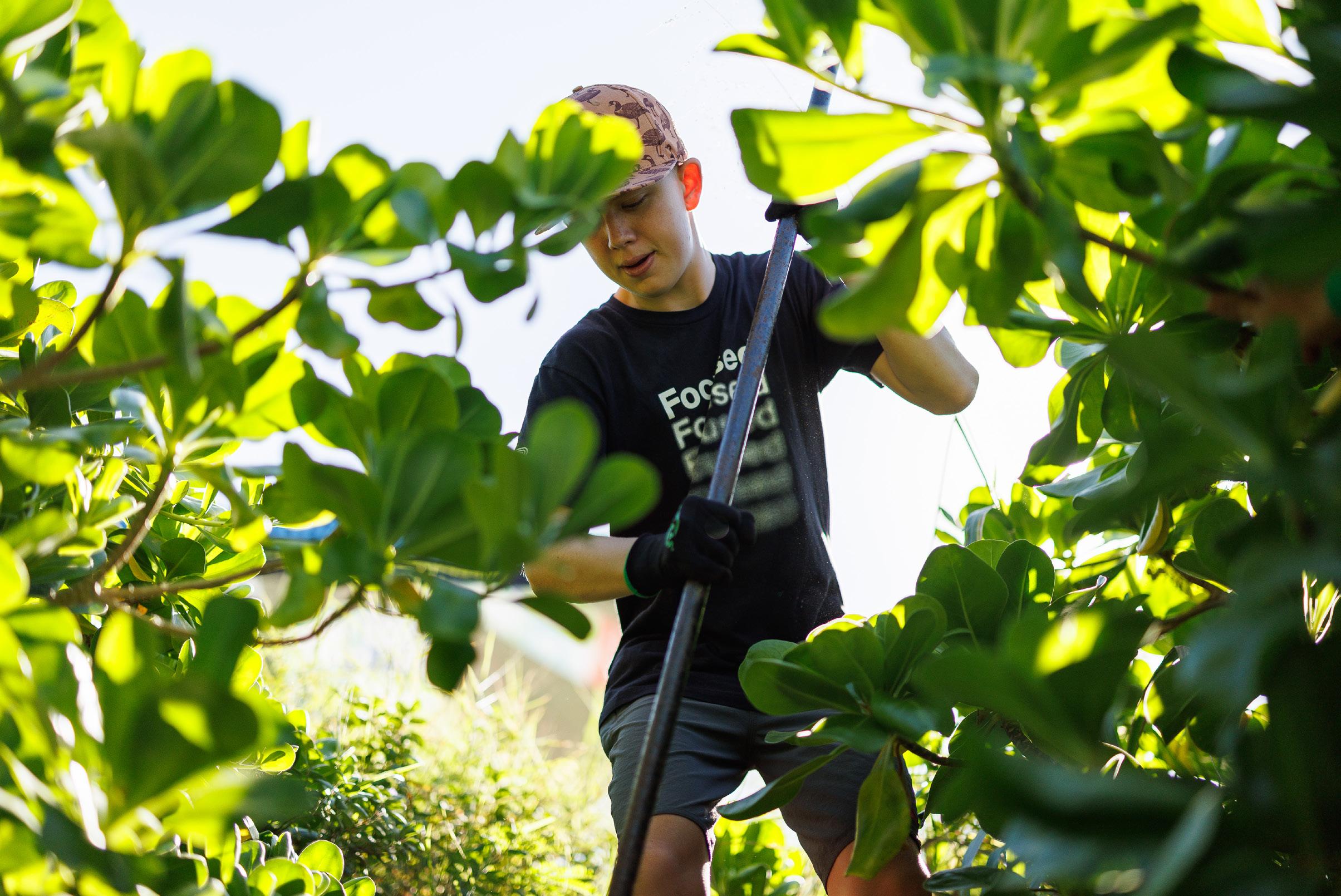
A typical volunteer workday lasts from 8 to 10 a.m. and involves removing invasive weeds and planting native Hawaiian coastal plants, whose stable root systems hold back erosion. Occasionally, the organization receives small grants to purchase plants and hire temporary contract workers, but all of the work is done by hand without chemicals. And it’s hard work. “We really rely on volunteers to help us with this,” says Jenny Yagodich, director of educational programs and the makai watch coordinator for Mālama Pūpūkea-Waimea.
Not only does the group contend with invasive weeds, it also deals with the effects of people trampling through new plants to get to the water instead of using designated trails. “It’s a constant battle,” Yagodich says. “But it’s worth it because we have seen an increase in coral health and a decrease in sedimentation in this area.”
To learn more about Kapo‘o and the adjoining tide pools, consider signing up for a Saturday morning volunteer workday. Information is posted regularly on Instagram on @malama_pupukea_waimea.
It
’s Dancing Time
Dust off your yukata. From June through Labor Day, local neighborhoods come alive with Obon festivals and dances.
BY GRACE MAEDA
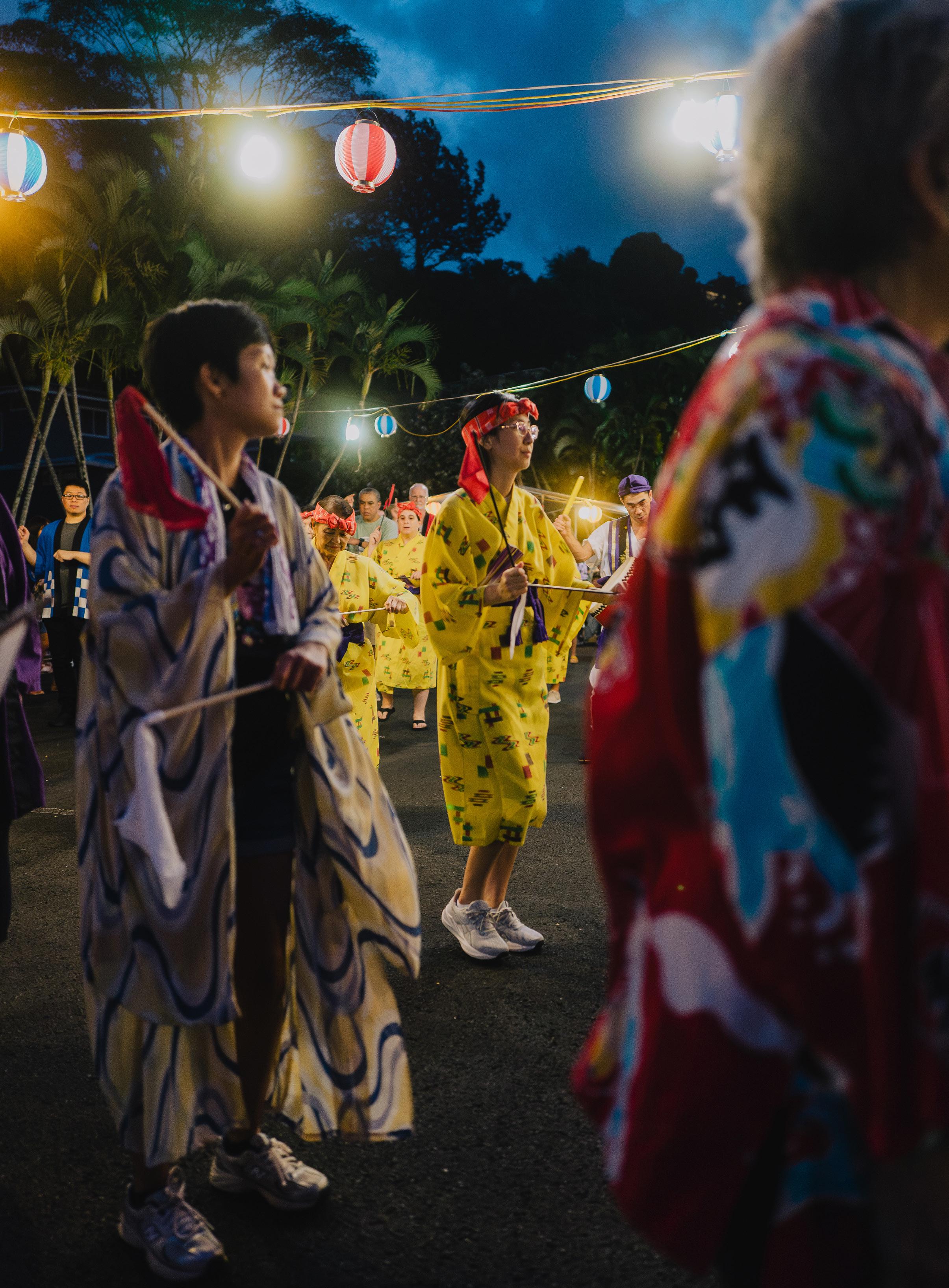
STRINGS OF GLOWING LANTERNS
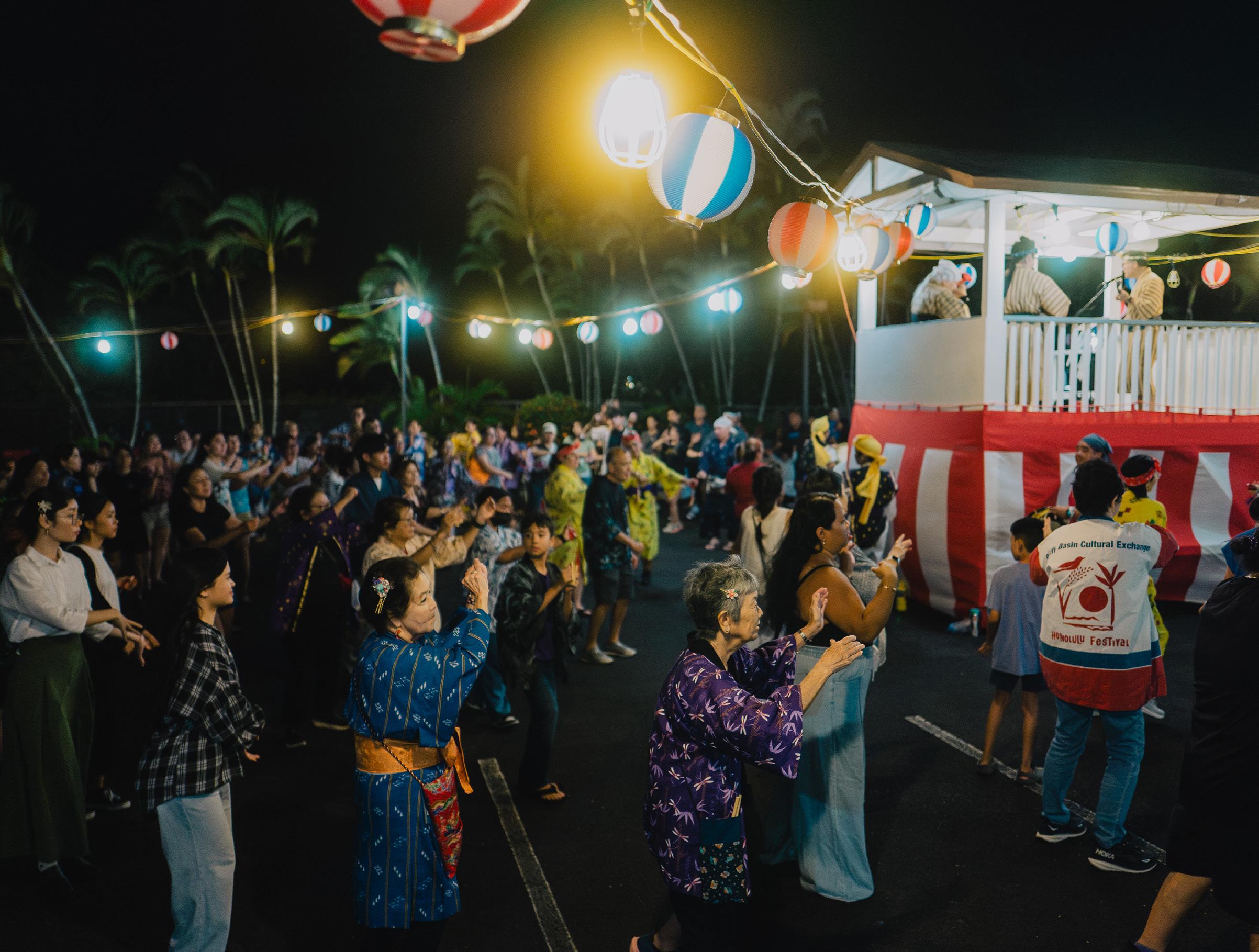
, thunderous taiko drums, lilting flutes and mouthwatering food are hallmarks of Obon festivals, along with the dancers who circle around a yagura, or tower, as music fills the warm summer air.
Obon, or bon, dances are a beloved tradition in Hawai‘i, taking place at Buddhist temples across the Islands from June through Labor Day.
Obon is a centuries-old Japanese Buddhist tradition of honoring and remembering ancestors. It is believed that during Obon, the spirits of loved ones return to visit their families. Lanterns help guide them, and they’re celebrated with music and dancing before being sent on their way.
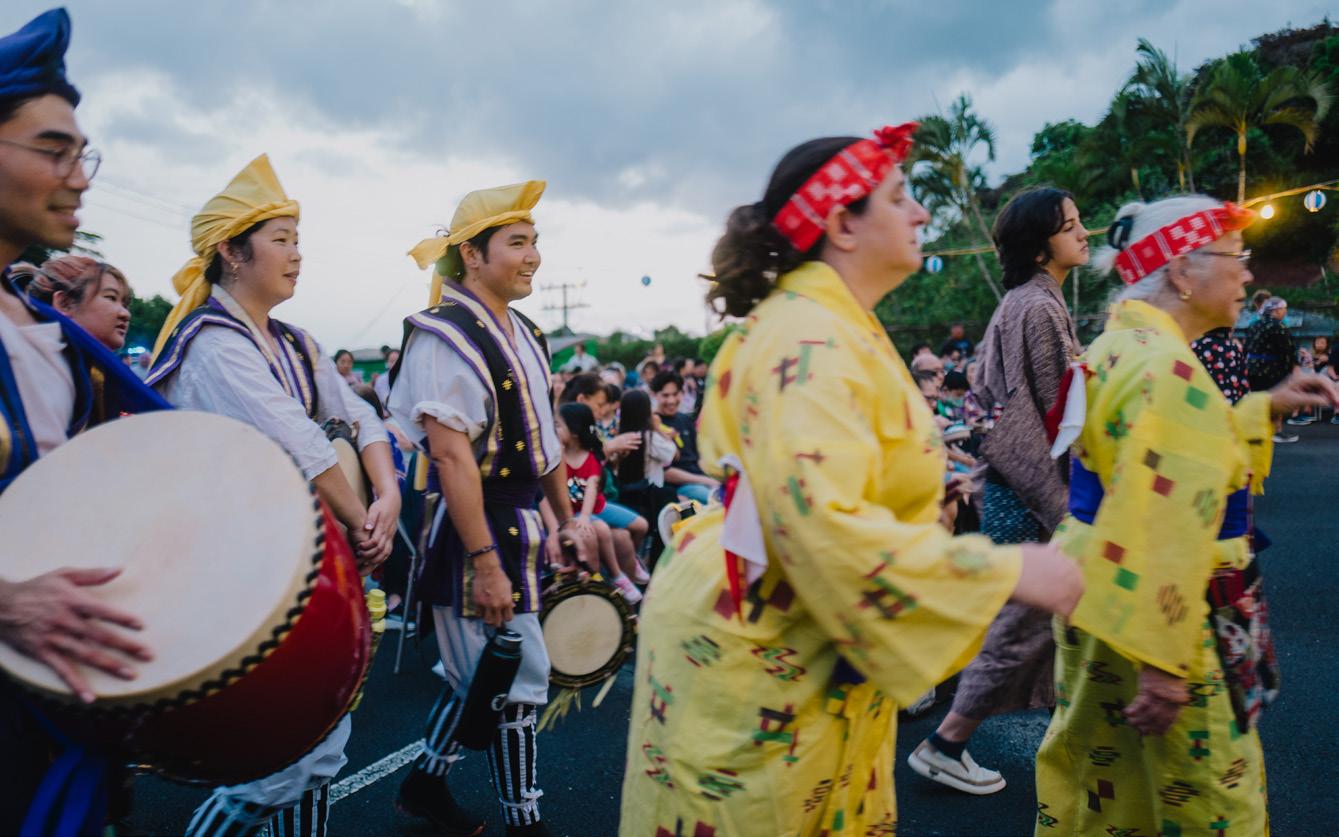
Generations ago, Japanese immigrants who came to work in Hawai‘i’s sugarcane and pineapple fields brought the practice to the Islands. Today, Buddhist temples welcome people of all backgrounds to celebrate and take part in the festivities.
The evenings are filled with music, dancing and delicious local-style dishes. From fried noodles and teriyaki beef skewers to andagi (a kind of deep-fried Oki-
nawan doughnut), manju and mochi, the food is just one of the many reasons locals look forward to bon dance season.
But the heart of the celebration is dancing, and the steps are simple and repetitive, making it easy for even the most reluctant dancers to join in.
You don’t need to wear a yukata (a lightweight kimono) to participate. Just come as you are.
PStop on the Slopes
PHOTO BY AARON K. YOSHINO
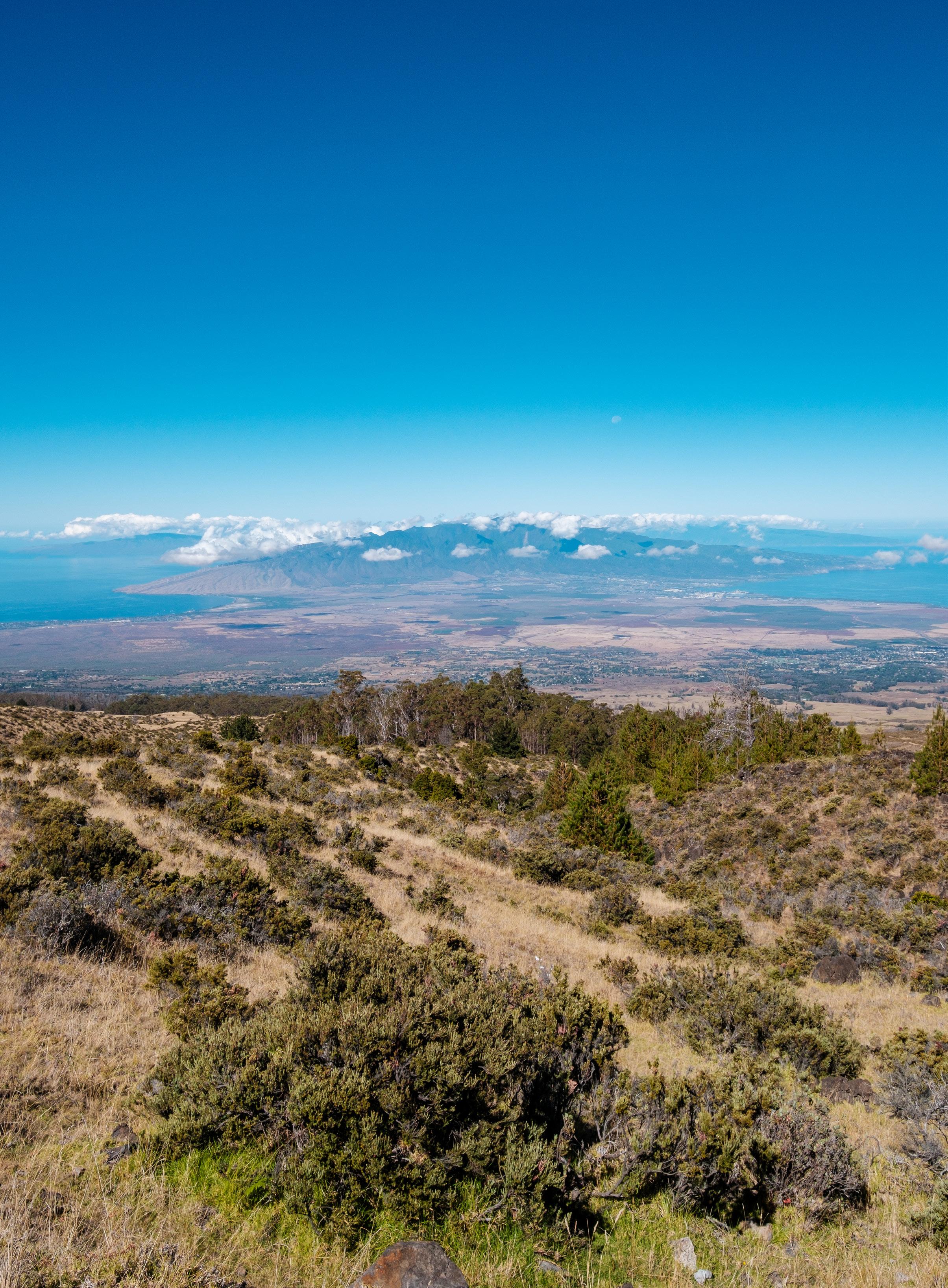
ERCHED HIGH ON THE SLOPES OF HALEAKALĀ , Hosmer Grove is named after Ralph Hosmer, the first superintendent of forestry for the Territory of Hawai‘i. In 1909, Hosmer planted conifer and eucalyptus trees in this area, which sits at about 6,800 feet in elevation. At the time, Hosmer Grove was part of Haleakalā Ranch but is now within the boundaries of Haleakalā National Park.
Today, a 0.6-mile loop trail winds through nonnative trees before leading to a native forest of koa, ‘ōhi‘a lehua, ‘a‘ali‘i, pilo and māmane. The trail is an excellent place to spot native forest birds such as the ‘i‘iwi and ‘apapane. Of course, the sweeping views of the Valley Isle are breathtaking, too.




The Story Continues...
Whether you're planning your next trip, reliving a favorite memory or simply dreaming of Hawai‘i, there's always more to discover with HAWAI‘I Magazine.
Stay connected and explore Hawai‘i every day.
EXPLORE PREVIOUS DIGITAL EDITIONS
Continue your journey with our previous digital editions.