SINGAPORE AIRSHOW NEWS


When you fly close to the speed of sound, you can see a dawn that never ends.

Introducing the Bombardier Global 8000. The world’s fastest business jet.
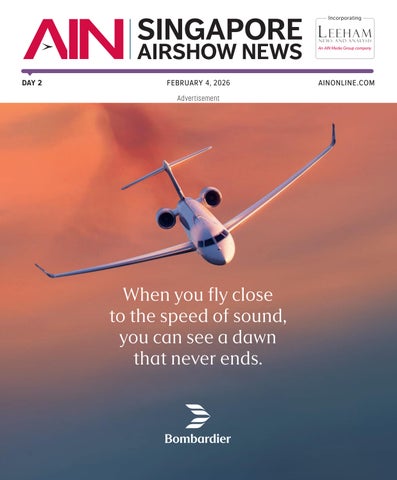
When you fly close to the speed of sound, you can see a dawn that never ends.
Introducing the Bombardier Global 8000. The world’s fastest business jet.
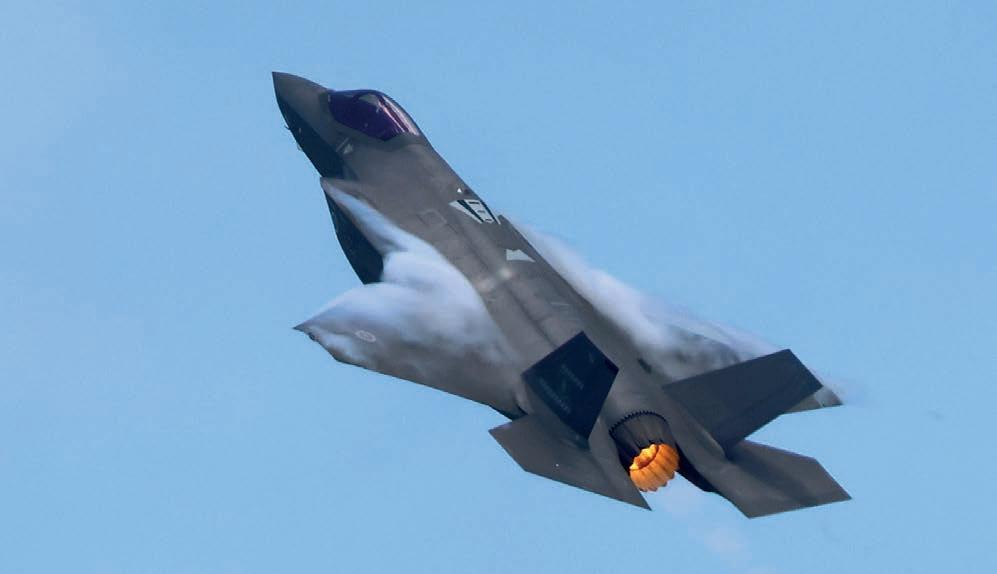
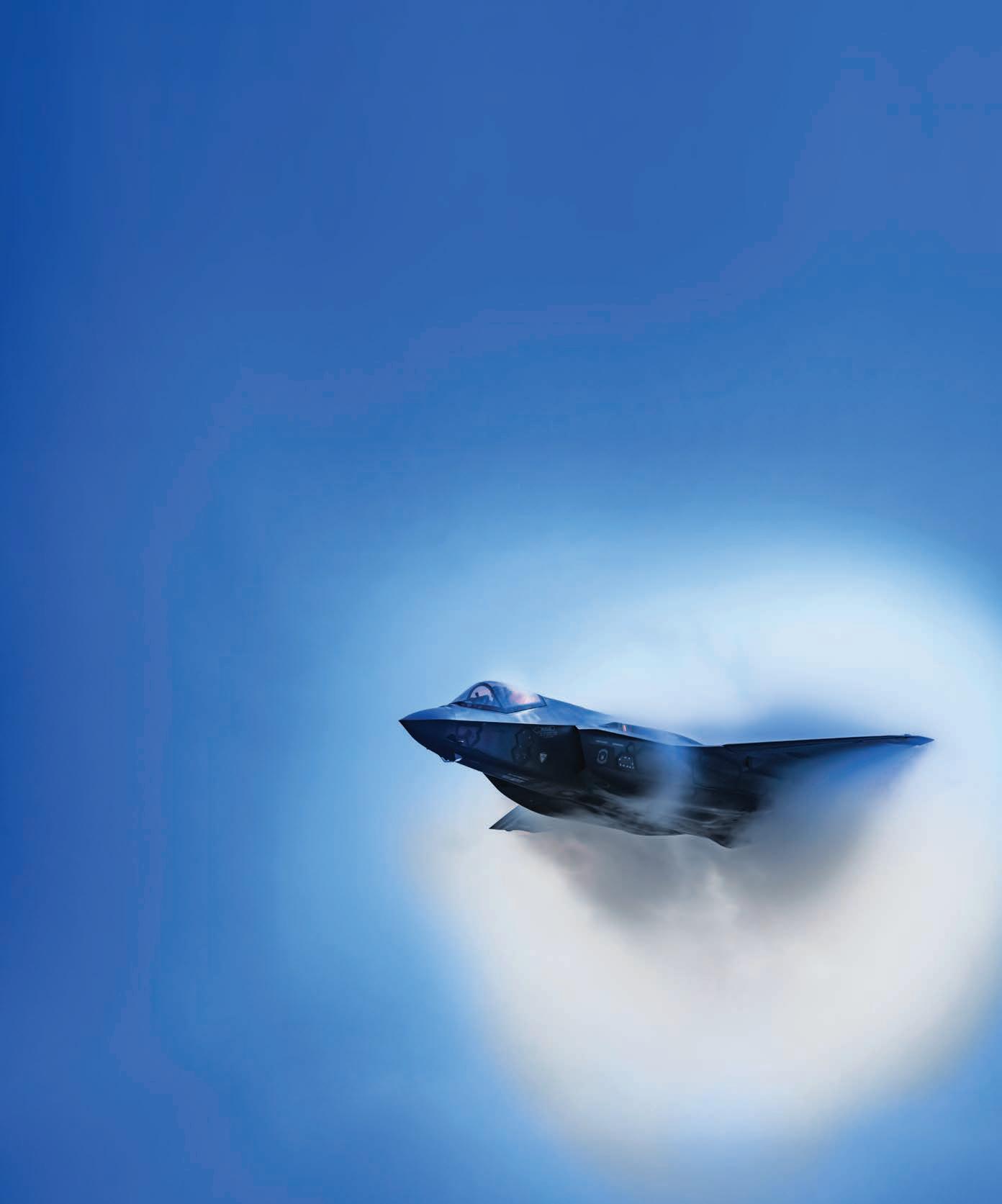
The Lockheed Martin F-35A aerial demonstration at this year’s Singapore Airshow was being provided by the Royal Australian Air Force, which also has an aircraft in the static display, parked alongside two F-35As from the U.S. Air Force’s 388th Fighter Wing.
By David Donald
By 2035,
Lockheed Martin projects that more than 300 of its F-35 stealthy multirole fighters will be based in the Asia-Pacific region, with U.S.-operated aircraft flying from bases there, further swelling the numbers. Singapore is set to be the next nation to join the ranks of regional operators later this year as part of this significant force build-up.
The first four aircraft for the Republic of Singapore Air Force are due to be handed over by the end of 2026. That’s according to a Mindef statement associated with a visit to see Singapore’s first aircraft on the F-35 production line by Minister for Defence Chan Chun Sing and Chief of Air Force Major-General Kelvin Fan.
Singapore initially announced the acquisition of four of the F-35B short takeoff/vertical landing variant in 2019 and subsequently added a further eight units. In February 2024, eight F-35A conventional takeoff and landing versions were added, bringing the total to 20. The aircraft are ultimately due to be
based at Tengah, although initial deliveries will most likely go to the training facility at Ebbing Air National Guard Base in Arkansas. The follow-on batch of eight F-35Bs is expected in 2028, with the Tengah base reported to begin operations in the following year. The eight F-35As are slated for delivery by 2030.
Australia was the first Asia-Pacific nation to acquire the type, receiving its 72nd and final F-35A in December 2024. The fleet declared full operational capability last year. For the time being, Australia has the largest F-35 fleet outside of the U.S.
That position is eventually to be assumed by Japan, which has 105 F-35Bs and F-35As in the process of delivery. South Korea has 60 of the fighters in three squadrons at Cheongju.
To support the Asia-Pacific fleet, there are heavy maintenance, repair, and overhaul facilities in Japan and Australia. These can perform the Tech Refresh 3 update that is being implemented to bring all F-35s to a common standard. The upgrade adds new computers with greater power that will facilitate the Block 4 capability upgrade software package. z
RISE Trials
CFM will test the RISE open-fan engine demonstrators in Singapore | 06
AIR VEHICLES
Collaborative Combat Boeing’s Ghost Bat collaborative combat aircraft has successfully done live trials | 08
Asian Momentum Embraer’s C-390 multimission tranport is making inroads into the APAC market | 14
CHINA Military Muscle
New fighters and a four-engine transport are pushing aero design envelopes | 18
By Charlotte Bailey
Nanyang Technological University (NTU) took the wraps off an eVTOL design yesterday at the Singapore Airshow that could become the country’s first domestically produced passenger aircraft. Although certification of a fullscale aircraft isn’t expected until 2035, flight testing of the one-sixth-scale model is already taking place in Singapore and Germany. The NTU technology demonstrator project has been underway in secret for around three
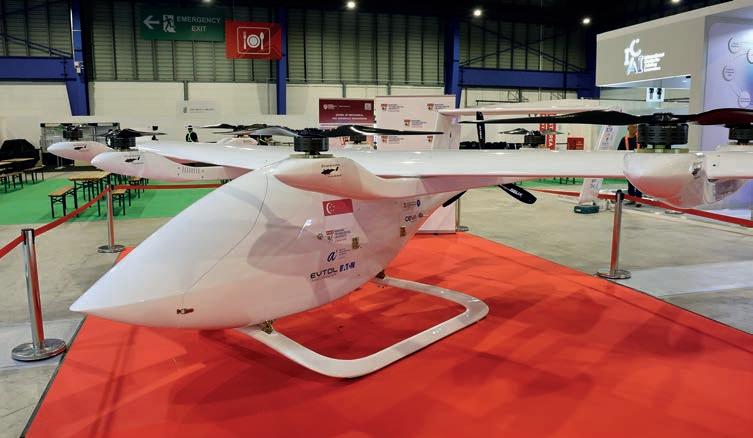
years, building on the Project Zero eVTOL concept unveiled in 2013. After initial conversations in 2019, government funding was allocated to the current project in 2023. A 30-strong team is led by NTU professor James Wang, whose rotary-wing experience includes a tenure as senior v-p of marketing and v-p of research and development at AgustaWestland (now Leonardo).
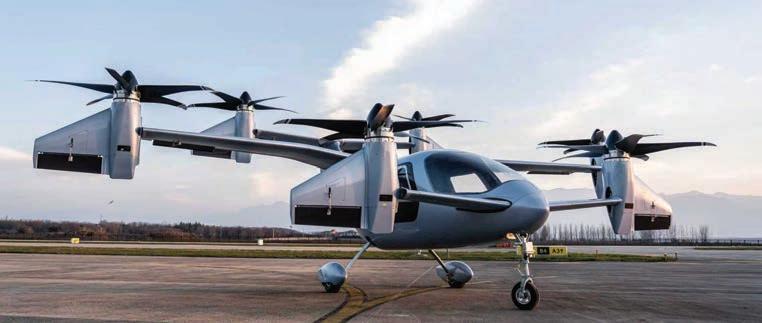
The lift-and-cruise-configured eVTOL
Although it did not have any new orders to report at the Singapore Airshow as of Tuesday afternoon, Airbus’ commercial backlog has reached a record high at 8,754 airplanes. During 2025, Airbus reached a milestone of 25,000 total orders since the company’s founding, 16,756 of which have been delivered, according to senior v-p of marketing Joost van der Heijden. Deliveries last year totaled 793, of which 278 were for Asia-Pacific operators.
The region now accounts for 9,000 Airbus employees, 5,000 airplanes, and 3,100 of the backlog. In 2025, Airbus logged 1,000 new orders and 330 in Asia-Pacific, he said. That backlog includes more than 2,600 A220s and A320neos. “The A220 makes new, long, thin routes available,” van der Heijden said.
“The Asia-Pacific is moving into the next phase of network development. Routes are long…and it’s perfect for 550 new city pairs.”
With the A321XLR’s extended range opening up more routes, airlines can increase their service levels, leading to more orders. At the Singapore Airshow, the star of Airbus’ static display is the A350-1000, and the company is showing o new Airspace first-class cabin designs during this year’s event. The company’s widebody backlog is now 1,124 airplanes, of which 135 are A3501000s. Adding a new rear center fuel tank brings the A350-1000’s range to 9,800 nm, enabling Sydney-to-London flights of 20 hours or more. “Airbus holds 56% of the Asia-Pacific widebody backlog,” van der Heijden said. M.T.
features eight lift rotors atop four wingmounted pylons, along with a rear pusher propeller. Many components were developed by the project and its partners. These include proprietary rotors and a compact motor design, the latter produced with a Chinese company. The use of new composite materials and magnesium alloys is also being explored.
After studying more than 20 initial configurations, Wang described this layout as among “the least challenging,” although he suggested that revisions could be made to the certifiable design. Expected to enter service around 2035, it is designed to carry one pilot plus four passengers or up to 500 kilograms of cargo.
The eight-meter wingspan scaled technology demonstrator has already conducted tethered hover trials in Singapore, although restrictive civil aviation authority permissions necessitated a second location. A month ago, a second scaled aircraft began a flight-test campaign in Germany, carrying a 25-kilogram payload.
Wang believes that the nascent eVTOL arena has room for at least half a dozen OEMs to share the commercial market, highlighting the benefits of inter-company collaboration. Technical learnings and regulatory collaborations informed by this project also have the potential to benefit the wider Singaporean aerospace industry, building on the country’s extensive MRO expertise. z
boeing.com
By Chad Trautvetter
Embraer Commercial Aviation’s E-Jets are making inroads into the Asia-Pacific market, with five customers already, and the company is eyeing more growth for its family of 70- to 124-seat narrowbodies, division president Arjan Meijer said Tuesday at the 2026 Singapore Airshow. He said the twinjets are ideal replacements for airlines looking to upgrade from turboprops—especially the E2 versions that offer better performance than the original E175, E190, and E195 models.
Asia-Pacific accounts for about one-third of Embraer’s latest 20-year delivery forecast for airliners with up to 150 seats. Worldwide, the company predicts shipments of 10,500 such aircraft from 2025 to 2044, with China taking 1,700 and another 1,690 destined for the rest of the region. India alone could absorb 500 regional airliners in the next 20 years, according to Meijer.
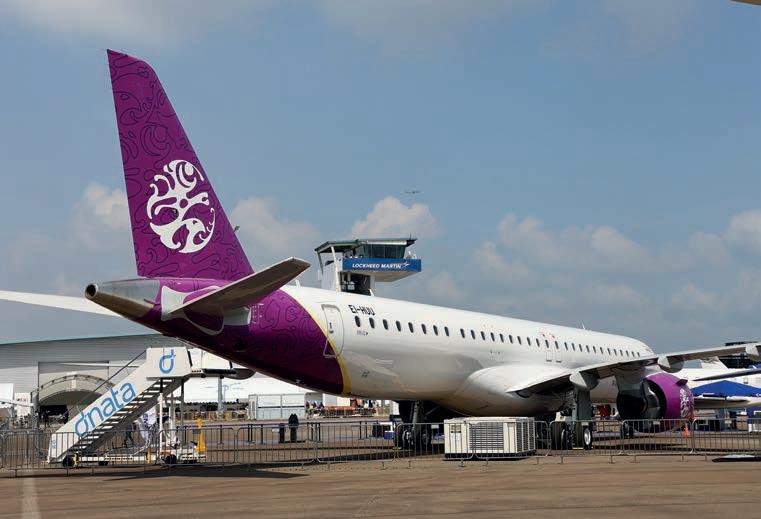
Current E-Jet operators in the region include Virgin Australia (E190-E2), Hunnu (E195-E2), and Scoot (E190-E2). One of
Mongolian airline Hunnu’s two Embraer E2 jets is on display this week at the Singapore show static park.
All Nippon Airways placed a firm order for 15 E190-E2s and options for five more a year ago, with deliveries set for 2028. That will mark the first time a Japanese carrier will operate the E2 series.
Another Asia-Pacific airline in the Embraer customer pipeline is QantasLink, which will take up to 14 refurbished, pre-owned E190s to replace its aging fleet of Fokker 100s. Deliveries of the first three of these aircraft are expected by year-end.
Overall, the commercial aviation division is doing quite well. Last year, the Brazilian aircraft manufacturer delivered 78 new-production E-Jets, up 7% from 2024. The company will provide delivery estimates for 2026 on March 6, when it will release its full-year 2025 financial results.
Embraer achieved a 2.8:1 book-to-bill in 2025, causing backlog to soar to $14.5 billion. That includes firm orders for 221 airliners and options for another 208. z
Air Cambodia has become a new Boeing customer, confirming an order for up to twenty 737 Max narrowbodies at the Singapore Airshow on Tuesday. The deal, which was privately agreed in December, covers ten 737-8s with options for 10 more. At list prices, the deal is worth up to $2.4 billion.
The Phnom Penh-based carrier’s fleet includes a mix of six Airbus A320s and ATR 72s, serving domestic routes and destinations in China, India, Japan, Thailand, and Vietnam. It previously agreed to buy up to 20 C909 and C919 airliners from China’s Comac group.
In a two-class configuration, the 737-8 twinjets will provide a range of up to 3,500 nm to support Air Cambodia’s plans to expand its network. According to Boeing, the Max models will be 20% more fuel e cient than the airline’s current aircraft.
“This investment—Air Cambodia’s largest narrowbody purchase—will let us launch direct services to important markets across North and Southeast Asia, and o er competitively priced travel for passengers, while creating local jobs and training opportunities that strengthen our communities,” said the airline’s CEO, David Zhan.
Boeing’s most recent commercial market outlook forecasts that Southeast Asian airlines will need to add nearly 5,000 new aircraft over the next 20 years. Single-aisle jets are expected to account for more than 80% of deliveries. C.A.

By Charlotte Bailey
As Bell celebrates a presence in Asia spanning more than 65 years, military markets are accounting for an increasing share of the company’s growth opportunities in the region. While training requirements can also drive aircraft upgrades, sales of new-build aircraft across the Asia-Pacific region remain strong, which Bell aims to sustain with the upcoming 525 and MV-75.
Bell’s operational fleet in the APAC region now totals about 1,500 aircraft. “Near-term, we see a significant [growth opportunity] within military training,” said David Sale, Asia-Pacific managing director for Bell Flight. With several armed forces “in the cycle of either refreshing their training fleets or getting into the cycle of doing their training,” this increased demand—combined with “real
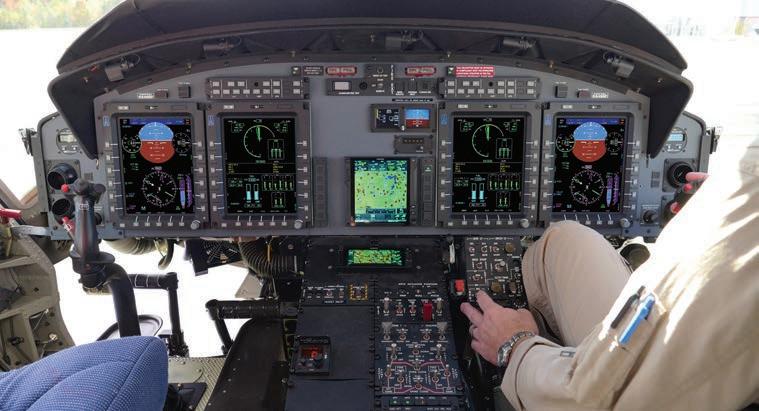
budgets to spend”—is good news for products such as the single-engine Bell 505.
The company is chasing an opportunity to re-equip the entire U.S. Army training organization with the 505, which combines a glass cockpit with Fadec and a larger autorotation envelope. In June 2024, the last of 40 Bell 505s were delivered to the Republic of Korea Army and Navy under what the manufacturer called an “aggressive” two-year timeline.
Meanwhile, glass-cockpit retrofits for the legacy Bell 412 remain among the most active refurbishment programs in the Asian market, reflecting the type’s widespread regional use.
Honeywell Aerospace Technologies has expanded its IntuVue RDR-7000 3D weather radar technology with the addition of a ground-based weather detection application.
The U.S. company believes this will be a welcome addition for general aviation airport operators, who can use the system to support greater situational awareness.
The RDR-7000 ground radar solution “provides volumetric 3D scanning for a more complete and accurate view of weather conditions compared with conventional systems,” according to Honeywell. This includes the ability to detect potentially hazardous weather phenomena, such as wind shear and thun-
derstorms, in low-altitude environments.
The ground-based element has been designed to support pre-departure planning and low-altitude operations, helping airports and operators make safer flight decisions.
This extended capability augments the existing RDR-7000 system, which is available for a variety of aircraft and was unveiled in 2019. It gained FAA approval in July 2020, with EASA certification following in 2021. According to Honeywell, the RDR-7000 “scans the entire volume of air, from zero feet from the ground to 60,000 feet,” with the ability to automatically analyze a storm cloud in 17 di erent scans. C.B.
Sale described the twin-engine platform as “the bridge to the upcoming MV-75” Future Long Range Assault Aircraft, which he said is “really built for the region,” citing its “long legs” and a ferry range of up to 4,500 kilometers (2,400 nm).
Sale expects the as-yet-uncertified supermedium-lift Bell 525 to see initial uptake in “two major markets” within the APAC region, benefitting from the aircraft’s projected range of 619 nm: offshore energy missions and head-of-state/VVIP transportation, followed by search-and-rescue operations. Although he declined to discuss firm orders ahead of certification, Sale said that “[Bell does] have some customers that are absolutely asking for [the 525] already.”
While Sale believes general aviation in the region is “still in its infancy”—with the current commercial market in Thailand “almost nonexistent”—China and India both represent significant long-term growth opportunities. Bell has aircraft maintenance centers and customer service centers spread throughout “pretty much every single country” in the region.
All market segments are underpinned by Bell’s Asia Service Center, an aircraft and component maintenance, repair, and overhaul facility in Singapore that opened in 2012.
“The big push is…how do we make sure Asia understands the value of safety training for pilots and maintainers,” Sale asked, adding that a campaign is underway to “increase awareness of the value of [this] training.” z
By Charles Alcock
AirBorneo is modernizing its fleet to serve communities across the Malaysian state of Sarawak with an order for eight ATR twin turboprops. On Tuesday at the Singapore Airshow, the airline signed an order for five ATR 72-600s and three ATR 42-600s, plus purchase rights for four additional aircraft.
ATR said deliveries will be made between 2027 and 2029. The aircraft will replace eight ATR 72-500s that state-owned AirBorneo inherited when the government of Sarawak acquired MASwings in 2025 and rebranded the operation to support its Rural Air Services operation.
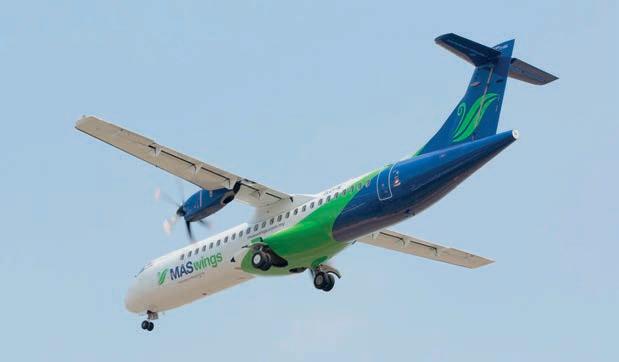
AirBorneo connects communities across the states of Sarawak and Sabah on the northern coast of Borneo, as well as the Labuan islands. The four additional aircraft that may yet be ordered would give the carrier options to expand its fleet in other parts of Malaysia, Brunei, and the Philippines.
The ATR 42-600 seats 40 to 50 passengers, while the ATR 72-600 accommodates up to 78. The AirBorneo aircraft can be fitted with stretchers to support medical flights to remote communities. Based on list prices, the agreement announced this week could be
CFM International will establish an airport testbed for its Revolutionary Innovation for Sustainable Engines (RISE) technology in Singapore. On Monday, the engine manufacturer signed a memorandum of understanding for the initiative with the Civil Aviation Authority of Singapore and Airbus.
Under the agreement, operational trials of the RISE open-fan engine demonstrators will be conducted at either Changi or Seletar airports “to test and validate the readiness framework and assess operational feasibility” of the technology. It was signed during the third Changi Aviation Summit on the eve of the 2026 Singapore Airshow.
The partners said they will jointly develop the basis for deploying new airliners powered
by open-fan engines in existing airport operations. Their work will cover aircraft system and design considerations, infrastructure modifications, operational changes, safety standards, and regulatory procedures.
CFM, a joint venture between Safran and GE Aviation, is developing openfan engines to power potential new Airbus and Boeing single-aisle aircraft that could enter service in the 2030s. The program started in 2021 with a view to providing successors to the company’s current family of LEAP turbofans.
“This first-of-its-kind agreement is a huge boon for the CFM RISE development program,” said CFM International president and CEO Gaël Méheust. “These technologies are
AirBorneo is ordering new ATR twin turboprops to replace the older ATR 72-500 fleet it inherited from the former MASwings operation.
worth around $196 million.
“Our new ATR-600 fleet will significantly strengthen the Rural Air Services network by offering improved comfort, greater efficiency, and the operational capability required for regional connectivity in East Malaysia,” said AirBorneo CEO Megat Ardian. “The ATR platform has consistently proven to be the most suitable aircraft for our operating environment, and upgrading to the latest -600 series ensures we can continue providing essential connectivity while preparing AirBorneo for long-term growth.”
designed to deliver unprecedented improvements in fuel efficiency and emissions in a highly robust future product that can support demanding operations. Now, having the ability to perform a real-world demonstration—from ground handling to maintenance actions, to airport operations—will give airlines, and, hopefully, the flying public confidence in the safety, durability, and efficiency of open-fan [engines].”
The partners did not say when the open-fan engine ground tests will start. The agreement paves the way for the first airport trials of the RISE technology. C.A.
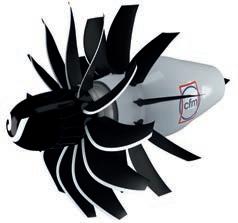
CFM International is developing the RISE open fan engines for next-generation single-aisle airliners.
By David Donald
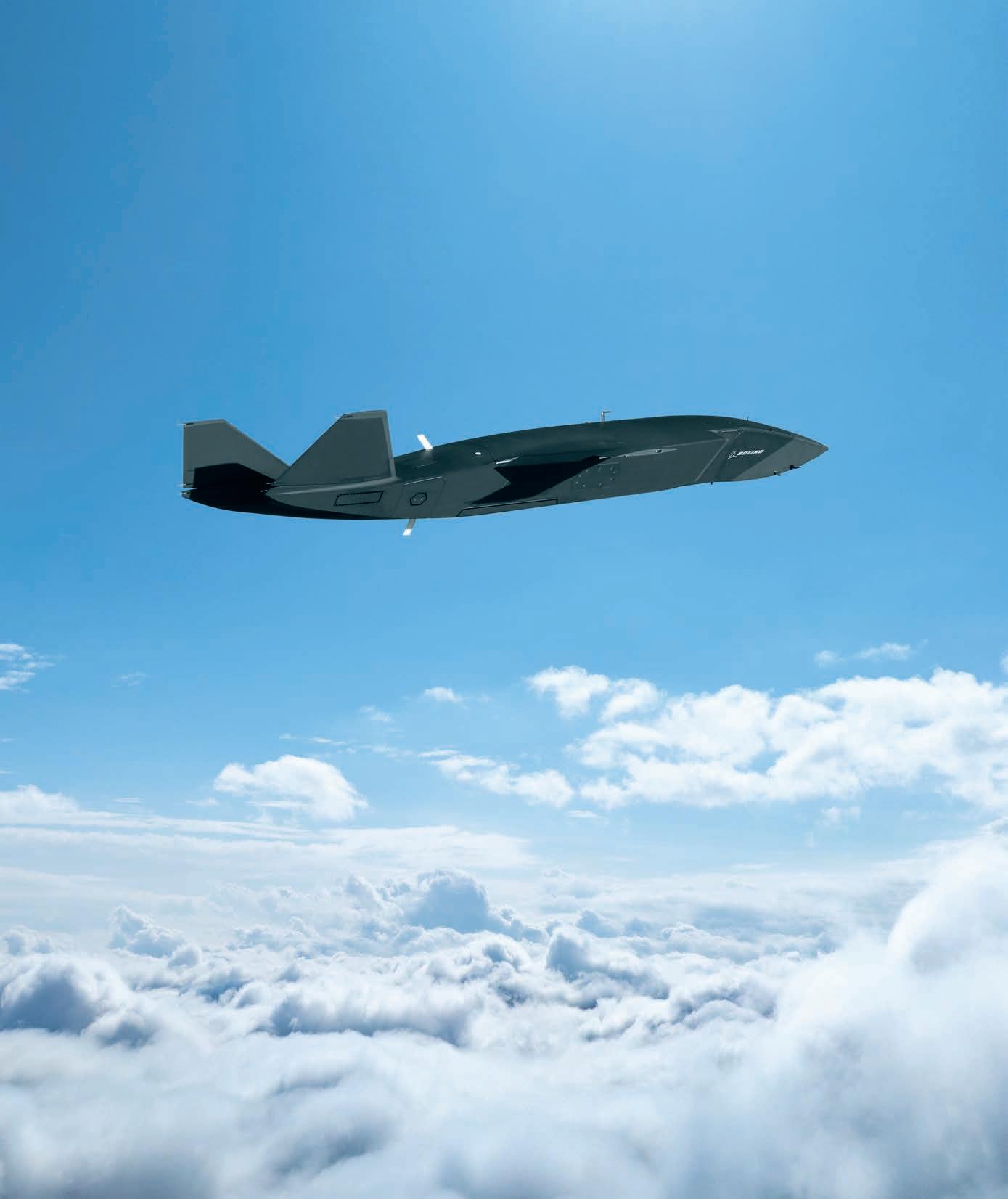
The Australian government late last year approved an AUD$1.4 billion ($977 million) contract for the next step of the Boeing MQ-28 Ghost Bat collaborative combat aircraft (CCA) program for the Royal Australian Air Force (RAAF). Under this deal, Boeing Australia will build six more Block 2 air vehicles, the first of which is in ground test, and develop the Block 3, which represents the initial operational capability.
Block 3 introduces several changes, including a larger wing, an internal weapons bay, a beyond-line-of-sight datalink that permits untethered operations, and system security enhancements. The air vehicle will also be able to carry weapons externally for certain scenarios. The first operational vehicles are due for delivery to the RAAF in 2028, at which point it is forecast to become—by some considerable margin—the first service in the world to introduce this game-changing operational concept.
Boeing Australia has been working on the CCA concept for around eight years, giving it a head start that has resulted in what is today a mature system. The prototype first flew in February 2021, and a 2024-25 two-year contract saw the system’s capabilities proven in trials conducted in mid-2025. During the trials, two Block 2 Ghost Bats worked with an E-7 Wedgetail and other RAAF assets in a networked team.
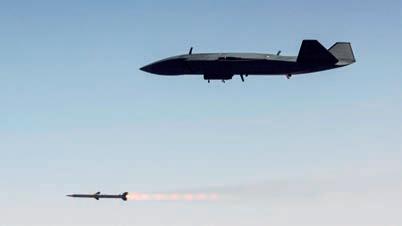
Following the successful conclusion of these trials, Boeing added a weapons firing demonstration known as Trial Kareela 25-4. Flying from RAAF Woomera in South Australia, an MQ-28 successfully fired an AIM120 AMRAAM missile from an external pylon against an aerial target at an operationally relevant range. The target track was provided by an F/A-18F Super Hornet, weapons
firing authorization was handled by an E-7, and the weapons firing solution and action were undertaken within the MQ-28’s autonomous system.
Developing, installing, and proving all the systems and software to support missile firing took just eight months, illustrating the speed at which the Boeing team can implement new capabilities. This is made possible by the digital backbone that underpins the whole system. That system is crucial to allowing the Ghost Bat to be adapted for varying requirements. The employment of CCAs is a new concept that has yet to enter operation, and requirements will likely change as operators gain experience with its use. While there is a development roadmap for the MQ-28, or at least a series of capabilities and functions that can be enhanced or added, future development will be heavily informed by real-world use. With last year’s trials, that process is already underway and is being keenly watched by many prospective CCA operators.
As the system is essentially the core of the MQ-28 program, the air vehicle itself can be physically altered to meet changing requirements. The low cost of the attritable design also makes it a cheaper platform for integrating new technology than the crewed fighter it supports. The system can adapt to address individual national sovereignty issues by being modified to local requirements.
Boeing sees an immense demand for CCAs over the next decade, and there are a number of other systems being developed around the world. The company suggests its eight-year head start is a key distinction in what could be a crowded marketplace.
Moreover, Boeing is offering local production to potential customers. This not only leverages the low-cost, relatively simple airframe design, but also draws on the might of Boeing’s commercial aircraft production machine. From the outset, the MQ-28 was designed around a production system that draws on 787 airliner production technology, including extensive use of robotics. As a result, if a customer wished to build their own MQ-28s, they would require little more than a building to house production. z
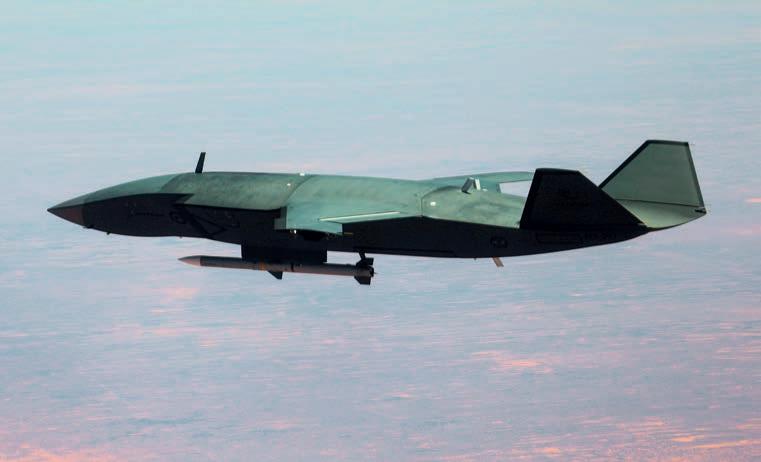
During a December 8 trial at Woomera, a Block 2 MQ-28A destroyed an aerial target with an externally-carried AIM-120 air-to-air-missile.
Where ‘what ifs’

By Charlotte Bailey
With its latest A321XLR airliner, Airbus seeks to disrupt long-thin route economics by offering what amounts to widebody range with single-aisle cost efficiency. Building the extralong-range variant in Hamburg, Germany, has presented the European group with opportunities to implement optimized manufacturing techniques at a time when airframers are struggling to raise output.
The XLR entered commercial service in November 2024 with launch customer Iberia. The newest member of the A320neo family has a maximum range of about 4,700 nm, roughly 15% greater than the A321LR. According to Airbus, the A321XLR—powered by either CFM International Leap-1A engines or Pratt & Whitney Geared Turbofans—burns up to 30% less fuel per seat than legacy competitors.
Airbus’ Hamburg site is its largest facility in Germany and hosts four final assembly lines, as well as component production and customization facilities. These complement its other final assembly lines in Toulouse, France; Mobile, Alabama; and Tianjin, China.
As somewhat of a “city within a city,” the
Hamburg complex has some idiosyncrasies, such as a dedicated ferry commuting service for employees. Proximity to the Elbe river basin also supports Airbus’ logistics network, allowing major structures to move between sites by barge as well as by the company’s fleet of six BelugaXL transport aircraft operating from the adjacent airfield.
The air traffic control tower at Hamburg Finkenwerder Airport may be the only one worldwide to use a ship radar, with incoming aircraft obliged to perform a “go-around” to maintain separation if a container ship is in the vicinity of the approach path. The site also has its own bus network, fire station, and around-the-clock catering.
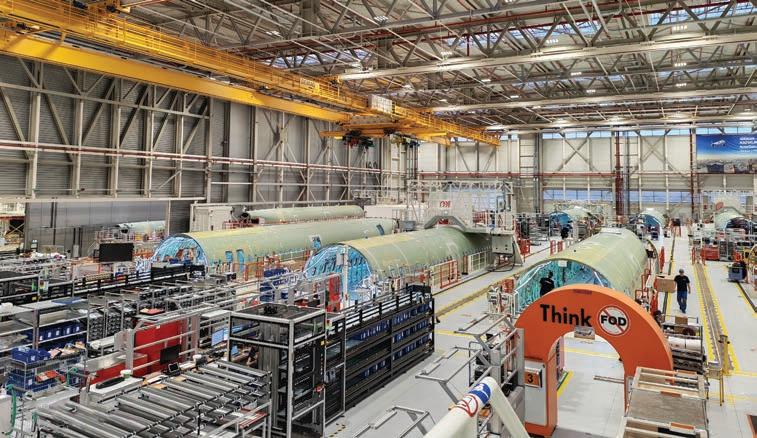
Each A321XLR starts life in structural assembly, where fuselage panels move on red ceiling-mounted rails to create a central structural element known colloquially as “the strawberry basket.” The fuselage barrels, or “shells,” are then placed in mobile support fixtures called “cradles” and guided through a succession of workstations, where they are joined with a forward fuselage section delivered via Beluga. Wings are added at Station 40, and the airplane finally rolls forward on its
own landing gear before the painted vertical tail is installed at Station 37.
A321XLR assembly commenced in late 2021 on one of Hamburg’s four A320-family lines in an area that had previously supported A380 work—adjacent to a parallel procession of green A320 fuselages (nicknamed “baguettes”) lined up at workstations. This pilot line is still in operation, albeit scheduled to close as the dedicated A321XLR equipment assembly line in Hangar 259 continues to pick up pace.
This standalone XLR line was inaugurated in August 2023 with five workstations and has since grown to eight, including provision for two spare bays, with space to expand to 10.
To the uninitiated, the XLR appears almost identical to its standard siblings, apart from its belly fairing section being two frames longer. However, inside, an all-new rear center tank housing almost 13,000 liters of additional fuel fits into a modified fuselage section. The tank uses the aircraft’s outer skin as its outer wall, which is reinforced for crashworthiness, to maximize volume while minimizing weight.
The installation of the new XLR setup also offers opportunities to accommodate new efficiency-enhancing production processes that legacy production lines may find more complex to adopt. For example, Airbus has integrated an automated parts-delivery system that intelligently procures elements required for upcoming shifts. This complements new technologies recently implemented across other final assembly lines, such as robotic drilling machines that prepare fuselage sections for riveting.
During a recent media visit, Airbus explained that customers are taking an increasing interest in performing pre-completion inspections. On January 7, Indian low-cost carrier IndiGo took delivery of its first of 40 A321 XLRs, part of a combined firm order book of around 500 A320-family aircraft.
Airbus does not differentiate A321XLR orders from other narrowbodies in its public backlog, but demand for the variant is undeniable. Along with IndiGo’s planned nonstop flights between India and Athens, Greek flag carrier Aegean Airlines plans to use the XLR for services to southern Asia. The aircraft is helping carriers open up connections in new markets without the business risk of deploying widebodies on such routes from the get-go. z

By Jennifer Meszaros
While China looks ahead to the Year of the Fire Horse, 2025’s Year of the Snake marked a period of foundational growth and regulatory milestones for the country’s emerging low-altitude economy and the broader socio-economic ambitions the government says this will bolster. Covering airspace below 1,000 meters (3,280 feet)—and, in some instances, up to 3,000 meters—the sector has seen increasing liberalization to support uncrewed aircraft systems (UAS) and electric vertical takeoff and landing (eVTOL) aircraft, alongside traditional general and business aviation models.
With China’s 15th Five-Year Plan pushing the expansion of strategic emerging industrial clusters, the low-altitude economy is now being shaped by regional strengths—from Guangdong’s coastal manufacturing hubs to high-altitude testing in plateau regions such as Qinghai. By the end of 2025, China had established a growing repository of regulations and technical standards to support the emerging sector.
At the national level, the Civil Aviation Administration of China (CAAC) released draft airworthiness standards for certain classes of UAS and powered-lift aircraft, along with technical specifications for rotorcraft, propellers, and civil water aerodromes for amphibious aircraft. The State Administration for Market Regulation issued mandatory
standards for UAS identification and registration, while the Central Air Traffic Management O ffice released specifications for integrated low-altitude supervision platforms, unifying airspace management from national to municipal levels.
Complementing these efforts, the Chinese Society of Aeronautics and Astronautics, together with state-backed Aviation Industries of China and other partners, published its first technical guide on building digital models of low-altitude airspace. Shenzhen issued low-altitude trade secret protection guidelines as the city aspires to earn the self-declared title “World eVTOL Capital” by 2028. Meanwhile, Guangdong introduced its “Twelve Measures” to provide financial support for industry clusters across research and development, manufacturing, operations, and integrated banking-insurance-equity services.
In December, China’s National Development and Reform Commission rolled out a statistical classification that defines the scope and core industries of the low-altitude economy, intended to guide policymakers and enterprises in developing the sector. At the same time, President Xi Jinping promulgated the revised Civil Aviation Law, effective July 1, directing the State Council and Central Military Commission to manage low-altitude airspace, with a special chapter supporting general aviation development.
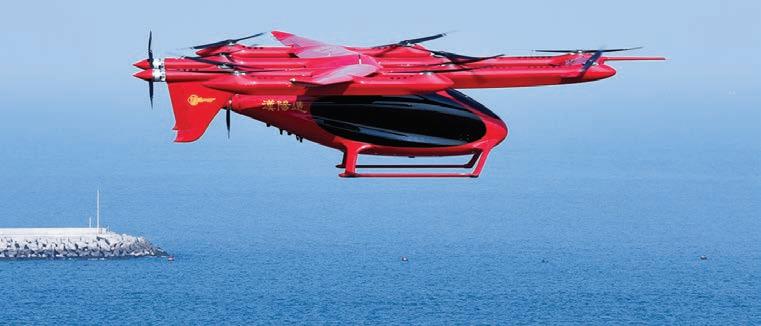
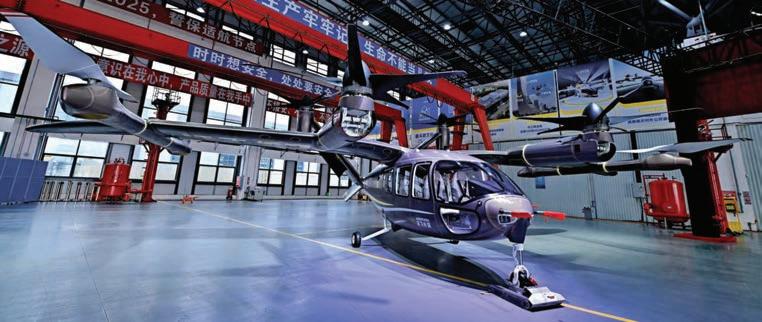
According to Yang Shangmou, strategic cooperation director at TransFuture Aviation, all of this bodes well for eVTOL startups and legacy operators. Speaking to AIN, he explained that the startup is leveraging Hunan province’s supportive policies and early lead in general aviation airports to advance its single-pilot, four-passenger Honghu Mark 1 eVTOL aircraft.
With headquarters in Changsha and an R&D center in Xi’an, TransFuture has conducted public demonstration flights and emergency drill flights, with plans to integrate into Hunan’s low-altitude rescue system.
“We are building an ‘industry–education–application’ ecosystem to train pilots and maintenance personnel, while integrating our aircraft with Hunan’s emerging vertiport network and forging joint ventures with general aviation operators and universities to scale operations,” Yang said. “Backed by the Hunan General Aviation Fund, we plan to accelerate R&D. Drawing on full transition flight experience from three prototypes, we will optimize the Honghu Mark 1 for short-haul urban commuting and intercity logistics across different cities.”
Some 500 miles away, eVTOL manufacturer WeSky has been carrying out a flight test campaign of its piloted, four-passenger W280 eVTOL aircraft at Suzhou’s Shengze Lake Full-Space Unmanned Systems Demonstration Island. The 28-acre island, China’s first comprehensive hub for uncrewed air, land, and water systems, offers dedicated eVTOL test platforms, drone pads, and an integrated operations center for testing, training, and demonstrations under realistic conditions.
David Peng, WeFly’s v-p of marketing, said the company forged local partnerships— including with China Telecom Suzhou and Suzhou Xiangcheng Ecological Culture and Tourism Development Group—to develop urban low-altitude service scenarios. A commercial passenger test route will connect Suzhou Center, Suzhou North Railway Station, and Yangcheng Lake Scenic Area, with demonstration flights planned after the completion of transition flight tests and W280 type certificate procedures.
In the south of the country, EHang and AutoFlight, both now holding China’s three key airworthiness certifications, have taken
advantage of favorable visual flight rules in Hainan and recently completed demonstration flights across the Qiongzhou Strait between Mingzhu Island and Xuwen Port in Guangdong. Provincial plans call for a fully flyable demonstration island for eVTOL operations as Hainan develops its free trade port.
Meanwhile, Hefei-based Zero Gravity is actively promoting and investing in the “aviation flight camp” concept, which, in theory, requires no civil or military aviation clearance. (The loosely translated term refers to locally authorized low-altitude operating zones outside the purview of traditional ATC.)
Zero Gravity offers a diverse aircraft portfolio, including the two-seat ZG-One multicopter; the five-passenger, single-pilot ZG-T6; and two conventional electric airplanes—the RX1E-A and RX1E-S.
Business aviation services group Sino Jet is exploring low-altitude travel as a strategic extension of its mobility capabilities.
With a firm order for 50 Aerofugia AE200 eVTOL aircraft and experience managing and operating aircraft in more than 200 countries, Sino Jet is applying its safety practices, service standards, and global network to support urban air mobility services such as airport transfers and short intercity flights, the Hong Kongbased group’s vice chair, Jenny Lau, told AIN
For example, Sino Jet is working with eVTOL manufacturers to develop airworthiness standards and operational compliance protocols; collaborating with technology providers on battery systems, navigation, and artificial intelligence; and coordinating with local authorities and airport operators to establish
takeoff and landing sites, charging infrastructure, and integrated airspace management. The company is also leveraging its digital platform, enabling customers to plan, book, and pay for seamless, multimodal journeys.
“Sino Jet views the AE200 eVTOL aircraft project as a key strategic initiative in building a three-dimensional transportation network that integrates both high- and low-altitude travel,” Lau said. “We foresee three core application scenarios: airport express routes, intercity shuttles, and tourism in scenic areas. Taking airport transfers as an example, eVTOL aircraft have the potential to reduce travel time between city centers and airports by up to 50%, offering strong appeal to business travelers who prioritize time efficiency.”
Lau emphasized that Sino Jet does not aim to compete with traditional low-altitude aircraft operators, but rather to offer business jet clients a new layer of connectivity in urban and regional mobility through scalable, low-altitude solutions. With commercial eVTOL operations anticipated to gain momentum around 2027 to 2028 as certification and infrastructure advance, the group plans a phased expansion: first establishing
vertiport infrastructure across China, then extending services to Asia-Pacific hubs such as Singapore and Dubai, and eventually replicating its low- altitude air mobility model in Europe and North America in partnership with local operators.
“Throughout the international expansion process, we recognize the critical importance of balancing standardization with localization,” Lau explained. “On one hand, we aim to export Sino Jet’s established safety and service standards to overseas markets. On the other hand, we will adapt to local regulatory requirements, cultural nuances, and market demands. For example, in the European market, we will place greater emphasis on environmental performance, while in the Middle East, we will highlight luxury and exclusivity.”
Sara Mao, founder of Shanghai’s PIAviation, said that as China accelerates its low-altitude economy strategy, general aviation is approaching a critical inflection point where fragmented data, limited transparency, and uneven access to pilot training remain. The company aims to address these gaps by consolidating flight information, databases of schools and instructors, and real-time charts, and offering a flight credit system that tracks experience, training, and maintenance.
By connecting pilots, schools, airports, and training operations through shared digital tools, “we can make everyday flying more transparent, understandable, and accessible,” Mao said. “When the entire low-altitude system operates on unified, transparent data and is visible and understandable to the public, low-altitude aviation can truly move into everyday life. It is at that moment that China’s pilot spirit will be able to resonate beyond its borders and be shared with the world.” z
By Charlotte Bailey
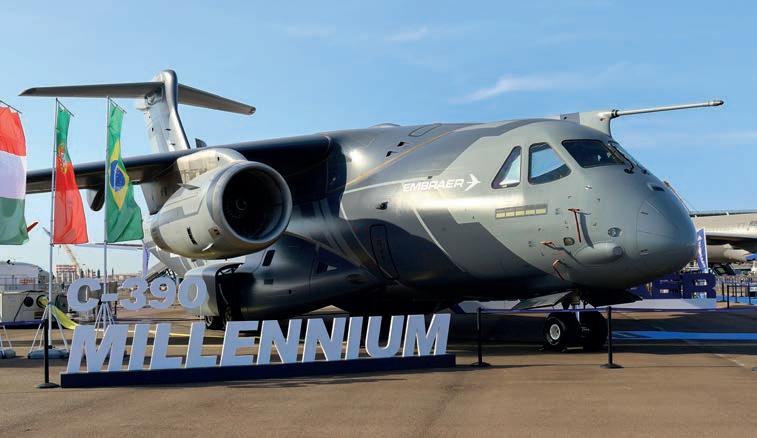
Two years after the Embraer KC-390’s first appearance at the Singapore Airshow, the return of the multi-mission transport to the static lineup comes at a time when opportunities for these types of aircraft in the Asia-Pacific region are expanding. With the Republic of Korea Air Force set to become the inaugural South Asian C-390 operator, market momentum continues to rise worldwide, with nine nations having ordered the aircraft to date.
According to Embraer’s 2025 market assessment, the Asia-Pacific region is expected to require approximately 180 new transport aircraft over the next 20 years, representing around 40% of the global addressable market for the KC-390. “I would highlight versatility as the defining requirement for Asia-Pacific operators,” Bosco da Costa Junior, president and CEO of Embraer Defense & Security, told AIN KC-390 mission capabilities range from vehicle and troop transport, disaster relief support, medical evacuation, and—via the KC-390 designation—air-to-air refueling.
“Multi-mission adaptability is becoming essential,” continued da Costa, highlighting
that transport aircraft operators are also placing increased value on speed, defense systems fitted as standard, and integrated datalink connectivity.
Noting that “speed is life,” da Costa underscored the growing popularity of jet-powered transport platforms such as the C-390, “dramatically reducing transit time across vast archipelagos, enabling faster humanitarian response or rapid troop deployment, while still retaining the ability to operate from austere and unpaved runways in remote areas.”
Crucially, Embraer believes the KC-390 to be the ideal successor to many legacy fleets in the APAC region, some of which have exceeded 40 years in service. These include the Indian Air Force’s (IAF) aging Antonov An-32 turboprops, which, despite an ongoing modernization program augmented by the acquisition of 56 Airbus C295MWs, nevertheless leave a capacity gap of up to 80 aircraft identified under the IAF’s medium transport aircraft (MTA) requirement.
On Tuesday at the Singapore Airshow, Embraer announced that the Republic of Uzbekistan’s air force will be the first C-390
operator in central Asia.
In October 2025, Embraer entered into a strategic cooperation agreement with Mumbai-headquartered Mahindra Group to advance its C-390 MTA offering, supporting domestic manufacturing. In preparation for the IAF’s potential selection of the C-390, Embraer and Mahindra are preparing a comprehensive localization plan. “The scope of cooperation includes industrialization and the development of local capabilities that would not only serve India’s requirements but also support other countries across the region,” explained da Costa.
Other nations set to potentially benefit from this regional capacity have not all been publicly identified, but Embraer confirmed it has “several campaigns underway” across the Asia-Pacific area, “reflecting the aircraft’s strong alignment with the operational needs and modernization priorities of APAC air forces.”
In-country manufacturing expertise is also integral to South Korea’s 2023 selection of the C-390 (a quantity formally unspecified, but expected to be around three units). “The C-390 project in South Korea involves a consortium of local partners; key components have been manufactured locally by ASTK, EMK, and Kencoa Aerospace, creating highvalue work and strengthening Korea’s aerospace supply chain,” da Costa said.
Meanwhile, as South Korea awaits the first C-390 delivery from its milestone 2023 order, Embraer sees potential for broader defense collaboration extending beyond the aircraft itself. In 2025, Embraer signed a memorandum of understanding with South Korea’s Defense Acquisition Program Administration, with both parties jointly assessing additional opportunities. Embraer’s involvement with Korean partners dates back to the launch of the former’s E-Jets E2 commercial aircraft program in 2025.
With the KC-390’s 2024 Singapore Airshow debut attracting “strong interest,” da Costa concluded that the aircraft’s “rapid global adoption has also strengthened confidence in the platform.” To date, nine nations— five of them NATO operators—have acquired the KC-390, with firm European orders for 10 aircraft (and options for 10 more) signed in 2025 alone. z

AINalerts delivers the news and intelligence that directors of aviation, chief pilots, flight department leaders, OEMs, MROs, and industry executives need to stay ahead. Trusted reporting, exclusive analysis—delivered straight to your inbox Monday through Friday.



In December, China Aircraft Leasing Group Holdings signed a firm order for 30 Airbus A320neo narrowbody airliners.

By Leeham News & Analysis Staff
Boeing’s 2011 decision to launch another derivative of the 737—a slow response to the Airbus A321neo—along with the series of crises involving the 737 Max beginning on March 10, 2019, caused a dramatic drop in market share, placing Boeing in distant second place behind Airbus.
According to Leeham News and Analysis (LNA), total program orders as of December give Airbus a 54% market share for the A320neo family, compared to 33% for Boeing’s Max. Adding the A220 into Airbus’ share, the company has captured 58% of the single-aisle market.
China’s Comac C919 captured 7% of the single-aisle market, according to data from Cirium and other sources. Embraer, with its two-class, 100-seat E190-E2 and 120-seat E195-E2 jets, captured a mere 2% of the 100to 240-seat sector.
Boeing’s number-two position is in stark contrast to the early 2000s, before it was overtaken by Airbus in the wake of the 9/11 terrorist attacks. At the time, Boeing’s largest market was with American carriers, which were impacted more than Airbus’ markets in Europe
and Asia. Airbus overtook Boeing in 2004. Airbus launched its A320neo family in December 2010. Boeing didn’t respond with its 737 Max until the following July. However, the Max 10, a direct competitor to the A321neo, wasn’t launched until June 2017, almost six years after the Max program began. By then, sales of the A321neo had an insurmountable lead. The A321neo is the best-selling version of the new Airbus narrowbody family.
The 21-month grounding of the Max from March 10, 2019, and Boeing’s low-rate production of the Max after the grounding further eroded the 737’s market share. Boeing hopes to achieve the pre-grounding monthly production rate of 52 late next year. However, an RBC Capital Market survey of 35 suppliers indicates that the supply chain doesn’t expect this to be achieved until 2027. By then, Airbus will be building about 65 A320s a month and on a path to 75. Boeing’s current plan is to achieve 737 rates at 63 per month in 2028 or 2029.
Not all sales announced at the Dubai Airshow in November have been converted into firm orders and recorded on the company websites. With order data reported through November, Airbus has a 55% market share of the backlog
for the 125- to 240-seat single-aisle aircraft. This combines the A220 and A320neo families. Boeing, now increasing its production rate and taking hundreds of new orders, has a 34% share, with Comac and the Embraer E195-E2 rounding out the remaining 11%. China’s Comac now has a 10% backlog market share.
The A321neo is by far the most popular single-aisle airplane, with a 39% market share. Boeing’s competing Max 10 is now outsold by the A321neo by a 4:1 margin and holds a 9% share of the sector. The Max 8, with a 20% share, outsells the A320neo, which has a 13% share.
Boeing continues to dominate the widebody sector with a 59% share of the backlog and total program orders. Its widebody product line includes the 787-8, -9, and -10 Dreamliners; 777F and 777-8F freighters; and the 777-8 and 777-9, passenger variants of Boeing’s next-generation 777X family.
The 787-8 has only 24 remaining orders. The 777F will be discontinued at the end of next year; its replacement, the 777-8F, won’t be ready until 2029 or 2030. A 787F design is on the shelf but not expected to be offered for sale any time soon, and it won’t be ready for delivery until 2030 or later.
Airbus has the A330-800 and -900, A350900, A350F, and A350-1000. The A330-800 only has 12 sales, with four undelivered. Sales of the larger A330-900 haven’t hit 500 yet; it has become a niche airplane for airlines needing a widebody before the A350 is available.
Tim Clark, president of the airline Emirates, wants Airbus and Boeing to develop larger versions of the A350-1000 and 777-9, nominally called the A350-2000 and 777-10. Each company essentially has designs all but done, but neither has indicated it’s willing to proceed. z
LNA’s analysis was conducted before Boeing released its fourth-quarter results on January 27. Airbus is set to issue its 2025 earnings report on February 19.
LNA is led by Scott Hamilton, founder and managing director of the Leeham company, and aeronautical and economics analyst Bjorn Fehrm.
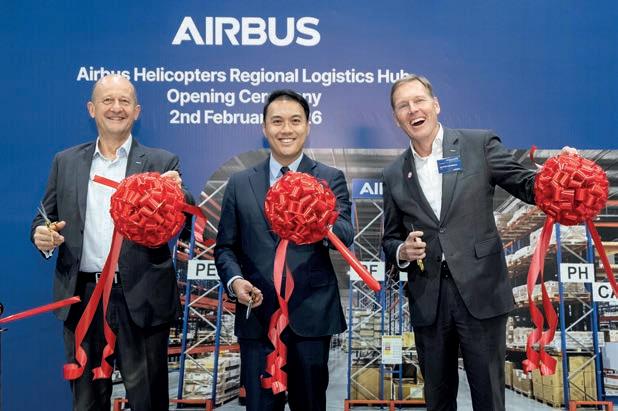
Airbus Helicopters opened its new Singapore logistics hub on February 2 to strengthen its supply chain in the Asia-Pacific region.
By Charles Alcock
Airbus Helicopters officially opened its Asia-Pacific regional logistics hub in Singapore on Monday. The manufacturer said the new facility will bolster its supply chain with parts for rotorcraft
Air India on Monday confirmed it has grounded one of its Boeing 787-8s after a pilot reported a possible defect with the fuel control system. In a company statement, a spokesperson confirmed that it has informed both India’s Directorate General of Civil Aviation and Boeing of the issue.
The statement added that the carrier has recently conducted checks on fuel control switches in all of its Dreamliner widebodies following the June 2025 fatal accident after takeo from Ahmedabad. “No issues were found during those inspections,” the company said.
operated by customers in 21 countries.
The 21,500-sq-ft facility has four loading bays and accommodates more than 20,000 part numbers. Airbus already has parts distribution centers in Hong Kong and Perth, Australia.
Initially, Airbus stocked the hub with €10
million ($11.9 million) worth of parts. The company said it plans to double the inventory as it achieves full operational capacity.
The Singapore hub is equipped with four vertical lift modules that support an automated, high-density storage system combining a central extractor and vertical columns of trays to store, retrieve, and deliver parts to each operator’s designated access point. According to Airbus, the new technology makes best use of the available floor space and accelerates the retrieval of components of all sizes.
The facility also incorporates a 592-sq-ft elastomers room to house sensitive rubberized materials that can degrade. This unit can hold up to 2,000 critical components in a controlled temperature range between 41 and 77 deg F.
“This new regional logistics hub marks a pivotal milestone, positioning Singapore at the heart of our global support network,” said Vincent Debrule, Airbus Helicopters’ senior v-p of Asia Pacific. “Establishing this capability here is more than expanding our footprint. It is about building a logistics supply chain that is agile. This hub represents a long-term investment in our customers’ mission success, delivering faster, reliable, and predictable support across Asia-Pacific well into the future.” z
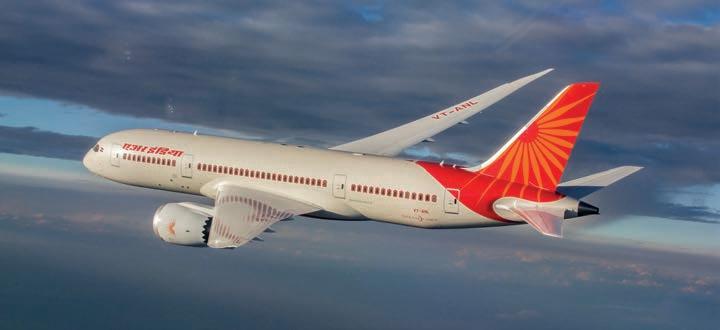
Air India’s fleet now includes 33 Boeing 787 Dreamliners.
The grounded aircraft (VT-ANX) had completed flight AI 132 from London to Bengaluru when one of the pilots reported an apparent issue with the fuel control switch’s locking mechanism. Boeing confirmed that it is working with
the airline to support “their review of this matter.”
Air India operates 33 Dreamliners, including 7 -9 models and 26 of the -8 variant. It is due to receive more 787-9s this year as part of an extensive fleet modernization plan. C.A.
By David Donald
China’s military aviation industry has shocked Western analysts repeatedly over the last few years, with designs such as the Chengdu J-20 and Shenyang J-35 fifth-generation fighters and, more recently, the Chengdu J-36 and Shenyang J-XX sixth-generation fighter prototypes. The speed of technological advance has led to a major leap in China’s military capabilities, and with the latest revelations, the country’s aerospace industry is showing no signs of slowing down.
Many of China’s new types and developments have been unveiled—officially or unofficially—during the winter months. This winter has not disappointed, with two new crewed aircraft types taking to the skies and other important developments being revealed.
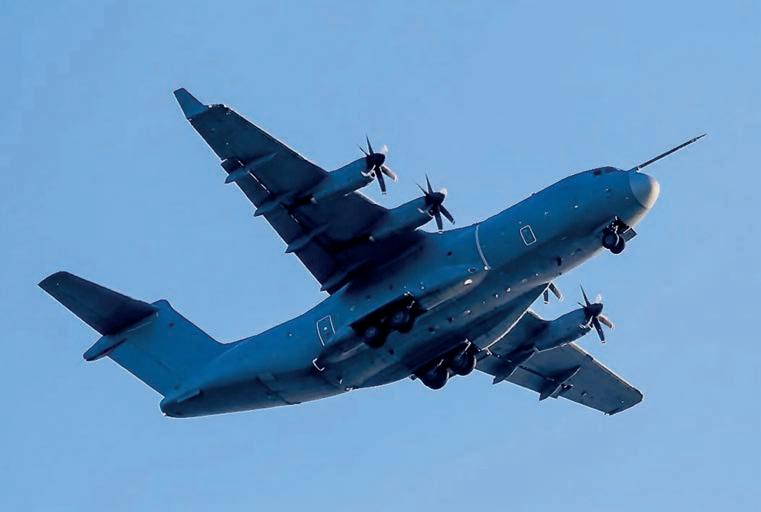
Leading the way in terms of size, the most noteworthy is the appearance of a new airlifter, which made its first flight on December 16. Initially shown in model form as the Y-30, the four-engine airlifter has also been
reported as being designated Y-15. A product of Shaanxi Aircraft, the Y-15/30 resembles an Airbus A400M in terms of its fuselage and T-tail design, but the straight, tapered wing is more redolent of that of the C-130 Hercules, albeit fitted with winglets.
Intended to fill the gap between the Shaanxi Y-9 (itself an Antonov An-12 derivative) and the Xian Y-20, which is broadly equivalent and similar to the Boeing C-17, the new airlifter is expected to have a load-carrying capacity close to that of the Airbus transport, with a payload of around 30 tonnes.
The A400M’s swept wing offers a higher cruise speed, but in the Chinese craft, this appears to have been sacrificed for range/load performance and better low-speed handling. Power for production aircraft is likely to be provided by a new high-power (4,000+ kilowatts) turboprop, possibly designated WJ-10, that was tested on board a Y-8 in mid-2024, driving an eight-blade propeller. However, the prototype is believed to feature WJ-6C
engines, a Chinese derivative of the Ivchenko AI-20 that powers the Y-8/Y-9 airlifters, driving six-blade props.
The second new crewed type to fly is an advanced jet trainer from Hongdu. With designation as yet unknown, the trainer resembles a stealthy fighter, with twin angular fins, chined nose, and large leading-edge root extensions under which are caret-shaped intakes. The new aircraft is intended for advanced and fighter lead-in training, and it clearly has light combat potential. A robust undercarriage with twin nosewheels suggests that it could be adapted for carrier training duties.
In the rotary-wing world, the most important new type is the Changhe Z-21 heavy attack helicopter. Although the prototype first flew two years ago, recent images suggest that the type has entered low-rate initial production. The Z-21 draws heavily in terms of its WZ-10 powerplant, dynamics, and tail design on the Harbin Z-20 utility transport helicopter, which is similar in look and applications to the Sikorsky S-70 Black Hawk.
Weighing 10 to 12 tonnes, the Z-21 is in the same class as the Boeing AH-64 and Mil Mi-28. It has a 23-mm undernose cannon and can mount a millimeter-wave radar on a mast above the main rotor hub. Stub wings provide six hardpoints for weapons/tank attachment.
In other programs, the J-36 is making strides, with the third prototype taking to the skies on December 25, while reports from China suggest that the fourth made its first flight on January 29, in the week prior to the Singapore Airshow. Illustrating that Chinese industry is coming to terms with producing suitable engines for its warplanes, the first serial production example of Chengdu’s J-20A heavy fighter took to the skies in late December with the latest WS-15 engines installed. Earlier J-20s flew with the WS-10 while the intended WS-15 was under development.
China has also been making considerable progress in the uncrewed arena, including collaborative combat aircraft. Another December debutant was the Jiutian, a large uncrewed aircraft intended to act as a mothership from which swarms of small attack drones can be launched. z
News and analysis covering cutting edge aviation technology and business models, including zero carbon propulsion, eVTOL aircraft, automation and autonomy, and new infrastructure.

By Chad Trautvetter
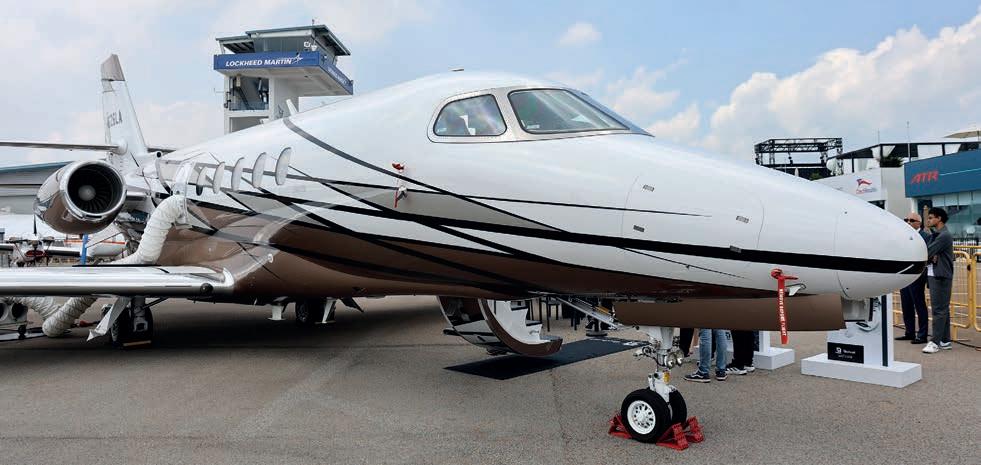
Textron Aviation is seeing “strong demand” in Asia-Pacific for its turboprop and business jet offerings, Tony Jones, the company’s v-p of sales for the region, said this week at the 2026 Singapore Airshow.
While he noted that interest is across the product line, the U.S. aircraft manufacturer is displaying its best-selling models at the Asian
aerospace show: a midsize Cessna Citation Latitude twinjet and a Beechcraft King Air 360 turboprop twin. Demand is being buoyed by healthy economies and high business confidence and growth throughout the region, Jones said.
“Asia-Pacific is a strong turboprop market,” he told AIN. “Australia is a great market for us, and Southeast Asia is really hot right now as well. The King Air and Latitude models we’re showing here in Singapore are
The midsize Latitude, along with the King Air 360 on static display at the Singapore Airshow are among the popular Textron Aviation aircraft in the AsiaPacific region, where demand is strong.
aircraft that really suit this market.”
The company’s refreshed products— including the CJ2 Gen 3 with Garmin Autoland and newly FAA-certified Citation Ascend— are also gaining attention throughout Asia, according to Jones. In addition, he said, “there is a lot of anticipation in this region” for Textron Aviation’s in-development Beechcraft Denali turboprop single, which is expected to obtain U.S. approval soon.
Meanwhile, attitudes toward business aviation in Asia are changing, with more viewing it as a business tool rather than as a luxury, Jones said. Airport infrastructure in Asia is also improving, he noted, further propelling demand for business jets and turboprops in the region. z
With the Asia-Pacific aviation market expected to grow by some 72% by 2030, Thales and Aireon are teaming to develop operational concepts that will help air navigation service providers (ANSPs), airlines, and airports across the region improve airspace tra c flows.
Under the partnership, Thales is providing no-cost access to its cloud-based TopSky-Flow Manager platform, which helps ANSPs manage tra c flow across their airspace and airports. This tool is powered by Aireon’s space-based
ADS-B surveillance product, AireonFLOW.
According to the companies, the trial program will permit ANSPs to explore “what-if” operational scenarios, engage in collaborative discussions around real-world challenges, and strengthen coordination between ANSPs and airlines to optimize regional tra c flow.
“Airspace congestion is one of the most significant challenges faced by the aviation industry, particularly in fast-growing regions like Asia-Pacific,” said Youzec Kurp,
v-p of Thales Airspace Mobility Solutions.
“With 49 separate [flight information regions] and no established multilateral collaboration framework beyond ICAO guidelines, real-time data sharing and coordinated tra c-flow management remain di cult. By giving ANSPs the opportunity to experiment with new flowmanagement concepts in a safe, collaborative environment, we aim to strengthen inter-ANSP cooperation and help the region prepare for sustained, long-term growth.” C.T.

Executives from RTX and its subsidiaries Collins and Pratt & Whitney celebrated the signing of a trio of MOUs worth $139 million with the Singapore Economic Development Board yesterday at the Singapore Airshow.
By Chad Trautvetter
RTX signed three deals with the Singapore Economic Development Board (EDB) on Tuesday morning at the Singapore Airshow, building on a 55-year relationship between the two entities and marking some $139 million in additional investment in the country by RTX’s Collins and Pratt & Whitney divisions. The memoranda of understanding build on an agreement inked in July at the Paris Air Show and underscore RTX’s confidence in Singapore as a strategic hub for aerospace manufacturing, MRO, and engineering capabilities.
Under the latest arrangement, Collins will introduce new MRO capabilities in Singapore to reduce turnaround times for electrical power systems and environmental and airframe control systems. Specifically, this expansion includes MRO services for Boeing 777X integrated drive generators, and—for the 787—controllers for engine starters, cabin air compressors, and auxiliary power units, as well as cooling systems capabilities covering pumps and controllers. All of these new capabilities are expected to be fully operational in 2030.
The new agreements with Pratt & Whitney
enhance Geared Turbofan (GTF) engine MRO and manufacturing capabilities in Singapore. Regarding the former, the company is adding the ability to service the GTF engine fan drive gear system at its Seletar facility, leveraging automation and artificial intelligence technologies to further shrink turnaround times.
To support global production demand, Pratt & Whitney will expand hot-section coating capability at its operations in Tuas, on the west side of Singapore. As part of this project, the company will enlarge its Tuas facility footprint by 25% and establish OEM-standard engineering expertise. The coating enhances the durability of GTF hot-section parts.
“With more than 4,300 employees across 12 facilities, RTX is Singapore’s largest foreign aerospace and defense employer,” noted Chris Haave, v-p of international operations and global government relations at RTX. “These new MOUs…reflect our continued commitment to Singapore as a strategic hub for developing next-generation aerospace technologies. We are investing in capabilities that will support our customers in the region, creating high-value jobs, and aligning with the nation’s ambition to remain a global leader in aerospace.” z
Cebu Pacific has extended its agreement with CAE covering pilot training for its Airbus A320 and ATR 72-600 fleets. The Philippines-based low-cost carrier announced the commitment on Tuesday at the Singapore Airshow.
CAE will continue to train Cebu’s A320 flight crew through to 2037. The agreement covering ATR 72 pilots has also been extended for an unspecified period, with the two companies having had a partnership since a joint training center was established at Clark International Airport (RPLC) in 2011.
“Extending our training services agreements with CAE underscores Cebu Pacific’s commitment to safety, operational excellence, and longterm growth,” said Javier Massot, the airline’s chief operations o cer. “As we continue to expand our fleet and network, it is critical that we invest in world-class pilot training to support a strong and sustainable pipeline of aviation professionals. Our longstanding partnership with CAE ensures our pilots are equipped with the highest standards of training as we scale our operations across the region.”
Cebu Pacific serves more than 60 domestic routes and cities in 14 other countries, including Australia, China, Japan, Singapore, and the UAE. Its fleet includes a mix of A320, A321, and A330 models, as well as both the ATR 72-500 and -600 twin turboprops.
According to CAE’s 2025 Aviation Talent Forecast, the Asia- Pacific region will require approximately 98,000 new commercial pilots over the next decade. C.A.
By Chad Trautvetter
Vertical Aviation International (VAI) is expanding its rotorcraft events to Asia-Pacific with the addition of the inaugural VAI Southeast Asia Aviation Safety Conference (SAASC).
Scheduled for May 27 to 29 in Bali, Indonesia, the new regional show “represents a proactive step in delivering critical safety support to regions historically lacking easy access to VAI-hosted or -supported events,” which includes Verticon, European Rotors, and the Aerial Work Safety Conference.
“Southeast Asia is home to one of the fastestgrowing vertical aviation markets, yet it faces persistent safety challenges: limited access to training, inconsistent regulatory oversight, and a lack of structure for knowledge sharing,” the rotorcraft association said. “SAASC directly addresses these gaps by offering a collaborative platform for operators, regulators, OEMs, insurers, and end users to come together and elevate the region’s safety posture.”
Modeled after VAI’s Air Tour Safety Conference held in Hawaii in 2024, the Asia gathering will serve as a hub for vertical aviation learning, sharing best practices, and showcasing innovation, according to the association. But it’s meant to augment, not replace, other local rotorcraft events, noted VAI president François Lassale. “We’re not here to compete with local organizations—we’re here to support them, bring structure, and create a trusted forum for industrywide collaboration.”
SAASC will feature keynote speakers, targeted training events, and an open forum for exchanging operational knowledge. Its overarching purpose is “advancing safety through shared understanding,” VAI explained.
The association said the Southeast Asia show will serve as a model for future regional safety forums in underserved areas around the world. “As the vertical aviation community grows globally, so must its commitment to safety—and this event marks a decisive step in that direction,” VAI concluded. z
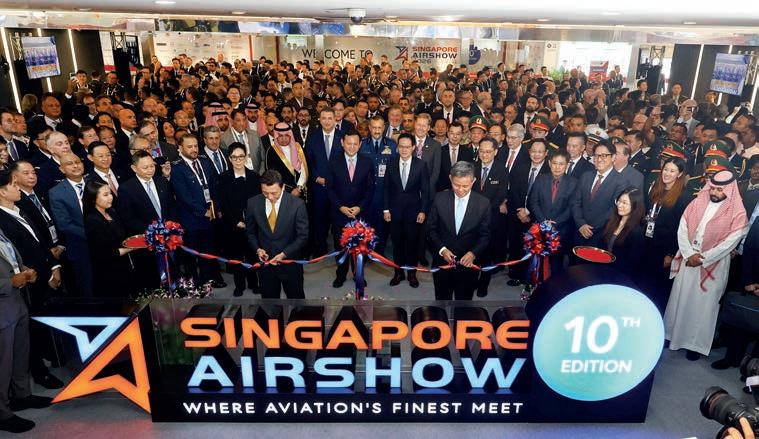
A sold-out Singapore Airshow signals renewed strength in the APAC aerospace market, highlighted by the next show on the circuit: business aviation-focused BAAFEx, set for March 22-24, 2027. DAVID M c INTOSH
JAMES HOLAHAN (1921-2015), FOUNDING EDITOR
WILSON S. LEACH, FOUNDER & CHAIR EMERITUS
EDITOR-IN-CHIEF – Matt Thurber
MANAGING EDITOR – Charles Alcock
PRESS ROOM EDITOR – Hanneke Weitering
THE EDITORIAL TEAM - Charlotte Bailey, David Donald, Jennifer Meszaros, Chad Trautvetter, Amy Wilder
PRODUCTION MANAGER – Martha Jercinovich
GRAPHIC DESIGNERS – Alena Korenkov, Grzegorz Rzekos
PHOTOGRAPHERS – David McIntosh
DIRECTOR OF VIDEO – Ian Whelan
EXECUTIVE CHAIR – Dave Leach
PRESIDENT – Ruben Kempeneer
HEAD OF PEOPLE & BRAND – Jennifer Leach English
SENIOR DIRECTOR EVENTS – Nancy O’Brien
ADVERTISING SALES
DIRECTOR OF SALES - Henry Specht
Victoria Tod – Northeastern U.S./Eastern Canada/United Kingdom, +1 (203) 733-4184
Michelle James – Western U.S./Western Canada, +1 (520) 343-0236
Joe Rosone – Midwestern U.S., Southeastern U.S./Caribbean/ Brazil, +1 (301) 693-4687
Diana Scogna – Europe/Middle East, +33 6 62 52 25 47
DIRECTOR MARKETING AND CLIENT SERVICES – Lisa Valladares
AUDIENCE DEVELOPMENT DIRECTOR – Eileen Silberfeld
SOCIAL MEDIA MARKETING – Zach O’Brien
SALES ADMINISTRATOR – Cindy Nesline
FINANCE & HR DIRECTOR – Tracy Britton
ACCOUNTS PAYABLE MANAGER – Mary Avella
ACCOUNTS RECEIVABLE MANAGER – Bobbie Bing
U.S. HEADQUARTERS:
214 Franklin Ave., Midland Park, NJ 07432, +1 (201) 444-5075
Advertising Inquiries: +1 (201) 345-0085, adsales@ainonline.com
Circulation Inquiries: +1 (201) 345-0085, subscriptions@ainonline.com
WASHINGTON, D.C. EDITORIAL OFFICE: Kerry Lynch (business aviation) – klynch@ainonline.com +1 (703) 969-9195
EUROPEAN EDITORIAL OFFICE: Charles Alcock – calcock@ainonline.com, Tel: +44 7799 907595
Singapore Airshow News is a publication of the AIN Media Group, Inc., 214 Franklin Ave., Midland Park, NJ 07432; Tel.: +1 (201) 4445075. Copyright ©2025 All rights reserved. Reproduction in whole or in part without permission of AIN Media Group, Inc. is strictly prohibited. AIN Media Group, Inc. publishes Aviation International News, AINonline.com, AINalerts, AircraftPost.com BJTonline.com, BJTwaypoints, Dubai Airshow News, EBACE Convention News, Farnborough Airshow News, FutureFlight newsletter, HAI Convention News, Leeham News and Analysis, MEBAA Convention News, NBAA Convention News, Paris Airshow News