OEMS: FALCON 10X ROLLS OUT IN BORDEAUX
GAMA: A DEEP DIVE INTO 2025 SHIPMENTS/BILLINGS
SAFETY: MITIGATING RISKS OF LITHIUM-ION BATTERIES
ROTORCRAFT: WHAT'S UP AT VERTICON 2026

OEMS: FALCON 10X ROLLS OUT IN BORDEAUX
GAMA: A DEEP DIVE INTO 2025 SHIPMENTS/BILLINGS
SAFETY: MITIGATING RISKS OF LITHIUM-ION BATTERIES
ROTORCRAFT: WHAT'S UP AT VERTICON 2026






12 Russell Meyer, Cessna leader and industry champion, dies at 93

14 Bizav industry billings reach new heights as jet deliveries surge

pinnacle with Falcon 10X
6 Embraer Praetor upgrades enhance the pax experience
8 New Orleans magic breaks Las Vegas’ spell over BACE
10 ICCS debuts flagship FBO in Toluca, Mexico
18 China’s low-altitude economy takes o
20 2026 AIN FBO Survey
40 Lithium-ion battery fires: Understanding risks and containment
DEPARTMENTS 46 Rotorcraft | 48 MRO | 50 Accidents 52 Compliance | 54 People in Aviation
On the cover: Pentastar, TAG Aviation Macau FBOs

BY CHARLES ALCOCK
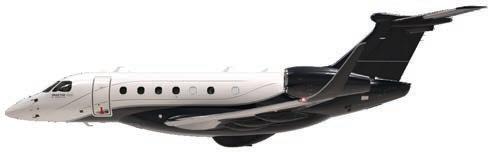
Dassault Aviation’s fresh offering at the top end of the business jet market took its bow on March 10, when the French airfamer rolled out its Falcon 10X model in Bordeaux. The large-cabin, ultra-long-range, high-speed aircraft is the second of several prototypes to be built at the group’s Mérignac production line, and one of these will soon be used for the first test flight.
With an eight-passenger range of 7,500 nm, the 10X extends the Falcon family’s intercontinental reach, while also offering Dassault’s widest, tallest cabin to date, alongside its 8X, 6X, and 2000XLS siblings. Its projected top speed will be Mach 0.925, which is somewhat slower than the rival Bombardier Global 8000 model and Gulfstream Aerospace’s G800—with both of these competitors offering greater range than the 10X but smaller cabins.
For Dassault and its partners, the 10X has been an entirely clean-sheet design. The twinjet is powered by a pair of RollsRoyce Pearl 10X turbofans, delivering
more than 18,000 pounds of thrust, and the flight deck features the NeXus avionics suite developed with Honeywell. Michelin is providing its new, lightweight AirX tires, which it said will contribute to reduced fuel burn.
So far, Dassault has built two of the four 10Xs it will use for a type certification campaign it expects to complete in late 2027. The first example will be used for flight testing. The fully-painted second aircraft was used for the rollout event, and the other two 10Xs will have fully completed cabin interiors and will be used for operational flight trials around the world.
Dassault and partners have already logged around 3,000 ground test hours with various systems and 15,000 hours on test benches. The first Pearl 10X engine run was achieved last December, and Rolls-Royce is now discussing data collected with EASA as it works to certify the powerplant.

Business aircraft operator and charter marketplace provider FlyHouse acquired Dallas-area Jets MRO. The Part 145 aircraft maintenance provider was founded in early 2024 by aviation industry veteran Suresh Narayanan, whose background includes aircraft maintenance and operations.
Under his direction, the company has built a reputation for technical expertise, experienced technicians, and responsive service. Jets MRO also has a satellite aircraft component repair facility in the Miami area, which was included in the transaction.
The U.S. Department of Transportation (DOT) last month selected eight projects covering 26 states that will include trials with several major advanced air mobility developers. The eVTOL Integration Pilot Program (eIPP) is intended to set the foundation for the safe operation of AAM vehicles in the National Airspace System. According to the DOT, the program “will create one of the largest real-world testing environments for next-generation aircraft.” Data from the trials will be used to develop regulations to enable the scale of these operations.
Daher Aircraft’s TBM 980 received Brazil ANAC approval, adding to nods from the FAA and EASA. According to the French manufacturer, the six-seater is “perfectly tailored for the Brazilian market, combining operating e ciency with near jet-like speeds and range that enables point-to-point flights across Brazil and South America.” Around 60 TBMs operate in and around Brazil, a market Daher sees as “dynamic” and where it recently established a local subsidiary. Daher said its new o ce in São Paulo will double its annual regional sales to around six or seven TBM and Kodiak turboprop singles.



BY CHAD TRAUTVETTER
Embraer has taken the wraps off its new Praetor 500E and 600E, featuring revamped cabins with redesigned seats, slimmer overhead panels, a new cabin management system, and an optimized galley, marking the first evolution of the family since its launch in 2018.
Both fly-by-wire models also get a Runway Overrun Awareness and Alerting System, overhead tech panels with simplified icons, and electric window shades. Certification is expected by year’s end, with first deliveries slated for early 2029.
The super-midsize 600E has an option for an “industry-first” Smart Window, a 42-inch, 4K OLED touchscreen display integrated into the left-hand side panel opposite the “lounger” divan that facilitates virtual meetings and provides an “immersive” cinema and gaming area, as well as real-time outside views via three external cameras.
In addition, the 600E has a flexible space opposite the galley that can be used as a crew lavatory and for storage. Meanwhile, the 500E gets a max zero-fuel weight increase to 26,511 pounds, boosting max payload by 15%, to 3,363 pounds.
Embraer worked with its in-house seat manufacturer to redesign the Praetor seats for more comfort, better aesthetics, and ease of use. Features include forward-tracking headrests, dual lumbar support, an electric-assisted system with six independent adjustments, and a larger leg rest. The foldflat bed feature in the first cabin zone has also been simplified to a 15-second operation.
The cabin management system has been upgraded from Honeywell Ovation to Lufthansa Technik Nice, adding an app with voice control. Lighting, window shades, and temperatures can be controlled with touchscreens in the storage armrests, which have USB-A/C ports and wireless chargers, and overhead tech panels.
Smart Window “acts like a large personal electronic device,” Embraer design operations v-p Jay Beever told AIN. “It also turns the principal’s favored seat from the first forward-facing right-hand seat to the middle seat in the divan, opposite the Smart Window. Using the voice commands, someone can switch from watching a movie in ‘blue mode’ to ‘daylight mode’ [all shades up and bright white overhead lighting] in seconds.” z
Honeywell has released the latest of its FMS guided visual (FGV) approaches to one of the most challenging airports in the U.S.: Runway 33 at Aspen/Pitkin County Airport (KASE). Most pilots land on Aspen’s Runway 15, but if the winds favor Runway 33 it is di cult to safely fly a stabilized visual approach due to mountainous terrain near the runway end. The Aspen Runway 33 FGV approach continues south along the valley, curves left toward Red Mountain, and then provides a wide circle over the city to line up with Runway 33. Banks and descents are mild, designed to provide a stabilized flight path.
As the AW609 continues type inspection authorization activities, Leonardo is targeting entry into service of the civil tiltrotor in 2027.
“We will soon start maturity assessment activities to explore the use of the aircraft in operational contexts” such as civilian, public service, and government operations, the Italian OEM told AIN. Tiltrotors fall under the FAA’s new powered-lift category, which Leonardo said represents “an all-new regulatory framework also including the stringent requirements typically set in the civil sector. This is unprecedented in the industry and requires time and multiple reviews.”
The spino of Honeywell Aerospace from parent company Honeywell moved closer with the filing of a registration statement “reflecting the strong progress we are making,” said Honeywell CEO and chairman Vimal Kapur. The spino is expected to be completed in the third quarter. Honeywell Aerospace will be structured into three operating segments: electronic solutions, engines and power systems, and control systems.

BY KERRY LYNCH
NBAA is planning to return its hallmark event, the Business Aviation Convention & Exhibition (BACE), to New Orleans in 2028 for the first time in more than 25 years. The return to New Orleans also will mark the end of what would be a five-year run of hosting the show in the entertainment mecca of Las Vegas. However, Las Vegas remains on the schedule for 2029.
The association in 2022 announced that it would stage a trial to hold BACE in a single location over several years in a move designed to ease planning for attendees and provide vendors with a base where they can store their displays without the expense of rotating locations. NBAA opted for Las Vegas, which had proven to be a powerful draw for attendees.
The return to New Orleans marks a significant milestone because it was last held there in December 2001, a rescheduled event after 9/11 had forced cancellation of original plans that year. It was then to have been held there in 2005, but show organizers were forced to reschedule and move locations after Hurricane Katrina devastated the region. The years of recovery made a return difficult.
To be held Oct. 10 to 12, 2028, at the New Orleans Ernest N. Morial Convention Center, the convention will have a static
display at Louis Armstrong New Orleans International Airport (KMSY) instead of the former location of Lakefront Airport.
“We cannot wait to host NBAA-BACE in New Orleans, a city with a unique energy and vibe,” said NBAA president and CEO Ed Bolen. “NBAA’s exhibitors, attendees, sponsors, and other event partners have been eager to bring NBAA-BACE to New Orleans.”
Along with the enthusiasm for the return, NBAA has seen the success of its other events held more recently in New Orleans. The 2014 Schedulers & Dispatchers Conference (SDC) took place there, breaking the attendance record at the time with 2,600 participants. In 2025, New Orleans again was the host city for SDC, drawing more than 3,300 attendees.
The city has since held the 2025 Super Bowl and routinely hosts several other large trade shows, NBAA pointed out, adding that it has other events planned for the city, including its Maintenance Conference in 2026 and International Operators Conference in 2027.
“New Orleans is an incredibly welcoming host city, and its resurgence as a major event destination has been tremendous,” said Jo Damato, NBAA senior v-p, events and professional engagement. z

MD Helicopters has unveiled its newest model, the MD 564, an MD500 variant with six main rotor blades, a four-blade tail rotor, and improved performance. Entry into service is expected in late 2027 or early 2028. Powered by the 675-shp Rolls-Royce 250C47E/3 engine, the MD 564 will have a 400nm range and four-hour endurance with main and auxiliary fuel. The main rotor system has a diameter of 27 feet 6 inches. Price will be $4 million, but the direct operating cost will be lower than that of other light singles, a spokesman for the company told AIN
The NTSB’s leadership churn continues as another board member was removed suddenly by the White House. J. Todd Inman, a Republican confirmed by the Senate in March 2024 for a five-year term, was notified on March 6 that his position “was terminated e ective immediately” without reason. While NTSB board members are rarely removed before their term expires, this is the second instance during this administration, following last year’s unexpected removal of NTSB vice chair Alvin Brown. Brown is suing the Trump administration.
The New Orleans Ernest N. Morial Convention Center will host NBAA-BACE in October 2028.
Business jet deliveries could grow by 6.5% this year, to 884 aircraft, according to a market analysis released by IBA. The UK-based aviation consultancy said the expected increase is due to a gradual easing of supply chain constraints, albeit with “continued tightness driven by production and completions capacity.” IBA anticipates demand spreading across multiple business jet segments: very light jets (108); light and super-light (245); midsize (91); super midsize (156); large cabin (92); and large/ultra-long-range (192).






A proven predictive analytics system that forecasts the service you need—before you need it.





















BY CURT EPSTEIN
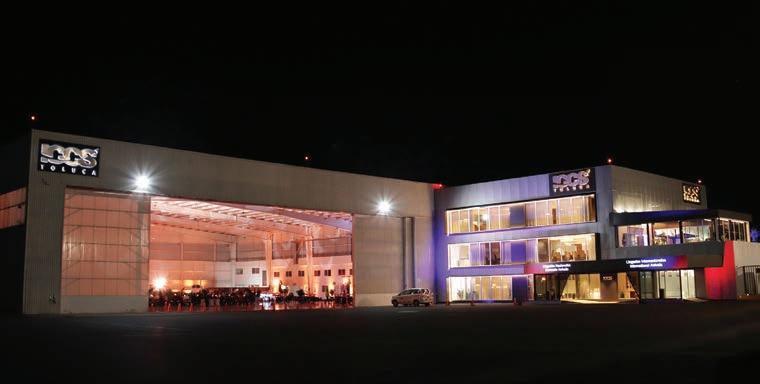
International Corporate and Cargo Services (ICCS)—Mexico’s largest FBO chain—celebrated the grand opening of its second FBO at Toluca International Airport (MMTO) on February 19.
Since 2019, ICCS had an FBO at Toluca, Mexico’s busiest private aviation gateway, now home to more than 500 jets. It acquired a former Mexican government facility in 2022 and entirely gutted the 1980s-vintage building, transforming it into a state-of-the-art facility.
The three-story, 16,000-sq-ft terminal is sheathed in perforated steel paneling. It features three private passenger lounges; a 12-seat conference room on the second floor with a glass wall overlooking the ramp; an expansive pilot lounge with two snooze rooms and shower facilities; a café; refreshment bars; a towering streetside porte-cochère; a rooftop garden/observation lounge; and a dedicated chau ff eur lounge with a restroom and pet rest area. It has separate rampside entrances for domestic and international arrivals, with in-house customs, immigration, security,
and agriculture screening facilities built to government specifications, and 45 vehicle parking spaces.
ICCS is also launching its own dispatcher training program under certification of Mexico’s civil aviation authority, with a 24-seat state-of-the-art classroom on the third floor, along with tenant offices.
The FBO complex features ICCS Gourmet, a fully-equipped, restaurant-quality catering kitchen that can provide meals for guests in the terminal café, as well as custom in-flight provisioning for aircraft operators across the entire airport.
The adjoining hangar, covering 25,833 sq ft (2,400 sq m), features a 40-foot door height and can shelter the latest ultra-longrange business jets.
“Toluca is one of the busiest in North America, and the most important in Mexico,” ICCS CEO Nelson Dumas told AIN, noting the opening ahead of the upcoming FIFA World Cup and its resulting traffic. “We knew all along that having a strong position [here] was mandatory and really strategic. Well, dreams come true.” z
Increased deliveries of both Falcon business jets and Rafale fighters boosted Dassault’s 2025 revenues by 19%, to €7.4 billion. However, Dassault chairman and CEO Éric Trappier warned of tough trading conditions complicated by multiple factors, including wars in Iran and Ukraine, and French taxes. Last year, Dassault delivered 37 Falcons—six more than it did in 2024 but below its guidance target of 40 aircraft. During the same period, the company delivered 26 Rafales—15 for export customers and 11 for France—which was five more units than in 2024. It logged 31 net Falcon sales last year, five more than in 2024.
Aeromedical operator Life Flight Network inked an order for a dozen Pilatus PC-12 Pro turboprop singles last month at Verticon 2026. The 10-year deal, worth about $82 million at list prices, also makes the Aurora, Oregon company the U.S. launch customer for the Pro with an aeromedical interior. Deliveries to Life Flight are set to begin next year. Life Flight already has 16 aeromedical-configured PC-12s and about 40 aeromedical helicopters in its fleet.
Gulfstream Aerospace has secured Transport Canada validation for all four of the models that had been pending in recent years. Approval for the company’s flagship G700 and G800 followed certification of both the G500 and G600 on February 15. The approvals came following the White House threat on January 29 to “decertify” all in-production Bombardier aircraft until Transport Canada completed its validations of the Gulfstream models. Gulfstream said it was “optimistic that progress is being made” following issuance of approvals.







The general aviation community is mourning the passing of Russell W. Meyer Jr., Cessna Aircraft chairman and CEO emeritus, who led the manufacturer for 32 years and championed the 1994 General Aviation Revitalization Act (GARA). Meyer, 93, died March 4 in Wichita surrounded by loved ones.
A Yale and Harvard Law School graduate, Meyer joined Cessna as an executive v-p in 1974 and was tapped to lead the aircraft manufacturer a year later. During his tenure, Cessna reintroduced single-engine piston aircraft production at a time when it had nearly disappeared in the U.S., and expanded and modernized the company’s Citation business jet line.
Taking the role of chairman and CEO of the Wichita manufacturer in 1975, Meyer remained at the helm until 2003, when he became chairman emeritus. He was often referred to as the “father of the Citation line” as he helped steer the company from its sole business jet product on the market, the original Citation 500, which was first
BY AMY WILDER
delivered in 1972, into an ubiquitous family of light, midsize, and now super-midsize Citation jets. The company surpassed the 8,000th-Citation delivery mark in 2022.
“Russ’ contributions to aviation and humanity are the stuff of legend,” NBAA president and CEO Ed Bolen said in a tribute to Meyer. “His leadership on the General Aviation Revitalization Act of 1994 generated countless aviation jobs.”
In 1986, Meyer made the painful decision to discontinue single-piston aircraft production. At that point, Cessna had produced more than 35,000 Cessna 172 Skyhawks alone, but plummeting sales and a seemingly endless tail of liability forced the move. Cessna and the larger industry faced lawsuits nearly every time an aircraft had an accident, regardless of whether those aircraft were decades old. But he refused to completely back away from the product line, promising that if Congress were to pass liability protections, Cessna would resume production of its piston singles.
To that end, Meyer became actively involved on Capitol Hill, working alongside then president of the General Aviation Manufacturers Association (GAMA), Ed Stimpson, to convince a skeptical Congress and a powerful trial lawyers lobby to impose a statute of repose, providing an age limit for product liability.
He served on the National Commission to Ensure a Strong Competitive Airline Industry in the early 1990s and became close with International Association of Machinists and Aerospace Workers leaders, including John Goglia, helping secure labor support for GARA. Former Kansas Rep. Dan Glickman called Meyer a seminal figure in the passage of the legislation, which provided an 18-year statute of repose.
At the White House signing of GARA on Aug. 17, 1994, Meyer announced that Cessna would return to piston-aircraft manufacturing and would begin a search for a new location. The company built a new factory in Independence, Kansas, and
has produced Cessna 172 piston singles there since.
Textron Inc. stressed the importance of Meyer to both the company and the larger business and general aviation community: “It is a rare life that has such an impact on an industry, a community, and an organization. I know that when we use the phrase ‘we stand on the shoulders of giants,’ it refers to men like Russ,” said Lisa Atherton, president and CEO of Textron.
Another brainchild of Meyer’s was the Special Olympics Airlift. Hundreds of Citation, Beechcraft, and Hawker owners participate in the airlift, providing athletes with transportation to and from the games. “His creation of the Special Olympics Airlift demonstrated the generous heart of our special industry,” Bolen wrote.
Meyer was known for his dedication to his work, going into the office every workday, almost up until his passing. He
was helping to steer the CitationPartners Excel/XLS refurbishment business. And he remained actively involved in the community and the industry, serving as the presenter for Goglia’s induction into the National Aviation Hall of Fame.
“Russ was a remarkable human being and one of the most respected leaders I have ever known,” said Textron Aviation president and CEO Ron Draper. “I held Russ in the highest regard, not only for his extraordinary business acumen, but for the integrity, humility, and genuine care he showed for people at every stage of his life. He led with conviction, compassion, and an unwavering belief that leadership carries a responsibility to serve something greater than oneself.”
Meyer was inducted into the National Aviation Hall of Fame in 2009. GAMA president and CEO James Viola called Meyer an integral member of GAMA’s board.
“His leadership and vision for the industry helped pave the way for the success and advancements that we see today. GAMA is grateful for Russ’s inspirational industry leadership and his incredible contributions to the general aviation community.”
He additionally received the Wright Brothers Memorial Trophy, the Collier Trophy twice, and NBAA’s Meritorious Service to Aviation Award. According to AOPA, Meyer held more than 50 type ratings and logged more than 17,000 hours of flight time. He held a commercial pilot certificate with instrument and multi-engine ratings. He co-founded the Be A Pilot program with AOPA to reverse a decadeslong decline in new pilots. AOPA honored Meyer with the R.A. “Bob” Hoover Award in 2024 in recognition of his commitment to aviation.
He is survived by his wife, Helen, and their five children. z

BY KERRY LYNCH AND JESSICA REED

The business and general aviation industry set a new mark in 2025 with combined aircraft and helicopter billings jumping by 17% to a record $36.5 billion as shipments collectively topped 4,200 units, the General Aviation Manufacturers Association reported during its annual State of the Industry review in Washington, D.C.
Unveiling the report on February 18, GAMA chairman and Textron Aviation president and CEO Ron Draper added that for the third year in a row, the industry has exceeded 4,000 aircraft delivered.
However, the results were not uniform, with growth in the business jet and piston sector offsetting a slide in helicopter and turboprop deliveries. And despite the surging billings, the industry still faces challenges from the workforce to supply chain and certification.
“The state of the general aviation manufacturing industry remains steadfast. We
continue to see robust numbers of total aircraft delivered, as well as annual billings eclipsing $35 billion, the highest it has ever been,” GAMA president and CEO James Viola said. “While some segments are seeing marginal declines in deliveries, they are all still above 2019 levels.”
The airplane side fared better with shipments up by 2.2% overall year over year (YOY) to 3,230. Billings soared to $31 billion, a 16.1% leap over the $26.7 billion reported in 2024.
The business jet segment drove these increases, with deliveries up by 11.8% to 854, marking the highest number of units delivered since 2009. Business jet shipments alone accounted for $27.2 billion of the billings, an increase of 18.2% from 2024.
The North American market continues to lead the globe in deliveries, representing 65% of the market. But Latin America moved into the third-largest share at 11%, a
jump from coming in as the smallest market in 2024 with 5%.
Billings surged as Gulfstream spooled up on G700 deliveries and began G800 shipments. The Savannah, Georgia, manufacturer reported a 17% jump in revenues, bolstered by an 18-unit increase in its large-cabin shipments. Bombardier also saw a 13-unit bump in its ultra-long-range Global lines, with its revenues up by 10%.
Likewise, Textron Aviation, ironing out supply-chain issues, reported its deliveries and revenues increased by 20 units and 13%, respectively. Dassault also saw business jet deliveries increase from 31 in 2024 to 37 last year as revenues climbed to $2.1 billion, up from $1.7 billion a year earlier. And Embraer finished 2025 with its highest tally of business jet deliveries in 15 years at 155, exceeding 2024’s total by 25 deliveries.
Piston aircraft deliveries also edged up by 0.6%, or 10 units, to 1,782 last year.
Billings, however, jumped by 9.1% to $1.4 billion, marking the highest total yet.
But turboprop deliveries declined by 5.1% YOY, or down 32 units to 594. At the same time, billings matched last year’s total at $2.4 billion. Geographically, North America remained the dominant market with a 58% share. Latin America followed at 17%.
Draper told the audience at GAMA’s event that feedback from the manufacturers had been that demand remains high for turboprops, but deliveries were a challenge. As an example, Europe-based Pilatus faced trade tari ff headwinds that led to a pause in U.S. shipments. The Swiss manufacturer saw PC-12 deliveries fall off by 14 units. France’s Daher also faced a decline in its turboprop shipments, from 82 in 2024 to 76 this past year. However, Textron Aviation reported a 19-unit increase in its turboprop deliveries.
Helicopter shipments were uniformly down, with pistons dipping by 1.9% to 206
and turbine deliveries by 3.3% to 798 units. This brought overall helicopter deliveries down by 3% to 1,004. Even so, billings increased by 5.3% to $5.4 billion.
Piston helicopter shipments dipped by four units from 2024, and billings declined 1.1%, while turbine shipments were off 14 units with value up 5.7% to $5.5 billion.
Robinson Helicopter saw both piston and turbine deliveries fall by a combined almost 40 units to 256. However, Airbus Helicopters reported a buoyant 2025 with 373 deliveries, up from 349 a year earlier. Bell experienced a three-unit bump, while Leonardo deliveries were down by four.
As general aviation rides what has become a multiyear surge in demand, the sector’s ability to sustain that momentum depends on solving two persistent problems: a shrinking skilled workforce and a supply
chain that remains more fragile than anyone would like. GAMA’s State of the Industry event hosted a panel where top executives weighed in on these issues.
“The industry feels very healthy,” Draper said, noting that strong sales and healthy backlogs are the norm across OEMs. “There’s a lot of customers turning to our types of products for different needs.”
Nicolas Chabbert, CEO of Daher Aircraft, echoed that sentiment, adding that the market is “reacting extremely well” to new products.
The economic stakes are considerable. In the U.S., general aviation supports $339 billion in economic output and 1.3 million jobs, according to GAMA. In Europe, business aviation contributes € 100 billion in economic impact and 449,000 jobs.
Viola also highlighted a significant recent policy win: in November, EU finance ministers failed to reach an agreement on an energy tax directive that would
Enstrom’s piston helicopters are designed for pilots who want flying to feel natural and stress-free. Proven safety, low operating costs, and a stable, smooth-riding rotor system make every flight predictable and enjoyable. From local trips to highaltitude missions, Enstrom makes ownership easy.




have imposed a 40-cent-per-liter tax on jet fuel used by general and business aviation aircraft. “This is an important win,” Viola said, while cautioning that the industry must continue monitoring evolving EU-level and country-specific tax schemes.
Despite the positive headlines, supplychain stress remains a daily operational reality. Chabbert was blunt about the situation at Daher: “We find ourselves spending a great deal of time every day to push and get our stuff so we can deliver on time—and even then, we’re missing a few deliveries.” He described a compounding series of post-Covid disruptions: first labor shortages, then raw material crises, and now new categories of supply constraints arriving before previous ones are fully resolved. Adding to the difficulty, he noted, is an inflationary dynamic.
Phil Straub, executive v-p and managing director of Garmin’s aviation division, said demand on the avionics side is “robust,” with customers eager to invest in safety and efficiency technologies. However, that demand is running up against capacity constraints. “At the lower end, [we’re] probably three months booked out,” Straub said, “but some of the higher end can be close to a year.” He cited broadband installations as one factor affecting capacity.
Draper framed the supply-chain challenge as inseparable from the workforce problem. “Often it comes down to a workforce or labor problem—where facilities consolidated, folks retired, and now they have new folks they’re trying to train and the yield isn’t as good,” he said. GAMA’s Aerospace Supply Chain Task Force released recommendations at the end of 2024 aimed at supporting long-term competitiveness, but structural fixes take time.
The workforce challenge runs deeper than near-term hiring gaps. Across North America and Europe, demographic trends are working against the industry. Skilled tradespeople—machinists, electricians, A&P mechanics—are retiring faster than they can be replaced, and the pipeline of qualified candidates has not kept pace. “In many of those supply-chain companies, that workforce is aging and retiring,” Draper said. “It takes highly skilled and talented people to build these machines, and it takes sometimes years to really learn a craft or a trade.”
OEMs are responding with a variety of programs aimed at reaching potential workers earlier in their education. Textron Aviation has built one of the more comprehensive pipelines; the company brings in 160 to 170 high school interns annually, paying them for six weeks of hands-on exposure to various job functions. It also targets military veterans and recently opened a $40 million career training







Briefly reviewing each flight right after it’s finished is a great way to spot procedures that need updating, training or knowledge gaps that need closing, and opportunities to improve your operation. A regular post-flight debrief doesn’t need to be lengthy or formal to have an impact.Use a few simple questions: Did we accomplish what we planned? Were risks encountered as expected, and did we manage them appropriately? Did we bypass any procedures? What lessons or events from this trip should we report or share? Would we do anything differently next time? That easy flow can help build a culture of safety.
Reinforce debriefing every trip as a standard practice in your organization. Mount this poster where it can serve as a visual reminder to take the time to reflect on your latest flight. Need more? Download free copies at usaig.com.

Thank you and safe flying!
Find out more about our coverage, our Performance Vector safety initiative or Performance Vector PLUS good-experience returns program. Contact us and we’ll connect you with an aviation insurance broker in your area.








































































There’s an opportunity to learn from every flight. Make a structured post-flight review a habit after every trip, not only when something goes wrong, but also when things go right. Debriefing is a low-cost, high-impact safety habit that improves processes and captures any issues before they’re forgotten.
Keep debriefs short and consistent, using 4-5 guiding questions.
Identify any lessons or events from the trip that should be reported or shared
Reflect on crew performance to constructively guide extra training, mentoring or study required.
Call out any procedural deviations or dilemmas and consider any follow-up or changes needed
















































































center—a simulated factory environment where workers with no prior experience can learn their specific job classification before setting foot on the production floor.
Airbus Helicopters in North America has taken a similar approach through a program called Flight Path 9.
“We’re partnering with the local university for those basic manufacturing skills— measurements, sheet metal, wire harness building, all those technical skills,” said Teri Short, vice president of flight operations and engineering for Airbus Helicopters in North America.
Students who complete the course and pass the required testing are guaranteed a position in the company’s apprenticeship program. Short added that Airbus is also targeting middle schoolers with STEM outreach, with a particular emphasis on drawing more women into the field.
Daher’s Chabbert pointed to the company’s apprenticeship program as an effective recruiting tool. Apprentices now account for about 12% of the company’s workforce, and more than 80% of those stay with the company long-term—a retention rate Chabbert called the “best source of hiring” available. Daher also runs an international internship exchange program.
Straub noted that Garmin is involved with the Women of Aviation Worldwide Week, offering flights to 40 to 50 young women annually and providing flight training incentive programs. “For people that want to go into this industry—whether you’re an engineer, pilot, or technician— there’s a lot of opportunity,” he said.
Meanwhile, industry leaders are encouraged by momentum to improve the certification process at the FAA, but continue to press for long-needed changes to bureaucracies that they believe slow the introduction of safety-enhancing technologies.
At the same time, they see a need to rebalance validation efforts that may have gotten out of sync internationally— an issue they believe was highlighted by the recent White House threat to pull the certifications from Bombardier if Canada did not move on Gulfstream approvals.
Viola pointed to a Mitre study on the FAA type certification process. The study identified paths to leverage risk-basedsafety oversight and stakeholder accountability, along with the use of tools such as digitization and modeling techniques.
“We are pleased that the FAA is reviewing these ideas as well as looking into how to introduce safety improvements and correct actions in the certification process,” Viola reported.
He also pointed to bills introduced on Capitol Hill targeting refinements to improve transparency and certification guideposts, as well as a reorganization at the FAA that elevated certification directly under the purview of FAA Deputy Administrator Chris Rocheleau.
However, Viola added, “the challenges are still there…the pain level is still there. We continue to try to work through it.”
But this is not all on the shoulders of the FAA, Viola added, pointing to the 40-day shutdown and the difficulties of keeping a workforce motivated in the face of that.
Draper praised the FAA for working to make improvements. “We see progress.”
But having said that, “I would challenge them that there’s a lot of improvements that could be made, and I think they know that as well,” Draper continued.
As far as working with the international community, Viola noted that GAMA “has been advocating for a continued focus among all regulators to improve the validation process.”
When asked about the recent White House threat involving Canadian certification, Draper said, “Even though the [national aviation authorities] have agreements that they’ll recognize each other’s certifications, there’s friction there, between our certification agencies.”
He continued that these issues have always been evident in aviation. “At times, it needs to be worked on, and we need alignment between these regulations.”
The industry works closely with the regulatory agencies on harmonization. “The regulators meet, and they come up with bilateral agreements,” Viola said. “Occasionally, if it’s not being tracked properly, things get out of balance.” z
BY JENNIFER MESZAROS

While China looks to the Year of the Fire Horse, 2025’s Year of the Snake marked a period of foundational growth and regulatory milestones for the country’s emerging low-altitude economy and the broader socio-economic ambitions the government says this will bolster.
Covering airspace below 1,000 meters (3,280 feet)—and, in some instances, up to 3,000 meters—the sector has seen increasing liberalization to support uncrewed aircraft systems (UAS) and electric vertical takeo ff and landing (eVTOL) aircraft, alongside traditional general and business aviation models.
With China’s 15th Five-Year Plan pushing the expansion of strategic emerging industrial clusters, the low-altitude economy is now being shaped by regional strengths— from Guangdong’s coastal manufacturing hubs to high-altitude testing in plateau regions such as Qinghai. By the end of 2025, China had established a growing repository of regulations and technical standards to support the emerging sector.
At the national level, the Civil Aviation Administration of China (CAAC) released draft airworthiness standards for certain classes of UAS and powered-lift aircraft, along with technical specifications for rotorcraft, propellers, and civil water
aerodromes for amphibious aircraft. The State Administration for Market Regulation issued mandatory standards for UAS identification and real-name registration, while the Central Air Traffic Management Office released specifications for integrated low-altitude supervision platforms, unifying airspace management from national to municipal levels.
Complementing these efforts, the Chinese Society of Aeronautics and Astronautics, together with state-backed Aviation Industries of China (AVIC) and other partners, published its first technical guide on building digital models of low-altitude airspace. Shenzhen issued low-altitude trade secret protection guidelines as the city aspires to earn the self-declared title “World eVTOL Capital” by 2028, while Guangdong introduced its “Twelve Measures,” providing financial support for industry clusters across research and development (R&D), manufacturing, operations, and integrated banking-insurance-equity services.
December also saw President Xi Jinping promulgating the revised Civil Aviation Law, effective July 1, directing the State Council and Central Military Commission to manage low-altitude airspace, with a special chapter supporting general aviation development.
China’s AutoFlight, along with its rival EHang, has earned eVTOL type certification well ahead of Western companies.
According to Yang Shangmou, strategic cooperation director at TransFuture Aviation, all of this bodes well for eVTOL startups and legacy operators.
Speaking to AIN , he explained that the startup is leveraging Hunan province’s supportive policies and early lead in general aviation airports to advance its five-seat (single-pilot, four-passenger) Honghu Mark 1 eVTOL aircraft. With headquarters in Changsha and an R&D center in Xi’an, TransFuture has conducted public demonstrations and emergency drill flights, with plans to integrate into Hunan’s low-altitude rescue system.
Some 500 miles away, eVTOL manufacturer WeSky has been carrying out a flight test campaign of its piloted, four-passenger W280 eVTOL aircraft at Suzhou’s Shengze Lake Full-Space Unmanned Systems
Demonstration Island. The 28-acre island, China’s first comprehensive hub for uncrewed air, land, and water systems, offers dedicated eVTOL test platforms, drone pads, and an integrated operations center for testing, training, and demonstrations under realistic conditions.
In the south of the country, EHang and AutoFlight, both now holding China’s three key airworthiness certifications,
have recently completed demonstration flights across the Qiongzhou Strait between Mingzhu Island and Xuwen Port in Guangdong. Provincial plans call for a fully flyable demonstration island for eVTOL operations as Hainan develops its free trade port.
Meanwhile, Hefei-based Zero Gravity is actively promoting and investing in the “aviation flight camp” concept, which, in theory, requires no civil or military aviation clearance. (The loosely translated term refers to locally authorized low-altitude operating zones outside the purview of traditional ATC.)
As eVTOL technology matures, business aviation services group Sino Jet is exploring low-altitude travel as a strategic extension of its mobility capabilities, aiming to enhance travel efficiency and comfort for
a broader range of users. The Hong Kongbased group’s vice chair, Jenny Lau, told AIN that, with a firm order for 50 Aerofugia AE200 eVTOLs and experience managing and operating aircraft worldwide, it is applying its safety practices, service standards, and global network to support urban air mobility.
This includes working with eVTOL manufacturers to develop airworthiness standards and operational protocols, collaborating with technology providers on battery systems, navigation, and AI, and coordinating with local authorities and airport operators to establish takeoff and landing sites, charging infrastructure, and integrated airspace management. The company is also leveraging its digital platform to support integrated travel planning and operations across air mobility modes, enabling customers to plan, book, and pay for seamless, multimodal journeys.
Sara Mao, founder of Shanghai’s PIAviation, said that as China accelerates its low-altitude strategy, general aviation is approaching an inflection point, where fragmented data, limited transparency, and uneven access to pilot training remain. PIAviation aims to consolidate flight information, structure databases of schools and instructors, integrate real-time charts, and offer a flight credit system tracking experience, training, and maintenance.
By connecting pilots, schools, airports, and training through shared digital tools, “we can make everyday flying more transparent, understandable, and accessible,” Mao said. “When the entire low-altitude system operates on unified, transparent data and is visible and understandable to the public, low-altitude aviation can truly move into everyday life. It is at that moment that China’s pilot spirit will be able to resonate beyond its borders.” z



REPORT BY CURT EPSTEIN, DATA BY CAM MACPHERSON

With business aviation activity expanding globally last year by 4.5% over 2024, that spelled good news for the FBO businesses servicing those aircraft. According to data from industry analyst WingX Advance, the nearly 3.9 million private jet departures represented a quarter million more flights year over year. Most of the FBOs AIN spoke with for this year’s FBO Survey saw strong growth in 2025, with several reporting it as the busiest in their history.
WingX noted that the active business jet fleet increased by 2% worldwide last year, and according to industry experts, that trend is expected to continue. “New business aircraft deliveries are projected to pick up with fractional demand leading the way,” said Ron Jackson, co-principal of the Aviation Business Strategy Group.
He noted that data specialist Argus International forecasts a nearly 2% increase in flight hours for 2026, adding that slow and modest growth is “good
news for the FBO owner and operator.”
A recent study from business market researcher Insight Partners predicts the global FBO operator market will nearly double in value by 2031, to nearly $41.5 billion annually over the next five years.
Given those prognostications, it is little wonder that the FBO arena remains a seller’s market, one in which private equity and investment funds are playing an ever increasing role.
“One of our key perspectives is that, over the past 2 to 3 years, for those deals in the $10 to $25 million range, we have seen a shift in the buyer base where the percentage of interested ‘industry’ buyers now seems to be much less than the percentage of those who are funded by private equity [PE] groups,” explained FBO industry veteran and consultant Carl Muhs. “While many industry buyers are still out there and are active, the number of independent PE buyer groups that are actively pursuing
FBO sales has increased substantially.”
The industry’s two mega chains, Signature Aviation and Atlantic Aviation, are both owned by private equity funds. They face stiff competition for new locations from smaller rising chains and new entrants.
Another dynamic is airport sponsors expect considerable investments along with new lease awards, and FBO operators, in return, want much longer terms. “Clearly, over the past five years, the buyers’ expectation of the acceptable term of the lease... has increased significantly,” Muhs told AIN.
Against this backdrop, for the 45th consecutive year, AIN once again asked its readership to rate the facilities and services at the FBOs they frequent both in the U.S and internationally. For a service provider to reach the highest ranks in the survey, it is not enough to excel in one or even two areas; they must demonstrate consistent quality across all five categories that make up the final score. z

Pentastar Aviation at Detroit-area Oakland County International Airport (KPTK) once again earned the highest rating among all aviation service providers worldwide in AIN’s annual FBO Survey, repeating its score from last year’s survey, and edging out second-place finisher Modern Aviation at Fort Worth Meacham International Airport (KFTW) by two hundredths of a point.
The top 5% of the Americas portion of this year’s survey was dominated by Florida and Texas FBOs, with the two states claiming 11 of the 14 top slots between them. Michigan, South Carolina, and Idaho each had one.
Filling out the remaining top five positions in the survey this year were Sheltair Tampa (KTPA), Henriksen Jet Center at Austin Executive Airport (KEDC) in Texas, and Jet Aviation at Palm Beach International (KPBI).
Among the remaining nine FBOs scoring in the top 5%, four celebrated their first time in the top tier of the survey this year: Eagle Aviation at South Carolina’s Columbia Metropolitan Airport (KCAE); Stancraft Jet Center at Coeur d’Alene Airport—Pappy Boyington Field (KCOE) in Idaho; Sun Valley Aviation at Harlingen’s Valley International Airport (KHRL) in Texas; and Sheltair’s facility at Florida’s Jacksonville International Airport (KJAX).

Oakland County International Airport (KPTK), Pontiac, Michigan
This year marks the sixth in a row of holding the top spot in the AIN FBO Survey for Pentastar Aviation, one of the half-dozen service providers at bustling Detroit-area Oakland County International Airport (KPTK). In operation for more than six decades, the company began life at Willow Run Airport
(KYIP) as automaker Chrysler’s flight department before moving to KPTK and transitioning to serving general aviation customers.
The facility repeated its feat from last year as the only FBO in the Americas to place in the top 10 in each category: line service (4.87), passenger amenities (4.78), pilot amenities (4.79), facilities (4.80), and CSRs (4.91).
“We are known for a consistent, high standard of safety and hospitality,
backed by the scale to handle complex operations,” said company president and CEO Brad Bruce. “Customers choose Pentastar because they trust our team to deliver the same level of excellence on every visit, whether it is a quick turn, a multi-day hangar stay, or a high-profile movement that requires tight coordination.”
As a full-service FBO, Pentastar o ff ers a wide range of services, from aircraft maintenance and completions to
charter and management, in addition to the standard aircraft handling, fueling, and sheltering.
It continually invests to ensure that its facility “feels modern, intuitive, and comfortable,” according to Bruce. The 5,000-sqft main terminal offers passenger lounges, conference rooms, company offices, and the Fivestar Gourmet—the company’s fully-equipped catering kitchen, which has become so successful that, in addition to serving customers at neighboring FBOs at KPTK, it services other airports in the region.
Another unique feature is the Stargate, a two-story, 10,000-sq-ft-plus satellite facility, with a dedicated departure lounge, workstations, a baggage carousel, and the only privately-owned jet bridge in the country. “Stargate was designed for larger-cabin aircraft, higher passenger volumes, professional sports teams, and international groups,” Bruce told AIN. “It allows passengers to transition from aircraft to terminal with a level of comfort and security that is uncommon in general aviation.”
Pentastar offers 130,000 sq ft of hangar space, capable of sheltering the latest ultra-long-range business jets, and 10 acres of reinforced ramp to handle virtually anything else.The Avfuel-branded facility has 167 staff members and is open 24/7, 365 days a year, with trained line service and customer service teams available around the clock.
At the IS-BAH Stage II-registered FBO, improvement is an obsession, and the company runs its own internal customer surveys; any reported problems are followed up on by senior staff within 24 hours. In some cases, company owner Edsel Ford II has even personally responded.
“Our customer service philosophy is simple: safety and hospitality are nonnegotiable, and consistency matters,” said Ben Hammond, the company’s v-p of FBO services. “Our goal is to exceed



EBACE26 marks a decisive step forward, bringing fresh energy and opportunity to the global Business Aviation community. The static display returns in a new dedicated location at Geneva Airport, designed to deliver the most secure, fexible and customer-focussed aircraft showcase in the event’s history.
Coupled with Geneva’s well-connected ecosystem, nowhere else in Europe brings together this calibre of key stakeholders, infuential customers and industry associations.
Be part of the new experience.
Find out more at ebace.aero

expectations in a way that feels effortless and genuine, from first contact to wheels up.”
Fort Worth Meacham International Airport (KFTW), Fort Worth, Texas
Two years ago, Modern Aviation made a big splash in the industry when it acquired the highly regarded American Aero FTW FBO, and this year the facility clearly demonstrated once again why it has been a favorite among AIN’s readers in our annual FBO Survey since it opened in 2012.
As the first in the world to achieve Stage 3—the highest level of the International Business Aviation Council’s (IBAC) International Standard of Business Aircraft Handling (IS-BAH)—safety has been baked into the facility’s DNA, and in its new role as one of the flagship locations in the growing Modern Aviation chain, it is serving as a model for its new siblings. “We studied and adopted many of the best practices developed here and applied them across our broader network,” explained general manager Mark Kindred.
FBO
ATLANTA
AIRPORT CODE OVERALL AVERAGE CHANGE FROM LAST YEAR
HILL AIRCRAFT
KFTY4.530.05
AERO CENTER EPPS ATLANTAKPDK4.430.05
ATLANTIC AVIATION KPDK4.240.09
SIGNATURE AVIATIONKPDK3.96-0.44
SIGNATURE AVIATIONKFTY3.58-0.4
BIRMINGHAM
MILLION AIR (Formerly Atlantic Aviation East KBHM4.000.07
BOCA RATON/POMPANO BEACH
SHELTAIR KPMP4.670.04
SIGNATURE AVIATIONKBCT3.83-0.43
ATLANTIC AVIATION KBCT3.78-0.42
CHARLESTON
SIGNATURE AVIATIONKCHS4.09-0.45
ATLANTIC AVIATION KCHS3.71-0.41
CHARLOTTE
MODERN AVIATION KCLT4.630.03
CHATTANOOGA
WILSON AIR CENTER KCHA4.650.01
COLUMBIA
EAGLE AVIATION KCAE4.770.03
DAYTONA BEACH
SHELTAIR KDAB KDAB4.740.03
DOTHAN
AERO-ONE AVIATION KDHN4.63-0.01 FORT LAUDERDALE
BANYAN AIR SERVICEKFXE4.770.03
SHELTAIR KFLL4.70-0.05
NATIONAL JETS
KFLL4.620.04
FONTAINEBLEAU AVIATIONKFLL4.310.05
SIGNATURE AVIATIONKFXE4.11-0.46
FORT MYERS/NAPLES
BASE OPERATIONS AT PAGE FIELD KFMY4.25-0.47
PRIVATESKY AVIATION SVCSKRSW4.240.07
NAPLES AVIATION KAPF4.310.03
GULFPORT
MILLION AIR KGPT4.61-0.02
JACKSONVILLE
SHELTAIR KJAX4.730.03
FLORIDA KEYS
MILLION AIR KMTH4.14 0.1
The FBO, one of two service providers at Dallas-area Fort Worth Meacham International Airport (KFTW), ranked among the top 10 in four of the five categories and was one of only two facilities overall this year to tally a score of 4.78 or higher in every category. It earned its highest score (4.85) in the CSR category. “While facilities and certifications matter, what truly differentiates us is our people,” Kindred told AIN. “Our team embodies accountability, integrity, and nurturing relationships, creating consistent experiences that customers remember.”

A member of the Avfuel-branded dealer network, the FBO occupies 31 acres at KFTW, including 11 acres of ramp and 250,000 sq ft of hangar space. The company will augment the latter with the
LAKELAND
AERO CENTER LAKELAND EAST KLAL4.600.04
MEMPHIS
WILSON AIR CENTERKMEM4.720.02
MIAMI
FONTAINEBLEAU AVIATIONKOPF4.52-0.02
ATLANTIC AVIATION KOPF4.450.06
SIGNATURE AVIATIONKMIA4.310.08
RELIANCE AVIATION KTMB3.80-0.42
TAMPA/ST. PETERSBURG SHELTAIR KTPA4.780.01
SHELTAIR KPIE4.700.03
SIGNATURE AVIATIONKTPA3.56-0.4
SHELTAIR KSPG4.390
WEST PALM BEACH/STUART JET AVIATION KPBI4.780.03
ATLANTIC AVIATION - STUART JET CENTER KSUA4.600.04 APP JET CENTER KSUA4.590.05 ATLANTIC AVIATION KPBI4.390.03
WILMINGTON MODERN AVIATION KILM4.380.06 ▼ SOUTHEAST REGION CONTINUED
development of an additional pair of 40,000-sq-ft hangars, “complemented by supplemental office space, terminal lounge areas, expanded parking and associated ramp improvements.”
Its terminal occupies the 8,600-sq-ft ground floor of the airport’s renovated operations building. It was equipped from the start with the latest technologies,
including automatically tinting windows to shield customers from the harsh Texas sun, white noise speakers embedded in the walls to provide privacy, high-speed dishwashers, a 20-seat conference room, and a soundproof snooze room. It features three passenger lounges, including a TSA-secure private lounge with an ensuite bathroom and direct ramp access. A large refreshment bar features a wide variety of curated snacks, including the ever-popular CocaCola beverages in glass bottles.
Tampa International Airport (KTPA), Tampa, Florida
Sheltair Tampa began its existence at Tampa International Airport (KTPA) in 2007 as the Tampa International Jet Center and was already an established fixture at the top rungs of AIN’s annual FBO Survey when it was purchased by the Floridabased service chain a decade ago. That quality has continued uninterrupted to the present: this year, it was again one of only three FBOs to earn a score higher than 4.7 in each of the five survey categories and placed in the top 10 in four of them, according to AIN’s readers.

For line service, the facility tallied its highest score (4.82). “Safety is our top priority at Sheltair, [and] our line service training is extremely comprehensive and takes many months to complete,” said Tony Scott, the Florida-based chain’s regional v-p of FBO operations, adding that
FBO AIRPORT CODE OVERALL AVERAGE CHANGE FROM LAST YEAR
BATTLE CREEK
DUNCAN AVIATIONKBTL3.95-0.44
CHICAGO
HAWTHORNE GLOBAL AVIATION SERVICES KPWK4.710.03
J. A. AIR CENTERKARR4.630.04
ATLANTIC AVIATIONKPWK4.620.02
B. COLEMAN AVIATIONKGYY4.560.04
ATLANTIC AVIATIONKMDW4.390.01
CINCINNATI
SIGNATURE AVIATIONKLUK3.51-0.39 CLEVELAND
ATLANTIC AVIATIONKCLE3.940.07
COLUMBUS
LANE AVIATION KCMH4.180.02
DETROIT
PENTASTAR AVIATIONKPTK4.830 INDIANAPOLIS
MILLION AIR KIND4.580.05 JET ACCESS KTYQ4.290.05
LEXINGTON/LOUISVILLE
ATLANTIC AVIATIONKSDF4.420.06
SIGNATURE AVIATIONKLEX4.08-0.45 MADISON
WISCONSIN AVIATIONKMSN4.26-0.01 MILWAUKEE
SIGNATURE AVIATIONKMKE3.92-0.44
the program ensures its teams work efficiently and safely in the fast-paced, potentially dangerous ramp environment.
Open 24/7, the Corporate Aircraft Association-preferred FBO has a staff of 42. It offers a two-level, 12,000-sq-ft terminal with a landside porte-cochère and an airy double-height lobby leading to the 12,000sq-ft arrivals canopy on the airside. The terminal recently underwent a $1 million renovation and includes conference rooms, pilot lounge, refreshment bar featuring freshly baked cookies, and concierge.
Occupying 39 acres at KTPA, the Wyvern Wingman-certified FBO has 9 acres of ramp and more than 400,000 sq ft of hangar and o ffi ce space, and it is home to 47 turbine-powered aircraft. In February, it announced its latest additions, a 50,880sq-ft maintenance hangar—which is being used for aircraft storage until a third-party
FBO AIRPORT CODE OVERALL AVERAGE CHANGE FROM LAST YEAR
ANCHORAGE
ATLANTIC AVIATIONPANC4.290.08
HONOLULU
ATLANTIC AVIATIONPHNL4.01-0.45
LAS VEGAS
HENDERSON EXEC ARPT KHND4.170.09
ATLANTIC AVIATIONKLAS4.290.03
SIGNATURE AVIATIONKLAS3.92-0.44
LOS ANGELES
HOLLYWOOD BURBANK JET CENTER (FORMERLY MILLION AIR) KBUR4.510.05
CLAY LACY AVIATIONKSNA4.450.03
CLAY LACY AVIATIONKVNY4.440.01
ACI JET KSNA4.390.01
ATLANTIC AVIATIONKBUR4.14-0.04
MONTEREY
DEL MONTE AVIATIONKMRY4.540.05
MONTEREY JET CENTER KMRY4.54-0.1
SONOMA
SONOMA JET CENTERKSTS4.690.03
PALM SPRINGS
DESERT JET CENTERKTRM4.720.01
SIGNATURE AVIATIONKPSP4.340.05
ATLANTIC AVIATIONKTRM3.93-0.44
PORTLAND/HILLSBORO
ATLANTIC AVIATIONKPDX4.540.03
GLOBAL AVIATIONKHIO4.14-0.46
SACRAMENTO
MODERN AVIATIONKSMF4.310.08
SAN DIEGO
CARLSBAD JET CENTERKCRQ4.580.04
SIGNATURE AVIATIONKSAN4.020.11
ATLANTIC AVIATIONKCRQ4.1-0.46
SAN FRANCISCO/OAKLAND
SIGNATURE AVIATION (FORMERLY MERIDIAN) KHWD4.15-0.46
SIGNATURE AVIATIONKOAK4.14-0.06
KAISERAIR OAKLAND JET CTR KOAK3.980
SIGNATURE AVIATIONKSFO3.970 SEATTLE
BELLINGHAM AVIATION SERVICES KBLI4.41-0.01
MODERN AVIATIONKBFI4.330.05
SIGNATURE AVIATIONKBFI4.180.04
MRO provider signs on—along with an additional 50,000 sq ft of ramp. Sheltair Tampa benefits from its airport’s unusual downtown location, with an upscale shopping and dining district just steps from its front door. KTPA also abuts Raymond James Stadium, home of the
NFL’s Tampa Bay Buccaneers, and on event days, the FBO runs shuttle buses directly from the terminal to an airport side gate, which deposits guests right at the venue.
Austin Executive Airport (KEDC), Austin, Texas
This year marks nine consecutive years for Henriksen Jet Center, the lone FBO at privately-owned Austin Executive Airport (KEDC), placing in the top 5% of all FBOs worldwide, according to AIN’s readers. It placed in the top 10 in three categories: facilities (4.86), pilot amenities (4.79), and passenger amenities (4.85)—the highest overall score in that category.

Both the KEDC facility and its older sister at Houston Executive Airport (KTME)—which also landed in the top 5% this year—are members of the Paragon Aviation Group of upscale FBOs. The Austin location last year played host to the group’s leadership conference, which attracted representatives from more than 30 top-tier FBOs.
Henriksen KEDC—which celebrates its 15th anniversary this year—saw its busiest year ever, according to Andrew Perry, who serves as executive director of both airports. “We had record fuel sales and record aircraft operations,” he told AIN. Included in that was the location’s highest-traffic Formula 1 week. “KEDC and Henriksen Jet Center serviced over 525 turbine aircraft in a four-day period.” With 11.5 acres of ramp, the FBO is more than capable of handling
FBO AIRPORT CODE OVERALL AVERAGE CHANGE FROM LAST YEAR
AUSTIN/SAN ANTONIO
HENRIKSEN JET CENTER KEDC4.780.02
MILLION AIR KAUS4.720.03
MILLION AIR KSAT4.52-0.06
ATLANTIC AVIATIONKAUS4.270.01
SIGNATURE AVIATIONKSAT3.82-0.42
COLLEGE STATION
ASTIN AVIATION KCLL4.720.00
DALLAS/FORT WORTH
MODERN AVIATION (FORMERLY AMERICAN AERO) KFTW4.81-0.01
BUSINESS JET CENTERKDAL4.70
GALAXY FBO KADS4.70.01
TEXAS JET KFTW4.680.01
MCKINNEY AIR CENTERKTKI4.640.02
ALLIANCE AVIATION SVCS KAFW4.610.02
MILLION AIR DALLASKADS4.58-0.03
SHELTAIR KDTO4.53-0.01
CORPORATE AVIATIONKDFW4.060.06
EL PASO
ATLANTIC AVIATIONKELP4.350.07 HARLINGEN
SUN VALLEY AVIATIONKHRL4.75N/A HOUSTON
HENRIKSEN JET CENTER KTME4.760.02
GALAXY FBO KCXO4.740.03
GLOBAL SELECTKSGR4.710.03
MILLION AIR KHOU4.70.03
WILSON AIR CENTER KHOU4.350.07
ATLANTIC AVIATIONKIAH3.82-0.42 LITTLE ROCK
SIGNATURE AVIATIONKLIT3.65-0.41 NEW ORLEANS
FLIGHTLINE FIRSTKNEW4.27-0.06
ATLANTIC AVIATIONKMSY3.77-0.42 OKLAHOMA CITY
ATLANTIC AVIATIONKOKC4.660.04
that amount of traffic.
As the reliever airport for the Austin area, the location has a staff of 29 and is open 24/7/365. It offers a modern 21,500-sq-ft, twostory glass-sheathed terminal, with display pieces including an engine from the former Concorde airliner and a restored 1914 motorcycle in its freshly recarpeted, double-height lobby. Amenities include a pilot lounge with quiet rooms equipped with massage chairs, shower facilities, a theater room with stadium seating, and a 12-seat conference room. Possibly the facility’s most popular
FBO AIRPORT CODE OVERALL AVERAGE CHANGE FROM LAST YEAR
DES MOINES
MODERN AVIATIONKDSM4.450.04
FARGO
FARGO JET CENTERKFAR4.68-0.04
KANSAS CITY
ATLANTIC AVIATIONKMKC4.630.02
SIGNATURE AVIATION KMKC3.830.04
LINCOLN
ATLANTIC AVIATIONKLNK4.550.05
DUNCAN AVIATIONKLNK4.290.01
MINNEAPOLIS, SAINT PAUL, ROCHESTER
SIGNATURE AVIATIONKSTP4.660.04
PREMIER JET CENTERKFCM4.350.01
SIGNATURE AVIATIONKMSP4.19-0.27
SIGNATURE AVIATION KRST4.070.04
ST PAUL FLIGHT CENTER KSTP3.94-0.44
OMAHA
REVV AVIATION KCBF4.360.07
ATLANTIC AVIATIONKOMA4.310.08
ST. LOUIS
MILLION AIR KSUS4.550.04
AERO CHARTER KSUS4.18-0.46
SIGNATURE AVIATIONKSTL3.43-0.38
WICHITA
YINGLING AVIATIONKICT4.03-0.45
SIGNATURE AVIATION KICT3.88-0.43
amenity is its massive 15,000-sq-ft arrivals canopy. Capable of sheltering aircraft as large as a Boeing BBJ, crews find it invaluable on days where the Texas sun can fry an egg on the ramp and overstress aircraft cabin cooling systems.
Home to 57 private jets and turboprops, the Phillips 66-branded location has more than 200,000 sq ft of hangar space. That total will rise this summer when another 28,000-sq-ft community hangar capable of sheltering the latest ultra-long-range business jets is completed.
Palm Beach International Airport (KPBI), West Palm Beach, Florida Jet Aviation is a global FBO brand with nearly 30 locations scattered around the world, from Bozeman, Montana, to
Brisbane, Australia, and from Dubai to Dallas, but once again, it is its location at Palm Beach International Airport (KPBI) in Florida that earned its highest accolades in the AIN FBO Survey. Having celebrated its 40th anniversary last year, the facility underwent an interior furniture renovation to bring a bright and contemporary style to its 18,000-sq-ft terminal, which includes an airy lobby, executive lounges, conference room, business center, crew lounge with snooze room, and flight planning area.

Open 24/7, the FBO with a staff of 60 earned its highest scores in this year’s AIN FBO Survey in the guest-facing areas of line service and customer service representatives, with a dual 4.83 and top 10 placement in both categories. “What truly sets Jet Aviation Palm Beach apart is our people,” explained general manager Steven Schrammel. “Many of our team members have been here for more than 20 years, and their depth of experience and expertise have shaped a culture that extends across the entire team. This continuity fosters a level of service excellence that is both personal and intuitive.”
Holding Stage 2 IS-BAH registration, the safety of the team, customers, and assets in its care is the company’s number one priority, according to Schrammel. “Our line service personnel follow a structured training schedule, including both industry standard courses and our own additional safety training,” he said. The facility even provided onsite training for the staff at Jet Aviation’s newly-opened FBO at Miami–Opa Locka Executive Airport.
With 200,000 sq ft of hangar space capable of accommodating even bizliner-class
FBO
ALBANY
MILLION AIR
AIRPORT CODE OVERALL AVERAGE CHANGE FROM LAST YEAR
KALB4.11-0.46
BALTIMORE
SIGNATURE AVIATIONKBWI3.67-0.41
BOSTON
ATLANTIC AVIATION
JET AVIATION
KBED4.330.07
KBED4.320.05
SIGNATURE AVIATIONKBOS3.21-0.36
BURLINGTON
HERITAGE AVIATION
HARTFORD
KBTV4.610.02
SIGNATURE AVIATIONKBDL3.87-0.43
LONG ISLAND
MODERN AVIATION
MODERN AVIATION
MODERN AVIATION
MAINE
BANGOR AVIATION
NORTHEAST AIR
MAC JETS
NEW YORK CITY
MILLION AIR
KISP4.60.04
KFOK4.550.05
KFRG4.510.05
SERVICESKBGR3.54-0.39
KPWM4.650.04
KPWM4.1-0.46
KHPN4.710
SIGNATURE AVIATION (FORMERLY MERIDIAN)
JET AVIATION
MODERN AVIATION
MODERN AVIATION
KTEB4.670.01
KTEB4.520.05
KJFK4.360.07
KLGA4.090.05
SIGNATURE AVIATIONKEWR40.11
SIGNATURE AVIATIONKMMU3.88-0.43
PHILADELPHIA
SIGNATURE AVIATIONKTTN4.13 0.1
ATLANTIC AVIATION
PITTSBURGH
ATLANTIC AVIATION
KPHL3.63-0.4
KPIT4.570.05
ATLANTIC AVIATION KAGC4.180.04
PORTSMOUTH
PORT CITY AIR
RICHMOND, VIRGINIA
MILLION AIR
WASHINGTON, D.C.
APP JET CENTER
KPSM4.080.01
KRIC4.360.07
KHEF4.360.07
JET AVIATION KIAD4.330.08
SIGNATURE AVIATIONKDCA3.98-0.44
aircraft, and 500,000 sq ft of ramp, the 25-acre facility is home to 55 aircraft.
Sustainability ranks highly among the company’s considerations, and KPBI is one of its nine locations to stock sustainable aviation fuel. “The facility has also been constructed with sustainability in mind, including features such as low-flow water fixtures, a
FBO AIRPORT CODE OVERALL AVERAGE CHANGE FROM LAST YEAR
ALBUQUERQUE
CUTTER AVIATIONKABQ4.560.02
BOZEMAN
JET AVIATION KBZN4.360.07
YELLOWSTONE
JETCENTER BY SIGNATURE KBZN4.02-0.45
COLORADO MOUNTAINS
ATLANTIC AVIATIONKMTJ4.630.04
ATLANTIC AVIATIONKRIL4.32-0.04
ATLANTIC AVIATIONKASE4.15-0.02
VAIL VALLEY JET CENTER KEGE4.1-0.46
TELLURIDE REGIONAL AIRPORT KTEX3.8-0.42
COLORADO SPRINGS CUTTER AVIATIONKCOS4.660.04
JETCENTERS OF COLORADO KCOS4.030.11 DENVER
SHELTAIR KBJC KBJC4.70.01
MODERN AVIATIONKAPA4.680.04
JETCENTERS OF COLORADO KAPA4.520.02
SIGNATURE AVIATIONKDEN4.02-0.45
JETCENTERS OF COLORADO KFNL3.65-0.41
GLACIER NATIONAL PARK, MONTANA
ATLANTIC AVIATIONKGPI4.60.04
GRAND JUNCTION
WEST STAR AVIATIONKGJT4.540.05
IDAHO
STANCRAFT JET CENTER KCOE4.76N/A
ATLANTIC AVIATIONKSUN4.570.05
WESTERN AIRCRAFTKBOI4.55-0.12
JACKSON JET CENTERKBOI4.410.02
PHOENIX/SCOTTSDALE
CUTTER AVIATIONKPHX4.670.03
JACKSON JET CENTERKPHX4.57-0.01
CUTTER AVIATIONKDVT4.480.05
ATLANTIC AVIATIONKSDL4.28-0.14
GATEWAY AVIATION SVC KIWA4.240.02
SIGNATURE AVIATIONKSDL4.22-0.36
PUEBLO
FLOWER AVIATIONKPUB4.520.05
SALT LAKE CITY
ATLANTIC AVIATIONKSLC4.370.05
SIGNATURE AVIATIONKSLC3.99-0.44
SANTA FE
ATLANTIC AVIATIONKSAF4.640.02
TUCSON
ATLANTIC AVIATIONKTUS4.34-0.09
MILLION AIR TUCSONKTUS3.91-0.32
white roof, and heat-reducing tarmac, as well as local drought-resistant plants and LED lighting,” Schrammel told AIN. “We continue
to look for ways we can support our customers and our industry in this area.”
Nine additional locations rounded out the top 5% of the Americas’ FBOs in the survey this year. Five placed within the top tier last year, while the remaining four are making their debut there this year.
With a score of 4.77 were Banyan Air Service at Fort Lauderdale Executive Airport (KFXE) and Eagle Aviation* at Columbia Metropolitan Airport (KCAE) in South Carolina.
Just behind them at 4.76 were Henriksen Jet Center at Houston Executive Airport (KTME); Sheltair at Orlando Executive Airport (KORL); and Stancraft*, the lone service provider at Coeur d’Alene Airport—Pappy Boyington Field (KCOE) in Idaho.
Sun Valley Aviation* at Valley International Airport (KHRL) in Harlingen, Texas, tallied a 4.75, while Sheltair’s Daytona Beach
FBO
ST. THOMAS
STANDARD AVIATIONTIST4.660.02
PROVIDENCIALES
PROVO AIR CENTERMBPV4.610.03
NASSAU
MODERN AVIATIONTJIG4.680.03
ODYSSEY AVIATIONMYNN4.440.06
JET NASSAU MYNN4.180.09
International Airport (KDAB) and Galaxy FBO’s facility at Conroe/North Houston Regional Airport (KCXO) each received a score of 4.74 from AIN’s readers. With a score of 4.73, the last to land the top 5% this year was Sheltair at Jacksonville International Airport* (KJAX). z
*Made top 5% debut this year
This report on AIN’s FBO survey covers fixed-base operations in the Americas as well as in the Rest of World categories.
History AIN has been conducting surveys since 1981, asking about the service that FBOs provide their customers and reporting the results annually. Initially, we sent out a paper survey questionnaire by mail to qualified subscribers in the U.S.—pilots, flight attendants, and dispatchers—the people who use or make arrangements with FBOs. In later years, qualified subscribers in the remainder of North America and the rest of the world were added to the survey.
In 2006, we moved the FBO survey online. We have continued to add FBOs each year and now o er respondents a comprehensive list of 4,500 FBOs worldwide.
The Survey—The FBO Survey site allows subscribers to keep a list of personalized FBOs. From this list, they can easily change or a rm a rating or leave an updated comment.
The scores in this report and on our website reflect the cumulative average of scores from 2015 through today. Only the most recent rating
of an FBO is counted on a per-user basis, and only FBOs that have received 20 or more ratings are eligible for their scores to be published.
From April 24, 2025, until Jan. 11, 2026, we asked subscribers to update and give new ratings for FBOs they had visited in the preceding 12 months. We contacted readers via email and announcements in our e-newsletters. The bulk of this promotion took place from Nov. 12, 2025, through Jan. 11, 2026.
The FBO survey site asks readers to evaluate FBOs they visited the previous year in five categories: line service; passenger amenities; pilot amenities; facilities; and customer service representatives (CSRs). For each of these categories, the participant is asked to assign a number from 1 to 5, 1 being the lowest and 5 being the highest.
Observations—Each year, we review ratings to ensure their accuracy. On our new site, we have a system to flag, review, and, if necessary, remove ratings identified as dubious by
factors such as email address, IP address, and concentration of scores.
Score Calculations—An FBO’s overall average is calculated by adding all the individual category ratings received by that FBO and dividing the resulting sum by the total number of all category ratings received by the FBO. In other words, if a particular FBO was evaluated by 50 people (and assuming that all 50 evaluators gave that FBO a rating in each of the five categories), then the FBO would receive a total of 250 category ratings. These 250 category ratings are added together and then the sum is divided by 250 to arrive at the overall average for this particular FBO.
Overall averages are calculated using the cumulative average of all ratings given from 2015 through the present. This year’s results also will show an FBO’s increase or decrease versus that FBO’s cumulative rating from one year ago.
In its annual FBO survey, AIN’s readers evaluate hundreds of aircraft handling facilities worldwide on a one-to-five scale in five categories: line service, passenger amenities, pilot amenities, facilities, and customer service representatives. The survey divides the globe into two segments: the Americas and the “Rest of World” (RoW). This year, for the first time, we included a separate top 5%, 10%, and 20% for the RoW segment. In its first year of survey eligibility, TAG Aviation Macau (VMMC) surged to the top of FBOs outside of the Americas, outstripping long-time incumbent Farnborough Airport (EGLF).
The London area was well represented, with quality locations taking three of the top 5% spots for the segment, including Harrods Aviation and Universal Aviation at Stansted Airport (EGSS).
This year saw an unprecedented four Asia-Pacific FBOs occupying top 10% positions in the RoW segment of the AIN survey. In addition to TAG Aviation Macau, global aviation services provider ExecuJet’s facility at Australia’s Sydney Kingsford Smith Airport (YSSY), MJets FBO at Don Mueang International Airport in Bangkok (VTBD), and Hong Kong Business Aviation Centre (VHHH) were all standouts in the region.
Rounding out the top 10% RoW positions in this year’s survey were Jet Aviation’s locations at Amsterdam Schiphol Airport (EHAM), Zurich Airport (LSZH), and Geneva International Airport (LSGG).

4.75
TAG Aviation Macau
Macau International Airport (VMMC)
For the first time since AIN introduced the Rest of World category to its annual FBO Survey in 2006, there is a new name at the top of the list. TAG Aviation Macau—in its first year of survey eligibility—ended the
19-year run of its former stablemate Farnborough Airport.
In 2020, TAG Aviation Holding sold off the remaining parts of its once global aviation empire to its joint venture partner in Asia, Young Brothers Aviation, and another unidentified private investor. The Asia sale also included the TAG FBO in Macau,
which was established just two years before in the airport’s renovated general aviation terminal. This year, the company—one of the youngest to achieve Stage 3 registration, the highest level of the International Business Aviation Council’s (IBAC) International Standard for Business Aircraft Handling (IS-BAH)—demonstrated its
consistency, finishing no lower than third in all five survey categories among FBOs outside of the Americas.
Open 24/7, TAG Macau—which earned its highest score this year in the facilities category (4.83)—occupies the entire 693sq-m (7,460-sq-ft) upper floor of the facility on the south side of the airport next to the commercial terminal.
It features onsite customs and immigration clearance, a passenger lounge, and two private VIP lounges that can combine into one large lounge. The latter is a feature that came in handy last October when the FBO welcomed two professional U.S. basketball teams and their entourages that came to Macau on chartered airliners to play a pair of pre-season promotional games. Other amenities include a conference room, a refreshment bar offering dim sum and fruit platters as well as beverages, and a concierge to arrange catering, transportation, and accommodations, and assist with notams, filing flight plans, and weather. For aircraft crew, there is a pilot lounge with snooze rooms and shower facilities, all of which gave the service provider its second-place finishes for the passenger amenities and pilot amenities categories for FBOs outside the Americas, with a 4.74 score in both.
The complex also has an 8,200-sq-ft maintenance hangar and access to the airport’s 86,000-sq-ft general aviation hangar for aircraft shelter. In terms of the types of aircraft that frequent the airport and its nearly 11,000-foot-long runway—just an hour away from Hong Kong by ground transport via the Hong-Kong-ZhuhaiMacau bridge—a Gulfstream G450 is considered “small,” according to TAG Macau general manager and industry veteran Rita Tam.
In the customer service representative category, TAG, with its staff of 19, ranked second among all FBOs outside the Americas (4.78). “I think we have a can-do spirit,” Tam told AIN. “We never say no to a customer; first you need to find a solution. Of

Your industry. Your network. All in one place. Last year, the NBAA White Plains Regional Forum set the pace with record-breaking attendance, as thousands of business aviation professionals gathered for the industry’s premier Northeast regional event. Featuring education sessions, an aircraft display and more than 100 exhibits, this is the event to elevate your brand, build meaningful connections and strengthen your presence in an industry where your network drives success. This is an event you won’t want to miss. Register today!

course, if it’s something that we can’t control, then we can’t do it.”
Farnborough, UK
Privately operated Farnborough Airport held the top spot in the AIN FBO Survey for FBOs outside the Americas for an unprecedented 19 years before finally being dethroned. This year, the company led all FBOs in the Rest of World (RoW) segment in three of the five categories: passenger amenities (4.79), pilot amenities (4.77), and facilities (4.87).

The location’s 52,000-sq-ft, three-story terminal features VIP customer lounges (with refreshments) that can accommodate high-volume flights, conference rooms, crew lounge and snooze rooms, work area, passenger and crew shower facilities, laundry service, concierge, and gymnasium. Drive-through customs and immigration clearance is available, along with the fivestar on-airport Aviator Hampshire Hotel.
As part of Farnborough’s continuing strategic investments, it will introduce a facility later this year to accommodate its growth in fractional and branded charter operator traffic. “The most significant development has been the progression of our dedicated premium operator terminal facility, which will further enhance segmentation and operational efficiency for high-volume fleet operators while preserving the exclusivity of our main terminal,”
said Adam Skrzypczak, Farnborough’s terminal operations director, adding that any development at the airport is viewed through the lens of sustainability. “We assess major projects against environmental performance criteria to ensure long-term resilience, regulator alignment, and credible progress towards our netzero commitment.”
The airport has 415,000 sq ft of climatecontrolled hangar space, including the Domus III four-bay complex that opened in 2024, increasing the facility’s aircraft storage space by 70%. Home to 73 jets, the hangars can accommodate up to ACJ- and BBJ-class aircraft. In addition, it offers nearly 21 acres of ramp.
Farnborough operates from 7 a.m. until 10 p.m. on weekdays and from 8 a.m. until 8 p.m. on weekends and bank holidays. It has a staff of 307 and finished in the top 10 in both the RoW customer service representatives and line service categories in this year’s survey.
In terms of history, Farnborough was the site of the UK’s first powered flight in 1908 and served for decades as a Royal Air Force facility, before it was turned into the UK’s only true private aviation facility. “What is unusual is that Farnborough is a fully dedicated business aviation airport—the entire infrastructure, staffing model, and service philosophy are designed exclusively around premium private aviation, rather than operating business aviation as an adjunct to commercial airline traffic,” Skrzypczak told AIN.
London Stansted Airport (EGSS), UK Harrods Aviation has been a consistent name among the top positions for FBOs in Europe and beyond in AIN’s annual survey. The company, the aviation arm of the world-famous Harrods department store in London, has existed since 2003. It has operated two facilities at London Stansted
Airport (EGSS) since 2023, when it bought a rival service provider, and between the two locations operates 106,000 sq ft of hangar space capable of sheltering bizlinersize aircraft.
Offering two full-service terminals at EGSS, Harrods offers onsite security,
customs, and immigration clearance; conference room; passenger and pilot lounges; work area; gym; and driver rest areas with private vehicle ramp access and crew transfers. Its original facility (the Knightsbridge) is now geared to handle larger charters, such as head-of-state flights with more than 100 passengers, while the other location (the Brompton), which is fully capable of serving larger aircraft as well, is generally designated for private/corporate aircraft.

It was the first UK FBO to achieve IS-BAH Stage 3 registration. “We recognize the importance of continually evolving and improving our [safety management system] to maintain the highest levels of operational integrity,” the FBO said, adding, “What sets our location apart is our commitment to self-su ffi ciency. Unlike many competitors, we minimize reliance on third-party services, allowing us to maintain full control and reliability over our operations. We independently operate and maintain our ground service equipment, ensuring seamless efficiency.”
Finishing no lower than fifth place in all five survey categories for FBOs outside of the Americas, the company—which is operational 24/7 and has a staff of more than 300 between its locations—received its highest score this year for its customer service representatives (4.73). “Our customer service approach is grounded in delivering an understated sense of luxury with unwavering consistency,” the company added. “We prioritize anticipating our customers’ needs and creating frictionless travel experiences from start to finish.”
Sydney Kingsford Smith Airport (YSSY), Sydney, Australia
One of “Down Under’s” most established business aviation facilities, ExecuJet Australia has operated an FBO at Sydney Kingsford Smith Airport (YSSY) since 2000, and the facility traces its roots back nearly 30 years before that.
Now the lone general aviation service provider at YSSY, ExecuJet earned its highest score in this year’s survey (4.78) in the customer service representatives category. “Our philosophy is simple,” explained Matthew Guy, ExecuJet’s regional FBO manager for Asia-Pacific, “We welcome every visitor into our facility as if we are welcoming them into our home.”
The FBO occupies a two-story 3,230-sqft terminal featuring passenger and crew lounges, as well as onsite CIQ services, and a catering preparation kitchen. While the company recently reconfigured its trio of conference rooms to create additional lounge space in the 1980’s vintage structure, even more upgrades are on the way.
“This year, we’ll be undertaking a comprehensive refurbishment of the facility, representing the most significant investment in the building since it was originally constructed more than four decades ago,” Guy told AIN . “The project will deliver a completely reimagined reception and arrival experience, upgraded passenger lounges and meeting rooms, dedicated private bathroom facilities, and improved staff amenities.”

FBO
In addition, the renovation will feature sustainable design elements as part of the company’s environmental awareness. “We’re also proud to be partnering with Australia’s first onshore sustainable aviation fuel (SAF) producer, which will allow us to offer SAF at Sydney Airport for the very first time, supporting greener operations for our clients,” said Guy.
As the first location in ExecuJet’s global FBO chain to receive Stage 3 registration under IBAC’s IS-BAH, the Sydney facility also received the highest survey score this year in the line service category (4.74) for FBOs outside of the Americas. “Line service training is a cornerstone of our operational excellence,” said Guy. “We invest significantly in ongoing education, regular assessments, and practical skills workshops to ensure our team is always up to date with the latest industry standards.”
With a staff of 45, the facility recently moved to 24/7 operation with the introduction of an overnight shift.
Universal Aviation
London Stansted Airport (EGSS), UK
With more than four decades of experience, Universal Aviation’s facility at London Stansted Airport (EGSS) is one of the longest- established service providers in the UK.
Ranking in the top 10 in all categories among FBOs in the Rest of World segment in this year’s AIN FBO Survey, Universal Aviation earned its highest score in line service (4.74) and plans to upgrade its ramp services with new equipment this year. Over the past year, it was awarded Stage 3 registration under IBAC’s IS-BAH, making it just the second facility in the country (both at EGSS) to achieve that status.
“The safety culture is strong at Stansted; training is thorough and frequent,” said Sean Raftery, Universal’s managing director for the UK and Ireland. “We believe that the safety of our customers, their assets, and our own people should be the number one priority for any FBO, and so we are justifiably proud of this achievement.”

Open from 7 a.m. until 10 p.m. with a staff of 30, the facility has a two-story, 11,000-sq-ft terminal with arrival and departure lounges, crew business center, refreshment bar, pilot lounge, shower facilities, drivers’ lounge, and customs and immigration services available onsite. Its meeting rooms were recently upgraded with “smart” screens to improve their utility for customers.
The complex offers 40,000 sq ft of private ramp space, with access to several hangars that can house aircraft the size of Boeing Business Jets or Airbus Corporate Jets.
“Traffic levels have been surprisingly strong,” Raftery told AIN, adding that he believes the traditional links to geopolitical and economic activity have almost been ignored. “The prior year was a record year for us, but the last few months have exceeded year-on-year numbers.”
Universal Stansted was also a standout in the customer service representative category this year, earning a score of 4.73 from AIN’s readership. Raftery described the company goal there as removing customer stress and taking the burden off them so they can arrive and depart smoothly through the country. “Our customers put their trust in us,” he explained. “We are grateful for their recognition of our services, whether fed back directly to us or through mediums such as this AIN survey.”
Three other FBOs in the RoW regions rounded out the top 20% in this year’s FBO Survey: Jet Aviation at Amsterdam Airport Schiphol (EHAM) with a rating of 4.56, MJets FBO at Don Mueang International Airport in Bangkok (VTBD) with a rating of 4.51, and Hong Kong Business Aviation Center at Hong Kong International Airport at 4.48 (VHHH).
The AIN FBO Survey once again is recognizing FBOs demonstrating the most improvement from last year. In the Americas segment, that is Modern Aviation’s facility at Sacramento Mather Airport
(KMHR), which saw its score rise from 3.71 last year, to 3.84 in this year’s survey.
On the other side of the world, Universal Aviation/CJet—the joint venture FBO
at Beijing Capital International Airport (ZBAA)—led the Rest of World category, raising its 2025 FBO survey score by 0.13 points to 3.48. z
The below FBO sta members were recognized by AIN readers for going “Above & Beyond” in the field of customer service.
PERSON
Faith Parrish
Mike Beckett
Cadence Whiteside
Customer Service Representative
Customer Service Manager
Customer Service Representative
Javonte Croone Line Technician
Pablo Garcia
Blanca Davila
Dami Akindele
Alex Scott
Vanessa Ortega
Kerrie Kiefer
Calvin Martin
Tara Creel-Cesena
Kristiena Urbano
Customer Relations Specialist
Customer Service Specialist
Hospitality Supervisor
General Manager
Lead Client Services Representative
Customer Service Manager
General Manager
General Manager
Customer Service Manager
Chloe Sicre de FontbruneMarketing Intern
Josh Yeater
Taylor Andrade
Sheena Koebernick
Customer Service Representative
Guest Services Coordinator
Customer Service Representative
Kevin Cayer Brand Ambassador
Jordan Rosenblat
Jamie Munoz
Financial Controller
General Manager
Maria Roth-Dahl Operations Manager
Genaro Sifuentes Ramp Agent
Amanda Gary
Lanae Martinez
Bernie Spencer
Shanna Ash
Kathrina Crossland
Calvin Soong
Shalene England
Megan Panter
Customer Service Representative
Customer Service Representative
Customer Service Representative
Customer Service Manager
O ce Manager
Aero-One Aviation KDHN
APP Jet Center KHEF
Astin Aviation KCLL
Avflight KDET
Banyan Air Service KFXE
Base Operations At Page Field KFMY
Carlsbad Jet Center KCRQ
Clay Lacy KSNA
Clay Lacy KVNY
Cutter Aviation KABQ
Cutter Aviation KCOS
Cutter Aviation KDVT
Cutter Aviation KPHX
Dassault Falcon Service LFPB
Del Monte Aviation KMRY
Desert Jet Center KTRM
Fargo Jet Center KFAR
Fontainebleau Aviation KFLL
Fontainebleau Aviation KOPF
Galaxy FBO KADS
Galaxy FBO KCXO
Globalselect KSGR
Henriksen Jet Center KEDC
Henriksen Jet Center KTME
Heritage Aviation KBTV
Hill Aircraft KFTY
Hollywood Burbank Jet Center KBUR
Assistant Director Of Integrated Service CentreHong Kong Business Aviation CentreVHHH
Customer Service Representative and ManagerJ.A. Air Center KARR
Customer Service Manager
Brian Swanson Line Service/Operations Manager
Alex Lawhon Director of Leasing
Irene Lane Concierge
Nelly Popov
Leah Prizmich
Gracie Branson
Customer Service Representative
Customer Service Representative
Customer Service Representative
David Schramko General Manager
Suzi Uhls General Manager
Christian WestdickenbergLine Service Manager
Stephanie Allison
Jenna Medhus
Quinnc Mccarthy
Customer Service Manager
Customer Service Representative
Customer Service Representative
Xavier Graves-Air Concierge
Laura Foscolo-GeneralManager
Aleem Mohammed General Manager
Gianna Torsky
Rebecca Taveira
Antonella Lombardi
Erwin Bobb
Tatyana Budakova
Piper Wright
Customer Service Representative
Customer Service Manager
Customer Service Manager
General Manager
Customer Service Representative
Customer Service Representative
Jackson Jet Center KBOI
Jackson Jet Center KPHX
Jetcenters Of Colorado KAPA
Jetcenters Of Colorado KCOS
MAC Jets KPWM
Mckinney Air Center KTKI
Million Air KADS
Million Air KGPT
Million Air KIND
Million Air KMTH
Million Air KTLH
Modern Aviation KAPA
Modern Aviation KBFI
Modern Aviation KCLT
Modern Aviation KFOK
Modern Aviation KFRG
Modern Aviation KFTW
Modern Aviation KISP
Modern Aviation KJFK
Modern Aviation KLGA
Modern Aviation KMHR
Modern Aviation KSMF
Kawai Lopez
Ricardo Gonzalez
Anna Stegall
Customer Service Manager
Lead Line Service Technician
Customer Service Representative
Stacy Stewart Director of Sales and Marketing
Ana Marques Sales Director
Peyton Long
Customer Service Representative
Dominick DedominicisOperations Manager
Don dela Rosa
Senior Night Concierge
Veronica Perea-CustomerService Representative
Jocelyn Fabjon
Customer Service Manager
Joan Kuntz Lobby Ambassador
Gina Ward Customer Service Representative
Leigh Kendziorski General Manager
Delanie Potteiger Customer Service Representative
Albjon Mehmetukaj
Solange Videira
Je Carbray
Jenna Jason
Assistant General Manager
Customer Service Supervisor
FBO Manager
Customer Service Supervisor
Taylor Little Customer Experience Representative
Joseph Rossetti
Katie Kornegay
General Manager
FBO Management
Holly Hopkins Customer Relations Manager
Rita Tam General Manager
Amy Brothers Customer Service Manager
Mary Kay Customer Service Manager

AINalerts delivers the news and intelligence that directors of aviation, chief pilots, flight department leaders, OEMs, MROs, and industry executives need to stay ahead. Trusted reporting, exclusive analysis— delivered straight to your inbox Monday through Friday.
To subscribe, please scan the QR code, visit ainonline. com/subscribe, or email subscriptions@ainonline.com.
Jet Center KMRY
Jets KFLL
CYYC
Aviation Macau InternationalVMMC


BY STUART “KIPP” LAU

two lithium-ion
Lithium-ion battery fires are an increasing risk for aviation, with more incidents and greater severity in recent years. The threat of these fires exists on any flight at any time. Uncontained, these fires can lead to a catastrophic loss of an aircraft in minutes. Although passengers may not recognize these dangers, the industry is actively working on improved mitigation and containment strategies.
Underwriters Laboratories’ Thermal Runaway Incident Program (TRIP)—a voluntary program that tracks and trends lithium battery incidents—indicates that the risk of a lithium-ion battery fire is at its highest point in five years of data collection. On average, there are two lithium-ion
battery thermal runaway events per week; over half of those events occur during the cruise phase of flight, often the furthest point from a suitable airport.
Thermal runaway is defined as a phenomenon where the lithium-ion battery enters an uncontrollable, self-heating state. In addition to extreme heat, fire, and smoke, experts are now concerned with the vapors that release harmful toxins.
TRIP surveys suggest that the average passenger brings four rechargeable devices onboard and often (one in five passengers) packs rechargeable batteries in their checked luggage. Half of all Americans, according to the surveys, know nothing about the dangers of lithium batteries.
Once alerted to the risks, passengers show high levels of concern.
Industry experts understand the growing risk of lithium-ion batteries traveling onboard aircraft and are concerned that operators are ill-equipped to handle an in-flight event. Lithium Battery Air Safety Advisory Committee chairman Bob Brown said, “After six years of expert analysis, our committee reached a clear finding: lithium battery fires can outpace traditional firefighting methods rapidly, and most aircraft are not equipped with containment tools proven to manage these events under real-world conditions.”
The frequency of these events is troubling, Brown added. “Industry data shows more than two lithium battery events
April 22 – 25, 2026
Friedrichshafen, Germany
Halls A1 – A3, Dome, Static Display



occur worldwide every week, and the trend continues upward. More concerning is that most aircraft do not carry containment systems capable of controlling these events once they escalate.”
A hidden danger of a lithium-ion battery going into thermal runaway is the toxins released in confined spaces. “The thermal runaway vapors are definitely not conventional ‘smoke’ as they contain toxic and flammable components,” Batt-Tek Consulting’s George Brilmyer explained. “In a confined space such as a bedroom or aircraft, the toxins can reach dangerous concentrations that may do permanent damage to your eyes and lungs, per National Institute for Occupational Safety and Health (NIOSH) and the Acute Exposure Guideline Level-1 (AEGL-1) safety specifications.”
In general, lithium-ion batteries are rechargeable batteries that employ a Nobel-prize-worthy electrochemical process (intercalation) to store energy. Lithium-ion batteries are widely used in many consumer products because they offer higher specific energy, greater energy density and efficiency, and longer cycle and calendar life compared to other rechargeable batteries. In the three decades since its introduction, the volumetric energy density increased threefold, while cost decreased tenfold. Higher-capacity lithium-ion batteries contain multiple cells. As an example, a battery for a large electric vehicle may contain 4,000 to 6,000 cells.
As described, lithium-ion batteries store a lot of energy. Damaged, overheated, overcharged, or otherwise in distress, Brilmyer added, “the battery goes into thermal runaway and delivers all of its energy through a spontaneous and self-sustaining chemical thermal degradation reaction.” Lithium-ion batteries in failure will overheat, smoke, emit toxic fumes, and eventually explode or catch on fire.
Brilmyer, in his paper “The Hidden Dangers of Vapor Toxicity in Li-ion Battery Fires,” describes the five stages of the thermal runaway process and extrapolates published vapor concentration data to describe the dangers of these toxic vapors in confined spaces. Understanding each stage of the thermal runaway will provide insight into managing a potential battery fire or an actual battery fire.
As described, a thermal runaway is a multistep chemical reaction: 1) Onset; 2) Escalation; 3) Runaway; 4) Propagation; and 5) Aftermath.
Onset is the first stage where an “event” initiates cell overheating. Examples of these initiation events may include the cell being damaged by crushing, puncturing, overcharging, or internal damage related to a manufacturing defect. In this stage, the cell begins to overheat (internal temperature rises), and the protective layer on the carbon or graphite anode begins to decompose.
Escalation is the second stage where cell self-heating takes control of the reaction. The unprotected anode releases heat and flammable vapors as it attacks the electrolyte. The cell temperature continues
to increase; throughout this stage, there is the possibility of internal shorting. Also, during this stage, the internal pressure of the cell begins to climb, and cells begin to bulge. At this point, there is no turning back since the thermal runaway is well underway.
Full runaway is the third stage, where the cell demonstrates the features of a runaway reaction (the cathode releases its oxygen). Large quantities of vapors are now released through the safety vent or the rupture of the case. These vapors are toxic and typically flammable; flames and fires are only seen about 50% of the time.
Propagation is the fourth stage, where— in devices that use multi-cell batteries (tablets, laptops, power banks, et cetera)—a “domino effect” begins. The thermal runaway of one cell begins to propagate to neighboring cells, starting a cascading effect that travels from one cell to the next. During this stage, the heat and thermal runaway quickly spread through the whole battery module or pack.
Aftermath is the fifth and final stage of a thermal runaway. Often thought of as the “reignition” step, larger batteries with
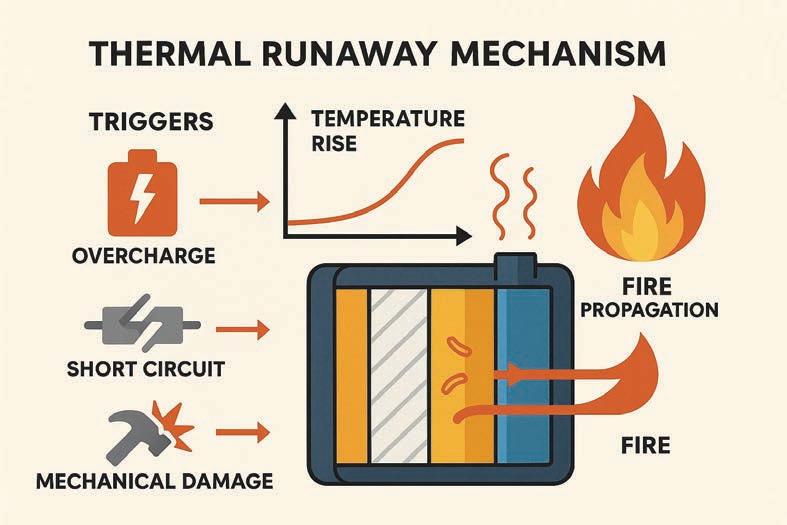
Thermal-runaway of a lithium-ion battery is a multi-step chemical reaction that can start when a battery is crushed, punctured, or overcharged, or has been harmed by a manufacturing defect.
multiple cells may take hours or days to conclude the propagation. Generally, this stage will continue until all cells have released their energy.
As highlighted, the thermal runaway is a chemical reaction that is almost unstoppable. According to Brilmyer, “Inside the lithium-ion cell, the high-power anode and cathode may spontaneously react with each other, or the electrolyte, to deliver massive amounts of heat and toxins. Unlike most other batteries, the solvent and electrolyte in the lithium-ion battery is flammable, and that is the crux of the lithium- ion thermal runaway problem.”
Of importance, there is no set timeline between each stage of a thermal runaway; it is volatile and unpredictable. According to Brilmyer, “should the cell experience any significant amount of heat—either internal or external—one or more of these stages may spontaneously set the entire process into action.” Thus, for the flight crew, early recognition and action are paramount.
Brilmyer further lists the chemical compounds that have been identified in the vapors emitted from a lithium-ion cell during a thermal runaway and the concentration of these compounds pre-ignition and post-ignition.
Of the compounds identified, they are either highly toxic, flammable, or explosive.
Common compounds include carbon monoxide (CO) and carbon dioxide (CO2). Others such as hydrogen fluoride (HF) and phosphoryl fluoride (POF3)—along with some ultra-fine metal oxides—are very hazardous; have higher concentrations during pre- ignition; are extremely corrosive to lungs, eyes, and skin; and can be fatal or cause long-term health effects in higher doses. HF is heavier than air and will collect near the floor.
According to Brilmyer, “At the top of this list of toxins is HF, which is the biggest immediate risk to human health—flames

or no flames. The NIOSH-identified immediate danger to health and life level of HF is only 6 ppm (during a thermal runaway— pre-ignition HF is measured at 20 to 200 ppm).” In a confined space such as an aircraft, this is extremely dangerous.
A thermal runaway is hazardous at any stage. Pre-ignition, there are high concentrations of toxins. Post-ignition, there are flames, explosions, and extreme heat. As described, any lithium-ion battery that is compromised (damaged, distressed, or overheated) has the potential to enter the irreversible stages of a thermal runaway— volatile, unpredictable, and unstoppable— and an operator must have a swift plan to mitigate and contain this risk.
“Government testing conducted by Transport Canada highlights a reality every professional pilot should understand,” noted the Lithium Battery Air Safety Advisory Committee’s Brown. “Once a lithium-ion battery event progresses beyond approximately 19 minutes, it can become operationally uncontrollable using traditional onboard firefighting tools.”
Brown continued: “At that point, heat output can overwhelm handheld extinguishers, toxic smoke and flammable vapors increase rapidly, and crew workload rises sharply as visibility and systems degrade. Diversion timelines compress quickly, often leaving crews with fewer viable options. The operational lesson is straightforward: early and effective containment matters. Delay can allow a manageable event to become a serious, aircraft-threatening emergency.”
Engaged with government and industry, Brown has extensively researched battery fires for nearly two decades. “Aircraft fire protection systems were never designed to manage prolonged, chemically driven lithium-ion battery failures,” he said, further explaining that, unlike conventional Class A or B fires, thermal runaways are self-sustaining, prone to re-ignition, and capable of producing large volumes of toxic and flammable gases. In fact, ISO3941:2026 has just been issued and classifies lithium-ion battery fires as “Class L,” a totally new fire class. But ISO has yet to map a “Class L” fire extinguisher.
According to Brown, here is the crux: many of the containment bags and systems developed in the past 15 years are not effective at containing lithium-ion battery fires. “Data from airline SMS programs, Underwriters Laboratories’ TRIP surveys, and testing conducted by the FAA and EASA consistently show that many commonly used containment bags leak smoke and fine particulate matter, lose structural integrity over time, and fail to manage sustained heat or repeated re-ignition,” he said.
Brown further stressed, “Compounding this risk is a critical regulatory fact pilots should clearly understand. There is no FAA certification or approval pathway for lithium battery fire containment bags. Claims of ‘FAA-approved’ equipment are marketing language, not safety standards. In practice, labels and assumptions do not guarantee performance when it matters most.”
In fact, FAA emphasized this point when issuing AC 120-80B, Firefighting of General and High-Energy In-Flight Fires, on March 16, 2023. Guidance in the advisory circular stated, “Manufacturers may have stated in their advertisement and marketing videos
that their products are ‘FAA-certified,’ ‘successfully tested by the FAA,’ or ‘meet FAA standards.’ However, the Fire Safety Branch of the FAA William J. Hughes Technical Center and the Aircraft Certification Service emphasize that no FAA test standards exist for these containment products, nor does the FAA have a mechanism to approve these products.”
Underwriters Laboratories (UL) developed UL 5800 to become the first comprehensive aviation safety standard created specifically to address lithium-ion battery fires. Unlike short-duration flame tests, UL 5800 requires demonstrated performance under realistic, energized battery conditions. According to this standard, to earn the “UL” stamp of approval, a compliant system must contain heat, flames, smoke, and toxic emissions continuously for six hours, even with batteries capable of propagation and re-ignition.
Involved in much of the UL 5800 testing, Brown said, “That six-hour requirement is not arbitrary. It reflects how lithium battery events behave in flight. Operationally, UL 5800-compliant systems are designed to buy time—time to divert safely, time to manage crew workload, and time to

prevent smoke and fumes from incapacitating the cockpit or cabin.”
Likewise, regulator momentum is accelerating. “Regulators and industry bodies are rapidly aligning around this risk,” he said. “After publishing test data demonstrating how commonly used fire bags fail, the FAA issued SAFO 25002 directing operators to reassess lithium battery fire risks, emergency equipment, and onboard mitigation capability. EASA testing has reached similar conclusions regarding smoke leakage and containment shortcomings.”
Brown continued, “UL 5800-compliant containment devices became the committee’s top recommendation for aircraft. Testing by the FAA and EASA validated the importance of having a certified safety standard. The industry consensus is shifting away from improvised or unverified solutions and toward certified performance-based mitigation strategies.”
As specified in SAFO 25002, operators should, at a minimum, accomplish the following:
Assess onboard safety equipment, such as fire extinguishers, water sources, and fire containment products, to ensure they have the capability to mitigate fires from lithium batteries; evaluate aircraft components, emergency equipment, and passenger items that may become involved in a thermal runaway event; and review procedures that minimize the potential for smoke inhalation by passengers and crew members.
The threat of lithium-ion battery fires is real, frequent, and unforgiving of delay. According to Brown, “Testing shows a lithium-ion battery fire can rapidly overwhelm traditional firefighting methods, while no regulatory safety net ensures that onboard containment tools will perform as expected.”
While UL 5800 changes that, operators must also employ a comprehensive plan that develops a strategy to mitigate the battery fire threat for crew members and passengers alike.

Corporate Angel Network (CAN) provides cancer patients free seats on jet and turboprop business aircraft to treatment throughout the United States.
anks to the generous support of our partners, CAN has coordinated more than 69,000 patient flights. Can you spare an empty seat or donate to our mission? e space you fill may well be in your heart.
BY MATT THURBER
Robinson Helicopter president and CEO David Smith unveiled Robinson Unmanned last month at Verticon, making a new business unit that includes its Ascent drones and uncrewed versions of the R44 and R66 helicopters. The unit’s leader is Ascent AeroSystems president Paul Fermo.
“[Robinson Unmanned] could easily be bigger than all of our heritage businesses combined,” Smith said. There is a need for defense products at commercial costs, he added, “and built by a sustainable business. We stand alone in that we are the only ones that can build incredibly [fast] at aerospace quality and automotive scale.”
The U.S. needs this kind of capability, he explained. “We see this opportunity…that the next era is the era of both manned and unmanned in collaboration, unlocking missions that couldn’t have been done with either by themselves.” These missions include public safety, such as search and rescue.
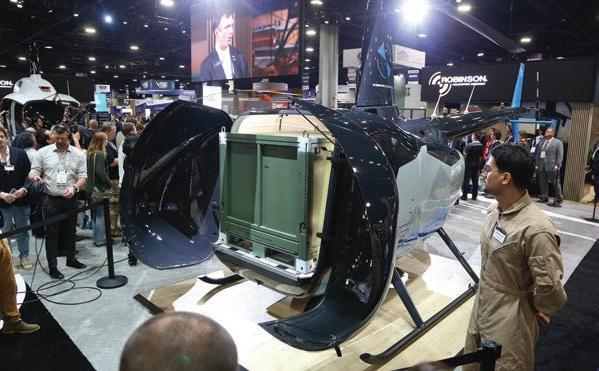
In addition to Ascent AeroSystems drone products, Robinson Unmanned incorporates new versions of the R44 and R66. The R44 Airtruck and Sprayhawk are equipped with Rotor Technologies’ RPX autonomy suite. The Airtruck is designed for cargo, resupply, and surveillance missions, while the Sprayhawk is for agricultural and environmental operations.
François Lassale stepped into his first Verticon as president and CEO of Vertical Aviation International (VAI) as the event gained momentum. The show had 15,000-plus registrations, more than 650 exhibitors, 280,000 sq ft of exhibit space filled, and 60 aircraft on static display.
While pleased with how the show came together, Lassale noted that the timing was significant as this was his first Verticon at the helm, arriving as the industry has been reaching an “inflection point.”
He explained, “Helicopters remain essential to society. Period. That’s not going to change. But we’re also seeing a lot of these new entrants coming into the market, and it’s not a
dystopian future—it’s a reality.”
Lassale stressed industry must be prepared.
“There’s a whole bunch of expectation around the new technology. For me, it’s about how VAI positions itself at this inflection point, and that’s why we’ve pursued the [eVTOL] industry.”
He has been making the rounds with several of the developers of advanced air mobility (AAM) aircraft and is hoping to drive the point that there are important reasons VAI should be their home. “They’re operating in the same airspace as helicopters and drones,” he said. “We’re out there, defending the airspace.” “Our job is to bring that community together and alleviate any concerns from the helicopter
Robinson Helicopter unveiled the Turbinеtruck, an uncrewed variant of the R66, at Verticon 2026.
The R66 Turbinetruck adopts Sikorsky’s Matrix autonomy system and features large clamshell front doors for loading cargo.
“Robinson is o ffi cially entering the ‘era of both,’” Smith said, “a fundamental shift where flight is no longer a choice between human intuition and machine precision, but the seamless integration of both.” z

FRANÇOIS LASSALE PRESIDENT AND CEO VERTICAL AVIATION INTERNATIONAL
industry that these things are coming to take over,” Lassale said. “That’s not the reality. Helicopters remain the backbone of the vertical lift industry today, and they will remain for decades. What’s changing is that they’re not alone anymore.”
K.L.
BY CHARLOTTE BAILEY
Hélicoptères Guimbal is officially starting a helicopter family, confirming the development of the Cabri G5. Speaking at Verticon, Hélicoptères Guimbal president and CEO Bruno Guimbal remained coy about a timeline that “started years ago,” although he suggested, “I will be more than happy if it gets into service in four years in France.”
As the proposed “big brother” to its existing sibling, the multi-mission G5 aims to bridge a perceived gap in the market between the smaller Cabri G2 and Airbus H125. The concept began “many years ago, and we have had time to refine the strategy,” offered Guimbal, who explained that customers have long called for a larger variant building upon the DNA of the existing “basic safe trainer.”
Hélicoptères Guimbal has frozen the five-seat G5 design. The helicopter’s fourblade main rotor will feature high-aspectratio composite blades, helping improve ride quality and noise mitigation.
The composite airframe will retain the crashworthy fuel system of the G2, while the cabin—“significantly smaller outside” than the now-discontinued Eurocopter EC120—retains almost identical internal dimensions. Designed for versatility and modularity, the G5 could prove a “very efficient” four-seat aircraft for military or VIP use, suggested Guimbal.
Avionics will be informed by the multiple configurations developed on the G2, although Guimbal acknowledges, “today, what people want is a Garmin G500.” A second-generation vehicle management system set to fly “very soon” on the G2 will also be compatible with the upcoming type.
The G5 will be powered by a Safran 450shp Arrius 2D with dual-channel fadec and 3,000 hours time between overhauls.
No timeline for G5 development milestones or certification expectations has
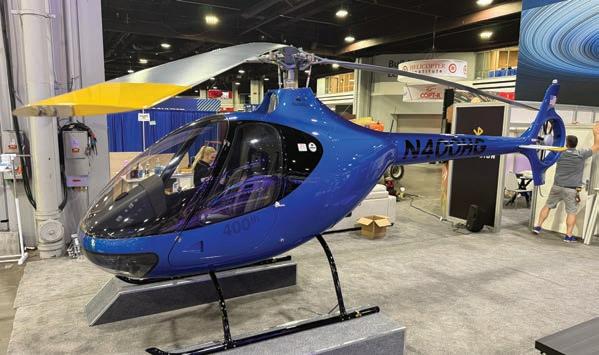
yet been made public, but with Guimbal recognizing that the company is “not in a critical timeline,” it is not going to burn through money “just to save a few years.” However, he urged that service entry will be “as soon as possible” and suggested the G5’s price will be “very competitive.”


Boca Aircraft Maintenance (BAM) has opened a business aircraft maintenance facility at Sarasota Bradenton International Airport (KSRQ), the company’s third Florida location and its first on the state’s Gulf Coast side. Headquartered at Boca Raton Airport (KBCT), BAM also has a maintenance facility at Miami–Opa Locka Executive Airport (KOPF). The 36,229-sq-ft KSRQ facility adds another base for BAM’s rapid-response AOG teams.
In addition to FAA Part 145 repair station certification, BAM holds authorizations from EASA, the UK, Brazil, Argentina, and Venezuela, and the Bailiwick of Guernsey.
The maintenance provider specializes in Textron Aviation Cessna 441 turboprops, Citation 560s, and Hawkers; Bombardier Learjets, Challengers, and Globals; Eclipse 500s and 550s; Dassault Falcons; and Gulfstream G200s through GVs. Authorized services are available for Honeywell, Pratt & Whitney Canada, Rolls-Royce, and Williams International engines. BAM’s avionics capabilities include Gogo air-toground and satcom systems, as well as Viasat and Iridium satcom, and installation of FANS 1/A+ datalinks, LED lighting, and in-flight entertainment systems, among others.
West Star Aviation has expanded its field and AOG support capabilities with the purchase of business aviation maintenance provider DCJet.
West Star’s AOG capabilities now include more than 200 maintenance technicians. Headquartered at Washington Dulles International Airport (KIAD), DCJet has facilities at Chicago Midway International Airport (KMDW); Orlando International Airport (KMCO); Seattle Boeing Field (KBFI); and Luis Muñoz Marín International Airport (TJSJ) in San Juan, Puerto Rico.
Brazil-based aircraft sales and maintenance provider Synerjet has inaugurated its fourth service center in Latin America. The new facility, located at Silvio Pettirossi International Airport (SGAS) in Asunción, Paraguay, has been certified by local authorities for the maintenance of Pilatus PC-12 aircraft.
The new service center occupies a 9,150-sq-ft (850sq-m) hangar with capacity for up to four PC-12s at the same time. It also has a maintenance team, parts inventory, tools, and ground handling personnel.
In addition to SGAS, Synerjet has its own service centers at its São Paulo Catarina International Executive Airport (SBJH) headquarters, in Goianápolis at the Condomínio Liberty Airport (SNLL), and in Medellín, Colombia, at Olaya Herrera Airport (SKMD).
Synerjet also has three other accredited service centers in Guatemala, Argentina, and Chile, for a total of seven facilities in Latin America to serve Pilatus customers.
After expanding its service center in Augusta, Georgia last year to 210,000 sq ft, StandardAero has inducted the first two Gulfstream aircraft for maintenance there. The added 80,500sq-ft facility includes a new maintenance hangar and expanded engine shop. Both of the Gulfstreams inducted into the facility at Augusta Regional Airport (KAGS) are GIV-SPs. One is in for regular inspection due list items and the other for airframe inspection and installation of a Starlink satcom system.
StandardAero offers its CompleteCare services for Gulfstreams at its Augusta; Springfield, Illinois; and Van Nuys, California MRO facilities. The CompleteCare program provides engine repair and overhaul, APU, airframe, avionics, parts, interior refurbishment, mobile AOG, and paint services.

A little more than three decades ago, Switzerland- based Jet Aviation spread its wings in the Southeast Asia market, planting its flag in the so-called “garden city” state of Singapore. That foothold in the tiny island nation known for its architecture, rain forest reserves, botanical gardens, temples, and shopping has since grown into one of its most important global hubs and certainly its largest in the Asia-Pacific region.
Last year, the company celebrated the 30th anniversary of its maintenance, repair, and overhaul (MRO) and fixed-base operations (FBO) facility at Singapore's Seletar Airport. Established in 1995, it was o cially launched at the Singapore Airshow the following year, as the company’s first location in Asia.
Growing in response to changing customer needs in the region, Jet Aviation Singapore extended FBO services to Changi Airport in 2006, opened a new 5,000-sq-m maintenance hangar in 2014, and added a third 3,850-sq-m hangar in 2017. In 2023, the FBO launched onsite sustainable aviation fuel in partnership with FlyORO and, in late 2024, achieved IS-BAH Stage 3 accreditation.
“When we first arrived in 1995, business aviation in the region was in its infancy,” said Jeremie Caillet, president. “As a key location for travel in Asia and beyond, as well as an important global hub, Singapore has continued to develop as a center for the industry in APAC. Over the decades, we have committed to growing and evolving our sites and services to support this development. This anniversary is not only a celebration of this growth and longevity, but also a testament to our commitment as a trusted partner for our customers, and our local government and industry partners.”
Last year, Jet Aviation Singapore became the third Jet Aviation site to join the Airbus

Last year, Jet Aviation celebrated the 30th anniversary of its maintenance, repair, and overhaul and fixed-base operations facility in Singapore.
Corporate Jets Service Center Network, and it is the only network member in Asia-Pacific. The site also underwent a renovation, including interior upgrades in the reception and crew lounges, plus 15 new customer o ces and meeting rooms.
The location o ers a breadth of services, from heavy base maintenance to refurbishment or system upgrades. Along with Airbus Corporate Jets, the facility counts among its authorizations Boeing, Bombardier, Dassault, Gulfstream, Beechcraft Hawker, and Cessna models.
As for its capabilities, the Part 145 organization provides base and line maintenance, scheduled checks, repair and overhaul, non-destructive testing, engine line maintenance, auxiliary power unit services, avionics retrofit and upgrades, cabin refurbishment, and AOG support. Additionally, the facility is home to wheel and battery shops and provides full aircraft paint services, along with pre-purchase inspections.
Jet Aviation has its own design, engineering, and production team in-house to support many of these activities with the ability to work with customers on a new cabin
concept or see to a seamless integration of a new system, the company states.
“In the past three decades, we have grown to become a leading provider of MRO and FBO services in APAC, and none of this would have been possible without the passion and dedication of our employees,” said Louis Leong, vice president of MRO operations Asia. “We have a team of some 300 in Singapore, supported by their colleagues and peers across the region, who all truly embody the spirit of being the e ort behind e ortless. Their commitment to providing a safe, seamless, and personalized service has made us the company we are today.”
Jet Aviation brought together customers, partners, stakeholders and employees at the Singapore site in October in celebration of the 30th anniversary.
A wholly owned subsidiary of General Dynamics, Jet Aviation has more than 4,500 employees and 50 locations worldwide. In August, the company announced its acquisition of AstonSky FBO at Paris Le Bourget Airport (LFPB), and in October, reported expanding its U.S. sta ng service and adding 22 jets to the fleet. A.W.
BY DAVID JACK KENNY
MD Helicopters 369FF, Jan. 2, 2026, Superior, Arizona
All four occupants died after the helicopter struck an uncharted slackline about 600 feet above a valley floor. The main line and the backup line that secured the walkers’ safety harnesses were suspended between anchor points three-quarters of a mile apart; above them was a visualization line marked by five windsocks and “about ten” LED lights. The line had initially been erected one week earlier but taken down on December 30 in anticipation of high winds and rain. The slackliners were raising it again on the morning of the accident when one of them saw the helicopter fly past “at about eye level” toward th e lines.
Striking them, it “appeared to slow or even reverse direction,” pitched up, and yawed right. The tailboom separated, and the fuselage rolled inverted and crashed. “Material consistent in appearance to the highline/slackline webbing” was found embedded in the vertical stabilizer, and “striations similar to the webbing weave pattern” were on the horizontal stabilizer and two of the main rotor blades. The helicopter’s two wire cutters showed no evidence of contact.
First responders reported that about an hour after the accident, a second helicopter flew about 10 feet under the visualization line. A notam for the presence of a “tight rope” 3 nm south of the Superior Municipal Airport had been filed on December 21 and was active from December 26 to January 6.
Honda Aircraft HA-420, Jan. 16, 2026, Amarillo, Texas
The airline transport pilot and all four passengers evacuated without injury after the HondaJet lost both braking and steering capability during a precautionary landing. In cruise flight about 1.5 hours after departure, the pilot saw a yellow crew alerting system message for an air data computer, followed 15 minutes later by one for low hydraulic pressure. He diverted to Amarillo International Airport (KAMA) and landed safely, but lost brake pressure during taxi. The brakes locked when the pilot applied the parking brake; after releasing it, he lost both braking and steering control, and the jet’s left wing struck a parked deicing truck.
Epic E1000, Feb. 13, 2026, Steamboat Springs, Colorado
The 1,150-hour commercial pilot and all three passengers were killed when the single-engine turboprop struck a mountainside three miles south of the Steamboat Springs Airport (KSBS) during a night GPS approach. The initial ground scar was found at an elevation of 8,175 feet, about 75 feet below the mountain’s peak. Minimum descent altitude (MDA) for the GPS approach to Runway 32 is 9,100 feet; the last altitude recorded by the airplane’s Garmin G1000 avionics suite was 8,221 feet with the autopilot engaged. Air traffic control vectored the flight to the TILLI waypoint, the initial approach fix for both the RNAV Z approach to Runway 32 and the RNAV-E approach, and cleared it
for the “RNAV approach” to SBS. The pilot read back “RNAV 32 to Steamboat Springs” and was cleared to change to the airport’s common traffic advisory frequency. No further communications were received after his readback of the frequency change.
The prevailing weather included calm winds with 10 miles of visibility, broken clouds at 1,600 feet agl, and a 2,400-foot overcast. Recorded engine parameters indicated normal function, and about 100 gallons of fuel remained in the wreckage. Notes on the Runway 32 approach plate, stored in the GPS, indicated that neither circling nor straight-in approaches were authorized at night for that runway. Another note warned “Visual Segment-Obstacles,” meaning that there are constraints below the MDA.
Cessna Citation 560XL, Feb. 6, 2026, Danville, Kentucky
A Citation 560XL was substantially damaged after the airplane failed to rotate when the pilot applied back pressure at 103 knots during the takeoff roll at Stuart Powell Field Airport (KDVK) in Danville, Kentucky, resulting in a runway overrun, a snow berm strike, and the collapse of all three landing gear, according to the NTSB preliminary report. The two crew members and two passengers were not injured.
The crew planned to depart KDVK for Bowling Green-Warren County Regional Airport (KBWG) in Kentucky to pick up a passenger, then continue to Fort Wayne International Airport (KFWA) in Indiana. The airplane was being operated as a Part 91 personal flight.
The pilots completed a preflight walkaround using the checklist, reviewed
preflight paperwork, and checked the weather for both airports. They added 5,000 pounds of fuel, bringing the projected takeoff weight to 18,000 pounds. During taxi to the 5,000-foot runway, the crew completed the before-takeoff checklist, including verifying flight control position and movement. No anomalies were noted.
At 103 knots, the pilot pulled back on the yoke, but the airplane did not rotate and all three landing gear remained on the runway. Confirming the airspeed was above 103 knots with no rotation, the pilot elected to abort.
“The pilot applied maximum braking and deployed the thrust reversers,” the report noted. “The airplane began to slow down, but he knew insufficient runway remained to stop. The airplane contacted a snow berm at the end of the runway, and all three landing gear collapsed.” The airplane came to rest in a field after traveling roughly another 450 feet farther. The main landing gear were forced up through the wings, causing substantial damage. There was no post-accident fire.
A weather observation at KDVK 10 minutes before the accident recorded visual conditions, scattered clouds at 12,000 feet agl, 10 miles visibility, and winds from 210 degrees at 10 knots. The temperature was -1 degrees C. The crew had filed an IFR flight plan.
The NTSB did not travel to the accident scene. The airplane was retained for further examination. No probable cause has been determined; the investigation is ongoing.
Sikorsky S-92A, Feb. 28, 2024, o shore of Sotra, Vestland County, Norway
A failed circuit card in the autopilot’s pitch actuator caused the helicopter to pitch up some 30 degrees and eventually crash backwards into the ocean at a groundspeed of 40 knots during a night search-and-rescue
(SAR) training flight. The helicopter’s emergency flotation system did not deploy. Despite the Joint Rescue Coordination Centre’s prompt response to signals from both the helicopter’s emergency locator transmitter (ELT) and three crew members’ personal locator beacons (PLBs), the accident site’s distance from all available airborne resources meant that rescue aircraft did not arrive for 45 minutes. They found that the SAR nurse had been killed, while the five survivors were in “poor condition” from hypothermia and injuries of varying severity.
The upset occurred while using the helicopter’s autopilot in Mark on Top (MOT) mode to approach a training beacon dropped earlier in the flight. The approach profile called for the helicopter to turn into the wind and hover at 50 feet, 50 meters (160 feet) aft and left of the point at which MOT mode is engaged. The cockpit voice recording showed that the captain recognized the pitch excursion and attempted to go around five seconds before impact; the crash smashed several left-side windows, and the helicopter quickly filled with water.
Extensive disassembly and post-accident testing determined that a Schmitt Trigger filtering component used in the spring deflection and current feedback circuits of the pitch actuator motor driver card had failed. Following its investigation, the Norwegian Safety Investigation Authority issued recommendations for improved personal survival gear for SAR crews and mandated cockpit video recordings in operations where voice and flight data recorders are already required.
Bell 206L-4, July 6, 2025, Hespero/Safron Residence Heliport, Alberta, Canada
The pilot suffered a serious head injury, and the only passenger was fatally injured in a hard landing that collapsed the skids; one main rotor blade severed the tail boom,
while the other was separated outboard of the blade doublers by contact with the upper wire cutter. There was no postimpact fire.
The accident occurred at the end of a 34-minute private VFR flight from the Lodge at Panther River to Hespero/Safron River Heliport, both in Alberta. Flight track data downloaded from the helicopter’s Garmin GTN 750 showed that the pilot overflew the landing area northbound about 700 feet agl and made a 360-degree turn before “commencing a turning approach consistent with an autorotation” terminating in a power recovery, according to the Transportation Safety Board (TSB). After landing, the pilot took off again, making a 270-degree turn and levelling off at 300 feet. A descending left turn “in another descent consistent with an autorotation” reached 43 degrees bank, and the descent rate peaked at 2,362 fpm at 100 feet agl. In the next five seconds, the helicopter pitched up 14 degrees, and the descent rate slowed to 125 fpm, only to increase again over the flight’s final six seconds. Impact occurred 21 seconds after the descent began.
The commercial helicopter pilot also held private pilot privileges for airplanes and had logged about 3,500 hours of rotary-wing flight, including 1,800 in the accident helicopter, 33 in the preceding 60 days, and had completed a pilot proficiency check in the same helicopter the month before. He was reported to conduct recurrent training that included turning autorotations from below 300 feet at six-month intervals.
The TSB noted that the prohibition on conducting emergency training during commercial operations does not apply to private flights.
—Amy Wilder contributed to this report alerts
BY GORDON GILBERT
April 10, 2026
The European Union (EU) has confirmed a rollout of EU-LISA traveler screening systems, with voluntary participation beginning Jan. 9, 2026, and mandatory carrier participation e ective April 10, 2026. EU-LISA is the agency responsible for managing large-scale IT systems that support border management and traveler screening for 29 EU member states. “While applicability to private flights has not been formally excluded, business aviation operators should expect to be treated as carriers and plan accordingly,” said flight planning company Universal Weather and Aviation. Meanwhile, ETIAS, a separate program related to LISA, is still on track to start Oct. 1, 2026. This system replaces manual passport stamping and aims to improve tracking of visitor entry, exit, and overstay status.
April 1, 2026
Starting April 1, 2026, Australian-registered aircraft operators will need to be equipped with radio altimeters that meet minimum performance levels to deter interference by mobile phone 5G service. Before this date, the country’s Civil Aviation Safety Authority (CASA) is working with the Australian Communications and Media Authority (ACMA) to prevent interference with radio altimeters. CASA is coordinating with ACMA so that the rollout of wireless broadband services, including 5G in the 3.7 to 4.0 GHz band, can be done in a way that ensures the safety of aircraft in Australia. Ongoing mitigations after April 31, 2026, will include a 200 MHz buffer between wireless broadband and radio altimeter frequencies as well as limits on power and unwanted emissions.
April 1, 2026
Transport Canada has been making enhancements to its aircraft operator certificate surveillance program to strengthen effectiveness and ensure continued alignment with the standards and recommended practices of ICAO. Effective April 1, 2026, Transport Canada will be implementing a new surveillance program that will evaluate
all areas of the certificate on a set interval, while using new digital tools. These enhancements will impact how inspectors conduct surveillance activities. Inspections are slated to begin in the second and third quarters. Transport Canada will continue to apply risk intelligence to its surveillance activities. The key change is the improved ability to capture inspection data and maintain oversight control through the use of these new digital tools. While the Process Inspection (PI) has been the primary inspection tool in recent years, the program is refocusing on and enhancing the Compliance Inspection. The Canadian Business Aviation Association noted that a Transport Canada PI cannot be used as a means of compliance with a private operator’s responsibility to conduct internal audits.
April 10, 2026
Transport Canada has adopted a complete update of its standards for commercial air services. The revisions apply to all commercial air segments, including rotary-wing and fixed-wing charter operations. Transport Canada said this final set of standards incorporates suggestions submitted in response to a notice of proposed amendments published on May 22, 2025. During the consultation period, Transport Canada received comments from 23 stakeholders, including the Canadian Business Aviation Association.
Several of the questions and comments referred to a lack of clarity of certain amendments. In response, the agency said that additional guidance material will be published in the coming months. The effective date of the revised standards was also extended from the proposed one month to six months: April 10, 2026.
May 14, 2026
Terminal Maneuvering Area (TMA) and ADS-B Out mandates apply at Geenland's Nuuk Airport (BGGH) starting May 14, 2026. Greenland is introducing a TMA (Class C) over BGGH when Nuuk approach is open, roughly 8 a.m. to 10 p.m. local time. “During these times all flights in the TMA up to FL195 will need ADS-B Out,” according to international flight operations information provider OpsGroup. “At night the airspace drops back to Class G, so ADS-B is not required, but you must contact Nuuk ATC in advance and get approval for the flight.”
May 29, 2026
Multiengine turbine-powered aircraft configured for six or more passenger seats and that are being operated by two pilots have been granted a temporary exemption from new cockpit voice and data link recorder requirements that were e ffective on May

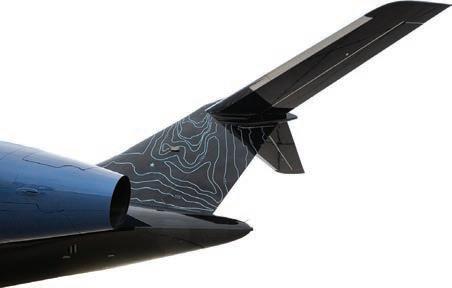

BY JESSICA REED

Avfuel has announced several executive promotions and the formation of a new senior leadership team to collectively oversee its companywide operations. After working his way through positions of increasing responsibility, C.R. Sincock—son of company owner, chairman, and CEO Craig Sincock —has been promoted to president as the Michigan-based fuel distributor solidifies its succession plan. A member of the executive team for nearly two decades, the younger Sincock has played an integral role in forming Avfuel’s strategies. In addition, Joel Hirst, who has been with Avfuel for more than three decades, has been promoted from senior v-p of sales to executive v-p, overseeing critical business functions and operational effectiveness. Marci Ammerman, most recently v-p of marketing, with nearly 40 years at Avfuel, was named senior v-p of marketing and strategic planning, while Jonathan Boyle , v-p of sales for the contract fuel group, was tapped to also head up bulk fuel sales. Hirst, Ammerman, and Boyle will be joined by Mike Zultowski, senior v-p of finance and operations; Ron Cagle, v-p of credit; and Craig LaVigne, v-p of finance, to form the senior leadership team that will support both Avfuel’s day-to-day operations and its long-range priorities.
Luxaviation One , part of the Luxembourgheadquartered Luxaviation Group, is continuing to expand its presence in North America with the appointment of a U.S. managing director. The newly-created position will be held by Helen Hollis , building on her experience of more than 15 years in the air charter industry.

Vertical Aerospace hired Ollie Roberts as chief people officer. Roberts was previously chief human resources officer and chief transformation officer at BMI Group. Juan Carlos Sacristan was appointed chief data and information officer at Vertical, bringing experience from senior leadership roles at Abcam, Adidas, Nike, and GE Gas
Engines. Vertical also named Richard Moore v-p of powertrain. Moore brings 35-plus years of industry experience, including a term as chief engineer at Jaguar Land Rover.
Josh Baird, chief operating officer at JetNet, has now also taken on the role of president of the company. Baird will continue to report to CEO Derek Swaim. Baird “has been instrumental in helping JetNet translate strategy into execution,” Swaim said.

West Star Aviation promoted Dwayne Chandler to director of avionics business development. Chandler’s experience in business aviation and avionics spans more than three decades. William Morris, previously general counsel and chief compliance officer at Wencor Group, has joined West Star Aviation as general counsel. He brings more than two decades of legal experience in the aviation industry, including serving as lead counsel for aviation transactions at FedEx. West Star also appointed Spencer Schwartz as a member of its board of directors and chair of the audit committee. Schwartz’s most recent role was executive v-p and CFO for Atlas Air Worldwide.
Lee Timbrell was named chief commercial officer of Dunlop Aircraft Tyres. Most recently, Timbrell held the position of senior director of aftermarket services at Safran Actuation Systems, formerly Collins Aerospace Actuation.

Jet Access hired David Deitch as executive v-p of sales. Deitch’s four-plus decades of experience in the aviation industry include 23 years working at Jet Aviation.
Greg Cox joined Million Air as executive v-p of business development. Most recently, Cox launched and led the business aviation segment at AEG Fuels.
The Native American Aviation Association (NAAA) appointed Shon Dempsey and Amber Williams to its board of directors. Dempsey (Chickasaw Nation) is currently assistant
airport manager at Frederick Municipal Airport in Maryland and is an accredited airport executive via AAAE. Williams, a Muscogee (Creek) Nation citizen, leads Circa81 Design—a Native American woman-led AEC firm specializing in infrastructure, emerging technologies, and professional services.
The Global Aircraft Dealers Association (GLADA) named three new members to its board of directors. Chris Mace, London-based board member of the Air Charter Association, owns the company MaceAero and has more than three decades of experience in the industry. Founder of consulting firm Stratus Business Development, Rick Bartle also brings more than three decades of experience in aviation leadership, FBO management, airport operations, and flight operations. The third new member of GLADA’s board of directors is Preston Holland, founder and president of Prestige Aircraft Finance as well as co-host of “The VIP Seat Podcast.”

Mike Ford, previously v-p of engineering at Skymark Refuelers, was hired as v-p of engineering at Garsite His 35-plus years of experience in aviation fueling and engineering include an earlier term at Garsite, as project engineer and then as engineering manager.
Jost Lammers, CEO of Munich Airport since 2020, was named chair of the Airports Council International (ACI) World Governing Board. The previous chair, Candace McGraw , was ACI World’s first female chair and previously served as CEO of Cincinnati/Northern Kentucky International Airport.

Brian Wynne, formerly president and CEO of AUVSI, was tapped as executive director for the National Association of Flight Instructors and president of the association’s board of directors. Wynne has been a part of several FAA aviation rulemaking committees in addition to the administrator’s management advisory council.
The head of the Hellenic Civil Aviation Authority (HCAA), Giorgos Saounatsos, resigned following a January 4 air traffic control service outage. z
Byron M. “Skip” Reed, 80, a longtime pilot and business aviation professional, passed away on December 20. Reed served on the NBAA board of directors for 13 years and spent 40 years working for Zachry Construction, including a term as its chief pilot. He retired in 2010.
Elliott Aviation celebrated its 90th anniversary and launched the Founder’s Award to acknowledge the company milestone. The first recipient of the Founder’s Award is Paul Schmidt, who has worked for Elliott Aviation for 27 years. Schmidt’s experience in the avionics arena includes contributing to more than 100 Garmin installations, one-fifth of the total completed by Elliott Aviation. According to Elliott Aviation, “Paul is widely respected for his professionalism, humility, and unwavering commitment to doing things the right way. He is the teammate others rely on when precision matters, timelines are tight, and customers are counting on Elliott Aviation to deliver. His consistent demonstration of trust, honor, and integrity makes him a role model within the organization and across the aviation community.”
The 23rd Living Legends of Aviation ceremony, held in Beverly Hills, California, recognized business and GA leaders as honorees and inductees of the organization’s annual awards. This year’s inductees included Dan Drohan, founder and CEO of Solairus Aviation; Doug King, CEO of Epic Aircraft; musician Aaron Tippin, who with his family operates a flight school, vintage aircraft rides, maintenance, and restoration business; Gulfstream Aerospace president Mark Burns; Lee Lauderback, president and CEO of Stallion 51 and Unusual Attitude Training; and retired U.S. Air Force colonel and NASA astronaut Eileen Collins. Living Legends honorees included Quiet Technology Aerospace, for Special Recognition for Engineering Excellence; musician and helicopter pilot Randy Waldman, who received the Elling Halvorson Vertical Flight Hall of Fame Award; pilot, aircraft builder, and social media influencer Xyla Foxlin, the Barron Hilton Aviation Inspiration Award; Steuart Walton and Philipp Steinbach, co-founders of Game Aerospace, the Eren Ozmen Aviation Entrepreneur of the Year Award; Patrick Waddick, Cirrus Aircraft president of innovation and operations, the Dr. Sam B. Williams Technology Award; George A. Antoniadis, fractional provider PlaneSense founder, president, and CEO, the Kenn Ricci Lifetime Aviation Entrepreneur Award; and Signature Aviation CEO Tony Lefebvre, the Lifetime Aviation Industry Leader Award.
Before the rollout event, technical sales manager Philippe Reigner told a press briefing in Paris that the 10X’s composite wing is a key performance differentiator. The wing, which is one of several technological features that Dassault has based on its Rafale fighters, is lighter and with greater “aeroelasticity” to dampen turbulence for improved cabin comfort.
The new model’s horizontal stabilizer has been moved to the top of the tail to optimize high-speed cruise. According to Dassault, the 10X is optimized to cruise at between Mach 0.85 and 0.90 without significantly diminishing the range. Reigner explained that a high constant sweep angle and low relative thickness have been designed to optimize drag at high Mach.
The 10X will have a maximum takeoff weight balanced field length of less than 6,000 feet and a landing distance of less than 2,500 feet. Dassault intends to seek approval for steep approach operations at locations such as London City Airport.
During the briefing Dassault presented range maps showing the 10X’s globe-girdling range, which includes non-stop flights from New York to Beijing, Punta Arenas in Chile, and Johannesburg in South Africa.
The new Falcon’s cabin interior, with four lounge zones plus a galley and bathroom, is 9 ft 1 in wide and 6 ft 8 in tall. These dimensions compare, respectively, with 8 ft 2 in and 6 ft 3 in for the G800, and 8 ft and 6 ft 2 in for the Global 8000.
Within the 10X’s available cabin volume of 2,780 cu ft, Dassault offers four standard interior configurations. It has a cabin altitude of 3,000 feet at FL410, and light is maximized through 38 windows.
According to experimental test pilot Antoine Doussaud, the NeXus flight deck will boost the crew’s ability to anticipate changes in flight conditions with a lighter workload. The technology builds on the EASy avionics suites used for earlier Falcons. The NeXus flight deck has new safety features, including an autopilot and autothrottle that deploy if pilots do not respond to an emergency, and the FalconEye dual head-up display. z

JAMES HOLAHAN (1921-2015), FOUNDING EDITOR, WILSON S. LEACH, FOUNDER & CHAIR EMERITUS
EDITOR-IN-CHIEF – Matt Thurber
MANAGING EDITOR – Charles Alcock
DIGITAL EDITOR – Chad Trautvetter
EDITOR AIN MONTHLY MAGAZINE – Kerry Lynch
BUSINESS AVIATION SERVICES EDITOR – Curt Epstein
SENIOR EDITOR – Hanneke Weitering – Technology Editor
COPY EDITOR – Jessica Reed
NEWS REPORTERS – Charlotte Bailey – Europe, Amy Wilder
CONTRIBUTORS – Julie Boatman, David Donald – U.K., Jennifer Leach English, Gordon Gilbert, David Hughes, David Jack Kenny – Safety, Stuart “Kipp” Lau, Robert P. Mark, Jennifer Meszaros – Southeast Asia, Richard Pedicini, Dale Smith, James Wynbrandt
PRODUCTION MANAGER – Martha Jercinovich
GRAPHIC DESIGNER – Grzegorz Rzekos
DIRECTOR OF VIDEO – Ian Whelan
SENIOR DEVELOPER – Cameron MacPherson
FRONT END DEVELOPER – David Lohmeyer
EXECUTIVE CHAIR – Dave Leach
PRESIDENT – Ruben Kempeneer
HEAD OF PEOPLE & BRAND – Jennifer Leach English
SENIOR DIRECTOR, INDUSTRY AFFAIRS AND EVENTS – Nancy O’Brien
ADVERTISING SALES
Victoria Tod – Northeastern U.S./Eastern Canada/United Kingdom, +1 (203) 733-4184
Michelle James – Western U.S./Western Canada, +1 (520) 343-0236
Joe Rosone – Midwestern U.S., Southeastern U.S./Caribbean/Brazil, +1 (301) 693-4687
Diana Scogna – Europe/Middle East, +33 6 62 52 25 47
DIRECTOR OF MARKETING AND CLIENT SERVICES – Lisa Valladares
AUDIENCE DEVELOPMENT DIRECTOR – Eileen Silberfeld
EVENTS SPECIALIST – Brien O’Brien
MARKETING SPECIALIST – Alyssa Barry
SOCIAL MEDIA MARKETING – Zach O’Brien
SALES ADMINISTRATOR – Cindy Nesline
FINANCE AND HR DIRECTOR – Tracy Britton
ACCOUNTS PAYABLE MANAGER – Mary Avella
ACCOUNTS RECEIVABLE MANAGER – Bobbie Bing
U.S. HEADQUARTERS
214 Franklin Ave., Midland Park, NJ 07432, +1 (201) 444-5075
Advertising Inquiries: +1 (201) 345-0085, adsales@ainonline.com
Circulation Inquiries: +1 (201) 345-0085, subscriptions@ainonline.com
WASHINGTON, D.C. EDITORIAL OFFICE: Kerry Lynch: klynch@ainonline.com, Tel: +1 (703) 969-9195
EUROPEAN EDITORIAL OFFICE: Charles Alcock: calcock@ainonline.com, Tel: +44 7799 907595
Aviation International News (ISSN 0887-9877) is published twelve times per year (monthly). Periodicals postage paid at Midland Park, N.J., and additional mailing o ces. Postmaster: Send address changes to AIN Media Group, 214 Franklin Ave., Midland Park, NJ 07432. Allow at least eight weeks for processing. Include old address as well as new, and an address label from a recent issue if possible. Subscription inquiries: +1 (201) 345-0085 or email: subscriptions@ainonline.com.
Aviation International News is a publication of AIN Media Group, 214 Franklin Ave., Midland Park, NJ 07432; Tel.: +1 (201) 444-5075. Copyright © 2026 All rights reserved. Reproduction in whole or in part without permission of AIN Media Group is strictly prohibited. AIN Media Group publishes Aviation International News, AINalerts, AINonline, Business Jet Traveler, BJTwaypoints, ABACE Convention News, Dubai Airshow News, EBACE Convention News, Farnborough Airshow News, FutureFlight.aero, VAI Convention News, LABACE Convention News, MEBAA Convention News, NBAA Convention News, Paris Airshow News, Singapore Airshow News, Mobile Apps: Aviation International News; AINonline. PUBLICATION MAIL AGREEMENT NO. 40649046 RETURN UNDELIVERABLE CANADIAN ADDRESSES TO: PITNEY BOWES INTERNATIONAL MAIL, STATION A, P.O. BOX 54, WINDSOR, ON, N9A 6J5, returns il@imex.pb.com.
For feedback, letters to the editor, or other editorial needs, please contact AIN’s Editors at ainedit@ainonline.com





JULY 15 - 17, 2026
“The AIN CALS event has been a refreshing experience for leaders within the corporate aviation community and the vendors that support their businesses. 100% engagement for 2.5 days. Truly a working event that leaves us all a bit tired but very enthused!”
– CALS FLIGHT DEPARTMENT ATTENDEE
“The AIN CALS event provides excellent opportunities for high level interaction between vendors and clients. The one-on-one time and small group sessions are very valuable settings.”
– CALS SPONSOR