PORTFOLIO
AIDEN SMITH 2026
1
CONNECTIVITY CHILDREN’S MUSEUM
2 REFUGE PROJECT
KALEIDO RADIO STATION
OTHER WORKS
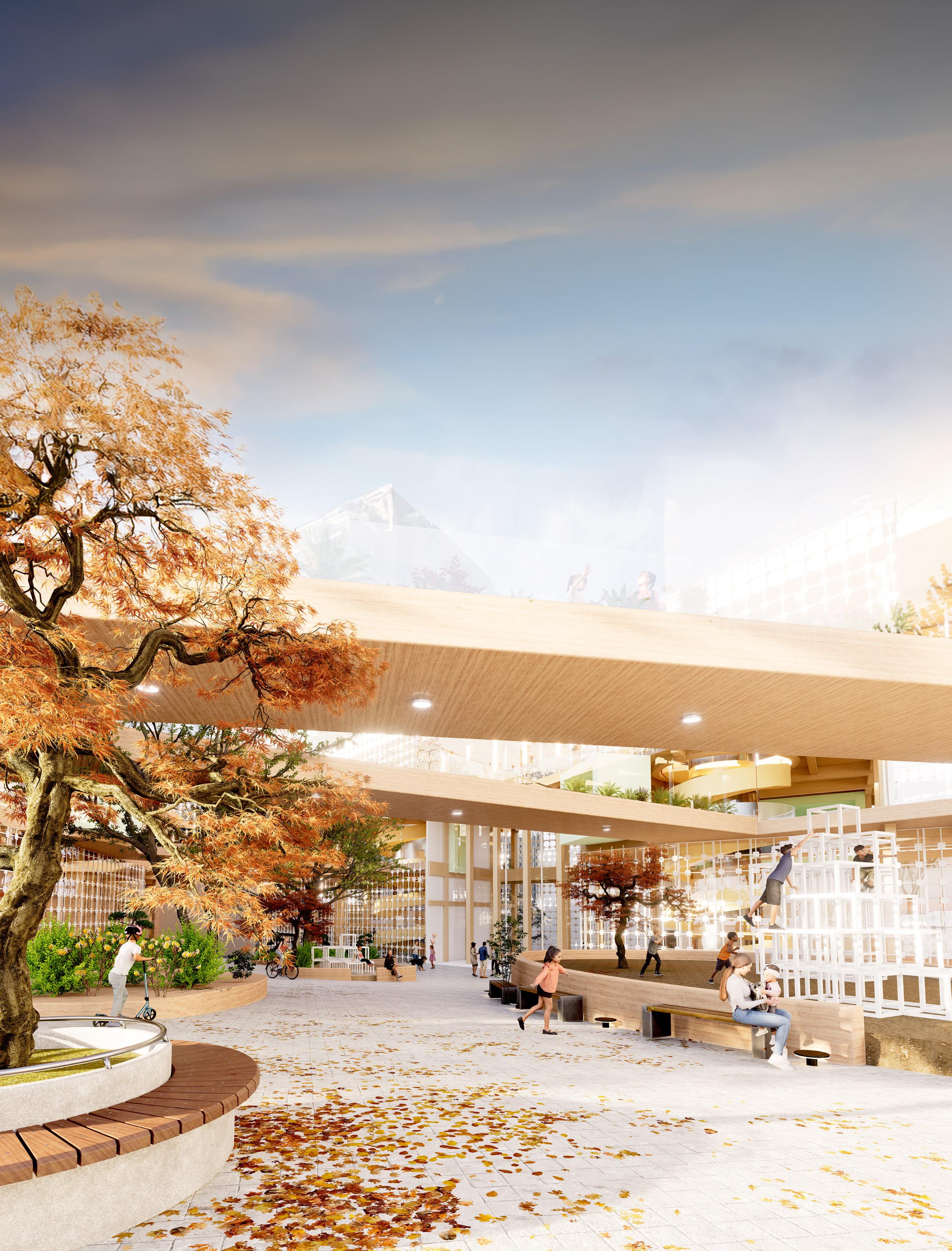
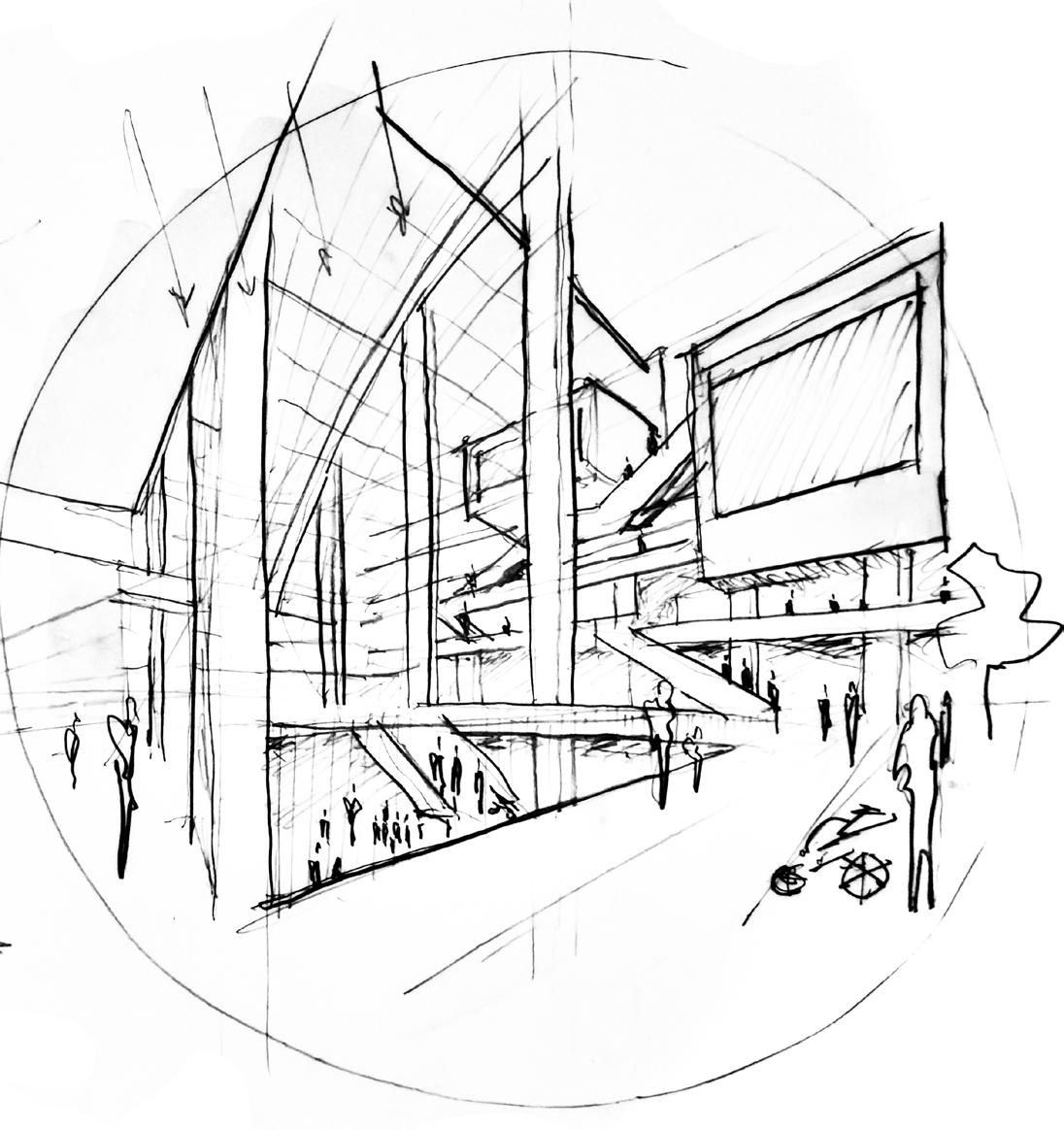
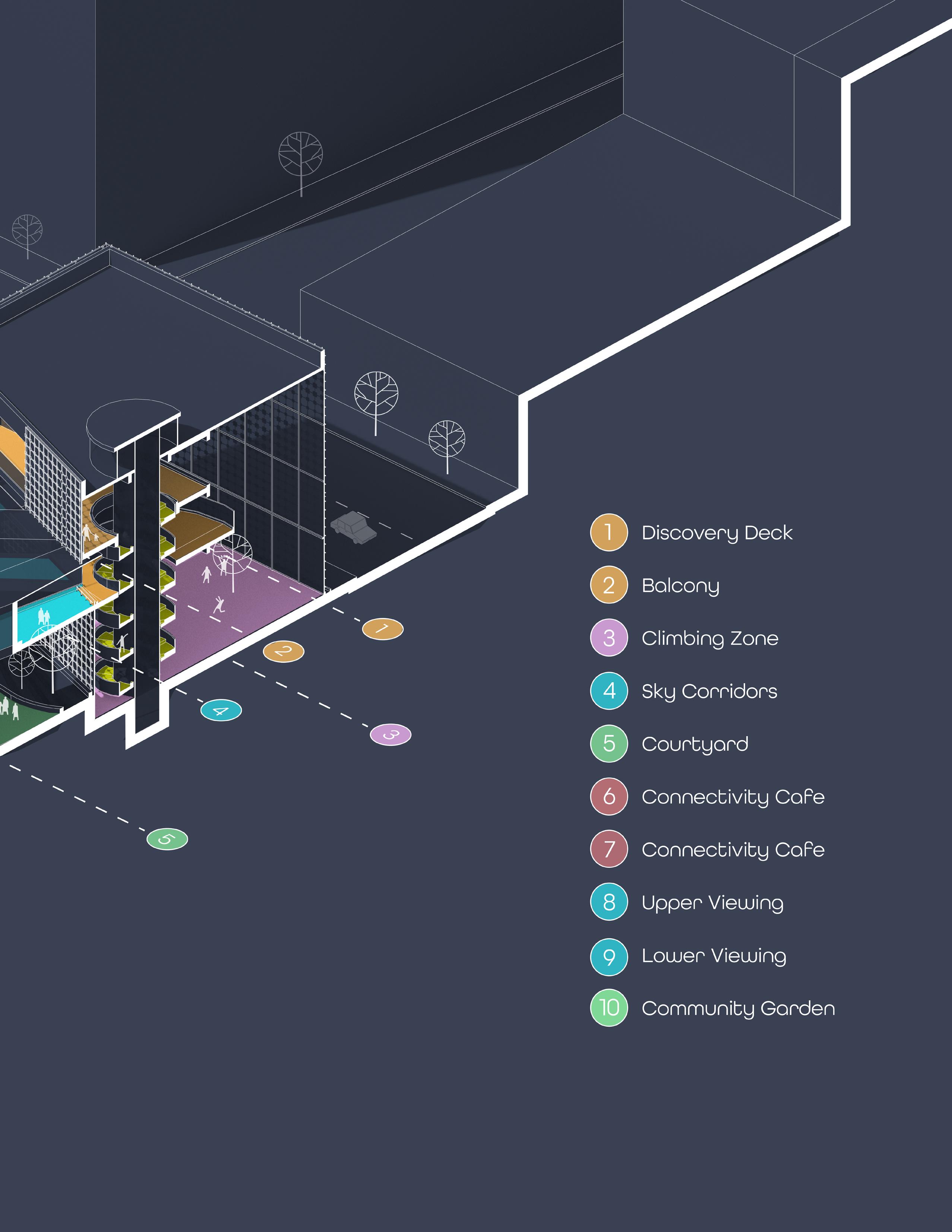
In support of children and families across Portland, the Connectivity Children’s Museum is conceived as a place for discovery, play, exploration, and much‑needed respite for parents. Its architecture works on two levels: it physically connects parents and children through woven paths, shared thresholds, and layered sightlines, while symbolically expressing the bonds of caregiving, growth, and interdependence.


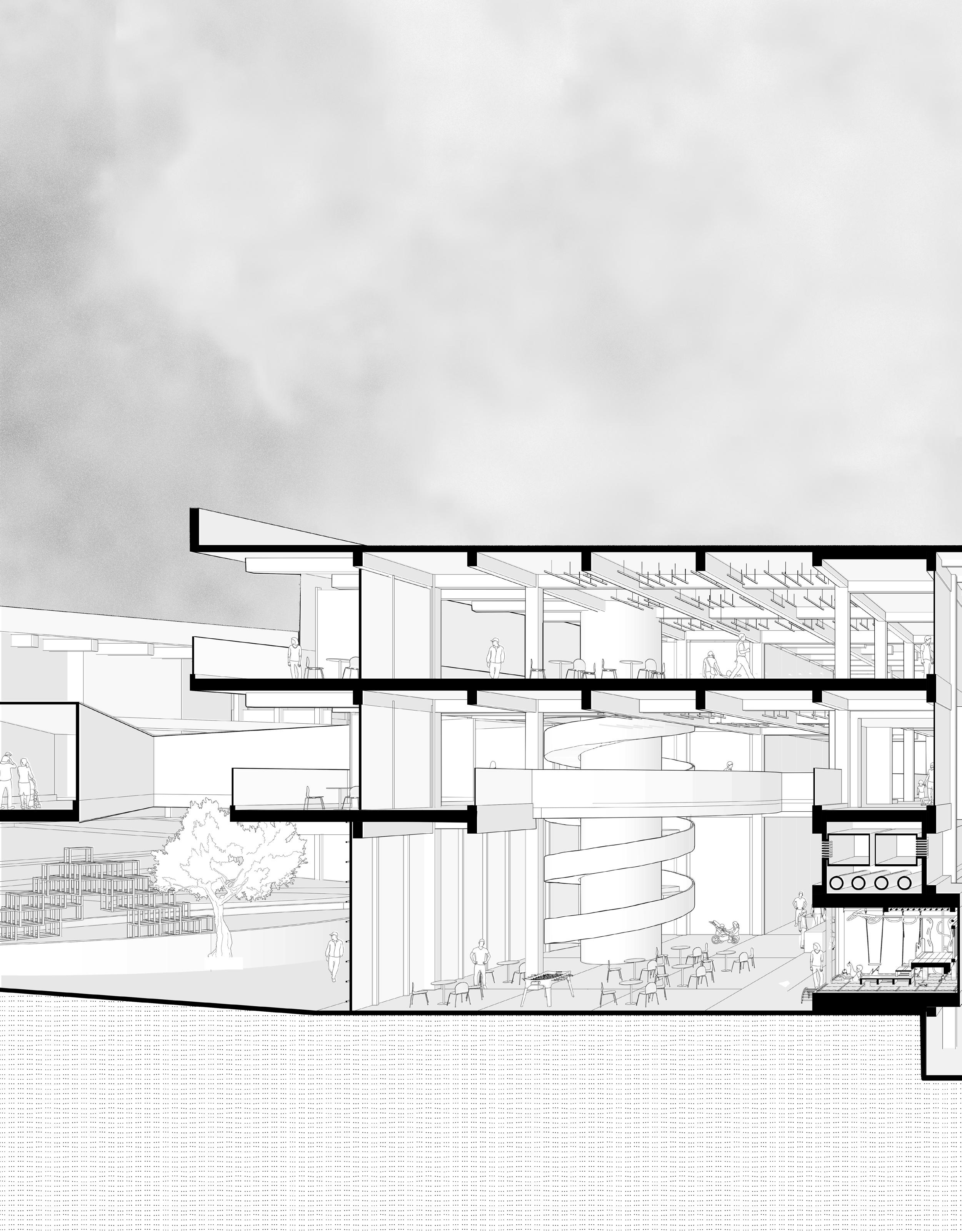
Designing for discovery means creating architecture that invites curiosity, rewards wandering, and turns movement into learning. The upper level circulation forms a network of paths whose dimensions, orientations, and material cues guide parents intuitively through exhibits—wide enough for strollers, clear in their turns, and tactile underfoot. All levels converge into a shared central atrium, designed to instill a sense of wonder.
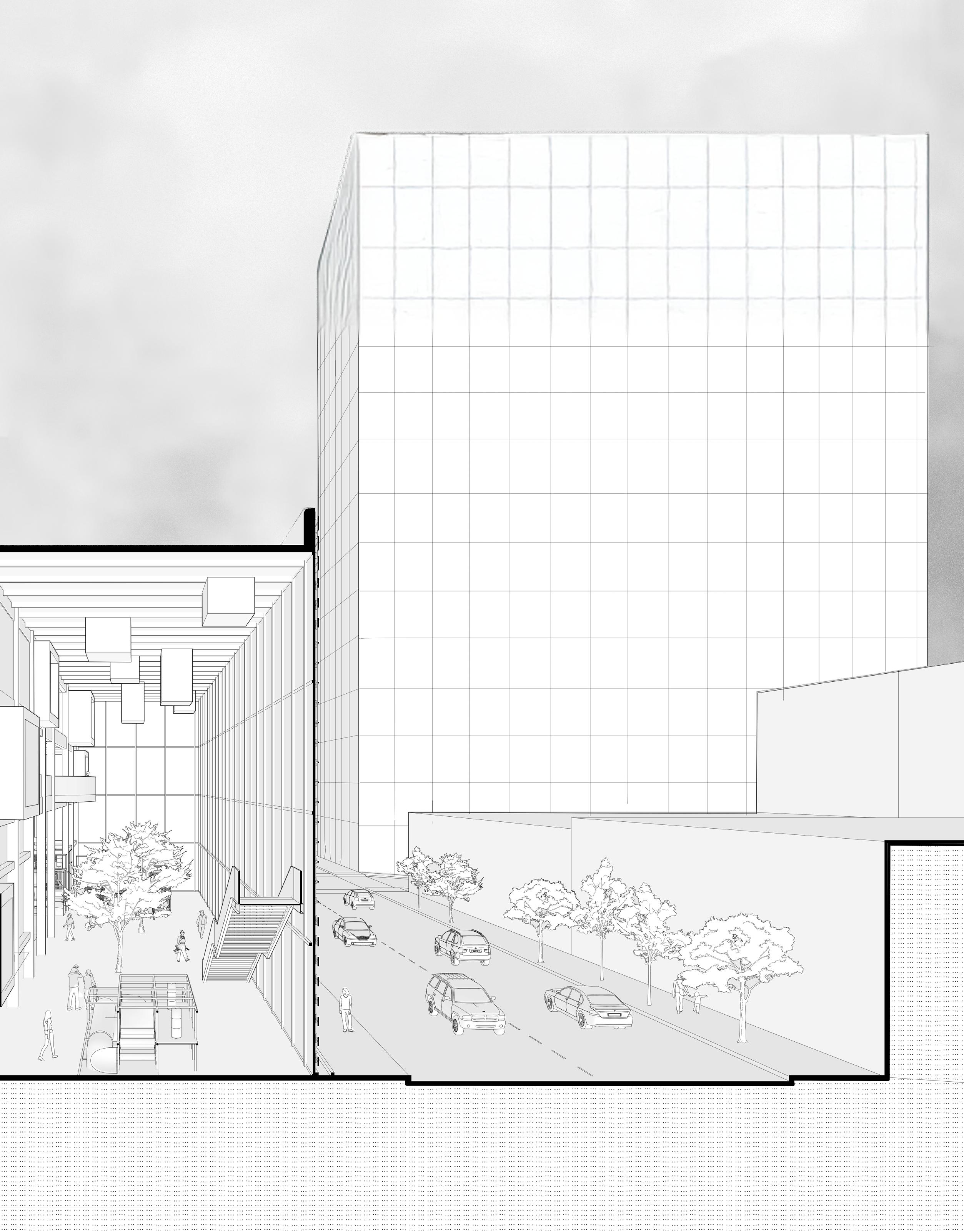
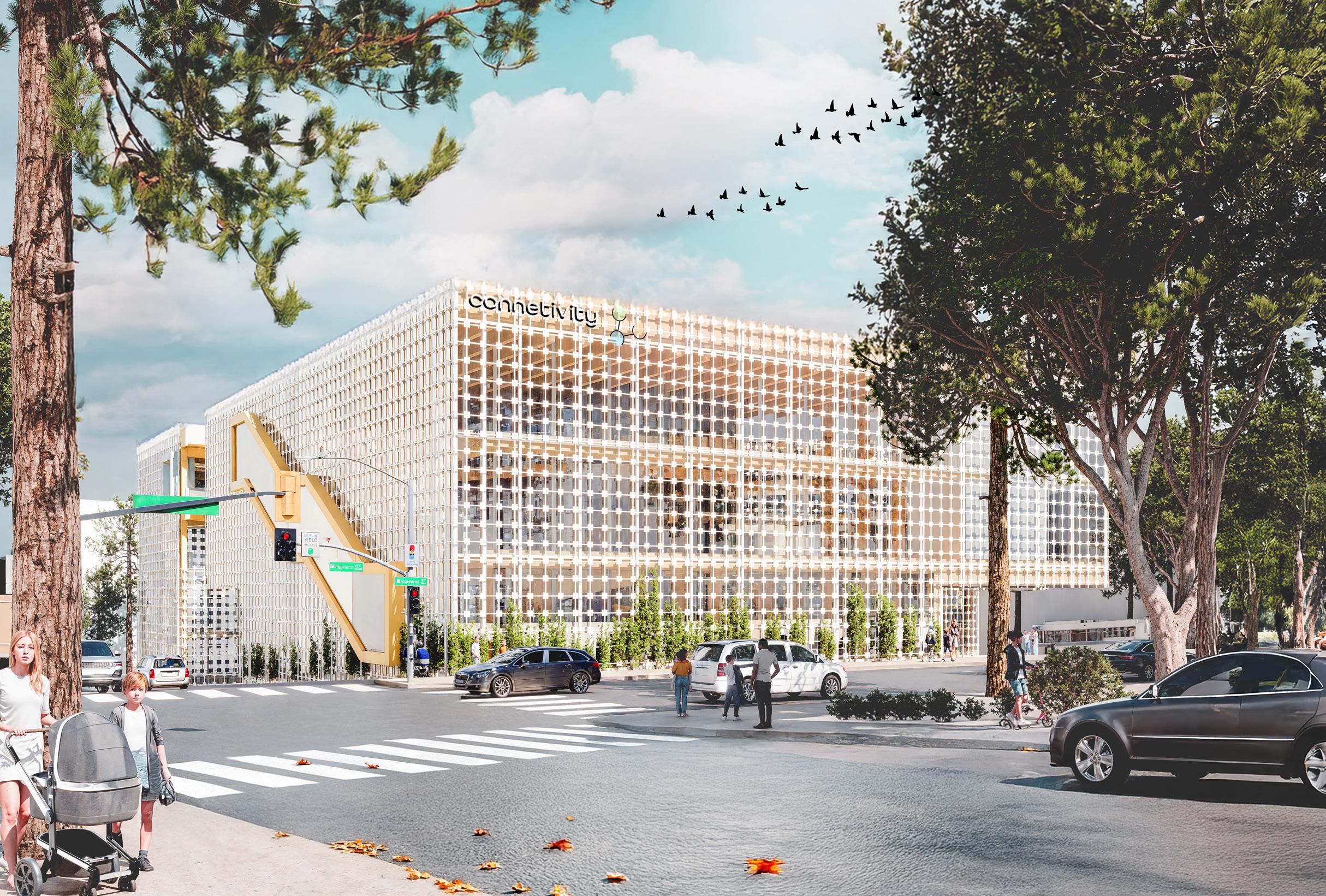
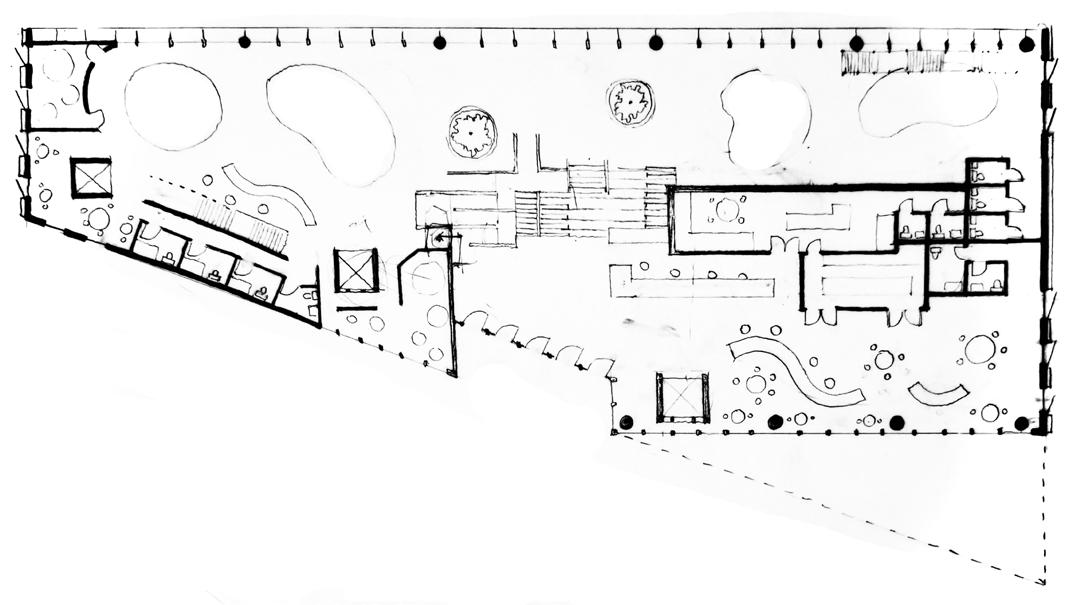
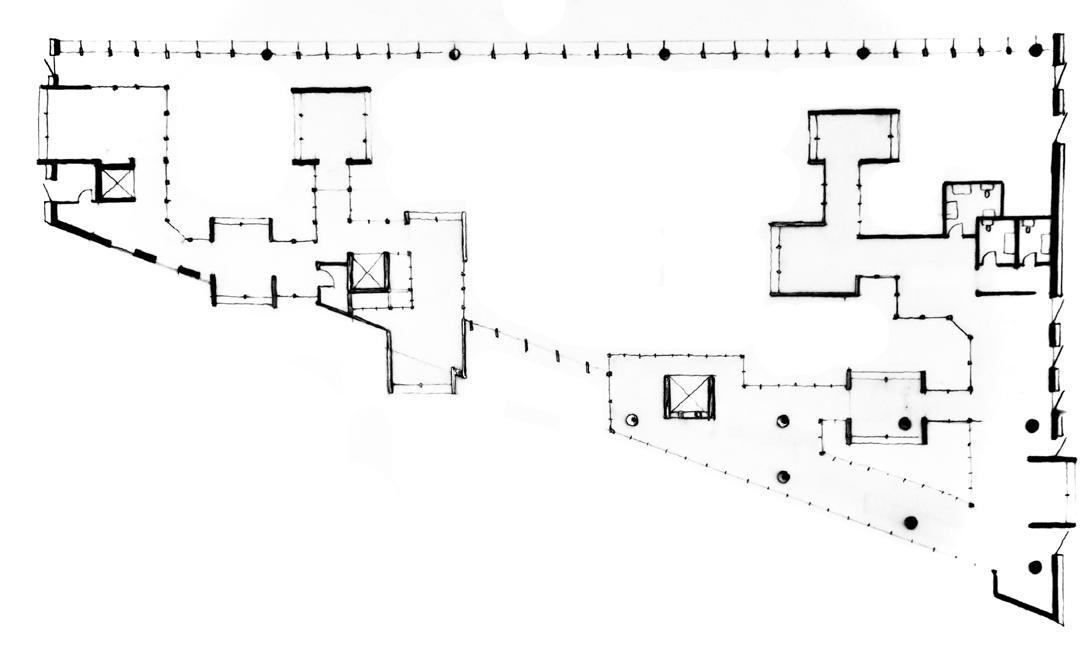
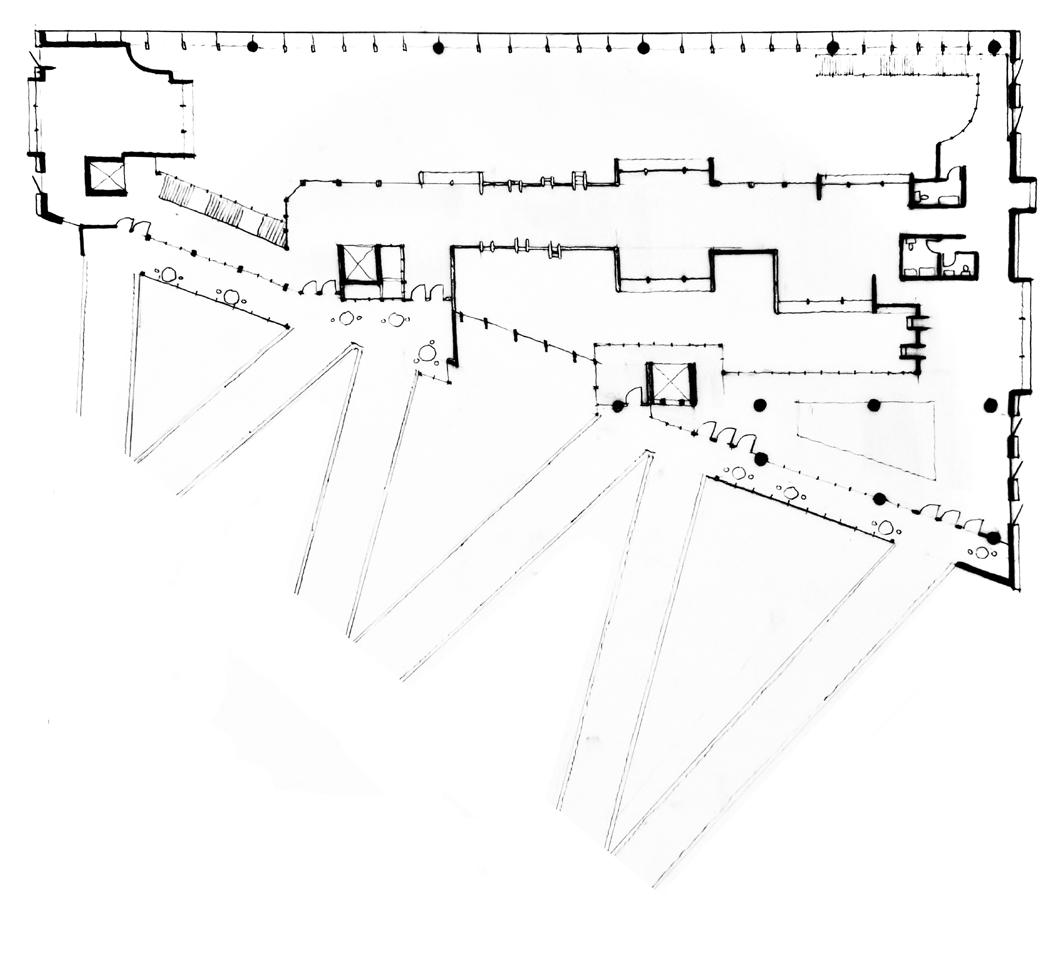

The idea of using net as a building material emerged directly from the energetic, full‑body way children play. Its flexibility supports climbing, bouncing, and suspended movement, while its structure reinforces the project’s broader theme of interconnectedness. This logic extends across the building: the façade adopts a mesh‑like expression, and the plan reads as if woven together, with paths and volumes interlacing rather than simply adjoining.
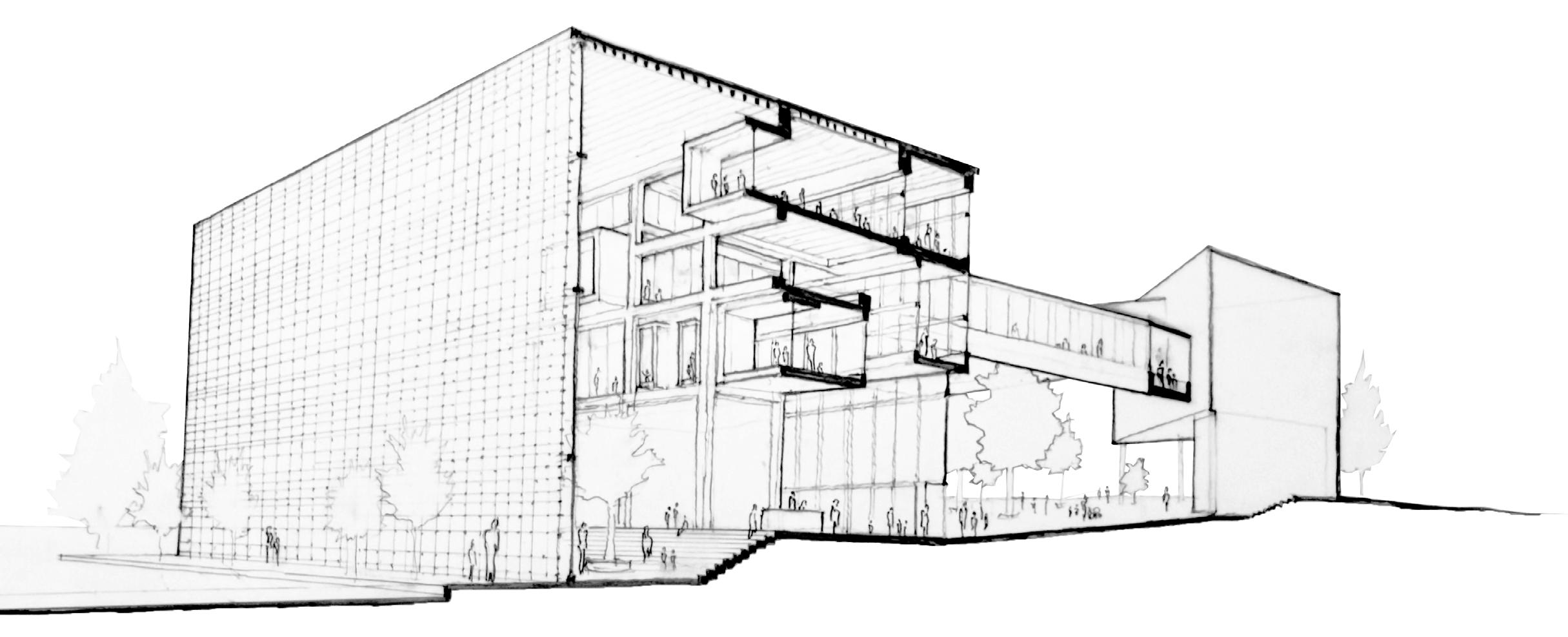
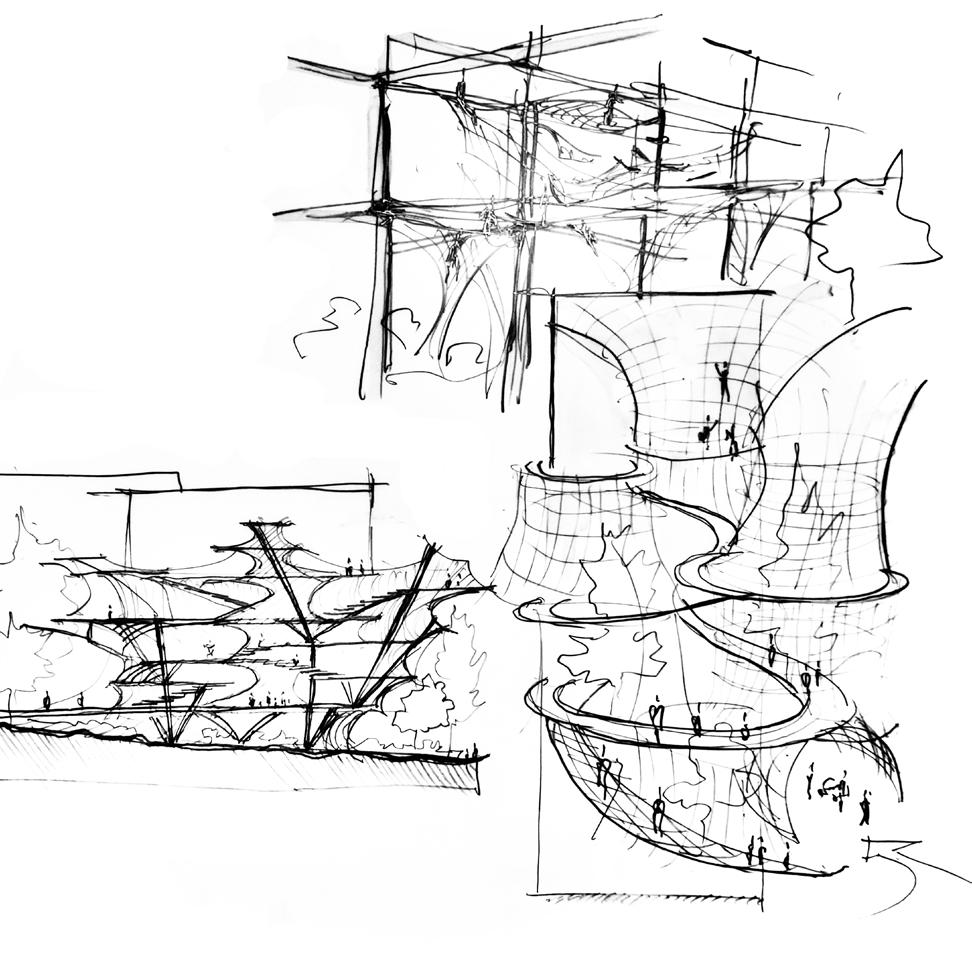
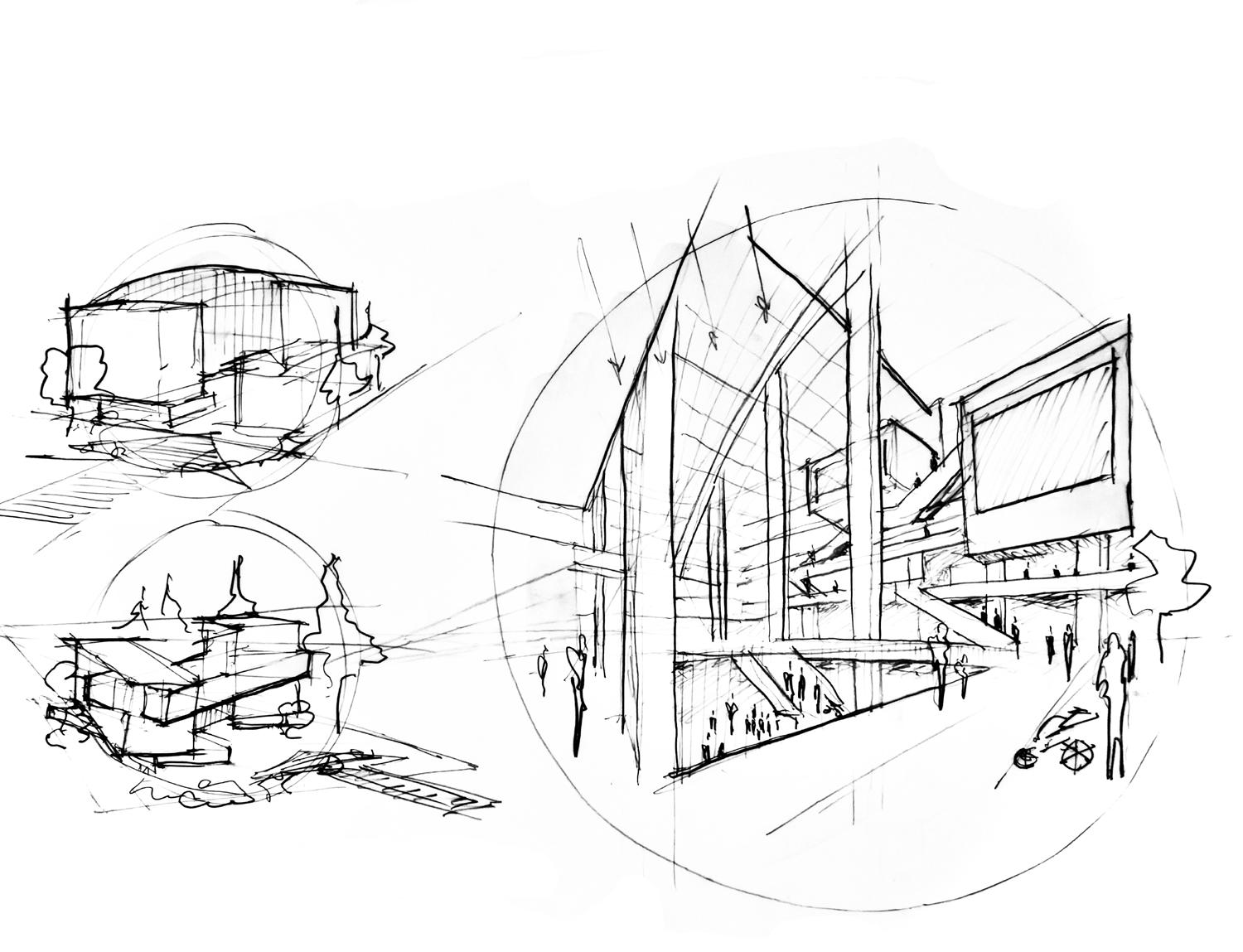
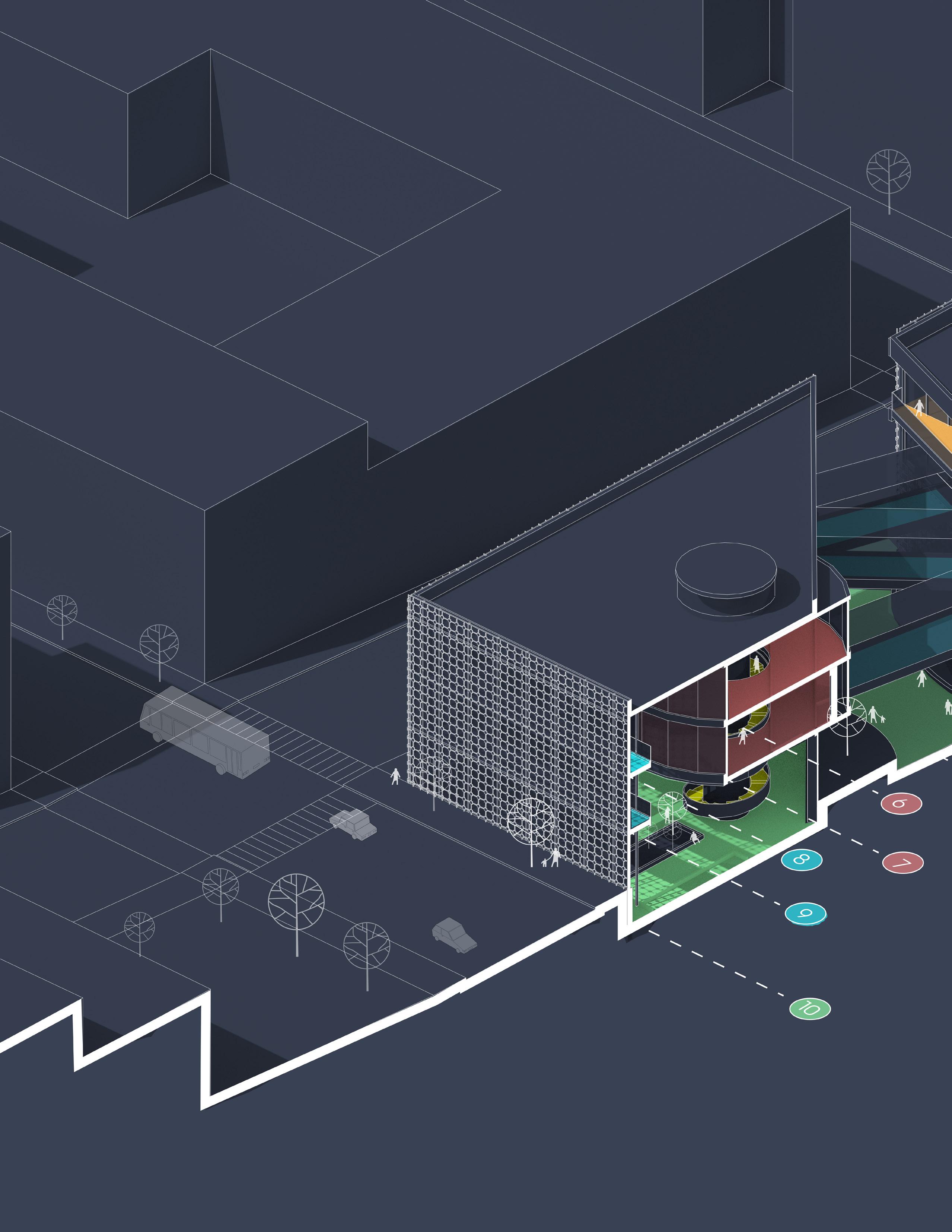
Just as a mesh is defined by nodes and links, the museum is organized as a network of moments and connections, each one strengthening the relationship between spaces, programs, and the families who move through them. The nodes are primarily moments of activity, while the links are moments of respite, such as in the sky corridors.
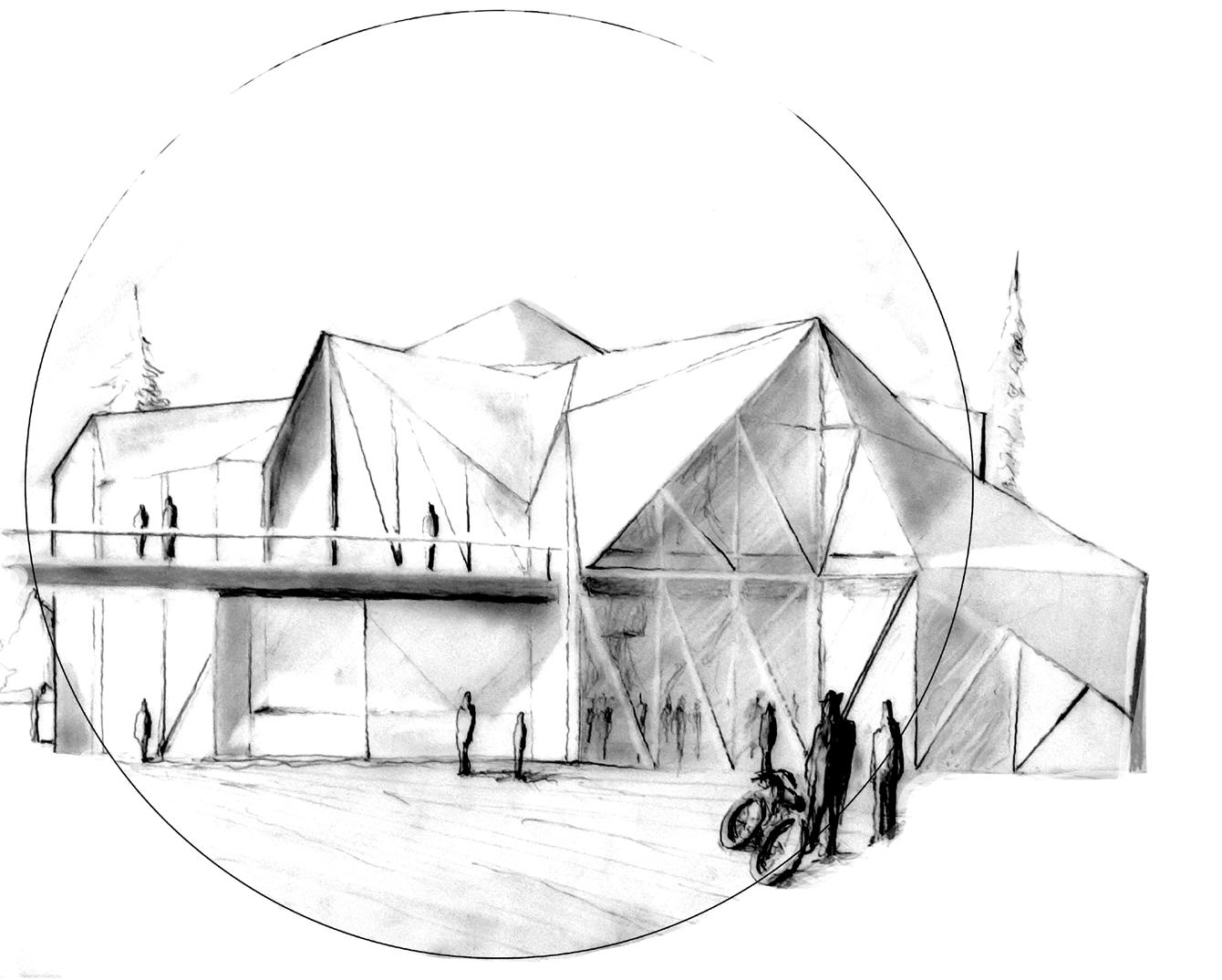
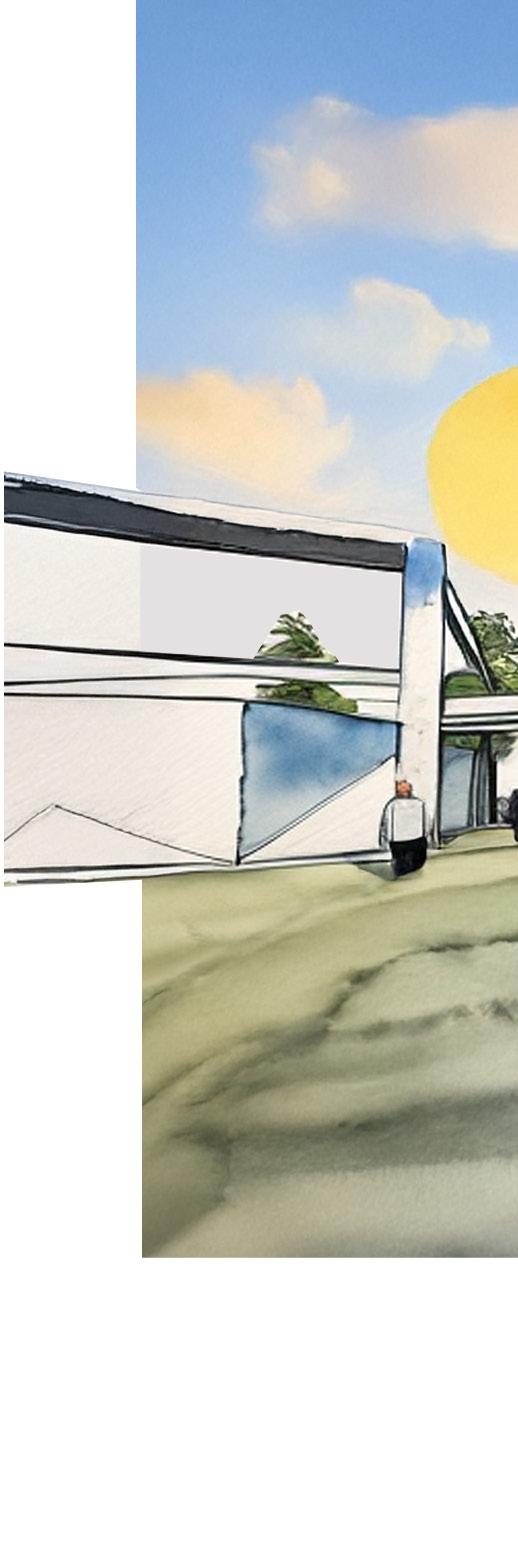
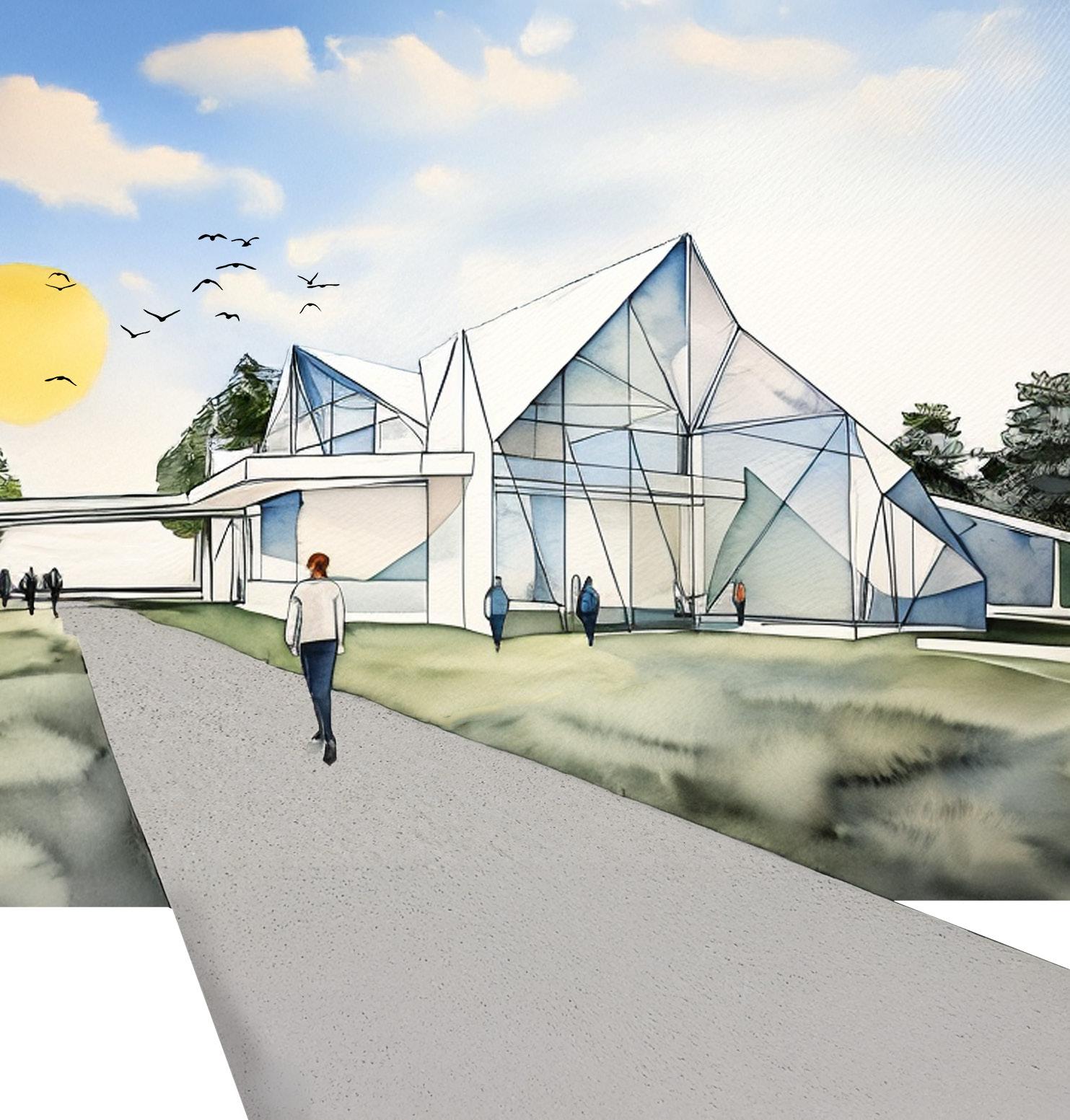
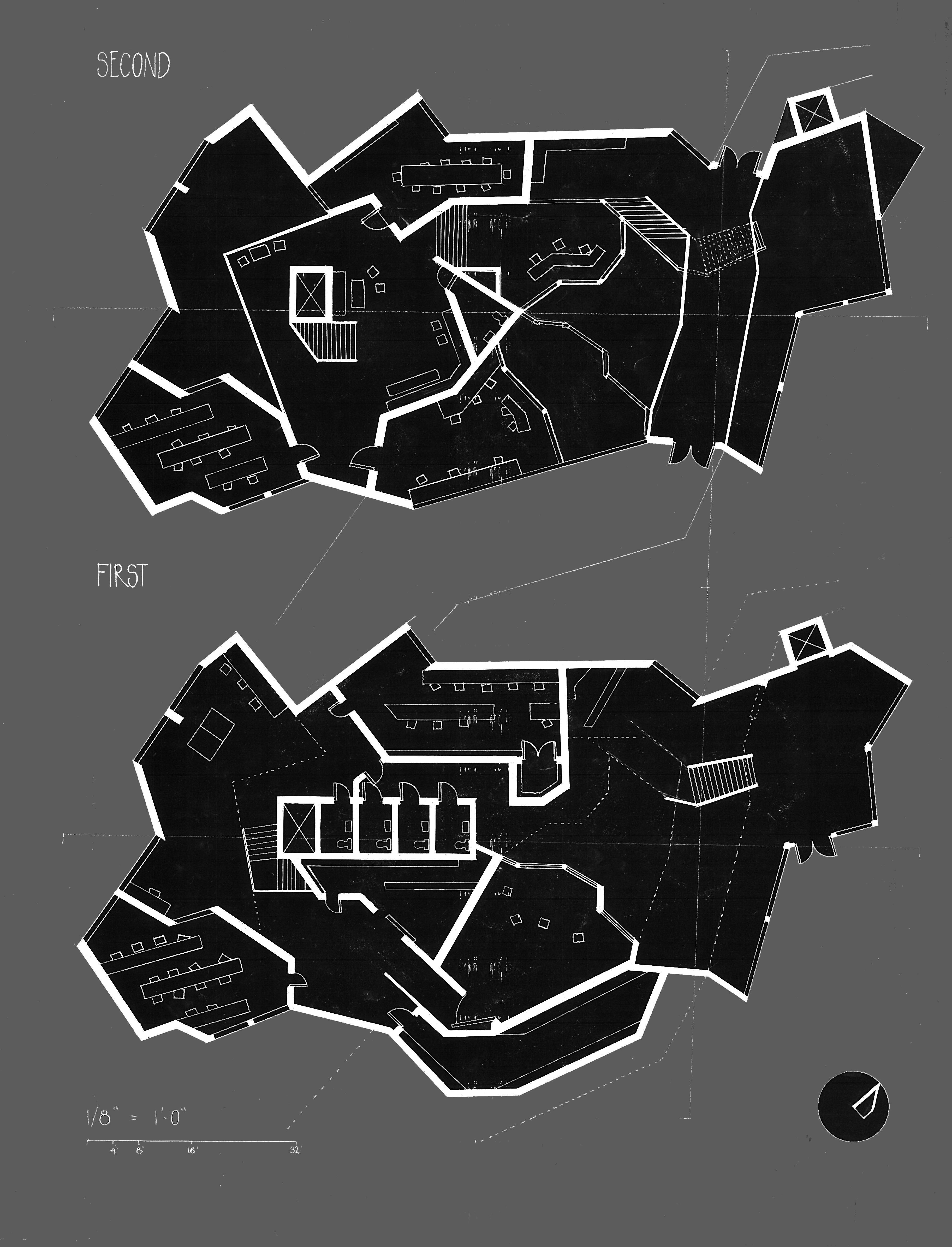
The Kaleido Radio Station is conceived as a new architectural typology for public broadcasting—one that invites visitors to witness the radio production process with complete transparency through a fully glazed interface. Its form expresses a collective spirit, assembling diverse individuals and voices into a shared cultural platform. Fragmented, shard‑like panels articulate the exterior, evoking the idea of many distinct pieces converging into a unified composition. This visual language reinforces the project’s central metaphor: a community made legible through its parts. The name Kaleido, drawn from the Greek for “beautiful form,” captures the project’s ambition to transform the mechanics of broadcasting into an accessible, communal, and visually resonant experience. The “shard” symbol appears throughout the project as a metaphor for the individual. The building is literally and figuratively pieced together by these shards.
BROADCAST 1/8 =
1 FIRST SECOND
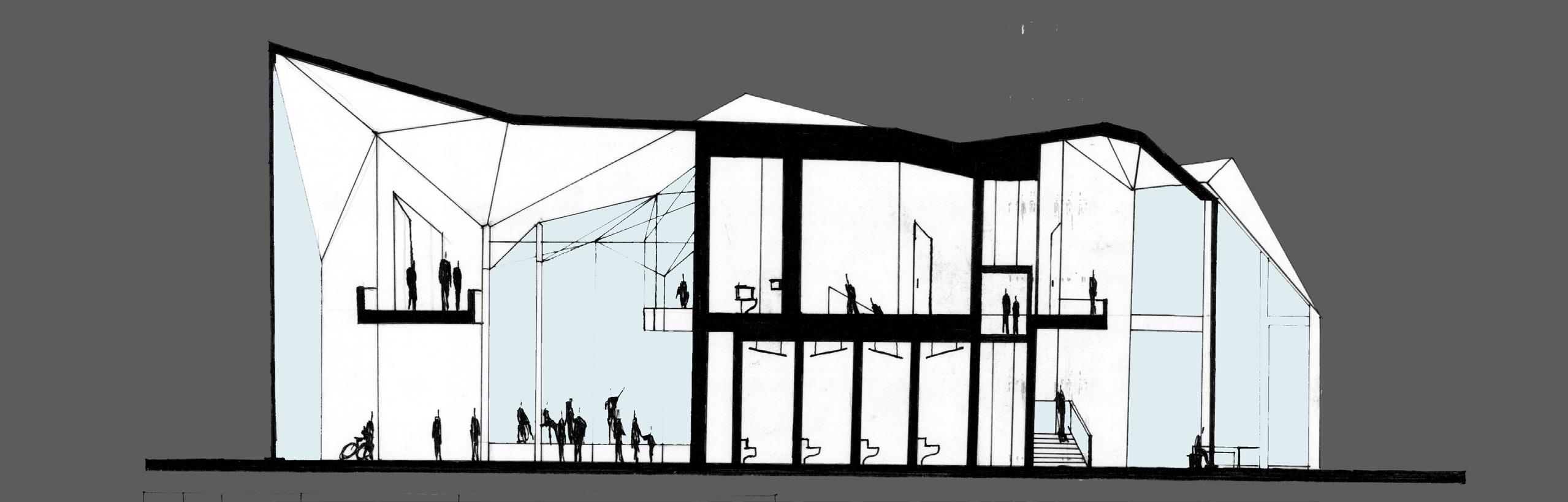
The blue color in these sections indicates glass. The visible elements are made of primarily aluminum and glass panels. This section reveals the seperation of public space on the left and staff-only on the right.
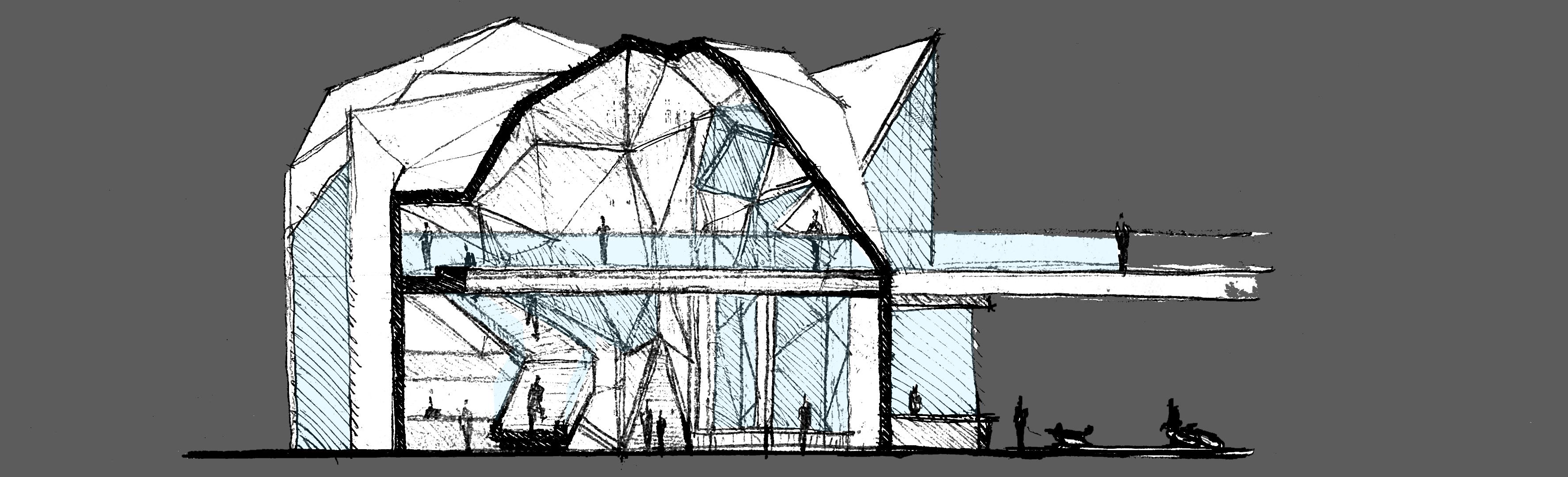
This section was created while the interior panel system was still in the iterative design process. Here you see some original ideas of the complexity of the form, true to the kaleidoscopic theme.

1/8 = 1 - 0
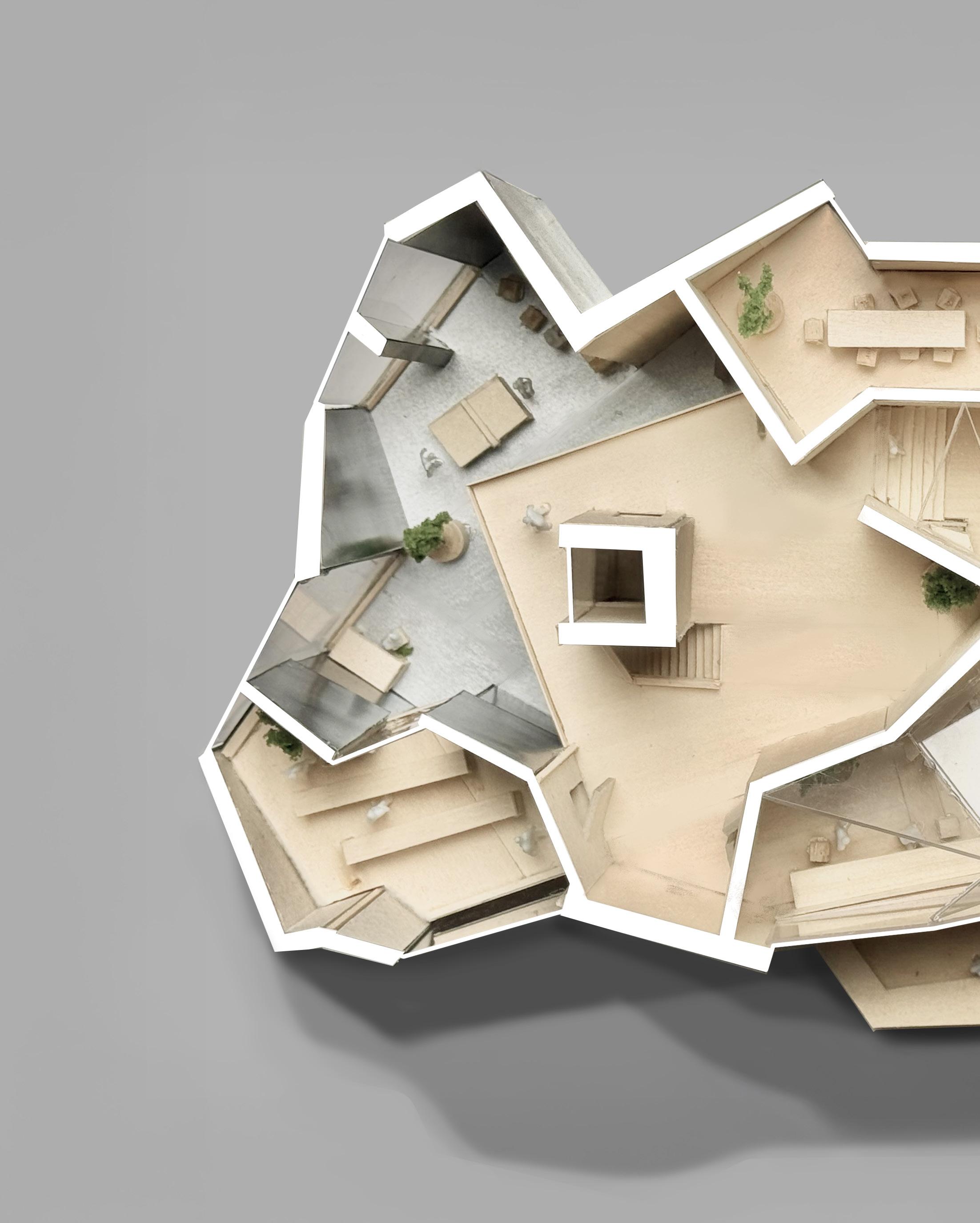
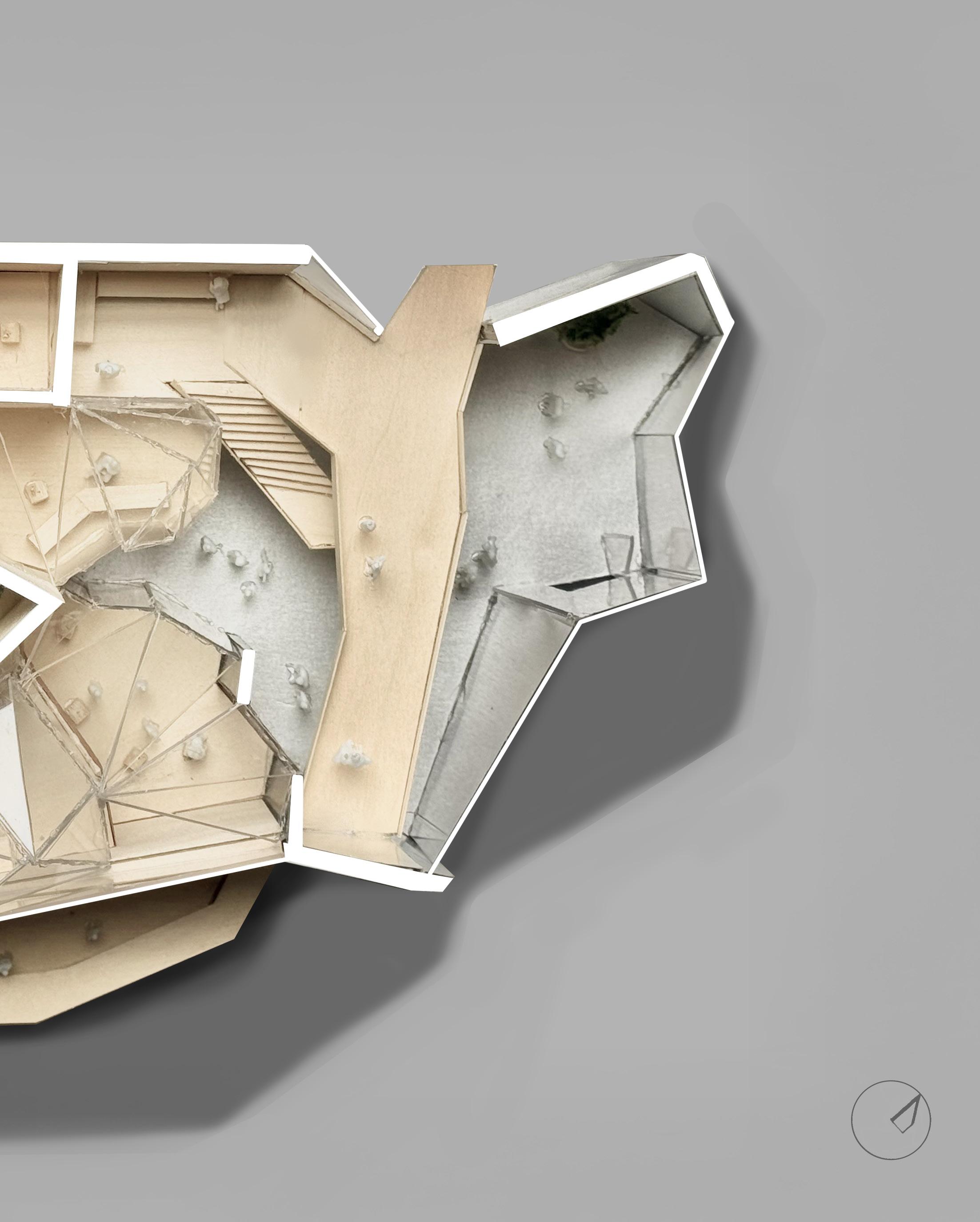
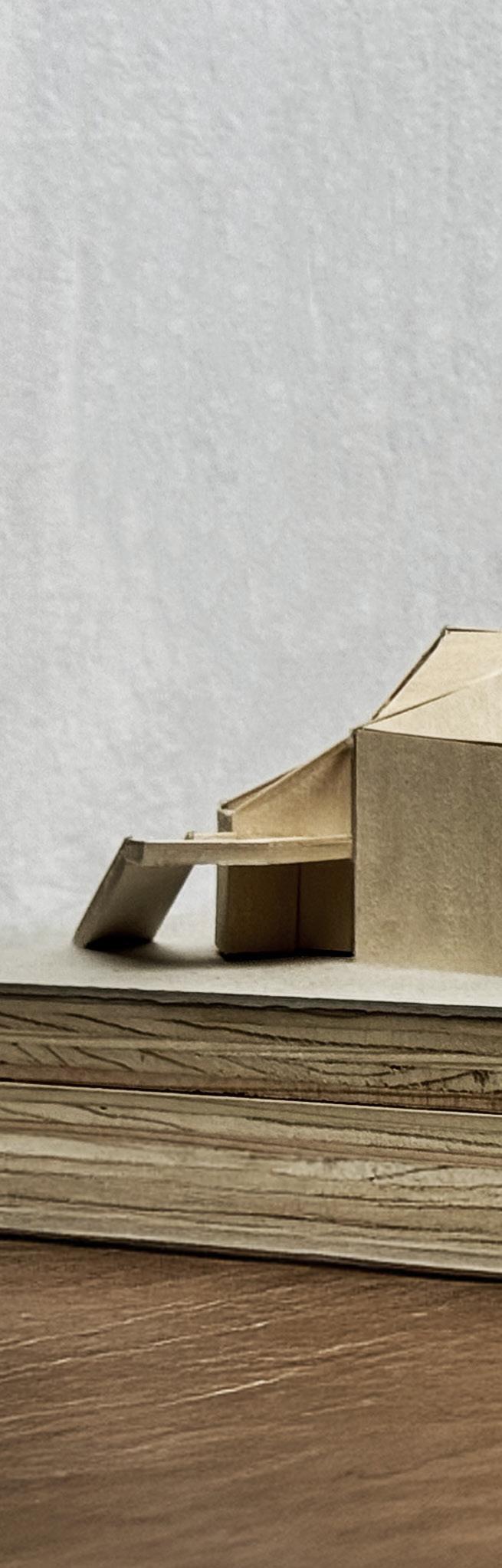
This model shows the building with its roof panels removed. Pictured is the public approach to the main entrance with view to the exterior cafe, lobby, and the performance stage.
1/16 = 1 - 0
Some initial designs included away of an existing adjacent and a pedestrian bridge, The sketch below shows
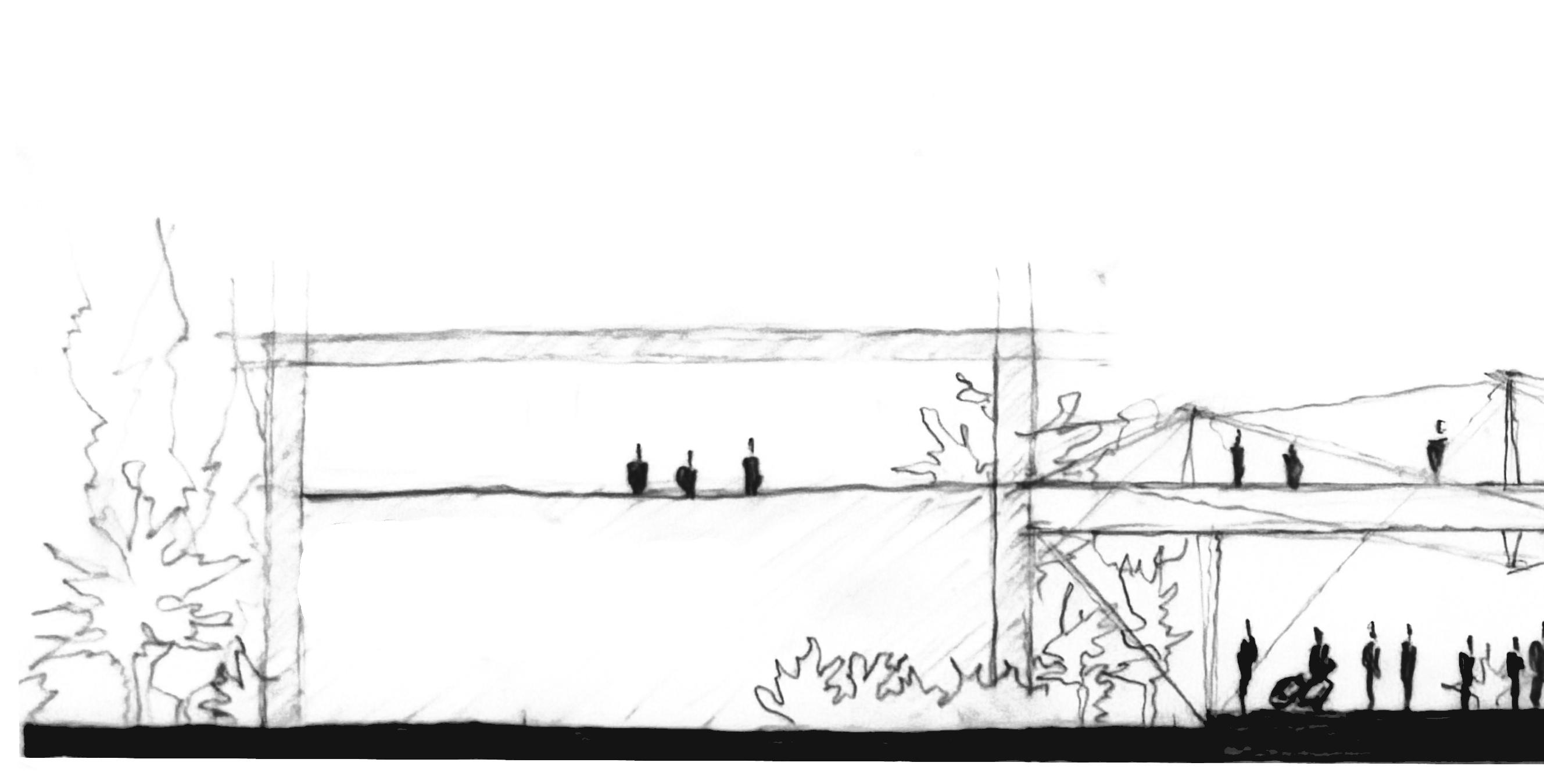
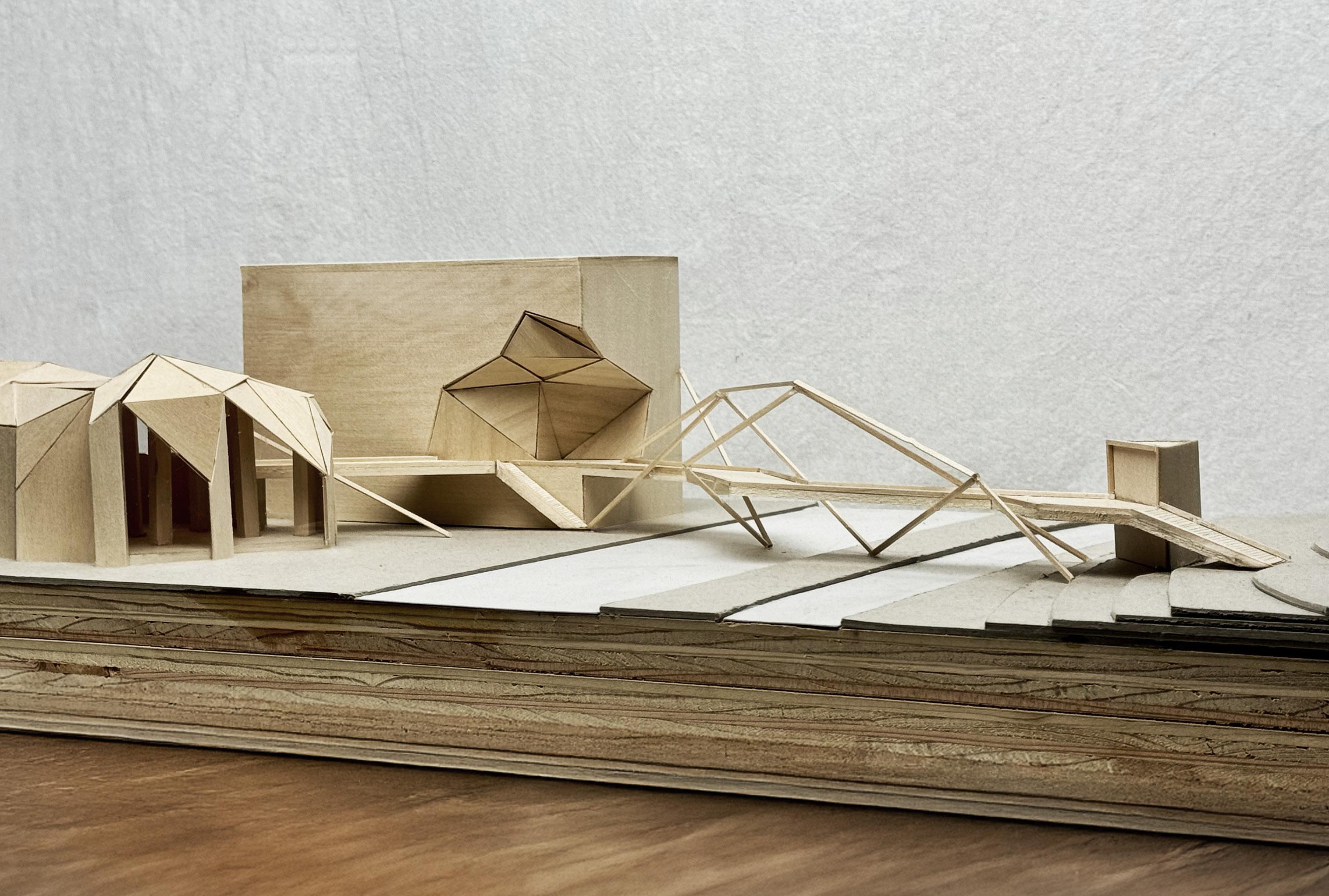
included the carving adjacent structure bridge, modeled here. shows a similar design.
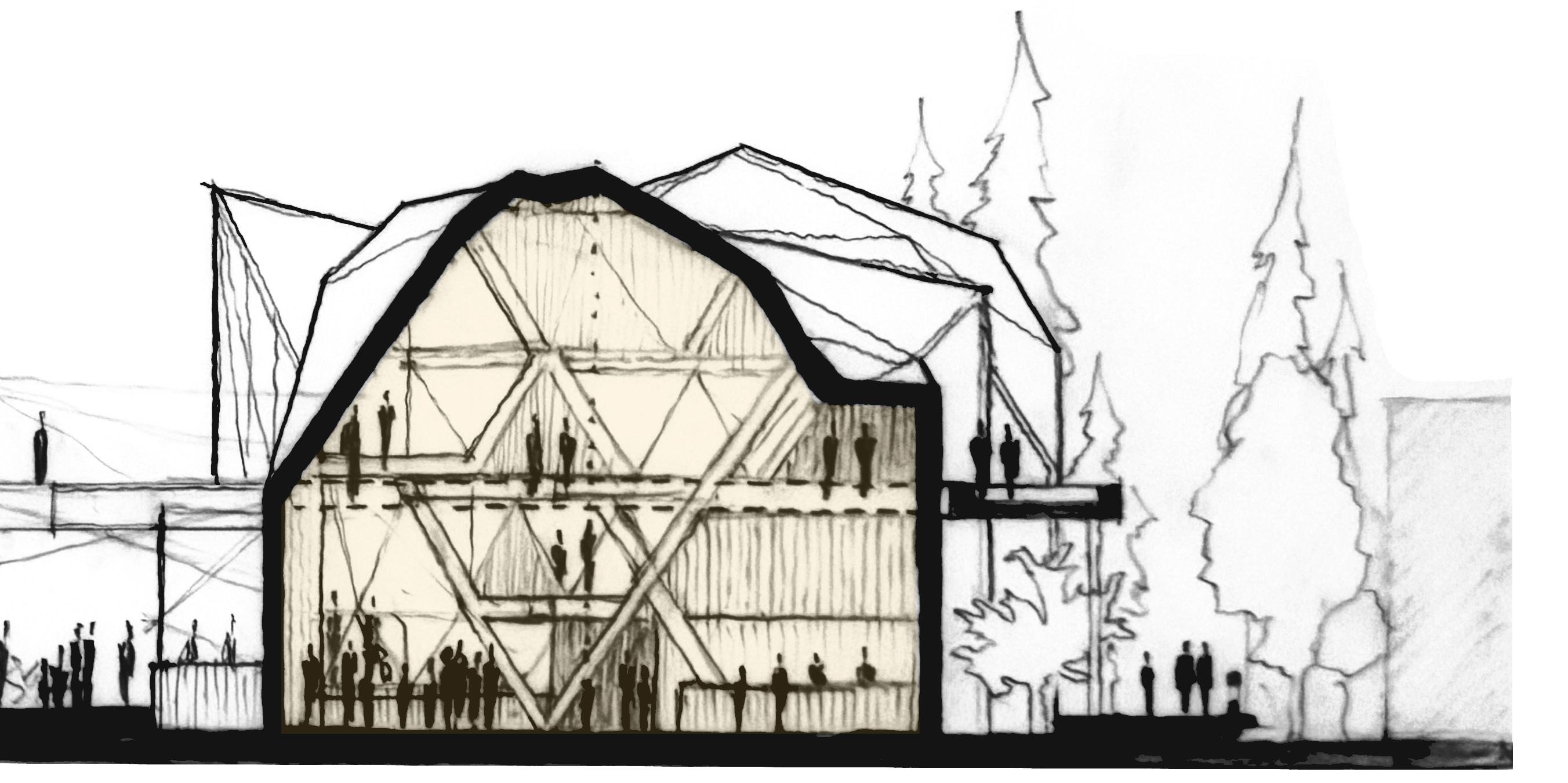
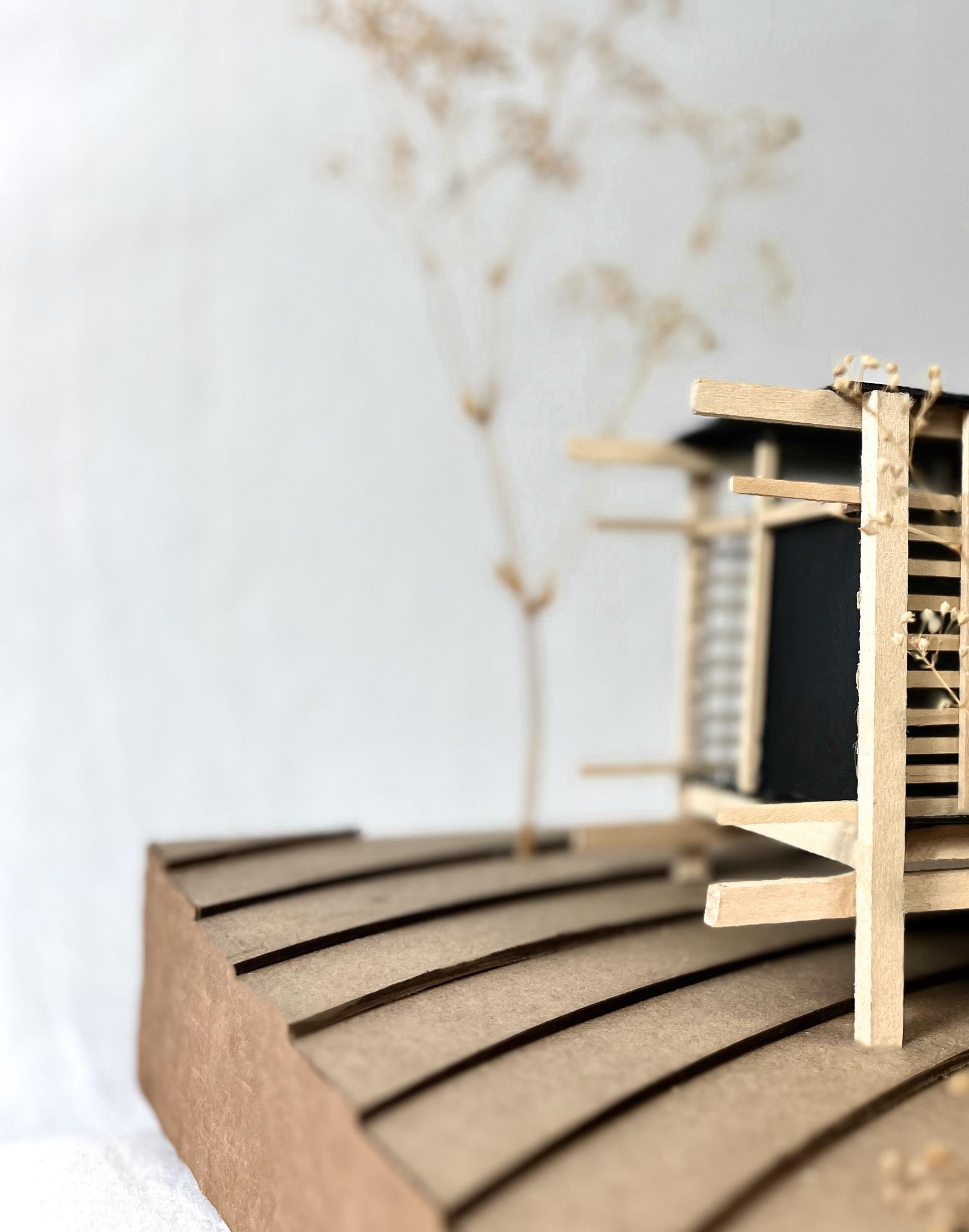
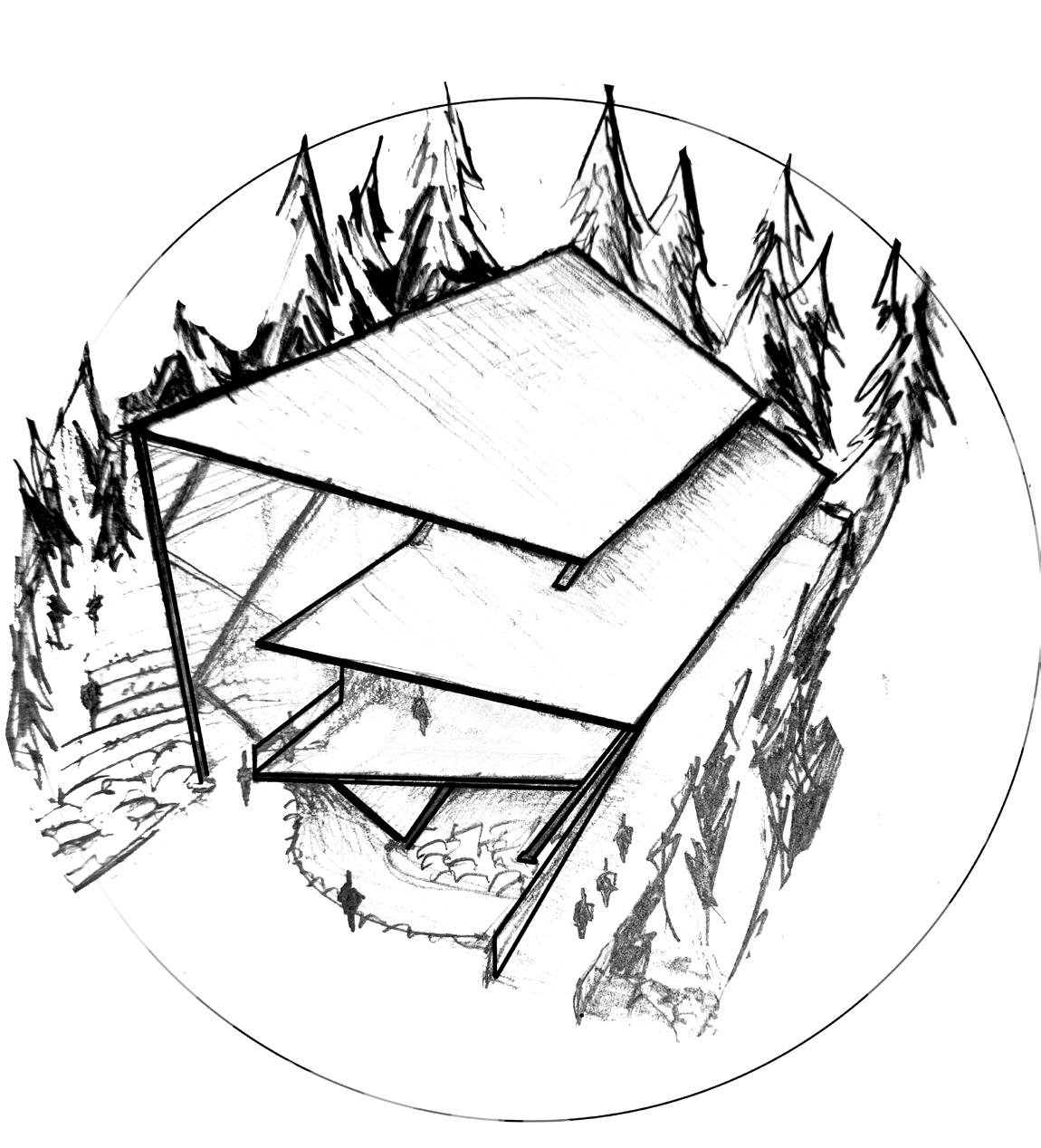
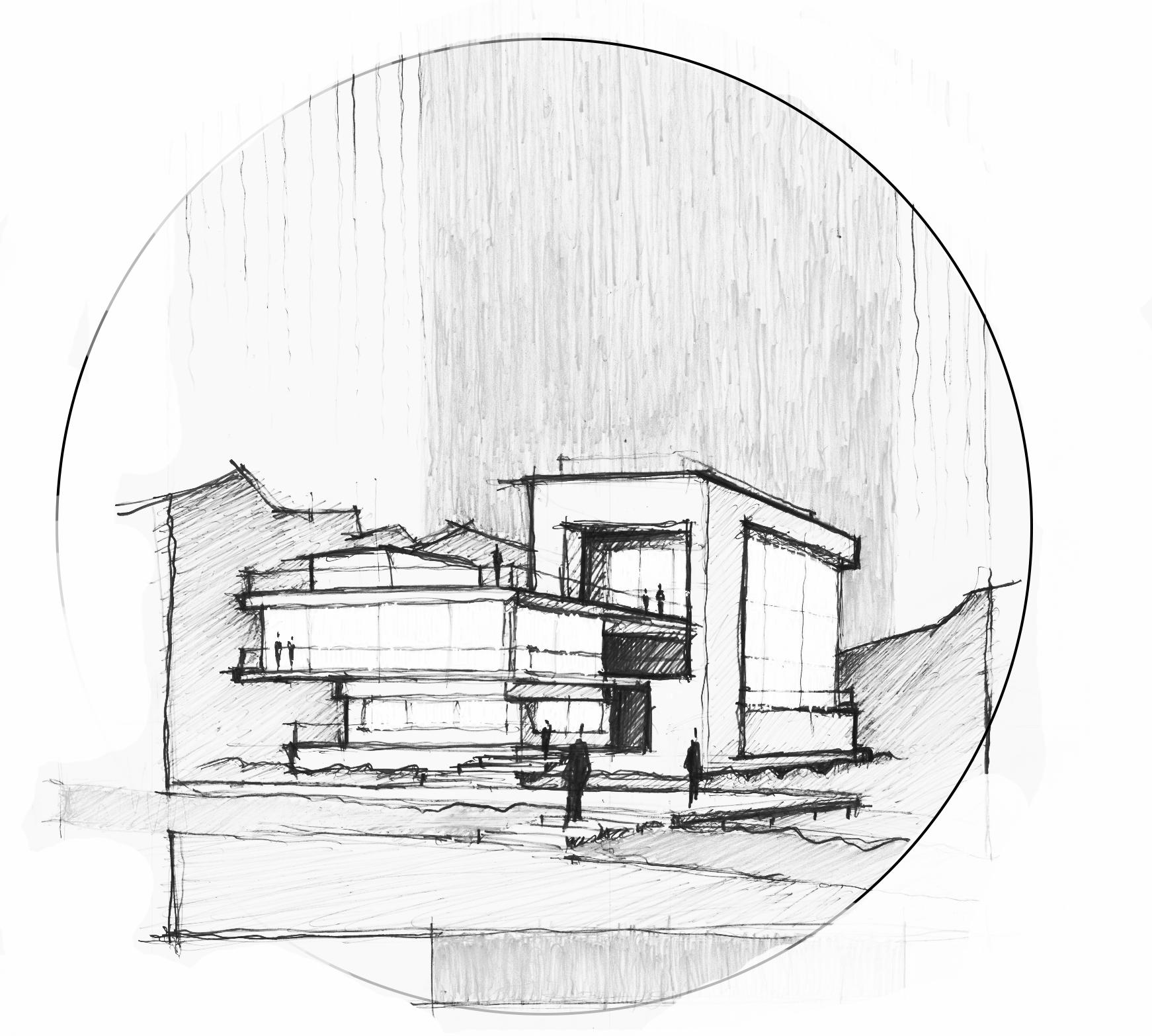
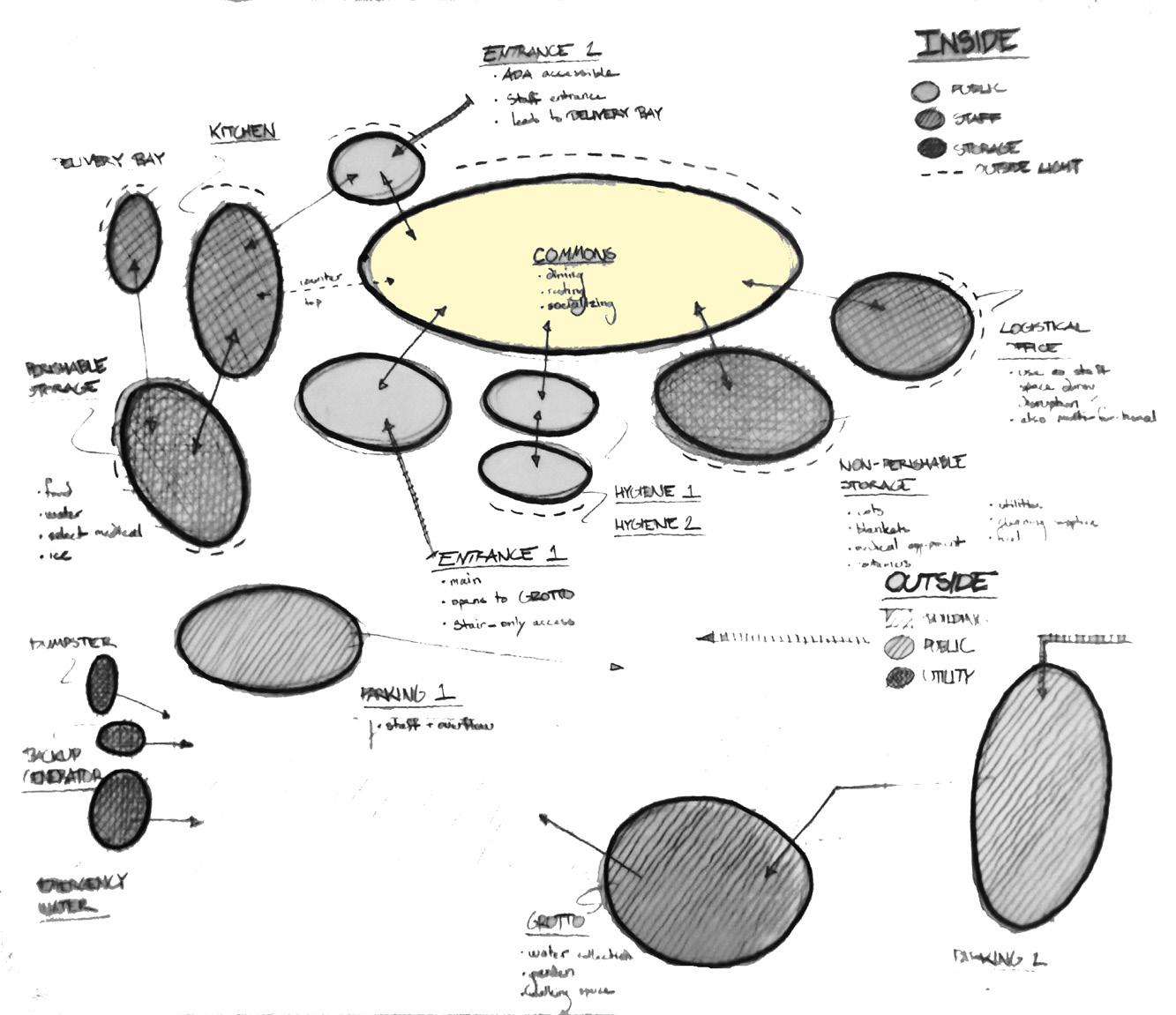
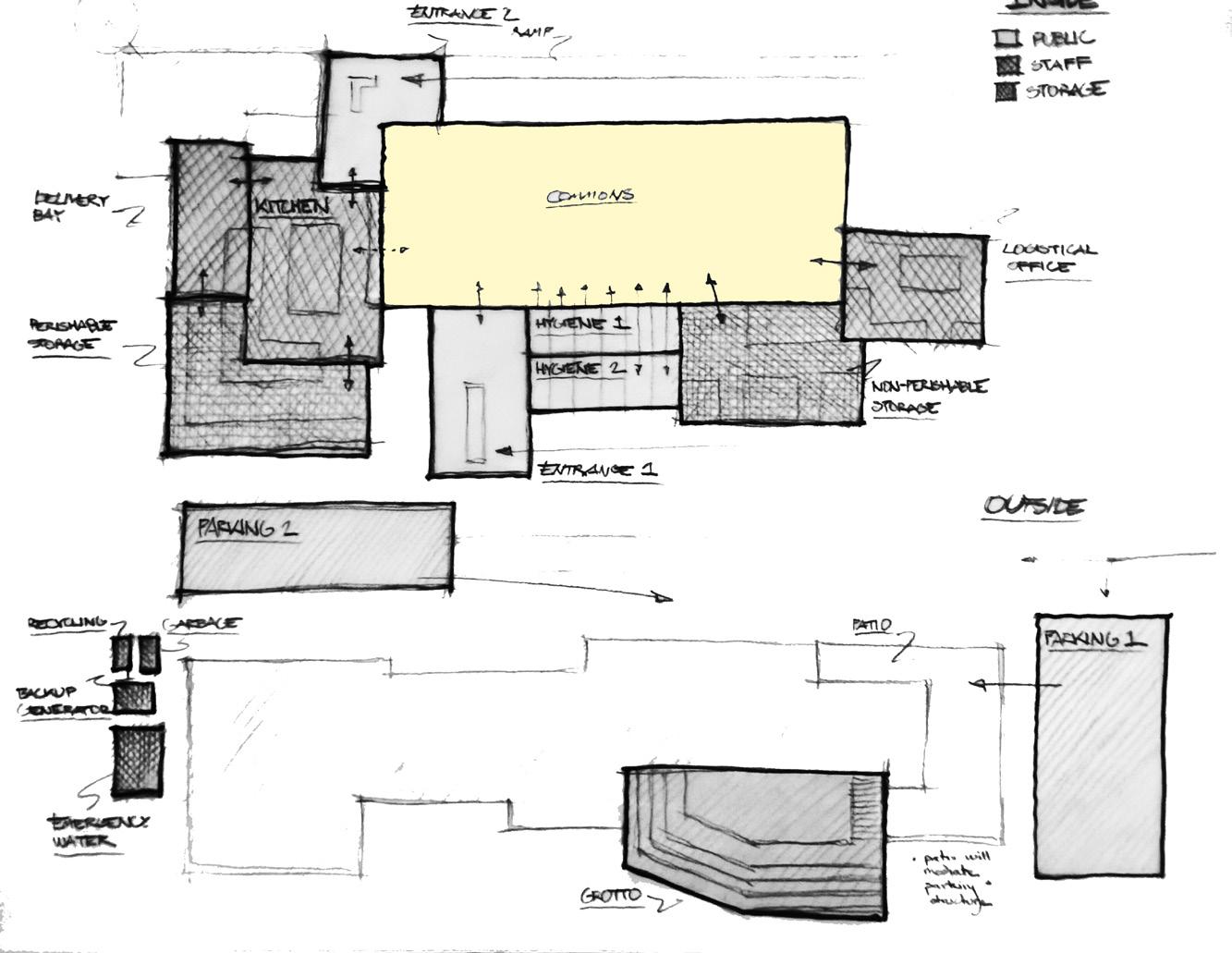
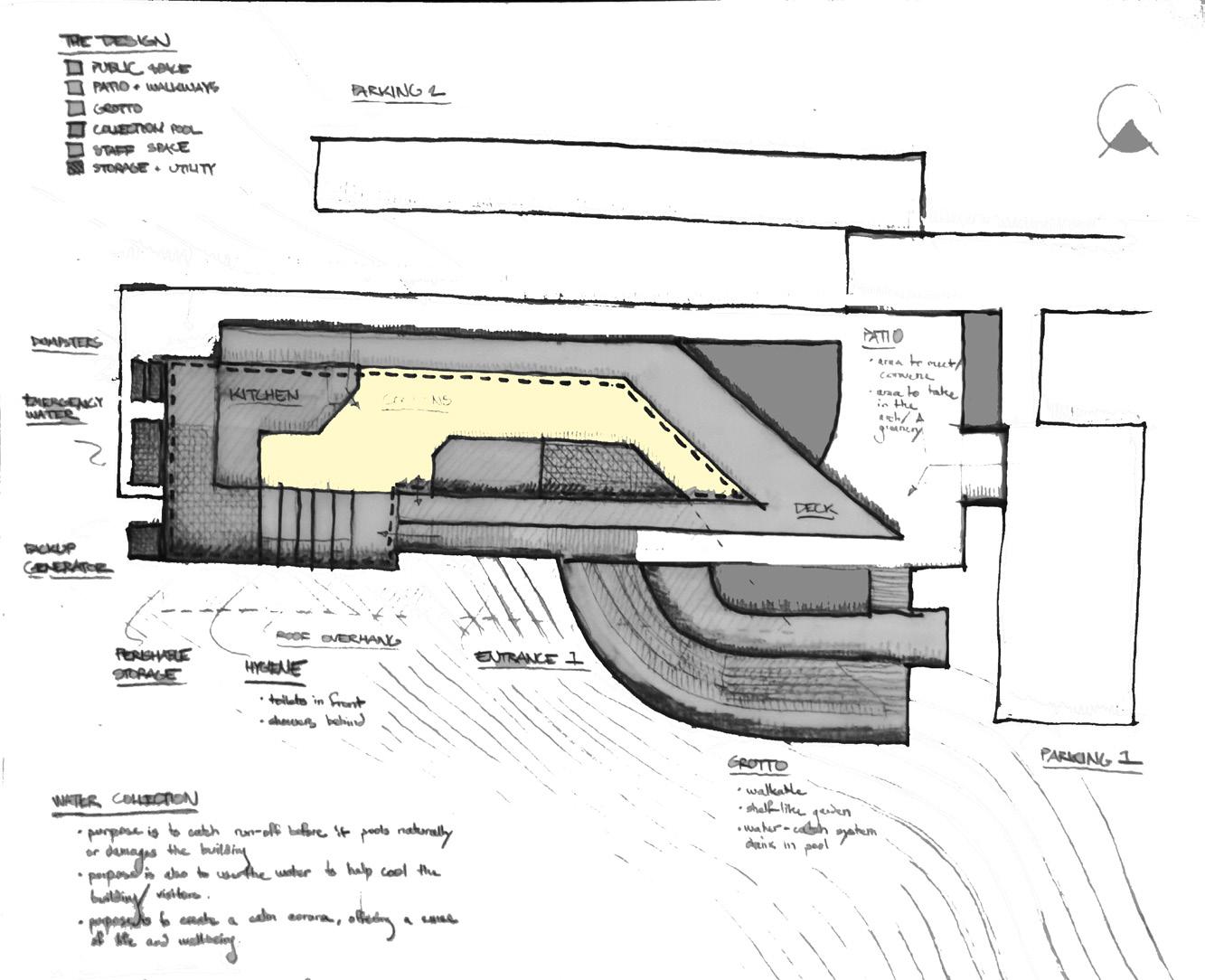
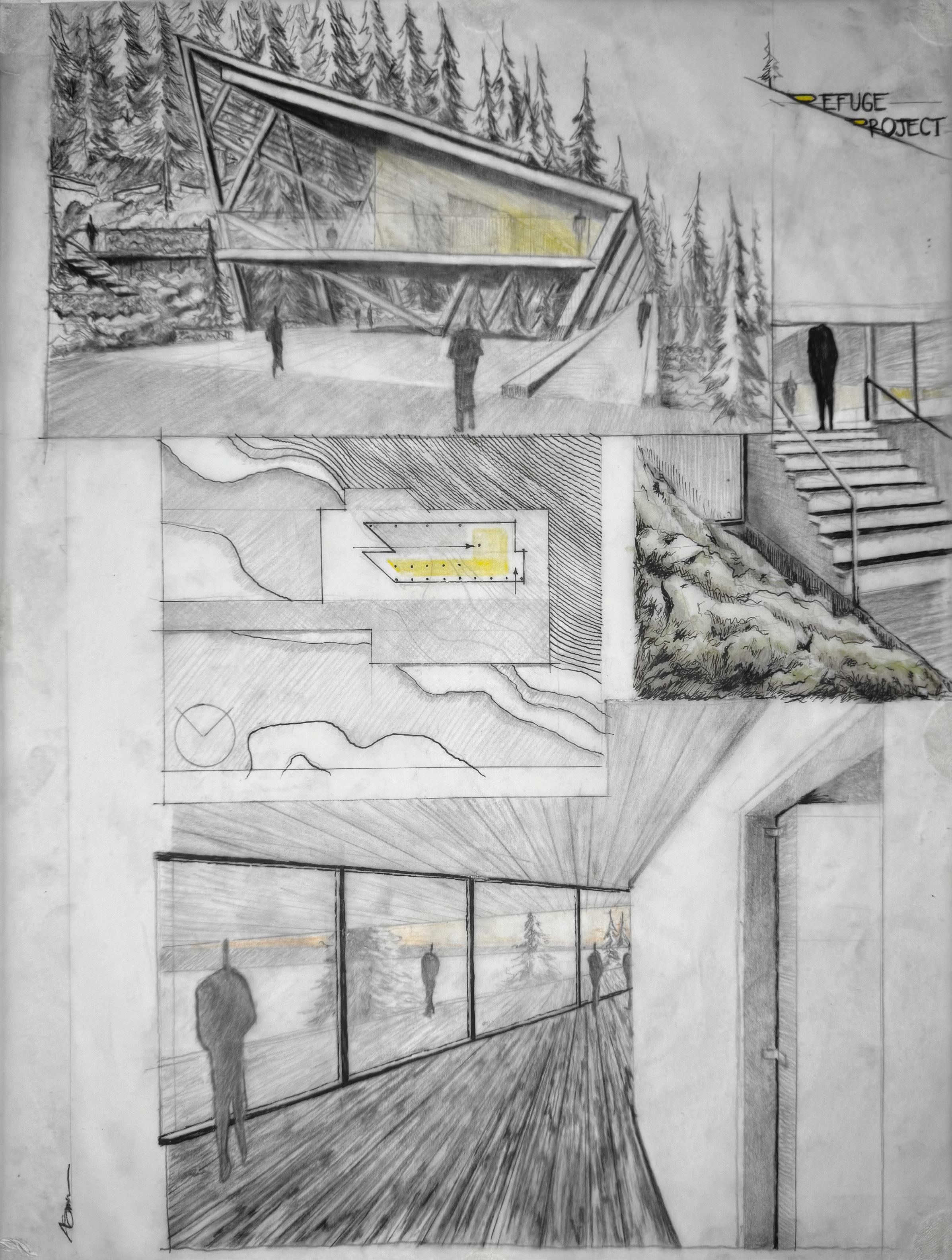
This project examined a community to designing a multi carefully tailored to meet stringent constraints. The design had to accommodate a footprint of just 2,500 sqft. while contending with extreme topographical conditions and a demanding program. The facility needed to include a fully staffed industrial kitchen, dining and lounge spaces, emergency equipment storage, an industrial showers, and additional accommodations. The Refuge Project successfully integrates these complex requirements while delivering a compelling and resilient design—offering a dynamic sense of control over external circumstances.

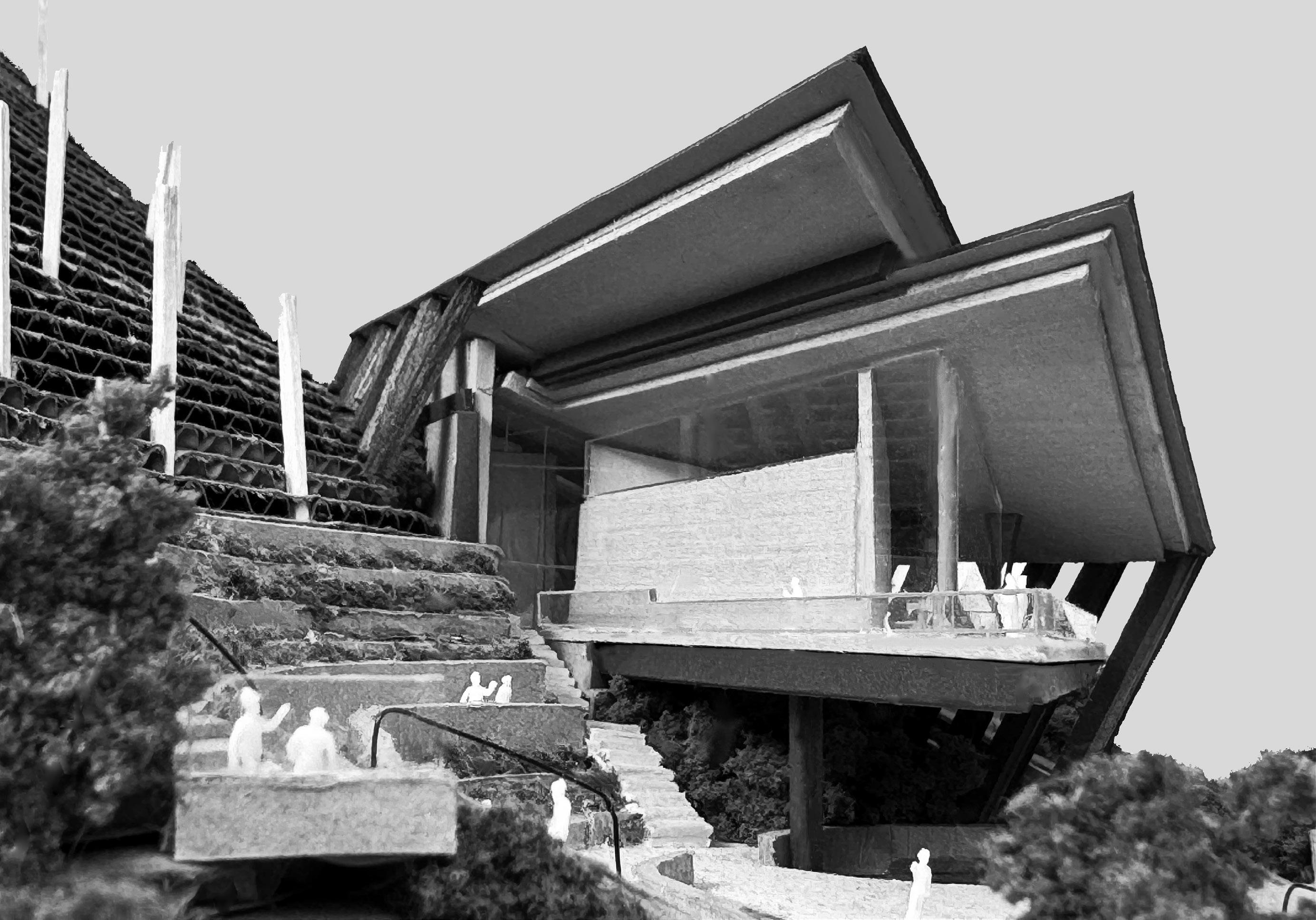
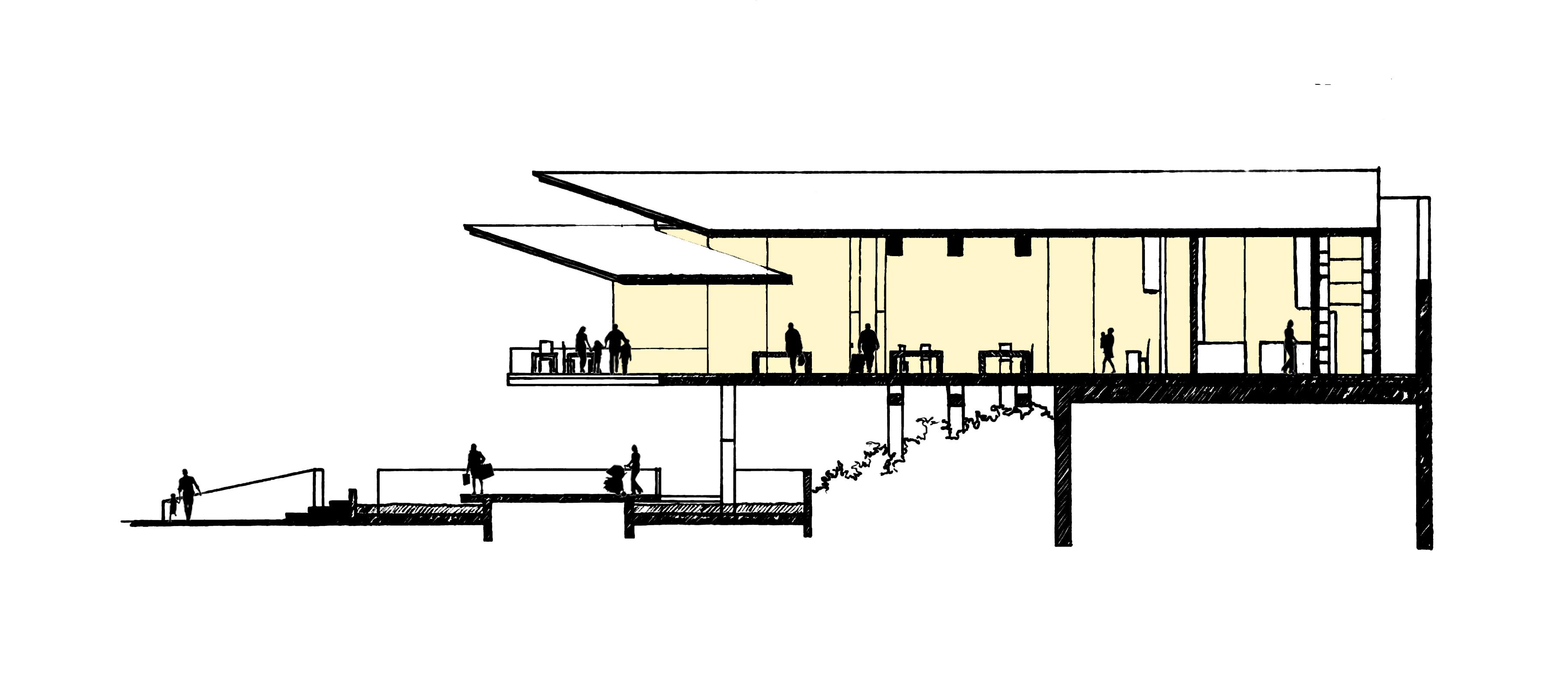
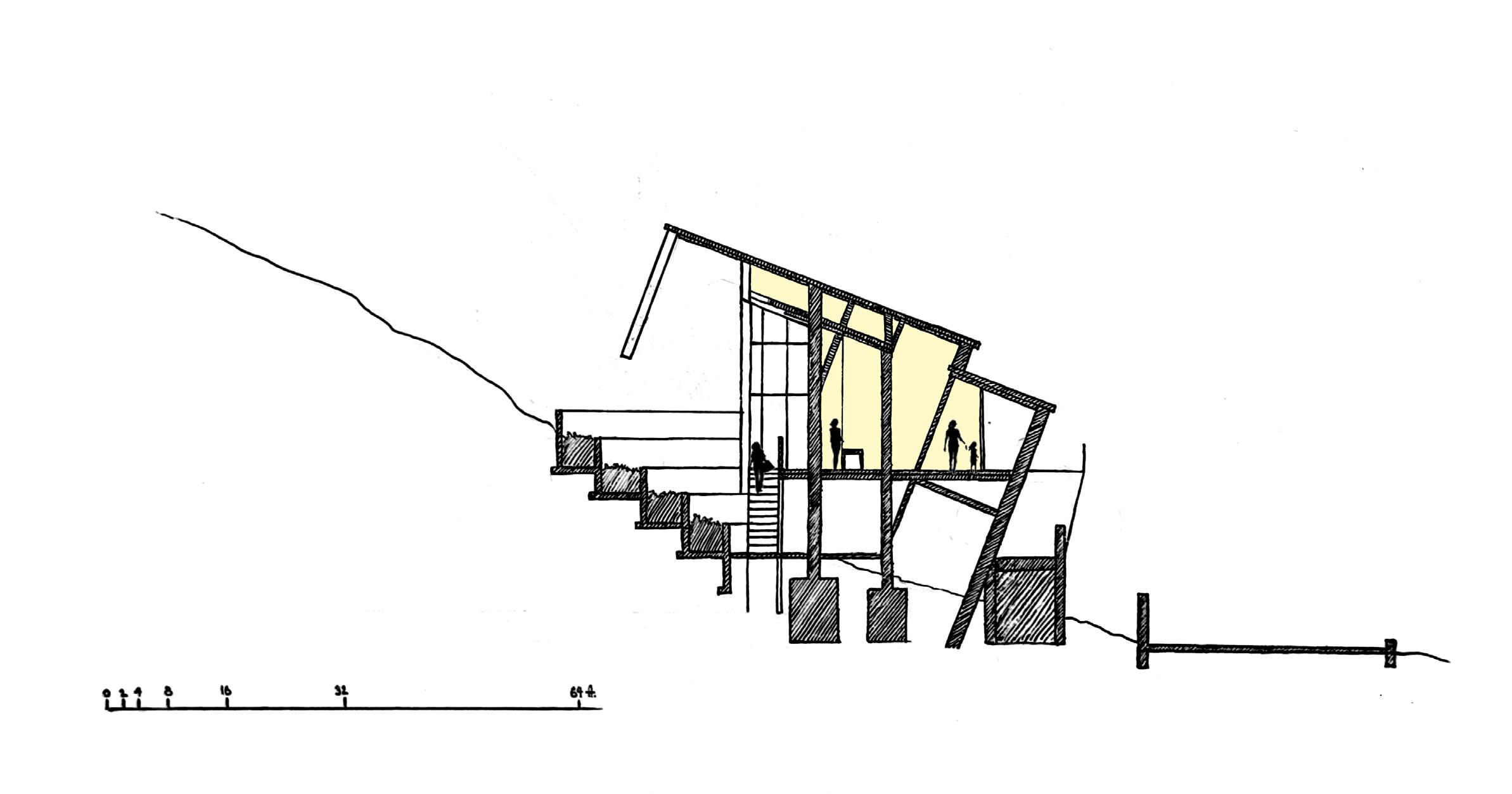
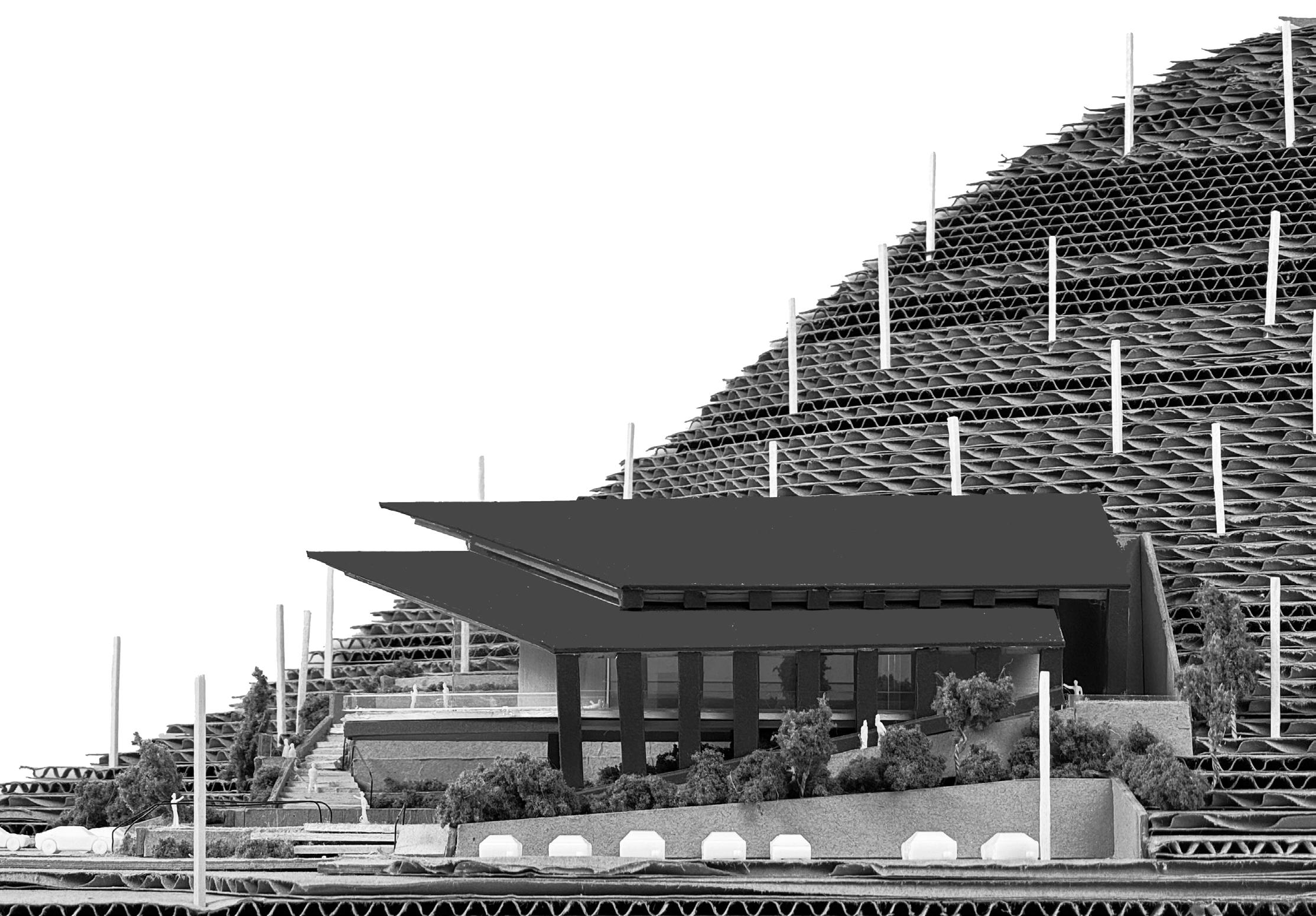
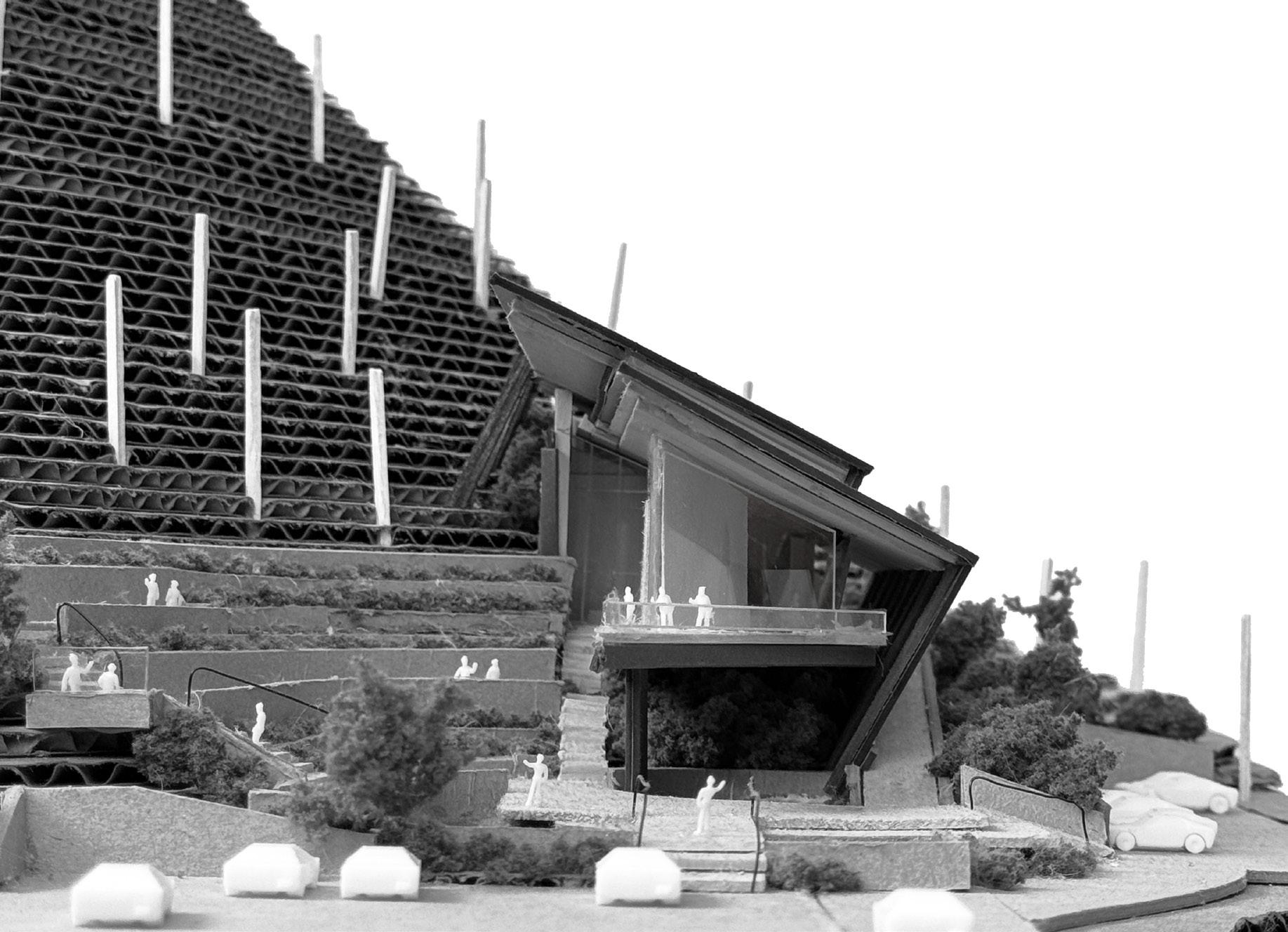


This project embraced model making as the primary design method, entirely forgoing computer software. This hands on approach honed craftsmanship skills and deepened an appreciation for the art of making.
Displayed here is the overall plan schematic, detailing the diagrammatic steps leading to the final design. A crucial aspect of the layout is the interplay between programmatic elements, a relationship carefully preserved throughout the architectural form’s development.
The design is profoundly shaped by the contours of Kelly Butte, the terrain on which it rests. By extending roof sections outward from the slope, the structure naturally forms an exterior sanctuary—a shelter that offers both refuge and comfort. The terraced layout allows the space to rise and envelop the viewer organically, harmonizing with the landscape rather than imposing upon it.
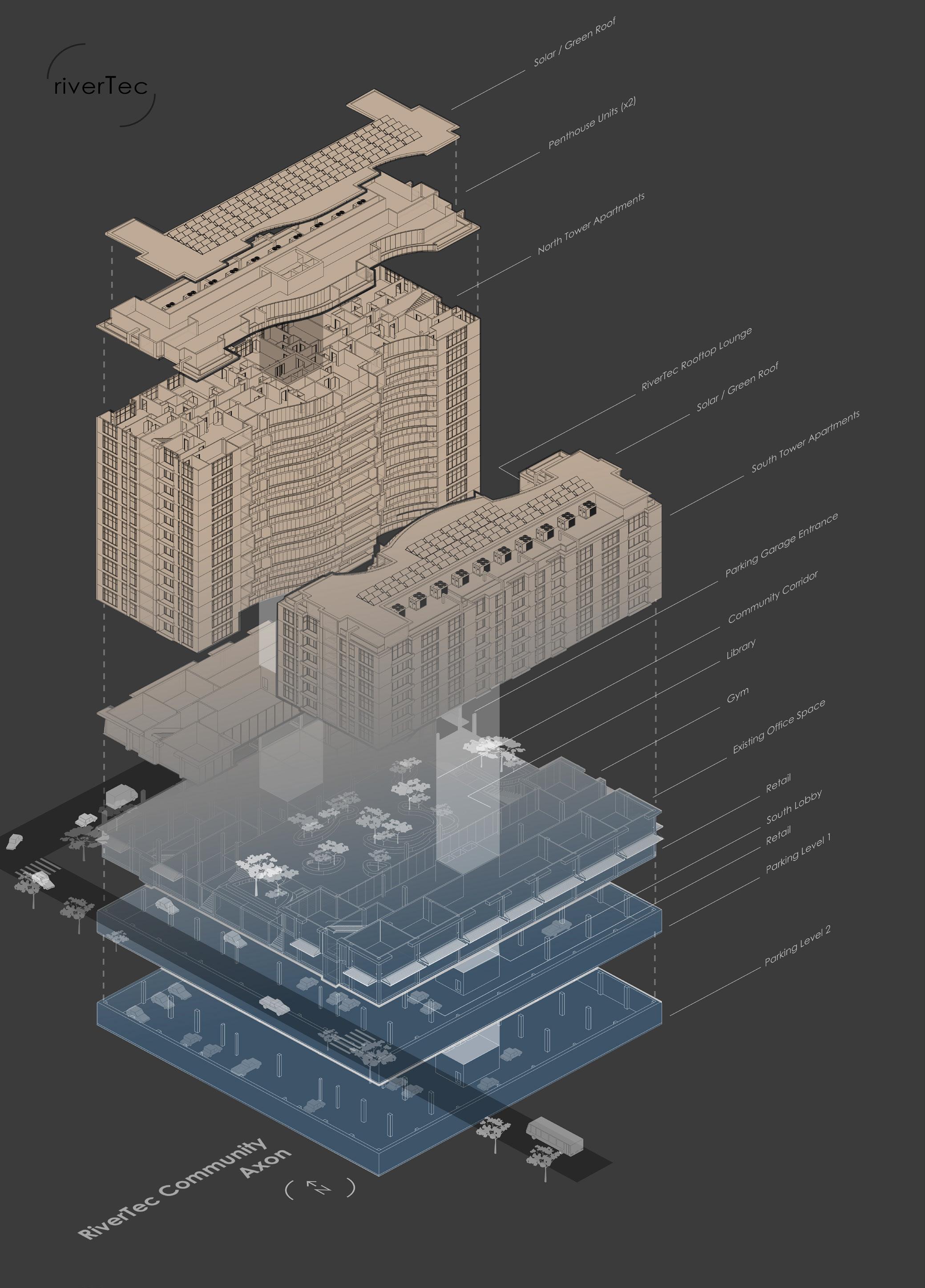
The first project in this section is an apartment complex titled RiverTec Apartments, named for its adaptive reuse of Portland’s existing RiverTec building. The work served as a study in building systems, tectonics, materials, and residential floor plan layout. It also introduced zoning and building codes as active design parameters.
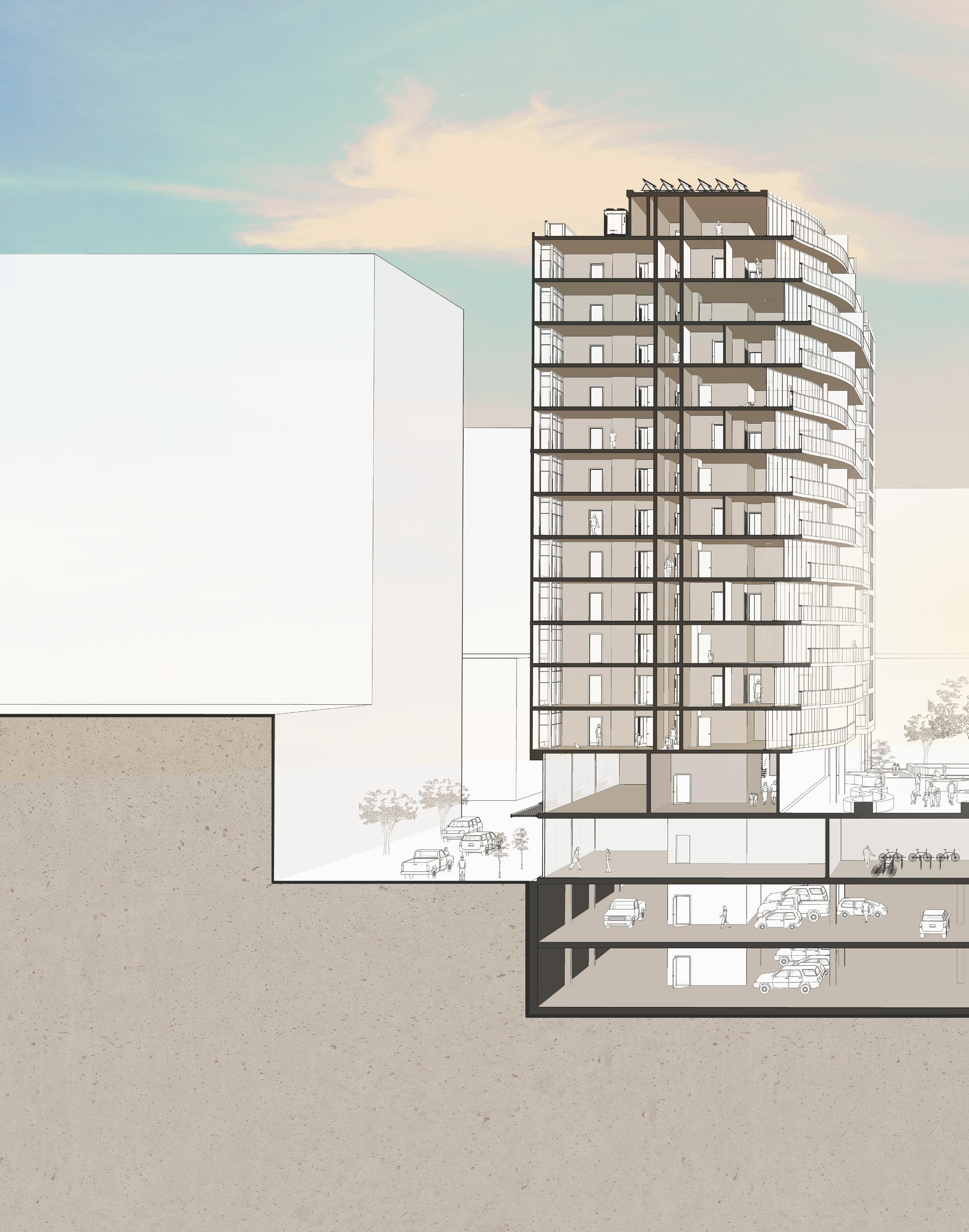
The axon to the left illustrates the building’s many floors and their functions, beginning to reveal the ten‑unit residential layout on each level. The following page presents a section drawing that shows the building’s relationship to the city and its approach to fostering a sense of belonging, expressed through the raised inner corridor.

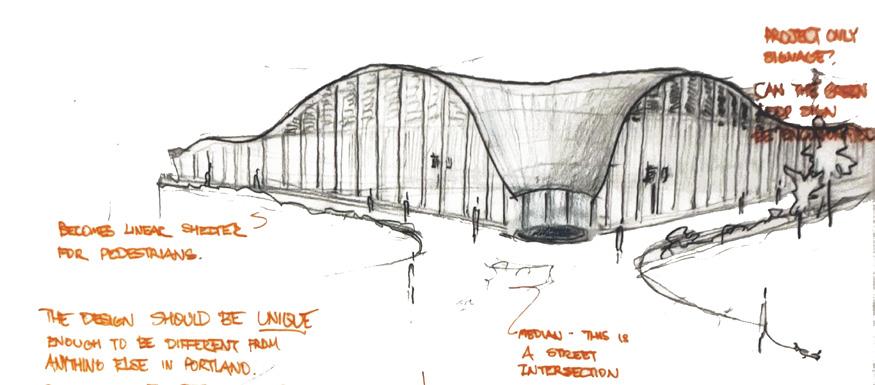
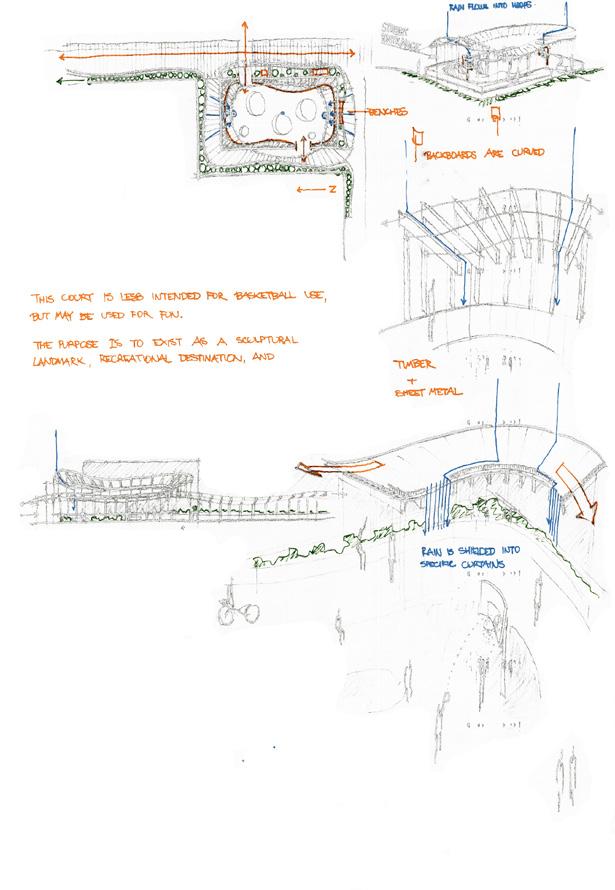
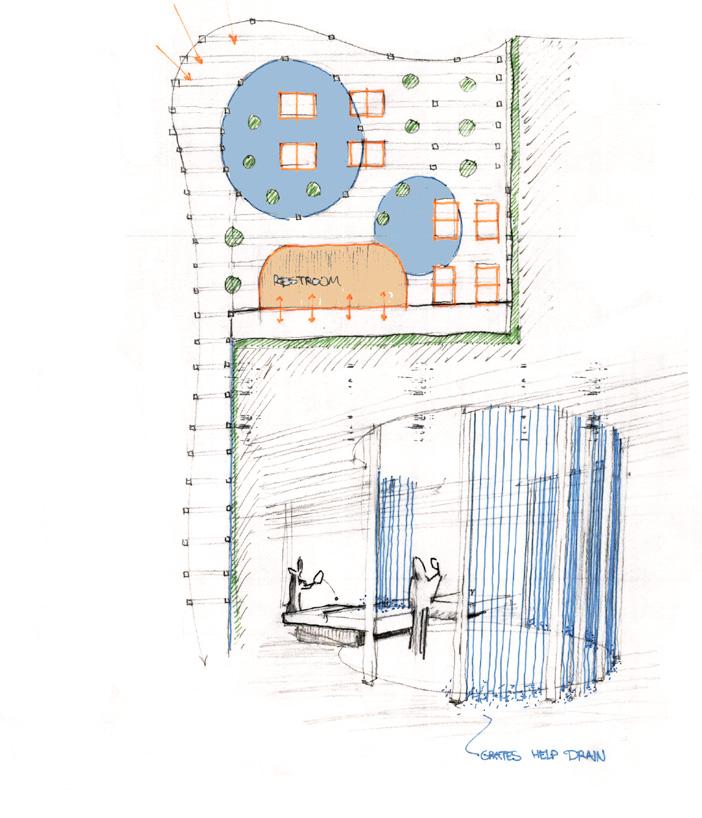
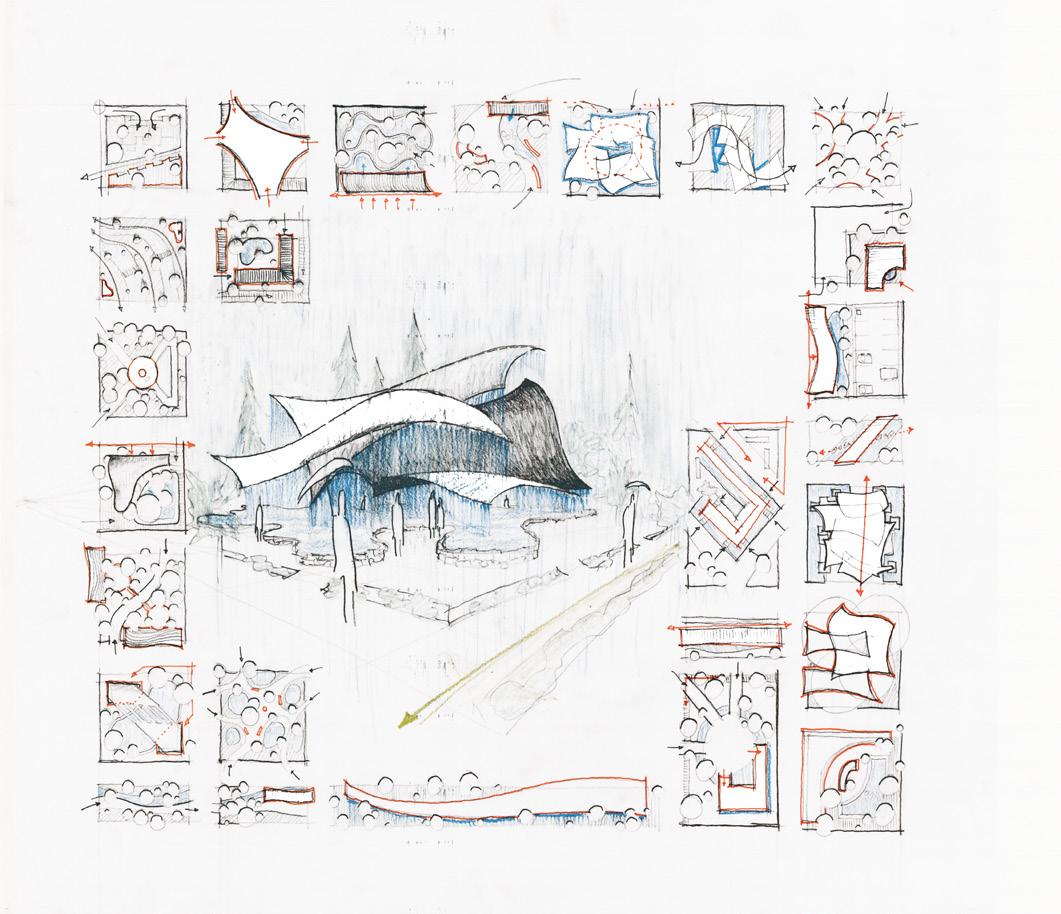
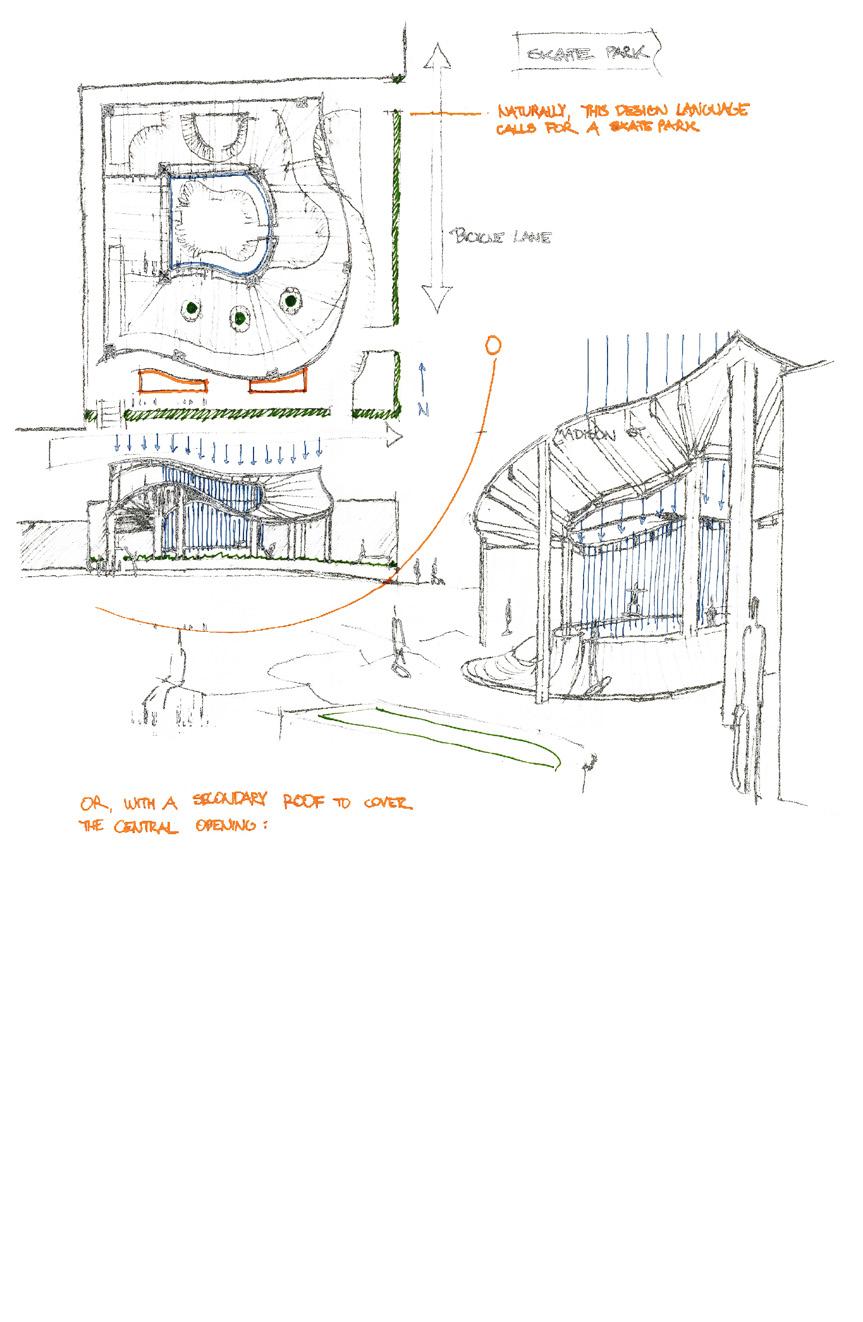
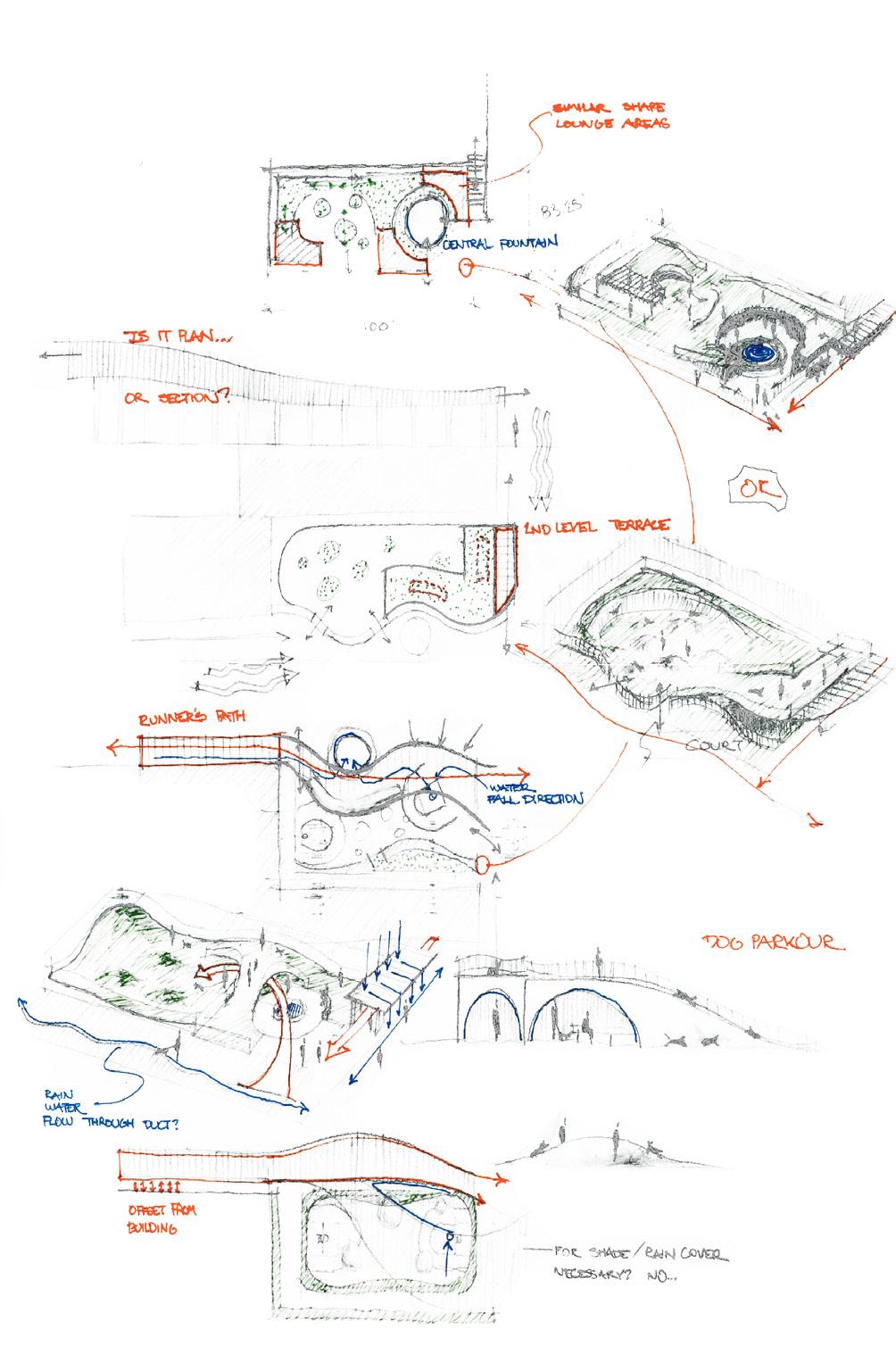
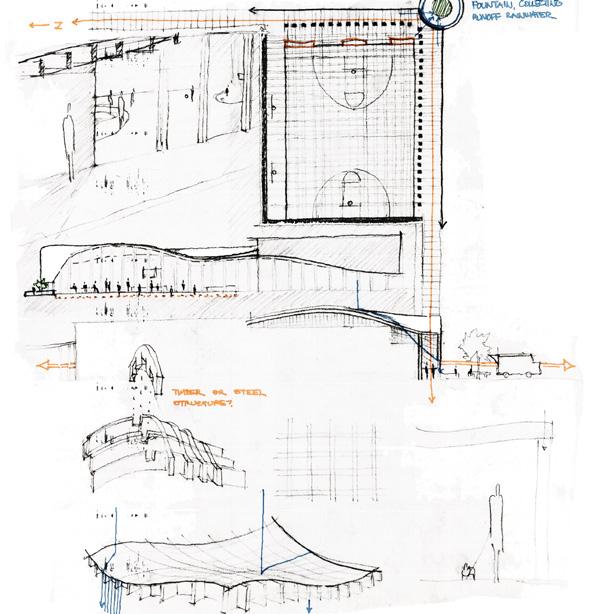
This project utilizes five adjacent lots to attract potential users of the Green Loop to one of the least desirable locations in Portland. The Central East side, particularly around SE Main Street and 6th Avenue, is largely a barren concrete wasteland relative to its downtown counterpart across the water. The success of the Green Loop as a loop and not a segment relies on the success of all its parts, even here on 6th and Main. Therefore, this project addresses several urban needs, including overhead shelter, greenery, public restrooms, outdoor activity spaces, seating, and even flowing water. These elements work to bring life to an otherwise dead part of town. Furthermore, this site is nestled inbetween the streetcar on Grand and a popular bike lane on 7th, permitting all
kinds of users to access the Green Loop via blocked off segments on Main Street. Furthermore, the project design language is directly contrary to the architecture in which it is embeded. The curvy shapes strike a unexpected contrast with the enless warehouse blocks, acting as a moment of urban character and uniqueness. The goal is for onlookers, whether by accident or intent, to see, take interest, and remember the space. Locals, too, should also find a deeper sense of belonging in association with its unique character.
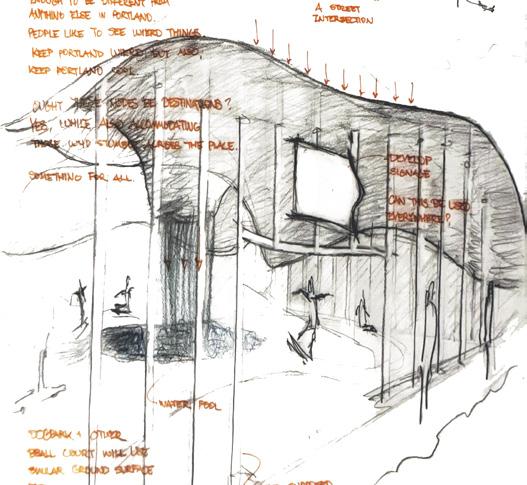
In response to Portland’s rainy weather, the central design of this park is a ribbon of overhead shelter which runs down 6th and branches out at Main. This promotes the use of the Green Loop in all seasons and especially accomodates runners and dog walkers. The park is therefore a destination and a means of travel, offering flexibily for all Portland-goers. The flow of the architectural supports the idea of dual identity: dynamic movement and rigid sculpture. Hence, the park operates in distinct individual nodes while complimenting the whole.
Lastly, in the same vein as much of the city, this park is wierd. Some of its features are more comical than helpful, including the banking hills of the dog park, the uneven ground of the sculptural basketball court, and the rainy table tennis interference. And so, among other things, this park provides interest to an area which desperately needs it if is to be successful as the linear park of
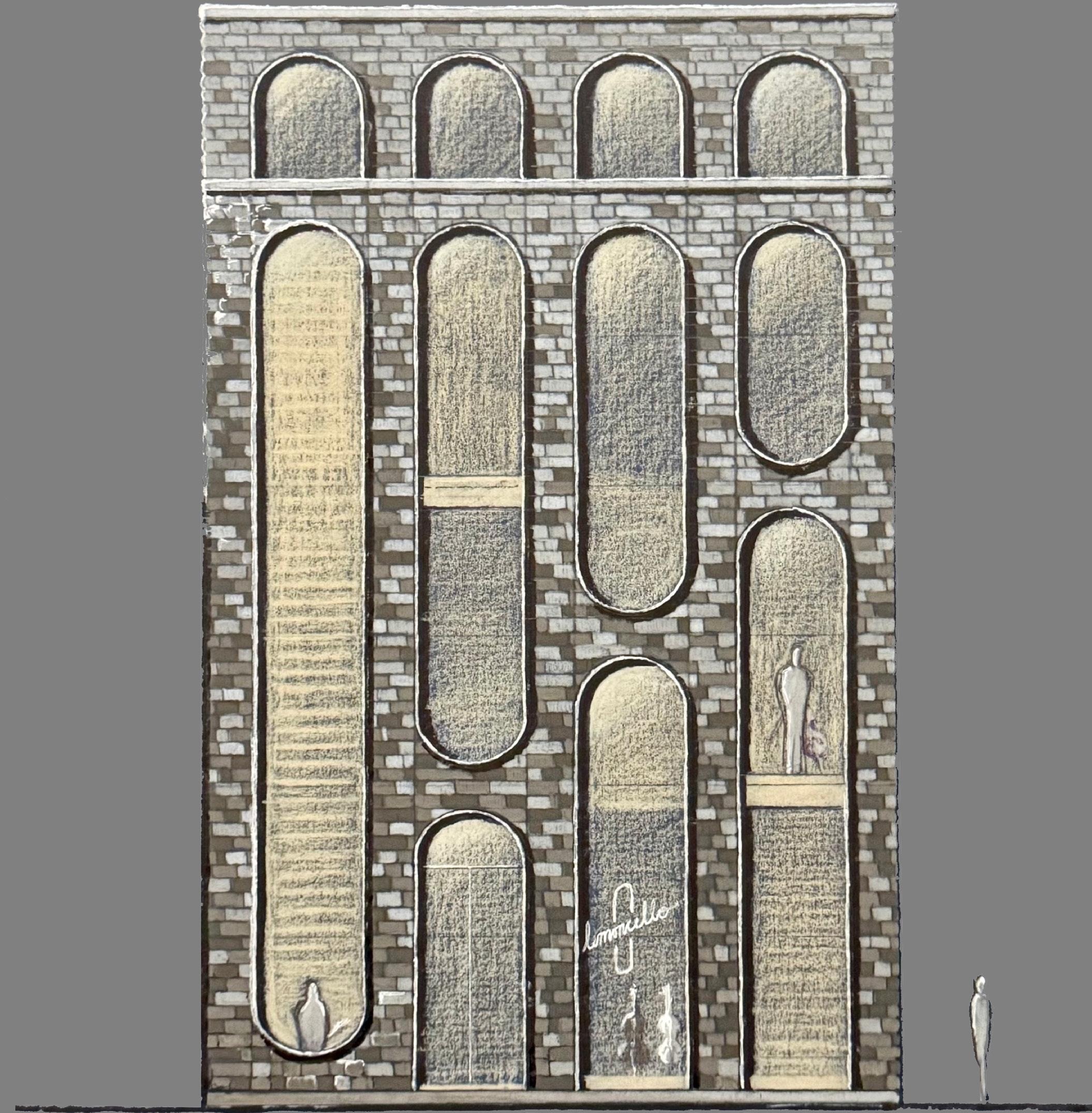
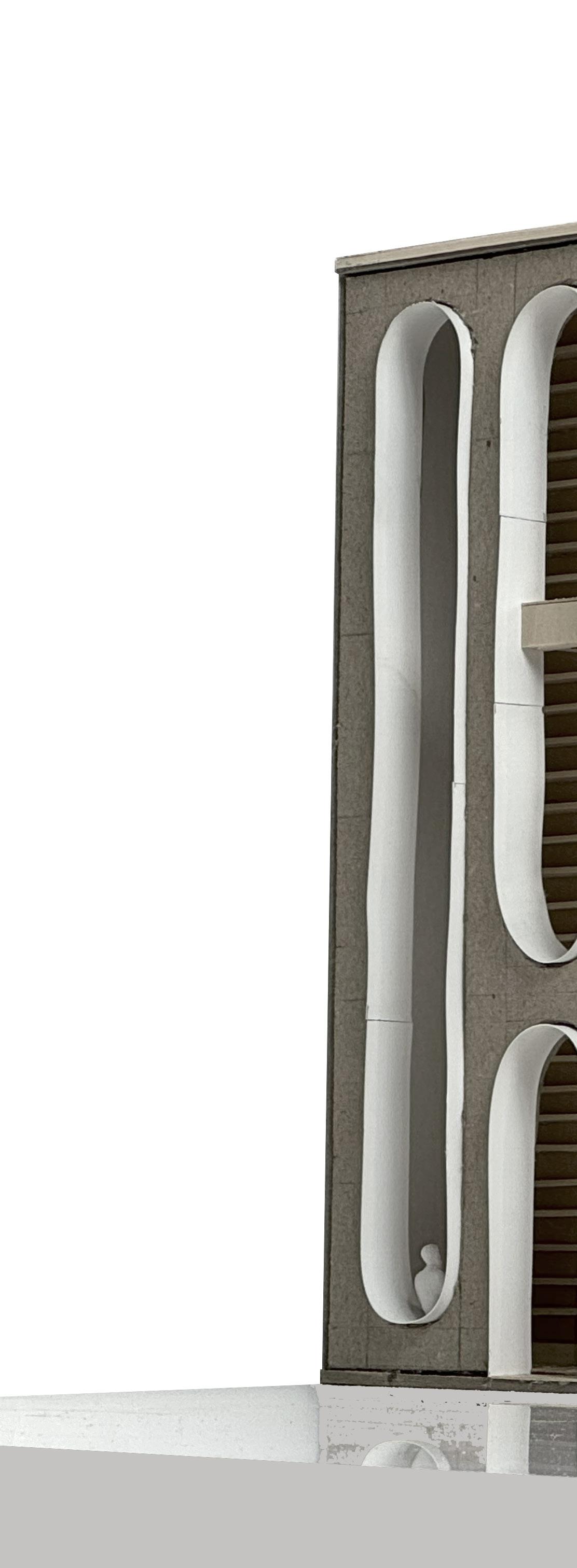
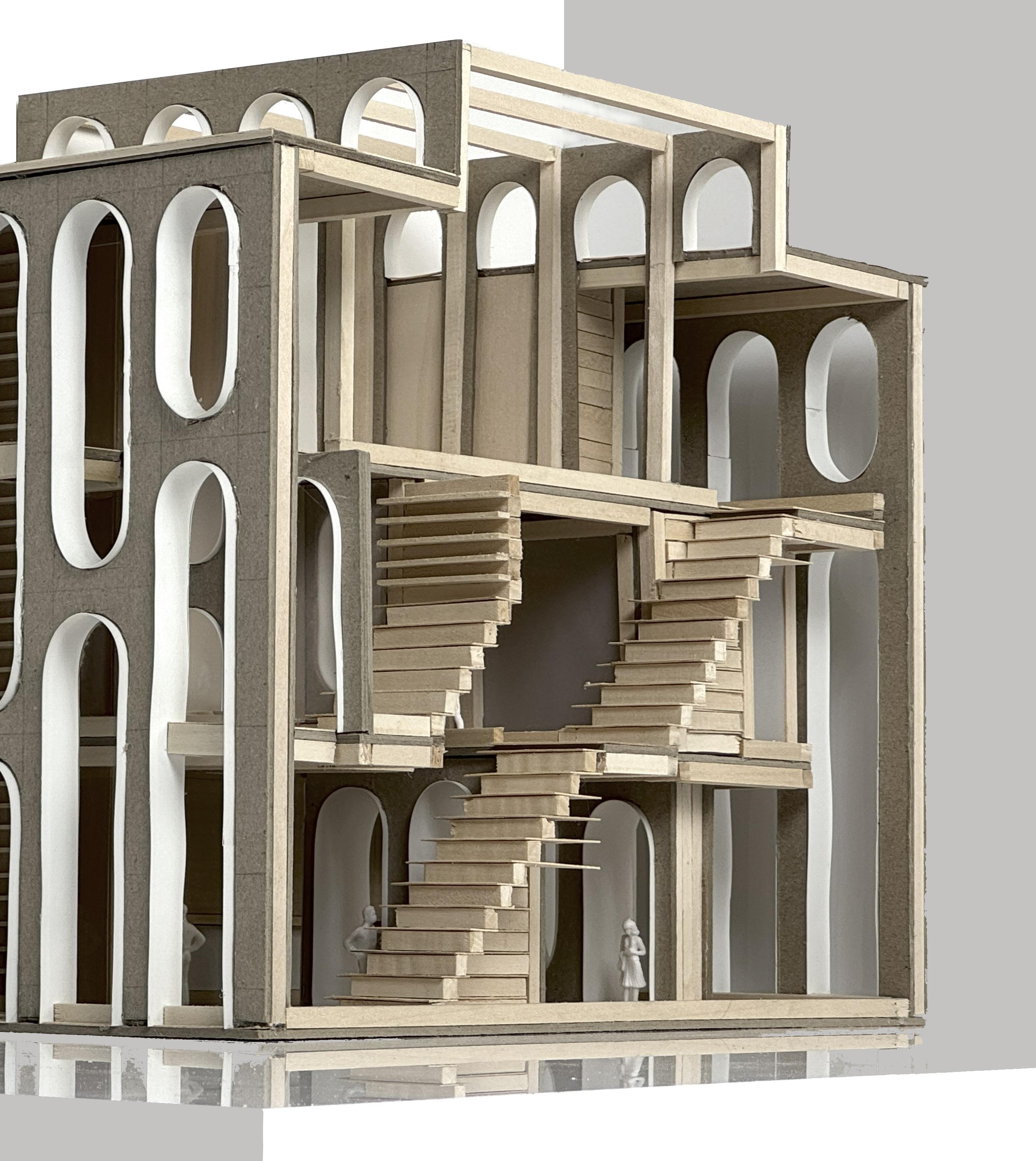
Much like instruments themselves, each floor is designed to function as a resonant chamber, held by the surrounding structure and shaping distinct acoustic environments tailored to its use. The three levels support the musician in sequence— purchase, practice, performance—each calibrated to its role. The façades stand as musical icons, shielding and expressing the acoustically isolated chambers within, giving the building a clear identity rooted in sound and craft.

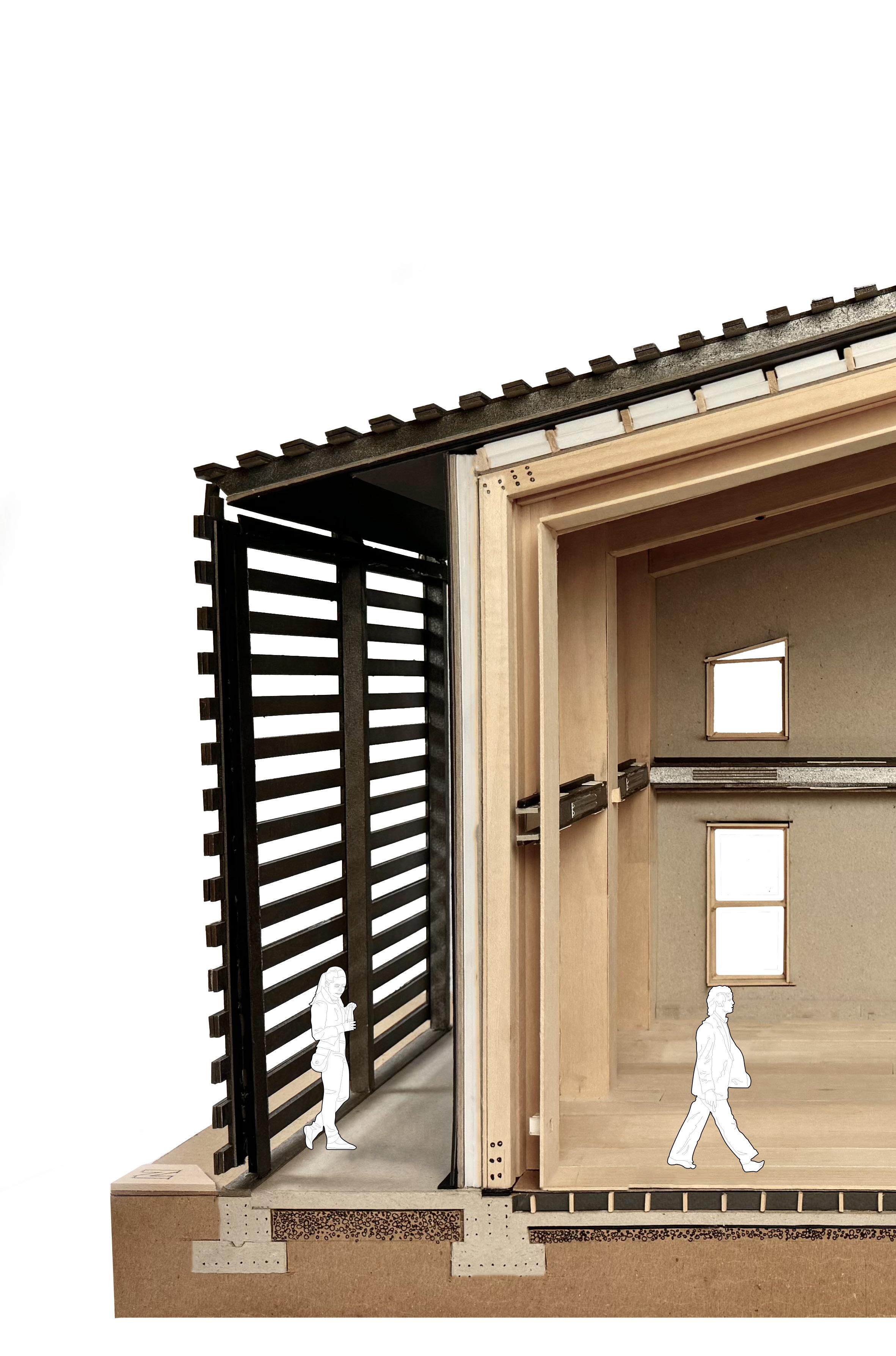
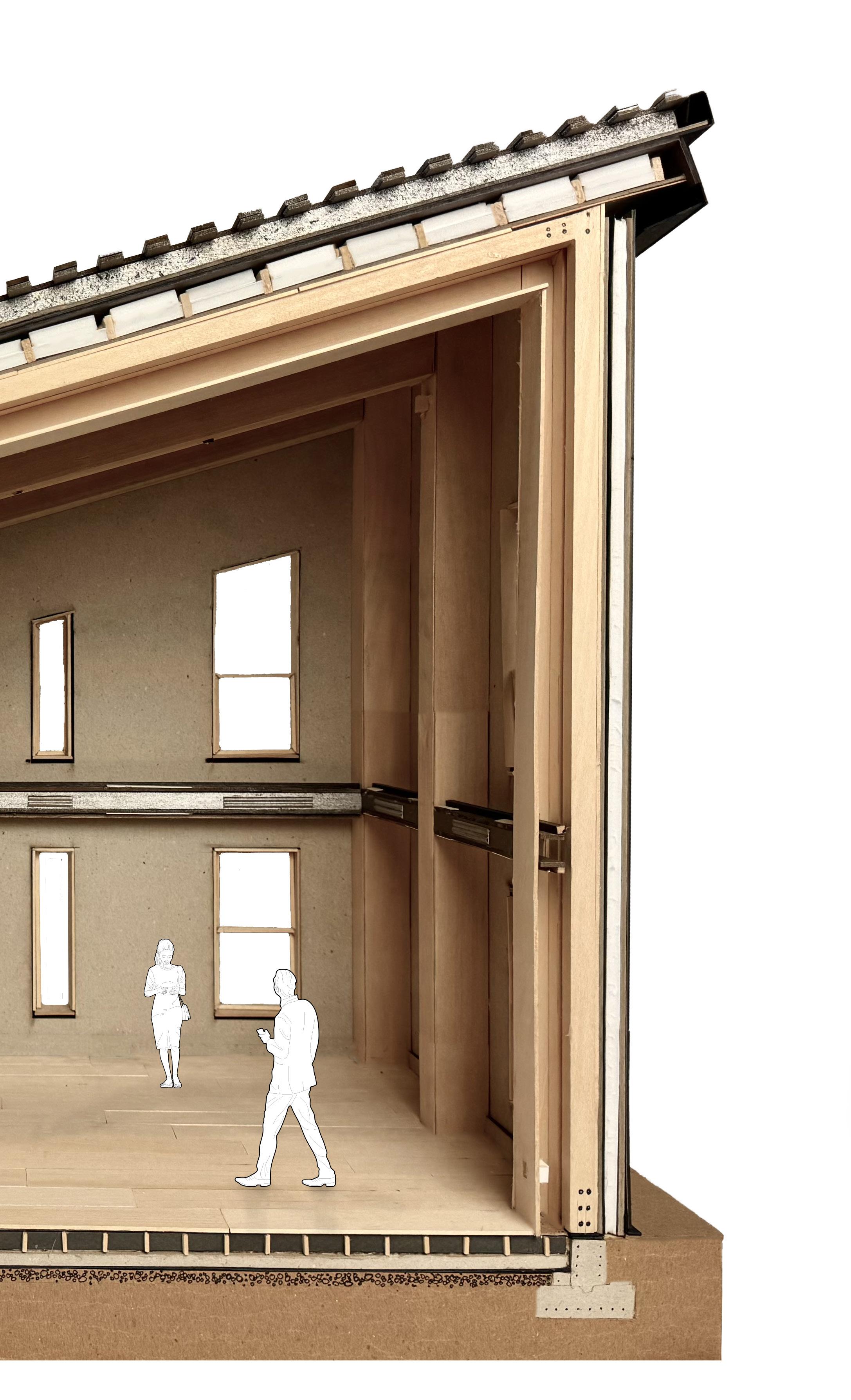
In roughly two weeks, our team of three constructed a half‑inch scale model of a standard commercial double‑height bay. The challenge was to account for every building system—air, water, electrical, lighting, fire protection, passive energy, and more—each considered through the lens of Portland’s climate and code requirements. The open side of the section model faces east, with north oriented to the right. The sloping roof and extended overhang respond directly to solar orientation, providing shade where needed and allowing generous north‑facing glazing. Vertical louvers on the west façade offer additional solar control.
A defining design element is the air system integrated directly into the mass‑timber structure. Veneer wraps an extended portion of the frame, concealing large air passageways embedded within the columns.
Rain collection strategy w/ south side gutter
Flashing
Rigid insulation w/ joists
Sprinkler system
Aluminum sheathing
Air barrier
Rigid insulation
Vapor barrier
Mass timber structure
Passive daylighting strategy with south facing vertical louvers (not seen)
Forced air heating system
Passive cooling via cross ventilation
Junction box
Knife plate
Timber flooring with measured joists
Concrete Slab
Calculated footing dimensions w/ appropriate rebar placement