THE THE PT CIRCUIT PT CIRCUIT



By Jonathan Acevedo Mάrtir
All following information was attained from an interview with C/Capt Fabián Pérez Muñoz on the value of the program and commissioning.
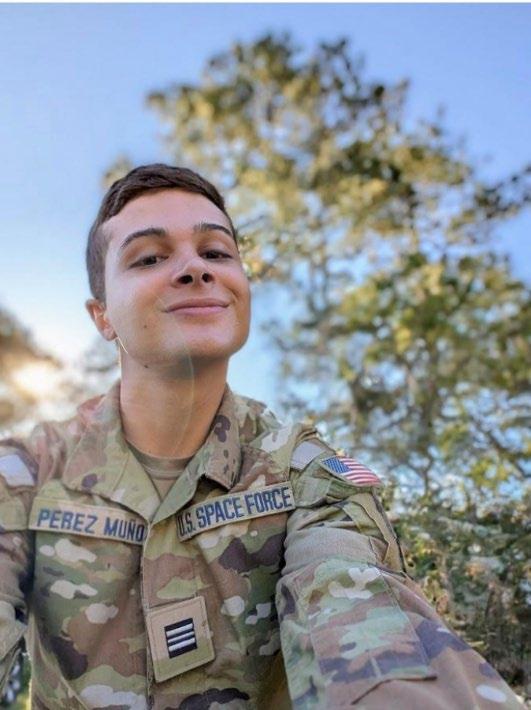
Between February and April, while he waited for the PSP board results, among his friends, something changed in the flight: the uncertainty of going to Field Training brought unity and created real solidarity. More than outcomes, cadets supported each other, worked on tasks together, and shared the anxiety of the moment. “We are all cadets,” said C/Capt Pérez Muñoz; it was the way they treated one another. That time served as the thread that helps him explain why ROTC left such a deep mark on how he sees other people.
Before starting college, C/Capt Pérez Muñoz was clear that he wanted to be in the
ROTC program, especially for the Space Force. After an academic path that included switching majors and finding his direction, he joined the program in his fourth year of college. At first, he looked at role models and inspirations, such as 2nd Lt. Lugo, and wanted to be a leader like her. But he soon understood he had to “make your own person and leader,” which for him meant taking the best from others and building his own leadership style.
As a Space Force cadet, there wasn’t always a clear reference to measure his progress. The lack of a baseline made it hard to know if he was doing well. Later on, experiences such as Field Training, Project Global Office (twice), Azimuth ODT, and Mach 1 Capstone, especially the last two, gave him the chance to work with peers who shared his interests. He found strength in discovering other Space Force cadets going through the same problems. Those tests taught him that partial failure isn’t final; it’s material for learning and course correction.
During his ROTC years, confrontations with fellow cadets helped him receive constant feedback and provided necessary reality checks. After the cultural shock of Project Go and the stories from other cadets, it became clear to him that his perspective is not always correct. Listening to others allowed him to refine solutions, temper his ego, and understand that leading often means listening more than imposing. It broadened his perspective and provided practical tools that align with his Space Force ambitions. That ability to receive feedback now enables him to influence
without coercion and to motivate others without forcing them.
After coming back from Field Training, he was assigned new roles, such as Special Project Officer and Quality Assurance Officer. Rotating roles and tasks each semester forced him to adapt quickly. Beyond personal achievements, his goal is to improve the system and leave the place better than he found it, not doing the bare minimum. For him, leadership is about sustainable impact and influencing others rather than holding titles.
Before joining the program, he temporarily gave up a programming side hustle and the idea of a double major to focus on ROTC; over time he reclaimed some of his interests and learned to juggle priorities. The takeaway was that you can’t give 100% to everything, and it’s okay to consciously choose what to sacrifice at each stage. Now his immediate priority is to graduate and enjoy the remaining time in college, appreciating these final moments.
Commissioning is, above all, a personal journey: accepting the responsibility of leading in unpredictable situations, applying what you’ve learned, and maintaining empathy for other realities. There isn’t a single “right” way to be an officer; the key is how you react, how you prepare, and how you treat those under your command. Commissioning is the point where experience, humility, and a service mindset converge to shape his professional future. If there’s one idea that runs through his story, it’s that leadership is not a
destination but a practice of constant evolution. Through challenges, shifting priorities, and exposure to diverse perspectives, a guiding compass emerges.
By Krystal Santiago Soto
Puerto Ricans have played a vital role in U.S. military and aviation history, breaking barriers and inspiring future generations. This article showcases three trailblazers: Lieutenant Colonel Olga E. Custodio, Colonel Héctor Andrés Negroni, and Brigadier General Mihiel Gilormini Pacheco. Highlighting their courage and achievements that continue to honor Puerto Rico’s Proud legacy of Service
Lieutenant Colonel Olga E. Custodio –
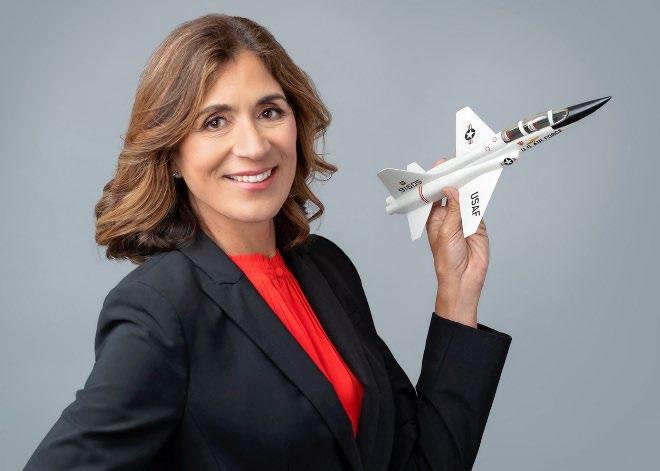
Olga E. Custodio was born in San Juan, Puerto Rico, on January 22, 1953. As the daughter of a U.S. Army noncommissioned officer, she spent much of her childhood living on military bases around the world. From a young age, she dreamed of becoming a pilot. However,
when she applied to join the Reserve Officer Training Corps at the University of Puerto Rico, she was denied since at that time, women were not allowed in the university’s Air Force program. Instead of giving up, Custodio persevered. Her determination to fly would later make her a pioneer in military aviation.
In 1980, Custodio was accepted into the U.S. Air Force Officer Training School, one of only a few women at that time to enter the program. After graduating from OTS, she was selected for Undergraduate Pilot Training at Laughlin Air Force Base in Texas. There, she made history by becoming the first Hispanic woman to complete U.S. Air Force pilot training and earn her pilot wings. Custodio was then assigned as a T-38 Talon instructor pilot, becoming the first Hispanic female instructor pilot in the Air Force. She trained hundreds of student pilots, both male and female, while flying one of the world’s most advanced jet trainers.
Following her retirement, Custodio became a passionate advocate for STEM education and for increasing the participation of women and minorities in aviation and science. Custodio frequently speaks at schools, conferences, and aviation events, inspiring young people to pursue their dreams despite barriers. Her role broke gender and cultural barriers, proving that women had a place in military aviation.
Colonel Héctor Andrés Negroni –
Héctor Andrés Negroni was born in Yauco, Puerto Rico, in 1938. From a young age, he demonstrated strong academic ability and
leadership qualities. His ambition and discipline led him to pursue higher education in the United States, where he later made history. In 1959, Negroni became the first Puerto Rican to graduate from the United States Air Force Academy in Colorado Springs, Colorado. His graduation represented not only a personal achievement but also a milestone for Puerto Ricans and Hispanics in the U.S. military.
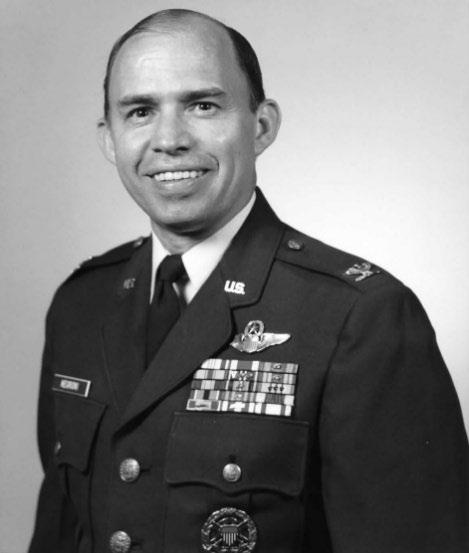
Afterward, he continued his education with advanced military and academic training, earning master’s degrees in history and international Affairs. He served as a pilot and later flight commander in tactical and airlift units, as an intelligence officer and foreign area officer in various international assignments, and as a military attaché and advisor to Latin American nations. Negroni’s fluency in several languages, deep understanding of history, and cultural knowledge made him a key figure in U.S. military diplomacy in Latin America and Europe. Throughout his Air Force service, he earned several commendations for leadership and performance, including the Meritorious Service Medal, Air Medal, and Air Force Commendation Medal.
After retiring from active duty, Colonel Negroni became a respected historian and author. He wrote numerous articles on military and aviation history, with a focus on Puerto Rico’s contributions to the U.S. armed forces. His most renowned work is Historia Militar de Puerto Rico (Military History of Puerto Rico), the first comprehensive study documenting Puerto Rico’s military participation from colonial times through modern history. This book is widely regarded as the foundational text on Puerto Rican military history.
Colonel Héctor Andrés Negroni remains a symbol of intellectual excellence, cultural pride, and dedication to service, representing Puerto Rico with distinction in both military and academic fields.
Brigadier General Mihiel Gilormini Pacheco –
Mihiel Gilormini was born in Yauco, Puerto Rico, in August 3,1918. From an early age, he showed an interest in mechanics and aviation, two fields that would later define his life. He trained as a civilian pilot and worked in aviation-related fields, which allowed him to develop the technical and flying skills that prepared him for military service.
When World War II broke out, Gilormini joined the Royal Air Force in 1941, where he initially served as a pilot in the European theater. Shortly after, he transferred to the United States Army Air Forces when the U.S. entered the war. He became a fighter pilot assigned to the 346th Fighter Squadron, part of the 350th Fighter Group, flying the P-47 Thunderbolt, one of
the most powerful fighter-bombers of the war. During his service in the North African and Italian campaigns, Gilormini flew more than 200 combat missions. He participated in dangerous low altitude bombing and strafing missions, often under heavy enemy fire. His extraordinary courage earned him multiple decorations such as Silver Star for gallantry in action, Five Distinguished Flying Crosses for heroism and extraordinary achievement in flight, and Three Air Medals for meritorious achievement while participating in aerial flight.
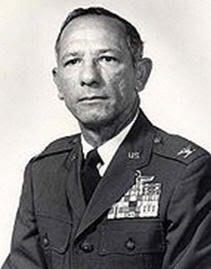
After World War II, in 1947, Mihiel Gilormini along with Colonel Alberto A. Nido and Lieutenant Colonel José Antonio Muñiz, co-founded the Puerto Rico Air National Guard. He became its first commanding officer, establishing the foundation for Puerto Rico’s modern air defense and aviation readiness. Under his leadership, the PRANG grew into an essential part of Puerto Rico’s military and disasterresponse capabilities, linking the island directly with the U.S. Air Force structure. Gilormini continued to serve with distinction, rising to the rank of Brigadier General before retiring in 1975. He remained active in veteran affairs and aviation organizations until January 29, 1988.
Today, he is remembered as one of Puerto Rico’s most important military aviators. His contributions represent courage, leadership, and commitment to both Puerto Rico and the United States.
By Brianna Colon Rivera
Each month, our detachment recognizes four cadets who go above and beyond in leadership, dedication, and growth. Representing Warrior, Honor, Most Improved, and POC of the Month, these cadets set the standard and inspire their peers. I spoke with each cadet to learn more about what drives them, the challenges they’ve overcome, and what this recognition means to them.
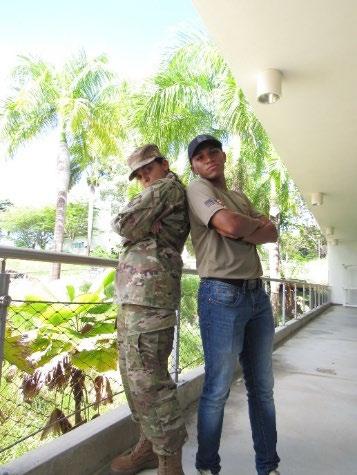
These cadets remind us what it means to lead with dedication, push through challenges, and inspire those around us. Their achievements show that hard work and commitment don’t go unnoticed, and they set an example for all of us to follow. We congratulate them on their well deserved recognition and look forward to seeing what they accomplish next.
Warrior of the Month:
C/3C Merle, Fabiola-
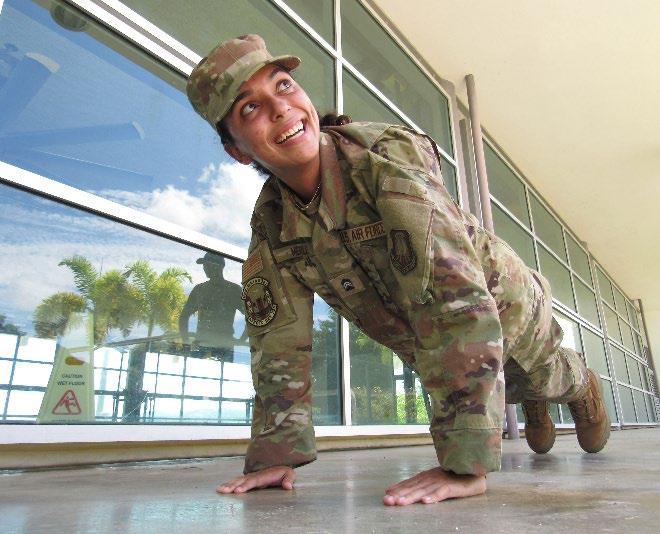
Uniform flight, 5th year Civil Engineering, 3rd semester in the program.
Fun fact: “I’m really obsessed with coffee to the point that I want to get a tattoo because I love it so much.”
How do you feel about being chosen and what does it mean to you?
I didn’t expect to win this award, but it definitely feels good. In my opinion, even though everyone sees you receiving recognition, the award is more for you, it motivates you to keep pushing yourself rather than being about the recognition itself. It feels great that my efforts have been noticed, even though I don’t do them expecting something in return.
What advice would you give to other cadets who want to earn this recognition?
The advice I would give to other cadets who want to earn this recognition is to do everything with your flight in mind and always try to give a little extra when you can. If you know you can do something additional for your flight, go ahead and do it. That extra effort not only helps your flight
succeed but also shows that you’re willing to go above and beyond for the good of the team.
Who or what inspires you most in the program?
Right now, the people who inspire me the most in the program are C/Capt Delgado and C/2d Lt Cruz Peña. If I think about a peer who really inspires me, it would be C/4C Cortes. These three people really encourage me to go above and beyond. It means a lot to have them as a source of inspiration and support, always pushing me a little further.
Honor Cadet of the Month:
C/4C Cortes Garay, Jorge –
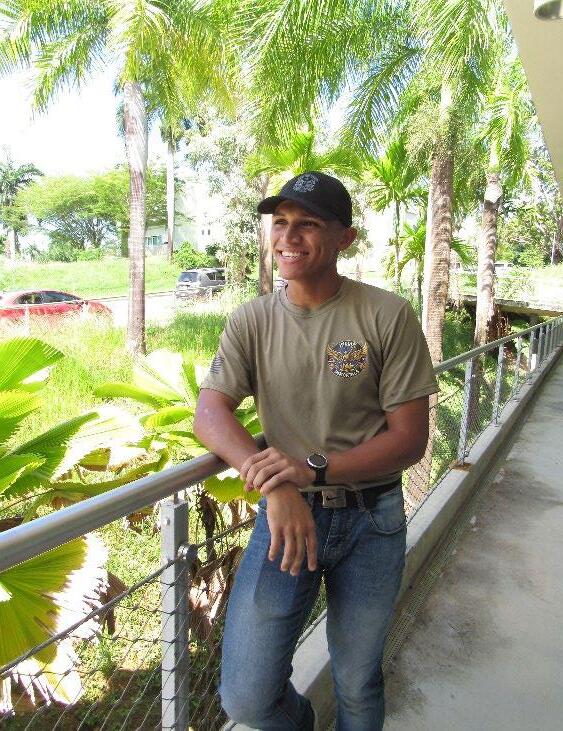
Uniform Flight, 4th year Mechanical Engineering, 2nd semester in the program.
Fun fact: “I can play three instruments, trumpet, guitar and piano”
How do you feel about being chosen and what does it mean to you?
I wasn't really expecting this for myself. Because in terms of academic evaluations, I'm not doing horrible, but I think I could do better and I believe there should be people doing better. I haven't been really studying much of warrior knowledge this semester.
For contribution to team events, it was also a little unexpected. I wasn’t that active at events, but not because I wasn’t contributing. I wanted the new 100s and new 250s to engage and throw themselves in, and maybe the POCs noticed that which is great.
In terms of how I felt, I was happy and grateful. It tells me that, even if I’m giving roughly 50%, I’m doing a good job. I just need to keep trying and keep working so I can give my best and excel more.
How do you balance your responsibilities within the detachment, school and personal life?
I don’t have a full balance yet, it’s still a work in progress. I plan my week using time blocking, giving a time for everything, even breaks and lunch. At the start of the semester, I set priorities, university, AFROTC, and track and field. I give myself realistic time to complete tasks, like three study hours per credit.
When I follow it, it’s really effective, I get things done quickly. But sometimes procrastination kicks in. Balancing is still a work in progress, and planning is at the root of it.
Who or what motivates you to keep improving in the AFROTC?
I don't have a who, but I do have a what, which is my goal to become an astronaut. That motivates me to continue in
the program. I also like the program and leading people, it doesn’t come naturally, but I enjoy it. Most astronauts come from the Air Force, so I know I have to execute in the program to commission as an officer. I like to lead people to help them grow, both in AFROTC and beyond.
Most Improved Cadet:
C/4C Reyes Rios, Sebastian –
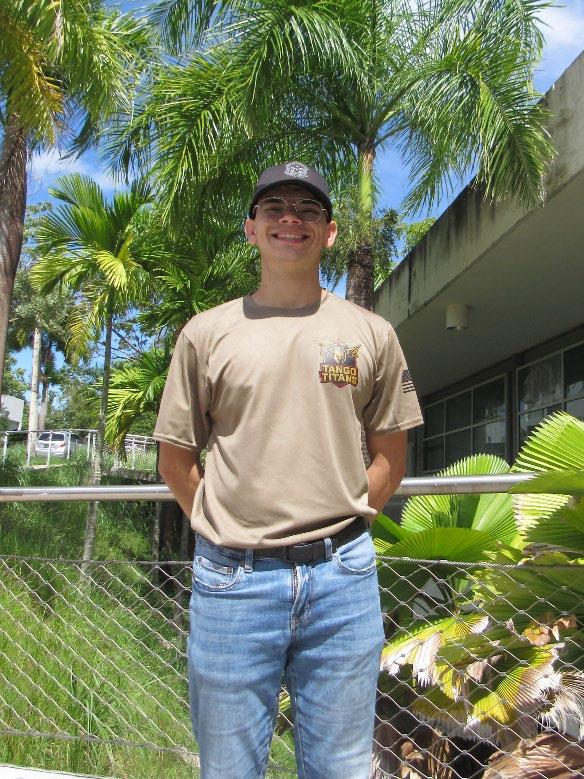
Tango Flight, 1st year Electrical Engineering, 1st semester in the program.
Fun fact: “When I was seven, I adopted a scorpion and named it Adrian but he “magically escaped” the next day. My dad still denies everything.”
How do you feel about being chosen and what does it mean to you?
Earning Most Improved Cadet of the Month is proves that effort and consistency never go unnoticed. This month taught me to stay confident, seek advice, and turn fear into motivation to improve.
Balancing college life and being a cadet has been one of the most rewarding challenges I’ve faced. Every early morning, every study hour, and every test of discipline has helped me grow stronger and more resilient.
You mentioned turning fear into motivation, can you share an example of a moment when you did that?
When I was given the opportunity to lead PT, I felt nervous and a little scared, but I decided to do it anyway because I believed in myself and knew I would enjoy the challenge.
I prepared carefully, reviewed the verbiage, and stayed focused on giving my best. I made a few mistakes, but I learned a lot from that experience and will correct them in the future. That moment showed me that every challenge is an opportunity to grow and become better. Leading that PT reminded me that it’s about giving your best every single time and when you feel your strength fading, remember why you joined the program and the kind of leader you want to become.
What does this recognition mean to you moving forward?
I’m deeply thankful to Tango Flight for their support and to my instructors for pushing me to be better. This recognition marks the beginning of the best version of me a reminder to keep striving for excellence and to inspire others to rise alongside.
POC of the Month:
C/2d Lt Gonzalez, Luis –
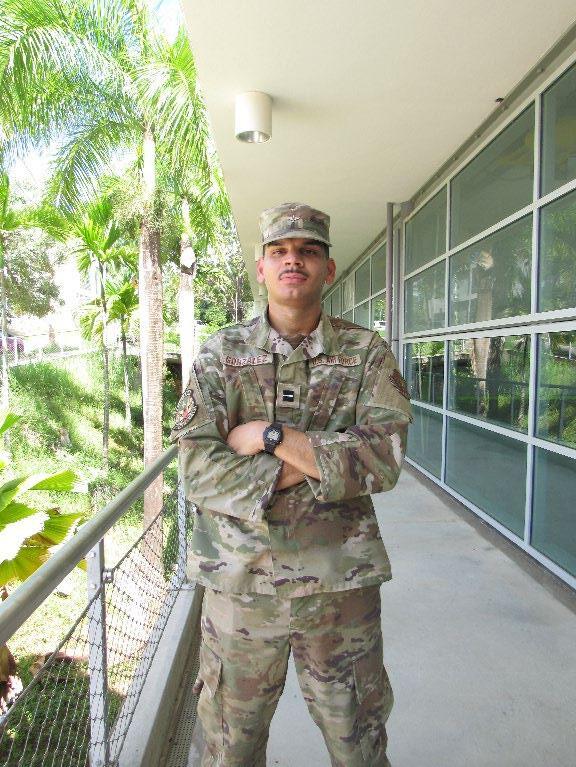
Tango Flight Commander, 5th year Mechanical Engineering, 4th year in the program.
Fun fact: “I’m the first in my family to pursue a military career along with engineering”
What are your thoughts on being chosen, how you feel about it, what it means to you, etc.?
Thank you very much, I’m truly honored to be selected as POC of the Month. It means a lot to be recognized, especially knowing how much effort and dedication I have put this semester. To me, this recognition reflects not only my work but also the support and teamwork of my flight. This motivates me to keep improving, setting the standard, and continue pushing those around me.
What are some of your goals for the rest of the semester as a POC?
One of my main goals for the rest of the semester is to keep our flight performing at a high level and continue improving every week. I want to set the standard by maintaining consistency, discipline, and motivation throughout the rest of the term. Personally, I’d like to earn an award every month as a Flight Commander.
What lessons did you take away from your time as a GMC that have helped you as a POC?
There are many paths to mission success, just as there are many ways to lead. Leadership isn’t built from a formula. It’s developed over time through your strengths, weaknesses, and experiences.
By Aidan Roman
During World War II, when war time posters filled the streets, one young infantryman made it his mission to show the war as it really was. That man was Bill Mauldin, and with his sketchbook and humor, he revealed the grit, exhaustion, and humanity of those fighting on the front lines.
Born in Mountain Park, New Mexico, in 1921, William Henry Mauldin grew up in the Arizona desert with a love of drawing and curiosity about people. After studying briefly at the Chicago Academy of Fine Arts, he joined the 45th Infantry Division of the Arizona National Guard. When the U.S. entered World War II, Mauldin went overseas as a rifleman, this is where he began sketching.
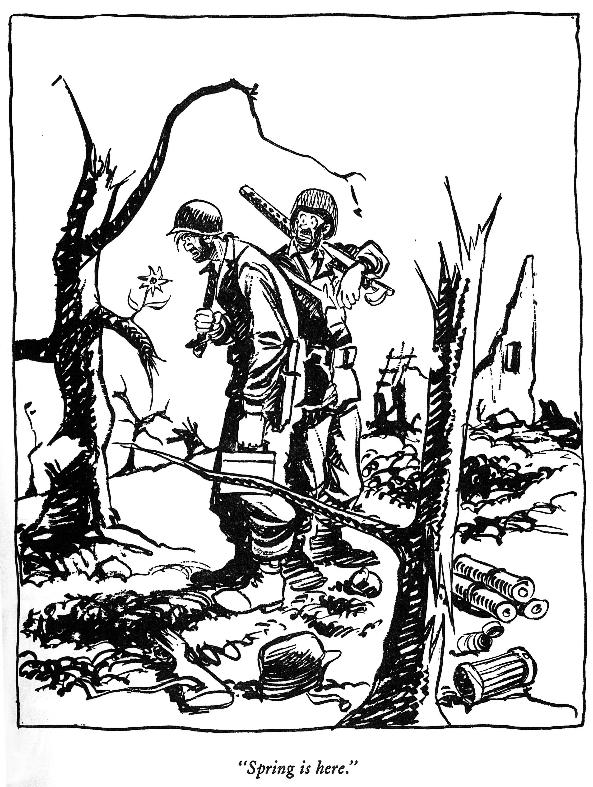
His early drawings appeared in The 45th Division News and stood out for their honesty. Rather than heroic, spotless soldiers, Mauldin drew dirty, unshaven GIs huddled in the rain, tired but still joking.
While serving in Italy, Mauldin created two unforgettable characters, Willie and Joe, gritty infantrymen who embodied the humor and hardship of everyday service.
These cartoons struck a chord with troops. Published in Stars and Stripes, they spread through Allied camps as soldiers taped them to walls and carried them in pockets. Mauldin’s art gave soldiers validation, they saw themselves, finally being understood.
Not all officers appreciated his blunt honesty. General George S. Patton threatened to silence Mauldin for “spreading discontent.” But Supreme Allied Commander Dwight D. Eisenhower
defended him, recognizing that Mauldin’s humor actually boosted morale.
Backed by Eisenhower, Mauldin kept drawing. His collection Up Front (1945) became a bestseller and earned him the Pulitzer Prize for Editorial Cartooning. His weary soldiers, drawn with compassion and grit, captured the emotional cost of war more powerfully than any press release ever could.
Mauldin’s influence reshaped generations of artists. Cartoonists like Herblock, Jeff MacNelly, and Pat Oliphant followed his lead, using humor and empathy to motivate those risking theirs lives for freedom.
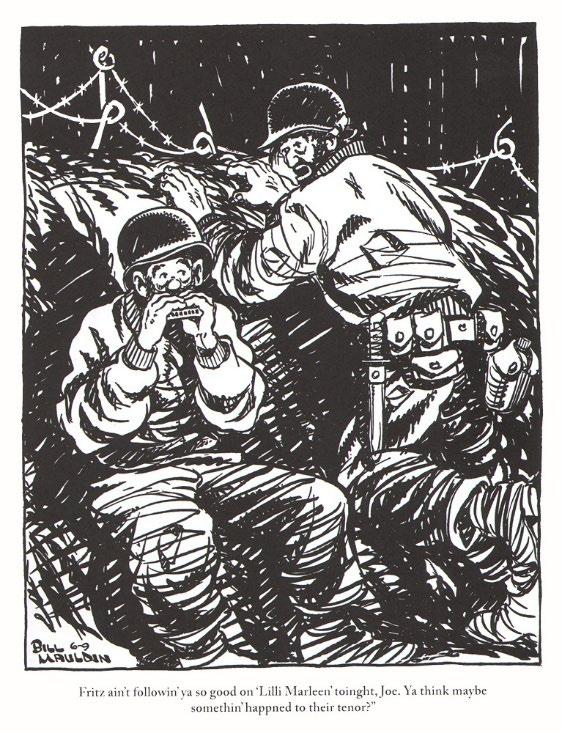
Willie and Joe outlived the war that birthed them. They reappeared in newspapers and museum exhibits as symbols of soldiers’ endurance and weary resilience.
When Mauldin died in 2003 at age 81, veterans across the country paid tribute.
Many said his cartoons helped them survive the war, giving them laughter in times of terror and fear. Younger artists honored him as proof that creativity and truth could coexist, even in dark times.
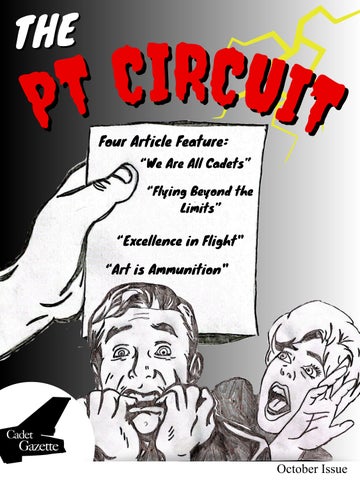
As an aspiring cartoonist and as a tribute to Bill Mauldin, I tasked myself with creating a piece for the newspaper that captured his spirit of storytelling. Given the October season and its association with Halloween, I decided to design a “movie poster” inspired by classic horror film advertisements. The piece can be found on the cover.
I wanted it to feel nostalgic yet humorous, echoing Mauldin’s approach of finding wit in hardship. The humor in the piece, especially the title, stemmed from the thought: “What really scares cadets?” From there, the idea grew into a satirical take on the everyday fears and pressures faced in AFROTC life, blending the eerie style of vintage horror with the relatable struggles of cadet training.
From Aidan Roman
In appretiation of Brianna Colon Rivera, Jonathan Acevedo Martir, and Krystal Santiago Soto -
When I first started the idea of a newspaper team back in August, I was not sure how it would go. It takes a lot of effort to create something like this, and with the busy schedule most cadets have, it was uncertain if I could get a group together to make and publish a finished product every
month. Very quickly this uncertainty was demolished as this team worked.
The cadet’s articles in this issue not only display professionalism and carefulness, but each is backed up by weeks of preparation, research, and hard work. All of this coming together to make something worth the reading, and at a level fit for the detachment.
Thank you for making the idea of mine a reality, and treating it with as much interest and commitment as I did.