


Two industry leaders have combined to give you more.
LPC veteran Jeff Bucholtz is another one of our Champions of More who is committed to giving you more. Our Client Project Managers form a unique level of service in the print industry. Focusing solely on managing the day to day activity of each individual client, Jeff Bucholtz and the other CPMs bring decades of experience and more expertise to our clients and help make up the backbone of our team Because, like all of us here at LPC, he loves her work. And you’ll love ours. LPC. Champions of More
Lewisburg Printing Company + Huston Patterson


OFFICERS
Chairwoman: Terri-Lynn Levesque, Royal Containers Ltd., Brampton, Ontario, Canada
First Vice Chairman: Joseph Morelli, The Morelli Group Decatur, Illinois
Vice Chairmen: Mike Schaefer, Tavens Packaging & Display Solutions, Bedford Heights, Ohio
Eric Elgin, Oklahoma Interpak, Muskogee, Oklahoma
Josh Sobel, Jamestown Container Cos., Cleveland, Ohio
Immediate Past Chairman: Gary Brewer, Package Crafters, High Point, North Carolina
Chair, Past Chairmen’s Council: Matt Davis, Packaging Express, Colorado Springs, Colorado
President: Michael D’Angelo, AICC, The Independent Packaging Association, Alexandria, Virginia
Secretary/General Counsel: David Goch, Webster, Chamberlain & Bean, Washington, D.C.
Administrator, AICC Canada: Leah Gardiner Administrator, AICC México: Veronica Reyes
DIRECTORS
Great Lakes: Brock Welch, Welch Packaging , Elkhart, Indiana
Midwest: Cassi Malone, Corrugated Supplies Co., Bedford Park, Illinois
Northeast: Larry Grossbard, President Container Group Wood Ridge, New Jersey
Southeast: Chad Wagner, Peachtree Packaging & Display, Lawrenceville, Georgia
Southwest: Jordan Dawson, Harris Packaging , Haltom City, Texas
West: Sahar Mehrabzadeh, Bay Cities, Pico Rivera, Califormia (interim)
AICC Canada: George Perreira, Moyy/Whitebird Hamilton, Ontario, Canada
AICC México: Jorge Ortega, Solemsa, Hermosillo, Sonora, Mexico
OVERSEAS DIRECTOR
Greg Jones, SUN Automation Group, Glen Arm, Maryland
DIRECTORS AT LARGE
Jenise Cox, Harris Packaging , Haltom City, Texas
Sahar Mehrabzadeh, Bay Cities, Pico Rivera, California
Casey Shaw, Batavia Container, Batavia, Illinois
Stuart Fenkel, McLean Packaging , Pennsauken Township, New Jersey
Jack Fiterman, Liberty Diversified International Minneapolis, Minnesota
EMERGING LEADER DELEGATES
Evan Clary, National Corrugated Machinery, Hunt Valley, Maryland
Cody Brant, Bobst North America, Parsippany, New Jersey
Nick Catania, BHS Corrugated–North America, Aurora, Illinois
ASSOCIATE MEMBER DIRECTORS
Chairman: Jeff Dietz, Koenig & Bauer (US), Dallas, Texas
Vice Chairman: Mike Butler, Domtar Packaging , Fort Mill, South Carolina
Secretary: Brian Foley, Bobst, Phoenix, Arizona
Director: Warren Bird, JB Machinery, Westport, Connecticut
Immediate Past Chairman: John Burgess, Pamarco, Roselle Park, New Jersey
ADVISORS TO THE CHAIRWOMAN
Joe Palmeri, Jamestown Container Cos Cleveland, Ohio
Al Hoodwin, Michigan City Paper Box, Michigan City, Indiana
Jeff Dietz, Koenig & Bauer (US), Dallas, Texas
PUBLICATION STAFF
Publisher: Michael D’Angelo • mdangelo@AICCbox.org
Editor: Virginia Humphrey • vhumphrey@AICCbox.org
EDITORIAL/DESIGN SERVICES
YGS Association Solutions • www.YGSAssociation Solutions.com
Vice President, Association Solutions: Craig Lauer
Creative Director: Mike Vucic
Senior Managing Editor: Sam Hoffmeister
Copy Editor: Steve Kennedy
Art Director: Alex Straughan
Account Manager: Jillian Mengel
SUBMIT EDITORIAL IDEAS, NEWS, AND LETTERS TO: BoxScore@theYGSgroup.com
CONTRIBUTORS
Cindy Huber, Director of Conventions and Meetings
Chelsea May, Meeting Manager
Laura Mihalick, Senior Meeting Manager
Patrick Moore, Membership Manager
Rebecca Rendon, Director, Education and Training
Alyce Ryan, Membership Marketing Senior Manager
ADVERTISING
Taryn Pyle
703-535-1391 • tpyle@AICCbox.org
Patrick Moore
703-535-1394 • pmoore@AICCbox.org
AICC
PO Box 25708
Alexandria, VA 22313
Phone 703-836-2422
Toll-free 877-836-2422
Fax 703-836-2795 www.AICCbox.org
AICC provides the education, tools, and information your company and employees need to thrive in the paper packaging industry.
Throughout this series on Legacy in Action: Inspiring Tomorrow’s Leaders, we have explored the pillars that shape strong leadership.
We began with Mentor Intentionally, recognizing that future leaders grow when guidance is purposeful and relationships are built on trust. We then focused on Empower Risk-Taking, reinforcing that confidence and resilience are developed through experience. Most recently, we discussed Champion Inclusion, highlighting how cultures of belonging unlock innovation and strengthen engagement.
Now, we turn to the final pillar— Model Purpose —the responsibility leaders carry to demonstrate the values and vision that give meaning to our work.
Today’s workforce is more multigenerational than ever before. In many organizations, seasoned professionals with decades of experience work alongside early-career employees who bring new ideas, technologies, and expectations to the table. This diversity of experience is a tremendous strength, but it also places a greater responsibility on leaders to set a clear example. Purpose becomes the common language that connects generations, aligns priorities, and builds mutual respect.
Purpose is the compass that guides leadership. It answers the question, “Why does our work matter?” When leaders operate with clarity of purpose, they create direction, stability, and motivation for those around them. Teams are not just completing tasks—they are contributing to something larger than themselves and to a legacy that extends beyond any single generation.

Modeling purpose begins with consistency. It is reflected in how leaders make decisions, communicate priorities, and demonstrate integrity, especially when challenges arise. Employees of every generation watch what leaders do more closely than what they say. When actions align with values, trust grows. When trust grows, collaboration and engagement follow.
The next generation of leaders is learning not only from our strategies but from our example, while experienced leaders are looking to ensure that the legacy they built continues to thrive. Modeling purpose bridges that transition. It shows that leadership is not about position or tenure but about responsibility to the people and the future of our industry.
Legacy is built through intention, action, and example. When we model purpose every day, we do more than lead—we connect generations and inspire tomorrow’s leaders to carry our values forward long after our own chapter is written.

BY RYAN FOX
The corrugated industry’s benchmark containerboard prices should reflect underlying market conditions, but Green Markets finds that the two appear to have diverged in the past three months.
In February, there was no movement among buyers and sellers we contacted, yet the benchmark publication lowered prices by $20 a ton. In March, we reduced our assessment by $40, reflecting consistent reports of lower transaction prices, which might have reflected undisclosed declines from late 2025. The same month, the benchmark raised prices by $40. In April, it moved higher again, by $30, while we observed little to no change.
Something isn’t lining up. The mechanism used to signal price movements
looks increasingly detached from where business is being transacted, particularly in the independent market.
The March prices for kraft linerboard disclosed to us by independent buyers ranged from $660 to $760 a ton—well below the benchmark’s $995 a ton. We may be looking at different data or asking different questions; either way, the gap is too large to ignore.
With most box pricing still tied to the benchmark, that gap can shape the perception of cost increases as they move through the system. A $50-aton hike is roughly 5%, based on the benchmark, but for independents buying around $700 a ton, it’s 7% or more.
For integrated producers, higher paper prices can be largely circular. The mill sells to the box plant, the box plant sells to the customer, and margin can be preserved— or enhanced—depending on how much of the increase sticks. Raising box prices even 1% is immediately additive.
Independents lack that flexibility. Recovering rising paper costs requires raising box prices. Yet demand is soft, and competition is intense in this market, with box buyers seeking price relief through requests for quote.
The nominal price difference may be absorbed through delayed pass-throughs, selective rebates, or transactions at below-market levels. But if the published price continues to rise as deals lag behind,
the benchmark risks becoming less a reflection of the market and more an aspiration for it.
That’s a fragile position for a system that underpins a large share of contracts across the industry. As we’ve noted before, the index is built on a relatively small pool of transactions and can struggle to capture broader dynamics.
What integrated producers can’t do—at least not for long—is push paper prices higher while competing aggressively on box pricing. That strategy always tends to end the same way: margin compression, customer pushback, and another round of resets.
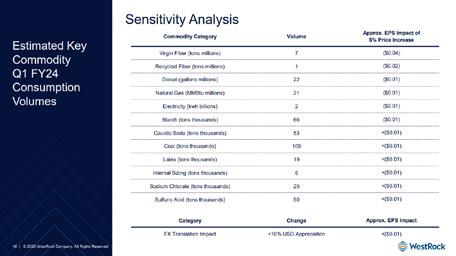
Fuel is the most visible driver of the corrugated industry’s recent cost increases. Diesel prices are up roughly 40% from
earlier this year, creating a meaningful drag on earnings. WestRock, for example, consumed about 22 million gallons of diesel per quarter in 2023. At current levels, that implies roughly $30 million or more in additional quarterly fuel costs.
The increases don’t stop at the pump; they flow directly into recovered fiber. Old corrugated container (OCC) benchmarks, much like containerboard, often fall short of capturing what buyers actually pay. The index may reflect a free-on-board price but not the cost to move material to the mill. With both OCC and diesel prices rising, the true landed cost has moved higher than the headline numbers suggest.
Other inputs are more mixed. Natural gas spiked earlier in the year but has since retreated and now sits below its trailing 12-month average. Electricity, however, continues to trend higher, driven by
inflation, grid investment, and growing demand from data centers and electrification. Some producers are responding by investing in on-site generation, with Packaging Corp. of America moving to install gas turbines at selected mills.
Labor-related costs are also moving in one direction. Medical benefits continue to climb, with employer-sponsored family premiums approaching $27,000 in 2025 and expected to rise again next year. Higher utilization, rising hospital pricing, and the adoption of newer therapies are all contributing to the increase.

Ryan Fox is a corrugated market analyst at Green Markets, a Bloomberg company. He can be reached at rfox93@bloomberg

BY ERIC ELGIN
Q: What’s the difference between death and taxes? A: Congress doesn’t meet every year to make death worse.
In this edition of BoxScore, I thought I would give you a glimpse of the sausage-making process that occurs in Washington and some insight into how AICC endeavors to support your interests there.
AICC participates in numerous informational meetings and policy reviews for both small businesses and the industry with partners such as the Small Business Legislative Council, the American Forest & Paper Association, and several others. Most of these result in dozens of letters going to Capitol Hill leadership, as opposed to lobbying, outlining positions that are important to you alongside similar associations representing common interests.
Here is the text of a letter sent to the Hill in late April from the National Association of Independent Business with AICC as a signatory:
“The undersigned organizations, representing small businesses and businesses in a variety of industries across the country, write in support of your legislation, the Heat Workforce Standards Act. The important legislation would shield businesses across the country from massive new regulatory burdens and compliance costs by preventing the finalization of the Biden administration’s Occupational Safety and Health Administration (OSHA) Heat Injury and Illness Prevention in Outdoor and Indoor Work Settings, or OSHA Heat Standard, and prevent a future administration from undertaking a similar rulemaking.
“The proposed OSHA Heat Standard is a one-size-fits-all approach that would add
onerous new mandates on businesses across the country without regard to regional climate differences or industry-specific job functions. Specifically, the rule would require employers in general industry and construction, maritime, housing, and agricultural sectors to identify heat hazards, implement engineering and work practice heat control measures, implement a heat illness and emergency response plan, train personnel, retain extensive records, actively supervise employees, and add new paid break mandates.
“We recognize that excessive heat can adversely affect the health of an individual. That’s why business owners across the country are already taking steps to prevent these types of incidents. Yet the proposed Heat Standard ignores the measures businesses take to keep workers safe and instead imposes new unworkable one-size-fits-all mandates and paperwork requirements.
“That’s why your legislation, the Heat Workforce Standards Act, is so vital. This bill would eliminate the threat of this
burdensome regulation being finalized and prevent a future OSHA Heat Standard from being pursued by future administrations. Congress must act to clarify that OSHA cannot undertake this rulemaking and in doing so prevent onerous regulatory compliance burdens from being imposed on American businesses.
“The undersigned organizations are grateful for your leadership to eliminate this burdensome rule and prevent increasing compliance burdens and red tape on millions of America’s job creators.”
Many of the initiatives supported by AICC have been successful in the previous and current Congress. Participation such as this is an important, yet unsung and unseen, aspect of an AICC membership.

Eric Elgin is owner of Oklahoma Interpak and chairman of AICC’s government affairs subcommittee. He can be reached at 918-687-1681 or eric@okinterpak.com

Optimizing the flexo process for maximum productivity, quality and efficiency.
ALLAN COMPANY
DON ROGERS
Vice President
14620 Joanbridge St. Baldwin Park, CA 91706 626-893-4744
www.allancompany.com
E.C. SHAW COMPANY
A.J. GROME
Vice President Sales/Marketing 1242 West Mehring Way Cincinnati, OH 45203 513-721-6334 www.ecshaw.com
PAKKED
PHILIP WEBB
CEO and Founder
2275 Huntington Dr., #137 San Marino, CA 91108 626-991-1150
www.pakked.com
NORWALK PACKAGING
ALEX VAUGHAN
Operations Manager 230 Thunderbird Dr. El Paso, TX 79912 915-308-1414
www.norwalkpackaging.com
W.H. LEARY CO.
ANNE WOZNIAK
Marketing Manager 8440 West 183rd Place Tinley Park, IL 60487
708-444-4900
www.whleary.com
EVEREST CORRUGATED
BRIAN SEGGAR
Director
1 Amethyst Close, Theta Ext. 7 Johannesburg, Gauteng 2091 South Africa +27-010-006-2154
www.everestpackgroup.com

AICC brought together close to 800 industry leaders, innovators, and rising professionals for its 2026 Spring Meeting in Carlsbad, California— delivering an energizing and impactful event that celebrated leadership, learning, and connection across the independent packaging community.
Guided by the theme “Legacy in Action: Inspiring Tomorrow’s Leaders,” the meeting offered a dynamic mix of high-level insights, forward-looking discussions, and meaningful networking opportunities that reflected the industry’s strength and momentum.
From the opening moments, the energy was unmistakable. Attendees engaged in a full schedule of programming designed to address today’s challenges while preparing companies for the future— from economic outlooks and artificial intelligence to leadership development and operational excellence.

The general sessions featured compelling presentations from industry thought leaders and keynote speakers. Futurist Jim Carroll delivered a forward-looking keynote on transformative trends shaping the future of business, while best-selling sports author Ross Bernstein closed the meeting with

an inspiring presentation on leadership, integrity, and high-performance culture. Attendees also heard from Matt Eichmann, founder and leadership advisor at Catalyst Point Leadership Advisors, who provided actionable insights on building strong teams and developing future leaders.
The Focus Session and general sessions brought together respected voices from across the industry. George Staphos, managing director of equity research at Bank of America Merrill Lynch, provided an economic outlook, while Jules Van Sant, executive director at Two Sides North America, addressed sustainability and greenwashing in the packaging space.
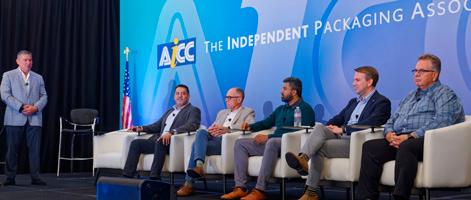
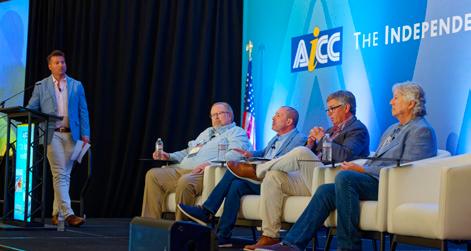
A State of the Industry panel moderated by Joe Morelli of The Morelli Group LLC featured:
• Chad Wagner, Peachtree Packaging
• Greg Tucker, Bay Cities Packaging & Design
• Mike Schaefer, Tavens Packaging & Display
• Larry Grossbard, President Container

A transcript of the panel is this issue’s cover feature. Check it out on p. 34.
Aleks Zlatic of Aurum Intelligence Inc. moderated a conversation about how AI is transforming business operations with panelists:
• Gokul Gopakumar, SUN Automation Group
• Jeff Putt, DeLine Box & Display
• Mohamed Azzouz, Royal Container Ltd.
• Aki Leiniäinen, Valmet Inc.
• Jim Hawton, Bay Cities Packaging & Design
Breakout Sessions Focused on Leadership, Security, and Innovation
Two days of breakout sessions provided attendees with practical tools and strategies. Eichmann led sessions on leadership development and navigating change. K.M. Zouhary, founder and principal consultant at KMZ Advisors, explored the intersection of emotional intelligence and AI, as well as leading across generations.
Tom Trinchi of Jamestown Container Cos., alongside Roftiel Constantine, Barry Wehmiller, and Ken Saganowski of MoxFive, participated in a discussion on Cyber Security: Threats, Tactics &
Trends with moderator Theo Peterson of Amtech Software.
AI in ERP & Plant Management Systems was tackled by moderator Tonya Morelli of The Morelli Group LLC, with panelists Danna Nelson of Amtech Software; Scott Anderson of Kiwiplan, an Advantive Co.; Dave Hall of ePS; Peter Dobell of OMP; Philip Webb of Pakked; and Jason Hooston of Two10 Technologies.
A highlight of the meeting was the recognition of outstanding contributions within the industry.
Bob Cohen of Acme Corrugated Box Co. was honored with induction into the AICC Hall of Fame, one of the Association’s highest recognitions, celebrating a career defined by leadership, dedication, and lasting contributions to the independent packaging industry. His recognition reflects not only his professional achievements but also his commitment to strengthening the AICC community and advancing the success of independent boxmakers. Two of Bob’s sons, Jeremy and Erik, accepted the award on his behalf, creating a moment that served as a powerful reminder of the
impact that individual leadership can have on the industry and the legacy that continues to inspire future generations. The longevity of AICC members was also highlighted through the Member Milestone Recognition program. In 2026, the following companies are celebrating anniversaries of continual operation:
• 40 Years: OMP
• 70 Years: Jamestown Container Cos.
• 80 Years: Pamarco
• 100 Years: Mid America Paper Recycling Co.
Videos celebrating the history of these companies are available at www.AICCbox.org.
There was more to celebrate during the meeting. Advance Logistics & Fulfillment (Vanguard); Akers Packaging facilities in Middletown, Ohio (N-Stock Box), Evansville, Indiana, North Vernon, Indiana, and Huntington, West Virginia; American Packaging Corp.; Jamestown Container Cleveland; McElroy Contract Packaging; Niagara Sheets; Vanguard Packaging & Digital; and

Wunderlich Fibre Box Co. all earned the Independent Safe Shop Award. These companies showed their commitment to employee safety by having a 2025 OSHA Recordable Incident Rate of less than 2.5 and Lost Workdays Incident Rate of zero.
Independents’ Cup Charity Golf Tournament
Additionally, the following teams won the Independents’ Cup Charity Golf Tournament. The Tournament raised $10,000 for the Foundation for Packaging Education, which helps maintain and
grow educational opportunities for AICC members.
First Place, South Course:
• John Pepper, Atlantic Packaging
• Kelly Albert, Atlantic Packaging
• Adam Pauwels, Atlantic Packaging
• Corey Pedneault, Atlantic Packaging
First Place, North Course:
• Andrew Bell, Packaging Express
• Kirby Heck, Packaging Express
• Marcus Rozatti, CPG StarCorr Sheets
• Nathan Schwarz, CPG StarCorr Sheets

These moments underscored AICC members’ commitment to safety, longevity, and excellence in the industry.
Networking, Community, and Engagement
Beyond the educational sessions, the Spring Meeting delivered exceptional opportunities for connection. From the Opening Night Reception and LateNight Mix & Mingle to networking breakfasts, lunches, and local adventures, attendees built relationships that will continue to strengthen the independent sector.
The AICC Spring Meeting also highlighted the strength of its next generation and the growing impact of its community-driven initiatives. Emerging Leaders were actively engaged throughout the week, beginning with a dedicated training session featuring Jack Fiterman, vice president of business development at Liberty Diversified International, who shared insights on culture and leadership development, followed by a well-attended networking event that fostered meaningful connections among rising professionals.
The AICC Women in Packaging Group continued to build momentum







with a series of well-supported events, including a networking breakfast featuring Tonya Morelli, as well as a golf lesson and nine-hole scramble that combined skill-building with relationship-building.
Adding to the family-friendly atmosphere, the Kids in Corrugated program offered a unique opportunity for younger attendees to engage with the industry through a hands-on corrugated project and guided activities, reinforcing the importance of introducing the next generation to the world of packaging in a fun, interactive way.
AICC also added a pickleball tournament to this Spring Meeting. The tournament winners were:
• Doug Butler, A.G. Stacker Inc.
• Kelly Albert, Atlantic Packaging
• Michael Klear, Corrugated Solutions
• Dana Monaco, Corrugated Solutions
Together, these programs reflected AICC’s commitment to developing talent, strengthening connections, and creating inclusive opportunities for engagement across all levels of the industry.
AICC thanks the following top sponsors for their support of the 2026 Spring Meeting. Please visit www.AICCbox.org/ meeting for the full list of sponsors.

• Premier Platinum Sponsor: Domtar
• Premier Gold Sponsor: Flint Group
• Major Golf Sponsor: Hood Container Corp.
• Premier Silver Sponsor: A.G. Stacker Inc.
• Premier Bronze Sponsor: SUN Automation Group
With nearly 800 attendees and a program filled with relevant content, forwardthinking discussions, and high-impact networking, the 2026 AICC Spring Meeting stood out as a powerful gathering for the independent packaging industry.
The enthusiasm, collaboration, and shared commitment to growth were evident throughout the week, leaving attendees energized and equipped to lead their organizations into the future.
As AICC continues to build on this momentum, the Spring Meeting once again demonstrated the strength of its community—and the enduring value of coming together to learn, connect, and lead. When you invest and engage, AICC delivers success.
AICC’s next national meeting will be Corrugated Week, in collaboration with TAPPI, September 28–30 in Fort Worth, Texas. Learn more at www.AICCbox.org/calendar

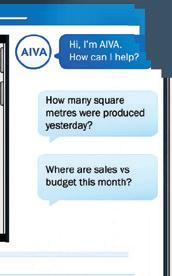
Kiwiplan embeds intelligence and 24/7 automation into planning, scheduling, and supply chain execution, helping packaging manufacturers operate leaner, smarter, and faster.
Powered by the Advantive ONE AI platform, Kiwiplan unifies operational, financial, and quality data into a single source of truth. This transforms complexity into clarity and enables confident, data-driven decisions –backed by 35+ years of industry expertise.








BY RALPH YOUNG
Recent inquires to the Ask the Experts link have sought thoughts on the robust and resilient aspects of both “conventional” and small-flute corrugated. There have also been questions on F flute. As a follow-up to the last article on warp and digital printing, here is an updated refresher on the strength characteristics of small-flute corrugated.
Tom Weber and I facilitated a threehour forum at the 2018 AICC Spring Meeting on the merging of microfluted products (E, F, N, and O) with solid-fiber paperboard substrates such as solid bleached sulfate, coated recycled board, and uncoated recycled board applications for folding carton and rigid box.
Six exceptionally qualified presenters, AICC member panelists, and facilitators had over 141 years of combined experience in the production and conversion of E flute, F flute, and thinner flutes for creative solutions that can run directly through offset presses in some cases and now on digital presses as flat sheets (no warp).
One example was a 33/23F/33 combination to replace a rigid-box construction, and this new alternative carton ended up having 30% more top-to-bottom compression than needed. It was robust and resilient. Machine direction and cross-direction Taber stiffness tests were also performed. So, next time even lighter-fluted alternatives will likely be combined to engineer the best and most economical fit for carton use.
F flute is becoming more available from sheet feeders and trade finishers. E/F combined board has some promising opportunities at replacing conventional 40# and 44# ECT grades.
There have been testing methods to directly relate fluted products with paperboard, but they have been widely unknown to many converters. Testing
fluted materials under the solid fiber protocols used for paperboard, such as block compression, Taber stiffness, and corner crush, will give folding carton and rigid plants the opportunity to compare and quantify the results for different substrates. These comprehensive test methods will take the guesswork out of the conversion and allow for a documented, repeatable, and statistical rationale to be presented to all internal and external stakeholders involved. What were the key drivers identified by our audience?
• Digital and direct print onto fluted substrates.
• Making certain microflutes are moldand bacteria-free for indirect food contact and pharmaceuticals.
• Lightweights—browns are increasing, although 9# and 10# are used today, 20# uncoated whites are coming, and paper grades are always available.
• Ongoing issues with SBS—less than 10-point availability domestically.
• Paperboard mills have closed, and merchant “open-market” tonnage is disappearing into integrated companies.
• E-commerce and its need to reduce the amount and weight of packaging.
• Warehouse clubs constantly change the retail experience.
• More seasonal product changes and more product offerings (SKU proliferation).
• Modern corrugators have many new capabilities to tightly control sheet warp with process controls that can adjust moisture, heat, and actual starch applications.
• Asitrade machines can meter adhesives through conventional anilox rolls and grooved rod metering systems that can apply different
application rates for each particular flute profile as needed.
• Lastly, how do we know what microflute profiles and material compositions to change to from paperboard to fluted products? Is there a method we can depend on to communicate to our clients, to ensure that success is built into our conversions?
There were recommendations regarding die cutting from the single-face or double-face printed side of the sheet and the use of counter plates. If this or score-cracking has become an issue with you, contact us for referrals. One of the presubmitted questions involved the use and amount of biocide in food-grade and pharmaceutical packaging. Chemistry keeps evolving. There is a difference between starch-line and glue-line dosings.
All panelists, facilitators, and audience members were reminded that the two distinctly unique product lines of microflute and paperboard are not mutually exclusive replacement strategies, but they are additive and additional opportunities to advance packaging sales into markets that are perhaps not being currently served. We believe much progress has been made. It was proven without a doubt that, within AICC member organizations, we have the technical, converting, and personnel expertise to support any member’s decision to take the next steps.

Ralph Young is the principal of Alternative Paper Solutions and is AICC’s technical advisor. Contact Ralph directly at askralph@AICCbox.org about technical issues that impact our industry.











Give your kraft liners a brilliant foundation with CorrWhite, Magnum’s highperformance titanium white coating. Engineered to reduce rod wear and deliver superior after-wax brightness and opacity, CorrWhite provides remarkable brilliance with less coat weight; making it the best value on the market. Partner with Magnum Inks & Coatings for responsive service, expert support, and coating solutions that help your prints shine. Let’s coat together!




BY TOM WEBER
Probably the most important and most overlooked parameter in thermoforming of paperboard is the moisture content of the material. Although the paperboard or corrugated thermoforming machine is capable of controlling the three important parameters of heat, dwell, and pressure, the extremely important parameter of paperboard moisture can be controlled by the converter only prior to the material reaching the paperboard or corrugated thermoforming press. Without the proper amount of moisture in the paperboard, the material will be brittle, will not fold properly into pleats, will most likely fracture and tear, and will not hold its shape. Paper is made up of millions of fibers that resemble microscopic straws. Under normal dry conditions, these fibers behave as if they were sticks of wood, because, in reality, that is what they are. When you try to bend a stick of wood into a shape and then release the tension on it, it will spring back to its unbent, straight condition. Or, if you put too much stress on it and bend it too far, it will break into two pieces. That is exactly what happens when you try to thermoform dry paperboard. If you are trying to thermoform a very shallow container that is easy to thermoform, such as a paper plate, the paper will simply try to spring back to its original flat blank state as soon as you release it from the die. However, if you apply too much stress by trying to thermoform it into a deep or complex shape, the dry paper will simply break. Now, if we take that same stick of wood and soak it in water for a period of time, then try to bend and shape it using heat
and pressure, the wood will easily conform to the shape we are attempting to make. This is exactly how luthiers (makers of wooden stringed instruments such as guitars and violins) bend the sides of their instruments. They soak the wood in water, then use heat and pressure to form the sides of the guitar or violin. After the wood has dried in the correct shape, the heat and pressure are withdrawn, and the wood stays in the desired shape.
This is exactly the same concept we apply in the thermoforming of paperboard or corrugated materials. The fibers that make up the sheet of paperboard or corrugate must be moistened to the point that deformation can easily occur without breaking the fiber as it is bent in the forming die to make the shape of the container.
The amount of moisture in the paperboard or corrugated sheet is measured as a percentage of the weight of the sheet when it is dry. Different types of paperboard and corrugated sheets require different amounts of moisture to render them formable into containers. Also, the more complex the shape or the deeper the container being thermoformed, the more moisture is required. Recycled materials require more moisture than virgin materials. Generally, the range of moisture by weight will be between 8% and 13%, depending upon these factors. High-quality, simple, shallow paper plates made from solid board can be made at 8% moisture. Containers of 3 cm to 5 cm in depth made from recycled corrugated materials may require up to 13% moisture. Moistening the material is not as simple as spraying some water
on the sheet, then expecting it to behave any differently than a dry sheet. As with the wood used to make wooden stringed instruments, it takes time for the water to soak into the fibers of the paperboard and make them soft and pliable. When water is simply sprayed onto the sheet prior to thermoforming, it will sit on top of the sheet, then be flashed off as steam when subjected to the heated forming die before it ever gets a chance to soften the fibers. Therefore, it is important that the material achieve the target moisture percentage at least 24 hours prior to thermoforming, depending upon the amount of sizing that is present in the material. Highly sized sheets such as folding carton or liquid carton materials may take up to 72 hours before the moisture can penetrate throughout the sheet, soften the fibers, and reach equilibrium. Too much moisture can also be detrimental to the process. When too much moisture is present, the water has a tendency to break down the bond between the fibers, making the material weak and easily torn. Essentially, too much moisture will result in a drastic reduction in tensile strength of the material, thereby making it impossible to form. Another issue with material that is too wet is delamination. When the material is subjected to the heat in the forming die, too much steam is created, and when it exceeds the ability of the vents in the die to dissipate it, it literally begins to blow the material apart, causing bubbles within the layers of the paperboard or corrugate. If the material has a coating on one side to enhance the end use characteristics of the tray, there is a good chance that this excess steam
will also soften the coating and cause it to stick in the forming die. Application of moisture can be effected by several different methods. For solid boards, systems are available on the market that will spray, coat, or submerge the material in solutions made up of mostly water with a few chemical agents to retard microbial growth and enhance water absorption. However, by far the best means of adding moisture to solid boards is via a liquid application system that utilizes a hydrophilic roller running in reverse to the web direction. Many of these systems use a closed-loop computerized feedback system to monitor and automatically adjust the moisturizing level. This particular system forces the water deep into the sheet under tremendous hydraulic pressure, thereby reducing the time necessary for the water to soak into the sheet and fibers.
For corrugated sheets, it is best to simply not dry the sheet as much at the end of the corrugating process. This is contrary to what all corrugated machinery operators are taught, as they believe it will result in a weak sheet. However, our goal is not to make a strong corrugated sheet but to make a pliable corrugated sheet that can be thermoformed into a corrugated tray or container. Corrugated sheets can also be sprayed after the corrugating process to return the correct amount of moisture to the sheet, but remember that the sheets must sit in storage for a period for the moisture to penetrate all layers of the material and reach equilibrium.
Even the best system of moisturizing paperboard or corrugated sheets is no good if common sense is not applied throughout the process. In other words, if you moisten the material to the required 10% moisture
for a given application, then allow the material to sit in a warehouse unwrapped and subjected to a dry atmosphere, the material will soon dry out to the ambient condition of 5%–6% moisture, negating all of your efforts. Therefore, it is imperative that once the material has been moistened to the proper level, it must be wrapped in plastic or stored in a humidity-controlled atmosphere to maintain its moisture. Even a stack of unwrapped precut blanks sitting at the paperboard thermoforming press for a few hours will lose its moisture and be difficult—if not impossible—to form. That’s it for this fiber-based forming session.

Tom Weber is president of WeberSource LLC and is AICC’s folding carton and rigid box technical advisor. Contact Tom directly at asktom@AICCbox.org
BY TODD M. ZIELINSKI AND LISA BENSON
Your sales projections for 2026 likely included repeat business, current customer growth, reactivation of dormant accounts, and new accounts. Now that we are more than halfway through the year, it is time to evaluate how those projections match reality. For many packaging manufacturers, the area most likely to fall short is new account development.
While existing customers may keep revenue steady, there is only so much room for growth. New accounts are what help replace lost business, reduce customer concentration risk, and create room for growth. When new account development stalls, it doesn’t take long for the business to feel it.
For many manufacturers, growth projections fall short because they lack a strategy for new account development. Revenue targets often assume a steady flow of new opportunities, but the sales team may not be able to sustain that flow consistently. The result is a gap between the growth the business expects and the actual capacity available to win new accounts.
This gap is easy to overlook because it does not always show up as an obvious sales problem. Account managers may still be busy, and existing customers may still be ordering, but if no one has the bandwidth to prospect, follow up, and move new opportunities forward, the pipeline shrinks over time.
Many packaging companies ask the same salespeople to manage current accounts,
quote new work, handle customer issues, attend meetings, perform administrative tasks, and find new business. While it may seem efficient, existing customers with immediate needs will consume a large portion of their time, leaving little time to find new business.
Prospecting requires time, repetition, and follow-up. It also requires a different mindset than account management. A salesperson who is strong at maintaining customer relationships may not be the right person to research target accounts, make repeated outreach attempts, qualify leads, handle rejection, respond to objections effectively, and continue to nurture prospects that are not ready to buy yet.
With so little time, it is no wonder leads may sit in the CRM without follow-up. A website form, trade show conversation, or referral may look promising at first, but it still needs a structured next step. Someone must qualify the company, understand the packaging need, determine timing, and decide whether the opportunity is worth moving forward. If that responsibility is not clearly assigned with a timeframe, the lead may get lost in a salesperson’s regular account workload.
The issue is not necessarily about the salesperson’s effort. It is more likely to be due to how the role was designed. When sales are acting as account managers, they are often measured on keeping current customers satisfied, protecting existing revenue, and responding quickly when something goes wrong. While these responsibilities are important, they also compete directly with new business development. When a current customer needs help and a new prospect requires the fifth follow-up call, the current customer usually takes priority.
Sales team demographics can make the problem harder. Some corrugated companies have experienced salespeople with deep customer relationships at one end of the spectrum, newer salespeople who are still learning the business at the other, and fewer mid-career salespeople in between. Senior salespeople may understand the market but may be less interested in cold outreach. Younger salespeople may be willing to prospect but need coaching, structure, and enough product knowledge to hold a useful conversation with a buyer.
This design creates an operational constraint. Getting in front of new accounts requires clear accountability, defined sales activity expectations, and follow-up discipline. A lead nurture process cannot be overlooked either. Corrugated buyers may be tied to current suppliers until there is a quality issue, service problem, capacity constraint, price pressure, or new packaging need. Without a defined process and structure, new account development becomes the work that, in theory, everyone knows is required but, in reality, few execute consistently.
If new account development is a priority, the sales structure must support it. That usually means making specific changes to hiring, incentives, process, and how frontend sales get done. The goal is to create a repeatable system for generating and advancing new opportunities and allowing the sales team to focus on closing sales.
When new account development is a priority, companies should hire specifically










for that function. A lead generation or business development role is different from an account management role. The concept of division of labor is often used by manufacturers that consistently see new account growth. The division of labor applies the same production logic used in manufacturing to the sales process by separating work by function and skill rather than piling responsibilities onto a single role. Prospecting, qualification, content development, account management, and closing are treated as distinct activities, each owned by people suited to that work. This structure reduces salesperson fragmentation, removes nonselling tasks from revenueproducing roles, and creates a measurable, repeatable flow of qualified opportunities. The result is higher productivity, a better use of talent, and a sales process that can scale when required.
Many sales compensation structures unintentionally discourage prospecting by rewarding account maintenance and repeat revenue more than new opportunity creation. When commissions are tied primarily to existing customer sales, salespeople are financially incentivized to spend their time servicing known accounts, resolving issues, and protecting current revenue streams. Prospecting, which is time-intensive and carries uncertainty, becomes a lower priority because it does not produce immediate or predictable compensation. Over time, this misalignment fragments the sales role and limits pipeline growth. Salespeople remain busy, but much of their time is spent on customer service and administrative work rather than active selling. Without adjusting compensation to support new business development, even well-designed sales processes struggle to deliver the revenue needed to meet sales goals.
Without a defined sales process, each salesperson works in a silo, doing their own thing, making lead generation inconsistent and difficult to measure. A structured sales process establishes how leads move from first contact to the active sales cycle, with defined stages and criteria at each step. For example, it specifies what activities must occur, the cadence for activities, how a lead is qualified, when follow-up occurs, and who is responsible for each step. Without this structure, sales activity becomes reactive, and lead generation becomes sporadic outreach rather than a controlled system. A documented process creates consistency by replacing subjective judgment with clear decision points and expectations. More importantly, a defined process makes lead generation measurable and manageable. Activity levels, conversion rates, and opportunity flow can be tracked at each stage, allowing issues to be identified and corrected before they impact revenue. This structure makes lead generation an ongoing operational function rather than a series of disconnected efforts. When the process is designed correctly, it produces a steady flow of qualified opportunities into the sales pipeline.
Front-end sales activities (i.e., target market profiling, prospect research, inbound and outbound outreach, lead follow-up, qualification, and ongoing nurture of future opportunities) require investments in the following:
• Sales processes design, implementation, maintenance, and improvement
• Additional personnel (e.g., sales development rep, sales coordinator, content creator, SEO strategist)
• Tools and technology to execute (e.g., CRM, marketing automation, list development software, market analysis tools, SEO tools, web forms)
Building a front-end sales capability in-house is difficult and expensive. Outsourcing allows companies to establish a defined, repeatable process for engaging the market without adding resources from revenue-producing activities.
The value of outsourcing the front end is the ability to execute that process consistently at scale. A dedicated team follows defined qualification criteria, maintains regular contact with prospects, and keeps opportunities visible as they move toward the active sales cycle. Activity, conversion rates, and throughput can be measured and adjusted over time, creating a steady flow of qualified opportunities rather than reliance on occasional outreach or inbound luck. When done correctly, outsourcing replaces fragmented effort with a controlled system that supports long-term pipeline health and makes sales performance more predictable.
Maintaining current accounts and developing new business are not the same job. When packaging companies expect one role to handle both without additional structure, new account development becomes inconsistent. A more deliberate approach to hiring, incentives, process, and execution can help turn new business development into a more reliable part of the overall growth strategy.

Todd M. Zielinski is managing director and CEO at Athena SWC LLC. He can be reached at 716-250-5547 or tzielinski@athenaswc.com

Lisa Benson is senior marketing content consultant at Athena SWC LLC. She can be reached at lbenson@athenaswc.com
KemiTM liners, Metsä Board’s premium white top kraftliners, have played a significant role in the evolution of corrugated packaging in the Americas. Known for their superior printing surface and high performance, KemiTM liners are a coated white top kraftliner that revolutionized the corrugated packaging industry by combining performance with visual branding.
KemiTM liners, then known as Kemiart, were launched in the American market in 1991. Innovation continued introducing double coated white kraftliner in 2011. Most recently, in 2023, the Kemi mill underwent further developments to increase its capacity to 465,000 tons, while enhancing energy and water efficiency.
At 465,000 tons, our facility is now the world's largest production plant for coated white-top kraftliner. Customers worldwide specifically request "Kemi" when they mean our first-class white kraftliners such as MetsäBoard Classic WKL, MetsäBoard Pro WKL and MetsäBoard Prime WKL.
With a legacy spanning over five decades, Metsä Board will continue to help set the standard for excellence in packaging, allowing every box to tell a story of quality and sustainability.
Growth, with a future

but every season we’d text each other, wait until our boxes arrived, and then open them “together” over the phone. Our go-to was FabFitFun—a mix of beauty, wellness, and lifestyle surprises that felt like a small event every time it showed up. It wasn’t just about the products; it was about connection. In a simple corrugated box, we found a way to create a shared experience despite the distance.
That sense of anticipation and connection is what turned subscription boxes from a niche experiment into one of the most resilient models in e-commerce. Today, they span nearly every consumer category—from beauty and wellness to
Subscription boxes remove friction from shopping while adding an element of surprise. Instead of browsing endless product pages, consumers receive selections tailored to their preferences. For brands, the model offers predictable revenue, strong customer relationships, and valuable insight into purchasing behavior. That combination has turned subscription commerce into a cornerstone strategy across industries.
Seasonality plays a major role in subscription success, and summer stands out as a peak moment. Consumer habits shift toward outdoor living, travel, and social gatherings—creating natural demand for products suited
for backyard barbecues. Beauty boxes adjust to heat and sun exposure, with Allure Beauty Box featuring SPF, lightweight skin care, and travel-friendly products. Meanwhile, outdoor-focused services such as Nomadik cater to hiking, camping, and summer adventure. These seasonal shifts keep subscriptions feeling fresh and relevant, without requiring brands to reinvent their entire model.
What sets subscription boxes apart is the anticipation they create. Customers aren’t just buying products—they’re buying a moment. The buildup, the reveal, and the discovery all contribute to a sense of delight that drives loyalty
and sharing. That’s why Instagramworthy unboxing has become so important. Packaging is no longer just functional—it’s part of the product. From bold exterior graphics to thoughtfully arranged interiors, every detail contributes to a memorable experience that customers want to share.
But behind every great unboxing experience is a material doing the heavy lifting: corrugated packaging. It’s engineered to be lightweight yet durable, protecting products through the rigors of shipping while helping control costs. Its strength makes it ideal for holding a wide range of items, from fragile goods to liquids and soft products, with inserts that keep everything in place.
For temperature-sensitive shipments, corrugated works with insulation and cooling elements to help maintain product integrity, even in peak summer
heat. And the high-quality printability of corrugated allows for bold, visually engaging designs that enhance the unboxing moment. With the added benefits of recyclability and design flexibility, including easy-open features and custom interiors, corrugated packaging becomes more than just a box. It’s a key player in the subscription journey.
Subscription boxes continue to thrive because they deliver what modern consumers value most: convenience, personalization, and experience. Summer simply adds another layer, showcasing the rituals of the warmer months. But beyond the products and the trends, it’s the human moments that stand out. For me, that means opening a box and immediately thinking about my mom—comparing notes and sharing











reactions in real time as if we were sitting side by side. Those small exchanges turn a simple delivery into something shared and memorable. That is the real power of subscription boxes. And it’s the arrival of each corrugated package that makes those moments possible.

Julie Rice Suggs, Ph.D., is academic director at The Packaging School. She can be reached at 330-774-8542 or julie@ packagingschool.com.

Alli Keigley, who contributed to this article, is production coordinator at The Packaging School. She can be reached at alli@ packagingschool.com







BY MATT EICHMANN
If you run a corrugated business, you don’t think about legacy the way most people do.
You’re not thinking about retirement speeches or your name on a building. You’re thinking about:
• Meeting changing customer expectations.
• Orders going out on time.
• Equipment staying up.
• Whether your team can execute without you in the room.
Those are the decisions that define your business. But legacy isn’t those decisions. Legacy is whether your team understands how to make them— without you. It’s the transfer of judgment, the context behind the calls, and the lessons learned the hard way. If that knowledge stays with you, your business doesn’t scale—it stalls. That is legacy. The problem is, most leaders don’t treat it that way.
Legacy Isn’t What You Leave –
It’s What You Build
We’ve been taught that legacy is something you deal with later, when you step away, sell, or transition ownership. That definition makes you wait.
And while you’re waiting, your business is either getting stronger or becoming more fragile. Legacy is not a future event. It’s the compounding effect of how you build people today.
Poorly managed leadership transitions destroy massive value every year—not because companies lack plans, but because they didn’t build the people required to carry the business forward. So how do you address this?
You don’t need a formal program to build legacy. You’re already doing it every day, whether you realize it or not. It shows up:
• In the standards you enforce (or let slide).
• In the condition of your operation— clean, safe, and disciplined.
• Whether you teach, provide context, and recognize your people.
• Whether you walk the floor or manage from your inbox.
It’s also reflected in how you keep your word, show up when things go sideways, and reinforce how each role connects to the company’s strategy.
None of that sounds like “legacy work.” That’s why most people miss it. But your team doesn’t miss it. They copy it.
Fast Operationalizing legacy isn’t soft. In small and mid-sized manufacturing businesses, legacy and leadership show up quickly in the numbers. According to research conducted by Gallup, team engagement is
driven largely by the manager, and strong teams execute better and deliver significantly higher performance.
You don’t have layers to absorb problems. One unclear expectation—or one leader who hasn’t been developed—can ripple across the entire operation. You can’t separate legacy from performance. Legacy drives it.
If your business stalls when you step away, you have a dependency. This doesn’t require big initiatives. Start here:
1. Reinforce a standard. Pick one you’ve let slide. Fix it now and make sure your team understands why it exists so they own it, not just follow it.
2. Remove yourself as the bottleneck. Hand off one decision you’re still holding too tightly. Let someone else learn how to make the call.
3. Teach judgment, not just tasks. Show someone how to think through a decision—not just how to execute it.
4. Invest in one leader. Pick them, tell them, and start to develop them intentionally.
Most leaders think legacy is about what they leave behind, but it’s really about what you make possible in others—while you’re still here and whether your business gets stronger or more fragile every time you step out of the room. Legacy is built in what happens every shift.

Matt Eichmann is founder of Catalyst Point Leadership Advisors. He can be reached at 614-512-2940 or matt@ catalyst-point.com


superior graphics fast set-up
Max Speed: 12,000 s/h
Available Sizes: 2,800 (110”)
Max Sheet Width: 110.24 “
Max Sheet Length: 60.24”
Min/Max Caliper: .039/.354”
Features:
• 3 minute auto job change
• Setup while running
• Preset print and die cut
• Print and die cut inspection
• Anilox Roll Changing System (Full Automatic: 3+1)





inside-outside print fast set-up
Max Speed: 10,000 s/h
Available Sizes (max sheet):
2,100 / 82” (82 x 62.99”)
2,400 / 94” (94.5 x 62.99”)
2,800 / 110” (110.24 x 62.99”)
Features:
• 3 minute auto job change
• Setup while running
• Preset print
• Inside/Outside Print
• Print and die cut inspection
• Anilox Roll Changing System (Automatic: 2+1)




high-definition print fast ROI
Max Speed: 9,000 s/h
Available Sizes (max sheet):
2,100 / 82” (82 x 62.99”)
2,400 / 94” (94.5 x 62.99”)
2,800 / 110” (110.24 x 62.99”)
Features:
• Inside/Outside print
• Print and die cut inspection
• Anilox Roll Changing System (Automatic: 2+1)
For full features and specifications, visit koenig-bauer-celmacch.com Or contact Kevin Erbe at kevin.erbe@koenig-bauer.com, 303.718.0023
BY LASZLO HORVATH, PH.D.
Walk through any store, open any online order, or reach into your refrigerator, and you’re interacting with someone’s packaging decision. At Virginia Tech, a growing program within the Department of Sustainable Biomaterials is making sure that decision-maker is as prepared as possible—not just with theory, but with the kind of hands-on industry-embedded experience that sets graduates apart from day one.
The foundation of Virginia Tech’s Packaging Systems and Design program is a simple but powerful conviction: students learn best when the problems are real. For more than five years, students have worked directly with a major electronics manufacturer to redesign that company’s products using only fiber-based packaging materials—with the goal of achieving full curbside recyclability. It’s not a simulation or a classroom exercise. Students are solving an actual industry challenge, navigating real constraints around material performance, cost, and consumer convenience, and delivering work that matters to a global brand.
That same philosophy runs through the program’s work with IKEA. Virginia Tech’s corrugated packaging laboratory is one of only four IKEA-certified labs in the world—and the only one housed within a university. Students working in the lab don’t simply run corrugated board tests once as part of a course. They conduct ongoing quality testing that helps IKEA verify that its corrugated board suppliers

are meeting rigorous specifications. The work gives students deep, practical fluency with industry-standard testing procedures, and it comes with a tangible benefit: Students are paid for their time in the lab, helping them offset the cost of their education while building the kind of documented employer-ready experience that makes them stand out on the job market.
With support from the International Corrugated Packaging Foundation, the program has significantly upgraded its testing and prototyping infrastructure. New
additions include a Kongsberg cutting table, a flatbed printer, a modern edgecrush tester (ECT), a burst tester, and a cushion tester—all focused on evaluating the performance of fiber-based packaging materials. Together, these tools give students the ability to design, prototype, and rigorously test packaging solutions within a single facility, closing the loop between concept and validated performance.
The program has also deepened its partnership with Ranpak, an innovative manufacturer of fiber-based protective packaging. Through this collaboration, students gain direct, exploratory access to
fiber-based cushioning materials, allowing them to experiment with sustainable alternatives to foam and plastic at a stage when most students are still reading about them in textbooks. As the industry faces mounting pressure to eliminate petroleum-based materials, that hands-on familiarity is a genuine career advantage.
Virginia Tech recently launched a new major in Sustainable Systems Science and embedded a sustainability core directly into the packaging curriculum. These additions give students the conceptual and quantitative tools to engage with the full complexity of modern packaging sustainability: tracking policy changes, evaluating emerging recycling technologies, modeling the environmental
performance, and environmental data simultaneously. Being part of the Department of Sustainable Biomaterials and the College of Natural Resources and Environment reinforces this orientation—students are trained to think about packaging as a system for using natural resources efficiently, not just a protective layer around a product.
For students with design ambitions, the program has made targeted investments. A dedicated packaging design faculty member now leads two additional design courses that sharpen the skills needed to compete—and win—in national packaging design competitions. The program has also built a formal partnership with Virginia











industrial design and bringing industrial design students into packaging coursework. The cross-pollination produces graduates who can think like engineers and designers at the same time, a combination that’s increasingly rare and increasingly valued by employers and competition judges alike.
What the Virginia Tech packaging program is building, course by course and partnership by partnership, is something harder to replicate than any single piece of equipment: graduates who have already done the work before they leave campus.


Laszlo Horvath, Ph.D., is a professor, head of the Department of Sustainable Biomaterials, and director of the Center for Packaging and Unit Load Design at Virginia Tech.



Complex 4-5 out configurations
Only the eBREAK™ can do it







It’s destroying your productivity + profits.


With Encore HGL RDC 1628/1632’s set-up-while-run capabilities, this machine is built to maximize efficiency without missing a beat. From high-quality prints to quick-change die-cutting, every aspect is engineered to deliver speed without sacrificing quality.


















BYLINE

Extended producer responsibility (EPR) is becoming a reality across the United States. As new state regulations emerge, independent packaging companies are facing increasing pressure to understand complicated legislation, reporting requirements, deadlines, and compliance expectations. That is why AICC has launched a centralized EPR Resources page designed to help members stay informed and prepared.
EPR laws shift the financial and operational responsibility for packaging waste from municipalities to producers, requiring companies to play a larger role in funding recycling systems and managing packaging materials at end of life. While these policies aim to improve recycling infrastructure and sustainability efforts, they also introduce major challenges for manufacturers, converters, and suppliers throughout the packaging supply chain.
For many independent packaging companies, tracking EPR developments across multiple states can feel overwhelming. Regulations vary by jurisdiction, timelines
continue to evolve, and the potential impact on reporting, fees, material selection, and customer communication is significant. Some companies are still determining whether they qualify as obligated producers, while others are trying to understand what actions they may need to take next.
The new EPR Resources page on AICC NOW was created to help members cut through the confusion.
Rather than searching across multiple websites and scattered sources, AICC members can now access a curated collection of articles, legislative updates, implementation guidance, reporting resources, and industry analysis, all in one place.
The resource page is not just for companies directly affected by EPR legislation. These policies are beginning to influence customer expectations, packaging design decisions, and sustainability conversations throughout the industry. Even companies operating in states without active EPR laws may still receive questions from customers, retailers, and suppliers connected to emerging regulations elsewhere.
The pace of change also makes ongoing education essential. Several states are already implementing packaging EPR programs, while additional legislation continues to be introduced nationwide. Many industry experts view EPR as one of the most significant regulatory changes facing the packaging industry today.
By consolidating reliable information into a single destination, AICC is helping independent companies stay proactive rather than reactive. The Association’s goal is to provide members with practical, accessible information to understand the evolving landscape better and make informed business decisions.
As EPR discussions continue to accelerate, staying informed is no longer optional. With the launch of the EPR Resources page, AICC is giving independent packaging companies a valuable tool to navigate one of the industry’s emerging challenges.
Explore the new EPR Resources page at NOW.AICCbox.org/EPR-Resources
Industry leaders break down the forces reshaping boxmaking and where opportunities remain
These days, boxmakers are facing a bevy of challenges—pricing volatility, shifting demand signals, and persistent workforce challenges, to name a few. In light of those challenges AICC brought together a panel at the AICC Spring Meeting in Carlsbad, California, to unpack what’s really happening in the market. Starting with containerboard price swings and supplier-driven dynamics, the discussion opened to a broader question: What does it take for independents to win right now? Here are their perspectives.





Joe Morelli: Thank you guys for participating. We’ve talked to a lot of people this week about the current state of the market. Volatility continues to come up, and we’ve heard a lot of these speakers on stage talk about the current market conditions. Some people are nervous about what’s happening right now. Larry, I’ve spoken with you a little bit about volatility. How do you look at volatility, and how does President Container capitalize on a market like this? Larry Grossbard: Volatility—you’re talking about the recent fluctuation in paper price. Twenty down, 40 up. Totally unprecedented, but it happens. And the way we look at it is, “Bring it on!” There is nothing bad about volatility. Many years ago, I had the pleasure of speaking with Jules Edelman from Greater New York Box. Some of you might have known him from the past. We always debated when is the best time to be in the corrugated market. Is it when prices are going down, or when prices are going up? And the answer was very simple: The best time to be in the corrugated market is when prices are fluctuating. When it goes down, you can pick up some points, and when it goes up, you can pick up some points. The worst time is when you go two or three years with no movement in the market, and the next thing you know your margins are eroding. So, while it’s unprecedented what happened, you deal with it. It’s not the worst thing in the world. We follow [Pulp and Paper]. We go down with the market. We go up with the market. We have an increase of X percentage for every $10 a ton, the same that most of you do. But as far as the price changes come, we welcome it. Now the $20 a ton—that’s crazy. Everybody was expecting $70, and it went down $20. They’re not so wrong. If you’re an independent buyer, we have a lot of options; we’re not just tied to the integrators, like the integrated company that’s got to buy from themselves. So, if you went out and you were searching out, you could find people in Europe that you
could save more than $20 a ton. If you weren’t tied to the integrators, you can find plenty of suppliers domestically where you could get a better price than what’s out there. And the $40 a ton wasn’t wrong either, because it is not a demand-driven increase. It’s a supplier-driven increase. They took 3 million tons off the market. They have input increases in transportation and energy. All of a sudden, they all needed machine downtimes to tighten the market. Both realities are true. And at 5% of the market, which independents are, we do not control the narrative. What we do is, we react to the marketplace. What we do control is our operations. We control our sales effort, we control our production effort, we control our manufacturing facilities. So, if we worry about what we do, we take the increases and decreases as they come, we’re going to do great. We’re going to pick up margin both ways—down or up—and we’re just going to have to deal with what they throw at us. (applause)
Morelli: Mike, pivot to you quickly. If anybody has followed Mike on LinkedIn and seen Tavens’ post recently, you have some strong opinions on what’s going on right now. Larry brings up paper; can you dig in and piggyback off what Larry has to say? Mike Schaefer: I think Larry’s right in many, many ways, and I think our take in our newsletter is really sort of performative for our customers. We want them to understand how we see things. Larry’s right—the increase is valid in some ways by the traditional metrics. The timing was not quite right, and the story we have to tell as independents to our customers as paper buyers is different than the story that the big guys get to tell. You’ll read in the newsletter the timing around the $70 increase, the message it sent to our customer base about the $20 decrease, what the integrators were doing to us as paper buyers, forcing increases on us when they’re giving people under contract decreases, leads to a bunch of
snarkiness on our behalf. Now, I agree with Larry—price changes are a much easier time to increase your margin, and you have to control your controllables. But at the same time, the rules are changing, and we all have to be aware of that. So, we sent a snarkier message out there about the approach that the big guys take. Because, as we all experience as independent paper buyers, those numbers don’t always make it to the street in their businesses, and we don’t have a choice. We’re buying paper, not manufacturing it. We have to take it to the street or our margin gets decreased. And in many, many cases, the big guys don’t care if their box plants make money. That’s where our snarkiness comes from.
Morelli: Great follow on LinkedIn. If you’re bored like me, just refreshing your browser hoping something will happen (laughter), take a peek at Tavens on their LinkedIn. Greg, I want you to jump in here. You and I have talked about a lot over the years, and over 20 years, you and I have both seen a lot of different cycles, ups and downs, financial issues, COVID, and now this. Are we in a down cycle, or are we fundamentally different in terms of the demand environment?
Greg Tucker: Well, I’m 100% different, but I believe we’re coming out of our down cycle. I believe we’ve been in a corrugator recession for more than two years. We had the greatest golden years of corrugated coming into COVID. I mean, we made more boxes than our factories ever could imagine making. I see us pulling the nose of the aircraft up; as we get off the carrier, we’re going to fly to new heights. I’m bullish about this year. I think we have a lot of things going for us. I don’t really like the fact that MAD magazine dropped us 20 bucks and then went up 40. I would imagine they get to play again, what, Friday? It’ll go up again, probably 30 or 40 bucks. Larry, I’ll bet you a shot of tequila.
Grossbard: And you know what? I would enjoy taking it from you.
Morelli: C an you just quickly talk about the “aircraft carrier pointing up”?
Tucker: Yeah, I just think there’s a lot of great things going. There’s a lot of momentum. I really believe we will go through another replenishment cycle. Inventories have been drawn down to decimated, zero levels. We’re back to lean manufacturing and running just in time, but there’s nothing on the shelves. I think if we really take a step back— and you’ve got to sort out the fun things going on in Iran—but let’s just talk about the United States. Our consumer’s kicking tail. The consumer is still buying things, and that’s startling to me. If you think about everything that we’ve gone through—we have COVID, we have this, we have that—we have the most resilient consumers there are on the planet. And last time I checked, we are the largest consuming economy on the planet. This consumer has been a little bit pent-up, and I think that he
“This consumer has been a little pent-up, and I think that he and she are going to start shopping and buying a whole bunch of stuff.”
Greg Tucker, chairman and CEO, Bay Cities
and she are going to start shopping and buying a whole bunch of stuff.
Morelli: In your opinion, we are on the upside of this?
Tucker: Yep.
Morelli: Are we fighting for the same market share, or is it a flat market that we’re all trying to pull from?
Tucker: You mean, is there any cheese left?
Morelli: Yeah.
Tucker: I think they keep moving the cheese around, but I think there’s new cheese in that, from a promotional
point of view, we have the World Cup coming to the United States. For us in LA, we have the Super Bowl, we have the Olympics. All of those drive promotional things that are happening in retail, and retail drives packaging. We buy things out of what the package is telling us. The package is the product. I’m really bullish about this year. It started a bit rocky, but I think, like I said, we’re going to pull that nose up and go lift.
Morelli: Before we pivot to some manufacturing-related topics and labor-related topics, I just want to get each one of your opinions on the state of the independents right now. How do we win as an
independent in this market? What is our competitive advantage? What is your opinion on how, as small, independently owned business, we can actually win individually? Give me one or two key points to take away. Mike, let’s start with you.
Schaefer: For us it’s the differentiator between what AICC represents and what the big guys represent. The big guys are extracting value from a customer base, and we solve complex packaging problems. For us, it’s about our customer. Oftentimes, for the big guys, it’s about paper consumption. Fundamentally two different approaches to the business, which is fine, but I think with the consolidation and everything that’s gone on, it opens up opportunity for us to go solve customers’ problems and gain market share versus just consuming paper. Grossbard: I like to consume paper.
Schaefer: If I had your plant, I would, too. (laughter)
Grossbard: I think this is an excellent time for the independent. Everybody that’s left in this room, in this Association, we know who we are. The people that cashed out over the years, they’re gone. The people that were weak got absorbed. The people that are left in this market, in this room right now, are all strong. Some want to specialize on smaller plants, smaller lots. Some want to do a big plant like we have. Some want to specialize in displays. Some want to do marketing. The ones that are here, we are here for the future as long as we want to be here, and we could take anything that they throw at us because we’re faster, we’re nimble, we’re quicker to market, and we offer better service. We’re picking, I won’t say the integrator, we’re picking its pocket, but we’re picking its pockets because we do a better job at servicing them. And there’s even some independents that got bought out by these larger companies, and they don’t service the way they used to because they don’t have the owner involvement. They don’t have the heart and the drive that it is when it’s individually owned. So,
I think the independents, we could take anything thrown at us, and we’re in great shape, especially everybody in this room, because we know what we are, we know what we can do, and we do it better than the integrateds.
Morelli: Anybody else just want to run through the brick wall right now? Boom, Larry! Let’s go! Hit ’em! (applause) Wagner: For us, it’s service and solutions. That’s what we have to hang our hat on, and that’s what we work on every single day. We have intimate relationships with the people that we sell, all the way to the owner, and our service and our solutions are what we’re there to do. We’re not a box-pricing entity. Solutions, solutions, solutions, and relationships. That’s the value.
Tucker: We have an unfair advantage to win in the marketplace because, basically, we help the consumer buy a product, and we help the manufacturer sell a product at retail. And what we have is, just as a box, it’s got to go seven steps to retail, 18 steps to your door. We’ve got to make it pretty so you can buy it and you understand what it is inside of it. The package is the product, and now the party’s inside the box when you bring it home. I also see, right now, all the graphic people and people putting ink on paper are busy. It’s really interesting. Walking around here, people that are more in the graphic end are really, really busy right now.
Morelli: Chad mentioned the word “price” again, and that’s another theme I’ve heard often this week. Before we move on, it makes me want to ask a couple more questions. Do box prices still follow
containerboard the way they used to, if you look back 20 years? Greg, what’s the rhyme or reason?
Tucker: Well, you know, the big integrateds raised their liner prices, yet their box prices don’t follow. They speak with forked tongue. … I’m gonna get shot. (laughter)
Morelli: Sorry—I teed you up for that. Obviously, we removed capacity. Why hasn’t that translated into stronger pricing?
Tucker: I think you’ll see it. We’ve got to recoup a lot of costs. Everyone has labor increases, insurance increases. Anyone that leases property, re-leasing property, that’s at double, right? Transportation costs are up. Insurances are up. It’s a highly, highly inflated market out there for producers.
Grossbard: That’s why we need the increase. That’s why increases are not a bad thing, because we pick up the points, pick up the margins, to offset some of
these labor costs, transportation costs, energy costs. It’s not a bad thing. Tucker: And the big guys took out 10% of the capacity. That’s a lot of money, right? They need to get it back. Their stocks are not performing well. Grossbard: They took out the capacity to control the market, to control the price. And it is a supplier-driven increase, not a demand. Demand-driven increases—I’m sorry if I stepped on some—demanddriven increases are much easier to get through the marketplace. Supplier-driven increases are much more difficult, and you’ve got to be much more diligent in communicating with your customers.
Schaefer: I think when they took capacity out, they just didn’t get the result as quickly as they’d hoped. But it’s coming. Tucker: Yeah, well, MAD magazine screwed that up for them a little bit.
Schaefer: In spite of some of the things that we’ve heard, I think that was a reflection of reality more than a data anomaly that created that.
Morelli: You guys, three or four times, mentioned the word “labor” and issues there. I want to pivot a little bit to talk about something else that is so close to everybody’s heart right now, and that is the workforce. We talked about the market, we talked about paper. None of that matters if you can’t execute, if you can’t put a product out the door. None of it matters if you don’t have people. Chad, I want to throw it over to you right now. There’s a lot of challenge obviously going on in terms of the workforce, but you have not seen maybe as many as other people in this room. I’d just love to hear your two cents on why you’ve been more successful than maybe market average. Maybe give a few pointers here or there that could help the people in the room. Wagner: Maybe because we pay too much, I don’t know. (laughter) That’s the way I see it some days. But we’ve done little things, some creative things. We work less days per week now. We
run four-day shifts and three-day shifts. People wanted that in the plant, so we provided that. One less day to sit in traffic, put gas in your car, commute. We do a daily production bonus that’s tied to safety, quality, and productivity, so they’re more engaged, and they have their hands on the wheel, and they get to drive to their destiny every day. And we do a lot of extensive cross-training. We encourage everybody that comes to work at Peachtree Packaging—they’ll get one skill when they come in to take a job. But if you’re running a load former, you need to learn how to drive a forklift. You need to learn how to run the mainline bander. You need to know how to tend to the bailer. All these little things that they learn, we try to cross-train the people to pick up extra skill. They make more money, so they’re encouraged to cross-train, and then they get paid more. I have many operators in the plant that can operate almost every machine we own. I have flexo operators that can operate the digital printer and operate the BOBST. As they learn these extra skills, they make more money.
Morelli: Excellent.
Wagner: So, no “general labor,” so to speak. We try to make everybody into a skilled position to where we can afford to pay them and we can do what we need to do every day, because it’s highly variable, as we all know.
Morelli: Mike, you’re in a similar geographical market in terms of size and just pure people. Do you feel the same way as Chad in terms of the way you retain your employees?
Schaefer: Absolutely. We’re in a very urban market, and we have seen the quality of candidates improve since COVID, but we really had to revamp how we train and develop people. We have the conversation regularly: We’re not a box plant, we’re not in the box business as
much as we’re in the people-development business. Because without them, we can’t produce the boxes. We’ve had to really look at our internal training systems and how we’re bringing people along in order to be successful. It’s never enough, it’s never fast enough, but we’re certainly head and shoulders above where we were after the end of COVID, when our talent pool was rough because of the labor pool we had available and we were too busy to appropriately train people that were new.
Morelli: Talk about training for a minute, guys. Chad mentions the cross-training; you’re talking about training your employees. That’s oftentimes time-consuming, that can be expensive. How do you balance that versus getting product out the door? How do you weigh that internally in terms of an ROI?
Tucker: It’s just like not doing maintenance. You don’t run to fail, right? You run to fail, you don’t keep your customer very happy. Well, it’s the same with people. You don’t want to run to fail with people. You want to continue to build and build and build.
Grossbard: What we did is, we took two different routes: one for the plant, one for the office. In the plant, we used temp-to-hire to get the people in. In the office, we used job fairs. When you meet somebody and you bring them in, we used to have a saying, but we had to change it because “You don’t know someone till you sleep with them” doesn’t really go very well in the marketplace. (laughter) So, we use “You don’t know somebody till you live with them.” So, once we get them in the door, we take two different routes.
In the plant, we built a comprehensive and structured training program. We have on-floor training when people come in with our technical service team. The technical service team is a group of really top-notch operators that we took off the floor and now they go to all the different


Eliminate Warp at the Speed of Light!








Monitor It — Identify It — Eliminate It
Immediately identify and correct warp without operator intervention
Continually measure 1200 points across the full web width with laser precision
Produce high quality sheets sooner by utilizing Machine Learning algorithms (AI)



Fully integrates and communicates with CoparSolutions’ QualityMaster™ System

Laser Warp Correction AI brings the latest AI technology to corrugator process control. This next generation of automation combines the precision of laser measurement with closed-loop process control to enhance sheet quality, improve consistency, eliminate operator error, and maximize productivity and profitability!








shifts, they do the training of the new people, and they go to the second and third shift when we have trouble. We have classroom training for all the employees, and the trainer is somebody who’s been with us for 30 years, and he knows how to run every piece of equipment in the plant. We take them off the floor and we give them training. We also recently hired a videographer. They go around and they videotape the proper way to do a doctor blade change. How many times they put it in backwards? The proper way to set up the machine, the proper way to set up the twin box slitter. And then, after all the training, we use Vector to qualify them. So, everybody has all this training, then they’ve got to go in, whether it’s 30, 60, 90, and they’ve got to take the test. The good thing about the test is, you find out where they’re weak and where they’re not, where they need extra help. So, it might not get qualified, but at least we know the areas in which they need improvement, and we can work with them. Eventually, if they can’t get it, then they have to be disqualified. But we have one goal, and the goal is to eliminate tribal knowledge. We don’t want them to learn from the guy in front of them who only tells them 50% of what he knows because he wants to be better than the other guy who comes behind him, and he doesn’t want to look bad. By doing these steps, we eliminate tribal knowledge.
In the office, we hired a learning and development center. We created our own Corrugated 101 specific to President Container. We actually took Amtec and Kiwi and we made it virtual, where the people can go on and have examples and actually input it and it’ll tell them if they’re doing it right or wrong. So, we created our own virtual. The other thing we had to do for the office, which was much more important than the plant, which has unions, we had to create layers so they have places to move up (even though it’s really not moving up). We had
“Supplier-driven increases are much more difficult, and you’ve got to be much more diligent in communicating with your customers.”
Larry Grossbard, co-owner, President Container
an entry-level, an associate, a senior, and team lead. Because the people nowadays coming to the workplace, one of the questions of these young guys is, “Where do I go from here? What is my next step up?” So, we just took the same department and broke it down to four steps so they have a place to go. But that’s what we’re doing in terms of the office and the factory.
Morelli: You’re obviously a massively successful company, huge scale. A lot of these folks in the room might be a little bit
smaller and going through a growth period. Maybe Greg, Chad, even Mike, as you guys have seen your growth as a company, can you think back 10 years to the challenging times when you were trying to train employees? What are some of the groundlevel entry points to training your employees that somebody in the audience might take advantage of if they’re not quite at the scale of a President Container?
Tucker: Larry, you just touched on it, but everyone can do this. We built what’s called a “matrix.” A matrix is
1) Are you a human? Can you breathe? That’s good. That’s one—you’ve got to make sure these people are alive. And then 2) We have to teach them about fundamentals of corrugated, like Corrugated 101. Then 3) What are you doing in your operation? Can you run a machine? Can you set it up? Can you do this, that, and the other? And 4) Are you highly, highly, highly talented in running that machine? Meaning, you’re hitting your expected setup time, your expected run times are there. We measure all of that in real time so that we can see how they’re doing. They can see how they’re doing. We pay them that way as well. So, we pay them to play, we pay them to really hit the expected goals in real time. But I think anyone can do that. It’s not hard to do. It’s a little bit of groundwork, but guess what you don’t have: You don’t have the inbred things that we have in our companies. Because we are all related to everybody. We have sons, grandsons, moms—it’s unbelievable what we have in our plant. But we also have a bias from the supervisor. And it was with Bay Cities; the supervisor says, “Well, you know what? My nephew Ernie needs some extra hours, so he’s going to work overtime.” We got rid of all of that, and now you work by your ability. I think everyone can do this. It doesn’t cost you anything. It’s just bringing your people up. And then assessing them. The assessments are the hardest things.
Wagner: To answer your question about the smaller companies, the hardest thing for us was creating the content if you’re going to train people and cross-train people. We didn’t have the content. How are we going to create this content? Are we going to take the time to do it? Who’s going to do it, and how are we going to do it? Figuring all that out over the last five years has been really the secret sauce for us. We have to carry a lot of designers—graphics and structure.
I don’t think they’re busy full time every week, and so we got them involved in creating the content and being able to integrate what they learn from the guys on the plant floor into the CAD drawings, or into some specific setup drawings, or gluing drawings. And we also invested in some Meta glasses, so we have that ability to capture what we’re trying to train very easily with technology. Those are a few things that we had to do as a small organization that doesn’t have unlimited resources to create this training content.
Schaefer: Back in the old days, you’d put a guy on the feed end of your rotary on his second day, and the goal was to see if you could break his back. That doesn’t work today, clearly. So, we’ve had to do the same things, much like Chad. As a smaller business, finding the resources to build those programs is the challenge. But people just absolutely respond to that. When you invest in them and they see that you are, they develop so much faster.
Morelli: A lot of things that I hear are “We have a labor problem.” You guys are all talking about operational successes that create training programs. My question is, do we have a labor problem, or do we have an operator problem? Are we not training people well enough to keep the employees, or is there just not labor there to be had?
Grossbard: There’s labor out there. They come in. I’m surprised how many people go to the temp-to-perm valve versus coming in and just applying for a job. I think there are people out there. I always want to concentrate on what I can control. I can’t control the labor market, but what I can control is once they get in the door, what can we do to make them the best possible operators? So, labor market, good or bad, doesn’t make any difference. I find whatever I can find, and then we see what we can do to train them up. Tucker: I think the labor market is better than it was in COVID. In California,
we’re suffering from DACA people that were immigrants to the United States and have been for a while. Now there’s pressure on them, there’s pressure on people coming into an organization, because they fear ICE is going to pick them up. That’s a big fear that’s going on in many instances. Any given day, we could have 400 to 800 people working in all of our plants, with temporary labor. Managing that is not easy. But, starting again—can they breathe? That’s an important thing. Can they understand safety? What is their goal going to be? What is their job going to be? Then, can they do their job? And then, can they do their job excellently? Those are the four things you’ve got to do. It’s either a temp in or a person you want to hire forever. I think there’s somewhat of a labor problem, but there is also a training problem in our industry. We need to spend more time doing it. Wagner: I don’t think there’s as much of a labor problem as it is what we own and what we do about it. I think we still control our own destiny, and it’s how much we invest, how creative we are, that allow you to be successful and keeping the labor that you want.
Schaefer: We’ve had to come to terms with the amount of resources that we’re putting in people development, that they might not stay with us forever, to be OK with that. So, we developed a program where we’re building box men and journeymen and giving people a trade, knowing that if they outgrow us, [they] are going someplace else. That’s the cost of doing business today. The people that are available are the people that are available, and those that can rise to the occasion, we want to keep engaged. But eventually, if they outgrow us, we have to be OK with that and be a people-development company.
Morelli: Great insights. I think we could sit up here and talk for another hour. Gentlemen, thank you for your time and insights.
For independent boxmakers, AI has evolved from future-state concept to present-tense competitive reality
BY ROBERT BITTNER
In 2024, AICC’s AI subcommittee released a series of white papers on the promise and challenges of AI for boxmakers. Regarding AI’s potential, committee member and Bay Cities Chairman and CEO Greg Tucker wrote, “AI facilitates a quicker, more accurate rate of knowing what is happening in your plant 24 hours a day. Education and training, office support, and production work is where AI is really going to help.”
At the time, AICC also identified several core challenges affecting that potential, including disconnected systems, data silos, and implementation costs.
Just two years later, AI’s potential is being realized throughout manufacturing. And boxmakers that are using it only expect its role—and benefits—to expand as it becomes a key differentiator within the marketplace.
“Integrating AI tools can allow everything from quicker responses to client emails in sales and customer service to broadening ideation and creative problem-solving in many other parts of our business,” says Jeff Putt, managing director of digital services at DeLine Box & Display and an original member of AICC’s AI subcommittee. “More importantly, when paired with a good business-intelligence (BI) system, it can give us so much more insight into our operation than we ever had before. My immediate goal is to train our people how to use these new tools to make their jobs easier, faster, and more satisfying by removing some of the boring, repetitive labor.”
Still, the challenges identified in 2024 remain. And new ones have come to light, as well, slowing manufacturers’ ability to leverage all AI has to offer.
The Data Foundation
AI’s ability to process information and carry out functions hinges entirely on the data available to it.
“Companies often think AI is plug-and-play, that they can just insert it into a manufacturing process or a document-intelligence solution, and they’re good to go,” says David Wiens, CEO of AI consultancy BPS AI Software. “That’s the first friction they hit: the fact that they need clean data for the AI to do its job.”
“Clean” does not just mean accurate. It means consistent formatting across data types, clear and consistent file naming conventions, and critically, a single accessible data location. In Wiens’ experience, companies typically have “decades of files saved all over the place, in different formats.”
“Typically, an ERP system will control some aspect of their business,” he continues. “Some companies are consolidated into that ERP system with almost everything—accounting, production, sales, all that stuff. Others have ERPs exclusively for financial data and customer service and invoicing but then use an external CRM for maintenance of sales and prospecting pipelines. Then they have SOPs and machine specs and all of these things that are typically saved on some sort of shared-drive location. And then there’s the data coming from machines, which can be a massive amount of information requiring a team of data scientists to pore through, label, and figure out what it actually means.”
As “intelligent” as an AI might be, it cannot work within this scenario. “The solution is to unify your data into a singular source that can be pulled from by machine-learning algorithms and those processes that you need to move the data around,” Wiens explains.
This is no small feat. Depending on the company, just cleaning and compiling data may take three months—or more. Putt says, “We’ve spent the last year working with BI and analytics company Two10 Technologies, who have been consolidating our siloed data stacks into a comprehensive data warehouse. We’ve been able to combine our ERP, floor-shop, maintenance, inventory, quality, and CRM data. That’s typically the hardest part of building an information foundation for AI.”
It may also incur the biggest expense. When AICC assessed the industry in 2024, the entire cost for AI implementation was estimated at $15,000–$100,000. Today, just getting the data in shape for AI implementation—something that wasn’t even a factor two years ago—may cost $150,000–$200,000.
“People have changed the way they buy. ... Because we have AI tools, search, the internet, we can find everything we need at our fingertips.”
—Todd M. Zielinski, managing director and CEO, Athena SWC
Nevertheless, Putt believes DeLine’s investment is going to be worth the time and expense. “Consolidation will allow us to utilize [data] through a single repository and then use the associated AI to ask it questions about our business processes,” he says. “It is, effectively, a small-language model that uses only our data as its information source. We’ve started to train our ‘content experts’ on how to use this
information to make better decisions, reveal trends, and to see if they’re doing better or worse on waste, run speeds, or machine setup times.”
Of course, manufacturers aren’t the only ones turning to AI. Customers are increasingly relying on AI-driven searches to find and vet their suppliers and partners.
“People have changed the way they buy,” says Todd M. Zielinski, managing director and CEO of Athena SWC. “The generations coming up through the purchasing decision-making level didn’t grow up making deals at dinner or on a golf course. People are busy. They value their time. Because we have AI tools, search, the internet, we can find everything we need at our fingertips.”





“Many salespeople believe the old way is the right way,” Wiens adds. “But I think the responsiveness possible with AI—its ability to respond immediately to inquiries, to have your entire product catalog or custom quoting process available at somebody’s fingertips so they can interact with it—is going to be a differentiator. Once a customer gets used to that ease of doing business, they definitely don’t want to go backward and deal with a different vendor who still needs you to mail a paper PO so somebody can enter it and get you a quote back within a couple of weeks. That’s just not what they’re looking for.”
Because buying habits have changed, boxmakers need to change how they sell.
“Start with the things AI can do really well on its own and the ones with the human in the loop. These will start the process of helping your team learn how to use AI.”
—David Wiens, CEO, BPS AI Software
“Most corrugated packagers underestimate the power of their website and inbound marketing to develop lead flow,” Zielinski says, “as well as the speed at which those leads can convert. There’s something missing on the site, whether it’s basic search-engine optimization (SEO) infrastructure, generative-engine optimization (GEO), or just understanding how to write and build content for AI queries.
“There’s a big part of the market that doesn’t understand you can get really good-sized opportunities from leveraging GEO and SEO,” he says. “There’s this outdated assumption that the people at Sara Lee or Nabisco or Walmart don’t use their phones and their laptops to find opportunities for new vendor suppliers and new products and services.” They clearly do. “I’ve read that 75%–80% of industrial buyers— that includes packaging—purchase and make decisions right through search, right through AI tools.”
Zielinski and colleague Lisa Benson, Athena SWC’s senior marketing content
consultant, explored the details and benefits of GEO in the March/April issue of BoxScore. But knowing what GEO can do and implementing it for your company are two different things.
Christopher Mays, Athena SWC’s director of operations, says, “When we look at where boxmakers stand digitally now—their websites, their content, their whole online presence—I don’t think most are set up to take advantage of AI. In many cases, their website and what they’re doing online is outdated. That’s why so many of those companies are contacting us for help. We show boxmakers that there are companies searching online for what you do, but your company isn’t showing up. And then we help them to understand the reasons why, so they can make informed changes.”
Among those changes is making sure your website is structurally sound and optimized for SEO in the first place, says Athena SWC Operations Manager Scott Hill. “Not to be overly technical,
but that includes making sure you have your address wrapped in an address tag, making sure the schema is set up correctly and is readable for the Google spiders as well as the AI bots.”
To tap into the things GEO is looking for, Wiens recommends posting your product-comparison sheets, case studies with real data, links to articles and blogs that feature your spokespeople. “Things like that aren’t related to keyword searches and whatnot from the old SEO days,” he says. “But they are vital for AI.”
In addition, “FAQ pages are critical,” Benson says. “Include data that’s going to differentiate you from all the other corrugated sites out there. Any factual information you have that is unique is definitely going to help.”
It is also important that the site is featuring answers to questions that customers are actually asking, presented in a clear, straightforward, and factual manner. Those attributes are critical, because AI bots are looking for authority, not marketing copy. “Google’s acronym
for this is EEAT: expertise, experience, authority, and trustworthiness,” Hill explains. “The FAQ, customer reviews, trade organization articles where you’re quoted or referenced—all help to establish authority that AI recognizes.”
“There are two different ways potential customers are using AI,” Benson sums up. “If somebody’s doing a Google or
Bing search, they will get an AI summary answer with links they can follow. Or they go directly into something like ChatGPT, Claude, or whatever and say, ‘Give me a list of corrugated companies near me and compare them in terms of, say, cost and lead time.’ If that’s the type of data people are looking for, then make sure your website includes it.”
If you’re not already integrating AI into your workflow, it may be difficult to understand what, exactly, it can do for your company, where it is best suited to deliver quantifiable results.
According to Hill, AI currently is proving beneficial for manufacturing salespeople: speeding up list development, helping with problem-solving, and drafting prospecting emails. Those that get the most out of it are telling the AI exactly what they need. “The more detailed prompts you can write, the better the results are,” Hill says. “For list development, I might tell the AI, ‘This is who I’m building a list for. Here’s their website. These are the types of industries, the locations, and the size of the companies that I’m looking for as potential customers.’ And I might start by asking for a list of 10 companies that I can review. Once I see the results, I can give feedback: These were good, this one wasn’t because of this or that, and that helps the process. Then we can build on that list to find the complete contact information at the company, and so forth.”
One of the most difficult aspects of introducing AI is getting people to actually use it.
Jeff Putt, managing director of digital services at DeLine Box & Display, notes, “At DeLine, some of our team members are more excited about working with AI than others. I have found that user resistance is generally a psychological barrier, not a technological one. It’s the intimidation of a new thing and the concern that they might make mistakes: ‘What if I don’t ask the right questions? What if my prompts are stupid?’ What most people don’t realize is that you can have the AI help you write the prompts or even give you advice on where to start with AI. Just type in what you’re thinking or feeling, and it will start helping you figure it out.”
To help people appreciate the possibilities, Putt is launching a contest designed to encourage people to give AI a try. “We will be asking them to use AI to come up with ideas to either increase profitability in our manufacturing operation or to lower cost or waste. We plan to give away a $200 gift card just to get people to engage. Whoever has the best idea wins!”
Putt believes this will be a fun yet productive step to help people get comfortable with AI assistance. “Until people start working with AI, they won’t understand how it can help them in their jobs. It can do a lot more than just help you write an email quickly.”
Putt acknowledges that DeLine Box is still in the early stages of using AI tools, but so far AI is having the most impact in the front office and in sales. “We’re using it more to do market, channel, and prospective-customer research,” he says, “as well as to automate repetitive tasks in the office.”
Because AI is not yet fully integrated into DeLine’s operations, Putt is training staff to use enterprise-level AI as a starting point. “It is very important to use the ‘pro’ versions of AI chatbots,” he says, “because they can then be used without the fear of sharing proprietary information.
“Here is a simple example: I’m training salespeople to use agentic AI for trip planning. In agent mode, you can give your destination, travel dates/times, preferred airlines and hotels, and then let the agent mine the best matches and
“Where it really matters is getting to the next level, which involves really understanding what your data is telling you about your job and your business.”
—Jeff Putt, managing director of digital services, DeLine Box & Display
present rates to you. It can also book your flight and hotel.”
While some (especially large) companies may be using AI in recruitment, ré sumé sorting, and other HR functions, DeLine is not there yet. AI also is not yet helping with predictive maintenance, quality control, production scheduling, and other plant-floor applications. But he believes it’s simply a matter of time. “We are working toward using AI for something much more powerful,” he says. In the meantime, Putt is incorporating AI into his own workflow. “As an early adopter of ChatGPT, I now use both ChatGPT and Claude daily, and depending on what I need the AI to do, I use several other AI tools, including Midjourney for text-to-image generation, Grok or Runway for AI-created videos.”
Video may not be the first AI application that comes to mind for most boxmakers. But Putt has found it to be very useful. “I recently used the Grok AI to give a bakery a quick idea of the kind of POP display we could develop for them,” he says. “We had developed a four-shelf floor display as a sample, with the customer’s logo and graphics on it. I took a photo of the empty display, uploaded it to Grok, pointed Grok at the company’s website, and said, ‘Fill it with an appropriate product.’ Grok built a 15-second video of someone stacking packaged loaves of bread—with generated SKU labels—onto the shelves.
“The fact that this could be done so quickly means that our sales reps can almost effortlessly go from a concept to a
visual mockup and video presentation. If we send a video like this to a buyer or marketing person and say, ‘Hey, we’ve got some ideas for you. Look at this,’ that’s going to be a much more compelling reason to talk to us compared to somebody who emails: ‘We’re selling boxes. You buy any boxes?’ ”
Having a firm data foundation is critical for a comprehensive approach to AI implementation. But that doesn’t mean companies can’t begin benefiting from AI right away. For example, DeLine is launching a contest to help employees get used to using AI through a simple ground-level exercise designed to produce benefits across the company (see sidebar). There’s no reason other boxmakers couldn’t follow the example.
For more widespread implementations, Wiens suggests taking a close look at all of your repetitive processes to figure out where AI could have the most immediate impact. “Ask, ‘Is this something AI does well autonomously? Does it need a human in the loop? Or is this predominantly a human process that AI could just augment?’ Start with the things AI can do really well on its own and the ones with the human in the loop. These will start the process of helping your team learn how to use AI. The activities that AI just augments can come later.”
“Start small,” Putt adds. “Get some little wins, and give your people an incentive to use it. Importantly, start with the enterprise version of your AI of choice:
Claude, ChatGPT, or Copilot. Purchase subscriptions for the employees who want to try it, and then give them some kind of incentive to use it.
“The part that’s going to be hardest for many people is moving beyond the ‘I’ll use AI to write a cool email’ response,” Putt continues. “Yeah, it can do that; but where it really matters is getting to the next level, which involves really understanding what your data is telling you about your job and your business. That means you’ve got to get all your data clean and organized—and you probably can’t do that without some help. It’s going to be time-consuming and not inexpensive. But I tell people in our industry, ‘You’ve got to do it. You’ve got to start.’ ”
In fact, Putt points out, there are some corrugated leaders who have been working for years to build agentic systems capable of driving autonomous workflows. “A customer can sign in to a web portal, choose a box design, get a price, order the box, submit artwork, and it’ll go straight to a digital press, get cut on a cutter, and ship out. A week from order, their custom boxes are delivered to their door—all without a human being involved along the way. That means their people can spend their time handling the bigger jobs, the more complicated jobs, and the long-term clients.”
For DeLine—and likely many other independents—this kind of customer-facing, AI-driven workflow automation is still on the horizon. “But it is possible,” Putt stresses, “and coming to a box plant near you. Our business must adapt and learn these new modalities, or we’re going to be left behind.”

Robert Bittner is a Michigan-based freelance journalist and frequent BoxScore contributor.


The industry’s foremost event is set to bring networking, education, and innovations to
Corrugated Week 2026 will take place September 28–30 at the Fort Worth Convention Center in Fort Worth, Texas. Jointly hosted by AICC and TAPPI, Corrugated Week is the industry’s main attraction, bringing together the people, ideas, and innovations shaping the future of corrugated.
September 28–30
Fort Worth Convention Center
Fort Worth, Texas
Come for the Business, Stay for the Show
Corrugated Week is a focused, high-value industry gathering built to deliver realworld impact. Attendees can expect:
• Main Attractions: Discover the technologies, equipment, and solutions driving the next generation of corrugated.
• Best in Show: Engage in practical, peer-driven education, led by industry experts who understand today’s challenges and tomorrow’s opportunities.
• Connections Hub: Build relationships with peers, suppliers, and leaders through the Corrugated Week Golf
Classic at Bear Creek Golf Club, on-site receptions, and an evening at the River Ranch Stockyards.
• Blue-Ribbon Results: Connect with top corrugated and packaging professionals in a focused setting built for meaningful engagement.
Whether you’re a converter, supplier, engineer, plant leader, or executive, Corrugated Week is the place to see what’s next for the industry and to connect with the people driving it forward. Don’t miss it.
Learn More and Plan to Attend
Registration and program details are coming soon. Visit www.corrugatedweek.org to stay in the loop and get involved. Interested in becoming a Corrugated Week sponsor or exhibitor? Contact Shane Holt at 352-333-3345 or sholt@naylor.com
Thank you to the sponsors that have already shown their support for Corrugated Week!
Gold Sponsor
Mitsubishi Heavy Industries America
Bronze Sponsors
A.G. Stacker
Geo. M. Martin
Alliance Machine Systems
Media Sponsors
Paper360°
Board Converting News
Industrial Print Magazine
corruga.expert
TAPPI Journal
Entities listed are sponsors as of June 12.

AICC’s Packaging University offers more than 160 free online courses, available to everyone at a member company. Now, learning is even easier to navigate with Colleges of Study. Just find your department or area of interest, and the courses you need are already organized for you.
• Customer Service Fundamentals
• Product Knowledge and Technical Support
• Quality and Customer Satisfaction
• Corrugated Packaging Solutions and Product Offerings
• Understanding Customer Insights in Corrugated Packaging
• Business Communications
• How to Help an Upset Customer
• Quality Basics
• How to Spec a Corrugated Box
• Five Top Sales Skills
• Avoiding Antitrust Liability
• Understanding Combined Board Combinations
• Introduction to Graphic Design
• Introduction to Structural Design
• Corrugated Packaging Solutions and Product Offerings
• Product Knowledge and Technical Support
• Quality and Customer Satisfaction
• Understanding Customer Insights in Corrugated Packaging
• Quality Basics
• Business Communications
• Unit Load Design and Analysis
• Understanding Combined Board Combinations
• Quality Basics
• Welcome to Accounting
• Business Communications
• Keeping Score: Understanding Financial Statements
• Avoiding Antitrust Liability
• Understanding Accounts Receivable and Cash
• Compliance in Human Resources for the Corrugated Industry
• Cost Accounting in Corrugated Packaging Manufacturing
• Financial Management in Corrugated Packaging
• Managing HR in Packaging
• Compliance in Human Resources for the Corrugated Industry
• Compensation and Benefits in Manufacturing
• Giving Motivational Feedback
• Conflict Resolution
• Corrective Counseling
• Developing a Workplace Safety Program
• Workplace Safety Regulations
• Emotional Intelligence for Career Development
• Individual Development Plan
• Employee Development Plans
• Quality Basics
• Business Communications
• Maximize Training ROI
• Key Performance Indicators
• Holding People Accountable

• Quality Basics
• Quality and Customer Satisfaction
• Business Communications
• Lock-Out/Tag-Out Procedures
• Faster, Better, Smarter With Value Stream Maps
• Introduction to Lean Packaging
• Decision Trees: Knowledge Insurance
• Proposals, Problems, and Projects With A3
• Building a Visual Workplace
• Key Performance Indicators
• Inspection and Testing in Corrugated Packaging
• Productive Meetings
• Workplace Safety Regulations
• Quality Basics
• Operator Maintenance
• Business Communications
• Lock-Out/Tag-Out Procedures
• Preventative Maintenance Optimization
• Facility Assessment from a Maintenance Perspective
• Maintenance Mapping
• Implementing a Routine Scheduled Maintenance Process
• Speak With Data, Bring a Solution to Your Problem
• Maintenance Department 5S
• Workplace Safety Regulations
• Safe Handling of Hazardous Materials in Corrugated Facilities
• Quality Basics
• Quality and Customer Satisfaction
• Operator Maintenance
• Workplace Safety Regulations
• Setting Up the Modern Die Cutter
• Lock-Out/Tag-Out Procedures
• How to Read a Tape Measure
• Optimizing the Flexographic Printing Process
• WARP and How to Control It
• Rotary Die Cutting Operation
• Essential Principles of Water-Based Flexo Inks
• Inspection and Testing in Corrugated Packaging
• Safe Handling of Hazardous Materials in Corrugated Facilities
• Quality Basics
• Problem-Solving for Fun and Profit
• Conflict Resolution
• Business Communications
• Leading Your Peers
• Holding People Accountable
• Speak With Data, Bring a Solution to Your Problem
• Productive Meetings
• Keeping Score: Understanding Financial Statements
• Key Performance Indicators
• Go Team: Make Your Team More Productive
• Emotional Intelligence for Career Development
• Avoiding Antitrust Liability
• Delegation DIY
• Understanding Customer Insights in Corrugated Packaging
• Understanding the Competitive Landscape of Corrugated Packaging
• Product Knowledge and Technical Support
• Corrugated Packaging Solutions and Product Offerings
• Strategic Costing and Rate Strategy in the Packaging Industry
• Quality and Customer Satisfaction
• The Death of the Traditional Sales Process
• Accelerate Virtual Relationships to Create New Opportunities
• Quality Basics
• Business Communications
• Speak With Data, Bring a Solution to Your Problem
• Introduction to e-Commerce
• Avoiding Antitrust Liability
• Understanding Combined Board Combinations
• How to Help an Upset Customer
• Warehouse Management and Operations
• Effective Shipping, Receiving, and Logistics
• Material Handling and Equipment
• Unit Load Design and Analysis
• Packaging Production Scheduling
• Quality Basics
• Workplace Safety Regulations
The final college offers courses that are translated into Spanish, known as Cursos en Español. Grow your skills at AICCbox.org/PackU.
Employees at these companies have taken the most Packaging University courses to date:





MIKE BUTLER DOMTAR PACKAGING VICE CHAIRMAN MIKE.BUTLER@DOMTAR.COM

JEFF DIETZ KOENIG & BAUER CHAIRMAN
JEFFREY.DIETZ@KOENIG-BAUER.COM

BRIAN FOLEY BOBST SECRETARY BRIAN.FOLEY@BOBST.COM

WARREN BIRD
JB MACHINERY DIRECTOR WBIRD@JBMACHINERY.COM

JOHN BURGESS PAMARCO IMMEDIATE PAST CHAIRMAN JOHN.BURGESS@PAMARCO.COM
BY MIKE BUTLER
I’ve spent enough time in this industry to know that regulation usually means complication. But as extended producer responsibility (EPR) frameworks take hold across the United States, I’m seeing this as something else: a massive opportunity for converters to provide the kind of value that keeps relationships for the long haul. While corrugated has a great story to tell as a sustainable material, the math under EPR is unforgiving. Fees are tied directly to the weight of the fiber placed into the market—period. We’re already seeing this play out in Oregon and Colorado, where programs are operational and invoices are being cut. Meanwhile, California, Minnesota, Maryland, and Washington are moving through critical reporting and implementation phases. Next is Maine.
The most effective way to blunt the impact of these fees is a strategy we’ve known for years: lightweighting. But we aren’t talking about just stripping fiber out and hoping for the best.
In the past, lighter often meant weaker. That’s no longer the case. By leveraging high-performance lightweight grades, converters may be able to drop basis weights in the liner and the medium while hitting the same edge-crush test targets.
When you can deliver a box that maintains its structural integrity but weighs 10% or 15% less, you’re delivering value through a direct reduction in that customer’s compliance costs. These costs are only going to grow as more states finalize their fee structures.
The beauty of lightweighting is that the savings don’t stop at the EPR reporting line. It’s a ripple effect across the entire supply chain:
• Direct regulatory relief: Lower weight equals lower EPR fees (especially critical for brands shipping into the multistate “EPR block”).
• Freight efficiency: This is the one people forget. Lighter-weight boxes can mean fewer truckloads. For high-volume shippers, these efficiencies compound. It’s the difference between a project that saves a little and one that fundamentally shifts the bottom line.
• Unloading labor savings: With fewer trucks come less direct labor needed to unload.
• Other savings: Reducing truckloads can lead to improved dock efficiency and a reduced warehouse footprint.
EPR is still uncharted territory for most brand owners. They’re navigating new reporting requirements in places such as Washington and Maryland and managing fluctuating fee structures, and, frankly, a lot of them may be worried about the lack of predictability.
When a converter proactively comes to the table with a material optimization plan, the conversation changes. You’re no longer just bidding on a spec; you’re helping them manage a business risk. In my experience, when you help a customer solve a problem while lowering their total delivered cost, that’s a relationship.
The goal isn’t to make just a lighter box; it’s to make a smarter one. As EPR frameworks continue to expand, the winners in the corrugated space will be the ones who help their customers do more with less.
Mike Butler is senior director, packaging sales, at Domtar and vice chairman of AICC’s Associate board.


• Only standard hand tools are required for all maintenance
• Direct drive with no chains or sprockets
• No tools for media change required
» just zip it up
» media change out in minutes
• Filter is accessible for visual inspection during operation,
» no shutdown required
• Filter media advantages
- high dust collection efficiency
- low pressure loss due to constant deep cleaning of the filter media in minutes
- long service life
• No pressure fluctuations within the system
• No compressed air required to clean the filter media



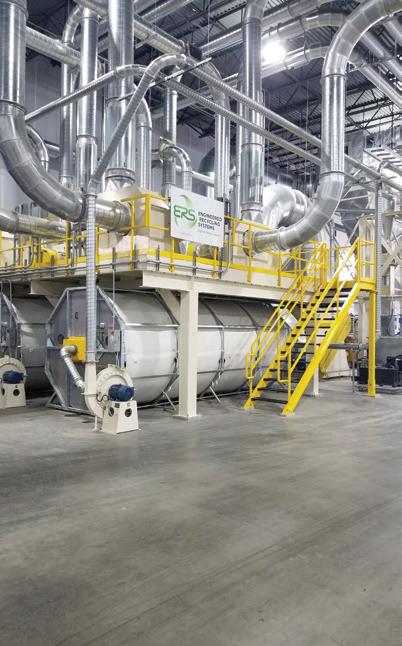
BY DAVID WIENS
The presses are running. The plant is humming. You’re staring at a six-week-old Indeed posting for a hand-stacker while last week’s operational call plays on repeat: “We have a personnel problem.” “Find more skilled workers.” “We should make it easier to want to work here.”
Nobody’s applying. You raised the wage—twice. Nobody wants to lift 40-pound bundles onto a pallet for eight hours in a plant that hit 95 degrees by June. The people you do have are burning out, stacking overtime, and one bad back away from a workers’-comp claim that costs more than the position pays in a year.
We know this dance. We’ve read what Deloitte, Bloomberg, and this column have been saying about the labor market for over a year. None of that is news. What is news: The options for doing something about it have gotten more capable, more practical, and more varied while we were waiting for job applications to roll in.
Collaborative robots, or cobots, occupy a different category than the industrial robots that have been priced out of reach for most independents. A cobot has force-limiting joints that stop on contact with a person, so it requires no caging. It plugs into a standard 110-volt outlet and programs through a drag-and-drop touch screen interface that an operator can learn in a single training session. Most models have fork pockets in the base, so you move them between lines with a pallet jack. New stacking patterns take minutes to build, not a call to an integrator.
The most immediate application for a box plant is palletizing at the delivery end of a flexo folder-gluer or converting line: A cobot catches bundled cartons and stacks them onto a pallet. When the pallet is full, an operator swaps it out, or increasingly, an autonomous mobile robot handles the exchange. Universal Robots, FANUC, and integrators such as ONExia and Robotiq build production-ready palletizing cells exactly for this work.
FANUC’s CRX series runs eight years maintenance-free. Robotiq has over 900 palletizing units in production, with more than 300 new deployments in 2025 alone. Palletizing is only one piece. Every plant has material-handling tasks that eat labor hours: pulling finished pallets to the stretch wrapper, staging for the dock, moving ink buckets and die boards to machines, swapping stock between stations. Autonomous mobile robots are starting to handle these. Vecna Robotics makes self-driving pallet trucks that handle nearly 8,000 pounds. Quasi AI, out of Maryland, builds point-to-point transport robots that deploy in under an hour with no infrastructure changes. Filics, a Munich startup, is testing autonomous ground-level pallet movers with DHL that lift 800 kg and recharge in 30 minutes. The component technologies exist, and corrugated-specific deployments are coming.
A production-ready cobot palletizing cell runs $60,000 to $120,000 depending on configuration and integrator. That’s real investment, and the instinct in any independent box plant is to benchmark it against cheaper mechanical alternatives— used load formers, new load formers, whatever’s on the auction site this week. That comparison misses what you’re actually buying.
A cobot moves between lines and adapts through software. It’s a platform that grows with your operation instead of rusting behind it. For plants that can’t justify the capital outright, Formic offers cobots on a subscription: no purchase, pay per hour of use.
The real payoff is redeployment. You have loyal people stuck in repetitive
September 28 - 30, 2026 Fort Worth, Texas


jobs and operator seats you can’t fill. Move your hand-stacker to the operator role they’ve earned, give them the pay bump their new skill set deserves, and let the cobot do the stacking. RNB Cosméticos in Spain deployed six cobots for palletizing, and production jumped so much, they hired more people to handle the increase. Existing staff moved off ergonomic misery and into cobot operations with a real skill on their ré sumé.
That’s the case, not “cobots are cheaper than a load former.” Cobots turn your best plant helpers into the skilled operators you can’t hire from outside, and they do it while you’re still running.
Food, beverage, cosmetics, consumer goods—same end-of-line challenges, same labor shortage, same ergonomic problems that drive turnover. Bob’s Red



Mill deployed a Universal Robots UR20 cobot and doubled its palletizing capacity. Setup took hours, and four operators moved off hand-stacking and into higher-value work. The only difference between those industries and corrugated is that they moved first.
Some applications are still emerging. Press feeding is one: High-speed flexo folder-gluers and die cutters outrun one or two people loading sheets, and a cobot feeding flats at the rate the machine needs is a logical next step, though production case studies in corrugated don’t exist yet. Vision-guided quality inspection via cobot-mounted cameras is another natural extension on flexo folder-gluer lines, where systems such as Leary’s SureSCAN already monitor glue application.
Speed is the fair objection for what is ready today. Cobots run six to 13 picks
per minute where industrial robots do 20-plus. But most independents have multiple changeovers per press per shift. Flexibility matters more than peak throughput in that world.
That hand-stacker posting is still up. The options for what comes next have changed. Not all of them are ready for primetime, but the ones that are will only get better, and the plants that start testing now will have the institutional knowledge to scale when the next generation arrives. The ones that wait will be learning from scratch.

David Wiens is CEO of BPS AI Software. He can be reached at david@bpsaisoftware.com



We provide customized solutions for your entire plant. Whether you're equipping a new plant, upgrading an existing facility, or looking for automation equipment for specific machinery, WSA-USA delivers comprehensive solutions. WSA-USA.COM INFO@WSA-USA.COM








BY MITCH KLINGHER
Like it or not, independent converters are the tail of the dog that represents the market for containerboard.
Integrated companies that own the paper mills are the dogs in this world, and when their tails wag, independent converters sometimes have to hold on for dear life. Paper mills are both enormously expensive to build and extremely profitable. Let’s take a look at the math (see table at right).
Now the reality is that they are not necessarily going to get this $50 on all of the tons, and the EBITDA (earnings before interest, taxes, depreciation, and amortization) per ton varies from mill to mill due to variations in the cost of furnish (OCC for recycled mills and pulp for virgin mills) and other cost inputs (utilities, freight, labor, etc.). But the numbers are large and worth fighting for, if you are a mill-based company. The profits that you can make by converting the containerboard into packaging is small by comparison and a much more difficult endeavor. According to articles published by our good friends at Bloomberg, the number of tons that are subject to open-market pricing is less than 2 million, so probably less than 5% of the market. So, what this all really has to do with is customer contracts.
Large companies like to have some certainty about the cost of their products and therefore like to enter into supply contracts with their vendors. It has been estimated that the large integrated companies that own the paper mills have as much as 70% of their output tied up in such contracts, and the only way they can get price increases is to have Fastmarkets endorse these containerboard increases. Independent converters tend

to have a much smaller percentage of such contracts. This is a legacy system that has developed over time, and 20 or 30 years ago, there were many integrated producers and many independent converters that were buying paper and converting the paper into packaging. The good folks at Fastmarkets were able to survey a lot of buyers to see what they were paying, and they were therefore presumably able to develop a statistically valid model of what the price being paid for containerboard was. If Bloomberg is right and less than 5% of the mill output is actually freely traded, then I don’t see how this is currently possible. Yet almost every contract that converters
have with customers refers to changes in price published by Fastmarkets. This is where we are at this point in time. The market for containerboard products is trapped in this legacy system that doesn’t seem to be based on any current reality, and Fastmarkets is stuck trying to help make sense of it and not upset all of its subscribers. They publish a great deal of relevant information about the markets, do a lot of good research, and try to be informative, but their monthly assessment of the price of containerboard seems to be all that anyone is interested in. And no matter what they do, it is virtually impossible for them to come up with a statistically valid model.


A weekly update on benefits and upcoming events for AICC members.
New hosts. More Great Stories.
Hear compelling conversations with successful entrepreneurs released on the first Monday of the month.
The largest integrated producers reduced the papermaking capacity in North America in the last 18 months or so by almost 3 million tons (net of additions), taking the market from about 40 million tons to about 37 million tons, because at the end of the day, the laws of supply and demand are impossible to escape. The demand for containerboard-based products shrunk in 2025, has not grown in 2026, and is at about the same level as it was 10 years ago. Even if your market is controlled by an oligopoly (a relatively small number of producers controlling the bulk of production), the only way to get prices up in the face of weak demand is to cut supply, and that is what they have done. Shutting mills is financially painful, and these companies now want their reward paid to them in increased prices.
I cannot tell you what a fair price for containerboard is, and I don’t think anyone else can either, since there are no public markets where containerboard is freely traded. I can tell you that, 10 years ago, the published price of containerboard was $655 (October 2016) and that, according to a ChatGPT search I just did, the producer price index has shown a cumulative increase of 53% over that period. This would give you an implied price of containerboard today of $1,002, which is almost exactly where the published price is as of April 17. Of course, the reality is again much more complex, and the increases in all of the major underlying input costs need to be analyzed. At the end of the day, none of this matters, because the laws of supply and demand control what is going to happen. In the absence of any public market for containerboard, the only arbiter of this
situation will be whether the producers can continue to control supply sufficiently. There seems to be excess capacity in all of the export markets for containerboard, and if there are tons that cannot be consumed in North America, it will be difficult to export them. I imagine, if this is the case, then there will be more mill closings.
But what will happen if a market dominated by a small number of producers continually raises the prices of raw materials but not the price of (noncontractual) finished goods that utilize these raw materials? Will they be able to find cover in a published but nonstatistically valid survey done by an independent third party? If my crude analysis that says that, based on the producers price index, the current price of containerboard appears to be reasonable, what will happen if the producers continue to indiscriminately raise the price in the absence of any objective increase in their costs? We are clearly in an inflationary economy, and the price of fuel and therefore transportation has increased greatly. But freight is a small part of the producers’ income statements. At the time of this writing, the mills have announced another $50 price increase to take effect in June, and we are all waiting to see how much of this Fastmarkets will publish in their next assessment of the market. The real question for all of us is not whether they will likely get 70% of whatever this increase is in their contracts, but whether they will go out and commensurately increase their noncontractual packaging prices. This is what the independent sector fears. If this is the case, then those on the tail of the wagging dog may be in for a rough ride indeed.

Mitch Klingher is owner of Klingher Nadler LLP. He can be reached at 201-731-3025 or mitch@ klinghernadler.com

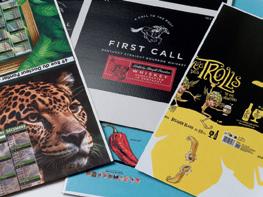










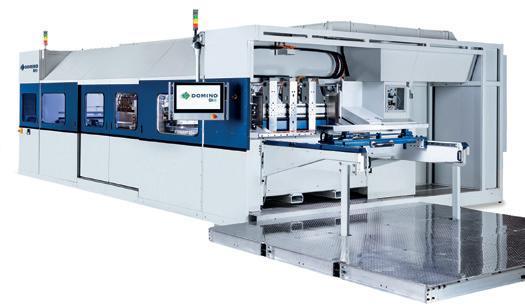
The Foundation for Packaging Education board of directors met during the AICC Spring Meeting at the Omni La Costa Resort & Spa in Carlsbad, California.
Approval of funding for fiscal year 2027 marks a significant milestone in advancing the educational mission of AICC and its partnership with the Foundation for Packaging Education. This achievement reflects a shared commitment to strengthening the independent packaging industry through strategic investment in workforce development, leadership training, and modern learning infrastructure.
A central accomplishment is the continued evolution of Packaging University, AICC’s flagship education platform. With FY27 funding secured, the organization will enhance its digital learning ecosystem to provide more accessible, scalable, and high-quality training opportunities for member companies. This ensures that employees at all levels, from entry-level workers to senior leadership, can build critical skills necessary for long-term industry success.
The approved funding enables major advancements in learning management system (LMS) capabilities. Continued support of the LMS platform ensures uninterrupted service, while the successful migration of content safeguards data integrity and positions the program for future growth. The adoption and implementation of the TopClass LMS represents a transformative step forward, delivering improved user experience, advanced reporting, and greater scalability to meet evolving industry needs.
Another key accomplishment is the investment in technical expertise and content development. Funding for advisors, consultants, and specialized services will elevate the quality, relevance,



and accessibility of educational materials. This includes expanded capabilities in content creation, system administration, and translation services, ensuring that Packaging University remains globally accessible and aligned with best practices.
Other previously approved foundation projects such as the Next Gen program and the Business Management in Corrugated Packaging Certificate program continue to run and are highly regarded by those enrolled in the programs. The foundation also manages two scholarship programs, the AICC J. Richard Troll Scholarship and the Steve Narva Memorial Fund.
Collectively, these advancements and programs reinforce AICC’s role as a critical link between education and industry performance. By modernizing infrastructure and expanding learning opportunities, the organization is better equipped to support innovation, operational excellence, and workforce readiness across independent packaging companies.

Ultimately, FY27 funding approval represents more than financial support—it signifies confidence in a long-term vision for industry growth and sustainability. Through these initiatives, AICC and the Foundation for Packaging Education are actively shaping a stronger, more resilient packaging workforce prepared to meet future challenges and opportunities.
Please join the growing list of donors supporting the cause of industry education by scanning the code on this page or visiting www.packaginged.org/donate

Q U E S T I O N S ?

A s k A I C C ’ s e x p e r t s y o u r c o r r u g a t e d , f o l d i n g c a r t o n , r i g i d b o x , a n d r i s k m a n a g e m e n t q u e s t i o n s .
F i n d y o u a n s w e r s a t
A I C C b o x . o r g / E x p e r t s .
BY CAITLIN SALAVERRIA
Over the past several months, the International Corrugated Packaging Foundation (ICPF) has been analyzing workforce trends across the corrugated industry through our inaugural Workforce Index Survey. The goal is simple: to better understand hiring patterns, retention, and the evolving needs of our workforce.
While the data provides valuable direction, it also reinforces something many of us already know: Hiring challenges are not new, and they are not isolated. Companies continue to navigate a competitive labor market, evolving skill expectations, and the need to fill a wide range of roles across operations and business functions.
Data alone doesn’t tell the full story. What isn’t fully captured when we measure and diagnose workforce needs across the industry is the gap in awareness among students and emerging talent as they face career decisions.
Many students are not actively choosing between corrugated and another industry; they simply don’t know this
industry exists. Rather than a conflict of choice, our industry has the advantage of introducing students to a world they haven’t yet discovered—one where they are consistently energized by innovation and the prospect of a stable, meaningful career.
Closing this gap requires more than clear job descriptions and targeted posts on LinkedIn. It requires earlier and more intentional engagement. That’s where ICPF’s work continues to evolve.
In 2026, we are continuing to prioritize engagement with students across programs such as SkillsUSA and our partnership with The Packaging School’s Certificate of Mastery in Packaging Management (CMPM) program. These opportunities put students at the center of our mission and facilitate intentional engagement at pivotal stages of their career development journey. Through SkillsUSA, we are reaching students at a critical point in their decision-making process by introducing careers in corrugated through classroom engagement, speaker series, and direct outreach at the

SkillsUSA National Leadership & Skills Conference. Our CMPM scholarship program connects college students pursuing degrees beyond traditional packaging disciplines with real-world industry applications and direct exposure to corrugated packaging professionals. And through ICPF’s mentorship program, Corrugated Connections, we are creating meaningful connections between students and early career professionals that help build a network future industry members can rely on.
These efforts are designed to complement, not replace, company-level recruitment. They help ensure that when students begin exploring careers, the corrugated industry is part of the conversation.
As we continue to build on insights from the Workforce Index Survey, one thing is clear: Strengthening the talent pipeline isn’t just about improving how we hire. It’s about expanding who knows about our industry in the first place.
For AICC members, that presents a meaningful opportunity. Whether through plant tours, internships, classroom engagement, or mentorship, early exposure plays a critical role in shaping career decisions.
The more proactive and informed we are as an industry today, the stronger our workforce will be tomorrow.

Caitlin Salaverria is president of ICPF.







It’s time to unbox the latest model in the Ultima machine family –EMBA 295 QS Ultima ™. Delivering outstanding productivity and quality as well as material efficiency to large box operations. That’s what we call big news.





By introducing the EMBA 295 QS Ultima ™, we now offer a complete machine range to fit any customer need. It comes loaded with all the







benefits you’d expect and like all our Ultima machines it features our unique Non-Crush Converting ™ and Quick-Set ™ technologies.


The 295 QS Ultima ™ offers true DualBox ™ production through TwinFeed ™ and XL slotter, as well as complex internal box die-cutting and creasing with the bottom diecutter. Several available options, like for example HighBox ™ and the award winning LiquidCreaser ™ , further enhance its true flexibility and top-class performance.





The Manufacturing Institute (MI) reported that, in January, manufacturing job openings rose by 69,000 to 495,000, the most recent data available at the time of writing. This level exceeds the prepandemic (2017–2019) average of 432,000, as well as the averages recorded in 2024 and 2025.
Within that total, nondurable goods job openings increased by 16,000 to 155,000, while durable goods openings climbed by 53,000 to 340,000. The manufacturing job openings rate rose to 3.8%, up from 3.3% in December and 3.4% one year earlier.
The broader economy reflected a similar trend. Job openings reached 6.9 million in January, up 396,000 from the previous month, though still down 485,000 year over year.
At the same time, hiring activity in manufacturing remains subdued. The hires rate edged up just 0.1% to 2.3%, still near the 10-year low of 2.1%. The separations rate also dipped slightly to 2.3%, down from 2.6% a year earlier. Within that figure, layoffs and discharges rose modestly by 7,000, while quits declined by 18,000.
Taken together, these metrics reinforce a consistent pattern: Compared to the broader nonfarm sector, manufacturing continues to operate in a “low-fire, low-hire” environment.
More recent federal labor data from March supports a cautiously improving outlook. Manufacturing added 15,000 jobs during the month—a 400% increase year over year—despite heightened geopolitical uncertainty, including the impact of the Iran war.
The takeaway is clear: Demand for talent persists, but hiring and turnover trends point to a more deliberate approach. Manufacturers are prioritizing retention and measured growth over rapid expansion. The challenge is no longer simply filling open roles but ensuring that employees have the skills needed to keep pace with rapid technological and operational change—the right people in the right seats.
For many AICC members, this is not a new realization. Over the past decade, independent converters have invested heavily in advanced equipment and systems, increasing both efficiency and complexity on the plant floor. As a result, the emphasis has shifted toward hiring the right individuals and providing structured, ongoing training from day one.
AICC has supported this evolution, most notably through the launch of Packaging University in 2017 and its continued growth into a comprehensive online platform offering nine colleges of study and more than 150 courses.
Although hard data on retention within AICC membership is limited, anecdotal evidence suggests it is strong. Frequent recognition of employee milestone anniversaries on social media, along with firsthand observations during member plant visits, point to a workforce culture built on engagement, continuity, and mutual respect between leadership and team members.
The formula is simple: Invest in your people as deliberately as you invest in your equipment, and the results will follow.

Michael D’Angelo AICC President