explain how to succeed in the Professional 2 EPP exam, highlighting the importance of strong technical knowledge, real-world application, effective exam technique and disciplined time management.
The future of accountancy
Shane Lukas (AVN) explores how AI and automation are reshaping the profession, and argues that accountants should shift from compliance work to ‘profit improvement’ roles that deliver deeper, higher-value insight to clients.
Strategy
Modern SMEs, modern finance
James Hunter (AccountsIQ) shares practical lessons for accountants supporting fast-scaling, digital-first and internationally active SMEs, from systems and revenue recognition to cash management and governance.
Businessdevelopment
The future of accountancy
Shane Lukas (AVN) explores how AI and automation are reshaping the profession, and argues that accountants should shift from compliance work to ‘profit improvement’ roles that deliver deeper, higher-value insight to clients.
Internationalworking
nomads
Alex Ferrigno (Global Expatriate Tax Services) examines the rise of digital nomad visas and the complex tax, residency and compliance issues they create for individuals and employers operating across borders.
Careerdevelopment
Becoming a trusted growth partner
Michael Fleming (KWC Legal) explains why firms must embed a business development mindset across their culture, helping accountants build stronger client relationships and drive sustainable growth.
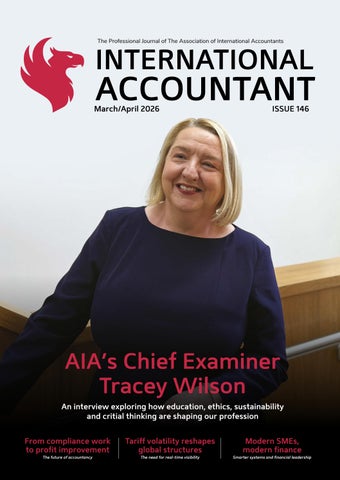
The 15% tariff whiplash
Ed Boal (StructureFlow) examines how rapid tariff shifts are exposing structural risks for multinational groups, and why advisers need real-time visibility of entity structures to respond effectively.
A deepening crisis in private education
Shaun Barton (Education Advisory) explores the growing financial pressures facing private education providers and the key warning signs, risks and recovery strategies accountants need to understand.
Rising to the pressure with confidence
The pace of change facing the accountancy profession shows little sign of slowing.
Across this issue, one theme emerges clearly: the environment in which accountants operate is becoming more complex, more volatile and, at times, less predictable than ever before.
From rapid shifts in global trade policy to the continued rise of digital-first businesses and increasingly international ways of working, the challenges are real.
Ed Boal’s examination of tariff ‘whiplash’ highlights just how quickly structural assumptions can be tested, while Alex Ferrigno’s exploration of digital nomadism reminds us that even seemingly simple changes in where people work can carry significant tax and compliance implications.
Closer to home, Shaun Barton outlines the mounting financial pressures facing private education, where rising costs, regulatory changes and shifting demands are forcing institutions to confront difficult realities. Meanwhile, James Hunter reflects on the practical challenges of supporting fast-scaling, internationally active SMEs, where systems, governance and cash discipline must evolve in step with growth. These are part of a broader shift in how organisations operate and the expectations placed on their advisers.
These articles point to a profession operating in an environment of increasing complexity. But they also highlight something more positive: the growing
opportunity for accountants to move beyond traditional roles. In many cases, the accountant is no longer simply reporting on performance, but actively shaping the decisions that drive it.
As Shane Lukas argues, the future of the profession lies in delivering deeper insight and helping clients to improve performance. Michael Fleming echoes this, emphasising the importance of embedding a commercial, relationship-focused mindset across firms. In both cases, the direction of travel is clear. Technical excellence remains essential, but it is no longer sufficient on its own.
What unites these perspectives is a return to the core strength of the profession: the ability to interpret numbers, identify patterns and ask the right questions. Whether it is spotting early signs of financial distress, understanding the drivers behind changing margins, or navigating cross-border risk, accountants are uniquely positioned to bring clarity where others see confusion.
This issue reflects a profession that is evolving – not by abandoning its foundations, but by building on them. The challenge is not simply to keep pace with change, but to respond with confidence, curiosity and a willingness to engage more deeply with the clients we support.
If there is a common thread running through these pages, it is this: the role of the accountant is expanding. And with that expansion comes both responsibility and opportunity.
Contributors to this issue
Shaun Barton is an Education Advisory Specialist at Education Advisory, providing financial, restructuring and strategic guidance to schools.
Ed Boal is Chief Domain Expert at StructureFlow, specialising in corporate structuring, entity governance, visual modelling and complex group structures.
ALEXFERRIGNO
Alex Ferrigno is an International Tax Manager at Global Expatriate Tax Services (GETS), specialising in crossborder personal and employee taxation.
Michael Fleming is Head of KWC Legal at KWC Global, a business development specialist who mentors professionals to build stronger client relationships.
James Hunter is CFO of AccountsIQ, working closely with scaling and internationally active SMEs to strengthen their financial control and systems integration.
Shane Lukas is Managing Director of AVN, The Accountants’ Network, with 28 years’ experience helping accountants deliver greater value and profitability.
Angela Partington Editor, IA
SHAUNBARTON
EDBOAL
MICHAELFLEMING
JAMESHUNTER
SHANELUKAS
Highlights and key stories from
across the accounting world
FRC steps up enforcement activity
The Financial Reporting Council (FRC) has opened a number of new investigations into accountants and audit firms in recent weeks, signalling a continued focus on enforcement despite ongoing delays to wider audit reform.
Among the latest cases are inquiries linked to major UK companies, including work connected to the housebuilder Vistry Group. While details remain limited, the investigations centre on whether professional standards were met in the preparation and audit of financial statements.
The FRC has stressed that opening an investigation does not imply misconduct, but reflects its role in assessing whether accounting and auditing requirements have been properly applied. Outcomes can range from no further action
to financial penalties, sanctions or requirements to improve procedures.
The activity highlights how the regulator continues to operate assertively within its existing remit, even as plans to replace it with the proposed Audit, Reporting and Governance Authority (ARGA) remain on hold. In the absence of legislative reform, enforcement remains one of the FRC’s primary tools for driving improvements in audit quality and corporate reporting.
For the profession, the investigations underline the increasing scrutiny of high-profile audits and the importance of robust documentation, professional scepticism and adherence to standards. With investor confidence still high on the policy agenda, further enforcement activity is widely expected.
IASB set to issue IFRS 20 for regulated industries
The International Accounting Standards Board (IASB) is expected to issue a new standard, IFRS 20, in the second quarter of 2026, introducing a comprehensive framework for accounting for regulatory assets and liabilities. It will require companies to reflect future price adjustments in their financial statements, rather than leaving them unrecorded. This is particularly relevant for businesses in regulated sectors such as utilities, energy and transport, where prices are set or influenced by regulators.
At present, IFRS Accounting Standards do not provide a consistent approach to reporting the effects of rate regulation, leading to variation in practice. Companies may be allowed to recover costs, or
required to return amounts to customers, through future pricing, but these effects are not always clearly reflected.
IFRS 20 is expected to introduce clear principles for recognising these arrangements as regulatory assets or liabilities, providing a more accurate picture of financial performance. Enhanced disclosure requirements are also likely.
Firms advising clients in regulated industries will need to assess regulatory agreements and apply professional judgement in determining whether enforceable rights and obligations exist. Multinational groups may also need to revisit reporting processes to ensure consistency across jurisdictions.
SUSTAINABILITY
EU moves to simplify sustainability reporting
On 24 February 2026, the European Union adopted measures to simplify sustainability reporting requirements under the Corporate Sustainability Reporting Directive (CSRD), as companies prepare for the first wave of mandatory disclosures.
The move reflects growing concern about the complexity and cost of implementing the new rules, particularly for smaller and mid-sized organisations. While the CSRD aims to improve transparency around environmental, social and governance (ESG) matters, many have warned that the volume of data required and the operational burden of compliance remain significant challenges.
Under the changes, elements of the European Sustainability Reporting Standards (ESRS) will be streamlined, with a focus on reducing duplication, clarifying guidance and making disclosures more practical. The European Financial Reporting Advisory Group (EFRAG) has been tasked with refining the technical standards.
The EU has made clear that the overall objectives of the CSRD remain unchanged. Companies will still be required to provide detailed information on sustainability risks, impacts and strategy, but the revised approach is intended to make reporting more proportionate.
For international accountants, the developments highlight a shift in focus from expanding ESG requirements to making them operational. Firms advising EUbased or EU-exposed clients will need to stay alert to changes, while continuing to support businesses in building systems for data collection, controls and assurance.
With implementation already under way, the changes come at a critical stage. The challenge will be to balance compliance with practicality as sustainability reporting moves into day-to-day reality.
APPOINTMENT
AIA’s
MichaelChow appointed
judgefor2026 BrandsforGoodAwards
AIA is pleased to announce that Michael Chow, former Council Member and Fellow of the Association (FAIA), has once again been appointed as a judge for the Brands for Good Awards 2026 in Singapore.
This marks Michael’s fifth consecutive year on the judging panel, reflecting his enduring commitment to ethical business practices, sustainability and purpose-driven leadership.
The Brands for Good Awards closely align with AIA’s commitment to high standards of ethics, integrity and professionalism across accountancy, corporate governance and business leadership. As a professional membership body acting in the public interest, AIA actively supports initiatives that promote responsible decisionmaking, transparency and long-term value creation, principles central to both the profession and the Brands for Good mission.
Reflecting on his appointment, Michael said: ‘The Brands for Good Awards have been transformative for many organisations, helping them overcome challenges and achieve their goals. They truly turn ambitious possibilities into reality.’
AIA congratulates Michael Chow on this well-deserved reappointment and takes pride in seeing its Fellows continue to play influential roles in advancing ethical practice, good governance and public trust in business at both regional and international levels.
AIA news
Updates, important shifts, and key decisions from the AIA
AIA celebrates Commonwealth Day 2026 in London
AIA proudly marked Commonwealth Day 2026, embracing this year’s theme, ‘Unlocking opportunities together for a prosperous Commonwealth’. The theme highlights the power of collaboration, shared innovation and inclusive growth across the Commonwealth’s 56 member nations.
The day began with a reception in Westminster, hosted by Philip Turnbull, AIA Chief Executive, and Shahram Moallemi, AIA President. The event welcomed an international guest list of senior leaders from accountancy, business, education and regulation, reflecting AIA’s global reach. Attendees included Salvador Marin of the European Federation of Accountants and Auditors for SMEs (EFAA), alongside AIA Vice Presidents, Council members, examiners and directors, as well as representatives from international professional bodies, financial regulators and higher education institutions.
The celebrations concluded with the Commonwealth Day Service at Westminster Abbey, attended by His Majesty King Charles III, Her Majesty The Queen, and Their Royal Highnesses The Prince and Princess of Wales. The multi-faith service celebrated the Commonwealth’s diversity and achievements, featuring music, readings and inspiring stories from citizens across member nations.
The service also recognised International Women’s Day, celebrated the day before, with speakers highlighting the vital contributions of women across the Commonwealth and the importance of expanding opportunities for women and girls in education, leadership and professional life.
Philip Turnbull, AIA Chief Executive, said: ‘Commonwealth Day 2026 has been an inspiring occasion to showcase how collaboration can unlock opportunities and drive prosperity across the Commonwealth. AIA is proud to play its part in nurturing talent and supporting inclusive growth through professional education.’
As a Commonwealth Accredited Organisation, AIA continues to champion accessible professional education, empowering individuals across the Commonwealth with world-class accountancy qualifications. Through its celebration of Commonwealth Day, AIA reaffirms its commitment to unlocking opportunities and supporting a more prosperous, inclusive and equitable Commonwealth.
Chief Operating Officer honoured in 2026 Women in Trade Associations Powerlist
AIA Chief Operating Officer, Nicola Perry, has been named in the 2026 Women in Trade Associations Powerlist, recognising her exceptional leadership, operational expertise and lasting impact across the sector.
The Powerlist, a collaboration between the Federation of Small Businesses (FSB), the Confederation of British Industry (CBI) and the Trade Association Forum (TAF), celebrates inspirational women making a meaningful difference. This year’s list was selected from over 200 nominations by a judging panel including Nicola Bates, Julia Garvey, Aoife Doherty, Liz Banks and Lucy Monks, who identified 100 outstanding women.
Nicola plays a central role at AIA, translating strategic ambitions into
PARTNERSHIP
practical action that strengthens governance, streamlines operations and improves organisational efficiency. With responsibility for membership, education, governance, IT and people, she provides clear direction, oversees key initiatives and ensures effective day-to-day operations.
She leads with fairness, clarity and calm, fostering collaboration, supporting professional development and enhancing communication across teams. Nicola has expanded AIA’s CPD programme, driven the successful launch of qualifications in India, and championed practical sustainability initiatives, delivering lasting impact for members, students and the wider association.
Commenting on her recognition, Nicola said: ‘I’m truly honoured to be
AIA signs strategic MoU with Edupro to advance global education
AIA is pleased to announce the signing of a Memorandum of Understanding (MoU) with awarding organisation Edupro, marking the start of a strategic collaboration to enhance professional education and development worldwide. This partnership reflects a shared commitment to delivering high-quality, accessible learning and supporting the evolving needs of finance professionals. Together, AIA and Edupro will develop and expand international progression pathways across key disciplines, including accountancy, finance and Islamic finance. Edupro is recognised for its forwardthinking approach to education, designing qualifications that emphasise sustainability, inclusion and real-world impact. Delivered through a global network of approved centres and strategic partners, its programmes align
closely with AIA’s mission to advance the accountancy profession and empower individuals through education.
AIA has long championed sustainable finance and the integration of environmental, social and governance (ESG) principles into professional practice. By promoting education in green finance and responsible investment, AIA equips future professionals to balance economic growth with social and environmental responsibility. This focus aligns strongly with Edupro’s values and commitment to impactful education.
Commenting on the agreement, Philip Turnbull, Chief Executive of AIA, said: ‘This collaboration with Edupro represents an exciting opportunity to broaden access to high-quality professional education on a global
included in the 2026 Women in Trade Associations Powerlist alongside so many inspiring women doing incredible work across the sector. Being part of the AIA team is a privilege, and I’m proud to contribute to an organisation that supports its members and advances the profession globally.’
AIA is immensely proud to see Nicola’s work recognised in this way. Her leadership, dedication and tireless commitment to excellence make her an inspiring figure within our organisation and across the wider profession.
scale. By combining our expertise in accountancy, finance and sustainable practices, we can equip future professionals with the knowledge and skills to drive responsible growth and make a positive impact in today’s interconnected world.’
The MoU reflects a shared ambition to expand access to quality education and equip future professionals with the skills needed to succeed. AIA looks forward to working closely with Edupro to deliver initiatives that support professional growth and contribute to the advancement of the global accountancy and finance sectors.
VISIT
AIAwelcomesUK academicPaulThompson toHeadOffice
AIA was pleased to welcome UK academic Paul Thompson to its Head Office for a professional visit focused on the future of accountancy education and the evolving needs of the profession.
During the visit, Mr Thompson met with AIA’s senior leadership team, including AIA Chief Executive Philip Turnbull. Discussions explored developments in professional accounting education, the role of academic research in shaping industry practice, and the importance of maintaining high professional standards in a rapidly changing business environment.
As a professional accountancy membership body offering internationally recognised accounting qualifications, AIA values strong engagement with the academic community. The visit provided an opportunity to exchange insights on curriculum relevance, employability and the skills required by current and future finance professionals.
Reflecting on the visit, Philip Turnbull said: ‘We were delighted to host Paul Thompson at our Head Office. Collaboration between professional bodies and academia is essential to ensuring that our qualifications and professional development remain relevant and forward-looking, preparing our members for the challenges of a dynamic global economy.’
The visit reflects AIA’s ongoing commitment to thought leadership and professional excellence, and fosters constructive relationships with education and industry stakeholders around the world.
AIA Hong Kong Branch combines networking and nature on Tap Mun Trip
AIA Hong Kong Branch recently co - organised a successful day trip to Tap Mun, also known as Grass Island, offering members a welcome escape from the bustle of city life. The outing brought together accountants and finance professionals for a day of relaxation, exploration and connection in a picturesque coastal setting.
Beyond the scenic journey, the trip provided a valuable networking opportunity. Members engaged in informal conversations, strengthening existing professional relationships and building new connections in a relaxed and friendly environment. The setting encouraged open dialogue and camaraderie, reinforcing the sense of community within the AIA Hong Kong Branch.
REGULATION
Suspicious Activity Reporting trends 2025-26
The latest report on Suspicious Activity Reporting trends for 2025-26 highlights key developments and ongoing challenges in tackling financial crime. Published by AIA, it underscores the critical role that SARs play in alerting law enforcement to potential instances of money laundering and terrorist financing.
Each year, AIA Members in Practice must submit an Annual Declaration covering their firm, internal controls and clients. As part of this process, AIA collects data on the number of Suspicious Activity Reports (SARs) made over the previous 12 months and their general categorisation. A SAR is required where, during business in a regulated sector, an employee suspects criminal activity involving proceeds. Further guidance is contained in the Anti-Money Laundering Guidance for the Accountancy Sector
The 2025-26 report reflects trends from the previous year, highlighting persistent challenges and the need for continued vigilance. A rise in SAR
The day struck a balance between leisure and professional engagement, reflecting AIA’s commitment to supporting both the wellbeing and professional development of its members. Attendees welcomed the opportunity to step away from their busy schedules, reconnect with nature and build stronger ties within the profession.
submissions indicates increased awareness and responsiveness among AIA members, reinforcing their role in combating financial crime and protecting the financial system.
Key findings include a slight increase in both the number of firms submitting SARs and the total number of reports. While the average number of clients has remained stable, the average annual turnover of reporting firms has fallen significantly, suggesting lower participation from larger firms during this period.
Recurring issues include closing companies, tax compliance concerns, misuse of grants, disguised remuneration, undeclared income, non-cooperative clients, unusual transactions, revenue reporting discrepancies, fraud and theft, unregulated investments and false accounting.
The report reinforces the importance of timely and accurate reporting to prevent financial crime, meet legal obligations and support law enforcement. By identifying and reporting suspicious activity, AIA members play a critical role in promoting transparency and protecting both their clients and the wider economy.
You can read the report in full at: tinyurl.com/nhwcbfb9
Ethics and Professional Practice Level 2
Clear strategy, strong application and disciplined timing are the keys to success in the Professional 2 EPP exam, as an AIA examiner explains.
Ethics and Professional Practice is one of the four papers that students are required to pass at Professional Level 2.
The paper comprises four scenariobased questions, each typically with three requirements attached. There are 25 marks available per question, giving a total of 100 marks.
The scenarios are designed to mirror real life, presenting ethical dilemmas or complex professional situations that accountants may encounter. Candidates must first understand the scenario and the issues it raises, and then determine the most appropriate course of action using their knowledge of the EPP syllabus. Answers must be clearly and concisely presented, demonstrating both knowledge and application skills. This is quite a tall order!
There is no doubt that the Ethics and Professional Practice exam presents a real challenge for students. The skills required to pass are multi-layered.
Simply learning the material will not be enough. Even understanding how theory has been applied to scenarios in past papers does not guarantee the ability to apply it to a new, unseen scenario on exam day.
Building strong knowledge foundations
Success depends on a combination of using the right resources during preparation and tackling the exam in the most effective way on the day itself.
The first and most obvious requirement is to know the material thoroughly. Students sitting the exam are expected to be very familiar with the Ethics and Professional Practice textbook. The theories can be challenging, so writing a list of key content is a good starting point. Use coloured pens and title it ‘Theories I must know’. Place it somewhere visible – on your fridge door, desk or bedroom wall – or use Post-it notes around your home.
Every time you see them – while waiting for dinner to cook or the kettle to boil – ask yourself if you can explain the theory quickly and clearly, ideally out loud. This type of active learning helps knowledge to ‘stick’. Knowledge alone will not guarantee success, but without it, success is impossible.
Ifyouputthe workin,youcan achievesuccess intheEthicsand Professional Practiceexam.
Practice explaining ethical theories to anyone who will listen – your flatmate, a family member, or even your dog! Without these solid foundations, your exam answers will lack depth and structure.
Developing application skills
The next challenge is applying your knowledge effectively. The best way to develop this skill is through exposure to scenarios, both in textbooks and, more importantly, in real life. A scenario is essentially a story about a business and the people within it. These stories appear daily in the news and at work. You’ll find them wherever you look!
Be curious about business stories. Question motives, strategies and behaviour. For example, you see in the business news that WH Smith Plc, a large international travel retailer, has recently appointed a new CEO. Why was the appointment made? What led to the change? What might the implications be?
The more you practice asking ‘What?’ and ‘So what?’, the easier it becomes to analyse exam scenarios and identify the underlying ethical and professional issues.
Understanding command words
Against the backdrop of curiosity and application skills, you must understand exam command words. Go back to the story about WH Smith. Consider how you would respond if asked to ‘discuss’ the appointment of a new CEO. Would your response differ if you were asked to ‘evaluate’ it? How would ‘critically evaluate’ change your approach?
This type of thinking can be practised anywhere – on the bus or even in the bath! You don’t need a paper and pen. Just get into the habit of taking 15 minutes to familiarise yourself with a business story and then think about the issues behind it. You will be developing the analytical insight and structured thinking that the AIA wants to see from successful candidates.
Practising past questions
The next step is to practise past exam questions. Attempt as many as possible. Do not be discouraged if your answer looks very different from the published answer at first. With practice you will see that patterns begin to emerge. You will also notice the importance of headings and subheadings.
When a question asks you to ‘evaluate issues and recommend a course of action’, you will recognise that it contains two clear tasks, and structure your answer accordingly. See this as a way to signal to the examiner that you have practised diligently, read the question carefully, and structured your answer to maximise the
marks awarded. Over time, your answers should resemble the model answers more closely and your confidence will grow.
Begin by reading practice questions and writing short answer plans before reviewing the model answers. As your confidence grows, start to practise questions under timed conditions.
Managing time effectively
Time management is critical, and you must calculate the correct time for each requirement in the exam. There are 100 marks available in the three-hour exam, which works out at 1.8 minutes a mark. So a 10 mark question should take you 18 minutes.
Knowing how long you have to complete each part of a question and moving on when that time runs out is crucial. Without timed practice, you’re unlikely to pass. It’s like going into a driving test having never actually driven a car! Reviewing questions is not the same as answering them under exam pressure. Exam technique must be developed through rehearsal.
Answering for maximum marks
Building confidence will enable you to attempt all 100 marks on the paper. It is far harder to score 50 out of 50 than to score 50 out of 100. Attempting only half of the paper requires near perfect performance, which is unlikely for even the most talented student who is lucky with the questions.
A good answer refers frequently to the company and the people in the scenario. Application requires explicit references to the facts you have been given. It is useful to mark your practice answers with a red pen, underlining every reference to the company and the scenario. No underlining usually means that there isn’t enough application for you to pass!
Try to make as many good, well-explained points as there are marks available – for a 5 mark question, aim for 5 relevant points. Examiners cannot award marks for white space or for points that are not made. Also try to be concise and get to the point quickly. The examiner can only mark what is written!
Final thoughts
Read and learn the syllabus content. Be curious about its relevance, drawing on real-life scenarios. Practise past exam questions properly and under timed conditions. On exam day, write well-structured answers to every question, and respond directly to the command words.
None of this is easy, and it will need great investment of time, but if you put the work in, you can achieve success in the Ethics and Professional Practice exam. Good luck! ●
The future of accountancy
Shane Lukas explains why ‘profit improvement’ is the positioning shift our profession needs.
ShaneLukas ManagingDirector,AVN
The accountancy profession is undergoing structural change.
AI-powered software continues to automate tasks that once required qualified professionals. Compliance fees are under pressure, turnaround times are shrinking and technology is improving at pace. This is not a distant possibility; it is already reshaping firms across the world.
You may have been told repeatedly that you need to provide ‘advisory’ services to stay relevant and be of value to your clients. If you
feel unqualified, inexperienced or unequipped, you are not alone. At AVN – The Accountants’ Network – we speak to hundreds of accountants every year, and 93% of them feel the same way.
The question is not whether the profession will change, but how accountants will respond to that change – and whether they will lead it or be overtaken by it.
Three
possiblefutures
In broad terms, there appear to be three strategic paths available.
1.Assumeyouwon’tbeaffected
The first path is to assume limited impact, and to ignore the impact of AI altogether. Firms could continue to operate as they always have, relying on established relationships and recurring compliance work.
However, this carries long-term risk. Your competitors will adopt more efficient models and undercut you, and your clients will leave for faster, cheaper alternatives. Eventually, you may be forced to sell your practice for a fraction of its former value – or simply close.
The second path is to embrace AI and outsourcing fully, building highly efficient compliance operations. In this model, firms maximise productivity and compete on volume and price.
This can succeed commercially but it requires continual client acquisition, disciplined cost control and acceptance that compliance – in isolation – is becoming a commodity service. This route will lead to more clients, but it will also generate greater burdens and thinner margins.
3.BecomeaProfitImprovement Accountant
A third option is to embrace AI and outsourcing for what they do best – efficient compliance delivery – while redirecting the time and insight they free up towards higher-value client engagement. You can use the data generated to have tailored conversations with your clients about profit improvement, cash flow strength and their longterm financial resilience.
In practical terms, this may mean working more intensively with a smaller portfolio of clients who recognise and are prepared to pay for this deeper level of support. The emphasis shifts from volume to value, and from transactional reporting to ongoing financial improvement.
This is what I describe as Accountancy v2.0: a model in which technological capability and human insight combine to make accountants more valuable than ever before. Automation enhances efficiency, while professional insight enhances impact –together increasing the relevance and value of the accountant in a changing marketplace.
The
difficultywith‘business
advisory’
For many years, accountants have been encouraged to move into ‘business advisory’ work. The advice is well intentioned. However, after 28 years of working exclusively with accountants, I’ve noticed that the label itself has created discomfort for many practitioners.
‘Business advisory’ can imply broad, generalist expertise – spanning strategy, marketing, operations, HR and sector-specific insight. Many practitioners feel uncomfortable positioning themselves as generalist business experts, particularly outside industries in which they have direct experience.
This helps to explain why so many report feeling unprepared or underqualified for advisory roles. The issue is not a lack of capability, but an anxiety about operating outside their perceived core strengths.
There is a well-known observation attributed to Einstein: ‘Everybody is a genius. But if you judge a fish by its ability to climb a tree, it will live its whole life believing that it is stupid.’ This is instructive here. In some respects, the profession has been encouraged to ‘climb trees’: to adopt a broad consultancy identity rather than build on its distinctive expertise.
Yet accountants possess a rare and valuable capability. They are trained to interpret numbers with precision, objectivity and discipline.
Rediscoveringanaturalstrength
There are few business owners who would not welcome increased profits. Equally, there are few who would not value the ability to work a little less and earn a little more; stronger profitability is often what makes that possible.
Profit is a number. Cash flow is a number. Margins, KPIs and growth rates are all numbers. They are measurable, analysable and capable of improvement.
Business owners may not instinctively see their accountant as a general business guru. They do, however, place considerable trust in their accountant’s understanding of financial data. That distinction is significant. This is where the positioning shift occurs. A Profit Improvement Accountant does not claim to know the client’s industry better than the client does. Instead, they draw on their natural skills – numerical expertise, systematic thinking and disciplined questioning –to help business owners identify opportunities that may have been missed.
The role is less about dispensing broad advice and more about structured exploration. By asking the right questions, grounded in financial evidence, accountants can prompt clients to think differently about performance, pricing, costs and cash flow.
If the earlier metaphor holds, the objective is to apply your accountancy skills fully and confidently – not by climbing trees, but by excelling in the environment that you understand best.
Whatthislookslikeinpractice
Here’s a typical scenario. A client comes in for their year-end review. The accounts have been prepared. The tax has been calculated. In principle, the meeting could conclude within 15 minutes.
However, a closer look at the figures shows that their gross margin has dropped by 3% over two years. Debtor days have increased. Turnover may be stable or even rising, yet profitability is under pressure. The client is, in effect, working harder for less.
In a traditional compliance-focused model, these movements might be noted in passing. The client acknowledges them. The meeting moves on. Little changes.
A profit improvement approach pauses at this point. The accountant asks a simple but deliberate question: what is driving the change in margin?
The initial responses are often predictable – rising costs, competitive pressure, economic conditions. Many accountants would stop the conversation here, because they assume that the client knows their own business.
These issues may all be valid, but they are also frequently the explanations that clients have been relying on for months or even years. When accepted without further examination, they can simply become reasons for inaction. These reasons have been used to explain away the decline – and why nothing has been done to stop it.
But this is where the real conversation begins, rather than ends. With structured follow-up questions, grounded in financial evidence, the accountant can help the client to test those assumptions. Is pricing keeping pace with input costs? Has the customer mix shifted? Are inefficiencies accumulating in specific areas? The expertise required here is not sector specialism but disciplined financial analysis – with your ability to use numbers as a torch to illuminate aspects of the business that may have gone unchallenged.
Structured properly, this conversation can be worth hundreds or even thousands of pounds per month to clients who are struggling, stressed and desperate for someone to help them see a way forward.
Anethicaldimension
Some accountants worry that a greater focus on profit improvement may be perceived simply as squeezing more fees from their clients. However, it is about being fair to them.
Many business owners are overworked and underpaid. Sixty or seventy-hour weeks are not unusual. Time with family is reduced, personal wellbeing can suffer and relationships may come under strain. Whatever ‘front’ they put on –‘Business is good, thanks’ – the financial reality is often more complicated. The evidence is visible in the numbers: persistent late payments, gradual margin erosion, revenue that remains flat despite harder work.
Such clients need help. And the question is whether you’ll offer it – or leave them struggling. When accountants help clients strengthen their profitability, everybody wins. The client works less and earns more. Families get their loved ones back. Communities thrive through stronger businesses. And the accountant builds a more fulfilling, sustainable practice.
BUSINESS DEVELOPMENT
TheProfitImprovementAccountantMovement
I have recently been developing an initiative designed to help our profession to navigate this transition more deliberately. It’s called the Profit Improvement Accountant Movement.
The premise is simple: many accountants are already undertaking elements of profit improvement work. What is often missing is a clear articulation of that role, a structured framework for delivery, and confidence in pricing it appropriately.
The movement seeks to formalise this shift. It provides practical frameworks, structured conversation models and positioning guidance to help accountants take the first steps towards a more defined profit improvement focus. More than 112 accountants have registered their interest and begun exploring these resources.
No grand transformation is required – just a shift in how accountants see themselves and present their value.
Wheretostart
For those interested in exploring the concept further, I have written a short booklet ‘What’s happened to the accountancy profession?
And why Profit Improvement Accountants can fix it.’ The publication outlines:
● why the term ‘business advisor’ can create hesitation, and how alternative positioning may address this;
● three types of client conversations that are often already taking place within practices and may justify greater recognition;
● how to identify clients who could benefit from structured profit improvement support, even when performance appears superficially stable;
● the mindset shift required to charge confidently for higher-value engagement; and
● the likely impact of AI on the profession and the strategic choices this presents.
The booklet is available without charge at our website at www.profitimprovementaccountant.global/AIA . Supporting materials –including a client identification checklist, structured conversation scripts and pricing guidance – are also accessible through the same platform.
For firms considering their next steps, the intention is not immediate transformation, but informed progression. In many cases, the starting point is simply recognising that profit improvement may already form part of the value they provide.
The shift towards profit improvement isn’t about extraction but transformation – aligning professional capability with meaningful client impact.
Theprofessionwecouldbecome
I believe accountancy is a noble profession that can make a profound difference to our clients’ lives. For too long, though, we’ve positioned ourselves as number crunchers – and therefore our clients have treated us that way.
It’s time to change that. Not by becoming something we’re not. But by owning what we already are: professionals with rare numerical insight who can help business owners to work less and earn more.
The future belongs to accountants who embrace this shift. I hope you’ll be one of them. ●
Modern SMEs, modern finance
James Hunter outlines practical lessons for accountants supporting digital-first, scaling and internationally active SMEs navigating complexity and rapid growth.
JamesHunter AccountsIQ
Author bio
Over the past several years, I’ve worked closely with digital-first, scaling and internationally active SMEs. What strikes me most is how fundamentally different these businesses are from the traditional SME model that many of us were trained to support. They are cloud-native from day one, operate across borders earlier than ever and scale at pace –and they need their finance function to move just as quickly.
For accountants working with these businesses, the rules have changed. Technical compliance remains critical but it is no longer enough to match the ambition of today’s SMEs. What’s required is systems thinking, commercial awareness and the ability to anticipate complexity before it becomes a problem.
Here are some of the most important lessons I’ve learned.
1.Understandthearchitecturebehind thenumbers
In a digital-first SME, the general ledger is simply the endpoint. The real story sits in the surrounding ecosystem of systems that feed into it. Revenue may originate in a subscription billing engine, expenses may flow through an automated expense platform and payroll may
sit in a separate cloud system, while reporting is driven through dashboards pulling live data via APIs, which allow different software platforms to exchange data automatically.
If you don’t understand how those systems connect, you don’t truly understand the numbers or the story that they’re telling. One of the biggest risks in scaling businesses is silent data breakdown: integrations fail, manual overrides creep in and duplicate entries appear. Accountants who can map system architecture, identify control points and ensure data integrity add immense value. Modern finance systems must be designed to deliver practical value, directly addressing the challenges faced by an SME’s finance team.
2.Buildforwherethebusinessisgoing Early-stage SMEs often rely on lightweight processes and entry-level finance systems. A spreadsheet here and an informal approval there may be manageable with a £1 million turnover. At £10 million, however, those same approaches can quite literally fall apart, as scaling quickly exposes weaknesses in structure and control.
I encourage accountants to ask a simple question: will this process survive rapid growth? That applies to chart of accounts design, revenue recognition policies, approval workflows and reporting structures. Rebuilding finance infrastructure during a growth phase is painful and distracting, while building it properly at an early stage, supported by the right research and planning, is far more efficient. Scalability does not have to mean added complexity; it should mean structure, clarity and consistency.
3.Revenueisusuallythehighestriskarea Digital SMEs often operate subscription or usage-based models, where contracts may include multiple performance obligations. Revenue may be billed annually but recognised monthly, and foreign exchange can distort reported performance. In this environment, revenue recognition in these businesses is rarely straightforward.
Accountants must move beyond invoice-based thinking. They need to understand the commercial model, customer contracts and underlying metrics such as ARR and MRR, which measure annual and monthly recurring revenue, and churn, which tracks customer attrition.
If finance does not fully understand how revenue is generated, recognised and reported, it is only a matter of time before issues surface, particularly when external investment or audit enters the picture. Revenue is not just an accounting issue; it is a strategic one that underpins credibility and valuation.
One of the biggest shifts I’ve seen is how early SMEs expand internationally. It’s no longer unusual to see multiple entities, VAT registrations and cross-border payroll within a short period of time. While this ambition is positive, it introduces layers of complexity that must be managed carefully.
Challenges typically arise around intercompany accounting, consolidation, FX management, transfer pricing and local compliance. Structural decisions made early can either simplify or complicate operations significantly later. Accountants need to think ahead, asking when to form subsidiaries versus branches, how to structure reporting currencies and how to manage intercompany balances cleanly. Fixing structural shortcuts later is far harder than planning properly from the outset.
5.Cashdisciplineisnon-negotiable
High-growth businesses can appear successful on paper while facing genuine cash pressure. Customer acquisition costs, hiring ahead of revenue, delayed collections and international expansion all place strain on working capital, and strong revenue growth can easily mask tightening liquidity.
Accountants should ensure cash forecasting is dynamic and scenario-based. Burn rate, runway and debtor management require constant visibility and regular review. Profitability matters but survival is essential. In scaling SMEs, cash management is often the difference between sustained momentum and sudden crisis.
6.Translatefinancialdataintobusiness insight
Digital businesses typically have access to realtime dashboards and significant volumes of data. However, more data does not automatically lead to better decisions. What founders and leadership teams need is interpretation and clarity.
Finance should help answer questions such as:
● Why are margins shifting?
● How resilient is the current growth rate?
● What happens if hiring accelerates?
● How much funding is realistically required?
Accountants add the most value when they connect financial data to operational drivers and explain what the numbers mean – not just what they are. When this has been determined, decision making improves significantly. A shared understanding across core business functions is powerful, and simplicity in communication builds trust at leadership level.
7.Strengthengovernancebeforeinvestors demandit
Governance in fast-moving SMEs is often reactive, with controls introduced only when required by investors, lenders or regulators. This can create unnecessary stress and distraction at precisely the moment the business needs focus and agility. Establishing clear approval thresholds, documented policies, segregation of duties and
system audit trails early builds resilience and strengthens credibility. Governance should not be viewed as bureaucracy; it is a foundation for sustainable growth. Strong internal controls protect both the business and its leadership, while also making future investment conversations far smoother.
8.Stayproactiveontaxandregulatory exposure
Digital business models blur geographic lines. Customers may be global, contractors may be remote and services may be delivered across multiple jurisdictions. Tax and regulatory exposure can build quietly in the background.
Risks often arise in areas such as VAT and indirect tax, corporate tax nexus, permanent establishment and payroll compliance. These issues rarely announce themselves clearly; they accumulate over time. Accountants should proactively map where revenue is generated, where services are delivered and where people are based, ensuring that expansion plans are aligned with tax reality and avoid costly remediation later. International growth without tax awareness can quickly erode value.
9.Adapttothefoundermindset
Many digital SMEs are founder-led, and decisions move quickly. Risk appetite may be higher than in more traditional organisations, and time often feels limited. In this environment, lengthy technical explanations are less effective than clear, commercially grounded advice.
Accountants who succeed in this environment communicate concisely, focus on material issues and present solutions alongside risks. Technical expertise remains essential but so do judgement and confidence. The best finance professionals in scaling businesses act as forward-looking partners who can anticipate direction, supporting ambition and balancing it with discipline.
Finalthoughts
The role of the accountant in digital-first, scaling and internationally active SMEs has evolved significantly. We are no longer simply recordkeepers or compliance specialists, but risk managers and strategic advisors operating at the centre of growth.
Success in this environment requires technical rigour, commercial awareness and the ability to think ahead of the business. Digital SMEs can scale globally from inception, and finance must be capable of supporting that ambition without losing control. In fast-scaling businesses, finance either evolves deliberately or is forced to catch up under pressure. The most effective accountants ensure it evolves first. ●
Digital nomads
Alex Ferrigno
explores the
rise in the number of of workers living and working remotely using digital nomad visas.
Over the last decade, the digital nomad lifestyle has moved from a trend limited to certain industries to a mainstream option available to anyone whose job requires only a laptop. An expanding number of jurisdictions have introduced dedicated digital nomad visas or remote work permits to attract these mobile professionals. These programmes typically allow non-nationals to live and work remotely from the host country for a defined period, often with simplified entry and residence rules.
Author bio
AlexFerrigno AlexFerrigno
There are now over 50 countries offering digital nomad visas, including Spain, Portugal, Estonia, Croatia, Greece, Barbados, Costa Rica, Mexico and Thailand. This variety allows digital nomads to select destinations based on their lifestyle needs, interests and other priorities, including tax laws in a potential destination.
While these visas ease the immigration process, they do not automatically change an individual’s tax position. Advisers must therefore distinguish between immigration status and tax status, which is often more complex.
Taxresidenceversusimmigrationstatus
Digital nomad visas grant the right to be present in a country but they do not mean an individual will automatically become tax resident there. Additionally, while some countries offer preferential tax regimes for high earners or investors, these are usually separate offerings from digital nomad visas, meaning the standard tax rules of that country will apply.
Tax residency is determined by domestic law and, where relevant, tax treaties. The most common tests are physical presence (often based on a 183 day threshold), habitual abode, and other connecting factors such as family location, place of business or economic interests.
Where a person spends sufficient time in a host state or establishes significant ties, they may become tax resident there and face worldwide taxation under local law. This is the case in most jurisdictions, although in some, such as Malta and Thailand, only income earned or brought into the country is taxed.
Split-year rules and domestic exemptions can result in an individual being only partially taxable in the year of arrival or departure, and these must be analysed on a case-by-case basis. To ensure that the tax position is correctly understood, accurate day counting is essential. Individuals should maintain contemporaneous travel logs, accommodation records and evidence of where working activity is carried out.
Finally, in cases where residency is unclear, treaty tie breaker rules determine residency in cases of dual residence. Advisers must apply the full sequence of tests set out in the relevant treaty.
Risksforbusinesses
In addition to the individual’s tax position, there are implications for their employer or, where they are a business owner, their company. In most cases, a company is tax resident and subject to corporation tax in the jurisdiction in which it is incorporated. However, international remote work can create tax liabilities overseas.
Remote working may create a permanent establishment (PE) risk for the employer or the individual’s business. A PE can arise where a business has a fixed place of business in the host state, or where a person habitually concludes contracts or acts as a dependent agent on behalf of the enterprise. Home offices, co-working spaces and repeated client visits can all be relevant when determining whether a PE exists. What constitutes a PE also depends on the domestic law and treaty provisions applicable in the country where the individual is working.
Routine administrative tasks are generally less likely to create a PE than revenue-generating activities. The risk increases where the remote worker habitually negotiates or signs contracts on behalf of the employer in the country where they reside. PE risk is often higher where an individual operates through their own company based in another jurisdiction.
Some countries have scrutinised home office arrangements more closely in recent years. PE analysis should therefore be treated as fact sensitive and forward looking.
A company with a PE is liable to corporation tax on the profits attributable to that PE in the country where it is located, and will have additional administrative obligations such as filing a corporation tax return. To prevent double taxation, many countries offer relief through tax credits or exemptions on overseas tax but this is not universal and must be considered in each case.
Employerobligationsandcompliance exposure
In addition to PE risks, employers face multiple compliance obligations when staff work from abroad. Payroll withholding, social security registration, employment law exposure and potential business registration requirements are all potential hurdles. Even short stays can trigger local payroll or social security obligations, and failure to register can lead to penalties and retroactive liabilities.
To reduce uncertainty, employers should prepare adequately before allowing staff to work from another country, even on a temporary basis. This preparation could include:
● updating mobility policies to clarify who bears tax and social security costs, including penalties;
● requiring pre-travel tax clearance for employees planning extended stays in relevant jurisdictions;
● considering gross-up clauses for additional employer costs and maintaining a register of where employees perform duties; and
● reviewing the employment model, including whether engaging the individual as a contractor is appropriate. This can create administrative burdens for both parties and trigger antiavoidance legislation, so professional advice should be sought before making changes.
Dualfilinganddoubletaxation
Mobile individuals frequently encounter multiple filing obligations. Even where tax is ultimately limited by treaty relief or foreign tax credits, the administrative burden and cashflow impact of provisional filings, withholding and compliance can be significant.
Prior to moving to a country, individuals should:
● identify jurisdictions where filing obligations may arise;
● understand tax payment deadlines in each country and potential repayments in due course;
● analyse treaty provisions for relief and the mechanics of foreign tax credits or exemptions; and
● where dual residency occurs, apply treaty tie-breaker rules and consider competent authority procedures in the event of disputes.
Otherconsiderationsfordigitalnomads
Moving to a new country will also affect a digital nomad’s social security and pension position. Different countries apply different social security rules, which can result in double contributions or gaps in entitlement. Some jurisdictions treat remote workers as locally employed for social security purposes, while others do not. This should be analysed on a case-by-case basis, as it may significantly affect future pension entitlements.
While breaking tax residence in one country may reduce ongoing tax exposure there, certain income sources may remain taxable in that country regardless of residence. This may include property income or income from earnings in that country. Although capital gains tax is generally payable in the country of tax residence, some countries operate temporary non-residence rules that bring gains back into the scope of tax if the taxpayer returns within a specified period. Similar provisions can apply to other income, such as dividends.
In the longer term, inheritance or estate tax should also be considered. These taxes vary significantly between jurisdictions. Liability may fall on the estate or the beneficiaries and may depend on factors such as residency, domicile or the location of assets. Reliefs may apply to certain assets, so understanding the position at any early stage is advisable.
Adviceforprofessionals
When advising an individual or employer on digital nomad matters, the cross-border nature of the issues increases professional risk. It is important to clearly define the scope of the advice, the client’s responsibilities and any limitations. Providing specific advice on foreign tax law can create exposure, so consulting tax specialists in the relevant jurisdictions is recommended. Membership of an international network can enhance the quality of advice by ensuring that local complexities are properly considered.
Conclusion
Digital nomad visas have broadened options for the internationally mobile and offer a simplified pathway to an increasingly common lifestyle. However, the tax implications have not become simpler. Taxpayers and advisers must treat immigration status as only one factor and carefully analyse residence, permanent establishment risk, employer obligations and related issues.
This is an area where advisers can provide significant value, as navigating overlapping legal systems and treaty provisions can be challenging without specialist tax knowledge.
Powered by Protégé™ Trusted Tax AI. Tailored to you.
Tolley+ AI™ combines Tolley’s authoritative tax content with advanced generative AI to deliver fast, precise and fully verifiable answers in seconds. From research and drafting to analysis and review, it’s designed for tax professionals who need speed, accuracy and certainty in every task.
94% of users say Tolley+ AI makes them faster, see what that difference looks like in your day-to-day work.
Start your 7-Day free trial today
Scan to begin your trial and experience the new standard in intelligent tax work.
Becoming a trusted growth partner
Michael Fleming argues that accounting firms must embed a business development mindset to achieve sustainable growth and future leadership resilience.
For decades, accountants built successful careers on technical expertise. Depth of knowledge, accuracy, independence and reliability were the primary currencies of professional success. Technical excellence was not simply valued; it was the differentiator. Yet the firms thriving today – those growing sustainably, retaining loyal clients and developing strong future leaders – share an additional characteristic. They have developed a culture in which business development is not a separate department but a mindset embedded across the entire organisation.
This shift reflects the reality of a marketplace that has changed profoundly. Automation continues to transform compliance work. Clients expect forwardlooking insight rather than retrospective reporting. Competition is no longer local but global. And professional relationships are built through many more channels than existed even a decade ago. In that environment, technical excellence is essential –but it is no longer sufficient.
What increasingly distinguishes trusted advisers from competent technicians is the ability to build commercial relationships consistently, collaboratively and with confidence.
Reframingbusinessdevelopment
The challenge, of course, is that many accountants do not instinctively see themselves as ‘business developers’. The term can feel uncomfortable, even slightly at odds with notions of professional integrity. However, that discomfort often stems not from what business development actually is, but from what people imagine it to be.
When accountants reframe business development as understanding clients more deeply, being curious about their evolving challenges, and identifying appropriate ways to help, the entire posture changes.
Selling, in a professional context, is simply the structured act of helping clients solve problems they care about. It is about timing; it is about being useful. Viewed through that lens, business development stops feeling like a departure from professionalism and starts to feel like an extension of it.
MichaelFleming HeadofKWCLegal
Thehiddenbarrier:pre-rejection
That mindset shift is foundational, but another is equally important: optimism. In my work with professional firms, the biggest blocker to business development is not lack of skill, but prerejection. It is the quiet assumptions: ‘They won’t be interested.’ ‘They’re too busy.’ ‘They already have an adviser.’ These all prevent accountants from reaching out.
Optimists behave differently. They engage more often, follow up more thoughtfully and interpret a lack of response as busyness, not rejection. They understand that commercial relationships evolve over time. Pessimists stop before they’ve meaningfully started. Nothing restricts spotting opportunities more than the belief that they are unlikely to exist.
And then there is the question of rejection itself. In reality, most answers of ‘no’ in professional services mean ‘not now’ or ‘not this budget cycle’. They are about priorities and timing, not about personal inadequacy. When rejection is normalised as part of commercial life, it loses its emotional charge. Business development becomes a routine professional activity requiring technique and patience, rather than courage alone.
Consistencyoverintensity
Patience is key, because business development in accounting firms is rarely dramatic. It is not defined by a single pitch, an impressive proposal or a standout lunch. Real business development happens in small, ordinary actions repeated
consistently over long periods of time. One message. One coffee. One piece of insight sent at the right moment. One thoughtful followup.
The accountants who build substantial books of business take quiet, disciplined steps every week, long before any immediate results justify the effort. Consistency beats intensity every time.
Curiosityasacommercialskill
Curiosity plays a central role too. Many younger accountants shy away from business development because they feel they don’t ‘know enough’ yet. But the most commercially successful professionals tend not to be the biggest talkers; they are the best questioners. Clients do not need lectures in technical accounting. What they value far more is someone who asks the right questions. What is changing in your market? What is keeping you awake at night? Are you planning investment, acquisition or succession? Where do you feel exposed? Curiosity reveals opportunities far more reliably than expertise alone.
Designingforgrowth
Such individual mindset shifts are the starting point. However, the harder question is how these changes can be embedded across the business, making strategic resilience part of the company culture. The answer is to design an environment in which business development becomes inevitable.
In my experience, forward-thinking firms review their remuneration models not only for partners but also for senior managers and directors. Balanced scorecards reward meaningful business development activity, as well as chargeable time. Bonus structures recognise those who introduce clients and undertake fee-paying work, even if they are not a billing partner. This sends a clear signal: growth is shared responsibility.
Senior leaders set the tone more than any policy document. When partners visibly prioritise relationship building, make time for key clients and talk openly about the commercial lessons behind wins and losses, others in the firm will follow. Shadowing meetings, participating in proposal discussions, and contributing to debriefs accelerates commercial maturity in managers and rising talent. Business development stops feeling like a mysterious skill set reserved for the privileged few.
Promotingbusinessdevelopment
Capacity matters and protecting short, regular windows in the diary sends a strong signal that growth is important. Simple systems help too: light-touch client relationship systems, regular pipeline reviews focused on future actions and practical client-listening programmes can all encourage dialogue rather than salesmanship.
Training also plays its part, but only when it is applied in the workflow. The most effective firms
believe that business development skills should be taught formally, coached informally and reinforced through routines. This gives accountants the language to ask better questions, the structure to run more impactful meetings, and the confidence to follow up in ways that feel natural rather than intrusive. This approach is designed to reward the right behaviours – not just revenue growth, but also attempts, collaborations and shared insight.
Importantly, none of this should compromise the ethical foundation of accounting. The most trusted firms grow because they are disciplined about scope, transparent about capability, and rigorous in their stewardship of client information. Professional integrity becomes a commercial differentiator precisely because clients value advisers who balance ambition with judgement.
AI, of course, now sits in the background of much of this work. It can prepare meeting briefs, surface trends, draft follow-ups and reduce the administrative burden that has traditionally squeezed business development time. But it cannot replace the human elements: judgement, empathy, the ability to read a room, and the instinct to ask the slightly awkward but commercially revealing question. Technology accelerates business development; it does not do it for you.
Aculturalchoice
Ultimately, what firms are really trying to build is not a set of business development tasks, but a culture in which commercial thinking feels natural. A culture where people at all levels look for ways to be useful, stay curious about clients, and show up consistently. A culture where rejection is normal, followup is expected, collaboration is routine, and growth is a shared responsibility rather than the preserve of partners.
Because the reality is this: the future leaders in accounting will not be defined solely by technical skill. They will be the professionals who can marry technical excellence with commercial acumen, who build relationships early, who understand client priorities deeply and who spot opportunities others miss.
In a noisy, fast-moving and increasingly AI-enabled world, the fundamentals of business development remain surprisingly unchanged. Be interested. Be useful. Be consistent. Be optimistic. Show up. Do the small things that others overlook. When firms embed that mindset, quietly, steadily and deliberately, technical expertise becomes not just a service, but a strategic asset.
On 20 February 2026, the US Supreme Court struck down presidential tariffs imposed under the International Emergency Economic Powers Act, ruling six votes to three that it does not authorise trade levies. Within 48 hours, the White House signed a new executive order reimposing a 10% global import surcharge under Section 122 of the Trade Act.
The following day, the rate rose to 15%.
From judicial invalidation to reimposition to escalation – all in under 48 hours. For anyone advising multinational groups, this was a structural stress test.
This kind of volatility is no longer exceptional. In April 2025, ‘Liberation Day’ tariffs landed a 10% baseline on virtually all imports, with countryspecific rates of up to 50% scheduled days later –only for those reciprocal tariffs to be paused on the same day they took effect, following a 12% market drop. China tariffs swung from 125% to 10% within weeks. Fiscal and trade policy now moves faster than most advisory cycles can respond to it.
The question for financial advisers is no longer whether the next shift is coming. It is whether they can quickly determine the impact on the structures they advise on, and communicate it clearly to their clients.
Policyvolatilityasastructuralstresstest
A tariff change is never just a rate change. It rewires the economics of supply chain decisions that may have been taken years, or even decades, ago on assumptions that no longer hold true. Consider Apple’s India manufacturing strategy. Having invested heavily in diversifying production away from China (a sensible hedge against tariff exposure), Apple encountered an unexpected structural problem. Under India’s Income Tax Act, foreign-owned equipment stationed at a contract manufacturer’s facility can create a business connection – effectively a taxable presence – even where the manufacturer operates independently. The tariff-driven shift in production geography triggered a transfer pricing and permanent establishment risk that had little to do with tariffs per se. India’s 2026 Union Budget ultimately introduced a five-year exemption for bonded manufacturing zones, but only after the structural exposure had been identified and escalated by Apple.
Ford offers a different illustration. The company has manufactured in Mexico for a century through its subsidiary Ford Motor Company, S.A. de C.V., assembling vehicles at its Hermosillo plant under the IMMEX maquiladora framework. That structure was designed for a world of relatively stable US–Mexico trade relations and favourable transfer pricing arrangements. It is now being squeezed from two directions: US tariffs imposing $2.5 billion in gross costs on cross-border vehicle imports, and Mexico’s 2022 tax reform replacing negotiated advance pricing agreements with mandatory safe harbour rules from 2025. The structure itself is not broken but the assumptions underpinning it are. These are not obscure edge cases. They illustrate what happens when tariff changes
interact with existing entity structures, intercompany arrangements and local tax rules in ways that were never anticipated when those structures were designed. Almost every group with cross-border operations is, to some degree, sitting on similar structural assumptions that have not been revisited.
Thereconstructionrisk
The first challenge is rarely technical. It is informational: where does the current structure actually sit?
In most organisations, the real understanding of why a group structure looks the way it does lives in the heads of a small number of people. The rationale for a holding company in a particular jurisdiction, the logic behind an intercompany pricing model, the reason a certain entity was interposed three years ago – these are often sustained by institutional memory rather than durable documentation. Key individuals leave. Teams rotate. And when a policy shock arrives, firms find themselves reconstructing the structural logic from static PDFs, outdated organisational charts, email chains and halfremembered conversations.
That is where the advisory risk really lives. Not in the technical analysis – most competent advisers can work through the tariff, customs, VAT and corporate tax implications once they understand the structure – but in the time it takes to understand the structure in the first place. When policy moves in hours and the client expects a response in days, spending that time piecing together an entity map from fragmented records is costly. It delays advice, increases the risk of something being missed and erodes the client’s confidence that their adviser has a grip on the situation.
The temporal gap between policy change and structural understanding, in my view, may be the single biggest unaddressed risk in modern financial advisory.
Fromstaticchartstolivestructuralviews
Every financial adviser knows the power of the whiteboard sketch. Draw the structure in a meeting and a room full of people who have been wading through dense memoranda can suddenly see what is happening: who owns what, where the money flows, which entities are exposed. It is how humans process structural complexity.
The limitation, of course, is that the whiteboard is ephemeral. Someone photographs it – if you are lucky – and the image disappears into an email thread. By the time the next policy shock arrives, the exercise begins again.
Traditional structure charts, such as the familiar boxes-and-lines diagrams produced for client files or transaction reports, are only marginally better. They capture a snapshot of the structure at a point in time, but rarely the reasoning behind it. They cannot easily show which entities are exposed
to a particular tariff regime, how a change in one jurisdiction’s transfer pricing rules ripples through the intercompany flow, or what the structure looked like before last year’s reorganisation. They are descriptive, rather than analytical.
What is needed is a better view of how entities, ownership and transactions connect. This would be a structural model that persists, that can be interrogated, and that captures the rationale for key decisions alongside the structure itself. When a tariff change lands, an adviser working with this kind of structural intelligence can identify exposed entities in minutes rather than days. They can overlay new tariff positions onto existing intercompany flows and immediately see where the pressure points are. They can model alternative scenarios – reshoring, restructuring the operating model, inserting a new entity – and present these in a way boards can truly engage with.
Theadvisoryadvantage
The firms that will differentiate in this environment are not necessarily those with the deepest technical expertise – although that clearly matters. They are the firms that can mobilise that expertise the fastest. The ones that can take a client call on a Monday morning, pull up a live structural model, identify the exposure points and present a clear, visual analysis of options by Tuesday afternoon.
And the advantage compounds. Once a firm has mapped and maintained a structural model for a client, every subsequent policy shift becomes faster to analyse. The upfront investment in mapping the structure, documenting the rationale and connecting entities to their commercial and regulatory context pays dividends repeatedly. It also changes the client relationship: from reacting to client requests, to flagging exposure before the client has even thought to ask.
The Section 122 tariffs carry a statutory cap of 150 days without congressional approval. That means the current 15% rate could change again –in either direction – before May is out. China tariffs sit at 10% under a bilateral agreement that expires in November. Exemptions under the United States–Mexico–Canada Agreement that currently shield compliant goods from Canada and Mexico could be revisited at any point.
To put it another way: the next whiplash is already on the horizon. The question is whether your structural view of the client’s group is ready for it – or whether you’ll be reaching for the whiteboard marker again when tomorrow’s tariff hits.
Shaun Barton examines financial distress in private education and the accountant’s role in recovery.
The challenges facing private education are intensifying significantly. Revenues are declining, attitudes towards private education are shifting, and fixed costs are rising.
Together, these pressures are deepening the financial crisis for private education institutions. Financial advisers are often the first port of call when financial and operational concerns begin to mount. We assess the playing field for private education providers and explore how advisers can guide institutions through mounting financial pressures. For accountants supporting the sector, understanding the warning signs –and the appropriate interventions – is becoming essential.
Undeterred,despiteatorrentofchallenges
Financial decision-makers across private education are navigating an increasingly challenging trading environment. Visa changes, reduced household spending, higher fixed costs and expensive borrowing have combined to create the perfect storm.
Despite these challenges, a strong proportion of institutions remain determined to carry on. Those that have been most harshly impacted may have found a middle ground through restructuring, or have consolidated operations, sought merger partners or, in some cases, ceased trading.
Before examining the available lifelines, it is important to understand the pressures reshaping the sector.
The
pressuresinprivate education
Risingfixedcosts
Fixed costs are rising across the board. Tax changes, inflationary pressures and higher borrowing costs
have increased operating expenditure without a corresponding increase in output.
Property leases, energy costs, staff salaries and pension contributions, and running costs continue to climb. The introduction of VAT on private school fees and the removal of eligibility for business rates charitable relief have compounded the pressure.
Following the application of VAT on private school fees, fees were 22.6% higher in January 2025 than the year before, according to the Independent Schools Council (ISC). This contributed to a 13,000 drop in student numbers over the past year, with further closures anticipated.
Declininginternationalstudentsnumbers
Changes to visa regulations have dramatically reduced the number of international students attending UK education institutions.
Research shows that UK educators are highly reliant on income from international students.
FactCheck analysis of HESA (Higher Education Statistics Agency) data found that one in six universities rely on international students for more than a third of their total income. The exposure to international fee income is similarly acute in many private schools and colleges.
Any reduction in international enrolment creates immediate cash flow shortages, which must be urgently plugged or raised through alternative avenues. Unlike state-funded institutions,
private providers are not insulated by governmentbacked funding to absorb financial shocks.
Advisers should examine revenue concentration risk as part of routine financial oversight. Where a single cohort, nationality group or recruitment channel represents a material proportion of income, stress-testing under multiple enrolment scenarios (for example, declines or 10%, 20% and 30%) is prudent.
Achangingmindset
Increased investment in higher education alternatives, such as apprenticeships and vocational pathways, is shifting the perception of value. Families are scrutinising return on investment more closely, and there is added pressure to restore parent and investor confidence in the viability of the private education sector following the application of VAT on private school fees. Private educators must therefore reinforce their value proposition – shining a light on their unique offerings, such as specialist facilities, teaching standards and outcomes.
Thefinancialdistressladder
The duty of financial stewardship ultimately rests with senior leadership, governors and finance directors, enlisted to protect the financial health of their private institution. This responsibility is often supported by external accountants and financial advisers. The early identification of any financial pressures and indicators of distress is essential for private education institutions.
Restrainedcashflow
Cash flow forecasting provides the clearest window into institutional resilience. Persistent short-term borrowing, increasing overdraft utilisation and reliance on creditor forbearance are warning signs.
Temporary or one-off cash flow pressures may be manageable. Persistent cash flow shortages can cripple financial health over the long term and indicate deeper operational imbalance. Where forecasts show an inability to meet liabilities as they fall due, directors’ duties shift towards creditor interests, and early professional advice becomes critical.
Lackofincomediversification
The commercial nature of private education allows scope for diversified income streams. This
The Finance Act 2025 introduces two key changes to the tax treatment of independent schools.
First, the longstanding VAT exemption for the supply of education by private schools has been removed. Independent school tuition is now subject to VAT at the standard rate (currently 20%). The change applies to tuition and closely related services that were previously treated as exempt supplies. Transitional provisions address advance fee payments and pre-existing contractual arrangements, with HMRC guidance clarifying when VAT becomes chargeable.
Secondly, the Act removes eligibility for charitable business rates relief for private schools in England, even where the school retains charitable status. While schools may continue to operate as charities for wider legal purposes, the specific relief from non-domestic rates has been withdrawn through amendments to the relevant rating legislation.
The legislation does not alter the general VAT exemption for statefunded education, nor does it change the broader legal framework governing charitable status. Rather, it carves out independent feecharging schools from particular tax reliefs that previously applied.
Together, these measures represent a structural shift in how private education is treated within the UK tax system, implemented through amendments to VAT law and business rates legislation rather than through changes to education law itself.
is critical to reduce reliance on primary income streams, such as tuition fees. Diversification strategies may include facility hire and out of term time programmes, boosting partnerships, sponsorship and fundraising. Income diversification can provide stability when primary income streams fall short.
Debtcollectionanddebtorexposure
A growing debtor book has fuelled the recent closure of numerous private education institutions, including Brookes UK School. As payments become unfeasible for parents in financial difficulty, tuition fee debts are growing, raising the need for professional debt collection services.
Weak credit control processes can lead to financial deterioration. If payment terms are lax, there is no deterrent for poor payers, while tighter payment terms can encourage prompt payments.
Interveneearlytosecurealifeline
If early intervention is sought at the first sign of financial distress, this can significantly improve the prospects of a successful recovery. The level of creditor pressure must be monitored, as this often indicates the level of insolvency risk that the institution is facing.
Creditorpressure
The severity of creditor pressure indicates where the institution sits on the financial distress ladder. Accountants should ensure that boards understand both solvency tests: whether institutions can pay debts as they fall due (the
cash flow test); and if liabilities exceed assets (the balance sheet test).
Critical distress can disrupt education delivery, while milder financial distress may allow the institution to operate with its reputation intact and without disruption to education delivery. However, careful consideration of directors’ duties and potential exposure to wrongful trading claims is essential.
Strategicrecovery
A common stumbling block is being overwhelmed by financial liabilities that are immediately due and reacting with a short-term, tunnel vision approach. The value of embracing a measured, strategic approach to financial recovery is more effective than reactive cost-cutting.
While financial liabilities immediately due must be prioritised, advisers should support institutions in developing medium-term recovery plans. Forecasts should be rebuilt from first principles, incorporating conservative enrolment assumptions and realistic cost baselines. Attention should be paid to future affordability to prevent a repeat of events.
Formalrestructuring
In some cases, specialist insolvency and restructuring advice becomes necessary. This may involve a spending freeze and cost cutting, the suspension of non-essential investment, business streamlining, the diversification of income streams and the acceleration of debt collection. From pausing recruitment, consolidating low-uptake classes and terminating non-essential investments, a variety of avenues can be pursued to boost financial health.
Once the immediate position is stabilised, strategic recovery options can be pursued.
Theinsolvencytrigger
Sometimes institutions reach a point where specialist insolvency and restructuring advice from a professional adviser becomes necessary, as this falls outside of the remit of in-house counsel. Introducing corporate insolvency and restructuring specialists onto the institution’s advisory team can be highly beneficial.
At the point where liabilities exceed assets on the balance sheet and the institution cannot pay debts when they fall due, despite all reasonable efforts, formal insolvency advice becomes critical for survival. Restructuring specialists can explore formal processes that protect student interests and maintain the continuity of education.
As the independent education sector faces significant challenges, institutions with strong financial stewardship and an awareness of the warning signs of insolvency can navigate even critical distress successfully. ●
Meet AIA Chief Examiner Tracey Wilson
Welcome to an interview with Tracey Wilson, Chief Examiner of the Association of International Accountants.
My journey began at BPP Professional Education, where I quickly realised that teaching was the career I wanted to pursue and that I could support students in working towards their ambitions. From the outset, I found it hugely rewarding to support students through
what is often a demanding journey. Many are balancing work, family and study, and seeing their progression over time, particularly in their confidence and the way they think, is incredibly satisfying.
Accountancy carries real responsibility. Being able to help students prepare for that, and shape how they approach their role, has always been a strong motivation for me. Education is the gateway to a more ethical and competent profession, and that’s what keeps me committed to this field. Education is at its best when it builds confidence as well as competence.
INTERVIEW: TRACEY WILSON
Youhavetaughtcorporatereporting, taxation,sustainabilityandstrategic accountability.Howhavethosesubjects shapedyourphilosophyasanexaminer? Subjects such as corporate reporting, taxation and sustainability all require interpretation and an understanding of impact. They are not simply about applying rules.
We need to develop critical thinking, professional judgement and the confidence to contribute to a profession that is evolving rapidly. Increasingly, accountants are expected not only to report on performance, but to help organisations navigate complexity and lead transformational change.
This is particularly important in a technology-enabled environment. Tools such as AI are creating new opportunities, but they also reinforce the importance of professional judgement. Outputs need to be understood, challenged where appropriate and applied with care.
As an examiner, that means ensuring that our assessments don’t just test whether candidates can memorise technical content. They must also demonstrate professional values, ethical reasoning and an ability to apply concepts in real-world scenarios. This aligns closely with the International Education Standards, particularly IES 2, 3 and 4, which emphasise technical competence, professional skills and ethics.
My role is to ensure that our assessments reflect this reality, combining technical rigour with the skills required in practice. The profession needs accountants who think critically, not just calculate accurately. And our exams should and do reflect that.
In practice, it means being thoughtful about quality, relevance and consistency. AIA has always taken these seriously, but as we grow and deepen our international relationships, expectations continue to rise.
For me, it’s about ensuring that our exams remain internationally credible and comparable. We draw on global education frameworks and good practice when designing and reviewing assessments, while keeping the qualification relevant, fair and globally recognised without overwhelming students with jargon.
At its heart, it’s simply about preparing people for a profession that is increasingly international.
TraceyWilson
With more than two decades of experience across professional education and academia, Tracey Wilson has played a pivotal role in shaping how future accountants understand financial reporting, accountability, sustainability and ethical decision-making. As AIA’s Chief Examiner, she oversees the quality and integrity of assessments that support aspiring accountants worldwide.
Her career has focused on helping students to build not only technical expertise, but also the judgement and confidence required in a modern, globally connected profession. Her work reflects AIA’s commitment to high-quality education, international standards and public trust.
In this interview, Tracey shares her journey, her approach to assessment design, and why global frameworks such as the International Education Standards (IESs) and Statements of Membership Obligations (SMOs) are central to building a globally trusted profession.
By making them think, rather than recite. We design scenarios that require interpretation, judgement and opinion, not simply plugging numbers into a formula. I want candidates to show that they understand why something matters, not just how to do it. Critical thinking is also closely linked to ethics. If a student can spot inconsistencies, challenge assumptions or recognise when something doesn’t feel right, they’re already demonstrating the essential qualities of a professional accountant.
Sustainability is no longer an optional extra but is becoming central to how organisations operate. Accountants are increasingly involved in measuring, reporting and advising on environmental and social impact alongside financial performance. That requires a broader skill set and a more integrated perspective.
For education, that means embedding sustainability across areas such as reporting, auditing, risk management and governance. It also means helping students to think beyond technical compliance.
Future accountants will need to interpret non-financial data, advise on sustainable strategy, and engage with stakeholders who expect transparency. Students really value this approach, as it gives technical subjects real-world relevance and helps them see the profession’s influence on society.
Supporting students has always been at the heart of what I do. Whether in the classroom or through assessment, I’ve always believed that education is most powerful when people feel seen, encouraged and guided. Many students arrive with doubts about their abilities and helping them grow in confidence is incredibly rewarding.
As AIA Chief Examiner, I try to bring that mindset into every part of the assessment process. Our exams should stretch candidates, but they should also feel fair, purposeful and rooted in helping them progress. I want students to come away feeling that the qualification supports their development, not just tests it. If we can foster resilience, self-belief and a sense of achievement, then we are doing more than assessing. We are helping to shape future professionals.
You start by acknowledging that your students come with a wide range of experiences and perspectives. Then you design assessments that are internationally accessible, culturally neutral and grounded in principles rather than local quirks.
INTERVIEW: TRACEY
We also review exam performance thoroughly to pick up any patterns that might suggest unintended barriers. It’s important that every candidate, wherever they’re based and whatever their background, has the same opportunity to demonstrate their competence.
Consistency is a moving target, but it’s a non-negotiable one.
Technology-enabled judgment will become increasingly important as AI and automation reshape accounting tasks. Exams will increasingly need to test candidates’ ability to interpret outputs, exercise judgment and challenge results.
Ethical resilience will also be critical. With more data and automation comes greater ethical complexity. Professional scepticism, integrity and accountability will be tested in new ways.
Finally, integrated thinking will be essential. The lines between financial and non-financial information will continue to blur. Accountants will need to see the organisation as a whole system, including financial, environmental and social.
Assessments will need to reflect this reality, with greater emphasis on analysis, judgement and context.
I’d like students to feel proud of the qualification they earn and to know it genuinely prepares them for a meaningful career. I want our exams to reflect the best of the profession: integrity, fairness and curiosity.
And I’d like to keep pushing assessment forward in a way that feels supportive rather than daunting. If students finish their journey feeling capable, confident and part of an international community, then I think we’ve done our job well.
Believe in your potential. Every accountant was once where you are now.
Stay curious, ask questions, and don’t be afraid to get things wrong. Mistakes are a feature of learning, not a flaw in you.
Finally, try to find some enjoyment in the process. It is a demanding journey, but taking the time to recognise your progress along the way really matters. ●
Good accountants don’tjust answer questions.They askthem.
FEATUREDCONFERENCE
Building Trust in a Digital World: AML, Technology and Professional Practice (Dublin)
Date: 17 April 2026
Time: 09:30 – 16:30
Venue: Camden Court Hotel, Dublin CPD Units: 7
Join AIA in Dublin on 17 April 2026 for ‘Building Trust in a Digital World: AML, Technology and Professional Practice’, a full - day, in - person conference bringing together leading Anti - Money Laundering (AML) experts, policy specialists and accounting professionals.
Attendees will gain practical, forward - looking insights into Ireland’s shifting regulatory environment, including the implications of the newly operational EU Anti - Money Laundering Authority (AMLA) and upcoming 2026 technical standards. Key sessions led by AIA’s David Potts and AMLCC’s Richard Simms will
CORPORATIONTAXUPDATEFORSMES
In this practical webinar, Emma Rawson explores the latest announcements and upcoming changes relevant to those working with SMEs, alongside key problem areas and a refresher on important points. By attending, you will stay up to date with the latest corporation tax issues affecting SMEs and be better equipped to identify risks and opportunities for your clients.
Emma is Director of Public Policy at the Association of Taxation Technicians (ATT) – a charity and one of the leading professional body for those in tax.
Find out more about the course at: tinyurl.com/57a53vdu
SHAPINGONLINEPRESENCE:WHATIS YOURMESSAGE?
In this webinar, Antony Worsley helps you define the message and image you want to convey to your online audience, along with the strategy needed to support it. He explores key considerations such as brand identity
explore how firms can strengthen compliance frameworks, leverage technology effectively and implement proportionate, defensible AML controls within professional practice. Stephen Coleman will provide advice on submitting Suspicious Transaction Reports – which are not just a box ticking exercise.
With structured learning, real -world guidance, and valuable networking built into the programme, this conference is an essential event for accountants committed to staying ahead in a digital-first regulatory world.
Secure your place now from just £145 and find out more about the event at www.aiaworldwide.com/cpd/ events/dublin-conference-2026
More speakers will be announced soon…
and visibility, showcasing expertise and experience, and establishing thought leadership.
With an unorthodox career, Antony brings a unique perspective on the challenges faced by businesses across a range of sectors and organisation sizes.
Find out more about the course at: tinyurl.com/56ztmbf5
UKBUDGET2025:KEYCHANGESFOR ACCOUNTANTS
Following on from the UK Budget announcement on 26 November 2025, Tim Keeley analyses the most significant tax changes. He reviews the economic forecasts prepared by the Labour government and the tax changes announced by the Chancellor and their likely impact upon accountants and their clients.
Tim draws on over 50 years of experience in UK and international taxation, helping members to navigate the evolving tax landscape.
Find out more about the course at: tinyurl.com/2kmp3vnb
MAKINGTAXDIGITAL:WHAT’SNEXTFOR AGENTSANDCLIENTS?
In this webinar, Lenny Barry focuses on the next phase of Making Tax Digital (MTD) adoption and the practical steps needed for successful implementation. You will gain clarity on timelines, compliance requirements, and how to use insights from the testing programme to streamline processes.
Lenny is a key figure in the MTD Programme, with seven years’ experience supporting agents through the transition to MTD for VAT, and now in MTD for Income Tax.
Find out more about the course at: tinyurl.com/yck9c9rf
In this webinar, FTS Recovery Ltd provides practical guidance on recognising financial distress and the steps to take before a situation becomes unmanageable.
Focused on key aspects of business recovery and corporate solvency, this session is tailored for finance professionals, accountants and business owners, offering practical guidance on recognising the early warning signs of financial distress and the steps to take before a situation becomes unmanageable.
Find out more about the course at: tinyurl.com/mrthxh7x
It’s time to get ready for one of the most important employment law updates in recent years. Join renowned speaker and employment law expert Amanda Chadwick for an essential and engaging session on the Employment Rights Bill and its far-reaching implications for businesses and advisers alike.
Find out more about the course at: tinyurl.com/4n979au4
INTERNATIONAL
IPSASB issues first-ever public sector climate disclosure standard
The International Public Sector Accounting Standards Board (IPSASB) has issued IPSASB SRS 1 Climaterelated Disclosures, marking the first sustainability reporting standard tailored specifically for governments and public sector entities. Released on 29 January 2026, the standard establishes a global baseline for how public sector bodies disclose climaterelated risks and opportunities in their general purpose financial reports.
Climate change increasingly affects public finances, infrastructure and long-term fiscal sustainability. Until now, however, there has been no international framework guiding how governments should report the financial implications of climate-related physical and transition risks.
IPSASB SRS 1 seeks to set out clear requirements for disclosing useful information about climate-related risks and opportunities that could influence the decisions of primary users of general purpose financial reports, including resource providers, lenders and citizens.
The objective is to support transparency, accountability and decision-making in the public sector by enhancing the visibility of climate impacts in financial reporting. The
The International Federation of Accountants (IFAC) has released new global research and an associated online resource analysing the rapid expansion of private equity investment in professional accountancy firms and exploring its potential implications for the future of the profession. The research, published on 2 March 2026, quantifies the scale of recent activity, identifies emerging trends and highlights
standard applies to general purpose financial reports for annual periods beginning on or after 1 January 2028, although earlier application is permitted.
To promote consistency and comparability, IPSASB SRS 1 is closely aligned with the IFRS Foundation’s IFRS S2, Climate-related Disclosures, the private sector sustainability disclosure standard. The alignment spans core structural elements –such as governance, strategy, risk management, and metrics and targets – while adapting them to reflect the public sector’s accountability and stewardship role. This interoperability is intended to benefit investors, credit rating agencies and capital market participants that increasingly assess sovereign and sub-sovereign climate risk alongside corporate disclosures. The standard’s primary disclosure requirements address four pillars:
● Governance: how an entity’s governing body and management oversee climate-related risks and opportunities.
● Risk management: processes for identifying, assessing and responding to climate-related risks.
● Strategy: how climate risks and opportunities could affect fiscal strategies and long-term sustainability.
areas of opportunity and risk for both firms and regulators.
As part of its mandate representing over 188 professional accountancy organisations across more than 140 jurisdictions, IFAC’s research captures a decade-long picture of private equity involvement in the sector and seeks to stimulate evidence-based discussion among regulators, practitioners and stakeholders.
The research identifies that more than 1,000 accountancy firms worldwide have experienced private equity investment over the past decade, with activity accelerating significantly since 2022. While the bulk of transactions remain concentrated in Europe, the United States,
● Metrics and targets: performance measures, including greenhouse gas emissions and climate-related targets, reported in a way that supports comparability.
The IPSASB has also built in transitional relief, such as phased requirements for Scope 3 emission disclosures, recognising practical challenges for preparers.
For public sector accountants, auditors and financial managers, the new standard represents a significant expansion of reporting responsibilities. It places climate-related disclosures into the mainstream of financial reporting – requiring integration with financial statements and supporting notes, not separate ‘sustainability reports’. Adoption will demand enhanced data collection systems, understanding of risk management processes and strengthened governance around climate information.
By providing a uniform global framework, IPSASB SRS 1 enables stakeholders – from citizens to lenders – to better compare climate-related financial information across jurisdictions. That, in turn, can influence access to capital and investment decision-making, particularly for climate resilience and adaptation programmes.
and the United Kingdom and Ireland, the trend is increasingly shaping market structures and competitive dynamics across jurisdictions.
Notably, fewer than 200 direct private equity investments – initial infused capital into firms – have collectively facilitated nearly 900 subsequent transactions, an indicator of a wave of consolidation fuelled by roll-up strategies. This pattern suggests that once a firm attracts private equity backing, it often becomes an active acquirer of smaller practices, reshaping ownership and service networks in many markets.
The research sheds light on several important features of the private equity involvement trend:
● Consolidation surge: Each direct private equity investment has led to multiple follow-on transactions, contributing to a four-fold increase in consolidation compared with earlier years.
● Sector focus: Many roll-up acquisitions target smaller practices, reshaping the mid-market landscape.
● Service mix impacts: A significant proportion of roll-ups do not involve firms providing statutory audit and assurance, raising questions over the future shape of audit markets vs advisory-led practices.
These patterns reflect broader strategic responses by firms seeking capital for technology investment, competitive positioning and talent retention, particularly as digital transformation and regulatory complexity demand new capabilities.
The UK government has formally published its first UK Sustainability Reporting Standards (UK SRS S1 and S2), marking a decisive step toward embedding sustainability disclosures within the UK’s corporate reporting framework.
Released on 25 February 2026 by the Department for Business and Trade, the standards are based on the International Sustainability Standards Board (ISSB) global baseline. However, their publication represents more than simple adoption: it confirms the UK’s policy direction towards a future mandatory sustainability reporting regime for listed entities.
For now, UK SRS are available for voluntary application. The Financial Conduct Authority (FCA) is expected to consult later in 2026 on amendments to the Listing Rules that would require certain listed companies to report against the new standards. The government will also consider whether to extend requirements more broadly across the UK economy, potentially including large private companies.
The decision to align with ISSB standards also positions the UK within an emerging global reporting architecture. This has important implications for multinational groups headquartered in the UK, which will need to coordinate UK SRS reporting alongside EU Corporate Sustainability Reporting Directive (CSRD) obligations and other international frameworks. Although not yet mandatory, publication of UK SRS effectively starts the preparation clock. Finance functions should expect:
● increased scrutiny of the connectivity between sustainability disclosures and financial statements;
● greater expectations around internal controls over non-financial data;
● more structured governance documentation around risk oversight; and
● enhanced audit and assurance readiness.
The standards also reinforce the need for integrated reporting systems. Many organisations currently rely on sustainability data processes that operate outside core financial reporting controls. Under a future mandatory UK SRS regime, this separation is unlikely to remain viable.
The move toward UK SRS will inevitably accelerate discussion around sustainability assurance in the UK. Audit committees and boards will need to consider how climate and sustainability information is validated, documented and challenged, particularly as investor reliance on such disclosures increases.
For audit firms, the shift signals growing demand for technical capability in sustainability reporting and related assurance services, alongside evolving independence and ethical considerations.
The government has described UK SRS as the foundation of the UK’s longterm sustainability disclosure framework. With regulatory consultations expected later this year, companies that treat the current voluntary phase as a transition period – rather than a pause – are likely to be better positioned when mandatory requirements are introduced.
For UK accountants, the publication of UK SRS represents not just another reporting standard, but a structural change in how sustainability information is expected to sit alongside financial reporting in the years ahead.
Significant amendments to FRS 102, The Financial Reporting Standard applicable in the UK and Republic of Ireland, have come into force for accounting periods beginning on or after 1 January 2026, marking one of the most substantial updates to UK Generally Accepted Accounting Practice (GAAP).
The changes arise from the Financial Reporting Council’s (FRC) Periodic Review 2024, which aimed to modernise UK GAAP while maintaining proportionality for entities outside full IFRS. The revisions bring FRS 102 into closer alignment with International Financial Reporting Standards (IFRS) in key areas, most notably revenue recognition and lease accounting.
Leaseaccounting
Perhaps the most impactful amendment is the overhaul of lease accounting for lessees. Under the previous version of FRS 102, entities classified leases as either operating or finance leases, with only finance leases recognised on the balance sheet.
From 2026, lessees must recognise a right-of-use asset and corresponding lease liability for most leases, reflecting a model broadly aligned with IFRS 16. This change will increase reported assets and liabilities for many entities and may affect financial ratios, covenant calculations and reported EBITDA. Short-term leases and low-value asset exemptions are retained, but finance teams will need robust systems to identify, measure and monitor lease obligations going forward.
Revenuerecognition
The amendments introduce a revised five-step revenue recognition framework, aligning more closely with IFRS 15.
The new model requires entities to:
1. Identify the contract with a customer
2. Identify performance obligations
3. Determine the transaction price
4. Allocate the transaction price
5. Recognise revenue when performance obligations are satisfied
For entities with complex contracts –particularly in construction or technology – the changes may alter the timing of revenue recognition and increase disclosure requirements.
Transitionalconsiderations
Entities are permitted to apply certain transitional reliefs, but early preparation has been critical. The effective date of 1 January 2026 means the changes apply to 2026 year-ends, with comparative figures potentially restated depending on the transition approach adopted. Audit committees and finance teams have needed to reassess:
● lease inventories and embedded lease arrangements;
● contract analysis for revenue timing;
● systems capability and internal controls; and
● impacts on distributable reserves and debt covenants
FRS 102 remains the cornerstone of UK GAAP reporting for a vast population of SMEs, subsidiaries of international groups and many not-for-profit organisations. The 2026 amendments therefore represent a structural shift in financial reporting for a significant segment of the UK and Irish economy.
For accountants and advisers, the focus now moves from preparation to implementation, ensuring consistent application, robust documentation of judgments and clear communication with stakeholders about the financial statement impacts of the new requirements.
The European Insurance and Occupational Pensions Authority (EIOPA) has published its first package of guidelines and draft technical standards under the Insurance Recovery and Resolution Directive (IRRD), marking a significant step in the European Union’s efforts to strengthen resilience in the insurance sector.
Released on 16 February 2026, the package supports the implementation of the IRRD, which introduces a harmonised framework for the recovery and resolution of (re)insurance undertakings across the EU. The Directive is designed to ensure that insurers can be restructured or resolved in an orderly manner in the event of severe financial distress, while
minimising disruption to policyholders and financial stability.
EIOPA’s initial measures address key components of the regime, including:
● pre-emptive recovery planning, requiring insurers to prepare credible recovery plans outlining actions to restore financial viability in stress scenarios;
● resolution planning, setting expectations for how authorities should assess resolvability and identify critical functions;
● identification of critical functions, ensuring that essential insurance services can be maintained during resolution; and
● cooperation and information-sharing between supervisory and resolution authorities.
The guidance clarifies governance expectations and documentation requirements, reinforcing the need for robust internal controls and boardlevel oversight. For larger cross-border insurance groups, the new framework will necessitate closer coordination between group entities and national authorities.
The IRRD represents a structural extension of post-financial crisis reforms into the insurance sector, aligning it more closely with the recovery and resolution frameworks already established for banks under the Bank Recovery and Resolution Directive (BRRD).
For finance leaders and risk professionals within insurers, the publication signals that recovery and resolution planning is moving from policy design to operational implementation. Firms will need to ensure that recovery indicators, stress testing methodologies and contingency funding plans are sufficiently robust to meet supervisory scrutiny as the framework becomes fully embedded across member states.
EFRAGissuesendorsementadvice onamendmentstoIAS21
The European Financial Reporting Advisory Group (EFRAG) has issued endorsement advice recommending that the European Commission adopt recent amendments to International Accounting Standard (IAS) 21, The Effects of Changes in Foreign Exchange Rates, into European Union law.
Published on 27 February 2026, the advice relates to amendments addressing translation procedures where an entity presents its financial statements in a hyperinflationary currency or where exchangeability between currencies is lacking. The amendments aim to clarify how entities should determine the exchange rate to apply when a currency cannot be exchanged freely, and how resulting differences should be disclosed. The changes are intended to improve consistency and enhance transparency of financial statements in jurisdictions experiencing severe currency volatility.
EFRAG concluded that the amendments meet the technical criteria for endorsement under the EU Accounting Regulation, including relevance, reliability, comparability and understandability. The advice now moves to the European Commission for the formal adoption process, after which the amendments will become mandatory for EU-listed companies applying International Financial Reporting Standards (IFRS).
For multinational groups operating in or presenting financial information relating to economies with restricted currency exchangeability, the amendments may affect translation policies, disclosure practices and internal control processes.
The endorsement process also illustrates the continuing importance of EFRAG’s role in assessing new International Accounting Standards Board (IASB) developments for compatibility with the European public good. Once adopted, the amendments will form part of the EU-endorsed IFRS framework applied across European capital markets.
The Financial Accounting Standards Board (FASB) continues to advance its project on improving the disaggregation of income statement expenses, a transparency-focused initiative aimed at enhancing the usefulness of financial statements for investors.
At its February 2026 Board meeting, the FASB discussed further proposals under its project to improve the
disaggregation of income statement expenses. The project responds to longstanding investor concerns that current presentation requirements under US Generally Accepted Accounting Principles (US GAAP) often aggregate operating expenses into broad captions, limiting insight into the nature of underlying costs. The Board considered requiring entities to provide more detailed breakdowns of key expense categories, including employee compensation, depreciation, amortisation and other significant cost components.
The objective is not to overhaul the structure of the income statement, but to require more granular information either within the primary statement or in the notes. FASB has been evaluating which expense categories should be subject to mandatory disaggregation, how disclosures should apply to different industries, and whether quantitative thresholds should determine when separate presentation is required.
A central issue under deliberation is balancing improved transparency with preparer burden. Many companies already track detailed cost data internally, but systems and reporting processes may not currently align with potential disclosure requirements. The Board is also considering how the proposals would interact with segment reporting and existing disclosure frameworks to avoid duplication.
If finalised, the amendments could represent one of the more significant presentation-related changes to US GAAP in recent years. Greater cost visibility may influence how analysts assess margins, operating leverage and cost management strategies.
For preparers and auditors, the project signals a renewed emphasis on income statement transparency. Finance teams should monitor developments closely, as enhanced disaggregation requirements could necessitate systems updates, revised internal controls and expanded audit procedures.
new governance and membership model from 1 April 2026, marking a significant structural shift in how the national body engages with members and provincial organisations.
Under the revised model, individual CPAs will become direct members of CPA Canada, rather than accessing national services solely through their respective provincial or regional CPA bodies. The change follows a series of consultations across the profession and is intended to strengthen national coordination, as well as improving responsiveness and enhancing access to resources and advocacy.
CPA Canada has indicated that the new framework aims to streamline governance arrangements, clarify accountability and ensure that the national organisation can more effectively represent the profession’s interests both domestically and internationally. Provincial and regional bodies will continue to regulate members and oversee licensure, professional conduct and continuing professional development within their jurisdictions, but the national body will take a more direct relationship with members for strategic and policy matters.
The transition also has practical implications for membership dues structures and access to national services. CPA Canada has confirmed that members will continue to receive access to technical resources, research publications and guidance materials, including the CPA Canada Handbook and related standards content. The direct membership model is intended to reinforce the national body’s ability to invest in thought leadership, global engagement and public policy advocacy.
For Canadian accountants, the move represents more than an administrative adjustment. It reflects an evolving governance model designed to respond to a more complex regulatory and international environment, where coordination between national and provincial levels is increasingly important.
With the effective date set for 1 April 2026, firms and individual practitioners should review communications from their provincial bodies and CPA Canada to understand how the new arrangements will operate in practice and how membership processes will transition under the updated structure.
The Monetary Authority of Singapore (MAS) has announced that Singapore will join international efforts to enhance the International Monetary Fund’s (IMF) capacity to assist vulnerable member countries in addressing economic shocks and long-term development challenges. MAS said the planned participation is part of a multilateral initiative to strengthen the IMF’s financial instruments, particularly for low-income and heavily indebted nations. Singapore’s support is intended to be delivered in the form of contributions and commitments of Special Drawing Rights (SDRs) – an international reserve asset created by the IMF – to several IMF trust funds. The Republic intends to provide:
● SDR 21 million (equivalent to about US $28.6 million) in grants to the IMF Poverty Reduction and Growth Trust (PRGT), which provides concessional loans to low-income countries.
● SDR 4.48 million (about US $6.1 million) in grants to the IMF Trust for Special Poverty Reduction and Growth Operations for the Heavily Indebted Poor Countries (PRG-HIPC Trust).
● A further SDR 746 million (equivalent to approximately US $1.01 billion) to the IMF’s Resilience and Sustainability Trust (RST) in the form of a loan commitment.
The initiative complements contributions by more than 20 other IMF member states that have supported these multilateral facilities. MAS emphasised that the move aligns with Singapore’s external position and its interests in global financial stability, and that parliamentary approval is required before commitments become effective.
The development highlights how official sector financial institutions deploy reserve assets like SDRs in global economic support mechanisms. While not a standards or reporting story per se, the move reflects evolving expectations around sovereign balance sheet stewardship, multilateral risk sharing and the role of central banks in addressing macroeconomic vulnerabilities.