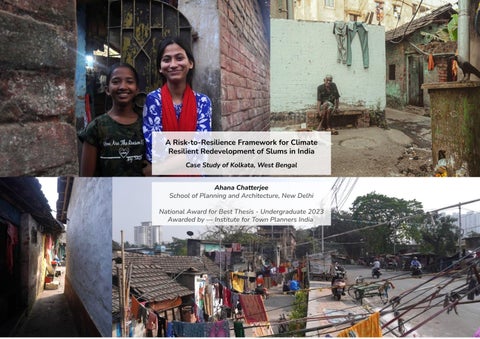
Devising a Framework for Climate Resilient Redevelopment of Slums: Case Study of Kolkata, West Bengal
Todevelopaframeworkforclimateresilientredevelopmentof slumsinthecityofKolkatatoreducetheirvulnerability, improvequalityoflife&savephysicalandeconomicresources. Aim
Objectives
1 To study
2 To estimate
The characteristics of slums in the case study area, existing plans, & policies for slum redevelopment and climate resilience And map the vulnerability to climate change effects in the slums using developed indicators.
3 To develop
A conceptual framework at three scales for the upgradation of slums for climate resilience.
4 To evaluate
The scope for integration of the developed framework into the existing planning process.
Scope
➢ Vulnerability Assessment of the city’s registered slums
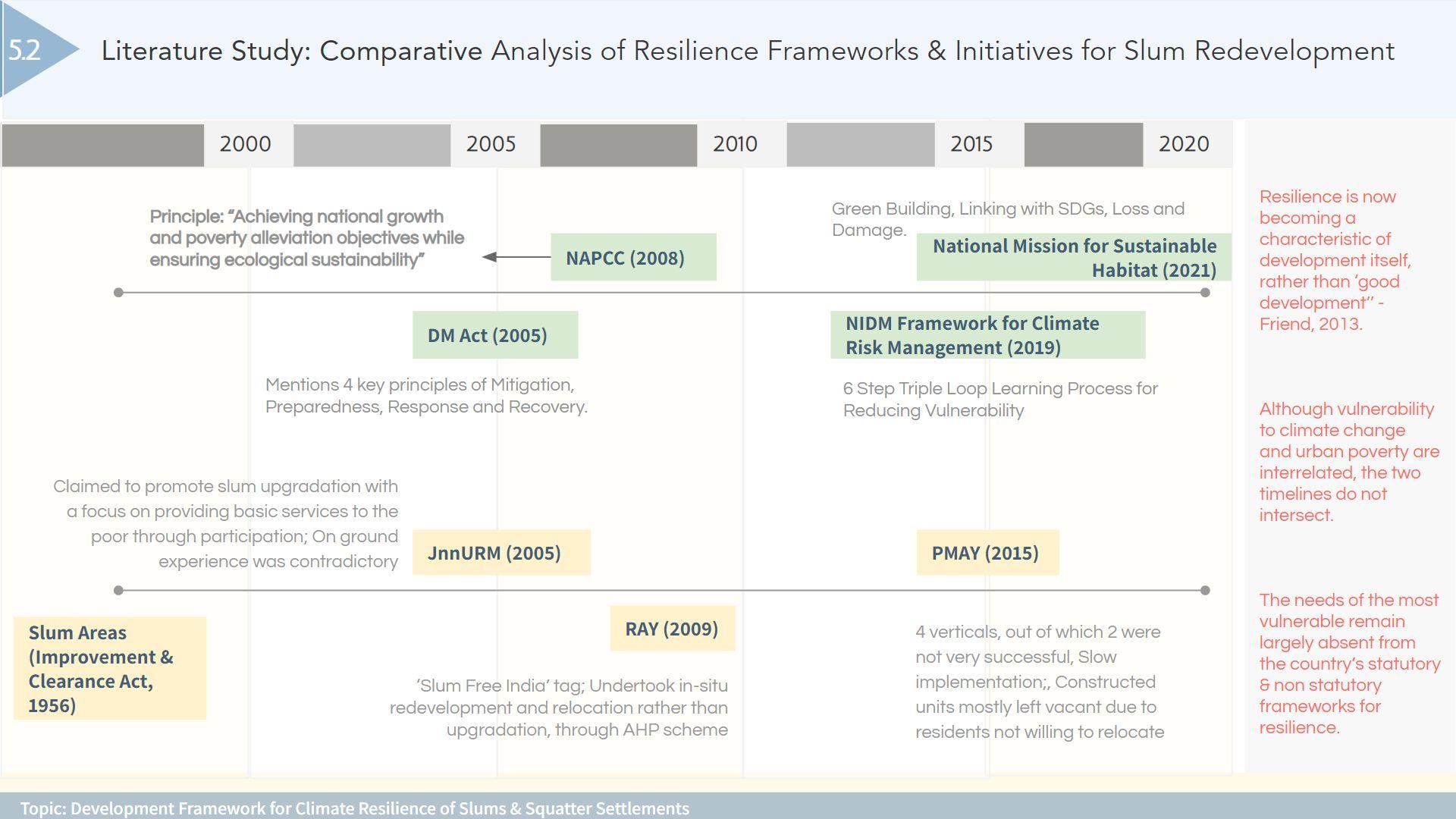
➢ Analysis of Existing Plans, Policies and Practices for building climate resilience through slum redevelopment
➢ Development of Framework at three scales: city level, sub-city level and local or site level
Limitations
❖ Does not include squatter settlements or unregistered slums in the city
❖ Study focuses on hydro-met disasters, that is floods, cyclones and sea level rise.
Criteria
Slum Population
Density
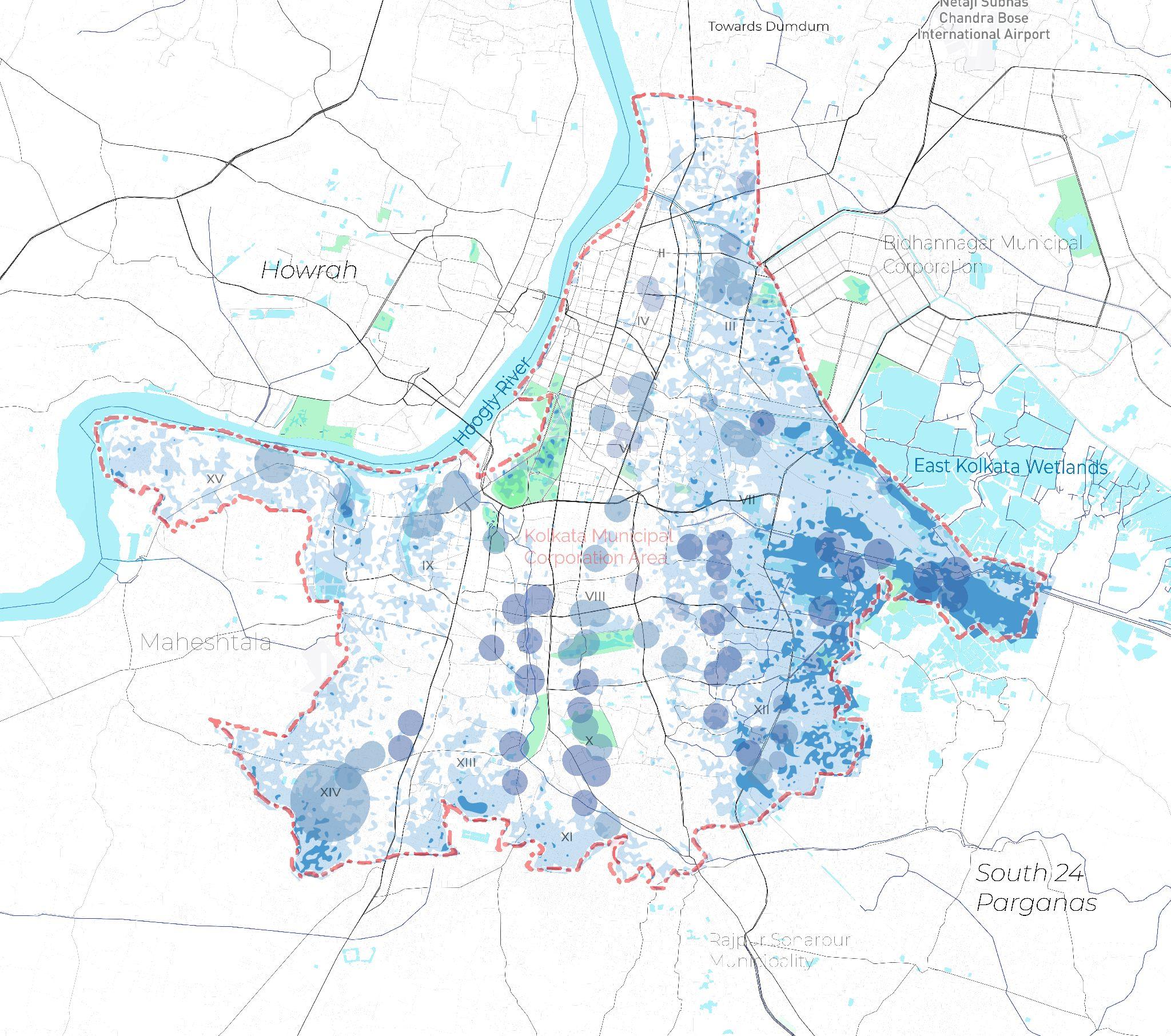
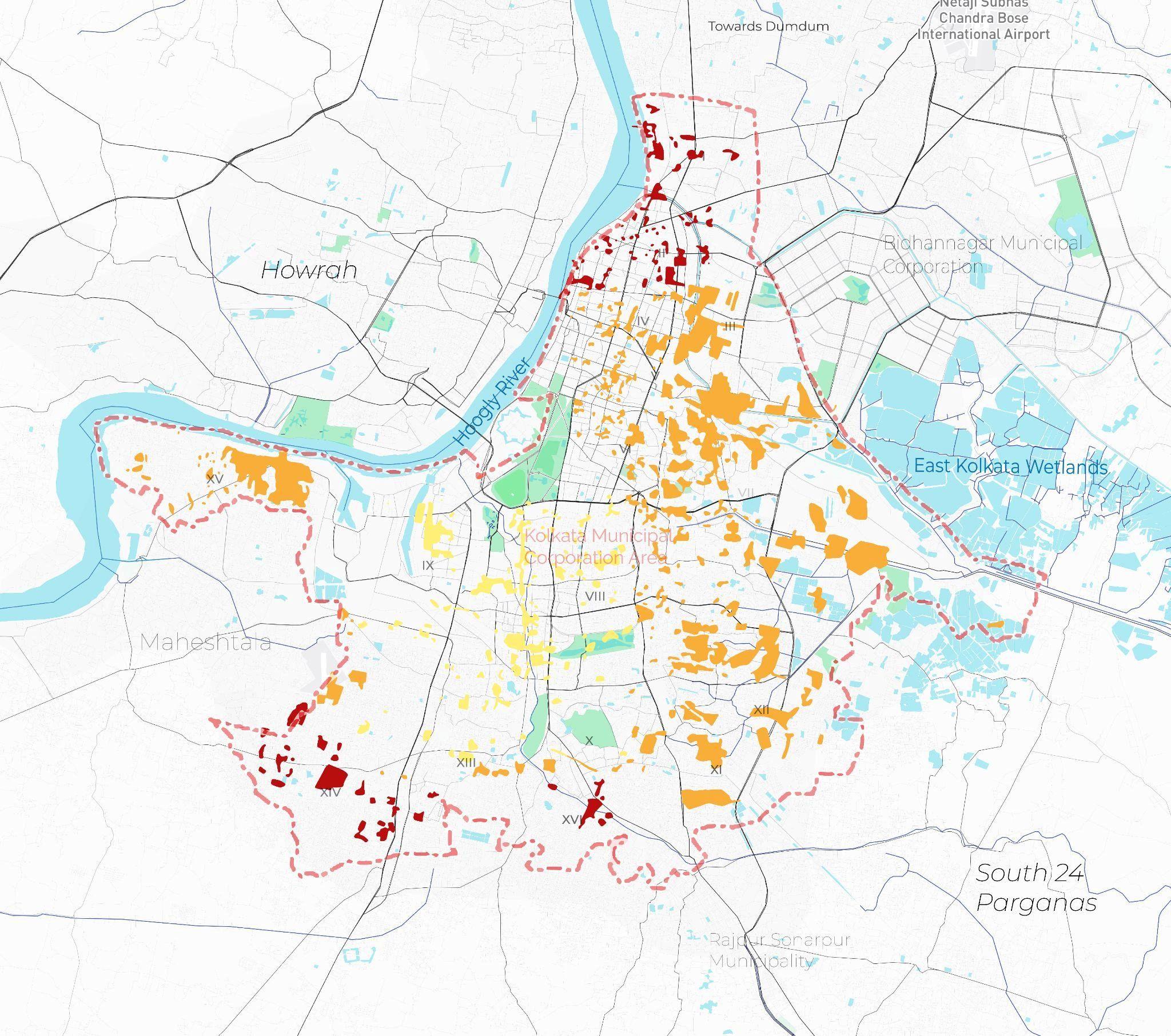
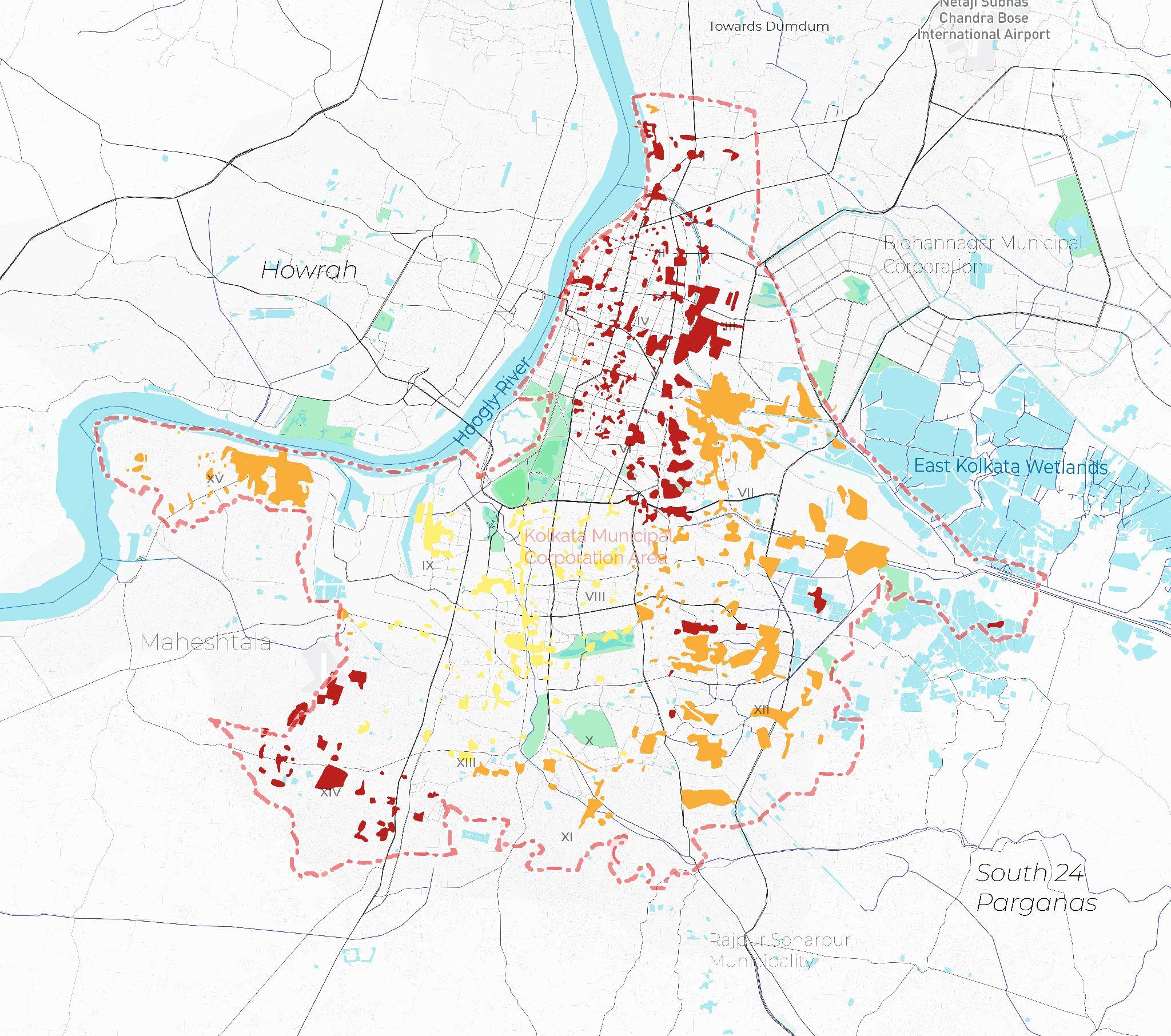
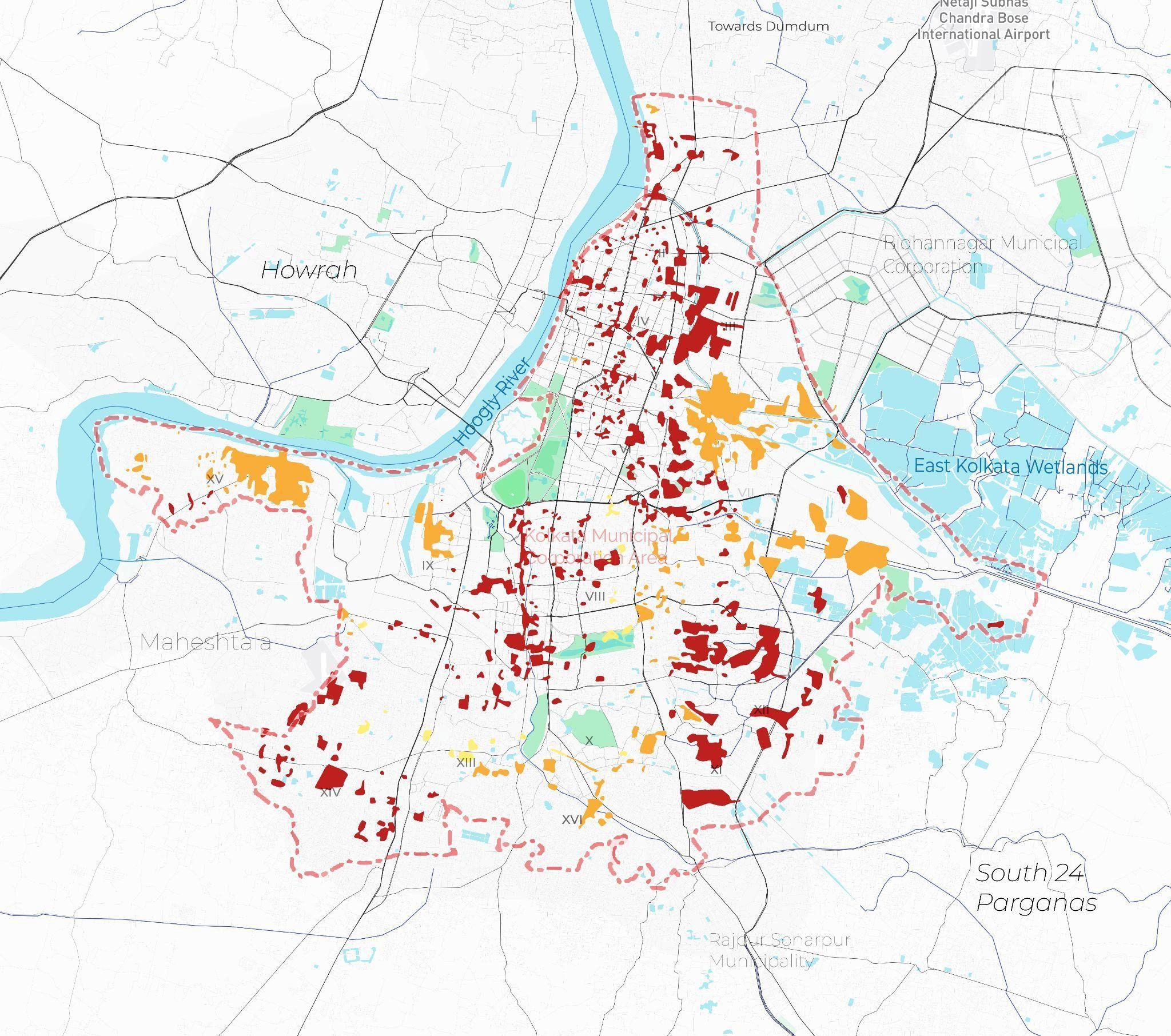
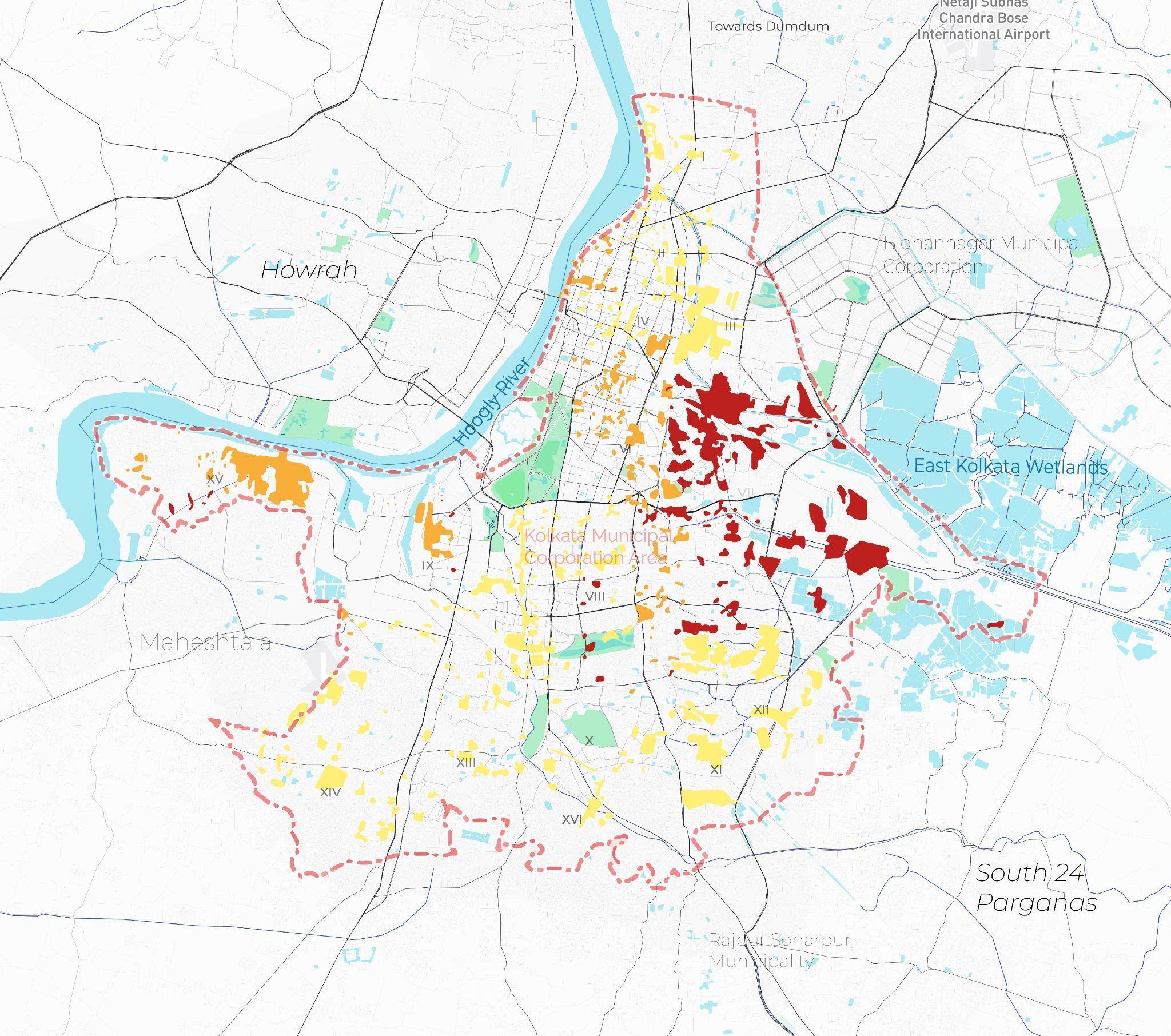
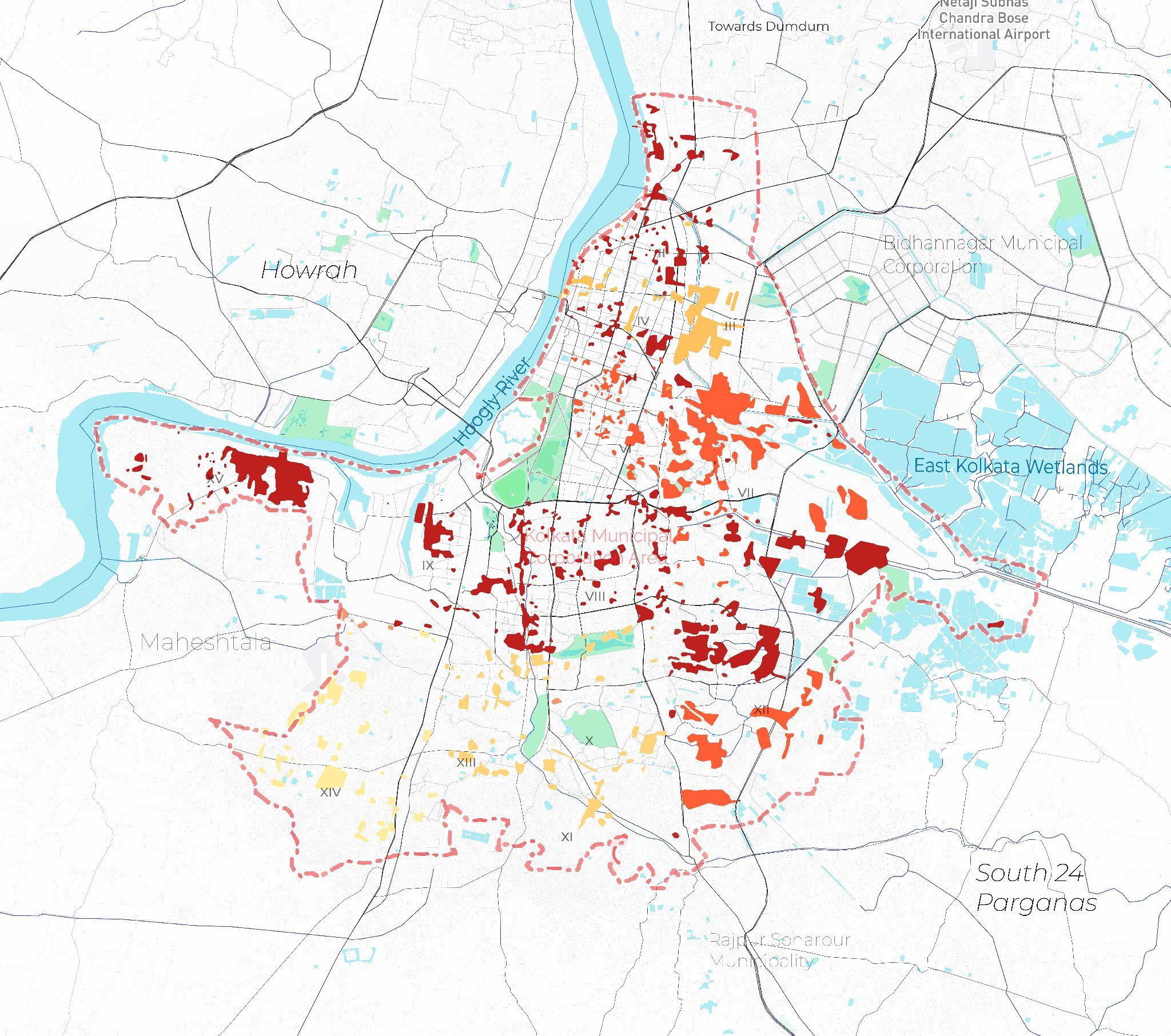
Multi-Hazard Map
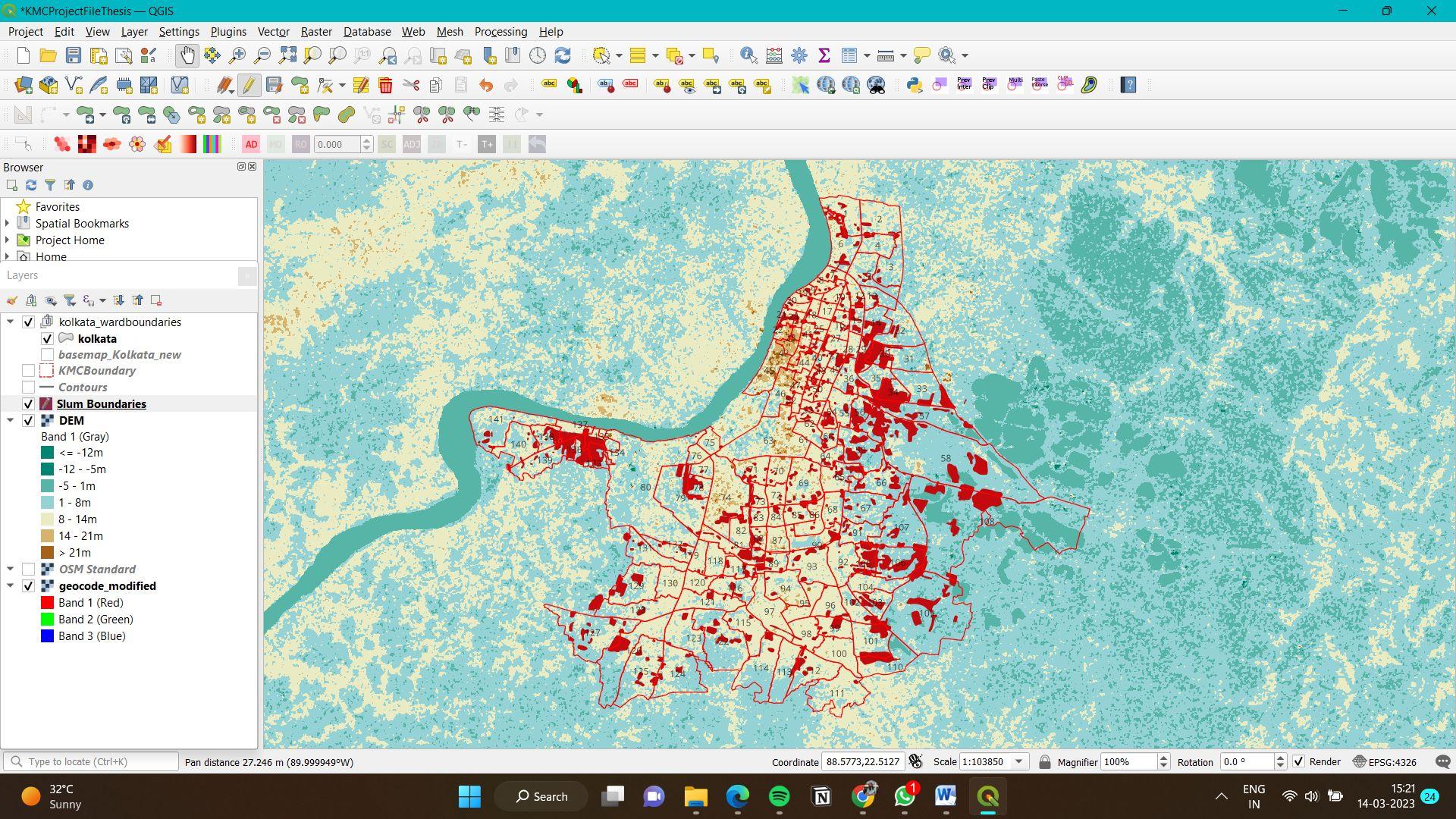
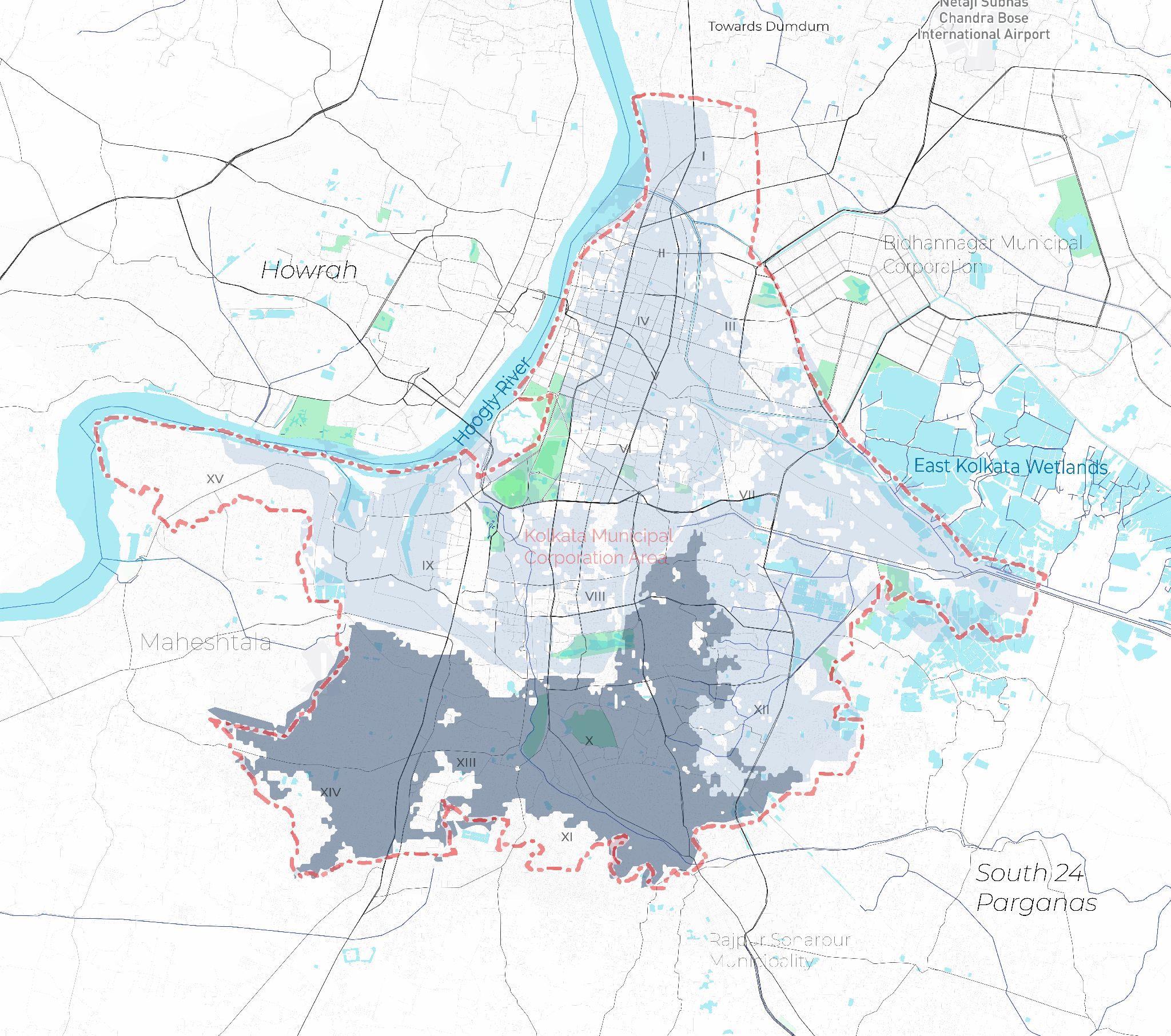
Overlay of Topography with Slum Boundaries
Exposure to Floods
Exposure to Sea Level Rise
9% of Area of the city is extremely prone to flooding, with inundation depths up to 1-3m
Moderate, parameters comparable to city Poor housing condition, amenities, knowledge
Environmental Vulnerability
Large area exposed to floods, cyclones. polluted water bodies
No access to banking, only 10% have savings more than 5000 per month. Moderate, parameters comparable to city.
Borough I
HighSlumPopulationDensity, ModerateSensitivity,VeryLow AdaptiveCapacity
HighSensitivity,LowAdaptive Capacity,Proximitytolower reachesofriver
Borough XV
Borough VII
HighSensitivity(Located withinwetlands),moderate adaptivecapacity
Calculation of Vulnerability Score
As per IPCC System Vulnerability Assessment
per CDRI System
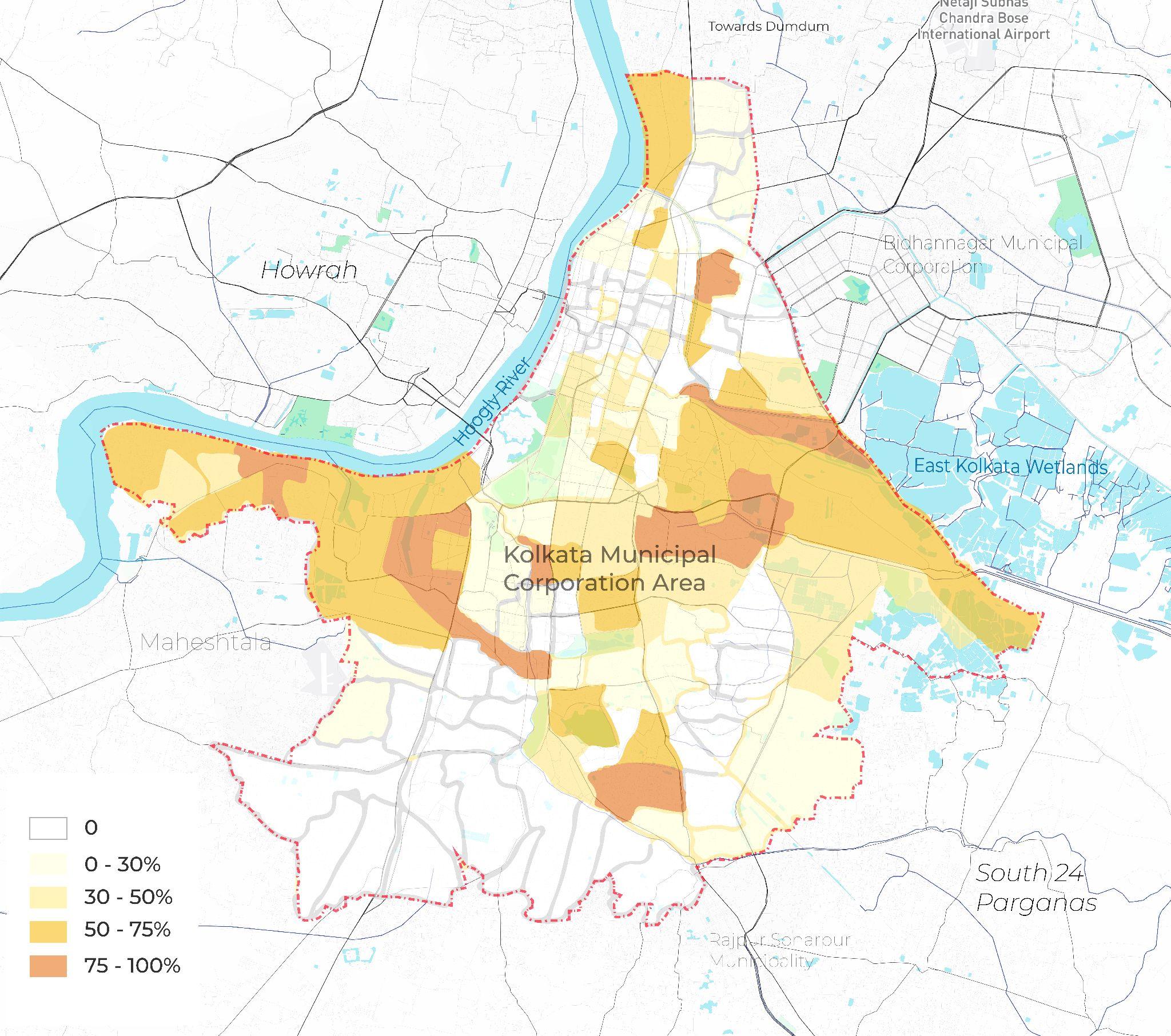
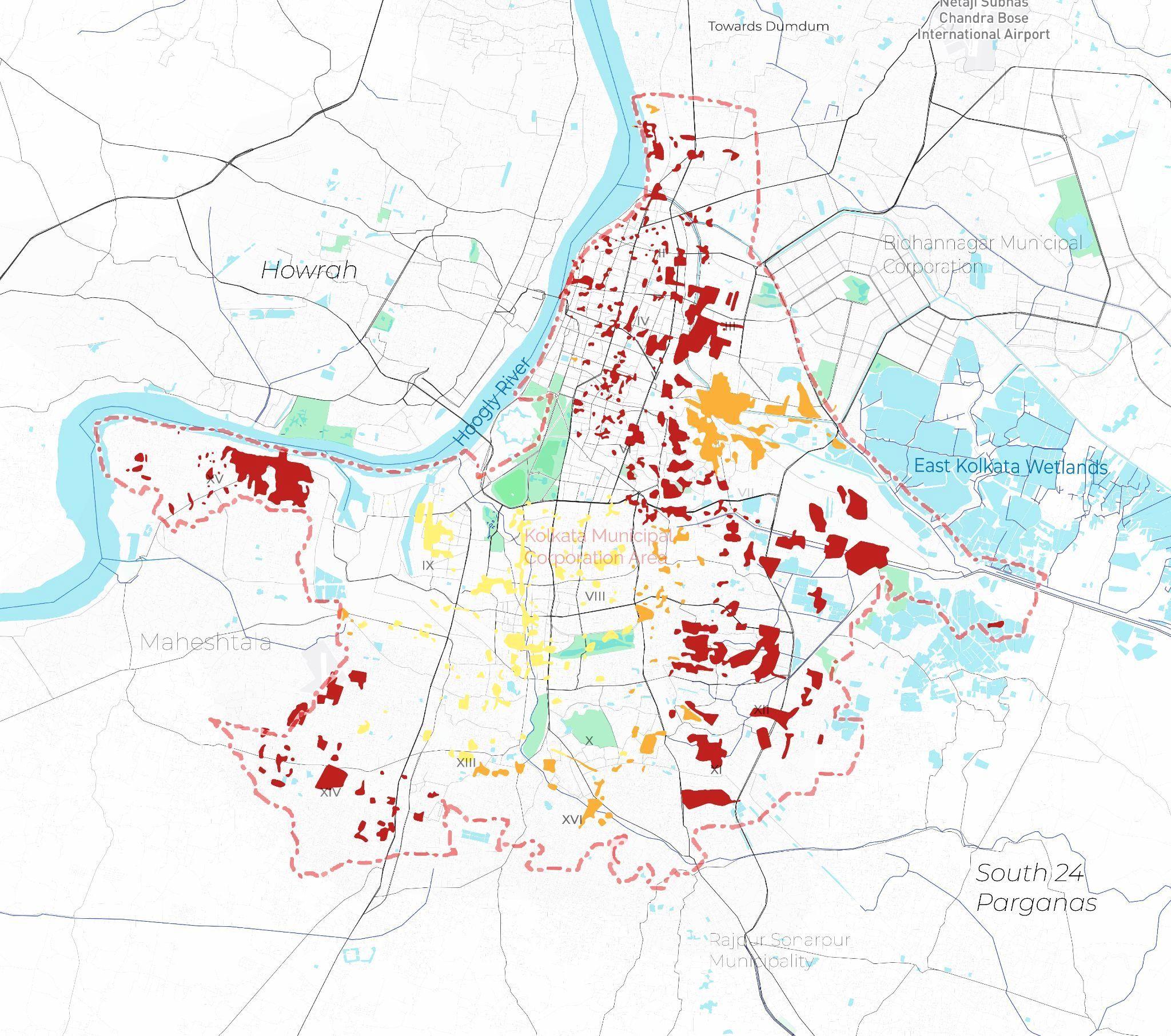
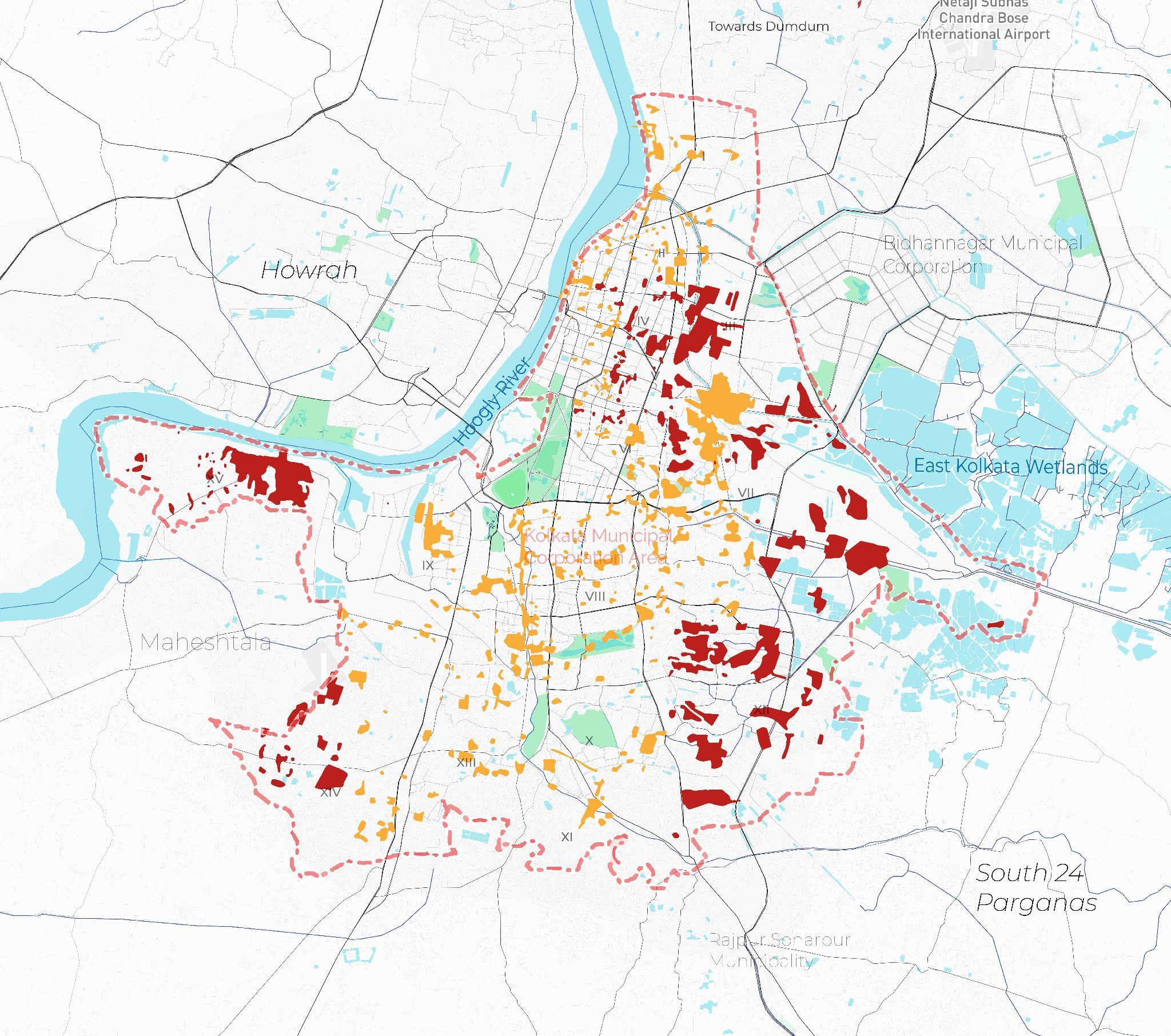
The slum areas of the city are almost twice as vulnerable than the rest of the areas of the city.
of the slum area falls under High Vulnerability (56.5%) covering almost half of the slum
2/3rd of the slum area falls under high or very high vulnerability, while 84% of the slum population comes under this category.
What does it mean to be ‘Vulnerable’?
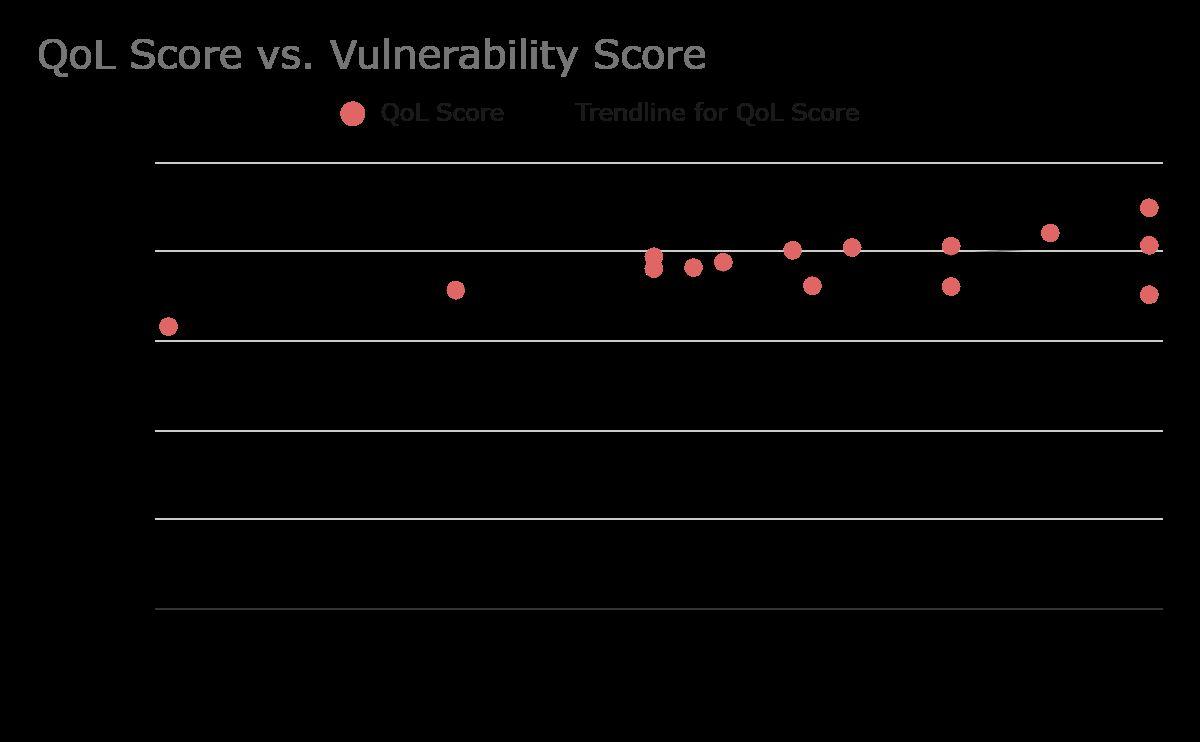
Relating Vulnerability with Quality of Life
To find if there is correlation between QoL and vulnerability, the QoL of the slums in each borough was calculated on a 50-pt scale using parameters devised by a study: (Malik, 2019) conducted for the slums in KMC Area.
4 broad indicators of housing condition, socioeconomic character,facilities and demography were assessed.
Adaptive Capacity = 0.25/1
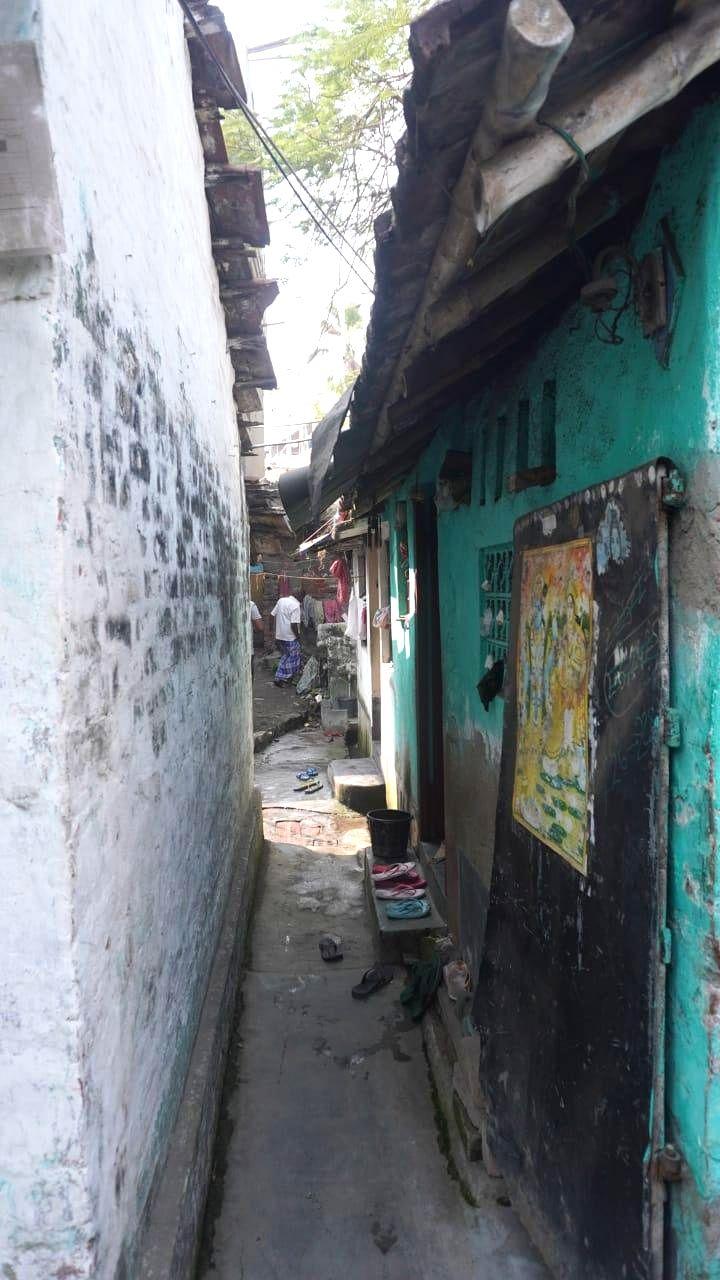
Arpuli Lane Basti
Relating Vulnerability with Loss & Damage
Estimation of Loss and Damage using Primary Data
Case of Supercyclone Amphan, 2020
1 HH in Kumortuli with high vulnerability level of 1 faces:
Property damage = Rs 3500 (Roof Repairs)
Days of Livelihood Lost = 6 = 6 x 500 Rs income per day = Rs 3000
Education Loss = 6 Days = 6 x Rs 30 (Per day school fees) = Rs 180
Food and Medicine Cost = Rs 100
Vulnerability = 1
Sensitivity = 0.7/1
Adaptive Capacity = 0.15/1
Seal Lane Basti
Vulnerability = 0.75
Sensitivity = 0.3/1
There exists strong negative correlation (Coefficient = -0.64) between vulnerability score of the slums and their quality of life score (more is the QoL score, less is the QoL)
Total Damages = Rs 3600
Total Loss = Rs 3180
For an informal worker HH with a monthly salary of Rs 15,000, an extreme event takes away around 7,000 (50%) of his monthly income.
Impact on the City
There are total 2.8 Lakh households which fall under high and very high vulnerability categories.
Therefore total Loss and Damage in slums due to one extreme event could be = Damage & Loss per Household x Total no. of Highly Vulnerable HHs = 18.9 Crores or 189 million Rs .
Arpuli Lane, Borough 5
Seal Lane Basti, Borough VI
Planned Development
Disaster Management Guidelines
Establishment of Chain of Command
Risk Assessment
Disaster Management Plan
Repositories for Information
Communication and Technology
Early Warning Mechanism
Capacity Building
Health and Medical Care
Knowledge Management
Phase Roles of Relevant Agencies
Search and Rescue
Evacuation Routes
Awareness of Dos and Dont’s
Support System During Disaster
Shelter and Basic Needs
Funds Generation
Communication
Infrastructure & Essential Services
Food, Medicines and Aid
Temporary Shelter/MPCS
Relief Payouts and Packages
Detailed Damage Assessment
Assistance to Restore Houses
Need Based Relocation
Reconstruction & Rehabilitation
Emergency Services Response
Livelihood Recovery
Recovery Time
Responsible Authorities
Post Disaster Resilience Strategy
Dispute Resolution
Capacity Building
First Objective of the WB State DM Policy, 2009:
“To assess the risks and vulnerabilities associated with various disasters”
It outlines in its Approach and Strategy,
Since DM is not a separate sector, each sector should incorporate principles of disaster mitigation.
Objective 7: “To strengthen the capacities of the community and establish and maintain effective systems for responding to disasters;”
9th Objective of the WB State DM Policy, 2009:
To ensure relief assistance to the affected without any discrimination of caste, creed, community or se;”
Calamity Relief Fund is to be set up to help during an extreme event.
City Disaster Management Plan, Kolkata, 2018
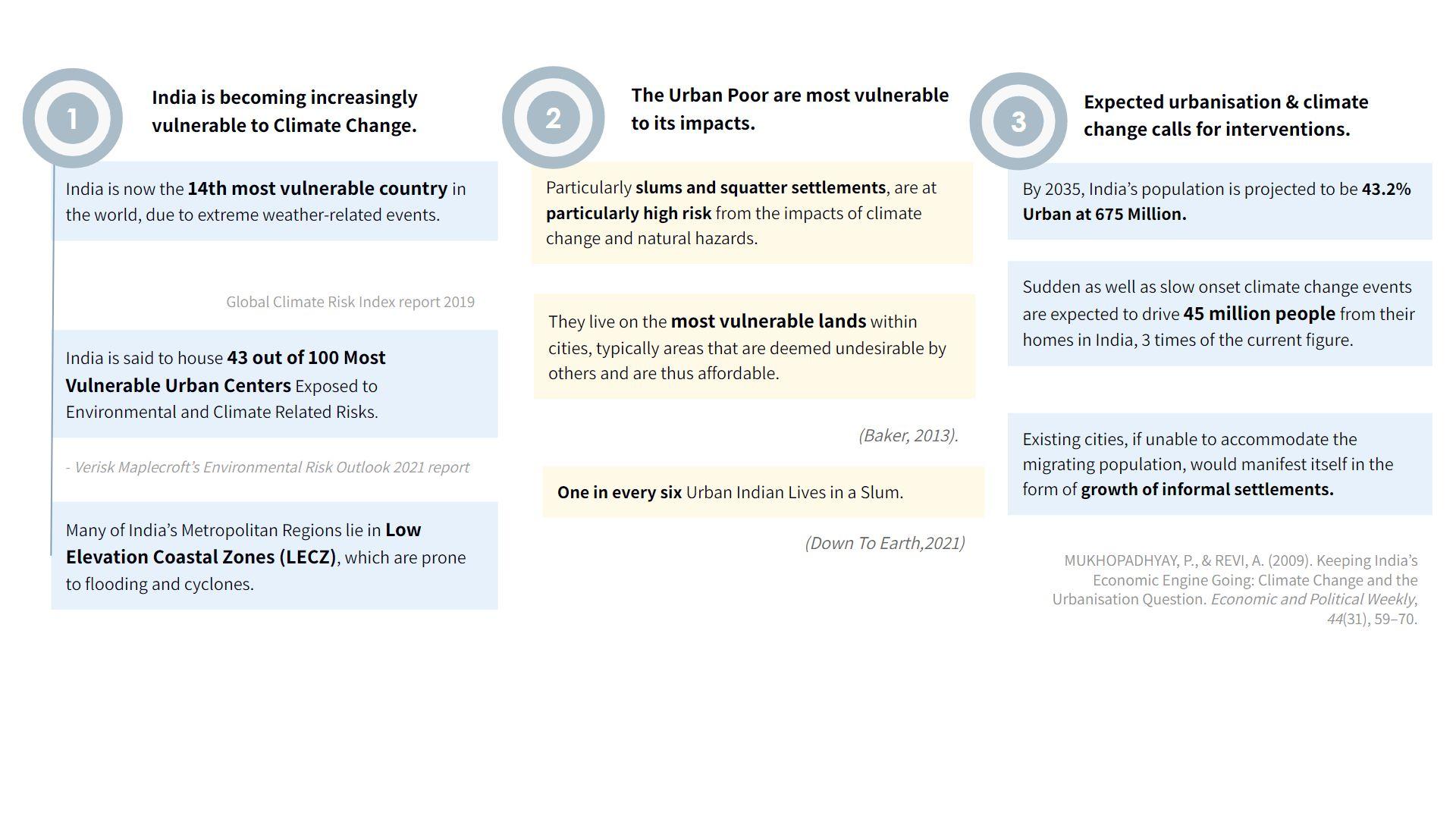
“The slums residents are the most vulnerable group of urban area because they are low income group and due to the place where they live.”
No such initiative is reflected directly in the State’s housing policies or schemes.
No awareness campaign, No pre-disaster activities have been carried out in any slum.
Ration is distributed; nominal financial aid is provided only to hard-hit HHs.
Most HHs are unaware of their rights to financial aid, or do not trust the government with support. Repairs are undertaken by the community itself.
Rice for ration and tarpaulin sheets for roofs are distributed in hard-hit slum only to some HHs.
Largely missing, ambiguous or Data Inadequate.
Source: West Bengal State Disaster Management Policy & Framework, 2009
Slum dwellers are unaware of any initiatives post disaster other than a damage assessment in extreme cases.
F1 Preservation of Green Space for Reducing Runoff
F2 Redevelopment Location based on Land Suitability
F3 Drainage System Runoff Coefficient >=0.95
F4 Water sensitive planning features
F5 Integration of Nature Based Solutions
F6 Plinth Level >=0.6m 100 Yr Flood Level
F7 Roof to be flat, stairway to be provided for roof to be temp. shelter
F8 Mandatory rainwater harvesting for all buildings >=100sqm plot size
C1
Cluster arrangement with wind tunneling to reduce wind effect
C2 Limiting net density in areas with high built density
C3 Row of trees upwind (sea to land) to act as barriers
C4 Shortest edge of house to face wind direction to reduce wind exposure
C5 Building design to be as per Risk zone & risk coefficient identified
C6 Roof with greater slope to face towards predominant wind direction
C7 Polygonal Plan shape rather than rectangular for lesser wind damage
C8 Roof projection to be maximum 500mm
Sources: F3. F4, C4 C7 - NDMA, 2010; F6, F7, C3-C6, C8 - BMTPC, 2010; F2, F5, - ADB, 2022; F1 - OECD, 2019 Gap Analysis of Schemes
F1 Green Space Park Open space
F2 Land Suitability Tenability Safe Location
F3 Runoff Coeff. Drainage Sewerage
F4 Water Sensitive Water Saving Groundwater
F5 Nature Based Solutions Green Solutions Environment friendly
F6 Plinth Level Flood Level Stilt
F7
F8
C4
C5 Wind Risk Zone
C6
Where do the schemes stand?
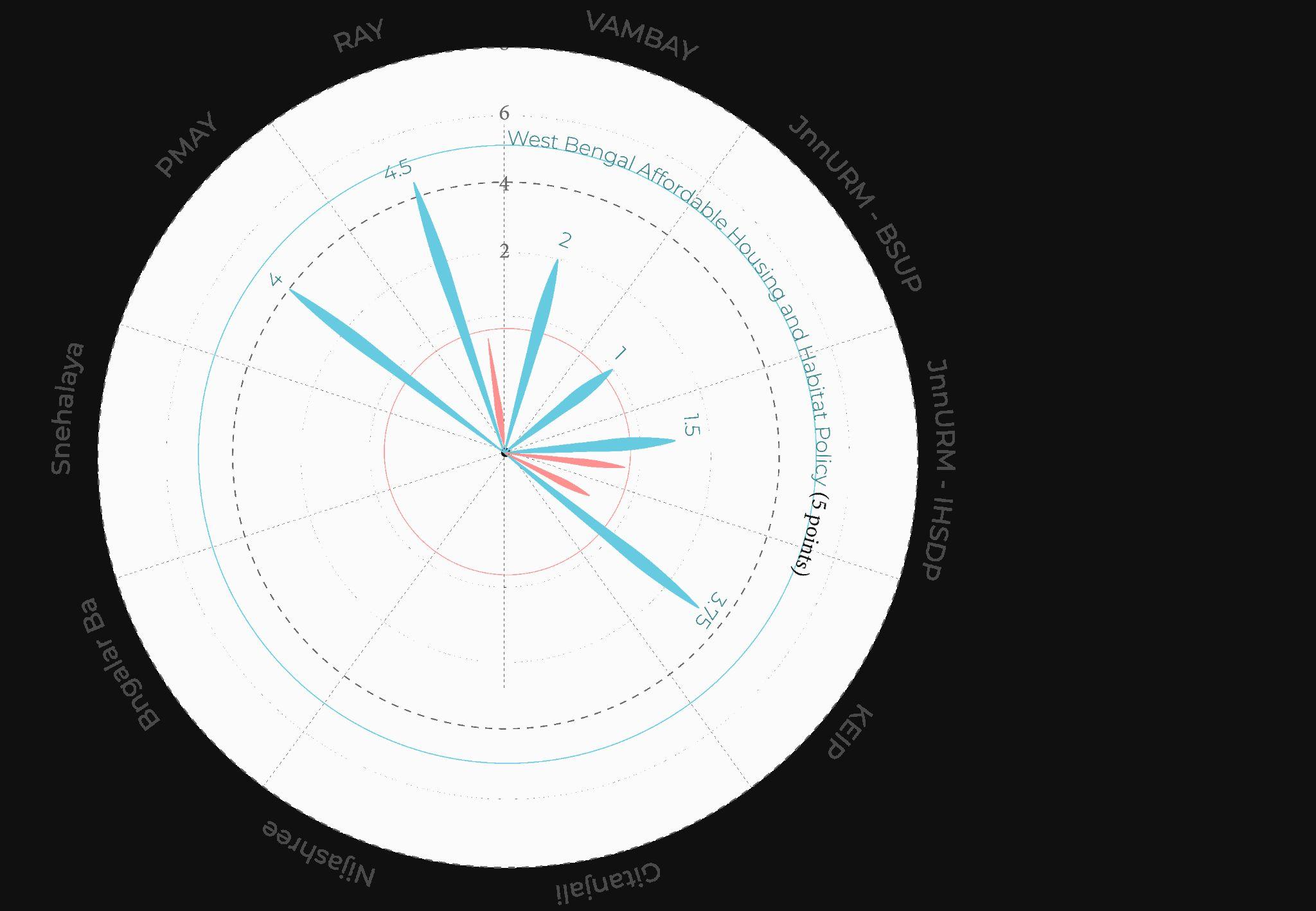
Rajeev Awaz Yojana scores highest at total of 5.25 out of 16. (Coverage - 3% Only)
PMAY scores 2nd at 4 points with only flood-relevant interventions, only 2.6% slums have been covered across all four verticals.
WB Housing Policy, prepared by IPE Global for MoHUA in 2015 ranks highest in comparison to all schemes, however the measures are not reflected in its schemes as it is not implemented. 4
Interventions for flood are indirectly present in some schemes, but cyclone measures are largely absent.
5
Central schemes, with higher scores lack implementation in the city.
Objective
Description
To reduce vulnerability with minimal intrusion
Community Based Upgradation of Physical Environment through WSP & NbS, & Infrastructure Provision
Govt. Scheme Through Swacch Bharat Mission Scheme
To facilitate building of climate resilient houses along with settlement level upgrades
Beneficiary led enhancement of own DUs as per norms developed for climate resilience with guidance & financial aid from ULB
Funding As per funds allotted for SBM Scheme in KMC Area Upto 1.5 Lakh per beneficiary
To reduce vulnerability of most vulnerable population by complete redevelopment
Complete reconstruction of the slum site through developed climate resilience standards & DCR
To safely relocate vulnerable population residing in hazardous/unsuitable areas
Construction of ARH Complexes within the same borough and resettlement of population in untenable slums
Affordable Rental Housing Complexes (ARHCs) - Model 2
Central assistance @ Rs. 1.5 lakh per EWS house As per rent collected from residents at local market rate post completion
ULB Role Community Dev, Capacity Building & Skill development Community Mobilisation, Skill Development, Maintenance & Checks